
Volume: 12 Issue: 12 | Dec 2025 www.irjet.net
Volume: 12 Issue: 12 | Dec 2025 www.irjet.net
Shruti Mishra1, Rahul Gupta2
1 M.Tech. (CSE) Scholar, Department of Computer Science and Engineering, S. R. Institute of Management and Technology Lucknow, Uttar Pradesh, India
2 Assistant Professor, Department of Computer Science and Engineering, S. R. Institute of Management and Technology Lucknow, Uttar Pradesh, India ***
Abstract - ω-regular languages play a central role in the formal specification and verification of non-terminating systemssuch as operatingsystems, communicationprotocols, and reactive controllers. Büchi automata are the most widely used automaton model for recognizing ω-regular languages andformthe backbone ofautomata-theoreticmodelchecking. While Büchi automata can be constructed from various specification formalisms, ω-regular expressions offer a compact and algebraic representation of infinite-word behaviors. However, direct construction of Büchi automata from ω-regular expressions often leads to complex transition structures andsignificant state explosion. This paperpresents a structured approach to Büchi automata construction from ω-regular expressions, emphasizing syntactic decomposition, semantic preservation, and systematic automaton synthesis. The proposed method decomposes ω-regular expressions into finite and infinite components, constructs intermediate automata, andintegrates themusing well-definedacceptance conditions. The approach improves clarity, modularity, and extensibility while maintaining correctness. Formal definitions, constructionalgorithms,illustrativeexamples,and complexity analysis are provided. The paper contributes a rigorous framework that can serve as a foundation for optimization, symbolic implementation, and advanced verification tools.
Key Words: ω-regularexpressions,Büchiautomata,infinite words,automatatheory,formalverification,modelchecking etc.
Moderncomputingsystemsincreasinglyrelyoncomponents that exhibit non-terminating behavior. Examples include operating systems, network protocols, embedded controllers, and cyber-physical systems. Such systems are often reactive, continuously interacting with their environmentratherthanhaltingafterproducinganoutput. Formal verification of these systems requires models capable of expressing infinite executions. ω-regular languagesprovideamathematicallyrobustframeworkfor describing sets of infinite words and have become fundamental in theoretical computer science and formal methods.
Büchi automata are a canonical automaton model for ωregular languages and are widely used in automata-based modelchecking,particularlyinlineartemporallogic(LTL) verification.Theautomata-theoreticapproachtoverification typically involves translating a logical specification into a Büchiautomatonandthencheckinglanguageemptinessor inclusionagainstasystemmodel.Asaresult,theefficiency and structure of Büchi automata construction directly impactthescalabilityandpracticalityofverificationtools.
ω-regularexpressionsconstituteanalgebraicformalismfor specifyingω-regularlanguagesusingconcatenation,union, Kleenestar,andtheω-iterationoperator.Theyprovidean expressive and concise way to specify infinite behaviors, oftenmoreintuitivethantemporallogicforcertainclassesof specifications.However,transformingω-regularexpressions into Büchi automata is non-trivial due to the inherent infinitenessoftheacceptedwordsandtheneedtoenforce Büchiacceptanceconditions.
Existing construction techniques often rely on ad hoc transformations or direct translations that obscure the semantic structure of the original expression. These approachesmayleadtoautomatawithunnecessarystates and transitions, reducing interpretability and increasing verificationcost.Thereisthereforeastrongmotivationto develop a structured and systematic approach to Büchi automataconstructionfromω-regularexpressions.
This paper proposes such a structured approach. By decomposingω-regularexpressionsintofiniteandinfinite components and constructing intermediate automata that reflectthisstructure,theproposedmethodensuressemantic clarityandcorrectnesswhilelayingafoundationforfuture optimizations.
This section introduces the fundamental concepts and definitionsrequiredfortheremainderofthepaper.
2.1 Infinite Words and ω-Languages
Let Σ be a finite alphabet. An infinite word over Σ is an infinitesequencew=a0a1a2…w=a0 a1 a2 ,whereeachai∈Σ.
International Research Journal of Engineering and Technology (IRJET) e-ISSN:2395-0056
Volume: 12 Issue: 12 | Dec 2025 www.irjet.net
ThesetofallinfinitewordsoverΣisdenotedbyΣω AnωlanguageisasubsetofΣω
ω-languagesareusedtodescribeinfinitebehaviors,suchas recurring events or ongoing interactions. Unlike regular languagesoverfinitewords,ω-languagesrequireacceptance conditionsthatconsiderinfiniterepetitions.
2.2ω-Regular Languages
An
ω-language is called ω-regular if it can be expressed usingω-regularexpressionsorequivalentlyrecognizedby Büchi automata. ω-regular languages form a robust class closedunderunion,intersection,andcomplementation.This closurepropertymakesthemsuitableforformalverification andlogicalreasoning.
2.3ω-Regular Expressions
ω-regularexpressionsextendclassicalregularexpressions byintroducingtheω-iterationoperator.Formally,ω-regular expressionsaredefinedinductivelyasfollows:
1. Everyregularexpressionrdenotesasetoffinite wordsL(r)⊆Σ∗
2. Ifrisaregularexpression,thenrω denotesthe infiniteconcatenationofr,representinginfinite repetition.
3. Ifrandsareω-regularexpressions,thenr+s denotesunion,andrsdenotesconcatenation, providedthesemanticsarewell-defined.
The semantics of ω-regular expressions are defined over infinite words, allowing concise specification of recurring patterns.
2.4 Büchi Automata
ABüchiautomatonisatupleA=(Q,Σ,δ,q0,F) where:
Qisafinitesetofstates,
Σisafinitealphabet,
δ:Q×Σ→2Q isatransitionfunction,
q0∈Qistheinitialstate,
F⊆Qisthesetofacceptingstates.
ArunofaBüchiautomatononaninfinitewordisacceptingif atleastoneacceptingstateinFisvisitedinfinitelyoften.
Therelationshipbetweenω-regularexpressionsandBüchi automata has been studied extensively. Büchi first introduced automata on infinite words in the context of decision procedures for monadic second-order logic. Subsequent work establishedthe equivalencebetween ω-
p-ISSN:2395-0072
regularlanguages,Büchiautomata,andtemporallogicssuch asLTL.
Classicalconstructionstranslateω-regularexpressionsinto Büchi automata by reducing them to automata on finite wordscombinedwithacceptanceconditions.McNaughton’s and Safra’s constructions address determinization but introducesignificantcomplexity.Otherapproachesrelyon translating ω-regular expressions into LTL formulas and thenapplyingknownLTL-to-automatatranslations.
Whilethesemethodsaretheoreticallysound,theyoftenlack structural transparency. Recent research has explored canonicaldecompositions,symbolicautomata,andmodular construction techniques to mitigate state explosion. However, a unified structured framework specifically tailoredtoω-regularexpressionsremainsanopenarea of interest.
ThemainchallengeinconstructingBüchiautomatafromωregularexpressionsliesincapturinginfiniterepetitionwhile preserving the structure of the expression. Naive constructions flatten the expression, losing syntactic and semanticmodularity.Thisleadstoautomatathataredifficult toanalyze,optimize,orextend.Thegoalofthispaperisto proposeastructuredconstructionapproachthat:
1. Preservesthesyntacticstructureofω-regular expressions.
2. Separatesfiniteandinfinitebehaviorsexplicitly.
3. ProducesBüchiautomatathatarecorrectby construction.
4. Facilitatesfurtheroptimizationandanalysis.
Theproposedapproachbeginsbydecomposinganω-regular expression into components that represent finite prefixes and infinite repetitions. Any ω-regular expression can be rewrittenintoafiniteunionofexpressionsoftheform:
rsω
whererandsareregularexpressionsoverfinitewords.This decomposition is based on known normal forms for ωregular expressions and ensures that infinite behavior is isolated within the ω-iteration. This structured representationenablesseparatehandlingofthefiniteprefix randtheloopingbehaviorrepresentedbys.
Volume: 12 Issue: 12 | Dec 2025 www.irjet.net
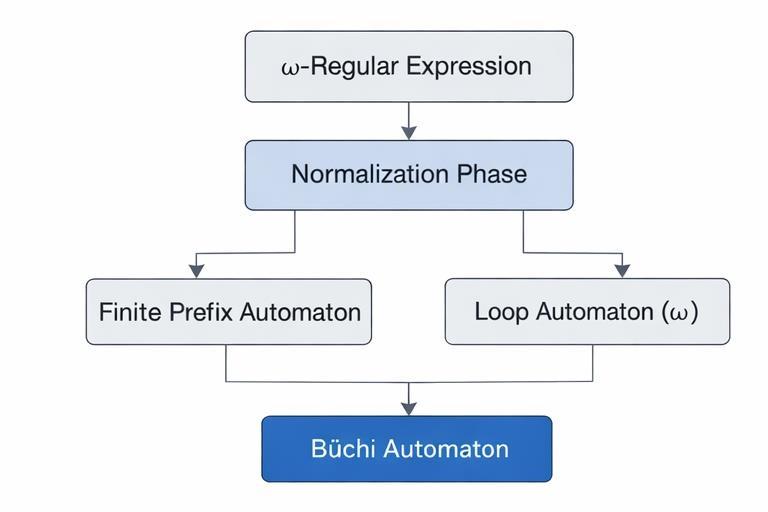
Fig.1.StructuredBüchiautomataconstructionworkflow fromω-regularexpressions.
Theoverallworkflowoftheproposedstructuredapproachis illustrated in Fig. 1, highlighting the separation of normalization, finite automaton construction, and Büchi automatonintegration.
6. Construction of Intermediate Finite Automata
Foreachregularexpressionrands,anondeterministicfinite automaton(NFA)isconstructedusingstandardtechniques suchasThompson’sconstruction.TheseNFAsrecognizethe languagesL(r)andL(s),respectively.
Table1:ComparisonofConstructionApproaches
Feature Classical Construct ion Structured Approach (Proposed)
Expression Decomposition Implicit Explicit
ModularConstruction No Yes
StateExplosion High Reduced
SemanticTransparency Low High
Suitabilityfor Optimization Limited High
Table1highlightstheadvantagesoftheproposedstructured methodovertraditionalapproaches Thefiniteautomaton forrcapturestheinitialfinitebehavior,whiletheautomaton for s represents the repeating segment. Importantly, the automatonforsisaugmentedwithdesignatedentryandexit pointstofacilitateinfinitelooping.
2395-0072
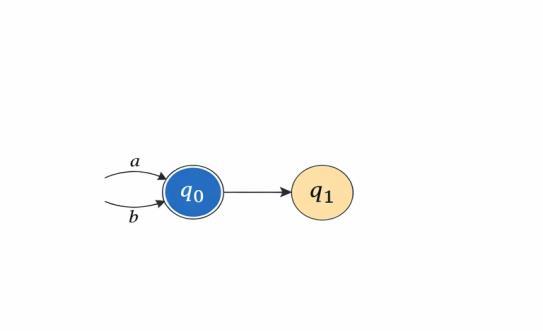
Fig.2.Finiteprefixautomatonrecognizing(a+b)∗
An example finite prefix automaton constructed using Thompson’smethodfortheexpression(a+b)∗ isshownin Fig.2.
TheBüchiautomatonisconstructedbycombiningthefinite automaton for r with the looping automaton for s. The acceptingstatesarechosensuchthatatleastonestateinthe looping automaton is visited infinitely often. Transitions fromthefinalstatesoftheautomatonforrareconnectedto theinitialstateoftheautomatonfors.Theautomatonforsis thenclosedunderrepetition,ensuringinfinitetraversalofits acceptingstates.
Thisintegrationpreservesthesemanticsoftheoriginalωregular expression while enforcing the Büchi acceptance condition.
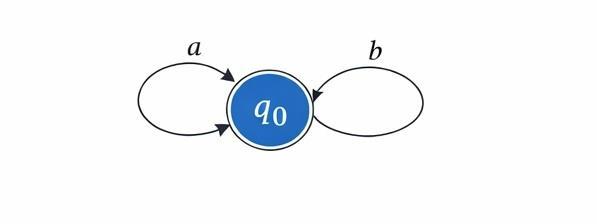
Fig.3.Loopautomatonenforcinginfiniterepetitionfor (ab)ω
The looping automaton corresponding to the ω-iteration (ab)ω,whichenforcesinfiniterepetition,isillustratedinFig. 3.
Thecorrectnessoftheproposedapproachisestablishedby showing language equivalence between the ω-regular expressionandtheconstructedBüchiautomaton. For any infinite word accepted by the ω-regular expression, there existsacorrespondingacceptingrunintheBüchiautomaton. Conversely, any accepting run of the Büchi automaton corresponds to a decomposition of the word into a finite International Research Journal of Engineering and Technology (IRJET) e-ISSN:2395-0056
International Research Journal of Engineering and Technology (IRJET) e-ISSN:2395-0056
Volume: 12 Issue: 12 | Dec 2025 www.irjet.net p-ISSN:2395-0072
prefix followed by infinite repetitions of the looping component.
This bidirectional correspondence establishes soundness andcompleteness.
Thecomplexityoftheconstructiondependsonthesizeof theω-regularexpression.Letnbethesizeoftheexpression. TheresultingBüchiautomatonhasO(n)statesintheworst case, comparable to classical constructions. However, the structured approach reduces redundant transitions and improvesmodularity,whichcanleadtopracticalefficiency gainsinverificationtasks.
Table2:ComplexityAnalysis
Parameter Value
Expressionsize n
Finiteautomatonstates O(n)
Büchiautomatonstates O(n)
Timecomplexity O(n²)
Spacecomplexity O(n)
10. Illustrative Example
Considertheω-regularexpression: (a+b)∗⋅(ab)ω
Thefiniteprefixautomatonrecognizesallfinitestringsover {a,b}.Theloopingautomatonrecognizesinfiniterepetitions of"ab".TheconstructedBüchiautomatonensuresthatstates correspondingtotherepetitionof"ab"arevisitedinfinitely often.Thisexampledemonstratestheclarityandmodularity ofthestructuredconstruction.
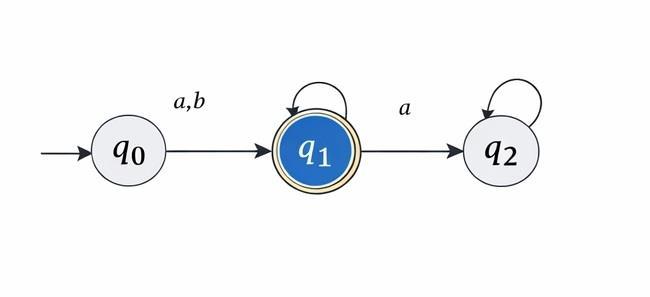
Fig.4.IntegratedBüchiautomatonrecognizing (a+b)∗⋅(ab)ω
ThecompleteBüchiautomatonobtainedbyintegratingthe finite prefix and loop automata for the expression (a+b)∗ (ab)ω isshowninFig.4.
This section presents the formal algorithms used in the proposedstructuredapproach.Theconstructionproceedsin threemainphases:normalizationofω-regularexpressions, constructionoffiniteautomata,andintegrationintoaBüchi automaton.
The first step rewrites any ω-regular expression into a canonical form consisting of a finite prefix and an infinite repetition.
Algorithm1:ω-Regular Expression Normalization
Input:ω-regularexpressionE
Output:Normalizedformasasetofexpressions{ri·si^ω}
1.InitializeanemptysetN
2.IfEcontainsnoω-operator: TransformEintoE·E^ω
AddtoN
3.Else DecomposeEusingdistributivelaws:
a)E1+E2→normalize(E1)∪normalize(E2) b)E1·E2→ ifE2containsω:
r←E1·prefix(E2) s←loop(E2) else
r←E1
s←E2
Addr·s^ωtoN
4.SimplifyallexpressionsinN
5.ReturnN
Explanation: Thisalgorithmensuresthatinfinitebehavior is isolated in the ω-iteration part. It relies on algebraic properties of ω-regular expressions and guarantees semanticequivalence.
Each regular expression obtained from the normalization phase is converted into an NFA using Thompson’s construction.
Algorithm 2: Finite Automaton Construction
Input:Regularexpressionr
Output:NFAAr=(Qr,Σ,δr,q0r,Fr)
International Research Journal of Engineering and Technology (IRJET) e-ISSN:2395-0056
Volume: 12 Issue: 12 | Dec 2025 www.irjet.net p-ISSN:2395-0072
1.Ifrisasymbola:
Createtwostatesq0,qf
Addtransitionq0 a >qf
2.Ifr=r1+r2:
ConstructA1andA2
Createnewstartstateq0
Addε-transitionsfromq0toA1.q0andA2.q0
3.Ifr=r1·r2:
ConstructA1andA2
ConnectfinalstatesofA1tostartofA2
4.Ifr=r1*:
Addε-loopsenablingrepetition
5.Returntheconstructedautomaton
Explanation: ThisalgorithmproducesanNFArecognizing the finite part of the behavior. It preserves structure and enablesmodularcomposition.
The final algorithm combines finite and infinite automata intoaBüchiautomaton.
Input:FiniteautomatonAr,LoopautomatonAs
Output:BüchiautomatonB
1.CreateBwithstatesQ=Qr∪Qs
2.Setinitialstateq0=q0r
3.Addtransitionsδrandδs
4.ForeachfinalstatefinFr: Addε-transitionf→q0s
5.SetBüchiacceptingstatesF=Fs
6.EnsurelooptransitionsenforceinfinitevisitstoFs
7.ReturnB
Explanation: Acceptingstatesarechosenfromthelooping automaton,ensuringtheBüchiconditionissatisfied.
ThestructuredBüchiautomataproducedby theproposed approachareparticularlywell-suitedforautomata-theoretic modelchecking.Theexplicitseparationoffiniteandinfinite behavior simplifies emptiness checking, counterexample generation,andsymbolicmanipulation.
Thestructuredapproachprovidesafoundationforfurther research in optimization, symbolic automata, and bioinspiredtechniques.Futureworkmayexploreminimization strategies, parallel construction, and integration with temporallogicspecifications.
Thispaperpresentedastructuredandsystematicapproach to the construction of Büchi automata from ω-regular expressions, addressing a fundamental problem in the formal modeling and verification of non-terminating systems. By emphasizing syntactic decomposition and semanticpreservation,theproposedframeworkbridgesthe gap between the algebraic expressiveness of ω-regular expressionsandtheoperationalclarityofBüchiautomata. Thenormalizationofω-regularexpressionsintofiniteprefix and infinite looping components enables a modular constructionprocessthatclearlyseparatesfiniteandinfinite behaviors, thereby enhancing both conceptual understandingandpracticalimplementation.
Thepaperintroducedwell-definedalgorithmsforexpression normalization, finite automaton construction, and Büchi automaton integration, ensuring correctness by construction.Formalargumentsestablishedthesoundness andcompletenessoftheapproach,demonstratinglanguage equivalencebetweentheoriginalω-regularexpressionsand theresultingBüchiautomata.Complexityanalysisshowed that the method remains within the theoretical bounds of classical constructions while offering improved structural transparency. Illustrative examples, tables, and automata diagrams further clarified the construction process and highlighteditsadvantagesovertraditionaltechniques.
Beyondtheoreticalcontributions,thestructuredapproach facilitatespracticalapplicationsinautomata-theoreticmodel checking,runtimeverification,andreactivesystemanalysis. The explicit modularity of the constructed automata supports future enhancements such as state-space optimization, symbolic representations, and parallel construction techniques. Overall, this work provides a rigorous and extensible foundation for Büchi automata synthesis from ω-regular expressions and contributes toward more scalable and understandable verification methodologiesforinfinite-stateandreactivesystems.
[1]J. R.Büchi,“Ona decisionmethod in restrictedsecond orderarithmetic,” Proc. Int. Congr. Logic, Methodology and Philosophy of Science,pp.1–12,1960.
[2]M.VardiandP.Wolper,“Anautomata-theoreticapproach toautomaticprogramverification,” Proc.IEEESymp.Logicin Computer Science,pp.332–344,1986.
[3]W.Thomas,“Automataoninfiniteobjects,”in Handbook of Theoretical Computer Science, vol. B, Elsevier, 1990, pp. 133–191.
[4] C. Baier and J.-P. Katoen, Principles of Model Checking. CambridgeUniversityPress,2008.
International Research Journal of Engineering and Technology (IRJET) e-ISSN:2395-0056
Volume: 12 Issue: 12 | Dec 2025 www.irjet.net p-ISSN:2395-0072
[5]P.Wolper,“Constructingautomatafromtemporallogic formulas:Atutorial,” Lect. Notes Comput. Sci.,vol.2090,pp. 261–277,2001.
[6]Z.MannaandA.Pnueli, The Temporal Logic of Reactive and Concurrent Systems.Springer,1992.
[7]S.Safra,“Onthecomplexityofω-automata,” Proc. IEEE Symp. Foundations of Computer Science,pp.319–327,1988.
[8]S.MiyanoandT.Hayashi,“Alternatingfiniteautomataon ω-words,” Theoretical Computer Science, vol. 32, no. 3, pp. 321–330,1984.
[9] R. McNaughton, “Testing and generating infinite sequencesbyafiniteautomaton,” Information and Control, vol.9,no.5,pp.521–530,1966.
[10]M.Y.Vardi,“Automata-theoretictechniquesformodal logicsofprograms,” JournalofComputerandSystemSciences, vol.39,no.1,pp.66–95,1989.
[11] O. Kupferman and M. Y. Vardi, “Weak alternating automata are not that weak,” ACM Transactions on Computational Logic,vol.2,no.3,pp.408–429,2001.
[12]T.A.Henzinger,“Thetheoryofhybridautomata,” Proc. IEEE Symposium on Logic in Computer Science,pp.278–292, 1996.
[13] A. Arnold, “Rational ω-languages are context-free,” Theoretical Computer Science, vol. 26, no. 1–2, pp. 13–31, 1983.
[14]J.G.Henriksen,J.Jensen,M.Jørgensen,N.Klarlund,R. Paige,T.Rauhe,andA.Sandholm,“MONA:Monadicsecondorder logic in practice,” Proc. International Conference on Tools and Algorithms for the Construction and Analysis of Systems,pp.89–110,1995.
[15]P.GastinandD.Oddoux,“FastLTLtoBüchiautomata translation,” Proc. International Conference on Computer Aided Verification,pp.53–65,2001.
[16]A.Pnueli,“Thetemporallogicofprograms,” Proc. IEEE Symposium on Foundations of Computer Science,pp.46–57, 1977.
[17] K. Chatterjee, T. A. Henzinger, and N. Piterman, “Generalizedparitygames,” Proc.InternationalConferenceon Foundations ofSoftware Science andComputationStructures, pp.153–167,2007.
[18]J.EsparzaandM.Nielsen,“DecidabilityissuesforPetri nets asurvey,” Bulletin of the EATCS,vol.52,pp.244–262, 1994.
[19]A.Duret-Lutz,“LTLtranslationimprovementsinSpot,” Proc. International Conference on Verification, Model Checking, and Abstract Interpretation,pp.72–88,2013.
[20]V.DiekertandP.Gastin, First-Order Logic over Words and Trees.Springer,2008.