
International Research Journal of Engineering and Technology (IRJET) e-ISSN:2395-0056
Volume: 12 Issue: 02 | Feb 2025 www.irjet.net p-ISSN:2395-0072
International Research Journal of Engineering and Technology (IRJET) e-ISSN:2395-0056
Volume: 12 Issue: 02 | Feb 2025 www.irjet.net p-ISSN:2395-0072
Sanidhya S. Amrutkar1*, Hrushikesh B. Kulkarni2
1,2 School of Mechatronics Engineering, Symbiosis Skills and Professional University, Kiwale, Pune-412101 (Maharashtra) India
Abstract - With the escalating aging population, ensuring the safety and well-being of senior individuals is a growing concern. This paper presents a portable pendant designed for elderly users, embedding fall detection, heart rate monitoring, and oxygen saturation (SpO2) measurement. The device utilizes impact-detecting sensors, accelerometers, and biomedical sensors to provide real-time health data and emergency alerts. This study discusses the design, functionality, and potential impact of the proposed wearablependant in enhancing elderlycare.
Key Words: Elderlycare,Smartpendant,Elderlycare,Fall detection, IoT in healthcare, Remote patient monitoring, Smartjewelry,Healthmonitoringetc.
1.INTRODUCTION
Asmatureadultsfacea boost’stherisk offallsandhealth complications, there is a need for smart wearable solutions that can provide constant supervision. Conventional emergency alert systems require user intervention, which may not be feasible in critical situations. The proposed pendant addresses this gap by incorporating automatic fall detection and vital sign monitoringinacompact,user-friendlydesign.
Elderlycareinvolvesensuringsafety,health,andqualityof life through continuous monitoring. Key health parameters include fall detection, heart rate, oxygen saturation, and activity tracking. Falls are a primary reason for injury among older adults, making rapid detection and response critical. Additionally, monitoring vital signs helps in early detection of cardiac or respiratoryissues.
(Wu et al., 2015) [1]Demonstrated the potential of using wearable sensors for real-time fall detection and emergency alert transmission from sensors. The system proficiently differentiates between falls and normal activities through high-level algorithms, boosting robustness. Future research should focus on perfecting detection accuracy and improving user comfort to inspire long-term usage. Delahoz et al. (2014)[2] Outlines the strengths and weaknesses of current fall detection technologies. Wearablesensorsoffera promisingsolution
but require further refinement in accuracy and validation in real-world scenarios. The study suggests that integratingmultiplesensorsandmachinelearningmodels can significantly enhance fall detection efficiency and reliability.
Warrington et al. (2021)[3] evaluates various wearable sensor technologies and their effectiveness in assessing fall risks. It concludes that a combination of inertial sensors and AI-driven models can improve detection reliability. Future research should focus on user-friendly designs and conducting real-world testing across diverse populationstoensurepracticalapplicability.
Moore et al. (2021) [4] emphasizes that ease of use, comfort,andprivacyconcernsarecriticalfactorsaffecting theadoptionofwearablehealth-monitoringdevices.While continuous health monitoring provides reassurance to elderlyusers,betterintegrationwithhealthcareservicesis necessary. Developers should prioritize user-centered designs and intuitive interfaces to enhance engagement andusability.
Chaudhuri et al. (2014) [5] finds that wearable fall detectiondevicessignificantlyreduceemergencyresponse times, improving safety for elderly individuals. However, false alarms and issues related to wearability remain major challenges, limiting widespread adoption. Future advancementsshouldfocusonimprovingsensoraccuracy, optimizing device aesthetics, and ensuring seamless adaptabilityfordailyuse.
The presented pendant is designed to address these challenges efficiently. It integrates accelerometers for fall detection, biomedical sensors for heart rate and SpO2 monitoring, and wireless communication for real-time emergency alerts. Its compact and wearable design ensures ease of use, while automated alerts enhance caregiver response. By combining affordability with advanced health tracking, the device aims to improve elderlysafetyandreducehealthcareburdens.
International Research Journal of Engineering and Technology (IRJET) e-ISSN:2395-0056
Volume: 12 Issue: 02 | Feb 2025 www.irjet.net
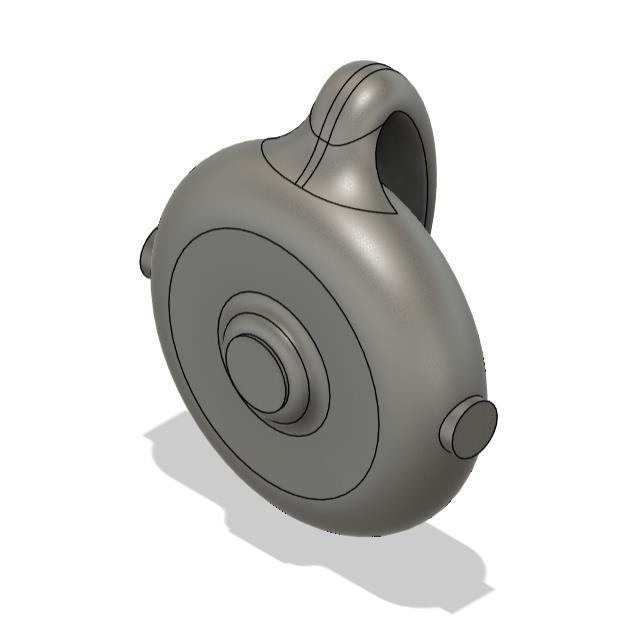
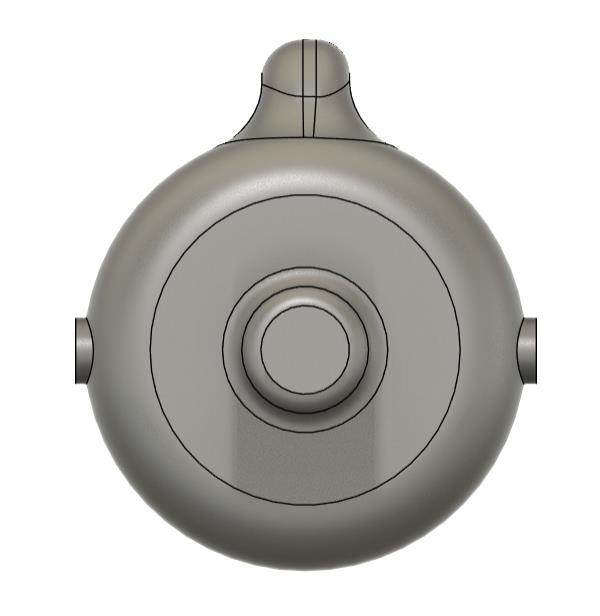
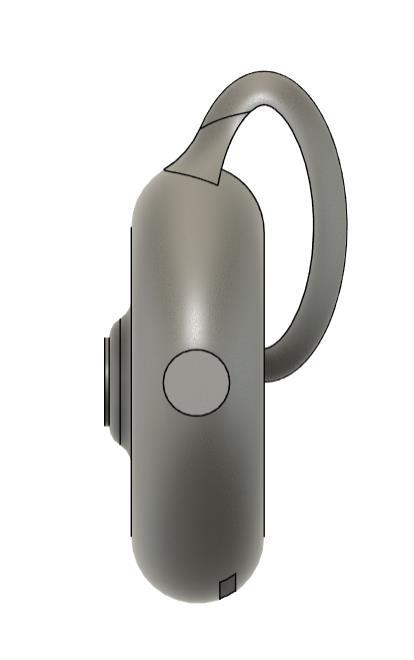
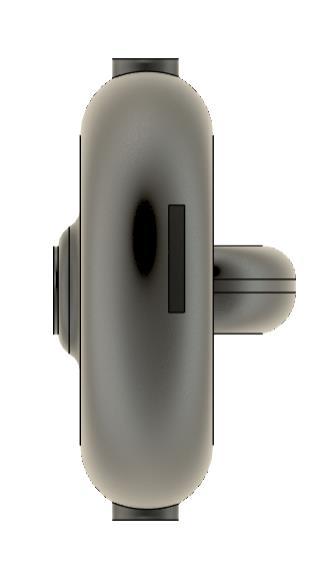
● Form Factor: The pendant is minimal weight and designed to be worn around the neck like a necklace, ensuringeaseofusewithoutbeingdisruptive.
● Sensors:
⮚ Accelerometer and Gyroscope: Identifies rapid shiftsandfallpatterns.
⮚ Heart Rate Sensor: Measures heartbeats per minutetomonitorcardiachealth.
⮚ Pulse Oximeter (SpO2 Sensor): Monitors oxygen saturationtodetectpotentialrespiratoryissues.
● Wireless Connectivity: The device is integrated with BluetoothandWi-Fitosyncthecollecteddatawitha smartphone application or directly send alerts to caregivers.
● Battery Life: Enhanced for durability and longevitywitharechargeablebattery.
● EmergencyAlertSystem:Incaseofadetectedfall or unusual biometric data, the pendant sends an emergencyalerttoemergencycontacts.
p-ISSN:2395-0072
International Research Journal of Engineering and Technology (IRJET) e-ISSN:2395-0056
Volume: 12 Issue: 02 | Feb 2025 www.irjet.net
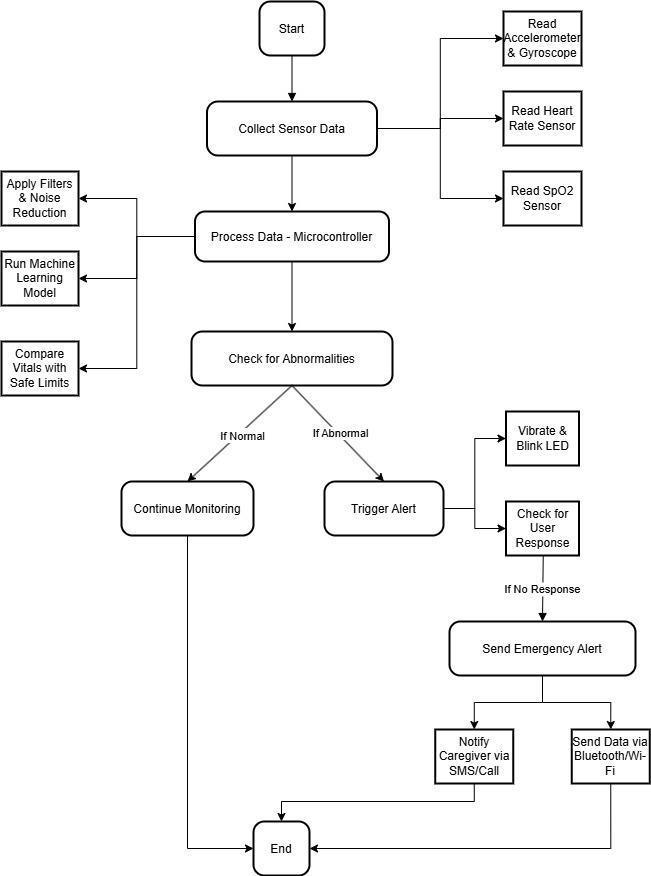
Thependantimplementsanintegrationofaccelerometers and machine learning algorithms to help distinguish between normal movements and abnormal movements. The accelerometer constantly tracks the wearer's movements, recording real-time acceleration and orientationshifts.TheMLalgorithmistrainedtocalibrate to recognize abnormal fall movements by analysing historicaldataofactualfallsversusnormaldailyactivities.
When a fall is pinpointed, the system initiates a countdown ranging from 10 to 30 seconds, during which theusercanphysicallycancelthealertifitisafalsealarm. Thisisachievedthroughaphysicalbuttonpressoravoice commandif integrated with a voice-recognitionfeature. If the alert is not withdrawn within the deadline, an emergency signal is automatically sent to pre-designated contacts, including caregivers or emergency services. The system can also provide the explicit GPS location of the wearer to ensure rapid response. Additionally, data regardingthefallincidentisloggedandcanberewatched later for medical assessment and further study of the detectionalgorithmtoimproveaccuracy.
p-ISSN:2395-0072
● Heart Rate Monitoring: Persistent pulse tracking helps detect irregularities such as tachycardia or bradycardia.
● SpO2 Monitoring: Less oxygen levels can signify respiratoryconditionssuchasearlysignsofhypoxia.
● Data Logging: Users and caregivers look up prior healthrecordsforbettermedicaldecision-making
The implementation of the pendant involves both hardware and software integration to ensure efficient functionality. The hardware consists of a microcontroller (e.g., ESP32) with inbuilt Bluetooth and Wi-Fi capabilities for easy data transmission. The biomedical sensors used are MAX30102 for heart rate and SpO2 monitoring are interfaced with the microcontroller using I2C communicationprotocols.
Theprototypedevelopmentfollowsastructuredprocess:
● Circuit Design and Integration: The electronic components, including sensors, power management circuits, and wireless communication modules, are embedded on a space efficient PCB (Printed Circuit Board). The design focuses on energy efficiency and optimalsensorplacementtoensureaccuratereadings.
● 3D Modeling and Casing Fabrication: The pendant shell is created using design software, ensuring comfortableergonomicsandstrength.Itisthenprintedin 3D using less heavy, skin-friendly materials suitable for long-termwear.
● Firmware Development: The firmware is programmed in C++ using the Arduino IDE software with addition of signal processing algorithms for perfect fall detection. The software ensures efficient data handling, real-timealerts,andperiodichealthmonitoring.
● MachineLearningforFallDetection: Acollection offallandnon-fallmotionsisusedtoteachasmartmodel that runs on the chip. This boosts precision and reduces wrongalerts.
● Mobile App Link: A helper app is made for caregivers and doctors to see live health details and warnings. The app shows graphs of vitals, keeps past records,andsendsurgentalerts.
● Testing&Check:Thesampledeviceistestedwith fakefallsandrealmovesto improveaccuracy.Thegadget isalsocheckedforsensorworkandpoweruse.
International Research Journal of Engineering and Technology (IRJET) e-ISSN:2395-0056
Volume: 12 Issue: 02 | Feb 2025 www.irjet.net p-ISSN:2395-0072
● User-Friendly: Easy interface with an LED light andvibrationalertsfornotifications.
● Wearable Comfort: Made for daily use with skinsafematerials.
● Budget-Friendly: Less cost than regular medical alertdevices.
● ReducingFalseAlerts:Improvingsmartmodelsto cutdownunnecessarywarnings.
● Healthcare System Link: Allowing secured data sharingwithdoctorsandnurses.
● Extended Battery Life: Using less-powered sensorsandenergy-savingtechnology.
This wearable pendant is a major and important step towardselderlycare,incorporatingfalldetectionandvital trackinginatiny,all-in-onedevice.Usingmodernsensors, unique algorithms, and wireless networks, it gives immediate health updates and quick emergency help whenneeded.
Its error free performance in fall detection and reduced falsealarmsmakeitatrustworthytoolforseniorcitizens. The smooth easy connection with mobile apps lets caregivers and doctors track patients’ health remotely, ensuringontimemedicalhelp.
The lightweight design makes it easy and comfortable to wear, and its cheap cost makes it accessible to more people. Future upgradations, like AI-based health predictions, better battery life, and stronger telemedicine support,willhelpinboostingitsusefulness.
With ongoing improvements, this wearable device could become a key healthcare tool, helping elderly users live better while easing the workload on caregivers and doctors.
1. WuF,ZhaoH,ZhaoY,ZhongH.Developmentofa wearable-sensor-based fall detection system. Int J Telemed Appl. 2015;2015:576364. doi: 10.1155/2015/576364. Epub 2015 Feb 16. PMID: 25784933;PMCID:PMC4346101.
2. Chaudhuri S, Thompson H, Demiris G. Fall detection devices and their use with older adults: a systematic review. J Geriatr Phys Ther. 2014 OctDec;37(4):178-96. doi: 10.1519/JPT.0b013e3182abe779. PMID:24406708;PMCID:PMC4087103.
3. DelahozYS,LabradorMA.Surveyonfalldetection and fall prevention using wearable and external sensors. Sensors (Basel). 2014 Oct 22;14(10):19806-42. doi: 10.3390/s141019806. PMID: 25340452; PMCID: PMC4239872.
4. Moore K, O'Shea E, Kenny L, Barton J, Tedesco S, Sica M, Crowe C, Alamäki A, Condell J, Nordström A, Timmons S. Older Adults' Experiences With Using Wearable Devices: Qualitative Systematic Review and Meta-synthesis. JMIR Mhealth Uhealth. 2021 Jun 3;9(6):e23832. doi: 10.2196/23832. PMID: 34081020; PMCID:PMC8212622.
5. Warrington DJ, Shortis EJ, Whittaker PJ. Are wearable devices effective for preventing and detecting falls:anumbrellareview(areviewofsystematicreviews). BMC Public Health. 2021 Nov 14;21(1):2091. doi: 10.1186/s12889-021-12169-7. PMID: 34775947; PMCID: PMC8591794.

Sanidhya S. Amrutkar is a B.Tech student in Mechatronics with a passion for medical devices and healthcare technology. His research includes developing a pendant-style fall detection systemfor elderly care. With experience in advanced manufacturing, GPS tracking, and AI/ML applications, he aims to bridge engineering and medicine to createintelligent healthcaresolutions.
2025, IRJET | Impact Factor value: 8.315 | ISO 9001:2008