
International Research Journal of Engineering and Technology (IRJET) e-ISSN: 2395-0056
Volume: 13 Issue: 04 | Apr 2026 www.irjet.net p-ISSN: 2395-0072
International Research Journal of Engineering and Technology (IRJET) e-ISSN: 2395-0056
Volume: 13 Issue: 04 | Apr 2026 www.irjet.net p-ISSN: 2395-0072
Ms. Ishika Mehta1 , Ms. Jaya Yadav2 , Ms. Alina Shaikh3, Mr. Sheikh Kashif4
1,2,3 Student, Department of Computer Engineering, Thakur Shyamnarayan Engineering College, Maharashtra, India
4Assistant Professor, Department of Computer Engineering, Thakur Shyamnarayan Engineering College, Maharashtra, India
Abstract - Traditional voting systems are often vulnerable to identity fraud, ballot manipulation, and delays in result compilation. By leveraging fingerprint biometrics, the system ensures that each voter can only cast one vote, thereby eliminating the possibility of voter fraud and multiple voting. The system [1] operates as follows: each voter is required to authenticate their identity through fingerprint scanning before accessing the voting platform. The fingerprint data is matched with a pre-existing voter database to verify eligibility.
Once authenticated, the voter is granted access to the digital ballot system, where they can securely cast their vote. The IOT component connects the voting terminals to a centralized server over a secure network, ensuring real-time data transmission and immediate updates to the voting status. In this system, each voter is first registered using a biometric fingerprint sensor. The fingerprint data is stored securely in the system database. During voting, the voter’s fingerprint is scanned again and matched with the stored data to verify their identity. In addition to fingerprint authentication, face recognition is also used as an extra layer of security to ensure that only the correct person is allowed to vote. Once the voter is successfully verified, they are allowed to cast their vote by selecting their preferred candidate using a set of buttons provided on the voting machine. The system ensures that each voter can vote only once, thereby preventing duplicate voting. The IOT [1] component connects the voting terminals to a centralized server over a secure network, ensuring real-time data transmission and immediate updates to the voting status.
Overall, this project demonstrates how combining biometric authentication with electronic voting can enhance security, improve efficiency, and build trust in the electoral process, especially for small-scale applications such as college elections or controlled environments.
Key Words: IOT, Fingerprint Authentication, Voting system, Biometric security, LCD, Real-time data processing, Smart Voting System, Biometric Authentication, Fingerprint Recognition, Face Recognition, Secure Voting, Embedded System
DemocracyisthelawinIndia.Voting[3]isanimportantway forcitizenstoexercisetheirconstitutionalrighttovoteina democracylikeIndia.Voterscommonlycasttheirballotsina polling place. As technology develops, electronic voting machines continue to be used to cast votes. The Election CommissionofIndia,inpartnershipwithBharatElectronics Limited(BEL)andElectronicsCorporationofIndiaLimited, developed the Indian electronic voting machine (EVM) in 1989.(ECIL).Since2004,all national andstatelegislature elections in India have been performed with electronic voting machines. Only31 of the120 democraticcountries relyonvotingbyelectronicmachines,eitherregionallyor nationwide.Othercountriescontinuetoutilizeballotsmade ofpaperastheydon'ttrustelectronicvotingmachines.
Electionsformthebasisofanydemocraticnation,whereby its people get to decide over their leaders and the future course of their country. Traditional voting systems have often been plagued by fake voting, ballot tampering, and delays in result processing, ultimately diminishing public trust in election results. In various countries, manual or electronicsystemsofvotingrequiretheuseofidentitycards or paper-based verification; such a process is prone to humanerrorandmanipulation.Infact,studieshavepointed outthatevenminormismatchinginthevoterauthentication processcancreatelarge-scaledisputesandcontroversiesin thecredibilityoftheresultsofelections.Therefore,thereis an increasing requirement for a safe, automated, and transparentsystemofvotingthatcanguaranteeone-personone-voteauthenticity.[2]
Toaddresstheseissues,thereisa growingneedformore secureandadvancedvotingsystems.Integratingbiometric authentication methods such as fingerprint and face recognitioncanhelpensurethatonlyauthorizedvotersare allowedtovote.Thisprojectfocusesondevelopingasmart voting system that combines biometric verification with electronicvotingtoenhancesecurity,accuracy,andtrustin theelectoralprocess.
Volume: 13 Issue: 04 | Apr 2026 www.irjet.net p-ISSN: 2395-0072
The current voting systems face challenges such as voter impersonation, fraud, errors, and limited accessibility, underminingtheintegrityandtrustinelections.Traditional methods are also time-consuming and prone to mistakes, while real-time monitoring and transparent auditing are oftenlacking.Thisprojectaimstoaddresstheseissuesby developinga"FingerprintBasedVotingSystemUsingIoT," [6] which combines biometric authentication with IoT technologytocreateasecure,efficient,andaccessiblevoting process. The system will enhance voter identification, prevent fraud, improve transparency, and offer remote voting capabilities, ensuring a more reliable and trusted electoralprocess.
One major issue with this system is the lack of strong identityverification.Thereisapossibilityofduplicatevoting or impersonation, where individuals may attempt to vote morethanonceoronbehalfofothers.Additionally,manual handling of ballots increases the risk of tampering or manipulation,whichcanaffectthefairnessandtransparency oftheelectionprocess.
Duetotheselimitations,traditionalvotingsystemsarenot fully secure or efficient. They require large manpower, careful monitoring, and still may not guarantee accuracy. Therefore,thereisaneedforamorereliablesystemthatcan ensuresecurevoterverification,preventfraud,andprovide accurate results, leading to the development of a smart votingsystemusingbiometricauthentication.
TheFingerprintVotingSystem[3]UsingIOToffersa revolutionarywaytostreamlineandsecurethevoting process by integrating biometricauthentication with IOT technology. This system ensures voter identity verification[6]usingfingerprint recognition, allowing only authorized individuals to cast their votes. The IOT infrastructure connects votingterminalstocentraltheuser-friendlyinterface makesthevotingprocesssmoothandaccessibleforall voters, while the elimination of paper ballots and manual processes helps reduce the cost and complexity of elections.
Primary Objective
ThemainobjectiveoftheVoteSuresystemistodesignand developasecureandreliablesmartvotingmachinethatuses biometricfingerprintauthenticationtoverifyvoteridentity before allowing vote casting. The system aims to prevent multiple voting, impersonation, and electoral fraud while ensuring accurate and fast vote counting. By integrating biometric verification with digital storage, the project enhances transparency, efficiency, and reliability in the voting process.Thesystem alsoaimstodemonstratehow
moderntechnologieslikeIoTandencryptioncanimprove traditionalvotingmechanisms.
To authenticate voters using fingerprint recognition.
Topreventduplicateorfakevoting.
Tostorevotessecurelyindigitalformat.
Toenablequickandaccuratevotecounting.
To improve transparency and reduce manual errors.
The Fingerprint Voting System[3] Using IOT offers a revolutionary way to streamline and secure the voting process by integrating biometric authentication with IOTtechnology. This system ensures voter identity verification[6]usingfingerprint
recognition, allowing only authorized individuals tocast their votes. The IOT infrastructure connects voting terminals to central the user-friendly interface makes the votingprocesssmoothandaccessibleforallvoters, while the elimination of paper ballots andmanual processes helps reduce the cost andcomplexity of elections.
The Fingerprint Voting System[3] Using IOT offers a revolutionary way to streamline and secure the voting process by integrating biometricauthentication withIOT technology. This system ensures voter identityverification[6] using fingerprint recognition, allowing only authorized individuals tocast their votes. The IOT infrastructure connectsvotingterminalstocentral theuser-friendlyinterfacemakesthevotingprocesssmooth and accessible for all voters, while the elimination of paper ballots andmanual processes helps reduce the cost andcomplexity of elections.
The Fingerprint Voting System[3] Using IOT offers a revolutionarywaytostreamlineandsecurethevoting by integrating biometric authentication with IOT technology. This system ensures voter identity verification[6]usingfingerprint recognition, allowing only authorized individuals to cast their votes. The IOT infrastructure connectsvotingterminalstocentraltheuserfriendly interface makes the voting process smooth and accessibleforallvoters, while the elimination of paper ballots andmanual processes helps reduce the cost and complexity of elections.
The Fingerprint Voting System[3] Using IOT offers a revolutionary way to streamline and secure the voting process by integrating biometricauthentication withIOT technology. This system ensures voter identity verification[6]usingfingerprint recognition, allowing only authorized individuals to cast their votes. The IOT infrastructure connectsvotingterminalstocentraltheuserfriendly interface makes the voting process smooth and
International Research Journal of Engineering and Technology (IRJET) e-ISSN: 2395-0056
Volume: 13 Issue: 04 | Apr 2026 www.irjet.net p-ISSN: 2395-0072
accessibleforallvoters, while the elimination of paper ballots andmanual processes helps reduce the cost and complexity of elections.
The integration of IoT technology into fingerprint-based voting systems has emerged as a promising solution for improving both the security and efficiency of electoral processes. By incorporating biometric authentication alongside real-time data handling, these systems aim to ensurevoterlegitimacyandsignificantlyreducethechances ofelectoralmalpractice[3],[4],[5].Researchhighlightsthe effectiveness of fingerprint recognition in accurately identifying eligible voters, while IoT enables continuous monitoringandcentralizedcontrolofvotingoperations. Despite these advantages, several concerns persist, particularly in areas such as data privacy, system dependability,andusertrust.Addressingthesechallenges requiresfurtherinvestigation,includingthedevelopmentof stronger security mechanisms and the exploration of advanced technologies like blockchain to enhance transparencyandprotecttheintegrityofthevotingsystem.
There are many drawbacks in using the paper ballot like moremanpowerandtimetakingprocessforcastingavote andforannouncingtheresult.Everyyearthepopulationis increasingsoitishardtousethepaperballotsystemsand technology is growing so in 1977 the chief election commissioner mooted the idea of EVM. [7]. Despite the improvementsintroducedbyelectronicandbiometric-based votingsystems,severalimportantconcernsstillremain.One majorissueisdataprivacy,assensitiveinformationsuchas biometric data must be stored securely. If this data is not properly protected, it can lead to misuse or unauthorized access,raisingseriousprivacyconcernsforusers.
Another limitation is related to system dependability and reliability.Electronicsystemsmayfacetechnicalproblems suchashardwarefailure,softwareerrors,ornetworkissues, whichcandisruptthevotingprocess.Insomecases,system failures can lead to delays or incorrect results, reducing confidence in the system. Additionally, many systems dependonasinglemethodofauthentication,whichmaynot besufficienttopreventalltypesoffraud.
There is also a challenge in terms of user trust and transparency.Votersmayfeeluncertainaboutwhethertheir votesarebeingrecordedandcountedcorrectly,especially when the process is not visible. To overcome these limitations,thereisaneedforstrongersecuritymeasures, bettersystemdesign,andtheuseofadvancedtechnologies. Techniques such as multi-level authentication and secure data handling can improve reliability, while emerging
technologies like blockchain can be explored to increase transparencyandensuretheintegrityofthevotingsystem.
The reviewed papers collectively focus on enhancing the security, efficiency, and transparency of voting systems through the integration of biometric technologies and modern computing approaches. Most of the proposed systems rely on fingerprint-based authentication, often combinedwithadditionalmethodssuchasfacialrecognition, RFID, or Aadhaar verification, to ensure that only eligible voters can cast their votes and only once. The use of IoT enables real-time data transmission and centralized monitoring, while technologies like cloud computing, artificialintelligence,andblockchainfurtherstrengthendata securityandsystemreliability.Thesesystemssignificantly reduceissuespresentintraditionalvotingmethods,suchas voter impersonation, ballot tampering, and delays in vote counting,whilealsoimprovingaccuracyandpublictrustin theelectoralprocess[1],[7],[8],[9].
Despitetheseadvantages,severalchallengesandlimitations areconsistentlyidentifiedacrossthestudies.Keyconcerns includedataprivacyrisksassociatedwithstoringsensitive biometric information, high implementation and maintenancecosts,andscalabilityissueswhenappliedata national level. Additionally, system reliability depends heavilyonnetworkconnectivityandhardwareperformance, andbiometricrecognitionmayfacedifficultiesunderrealworldconditions.Publicacceptanceandtrustalso remain critical factors for successful adoption. Overall, while biometricandIoT-basedvotingsystemspresentapromising futureforsecureandefficientelections,furtherresearchand developmentarenecessarytoaddressthesechallengesand ensurepractical,large-scaleimplementation[2],[3],[4],[5].
This project introduces a secure and efficient biometric basedvotingandauthenticationsystemthatintegratesthe R307 fingerprint module with an ESP32/Arduino microcontroller.The primaryobjectiveof thesystem is to ensure a reliable and tamper-resistant voting process by utilizing biometric identification techniques. The R307 fingerprint sensor plays a central role in capturing and verifyingusers’fingerprints,therebypreventing duplicate entries and eliminating the possibility of unauthorized voting.
Tomanagethesystemeffectively,fourcontrolbuttonsare incorporated, namely enroll, increment, decrement, and delete.Thesebuttonsallowadministratorstoregisternew users,navigatestoredfingerprintrecords,andremovedata when necessary. In addition, three dedicated buttons are assignedforcandidateselection,enablingvoterstocasttheir votesinasimpleanduser-friendlymanner.Thisstructured
International Research Journal of Engineering and Technology (IRJET) e-ISSN: 2395-0056
Volume: 13 Issue: 04 | Apr 2026 www.irjet.net p-ISSN: 2395-0072
interface ensures that both administrative operations and votingproceduresarecarriedoutsmoothly.
Allhardwarecomponentsareinterconnectedusingjumper wires,creatingacompactandorganizedsetupsuitablefor prototypeandsmall-scaledeployment.Themicrocontroller serves as the core processing unit, coordinating all operations such as user enrollment, identity verification, voterecording,anddatamanagement.Overall,thissystem improvestransparency,accuracy,andefficiencyinthevoting process. Its design makes it particularly suitable for small scaleelectronicvotingenvironments,aswellasforsecure access control applications where reliable user authenticationisessential.
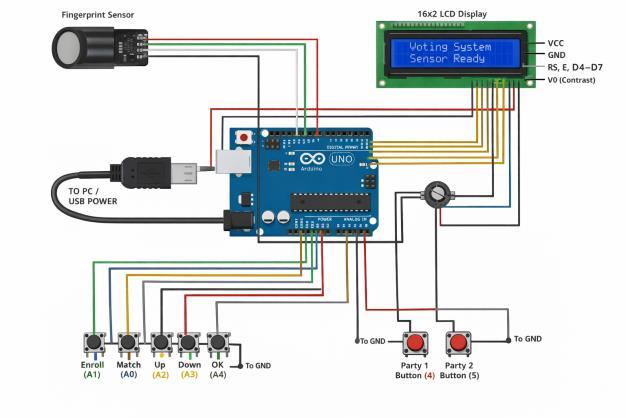
The project follows the Waterfall Model, a structured and sequential approach to system development. In the requirementsphase,ledbyTeamLeaderIshika,thesystem objectives were defined, including secure voting using fingerprint authentication (R307s) module and candidate selectionthroughpushbuttons.
In the design phase, Designer created the system architecture,circuitdiagrams,andworkflowforenrolment, verification,andvotingprocesses.Thedevelopmentphase, carried out by Developer, involved assembling hardware components such as Arduino uno R3, fingerprint module, pushbuttonsusingjumperwires,LCDtodisplaytheresult alongwithprogrammingthesystemfunctionalities.
During the testing phase, Tester evaluated each module individuallyandasacompletesystemtoensureaccuracy, reliability, and prevention of duplicate voting. In the deployment phase, the system was implemented as a working prototype and demonstrated in real-time conditions.
Finally,inthemaintenancephase,theentireteammonitors system performance, fixes issues, and updates features to ensurelong-termefficiencyandscalability
Embedded Systems: The project is based on embedded system technology where the ESP32/Arduino microcontroller acts as the core unit, controlling all hardware components and executing programmed instructionsinrealtime.
Biometric Authentication: Fingerprint recognition using the R307 module ensures secure user identification. This technology prevents unauthorized access and duplicate votingbyverifyinguniquebiometricdata.
Embedded C / Arduino Programming: The system is programmedusingEmbeddedCintheArduinoIDE,enabling interactionbetweenhardwarecomponentsandexecutionof systemlogic.
Human-MachineInteraction(HMI): Pushbuttonsprovide a simple interface for users to interact with the system, makingoperationslikeenrolmentandvotingeasyanduserfriendly.
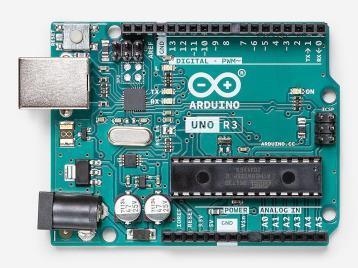
Arduino UNO R3
Actsasthemaincontrollerofthesystem.Itprocessesinputs from sensors, buttons, and modules, and controls outputs accordingly.BasedontheATmega328P,itissimple,reliable, and easy to program, making it suitable for basic control tasks(unlikeESP32,ithasnobuilt-inWi-Fi).
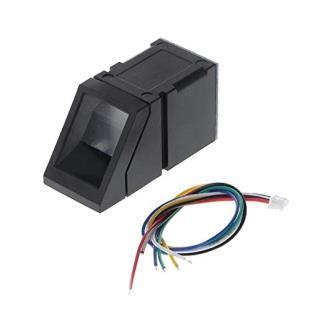
R307 Fingerprint Module
A biometric sensor used for fingerprint enrollment and verification.Ithasinbuiltstorage,fastrecognitionspeed,and high accuracy, ensuring secure and duplicate-free authentication.
International Research Journal of Engineering and Technology (IRJET) e-ISSN: 2395-0056
Volume: 13 Issue: 04 | Apr 2026 www.irjet.net p-ISSN: 2395-0072
Push Buttons (5 Control + 2 Candidate Selection)
Used for user interaction. Control buttons manage operations like enroll, increment, decrement, and delete, whilecandidatebuttonsallowvoteselection.
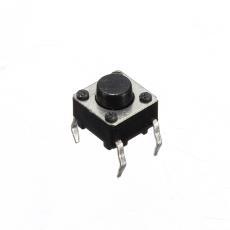
Fig 4-PushButtons
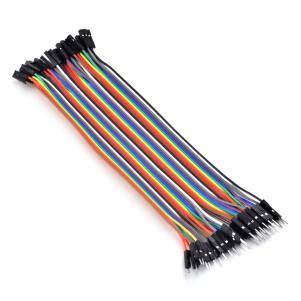
Jumper Wires
Usedforcircuitconnectionsandprototyping.Theyensure flexibleandeasyassemblyofcomponentswithoutsoldering.
Supporting Components
PowerSupply
Breadboard
Buzzer
DisplayModule(LCDorsimilar)
5. SYSTEM ARCHITECTURE
The proposed system is divided into multiple layers to ensure secure and smooth operation. Each layer in the systemperformsaspecificfunction,andtogethertheycreate a seamless workflow from voter authentication to vote recording.
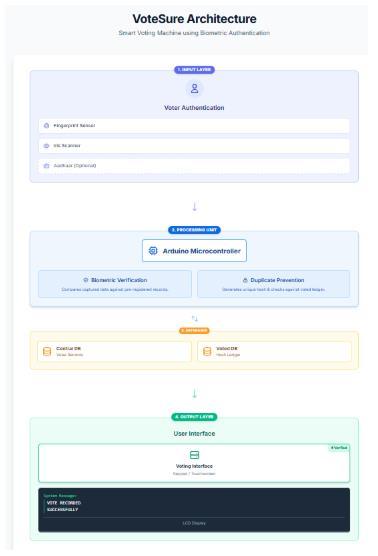
Attheinputlayer,thesystemfocusesonauthenticatingthe voter using advanced biometric techniques such as fingerprintrecognitionand facedetection.Thesemethods provideahighlevelofsecuritybecausebiometrictraitsare uniquetoeachindividualanddifficulttoreplicate.Whena voter attempts to access the system, their fingerprint is scannedusingasensormodule,andtheirfacialfeaturesare capturedthroughacamera.Thisdataisthencomparedwith thepre-storedbiometricinformationinthesystem.Onlyif both (or either, depending on system design) match successfully,thevoterisconsideredvalid.Thislayeractsas the first line of defines against unauthorized access and ensuresthatonlyeligiblevoterscanproceedfurther.
Once authentication is completed, the data moves to the processing layer, which serves as the brain of the system. ThislayeriscontrolledbyamicrocontrollersuchasArduino orESP32.Itprocessestheincomingbiometricdata,performs validationchecks,andmanagesdecision-makingoperations. One of its critical responsibilities is to verify whether the authenticatedvoterhasalreadycasttheirvote.Thisisdone by checking unique voter IDs against stored records. If a duplicateattemptisdetected,thesystemimmediatelyblocks accessanddisplaysanappropriatemessage.Theprocessing unit also coordinates communication between different components,ensuringsmoothdataflowacrossthesystem.
Thenextstageisthedatabaselayer,whichplaysavitalrole instoringandmanagingdatasecurely.Thislayerconsistsof twomainparts:thevoterdatabaseandthevotingdatabase. Thevoterdatabasecontainsessentialdetailssuchasvoter
Volume: 13 Issue: 04 | Apr 2026 www.irjet.net p-ISSN: 2395-0072
ID,biometricdata(fingerprinttemplatesandfacialfeatures), andeligibilitystatus.Ontheotherhand,thevotingdatabase records the votes cast by each voter in a secure and encrypted format. Proper database management ensures data integrity, prevents tampering, and allows efficient retrieval of information when needed. In some implementations,thislayercanbeconnectedtoacentralized server or cloud storage to enhance scalability and accessibility.
Finally, the output layer provides the interface through whichthevoterinteractswiththesystem.Aftersuccessful authentication, the voter is presented with voting options usingpushbuttonsoradigitalinterface.Thesystemensures thatthevotingprocessissimpleanduser-friendly.Oncea vote is cast, the system records it in the database and confirmstheaction.AnLCDdisplayisusedtoproviderealtime feedback, such as “Authentication Successful,” “Vote Recorded Successfully,” or “Already Voted.” This layer enhancesuserexperiencewhilemaintainingtransparencyin thevotingprocess.
Overall, this layered architecture improves the system’s efficiency by clearly separating responsibilities across different stages. It enhances security through biometric verification, prevents fraudulent activities like duplicate voting, and ensures accurate data handling through structuredstorageandprocessing.Byintegratinghardware components with intelligent software control, the system achieves a robust and scalable solution for modern electronicvotingapplications.
The developed smart voting system was successfully implemented and tested using the ESP32/Arduino microcontrolleralongwiththeR307fingerprintmoduleand cameramodule.Thesystemwasabletoaccuratelyregister users and verify their identity using fingerprint authentication.Duringtesting,thesystemcorrectlyallowed each verified user to cast their vote using the candidate selectionbuttons.
It was observed that once a user had voted, the system successfully prevented duplicate voting by restricting further access. The LCD display provided clear messages such as authentication success, voting status, and errors, whichimproveduserinteractionandunderstandingofthe system.
The overall performance of the system was found to be reliableforsmall-scaleapplications.Theresponsetimewas quick, and the system operated smoothly without major issues.Theresultsdemonstratethattheproposedsystemis effective in improving voting security, reducing manual errors, and ensuring transparency. However, minor improvementscanbemadeintermsofspeedandaccuracy
of face recognition for better performance in real-world conditions.
After testing the biometric voting system, it showed clear improvementsovertraditionalvotingmethods.Thesystem was able to correctly identify registered voters using fingerprints and facial recognition almost every time. No fake or duplicate votes were allowed, which shows the system is very reliable. Voting and counting were much faster than paper-based methods. Votes were stored securelyinthesystemandcountedautomatically,sothere were no delays or mistakes. Overall, the system worked efficientlywhilekeepingvoterinformationsafeandprivate [2].
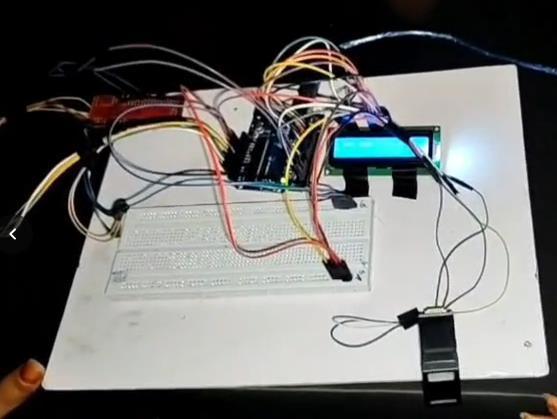
Theprojectsuccessfullydemonstratesasecureandefficient biometric-based voting system using fingerprint and face recognition.ByintegratingtheR307fingerprintmodulewith an ESP32/Arduino microcontroller, the system is able to accuratelyverifyusersandpreventunauthorizedaccess.The inclusionofsimplepushbuttonsforvotingmakesthesystem easy to use and suitable for practical implementation in small-scaleenvironments.
The system effectively fulfils its main objectives, such as ensuringsecurevoterauthentication,preventingduplicate voting,andprovidingasmoothandreliablevotingprocess. The combination of biometric verification and electronic voting improves transparency and reduces the chances of fraud or manual errors. The system also shows how hardware and software can work together to create a dependablesolution.
Overall, the project provides a strong foundation for developing secure voting systems. It highlights the importanceofusingmoderntechnologieslikebiometricsto enhancetheaccuracyandtrustworthinessofelections.The solution is practical, cost-effective, and can be used in controlled environments such as colleges or small organizations.
International Research Journal of Engineering and Technology (IRJET) e-ISSN: 2395-0056
Volume: 13 Issue: 04 | Apr 2026 www.irjet.net p-ISSN: 2395-0072
In the future, the system can be further improved by integratingcloud-basedstorage,whichwillallowcentralized data management and easier access to voting records. AdvancedfacerecognitiontechniquesusingAIcanalsobe implemented to improve accuracy and make the system morereliable.Addingadisplayunitordevelopingamobile application can enhance user interaction and make the systemmoreuser-friendly. The system can also be expanded for larger-scale applicationsbyimprovingitsperformanceandscalability. Integration with IoT technologies can enable remote monitoring and real-time data updates. Additionally, implementingstrongersecurityfeaturessuchasencryption can further protect sensitive data and ensure safer communicationbetweencomponents. Furtherenhancementscanincludetheuseofmoreadvanced microcontrollersandimprovedbiometricmethodssuchas irisrecognition.Theseupgradescanmakethesystemmore robust, accurate, and suitable for real-world applications. Withcontinuousimprovements,thesystemhasthepotential tobeusedinlargerandmorecriticalvotingenvironments.
[1]Anushka Fase“FingerprintBasedVoting SystemUsing IOT”
[2] Prof. Bina R. Rewatkar “Advance Voting System Using BiometricVerificationandArtificialIntelligence”
[3] Dr. Shalini Shravan “BIOMETRIC IDENTITY AND IOTBASEDELECTRONICVOTINGMACHINE”
[4]PrasadRamchandraMavarkar“BiometricVotingSystem”
[5] CH Srilatha “Fingerprint-based biometric smart electronic voting machine using IoT and advanced interdisciplinaryapproaches”
[6] R.Akila Mukesh,Muraree Lal Meena, G. Sasirekha, A. Selvameena,TamilselviTt,FingerPrintBasedVotingSystem
[7] MR.M JANARTHANAN “AADHAR BASED ELECTRONIC VOTINGMACHINE”
[8] Dr.V.LATHA “AADHAR BASED ELECTRONIC VOTING SYSTEMANDPROVIDINGAUTHENTICATIONONINTERNET OFTHINGS”
[9]ChetanAdhikar“DevelopmentofOnlineVotingSystem UsingAadharAuthentication”