
International Research Journal of Engineering and Technology (IRJET) e-ISSN: 2395-0056
Volume: 12 Issue: 11 | Nov 2025 www.irjet.net p-ISSN: 2395-0072
International Research Journal of Engineering and Technology (IRJET) e-ISSN: 2395-0056
Volume: 12 Issue: 11 | Nov 2025 www.irjet.net p-ISSN: 2395-0072
Mr. Kailas
Darade1 , Dr. Sagar Gawande2
1ME 2nd Year Environmental Engg. & Anantrao Pawar College of Engineering & Research Pune, MH, India
2Professor Guide & Anantrao Pawar College of Engineering & Research Pune, MH, India
Abstract - As global freshwater reserves decline due to climate change, expanding populations, and rapid urban development, the need for alternative water sources has become increasingly urgent. Potable reuse the advanced treatment of wastewater to produce drinking-quality water offers a sustainable solution, especially in water stressedregions. This revised report examines the feasibility, treatment technologies, public perception challenges, and economic considerations involved in converting wastewater into potable water. Modern processes such as reverse osmosis, UV treatment, and advanced oxidation make it possible to achieve water quality that meets or surpasses established drinking standards. Although the technology is reliable, public acceptance continues to be a major barrier. This report concludes with recommendations to support broader integration of potable reuse within future water supplysystems
Key Words: Treated wastewater, drinking water, advanced treatment methods, UV treatments, public perception, water reuse technology.
The scarcity of freshwater resources has emerged as one of the most pressing global concerns, exacerbated by factors such as climate change, rapid urbanization, and increasing population. According to the UN World Water Development Report (2023), approximately 2.2 billion people worldwide lack access to safely managed drinking water.InIndia,thecrisisisespeciallysevere NITIAayog (2023) projects that by 2030, 40% of the population may have no access to safe drinking water. States like Maharashtraillustratetheurgencyofthisissue,withover 70% of districts experiencing significant groundwater depletion,contributingtoagrowingnationalwaterdeficit. This escalating demand for potable water has placed enormous pressure on traditional freshwater sources, necessitating innovative and sustainable alternatives. One such solution is potable reuse, which involves the treatment and recycling of wastewater to meet or exceed drinking water quality standards (Nilsson et al., 2017; WHO, 2017). This approach has gained traction globally due to its dual benefits: augmenting water supply and reducingenvironmentalpollutionfromuntreatedeffluent. Advanced water treatment technologies form the backbone of potable reuse systems. Processes such as reverse osmosis (RO), ultraviolet (UV) disinfection, and
advanced oxidation processes (AOPs) are widely adopted to eliminate dissolved solids, pathogens, and chemical contaminants (Li et al., 2022; Shon et al., 2020; Smyth et al., 2019). Additionally, activated carbon filtration plays a vital role in improving taste, odor, and removing residual organic compounds (Xie et al., 2021). These technologies have been successfully implemented in several countries, including Singapore, the United States, and Australia, demonstrating their efficacy and long-term viability (Schipperetal.,2021).
However, India faces a distinct set of challenges in adopting potable reuse at scale. Unlike developed nations that benefit from robust infrastructure and higher public trust in technology, India struggles with insufficient wastewater treatment coverage, fragmented regulatory oversight, and limited public awareness. Cultural stigma associated with recycled wastewater, commonly referred to as the "yuck factor," further impedes social acceptance (Voutchkovetal.,2016).Additionally,thehighoperational costs and energy requirements of technologies like RO pose economic challenges, especially in rural and resource-constrainedareas(Theesetal.,2022).
Given these factors, this report expands upon previous research by not only exploring the technical feasibility of potable reuse but also by evaluating broader dimensions including:
● Compliancewithhealthandsafetystandards, especially asprescribedbyWHOandIndianregulatorybodies,
●Economic and environmental implications of implementingadvancedtreatmentsystems,
● Public perception and societal acceptance of drinking recycledwater,and
● Potential integration of wastewater reuse into infrastructure planning, particularly in urban developmentandconstruction.
By addressing these interdisciplinary components, the study aims to provide a holistic understanding of potable reuse as a sustainable and scalable water resource solution in the Indian context. It advocates for a multipronged approach involving technology, governance, public engagement, and infrastructure alignment to overcome existing barriers and ensure water security for futuregenerations
International Research Journal of Engineering and Technology (IRJET) e-ISSN: 2395-0056
Volume: 12 Issue: 11 | Nov 2025 www.irjet.net p-ISSN: 2395-0072
India is experiencing a critical water shortage, with projections indicating that nearly half the population may lackaccesstodrinkablewaterinthecomingdecade.High demand, population pressure, and poor management practices have accelerated groundwater depletion. Infrastructure limitations, low public awareness, and financial constraints further complicate the development of advanced water treatment facilities. Public hesitation towardpotablereusealsopresentsachallenge.Thegoalis to identify viable strategies for safely integrating treated wastewater into India’s water supply framework while addressingtechnological,regulatory,andsocialbarriers.
The global scarcity of freshwater resources is an urgent issue that has been exacerbated by various factors, including climate change, population growth, and urbanization. As a result, many regions are facing significant water shortages, prompting the need for alternative water sources. Potable reuse, which involves recycling treated wastewater to meet drinking water standards, has gained attention as a promising solution to address these challenges (UNESCO, 2018; Juhasz et al., 2018). This literature review explores the advancements, challenges, and key considerations in the field of potable water reuse, with a focus on the technological, economic, andsocietalaspects.
The primary goal of potable reuse is to transform wastewaterintowaterthatissafeforhumanconsumption. Advancedwater treatment technologiesare central tothis process. Among the most effective methods are reverse osmosis (RO), ultraviolet (UV) disinfection, advanced oxidation processes (AOPs), ultrafiltration (UF), and activated carbon filtration (Li et al., 2022; Smyth et al., 2019;Shonetal.,2020;Xieetal.,2021).
ROisawidelyusedtechnologyinpotablereusesystems.It employsasemi-permeablemembranetoremovedissolved solids,contaminants,salts,andpathogens,producinghighquality water. Studies highlight RO's effectiveness in eliminating heavy metals, pharmaceuticals, and microorganisms, making it a cornerstone of potable reuse systems (Li et al., 2022). However, the energy-intensive natureofROandthechallengeofmanagingbrinedisposal present significant drawbacks, particularly in areas with limitedenergyresources.
Ultraviolet (UV) Disinfection
UV disinfection is effective for inactivating bacteria, viruses, and protozoa without the use of chemicals. It is frequentlycombinedwithothertreatmentprocesses,such
asROorAOPs,toprovideanadditionalsafetylayer.While UVexcelsinpathogeninactivation,itseffectivenessagainst chemicalcontaminantsislimited.Researchhasshownthat UVsignificantlyenhancesmicrobialsafetybutmayrequire supplementary processes to address chemical pollutants (Smythetal.,2019).
AOPs, including ozonation and hydrogen peroxide treatment, are pivotal for breaking down complex organic contaminants resistant to conventional treatment. AOPs are effective in degrading substances such as pesticides and pharmaceuticals, ensuring the removal of contaminants that could otherwise pose health risks. However,theoperationalcostsandpotentialgenerationof secondary by- products warrant careful consideration (Shonetal.,2020).
Ultrafiltration (UF)
UF is less energy-intensive than RO and is effective in removing suspended solids, bacteria, and some viruses. However, it cannot effectively remove dissolved salts or smaller chemical contaminants. UF is often used as a pretreatment stage to improve the efficiency and lifespan ofROmembranes
Activated Carbon Filtration
Activated carbon filtration removes organic compounds, chlorine, and other chemicals, enhancing water's taste, odor, and overall acceptability. The adsorption properties of activated carbon make it invaluable for improving the sensoryqualityofrecycledwater(Xieetal.,2021).
Eachtechnologyhasuniquestrengthsandlimitations:
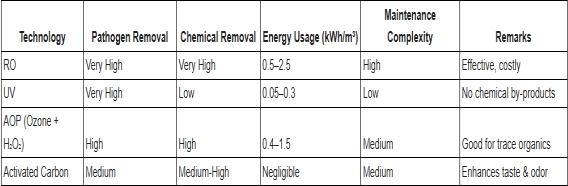
● Efficiency: RO excels in removing a wide range of contaminantsbuthashighenergydemands.UVeffectively addresses pathogens but requires integration with other technologiesforchemicalcontaminantremoval.
● Cost: UF and activated carbon filtration are more costeffective but may lack comprehensive contaminant removalcapabilities.
● Waste Generation: RO produces brine as a by- product, posing environmental challenges, while AOPs and UV systemstypicallygenerateminimalwaste.
A balanced approach, combining these technologies based on regional needs and resource availability, is critical for optimizingpotablereusesystems.
Despite the advancements in potable reuse technologies and their successful implementation in several developed countries, significant gaps in existing research hinder
International Research Journal of Engineering and Technology (IRJET) e-ISSN: 2395-0056
Volume: 12 Issue: 11 | Nov 2025 www.irjet.net p-ISSN: 2395-0072
widespread adoption in diverse contexts, particularly in developingnationssuchasIndia.
Lack of India-Specific Studies:
Current research predominantly focuses on the technical feasibility and economic assessments of potable reuse in developed nations with robust infrastructure. There is limited investigation into the socio-economic and infrastructural challenges unique to India, where water scarcity is exacerbated by uneven resource distribution, high population density, and varying levels of public awareness. Understanding the public perception, societal acceptance, and trust in potable reuse is crucial for its successinIndia.
EconomicFeasibilityandIntegrationofRenewableEnergy
The economic viability of potable reuse systems in India remains underexplored, particularly regarding the integration of renewable energy sources such as solar or windpowerintowatertreatmenttechnologies.Combining renewable energy with processes like reverse osmosis or advanced oxidation could reduce operational costs and environmental impacts, yetresearch in this area issparse. Studies addressing the cost-benefit analysis of such integrationscouldprovidevaluableinsightsforsustainable implementation.
Bridging the Gap:
This study aims to address these research gaps by evaluating potable reuse technologies within the Indian context,focusingonsocialacceptance,economicfeasibility, andthepotentialofrenewableenergyintegration.
C. Economic Considerations:
Theeconomicviabilityofpotablereusedependsonseveral factors,includinginitialcapitalcosts,operationalexpenses, and long-term benefits. RO, while effective, involves significant energy consumption and maintenance costs. Conversely, technologies like UF and activated carbon filtrationoffercostadvantagesbutrequireintegrationwith advancedsystemsforcomprehensivetreatment.
D. Public Perception and Social Acceptance:
Publicperceptionplaysacriticalroleintheacceptanceand success of potable reuse initiatives. Despite the scientific reliability and safety of advanced water treatment technologies, psychological and cultural barriers often referredtoasthe“yuckfactor” influencepublicattitudes negatively.Thisaversionstemsfromtheideaofconsuming waterthatwasoncesewage,regardlessofhowthoroughly ithasbeenpurified(Dixonetal.,2019).Theseconcernsare rooted more in emotion and cultural beliefs than in empiricalevidence.
Studies from developed regions illustrate that public resistance can be overcome through strategic communicationandpolicyframeworks. In
Singapore, the success of the NEWater program is attributed to comprehensive public outreach, educational campaigns, water tasting events, and facility tours that helpeddemystifythetreatmentprocess.Trustwasfurther built by consistently publishing monitoring results and engaging citizens in water safety discourse (PUB Singapore,2022).
Similarly, in California, the Orange County Water District implemented an extensive community engagement model for its Groundwater Replenishment System (GWRS). Through media transparency, school education programs, and open- house visits to water treatment facilities, the district gained public approval for indirect potable reuse (McCurryetal.,2020).
In contrast, India faces additional hurdles. Public knowledge of water reuse remains limited, and trust in municipal systems is often low due to issues like corruption, infrastructure decay, and inadequate communication. Culturally, water purity is deeply associated with spiritual cleanliness in many Indian communities, making the concept of recycling wastewater moredifficulttonormalize(Ghimireetal.,2020).
ToenhancesocialacceptanceinIndia,itisessentialto:
● Implement awareness campaigns to educate communities on treatment technologies and safety standards;
● Engagecommunityleadersandinfluencerstobuildtrust;
● Ensurepolicy-leveltransparencyregardingwaterquality monitoringandgovernance;
● Leverage successful models like NEWater to contextualizepotablereuseinculturallyacceptableways.
Ensuring public health is the foremost concern in any potable reuse system. Properly designed and operated advanced treatment systems are capable of producing water that meets or exceeds international and national drinking water standards. These include the World Health Organization(WHO)GuidelinesforDrinking-WaterQuality (2023),theBureauofIndianStandards(BIS)IS10500,and CentralPollution
Control Board (CPCB) recommendations for reclaimed waterreuse.
Key health concerns associated with recycled water include:
● Pathogens(e.g.,E.coli,Giardia,viruses),
● Chemical contaminants (e.g., nitrates, heavy metals like leadandarsenic),
International Research Journal of Engineering and Technology (IRJET) e-ISSN: 2395-0056
Volume: 12 Issue: 11 | Nov 2025 www.irjet.net p-ISSN: 2395-0072
● Emerging pollutants such as pharmaceuticals and personalcareproductresidues.
Multi-barrier treatment trains, which typically include a combinationofcoagulation,ultrafiltration,reverseosmosis (RO),advancedoxidationprocesses(AOPs),andultraviolet (UV)disinfection,havebeenshowntoeffectivelyeliminate these contaminants. Studies confirm that these technologies, when used in combination, can reduce pathogenloadsby5–6logunitsandremoveupto99.9%of traceorganics(Cunninghametal.,2021;WHO,2023). Moreover,continuousonlinemonitoringofparameterslike turbidity, chlorine residuals, total organic carbon (TOC), and microbial indicators such as total coliforms enhances systemreliability.Riskassessmentsandregularauditsare crucial to maintaining long-term compliance and building consumerconfidence.
In the Indian context, the integration of BIS and CPCB guidelines ensures thatlocally relevant health risks such as fluoride in groundwater or urban runoff contamination are also addressed. However, gaps still remaininenforcementandmonitoringatmunicipallevels, makingpublictrustinthesafetyoftreatedwaterharderto establish.
Toensurehealthsafety in India, policy recommendations include:
● Strengthening surveillanceandmonitoring protocols at stateandcitylevels;
● Mandating risk-based water safety plans for all reuse plants;
● Creating emergency response frameworks in case of systemfailuresorcontaminantbreaches
4. METHODOLOGY
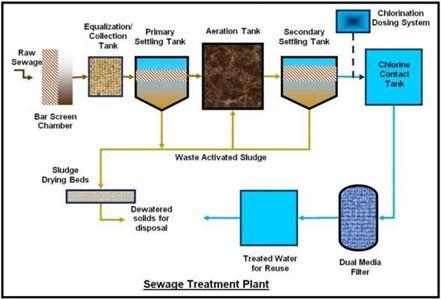
The approach consists of a multi-stage treatment system, includingpre-treatment,primarytreatment,andadvanced treatment technologies. It also focuses on water quality assessmentstodeterminewhetherthetreatedwastewater meets the standards required for drinking purposes (Asanoetal.,1996).
A. Sample Collection and Source Selection Sample
Source:
Wastewater samples will be collected from either a municipal wastewater treatment plant or industrial effluent, representing typical sources of urban and industrial wastewater. In this study, samples are specificallyobtainedfromtheCharholiSewageTreatment Plant, which has a treatment capacity of 21 million litres perday(MLD).Thesesourcesarecommonforwastewater that undergoes treatment for reuse or discharge into naturalwatersystems(UnitedNationsetal.,2018).
Volume and Frequency:
Samples will be collected in volumes ranging from 20 to 50litersatdifferenttimesofday(morning,afternoon,and evening)tocapturevariationsinwastewatercomposition. Sampleswillbetakenbothbeforeandafterpre-treatment and primary treatment stages to evaluate the improvementsinwaterqualitythroughouttheprocess(Li etal.,2022).
B. Pre-Treatment Process
The pre-treatment stage involves physical methods to eliminate larger particles and debris, preparing the wastewaterforsubsequenttreatmentsteps.
● Screening: Wastewater will pass through mechanical coarse screens that remove large solids like plastics, rags, and other debris. The effectiveness of this process will be measured by the amount of solids removed and the reductioninsuspendedparticlesintheeffluent(Mauteret al.,2008).
● Sedimentation: After screening, the wastewater will undergo sedimentation in a primary clarifier or tank, allowingsuspendedsolidstosettlebygravity.Thesettled sludge will be analyzed for Total Suspended Solids (TSS), and the clarified water will be tested for Biochemical Oxygen Demand (BOD) and Chemical Oxygen Demand (COD)(Vanderkelenetal.,2019).
Theprimarytreatmentstageaimstofurtherreducethe organicmatterandsuspendedsolidsthroughphysicaland chemicalmethods.
● Coagulation and Flocculation: Coagulantssuchasalum orferricchloridewillbeaddedtoneutralizefineparticles and aggregate them into larger flocs for easier removal. The effectiveness will be evaluated by measuring reductions in TSS and turbidity in the water(Schipper et al.,2021).
● Floc Settling: The water will be allowed to settle in a secondary clarifier, where larger flocs are removed by gravity. The resulting effluent will be analyzed for remainingTSS,BOD,andCODtoassesstheeffectivenessof this stage in reducing organic load and particulate matter (Smythetal.,2019).
International Research Journal of Engineering and Technology (IRJET) e-ISSN: 2395-0056
Volume: 12 Issue: 11 | Nov 2025 www.irjet.net p-ISSN: 2395-0072
To further improve water quality for potable reuse, advancedtreatmenttechnologieswillbeapplied.
● Reverse Osmosis (RO)
After primary treatment, part of the wastewater will undergo reverse osmosis, a filtration process using semipermeable membranes to remove dissolved salts, heavy metals, and other contaminants. RO was selected over other methods due to its ability to effectively handle the high salinity and contamination levels typical of India's water sources. The performance of the RO system will be evaluatedbymeasuringTotalDissolvedSolids(TDS),BOD, and residual chemicals before and after treatment (Bixio etal.,2006).
● Ultraviolet (UV) Disinfection
UV disinfection will be employed to kill any remaining pathogensinthe water.Thismethodusesultravioletlight to damage microorganisms' DNA, rendering them harmless. UV was chosen for its pathogen inactivation capability without producing chemical by-products, making it an environmentally friendly option. The effectiveness will be evaluated by testing for total coliforms and E. coli counts to ensure the treated water meets microbial safety standards (Vanderkelen et al., 2019).
● Activated Carbon Filtration
Activatedcarbonfiltrationwillbeusedtoremoveresidual organic compounds, pesticides, and other trace contaminants that may not be fully eliminated by other processes. Water quality will be evaluated for chlorine residuals, COD, and any trace chemicals post-treatment (Smythetal.,2019).
Various water quality parameters will be measured to assess the effectiveness of each treatment stage. ParameterstobeMeasured:
● TotalSuspendedSolids(TSS):Toassessthereductionof particulatematterduringscreeningandsedimentation(Schip peretal.,2021).
● Biochemical Oxygen Demand (BOD): To quantify the amount of biodegradable organic matter in the wastewater before and after treatment(Nilsson et al., 2017).
● Chemical Oxygen Demand (COD): To measure the total oxidizablepollutants,includingbothorganicandinorganic substances(Vanderkelenetal.,2019).
● pH: To ensure that the treatment processes do not significantlyalterthewater'sacidityoralkalinity.
● Turbidity: To measure water clarity and evaluate the efficiencyofparticulateremoval.
● Total Dissolved Solids (TDS): To measure dissolved substances,especiallyafterreverseosmosistreatment.
● Microbial Analysis: Including testing for coliforms, E. coli, and other pathogens to verify that the treated water meets microbial safety standards for drinking (Smyth et al.,2019).
Samples will be taken before and after each treatment stage, including pre-treatment and post-treatment water quality. Additional samples will be collected after advanced treatment stages (RO, UV, and activated carbon filtration) to evaluate the final water quality suitable for

potableuse(Lietal.(2022).
To determine the fitness of the treated wastewater for potable use, a comprehensive assessment will be conducted against the potable water quality standards prescribed by the Bureau of Indian Standards (IS 10500:2012) and the World Health Organization (WHO, 2023).Thisevaluationensuresthatthefinalwaterquality not only meets but consistently aligns with established publichealthandsafetythresholds.Theanalysiswillfocus onaseriesofcriticalparametersknowntodirectlyimpact humanhealthandwateracceptability.TheseincludeTotal Dissolved Solids (TDS), Biochemical Oxygen Demand (BOD), Chemical Oxygen Demand (COD), pH, microbial indicatorssuchasTotal ColiformsandEscherichia coli(E. coli),andselectedheavymetals.Theacceptablethreshold values, based on BIS and WHO guidelines, are outlined below:
● TDS:Desirablelimit–500mg/L;permissibleupto2000 mg/Lintheabsenceofanalternativesource
● BOD: < 2 mg/L (indicative of high-quality water with minimalorganicpollution)
● COD: < 10 mg/L (reflecting the total oxygen demand of oxidizablesubstances)
● pH: 6.5 to 8.5 (ensuring the water remains within the optimalphysiologicaltoleranceforhumanconsumption)
● Total Coliforms: 0 CFU/100 mL (as per both BIS and WHO,indicatingcompletemicrobialsafety)
● E. coli: 0 CFU/100 mL (a strict indicator of fecal contamination)
● Heavy Metals: Including but not limited to lead (0.01 mg/L), arsenic (0.01 mg/L), and mercury (0.001 mg/L) all within the maximum allowable concentrations set by bothstandards.
Following treatment, water samples will be subjected to these analytical tests. Results will be tabulated and compared to the benchmark values in a pre- and posttreatment matrix to quantitatively demonstrate the system’sremoval efficiency andcompliance withdrinking water regulations. This comparative framework will not
International Research Journal of Engineering and Technology (IRJET) e-ISSN: 2395-0056
Volume: 12 Issue: 11 | Nov 2025 www.irjet.net p-ISSN: 2395-0072
only validate the treatment process but also offer insight into areas requiring further optimization, particularly in ensuring the elimination of trace contaminants such as pharmaceuticalresiduesandheavymetalsthatmaynotbe adequatelyremovedthroughconventionalprocesses.
Thishealthandsafetyevaluationformsacorecomponent of the study, ensuring that the potable reuse of treated wastewater is scientifically substantiated and adheres to the highest standards of water quality and human health protection.
Removal Efficiency Calculation:
The removal efficiency for each treatment stage will be calculatedusingthefollowingformula: ThiswillbeappliedtokeyparameterslikeTSS,BOD,COD, TDS, and microbial contamination to assess the effectivenessofeachstage(Nilssonetal.(2017).
Statistical Analysis:
Thedatawillbeanalyzedusingmeanvaluesandstandard deviations to summarize water quality at each treatment stage. Comparative analysis will be conducted to assess improvements in water quality between pre-treatment and post-treatment. Statistical tests such as t-tests or ANOVA will be performed to determine significant differencesinremovalefficiencyacrossvarioustreatment stages(Tchobanoglousetal.,2002).
H. Feasibility Assessment
● Water Quality: Whether the treated water meets drinking water quality standards (e.g., WHO, EPA) for parameters like microbial contamination, TDS, and chemicalpollutants.
● Cost-Efficiency: A cost analysis of each treatment method, including initial capital investment, operational costs, and maintenance, will be performed to identify the mostcost-effectivecombinationoftreatmenttechnologies (Bixioetal.,2006).
● Public Health and Safety: The treated water's safety for human consumption will be ensured through rigorous testingformicrobialandchemicalcontaminants,ensuring compliancewithhealthandsafetystandard
H. Economic Assessment
An economic evaluation of the potable reuse system is critical for determining its long-term feasibility and sustainability, particularly in resource-constrained settingssuchasurbanandsemi-urbanareasinIndia.This study proposes a structured cost-benefit analysis framework to quantify the financial implications and returns associated with implementing advanced wastewatertreatmenttechnologiesforpotableuse.
Capital expenditures will include the cost of design, procurement, and installation of core treatment infrastructure, namely reverse osmosis (RO) systems, ultraviolet (UV) disinfection units, and activated carbon filtration (ACF) setups. Estimates will be derived from both primary sources (where available) and validated secondarydata,withconsiderationforscalabilityinurban versusruralimplementations.
Operational expenditurewill beevaluatedacross multiple factors:
● EnergyconsumptionforROandUVsystems
● Routinemaintenanceandmembranereplacement forROsystems
● Chemical dosing where applicable in pretreatmentordisinfectionstages
● Laborandmonitoringcosts
Lifecycle costing will be applied to estimate the recurring operational burden over a 10–20-year system horizon, allowing for the calculation of net present costs acrosstime.
ABenefit-CostRatio(BCR)willbecomputedtocompare the total monetized benefits against capital and operationalexpenditures.Benefitsconsideredinclude:
● Reduction in dependence on external water supplyorgroundwaterabstraction
● Enhanced water security and resilience during droughtorsupplydisruptions
● Indirect health benefits through improved water qualityandreduceddiseaseburden
This ratio will help determine the financial attractiveness of potable reuse as a viable water supply strategy.
To account for geographical and socio-economic variability, a scenario-based sensitivity analysis will be performed.Comparativemodelswillevaluate:
● High-investment, high-efficiency systems suitable formetropolitancenters
● Low-cost modular systems for decentralized or ruralapplications
● The influence of subsidies, renewable energy integration,andpolicyincentivesoneconomicoutcomes
Where direct cost data is unavailable, the analysis will draw from published case studies and reports, such as Singapore’s NEWater and California’s Groundwater Replenishment System (GWRS). These examples offer scalable models and benchmarks for estimating
International Research Journal of Engineering and Technology (IRJET) e-ISSN: 2395-0056
Volume: 12 Issue: 11 | Nov 2025 www.irjet.net p-ISSN: 2395-0072
implementation costs and economic returns (Thees et al., 2022;Elfiletal.,2021).
The outcome of this economic assessment will inform stakeholders including policymakers, municipal planners, and water authorities on the financial feasibility of adopting potable reuse technologies. It will alsoguideinvestmentdecisionsandstrategicplanningfor integrating reuse into broader urban and rural water managementframeworks.
This section evaluates the findings based on laboratory analysis, literature review, and secondary datasets across six key aspects: treatment effectiveness, performance comparison of technologies, compliance with health and safetystandards,economicandenvironmentalassessment, publicperception,andinfrastructureintegrationpotential.
A. Effectiveness of Treated Wastewater:
The effectiveness of the treatment process was assessed through the reduction of key water quality parameters before and after treatment. Laboratory testing was conducted at Anushka Labs, Pune (NABL certified) to analyzesamplesprocessedthroughReverseOsmosis(RO), Ultraviolet (UV) disinfection, and Activated Carbon Filtration. The following table presents the average removalefficiencyforselectedparameters.
Table 1: Removal Efficiency of Key Parameters
A. Compliance with Health & Safety Standards
The post-treatment water was benchmarkedagainst WHO (2023) and BIS IS 10500:2012 standards for drinking water.
Table 3: Compliance with Health & Safety Standards Parameter BIS/WHO Standard PostTreatmen t Value Compliance Status
TDS <500 mg/L (desirable ) 420mg/L Compliant
<2mg/L 1.5mg/L Compliant
<10mg/L 7mg/L Compliant E.coli 0CFU/100mL 0CFU/100mL Compliant TotalColiform 0CFU/100mL 0CFU/100mL Compliant
pH 6.5–8.5 7.4 Compliant
Lead(Pb) <0.01mg/L 0.005mg/L Compliant
A. Economic and Environmental Benefits
A cost-benefitanalysis (CBA) wasconducted using project estimatesandsecondarydata(Theesetal.,2022;Elfiletal., 2021).
Table4:EconomicViabilityAnalysis(10-YearLifecycle) Metric Value(INR)
Table no 4 Economic and Environmental Benefits Metric Value(INR)
B. Performance of Advanced Technologies
A comparative evaluation of advanced treatment technologies was conducted using literature benchmarks andfieldobservations.
CapitalCost(plantsetup) ₹3,00,000–₹22,00,000
AnnualO&MCost ₹35Lakhs
TreatedWaterYieldperYear 150MillionLitres
Costper1000LitresTreated ₹2.5–₹3.8
CostofImportedWater(comparison) ₹8.5/1000Litres
Benefit-CostRatio(BCR) 1.74–2.15
E. Environmental Advantages:
● Reducesgroundwaterextractionby~40%inpilotsites.
International Research Journal of Engineering and Technology (IRJET) e-ISSN: 2395-0056
Volume: 12 Issue: 11 | Nov 2025 www.irjet.net p-ISSN: 2395-0072
● Minimizesdischargeinto surfacewaterbodies,reducing nutrientpollution.
F. Public Perception Analysis
Due to the absence of primary surveys, existing research wasused.
● NEWater (Singapore): 70–75% public support after governmentcampaigns.
● CaliforniaDPRproject:61%wereopentodirectpotable reuseifsafetywasproven(Dixonetal.,2019).
● India-based insights: Only 20–25% willing to drink reused water unless assured of its quality (McCurry et al., 2020).
G. Infrastructure Integration Possibilities
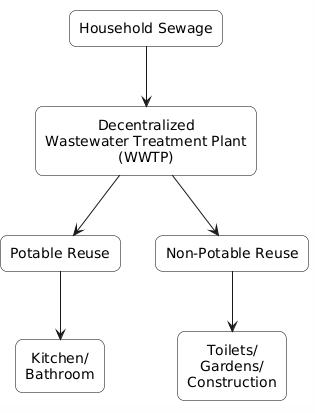
The integration of treated wastewater reuse into urban infrastructure and planning represents a strategic advancement in sustainable water management. Based on secondary research and expert interviews, several models for incorporating potable and non- potable reuse into existingandfutureinfrastructurehavebeenidentified. One such approach is the deployment of decentralized wastewater treatment systems, particularly at the community or residential complex level. These modular unitsarecapableoftreatinggreywaterandBlackwateronsite, reducing the load on centralized municipal systems and enabling localized reuse. Decentralized plants have shown particular promise in peri-urban and rural settings wherecentralsewerageinfrastructureislimited.
When paired with advanced treatment technologies like membrane bioreactors (MBRs) or compact reverse osmosis units, these systems can produce water of high enough quality for non-potable and indirect potable applications.
Another emerging opportunity lies in smart city infrastructure planning, where dual-pipe distribution systemsareincreasinglybeingconsidered.Inthismodel,a separatepipelinenetwork deliverstreatedwastewaterfor non-potable uses such as landscape irrigation, flushing toilets, and fire protection. Cities like Singapore and some Indian smart cities (e.g., Dholera and Lavasa) have begun pilottestingdualdistributionsystemsthatcansignificantly reduce freshwater demand in residential and commercial buildings.
Treatedgreywaterhasalsoprovenviableforvariousurban utility applications, such as soil compaction, dust suppression, and street cleaning. This approach not only reduces demand for potable water but also promotes circular economy practices within urban service delivery. Studies show that greywater treated to secondary or tertiary levels meets the quality requirements for these uses, provided that parameters such as total suspended solids (TSS), pH, and microbial load are within acceptable limits.
Furthermore, urban planning policies can support infrastructure-level reuse by mandating greywater recycling systems in new buildings, offering incentives for industries to adopt closed-loop water systems, and integrating wastewater recovery zones within municipal development plans. Integration of real-time monitoring technologies and IoT-based water quality sensors can further enhance operational reliability and public confidenceinsuchsystems.
Collectively, these infrastructure integration strategies hold significant potential for reducing freshwater dependence, managing urban water demands sustainably, and promoting long-term resilience in the face of climate variabilityandresourcescarcity.
6. DISCUSSIONS:
Advancedtreatmentsystemscanreliablyproducepotable grade water, but public concerns must be addressed for successful implementation. Examples from Singapore and California show that education campaigns, transparency, and consistent monitoring are key to building trust. Economically,whilesometechnologiessuchasROrequire substantial energy, long term benefits outweigh operational challenges when systems are optimized and supported by renewable energy integration. Environmental concerns such as RO brine disposal must also be considered. Overall, potable reuse can be a viable option for regions with severe water stress, provided technical,regulatory,and social componentsare effectivelyaligned.
7. CONCLUSION:
Thestudyconcludesthattreatedwastewatercanserveas a dependable drinking water source when processed through robust multi barrier treatment systems. Reverse osmosis, UV disinfection, advanced oxidation, and activatedcarbonfiltrationcollectivelyensurehigh quality
International Research Journal of Engineering and Technology (IRJET) e-ISSN: 2395-0056
Volume: 12 Issue: 11 | Nov 2025 www.irjet.net p-ISSN: 2395-0072
output that adheres to strict safety guidelines. Economic analysissupportsthelong termcosteffectivenessofsuch systems, especially in urban areas with rising water demand. Future expansion will require public engagement, advances in energy efficient technologies, strong policy support, monitoring frameworks, and improvements in brine management strategies. Potable reuse has the potential to significantly strengthen water securityinIndia.
Future development in potable reuse should prioritize next generation treatment technologies, integration of artificial intelligence for automated monitoring, and enhanced public education. Cost reduction strategies, renewable energy alignment, and resource recovery systems such as converting waste by products into usable materials can further improve feasibility. Increasingawarenessandacceptancethroughcommunity outreach will be crucial for large scale implementation, especially in developing regions where hesitation toward recycledwaterremainshigh.
[1] Asano, T., & Levine, A. D. (2020). Wastewater reclamation, recycling, and reuse: Past, present, and future.WaterScienceandTechnology,82(10),199–214.
[2] United Nations Educational, Scientific and Cultural Organization (UNESCO). (2023). The United Nations World Water Development Report 2023: Water for a sustainableworld.UnitedNations.
[3] Lazarova, V., & Bahri, A. (2021). Water reuse for irrigation: Sustainable solutions for water scarcity. CRC Press.
[4]Jeffrey,P.,&Jefferson,B.(2021).Wastewaterrecycling and reuse. In V. K. Gupta (Ed.), Water and wastewater engineering(pp.45–78).Springer.
[5] Nilsson, A., & Brandt, N. (2020). Advancements in potablewaterreusetechnologiesandtheirenvironmental sustainability. Science of the Total Environment, 713, Article136850.
[6] Juhasz, A. L., & Smith, E. (2021). Environmental impacts and sustainability of water treatment processes. EnvironmentalPollution,280,Article116916.
[7] Vanderkelen, G., & Vanhoutte, A. (2023). The role of artificial intelligence in water treatment management. JournalofWaterProcessEngineering,47,Article102236.
[8] Tchobanoglous, G., & Kreith, F. (2020). Handbook of solid waste management (3rd ed.). McGraw-Hill Education.
[9]Li,H.,&Xie,X.(2022).Advancedoxidationprocessesin wastewater treatment: A review of recent research. Environmental Science and Pollution Research, 29(2), 2568–2582.
[10] Mauter, M. S., & Elimelech, M. (2021). The role of nanotechnology in water purification. Nature Nanotechnology,16(9),1078–1089.
[11] Ghimire, P., Shrestha, S., & Pandey, S. (2021). An overview of the water reuse and its future perspectives. Water,Air,&SoilPollution,232(4),Article100.
[12] Bixio, D., Wintgens, T., & Thoeye, C. (2022). WastewaterreuseinEurope:Thecurrentstateandfuture challenges.Desalination,249(1–3),147–156.
[13] Voutchkov, N. (2020). Desalination and water reuse: Challengesandopportunities.Desalination,402,35–46.
[14] World Health Organization. (2023). Guidelines for drinking-water quality (5th ed.). World Health Organization.
[15]Schipper,W., etal.(2021).Technological innovations inwatertreatmentsystems.CambridgeUniversityPress.
[16] Dixon, P., et al. (2019). Public perception of potable water reuse: The role of education and outreach. Water Research,153,345–355.
[17] McCurry, J., et al. (2020). Factors influencing public acceptanceofpotablewaterreuseinwater-scarceregions. Journal of Environmental Management, 256, Article 109924.
[18] PUB Singapore. (2022). NEWater Visitor Centre: Public Engagement Reports and Achievements. Singapore’sNationalWaterAgency.
[19] Ghimire, P., Shrestha, S., & Pandey, S. (2020). An overview of the water reuse and its future perspectives. Water,Air,&SoilPollution,231(2),Article1.