
International Research Journal of Engineering and Technology (IRJET) e-ISSN: 2395-0056
Volume: 13 Issue: 04 | Apr 2026 www.irjet.net p-ISSN: 2395-0072

International Research Journal of Engineering and Technology (IRJET) e-ISSN: 2395-0056
Volume: 13 Issue: 04 | Apr 2026 www.irjet.net p-ISSN: 2395-0072
1Priyanshu Kumar Gandhi, 2Dr. Bikram Prasad.
1,2Department of Civil Engineering, Lakshmi
Abstract: Urban wind loads are a critical issue in the assessment of the structurally and economically coherent design and behavior of high-rise buildings within their environment.Aprecisestudyofwindeffectsontallstructures ishighlyessentialinthedesignandanalysisphaseofhigh-rise buildings. Traditional methods, such as wind tunnel testing and other simplified analytical models, are widely used- but such methods are usually associated with exorbitant costs, time consumption, and inflexibility when considering a number of design configurations. With advancements in computational technology, such as powerful computing software and hardware along with computational tools, in place over the last few years, the computational method provides a much better alternative for analyzing the windinduced behavior of tall structures. In this work, the broad range of mainstream and upcoming computer-based assessmentstrategiesusedtoevaluatetheinfluenceofwindin tallbuildingsisputforward.Thisalsoincludesaninsightinto numerical activities that involve Computational Fluid Dynamics(CFD)techniques,finiteelementmodels,andhybrid simulation methods, incorporating the results of actual experimentalapproaches.Aninvestigationwasalsoconducted to identify the effects of geometry, width, structural construction, and urban setting on pressure distribution and occurrence of wind-induced behaviors. The study also analyzed the pros and cons of different computational methodologiesintermsofaccuracy,computationalefficiency, andapplicabilitytoengineeringdesign.Withthedevelopment ofhigher-performancecomputersandsimulationalgorithms over the past several years, a significant rise has occurred in theaccuracyofcomputationaltoolsinpredicting windloads. Thereviewzeroesinonpresenttrendsinresearchandtackles the key challenges in modeling the highly complex aerodynamic interactions between wind flow and high-rise structures. Eventually, research recommendations on enhancing simulation accuracy and integrating computational techniques with structural optimization strategieshavebeenputforth.Thisstudyisaimedatproviding helpful information for both research-oriented and designoriented engineers in the design and analysis of high-rise buildings against wind.
Narain College of Technology, Bhopal
Key Words: Wind Load Analysis, High-Rise Buildings, ComputationalFluidDynamics(CFD),NumericalSimulation, StructuralResponse,WindEngineering,TallBuildingDesign
An increase in the height of buildings will automatically bringincreasedamplitudeinblastingofwindloadsactingon the building, which will create yet another parameter to considerintheprobableswayofthebuilding.Theoutcome of wind loads in tall buildings is actual displacement or lateral deflection accompanied by vibrations or dynamic responses. Some of those may well enough be a serious safetyorserviceabilityimpact.Thus,thesegregationofwind effects is vital for the reliable design and performance evaluationoftallbuildings.Analyzewindloadswithrespect to some simplified engineering methods and empirical formulasprovidedincodesandstandards[1].However,they almost always failed to capture the intricate interaction between the wind flow and the tall building geometries, especially in the cases of irregular building shapes, the varyingheights,andlocatingthebuildingsinurbanareas. Hence,advancedcomputing techniqueshaveproventobe effective tools for effectively predicting the wind-induced behaviouroftallbuildings.
CFD, FEM, FDM, and wind tunnel simulation-based numericalanalysisareusedinstudyingwindflowpatternsas well as pressure distribution in high resolution, while examiningresponsesofthestructurewithutmostprecision. Amongothers,theyareemployedhereforthefullsimulation of aerodynamic aspectsaccording to the forceslikevortex shedding, turbulence, and separation all around buildings. Also, the contemporary features of computer tools make available a fusion of analysis that is structural and fluid dynamicstoaidunderstandingofwind-structureinteraction [2]. Recently, several studies have sought to improve the computational models, validate them experimentally, and applythemtorelativelymorecomplexhigh-risebuildings. Advanced simulation software and high-performance computationhavegivenusyetanotheredgetothevulnerable environment.Theaimofthereviewpaperswastotakealook at and summarize the existing methods of computational assessment for wind impacts on high-rise structures. It brieflydiscussesmaintechnicalmethodologies,theirpositive and negative aspects, and highlights up-to-the-minute updatesaboutsimulationtechniquesthatarecurrentlyused toanalyzewindandtallbuildings.Thepaperalsobringsout theidentificationoftheknowledgegapsandfuturelinesof
International Research Journal of Engineering and Technology (IRJET) e-ISSN: 2395-0056
Volume: 13 Issue: 04 | Apr 2026 www.irjet.net p-ISSN: 2395-0072
actionsoastofurtherimprovecomputationalmethodsfor windassessmentwithahighdegreeofreliability[3].
Theinteractionbetweenthewindandthetallbuildingplays animportantadoptionintheRCdetailingalthoughitsuffers quite a number from the wind-flow directions. Just like energyabsorptioninthetallbuildings-everystructureitis atop, absorbance, depending on the prevailing wind direction and wind speed. Different individual criteria should be applied for the building itself vs air dynamics (Aerodynamics vs. Thermodynamics), which is where a strategic range facilitates the designer to determine the necessary building layout. Since the proper layout lands wouldworktooptimizetheflowofwindowingtotheirswift flowinthesurroundingairsection.Theworldofaeronautics asanapplicationoffluiddynamicsstudieshastwotypesof flowsinperfectconditionssuchasairstandardatmospheres at sea level or in transonic region. A second essential application of fluid mechanics studied under the field of mechanics is the study of turbulence through either numerical techniques or experimentation Wind-induced dynamicbehavior isnormallyaccountablefor muchmore thanthemerestaticforceimposedbywindonahigh-rise structure[4].Tallbuildingsfrequentlyemphaticallyactas the flexible cantilever rather than supporting any form of rigid cantilever. All this covers causes inertia moments throughwhichtheroughnessofthebuildingispercolatedto theoccupants'fullaccelerationandvibrationforces-where vocation work is considered from the serviceability perspective rather than just static design issues. Wind modelingistypicallyroutedthroughlocalbuildingcodesand standards-as IS 875 , ASCE 7, and Eurocode. Besides performingserviceabilitychecks,thesecodesprovidesimple formulas and guidelines for calculating wind pressures basedonthebasicwindspeed,localpressure,andbuilding dimension.Thequasi-staticdesignapproachadoptedfrom code-basedequationswillbefoundinsufficientinreflecting thecomplexaerodynamicsobservedwithtalland/orhighly irregular structures. To overcome these limitations, wind tunneltestingandcomputationalsimulationshavebecome popular methodologies in advanced engineering practice. Consequently, with wind-tunnel testing, engineers can observe the airflow patterns and pressure distribution aroundscaled-downmodelsofbuildings.Theseexperiments generallyrequiresophisticatedequipmentandareusually prohibitivelyexpensiveandtime-consuming[5].Thefigure1 illustrateshowwindflowsaroundahigh-risebuildingand generatesdynamicforcesonitssurface.Aswindstrikesthe
Characteristic
Wind Speed Variation with Height
Windward Pressure
building, pressure differences form on the windward and leeward sides, leading to fluctuating loads and vortex sheddingbehindthestructure.Thesedynamicwindeffects can cause lateral displacement, vibrations, and structural sway,whichmustbecarefullyanalyzedinthedesignoftall buildingstoensurestabilityandsafety.
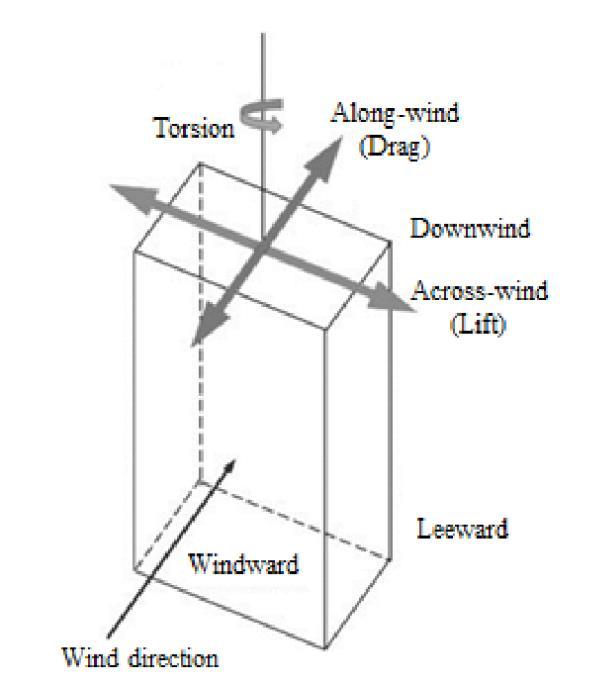
In the recent decade or so, the computational method has becomenotonlypopularbutincreasinglynecessaryforthe analysisofwindeffectsupontallbuildings.CFDanalysesare of great value in evaluating wind flow, turbulence, and pressuredistributionaroundtorsionallyirregularstructures withhighprecision.Theseareinsightfultoolswhenitcomes tothediscussionofaerodynamicbehavioranddesign-tune structural shapes to lessen the influence of wind forces. Assessment of wind load is needed to ensure safety structurally and improve building performance and sustainability.Byunderstandingitsbehaviorandinteraction withhigh-risestructuresengineerscanenhancetheirability to design advanced high-rise buildings that can withstand excessive environmental conditions and at the same time provide occupant comfort. Table 1 presents the major characteristics of wind flow around tall structures, highlighting how variations in wind speed, pressure distribution,turbulence,vortexformation,andsurrounding building interference influence the aerodynamic behavior andstructuralresponseofhigh-risebuildings[6].
Description
Windspeedgenerallyincreaseswithheightduetoreducedsurfacefriction,resultingin higherwindpressuresonupperfloorsoftallbuildings.
Thesideofthebuildingdirectlyfacingthewindexperiencespositivepressureasthewind forceimpactsthesurface.
International Research Journal of Engineering and Technology (IRJET) e-ISSN: 2395-0056
Volume: 13 Issue: 04 | Apr 2026 www.irjet.net p-ISSN: 2395-0072
Leeward Suction Theoppositesideofthebuildingexperiencesnegativepressureorsuctionduetothe separationofairflowbehindthestructure.
Side Pressure Effects Windflowingaroundthesidesofabuildingproduceslateralpressurevariationsthatcan influencestructuralstability.
Vortex Shedding Alternatingvorticesformbehindthebuildingaswindflowspastit,whichcaninduce oscillationsanddynamicvibrationsintallstructures.
Turbulence Effects Irregularwindfluctuationscausedbysurroundingbuildings,terrain,andobstaclesleadto turbulentairflowaroundtallstructures.
Flow Separation Windflowdetachesfromsharpbuildingedges,creatingwakeregionswithreduced pressureandcomplexairflowpatterns.
Interference Effects Nearbybuildingscanalterwindpatterns,causingamplificationorreductionofwind forcesonthestructure.
Windloadssignificantlyimpactthestructuralbehavior andperformanceofhigh-risebuildings.Incontrasttolow buildings,tallbuildingsareunderagreaterriskofamplified forces,createdbywind,asaresultoftheirincreasedheights and slenderness: which includes displacements, internal stresses, and vibrations that are detrimental to both the safety and serviceability of the structure. One of the most obvious effects of wind loading on buildings is lateral displacements attributable to the wind [7]. As the wind strikesthebuildingsurface,thelatterswayswiththewind. Any excessive lateral movement can result in structural instabilityordamagetonon-structuralelementslikewalls, windows, and cladding systems. Therefore, by design, engineers opt for stronger structural systems like braced frames,shearwalls,andtubestructurestocounterlateral windforceseffectively.
Also, one of the dynamic responses seen in high-rise structuresisduetothewindforcesactinguponthebuilding. High-risestructureswillpresentagreaterflexibility,leading toasituationoftheoscillationgeneratedbythesheddingof vortices,whichismixedwiththeeffectsoftheturbulentflow. Thedevelopmentofsomeoscillationsresonatingwithwindinducedforcescouldsignificantlyamplifythevibrationsand fatigueloadsofthestructuresprovidedthefrequencyofwind forces is close to the natural frequency of the building. Occupant comfort should not be neglected. Even if the structuralintegrityofabuildingissecure,excessivebuilding movement due to the wind force can make occupants uncomfortable or even cause motion sickness [8]. Hence there are established serviceability limits on permissible accelerationanddisplacementoftallbuildings.
Wind loads also dictate how structural design and selectionofmaterialwork.Thereisthenecessityofreflecting bothwind-energypressuresandthematerialbehaviorwhile calculating the size and strength of the structural components.Forbearingextremewindconditions,materials having greater strengths and efficient structural systems mustbeselectedmostoften.
Letmeindicatethatwindloads,tosomeextent,govern foundation stability as well as load distribution inside the structure: wind-induced movement could result in overturningmomentsthatproduceextrastressesatthebase of the building, possibly requiring stronger foundation systems[9].Therefore,understandingwindloadsandtheir effect on structural systems is essential for designing tall buildings that are safe, durable, and comfortable. The availability of advanced computational analysis and sophisticatedstructuraldesigntechniqueshelpsengineersin mitigation of wind-related effects and in enhancing the resilienceoftallstructures.
High-risebuildinganalysiswithrespect towindeffecthas drasticallyimprovedascomputationaltechniquesprogress. Traditional analytical methods and empirical formulas following the building codes employ a somewhat facile approach to wind loads estimation. Methods so stepwise applied at odds with the complex aerodynamic behavior displayed in tall and irregularly shaped structures. The adventofcomputationalmethodshasopenednewavenues forthestudyofwind-flowpatterns,pressuredistributions, and,subsequently,thestructuralresponsesinthemodern high-rise building. Wind analysis includes the use of computationaltechniquestomimicwindinteractionswith structural systems by means of numerical algorithms and computersimulations.Thisapproachenablesengineersand researchers to foresee how wind forces would affect buildings under different environmental conditions. The primarystrengthofcomputationalmethodsliesintheability to study complex geometries, natural environments, and dynamicwindconditionsmorecarefullythanconventional techniques.ComputationalFluidDynamics(CFD)hasbeen oneofthewidelyusedcomputationalapproaches[10].The CFD technique is used to model the airflow around structured objects, in solving the mathematical equations governingthemotionofthefluid.Windflowpatternscanbe clearlyidentified,areasofhighpressureorturbulencecan be detected, and the aerodynamic performance can be evaluated from CFD modeling. Designers make a valuable useofsuchatechniquetoanalyzetheirirregular building designsandcomplexurbanenvironmentswithinparameters of virtually unpredictable wind flows. In the context of
International Research Journal of Engineering and Technology (IRJET) e-ISSN: 2395-0056
Volume: 13 Issue: 04 | Apr 2026 www.irjet.net p-ISSN: 2395-0072
structural response to wind forces, the Finite Element Method (FEM) is a major computational approach for understandingbuildingresponses.TheFEMmethodbreaks downthebuildingintosmallerelementsandthencalculates thestress,strain,anddisplacementofeachelementdueto the enforced loads of the wind. Engineers may carry out studiesthatencompassboththeaerodynamicbehaviorand structuralperformanceofthestructurerelevanttoitswind load using models of CFD and FEM together. Besides CFD andFEM,therearemanyothernumericalmethodssuchas Finite Difference Method (FDM) and boundary element methods used in wind engineering. These methods are satisfactory to solve the differential equations for fluid dynamics or structural dynamics. The modern computationaltoolsintegratevarioussimulationsoftware available,suchasANSYS,OpenFOAM,andETABS,thatallow foradetailedmodelingofwind-structureinteraction[11]. Thesetoolsnicelyvisualizepressurecontours,flowpatterns, and structural deformations, which provide the engineer withaneasierwaytocomprehendandtherebyimplement improvements on the subsequent wind-induced design strategies of buildings. Predominantly, computational techniques have now become indispensible for contemporary wind engineering methodologies. The motivationistofacilitateintricatesimulations,alleviatethe need for pricey wind tunnel testing, and make it easier to shape buildings with strong emphasis towards a better aerodynamicperformance.Giventhatincreasingscientific data computations are vital, computer methodologies are becomingmoreprominenttowardsreducingcomputational charges for structural design and analysis in the realm of high-risesafetyandefficiency.
ComputationalFluidDynamics(CFD)involvesadvanced computational techniques that are widely used to analyze windflowaroundhigh-risebuildings.Thistypicallyinvolves solvingthegoverningequationsoffluidmotion,especiallyin solvingtheNavierStokesequations.Insodoing,engineers cansimulatecomplexairflowpatterns,pressuredistribution, turbulence, and vortex formation that occur when wind interactswithtallstructures.Theseriesofstepsrequiredfor a CFD investigation typically involve creating a threedimensional geometric model of the building and its surroundings, generating a computational mesh which discretizes the region up into smaller cells, and defining boundary conditions, such as wind speed, direction, and turbulenceintensity[12].Oncethemodelhasbeenproduced, numerical solvers compute airflow behavior through the region,andpost-processingtoolsvisualizetheresultshowing velocityvectors,pressurecontour,andstreamlinepatterns. Thesevisualizationtechniquesallowgeographicengineersto pinpoint regions of high wind pressure, assess the aerodynamicperformanceofbuildings,andhence,suggest possibleimprovements.CFDindeedhasagreatadvantagein thatitcanbeusedtosolvecomplexbuildinggeometriesand
urbanenvironmentswhileenablingmultiplesimulationsfor design optimization under changing wind conditions. However, theaccuracy ofthe resultsproduced by the CFD largelydependsonmeshquality,turbulationmodeling,and computational resources, with high-resolution simulations requires significant processing times. However, despite havingsuchdrawbacks,CFDhasbecomeaprominenttoolfor modern wind engineering main goal enhance in providing more accurate predictions of wind effects in terms of the edificeathandandimprovingthehydra-safetyandefficient designoftallbuildings[13].
Inthestructuralengineeringrealm,methodologieslikefinite elementsliketobefrequentlyemployedfordeliberationon mattersconcerningwind-force-exposedtallbuildings.Such approachusuallyhelpsininvestigatingstructuralreactions inasequentialandcoherentmannerofdistributionofstress, each deform as a result of an action of vibrating regime withinthesystem,andoverallstability.TheFiniteElement Method consists of a structure korpus orthogonally differentiated into numerous relatively small interconnectingelementssuchasbeamsandshellsgoverned by suitable equations which depict respective mechanical characteristics[14].Byapplicationofthewindloads,sucha set-up linked to the involved mathematical machinery calculatesthestresses,strains,anddisplacementsforeach element,henceinformingtheengineerabouthowthewind forces are transmitted to different elements such as the columns, beams, bracings, and shear walls in real-life structural systems. These give conventive studies for dynamic calculations, an added advantage, through which thesimulationofvariablewindloadsduetoturbulenceand vortexsheddingorinternalvibrationsandoscillationsunder the aegis pertain between a considerably tall building of high-riseconfigurationstructurethatreachesevendynamic behavior if the sequence of naturality f0) were to be computed,for example,that ofdamping ratio. Whereasto maintainapredictiveapproachtothedynamicbehaviorof thestructure,thefrequencymustbemaintainedwithinthe examine as velocities within wind-induced motions. AdditionalmethodologiessimilartotheFEMaretheFinite Difference Method (FDM) and Boundary Element Method (BEM) for solving equations in relation to structural problemsandfluidflows.Modernengineeringsoftwarelike ANSYS, SAP2000, STAAD Pro, and ETABS brings these numerical simulations together to study wind loading benchmarking further on structural performance. These toolsofferparametricstudieswheretheengineerisgivena chancetochangeanydesignparameterandhenceanalyze an optimized configuration. While simulation-based approachesgrantdetailedandaccurateresults,theaccuracy level of the information largely depends on model assumptions and their validation against experimental or field data [15]. Eventually, then, the finite element and numericalsimulationoutlineanessentialtechniqueandtool intheoreticalanddesignframeworkapplicationtohigh-rise
International Research Journal of Engineering and Technology (IRJET) e-ISSN: 2395-0056
Volume: 13 Issue: 04 | Apr 2026 www.irjet.net p-ISSN: 2395-0072
buildings, furnishing the engineer with their module to develop structures on a higher hierarchical plane, safer, efficient,andresistanttowindloads.
Wind–structureinteraction(WSI)isthecombinationof movements and airflow patterns within the wind, the building,andtheirresponsetoeachother.Acontinuousflow streamonabuildingtemplatecausessomepressurepatterns aswellaspromotesvibration.Theperformance-baseddesign of tall buildings does depend on reliable simulation-based approaches in this Infomed era to try to engage both fluid dynamicseitherwiththestructuralanalysisviewingpanes forhowwindloadsaffectdisplacement,vibration,andstress distribution at different environmental conditions. Aerodynamic modeling is an ongoing application of Computational Fluid Dynamics (CFD) or wind tunnel experimentsbecausewindflowaroundthisparticularkindof buildingismodeledsothatrecognitionofanycollapseeven in strategic locations can be duly addressed. Structural modelingbynumericalmeans,suchasFiniteElementMethod (FEM),providesavalidinsightasverbalextensiontovarious factors considering the influence of aerodynamic forces to unoccupied and consumed vibrations, as well as the final results mainly from this interrelationship [16]. Wind–structure interaction can be fluorinated into static interaction, built upon steady wind forces, and dynamic interaction,whichtakesintoaccountfluctuatingwindloads asaresultofturbulenceandvortexsheddingthatmayalter theconceptofvibrationsandoccupantcomfort.Moderntools likeANSYS,OpenFOAM,andETABSembedaerodynamicand structural analysesintocoupledsimulations togain better understanding of wind behavior and structural response. With an available set of potentially massive models with various settings of designing alternatives, geometry optimization,andeventuallywhichminimizeswind-induced structural support and stability would always precede construction. Still, to have a last successful fall, accurate modeling of wind–structure interaction must provide for goodinputparameterssuitableconstraintsandexperimental validation for reliable results. By and large, wind and pertainingmodelingandsimulationworkwillpavetheway forthedesignoftallbuildingsinasafeandefficientmanner, whichinitsturnwillquicklyresistharshenvironmentalwind forces[17].
Aerodynamicmodelingplaysavitalroleinunderstanding how wind flows around high-rise buildings and how this interactioninfluencesstructuralperformanceandsafety.As theheightofbuildingsincreases,theaerodynamicbehavior of wind becomes more complex due to variations in wind speed with height, turbulence effects, and flow separation around building surfaces. Accurate aerodynamic modeling enables engineers to evaluate wind pressure distribution, airflowpatterns,andpotentialaerodynamicinstabilitiesthat may affect the structural stability and serviceability of tall
buildings. When wind approaches a high-rise structure, it interacts with the building surfaces and produces several aerodynamicphenomenasuchasstagnationpressure,flow separation,vortexshedding,andwakeformation[18].The windward face ofa buildingexperiences positive pressure because the wind directly impacts the surface, while the leewardsideexperiencesnegativepressureorsuctiondueto airflowseparationandtheformationofwakeregionsbehind the building. In addition, the side surfaces of the building experiencefluctuatingpressuredistributionsaswindflows around the structure. These aerodynamic forces generate lateral loads and dynamic effects that must be carefully considered in the structural design of tall buildings. Aerodynamicmodelinghelpsengineerspredictthesewindinducedforcesbysimulatingtheairflowbehavioraroundthe building and evaluating how the structure interacts with surrounding wind conditions. Traditionally, wind tunnel testing has been widely used to analyze aerodynamic characteristicsbytestingscaledmodelsofbuildingsunder controlledlaboratoryconditions.Theseexperimentsallow researchers to measure wind pressure distribution, turbulenceintensity,andvortexformationaroundstructures, providing valuable insights into wind behavior. However, wind tunnel testing can be costly, time-consuming, and limitedinitsabilitytotestmultipledesignvariationsquickly. Withtheadvancementofcomputationaltechnology[19].
Structural response simulation under wind loads is an important aspect in the design and analysis of high-rise buildings... As an essential step, wind-force-based lateral forceleads,affectingthebuildingstructurewithhorizontal forces; essentially, wind loads cause horizontal displacements, internal stresses, and vibrations within the building. To predict how the structure will behave under different wind conditions, engineers need to make use of structural response simulation so as to ensure that a structuredoesnotposeunsafestructuresforitsoccupantsat anytime.Oneofthemethodswidelyusedforthisanalysisis Finite Element Method (FEM), whereby the building is dividedintosomesmallerinterconnectedelementssuchas beam, column, and slab [20]. After being assigned corresponding material properties, elements are meant to meetgivenphysicsequationsappropriatetotheirmechanical behaviours under loading conditions. At the time of wind applicationinthesimulationmodel,thesystemcalculatesthe stresses, strains, and displacement due to the forces acted across the structural elements. Besides the static analysis, stoicanalysescoverthedynamiceffectsarisenfromthewind asloadsfluctuatebecauseofturbulenceorvortexshedding. Thesevariationsinwindpressurecancausevibrationsand oscillatetallerbuildings,andifthesefrequenciesmatchthe naturalfrequencyofthestructure,resonancemayoccurthat amplifies the motion of the structure. To evaluate these effects,engineersconductmodalanalysisandtime-history analysis, which identify natural frequencies, damping characteristics,andvibrationmodesofthebuilding.Modern software used for structural analysis, such as ETABS,
International Research Journal of Engineering and Technology (IRJET) e-ISSN: 2395-0056
Volume: 13 Issue: 04 | Apr 2026 www.irjet.net p-ISSN: 2395-0072
SAP2000, STAAD Pro, ANSYS, allow for such detailed simulationofstructuralresponsesagainstwindloadsbeing necessary and directed by the governing building code or mapped from wind tunnel tests and related fluid flow software.Moreover,these simulations elicitresponse with regardtosuchfactorsofserviceabilityasbuildingswayand accelerations that have indelible influence on occupant comfort. Engineers can refine and optimize the structural design and add dampers, ensuring resilience against wind forceswhilemaintainingthestructuralintegrityandleading toaneconomicallyviable,long-lastingperformance[21].
High-risebuildingsexperiencestrongwindforce,makingthe exploration and analysis of wind effects on high-rise buildingsanareaofincreasingimportance.Hazardouswind loads affect the structural stability, serviceability, and dwelling comfort of tall buildings. Consequently, wind loadingonhigh-risestructurescontinuestobeascientific focusofinvestigation.Attentionhasbeenheightenedonthe aerodynamic behavior, structural response, and advanced computationalmethodsfortheenhancementofperformance of high-rise structures subject to wind loading. Both experimentalandnumericalinvestigationshavebroughtto lightthefactthattheaerodynamicdesignoftall buildings significantly influences wind pressure distribution and structural stability. Experimental studies have pointed to designpossibilities,inwindloadreduction,focusedonthe geometriesofhigh-risestructures,includingmodificationsin windloadminimizationduetothechangeinwindflowdue to formation of vortex shedding effects [1]. These designs contribute in reducing vibrations in the structure and improving general structural performance. Further development in computational modeling has significantly enhanced the capacity to study complex aerodynamic interactions due to buildings being placed in dense urban environments.AImodelshavebeenintroducedtoincrease the fulfilment of aerodynamic interference predictions between adjacent, operating buildings. Explainable AI modelshave beendeployed inpredicting windforcesand aerodynamic interference in complex high-rise building clustersbyprovidingqualitativelyinterpretableinferences on influencing factors that affect wind behavior [2]. They enable engineers in understanding how different urban configurations affect the flow and distribution of windinducedforcesonbuildings.
New vibration control devices have been coined for tall structures.Thenonlinearenergysinksleadtovariouspilotscale studies tosuppress wind-inducedvibrations in highrisebuildings.Thispassivecontrolsystemcanideallyabsorb thevibrationalenergyandsafeguardtheprimarystructure from damage, moving most of the energy down to the secondarydevicesduringwind-inducedremoveexcitation. Thesenewadvancedcontrolmechanismshelpsignificantlyin improving the dynamic stability of tall structures. Studies
have also been carried out to improve the effectiveness of high-rise steel buildings performance under dynamic environmentalloadsbyemployingtwo-dimensionalbeams or frames with bracing structures. According to research conducted on optimum structural design, in combination, specialmomentframesandabracingsystemwillmarkedly improvethestructuralperformanceinresponsetowindas wellasearthquakeforces.Throughoptimizationalgorithms, the configurations min-mass configurations to the characteristicsafetyparameters[12]-areapproximated.
Structural analyses in connection with modeling developments are also emerging. A neural network-based approachratescurrentdisplacementfieldsinultra-high-rise structuresundernon-linearseismicloadingforoperational prediction.Suchdeeplearningmodelsmaybeinapositionto provide quick approximations of structural responses, thereby proving extremely advantageous for real-time structuralhealthmonitoringandreal-timeprediction[13]. Indeed, these intelligent methods can be extended to the forecastingofthewind-in-wind-on-structuresprobleminthis area.Thewindloadonacurtain-wallfaçade,asitinteracts with building aerodynamics and interference effects, can considerably affect the vulnerability of this type of façade system. Vulnerability assessments prove that the windinduced pressure caused by wind-induced pressures may causearuptureincurtain-wallsystemsiftheproperstrength and stiffness cannot resist the aerodynamic forces [14]. Hence, each façade design must integrate precise windloadinganalysisforstructuralsecurity.
Thearchitecture'slayouthasasignificantinfluenceonthe dynamicresponseofbuildingswhenexcitedbywind.Studies ontallbuildingswithX-shapedplanshaveshownthatsuch formsexhibitdistinctvibrationcharacteristicsunderwind loading.Thedynamicresponseofsuchbuildingsdependson their structural stiffness, mass distribution, and wind flow interactionwithaerodynamics[15].Theseresultsunderscore theimportanceofconsideringthearchitecturelayoutduring the design of the structure. In the description of the A. I. Research,theexecutedprojectsareaboutadaptive,resilient systems; dealing with dynamic networks. Other advanced strategiesincludedampeningsystems,adaptivecontrols,and braceconfigurationsprimarilytoenhancetheresilienceof sky-risestructuralsystems.Theseintegratedmethodologies are rooted in the foundation of structural engineering alongsidesmartcontroltechnologiesgearingtheirpotential tohelpimprovetheperformanceoftallstructuressubjected towind-inducedloads[16].Also,aerodynamicoptimizations of the tall buildings have been studied a lot to make them work well under high wind speeds. Wind tunnels studies havedemonstratedthatthemodificationofbuildingshapes canenormouslyminimizewindloadandreducevibrationsof the structure. These different measures in aerodynamics wouldhelpinreducingvibrationstressesandenhancingthe comfortlevelsofresidentsduringperiodsofhighwind[17].
Wind-basedengineeringhasbecomeacrucialcriterionfor optingforapplicablestructuralconfigurationsintallhigh-rise reinforced concrete buildings. The technical concept is
International Research Journal of Engineering and Technology (IRJET) e-ISSN: 2395-0056
Volume: 13 Issue: 04 | Apr 2026 www.irjet.net p-ISSN: 2395-0072
centeredontheevaluationofstructuralperformanceunder theinfluenceofnumerouswindloadingscenariosinorderto eventuallyselectthebest-suitedstructuralform.Theconcept notonlyhelpsinoptimizingthebuildingdesignbutalsoin economizing it by taking into consideration the load conditionsorlifesafetyissuesintheearlydesignphaseby consideringtheeffectsofitsinteractionwiththeconstruction material[18].Fromthepriorreviews,theconclusionsarrived atarethosecitingwindeffectsonhigh-risebuildingsbeing complex consequences of interaction among aerodynamic forces,structuralbehavior,andmovingurbanenvironmental factors. The experimental techniques, computational simulations, artificial intelligence, and structural control systemsusedinthisworkhaveincreasedtheunderstanding ofwind-structureinteraction.Whattodointhenearfuture, however,willbetoconsidercombiningadvancedmodeling
techniques and the application of diversified design strategies, such as a sustainable design, as well as novel methodsinmechanicalvibrationcontrol,tofurtherenhance the seismic response of a high-rise structure in fast urban growth.
Table2summarizesthecomparisonofdifferentmethods for analyzing wind effects on high-rise buildings, showing that experimental and hybrid testing provide the highest accuracy but are resource-intensive, CFD offers a balance between accuracy and computational effort, AI-based predictionsarehighlyefficientwithslightlyloweraccuracy, and damping systems effectively reduce vibration with moderateeffort.Table3presentsthemajoradvantagesand limitationsofvariousexistingmethodsusedforevaluating windeffectsonhigh-risebuildings.
Hybridshaketable–windtunneltesting (seismic+wind)
Pre-tensioned nonlinearenergy sinks/damping systems
Table-3: AdvantagesandLimitationsofExistingApproaches Aspect Advantages
ExperimentalAnalysis
CFD&Numerical
Simulations
AI&MachineLearning Approaches
AerodynamicOptimization
Highaccuracyincapturingrealwindandseismic effects
Canmodelcomplexgeometries(C-shaped,Xshaped,helical)andairflowpatterns
Rapidpredictionofdisplacement,vibration,and aerodynamicinterference;interpretablemodels
Reduceswind-inducedforces;improvesoccupant comfortandstructuralperformance
StructuralControlSystems Reducesvibrationandenhancesdynamic
Cannotbeusedinreal-time;setup iscomplexandtime-consuming
Highcomputationalcost;results dependonmeshandsolver settings
Requireslargedatasets;maybe site-specific;limitedgeneralization
Mayconflictwitharchitecturalor materialconstraints
Increasesstructuralcomplexity
International Research Journal of Engineering and Technology (IRJET) e-ISSN: 2395-0056
Volume: 13 Issue: 04 | Apr 2026 www.irjet.net p-ISSN: 2395-0072
(Dampers,Bracing, AdaptiveControl)
resilience andmaintenancerequirements
UrbanInterference Assessment Predictswindeffectsindenseurbanareas;assists urbanplanning
Performance-Based Optimization
Selectsefficientstructuralsystemsforbothwind andseismicloads;reducesmaterialusage
This paper highlights the importance of evaluating wind effectsonhigh-risebuildingsusingadvancedcomputational and experimental approaches. As urban development continuestoriseandgrowtall,theaerodynamicbehaviorof rising structures has become a vital consideration for the design of secure structures, which has implications for stabilityandcomfortofinhabitants.Windbehavioronhighrisebuildingsisverycomplexbecauseofturbulence,vortex shedding,andvaryingpressurepatternsforeachsurfaceof thebuilding.Therefore,accurateassessmentofwindforces onthesestructuresiscriticalforthedesignoftallstructures oftoday.Ontheonehand,thereisanenormousrecordon theareaofcomputationaltechniquesappliedtotheanalysis of wind-structure interaction, like CFDs, numerically simulated design experiments and structural response models. But these computational apparatuses provide a broader spectrum of opportunities with regards to the flexibility along with faster analysis, thus permitting the simulation of various alternative configurations under varyingexternalconditions,comparedtothetraditionalway of carrying out wind tunnel tests. Simultaneously, these methodologies assist the engineer in a more precise predictionabouttheairandwindpressuredistribution,the airflowpattern,andvariousonsetsofstructuralresponses. Furth more, research should be aimed at improving the accuracy of these simulations, integrating the latest modelingtechniques,aswellasformulatingmoreefficient analytical procedures for the understanding of windstructureinteractiontosupportsomesaferandsustainable designoftallstructures
.
[1] Han, Kanghui, Guohui Shen, and Shice Yu. "Experimentalinvestigationonthereductionofwind loadsonhelicalhigh-risebuildingsunderatmospheric boundary layer." Journal of Wind Engineering and Industrial Aerodynamics 271(2026):106395.
[2] Deng,H.C.,etal."ExplainableAI-drivenpredictionand interpretation of aerodynamic interference effect in complex high-rise building clusters." Advances in Engineering Software 215(2026):104121.
[3] Xu,Haiwei,etal."Interferenceeffectsofaerodynamic forcesforhigh-risebuildingswithdifferentsideratios." Engineering Structures 356(2026):122431.
Sensitivetosurroundinglayout; maynotgeneralizetoothersites
Limitedapplicabilityforextreme windevents;requiresaccurate modeling
[4] Tyagi¹,Shikha,RituRaj,andShilpaPal."EffectofWind onHighRiseRectangularBuildingbyCFDSimulations." International Conference on Sustainable Planning, ArchitectureandCivilEngineering(SPACE2026).Allied Publishers,2026.
[5] Liu,Can‐Hua,Hong‐NanLi,andChaoLi."Experimental Evaluation of Coupled Seismic–Wind Load Effects on theAntennaMastAtopSuperHigh‐RiseStructuresvia HybridShakeTable–WindTunnel Tests." Earthquake Engineering & Structural Dynamics (2026).
[6] Vargiemezis, Themistoklis, and Catherine Gorlé. "Predictingwind-inducedinterferenceeffectsonalowrisebuildinginarealisticurbanareausinglarge-eddy simulations." JournalofWindEngineeringandIndustrial Aerodynamics 268(2026):106270.
[7] Kumar, Parveen, et al. "Analysis of wind effect surrounding the C-shape high-rise building." ComputationalMathematicsinEngineering:Proceedings of ICCMA 2025 (2026):171.
[8] Patel,GrishmaM.,andSuhasiniKulkarni."Investigation of viscoelastic coupling damper (VCD) behaviour developedfromnaturalrubberusingexperimentaland computational methods." Asian Journal of Civil Engineering (2026):1-20.
[9] Deng, Qirui, et al. "Integrated numerical modeling strategies for tree–wind interactions: a review and proposed assessment framework for resilient urban design." Urban Forestry & Urban Greening (2026): 129353.
[10] Li, Jinyu, et al. "Wind Vibration Control in High-Rise BuildingsUsingPre-tensionedNonlinearEnergySink: ExperimentalandNumericalStudy." JournalofBuilding Engineering (2026):115488.
[11] Goodarzimehr, Vahid, Amirali Barzegari, and Nader Fanaie. "Optimal design of high-rise steel structures using special moment frames and bracing systems under dynamic wind and seismic loads." Engineering Optimization (2026):1-33.
[12] Zhang, Shuxiang, et al. "Improved Inception-based Neural Network for Real-time Prediction of DisplacementFieldinNonlinear SeismicResponseof Ultra-High-Rise Structures." Journal of Building Engineering (2026):115662.
[13] Yadav, Himanshu, and Amrit Kumar Roy. "Wind Induced Vibration and Dynamic Response of Tall XShapedPlanBuilding." JournalofVibrationEngineering & Technologies 14.1(2026):39.
[14] Aly, Aly Mousaad. "Beyond Stiffness: Architecting Dynamic Resilience in High-Rise Structures through
International Research Journal of Engineering and Technology (IRJET) e-ISSN: 2395-0056
Volume: 13 Issue: 04 | Apr 2026 www.irjet.net p-ISSN: 2395-0072
Advanced Damping, Adaptive Control, and Bracing Synergy."(2026).
[15] Yadav,Himanshu,andAmritKumarRoy."Aerodynamic Performance Optimization of High-Rise Structures UnderExtremeWind." Journal of Building Engineering (2025):114364.
[16] Hasrat, Hussin Ahmad, and Mohit Bhandari. "Performance-Based Wind Analysis for Optimal Structural System Selection in High-Rise Reinforced ConcreteBuildings." JournalofVibrationEngineering& Technologies 13.1(2025):85.
[17] Miao, Yijia, and Stephen Siu Yu Lau. "Effect of Linear Building Blocks on the Wind Environment of Streets between High-Rise Buildings A case of Hong Kong." International Review for Spatial Planning and Sustainable Development 11.3(2023):63-77.
[18] Li,Qian,etal."Impactofplanararearatioandopening positionsonnaturalcrossventilationperformancein sheltered high-rise buildings: A simulation study." Building and Environment 245(2023):110889.
[19] Zhou, Qi, et al. "Improvement of GPS displacement measurement accuracy for high-rise buildings by machinelearning." Journal of Building Engineering 78 (2023):107581.
[20] Alnajjar, Sonia & Al-Azhari, Wael. (2021). "Review of Aerodynamic Design Configurations for Wind Mitigation in High-Rise Buildings: Two Cases from Amman." CivilEngineeringandArchitecture 9.708-720. doi:10.13189/cea.2021.090313.
[21] Zhou,Qiang,etal."VulnerabilityAssessmentofHighRise Glass Curtain Walls under Wind Loads with Building Interference Effects." Available at SSRN 6169938.