

International Research Journal of Engineering and Technology (IRJET) e-ISSN: 2395-0056
Volume: 13 Issue: 03 | Mar 2026 www.irjet.net p-ISSN: 2395-0072
A REVIEW OF SYNCHROPHASOR DERIVED ANOMALY IDENTIFICATION
FRAMEWORK FOR EARLY STAGE FAULT LOCALIZATION IN EXTRA HIGH VOLTAGE TRANSMISSION NETWORKS
Ajay Kumar Verma1, Dr. Imran Khan2
1Master of Technology, Electrical Engineering, Azad Institute of Engineering and Technology, Lucknow, India
2Professor, Department Electrical Engineering , Azad Institute of Engineering and Technology, Lucknow, India
Abstract -The increasing complexity of modern power systems and the expansion of extra-high-voltage (EHV) transmission networks have significantly increased the need for reliable and real-time monitoring mechanisms. Early detection and localization of faults are essential for maintainingsystemstability,minimizingequipmentdamage, and preventing large-scale blackouts. In recent years, synchrophasor technology based on Phasor Measurement Units (PMUs) has emerged as a powerful tool for wide-area monitoring of power systems due to its capability to provide high-resolution, time-synchronized measurements of voltage and current phasors. These measurements enable detailed observation of system dynamics and facilitate the identification of abnormal operating conditions. This review paper presents a comprehensive analysis of synchrophasorderivedanomalyidentificationframeworksdesignedforearlystage fault localization in extra-high-voltage transmission networks. The study examines the fundamental concepts of synchrophasor technology, the architecture of wide-area monitoring systems, and the role of PMU data in anomaly detection.Furthermore,thepaperreviewsexistingresearchon analytical, signal-processing, machine learning, and deep learning approaches for detecting anomalies and locating faults using synchrophasor measurements. A comparative analysis of different techniques is also provided to highlight their advantages, limitations, and applicability in large-scale transmission systems. Finally, key research gaps and future research directions are discussedto support the development of more robust and intelligent fault localization frameworks for next-generation power grids.
Key Words: Synchrophasor, Phasor Measurement Unit (PMU), Anomaly Detection, Fault Localization, ExtraHigh-Voltage Transmission Network, Wide Area Monitoring System (WAMS).
1. INTRODUCTION
Modernelectricalpowersystemsarebecomingincreasingly complexduetotheintegrationofrenewableenergysources, expansion of transmission networks, and the growing demand for reliable electricity supply. Traditional monitoringsystems,primarilybasedonSupervisoryControl and Data Acquisition (SCADA), provide limited temporal resolution and delayed data updates, which restrict their capability to capture fast dynamic events occurring in transmission networks. To address these limitations,
advancedmonitoringtechnologieshavebeendevelopedthat allowreal-timevisibilityofpowersystemdynamicsacross wide geographical regions. Among these technologies, synchrophasor measurements obtained from Phasor Measurement Units (PMUs) have emerged as a critical component for modern power system monitoring and control.Thesesynchronizedmeasurementsprovideaccurate information about voltage, current, frequency, and phase angle across multiple locations simultaneously, enabling operators to detect abnormal conditions at an early stage andtakepreventiveactions.Consequently,synchrophasorbased monitoring frameworks have become an essential element of Wide-Area Monitoring Systems (WAMS), improving grid reliability and operational awareness in large-scale transmission networks (Phadke and Thorp, 2008).
1.1 Background of Wide-Area Monitoring in Modern Power Systems
Therapidevolutionofinterconnectedpowernetworkshas significantly increased the need for advanced monitoring infrastructurescapableofprovidingsystem-widevisibility. Wide-Area Monitoring Systems (WAMS) have been developed to enhance situational awareness by collecting high-resolution synchronized measurements from geographically dispersed substations. Unlike traditional monitoring approaches, WAMS integrates PMUs, communicationnetworks,andphasordataconcentratorsto delivertime-synchronizedmeasurementsacrosstheentire grid. This infrastructure enables system operators to observedynamicsystembehaviorinrealtimeandrespond quickly to disturbances. The deployment of WAMS has therefore become a fundamental component of modern smart grid architectures, supporting applications such as stabilitymonitoring,oscillationdetection,anddisturbance analysis(Terzijaetal.,2011).
1.1.1 Evolution of Wide Area Monitoring Systems (WAMS)
Wide Area Monitoring Systems have evolved significantly over the past two decades as power systems transitioned toward digital and intelligent infrastructures. Early monitoring frameworks relied on SCADA systems, which providedmeasurementsatrelativelylowsamplingratesand lackedprecisetimesynchronization.Withtheintroduction
International Research Journal of Engineering and Technology (IRJET) e-ISSN: 2395-0056
Volume: 13 Issue: 03 | Mar 2026 www.irjet.net p-ISSN: 2395-0072
of PMU technology in the 1990s, power utilities began implementingsynchronizedmeasurementsystemscapable of capturing dynamic grid events with higher temporal resolution. These developments led to the formation of WAMSarchitecturesconsistingofPMUsinstalledatstrategic network locations, phasor data concentrators for data aggregation,andcommunicationnetworksforreal-timedata transmission. The widespread deployment of WAMS has enhanced the ability of utilities to detect disturbances, monitorsystemstability,andimproveoperationaldecisionmaking in large interconnected grids (Ghorbaniparvar, 2017).
1.1.2 Role of Phasor Measurement Units (PMUs) inRealTime Monitoring
PhasorMeasurementUnits playa crucial roleinreal-time monitoring by providing synchronized measurements of electrical quantities across the power system. A PMU measures voltage and current phasors along with system frequencyandrateofchangeoffrequency,andittimestamps these measurements using signals from the Global Positioning System (GPS). This precise synchronization allows measurements from multiple locations to be compared directly, enabling operators to analyze system dynamicsoverlargegeographicalareas.TheabilityofPMUs tocapturehigh-resolutiondatahassignificantlyimproved disturbancedetectionandsituationalawarenessinpower systems.Consequently,PMUshavebecomeakeyelementof modern grid monitoring frameworks, supporting applications such as state estimation, fault analysis, and stabilityassessment(Zhangetal.,2010).
1.1.3
Importance of Synchronized Measurements for Situational Awareness
Situationalawarenessinpowersystemoperationrefersto the capability of system operators to accurately perceive, comprehend,andpredictthestateofthegrid.Synchronized measurements obtained from PMUs significantly enhance this capability by providing real-time information about systemconditionsacrossmultiplelocationssimultaneously. This synchronization enables operators to identify disturbances such as oscillations, voltage instability, and transmissionlinefaultswithgreateraccuracy.Moreover,the high sampling rate of PMU measurements allows the detection of fast dynamic events that are often missed by conventionalmonitoringsystems.Asaresult,synchronized measurementtechnologyhasbecomeanessentialtoolfor improvingoperationalreliabilityandpreventinglarge-scale systemfailures(Milanoetal.,2018).
1.2 Importance of Early-Stage Fault Detection in EHV Transmission Networks
Extra-high-voltage transmission networks serve as the backboneofmodernpowersystems,enablingthetransferof largeamountsofelectricalpoweroverlongdistances.Dueto
theircriticalroleingridoperation,faultsoccurringinthese networkscanhavesevereconsequencesifnotdetectedand isolatedquickly.Early-stagefaultdetectionallowsoperators to identify abnormal conditions before they escalate into major disturbances or cascading failures. Advanced monitoringtechnologiessuchasPMU-basedsystemsenable fasteridentificationofanomaliesbyanalyzingsynchronized measurements from multiple locations. These capabilities are particularly important for EHV systems where the propagation of disturbances can occur rapidly and affect largeareasofthenetwork(AminandWollenberg,2005).
1.2.1 Challenges Associated with Extra-High-Voltage (EHV) Transmission Systems
EHV transmission systems present several operational challenges due to their large geographical coverage, high powertransferlevels,andcomplexnetworkconfigurations. The long transmission distances and high voltage levels increase the likelihood of faults caused by environmental factorssuchaslightning,insulationfailure,andconductor damage.Additionally,theinterconnectednatureofmodern gridsmeansthatdisturbancesinonepartofthesystemcan propagatequicklytootherregions.Thesefactorsmakefault detection and localization more complex and require advanced monitoring and analytical tools capable of analyzing large volumes of real-time data (Kundur et al., 2004).
1.2.2 Impact of Undetected Faults on System Reliability and Stability
Undetected or delayed fault identification in transmission networks can significantly compromise system reliability and stability. Faults may cause voltage drops, power oscillations,andthermalstressontransmissionequipment, potentiallyleadingtowidespreadoutages.Inseverecases, cascading failures may occur, resulting in large-scale blackouts that disrupt economic activities and essential services.Therefore,rapiddetectionandlocalizationoffaults are critical to maintaining system integrity and ensuring continuous power supply. Advanced monitoring systems based on synchronized measurements provide valuable insightsintosystemdisturbances,enablingfasterprotective actionsandreducingtheriskofwidespreadsystemfailures (AndersonandMirheydar,1992).
1.3 Role of Synchrophasor Data in Fault Detection
Synchrophasor data has become an essential resource for monitoring dynamic events in modern power systems. Unlike conventional measurements, synchrophasor data provides high-resolution, time-synchronized information about electrical quantities across the grid. This capability enables detailed observation of system behavior during disturbancesandfacilitatesthedetectionofanomaliesthat may indicate developing faults. By analyzing patterns in voltage and current phasors, researchers and system
International Research Journal of Engineering and Technology (IRJET) e-ISSN: 2395-0056
Volume: 13 Issue: 03 | Mar 2026 www.irjet.net p-ISSN: 2395-0072
operatorscanidentifyabnormal operatingconditionsand initiatecorrectiveactionsbeforeseveresystemdisruptions occur(DeLaReeetal.,2010).
1.3.1 Characteristics of Synchrophasor Measurements
Synchrophasor measurements possess several distinctive characteristicsthatmakethemsuitableforadvancedpower system monitoring. These measurements are typically sampledatratesrangingfrom30to120samplespersecond, which is significantly higher than the sampling rate of traditional SCADA systems. Each measurement is timestamped using GPS signals, ensuring precise synchronization across all PMUs installed in the network. This high temporal resolution allows accurate tracking of dynamiceventssuchasoscillations,voltagefluctuations,and transient disturbances. As a result, synchrophasor data providesacomprehensiveviewofsystembehaviorduring both normal and abnormal operating conditions (IEEE PowerandEnergySociety,2011).
1.4 Synchrophasor-Derived Anomaly Identification Frameworks
Therapidtransformationofpowersystemsintosmartand digitally interconnected networks has created new challenges for monitoring and control. Increasing penetration of renewable energy sources, distributed generation, and power electronics devices has introduced greatervariabilityanduncertaintyintogridoperation.These developments require more advanced monitoring frameworkscapableofanalyzinglargevolumesofreal-time dataandidentifyingabnormalconditionsatanearlystage. Synchrophasor-derivedanomalyidentificationframeworks haveemergedasaneffectivesolutionforaddressingthese challengesbycombininghigh-resolutionmeasurementswith advancedanalyticaltechniques(Wangetal.,2018).
1.4.1 Increasing Grid Complexity due to Renewable Integration
Theintegrationofrenewableenergyresourcessuchaswind andsolarpowerhassignificantlyincreasedthecomplexityof power system operation. These resources introduce variability in power generation, which can lead to fluctuations in voltage and frequency across the grid. In addition, renewable energy systems are often connected through power electronic converters that alter traditional system dynamics. As a result, conventional monitoring approaches may not be sufficient to capture these rapid changes. Advanced monitoring systems based on synchrophasor measurementsprovide improvedvisibility into these dynamic processes, enabling more effective managementofrenewable-dominatedpowersystems(Liuet al.,2019).
1.4.2 Need for Intelligent Analytics Using HighResolution PMU Data
ThelargevolumeofdatageneratedbyPMUspresentsboth opportunitiesandchallengesforpowersystemmonitoring. While the availability of high-resolution data enables detailedanalysisofsystembehavior,manualanalysisofsuch largedatasetsisimpractical.Intelligentanalyticalmethods, including machine learning and data mining techniques, have therefore been developed to automatically detect anomalies in PMU data streams. These approaches can identifysubtlepatternsassociatedwithdevelopingfaultsor abnormaloperatingconditions,enablingproactivesystem managementandimprovedgridreliability(Heetal.,2017).
1.4.3 Emergence of Anomaly Detection Frameworks
Anomaly detection frameworks based on synchrophasor data have gained significant attention in recent years as a meansofimprovingfaultdetectionandsystemmonitoring. These frameworks typically integrate data preprocessing, featureextraction,anomalydetectionalgorithms,andfault localizationtechniquestoidentifyabnormaleventsinreal time.Bycombiningstatisticalanalysis,signalprocessing,and machine learning methods, these frameworks can detect deviationsfromnormalsystembehaviorandprovideearly warnings of potential faults. The development of such frameworks represents a significant advancement in intelligentpowersystemmonitoring(Panetal.,2020).
1.5 Objectives and Scope of the Review
This review paper aims to provide a comprehensive overview of synchrophasor-based anomaly identification frameworksforearly-stagefaultlocalizationinextra-highvoltagetransmissionnetworks.Thestudyexaminesexisting methodologiesthatutilizePMUdatafordetectinganomalies andidentifyingfaultlocationsinlarge-scalepowersystems. Particular emphasis is placed on analytical, signalprocessing,machinelearning,anddeeplearningapproaches developedforthispurpose.Inaddition,thereviewanalyzes theadvantagesandlimitationsofdifferenttechniquesand discusses their applicability in practical power system environments. By synthesizing findings from existing research,thispaperseekstoidentifycurrentresearchgaps andhighlightfuturedirectionsforthedevelopmentofmore reliable and intelligent fault localization frameworks in modernpowergrids.
2. FUNDAMENTALS OF SYNCHROPHASOR TECHNOLOGY AND WAMS
Themodernizationofpowersystemshasledtotheadoption ofadvanced monitoring technologiescapableofcapturing dynamic system behavior with high temporal precision. Amongthesetechnologies,synchrophasormeasurementhas emergedasafundamentaltoolforwide-areamonitoringand control. Synchrophasors provide time-synchronized
International Research Journal of Engineering and Technology (IRJET) e-ISSN: 2395-0056
Volume: 13 Issue: 03 | Mar 2026 www.irjet.net p-ISSN: 2395-0072
measurementsofelectricalquantitiesacrossgeographically dispersed locations, enabling a comprehensive understanding of system dynamics. The integration of synchrophasor technology within Wide Area Monitoring Systems(WAMS)allowsutilitiestoobservereal-timegrid conditions, detect disturbances, and support reliable operationofinterconnectedpowernetworks.Bycombining synchronized measurement devices, communication infrastructure, and centralized data processing platforms, WAMSprovidesarobustframeworkformonitoringcomplex transmissionsystemsandimprovingoperationalsituational awareness(PhadkeandThorp,2008).
2.1 Overview ofPhasor Measurement Units(PMUs)
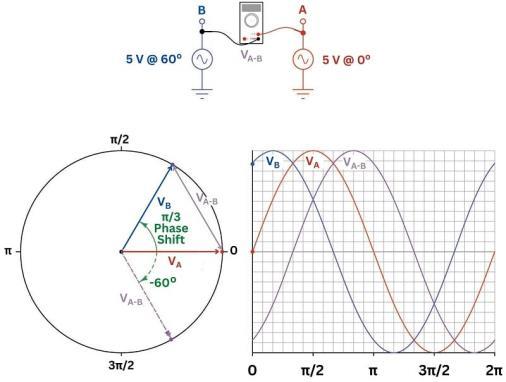
Phasor Measurement Units are specialized measurement devicesdesignedtocapturesynchronizedphasorquantities in power systems. A PMU measures the magnitude and phase angle of voltage and current waveforms while synchronizingthemeasurementtimewithaglobalreference signal.Thiscapabilityallowsmeasurementsfromdifferent substations to be aligned in time and compared directly. PMUshavebecomeessentialcomponentsinmodernpower systemmonitoringbecausetheyprovideaccurateandhighresolutiondatathatcanbeusedtoanalyzesystemstability, detect disturbances, and support advanced protection schemes.Theirdeployment across transmissionnetworks enables utilities to monitor dynamic grid behavior more effectivelythanconventionalmeasurementsystems(Zhang etal.,2010).
2.1.1
Measurement Principles and GPS Synchronization
The operating principle of a Phasor Measurement Unit is basedonthecalculationofphasorquantitiesfromsampled voltage and current waveforms. The device uses digital signal processing techniques to convert sinusoidal signals into complex phasor representations that describe both magnitude and phase angle. To ensure accurate synchronization across the network, PMUs rely on timing signalsfromtheGlobalPositioningSystem(GPS).TheGPS receiver embedded in the PMU provides a highly precise time reference, typically accurate to within microseconds. Thistime-stampingcapabilityallowsmeasurementstakenat
differentlocationstobealignedwithacommontimebase, enabling wide-area analysis of power system dynamics. Accuratesynchronizationiscriticalforapplicationssuchas stateestimation,disturbanceanalysis,andfaultlocalization, wheresmallphasedifferencesbetweenmeasurementscan revealimportantinformationaboutsystembehavior(IEEE PowerandEnergySociety,2011).
2.1.2 Voltage, Current, Frequency, and Phase Angle Measurements
PMUs measure several electrical parameters that are essential for monitoring power system operation. The primary quantities include voltage and current phasors, whichrepresentthemagnitudeandphaseangleofelectrical waveformsataspecificinstantintime.Inadditiontophasor quantities, PMUs also measure system frequency and the rateofchangeoffrequency,whichprovidevaluableinsights into system stability and dynamic performance. These measurements are generated at high sampling rates and transmitted to centralized data processing systems for analysis. The availability of synchronized measurements from multiple locations allows system operators to track power flows, detect abnormal conditions, and assess the overallstabilityofthepowergridinrealtime(Terzijaetal., 2011).
2.2 Synchrophasor Data Characteristics
Synchrophasor data possesses unique characteristics that distinguishitfromconventionalpowersystemmeasurement data.Thesecharacteristicsincludehightemporalresolution, precise time synchronization, and the ability to capture dynamic system events. Because PMUs continuously generate measurements at relatively high sampling rates, largevolumesofdataareproducedinrealtime.Thisdata provides detailed information about the behavior of the power system during both normal operation and disturbanceconditions.However,thelargevolumeandhigh velocity of synchrophasor data also introduce challenges relatedtodatamanagement,communicationinfrastructure, and real-time processing. Effective utilization of synchrophasor data therefore requires advanced data analytics and reliable communication networks to ensure timelydeliveryandprocessingofmeasurements(DeLaRee etal.,2010).
2.2.1 Sampling Rates (30–120 Samples per Second)
Oneofthemostimportantcharacteristicsofsynchrophasor measurements is their high sampling rate compared with traditional monitoring systems. PMUs typically generate data at rates ranging from 30 to 120 samples per second, depending on system requirements and communication capabilities. This high sampling frequency enables the detection of fast dynamic events such as transient disturbances,oscillations,andsuddenvoltagefluctuations. In contrast, traditional SCADA systems typically provide
International Research Journal of Engineering and Technology (IRJET) e-ISSN: 2395-0056
Volume: 13 Issue: 03 | Mar 2026 www.irjet.net p-ISSN: 2395-0072
measurements at intervals of several seconds, which may not capture rapid changes in system conditions. The high samplingrateofPMUdatathereforeplaysacrucialrolein enablingaccuratemonitoringandanalysisofpowersystem dynamics(Milanoetal.,2018).
2.3 Architecture of Wide Area Monitoring Systems (WAMS)
Wide Area Monitoring Systems integrate synchronized measurement devices, communication networks, and centralized data processing platforms to provide comprehensivemonitoringofpowersystemoperation.The architecture of WAMS is designed to collect and analyze synchrophasor measurements from multiple substations acrossalargegeographicalarea.Thisarchitecturetypically includes PMUs installed at key locations, phasor data concentratorsthataggregatemeasurementdata,andcontrol centerswheredataisstoredandanalyzed.Thecoordinated operation of these components enables utilities to obtain real-timeinsightsintosystembehaviorandrespondquickly todisturbances(AminandWollenberg,2005).
2.3.1 PMU, Phasor Data Concentrator(PDC),and Control Center Architecture
ThecorecomponentsofaWAMSarchitectureincludePhasor MeasurementUnits,PhasorDataConcentrators,andcentral control systems. PMUs installed at substations collect synchronized measurements of electrical parameters and transmitthemthroughcommunicationnetworkstoPhasor Data Concentrators. The PDC performs data aggregation, time alignment, and filtering of incoming measurements frommultiplePMUs.Afterprocessing,thesynchronizeddata isforwardedtothecontrolcenterwhereadvancedanalytical tools are used to monitor system performance, detect disturbances,andsupportoperationaldecision-making.This hierarchicalarchitectureensuresefficienthandlingoflarge volumes of synchrophasor data while maintaining synchronizationanddataintegrity(Zhaoetal.,2017).
2.4 Role of PMU Data in Grid Event Detection
Theavailabilityofsynchronizedphasormeasurementshas significantlyimprovedtheabilityofpowersystemoperators to detect and analyze grid events. PMU data provides detailed information about the dynamic behavior of the power system, enabling the identification of abnormal conditions that may indicate faults or disturbances. By analyzing patterns in voltage and current phasors across multiple locations, it is possible to detect events such as oscillations, line faults, and voltage instability at an early stage.Thiscapabilityallowsoperatorstoinitiatecorrective actionsbeforedisturbancespropagatethroughthenetwork andcausewidespreadoutages(Zhouetal.,2016).
2.4.1 Detection of Oscillations, Faults, and Disturbances
PMUmeasurementsplayacrucialroleindetectingvarious types of disturbances in power systems. For example, oscillatory behavior in generator or transmission systems canbeidentifiedbyanalyzingvariationsinphaseanglesand frequencyacrossthenetwork.Similarly,suddenchangesin voltageorcurrentphasorsmayindicatetheoccurrenceof transmissionlinefaultsorequipmentfailures.BecausePMU data is synchronized across multiple locations, these disturbances can be detected with greater accuracy compared with traditional monitoring systems. Advanced analyticalmethodscanfurtherprocessthesemeasurements toclassifydisturbancesandestimatetheirlocationwithin thenetwork(Panetal.,2020).
2.4.2 Enhanced Situational Awareness through Synchronized Measurements
Situational awareness refers to the ability of system operators to perceiveandunderstand the currentstate of the power system and anticipate potential disturbances. Synchrophasortechnologyenhancessituationalawareness byprovidingreal-time,high-resolutionmeasurementsfrom multiple locations across the grid. These synchronized measurementsenablesystemoperatorstomonitorpower flows,voltagestability,and dynamicinteractionsbetween differentpartsofthenetwork.Comparedwithconventional SCADA systems, which provide slower and less detailed measurements, synchrophasor data offers significantly improved visibility into system dynamics. This enhanced monitoring capability allows utilities to detect abnormal events more quickly and maintain reliable operation of modernpowergrids(Wangetal.,2018).
3. ANOMALY IDENTIFICATION IN POWER SYSTEMS USING SYNCHROPHASOR DATA
Theintegrationofsynchrophasortechnologyintomodern power systems has significantly enhanced the ability to monitor grid conditions and detect abnormal operating states. Anomaly identification refers to the process of detectingdeviationsfromnormalsystembehaviorthatmay indicate faults, disturbances, or operational inefficiencies. Synchrophasor data obtained from Phasor Measurement Units(PMUs)provideshigh-resolution,time-synchronized measurements that allow operators to observe dynamic changes across geographically distributed locations in the powernetwork.Thesemeasurementsfacilitatethedetection of unusual patterns in voltage magnitude, phase angle, frequency, and current flows, which may signal the occurrence of abnormal events. With the increasing complexity of interconnected power systems, anomaly detection has become a critical function in maintaining system reliability, preventing cascading failures, and ensuring secure operation of transmission networks (Chakrabartietal.,2009).
International Research Journal of Engineering and Technology (IRJET) e-ISSN: 2395-0056
Volume: 13 Issue: 03 | Mar 2026 www.irjet.net p-ISSN: 2395-0072
3.1 Concept of Anomaly Detection in PowerSystem Monitoring
Anomaly detection in power system monitoring involves identifying patterns in measurement data that deviate significantly from expected operational behavior. In traditional monitoring systems, abnormal events were typically detected through protection relays or manual analysisofmeasurementdata.However,theavailabilityof high-resolution synchrophasor data has enabled more sophisticatedanalyticaltechniquesforidentifyinganomalies inrealtime.BycontinuouslyanalyzingPMUdatastreams, systemoperatorscandetectdisturbancesatanearlystage and initiate corrective actions before they escalate into majorsystemfailures.Anomalydetectionframeworksoften combinestatisticalanalysis,signalprocessingmethods,and machinelearningalgorithmstoidentifyabnormalpatterns within large datasets generated by synchrophasor measurements(Zhaoetal.,2017).
3.1.1 Definition of Anomalies in Power Systems
Inthecontextofpowersystemmonitoring,ananomalycan be defined as any deviation from the normal operational patternofelectricalparameterssuchasvoltagemagnitude, current flow, frequency, or phase angle. These deviations may occur due to faults, equipment malfunctions, environmental disturbances, or cyber-security incidents affectingmeasurementsystems.Detectinganomaliesatan early stage is essential because even small deviations in electricalparameterscanpropagatethroughinterconnected networks and lead to large-scale disturbances. Synchrophasor measurements enable the identification of these deviations with high accuracy because they provide synchronized observations of system behavior across multiplenetworklocations(Terzijaetal.,2011).
3.1.2 Types of Anomalies in Power Systems
Anomalies in power systems can arise from a variety of sources,includingphysicalfaults,measurementerrors,and maliciouscyberactivities.Understandingthedifferenttypes ofanomaliesisimportantfordesigningeffectivedetection frameworksthatcanaccuratelydistinguishbetweennormal disturbancesandcriticalsystemevents.
Fault-Related Anomalies
Fault-relatedanomaliesoccurwhenphysicalfaultssuchas shortcircuits,lineoutages,orinsulationfailuresaffectthe normal operation of the power system. These faults often cause sudden changes in voltage and current magnitudes, phase angles, and system frequency. Synchrophasor measurementscapturedduringsucheventsprovidevaluable information for identifying the presence and location of faults in transmission networks. By analyzing patterns in synchronizedmeasurements,anomalydetectionalgorithms canquicklydetectabnormalconditionsassociatedwithfault
eventsandsupportrapidsystemprotectionactions(Phadke andThorp,2008).
Measurement Anomalies
Measurement anomalies arise when errors occur in data acquisition systems, communication channels, or measurementdevicessuchasPMUs.Theseanomaliesmay becausedbysensormalfunctions,synchronizationerrors,or communication failures that lead to missing or corrupted data. Measurement anomalies can create misleading information about system conditions, potentially affecting the performance of monitoring and control applications. Therefore,anomalydetectionalgorithmsmustbecapableof distinguishing between genuine system disturbances and errorsoriginatingfrommeasurementinfrastructure(Milano etal.,2018).
Cyber-Physical Anomalies
Cyber-physical anomalies refer to abnormal events that result from cyber-attacks or malicious interference with measurement systems and communication networks. As power systems become increasingly digitized and interconnected, the risk of cyber threats targeting monitoring infrastructure has grown significantly. Cyberphysicalanomaliesmayinvolvefalsifiedmeasurementdata, communication disruptions, or unauthorized access to monitoring systems. Detecting such anomalies requires advanced analytical techniques capable of identifying unusualpatternsindatastreamsthatmayindicatemalicious activitywithinthemonitoringframework(Srivastavaetal., 2018).
3.2 Categories of Power System Disturbances
Power system disturbances are events that disrupt the normal operation of electrical networks and may lead to instabilityorequipmentdamageifnotmanagedproperly. Disturbances can arise from various causes, including natural events, equipment failures, or operational errors. The ability to detect and classify disturbances using synchrophasor measurements is essential for maintaining system stability and preventing large-scale outages. By analyzing variations in voltage, current, and frequency across the network, PMU-based monitoring systems can identifydifferenttypesofdisturbancesandprovidevaluable insightsforsystemprotectionandrestoration(Kunduretal., 2004).
3.2.1 Line Faults
Line faults are among the most common disturbances occurringintransmissionnetworks.Thesefaultstypically result from insulation failure, lightning strikes, conductor damage,orcontactwithexternalobjectssuchastrees.When a fault occurs on a transmission line, it causes abrupt changesincurrentmagnitudeandvoltagelevels,whichcan be detected through synchrophasor measurements. PMU
International Research Journal of Engineering and Technology (IRJET) e-ISSN: 2395-0056
Volume: 13 Issue: 03 | Mar 2026 www.irjet.net p-ISSN: 2395-0072
dataenablesaccuratedetectionandlocalizationoflinefaults by comparing synchronized measurements from multiple locationsalongthetransmissionnetwork.Earlydetectionof such faults is critical for initiating protective actions and minimizing the risk of cascading failures (Anderson and Mirheydar,1992).
3.2.2
Voltage Instability
Voltageinstabilityoccurswhenthepowersystemisunable to maintain acceptable voltage levels due to excessive loading or insufficient reactive power support. This condition can gradually develop and eventually lead to voltagecollapseifnotaddressedpromptly.Synchrophasor measurementsprovidereal-timeinformationaboutvoltage magnitudeandphaseanglevariationsacrossthenetwork, enabling early detection of instability conditions. By monitoringtheseparameters,systemoperatorscanidentify emerging voltage stability problems and implement correctivemeasuressuchasreactivepowercompensationor loadshedding(CutsemandVournas,2008).
3.2.3
Oscillatory Events
Oscillatoryeventsinpowersystemsarisewhengenerators or interconnected network components begin to oscillate due to disturbances or control system interactions. These oscillations may occur at different frequencies and can propagateacrosswidegeographicalregions.Ifnotproperly damped,oscillatorybehaviorcanthreatensystemstability andpotentiallyleadtowidespreadoutages.Synchrophasor technology provides an effective means of detecting such oscillationsbecauseitcapturessynchronizedmeasurements ofphaseanglesandfrequencyvariationsathighsampling rates. By analyzing these measurements, operators can identify oscillatory modes and implement appropriate controlstrategiestostabilizethesystem(PalandChaudhuri, 2005).
3.2.4
Equipment Failures
Equipmentfailuresintransmissionnetworkscanoccurdue to aging infrastructure, thermal stress, or mechanical damage. Failures of transformers, circuit breakers, or transmission lines often lead to abnormal changes in electrical parameters that can be detected through PMU measurements. Early identification of such failures is essentialtopreventfurtherdamagetoequipmentandavoid widespread disruptions in power supply. Synchrophasorbasedmonitoringsystemsenablecontinuousobservationof equipment behavior, allowing anomalies associated with equipmentdegradationormalfunctiontobedetectedbefore they escalate into major system failures (Amin and Wollenberg,2005).
3.3 Challenges in PMU-Based Anomaly Detection
Despite the significant advantages of synchrophasor technology, several challenges exist in developing reliable
anomalydetectionframeworksbasedonPMUdata.These challenges arise primarily from the large volume of data generatedbyPMUs,thevariabilityofsystemconditions,and the need for real-time data processing. Addressing these challengesrequiresadvancedanalyticaltechniquescapable of efficiently processing large datasets while maintaining high detection accuracy. Researchers are increasingly exploring machine learning and artificial intelligence methods to overcome these limitations and improve the performanceofanomalydetectionsystemsinmodernpower grids(Heetal.,2017).
3.3.1 High-Volume Streaming Data
One of the primary challenges associated with synchrophasor monitoring systems is the large volume of data generated by PMUs. Since each PMU produces measurementsathighsamplingrates,thecumulativedata generatedacrossmultiplesubstationscanbecomeextremely large. Managing and processing this continuous stream of data requires high-performance computing infrastructure andefficientdataanalyticsalgorithms.Withoutappropriate data management strategies, the large volume of synchrophasordatacanoverwhelmmonitoringsystemsand hinder timely detection of anomalies (Ghorbaniparvar, 2017).
4. LITERATURE REVIEW OF SYNCHROPHASORBASED ANOMALY DETECTION AND FAULT LOCALIZATION
TherapiddeploymentofPhasorMeasurementUnits(PMUs) in modern power systems has led to significant research interest in developing advanced techniques for anomaly detection and fault localization using synchrophasor data. Numerous studies have explored analytical, model-based, anddata-drivenapproachestoidentifyabnormalconditions intransmissionnetworks.Theseapproachesaimtoexploit the high temporal resolution and synchronization capabilitiesofPMUmeasurementstoimprovethespeedand accuracy of fault detection. Over the past decade, the literature has evolved from traditional signal-processing techniques toward advanced machine learning and deep learningframeworkscapableofhandlinglargevolumesof synchrophasordata.Thissectionprovidesacomprehensive review of the major research directions in this domain, including early analytical methods, model-based fault localizationtechniques,machinelearningapproaches,deep learningframeworks,andemergingedge-basedanalyticsfor PMUdata(Zhaoetal.,2017).
4.1 Early Analytical and Signal-Processing Approaches
Initial research efforts in synchrophasor-based event detection focused on analytical and signal-processing methodsdesignedtoidentifyabnormalpatternsinelectrical measurements. These approaches relied on mathematical
International Research Journal of Engineering and Technology (IRJET) e-ISSN: 2395-0056
Volume: 13 Issue: 03 | Mar 2026 www.irjet.net p-ISSN: 2395-0072
transformations and statistical analysis of voltage and current phasors to detect disturbances in power systems. BecauseearlyPMUdeploymentsproducedrelativelysmaller datasets,signal-processingtechniqueswerewellsuitedfor analyzing system behavior without requiring extensive computational resources. These methods typically detect anomalies by examining variations in signal magnitude, frequency, or phase relationships across the network. Although such approaches are generally simple to implementandcomputationallyefficient,theymaystruggle to capture complex nonlinear relationships present in modernpowersystems(PhadkeandThorp,2008).
4.1.1 Threshold-Based Event Detection Methods
Threshold-baseddetectionisoneoftheearliesttechniques usedforidentifyingabnormaleventsinpowersystems.In this approach, predefined thresholds are established for parameterssuchasvoltagemagnitude,frequencydeviation, or phase angle differences. When measurements exceed thesethresholds,themonitoringsystemtriggersanalarm indicatingapotentialdisturbance.Threshold-basedmethods are straightforward and easy to implement, making them suitable for real-time monitoring applications. However, selecting appropriate threshold values can be challenging becausesystemconditionsmayvaryovertime.Inaddition, these methods may produce false alarms when normal fluctuations exceed predefined limits, limiting their effectivenessinhighlydynamicpowersystems(Terzijaetal., 2011).
4.1.2 Spectral Analysis Techniques
Spectral analysistechniquesarecommonlyusedto detect oscillatory disturbances and dynamic events in power systems.Thesemethodsanalyzethefrequencycomponents of voltage and current signals to identify abnormal oscillationsortransientevents.TechniquessuchasFourier transforms and wavelet analysis are often employed to decompose signals into frequency components, allowing researcherstodetectchangesassociatedwithdisturbances. Spectral analysis has been widely applied for oscillation monitoringandstabilityanalysisininterconnectedpower systems. The high sampling rate of PMU measurements enhancestheeffectivenessofthesetechniquesbyproviding detailed information about system dynamics (Pal and Chaudhuri,2005).
4.1.3 Singular Value Decomposition (SVD) Methods
Singular Value Decomposition (SVD) has been widely appliedinsynchrophasordataanalysistoidentifypatterns and correlations among measurements collected from multiplePMUs.InSVD-basedmethods,thesynchrophasor dataset is represented as a matrix in which each row corresponds to a measurement location and each column represents a time sample. Decomposition of this matrix revealsunderlyingstructuresandrelationshipswithinthe
data. Sudden changes in singular values may indicate abnormal system events such as faults or disturbances. Several studies have demonstrated that SVD-based approachescaneffectivelydetectandclassifysystemevents without requiring extensive training data, making them attractiveforreal-timemonitoringapplications(DeLaReeet al.,2010).
4.2 Model-Based Fault Localization Techniques
Model-basedapproachesrepresentanothermajorresearch direction in the literature on fault localization using synchrophasor data.These methodsrelyon mathematical models of power system components, particularly transmissionlines,toestimatethelocationoffaultsbasedon synchronized voltage and current measurements. By comparingmeasuredphasorvalueswiththeoreticalmodels, it is possible to estimate the distance to a fault along a transmissionline.Model-basedtechniquesareoftenusedin protection systems because they provide accurate fault location estimates and can operate with relatively small datasets. However, their performance may depend on the accuracy of system parameters and network models (AndersonandMirheydar,1992).
4.2.1 Transmission Line Models Using Synchronized Measurements
Transmission line models are commonly used to estimate faultlocationsbyanalyzingtherelationshipbetweenvoltage andcurrentphasorsmeasuredatdifferentpointsalongthe line. When a fault occurs, changes in these measurements can be used to calculate the impedance between the measurement point and the fault location. By applying synchronized measurements from PMUs, the accuracy of these calculations can be significantly improved. These models are particularly useful for long transmission lines wheretraditionalprotectionmethodsmayfacelimitations due to measurement delays or parameter uncertainties (Kunduretal.,2004).
4.2.2 Single-Ended and Double-Ended Fault Location Algorithms
Fault localization algorithms are typically classified into single-endedanddouble-endedmethodsdependingonthe number of measurement points used. Single-ended algorithmsestimatefaultlocationusingmeasurementsfrom one end of a transmission line, while double-ended algorithmsutilizemeasurementsfrombothendsoftheline. Double-endedapproachesgenerallyprovidehigheraccuracy because they incorporate more measurementinformation andreducetheimpactofparameteruncertainties.Withthe deploymentofPMUsatmultiplesubstations,double-ended methodshavebecomeincreasinglypracticalforwide-area monitoringapplications(GirgisandFallon,1982).
International Research Journal of Engineering and Technology (IRJET) e-ISSN: 2395-0056
Volume: 13 Issue: 03 | Mar 2026 www.irjet.net p-ISSN: 2395-0072
4.2.3 State Estimation-Based Methods
State estimation techniques have also been used for fault detection and localization in power systems. In these approaches, synchronized measurements from PMUs are incorporatedintoamathematicalmodelofthepowersystem toestimatethestatevariables,includingbus voltagesand phaseangles.Whentheestimatedstatedeviatessignificantly fromexpectedvalues,thesystemmayinferthepresenceofa fault or disturbance. State estimation methods are particularly useful for monitoring large interconnected networks because they provide a comprehensive view of system conditions and can identify anomalies affecting multiple components simultaneously (Monticelli, 1999). Recent studies demonstrate that PMU measurements can provide accurate fault location estimates even during transientconditionsinhigh-voltagetransmissionlines.
4.3 Machine Learning-Based Anomaly Detection Methods
The increasing availability of large volumes of synchrophasordatahasencouragedresearcherstoexplore machinelearningtechniquesforanomalydetectionandfault localization.Unliketraditionalanalyticalmethods,machine learningapproachescanautomaticallylearnpatternsfrom historicaldataandidentifycomplexrelationshipsbetween variables. These methods are particularly useful for detecting nonlinear patterns and hidden correlations that maynotbecapturedbyconventionaltechniques.Machine learning algorithms can classify different types of faults, detectabnormalevents,andestimatefaultlocationsbased onfeaturesextractedfromPMUdata(Heetal.,2017).
4.3.1 Support Vector Machines (SVM)
Support Vector Machines are widely used classification algorithmsthatcanseparatedataintodifferentclassesusing optimal decisionboundaries.Inpowersystemmonitoring applications,SVMmodelsaretrainedusinghistoricalPMU datatodistinguishbetweennormaloperatingconditionsand varioustypesofdisturbances.Oncetrained,themodelcan classifynewmeasurementsanddetectanomaliesassociated with faults or other abnormal events. SVM methods are particularly effective when dealing with high-dimensional datasets because they focus on maximizing the margin betweendifferentclasses(Vapnik,1998).
4.3.2 Random Forest (RF)
Random Forest is an ensemble learning technique that combinesmultipledecisiontreestoimproveclassification accuracy. Each tree is trained on a random subset of the dataset,andthefinalpredictionisobtainedbyaggregating theoutputsofalltrees.Inthecontextofsynchrophasordata analysis,RandomForestmodelshavebeenappliedtodetect anomaliesandclassifyfaulttypesbasedonfeaturesderived from voltage and current measurements. The ensemble
nature of Random Forest helps reduce overfitting and improves robustness when analyzing noisy measurement data(Breiman,2001).
4.4 Deep Learning Approaches for Synchrophasor Analytics
Deeplearninghasemergedasapowerfultoolforanalyzing complex datasets in modern power systems. These techniques use multi-layer neural networks to learn hierarchical representations of data, enabling them to capture complex patterns that may not be detected by traditional machine learning algorithms. Deep learning modelsareparticularlysuitableforanalyzingsynchrophasor databecausetheycanprocesslargevolumesoftime-series measurements and identify spatiotemporal correlations acrossdifferentnetworklocations(LeCunetal.,2015).
4.4.1 Convolutional Neural Networks (CNN)
Convolutional Neural Networks are commonly used for analyzing structured data such as images and multidimensional time-series signals. In synchrophasor applications, CNNs can extract spatial features from measurementdatacollectedacrossmultiplePMUlocations. Byapplyingconvolutionalfilterstothedata,CNNmodelscan identifypatternsassociatedwithfaults,oscillations,orother disturbances in the power system. These models have demonstratedstrongperformanceineventclassificationand faultdetectiontasks(Goodfellowetal.,2016).
4.4.2 Recurrent Neural Networks (RNN)
Recurrent Neural Networks are designed to analyze sequentialdatabymaintaininginternalmemorystatesthat capturetemporaldependenciesbetweenobservations.This capability makes RNNs particularly suitable for analyzing time-seriesdatageneratedbyPMUs.VariantssuchasLong Short-Term Memory (LSTM) networks can capture longtermdependenciesinmeasurementdata,allowingthemto identify gradual changes in system behavior that may indicateemergingfaultsorinstabilityconditions(Hochreiter andSchmidhuber,1997).
4.5 Edge and Fog-Based PMU Analytics
As the number of PMUs deployed in power systems continues to grow, the volume of generated data has increasedsignificantly.Transmittingallmeasurementdata tocentralizedcontrolcentersmayintroducecommunication delaysandincreasenetworkcongestion.Toaddressthese challenges, researchers have proposed distributed data processingarchitecturesbasedonedgeandfogcomputing. Thesearchitecturesenabledataprocessingtooccurcloserto the measurement devices, reducing communication overheadandimprovingreal-timemonitoringcapabilities (Yietal.,2015).
International Research Journal of Engineering and Technology (IRJET) e-ISSN: 2395-0056
Volume: 13 Issue: 03 | Mar 2026 www.irjet.net p-ISSN: 2395-0072
4.5.1 Distributed Anomaly Detection
Distributed anomaly detection frameworks divide the analysistasksamongmultiplecomputingnodeslocatednear PMUdevices.Eachnodeprocesseslocalmeasurementdata and identifies potential anomalies before transmitting summarizedinformationtocentralmonitoringsystems.This distributedapproachreducesthecomputationalburdenon centralized servers and improves the scalability of monitoring systems. It also enables faster detection of disturbances because data does not need to travel long distancesbeforebeinganalyzed(Zhouetal.,2016).
4.5.2 Edge Computing Architectures
Edge computing architectures place data processing capabilitiesdirectlyatornearthesourceofdatageneration. Inthecontextofsynchrophasormonitoring,edgecomputing nodes may be deployed at substations or regional data centerstoprocessPMUmeasurementslocally.Thesenodes canperformtaskssuchasfiltering,featureextraction,and preliminary anomaly detection before transmitting processed information to control centers. By performing analysis at the network edge, these architectures significantlyreducecommunicationlatencyandimprovethe responsiveness of monitoring systems (Satyanarayanan, 2017).
4.5.3 Latency Reduction for Real-Time Monitoring
Latency is a critical factor in real-time monitoring applicationsbecausedelaysindetectingdisturbancesmay allowfaultstopropagatethroughthepowersystem.Edge andfogcomputingarchitecturesreducelatencybyenabling local data processing and minimizing the need for longdistancedatatransmission.Thisapproachallowsanomaly detection algorithms to operate closer to PMU devices, improving response times and enabling faster protective actions. Fog-computing architectures therefore allow anomaly detection to be performed near PMU devices, reducing communication delays in wide-area monitoring networks and enhancing the reliability of power system monitoringinfrastructures(Bonomietal.,2012).
5. SYNCHROPHASOR-DERIVED FRAMEWORKSFOR EARLY-STAGE FAULT LOCALIZATION
The availability of high-resolution synchrophasor measurements has enabled the development of advanced frameworksforearly-stagefaultlocalizationintransmission networks.Theseframeworksintegratemultiplecomponents, includingdataacquisition,preprocessing,anomalydetection algorithms, and fault localization techniques. The primary objectiveofsuchframeworksistodetectabnormalsystem conditions at the earliest possible stage and accurately identifythelocationoffaultsbeforetheyescalateintomajor disturbances.Synchrophasor-derivedframeworksleverage thesynchronizednatureofPMUmeasurementstoanalyze
system behavior across multiple network locations simultaneously. By combining analytical models with modern data-driven techniques, these frameworks significantly enhancethe reliabilityand responsiveness of powersystemmonitoringsystems(Phadkeetal.,2009).
5.1 Data Acquisition and PMUPlacement Strategies
The effectiveness of synchrophasor-based monitoring frameworkslargelydependsontheavailabilityandquality of measurement data collected from PMUs installed throughout the power network. Data acquisition involves continuous measurement of electrical parameters such as voltage magnitude, current magnitude, phase angles, and system frequency. These measurements are transmitted throughcommunicationnetworkstocentralizedmonitoring systems where they are processed and analyzed. The strategic placement of PMUs across the transmission network plays a critical role in ensuring adequate system observability and enabling accurate fault detection and localization.Consequently,significantresearchhasfocused on determining optimal PMU placement strategies that maximizenetwork coverage whileminimizing installation costs(Baldwinetal.,1993).
5.1.1 Optimal PMU Placement for Observability
OptimalPMUplacementreferstotheprocessofdetermining theminimumnumberofPMUsrequiredtoachievecomplete observability of the power system. Observability ensures thatthestateofeverybusinthenetworkcanbedetermined from available measurements. Various optimization techniques, including integer programming, genetic algorithms, and graph-theoretic approaches, have been proposed to solve the PMU placement problem. Proper placementofPMUsenablessynchronizedmeasurementsto be obtained from critical locations within the network, allowing monitoring systems to detect disturbances and estimate system states more effectively. Achieving full or near-full observability significantly improves the performance of synchrophasor-based monitoring frameworks(XuandAbur,2006).
5.1.2 Impact on Fault Detection Accuracy
The number and location of installed PMUs have a direct impact on the accuracy of fault detection and localization algorithms.WhenPMUsarestrategicallyplacednearcritical transmission corridors and substations, the monitoring system can capture detailed information about electrical disturbances.Thisimprovedvisibilityallowsalgorithmsto identifyanomaliesmorequicklyandestimatefaultlocations with greater precision. Conversely, insufficient PMU coveragemayresultinincompletedata,whichcanreduce thereliabilityofanomalydetectionframeworks.Therefore, optimizing PMU placement is essential for improving the performanceofwide-areamonitoringsystemsandenabling
International Research Journal of Engineering and Technology (IRJET) e-ISSN: 2395-0056
Volume: 13 Issue: 03 | Mar 2026 www.irjet.net p-ISSN: 2395-0072
reliable early-stage fault identification (Chakrabarti and Kyriakides,2008).
5.2 Data Preprocessing and Feature Extraction
Before synchrophasor measurements can be used for anomalydetectionandfaultlocalization,therawdatamust undergo preprocessing and feature extraction. Preprocessing is necessary to remove noise, correct synchronizationerrors,andensuredataconsistencyacross multiple measurement sources. Once the data has been cleanedandsynchronized,featureextractiontechniquesare applied to derive meaningful indicators from voltage and current phasor measurements. These features provide valuable insights into system behavior and are used as inputs to anomaly detection algorithms. Effective preprocessingandfeatureextractionsignificantlyenhance theperformanceofanalyticalandmachinelearningmethods usedinpowersystemmonitoring(Milano,2010).
5.2.1 Filtering and Synchronization
Filteringisanessentialpreprocessingstepusedtoeliminate measurement noise and remove unwanted signal componentsfromsynchrophasordata.Techniquessuchas low-pass filters, moving averages, and adaptive filters are commonly applied to improve data quality. In addition to filtering, synchronization of measurements from different PMUsisrequiredtoensurethatalldatasamplescorrespond tothesametimeinstant.AlthoughPMUsuseGPSsignalsfor timesynchronization,smalltimingerrorsmaystilloccurdue to communication delays or device inaccuracies. Proper synchronization ensures that phasor measurements from differentnetworklocationscanbeaccuratelycomparedand analyzed(Zhangetal.,2010).
5.2.2
Time-Frequency Analysis
Time-frequency analysis techniques are widely used to extract dynamic features from synchrophasor measurements. These techniques analyze signals in both timeandfrequencydomainstoidentifypatternsassociated with transient events and disturbances. Methods such as wavelettransformsandshort-timeFouriertransformsallow researcherstocapturevariationsinsignal frequencyover time. Suchtechniquesareparticularlyuseful fordetecting oscillatory events and transient faults in transmission networks. By examining the frequency content of voltage and current signals, monitoring systems can identify abnormal system behavior and initiate appropriate protectiveactions(Mallat,2009).
5.3 Anomaly Detection Algorithms
Anomaly detection algorithms play a central role in synchrophasor-basedmonitoringframeworksbyidentifying deviationsfromnormalsystembehavior.Thesealgorithms analyze processed PMU data and determine whether observed patterns correspond to normal operation or
indicate potential disturbances. Over the years, various anomalydetectiontechniqueshavebeendeveloped,ranging from traditional statistical methods to advanced machine learninganddeeplearningapproaches.Theselectionofan appropriate algorithm depends on factors such as data availability,computationalrequirements,andthecomplexity ofthepowersystembeingmonitored(Chandolaetal.,2009).
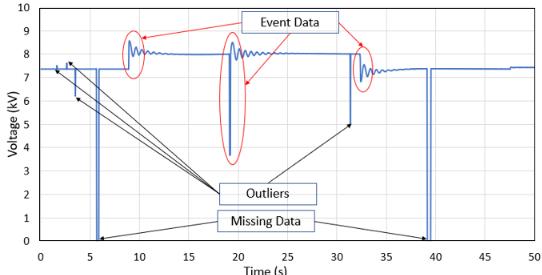
Figure-2:Synchrophasor-Based Anomaly Detection Framework
5.3.1 Statistical Detection
Methods
Statisticalanomalydetectionmethodsrelyonprobabilistic modelsandstatisticalmetricstoidentifyabnormalpatterns inmeasurementdata.Thesemethodstypicallydefinenormal system behavior based on historical data and detect anomalieswhenobservedvaluesdeviatesignificantlyfrom expectedpatterns.TechniquessuchasGaussiandistribution modeling, control charts, and hypothesis testing are commonlyusedforstatisticalanomalydetection.Although these methods are relatively simple and computationally efficient, their performance may be limited when dealing with highly nonlinear or complex system dynamics (Montgomery,2007).
5.3.2 Machine Learning Approaches
Machine learning algorithms have gained significant popularityinpowersystemmonitoringduetotheirabilityto learncomplexpatternsfromlargedatasets.Techniquessuch assupportvectormachines,randomforests,andclustering algorithms can analyze high-dimensional synchrophasor dataandidentifysubtledeviationsfromnormaloperating conditions.Thesemethods areparticularlyeffectivewhen labeleddatasetsareavailablefortrainingandvalidation.By learning relationships between different electrical parameters, machine learning models can classify disturbances and detect anomalies with high accuracy (Bishop,2006).
5.3.3 Deep Learning Frameworks
Deep learning frameworks extend traditional machine learningtechniquesbyusingmulti-layerneuralnetworksto learnhierarchicalrepresentationsofdata.Thesemodelsare capable of capturing complex temporal and spatial
International Research Journal of Engineering and Technology (IRJET) e-ISSN: 2395-0056
Volume: 13 Issue: 03 | Mar 2026 www.irjet.net p-ISSN: 2395-0072
relationshipsinsynchrophasormeasurements.Architectures suchasconvolutionalneuralnetworksandrecurrentneural networks have been successfully applied to detect disturbances and classify power system events. Deep learningapproachesareespeciallyusefulforanalyzinglargescalePMUdatasetsbecausetheycanautomaticallyextract relevantfeatureswithoutextensivemanualpreprocessing (Goodfellowetal.,2016).
5.4 Fault Localization Mechanisms
Once an anomaly has been detected, the next step in the monitoring framework is to determine the location of the fault within the transmission network. Fault localization mechanismsusesynchronizedmeasurementsfrommultiple PMUs to estimate the position of the disturbance. These mechanisms rely on various analytical and data-driven techniques that analyze voltage and current phasor variations across the network. Accurate fault localization enablessystemoperatorstoisolatetheaffectedcomponent quickly and restore normal operation with minimal disruption(GirgisandFallon,1982).
5.4.1
Distance-to-Fault Estimation
Distance-to-faultestimationmethodscalculatethedistance betweenthemeasurementlocationandthefaultpointalong a transmission line. These methods typically rely on impedance calculations derived from voltage and current measurements obtained from PMUs. By analyzing the relationshipbetweenthesemeasurements,itispossibleto estimate the fault location with high accuracy. Distancebased methods are widely used in protection systems becausetheyproviderapidfaultlocationestimatesthatcan supportautomaticprotectionandrestorationmechanisms (Anderson,1999).
5.4.2
Multi-PMU Triangulation Methods
Multi-PMU triangulation techniques utilize synchronized measurements from multiple PMUs to estimate the fault locationwithinthenetwork.Inthisapproach,variationsin voltageandphaseanglesobservedatdifferentlocationsare used to determine the point where the disturbance originated. By comparing measurements from several substations,themonitoringsystemcantriangulatethefault locationwithimprovedaccuracy.Thismethodisparticularly effectiveinlargeinterconnectednetworkswheremultiple PMUsprovideextensivecoverageofthetransmissionsystem (Zhouetal.,2016).
5.4.3
Event Correlation Approaches
Event correlation approaches analyze the temporal relationships between disturbances observed at different PMU locations. When a fault occurs, the resulting disturbancepropagatesthroughthenetworkandisdetected by multiple measurement devices at different times. By analyzing these time differences, it is possible to infer the
origin and propagation path of the disturbance. Event correlationtechniquesareparticularlyusefulforidentifying complexsystemeventsthatinvolvemultiplecomponentsor cascadingfailures(AminandWollenberg,2005).
5.5 Framework Architecture for Early Fault Identification
A typical synchrophasor-based anomaly identification framework follows a structured pipeline that integrates multiple analytical stages. The process begins with data acquisition from PMUs installed across the transmission network. The collected data is then subjected to preprocessingtoremovenoiseandensuresynchronization between measurements. After preprocessing, feature extraction techniques are applied to derive meaningful indicatorsfromvoltageandcurrentphasormeasurements. These features are analyzed using anomaly detection algorithms to identify abnormal system behavior. Finally, faultlocalizationmechanismsareappliedtodeterminethe locationofthedisturbanceandsupportcorrectiveactions.
6. CONCLUSION
Theincreasingcomplexityofmodernpowersystemsandthe rapid expansion of extra-high-voltage (EHV) transmission networks have created a strong need for advanced monitoringandfaultdetectionmechanisms.Synchrophasor technology,enabledbyPhasorMeasurementUnits(PMUs), hasemergedasapowerfulsolutionforreal-timemonitoring of power system dynamics. By providing high-resolution, time-synchronized measurements of voltage, current, frequency, and phase angles, PMUs significantly enhance situational awareness across wide-area transmission networks. This review paper presented a comprehensive overviewofsynchrophasor-derivedanomalyidentification frameworks for early-stage fault localization in EHV transmissionsystems.Thestudydiscussedthefundamental conceptsofsynchrophasortechnology,thearchitectureof wide-area monitoring systems, and the characteristics of PMUdatausedforpowersystemmonitoring.
Furthermore, the paper reviewed a wide range of methodologies developed for anomaly detection and fault localization, including analytical signal-processing techniques, model-based approaches, machine learning algorithms,andadvanceddeeplearningframeworks.These approaches demonstrate the growing importance of intelligent data analytics in interpreting large volumes of synchrophasormeasurementsandimprovingtheaccuracy offaultdetectionsystems.Inaddition,thereviewhighlighted the role of preprocessing techniques, feature extraction methods, and distributed computing architectures in enhancing real-time monitoring capabilities. Overall, synchrophasor-based monitoring frameworks provide a promising pathway toward early detection and precise localization of faults in modern power grids. Continued research in this area is expected to further improve grid
International Research Journal of Engineering and Technology (IRJET) e-ISSN: 2395-0056
Volume: 13 Issue: 03 | Mar 2026 www.irjet.net p-ISSN: 2395-0072
reliability, operational efficiency, and resilience in future smartpowersystems.
7. LIMITATIONS OF THE REVIEW
Althoughthisreviewprovidesacomprehensiveoverviewof synchrophasor-based anomaly detection and fault localization techniques, several limitations should be acknowledged. First, the review primarily focuses on methodologies related to PMU-based monitoring frameworks and does not extensively cover other monitoring technologies such as distributed sensor networks or hybrid SCADA-PMU systems. Second, the analysisisbasedmainlyonpublishedresearchstudiesand doesnotincludedetailedevaluationusingreal-timeutility datasets,whichmayinfluencethepracticalapplicabilityof some approaches. Third, rapid advancements in artificial intelligenceanddataanalyticsmayleadtotheemergenceof newtechniquesthatarenotincludedinthisreview.Finally, variations in system configurations, PMU placement strategies,andcommunicationinfrastructuresacrosspower networks may affect the generalization of the discussed methodstoalltransmissionsystems.
REFERENCES
1. Amin, M. and Wollenberg, B., 2005. Toward a smart grid:Powerdeliveryforthe21stcentury.IEEEPower andEnergyMagazine,3(5),pp.34–41.
2. Anderson,P.M.,1999.PowerSystemProtection.New York:IEEEPress.
3. Baldwin,T.L.,Mili,L.,Boisen,M.B.andAdapa,R.,1993. Power system observability with minimal phasor measurementplacement.IEEETransactionsonPower Systems,8(2),pp.707–715.
4. Bishop, C.M., 2006. Pattern Recognition and Machine Learning.NewYork:Springer.
5. Chakrabarti, S. and Kyriakides, E., 2008. Optimal placement of phasor measurement units for power system observability. IEEE Transactions on Power Systems,23(3),pp.1433–1440.
6. Chandola,V.,Banerjee,A.andKumar,V.,2009.Anomaly detection: A survey. ACM Computing Surveys, 41(3), pp.1–58.
7. Girgis, A.A. and Fallon, C.M., 1982. Fault location techniquesfortransmissionlines.IEEETransactionson PowerApparatusandSystems,PAS-101(9),pp.3038–3045.
8. Goodfellow,I.,Bengio,Y.andCourville,A.,2016.Deep Learning.Cambridge,MA:MITPress.
9. He, M., Zhang, J. and Vittal, V., 2017. Applications of synchrophasormeasurementsinpowersystems.IEEE TransactionsonPowerSystems,32(5),pp.3643–3653.
10. Mallat,S.,2009.AWaveletTourofSignalProcessing: TheSparseWay.3rded.Burlington:AcademicPress.
11. Milano,F.,2010.PowerSystemModellingandScripting. London:Springer.
12. Montgomery, D.C., 2007. Introduction to Statistical QualityControl.6thed.NewYork:Wiley.
13. Phadke,A.G.andThorp,J.S.,2008.SynchronizedPhasor Measurements and Their Applications. New York: Springer.
14. Phadke, A.G., Thorp, J.S. and Karimi, K.J., 2009. State estimation with phasor measurements. IEEE TransactionsonPowerSystems,1(1),pp.233–241.
15. Terzija,V.,Valverde,G.,Cai,D.,Regulski,P.,Madani,V., Fitch, J., Skok, S., Begovic, M. and Phadke, A., 2011. Wide-areamonitoring,protection,andcontroloffuture electric power networks. Proceedings of the IEEE, 99(1),pp.80–93.
16. Xu, B. and Abur, A., 2006. Observability analysis and measurementplacementforsystemswithPMUs.IEEE Power Systems Conference and Exposition, pp.943–946.
17. Zhang, Y., Bose, A. and Tomsovic, K., 2010. Impact of time synchronization errors on synchrophasor measurements.IEEETransactionsonPowerSystems, 25(3),pp.1390–1398.
18. Zhou,N.,Pierre,J.W.andTrudnowski,D.J.,2016.Robust R-Rintervalbasedapproachforoscillationmonitoring usingsynchrophasordata.IEEETransactionsonPower Systems,31(3),pp.2152–2160.
19. Ahmed,A.,Sajan,K.S.,Srivastava,A.K.andWu,Y.,2021. Anomalydetection,localizationandclassificationusing driftingsynchrophasordatastreams.IEEETransactions onSmartGrid,12(4),pp.3570–3580.
20. Amusan,O.andWu,D.,2025.Anomalydetectionand localization via graph learning using PMU measurements.Energies,18(6),p.1475.
21. Basumallik,S.,Srivastava,A.K.,Ahmed,A.andWu,Y., 2023. Synchrophasor data anomaly detection and classification considering data drift and contextual information.IEEESmartGrideBulletin.
22. Dubey,A.,Sajan,K.,Bariya,M.,Basak,S.andSrivastava, A.,2020.Realisticsynchrophasordatagenerationfor anomaly detection and event classification. In:
International Research Journal of Engineering and Technology (IRJET) e-ISSN: 2395-0056
Volume: 13 Issue: 03 | Mar 2026 www.irjet.net p-ISSN: 2395-0072
Workshop on Modeling and Simulation of CyberPhysicalEnergySystems(MSCPES).
23. Ren,H.,Hou,Z.andEtingov,P.,2018.Onlineanomaly detectionusingmachinelearningandHPCforpower system synchrophasor measurements. In: IEEE International Conference on Probabilistic Methods AppliedtoPowerSystems(PMAPS).
24. Shi, X. and Qiu, R., 2019. Early anomaly detection in powersystemsbasedonrandommatrixtheory.IEEE Access,7,pp.112825–112837.
25. Shi,X.andQiu,R.,2019.Dimensionalityincrementof PMU data for anomaly detection in low observability powersystems.IEEETransactionsonPowerSystems.
26. Zhao,X.,Liu,Z.andHe,M.,2025.Synchronousphasor anomaly detection method considering recording deviation.EnergyInformatics,8(75).
27. Pandey, S. and Srivastava, A., 2019. A real-time synchrophasor data-driven approach for event detectioninthepowergrid.IEEEPESGeneralMeeting.
28. Patil, A., Ananthapadmanabha, T., Kulkarni, A.D. and Mohan,N.,2016.Synchrophasordatabasedintelligent algorithm for real-time event detection in power systems.InternationalJournalofElectricalEngineering andTechnology,7(3),pp.49–56.
29. AdditionalHigh-ImpactSynchrophasor/PMUResearch Papers
30. Gajjar, G. and Soman, S.A., 2014. Auto detection of power system events using wide-area frequency measurements.IEEETransactionsonPowerSystems.
31. Gardner, R.M. and Liu, Y., 2012. Generation-load mismatchdetectionandanalysis.IEEETransactionson SmartGrid,3(1),pp.105–112.
32. Quintero,J.,Liu,G.andVenkatasubramanian,V.,2008. Oscillationmonitoringforlargepowersystemsusing synchrophasor measurements. IEEE PES General Meeting.
33. Huang, Z., Schneider, K.P. and Nieplocha, J., 2007. FeasibilitystudiesofapplyingKalmanfiltertechniques for dynamic state estimation of power systems. IEEE PowerEngineeringSocietyGeneralMeeting.
34. Zhou,N.,Pierre,J.W.andTrudnowski,D.J.,2012.Robust R-R interval method for oscillation detection using synchrophasor data. IEEE Transactions on Power Systems.
35. Zhang, Y. and Vittal, V., 2010. Wide-area monitoring systembasedoscillationdetectionusingsynchrophasor measurements.IEEETransactionsonPowerSystems.
36. Chen, Y., Huang, Z. and Li, F., 2015. PMU data based disturbance detection and classification. IEEE TransactionsonSmartGrid.
37. Khaledian,E.,Pandey,S.,Kundu,P.andSrivastava,A., 2020.Real-timesynchrophasordataanomalydetection using isolation forest and clustering methods. IEEE TransactionsonSmartGrid.
38. Zhou,D.,Annakkage,U.andRajapakse,A.,2016.Fault detectionusingwide-areaPMUmeasurements.Electric PowerSystemsResearch,134,pp.136–145.
39. Wang, J., Roytelman, I. and Phadke, A., 2016. Applicationsofsynchrophasormeasurementsinpower system protection and control. IEEE Transactions on SmartGrid.
40. He, M., Vittal, V. and Zhang, J., 2017. Applications of synchrophasormeasurementsinpowersystems.IEEE TransactionsonPowerSystems.
41. Chen,Z.,Gao,W.and Sun,K.,2018.PMU-based event detection and classification using machine learning methods. Electric Power Systems Research, 163, pp.372–381.
42. Zhou, N., Huang, Z. and Trudnowski, D., 2014. PMUbased oscillation source location using ambient synchrophasor measurements. IEEE Transactions on PowerSystems.
43. Zhang, P., Li, F. and Bhatt, N., 2010. Next-generation monitoring,analysis,andcontrolforthefuturesmart grid.IEEESmartGridInitiative.
44. Naspi, 2017. PMU Data Quality: Framework for SynchrophasorDataQualityAttributes.NorthAmerican SynchrophasorInitiative.
45. Li, Y., Chen, J. and Sun, K., 2019. Deep learning based power system disturbance detection using synchrophasor data. IEEE Access, 7, pp.102247–102258.
46. Khan, S., Khan, F. and Li, H., 2021. Deep neural networksforPMUdataanalyticsinsmartgrids.Electric PowerSystemsResearch,196.