
International Research Journal of Engineering and Technology (IRJET) e-ISSN: 2395-0056
Volume: 13 Issue: 05 | May 2026 www.irjet.net p-ISSN: 2395-0072
International Research Journal of Engineering and Technology (IRJET) e-ISSN: 2395-0056
Volume: 13 Issue: 05 | May 2026 www.irjet.net p-ISSN: 2395-0072
Bheem Gautam1, Mr. Ushendra Kumar2
1Master of Technology, Civil Engineering, Lucknow Institute of Technology, Lucknow, India
2Head of Department, Department of Civil Engineering, Lucknow Institute of Technology, Lucknow, India
Abstract -Regur (black cotton) soil presents significant geotechnical challenges due to its high swelling–shrinkage behavior, low shear strength, and moisture sensitivity, which adversely affect the performance of civil infrastructure. Conventional stabilization methods using cement and lime, although effective, are associated with high carbon emissions and long-term environmental concerns. In recent years, microbial catalyst–driven bio-mineralization has emerged as a sustainable alternativeforimprovingtheengineeringproperties of problematic soils. This review critically examines the current state of research on bio-mineralization–based stabilization of Regur soil, with particular emphasis on microbial-induced and enzyme-induced carbonate precipitation mechanisms. The review synthesizes findings from laboratory and limited field studies addressing strength enhancement, swelling control, durability, and microstructural modifications. The influence of microbial activity, treatment protocols, and environmental conditions on performance isdiscussed indetail.Environmental, economic, and scalability aspects are also evaluated to assess practical applicability. The review identifies key research gaps and highlightsfuturedirectionsforadvancingbio-mineralization as an eco-friendly ground improvementtechniqueforexpansive soils.
Keywords: Regur soil; Bio-mineralization; Microbialinduced carbonate precipitation; Expansive soil stabilization; Sustainable ground improvement; Geotechnical engineering
1. INTRODUCTION
Regur soil, commonly referred to as black cotton soil, is a highly expansive clay soil predominantly found in central andsouthernregionsofIndia.Itischaracterizedbyahigh content of montmorillonite minerals, which impart pronouncedswell–shrinkbehaviorundervaryingmoisture conditions.Seasonalmoisturefluctuationscausesignificant volumetric changes, leading to differential settlement, cracking, and structural distress in pavements, embankments,andshallowfoundations(Chen,1988;Nelson andMiller,1992).
From an engineering perspective, Regur soil exhibits high plasticity,lowshearstrengthinsaturatedconditions,poor bearing capacity, and excessive compressibility. These
properties pose serious challenges for infrastructure development,particularlyforlow-volumeroads,residential foundations,andlightlyloadedstructures.Theunpredictable nature of its volume change behavior necessitates soil improvementorstabilizationpriortoconstructiontoensure long-term serviceability and safety (Sivapullaiah et al., 2000).
Conventionalstabilizationtechniquessuchaslime,cement, and fly ash stabilization have been widely adopted to improvetheengineeringpropertiesofexpansivesoils.While these methods are effective in reducing plasticity and increasing strength, their application is associated with severaltechnical,environmental,andeconomiclimitations, particularly in the context of sustainable geotechnical engineering(Bell,1996;Sherwood,1993).
The production of cement and lime is highly energyintensive and contributes significantly to global carbon dioxideemissions.Cementmanufacturingaloneaccountsfor approximately7–8%ofglobalCO₂emissions,raisingserious concerns regarding the environmental sustainability of cement-based soil stabilization (Scrivener et al., 2018). In addition,excessiveuseofchemicalstabilizersmayaltersoil chemistryandnegativelyimpactsurroundingecosystems. InexpansivesoilssuchasRegursoil,conventionalstabilizers maynotalwaysprovidedurablelong-termperformance.The effectivenessoflimeorcementtreatmentisinfluencedby factors such as mineralogy, sulphate content, curing conditions,andmoistureingress.Sulphate-inducedheaving, leaching of stabilizing agents, and strength degradation under cyclic wetting and drying have been reported in severalstudies(Little,1995;Puppalaetal.,2006).Moreover, the brittle nature of cement-treated soils can lead to cracking, which compromises durability and increases maintenancerequirements.
Inresponsetothelimitationsofconventionalstabilization techniques,microbialcatalyst–basedsoilimprovementhas emergedasaninnovativeandsustainablealternativewithin the field of bio-geotechnical engineering. This approach
International Research Journal of Engineering and Technology (IRJET) e-ISSN: 2395-0056
Volume: 13 Issue: 05 | May 2026 www.irjet.net p-ISSN: 2395-0072
exploitsthemetabolicactivityofmicroorganismstoinduce theprecipitationofcementitiousminerals,primarilycalcium carbonate, within the soil matrix a process commonly referred to as microbial-induced carbonate precipitation (MICP)(DeJongetal.,2006;IvanovandChu,2008).
Microorganisms act as natural biochemical catalysts, facilitatingmineralprecipitationunderambientconditions withouttheneedforenergy-intensiveindustrialprocesses. The precipitated minerals bind soil particles, reduce pore spaces,andenhancemechanicalstrengthwhilepotentially improving durability and resistance to environmental loading. Due to its eco-friendly nature and low carbon footprint,microbialsoilimprovementhasgainedincreasing attentionasasustainablegroundimprovementtechnique.
1.4 Need for a Focused Review on BioMineralization of Regur Soil
Although extensive research has been conducted on biomineralization in granular soils such as sands, the application of microbial techniques to fine-grained and expansive soils remains relatively limited. Regur soil presentsuniquechallengesformicrobialtreatmentduetoits lowpermeability,high surfaceactivity,andcomplex clay–microbeinteractions(MitchellandSantamarina,2005).
Existing studies on microbial treatment of Regur soil are scattered, often limited to laboratory-scale investigations, and vary widely in terms of microbial species, treatment protocols, and reported performance outcomes. A comprehensive and critical synthesis of this literature is therefore necessary to evaluate the true potential, limitations, and applicability of microbial catalyst–driven bio-mineralizationspecificallyforRegursoil.Suchafocused review can help bridge the knowledge gap between laboratoryresearchandpracticalfieldimplementation.
1.5 Objective of the Review
Theprimaryobjectiveofthisreviewistocriticallyexamine existing literature on microbial catalyst–driven biomineralization techniques for strength enhancement of Regur soil. The review synthesizes findings related to microbialmechanisms,treatmentmethodologies,strength improvement,durability,andsustainabilityaspects.
2.1
Regursoil,commonlyknownasblackcottonsoil,isderived primarily from the weathering of basaltic rocks of the DeccanTrapformation.Itisextensivelydistributedacross central and southern India, particularly in Maharashtra, Madhya Pradesh, Gujarat, Karnataka, and parts of Andhra Pradesh. The soil develops under semi-arid to sub-humid
climaticconditionsandischaracterizedbydarkcoloration due to the presence of iron and titanium oxides (Murthy, 2002;Gidigasu,1976).
The dominant clay mineral present in Regur soil is montmorillonite,amemberofthesmectitegroup,whichis responsibleforitshighswellingpotential.Minorproportions of illite, kaolinite, quartz, feldspar, and calcite are also commonlyreported(Grim,1968;Sivapullaiahetal.,2000). Thehighspecificsurfaceareaandweakinterlayerbonding of montmorillonite enable significant water adsorption, makingthesoilhighlysensitivetomoisturevariations.
Fromaphysico-chemicalstandpoint,Regursoilexhibitshigh cationexchangecapacity(CEC),typicallyrangingbetween 40 and 80 meq/100 g, which contributes to its strong interactionwithporefluidsandstabilizingagents.Thesoil generallyshowsalkalinetoneutralpHvaluesandcontains exchangeablecationssuchascalcium,magnesium,sodium, and potassium. These properties strongly influence its response to chemical and bio-mediated stabilization techniques(MitchellandSoga,2005).
The swell–shrink behavior of Regur soil is primarily governed by the hydration and dehydration of montmorillonite minerals. During wet seasons, water moleculesentertheinterlayerspacesoftheclayminerals, leadingtovolumetricexpansion.Conversely,moistureloss during dry periods causes shrinkage and the formation of deepsurfacecracks(Chen,1988;NelsonandMiller,1992).
This cyclic volumetric change adversely affects the mechanical strength of the soil. In saturated conditions, Regursoilexhibitslowshearstrengthandbearingcapacity due to reduced effective stress and increased pore water pressure.Unconfinedcompressivestrength(UCS)valuesare typicallylow,andsignificantstrengthlossisobservedupon repeatedwetting–dryingcycles.Theseinherentlimitations necessitatestabilizationpriortoitsuseasafoundationor subgradematerial(HoltzandKovacs,1981).
Forsafeanddurableinfrastructureperformance,soilsused insubgrades,embankments,andfoundationsystemsmust satisfy minimum criteria related to strength, stiffness, volume stability, and durability. In the case of pavement subgrades, parameters such as California Bearing Ratio (CBR),resilientmodulus,andresistancetomoisture-induced softeningarecritical(IRC:37,2018).
Regur soil in its natural state rarely meets these performance requirements due to excessive swelling pressure,lowsoakedCBRvalues,andhighcompressibility.
International Research Journal of Engineering and Technology (IRJET) e-ISSN: 2395-0056
Volume: 13 Issue: 05 | May 2026 www.irjet.net p-ISSN: 2395-0072
Forlightlyloaded foundations,differential settlementand heave pose serious serviceability concerns. Consequently, regulatoryguidelinesanddesignstandardsrecommendsoil stabilization or replacement when expansive soils are encountered at construction sites (IS:1498, 1970; Bell, 1996).
3.1ConceptandClassificationofBio-Mineralization Processes
Property
Liquidlimit(%) 50–100 Chen (1988); Sivapullaiah et al. (2000)
Plasticityindex(%) 25–60 Murthy(2002)
Free swell index (%) 50–120 IS:2720 (Part 40), 1977
Cation exchange capacity(meq/100 g) 40–80 Mitchell and Soga (2005)
SoakedCBR(%) 1–4 Bell(1996)
Dominant clay mineral Montmorillon ite Grim(1968)
Bio-mineralization techniques, particularly microbialinduced carbonate precipitation (MICP), have emerged as promisingalternativesforimproving problematicsoils.In expansive clays like Regur soil, bio-mineralization offers potential advantages by inducing calcium carbonate precipitationthatbindsclayparticles,reducesporespace, andmodifiessoilfabric(DeJongetal.,2006;IvanovandChu, 2008).
Unlikeconventionalstabilizers,microbialprocessesoperate underambientconditionsandhavealowercarbonfootprint. Additionally,bio-mineralizationhasbeenreportedtoreduce swellingpotentialbylimitingwateringressandalteringthe diffusedoublelayersurroundingclayparticles(Soonetal., 2013). However, challenges such as low permeability, nutrienttransport,anduniformdistributionofprecipitates must be addressed to ensure effective application in finegrainedsoils.Despitetheselimitations,theinherentphysicochemicalpropertiesofRegursoilmakeitaviablecandidate for bio-mediated stabilization, warranting focused investigationandcriticalreview.
Bio-mineralization refers to the process by which living organismsinducetheformationofmineralphasesthrough metabolicactivitiesorenzymaticreactions.Ingeotechnical engineering, microbial catalyst–driven bio-mineralization exploitsthesenaturalprocessestoimprovesoilproperties by precipitating cementitious minerals within the pore spacesofsoils(DeJongetal.,2006).Themicroorganismsact as biochemical catalysts, accelerating mineral formation withoutbeingconsumedinthereaction.
Bio-mineralization processes are broadly classified into biologicallycontrolledmineralization(BCM)andbiologically inducedmineralization(BIM).InBCM,organismsregulate mineralnucleationandgrowththroughcellularmechanisms, whereasBIMinvolvesindirectmineralprecipitationdriven by metabolic by-products such as carbonate ions (LowenstamandWeiner,1989).
3.2 Microbial-Induced Carbonate Precipitation (MICP)
Microbial-induced carbonate precipitation (MICP) is the most extensively studied bio-mineralization technique for soil stabilization. It relies on ureolytic bacteria capable of hydrolyzing urea to produce carbonate ions, which subsequently react with calcium ions to form calcium carbonate(CaCO₃)precipitates(Stocks-Fischeretal.,1999).
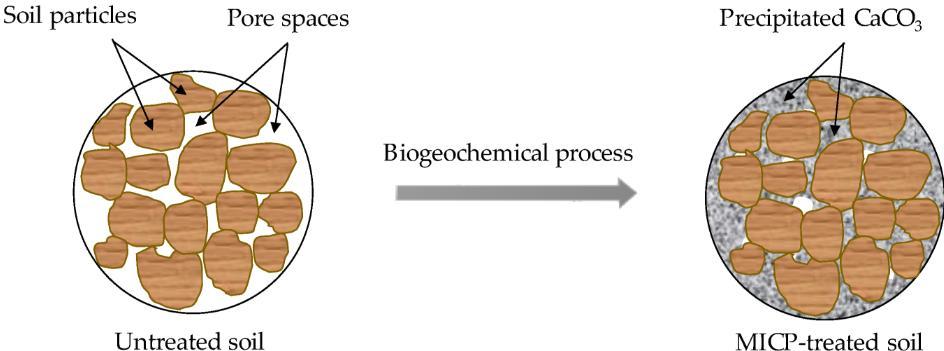
Figure-1: Microbial-Induced Carbonate Precipitation (MICP)
3.3 Enzyme-Induced Carbonate Precipitation (EICP)
Enzyme-induced carbonate precipitation (EICP) is a bioinspired alternative to MICP that utilizes free urease enzymesratherthanlivingmicroorganismstocatalyzeurea hydrolysis. The absence of bacterial cells simplifies treatment protocols and reduces uncertainties related to microbialsurvivalandtransportinsoilmedia(Whiffinetal., 2007).
International Research Journal of Engineering and Technology (IRJET) e-ISSN: 2395-0056
Volume: 13 Issue: 05 | May 2026 www.irjet.net p-ISSN: 2395-0072
EICP offers improved control over reaction rates and uniformity of treatment, particularly in fine-grained soils where bacterial mobility is limited. Since enzymes are smallerthanbacterialcells,theycanmoreeasilypenetrate low-permeabilityclaysoilssuchasRegursoil(Hamdanand Kavazanjian,2016).
3.4 Other Microbial Mineral Precipitation Mechanisms
Beyondcarbonateprecipitation,othermicrobialprocesses capableofinducingmineralformationhavebeenexplored for soil improvement. These include microbial-induced calciumphosphateprecipitation(MICPP),sulfatereduction–inducedmineralization,andironoxideprecipitation(Achal andPan,2014).
3.4.1 Calcium Phosphate Precipitation
MICPPinvolvesmicrobialmetabolicpathwaysthatrelease phosphate ions, which react withcalciumto formcalcium phosphate minerals. These precipitates exhibit higher chemicalstabilityandlowersolubilitycomparedtocalcium carbonate, making them attractive for long-term stabilization(ZhuandDittrich,2016).
4.LITERATUREREVIEWONBIO-MINERALIZATION FOR SOIL STRENGTH ENHANCEMENT
4.1 Evolution of Bio-Geotechnical Engineering
Bio-geotechnical engineering emerged as an interdisciplinary field integrating microbiology, geochemistry, and geotechnical engineering with the objective of improving soil behavior using biologically mediated processes. Early research was primarily exploratory, focusing on understanding how microbial activitycouldinfluencemineralprecipitationandsoilfabric modification(IvanovandChu,2008).
4.1.1 Early Developments in Microbial Soil Improvement
Initialstudiesonmicrobialsoilimprovementcanbetraced backtomicrobiologicalresearchoncalciteprecipitationby ureolyticbacteria.Stocks-Fischeretal.(1999)demonstrated that bacteria such as Sporosarcina pasteurii could induce calciteprecipitationthroughureahydrolysis.Thesefindings were later translated into geotechnical applications by DeJong et al. (2006), who established microbial-induced carbonate precipitation (MICP) as a viable ground improvementtechnique.
4.2 Literature on Bio-Mineralization in Clayey and Expansive Soils
The application of bio-mineralization to clayey and expansive soils has been investigated to a lesser extent compared to granular soils. However, existing studies
indicatethatmicrobialtreatmentscaneffectivelyalterclay fabric, reduce swelling potential, and improve strength undercontrolledconditions(Soonetal.,2013).
4.2.1 Reported Challenges in Low-Permeability Soils
Low permeability in clayey soils significantly restricts the transportofbacteria,enzymes,andcementationsolutions. Studies have reported uneven calcium carbonate distribution,localizedclogging,andreducedtreatmentdepth in expansive clays (Van Paassen, 2009). Additionally, the high surface charge and cation exchange capacity of clays can interfere with microbial activity and precipitation efficiency.
4.3StudiesonMicrobialTreatmentofRegur(Black Cotton) Soil
ResearchonmicrobialtreatmentofRegursoilisrelatively limitedbutgrowing,withmostinvestigationsconductedat thelaboratoryscale.Thesestudiesprimarilyaimtoevaluate the feasibility of MICP and EICP in mitigating the adverse propertiesofexpansiveblackcottonsoil.
4.3.1 Laboratory-Scale Investigations
Laboratorystudieshaveemployedmixing-basedtreatment methods to ensure uniform distribution of microbial solutions in Regur soil. Researchers have reported noticeable improvements in strength and reductions in swelling potential following microbial treatment (Gowthamanetal.,2019;SharmaandReddy,2021).
4.4ComparativeReviewofMICPandEICPinRegur Soil
Comparative assessments of MICP and EICP indicate that both techniques are capable of improving the strength characteristicsofRegursoil,albeitwithdifferingoperational efficienciesandlimitations.
4.4.1 Treatment Efficiency and Uniformity
MICPoftenresultsinhigherpeakstrengthduetosustained microbialactivity;however,uniformityoftreatmentremains achallengeinclayeysoils.Incontrast,EICPprovidesmore homogeneousmineralprecipitationduetothesmallersize andmobilityofureaseenzymes(Neupaneetal.,2015).
4.5 Influence of Key Parameters Reported in Literature
Theeffectivenessofbio-mineralizationinRegursoilishighly sensitive to several interacting parameters, as reported acrosstheliterature.
4.5.1 Bacterial Strain and Urease Activity
Ureolytic activity directly governs the rate of carbonate precipitation. Studies consistently report superior performance when using Sporosarcina pasteurii due to its highureaseactivityandalkalinitytolerance(Stocks-Fischer etal.,1999).
International Research Journal of Engineering and Technology (IRJET) e-ISSN: 2395-0056
Volume: 13 Issue: 05 | May 2026 www.irjet.net p-ISSN: 2395-0072
5.1
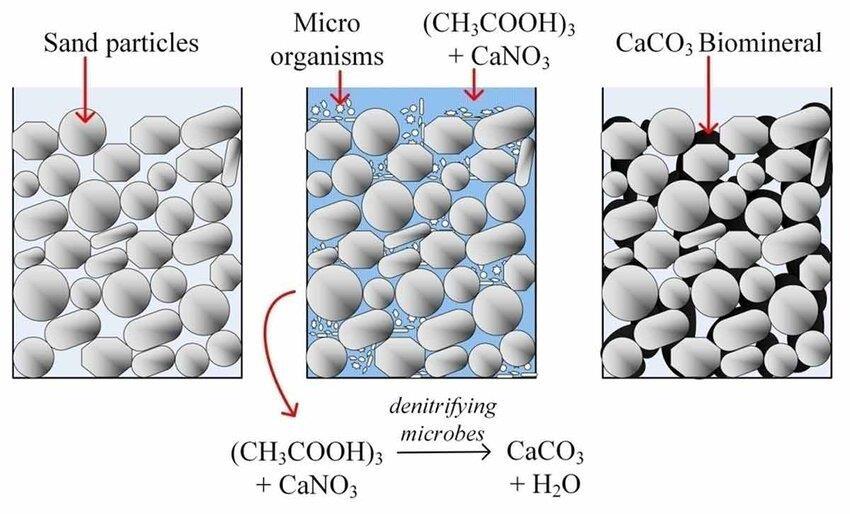
One of the primary mechanisms responsible for strength enhancement in Regur soil treated through biomineralization is particle bonding induced by mineral precipitation.Microbialorenzyme-catalyzedreactionsresult in the formation of calcium carbonate crystals that act as cementingagents,creatinginterparticlebondsandreducing thedegreeoffreedomofclayparticles(DeJongetal.,2006).
5.1.1 Nature of Cementation in Expansive Clay Soils
Unlike granular soils where calcite forms point-to-point contacts, in fine-grained soils such as Regur soil, precipitation occurs along clay plate surfaces and within micro-pores.Thisleadstosurfacecoating,edgebonding,and partial pore filling, contributing to increased apparent cohesionandstiffness(Soonetal.,2013).
5.2 Alteration of Clay Fabric and Diffuse Double Layer
Beyond cementation, bio-mineralization induces fundamental changes in clay fabric and interparticle physicochemicalinteractions.Theprecipitationofcalcium carbonatealterstheelectricalenvironmentofclayparticles, affecting the thickness of the diffuse double layer (DDL) (MitchellandSoga,2005).
5.2.1 Role of Multivalent Calcium
Theintroductionofcalciumionsduringbio-mineralization promotescationexchange,replacingmonovalentionssuch as sodium with divalent calcium. This process reduces repulsive forces between clay particles and encourages flocculationandaggregation(Grim,1968).
Swelling control is a critical requirement for stabilizing Regur soil, and bio-mineralization has been shown to significantly reduce swelling potential by modifying both mechanicalandphysicochemicalsoilbehavior.
5.3.1
Calciumcarbonateprecipitationreducesporeconnectivity andformsprotectivecoatingsaroundclayparticles,limiting water absorption. This restricts the entry of water into interlayerspacesofmontmorillonite,therebyreducingswell pressureandfreeswellindex(Soonetal.,2013).
5.4 Correlation between Calcite Content and Strength Gain
Astrongcorrelationbetweencalciumcarbonatecontentand mechanical strength improvement has been consistently reportedintheliterature.Calcitecontentisoftenquantified using acid digestion or thermogravimetric analysis and is consideredakeyindicatoroftreatmenteffectiveness.
5.4.1
Studies indicate that strength gain increases with calcite content up to an optimum level, beyond which additional precipitationmayleadtobrittlenessorlocalizedclogging. Forexpansivesoils,relativelylowercalcitecontentisoften sufficient to achieve significant improvements due to enhancedclay–mineralinteractions(DeJongetal.,2013).
6.1
Mixing-based treatment is the most commonly adopted approachinlaboratory-scalestudiesonbio-mineralization of clayey and expansive soils, including Regur soil. In this method,soilisthoroughlymixedwithbacterialorenzyme solutions along with cementation reagents to achieve uniformdistributionofreactants(Gowthamanetal.,2019).
6.1.1
Due to the low permeability and high surface activity of expansiveclays,directpercolationorinjectionofmicrobial solutionsisoftenineffectiveatthelaboratoryscale.Mixing ensuresintimatecontactbetweensoilparticles,microbesor enzymes, and calcium sources, thereby enhancing precipitationefficiencyandrepeatabilityofresults(Soonet al.,2013).
6.2
Injection and percolation techniques are more representativeoffield-scalebio-mineralizationandinvolve
International Research Journal of Engineering and Technology (IRJET) e-ISSN: 2395-0056
Volume: 13 Issue: 05 | May 2026 www.irjet.net p-ISSN: 2395-0072
delivering bacterial or enzyme solutions into soil through injectionwellsorsurfacepercolationsystems.
6.2.1
Injectionmethodstypicallyinvolvelow-pressureinjectionof microbial and cementation solutions into the subsurface. These techniques have been successfullyapplied in sandy soils; however, their effectiveness in expansive clays is limited by low hydraulic conductivity and rapid clogging nearinjectionpoints(VanPaassen,2009).
6.3
Curing conditions play a critical role in governing the kinetics of bio-mineralization and the stability of precipitatedminerals.Temperature,moisturecontent,and curing duration directly influence microbial activity and enzymeefficiency.
Most ureolytic bacteria exhibit optimal activity in the temperaturerangeof25–35°CandalkalinepHconditions. Insufficient moisture restricts reactant mobility, whereas excessive moisture may dilute reactants and reduce precipitationefficiency(Stocks-Fischeretal.,1999).
7. DURABILITY AND LONG-TERM PERFORMANCE: LITERATURE INSIGHTS
7.1
Durability under cyclic environmental loading is a critical performance criterion for stabilized expansive soils, particularly in regions experiencing seasonal moisture variations.Severalstudieshaveinvestigatedtheresponseof bio-mineralizedsoilstorepeatedwettinganddryingcycles toassessthestabilityofmicrobial-inducedcementationover time(DeJongetal.,2010).
Wet–drycyclinginducesvolumetricchanges,microcracking, anddegradationofbondinginuntreatedexpansivesoils.In contrast,bio-mineralizedsoilsexhibitimprovedresistance duetothepresenceofcalciumcarbonatecementation,which restrictsparticlemovement andreducesmoistureingress (Soon et al., 2013). However, partial strength loss after multiple cycles has been reported, particularly when cementationisnon-uniform.
Environmental degradation mechanisms such as chemical leaching, temperature fluctuations and microbial activity losscanadverselyaffectthelong-termperformanceofbiomineralized soils.Understandingthese factors is essential for evaluating the feasibility of bio-based stabilization in real-worldapplications.
Calcium carbonate precipitates formed during biomineralizationaregenerallystableunderneutraltoalkaline conditions. However, acidic environments can dissolve calcite,leadingtoareductionincementationandstrength. Laboratory leaching studies indicate that bio-treated soils exposedtomildlyacidicconditionsmayexperiencegradual strength reduction, highlighting the importance of sitespecificchemicalassessment(VanPaassen,2009).
Microbial catalyst–driven soil improvement has attracted attention primarily due to its potential environmental advantages over conventional chemical stabilization techniques.Bio-mineralizationprocessesrelyonnaturally occurring biochemical reactions operating at ambient temperature and pressure, thereby avoiding the energyintensive manufacturing processes associated with traditionalbinderssuchascementandlime(DeJongetal., 2006).
8.1.1
Theprincipalenvironmentalbenefitofmicrobialtreatments lies in their reduced greenhouse gas emissions during material production and application. Calcium carbonate precipitationoccursinsitu, eliminatingthe need forhightemperature calcination processes. Additionally, biomineralization can utilize locally available materials and indigenous microorganisms, further reducing transportation-relatedemissions(IvanovandChu,2008).
Cementandlimestabilizationhavebeenwidelyadoptedfor improvingexpansivesoilsduetotheirrapidstrengthgain and well-established design practices. However, these methods are increasingly scrutinized due to their environmentalanddurabilitylimitations.
8.2.1
Whilecementandlimetreatmentsprovidesubstantialshorttermstrengthimprovement,theirproductionisassociated withsignificantCO₂emissions.Cementmanufacturingalone contributesapproximately0.8–0.9tonnesofCO₂pertonne ofcementproduced(Scriveneretal.,2018).Incontrast,biomineralizationsignificantlyreducesembodiedcarbon,albeit oftenwithslowerstrengthdevelopment.
Economic feasibility is a critical factor influencing the adoption of any soil improvement technique. At present,
International Research Journal of Engineering and Technology (IRJET) e-ISSN: 2395-0056
Volume: 13 Issue: 05 | May 2026 www.irjet.net p-ISSN: 2395-0072
microbial treatments are generally more expensive at the laboratory scale due to costs associated with nutrients, enzymes,andcontrolledapplicationprocedures.
Several authors argue that a life-cycle cost assessment provides a more realistic comparison between biomineralization and conventional stabilization. Although initialcostsmaybehigher,potentialsavingscanbeachieved through reduced material usage, lower environmental compliance costs, and extended service life of treated infrastructure(DeJongetal.,2010).
Thisreviewcriticallysynthesizedtheexistingliteratureon microbial catalyst–driven bio-mineralization for strength enhancement of Regur (black cotton) soil. The findings indicatethatbio-mineralization,particularlymicrobial-and enzyme-inducedcarbonateprecipitation,offersapromising and sustainable alternative to conventional chemical stabilization methods. Reported studies consistently demonstrate improvements in strength, stiffness, and durability, along with significant reductions in swelling potentialandmoisturesensitivity.Microstructuralevidence confirms that calcium carbonate precipitation alters clay fabric, enhances interparticle bonding, and restricts volumetric instability. Compared to cement and lime stabilization, bio-mineralization exhibits lower carbon footprint and improved environmental compatibility, making it attractive for sustainable geotechnical applications. Although challenges related to treatment uniformity and scalability remain, the reviewed literature highlights the strong potential of bio-mineralization for mitigatingtheengineeringproblemsassociatedwithRegur soil. With continued research and field-scale validation, microbial catalyst–based techniques can contribute meaningfullytoeco-friendlygroundimprovementpractices inexpansivesoilregions.
Despite encouraging outcomes, the literature on biomineralization of Regur soil exhibits several limitations. Moststudiesareconfinedtolaboratory-scaleinvestigations employingmixing-basedtreatmentmethodsthatdonotfully replicatefieldconditions.Limitedfieldtrialsandlong-term monitoring data restrict the assessment of in-situ performanceanddurability.Variabilityinmicrobialstrains, treatmentprotocols,curingregimes,andtestingprocedures makes direct comparison between studies difficult. Environmentalconcernsrelatedtoammoniumby-products areoftenacknowledgedbutrarelyquantifiedormitigated systematically. Additionally, economic feasibility and scalabilityunderIndianfieldconditionsremaininsufficiently addressed. These limitations highlight the need for standardized methodologies, comprehensive life-cycle assessments, and pilot-scale demonstrations to enable
reliabletranslationofbio-mineralizationfromresearch to practice.
1. Achal,V.andPan,X.(2014)Characterizationofurease andcarbonicanhydraseproducingbacteriaandtheir role in calcium carbonate precipitation. Current Microbiology, 68(2), pp. 255–261. https://doi.org/10.1007/s00284-013-0457-6
2. Achal, V., Mukherjee, A. and Reddy, M.S. (2015) Microbial concrete: Way to enhance the durability of building structures. Journal of Materials in Civil Engineering, 27(1), pp. 1–7. https://doi.org/10.1061/(ASCE)MT.19435533.0001029
3. Bell,F.G.(1996)Limestabilizationofclaymineralsand soils. Engineering Geology, 42(4), pp. 223–237. https://doi.org/10.1016/0013-7952(96)00028-2
4. Chen,F.H.(1988)FoundationsonExpansiveSoils.2nd edn.Amsterdam:Elsevier.
5. DeJong, J.T., Fritzges, M.B. and Nüsslein, K. (2006) Microbially induced cementation to control sand response toundrainedshear.Journal ofGeotechnical andGeoenvironmentalEngineering,132(11),pp.1381–1392. https://doi.org/10.1061/(ASCE)10900241(2006)132:11(1381)
6. DeJong,J.T.,Mortensen,B.M.,Martinez,B.C.andNelson, D.C.(2010)Bio-mediatedsoilimprovement.Ecological Engineering, 36(2), pp. 197–210. https://doi.org/10.1016/j.ecoleng.2008.12.029
7. DeJong, J.T., Soga, K., Kavazanjian, E. et al. (2013) Biogeochemical processes and geotechnical applications: Progress, opportunities and challenges. Géotechnique, 63(4), pp. 287–301. https://doi.org/10.1680/geot.SIP13.P.017
8. Gidigasu, M.D. (1976) Laterite Soil Engineering. Amsterdam:ElsevierScientificPublishing.
9. Gowthaman, S., Mitsuyama, S., Nakashima, K. and Kawasaki, S. (2019) Microbial induced carbonate precipitationforexpansivesoilimprovement.Soilsand Foundations, 59(5), pp. 1466–1479. https://doi.org/10.1016/j.sandf.2019.07.002
10. Grim,R.E.(1968)ClayMineralogy.2ndedn.NewYork: McGraw-Hill.
11. Hamdan, N. and Kavazanjian, E. (2016) Enzymeinduced carbonate mineral precipitation for fugitive dust control. Géotechnique, 66(7), pp. 546–555. https://doi.org/10.1680/jgeot.15.P.168
12. Holtz,R.D.andKovacs,W.D.(1981)AnIntroductionto Geotechnical Engineering. Englewood Cliffs, NJ: Prentice-Hall.
13. Indian Roads Congress (IRC) (2018) IRC:37–2018 –GuidelinesfortheDesignofFlexiblePavements.New Delhi:IRC.
International Research Journal of Engineering and Technology (IRJET) e-ISSN: 2395-0056
Volume: 13 Issue: 05 | May 2026 www.irjet.net p-ISSN: 2395-0072
14. IndianRoadsCongress(IRC)(2018)IRC:SP:89–2018–GuidelinesforSoilandMaterialStabilizationforRoad Construction.NewDelhi:IRC.
15. IS:1498(1970)ClassificationandIdentificationofSoils forGeneralEngineeringPurposes.NewDelhi:Bureau ofIndianStandards.
16. IS:2720 (Part 40) (1977) Methods of Test for Soils: DeterminationofFreeSwellIndex.NewDelhi:Bureau ofIndianStandards.
17. Ivanov, V. and Chu, J. (2008) Applications of microorganisms to geotechnical engineering for biocloggingandbiocementationofsoilinsitu.Reviews inEnvironmentalScienceandBio/Technology,7(2),pp. 139–153.https://doi.org/10.1007/s11157-007-9126-3
18. Kumar,A.,Reddy,K.R.andMohan,D.(2020)Strength andswellingbehaviorofexpansivesoilstreatedusing microbial induced calcite precipitation. Construction and Building Materials, 234, 117343. https://doi.org/10.1016/j.conbuildmat.2019.117343
19. Little, D.N. (1995) Handbook for Stabilization of Pavement Subgrades and Base Courses with Lime. Dubuque,IA:Kendall/HuntPublishing.
20. Lowenstam, H.A. and Weiner, S. (1989) On Biomineralization.NewYork:OxfordUniversityPress.
21. Mitchell, J.K. and Santamarina, J.C. (2005) Biological considerationsingeotechnicalengineering.Journalof Geotechnical and Geoenvironmental Engineering, 131(10), pp. 1222–1233. https://doi.org/10.1061/(ASCE)10900241(2005)131:10(1222)
22. Mitchell,J.K.andSoga,K.(2005)FundamentalsofSoil Behavior.3rdedn.Hoboken,NJ:JohnWiley&Sons.
23. Murthy, V.N.S. (2002) Geotechnical Engineering: Principles and Practices of Soil Mechanics and FoundationEngineering.NewYork:MarcelDekker.
24. Nelson, J.D. and Miller, D.J. (1992) Expansive Soils: Problems and Practice in Foundation and Pavement Engineering.NewYork:Wiley.
25. Neupane, D., Yasuhara, H., Kinoshita, N. and Unno, T. (2015) Applicability of enzymatic calcium carbonate precipitationasasoil-strengtheningtechnique.Journal of Geotechnical and Geoenvironmental Engineering, 141(3), 04014120. https://doi.org/10.1061/(ASCE)GT.19435606.0001259
26. Scrivener,K.L.,John,V.M.andGartner,E.M.(2018)Ecoefficient cements: Potential economically viable solutions for a low-CO₂ cement-based materials industry.CementandConcreteResearch,114,pp.2–26. https://doi.org/10.1016/j.cemconres.2018.03.015
27. Sharma, R. and Reddy, K.R. (2021) Enzyme-induced carbonate precipitation for stabilization of expansive soils. Journal of Materials in Civil Engineering, 33(6), 04021105.https://doi.org/10.1061/(ASCE)MT.19435533.0003721
28. Sherwood,P.T.(1993) Soil Stabilization with Cement andLime.London:HMSO.
29. Soon,N.W.,Lee,L.M.,Khun,T.C.andLing,H.S.(2013) Improvements in engineering properties of soils throughmicrobial-inducedcalciteprecipitation.KSCE Journal of Civil Engineering, 17(4), pp. 718–728. https://doi.org/10.1007/s12205-013-0149-8
30. Stocks-Fischer, S., Galinat, J.K. and Bang, S.S. (1999) MicrobiologicalprecipitationofCaCO₃.SoilBiologyand Biochemistry, 31(11), pp. 1563–1571. https://doi.org/10.1016/S0038-0717(99)00082-6
31. Van Paassen, L.A. (2009) Biogrout: Ground improvement by microbial induced carbonate precipitation. PhD Thesis. Delft University of Technology,TheNetherlands.
32. Zhu,T.andDittrich,M.(2016)Carbonateprecipitation through microbial activities in natural environment, and their potential in biotechnology: A review. Frontiers in Bioengineering and Biotechnology, 4, 4. https://doi.org/10.3389/fbioe.2016.00004
33. Al Qabany, A., Soga, K. and Santamarina, J.C. (2012) Factors affecting efficiency of microbially induced calcite precipitation. Journal of Geotechnical and GeoenvironmentalEngineering,138(8),pp.992–1001. https://doi.org/10.1061/(ASCE)GT.19435606.0000666
34. Bang, S.S., Galinat, J.K. and Ramakrishnan, V. (2001) Calcite precipitation induced by polyurethaneimmobilizedBacilluspasteurii.EnzymeandMicrobial Technology, 28(4–5), pp. 404–409. https://doi.org/10.1016/S0141-0229(00)00348-3
35. Cheng, L., Cord-Ruwisch, R. and Shahin, M.A. (2013) Cementationofsandsoilbymicrobiallyinducedcalcite precipitationatvariousdegreesofsaturation.Canadian Geotechnical Journal, 50(1), pp. 81–90. https://doi.org/10.1139/cgj-2012-0023
36. Cheng, L., Shahin, M.A. and Cord-Ruwisch, R. (2017) Surface percolation for soil improvement by biocementationutilizingMICP.CanadianGeotechnical Journal, 54(3), pp. 413–423. https://doi.org/10.1139/cgj-2016-0328
37. DeMuynck,W.,DeBelie,N.andVerstraete,W.(2010) Microbial carbonate precipitation in construction materials:Areview.EcologicalEngineering,36(2),pp. 118–136. https://doi.org/10.1016/j.ecoleng.2009.02.006
38. Fauriel, S. and Laloui, L. (2012) Bio-mediated soil improvement: An overview. In: Proceedings of the International Symposium on Ground Improvement Technologies and Case Histories. Singapore, pp. 99–106.
39. Jiang,N.-J.,Soga,K.andDeJong,J.T.(2017)Theroleof microbial induced carbonate precipitation in geotechnicalengineering.GéotechniqueLetters,7(4), pp.308–314.https://doi.org/10.1680/jgele.17.00123
International Research Journal of Engineering and Technology (IRJET) e-ISSN: 2395-0056
Volume: 13 Issue: 05 | May 2026 www.irjet.net p-ISSN: 2395-0072
40. Kawasaki,S.,Murao,A.,Tsunekawa,M.,Kaneko,K.and Sato, T. (2015) Fundamental study on novel grout cementing due to microbial metabolism. Journal of Geotechnical and Geoenvironmental Engineering, 141(6),04015004.https://doi.org/10.1061/(ASCE)GT.1 943-5606.0001299
41. Phillips, A.J., Gerlach, R., Lauchnor, E., Mitchell, A.C., Cunningham,A.B.andSpangler,L.H.(2013)Engineered applicationsofureolytic biomineralization:A review. Biofouling,29(6),pp.715733https://doi.org/10.1080/0 8927014.2013.796550
42. Whiffin,V.S.,vanPaassen,L.A.andHarkes,M.P.(2007) Microbial carbonate precipitation as a soil improvement technique. Géomicrobiology Journal, 24(5),pp.417423.https://doi.org/10.1080/014904507 01436505