
International Research Journal of Engineering and Technology (IRJET) e-ISSN: 2395-0056
Volume: 13 Issue: 02 | Feb 2026 www.irjet.net p-ISSN: 2395-0072
A REVIEW OF INTELLIGENT DEEP LEARNING FRAMEWORK FOR EARLY-STAGE CLINICAL RISK IDENTIFICATION USING LONGITUDINAL PATIENT RECORDS
Shivangi Singh1 , Mr. Manish Kumar Soni2
1Master of Technology, Computer Science and Engineering, Bansal Institute of Engineering & Technology, Lucknow, India
2Assistant Professor, Department of Computer Science and Engineering, Bansal Institute of Engineering & Technology, Lucknow, India ***
Abstract - Early-stage clinical risk identification plays a critical role in preventive healthcare by enabling timely intervention andreducingmorbidity,mortality,andtreatment costs. The rapid digitizationofhealthcaresystemshasresulted in the availability of large-scale longitudinal patient records, including electronichealthrecords(EHRs),laboratoryreports, medication histories, and diagnostic timelines. These temporally ordered datasets present unique opportunities for developing intelligent deep learning models capable of capturing complex temporal dependencies and nonlinear clinical patterns. This review systematically examines recent advances in deep learning frameworks designed for early clinical risk prediction using longitudinal patient data. We analyze recurrent neural networks, attention-based models, temporal convolutional networks,graphneural networks,and transformer architectures, highlighting their methodological innovations and comparative performance across diverse clinical applications such as sepsis detection, cardiovascular risk prediction, and chronic diseaseprogressionmodeling.The review further explores feature representation strategies, handling of missing and irregular time-series data,evaluation protocols, and explainability mechanisms essentialforclinical adoption. Key challenges including data heterogeneity, model interpretability, privacy preservation, and deployment barriers are critically discussed.Finally, weoutlineemerging research directions emphasizing trustworthy AI, federated learning, and multimodal integration to enhance predictive accuracy and real-world clinical applicability.
Key Words: Deep learning; Longitudinal patient records; Clinical risk prediction; Electronic health records (EHR); Temporal modeling; Explainable artificial intelligence; Healthcare analytics.
1. INTRODUCTION
The integration of artificial intelligence into healthcare analyticshassignificantlytransformedpredictivemedicine, particularly in early-stage clinical risk identification. The increasing availability of longitudinal electronic health records(EHRs)providesanunprecedentedopportunityto model disease trajectories and detect adverse outcomes beforeclinicaldeteriorationbecomesevident.Deeplearning techniques,capableofextractinghierarchicalandtemporal representationsfromhigh-dimensionalmedicaldata,have demonstratedsuperiorpredictiveperformancecomparedto
traditional statistical models in several clinical domains (Esteva et al., 2019; Miotto et al., 2018). This section establishes the motivation, conceptual foundations, and scopeofthepresentreview.
1.1 Rising Diagnostic Costs and the Need for Early Risk Stratification
Healthcare systems globally are experiencing escalating diagnosticandtreatmentexpenditures,particularlydueto late-stage disease detection and avoidable hospital readmissions. Chronic illnesses such as cardiovascular disease, diabetes,andsepsis imposesubstantial economic and societal burdens when not identified early (World HealthOrganization,2023).Earlyriskstratificationenables proactive intervention,optimized resourceallocation,and improved patient outcomes. Traditional risk scoring systems suchaslogisticregression–basedclinicalscores oftenrelyonstaticormanuallyengineeredfeatures,limiting their ability to capture complex temporal interactions embeddedwithinlongitudinalpatientdata(Goldsteinetal., 2017). Deep learning frameworks, especially temporal modelssuchasLSTMandTransformerarchitectures,offer enhanced capability to model evolving clinical states and dynamic risk trajectories over time (Shickel et al., 2018). Consequently, there is growing interest in intelligent frameworks that integrate longitudinal analytics with predictivemodelingforearly-stageclinicaldecisionsupport.
1.2 Conceptual Foundations
1.2.1
Clinical Risk
Clinicalriskreferstotheprobabilisticlikelihoodofapatient developing a specific adverse health outcome within a defined time horizon, such as disease onset, complication progression, hospitalization, or mortality. Risk prediction models aim to estimate this probability based on patient demographics, clinical measurements, medical history, laboratory values, and treatment patterns. Modern predictive frameworks increasingly move beyond singleoutcome binary classification toward time-to-event modelinganddynamicriskupdating(Rajkomaretal.,2018). Theshifttowardcontinuousriskestimationalignswiththe goals of precision medicine, where individualized predictionsinformtailoredtherapeuticstrategies.
International Research Journal of Engineering and Technology (IRJET) e-ISSN: 2395-0056
Volume: 13 Issue: 02 | Feb 2026 www.irjet.net p-ISSN: 2395-0072
1.2.2 Longitudinal Patient Records
Longitudinalpatientrecordscomprisetemporallyordered clinical observations collected over multiple encounters, including diagnoses, medication prescriptions, laboratory results,imagingreports,andphysiciannotes.Unlikecrosssectional datasets, longitudinal records exhibit irregular sampling intervals, missing values, heterogeneous data types,andevolvingclinical contexts.Thesecharacteristics presentmethodologicalchallengesbutalsoenablemodeling of disease progression patterns. Advanced representation learning techniques, including embedding methods and time-awareencodings,facilitatetheextractionofmeaningful temporaldependenciesfromsuchcomplexdatasets(Choiet al.,2016).Theabilitytoleveragesequentialandcontextual informationdistinguishesdeeplearning–basedriskmodels fromtraditionalrule-basedsystems.
1.3 Scope and Contribution of This Review
Existing surveys have explored machine learning in healthcarebroadlyordeeplearningapplicationsinmedical imaging; however, fewer studies systematically focus on early-stageriskidentificationusinglongitudinalstructured clinicalrecords.Manyreviewsconcentrateonperformance comparisonswithoutcriticallyexaminingtemporalencoding strategies, irregular time modeling, explain ability mechanisms,anddeploymentchallengesinreal-worldEHR systems.Furthermore,recentadvancessuchastransformerbased architectures, graph neural networks for relational clinicaldata,andfederatedlearningframeworksnecessitate updatedsynthesis.
This review provides a structured and comprehensive analysis of deep learning methodologies specifically designed for longitudinal clinical risk prediction. It categorizesmodelsbasedontemporallearningstrategies, compares evaluation frameworks,and highlightspractical considerations for scalability, interpretability, and regulatorycompliance.
2. BACKGROUND
Thedevelopmentofintelligentframeworksforearly-stage clinical risk identification requires an understanding of clinicalriskmodeling,thenatureoflongitudinalhealthcare data,andthecomputational foundationsofdeeplearning. This section contextualizes these components to establish thetechnicalandclinicalbasisforsubsequentanalysis.
2.1 Clinical Risk Identification
Clinicalriskidentificationreferstothesystematicestimation of a patient’s probability of experiencing adverse outcomes suchasdiseaseonset,complicationprogression, hospitalization, or mortality within a defined prediction window. In contemporary healthcare systems, risk assessment is embedded within clinical workflows,
influencing triage decisions, treatment prioritization, and resourceallocation.
2.1.1 Clinical Risk Assessment in Healthcare Workflows
Risk prediction models are commonly integrated into electronichealthrecord(EHR)systemstoassistcliniciansin identifying high-risk individuals at the point of care. Traditionalapproachesrelyonrule-basedscoringsystems or regression-based models derived from epidemiological studies.Whilethesemodelsareinterpretableandclinically accepted,theyoftendependonstaticfeaturesandmaynot fullycaptureevolvingpatientstates(Goldsteinetal.,2017).
With the expansion of digital health infrastructure, datadriven predictive models have become central to clinical decision support systems, enabling automated alerts and real-timemonitoring.
2.1.2 Role of Early Detection in Chronic Diseases
Earlydetectionisparticularlycritical inchronicandhighmortalityconditionssuchascardiovasculardisease(CVD), diabetes, and sepsis. For instance, timely identification of sepsis significantly reduces mortality through early antibiotic administration and hemodynamic stabilization. Similarly, predictive modeling of cardiovascular events enablespreventiveinterventionsandlifestylemodifications before irreversible damage occurs (World Health Organization,2023).Thegrowingemphasisonpreventive andprecisionmedicineunderscorestheneedfordynamic riskmodelscapableofupdatingpredictionsasnewpatient databecomeavailable(Rajkomaretal.,2018).
2.2 Longitudinal Patient Records
Longitudinalpatientrecordsformthebackboneofmodern clinical analytics. Unlike cross-sectional datasets, these records contain temporally sequenced clinical events collectedovermultipleencounters,providingatrajectoryof patienthealthstatus.
2.2.1 Structure and Characteristics of EHR/EMR
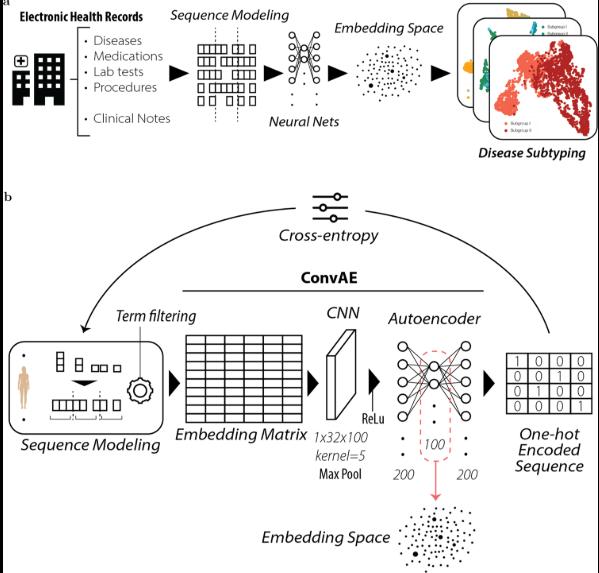
Electronic health records (EHRs) and electronic medical records(EMRs)includeheterogeneous data typessuch as structured diagnostic codes (ICD), laboratory test results, medication prescriptions, vital signs, demographic attributes,andunstructured clinical notes.These datasets are high-dimensional, sparse, and often incomplete. Additionally,codingvariabilityandinstitutionaldifferences introduceheterogeneityacrosshealthcaresystems(Miotto et al., 2018). Such complexity demands robust preprocessing,representationlearning,andnormalization strategiesbeforepredictivemodeling.
International Research Journal of Engineering and Technology (IRJET) e-ISSN: 2395-0056
Volume: 13 Issue: 02 | Feb 2026 www.irjet.net p-ISSN: 2395-0072
2.2.2TemporalDependenciesand Irregular Sampling
A defining characteristic of longitudinal records is their irregulartemporal structure.Clinical eventsoccur atnonuniform intervals, influenced by patient behavior, disease severity, and healthcare access. Standard time-series assumptionsoffixedsamplingintervalsarerarelysatisfied inreal-worldEHRdata.Furthermore,missingnessmaybe informativeratherthanrandom,reflectingclinicaljudgment orpatientcondition.Advancedtemporalmodels,including time-awarerecurrentnetworksandattentionmechanisms, are designed to capture these dependencies while accountingforvaryingtimegapsbetweenevents(Shickelet al.,2018).
2.2.3 Common Data Sources
Longitudinal healthcare data originate from multiple sources.Administrativeclaimsdataprovidebilling-related diagnostic and procedural information across large populations. Hospital databases contain encounter-level structured records, laboratory values, and discharge summaries. Intensive Care Unit (ICU) monitoring systems generatehigh-frequencyphysiologicaltime-seriesdata,such as heart rate and blood pressure measurements, enabling fine-grainedriskprediction.Publiclyavailablebenchmarks, including MIMIC databases, have facilitated reproducible researchinthisdomain(Johnsonetal.,2016).
2.3 Fundamentals of Deep Learning
Deep learning encompasses a family of neural network architecturesdesignedtolearnhierarchicalrepresentations fromlarge-scaledata.Itsapplicationinhealthcareanalytics hasexpandedrapidlyduetoimprovementsincomputational poweranddataavailability.
2.3.1 Core Architectures: ANN, CNN, RNN, LSTM, and Transformer
ArtificialNeuralNetworks(ANNs)consistoffullyconnected layers that learn nonlinear feature transformations. ConvolutionalNeuralNetworks(CNNs)applyconvolutional filters to extract spatial or local patterns and have been adapted for structured medical data. Recurrent Neural Networks (RNNs) model sequential dependencies by maintaining hidden states across time steps. Long ShortTerm Memory (LSTM) networks address the vanishing gradientproblemofstandardRNNsbyincorporatinggating mechanisms that preserve long-range temporal dependencies. More recently, Transformer architectures leverage self-attention mechanisms to model global dependencieswithoutrecurrentconnections,demonstrating superiorscalabilityandparallelizationcapabilities(Vaswani etal.,2017).
2.3.2 Deep Learning for Temporal Health Data
Longitudinalhealthrecordsexhibitnonlinearrelationships, multimodalinputs,andcomplextemporalinteractionsthat traditional statistical models struggle to capture. Deep learning frameworks automatically learn feature representationsdirectlyfromraworminimallyprocessed data, reducing reliance on manual feature engineering. Sequential architectures, particularly LSTMs and Transformers, are well-suited to modeling disease progression and dynamic risk estimation over time. Moreover, representation learning enables integration of heterogeneous data modalities withina unified predictive framework (Esteva et al., 2019). These capabilities make deeplearninganappropriatemethodologicalfoundationfor early-stageclinicalriskidentificationsystems.
3. METHODOLOGY OF LITERATURE REVIEW
Arigorousandtransparentreviewmethodologyisessential to ensure reproducibility, minimize selection bias, and provideacomprehensivesynthesisofexistingresearch.This reviewadoptsastructuredapproachalignedwithsystematic review principlescommonlyappliedinhealthinformatics and evidence-based medicine. The methodological framework is informed by PRISMA (Preferred Reporting ItemsforSystematicReviewsandMeta-Analyses)guidelines to enhance clarity in study identification, screening, eligibility,andinclusion(Pageetal.,2021).
3.1 Search Protocol
A systematic search strategy was designed to capture relevantpeer-reviewedliteratureaddressingdeeplearning–based early-stage clinical risk identification using longitudinalpatientrecords.
International Research Journal of Engineering and Technology (IRJET) e-ISSN: 2395-0056
Volume: 13 Issue: 02 | Feb 2026 www.irjet.net p-ISSN: 2395-0072
3.1.1 Databases
The literature search was conducted across four major academic databases to ensure multidisciplinary coverage: PubMed (biomedical and clinical research), IEEE Xplore (engineering and computational methodologies), Scopus, and Web of Science (broad scientific indexing). These databases collectively provide comprehensive access to medical informatics, artificial intelligence, and healthcare analytics publications. Searching across multiple repositoriesreducespublicationbiasandimprovesretrieval ofhigh-impactanddomain-specificstudies(Kitchenhamand Charters,2007).
3.1.2 Keywords and Boolean Logic
The search strategy employed structured Boolean combinations of domain-relevant keywords. Core search strings included terms such as: “deeplearning”AND“electronichealthrecords”OR“EHR” AND “risk prediction” OR “clinical risk” AND “longitudinal data”OR“temporalmodeling”.
Synonyms and related descriptors (e.g., “recurrent neural networks”, “transformer models”, “disease progression”, “early detection”) were incorporated to broaden retrieval sensitivity. Boolean operators (AND/OR), truncation symbols,anddatabase-specificfilterswereappliedtorefine precision and reduce irrelevant results. Controlled vocabularyindexing(e.g.,MeSHtermsinPubMed)further enhancedsearchaccuracy(Breretonetal.,2007).
3.2 Inclusion and Exclusion Criteria
Predefined eligibility criteria were established to ensure methodologicalconsistencyandthematicrelevance.
3.2.1 Time Window
Only studies published within the last decade were consideredtocapturerecentadvancementsindeeplearning architectures and longitudinal health analytics. The rapid evolutionoftransformermodels,attentionmechanisms,and large-scale EHR applications necessitates focusing on contemporarycontributionsratherthanearly-stageneural networkexplorations.
3.2.2
Publication Type
The review included peer-reviewed journal articles to ensure scientific rigor and validated findings. Conference papers,editorials,dissertations,preprints,andnon-English publications were excluded unless they provided seminal methodological contributions widely recognized in subsequentjournalliterature.Emphasisonpeer-reviewed sources aligns with best practices in systematic evidence synthesis(Moheretal.,2009).
3.2.3 Clinical and Methodological Relevance
Papers solely addressing medical imaging without longitudinalstructureddata,descriptiveanalyticswithout predictive modeling, or purely theoretical algorithmic discussions without clinical validation were excluded. Preferencewasgiventostudiesdemonstratinginternalor externalvalidationusingappropriateevaluationmetrics.
4. LITERATURE REVIEW
4.1 Evolution of Clinical Risk Prediction Models
4.1.1 Traditional Statistical Approaches
Early clinical risk prediction relied predominantly on statistical modeling techniques such as logistic regression and Cox proportional hazards models. Logistic regression hasbeenwidelyusedforbinaryoutcomeprediction,while the Cox model enables time-to-event analysis under proportional hazard assumptions. These approaches underpin established risk scoring systems such as the FraminghamRiskScoreforcardiovasculardiseaseandthe Sequential Organ Failure Assessment (SOFA) score for critical care assessment. Their strengths lie in interpretability,well-understoodstatisticalproperties,and strong clinical acceptance due to transparent parameter estimation(D’Agostinoetal.,2008).However,thesemethods assume linear relationships between predictors and outcomes, require manual feature engineering, and are limited in modeling complex nonlinear and temporal interactionsinherentinlongitudinalEHRdata.
4.1.2 Machine Learning-Based Risk Prediction
With the growth of digital health data, machine learning algorithms such as Random Forests, Support Vector Machines (SVM), and Gradient Boosting Machines were introduced to enhance predictive accuracy. These models cancapturenonlinearrelationshipsandinteractionswithout strict parametric assumptions. Empirical studies have demonstrated improved discrimination performance comparedtotraditionalregressionmodelsincertainclinical tasks(ObermeyerandEmanuel,2016).Nevertheless,they remain dependent on handcrafted feature extraction and typically treat temporal data as aggregated snapshots, limiting their ability to model sequential dynamics in longitudinalrecords.
4.2 Deep Learning for Longitudinal Clinical Data
4.2.1
Feed forward Neural Networks on Aggregated Features
Initialdeeplearningapplicationsinhealthcareutilizedfeed forward artificial neural networks (ANNs) trained on aggregatedpatient summaries.Whilecapableofmodeling nonlinear relationships, these architectures compress
International Research Journal of Engineering and Technology (IRJET) e-ISSN: 2395-0056
Volume: 13 Issue: 02 | Feb 2026 www.irjet.net p-ISSN: 2395-0072
longitudinal histories into fixed-length feature vectors, thereby discarding temporal ordering information. Consequently, they are suboptimal for modeling disease progressionpatternsacrosstime(Miottoetal.,2016).
4.2.2 Recurrent Neural Networks (RNN)
RecurrentNeuralNetworksintroducedsequentialmodeling capabilitiesbymaintaininghiddenstatesacrosstimesteps. RNNs have been applied to predict disease onset and hospital readmissions by processing temporally ordered clinical events. However, standard RNNs suffer from vanishing and exploding gradient problems, which hinder learning long-term dependencies in extended patient histories(Liptonetal.,2016).
4.2.3
Long Short-Term Memory (LSTM) and GRU Models
LongShort-TermMemory(LSTM)andGatedRecurrentUnit (GRU) architectures address gradient instability through gating mechanisms that regulate information flow. These models have demonstrated strong performance in early detectionofsepsis,heartfailure,anddiabetesprogression by capturing long-range temporal dependencies. Timeaware variants further incorporate irregular intervals betweenclinicalvisits,improvingmodelingrealisminEHRbasedapplications(Choietal.,2016).
4.2.4
Temporal Convolutional Networks (TCN)
Temporal Convolutional Networks employ causal and dilated convolutions to capture long-term dependencies withoutrecurrentconnections.TCNsprovideparallelization advantagesandstablegradients,oftenoutperformingRNNbased architectures in sequential modeling tasks. Their structuredreceptivefieldsenableefficienttemporalfeature extractioninhigh-dimensionalclinicalsequences(Baietal., 2018).
4.2.5
Attention Mechanisms
Attention mechanisms enhance sequence models by assigningadaptiveimportanceweightstorelevantclinical events.Thisselectiveweightingimprovespredictivefocus and provides partial interpretability by highlighting influentialtimepointsorfeatures.Attention-basedmodels haveimprovedriskpredictioninlongitudinalEHRdatasets by mitigating information dilution across long sequences (Bahdanauetal.,2015).
4.2.6
Transformer-Based Architectures
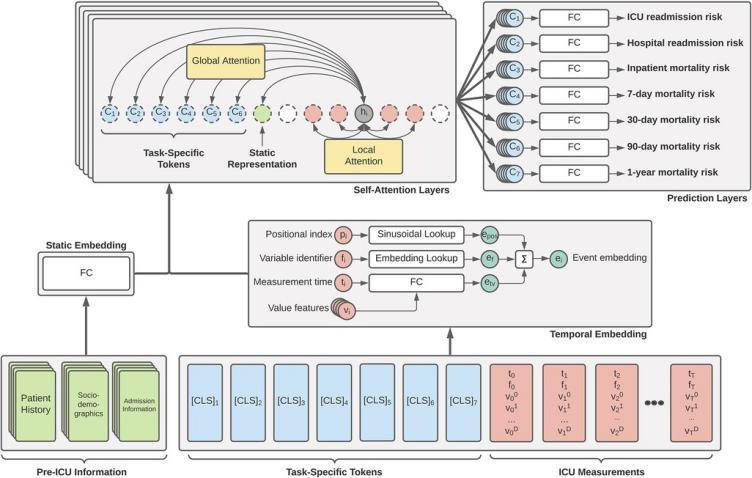
Transformer architectures rely entirely on self-attention mechanisms to model long-range dependencies without recurrence.Theirparallelcomputationcapabilityimproves scalabilityforlargehealthcaredatasets.Healthcare-specific adaptations such as BEHRT have demonstrated the feasibility of transformer-based risk modeling using structured EHR sequences (Li et al., 2020). These models effectively capture complex event relationships across extendedpatienttimelines.
4.3 Representation Learning in EHR-Based Risk Prediction
4.3.1 Medical Code Embedding
Representation learning techniques transform discrete medical codes such as ICD, CPT, and RxNorm into dense vectorembedding.Word2Vec-inspiredmethodshavebeen adaptedtocapturesemanticrelationshipsamongdiagnoses andmedications,enablingimproveddownstreampredictive modeling (Mikolov et al., 2013). Embedding strategies reduce sparsity and enhance generalization across heterogeneoushealthcaresystems.
4.3.2 Time Encoding Strategies
Temporalencodingmechanismsaddressirregularsampling in longitudinal data. Positional encoding, time decay functions, and interval-based embeddings incorporate timinginformationintomodelinputs.Suchstrategiesenable neuralnetworkstodifferentiatebetweenrecentanddistant clinicalevents,improvingdynamicriskestimation(Vaswani etal.,2017).
4.3.3 Handling Missing and Sparse Data
EHR datasets frequently contain missing or sparsely recordedvariables.Commonapproachesincludestatistical imputation, masking indicators, and generative modeling frameworksthatinferlatentdistributions.Advancedmodels
International Research Journal of Engineering and Technology (IRJET) e-ISSN: 2395-0056
Volume: 13 Issue: 02 | Feb 2026 www.irjet.net p-ISSN: 2395-0072
treatmissingnessasinformative,leveragingittoenhance predictiveaccuracyinclinicalsettings(Cheetal.,2018).
4.4 Graph-Based and Relational Learning Approaches
4.4.1 Graph Neural Networks (GNN)
Graph Neural Networks model relational dependencies between patients, diagnoses, or medical entities by constructing graph-structured representations. Patient similaritynetworksandcomorbiditygraphsenablelearning beyond independent sequence modeling, improving risk stratificationinpopulation-level analyses(Hamilton etal., 2017).
4.4.2 Knowledge Graph Integration
Integration of clinical ontologies and knowledge graphs allows embedding of structured medical knowledge into predictivemodels.Thisapproachsupportscausalreasoning and enhances interpretability by linking predictions to knownclinicalrelationshipsandbiomedicalpathways.
4.5 Multi-Modal Deep Learning Approaches
4.5.1 Structured and Unstructured Data Fusion
Recent studies integrate structured EHR variables with unstructured clinical notes using natural language processing(NLP)techniques.Fusionarchitecturescombine textual embedding with laboratory and diagnostic data, enablingcomprehensivepatientrepresentations(Rajkomar etal.,2018).
4.5.2 Wearables and Continuous Monitoring Data
The integration of wearable sensor data and ICU physiological time-series has enabled real-time risk monitoring.Continuousdatastreamsenhanceearlywarning systemsforacutedeterioration,particularlyinintensivecare settings.
4.6 Explainability and Interpretability in Risk Models
4.6.1 Post-hoc Explainability Methods
Techniques such as SHAP and LIME provide post-hoc explanationsbyestimatingfeaturecontributionstomodel predictions. Saliency maps further identify influential temporal segments in sequential data (Lundberg and Lee, 2017).
4.6.2 Intrinsically Interpretable Architectures
Attentionvisualizationandrule-basedneuralhybridsembed interpretability directly into model structure. Such
approaches support clinician understanding and facilitate modelvalidation.
4.6.3 Clinical Trust and Model Transparency
Regulatoryframeworksemphasizetransparency,fairness, andaccountabilityinAI-drivenhealthcaresystems.Humanin-the-loop validation and auditability are increasingly recognizedasprerequisitesforclinicaldeployment.
5. DEEP LEARNING TECHNIQUES FOR EARLY CLINICAL RISK DETECTION
Deep learning methodologies have increasingly become centraltoearly-stageclinicalriskidentificationduetotheir capacity to learn complex nonlinear representations and temporal dependencies from longitudinal patient records. Thissectioncategorizesmajorarchitecturesbasedonmodel design and temporal modeling strategy, highlighting their methodologicalcontributionsandlimitationsinhealthcare applications.
5.1 Classical Neural Approaches
5.1.1
Feed forward NetworksonAggregated Features
Early applications of neural networks in clinical risk predictionemployedfeedforwardartificialneuralnetworks (ANNs)trainedonaggregatedpatient-levelfeatures.Inthis approach, longitudinal records are transformed into summary statistics such as mean laboratory values, frequencyofdiagnoses,orcumulativemedicationcounts beforebeingprovidedasfixed-lengthinputvectors.These modelscapturenonlinearinteractionsamongvariablesand often outperform traditional regression in complex classification tasks (Dreiseitl and Ohno-Machado, 2002). However, the aggregation process collapses temporal information, ignoring event order and time gaps between observations.
5.1.2 Limitations for Temporal Sequences
Becausefeedforwardnetworkslackmemorymechanisms, they are inherently unsuitable for modeling sequential dependencies in evolving clinical trajectories. Disease progression is rarely static; risk evolves as new measurementsandinterventionsoccur.Staticneuralmodels cannotdynamicallyupdateriskestimatesbasedontemporal context, leading to suboptimal performance in early detection tasks involving progressive conditions such as sepsisorheartfailure.
5.2 Recurrent Neural Networks (RNN)
5.2.1
Standard RNN, LSTM, and GRU
RecurrentNeuralNetworksaddresstemporalmodelingby introducing hidden states that propagate sequential
International Research Journal of Engineering and Technology (IRJET) e-ISSN: 2395-0056
Volume: 13 Issue: 02 | Feb 2026 www.irjet.net p-ISSN: 2395-0072
information across time steps. Standard RNNs process patienteventschronologically,enablingmodelingofdisease progression patterns. However, vanishing gradient issues limittheircapacitytolearnlong-termdependencies.Long Short-Term Memory (LSTM) and Gated Recurrent Unit (GRU)architecturesmitigatethislimitationthroughgating mechanismsthatregulatememoryretentionandforgetting processes (Hochreiter and Schmidhuber, 1997). These models have demonstrated effectiveness in predicting hospital readmissions, disease onset, and mortality using longitudinalEHRdata.
5.2.2 Handling Variable-Length
Sequences
Clinicalhistoriesvarywidelyindurationandfrequencyof visits. RNN-based architectures naturally accommodate variable-lengthsequenceswithoutrequiringuniforminput sizes. Padding and masking techniques enable batch processing while preserving sequential integrity. This flexibility is particularly important in EHR-based risk modeling where patient timelines differ significantly in complexityandlength.
5.2.3
Approaches to Irregular Time Intervals
Real-world clinical data are irregularly sampled, with varyingtimegapsbetweenevents.Time-awareRNNvariants incorporateintervalinformationusingdecaymechanismsor modifiedhiddenstatetransitionstoaccountforelapsedtime betweenobservations.Suchadaptationsimprovepredictive accuracybyexplicitlymodelingtemporalgapsratherthan assumingevenlyspacedsequences(Baytasetal.,2017).
5.3
Attention-Based and Transformer Models
5.3.1 Self-Attention Mechanisms
Attention mechanisms enhance sequence modeling by assigninglearnableimportanceweightstoinputelements. Insteadofcompressingallhistoricalinformationintoafixed hiddenstate,attentionallowsmodelstoselectivelyfocuson clinically relevant time points or features. This selective weighting improves both predictive performance and interpretability, as influential events can be traced within patienthistories(Bahdanauetal.,2015).
5.3.2 Transformers versus RNNs for Longitudinal Data
Transformerarchitectureseliminaterecurrenceentirelyand relyonself-attentiontomodelglobaldependenciesacross sequences.Theirparallelcomputationimprovesscalability for large datasets, while multi-head attention captures complexinter-eventrelationships.Inlongitudinalhealthcare modeling, transformer-based systems have shown competitive or superior performance compared to RNNs, particularly in capturing long-range dependencies across extendedclinicaltimelines(Vaswanietal.,2017).However,
theymayrequiresubstantialcomputationalresourcesand largetrainingdatasets.
5.4 Hybrid Architectures
5.4.1 CNN and RNN Combinations
Hybrid models integrate Convolutional Neural Networks (CNNs)withRNNstoexploitcomplementarystrengths.CNN layersextractlocaltemporalpatternsorfeaturecorrelations, while RNN layers capture sequential dependencies. Such architectureshavebeenappliedinICUmonitoringsystems to enhance early warning prediction by combining shortterm signal patterns with long-term progression trends (Rajkomaretal.,2018).
5.4.2 Graph Neural Networks for Relational Clinical Data
Graph Neural Networks (GNNs) extend risk modeling by incorporating relational structures among patients, diagnoses, or medical entities. Instead of treating each patientindependently,GNNsleveragesimilarity networks andcomorbiditygraphstopropagatecontextualinformation acrossconnectednodes.Thisrelationalmodelingenhances predictive capacity in population-level analyses and supportsidentificationofsharedriskpatterns(Hamiltonet al.,2017).
5.5 Temporal Convolutional Networks
5.5.1 Causal Convolutions and Dilations
Temporal Convolutional Networks (TCNs) utilize onedimensional causal convolutions to ensure predictions depend only on past events. Dilated convolution layers expandreceptivefieldsexponentially,enablingmodelingof long-range dependencies without deep recurrent stacks. Thisstructurestabilizesgradientflowandallowsefficient parallelizationduringtraining(Baietal.,2018).
5.5.2
Comparison with RNN-Based Architectures
Compared to RNNs, TCNs often demonstrate improved computationalefficiencyandstableconvergenceinsequence modeling tasks. While RNNs maintain explicit memory states, TCNs capture temporal dependencies through hierarchical convolutional filters. Empirical comparisons indicate that TCNs can outperform recurrent models in certaintime-seriesapplications,althoughperformancemay dependondatasetcharacteristicsandsequencelength. In clinicalriskdetection,TCNsofferapromisingalternativefor scalablemodelingofhigh-dimensionallongitudinalrecords.
6. CRITICAL COMPARATIVE ANALYSIS
A critical comparative analysis is essential to synthesize findings across heterogeneous studies and identify
International Research Journal of Engineering and Technology (IRJET) e-ISSN: 2395-0056
Volume: 13 Issue: 02 | Feb 2026 www.irjet.net p-ISSN: 2395-0072
methodological patterns, strengths, and persistent limitationsinearly-stageclinicalriskdetection.Thissection integratesnarrativediscussionwithstructuredcomparison across datasets, model performance, interpretability mechanisms,andriskfactoridentificationstrategies.
6.1 Dataset Sources and Sizes
6.1.1
Public Benchmarks versusProprietary Hospital Data
Researchinlongitudinalclinicalriskmodelingreliesonboth publiclyavailabledatasetsandinstitution-specifichospital records.PublicbenchmarkssuchasMIMICandeICUprovide standardized, de-identified ICU data that support reproducibilityandcross-studycomparison(Johnsonetal., 2016).Thesedatasetstypicallyincludethousandsofpatient admissions with high-resolution physiological measurements.However,theyareoftenrestrictedtocritical care populations, limiting generalizability to primary or outpatientsettings.
In contrast, proprietary hospital datasets frequently encompassbroaderpatientdemographicsandlongerfollowup periods but lack external accessibility. While such datasets enable large-scale modeling with millions of records, limited transparency and restricted data sharing hinder reproducibility and independent validation. Consequently, models trained exclusively on proprietary datamayfacechallengesincross-institutionaldeployment duetodomainshiftanddataheterogeneity.
6.2 Model Performance Trends
6.2.1
Architectural Performance under Varying Conditions
Comparative evaluations suggest that model performance depends heavily on data characteristics and prediction objectives. For relatively short sequences with structured tabularinputs,gradientboostingandshallowneuralmodels oftenachievecompetitiveAUCscores.However,forlongand irregularlongitudinalhistories,recurrentandtransformerbased architectures demonstrate superior discrimination dueto theirtemporal modelingcapabilities(Shickel et al., 2018).
LSTM-based models consistently perform well in early diseaseonsetdetectiontaskswheresequentialdependency is critical. Transformer architectures show advantages in large-scaledatasetswithextendedtimelines,benefitingfrom parallelized self-attention mechanisms. Temporal ConvolutionalNetworksoffercomputationalefficiencyand stable training dynamics, particularly when sequence lengths are moderate. Overall, no single architecture universally dominates; performance is contingent upon dataset size, sparsity, outcome prevalence, and temporal complexity.
6.3 Interpretability and Explain ability
6.3.1 Saliency Maps and Attention Visualization
Interpretability remains a central concern in clinical AI systems. Post-hoc explanation methods such as saliency mapsquantifytheinfluenceofspecificinputfeaturesortime steps on model predictions. Attention-based models inherentlyprovideweightdistributionsoverclinicalevents, offering intuitive visualization of influential diagnoses, laboratoryvalues,ortemporalsegments(LundbergandLee, 2017).Thesemechanismsimprovetransparencycompared toblack-boxarchitectureslackingexplanatoryoutput.
6.3.2 Clinical Acceptance Factors
Clinical adoptiondependsnotonlyonpredictiveaccuracy butalsoontrust,transparency,andworkflowintegration. Models that provide clear explanations, calibrated probability outputs, and consistent performance across subpopulationsaremorelikelytogainclinicianconfidence. Regulatory considerations further require demonstrable fairness, robustness, and auditability. Consequently, interpretabilitytechniquessignificantlyinfluencereal-world implementationbeyondpurelystatisticalmetrics.
6.4 Risk Factors Identification
6.4.1
Identification of Actionable Risk Signals
Advanced deep learning models identify actionable risk factors by analyzing feature importance scores, temporal attention weights, or gradient-based attributions. These signalsoftencorrespondtoclinicallyrecognizedpredictors such as abnormal laboratory trends, comorbidities, or medication patterns. Importantly, temporal models can detect subtle trajectory changes such as progressive increasesininflammatorymarkers thatmayprecedeovert clinicaldeterioration.
6.4.2 Case Studies: Sepsis and Heart Failure
In sepsis prediction, models frequently highlight early deviations in vital signs and laboratory indicators such as lactatelevelsandwhitebloodcellcountsasdominantrisk contributors. Sequential architectures capture the compounding effect of these features over time, enabling earlieralertscomparedtostaticscoringsystems.Similarly, in heart failure prediction, longitudinal accumulation of comorbid conditions and medication adjustments are identified as strong predictive signals (Rajkomar et al., 2018).Thesecasestudiesdemonstratehowdeeplearning frameworks can uncover dynamic risk trajectories rather thanisolatedstaticfactors.
International Research Journal of Engineering and Technology (IRJET) e-ISSN: 2395-0056
Volume: 13 Issue: 02 | Feb 2026 www.irjet.net p-ISSN: 2395-0072
7. CONCLUSION
This review systematically examined deep learning methodologies for early-stage clinical risk identification using longitudinal patient records. The analysis demonstrates a clear methodological evolution from traditional statistical models and feature-engineered machine learning approaches toward advanced temporal deep learning architectures. Recurrent neural networks, LSTM/GRU variants, Temporal Convolutional Networks, attention-basedmechanisms,andtransformerarchitectures havesignificantlyenhancedtheabilitytomodelnonlinear, high-dimensional,andirregularlysampledhealthcaredata. Evidence across diverse applications including sepsis prediction, cardiovascular risk stratification, and chronic disease progression indicates that temporally aware models consistently outperform static approaches when sufficientlongitudinaldataareavailable.
Beyond predictive performance, the review highlights the growingimportanceofrepresentationlearning,multimodal data integration, and explainability frameworks in supportingclinicaltranslation.Publicbenchmarkdatasets have improved reproducibility, yet generalizability across institutionsremainsachallenge.Interpretabilitytechniques such as attention visualization and feature attribution methodsareincreasinglycriticalforclinicalacceptanceand regulatorycompliance.
Overall, intelligent deep learning frameworks offer substantial promise for proactive healthcare delivery by enabling dynamic, personalized risk estimation. Future research must prioritize robustness, fairness, privacypreserving learning, and prospective clinical validation to ensure safe and effective integration into real-world healthcaresystems.
8. LIMITATIONS OF THE REVIEW
Thisreviewhasseverallimitations.First,althoughmultiple majordatabasesweresearched,relevantstudiespublished innon-indexedvenuesoremergingpreprintplatformsmay nothavebeenincluded.Second,thefocusonpeer-reviewed journalarticleswithinadefinedtimewindowmayexclude earlyseminalcontributionsorveryrecentadvancementsnot yet formally published. Third, heterogeneity in datasets, evaluationmetrics,andoutcomedefinitionsacrossstudies limitsdirectquantitativecomparisonofmodelperformance. Additionally,manyreviewedstudiesreliedonretrospective validationusingpubliclyavailabledatasets,whichmaynot reflect real-world deployment scenarios. Finally, while interpretabilityandethicalconsiderationswerediscussed, regulatory implementation details and cost-effectiveness analyseswerebeyondthescopeofthisreview.
REFERENCES
1. Bai,S.,Kolter,J.Z.andKoltun,V.(2018)‘Anempirical evaluation of generic convolutional and recurrent networks for sequence modeling’, arXiv preprint arXiv:1803.01271.
2. Bahdanau, D., Cho, K. and Bengio, Y. (2015) ‘Neural machine translation by jointly learning to align and translate’, International Conference on Learning Representations(ICLR).
3. Baytas,I.M.,Xiao,C.,Zhang,X.,Wang,F.,Jain,A.K.and Zhou,J.(2017)‘Patientsubtypingviatime-awareLSTM networks’, Proceedings of the 23rd ACM SIGKDD InternationalConferenceonKnowledgeDiscoveryand DataMining,pp.65–74.
4. Brereton,P.,Kitchenham,B.A.,Budgen,D.,Turner,M. and Khalil, M. (2007) ‘Lessons from applying the systematic literature review process within the softwareengineeringdomain’,JournalofSystemsand Software,80(4),pp.571–583.
5. Che,Z.,Purushotham,S.,Cho,K.,Sontag,D.andLiu,Y. (2018) ‘Recurrent neural networks for multivariate timeserieswithmissingvalues’,ScientificReports,8, 6085.
6. Choi, E., Schuetz, A., Stewart, W.F. and Sun, J. (2016) ‘Using recurrent neural network models for early detection of heart failure onset’, Journal of the American Medical Informatics Association, 24(2), pp. 361–370.
7. D’Agostino,R.B.,Vasan,R.S.,Pencina,M.J.etal.(2008) ‘Generalcardiovascularriskprofileforuseinprimary care’,Circulation,117(6),pp.743–753.
8. Dreiseitl, S. and Ohno-Machado, L. (2002) ‘Logistic regressionandartificialneuralnetworkclassification models:amethodologyreview’,JournalofBiomedical Informatics,35(5–6),pp.352–359.
9. Esteva,A.,Robicquet,A.,Ramsundar,B.etal.(2019)‘A guidetodeeplearninginhealthcare’,NatureMedicine, 25(1),pp.24–29.
10. Goldstein,B.A.,Navar,A.M.,Pencina,M.J.andIoannidis, J.P.A. (2017) ‘Opportunities and challenges in developing risk prediction models with electronic health records data’, Circulation, 135(18), pp. 1691–1705.
11. Hamilton, W.L., Ying, Z. and Leskovec, J. (2017) ‘Inductive representation learning on large graphs’, Advances in Neural Information Processing Systems (NeurIPS),30.
International Research Journal of Engineering and Technology (IRJET) e-ISSN: 2395-0056
Volume: 13 Issue: 02 | Feb 2026 www.irjet.net p-ISSN: 2395-0072
12. Hochreiter,S.andSchmidhuber,J.(1997)‘Longshortterm memory’, Neural Computation, 9(8), pp. 1735–1780.
13. Johnson, A.E.W., Pollard, T.J., Shen, L. et al. (2016) ‘MIMIC-III, a freely accessible critical care database’, ScientificData,3,160035.
14. Kitchenham,B.andCharters,S.(2007)Guidelinesfor performing systematic literaturereviews in software engineering.EBSETechnicalReport.KeeleUniversity andDurhamUniversity.
15. Li, Y., Rao, S., Solares, J.R.A. et al. (2020) ‘BEHRT: Transformer for electronic health records’, Scientific Reports,10,7155.
16. Lipton,Z.C.,Kale,D.C.andWetzel,R.(2016)‘Learning to diagnose with LSTM recurrent neural networks’, InternationalConferenceonLearningRepresentations (ICLR).
17. Lundberg,S.M.andLee,S.I.(2017)‘Aunifiedapproach tointerpretingmodelpredictions’,AdvancesinNeural InformationProcessingSystems(NeurIPS),30.
18. Miotto,R.,Li,L.,Kidd,B.A.andDudley,J.T.(2016)‘Deep Patient:Anunsupervisedrepresentationtopredictthe futureofpatientsfromtheelectronichealthrecords’, ScientificReports,6,26094.
19. Miotto,R.,Wang,F.,Wang,S.,Jiang,X.andDudley,J.T. (2018) ‘Deep learning for healthcare: review, opportunities and challenges’, Briefings in Bioinformatics,19(6),pp.1236–1246.
20. Mikolov, T., Chen, K., Corrado, G. and Dean, J. (2013) ‘Efficientestimationofwordrepresentationsinvector space’, International Conference on Learning Representations(ICLR).
21. Moher, D., Liberati, A., Tetzlaff, J. and Altman, D.G. (2009) ‘Preferred reporting items for systematic reviews and meta-analyses: The PRISMA statement’, PLoSMedicine,6(7),e1000097.
22. Obermeyer,Z.andEmanuel,E.J.(2016)‘Predictingthe future big data, machine learning, and clinical medicine’,NewEnglandJournalofMedicine,375(13), pp.1216–1219.
23. Page,M.J.,McKenzie,J.E.,Bossuyt,P.M.etal.(2021)‘The PRISMA 2020 statement: an updated guideline for reportingsystematicreviews’,BMJ,372,n71.
24. Rajkomar,A.,Oren,E.,Chen, K.etal.(2018)‘Scalable and accurate deep learning with electronic health records’,npjDigitalMedicine,1,18.
25. Shickel,B.,Tighe,P.J.,Bihorac,A.andRashidi,P.(2018) ‘Deep EHR: A survey of recent advances in deep learning techniques for electronic health record analysis’, IEEE Journal of Biomedical and Health Informatics,22(5),pp.1589–1604.
26. Vaswani, A., Shazeer, N., Parmar, N. et al. (2017) ‘Attention is all you need’, Advances in Neural InformationProcessingSystems(NeurIPS),30.
27. World Health Organization (2023) Global health expenditurereport.Geneva:WHO.
28. Choi,E.,Bahadori,M.T.,Schuetz,A.,Stewart,W.F.and Sun,J.(2016)‘DoctorAI:Predictingclinicaleventsvia recurrent neural networks’, Machine Learning for HealthcareConference(MLHC),pp.301–318.
29. Choi,E.,Bahadori,M.T.,Song,L.,Stewart,W.F.andSun, J. (2017) ‘GRAM: Graph-based attention model for healthcarerepresentationlearning’,Proceedingsofthe 23rd ACM SIGKDD International Conference on KnowledgeDiscoveryandDataMining,pp.787–795.
30. De Fauw, J., Ledsam, J.R., Romera-Paredes, B. et al. (2018)‘Clinicallyapplicabledeeplearningfordiagnosis andreferralinretinaldisease’,NatureMedicine,24(9), pp.1342–1350.
31. Devlin,J.,Chang,M.W.,Lee,K.andToutanova,K.(2019) ‘BERT:Pre-trainingofdeepbidirectionaltransformers for language understanding’, Proceedings of NAACLHLT,pp.4171–4186.
32. Harutyunyan,H.,Khachatrian,H.,Kale,D.C.,VerSteeg, G. and Galstyan, A. (2019) ‘Multitask learning and benchmarkingwithclinicaltimeseriesdata’,Scientific Data,6,96.
33. Henry, K.E., Hager, D.N., Pronovost, P.J. and Saria, S. (2015) ‘A targeted real-time early warning score (TREWScore) for septic shock’, Science Translational Medicine,7(299),299ra122.
34. Huang, Z., Dong, W., Ji, L., Gan, C., Lu, X. and Duan, H. (2017)‘Deeplearning-basedriskpredictionforearly detectionofheartfailure’,IEEEAccess,5,pp.18713–18722.
35. Jin, B., Che, C., Liu, Z., Zhang, S., Yin, X. and Wei, X. (2019) ‘Predicting the risk of heart failure with EHR sequential data modeling’, IEEE Access, 7, pp. 9250–9261.
36. Katzman, J.L., Shaham, U., Bates, J. et al. (2018) ‘DeepSurv: Personalized treatment recommender systemusingaCoxproportionalhazardsdeepneural network’,BMCMedicalResearchMethodology,18,24.
International Research Journal of Engineering and Technology (IRJET) e-ISSN: 2395-0056
Volume: 13 Issue: 02 | Feb 2026 www.irjet.net p-ISSN: 2395-0072
37. Khalilia, M., Chakraborty, S. and Popescu, M. (2011) ‘Predictingdiseaserisksfromhighlyimbalanceddata using random forest’, BMC Medical Informatics and DecisionMaking,11,51.
38. Kingma, D.P. and Welling, M. (2014) ‘Auto-encoding variational Bayes’, International Conference on LearningRepresentations(ICLR).
39. Lee, C., Zame, W.R., Yoon, J. and van der Schaar, M. (2018)‘DeepHit:Adeeplearningapproachtosurvival analysis with competing risks’, Proceedings of AAAI ConferenceonArtificialIntelligence,32(1).
40. Ma, F., Chitta, R., Zhou, J., You, Q., Sun, T. and Gao, J. (2017)‘Dipole:Diagnosispredictioninhealthcarevia attention-based bidirectional recurrent neural networks’, Proceedings of the 23rd ACM SIGKDD Conference,pp.1903–1911.
41. Ma, F., You, Q., Xiao, H., Chitta, R., Zhou, J. and Gao, J. (2018)‘KAME:Knowledge-basedattentionmodelfor diagnosispredictioninhealthcare’,ProceedingsofACM CIKM,pp.743–752.
42. Nguyen,P.,Tran,T.,Wickramasinghe,N.andVenkatesh, S. (2017) ‘Deepr: A convolutional net for medical records’, IEEE Journal of Biomedical and Health Informatics,21(1),pp.22–30.
43. Rasmy, L., Xiang, Y., Xie, Z., Tao, C. and Zhi, D. (2018) ‘Med-BERT:Pretrainedcontextualizedembeddingson large-scale structured EHR data’, arXiv preprint arXiv:2005.12833.
44. Ribeiro, M.T., Singh, S. and Guestrin, C. (2016) ‘“Why shouldItrustyou?”Explainingthepredictionsofany classifier’, Proceedings of the 22nd ACM SIGKDD Conference,pp.1135–1144.
45. Saria,S.,Rajani,A.K.,Gould,J.,Koller,D.andPenn,A.A. (2010) ‘Integration of early physiological responses predicts later illness severity’, Science Translational Medicine,2(48),48ra65.
46. Shah,A.D.,Bartlett,J.W.,Carpenter,J.,Nicholas,O.and Hemingway,H.(2014)‘Comparisonofrandomforest andparametricimputationmodelsforhandlingmissing data in prediction models’, American Journal of Epidemiology,179(6),pp.764–774.