
International Research Journal of Engineering and Technology (IRJET) e-ISSN: 2395-0056
Volume: 13 Issue: 03 | Mar 2026 www.irjet.net p-ISSN: 2395-0072
International Research Journal of Engineering and Technology (IRJET) e-ISSN: 2395-0056
Volume: 13 Issue: 03 | Mar 2026 www.irjet.net p-ISSN: 2395-0072
Rahul Kumar Maurya1, Dr. Imran Khan2
1Master of Technology, Electrical Engineering (Power System), Azad Institute of Engineering and Technology, Lucknow, India
2Professor, Department Electrical Engineering (Power System), Azad Institute of Engineering and Technology, Lucknow, India
Abstract -Voltageinstabilityisamajorchallengeinmodern powersystems,particularlyinweakgridconditionswherelow short-circuit capacity, high line impedance, and large penetration of renewable energy sources can significantly degrade voltage profiles. Effective management of reactive power is essential for maintaining system voltage within acceptable limits and ensuring reliable grid operation. This review paper presents a comprehensive analysis of dynamic reactive power allocation mechanisms aimed at improving voltageprofiles in weakpowernetworks. Thestudybegins by discussing the fundamental relationship between reactive power and voltage stability, followed by an overview of conventional and advanced reactive power compensation technologiessuchascapacitorbanks,synchronouscondensers, Static Var Compensators (SVC), and Static Synchronous Compensators(STATCOM).Furthermore,thereviewexamines variousreactivepowerallocationstrategiesincludingoptimal reactive power dispatch, sensitivity-based methods, and coordinatedVolt-VARcontrolapproaches.Specialattentionis given to recent developments involving intelligent optimization techniques and artificial intelligence-based controllers for real-time reactive power management. The paper also provides a comparative discussion of existing methods reported in the literature, highlighting their advantages, limitations, and practical implementation challenges in weak grid environments. Finally, key research gaps and future directions are identified, including the integrationofdistributedenergyresources,advancedcontrol frameworks, and hybrid compensation systems. The review aimstoprovideresearchersandpowersystemengineerswith a structured understanding of modern reactive power allocationmechanismsforenhancingvoltagestabilityinweak grids.
Key Words: Reactive Power Allocation; Voltage Stability; Weak Grid; STATCOM; Volt-VAR Control; Reactive Power Compensation.
The stability and reliability of modern electrical power systems largely depend on the ability to maintain voltage levelswithinacceptableoperatinglimits.Voltageinstability hasbecomeanimportantissueduetotherapidexpansionof interconnected networks, the increasing integration of renewable energyresources,andthegrowingdemandfor
electricity. In power systems, reactive power plays a fundamental role in controlling voltage magnitude and supporting power transfer capability across transmission and distribution networks. Insufficient reactive power support may lead to voltage deviations, increased transmission losses, and in severe cases, voltage collapse. Consequently, effective reactive power management strategieshavebecomeessentialforensuringsecuresystem operation, particularly in networks with high renewable penetrationandweakgridcharacteristics.
Voltagestability refersto theabilityof a power system to maintain steady and acceptable voltage levels at all buses under normal operating conditions as well as after disturbancessuchasfaultsorloadchanges.Theconceptis closelyrelatedtothebalancebetweenreactivepowersupply and demand within the electrical network. When reactive power demand exceeds the available supply, the voltage magnitudebeginstodecline,whichmayeventuallyleadto voltagecollapseifcorrectiveactionsarenottaken.Voltage stability problems are particularly significant in long transmissionnetworksand heavilyloadedsystems where reactivepowersupportbecomeslimited(Kundur,1994).
In recent years, the increasing integration of renewable energysourcessuchaswindandsolarpowerhasintroduced additional complexity to voltage regulation. Renewable energygeneratorsareoftenconnectedtothegridthrough power electronic converters, which may provide limited reactive power support depending on their control configuration. Moreover, distributed generation units are frequently installed in remote areas where the grid infrastructureisrelativelyweak,furtherincreasingtherisk ofvoltageinstability.Thesedevelopmentshavehighlighted the need for advanced reactive power control strategies capable of maintaining stable voltage profiles in modern powersystems(BollenandHassan,2011).
A weak grid is generally characterized by high system impedance,lowshort-circuitcapacity,andalimitedabilityto
International Research Journal of Engineering and Technology (IRJET) e-ISSN: 2395-0056
Volume: 13 Issue: 03 | Mar 2026 www.irjet.net p-ISSN: 2395-0072
regulatevoltageduringdisturbancesorloadvariations.In suchnetworks,evensmallchangesinloadorgenerationcan causesignificantvoltagefluctuations.Theshort-circuitratio (SCR)iscommonlyusedasanindicatorofgridstrength;a lowSCRindicatesthatthegridisweakandmoresusceptible to instability problems. Weak grids often occur in remote transmission corridors, islanded systems, and renewable energyintegrationzoneswherethenetworkinfrastructure isrelativelysparse(Milano,2010).
Under weak grid conditions, the voltage profile becomes highly sensitive to reactive power imbalance. Renewable energysourcessuchaswindfarmsandphotovoltaicsystems mayintroduceintermittentpoweroutput,leadingtosudden voltagevariationsandpowerqualityissues.Additionally,the presenceoflongtransmissionlinesincreasesreactivepower lossesandvoltagedropsalongthenetwork.Thesefactors collectively make weak grids more vulnerable to voltage instability and require efficient reactive power compensation mechanisms to maintain stable operation (Taylor,1994).
Dynamic reactive power allocation plays a crucial role in improvingvoltagestabilityandenhancingthevoltageprofile of weak power systems. Unlike traditional compensation methods that rely on fixed or mechanically switched capacitor banks, dynamic approaches utilize fast-acting power electronic devices capable of providing real-time reactive power support. Devices such as Static Var Compensators (SVC), Static Synchronous Compensators (STATCOM),andDistributionSTATCOM(DSTATCOM)can rapidlyinjectorabsorbreactivepowerdependingonsystem requirements, thereby stabilizing voltage levels during disturbances(HingoraniandGyugyi,2000).
These advanced compensation devices are widely used in modern power systems because of their high response speed, flexible control capability, and ability to operate effectively in weak grid environments. By dynamically allocatingreactivepoweratappropriatelocationswithinthe network,thesetechnologieshelpreducevoltagefluctuations, improve power transfer capability, and enhance overall systemreliability.Aspowersystemscontinuetoevolvewith increasedrenewableenergypenetration,dynamicreactive power allocation mechanisms are expected to play an increasinglyimportantroleinmaintainingvoltagestability and supporting efficient grid operation (Song and Johns, 1999).
Voltageregulationandsystemstabilityinelectrical power networksarecloselyrelatedtotheeffectivemanagementof reactivepower.Inalternatingcurrent(AC)powersystems,
reactive power plays a crucial role in sustaining voltage magnitude,enablingefficientpowertransfer,andensuring the proper operation of electrical equipment. Without adequatereactivepowersupport,voltagelevelsmaydeviate from acceptable limits, resulting in reduced system reliability and increased operational risks. Understanding thefundamentalsofreactivepoweranditsrelationshipwith voltagecontrolisthereforeessentialfordesigningeffective voltage regulation strategies, particularly in modern grids with high penetration of renewable energy resources and distributedgeneration.
Reactive power is the component of electrical power that oscillatesbetweenthesourceandreactiveelementsinanAC systemwithoutbeingconvertedintousefulwork.Itarises duetothepresenceofinductiveandcapacitivecomponents in electrical networks, which cause a phase difference between voltage and current. Inductive devices such as transformers,motors,andreactorsrequirereactivepowerto establish and maintain magneticfieldsnecessary for their operation. Capacitive components, on the other hand, can supply reactive power to the system and help balance inductivedemand(GraingerandStevenson,1994).
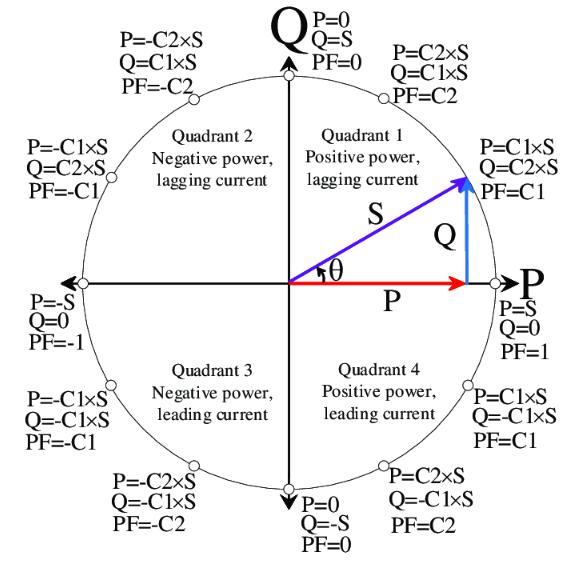
Althoughreactivepowerdoesnotdirectlycontributetoreal energytransfer,itisessentialformaintainingappropriate voltagelevelsthroughoutthenetwork.Asufficientsupplyof reactive power ensures that voltage magnitudes remain stable at various buses in the power system. If reactive power is not adequately managed, voltage levels may fluctuate significantly, leading to poor power quality and potential instability. Therefore, reactive power compensation and control are critical aspects of power system operation and planning, particularly in large interconnected networks (Wood, Wollenberg and Sheblé, 2013).
International Research Journal of Engineering and Technology (IRJET) e-ISSN: 2395-0056
Volume: 13 Issue: 03 | Mar 2026 www.irjet.net p-ISSN: 2395-0072
Thevoltageprofileofapowersystemreferstothevariation of voltage magnitude across different buses within the network. Reactive power has a direct influence on the voltagemagnitudeintransmissionanddistributionsystems. When reactive power demand increases, especially in heavily loaded lines or inductive loads, the voltage magnitude tends to decrease due to increased reactive powerlossesalongtransmissionlines.Conversely,injecting reactivepowerintothesystemcanraisevoltagelevelsand improvevoltagestability(Glover,SarmaandOverbye,2017).
Insituationswherereactivepowersupportisinsufficient, highercurrentsarerequiredtotransferthesameamountof realpower.ThisincreaseincurrentflowleadstohigherI²R losses in transmission lines and transformers, reducing overall system efficiency. Additionally, excessive voltage drops may limit the amount of power that can be transmitted safely through the network. Proper reactive power management through compensation devices and voltage control strategies helps maintain voltage within acceptable limits, improves transmission capacity, and enhances the overall operational efficiency of the power system(SauerandPai,1998).
Voltagestability refersto theabilityof a power system to maintainacceptablevoltagelevelsundernormaloperating conditions as well as after disturbances such as faults, sudden load increases, or generation outages. Voltage instabilityoccurswhenthepowersystemfailstosupplythe required reactive power to meet demand, resulting in a progressivedeclineinvoltagemagnitude.Dependingonthe time scale and system conditions, voltage stability can be categorized into steady-state voltage stability, transient voltagestability,andlong-termvoltagestability.Steady-state voltagestabilitydealswiththesystem’sabilitytomaintain voltage during gradual load changes, whereas transient voltagestabilityfocusesonsystembehaviorfollowinglarge disturbancessuchasfaults(Kunduretal.,2004).
Long-termvoltagestabilityinvolvesslowerprocessessuch as transformer tap changes, load recovery dynamics, and generatorreactivepowerlimits.Whenthereactivepower demandexceedstheavailablesupplyforanextendedperiod, thesystemmayexperiencevoltagecollapse,aphenomenon characterizedbyarapidanduncontrollabledropinvoltage levels across the network. Voltage collapse can lead to widespread blackouts if corrective actions are not taken promptly.Forthisreason,modernpowersystemsemploy various reactive power compensation techniques and dynamiccontrol mechanismstomaintainvoltagestability andpreventcollapsescenarios(VanCutsemandVournas, 1998).
Reactivepowercompensationtechnologiesareessentialfor maintainingvoltagestabilityandimprovingtheoperational efficiencyofpowersystems.Inelectricalnetworks,reactive powerimbalancecanleadtovoltagefluctuations,increased transmissionlosses,andreducedpowertransfercapability. Toaddresstheseissues,variouscompensationtechnologies havebeendevelopedtoprovidereactivepowersupportat different levels of the power system. These technologies range from conventional mechanical devices to advanced power electronic-based compensators that offer fast and flexible voltage control. The selection of appropriate compensationtechnologydependsonsystemrequirements, responsespeed,economicconsiderations,andtheoperating characteristics of the grid (Glover, Sarma and Overbye, 2017).
Traditionalreactivepowercompensationdeviceshavebeen widely used in power systems for several decades to maintain voltage levels and improve power factor. These devices generally rely on passive components or rotating machinestoprovidereactivepowersupport.Conventional compensation methods are relatively simple, reliable, and cost-effective,makingthemsuitableformanytransmission anddistributionapplications.However,theirresponsespeed andcontrollabilityarelimitedcomparedwithmodernpower electronic solutions. As power systems become more dynamic due to renewable energy integration and fluctuating loads, the limitations of conventional devices havebecomemoreevident(GraingerandStevenson,1994).
Shuntcapacitorbanksareamongthemostcommonlyused reactive power compensation devices in power systems. Theyareconnectedinparallelwiththeloadortransmission lineandprovidecapacitivereactivepowertocounteractthe inductive reactivepower demandofloadssuchasmotors andtransformers.Bysupplyingreactivepowerlocally,shunt capacitors help improve voltage levels, reduce line losses, and enhancethe powerfactorofthesystem. Their simple design, low installation cost, and minimal maintenance requirements make them a popular solution in both transmissionanddistributionnetworks(BollenandHassan, 2011).
Despite these advantages, shunt capacitor banks have certain limitations. Their operation is generally based on mechanical switching, which results in relatively slow response times compared with dynamic compensation devices. Additionally, capacitor banks provide fixed or stepwise reactive power support, which may not be sufficientinsystemsexperiencingrapidvoltagefluctuations.
International Research Journal of Engineering and Technology (IRJET) e-ISSN: 2395-0056
Volume: 13 Issue: 03 | Mar 2026 www.irjet.net p-ISSN: 2395-0072
In networks with significant load variations or renewable energy penetration, these limitations can reduce the effectiveness of capacitor banks in maintaining voltage stability.
Synchronouscondensersarerotatingsynchronousmachines thatoperatewithoutamechanicalloadandarespecifically designedtoprovidereactivepowersupporttothegrid.By adjusting the excitation current of the rotor winding, the synchronous condenser can either generate or absorb reactivepower,therebyregulatingthevoltagelevelofthe connected bus. This capability makes synchronous condensers highly effective in improving voltage stability andenhancingsystemreliability(Kundur,1994).
Anotherimportantadvantageofsynchronouscondensersis theirabilitytocontributetoshort-circuitpowerandsystem inertia,whichcanbebeneficialformaintaininggridstability during disturbances. However, these machines require regular maintenance due to their mechanical components and typically involve higher installation and operational costs compared with passive compensation devices. Consequently,althoughtheyprovideflexiblereactivepower support, their application is often limited to large transmissionsystemsorcriticalgridlocations.
Withtheincreasingcomplexityofmodernpowersystems, power electronic-based compensation technologies have gainedsignificantimportance.Thesedevicesarecapableof providing fast and continuous reactive power control, makingthemhighlysuitablefordynamicvoltageregulation.
Flexible AC Transmission System (FACTS) devices utilize high-speedpowerelectronicswitchesandadvancedcontrol algorithms to regulate voltage, control power flow, and enhance system stability. Compared with conventional compensation methods, these technologies offer superior response speed, higher controllability, and improved performance under varying system conditions (Hingorani andGyugyi,2000).
The Static Var Compensator (SVC) is one of the earliest FACTS devices used for reactive power compensation in powersystems.Itconsistsofthyristor-controlledreactors (TCR) and thyristor-switched capacitors (TSC), which are connected inshuntwiththe powersystem.Bycontrolling thefiringangleofthyristors,theSVCcandynamicallyadjust theamountofreactivepowerinjectedorabsorbed,allowing ittoregulatevoltagelevelseffectively.
SVCsarewidelyusedintransmissionnetworkstoimprove voltage stability, reduce voltage fluctuations, and increase
powertransfercapability.Theirrelativelyfastresponsetime compared with conventional devices enables them to respondquicklytoloadchangesandsystemdisturbances. However, since SVC performance depends on the system voltagemagnitude,itsreactivepowercapabilitydecreases significantly when the system voltage drops to very low levels(SongandJohns,1999).
The Static Synchronous Compensator (STATCOM) is a voltage source converter (VSC)-based FACTS device designed to provide rapid and flexible reactive power support. Unlike SVCs, which rely on passive components such as capacitors and reactors, STATCOM uses a power electronic converter to generate a controllable AC voltage thatcanexchangereactivepowerwiththegrid.Thisdesign enables STATCOM to maintain its reactive power output even under low voltage conditions, making it particularly effective in weak grid environments (Zhang, Rehtanz and Pal,2006).
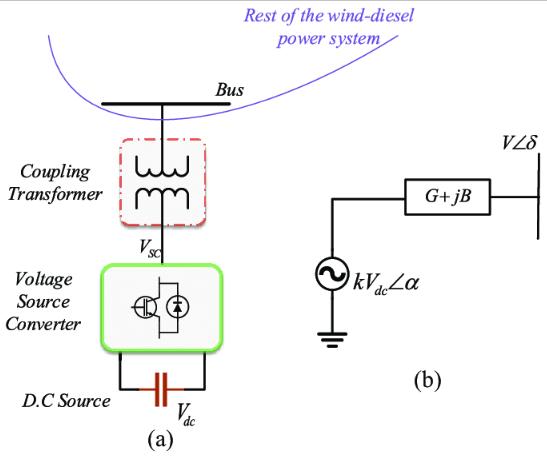
STATCOM devices offer several advantages, including fast dynamic response, compact size, and improved voltage regulationcapability.Theyarewidelyappliedinrenewable energy integration, transmission system stabilization, and power quality improvement. Due to their superior performance, STATCOMs have become one of the most preferred solutions for dynamic reactive power compensationinmodernpowersystems.
The Distribution Static Synchronous Compensator (DSTATCOM)isamodifiedversionofSTATCOMspecifically designed fordistribution networks.Itis primarilyused to improve voltage regulation, correct power factor, and mitigate power quality problems in distribution systems withfluctuatingloadsanddistributedgeneration sources. DSTATCOM is typically installed near load centers or renewable energy integration points to provide localized reactivepowersupport(Akagi,2006).
International Research Journal of Engineering and Technology (IRJET) e-ISSN: 2395-0056
Volume: 13 Issue: 03 | Mar 2026 www.irjet.net p-ISSN: 2395-0072
Indistributionsystemswithhighpenetrationofrenewable energysourcessuchassolarphotovoltaicsystemsandwind turbines, voltage fluctuations can occur frequently due to intermittent power generation. DSTATCOM devices help stabilize voltage levels by dynamically adjusting reactive power injection, thereby improving system reliability and power quality. Their fast response and flexible control capabilities makethem well suitedfor modernsmartgrid applications.
Hybrid reactive power compensation systems combine different compensation technologies to achieve improved performance and operational flexibility. These systems typically integrate conventional devices such as capacitor bankswithadvancedFACTSdeviceslikeSTATCOMorSVC. Insomecases,energystoragesystemsarealsoincorporated toprovideadditionalactiveandreactivepowersupport.The combination of multiple technologies enables hybrid systemstoprovidebothsteady-stateanddynamicvoltage regulationcapabilities.
Hybrid compensation systems offer several advantages, includingimprovedvoltagecontrol,enhancedreliability,and optimizedsystemoperationundervaryingloadconditions. By coordinating different compensation devices, these systemscaneffectivelymanagereactivepowerrequirements across multiple time scales. Such integrated solutions are increasingly being adopted in modern power systems, particularly in networks with high renewable energy penetrationandweakgridconditions(Padiyar,2007).
Dynamicreactivepowerallocationmechanismsareessential for maintaining voltage stability and improving the operationalefficiencyofmodernpowersystems.Aspower networks become increasingly complex due to the integration of renewable energy resources, distributed generation, and variable loads, traditional static reactive power compensation methods may not be sufficient to address rapid voltage fluctuations. Dynamic allocation mechanisms enable the real-time distribution of reactive power support across different locations in the power network to maintain acceptable voltage levels and reduce systemlosses.Thesemechanismstypicallyemployadvanced optimization techniques, sensitivity analysis, and coordinated control strategies to determine the optimal reactivepowerinjectionfromvariouscompensationdevices anddistributedresources(Padiyar,2007).
Optimal Reactive Power Dispatch (ORPD) is an important optimization problem in power system operation that
focuses on determining the optimal settings of reactive power control variables to improve voltage stability and minimize transmission losses. ORPD techniques aim to identify the optimal combination of generator voltages, transformertapsettings,andreactivepowerinjectionsfrom compensation devices such as capacitor banks, SVCs, and STATCOMs. The objective functions of ORPD commonly includeminimizationofrealpowerlosses,improvementof voltage profile, and enhancement of voltage stability margins.
To solve the ORPD problem, various mathematical and computational optimization algorithms have been developed.Traditionalmethodsincludelinearprogramming, nonlinear programming, and interior-point optimization techniques.Inrecentyears,metaheuristicalgorithmssuchas GeneticAlgorithms(GA),ParticleSwarmOptimization(PSO), Differential Evolution (DE), and Ant Colony Optimization (ACO)havegainedsignificantattentionduetotheirabilityto handlecomplex,nonlinear,andmulti-objectiveoptimization problemsinpowersystems(Abido,2002).Thesetechniques enable power system operators to determine the optimal allocation and control of reactive power resources while satisfying system constraints such as voltage limits, generatorcapabilitycurves,andtransmissionlinecapacity.
Sensitivity-based reactive power allocation methods are widely used to identify the most effective locations for reactive power compensation in power networks. These methods rely on sensitivity indices that quantify the relationshipbetweenreactivepowerinjectionsandvoltage variationsatdifferentbuseswithinthesystem.Byanalyzing theseindices,systemoperatorscandeterminewhichbuses aremostsensitivetoreactivepowerchangesandtherefore requirecompensationdevicestoimprovevoltagestability.
Commonly used sensitivity indices include voltage sensitivity factors, reactive power sensitivity indices, and voltagestabilityindicesderivedfrompowerflowanalysis. Theseindicatorshelpevaluatetheimpactofreactivepower injections on system voltage and allow for the strategic placementofcompensation devices. Sensitivityanalysisis computationallyefficientandcanbeappliedtolarge-scale power systems to identify critical buses with high voltage instability risk. Consequently, it has become an important tool for planning reactive power support and improving voltageregulationinweakgridenvironments(VanCutsem andVournas,1998).
With the increasing penetration of distributed energy resources (DERs) such as photovoltaic systems, wind turbines, and battery storage systems, distributed and decentralizedreactivepowercontrolstrategieshavegained
International Research Journal of Engineering and Technology (IRJET) e-ISSN: 2395-0056
Volume: 13 Issue: 03 | Mar 2026 www.irjet.net p-ISSN: 2395-0072
significantattention.Unliketraditionalcentralizedcontrol approaches, distributed control allows multiple reactive powersourcesacrossthenetworktooperateautonomously or collaboratively to maintain voltage stability. This approach improves system flexibility and reduces the relianceoncentralizedcontrolinfrastructure.
Indistributedcontrolsystems,localcontrollersinstalledin invertersorcompensationdevicescanadjustreactivepower output based on locally measured voltage conditions. Communication networks may also be used to coordinate reactive power support among different distributed resourcestoachievesystem-widevoltageregulation.Such decentralizedcontrolstrategiesareparticularlysuitablefor microgrids and smart grids, where numerous small-scale generationunitsareconnectedtothedistributionnetwork. Byenablinglocaldecision-makingandcoordinationamong distributed resources, these control approaches enhance systemresilienceandimprovevoltageregulationindynamic operatingenvironments(Lasseter,2002).
CoordinatedVolt-VARcontrolstrategiesfocusonmanaging reactivepowerresourcesacrossdifferentcomponentsofthe powersystemtomaintainvoltagewithinacceptablelimits. Volt-VAR control involves the coordinated operation of voltage control devices such as on-load tap-changing transformers,capacitorbanks,voltageregulators,andpower electronic compensators. By properly coordinating these devices, system operators can maintain stable voltage profilesacrosstransmissionanddistributionnetworks.
In modern power systems, coordinated Volt-VAR control also involves distributed energy resources and inverterbasedgenerationunits.Advancedinvertercontrolstrategies allowrenewableenergysystemstoprovidereactivepower support in addition to active power generation. Through coordinatedcontrolalgorithms,thesedistributedresources cancollectivelycontributetovoltageregulationandreduce the need for traditional compensation devices. This integrated approach enhances voltage stability, improves power quality, and increases the hosting capacity of renewableenergysourceswithinthepowergrid(Turitsynet al.,2011).
The increasing complexity of modern power systems has encouragedextensiveresearchondynamicreactivepower allocation techniques for improving voltage stability and maintainingreliablegridoperation.Asignificantnumberof studies have investigated optimization-based methods, intelligent control approaches, and coordinated compensation strategies for efficient reactive power management. These studies aim to address issues such as voltage instability, transmission losses, and fluctuating
power generation, particularly in networks with high renewableenergypenetrationandweakgridconditions.The literature highlights that advanced computational techniquesandpowerelectronicdeviceshavesignificantly improved the capability of power systems to dynamically regulatereactivepowerandmaintainstablevoltageprofiles (Taylor,1994).
Early research on reactive power allocation primarily focusedonmathematicaloptimizationtechniquesdesigned todetermineoptimalreactivepowerdispatchwithinpower systems.Linearprogrammingandnonlinearprogramming were among the earliest methods used to solve reactive poweroptimizationproblemsbyminimizingtransmission losses and maintaining acceptable voltage levels. These approaches were effective for relatively small and wellstructuredsystemsbutoftenfacedlimitationswhendealing with highly nonlinear and complex power system models (Carpentier,1962).
Subsequentstudiesintroducedmoreadvancedoptimization algorithms capable of addressing the nonlinear characteristicsofpowersystemoperation.Techniquessuch as particle swarm optimization (PSO), genetic algorithms (GA),andevolutionaryprogrammingwerewidelyadopted to solve optimal reactive power dispatch problems more efficiently.Thesemetaheuristicalgorithmsprovidedbetter global search capability and improved convergence performance compared with traditional mathematical programmingmethods,makingthemsuitableforlarge-scale powersystemoptimizationproblems(Abido,2002).
Theintegrationofrenewableenergysourcessuchaswind andsolarpowerhassignificantlychangedtheoperational characteristics of power systems. Renewable energy generatorsaretypicallyconnectedthroughpowerelectronic converters, which may not inherently provide sufficient reactive power support. As a result, high penetration of renewableenergysourcescanintroducevoltagefluctuations and reactive power imbalances, particularly in weak grid environments.Severalstudieshaveemphasizedtheneedfor advanced reactive power control strategies to maintain voltagestabilityinrenewable-dominatedpowernetworks (Blaabjerg,TeodorescuandLiserre,2006).
Research has also shown that the variability and intermittency of renewable generation require dynamic reactive power compensation to maintain stable voltage profiles.Coordinatedcontrolstrategiesinvolvinginverterbasedgenerators,flexibleACtransmissionsystemdevices, and distributed reactive power compensators have been proposed to address these challenges. These approaches enablerenewableenergysystemstoparticipateinvoltage
International Research Journal of Engineering and Technology (IRJET) e-ISSN: 2395-0056
Volume: 13 Issue: 03 | Mar 2026 www.irjet.net p-ISSN: 2395-0072
regulationandcontributetooverallgridstability(Liserre, SauterandHung,2010).
Recentdevelopmentsinartificialintelligencehaveledtothe emergenceofintelligentreactivepowercontroltechniques capable of adapting to changing grid conditions. Machine learningalgorithms,neuralnetworks,andadaptivecontrol strategies have been applied to optimize reactive power allocation and improve voltage stability. These intelligent approachescananalyzelargevolumesofoperational data and learn system behavior patterns, enabling faster and more accurate control decisions compared with conventionalmethods(ZhangandLi,2007).
Among these techniques, adaptive neuro-fuzzy inference system(ANFIS)-basedcontrollershavegainedattentionfor reactive power control applications. ANFIS combines the learning capability of neural networks with the reasoning mechanism of fuzzy logic to provide adaptive and robust voltageregulation.Severalstudieshavedemonstratedthat ANFIS-controlled DSTATCOM devices can effectively regulate reactive power in distribution systems, reduce voltage fluctuations, and improve overall power quality under varying load and generation conditions (Singh, ChandraandAl-Haddad,2015).
Optimization-baseddynamicallocationtechniquesfocuson determiningtheoptimalplacementandcapacityofreactive power compensation devices within power networks. Researchers have proposed various optimization frameworksthatsimultaneouslyconsidervoltagestability improvement, reduction of transmission losses, and economiccostminimization.Theseoptimizationproblems are often formulated as multi-objective problems with several operational constraints such as voltage limits, generatorreactivepowercapability,andtransmissionline capacity(Momohetal.,1999).
To address these complex optimization challenges, metaheuristicalgorithmssuchasdifferentialevolution,ant colony optimization, simulated annealing, and hybrid optimizationtechniqueshavebeenwidelyexploredinrecent studies.Thesealgorithmsarecapableofhandlingnonlinear andmulti-dimensionaloptimizationproblemsefficientlyand have shown promising results in identifying optimal locationsandratingsofcompensationdevicessuchasSVC, STATCOM, and capacitor banks. Such techniques have becomeanimportantcomponentofmodernreactivepower planning and voltage stability enhancement strategies (Zhang,RehtanzandPal,2006).
Theliteratureonreactivepowerallocationmethodsreveals that each technique offers specific advantages and limitations depending on system requirements and operatingconditions.Traditionaloptimizationmethodsare mathematically rigorous and computationally efficient for smallsystemsbutmaystrugglewithhighlynonlinearand large-scale problems. Metaheuristic algorithms provide betterglobalsearchcapabilityandflexibility,althoughthey may require higher computational effort and careful parametertuning.
Intelligent control methods basedonartificial intelligence offer adaptive and data-driven solutions that can respond effectively to dynamic grid conditions. However, these methods often require large training datasets and may involve complex implementation procedures. Similarly, coordinatedcontrolstrategiesinvolvingdistributedenergy resourcesandpowerelectronicdevicesprovideimproved voltage regulation but depend heavily on communication infrastructure and system coordination mechanisms. Consequently, selecting an appropriate reactive power allocation strategy requires careful consideration of responsespeed,computationalcomplexity,scalability,and practical implementation constraints within the power systemenvironment(Kunduretal.,2004).
Theimplementationofdynamicreactivepowerallocation mechanisms in weak grid environments presents several technical and operational challenges. Weak grids are typically characterized by low short-circuit capacity, high impedance,andlimitedvoltageregulationcapability,which makesthemhighlysensitivetodisturbancesandfluctuations in power generation and demand. Although advanced reactive power compensation technologies such as STATCOM, SVC, and distributed inverter-based resources have improved voltage control capabilities, several issues still hinder their effective deployment and coordination. These challenges include variability in renewable energy generation, communication and coordination difficulties among distributed devices, and economic constraints associated with the installation and operation of compensation technologies (Van Cutsem and Vournas, 1998).
Oneofthemajorchallengesinreactivepowermanagement for weak grids is the variability and intermittency of renewable energy sources such as wind and solar power. Unlike conventional power plants, renewable energy generators depend heavily on environmental conditions, whichresultsinfluctuatingpoweroutput.Variationsinsolar irradiance or wind speed can lead to sudden changes in
International Research Journal of Engineering and Technology (IRJET) e-ISSN: 2395-0056
Volume: 13 Issue: 03 | Mar 2026 www.irjet.net p-ISSN: 2395-0072
activepowergeneration,whichinturnaffectsthereactive power balance and voltage profile of the power system. Thesefluctuationscancausevoltageinstability,particularly in weak grid regions where the network has limited capabilitytoabsorbdisturbances(Ackermann,2005).
Inaddition,manyrenewableenergysystemsareconnected tothegridthroughpowerelectronicconverters,whichmay havelimitedreactivepowercapabilitydependingontheir design and control strategy. When large-scale renewable integrationoccursinremoteareaswithlongtransmission lines, the resulting reactive power deficiency may cause significant voltage drops or oscillations in the network. Consequently, maintaining voltage stability in renewablerichweak gridsrequiresadvancedreactivepowercontrol strategies capable of responding rapidly to generation variabilityanddynamicoperatingconditions(Blaabjerget al.,2017).
Another critical challenge in dynamic reactive power allocation is the coordination of multiple reactive power sources distributed across the power network. In modern smart grids and microgrids, numerous devices such as distributedgenerators,inverter-basedrenewablesystems, capacitor banks, and FACTS devices contribute to voltage regulation. Effective coordination among these devices requires reliable communication infrastructure and advancedcontrolalgorithmscapableofmanagingreal-time dataexchangeandcontrolsignals.
However, communication delays, data synchronization issues, and cybersecurity concerns can significantly affect the performance of distributed reactive power control systems. If communication between controllers and compensation devices is disrupted or delayed, the system may fail to respond quickly to voltage fluctuations, potentiallyleadingtoinstability.Furthermore,coordinating reactivepowersupportamongmultipledistributedenergy resourcesiscomputationallycomplexandrequiresrobust control frameworks to ensure stable system operation (Lasseter,2002).
Economicconsiderationsalsoplayanimportantroleinthe deploymentofreactivepowercompensationtechnologiesin power systems. Advanced dynamic compensation devices such as STATCOM and SVC require significant capital investment for installation, as well as operational and maintenancecoststhroughouttheirservicelife.Utilitiesand systemoperators mustcarefullyevaluatethecost–benefit ratio when planning reactive power compensation infrastructure, particularly in developing regions or small powernetworkswherefinancialresourcesmaybelimited (HingoraniandGyugyi,2000).
Operational constraints also influence the effectiveness of reactive power allocation strategies. These include limitations on generator reactive power capability, transformertap-changingrestrictions,andthermallimitsof transmission lines. Additionally, integrating multiple compensationdeviceswithinthenetworkrequirescareful planningtoavoidcontrolconflictsandinefficientoperation. As power systems continue to evolve with increased renewable integration and distributed generation, addressingtheseeconomicandoperationalchallengeswill be essential forthesuccessful implementationofdynamic reactive power allocation mechanisms in weak grid environments(Wood,WollenbergandSheblé,2013).
Thisreviewpaperhaspresentedacomprehensiveanalysis of dynamic reactive power allocation mechanisms for voltage profile enhancement in weak grid conditions. The studyhighlightedthefundamentalroleofreactivepowerin maintainingvoltagestabilityandensuringreliableoperation ofmodernpowersystems.Withtheincreasingpenetration of renewable energy sources and distributed generation, maintaining voltage profiles within acceptable limits has become more challenging, particularly in weak grid environments characterized by low short-circuit capacity andhighnetworkimpedance.
Thereviewdiscussedvariousreactivepowercompensation technologies,includingconventionaldevicessuchasshunt capacitor banks and synchronous condensers, as well as advanced power electronic-based solutions like Static Var Compensators (SVC), Static Synchronous Compensators (STATCOM),andDistributionSTATCOM(DSTATCOM).These technologies provide flexible and dynamic reactive power support,enablingfasterresponsetovoltagefluctuationsand systemdisturbances.Inaddition,severaldynamicreactive power allocation strategies were examined, including optimalreactivepowerdispatch,sensitivity-basedallocation techniques, distributed control methods, and coordinated Volt–VARcontrolstrategies.
The literature review revealed that modern optimization algorithms, metaheuristic techniques, and artificial intelligence-based control approaches have significantly improvedtheeffectivenessofreactivepowermanagementin complex power networks. However, challenges such as renewable energy variability, communication constraints, and economic considerations still influence the practical implementation of these techniques. Overall, dynamic reactivepowerallocationplaysacrucialroleinimproving voltage stability, enhancing power system reliability, and supportingtheintegrationofrenewableenergysourcesin weak grid environments. Future research should focuson intelligent control frameworks and coordinated reactive powermanagementstrategiestofurtherstrengthenvoltage stabilityinevolvingpowersystems.
International Research Journal of Engineering and Technology (IRJET) e-ISSN: 2395-0056
Volume: 13 Issue: 03 | Mar 2026 www.irjet.net p-ISSN: 2395-0072
Although this review provides a structured overview of dynamicreactivepowerallocationmechanismsandrelated compensation technologies, certain limitations should be acknowledged. Thestudyprimarily focusesonconceptual andmethodologicaldevelopmentsreportedintheliterature and does not include detailed simulation or experimental validation of the discussed techniques. Additionally, the review emphasizes widely adopted compensation devices and optimization methods, while some emerging technologiesandregion-specificgridmanagementpractices may not be fully covered. Another limitation is that the comparative analysis is based on findings reported in existing publications, which may vary in terms of system configuration, assumptions, and evaluation metrics. Therefore, the practical performance of different reactive powerallocationstrategiesmaydifferdependingonspecific powersystemconditionsandoperationalrequirements.
1. Abido,M.A.(2002)‘Optimalpowerflowusingparticle swarmoptimization’,InternationalJournalofElectrical Power&EnergySystems,24(7),pp.563–571.
2. Ackermann,T.(2005)WindPowerinPowerSystems. Chichester:JohnWiley&Sons.
3. Akagi,H.(2006)‘Modernactivefiltersandtraditional passive filters’, Bulletin of the Polish Academy of Sciences:TechnicalSciences,54(3),pp.255–269.
4. Blaabjerg, F., Teodorescu, R. and Liserre, M. (2006) ‘Overview of control and grid synchronization for distributed power generation systems’, IEEE TransactionsonIndustrialElectronics,53(5),pp.1398–1409.
5. Blaabjerg, F., Yang, Y., Yang, D. and Wang, X. (2017) ‘Distributedpower-generationsystemsandprotection’, ProceedingsoftheIEEE,105(7),pp.1311–1331.
6. Bollen, M.H.J. and Hassan, F. (2011) Integration of DistributedGenerationinthePowerSystem.Hoboken: JohnWiley&Sons.
7. Carpentier, J. (1962) ‘Contribution to the economic dispatchproblem’,BulletindelaSociétéFrançaisedes Électriciens,3(8),pp.431–447.
8. Glover,J.D.,Sarma,M.S.andOverbye,T.(2017)Power SystemAnalysisandDesign.6thedn.Boston:Cengage Learning.
9. Grainger,J.J.andStevenson,W.D.(1994)PowerSystem Analysis.NewYork:McGraw-Hill.
10. Hingorani, N.G. and Gyugyi, L. (2000) Understanding FACTS: Concepts and Technology of Flexible AC TransmissionSystems.NewYork:IEEEPress.
11. Kundur,P.(1994)PowerSystemStabilityandControl. NewYork:McGraw-Hill.
12. Kundur,P.,Balu,N.J.andLauby,M.G.(2004)‘Definition and classification of power system stability’, IEEE TransactionsonPowerSystems,19(2),pp.1387–1401.
13. Lasseter, R.H. (2002) ‘Microgrids’, IEEE Power EngineeringSocietyWinterMeeting,pp.305–308.
14. Liserre, M., Sauter, T. and Hung, J.Y. (2010) ‘Future energysystems:Integratingrenewableenergysources intothesmartpowergrid’,IEEEIndustrialElectronics Magazine,4(1),pp.18–37.
15. Momoh,J.A.,El-Hawary,M.E.andAdapa,R.(1999)‘A review of selected optimal power flow literature to 1993’,IEEETransactionsonPowerSystems,14(1),pp. 96–104.
16. Padiyar, K.R. (2007) FACTS Controllers in Power Transmission and Distribution. New Delhi: New Age International.
17. Sauer, P.W. and Pai, M.A. (1998) Power System Dynamics and Stability. Upper Saddle River: Prentice Hall.
18. Singh,B.,Chandra,A.andAl-Haddad,K.(2015)Power Quality:ProblemsandMitigationTechniques.Hoboken: JohnWiley&Sons.
19. Song, Y.H. and Johns, A.T. (1999) Flexible AC TransmissionSystems(FACTS).London:Institutionof EngineeringandTechnology.
20. Taylor, C.W. (1994) Power System Voltage Stability. NewYork:McGraw-Hill.
21. Turitsyn, K., Sulc, P., Backhaus, S. and Chertkov, M. (2011) ‘Options for control of reactive power by distributedphotovoltaicgenerators’,Proceedingsofthe IEEE,99(6),pp.1063–1073.
22. VanCutsem,T.andVournas,C.(1998)VoltageStability ofElectricPowerSystems.Boston:Springer.
23. Wood, A.J., Wollenberg, B.F. and Sheblé, G.B. (2013) Power Generation, Operation, and Control. 3rd edn. Hoboken:JohnWiley&Sons.
24. Zhang,X.P.,Rehtanz,C.andPal,B.(2006)FlexibleAC TransmissionSystems:ModellingandControl.Berlin: Springer.
International Research Journal of Engineering and Technology (IRJET) e-ISSN: 2395-0056
Volume: 13 Issue: 03 | Mar 2026 www.irjet.net p-ISSN: 2395-0072
25. Zhang, Y. and Li, Y. (2007) ‘Application of neural networks to reactive power optimization’, Electric PowerSystemsResearch,77(3–4),pp.285–291.
26. Abdelaziz, A.Y., Ali, E.S. and Elazim, S.M.A. (2010) ‘Combined economic and emission dispatch solution using Flower Pollination Algorithm’, International JournalofElectricalPower&EnergySystems,80,pp. 264–274.
27. Abdelaziz, A.Y. and Ali, E.S. (2016) ‘Cuckoo search algorithm for optimal reactive power dispatch problem’,Energy,95,pp.33–40.
28. Abido, M.A. (2000) ‘Optimal power flow using evolutionary algorithms’, Electric Power and Energy Systems,24(7),pp.563–571.
29. Abdul-Rahman, K.H. and Shahidehpour, S.M. (1994) ‘Application of fuzzy sets to optimal reactive power planningwithsecurityconstraints’,IEEETransactions onPowerSystems,9(2),pp.589–597.
30. Ajjarapu,V.andLee,B.(1998)‘Bibliographyonvoltage stability’,IEEETransactionsonPowerSystems,13(1), pp.115–125.
31. Ajjarapu,V.,Lau,P.L.andBattula,S.(1994)‘Anoptimal reactive power planning strategy against voltage collapse’, IEEE Transactions on Power Systems, 9(2), pp.906–917.
32. Aoki,K.,Fan,M.andNishikori,A.(1988)‘OptimalVAr planningbyapproximationmethodforrecursivemixed integer linear programming’, IEEE Transactions on PowerApparatusandSystems,PAS-107(7),pp.1741–1747.
33. Bhattacharya,K.andZhong,J.(2001)‘Reactivepower as an ancillary service’, IEEE Transactions on Power Systems,16(2),pp.294–300.
34. Chang, N.E. (1969) ‘Locating shunt capacitors on primaryfeederforvoltagecontrolandlossreduction’, IEEETransactionsonPowerApparatus andSystems, PAS-88(10),pp.1574–1577.
35. Conejo,A.J.,Galiana,F.D.andKockar,I.(2001)‘Z-bus lossallocation’,IEEETransactionsonPowerSystems, 16(1),pp.105–110.
36. Devaraj, D. and Yegnanarayana, B. (2005) ‘Genetic algorithm based optimal power flow for security enhancement’,ElectricPowerSystemsResearch,73(2), pp.215–222.
38. Farhat, I.A. and El-Hawary, M.E. (2010) ‘Dynamic reactive power planning using evolutionary programming’,ElectricPowerSystemsResearch,80(4), pp.453–460.
39. Gandomkar, M., Vakilian, M. and Ehsan, M. (2005) ‘A combination of genetic algorithm and simulated annealingforoptimalreactivepowerdispatch’,Electric PowerandEnergySystems,27(6–7),pp.419–423.
40. Hatziargyriou,N.(2014)Microgrids:Architecturesand Control.Hoboken:Wiley-IEEEPress.
41. Hassan, M.Y., Majid, M.S. and Rahman, H.A. (2009) ‘Optimalplacementandsizingofdistributedgeneration usingparticleswarmoptimization’,EnergyConversion andManagement,50(4),pp.115–121.
42. Jabr, R.A. (2013) ‘Radial distribution load flow using conic programming’, IEEE Transactions on Power Systems,21(3),pp.1458–1459.
43. Lee, K.Y., Paru, Y.M. and Oritz, J.L. (1985) ‘A united approachtooptimalrealandreactivepowerdispatch’, IEEETransactionsonPowerApparatus andSystems, PAS-104(5),pp.1147–1153.
44. Li, Y., Wu, Q., Oren, S. and Li, Z. (2014) ‘Distribution locationalmarginalpricingforoptimalelectricvehicle charging management’, IEEE Transactions on Power Systems,29(1),pp.203–211.
45. Liu,Q.,Li,Y.andShen,X.(2017)‘Anewapproachfor reactive power optimization using multi-objective particleswarmoptimization’,ElectricPowerSystems Research,152,pp.265–275.
46. Lu,Z.,Wen,F.andLedwich, G.(2004)‘Optimal siting and sizing of distributed generators in distribution networks’,ElectricPowerSystemsResearch,63(3),pp. 235–244.
47. Moghaddam,A.A.,Seifi,H.andSheikh-El-Eslami,M.K. (2010) ‘Multi-objective reactive power planning’, EnergyConversionandManagement,51(9),pp.1926–1933.
48. Moradi,M.H.andAbedini,M.(2012)‘Acombinationof geneticalgorithmandparticleswarmoptimizationfor optimal DG location and sizing’, Electric Power and EnergySystems,34(1),pp.66–74.
49. Nguyen, T.T. and Mohammadi, F. (2020) ‘Optimal placementofTCSCforcongestionmanagement’,Energy Reports,6,pp.166–174.
37. El-Hawary, M.E. and Mohamed, A.A. (2000) ‘Reactive powermanagementusingevolutionaryprogramming’, IEEETransactionsonPowerSystems,15(4),pp.1242–1248.
International Research Journal of Engineering and Technology (IRJET) e-ISSN: 2395-0056
Volume: 13 Issue: 03 | Mar 2026 www.irjet.net p-ISSN: 2395-0072
50. Ongsakul, W. and Tantimaporn, T. (2006) ‘Optimal powerflowbyimprovedevolutionaryprogramming’, ElectricPowerComponentsandSystems,34(1),pp.79–95.
51. Pandya, S. and Joshi, S. (2008) ‘A survey of optimal reactivepowerdispatchmethods’,JournalofElectrical Engineering,59(5),pp.248–254.
52. Roy, P.K. and Ghoshal, S.P. (2012) ‘Optimal reactive power dispatch using biogeography-based optimization’,InternationalJournalofElectricalPower &EnergySystems,43(1),pp.830–838.
53. Sinsuphan,N.,Leeton,U.,Kulworawanichpong,T.and Pothiya, S. (2013) ‘Optimal power flow using cuckoo searchalgorithm’,EnergyConversionandManagement, 69,pp.75–82.
54. Sode-Yome,A.,Mithulananthan,N.andLee,K.Y.(2007) ‘A comprehensive comparison of FACTS devices for enhancing voltage stability’, Electric Power Systems Research,77(5–6),pp.695–703.
55. Talebi,N.,Hosseini,S.H.andAghaei,J.(2014)‘Voltage stability improvement using optimal allocation of FACTSdevices’,EnergyConversionandManagement, 85,pp.281–290.
56. Varadarajan, M. and Swarup, K.S. (2008) ‘Differential evolution approach for optimal reactive power dispatch’,AppliedSoftComputing,8(4),pp.1549–1561.
57. Venkatesh,B.,Ranjan,R.andGooi,H.B.(2004)‘Optimal reconfiguration of radial distribution systems’, IEEE TransactionsonPowerDelivery,19(2),pp.524–529.
58. Wang,Q.,Li,F.andTang,Y.(2016)‘OptimalVolt-VAR control in active distribution networks’, IEEE TransactionsonSmartGrid,7(2),pp.635–645.
59. Zhang,Y.,Wang,J.andLiu,X.(2018)‘Optimalreactive power planning in distribution networks’, Electric PowerSystemsResearch,155,pp.218–225.
60. Zhu,J.(2009)OptimizationofPowerSystemOperation. Hoboken:Wiley-IEEEPress.