
International Research Journal of Engineering and Technology (IRJET) e-ISSN: 2395-0056
Volume: 13 Issue: 02 | Feb 2026 www.irjet.net p-ISSN: 2395-0072
A REVIEW OF COMPARISON OF SDN (SOFTWARE-DEFINED NETWORKING) Vs. TRADITIONAL NETWORKING FOR TRAFFIC MANAGEMENT
Shashank Yadav1, Mrs. Sahreen Hizab2
1MasterofTechnology,ComputerScienceandEngineering, Sagar Institute of Technology and Management, Barabanki, India
2Assistant Professor, Department of Computer Science and Engineering, Sagar Institute of Technology and Management, Barabanki, India
Abstract - Therapidgrowthofcloudcomputing,Internetof Things (IoT), multimedia services, and data-intensive applications has significantly increased the complexity of network traffic management. Traditional networking architecturesrely ontightlycoupledcontrolanddataplanes, distributed routing protocols, and static configuration mechanisms,whichoftenlimitflexibility,scalability,andrealtime adaptability. In contrast, Software-Defined Networking (SDN)introducesarchitecturaldecoupling,centralizedcontrol logic, and network programmability, enabling dynamic and fine-grainedtrafficengineering.Thisreviewpaperprovidesa systematic comparison between SDN and traditional networking paradigms with specific emphasis on traffic managementmechanisms,includingcongestioncontrol,load balancing, Quality of Service (QoS) enforcement, scalability, and security considerations. Existing literature is critically analyzedtoevaluateperformanceimprovements,operational complexity, and deployment challenges associated with both approaches.Thestudysynthesizesfindingsfromexperimental, simulation-based, and hybrid implementations to highlight architectural trade-offs and practical limitations. Furthermore, emerging trends such as AI-driven traffic optimizationandhybridSDN deploymentsarediscussed.The review aims to offer a structured foundation for researchers and network designers in selecting appropriate traffic management strategies for modern and future network infrastructures.
Key Words: Software-Defined Networking (SDN), Traditional Networking, Traffic Management, Traffic Engineering, Quality of Service (QoS), Network Scalability.
1. INTRODUCTION
1.1 Background: Evolution of Networking Paradigms
Theevolutionofcomputernetworkinghasbeendrivenby thegrowingdemandforscalability,reliability,andefficient data delivery. Early network architectures were primarily hardware-centric, where routing decisions and packet forwarding were tightly integrated within proprietary devices.Traditionalnetworkingreliesondistributedcontrol mechanisms,inwhicheachrouterindependentlyexecutes routingprotocolssuchasOpenShortestPathFirst(OSPF)
andBorderGatewayProtocol (BGP)todetermineoptimal paths(MedhiandRamasamy,2017).Whilethisdistributed paradigm ensures robustness, it introduces operational complexity and limited flexibility in dynamic traffic environments.
1.1.1 Emergence of Software-Defined Networking
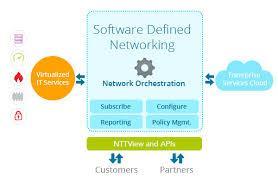
Software-DefinedNetworking(SDN)emergedasaparadigm shifttoaddressthelimitationsofconventionalarchitectures. By decoupling the control plane from the data plane, SDN centralizes network intelligence within a programmable controller, enabling dynamic traffic engineering and simplifiednetworkmanagement(Kreutzetal.,2015).The introductionofOpenFlowasasouthboundinterfaceallowed standardized communication between controllers and forwarding devices (McKeown et al., 2008). This architectural abstraction facilitates network programmability,rapidpolicydeployment,andglobaltraffic visibility, marking a significant departure from static, hardware-drivendesigns.
1.2 Importance of Traffic Management in Modern Networks
Trafficmanagementplaysapivotalroleinensuringoptimal network performance, particularly in environments characterizedbyheterogeneousapplicationssuchascloud services,real-timestreaming,andInternetofThings(IoT) systems.Effectivetrafficmanagementmechanismsregulate bandwidth allocation, congestion avoidance, and routing
International Research Journal of Engineering and Technology (IRJET) e-ISSN: 2395-0056
Volume: 13 Issue: 02 | Feb 2026 www.irjet.net p-ISSN: 2395-0072
efficiency to maintain Quality of Service (QoS) guarantees (Akyildiz et al., 2014). In traditional networks, QoS enforcement is typically achieved through static configuration of queuing disciplines, traffic shaping, and protocol-basedpathselection.
1.2.1 Quality of Service, Performance, and Scalability Considerations
Modernnetworksdemandlowlatency,minimalpacketloss, andhighthroughputtosupportmission-criticalapplications. However, distributed routing decisions may lead to suboptimal path utilization and slower adaptation to congestion (Feamster, Rexford and Zegura, 2014). SDN addresses these challenges by enabling centralized traffic optimizationandfine-grainedflowcontrol.Thecontroller’s globalnetworkviewallowsproactivecongestionmitigation anddynamicreconfiguration,therebyimprovingscalability andresourceutilization(Kreutzetal.,2015).Consequently, trafficmanagementhasbecomeastrategicfunctionrather thanareactivemechanism.
1.3 Motivation for Comparing SDNwith Traditional Networking
ThecoexistenceoflegacyinfrastructureandemergingSDN deploymentshascreatedaneedforsystematiccomparison. Traditionalnetworkingremainswidelyadopteddue toits maturity, protocol stability, and proven reliability. Conversely, SDN promises enhanced programmability, automation, and improved traffic engineering capabilities (McKeown et al., 2008). Despite these advantages, SDN introduces new concerns related to controller scalability, securityvulnerabilities,anddeploymentcomplexity(Kreutz etal.,2015).
A comparative analysis is therefore necessary to evaluate architectural trade-offs, operational efficiency, and realworldapplicability.Understandingperformancedifferences undervarioustrafficscenarios suchascongestion-heavy environmentsorlatency-sensitiveapplications canguide networkdesignersinselectingappropriateparadigms.
2. METHODOLOGY
2.1 Research Design and Review Framework
This review adopts a systematic literature review (SLR) methodology to ensure transparency, reproducibility, and comprehensive coverage of existing research comparing Software-Defined Networking (SDN) and traditional networkingfortrafficmanagement.Asystematicapproachis widely recommended for synthesizing evidence in technology-orienteddomainsbecauseitminimizesselection bias and enhances analytical rigor (Kitchenham and Charters, 2007). The review process was structured into identification, screening, eligibility assessment, and
synthesis phases, consistent with established review protocols(Snyder,2019).
2.1.1 Criteria for Selecting Literature Sources
Peer-reviewedjournalarticles,conferenceproceedings,and high-impact survey papers were collected from reputable digitallibraries,includingIEEEXplore,ACMDigitalLibrary, ScienceDirect, SpringerLink, and Scopus-indexed journals. These databases were selected due to their extensive coverage of networking, communication systems, and software-definedarchitectures(Kreutzetal.,2015).
Theliteraturesearchfocusedprimarilyonpublicationsfrom 2008 to 2024. The year 2008 was selected as the starting pointbecauseitmarkstheintroductionofOpenFlow,which significantly influenced SDN research (McKeown et al., 2008).Searchqueriesincludedcombinationsofkeywords such as: “Software-Defined Networking”, “Traditional Networking”,“TrafficManagement”,“TrafficEngineering”, “QoS in SDN”, “Congestion Control”, and “Network Scalability”. Boolean operators (AND/OR) were used to refinesearchoutcomesandensurerelevance.
2.2 Inclusion and Exclusion Criteria
Tomaintainfocusandanalyticaldepth,explicitinclusionand exclusionfilterswereappliedduringthescreeningstage.
2.2.1 Inclusion Criteria
Studieswereincludedifthey:
Directly addressed traffic management, traffic engineering,congestioncontrol,orQoSmechanisms.
Presented comparative analysis between SDN and traditional networking, or provided measurable performanceevaluationofeitherparadigm.
Includedexperimental,simulation-based,analytical,or real-worlddeploymentresults.
2.2.2 Exclusion Criteria
Studieswereexcludedifthey:
Focused solely on unrelated SDN aspects such as virtualizationwithouttrafficmanagementrelevance.
Addressed purely hardware-level optimizations withoutarchitecturalcomparison.
Lackedempiricaloranalyticalvalidation.
Applyingthesefiltersalignswithbestpracticesinsystematic reviews, ensuring that only methodologically sound and contextually relevant studies contribute to the synthesis (KitchenhamandCharters,2007).
International Research Journal of Engineering and Technology (IRJET) e-ISSN: 2395-0056
Volume: 13 Issue: 02 | Feb 2026 www.irjet.net p-ISSN: 2395-0072
2.3 Summary of Review Process
The initial database search yielded approximately 420 publications.Afterremovingduplicatesandconductingtitle and abstract screening, 210 papers remained. Full-text eligibility assessment further refined the selection to 95 high-relevancestudies.Finally,72paperswereincludedin the qualitative and comparative synthesis based on strict relevancetotrafficmanagementmechanisms.
2.3.1 Classification Strategy
Selected papers were classified into four thematic categories:
Comparative Architectural Studies – Direct comparisons of SDN and traditional networking performance.
SDN-Based Traffic Optimization Approaches –Controller-based congestion control, load balancing, andQoSenforcementmechanisms.
TraditionalTrafficEngineeringEnhancements–MPLSbased optimization, protocol refinements, and distributedroutingimprovements.
Hybrid and Transitional Models – Partial SDN deploymentorhybridarchitecturesintegratinglegacy systems.
This thematic classification facilitated structured comparisonandcriticalsynthesis.Quantitativemetricssuch aslatency,throughput,packetloss,scalability,andcontrol overhead were extracted where available to support analytical evaluation. The classification approach is consistent with systematic mapping studies commonly adoptedinnetworkingresearch(Snyder,2019).
3. FUNDAMENTALS AND ARCHITECTURAL OVERVIEW
3.1
Traditional Networking
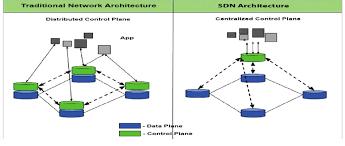
Traditionalnetworkingarchitecturesarebuiltonvertically integrateddevicesinwhichthecontrolplaneanddataplane coexist within the same physical hardware. In this model, routers and switches independently make forwarding decisions based on locally computed routing tables and distributedprotocolexchanges.Thistightlycoupleddesign hasbeenthefoundationofInternetarchitecturefordecades due to its robustness and decentralized fault tolerance (Medhi and Ramasamy, 2017). However, the distributed nature of decision-making often limits global network visibilityandcentralizedoptimization.
3.1.1 Control and Data Plane Coupling
In conventional networks, the control plane responsible forroutingdecisions andthedataplane responsiblefor packet forwarding are embedded within the same networkingdevice.Eachrouterexecutesroutingalgorithms tocomputeshortestpathsandupdatesitsforwardingtable accordingly. While this approach ensures autonomy and resilience,itcomplicatesnetwork-widetrafficoptimization because no single entity possesses a complete global topology view (Feamster, Rexford and Zegura, 2014). Consequently, traffic management relies on protocol convergence and distributed coordination, which may introducelatencyindynamicconditions.
3.1.2 Typical Protocols: OSPF, BGP and MPLS
Traditionalnetworkingemploysstandardizedroutingand traffic engineering protocols. OSPF is a link-state interior gateway protocol used for intra-domain routing, enabling routerstocomputeshortestpathsusingDijkstra’salgorithm. BGP functions as an inter-domain routing protocol that manages path selection between autonomous systems. Multiprotocol Label Switching (MPLS) enhances traffic engineeringby introducing label-switched paths,allowing more deterministic forwarding and resource reservation (Medhi and Ramasamy, 2017). Although MPLS improves traffic control granularity, it still operates within a distributedcontrolframework.
3.1.3 Traffic Management Mechanisms
Trafficmanagementintraditionalnetworksreliesonstatic and dynamic routing adjustments, congestion control algorithms, and Quality of Service (QoS) configurations. Mechanismssuchastrafficshaping,packetscheduling(e.g., weighted fair queuing), and access control lists are configureddevice-by-device.Congestioncontrolisprimarily managed at transport layer protocols such as TCP, while network-layer routing adapts based on link-state updates (Akyildiz et al., 2014). Despite their maturity, these mechanisms may lack rapid adaptability to sudden traffic fluctuationsduetoprotocolconvergencedelaysandlimited centralizedoversight.
International Research Journal of Engineering and Technology (IRJET) e-ISSN: 2395-0056
Volume: 13 Issue: 02 | Feb 2026 www.irjet.net p-ISSN: 2395-0072
3.2 Software-Defined Networking (SDN)
Software-DefinedNetworkingrepresentsaparadigmshiftby separatingnetworkintelligencefromforwardinghardware. Unlike traditional networking, SDN decouples the control plane from the data plane, centralizing decision-making within a software-based controller. This architectural abstractionenablesprogrammable,flexible,andapplicationaware traffic management (Kreutz et al., 2015). SDN introduces logically centralized control while maintaining distributeddataforwardingdevices.
3.2.1
Decoupled Control and Data Planes
ThedefiningfeatureofSDNistheseparationofthecontrol logicfromforwardingelements.Thecontrolplaneresidesin acontrollerthatmaintainsaglobalviewofnetworktopology and traffic conditions. Data plane devices act as simple forwardingelementsthatexecuteflowrulesinstalledbythe controller. This decoupling facilitates rapid policy deployment, centralized optimization, and dynamic traffic engineering (McKeown et al., 2008). By abstracting hardwarefunctions,SDNenablesnetworkprogrammability throughsoftwareapplications.
3.2.2
Centralized vs Distributed Controllers
Although SDN is often described as centralized, practical deploymentsmayadoptlogicallycentralizedbutphysically distributed controller architectures to enhance scalability and reliability. A single centralized controller simplifies managementbutintroducespotentialbottlenecksandsingle pointsoffailure.Distributedcontrollerframeworks,onthe other hand, partition network domains while maintaining synchronizationamongcontrollers(Kreutzetal.,2015).The choicebetweencentralizedanddistributedcontrolimpacts latency,faulttolerance,andtrafficoptimizationefficiency.
3.2.3
Key Protocols: OpenFlow
OpenFlow is one of the earliest and most widely adopted southbound interfaces in SDN. It enables communication betweenthecontrollerandforwardingdevicesbydefining standardized flow table entries and matching rules (McKeownetal.,2008).ThroughOpenFlow,controllerscan install, modify, or remove forwarding rules dynamically based on traffic conditions. Beyond OpenFlow, other programmableinterfacesandintent-basedframeworkshave emergedtoenhanceflexibilityandinteroperability.
3.2.4 SDN Traffic Management Primitives
SDN introduces programmable traffic management primitives such as flow-based routing, dynamic path computation, centralized congestion monitoring, and application-awareQoSenforcement.Unliketraditionalperdeviceconfiguration,policiescanbeappliednetwork-wide viacontrollerapplications.Theglobalvisibilityprovidedby thecontrollerenablesproactivecongestionavoidance,load
balancing,andreal-timetrafficreconfiguration(Akyildizet al., 2014). These capabilities significantly improve adaptability and resource utilization, particularly in data centerandcloudenvironments.
4.TRAFFIC MANAGEMENT INTRADITIONAL VSSDN NETWORKS
4.1 Traffic Engineering Mechanisms
Trafficengineering(TE)aimstooptimizenetworkresource utilizationwhilesatisfyingperformanceconstraintssuchas latency,throughput,andreliability.Theimplementationof TE differs fundamentally between traditional distributed architecturesandSDN-basedprogrammablenetworks.
4.1.1 Traditional: Static and DynamicRoutingStrategies
In traditional networking, traffic engineering is primarily achievedthroughdistributedroutingprotocolsandmanual configuration. Static routing provides predictable path selectionbutlacksadaptability.Dynamicroutingprotocols such as OSPF and IS-IS compute shortest paths based on link-state information, while BGP governs inter-domain routing decisions (Medhi and Ramasamy, 2017). MPLS enhances TE by enabling label-switched paths that allow explicitroutingandbandwidthreservation.However,these mechanisms rely on local decision-making and protocol convergence,whichmaylimitresponsivenesstorapidtraffic changes(Feamster,RexfordandZegura,2014).
4.1.2 SDN: Controller-Based Traffic Optimization
SDN introduces centralized traffic engineering through a logically centralized controller with global topology awareness. The controller dynamically computes optimal paths and installs flow rules in forwarding devices using protocols such as OpenFlow (McKeown et al., 2008). This centralized model enables fine-grained flow-level management,proactivecongestionavoidance,andreal-time path reconfiguration. Research demonstrates that SDNbased TE improves bandwidth utilization and reduces latency by leveraging global network state information (Akyildizetal.,2014).
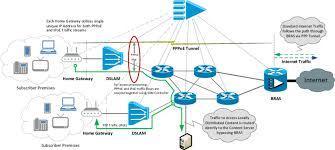
Figure-3: SDN: Controller-Based Traffic Optimization
International Research Journal of Engineering and Technology (IRJET) e-ISSN: 2395-0056
Volume: 13 Issue: 02 | Feb 2026 www.irjet.net p-ISSN: 2395-0072
4.2 Congestion Control and Load Balancing
Efficientcongestioncontrolandloadbalancingarecritical formaintainingnetworkstabilityandpreventingpacketloss underhightrafficdemand.
4.2.1
Algorithms in Traditional Networking
In conventional networks, congestion control is largely handled at the transport layer, particularly through TCP congestion control algorithms such as Reno and Cubic. Network-layer load balancing is achieved through mechanisms like Equal-Cost Multi-Path (ECMP) routing, which distributes traffic across multiple shortest paths (Medhi and Ramasamy, 2017). While these approaches providedistributedresilience,theylackcoordinatedglobal optimization and may result in uneven load distribution underdynamictrafficconditions.
4.2.2
SDN Approaches: Global Network View and Programmability
SDNenhancescongestioncontrolbyutilizingthecontroller’s global visibilitytomonitorlink utilizationandadjust flow rules dynamically. Load balancing can be implemented throughcentralizedalgorithmsthatredistributetrafficbased onreal-timemetrics.Programmabilityallowsintegrationof machinelearningmodelsfortrafficpredictionandadaptive routing (Kreutz et al., 2015). Consequently, SDN-based congestionmanagementismoreproactivecomparedtothe reactivemechanismsoftraditionalTCP-basedcontrol.
4.3 Quality of Service (QoS) Enforcement
QoS mechanisms ensure that critical applications receive priorityhandlingandguaranteedperformancelevels.
4.3.1 Queuing and Prioritization Techniques in Traditional Networks
Traditional QoS enforcement relies on device-level configuration,includingtechniquessuchaspriorityqueuing, weightedfairqueuing(WFQ),trafficshaping,andpolicing. These mechanisms are configured individually on routers and switches, often requiring significant administrative effort (Akyildiz et al., 2014). While effective, such configurations may lack network-wide coordination and rapidadaptability.
4.3.2
SDN Policy Frameworks and Dynamic QoS
InSDNenvironments,QoSpoliciesarecentrallydefinedand enforced across the network through programmable interfaces. The controller can dynamically modify flow entries to prioritize traffic based on application requirements. Policy abstraction and intent-based networking further enhance automated QoS provisioning (Kreutzetal.,2015).Thiscentralizedenforcementenables
consistentQoSacrossheterogeneousnetworksegmentsand reducesmanualconfigurationoverhead.
4.4 Scalability and Performance
Scalability remains a fundamental concern for both traditionalandSDNarchitectures,particularlyinlarge-scale enterpriseandcloudnetworks.
4.4.1
Limits in Traditional Distributed Control
Distributed control mechanisms inherently scale with network size, but they introduce complexity in routing convergence and configuration management. As network topologiesgrow,maintainingconsistentpolicyenforcement and optimal routing becomes increasingly challenging (Feamster,RexfordandZegura,2014).Protocolconvergence delaysmayalsoaffectperformanceduringtopologychanges.
4.4.2 SDN Approaches: Hierarchical Controllers and Flow Management
SDNaddressesscalabilitychallengesthroughhierarchicalor distributed controller architectures that divide network control into logical domains. Flow aggregation techniques and proactive rule installation reduce control-plane overhead(Kreutzetal.,2015).Althoughcentralizedcontrol improvesoptimizationefficiency,controllerplacementand synchronizationremainactiveresearchareastoensurelow latencyandfaulttolerance.
4.5Security ConsiderationsforTrafficManagement
Security is a critical aspect of traffic management, as malicioustrafficpatternscandisruptnetworkperformance andcompromisereliability.
4.5.1 Attack Surfaces and Mitigation in Traditional Networks
TraditionalnetworksfacethreatssuchasDistributedDenial of Service (DDoS) attacks, route hijacking, and misconfiguration vulnerabilities. Security mechanisms typically include access control lists (ACLs), intrusion detectionsystems,andprotocol-levelauthentication(Medhi andRamasamy,2017).However,decentralizedmanagement cancomplicatecoordinateddefensestrategies.
4.5.2 SDN Security Risks and Defense Approaches
WhileSDNenhancesvisibilityandcentralizedmonitoring,it introduces new attack vectors, particularly targeting the controller. Controller compromise, southbound interface exploitation, and flow rule manipulation represent significant risks (Kreutz et al., 2015). To mitigate these threats, distributed controller replication, secure communicationchannels(e.g.,TLS),andanomalydetection frameworks are implemented. Despite these safeguards,
International Research Journal of Engineering and Technology (IRJET) e-ISSN: 2395-0056
Volume: 13 Issue: 02 | Feb 2026 www.irjet.net p-ISSN: 2395-0072
ensuringcontrollerresilienceremainsessentialtomaintain
5. LITERATURE REVIEW
5.1
Survey and Comparative Studies
ThecomparativeanalysisofSoftware-DefinedNetworking (SDN)andtraditionalnetworkinghasattractedsignificant scholarly attention, particularly in the context of traffic management and traffic engineering. Foundational survey studiesprovideacomprehensiveoverviewofarchitectural differences, programmability advantages, and implementationchallengesassociatedwithSDN(Kreutzet al.,2015).ThesesurveysoftenpositionSDNasaparadigm shift from distributed control toward centralized intelligence, emphasizing improved global visibility and flexiblepolicyenforcement.
5.1.1 Key Studies Comparing SDN and Traditional Architectures
Feamster,RexfordandZegura(2014)criticallyexaminedthe intellectual evolution of programmable networks, highlighting how SDN addresses limitations in traditional distributed routing. Akyildiz et al. (2014) specifically analyzed traffic engineering mechanisms, demonstrating that SDN-based centralized optimization can outperform traditionalOSPF/MPLS-basedroutingunderdynamictraffic conditions. Empirical comparisons frequently rely on simulationplatformssuchasMininetorreal-worldtestbeds to measure throughput, latency, and packet loss across architectures.ResultsgenerallyindicatethatSDNachieves better adaptability and load balancing efficiency, though concernsregardingcontrollerscalabilityandsinglepointsof failurepersist(Kreutzetal.,2015).
5.1.2
Summary of Methodologies and Findings
Methodologically,existingstudiesemployacombinationof analyticalmodeling,experimentaltestbeds,andsimulationbased performance evaluation. Metrics such as link utilization,flowcompletiontime,jitter,andcontroloverhead arecommonlyassessed.Comparativefindingssuggestthat while traditional networks demonstrate stability and maturity, SDN provides superior traffic reconfiguration speedandcentralizedoptimizationcapabilities(Akyildizet al., 2014). However, performance gains are often contextdependent, particularly in large-scale or latency-sensitive environments.
5.2 SDN-Focused Traffic Management Solutions
Research dedicated to SDN-based traffic management emphasizesprogrammabilityandcentralizedintelligenceas primaryenablersofoptimization.
5.2.1 Controller-Based StrategiesandAI/MLIntegration
Controller-basedtrafficengineeringstrategiesleveragethe global network view to compute optimal routing paths dynamically. Centralized optimization algorithms allocate bandwidth and mitigate congestion proactively. Recent studiesincorporateArtificialIntelligence(AI)andMachine Learning(ML)techniqueswithinSDNcontrollerstopredict traffic patterns and automate decision-making processes (Kreutzetal.,2015).Suchapproachesimproveadaptability in cloud and data center networks by enabling intelligent flowschedulingandanomalydetection.
5.2.2 SDN Traffic Prediction and Adaptive Path Reconfiguration
AdaptivepathreconfigurationisadefiningfeatureofSDNenabled traffic management. Using real-time monitoring data, controllers dynamically modify forwarding rules to avoid congestion hotspots. Research demonstrates that predictivetrafficmodelingenhancesroutingefficiencyand reduces packet loss compared to static or reactive mechanisms(Akyildizetal.,2014).Nevertheless,controller processingoverheadandsynchronizationdelaysremainkey performanceconsiderationsinlarge-scaledeployments.
5.3 Traditional Networking Traffic Engineering Enhancements
Although SDN has gained prominence, substantial advancements have been made within traditional networkingtoimprovetrafficmanagementefficiency.
5.3.1 Advanced MPLS-TE Solutions
Multiprotocol Label Switching with Traffic Engineering (MPLS-TE) represents a significant enhancement in traditional architectures. MPLS-TE enables explicit path selectionandbandwidthreservation,allowingoperatorsto optimize resource utilization across backbone networks (MedhiandRamasamy,2017).Constraint-basedroutingand fast reroute mechanisms further enhance reliability and performance. Despite these improvements, configuration complexity and limited global optimization capabilities remainchallenges.
5.3.2 QoS Enhancements with Classic Protocols
Quality of Service in traditional networks has evolved through advanced queuing disciplines, traffic shaping mechanisms, and differentiated services (DiffServ). These mechanisms provide prioritization and bandwidth guaranteesforlatency-sensitiveapplications(Akyildizetal., 2014). However, QoS enforcement often requires manual per-device configuration, which may reduce operational agility compared to SDN-based centralized policy management.
International Research Journal of Engineering and Technology (IRJET) e-ISSN: 2395-0056
Volume: 13 Issue: 02 | Feb 2026 www.irjet.net p-ISSN: 2395-0072
5.4 Hybrid and Transitional Approaches
Recognizing the practical challenges of full SDN adoption, researchershaveexploredhybridnetworkingmodelsthat integrateSDNwithlegacyinfrastructure.
5.4.1
Partial SDN Deployments
Hybrid approaches typically deploy SDN controllers to manage specific network segments such as data center cores whileretainingtraditionalroutingprotocolsatthe edge.Thisincrementalstrategyreducesdeploymentriskand leverages existing infrastructure investments (Feamster, RexfordandZegura,2014).Sucharchitecturesallowgradual transitionwithoutdisruptingestablishedservices.
5.4.2 Performance Trade-Off Analysis
Comparativeevaluationsofhybridmodelsrevealtrade-offs between flexibility and complexity. While hybrid architectures improve traffic optimization within SDNmanagedsegments,interoperabilitychallengesandcontrolplane coordination overhead may limit overall efficiency (Kreutzetal.,2015).Empiricalfindingssuggestthathybrid modelsofferapragmaticbalancebetweeninnovationand stability, particularly in enterprise and service-provider environments.
6. DISCUSSION
6.1 Synthesis of Findings: Strengths and Weaknesses
The comparative analysis of traditional networking and Software-Defined Networking (SDN) reveals fundamental architectural trade-offs that directly influence traffic management performance. Traditional networking demonstrates robustness, protocol maturity, and decentralizedfaulttoleranceduetoitsdistributedcontrol architecture(MedhiandRamasamy,2017).Itslong-standing deployment history ensures operational stability and interoperability across heterogeneous infrastructures. However, limited global visibility and dependence on protocolconvergencerestrictrapidadaptabilitytodynamic trafficconditions(Feamster,RexfordandZegura,2014).
Incontrast,SDNofferscentralizedintelligence,fine-grained flowcontrol,andprogrammability,enablingdynamictraffic engineering and rapid policy enforcement (Kreutz et al., 2015). The controller’s global network view allows optimized routing decisions and proactive congestion mitigation.Nevertheless,SDNintroduceschallengessuchas controllerscalability,potentialsinglepointsoffailure,and increased control-plane communication overhead (McKeownetal.,2008).Thus,whileSDNexcelsinflexibility and optimization, traditional networking remains advantageousinresilienceandoperationalfamiliarity.
6.2 Practical Implications for Network Operators
Fromanoperational perspective,thechoicebetweenSDN andtraditionalnetworkingdependsondeploymentcontext, performancerequirements,andadministrativecapabilities. Network operators managing large-scale data centers or cloud infrastructures benefit from SDN’s centralized orchestration and automation features, which reduce manual configuration complexity (Kreutz et al., 2015). Policy-driventrafficmanagementandrapidreconfiguration enhanceserviceagilityandreducedowntime.
Conversely, service providers operating legacy backbone networks may prefer traditional architectures due to established protocol reliability and incremental upgrade feasibility (Medhi and Ramasamy, 2017). Transitioning to SDNrequiresinvestmentincontrollerinfrastructure,staff training, and security reinforcement. Therefore, hybrid deployment models often represent a pragmatic compromise, enablinggradualmigrationwhilepreserving operational continuity (Feamster, Rexford and Zegura, 2014).
6.3 Traffic Adaptation, Flexibility and Management Overhead
6.3.1 Differences in Traffic Adaptation and Flexibility
Traditional networks adapt to traffic changes through distributedroutingupdatesandtransport-layercongestion control.Whileeffective,thesemechanismsarereactiveand dependentonprotocol convergenceintervals.Asnetwork size increases, adaptation speed may degrade (Medhi and Ramasamy, 2017). SDN, by contrast, facilitates near realtime traffic adaptation via centralized monitoring and programmableruleupdates.Thecontrollercanreconfigure forwarding paths proactively based on global utilization metrics (Akyildiz et al., 2014). This programmability significantly enhances flexibility in handling bursty or unpredictabletrafficpatterns.
6.3.2 Management Overhead Considerations
Managementoverheaddifferssubstantiallybetweenthetwo paradigms. Traditional networking requires device-level configuration,resultinginhigheradministrativeeffortand potential configuration inconsistencies. However, controlplane operations are distributed, reducing the risk of centralized bottlenecks. In SDN environments, centralized policy enforcement reduces manual configuration but increases reliance on controller performance and secure communicationchannels(Kreutzetal.,2015).Excessiveflow ruleupdatesorlarge-scalenetworksmayimposeprocessing burdensoncontrollers,affectinglatencyandscalability.
6.4 Challenges in Fair Benchmarking
Accurately comparing SDN and traditional networking performance presents methodological challenges. Many
International Research Journal of Engineering and Technology (IRJET) e-ISSN: 2395-0056
Volume: 13 Issue: 02 | Feb 2026 www.irjet.net p-ISSN: 2395-0072
empiricalstudiesrelyonsimulationtoolssuchasMininetor controlledlaboratorytestbeds,whichmaynotfullycapture real-world trafficheterogeneityandhardware constraints (Akyildiz et al., 2014). Simulation-based evaluations often idealize network conditions, potentially overstating SDN performance gains. Conversely, real-world deployments introduceunpredictabletrafficpatterns,legacyintegration issues,andhardwarelimitationsthatinfluenceoutcomes.
Additionally, benchmarking metrics vary across studies, includingthroughput,latency,jitter,controloverhead,and scalability indicators. The absence of standardized evaluationframeworkscomplicatescross-studycomparison (Kreutz et al., 2015). Therefore, future research should emphasize reproducible experimentation, standardized datasets,andhybridevaluationenvironmentsthatcombine simulationaccuracywithrealisticdeploymentconditions.
7. CONCLUSION
This review critically compared Software-Defined Networking(SDN)andtraditionalnetworkingarchitectures withspecificemphasisontrafficmanagementmechanisms, includingtrafficengineering,congestioncontrol,Qualityof Service (QoS), scalability, and security. Traditional networking,builtondistributedcontrolandprotocol-driven routing,offersrobustness,maturity,anddecentralizedfault tolerance.However,itslimitedglobalvisibilityandslower adaptationtodynamictrafficpatternsrestrictoptimization efficiency. In contrast, SDN introduces architectural decouplingandcentralizedprogrammability,enablingfinegrainedflowmanagement,proactivecongestionmitigation, andrapidpolicyenforcement.Empiricalfindingsacrossthe literature indicate that SDN generally achieves superior flexibilityandresourceutilization,particularlyindatacenter andcloudenvironments.Nevertheless,controllerscalability, securityvulnerabilities,anddeploymentcomplexityremain significantconcerns.Hybridarchitectureshaveemergedasa practical transition strategy, balancing innovation with operationalstability.Overall,thechoicebetweenSDNand traditional networking depends on performance requirements,networkscale,andadministrativecapabilities, withSDNdemonstratingclearadvantagesinenvironments demandingagilityanddynamictrafficoptimization.
8. LIMITATIONS
REFERENCES
1. Akyildiz, I.F., Lee, A., Wang, P., Luo, M. and Chou, W. (2014)‘Aroadmapfortrafficengineeringinsoftwaredefinednetworks’,ComputerNetworks,71,pp.1–30.
2. Feamster,N.,Rexford,J.andZegura,E.(2014)‘Theroad to SDN: An intellectual history of programmable networks’,ACMSIGCOMM ComputerCommunication Review,44(2),pp.87–98.
3. Kitchenham,B.andCharters,S.(2007)Guidelinesfor performing systematic literaturereviews in software engineering.EBSETechnicalReport.KeeleUniversity andDurhamUniversity.
4. Kreutz, D., Ramos, F.M.V., Verissimo, P., Rothenberg, C.E., Azodolmolky, S. and Uhlig, S. (2015) ‘Softwaredefined networking: A comprehensive survey’, ProceedingsoftheIEEE,103(1),pp.14–76.
5. McKeown,N.,Anderson,T.,Balakrishnan,H.,Parulkar, G., Peterson, L., Rexford, J., Shenker, S. and Turner, J. (2008) ‘OpenFlow: Enabling innovation in campus networks’, ACMSIGCOMM ComputerCommunication Review,38(2),pp.69–74.
6. Medhi,D.andRamasamy,K.(2017)NetworkRouting: Algorithms, Protocols, and Architectures. 2nd edn. Burlington:MorganKaufmann.
7. Snyder, H. (2019) ‘Literature review as a research methodology:Anoverviewandguidelines’,Journalof BusinessResearch,104,pp.333–339.
8. Al-Fares, M., Loukissas, A. and Vahdat, A. (2008) ‘A scalable,commoditydatacenternetworkarchitecture’, ACM SIGCOMM Computer Communication Review, 38(4),pp.63–74.
9. Benson,T.,Akella,A.andMaltz,D.A.(2010)‘Network traffic characteristics of data centers in the wild’, ProceedingsoftheACMSIGCOMMConference,pp.267–280.
10. Casado,M.,Freedman,M.J.,Pettit,J.,Luo,J.,McKeown, N.andShenker,S.(2007)‘Ethane:Takingcontrolofthe enterprise’,ACMSIGCOMMComputerCommunication Review,37(4),pp.1–12.
11. Curtis, A.R., Mogul, J.C., Tourrilhes, J., Yalagandula, P., Sharma,P.andBanerjee,S.(2011)‘DevoFlow:Scaling flow management for high-performance networks’, ACM SIGCOMM Computer Communication Review, 41(4),pp.254–265.
Thisreviewislimitedbyitsrelianceonpreviouslypublished studies,manyofwhichemploysimulation-basedorsmallscale experimental testbeds that may not fully represent real-world deployment conditions. Variations in benchmarking methodologies, performance metrics, and evaluation environments complicate direct comparison across studies. Additionally, rapid advancements in SDN technologies and controller platforms may render some findings time-sensitive. The review primarily focuses on traffic management aspects and does not deeply explore economiccostanalysis,vendor-specificimplementations,or emergingparadigmssuchasprogrammabledataplanes(e.g., P4).Thesefactorsmayinfluencepracticaladoptiondecisions beyondarchitecturalperformanceconsiderations.
International Research Journal of Engineering and Technology (IRJET) e-ISSN: 2395-0056
Volume: 13 Issue: 02 | Feb 2026 www.irjet.net p-ISSN: 2395-0072
12. Dixit, A., Hao, F., Mukherjee, S., Lakshman, T.V. and Kompella, R. (2013) ‘Towards an elastic distributed SDN controller’, ACM SIGCOMM Computer CommunicationReview,43(4),pp.7–12.
13. Fang, W., Peterson, L., Rexford, J., Freedman, M.J. and Walker,D.(2013)‘OvercomingthelimitationsofSDN withhybridnetworking’,ProceedingsofHotNets,pp. 1–7.
14. Gude, N., Koponen, T., Pettit, J., Pfaff, B., Casado, M., McKeown,N.andShenker,S.(2008)‘NOX:Towardsan operating system for networks’, ACM SIGCOMM ComputerCommunicationReview,38(3),pp.105–110.
15. Heller,B.,Sherwood,R.andMcKeown,N.(2012)‘The controllerplacementproblem’,ProceedingsoftheACM SIGCOMMWorkshoponHotTopicsinSoftwareDefined Networks,pp.7–12.
16. Jain, R., Mendiratta, V., Ong, J., Poretsky, S., Tofighbakhsh,R.,Zhuang,L.andHadiSalim,J.(2013) ‘B4: Experience with a globally deployed software defined WAN’, ACM SIGCOMM Computer CommunicationReview,43(4),pp.3–14.
17. Jarschel,M.,Oechsner,S.,Schlosser,D.,Pries,R.,Goll,S. and Tran-Gia, P. (2011) ‘Modeling and performance evaluationofanOpenFlowarchitecture’,Proceedingsof ITC,pp.1–7.
18. Kandula, S., Sengupta, S., Greenberg, A., Patel, P. and Chaiken, R. (2009) ‘The nature of data center traffic’, ProceedingsoftheACMSIGCOMMConference,pp.202–208.
19. Koponen, T., Casado, M., Gude, N., Stribling, J., Poutievski,L.,Zhu,M.,Ramanathan,R.,Iwata,Y.,Inoue, H.,Hama,T.andShenker,S.(2010)‘Onix:Adistributed controlplatformforlarge-scaleproductionnetworks’, ProceedingsofOSDI,pp.1–14.
20. Lantz,B.,Heller,B.andMcKeown,N.(2010)‘Anetwork in a laptop: Rapid prototyping for software-defined networks’,ProceedingsofHotNets,pp.1–6.
21. Liu,H.,Xu,Y.,Wang,G.,Liu,D.,Jin,H.,Liu,C.andLiao,X. (2015) ‘Flow scheduling for cloud data centers: A survey’, IEEE Communications Surveys & Tutorials, 18(1),pp.1–22.
22. Mao, M. and Humphrey, M. (2012) ‘A performance studyontheVMstartuptimeinthecloud’,Proceedings ofIEEECLOUD,pp.423–430.
23. Nadeau,T.D.andGray,K.(2013)SDN:SoftwareDefined Networks.Sebastopol:O’ReillyMedia.
24. Phemius, K., Bouet, M. and Leguay, J. (2014) ‘DISCO: Distributedmulti-domainSDNcontrollers’,Proceedings ofIEEENOMS,pp.1–4.
25. Qazi,Z.A.,Tu,C.-C.,Chiang,L.,Miao,R.,Sekar,V.andYu, M.(2013)‘SIMPLE-fyingmiddleboxpolicyenforcement usingSDN’,ACMSIGCOMMComputerCommunication Review,43(4),pp.27–38.
26. Rexford, J. and Dovrolis, C. (2010) ‘Future Internet architecture:Clean-slateversusevolutionaryresearch’, CommunicationsoftheACM,53(9),pp.36–40.
27. Sezer, S., Scott-Hayward, S., Chouhan, P.K., Fraser, B., Lake,D.,Finnegan,J.,Viljoen,N.,Miller,M.andRao,N. (2013) ‘Are we ready for SDN? Implementation challenges for software-defined networks’, IEEE CommunicationsMagazine,51(7),pp.36–43.
28. Shahzad, M., Liu, A.X., Sun, Q. and Liu, T. (2016) ‘A survey on network traffic monitoring and analysis’, IEEECommunicationsSurveys&Tutorials,18(4),pp. 1–26.
29. Shin,S.andGu,G.(2012)‘Attackingsoftware-defined networks: A first feasibility study’, Proceedings of HotSDN,pp.165–166.
30. Tootoonchian,A.andGanjali,Y.(2010)‘HyperFlow:A distributedcontrolplaneforOpenFlow’,Proceedingsof INM/WREN,pp.1–6.
31. VanAdrichem,N.L.M.,Doerr,C.andKuipers,F.A.(2014) ‘OpenNetMon: Network monitoring in OpenFlow software-defined networks’, Proceedings of IEEE NOMS,pp.1–8.
32. Wang, R., Butnariu, D. and Rexford, J. (2011) ‘OpenFlow-based server load balancing gone wild’, ProceedingsofHot-ICE,pp.1–6.
33. Yu,M.,Rexford,J.,Freedman,M.J.andWang,J.(2010) ‘Scalable flow-based networking with DIFANE’, ACM SIGCOMMComputerCommunicationReview,40(4),pp. 351–362.
34. Zhang, Y., Beheshti, N., Beliveau, L., Lefebvre, G., Manghirmalani, R., Mishra, R., Patney, R., Subrahmaniam,A.andTruchan,P.(2013)‘Steering:A software-defined networking for inline service chaining’,ProceedingsofICNP,pp.1–10.