
International Research Journal of Engineering and Technology (IRJET) e-ISSN: 2395-0056
Volume: 12 Issue: 12 | Dec 2025 www.irjet.net p-ISSN: 2395-0072
International Research Journal of Engineering and Technology (IRJET) e-ISSN: 2395-0056
Volume: 12 Issue: 12 | Dec 2025 www.irjet.net p-ISSN: 2395-0072
Fazal Ahmad1, Mr. Ushendra Kumar2
1Master of Technology, Civil Engineering, Lucknow Institute of Technology, Lucknow, India
2Head of Department, Department of Civil Engineering, Lucknow Institute of Technology, Lucknow, India
Abstract - Concrete’s high strength-to-weightratiomakesit a popular choice among builders of tall buildings due to its ability to resist heavy loads while providing ample vertical space. Tall building construction has increased exponentially over recent years and the resulting increased demand for understanding the horizontal structural response of these structures when subjected to wind or seismic forces necessitates an enhancedunderstandingofhowthehorizontal structural performance of tall buildings can be influenced by the properties of concrete used to build them. A number of factors that affect the overall lateral performance of tall structures include ductility, strength, stiffness, and strengthto-weight ratios; however, the most significant factor is likely the type of concrete selected (concrete grade). A review of the literature was conducted to evaluate the comparative effects of four types of concrete used in the construction of tall buildings (normal-strength concrete (NSC), high-strength concrete (HSC), high-performance concrete (HPC) and ultrahigh performance concrete (UHPC)) on both the horizontal structural performance characteristics of tall buildings and the lateral performance characteristics of tall buildings. In addition to reviewing previous studies involving both analytical and numerical approaches, this review included a review of previous experimental studies related to the use of different types of concrete in the construction of tallbuildings.
Key Words: Tall buildings; Concrete grade; Lateral structuralbehavior;Seismicperformance;Windresponse; Performance-baseddesign.
1.1
Therapidrateofurbandevelopmenthasincreasedtheneed for effective use of available land in large cities due to growingpopulations.Thelimitedlandandincreasingcosts ofthatlandaremakingitnecessaryforurbanplannersand developers to incorporate vertical development into their plans.Thishasresultedinanincreaseinthenumberoftall buildingprojectsindense,metropolitanareas;theabilityto developthesetypesofprojectsisalsobeingmadepossible by advances in construction technology, materials science and computer-aided engineering. Tall buildings are
becoming a critical component of developing residential, commercialandmixed-useprojectsincontemporaryurban settings.
Duetotheheightandflexibilityoftallstructures,theyare very sensitive to large horizontal or lateral displacements (causedbywindandearthquakeforces)thatcancauseinterstorydrifts,dynamicvibrations,andpotentiallystructural failure; therefore, excessive lateral movement in tall structures can create serviceability problems with the building,causestructuraldamageandbeuncomfortableto peopleoccupyingthebuilding.Thesafetyandstabilityoftall structures can also be compromised by lack of sufficient lateral resistance if an extreme load event occurs (e.g., earthquake or hurricane). Thus, assessing and controlling horizontalstructuralbehaviorintallbuildingsisasignificant part of designing and assessing the performance of tall buildings.
1.3RoleofConcreteGradeinInfluencingStructural Performance
Concrete grade is one of the most influential parameters affecting the structural performance of tall buildings. It directly governs the mechanical properties of structural membersandsignificantlyimpactstheoverallresponseof thebuildingunderlateralloadingconditions.
Structural members made with higher strength grade concretes exhibit higher modulus of elasticity and compressivestrengths;bothareresponsibleforprovidinga stiffer structure that will carry larger loads and therefore providelesslateraldisplacementintheeventofseismicor wind loading events. Stiffer structures also provide less inter-story drift as compared to softer structures. Higher strength concretes allow engineers to design structural members smaller than would be required if using lower strength concretes (assuming the same strength requirements), resulting in structurally more efficient designs.
International Research Journal of Engineering and Technology (IRJET) e-ISSN: 2395-0056
Volume: 12 Issue: 12 | Dec 2025 www.irjet.net p-ISSN: 2395-0072
The ability to deform (ductility) is an important factor in how well a tall building will perform when subjected to earthquakes. High-strength concrete provides increased strength, however; high-strength concrete has less deformationcapabilitythannormal-strengthconcrete.This lower deformation potential affects its ability to dissipate energyduringearthquake-inducedmotions,developcracks asitdeforms,andformplastichinges(thelocationswhere thestructurebeginstoyield),whichareallcriticalaspects that affect the overall structural response to lateral loads. Therefore, selecting a suitable concrete grade for a tall building requires a combination of sufficient strength and adequateductilitytopreventbrittlefailuresandencourage controlledinelasticresponsesduringseismicactivities.
1.3.3
Tall building's total lateral behavior is determined by the three properties of stiffness, strength and ductility. The globalstructuralresponseofatallbuildingisaffectedbyits concrete grade including natural time period, base shear demand, mode shape and dynamic magnification factor. Differences in the concrete grade will have a significant impact on how the lateral loads are distributed and deformedthroughoutthestructurewhichhasaninfluence onbothserviceabilityandsafetyperformance.
While many studies have studied the behavior of tall buildings,moststudieshavefocusedonasingle(concrete) strength or structural configuration. The current body of knowledgedoesnotincludeanextensivecomparativestudy ofthebehaviorofvariousconcretestrengthswiththesame geometricalcharacteristicsandloadings.Thiscomparative studyisneededtocompareandcontrasttheadvantagesand disadvantagesofeachoftheconcretegradesinrelationto their lateral response, material use efficiency and seismic behavior.Itcanalsoprovideusefulguidelinesfordesigners andresearchersforselectingsuitableconcretegradesfortall buildingconstruction.
Thissectionpresentsacomprehensivereviewofprevious studiesfocusingonthehorizontalstructuralbehavioroftall buildings, with particular emphasis on the influence of differentconcretegrades.Thereviewedliteratureincludes analytical, numerical, and experimental investigations addressing wind- and seismic-induced responses, serviceability requirements, and strength-based performancecriteria.
Manyresearchstudieshaveillustratedthatwindforcesare typicallythemostimportantloadcasesfordesignofhighrise structures, particularly when they are built in areas wheretheseismic activityismoderate.Themanyways in which wind affects tall structures (longitudinal and transverse motion, torsion) all contribute to both the amount of the lateral displacement and how much the acceleration will be. Increased structural flexibility due to buildingheightandslendernessalsoincreasewindresponse, soitisaprimarydesignfactor.Numericalsimulationmodels andwindtunneltestinghaveshownthatthepropertiesof lateralstiffnessanddampingcanhaveasignificantimpact onreducingthevibrationalresponsestowindinducedloads andmaintainingcomfortforoccupants.
Tall buildings have undergone extensive research of their SeismicResponseviaTime-HistoryAnalysis,Experimental Methods and Response Spectrum Analysis. Literature has indicatedthatSeismicForcescausetallstructurestoexhibit complex Dynamic Behavior which includes Higher Mode Effects.Inter-StoryDriftandPlasticHingeFormationaretwo Critical Parameters used for evaluation of the Seismic PerformanceofTallStructures.TheDistributionofMassand Stiffness throughout the Height of the Building is a significantfactorindeterminingtheSeismicDemandofTall Buildings, while Material Properties (i.e., Concrete Grade) are important in Controlling Damage Patterns During Earthquakes.
2.2.1
Duetoitseaseofmanufacturingandcostefficiency,Normal StrengthConcrete(NSC),hashistoricallybeenusedforthe construction of tall buildings. However, research demonstrates that tall buildings built using NSC exhibit largerlateraldisplacementandinter-storydriftthanshorter structuresdue toits relativelylowerstiffness.Asbuilding heightincrease,controllingdriftisidentifiedasasignificant problem in tall structures whenNSC isutilized;therefore, increased member size or additional lateral load resisting systemsarecommonlyrequired.
2.2.2
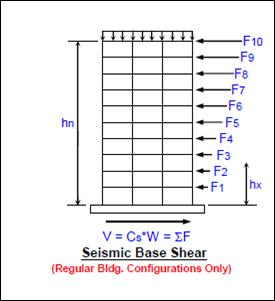
TheresearchdataindicatesthattallbuildingsutilizingNSC exhibitsignificantlylessbaseshearasaresultoftheadded flexibilityand extendednatural period.Althoughthismay seem beneficial when viewed through the lens of force
International Research Journal of Engineering and Technology (IRJET) e-ISSN: 2395-0056
Volume: 12 Issue: 12 | Dec 2025 www.irjet.net
demand, the loss of stiffness can cause problems with the abilityofthestructuretofunctionproperly.Researchstudies haveshownthatexcessiveflexibilityinstructuresbuiltwith NSCfortallbuildingsmaynegativelyaffecttheperformance of these structures during extreme wind or earthquake conditions.
2.3LiteratureonTallBuildingsUsingHighStrength Concrete (HSC)
2.3.1 Improvements in Stiffness and Reduction in Member Sizes
ResearchershavefoundthatHigh-StrengthConcrete(HSC), with superior compressive strength and stiffness, is a popularsubjectofstudyfortallbuildingsduetothebenefits of using high-strength concrete in the form of increased usable floor space due to smaller column and wall sizes, lower total building weight, and an improvement in controlling lateral displacement and drift due to higher stiffness.
2.3.2
Research has shown that high-strength concrete (HSC) structures will experience a reduced period of vibration (natural time period) as opposed to non-reinforced steelconcretecomposite(NSC)structures.Theincreasedstiffness of HSC structures results in a different dynamic response thanwouldbeexperiencedbyanNSCstructuresubjectedto seismicloadsandthereforemayresultinlargerbaseshear forces. Therefore researchers recommend that when designingforseismicactivityandutilizingHSC,greatcare shouldbetakentoperformadequatedynamicanalysis.
p-ISSN: 2395-0072
2.4.1 Enhanced Durability
HighPerformanceConcrete(HPC)hasgainedattentiondue to its improved mechanical properties and superior durabilitycharacteristics.ResearchindicatesthatHPCoffers enhancedresistancetocracking,creep,andshrinkage,which isparticularlybeneficialfortallbuildingssubjectedtolongtermlateralloadingeffects.Thesepropertiescontributeto sustainedstiffnessandlong-termstructuralperformance.
2.4.2
StudiesinvestigatingthelateralbehaviorofHPC-basedtall buildingsreportimprovedperformanceunderextremewind andseismicconditions.Reducedlateraldisplacementsand enhanced post-cracking behavior have been observed, makingHPCsuitableforhigh-risestructuresinaggressive environmentsorhigh-loadregions.
2.5Literature
2.5.1
UHPC represents an emerging class of cementitious materials characterized by extremely high strength and enhanced tensile properties. Literature on UHPC in tall buildings is relatively limited and primarily consists of experimental studies and pilot projects. Researchers have exploreditspotentialuseincriticalstructuralcomponents suchascouplingbeams,outriggers,andcoreelements.
2.5.2 Lateral Behavior and Energy Dissipation
Experimental studies suggest that UHPC exhibits superior energydissipationcapacityduetofiberreinforcementand improved tensile behavior. Its high stiffness and strength significantly enhance lateral resistance, although its influence on global building response requires further investigation.
3.STRUCTURAL SYSTEMS INTALL BUILDINGSAND INTERACTION WITH CONCRETE GRADE
Structural systems play a critical role in controlling the horizontal behavior of tall buildings. The effectiveness of thesesystemsisstronglyinfluencedbythegradeofconcrete used,asmaterialpropertiesdirectlyaffectstiffness,strength, ductility,andoverallstructuralefficiencyunderlateralloads.
3.1 Moment-Resisting Frame Systems
Moment-resisting frame systems consist of beams and columnsrigidlyconnectedtoresist lateralloadsprimarily throughflexural action. Thesesystems relyheavilyonthe
International Research Journal of Engineering and Technology (IRJET) e-ISSN: 2395-0056
Volume: 12 Issue: 12 | Dec 2025 www.irjet.net p-ISSN: 2395-0072
bending stiffness of frame members to control lateral displacementanddrift.
3.1.1 Lateral Load Resistance Mechanism
Inmoment-resistingframes,lateralloadsareresistedbythe developmentofbendingmomentsatbeam–columnjoints. The stiffness of the frame is therefore dependent on the flexural rigidity of beams and columns, which is directly influenced by the concrete grade. Higher concrete grades enhancememberstiffness,improvinglateralloadresistance.
3.1.2 Interaction with Concrete Grade
Studies indicate that the use of higher-grade concrete in moment-resisting frames leads to reduced lateral displacements and improved strength capacity. However, increased stiffness may also result in higher base shear demands under seismic loading. Additionally, ensuring adequateductilitythroughproperdetailingbecomesmore criticalwhenhigherconcretegradesareused.
3.2 Shear Wall and Core Wall Systems
Shearwallandcorewallsystemsarewidelyadoptedintall buildings to provide substantial lateral stiffness and strength. These vertical structural elements resist lateral loadsprimarilythroughshearandflexuralaction.
3.2.1 Structural Role in Tall Buildings
Shearwallsandcorewallssignificantlyenhancethelateral load-resistingcapacityoftallbuildingsbylimitingdriftand improving overall stability. Central core walls are particularlyeffectiveinresistingtorsionaleffectsinducedby asymmetricloadingconditions.
Outriggerandbelttrusssystemsarecommonlyusedinhighriseandsuper-tallbuildingstoenhancelateralstiffnessby couplingthecorewithperimetercolumns.
3.3.1
Outriggersystemstransferoverturningmomentsfromthe centralcoretoexteriorcolumns,effectivelyreducinglateral deflectionsandbasemoments.Belttrussesdistributethese forces uniformly among perimeter columns, improving overallstructuralefficiency.
This section presents a comparative evaluation of the horizontalstructuralbehavioroftallbuildingsconstructed usingdifferentconcretegrades.Theassessmentisbasedon key response parameters reported in the literature, includinglateraldisplacement,inter-storydrift,baseshear,
stiffness distribution, and dynamic characteristics under windandseismicloading.
4.1 Effect of Concrete Grade on Lateral Displacement and Drift
Lateral displacement and inter-story drift are primary serviceability indicators for tall buildings and are highly influencedbymaterialstiffness.
Studies consistently indicate that higher concrete grades result in reduced overall lateral displacement due to increased modulus of elasticity and enhanced member stiffness.Tallbuildingsconstructedwithhigh-strengthand high-performanceconcretedemonstratesignificantlylower roof displacements compared to those using normalstrength concrete, particularly under wind loading conditions.
4.1.2
Inter-story drift is a critical parameter governing damage potentialduringseismicevents.Literatureshowsthathigher concrete grades contribute to improved drift control by increasing lateral stiffness; however, excessive stiffness concentrationmayleadtolocalizeddamageifnotproperly distributed. Thus, the effectiveness of drift reduction dependsnotonlyonconcretegradebutalsoonstructural configurationanddetailing.
4.2 Effect on Base Shear and Stiffness
Thegradeofconcretedirectlyaffectsglobalstiffness,which inturninfluencesseismicforcedemand.
Comparative studies reveal that buildings with higher concrete gradesgenerallyattracthigher baseshearunder seismicloadingduetoreducednaturaltimeperiods.While increased base shear reflects enhanced stiffness, it also necessitatescarefuldesigntoensureadequatestrengthand ductility.
Seismicperformanceoftallbuildingsisgovernednotonlyby strength and stiffness but also by the ability of structural systemstoundergoinelasticdeformationwithoutsignificant lossofload-carryingcapacity.Concretegradeplaysacritical role in defining ductility, energy dissipation, and damage characteristicsunderearthquakeloading.
International Research Journal of Engineering and Technology (IRJET) e-ISSN: 2395-0056
Volume: 12 Issue: 12 | Dec 2025 www.irjet.net
Ductilitydemandreferstothedeformationrequiredduring seismicevents,whileductilitycapacityrepresentstheability ofthestructuretoaccommodatesuchdeformationswithout failure.
Tall buildings experience higher ductility demand due to increasedflexibility,highermodeeffects,andredistribution ofseismicforcesalongtheheight.Literatureindicatesthat ductility demand increases with building height and irregularity, making material selection a crucial design decisioninseismicregions.
5.1.2
Normal-strength concrete generally exhibits higher strain capacity and better post-cracking behavior, providing superior inherent ductility. In contrast, high-strength concrete tends to be more brittle, with reduced ultimate straincapacity.High-performanceconcrete,whencombined withappropriateconfinementandreinforcementdetailing, can achieve a favorable balance between strength and ductility.Ultra-highperformanceconcrete,particularlyfiberreinforcedvariants,demonstratesenhancedtensilestrength and deformation capacity; however, its global ductility behaviorintallbuildingsrequiresfurthervalidation.
Energy dissipation is a key parameter influencing seismic resilience,asitdeterminestheextenttowhichearthquakeinducedenergycanbeabsorbedwithoutseverestructural damage.
5.2.1
In conventional reinforced concrete structures, energy dissipation primarily occurs through yielding of reinforcementandcontrolledcrackingofconcrete.Studies showthatnormal-strengthandhigh-performanceconcrete structuresexhibitstablehystereticbehaviorwhenproperly detailed, whereas high-strength concrete structures may require enhanced confinement to prevent rapid strength degradation.
Table 1: Seismic Performance Characteristics Across
p-ISSN: 2395-0072
Sustainabilityandeconomicfeasibilityhavebecomeintegral aspects of tall building design due to increasing environmentalconcernsandrisingconstructioncosts.The selectionofconcretegradesignificantlyinfluencesmaterial consumption,constructionpractices,life-cycleperformance, and overall environmental impact. This section reviews existingliteratureaddressingsustainability-andcost-related implications associated with the use of various concrete gradesintallbuildings.
Materialefficiencyreferstotheabilityofastructuralsystem to achieve required performance with minimum material usage.
6.1.1
Higher concrete grades enable increased load-carrying capacity,allowingforreducedcross-sectionaldimensionsof columns,walls,andcoreelements.Literatureindicatesthat high-strengthandhigh-performanceconcretesignificantly reducemembersizesintallbuildings,leadingtoimproved architectural flexibility and increased usable floor area. Reduced member size also contributes to lower overall building self-weight, which in turn reduces foundation demandandseismicforceeffects.
6.1.2
Several studies highlight that the strategic use of higher concretegradesincriticalstructuralcomponentsenhances overallmaterialefficiency.Ratherthanuniformlyincreasing concretestrengththroughoutthestructure,optimizedgrade distribution such as higher grades at lower stories and coreelements resultsinefficientresourceutilizationwhile maintainingadequatelateralperformance.
While higher concrete grades offer structural advantages, their practical implementation involves several construction-relatedconsiderations.
6.2.1
High-strengthandhigh-performanceconcreteoftenrequire controlledmixdesigns,specializedqualitycontrolmeasures, and skilled workmanship. Literature reports challenges relatedtoworkability,curingrequirements,andincreased sensitivity to construction errors. UHPC, in particular, demands advanced mixing techniques and placement procedures, limiting its widespread application in conventionaltallbuildingprojects.
International Research Journal of Engineering and Technology (IRJET) e-ISSN: 2395-0056
Volume: 12 Issue: 12 | Dec 2025 www.irjet.net p-ISSN: 2395-0072
Higherconcretegradesgenerallyincurhighermaterialand productioncosts.However,studiesindicatethatthesecosts maybeoffsetbyreductionsinmembersize,reinforcement quantity, and construction time. Economic evaluations suggest that although initial costs are higher, the overall project cost may remain competitive due to savings in formwork,foundationsize,andusablefloorarea.
Thecurrentstudyhasreviewedalloftheavailableliterature to compare the horizontal structural behavior of tall buildings constructed using various concrete strengths. From the results of the reviewed literature (analytical/numerical/experimental), it appears that the strengthoftheconcreteusedhasasignificanteffectonthe interstory drift, lateral deflection, stiffness distribution, dynamicresponse,andseismicperformanceoftallbuildings. High-strength/high-performance concretes exhibit improvedlateralstiffnessandserviceabilitywhensubjected to wind loads and also have the potential to reduce the amountofmaterialneededforeachelement.However,the useofhigherstrengthconcretescanresultinanincreasein the seismic forces required to resist earthquake induced deformationsandareductionintheinherentductilityofthe structureunlessproperdetailsareincludedinthestructure toprovideadequateconfinement.Thisreviewhighlightsthat the best performance of the structural system is achieved whenaperformancebasedselectionoftheconcretestrength ismadealongwiththemostsuitablestructuralsystemand seismicdesignstrategy.Ultrahighperformanceconcretes, whichareoneoftheemergingmaterials,haveshowngreat promisetoimprovethelateralresistanceanddurabilityof structures;however,thereareveryfewapplicationsofthis type of concrete in tall building construction. Overall, the information provided in this review will be beneficial to researchersandpracticingengineerstobetterunderstand the horizontal structural performance of tall building constructionwithvariousconcretestrengths.
While the review is all-encompassing regarding the topic area,itisalsoimportanttoacknowledgethelimitationsof the review, specifically the reliance upon published literature,whichwillhaveavarietyofmodelassumptions, structural configurations, loading conditions, and performance evaluation criteria; thereby making comparisons between these difficult. Many of the studies reviewed used numerical methods (i.e., simulation) and there was limited access to actual full scale experimental and/or building performance data for High-Performance Concrete(HPC),Ultra-HighPerformanceConcrete(UHPC), etc. In addition, while many of the studies reviewed did address the construction practices, workmanship quality, etc.thataffectthelateralresponseofthestructure,theydid
not do so uniformly. The economic and sustainability assessmentofthevarioussystemsweregenerallyqualitative because consistent LCC (Life-Cycle Cost) and EI (EnvironmentalImpact)informationisnotreadilyavailable. Thereisalsopotentialtogeneralizeresultsfromsomeofthe studiesreviewedduetotheuseofdifferentdesigncodesand seismic characteristics by region. Therefore, there is an obvious need to develop standardized comparative frameworks,conductlarge-scaleexperimentaltesting,and performintegratedLCC/EIanalysesinfuturestudies.
[1] T. Taranath, Structural Analysis and Design of Tall Buildings,2nded.NewYork,NY,USA:McGraw-Hill,2016.
[2] A. K. Chopra, Dynamics of Structures: Theory and Applications to Earthquake Engineering, 5th ed. Upper SaddleRiver,NJ,USA:PearsonEducation,2020.
[3]S.M.MirzaeiandA.M.Memari,“Performanceevaluation oftallreinforcedconcretebuildingsunderwindandseismic loads,”EngineeringStructures,vol.152,pp.1–15,2017.
[4]P.K.MallickandD.C.Rai,“Effectofconcretestrengthon seismic response of reinforced concrete shear wall buildings,”BulletinofEarthquakeEngineering,vol.16,no.5, pp.2141–2163,2018.
[5]A.K.JainandR.Kumar,“Comparativestudyofhigh-rise buildings using different concrete grades,” International JournalofStructuralEngineering,vol.9,no.3,pp.287–301, 2018.
[6] S. Mangalathu, J. Heo, and H. Jeon, “Machine learning–based seismic vulnerability assessment of reinforced concrete buildings,” Engineering Structures, vol. 122, pp. 392–404,2016.
[7] M. Willford, P. Young, and M. Field, “Improved seismic performanceoftallbuildingsusinghigh-strengthconcrete,” TheStructuralDesignofTallandSpecialBuildings,vol.17, no.5,pp.873–886,2008.
[8] J. K. Wight and J. G. MacGregor, Reinforced Concrete: Mechanics and Design, 7th ed. Boston, MA, USA: Pearson, 2014.
[9]F.Zhou,J.Wang,andY.Li,“Seismicperformanceofhighrise reinforced concrete buildings with different concrete strengths,”SoilDynamicsandEarthquakeEngineering,vol. 91,pp.146–158,2016.
[10]H.M.KrawinklerandG.D.P.Miranda,“Performancebased seismic engineering of tall buildings,” Earthquake Engineering&StructuralDynamics,vol.33,no.3,pp.333–353,2004.
International Research Journal of Engineering and Technology (IRJET) e-ISSN: 2395-0056
Volume: 12 Issue: 12 | Dec 2025 www.irjet.net p-ISSN: 2395-0072
[11] R. D. Cook, “Influence of concrete strength on drift controlintallbuildings,”JournalofStructuralEngineering (ASCE),vol.142,no.2,pp.04015102-1–04015102-10,2016.
[12] M. K. Hossain and S. A. Sheikh, “Seismic behavior of high-strengthconcretecolumns,”ACIStructuralJournal,vol. 104,no.3,pp.287–295,2007.
[13]J.G.Nie,X.Tao,andY.Wang,“Applicationofultra-high performance concrete in tall building structures,” ConstructionandBuildingMaterials,vol.186,pp.103–113, 2018.
[14] M. Ali and K. Moon, “Structural developments in tall buildings: Current trends and future prospects,” Architectural Science Review, vol. 50, no. 3, pp. 205–223, 2007.
[15] IS 16700:2017, Criteria for Structural Safety of Tall Concrete Buildings. New Delhi, India: Bureau of Indian Standards,2017.
[16] K. J. Willford and P. M. Young, “A framework for performance-based seismic design of tall buildings,” The StructuralDesignofTallandSpecialBuildings,vol.19,no.1–2,pp.171–191,2010.
[17] A. S. Moghadam and R. K. Mohammadi, “Effect of concrete strength on seismic demand of tall reinforced concrete buildings,” Engineering Structures, vol. 56, pp. 1590–1600,2013.
[18] J. Bai and T. T. Taranath, “Wind-induced response controlofreinforcedconcretetallbuildings,”JournalofWind EngineeringandIndustrialAerodynamics,vol.147,pp.1–14, 2015.
[19]M.R.Eatherton,L.Fahnestock,andD.Miller,“Behavior ofreinforcedconcretecorewallsystemsfortallbuildings,” JournalofStructuralEngineering(ASCE),vol.140,no.9,pp. 04014050-1–04014050-12,2014.
[20] P. F. Silva, R. Bento, and A. M. Lopes, “Comparative seismic assessment of high-rise buildings with different concrete grades,” Bulletin of Earthquake Engineering, vol. 15,no.8,pp.3315–3336,2017.
[21]S.TesfamariamandH.Tagel-Din,“Seismicperformance of high-rise buildings: Role of material nonlinearity,” Soil Dynamics and Earthquake Engineering, vol. 27, no. 9, pp. 856–869,2007.
[22]K.Moon,“Structuralsystemsfortallbuildings,”Journal ofConstructionalSteelResearch,vol.64,no.11,pp.1359–1367,2008.
[23]A.K.ChopraandR.K.Goel,“Amodalpushoveranalysis procedure for estimating seismic demands for buildings,” EarthquakeEngineering&StructuralDynamics,vol.31,no. 3,pp.561–582,2002.
[24] S. Saatcioglu and M. Razvi, “Strength and ductility of confinedconcrete,”JournalofStructuralEngineering(ASCE), vol.118,no.6,pp.1590–1607,1992.
[25]J.LiandJ.B.Mander,“Seismicbehaviorofhigh-strength concretecolumns,”ACIStructuralJournal,vol.103,no.1,pp. 24–34,2006.
[26] S. A. Sheikh and S. M. Uzumeri, “Analytical model for concrete confinement in tied columns,” Journal of the StructuralDivision(ASCE),vol.108,no.12,pp.2703–2722, 1982.
[27]A.M.Memari,“Structuraldesignissuesintallreinforced concretebuildings,”PracticePeriodicalonStructuralDesign andConstruction(ASCE),vol.9,no.4,pp.205–214,2004.
[28]Y.Xia,H.Hao,andG.DeRoeck,“Dynamicresponseof tallbuildingsunderwindandseismicloading,”Engineering Structures,vol.24,no.10,pp.1349–1360,2002.
[29]S.PessikiandJ.T.Pieroni,“OverviewofUHPCbehavior in structural applications,” Construction and Building Materials,vol.187,pp.1091–1102,2018.
[30]F.ToutlemondeandJ.Resplendino,DesignofConcrete StructuresUsingUHPC.London,U.K.:ISTE–Wiley,2017.
[31] H. Choi, K. Kang, and J. Kim, “Application of performance-basedseismicdesigntoreinforcedconcretetall buildings,” Engineering Structures, vol. 165, pp. 134–147, 2018.
[32]R.ParkandT.Paulay,ReinforcedConcreteStructures. NewYork,NY,USA:Wiley,1975.
[33] P. Pan and K. T. Tse, “Wind-induced serviceability performance ofhigh-rise buildingswithdifferentstiffness characteristics,”JournalofWindEngineeringandIndustrial Aerodynamics,vol.171,pp.1–14,2017.
[34] ACI Committee 318, Building Code Requirements for StructuralConcrete(ACI318-19).FarmingtonHills,MI,USA: AmericanConcreteInstitute,2019.
[35] EN 1998-1, Eurocode 8: Design of Structures for Earthquake Resistance – Part 1: General Rules. Brussels, Belgium:CEN,2013.
[36]ASCE/SEI7-22,MinimumDesignLoadsandAssociated CriteriaforBuildingsandOtherStructures.Reston,VA,USA: ASCE,2022.
[37] S. H. Kim and J. W. Wallace, “Seismic performance of reinforced concrete core wall buildings,” Journal of Structural Engineering (ASCE), vol. 136, no. 10, pp. 1325–1336,2010.