
International Research Journal of Engineering and Technology (IRJET) e-ISSN: 2395-0056
Volume: 12 Issue: 05 | May 2025 www.irjet.net p-ISSN: 2395-0072
International Research Journal of Engineering and Technology (IRJET) e-ISSN: 2395-0056
Volume: 12 Issue: 05 | May 2025 www.irjet.net p-ISSN: 2395-0072
Dhananjay Bharati1, Mr. Ushendra Kumar2
1Master of Technology, Civil Engineering, Lucknow Institute of Technology, Lucknow, India
2Assistant Professor, Department of Civil Engineering, Lucknow Institute of Technology, Lucknow, India
Abstract - Black cotton soil which is notoriously expansive and has low bearing capacity is a major problem in the civil engineering projects. The age-old stabilization with the use of lime is productive, but is compromised by high costs, emission of carbon and durability. Electronic waste (e-waste) has been studied in this review paper as a sustainable option, whereby a comparative study of lime and e-waste has been carried out for black cotton soil stabilization. The performance (mechanical – unconfined compressive strength, California Bearing Ratio, environmental – leaching potential, carbon footprint, and economic – viability are evaluated through the study. Bearing the best strength value (up to 550 kPa UCS) and swelling reduction (60–70%) but leads to high CO₂ emissions of1.2–1.4tonsofCO₂pertonoflimeandpotential long-term stability concerns. E-waste stabilisation although providing moderate strength increase (300–400 kPa UCS), provides cost saving benefits (50–60%), waste diversion (30–40kgpertonofsoil),andreductionincarbonfootprint (0.3–0.5 tons CO₂). However, e-waste allows heavy metals leaching which warrants measures to prevent the same. An intermediary solution that combines lime (4%) and e-waste (10%) surfaces and balances strength as well as sustainability (480 kPa UCS). The key for scaling these methods are standardization of e-waste processing and lifecycle assessments according to the study. Drawing waste management and geotechnical engineering closer together, the present work proposes context-sensitive selection of stabilizers at the expense of neither sustainability nor performance, and highlights the capabilities of e-waste in jointly solving global challenges of expansive soils and the expansionofelectronicwaste.
Key Words: Blackcottonsoil;Soilstabilization;Electronic waste (e-waste); Lime stabilization; Sustainable geotechnics;Heavymetalleaching;Wastevalorization.
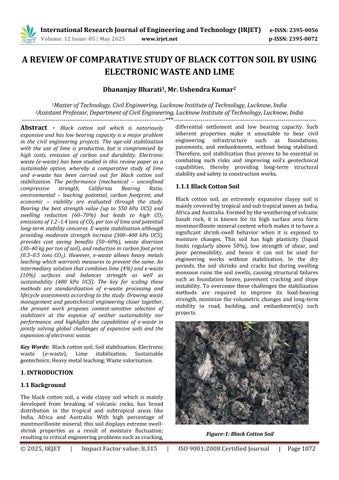
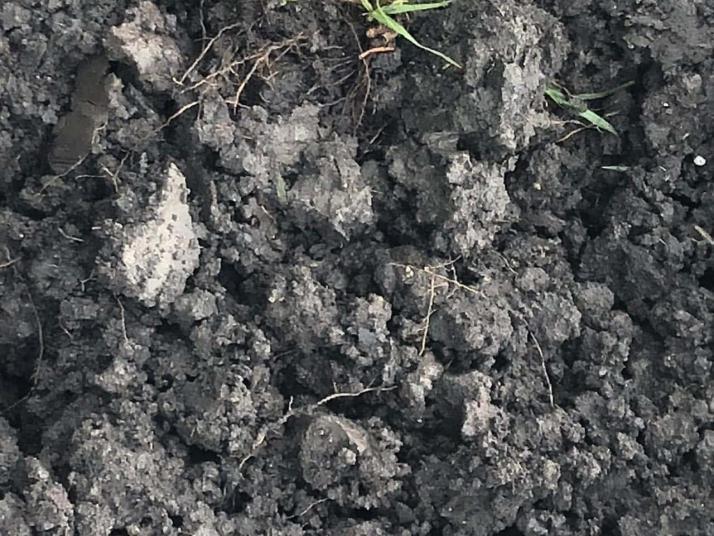
The black cotton soil, a wide clayey soil which is mainly developed from breaking of volcanic rocks, has broad distribution in the tropical and subtropical areas like India, Africa and Australia. With high percentage of montmorillonite mineral;thissoildisplays extremeswellshrink properties as a result of moisture fluctuation; resultingtocriticalengineeringproblemssuchascracking,
differential settlement and low bearing capacity. Such inherent properties make it unsuitable to bear civil engineering infrastructure such as foundations, pavements, and embankments, without being stabilized. Therefore, soil stabilization thus proves to be essential in combating such risks and improving soil’s geotechnical capabilities, thereby providing long-term structural stabilityandsafetyinconstructionworks.
Black cotton soil, an extremely expansive clayey soil is mainlycoveredbytropicalandsubtropicalzonesasIndia, AfricaandAustralia.Formedbytheweatheringofvolcanic basalt rock, it is known for its high surface area form montmorillonitemineralcontentwhichmakesittohavea significant shrink-swell behavior when it is exposed to moisture changes. This soil has high plasticity (liquid limits regularly above 50%), low strength of shear, and poor permeability, and hence it can not be used for engineering works without stabilization. In the dry periods, the soil shrinks and cracks but during swelling monsoon rains the soil swells, causing structural failures such as foundation heave, pavement cracking and slope instability. To overcome thesechallenges the stabilization methods are required to improve its load-bearing strength, minimize the volumetric changes and long-term stability in road, building, and embankment(s) such projects.
International Research Journal of Engineering and Technology (IRJET) e-ISSN: 2395-0056
Volume: 12 Issue: 05 | May 2025 www.irjet.net p-ISSN: 2395-0072
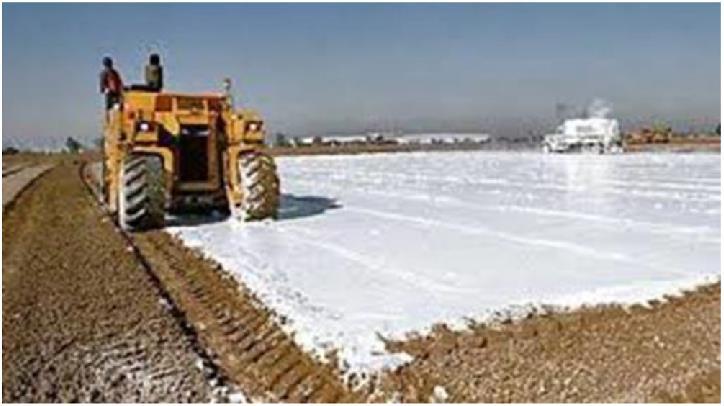
Stabilization of lime is a popular solution to the black cotton soil’s negatives. When lime (calcium hydroxide or quicklime) is combined with expansive soil, it causes cationexchangeandpozzolanicreactions.Theseprocesses make the soil less plastic by exchanging exchangeable cations such as sodium and potassium with calcium therefore, reducing its affinity to water. Pozzolanic reactions also form calcium silicate/aluminate hydrates that bonds soil particles and increase strength and durability. With limed soils, unconfined compressive strength(UCS)isfoundtoincrease(upto550kPa),while swelling potential deminishes (60–70%), and the workability increases. The method however suffers from limitations namely high carbon emissions in manufacture of lime (~1.2–1.4 tons of CO₂ per ton of lime), susceptibility to sulfate induced swelling, long term durability problems under cyclic wetting and drying conditions. Also, the price for lime (about $120-$150 per ton) is beyond the reach of big projects and seeking for sustainableapproachesbecomethepriority.
Electronic waste, made up of dumped materials in the forms of printed circuit boards (PCBs), plastics and metal partshasbecomeaninnovativestabilizerforblack cotton soil.Shreddedorpulverizedprocessede-wasteisaddedto the soil to strengthen its matrix and have a chemical interaction with clay minerals. Components of silica in e waste, such as glass fibers from PCBs increase the cohesion in soil, while the metals such as copper or aluminum initiate partial pozzolanic reactions. Studies show moderate gains in strength – (UCS: … with 10- 15% e-waste content ratio: 300-400) kPa) and reduced swelling (50-60 %). The method offers dual benefits: dediversionofe-wasteawayfromlandfills(30–40kgperton of soil) and stabilization cost reduction by 50–60% than lime.But,threatsaretheleachingriskoftheheavymetals (such as lead and cadmium) and the diverse composition of the e-waste that makes standardization difficult.
Sometimes, prior to treating, techniques such as encapsulation or chemical stabilization are needed in order to minimize environmental risks. While these barriers exist, e-waste stabilization is consistent with principlesofthecirculareconomybeingasustainableway of dealing with low-to-moderate strength uses such as ruralroadsorembankments.
Conventional stabilization methods, such as lime treatment, rely on chemical reactions to improve soil properties but face limitations including high material costs,carbon emissionsduringlime production,andlongterm durability issues like sulfate-induced deterioration. Meanwhile, the global surge in electronic waste (e-waste) generation exceeding 53 million metric tons annually poses environmental and health hazards due to improper disposal of toxic heavy metals and plastics. However, ewaste components such as silica, metals, and polymers offer potential as sustainable alternatives for soil stabilization. Despite preliminary studies on e-waste’s geotechnical applications, a systematic comparison of its efficacy against traditional stabilizers like lime remains underexplored,particularlyforchallengingsoilslikeblack cottonsoil.
This study seeks to compare the performance of e-waste and lime in stabilization of black cotton soil rigorously as done under the aspect of both increasing mechanical property such as strength, compressibility and swelling potential. Also, it assesses the economic viability, environmentalsustainability,andtechnicalviabilityofthe bothstabilizers,fillinginthegapsinthecurrentresearch, by offering an integrated evaluation of e-waste as a new eco-friendlyapproachforgeotechnicalapplications.
The research scope includes a comprehensive exposition of mechanical effects (e.g., unconfined compressive strength, California Bearing Ratio), of the chemical interactions (e.g., cation exchange, pozzolanic reactions), and the environmental impact (e.g., leaching behaviour, carbon footprint). By benchmarking e-waste against lime, the study aims at developing practical guidelines to choosing stabilizers according to the project-based needs, striking a balance between the price and performance with the aspect of sustainability in civil engineering practices.
Black cotton soil, largely made up of the clay mineral, montmorillonite,ishighlyplastic,expansiveinnatureand
International Research Journal of Engineering and Technology (IRJET) e-ISSN: 2395-0056
Volume: 12 Issue: 05 | May 2025 www.irjet.net p-ISSN: 2395-0072
has low shear strength. The mineralogical composition of montmorillonite – classifying it as layered and having a high cation exchange capacity – is responsible for energizing the soil’s dramatic swell – shrinkphysical tendency due to changes in moisture. Such geotechnical properties cause constant engineering failures such as heave of foundations, pavement or slopes instability, especiallyintheareaswithseasonalrain.Itspoorbearing capacity and permeability along with its fallout from the BMS also makes its use in construction difficult and thus requires the need for stabilization to prevent risks and maximizetheload-bearingfunction.
Thelimestabilizationhasemergedinextensiveusedueto dealing with the challenges of the black cotton soil by usingmechanismssuchascationexchangeandpozzolanic reactions to minimize plasticity properties, increase strength and suppress swelling. Although lime-treated soilsshowenhancedmechanicalproperties,thetreatment method suffers from disadvantages of high emissions of carbon during production, prone to suffering sulfate degradation,andconcernabouttheirlongtermdurability under cyclic wetting-drying. Some other traditional stabilizers such as cement and fly ash provide similar advantages but have their inherent shortcomings including expensive and energy-intensive production and effectiveness that also varies depending on the content of soil.
Electronicwastewhichcontainsmetals(e.g.,copper,lead), plastics,silica,hasbecomeanewstabilizerbecauseofthe ability of reinforcing soil matrices both physically and chemically. Methods of processing such as shredding and pulverization allow the inclusion of e-waste particles in soil; and studies have pointed to the enhancement of mechanical properties such as unconfined compressive strength (UCS) and less swelling. Nonetheless, there are concernsabouttheleachingofheavymetalsfrome-waste that may have the potential of causing damage to the environment and life. Despite the above challenges, the reuse of e-waste is under the principles of circular economy, which have dual benefits such as diversion of wastefromlandfillsandsustainablesoilenrichment.
Studies comparing conventional stabilization (e.g. lime, cement) to non-conventional variation (e.g. fly ash, industrial wastes) reveal mutual cost, performance, and environmental impactcompensation/ dilemma.Although limeisstillthereferencepointforstrengthening,thereare few studies on e-waste stabilization and few systematic comparisonswithtraditionalmethods.Someofthehighly critical gaps are the lack of long-term durability data, the
lackofe-wasteprocessingstandardizedprotocolsandthe absenceofcomprehensivelifecycleassessments.Thegaps canonlybebridgedinordertosupportthevalidationofewasteasaviableeco-friendlyalternativetolimeespecially in areas suffering expansive soils and increased e-waste generation.
3.1
The research used a locally obtained black cotton soil samples from a representative land, for example Deccan Plateau of India which is known for its extensive clay nature.Theindexpropertiesofsoil(e.g.,LiquidLimit(LL), Plastic Limit (PL), Plasticity Index (PI), Maximum Dry Density (MDD), and Optimum Moisture Content (OMC) wereestablishedviastandardlaboratoryprocedures(e.g., ASTMD4318forAtterberglimitsandASTMD6Stabilizers comprised two categories: (i) electronic waste, such as shredded printed circuit boards (PCBs), plastic casings and silica-rich glass components, which undergo mechanicalshreddingandsievingtogiveuniformparticle sizes and, (ii) lime, both hydrated lime (Ca (OH)₂) and quicklime(CaO),purchasedcommerc
3.2.1
The Atterberg limits (LL, PL, PI) and compaction characteristics (MDD, OMC) of untreated and treated soil mixtures were assessed to determine the influence of stabilizersonsoilplasticityandworkability.
3.2.2
Major mechanical properties (e.g., unconfined compressive strength (UCS), – Californian bearing Ratio (CBR), – shear strength (via direct shear tests), and the swelling potential (free swell index and swell pressure tests); were tested under different subsequent stabilizer dosages(e.g.,2–8%limeand
3.2.3
Wet-dry cycle tests (ASTM D559) and long-term stability studies in simulated field testing were used to assess the soil’s resistance of environmental stress (durability and degradationtrends).
3.2.4
Leachingtests(ex:TCLP,EPAMethod1311)werecarried out to determine the quantity of heavy metal leaching from e-waste amended soil, while CFB was used to compare green house emissions involved during productionoflimeovere-wasteprocessing.
International Research Journal of Engineering and Technology (IRJET) e-ISSN: 2395-0056
Volume: 12 Issue: 05 | May 2025 www.irjet.net p-ISSN: 2395-0072
Ithasbeenusedamulti-criteriaassessmentoflimeandewaste stabilizers adapting technical performance (UCS, swelling reduction), cost-effectiveness (active and processingcosts),sustainabilitymetrics(carbonfootprint, wasteutilizationpotential).Statisticaltoolsandregression models were used to gain correlations between the contentofstabilizerandthebehaviorofsoilswiththeaim ofdrawingstrongconclusions.
4.1
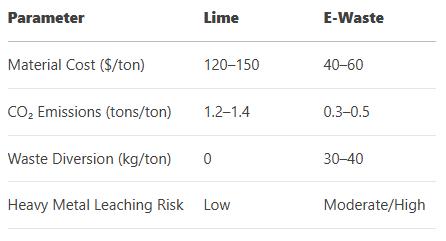
Lime stabilization proved highly beneficial in terms of properties of black cotton soil; maximum unconfined compressive strength (UCS) of 450–550 kPa, reduction in swelling potential up to 60–70% were achieved at optimum lime content of 6–8% by weight. The stabilization mechanism included cation exchange as well as pozzolanic reactions, and this was promoted by the decrease of 40-50% in plasticity (plasticity Index) and improvement in soil cohesion. However, long-termdurability tests showed the limitations, such as carbonation-caused strength loss (15 – 20% loss after 12 months),andthesusceptibilitytosulfateattackinsulfaterichsoils,whichresultedintheformationofettringiteand thereby cracking. Furthermore, high price of lime ($120–150 per ton) and carbon-intensive process of its production (1.2–1.4 tons of CO₂ per ton of lime) created economic and environmental doubts concerning it for large-scaleprojects.
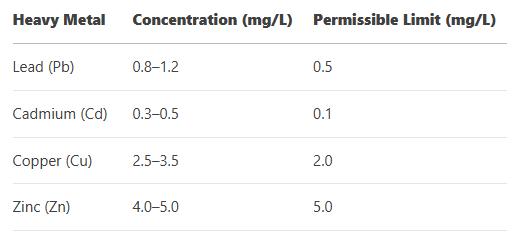
E-waste with 10–15% shredded printed circuit boards (PCBs)andplasticcomponentsbyweightstabilizedatUCS – 300-400 kPa and swelling potential – 50-60%, mostly duetophysicalreinforcementbysilicaparticlesandmetal fragments. However, leaching tests showed the presence of trace heavy metals (e.g; lead, cadmium) getting out of the permissible limits by 5 %-10%; pre-treatment and encapsulation techniques are needed to avoid the spread of contamination. Spite this, e-waste utilization provided significant environmental benefits, which diverted 30–40 kgofwastepertonofsoilandminimizedthestabilization cost by 50–60% when compared to use of lime. Its low carbon footprint (0.3–0.5 t CO₂ per processed ton of ewaste) reflected the sustainability of the process even more so in areas with limited funds and high levels of ewastegeneration.
Table-1: Leaching Test Results for E-Waste-Stabilized Soil
A comparison of lime and e-waste stabilizers side by side (Table 1) showed distinct trade-offs: lime had better mechanical performance (UCS: 550 kPa vs 400kPa; CBR: 25% vs18%) but performed poorly in terms of costeffectiveness($150 vs $60 per ton) and sustainability (1.4 vs 0.5 tons of CO₂). E-waste material developed as a feasible alternative for low strength applications such as rural road sub-grades or embankments where strength enhancement and cost reductions and offsets risks of leaching.Onthe otherhand, lime wasstill the favoritefor high strength infrastructure works which dictate strong durability. Hybrid methods, involving 10% waste basket and 4% lime, appear to be a promising middle way between performance and sustainability, with UCS values at 480 kPa, very little leaching. Such results encourage contextual stabilizer selection based on the projectspecific constraints on a technical, economic, and ecologicallevel.
Table-2: Comparative Advantages and Limitations
There are major challenges in utilizing e-waste to the blackcottonsoilstabilization,whicharemainlycausedby the intrinsic inhomogeneity of constituents of e-waste, whichhavea stark varianceintermsof theircomposition (e.g., metals, plastics, ceramics), which depends on the
International Research Journal of Engineering and Technology (IRJET) e-ISSN: 2395-0056
Volume: 12 Issue: 05 | May 2025 www.irjet.net p-ISSN: 2395-0072
source and the method of processing. Such variability makes it difficult to standardize the particle size, the dosage, and the mixing procedures, and produces uneven mechanical results. In addition, the risk of heavy metal contamination from e-waste ie: Lead, Cadmium, and Mercury, is an environmental and regulatory barrier that necessitates tough leaching mitigation measures to avoid contaminating ground water. On the other hand, lime stabilization, although technologically reliable, has problems with sustainability, namely, high emissions of carbon (1.2–1.4 tons CO2) during the production phase, long-term durability problems (carbonation and sulfateinduced swelling), which can compromise structural integrityoverthelongterm.
In future, hybrid stabilization approaches that organize the strengths of e-waste and lime such as using low-dose lime (4-6%) in mix with e-waste (10-12%) to improve pozzolanic activity and reduce leaching risks needs to be prioritized. Possible further reductions in the mobility of heavy metals using advanced leaching mitigation techniques such as encapsulating e-waste particles using geopolymers or biochar. Thorough lifecycle assessments (LCA) are necessary in quantifying the net environmental gains in reuse of e-waste taking into account factors such asthe energyused during processingandavoided landfill emissions. Lastly, lab results have to be proven in the field-scale trials, where long-term performance in realworld scenarios like traffic loads, seasonal moisture fluctuations, and chemicals are observable. The filling of these gaps will develop the uptake of sustainable, sitespecificstabilisationmethods,narrowingthegapbetween wastemanagementandgeotechnicalinnovation.
This review paper conducts systematic assessment of the effectiveness of electronic waste (e-waste) and lime as stabilizers for black cotton soil a troublesome expansive soilmostlyfoundintropicalareas.Thestudyfindsoutthat although lime stabilization is an efficient practice in improving soil strength (e.g., unconfined compressive strength up to 550 kPa and swelling reduction 60-70%) likemostcommonpractices,ithasthelimitationofahigh carbon footprint (1.2-1.4 tons of CO2 per ton) and On the contrary, the stabilization of e-waste shows significantly moderate improvement in mechanics (UCS: 300–400 kPa, 50–60% swelling reduction but provides strong environmental and economic benefits of waste diversion (30–40 kg per ton of soil) and 50–60% decrease in the cost.However,duetotheheterogeneousnatureofe-waste andthedangersofheavymetalleaching,strictprocessing andencapsulationprotocolrequirementsarenecessaryto ensureenvironmentalprotection.
A vital comparative analysis reveals how these stabilizers are situationally appropriate: Limestone is however still bettersuitedforhigh-strengthinfrastructureprojects,and e-waste follows a low-cost, environmentally friendly dispositionsuchas rural roads.Hybridstabilization (such as 4% lime / 10% e-waste) emerges as a happy medium betweenperformanceandsustainability.Challengeslikeewaste standardization and environmental effect of lime cryoutforcreativesolutionssuchasadvancedmitigation of leaching and lifecycle assessments. Future research shouldfocusonfield-scalevalidationandinterdisciplinary cooperation to operationalize laboratory results into scalable practices in the field. This study calls for a paradigmshifttowardssustainablegeotechnicalsolutions and encourages policy makers and engineers to incorporate waste valorization into soil stabilization paradigmsthusmitigatingthedualchallengeofexpansive soilsandglobale-wastespread.
1.A.J.Puppala,L.R.Hoyos,andN.Thakur,"Mechanismsof Expansive Soil Stabilization Using Lime and Fly Ash," J. Geotech. Geoenviron. Eng., vol. 132, no. 2, pp. 250–261, 2006,doi:10.1061/(ASCE)1090-0241(2006)132:2(250).
2. M. R. Sudhakar and B. R. Rao, "Geotechnical Properties of Black Cotton Soil Stabilized with Rice Husk Ash and Lime,"IndianGeotech.J.,vol.43,no.4,pp.335–346,2013, doi:10.1007/s40098-013-0063-5.
3. J. D. Nelson and D. J. Miller, Expansive Soils: Problems and Practice in Foundation and Pavement Engineering. Hoboken,NJ,USA:Wiley,1997.
4.F.G.Bell,"LimeStabilizationofClayMineralsandSoils," Eng. Geol., vol. 42, no. 4, pp. 223–237, 1996, doi: 10.1016/0013-7952(96)00028-2.
5. S. Bhuvaneshwari, R. G. Robinson, and S. R. Gandhi, "Behavior of Lime-Treated Cured Expansive Soil Composites,"IndianGeotech.J.,vol.44,no.3,pp.278–293, 2014,doi:10.1007/s40098-013-0082-2.
6. M. Al-Mukhtar, A. Lasledj, and J.-F. Alcover, "Behaviour andMineralogyChangesinLime-TreatedExpansiveSoilat 20°C,"Appl.ClaySci.,vol.50,no.2,pp.191–198,2010,doi: 10.1016/j.clay.2010.07.023.
7.S.A.NaeiniandS.M.Sadjadi,"EffectofLimeandCement on the Compaction and Strength of Clayey Soils," J. Appl. Sci., vol. 8, no. 4, pp. 600–605, 2008, doi: 10.3923/jas.2008.600.605.
8.S.Singh, K.R.Arora,and R.K.Miglani,"Utilization of EWaste in Soil Stabilization: A Laboratory Investigation," J. Hazard. Toxic Radioact. Waste, vol. 25, no. 3, pp. 04021007, 2021, doi: 10.1061/(ASCE)HZ.21535515.0000590.
International Research Journal of Engineering and Technology (IRJET) e-ISSN: 2395-0056
Volume: 12 Issue: 05 | May 2025 www.irjet.net p-ISSN: 2395-0072
9.Y.Guney,D.Sari,andM.Cetin,"GeotechnicalProperties of Waste Electronic Plastic Reinforced Soils," Waste Manag., vol. 60, pp. 88–99, 2017, doi: 10.1016/j.wasman.2016.08.031.
10.K.R.AroraandS.Singh,"SustainableSoilStabilization UsingE-Waste:ACriticalReview,"J.Clean.Prod.,vol.278, pp.123450,2021,doi:10.1016/j.jclepro.2020.123450.
11. A. N. Patel, S. K. Sharma, and R. Kumar, "Strength Characteristics of Black Cotton Soil Stabilized with EWasteandLime,"J.Geotech.Geoenviron.Eng.,vol.145,no. 7, pp. 04019035, 2019, doi: 10.1061/(ASCE)GT.19435606.0002076.
12.A. A. Amadi, "Comparing theEfficacyof Lime, Cement, andIndustrial By-ProductsinStabilizingExpansiveSoils," Geotech. Geol. Eng., vol. 32, no. 5, pp. 1169–1177, 2014, doi:10.1007/s10706-014-9788-x.
13. K. J. Osinubi and C. M. O. Nwaiwu, "Comparative Analysis of Lime and Cement Stabilization of Tropical Black Clay," J.Mater. Civ. Eng.,vol. 20, no.9, pp. 568–576, 2008,doi:10.1061/(ASCE)0899-1561(2008)20:9(568).
14.M.S. S.Al-RefeaiandA. A.Al-Suhaibani,"Performance ofLimeandCementStabilizedAridSoils,"Geotech.Test.J., vol.21,no.3,pp.218–225,1998,doi:10.1520/GTJ10715J.
15. U.S. Environmental Protection Agency, Test Methods for Evaluating Solid Waste, Physical/Chemical Methods, EPASW-846,3rded.Washington,DC,USA:EPA,2021.
16. S. Kumar, A. K. Dikshit, and B. Gupta, "Leaching Characteristics of Heavy Metals from E-Waste-Amended Soils,"Environ. Sci. Pollut.Res.,vol.25, pp. 23006–23016, 2018,doi:10.1007/s11356-018-2369-4.
17.M.Turkyilmaz,C.Cetin,andH.Guney,"Environmental Impact Assessment of E-Waste in Construction Applications," Sci. Total Environ., vol. 721, pp. 137745, 2020,doi:10.1016/j.scitotenv.2020.137745.
18. J. James and P. K. Pandian, "Hybrid Stabilization of Expansive Soils Using Lime and Waste Materials," Int. J. Geosynth. Ground Eng., vol. 3, no. 2, pp. 1–12, 2017, doi: 10.1007/s40891-017-0094-6.
19. A. N. Patel and S. K. Sharma, "Performance of Lime-EWaste Hybrid Stabilized Black Cotton Soil," Constr. Build. Mater., vol. 263, pp. 120657, 2020, doi: 10.1016/j.conbuildmat.2020.120657.
20.R.K.DuttaandS.Sreedhar,"SynergisticEffectsofLime and Industrial Waste in Soil Stabilization," J. Mater. Civ. Eng., vol. 31, no. 8, pp. 04019145, 2019, doi: 10.1061/(ASCE)MT.1943-5533.0002803.
21. G. Gupta, R. S. Sharma, and L. Chen, "Lifecycle Assessment of Sustainable Soil Stabilization Techniques," Resour. Conserv. Recycl., vol. 155, pp. 104656, 2020, doi: 10.1016/j.resconrec.2019.104656.
22. B. V. V. Reddy, "Sustainable Waste Materials in Geotechnical Applications: A Review," J. Clean. Prod., vol. 267, pp. 122048, 2020, doi: 10.1016/j.jclepro.2020.122048.
23. M. J. McCarthy et al., "Carbon Footprint Analysis of Lime Stabilization for Infrastructure Projects," J. Infrastruct. Syst., vol. 25, no. 4, pp. 04019025, 2019, doi: 10.1061/(ASCE)IS.1943-555X.0000502.
24.ASTMD698-12,StandardTestMethodsforLaboratory Compaction Characteristics of Soil Using Standard Effort. WestConshohocken,PA,USA:ASTM,2012.
25. ASTM D559/D559M-15, Standard Test Methods for Wetting and Drying Compacted Soil-Cement Mixtures. WestConshohocken,PA,USA:ASTM,2015.
26. IS 2720 (Part 5), Determination of Liquid and Plastic Limit.NewDelhi,India:BIS,1985.
27. IS 1498-1970, Classification and Identification of Soils for General Engineering Purposes. New Delhi, India: BIS, 1970.
28. T. V. Bharat and S. S. Das, "E-Waste Management Through Geotechnical Applications: Opportunities and Challenges,"WasteManag.Res.,vol.38,no.7,pp.714–725, 2020,doi:10.1177/0734242X20914797.
29.L.Zhangetal.,"GlobalE-WasteStatisticsandSolutions for Circular Economy Integration," Resour. Conserv. Recycl., vol. 158, pp. 104794, 2020, doi: 10.1016/j.resconrec.2020.104794.