
International Research Journal of Engineering and Technology (IRJET) e-ISSN: 2395-0056
Volume: 12 Issue: 06 | Jun 2025 www.irjet.net p-ISSN: 2395-0072
International Research Journal of Engineering and Technology (IRJET) e-ISSN: 2395-0056
Volume: 12 Issue: 06 | Jun 2025 www.irjet.net p-ISSN: 2395-0072
Sri Nivas Singh1, Mrs. Arifa Khan2
1Master of Technology, Computer Science and Engineering, Lucknow Institute of Technology, Lucknow, India
2Assistant Professor, Department of Computer Science and Engineering, Lucknow Institute of Technology, Lucknow, India
Abstract - This trend of sustainable development in the world has placed more pressure on the effective utilization of renewable power which is mainly sourced on solar, wind and hydro. Accurate prediction of renewable generation is critical to the stability of the grid, optimal energy storage and cost transgression of operations. However, the inherent variability and non-continuity of these sources makes it difficult to carry out conventional forecasting algorithms. In the recent past, the role played by Artificial Intelligence (AI) in eliminating such challenges has been resounding due to the utilization of advanced data-driven techniques. The current review is a comparative analysis of some AI-based forecasting systems, including machine learning systemsSupport Vector Machines, Random Forests - and deep learning systems, including Artificial Neural Networks, Convolutional Neural Networks and Long Short-Term Memory networks. The analysis evaluates their accuracy in a wide range of forecasting horizons and energy types of interest and brings to attention key performance indicators that include RMSE and MAE. The outcomes characterize the personal advantages, weaknesses and ideal uses of the wellknown methods and thus confirm the heightened potential of AI in increasing the precision and reliability of renewable energies forecasting in addition to serving as an instructional indication on future study and implementation.
Key Words: ArtificialIntelligence(AI), RenewableEnergy Forecasting, Machine Learning, Deep Learning, Hybrid Models,SmartGridIntegration
1.INTRODUCTION
1.1 Background
It has been constantly observed that renewable energy is one of the key action areas in terms of climate change reduction and reliance on fossil fuels. Solar, wind, and hydro-based technologies have resulted in widespread attention due to their similar benefits to the environment and natural sustainability (REN21, 2023; IEA, 2022). However the nature of these sources which are variable and intermittent in nature, provides challenges to grid integration. Renewable sources of electricity generation are extremely vulnerable to the variable nature of phenomenalikethesolarirradianceandwindvelocityand
thusmaketheprocessofoperatingthepowersystemsand long-termplanningratherdifficult(Hong,PinsonandFan, 2014).
Grid stability, economic dispatch and economic energy storage deployments thus require accurate prediction of renewable-energygeneration.Duetoinaccurateforecasts, theuseofbackupsystemsdrivenbyfossilfuelsislikelyto be enhanced, and thus sustainability goals are at risk (Mandal, 2012; Falvo, Zaninelli and Lamedica, 2016). Therefore, there is an immediate need of accurate and flexible forecasting models which would be able to cope withthevariabilityofrenewableproduction.
The peculiarities of renewable energy data rarely prevail in conventional prediction techniques, which mostly include statistical models, as well as time series forecasting, such as ARIMA (Taylor, 2010). The common methods are usually based on the assumption of linearity andstationarityandhenceareinappropriateinthehighly fluctuating and non-linear nature of data specific to renewablesources(Raza,Khosravi,&Nahavandi,2020).
One of the alternatives that have risen is the Artificial Intelligence (AI), due to its ability to represent a complex non-linearrelationshipandtolearnwithlargeamountsof data. Support Vector Machines (SVM), Random Forests (RF) and ensemble methods are examples of machine learning tools that have demonstrated a better performance in forecasting performance in various time horizons. Similarly, the structures of deep-learning networks namely, Artificial Neural Networks (ANN), Convolutional Neural Networks (CNN), and Long ShortTerm Memory (LSTM) are invariably better at accommodating influences of time and hierarchies (Ahmed & Khalid, 2019; Yagli, Ozdemir, & Teke, 2021). Thesemodelsareadhoc,accommodating,andcanbeable tocreatethemselveswhenevermoredataispresent.
Morehigh-resolutionweatherandenergysensorsarealso deployed around the globe, also being possible thanks to the spread of Internet of Things (IoT) devices and smartgrid technologies, which only adds to the value of AI in forecasting (Riahi et al., 2022). These models together
International Research Journal of Engineering and Technology (IRJET) e-ISSN: 2395-0056
Volume: 12 Issue: 06 | Jun 2025 www.irjet.net p-ISSN: 2395-0072
with convenient open-source frameworks and the improvement of computational efficiency, it is she now possible to apply the models at scale within real-time prediction,andgrid-controlapplications.
Thisreviewaimsatofferingacomparativeanalysisofthe artificial intelligence (AI) driven forecasting methods of renewable energy sources with thespecial focus on solar, wind,andhydroelectricenergyproduction.Intheanalysis, the effectiveness of a number of machine learning and deep learning techniques are assessed based on several factors that include criterion predictive accuracy, robustness, scalability, and computational efficiency. The mostsignificantmetrics,whichincludeRootMeanSquare Error (RMSE), Mean Absolute Error (MAE), and Mean Absolute Percentage Error (MAPE) are adopted to gauge performance. Having singled out specific advantages and disadvantages of each method, the paper talks about how they apply in practice within different time horizons of forecastandwithindifferentformsofenergy.And,atlast, the paper defines the current gaps in the research and proposes the future work which is expected to enhance boththeaccuracyoftheforecastsaswellasthereliability of the work and help the researchers, engineers, and policymakers support the wider use of the AI-driven energyforecastingsolutions.
The well-known classification of the renewable energy technologiesseparatesthemintosolar,wind,hydropower, and biomass systems which are distinguished by their peculiarcharacteristicsandrequirementstobeforecasted. Most notable solar energy systems such as photovoltaic (PV) modules immediately convert the sunlight that falls on them into electrons, and such systems tend to be radically sensitive to solar irradiance and atmosphererelatedconditions(Mandal,2012).Andinthecaseofwind energy,the wind power is proportional to the cube of the wind speed: it is incomparably sensitive to the variations invelocity,withitsturbineinstallationstakingthe energy ofthewind(Ahmed&Khalid,2019).Hydropowerusesthe energyavailableinthewatereitherinmotionorinadrop to generate electricity and thus requires a competent estimation of the flow of water obstructions through the damsandoftheseasonalpluvialcycles(Riahietal.,2022). The biomass energy sectors also rely on organic matters using them as fuel and their projections are based on the supply chain factors such as the availability of feedstock, agricultural cycles which vary according to seasons (REN21, 2023). These energy sources are collectively different with regards to their predictabilities, spatial
scales and they are sensitive to changes in the environment which means that they need special methodologiesinforecasting.
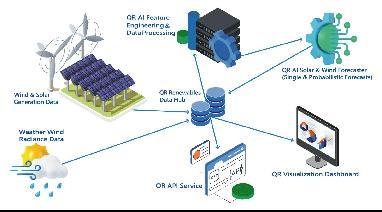
Accuracy of the forecasts of the renewable production depends upon factors that do differ depending on type of energy.Inthecaseofsolarpower,itiscrucialtohavesolar irradiance,airtemperature,cloudcoverage,humidity,and panel orientation as its predictors (Zhang et al., 2022). Wind power forecast also addresses wind velocity, wind direction, the atmospheric pressure, surrounding temperature brought about by thermal activity or energy level of turbulence at various heights (Yagli, Ozdemir & Teke, 2021). The forecasts of hydropower depend on the amount of water inflows, the level of precipitation, the level of snowmelting and rates of discharge of the reservoir (Falvo, Zaninelli & Lamedica, 2016). Such environmental and meteorological parameters are normally acquired using ground-based sensors, satellite imagesorinnumericalweatherforecasting-typemodels.
In addition to weather information, such power outputs that are measured by Supervisory Control and Data Acquisition (SCADA) systems provide real time historical observations, which are essential in machine-learning prediction-based algorithms. However, issues of data quality, data completeness and data resolution in time persist to be of key interest in practical uses of data forecasting. Missing values, noise reduction and data normalization are thus the main preprocessing activities needed to ensure sound model inputs (Hong, Pinson & Fan,2014).
The prediction can be classified as short-term, mediumterm and long-term in a broad manner in terms of prediction in time and each of these has specific operations and planning needs in them. Short term forecasting, sometimes as short as a few minutes and in most cases a few hours, is vital as a part of real time grid
International Research Journal of Engineering and Technology (IRJET) e-ISSN: 2395-0056
Volume: 12 Issue: 06 | Jun 2025 www.irjet.net p-ISSN: 2395-0072
balancing and more so frequency regulation as well as short term energy trading. The respective artificial intelligence(AI) systems shouldbehighlysensitive to the changes in the weather and fluctuations in data in realtime.
Day-ahead market activities, maintenance scheduling and storage optimization are assisted by medium-term forecasting which runs several hours to several days ahead.Thishorizonnotonlyenjoyshistoricaltrends,butit alsoincorporatesnewweatherpredictionsandtendstobe in the form of hybrid models which ranges between the useofstatisticalmethodsandmachine-learningmethods.
Long term prediction which goes to weeks, months and yearsisthemostcrucialintheinvestmentplanning,policy analysis and capacity addition. At that, being heavily subjected to high uncertainty levels due to the changing climatic patterns, changes in energy-related policies, and other economicand policytrends,theuseofAI models in this area is such that they usually incorporate results pertinent to both the economic and policy trends and the seasonal ones. They normally take long training data and areusuallylessaccuratethanshorttermpredictions.
Despite the developments of the artificial intelligence and data-collection techniques, there still remain significant barriers to the renewable-energy prediction. The main problemisthevariabilityanduncertaintyespeciallyinthe solar and wind energies. This is because atmospheric turbulence, cloud movement, and wind shear have the capacitytotriggerinstantaneousvariationstooccurinthe energy production, making the process of forecasting ratherchallenging(Zhangetal.,2022).
The quality of data is another great obstacle. Unhealthy data,incorrectsensorperformance,inconsistentsampling ratemakesthequalityofthetrainingdatathatisprovided to AI less reliable. Also, there is no uniform data representation and uncoordinated benchmarks across geographical locations, which discourage the generalizationandcomparisonsofthemodels(Riahietal., 2022).Although pre-processingisnotoutofthe question, it can also introduce biasness or information loss when carriedoutinacarelessway(Raza,Khosravi&Nahavandi, 2020).
Geography and ecology also play a very determining role. The local conditions that influence wind and solar irradiance at single locations are terrain complexity, altitude, vegetation and land-use patterns. In the case of hydropower, additional difficulties (forecasting tasks are even more complicated) are presented by sedimentation, evaporation, and delay times of inflow. The given sitespecific peculiarities make it impossible to develop some
commonly applicable forecasting models (Falvo, Zaninelli &Lamedica,2016).
The usage of Artificial Intelligence (AI) has nowadays transformed the accuracy as well as reliability of renewable-energy prediction. Unlike the traditional methodologies that limit models to linear structures or deterministic scripts, AI-based solutions have a datadriven, adaptive base and can characterize the non-linear relationship between the weather factors and renewables hybridpowergeneration.ThedifferentAItechniquesmay beclassifiedintofourmajor categories:machinelearning, deep learning, hybrid/ensemble frameworks and emergent modalities. All of the categories have their own advantages and drawbacks, as well as scenarios where it canbeused.
The ML algorithms are especially effective with the criticism of the historical energies sets and the identificationofthetrendsinthemultivariatetimeseries. These tools have been very commonly utilized in the prediction of solar off-take, wind speed as well as electricitygenerationatvarioustimescales.
SupportVectorMachines(SVM)arearchitecturesthatare both supervised machine learning structures and were created in order to classify and to regress. These models, intheareaofenergyforecasting,haveoftenbeenreferred to because of their flexibility to the large number of feature associations and non-linear associations that can be accommodated due to the kernel functions. According to the report by Raza, Khosravi, and Nahavandi (2020), SVMs have formed a highly accurate predictive tool of
International Research Journal of Engineering and Technology (IRJET) e-ISSN: 2395-0056
Volume: 12 Issue: 06 | Jun 2025 www.irjet.net p-ISSN: 2395-0072
short-term solar power forecasting mainly when combined with suitable feature selection and preprocessed weather care. However SVM performance depends on the choice of hyperparameters and kernel typeandSVMisgenerallyunabletoscaletolargedatasets verywell.
Random Forest (RF) is a kind of ensemble learning method which builds numerous decision trees, and combines their results to improve performance and decrease overfitting. RF systems are very robust to noisy datasets, have the ability to describe complex and nonlinearpatternsanddonotrequireheavyparametertuning efforts. Ahmed and Khalid (2019) posit that RF models tend to outperform most of the linear ones in the predictionofwind-basedpower-plantsduetotheirrather thorough representation of dynamic relationships betweenvariousvaluesincludingthoseofthewindspeed, air temperatures, and barometric pressure. In addition, RFs create feature-importance lists, thus enhancing the ability of the model in the visualization of results. However, they could have trouble on extrapolation out of thetrainingdataset.
Thek-NearestNeighbors(k-NN)isthealgorithminwhich the output is estimated based on looking at the value of the nearest frequenciesofthe'k'like-minded casesinthe training set. Being the method of instance-based learning, itisquitesimpleandefficientinthecaseswheredatasets havestronglocal patterns. Thek-NN in renewableenergy forecasting has been used to estimate solar irradiance in the forward anticipation and also geared toward estimating short-term on-load foretelling with relative success (Hong, Pinson & Fan, 2014). Its primary weaknessesarerelatedtoitscomputationalinefficiencyin thecaseoflargeamountsof data present,vulnerability to the preselective choice of the value of the k and the distancemeasure.
The Deep-learning methods, especially, those relying on thearchitecturesofthemulti-plelayeredneuralnetworks have been turned into powerful tools in modeling time dependency and spatial pattern within the renewable energy data. Such methods do not have to perform laborintensive manual feature engineering because it happens automatically on unprocessed inputs via automatic identificationofhierarchicalfeatures.
Artificial neural networks (ANN) have their structure basedonthestructuralprinciplesofthehumanbrainand
consist of the interconnected neurons organized in successively arranged layers. Due to their ability to approximate any continuous function they have become invaluable instruments in the field of solar and wind power forecasting. As explained by Yagli, Ozdemir and Teke(2021),appropriatelytrainedfeedforwardANNscan be effectively relied upon to capture the nonlinear connection towards the meteorological factors and solar power production. However, such models require a lot of data to train and have high risk of overfitting unless strictlyregularized.
Convolutional Neural Networks(CNN),firstformulated to identify images, have thus been used in the subject of renewable-energy forecasting, through the ability to capture spatial-temporal features. Such networks could usethesatellitepictures,cloud-vision,andweathercharts to increase the accuracy of the pre-damages of the solar radiation (Zhang et al., 2022). Due to their ability to identify the trends at the local level of multidimensional data, CNNs are quite appropriate in the addition of geoIDE to forecasting models. The drawback with them, though, is that they normally require significant computingresourcesandlarge,labeleddatabases.
Recurrent neural network (RNN) specifically models sequences and they have been reported to be remarkably efficient in making time-series predictions. However, the classicRNNsfacetheproblemofvanishinggradientwhich limitsitslong-termdependencycapacity. TheLong ShortTerm Memory (LSTM) networks improve this problem in thattheyusememorycellsthatmaintaininformationover a long period (Zhang et al., 2022). Practically, LSTMs proved to be rather accurate in the process of predicting wind speed and solar generation, particularly in cases whenthereisavailablereal-timedataflow.Theyallownot only learning short-term fluctuations but also long-term trends, determining the fact that they are quite appropriate in performing short- and medium-term forecastingtasks.
Hybrid and ensemble models combine two or more artificial-intelligencemethodsinordertodrawbenefitsof each methodological approach and weaken their corresponding flaws. As an example, adding an artificial neuralnetworktosuchstatisticalprocedureasARIMAcan enhance understandability of the analysis results and accuracyofpredictionsatthesametime(Ahmed&Khalid, 2019). Bagging and boosting ensemble strategies improves the overall performance, which is achieved by combiningthepredictionsofthemanybaselearners.Riahi
International Research Journal of Engineering and Technology (IRJET) e-ISSN: 2395-0056
Volume: 12 Issue: 06 | Jun 2025 www.irjet.net p-ISSN: 2395-0072
et al. (2022) indicate that hybrid models are, in most cases, more robust, at scale, and generalize better, compared to standalone ones, particularly in highly variable settings. However, the increased complexity of structuresinhybridsystemsprolongsthetrainingprocess and causes additional requirements in terms of maintenance.
Accelerationintheareaofartificialintelligenceduringthe last few years gave rise to new artificial intelligence approachesthatachieverenewableenergyforecasts,such reinforcement learning, transformer-based architectures, explainable AI (XAI). Training of sequential decisions is a technique applied on the learning of reinforcement learning, which can be used in the real-time energy dispatchaswellasinadaptiveforecasting.Despitethefact that it is relatively at an initial stage, reinforcement learning has shown positive results on dynamic energy environment(Riahietal.,2022).
Transformermodelswereinitiallyproposedtothenatural language processing at which they have gained a lot of attention due to theirabilitytorepresentlong-rangetime series dependencies. Unlike recurrent neural networks, transformersuseattentionmechanism,whichmakesthem process in parallel and are more scalable. Face value investigations show that transformer models can outperformLSTMduringtheforecastofcertainrenewable energyscenarios(Zhangetal.,2022).
Duringthepasttwodecadesthefieldofrenewableenergy forecastinghasexperiencedsignificantgrowthfueledboth bytheincreaseduseofvariableenergysourcesandbythe development of more sophisticated artificial-intelligence techniques. The literature has focused quite broadly on investigating, developing and adopting a wide variety of the AI methods to predict solar, wind and hydro generation. The discussion that will appear next will provide systematic literature review and it will be structured not only by main AI paradigm but also by the sphereofitsuse.
4.1.1
Support Vector Machines (SVM) have been in practical applicationinthefieldofshort-termsolarandwindpower prediction over several years and the most substantial reasonithasfoundapplicationinthisfieldisthefactthat it attains a great deal of effectiveness in high dimensional and non-trivial settings. After an extensive survey of over 100 related literature on the topic, Raza, Khosravi, and Nahavandi (2020) have concluded that SVM consistently
performs with high levels of accuracy when it has been used to predict solar radiation and wind speed, and in particular, when judiciously paired with the data normalization and feature selection processes. It is important to mention that this is done because of the use of Radial Basis Function (RBF) kernels that allowed SVM to learn the complex forms of non-linearity that are presentinmeteorologicalinputs.However,whenwegoto really big data, performance degrades significantly and this is due to the high computational overhead costs and thehighmemorydemands.
Random Forest (RF) became a novelty within modern classification due to the common simplicity, straightforwardness, and tolerance to noise. In analogy of anevaluationexercise,theauthorsofthisstudyfoundout that RF was always superior when used to predict wind power (in terms of Root Mean Square Error (RMSE) comparedtothetraditionalmodelsofregressions(Ahmed and Khalid, 2019). Assigning relative values to attributes, the algorithm enables one to define environmental parametersthathavethegreatestimpactonfluctuationof thepower.Inspiteofrelativeeaseofimplementation,the factthatthemethodreliesonrandomnesswhentraininga model can lead to unpredictable results without carefully tuninghyperparameters.
Among a relatively large number of solutions which have become popular in the area of short-term solar and wind prediction, the k-Nearest Neighbors (k-NN) algorithm stands out due to its non-parametric nature and overall simplicity.Hong,Pinson,andFan(2014)madeitclearthat k-NN could provide competitive performance even throughout the Global Energy Forecasting Competition especially in load and wind power. However, the number of computational overheads brought in by the reliance on memory-based search in the algorithm limits its use in a real-timescenariosincetheaccuracyisheavilydependent onthechoiceofthevalueofkandthedistancemeasure.
4.2.1
ANN have been successively used previously to make forecastsofvariouskindsofenergyduetotheircapability of modeling complex, nonlinear input-output relations. Still, ANN models, and, in particular, multilayer perceptrons (MLPs), can be successfully used in solar radiation forecasting purposes with well-prepared large datasets (Yagli, Ozdemir, and Teke 2021). However, they require a delicate tuning to avoid overfitting, and in general fail to capture long-term dependencies, unless combinedwithrecurrentarchitecture.
International Research Journal of Engineering and Technology (IRJET) e-ISSN: 2395-0056
Volume: 12 Issue: 06 | Jun 2025 www.irjet.net p-ISSN: 2395-0072
Convolutional neural networks (CNN) that have initially been used solely in the context of image processing, are now used in other realms such as spatiotemporal energy forecasting. Zhang et al. (2022) used CNNs to infer cloud cover and irradiance using satellite imagery and showed that the models achieved a higher accuracy than the traditional regression and the artificial neural networks models. Capturing local spatial patterns in the weather maps and correlating the same with temporal series data therefore produces a strong basis of a hybrid forecasting framework that can be constructed using CNN-based solutions.
A special good feature of RNNs (or their more sophisticated variant, LSTM networks) is that it leads to forecasting renewable energy, as they are capable of working with sequential data and remembering past trends. As explained by Zhang et al.(2022),LSTM models outperformed ANN and SVM models in terms of the wind andsolarforecastingcapacitiesof multiple timehorizons. The paper has also emphasized the ability of LSTM to input data that is missing or noisy, which makes it more applied in practice. Even though, long training times and computational intensiveness have remained an issue of greatconcern.
Recently several researchers have unified disparate artificial intelligence (AI) modules into a hybrid or composite architecture to make forecasts. These are meant to improve the performance in terms of accuracy and stability. Ahmed and Khalid (2019) have analyzed works where ARIMA was combined with ANN in order to obtainatthesametimelinearandnon-lineardynamicsin time series. The deployment of ensemble methods i.e., bagging and boosting has been similar in the sense of providing a reduction in variance and enhancement of generalization. Riahi et al. (2022) also confirmed the fact that a hybrid model based on CNN and LSTM yields greater performance, in terms of Mean Absolute Error (MAE), in forecasting solar energy. Such methods are particularly good at describing complex states of interdependence at a variety of different time scales but oftenarelessamenabletointerpretationandoftenrequire carefulintegrationintoasystem.
During the last few years, new artificial intelligence (AI) approaches emerged in the literature that involve better
performance accompanied by increased interpretability. Transformer-based models Long-range time-series forecasting Transformer-based models that had initially been made with natural language processing in mind proved to have a lot of promise in long-range time-series forecasting. According to Zhang et al. (2022), the transformers seemed to be performing better than the longshort-termmemory(LSTM)networkswhenitcomes totheuseofsolarenergyforecasting,especiallywhenthey are trained using high-resolution weather data. Another area that is rapidly developing is reinforcement learning, and scientists analyze its possible role in the adaptive forecastingandgridcontrol(Riahietal.,2022).Moreover, explainable artificial intelligence (XAI) is still on the rise due to the increasing desire to make the complex deep learning models more explainable; Raza, Khosravi, and Nahavandi (2020) considered SHAP values and LIME to interpret model predictions in solar radiation forecasting, whichsuggestsbuildingpropertrustandaccountabilityin energy-criticalsystems.
During the last decade, AI-enabled renewable energy prospective systems have evolved spectacularly fast, and as every method now presents a few specific advantages that rely on various special requirements of applications, restrictionsofinformationresources,andtimehorizonsof forecasting,theyshouldpresentacoupleofconsiderations toexaminewhethertheyareapplicabletotheapplication. Comparison of the most impacting AI methods Current discussion has compared the most influential methods on the AI giving importance to assessment criteria, dataset features, and performance observed in various areas of energy. The analysis explains the workings of these systemsinfieldsituatednessbyspellingout thestrengths andtheweaknessesofeachmethod.
The capabilities of artificial intelligence (AI) models in terms of renewable energy forecasting are regularly determined with the help of the set of standardised evaluationmetrics.RootMeanSquareError(RMSE),Mean Absolute Error (MAE), Mean Absolute Percentage Error (MAPE) and the Coefficient of Determination (R 2 ) are someofthemostoftenusedmeasurements.RMSEgathers a squared average of the error of prediction and is especially responsive to vast deviations, which makes it appropriatetothegoalofmeasuringtherobustnessofthe model in the presence of any outliers (Ahmed & Khalid, 2019).Comparedtothis,MAEsimplygivestheaverageof the absolute difference between the actual and the predictedvaluesandiseasytointerpret,mostofthetime, in the real word (Zhang et al., 2022). The ability of MAPE to translate the forecasting errors into percentages can allow making relevant comparison between the datasets thathavedifferentscale.
International Research Journal of Engineering and Technology (IRJET) e-ISSN: 2395-0056
Volume: 12 Issue: 06 | Jun 2025 www.irjet.net p-ISSN: 2395-0072
The quality and atmospheric specificity of data used on model building and evaluation of their performances is a determinant that resolves the morale when forecasting accuracy is considered. Traditionally, the source of data includes the National Renewable Energy Laboratory (NREL), the International Renewable Energy Agency (IRENA),andlocalpowercompanies,thatprovidethepast and current meteorological information and output of the power plants. Examples of common variables being solar irradiance,windspeed,airtemperature,relativehumidity and power output measured by supervisory control and dataacquisition(SCADA)systems.
Temporal resolution is similar (in relation) to the objective of the modelling, as intermediate as 5 minute increments of modern grid management and aggregated to daily or monthly averages of strategic planning and investment appraisal. The common tasks on predictive datasets include missing-value imputation, scaling and noise removal, to ensure homogeneity in dataset and to provide optimal models learning. Other studies also consider feature engineering because of composing new indicatorstoformanewindicator-clearnessindexorwind power density to increase predictive accuracy (Yagli, Ozdemir,&Teke,2021).
A large percentage of literature has been deployed on forecasting accuracy of different artificial intelligence methods in different areas of renewable energy. In the area of solar energy, the LSTM and CNN-based models continue to outperform the classic machine learning models in terms of the ability to reflect the complex temporalandspatialdynamics(Zhangetal.,2022).There havebeenreductionsof20percentinRootMeanSquared Error (RMSE) in LSTM models as compared to ANN models in the prediction of hourly solar output. Random Forest and hybrid ARIMA-ANN are several of the models thatcouldbeusedinthewindenergysectorbecausetheir performance is consistent with the short-term variation andthegeneraltrend(Ahmed&Khalid,2019).
Withinthehydropowersector,fewerAIstudieshavebeen doneowingtothefactthatthemoveofwaterisstableand predictable in nature. However, ANN and SVM models havebeenalreadysuccessfulindailyinflowandreservoir level prediction where they report Mean Absolute Errors (MAE) of less than 10 % (Raza, Khosravi & Nahavandi, 2020). On the whole, the models of deep learning, like LSTMandTransformerarchitecture,arewell-suitedtothe detection of temporal dependencies, whereas ensemble strategies are more stable and robust in the context of heterogeneousdatasets.
Methodologies of forecasting have their strong and weak sides.Modelsthatrelyonsupervision,i.e.SVMandRF,are easytotrainanddonotusuallyrequirealargenumberof computational resources, but their performance is satisfactory with small-to-moderate volumes of data. Additionally, they are more interpretable, which makes them more beneficial to practitioners of the energy management systems (Riahi et al., 2022). However, both models can be faced with the limitations due to largedimensional and time-sequential inputs thus, failing in theirscalability.
Ontheotherhand,thedeeplearningarchitectures,suchas LSTM and CNN, are different since they are characterized byahighoversophisticationofpatternrecognitionandthe capacity to create long-term dependency in large-scale databases. This method is particularly applicable in cases that the data under consideration have a strong level of variability or that it is complex (multivariate). However the closed nature of these architectures, long model trainingtimes,anditsdemandoflargeamountsoflabeled data restrict deployment and create fears about accountability(Zhangetal.,2022).Thehybridmodelsand ensembles can somewhat reduce these constraints as the different algorithms are combined to get the predictive precision set high, but this comes at the cost of increased complexityandtheincreasedmaintenanceneeds.
Application of Artificial Intelligence on renewable-energy forecasting has seen a significant change where the basic statistical algorithm is slowlybeing replaced byadvanced self-learning algorithm. This chapter overviews the key conclusions of a comparative analysis of AI-based forecastingmodels,scansexistenttechnologicalpaths,and evaluates how AI-driven predictions are integrated into themodernenergyinfrastructure,inparticular,intosmart gridsandInternetofThings(IoT)asawhole.
The most widespread result brought back by the existing literature is that the application of AI-based forecasting models highly depends on the type of renewable energy resourcethatisconsideredaswellasthetimeresolutions that are to be met. The performance of Random Forest (RF) and Support Vector Machines (SVM) in conducting short-termpredictionsofsolarandwindpowerisalready satisfying repeatedly, particularly during cases in which the available data shows rather stable trends and low noise (Ahmed & Khalid, 2019). They are computationally efficient: their training is quick, and the interpretation of the generated model can still be high, which makes them optimal to be used in real-time applications with a requirementtoextremlyfastresponse.
International Research Journal of Engineering and Technology (IRJET) e-ISSN: 2395-0056
Volume: 12 Issue: 06 | Jun 2025 www.irjet.net p-ISSN: 2395-0072
On the other hand, the deep neural networks, more specifically the Long Short-Term Memory (LSTM) models andtheConvolutionalNeuralNetworks(CNNs),aremuch better prepared to handle medium- to long-term prospects, as historical context and spatio-temporal diversity cannot be overlooked. With their memory cells, LSTM can store information over a long period of time and, thus, capture intricate dynamics of sequences, which qualifiesthemtomodelwindturbulenceorsolarradiance over several time scales unusually well (Zhang et al., 2022). Similarly, CNNs when inflicted on satellite images, arereliablyuptothemarkinforecastingsolarpotentialat the spatial level (Yagli, Ozdemir & Teke, 2021). Also, a hybrid method that integrates an ARIMA, ANN, and LSTM has also been successful too many times, since it finds a compromise between the short-term responsiveness and sourcesoflong-termtendencies(Riahietal.,2022).
A clear technological shift is underway from traditional machine learning techniques to more advanced deep learning and hybrid models. Initially, simpler models like k-NN and SVM were preferred due to their ease of implementationandminimaldatarequirements.However, as data availability and computational power have increased, the energy sector has embraced more complex architectures capable of handling large volumes of heterogeneousdata(Raza,Khosravi&Nahavandi,2020).
The emergence of transformer-based models, originally developed for natural language processing, is a recent trendthathasbeguninfluencingenergyforecasting.These models have outperformed RNNs and LSTMs in handling long sequences and attention-based learning without recurrent connections, thereby reducing training time while improving accuracy (Zhang et al., 2022). Additionally, Explainable AI (XAI) is gaining traction, offeringtransparencyinpredictionsthroughmethodslike SHAP and LIME, which help operators understand which features drive model decisions critical in high-stakes energy forecasting tasks. Cloud-based AI platforms and AutoML tools are democratizing access to forecasting modelsbyautomatingdatapreprocessing,modeltraining, and hyperparameter tuning, allowing utilities and energy developerstoimplementAIwithoutdeepexpertiseindata science(Riahietal.,2022).
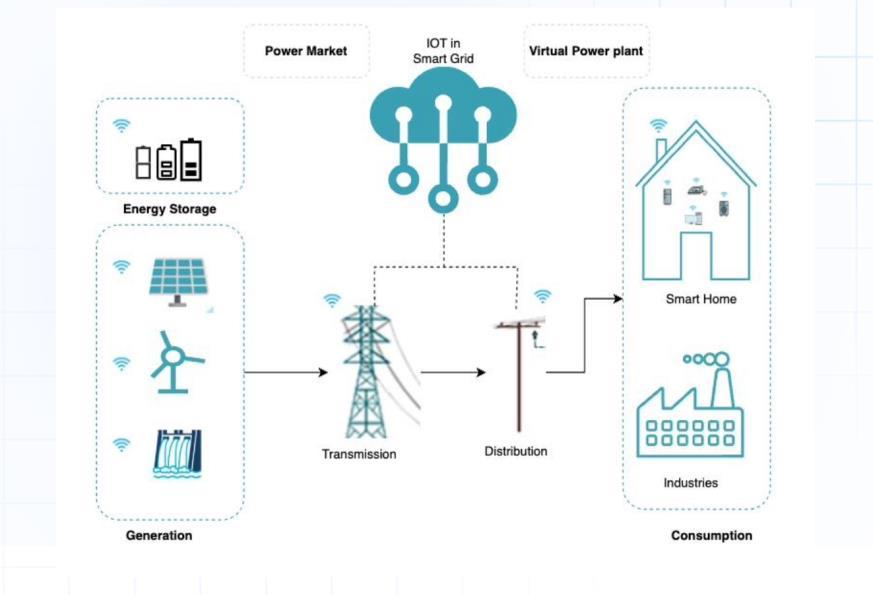
Forecasting systems based on AI are turning out to be essential components of smart grid installations. These matricesrelyonreal-timedatatoensurebalanceofsupply and demand, optimal storage and also reduce use of the fossil-fuel based backup system. It becomes crucial that the load balancing, voltage control and the entry into energy markets due to solar and wind are accurately
forecasted especially in locations with high renewable penetration (Ahmed & Khalid, 2019). The increase in the Internet of Things (IoT) has added this integration by providing data at high resolution provided by the smart meters, weather stations and distributed energy resources. The sensors that are connected with IoT, communicate the current environmental and operational data to cloud computing to be processed by AI models to update the forecast continuously. As an example, predictive load management adopts the LSTM-based predictions to learn when to deploy the energy storage systems or shed the non-essential loads to ease the grid pressureandoperationalexpense(Riahietal.,2022).
The advent of artificial intelligence in an energy forecasting system is an evolutionary step towards the creationofmoreresilientandsmarterwebsitesunderthe energyforecastingsystem,whichismoredependableand data-driven.Thishascreatedaneedtodeveloptheability topredictthesupplyofrenewablesourcesofenergywith high resolution to maintain the stability of the grids, to optimise economical activities related to energy trade techniques and to act as sources of information in the development of policies. Besides enhancing the accuracy on forecasting, AI-based models also enable real-time dynamic energy management by being used alongside smart grid technologies and Internet of Things (IoT) frameworks. With this integration it is possible to preemptively regulate the supply and demand of energy, so that distributed energy resources can be effectively integrated, and the dependence on fossil-fuel-based peak electricgeneratingplantscanbereduced.
The full potentials of AI in this field, data quality issues, issues related to the interpretability of models, computational scaling issues, and compatibility with the existing infrastructure needs to be managed. Interdisciplinarycooperationamongenergypractitioners, datascientists,andpolicymakerswillbekeyininnovation and speeding up deployment. The forecasting using artificial intelligence is one of the foundations of the transition to the future of sustainable and intelligent energy. The continuous investigations, innovation, and practice of the given technologies hold the potential of increasingtheefficiencyofrenewableenergysystemsand make an important contribution to the global war against climatechange.
1. Ahmed, A., & Khalid, M. (2019). A review on the selected applications of forecasting models in renewable power systems. Renewable and Sustainable Energy Reviews, 100, 9–21. https://doi.org/10.1016/j.rser.2018.10.020
International Research Journal of Engineering and Technology (IRJET) e-ISSN: 2395-0056
Volume: 12 Issue: 06 | Jun 2025 www.irjet.net p-ISSN: 2395-0072
2. Hong, T., Pinson, P., & Fan, S. (2014). Global Energy Forecasting Competition 2012. International Journal of Forecasting, 30(2), 357–363. https://doi.org/10.1016/j.ijforecast.2013.07.001
3. Raza, S. M., Khosravi, A., & Nahavandi, S. (2020). Machine learning-based forecasting of solar radiation: A review. Energy Conversion and Management, 208, 112524. https://doi.org/10.1016/j.enconman.2020.112524
4. Riahi,M.,Javanbakht,M.,Ghofrani,M.,Joorabloo,N.,& Azar,A.T.(2022).Smartgridsandrenewable energy integration using artificial intelligence: A review. Energy Reports, 8, 1717–1735. https://doi.org/10.1016/j.egyr.2022.01.119
5. Yagli, L., Ozdemir, A., & Teke, A. (2021). Comparison ofANNandLSTMmodelsforsolarpowerforecasting: A case study for Adana, Turkey. Renewable Energy, 166, 1–10. https://doi.org/10.1016/j.renene.2020.11.108
6. Zhang, Y., Li, G., Chen, J., Li, C., & Xie, K. (2022). A review on deep learning applications in wind and solar energy forecasting. Renewable and Sustainable Energy Reviews, 163, 112223. https://doi.org/10.1016/j.rser.2022.112223
7. Song, D., Tan, X., Huang, Q., Wang, L., Dong, M., Yang, J., & Evgeny, S. (2024). Review of AI-Based Wind Prediction within Recent Three Years: 2021–2023. Energies, 17(6), 1270. link.springer.com+4mdpi.com+4sciencedirect.com+4 mdpi.com
8. Afridi, Y. S., Ahmad, K., & Hassan, L. (2021). Artificial Intelligence-Based Prognostic Maintenance of Renewable Energy Systems: A Review. arXiv. arxiv.org
9. Ghasemi, A., Shojaeighadikolaei, A., & Hashemi, M. (2023). Combating Uncertainties in Wind and DistributedPV…arXiv.arxiv.org
10. Li, Y., Wang, R., Li, Y., Zhang, M., & Long, C. (2022). Wind Power Forecasting Considering Data Privacy… arXiv.
11. Alsaigh, R., Mehmood, R., & Katib, I. (2022). AI Explainability and Governance in Smart Energy Systems:AReview.arXiv.arxiv.org
12. Yuan,L.H.,etal.(2025).StateoftheArtforSolarand Wind Energy-Forecasting Methods… Curr Sustainable/Renewable Energy Reports. link.springer.com
13. Unsal, D. B., et al. (2024). A Comparative Study of AI Methods on Renewable Energy Prediction for Smart Grids: Case of Turkey. Sustainability, 16(7), 2894. sciencedirect.com+4mdpi.com+4link.springer.com+4
14. Alkesaiberi, A., Harrou, F., & Sun, Y. (2022). Efficient Wind Power Prediction Using Machine Learning… Energies,15,2327.mdpi.com+1link.springer.com+1
15. Lv, J., Zheng, X., Pawlak, M., Mo, W., & Miśkowicz, M. (2021). Very Short-Term Probabilistic Wind Power Prediction… Renewable Energy, 177, 181–192. mdpi.com
16. Buturache, A.-N., & Stancu, S. (2021). Wind Energy Prediction Using Machine Learning. Low Carbon Econ.,12.mdpi.com
17. Chandran, V., et al. (2021). Wind Power Forecasting Based on Time Series… Materials Today, 47, 115–126.mdpi.com
18. Halidah, H., et al. (2023). Short-Term Wind Forecasting with Weather Data… Evergreen, 10(3), 1753–61.link.springer.com
19. Simankov, V., et al. (2024). A Solar and Wind Energy Evaluation Methodology Using AI Technologies. Energies, 17(2), 416. link.springer.com+1mdpi.com+1
20. Husein,S.,etal.(2024).TowardsEnergyEfficiency:A Review of Deep Learning-Based Photovoltaic Forecasting.Heliyon.link.springer.com
21. Khan, S., et al. (2024). Optimizing Deep Neural Network Architectures for Renewable Energy Forecasting. Discovery Sustainability, 5(1), 394. link.springer.com
22. Aprillia, H., Yang, H.-T., & Huang, C.-M. (2020). Short-TermPhotovoltaicForecastingUsingCNN–SSA. Energies,13(8),1879.
23. Saini,V. K., etal.(2020).GatedRecurrentUnit-Based Short-Term Forecasting for Wind Energy. ICPECTS. link.springer.com
24. Farah, S., et al. (2022). Wind Power Prediction for Germany Using GRU Deep Learning. Renew. Sustain. Energy Rev., 167, 112700. link.springer.com+1mdpi.com+1
25. EmamiJavanmard,M.,&Ghaderi,S.F.(2022).Hybrid ML & Optimization for Greenhouse Forecasting. Sustain.CitiesSoc.,82,103886.link.springer.com
International Research Journal of Engineering and Technology (IRJET) e-ISSN: 2395-0056
Volume: 12 Issue: 06 | Jun 2025 www.irjet.net p-ISSN: 2395-0072
26. Benti, N. E., Chaka, M. D., & Semie, A. G. (2023). Forecasting Renewable Energy Generation… Sustainability,15(9),7087.link.springer.com
27. Liu, Y., Wang, Y., Wang, Q., Zhang, K., & Wen, Q. (2023). Recent Advances in Data-Driven Prediction for Wind Power. Front. Energy Res., 11, 1204343. link.springer.com
28. Fripp, M. (2012). Switch: A Planning Tool for Renewable-HeavyPowerSystems.EnvironmentalSci. Tech.en.wikipedia.org
29. Pinson,P.,Chevallier,C., & Kariniotakis,G.N. (2007). Trading Wind Generation from Probabilistic Forecasts. IEEE Trans. Power Syst., 22(3), 1148–56. en.wikipedia.org
30. Wan, C., Xu, Z., Pinson, P., et al. (2013). Probabilistic ForecastingofWindPower…IEEETrans.PowerSyst., 29(3), 1033–44. en.wikipedia.org+1journals.sagepub.com+1
2025, IRJET | Impact Factor value: 8.315 | ISO 9001:2008