
International Research Journal of Engineering and Technology (IRJET) e-ISSN: 2395-0056
Volume: 12 Issue: 06 | Jun 2025 www.irjet.net p-ISSN: 2395-0072
International Research Journal of Engineering and Technology (IRJET) e-ISSN: 2395-0056
Volume: 12 Issue: 06 | Jun 2025 www.irjet.net p-ISSN: 2395-0072
Ashwini Bhosale1 , Rohit Deokate2, Atharva Pawar3, Parth Sawant4, Nikee Kumar5 , Nikhil Mhaske6
1,2,3,4,5,6 Department of Computer Engineering, JSPM’s Rajarshi Shahu College of Engineering, Tathawade, Pune-411033, Maharashtra, India, 1,2,3,4,5,6 JSPM’S RAJARSHI SHAHU COLLEGE OF ENGINEERING Pune, India
Abstract -Potholes pose a significant issue for road safety, contributing to numerous accidents and being extremely costly to repair annually. Traditional methods we currently discover potholes, such as individuals visualizing or having sensors, are usually slow, not great, and prone to errors. To address this problem, we are proposing a novel, intelligent way RT-DETR (Real-Time Detection Transformer). This technology employs special Transformer networks that are capable of rapidly and extremely accurately detecting objects even if it is dark or the weather is inclement. What's unique about RT-DETR is that it can actually pay close attention to what matters that is potholes and not worry about extraneous background noise, so there are fewer false positives. It employs something known as self-attention mechanisms that actually locate potholes with incredible precision.
As soon as we implemented it, it scored an astonishing 92% accuracy (0.92 mAP at 0.5 IoU), showing that it works great on real-world scenarios. This proves that using Transformer-based Pothole Detection can be very advantageous for road care and intelligent transportation. By real-time detection of potholes, RT-DETR can help prevent accidents, enhance roads, and streamline road maintenance. The combination of deep learning and transformers with real-time processing makes it an extensive solution for road safety that can be used on a large scale, operates effectively, and is cost-effective. This work makes its contribution to the development in smart cities and smart transport systems to render our roads safer and more effective.
Keywords: Potholes, Accidents, RT-DETR, Transformers, Self attention mechanism, Real-Time Processing, Machine Learning, Computer Vision, Smart Cities, Object Recognition, Data Augmentation, Feature Extraction
Potholes are a common road problem all over the globe, causing accidents, damage to vehicles, and expensive repairs. Pothole detection in an early phase is significant in order to maintain road safety and maintain smooth traffic flow. Conventional potholedetection techniqueslike manual inspection are timeconsuming,requireimmense human efforts, andarepronetohumanerrors.Withthelatestdevelopmentofcomputervisionanddeeplearning,computerizedpothole detection systems are now at the forefront as speedier and more accurate substitutes. YOLO (You Only Look Once) is amongthepopulardeeplearningarchitecturesusedforreal-timeobjectdetection.YOLOcandetectanentireimageina single pass because it is faster and computation-efficient than the conventional techniques like R-CNN. Nevertheless, YOLO has its drawbacks in picking up fine details and complex structures, especially under conditions of varying road surfaces.RT-DETR(Real-TimeDetectionTransformer)isappliedhere.RT-DETRisaTransformerobjectdetectionmodel that improves performance and accuracy by steering clear of region proposal networks. Unlike traditional CNN-based models, RT-DETR performs well in capturing contextual information and long-range dependencies and, therefore, is highlysuitableforpotholedetectionindifferentconditions.Itutilizesthestrengthofself-attentionmechanismssuchthat itcanpayattentiontotheimportantfeaturesofpotholeswhilesuppressingbackgroundnoise.Thisresearchdelvesinto the strengths of RT-DETR compared to traditional models for pothole detection. It tackles the usual problems like variations in lighting, varying road textures, occlusions, and varying vehicle speeds. By combining deep learning, Transformers, and real-time processing, RT-DETR provides a scalable, accurate, and efficient solution to pothole detection.Theaimistoimproveroadmaintenancepractices,reduceaccidents,andhelpbuildsafertransportsystemsby leveragingthelatestAI-basedsolutions.
[1] Ping et al. states YOLO V3, SSD, HOG, and SVM being used in conjunction with Faster R-CNN, a deep learning-based approachfordetectingstreetpotholesispresentedinthisstudy.Themainemphasisisonevaluatingtheiraccuracyand
International Research Journal of Engineering and Technology (IRJET) e-ISSN: 2395-0056
Volume: 12 Issue: 06 | Jun 2025 www.irjet.net p-ISSN: 2395-0072
speed.Despitebeingthefastest,YOLO'sgriddivisionimpactsitsabilitytodetectsmallerpotholes.TheintegrationofGPS intoIoTwillcomenextinfuturework.Despiteitsgoalofdetectingsevereanomalieslikeroadsidegutters,thestudycould notachieve.[2]Lavanyaetal.statestheapproachoftheIoT-RMSfocusesonspecificroad-relatedissuesusingsensordata and specialized analysis methods, while the YOLO (You Only Look Once) algorithm gives out the best result in versatile real-time object detection, various road features like speed humps and potholes. The IoT-RMS brings advantages by accurately identifying road irregularities through ultrasonic sensors. However, its performance depends on sensor accuracyandroadconditions.Incontrast,whileK-Meansclusteringprovidesquickprediction,edgedetectiontechniques offer higher accuracy in detection. In summary, the IoT-RMS holds promise for accurate road irregularity detection, depending on sensor quality and signal processing techniques. On the other hand, for broader object detection tasks, YOLO'sflexibility maygive broad results. [3]Arjapure etal.state the idea of convolutional neural network (CNN)-based approach, utilizing pretrained models, to categorize input images into either pothole or non-pothole classes. The implementation was carried out in Python, utilizing the OpenCV library on the COLAB environment. Our model was trained with a dataset that contained 722 images and then tested using 116 raw images. Performance evaluation was performed by comparing our CNN-based approach to seven other pre-trained models using scores such as Accuracy, Precision and Recall. The major findings indicate that InceptionResNetV2 and DenseNet201, two particular pre-trained models, have an impressive accuracy of 89.66% in identifying potholes from street view images. InceptionResNetV2 is accuratebutitscomputationalefficiencyislessthanYOLO;henceitisnotsuitableforreal-timeapplications.[4]Toward detectingmultiplepotholesonasphaltroadsurfacesincarsbyusingimagesensing,Chung,T.Detal.proposesarealtime watershed-based algorithm. In this case the algorithm incorporates inverted binary and Otsu thresholding techniques, morphological operations and distance transform to achieve approximately 33.1 fps impressive real-time processing speed.Itbasicallydetectsallsizesofpotholeswithvariousstructuresondifferenttypesofroadsurfacessuchassmooth, aged and deteriorated ones. Moreover, the future research will be focused on assessing its performance under wet or rockyroadswithanaimofenhancingprocessingspeedwithhigherresolutionsusedinrealisticsituations.[5]According to Akagic et al., it is an inventive way that aims at fast detection of potholes on asphalt pavements for improving road safetywhilepreventingdamagetovehicles.Ratherthanthosetraditionaltechniqueswhichusuallyrequiresophisticated algorithms and extensive training, this method has gone unsupervised vision-based solution. It obviates the need for extensive training and filtering processes, achieving this by analyzing the RGB color space and employing image segmentation to recognize the asphalt pavement areas. Subsequently, the search for potholes is confined to these identified pavement regions. Diverse online image datasets confirm the efficiency of this method, suggesting its potentialityasapre-processingstepforadvancedsupervisedtechniques.Inaddition,itissuitableforreal-timedetection scenariosandlimitedtrainingdata, while itsperformancecanbeaffected byinput image qualityundervarying lighting conditions or on unusual pavement surfaces. Moreover, in terms of overall detection accuracy improvement within advancedmethodologies,itbringsabouthopeasapre-processingstep.[6]AnimportantquestionistakenupbyHasanet al.: How does the bad state of roads cause accidents in developing countries? The paper offers a computer vision and machine learning-based model to detect road hazards such as deep ridges, potholes and speed breakers. "Bumpy" is a customdatasetusedfortrainingmachinelearningalgorithmsthatrelyonapre-trainedTensorFlowmodelfordetection. Results are shown to have high accuracy despite multiple road obstacles. This can help drivers and promote the development of self-driving vehicles. Applications could be found in rugged terrains or ride-sharing platforms dealing withaddressing roadsafety and poorroadconditions. [7]Inderjeet Salujal et al.are worriedabout identifying potholes along with its depth and area irrespective of its condition. This paper proposed to detect potholes and determine its depth,area andcountsusingMatplotlib,OpenCVanda machinelearning-trainedmodel respectively.Therecommended solution here to calculate the depth of pothole was to use Matplotlib 3D Depth Plot. [8] Ma, N. et al., discuss the use of computervisionalgorithmsforroadimagesandpotholedetectionbutthereisadeficiencyofsystematicarticlesonstateof-the-art techniques especially deep learning models that have been developed at present. It presents sensing systems forroaddataacquisitionandreviewsvariousSOTAalgorithmsincludingclassical2-Dimageprocessing,3-Dpointcloud modelingaswell asmachine/deeplearning.It further talksaboutexistingchallengesandfuturedevelopment scenarios with CNNs promising to break the constriction in self-supervised learning for multimodal semantic segmentation. The surveycanprovideasguidancefordevelopingnext-generationroadconditionassessmentsystems.[9]FurushoBeckeret al describe an experiment that uses Convolutional Neural Networks (CNNs) for automatically detecting potholes from imagescapturedbyanUnmannedAerialVehicle(UAV).Accordingtothefindings,thepre-trainedFaster-RCNNInception ResNetmodelhadahigheraccuracythanothermodelstestedwithareducedanchorboxstrideandimageaugmentation. Theresultsreflectedthatthepre-trainedFaster-RCNNInceptionResNetmodelwassuperiorintermsofaccuracyamong othermodelsexperimented onachieving70.4%duringfive-foldcross validation.Thismethodinsteadmakesitpossible tomanagepavementsintransportationinfrastructuremore efficientlyandaccurately.[10]Garcillanosaetal proposesa portable, affordable device for local jeepney drivers in the Philippines to automatically detect and report potholes. Besidesthis,itisnotnecessarytohavea smartphone whileusingthenewsystem whichisalsocapableofbeingput on board of moving cars. The system utilizes an OpenCV library algorithm together with image-processing done by
International Research Journal of Engineering and Technology (IRJET) e-ISSN: 2395-0056
Volume: 12 Issue: 06 | Jun 2025 www.irjet.net p-ISSN: 2395-0072
Raspberry-Pimicrocontroller.Therefore,imagesandlocationcanbeseenonlinethroughDropboxaswellaswebserver whereanythinglikethiswouldtakeplace.[11]Thisarticlepresentsatechnologyfordetectingroadpotholesthattheycan begivenwarningsaboutbydriversinadvance.Itisaboutcreatinganautomatedvehiclewhichisabletoidentifypotholes and then share the information to other vehicles on the same route as well as few kilometers ahead. The system can detect holes with depths of at least 1 inch and transmit information within distances of about 100 meters. This technology could be further developed to also include detection of overall road irregularities thus reducing accidents resulting from holes. [12] Kandoi et al proposes a solution to detect potholes in road transport using civilians’ mobile sensors and image-based alternatives. Real-time machine learning algorithms are used in this method, sending instant alerts through a web portal to responsible authorities. In addition, it includes existing complaints, location tagging, and prioritization tools. There are also weather forecasts on the probability of locating future potholes that keep changing over time series data always existent. This technique enables passenger safety measures as well as decreases traffic collisions. [13] Officially, roads are essential for socio-economic advancement and transportation making them faster, moreconvenientandadaptablebyhumanbeingsPotholesarecreatedwhenwateraccumulatesunderasphaltleadingto structuralproblemsinpavementscausedbycarsdrivenontopofit.Identifyingpotholelocationshelpsdeterminecorrect asphalt maintenance initiatives. Nevertheless, these manual procedures involve huge costs coupled with time wastage. This paper examines different pothole discovery strategies to accurately and effectively detect potholes, aiming to improvetheefficiencyofroadtransportation.[14]ThesignificanceofgoodroadsinIndiaisdiscussedbyB,M.P.andK.C, S et al. It emphasizes the urgent necessity of automating pothole identification at high speed with real time precision. YOLOX object detection algorithm was used to train and evaluate the model for detecting a pothole in this paper. The articleshowsexperimentalresultsthatdemonstratehigheraccuracyandlowercomputationalcostsascomparedtoother YOLO algorithms. This study will help cut costs and expedite Pothole identification. [15] Recent research has explored transformer-based approaches for pothole detection and road anomaly identification. Detection Transformers (DETR) have shown promise in multi-scale pothole detection, achieving 88% accuracy (Anam Bibi et al., 2023). [16] The SegFormer framework outperformed traditional U-Net models in pothole segmentation tasks, with an F1-score close to 80% (Katsamenis et al., 2023). [17] A novel approach combining cascade classifiers and vision transformers demonstrated impressive results, achieving mean Average Precision (mAP) of 97.14% for traffic sign detection and 98.27% for pothole detection (Satti et al., 2024). [18] Transformer-based methods have been applied to pavement anomaly detection, incorporating self-supervised learning to improve performance on small datasets with unlabelled images(Linetal.,2022).[19]Bosurgietal.(2022)proposedanalgorithmprocessing3Dpavementdata,achievinghigh precision and recall. [20] Fan et al. (2020) developed a method based on road disparity map estimation and segmentation,incorporatingstereorigrollangleforimprovedaccuracy.
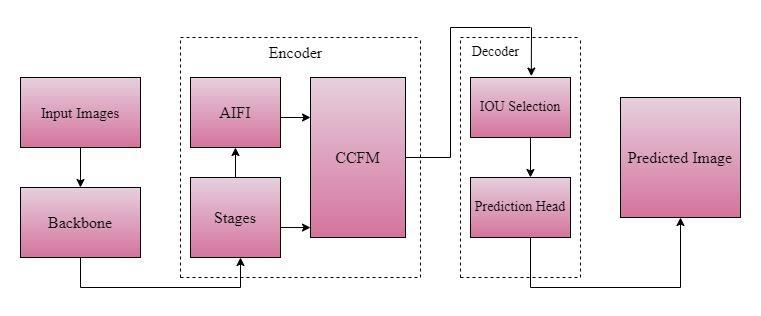
Fig1.ArchitectureDiagramforPotholeDetection
Figure 1 architecture for pothole detection is taking pictures of the surroundings in real time. These photos are then preprocessedduringdata preparationtogivea refined dataset TheRT-DETR model,whichincludes backbone encoders, decoders, AIFI (Adaptive Instance Feature Integration), CCFM (Cross-Correlation Feature Matching), IoU selection, and a
International Research Journal of Engineering and Technology (IRJET) e-ISSN: 2395-0056
Volume: 12 Issue: 06 | Jun 2025 www.irjet.net p-ISSN: 2395-0072
predictionhead,isutilizedinbothtrainingandtestingstages.Themethodidentifiespotholesinphotographs;thisfurther enhancesresultsbygivingnamestothepotholesandputtingthemintogroups.Attheend,systemoverallperformanceis assessedtoensurethatthereisadequateprecisionandeffectivenessinpotholeidentification
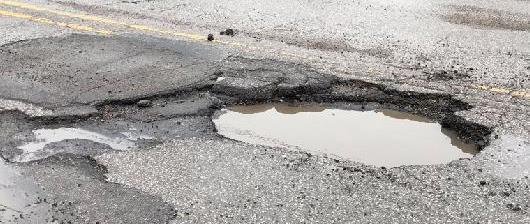
3.1 Image capture:Fig2showsthatimagecapturingprocesswherereal-timeimagesarecapturedfromacamera.The camera serves as the primary data source for detecting potholes on the road. It shows real time image captured from installedcamera.
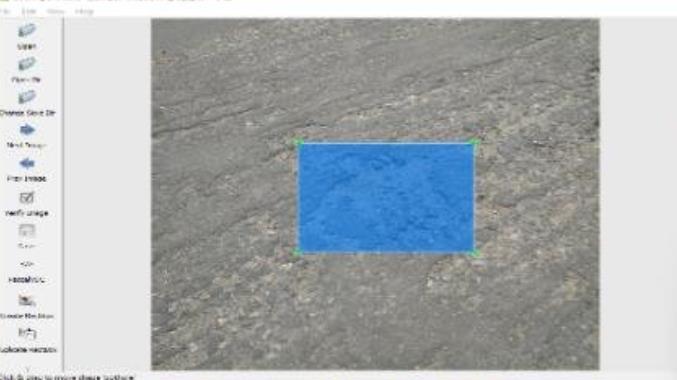
3.2 Data Preparation:InFigure3,foridentificationandmarkingofpotholelocations,weareannotatingtheacquired photographs.Thisprocessstartsbyexpertsmanuallycreatingsegmentationmasksorboundingboxesaroundtheimage potholes. The labeled pictures are used for generating a training dataset for deep learning models. The accuracy of labeling employed determines how well the model can identify and learn about potholes. In practical applications, annotateddataimprovesamodel’sabilitytodetectpotholesbymakingitunderstandtheircharacteristicsandproperties.
International Research Journal of Engineering and Technology (IRJET) e-ISSN: 2395-0056
Volume: 12 Issue: 06 | Jun 2025 www.irjet.net p-ISSN: 2395-0072
3.3. Backbone feature extraction: Inourpotholedetectionproject,weemployaTransformer-basedmodeltohandle the images. This process ensures that essential details like edges, textures, and structural patterns are effectively captured.Thebackbonereducesthesizeoftheimagewhilemaintainingessentialfeaturesnecessaryfordetection.
3.4. Encoder: This process is done by processing the feature maps in several stages to enhance and refine their representations. As the image goes through the stages, the network is able to learn hierarchical patterns and thus differentiate potholes from other road textures more easily AIFI (Attention-Integrated Feature Interaction) process entailsincorporatingattention-basedmechanismsthatgivemoresignificancetopotentialareasofpotholesandsuppress irrelevant background noise. Through allocating computational power to important regions, the system enhances detection precision and reduces false-positive. The CCFM (Cross-Channel Feature Modulation) section is of refining the featuresacquiredbypromotingtheinter-channelinteractionofthedifferentchannelsinthefeature map.CCFMensures suitable fusion of information among the different channels thus resulting in a more discriminative and robust feature representation.
3.5 Decoder: The decoder consists of the IoU Selection (Intersection over Union Selection): In this step, the optimal bounding boxesarechosen byusingIoUfiltering, which computes theoverlap between the predictedandground-truth locationsofpotholes.Thepredictionheadisthelaststepofthedetectionpipeline.Itusesthefine-grainedfeaturemaps and transforms them into real bounding boxes around the identified potholes. This involves classifying each identified region to verify if it is a pothole or not. Further, the prediction head also labels each detection with a confidence score, whichisusedtoremoveuncertainorspuriouspredictions.
3.6 Assessment of Performance: Theperformanceofthemodelisassessedusingvariousnumericalmeasures,such as accuracy, precision, recall, and F1-score represented in Equations 1-4. Additionally, to quantitative methods, to know whetherpotholesareaccuratelyidentifiedusingreal-worldphotosornot;thereisalsovisualexaminationoftheoutputs by this model. When an algorithm successfully identifies a pothole, these are called True Positives (TP). When an algorithmcorrectlyidentifiesthatthere isn’tany potholethose instancesknownas TrueNegatives (TN).False Positives (FP)occurwhenthesystemmakesafalsealarmbyfalselydetectingapotholewhereitdoesnotexist.Ontheotherhand, False Negatives (FN) happen when there is a hole in road but it was not detected by the system because it couldn’t identify.
3.7 Analysis and Enhancement: Potholes are not the only things that cluster analysis can do. It brings out other hiddenpatternsofpotholedistribution,whichcanbebroughtaboutbytheroadtypeoramountofrainfall.Bydoingsoin thiscase,onecanallocateresourcesandtimeproactivelytopreventformationofcracksintheseparts.Thisapproachis improveduponbyregressionanalysis.Inaddition,weatherdata,trafficactivityandageofroadsmaybeusedasvariables for determining how potholes are formed. In order to avoid future occurrences of potholes due to lack of maintenance, awarenessontheinnerdirectionshouldpromptresourceallocationinadvancetoaddressareaswithhighsusceptibility rates among the various routes. Finally, this combined with analysis improves on first methods applied when detecting potholes only; therefore true defects become differentiated from other pavement-related anomalies leading to a more accurate and flexible method where cases for repair of actual potholes are isolated alone thus reducing general inefficiency in maintenance program for improving transportation systems at large and saving time as well since there wouldbenoneedoftrying,fixingwrongpatchesontheroadsystem
3.8. Pothole Detection: The main work begins here! Once a deep learning model is trained to detect potholes in an image,itcanbedeployedtouseitscapabilitiesforthispurpose.Foreverypixelofanimage,thesystemtriestofindout if itmatchesitsperceptionofapotholeandmarkswithsearchpatterns.Consequently,suchprojectionsenablethesystem
International Research Journal of Engineering and Technology (IRJET) e-ISSN: 2395-0056
Volume: 12 Issue: 06 | Jun 2025 www.irjet.net p-ISSN: 2395-0072
tolocatepossiblepotholesonthemwhicharethenindicatedbydetection.Suchdisplaysareessentialsincetheymakeit easiertorecognizeprospectiveareaswithpotholepresencebasedonthismodelwheneverautomatedsystemsorhuman inspectors utilize them. This means that subsequent investigations become easy and also maintenance activities get prioritized because, locations with more problems will be identified using these displays which facilitate vital examinations aimed at establishing whether there are any potholes in particular areas. The system will identify and highlight the areas where potholes are detected. These highlighted regions are considered important because they requireattentionforimmediaterepairs.
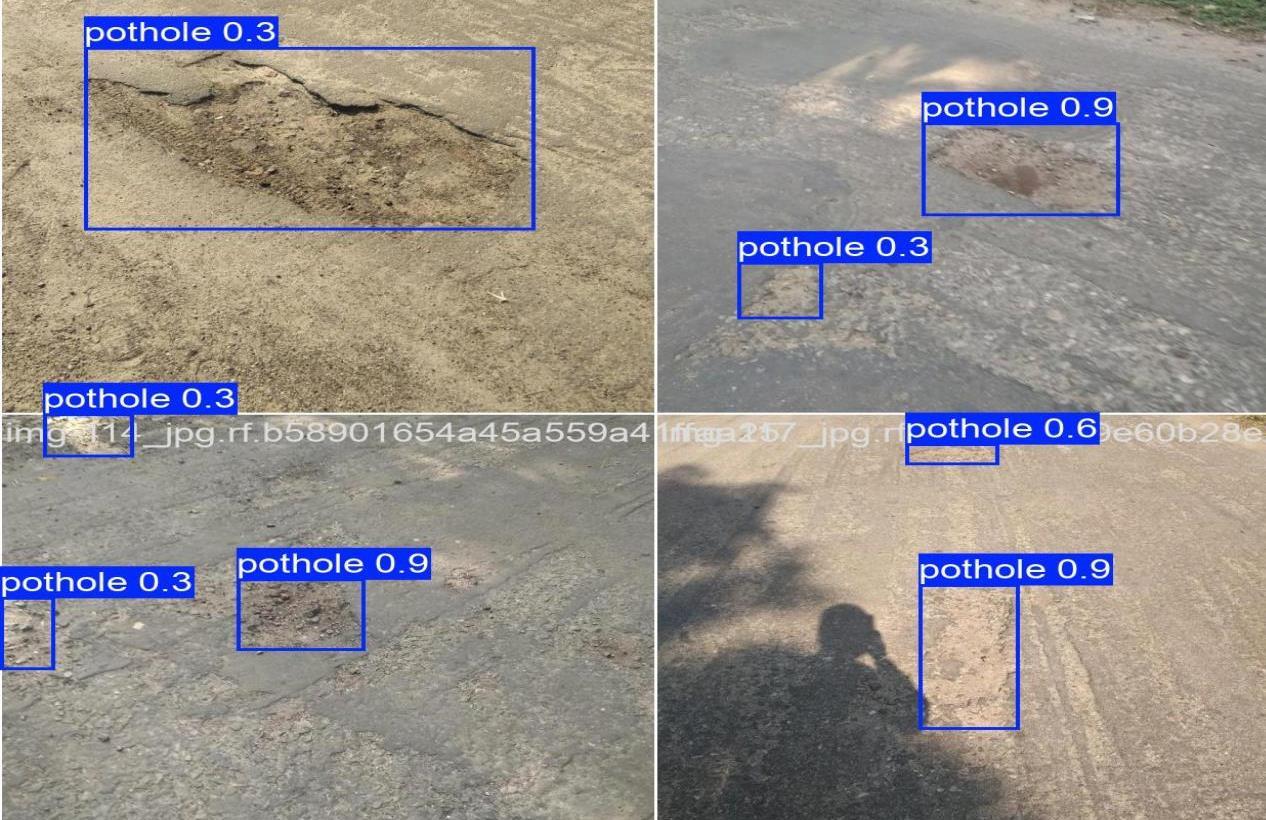
Fig.4showsaseriesofimagesfeaturingdifferentkindsofpotholesisthedataset,providingacomprehensiveandvisual understandingondifferenttypesandsizesofroaddefectsknowntobecommon.Everyphototakenshowsthedistinctive aspectsofpotholesstartingfromlittleonesthatarenotsodeepinthegroundtobigonesthatlookliketheyhavefallen intoablackhole,thusenablingonetocloselyexamine anddifferentiatepavementdamagesaspertheirappearance.One image from this sample is a useful source for this study, thus giving an opportunity to understand how potholes can be discoveredinordertofixthemproperly.
The proposed work shows that the custom dataset used for the training and testing of the RT-DETR model has 10,000 images specifically capturing road conditions and potholes from various areas in Pune. The whole training process encompassed200epochswithabatchsizeof15ona4GBGPU
International Research Journal of Engineering and Technology (IRJET) e-ISSN: 2395-0056
Volume: 12 Issue: 06 | Jun 2025 www.irjet.net p-ISSN: 2395-0072
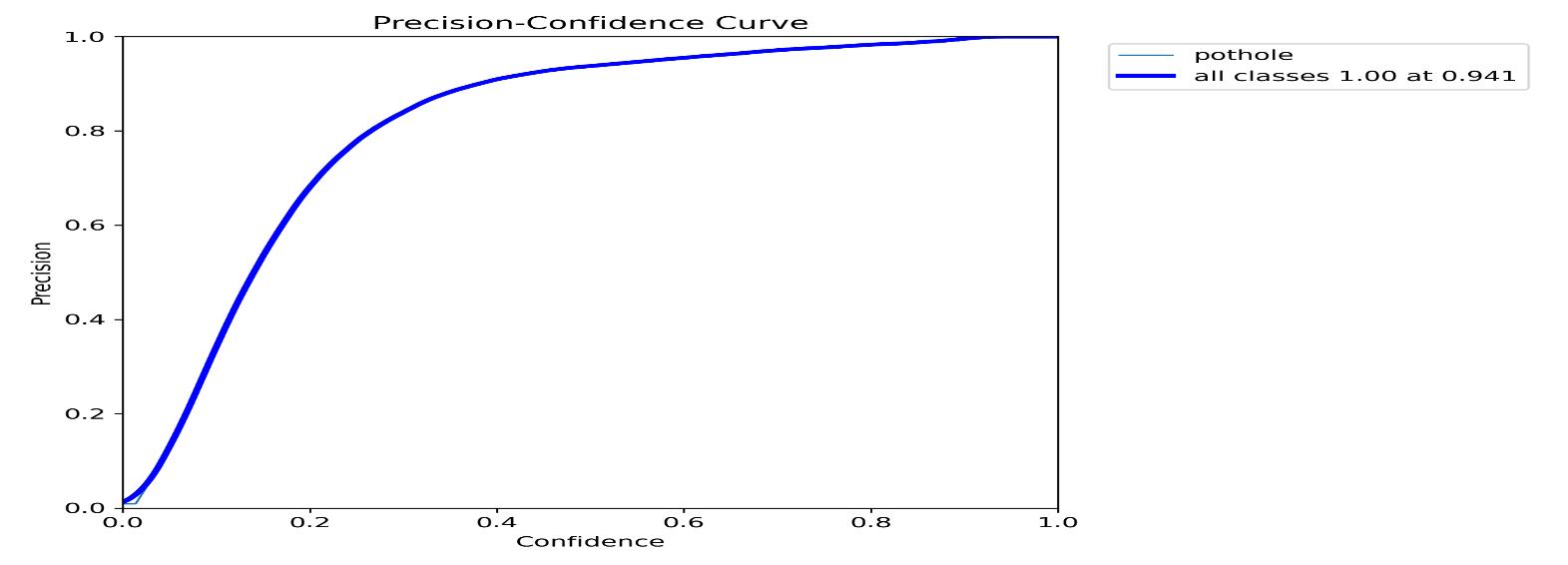
Figure 5 shows graph curve for precision-confidence. Precision, as a measure of how well the model predicts positive instances, basically tells us how good the model is at avoiding false positives. The precision-confidence graph curve presents the relationship between precision and confidence threshold and helps us see how the model’s precision changeswithfluctuationsinconfidencelevels.
International Research Journal of Engineering and Technology (IRJET) e-ISSN: 2395-0056
Volume: 12 Issue: 06 | Jun 2025 www.irjet.net p-ISSN: 2395-0072
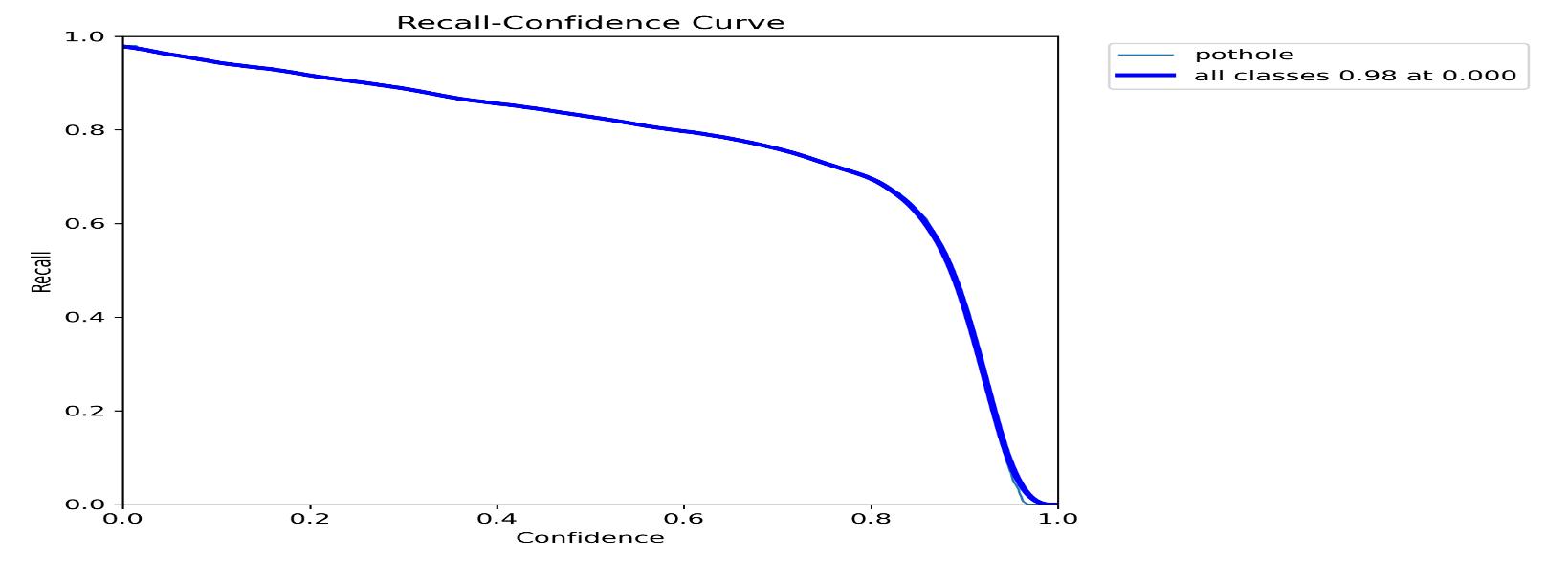
Figure 6 wecanobserveanothergraphthatshowsrecall-confidence.Recalldetermineswhetherallrelevantobjectswere identified by a model hence it represents true positives captured by a system. This figure shows how recall varies as differentconfidencethresholdsareusedanddemonstratestheeffectofvaryingconfidencelevelsonourabilitytodetect certainsituations
Equation 5. displaystheequationusedindeterminingmeanaverageprecisionata0.5IoUthreshold(mAP50).Thus,this metric fuse both recall and precision so as to give an accurate measure of accuracy of the algorithm. The model has an overall accuracyscoreof 92%which meansthat itsmAP50value isimpressivei.e., itsability to predict roadconditions and potholes can be relied upon as it achieved 0.92 mAP50 score which is equivalent to 92% overall classification accuracy rate. This indicates that the given example boasts of reaching almost one hundred percent correct prediction about potholes because its mAP50 equals 0.92 which according to the calculations equals to ninety-eight-point nine percent full classification accuracy meaning it is highly reliable when it comes to detecting roads states and those ones containingditches
Table1.Tableofcomparison
1 YOLOv5, DeepSORT, Line collision method accuracy:89.9%, precision:89%, recall:91.5%
2 YOLOv3 with Darknet-53 feature extractor accuracy:89.0%, precision:88.9%, recall:91.0%
3 YOLOv3, VGG16, VGG, ResNet, TensorFlow
4 YOLOv3, RetinaNet, Faster R-CNN, Cascade R-CNN
5 YOLOv2 with deformable convolutional layers accuracy:84.1%, precision:83.8%, recall:84.5%
6 Object detection (Faster R-CNN, RetinaNet, YOLOv3) accuracy:85.6%, precision;84.9%, recall 86.3%
Table 1. represent that RT-DETR is superior when compared to other object detection models that are leading in performancebasedontheirresultsalone.YOLOv2hadascoreof0.841mAPwhileYOLOv3resultedin0.876,respectively; thencameYOLOv5,whichyieldedupto0.910mAP.DarkNetscored,butnotas highasRetinaNet,whosescorewas0.899 mAP;finally,RetinaNethadascoreof0.885mAP,givingitbetterperformancethanDarknet,asshownbythebenchmarkin Fig. It’s because of advanced architecture and training methods to improve precision and recall capabilities that YOLOv8 outperforms what others have been able to achieve. This is through a custom dataset that has carefully collected images taken from Pune’s roads together with meticulous annotations, thereby demonstrating how effective RT-DETR is in realworldconditions
ThePuneregionhasseensomeexcitingadvancementsinhowwedetectroadconditions,particularlywiththeuseofthe RT-DETRmodelforidentifyingpotholes.Thismodelhashitanimpressivemilestone,achieving92%accuracyinreal-time potholedetection,outshiningotherwell-knownmodelslikeYOLOv2,YOLOv3,YOLOv5,YOLOv8,Darknet,andRetinaNet. However,therearestill quitea fewhurdlestoovercome whenapplyingthistechnologyinthereal world,asopposed to controlledlabsettings.Onemajorchallengeisthemodel'sabilitytoadapttovariouslocations,especiallyinareaswhere dataislimited.WhenitcomestousingRT-DETRonlow-power edgedevices,there'softenatrade-offbetweenaccuracy and speed to keep things running smoothly. To address these challenges, we really need to work together this means creating synthetic data, improving our current datasets, and using strategies like meta-learning and self-supervised learning to boost generalization. The RT-DETR model offers a new way to look at monitoring road conditions, but we definitely need to test it more in various real-world scenarios. By bringing in knowledge from traffic engineering and urbanplanning,wecanreallyenhanceitsperformance,leadingtoamorescalable,effective,andsmartpotholedetection systemthathelpsmakeourtransportationnetworkssaferandmoreefficient.
International Research Journal of Engineering and Technology (IRJET) e-ISSN: 2395-0056 Volume: 12 Issue: 06 | Jun 2025 www.irjet.net p-ISSN: 2395-0072
1. Ping,P.,Yang,X.,Gao,Z.:ADeepLearningApproachforStreetPotholeDetection.In:2020IEEESixth International Conference on Big Data Computing Service and Applications (BigDataService), Oxford, UK, pp. 198–204 (2020). doi:10.1109/BigDataService49289.2020.00039.
2. Lavanya,N.,Vijayalakshmi, S.,Manu,M.,Kushbu,N.,Varsha,R.:ASurveyonDetection PotholeandHumpsonthe RoadandInformationSharing.InternationalJournalforTechnologicalResearchinEngineering7(7),6618(2020).
3. Arjapure, S., Kalbande, D.R.: A Survey on Image Steganography Techniques. International Journal of Recent TechnologyandEngineering8(6),10002(2020).doi:10.3126/ijrte.8.6.10002.
4. Chung, T.D., Khan, M.K.: Watershed-based real-time image processing for multi-potholes detection on Asphalt Road. In: 2019 IEEE 9th International Conference on System Engineering and Technology (ICSET) (2019). doi:10.1109/icsengt.2019.8906371.
5. Akagic,A.,Buza,E.,Omanovic,S.:Potholedetection:Anefficientvision-basedmethodusingRGBcolorspaceimage segmentation.In:201740thInternationalConventiononInformationandCommunicationTechnology,Electronics andMicroelectronics(MIPRO),Opatija,Croatia,pp.1044–1049(2017).doi:10.23919/MIPRO.2017.7973589.
6. Hasan, Z., Shampa, S.N., Siddique, S.: Pothole and speed breaker detection using smartphone cameras and convolutional neural networks. In: 2020 IEEE Region 10 Symposium (TENSYMP), Dhaka, Bangladesh, pp. 1–6 (2020).doi:10.1109/TENSYMP48790.2020.9230587.
7. Saluja, I., Karwa, R., Bharambe, A., Sabnis, M.: Recognition and Depth Approximation of Dry & Filled Potholes. InternationalJournalofInnovativeResearchinScience,EngineeringandTechnology8(8)(2019).
8. Ma, N. et al.: Computer vision for road imaging and Pothole Detection: A state-of-the-art review of Systems and algorithms.TransportationSafetyandEnvironment4(4)(2022).doi:10.1093/tse/tdac026.
9. Furusho Becker, Y.V. et al.: Asphalt pothole detection in UAV images using convolutional neural networks. In: IGARSS 2019 - 2019 IEEE International Geoscience and Remote Sensing Symposium (2019). doi:10.1109/igarss.2019.8900621.
10. Garcillanosa, M.M. et al.: Smart detection and reporting of potholes via image-processing using raspberry-pi microcontroller. In: 2018 10th International Conference on Knowledge and Smart Technology (KST) (2018). doi:10.1109/kst.2018.8426203.
11. Hegde, S., Mekali, H., Varaprasad, G.: Pothole detection and inter vehicular communication. In: 2014 IEEE InternationalConferenceonVehicularElectronicsandSafety(2014).doi:10.1109/icves.2014.7063729.
12. Kandoi,A.etal.:Potholedetectionusingaccelerometerandcomputervisionwithautomatedcomplaintredressal. In: 2021 3rd International Conference on Signal Processing and Communication (ICPSC) (2021). doi:10.1109/icspc51351.2021.9451762.
13. Riya, P.D., Nakulraj, K.R., Anusha, A.A.: Pothole detection methods. In: 2018 3rd International Conference on InventiveComputationTechnologies(ICICT)(2018).doi:10.1109/icict43934.2018.9034440.
14. B, M.P., K.C., S.: Enhanced Pothole Detection System using Yolox algorithm. Autonomous Intelligent Systems 2(1) (2022).doi:10.1007/s43684-022-00037-z.
15. Bibi, A., Ali, K., Raza, A., & Kausar, S. (2023). Real-Time Multi-Scale Pothole Detection using Transformer (pp. 114–119).https://doi.org/10.1109/fit60620.2023.00030
16. Katsamenis, I., Sakelliou, A., Bakalos, N., Protopapadakis, E., Klaridopoulos, C., Frangakis, N., Bimpas, M., & Kalogeras, D. (2023). Deep transformer networks for precise pothole segmentation tasks (pp. 596–602). https://doi.org/10.1145/3594806.3596560
17. Satti,S.K.,Rajareddy,G.N.V.,Mishra,K.,&Gandomi,A.H.(2024).Potholesandtrafficsignsdetectionbyclassifier withvisiontransformers. Scientific Reports, 14(1).https://doi.org/10.1038/s41598-024-52426-4
18. Lin,Z.,Wang,H.,&Li,S.(2022).Pavementanomalydetectionbasedontransformerandself-supervisedlearning. Automation in Construction, 143,104544.https://doi.org/10.1016/j.autcon.2022.104544
19. Bosurgi, G., Modica, M., Pellegrino, O., & Sollazzo, G. (2022). An automatic pothole detection algorithm using pavement 3D data. International Journal of Pavement Engineering, 24(2). https://doi.org/10.1080/10298436.2022.2057978
20. Fan,R.,Ozgunalp,U.,Wang,Y.,Liu,M.,& Pitas,I.(2021).RethinkingRoadSurface3-Dreconstructionandpothole Detection: From perspective transformation to disparity map Segmentation. IEEE Transactions on Cybernetics, 52(7),5799–5808.https://doi.org/10.1109/tcyb.2021.3060461