
International Research Journal of Engineering and Technology (IRJET) e-ISSN: 2395-0056
Volume: 13 Issue: 05 | May 2026 www.irjet.net p-ISSN: 2395-0072
International Research Journal of Engineering and Technology (IRJET) e-ISSN: 2395-0056
Volume: 13 Issue: 05 | May 2026 www.irjet.net p-ISSN: 2395-0072
Shaik Sumaiya Sultana¹, Palle Sahasra², Jade Vaishnavi³, Vyahruti Cheemalakonda´, Ms. K. Priyanka
¹²³´ Department of Computer Science and Engineering, Keshav Memorial Institute of Technology, Hyderabad, India
Abstract - The rapid growth of online platforms has increased the risk of unintentional disclosure of sensitive personal information. This paper proposes an AI-powered PrivacyFootprintAnalyzerthatdetectsandevaluatesprivacy risks in user-generated text. The system integrates Natural Language Processing (NLP) for identifying personally identifiable information, a Machine Learning model for risk classification, and a Large Language Model (LLM) for generatingcontext-awarerecommendationsandprivacy-safe text rewriting. A hybrid architecture combining detection, scoring,andrecommendationmodulesisimplementedwithina unified pipeline. Experimental results demonstrate high accuracy and low response time, enabling proactive privacy protection.Theproposedsystemenhancesuserawarenessand supports safer digital content sharing.
Key Words: Digital Footprint, Privacy Risk Analysis, Natural Language Processing, Machine Learning, Large Language Models, Cybersecurity
The rapid proliferation of digital platforms has significantly transformed communication and information sharing,resultingintheexpansionofusers'digitalfootprints. These footprints often contain sensitive personal information, making individuals vulnerable to privacy breachesandcyberthreats[1].
Usersfrequentlypostcontentwithoutrecognizing implicit disclosures such as phone numbers, addresses, affiliations,orbehavioralpatterns.Theseexposurescanbe exploited for malicious purposes including social engineering,impersonation,andtargetedattacks[3].
While traditional cybersecurity tools focus on securing systems and credentials, they fail to address prepublication privacy risks in user-generated content. This createsacriticalgapinproactiveprivacyprotection.
Toaddressthischallenge,thispaperpresentsanAIdrivenPrivacyFootprintAnalyzerthatevaluatestextualdata before it is shared. The system leverages a hybrid architecture combining NLP for detection, ML for classification,andLargeLanguageModels(LLMs)[8],[9]for contextualreasoningandrecommendationgeneration.
● AhybridAIpipelineintegratingNLP,ML,and LLMs
● Amulti-factorprivacyriskscoringmodel
● Context-awarerecommendationandtext rewritingsystem
● End-to-endimplementationwithreal-timeuser interaction
Earlyprivacydetectionsystemsreliedonrule-based approaches, including regular expressions and keyword matching.Whileefficientforstructureddata,thesemethods lackcontextualunderstandingandfailindynamicreal-world scenarios.
NLP-based systems improved detection through NamedEntityRecognition(NER)[1],enablingidentification ofentitiessuchasnames,locations,andorganizations.Tools like Microsoft Presidio [4] and spaCy [5] provide scalable solutions but primarily focus on extraction rather than interpretation.
Machine learning approaches introduced risk classification[6],leveragingfeaturessuchasentityfrequency andtextcomplexity.However,thesemodelsdependheavily onfeatureengineeringandlacksemanticreasoning.
Recent advancements in Large Language Models (LLMs) [8], [9] enable contextual understanding and generationofhuman-likeresponses.LLMsenhanceprivacy systems by providing explanations and actionable recommendations.
Despitetheseadvancements,existingsystemssufferfrom:
● Lackofunifiedarchitecture
● Absenceofexplainableriskscoring
● Limiteduser-centricrecommendations
● Fragmentedworkflows
Theproposedsystemaddressesthesegapsthrougha fullyintegratedandintelligentpipeline.
Despiteincreasingawarenessofcybersecurity,users continuetoexposesensitiveinformationdueto:
International Research Journal of Engineering and Technology (IRJET) e-ISSN: 2395-0056
Volume: 13 Issue: 05 | May 2026 www.irjet.net p-ISSN: 2395-0072
Lackofreal-timefeedbackbeforesharingcontent
Absence of contextual understanding in existing tools
No unified system for detection, scoring, and mitigation
Limitedaccessibilityfornon-technicalusers
There is a need for a system that can proactively analyze textual data, quantify privacy risks, and provide actionableinsightsinasingleworkflow.
4. PROPOSED SYSTEM
The proposed system follows a layered hybrid architecture designed for accuracy, scalability, and interpretability.
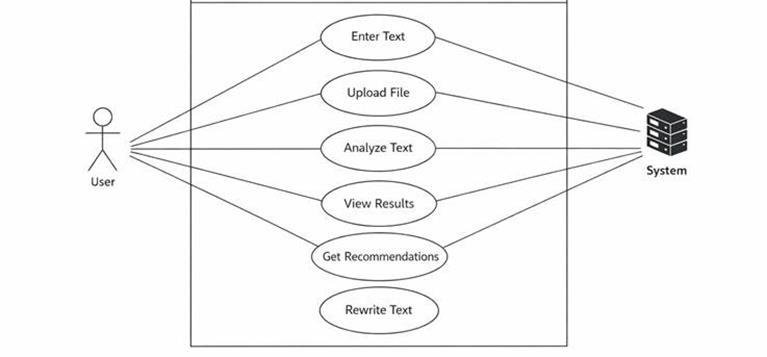
Fig 1: Sequence Diagram of Privacy Footprint Analyzer
ThefunctionalinteractionsofthesystemareillustratedinFig 1.
1) 4.1 NLP Layer (PII Detection)
● UtilizesspaCy[5]andMicrosoftPresidio[4] Detects:
○ Names
○ Emails
○ Phonenumbers
○ Locations
○ Organizations
4.2 Feature Engineering Layer
Extractedfeaturesinclude:
● Entitycount
● Entitydensity
● Sensitivekeywordfrequency
● Textlength
● Contextualindicators
4.3 Machine Learning Layer
● Model:RandomForestClassifier[6]
● Output:
○ RiskScore(0–100)
○ RiskCategory(Low/Medium/High)
4.4 LLM Layer (Intelligent Assistance)
● IntegratedusingLangChainagents[10]
● Generates:
○ Context-awarerecommendations
○ Privacy-saferewrittentext
○ Explanationsofdetectedrisks
4.5 System Interface
● Frontend:React-baseddashboard
● Backend:FastAPI
● Database:MongoDB
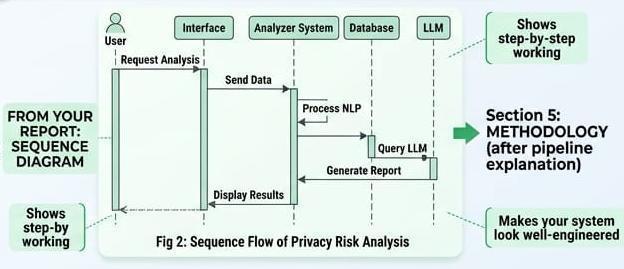
The system follows a structured pipeline. The system workflowisillustratedinFig2.
1. Step1:InputAcquisition
UserprovidestextviaUIorfileupload.
2. Step2:EntityDetection
NLPmodelsextractPIIentitieswithcontextualtagging.
3. Step3:FeatureExtraction
QuantitativefeaturesarecomputedforMLprocessing.
4. Step4:RiskScoringModel
Theprivacyriskscoreiscalculatedas: R=(S×D×F)/C
Where:
● S=Sensitivityofdetectedentities
● D=Entitydensity
● F=Frequencyofoccurrence
● C=Contextualprotectionfactor
Theapproachisinspiredbystandardriskmodeling techniques[3].
5. Step5:RiskClassification
RandomForestclassifiesriskintodiscretecategories.
6. Step6:LLM-BasedRecommendation
LLMgenerates:
● Riskexplanations
● Mitigationsuggestions
● Saferewrittencontent
Step7:Visualization
Resultsdisplayedwith:
● Riskscoreindicators
● Highlightedentities
● Recommendationpanels
International Research Journal of Engineering and Technology (IRJET) e-ISSN: 2395-0056
Volume: 13 Issue: 05 | May 2026 www.irjet.net p-ISSN: 2395-0072
Fig 2: Sequence Diagram of Privacy Footprint Analyzer
Fig 2 illustrates the interaction flow of the system. The process begins with user input, followed by preprocessing and PII detection using NLP techniques. The extracted featuresarepassedtothemachinelearningmodelforrisk scoringandclassification.TheLLMmodulethengenerates recommendationsandrewrittentext,whicharedisplayedto theuserthroughtheinterface.
6. SYSTEM ARCHITECTURE
The system follows modular client-server architecture:
● UserInterface(React)
● APILayer(FastAPI)
● AIProcessingPipeline
● DatabaseLayer(MongoDB)
TheoverallsystemdesignisshowninFig3.
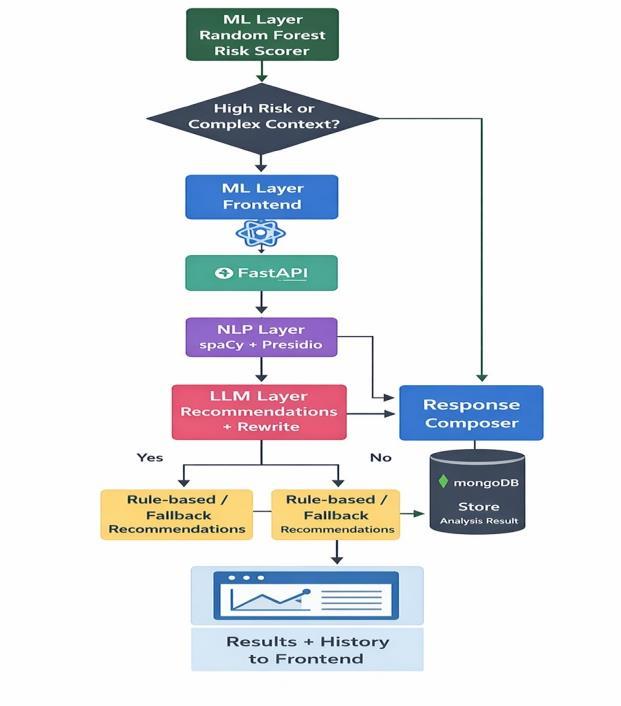
Fig3showstheoverallarchitectureofthesystem.Itconsists of a user interface, API layer, AI processing pipeline, and database layer. The modular design ensures efficient data flow, scalability, and integration of NLP, ML, and LLM components. Thisdesignensuresscalability,modularity,andefficientdata flow.
7. RESULTS AND DISCUSSION
Theproposedsystemwasevaluatedusingstandard performance metrics [3] to assess its effectiveness in
detectingandclassifyingprivacyrisks.Thesystemoutputs areshowninFig4,andperformanceevaluationispresented inFig5.
PerformanceMetrics
Table 1: Performance Evaluation Metrics of the Proposed System
8. KeyObservations
● HighaccuracyindetectingPIIacrossvariedinputs
● Effectiveclassificationofprivacyrisklevels
● LLM-generatedrecommendationssignificantly improvedusability
● Reducedfalsepositivescomparedtorule-based systems
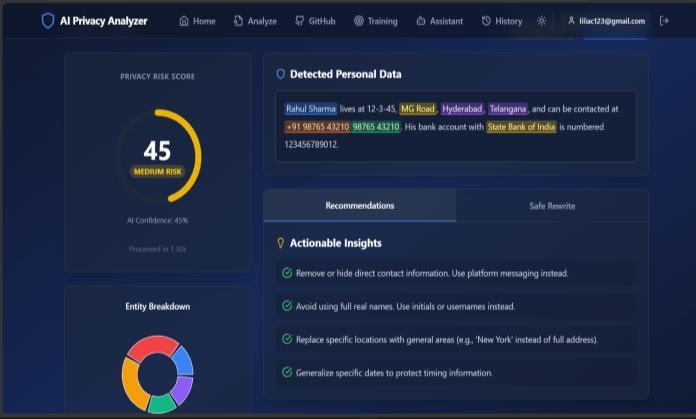
Fig 4: User Interface Showing Privacy Risk Detection and Recommendations
Fig 4 presents the system output displayed to the user. It highlightsdetectedsensitiveentities,calculatedrisk score, andAI-generatedrecommendationsalongwithaprivacy-safe rewrittenversionoftheinputtext.
International Research Journal of Engineering and Technology (IRJET) e-ISSN: 2395-0056
Volume: 13 Issue: 05 | May 2026 www.irjet.net p-ISSN: 2395-0072
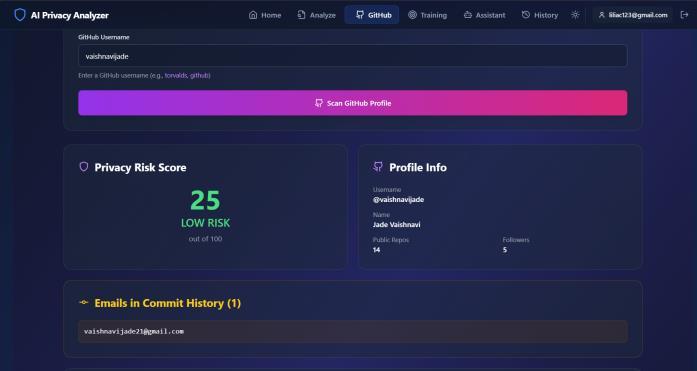
Fig5showsthesystemoutputforaGitHubprofileanalysis.It displaysthecalculatedprivacyriskscore,detectedsensitive informationsuchasemailexposure,anduserprofiledetails. The interface provides a clear visualization of risk levels alongwithcategorizedinsightsforimproveduserawareness.
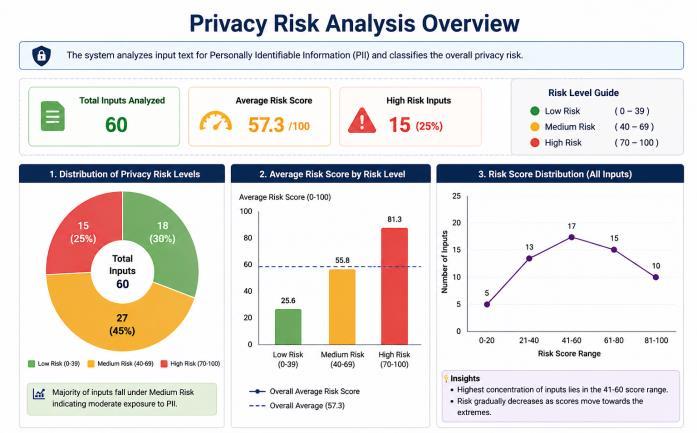
Fig6illustratestheperformanceevaluationoftheproposed systemusingmetricssuchasaccuracy,precision,recall,and F1-score.Theresultsindicatehigheffectivenessindetecting andclassifyingprivacyrisks. Comparative Insight
Comparedtotraditionaltools:
Table 2 presentstheperformanceevaluationofthe proposedsystem. Feature Traditional Tools Proposed System
Context
RiskScoring
Recommendation s None AI-generated
Usability Complex User-friendly
This paper presents a comprehensive AI-driven solutionforanalyzingandmitigatingprivacyrisksintextual data. By integrating NLP, ML, and LLM technologies, the system provides accurate detection, meaningful risk assessment,andactionablerecommendations.
The proposed system shifts privacy protection from a reactive approach to a proactive, user-centric model [3], thereby enabling safer digital interactions and improved privacyawarenessamongusers.
Theexperimentalresultsvalidatetheeffectiveness and practicality of the proposed approach in real-world scenarios.
[1] D. Jurafsky and J. H. Martin, Speech and Language Processing,3rded.,Pearson,2023.
[2] J. Devlin et al., “BERT: Pre-training of Deep Bidirectional Transformers for Language Understanding,” arXiv preprint arXiv: 1810.04805, 2019.
[3] T. Fawcett, “An Introduction to ROC Analysis,” Pattern Recognition Letters,2006.
[4] Microsoft, “Presidio: Data Protection and PII Detection,”2023.
[5] Explosion AI, “spaCy: Industrial-Strength NLP Library,”2023.
[6] Scikit-learn,“MachineLearninginPython,”2023.
[7] L.Tunstalletal., Natural Language Processing with Transformers,O’Reilly,2022.
[8] OpenAI,“GPT-4TechnicalReport,”2023.
[9] MetaAI,“LLaMA3:OpenFoundationModels,”2024.
[10] LangChain,“LangChainDocumentation,”2023.
[11] MongoDBInc.,“MongoDBDocumentation,”2023.
[12] S.Ramírez,“FastAPIDocumentation,”2023.