
International Research Journal of Engineering and Technology (IRJET) e-ISSN: 2395-0056
Volume: 12 Issue: 04 | Apr 2025 www.irjet.net p-ISSN: 2395-0072
International Research Journal of Engineering and Technology (IRJET) e-ISSN: 2395-0056
Volume: 12 Issue: 04 | Apr 2025 www.irjet.net p-ISSN: 2395-0072
Ms. Anuyoksha Singh, Mr. Shrish Tiwari, Dr. Vivek Shukla
MTech Scholar, Assistant Professor, Head of Department of Computer Science and Engineering, Dr. C.V. Raman University, Kota, Bilaspur, Chhattisgarh, India
Abstract - As software development gets more complicated, strong code review and optimization methods are needed to guarantee code performance, security, and quality. Conventional manual code review techniques are uneven, time-consuming, and prone to errors. An AI-based code review and optimization system that automates code analysis, finds vulnerabilities, and makesoptimizationrecommendationsispresentedinthis study.ByintegratingESLintforoptimalanalysismethods, the system's capacity to efficiently detect faults and enforcecodingstandardsisenhanced.Bystreamliningthe codereviewprocedure,our suggested approachincreases correctness and efficiency while lowering the amount of human labor required. A confusion matrix analysis validates the system's functionality, and rigorous testing shows that it detects code flaws with high accuracy. The system's architecture, implementation, and outcomes are highlighted in this study, demonstrating how it might revolutionizesoftwaredevelopmentprocesses.
Key Words: BERT, DISCOREV, BLEU, Artificial intelligence (AI), Convolutional Neural Networks (CNNs) , Large Language Model.
Software development relies heavily on code quality, which affects security, maintainability, and performance. Manual inspection is a major component of traditional code review techniques, but it is laborious, prone to human mistake, and inconsistent among reviewers. Automated solutions driven by artificial intelligence (AI) andmachinelearning(ML)arecrucialtostreamliningthe review process and guaranteeing accuracy and efficiency given the growing complexity of contemporary applications.
In recent years, AI-driven tools have emerged to assist in various aspects of software engineering, including bug detection, code optimization, and security vulnerability assessment. However, existing solutions often lack flexibility, comprehensive analysis, or seamless integration into development workflows. Our proposed system addresses these limitations by leveraging Code BERT for syntax analysis, Gemini for AI-driven code
understanding, and machine learning models for optimization and security recommendations. The system is designed to provide detailed feedback on code quality while minimizing false positives, thereby enhancing developerproductivity.
To create an efficient and scalable solution, we integrate Next.js and ShadCN for a dynamic and user-friendly interface, while Flask serves as the backend, managing AI interactions and processing requests. ESLint is incorporated to enforce coding best practices, ensuring consistentandmaintainablecode.Additionally,Cloudinary is used for file storage, allowing developers to securely managecodefilesandrelatedassets.
2.1. Automatic identification of appropriate code reviewers using machine learning. Muiris, W. (2020).
Theworkshowsthatadeeplearningmodelcanefficiently find suitable reviewers by learning from past pull requests. Because it was trained using features from previous pull requests, this model is better able to comprehend the context of the code changes under review.
In order to capture the subtleties of the code modifications, the model makes use of the syntactic representation of the modified code. The model can link particular code fragments to reviewers who have previouslyworked oncomparablerevisionsby examining these patterns. The model's capacity to produce probabilitiesindicatingthesuitabilityofseveralreviewers for a certain pull request is one of its noteworthy results. Potential reviewers are ranked using this probabilistic method according to their prior encounters with comparablecodechanges.
Accordingtotheresults,softwaredevelopmentteamsmay finditusefultoincorporatemachinelearningintothecode review procedure.Itcreates opportunitiesformorestudy intoimprovingthemodelandlookingintootherelements that can increase its efficacy and accuracy in practical situations.
International Research Journal of Engineering and Technology (IRJET) e-ISSN: 2395-0056
Volume: 12 Issue: 04 | Apr 2025 www.irjet.net p-ISSN: 2395-0072
2.2. Improving the Learning of Code Review Successive Tasks with Cross-Task Knowledge Distillation. Ben Sghaier, O., & Sahraoui, H. (2024).
The authors stress the interdependence of the three primary code review tasks: quality estimation, comment creation, and code refinement. These tasks have been handled separately in traditional approaches, which may have limited their efficacy. The authors suggest a more integrated strategy to enhance overall effectiveness in codereviewsbyacknowledgingtheirinterconnectedness.
presents DISCOREV, a unique deep-learning architecture that makes use of cross-task knowledge distillation. The three tasks may be trained simultaneously thanks to this architecture,whichalsoimproveslearningbyutilizingthe connections between the tasks. Better guidance is made possible during the fine-tuning phase by DISCOREV's cascadeofmodels.
The authors employ two distinct approaches to direct the process of fine-tuning models: an embedding alignment aim and a feedback-based learning objective. These techniques make sure that the quality estimation model's insights are applied to the comment creation and code refinement models, producing better results. The results implythat the interconnectedness of these jobs should be taken into account in future code review automation studies. Researchers can create more useful models that improve code quality and lower software development errorsbyusingacomprehensiveapproach.
A cascade of models and several guidance strategies are partofthesuggestedDISCOREVdesign,whichcouldmake implementation more difficult. This intricacy can make it difficult for practitioners to use the model in practical settings, particularly in settings with little funding or experience. When used in contexts with a high volume of code changes or on huge codebases, the method may
encounter scaling problems. The method's practical relevanceinbiggersoftwaredevelopmentprojectsmaybe limited by the computational resources needed to train andfine-tuneseveralmodelsatonce.
2.3. Towards Automating Code Review Activities. International Conference on Software Engineering Tufano, R., Pascarella, L., Tufano, M., Poshyvanyk, D., & Bavota,G.(2021).
Inorder to increase code qualityandlowerthelikelihood of bugs being introduced into the codebase, the article highlights the need of code reviews in both open-source and industrial projects. This emphasizes how crucial it is to uphold good standards in software development. Notwithstanding their advantages, code reviews necessitate a substantial amount of time-consuming manual work from developers. By looking into ways to automate some aspects of the code review process, the authors hope to solve this problem and cut down on the amountoftimeengineersspendreviewingcode.
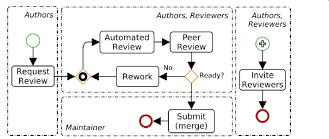
Fig-2:Workflowofreviewsystem
2.4. Classification code recommendation system using deep learning. Kim,Y.J.(2019).
The accuracy and dependability of classification code recommendationsaregreatlyimprovedbytheapplication of deep learning artificial intelligence algorithms. This is especially helpful in lowering the high error rates that frequently happen when these codes are manually establishedbynon-specialists.Thetechnologyreducesthe possibility of errors and inconsistencies resulting from humaninputbyautomatingthesuggestionprocess.Thisis essential in domains like industry and occupation categorieswhereexactcategorizationisrequired.
The restrictions that non-specialists encounter while establishing classification codes are successfully addressed by the system. Utilizing cutting-edge AI algorithms, the system offers a more dependable substitute for conventional approaches that might not be as successful. The versatility of deep learning in classification systems is demonstrated by the fact that, despite the paper's focus on particular kinds of classification codes, the underlying technology might be
International Research Journal of Engineering and Technology (IRJET) e-ISSN: 2395-0056
modified for a variety of additional classification jobs in manyindustries.
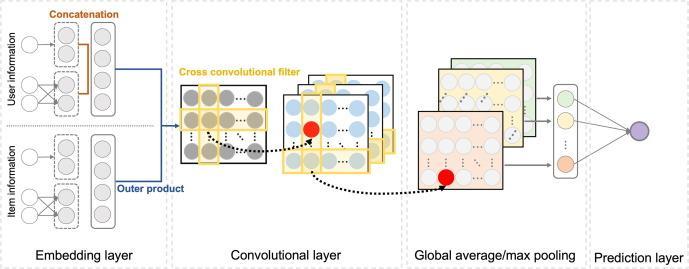
Fig-3:Stepbystepdetectionprocess
When compared to conventional techniques, the deep learning model created for the study demonstrated a notable increase in the accuracy of classification code recommendations. This improvement is essential to guarantee that the suggestedcodesclosely matchthe real classifications required in different sectors and professions. Error rates related to classification code assignments significantly decreased after the deep learning technique was put into practice. Because it tacklestheusualproblemsencounteredbynon-specialists who could unintentionally introduce errors while manuallysettingcodes,thisdecreaseisverysignificant.
The caliber and volume of training data utilized have a significant impact on the deep learning model's efficacy. The model's suggestions might also be incorrect if the training data is skewed or unrepresentative of actual situations. This restriction emphasizes the necessity of extensive and varied datasets for efficient model training. Despite their strength, deep learning models frequently functionas"blackboxes,"makingitdifficulttounderstand how they generate particular recommendations. This lack of openness can be a major disadvantage, particularly in domains where trust and accountability depend on knowingthereasoningbehindclassificationjudgments.
2.5. Improving the Learning of Code Review Successive Tasks with Cross-Task Knowledge Distillation. Ben Sghaier, O., & Sahraoui, H. (2024).
The authors stress the interdependence of the three primary code review tasks: quality estimation, comment creation, and code refinement. These tasks have been handled separately in traditional approaches, which may havelimitedtheirefficacy.Thestudymakesthecasefora more comprehensive strategy to improve code reviews' overall performance. DISCOREV is a new deep learning architecture that makes use of cross-task knowledge distillation.Thethreetaskscanbetrainedsimultaneously thanks to this design, which takes advantage of their connections to enhance results. DISCOREV's model cascadeimprovescoderefiningandcommentgeneration.
The results of related models serve as a guidance for DISCOREV's fine-tuning procedure. In particular, the quality estimation model directs the code refinement model,andthecommentgenerationmodelisimpactedby the code refinement model. This feedback system is essentialforraisingthecaliberofcommentsproducedand theprecisionofcodeimprovements.
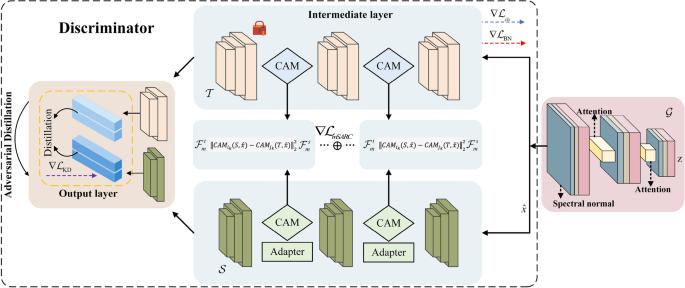
Acascadeof modelsisusedinthesuggestedarchitecture, whichcallsforcarefultweakingandintegration.Becauseit necessitates a greater comprehension of the relationships between tasks and the models involved, this complexity may provide difficulties for practitioners who want to apply the system in real-world situations. The model's performance is mainly assessed in the study using BLEU and CodeBLEU scores. Despite their widespread acceptance, these metrics might not adequately represent the qualitative elements of code improvement and code review comments. This drawback implies that more qualitative metrics could be used to evaluate the model's performanceinamorethoroughmanner.
Applying the method to more complicated projects or larger codebases may present scaling issues. Its application in resource-constrained situations may be limited by the substantial computer resources needed for training and optimizing several models at once. There is no specific discussion of the model's generalizability to other computer languages or coding methods. The model may not function effectively across a variety of coding contexts, which is a frequent occurrence in software development,ifthetrainingdataisrestrictedtoparticular languagesorstyles.
2.6. Deep Learning-based Code Reviews: A Paradigm Shift or a Double-Edged Sword? Tufano, R., MartinLopez, A., Tayeb, A., Dabi’c, O., Haiduc, S., & Bavota, G. (2024).
According to the study, reviewers viewed the problems that the Large Language Model (LLM) had found as legitimate in general. This suggests that automated reviews can successfully point out any issues in the code, improving the quality of the review. The existence of an
Volume: 12 Issue: 04 | Apr 2025 www.irjet.net p-ISSN: 2395-0072 © 2025, IRJET | Impact Factor value: 8.315 | ISO 9001:2008
International Research Journal of Engineering and Technology (IRJET) e-ISSN: 2395-0056
Volume: 12 Issue: 04 | Apr 2025 www.irjet.net p-ISSN: 2395-0072
automated review had a major impact on the way reviewers approached their assignments. Instead of looking for further problems in other parts of the code, reviewers tended to concentrate more on the code spots thattheLLMhadidentified.
Thisimpliesthatalthoughautomatedreviewscanserveas aguideforreviewers,theymayalsorestrictthebreadthof their analysis. In contrast to what was anticipated, the reviewers did not save time by using automated code reviews.Whetherornotanautomaticreviewwasoffered, theamountoftimespentonreviewsstayedconstant.This calls into question how effective it is to incorporate automatedtechnologiesintothecodereviewprocedure.
The study also found that reviewers' trust in their comments did not rise when automated reviews were available. This implies that although automated techniques can help detect problems, they might not improve the reviewers' overall confidence in their assessments. Three factors were the main focus of the study: reviewer confidence, review quality, and review cost. Other significant elements were not examined, including how automated reviews affect team relationships, reviewers' learning opportunities, and the long-termimplicationsoncodequality.Thislimitedscope could ignore important aspects of the code review procedure.
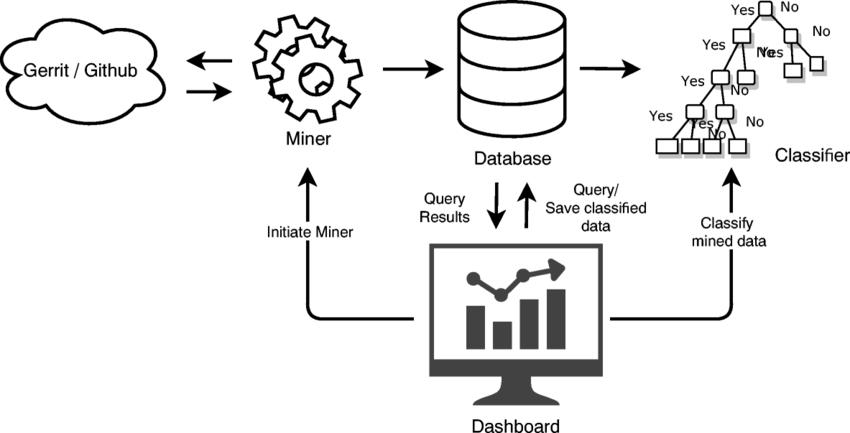
The experiment was carried out in a controlled environment, it might not fully represent situations in which code reviews take place in the real world. The resultsofcodereviewsinpracticecanbegreatlyimpacted by variables like teamwork, the complexity of the codebase, and the different levels of experience among reviewers. It's possible that the automated review had an impact on the reviewers' conduct in ways that are not commoninreviewscenarios.Forexample,reviewersmay rely too much on an automated tool if they know it has already identified flaws, which could cause them to overlook other significant issues. This might distort the findingsabouthoweffectiveautomatedreviewsare.
In general, reviewers believed that the problems that the Large Language Model (LLM) had pointed out were legitimate.Thissuggeststhatautomatedcodereviewscan successfully point out possible issues in the code, improving the quality of the review as a whole. The reviewers' actions were greatly impacted by the automated review's existence. Instead of looking for further problems in other parts of the code, reviewers tended to focus on the code spots that the LLM had detected. This implies that although automated reviews can serve as a guide for reviewers, they may also restrict thebreadthoftheiranalysis.
There were more low-severity concerns found by reviewers who began their review process with the assistanceofanautomatedreview.Theydidnot,however, find any more high-severity problems than those who carriedoutareviewthatwasentirelymanual.Thisdraws attention to a possible drawback of automated reviews in identifyingimportantissues.
2.7. Development of an Algorithm for Automatic Code Review and Search for Errors in Source Code Using the Transformer Deep Learning Architecture. Moshkin, V., Andreev, I., Dyrnochkin, A., Mytarin, E., Kashin, M., & Yarushkina,N.(2024).
ThestudycombinesdatafromtheCNKIandWanfangData Service platforms to analyze literature about the ecology of forest landscapes. To extract pertinent literature material, it uses the Scrapy framework and the Python programminglanguage.
Thetransformerdeeplearningarchitecture'seffectiveuse inthealgorithm'sdevelopmentishighlightedinthestudy. This model has demonstrated encouraging outcomes in a variety of NLP tasks and is well-known for its capacity to handle sequential data, which transfers well into code analysis. The creation of a software system that uses the suggested algorithm is a noteworthy result of the study. With the help of this system, developers may effectively performautomatedcodereviewsanderrorsearches.
Experimental results from using the created technique on a number of large projects are shown in the study. These outcomes show how applicable and successful the algorithm is in practical situations, suggesting that it can greatly facilitate the code review procedure. The tests conductedinthestudywerebasedonalimitednumberof important efforts.Thisraisesconcernsaboutthefindings' generalizability over a wider range of project types and programming languages. The effectiveness of the method can differ significantly depending on the situation or with lessercodebases.
Although the system can detect possible mistakes, its resultsmightnotbeveryinterpretable.Itcouldbedifficult fordeveloperstocomprehendthelogicbehindsomeerror
International Research Journal of Engineering and Technology (IRJET) e-ISSN: 2395-0056
Volume: 12 Issue: 04 | Apr 2025 www.irjet.net p-ISSN: 2395-0072
detections, which could erode their confidence in the automatedreviewprocedure.
Experiments on a number of large projects demonstrated that the created method can successfully detect flaws in source code. This suggests that the code review process can be greatly improved by combining the transformer deep learning architecture with natural language processing(NLP)techniques.
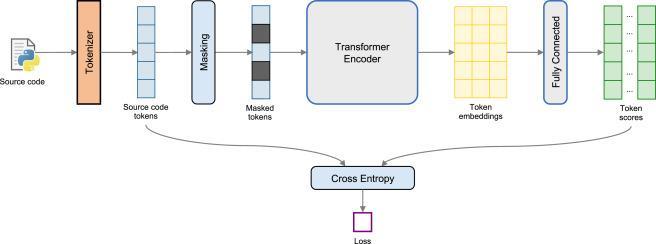
The study suggests that the results include quantifiable outcomes that show the algorithm's performance, even if the abstract omits explicit quantitative indicators. This could include metrics that are essential for assessing the efficacy of code review tools, such precision, recall, or accuracy in error detection. Comparisons between the suggested algorithm and conventional code review techniques, emphasizing gains in efficacy and efficiency, are probably included in the results. Though specific comparing results are not stated in the abstract, this comparison would highlight the benefits of employing an automatedapproachovermanualevaluations.
The collective body of research on deep learning-based code review systems signifies a transformative shift in software engineering. These works explore how neural networks especially those based on Transformer architectures can automate and enhance code review activities traditionally performed by human developers. Together, the studies reviewed span a wide range of innovations, including bug detection, reviewer recommendation, task-specific learning, and cross-task knowledge transfer, offering a comprehensive understanding of the evolving intersection between machinelearningandcodeintelligence.
A central theme across the works is the increasing capability of Transformer-based architectures to understand and generate source code. Moshkin et al. (2024) present an algorithm that uses Transformers to automatically review source code and identify errors. Theirapproachrepresents a departurefrom conventional
static analysis tools, as it learns contextual and structural patterns directly from large codebases. The system leveragesdeeprepresentationstouncoversubtlebugsand stylistic issues that static rules may overlook. This opens the door to more adaptive and intelligent review systems that learn from historical data and generalize across languagesanddomains.
Tufanoetal.(2024),in Deep Learning-based Code Reviews: A Paradigm Shift or a Double-Edged Sword?, provide a critical examination of the promises and pitfalls of these systems. While deep learning can outperform traditional tools in detecting issues and providing recommendations, the opacity of neural models raises concerns about explainability, trust, and fairness. They argue that the integration of these systems into production workflows must be accompanied by robust mechanisms for transparency and developer oversight.Ben Sghaier and Sahraoui(2024)tacklethechallengeoftaskspecialization in code reviews They propose a framework based on cross-taskknowledgedistillation,allowingmodelstrained on one code review task (e.g., bug detection) to enhance performance on another (e.g., quality suggestion). Their results demonstrate that multi-task learning with knowledge transfer leads to more robust systems capable ofhandlingavarietyofreviewactivities.Thisalsoreduces the need for large, task-specific datasets, making deep learningmoreaccessibleindata-sparsescenarios.
In another direction, Kim (2019) explores the concept of classification-based code recommendation using deep learning. The study shows how learned models can suggest code modifications or improvements by classifyingsnippetsbasedonknownpatterns.Thistypeof recommendation system not only accelerates development but also standardizes code quality, particularly in large teams or open-source projects.A complementaryangleisaddressedbyTufanoetal.(2021), who discuss broader efforts toward automating the full spectrum of code review activities, from understanding code changes to identifying the appropriate level of feedback. Their approach combines static features, code embeddings, and neural attention mechanisms to provide comprehensiveandcontext-awarereviewsupport.
[1]Automaticidentificationofappropriatecodereviewers usingmachinelearning.Muiris,W.(2020).
[2] Improving the Learning of Code Review Successive Tasks with Cross-Task Knowledge Distillation. Ben Sghaier,O.,&Sahraoui,H.(2024).
[3] Towards Automating Code Review Activities. InternationalConferenceonSoftwareEngineeringTufano, R., Pascarella, L., Tufano, M., Poshyvanyk, D., & Bavota, G. (2021).
International Research Journal of Engineering and Technology (IRJET) e-ISSN: 2395-0056
Volume: 12 Issue: 04 | Apr 2025 www.irjet.net p-ISSN: 2395-0072
[4]Classificationcoderecommendationsystemusingdeep learning.Kim,Y.J.(2019).
[5] Improving the Learning of Code Review Successive Tasks with Cross-Task Knowledge Distillation. Ben Sghaier,O.,&Sahraoui,H.(2024).
[6] Deep Learning-based Code Reviews: A Paradigm Shift or a Double-Edged Sword? Tufano, R., Martin-Lopez, A., Tayeb,A.,Dabi’c,O.,Haiduc,S.,&Bavota,G.(2024).
[7] Development of an Algorithm for Automatic Code Review and Search for Errors in Source Code Using the Transformer Deep Learning Architecture Moshkin, V., Andreev, I., Dyrnochkin, A., Mytarin, E., Kashin, M., & Yarushkina,N.(2024).
2025, IRJET | Impact Factor value: 8.315 | ISO 9001:2008