
International Research Journal of Engineering and Technology (IRJET) e-ISSN:2395-0056
Volume: 11 Issue: 12 | Dec 2024 www.irjet.net p-ISSN:2395-0072

International Research Journal of Engineering and Technology (IRJET) e-ISSN:2395-0056
Volume: 11 Issue: 12 | Dec 2024 www.irjet.net p-ISSN:2395-0072
1,2,3 UG Scholar, Dept. of Civil Engineering, Institute of Aeronautical Engineering, Hyderabad, Telangana, India500043
4,5Assistant Professor, Dept. of Civil Engineering,Institute of Aeronautical Engineering,Hyderabad, Telangana, India-500043 ***
Abstract: The evaluation of water quality has become increasingly critical due to contamination from industrial, agricultural, and urban activities, as well as the excessive use of groundwater. This study focuses on the physical, chemical, andbiological characteristics of Dundigal Lakes, a vital water source in Hyderabad. The objective is to assess the water quality using these parameters to determine its suitability for drinking, irrigation, and industrial purposes. Key water quality indicators such as Total Dissolved Solids (TDS), pH, Biochemical Oxygen Demand (BOD), and turbidity were analyzed. Results revealed variations in pollution levels across different sampling sites, with several parameters especially BOD and turbidity exceeding permissible limits. Consequently, the water from Dundigal Lakes is deemed unsafe for human consumption without appropriate treatment. This research underscores the importance of continuous management and monitoring to sustain the quality of this essential resource. Effective water treatment and pollution control strategies, informed by the spatial distribution of contaminants, can promote better publichealthandecosystemsustainability.
Keywords:Physical Parameters, Chemical Parameters, Biological Parameters, Total Dissolved Solids, Dissolved Oxygen,WaterAnalyzer,DundigalLakes
Growing populations, urban expansion, and agricultural activities are leading to the overuse of groundwater, resultinginsignificant environmental pollutionandwater scarcity. The excessive extraction of groundwater contributes to declining water levels and contamination, necessitating urgent water quality testing to prevent waterborne diseases and ensure safety standards [1]. Water quality assessment is critical in understanding the condition of freshwater resources, which are becoming increasinglyscarce[2].
Evaluating water quality at the basin level involves analyzing various physical, chemical, and biological parameters, enabling the mapping of pollution sources
and the spatial distribution of contaminants. High-quality water must meet standards essential for human health and ecosystem sustainability [3] Water quality monitoring is essential for detecting harmful substances and ensuring safety for drinking, agriculture, and industrial use. It helps protect ecosystems by identifying pollutants, thus preventing damage to aquatic habitats. Economically,earlydetectionofwater issuescanmitigate financial losses in agriculture and industry, ensuring compliance with legal standards. Ultimately, regular monitoring fosters sustainable water management practices and safeguards communities from waterborne diseases
The literature review from 2012 to 2023 evaluates water quality across Hyderabad, focusing on the impacts of pollution from industrial waste, raw sewage, and agricultural practices. High levels of heavy metals, fluoride, and biological pollutants pose significant health risks. It underscores the urgent need for local governments to implement effective management and treatment plans, alongside routine monitoring and infrastructureupgrades,tocombatdecliningwaterquality duetourbanizationandenvironmentaldegradation.
Manchala Lingaswamyetal. (2023)studied groundwater quality in Hyderabad's Jeedimetla Industrial Area, assessing parameters like pH, EC, TDS, hardness, alkalinity, various ions, and heavy metals (As, Cr, Pb, Hg, Cd).Contaminantlevelsexceeded WHOguidelines within the industrial area but were lower at the periphery, highlighting the impact of untreated or partially treated industrial effluents. The study emphasizes the urgent need for effective wastewater treatment to protect groundwaterandpublichealth[4]
SureshKumar.R,V.S.S.Sudheer.Ch,Dr.VenkataRamana. G, and Sri Ramya. N conducted a comparative study on waterqualityinlakesacrossMedchalDistrict,Telangana, examining Dundigal, Nizampet, Bowrampet, and
International Research Journal of Engineering and Technology (IRJET) e-ISSN:2395-0056
Volume: 11 Issue: 12 | Dec 2024 www.irjet.net p-ISSN:2395-0072
Mallampetlakes.Byassessingphysical(pH,turbidity)and chemical (COD, BOD) parameters, they provided insights intowaterqualityvariationsfromruraltourbansettings, highlighting each lake's compliance with standards amid differentdevelopmentalpressures[5].
Dr. R. Premsudha and colleagues (2022) assessed water quality in Hussain Sagar and Saroornagar lakes, Hyderabad,analyzing24samplesforparameterslikepH, total hardness, TDS, Ca²⁺, Mg²⁺, Cl⁻, HCO₃, CO₃, DO, BOD, andCOD [6].Resultsshowedvariationsfrom permissible limits,underscoringtheimportanceofregularmonitoring toensurewaterquality.
Potharaju and Aruna (2021) sampled four stations every month for a year (January 2019 to December 2019) in order to investigate the physicochemical parameters of Medchal Lake, Telangana. APHA (2005) methodologies were used to evaluate important parameters such as pH, turbidity, total dissolved solids, hardness, chlorides, phosphates, nitrates, dissolved oxygen, and biological oxygen demand. Although the majority of the metrics were within acceptable bounds, the study found notable variances in a few, suggesting that the water quality was good. The results indicated that the lake's water is fit for human consumption. This study highlights the importance of routine monitoring to preserve environmentalhealthandwaterquality[7].
K.V. Pavan Kumar (2023) assessed water quality in Hyderabad, focusing on Himayath Sagar, Osman Sagar, and Peerzadiguda. The study identified significant pollution,especiallyinPeerzadiguda,wheregroundwater near the Musi River exceeded permissible limits for EC, alkalinity, E. coli, and coliforms, posing severe health risks. Himayath Sagar showed elevated sodium levels linked to agricultural practices, while Osman Sagar exceededEClimitsduetohighionconcentrations,though TDS, turbidity, chlorine, and sulfate levels were acceptable. These findings highlight the urgent need for theGreaterHyderabadMunicipal Corporation(GHMC)to implement effective treatment and management strategies to ensure safe water for domestic, agricultural, andindustrialuse[8].
SumathiJaganathanandJayanthChapla(2023)examined the water quality of Khazipally Lake in Telangana, highlighting contamination from population growth, urbanization, and industrialization, primarily due to nutrient enrichment from nitrogen and phosphorus. This leads to eutrophication, causing oxygen depletion and uncontrolled algal growth. By evaluating parameters like pH,dissolvedoxygen,BOD,COD,andnitrates,theauthors emphasizedtheneedforregularmonitoringtosafeguard water quality. They also advocated for raising public awareness and implementing routine analyses to protect thelake'secosystemandensuresustainableuse[9].
Prachi Vasistha and Rajiv Ganguly (2020) underscore the critical role of water quality assessment amidst growing freshwater scarcity concerns. Their study highlights that evaluating physical, chemical, and biological parameters helps gauge water body health, identify pollution sources, and map contaminant distribution. Basin-level assessments enable precise management strategies, protect ecosystems, and ensure water safety for human use, contributing to sustainable resource management for futureneeds[10]
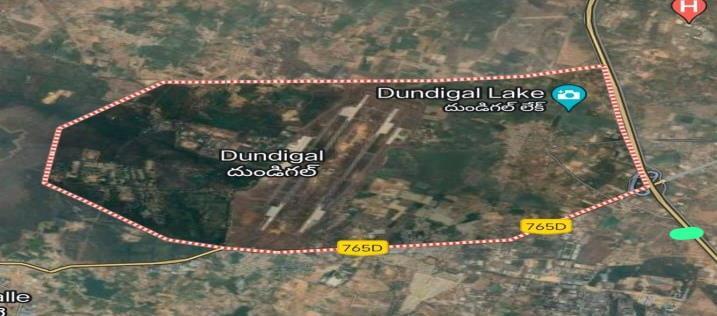
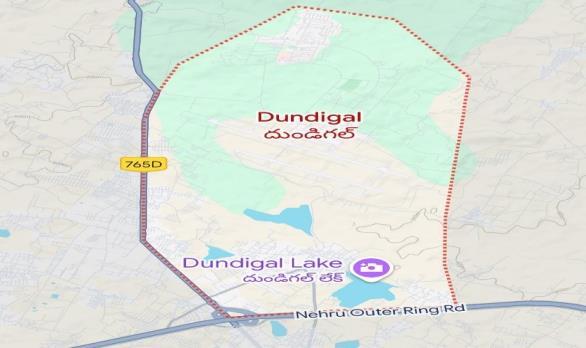
Dundigal,locatedinthenorthernpartofHyderabad,India, is a municipality in the Medchal-Malkajgiri district of Telangana. It serves as the headquarters of the Dundigal mandal within the Malkajgiri revenue division. The geographical coordinates of Dundigal are 17.5361° N latitude and 78.3881° E longitude. The study utilizes geological,terrain,andcontourmapstoanalyzethearea's rock formations, physical features, elevation changes, and landformsasshowninFigure1andFigure2.
Water samples are collected from multiple locations within the study area to capture diverse conditions. Various physical, chemical, and biological parameters such as pH, dissolved oxygen, nitrates, and heavy metals are analyzed to assess the water's suitability for drinking, irrigation, and ecosystem
International Research Journal of Engineering and Technology (IRJET) e-ISSN:2395-0056
Volume: 11 Issue: 12 | Dec 2024 www.irjet.net
support.Theresultsarethencomparedtonational or international water quality standards to identify any exceedancesorpotentialconcerns.
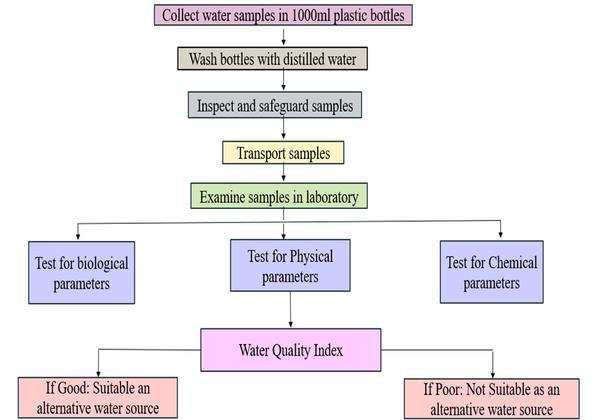
The above Figure 3 shows chart represents a general procedureforwatersample collectionandqualitytesting. Itbeginswithcollecting watersamplesin1000 ml plastic bottles,whicharethoroughlywashedwithdistilled water to avoid contamination. After collection, the samples are inspected, safeguarded, and transported to the laboratory foranalysis.
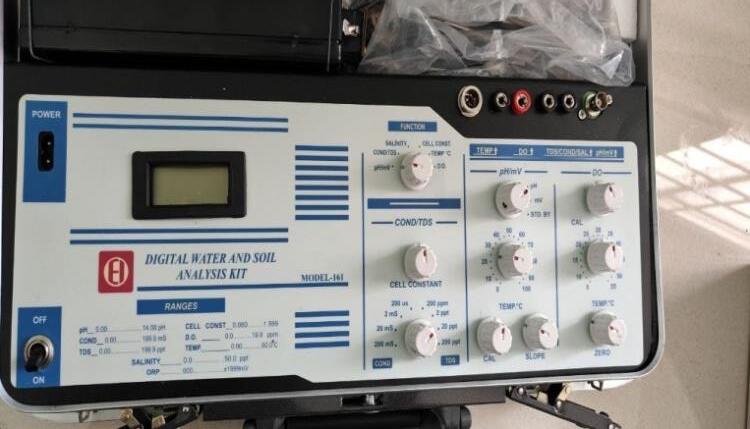
Water analyzer : A water analyzer is a device or system usedtomeasuredifferentparametersinwatertoevaluate itsquality.Theseanalyzers rangefrom portablehandheld units to advanced laboratory instruments and are designed to test various physical, chemical, and biological parameters, ensuring that water meets established safety andqualitystandards.
p-ISSN:2395-0072
Wateranalyzers performmultipleteststoevaluatewater quality, such as measuring pH, turbidity, and dissolved oxygenlevels.Theseassessmentsensurecompliancewith health and safety standards and provide vital data for environmental monitoring and treatment processes. Regular calibration and maintenance of the analyzers are essentialforensuringaccurateresults.
pH : Natural water pH usually centers around 7, often leaning alkaline due to carbonates. During the day, photosynthesis reduces CO₂, raising pH, while nighttime respiration increases CO₂, lowering it. Other influences include atmospheric exposure, temperature,andindustrialwaste.ReversepH(RpH) is the pH measured after aerating the sample to remove free CO₂, resulting in a typically more alkalinereading.
Dissolved oxygen (DO) : Dissolvedoxygen(DO)isa key water quality indicator, influenced by physical and biological factors. It enters water through air diffusion, affected by temperature, movement, and salinity, and from photosynthesis by autotrophs like phytoplankton, which rely on light and available gases. Non-polluted waters typically have saturated DO levels, but pollutants like organic waste and ammonia can deplete DO. Most fish need 2–5 mg/L ofDO,withlowlevelsposingriskstoaquaticlife.
Total Dissolved Solids (TDS) : Total Dissolved Solids (TDS) refer to the combined concentration of organic and inorganic substances dissolved in water, including minerals, salts, and ions. Commonly measured in parts per million (ppm) or milligrams per liter (mg/L), TDS levels can affect water's taste, density, and suitability for drinking, irrigation, and industrial use. High TDS levels influence the water's chemicalproperties,potentiallyimpactingaquaticlife andthesolubilityofoxygen.
Salinity : Natural waters contain various dissolved salts, including carbonates, bicarbonates, chlorides, magnesium, phosphates, potassium, iron, and manganese. High levels of dissolved solids increase water density, affect osmoregulation in freshwater organisms, and reduce gas solubility, impacting the suitability of water for drinking, irrigation, and industrial uses. This parameter is especially importantinanalyzingsalinelakes,coastalestuaries, andmarineenvironments,typicallymeasuredinppm (mg/L)orppt(g/L).
Temperature : Solar radiation and atmospheric temperature significantly influence the thermal dynamics of natural water bodies, leading to
International Research Journal of Engineering and Technology (IRJET) e-ISSN:2395-0056
Volume: 11 Issue: 12 | Dec 2024 www.irjet.net p-ISSN:2395-0072
convection currents and thermal stratification. The releaseofheatfromvarioussourcescanalsoresultin thermal pollution, altering water temperature. Temperatureisacrucialfactoraffectingchemicaland biological processes in water; an increase caaccelerate chemical reactions, decrease gas solubility, enhance taste and odor, and boost the metabolicactivityofaquaticorganisms.
For a number of water quality parameters, such as pH, totaldissolvedsolids(TDS),oxygendemand(OD),salinity, electrical conductivity, temperature, oxidation-reduction potential (ORP), biochemical oxygen demand (BOD), chemicaloxygendemand(COD),andturbidity,theTable1 belowdisplaystheBSIstandardpermissiblelimits
BSI permissible limits
Table 1 BSIpermissiblelimits
Parameters
pH - 6.5-8.5
TotaldissolvedSolids(TDS) Mg/L 500-2000
Oxygendemand(OD) Mg/L ≥5
Salinity Mg/L >600
Electricalconductivity µs/L
COD (Chemical oxygen demand) Mg/L 10-20
Turbidity NTU 5
Before using water for different purposes, it's important to analyze its quality. Water usually contains various impurities, including suspended particles, dissolved substances, and microorganisms. The below table summarizes the results of water quality tests conducted on three different samples. Each sample was tested for several key parameters: pH, Total Dissolved Solids (TDS), Biochemical Oxygen Demand (BOD), Chemical Oxygen Demand (COD), turbidity, total hardness, and chlorides. These parameters help provide a clear understanding of the water quality, and the results are explained below in Table2
Table 2 Resultsofthewatersamplescollectedfromthe lakes
pH : ThepHvaluesofDomaraPochampallyLake,Dundigal Lake, and Dundigal Cheruvu are compared to the safe standards set by the Bureau of Indian Standards (BIS). Dundigal Lake has a pH slightly above 7, Domara PochampallyLakeisaround6.8(thelowest),andDundigal Cheruvu is nearly 7.5 (the highest). All three lakes fall within the BIS acceptable range of 6.5 to 8.5, indicating that they are within safe pH levels for water quality as showninFigure5.
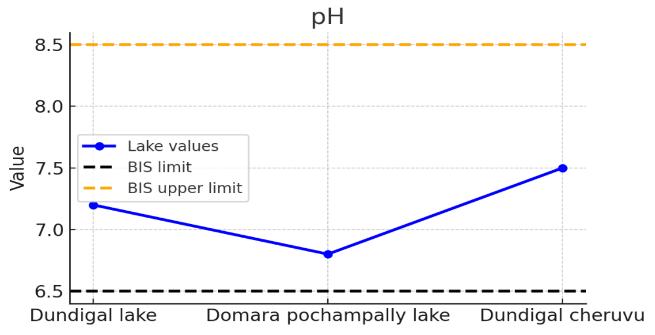
Figure 5 pHLevelsofWaterSamplesComparedto PermissibleLimit
International Research Journal of Engineering and Technology (IRJET) e-ISSN:2395-0056
Volume: 11 Issue: 12 | Dec 2024 www.irjet.net p-ISSN:2395-0072
Total Dissolved Solids : TheFigure6ShowsTDSlevelsof Dundigal Lake, Domara Pochampally Lake, and Dundigal Cheruvu are evaluated against the Bureau of Indian Standards(BIS)safedrinkingwaterstandardof500mg/L. Dundigal Lake has a TDS value of about 450 mg/L, well below the limit. Domara Pochampally Lake meets the maximum threshold at exactly 500 mg/L, while Dundigal Cheruvu'sTDSisaround470mg/L,slightlylowerbutstill close to the limit. The rising TDS levels in Domara Pochampally Lake and Dundigal Cheruvu suggest a need for monitoring to maintain water quality, as elevated TDS canaffectthetasteandoverallqualityofdrinkingwater.
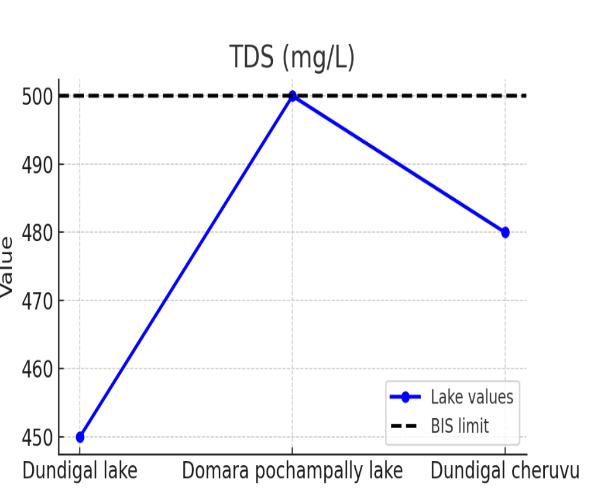
Figure 6 TDSLevelsofWaterSamplesComparedto PermissibleLimit
Biochemical Oxygen Demand (BOD): The BOD levels of Domara Pochampally Lake, Dundigal Lake, and Dundigal Cheruvu against the BIS limit of 5.0 mg/L. Domara Pochampally Lake exceeds this limit at exactly 5.0 mg/L, while Dundigal Lake is below it at approximately 4.5 mg/L. Dundigal Cheruvu has the lowest BOD value at around 3.8 mg/L, well under the allowable limit. These resultsreflectvaryingdegreesoforganiccontaminationin the lakes, with all values remaining within permissible limitsasshowninFigure7.
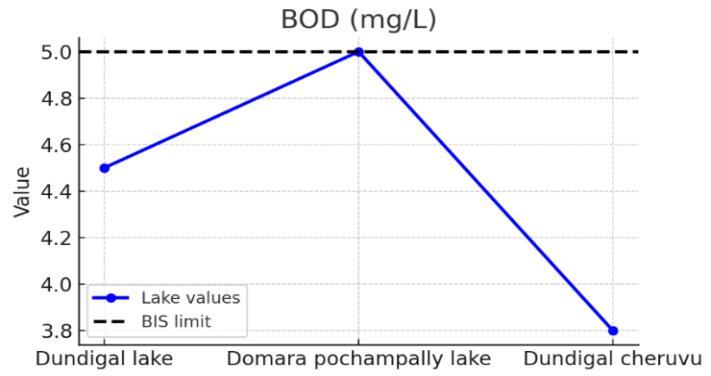
Figure 7 BODLevelsofWaterSamplesComparedto PermissibleLimit
Chemical Oxygen Demand (COD): Chemical Oxygen Demand (COD) values for Dundigal Lake, Domara Pochampally Lake, and Dundigal Cheruvu, with the BIS limitsetat250mg/L.AlllakeshaveCODlevelswellbelow this limit, with Dundigal Lake at approximately 40 mg/L, Domara Pochampally Lake slightly higher at about 50 mg/L,andDundigalCheruvuataround35mg/L asshown inFigure8.
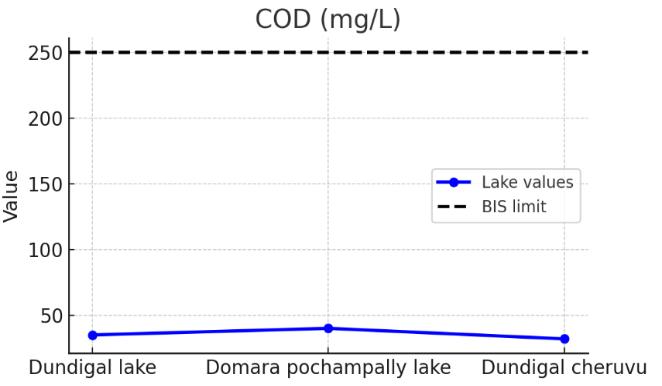
Figure 8 CODLevelsofWaterSamplesComparedto PermissibleLimit
Turbidity: The turbidity levels for 3 lakes, measured in NTU, exceed the BIS limit of 5 NTU. Domara Pochampally Lake has the highest turbidity at 12 NTU, followed by DundigalCheruvuat10NTU,andDundigalLakeat8NTU as shown in Figure 9. High turbidity indicates less clear water, caused by suspended particles, suggesting significant concentrations of suspended materials in all threelakes,whichmayindicatepollutionorsedimentation issues.
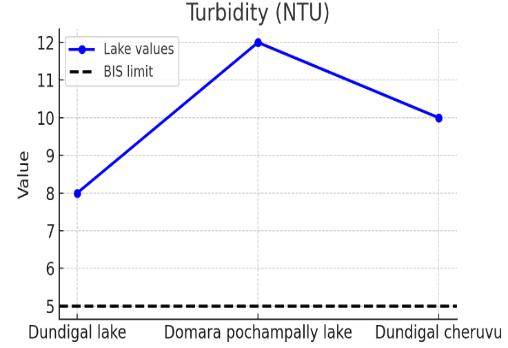
Figure 9 TurbidityLevelsofWaterSamplesComparedto PermissibleLimit
Total Hardness: The total hardness values for Dundigal Lake, Domara Pochampally Lake, and Dundigal Cheruvu are measured in mg/L and show stable levels across the lakes,withaslightdecreaseatDundigalCheruvu.Allthree lakeshavehardnesslevelswellbelowtheBISlimitof300 mg/L, indicating that the water hardness is within acceptablestandardsasShowninFigure10.
International Research Journal of Engineering and Technology (IRJET) e-ISSN:2395-0056
Volume: 11 Issue: 12 | Dec 2024 www.irjet.net p-ISSN:2395-0072
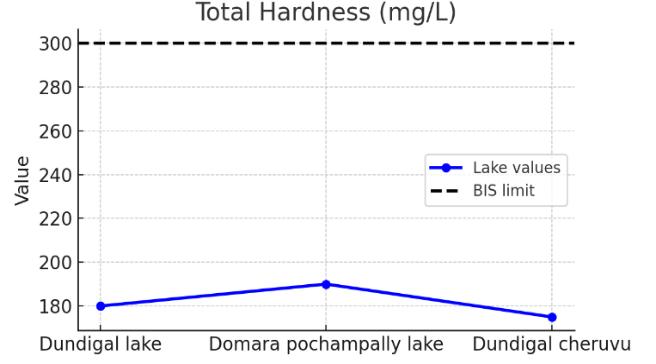
Figure 10 TotalHardnessLevelsofWaterSamples
ComparedtoPermissibleLimit
Chlorides: The Figure 11 shows chloride levels in Dundigal Lake, Domara Pochampally Lake, and Dundigal Cheruvu are measured in mg/L and are all below the BIS limit of 250 mg/L. Dundigal Lake and Dundigal Cheruvu havehigher chloridelevels near 175 mg/L, while Domara Pochampally Lake shows a lower concentration of about 125 mg/L. Overall, none of the lakes approach the upper safety limit, indicating relatively low chloride pollution in thesewaterbodies.
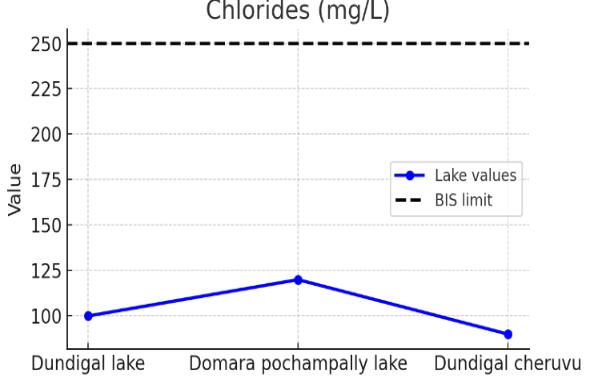
Figure 11 ChloridesLevelsofWaterSamplesComparedto PermissibleLimit
Dissolved Oxygen: Dissolved oxygen levels in Dundigal Lake, Domara Pochampally Lake, and Dundigal Cheruvu are all above the BIS minimum limit of 5.0 mg/L, indicating good water quality for aquatic life. Dundigal Lake has the highest level at about 7.5 mg/L, followed by Domara Pochampally Lake at around 7.0 mg/L, while DundigalCheruvu'slevelsaresimilartothoseofDundigal Lake as shown in Figure 12. These results suggest stable and adequate oxygen levels across the lakes, supporting healthieraquaticecosystems
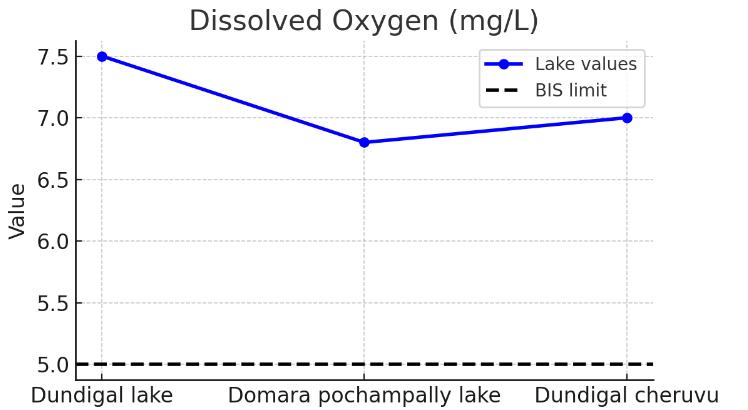
Figure 12 DissolvedOxygenLevelsofWaterSamples
ComparedtoPermissibleLimit
Temperature: Temperature readings from three lakes show that Dundigal Lake is at approximately 25.6°C, Domara Pochampally Lake is slightly higher at around 26.1°C,andDundigal Cheruvu hasa temperature of about 25.7°C. These measurements highlight the temperature variationsamongthelakesasShowninFigure13.
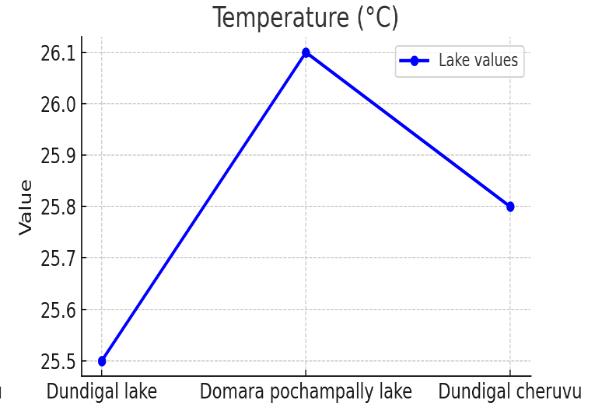
Figure 13 ComparativeWaterTemperaturesofLocal Lakes
Sailinity : TheFigure14Showssalinitylevelsofthethree lakes are as follows: Dundigal Lake at approximately 0.4 ppt, Domara Pochampally Lake at around 0.5 ppt, and Dundigal Cheruvu at about 0.3 ppt. All measurements are well below the Bureau of Indian Standards (BIS) limit of 1.0ppt,indicatingthatsalinitylevelsinallthreelakesare withinacceptablewaterqualityranges.
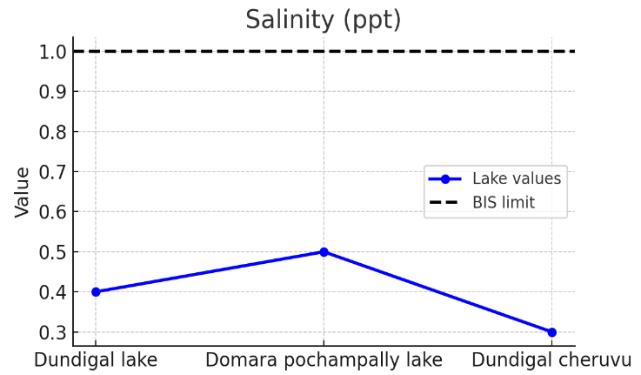
Figure 14 ComparisonofSalinityLevelsinDundigal LakeswithBISStandard
International Research Journal of Engineering and Technology (IRJET) e-ISSN:2395-0056
Volume: 11 Issue: 12 | Dec 2024 www.irjet.net p-ISSN:2395-0072
Cell Constant:Thecellconstantvaluesforthethreelakes are as follows: Dundigal Lake at approximately 1.1, DomaraPochampallyLakeat1.0,andDundigalCheruvuat 1.2 as shown in Figure 15. This variation indicates differences in the water's conductivity, with Dundigal Cheruvu exhibiting the highest conductivity potential amongthethreelakes.
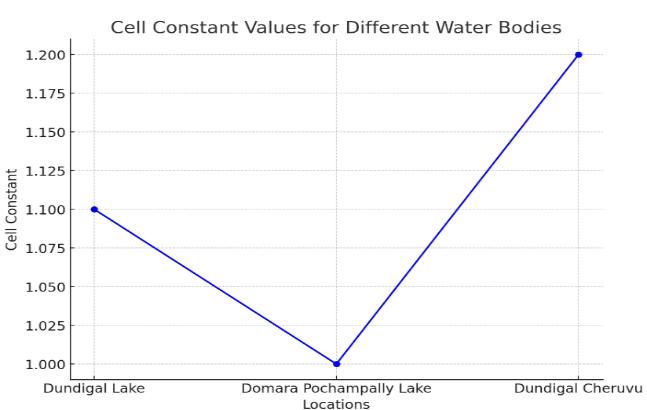
Figure 15 VariationinCellConstantvaluesAcross DundigalLakes
Water Quality Index (WQI): Water Quality Index (WQI) isanumericalrepresentationthathelpsassesstheoverall quality of water based on various water quality parameters. It simplifies complex data into a single value, makingiteasiertounderstandthegeneralconditionofthe water. The WQI value reflects the suitability of water for various uses such as drinking, swimming, or irrigation. Higher WQI values indicate poorer water quality, while lower values suggest better water quality.The general formulaforcalculatingtheWaterQualityIndex(WQI)is
indicatesitsrelativehealth.Conversely,DundigalCheruvu exhibits its unique water quality characteristics with a WQIofroughly88.88.
Classification:
WQI is classified into ranges that show the water quality state, with minor variances based on the region or method.WaterwithaWQIof0–25istypicallyregardedas being of excellent quality, clean, and acceptable for drinking and most other applications without treatment. Good water quality, safe for most uses yet needing only modesttreatmentfordrinking,isindicatedbyaWQIof26 to 50. Fair water is defined as having a WQI of 51 to 75, indicating moderate contamination and requiring treatment for household or drinking uses. With a WQI of 76 to 100, poor water quality is contaminated, unfit for human consumption, and necessitates extensive treatment. When the WQI is greater than 100, it means that the water is extremely contaminated, dangerous to human health, and needs to be thoroughly treated before itcanbeused.
Dundigal Lake (WQI = 83.99), Domara Pochampally Lake (WQI = 97.99), and Dundigal Cheruvu (WQI = 88.88) are all classified as having "Poor Water Quality" according to the water quality index (WQI) analysis. According to this categorization, these lakes' water is unfit for human consumption and needs to be thoroughly treated before beingused.
Qniscalculatedas:
Where:
Vn =Measuredvaluefortheparameter.
Sn = Standard permissible value for the parameter (basedonguidelineslikeBISorWHO).
Vid = Ideal value for the parameter (in most cases for pollutants,thisvalueis0orapermissiblelimit).
According to the Water Quality Index (WQI) analysis, Dundigal Lake's water quality level is indicated by an approximate WQI of 83.99. In a similar vein, Domara Pochampally Lake's greater WQI of roughly 97.99
In conclusion, water quality testing is essential for assessing the safety of sources like Dundigal Lakes for various uses, including drinking. The Water Quality Index (WQI) indicates that the current conditions of all three lakes Dundigal Lake, Domara Pochampally Lake, and Dundigal Cheruvu are unsatisfactory for potable water due to elevated Total Dissolved Solids (TDS), Biochemical OxygenDemand(BOD),andturbiditylevels.Theseexceed acceptable limits, placing them in the Poor Water Quality category, which necessitates significant treatment before consumption. High TDS affects taste and health, while elevated BOD points to organic pollution that can harm aquatic life. Increased turbidity suggests poor water clarity,whichcanharbor pathogens.Therefore,treatment methodsareessentialtoreduceTDS,BOD,andturbidityto meet drinking water standards, along with regular monitoring to ensure safe consumption and ecosystem health.
[1]. N.Dinisha,P.Priyanka,K.V.Pavan,R.Premsudha,M. D. B. Ahmed, and G. Tirupathi, "Assessment of
© 2024, IRJET | Impact Factor value: 8.315 | ISO 9001:2008 Certified
International Research Journal of Engineering and Technology (IRJET) e-ISSN:2395-0056
Volume: 11 Issue: 12 | Dec 2024 www.irjet.net p-ISSN:2395-0072
Groundwater Quality around Nagole in Hyderabad," Int. J. Adv. Res. Sci. Commun. Technol.,vol.3,no.6,pp. 537–547,Apr.2023,doi:10.48175/IJARSCT-5460.
[2]. S. P. Gorde and M. V. Jadhav, "Assessment of water quality parameters: A review," International Journal of Engineering Research and Applications,vol.3,no.6, pp.2029–2035,Nov.–Dec.2013
[3]. R. Loudya, M. V. Kunchepu, and A. Mareddy, "Urban SurfaceWaterBodiesQualityMappingUsinganOpen Source Dataset: A Case Study of Hyderabad, Telangana, India," Int. J. Innov. Res. Technol., vol. 10, no. 1, pp. 1520–1525, Jun. 2023, doi: 10.13140/RG.2.2.21284.45442
[4]. M. Lingaswamy,"Impact assessment of industrialization on the groundwater quality of the Jeedimetla Industrial Area, Hyderabad, Telangana, India," in Proceedings of National Seminar on SocioEnvironmental Issues and Sustainable Development, Acharya Nagarjuna University, March 2023, ISBN: 978-93-95944-40-3, pp. 376–385Loudya, R., et al. (2023). Impact of urbanization on surface water bodies in Hyderabad: Water quality and accessibility challenges.UrbanWaterJ.15(2):123132.
[5]. S.KumarR.,V.S.S.Sudheer Ch.,V.Ramana G.,andS. Ramya N., "Comparative Study of Physical and ChemicalParametersofLakesinMedchalDistrict,"in Advanced Modelling andInnovations in Water Resources Engineering (AMIWRE), Jamshedpur, India, Feb.2021.
[6]. R. Premsudha et al., “Evaluation of Physico-Chemical Parameters to Assess Hussain Sagar and Saroor Nagar Lake Water Quality in Hyderabad, Telangana, India,” Int. J. Adv. Res. Sci. Commun. Technol.,vol.2,no. 1, pp. 543–547, Feb. 2022, doi: 10.48175/IJARSCT2585
[7]. R. Potharaju and M. Aruna, “Analysis of Physico Chemical Parameters of Medchal Lake in Telangana State,” Int. J. Sci. Res. Sci. Technol., vol. 8, no. 2, pp. 369–381, Mar.-Apr. 2021, doi: 10.32628/IJSRST218257.
[8]. K. V. Pavan Kumar et al., “Assessment of Surface and Ground Water Quality in Hyderabad,” Int. J. Adv. Res. Sci. Commun. Technol.,vol.3,no.7,pp.270–275,Apr. 2023,doi:10.48175/IJARSCT-9506
[9]. S.JaganathanandJ.Chapla,"Water quality monitoring and ecosystem preservation in Khazipally Lake, Telangana," Lake Res., vol. 42, no. 6, pp. 1229–1245, 2023.
[10]. S.SharmaandR.Kaur,"Waterqualityassessmentof natural lakes and its importance: An overview," ResearchGate,Feb.2020.
[11]. A. Devi, "Evaluation of water quality in Hyderabad: Analysis of sources from hostels, canteens, and hospitals," Environ. Monit. Assess., vol. 193, no. 3, pp. 675–682,2021.
[12]. C. Prakasam, R. Saravanan, M. K. Sharma, and V. S. Kanwar,"Assessment and distribution of water quality of Pandoh river basin (PRB), Himachal Pradesh, North India," Appl.WaterSci.,vol.11,p.137,2021.
[13]. M. K. Jha, M. A. Jenifer, and A. Shekhar, "Evaluating groundwater quality with a hybrid fuzzy-GIS-based water quality index for use in drinking water supplies," WaterRes.,vol.179,p.115867,2020.
[14]. S. V. Mukate, D. B. Panaskar, V. M. Wagh et al., "Understanding the impact of agricultural and industrial land uses on groundwater quality in a semiarid region of Solapur, India," Survivable Environ., vol.22,pp.3207–3238,2020.
[15]. K. Sangani and K. Manoj, "Water quality index for surface water quality assessment: Tapi river, Gujarat, India," Int. J. Adv. Res., vol. 8, no. 7, pp. 1528–1534, 2020.
[16]. R. Premsudha et al., "Water quality evaluation of Hussain Sagar and Saroor Nagar lakes, Hyderabad," Int. J. Environ. Sci. Technol.,vol.19,no.1,pp.231–245, 2022
© 2024, IRJET | Impact Factor value: 8.315 | ISO 9001:2008
|