
International Research Journal of Engineering and Technology (IRJET) e-ISSN: 2395-0056
Volume: 13 Issue: 02 | Feb 2026 www.irjet.net p-ISSN: 2395-0072
International Research Journal of Engineering and Technology (IRJET) e-ISSN: 2395-0056
Volume: 13 Issue: 02 | Feb 2026 www.irjet.net p-ISSN: 2395-0072
Mr. Sandeep Supalkar1 , Santosh k.pandit2 , Jay V. Gechand3 , Pranit R.Manchekar4 , Aditya D.Gaikwad5
Diploma students Department of Mechanical Engineering, Thakur Polytechnic Kandivali (East), Maharashtra, India.
Abstract- The growing demand for sustainable and renewable energy has increased the importance of biomass- based fuels. Biomass pellets are an efficient form of biofuel made from agricultural and organic residues, providing an eco-friendly alternative to conventional fossil fuels. However, the calorific value (CV) and durability of raw biomass pellets are often limited due to their high moisture content and weak binding strength.
This study focuses on a techno-economic analysis of using Jatropha oil as a binder and energy booster in biomass pellets. Jatropha oil, being rich in carbon and having good flammable properties, enhances the calorific value and mechanical strength of the pellets. Experimental trials were conducted by blending controlled quantities of Jatropha oil with biomass feedstock, followed by densification under optimal pressure and temperature.
The results indicated a significant improvement in pellet density, durability, and calorific value compared to untreated biomass pellets.The study concludes that Jatropha oil is a promising additive for improving both the energy and economic efficiency of biomass pellets, making them more suitable for clean and sustainable energy generation.
Keywords: Biomass Pellets, Jatropha Oil, Calorific Value,Biofuel, Techno-Economic Study, Renewable Energy.
Inrecentyears,thedemandforrenewableandsustainablesourcesofenergyhassignificantlyincreasedduetothedepletion of fossil fuels and rising environmental concerns. Biomass has emerged as one of the most promising renewable energy resourcesbecauseitisabundantlyavailable,carbon-neutral,andcapableofbeingreplenishedwithinarelativelyshortperiod comparedtoconventionalfossilfuels.Theutilizationofbiomassforenergygenerationnotonlyhelpsreducedependencyon non-renewablefuelsbutalsocontributestoloweringgreenhousegasemissions.
Biomass pellets are a compact, densified form of biofuel produced from agricultural residues, forestry waste, and organic materials. These pellets offer several advantages such as ease of handling, transportation, uniform size, and higher energy density.However,thenaturallimitationsofrawbiomass suchashighmoisturecontent,lowcalorificvalue,andpoorbinding strength restrictitswidespreadapplicationforefficientenergygeneration.
To overcome these challenges, various methods have been explored to enhance the calorific value (CV) and mechanical properties of biomass pellets. In this study, Jatropha oil has been selected as a binder and energy booster due to its high carbon content, good flammability, and natural adhesive properties. The integration of Jatropha oil into biomass pellets improves the binding strength, reduces moisture absorption, and increases the calorific value, making the pellets more efficientforthermalapplications.
The use of biomass as a renewable source of energy has gained significant attention over the past two decades due to its potentialtoreplacefossilfuelsandreducecarbonemissions.Severalresearchershaveexploreddifferentmethodstoimprove thecalorificvalue,density,anddurabilityofbiomasspelletsandbriquettes.
International Research Journal of Engineering and Technology (IRJET) e-ISSN: 2395-0056
Volume: 13 Issue: 02 | Feb 2026 www.irjet.net p-ISSN: 2395-0072
1. Biomass as an Energy Source:
According to various studies, biomass such as rice husk, sawdust, sugarcane bagasse, and cow dung can be effectively usedforpelletization.However,thecalorificvalueandmechanicalstrengthofthesepelletsdependonthetypeofbinder usedandthemoisturecontentduringproduction.
2. Role of Binders:
ResearcherslikeSharmaetal.(2018)andKumaret al.(2020)havereported that adding natural binders such as starch, molasses, and vegetable oils significantly improves the compactness and combustion properties of briquettes. The bindernotonlyholdstheparticlestogetherbutalsoenhancesignitionandburningcharacteristics.
3. Jatropha Oil as a Binder:
Jatropha oil, a non-edible vegetable oil, has been studied for its excellent adhesive and high-energy properties. Studies by Patel and Singh (2021) revealed that blending a small percentage of Jatropha oil (around 5–10%) in biomass briquettesimprovedthecalorificvalueby15–20%andreducedthebreakageduringhandling.
Itshighcarbonandhydrogencontentmakeitapotentialenergyboosterandeco-friendlybinderalternativetosynthetic resins.
4. Economic and Environmental Studies:
ResearchbyRavindraetal.(2019)emphasized the techno-economic feasibility of using agricultural residues with natural binders, showing lower production costs and higher sustainability. Using Jatropha oil also romotes the use of locally available,renewablematerials,supportingruralindustriesandreducingdependenceonfossilfuels.
5. Research Gaps:
Althoughmanystudiesfocusonbiomassbriquetting,limitedworkhasbeendoneoncombiningJatrophaoilasboth a binder and energy enhancer. Therefore, the presentstudyaims tobridgethisgap byanalyzingitstechno-economic potentialinbiomasspelletproduction.
I. Material Selection
Selectingappropriatematerialsisoneofthemostimportantstepsinbiomasspelletproduction.
The materials are chosen based on factors such as availability,cost-effectiveness,environmentalcompatibility, and fuel efficiency.Inthisproject,twomajorcategoriesof materialsareselected
(1) Biomass raw material and (2) Binder and energy booster.
1. Biomass Raw Material
Theprimarybiomassmaterialsusedinthisprojectarericehusk,sawdust,andsugarcanebagasse. These materials are easily available in rural and industrialareasandarerelativelylow-cost.
Characteristics of selected biomass materials:
1.They are renewable and environmentally friendly sources ofenergy.
2.Theyproduceloweremissionscomparedtofossilfuels.
3.Their calorific value generally ranges between 3000–4000kcal/kg. Due to their low density, pelletization (densification) isrequiredtoenhancehandlingandcombustionefficiency
International Research Journal of Engineering and Technology (IRJET) e-ISSN: 2395-0056
Volume: 13 Issue: 02 | Feb 2026 www.irjet.net p-ISSN: 2395-0072
Inthisstudy,Jatrophaoilisusedasbothabinderandanenergybooster. Jatrophaoilisanon-ediblevegetableoilobtainedfromtheseedsoftheJatrophacurcasplant. It has been selected due to its high flammability and strong adhesive properties, which improve both the strength and energycontentofthepellets
Key properties of Jatropha oil:
1.Containsahighpercentageofcarbonandhydrogen,makingitanexcellentenergysource.
2.Actsasanaturaladhesive,improvingthemechanicalstrengthanddurabilityofthepellets.
3.Whenmixedintheproportionof5–10%byweight,itincreasesthecalorificvalueofthebiomasspelletssignificantly.
4. Itisarenewable,biodegradable,andeco-friendlyalternativetochemicalbinders.
ThissectiondescribesthesystematicprocedureadoptedforpreparingandtestingbiomasspelletsusingJatrophaoilasa binder and energy enhancer. The aim was to evaluate the performance improvement in terms of calorific value, mechanicalstrength,andcombustionefficiency
1. Raw Material Preparation
Biomassresiduessuchasricehusk,sawdust,andsugarcanebagassewerecollectedfromlocalindustries.Thesematerials were sun-dried for 24–48 hours to reduce the moisture content below 10%. The dried biomass was then ground into finepowder(lessthan2mmsize)toensureuniformmixingandbetterpelletization.
2. Blending with Jatropha Oil
DifferentsampleswerepreparedbymixingJatrophaoilinvaryingproportions(0%,5%,10%,and15%byweight)with thepowderedbiomass.Themixturewasmanuallystirreduntiltheoilwasevenlydistributed.Jatrophaoilactedasboth abinder increasingthecompactnessofpellets andanenergybooster,enhancingtheoverallcalorificvalue.
3. Pelletization Process
The prepared mixture was fed into a pelletizing machine, whereitwascompressedunderhighpressure(200–300bar) without using any external heating source. The produced cylindrical pellets had an average diameter of 6–8 mm and a lengthof20–30mm.Afterpelletization,pelletswerecooledandair-driedtoensuredimensionalstability.
4. Testing and Characterization
Thepreparedpelletsweretestedforvariousphysicalandthermalproperties:
1.CalorificValue(CV):Measuredusingabombcalorimetertodetermineheatcontent.
2. Density: Evaluatedtocheckthecompactnessandstrengthofpellets.
5 Performance Evaluation
Theperformanceofeachpelletsamplewascomparedbasedonitscalorificvalueandstrength.Resultsindicatedthatthe 10% Jatropha oil blend produced the most efficient pellets with higher energy output and improved durability comparedtoothersamples.
6 Combustion Performance Study
Combustion characteristics of the produced pellets were analyzed under controlled burning conditions. The Jatropha oil–mixedpelletsexhibitedsmoothignition,stableflame, anduniformheatreleasethroughoutthecombustionprocess. Theignition time was shorter, andsmoke generation was significantly reduced compared tountreated biomass pellets.
International Research Journal of Engineering and Technology (IRJET) e-ISSN: 2395-0056
Volume: 13 Issue: 02 | Feb 2026 www.irjet.net p-ISSN: 2395-0072
These findings confirm that the inclusion of Jatropha oil not only enhances the calorific value but also improves combustionstabilityandenvironmentalperformance,makingthepelletssuitableforsustainableenergygeneration.
7. Summary
The methodology demonstrates that the controlled addition of Jatropha oil effectively enhances both the physical and thermalcharacteristicsofbiomass pellets.This approachoffers alow-cost,eco- friendly, andscalable solutionfor clean energyproduction.
3.Moisture Content: Determined byoven-drying method toensuredryness.
4.AshContent:Measuredaftercombustion toassesscombustioncleanliness.
5.MechanicalStrength:Tested toobservethepellet’sresistancetobreaking.
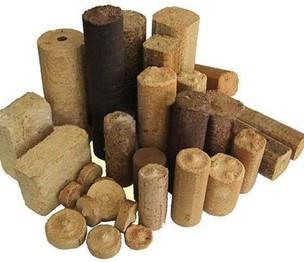
Fig.1showsthebiomasspelletspreparedbymixingrawbiomasswithacontrolledpercentageofJatrophaoil,followed bypelletizationunderhighpressure.
IV. TECHNO-ECONOMIC ANALYSIS
Techno-economic analysis (TEA) is a systematic method used to understand whether a technology or process is technicallyfeasibleandeconomicallypracticalatreal-world scale.Forthepresentstudy,TEAfocusesonevaluatinghow the addition of Jatropha oil as a binder and energy booster affects theoverallperformance and costof biomass pellets. The goal is to determine whether this modification provides measurable technical improvements and whether those improvementsareworththeinvestment.
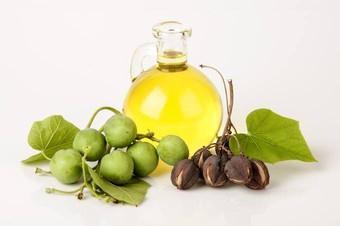
Fig.2illustratestheJatrophaoilemployedasabinderandenergybooster,whichcontributestoimprovedcalorific valueandpelletstrength,therebyinfluencingthetechno-economicperformance.
International Research Journal of Engineering and Technology (IRJET) e-ISSN: 2395-0056
Volume: 13 Issue: 02 | Feb 2026 www.irjet.net p-ISSN: 2395-0072
The use of a small proportion of Jatropha oil increases energy density while marginally affecting the production cost, makingtheprocesseconomicallyfeasible.
a. Technical Feasibility
Thefirstpartof TEAexamines thetechnicalperformanceof pelletsenhancedwith Jatrophaoil.Thisincludesanalyzing how the oil influences pellet strength, combustion behavior, and energy value. During experiments, Jatropha oil consistentlyimprovedthecalorificvalue,helpedreducedustformation,andenhancedthedurabilityofthepellets.These improvements confirm that the process is technically successful because the pellets produced are stronger, burn more uniformly, and offer higher heat output than standard biomass pellets. This indicates that integrating Jatropha oil into thepelletingprocessisnotonlytechnicallypossiblebutalsohighlyeffective.
b. Process Requirements
The second stage assesses the practical needs of the system. This includes evaluating equipment compatibility, raw materialavailability,and thesimplicity ofoperating theprocess. Jatrophaoil does notrequireanyadvancedmachinery or modification of existing pellet equipment. It can be added using simple mixing methods, making the process convenientforsmall-scaleorruralindustries.
Biomassresiduessuchassawdust,agriculturalwaste,andforestby-productsarealreadywidelyavailable,andJatropha oil can be sourced locally in many regions. Since the process does not depend on rare or expensive materials, it is practicalandeasytoimplement.
Economicanalysisexamineswhethertheprocess is financially viable in real practice. The cost components include raw biomass, Jatrophaoil, electricity,labor,andbasicequipmentuse.While asmallamountof Jatrophaoiladdssomecost,it also increases the calorific value of the pellets, which can justify a higher selling price in the market. Whenevaluated overall, the cost increase is relatively small compared to the performance gain. For low-budget or village-level pellet producers, this method remains affordable and beneficial. Over time, the use of improved pellets can generate higher revenueduetobetterfuelefficiencyandcustomerpreference.
d. Market Potential
The enhanced pellets have strong market potential because industries and households increasingly prefer cleaner and more efficient fuels. Pellets with higher calorific value can replace traditional biomass, coal, or firewood, offering both economic and environmental advantages. Such pellets are particularly suitable for small boilers, heating systems, and rural cooking applications. Since the global and national demand for renewable energy is continuously rising, these modifiedpelletshaveopportunitiesinbothdomesticandexportmarkets.
e. Cost–Benefit Ratio
The cost–benefit ratio compares the extra cost of adding Jatropha oil with the benefits gained. In most cases, the performance improvements such as higher energy output, better combustion, and improved durability offer more value than the additional expense. This makes the cost–benefit ratio favorable. Users can obtain more heat from the samequantityofpellets,leadingtolowerfuelconsumptionovertime.Thisimprovedefficiencycompensatesforthecost oftheoil,makingtheprocesseconomicallyjustified.
f. Overall Assessment
Overall, the techno-economic analysis shows that enhancing biomass pellets with Jatropha oil is both technically effective and economically attractive. The process requires minimal equipment modifications, uses locally available materials, and delivers measurable improvementsinpelletquality.Theinvestmentislow,the benefits are high, and the
International Research Journal of Engineering and Technology (IRJET) e-ISSN: 2395-0056
Volume: 13 Issue: 02 | Feb 2026 www.irjet.net p-ISSN: 2395-0072
method is suitable for small, medium, and large pellet manufacturers. Therefore, this approach is recommended as a practicalandsustainabletechniquethatsupportscleanerenergyproductionand promotesrenewableresources.
Conclusion
This study successfully demonstrates the techno-economic feasibility of using Jatropha oil as a binder and energy boosterinbiomasspellets.TheadditionofJatrophaoilsignificantlyimprovespelletqualityby enhancingcalorificvalue, mechanical strength, ignition behavior, and combustion stability. These improvements make the pellets more efficient andreliablecomparedtoconventionalbiomasspellets.
From a technical perspective, the process is simple and does not require complex equipment or advanced technology. The materials used are easily available, and the pelletization process can be carried out at laboratory, pilot, or small industrial scale. The enhanced pellets show better durability, reduced ash formation, and cleaner burning characteristics,confirmingtheeffectivenessofJatrophaoilasafunctional additive.
The techno-economic analysis indicates that the improvement in fuel performance justifies the additional cost of Jatropha oil. The overall production cost remains low, while the increased energy output and improved market value make the process economically viable. This method is suitable for small-scale producers, rural energy systems, and emergingrenewablefuelmarkets.
In conclusion, the use of Jatropha oil in biomass pellets represents a sustainable, cost-effective, and environmentally friendlyapproachfor cleanenergy generation. The findings of this study support the potential of Jatropha-based pellet technologyasapromisingalternativetoconventionalsolidfuelsandcontributetothedevelopmentofrenewableenergy solutionsforfutureapplications.
References
1. Demirbas, A. (2004). Combustion characteristics of different biomass fuels. Progress in Energy and Combustion Science,30(2),219–230.
2. Kaliyan, N., & Morey, R. V. (2009). Factors affecting strength and durability of densified biomass products. BiomassandBioenergy,33(3),337–359.
3. Mani, S., Tabil, L. G., & Sokhansanj, S. (2006).Effectsof compressiveforce,particlesize and moisture content on mechanicalpropertiesofbiomasspellets.BiomassandBioenergy,30(7),648–654.
4. Demirbas, A. (2009). Biorefineries: Current activities and future developments. Energy Conversion and Management, 50(11), 2782–2801.
5. Jain, S., Sharma, M. P., & Rajvanshi, S. (2011). Acid base catalyzed transesterification kinetics of waste cookingoil.FuelProcessingTechnology,92(1),32–38.
6. Singh,R.N.,Vyas,D.K.,Srivastava,N.S.L.,&Narra,M.(2008).SPRERIexperienceonholisticapproachtoutilizeall partsofJatrophacurcasfruitforenergy.RenewableEnergy,33(8),1868–1873.
7. Obernberger, I., & Thek, G. (2010). The pellet handbook: The production and thermal utilisation of pellets. EarthscanPublications,London.
8. VanLoo,S.,&Koppejan,J.(2008).Thehandbookofbiomasscombustionandco-firing.Earthscan,London.
9. Kumar, A., Jones, D. D., & Hanna, M. A. (2009). Thermochemical biomass gasification: A review of the currentstatusofthetechnology.Energies,2(3),556–581.
International Research Journal of Engineering and Technology (IRJET) e-ISSN: 2395-0056
Volume: 13 Issue: 02 | Feb 2026 www.irjet.net p-ISSN: 2395-0072
10. IRJET Editorial Board. (2022). Guidelines for biomass energy research and techno-economic analysis. InternationalResearchJournalofEngineeringandTechnology(IRJET).
2026, IRJET | Impact Factor value: 8.315 | ISO 9001:2008 Certified Journal | Page76