
International Research Journal of Engineering and Technology (IRJET) e-ISSN: 2395-0056
Volume: 12 Issue: 01 | Jan 2025 www.irjet.net p-ISSN: 2395-0072

International Research Journal of Engineering and Technology (IRJET) e-ISSN: 2395-0056
Volume: 12 Issue: 01 | Jan 2025 www.irjet.net p-ISSN: 2395-0072
Prof.
N G. Ajjanna1 , Dr.H.B. Suresh2, Dr.L.K. Sreepathi3 .
1Asst.professor, Ph.D. scholar, Dept. of E&E, JNNCE, Shimoga, Karnataka, India 2Professor, Dept. of E&E, JNNCE, Shimoga, Karnataka, India. 3visiting professor, IIT Dharwad, Karnataka, India.
Abstract- Electricalenergyiscrucialfor dairyindustrysince milk is susceptive to degradation. To meet the increasing demand,thecleanandsustainableenergythebiomassisbeing considered as an alternative sustainable renewable energy source. Among the various methods for biomass conversion, biomass gasification is a key process for converting biomass into gaseous fuel for heat and electrical power generation. This researchpaper delves intotheestimationand analysis of electrical energy consumption in the dairy industry and evaluates the economic feasibility of integrating biomass gasifiers with the existing diesel generator for both OFF and ON Grid applications. The study was carried out at Chitradurga Davanagere Shimoga Milk Union Limited (CHIDASHIMUL) dairy industry, Machanahalli, Shimoga district, Karnataka, India. The findings of the study and analysis indicate that the annual electrical energy consumption of dairy industry is 35,42,800 units. By integrating a 1500 KVA biomass gasifier with the existing 1500KVADieselgenerator,thedieselconsumptionisreduced by 80 % and supplies power to the ON/OFF grid. Further, by installing 1500 KVA biomass gasifier, the estimated running cost savings is Rs 15 Lakhs/annum and payback period is 9 years.Additionally,CO2 emissionsareprojectedtodecreaseby 43 tonnes/annum. The study results were shared with the Chitradurga Devanagere Shimoga Milk Union Limited dairy industry for their consideration regarding implementation.
Keywords- Biomass Gasifiers, CO2 emission, Dairy industry,Paybackperiod.
TheCHIDASHIMULdairyindustryislocatedatMachanahalli, Shimogadistrict,Karnataka,India,handles2,50,000litersof milk per day, consumes an average electrical energy of 2,95,000units/month.CHIDASHIMULdairyindustryhasan annualturnoverofRs.1,03,509Croreduringtheyear202324withanannualelectricalenergychargesofRs8.5crores. IndairyIndustryparamountimportanceinsupplyingmilk daily to the publics and in providing income for farmers. Largequantityofmilkneedtobeprocessed,packed,stored anddistributedeveryday,requiringasignificantamountof electricalenergy.Energyislargelydependentonthefossil
fuels do fill the gap between the energy consumption and energyproduction[1]andalsoEffectiveenergymanagement indairyindustrywillhelptosaveelectricity,benefitingthe utility, customer and society as a whole. In the event of a powergridfailure,immediateaccessofelectricalenergyis essentialforcriticalloads.Dieselgeneratorsarecommonly installedinalldairyindustrytoprovidebackuppower,as theycanbestartedandstoppedquicklywithoutanyissues. However, the availability of diesel is depleting, costly and causing environmental pollution, there is a need to find alternative solutions to reduce reliance on diesel consumption and maintain reserves for future needs. Biomass gasification is one of the most efficient way to converttheenergysubmergedinbiomass.Inthelongterm, the use of this new technology will reduce the too-high pressure on natural resources, especially in developing countries [2] Lowering the compression ratio and introducinga combustionsystemthatutilizesspark plugs can enable diesel engines to operate using producer gas. Another approach is to run the diesel engine in dual fuel mode,wheretheengineusesdieselfor0to80%ofitsoutput powerwhileusingproducergas.Anadditional20%ofdiesel isneededtoignitethefuelmixture.Intheeventofafailure ormalfunctionoftheabovemethods,theenginecanrevert tonormaldieseloperation.Thisprovidesaddedflexibility and reliability [3]. 75 KVA biomass gasifier was demonstratedthat,thedualfuelgasifiercanbeoperatedfor 465hours,outofwhich190hourscontinuously.Thegasifier was operated automatically 24 hours a day & only small adjustmentsofthefeedingratewerenecessaryonceortwice aday.Theoperationwassuccessful,andtheoutputwasas expected[4].
This research work explores the integration of Biomass gasifierwithexistingdieselgeneratorindualfuelmode.This technologyaimstoreducepollutionandprovideeconomic benefits and also Fixed bed gasifiers are the most studied andsuitable reactorsfor biomassgasificationduetotheir simpleoperationandeasyconstruction[13]. Acasestudy was conducted at CHIDASHIMUL dairy industry, Shimoga district,Karnataka,India,whereprimarydata iscollected. Theprimarydataincludesthetechnicalspecificationsofthe existing diesel generator set such as KVA rating, rated
Volume: 12 Issue: 01 | Jan 2025 www.irjet.net
voltage, rated current, rated frequency, diesel consumption/month, electrical energy generated in units and number of hours of operation. Further, the electrical energy consumption from the grid, sanctioned demand, rating of the existing transformer, tariff paid towards electrical energy and major load details were collected. Based on the data collected, Economic Analysis has been made to arrive the rating of the biomass gasifier to be installed and its economic feasibility to integrate biomass gasifiers with diesel generators for both OFF/ ON Grid applications. The analysis includes the different stages of operationofthebiomassgasifierforgasproduction[9]and theuseofgasinmultiplemodes,suchasdualfuelmodewith dieselandproducergasata20:80ratioandmonofuelmode withdieselonly.Thebiomassgasifiersinstalledforcaptive power generation in medium and large scale industries acrossIndiawerealsodiscussed.
Fortheanalysisofintegrationofbiomassgasifierwiththe existingdieselgeneratorconnectedtoON/OFFgridtomeet theelectricalenergyrequirement,Primarydataiscollected from CHIDASHIMUL dairy industry and secondary data is collected from 75 KVA biomass gasifier installed at JNN CollegeofEngineering,Shimoga,Karnataka.India. Primary Data: Table1: Primary data details [7]
Primary data is collected to understand the major equipmentsavailableandelectricalenergyconsumptionand cashflowintheorganizationandtodecidetheratingofthe biomassgasifierrequiredfortheindustry[7].
Electrical energy generated in units by a 75 KVA biomass gasifier installed at JNN college of engineering, Shimoga, Karnataka.India isasshownintable2.
Table2: Electricalenergygeneratedbybiomassgasifier installedatJNNCE,Shimoga[6]
Volume: 12 Issue: 01 | Jan 2025 www.irjet.net
Table3: Electricalenergyconsumptionandenergy chargesatCHIDASHIMUL Sl.
1
2
3
6
7
8
9
10
Distribution diagram:
The CHIDASHIMUL dairy industry currently consumes electrical energy from MESCOM (Mangalore Electricity SupplyCompany),adistributioncompanyduringONgrid, produceselectricalpowerfromDGsetduringOFFgrid[7].
TheFig.1showssinglelinediagramofadistributionsystem illustratingthemajorloadsofthedairyindustryconnected to the electrical supply through circuit breakers During a grid failure, the dairy needs electrical energy for critical loads such as lighting, a boiler for steam production and refrigeration sections for milk storage and temperature control. To address this issue, the work involves the integration of a biomass gasifier with Diesel Generator at 80:20 ratios (producer gas: Diesel). A changeover switch facilitatesthetransition betweenthebiomassgasifierand criticalloads/gridsupply.
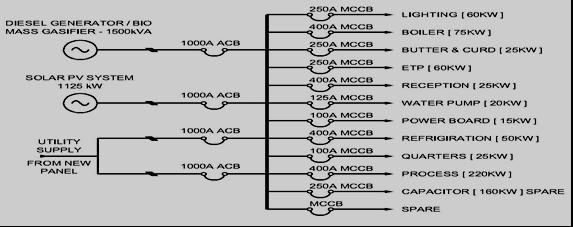
Chart1[8]displaystheinstalledcapacityofbiomassgasifier v/s states in India to prove that technology is readily availabletoinstallbiomassgasifierof1500 KVAcapacity.
1: Biomassgasifierstatewiseinstalledcapacityin India.
The following assumptions were made for economic analysis:
CostperkilogramofwoodchipstobiomassGasifieris Rs5.5.
Fuelconsideredforthebiomassgasifieris80%wood and20%diesel.
1500KVABiomassGasifierisconsideredforelectrical powergeneration.
The prevailing market price of 1500 KVA biomass gasifierisRs137lakh.
Abiomassgasifierisassumedtorun20hoursduring ON/OFFgrids
Costperunitofenergysuppliedfrombiomassgasifier todairyduringONgridisRs7.5/unitCostperunitof energytodairyduringOFFgridisRs31/unit.
International Research Journal of Engineering and Technology (IRJET) e-ISSN: 2395-0056
Volume: 12 Issue: 01 | Jan 2025 www.irjet.net p-ISSN: 2395-0072
The life of the biomass gasifier is assumed to be 20 yearsasperTataEnergyResearchInstitutedata.
BiomassGasifierisassumedtooperateindual/Mano modefuelsystem.
Biomassgasifierisassumedtooperate20hoursaday. Thebiomassgasifierhastosupplyelectricalenergyto critical loadsduringOFF gridandfeed the powerto thegirdduringONgrid.
Data collection methods:
Primary data such as energy consumption, energy charges, technical specification such as transformer, dieselgeneratorset,arecollectedfromCHIDASHIMUL, ShimogaKarnatakaIndia.
Secondary data is collected from 75 KVA Biomass GasifierinstalledatJNNCE,ShimogaKarnatakaIndia.
Prevailingmarketpriceof1500KVABiomassGasifier iscollectedfromIndiamart,India.
3. Results and discussion:
Theperformancedataofa75KVAbiomassgasifierinstalled atJNNCE,Shimoga,Karnatakaisshowninthechart2and datahasbeentabulatedintable4.Basedonthestudy,ithas beenobservedthat,theplantwasoperatedforaperiodof8 monthsinayear. Theaveragewoodconsumedpermonthis 2321kgstoproduce1033unitsofelectricalenergy.Thefuel costisRs8123atarateofRs5.5/kg.Theaveragenumberof
hourofoperationofbiomassgasifierpermonthis51, The specific fuel consumption is 0.4 units per kg of wood. Further,theaveragecharproduced/monthis99kgand0.16 kg /unit of electrical energy. The average yield in kWh/kW/monthis0.27.the costperunitproductionisRs 7.86
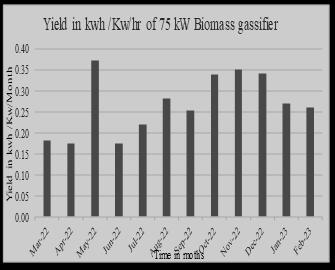
The study and analysis yields the result that, a 75 KVA biomassgasifierproduces20unitsofelectricalenergyper hourand1kilogramofwoodproduces0.4unitsofelectrical energy [6]. This analysis aims to estimate the yield to determinetheperformanceof1500KVAbiomassgasifier. The electrical energy demand of CHIDASHIMUL dairy is around 2,68,000 to 320,000 units per month. 1500 KVA
Biomass gasifier estimated to produce 96,300 units of electrical energy/annum with 1500 KVA DG set to supply electrical power during On/OFF grid. Biomass gasifier is suggestedtoinstalltomeettheenergyrequirementofdairy industryfromrenewableenergysourcesforreducinggrid dependency, increased economic and environmental benefits.
International Research Journal of Engineering and Technology (IRJET) e-ISSN: 2395-0056
Volume: 12 Issue: 01 | Jan 2025 www.irjet.net p-ISSN: 2395-0072
Table5.Estimateddataofperformanceof1500KVABiomassgasifier Month/year Diesel consumption from DG set in litres/month Electrical Energy Generated in Units from DG set Energy cost@ Rs 31 per unit without biomass Gasifier
Table-5andchart3givesthequantityofdieselconsumed in liters by an existing 1500 KVA DG installed at CHIDASHIMUL, Shimoga to produce electrical energy duringgridfailure,estimatedelectricalenergygeneration, the diesel consumption per unit of electrical energy, as well as the cost per unit of electrical energy produced. Additionally,thetableincludestheannualdieselcost[7].
The findings suggest that, the generation of electrical energybyaDGsetforcaptivepowerisverycostly.Despite this, most industries still use the DG set to produce electricalpowerduringgridfailure.1500KVAcapacityDG setiscurrentlyisinplaceatCHIDASHIMULtoofferbackup powerduringgridfailures.Itconsumesanaverageof1679 liters of diesel per month to generate 5291 units of electricalenergyatarunningcostofRs1,64,011.Thecost perunitofelectricalenergyisRs31.Ananalysishasbeen madetoconsider,replacingthe1500KVAdieselgenerator withabiomassgasifierofthesamecapacity.Accordingto theanalysis,thebiomassgasifiercouldproduce8025units ofelectricalenergybyoperatingforaperiodof20hoursa dayusingwoodchipsasfuel,resultinginamonthlycost savingofRs1,24,206withapaybackperiodof9.1years. Additionally,thischangewouldreduceCO2 emissionsby 43tonnesperannum.
Estimated data of Revenue generated from biomass gasifierwith and without Dieselgenerator.
50,000 1,00,000 1,50,000 2,00,000 2,50,000 3,00,000 3,50,000
Time in months
Revenue generated from biomass Gasifier without DG
Revenue generated from Biomass Gasifier plant in place of DG
Chart 3: estimatedrevenuegenerationinRsfroma 1500KVAbiomassgasifier.
Volume: 12 Issue: 01 | Jan 2025 www.irjet.net p-ISSN: 2395-0072
4. Payback period calculation for estimated performance of 1500 KVA Biomass gasifier:
Prevailingmarket priceofa 1500KVABiomassgasifier is rupees137Lakhs,whichproduces96,300units/annumby running20hoursaday,SuppliespowertodairybothatON grid/OFFgrid,whichgeneratesarevenueof14.94Lakhsper annum.CostperunitofenergysupplyingpowerduringOFF gridbyanexistingdieselgeneratorisrupees31,asperthe MESCOM rate for HT customers, during ON grid, cost per unitisrupees7.5.Paybackperiodis9.1years.Thelifeofthe plantis20years[14].whichyieldsthelifetimesavingof174 Lakh rupees which reduces CO2 emission by 260 tonnes/annumconsidering2.67kg/unit.Lifetimereduction inCO2 emission5191tonnes.
5. Conclusion
Biomassgasifiershavelowinitialinvestment,highefficiency (>75%), and produce clean exhaust gases. Additionally, biomass is a carbon-neutral fuel, leading to zero net CO2 emissions. An economic analysis and technical feasibility study will be conducted to assess the suitability of this approachforimplementationinthedairyindustry.Basedon theAnalysisofIntegrationofBiomassGasifierwithON/OFF Grid to meet the Electrical Energy Requirement of CHIDASHIMULDairyIndustry,thefollowingarethemajor findingsoftheresearchwork.
1.Installationof1500KVABiomassGasifierwithaDGsetfor captivepowergenerationleadstoan80%reductioninCO2 emissionsanda38%annualsavingsinthedieselgenerator cost,contributingtosignificantcostefficiency[14].
2.Theestimatedpaybackperiodforinstallationofabiomass Gasifier with existing DG set is 9 years and the life of the plantis20years.Overits20-yearlifespan,thesystemcan save Rs 179 Lakhs and result in the reduction of 5,191 tonnesofCO2emission.
3.Theuseofbiomassgasifierthroughdistributedgeneration reducesgriddependencyandtransmissionlosses,resulting insignificanteconomicandenvironmentalbenefits.
4.Both central and state governments are encouraging implementationofrenewableenergysystemslikebiomass gasifiersforelectricalenergygenerationforallcategoriesof industrialsectorsbygivingsubsidies[10].SofarNoneofthe Karnatakamilkfederationindustrieshavenotimplemented thebiomassgasifiersfortheirenergyneeds.
5.Forenergyself-sustainability,theinstallationofbiomass gasifiersforcaptivepowergenerationiscrucial,whichalso reducesstressondieselimportsandprovideseconomicand environmentalbenefits.
6.Differentsectorsofindustrieshavesuccessfullyinstalled thesesystemstomeettheirenergyrequirement.Immediate attentionisrequiredbyalldairyindustriestoimplementthe sameandtohelptheutilitygridtomanagethedemandand supplytosocietyforincreasedelectrification[8].
References
[1] B.S.Dayananda,L.K.Sreepathi.Astudyongasification of chicken litter with saw dust in a laboratory scale fluidized bed gasifier. international Journal of Emerging trends in Engineering and Development. 2012;260–5.
[2] SiregarUJ,LestariA,RusniarsyahL,SiregarCA.Fuel substitutionbywoodgasificationfordieselelectricity generator. IOP Conference Series: Materials Science andEngineering.2020Sep1;935(1):012048.
[3] SansaniwalSK,RosenMA,TyagiSK.Globalchallenges in the sustainable development of biomass gasification:Anoverview.RenewableandSustainable EnergyReviews.2017Dec;80:23–43.
[4] HenriksenU,AhrenfeldtJ,JensenTK,GøbelB,Bentzen JD, Hindsgaul C, et al. The design, construction and operation of a 75kW two-stage gasifier. Energy [Internet]. 2006;31(10):1542–53. Available from: https://www.sciencedirect.com/science/article/pii/S 0360544205001246
[5] Mathieu P, Dubuisson R. Performance analysis of a biomassgasifier.EnergyConversionandManagement. 2002Jun;43(9–12):1291–9.
[6] Mukhund Rao. Operation and maintenance manual, generation and fuel consumption data sheets of 75 KVAdowndraftbiomassgasifiersysteminstalledat JNNCE,Shimoga.Shivamogga;2005Jun.
[7] Ravikumar.Filesofelectrical engineeringanddiesel generatordept.Shivamogga;2018Jul.
[8] BEACH MINERALS COMPANY PRIVATE LIMITED. BIOMASS GASIFICATION BASED POWER GENERATION.Kuttam,Tirunelveli;2006Dec.
[9] H.B. Suresh, Dr.L.K. Sreepathi, Dr. H.M. Ravi Kumar. Selectionofsustainableenergytechnologiesbasedon energy Availability - consumption pattern - a region specificanalysis.[Shivamogga];2014.
[10] MNRE.BioEnergyIndia.magazineonbiomassenergy, GovtofIndia.
[11] Susastriawan AA, Saptoadi H. Effect of Air Supply Location and Equivalence Ratio on Thermal
International Research Journal of Engineering and Technology (IRJET) e-ISSN: 2395-0056
Volume: 12 Issue: 01 | Jan 2025 www.irjet.net p-ISSN: 2395-0072
Performance of Downdraft Gasifier Fed by Wood Sawdust. Journal of Sustainable Development of Energy, Water and Environment Systems. 2023 Mar;11(1):1–10.
[12] Guo F, Dong Y, Dong L, Guo C. Effect of design and operating parameters on the gasification process of biomass in a downdraft fixed bed: An experimental study.InternationalJournalofHydrogenEnergy.2014 Apr;39(11):5625–33.
[13] PérezJF,MelgarA,BenjumeaPN.Effectofoperating anddesignparametersonthegasification/combustion process of waste biomass in fixed bed downdraft reactors: An experimental study. Fuel. 2012 Jun; 96:487–96.
[14] BusinessEnergyScotland.BusinessEnergyScotland. 2024.p.1–1Biomassheating–aquickguide.
BIOGRAPHIES:
G Ajjanna
Received a bachelor's degree in Electrical and Electronics Engineering from Kuvepu Universityin1995,andamaster's degree in Energy System engineering from Visvesvaraya Technological University in 2001. He is currently doing Research work in the field of Energy Management. Working as an Assistant Professor at the Department of Electrical and Electronics Engineering and coordinator of 400KW RTSPV system installed at JNNCE, Shimoga. His interesting areas include Energy Auditing, Energy conservation, DSM Techniques, and Renewable Energy Technologies. He has published4papersatinternationaljournalsandpresented2 papers at international conferences. He has authored and publishedaTextbookonEnergyAuditingandDemandSide Management.
Dr. H.B. Suresh
ReceivedhisB.E.degreeinelectrical and electronics engineering from Mysore University, India, and his M.E. in energy system engineering fromKarnatakaUniversity,India.He pursued his Ph.D. program at Jawaharlal Nehru Technological University, India. Currently, he is working as a professor in the electrical and electronics engineering department, at JNNCE, Shimoga. He has presented various papers at conferences in India and published twelve papers in national and international
journalsandconferenceproceedings.Currentlyisguidingtwo candidatesforthePh.D.program.Heisthecoordinator for Biofuel Research, Information and Demonstration Centre (BRIDC),JNNCE,fundedbyGovt.ofKarnataka.Hisareasof interest are sustainable energy technologies, energy conservation, and management, and renewable energy resources.Hehasdeliveredmorethan100invitedtechnical talks.
L.K. Sreepathi
Received his B.E. degree in mechanical engineering from Bangalore University India in the year1985.HepursuedhisM.Tech andPh.D.programsatIITBombay from 1988 to 1994 in the area of thermalandfluidengineering.Heis the former Vice-Principal of JNN College of Engineering, Shimoga, currently working as visiting professor and green energy coordinator at IIT Dharwad, Karnataka India. He has carried out several researchprojectsfundedbyCSIR,MNES,AICTE.Hisareasof interest are biomass gasification, passive cooling of the building, solar energy, rainwater harvesting, etc. He has successfullyguidedfivePh.D.students.Currentlyisguiding two candidates for the Ph.D. program. He has presented papersatvariousconferencesinIndiaandabroadandhas published more than twenty-five papers in national and internationaljournalsandconferenceproceedings.Hewas the coordinator for the Chiranthana Green Technology Centre.Currentlyheisworkingasvisitingprofessorat IIT Dharwad,Karnataka,India.
© 2025, IRJET | Impact Factor value: 8.315 | ISO 9001:2008
| Page15