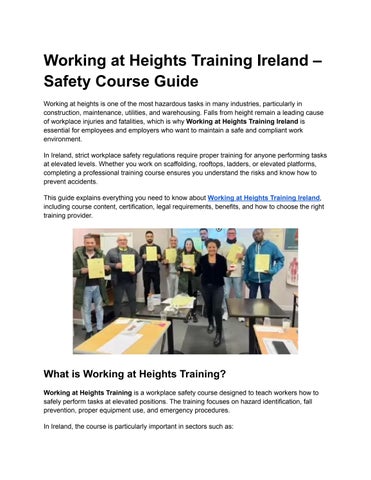
Working at Heights Training Ireland – Safety Course Guide Working at heights is one of the most hazardous tasks in many industries, particularly in construction, maintenance, utilities, and warehousing. Falls from height remain a leading cause of workplace injuries and fatalities, which is why Working at Heights Training Ireland is essential for employees and employers who want to maintain a safe and compliant work environment. In Ireland, strict workplace safety regulations require proper training for anyone performing tasks at elevated levels. Whether you work on scaffolding, rooftops, ladders, or elevated platforms, completing a professional training course ensures you understand the risks and know how to prevent accidents. This guide explains everything you need to know about Working at Heights Training Ireland, including course content, certification, legal requirements, benefits, and how to choose the right training provider.
What is Working at Heights Training? Working at Heights Training is a workplace safety course designed to teach workers how to safely perform tasks at elevated positions. The training focuses on hazard identification, fall prevention, proper equipment use, and emergency procedures. In Ireland, the course is particularly important in sectors such as:
● Construction ● Roofing and building maintenance ● Telecommunications ● Warehousing and logistics ● Utilities and electrical services ● Facility maintenance
Employees who complete Working at Heights Training Ireland gain the knowledge needed to reduce the risk of falls and other workplace incidents.
Why Working at Heights Training is Important in Ireland Falls from height are one of the most common causes of serious workplace accidents. Workers operating above ground level face numerous hazards including unstable surfaces, improper equipment, and environmental conditions. Proper training helps prevent these risks by ensuring workers understand: ● Safe ladder and scaffold usage ● Fall protection systems ● Risk assessment procedures ● Personal protective equipment (PPE) ● Emergency rescue techniques
Employers in Ireland also have legal obligations to provide adequate safety training for employees who work at height. Failure to do so can result in fines, legal consequences, and workplace accidents.
4. Safe Use of Ladders and Scaffolding Improper use of ladders and scaffolding is a common cause of workplace injuries. During the course, workers learn:
● Ladder safety techniques ● Correct ladder positioning ● Scaffold safety procedures ● Safe climbing practices ● Load limits and stability checks
These skills are essential for anyone working in construction or maintenance roles.
5. Personal Protective Equipment (PPE) PPE plays an important role in protecting workers at height. Training includes guidance on using equipment such as: ● Safety harnesses ● Helmets and hard hats ● Non-slip footwear ● Safety lanyards ● Protective gloves
Workers learn how to inspect and maintain PPE to ensure it remains effective.
6. Emergency and Rescue Procedures Despite all precautions, accidents can still occur. Knowing how to respond quickly and safely is critical. Working at Heights Training Ireland teaches participants: ● Emergency response procedures ● Rescue techniques ● First aid awareness
● Communication during emergencies
These skills help ensure a rapid response in case of an incident.
How Long Does Working at Heights Training Take? The duration of the course depends on the training provider and course format. Typical course durations include: ● Half-day training session ● Full-day practical training ● Refresher courses for experienced workers
Many providers offer flexible scheduling options, including weekday and weekend courses.
Working at Heights Certification in Ireland After completing the training, participants receive a Working at Heights Certificate. This certification confirms that the individual has successfully completed the course and understands the safety procedures required for working at elevated levels. Certificates are often required for employment in industries such as construction and maintenance. Some employers may also require workers to renew their certification periodically to ensure their knowledge remains up to date.
Choosing the Best Working at Heights Training Ireland Selecting a reliable training provider is important to ensure high-quality instruction and valid certification. When choosing a training course, consider the following factors:
Accredited Training Providers Look for providers that follow recognized safety standards and industry regulations.
Experienced Instructors Qualified instructors with real-world experience provide valuable insights and practical knowledge.
Practical Training Sessions Hands-on practice helps workers understand how to use equipment and follow safety procedures.
Flexible Course Options Many training providers offer both in-person and online learning options.
Industries That Require Working at Heights Training Working at height is common across many sectors in Ireland. Industries that commonly require this training include:
Construction Industry Construction workers frequently work on scaffolding, roofs, and ladders.
Telecommunications Telecom engineers often climb towers and poles to install or maintain equipment.
Warehousing and Logistics Warehouse staff may operate elevated platforms or work on high storage racks.
Building Maintenance Maintenance technicians often perform repairs on roofs, lighting systems, and exterior structures.
Common Risks When Working at Height Understanding the risks helps workers stay safe. Some common hazards include:
● Slippery surfaces ● Strong winds ● Poor lighting ● Unstable platforms ● Lack of guardrails
Training helps workers recognize these hazards and implement safety measures.
Safety Tips for Working at Heights Workers should always follow basic safety practices when working above ground level. Key safety tips include: ● Always inspect equipment before use ● Use proper fall protection systems ● Maintain three points of contact when climbing ladders ● Avoid working at height during severe weather ● Keep work areas clean and organized ● Follow site safety procedures
These simple precautions can significantly reduce workplace accidents.
Refresher Training for Working at Heights Safety procedures and regulations may change over time, which is why refresher training is recommended. Refresher courses help workers: ● Update their safety knowledge
● Learn new safety techniques ● Review fall protection procedures ● Maintain workplace safety standards
Many companies require refresher training every few years.
Why Employers Should Invest in Height Safety Training Employers who prioritize safety training create safer workplaces and protect their employees. Benefits for employers include: ● Reduced workplace accidents ● Improved staff productivity ● Compliance with safety regulations ● Stronger workplace safety culture ● Enhanced company reputation
Investing in Working at Heights Training Ireland is a proactive step toward protecting workers and maintaining a safe working environment.
Future of Workplace Safety in Ireland As workplace safety standards continue to evolve, training programs will remain essential for protecting workers across various industries. New technologies, improved safety equipment, and stricter regulations will continue to shape how workers perform tasks at height. Companies that invest in training today will be better prepared for future safety requirements.
FAQs What is Working at Heights Training Ireland?
It is a safety training course designed to teach workers how to safely perform tasks at elevated positions while preventing falls and workplace accidents.
Who needs working at heights training? Anyone who performs tasks above ground level, including construction workers, maintenance staff, roofers, and telecom engineers.
How long does the course take? Most courses last between half a day and one full day depending on the training provider and course structure.
Is certification required in Ireland? Yes, employers must ensure workers receive proper safety training when performing high-risk tasks such as working at height.
Conclusion Working at height is a high-risk activity that requires proper knowledge, training, and safety procedures. Completing Working at Heights Training Ireland helps workers understand the risks involved and know how to perform tasks safely and responsibly. From fall prevention techniques to emergency response procedures, this training provides participants with the knowledge needed to maintain a safer workplace. For employers and employees alike, professional training can support workplace safety and help meet relevant safety requirements. Whether you work in construction, maintenance, or telecommunications, obtaining a Working at Heights Certificate in Ireland is an important step toward protecting yourself and others on the job. For more information about working at heights training in Ireland, contact Ireland T&T at +353 1 460 4829 or +353 870 930 808, or email info@irelandtt.com. You can also visit https://irelandtt.com/ to learn more about available training options.