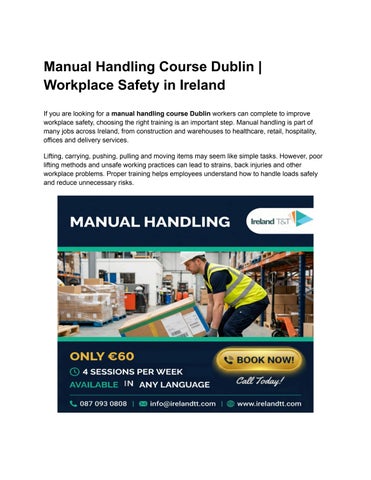
Manual Handling Course Dublin | Workplace Safety in Ireland If you are looking for a manual handling course Dublin workers can complete to improve workplace safety, choosing the right training is an important step. Manual handling is part of many jobs across Ireland, from construction and warehouses to healthcare, retail, hospitality, offices and delivery services. Lifting, carrying, pushing, pulling and moving items may seem like simple tasks. However, poor lifting methods and unsafe working practices can lead to strains, back injuries and other workplace problems. Proper training helps employees understand how to handle loads safely and reduce unnecessary risks.
What Is a Manual Handling Course? A manual handling course teaches workers how to move and handle loads in a safer way. The training normally focuses on understanding common manual handling risks and using suitable techniques when carrying out physical tasks. Manual handling does not only mean lifting heavy boxes. It can include many activities, such as: ● ● ● ● ● ● ●
Lifting objects from the floor Carrying equipment or materials Pushing or pulling loads Moving items from one place to another Handling awkward or bulky objects Repeated physical movements Working in areas where space is limited
The aim is not simply to teach people how to lift with their legs. Good training also helps workers recognise risks before they start a task and think about whether the job can be made safer. For employers in Dublin and across Ireland, this type of training can form an important part of workplace safety arrangements.
Why Manual Handling Training Matters in Dublin Many workplaces in Dublin involve some level of physical handling. Employees may regularly move stock, equipment, tools, boxes, furniture or other materials as part of their normal duties. When workers are not properly trained, they may use poor techniques without realising the possible consequences. A small mistake repeated every day can become a serious workplace concern. A manual handling course Dublin businesses can arrange for their employees can help workers develop better awareness of: ● ● ● ● ● ● ●
Common manual handling hazards Safe ways to move different types of loads Correct preparation before lifting The importance of good posture How to assess a task before starting When assistance or equipment may be needed Ways to reduce unnecessary physical strain
Training is especially useful when new employees join a company or when workers are expected to carry out regular handling duties.
Who Should Complete a Manual Handling Course? Manual handling training can be useful for employees in many different industries. It is not limited to workers in warehouses or construction. Depending on the workplace, suitable training may be relevant to:
Warehouse and Logistics Workers Warehouse employees often lift, carry, stack and move products throughout the working day. Repeated handling can place extra pressure on the body if tasks are not performed correctly.
Construction Workers Construction sites can involve moving tools, materials and equipment. Workers may also need to handle loads in areas where the ground, space or working position creates additional risks.
Healthcare and Care Workers Healthcare and care environments can involve physical tasks that require careful planning. Workers may need to assist with movement or handle equipment as part of their duties.
Retail and Hospitality Staff Retail employees may move boxes, stock and displays. Hospitality workers may also handle supplies, equipment and other items during busy shifts.
Office Employees Manual handling risks can also exist in offices. Moving furniture, files, boxes, printers and other equipment can cause injury when workers use unsafe methods.
What Can You Learn on a Manual Handling Course? A useful course should give workers practical knowledge they can apply in their normal workplace. Training may cover areas such as risk awareness, safe handling principles, preparation, posture and suitable lifting methods. Workers can also learn why some loads are more difficult to handle than others.
Understanding the Task
Before moving anything, workers should consider the weight, size and shape of the load. They should also look at the route and the space available. Questions to consider include: ● ● ● ● ● ●
Is the load easy to grip? Is it too heavy or awkward to move safely? Is the route clear? Is help required? Is mechanical equipment available? Can the task be changed to reduce the risk?
Thinking about these points before starting can help prevent avoidable problems.
Using Safer Handling Techniques Training can teach workers how to position themselves correctly and use controlled movements. It can also explain the importance of avoiding sudden movements and unnecessary twisting while handling loads. The exact method should always depend on the task, load and workplace conditions.
Choosing Manual Handling Training in Ireland When comparing training providers, businesses should look beyond the course name. The quality and relevance of the training are important. Employers looking for health and safety training in Ireland should consider whether the provider offers clear information, practical guidance and training that matches the needs of their workplace. Other useful services businesses may search for include workplace safety training Dublin, occupational health and safety courses Ireland, employee safety training Dublin, and manual handling training for businesses in Ireland. These searches reflect a wider need: employers want training that workers can understand and use in real working conditions. Ireland T&T is one option for businesses and individuals looking for workplace training support in Ireland. Before booking any course, it is sensible to ask about course content, delivery arrangements, suitability for your industry and what participants receive after completing the training.
Benefits of Manual Handling Training for Employers
Providing appropriate manual handling training can benefit both employees and employers. Some key benefits include: ● ● ● ● ● ●
Better awareness of workplace hazards Improved handling practices Greater employee confidence A stronger workplace safety culture Better understanding of manual handling risks Practical knowledge workers can use in daily tasks
Training should not be viewed as a one-time solution to every workplace risk. Employers should also consider workplace design, equipment, work organisation and other controls that can reduce manual handling where possible. A safe workplace usually comes from combining good training with sensible working practices.
Benefits for Employees Workers can also gain practical value from manual handling training. A trained employee is more likely to stop and think before lifting or moving an awkward load. They may recognise when a task needs additional help or when a safer method should be used. The knowledge gained through a manual handling course Dublin workers can access may be useful across different workplaces and job roles. Safe handling habits can become part of a worker's normal approach to physical tasks. Professional training from Ireland T&T can help employees understand why certain handling methods are recommended rather than simply asking them to follow instructions without understanding the reason.
Why Choose Training in Dublin? Dublin is home to businesses across a wide range of industries. From small companies to larger organisations, many workplaces have employees who handle materials, products or equipment. Local training can make it easier for employers to organise courses around their business needs. It can also help companies focus on practical workplace risks rather than treating manual handling as a general topic with no connection to daily work. When searching online for a manual handling course Dublin, businesses should consider convenience, course suitability, trainer experience and whether the training matches the tasks employees actually perform.
How to Prepare for Manual Handling Training Employees can get more from their course by thinking about the handling tasks they perform at work. Before attending training, consider: 1. What types of loads do you regularly move? 2. Are any loads particularly heavy or awkward? 3. Do you often work in small or restricted spaces? 4. Do you repeat the same handling task throughout the day? 5. Is lifting or carrying part of your normal job? 6. Are there tasks where you think a safer method could be used? Having these examples in mind can make the training more relevant and easier to apply. Employers can also identify common handling tasks within their workplace and encourage employees to raise safety concerns during training.
Manual Handling Course Dublin for Businesses and Workers Finding the right training is about more than searching for the cheapest course. Businesses should look for training that provides clear, practical information and helps employees understand the risks connected with their work. For companies across Dublin and Ireland, manual handling training can be part of a wider workplace safety programme. It can complement other areas of health and safety training and help employees develop a more careful approach to physical work. Ireland T&T can assist businesses and workers who are looking for training options in Ireland. The best approach is to discuss your requirements with the training provider and confirm that the course is suitable for your workplace and employees.
Frequently Asked Questions What is a manual handling course in Dublin? A manual handling course teaches workers how to identify common handling risks and use safer methods when lifting, carrying, pushing or pulling loads. The training is suitable for many types of workplaces across Dublin and Ireland.
Who needs manual handling training in Ireland?
Anyone whose job involves regular or occasional manual handling may benefit from suitable training. This can include workers in construction, logistics, healthcare, retail, hospitality, manufacturing, offices and other industries.
Is manual handling only about lifting heavy objects? No. Manual handling can include lifting, carrying, pushing, pulling and moving objects. Even lighter items can present a risk when they are awkward, handled repeatedly or moved in an unsuitable working position.
How often should manual handling training be completed? The appropriate frequency can depend on the workplace, the type of work and the employer's risk assessment. Employers should review their training needs when work activities, equipment, staff or risks change.
Can businesses arrange manual handling training for employees? Yes. Businesses can contact a training provider to discuss their requirements and arrange suitable training for their workers. Companies should confirm course content and arrangements before booking.
Why is manual handling training important? It helps workers recognise handling risks and understand safer ways to complete physical tasks. Training can support a wider workplace safety programme when combined with appropriate equipment, procedures and risk controls.
How do I find a manual handling course Dublin workers can attend? Start by comparing reputable training providers, course content, delivery options and suitability for your industry. Businesses should choose training based on their actual workplace needs rather than price alone.
Conclusion: Book a Manual Handling Course in Dublin Safe manual handling starts with awareness. Workers need to understand the risks involved in lifting, carrying, pushing and pulling and know how to approach these tasks carefully. For employers and workers searching for a manual handling course Dublin, choosing suitable training can be an important step towards better workplace safety. Whether you operate in construction, healthcare, logistics, retail, hospitality or an office environment, practical manual handling knowledge can be useful.
Ireland T&T offers training support for businesses and individuals across Ireland. If you are ready to discuss your training requirements, get in touch to learn more about available options. Book Your Manual Handling Training Website: https://irelandtt.com Email: info@irelandtt.com Phone: +353 1 460 4829 | +353 870 930 808
For businesses in Dublin, choosing the right training provider can make workplace safety easier to manage. Contact Ireland T&T today to discuss your manual handling training needs and take the next step towards safer working practices in Ireland.