

SUPERIOR HEAT RESISTANCE







A RECYCLED CORE


3D DESIGN



ĒCLOS is a next-generation mineral surface developed with advanced layered design technology.






ZERO SILICA
SUPERIOR HEAT RESISTANCE
A RECYCLED CORE
3D DESIGN
ĒCLOS is a next-generation mineral surface developed with advanced layered design technology.

Elsa Lam reflects on this year’s winning firms, projects, and people.
SSAC’s open letter on the planned shutdown of the Canadian Register of Heritage Places; remembering Charles Simon, 1936-2026.
RAIC International Prize winner Material Cultures; the RAIC’s 2026 Honorary Fellows.
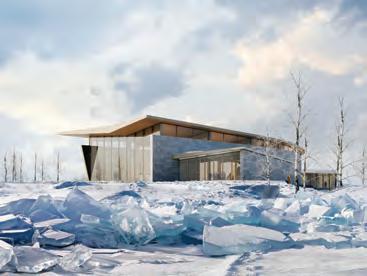
gh3*’s O-day’min Park Pavilion, whose design was led by RAIC Gold Medal winner Pat Hanson, is having a profound impact in Edmonton.
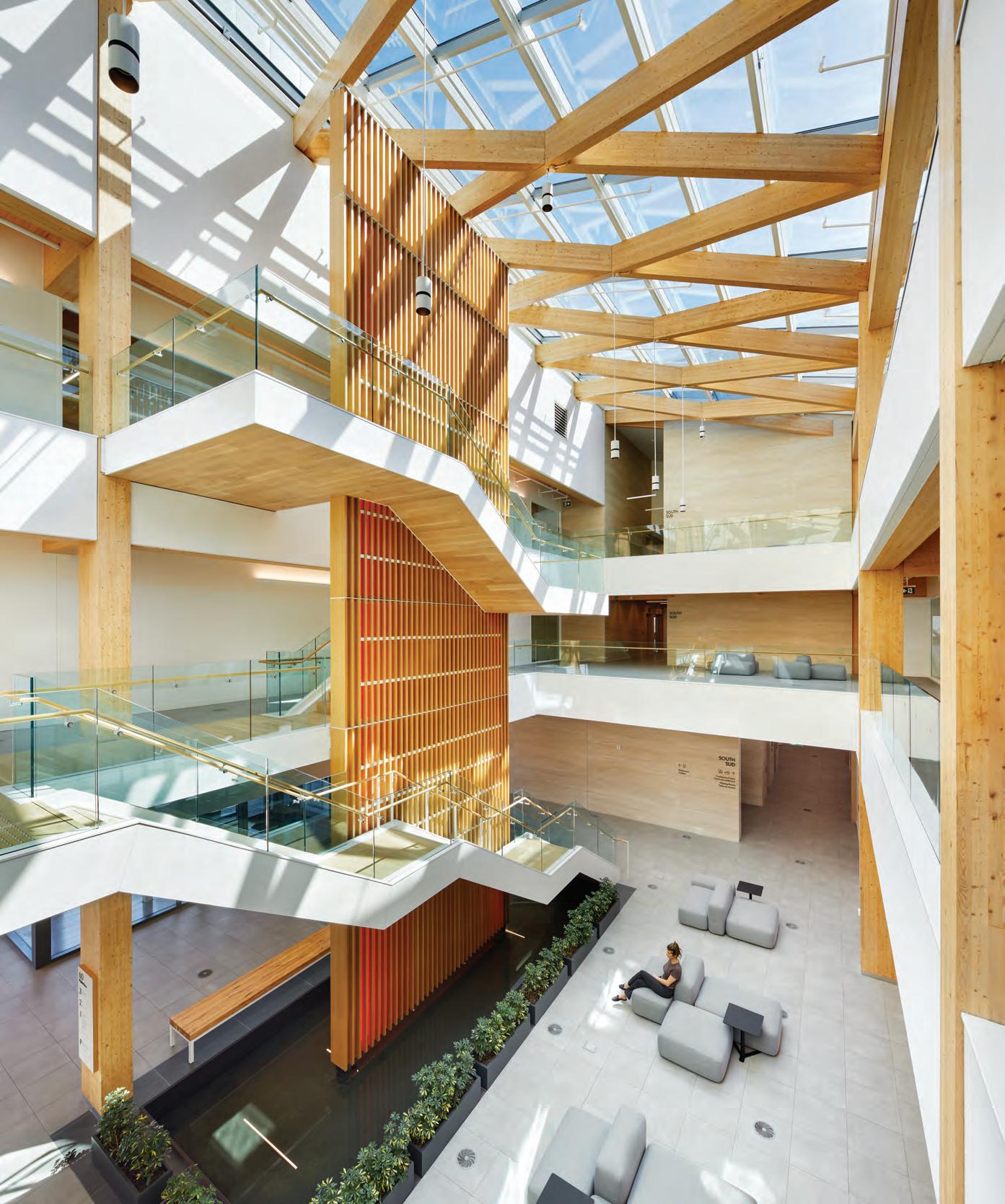
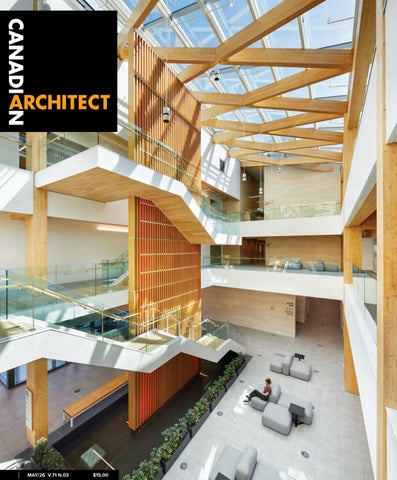
COVER Ontario Secondary School Teachers’ Federation (OSSTF) Headquarters and Multi-Tenant Complex, by Moriyama Teshima Architects. Photo by Tom Arban Photography
This month’s issue celebrates the winners of the RAIC ’s 2026 Annual Awards. The architecture firms, architects, researchers, and projects recognized in these pages vary in aesthetic inclinations and geography, but they share a key common value: a focus on what it takes to create works of architectural quality within an increasingly complex world.
The top accolade the RAIC ’s Gold Medal goes to Pat Hanson, who leads Toronto-based gh3*, in 2006. Her work, documented in a special supplement included with this month’s issue, is remarkable for the clarity of its ideas, rigour of execution, and transformation of utilitarian infrastructure and industrial programs into landmark buildings.
Moriyama Teshima Architects, winner of this year’s Architectural Practice Award, was founded by Japanese Canadians Raymond Moriyama and Ted Teshima. They brought a conviction that architecture can help uphold democracy by giving form to dignity, welcome, and belonging. Eight partners now lead a firm that continues to push boundaries in social inclusion, inventive process, architecture that uplifts daily life, and technical leadership shared openly with the broader architectural community.
The Emerging Architectural Practice Award is bestowed on Vancouver-based MOTIV Architects, a partnership between architects Tracey Mactavish and Asher deGroot. Founded in 2017, the firm has evolved to focus on achieving positive environmental and social impact through projects such as food hubs, net-zero carbon community learning centres, and buildings made with repurposed materials.
The use of low-carbon construction materials is the focus of design and research firm Material Cultures, the winner of the RAIC ’s International Prize. Based in London, UK , the organization uses built work, research outputs, and educational initiatives to integrate biobased materials and minimally processed minerals into efficient construction systems.
This year’s RAIC Advocate for Architecture Award winner is Christopher Glaisek, Chief Planning and Design Officer at Waterfront Toronto. For over 20 years, Glaisek has pushed for design excellence in major developments
and landscape projects on the 2,000-acre waterfront, through initiatives including design competitions, leadership in the master planning and design of new neighbourhoods, and the creation and management of a Design Review Panel.
The RAIC ’s Research & Innovation Award goes to a Perkins&Will-led study on buildingintegrated architecture. Resource Circularity: Reimagining Cities as Regenerative Ecosystems advances a system to analyze building-integrated agriculture in direct relationship to host buildings, rather than as isolated agriculture systems, to determine when these systems contribute net environmental and operational value.
The book Mobs and Microbes: Global Perspectives on Market Halls, Civic Order, and Public Health (Leuven University Press, 2023), co-edited by TMU’s Leila Marie Farah with University College Dublin’s Samantha L. Martin, is the winner of an RAIC Architectural Journalism and Media Award. It crosses between architectural history, urban history, and urban studies to offer critical perspective on how markets have been used as instruments of soft power, especially within colonial and imperial contexts.
Three projects were recognized with the Prix du XX ième siècle. Patkau Architects’ Lalme’ Iwesawtexw is a landmark project in the evolution of Indigenous education and architecture in Canada. Dan Hanganu’s Pavilion de Design at UQAM remains an exemplary environment for Canadian creative arts education. And the recognition of Raymond Moriyama’s Ontario Science Centre adds to the chorus of protest against the Centennial building’s unjustified closure.
Together, this year’s winners exemplify approaches that thrive in complexity, and that advance thoughtful architecture within those parameters. In an era when social and environmental values risk being cast aside in deference to market forces, these winning projects, people, and firms demonstrate the ongoing importance of quality architecture to thriving communities and societies.
EDITOR
ELSA LAM, FRAIC, HON. OAA
ART DIRECTOR
ROY GAIOT
CONTRIBUTING EDITORS
ANNMARIE ADAMS, FRAIC
ODILE HÉNAULT
LISA LANDRUM, MAA, AIA, FRAIC
DOUGLAS MACLEOD, NCARB FRAIC
ADELE WEDER, FRAIC
ONLINE EDITOR
LUCY MAZZUCCO
SUSTAINABILITY ADVISOR
ANNE LISSETT, ARCHITECT AIBC, LEED BD+C
VICE PRESIDENT & SENIOR PUBLISHER
STEVE WILSON 416-441-2085 x3
SWILSON@CANADIANARCHITECT.COM
ASSOCIATE PUBLISHER
FARIA AHMED 416 441-2085 x5
FAHMED@CANADIANARCHITECT.COM
CIRCULATION CIRCULATION@CANADIANARCHITECT.COM
PRESIDENT & EXECUTIVE PUBLISHER ALEX PAPANOU
HEAD OFFICE 126 OLD SHEPPARD AVE, TORONTO,

Introducing Phenolic Maximum Privacy ® Partitions ASI Group's NEW Maximum in Privacy and Comfort.
ASI Group now offers Phenolic Partitions up to 120" high. Floor mounted overhead braced partitions are offered up to 96" high as a standard. Both configurations are mounted 1" above finished floor for the Maximum in Privacy. Available in all ASI phenolic colors.
Visit asi-globalpartitions.com/products/maximum-privacy-phenolic
Take the worry out of compromising your inspired building design to fire-safety requirements with reliable Aluflam vision doors, windows and glazed walls, fired-rated for up to 120 minutes.
This pioneering system is fabricated from true extruded aluminum and is indistinguishable from non-fire-rated doors and windows.
New Ontario Science Centre to cost $1.04 B, concerns remain over future of landmark heritage buildings
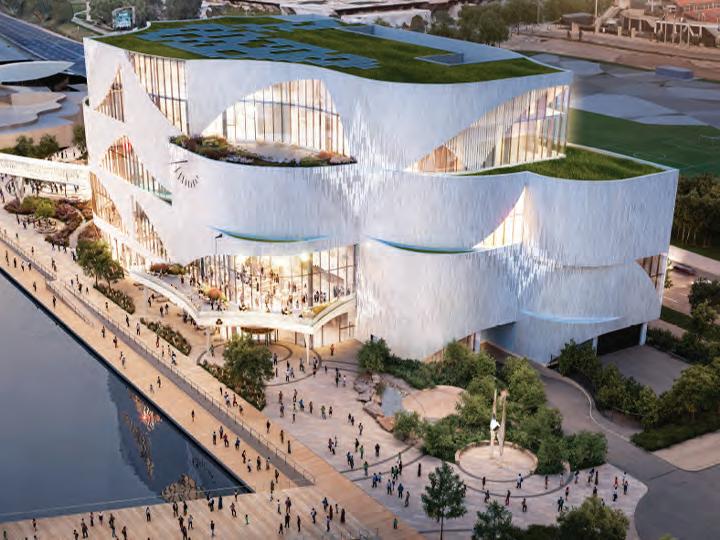
Hariri Pontarini Architects and Snøhetta have been selected as the design team in the Ontario Science Centre design competition for the institution’s new site at Ontario Place.
But questions still remain about the project’s high cost at $1.04 B, lack of public process, and the future of the landmark Moriyama Teshima-designed buildings on Don Mills Road.
A half dozen renderings of the proposed development, released in a press conference on February 26, 2026, and a subsequently released video, show a five-storey wedge-shaped building draped with sail-like forms, with curvilinear cutouts. The roof is clad with solar photovoltaics, and an upper floor appears to include an outdoor play terrace. A bridge connects the mainland building to the heritage Cinesphere and Pods, designed as part of the 1971 Ontario Place complex by Eberhard Zeidler. These elements will be part of the new Science Centre, with the pods used as exhibition space.
The $1.04-billion price tag of the new science centre is more than three times the originally projected $322-million cost for the building, and twice the estimate of “over $500 million” for the project cited in the Auditor General’s report in 2024.
The new cost is also double the government’s estimates for the costs of repairing and renewing the existing Science Centre which the Province had pegged at $478 M, a cost it originally claimed would be more than building a new Science Centre. (As I have shown, these repair costs appear to have been significantly inflated to create the business case for the relocation of the Science Centre to Ontario Place.)
At the February 26 press conference, the Province announced that construction on the new Science Centre is expected to start in the coming weeks, with a 2029 opening date targeted in an accelerated timeline that raises concerns about the lack of public process for the development.
Because the new Science Centre is covered by the Rebuilding Ontario Place Act, the site (along with the sites for a large parkade, and for developments by Therme and LiveNation) is exempt from environmental assessment and heritage requirements, and the province
has immunized itself from civil liability related to all provincial regulations and statues. (The act that allows this is currently being challenged at the Supreme Court of Canada). A public development, especially one of this prominence, would normally be subject to careful scrutiny by the City and Waterfront design review panels, both of which comprise expert architects and urban designers. It would normally also undergo review by various City departments, and invite community input. These are processes that take time, but play a valuable role in ensuring the quality of a project, its environmental performance, and its fit with the City’s urban design standards and infrastructural capabilities.
Instead of this, we are left with vague promises. The province’s press release states that “the facility will be designed and constructed to achieve targets for energy use intensity (EUI), operational and embodied greenhouse gas intensity (GHGI), thermal energy demand intensity (TEDI) and Leadership in Energy and Environmental Design (LEED) certification,” without information about what those targets are.
A few numbers have been circulating about the size of the new facility. The Province’s press release said the new Science Centre would be 400,000 square feet in size. But at the press conference, Minister Stan Cho clarified that the size of the “facility itself” would be 220,000 square feet less than half the size of the original Don Mills Road facility, which is 568,000 square feet in size. The government has also said that the new Science Centre would have 120,000 square feet of exhibition space less than the original Science Centre’s 134,000 square feet of exhibition space. I have questioned the accuracy of the Province’s calculations of exhibition space in their test fits for the space, but it is hard to evaluate the proposed space allocations without full floor plans. Uncertainty also surrounds the original Ontario Science Centre complex at Don Mills Road. In December 2025, Toronto City Councillor
Josh Matlow led a motion asking the Province to provide an update on the state of the buildings, a move that he hopes will set the stage for a future long-term adaptive reuse of the buildings.
Many Toronto news outlets and residents noted that, despite the Province’s rationale for the closure that suggested the roof was in danger of collapse in heavy rain or snow, the Ontario Science Centre buildings have weathered record rainfalls and a record snow event in the past year, with apparently no damage sustained.
Regardless of the possible architectural merits of the new Science Centre, it will sit on a constrained site, with massive neighbours: a shopping mall-sized parkade to the east, the doubled-in-size Live Nation concert venue to the south, and the stadium-scale Therme waterpark to the southwest.
Earlier last year, three teams were shortlisted for the relocated Ontario Science Centre under a DBFM process. The shortlisted design teams included BDP Q uadrangle with Belvedere Architecture, and Cumulus Architects with Daoust Lestage Lizotte Stecker.
On Feb. 26, 2026, Infrastructure Ontario (IO) and Ministry of Tourism, Culture and Gaming (MTCG) awarded the fixed price contract of $1.04 billion to Ontario Science Partners to design, build, finance, and maintain the new Ontario Science Centre facility, with maintenance covering a 30-year term.
The full Ontario Science Partners team includes John Laing Limited, Sacyr Infrastructure Canada Inc. and Amico Major Projects Inc., as the applicant leads, Sacyr Canada Inc, and Amico Design Build Inc. as the construction team, Johnson Controls Canada L.P. as facilities management, and Agentis Capital Advisors as the financial advisor.
– Elsa Lam
26_002777_Canadian_Architect_MAY_CN Mod: March 19, 2026 3:34 PM Print: 04/02/26 3:39:50 PM page 1 v7

We provide quality shipping, packaging and industrial supplies to businesses across North America. From tape and tags to boxes and bubble, everything’s in stock. Order by 6 PM for same day shipping. Best service and selection – experience the difference. Please call 1-800-295-5510 or visit uline.ca
D’Arcy Jones named 2026 Emerging Voices winner
D’Arcy Jones of Vancouver-based D’Arcy Jones Architects is the sole Canadian among this year’s winners of the Emerging Voices award.
The Architectural League’s biennial Emerging Voices award spotlights North American individuals and firms with design voices that have the potential to influence the disciplines of architecture, landscape architecture, and urban design.
The year’s Emerging Voices also include Jack Becker and Andrew Linn of BLDUS; Bobby Johnston and Ruth Mandl of CO Adaptive; Isadora Hastings García, Gerson Huerta García, José Jesús Álvarez Gutierrez, Silvia Elis Martínez Hernández, and Lizet Zaldivar López of Cooperación Comunitaria; Anda French and Jenny French of French 2D; Ann Lui, Craig Reschke, and Linda Chávez Baca of Future Firm; Juan Alfonso Garduño Jardon and María de los Ángeles Garduño Jardon of g3arquitectos; and Nick Hopson and Klara Rodstrom of Hopson Rodstrom Design Co.
archleague.org
Canada and EU sign Mutual Recognition Agreement for architects
An Agreement on the Mutual Recognition of Professional Qualifications for Architects (MRA for Architects) has been adopted by Canada and the European Union, and came into force on December 18, 2025.
The MRA recognizes the equivalency of architecture training and professional experience in the countries concerned, and ensures faster access to licensure for architects seeking to export their skills. This opens up new avenues for architecture firms seeking to expand their market or join international consortia, and also allows companies developing projects overseas to keep their preferred architects.
Canadian architects wishing to take advantage of the MRA must hold a diploma in architecture from a recognized program, be members in good standing of an architectural licensing authority in their home country, have at least 12 years’ education and experience, including four years’ professional experience earned after their registration or licensure, and provide proof of good conduct.
After meeting these conditions, architects may register with a host country’s architectural regulator, which may impose additional conditions. Applications for work visas and permits must be made separately, through the usual government channels in the host countries. roac.ca
The City of Regina has announced the winners of its Finding Middle Ground Design Competition, which was hosted by the City as part of its Federal Housing Accelerator Fund commitments.
The winners are: The Osler by Leif Sauder and Extol Developments (1st place, lane access/corner); Living Skies Townhouse by Gregory Whistance-Smith and Shane Hause (2nd place, lane access/ corner); Maximum Softness – Site 1 by Team Oxbow Architecture Brad Pickard, Megan Florizone, Andrea Clayton and Sarah Robertson (3rd place, lane access/corner); Cathedral House Project by Marshall


Drafting & Design Michael Pankratz, Julian Hergert, Justin Mendel, Liam Unrau, Amanda Bergen, Anna Malymon and Caelan Chotnoby (1st place, lane access/interior); Shift House by Team SCK Jackson Senner, Janson Chan and Jonah Kurylowich (2nd place, lane access/interior); Maximum Softness – Site 2 by Team Oxbow Architecture (3rd place, lane access/interior); The Compact Four by Dan Dang (honourable mention, lane access/interior); Maximum Softness – Site 3 by Team Oxbow Architecture (honourable mention, front access/corner); and Pocket House by Team SCK Jackson Senner, Janson Chan and Jonah Kurylowich (1st place, front access/interior). regina.ca
On behalf of the Society for the Study of Architecture in Canada (SSAC), a national, bilingual, and interdisciplinary organization founded in 1974 and dedicated to the study, understanding, and advancement of Canada’s built environment and architectural heritage, we are writing to express our deep concern regarding Parks Canada’s planned shutdown of the Canadian Register of Historic Places (CRHP) and the historicplaces.ca platform, anticipated for spring 2026.
Since its launch in 2004, the CRHP has served as Canada’s definitive, pan-Canadian source of information on historic places, bringing together records for more than 13,500 sites recognized at the municipal, provincial, territorial, and federal levels. For researchers, heritage professionals, municipalities, educators, and community organizations, the Register is not simply a database, it is a foundational public resource that supports informed decision-making,
policy development, conservation practice, and public engagement with Canada’s built and cultural heritage.
We are particularly concerned by the absence of a clearly articulated transition or replacement plan. The removal of this shared national platform risks fragmenting heritage data across jurisdictions, creating inconsistencies, gaps, and barriers to access. Such fragmentation undermines years of collaborative investment by federal, provincial and territorial governments, academic institutions, and heritage organizations that have contributed to building a coherent, accessible, and trusted national register.
We understand that the current technological infrastructure of the CRHP has reached the end of its operational life. However, a “rescue” shutdown without a durable, publicly accessible successor represents a significant loss for Canada’s heritage sector and for the many communities whose historic places are documented within the Register.
The SSAC respectfully urges the federal government to work collaboratively with provincial and territorial partners, Indigenous communities, and heritage stakeholders to develop a sustainable, modern, and open replacement platform. Such an initiative would ensure the long-term preservation of the full body of data, including images, contextual information, and metadata, and reaffirm Canada’s commitment to transparency, knowledge-sharing, and the stewardship of its historic places.
We would welcome the opportunity to contribute our expertise and support to any dialogue or working group aimed at shaping the future of this essential national resource.
Thank you for your attention to this urgent matter. We look forward to your response and to a constructive path forward.
–The Board of Directors, Society for the Study of Architecture in Canada (SSAC)

Incorporate the look of natural limestone with the consistency and installation benefits that come with a manufactured stone. Our new Bloomington colour is available in five popular product styles.




KPMB opens U.S.-based office
Canadian architecture firm KPMB Architects has opened a new studio in Cambridge, Massachusetts. David Zenk and Brian Kerr have joined the leadership team and will lead the office, with Zenk appointed as principal and Kerr named associate. The Cambridge studio will operate in close collaboration with KPMB’s design leadership and 130 team members in Toronto.
www.kpmb.com
Charles Simon, 1936-2026
Ontario architect Charles Simon passed away in Guelph on February 19, 2026, at the age of 89.
Widely regarded as the “Grandfather of Green Architecture in Canada,” Simon pioneered environmentally conscious building design before sustainability became mainstream. His work ranged from private residences to large housing communities and new towns, always guided by the principle that architecture must serve people, honour its landscape, and tread lightly on the earth.
Born in Dusseldorf, Germany in 1936, Charles and his Swiss German family escaped to England to flee the persecution of Jews in Hitler’s regime. He earned an architecture degree from the University of Manchester, and a master’s in urban planning from the University of Illinois. He moved to Canada in 1967, maintaining his practice until 2020.


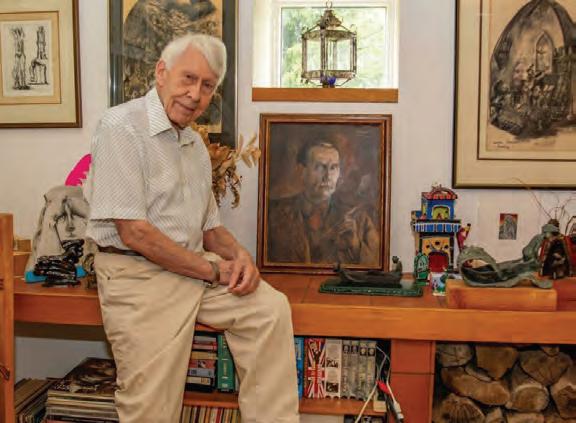
Over six decades he worked simultaneously as an architect, planner, and landscape architect. In its early years, the practice’s sensibility ran against the grain of an era dominated by energy-hungry construction and sprawling suburban development. Simon began building a practice rooted in what he called “contextual design” buildings that fit their natural and built surroundings rather than imposing upon them.


Simon taught at three universities, spreading his philosophy of ecologically sensitive design to future generations.
Simon’s projects include Canada’s first engineered passive solar house; the country’s largest passive solar housing project at the time; North America’s first women’s housing co-operative; the world’s first Christian-Jewish joint worship centre; Toronto’s first traffic-calming speed humps; and the Mill at Eden Mills, a circa 1842 structure which Simon and his first wife, architect Joan Simon, restored as their residence.
Simon earned the only Honorary Membership ever granted by the Ontario Association of Landscape Architects. Simon’s recognition also included the 2006 Toronto Regional Green Building Festival Lifetime Achievement Award, honouring decades of leadership and rigour in sustainable design.
In 2007, Simon led Eden Mills Going Carbon Neutral, North America’s first carbon-neutral community initiative. Working with roughly 350 residents, Simon’s team measured household CO2 emissions, launched workshops, tree-planting drives, energy-efficiency retrofits, and renewable energy installations, planting over 40,000 trees and achieving a 12 per cent reduction in emissions, with the community hall reaching 94 per cent carbon neutrality by 2017. The initiative was recognized with a 2020 Canada Clean50 Top Project Award, recognizing its impact, innovation, inspiration, and imitability. www.canadianarchitect.com
OAA Conference
The Ontario Association of Architects (OAA) conference takes places from May 13-15, 2026, in the Waterloo Region. This year’s conference explores how collaboration thrives in the Grand Valley, with its mid-sized cities and architectural gems, as well as across the province.
oaa.on.ca
AIBC Conference
The Architectural Institute of British Columbia (AIBC) conference takes place in Vancouver from May 25-27, 2026. This year’s theme, “People / Place / Possibility,” offers a lens for reflecting on architectural practice in an increasingly complex, interconnected, and technology-driven world. aibc.ca
SSAC Conference
Gathering researchers on the built environment, the Society for the Study of Architecture in Canada (SSAC) holds its annual conference in Saint John, New Brunswick, from May 27-30, 2026. canada-architecture.org

The Canadian Centre for Architecture (CCA) is hosting its annual Soirée and After Party on June 4, 2026. The evening also marks architecture news platform Kollectif’s 20th anniversary. Proceeds support the CCA’s research fellowships, exhibitions, publications and public programs. cca.qc.ca
For the latest news, visit www.canadianarchitect.com/news and sign up for our weekly e-newsletter at www.canadianarchitect.com/subscribe


Catch Up On Continuing Education
Meet your 2024-2026 continuing education requirements! RAIC’s expert-led courses and convenient webinars keep you licensed, inspired, and at the forefront of architectural innovation. Complete your credits—start learning today. www.raic.org/ professional-development/continuing-education /
Rattrapez vos exigences en formation continue
Respectez vos exigences de formation continue 2024-2026! Les cours animés par des experts et les webinaires pratiques de l’IRAC vous permettent de maintenir votre permis, de rester inspiré et d’être à l’avant-garde de l’innovation architecturale. Cumulez vos crédits — commencez dès aujourd’hui. www.raic.org/fr/developpement-professionnel/ education-continue/
New Member Benefit: RAIC + Hanscomb
Construction Cost Calculator
RAIC and Hanscomb have launched a new memberexclusive Construction Cost Calculator offering benchmark construction rates for early-stage budgeting. Available now through the member portal on t he RAIC website.
Nouvel avantage aux membres : Calculateur des coûts de construction IRAC + Hanscomb L’IRAC et Hanscomb ont lancé un nouveau Calculateur des coûts de construction exclusif aux membres, offrant des coûts de construction de référence pour les estimations préliminaires. Accessible dès maintenant par le portail des membres sur le site Web de l’IRAC.
Save the Date: 2027 RAIC Conference on Architecture
We’re excited to announce the 2027 date and location for the RAIC Conference on Architecture. Join us in Calgary from May 4-8 for continued innovation, collaboration, and knowledge exchange! Follow updates on the RAIC website.
À vos agendas : Conférence sur l’architecture de l’IRAC 2027
Nous sommes heureux d’annoncer les dates et le lieu de la Conférence sur l’architecture de l’IRAC 2027. Joignez-vous à nous à Calgary du 4 au 8 mai pour poursuivre l’innovation, la collaboration et le partage des connaissances! Suivez les mises à jour sur le site Web de l’IRAC.
The RAIC is the leading voice for excellence in the built environment in Canada, demonstrating how design enhances the quality of life, while addressing important issues of society through responsible architecture. www.raic.org
L’IRAC est le principal porte-parole en faveur de l’excellence du cadre bâti au Canada. Il démontre comment la conception améliore la qualité de vie tout en tenant compte d’importants enjeux sociétaux par la voie d’une architecture responsable. www.raic.org/fr
May mai 2026
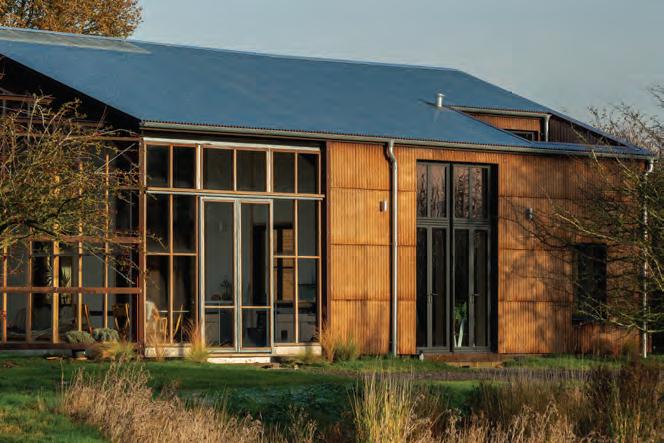
Flat House was designed by Material Cultures to demonstrate how a low-tech approach and biobased materials can be combined with offsite construction to create a scalable low-impact architecture. The notfor-profit UKbased design and research studio is the winner of this year’s RAIC International Prize.
Flat House a été conçue par Material Cultures pour démontrer comment une approche peu technologique et des matériaux biosourcés peuvent être combinés avec une construction hors site afin de créer une architecture évolutive à faible impact. Le studio de conception et de recherche britannique à but non lucratif est le lauréat du Prix international RAIC de cette année.
This issue brings together two stories that illuminate architecture’s reach, across borders and into the future.
We celebrate the 2026 RAIC International Prize laureate, Material Cultures. The London-based research and design collective e xemplifies this year’s theme “Culture of Design” through work that grounds a rchitecture in ecological responsibility, natural materials, and the belief that good design is a shared public resource, not a market commodity.
We are also honoured to introduce the RAIC’s 2026 Honorary Fellows: six architects, educators, and advocates from the United States, Switzerland, Iran, Germany, the Netherlands, and Nigeria. Their induction affirms a long-held conviction that the most transformative ideas in architecture transcend national boundaries. Together, the honourees represent a profession that is more global, more socially conscious, and more responsive to the urgent challenges of our time.
Ce numéro réunit deux histoires qui illustrent la portée de l’architecture, au-delà des frontières et vers l’avenir.
Nous célébrons le lauréat du Prix international RAIC 2026, Material Cultures. Ce collectif londonien de recherche et de design incarne le thème de cette année, « Culture du design », à travers des travaux qui ancrent l’architecture dans la responsabilité écologique, les matériaux naturels et la conviction que le bon design est une ressource publique commune, et non une marchandise.
Nous sommes également honorés de présenter les Fellows honoraires du RAIC pour 2026 : six architectes, éducateurs et défenseurs provenant des États-Unis, de la Suisse, de l’Iran, de l’Allemagne, des PaysBas et du Nigéria. Leur intronisation affirme une conviction de longue date : que les idées les plus transformatrices en architecture transcendent les frontières nationales. Ensemble, ils représentent une profession plus mondiale, plus consciente sur le plan social et plus attentive aux défis urgents de notre époque.
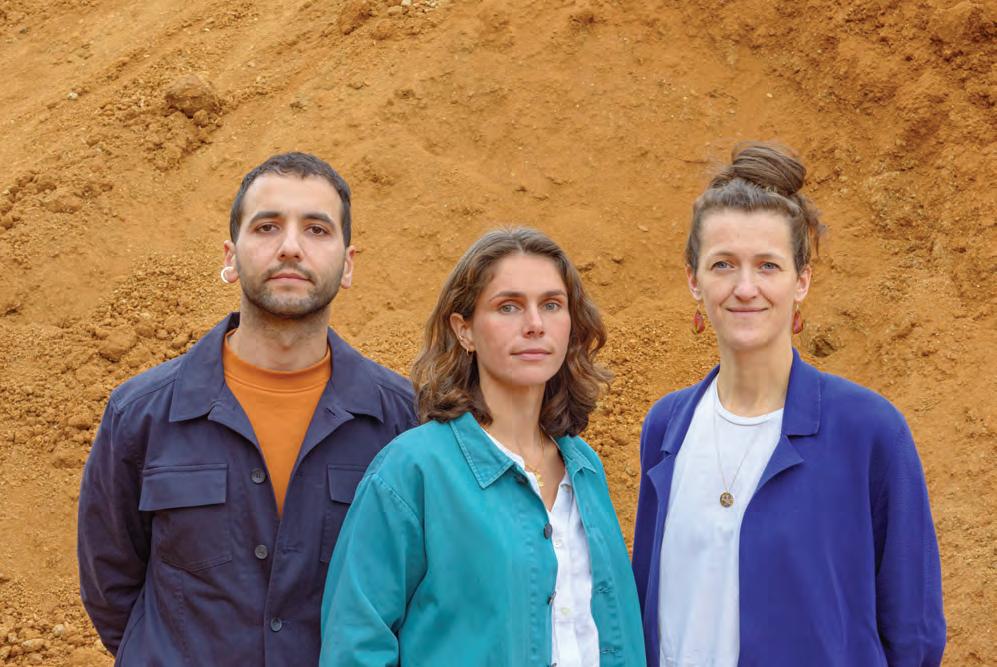
Jason Robbins, Johanna Hurme, Wanda Dalla Costa, Kent Martinussen, Farida Abu-Bakare International Prize Selection Committee Comité de sélection, Prix international
When the selection committee for the 2026 RAIC International Prize convened to pick this year’s laureate, they were not only looking for architectural excellence. They were searching for ideas with the power to reshape the discipline. Their selection of Material Cultures, the London - b ased design and research organization led by Summer Islam, Paloma Gormley, a nd George Massoud, signals a profound shift in how we understand the role of architecture in a world defined by ecological crisis, economic inequity, and the u rgent need for structural change.
The 2026 edition of the RAIC International Prize is guided by the theme “Culture of Design,” a framework that centres design as a fundamentally human - oriented cultural practice. At its core, the theme asserts
that architecture must prioritize people’s lives, experiences, and dignity, placing human well- b eing ahead of market forces or purely aesthetic ambition. Rather than emerging from top - d own directives, a culture of design grows from the ground up, re flecting the values, aspirations, and lived experiences of the public.
The 2026 recipient Material Cultures embodies this theme and serves as inspiration for the practices that act as a catalyst for public good, working in socially engaged ways, and advancing design as a shared cultural resource rather than a market commodity. Material Cultures operates as a collaborative platform working at the intersection of natural materials, low-c arbon construction, and systems-level research. Their work is grounded in a fundamental premise: that architecture cannot be disentangled from the landscapes, extraction systems, and social structures that produce its materials. By interrogating those systems and proposing alternative models, they are helping to define what a regenerative future for architecture might look like.
At the core of Material Cultures’ philosophy is the belief that buildings must be understood as extensions of the ecologies from w hich they emerge. The group argues for the reintegration of architecture and agriculture, challenging the globalized, carbon -intensive supply chains that dominate construction today.
In their practice, bio - b ased materials are not simply aesthetic choices or technical novelties—they represent a structural realignment with renewable cycles of growth and replenishment. Bio-based materials are low in embodied carbon and offer an alternative to the globally sourced, carbon-intensive, socially destructive materials commonly used in the construction industry.
M aterial Cultures’ built work, research outputs, and educational initiatives collectively push the discipline to confront the social a nd ecological consequences of its materi-
al decisions. In doing so, they challenge what they see as the architectural industry’s over-r eliance on extraction - driven, globally sourced material systems that are often both environmentally destructive and socially unjust.
M aterial Cultures is unusual in its equal emphasis on design and research. Their projects range in scales, covering materials, interiors and buildings to the landscapes from which they emerge. They d esign buildings working to integrate bio-based materials and minimally processed minerals into efficient construction systems.
T heir collaborations reflect this philosophy. The studio regularly partners with farmers, foresters, craftspeople, scientists, and academic institutions, forming cross- disciplinary teams that approach materials as s ocial and ecological systems rather than inert commodities.
In recent years, Material Cultures’ practice has expanded to include teaching roles at the Architectural Association, Central Saint Martins, and ETH Zurich. In 2023, they launched MC Make, a learning platform focused on construction skills and s ustainable building practices, underscoring their commitment not only to designing differently but also to building capacity across the sector.
The publication of their 2023 book, Material Reform, further cemented their role as thought leaders. The volume assembles essays exploring the cultures, systems, and infrastructures that shape the architectural industry and the destructive ecologies it fosters.
In awarding the RAIC International Prize to Material Cultures, the selection committee highlighted their research - driven ethos, innovative material strategies, and collective working model.
T he selection committee noted that “the work reflects a forward-looking approach grounded in sustainability and design research. Awarding this group signals strong support for emerging leaders in t he discipline and makes a clear statement about the direction of architecture.”
In the committee’s words, the group’s practice is “innovative and unexpected,” offering pathways toward a future in which architecture does not simply mitigate harm but actively participates in healing ecological and social systems.
For Material Cultures, the RAIC International Prize serves as a catalyst. “We are d elighted to be recognized by the RAIC for our intersectional work on regenerative and socially just land and building systems,” the team said upon receiving the a ward. “We are grateful to work alongside incredible collaborators, with whom we continue to discover new models of transformation.”
T hat emphasis on collaboration and collective discovery has become a defining feature of the group’s influence. They do not present their work as a finished solution, nor as a singular vision for architectural practice. Instead, they propose methods, frameworks, and experiments that others can build upon.
As the RAIC International Prize celebrates practices outside of Canada that meaningfully elevate the human condition, M aterial Cultures’ work offers both critique and possibility, an invitation to i magine construction not as extraction but as cultivation.
The RAIC International Prize honours the belief that exceptional architecture can transform society by promoting humanistic values such as social equity, respect, and inclusiveness, and by creating environments for the well-being of all people.
T he prize recognizes international architects, practices, and organizations beyond C anada that exemplify the RAIC’s values of integrity, climate action, reconciliation, social justice, and innovation. Through this initiative, the RAIC seeks to elevate exemplary global practices within an identified a nnual theme of relevance within Canada’s architectural community.
Lorsque le comité de sélection du Prix international de l’IRAC 2026 s’est réuni pour choisir le lauréat de cette année, il ne recherchait pas uniquement l’excellence architecturale. Il cherchait des i dées capables de transformer la discipline. Son choix s’est porté sur Material C ultures, organisme de conception et de recherche établi à Londres et dirigé par Summer Islam, Paloma Gormley et George Massoud, marquant un tournant profond dans notre compréhension du rôle de l’architecture dans un monde défini par la crise écologique, les inégalités é conomiques et l’urgence de changements structurels.
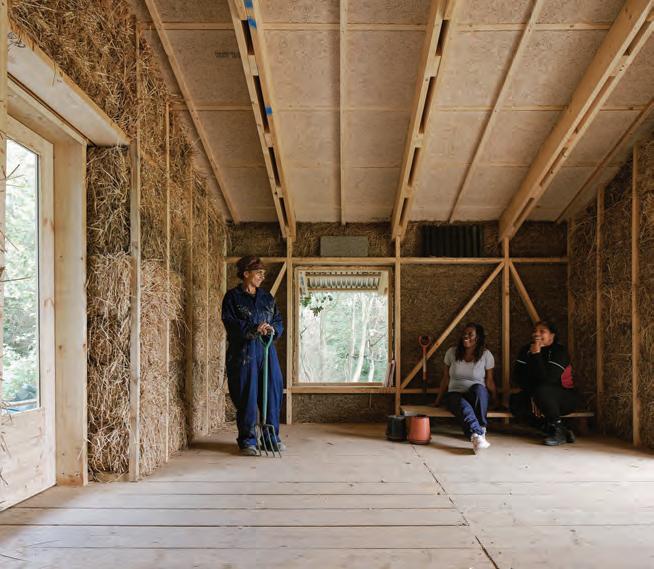
For the Growing Place project, Material Cultures worked with a community team at North London’s Pasteur Gardens to design and make a workshop and community building from agricultural byproducts and biobased materials including timber, clay, wheat, and reed.
Pour le projet Growing Place, Material Cultures a travaillé avec une équipe communautaire des Jardins Pasteur dans le nord de Londres pour concevoir et réaliser un atelier et un bâtiment communautaire à partir de sous-produits agricoles et de matériaux biosourcés, notamment le bois, l’argile, le blé et le roseau.
L’édition 2026 du Prix international de l’IRAC s’inscrit sous le thème « Culture du design », un cadre qui positionne le design comme une pratique culturelle fondamentalement centrée sur l’humain. Au cœur de c e thème se trouve l’idée que l’architecture doit prioriser la vie, l’expérience et la d ignité des personnes, en plaçant le bienêtre humain avant les forces du marché ou les ambitions purement esthétiques. Plutôt que de découler de directives descendantes, une culture du design émerge de l a base et reflète les valeurs, les aspirations et les expériences vécues du public.
L e lauréat 2026, Material Cultures, incarne ce thème et inspire les pratiques qui agissent comme catalyseur du bien public, qui œuvrent de manière socialement engagée et qui font progresser le design c omme ressource culturelle partagée plutôt que comme produit marchand. Material C ultures fonctionne comme une plateforme collaborative à l’intersection des m atériaux naturels, de la construction à faible carbone et de la recherche à l’échelle des systèmes. Leur travail repose sur un principe fondamental : l’architecture ne peut être dissociée des paysages, d es systèmes d’extraction et des structures sociales qui produisent ses matériaux. En examinant ces systèmes et en p roposant des modèles alternatifs, ils contribuent à définir ce que pourrait être un avenir régénératif pour l’architecture.
Réintégrer l’architecture et l’agriculture
Au cœur de la philosophie de Material Cultures se trouve la conviction que les bâtiments doivent être compris comme des prolongements des écosystèmes dont ils émergent. Le groupe plaide pour la réintégration de l’architecture et de l’agriculture, remettant en question les chaînes d’approvisionnement mondialisées et fortement émettrices de carbone qui d ominent aujourd’hui le secteur de la construction.
Dans leur pratique, les matériaux biosourcés ne constituent pas simplement des c hoix esthétiques ou des innovations techniques : ils représentent un réalignement structurel avec des cycles renouvelables de croissance et de régénération. L es matériaux biosourcés présentent un faible carbone intrinsèque et offrent une alternative aux matériaux issus de chaînes d’approvisionnement mondiales, à forte intensité carbone et aux impacts sociaux souvent destructeurs, couramment utilisés dans l’industrie de la construction.
Leurs réalisations construites, leurs travaux de recherche et leurs initiatives p édagogiques poussent collectivement la discipline à affronter les conséquences sociales et écologiques de ses décisions matérielles. Ce faisant, ils remettent en cause la dépendance excessive de l’industrie architecturale à des systèmes matériels mondialisés axés sur l’extraction, s ouvent à la fois destructeurs pour l’environnement et injustes socialement.
U ne pratique définie par la recherche et la collaboration
Material Cultures se distingue par l’importance égale qu’il accorde à la conception et à la recherche. Leurs projets couvrent différentes échelles, allant des matériaux, des intérieurs et des bâtiments aux paysages dont ils sont issus. Ils conçoivent des bâtiments en intégrant des matériaux biosour-
cés et des minéraux peu transformés dans des systèmes constructifs efficaces.
Leurs collaborations reflètent cette philosophie. Le studio s’associe régulièrement à des agriculteurs, des forestiers, des artisans, des scientifiques et des établissements universitaires, formant des é quipes interdisciplinaires qui abordent les matériaux comme des systèmes sociaux et écologiques plutôt que comme des marchandises inertes.
Au cours des dernières années, la pratique de Material Cultures s’est élargie pour inclure des rôles d’enseignement à l’Architectural Association, à Central Saint Martins et à ETH Zurich. En 2023, ils ont lancé MC Make, une plateforme d’apprentissage axée sur les compétences en construction et les pratiques de bâtiment durable, soulignant leur engagement non seulement à
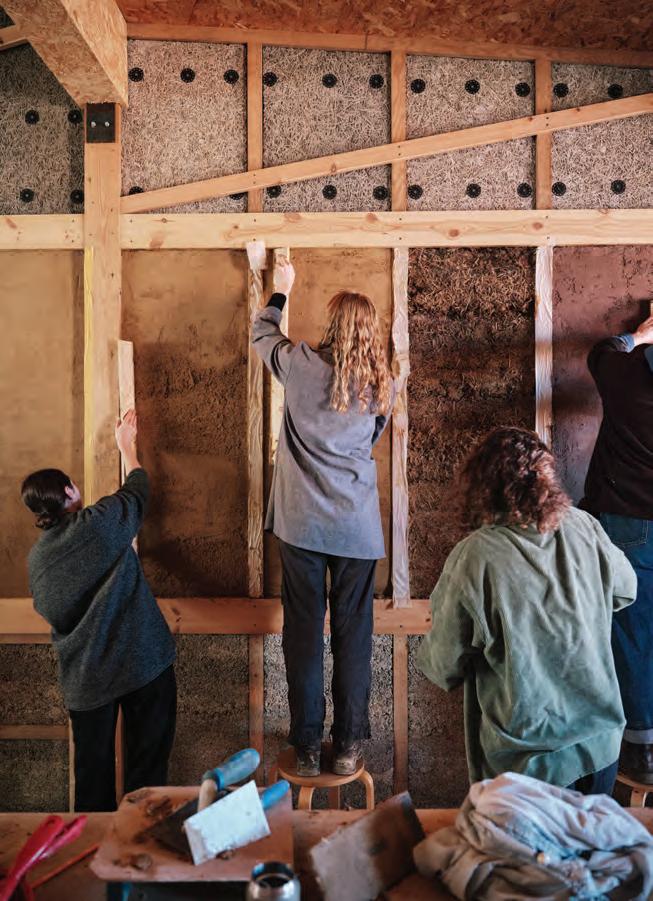
Material Culture’s MAKE is a learning platform that foregrounds practical and accessible construction skills through hands-on workshops led in partnership with builders and material specialists from across the UK.
MAKE de Material Cultures est une plateforme d’apprentissage qui met en avant des compétences pratiques et accessibles en construction à travers des ateliers pratiques dirigés en partenariat avec des constructeurs et des spécialistes des matériaux venant de divers horizons.
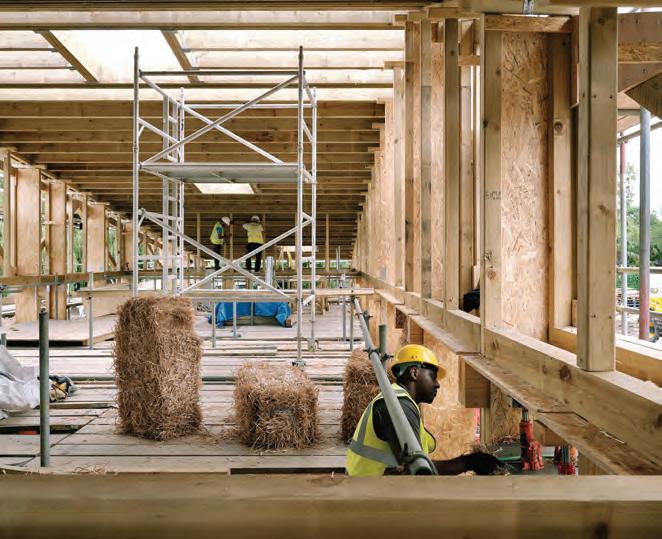
concevoir autrement, mais aussi à renforcer les capacités dans l’ensemble du secteur.
La publication de leur ouvrage de 2023, Material Reform, a consolidé davantage leur rôle de leaders d’opinion. L’ouvrage rassemble des essais explorant les cultures, les systèmes et les infrastructures qui façonnent l’industrie architecturale ainsi que les écologies destructrices q u’elle entretient.
Pourquoi le comité de sélection a choisi Material Cultures
En attribuant le Prix international de l’IRAC à Material Cultures, le comité de sélection a mis en lumière leur approche fondée sur la recherche, leurs stratégies matérielles novatrices et leur modèle de travail collectif.
Le comité a souligné que « le travail reflète une approche tournée vers l’avenir, ancrée dans la durabilité et la recherche en design. L’attribution de ce prix à ce groupe témoigne d’un fort appui aux leaders émergents de la discipline et envoie u n message clair quant à l’orientation de l’architecture. »
Selon les mots du comité, la pratique du groupe est « novatrice et inattendue », offrant des voies vers un avenir où l’architecture ne se contente pas d’atténuer les d ommages, mais participe activement à la régénération des systèmes écologiques et sociaux.
Pour Material Cultures, le Prix international de l’IRAC agit comme catalyseur. « N ous sommes ravis d’être reconnus par l’IRAC pour notre travail intersectionnel sur des systèmes fonciers et bâtis régénératifs et socialement justes », a déclaré l’équipe lors de la réception du prix. « Nous sommes reconnaissants de collaborer avec des partenaires exceptionnels, a vec qui nous continuons à découvrir de nouveaux modèles de transformation. »
Cet accent mis sur la collaboration et la découverte collective est devenu une caractéristique déterminante de l’in -
fluence du groupe. Ils ne présentent p as leur travail comme une solution définitive ni comme une vision unique de la pratique architecturale. Ils proposent plutôt des méthodes, des c adres et des expérimentations que d’autres peuvent approfondir.
Alors que le Prix international de l’IRAC célèbre des pratiques à l’extérieur du Canada qui contribuent de manière significative à l’amélioration de la condition humaine, le travail de Material C ultures offre à la fois une critique et une possibilité — une invitation à envisager la construction non pas comme ex traction, mais comme culture.
À propos du Prix international de l’IRAC
Le Prix international de l’IRAC repose sur la conviction qu’une architecture exceptionnelle peut transformer la société en promouvant des valeurs humanistes telles que l’équité sociale, le respect et l’inclusion, et en créant des environnements favorisant le bienêtre de toutes et tous.
Le prix reconnaît des architectes, des firmes et des organisations à l’international, à l’extérieur du Canada, qui i ncarnent les valeurs de l’IRAC : intégrité, action climatique, réconciliation, justice sociale et innovation. Par cette initiative, l’IRAC cherche à mettre en l umière des pratiques exemplaires à l’échelle mondiale, en lien avec un thème annuel pertinent pour la communauté architecturale canadienne.

Developed by Material Culture with Studio Gil, the Wolves Lane Centre rejuvenates a community foodgrowing and enterprise hub in the heart of North London, UK.
Développé par Material Cultures avec Studio Gil, le Centre Wolves L ane revitalise un pôle communautaire de production alimentaire et d’entrepreneuriat au cœur du nord de Londres, au Royaume-Uni.
Material Culture’s work centres on bio-based materials including rammed earth, hempcrete, clay, wood wool, and stone.
Le travail de Material Cultures est centré sur les matériaux biosourcés, notamment la terre battue, le béton de chanvre, l’argile, la laine de bois et la pierre. Material Cultures
Bâtir des ponts au-delà des frontières : les fellows honoraires 2026 de l’IRAC
The Royal Architectural Institute of Canada (RAIC) has long recognized that the most transformative ideas in architecture do not respect national boundaries. Its Honorary Fellowship, awarded to individuals who have made extraordinary contributions to the profession beyond Canada’s b orders, reflects that conviction. The Institute’s newest cohort of Honorary Fellows brings together six architects, educators, and advocates from the United States, Switzerland, Iran, Germany, the Netherlands, and Nigeria. Collectively, they represent a profession in motion: more global, more socially conscious, and more attuned to the urgent challenges of our time than at any previous moment.
L’Institut royal d’architecture du Canada (IRAC) reconnaît depuis longtemps que les idées les plus transformatrices en architecture ne respectent pas les frontières nationales. Son fellowship honoraire, décerné à des personnes ayant apporté des contributions exceptionnelles à la profession audelà du Canada, reflète cette conviction. La plus récente cohorte de fellows honoraires de l’Institut réunit six architectes, éducateurs et défenseurs provenant des ÉtatsU nis, de la Suisse, de l’Iran, de l’Allemagne, des Pays-Bas et du Nigéria. Collectivement, ils incarnent une profession en mouvement : plus mondiale, plus consciente de ses responsabilités sociales et plus attentive aux défis urgents de notre époque que jamais auparavant.
Stephen T. Ayers
Stephen T. Ayers has spent a career in service to the built fabric of American democratic life. As the 11th Architect of the Capitol, a post he held for a decade, Ayers bore r esponsibility for one of the most symbolically loaded collections of buildings on e arth: the U.S. Capitol, the Library of Congress, the U.S. Supreme Court, and millions of square feet of surrounding facilities spread across 570 acres. The work was less about spectacle than stewardship preserving, modernizing, and maintaining structures that anchor the American civic imagination.
After retiring in 2016, Ayers founded the Ayers Consulting Group, LLC, and has since served as Project Executive for the AIA Headquarters renewal and Interim CEO of the National Institute of Building Sciences. Currently serving as Interim Executive Vice President and CEO of the American Institute of Architects—a network of more than 100,000 professionals across 200 chapters in the United States—he remains a central figure in shaping how the profession organizes and advocates for itself. His honours include the Carroll H. Dunn Award for Excellence, the AIA Thomas Jefferson Award, a nd the Donald B. Myer Award for Public Service, among others.
Stephen T. Ayers
Stephen T. Ayers a consacré sa carrière au service du patrimoine bâti de la vie démocratique américaine. En tant que 11e Architect of the Capitol—poste qu’il a occupé pendant une décennie—Ayers était responsable de l’un des ensembles de bâtiments les plus symboliques au monde : le Capitole des États-Unis, la Bibliothèque du Congrès, la Cour suprême des États-Unis, ainsi que des millions de pieds carrés d’installations réparties sur 570 acres. Son travail relevait moins du spectaculaire que de la gérance : préserver, m oderniser et entretenir des structures qui ancrent l’imaginaire civique américain.
Après sa retraite en 2016, Ayers a fondé Ayers Consulting Group, LLC, et a depuis occupé les fonctions de Project Executive pour le renouvellement du siège s ocial de l’AIA et de directeur général par intérim du National Institute of Building Sciences. Actuellement directeur général et vice-président exécutif par intérim de l’American Institute of Architects—un réseau de plus de 100 000 professionnels répartis dans 200 chapitres aux États-Unis—il demeure une figure centrale dans la manière dont la profession s’organise et défend ses intérêts. Parmi ses distinctions figurent notamment le Carroll H. D unn Award for Excellence, le AIA Thomas Jefferson Award et le Donald B. Myer Award for Public Service.

Farrokh Derakhshani
Farrokh Derakhshani has spent more than four decades making the case that architecture is inseparable from culture, society, and faith. Based in Geneva, the Iranian-born architect and urban planner has l ed the Aga Khan Award for Architecture since 2006, and directed its Award Procedures for the two decades prior, overseeing one of the most rigorous and wider anging recognition programs in the built environment. The Award, an initiative of the Aga Khan Development Network, specifically honours projects in Muslim societies that reflect cultural context, social r esponsibility, and design excellence, a mandate that has shaped Derakhshani’s own intellectual commitments.
Through his work, he has curated international exhibitions, contributed to landmark p ublications, and lectured at more than fifty universities across Europe, Africa, Asia, and the United States. Named Honorary Professor at Xi’an Jiaotong-Liverpool U niversity and Honorary International Fellow of the Royal Institute of British Architects in 2018, Derakhshani stands as one of architecture’s most important cross-cultural bridge builders.
Farrokh Derakhshani consacre depuis plus de quarante ans sa carrière à démontrer que l’architecture est indissociable de la culture, de la société et de l a foi. Basé à Genève, cet architecte et urbaniste d’origine iranienne dirige l’Aga Khan Award for Architecture depuis 2006



et en a supervisé les procédures pendant les deux décennies précédentes, e ncadrant l’un des programmes de reconnaissance les plus rigoureux et les plus étendus du milieu bâti. Ce prix, initiative de l’Aga Khan Development Network, récompense des projets réalisés d ans des sociétés musulmanes qui reflètent leur contexte culturel, leur responsabilité sociale et l’excellence en design—un mandat qui a profondément influencé les engagements intellectuels de Derakhshani.
Par son travail, il a organisé des expositions internationales, contribué à des p ublications marquantes et donné des conférences dans plus de cinquante universités en Europe, en Afrique, en Asie et a ux États-Unis. Nommé professeur honoraire à Xi’an Jiaotong-l’Université de Liverpool et fellow international honoraire d u Royal Institute of British Architects en 2018, Derakhshani est l’un des plus importants bâtisseurs de ponts interculturels en architecture.
Angela Brooks and Lawrence Scarpa
Angela Brooks and Lawrence Scarpa— the partners behind Brooks + Scarpa— have built a practice over three decades that refuses to separate aesthetic ambition from ethical commitment. Their work h as earned more than twenty-nine National AIA Awards and the 2022 AIA Gold Medal, one of the highest honours the American profession can bestow. But the more telling measure of their
achievement may be found in the communities they have served.
B rooks and Scarpa have devoted much of their careers to affordable housing, supportive housing, transitional facilities, a nd projects serving seniors, veterans, and people with mental disabilities. “Good design is for everyone,” Angela Brooks has stated plainly—and the testimonies of residents who have lived within their buildings give that statement substance. Lawrence Scarpa speaks of “making the ordinary extraordinary”: of finding within modest budgets and constrained sites the possibility of genuine spatial dignity. Together, they describe their ideal as cultivating “citizen architects,” practitioners w ho understand that architecture happens at every scale, and that its deepest p urpose is improving human life. Their example is both an inspiration and an instruction.
Angela Brooks et Lawrence Scarpa— partenaires derrière Brooks + Scarpa—ont bâti en trois décennies une pratique qui refuse de séparer l’ambition esthétique de l’engagement éthique. Leur travail a reçu plus de vingt-neuf National AIA Awards ainsi que la médaille d’or de l’AIA en 2022, l’une des plus hautes distinctions de la profession américaine. Mais la véritable mesure de leur contribution se trouve peut-être dans les communautés qu’ils ont servies.
Brooks et Scarpa ont consacré une grande partie de leur carrière au logement abordable, au logement avec ser-
vices de soutien, aux installations de transition ainsi qu’à des projets destinés aux personnes âgées, aux vétérans et aux personnes vivant avec des troubles de santé mentale. « Good design is for everyone », affirme simplement Angela Brooks—et les témoignages des résidents ayant vécu dans leurs bâtiments d onnent tout son sens à cette affirmation. Lawrence Scarpa parle de « rendre l’ordinaire extraordinaire » : trouver, dans des budgets modestes et sur des sites contraints, la possibilité d’une véritable dignité spatiale. Ensemble, ils défendent l’idéal des « citizen architects », des praticiens qui comprennent que l’architecture se déploie à toutes les échelles et que son objectif le plus profond est d’améliorer la vie humaine. Leur e xemple est à la fois une source d’inspiration et un enseignement.
Russell
Peter Russell approaches the future of architecture from the vantage point of pedagogy. His career has taken him across three continents, leading faculties at RWTH Aachen University, TU Delft, and now Tsinghua University’s Shenzhen International Graduate School, where he serves as founding Dean of the Institute for Future Human Habitats. At each institution, he has worked to place computation, interdisciplinary research, and sustainability at the centre of architectural e ducation rather than treating them as supplementary concerns.


At RWTH Aachen, Russell helped bridge traditional architectural methods with data-driven approaches. In Shenzhen, he is now focused on the most pressing question facing the profession: how to design for sustainable urbanization at scale in a rapidly changing world.
His influence extends beyond the classroom—notably, his concepts found expression in the Shanghai Expo 2010. But it is in t he formation of new generations of architects that his legacy is most deeply felt.
Peter Russell envisage l’avenir de l’archi-tecture à partir du point de vue de la pédagogie. Sa carrière l’a mené sur trois continents, dirigeant des facultés à l’École supérieure polytechnique de Rhénanie-Westphalie, à TU Delft et a ujourd’hui à la Shenzhen International Graduate School de l’Université Tsinghua, où il est doyen fondateur de l’Institute for Future Human Habitats. Dans chacune de ces institutions, il a œuvré à placer la computation, la recherche interdisciplinaire et la durabilité au cœur de la formation en architecture, plutôt que de les considérer comme d es préoccupations secondaires.
À l’École supérieure polytechnique de Rhénanie-Westphalie, Russell a contribué à rapprocher les méthodes architecturales traditionnelles et les a pproches fondées sur les données. À Shenzhen, il se concentre aujourd’hui sur la question la plus pressante pour la profession : comment concevoir une
attention. Currently the Jaap Oosterhoff Visiting Professor at TU Delft, a member of the Board of Trustees of the Canadian Centre for Architecture, and a 2025 Loeb Fellow at Harvard University, Oshinowo has become one of the leading contemporary voices in African and international ar chitecture.
Tosin Oshinowo apporte au fellowship de l’IRAC une perspective longtemps sousreprésentée dans le discours architectural mondial. Basée à Lagos, elle a fondé Oshinowo Studio en 2013, un bureau a ujourd’hui reconnu internationalement pour son minimalisme contextuel et son approche du design sensible au climat. Son travail se situe à l’intersection de l’identité culturelle, de la responsabilité environnementale et des besoins sociaux.
urbanisation durable à grande échelle dans un monde en transformation rapide.
Son influence dépasse largement le cadre de la salle de classe. Ses idées ont notamment trouvé une expression lors de l’Expo 2 010 de Shanghai, mais c’est dans la formation de nouvelles générations d’architectes que son héritage se fait le plus profondément sentir.
Tosin Oshinowo brings to the RAIC’s fellowship a perspective that has been too l ong underrepresented in global architectural discourse. Based in Lagos, she f ounded Oshinowo Studio 2013 which is internationally recognized for its contextual minimalism and climate-responsive d esign. She works at the intersection of cultural identity, environmental responsibility, and social need.
H er projects range from the Ngarannam Resettlement Town, designed in collaboration with a displaced community in n ortheast Nigeria for the United Nations Development Programme, to commercial and civic works including Maryland Mall and Adidas Lagos. Each engages the specific material, cultural, and climatic conditions of its context. As curator of the 2023 Sharjah Architecture Triennial, The Beauty of Impermanence: An Architecture of Adaptability, she brought the practices of resourcefulness and repair across the Global South to international
Ses projets vont de la Ngarannam Resettlement Town — conçue en collaboration avec une communauté déplacée dans le nord-est du Nigéria pour le Programme des Nations Unies pour le développement — à des projets commerciaux et civiques, notamment Maryland Mall et Adidas Lagos. Chacun s’inscrit dans les conditions matérielles, culturelles et climatiques propres à son contexte. À titre de commissaire de la Sharjah Architecture Triennial 2023, intitulée The Beauty of Impermanence: An Architecture of Adaptability, elle a porté à l’attention internationale les pratiques de débrouillardise et de réparation présentes dans l’ensemble du Sud global. Actuellement professeure invitée Jaap Oosterhoff à TU Delft, membre du conseil d’administration du Centre Canadien d’Architecture et Loeb Fellow 2025 à l’Université Harvard, Oshinowo est devenue l’une des voix contemporaines les plus influentes de l’architecture africaine et internationale.
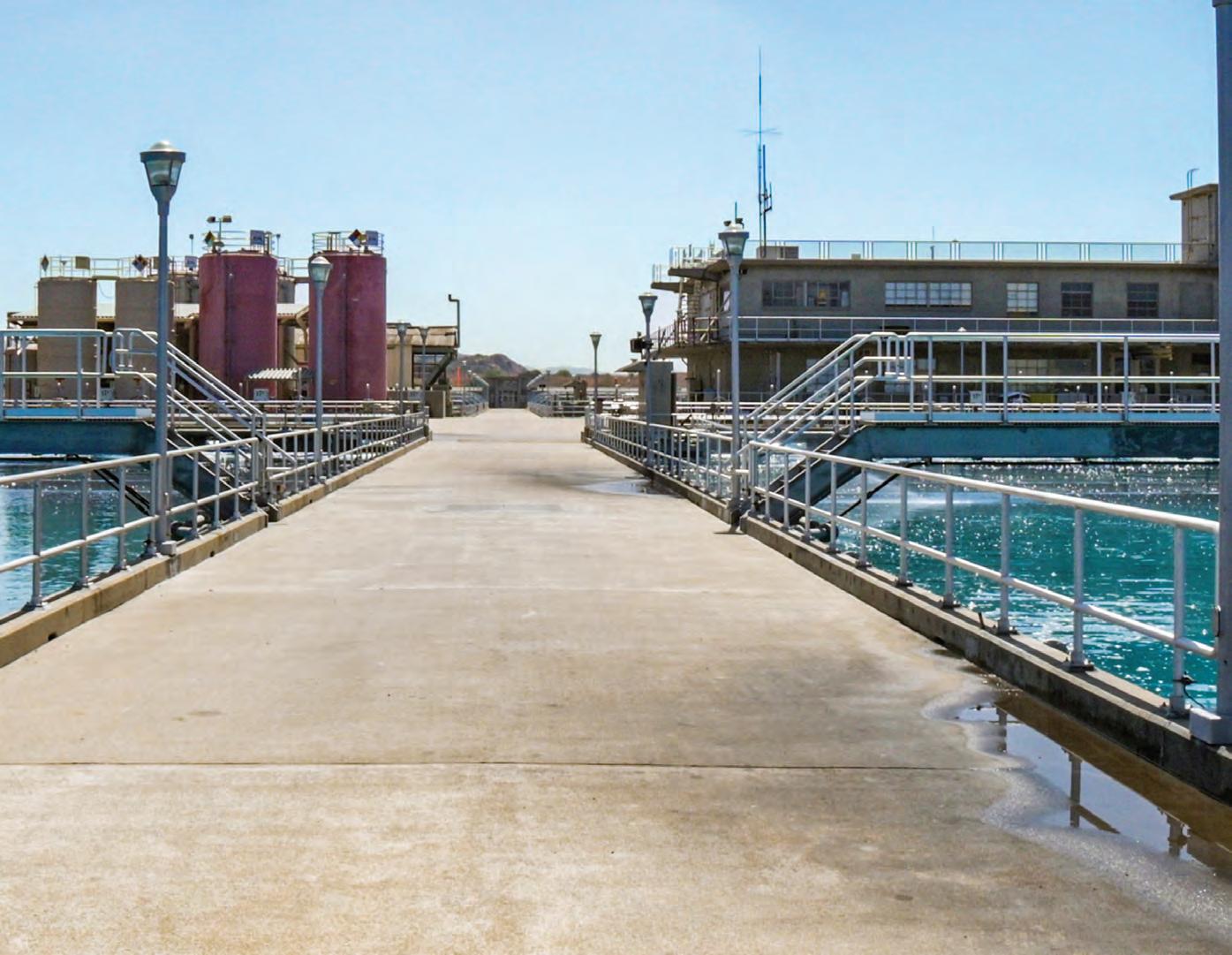
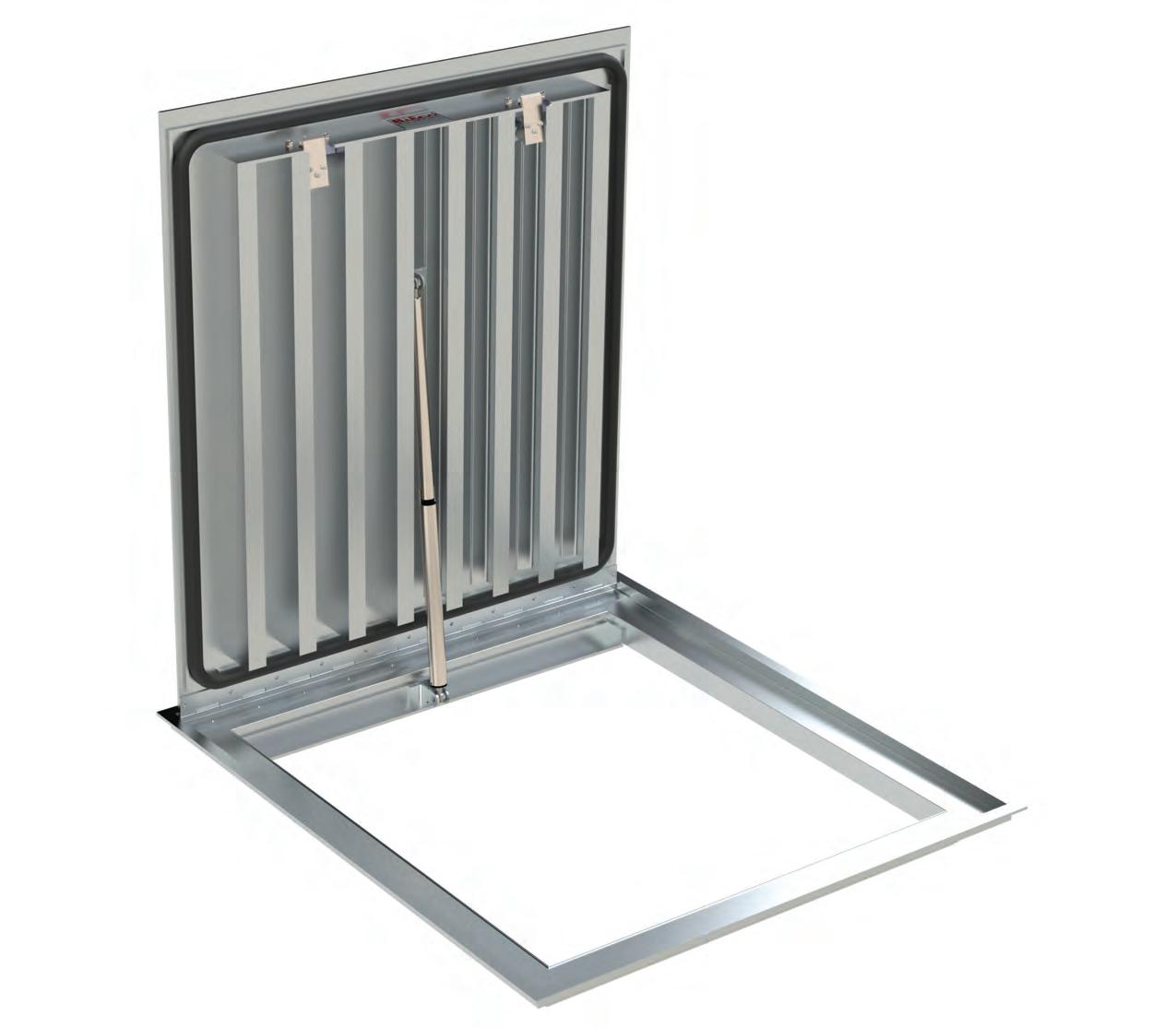
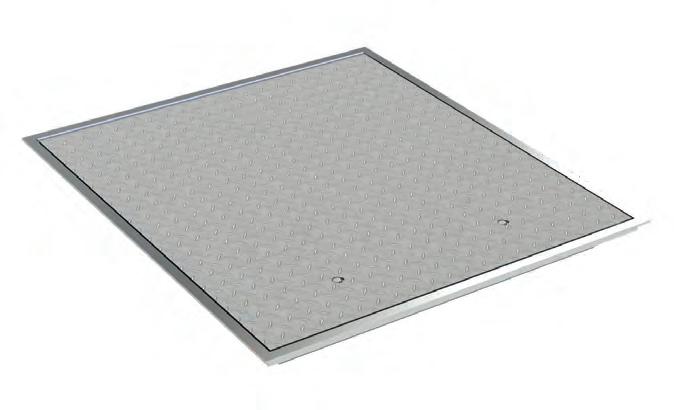
Type FT-30 flood tight floor access doors are constructed for use in applications where there is concern of water or other liquids entering the access opening. Type FT-30 doors are rated to withstand a 30-foot (9.14m) head of water from the topside without leakage and up to a 5-foot (1.52m) head of water from the underside (when specified) and will resist low-pressure gases and odors. Doors are reinforced for AASHTO H-20 wheel loading and feature aluminum construction, type 316 stainless steel hardware, and engineered lift assistance for easy one-hand operation.

The difference is Gaggenau

Origins
Raymond Moriyama founded his architectural practice in Toronto in 1958 and established a partnership with Ted Teshima in 1970. Early in life, as Japanese Canadians, they experienced the removal of citizenship during the Second World War. From this history emerged a lasting conviction that architecture can help uphold democracy by giving form to dignity, welcome, and belonging. This conviction found architectural expression in formative Moriyama Teshima Architects (MTA) public works including the Ontario Science Centre and the Japanese Canadian Cultural Centre.
Continuity
MTA has continued to evolve through collective leadership while remaining grounded in its founding principles. Modest in scale but developed through deep engagement with diverse faith communities, the University of Toronto Multi-Faith Centre (2007) carried the firm’s legacy forward through a new generation. Eight partners Diarmuid Nash, Carol Phillips, Brian Rudy, Ronen Bauer, Emmanuelle van Rutten, Ben Feldman, Phil Silverstein, and Urvish Patel now lead a firm that continues to push boundaries in social inclusion, inventive process, architecture that uplifts daily life, and technical leadership shared openly with the broader architectural community.
Generative, generous, regenerative architecture
As human innovation places increasing strain on climate systems, social relationships, and equity, MTA’s work seeks to simplify and reconnect, bringing people back to nature and to one another. Quality is expressed
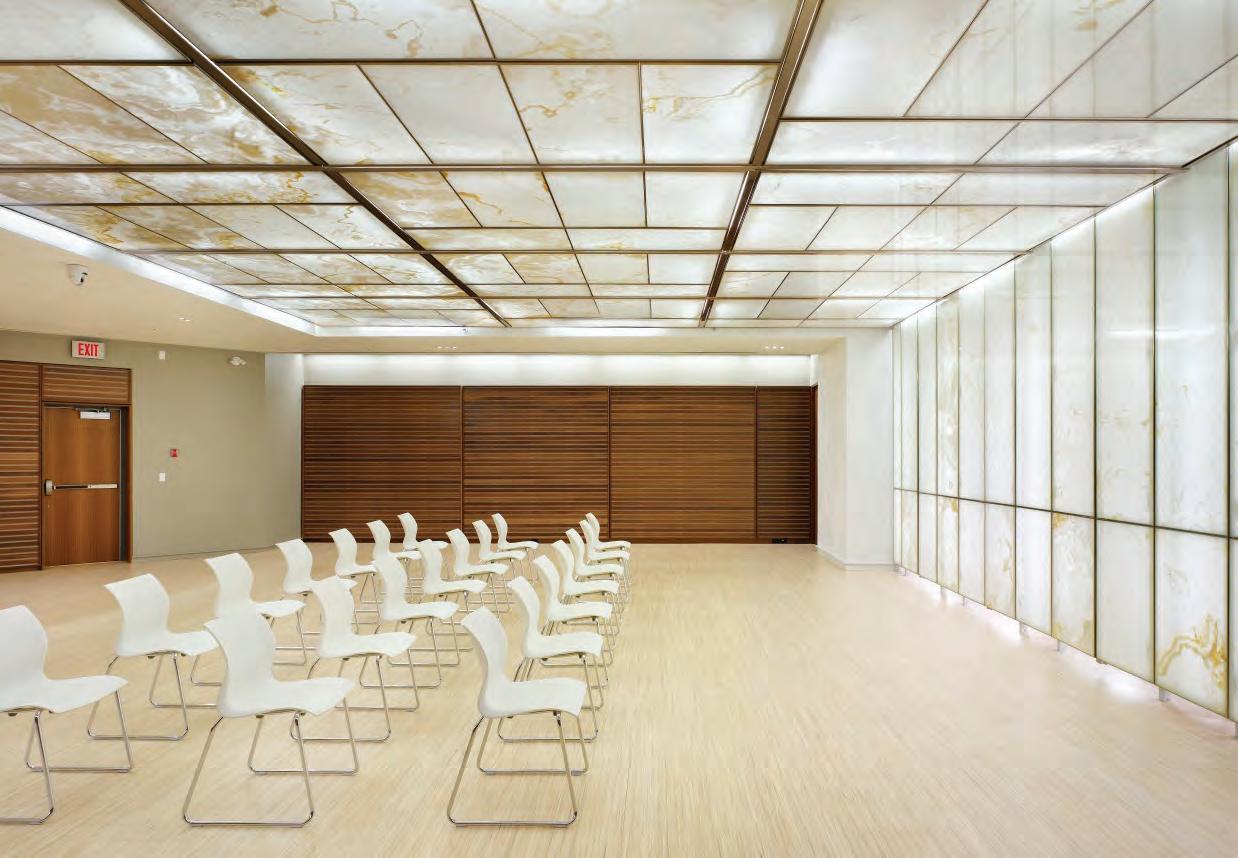
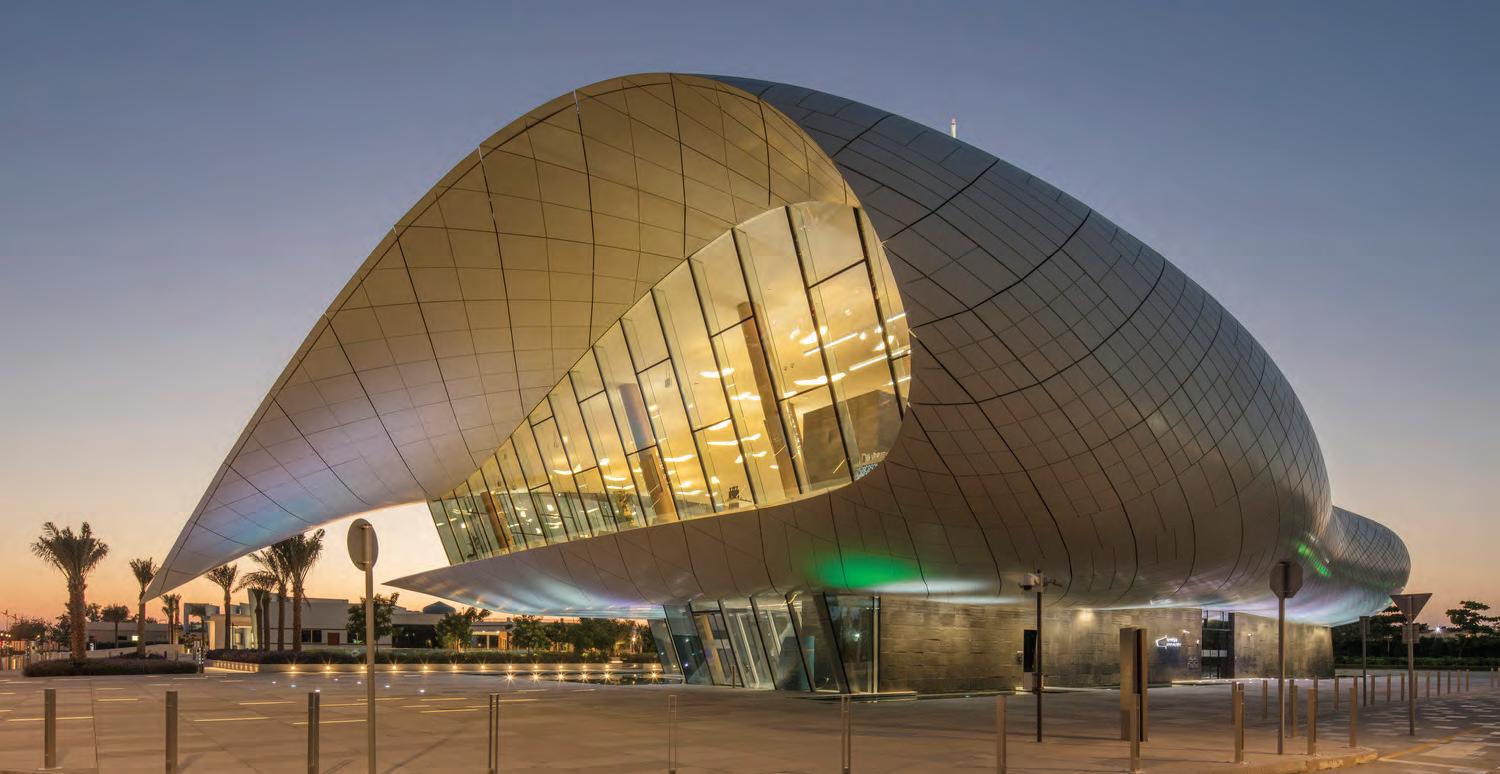
OPPOSITE TOP For the University of Toronto Multi-Faith Centre, MTA used backlit onyx panels to create a luminous space that would welcome people of all faiths. OPPOSITE BOTTOM Shaped like a curved parchment, the Etihad Museum honors the 1971 signing of the document that created the United Arab Emirates. TOP From left to right, top to bottom, MTA partners Ronan Bauer, Diarmuid Nash, Ben Feldman, Urvish Patel, Brian Rudy, Phil Silverstein, Carol Phillips, and Emmanuelle van Rutten.
through restraint and clarity, through gestures shaped to endure beyond moment or style. Form is purposeful. Material expression is inseparable from use. Architecture is understood as an active participant in reinforcing the social contract by making collective values visible and supporting democratic, inclusive communities.
Architecture as a place of encounter and mutual understanding For Humber College, MTA served as Prime Consultant on a series of projects. Work on the Welcome Centre, the Athletic Centre, and the Centre for Entrepreneurship (2016) supported the college’s evolving priorities while maintaining clarity of design intent and steady involvement from design to completion.
Projects such as the University of Toronto Mississauga Innovation Complex (2014) and the Meeting Place (2020) are adaptable frameworks, allowing interiors to evolve as pedagogies and modes of gathering change over time. Material choices emphasize durability and tactility, ensuring that buildings age with dignity and remain meaningful across generations.
The same discipline underpins MTA projects of international and national significance. These include Dubai’s Etihad Museum (2016), located on the site where the United Arab Emirates’ founding declaration was signed. The sweeping form and seven inclined, tapering bronze columns of the museum’s Visitor’s Pavilion evoke that historic moment of raised pens gathered beneath a unifying canopy. In MTA’s Canada Pavilion, a temporary structure created for Expo 2020 Dubai, symbolic intent is here again distilled into legible architectural elements. Vertical elements in the curved façade’s Douglas Fir screen recall the experience of moving through a Canadian forest. The lattice layered over the ‘trees’ was inspired by a traditional Arabic architectural element: screened, projecting oriel windows (mashrabiyya), which provide shade and permeability. In the Government of Canada Visitor Welcome Centre (2019, with Arcadis) in Ottawa, architecture supports civic understanding and a sense of shared belonging. Through clarity of organization, careful stewardship of material, and an experience shaped for diverse publics, the project reinforces architecture as a cultural bridge within Canada itself.
Place: a sustained commitment to possibility
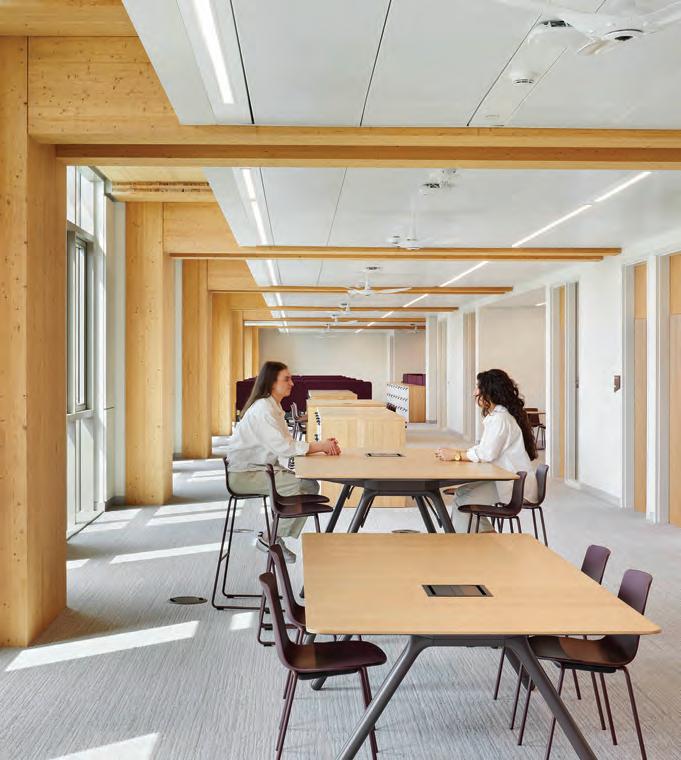
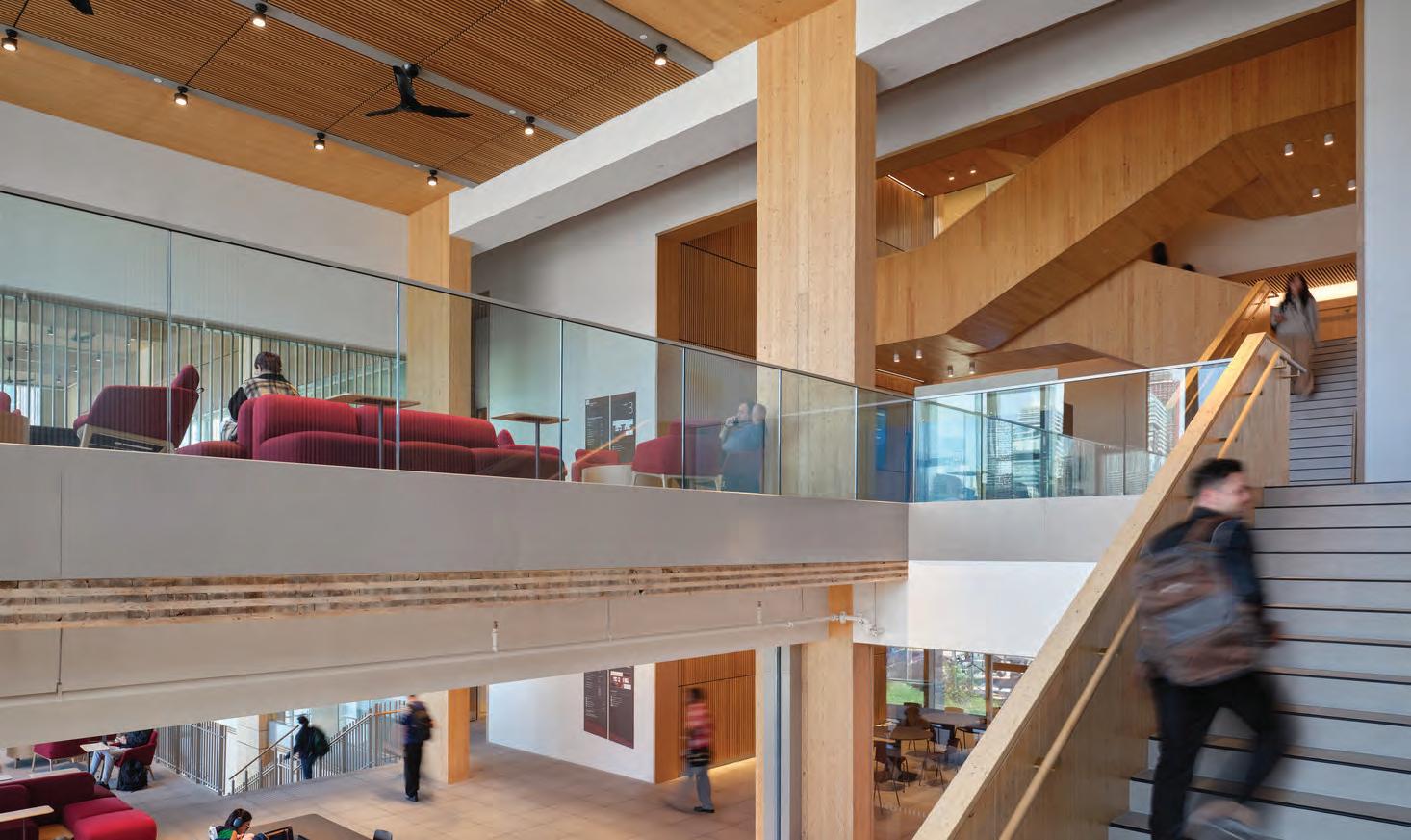
Conceived as a living laboratory for students in George Brown Polytechnic’s architectural programs, Limberlost Place (2025) was Ontario’s first tall wood assembly occupancy academic building. Delivered through a joint venture partnership between MTA and Acton Ostry Architects, the project required close collaboration with authorities having jurisdiction to align emerging construction methodologies with existing codes and approval processes. Innovation in construction supported ambitious environmental and architectural goals, achieved responsibly.
The building’s mass timber structure is central to this achievement. Its long-span, beamless grid maximizes flexibility and daylight penetration. The system supported clear construction sequencing and reduced material redundancy, enabling efficient prefabrication and assembly while maintaining quality control. Structural clarity reinforces legibility for users, making the building’s logic visible and accessible, and enabling long-term reconfiguration as academic needs evolve.
Environmental performance is deeply integrated into the construction strategy, with passive systems, hybrid natural ventilation, and lowcarbon materials working together to support the project’s targeted netzero carbon emissions performance. These systems are designed to be intuitive, allowing occupants to understand and engage with the building’s environmental behaviour.
Limberlost Place exemplifies MTA’s approach to knowledge sharing. The firm contributed to evolving interpretations of building and fire codes and to growing regulatory and industry confidence in tall wood construction. By documenting and sharing construction processes,
challenges, and solutions, MTA has supported future projects and helped lower barriers to adoption, reinforcing collective advancement. Through public documentation, guided tours, and accessible media, the project also functions as a pedagogical tool that supports education and peer learning at scale.
The quality of professional services at Moriyama Teshima Architects is grounded in collaboration, stewardship, and adaptability. The firm operates across multiple contractual and organizational frameworks, maintaining clarity, accountability, and care regardless of role.
The Aga Khan Museum and Park and the Ismaili Centre projects in Toronto (2014) illustrate this approach. Invited by Fumihiko Maki to serve as Canadian Architect of Record for the Aga Khan Museum, MTA coordinated architectural vision, regulatory responsibility, and cultural identity within a complex civic and historical context. As Executive Architect and Architect of Record for the Aga Khan Park, designed with Vladimir Djurovic Landscape Architects, and the Ismaili Centre, designed with Charles Correa Associates, the firm provided continuity and governance within an internationally led collaboration.
Fundamental to MTA’s sustainability outlook is the belief that the most responsible buildings are designed to endure, adapt, and operate efficiently over time. At the Ontario Secondary School Teachers’ Federation Headquarters (2024), structural mass timber, generous daylighting, and an efficient building form are combined to reduce embodied carbon and operational energy use, while supporting occupant health and long-term flexibility.
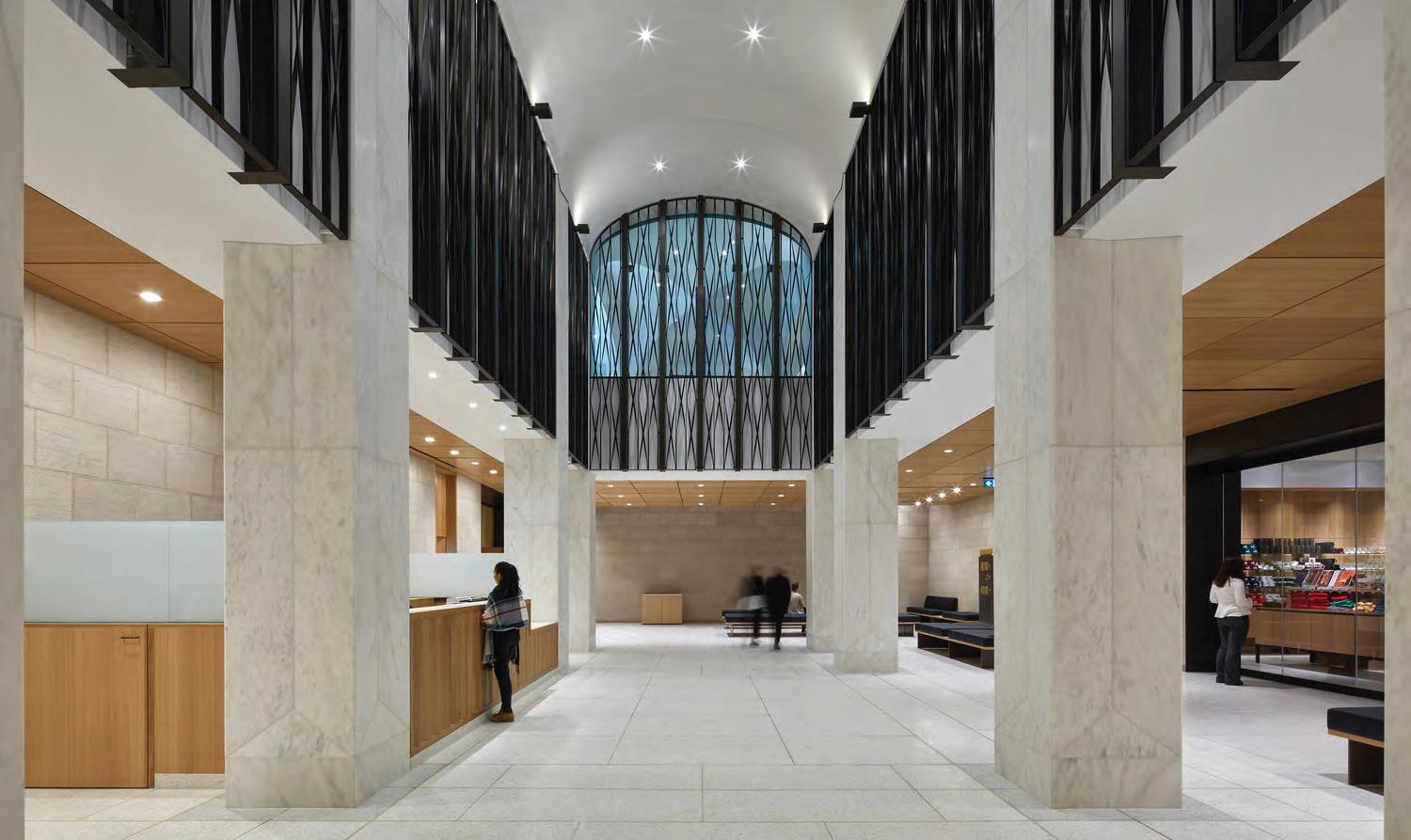
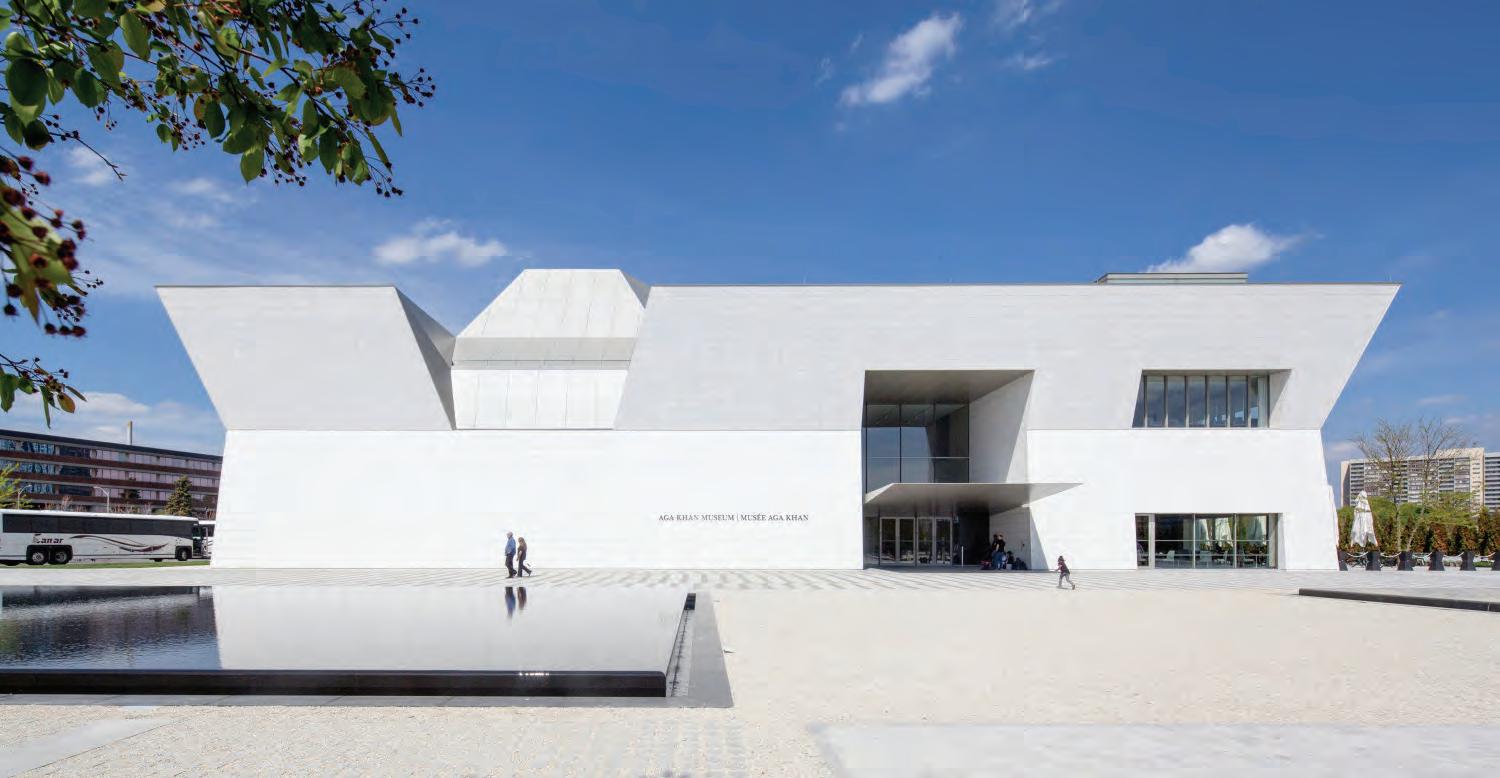
OPPOSITE Limberlost Place, completed by MTA in association with Acton Ostry, is precedent-setting for its use of mass timber in a 10-storey academic building with assembly occupancy. ABOVE Completed in collaboration with Arcadis (formerly IBI Group), the Government of Canada Visitor Welcome Centre knits references to the historic Parliamentary Precinct into a contemporary visitor amenity space. BOTTOM MTA was invited by Fumihiko Maki to serve as Architect of Record on the Aga Khan Museum in Toronto, a showcase for the history and culture of Muslim civilizations.
Equity, diversity, and inclusion
Reconciliation is understood by MTA as a living Canadian responsibility. It is carried forward through attentive listening, sustained care for memory and place, and the steady work of shaping environments where dignity is present and shared futures are possible. The firm is a certified Diverse Supplier through the Canadian Aboriginal and Minority Supplier Council. James K. Bird, an Indigenous Architectural Designer and Knowledge Keeper at MTA , supports projects by guiding respectful protocols and grounding engagement in lived cultural knowledge.
On the Rouge National Urban Park Visitor, Learning, and Community Centre (in progress, with Two Row Architect and Ian Grey Studio), workshops led by Parks Canada and a First Nations Advisory Circle informed the team’s understanding of the Rouge as a living landscape shaped by long-standing practices of care and cultivation. On the Government of Canada Accommodation Facility in St. John’s, Newfoundland (in progress, with Woodford Architecture), the mandated Indigenous Participation Plan influenced the design of shared spaces, points of arrival, and the overall sense of openness within a highly structured institutional environment. The result is architecture that integrates recognition into daily experience.
Collaboration with Indigenous partner Smoke Architecture on the Makwa Waakaa’igan Indigenous Centre of Cultural Excellence at Algoma University (in progress) has shaped an architecture grounded in cultural continuity and relationship to land. A similar ethic guides the Science North Northwest Expansion projects in Thunder Bay and Kenora (in progress, with Brook McIlroy, Form Studio, and Nelson Architecture), where public learning environments are shaped to support curiosity and community pride through spaces that welcome diverse users.
Quality measured by who belongs
MTA integrates strategies that address visible and invisible dimensions of accessibility, including sensory comfort, cognitive load, and emotional well-being. Projects support varied learning styles, sensory preferences, and patterns of use through choice and autonomy. Varied spatial
conditions, including quiet areas, open collaborative zones, differing levels of enclosure, and flexible furniture arrangements, allow users to select environments that support focus, interaction, or retreat.
MTA seeks to support communities that have been historically underrepresented or underserved, including Indigenous communities, newcomers, students, and multi-generational users. Projects are designed to support cultural continuity, community wellness, and social connection through spaces for gathering, learning, ceremony, and shared experience.
Studio as learning environment
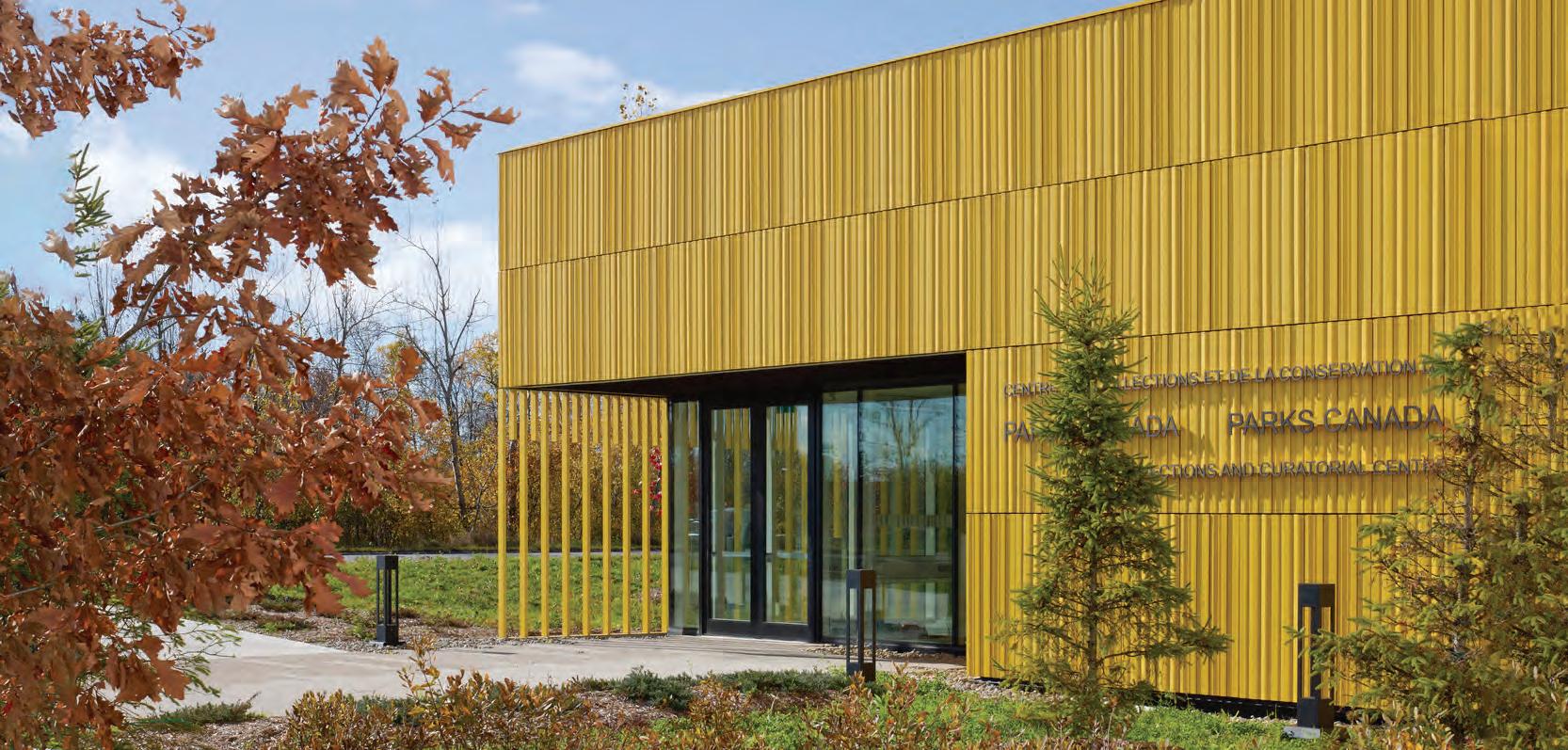
At MTA , individuals at all stages of their careers are encouraged to contribute ideas, participate in research, and engage in dialogue across projects and teams. Projects such as the Parks Canada Collection and Curatorial Centre (2025, with NFOE Architecture) demonstrate MTA’s emphasis on developing design intelligence collectively through testing and reflection, allowing knowledge to circulate within the practice and strengthen architectural judgement over time. The Collection and Curatorial Centre integrates advanced conservation systems with material restraint, controlled light, and precisely calibrated spatial conditions.
MTA’s collaborative learning environment is central to shaping work that is generous in its welcome, generative in its intent, and regenerative in its contribution to civic life.
Jury Comment :: The jury unanimously recognized Moriyama Teshima Architects for a distinguished, consistent, and internationally significant body of work marked by dignity, restraint, craft, public engagement, and leadership within the profession.
The jury was composed of Sumayya Vally, Stephanie Yeung, Chris Woodford, Ted Watson, and Wayne Guy.
ABOVE Designed in joint venture with NFOE Architecture, the Parks Canada Collections and Curatorial Centre is a facility for the conservation of more than 30 million historical and archaeological artifacts.
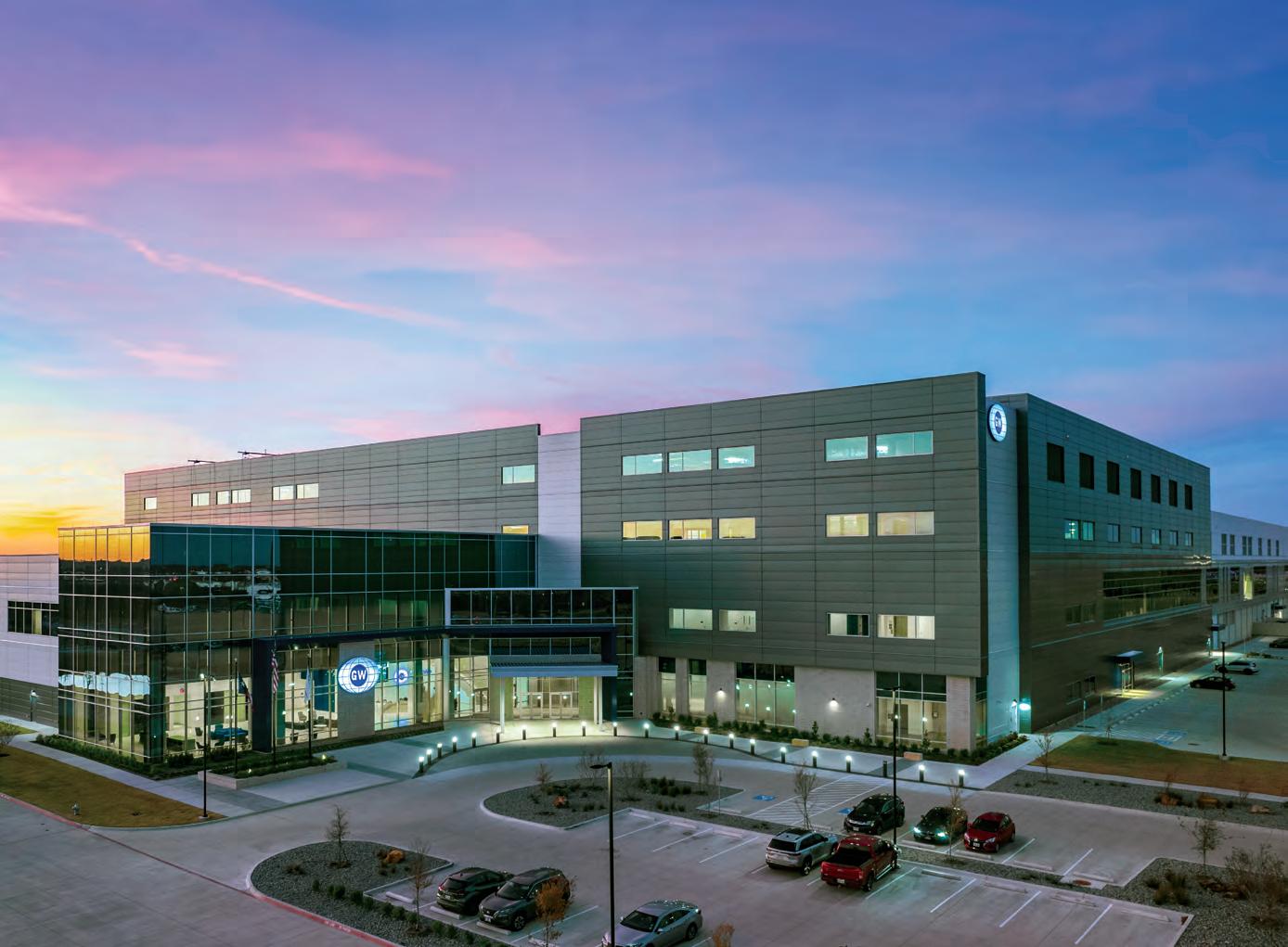









Kingspan delivers unparalleled performance and aesthetic freedom in a single, revolutionary component. With exceptional thermal performance, airtightness and moisture control, our insulated metal panels empower you to create stunning, energyefficient buildings that stand the test of time. Choose Kingspan for a faster, smarter, and more sustainable construction process.
Unleash your design potential while championing a more sustainable world with Kingspan at www.kingspanpanels.ca
kingspanpanels.ca
Vancouver-based MOTIV Architects was co-founded by architects Tracey Mactavish and Asher deGroot in 2017. In the past nine years, the firm has evolved as a practice structured around positive environmental and social impact as its primary motivator. The practice, write Mactavish and deGroot, is “designed to tackle the issues that we believe are most relevant to humanity’s very sustainability on the planet; namely resilience and climate change and the importance of local food security and sovereignty, housing affordability, and the active sharing of knowledge and lived experience.”
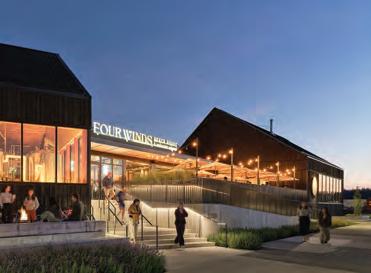
One of the firm’s largest-scale projects to-date The Granary at Southlands, in Tsawwassen, BC (2024) exhibits their approach to architecture as part of a larger social and cultural narrative. The brewery, restaurant, and 35 townhomes were inspired by historic farm buildings, barns, granaries, and farm yards infrastructure that had historic links to the site. A central landscaped courtyard includes armatures for supporting hops and other edible planting on site.
The firm also aims to explore locally sourced materials, with a particular emphasis on well-detailed wood and mass timber structures. The community-erected Swallowfield Barn (2017) uses a custom structural system that incorporates the floor as part of a lapped LVL moment frame (developed with Eric Karsh of Equilibrium Consulting), and repurposes Douglas fir board-form architectural concrete formwork as exterior clad-
ding. The Eton Accessory building (2018) uses spandrel-oriented CLT panels that maximize the structural capacity of three-ply panels while using an integrated gutter system to further stiffen the structure (developed with Bernhard Gafner of Aspect Engineering).
To reduce environmental impact, MOTIV begins projects with a careful assessment of existing infrastructure. The Meristem Chapel at A Rocha Canada (2022, with Philip Hurrell) was built over an existing cistern, requiring no additional excavation, and its nail-laminated moment frame structure used 100% recycled 2x6 material salvaged from buildings previously located on the site. These decisions were especially impactful for the client an environmental education organization deeply committed to the restoration of the adjacent watershed.
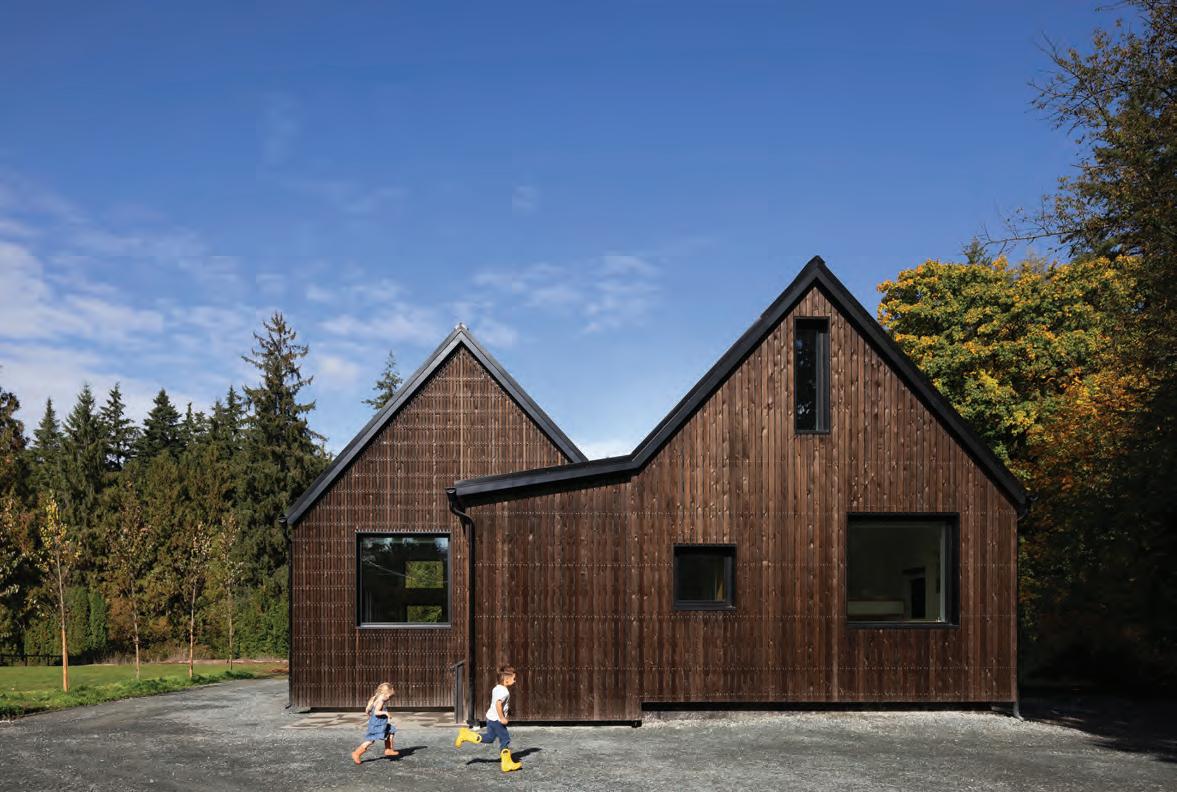
The Heimaklettur farm house (2022) is precisely sized and sited to maintain the function of an existing septic field, and to maximize the site’s agricultural potential for the young family returning to the land. The net-zero-energy-ready home’s simple forms were detailed to be self-built by the clients.
The Clayoquot Sound Biosphere Centre (in progress) is a communitybased learning centre and new home for the Clayoquot Biosphere Trust. The building and site systems have been designed to achieve a 70% reduction in energy, a 50% reduction in water use, and net-zero carbon working to achieve core certification within the Living Building Challenge.
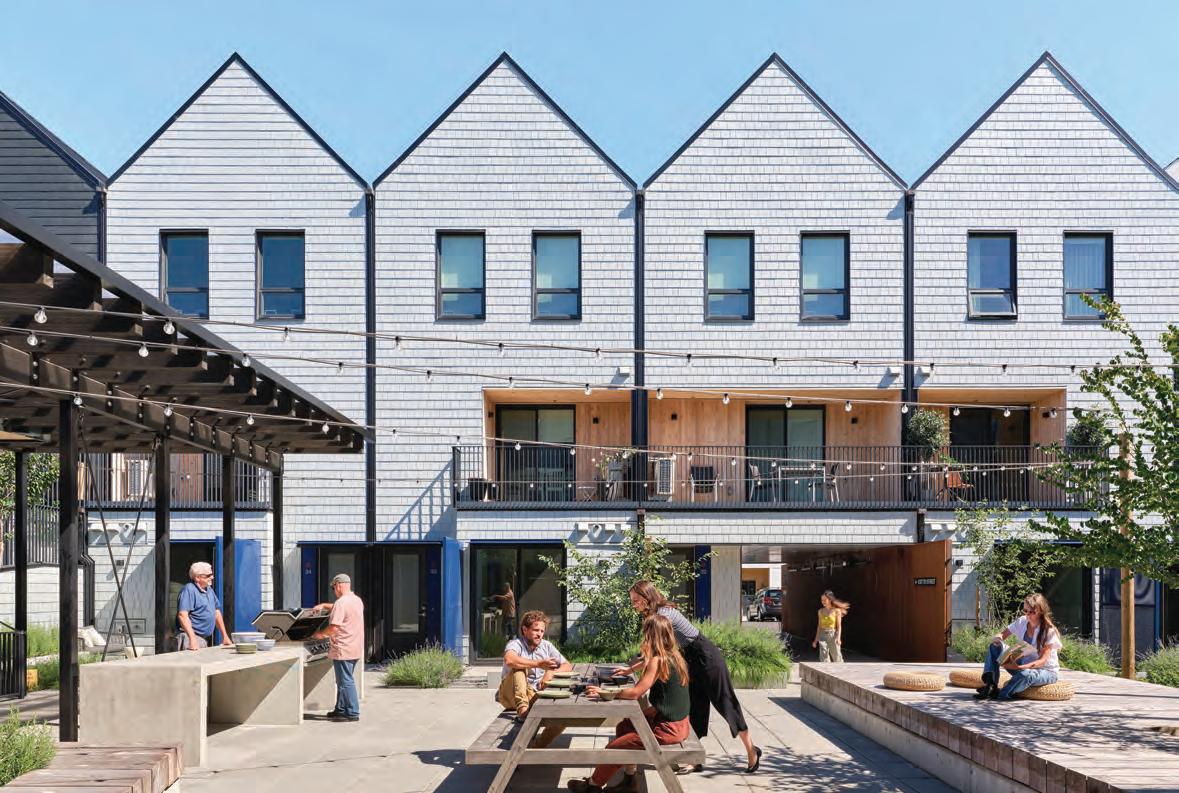
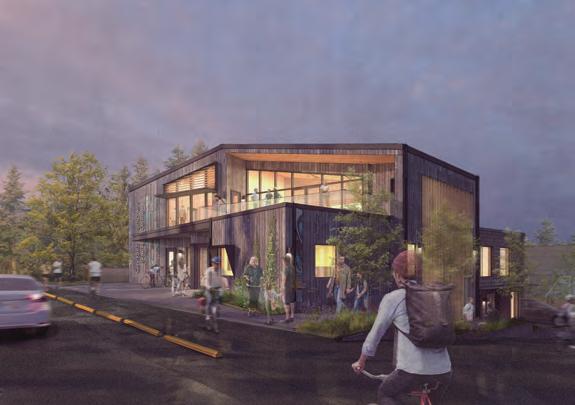
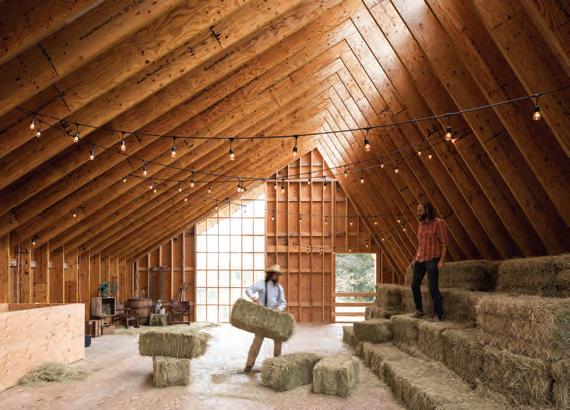
OPPOSITE The Heimaklettur House is a family home on a five-acre property in Langley, BC, inspired by contemporary Icelandic dwellings with pitched roofs and wood construction. A compact plan with distinct living and sleeping gables, playful window placement, and attic play space supports family life, while passive house strategies, thick insulated walls, and indirect daylighting achieve high energy performance TOP The Granary is a mixed-use development featuring a boutique microbrewery, restaurant, and 36 townhouses, designed as a vibrant hub within the Southlands Market District. BOTTOM LEFT Anticipated for completion in 2027, the Clayoquot Biosphere Centre is envisioned as a place of sharing and learning for communities across the region, drawing upon UNESCO themes of education, science, and culture. BOTTOM RIGHT The barn at Swallowfield, a working hobby farm in the Fraser Valley, is constructed with a first-of-its-kind LVL moment frame rafter. A linear skylight along the ridge fills the loft with light. In addition to its use as an actual hayloft, the space regularly hosts dinners, concerts, art shows, and poetry readings.

As architects born and raised in farming communities, Mactavish and deGroot share a commitment to projects at the intersection of agriculture and architecture. “Our personal backgrounds in farming communities root our conviction that the people and spaces that facilitate food production, processing, preservation, exchange, and consumption are deserving of our attention and care and are critical to the future resilience of communities,” they write. MOTIV is currently working on several food hubs for community organizations, universities, co-operatives, and First Nations communities, providing facilities that range from composting, cleaning, and market preparation to meat processing, community distribution, food education, and retail.
The Okanagan Food and Innovation Hub in Summerland (in construction) represents the firm’s largest farming-related project. Located in a region known for food innovation yet challenged by rising food insecurity and declining health outcomes, the hub provides local producers with meaningful opportunities to expand their operations, while reinvesting in the local economy. Supported by non-profit community foundations, farmer co-operatives, and local food-based businesses, the project has become a catalyst for regional collaboration.
The firm has intentionally cultivated a clientele that includes community-based non-profit groups. “Experience working with grassroots organizations has made us acutely aware of the deep and long-lasting impact that design and construction projects can have in a community,” write Mactavish and deGroot. “In contrast to profit-driven work, these community-based groups are the most in need of the full skill set that an architect brings to the table policy understanding, holistic thinking, conceptual and systems based analysis and a problem solving mindset.”
Supporting its convictions through measurable commitments, MOTIV
is a registered Benefit Corporation in British Columbia, and maintains a JUST Label from the International Living Future Institute. These thirdparty accountability frameworks provide benchmarks for social and environmental performance, requiring the firm to consider social and environmental impact alongside financial performance in its decision-making. Internally, commitments include purchasing from local and underrepresented communities, financial transparency, employee benefits, and volunteer engagement. Within project work, performance is measured through indicators such as the use of third-party sustainability certifications, delivery of projects in transit-oriented locations, and achievement of energy and water performance that exceeds baseline requirements.
MOTIV is actively engaged in teaching and studio-based learning, and is a founding member of the Field Collective, a group of small architecture practices in Vancouver that share knowledge, resources, and capacity to undertake initiatives beyond the reach of any single firm.
Jury Comment :: The jury recognized Motiv for the clarity of its vision, its ethical foundation, and its ability to work across scales while maintaining a strong commitment to equity, social sustainability, and meaningful architectural intervention.
The jury was composed of Sumayya Vally, Stephanie Yeung, Chris Woodford, Ted Watson, and Wayne Guy.
ABOVE Designed with Philip Hurrell, Meristem is a small memorial chapel sited within the A Rocha Brooksdale Environmental Centre. The structure makes use of an abandoned cistern as its foundation, and is built from salvaged lumber.
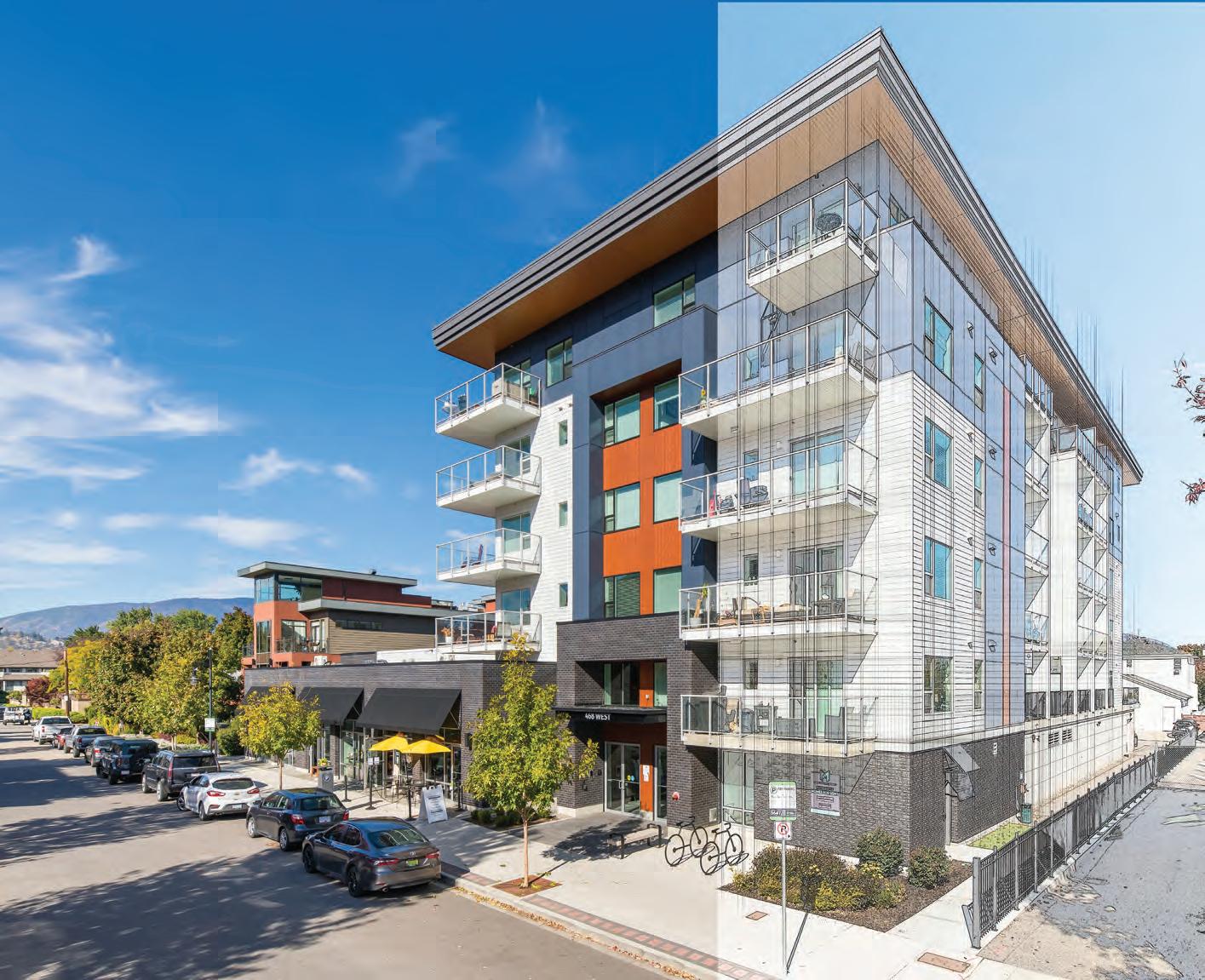
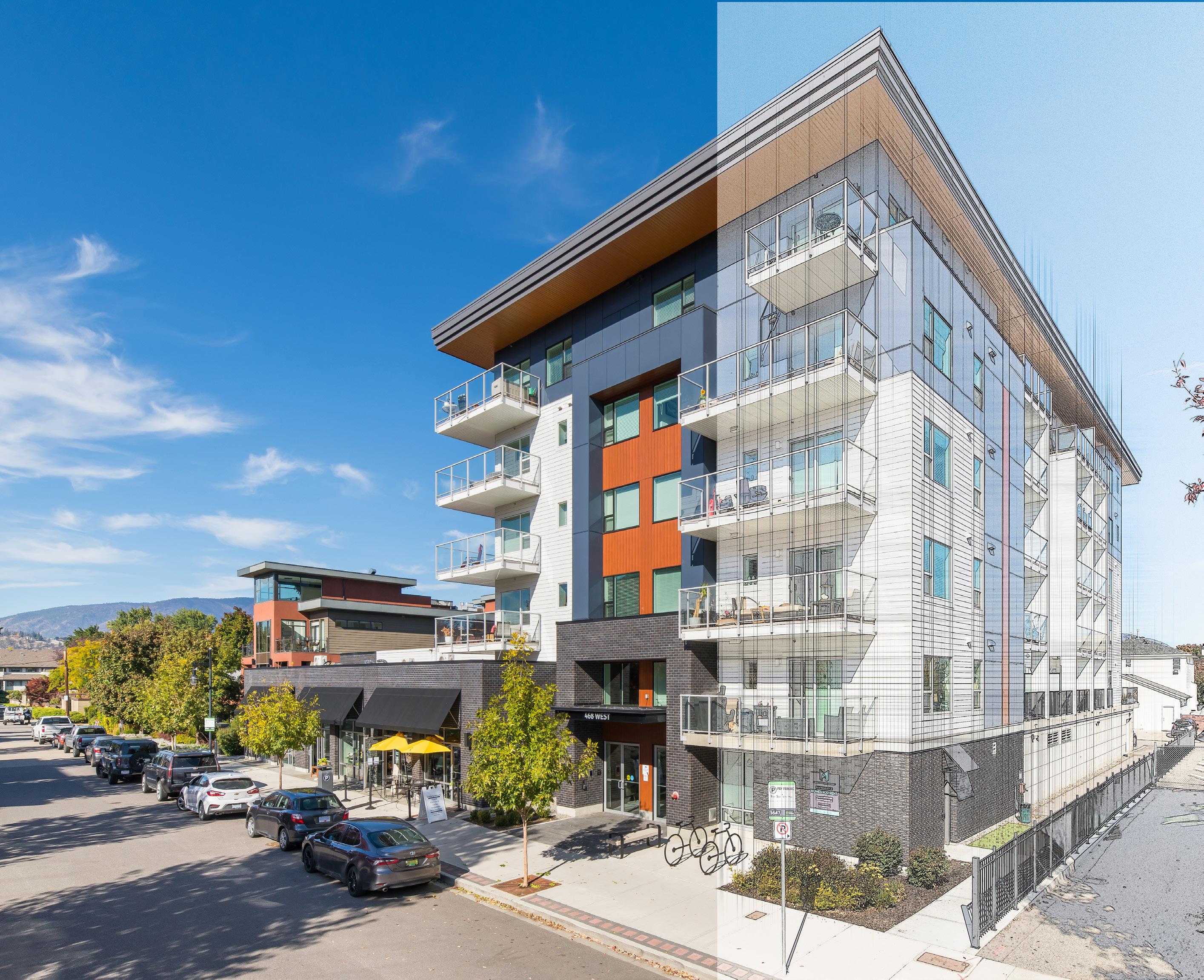
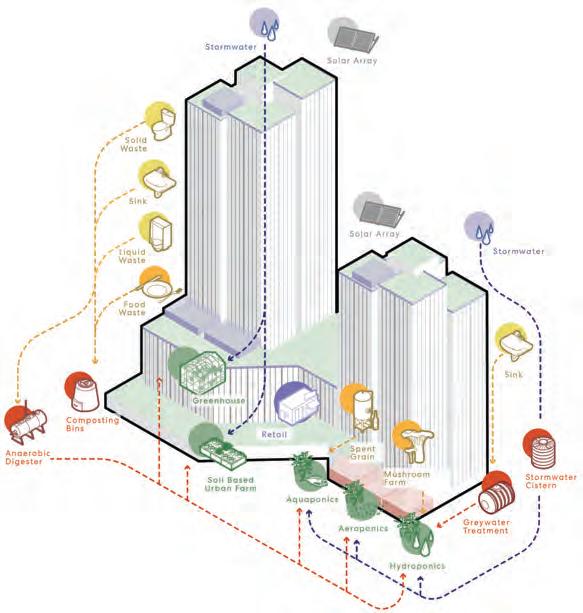
One of the research project’s case studies analyzes a mixed-use residential tower designed with integrated indoor and outdoor urban farms.
By 2050, nearly 70% of the global population will live in cities. Food demand is projected to increase by more than 50%, with 80% of that demand concentrated in urban areas. At the same time, food systems already account for roughly one-third of global greenhouse gas emissions, and agricultural land expansion is no longer a viable option without accelerating climate and ecological degradation. These pressures place cities at the centre of the global sustainability challenge.
Despite this, the majority of architectural practice continues to treat food systems, resource recovery, and urban metabolism as external systems, addressed through infrastructure, policy, or operations rather than design. Buildings remain largely passive consumers of energy and resources, even as they generate waste streams that directly align with our food system needs.
Perkins&Will’s research initiative Resource Circularity: Reimagining Cities as Regenerative Ecosystems responds to these challenges by reframing the role of architecture within urban systems, asking: What if cities, instead of operating according to the logics of linear consumption, functioned as circular, regenerative systems? How can buildings evolve from merely extractive end points to productive participants that offer not just shelter but resources?
The research introduces a carbon-centric evaluation framework that assesses Building-Integrated Agriculture (BIA) in direct relationship to host buildings, rather than as an isolated agricultural system. Food yield, water use, and nutrient flows are evaluated alongside architectural performance metrics including energy use intensity, greenhouse gas intensity, and life-cycle impact. These indicators are assessed holistic-
ally to reveal trade-offs, identify integration thresholds, and determine when BIA contributes net environmental and operational value.
The evaluation consists of five linked steps. First, a clear system boundary is defined, and paired baselines are established: a conventional farm-only baseline and an integrated building-and-farm baseline. This distinction is essential, as many existing assessments exclude buildinglevel synergies and therefore misrepresent integrated performance.
Second, performance is normalized using four core metrics (Energy Use Intensity [EUI], Water Use Intensity [WUI], Greenhouse Gas Intensity [GHGI], and food yield) so different BIA typologies, climates, and building programs can be compared on consistent terms.
Third, these metrics are assessed in paired relationships rather than independently. Yield is evaluated against energy and carbon intensity, water demand against nutrient recovery, and operational emissions against building energy strategies. This pairing exposes architectural trade-offs and identifies low-carbon leverage points where integration meaningfully improves overall performance.
For example, analysis at this stage found that indoor vertical farms can achieve high yields per area, but often exhibit elevated GHGI in carbon-intensive grids (unless waste heat recovery and low-carbon power are available). Rooftop greenhouses in cooler climates, which are capable of lower absolute yield, can achieve lower carbon thresholds when building exhaust heat is effectively captured.
Fourth, dominant performance drivers particularly lighting and HVAC loads are disaggregated so outcomes can be linked to specific architectural and engineering decisions rather than treated as fixed system characteristics.


ABOVE As cities transition from mitigation to adaptation, Resource Circularity proposes architecture as an active contributor to urban resilience. By equipping architects with a structured method to evaluate and integrate productive infrastructure, the research establishes a durable foundation for future practice, research, and policy engagement. Image: Mock-up of the digital dashboard currently in development with partners from SFU SIAT Computational Design Lab.
Finally, the framework is validated across a broad dataset of BIA case studies spanning multiple system types, climates, and building contexts, demonstrating that performance is highly conditional and determined by the depth of integration with building energy, water, and waste flows. This approach challenges conventional sustainability assessments that separate agriculture from architecture. By evaluating them together, the framework quantifies exchanges that are inherently architectural including waste heat recovery, greywater recovery, CO₂ utilization, and organic waste valorization yet typically excluded from standard accounting. The result is a method that allows architects to determine where BIA advances circularity, where it introduces unacceptable tradeoffs, and which design decisions most effectively shift the balance in each instance, replacing advocacy with informed professional judgment.
A defining strength of the research is its direct integration into architectural practice. The study was developed through collaboration with the federal government, local institutions, architects, engineers, urban farmers, policymakers, and academic partners, and has been tested through real projects, design studies, and stakeholder engagement rather than isolated academic inquiry. Instead of producing abstract conclusions, the work translates research findings into design-operational frameworks and tools: system diagrams, performance benchmarks, and scenario-based evaluation methods that can be deployed early in the design process. These tools allow project teams to test assumptions, compare alternatives, and evaluate trade-offs between yield, energy, carbon, cost, and spatial impact before systems are locked in.
In application, the research has enabled teams to identify underutilized building surfaces and volumes as productive assets; to engage clients and authorities using quantifiable, comparable metrics; and to integrate food production and resource recovery into architectural form, circulation, and program rather than treating them as post-design technical insertions. In this way, Resource Circularity operates not as background research, but as decision-making infrastructure embedded within architectural workflows.
Beyond its technical contributions, this research advances architectural discourse by expanding how the profession defines performance, value, and responsibility in the context of climate adaptation and resource scarcity. It challenges sustainability frameworks that prioritize efficiency within individual systems and instead positions architecture as a means of integrating food, energy, water, and waste into coherent, productive urban systems.
By establishing an evaluative language that encompasses architectural performance and agricultural yield, the research enables architects to engage directly with systems typically external to the profession. Thus, the research contributes a transferable framework grounded in quantifiable outcomes and comparative analysis, supporting a shift in professional culture from aspirational sustainability narratives toward accountable, systems-based architectural decision making. This strengthens the architect’s role as a multidisciplinary convenor, responsible for synthesizing spatial, technical, and operational considerations into coherent design strategies.
Resource Circularity is intended as a framework rather than a projectspecific solution. Its methods, metrics, and evaluation logic are applicable across building typologies, climatic conditions, and governance contexts, enabling consistent assessment of BIA as a component of architectural design.
The research supports early decision making, allowing architects to evaluate feasibility, performance, and trade-offs before systems are embedded in form, infrastructure, or capital planning. This makes the framework relevant to new construction, adaptive reuse, and retrofit contexts, particularly as cities confront the need to localize resource systems within existing building stock.
The work also offers value to public agencies, educational institutions, and policymakers seeking credible, design-led approaches to food security, climate resilience, and circular economy strategies. The emphasis on standardized metrics and comparative analysis supports alignment between design intent, regulatory frameworks, and long-term performance accountability.
As cities transition from mitigation to adaptation, Resource Circularity proposes architecture as an active contributor to urban resilience. By equipping architects with a structured method to evaluate and integrate productive infrastructure, the research establishes a durable foundation for future practice, research, and policy engagement.
Jury Comment :: The jury recognizes Resource Circularity: Reimagining Cities as Regenerative Ecosystems as a significant and comprehensive body of research that advances contemporary architectural practice. The submission brings together a broad coalition of collaborators to examine the role of architecture and urban systems in addressing climate adaptation, resource scarcity, and circular economic models.
The jury noted the project’s ability to expand how the profession defines value, performance, and responsibility, particularly through its efforts to frame food-producing systems as an essential infrastructure asset class. This forward-looking approach positions the work as a tool capable of informing funding models and policy development as an important step toward enabling meaningful, real-world implementation.
Overall, the project represents a compelling and actionable vision for regenerative urban ecosystems and stands out as an exemplary contribution to sustainability-driven research and innovation.




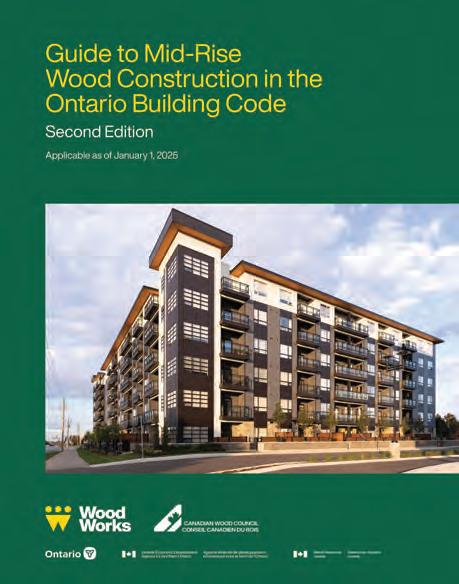
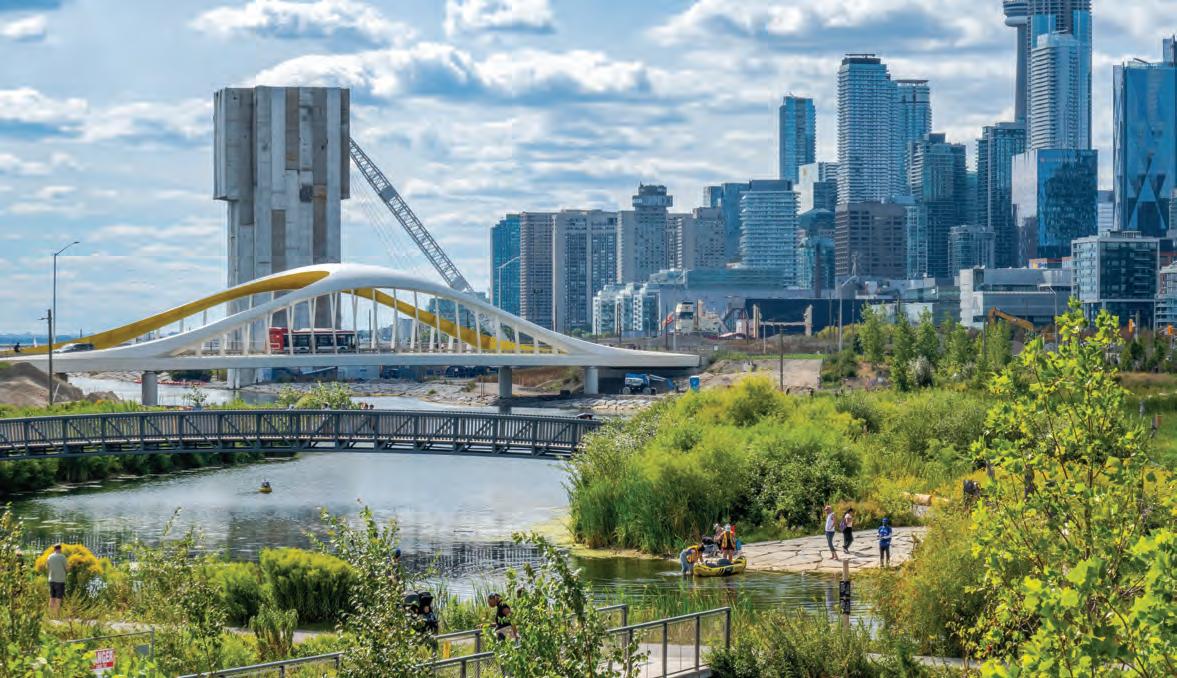

As Chief Planning and Design Officer at Waterfront Toronto, Christopher Glaisek has overseen the design of all major developments and landscape projects on the waterfront, directing planning and urban design efforts on 2,000 acres of waterfront property for over 20 years. He has been a passionate advocate for architecture, landscape and urban design excellence throughout this work. Under Glaisek’s stewardship, Waterfront Toronto has received more than 100 national and international design awards.
A trained architect, Glaisek has pushed for excellence and innovation throughout the full planning, design and construction processes of all of Toronto’s waterfront projects. Glaisek has led several key competitions that have raised the bar for design excellence and have brought national and international design talent to the Toronto waterfront. The Central Waterfront design competition (2006) led to the transformation of Queens Quay West and the creation of the Spadina, Simcoe and Rees Wavedecks by West 8 and DTAH. The 2008 Jarvis Slip Public Space Design Competition led to the dynamic and iconic Sugar Beach by CCxA (formerly Claude Cormier et Associés). Each of these public realm projects has been embraced by the public, while also generating interest from the real estate industry in formerly vacant waterfront land.
Glaisek is committed to a multi-faceted approach to arriving at consensus, and has delivered on this ambitious mandate in a complex stake-
holder environment. He manages multi-disciplinary teams of architects, landscape architects, planners, urban designers, traffic engineers, environmental advisors and market valuation experts in shaping the initial vision for waterfront neighbourhoods. Approval of these plans has been secured through his persistent leadership in engaging and negotiating with municipal and provincial authorities, city council, community activists and the general public. Glaisek has managed the master planning and design of several new neighbourhoods along the waterfront in collaboration with the City of Toronto and stakeholders, including the Canary District and West Don Lands, East Bayfront, Ookwemin Minising (Villiers Island), and Lower Yonge (Keating Channel).
Essential to Glaisek’s accomplishments is his role managing the 13-member Waterfront Toronto Design Review Panel, which he created in 2005. The Panel reviews all of the projects on the waterfront for conformity with the goals of design excellence, quality of place, sustainability, and public accessibility. Its members have included former Toronto Chief Planner Paul Bedford, former Dean of the Daniels Faculty of Architecture, Landscape, and Design George Baird, co-founder of the Canada Green Building Council Peter Busby, and leading Canadian architects Brigitte Shim, Bruce Kuwabara, and Renée Daoust, among others. Glaisek has crafted an iterative review process that has helps guide all waterfront buildings and projects, broadening Waterfront Toronto’s ability to shape the city.
ABOVE Biidaasige Park, the largest Toronto park to open in a generation, is at the heart of a project that renaturalized the mouth of the Don River, and opened development potential for 400 hectares of land by removing it from the floodplain.

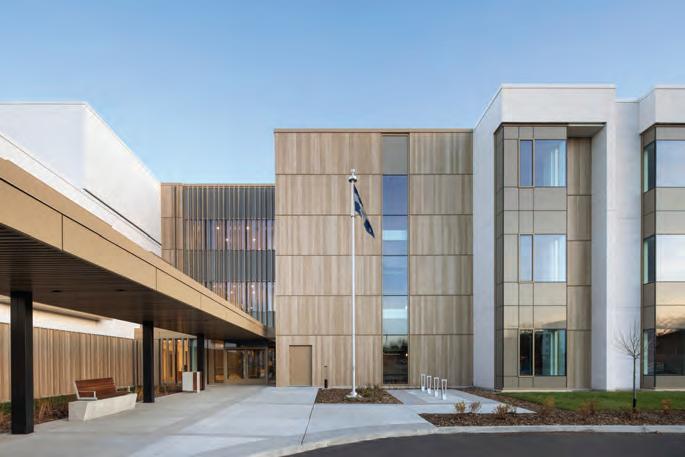
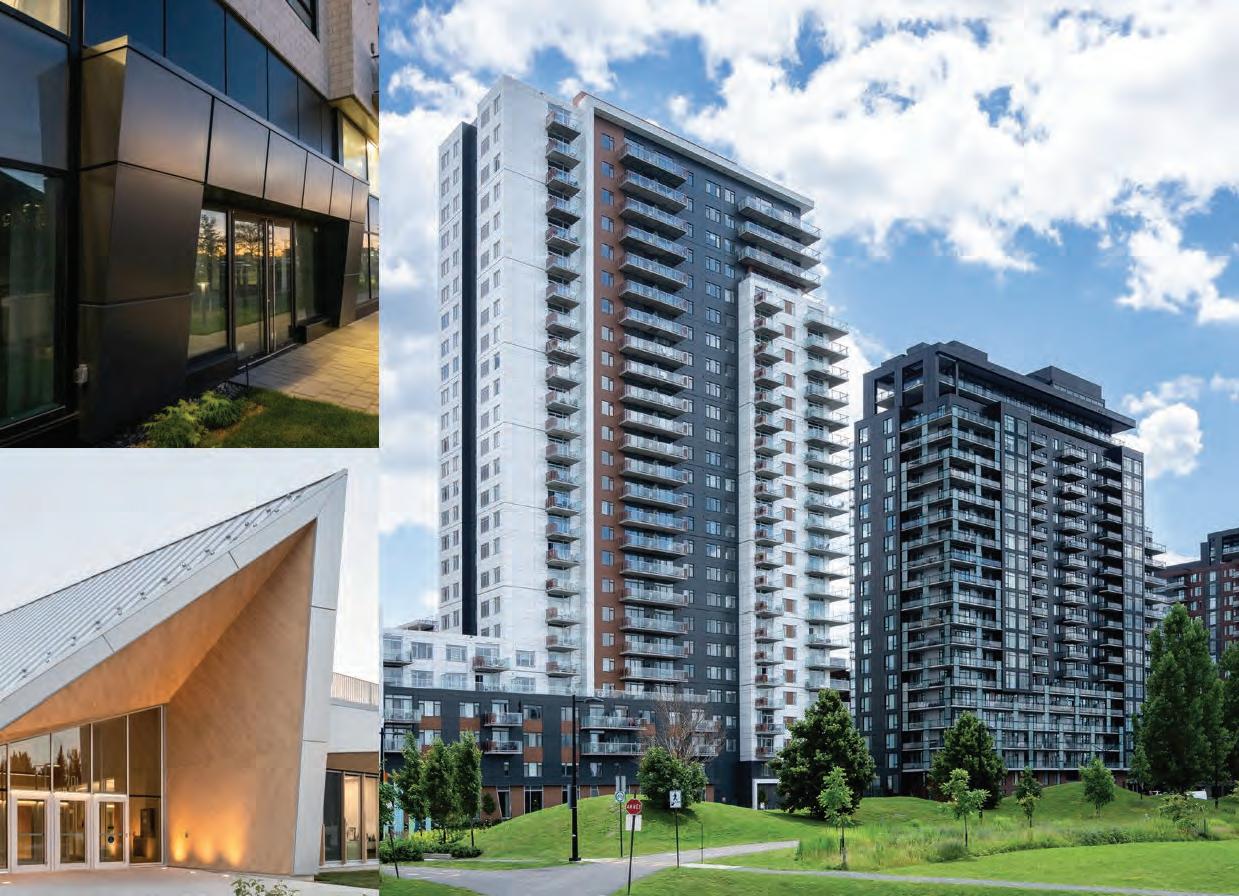


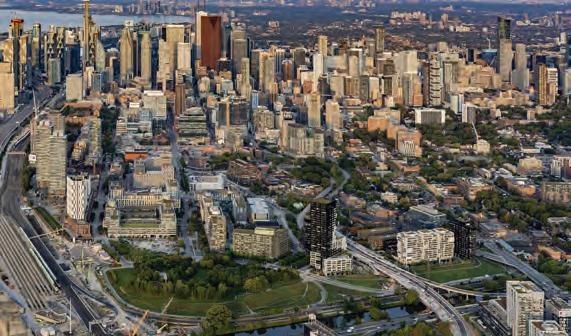


Of all the projects Glaisek has led at Waterfront Toronto, the largest and most complex is the Port Lands Flood Protection and Naturalization Project. Prior to his involvement, this was treated as a stand-alone infrastructure problem: taming the Don River in the area beneath the Gardiner Expressway. Recognizing the potential design opportunities of this project, Glaisek advocated for refocusing the effort from making the river disappear into making it the centerpiece of city-building in the Port Lands. Glaisek launched the Lower Don Lands Innovative Design Competition in 2007, fundamentally changing how the project was approached. Since then, Glaisek has worked with the winning design team, led by Michael Van Valkenburgh Associates, on the detailed design and implementation for the naturalization of the mouth of the Don River, which has taken over 400 hectares out of the flood plain, and rerouted the waterway through a series of new wetlands and public parks. Glaisek is currently managing the master planning and urban realm design of Ookwemin Minising island the new Port Lands neighbourhood framed by Biidaasige Park and the Keating Channel. Before joining Waterfront Toronto in 2005, Glaisek was an innovator on several other large-scale projects, including the New York City 2012 Olympic Bid Plan and the redesign of Lower Manhattan post-9/11, where he played a leadership role in developing the design competition that led to the selection of the Daniel Libeskind masterplan.
Jury Comment :: The jury selected Christopher Glaisek for his exceptional and longstanding leadership in advancing design excellence with-
in one of Canada’s significant public development agencies. Christopher’s work at Waterfront Toronto represents a rare and powerful example of sustained public advocacy for architecture, urban design, and the public realm across multiple levels of government.
Jurors highlighted his pivotal role in championing design quality within complex procurement frameworks, an achievement made possible through persistent advocacy, deep expertise, and a commitment to transparent and exemplary public process. His impact is reflected not only in the transformation of Toronto’s waterfront over two decades, but also in the broad spectrum of voices, architects, developers, and public officials who attested to his influence.
Christopher’s contribution exemplifies the spirit of public championing and long-term commitment that the award seeks to recognize.
The jury was composed of Ilana Altman, Greg Boothroyd, Thibaut Lefort, Dr. Alicia Nahmad Vazquez, and Dr. Shelagh McCartney.
TOP A 2008 design competition initiated by Glaisek led to the iconic Sugar Beach, by CCxA (formerly Claude Cormier et Associés). ABOVE LEFT Glaisek’s advocacy for design even in residual spaces resulted in Underpass Park, designed by PFS Studio and The Planning Partnership.
ABOVE RIGHT The West Don Lands is a downtown-adjacent mixed-use residential district enabled by the creation of a flood protection landform embedded in Corktown Commons Park, seen in the foreground.










Love veneer? You’ll love this even more. Unilin Master Oak performance veneer enhances the timeless warmth and texture of rift white oak with today’s innovations. More sustainable. More durable. More within reach. And the best part? Unilin Master Oak stands up to scratches, stains and sunlight and it’s made with 100% recovered wood.







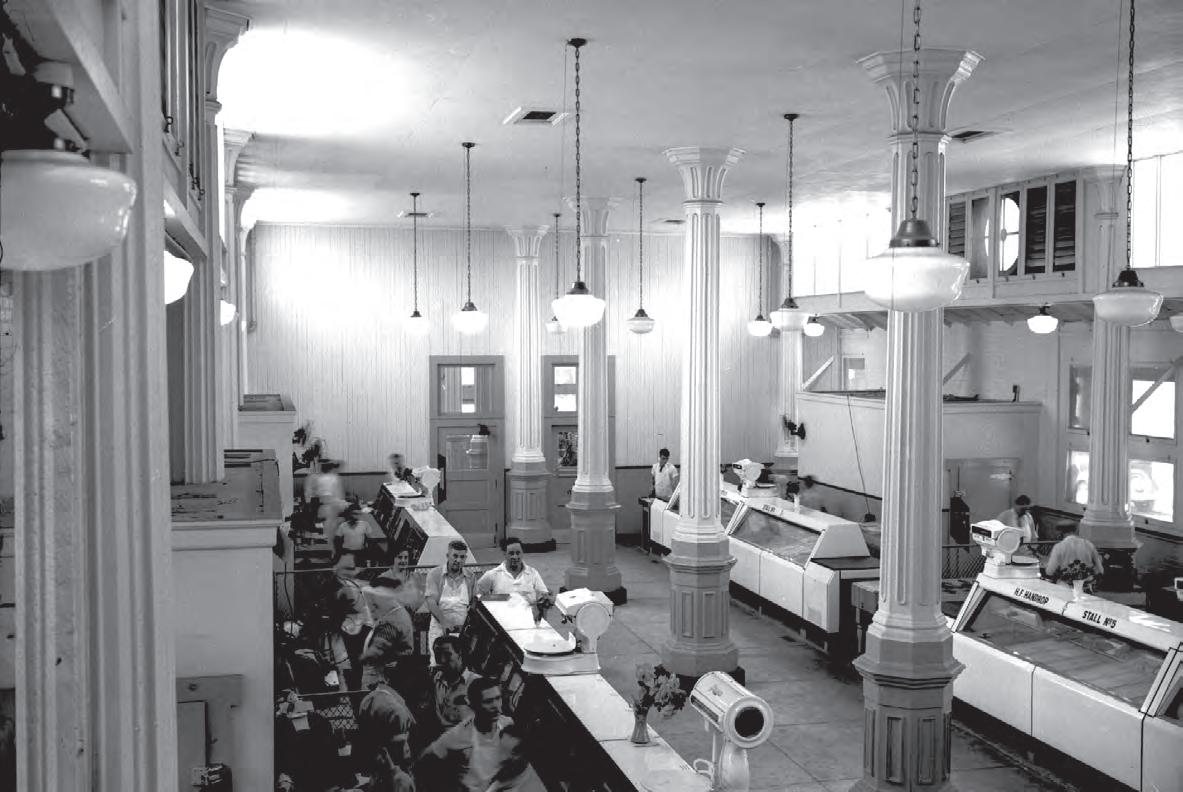
Co-edited by Leila Marie Farah (Toronto Metropolitan University) and Samantha L. Martin (University College Dublin), and published by Leuven University Press, the book Mobs and Microbes: Global Perspectives on Market Halls, Civic Order, and Public Health presents new research on market halls, crossing between architectural history, urban history, and urban studies.
“Markets have always been, on some level, anchors of community. Over the past several decades, these complexes have been cast as civic monuments and framed as centers of urban revitalization,” write coeditors Farah and Martin. “Prior to 2020, whenever a newspaper or magazine featured a market hall, it was typically in the context of a heritage or conservation campaign.”
“But these places have always had a dark underbelly,” they add. “A timely aspect of the volume is the critical perspective it offers on how markets are used as instruments of soft power, especially within colonial and imperial contexts. We also consider whether governments and civic authorities will continue to use markets in this way in the future, in the course of post-pandemic urban planning.”
By combining the lenses of civic order and public health, the book underscores how market buildings have been shaped by both advance-
ments in sanitation and hygiene as well as by political and social interests. The inception of epidemiological and bacteriological research in the mid-19th century, as well as ensuing regulations and inspections, greatly influenced the spatial planning of markets, by integrating natural light and ventilation, introducing mechanical systems, dictating materials, and regulating food stall design.
In parallel, the design of market halls has also been intertwined with government policies and regulations that formalize, control, and impose order on the market economy. “In colonial contexts, these designs were often deployed at the expense of Indigenous and local knowledge,” write Farah and Martin. But, they note, “This was by no means a oneway process: while political powers sought to exert influence and project a particular image, citizens and market vendors mobilized opposition efforts to resist such pressures by displaying acts of resilience. Markets eventually also served as demonstration grounds for community-led mobilization efforts.”
This volume the first of its kind in considering the complex sociopolitical and public health roles of this building type from a global perspective includes studies on markets in Beijing, Copenhagen, Hong Kong, Mumbai, Nairobi, New Orleans, Paris, Rome, Toronto, and

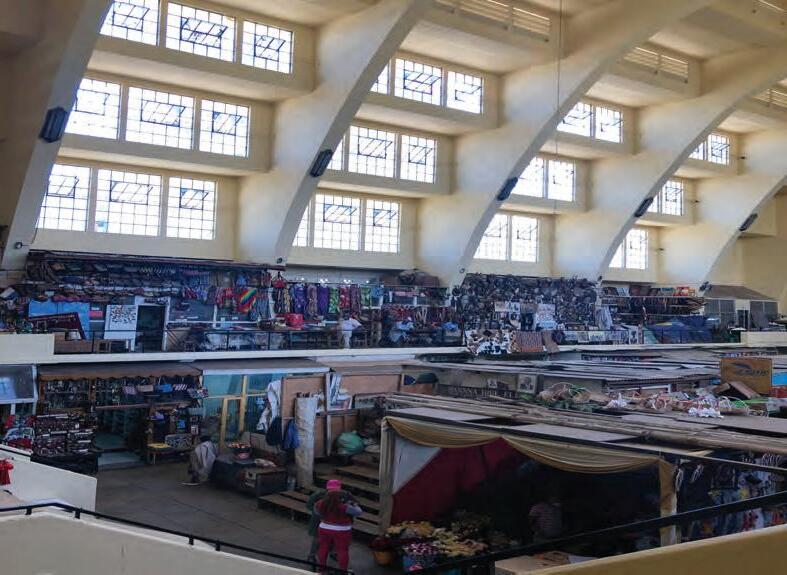
OPPOSITE The WPA’s renovation of New Orleans’ St. Roch Market introduced clean, streamlined interiors, tiles, and brightly painted surfaces—an approach that epitomized America’s renewed commitment to public health. ABOVE LEFT The site of Toronto’s North St. Lawrence Market, seen here in 1919, witnessed a series of construction and demolition cycles. ABOVE RIGHT The design of the Nairobi City Market, with its concrete vaulted ceiling and parabolic arch supports, situates it in the company of many large-span concrete buildings of the interwar period.
Viareggio. Moving beyond purely descriptive, formal analyses, it embraces top-down, bottom-up, and contextual perspectives.
“These buildings are utterly typical and flicker with familiarity, and yet they are remarkable in their ability to leverage authority and negotiate order in the urban realm, often over an exceptionally long period of time,” write Farah and Martin. “Ultimately, this specific focus in particular the relationship between marketplaces, disease, and sanitation not only renders this volume especially relevant in the present day, but also opens a window for reflecting on the lessons that historic markets may continue to offer us into the future.”
This book was shortlisted for the prestigious 2025 Colvin Prize by the Society of Architectural Historians of Great Britain. Mobs & Microbes was published simultaneously in paperback and as a fully open access edition. Since its release in 2023, the open access ebook has been downloaded nearly 10,000 times by readers worldwide evidence of its international reach and relevance.
Jury Comment :: The jury selected Mobs and Microbes: Global Perspectives on Market Halls, Civic Order and Public Health for its exceptional scholarly depth and its timely, globally relevant exploration of the market hall as a
civic and political instrument. The book reframes a familiar architectural typology through a critical, historical, and public-health lens, revealing the ways in which these spaces have shaped and been shaped by societal forces including disease, control, governance, and public order.
Jurors praised the manuscript’s clarity, accessibility, and compelling visual and written research. Its interdisciplinary perspective and its relevance to contemporary conversations about public space, civic infrastructure, and social equity were regarded as especially impactful.
This work represents a model of architectural scholarship that deepens public understanding of how architecture participates in broader cultural and political systems.
The jury was composed of Ilana Altman, Greg Boothroyd, Thibaut Lefort, Dr. Alicia Nahmad Vazquez, and Dr. Shelagh McCartney.
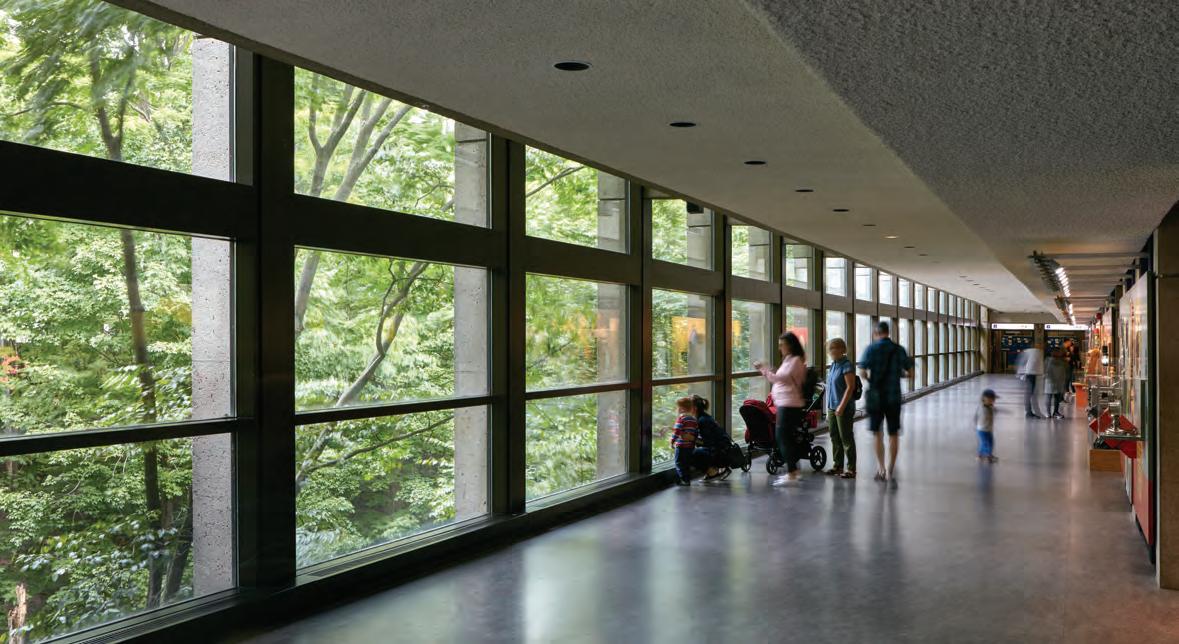
Opened in 1969 and among the last of Canada’s Centennial projects, the Ontario Science Centre is an architectural masterpiece that has touched the lives of millions of young Canadians. Designed by Japanese-Canadian architect Raymond Moriyama (1929-2023), who went on to earn the RAIC’s Gold Medal in 1997, the centre’s quiet strength derives from Moriyama’s interest in eastern philosophy. From the entrance (substantially renovated in 1996 with the addition of an IMAX theatre), visitors cross a soaring bridge, before entering a series of trefoil-shaped galleries that guide visitors down into the ravine below. The centre’s architecture unfolds over what Moriyama called a “seven-stage sequence of experience,” meant to psychologically prepare visitors as they move from the mundane to the fantastical, with opportunities for quiet breaks and contemplative views between. Not a few parents have been bemused to watch the piercing mania of rainy-day weekends and school trips give way to mesmeric gazing, as children ride silently aboard escalators and look out over the forest floor.
The science centre was christened “a place for everyone” in 1969; providing accessible education to kids was central to its mission. So beloved is the building that it graced the front of a Canadian postage stamp in 2007 and earned a Landmark Designation Award from the Ontario Association of Architects in 2017. Yet the most remarkable thing about the science centre is not how architects and educators have praised it over the decades, but how little these judgments seem to matter within its thickly corduroyed walls that tickle the minds and scrape the elbows of its littlest users. Herein lies the centre’s real magic: not in accolades and awards, but in the frenzied, ringing voices that until recently filled its halls.
The Ontario government’s decision to close the science centre without warning in June 2024 has, not surprisingly, elicited a storm of protest among community members, design professionals, and local politicians. Critics question the government’s use of cherry-picked evidence from engineering reports to justify the centre’s closure, arguing that critical repairs could be completed for as little as $24 million, and calling into question the transparency of elected officials’ decision making. The grassroots organization Save Ontario’s Science Centre, along with architectural groups such as the Architectural Conservancy of Ontario and the Toronto Society of Architects, have pressed for the building’s reopening, highlighting its architectural merit and importance to underserved neighbourhoods nearby. Others have voiced concerns about the centre’s future accessibility in wake of the government’s decision to construct a new science centre at Ontario Place, alongside a boutique spa and waterpark.
We hope the present award adds to this salvo of dissatisfaction. Indeed, if the Ontario Science Centre is showing its age, the Government of Ontario is showing more of it these days. Politicians would do well to imagine the little scientists and creators who once roamed the building’s halls for it is among these future voters that the centre’s loss will be most deeply felt.
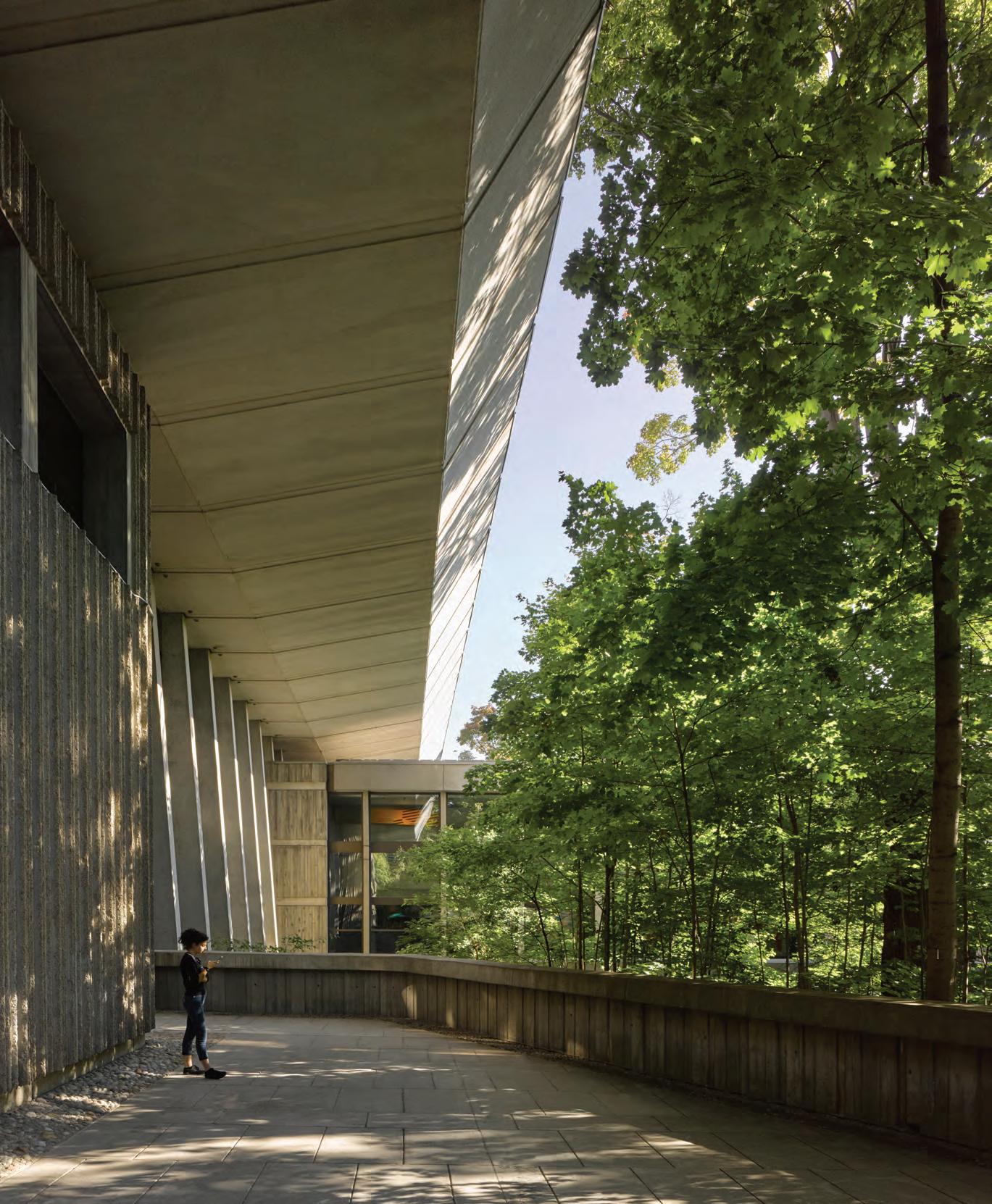
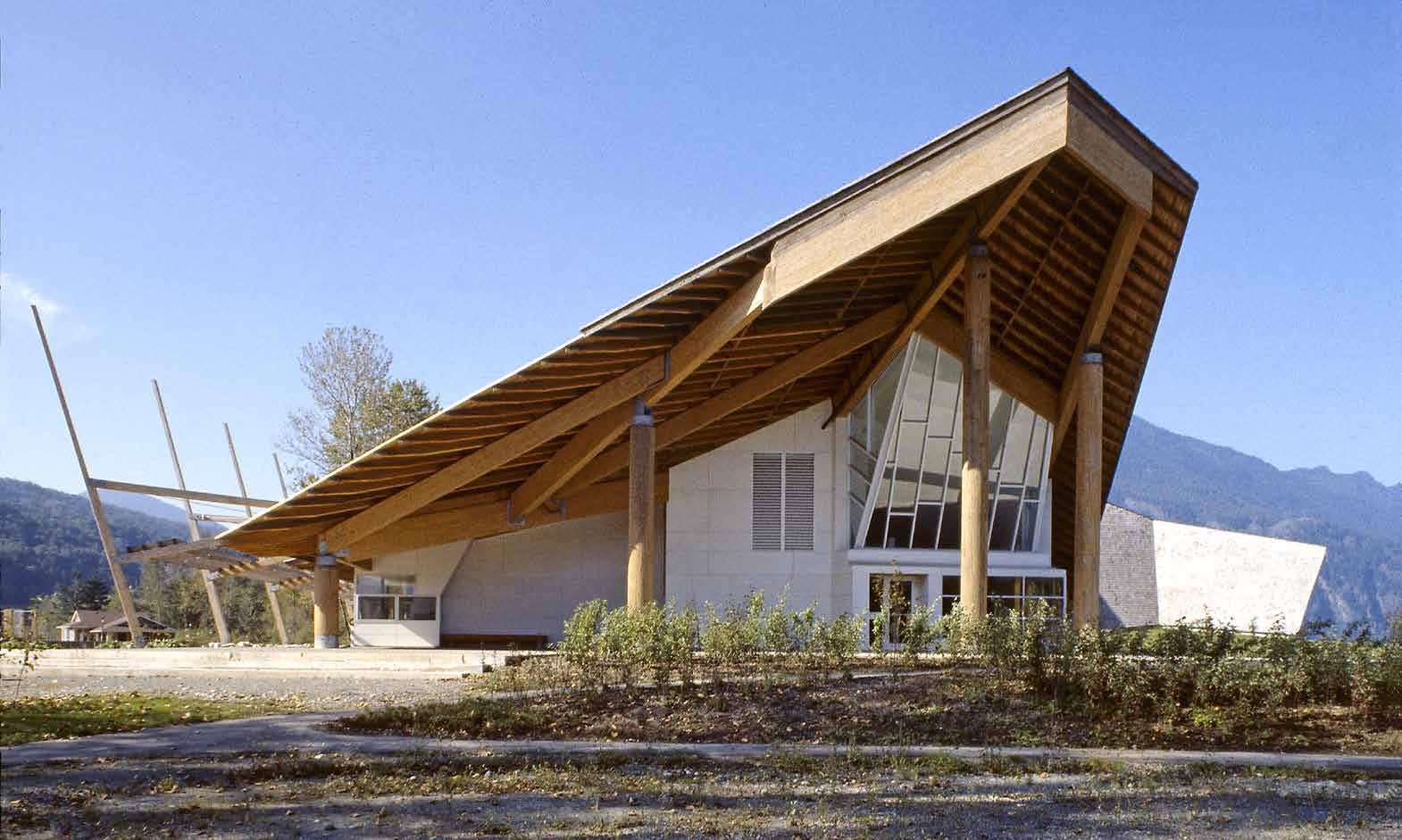
Lalme’ Iwesawtexw (Seabird Island Community School) stands as a landmark project in the evolution of Indigenous education and architecture in Canada. Designed by Vancouver-based Patkau Architects, the school was completed in the early 1990s for a Coastal Salish community near Agassiz, British Columbia.
Lalme’ Iwesawtexw emerged during a pivotal period of change for Indigenous education. The 1990s were the final years of Canada’s residential school system: the last of these institutions of forced assimilation and cultural suppression, at the George Gordon First Nation in Saskatchewan, closed in 1996. As Harvey A. McCue and Michelle Filice write of the shift in The Canadian Encyclopedia, “In 1972, the National Indian Brotherhood (now known as the Assembly of First Nations) produced a policy on Indigenous education called Indian Control of Indian Education. The policy was adopted by the Department of Indian Affairs and Northern Development [now split into Crown-Indigenous Relations and Northern Affairs Canada, and Indigenous Services Canada] as unofficial education policy. It identified the importance of local community control to improve education, the need for more Indigenous teachers, the development of relevant curricula and teaching resources in Indigenous schools, and the importance of language instruction and Indigenous values in Indigenous education.”
In the following years, through initiatives associated with federal funding and provincial collaboration, First Nations communities increasingly gained authority over the design, administration, and cultural dir-
ection of their own schools. Lalme’ Iwesawtexw represented the forefront of this broader shift, embodying a move away from institutional models toward community-centered learning environments rooted in local identity and self-determination.
The school predates the 2008 establishment of the five-year Truth and Reconciliation Commission of Canada, which had a mandate to learn from residential school survivors. Six of the commission’s 94 Calls To Action directly address Indigenous education, several calling for community participation and the development of culturally appropriate education programs.
From the outset, the design attracted national attention. During its design phase, the project then known as Seabird Island School received a Canadian Architect Award of Excellence. The jury hailed it as the outstanding project for that year and stated that: “This school will be a work of art a model of how architecture can be deeply embedded in a particular place and culture. This is one kind of Canadian architecture at its best.” Following its completion, the building garnered several additional architectural honours, including the Governor General’s Medal in Architecture, the Lieutenant Governor’s Medal in Architecture and the Canadian Wood Council Honour Award. The school was described by architect, educator and historian Kenneth Frampton as an exemplar of critical regionalism. “The work of Patkau Architects comes very close to what I attempted to define in 1983 as Critical Regionalism,” said Frampton in a 2012 interview with Steve Kroeter.

“The Patkaus’ Seabird School exemplifies this in a particular way.”
Architecturally, the school departed from the rigid, corridor-based layouts typical of conventional institutional buildings. Instead, Patkau Architects developed a form and spatial organization that emphasized gathering, openness, and connection to the landscape of the Fraser Valley. Natural light, warm materials, and communal spaces were central to the concept, reflecting Indigenous traditions of shared learning and collective life. The building’s scale and layout foster a sense of belonging rather than hierarchy, reinforcing the school’s role as a cultural and social heart of the community.
The community is located on delta land in the Fraser River, and the siting of the school strongly responds to the specifics of its place, reinforcing an existing green space as the central space framed by the school and a variety of community buildings. A southwest-facing entrance façade includes large windows, and generous eaves protecting play spaces from the rain. This area also provides direct access to classrooms and the home economics area, including a kitchen that supports community events
and feast days. The more closed rear of the school includes larger gymnasium volumes that mitigate Fraser Valley winds.
The structural concept was inspired by traditional Coastal Salish construction techniques, interpreted in contemporary large-scale engineered wood members. A detailed framing model created in the design stage served as guidance to community members who erected the school, supplementing traditional two-dimensional construction drawings.
Lalme’ Iwesawtexw represented more than a new facility it symbolized a profound transition. As Indigenous communities reclaimed control over education, architecture became a tool for cultural renewal. In contrast to the legacy of residential schools, which were often designed to isolate and discipline, this project demonstrated how design could support cultural continuity, dignity, and self-governance.
Today, the school remains a touchstone in discussions of socially responsive architecture in Canada. It illustrates how built form can participate in reconciliation not as a symbolic gesture alone, but as a lived, daily environment shaped by and for the community it serves.
OPPOSITE Lalme’ Iwesawtexw was built at a time when Indigenous education was moving towards community-centred learning environments rooted in local identity and self-determination. The entrance faces an existing community green space, with generous eaves that shelter play spaces from rain. ABOVE The school’s massing protects the village common space from harsh winter winds. The sculptural forms are clad in cedar shingles that, over time, have taken on shades from a soft silver-grey to a deep red-brown depending upon orientation and exposure.
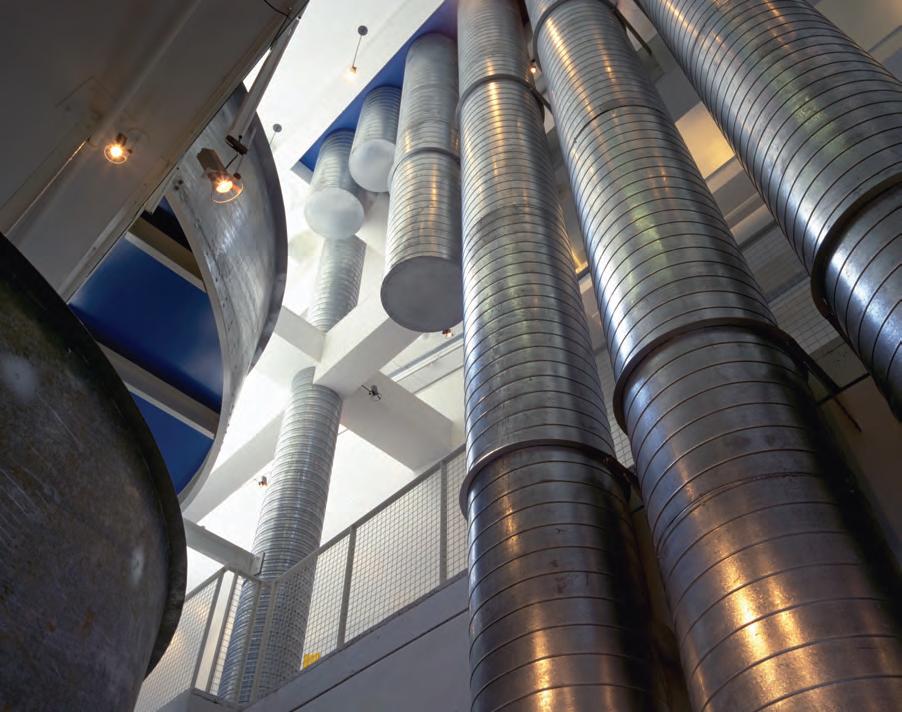

Canadian cities host two kinds of universities: historical institutions founded around the nineteenth century, and modern ones established soon after 1945. The latter embodied the Canadian welfare state’s growing ambition, as government largesse in the postwar decades expanded postsecondary education first for returning veterans and then in relation to phenomena including increasing suburbanization and rising immigration.
These faculties and campuses often took a modernist appearance with radical experiments redolent at times of the megastructural movement.
The Université du Québec à Montreal (UQAM) initiated among the boldest attempts at creating a public university to advance cultural and social modernization. Local architect Dimitri Dimakopoulos’s master plan, conceived in 1969 and completed in 1978 in collaboration with Jodoin Lamarre Pratte, served progressive policymakers’ pursuit of participation and polyvalence as reformist creed ushered by Quebec’s epochal Quiet Revolution. The campus in the heart of Montreal’s Latin Quarter has continued to widen through well-designed complexes along with thoughtfully adapted historical buildings.
Montreal architect Dan Hanganu’s UQAM Pavilion de Design built in 1995 remains among the most exemplary and exciting environments for Canadian creative arts education.
Dan Hanganu (1939-2017) studied architecture in Bucharest and immigrated to Canada in 1970. He trained in Dimakopoulos’s office and under versatile Polish émigré Victor Prus. Hanganu began independent practice in 1979 with multifamily housing at different scales that developed a characteristic attitude to space and structure: robust load-bearing masses resting squarely on the ground, thrilling interior voids and volumes with
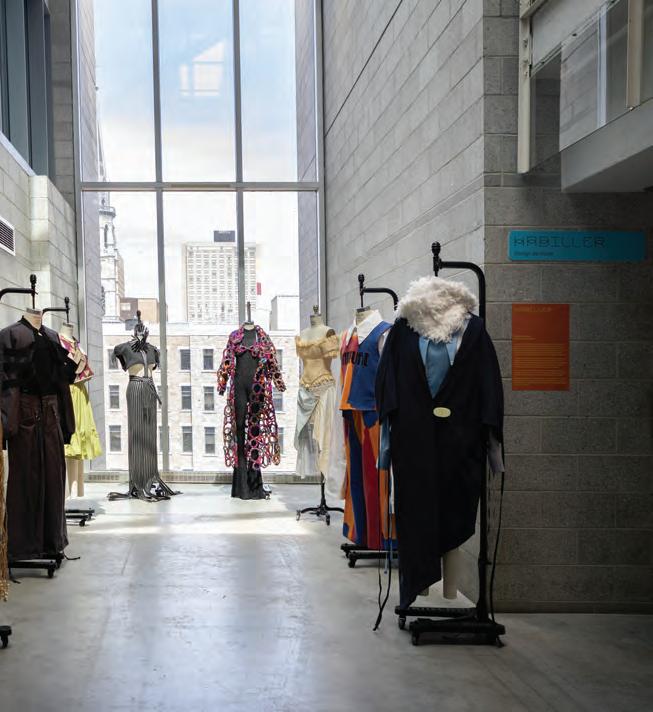
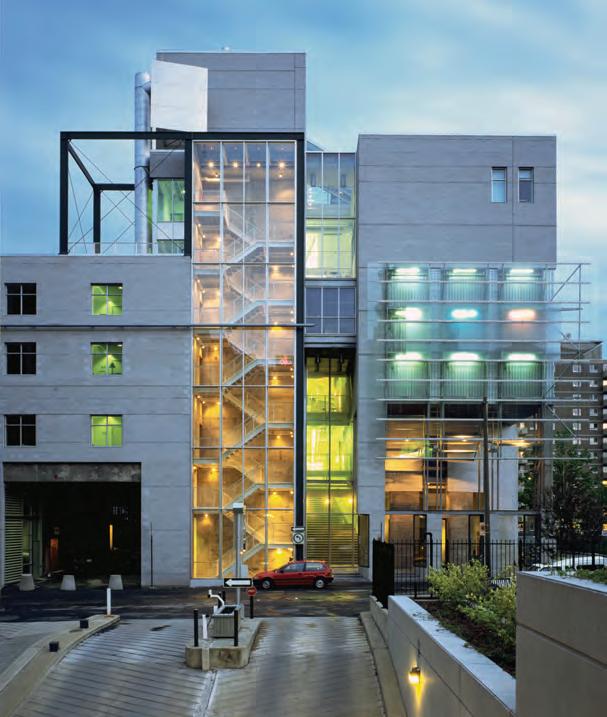
powerful vertical thrust, and invented ornament of deft tectonic and dramatic expression. The approach, observed architecture critic and historian Kenneth Frampton, synthesized Hanganu’s search for compositional rules of strong urban form and a convincing latter-day constructivism in repeating components of cubistic and chromatic character. This rich aesthetic language went on to define institutional commissions beginning with the heralded Pointe-à-Callière archaeology museum in Old Montreal (1992) and then forcefully at UQAM
Hanganu’s École de Design secures a street corner in an assertive display of poured concrete, custom cinder block, metal formwork, and glass. An L-shaped plan of block-long wings encloses 11,000 square metres devoted to immersion in disciplines from architecture to graphics. The parti arguably fuses Le Corbusier’s canonical “Five Points of a New Architecture” of 1926 and American postwar master Louis Kahn’s distinction of servant and served spaces. A soaring four-storey lobby with ground-floor exhibition gallery leads to a trademark monumental staircase that tapers upward toward a narrow and deep skylit atrium slicing through the school. Daringly stacked floor plates animated by switchback stairs, overhanging landings, and protruding mezzanines give vertiginous views to the optimistic energy of students at work.
The honorific treatment of inexpensive off-the-shelf materials stained chipboard, exposed studs, wire mesh, checkerboard plate, and
corrugated steel continues in Hanganu’s équipement : stairs and handrails made of industrial materials juxtapose against air conditioning tubes that mimic adjacent columns left in cylindrical casings. Light enters at all angles. The result is like no other: a building at once functional and poetic with playful touches unmatched in Canadian contemporary architecture.
The UQAM Pavilion de Design was the lodestar of Hanganu’s mature technique and would provide a template for significant public projects marking Montreal in the coming decades. These works include the compelling Centre d’Archives of 2001. Not all efforts proved equal, with newer proposals perhaps by necessity indebted to somewhat extravagant digital renderings. Two public libraries finished in 2013 for Montreal and Quebec City nevertheless reaffirmed Hanganu’s commitment to a sound civic realm.
The Pavilion de Design offers a masterclass for architecture students. Utility, durability, and beauty coexist to nourish the intellectual and emotional needs of artistic action. The undeniable quality of the building also suggests an enlightened academic administration willing to invest in wellmade vanguard architecture a far cry from so many university trustees, presidents, and deans chasing the bottom-dollar or seeking spectacular set pieces that, through cut-rate construction or shallow fashion, invariably impoverish student life today.
OPPOSITE The detailing elevates off-the-shelf industrial materials, by means that include wrapping columns in cylindrical casings identical to adjacent air conditioning tubes. CENTRE An atrium slicing through the design school includes pockets of space that invite displays of student work. RIGHT The building’s playful main elevation facing Rue Sanguinet hints at the dynamic composition of spaces within.
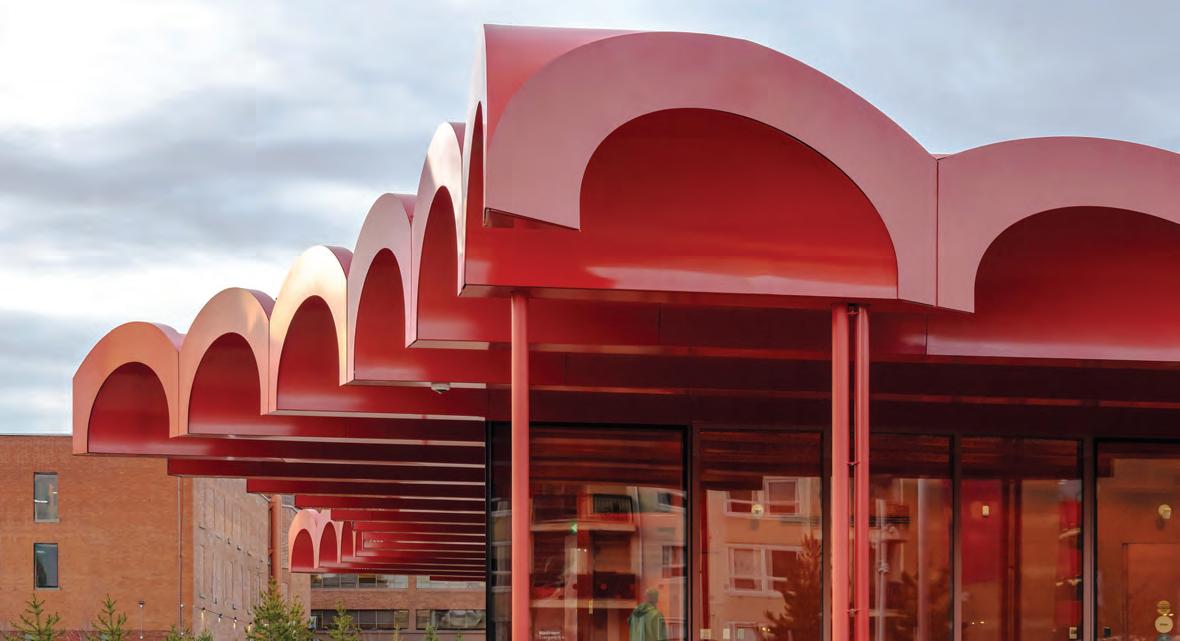
TEXT Tracy Hyatt
2026 RAIC GOLD MEDAL WINNER PAT HANSON’S LATEST WORK IS A STRAWBERRY-RED PAVILION IN CENTRAL EDMONTON.
Visiting O-day’min Park during opening week, I’m struck by the noise and laughter of children playing. It’s a familiar sound in cities with high-density downtown neighbourhoods, but not something I’m used to in central Edmonton. The brightness of these young voices matches the park’s striking red pavilion, a colour that is a nod to the term o-day’min, the Anishinaabe word for strawberry. With its fanlike barrelled roof, the building is new to me, but at the same time, the design feels familiar.
The lead architect behind the pavilion is Pat Hanson of Toronto-based gh3*, who also designed two other pavilions in Edmonton’s Borden Park and Castle Downs Park reflective, polished steel buildings which have since become familiar and beloved attractions.
“Through the process [of creating Borden Park and Castle Downs Park pavilions], we developed an understanding of how to design small buildings with small budgets, how to come up with one architectural idea that gets edited and how to drive that one idea through the whole process,” says Hanson.
It’s why the O-day’min Park pavilion feels like it’s always been a part of Edmonton. It lines up with what Edmontonians see as good architecture and creates something that is recognizably of the city. “The pavilions are very simple, straightforward buildings with not too many ideas,” says Hanson. “But we try to design something that’s a little evocative, so it gets people engaged and reacting.”
Fanning out onto the landscape, the barrels of the O-day’min Pavilion’s roof push forward towards multiple pathways leading out from a strawberry-shaped plaza, creating an unexpectedly generous and organic canopy.
Montreal-based CCxA led the design of the wider park to mimic the area’s aspen parklands. (The park was executed by gh3* in collaboration with CCxA.) Gentle, rolling hills rise from the flat Prairie-like landscape on the park’s eastern edge; the west side is home to a tree canopy. “It’s a little microcosm of the region,” says CCxA co-president Marc Hallé. At night, light plays a key role in how the park functions and how users safely move
ABOVE The pavilion’s barrel vaulting nods to historic modern buildings in the city, speaking to a time when park pavilions were celebratory.
around. Encircling the green space, an elevated lighting ring emits a soft glow that shifts from green to red and purple, evoking the Northern Lights.
O-day’min Park is intended as a catalyst for the west side of downtown, and new residential developments are already popping up around the park. A 36-storey residential tower, a seven-storey apartment building, and a soon-tobe-finished low-rise line the western edge. On the opposite side of the park, a tower has broken ground. And this spring, two more projects were announced. By this November one year after the park opened 1,604 residential units are expected to be added.
In the end, what stands out most about Oday’min Park is how quickly the park has been embraced. The park does more than reshape the landscape: it reshapes expectations of what life in the downtown core can be.

Low carbon. High circularity. No compromise.
A brighter solution for a better tomorrow.
Select products available with GREENGUARD Gold certification, contributing to healthier indoor air quality.


Scan the QR code to learn more



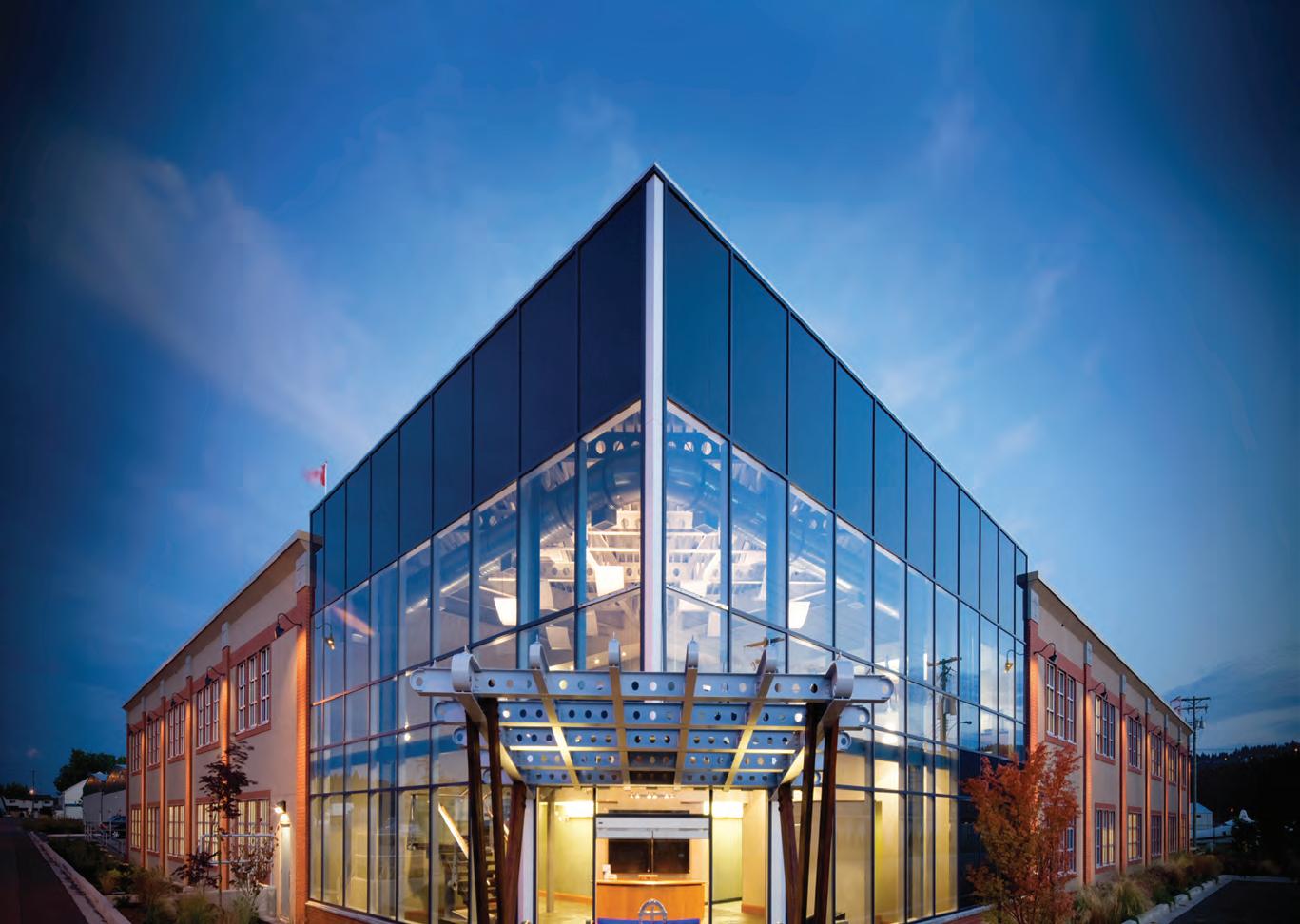



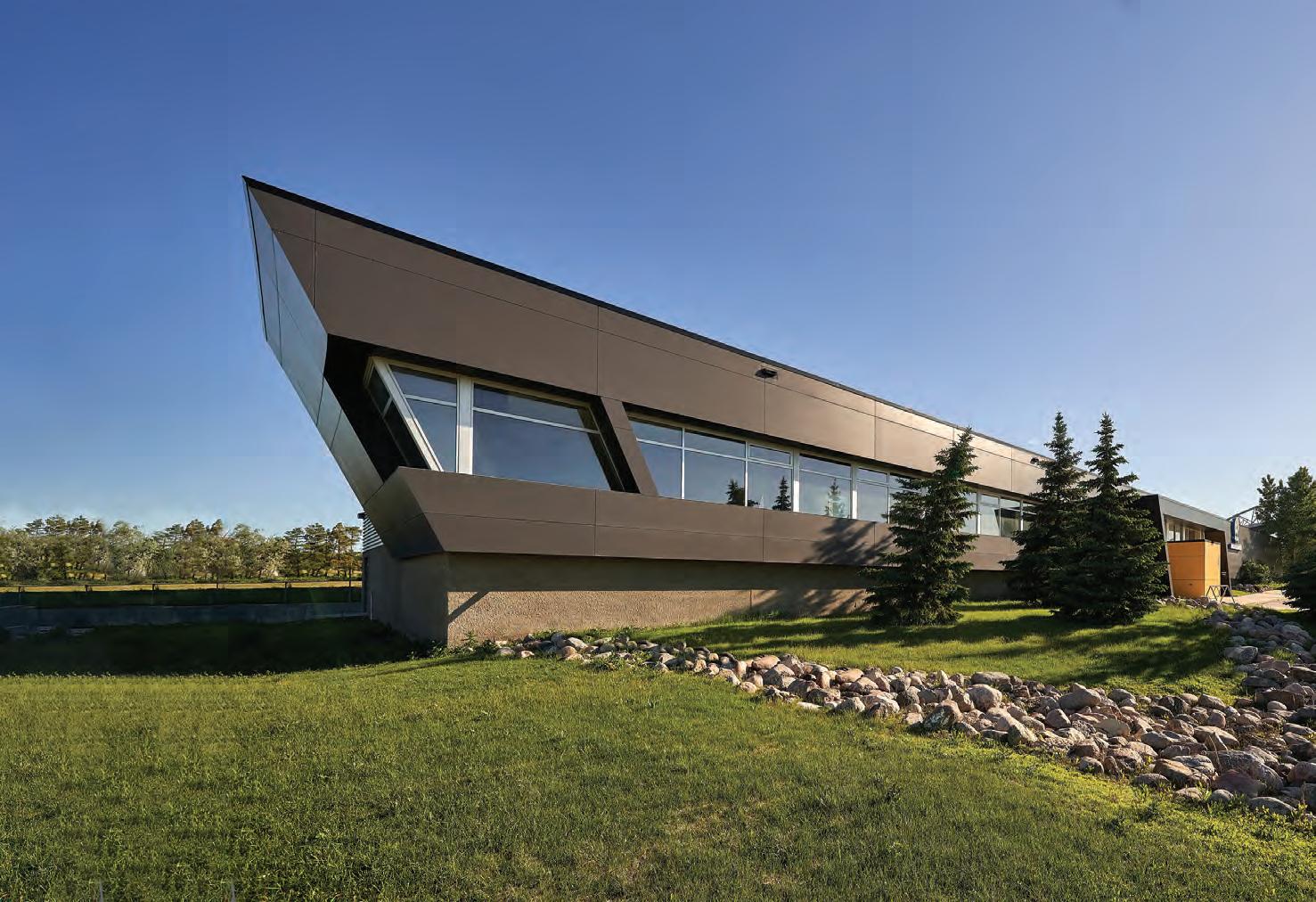



behlen.ca | info@behlen.ca | 1-888-315-1035
behlen.ca | info@behlen.ca | 1-888-315-1035
behlen.ca | info@behlen.ca | 1-888-315-1035
behlen.ca | info@behlen.ca | 1-888-315-1035