



Low carbon. High circularity. No compromise.
A brighter solution for a better tomorrow.
Select products available with GREENGUARD Gold certification, contributing to healthier indoor air quality.


Scan the QR code to learn more


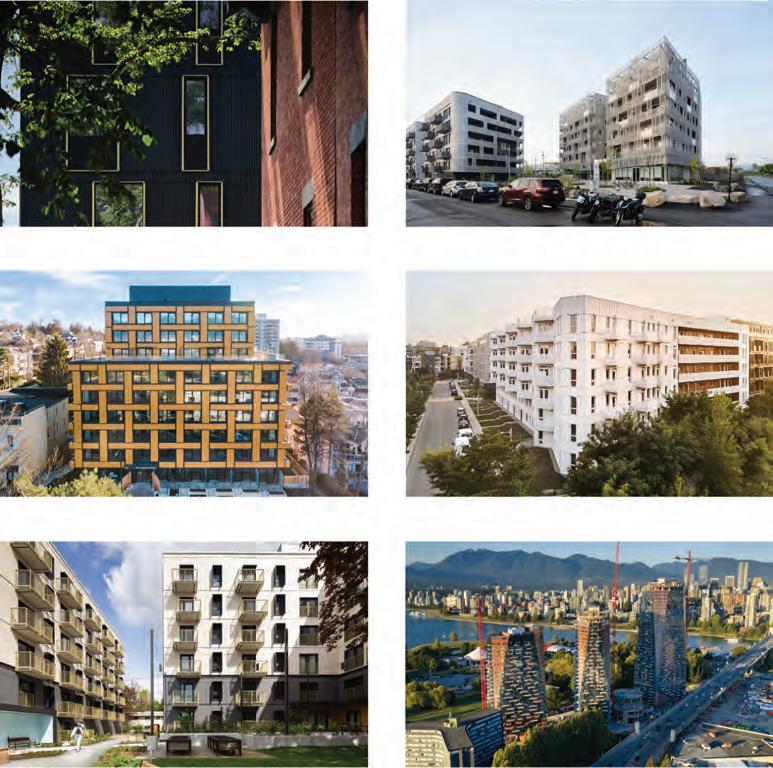
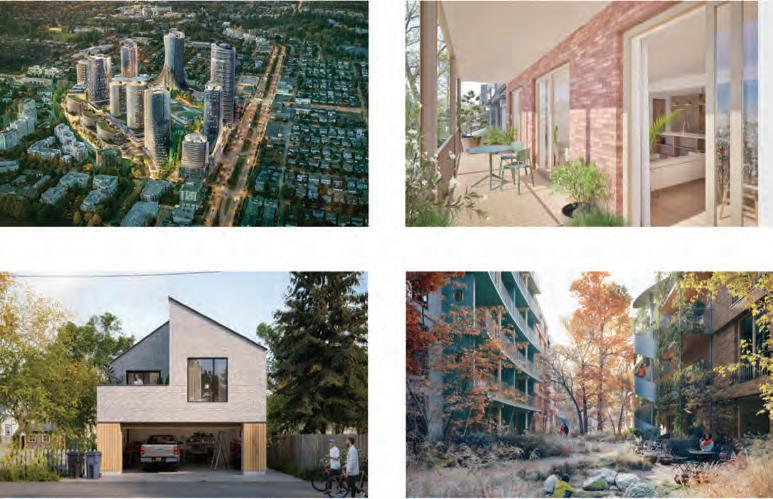
Guest editor Ian Chodikoff on the complex housing ecosystem that has shaped the current affordability crisis.
Kristen Harrison offers a strategic briefing for architects.
Stefan Novakovic looks at 10 projects where architects are leading the way towards housing innovation.
Interviews with five advocates leveraging their architectural expertise to create new housing opportunities.
Our directory of key resources for architects working on housing.
Remembering Robert G. Hill, 1947–2026.
This year's AIA Canada annual award winners.
Douglas MacLeod on key AI tools that are improving productivity for Canadian architecture firms.
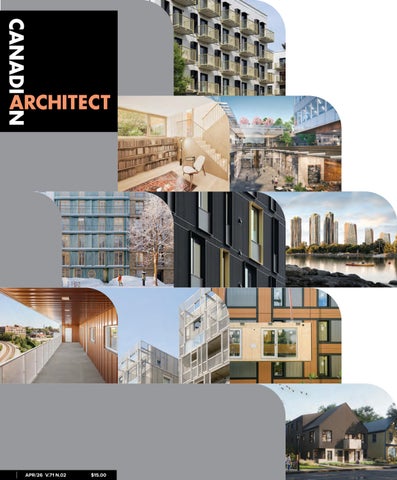
COVER IMAGES TOP TO BOTTOM, LEFT TO RIGHT: Adrien Williams, Office Ou, Henriquez Partners Architects, Aron Lorincz Ateliers, Julian Parkinson, Tandem Studios, Annie Fafard, Maxime Brouillet, Intelligent City, Office In Search Of.
Over the past decade, the issue of housing affordability has come into sharp focus. When I left Canadian Architect in 2012, the average home price in Toronto was just under $500,000. In 2025 that figure exceeded $1 million for the fifth consecutive year; by January 2026 it had dipped marginally to $950,000. A glut in the condo market is just one factor contributing to this price correction. Average homeowner salaries have certainly not doubled, yet approval timelines and development-related fees have more than doubled, in some cases. Many factors affect the ability to own or rent a home in Canada: interest rates, construction costs, taxes, municipal charges, speculation, and greed, to name a few.
It is often said that we are living in a housing crisis. Yet, as Carolyn Whitzman describes in her book Home Truths: Fixing Canada’s Housing Crisis, our current “crisis” is the result of a housing ecosystem that is, in fact, the cumulative effect of decades of political and policy decisions. Over the last two decades, housing has definitively shifted from a shelter to a financial instrument.
As this issue shows, architects can serve as advocates for change to our housing ecosystem.
Since his election one year ago, Prime Minister Mark Carney has declared housing to be a priority, quickly establishing Build Canada Homes last September to deploy meaningful public capital to finance and build non-market homes at scale. Its $13 billion budget for the next five years could create 13,000 new affordable housing units for low-income households, amounting to a modest 2.1 percent increase in total housing completions, according to a February report by the Office of the Parliamentary Budget Officer. Incidentally, those figures are unrealistic. They are based on multifamily developments with a 50% affordable-housing ratio. To put things into perspective, Statistics Canada reported a total investment in multi-family residential construction of $9.5 billion in December 2025. Unless our levels of government introduce additional funding or new programs to facilitate housing delivery, delivering affordable housing to our clients in the foreseeable future will remain a “crisis.”
Fortunately, topics like medium-density housing, building code changes such as sin-
gle-stair egresses, and modern methods of construction (including mass timber, prefabricated, and modular construction) are moving into the mainstream, and architects are being asked to apply these ideas to increase housing affordability and supply.
There are policies and procedures that architects can advocate for, given our intimate familiarity with obstacles that can slow down construction. As Kirsten Harrison reports, CMHC’s Housing Accelerator Fund is helping with zoning reform and permitting friction, opening new sites for missing-middle and multi-family developments. And as Gregory Henriquez notes, we could push for the adoption of a priority approval lane for projects that deliver positive public outcomes, such as affordable housing.
Implementing new building codes and zoning reform can unlock new housing typologies and increase density on ordinary lots. If we want to increase affordable mid-rise housing, then we need to legalize floor plans that make family life possible. Forego home ownership altogether? Geoff Turnbull of Heartwood Trust is one architect dedicated to building a new generation of stable, highquality, purpose-built rental housing.
The federal government’s recent attention to standardization and modern methods of construction (MMC) signals a new willingness to treat housing as a growth industry that could benefit our profession, but we will have to assert ourselves in this evolving supply chain. This is certainly an idea that architects like Carol Phillips of Moriyama Teshima Architects maintain. Her firm is heavily involved in mass timber and modular construction.
When leading housing projects, we are beholden to our clients’ pro forma, while our clients are generally obligated to their lenders, whether financial institutions or investor groups. Seemingly, this leaves little room for our profession to advocate for building affordable housing at scale. But many architects have succeeded in creating new opportunities through publications, research, and work on new models for multi-family living. This issue is a testament to their vision and a call to action for all of us to keep advancing the housing agenda.


In Memoriam: Robert George Hill, 1947-2026
Architect and historian Robert Hill passed away on February 21, 2026, following a short illness. He was a long-time consultant at KPMB, whose research directly informed how the firm’s architectural interventions coexist with historic structures. Hill is also known to architectural historians as the creator of the Biographical Dictionary of Architects in Canada 1800–1950, an unparalleled resource containing biographies, lists of work, and extensive bibliographies for thousands of Canadian architects.
He was also a client of architects. Hill’s Craven Road House and Studio, both designed by Shim-Sutcliffe Architects and constructed on modest budgets, were awarded Governor General’s Awards in 1997 and 2010, respectively. The property received heritage designation from the City of Toronto in 2022.
Between 2010 and 2012, Hill received an Award of Excellence from Heritage Toronto, the Order of da Vinci from the Ontario Association of Architects, and was inducted into the RAIC’s College of Fellows for his contributions to research, scholarship, and professional standing. In 2016, the Architectural Conservancy of Ontario presented Hill with his highest honour, the Eric Arthur Lifetime Achievement Award.
Several architects reached out to us with tributes to Robert Hill.
Phyllis Lambert, C.C.
Founding Director Emeritus, Canadian Centre for Architecture
Robert Hill’s single-handed dictionary is an amazing feat, and a profound contribution to Canadian historiography.
As I think of Hill, I am amazed. He is a rare lone hero—unsung and basically unknown— contributing fundamental knowledge, so that many others will be known.
His monk-like devotion recalls his contemporary, Glenn Gould—or Leonardo, or Einstein—yet they were all known. Are there great dictionary creators, or others whose work was driven by sheer passion and the excitement of discovery? How can one transmit these qualities to others? He is to be highly honoured.

































ABOVE Architect and historian Robert Hill was archivist at KPMB Architects, the compiler of the Biographical Dictionary of Architects in Canada, and a collector of architectural posters, books, and photos.




















































Bruce Kuwabara, O.C.
Founding Partner, KPMB Architects Chair of the Board of Trustees of the Canadian Centre for Architecture
I first met Robert Hill in 1968, when he joined my second year class at the University of Toronto. The architecture school at U of T was undergoing a radical transformation in architectural education led by Peter Prangnell, who encouraged students to observe how people interact with objects and spaces, as a point of departure for design. Robert came to U of T with a perspective that was independent of the prevailing pedagogy. He was interested in the formal spatial relationships that informed the work of Paul Rudolph, with whom he had interned. He also looked to Robert Venturi, whose Complexity and Contradiction in Architecture, published in 1966, challenged modernist purism by advocating for an architecture that embraces historical references, spatial ambiguity, and linguistic richness—a philosophy of “Less is a Bore.”
Robert later became interested in the work of Dutch architects such as Herman Hertzberger, whose practice explored how architecture supports everyday life, and Nicolaas John Habraken, who believed that residents should have a greater say in the design and use of their housing. Both advocated for designs that could support change over time.
Upon graduating in 1972, Robert and I were among the Toronto participants who traveled to the Summer Session in London, organized by Alvin Boyarsky, an expatriate Canadian and the Director of the Architectural Association.
Robert then joined the fledgling studio of George Baird Architect, where John Van Nostrand, Joost Bakker, the late Barry Sampson, and I worked. There, Robert and I contributed to the seminal report Onbuildingdowntown, which established design guidelines for Toronto, including a focus on significant heritage buildings and public view corridors.

















Later, after I moved to Barton Myers Associates, I invited Robert to join the practice. He contributed his strong research capabilities, deep interest in all things architectural, and quirky sense of humour. It was there that he encountered and worked with Thomas Payne, Marianne McKenna, and Shirley Blumberg, who were all Associates.
Following Barton’s departure to Los Angeles, Robert’s transition to the newly formed Kuwabara Payne McKenna Blumberg Architects in 1987 was natural. He worked on several of our early projects that involved the integration of heritage architecture, such as Woodsworth College, King James Place, and the Design Exchange.
Over the decades, he built and maintained our library because he believed that publications about architecture enriched and deepened our understanding of the discipline and made our work richer. He organized the drawings and models of our early projects that are now in the archives of the Canadian Centre for Architecture.
Robert’s determined and heroic undertaking to create the Biographical Dictionary of Architects in Canada, 1800-1950 is a legacy contribution to the architectural culture of the nation. Through the years, Robert directed me to study the work of Canadian architects such as John Lyle (Union Station, the Royal Alexandra Theatre, and the concept for the Bank of Nova Scotia at King & Bay), Edmund Burke (McMaster Hall and 75 Lowther Avenue, where I lived in the Annex), William Thomas (St. Lawrence Town Hall and the Don Jail), E.J. Lennox (Old Toronto City Hall), Darling & Pearson (the Canadian Bank of Commerce and U of T’s Convocation Hall), Sproatt & Rolph (Hart House and Soldiers’ Tower at U of T, and George Miller (Havergal Ladies College, the Lillian Massey Building, and Annesley Hall). Through Robert, I came to understand architecture and city building as a series of successive layers accumulated over time, incorporating bodies of work, generation after generation—including those of KPMB.























We pioneered the rst PVC-free wall protection. Now, we’re aiming for every 4x8 sheet of Acrovyn® to recycle 130 plastic bottles—give or take a bottle. Not only are we protecting walls, but we’re also doing our part to help protect the planet. Acrovyn® sheets with recycled content are available in Woodgrains, Strata, and Brushed Metal finishes. Learn more about our solutions and how we’re pursuing better at c-sgroup.com.






























Robert’s house and studio, designed by Shim-Sutcliffe Architects, individually received Governor General’s Medals for Architecture. He once told me that his house was the most published in the world.
Robert was unique and appreciated for his curiosity, camaraderie, impish humour, and love of chocolate. Our relationship was based on mutual respect, and a feeling that we were on a parallel journey.
And I—along with his surviving family, friends, colleagues, and the partners and staff of KPMB—will miss him.
Shirley Blumberg, C.M. Founding Partner, KPMB Architects
Robert was always there. When I graduated and joined Barton Myers Associates, he was a young architect already deeply engaged in Canadian architectural heritage, and leading research in the studio. He sparked our imaginations by effortlessly providing detailed descriptions of heritage buildings and sites, reference texts, historic drawings, photographs and maps.
He became indispensable to our design practice at KPMB. With every new pursuit, project or lecture, Robert’s desk was the first stop. His foundational research and depth of knowledge—of our city and its buildings—were invaluable. His roles as studio photographer and archivist were equally impactful to our practice.
Incongruent with his expertise, Robert also took on ordering drafting supplies, and the daunting task of changing light bulbs in our high-ceilinged studio. He could be mercurial, even brusque, but at the same time he had a wonderfully impish smile, often delighting in silly humour. I was always moved by his thoughtfulness and generosity, which won him many friends at KPMB. Without fail, every Valentine’s Day, Robert

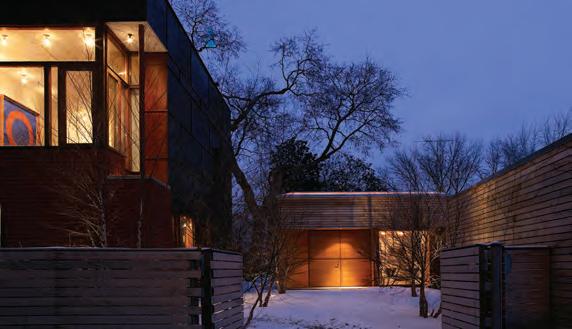
ABOVE Robert Hill's house (seen at left) and studio (seen at centre) were designed by Shim-Sutcliffe Architects. They received Governor General's Awards for Architecture in 1997 and 2010, respectively.
would leave a chocolate heart on every woman’s desk in the studio. Robert was family. We miss him.
Marianne McKenna, O.C. Founding Partner, KPMB Architects
As our archivist, librarian and historian, architect and collaborator, Robert Hill played an essential role in the work of KPMB. He brought us historical perspective and a deep understanding of heritage provenance as our practice evolved its portfolio of projects. From 1987 onward, his rigorous research and analysis of heritage properties contributed a distinctive component to our work, informing our design of new interventions alongside historic buildings and helping to breathe new life into Canada’s architectural fabric.
Robert’s research into the Royal Conservatory site on Bloor Street was invaluable for me on the design journey. The site was originally the first home of McMaster University; Robert chronicled the history of the buildings designed to house and train Baptist ministers in the late 19th century. This helped me understand how to respectfully renovate and add to the original built fabric, creating a cultural destination for music while respecting the scale, materiality, and presence of the original building complex.
Robert was our dear and devoted friend, bound into the life of our practice. For 40 years, he was a steady presence at KPMB. He brought critical skills in historical assessment and research, and he pursued his own work with equal care. He will be sorely missed.
Brigitte Shim, O.C. Co-Founder, Shim-Sutcliffe Architects
Robert Hill was an architect—and an exceptional architect’s client. He was an archivist, a historian, and a collector’s collector. And, for generations to come, he will be linked to the Biographical Dictionary of Architects in Canada, which he founded and maintained for over four decades.
Many may not know Robert Hill as a collector. Collecting things of any kind requires a serious and sustained commitment, and an intensity that verges on the obsessive. Robert Hill’s collections included postcards (old and new), Christmas cards (especially to and from architects), posters of architectural exhibitions, historic architectural photographs, and hundreds of publications, magazines and books on all aspects of architecture. For Robert, the act of collecting was private, requiring a combination of self-confidence and self-knowledge, along with equal doses of stubbornness and patience. He was driven by the belief that this kind of visual material remains a powerful way to disseminate ideas within his chosen discipline of architecture.
In 2007, Graphic Virtuosity: Architectural Posters from the Robert G. Hill Collection, co-curated by Robert with Larry Wayne Richards, was exhibited at the Eric Arthur Gallery at the University of Toronto’s School of Architecture. In Robert Hill’s own words from the exhibition catalogue, “Collecting architectural posters is not easy. In addition to the general requirement of knowledge of architectural history and contemporary design (and a discerning eye), I have learned over the 40 years that I have been collecting that this endeavour has other more basic demands: a powerful searching radar; a gentle persistence; and a certain fanaticism for the subject. All of this led me to collecting more than 1,600 architectural posters from 20 countries, 75 of which are presented in this exhibition. In my case, deep pockets were not a requirement. Some posters were provided free of charge by kind individuals in galleries and museums intrigued by my interest. Others were offered to me as gifts. And in many cases, I simply purchased a poster at an astonishingly low cost (typically under $10), then shipped it or, more often, carefully packed it in a rigid tube and carried it in my suitcase on my journey back to Toronto.”
Ever the sleuth detective, Robert at one point purchased six folios of architectural photographs assembled around 1860. These 19th-century salted paper print process photographs turned out to be originally commissioned by the French government, and documented the expansion and remodelling of the Louvre Museum. Edouard Baldus: The Louvre Folios, 1855 – 1857, from Robert’s private collection, was exhibited at the Art Gallery of Ontario from October 2017 to April 2018.
Howard and I designed two projects for Robert. The Craven Road House, a plywood-clad house in a back alley in Toronto, was completed in 1996. The Craven Road Studio was added to the property a decade later. We created luminescent spaces for Robert, where he was surrounded by the books, posters, catalogues and photographs that made up his world. In commissioning these two designs, Robert Hill created an important
urban ensemble that demonstrates that, even with limited resources, you can create innovative buildings that matter. Beyond the architectural awards and publications of his Craven Road projects, the property received heritage designation from the City of Toronto in 2022. As the owner, Robert had been an exceptional client. Adding yet again to his collections, he was the curator and the custodian of a significant group of buildings situated in a Toronto back alley that provides us with a model for the urban intensification and densification of our cities.
Richard Longley
Former President, Architectural Conservancy of Ontario
Days after the Biographical Dictionary of Architects in Canada (BDAC) site went dark with a message “Content is blocked,” Robert Hill died, aged 78, at the place of his birth, Michael Garron hospital. It was just weeks after demolition of the beautiful streamline moderne façade of Michael Garron's Joseph Harris Pavilion. Thanks to the BDAC , we know that the pavilion was designed by City Architect John James Woolnough, with Deputy City Architect K. S. Gillies. (KPMB Architects is working to put BDAC back online.)
My most valued relationship with Robert Hill was whenever I needed help often! with the compiling of an illustrated biography of British and Canadian architect William Thomas. Robert took delight in discovering hitherto “undiscovered” William Thomas buildings some built, some demolished, some never built. Through the many years of that interminable project, Robert’s enthusiastic sharing of information, advice, correction and support were indispensable.
Robert Hill will be sorely missed by all who knew him, and all who consulted BDAC
26_001506_Canadian_Architect_APR_CN Mod: February 17, 2026 12:25 PM Print: 02/24/26 4:32:05 PM page 1 v7

Protect your precious cargo! From peanuts to padding, Uline has hundreds of cushioning items to fill your void. Order by 6 PM for same day shipping. Best service and selection – experience the difference. Call 1-800-295-5510 or visit uline.ca

Pauline
Thimm,
President, AIA Canada Society
I’m delighted to begin my two-year term as AIA Canada President and grateful for the opportunity to work alongside our members across the country. Together, we’ll continue to advance the important role architects play in shaping a high-quality built environment. Guided by our Mission, Vision, and Values, my focus will be on a few key priorities—Truth and Reconciliation, Inclusion and Equity, Housing, Climate Leadership, and Smart Cities Innovation.
I’m also pleased to welcome our new Vice President, Neil Robertson, and board members Stuart Howard, Hannah Allawi, and Shikhar Kapur, and to thank Rommy Rodriguez for her continued support. I look forward to working together as we support our members and continue to grow AIA Canada’s presence nationwide and beyond.
In this April issue of the AIA Canada Journal, we’re proud to highlight the winning projects from the 2025 AIA Canada Design Awards. With inspiring submissions from across Canada, the awards continue to celebrate the strength, creativity, and diversity of Canadian design excellence.
The AIA Canada Design Awards program is held annually in the fall to recognize excellence in design, innovation, and professional practice among AIA Canada members and emerging design professionals. Aligned with AIA Canada’s mission to advance architectural excellence, strengthen professional leadership, and foster cross-border engagement, the program highlights work that contributes meaningfully to the built environment and to the
discipline at large. Since its inception in 2020, the awards have attracted a broad and increasingly competitive field of submissions, reflecting the depth and diversity of practice within the membership.
The 2025 recipients were announced during the AIA Canada Annual General Meeting on November 26, 2025. The following pages present the projects recognized across each category.
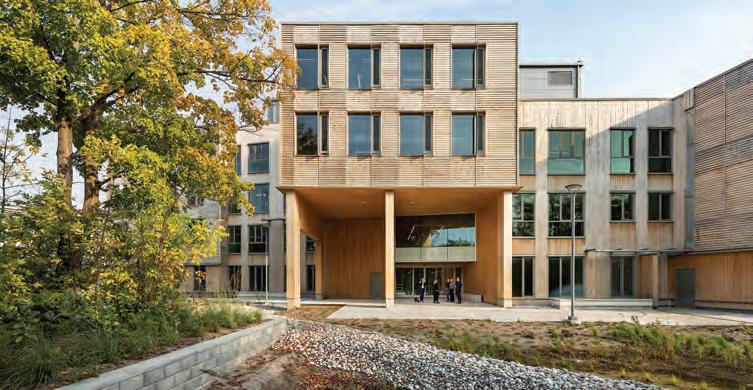
The Toronto and Region Conservation Authority Headquarters, by Bucholz McEvoy Architects and ZAS Architects, won an AIA Canada Society Award of Excellence in the current cycle.
AIA Canada Student Design Awards
AIA Canada Society has launched the Student Design Awards program for 2026. For eligibility, criteria and submission details, visit www.aiacanadasociety.org

RAIC Conference, Vancouver, May 5– 8
AIA Canada will be hosting a reception the evening of May 5 at this year’s RAIC
Conference. We’re pleased to continue our partnership with RAIC and other professional organizations in support of collaboration, learning, and networking.
AIA National Conference, San Diego, June 10–13
Bringing together architects, designers, firm leaders, and industry partners, AIA26 offers four immersive days of highprofile keynotes, architect-led tours, industry-leading continuing education,
dynamic networking, and the industry’s largest expo. Registration is now open.
ByDesign partnership
AIA Canada has launched a new partnership with ByDESIGN™, a global design TV series that spotlights architects and the thinking behind their work. We’re currently seeking projects that showcase design excellence across Canada and invite members to reach out with suggestions.
ARCHITECTURE (EXCELLENCE)
Toronto and Region Conservation Authority Headquarters, Toronto, Ontario
Bucholz McEvoy Architects and ZAS Architects
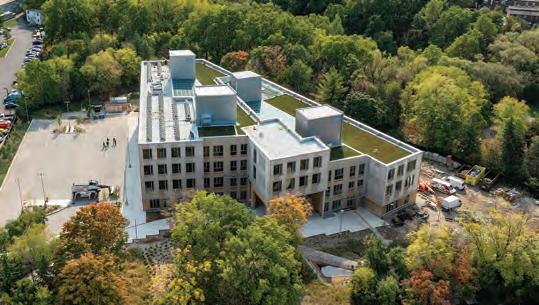
Set along Toronto’s Black Creek Ravine, the new TRCA headquarters is a fourstorey, 86,000-square-foot mass timber building shaped by the ravine’s contours, with cascading floorplates and panoramic landscape connections. A wood-first, high-performance design integrates natural ventilation, solar chimneys, geothermal systems, and on-site stormwater strategies. Targeting LEED Platinum, WELL, and Zero Carbon certifications, the project embodies TRCA’s mission of environmental stewardship and watershed resilience.
ARCHITECTURE (MERIT)
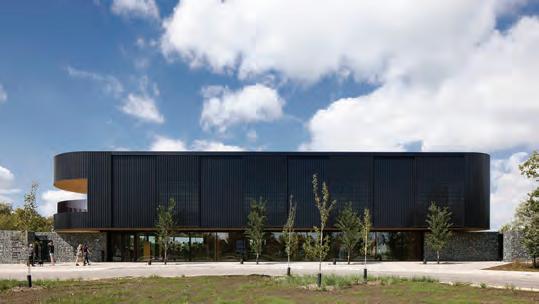
Buffalo Crossing Paul Albrechtsen Visitor Centre, Winnipeg, Manitoba Stantec Architecture Ltd.
Located on the south shore of Muir Lake in Winnipeg, this 18,000-square-foot all-mass timber Visitor Centre serves as the gateway to FortWhyte Alive’s 660-acre nature campus. Designed for Winnipeg’s extreme climate, it has achieved the CaGBC Zero Carbon Building Design Standard and is targeting Passive House Certification. The transparent, triangular form maximizes solar exposure and views, expressing climate resilience, reconciliation, and environmental stewardship.
ARCHITECTURE (MERIT)
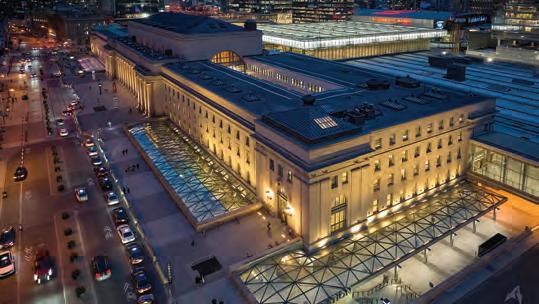
Union Station Revitalization, Toronto, Ontario NORR Architects & Engineers Ltd. and EVOQ Architecture
Union Station, Canada’s busiest transit hub and a National Historic Site, underwent a comprehensive revitalization to accommodate growth from 60 to 130 million passengers annually. Spanning an entire city block, the project introduced over one million square feet of new and renewed space, including two 50,000-square-foot concourses flanking the heritage core. The restored Great Hall preserves its Beaux-Arts grandeur while modernizing circulation, functionality, and long-term civic resilience.
ARCHITECTURE (CITATION)
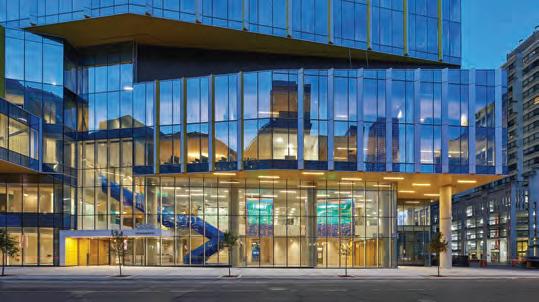
SickKids Patient Support Centre, Toronto, Ontario
B+H
The 22-storey SickKids Patient Support Centre consolidates over 30 administrative departments into a dynamic hub supporting research, innovation, and staff well-being. Connecting the Clinical Hospital with the Peter Gilgan Centre for Research and Learning, the building integrates educational and wellness spaces around an inviting atrium and prominent feature stair. As SickKids’ first “smart building,” it enhances energy efficiency through advanced automation and achieved LEED v4 Gold NC Certification.
ARCHITECTURE (CITATION)
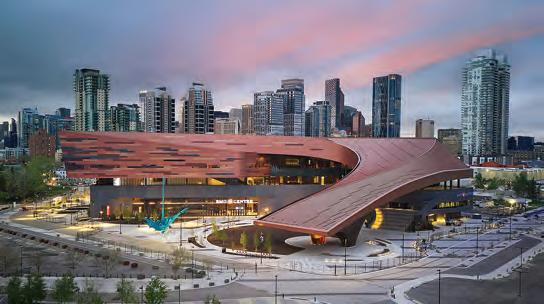
BMO Centre Expansion, Calgary, Alberta Stantec Architecture Ltd, S2 Architecture and Populous
The 565,000-square-foot BMO Centre Expansion revitalizes Calgary’s emerging Culture + Entertainment District as western Canada’s largest convention centre. Its iconic form evokes the local landscape and the spirit of the Calgary Stampede, while massive column-free ballrooms enhance functionality for large-scale events. Prairie motifs and traditional materials are reinterpreted throughout, positioning Calgary as a premier international meetings destination and reinforcing the building’s role as an ambassador for the region.
RESIDENTIAL (MERIT)
Sagamore North Cottage, Muskoka, Ontario Akb
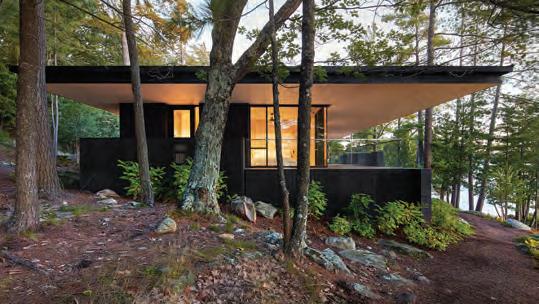
Set near the water’s edge in Muskoka, this all-season island cottage is conceived as a private refuge immersed in northern Ontario’s landscape. Inspired by floating docks, planar walls and guardrails support a unifying cantilevered roof that extends living space outward. Dark cladding allows the structure to dissolve into the forest, while geothermal systems, deep overhangs, and operable glass walls enhance sustainability, natural ventilation, and year-round comfort.
RESIDENTIAL (HONOURABLE MENTION)
Bessborough Residence, Toronto, Ontario AAmp Studio
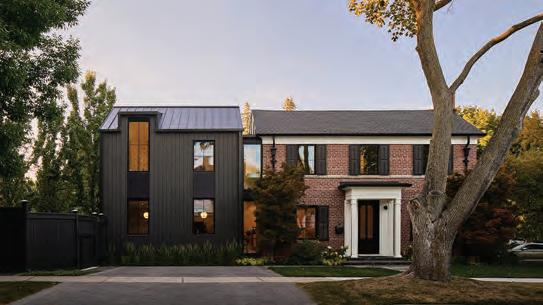
In Toronto’s Leaside neighbourhood, a Neo-Georgian red-brick residence has been reimagined as a bright modern family home balancing heritage and renewal. A dark-gray board-and-batten addition, linked by a two-storey glass connector, maintains the integrity of both old and new. Expanded, light-filled interiors connect kitchen, dining, and living spaces to an outdoor patio, resulting in a “stealth modern” home that respects its past while supporting contemporary family life.
Réseau Express Métropolitain, Montréal, Québec Lemay, Bisson Fortin and Perkins&Will
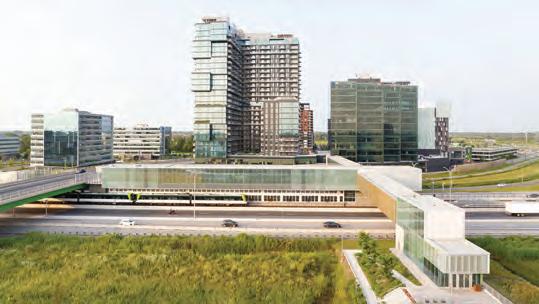
The Réseau Express Métropolitain (REM) is an automated light metro network comprising 26 stations across 67 kilometres of Greater Montréal. Integrating signature architecture with thoughtful urban planning, the system balances a consistent identity with adaptability to diverse terrains and communities. Luminous canopies and landscape-responsive materials create recognizable civic markers, transforming transit infrastructure into meaningful public architecture that strengthens connectivity and fosters inclusive, sustainable urban growth.
The Well, Toronto, Ontario
Hariri Pontarini Architects, Adamson Associates Architects | BDP and CCxA | Architects–Alliance | Wallman Architects
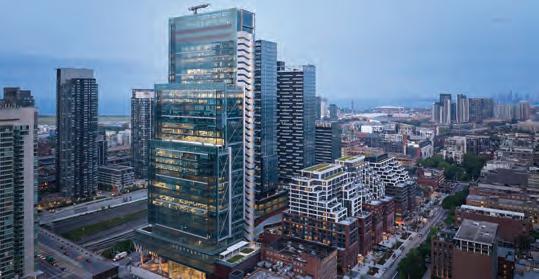
The Well heralds a new mixed-use typology for Toronto, comprised of 1.5 million square feet of commercial and retail space, and a similar area for residential use, on a 7.7-acre downtown site. Extending King West’s pedestrian network with porous connections, the development mediates between surrounding scales. Six residential buildings and an office tower are linked by an openair, multi-tiered promenade beneath an undulating glazed canopy, framed by a colonnade and opening to a public amphitheatre programmed year-round.
Nuxalk Asmayuusta Childcare, Bella Coola, British Columbia Mackin Architects Ltd.
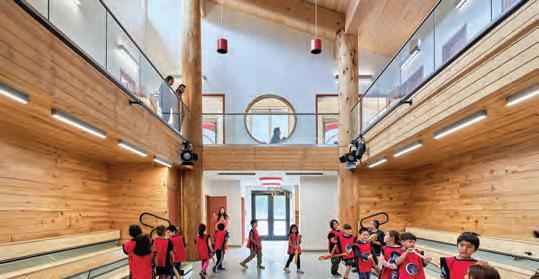
Named ‘Asmayuusta’—the Nuxalk word for learning through the “3 L’s”: Look, Listen, and Love—this childcare and education building draws on the form of the traditional longhouse. Western red cedar from the Great Bear Rainforest, community-crafted artwork, and spaces for dance, story, and teaching embed Nuxalk knowledge in the architecture. Developed through deep community engagement, the project integrates culture, sustainability, and intergenerational learning as a living expression of care.
Hudson’s Bay Development, Vancouver, British Columbia Perkins&Will
The Hudson’s Bay store in downtown Vancouver is reimagined through a ‘living heritage’ strategy that respects its cultural significance while introducing 1,000,000 square feet of mixed-use office space. An “Uncommon Civic Centre” integrates a mid-block arcade, cycle hub, Sky Atria, and Roof Garden, strengthening connections between street, transit, and public life. Guided by passive strategies and 2050 climate models, the project redefines urban buildings as resilient civic assets.

AIA Canada extends its appreciation to the 2025 jury for their careful and rigorous review process.

Avery Guthrie is an Architect and Principal at Teeple Architects. Since joining the firm in 2011, she has led major public-sector projects, bringing a research-driven and collaborative approach to design. With master’s degrees in history and architecture, she values strong conceptual foundations and thoughtful execution. Based in Vancouver, she serves as Teeple’s practice leader for Western Canada.

Ian Chodikoff is an architect and founder of Chodikoff & Ideas, advising architecture and real estate organizations on research, communications, and strategic development. He previously led initiatives at SvN Architects + Planners, IIDEX, IDS, and Foresight Canada, and served as Executive Director of the RAIC. Formerly editor of Canadian Architect for nearly a decade, Ian is a Fellow of the RAIC and trained at Harvard GSD and UBC.

Manasc is Senior Principal of Reimagine Architects, a Western Canadian practice recognized for integrated sustainable design. An early champion of green building and co-founder of the Canada Green Building Council, she has led numerous LEED and adaptive reuse projects. For over three decades, she has collaborated with Indigenous communities across Canada. Vivian is a Past President of the RAIC and serves on the Board of the National Trust for Canada.


TEXT Kristen Harrison
Three years ago, Justin Trudeau said housing wasn’t a primary federal responsibility. Today, not only is Canada in a housing affordability crisis, but Build Canada Homes (BCH), the new federal agencyturned-Crown Corporation tasked with building affordable housing at record speed and scale, is already largely staffed, selecting projects, and hoping to break ground by this fall.
The government is moving fast and with it, new opportunities in the homebuilding industry are emerging. Cities are taking note, working directly with federal entities, implementing innovative policies, and seeking ways to increase supply while reducing costs. Architects, too, can draw benefit through collaborating with municipalities and clients that align with federal priorities.
“Architects play an important role across the entire housing continuum from the earliest planning stages, to the delivery of homes that are
sustainable, accessible, and affordable,” the Honourable Gregor Robertson, Minister of Housing and Infrastructure, shares exclusively with Canadian Architect. “Their expertise ensures that the homes we build today will meet the needs of Canadians for generations to come.”
Most of the opportunities for architects to positively contribute to housing happen at the local level. “I see a really important role for architects in how we develop new land use policies,” shares City of Toronto’s Chief Planner, Jason Thorne. “Architects bring a very important perspective to the table with respect to the buildability of different planning and zoning regimes, and to the impacts that different regulatory approaches can have on the cost and viability of new development.”
Architects can only help to unlock housing, however, if the profession is aware of current policies, critical of their implications, and engaged in their implementation. Here is what architects need to know about the latest in housing policy in Canada, and how it is working at the local level.
While Trudeau’s government may have once seemed disinterested in housing, his government was significantly involved in related policy and funding. Under Trudeau, Canada launched its first National Housing Strategy (NHS) in 2017, setting out a long-term plan to address homelessness and housing affordability. Since then, the NHS has committed $74.08 billion in funding, resulting in the creation or commitment of 183,274 housing units to date.
The shift toward more substantial federal involvement in housing policy, however, has accelerated exponentially over the past four years, as the depth of the housing crisis has become apparent.
First announced in the April 2022 Federal Budget, the Canada Mortgage and Housing Corporation (CMHC)-led $4.4 billion Housing Accelerator Fund (HAF) was a significant step toward tangible action and impact. Through this program, the Federal Government leap-frogs provincial/territorial governments (excluding Quebec) by providing direct funding to municipalities that meet the program's ambitious requirements. This includes requiring zoning updates that allow for four units as-of-right on all residential lots to reduce permitting time, encouraging gentle density, and supporting multi-family and missingmiddle housing typologies as more affordable and sustainable options. In municipalities that have opted in, communities and architects have been given new sites and parameters for where and what types of housing can be built.
The government next revived CMHC ’s postwar mass-housing effort, launching a contemporary version of the national Housing Design Catalogue, first released by CMHC in March 2025, in a bid to increase rapid housing supply through standardized plans and mass-produced elements. Here, CMHC engaged the architecture profession to produce the designs and technical drawings for the homes that would comprise the catalogue. Michael Green Architects and LGA Architectural Partners were selected through an open RFP process; the latter leading a team of regional firms from across the country to develop locally nuanced plans (see page 38).
Most significantly and on a scale not seen before the Carneycampaign-promised Build Canada Homes (BCH) launched this past September with great urgency and $13 billion in initial investment. It has been formed as a one-stop shop, with the mandate to help finance and build non-market homes, including on unused federal lands, as well as to catalyze a new housing industry to support development. What is most innovative is the way that these goals will be met: through the development of new partnerships, leveraging of private funds, moving to modern methods of construction (MMC), including modular, prefab, and panelization, growing the mass timber construction industry, and pushing towards the standardization of housing design, construction, and approvals.
While these government-led housing policies and programs have clear implications for municipalities, planners, developers, and non-profit housing providers, what is less immediately evident is how architects can leverage the opportunities created by BCH and help to ensure high-quality housing outcomes.
“Through Build Canada Homes, we are accelerating the building of affordable housing using innovative methods and high-quality designs. Architects are essential partners in this work,” says Minister Robertson. “Their creativity and technical leadership help us deliver more homes, faster and ensure that affordability and good design go hand-in-hand as we strengthen Canada’s housing system.”
For Housing, Infrastructure and Communities Canada (HICC), which operates under the direction of Minister Robertson, there is a clear place for architects to have influence, as an important part of the project teams submitting to BCH, and they are “welcomed as key partners in BCH ’s work to increase housing supply and affordability.”
But as home construction “at scale” means increasing the production rate through standardized designs, “factory settings,” and streamlined processes to save time and money, it shifts away from the one-off custom builds that are typically the domain of architects and toward a more systematic and repeatable approach. The practical takeaway from HICC for architects is that design and delivery choices should support a “clear line of sight to those outcomes, especially speed, affordability, and community impact,” rather than focusing on individualized designs.
For architects, early engagement can help project teams present a stronger proposal by supporting delivery approaches that align with operational sustainability and community benefit. The policy also points to opportunities to work within multi-partner teams to align design with modern construction, and with coordinated delivery models that support speed and scale. And it provides architects with the space to begin working within the MMC space in a more significant way.
According to HICC, MMC is central to BCH ’s model because it cuts build times, reduces costs, improves quality, and lessens environmental impact. By creating predictable, long-term demand for factory-built housing, BCH is also helping Canadian manufacturers scale up and strengthen domestic supply chains, with a focus on Canadian-made materials such as mass timber, and in alignment with the government’s Buy Canadian approach. In terms of construction methods, it is also worth noting that BCH supports repeatable, high-quality designs that adapt locally. The aim is again speed and affordability not through a “one size fits all” approach, but prioritizing adaptable, high-quality designs that fit within the local context.
Municipal Adoption: “Where the Houses Meet the Road” Federally supported housing is not built in isolation, but is driven by the municipalities in which it is situated. As such, there have also been major changes to housing policy at the local level, often engendered by the federal policies and programs discussed earlier. These changes bring new avenues for architects to engage in design thinking and innovation, as planning departments are more focused than ever on unlocking housing supply, including through design-led innovation.
Toronto’s new planning initiatives of the past few years, created in part to align with HAF, have meant that almost all residential properties in the city have been up-zoned or up-designated. Toronto also shares the federal government’s priority of diversifying the housing supply, prioritizing opportunities for new housing across the spectrum and throughout the city. This has included expanding permissions for multiplexes, permitting as-of-right midrise buildings up to six stories on new Major Streets, and designating nearly 300 kilometres of Avenues around the city for taller midrise buildings, among other higher-density initiatives.
As a result, says Toronto’s Chief Planner Thorne, architects will continue to play a critical role as new policies begin to impact what is actually built. These policies include bylaws that allow for forms of infill housing not permitted in decades, including in parts of the city not used to recent development. “The design of this new housing and how well it considers the surrounding context is going to be critically important,” says Thorne. “So the architecture community is going
to play a crucial role in the success of these policies and their ability to deliver new housing supply.”
Housing supply, including access to safe and affordable housing, is also a significant priority in Halifax. Here, the municipality is focused on locating housing in complete communities with services, walkability, and quality public transit. Halifax Regional Municipality (HRM) was also one of the first municipalities to participate in HAF, and, as a result, sweeping changes to planning policies were adopted by Halifax Regional Council over the past two years, including new permissions for mid-rise and missing middle housing.
Similarly, the City of Ottawa’s new Zoning By-law streamlines zoning regulations and implements a wide range of policy directions that remove barriers and offer flexibility in order to facilitate increased housing construction. According to Carol Ruddy, Program Manager, Zoning & Intensification at the City, “Greater flexibility will support the construction of more missing-middle housing, helping shape how and where homes can be built across the city. It is a significant step toward removing restrictive rules and unlocking housing opportunities across the city.”
In all of these cities, it’s anticipated that gentle density, added through missing middle housing, will maximize new housing opportunities and meet the needs of many who are currently inadequately housed, while leveraging existing infrastructure and services.
Housing Design Catalogue and the Move Towards Standardization
In Vancouver, synergies with federal housing policy are also creating opportunities for architects. Josh White, General Manager, Planning, Urban Design & Sustainability and Director of Planning at the City of Vancouver, sees standardization as a key solution to the housing crisis. “Many municipal, provincial, and federal programs recognize a common problem which is that the market housing system has lacked the ability to scale housing supply to meet demand,” he says. “One of the challenges in scaling is the lack of standardization in design and housing. Architects can play a strong role in creating standardization, which isn’t to say architectural style must be uniform from building to building, but standardized floor plans can help.”
This move towards streamlined, repeatable design and construction is also having an impact in Halifax, where the city is using the Housing Design Catalogue to help inform modifications to its own missingmiddle housing regulations a positive early indication for the potential of the catalogue. 19 municipalities, from Yellowknife to Vancouver, are currently listed as “Local Partners” on the Housing Design Catalogue’s website, and allow for selected catalogue designs to qualify for streamlined approval processes. Municipalities do note that while the plans are free, the approval of an architect or other certified professional is required to amend designs for specific properties.
Standardization is not only being tested and scaled in home design, but also in how those homes will be constructed, moving towards an industrialized housing sector with a thriving factory-built home industry. According to Kasia Tota, Community Planning Manager at HRM, “We are also talking about sustainability, wood and modular construction, as well as converting commercial and institutional buildings into housing” all in a bid to build more homes faster, through repeatable elements.
Aligning with the mandate for BCH , Vancouver is prioritizing mass timber construction, which White sees as having “enormous potential.” To encourage and incentivize this form of construction,
Vancouver gives additional height permissions to “recognize the unique characteristics of this product,” and is asking for architects to partner and collaborate with the city by participating in the testing periods that help to inform policy and regulation, and to continue stress testing real projects, providing a feedback loop between policy, regulation, and implementation.
The City of Ottawa is also looking to move towards wood construction, as alternative construction methods become an increasingly important component of housing delivery. The City notes that over the past decade, the Province has expanded permissions for wood construction under the Ontario Building Code, including earlier increases to allowable mid-rise wood buildings and more recent provisions permitting encapsulated mass timber construction up to 18 storeys. These changes reflect a broader regulatory shift toward enabling innovation, while maintaining life safety standards.
According to John Buck, Ottawa’s Chief Building Official, at the municipal level, Ottawa’s new Zoning By-law supports this evolution by focusing on built form, scale, and location, rather than construction method. “By permitting a broader range of residential forms across neighbourhoods, including where modular or prefabricated housing may be used, the By-law provides greater flexibility for alternative systems to be integrated within existing communities,” he says. This allows for mass timber, modular, and prefabricated systems to potentially support faster construction timelines, greater cost predictability, and improved sustainability outcomes. Buck continues, “As housing demand continues to exceed supply, these approaches are becoming part of the mainstream delivery toolkit, rather than niche solutions.”
To accommodate these and other innovations in design and construction, codes and regulations are gradually being updated. Vancouver has recently adopted ‘space-efficient egress’ into the Vancouver Building Bylaw. (This is enabled by the city having its own Building Code as a Charter City in British Columbia.) The update provides an option for external single egress in smaller lot, low-rise apartment buildings up to six stories, while projects on larger sites are allowed a scissor stair. Once again, architects can both make use of this code change to innovate within their own work, while being asked by White to “play a key role in testing this building code standard against other zoning regulations and policies to ensure this new code standard will work in the marketplace.”
Across the country in Halifax, Tota notes that: “Building Codes are an important part of the process, and architects should regularly participate in their reviews and help demonstrate how more flexible regulations can support housing and design without compromising safety.”
The municipality has been working to update and modernize its planning framework over the past few years in response to rapid population growth. Here, the focus has been sharpened by changes to federal and provincial policies and new funding programs, including the Government of Nova Scotia's Minimum Planning Requirements, focused on removing barriers to housing.
For Ontario, recent provisions supporting encapsulated mass timber construction demonstrate how the Ontario Building Code is evolving to enable more innovative and sustainable housing forms. National discussions related to egress design and performance-based compliance may also influence future code cycles. In speaking again with Buck, he stresses that: “Ongoing conversations between municipalities, the design community, and provincial and national code bodies help ensure that emerging construction methods and new design approaches are considered in future code updates.” He also reiterates that “continued


collaboration between designers, engineers, builders, and building officials remains important to advancing new construction methods in a way that balances speed, safety, and long-term performance.”
The combination of code updates and municipal zoning reforms is intended to create a regulatory environment that supports innovation and encourages investment while ensuring projects integrate well within existing communities. Says Marcia Wallace, General Manager, Planning, Development and Building Services for the City of Ottawa, “We continue to improve our approval processes to provide greater predictability for architects, builders, and investors.” These improvements are meant to “help attract architects, builders, and investors to move forward with both small- and mid-sized housing projects across Ottawa,” adds Carol Ruddy, the City’s Program Manager, Zoning & Intensification.
Back in Toronto, Thorne states that “the pace of policy change has been unprecedented,” and that architects have been an important part of this development. “We have worked closely with a number of architects in developing these new policies,” he says. “Our goal is to create planning policies and zoning by-laws that don’t just create housing supply on paper, but are actually realizable on the ground. Our engagement with the architecture community has helped us to do that. For example, we have worked with architects to ‘test fit’ our policies in different contexts around the city to make sure what we are proposing is workable.”
The same is true in Halifax. “These are all conversations that we are currently involved in, or making changes to planning rules to facilitate these methods, and we welcome future dialogue,” says Tota. “In our largely as-of-right framework, it is difficult to regulate good design in every context, so we are looking to architects to provide us with feedback on what is working well and what could work better, and where we need more flexibility to support affordability and sustainability while also supporting great urban design, or simply buildings that relate to people and contribute to a sense of place.”
It is clear that there is significant interest in and need for the innovative approaches and expert evaluation of architects working within the parameters of these new federal and municipal housing policies. From a design opportunities perspective, the use of new zoning allowances, incentivization for MMC and mass timber, and changes to codes open new possibilities for housing design.
To stay competitive in these markets, architects would do well to explore and embrace standardization and the potential for design within it, make better use of new construction methods and technologies such as pre-fab, modular, and mass timber, and position themselves as experts in site-specific design translation.
Municipalities, for their part, have an appetite for greater inclusion of the profession in municipal-scale housing initiatives, and see a need for architects to be involved in testing these policies in the real world to see how theory translates into actual architectural practice. It’s clear that architects are key to seeing these policy ambitions realized. How can architects be at all key housing policy decision-making tables going forward including those that will dictate the next National Housing Strategy?
Time is of the essence, and architects are needed to help build Canada’s homes.


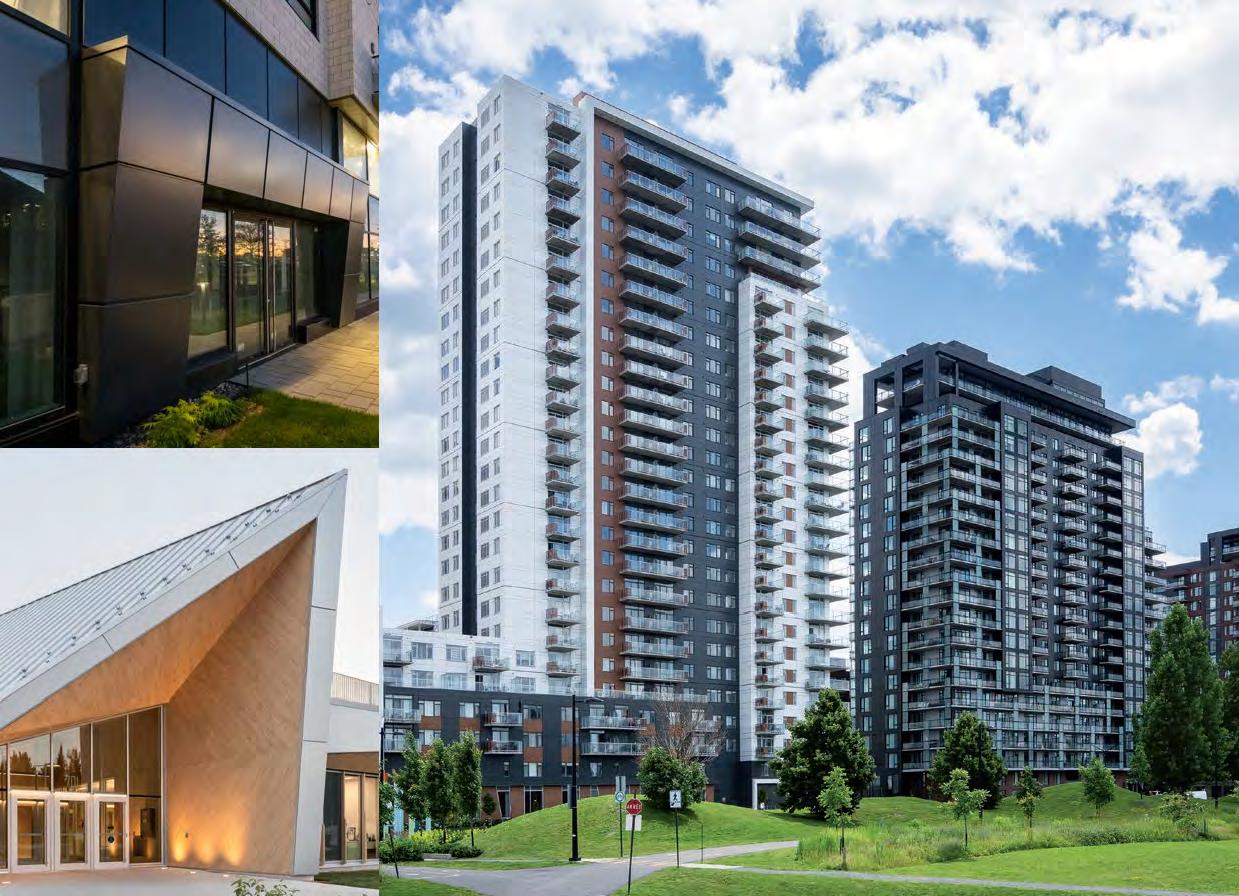
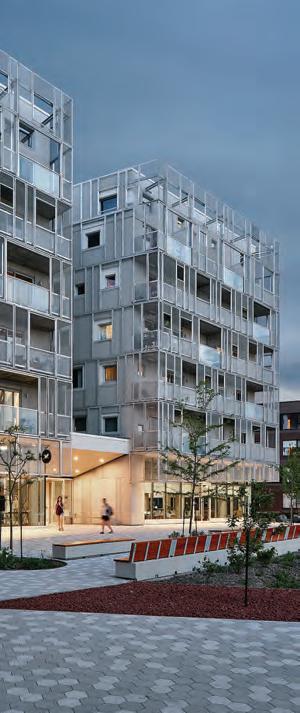
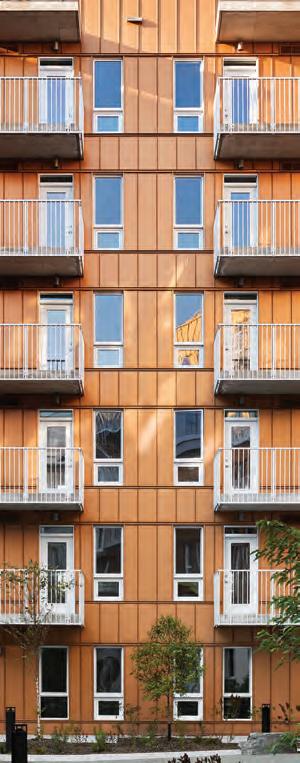
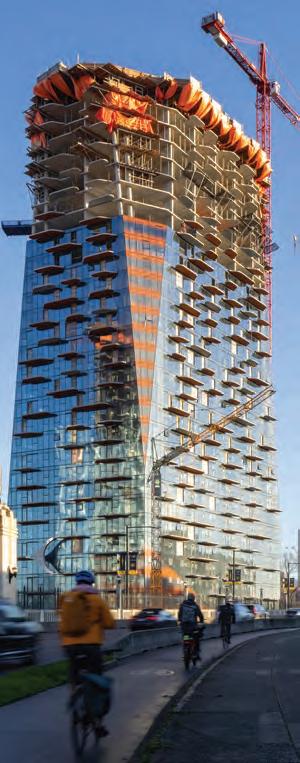
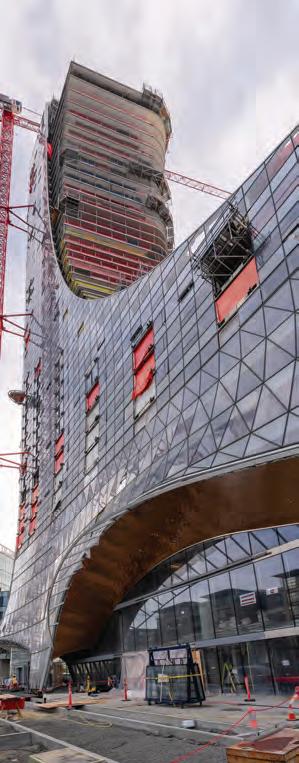
SUSTAINABLE, AFFORDABLE, HIGH-QUALITY HOUSING REQUIRES EXPERTS WHO CAN TRANSLATE POLICY AND REGULATIONS INTO BUILT FORM—AND WHO CAN CHALLENGE THOSE POLICIES WHEN THEY PRESENT TECHNICAL BARRIERS TO PROGRESS. IN THE FOLLOWING PAGES, WE LOOK AT 10 PROJECTS THAT SHOW HOW ARCHITECTS ARE LEADING THE WAY.
TEXT Stefan Novakovic
The 21st century has belonged to urbanists. In civic discourse concerning the built environment, issues of affordability, ecology and spatial equity have risen to new prominence since the turn of the millennium. Amidst deepening and deeply intertwined crises of housing access and climate change, previously nebulous topics like zoning law and land use policy became a locus of political dialogue. Today, the notion that greater urban density and expanded mass transit is pivotal to both environment and affordability is part of the political mainstream, with terms like missing-middle housing and transit-oriented development entering the public lexicon.
But where were the architects? Over the past two decades, planners, placemakers and policymakers led the civic charge. In Vancouver and Toronto, urban planners like Brent Toderian and Jennifer Keesmaat became prominent public interlocutors as debates about the built environment intensified, with the legacy of Jane Jacobs magnified to new cultural heights. As a flourish of public urbanism swept North America’s civic culture, architects often bemoaned a lack of civic presence, ceding the spotlight to figures ranging from Richard Florida to Janette Sadik-Khan. In recent years, however, the conversation has evolved again, slowly shifting from the broader, conceptual debates concerning urban geog-
raphy and density, and filtering to more technical and inherently architectural concerns. As governments begin to open the door to more urban housing, how can we build it efficiently, affordably, sustainably and quickly? How can we actually deliver on the touted promises of missing-middle housing and low-carbon lifestyles? To wit, debates about single stair egress and elevator standards now play out on the pages of The Globe and Mail and New York Times, all as Passive House principles, mass timber innovation, prefabrication and panelization gradually seep into the popular imagination.
These are issues that architects are uniquely well-placed to champion, rooted in the thorny, technical apparatus of building codes and regulations. Taken together, the 10 case studies presented on the following pages offer a snapshot of this shifting landscape, demonstrating Canadian architectural leadership across a set of shared concerns relating to operational and embodied carbon, spatial efficiency and wood construction. In 2026, designers are speaking up. Crucially, much of the aspiration is predicated on a concerted professional push for updated building codes. Amidst it all, yesterday’s professional arcana is today’s front page news, and architectural thinking is once again staking its place above the fold.
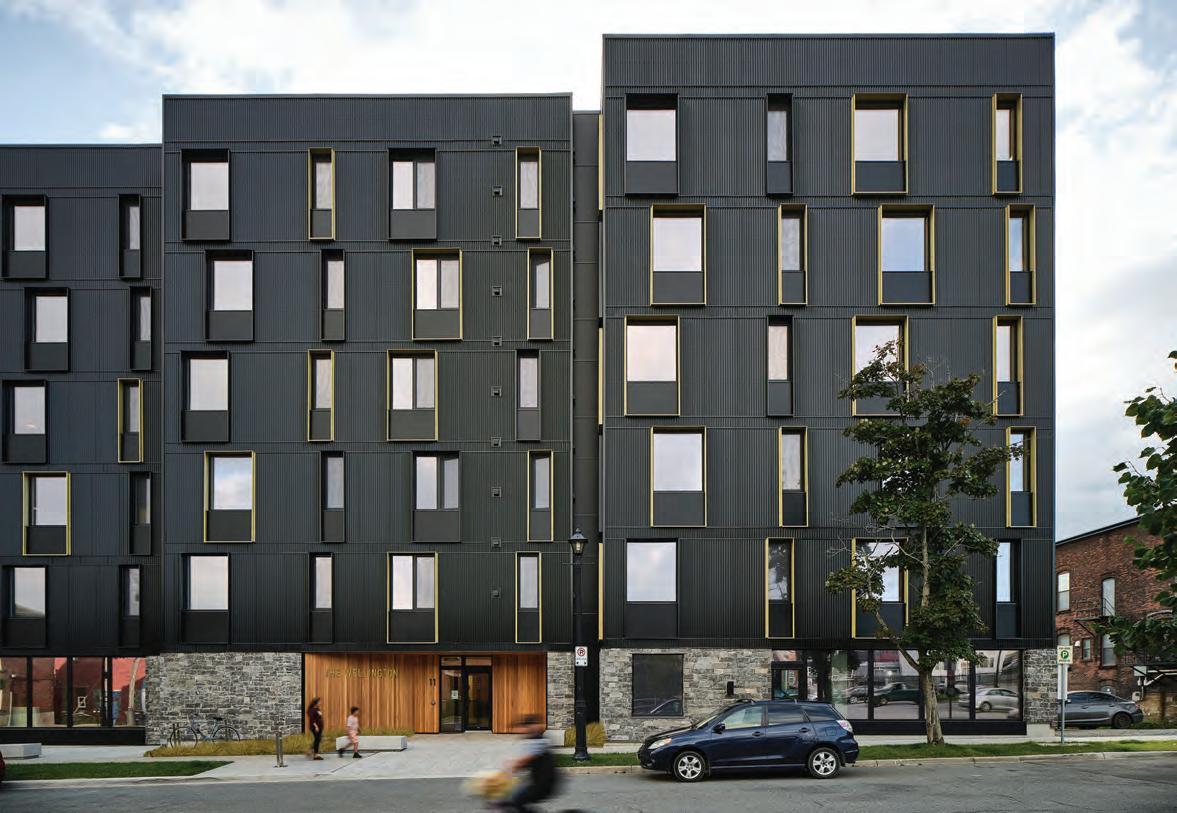
In Saint John, New Brunswick, much of the affordable housing stock is found in older properties—which are often poorly insulated energy hogs. “We’re talking about energy bills of $400, sometimes $500 a month, on top of other housing costs,” says architect Monica Adair, co-founder of Acre Architects. It’s a stark economic reality, and one that shaped The Wellington, a six-storey, mixed-income uptown apartment complex built to Passive House standards. Comprising a mix of market-rate and affordable units as well as fully accessible apartments, the non-profit apartment complex caters to a diverse population, including adults with intellectual disabilities. Initially envisioned as a mass timber building, rapid escalation in material costs during the Covid-19 pandemic saw the project revised into a concrete structure, supplemented by panelized walls and floors in nail-laminated timber (NLT). The panelized wood construction helped reduce waste and accelerate construction, while the hybrid use of wood and concrete contributed to a high-performance design.
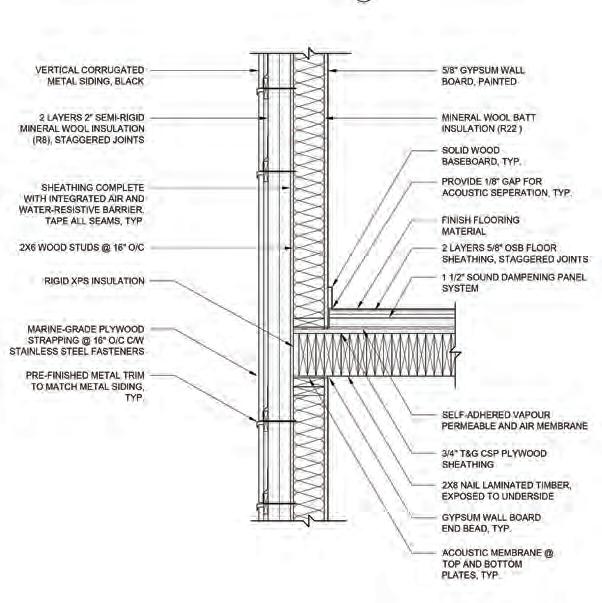
Thanks to a tight, well-insulated building envelope fitted with mineral wool insulation and a rooftop photovoltaic system, the simple rectilinear building substantially reduces heating costs in the winter months, with a high-efficiency heat-recovery ventilator providing indoor fresh air. Building openings are carefully positioned to balance natural light with thermal efficiency and solar heat gain. While well-placed windows are key to Passive House principles, Adair explains that the economy of means also served a modest construction budget. “When you get into affordable housing, budgets limit the number of windows that you can include,” she notes. “So we tried to maximize a sense of openness within the units, using windows with vantage points to either the water or the city wherever possible.”
Inside, the homes—which range in size from studios to two-bedroom suites—feel surprisingly spacious and light-filled, with impressive acoustic isolation. Across the façade, simple corrugated metal cladding is accented

OPPOSITE Built to Passive House standards, The Wellington includes thermally efficient market rate and affordable housing units.
ABOVE The corrugated metal cladding is accented by gold-painted extruded window frames..
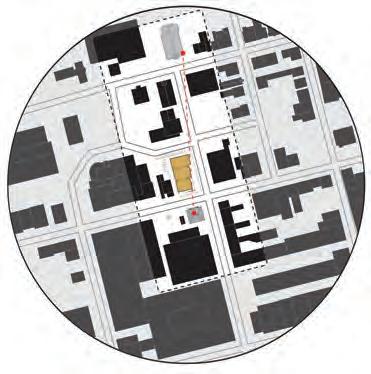
by subtly extruded window frames, some of which are painted vivid gold to introduce a sense of rhythm and articulation across the body of the building. At grade, an interplay of textured stone and wood surfaces create a dialogue with the nearby Stone Church, grounding the contemporary upper-level expression in its urban context. The building incorporates a restaurant, as well as a street-level office occupied by New Brunswick housing minister David Hickey.
For Adair and Acre co-founder Stephen Kopp, the project became a family affair. Adair’s mother and Kopp’s father each occupy a marketrate home, while the ground floor restaurant—popular Latin fusion joint Abuelita’s–is run by Adair’s brother. For Saint John and beyond, it also offers a valuable precedent to build on. “There aren’t a whole lot of cranes in the sky around here,” says Adair, emphasizing that The Wellington offers a case study for policymakers, builders, contractors and new residents alike.
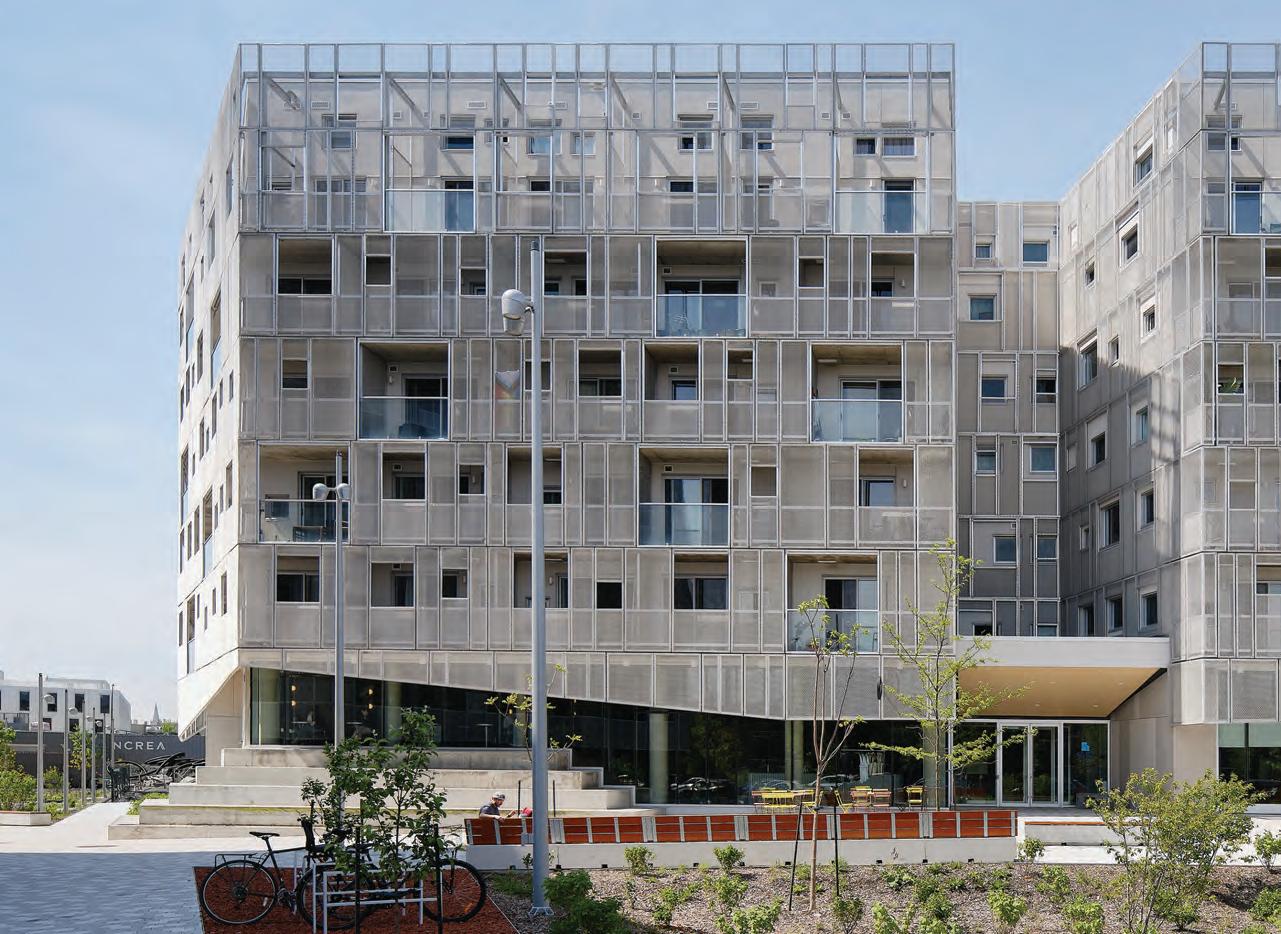
Canadian multi-unit housing is often derided for its cheap finishes and poor layouts, but student residences are even more parsimonious. It is a housing type typically characterized by awkward, bulky forms, double-loaded corridors, and cramped dormitories. For architecture studio ADHOC, however, the spatial and budgetary constraints endemic to student housing presented an opportunity to reconsider the typology’s design norms. In Montreal’s emerging Technopôle Angus district, the local firm has delivered a decidedly unconventional 123-unit residence that marries sustainable construction and sociable design with economy of means.
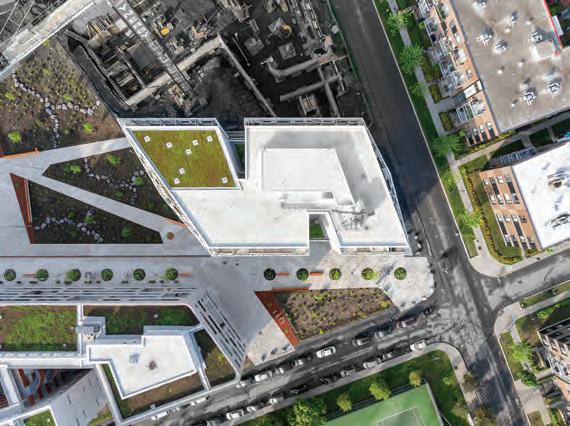
Designed for emerging non-profit student housing developer Unité de travail pour l’implantation de logement étudiant (UTILE), the six-storey Rose des Vents residence is immediately distinguished by the aluminum skin that wraps the structure. Resembling the number five when seen from above and informally referred to as the “high-five” project by its designers the structure is also shaped by a pair of cuts into its rectilinear
form, bringing natural light deep into its broad body, and creating corner units with dual exposures. Inside, the irregular form translates to winding corridors that create inviting front stoop conditions for each cluster of suites. At the base of the building, a small café faces onto a plaza, framed by stair seating that welcomes casual student hangouts.
Like surrounding buildings in the Technopôle Angus community a fast-growing eco-district on former railway lands the Rose des Vents residence is integrated into a district energy loop. The technology facilitates energy exchange between nearby buildings, optimizing efficiency on a larger scale, and leading to reduced operational loads. A trio of green roofs tops the building, moderating stormwater runoff and providing passive thermal regulation.
The star of the show is the aluminum outer skin. By reducing solar heat gain, the scrim frames a series of private balconies for every unit, providing outdoor spaces rarely found in student dormitories. The alum-
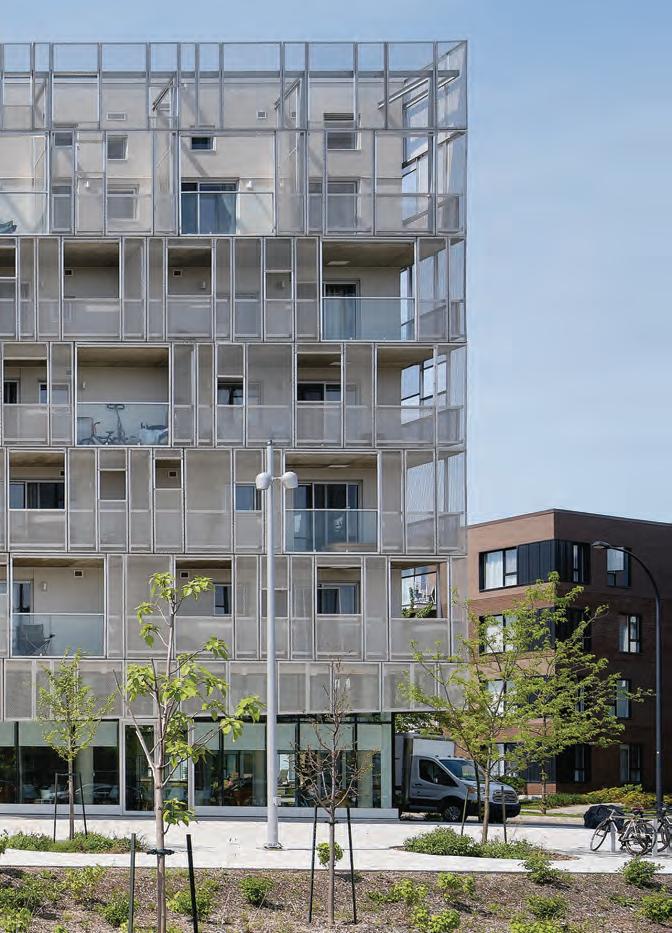
inum adds depth and texture to an otherwise streamlined, rationalized design, wraps the building without introducing thermal bridging to the interior, and hides space-saving extruded mechanical systems. A pareddown inner skin behind the aluminum features high-performance, continuous rigid insulation applied to the exterior of the building’s structure.
The creative integration of the aluminum outer skin fosters a surprisingly elegant and contextual presence. “We used aluminum because it doesn’t require protection against corrosion and the elements,” says ADHOC co-founder Jean-François St-Onge. “Aluminum is also a local resource here in Quebec, thanks to efficient hydroelectric-powered smelting. And it’s easily recyclable. When we think about our project 100 years or more in the future, it’s good to know that all that aluminum can be melted down into something new.”
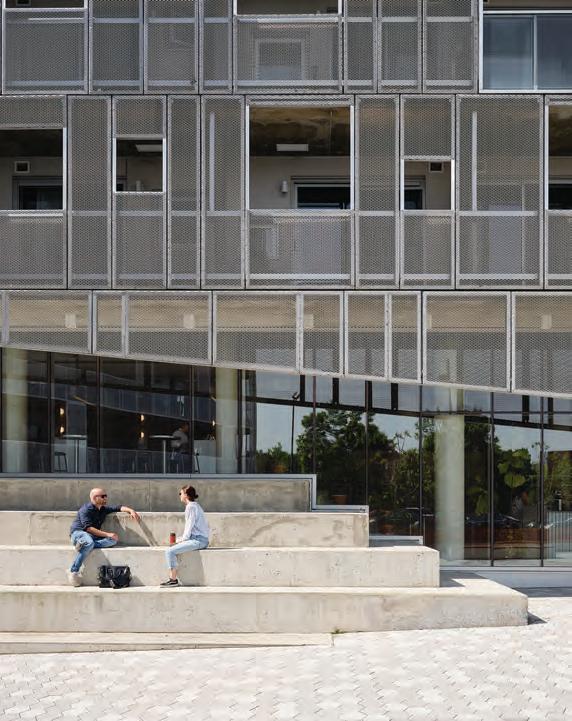
OPPOSITE An aluminum scrim wraps a student residence that prioritizes natural light, includes private balconies for each unit, and adds welcoming places to socialize. TOP A pair of cut-outs bring natural light deep into the floorplates. ABOVE The base of the building includes a small café and stair-seating that invites lingering.
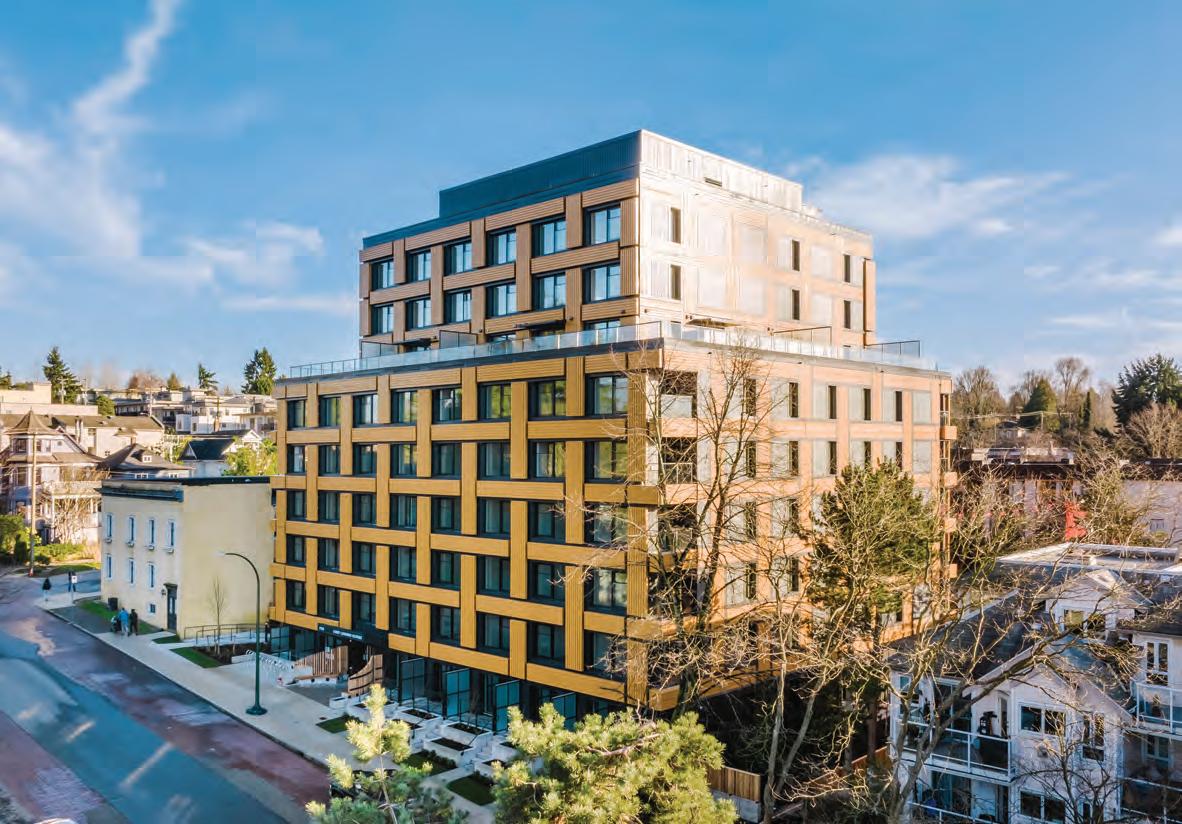
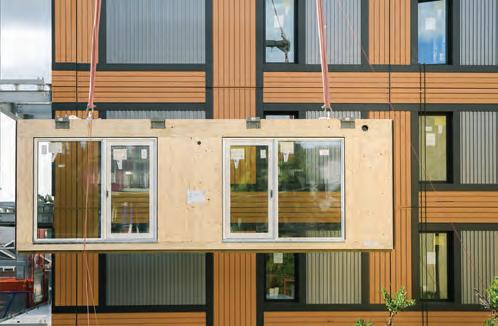
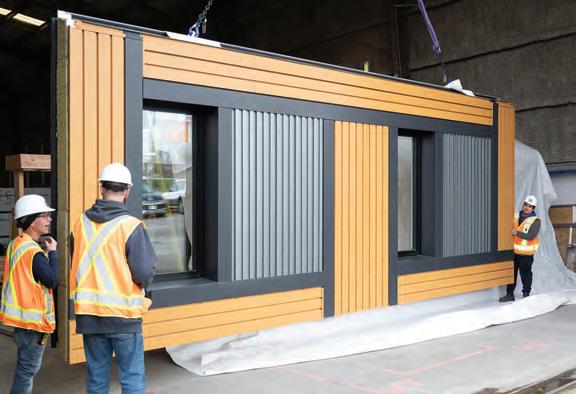
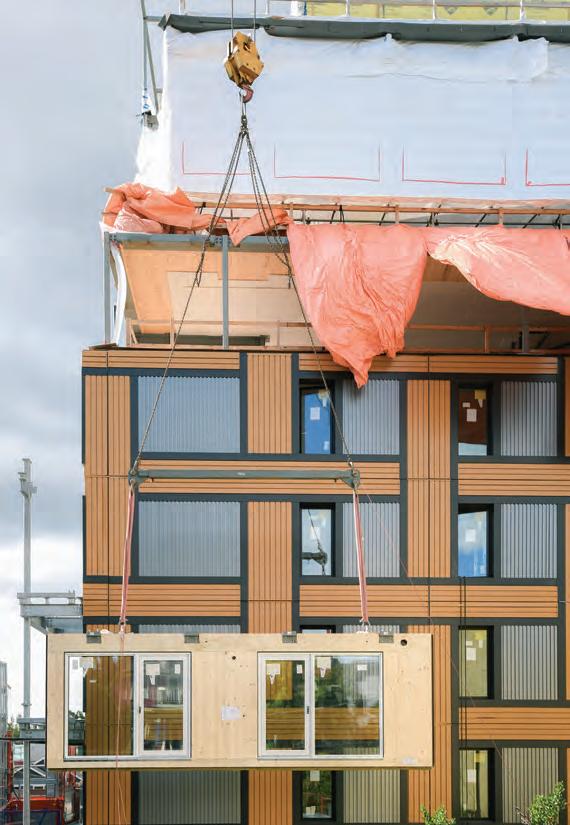
Across the façade, a woven cedar basket pattern channels the region’s deep Coast Salish heritage, evoking a craft and tradition passed down from generation to generation for thousands of years. Just behind the timeless pattern, however, the immemorial quietly meets the cutting-edge. Robotically prefabricated mass timber panels developed by Vancouver-based Intelligent City were rapidly assembled into a thermally efficient, lowcarbon building envelope and structure for this urban residential building.
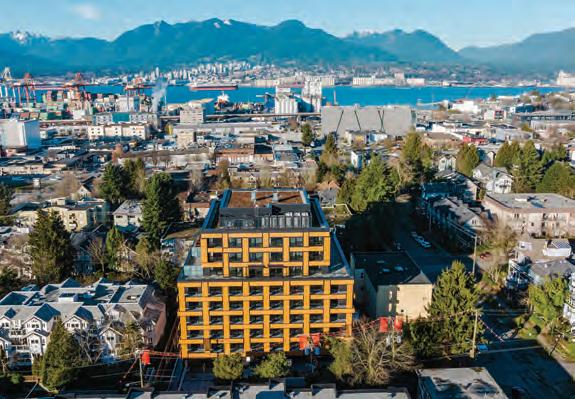
Developed by the BC Indigenous Housing Society and designed by GBL Architects, Vancouver’s nine-storey Chief Leonard George Building provides 81 social housing suites, along with a childcare facility devoted to nurturing Indigenous cultures and languages in a supportive environment. Built to achieve Passive House standards and including a substantial reduction in both embodied and operational carbon the hybrid structure combines a concrete elevator core and parkade with wood timber floor and envelope panels.
According to GBL associate principal Achim Charisius, speed was just as important as sustainability. “There was a previous residential building on the site, which burned down in 2017,” he says. “The smoke
damage was so great that they had to abandon the building, which was a tragedy people lost everything and had to be relocated.” To minimize disruption to residents’ lives, the use of Intelligent City’s prefabricated system accelerated construction, enabling the quick enclosure of the timber floor structure against the elements.
“Typically, using panelized cladding results in a stacked look with a joint at the floor slab,” says Charisius. However, the cedar-weave pattern “overlays the panels with an architectural gesture that bridges two stories, and by doing that, actually reimagines the entire façade.”
The precision of Intelligent City’s robotic fabrication enables a highly energy-efficient envelope. Adding to this, strategic window placement along the south frontage welcomes winter sun, while more opaque east and west elevations limit overheating during the summer months. External columns supporting the building’s balconies ensure thermal separation, maintaining a high-performance façade system.
As Charisius points out, however, the project came with plenty of challenges. The initial brief envisioned a six-storey structure to replace the site’s previous three-storey residence. But “the pro forma did not make

sense for the client,” says Charisius, with another three storeys eventually added. “At that point, we were in high-rise building territory,” he notes, explaining that combustible wood-framed buildings are limited to six storeys under the BC Building Code. “Beyond six storeys, you’d need an emergency generator, stricter requirements on exits and fire safety, with pumps and a central alarm control facility. It becomes a more expensive building; once you exceed that threshold, it doesn’t really matter if it’s a seven-storey building or a 40-storey tower.”
As the project moved through the approval process, it helped usher in new code provisions for encapsulated mass timber buildings, which allow large-format engineered wood to be coated with a noncombustible material, typically drywall or a charring layer. “You can see this as a model for a taller high-rise building, because it has all of the features that a taller encapsulated building needs to have, including a scissor stair,” says Charisius.
Across Canadian cities, residential design is defined by extremes. As planners and policy-makers struggle to reconcile the “tall and sprawl” dichotomy of soaring towers and single-family suburbia, architects face a parallel reality. In multi-unit housing whether for private developers, non-profits or state agencies design is the product of policy and pro forma, allowing minimal (if any) contact with end users. Conversely, the impact of bespoke single-family homes is an intensely intimate affair, where architects interpret the individual vision and aspirations of future residents through design. “That’s exactly what this was like: we listened to people’s hopes and dreams,” says architect Jean-Christophe Leblond, politely interjecting as I give the lay of the land.
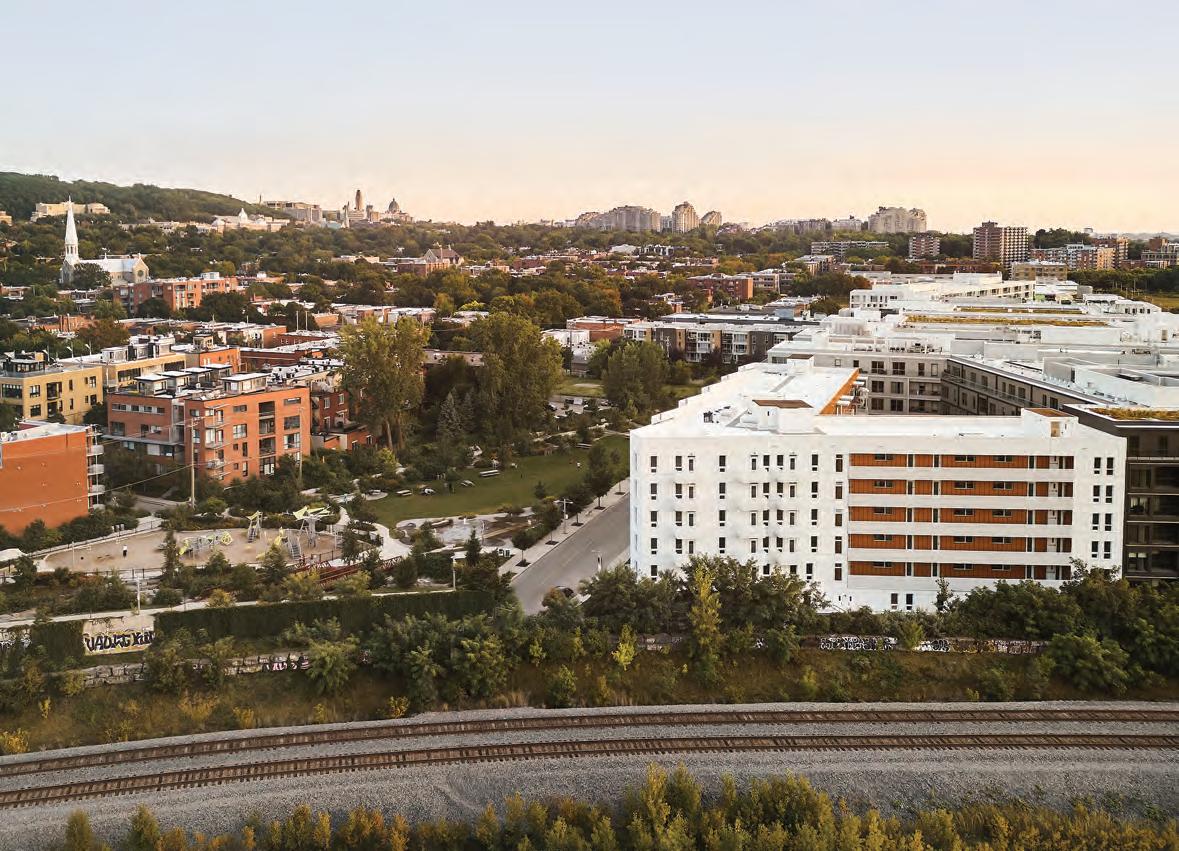
I don’t blame him for interrupting. For Leblond and his colleagues at Pivot, the realization of the Milieu de l’Île cooperative housing project merits excitement. A 93-unit intergenerational complex on the western
shoulder of Montreal’s Outremont neighbourhood, the citizen-led project was initiated by a diverse group of local residents with the shared goals of preserving urban affordability and fighting social isolation. After winning a bid to redevelop a leftover parcel of municipally owned land, the group turned to Pivot an architecture firm itself operated as a worker-owned cooperative.
For Pivot, participatory design is a core tenet. Building on a long history of working with cooperative housing associations, the designers organized a series of co-design sessions to understand the community’s shared values. “Working on multi-unit projects in a participatory way is easier in some ways, because when you have more people and not everyone’s agreeing it becomes more about hearing one another than getting whatever people personally want,” says Pivot’s Colleen Lashuk. Alongside the emphasis on social cohesion and affordability, residents were
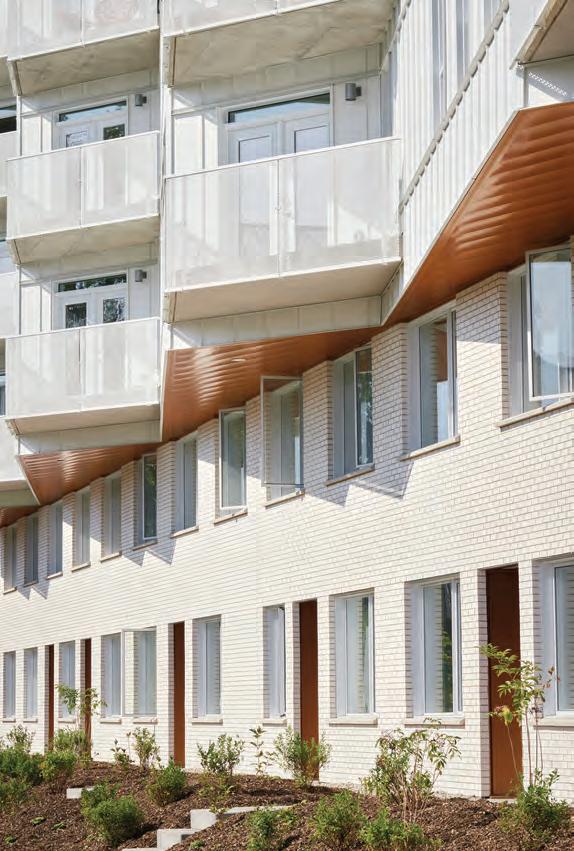
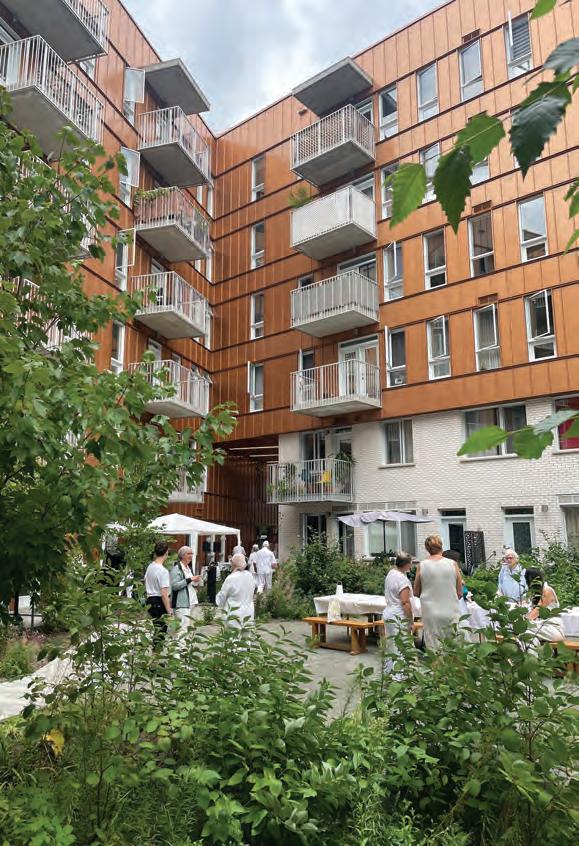
ABOVE RIGHT A central courtyard serves as a shared outdoor space large enough to host social gatherings.
keen on natural ventilation and dual aspect units. “They had done some research, visited other co-ops, and were interested in outdoor circulation, especially as it facilitated natural ventilation in the homes, avoiding double-loaded corridors,” Lashuk explains.
The architects, in turn, opted for a creative circulation scheme.
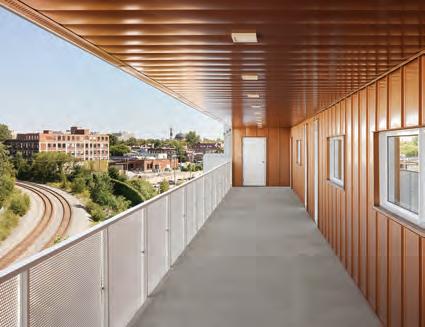
An L-shaped composition of two six-storey volumes that frame an inner courtyard, the Milieu de l’Île complex combines efficient point-access elevator landings and stairways with sheltered outdoor hallways, which connect to indoor egress stairs. In this way, indoor space is largely devoted to housing, allowing for spacious interiors and homes with up to four bedrooms. Throughout, the desire for social spaces translates to subtle design gestures. “We made sure that there’s natural light in the corridors, and widened interstitial spaces so that if you run into a friend or neighbour, you can chat for a few minutes,” says Lashuk.
To serve the needs of a multi-generational group of varied household types, the architects introduced a two-storey, townhouse-style brick frontage at the base of the building, featuring large family-oriented homes with direct, level access onto the public realm. Above, metal cladding and crisp white surfaces are deftly paired with angled balconies, which were contoured for optimal natural light.
The understated design is accented by a bright copper hue, giving definition to the soffits, outdoor hallways, townhouse entryways, as well as the tall and welcoming porte-cochère that leads to the inner courtyard that serves as the community’s social hub. Here, the building’s one-year anniversary was celebrated with an al fresco dinner party. The architects were invited.
“It’s not trying to be extravagant,” says Adam James. “It’s an affordable, non-market rental housing project that also had to deliver high performance and low carbon, with quite a strict budget. And I love that.” Evoking Charles and Ray Eames’ embrace of constraints and economy as drivers of design excellence, James a founding principal of Vancouver’s Ryder Architecture describes the six-storey Timbre and Harmony housing development as a design elevated by its relative modesty.
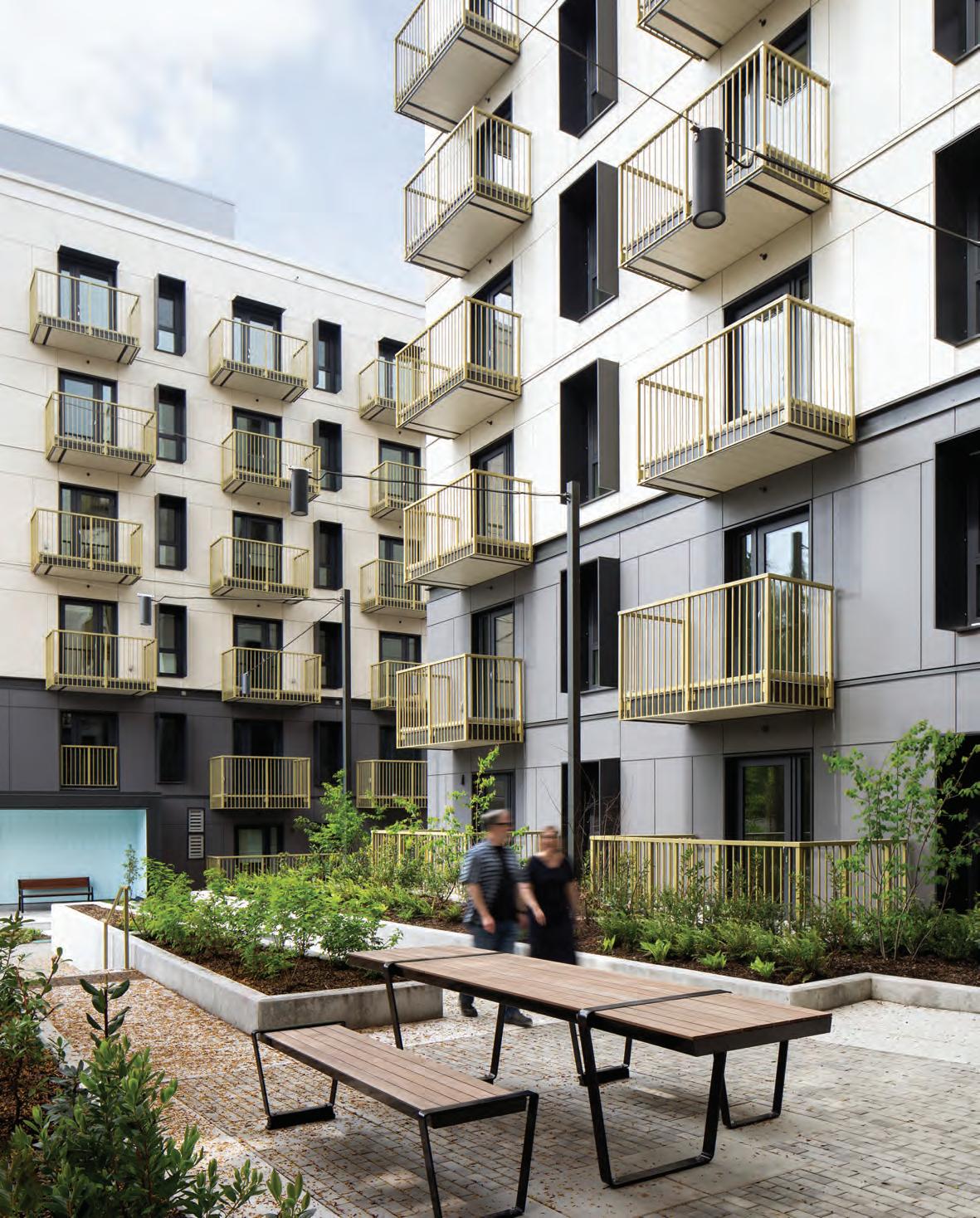
A pair of L-shaped buildings situated around a sociable inner courtyard, the 157-unit housing development replaces an aging 57-suite complex in Vancouver’s Grandview-Woodland neighbourhood. Built for the non-profit Brightside Community Homes Foundation, the two buildings provide affordable, secured rental housing. Comprising a mix of studio and one-bedroom homes, the complex integrates rent-gearedto-income units for people 55 and over, with affordable apartments for independent-living adults and low-income residents. While 30 homes are fully accessible, serving people with physical disabilities, the remaining apartments are designed to accommodate adaptation and retrofit, supporting aging in place.
Meeting Passive House standards, the wood-framed complex was aimed to facilitate a rapid construction process while minimizing operational and embodied energy all while maintaining an emphasis on spacious, light-filled and comfortable homes. “It is a prefabricated structure with a panelized design,” says James. “The walls are open panel wood construction two-by-six studs with plywood and then the floors and roofs were TGI-joist open panels.” An emphasis on a tight, well-insulated building envelope also translated to a 56% benchmark reduction in energy use and carbon emissions, with a heating demand of just 12 kWh/m² per year.
A balance of natural light and heat gain was also paramount, with a relatively low window-to-wall ratio of 20% that balances daylight and thermal conditions. “When we do a passive house modelling process, we know the amount of sunshine and shade on every opening,” says James. “While we can’t customize every bit of fenestration, we make sensible decisions that optimize performance and comfort,” he adds, pointing to the extruded shrouds that frame the windows and introduce a sense of depth to the façade, while reducing solar heat gain.
Airtight envelopes and thermally broken balconies are paired with fixed sunshades which act as passive cooling devices as well as tripleglazed windows, ductless heat recovery ventilation and a rooftop heatpump system. Since many of the apartments cater specifically to seniors, reducing heat risk was another priority. “We were conscious of the criticism of Passive House buildings overheating, which we’ve seen in older projects in British Columbia,” says James. “Our approach really focused on stable indoor environment and the air quality, especially in the wake of forest fires and smoke events. There is filtration in all the air intakes, so the indoor air quality is consistently good and the temperature inside is stable.”
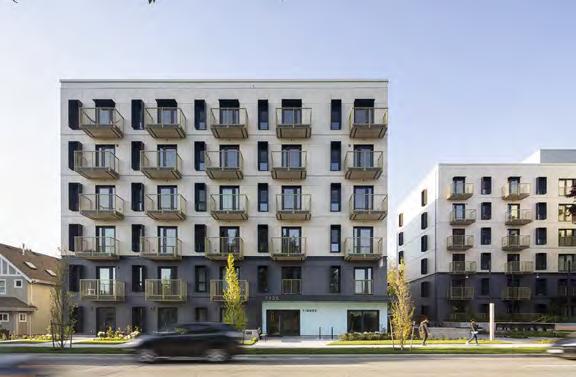
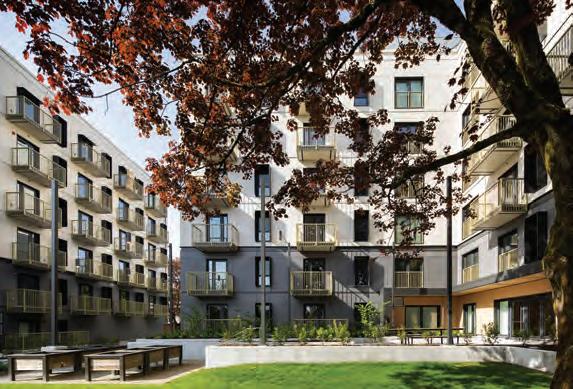
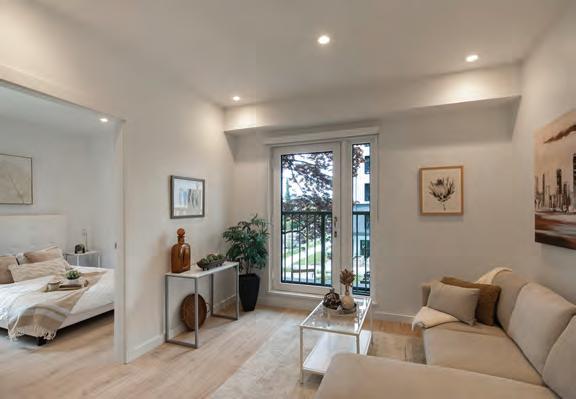
ABOVE The 157-unit complex is geared to seniors, and includes 30 fully accessible homes, with other units designed to accommodate adaptation and retrofit for aging-in-place. OPPOSITE The paired L-shaped buildings frame a landscaped common space.
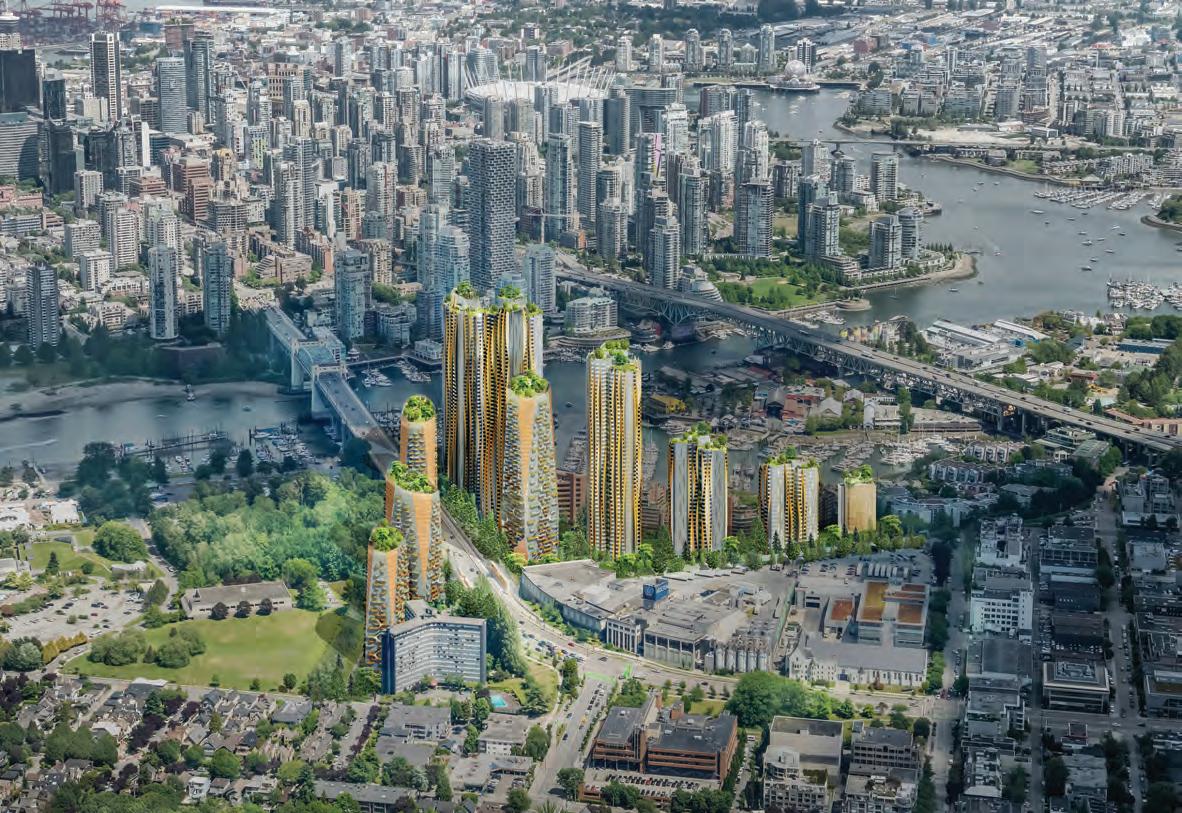
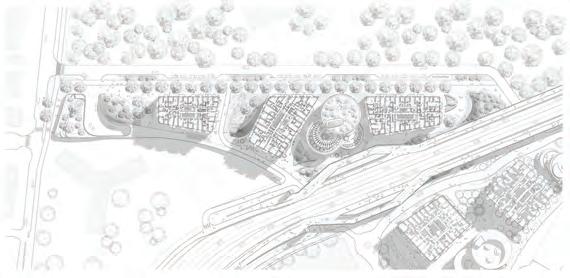
“Reconciliation in action.” It’s not the type of statement one usually finds on a developer website. Then again, Nch’k - ay’ is no ordinary real estate business. As the economic development arm of Skwxwú7mesh Úxwumixw (Squamish Nation), Nch’k - ay’ is leading a landmark project now rising on the south shore of False Creek. Vancouver’s Sen’ákw boldly reimagines a 4.3-hectare site that was historically home to the Squamish People and an important hub of Coast Salish culture as one of the country’s densest neighbourhoods.
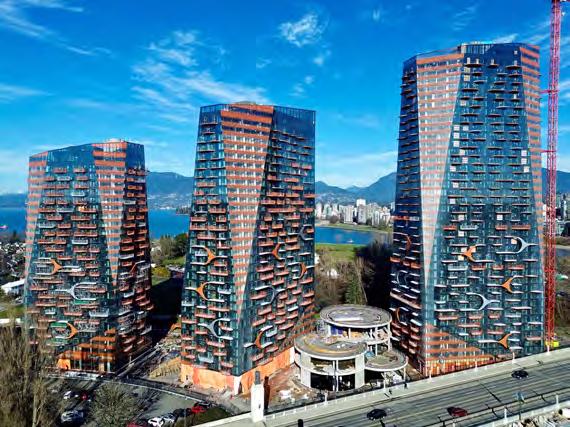
Comprising some 6,000 purpose-built rental homes (with a mix of market-rate and affordable units) across 11 towers rising as high as 58 storeys, the monumental mixed-use development is being built out in four phases, with the first two now under construction. Initiated as a partnership between the Squamish Nation and local developer Westbank, the project traces its genesis to an illegal sale and forced dispossession of the lands in 1913. In 2003, a legal settlement finally returned 4.7 hectares to the Squamish Nation, setting the groundwork for a development project that kicked off in 2019, and was accelerated
via a $1.4 billion loan secured from the federal government in 2022. Then, in 2025, Westbank’s stake in the project’s first two phases was acquired by Canadian pension fund OPTrust, with the Squamish Nation retaining 100% ownership over the final two phases.
As development on Indigenous land, Sen’ák - w was exempted from following Vancouver’s urban design guidelines and zoning restrictions, allowing for a series of thoughtful and instructive departures. Designed by local firm Revery Architecture (with Kasian as architect of record), the towers exceed local height limits and eschew view cone regulations, allowing for more much-needed housing on a prime site including homes specifically allocated for Squamish Nation citizens.
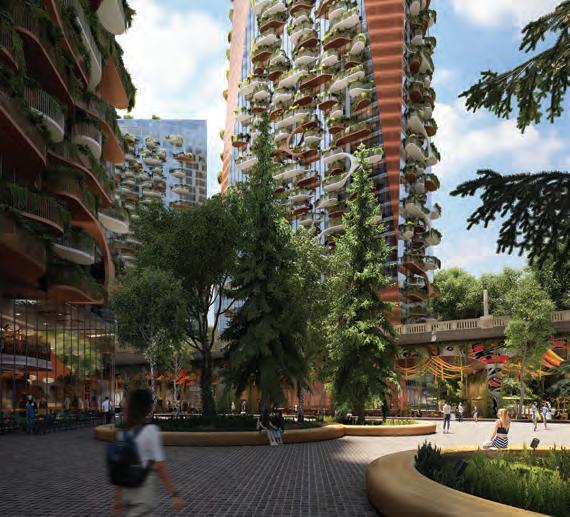
Compared to typical local developments, Sen’ák - w’s high-rises are paired with a more open public realm. “We rejected the conventional podium-and-tower model, the most efficient and most normalized typology in Canadian housing,” says Venelin Kokalov, Design Principal at Revery Architecture. “By lifting the buildings and liberating the ground, we gave nearly 90% of the site back to shared public
and communal life […] avoiding privatized ground planes, car-dominated space, and a hierarchy of access.”
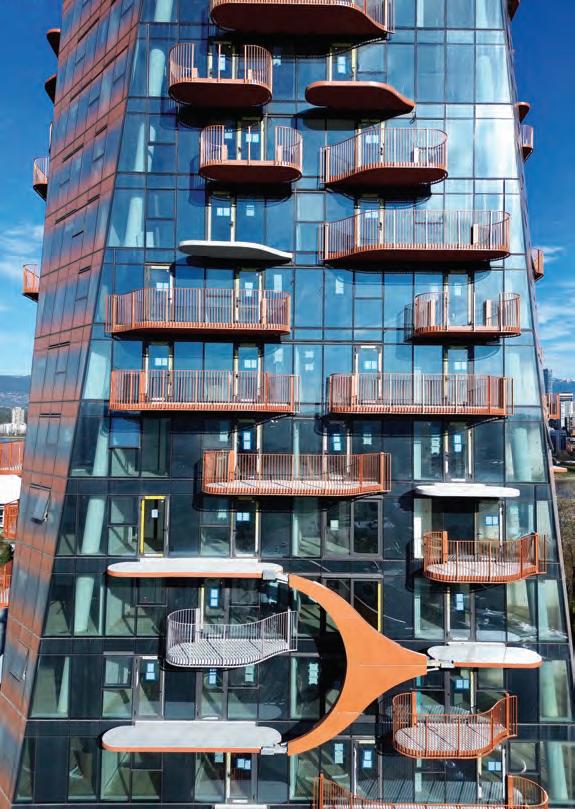
Sen’ák - w swaps commercial podiums for greenery and public space, including ample new cycling infrastructure, with retail functions tucked into tower bases and occupying rounded pavilions that strategically animate the site. In keeping with the civic spirit, tower rooftops are given over to shared amenity spaces rather than private penthouses. A dedicated transit hub and new bus stops will join the cluster of towers the 6,000 suites are matched with only 850 parking spaces, encouraging active transportation and outdoor life. The low-carbon design is further enhanced by an underground district energy plant that will harness recovered heat from Metro Vancouver’s sewer system.
Not least of all, Sen’ák - w’s decisive urban design moves are paired with an aesthetically expressive architectural language. Sinuous soaring forms are accented by bursts of colour, sculpted balconies and high-rise greenery. It doesn’t apologize for being there.
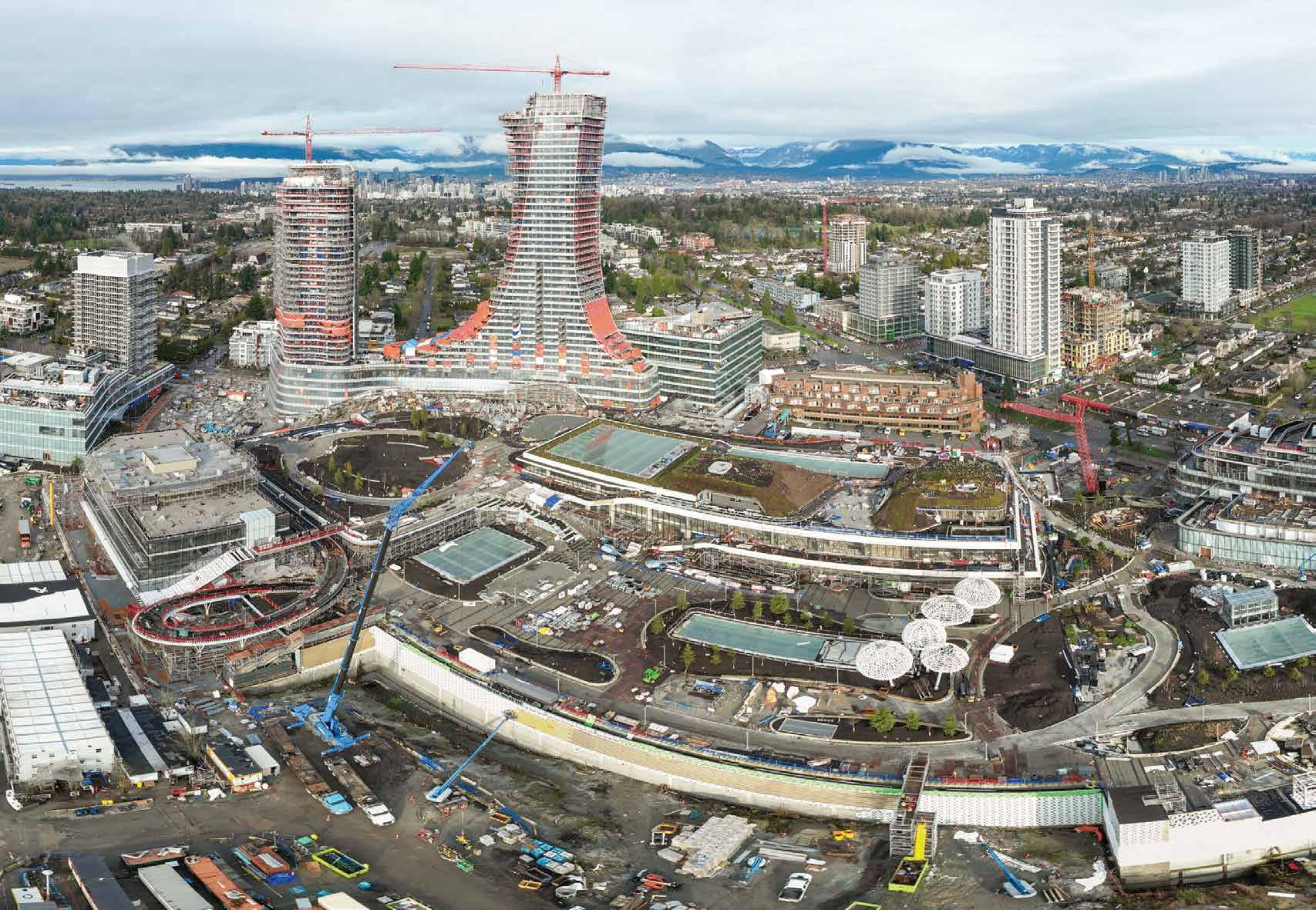
From Toronto’s Bayview Village to Winnipeg’s Portage Place, Canadian shopping centres have historically been a locus of car-centred urbanism, making the large properties especially of vacant malls prime candidates for redevelopment. But even thriving malls can prove to be valuable sites for development. Case in point: Vancouver’s Oakridge Park. Situated in the heart of the city’s historic Chinese and Jewish communities, it has been one of Canada’s most successful shopping centres (rivalled only by Toronto’s Yorkdale Mall and Vancouver’s Pacific Centre in revenue-per-square-metre), and is now being remade as a soaring mixed-use community.
Led by local designers Henriquez Partnership Architects (with Adamson Associates as executive archive and retail architect of record, Diamond Schmitt as residential and civic architect of record, Revery as mall interior architects, and PFS Studio as landscape architects) for developers Quadreal and Westbank, the ongoing Oakridge Park redevelopment completely re-envisages the 11-hectare site. Replacing a sea of surface parking, the plan integrates over 3,300 homes in-
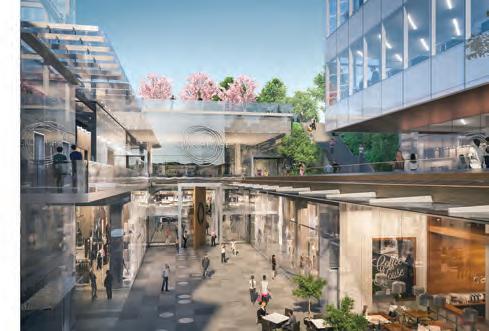
cluding 130 affordable rentals and 290 social housing units as well as substantial office space and a wealth of civic amenities. As the first of the fluid towers now rise, so does a new shopping destination below, capped by a landmark 3.6-hectare rooftop public park. In contrast to the high-rise clusters erasing malls and big box stores across Canadian cities, the project is doubling down on its commercial identity as it densifies, re-integrating over 110,000 square metres of retail at the heart of the site.
While the site plan weaves the development back into the surrounding street grid, the new shopping centre featuring interiors by Revery Architecture re-interprets the spatial logic of the suburban mall into a high-rise setting. The elevated park topping the mall is framed by civic uses, including a landmark community centre that incorporates a daycare and municipal library, making for an animated public realm. “Oakridge is really about big moves and the biggest one is draping the landscape over the mall,” says Henriquez managing partner Gregory Henriquez. He adds that the park and its civic amenities amount
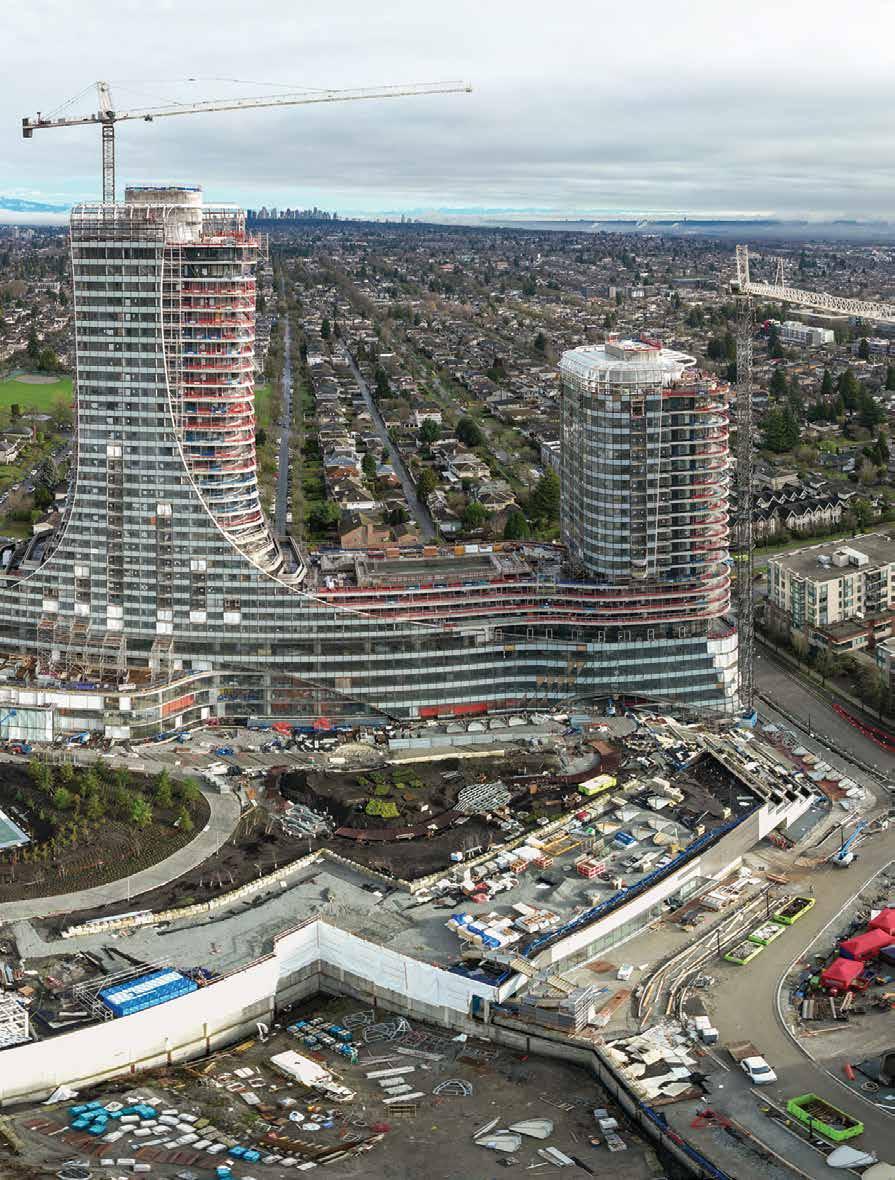

to “one of the largest ever Community Amenity Contributions (CAC) in one project within the City of Vancouver.”
According to Henriquez, the design combines elements of Ebenezer Howard’s Garden City and mixed-use East Asian urbanism within a distinctly Canadian high-rise suburb. “It creates this organic, hybrid topographical approach that allows all of these various uses to mutually coexist,” he says, adding that the master-planned approach allows for coordinated district energy and stormwater recycling systems to serve the site.
This rich and malleable web of influences has aided the project’s adaptation amidst a rapidly shifting retail landscape and real estate market. While the new mall was initially set to be anchored by a Hudson’s Bay flagship, the chain’s recent bankruptcy reflects existential uncertainty for the future of the department store typology. In the meantime, the flood of pre-construction condominium sales that long fuelled Vancouver’s urban development has slowed to a trickle, meaning that future phases will likely integrate a greater proportion of purpose-built rental housing. Fortunately, evolution is the project’s grounding principle.

The redeveloped Oakridge Park
the shop
mall site with 3,300 homes, alongside offices, civic amenities, and a large rooftop park. The project is designed by Henriquez Partners with executive architect and retail architect of record Adamson Associates, residential and civic architect of record Diamond Schmitt Architects, and mall interior architects Revery Architecture.
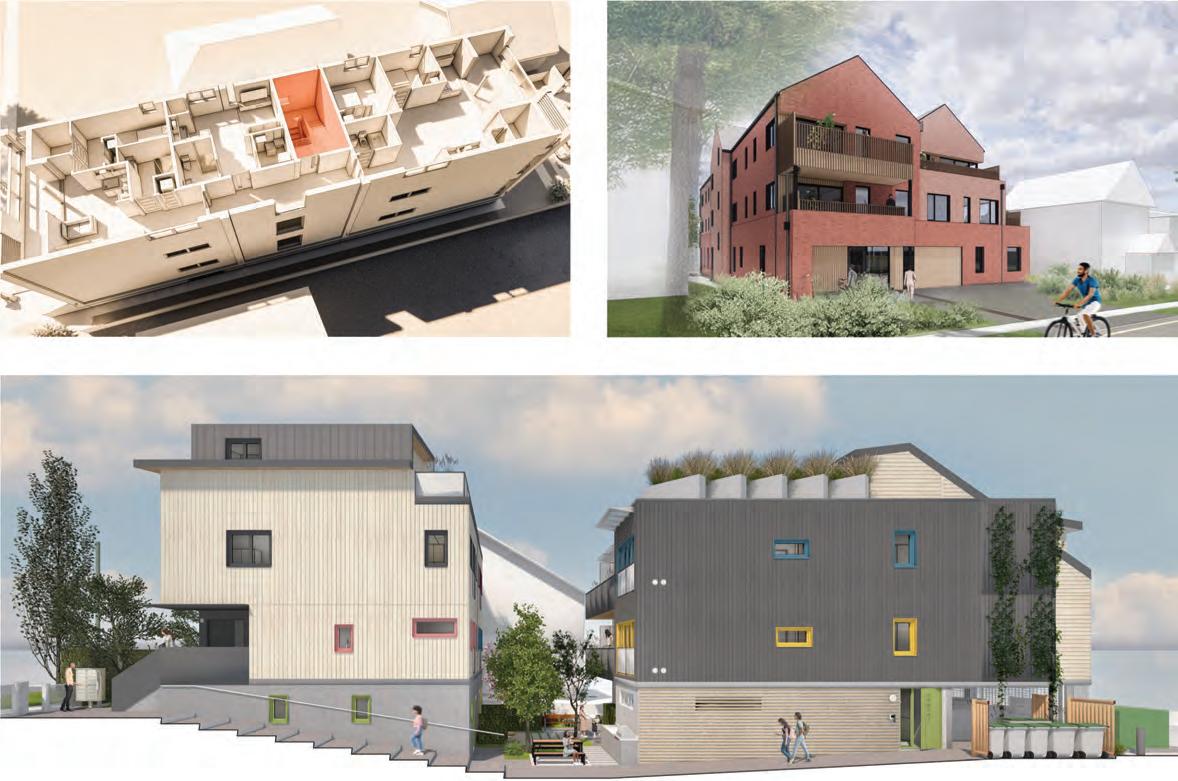
While the great fires that tore through North American cities whether Chicago in 1871 or Toronto in 1904 are thankfully consigned to history, their legacy continues to echo through city life today, guiding the building codes that shape the urban fabric. In the 21st century, modern methods of construction and fire protection have transformed safety, yet certain conditions still reflect a bygone reality. An example of this is the requirement for two egress stairs in low-rise apartments, even where sprinkler systems and other fire safety upgrades are provided.
Over the last decade, efforts to reform staircase requirements have gathered momentum across North America, informed by safe, efficient single-egress buildings common in Europe, Asia and South America. Across the United States, more than 15 states have recently amended codes or passed new laws to allow single-stair buildings of four to six storeys. Thousands of examples already exist in New York City, which has permitted single-stair apartment buildings since the 1930s. Seattle also changed its local building code in the 1970s to make it easier to build infill housing on narrow lots. In Canada, rules remain more restrictive, with the National Building Code limiting single-egress configurations to just two storeys compared to three storeys south of the border. “Of more
than 30 international jurisdictions reviewed for the maximum building height with a single exit stair, Canada is one of the most restrictive countries,” writes housing researcher and code consultant Conrad Speckert. Building on his graduate work at McGill University, Speckert’s advocacy and research have helped spur a cresting wave of reform. Speckert’s early work (chronicled in the site secondegress.ca) formed the basis of the Single Exit Stair Building Code research project led by LGA Architectural Partners (www.singlestair.ca), which developed six prototypes for three-, four- and six-storey apartment buildings, using typical residential lot sizes. LGA also collaborated with nine other architects (and code consultants) across the country to develop real, site-specific pilot projects that propose Alternative Solutions performance-based code compliance that must demonstrate an equivalent level of safety to the prescriptive regulations.
Although two projects in Waterloo and Hamilton were rejected by municipal authorities in 2025, the overall results are promising. Last February, a three-storey, seven-unit plan by Haeccity Studio Architecture (with Celerity Engineering) was approved by the City of Vancouver. In Edmonton, meanwhile, a three-storey, 10-unit building by Kelvin Hamilton Architecture (with Vortex Fire Consulting)
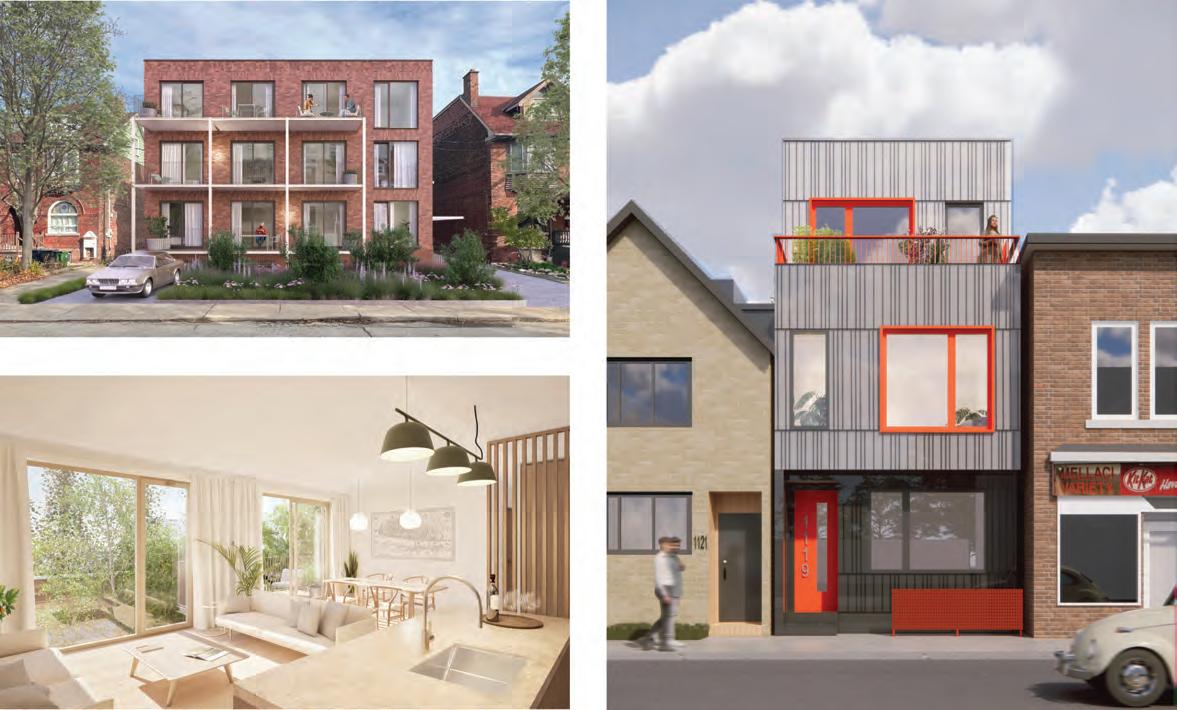
OPPOSITE AND ABOVE Several single exit stair pilot projects have been approved to-date, including projects by Kelvin Hamilton Architecture (opposite top left), WW+P (opposite top right), Haeccity Studio Architecture (opposite centre), Office Ou (left), and Lateral Office (above). BELOW The plans for Lateral Office's approved single-stair three-storey, three-unit triplex in Toronto.
was accepted in September. (The project has since been refined to nine units to address parking requirements.) A month later, WW+P (formerly SvN Architects + Planners, with LMDG Consultants) successfully saw a three-storey, nine-suite project approved by the City of Hamilton. In Toronto, Lateral Office (with NSP Consultant) gained approval for a three-storey, three-unit triplex last April, and Office Ou (a firm co-founded by my brother, Uros) and Vortex Fire Consulting’s plan for a three-storey, six-unit apartment block garnered Alternative Solution approval in November.
As case-by-case progress gradually and perhaps painstakingly continues, jurisdictions are taking bigger steps. In December, Vancouver City Council voted to allow single exterior egress stair options for small apartment buildings up to six storeys, updating their local code with an amended version of the changes made to the provincial building code a year earlier. Last year, both Edmonton and Toronto also published guidance documents for single exit stair Alternative Solutions. The next step? A change to the National Building Code itself, which is expected to happen in the next edition in 2030.
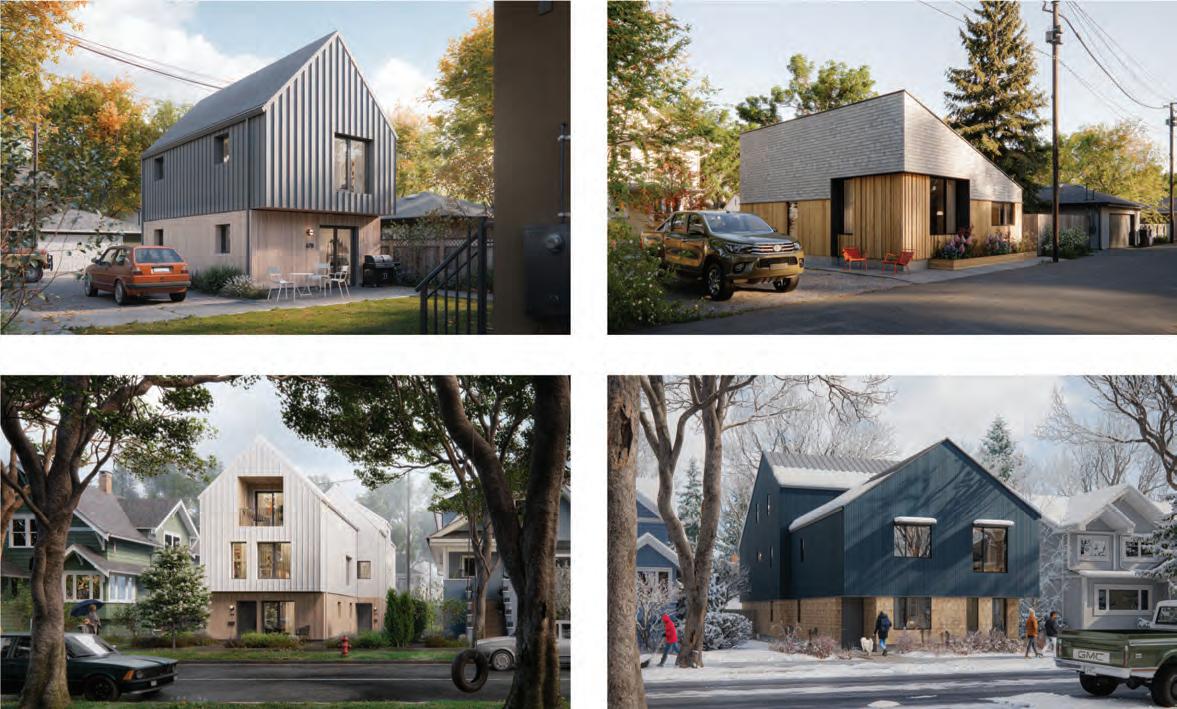
In the years following World War II, Canada faced a steep housing shortage. To help accelerate new construction, the Canada Mortgage Housing Corporation (CMHC) published catalogues of shovel-ready single-family designs. Nearly 80 years later, catalogue homes dot our urban landscapes and an urgent housing crisis is once again palpable from coast to coast. Inspired by the wartime effort, CMHC has returned with another series of publicly available designs, this time targeting “missing middle” typologies ranging from backyard and laneway Accessory Dwelling Units (ADUs) to urban fourplexes and sixplexes. Commissioned via a public RFP in 2024, the national project was divided into two scopes. While Michael Green Architecture headed the catalogue for British Columbia, Toronto-based LGA Architectural Partners oversaw the development of housing typologies spanning from Alberta to Newfoundland, as well as the territories. To ensure regional variety and national participation the latter project comprised a range of local designers, including Dub Architects (for Alberta), 5468796 Architecture Inc. (for the Prairies), KANVA (for Quebec), Abbott Brown Architects (for the Atlantic region), and Taylor Architecture Group (for
the territories), as well as engineering teams. In all, the project yielded 52 designs, with individual typologies adapted to local climate conditions, housing needs and energy sources, meeting the aspiration of all-electric systems as well as the realities of Ontario’s near-ubiquitous natural gas furnaces and the heating oil still common across the Maritimes.
Like the CMHC ’s first housing catalogues which were published until the 1970s the designs are freely accessible to the public, with full technical drawing sets now available via the CMHC website, along with accompanying resources, such as a low-carbon materials guide developed by Ha/f Climate Design. In principle, it makes for (almost) shovel-ready projects, with each of the 52 designs optimized to meet local building codes and zoning regulations. In this respect, it echoes the CMHC ’s post-war program. “With the original 1947 catalogue, you literally tore sheets out of the book,” says LGA co-founder Janna Levitt. “You had an address for where you were building, you went to City Hall, someone helped you draw a site plan, and then you had a permit.”
A lot has changed since then. In the 21st century, building permits are predicated upon more complex planning approvals. As The Globe
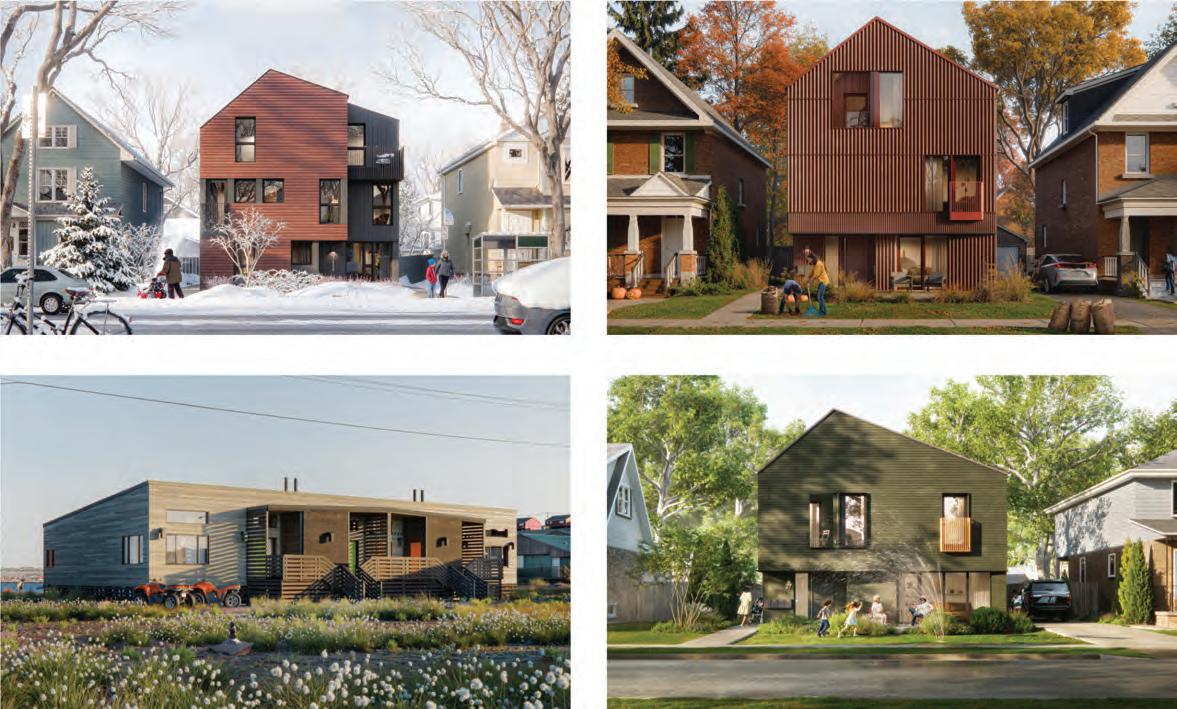
and Mail editorial board put it, “design is hardly what holds back homebuilding or runs up costs.” In a critique that derided the CMHC effort as mere political theatre, the editorial argued that “[t]emplate designs alone do little to simplify or fast track the most painful part of the permitting process.” Even as zoning regulations gradually relax, multiplex projects typically face years of regulatory scrutiny, with the process further slowed by neighbourhood opposition.
Still, the critical discourse generated through the catalogue advances the national dialogue in its own right. As Levitt puts it, the multiplex plans would have been well served by a single egress in lieu of the scissor stair configurations used and a National Building Code that extends the efficiencies of smaller “Part 9” buildings to slightly larger multi-unit assemblies. Meanwhile, Levitt hopes that the embrace of standardized plans serves a building industry and design culture increasingly adopting prefabricated and panelized solutions. It may not translate to an immediate glut of homes, but it pushes the conversation forward.
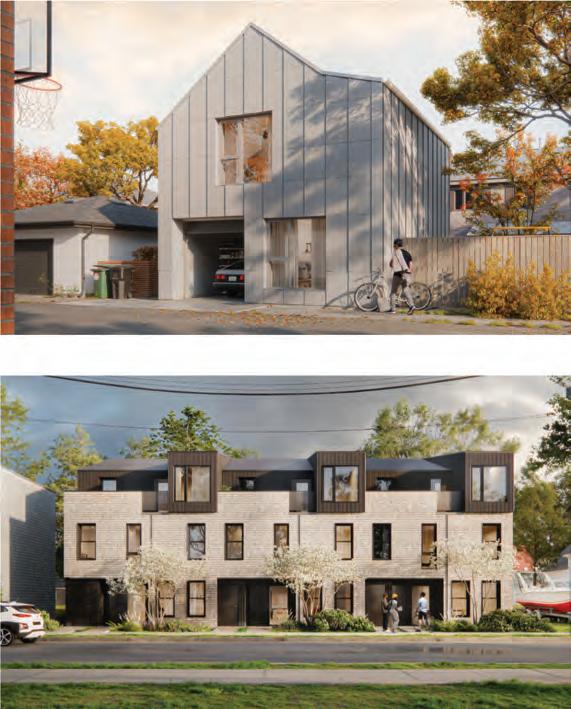
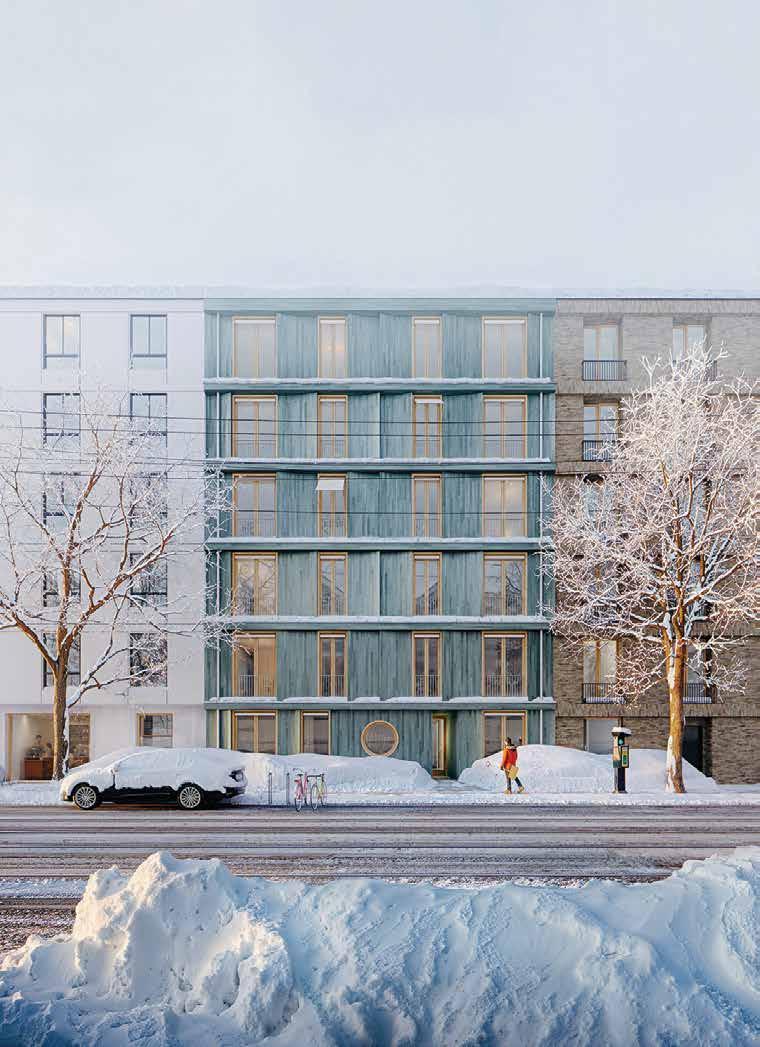
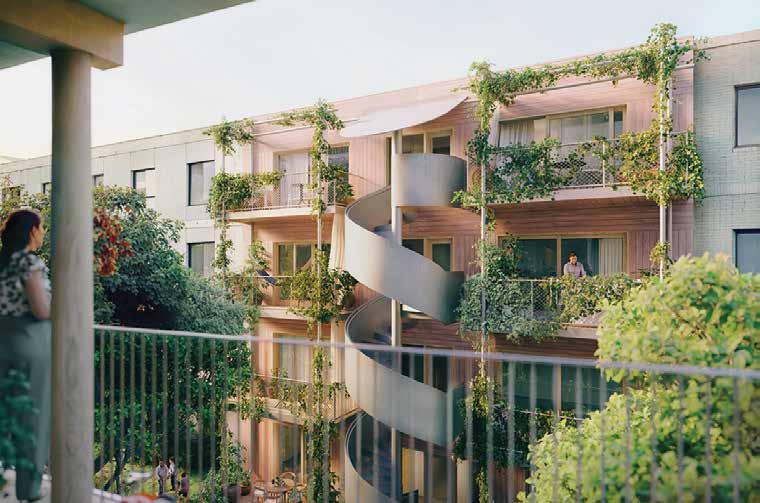
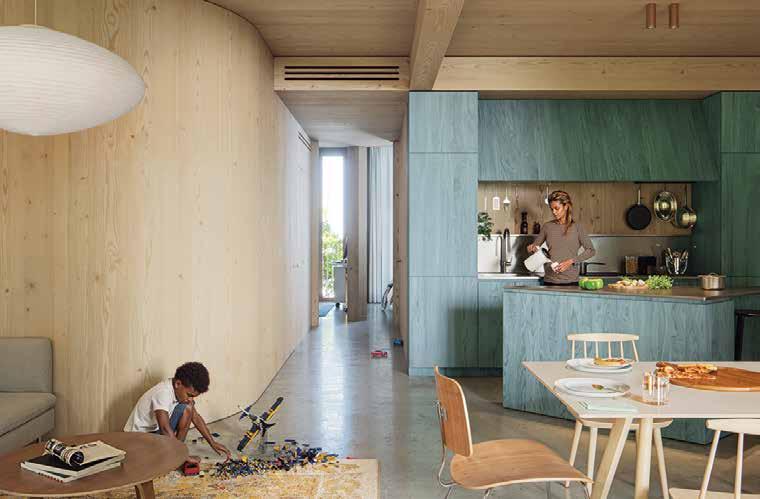
Throughout many European cities, courtyard apartment blocks are a common sight. The urban fabric in those places is defined by a tightly packed, mid-rise streetwall of apartment buildings, paired with quieter, semi-private inner-block green spaces. As Canada’s largest metropolis faces an increasingly urgent housing shortage, the embrace of greater urban densities is vital to both urban affordability and quality of life. Yet, such buildings are rare if not altogether absent in Toronto.
On the Courtyard: Learning from European Blocks asks: why not?
Led by local designers Studio VAARO and Gabriel Fain Architects, the publication envisions a city transformed by intimate, sociable mid-rise settings. Re-interpreting elements of nine contemporary building precedents from Basel, Paris, Berlin, Vienna, and Copenhagen, the project is illustrated by the notional transformation of an inner-city block, which is close to downtown and well-served by transit, but retains a largely single-family urban fabric. Property by property, its residential sites could gradually transform into attached mid-rises, with backyards consolidated into courtyards and laneways.
It’s an attractive vision. The resulting apartments are spacious and lightfilled, with shallow floorplates that accommodate dual exposures to both the courtyard and the street, while also inviting pleasant natural ventilation through the home. Designed as efficient and low-carbon mass timber buildings, the courtyard blocks offer varied apartment types, from studios and one-bedroom suites, to three- and four-bedroom homes a size rarely provided in the city’s existing condo or purpose-built rental markets.
At street level, the urban frontage creates an engaging and pedestrian-friendly urban tapestry, while the courtyard and laneway conditions offer myriad possibilities, from semi-public parks to tranquil havens. Elegant landscaping by Public Work introduces elements of old Toronto into the sites, with brick salvaged into new laneway paving or crushed into reddish courtyard gravel. Toronto’s majestic street trees are also preserved, maintaining a signature urban feature and a rich ecological heritage in a city transformed.
So what’s not to like? On the Courtyard offers a vision that defies local codes and urban design guidelines a difficulty suggested by the
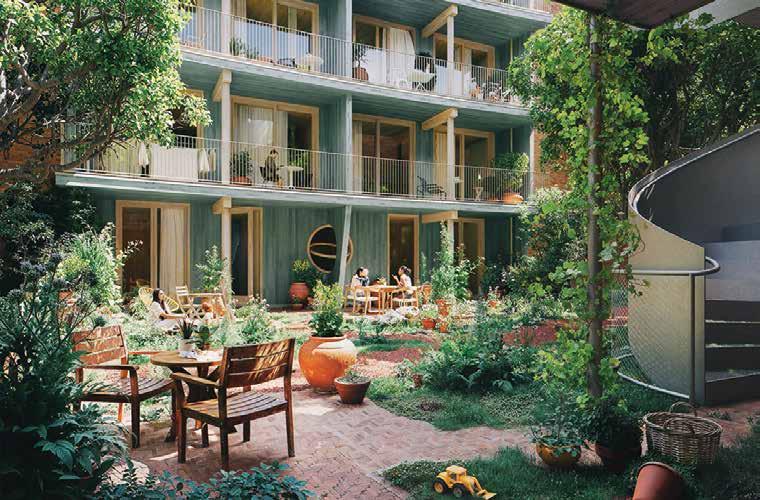
OPPOSITE AND ABOVE Challenging current norms, On the Courtyard proposes enabling European-style courtyard housing in the city.
RIGHT The project suggests a gradual replacement of single family homes on typical Toronto blocks with denser street-facing and laneway mid-rises that frame shared courtyards.
name of the ongoing Neptis Foundation-funded research initiative that it’s part of, Impossible Toronto. “When attempting to adapt the European courtyard block to the Toronto context, it quickly becomes clear that a direct, one-to-one implementation of this typology is not feasible without substantial changes to our building codes, planning policies, and cultural expectations,” note the authors. A “matrix of impossibilities” accompanies the aspirational designs, which would be hampered by everything from restrictive zoning laws and urban setback regulations to dual stair egress, sprinkler requirements, and oversized North American elevator standards.
Yet, Impossible Toronto conjures a city many of us would love to live in and one that’s informed by ample successful international precedents. It adds up to a stirring and holistic regulatory critique. When we talk about fire safety, neighbourhood character and urban context, we’re also talking about what our cities can and cannot become.


Have it all with acoustical ceilings that look just like drywall but feature Total Acoustics® performance. The smooth, monolithic visual of AcoustiBuilt is easy to mistake for drywall –until you hear the peaceful combination of high sound absorption and sound blocking. Deliver quiet spaces and design flexibility at armstrongceilings.com/reimagine
There is no singular response to our housing crisis. The challenges are overwhelming, especially when so many of the decisive choices are made by politicians, bankers, developers and investors before architects are invited to the discussion. And yet, as professionals, we understand what can be built after what is deemed legal or financeable.
We asked five notable advocates to answer a few questions. All of them argue that housing delivery is inseparable from policy and that architects have the power to positively influence upstream housing conditions, enabling downstream benefits to drive creative and sustainable design solutions for as many Canadians as possible.
Zoë Coombes leads the Neptis Foundation and sponsored the Impossible Toronto research. She cites several constraints limiting the proliferation of mid-rise typologies, but one in particular stood out to her: our current egress rules, which are based on an outmoded building code rationale. For her, if we want courtyard blocks, point-access plans, and better units on smaller sites, building-code reform is essential.
Johanna Hurme, one of the founding partners for 5468796 Architecture in Winnipeg, is equally pragmatic about what makes projects viable: regulatory certainty, utilities coordination, and long-term

As the term “modern methods of construction” (MMC) becomes more mainstream, both within our profession and to the general public, what are the specific approaches to MMC that you’re most focused on?
MMC is a term associated with the rapid deployment of quality-controlled, performance-focused, and innovative building systems. It is increasingly understood as part of the response to Canada’s housing crisis, while also incentivizing productivity, improving quality control and supporting local manufacturing industries.
As architects, we are interested in how MMC can be engaged thoughtfully and integrated into community-defining design. For us, it is about embedding better systems into architecture to elevate performance and experience.
MMC typically falls into two broad categories, off-site and on-site construction. Off-site construction can be organized into four primary
stewardship. She also makes a case for as-of-right permissions and argues that successful policy should be measured by livability and building performance, not just unit counts.
Gregory Henriquez, an expert social housing advocate from Vancouverbased Henriquez Partners Architects, challenges the profession to treat mixed-income housing not as a ratio, but as a necessity. Integration succeeds or fails early, through clear aspirations, authentic collaboration, and governance structures that protect affordability beyond the life of any one program.
Carol Phillips, an architect transforming Moriyama Teshima Architects in Toronto, reframes modern methods of construction as an opportunity for a new generation of design leadership: deeper design leadership through early engagement with manufacturers, design-for-assembly thinking, and national baselines that secure dignity and performance while still allowing regional expression.
Finally, Geoffrey Turnbull from Heartwood Investments brings an investor’s clarity and an architect’s insight to climate-resilient, welldesigned rental housing seen as a viable alternative to home ownership. He views next-gen architectural design as requiring explicit, verifiable targets and policy pathways that reward projects that meet them.
product types: volumetric systems, panelization, prefabricated structural components and non-structural assemblies. We consider ourselves active participants in advancing several of these approaches in Ontario.
On-site strategies include productivity-enhancing products, such as larger-format materials or pre-cut kits, as well as process innovations, such as advanced digital modelling and lean construction methods.
As long-standing supporters of the mass timber movement, we are particularly invested in pre-cut systems and the promise of kit-of-parts approaches to advance schools and multi-unit housing, especially in mid-rise typologies where modules, such as classrooms or residential units, lend themselves to standardization.
Process innovation is central. Advanced digital modelling allows us to understand construction sequencing, fabrication workflows and site installation logistics early in design. This directly informs detailing and creates opportunities to reduce material waste before construction begins.
Highly detailed design models also support Design for Manufacturing and Assembly (DfMA). Even where direct digital integration has not yet been realized, rigorous digital coordination significantly reduces on-site errors and improves build quality.
Whether working with fully volumetric systems or component-based assemblies, building elements must be manufactured, protected and shipped in precise sequence to enable just-in-time delivery and continuous flow on site. When this is achieved, site assembly becomes predictable and streamlined. It reduces the need for storage, minimizes exposure to weather-related risks, and avoids backlogs and gaps that can undermine what should be a seamless construction process.
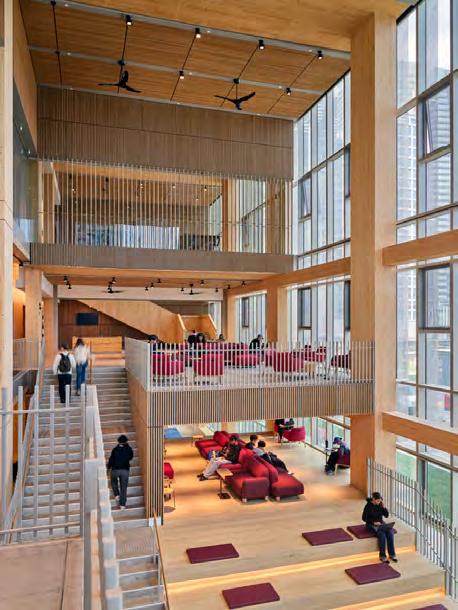
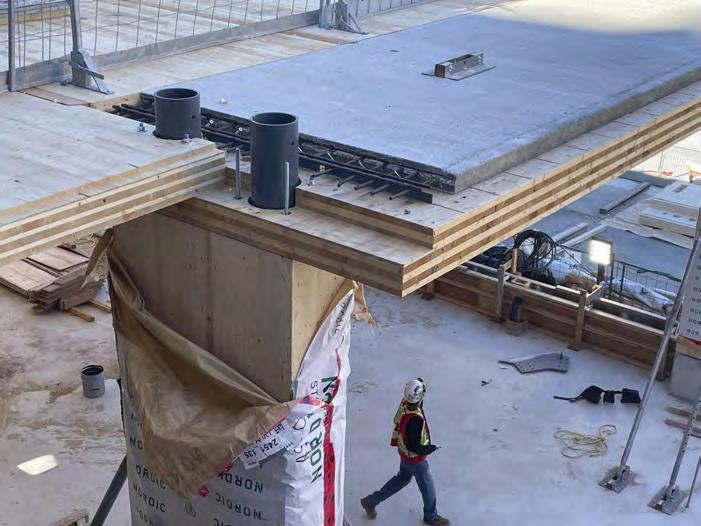
ABOVE LEFT The majority of Limberlost, designed by Moriyama Teshima in joint venture with Acton Ostry, has a standardized structure, yet the design also allowed for keynote areas such as the Learning Commons. ABOVE RIGHT The structure included concrete-topped mass timber floor panels dubbed "slab bands," which effectively replaced beams within the structure.
How are you designing for what Canadian manufacturers and suppliers can actually deliver? How do you map available manufacturing capacity, lead times, logistics, and regional constraints into early design decisions, so projects don’t get value-engineered late?
For projects well suited to repeatable or standardized elements, such as affordable and accessible housing or schools with regulated minimum areas, we are advising clients to pivot toward procurement models that bring constructors to the table at the earliest possible stage.
Early discussions should include design assistance from manufacturers to inform sequencing and align the design with real production timelines. It also ensures the project enters the manufacturing queue in a predictable manner, avoiding bottlenecks during construction. Even the most rationally designed systems can be undermined if manufacturing queues, plant capacity, shipping logistics and construction sequencing are not considered.
Involving suppliers in early design stages is not a threat to design and creativity. In timber construction, we need to evaluate species availability, panel sizes and, at a time of unpredictable tariffs, a thorough analysis of cladding materials and equipment in parallel with design development. Architects, owners, and builders need to navigate those choices together, using a value-based decision-making process that protects design intent and performance while responding to real supply conditions.
In our experience, we see a meaningful shift toward working collaboratively between suppliers and designers. Involving contractors and key trades early can align procurement strategies, share logistics intelligence, and creatively mitigate supply chain risks.
Bringing manufacturers into early decision-making not only strengthens individual projects but builds confidence across the sector. Certainty of demand creates an industry-wide situation that encourages suppliers to invest, expand and scale their businesses.
What elements do you think are most repeatable at a national scale and across many jurisdictions? What are some technical, site-specific housing applications?
Standardization is most powerful when it establishes a national baseline for livability. That includes dignified unit and room sizes that allow for comfort, flexibility and accessibility. It also includes durability and performance standards, along with social considerations such as common spaces, shared amenities and support for a range of household types that encourage a vibrant demographic mix in multi-unit living.
Rather than looking at housing as a commodity for individuals, we would prefer that standards focus on the conditions that unlock the potential of communal living. We want to define a minimum quality of life, not a minimum market offering.
We also want to respond to place. Working with materials sourced and manufactured in Canada can express a regional identity rooted in what is of and from a place. Identity is shaped not only by material factors but also by landscape, climate, and with the land.
Performance standards and prescribed minimum dimensions can set a consistent baseline across the country while still allowing regional nuance and expression. What should be standardized is the quality of living. Historically, housing “products” have often reflected what the market will accept rather than what people genuinely need. Consumers often purchase what is available, even if it falls short of livability. This moment presents an opportunity to recalibrate market expectations and establish dignified standards across Canada.
Regional character can then shape expression, communal space planning and the rituals of daily life. This includes acknowledging Indigenous and pluralistic demographics and allowing shared spaces to reflect material identity, landscape integration and climate resiliency.
Across jurisdictions, technical and regulatory differences must also be acknowledged. Some regions have embraced the one-stair mid-rise typology. In locations with exceptional views and temperate climates, balconies can significantly enhance unit quality. Depending on climate and local building conditions, resources may be better invested in communal spaces or ground-oriented amenities. Standardization should allow for this level of flexibility and is most powerful when it secures dignity, performance and social value at a national scale, while leaving room for regional climate, culture and community to shape the architecture.
When you’re choosing structural and envelope systems, how do you balance embodied carbon, cost, construction speed, resilience, and longterm maintenance? Are there materials or strategies you see as especially promising for scaling up supply across multiple regions in Canada?
Timber has been a core passion of our practice for nearly a decade. While timber construction is centuries old, its use in larger-scale contemporary buildings is still relatively new, yet full of opportunity. Timber mass timber that is sustainably harvested presents our best opportunity for low-carbon structural solutions and is uniquely Canadian, satisfying the possibility of a national industry with emerging possibilities for new players in the construction industry. It is, quite literally, a growth industry with renewable and positive climate outcomes.
Our support for mass timber is strong, yet we are equally clear that hybrid solutions are essential. We must work with the inherent characteristics of materials rather than forcing wood or steel to perform in ways they are not suited to. We often describe buildings as ecologies, with interdependencies and offsets between systems.
Sustainably harvested timber with simple connections is often a compelling choice. However, if we require timber to span or connect in ways that steel or concrete can achieve more efficiently, we risk undermining our efforts to reduce embodied carbon while delivering resilient, cost-effective housing.
In a recent life-cycle assessment, we found that, under a specific condition, concrete columns were smaller and required simpler connections than timber columns. When the additional connecting steel for timber was accounted for, the carbon profiles came into relative parity. In another project with poor soil-bearing conditions, a lighter timber structure reduced foundation requirements. That decision lowered both embodied carbon and total capital cost, even though the superstructure material cost was higher. These examples reinforce the need to evaluate material decisions within an integrated system.
Embodied carbon is also shaped by context. Local energy grids, transportation distances, manufacturing practices and durability all matter. A 2x4 milled in a province with a low-carbon electricity grid does not have the same footprint as one produced in a province with coal in the energy mix. The same thinking applies to envelope systems. Aluminum has extremely high embodied carbon per kilogram, and has significant environmental repercussions in how its raw material is harvested, yet it is lightweight and highly recyclable. For large format exterior panels where recycled content is specified, reduced shipping emissions can partially offset its production impact. These trade-offs must be assessed carefully rather than assumed.
The infrastructure for full circularity is still developing as we work toward cradle-to-cradle ambitions. In the interim, durability and 100-year service life models are critical. There is also an urgency to draw down carbon now through the lowest-viable embodied carbon solutions available to us.
In terms of scaling supply across regions, hybrid timber systems remain promising, with room for growth within the fabrication ecosystem. In Canada, we tend to see two primary models: large vertically integrated companies delivering forest-to-installation solutions, and mid-scale producers focused on single products such as PRG320-certified crosslaminated timber, often managing complex CNC workflows with limited laydown space.
What we are missing is a middle tier of specialized fabricators who can focus on machining unique edges, cores and profiles, allowing larger pressing facilities to operate continuously and efficiently. This could relieve bottlenecks and create a more distributed, resilient supply chain. Emerging developments, such as nail-laminated timber using wood nails, along with advances in software for nail placement and fabrica-
tion coordination, are also promising. These innovations reintroduce products into broader applications and reduce challenges around services and core locations. They support a more diverse and interdependent industry, with finishing and customization occurring closer to the construction site.
A layered, hybrid approach that integrates structural timber, strategic use of steel or concrete where appropriate, and a more nuanced fabrication network offers a credible path to scaling housing delivery across Canada while maintaining performance, carbon responsibility and regional adaptability.
What are the missing components needed for MMC to scale properly (i.e, market demand, code simplification, digital standards, workforce training, warranty/insurance frameworks)?
At MTA , we have been pursuing three distinct but related pathways in our mass timber and prefabrication work.
Often, the lessons learned from our most ambitious projects can be applied to simpler buildings. With these projects, we focus on timber structures and panelized envelope systems, infusing the experience of everyday building types with sustainability, wellness, and constructibility. For this approach to scale, several conditions need to align. Education across the industry is essential, along with holistic cost analysis that accounts for factors such as the value of exposed timber to reduce the amount of applied finishes. Owners need reduced insurance premiums for new methodologies, and code interpretation must continue to be simplified and made more consistent across the provinces. We see strong momentum in this category, supported by recent revisions to the National Building Code and growing market demand.
The second pathway is more bespoke where timber construction is celebrated and expressed in cultural or civic buildings. These projects act as test beds for innovation and expand the language of timber design. While not intended to be mass-produced, the wood components of these projects often provide opportunities for standardized elements.
The third pathway is the development of a kit-of-parts approach.
For example, we assessed our design for a timber elementary school and translated it into speculative residential models. This includes volumetric wet cores for bathrooms and kitchens, panelized floor systems and envelopes, and a range of unit sizes and communal components that can be configured into multiple building forms, from courtyard blocks to slabs to terraced housing.
For this approach to scale meaningfully, industry input is critical, as is cost analysis and support for testing these speculative designs. To become viable, inspection frameworks for off-site construction must be established, particularly when volumetric elements or partial units are fabricated in factories. Authorities having jurisdiction cannot be expected to travel extensively for inspections without a coordinated national or regional protocol. Warranty and insurance structures must evolve alongside these systems.
Financial support is equally important. Funding is needed for speculative explorations and built projects, micro factories and mid-scale manufacturers seeking to expand capacity. Most of all, owners and builders who are willing to adopt new methodologies require support, incentives, and risk-sharing.
If we do not incentivize innovation, we will continue the status quo. Scaling MMC requires investment in integrated pilot projects to address technical and regulatory challenges, along with regulatory clarity and financial mechanisms that support thoughtful risk management. Without that encouragement, risk avoidance will prevail, and the housing, social and climate crises we face will only become worse.
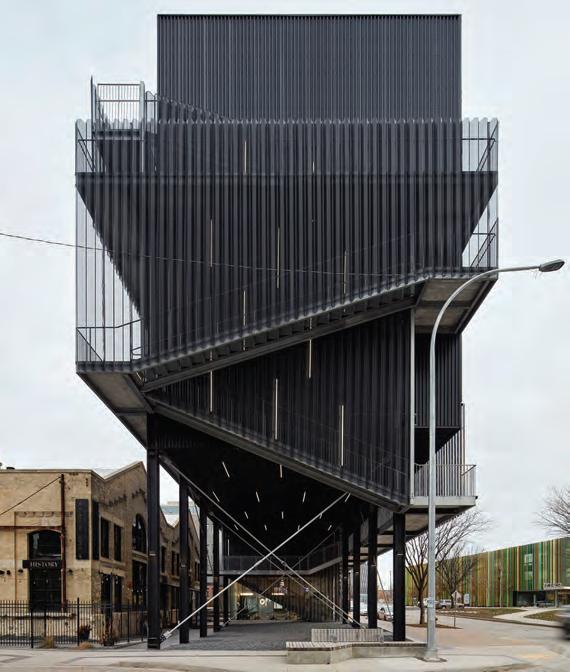

What does Winnipeg make possible that Toronto or Vancouver doesn’t?
Winnipeg’s biggest advantage is that there is more room to act. Lower land costs and development pressures give us latitude to test unconventional site planning, adaptive reuse strategies, and program mixes that would be far harder to achieve in higher-cost markets.
Equally important is our proximity to local decision-makers. In a smaller city, access to information and institutional actors can be surprisingly direct. At the decommissioned Pumphouse, for example, several redevelopment attempts had previously failed. The City allowed us to enter the unheated, boarded-up building with flashlights and conduct an exploratory review. It was during that visit that we noticed the original gantry cranes meant to service the fire suppression pumps that were rated for 20 tons. This was a “lightbulb moment.” Working with our structural engineers, we determined that the latent structural capacity could support a new 15,000-square-foot floor plate within the historic volume without adding new foundations, which had been a major cost factor in previous schemes.
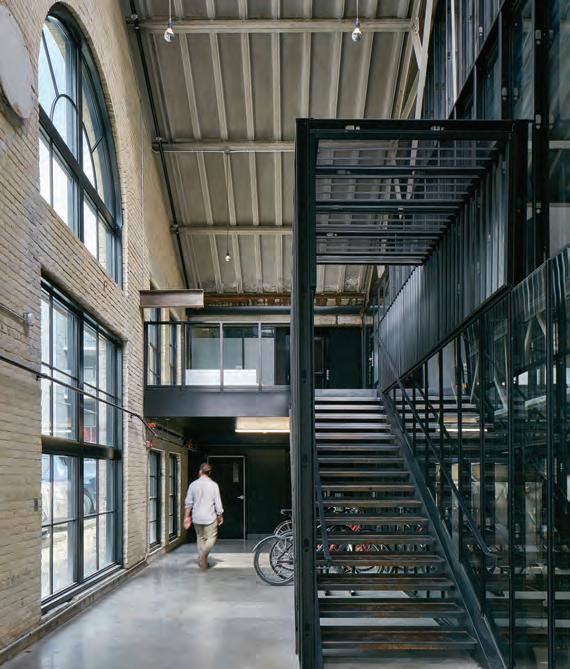
From there, we authored the concept, prepared the preliminary financial pro forma, and reframed the site’s economics. We also challenged the assumption that the narrow development pad in front of the building was unusable, incorporating housing to further strengthen the numbers. With a viable scenario in hand, we brought the opportunity to an existing private developer client, connected him with CentreVenture, and connected the developer with a potential commercial tenant for the new floor plate. That tenant commitment was the final piece that unlocked the project’s feasibility.
Winnipeg’s biggest constraint is a housing market with slower absorption rates and lower rents that compress margins and reduce risk tolerance. While the regulatory challenges are similar across the country, market realities mean that conventional, lowest-perceived-cost approaches to housing often prevail. Ambition isn’t typically blocked outright, but quietly constrained by market feasibility.
Which regulatory barriers are true deal-breakers? Which barriers are the easiest to overcome?
Two deal-breakers stand out. First, infill guidelines that arose in response to vocal residents living in mature neighbourhoods were meant to provide developers with certainty, often capping density below what is contextually appropriate and financially viable. Mid-rise projects no longer become viable when density is artificially limited.
Second, layered zoning and the uncertainty of providing adequate utilities create high early-stage risk. Pre-development costs can quickly outpace what small and mid-scale proponents can carry.
One promising shift has come through CMHC ’s Housing Accelerator Fund, which requires zoning reforms as a condition of funding. That external lever allows municipalities to advance density reforms that would
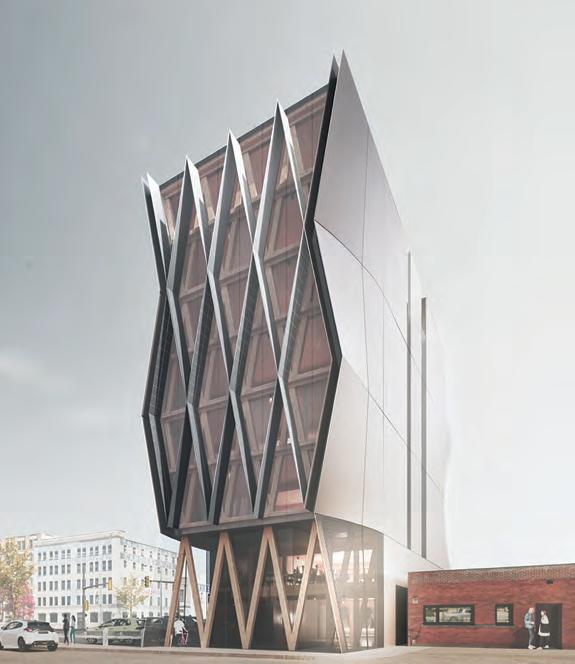
otherwise be politically fraught. The Fund also shows how regulatory change is possible when there is alignment and cover for elected officials.
A relatively straightforward reform would be to implement blanket rezoning for social-purpose organizations such as faith-based institutions to build affordable or mixed-income housing on their existing properties. Paired with a comprehensive city-wide utility capacity study, this would reduce pre-development risk and unlock underused land. Tax policy should align with this approach so that the active community-serving portions of properties retain their exemptions.
Looking ahead, I expect continued movement toward as-of-right density increases, broader permissions for small-scale multi-family housing, and regulatory pathways that reward performance, energy, livability, and resilience, rather than prescriptive form alone.
What are your views on code changes such as the implementation of a single-stair egress for residential projects?
We’ve successfully advocated for single-exit stair alternatives in Winnipeg, recently receiving conditional approval for a six-storey nail-laminated timber project using this approach. The efficiency gained, both in area and cost, made the project financially feasible.
While cost savings matter, the larger architectural gain is spatial. Single-stair configurations enable point-access buildings, making doubleaspect suites viable, which improve cross-ventilation, provide daylight on two sides of the unit, and fundamentally enhance the living spaces, particularly in family-sized units. Until now, achieving that quality has required workarounds such as exterior access corridors, window sprinklers, or skip-stop arrangements. These are possible, but rarely attractive to conventional developers. A normalized single-stair framework would not only enhance feasibility, but also the livability of mid-rise housing.
OPPOSITE Pumphouse made use of the latent structural capacity of a historic infrastructure building. LEFT Bond Redux, also by 5468796 Architecture, is a mixed-use infill housing project that challenges current double-exit requirements, and also shows the feasibility of using mass timber columns, beams, and floors in a low-cost housing project.
If you were building a missing-middle pilot at scale, what would you rewrite, who would you partner with, and what would you measure?
If we are serious about solving the housing crisis, particularly for the lowest-income quartile, we must address the ownership structure. In Canada, approximately 96.5% of housing is privately owned and therefore profit-driven. By contrast, countries such as the Netherlands and Denmark maintain over 30% of their housing stock in public or non-profit hands. Without a significant non-market share, systemic affordability is unattainable.
A pilot program, in my opinion, should therefore prioritize public and non-profit ownership or long-term stewardship, provide permanent affordability rather than time-limited commitments, enable land contributions from public bodies and social-purpose institutions, streamline approvals and utilities coordination and set clear design-quality standards tied to livability.
Programs such as CMHC ’s MLI Select, a new multi-unit mortgage loan insurance product focused on affordability, accessibility, and climate compatibility, is designed to expand access to capital. Unfortunately, its affordability thresholds exclude a significant portion of buyers who are most in need, and affordability terms can be as short as 10 years. That is not structural reform.
We need to adopt measurable quality benchmarks. Jurisdictions such as New South Wales, Australia, have implemented sunlight access standards to ensure minimum levels of natural light in residential units. Canada lacks a comparable national policy that meaningfully ties funding to spatial quality.
I also think that success metrics should not focus on unit counts, but instead look at factors such as long-term affordability retention, household income served, energy performance, daylight access, family-unit share, tenant stability, and community integration.
What have you learned about the relationship between design, governance and operations? What should change in how we commission housing?
Design excellence cannot compensate for poor stewardship. We have seen well-designed buildings decline rapidly under absentee or disengaged ownership. Conversely, modest buildings can become community anchors when governed by committed, locally accountable owners.
Long-term rental ownership has opened space for conversations about climate resilience and sustainable systems because the benefits accrue to the same entity over time. That alignment rarely exists in short-term, profit-maximizing development models.
Public projects present a different challenge. Design decisions are often filtered heavily through maintenance departments, where risk aversion can eliminate innovation. While durability and operational simplicity are critical, design ambition and life-cycle thinking should not be casualties of procurement structure.
One structural change would be to require Life Cycle Assessments on all publicly funded housing projects. Embedding long-term environmental and operational analysis into the commissioning process would shift conversations from upfront cost minimization to total-life performance. Ultimately, good housing becomes a catalyst for good communities when governance, ownership, and design are aligned around long-term stewardship rather than short-term extraction.
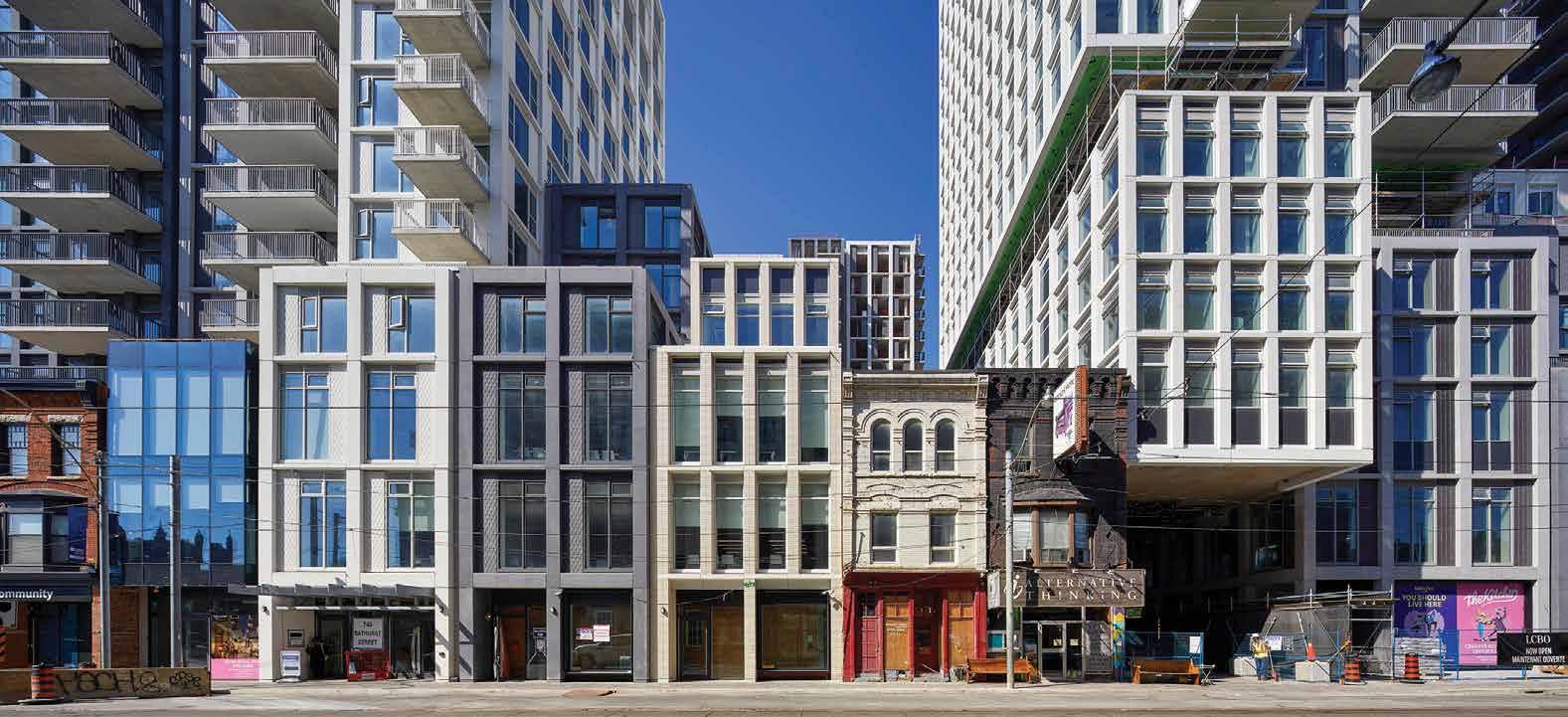

Your projects often balance affordable housing, market-rate rental, and existing SRO conditions on difficult urban sites. When market and nonmarket share a project, what are the essential elements that protect projects over time?
Decisions made early in any project have a profound effect on its success. An essential element which will help ensure success in an inclusive community begins with clarity of the aspirations. There are many different models, ranging from real integration of varying socio-economic groups to a more side-by-side housing model with everyone sharing a common public realm. The greater the disparity in income, age, and family type, the more carefully the integration needs to be curated.
In Woodward’s, we have a diverse group of individuals, which includes condominium offerings, SRA replacement with dual-diagnosed mental health and substance addictions, housing for special needs individuals and family non-market housing. They each have their own entry and amenities, but share a rich public realm in one city block. Funding came from private and public entities. There is clarity, and it works.
At our 2444 Eglinton Co-op housing project, the two towers have 50/50 complete integration of the market and affordable housing, all managed by the Co-op, whose members live there. All the units will be the same for everyone, and full participation is encouraged. Funding
for 2444 Eglinton came from the federal government and includes a third developer to build a third tower, which was originally intended as condominiums but, given the economy, may become rental with an affordability component. There was clear direction, and as with many projects, it has evolved and will find further clarity before we start the third tower.
What’s the most common failure that you’ve seen?
A project’s success, I believe, can be directly linked to the decisions (or lack thereof) early in the process. Where there is authentic collaboration amongst the various participants, we have had success; when there is conflict or indecision, projects struggle.
What is the most promising trend when balancing future housing developments?
A sense of urgency and the acknowledgement that housing comes into existence in myriad ways. The trick is to build consensus quickly, minimize approval time, and establish thoughtful design parameters to increase the likelihood of securing funding.
You’ve explored unconventional models to fund housing for diverse populations. What’s the next plausible Canadian experiment that could scale social benefit housing? Who must be involved to make it happen (i.e. public sector, non-profits, developers, lenders)?
Wide collaboration is needed among all three levels of government. The Cooperative Housing Federation of Toronto may argue that co-op housing is the future, but we need look no further than the past. Then there are new CreateTO models like 2444 Eglinton, there is CMHC funding, there are municipal bridge loans, and there are municipal land deals through CreateTO. There are developers committed to affordable housing and sustainability, and there is support at the City level for efficient approvals.

I believe everyone has to come to the table, and I think that is happening with Canada Builds. It is simple: in our current economic climate, the federal government must fund deep core social housing, support the financing of rental housing, and eliminate any other pinch points that may be preventing the realization of these goals.
I also believe there is parallel work to be done in exploring affordable ownership in cities like Vancouver and Toronto if our children are ever going to have real security in the absence of rent controls. I believe fractional ownership with the government or a developer is worth exploring, where a portion of one’s rental could become equity over time.
Mirvish Village is framed as 100% purpose-built rental with a major affordability component and a fine-grain heritage and public realm strategy. If this project is advocacy in built form, what’s the thesis you want other cities (and other developers) to copy?
I think something could be said here about how success is measured. Mixed-use, transit-oriented developments can strive to be complete, sustainable communities, and you don’t need to choose between density, affordability, heritage, social good, and an engaging public realm. So, measuring success is not merely financial return when we are talking about large, complete communities (with heritage, public realm, etc.) success can also be measured in social value. Large-scale developments can integrate into existing communities when the design acknowledges and respects the surrounding neighbourhood fabric and engages meaningfully with the community. Despite significant challenges, Mirvish Village strives to be an example of authentic community building and aims to deliver on its promises. Stay tuned!
Affordability is a moving target. Mirvish Village’s affordability is tied to measures like “at or below 30% of median income,” and 2444 Eglinton’s affordable rents are tied to the City’s definitions (income and aver-
age market rent). In your view, what affordability definition actually protects households, and where do today’s definitions quietly fail?
Our Mirvish Village project provides both rent geared to market (80% of AMR) and rent geared to income (30% of median income), and is a good example of how the two compare. While starting rents are nearly identical for both types, when comparing AMR against the highest incomes within the defined income caps, the rent geared to income often yields lower rents because it is tied to the individual, and what that individual can afford (incomes for many qualifying households fall below the income cap) rather than what the rest of the community can afford (income-linked rather than market-linked). This model also provides greater individual security in a housing market like Toronto, where average salaries are comparatively high and household income disparities are increasing.
Many programs often fail because they rely on provincial rental protection programs to maintain affordability beyond the end of the term. These protections often fall short, and renters can face higher rents or displacement. This is changing. On projects like 5207 Dundas, the City is focused on providing long-term affordability and offering a percentage of affordable units with deep affordability (40% AMR). While the program isn’t income-based, it provides long-term protection for renters.
In an ideal world, affordable housing would be geared to income, would be secured for the long-term (permanent or 99-years), would offer a range of affordable housing options for different income levels including a percentage of units at deeply discounted rents, and would be supported not only by development subsidies but long term operating subsidies, and adjusted over time as income levels change to ensure it adapts to a changing demographic and remains viable in the long term.
Kennedy Green at 2444 Eglinton combines two non-profit co-op towers (with a 50/50 affordable-to-market co-op mix) and a privately developed tower in a later phase. What governance and legal structures (land trusts, covenants, operating agreements) are essential to ensure the co-op model remains non-profit and community-centred over time?
The Cooperative Housing Federation of Toronto (CHFT) has a longterm lease of city land, and they are mandated to deliver 50% marketrate and 50% affordable rental housing. It’s part of the land lease agreement. CHFT is governed by a Board of Directors to ensure that the organization delivers its mandate.
What specific conditions resulted in the 69-day approvals timeline for Kennedy Green, and what would it take to make that pace normal without cutting public trust out of the process?
The simple answer is that there is real urgency to produce affordable housing-supported projects at scale (laneway houses and sixplexes are great, but they won’t solve the ever-expanding demand). This is a 1-millionsquare-foot rezoning, and thus, the City has instituted a priority approval process for this type of project. The project’s aspirations are to surpass TGS v4 tier 2 and be net-zero operational carbon, with a geothermal energy source, located within a transit-oriented mixed-use community. Also, never underestimate a serious client group with the grit and tireless dedication of CHFT and Peter Venetas at Civic Developments and Windmill Developments. Peter was (and is) in constant daily communication with City staff to help the process. I know the public wants to see things happen quickly. There’s more erosion of public trust when projects are delayed. To make the expedited approval pace the norm, we need a commitment from the City and the citizens to maintain a priority approval process that delivers housing across the entire housing continuum.
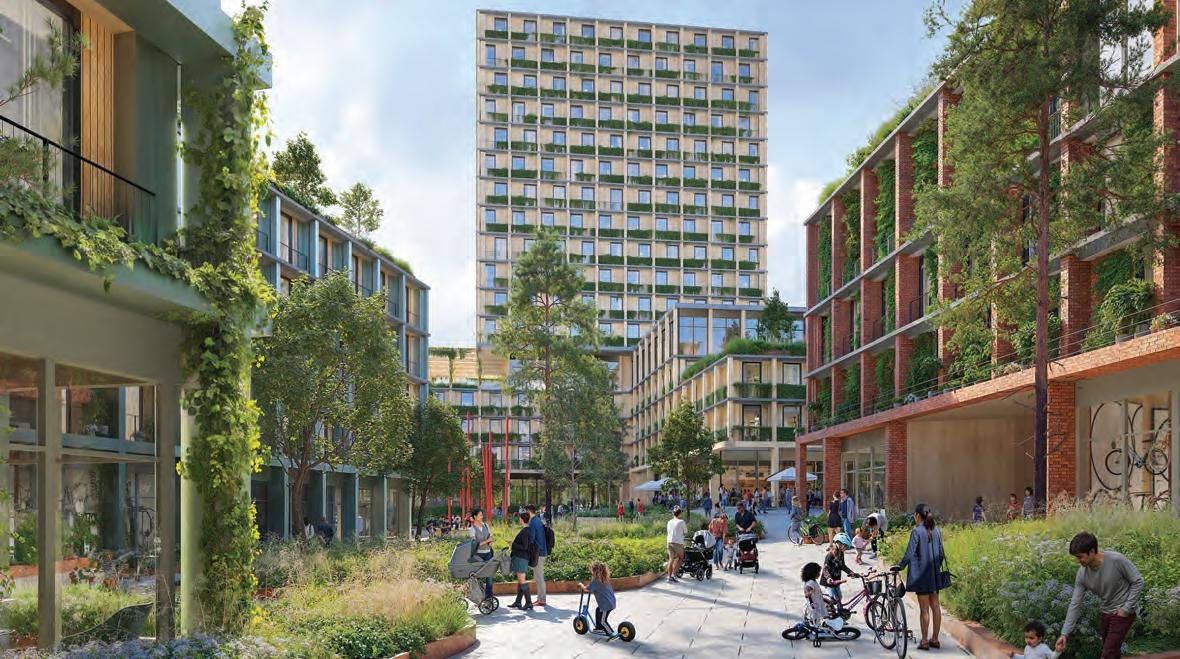

Heartwood Investments is focused on building “a new generation of climate-safe, purpose-built rental housing.” What are the climate-based outcomes you consider to be the most important when financing future housing? What’s the one metric you wish every housing project had to publish?
When we talk about “climate-sa fe” measurable outcomes, we’re talking about energy inputs and carbon outputs. But we need a target so we know when to stop before costs get out of control. This is why we commit to being Carbon Transition Aligned (CTA), using science-based 2050 carbon pathways to guide performance.
Our core energy metrics are TEUI and TEDI. For carbon, we focus first on operational intensity (GHGI), then balance performance with embodied carbon to reduce total lifetime emissions. Cost is part of the optimization. These metrics typically follow a hockey-stick curve: large, low-cost gains are available early, followed by steeply diminishing returns, where incremental improvements drive disproportionate costs and can even increase lifetime carbon. We target the optimal point on the curve, where performance, carbon, and cost are best balanced.
The physical and transition risks associated with climate change are largely downstream of these performance factors. If you’re managing
carbon, you’re mitigating transition risk. If your project is energy efficient, it’s inherently more resilient. Augment that with a physical risk assessment process, and you’re managing climate risk effectively. If you’re managing costs and risks, you’re building a case for investment, and you’ll be able to scale your approach.
If I had to choose one metric, it would be GHGI. Hitting a GHGI target aligned with the chosen carbon transition pathway aligns the other metrics and produces a future-proof, value-creating asset.
Community well-being is an important factor in the design and implementation of your projects. What specific design features, management practices, or partnerships most reliably create stability and belonging for residents?
Our approach begins with location. We are building on urban infill sites already supported by transit, schools, and community services. We strive to ensure our buildings contribute to and strengthen existing neighbourhoods, so when someone moves into one of our homes, they are joining that neighbourhood.
We work with terrific architects to create distinctive, human-sc aled communities centred on well-de signed, livable homes. We incorporate high-use, lifestyle -dr iven amenities that we actively manage and program, removing the burden from busy residents to create community activity. The goal is higher satisfaction, longer tenancies, and stable occupancy.
We are data-dr iven in everything we do. We engage stakeholders throughout design, construction, and operations to understand how our communities are performing. We partner with Simply DBS , whose surveys and engagement tools track our impact from pre-construction through operations. Their data serves as a key performance metric and drives continuous improvement across our organization.
You’re delivering mixed-income, low-carbon rental housing on urban infill sites across Canada. Which design and delivery moves are most portable from one municipality to another, and which local constraints most often impact replication?
It’s true that every municipality has its own regulations, processes, and infrastructure challenges. It is also true that, even within a municipality, every building site is unique and requires a specific solution.
At Heartwood, we are focused on a systems-based approach that enables us to deliver tailored solutions efficiently and at scale while maintaining repeatability. While each of our projects is unique, they share the same structural logic and timber kit of parts; the building science logic of each envelope is consistent, as are the mechanical schematics and other components of the project.
To do this, we have built a vertically integrated, data-driven platform. In-house expertise, including building science, development, construction oversight, operations, and data science, enables institutional analytics to provide execution certainty, consistent asset quality, and a scalable, repeatable development model while driving long-term value. Through this, we can create consistent outcomes across jurisdictions.
What’s the hill you refuse to die on? What’s the most important design feature you protect at all costs in purpose-built rental, and what do you deliberately simplify to protect affordability and durability?
The obvious answer here is electrification. It’s massively more efficient. It means our projects have zero Scope 1 emissions [direct greenhouse (GHG) emissions that occur from sources that are controlled or owned by an organization], which allows us to maximize on-site generation and positions them to participate in the awesome advances in power electronics. No Heartwood project will invest in fossil fuel-burning infrastructure.
That said, the real answer is proving that efficient, resilient, low-carbon buildings are better investments. At Heartwood, we’re completely focused on continuing to prove that by understanding 2050 pathways, the measures we take to mitigate carbon and deliver resilience and efficiency in each building are accretive to the bottom line and, ultimately, deliver greater long-term value to both investors and residents.
If you could change only two things in Canadian housing policy to accelerate climate-safe purpose-built rental, what would you change first and why?
The reality of building rental housing in Canada is that it’s complicated. There are many stakeholders involved in the process, each with competing interests, and we are left to navigate between them.
There are many simplifications that could help the process. An example: for the first time, the 2025 edition of the National Energy Code of Canada for Buildings (NECB) adopted absolute intensity metrics for performance targets. Absolute intensity metrics provide a clear target for required performance, can be related to CTA pathways, allow apples-toapples comparisons between projects, and will not become obsolete as the guidelines evolve. The current “percent better than a baseline” approach favoured by most municipalities and lenders provides none of these benefits. Adopting the absolute target approach in the 2025 NECB would save time, money, and increase legibility for everyone in the process.
Creating a kind of “priority approval lanes” for housing projects that meet transition-al igned performance targets would be a blue-sky idea. Multi-unit residential projects demonstrating credible TEUI, TEDI, and GHGI pathways would receive fast-tracked approvals. Some jurisdictions offer versions of this today, but they’re often bundled with additional requirements that limit uptake.
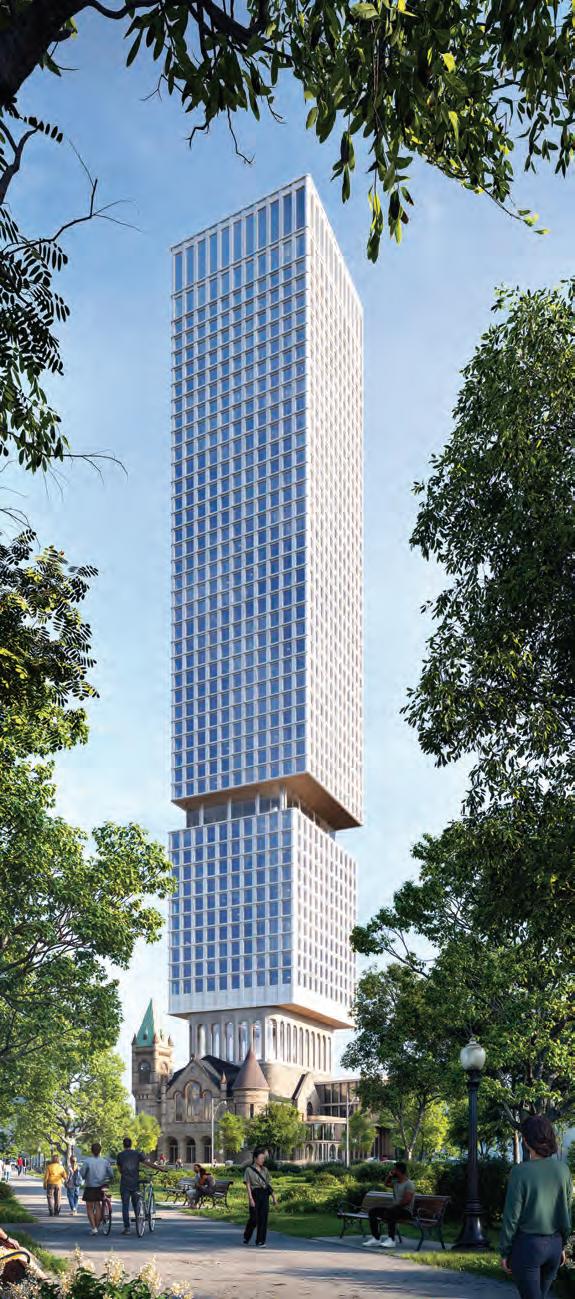
OPPOSITE As part of his previous work as Director of Innovation at KPMB Architects, Turnbull contributed to shaping the Downsview Framework Plan (by KPMB, Henning Larsen, and SLA Architects) as a resilient new community in Toronto. ABOVE Heartwood's project at 353 Sherbourne, designed by KPMB, preserves a heritage church while adding 400 low-carbon rental homes.

Impossible Toronto tests housing forms that could suit Toronto but remain unbuildable under today’s rules. Describe the single most important change (code, zoning, approvals, finance) that could move courtyardblock or similar missing-middle typologies from research to real projects.
Building code. Specifically, egress reform. In On the Courtyard: Learning from European Blocks–the first volume in the Impossible Toronto series–Studio VAARO and Gabriel Fain adopted a courtyard block study for Toronto. When we look at the units, each one receives light on two sides. This is not an aesthetic choice that an architect can easily provide today at this scale of residential development. It’s a structural consequence of the building code.
Since 1941, Canada has had only fire safety rules suitable for large apartment buildings. We have good codes for tall towers on large lots, but not for new multi-unit infill housing on smaller streets. On the Courtyard allows for better units on smaller lots: European-style circulation organized around a central stair, firewalls that create breaks between buildings, and no continuous smoke-filled corridors connecting a string of units behind a dull façade. More stairs, yes, but also smaller, safer buildings on smaller lots that can “grow up” on Toronto streets without blockbusting. A subtler egress framework would unlock gentle density, healthier units, and real projects. These buildings are low yet surprisingly dense, and the plans are elegant. Canada’s building code is blunt. We haven’t developed this subtlety yet.
Developers consider factors such as land costs, approval timelines, development charges, parking mandates, construction type, and financing risk as the primary factors that can kill a development. From your view, what combination of policy levers would improve housing delivery most dramatically?
For volume of delivery, I can list several: increasing height allowances, reducing risk in our slow, poorly automated, and all-too-discretionary planning system. Also, reconsidering the logic of development charges. People who live in new buildings shouldn’t have to contribute more to our common infrastructure compared to those who live in old buildings. Especially in a time when the main political slogan is “build more housing.” That all matters. But I’m fixated on a related question: whether architects have a wide enough range of buildable forms to work with. I think part of our problem is that our architecture just doesn’t fit. Like badly fitting clothes. This typological narrowness is at the heart of Neptis’s focus. The speed of typological invention, as much as the speed of delivery, is what I’m curious about. I hope Impossible Toronto will become such a lever.
Neptis treats mapping as a form of civic power. If you could mandate a single, publicly standardized dataset across Canadian cities to accel -

erate housing delivery and improve accountability, what would it be, and how would architects, planners, and communities actually use it?
Data isn’t as big a focus at Neptis as it was in the past. But I think school enrolment is an important metric to watch. As we limited the outward growth of Toronto, did we ever ask ourselves what kinds of building and zoning reform would be required to make it possible, and desirable, for kids to grow up in some new form of density? Or was the idea that the capped number of houses we have would be reserved for families and be enough? Just the other day, someone pointed out that my midtown Toronto high school, Oakwood Collegiate Institute, has a 26% enrollment rate. When I was there in the ’90s, there were over 900 kids. Does this mean people aren’t leaving their houses after the kids move out? Who lives there now? I’m not sure if Oakwood reflects the system broadly, but I’m interested and does architecture play a role?
Neptis has pushed back on the idea that we need more land to solve affordability, distinguishing between designated land and land that’s actually serviceable and deliverable. What are the most persistent myths about land supply that policy-makers keep repeating? What concepts could help architects become the most effective advocates?
The most persistent myth about land supply is that Old Toronto is full. It’s important to understand the city “regionally,” but some have weaponized that idea to ensure that inner-city neighbourhoods are off-limits to building taller. Under the guise of regionalism, you can
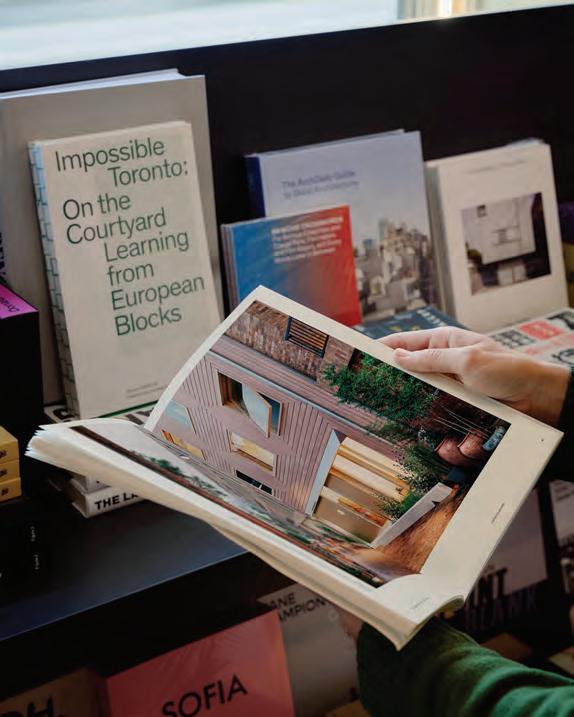
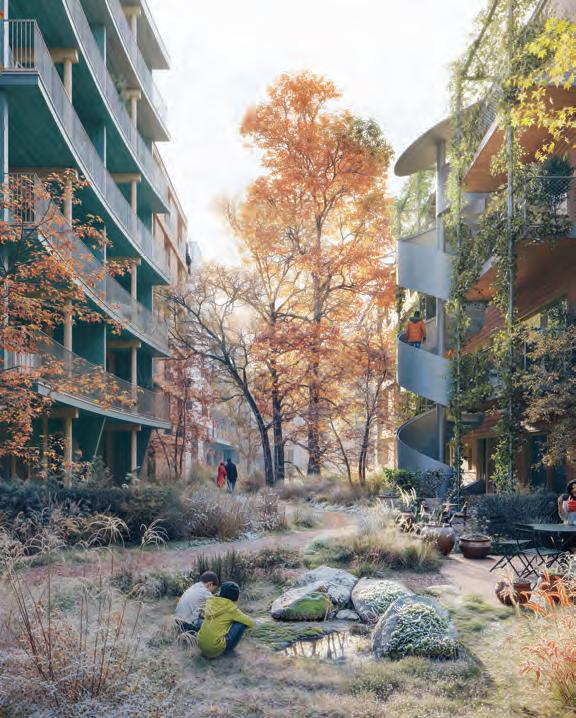
present yourself as avant-garde and practical, interested in the periphery, conveniently ignoring the opportunity and infrastructure-soaked central city. Growth is imagined along major thoroughfares and regional nodes on the edge, with little vision for the central city, effectively locking people out of the most productive places in the country. I think the central city is the most interesting and generally underbuilt part of the region. Definitely not full.
Neptis has evolved from regional planning research toward architecture as a primary urban lens. Why centre architectural insight?
The one thing I want to express to your audience is how deeply I believe architects are needed right now. They need to lead in their own language. Too often, architects are required to put on a false costume and join the conversation by adopting a voice from planning or finance, and it’s just not convincing. What is convincing is what only an architect can do: see what’s missing and identify what’s blocking it. Draw the buildings people need, then show the line in the building code that makes it illegal. Understand how these rules get written, and be at the table. Right now, architects are asked to make magic with the crumbs of a conversation they weren’t invited to. That’s backwards. The technocracy should be supporting architecture, not the other way around. What I’m building at Neptis, through Impossible Toronto, is a place where architectural thinking is policy thinking not illustration, not support, but the primary analytical frame. Nobody else is doing this with architecture in Toronto. I want Neptis to be that.
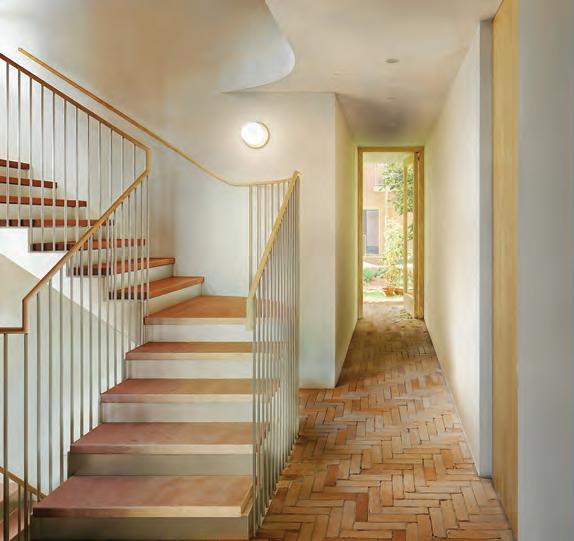
CLOCKWISE FROM TOP LEFT A model of the proposed courtyard housing was part of an exhibition accompanying the book launch; On the Courtyard details the vision and policy barriers in detail; the proposal envisages that communal courtyards could be used in a variety of ways, including as naturalized landscapes; placing service areas below grade opens up the ground floor for higher-value communal uses.
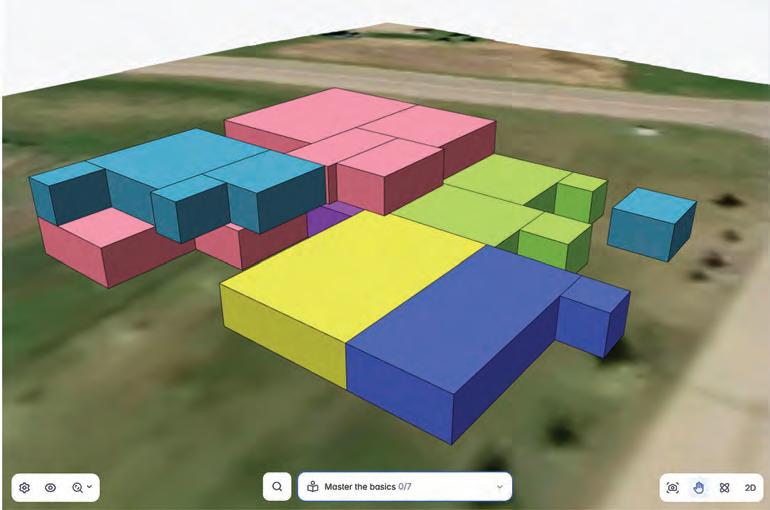

TEXT Douglas MacLeod
HERE ARE THE AI TOOLS THAT CANADIAN ARCHITECTS ARE USING TODAY—AND THE ONES TO KEEP AN EYE OUT FOR IN THE NEAR FUTURE.
We are in the middle of an extraordinary revolution. Artificial Intelligence will (eventually) change the way we do everything not just architecture. New AI-based products, or ones that claim to be AIbased, are being released every day and the power of AI is increasing exponentially. By the time this article is published, it will be hopelessly out of date.
As architects, we clearly cannot ignore AI. We need to understand it so that we can separate the true innovations from the hype, and protect ourselves from the potential negative impacts of this new technology.
Architects from across the country are moving beyond making pretty pictures with the latest image generator, to applying AI to the less glamourous, but equally important, task of running an architectural practice. This includes responding to RFPs and RFQ s, document checking, and even the drudgery of searching office databases for information.
While drawings may be an architect’s stock-in-trade, text plays an enormous role in creating a building. From RFPs, to change orders, to specifications, the profession wallows in a quagmire of type. ChatGPT, Claude and CoPilot are some of the most popular applications that can help generate text for any of these tasks.
At the heart of all these apps (and every AI system) is a model. The model represents what the AI has learned. It learns by using algorithms or instructions to help it find patterns in the data that it is given. That data can be text, images, videos, numbers or any other form of information. Text generators all use Large Language Models (LLMs) to spit out text, but each of them is little bit different. As Victor Lima, Director
of Digital Practice at Diamond Schmitt Architects, explains, “CoPilot is very specific. It’s best used when you’re referencing a single document. Chat GPT is more for communications, such as writing an email or drafting a proposal, while Claude is particularly good at coding to create a custom script in Python or in Rhino’s Grasshopper.” This kind of custom coding is a particularly powerful use of AI Essentially, it allows a user to ask or ‘prompt’ the AI to create a program that will generate, for example, a complex grid shell.
AI can also be used to create programs for other kinds of functions in an architectural office. For instance, Victoria Ikede, the AI Design Lead at Architecture 49, used Chat GPT to develop a business intelligence dashboard for staffing and resource management. She also, however, adds an important caveat about AI: “They’re all just guessing. AI is an elaborate guessing machine. It doesn’t know if it’s right or wrong, like real intelligence, but it will always spit out an answer.” It is absolutely critical for architects to remember that the information that an AI generates always needs to be verified.
At the same time, AI can be particularly useful in sorting through an office’s own data. Every architecture firm is awash with details about past projects, but often this data can be difficult to find, let alone organize. According to Lima, in 2025, Diamond Schmitt launched a project they called the “Single Source of Truth,” in which AI explored their servers to harvest data about their own projects, such as names, types, and overall square footages. AI then organized those facts and figures into a database that their employees can easily query for accurate information.
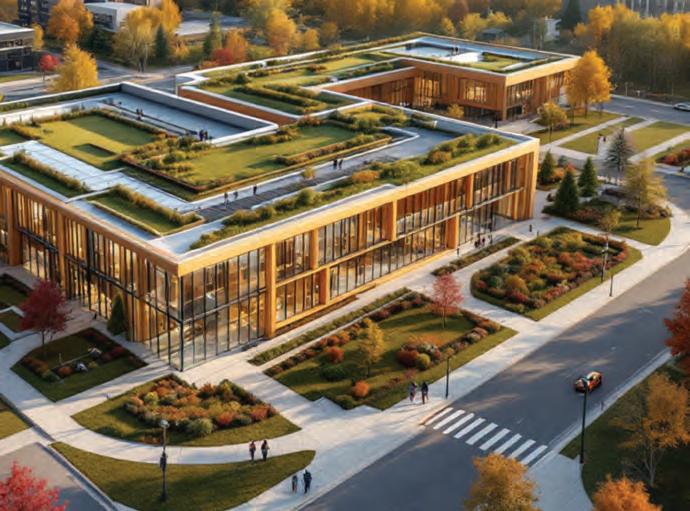
OPPOSITE AND LEFT A massing model and renderings generated by AI platform Snaptrude are convincing at first glance—but a closer inspection shows that the rendering is not correlated with the massing. AI models are currently weak in spatial intelligence, but even these abilities are changing rapidly.
In a similar fashion, hcma is using AI for code compliance. Paul Fast, a principal with the firm, summarizes their process: “Our architects always review all material for compliance regardless of whether it’s supported by AI analysis or not. The more helpful AI models will reference specific code sections that make it quicker to check. We will feed it the BC building code, the Health Act, or any regulatory requirements, and then we’ll use AI to query that information. We get much quicker responses than in the old days, when we used to flip through the book.”
Both Lima and Fast caution carefulness about not letting information get outside their offices. All architects should be aware that when you use ‘free’ AI applications, whatever you put into that app text, images, data or videos will be used to help it train further. In effect, you are donating your intellectual property to help make the AI better. At hcma, they have created a “fenced” set of data that is for their own exclusive use.
There are also AI-based services to help with specific tasks. Dialog is using Joist AI to help respond to proposals. Greg Widmeyer, Dialog’s Director of Technology, described how they load past proposals and current resumes into the software. “It will help highlight what we need to respond to in the RFP, and break out those sections for review,” says Widmeyer.
He adds that, “We can now focus on the quality of our proposals, because we’re not spending time searching for past projects and trying to find who worked on them. The tools are helping us do that search, so we can really focus in on why we’re the best choice for a job.”
Some new AI-based packages now work with both images and text. BuildCheck AI, for example, is a startup based in the United States and
Canada that uses both computer vision and large language models to review construction drawings for coordination clashes, errors and omissions, and alignments between the architectural, structural, mechanical, and electrical drawing sets.
Fast of hcma says they are testing the use of BuildCheck AI “for quality control and coordination purposes in the construction document phase.” In particular, they have been feeding PDFs to BuildCheck when their construction documents are about 80% complete. Using its advanced computer vision capabilities, the software has learned to read hundreds of 2D drawing symbols, from door swings to plumbing fixtures. “It comes back with reports about various nuts-and-bolts coordination items,” says Fast, “and then our architects take those reports and use them as part of their quality assurance program.”
This points to another important aspect of any current AI application: there has to be a human in the loop. As Alexander Michalatos, one of the founders of BuildCheck, notes, his human team is “working in tandem with the outputs to verify them. By the time it gets to Paul’s team, it has been scrubbed once through our human reviewer team, so that he gets high-quality output, and we also get to verify that output. This helps ensure that our models get better and better.”
Architects should also note that many applications are now embedding AI capabilities in their existing software packages. The most recent version of Photoshop, for instance, includes a variety of AI rendering features, and Sketchup now has its own built-in AI renderer.
Even Miro an online pin-up board for real time collaboration has enlisted AI to enhance its functionality in areas such as process design. Recently, Widmeyer at Dialog recorded their Human Resources team describing how they onboard a new employee. He then pasted that conversation into Miro, and asked it to produce a sequence diagram. In five minutes, he had a well-laid-out graph of all the steps that needed to be followed to help someone through their first day on the job.
Also making their appearance are Generative Design Applications. Claudia Cozzitorto, Director of Digital Practice at KPMB , notes: “We have been integrating Forma, Finch 3D, Hypar, Skema, and Snaptrude to give our teams richer information when they are making critical decisions. We’re looking to increase the amount of analysis at the beginning of design. AI is about expanding what our designers can consider, not replacing their judgment.”
Forma Site Design is an AI-powered, cloud-based Autodesk product for the early stages of design. It can perform site analysis, 3D massing studies, and environmental analyses such as sun, wind, noise and embodied carbon. Diamond Schmitt also uses Forma. Lima explains: “We give it the setbacks and overall site dimensions and then, based on orientation and other criteria, Forma can give you different massing possibilities. It works quite well for residential, but not so well on other, more complex, typologies.” He also notes that while Forma works best for the exteriors of buildings, his firm is beta testing a different software that helps with the design of interiors.
Snaptrude is one of the most developed and robust examples of this new generation of integrated tools. As a Professor at Athabasca University, I was able to download a free version of this package. I used the “Kickstart
with AI” mode rather than the “Start on Blank Canvas” one. The Kickstart with AI option automates many of the steps of the design process.
I prompted it with “Design a sustainable community library using the attached design brief,” uploaded the design brief from an undergraduate design studio, and selected a site at Athabasca University. In about a minute, the software generated a modest site analysis complete with zoning information, site constraints and sun path and wind analysis diagrams. When I asked it to develop the program, it deviated from the space requirements of the brief albeit usually by small amounts. I approved it nonetheless, and the software developed program diagrams in fits and starts. At various times, it was unable to present or reload some of those diagrams. It also misinterpreted the idea of “Non-assignable area for circulation, walls, washrooms, services” and represented this amount of space as one solid block. I approved the program elements, and it generated a two-storey massing model. It then produced two AI generated images one of the exterior and one of the interior. Finally it offered the possibility of generating additional images in Nano Banana a popular AI image generator from Google. Sadly, I found that all of the renderings had little to do with the massing model. Although it was impressive that Snaptrude could do all of this automatically, the end product remained an awkward first draft of a concept design that would need serious reworking.
High-quality design, however, may not be the purpose of generative design software. As Cozzitorto says, “Since we have amazingly talented designers, design excellence already comes from our people. What these tools give us is richer information, as seamlessly as possible, when design decisions are being made. That is where we see the value.”
On the other hand, one thing is crystal clear: an AI’s response whether it be text, image, video or building is only as good as the prompt you provide it. In this respect, however, Ikede proposes that you let the AI write your prompts. As she suggests, “The best way to use it is to use it. You’re not the expert, so let it write the instructions.” She adds, “It takes a certain amount of humility to get the best out of AI. You have to be willing to learn on the go and cast your assumptions aside.”
The problem, however, may be deeper than the inexperience of the applications or of the humans. One of the founders of AI , Dr. Fei-Fei Li, has written a paper entitled “From Words to Worlds: Spatial Intelligence is AI ’s Next Frontier. In it, she writes, “… the candid truth is that AI ’s spatial capabilities remain far from human level,” and “While current state-of-the-art AI can excel at reading, writing, research, and pattern recognition in data, these same models bear fundamental limitations when representing or interacting with the physical world.” For instance, Nano Banana has difficulty moving one object behind another.
To redress AI’s deficiencies in ‘spatial intelligence,’ Li’s current company, WorldLabs, has just released a Multimodal World Model called Marble that allows people to generate and edit three-dimensional worlds from text, images, videos and other 3D models. World Models with spatial intelligence could prove invaluable to architects once these models have matured.
This kind of spatial intelligence is already starting to enable new forms of AI such as Physical AI, in which Artificial Intelligence is embedded in entities such as robots, and even buildings. Nvidia, the manufacturer of graphics boards, has invested billions in Physical AI including creating the Omniverse, a virtual world where robots can be trained. Toronto-based Promise Robotics is now using a version of the Omniverse to train their robots to build houses.
As Ramtin Attar, the CEO of Promise, explains, “Our company builds the brain that enables robots to process and generate instructions, learn how to use their tools to assemble walls and floors, and continuously improve. We also built the entire toolbelt that those robots use to complete complex tasks. Together, we turn all of that into a complete factory solution that enables builders. We are creating the industrial backbone for robotics and modern methods of construction.”
“We offer a factory as a service,” he continues, “A builder brings their designs, and we provide the rest the robotics, the software, the workflows, and the operational model. We remove the complexity of manufacturing so builders can focus on scaling production.”
He notes that buildings are complicated entities: even for ubiquitous wood frame construction, “There is no existing dataset on the internet that can train robots how to build with a highly variable material like wood, so we had to develop our own proprietary datasets to train our AI systems. We use Nvidia Omniverse to build synthetic data for AI and robot training. Beyond that, we have a proprietary simulation environment for AI and robot training our ‘virtual gyms’ where construction tasks are tested, validated, and refined before deployment.”
While this brave new world of technology seems extraordinary, many worry that the rise of AI represents an existential threat to the profession of architecture. Eventually, the logic goes, we simply will not be needed. There were, however, similar concerns when CAD first appeared. In January of 1988, I wrote about “Labour and the New Technology” in this magazine, and how some thought CAD would lead to a deskilling of the profession, a loss of creativity and a means for employers to exert greater control over their employees. None of these fears materialized. Far from de-skilling the profession, CAD programs became more and more complicated, requiring more and more skill, and more and more architects to operate them. As time went by, CAD also enabled more and more creative designs with forms that simply weren’t possible with hand drawing tools. I suspect the same will occur with Artificial Intelligence. The tools will become more and more sophisticated, and will require higher and higher levels of skill to make them sing. Designs will become even more remarkable because we will be able to explore many more options and alternatives.
It will also result in skills evolving across the profession. In fact, a recent working paper from INSEAD business school entitled “Generative AI Adoption and Higher Order Skills” suggests that the job market is now demonstrating a “a shift toward higher-order cognitive and social skills,” where a liberal arts education may make you more employable than one in computer programming. At the same time, there is now a popular meme that states, “You won’t lose your job to AI. You’ll lose your job to someone who knows more about AI than you do.” As architects, we need to stay involved and informed, so that we can use the power of AI to enhance our design skills and free us from some of the drudgery of an architectural practice.
Today, Artificial Intelligence is a fluid, and even unstable technology, but there is no doubt it will ultimately change the practice of architecture. In the meantime, Ikede suggests that it’s best to think of AI as an earnest but naïve intern who desperately wants to make you happy, but doesn’t have the experience to understand what you really want.
Dr. Douglas MacLeod is a registered architect and a Professor at the RAIC Centre for Architecture at Athabasca University
OUR SELECTION OF KEY PUBLICATIONS, FUNDING SOURCES, HOUSING ORGANIZATIONS, AND OTHER RESOURCES RELATED TO INCREASING THE STOCK OF AFFORDABLE HOUSING IN CANADA.
CMHC Housing Design Catalogue is a free standardized missing-middle design platform that includes ADUs, townhomes, and multiplexes intended to be customized for local conditions. www.housingcatalogue.cmhc-schl.gc.ca
ReHousing provides tools and guidance for converting single-family houses into multiunit housing, including typology-based renovation pathways. Its resources include Toronto-specific property tools such as budgeting and feasibility information. www.rehousing.ca
The Future-Ready Design Guide is practitioner-oriented and full of early-stage strategies for multi-unit residential design (sustainability, affordability, resilience), developed by the Toronto Society of Architects (TSA) and funded by The Atmospheric Fund (TAF). www.torontosocietyofarchitects.ca/future-readydesign-guide/
Small Housing BC's Gentle Density Toolbox is a strong, practical hub of sample designs, guides, and policy tools that translate well beyond British Columbia. One key document in this toolkit, The Gentle Density Housing Bylaw Guide, was developed by Small Housing and CMHC, and provides actionable steps for local governments, planners, elected officials, and housing advocates whether you’re just starting the conversation, or refining policies. www.toolbox.smallhousing.ca
Navigating energy-efficient affordable housing projects is a series of toolkits provided by the Federation of Canadian Municipalities for housing providers to build energy-efficient, affordable housing projects.
www.greenmunicipalfund.ca/resources/toolkit-navigatingenergy-efficient-affordable-housing-projects
FUNDING, FINANCE, AND FEDERAL RESOURCES
Build Canada Homes is a federal portal for submissions and procurement related to
building affordable housing at scale. Another federal program, the Canada Housing Infrastructure Fund , provides funding for housing-enabling water, wastewater, stormwater, and solid waste infrastructure. Canada Rental Protection Fund is an acquisition and preservation tool aimed at protecting affordable rentals and building communityhousing capacity.
www.housing-infrastructure.canada.ca
CMHC's Funding Programs directory offers an overview and updates on CMHC housing programs. The agency's Housing Accelerator Fund provides incentive funding for municipal approvals and planning reforms that accelerate housing supply. The Apartment Construction Loan Program exists to encourage low-cost construction-to-stabilization financing for purpose-built rental (and some conversions). MLI Select is a mortgage loan insurance program for multi-unit developments that provides incentives tied to affordability, accessibility, and climate compatibility.
www.cmhc-schl.gc.ca
Collaborative Housing Research Network (CHRN) is a Canada-wide research collaboration aligned to National Housing Strategy priority areas, intended to generate new knowledge through multidisciplinary research and bridging gaps between research and building new housing.
www.cmhc-schl.gc.ca/professionals/housing-marketsdata-and-research/housing-research/collaborativehousing-research-network
UBC Housing Assessment Resource Tools (HART) provides resources and methods for assessing housing need and measuring progress across communities.
www.hart.ubc.ca
Institute on Municipal Finance & Governance (IMFG) provides strong, practical policy research on municipal levers such as approvals, infrastructure finance, and housing governance. www.imfg.org
Eight Ways to Enable Missing Middle Housing, by the University of Toronto's School of Cities, explains actionable missing-middle resources and policy framing.
www.schoolofcities.utoronto.ca/eight-ways-toenable-missing-middle-housing-new-resourcesfrom-the-school-of-cities/
City Building (TMU) publishes news and reports on housing-related issues from Toronto Metropolitan University.
www.torontomu.ca/city-building/news-research/
The Centre for Urban Economics and Real Estate is based at UBC ’s Sauder School of Business with the support of the Real Estate Foundation of British Columbia. It aims to advance the research on real estate within the province.
www.sauder.ubc.ca
Homeless Hub is a source of research on homelessness in Canada, with an extensive library of resources.
www.homelesshub.ca
HOUSING DELIVERY COALITIONS, NONPROFITS AND APPLIED RESEARCH ORGANIZATIONS
National Housing Council is an advisory body that promotes inclusive housing policy. Their work focuses on marginalized voices. www.nhc-cnl.ca
Maytree works with people experiencing homelessness and governments at all levels to improve the housing system through research and policy.
www.maytree.com
Canadian Housing and Renewal Association is a national organization representing organizations, municipalities and individuals intent on strengthening the community housing sector. www.chra-achru.ca
Community Housing Transformation Centre provides funding, services and tools to support the preservation and growth of the com-
munity housing sector. It aims to unite the sector around a 20% share of the housing market by leveraging its strengths.
www.centre.support
BC Non-Profit Housing Association strengthens British Columbia’s non-profit housing sector through advocacy, education, and support.
www.bcnpha.ca
Manitoba Non-Profit Housing Association represents over 100 non-profit housing providers who collectively own and manage more than 26,000 affordable homes across 25 communities in Manitoba.
www.mnpha.com
Housing Services Corporation is a non-profit organization committed to the long-term health and sustainability of the Province of Ontario’s social housing properties.
www.hscorp.ca
Ontario Non-Profit Housing Association represents non-profit housing providers who offer affordable rental homes to low- and moderateincome households, including specialized housing and support services. Its members are landlords from Ontario’s largest housing corporations, as well as independent non-profits and supportive housing organizations.
www.onpha.on.ca
Réseau québécois des OSBL d’habitation (RQOH) is the main network for Quebec’s non-profit housing organizations.
www.rqoh.com
Affordable Housing Association of Nova Scotia provides sustainable housing solutions and is a catalyst for support services that strive to end homelessness.
www.ahans.ca
PUBLIC HOUSING, LAND AND DEVELOPMENT AGENCIES
BC Housing works in partnership with the private and non-profit sectors, provincial health authorities and ministries, other levels of government and community groups to develop a range of housing options.
www.bchousing.org
CreateTO works with the City of Toronto to offer creative and strategic approaches, including affordable housing initiatives on Cityowned land.
www.createto.ca
Société d’habitation du Québec (SHQ) is the province’s main housing body, with a mission to respond to Quebecers’ housing needs and improve the habitat.
www.quebec.ca
Calgary Municipal Land Corporation is a Citycreated public land development corporation focused on city-building, placemaking, and major district redevelopment, with housing in its portfolio.
www.calgarymlc.ca
The CMHC's Housing Market Information Portal gives granular access to housing market data and indicators for cities and regions across Canada. Its Housing Data Tables and Trends gives the latest statistics on household characteristics, housing indicators, housing and rental markets, mortgage and debt.
www.cmhc-schl.gc.ca
Statistics Canada's housing hub publishes national housing datasets and analysis, including the Canadian Housing Survey.
www.statcan.gc.ca/en/subjects-start/housing
Canadian Housing Observatory is an interactive platform for exploring housing trends through data visualization. www.cho.curbcut.ca
ClimateData.ca provides detailed climate projections. Canada is the first country to embed future climate projections directly into its National Building Code. This update reflects more than a decade of collaboration among Housing, Infrastructure and Communities Canada (HICC), Environment and Climate Change Canada (ECCC), the National Research Council (NRC), and other partners. www.climatedata.ca
The CMHC-SSHRC joint initiative offers research training awards and supplements to postdoctoral researchers and doctoral and master’s students in the social sciences and humanities whose work is related to one or more of the National Housing Strategy’s priority areas for action.
www.sshrc-crsh.canada.ca
CANADIAN HOUSING-RELATED PODCASTS
CMHC In-House: Canada’s Housing Podcast provides housing and mortgage trends plus policy conversations.
www.cmhc-schl.gc.ca/in-house-podcast
The Missing Middle Podcast . Market and policy discussion from a missing-middle viewpoint. missingmiddleinitiative.ca
New Housing Alternatives Podcast . Researchgrounded conversations focused on real solutions and implementation. www.newhousingalternatives.ca
The Overhead is a series by Spacing magazine which digs into affordability, non-market housing, and structural drivers. www.spacing.ca
Patrick Condon's Broken City addresses land, speculation, inequality, and the mechanics of unaffordability. www.ubcpress.ca
Barry Johns's Effective Urban Densification offers a model-focused approach to infill barriers and delivery pathways. www.routledge.com
Carolyn Whitzman's Home Truths offers policy history, diagnosis, and solutions for Canada’s housing crisis. www.ubcpress.ca/home-truths
Gregor Craigie's Our Crumbling Foundation is a journalist’s survey of causes, consequences, and possible fixes. www.penguinrandomhouse.ca
5468796 Architecture's platform.MIDDLE surveys missing-middle typologies, taking a practical “toolkit” mindset. www.5468796.ca
Ricardo Tranjan's The Tenant Class examines financialization and power dynamics in Canadian housing. www.btlbooks.com
JOHN BROWN - DEAN, SCHOOL OF ARCHITECTURE, PLANNING AND LANDSCAPE (SAPL)
Canadian cities are changing faster than the institutions responsible for shaping them. That includes design schools. As climate pressures intensify, social inequities widen, and downtowns across the country struggle to redefine themselves, the question facing design education is no longer simply what we teach, but where and how we teach.
Canadian cities are changing faster than the institutions responsible for shaping them. That includes design schools. As climate pressures intensify, social inequities widen, and downtowns across the country struggle to redefine themselves, the question facing design education is no longer simply what we teach, but where and how we teach.
This is why the University of Calgary’s School of Architecture, Planning and Landscape recently relocated from a suburban campus into a once vacant downtown office tower. The move is not a symbolic gesture toward urbanism, but an act designed for impact.
This is why the University of Calgary’s School of Architecture, Planning and Landscape recently relocated from a suburban campus into a once vacant downtown office tower. The move is not a symbolic gesture toward urbanism, but an act designed for impact.
The Urban Moment Demands an Academic Response
The Urban Moment Demands an Academic Response
Urban environments concentrate challenges, complexities — and possibilities. Yet many design schools remain if not physically, then intellectually distant from the places where design’s consequences are most visible and needed. A medical school would never exist outside of a hospital. They understand that clinical learning and research requires immersion in real-world conditions, and by extension, that the learning and research activity provide a tangible service to community. The same logic should apply to design education. If we expect students and researchers to grapple with affordability,
Urban environments concentrate challenges, complexities — and possibilities. Yet many design schools remain if not physically, then intellectually distant from the places where design’s consequences are most visible and needed. A medical school would never exist outside of a hospital. They understand that clinical learning and research requires immersion in real-world conditions, and by extension, that the learning and research activity provide a tangible service to community. The same logic should apply to design education. If we expect students and researchers to grapple with affordability,
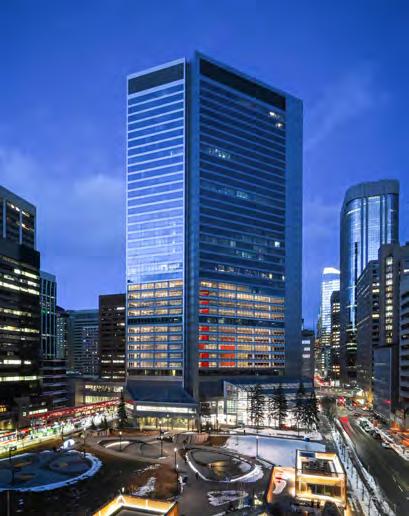
climate resilience, and public space, they must not just work in the environments where those issues collide but, like a medical school, engage them every day and in everything they do. Urban cores expose contradictions that classrooms cannot simulate − prosperity beside precarity, aging infrastructure beside emerging technologies, longstanding communities beside rapid redevelopment. In an embedded design school these tensions are not obstacles to learning; they are the curriculum.
climate resilience, and public space, they must not just work in the environments where those issues collide but, like a medical school, engage them every day and in everything they do. Urban cores expose contradictions that classrooms cannot simulate − prosperity beside precarity, aging infrastructure beside emerging technologies, longstanding communities beside rapid redevelopment. In an embedded design school these tensions are not obstacles to learning; they are the curriculum.
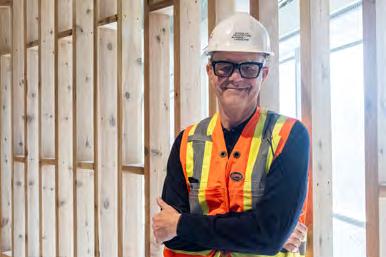
Embedding academic work in the city shifts the posture of design education. It moves learners and researchers from observers to participants. At UCalgary, this shift has produced tangible outcomes. For example, transit spaces redesigned with dignity and safety in mind; studio projects that evolve into built public realm interventions; rapid, digitally fabricated prototypes responding to immediate community needs; convenings that bring together municipal staff, industry leaders, researchers, and residents who rarely share the same table. These are not isolated successes. They are evidence of a different academic model — one that is iterative, collaborative, and grounded in the real-world around us.
Embedding academic work in the city shifts the posture of design education. It moves learners and researchers from observers to participants. At UCalgary, this shift has produced tangible outcomes. For example, transit spaces redesigned with dignity and safety in mind; studio projects that evolve into built public realm interventions; rapid, digitally fabricated prototypes responding to immediate community needs; convenings that bring together municipal staff, industry leaders, researchers, and residents who rarely share the same table. These are not isolated successes. They are evidence of a different academic model — one that is iterative, collaborative, and grounded in the real-world around us.
Canadian cities have undertaken ambitious transformations before. But the next era of urban change will require deeper collaboration between academia and the public realm.
Canadian cities have undertaken ambitious transformations before. But the next era of urban change will require deeper collaboration between academia and the public realm.
The invitation to design schools is clear: embed your work in the city. Share risk. Learn in public. Partner across disciplines and sectors. Invest not only in projects, but in the systems and relationships that allow better projects to emerge. Like a medical school, wherever possible have learning and applied research directly benefit the community in which the school exists. City building is not a metaphor; it is a responsibility, and Canadian design schools have a critical role to play in meeting that responsibility.
The invitation to design schools is clear: embed your work in the city. Share risk. Learn in public. Partner across disciplines and sectors. Invest not only in projects, but in the systems and relationships that allow better projects to emerge. Like a medical school, wherever possible have learning and applied research directly benefit the community in which the school exists. City building is not a metaphor; it is a responsibility, and Canadian design schools have a critical role to play in meeting that responsibility.
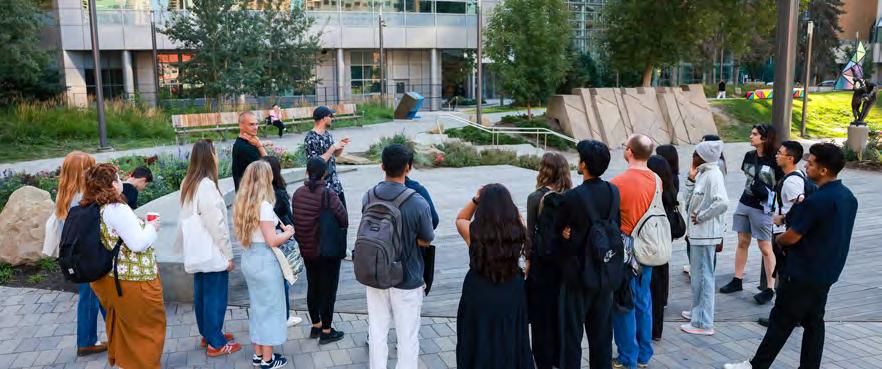

ultracompact stone, Dekton, provides comprehensive, customized, and sustainable façade solutions. Dekton meets the most complex technical beauty, durability, and resistance.