Institute for Public Policy Research
TRANSPORT
AND GROWTH REFORMING TRANSPORT INVESTMENT FOR PLACE-BASED GROWTH
Maya Singer Hobbs and Aditi Sriram
February 2026
Institute for Public Policy Research
AND GROWTH REFORMING TRANSPORT INVESTMENT FOR PLACE-BASED GROWTH
Maya Singer Hobbs and Aditi Sriram
February 2026
IPPR, the Institute for Public Policy Research, is an independent charity working towards a fairer, greener, and more prosperous society. We are researchers, communicators, and policy experts creating tangible progressive change, and turning bold ideas into common sense realities. Working across the UK, IPPR, IPPR North, and IPPR Scotland are deeply connected to the people of our nations and regions, and the issues our communities face.
We have helped shape national conversations and progressive policy change for more than 30 years. From making the early case for the minimum wage and tackling regional inequality, to proposing a windfall tax on energy companies, IPPR’s research and policy work has put forward practical solutions for the crises facing society.
IPPR 4th floor, 8 Storey's Gate London SW1P 3AY
E: info@ippr.org www.ippr.org
Registered charity no: 800065 (England and Wales), SC046557 (Scotland)
This paper was first published in February 2026. © IPPR 2026 The contents and opinions expressed in this paper are those of the authors only.
Maya Singer Hobbs is a senior research fellow at IPPR. Aditi Sriram is an economist at IPPR.
The authors would like to thank Ashwin Kumar, Pranesh Narayanan, Carsten Jung and Henry Parkes for their feedback and comments. We would also like to thank former IPPR North colleagues Marcus Johns and Rosie Lockwood for their insights and feedback on all things devolution related, and Rose Grayston for her inputs on local financing. We have also spoken to a huge number of wider stakeholders across the sector and within government and are incredibly grateful to everyone who was so generous with their time – this report is better as a result.

Download
This document is available to download as a free PDF and in other formats at: https://www.ippr.org/articles/transport-and-growth
Citation
If you are using this document in your own writing, our preferred citation is: Singer Hobbs M and Sriram A (2026) Transport and growth: Reforming transport investment for place-based growth, IPPR. https://www.ippr.org/articles/transport-and-growth
Permission to share
This document is published under a creative commons licence: Attribution-NonCommercial-NoDerivs 2.0 UK http://creativecommons.org/licenses/by-nc-nd/2.0/uk/ For commercial use, please contact info@ippr.org
The ability to deliver transformative public transport is not constrained by a lack of ideas, public support or local ambition. It is constrained by the way decisions are taken at the national level. Treasury processes, fiscal rules and appraisal frameworks – designed to control risk and manage spending – have too often become blockers to delivery rather than enablers of growth.
Where these constraints have been addressed, the results are clear. Investment in major rail and public transit schemes has delivered strong economic and social returns, particularly when paired with local leadership. Crossrail (the Elizabeth Line) demonstrates what can be achieved when strategic vision, sustained funding and political alignment across national and local governments come together. By contrast, the absence of mass transit systems in Leeds, Bristol, Teesside, Leicester and a host of other cities illustrates how fragmented decision-making and shortterm funding cycles continue to undermine delivery in major cities.
Commitments made in the 2025 comprehensive spending review, and to Northern Powerhouse Rail, represent a recognition of the importance of investment in transport infrastructure to drive growth. The next phase of transport investment must move beyond centralised approval for individual projects and towards a place-based, delivery-focussed model. That means aligning the Treasury, planning policy and sustainable local finance to drive the development of high-quality public transport. Mayors, working alongside local authorities and planners, are uniquely placed to do this.
This report argues for a shift from a system that asks whether we can afford to build, to one that asks how we can build more of what already works. IPPR has long argued that public transport has proven benefits for productivity, inclusion and decarbonisation. The challenge now is to create the institutional and financial conditions that allow mayors and cities to build on that success –at scale, and at pace.
To understand why transport investment so often falls short of its potential, it is necessary to look beyond individual schemes and examine the system within which decisions are made. This report sets out how current appraisal frameworks, institutional arrangements and funding models constrain the delivery of growthenhancing transport. It argues that reform is needed in three areas:
• how the growth impacts of transport investment are understood
• the role of national government in enabling and coordinating delivery
• the powers and financial tools required for regional leaders to deliver public transport projects.
Together, these reforms will create a system better suited to delivering public transport at scale, and to maximising its contribution to long-term economic growth.
Recommendation: Within its existing standards of evidence, the Office for Budget Responsibility (OBR) should explore ways to recognise a wider range of credible long-term productivity impacts from transport investment in its fiscal forecasts.
Recommendation: Land-use change towards articulated density should be considered a proxy for the transformational potential of a transport proposal. The best place to assess transformational change is within the strategic business case.
Recommendation: Transport investment from the Department for Transport (DfT) should play a redistributive role across the UK, and should use the forthcoming Integrated National Transport Strategy to ensure national transport projects are aligned towards a common goal and vision for the transport system.
Recommendation: The National Infrastructure and Service Transformation Authority (NISTA) should play a role in addressing skills and knowledge gaps and across the UK. It should also offer support on the delivery and governance of transport schemes across the public sector, including to mayoral combined authorities where appropriate.
Recommendation: Mayors should be granted powers to approve Transport and Works Act Orders for wholly local projects, or where mayoral combined authorities can reach bilateral agreements for cross-boundary projects.
Recommendation: Mayors should have guaranteed revenue streams to borrow against, and revenue-raising powers to capture the local benefits of the investment.
To truly unlock local public transport investment, mayors need:
• certainty – stable, predictable revenues that can be borrowed against, which might include an assigned share of national taxes or increases to their borrowing capacity from the Public Works Loan Board
• buoyancy – revenues that rise with economic growth and capture local benefits of transport, which might include levies linked to land value increases due to transport investment or formalising the use of tax increment financing.
“As this government continues its mission to deliver a decade of national renewal, the plans I am setting out today will ensure the railway is fit to drive economic growth in the 21st century as it has done in the past. ”
Heidi Alexander (2025), secretary of state for transport, on establishing Great British Railways
The current government has positioned good transport policy as a driver of growth, and of central importance to its wider economic programme of national renewal. This is evident in landmark changes to transport policy through the Bus Services Act 2025 and the renationalisation of the rail network. The 2025 comprehensive spending review represented a significant increase in public transport investment, for example through the £2.3 billion Local Transport Grant (DfT 2025a). In January 2026, Northern Powerhouse Rail received funding and an agreed strategic vision, with services expected to open in the 2040s (Topham and Halliday 2026).
Large infrastructure investment has a long time horizon until results are realised, meaning decades of underinvestment will constrain the ability of current politicians to fundementally alter transport patterns within the near future. It is important to map the current state of transport infrastructure and investment to understand how transport infrastructure can evolve in the short, medium and long term.
TRANSPORT INVESTMENT IN THE UK IS AROUND AVERAGE FOR ALL OECD COUNTRIES, WITH ROAD AND RAIL DOMINATING
Transport investment in the UK is middling by OECD standards. Inland transport investment in the UK was just under 1 per cent of GDP in 2020 (International Transport Forum 2022). The UK allocates a relatively high share of road and rail investment to rail – around 58 per cent – placing it among the highest in the OECD, just after China (ibid).
This reflects the structure of UK investment rather than a sustained commitment to rail. Rail spending is highly volatile, driven by a small number of large national projects such as High Speed 2 (HS2) and Crossrail, which create sharp peaks in expenditure (RIA 2025), and there is no long-term pipeline of new rail projects.
This contrasts with many European countries, which invest through steadier, programmatic approaches that prioritise ongoing renewal, maintenance and incremental enhancement, alongside the development of new projects. Countries such as Switzerland operate longer-term, more devolved funding frameworks that support the continuous improvement of networks rather than relying on individual mega projects (OECD, no date). The implication is not that the UK invests too much in rail, but that overall transport investment is too narrowly concentrated in a small number of headline schemes (RIA 2025).
As seen in figures 1.1 and 1.2, capital spending has risen across England while resource spending has flatlined (aside from grants to rail and buses during the Covid-19 pandemic). The imbalance between capital and resource spending is particularly stark at the local level. Local road capital spending rose steadily from around £2.2 billion to £5 billion between 2006 and 2024 (see figure 1.1), while local road resource spending fell sharply from around £1.5 billion to £0.3 billion in the same period (see figure 1.2). This widening gap points to a growing maintenance backlog as capital investment increasingly outpaces day-to-day upkeep and is reflected in the high salience of potholes (House of Commons Public Accounts Committee 2025).
FIGURE 1.1
Capital spending on national roads and railways has grown in England Capital spending on transport in England, by type of transport, 2006–24 (£bn)
National roads
Local roads
Local public transport Railways
Other transport
Source: Department for Transport, ‘TSGB1302: UK public expenditure on transport by country and spending authority’ (DfT 2024a)
FIGURE 1.2
Resource spending has grown unevenly in England
Resource spending on transport in England, by type of transport, 2006–24 (£bn)
National
Local
Local
Railways
Other
Source: Department for Transport, ‘TSGB1302: UK public expenditure on transport by country and spending authority’ (DfT 2024a)
National road capital spending has increased sharply under successive road investment strategies, while resource budgets have remained broadly flat. Similar pressures apply across the rail system, where maintenance and enhancement budgets are often squeezed when capital programmes expand.
Local public transport remains a small share of overall spending on both the capital and resource sides. Despite some longer-term funding for buses (for example through the Bus Service Operators Grant), funding for more transformational change, or for growing rather than simply maintaining services, has arrived in short-term bursts through programmes such as the Transforming Cities Fund and pandemic-era support (including the bus fare cap). The 2025 comprehensive spending review (CSR) provides, for the first time, a longer-term sustained pipeline for buses, trams and local rail outside London. Historically, this has limited the ability of city regions to plan and deliver integrated, rail-based networks. The 2025 comprehensive spending review (CSR) provides, for the first time, a longer-term sustained pipeline for buses, trams and local rail outside London with £15.6 billion allocated for local transport. This is a promising start for establishing a pipeline of projects, but there is still uncertainty over long-term resource funding.
Regional variations in transport spending appear to preference London and the South East. As seen in figures 1.3 and 1.4, there is a significant difference in both resource and capital expenditure on transport between the regions of England, with London and the South East receiving much higher levels of investment per
capita than others (O’Neill et al 2025). This pattern reflects strong path dependency, where decades of austerity and underinvestment in regions outside London and the South East have left many cities and regions lagging behind in terms of infrastructure and connectivity, reinforcing and perpetuating regional inequalities.
1.3
London and the South East see some of the highest levels of investment in capital spending Annual capital spending in Scotland, Wales, Northern Ireland and the regions of England, 2023 (£bn)
Source: His Majesty’s Treasury, ‘Country and regional analysis: 2024’ (HMT 2024)
FIGURE 1.4
Title: London and the South East see more resource spending that the other English regions Annual resource spending in Scotland, Wales, Northern Ireland and the regions of England, 2023 (£bn)
Source: His Majesty’s Treasury, ‘Country and regional analysis: 2024’ (HMT 2024)
While there is broad agreement that transport investment has been unevenly distributed across regions, there is ongoing debate about the mechanisms through which these patterns have emerged and the extent to which transport spending alone can address regional inequalities. Analysis from Coyle and Sensier (2018) and González-Pampillón and Overman (2020) highlights how appraisal frameworks and demand-led investment decisions tend to favour places with existing economic density. They caution that wider policies on skills, housing and local governance need to complement transport investment to deliver lasting regional change. IPPR North has emphasised the cumulative effects of long-term underinvestment
in transport infrastructure outside London and the South East, which constrains growth and reinforces spatial inequalities (O’Neill et al 2025).
Limited growth in resource spending, and a lack of sustained funding for local networks, particularly outside London and the South East, characterise the UK’s transport investment model. Rail remains central to growth, but current patterns of investment limit its effectiveness by prioritising headline schemes over everyday connectivity. These features matter, because they shape the kinds of projects that are delivered and the economic impacts that transport investment can generate.
Understanding the impacts of transport is essential to making the right level of investment and directing that into the right kinds of projects. The impacts of transport investment fall into three broad categories: direct economic impacts, environmental impacts and wider economic impacts (DfT 2013).
• Direct impacts describe how people use a transport route, capturing the ways a project improves travel patterns and increases connectivity to social and economic opportunities.
• Environmental impacts from transport can be both positive and negative, including changes to net emissions, noise and air pollution.
• Wider economic impacts sit outside direct user benefits and cover secondorder effects that are harder to measure, and therefore to monetise, but can be transformative for places and for the wider economy. These include:
- agglomeration benefits from better connectivity
- increased labour market participation
- changes in healthcare costs (Frontier Economics 2024).
Economic and environmental effects are used in transport appraisal to calculate the benefit–cost ratio (BCR) of a given project (DfT 2013). This is done by first quantifying the impacts, then weighing their importance, and finally calculating the BCR by dividing the monetised benefits by the monetised costs. Some wider economic impacts are included in these core calculations, including agglomeration and labour market effects, but these are largely considered as static rather than being calculated dynamically (ibid). Other more dynamic elements are considered only as supplementary information, meaning some of the broader benefits of transport investment are not captured in the main BCR (ibid). This is by construction, given that the principal econometric model used throughout the rail industry – the Passenger Demand Forecasting Handbook (see Rail Delivery Group, no date) – is principally a model of marginal change.
The economic case for many transport investments, which the BCR largely drives, by construction does not fully reflect the wider benefits these investments generate for places, labour markets or productivity. However, this is not the same across different modes of transport. The way growth is measured disadvantages trams and other forms of local transport, where the most valuable impacts are harder to capture in standard appraisal.
Road schemes generally perform well under current appraisal and forecasting frameworks because they produce large, measurable effects such as travel-time savings and reduced congestion (Pickett and Winnett 2022). These impacts fit neatly within the BCR framework and are the kinds of benefits most readily reflected in growth forecasts.
By contrast, many non-road transport investments deliver their value through more indirect and structural channels. Their strongest impacts relate to accessibility, land use and the organisation of economic activity rather than marginal journey-time improvements. These effects are slower to materialise and often fall outside the scope of both conventional appraisal and growth forecasting. As a result, the types of transport investment most likely to reshape cities and regional economies tend to appear lower value on paper than their long-term impact would justify (Knowles and Ferbrache 2016).
This gap between what appraisal measures and how growth actually occurs is most acute in the case of transformational projects.
The growth impacts of transport investment remain poorly understood and are not quantified sufficiently in appraisal practice. This is particularly true for ‘transformational’ projects, which are schemes intended to change the structure of cities and regional economies rather than deliver marginal improvements. A widely cited definition describes a transformational project as one that “transform[s] the economy of a nation or a region by facilitating a step change in one or more of the number of jobs, the quality of jobs, business performance, economic output (GVA) [gross value added], and wealth” (Laird et al 2014). Crucially, this step change is not tied to a specific mode of transport or scale of intervention. Instead, what distinguishes a truly transformational project is its ability to reshape land use, altering the spatial distribution of households, firms and economic activity.
Land use describes the economic structure of cities: where people live and work, how dense development is and how firms and individuals are distributed. For transport projects to drive land-use change, they must fundamentally reshape the region and the economy. London’s Docklands, regenerated in the 1980s by the London Docklands Development Corporation, exemplify this. The success of this project hinged on building important transit links into the city – the Docklands Light Railway and later the Jubilee Line Extension were built to unlock mobility into the area (Hobhouse 1994). Connectivity improvements between a previously isolated area with low economic activity and central London enabled large-scale redevelopment, densification and the emergence of Canary Wharf as the UK’s single largest employment centre (Canary Wharf Group 2018). This is a clear example of how transport, when combined with supportive planning, land release and coordinated regeneration, can reconfigure an urban economy, leading to long-run productivity and output growth.
However, not all transport projects produce these effects. Evidence from Börjesson et al (2014) and the Department for Transport (DfT; DfT 2023) consistently shows that roads have limited or negligible impact on land use, often generating dispersed development or induced traffic rather than densification. By contrast, rail-based mass transit is associated with significant reductions in car use, increases in accessibility and greater potential for land-use change – particularly when aligned with planning and housing policies (Börjesson et al 2014).
The growth benefits of transformative projects arise from articulated density: the strategic, clustered density of housing and businesses close to transport links (Suzuki et al 2013). This:
• reduces congestion
• supports agglomeration
• increases effective labour-market size
• enables productivity gains.
It is a problem for transport planning that BCRs do not capture these transformative effects of transport. The problem is that conventional cost–benefit analysis, and therefore BCRs, assume static land-use patterns and treat wider economic changes as marginal (Venables 2016). There is not yet an internationally recognised way to incorporate these wider benefits into the cost–benefit analysis, which poses an inherent limitation to this method (ibid). Transformational benefits, such as densification, regeneration, clustering and labour-market expansion, fall outside its scope. As a result, mass-transit projects whose primary value lies in their ability to reshape cities may be structurally disadvantaged in appraisal, even though the empirical and economic literature shows that these are precisely the projects with the greatest long-term growth potential.
Figure 2.1 illustrates the starkly different impacts of building a road versus building a tram. Converting a field into a road leading to a greenfield housing development generates growth effects that are inherently limited, since single-family homes connected primarily by roads have far less capacity to support economic activity or accommodate population growth. By contrast, articulated density offers significantly greater growth potential: many more people can live in a single area, and a wider range of businesses can emerge to serve them. Mass transit also enables the movement of far more people in and out of an area, without generating congestion.
FIGURE 2.1
Dispersed vs articulated density
Dispersed density
Articulated density
Source: Authors’ adaptation of Suzuki et al, Transforming Cities with Transit (Suzuki et al 2013)
This comparison is, of course, a simplification. Some road junctions play an important role in connecting people and places, but it is mass transit that fundamentally reshapes the economic form of cities (Suzuki et al 2013). Accordingly, when land-use change is referenced in the remainder of this
report, it refers specifically to land use that supports articulated density, rather than the conversion of green space into dispersed, low-density development.
Capturing the benefits of land-use change and articulated density
The evidence across multiple studies shows that the impacts typically described as ‘transformational’ do not arise from transport investment alone. Rather, transformational outcomes emerge when transport unlocks or accelerates landuse change: transport improves accessibility, while land use determines how those accessibility gains are realised. The DfT’s qualitative comparative analysis study on the transformational impacts of transport investment, found that cases showing transformational outcomes consistently involved supportive planning measures such as land release, regeneration frameworks and housing delivery mechanisms, rather than transport investment acting in isolation (DfT 2023). The land-use model from Börjesson et al (2014) reinforces this point: planning policy and housing policy exert a greater influence on urban structure than transport provision alone and, without supportive land-use frameworks, even major transport schemes induce only minor changes in density or relocation.
Transport for London’s Elizabeth Line benefits framework illustrates how policymakers aimed not only to measure travel time and transport outcomes but also to maximise and evaluate the wider social and economic impacts of the railway (Mayor of London 2017). The framework does this by considering how improved accessibility, regeneration and land-use change can drive economic growth – this extends beyond the traditional appraisal of transport projects. The framework sets out a structured approach to tracking indicators and evaluating impacts over time, recognising that many of the benefits that the railway delivers will take years to emerge. These require active monitoring and partnership with stakeholders such as the Greater London Authority to ensure they are realised in full.
This orientation towards broader outcomes reflects the planning context that the Elizabeth Line was embedded in – the London Plan 2008 (Mayor of London 2008). This identified ‘opportunity areas’ – locations identified for significant growth that are typically around major transport hubs. In several cases, including Tottenham Court Road, these designations explicitly anticipated the delivery of Crossrail and the step change in accessibility it would provide, using this expectation to justify higher-density, mixed-use development and intensified economic activity. By aligning land-use policy with planned transport investment in advance, the London Plan created a framework in which the Elizabeth Line’s accessibility gains could be translated into regeneration, densification and long-term structural change, rather than remaining confined to transport outcomes alone.
This aligns with the DfT’s 2025 review of integrated land-use and transport planning, which concluded that the largest economic, social and environmental benefits occur when transport, planning and housing functions operate as a coordinated system (DfT 2025b). Integrated planning increases the likelihood that transport investments will support:
• densification
• mixed-use development
• regeneration
• labour-market expansion.
All of these underpin long-term economic growth.
Evidence from international practice shows that wider economic and land-use impacts are not systematically captured through standard cost–benefit analysis. In the UK, as in most comparable countries, appraisal frameworks continue to place greatest weight on direct transport benefits, with wider impacts playing a more limited role because they are harder to quantify (Venables 2016). While it is positive that the UK explicitly incorporates land-use change in transport appraisal, this is typically treated as fixed and exogenous. This constrains appraisal’s ability to distinguish between schemes with different levels of transformational potential, or to reflect how different investment choices could actively shape development outcomes.
Given these limitations, land-use impacts need to be addressed more explicitly outside the core monetised appraisal, particularly through the strategic business case, while ensuring that the appraisal and business case process does not become a race to find “ever-more impressive dynamic effects” (Atkins et al 2017a: 15). Stronger and more systematic coordination between transport, planning and housing functions creates the space for these effects to be considered qualitatively. This coordination serves two purposes. First, it supports the identification and prioritisation of transport investments that are more likely to enable significant land-use change. Second, it allows schemes to be shaped and refined so that their transformational potential is maximised through alignment with planning and development activity. Regular, structured engagement between transport and landuse planners is therefore critical, not only for choosing the right projects, but also for ensuring that those projects deliver the greatest possible contribution to growth.
Recommendation: Land-use change towards articulated density should be considered a proxy for the transformational potential of a transport proposal. The best place to assess transformational potential is within the strategic business case.
The Office for Budget Responsibility’s (OBR’s) scoring of public investment, which can include transport projects, sometimes captures wider economic impacts. However, the OBR only includes these impacts when there is strong evidence that a project will raise the UK’s productive capacity, and many public investments, including transport, do not meet this bar (Tetlow and Pope 2024).
A project must:
• be significant in size
• provide durable and lasting benefits
• be more than just a continuation of past efforts
• provide empirical evidence of its effectiveness.
These criteria mean that many transport projects do not qualify. Emphasis on size means that only projects that span administrative boundaries make the cut, disadvantaging smaller local projects. Smaller projects’ wider economic impacts may be positive and meaningful at a local level, but they often lack the scale, certainty or evidential base needed for the OBR to score them in its forecasts. As a result, these benefits remain outside traditional appraisal and are only selectively reflected in fiscal assessments, which can lead to an incomplete picture of the true long-term value of transport investment.
Although the OBR has improved its toolkit for assessing the growth impacts of public investment, there is still scope for improvement (Suresh et al 2024; Tetlow and Pope 2024). For instance, while the OBR now more explicitly models the mediumand long-term benefits of public investment, it states that: “Given our resources,
the OBR cannot undertake a full bottom-up analysis of all types of public sector investment, so will need to apply judgment at a more aggregated level” (Suresh et al 2024: 35). Its objective – and that of the Treasury – should be to distinguish different types of investment better and clearly score high-return investments as such.
This would allow the Treasury to see such spending not merely as an addition to public debt but also as an investment of benefit to the OBR’s forecasts. This is particularly important for transformational projects, whose long-term impacts should be more systematically reflected in the OBR’s forecasts.
Recommendation: Within its existing standards of evidence, the Office for Budget Responsibility (OBR) should explore ways to recognise a wider range of credible long-term productivity impacts from transport investment in its fiscal forecasts.
Transport projects are appraised using the Treasury’s Green Book and the Department for Transport’s (DfT’s) Transport Appraisal Guidance. Projects are assessed against five cases: strategic, economic, financial, commercial and management.
As discussed in chapter 1, there are frequent criticisms that transport spending in England is skewed to prioritise investment in London and the South East. This is partially driven by unsuccessful funding bids of schemes with strong benefit–cost ratios (BCRs). Significant effort has been made in the academic literature and within government to explore whether this there is an inherent bias in the process, with some concluding that there is (Coyle and Sensier 2018). The levelling-up agenda was in part a response to these criticisms, along with subsequent renewals and updates to the Green Book to reflect these criticisms. The most recent Green Book review, carried out by government, found that BCRs do not have a systematic bias against investment in regions outside London and the South East (HMT 2025).
BCRs drive transport decision-making, so there is an emphasis on getting the number exactly right. However, there is also recognition that one number cannot capture the complexity of an investment, particularly given how its delivery and the concurrent planning and building of other public infrastructure can further alter a project’s impacts.
“Britain’s continued obsession with arcane econometric analysis in transport planning exemplifies the age-old problem of being precisely wrong rather than roughly right, enables and legitimises poor strategic decision-making and, in too many cases, condemns genuinely valuable projects to failure when confronted by organised political opposition.”
Docherty and Shaw 2025
Even if we assume BCRs capture the entire impact of a transport project, there seems to be something else shaping transport investment decisions in the UK. An analysis of a sample of transport projects, ranging from schemes that have been approved and completed to those that have been paused or cancelled, reveals patterns that are difficult to explain through BCRs alone (see tables 3.1 to 3.3). These findings add complexity to debates about whether the central challenge in transport decision-making lies simply in how impacts are measured, or in how evidence is interpreted and used.
Transport projects with broadly comparable BCRs have experienced very different outcomes. Schemes with relatively strong economic cases have been cancelled or have not built sufficient traction, while others with weaker BCRs have proceeded through approval and into delivery. In several cases, projects with lower BCRs have advanced on the basis of strategic importance, political commitment or wider policy objectives. It is clear that BCRs function less as a binding decision, and more as inputs that are weighted alongside strategic and political considerations.
TABLE 3.1
Source: Authors' analysis
Note: For this analysis, we assume ‘low cost’ is any scheme that costs under £1 billion.
TABLE 3.2
Source: Authors' analysis
TABLE 3.3
Source: Authors' analysis
Investment decisions rely on the five business cases outlined previously: strategic, economic, financial, commercial and management. Clearly, decisions should not rely solely on BCRs, and as discussed above, wider economic and social impacts are often difficult to quantify in the same way as direct impacts. A strategic business case can mean a low BCR project is deemed necessary, and a more flexible approach can help ensure that transport investment aligns with a broader set of policy priorities.
However, the lack of clarity over how BCRs are used can leave projects more exposed to political intervention and short-term decision-making. In this context, debates about transport investment cannot be reduced to technical questions about appraisal methodology alone, and focussing solely on changes to the Green Book misses this wider context. These discussions must also account for the governance structures and political dynamics that shape how evidence is deployed in practice.
HMT and the chancellor, along with DfT and its secretary of state, hold significant amounts of power over transport decisions in the UK, particularly in contrast to other comparable countries (Baldwin and Shuttleworth 2021). However, the decision-making process is complex, and there are many different state and local actors involved in bringing transport projects forward. These processes, and particularly the involvement of national politicians, run contrary to the stated aims of the devolution agenda, whereby local decision-makers should have more power to make decisions over investment and projects in their jurisdictions. While local politicians, particularly mayors, have been granted greater powers over transport decisions, highly centralised funding models and a lack of local revenue-raising powers mean that mayors are still highly dependent on central government.
In its 2021 report on how governments use evidence to develop transport policy, the Institute for Government called for a cohesive transport strategy that pulled together and integrated different modes of transport to increase the effectiveness of transport policy (Baldwin and Shuttleworth 2021). The Integrated National Transport Strategy, due to be published in 2026, will bring together a set of overarching principles that should be adopted when designing transport interventions. IPPR has written previously about how the strategy could be most effective (Frost 2024; Frost and Singer Hobbs 2025), including through:
• integration with spatial planning
• the empowerment of local government
• having a clear vision of what the transport system is trying to achieve.
The Integrated National Transport Strategy should feed through into decisionmaking processes, particularly strategic business cases, and provide a “guiding mind” for transport investment and decision-making across England. Given the significance of these decisions in driving land-use change or other behaviours, these processes should be integrated into decision-making about other government priorities, and should inform government spending, even if that funding is not administered through the DfT (for example the now closed Housing Infrastructure Fund).
Large-scale examples of disjointed decision-making in transport investment include decisions such as the recently announced airport expansions. Not only do these run the risk of undoing the climate benefit of the Clean Power Plan (Chapman 2025), contradicting another government objective, they do not have a clear-cut ‘growth story’ either (Chapman and Pot 2025).
A 2024 report by Create Streets and the Walk Wheel Cycle Trust (formerly Sustrans) illustrates smaller-scale examples of disjointed thinking (Milner et al 2024). It explores how the funding for a road scheme delivered through the Housing Infrastructure Fund could be better deployed to build the same number of homes, while also delivering on other government priorities. The alternative proposal used vision-led transport planning to reduce the amount of greenfield land built on, deliver more active travel routes and healthier communities, and ensure community buy-in.
Central government plays an important role in the redistribution of wealth around the UK. But criticisms of regional inequalities in transport investment are an implicit recognition that central government is not playing this role as well as it could. While fiscal devolution is necessary, as discussed below, there will always be a role for funding from central government, and this should be aligned with wider governmental priorities.
Recommendation: Transport investment from the Department for Transport (DfT) should play a redistributive role across the UK, and should use the forthcoming Integrated National Transport Strategy to ensure national transport projects within England are aligned towards a common goal and vision for the transport system.
All transport projects need to receive some form of approval from the DfT, with the exception of some smaller active travel schemes.1 Large projects (classified as ‘nationally significant infrastructure projects’ – NSIPs) require consent from the secretary of state directly, whereas smaller projects, despite technically having permission granted by the local planning authority, require a Transport and Works Act Order (TWAO), which is also granted by the secretary of state.
Transport NSIPs are those that span administrative boundaries, or those where a national body (for example, Highways England or Network Rail) manages the infrastructure. Given the strategic and national importance of such projects, DfT and secretary of state oversight is necessary, and consultation is carried out with the relevant local authorities. See figure 3.1 for an illustration of a project’s journey from initial idea to delivery and implementation.
1 The previous government had planned to rescind powers granted to councils to introduce active travel measures such as speed limits and low-traffic neighbourhoods, but the current government abandoned these plans.
FIGURE 3.1
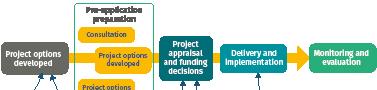
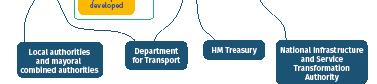
Source: Authors’ analysis
For local projects, mayoral combined authorities, as the local transport authority, have relevant powers to manage roads, buses and light rail (Reardon and Benson 2025). However, the requirement for a TWAO, granted by the secretary of state, can hold up projects that would otherwise have been approved. In Manchester, the extension of Piccadilly Station by the addition of two platforms was held up because the TWAO, submitted in 2014, was not granted approval (TfN 2020). Central government cancelled the project nine years after application (BBC News 2023).
Recommendation: Mayors should be granted powers to approve Transport and Works Act Orders for wholly local projects, or where mayoral combined authorities can reach bilateral agreements for cross-boundary projects.
Funding for local or regional projects can be sourced from a range of different funding pots, including:
• devolution deals
• City Region Sustainable Transport Settlements
• Transport for City Regions funding
• local growth funds (sometimes accessed through local enterprise partnerships)
• several government grants, although the chancellor cut some of these, such as the Restoring Your Railway Fund, in the autumn 2024 budget
• private funding.
The 2025 comprehensive spending review (CSR) marked a significant increase in transport investment for local areas than in previous governments. Transport for City Regions funding for the nine eligible mayoral strategic authorities totals £15.6 billion, the City Region Sustainable Transport Settlements amount to £5.7 billion (DfT 2025c) and, for places that have not received this funding, the CSR allocated £2.3 billion for investment in local transport through the Local Transport Grant.
While a significant proportion of this funding is allocated to capital expenditure, the funding is allocated over a seven-year period (2025/26 to 2031/32) (DfT 2025c). While most regions see a gradual increase in annual capital investment – in some places increasing to more than £500 million annually – this is unlikely to be enough to unlock transformational infrastructure investments.
Cutting the Restoring Your Railway Fund has held up projects that would otherwise have gone ahead, for example the reopening of the line between Bristol and Portishead (Robinson 2025). However, this fund highlights an issue with some of the ways in which funding is allocated. It involved a competitive bidding process, which can skew towards larger authorities with greater capacity, rather than pure need or value (Built Environment Committee 2022), reinforcing funding inequalities across England.
An example of the complexity of some funding settlements is Coventry Very Light Rail. The DfT classified this as a research and development scheme to demonstrate ‘very light rail’ technology (Coventry City Council 2025), and the scheme has received funding from the DfT, Coventry City Council, Dudley Council, the West Midlands devolution deal, a City Region Sustainable Transport Settlement and several other funding pots. In 2024, the DfT rejected further funding for the scheme and said that it required the development of a demonstrator line before it would commit further funding (Nevett 2024). Coventry City Council predicts that the total cost of the scheme will be £189 million (ibid) – around 1 per cent of the DfT’s capital departmental expenditure limit for 2024/25 (DfT 2024b).
Accessing debt and the Public Works Loan Board (PWLB)
Most transport grant funding is time-limited rather than permanent, which constrains the ability of local authorities to borrow to fund larger transport projects. Long-term transport infrastructure (generally projects over a certain size) will typically require financing over 20–30 years, but this depends on stable and predictable revenue streams that short-term, sporadic grants do not provide (Urban Transport Group 2025). Another option for a stable revenue stream is local taxation, but councils have very restricted powers to raise taxes other than through council tax.
To finance long-term transport infrastructure, local authorities primarily rely on borrowing through the Public Works Loan Board (PWLB), which offers preferential interest rates for local authority capital investment (DMO 2023). Although authorities are technically able to borrow from private markets, this debt is often more expensive than loans available through the PWLB, which offers loans with extremely narrow margins (Ritchie 2025). The UK Municipal Bonds Agency illustrates this: it was created in 2014 but closed in 2025 after having provided just two bonds (ibid).
PWLB lending is structured to avoid financial risk to the exchequer, including restrictions on early repayment and debt refinancing, which prevent authorities from replacing older, higher-cost debt with cheaper borrowing when interest rates fall (Lloyd and Grayston 2023). It is to the detriment of local finance that the PWLB is designed to maintain a neutral fiscal position.
In practice, the binding constraint on local authority borrowing is not access to debt, but the ability to demonstrate sufficient and predictable revenue to service it. While the PWLB remains the most effective and lowest-cost mechanism for financing local transport infrastructure, local authorities can only make use of it when they can show that long-term repayment is affordable (DMO 2023). Providing local and regional bodies with stable revenue streams, either through giving them powers to raise revenue, or through devolving some tax receipts, is critical to unlocking greater use of PWLB borrowing for transport investment.
There have been ad-hoc attempts to fund transport investment, but there is not widespread adoption. For example, in London, the Northern Line extension to Battersea was funded partially through tax increment financing, which allows local planning authorities to use land-value uplift arising from the infrastructure investment to fund the project (London Assembly 2022). Nottingham partially funds its tram system through local revenue raising via its workplace parking levy (Nottingham City Council 2024).
Unlike local authorities, mayoral combined authorities do not have consistent revenue, limiting their fiscal autonomy. Local authorities collect council tax which provide a degree of financial stability that, in theory, enables the provision of services and infrastructure. In practice, these receipts are largely required to meet statutory duties. All mayors are able to levy a mayoral precept on council tax to fund investment aimed at promoting economic development, although only four mayoral combined authorities used this power in 2025/26 (MHCLG 2025a). In a few cases, mayoral combined authorities benefit from a share of business rates. Mayoral combined authorities are also more limited than local authorities because of an imposed cap on borrowing, which was reversed for local authorities in 2011. There are plans for mayoral strategic authorities, which will replace mayoral combined authorities, to receive at least £13 billion in centrally allocated, multi-year funding. While this will provide necessary revenue streams, it will continue their reliance on central government, rather than devolving tax powers or revenues.
It is a positive step that mayoral combined authorities can establish revenue streams through council tax precepts and, in some areas, benefit from regional growth by retaining a share of business rates. Recent announcements on a visitor levy in England (MHCLG 2025b), which could raise millions of pounds for mayoral regions each year (Sandford 2025), are another welcome step. However, fiscal devolution cannot stop there. Council tax is one of the most regressive taxes in the UK, meaning that reliance on council tax precepts raises revenue in a way that is inherently inequitable. Business rates retention can help incentivise mayoral combined authorities to invest in infrastructure that supports economic growth, but this approach is applied unevenly across these authorities and excludes many other taxes that also rise with growth, such as income tax and VAT.
Recommendation: Mayors should have guaranteed revenue streams to borrow against, and revenue-raising powers to capture the local benefits of the investment.
There are two key principles for the design of local finance systems that can support transport-led growth: certainty and buoyancy. Certainty, through stable and predictable revenue streams, enables long-term planning and investment. Buoyancy ensures that local institutions directly benefit from the economic growth they help to generate.
There are several policy solutions available to achieve certainty and buoyancy (see tables 3.4 and 3.5).
TABLE 3.4
Certainty: stable, predictable revenues that can be borrowed against
Assigned share of national taxes
Remove debt cap for mayoral combined authorities
Hypothecated share of VAT or income tax assigned to mayoral combined authorities on a per-capita basis
Align mayoral combined authority borrowing rules with those for local authorities by removing centrally imposed borrowing caps, while retaining compliance with the prudential code
Source: Authors' analysis
High – large, stable tax bases with predictable yields
Medium – borrowing will still need to be financially viable but makes investing easier once revenue increases and becomes more consistent
TABLE 3.5
Buoyancy: revenues that rise with economic growth and capture the local benefits of transport
Codified tax increment financing
Land-value capture linked to transport investment
Income tax earn-back
Formalising and standardising tax increment financing (TIF) arrangements to allow the future business rate or land-value uplift generated by transport investment to be ringfenced to repay borrowing
Charging levies on new property developments built near a transport scheme
Retention of a share of additional income tax generated by employment and wage growth that is attributable to transport investment
Source: Authors' analysis
Medium – project-specific and place-based, but closely aligned to transport-led regeneration
Medium – highly responsive to infrastructure investment, but dependent on scheme design, which runs the risk of being onerous for mayoral combined authorities
High – high amount of taxes collected through income tax, more certain and immediate than property growth
A long-term, sustainable solution would be reform of council tax into a new form of property taxation. Regular re-evaluation would mean that increases in land values, through increases in property values, due to transport investment would be captured in the tax. This would address the longstanding issue that council tax is based on 1991 rates and mean that mayoral combined authorities and local authorities would benefit directly from transport investment. An analysis of what an entirely reformed property tax system would look like is beyond the scope of this report. However, it would represent certain and permanent revenue streams, while also being extremely buoyant in response to transport investment and the economic growth it can drive.
As discussed above, secretary of state sign-off is needed for most transport projects. The Institute for Transport Studies suggests that politicians have significant discretion to make these decisions (Worsley and Mackie 2015).
The breakdown of cross-party consensus and support for High Speed 2 (HS2) contributed to the ultimate cancellation of the project. Another example that suggests politics plays a role in transport decision-making is the recent decisions over airport expansions. These run counter to the government’s net zero aims, have dubious claims about their growth impacts (Chapman and Pot 2025) and, in some cases, have run counter to what local leaders consider would be best for their areas.
The impact of politics has been a feature of transport investment decisions for decades. Originally hailed as the “biggest single investment in public transport outside London”, the Greater Manchester Metrolink was threatened by the then transport secretary Alistair Darling pulling the funding due to claims of costs “rising out of control” (Hetherington 2004). However, Darling did a U-turn after significant lobbying by Greater Manchester MPs, including a former environment minister and John Prescott (one of the original proponents of the scheme).
One of the drivers for the poor BCRs discussed in chapter 2 is the difficulty in predicting demand. This is particularly true for projects that are transformational or a completely new piece of infrastructure. Despite heated disagreement among academics over the underestimation or overestimation of patronage on public transport (Næss et al 2006; Eliasson and Fosgerau 2013), a 2010 review into new rail stations concluded that there is no overall bias in either direction (Steer Davies Gleave 2010).
The 2010 report found that more than half the stations analysed saw greater than projected demand, although most were within 20 per cent of projected demand (Steer Davies Gleave 2010). The largest outlier was the Ebbw Vale Parkway station, where demand was 450 per cent greater than projected. The then Strategic Rail Authority partially drove this as it had requested that “rail demand arising from regeneration of the area” be excluded from forecasts.
Other stations and new routes have shown a similar trend. The Northumberland Line and the Borders Railway have both had significantly higher than projected passenger numbers, and there are several others that have also followed this pattern (Create Streets 2025, Northumberland City Council 2025). It is likely that a mischaracterisation of the wider economic impacts of the investment, including land-use change, is in part driving these underestimations of passenger use.
Opened in September 2015, the Borders Railway connects Tweedbank in the Scottish Borders to Edinburgh, along a line that was closed under the Beeching cuts. It is considered a success, delivered on time and within budget (Transport Scotland, no date) and Network Rail’s management of the project has been commended (Heubeck 2023).
Despite this success story, the final business case revaluated the BCR down to 0.5 from 1.2 (E&Y 2012). Annual return trips were projected to be 647,136 in the first year of operation (2015/16) (E&Y 2012), but the actual number of trips between September 2025 and October 2016 was 1,419,000 (equivalent to 709,500 return trips) (Scottish Government 2020) – almost 10 per cent higher than predicted.
The knock-on impacts of the Borders Railway have been far-reaching. Along the length of the route, there has been significant housebuilding and a boost of employment in the tourism industry by 8 per cent (ICE, no date) –impacts that were not explicitly factored into the business case (E&Y 2012).
Unlike rail projects, road projects rarely induce land-use change (Börjesson et al 2014). Road projects are subject to evaluation through a ‘Post Opening Project Evaluation’ (POPE), which is carried out at one and five years after opening (Atkins et al 2017b). It has been suggested that the standardisation of these evaluations has resulted in better project appraisal (ibid). However, road planning is in the process of changing how transport needs are assessed, moving from ‘predict and provide’ towards ‘decide and provide’,2 and it is unclear how this approach will change road scoring through standard BCR methods.
Poor demand projections, a lack of evaluation and a shifting approach to transport decision-making mean that it is hard to make well-informed decisions about transport investment. Despite this, demand forecasting is relied on heavily when drawing up business cases, particularly the BCRs.
2 ‘Predict and provide’ assumes that current trends in road traffic will continue unabated and builds to meet this need, while ‘decide and provide’ assesses the transport needs of an area and designs interventions accordingly (Lyons 2024).
Having secured funding and approval for a transport project, there is then a risk that the money will not be spent effectively or deliver the maximum benefits from the investment. Making the case for public investment is made easier if there is less risk that these things will happen.
Despite spending on transport investment being broadly concurrent with spending in other OECD countries, transport infrastructure in the UK lags behind its Western European counterparts, in terms of both inter-city (Centre for Cities 2021) and inner-city (Curtis 2025) transport systems. High Speed 2 (HS2) is often held up as a quintessential British transport project:
• over-budget
• delayed
• cancelled
• plagued by costly additions due to an “arcane planning system” (Taylor 2025)
• stymied by obscure regulation
• subject to strenuous public objections
• highly politicised.
Some of the criticisms of HS2 help to understand the deeper issues in delivering transport infrastructure in England. The cancellation of the northern leg of HS2, while spurring further criticisms of investment preferentially serving London and the South East, also cut the part of the line that had the highest projected return on investment (DfT 2020). In addition, the full realisation of the value from the southern leg of HS2 was reliant on completion of the full scheme (ibid). Ultimately, preventing ‘another HS2’ is necessary to ensure the government delivers both the greatest value for money on its transport investments and growth.
The government-commissioned review of HS2 identified a host of issues in the delivery of it, which can be broadly broken down into politics, cost and governance (Stewart 2025). Many of the criticisms of HS2 focussed on the costs (House of Commons Public Accounts Committee 2021), but the Stewart review, and others (Lamble 2025), found that better governance could have helped keep costs down, and that protecting HS2 from political interference might also have helped manage costs better.
The overarching finding of the review was that “the governance structure is not fit for purpose and needs to be changed” (Stewart 2025: 11). The role of the Department for Transport (DfT) was unclear, and there was not sufficient experience within the department to play the several roles it had in the delivery of HS2, including being funder, sponsor, client and shareholder. At the same time, HS2 Ltd suffered a significant turnover of staff, including its chief executive, which had an impact on delivery. The review found that both HS2 Ltd and the DfT were underpowered given the scale of the project, and were not able to access appropriate advice when required.
Despite securing cross-party buy-in in its early stages, by the time of its cancellation, HS2 had been highly politicised, with the Stewart review finding that “politics and the pace of political decision-making have been major disruptors” (Stewart 2025: 20). A fear of HS2 being cancelled played into a pressure to “maintain momentum” (ibid) on the project, which might have led to poor decision-making. The review also highlighted the importance of projects having political advocates at all levels of government. The devolution of some transport funding to mayoral combined authorities should support this.
A disagreement between the DfT and HS2 Ltd on the “estimate at completion” led to HS2 receiving annual funding settlements, significantly increasing uncertainty and costs. HS2 sat within the DfT’s budget, which meant that any unexpected cost rises had to be covered from the DfT’s other departmental expenditure limits budget. The Stewart review was clear that a project of this scale should have a separate funding settlement, and that HS2 should have been given its own departmental expenditure limit, a five-year funding control period and the flexibility to move money between years.
Alongside the structural issues identified, HS2 also suffered from similar problems to those outlined in chapter 2, with the wider economic and growth benefits undervalued (Atkins 2020). The business cases for mega projects tend to be looked at in isolation, and do not consider the wider impacts of these schemes, particularly with respect to land-use change (Stewart 2025). Yet the Stewart review highlighted that economic and growth benefits will “heavily depend on other complementary investments (skills, housing, new agglomerations forming, existing agglomerations expanding)” (Stewart 2025: 80), most of which are driven by land-use change.
The Treasury and decision-makers tend to be risk averse (not entirely unreasonably, given the scale of public money being spent), but existing methodologies not adequately accounting for wider economic benefits mean that decision-makers
do not have enough information about possible benefits or risks to make a truly informed decision.
The cancellation of HS2 was not the first time that the cancellation of a project, leaving it only partially completed, resulted in a worse return on investment than projected and incomplete realisation of the proposed benefits. The Ordsall Chord in Manchester – a railway link connecting Manchester’s main train stations – is another example of a project in the north of England not being seen through to completion, rendering the returns on investment from the first part of the project considerably worse than had the project been completed.
In this case, while the Ordsall Chord itself was completed, the work was planned as part of a wider programme of rail enhancement across Manchester. The increase in capacity unlocked by the construction of the Chord relied on the expansion of key Manchester stations, including the addition of two platforms at Manchester Piccadilly (as discussed earlier), platform extensions at Manchester Oxford Road and the redevelopment of Manchester Victoria Station (Manchester City Council 2013). Without the expansion of Manchester Piccadilly, these benefits have not been realised.
It is common for large projects to be delivered in stages. However, it is necessary to protect the full project to ensure it is seen through to completion. This is particularly true where the benefits rely on the full project. A looming risk of cancellation, or a lack of certainty over funding or approvals, will increase costs, and not completing the project will mean that the proposed benefits will not be realised.
International comparisons of transport infrastructure show that overruns are common, but the UK performs relatively poorly on unit costs and delivery times (Ruparel et al 2024), particularly for rail and urban transit (Catalão et al 2023), with projects typically more expensive and slower to deliver than comparable schemes in many European countries, including France, Germany and Spain (Ruparel et al 2024).
Evidence from major projects such as HS2 highlights that the one of the most significant drivers of rising costs and delays is the limited time spent in the early design phase, which leads to poor control over the scope of the project. These issues are compounded by complex governance arrangements, which make resolving these challenges more difficult.
The review of HS2 found that a lack of time spent in the design phase and a commitment to “gold plating” designs drove up costs for the project (Stewart 2025). Analysis of the cost of building new trams suggested that costs could be lowered by standardising designs, streamlining planning decisions, and addressing some of the additional expenses associated with laying tracks in the road (specifically, managing utilities) (Dumitriu et al 2024).
However, high costs alone have not driven the UK’s poor track record on delivery of transport infrastructure – inconsistent project pipelines have also had an impact. Decades of stop–start funding have fragmented industry capacity by limiting knowledge retention and sustained investment into building and sustaining skills. Creating a clear, stable pipeline of transport projects is crucial for long-term capability and to bring UK delivery closer to its international peers.
The National Infrastructure and Service Transformation Authority (NISTA) was created in April 2025 by bringing together the National Infrastructure Commission and the Infrastructure and Projects Authority. The move was intended to bring together the strategic oversight provided by the National Infrastructure Commission and the delivery expertise of the Infrastructure and Projects Authority. NISTA currently maintains an ‘infrastructure pipeline’, which lists investment in capital infrastructure across government, but this maintenance is passive, with NISTA offering advice or support to departments or delivery partners only when requested.
“The best time to have started Crossrail 2 was the day after Crossrail 1 ended. That way the skills would have been retained, instead of needing to rehire and upskill a workforce a few years later when the funding is confirmed.”
Government official, interviewee
The lack of national- and regional-level oversight of how projects are sequenced and built on one another creates a fundamental coordination problem in transport infrastructure delivery (NIC 2024). Fragmented and stop–start pipelines accelerate skills drain by preventing the retention of specialist expertise and institutional knowledge across successive projects. Without a continuous pipeline of work, workers with highly specialised skills are unlikely to remain in the sector, and when projects resume, industry is required to rehire and retrain, increasing costs and weakening delivery capability. When there are gaps between major schemes, skilled workers are forced to leave the sector. For example, the successful electrification of the Core Valley Lines as part of the Great Western Electrification Project risks losing the skills and efficiencies developed because of a lack of clarity on when the Midland Main Line project will proceed, driving skilled workers to move elsewhere (RIA 2025).
Recommendation: The National Infrastructure and Service Transformation Authority (NISTA) should play a role in addressing skills and knowledge gaps across the UK. It should also offer support on the delivery and governance of transport schemes across the public sector, including to mayoral combined authorities where appropriate.
The government has made positive steps to supporting transport investment through increasing the amount of funding and through longer-term settlements. However, this funding alone will not unlock genuinely transformational transport projects across the UK. Even for those projects that do get approved, there is a risk of cancellation.
Our recommendations, taken together, should ensure that ambitious and transformational transport projects are taken forwards. By ensuring that the growth impacts of projects are reflected in forecasts, national politicians should have increased confidence in investments. Using the forthcoming Integrated National Transport Strategy to guide investment, and the National Infrastructure and Service Transformation Authority (NISTA) to support where appropriate, decision-making processes and delivery should be smoother.
Finally, empowering mayors through devolving revenue-raising powers and giving them approval powers for projects should support the delivery of regional and local transport projects.
Recommendation: Within its existing standards of evidence, the Office for Budget Responsibility (OBR) should explore ways to recognise a wider range of credible long-term productivity impacts from transport investment in its fiscal forecasts.
Recommendation: Land-use change towards articulated density should be considered a proxy for the transformational potential of a transport proposal. The best place to assess transformational potential is within the strategic business case.
Recommendation: Transport investment from the Department for Transport (DfT) should play a redistributive role across the UK, and should use the forthcoming Integrated National Transport Strategy to ensure national transport projects are aligned towards a common goal and vision for the transport system.
Recommendation: The National Infrastructure and Service Transformation Authority (NISTA) should play a role in addressing skills and knowledge gaps across the UK. It should also offer support on the delivery and governance of transport schemes across the public sector, including to mayoral combined authorities where appropriate.
Recommendation: Mayors should be granted powers to approve Transport and Works Act Orders (TWAOs) for wholly local projects, or where mayoral combined authorities can reach bilateral agreements for cross-boundary projects.
Recommendation: Mayors should have guaranteed revenue streams to borrow against, and revenue-raising powers to capture the local benefits of the investment.
To truly unlock local public transport investment, mayors need:
• certainty – stable, predictable revenues that can be borrowed against, which might include an assigned share of national taxes or increases to their borrowing capacity from the Public Works Loan Board
• buoyancy – revenues that rise with economic growth and capture the local benefits of transport, which might include levies linked to land-value increases due to transport investment or formalising the use of tax increment financing.
Alexander H (2025) ‘Rail reform: statement made on 5 November 2025’, UK Parliament website, 5 November 2025. https://questions-statements.parliament.uk/writtenstatements/detail/2025-11-05/hcws1024
Atkins G (2020) ‘HS2 is still the quickest way to invest in northern and Midlands transport’, Institute for Government website, 23 January 2020. https://www.instituteforgovernment.org.uk/comment/hs2-invest-northernand-midlands-transport
Atkins G, Davies N and Kidney Bishop T (2017a) How to Value Infrastructure: Improving cost benefit analysis, Institute for Government. https://www.instituteforgovernment.org.uk/publication/report/ how-value-infrastructure
Atkins G, Wajzer C, Hogarth R, Davies N and Norris E (2017b) What’s Wrong with Infrastructure Decision Making? Conclusions from six UK case studies, Institute for Government. https://www.instituteforgovernment.org.uk/publication/report/whats-wronginfrastructure-decision-making
Baldwin A and Shuttleworth K (2021) How Governments Use Evidence to Make Transport Policy, Institute for Government. https://www.instituteforgovernment.org.uk/ publication/governments-evidence-transport-policy
BBC News (2023) ‘Salford Crescent: station upgrade and track revamp planned’, BBC News website, 25 May 2023. https://www.bbc.co.uk/news/uk-england-manchester-65694090
Börjesson M, Jonsson RD, Berglund S and Almström P (2014) ‘Land-use impacts in transport appraisal’, Research in Transportation Economics, 47(C): 82–91. https://ideas.repec.org/ a/eee/retrec/v47y2014icp82-91.html
Built Environment Committee (2022) ‘Public transport in towns and cities’, chapter 6, House of Lords, 9 November 2022. https://publications.parliament.uk/pa/ld5803/ldselect/ ldbuiltenv/89/8902.htm
Canary Wharf Group (2018) ‘Canary Wharf – catalyst for 30 years of growth in Tower Hamlets’, press release, 8 February 2018. https://group.canarywharf.com/press-release/canarywharf-catalyst-for-30-years-of-growth-in-tower-hamlets-080218
Catalão FP, Cruz CO and Sarmento JM (2023) ‘Determinants of cost deviations and overruns in UK transport projects’, Proceedings of the Institution of Civil Engineers – Transport, 176(5): 312–322
Centre for Cities (2021) Measuring Up: Comparing public transport in the UK and Europe’s biggest cities. https://www.centreforcities.org/wp-content/uploads/2021/11/Measuringup-Comparing-public-transport-in-the-UK-and-Europes-biggest-cities.pdf
Chapman A (2025) ‘Airport expansion would cancel out carbon savings of Clean Power Plan’, New Economics Foundation website, 21 January 2025. https://neweconomics.org/ 2025/01/airport-expansion-would-cancel-out-carbon-savings-of-clean-power-plan
Chapman A and Pot F (2025) ‘The economics of air transport in Europe: part one: air transport and growth’, New Economics Foundation website, 13 November 2025. https://neweconomics.org/2025/11/the-economics-of-air-transport-in-europe
Coventry City Council (2025) Coventry Very Light Rail, public report. https://edemocracy.coventry.gov.uk/ieListDocuments.aspx?CId=124&MId=13478&Ver=4
Coyle D and Sensier M (2018) ‘The imperial Treasury: appraisal methodology and regional economic performance in the UK’, working paper 02/2018, Bennett Institute for Public Policy. https://bennettschool.cam.ac.uk/wp-content/uploads/2020/12/The_Imperial_ Treasury_appraisal_methodology_and_regional_economic_performance_in_the_UK.pdf
Create Streets (2025) ‘Missing the train: how measuring access not time can get Britain’s growth back on track’, blog, 23 April 2025. https://www.createstreets.com/missing-thetrain-how-measuring-access-not-time-can-get-britains-growth-back-on-track
Curtis B (2025) ‘How France is getting ahead on urban public transport’, blog, Campaign for Better Transport, 28 February 2025. https://bettertransport.org.uk/blog/how-france-isgetting-ahead-on-urban-public-transport
Debt Management Office [DMO] (2023) ‘Technical note: calculation of interest rates on PWLB and NLF fixed rate loans and PWLB variable rate loans’, 15 June 2023. https://www.dmo.gov.uk/media/omgadxrg/dmo-technical-note-on-lending-ratemethodology-june-2023_-final.pdf
Department for Transport [DfT] (2012) The Economic Case for HS2: Value for money statement, GOV.UK. https://assets.publishing.service.gov.uk/media/5a796cd240f0b63d72fc5b36/hs2economic-case-value-for-money.pdf
Department for Transport [DfT] (2013) Understanding and Valuing the Impacts of Transport Investment, GOV.UK. https://assets.publishing.service.gov.uk/government/uploads/ system/uploads/attachment_data/file/253860/understanding-valuing-impactstransport-investment.pdf
Department for Transport [DfT] (2017) Hope Valley Rail Upgrade – Inspectors’ Report on the Public Inquiry, GOV.UK. https://assets.publishing.service.gov.uk/ media/5a7c738b40f0b62aff6c1c2f/hope-valley-inspectors-report.pdf
Department for Transport [DfT] (2020) Full Business Case: High Speed 2 phase one, GOV. UK. https://assets.publishing.service.gov.uk/government/uploads/system/uploads/ attachment_data/file/939905/full-business-case-hs2-phase-one.pdf
Department for Transport [DfT] (2023) Understanding and Quantifying Transformational Impacts from Transport Interventions: Literature review, Arup. https://www.gov.uk/ government/publications/transformational-impacts-of-transport
Department for Transport [DfT] (2024a) ‘TSGB1302: UK public expenditure on transport by country and spending authority’, Transport Statistics Great Britain (statistical dataset). https://assets.publishing.service.gov.uk/media/6762dced3229e84d9bbde7dd/ tsgb1302.ods
Department for Transport [DfT] (2024b) ‘DfT main estimates memorandum: 2024 to 2025’, GOV.UK website, 5 August 2024. https://www.gov.uk/government/publications/dft-mainestimates-memorandum-2024-to-2025/dft-main-estimates-memorandum-2024-to-2025
Department for Transport [DfT] (2025a) ‘Transport for City Regions funding allocations’, transparency data, GOV.UK website, 4 June 2025. https://www.gov.uk/government/ publications/transport-for-city-regions-funding-allocations/transport-for-city-regionsfunding-allocations
Department for Transport [DfT] (2025b) Impacts of Integrated Land-Use and Transport Planning: A rapid evidence assessment, GOV.UK. https://www.gov.uk/government/ publications/impacts-of-integrated-land-use-and-transport-planning
Department for Transport [DfT] (2025c) ‘City Region Sustainable Transport Settlements: confirmed delivery plans and funding allocations’, transparency data, GOV.UK website, 17 March 2025. https://www.gov.uk/government/publications/city-region-sustainabletransport-settlements-confirmed-delivery-plans-and-funding-allocations
Docherty I and Shaw J (2025) ‘Sorry for any inconvenience caused: why Britain messed up High Speed Rail’, The Political Quarterly, 96(2): 287–295. https://doi.org/10.1111/1467923X.13509
Dumitriu S, Hopkinson B, Boys Smith N, Milner D, Payiatis G and Leahy E (2024) Back on Track: How to build new trams in the UK and get Britain moving, Britain Remade and Create Streets. https://www.createstreets.com/wp-content/uploads/2024/08/Tram_ Report_Digital.pdf
Eliasson J and Fosgerau M (2013) ‘Cost overruns and demand shortfalls – deception or selection?’, Transportation Research Part B: Methodological, 57: 105–113. https://doi.org/10.1016/j.trb.2013.09.005
England’s Economic Heartland (2024) Keeping Trade on Track. https://cdn.prod.website-files.com/685839d1a71bb0fcad2cf1f2/ 68810ae436405b04b689a359_Keeping_Trade_on_Track_-_2024_edition_FINAL.pdf
Ernst & Young [E&Y] (2012) Borders Railway Final Business Case Final Version: Publicly available version, Transport Scotland. https://www.transport.gov.scot/media/10321/ ts_borders_fbc_final_version_issued.pdf
Frontier Economics (2024) The Economic Impacts of Transport Interventions: An evidence review for the Department for Transport. https://assets.publishing.service.gov.uk/ media/671a041baa6c7eb217b778e5/dft-economic-impacts-transport-interventions.pdf
Frost S (2024) ‘Joined up thinking: seven tests for the integrated national transport strategy’, IPPR. https://www.ippr.org/articles/joined-up-thinking-seven-tests-for-the-integratednational-transport-strategy
Frost S and Singer Hobbs M (2025) ‘A people-focussed future for transport in England’, IPPR. https://www.ippr.org/articles/a-people-focussed-future-for-transport-in-england González-Pampillón N and Overman HG (2020) ‘Regional differences in UK transport BCRs: an empirical assessment’, CEP occasional papers 53, Centre for Economic Performance, London School of Economics and Political Science. https://cep.lse.ac.uk/pubs/ download/occasional/op053.pdf
Hetherington P (2004) ‘Minister shows how to do a U-turn on rails’, Guardian, 13 September 2004. https://www.theguardian.com/business/2004/sep/13/communities. transportintheuk
Heubeck P (2023) ‘Resurrecting railways: lessons from two Scottish projects’, Journal, 141(pt 1). https://www.thepwi.org/knowledge/january-journal-2023/
His Majesty’s Treasury [HMT] (2024) ‘Country and regional analysis: 2024’, GOV.UK website, 20 November 2024. https://www.gov.uk/government/collections/country-andregional-analysis
His Majesty’s Treasury [HMT] (2025) ‘Green Book review 2025: findings and actions’, GOV.UK website, 11 June 2025. https://www.gov.uk/government/publications/green-book-review2025-findings-and-actions/green-book-review-2025-findings-and-actions
Hobhouse H (1994) ‘Modern docklands: the background to redevelopment’, in Hobhouse H (ed) Survey of London: Volumes 43 and 44, Poplar, Blackwall and Isle of Dogs, British History Online: 686–691. https://www.british-history.ac.uk/survey-london/vols43-4/ pp686-691
House of Commons (2007) ‘Nottingham Express Transit Tramway: written answers’, HC Deb, 19 June 2007, vol 164. https://hansard.parliament.uk/Commons/2007-06-19/ debates/07061962000031/NottinghamExpressTransitTramway
House of Commons Public Accounts Committee (2021) HS2 Summer 2021: Seventeenth report of session 2021–22 https://committees.parliament.uk/publications/7381/ documents/77661/default
House of Commons Public Accounts Committee (2025) Condition and Maintenance of Local Roads in England: Second report of session 2024–25. https://committees.parliament.uk/ publications/46261/documents/232494/default
Institution of Civil Engineers [ICE] (no date) ‘Borders Railway’, ICE website. https://www.ice.org.uk/what-is-civil-engineering/infrastructure-projects/ borders-railway
International Transport Forum [ITF] (2022) ‘Statistics brief – spending on transport infrastructure’. https://www.itf-oecd.org/sites/default/files/docs/inland-transportinfrastructure-investment-brief-2022.pdf
Knowles RD and Ferbrache F (2016) ‘Evaluation of wider economic impacts of light rail investment on cities’, Journal of Transport Geography, 54: 430–439. https://www.sciencedirect.com/science/article/abs/pii/S0966692315001659
Lamble K (2025) ‘HS2 was doomed to be a mess, say insiders – because of a “problem in this country”’, BBC InDepth, 21 July 2025. https://www.bbc.co.uk/news/articles/cx2l8kq52y8o
Laird J, Nash C and Mackie P (2014) ‘Transformational transport infrastructure: cost–benefit analysis challenges’, Town Planning Review, 85(6): 709–730. doi:10.3828/tpr.2014.43. https://www.jstor.org/stable/24579258
Lloyd T and Grayston R (2023) ‘Taking back the controls: modernising the financial framework for housing investment’, Highbury Group on Housing Delivery paper. https://e-voice.org.uk/ highburygroup/assets/documents/toby-lloyd-and-rose-grayston
London Assembly (2022) ‘Tax increment financing (1)’, question to the mayor, 19 May 2022. https://www.london.gov.uk/who-we-are/what-london-assembly-does/questions-mayor/ find-an-answer/tax-increment-financing-1-0
Lyons G (2024) ‘Predict or decide? How “triple access planning” can change placemaking’, The Planner, 4 April 2024. https://www.theplanner.co.uk/2024/04/04/predict-or-decide-howtriple-access-planning-can-change-placemaking
Manchester City Council (2013) ‘Report for resolution’, 11 September 2013. https://democracy.manchester.gov.uk/Data/Executive/20130911/Agenda/ Rail_Northern_Hub.pdf
Mayor of London (2008) The London Plan: Spatial development strategy for Greater London: Consolidated with alterations since 2004 https://www.london.gov.uk/programmesstrategies/planning/london-plan/past-versions-and-alterations-london-plan/londonplan-2008-consolidated-alterations-2004
Mayor of London (2017) The London Plan: The spatial development strategy for Greater London: Draft for public consultation. https://www.london.gov.uk/sites/default/files/ new_london_plan_december_2017.pdf
McCarthy J (2018) ‘Transport secretary Chris Grayling urged to back £1bn Swansea Bay Metro’, WalesOnline, 14 January 2018. https://www.walesonline.co.uk/business/business-news/ transport-secretary-chris-grayling-urged-14153916
Milner D, Lloyd T, Leahy E, Toms R, Marshall F and Dubiez B (2024) Stepping Off the Road to Nowhere, Create Streets. https://www.createstreets.com/steppingofftheroadtonowhere
Ministry of Housing, Communities and Local Government [MHCLG] (2025a) ‘Council tax levels set by local authorities in England 2025 to 2026 (revised)’, accredited official statistics, GOV.UK website, 25 April 2025. https://www.gov.uk/government/statistics/council-taxlevels-set-by-local-authorities-in-england-2025-to-2026/council-tax-levels-set-by-localauthorities-in-england-2025-to-2026
Ministry of Housing, Communities and Local Government [MHCLG] (2025b) ‘Visitor levy in England’, consultation, GOV.UK website, 26 November 2025. https://www.gov.uk/ government/consultations/overnight-visitor-levy-in-england
Næss P, Flyvbjerg B and Buhl S (2006) ‘Do road planners produce more “honest numbers” than rail planners? An analysis of accuracy in road‐traffic forecasts in cities versus peripheral regions’, Transport Reviews, 26(5): 537–555. https://doi.org/10.1080/01441640500532005
National Infrastructure Commission [NIC] (2024) Cost Drivers of Major Infrastructure Projects in the UK
Nevett J (2024) ‘West Midlands mayoral rivals pledge to fund very light rail plans’, BBC News website, 23 March 2024. https://www.bbc.co.uk/news/uk-england-coventrywarwickshire-68637156
Northumberland County Council (2025) ‘Northumberland Line update’, 3 September 2025. https://northumberland.moderngov.co.uk/documents/s27058/Northumberland%20 Line%20Update.pdf
Nottingham City Council (2024) Nottingham’s Workplace Parking Levy: 10 year impact report, Transport Nottingham. https://www.transportnottingham.com/wp-content/ uploads/2024/03/WPL-report.pdf
O’Neill J, Johns M and Billingham Z (2025) ‘On track to prosperity: Great Northern Rail’, blog, IPPR North, 9 June 2025. https://www.ippr.org/articles/on-track-to-prosperity Organisation for Economic Co-operation and Development [OECD] (no date) ‘Long-term strategic vision for infrastructure’, OECD website. https://infrastructure-toolkit.oecd.org/ country/switzerland
Pickett L and Winnett J (2022) Transport Appraisal and Evaluation, research briefing CBP-9495, House of Commons Library. https://researchbriefings.files.parliament.uk/ documents/CBP-9495/CBP-9495.pdf
Rail Delivery Group (no date) ‘About the Passenger Demand Forecasting Handbook’. https://www.raildeliverygroup.com/pdfc/about-the-pdfh.html
RAIL magazine (2024) ‘Rail minister marks completion of £150m Hope Valley Railway upgrade’, RAIL magazine, 10 April 2024. https://www.railmagazine.com/ news/2024/04/10/minister-marks-completion-of-hope-valley-railway-upgrade
Railway Industry Association [RIA] (2025) ‘Transport Select Committee Inquiry into: rail investment pipelines – ending boom and bust’. https://www.riagb.org.uk/common/ Uploaded%20files/Publications/RIA%20Response%20to%20Rail%20Investment%20 Pipelines%20-%20Ending%20Boom%20and%20Bust%202025.pdf
Reardon L and Benson M (2025) Who is Responsible for Local Transport in England?, research briefing, House of Commons Library. https://commonslibrary.parliament.uk/researchbriefings/cbp-10321
Ritchie (2025) ‘UK’s efforts to create municipal bond market fall flat’, Bloomberg website, 23 June 2025. https://www.bloomberg.com/news/articles/2025-06-23/uk-muni-bondagency-stops-deal-search-as-councils-fail-to-create-us-style-market
Robinson H (2025) ‘Final funds agreed for Portishead to Bristol line’, BBC News website, 10 February 2025. https://www.bbc.co.uk/news/articles/ce3lqzy5qqdo
Ruparel R, Roche P, Williams D, Hollingsworth J, Westgate S, Chapman T, Zaayman E, Fox H and Johnson A (2024) ‘Reshaping British infrastructure: global lessons to improve project delivery’, Boston Consulting Group website, 7 February 2024. https://www.bcg.com/ united-kingdom/centre-for-growth/insights/reshaping-british-infrastructure-globallessons-to-improve-project-delivery
Sandford M (2025) ‘A visitor levy for English mayors?’, insight, UK Parliament website, 10 December 2025. https://commonslibrary.parliament.uk/a-visitor-levy-for-english-mayors
Scottish Government (2020) ‘The Scottish Borders Railway Line evaluation reports and projections: EIR release’, Scottish Government website, 9 January 2020. https://www.gov.scot/publications/foi-19-02392
Steer Davies Gleave (2010) Station Usage and Demand Forecasts for Newly Opened Railway Lines and Stations: Final report, GOV.UK. https://assets.publishing.service.gov.uk/ media/5a7997aced915d07d35b6af2/demand-forecasting-report.pdf
Stewart J (2025) Major Transport Projects Governance and Assurance Review: The HS2 experience, GOV.UK. https://www.gov.uk/government/publications/major-transportprojects-governance-and-assurance-review
Stokes S (2025) ‘£2.5bn tram plan delayed after government review’, BBC News website, 18 December 2025. https://www.bbc.co.uk/news/articles/c78vrzpzle2o
Suresh N, Ghaw R, Obeng-Osei R and Wickstead T (2024) ‘Public investment and potential output’, discussion paper 5, Office for Budget Responsibility. https://obr.uk/docs/dlm_ uploads/Public-investment-and-potential-output_August-2024.pdf
Suzuki H, Cervero R and Iuchi K (2013) Transforming Cities with Transit: Transit and land-use integration for sustainable urban development, The World Bank. https://documents1.worldbank.org/curated/en/947211468162273111/pdf/ Main-report.pdf
Taylor R (2025) ‘Planning and Infrastructure Bill’, volume 764, Hansard, 24 March 2025. https://hansard.parliament.uk/commons/2025-03-24/debates/6C99E365-F6AF-4B7C8A0C-1D326D76D90D/web
Tetlow G and Pope T (2024) Better Forecasts: How can the OBR improve the way it judges the supply-side effects of policy?, Institute for Government. https://www.instituteforgovernment.org.uk/sites/default/files/2024-10/OBRsupply-policy-forecasting.pdf
Topham G and Halliday J (2026) ‘Labour revives Northern Powerhouse Rail project with pledge of £45bn funds’, Guardian, 13 January 2026. https://www.theguardian.com/ business/2026/jan/13/northern-powerhouse-rail-project-pledge-funds
Transport Action Network (2025) ‘Lower Thames Crossing spiralling costs: 17% increase in just 9 months’, press release, 3 December 2025. https://transportactionnetwork.org.uk/lowerthames-crossing-spiralling-costs-17-increase-in-just-9-months
Transport for the North [TfN] (2020) ‘Northern leaders call for urgent “Thameslinklevel” of commitment for top congestion hotspot’, press release, 28 February 2020. https://www.transportforthenorth.com/newsroom/manchester-central-rail-congestion
Transport Scotland (no date) ‘Borders Railway’. https://www.transport.gov.scot/projects/ borders-railway/borders-railway
Urban Transport Group (2025) The Pathway to a Brighter Transport Future: Invest and grow https://www.urbantransportgroup.org/system/files/general-docs/UTG%20Report%20 -%20Invest%20and%20grow%20FINAL.pdf
Venables AJ (2016) ‘Incorporating wider economic impacts within cost-benefit appraisal’, discussion paper 2016-05, International Transport Forum, February 2016. https://www.itf-oecd.org/sites/default/files/docs/incorporating-wider-economicimpacts-cba.pdf
Welsh Government (2021) Swansea Bay and West Wales Metro: WelTAG stage 2: Final report https://www.gov.wales/sites/default/files/publications/2021-10/swansea-bay-and-westwales-metro-weltag-stage-2-final-report.pdf
Worsley T and Mackie P (2015) Transport Policy, Appraisal and Decision-Making, University of Leeds. https://www.racfoundation.org/assets/rac_foundation/content/ downloadables/Transport_policy_appraisal_decision_making_worsley_mackie_ May_2015_final_report.pdf
For more information about the Institute for Public Policy Research, please go to www.ippr.org
You can also e-mail info@ippr.org or find us on X @ippr
Institute for Public Policy Research
Registered Charity no. 800065 (England & Wales), SC046557 (Scotland), Company no, 2292601 (England & Wales)