Institute for Public Policy Research
ADAPT OR DIE WHY PROGRESSIVES NEED TO DEAL WITH EXTREME WEATHER
Sam Alvis and Sofie Jenkinson
March 2026
Institute for Public Policy Research
Sam Alvis and Sofie Jenkinson
March 2026
IPPR, the Institute for Public Policy Research, is an independent charity working towards a fairer, greener, and more prosperous society. We are researchers, communicators, and policy experts creating tangible progressive change, and turning bold ideas into common sense realities. Working across the UK, IPPR, IPPR North, and IPPR Scotland are deeply connected to the people of our nations and regions, and the issues our communities face.
We have helped shape national conversations and progressive policy change for more than 30 years. From making the early case for the minimum wage and tackling regional inequality, to proposing a windfall tax on energy companies, IPPR’s research and policy work has put forward practical solutions for the crises facing society.
IPPR 4th floor, 8 Storey's Gate London SW1P 3AY
E: info@ippr.org www.ippr.org
Registered charity no: 800065 (England and Wales), SC046557 (Scotland)
This paper was first published in March 2026. © IPPR 2026 The contents and opinions expressed in this paper are those of the authors only.
Sam Alvis is associate director for energy security and environment at IPPR. Sofie Jenkinson is founding director at Round Our Way.
Thank you to Persuasion UK for their support with polling and public opinion and to several organisations and individuals, Sophie Vipond and others for early conversations. Special thank you to Amy Norman for her in-depth review, and to those that provided comments on the draft, Becca Massey-Chase, Laurie Laybourn and Shayne Misselbrook. There are many more who we apologise for forgetting.
Download
This document is available to download as a free PDF and in other formats at: https://www.ippr.org/articles/adapt-or-die
Citation
If you are using this document in your own writing, our preferred citation is: Alvis S and Jenkinson S (2026) Adapt or die: Why progressives need to deal with extreme weather, IPPR. https://www.ippr.org/articles/adapt-or-die
Permission to share
This document is published under a creative commons licence: Attribution-NonCommercial-NoDerivs 2.0 UK http://creativecommons.org/licenses/by-nc-nd/2.0/uk/ For commercial use, please contact info@ippr.org
The impacts of extreme weather are already directly affecting people and communities across the UK. We lack ways to deal with this. Without a serious rethink, we will lose any reputation for competence and leave an opening for the far right. But bringing together protections from extreme weather now with policies to stop the problem getting worse can be a strategic asset for progressives.
The frequency and severity of flooding, storms and extreme heat are rising. Forest fires are now part of UK life. This has second-order effects: the number of days of schooling, work or leisure lost due disaster-induced closures is growing; and NHS waiting lists are increasing as a result of worsening health, some of which is caused by heat-related issues and increased cancellations due to the high temperatures in hospitals. Extreme weather is already hurting our ability to deliver what the country needs, whether that is better public services or faster economic growth.
Adaptation involves making adjustments that allow us to live with the impacts of increasingly extreme weather. But current adaptation policy is inadequate, and it has not been updated for the reality of climate change. According to Copernicus data, we will now pass 1.5 degrees of warming this parliament, not in 2045 as was expected (Copernicus 2025). Our infrastructure has suffered from decades of underinvestment, and is already failing – whether collapsed water pipes or electricity substation fires. Railways, roads and waterworks are far from prepared for more storms, floods or extreme heat.
As already shown in California and in Valencia in Spain, when climate impacts strike, and institutions are not prepared, people get angry. Populists are adept at redirecting public anger towards their own ends, highlighting state failure and a disconnected elite. Given the current lack of preparedness for flooding and heatwaves, it is an easy case for them to make. Populists are ignoring the real cause of disaster – rising emissions and climate change – so they can paint institutions as the villain. Progressives will need their own villain: climate change driven by rising emissions. When leaders explicitly tie extreme weather back to climate, support for government’s policies increases.
Extreme weather does not require a new approach to governing but a pragmatic approach to managing and reducing immediate and future climate risks. We cannot eliminate climate risk, but we can reduce the scale of climate impacts to a level that does not prevent progress on other issues we care about. Climate resilience is therefore the building block that allows progressives to develop wider societal resilience through our other goals. But for that we have to focus narrowly on addressing the first-order problem of climate impacts.
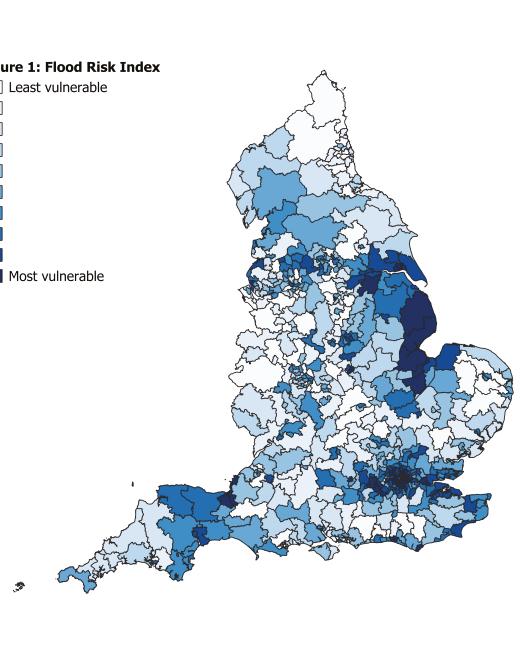
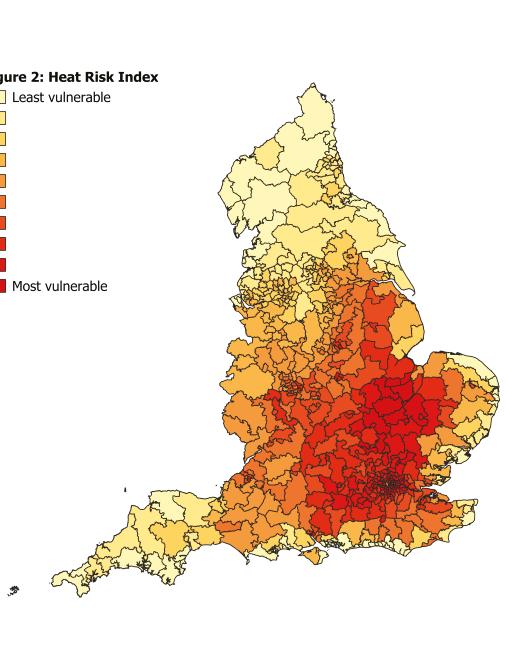
It is not just an issue of progressive concern. Flood and heat risk is highest in south Wales, the Humber, Essex and Lincolnshire, as well as in London. More conservative voters tend to have higher levels of threat perception and are already worried about both direct weather impacts and the higher insurance costs they face. Many lack the means to prepare, such as flood doors or air conditioning. Many communities are
currently stranded between economically unviable flood defences and unsellable properties, such as in Ynysybwl in south Wales (Davies and Lewis 2025).
Extreme weather events are not easy to predict. Governments can prevent some, but not all. The first order is to increase the quality and volume of our built and natural environment to protect communities. The public already sees reducing the severity of impacts – by decreasing the length of time that assets such as pylons are out of action and reducing the number of people hit, say, by a lack of flood defences – as sensible economic management. In Persuasion UK polling for this report, using the language of insurance and prudency raises support for adaptation by 20 per cent and increases climate issue salience by 6 per cent. Progressives should feel confident making that argument. Government will need to make practical changes to the accountancy rules (and climate scenarios) that govern our infrastructure finance, and find the fiscal space to make that a reality.
PROTECTING PEOPLE NOW CREATES THE SPACE TO PREPARE FOR THE FUTURE
Demonstrating how we are better protected now gives progressives the space to talk about the future. If people feel safe, it becomes an easier justification to stop making the problem, and therefore the future, worse. Progressives need to argue for climate change adaptation and reducing emissions alongside each other –an innate view that the public already holds. In Persuasion UK’s polling, only 6 per cent of the public wanted adaptation prioritised over mitigation, a minority position even among Reform-curious voters. Support for both sat at 59 per cent.
As we did with net zero, searching for too many co-benefits dilutes our credibility that we are solving the first-order problem of reducing the risk of extreme weather and can lead to political fractures. Bringing it back to the here and now does important political work for progressives by linking those with high climate concern on the left to those who feel under threat on the right.
Progressives can use policy more creatively to make this point. Given the cost and effort involved in having more and better infrastructure, we will need to tell clear and consistent stories on who is protected, for example:
• the school whose air conditioning means students can concentrate when there is an extreme heat event and their solar panels are powering it
• the homes whose insurance premiums have fallen as a result of new flood defences and whose bills are lower because of their home batteries
• the farmer who can still produce bumper crops mid-drought because they use less water
• the rugby or football club who can keep their doors open, heat the showers for players and bring down the costs of their floodlight and energy bills because of solar power on their stands.
“My grandfather came to the farm in 1935. We’ve gone from three generations ago, one flood. Then four floods for the last generation. My generation, currently we’re looking at fourteen plus. Where will this be for the following generation is anyone’s guess.”
Richard Bramley, Yorkshire farmer (Round Our Way 2024a)
Climate, by its nature, as both an immediate and a long-term problem, provides a case study on how we can be better at connecting the urgent concerns of the public with longer-term progressive goals that take time to manifest. This offer of foundational security now bridging to future security could equally apply to tackling the cost of living now and increasing wages in the future or, say, “being tough on crime and tough on the causes of crime”. We can no longer ignore the present at the expense of the future, but likewise we cannot forget the future when we focus on the now.
Reducing emissions will not stop climate change or its impacts. Even if emissions stopped tomorrow, existing greenhouse gases will further disrupt climate over the next decades. Flooding (such as in South Wales) and wildfires (in Scotland, for example) are the norm even with no further warming.
In recently published new advice, the Climate Change Committee has said that the government needs to prepare for a minimum of two degrees of warming above pre-industrial levels, given current trajectories. For the UK, that level means more heatwaves, drought, flooding, storms and wildfires (CCC 2025a). As we cross 1.5 degrees of warming and towards two degrees, there will be an 80 per cent chance of extreme heat every year, peak river flows will be 50 per cent bigger and wildfire days will treble (ibid).
The clarity of these risks is increasing. Each iteration of the Intergovernmental Panel on Climate Change’s (IPCC’s) ‘reasons for concern’ has substantially increased the severity, likelihood and proximity of impacts (see figure 1.1).
However, the issue for policymakers is that change is not linear. Impacts will strike with increasing frequency and unpredictable intensity. Atmospheric cycles, such as changes in the temperature of the Pacific Ocean (El Niño and La Niña), will accelerate some impacts and decelerate others, leading to hotter and colder years.
FIGURE 1.1
Each iteration of the IPCC’s reasons for concern has increased the certainty and severity of climate impacts
Changing risk assessment in consecutive IPCC reports
‘Adaptation’ is the collective term for adjustments that allow us to live with the impacts of increasingly extreme weather, driven by climate change – that is, to reduce their risk and the harm they cause. While the impacts vary by sector, the preparations and planning involved in responding to them fall under five broad categories:
• improving the resilience of infrastructure – for example, pylons that can still transmit as much electricity in heatwaves as they do when there is no heatwave
• building new defensive infrastructure, such as flood defences, or restoring nature
• making lifestyle changes at home or work – for example, installing air conditioning or having a more Mediterranean style of living such as having a siesta to manage peak heats
• preparing for impacts such as developing disaster relief programmes, business continuity plans or strategies for evacuation – expanded insurance schemes are also central to this
• changing governance to enforce or monitor the above – whether targets, state provision of new services or regulations.
CLIMATE IMPACTS MAKE PROGRESSIVE GOALS HARDER TO ACHIEVE AND THREATEN PROGRESSIVES’ COMPETENCE TO GOVERN
The challenge for progressives in government is how climate risks can undermine the ability to govern and perceptions of government. Public trust in the government is already low, and many people believe that it is unprepared for climate change and failing to do enough. This creates both chronic and acute risks:
• chronic: climate impacts make public policy goals harder to achieve and slow down progress, undermining a sense that the state can improve people’s lives
• acute: individual climate impacts, such as flooding, expose a lack of preparedness and act as a further proof point of state failure.
Current climate impacts are forcing community assets such as pubs to close and leaving local sports clubs struggling. US data shows that after extreme weather, 40 per cent of local businesses do not reopen, with a further 25 per cent shut a year later (Fanarakis 2025).
Climate is also making public services harder to manage. One in five hospitals in the UK cancelled operations during the 2022 heatwave (Glasbey et al 2023), exacerbating waiting-list challenges, before the direct impact of increased hospitalisation from extreme heat. Children collectively lost 400,000 days of schooling to floods in 2007, and summer heat has been found to hit pupils’ concentration more than any other factor (DfE 2025). Without addressing this, progressives will struggle to be seen as competent to run the country.
Direct economic costs – for example, from flood damage, failed infrastructure and falling productivity – could reach 3–7 per cent of GDP by 2050 (Rising et al 2022), which is a threat to the UK’s living standards. Managing this will affect views of progressives as economically competent. Adaptation means spending more upfront to reduce risk. Until recently, even progressive approaches to fiscal policy struggled with paying more for ‘just in case’ scenarios, with Treasury structures designed to deliver at the lowest cost. Progressives in varying countries (Australia, Norway, Spain and the US) are embracing affordability to combat the
populist right (Alvis and Jung 2025). The need to increase funding for resilient infrastructure, which, in the UK, billpayers largely fund, makes this playbook hard to replicate for adaptation here.
What is worse is that traditional economic tools cannot turn the uncertainty of climate impacts or tipping points into rational projections (Trust et al 2023). This leads to perverse outcomes, such as trading off flood budgets with farming support in spending reviews. Farmers are on the front line of UK climate impacts and are embedded in the heart of many communities as trusted voices. Farming income is a more immediate threat than inheritance tax, which itself has generated considerable public and political attention. Extreme drought and flooding in consecutive seasons and years have reduced yields. The largest drop in output was in 2023–24 (Defra 2025) and it has been estimated that it will have decreased again by up to15 per cent in 2025 (see, for example, Ruban 2025). Flood spending and farming support are the same challenge – something farmers are acutely aware of, if not HM Treasury.
“My grandfather came to the farm in 1935. We’ve gone from three generations ago, one flood. Then four floods for the last generation. My generation, currently we’re looking at fourteen plus. Where will this be for the following generation is anyone’s guess.”
Richard Bramley, Yorkshire farmer (Round Our Way 2024a)
POTENTIAL FLASHPOINTS ON THE HORIZON
Failing to adapt, stores up unknown risks for those in power. Climate patterns are unpredictable, and risk is uneven, so we need to think through the stories of who will be affected, and how. This has the benefit of making our response more human and empathetic. There are parallels here with climate mitigation, where progressives perhaps put too much attention on the fair transition of oil and gas workers, and were caught off-guard by increasing consumer or affordability concerns.
Take a recent issue in the US where Zillow, a real estate company, recently removed climate risk scores from its listings (Brown 2025). Agents and buyers claimed that the scores affected values and made selling harder, and that the data was not reliable. But removing the data does not change the nature of climate risk – it hides it. That just stores up the cost for someone else.
You could see a similar flow in the UK. The government is committed to building 1.5 million homes, at speed. Improved accuracy of climate models might show, after building or purchase, that those homes are high risk. The new homes then either do not sell or buyers are trapped (there are clear parallels here with the cladding scandal). Their costs, notably insurance, rise, while remortgaging might prove impossible, if not hugely expensive. A council in south Wales has responded to such a situation by buying and demolishing 16 increasingly flood-prone and uninsurable properties, but this might not be viable at scale (Morris 2025).
As Liz Truss found out during her brief tenure as prime minister of the UK in 2022, increasing people’s mortgage costs is not politically successful. Depending on the scale, housing markets might slow down and investment will fall. Homeowners could make individual investments in their properties to lower their climate risk, but data is rarely granular enough to reflect these investments. Inconsistent climate risk ratings complicate this. The Climate Financial Risk Forum looked at how 13 different companies rated the climate risk of 100 properties around the world and found that almost zero overlapped (CFRF 2025).
Or think of school closures. If a school is closed because of extreme heat, parents will need to cover. Their house is also likely too hot to work in, if they can work from home. Do they take the day off, lose pay or soldier on? Should
the state then focus on certain professions, as it did during Covid-19 lockdowns, and provide pay to cover lost income?
People will be angry. But should the state step in and, if so, how? Should progressives focus on helping people, supporting assets or underwriting insurance companies’ risk? The future is increasingly unstable and dangerous. At a minimum, progressives will need to show they have prepared for risks when they arise, but better still they would be thinking now how climate risk will undermine their other priorities.
Climate is clearly more contested now than when progressives first championed action. What is worrying for many is the speed at which political opinion changed on net zero. Relentless critiques from the far right, and progressives’ concern about that, could equally apply to climate adaptation.
For the most part, progressives have not backed away from their emissions commitments. As well as their ideological commitment to reduce emissions, they see mitigation as an effective dividing line, with the populist right given broad public support. Still, many are worried, and would like to downplay or avoid things that could impact people’s lives, such as heat decarbonisation. This is particularly true among voters they fear could drift towards a climate-sceptic right.
Despite this, the public agrees that climate impacts are getting worse. Alongside protecting the environment for future generations, climate impacts remain the most convincing argument for net zero (Climate Barometer 2025). But support for climate policies increases only if extreme weather events are explicitly linked to climate (Cologna et al 2025).
• People know flooding is more frequent and damaging even if they have not experienced its impacts themselves. There are consistently high levels of concern in the Midlands and the North West of England (British Red Cross 2024).
• Heat is also something that worries the majority of the public. Public First polling finds that people think extreme heat is getting worse (Norman 2025), especially in the South East (although support rapidly drops off as you head further north), and for those interested in voting Green or Liberal Democrat, due to age, location and higher levels of climate concern (Howarth et al 2024).
Many swing voters across the UK have a high perception of threat. More in Common’s report, Shattered Britain, tracks how different groups feel about threats. More people than ever now see the world as a threatening place (see figure 1.2), with perceptions of risk rising across all groups (More in Common 2025). Since 2020, the share of Britons who strongly agree that the world is becoming more dangerous has increased by around 10 percentage points. This is especially true for (in order) traditional conservatives, rooted patriots and dissenting disruptors – voter segments identified in Shattered Britain – with the last two likely to be Reform-curious (ibid).
“[H]eightened threat perception shape[s] how much of the public thinks about key challenges facing the country… those who have higher levels of threat perception are far more likely to want stronger action from the government on crime, climate and national security.”
More in Common (2025)
FIGURE 1.2
The populist right is exploiting the public’s increasing concern about the future Respondents’ agreement/disagreement with the question: ‘To what extent do you agree or disagree that X is becoming more dangerous?’
I am worried about climate change
The UK feels divided
People tend to cheat the benefits system
Most crimes go unpunished in the UK
Immigration has undermined British culture and society
I am worried about Britain’s national security
Islamist terrorism is a serious issue in Britain 30 40 50 60 70
% who agree
People who disagree that the world is becoming more dangerous
People who agree that the world is becoming more dangerous
Source: More in Common 2025
Rooted patriots (20 per cent of the population) are key for progressive coalitions. This is the segment of the population most likely to identify as working class, and they tend to be older and risk averse. Their risk aversion and high threat perception are key factors in their worries about the future, including a high concern about climate. Due to their cautiousness, this group is less willing to chance voting for a new political party, but likely will if their living standards continue to fall and the things they consider threats, including climate, are not clearly dealt with.
Progressives can be confident that talking about climate threats is, at worst, neutral with Reform-curious voters (and rooted patriots), while positive with progressive segments. Even on specific climate policies there are next to none that make rooted patriots think worse of politicians.
For this research, IPPR worked with Persuasion UK, which carried out a poll in 2025 on attitudes to climate change, involving 3,000 respondents from across the UK. The poll found that most voters still understand and recognise the threat of climate change and want action. On the whole, that means most people, across voting patterns, want action on both adaptation and mitigation – there is not an instinctive trade-off between the two (figure 1.3). Just 27 per cent agree that the UK is doing too much emissions reduction and not enough adaptation. The view that it is not too late to act on climate is likely driving this.
Very few people are keen on prioritising adaptation over mitigation (5 per cent) –even in Reform-curious groups, support for this is in the minority, with only only 13 per cent holding this view, as opposed to 38 who think both are equally important (figure 1.3).
FIGURE 1.3
The public intuitively support mitigation and adaptation at the same time rather than prioritising one over another Respondents’ support or otherwise of mitigation and adaptation, by voter intention
The UK should focus entirely on reducing greenhouse gas emissions
The UK should focus mostly on reducing greenhouse gas emissions
The UK should focus equally on reducing greenhouse gas emissions and adapting to climate change
The UK should focus most on adapting to climate change
the UK should focus entirely on adapting to climate change
Not applicable - climate change is not real
Don't Know
Source: Persuasion 2025
Note: Note: 3,000 respondents, UK-wide. Polling took place in October 2025.
Given how little the public is thinking about adaptation, there remains a risk that support is not deeply held, and pluralities are choosing the middle ground of a bit of both adaptation and mitigation rather than ‘don’t know’. But anti-adaptation or adaptation-to-undermine-mitigation messages would still move people, as impacts get worse.
THE POPULIST RIGHT WILL USE BOTH ACUTE AND CHRONIC RISK TO THEIR ADVANTAGE
When climate impacts hit voters, the politics shift fast. The far right has clear tactics in response to extreme weather, exacerbating anger at unpreparedness, or communities that feel abandoned by a political elite. It uses them to undermine faith in institutions – while deliberately ignoring the links between climate impacts and the drivers of emissions. This harms our ability to reduce emissions and therefore avoid impacts in the future.
In October 2024, Valencia in Spain saw a year’s worth of rainfall in a few hours, and the resulting flooding killed several hundred people. Public outrage was directed at officials for their late warnings and poor response. While the public and labour unions led the initial protests, the far-right Vox party capitalised on the anger. Vox directed the anger towards the regional and national governments, which they portrayed as negligent of the people’s interest and distracted by their own ‘elite’ concerns. It used language such as “abandoned valencians” and “Spain we defend”, strongly emphasising security and protection. The anger led to the Spanish king and queen being pelted with mud in the streets (Atkinson and Lowen 2024).
Vox was, in fact, part of the regional coalition that cut Valencia’s emergency response unit. Vox’s polling rose by a third following the floods and the attention it brought them – eventually bringing down the Valencian president (Jones 2025). However, the Sanchez government is now capitalising on public concerns over climate-driven forest fires to demonstrate its own progressive patriotism (Caminada 2025).
“When the failed regional government and a negligent [central] government abandoned Valencians, then the nation appeared, the best Spain, a selfless one, represented especially by young people.
This is the Spain we defend.”
Pepa Millán, Vox parliamentary spokesperson (Jopson and Georgiadis 2025)
California experienced a similar playbook after devastating wildfires, which started in January 2025. Rather than acknowledging that the fires were driven by climate, the populist right blamed Democrats’ poor public administration, notably being distracted by diversity policies, using it to undermine trust in both individual politicians and the political system (Hagen and Joffe-Block 2025). This limited progressives’ response: rather than leading a conversation on better preparing for changing climates, the California state government rebuilt homes to the same specification in the same locations (Aspinwall 2025).
Elsewhere in Europe, the far right has used extreme weather as evidence of western civilisation under threat from external forces. Marine Le Pen’s ‘Patriot Ecology’ promises to protect local environments for local people in the face of foreign invasion, while still acknowledging the public’s concern over climate (see, for example, Aiolfi 2024).
In England, Reform is winning in the areas facing the highest climate risks (see figure 1.4). The highest flood risk from rainfall and coastal erosion is found in Hull, Boston and Skegness, Doncaster, Barnsley and some low-income parts of the South West. Eight out of the 10 most flood-prone constituencies are set to vote Reform at the next election, including Richard Tice’s seat of Boston and Skegness, which was shown as most likely to flood, with Ed Miliband’s seat of Doncaster North also in the top 10 (Round Our Way 2025). Meanwhile, heat is hitting Kent, Essex and Lincolnshire. Clacton, for example, has some of the most frequent night temperatures above 20 degrees in the country (Round Our Way 2024b).
FIGURE 1.4
Flood and heat risks are spread unevenly across England, with flooding concentrated in the South West, East and North East and heat concentrated in the South East and central England. Both impact London heavily.
Flood Risk Index and Heat Risk Index, England
In power, Reform’s actions are mixed. Like Vox, it has attacked the Environment Agency for caring more about ‘badgers than people’ in response to flooding in Lincolnshire (Parkhill 2025), while cutting flood funding in the county (Waller 2025). But it moved money from mitigation to flooding in Leicestershire (Hunt 2025), more in tune with Le Pen’s ‘acknowledge but downplay’ strategy. Both strategies prioritise the threat now to obfuscate from the growing threat of climate change over time. And both blame institutions for failing people, arguing that the flooding committee in Lincolnshire did not stop people getting flooded, over the real driver.
In the UK, where trust in government is already low, people think they would be angrier at the thought of poor preparedness (38 per cent) than they would be at a slow response (27 per cent). However, in practice, this underlying anger at preparedness would quickly become anger at the response, that is, the response was worse because preparation was so bad. The anger we saw in Spain is in the UK too – after Storm Babet, then Defra secretary, Thérèse Coffey, was repeatedly heckled (Badshah 2023).
A toxic combination of real impacts, underlying anger and a far right mobilising around the issue creates a long-term threat to institutions and our ability to deliver. We need to build solutions that undercut a potential moment for the populist right. But the problem will never be ‘solved’, risk will continue to exist and we need to lower it to a level that allows us to make progress.
But how to reduce that risk is an open question. There are trade-offs and different paths.
Progressives will need to adapt to climate change. They must avoid extreme weather hurting people and slowing progressive goals. By responding to climate impacts without acknowledging the role of climate, the far right is already demonstrating that it will set the agenda. But leadership could invert this, with progressives prosecuting an argument and solutions to the immediate threat to stop making the problem worse in the future – that is, mitigate. Here we look at the narrative and the content of progressives’ response to climate impacts, and how to manage the risks and trade-offs highlighted in Part 1.
There is little need to worry about individual words. Persuasion UK’s polling in 2025 found no difference in sentiment between climate adaptation, resilience, protection or preparedness, although if forced to pick one of these, preparedness is most likely to elicit agreement with the need to act. Like the stories of impacts we highlighted earlier, the best language is contextual – protection might tap more into people’s emotions about homes and communities.
Persuasion UK tested six frames for communicating adaptation:
• climate impacts
• adaptation plus mitigation
• local resilience
• national security
• insurance and prudent finance
• co-benefits.
None of these poses specific risks or turns voters off, but there is a difference between them in their effects. When different language was used, agreement varied in a subsequent question testing salience and support for adaptation. Communications on climate impacts or national security work best for the former, while communications on insurance and prudency work best for the latter (see figure 2.1).
FIGURE 2.1
Most positive arguments increase support for adaptation and issue salience, with insurance and prudency performing best for the former Changes in net agreement of subsequent questions when using different language to describe climate impacts
Change in net agreement: "The government should put in place policies to help communities adapt to the impacts of climate change, even if they involve some cost or inconvenience"
Change in belief that government should entirely mostly focus on adaptation instead of mitigation
Change in average negative sentiments about the future (negative, pessimistic, fearful, scared, resigned)
Source: Persuasion 2025
Note: 3,000 respondents, UK-wide. Polling took place in October 2025.
The far right uses climate impacts to further its existing ends, reducing trust in institutions, while making people feel scared and angry. Progressives’ narrative should echo their own ends, and build on their success – a promise of protection, and support for when things go wrong.
Currently, progressive messaging on climate has focussed on the future – we will mitigate risk and that will bring wider benefits. But the risk profile has changed –global warming expected by 2045 is now coming by 2029 (Copernicus 2025). Impacts are worse and more frequent. The far right ruthlessly prioritises immediacy in their messaging. While in the 2010s and 2020s, progressives could afford to wait, they no longer can. To protect the change they want now and in the future, they need to tie messaging back to what is happening now. The alternative to the far right is to be pro-adaptation and pro-mitigation at the same time – something the public sees as intuitive.
Impacts will happen – government cannot stop them. Increasing efforts to reduce risks now (such as with defences and resilient infrastructure), while mitigating at the same time, means we can make climate and its causes the villain, not government’s own lack of preparedness.
To make climate change a key mark of competency – a prerequisite to the protection the state should offer – requires a clear through-line between causes of emissions, climate impacts, their knock-on effects (like those on public services) and a progressive strategy to address each.
There is very little the public does not want when it comes to adaptation policy (see figure 2.2). Nature and green solutions poll higher than concrete infrastructure. Only three policies poll negatively for public support, including taking control of private land for public ends, building more public swimming pools and allowing insurance providers not to cover areas with high risk.
That provides an opening for progressives. In keeping with the narrative strategy, policy design should therefore:
• only push policies that are directly connected to reducing the risk of climate impacts (either directly or on people)
• only promise outcomes that policy is actually capable of delivering
• fit adaptation to the wider promise that progressives are offering the public
• ensure mitigation policy has an adaptation angle and vice versa.
FIGURE 2.2
Very few adaptation policies are unpopular with voters
Net support from voters for policies to deal with the impacts of climate change
Increase green space in urban areas to reduce temperatures, increase flood drainage, and slow water flow - even if that means significantly less space for new buildings or homes
Change planning rules to increase airflow between buildings reducing heat, even if that slows down building/makes it more expensive
Strengthen regulations so that buildings and homes are prepared for heat or flooding, even if that slows down building/makes it more expensive
Invest in coastal defences to prevent coastal erosion, even if that means less money locally for other facilities or services
Make it compulsory for every business to have a plan to respond to extreme heat in the workplace, even if it costs time or money for them to implement
Increase public spending on early warning and prediction systems so we know better when extreme weather might arrive and to what scale, even if that means less money for other areas of government spending
Make it compulsory for business or home insurance to provide coverage for extreme weather events, even if that means insurance is more expensive in general
Invest in public awareness campaigns about the dangers of extreme weather, even if it increases concern and worry about such events
Increase public spending so that critical infrastructure like railways are protected from flooding or heat, even if that means less money for other government spending
Increase public spending on big projects like sea walls or flood defences, even if that means less money for other things
Use public spending to pay farmers for years when drought or floods stop them growing food, even if that means less money for other areas of government spending
Make it compulsory for all government departments and local councils to include climate change impact mitigation in their decision-making, even if that slows down the process and uses more resources
Introduce government grants to support households to relocate if their home is at risk of coastal erosion, even if that means less money for other areas of government spending
Change standard working hours to give workers time o in the hottest part of the day, even if that means lower economic growth or disruption to businesses
Make it compulsory for the government to purchase at market value homes being ‘decommissioned’ due to flooding, even if that means less money for other areas of government
Use a furlough-style scheme to cover wages if businesses are stopped working from climate change impacts for significant periods, even if that means less money for other areas of government spending
Strengthen workers’ rights to allow them to stop working in times of extreme heat, even if that means businesses lose income
Spend more on public spaces that are cool, dry and warm for people to go when extreme weather impacts hit, even if that means less money locally for other facilities or services
Set up a new government taskforce with a chief o cer who is responsible for overseeing the UK's response to increasing temperatures, even if this means less money for other areas of government spending
Paint all new buildings white to reduce heat absorption, even if that slows down building time or makes it more expensive
Require all new homes have air conditioning, even if it increases the cost
Forcibly take large areas of privately-owned green space into public hands, allowing people to use them freely – even if this is against the wishes and interests of the landowners
Build more public swimming pools as places to cool o , even if that means less money locally for other facilities or services
Allow insurance providers to not cover areas with high risk of heat, flooding or fire, even if that means people or businesses have to move)
Source: Persuasion 2025
Note: 3,000 respondents, UK-wide. Polling took place in October 2025.
Immediate policy requirements can avoid straying beyond these principles. There will be a new climate change risk assessment in 2027, likely to be more granular and worse than the last. After three inadequate ones, the fourth National Adaptation Programme for the UK is due in 2028. Flood Re, the ultimate state backstop to flood insurance, ends in 2039, with a series of quinquennial reviews in the lead-up to that.
Current adaptation policy is not enough – the government lacks a credible, measurable target, has no coordination and lacks integration and the monitoring of progress. The government has “yet to change an inadequate approach”; only 40 per cent of risks in the last climate change risk assessment have been addressed (CCC 2025b) – despite the Climate Change Committee clearly recommending that we need to prepare for a two-degree world (CCC 2025a). And policy is strewn across government – Defra owns adaptation policy and the government’s formal National Adaptation Plan, the Home Office oversees wildfires and the Cabinet Office oversees resilience.
When asked, people do not have a clear ideological view on the role of the government in reducing risk. Poorer people are slightly more likely to think the government should have more of a role in protecting places – this is potentially connected to their own proximity to state support. Richer people tend to see climate risk as being an individual’s responsibility. Returning to the trade-offs mentioned earlier, it is therefore important for progressives to decide how they want to act.
Expected climate impacts will be bad, but they do not suggest that a revolution is required. Using the increase in impacts to justify policies that do not match the reality of the problem will leave the door open to far-right attacks when impacts do strike. As we have seen with mitigation policy, when communications stray too far from the first-order problem, that is, addressing climate change, and into outcomes the public finds harder to connect to that problem, such as job creation, the issue can lose salience.
Who or what should we aim to protect from climate impacts? There is an interesting parallel with early mitigation policy, where the goal was to get large emitting businesses to transition their business model to a clean one. Shell and BP pledged to spend big on renewables, and car companies started developing electric vehicles (EVs). But this has not worked – fossil-fuel companies proved slow and ineffective to pivot and have broadly abandoned plans, and European and US car companies have been outcompeted by Chinese EVs and have fallen back to protectionism over innovation. Progressives have since pivoted to helping workers, not businesses’ transitions – in keeping with the traditions that brought us sick pay, unemployment insurance and other people-focussed policies. This is a further proof point of solidarity, and ensuring equality of opportunity – not a whole new phenomenon.
Progressives should not pay to reduce the cost of risk that allows the status quo to continue. Underwriting expensive insurance, for example, creates a moral hazard, keeping people building and living in risky areas. We should focus on making risk clear, and potentially the state holding a ‘single truth’ of climate risk rather than disputable or competing private ratings. Given the political risks of this data, we should be explicit on helping those affected by a change in circumstances, but that the state cannot help those people who have made risky decisions after clearer and more reliable data has been made available. Progressives should protect people from the unexpected only. To lower the cost of climate impacts in the
future, either because of how many people are affected or because of how badly they are affected, increasing the budget for infrastructure now makes sense.
Even when adaptation measures are in place, they do not reflect the increased clarity of risk in the near term, with for example insurance markets routinely underestimating risk (Trust et al 2023). The UK pensions industry similarly is underpricing climate risk (Keen 2023). Any correction could mean painful economic consequences – increased costs, stranded assets or people left uninsured. Ignoring this problem does not just leave it unsolved, as the risk continues to grow in the waiting period.
While the UK is finally addressing its historic underinvestment in infrastructure, decisions on energy networks, water, roads and telecommunications are not taking account of climate risk. We are still building homes in flood-prone areas (Laville 2025). And little is currently expected of business or local government, in contrast to Boston in the US and France, where it is mandatory to have a heat action plan to do business.
Better-quality infrastructure will last longer and reduce the impact of extreme weather. There exists a large body of work on why progressives should borrow more to invest – avoiding climate impacts is a real and popular justification to do so in practice. While the public recognises that insurance is a prudent financial decision, it is not looking for it to create jobs or reduce bills. We are currently dealing with the consequences of asking current billpayers to pay too much for future benefits. We should not solve the problem of climate impacts with higher levies on energy and water. Populists have attacked net zero based on cost –adaptation will cost more. The public and the government need to recognise that increased expenditure tallies to the actual problem – and that is vital to insure against bigger costs, later.
On top of data, this might also require more powerful institutions to manage and enforce climate risk. There are few parts of the economy or society that will not be affected by it. Regulations will need to ensure that business is adequately prepared, rather than de-risking current activities. Like mitigation risk and transition plans, regulators could mandate the publication of extreme weather preparation plans, including how the risk is being reduced and actions in the event. France has already done this for heat.
The government should prioritise individuals and those that cannot prepare themselves. Impacts will hurt business revenues but their time horizon means they are not factored into decision-making. But they should be made to. New accounting rules will be needed across all publicly procured infrastructure so that pylons, roads and railways are built with two degrees of warming in mind and built to last beyond 2050.
Many parts of the world that are most affected by climate risk have already employed chief heat officers or the like to pull disparate departments together in preparation. There is likely a case for this in London and the South East, but equally interesting might be an adaptation officer for Britain’s countryside. While risks are higher in urban areas, impacts on individuals will be severe in rural ones. If the one GP surgery, or the one road, is flooded, there is no alternative.
Given the public inherently buys the argument of prudency and insurance, confidently making the case for these investments and policies helps progressives make the case to the public that they are preparing for extreme weather. It will not stop all floods, or the far right from weaponising those that do happen, but it can nullify the far right’s ability to pivot anger at damage to anger at institutions.
If policymakers have credible arguments that they are prepared for extreme weather, we create the space for arguments that ‘stop making the problem worse’ –that is, mitigate. Existing mitigation policy could more creatively tie immediate and future risk together – in line with the stories of who we think will be affected. One example would be using Great British Energy funding not just to put solar panels on schools, but also to pair solar and air conditioning – reducing emissions and ensuring fewer days of learning are lost to extreme heat. This allows progressives to say they are fixing things now, and stopping them from breaking in the future.
Farmers are on the front line of this challenge and hold significant space in the public imagination. We are expecting a farming improvement plan later this year. That should lead with this approach to adapting, helping farmers grow now, and mitigating farming in better ways to continue growing in the future. Farmers are already powerful spokespeople on the climate impacts they are seeing. With the increased support they are experiencing, they could also be powerful community spokespeople for why adaptation and mitigation are both needed – especially in those agricultural areas where Reform is currently winning.
Adapting to climate change nullifies political challenges for progressives. Resilient infrastructure, preparedness plans and new defences head off the real and immediate problem of climate change, which through extreme weather events sets back public services and leads to large, unpredictable financial costs.
A state that is better prepared for disaster also closes an opening for the far right, who play on people’s justified and immediate anger to undermine faith in institutions or longer-term solutions. By focussing on the thing people are worried about now, progressives can no longer be accused of wandering off to sunlit uplands and leaving people behind.
Adapting to climate change does not just reduce political and practical risks. It can also do important political work for progressives. By tying action to mitigate emissions back to the immediate danger people face now, we can increase public support for state and collective action, bringing the more remote ‘net zero’ back to everyday concerns. Dealing with the threat of extreme weather can help bind voting groups together who, while overall supportive of climate mitigation, are beginning to diverge.
Climate, by its nature, as both an immediate and a long-term problem, provides a case study on how we can be better at connecting the urgent concerns of the public with longer-term progressive goals that take time to manifest. This offer of foundational security now bridging to future security could equally apply to the cost of living now and rising wages in the future or, say, being tough on crime and tough on the causes of crime. We can no longer ignore the present at the expense of the future, but likewise we cannot forget the future when we focus on the now.
Aiolfi S (2024) ‘Le Pen, Zemmour and the “patriotic ecology” of the French far right: the case of the 2022 presidential elections’, Observatorio website, 2 December 2024. https://obs.obercom.pt/index.php/obs/article/view/2593
Alvis S and Jung C (2025) ‘A war on bills: why the government should focus relentlessly on the cost of living’, IPPR blog, 12 November 2025. https://www.ippr.org/articles/a-war-on-bills
Aspinwall N (2025) ‘“It’s insane to build the same thing and expect different results”: can LA fire-proof itself?, BBC website, 28 June 2025. https://www.bbc.co.uk/future/ article/20250626-can-la-fire-proof-itself
Atkinson E and Lowen M (2024) ‘Spain’s king and queen pelted with mud in flood-hit Valencia’, BBC News website, 3 November 2024. https://www.bbc.com/news/articles/ c5ypgjg2jrpoqueen
AXA (2024) Extreme Weather Risks: An analysis of England’s vulnerability to flooding and heat, https://www.axa.co.uk/globalassets/pdfs/newsroom/reports-and-publications/ axa-climate-risk-report.pdf
Badshah N (2023) ‘Risk from Storm Babet hard to predict as rain came from east, claims Thérèse Coffey’, Guardian, 24 October 2023. https://www.theguardian.com/politics/ 2023/oct/24/risk-from-storm-babet-hard-to-predict-as-rain-came-from-east-claimstherese-coffey
British Red Cross (2024) Vulnerability and Resilience: Public awareness and perceptions of flood risk in the UK. https://assets.redcross.org.uk/82b1e254-5524-0172-06129ce813c7824c/d3ea670d-733a-416b-a928-b9eed2138ec1/Vulnerability-and-ResiliencePublic-awareness-and-perceptions-of-flood-risk-in-the-UK.pdf
Brown C (2025) ‘Zillow removes climate risk scores from home listings’, New York Times, 30 November 2025. https://www.nytimes.com/2025/11/30/climate/zillow-climate-riskscores-homes.html
Caminada J (2025) ‘Spain’s Sanchez urges national climate pact as fires rage’, Bloomberg website, 17 August 2025. https://www.bloomberg.com/news/articles/2025-08-17/ spain-s-sanchez-calls-for-national-climate-pact-as-fires-rage
Climate Barometer (2025) ‘Most convincing arguments for net zero (public vs MP)’. https://climatebarometer.org/climate-barometer-trackers/?showgraph=23609302
Climate Change Committee [CCC] (2025a) ‘Letter: CCC letter to minister Hardy –advice on the UK’s adaptation objectives’, CCC website, 15 October 2025. https://www.theccc.org.uk/publication/letter-ccc-letter-to-minister-hardyadvice-on-the-uks-adaptation-objectives
Climate Change Committee [CCC] (2025b) Progress in Adapting to Climate Change: 2025 report to parliament. https://www.theccc.org.uk/publication/progress-inadapting-to-climate-change-2025
Climate Financial Risk Forum [CFRF] (2025) A Risk Professional’s Guide to Physical Risk Assessments https://www.fca.org.uk/publication/corporate/risk-professionals-guidephysical-risk-assessments-garp-benchmarking-study-13-vendors.pdf
Cologna V, Meiler S, Kropf CM, Lüthi S, Mede NG, Bresch DN, Lecuona O, Berger S, Besley J, Brick C, Joubert M, Maibach EW, Mihelj S, Oreskes N, Schäfer MS, van der Linden S and TISP Consortium (2025) ‘Extreme weather event attribution predicts climate policy support across the world’, Nature Climate Change, 15: 725–735. https://www.nature.com/ articles/s41558-025-02372-4
Copernicus (2025) ‘The rapid approach of the 1.5°C global warming threshold since the Paris Agreement’, Copernicus website, 5 November 2025. https://climate.copernicus.eu/rapidapproach-15degc-global-warming-threshold-paris-agreement
Davies J and Lewis A (2026) ‘Street where residents are terrified of flooding to be bulldozed’, BBC News website, 2 February 2026. https://www.bbc.co.uk/news/articles/ckgl62rx6l2o
Department for Education [DfE] (2025) ‘Summary of findings in relation to 3 climate risks: overheating, flooding and water scarcity’, GOV.UK website, 19 June 2025. https://www.gov.uk/government/publications/impact-of-uk-climate-change-riskon-the-delivery-of-education/summary-of-findings-in-relation-to-3-climate-risksoverheating-flooding-and-water-scarcity
Department for Environment, Food & Rural Affairs [Defra] (2025) Agriculture in the United Kingdom 2024. https://assets.publishing.service.gov.uk/ media/6881de3ff47abf78ca1d35b0/agriculture-in-the-uk-2024.pdf
Endresen, ‘Into uncharted realms: how tipping points accelerate climate change’, Milken Institute website, 28 January 2025. https://milkeninstitute.org/content-hub/insights/ improving-small-business-disaster-response-and-recovery
Fanarakis K (2025) ‘Improving small business disaster response and recovery’, Milken Institute website, 28 January 2025. https://milkeninstitute.org/content-hub/insights/ improving-small-business-disaster-response-and-recovery
Glasbey J, Beggs A, Nankivell P and Li E (2023) ‘Elective surgical services need to start planning for summer pressures’, British Journal of Surgery, 110(4): 508–510. https://doi.org/10.1093/bjs/znad033
Hagen L and Joffe-Block J (2025) ‘Why right-wing influencers are blaming the California wildfires on diversity efforts’, NPR website, 10 January 2025. https://www.npr.org/2025/01/10/nx-s1-5252757/california-wildfires-dei-diversityinfluencers-firefighters
Howarth C, Zamzow H, McLoughlin N and Shreedhar G (2024) ‘Gaps in public perceptions of extreme heat highlight UK’s lack of preparedness’, working paper 416, Grantham Research Institute on Climate Change and the Environment. https://www.lse.ac.uk/ granthaminstitute/wp-content/uploads/2024/12/working-paper-416-Howarth-et-al.pdf
Hunt D (2025) ‘Council redirects net-zero cash to flood defences’, BBC News website, 16 July 2025. https://www.bbc.co.uk/news/articles/cyvj086m046o
Jones S (2025) ‘Valencia president Carlos Mazón resigns over botched handling of deadly floods’, Guardian, 3 November 2025. https://www.theguardian.com/world/2025/nov/03/ valencia-president-carlos-mazon-resigns-deadly-floods-spain
Jopson B and Georgiadis P (2025) ‘Spain warns far right is exploiting anger over climate disasters’, Financial Times, 27 January 2025. https://www.ft.com/content/55991101-95014c20-bf2a-5404bcb67e35
Keen R (2023) The Climate Risk Delusion: Under-pricing climate risk contributes to climate change itself, and puts global pension wealth in peril, Carbon Tracker.
Laville S (2025) ‘More than 100,000 homes in England could be built in highest-risk flood zones’, Guardian, 8 February 2025. https://www.theguardian.com/ environment/2025/feb/08/more-than-100000-homes-in-england-couldbe-built-in-highest-risk-flood-zones
Lenton T (2023) Lecture at the Charles H. Dyson School of Applied Economics and Management, 31 October 2023, cited in Endresen J (2023) ‘Into uncharted realms: how tipping points accelerate climate change’, Cornell SC Johnson College of Business website, 11 December 2023. https://business.cornell.edu/hub/2023/12/11/intouncharted-realms-how-tipping-points-accelerate-climate-change
More in Common (2025) Shattered Britain: Making sense of what Britons want in a country that feels broken https://www.moreincommon.org.uk/our-work/research/ shattered-britain
More in Common and Climate Outreach (2025) Britain Talks Climate & Nature 2025. https://climateoutreach.org/btc/2025/report
Morris S (2025) ‘South Wales council to buy and demolish homes prone to flooding’, Guardian, 2 February 2025. https://www.theguardian.com/uk-news/2026/feb/02/southwales-council-buy-demolish-homes-flooding-clydach-terrace-ynysybwl
Norman A (2025) LinkedIn post. https://www.linkedin.com/posts/amynorman95_its-gettinghotter-the-country-struggles-activity-7346211222557499392-h3rW
Parkhill H (2025) ‘Flood bosses “care more about voles” than people, says MP’, BBC News website, 8 January 2025. https://www.bbc.co.uk/news/articles/c75w0rx3l47o
Rising J, Dietz J, Dumas M, Khurana R, Kikstra J, Lenton T, Linsenmeier M, Smith C, Taylor C and Ward B (2022) ‘What will climate change cost the UK?’, policy brief, Grantham Research Institute on Climate Change and the Environment. https://www.lse.ac.uk/ granthaminstitute/wp-content/uploads/2022/05/Climate-costs-UK-policy-brief.pdf
Round Our Way (2024a) ‘A Yorkshire farmer whose land has seen more floods in the last four years than the last century’, 26 April 2024. https://roundourway.substack.com/p/weknow-that-our-land-flooded-about
Round Our Way (2024b) ‘England’s coastal spots starting to see more unhealthily warm nights due to climate change’. https://roundourway.org/latest/sleepaffected-warm-nights
Round Our Way (2025) ‘8 out of 10 of England’s most flood-prone constituencies are set to vote Reform, new study shows’. https://roundourway.org/latest/8-out-of-10-ofenglands-most-flood-prone-constituencies-are-set-to-vote-reform-new-study-shows
Ruban Y (2025) ‘Analyst insight: provisional UK crop production estimates for 2025’, Agriculture and Horticulture Development Board website, 16 October 2025. https://ahdb.org.uk/news/provisional-uk-crop-production-estimates-for-2025analyst-insight#:~:text=This%20is%20provisionally%20the%20smallest,the%2029 %25%20increase%20in%20yield
Trust S, Joshi S, Lenton T and Oliver J (2023) The Emperor’s New Climate Scenarios, Institute and Faculty of Actuaries. https://actuaries.org.uk/media/qeydewmk/the-emperor-snew-climate-scenarios.pdf
Waller J (2025) ‘New Reform council abolishes flood committee’, BBC News website, 23 May 2025. https://www.bbc.co.uk/news/articles/cg71j9mgdvvo
Full polling results from the polling by Persuasion UK are available at the IPPR website here: https://www.ippr.org/articles/adapt-or-die
For more information about the Institute for Public Policy Research, please go to www.ippr.org
You can also e-mail info@ippr.org or find us on X @ippr
Institute for Public Policy Research
Registered Charity no. 800065 (England & Wales), SC046557 (Scotland), Company no, 2292601 (England & Wales)