clergy, theologians, and, yes, in you and me. Discord or not, the church will be on its knees, asking for guidance on ways to be church in our times.
There are many of us “old folks” still around who have seen what inclusiveness can mean. We recall the ensuing years as well: a period of denial and pushback, as clericalism began to shave away at the promise of Vatican II. This pushback has brought confusion and sadness, challenging the brightness of our visions, yet—and this is important—we have not lost hope. In our hearts we recognize with deep joy that, once again, the Spirit is bringing new life to our church. We remind ourselves that the church, the body of Christ, is God’s project, not ours.
I find myself wondering how the insights and inspirations of our parish members can emerge as a new way to gather and be a community. I am concerned that the people with whom I worship might lose interest and opt out of this spring’s synodal gathering. I thank God for my faith journey and that I am a member of the team who brought us to this day. Locally, my hope is that our archdiocese models church by being a boldly inclusive and responsive community, witnessing God’s love in the world.
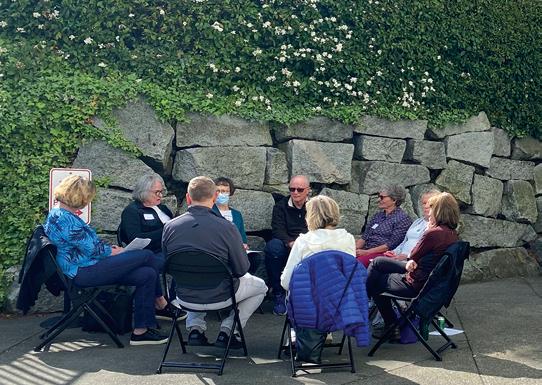
Janet McDermott is a cradle Catholic who was radically revitalized in her faith by the outcomes of Vatican II. Inspired by that Council, at age 50, she reenrolled in college and earned a masters in transforming spirituality. She is currently a member of St. Joseph’s Parish in Seattle, where she advocates for respectful inclusion within the church and for responsible care of the environment.
The Spirituality
BY SARAH-MARIE CHAN
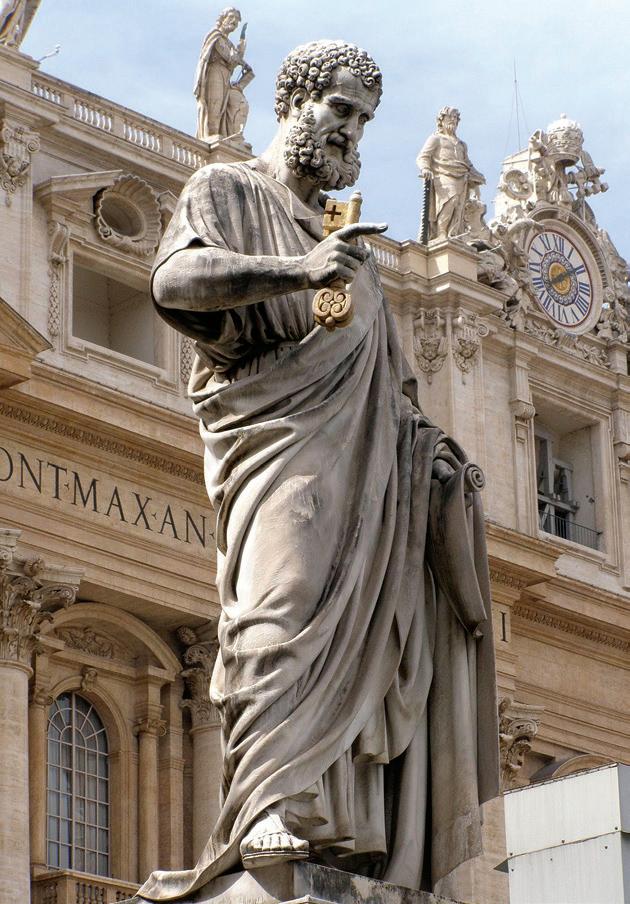
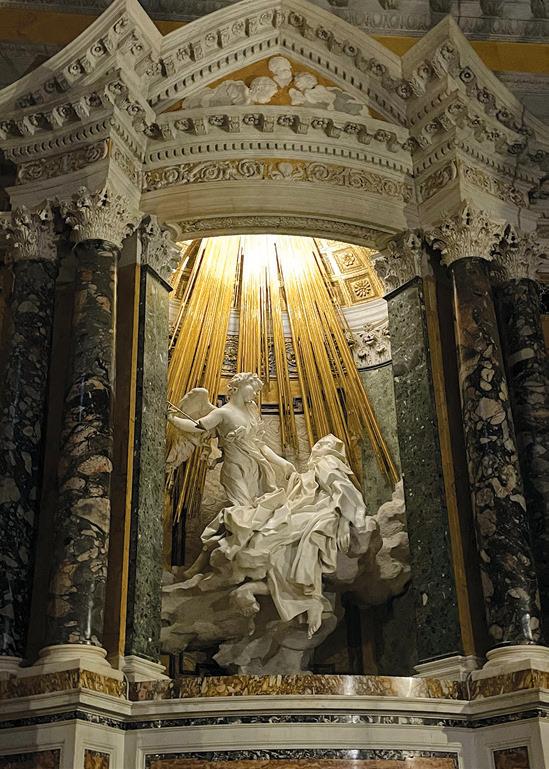
When I arrived in Rome in October 2023, towering marble statues—of St. Peter, Moses, and St. Teresa of Ávila—jarred me into a state of cognitive dissonance. I had spent the last two years responding to the synodal invitation to listen to journeys of faith, bearing in me and in my communities the seeds of trust, healing, and common mission. But the commanding and unyielding nature of the statues bore instead the warning of the Holy Roman Empire: follow our rules and be weary of hell.
There can be good intentions in this unyielding message; instilling the fear of God might suppress oppressive powers. But this came with unfortunate side effects: the generations that raised me lived a spirituality formed by the fear of accidentally opposing God. Now, however, Pope Francis offers a more nuanced spirituality. I hope that in forming ourselves in synodality, Catholics might release ourselves of the shiver brought on by these imposing forms and consider instead: How did the saints depicted in these statues actually lead?
For 22 working days, delegates at the Synod on Synodality assembly shared their experiences in roundtables. Called “Conversations in the Spirit,” these sessions were designed to foster individual sharing, silent prayer, and communal reflection of the Holy Spirit’s movements. A bishop from Europe reflected,
Photo credit tc
6 SPRING 2024 • NO. 141 10
“In my diocese we feel like we are the center of the world. This was an experience of internationality. We enlarged our tent, and we ran out of tissues for our tent!”
The same bishop said this assembly was the first time he was able to truly listen to others’ experiences. In most meetings where a bishop is present, he is expected to lecture on direction and leadership. It is hard to simultaneously deeply understand an audience and present opinions to them. I believe that instilling this skill is the pope’s practical challenge: How might we develop leaders who understand their people?
Too frequently Catholics have misused this synod as a platform to bicker about politically charged issues. While in Rome, papal secrecy protected the delegates’ conversations, resulting in an unusual freedom and psychological safety for people in power. Delegates were able to accompany others in a way that I had already begun to practice as a lay volunteer for the synod in the Archdiocese of Seattle.
“How are all the baptized journeying in their faith?” This question began each Conversation in the Spirit and invited participants to hold space for other spiritual experiences. As a synthesizer of the report for the Archdiocese of Seattle, I learned to rapidly receive people’s vulnerable stories and experiences of
of Synodality
“ I dove into the wounds of my new friends’ stories as if they were my own....”
God. I learned to provide silence and empathy without dipping into sympathy, to address questions with questions when I had no answers, and to prayerfully seek God’s consolation along the way. I dove into the wounds of my new friends’ stories as if they were my own, finding myself uncomfortable as I challenged my understandings, sought greater perspective, and encountered an ever-growing variety of people.
Like me, the official delegates experienced ill-formed opinions that were replaced by shattered assumptions and rebuilt their understandings with nuance and compassion. The spirit of synodality began to open me to discover God’s presence in every person I met; likewise, the delegates began to recognize the commonalities and love that binds us together.
For synodality to transform from an invitation to a practice to, ultimately, a spirituality, one must continually be formed in it. This is part of why Pope Francis expanded the Synod on Synodality into a three-year process, which will conclude with one more assembly in October of this year. I’ve been surprised that the
spirituality of synodality is not terminal: it continually provides us with more clarity and nuance. As I listened to those with stories to share, sharing almost no words myself, I found myself shocked to hear others say, “Can I share your message with my family?” I said “Of course,” and left wondering, “What message?”
At the conclusion of the first assembly in Rome, delegates began to recognize that listening-first leadership had heightened the experience of God’s love for themselves and for their communities. As the delegates prepare to return to Rome for the second assembly, let us invite God ever more deeply into our consciences as we seek proper discernment through one another, together. The next time we see those marble statues, let us see the spirituality of synodality that our powerful saint leaders lived: the ever-deepening desire to understand God’s presence in their people.
Sarah-Marie Chan founded The Accompaniment Project, a consultancy providing practical experiences of spiritual accompaniment using leadership, management, and design thinking tools. Trained in product design at Stanford, Sarah-Marie has led teams to launch programs, medical devices, and software products. She lives in Seattle and is a member of Catholic Leaders Circle at Leadership Roundtable.
Article photos © of the author.
11 A MATTER OF SPIRIT
Statues of St. Peter, Moses, and St. Teresa of Ávila in Rome inspired Sarah-Marie Chan's understanding of synodal leadership.
