Mercy Housing Northwest:
FROM TEMPORARY SHELTER TO PERMANENT HOUSING
S
BY NATHAN BOX
herry moved from Atlanta to Seattle to be closer to her children and grandchildren. While getting settled, she found an affordable short-term rental. Then the pandemic hit, and in the blink of an eye, the employees at Sherry’s new company were told to work from home. As the pandemic stretched from weeks into months and the return date moved further away, Sherry was terminated from her job. With little savings, it was not long before Sherry could no longer afford her short-term rental. She began couch surfing, staying with family and friends. Fearful of becoming a burden, she decided this could not be a long-term option for her. Without the knowledge of her family and friends, Sherry would drive to an empty parking lot, park her car, and begin a nightly ritual. Packed inside her car was everything she owned. To sleep, she would move clothes and treasured items. With enough room to lay the seat back, she would attempt another night of uneasy sleep. In the morning, she would rise with the sun and exit the lot. Sherry would spend the day looking for housing. After months of trying, her persistence paid off. Sherry was referred to Gardner House in the Columbia City neighborhood of Seattle. “Walking through my apartment the first time, it seemed like a mansion to me,” she says. “On Sundays, my 10
S P R I N G 2 0 2 6 • N O. 1 4 9
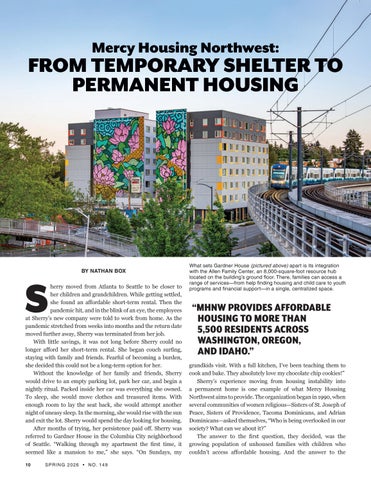
What sets Gardner House (pictured above) apart is its integration with the Allen Family Center, an 8,000-square-foot resource hub located on the building’s ground floor. There, families can access a range of services—from help finding housing and child care to youth programs and financial support—in a single, centralized space.
“MHNW PROVIDES AFFORDABLE HOUSING TO MORE THAN 5,500 RESIDENTS ACROSS WASHINGTON, OREGON, AND IDAHO.” grandkids visit. With a full kitchen, I’ve been teaching them to cook and bake. They absolutely love my chocolate chip cookies!” Sherry’s experience moving from housing instability into a permanent home is one example of what Mercy Housing Northwest aims to provide. The organization began in 1990, when several communities of women religious—Sisters of St. Joseph of Peace, Sisters of Providence, Tacoma Dominicans, and Adrian Dominicans—asked themselves, “Who is being overlooked in our society? What can we about it?” The answer to the first question, they decided, was the growing population of unhoused families with children who couldn’t access affordable housing. And the answer to the