Rāngai Tūmatanui
A very different country: Aotearoa New Zealand’s demography – 1936 to 2026 Navigating an election year with confidence Five Official Information Act lessons for public servants
The Job Market is Heating Up
The NZ job market has come out strong in the first four months of 2026, with a clear lift in hiring across multiple sectors. For candidates, that means more movement, more opportunity – and more choice. Employers are being more targeted in their hiring. There is a preference for candidates with relevant experience; but cultural fit, motivation and attitude continue to be the most influential factors in decision-making. We are seeing an increase in more senior-level roles entering the market, which may signal organisational change and new opportunities on the horizon.
Looking Ahead

With many public sector organisations approaching financial year-end in June, budgets are currently under review and will be factoring in recent budget announcements. Given it is an election year we are anticipating the market to remain steady from now through until the end of September, when we may experience recruitment requirements taper off in the lead up to November 7.
If you’d like insight into specific areas of the market, or support with upcoming hiring, we’d love to help. Contact Katerina Makarios, Eugene Ng or Shane MacKay on 04 4999471.
The Johnson Group has worked across the public sector since 2005. A member of the All of Government Recruitment Panel and regarded for our expertise in public sector recruitment, our consultants are specialists who understand the very specific skill sets required of public sector professionals as well as the intricacies of the Wellington market
We know our candidates well – from what drives or interests them to how they fit into your team to deliver excellent outcomes. Talk to us about how we can help you land your next role, or find the ideal candidate to strengthen your team.





Innovation moves at the speed of trust: The public sector in the age of AI

Artificial intelligence (AI) has the power to be one of the most transformative influences on the public sector and public services over the next 90 years. Like all technology it has the power to deliver huge benefits and create or amplify risks. My key question is are we going to let AI shape us, or are we going to design our future using AI as an enabler of trusted public services?
New Zealand’s public sector has been strongly encouraged to use AI as part of the AI Strategy. The Government Chief Digital Officer surveys the public sector annually to assess take up by government agencies and many ministers require their agencies to report regularly on how they are using AI.
I have a number of queries about the current approach.
First, focus on ‘speed of take-up’ rather than investing and ‘designing for better outcomes’ means that we are almost certainly ‘tinkering around the edges’. Most government agencies have lived with broken legacy systems for so long they have inefficient work arounds built into their processes. To quote Peter Drucker, “There is nothing so useless as doing efficiently that which should not be done at all.” We risk automating inefficiencies and missing the transformational opportunity to re-imagine public services to fit our culture and context, and to engage staff and users in their design.
Second, in rushing to use AI, most agencies have not invested in the basic data foundations needed to use it effectively and safely. AI is a model; it does not have boundaries or ethics. It is only as safe as the content it can access. AI doesn’t fix chaos; it exposes it. If your data
isn’t structured, visible, and governed, you are not getting intelligence, you are simply getting faster confusion and heightened risks. If your foundations are not right, AI will confidently give you the wrong answer.
And this really matters. The use of AI for decision-making introduces new accountability issues – for ministers, government agencies, and individuals. The Robodebt and Post Office scandals show us what can go wrong when automation is used to make decisions that affect people’s lives without appropriate design, controls, and governance. Who is liable when an AI system makes poor decisions or an app or chatbot gives wrong advice resulting in harm? And I haven’t mentioned AI agents!
In April, the Minister of Justice commissioned the Law Commission to undertake a review of the legal issues related to the use of automated decision-making by government, including using AI. This is a good first step and I encourage individuals and agencies to contribute to this exercise.
In his 1965 book, Unsafe at Any Speed Ralph Nadar argued that American car manufacturers were focused on style, costcutting, and ‘user experience’, rather than on designing in safety. Accidents were blamed on driver error, rather than vehicle design. Sound familiar? Nadar’s research led to landmark car safety legislation in the United States and the establishment of the National Highway Traffic Safety administration. To date we have been adopting an approach that additional regulatory guardrails are unnecessary. Given that even the creators of AI admit that it terrifies them, have we reached our ‘Ralph Nadar moment?’
H Ā PAI PUBLIC PRESIDENT
Liz MacPherson
PUBLISHER
Hāpai Public | Institute of Public Professionals Aotearoa New Zealand PO Box 5032, Wellington, New Zealand
Email: office@hapaipublic.org.nz Website: hapaipublic.org.nz
ISSN 1176-9831 (Online)
The whole of the literary matter of Public Sector is copyright. Please contact the editor if you are interested in reproducing any Public Sector content.
EDITOR
Kathy Young editor@hapaipublic.org.nz
CONTRIBUTORS
Hākopa (Jacob) Ashdown, Daniel Duan, Alina Haider, Mike Heine, Des Hosie, Farheen Hussain, Amelia Langford, Trevor Manners, Liz MacPherson, Magnus O’Neill, Cullum Peni-Wesche, Finn Shewell, Paul Spoonley, Kate West, Kathy Young, Olivia Yu, Ao (Ollie) Zhou
JOURNAL ADVISORY
GROUP
Barbara Allen, Finlay Field, Bronwyn Presland, Stefan Speller, Mikayla Thompson, Kathy Young
ADVERTISING
Email: office@hapaipublic.org.nz
CONTRIBUTIONS
Public Sector welcomes contributions to each issue from readers. Please contact the editor for more information.
SUBSCRIPTIONS
Hāpai Public welcomes both corporate and individual membership and journal subscriptions. Please email office@hapaipublic.org.nz or visit hapaipublic.org.nz to register online.
DISCLAIMER
Opinions expressed in Public Sector are those of various authors and do not necessarily represent those of the editor, the journal advisory group, or Hāpai Public. Every effort is made to provide accurate and factual content. The publishers and editorial staff, however, cannot accept responsibility for any inadvertent errors or omissions that may occur.
Cover images by Starline and RawPixel.com on Magnific.
01
PRESIDENT’S MESSAGE
Innovation moves at the speed of trust: The public sector in the age of AI
04
LEAD STORY
A very different country: Aotearoa New Zealand’s demography – 1936 to 2026
As we continue to celebrate Hāpai Public’s 90th anniversary, Paul Spoonley, Distinguished Professor Emeritus at Massey University and Senior Fellow at Koi Tū Centre for Informed Futures, traces New Zealand’s demography from the start of our organisation to today.

10
FOCUS
Citizens involvement in government decision-making: An overview
Finn Shewell, Committee Member at Trust Democracy, offers an introduction to the main methods of deliberative democracy and its evolving place in Aotearoa New Zealand.
08
REFLECTIONS
Looking ahead
Editor Kathy Young asks some of those involved in Hāpai Public’s history what the organisation should focus on over the next 90 years.
12 PUBLIC SERVICE SYSTEM
Navigating an election year with confidence
Olivia Yu, Hāpai Public’s New Professionals Leadership Team Co-Chair, summarises some practical guidance for public servants on navigating elections, following a Hāpai Public webinar on the topic last month.
14
ANALYSIS
How public entities report to Parliament on successes and challenges
Kate West and Mike Heine from The Audit Group outline how performance is reviewed in the public sector.
16
EYES ON THE WORLD
Facilitating iwi access to capital markets
Hākopa (Jacob) Ashdown outlines his lessons learned from the United States and Canada in enabling economic growth for tribal and underserved communities.

22
ANALYSIS
Building a culture of continuous improvement
Des Hosie and Cullum Peni-Wesche, from the Operational Assurance team at Fire and Emergency New Zealand (FENZ), share insights on how a culture of continuous improvement can support efficient and effective service delivery in any public sector organisation.

26 FOCUS
Steward what we have
Trevor Manners, Partner of Infrastructure and Capital Projects at Deloitte, argues for smarter, longer-term decisions with Aotearoa New Zealand’s infrastructure.
24
INVESTIGATION
Managing incivility in the workplace
Drawing on recent studies, Dr Ao (Ollie) Zhou from Te Whare Wānanga o Waikato –University of Waikato, Dr Alina Haider from Te Herenga Waka – Victoria University of Wellington, and Dr Daniel Duan from Te Kunenga Ki Pūrehuroa – Massey University, explore what managers and employees can do about incivility in the workplace.
28
BOOK REVIEW
Communications professional and formal journalist Farheen Hussain reviews How to Rebuild Trust in Journalism by Tim Watkin.
29
DID YOU KNOW?
Six fascinating facts about elections
We uncover some fascinating facts about general elections, thanks to the Electoral Commission.

Five Official Information Act lessons for public servants
Magnus O’Neill, General Manager of Te Kāhui Kāhu Ministry of Social Development, provides five lessons for officials, from court decisions, on when, and when not, to release information under the Official Information Act.
A very different country: Aotearoa New Zealand’s demography – 1936 to 2026
Aotearoa New Zealand has transformed beyond recognition since the Public Sector journal first appeared in 1936. As part of Hāpai Public’s 90th anniversary, Distinguished Professor Emeritus Paul Spoonley, from Massey University and Senior Fellow at Koi Tū Centre for Informed Futures, traces New Zealand’s demography from then to now.

AUTHOR
Distinguished Professor Emeritus Paul Spoonley
When the Public Sector journal was first published in 1936, the demography of New Zealand reflected its colonial origins and policies. The people and political connections with the United Kingdom underpinned the project of building a modern liberal state. Māori were marginalised and patronised while nonBritish migrants were demonised and excluded.
In the mid-1930s the country, especially its politicians and public servants, was concerned it was not growing as fast as expected. And that it was not attracting the ‘right sort’ of immigrants. But matters were to change dramatically with the arrival of the 1935 Labour Government and the impacts of World War II.
In the second half of the 20th century, some New Zealanders struggled to come to terms with new demographic shifts, notably the decline in connections and migrants from the United Kingdom to be replaced by the arrival of migrants from the rest of the Pacific and Asia. Since 2000, these shifts have accelerated. A very different country, in terms of its demography, has emerged.
‘Britain of the South’ New Zealand, in 1936, was still tied by a political and economic umbilical cord to the United Kingdom. Core institutions and the values of dominant groups reflected the belief in ‘British is best’. But the country was not attracting immigrants, especially from the ‘preferred source countries’ of the United Kingdom and Ireland in the wake of the Great Depression. In the 1920s, net migration gains averaged about 10,000 per year. By the early 1930s, there were net migration losses of between 2000 and 3000 annually.
Natural increase (births over deaths) was a much more important source of population growth. The New Zealand Official Yearbook (1936) commented: “Baldly stated … New Zealand is facing a stationary or even declining population.” (Note that the Yearbook said this related to the “population other than Maori” –no macron).
In terms of the information provided by the yearbooks – which is fabulously detailed – there is no hiding the patronising and racist way in which both Māori and migrants are described. Some of the data includes Māori; elsewhere, Māori are either counted separately or not at all.
And then there is the comment that in the 1936 Census, “half-caste European Maori were included with the Native population”, echoing the practice of allocating anyone with non-European “blood” to what was deemed the lower category. The material on Māori then goes on to provide data on “Full [blood] Māori; three-quarters; half caste; Māori-European”. (It was not until the 1986 Census that an ethnicself-identification question was included.)
The total Māori population in the 1936 Census was given as 82,326, a significant growth from the 39,854 who were enumerated at the turn of the century. But again, the Yearbook echoes the then focus on “blood” and racial purity: “This gain [of Māori] has been accompanied by a very considerable dilution of blood.”
Other non-British immigrants were simply labelled “race aliens”. There was particular concern at the number of Chinese, Indian, and Syrian migrants. Explicit measures were in place to make it difficult for these migrants to arrive or to settle. For example, Chinese residents could not become New Zealand citizens until 1952, no matter how long they or their forebears had lived in the country.
Non-British immigrants were simply labelled “race aliens”.
In summary, New Zealand in 1936 was a country of 1,557,109 people of whom 5 per cent were Māori. There were almost as many residents in rural areas as there were in the urban areas. About a quarter of the population had been born in the United Kingdom. But the population was only growing because of the number of births (18,459) compared to deaths (9790), and annual population growth was just over 1 per cent. Net migration loss was a major political concern.


The transition decades
The 1935 Labour Government, especially with legislation such as the 1938 Social Security Act, began to change the status and rights of Māori. Māori gained access to a range of welfare and health benefits (Māori death rates were double those for non-Māori at the time; tuberculosis rates were 10 times higher).
The approach was now one of integration into mainstream social and economic systems, although some of the more substantial changes were to come in the wake of World War II, especially with the rapid rural-urban migration of Māori between 1945 and the 1970s. Māori were still classified in terms of the percentage of their “blood”, and there were still discriminatory policies and legislation. But the state was also taking much more notice of Māori, in part prompted by the 1940 book, The Maori People Today, edited by I.L.G. Sutherland and then the Hunn Report in 1960.
Māori activism in the 1970s and 1980s resulted in greater recognition politically. Māori, by the 1976 Census, now numbered 356,574 or 11.35 per cent of the total population. But the reforms of the 1984–89 Labour Government had a disproportionate and negative impact on Māori, especially in terms of labour market engagement. In 1981, the unemployment rate for Māori was 7.1 per cent; by 1992, it was 26 per cent. Paradoxically, the same Labour Government – along with the courts – played a critical role in the state’s recognition of Māori.
By the late 1940s, Chinese and Indian migrants were beginning to gain rights as citizens, although this was not fully granted until 1952. But new migration dynamics came into play. Migrants from elsewhere in the Pacific were beginning to arrive as labour for the expanding urban sector.
As the 1984 Labour Government unpacked many of the policies of its 1935 and 1972 predecessors, it also changed course on matters such as immigration. In 1986–87, there was initially a review and then the adoption of the points system as the policy framework for identifying and approving potential immigrants who would add economic value.
A new demography emerges
The first wave of immigrants from Asia – Hong Kong, South Korea, Taiwan – arrived after 1990 and sparked another moral panic about immigrants, marked by the Inv-Asian articles in Auckland community newspapers in 1993. New Zealand First, which first appeared in Parliament in 1996, reflected these concerns.
It was not until the 1986 Census that an ethnic-self-identification question was included.
By the 1970s, these migrants were seen by some politicians and communities as a threat – to “law and order”, to urban decline and to the employment (of “New Zealanders”). What became known as the “overstayers” campaign began in 1973 and morphed into a full-blown moral panic in the mid-1970s, with highly discriminatory and racist policies as a result.
It wasn’t until the 1999 Labour Government and the refinement of immigration policy that the country saw another surge in migration, now from China and India. The numbers dropped significantly during the Global Financial Crisis (2008–12).
The Key (National) government oversaw another rise in immigration numbers, followed by spikes before and after the Covid-19 years. By 2023–24, New Zealand was growing at well
IMAGE BY FREEPIK ON MAGNIFIC
over 2 per cent annually, and 85 per cent of this growth came from net migration.
This was underscored by the rapid ageing of the country as the Baby Boomers reached the age of 65. By mid-century, a quarter of all New Zealanders will be in this age category. Alongside this is the reality of sub-replacement fertility, which started dropping in 2013 and is now at 1.53 births per woman.
Māori fertility is dropping, but Māori women still have more births and at a younger age, further driven by a much lower median age for Māori compared to non-Māori (other than Pasifika communities).
The result is that New Zealand is becoming more superdiverse. By the mid or late 2040s, a third of all New Zealanders will be members of one of New Zealand’s Asian communities, while one in five will be Māori (self-ascribed, not via descent) and a third of the under-15 population will be Māori.
In essence, the country will be much older with significantly smaller younger cohorts (primary school enrolments will drop by more than 36,000 between 2024 and 2034) and will be much more culturally diverse. On current trends, Auckland will be home to 40 per cent of all New Zealanders (the city is the major beneficiary of immigrant arrivals) while threequarters of the population will live in the top half of the North Island.
Implications for the public sector
The demographic changes, especially since the
end of the Global Financial Crisis, are reshaping New Zealand in a range of ways. The first major policy gap is the lack of a population strategy that addresses these changes. Is it appropriate that Auckland grows at the expense of a number of regions and rural localities? What should the country’s rate of population growth be – and what should be the target for the net gain from immigration? Are we anticipating and planning for a very different age profile? Many of the country’s existing policies will not work.
In relation to social cohesion and the recognition of different cultural and language communities, the country has been on a journey to identify and implement bicultural policies and the recognition of Māori as tangata whenua. But that, too, is coming up against push-back. And there is little to explore what the country might do to recognise the immigrant and ethnic minority diversity that now exists.
The public sector is at the cutting edge of these changes – are there the skills and policies that will provide inclusive and respectful management of public resources and services? How does the Public Service negotiate a political terrain that includes those who want to deny difference?
Paul Spoonley is a Distinguished Professor Emeritus at Massey University and Senior Fellow at Koi Tū Centre for Informed Futures. His research interests include social and demographic change, and political extremism.
How does the Public Service negotiate a political terrain that includes those who want to deny difference?
By the mid or late 2040s a third of all New Zealanders will be members of one of New Zealand’s Asian communities.
Contributions please
Public Sector journal is always happy to receive contributions from readers. If you’re working on an interesting project in the public sector or have something relevant to say about a particular issue, think about sending us a short article on the subject.
Contact the editor Kathy Young at editor@hapaipublic.org.nz
Looking ahead
In the second in a series of four articles for Hāpai Public’s 90th anniversary, editor Kathy Young asks some Hāpai Public leaders what the organisation should focus on over the next 90 years.

AUTHOR Kathy Young
For Liz MacPherson, our President, supporting the public sector to seize the opportunities and navigate the challenges of the next 90 years, while maintaining public trust and confidence, is a critical role for Hāpai Public.
“We can let external forces, like new technology, shape us or we can seek to design our own future; understanding the impact of our choices.”
A striking theme across my conversations was the transformative impact of artificial intelligence (AI) and emerging technologies. Derek Gill, board member of Hāpai Public, says the public sector is in the midst of “another industrial revolution”.
Which begs the question – how might Hāpai Public best support the public sector to make such a strategic shift and adopt future technologies, alongside navigating the constant changes faced by the sector throughout the past 90 years, whether that be the evolution of an increasingly professional sector or the growth (and cuts) in sector budgets and FTEs?
Reinforcing the Public Service principles
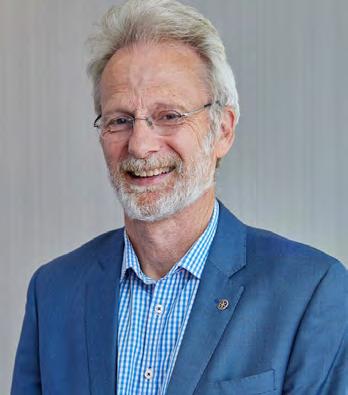
John Larkindale, President from 2013 to 2017, argues that Hāpai Public’s core role remains unchanged – to support the public sector to remain politically neutral so that it can give the government of the day the best possible advice.
Hāpai Public has been a champion of the Public Service principles (political neutrality, free and frank advice, merit-based appointments, open government and stewardship) and many spoke of the importance of continuing to speak out publicly about them and train public professionals in what they mean.
Integrity is often mentioned. Hāpai Public’s focus on public sector integrity – sometimes by highlighting when it has been lacking – is critical. Integrity is seen as underpinning everything, that operating at a high level of integrity is a ‘must-have’ in order for the public sector to serve New Zealanders well.
Focusing on the practice of being a public professional
The uncertainty about AI’s trajectory creates both opportunity and obligation for Hāpai Public. “Our work is to highlight the issues, provide forums for discussion, and help public servants navigate practical implications rather than getting caught up in theoretical debates,” says Derek.
Kay Booth (Executive Director 2023–2026) gives the example of the Ivan Kwok Lectures on Māori-Crown relations as spaces where

JOHN LARKINDALE, PRESIDENT FROM 2013 TO 2017
Hāpai Public’s core role remains unchanged – to support the public sector to remain politically neutral so that it can give the government of the day the best possible advice.
thought leaders can open people’s minds while maintaining pragmatic focus. “Whether the challenge is AI, Covid-19, or the Māori-Crown relationship in policymaking, the organisation’s role, now and in the future, is to shine a light and help people apply these insights to their actual jobs,” says Kay.
This focus on practice is closely linked to Hāpai Public’s role to help the public sector maintain a high standard of professionalism.
Professionalising the public sector Hāpai Public has been instrumental in building the professionalism of the public sector over the past 90 years – and this role remains front of mind for many Hāpai Public leaders as they think about the future. Most pressing is how will technological change reshape the profession, particularly for new professionals starting their public sector careers?
Cullum Peni-Wesche, former New Professionals co-chair and board member, asks whether, as agencies leverage AI and workforce efficiency tools, graduates will still get the deep policy experience previous generations enjoyed. “Or will they arrive to find their roles fundamentally different, maintaining productivity systems rather than developing expertise?”
And the role for Hāpai Public? Support to public professionals across their career is fundamental.
Building capability
Since 2002, Hāpai Public has had a thriving New Professionals network – helping those in their first 10 years of career to learn, connect, and feel at home in the public sector.
Liz emphasises that capability building requires consistent investment in infrastructure – not just physical systems but also data infrastructure and the capability of people themselves. Deb Te Kawa, former Hāpai Public board member, says this includes, “Hāpai Public working to help public servants support ministers to govern well under Te Tiriti: understanding that kāwanatanga and rangatiratanga must both be held in view; that rangatiratanga is exercised by Māori institutions in many forms; and that a public servant’s job

is to ensure ministers have the evidence and advice needed to understand how the two are being balanced in any decision.”
“Within the next ninety years, we’re going to have the milestone of two hundred years of Te Tiriti o Waitangi [in 2040],” says Claire Achmad, former board member of Hāpai Public. “And I think that will be an important focal point for the organisation as it continues to work alongside public servants to strengthen their understanding collectively of the duties and obligations that sit on the Crown, to fulfil the articles of the Treaty.”
The need to expand beyond a Wellingtoncentric view emerges as another priority.
Cullum describes the difference between head offices’ strategic focus and regional offices’ community-centred work, arguing that as remote work becomes more common and agencies maintain capability around the motu, Hāpai Public must adapt its engagement accordingly. Liz MacPherson invokes Ivan Kwok’s concept of “the humble Crown”, of the “centre” prepared to cede leadership to and embrace ideas from communities and regions that are closer to issues and better understand local contexts.
Alex Loo, current co-chair of the New Professionals network and board member of Hāpai Public, captures the tension best when describing the need to stay “just ahead of the curve” while weathering turbulence in the wider political context. “The organisation must remain evidence-based and receptive to feedback, willing to pivot between thought leadership and practical guidance depending on what members need,” she says.
There could be a role for Hāpai Public to have a contributing input in civics education, says Claire, “so that school-age children are starting to build an understanding of what the public sector is about, and the kinds of work you can do to make a positive difference through Public Service”.
It is clear from these conversations that the context of the public sector – technologically, demographically and structurally – is shifting. Hāpai Public’s task for the next 90 years is about helping the public sector to hold the tension between its principles and pragmatism, tradition and innovation, simultaneously, and helping public servants navigate transformation while staying anchored to the values that make Aotearoa New Zealand’s public sector a great place to work.
“Our work is to highlight the issues, provide forums for discussion, and help public servants navigate practical implications rather than getting caught up in theoretical debates.”

DEB TE KAWA, FORMER BOARD MEMBER OF HĀPAI PUBLIC
ALEX LOO, CURRENT CO-CHAIR OF THE NEW PROFESSIONALS NETWORK AND BOARD MEMBER OF HĀPAI PUBLIC
DEREK GILL, CURRENT BOARD MEMBER OF HĀPAI PUBLIC
Citizens’ involvement in government decisionmaking: An overview
Finn Shewell, Committee Member at Trust Democracy, offers an introduction to the main methods of deliberative democracy and its evolving place in Aotearoa New Zealand.

AUTHOR Finn Shewell
Democratic governments have long grappled with a fundamental tension: how can they involve citizens in public decisions as much as possible without sacrificing efficiency, expertise, or coherence? In recent decades, a growing body of scholarship and practice has formed around deliberative democracy as a potential solution. This approach offers structured processes through which ordinary people engage effectively with complex policy questions, moving beyond the simple act of casting a ballot.
What is deliberative democracy?
Deliberative democracy refers to forms of collective decision-making that emphasise broad ability to participate, informed reasoning, considered dialogue, and mutual respect among participants. It is based on the idea that citizens, when provided with balanced information, adequate time, and a structured environment, are capable of navigating even the most contested policy terrain. Deliberation can take many forms; here we introduce three widely adopted methods, each with distinct benefits.
Citizens’ assemblies (and similar methods such as Citizens’ juries) gather a randomly selected, demographically representative group. Participants deliberate on a defined question over several sessions. Random selection – often termed sortition – is central to their legitimacy. It ensures that ordinary people, not just professional advocates, are heard. These assemblies receive expert testimony, engage in facilitated discussion, and produce
recommendations capable of garnering crossbench support.
Participatory budgeting allocates a portion of a public budget to direct citizen determination. Originating in Porto Alegre, Brazil in 1989, it has since spread to thousands of jurisdictions globally. Participants deliberate over community needs and vote on preferred expenditures, integrating decision-making authority – rather than mere consultation – into the process.
Digital deliberation encompasses a range of online platforms and tools designed to facilitate structured public dialogue at scale. Platforms such as Polis have demonstrated that digital environments can support genuine deliberation when carefully designed to surface areas of agreement, rather than amplify polarisation.
The global context
Interest in deliberative democracy has grown substantially since the early 2000s. The OECD (2020) has documented over 700 deliberative processes across its member countries between 1986 and 2019, with a marked acceleration in the final decade of that period, characterising this as a potential “deliberative wave”
France offers some of the most compelling recent examples. Following the gilets jaunes crisis, President Macron convened the Citizens’ Convention for Climate (2019–2020), in which 150 randomly selected citizens produced 149 policy proposals, 146 of which were subsequently transmitted to Parliament

More recently, the Paris City Council passed legislation drafted directly by a citizens’ assembly – a historic step in which citizen participation translated into binding law.
The spread of these practices reflects a growing recognition that representative democracy alone is insufficient to address complex challenges that cut across conventional partisan lines.
Deliberative democracy in Aotearoa
New Zealand
Our country’s engagement with deliberative methods has a longer history than is commonly acknowledged. Wright, Buklijas, and Rashbrooke (2024) identify at least 15 processes that display the critical elements of deliberative democracy prior to the current period of renewed interest.
2025 marked a significant acceleration. As Wright (2025) documents, five citizens’ assemblies were organised across the country to address substantive local questions. One assembly in Auckland, facilitated across three Saturdays with 40 randomly selected residents, produced recommendations that all carried supermajority support; described by Simon Wilson as proof that “the future of democracy works”
At the national level, however, deliberative methods have yet to gain comparable traction. Trust Democracy (2025) is concerned that the current government has relied heavily on parliamentary urgency for important laws with limited public input, undermining these broader principles.
Implications for public sector practice
For public sector professionals, the deliberative turn presents both opportunities and challenges. These methods are not a substitute for representative democracy or expert policymaking, but they should instead serve as powerful complements – particularly when issues are technically complex, politically contentious, values-laden and contested, or require a level of community trust that conventional consultation cannot generate.
The evidence from both international and domestic experience suggests that when designed with care, citizens’ participation methods meaningfully improve policy quality, strengthen institutional legitimacy, and deepen citizens’ own investment in democratic life. As Trust Democracy (2025) observes, more than 8 per cent of participants in France’s Citizens’ Convention for Climate subsequently stood for elected office: a striking indicator that deliberative participation can renew, rather
than replace, the broader democratic ecosystem.
The spring issue of Public Sector journal will examine the practical implementations of these approaches for public servants in Aotearoa.
Finn Shewell is a Wellington-based facilitator, community organiser, and advocate for deliberative democracy. He serves on the committee of Trust Democracy, supports the Wellbeing Economy Alliance in their participatory approaches work, and works to educate both the public and publicly elected on the benefits of deliberative approaches. Finn has moderated digital deliberation sessions for Auckland City Council and led co-design processes for organisations across Aotearoa. He holds a BA in Psychology and Marketing from the University of Otago and currently works as Improvement Manager at Whānau Āwhina Plunket, where he applies participatory principles to organisational change.
IMAGE BY FREEPIK ON MAGNIFIC
Navigating an election year with confidence
Olivia Yu, Hāpai Public’s New Professionals Leadership Team Co-Chair, summarises some practical guidance for public servants on navigating an election year, following a Hāpai Public webinar on the topic last month.

AUTHOR Olivia Yu
Election years are a regular feature of Aotearoa New Zealand’s democratic system, but they often bring a familiar sense of uncertainty across the Public Service. What changes? What stays the same? And how should public servants navigate increased scrutiny with confidence?
The 12 May lunchtime webinar, Navigating an election year with confidence, hosted by Hāpai Public in partnership with the Public Service Commission Te Kawa Mataaho and the Cabinet Office, brought these questions into focus. Drawing on practical experience from across the system, speakers shared a clear message: while the environment becomes more sensitive, the fundamentals of the Public Service remain consistent.
What actually changes and what doesn’t
As speakers emphasised, the pre-election period (the three months before a general election) is largely business as usual. Ministers retain the right to govern right up until election day, and public servants continue to deliver services, develop policy, and provide advice. While Cabinet and Cabinet Committee activity may reduce as ministers take on campaigning responsibilities, the work of government continues.
The main shift is in the context. As discussed during the session, decisions, communications, and public-facing activity can attract greater scrutiny, requiring more careful consideration
Navigating an election year is not about doing less. It is about working with greater awareness.
Confidence [...] comes from applying sound judgement rather than stepping back from the work.
of how they may be perceived. Confidence, in this context, comes from applying sound judgement rather than stepping back from the work.
Understanding the boundaries
A key clarification from the webinar was that there is no ‘caretaker period’ before the election. Speakers described this as a persistent misconception. The caretaker convention applies after election day until a new government is appointed.
In the pre-election period, speakers noted that successive governments have chosen to exercise voluntary restraint in two main areas: significant appointments and government advertising.
As in any other year, public servants are expected to support ministers while ensuring that public resources, including official advice and outputs, are not used or seen to be used for party political purposes.
Looking ahead to the post-election period, speakers encouraged agencies to plan early. The length of the caretaker period is uncertain, and some decisions may need to be deferred or carefully managed depending on the situation.
Political neutrality: A foundation of the Public Service Political neutrality was a central theme

throughout the webinar. It was described not only as an obligation, but as a cornerstone of New Zealand’s Public Service.
Speakers explained that political neutrality has long been part of New Zealand’s constitutional arrangements and is reinforced through legislation and codes of conduct. It enables public servants to work with both current and future governments, and helps maintain trust with ministers and the public.
In practice, this means maintaining a clear distinction between the role of ministers and the role of public servants. Ministers advocate for policies, and make and justify decisions. Public servants provide advice on policy, implement ministerial decisions, and deliver public services. This distinction remains especially important in an election year.
As one speaker put it: “Keep your politics out of your job, and your job out of your politics.”
Public servants are citizens, with the right to participate in the democratic process. The challenge is making sure that personal activity does not intersect with, or appear to influence, professional responsibilities.
“Keep your politics out of your job, and your job out of your politics.”
Where things get tricky in practice
While the principles are well established, the speakers acknowledged that applying them can be complex.
Several practical areas were discussed where judgement is often required:
• Social media, where personal and professional boundaries can overlap
• Events and public engagements, where timing, speakers, and perception need to be considered
• Media interactions, where it is important to distinguish between factual, operational information and political commentary
Across these examples, a consistent message emerged: challenges often arise from how actions are perceived.
COMMON MYTHS AND WHAT MATTERS IN PRACTICE
The session addressed several myths that can shape behaviour during an election year.
Myth 1: Work stops during an election year.
Speakers were clear that this is not the case. The Public Service continues to operate and deliver, with greater awareness of context.
Myth 2: The pre-election period is a caretaker period.
The caretaker convention applies only after the election. The Government has the right to govern right up until the election.
Myth 3: Avoiding all risk is the safest approach.
The discussion suggested that being overly cautious can slow down essential work. Instead, the focus should be on managing situations thoughtfully and appropriately.
Thinking ahead, discussing scenarios, and using available guidance were all highlighted as practical ways to manage this.
For many attendees, a key takeaway was that uncertainty can lead to unnecessary caution. Greater clarity around expectations helps support more confident decision-making.
Building confidence through practice
A recurring message from the webinar was that public servants are not expected to navigate the election year alone.
Speakers pointed to the range of guidance available, including material from the Cabinet Office and the Public Service Commission Te Kawa Mataaho. They also emphasised the importance of talking through issues within agencies. Managers, colleagues, and integrity champions all play a role in supporting consistent and well-informed decisions.
The advice shared during the session was straightforward: ask questions early, work through scenarios, and escalate where needed.
Stepping forward with confidence
The webinar closed with a clear message. Navigating an election year is not about doing less. It is about working with greater awareness.
The Public Service continues to deliver and ministers continue to govern. The system continues to function. The need for public servants to apply sound judgement in everyday work continues. What changes is the level of scrutiny and sensitivity around decisions.
Confidence comes from understanding the principles, using the available guidance, and knowing when to seek support.
Olivia Yu is a Senior Communications Adviser at the Ministry for Ethnic Communities, specialising in communications, executive advisory, and strategic engagement across complex public sector environments. She joined Hāpai Public New Professionals Leadership as Co-Chair last year.
How public entities report to Parliament on successes and challenges
Kate West, Sector Manager, Central and Local Government Group at The Audit Office, and Mike Heine, Strategic Communications Partner at The Audit Office, outline how performance is reviewed in the public sector.


AUTHORS
Kate West
Mike Heine
This year is shaping up to be another challenging one for the Aotearoa New Zealand public sector. Treasury’s longer-term analysis suggests that public finances are currently on an unsustainable path, meaning successive governments will face difficult choices about revenue, spending, and the levels of service they can provide.
This context creates immediate and long-term challenges for the public sector.
How entities, sectors, and the system respond to risks and pressures is key to their performance. How an entity tells its performance story – how it answers questions about what it is doing, the impact its work is having, and what it chooses to share in its accountability documents – is key to public accountability.
As The Audit Office says in its recent article Reporting on what went well and what didn’t, balanced reporting “demonstrates a commitment to transparency and provides a platform from which organisations can discuss plans for improvement”.
The Audit Office has an important role in supporting Parliamentary scrutiny of public sector performance. Through this role, we were especially interested in how entities responded to the new set of Standard Annual Review Questions (SARQs) in 2025. These questions are posed to public entities each year as part of their annual review of performance.
In late 2025, we carried out some analysis on entities’ responses to the final two questions:
• What are three key achievements for your organisation in the 2024/25 financial year that Parliament and the public should
be aware of? (question 38)
• What are three areas of concern for your organisation in 2024/25 that Parliament and the public should be aware of? (question 39).
Entities’ responses helped us identify recurring themes at a system level. This, in turn, helped identify how we can be ‘critical friends’ to organisations looking to improve their performance, which aligns with The Audit Office’s strategic objective to maximise its impact on public sector performance. (You can read more about this, and the other three objectives, in The Audit Office’s new Strategic Intentions to 2031.)
We focused on two aspects:
1. the types of achievements and concerns entities chose to include in their responses; and
2. the types of evidence each entity used to support their stated achievements.
Much of leaders’ attention was spent on managing their authorising environment...They spoke much less about managing down their organisational hierarchy.
In terms of the types of achievements and concerns that entities highlighted, we looked at whether these were operational (entity-level) or strategic, and whether they were internally or externally focused matters.
The three most common types of achievements that entities named were:
• day-to-day operations (for example, improved response times for clients and numbers of clients served);
• cross-system collaboration (for example, delivering sector reviews to improve regulatory outcomes or embedding a system-wide focus on performance targets); and
• measurable impacts achieved (for example, supporting long-term clients back to work and independence).
Entities were more willing to claim internal contributions when discussing achievements but much more likely to attribute concerns to external factors. Only a small number of entities provided quite a lot more detail on areas for improvement and gave less prominence to achievements.
Interestingly, the top three areas of concern were:
• governance and risk (for example, challenges with regulatory stewardship);
• workforce capability and capacity (for example, workforce pressures and system sustainability); and
• financial pressures (for example, maintaining capacity and delivery at a time of fiscal restraint, or ageing infrastructure).
When looking at the types of evidence each entity provided to support their stated achievements, we noticed some entities used robust sources such as outcome-level data, audit findings, or evaluations. Conversely, others drew more heavily on anecdotal evidence, while others provided a mix of hard and soft evidence.
While all these types of evidence can help tell an entity’s performance story, we support efforts to draw on robust evidence wherever possible.
There were selected examples where an entity demonstrated strong practice by providing a combination of trend data, evaluation findings, and qualitative information to support their view about their entity’s performance in 2024/25.
We can take two key findings from our analysis of the responses: public entities are facing some common, difficult challenges; and they can improve how they report on their performance.
These observations are consistent with what we see through our audits, which tell us that across the system there are opportunities for improving the quality of performance frameworks and information.
Seeing the repeated concerns about governance and risk, workforce capability and capacity, and finance has given The Audit Office a strong steer on where we can add value to public sector performance.
Kate West joined The Audit Office in 2024 as the Sector Manager responsible for the economic development, primary production, and workforce portfolios. Previously, Kate was a Director at the Victorian Auditor-General’s Office. Kate has over 20 years of experience in Australia and New Zealand across a broad range of policy and strategy leadership roles, including housing, justice, education, early childhood, and tourism policy. Kate has an Honours degree in political science, an EMPA from ANZSOG, and a Master of Arts. Kate is a member of the Institute of Directors.
Mike Heine has worked at The Audit Office since 2015. He is currently a Strategic Communications Partner with a portfolio that includes central and local government. Mike has worked in a range of roles in the public and private sectors, and has a strong interest in public policy and government. He is passionate about communicating how audit contributes to a stronger public sector and, in turn, better outcomes for New Zealanders.

IMAGE BY DC STUDIO ON MAGNIFIC
Facilitating iwi access to capital markets
Hākopa (Jacob) Ashdown outlines his lessons learned from the United States and Canada in enabling economic growth for tribal and underserved communities.
When I started my Harkness Fellowship journey, I had many questions about what policies have enabled economic growth for tribal and underserved communities in the United States. My aim was to learn from those experiences abroad and adapt and apply them here in Aotearoa New Zealand. I had heard about some interesting approaches in the United States and Canada, but there was limited in-depth analysis or commentary on how those learnings could apply to New Zealand. I set out on a mission of inquiry based at the prestigious Harvard Kennedy School as a Harkness Fellow at the Project on Indigenous Governance and Development
Before arriving in the United States, my intention was to focus on understanding how Opportunity Zones have attracted more than US$100 billion of private capital investment into underserved communities. I also wanted to learn how Community Development Financial Institutions (CDFIs) have responded to access to capital issues in areas where mainstream banks are reluctant to invest.
My focus drifted almost as soon as my feet touched down. My first stop was the Gun Lake Casino in Grand Rapids, where a tribal economic development summit was taking place. A hot topic of discussion was the Tribal Tax and Investment Reform Act This recently introduced bipartisan bill aims to make it easier for tribes to issue tax bonds by removing restrictive provisions that had limited access to capital markets. It would treat tribal governments in the same manner as state governments for certain tax purposes, including the ability to issue tax-exempt bonds without additional restrictive conditions that are not imposed on state governments. The amendments would expand infrastructure
financing options and boost economic development in Indian Country.
The idea of a legislative framework that enables tribes to issue tax-exempt bonds was new to me. While tribal governments have been issuing tax-exempt bonds since the 1980s, there is no equivalent mechanism that exists in New Zealand for iwi. I was intrigued by the idea and became laser-focused on tribal bonds in the United States and the First Nations Finance Authority in Canada. The Canadian First Nations Finance Authority was established under the First Nations Fiscal Management Act 2005 with cross-partisan support. It functions as a ‘bond bank’ for tribal governments by pooling their borrowing power and issuing bonds in the capital markets. This is similar to how the New Zealand Local Government Funding Agency raises debt for district councils to finance infrastructure.
International precedents in the United States and the First Nations Finance Authority in Canada provide valuable insights into how government could facilitate iwi access to capital markets. The success of the Canadian First Nations Fiscal Management Act demonstrates that a dedicated legislative framework that provides multi-layered default protection, permits lending against diverse revenue streams (lease income, business
A dedicated legislative framework, […] multi-layered default protection, […] and independent statutory institutions are fundamental components for building credibility in capital markets.
AUTHOR Hākopa (Jacob) Ashdown
profits, tax revenue, governmental transfers, royalties etc.), and establishes independent statutory institutions are fundamental components for building credibility in capital markets. These precedents can inform policy responses to address a gap in New Zealand’s infrastructure finance landscape, specifically the absence of an enduring collective financial institution to leverage the collective borrowing power of iwi.
The billion-dollar question: Could a similar regime be effective in New Zealand? Yes, in principle, but further technical analysis is required, and questions remain.
• Without taxation authority, how would alternative revenue streams available to iwi impact borrowing capacity? How would they affect debt service coverage ratios, credit ratings, investor appetite, and ultimately, the cost of capital?
• Even if a pooled borrowing model is viable, what appetite would iwi have to take on debt? Is there a pipeline of commercially viable projects to warrant large-scale borrowing?
• Could a legislative framework compensate for the absence of governmental status? New Zealand does not have a policy framework that recognises iwi as governments, as is the case with tribal governments in the United States and Canada.
I am not suggesting that we just replicate the United States or Canadian models. The constitutional and governance contexts are fundamentally different. However, further investigation is justified given the potential economic benefits and strong international precedents. My hope is that iwi and policymakers will prioritise exploring the potential for a comparable model.
and progress Māori economic interests. This mutually beneficial partnership approach would also advance the Māori-Crown relationship envisioned in our nation’s founding document, Te Tiriti o Waitangi.
The billion-dollar question: Could a similar regime be effective in New Zealand? Yes, in principle, but further technical analysis is required, and questions remain.
A practical next step could be commissioning an independent feasibility study to investigate the design, implementation, and economic viability of a statutory framework to facilitate iwi access to capital markets through a collective financial institution. Exploring how iwi could participate as financers of public infrastructure is a strategic opportunity to help address the nation’s infrastructure deficit
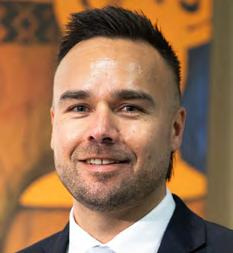
Hākopa (Jacob) Ashdown was awarded the New Zealand Harkness Fellowship 2025. Prior to undertaking his Harkness Fellowship research at the Harvard Kennedy School, Hākopa served as a Private Secretary to the Minister for Māori Development in the Beehive. Having recently returned to New Zealand, Hākopa now serves as the Regional Director, Northland for Te Puni Kōkiri (Ministry of Māori Development). He has whakapapa links to Te Aupōuri, Ngai Takoto, Ngāti Kahu and Ngapuhi, and holds governance roles within his iwi.
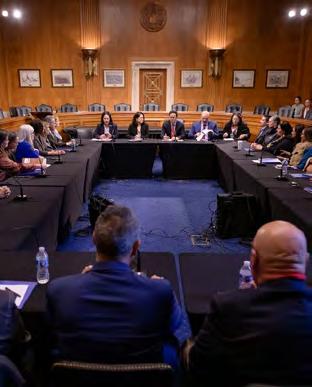
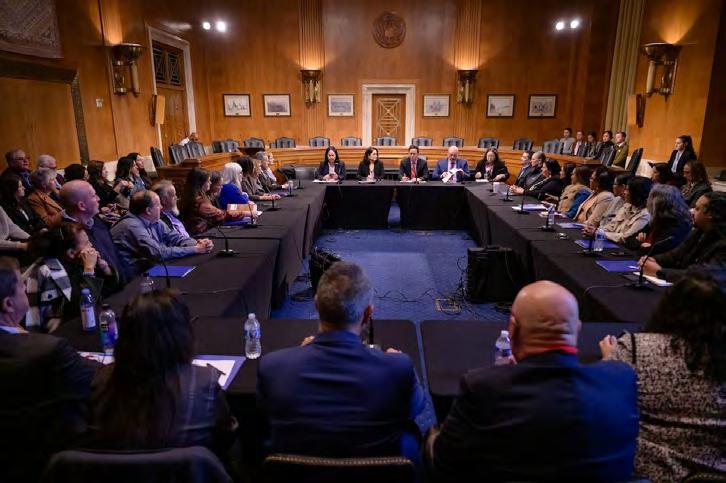
ROUNDTABLE DISCUSSION ON NATIVE CDFI POLICY PRIORITIES AT THE SENATE COMMITTEE ON INDIAN AFFAIRS, UNITED STATES CAPITOL, ATTENDED BY HĀKOPA ASHDOWN. (PHOTO COURTESY OF NATIVE CDFI NETWORK)
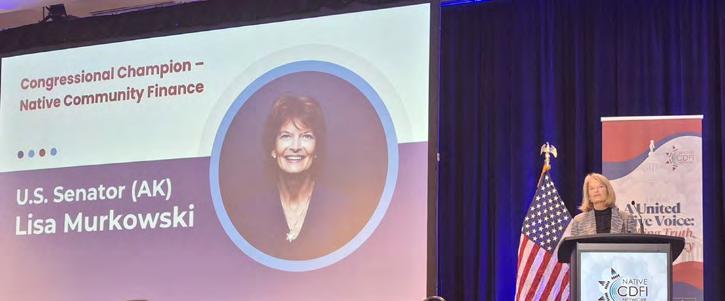
SENATOR MURKOWSKI (R-AK), ONE OF THE SPONSORS OF THE TRIBAL TAX AND INVESTMENT REFORM ACT, PRESENTING AT THE NATIVE CDFI NETWORK SUMMIT.
Five Official Information Act lessons for public servants
Magnus O’Neill, General Manager of Te Kāhui Kāhu Ministry of Social Development, outlines five lessons for officials, from court decisions, on when, or when not, to release information under the Official Information Act.

AUTHOR Magnus O’Neill
I am writing as an everyday user of the Official Information Act 1982 (OIA), drawing on my own experience and perspectives in deciding requests, and advising others. I hope this article shares practical tips that will help other users make confident, well-considered OIA decisions.
At the heart of the OIA is the principle of availability – information must be released unless there is a good reason not to. It’s a principle intended to drive transparency and accountability across the Public Service.
But the OIA itself permits officials to refuse information where its release would not be in the public interest. Although the Ombudsman usually reviews decisions to refuse information on a case-by-case basis, the courts have also provided clear directions on how such decisions must be made.
First, we must bring together and read the information before making a decision. Second, we must satisfy the different thresholds for harm in deciding whether a withholding ground applies. Third, if we are unsure whether there is a basis for withholding information, we must release it. Fourth, we cannot contract out of the OIA. And finally, we must be prepared to explain the decision more fully to the requester when asked.
Lesson one: Read the information
The OIA requires each request to be assessed on its merits. This means evaluating the actual information – its content and the context

in which it was generated – and the likely consequences of its release.
A blanket or category-based approach to deciding requests is not permitted. That is where the decision is based on an assumption of the harm in releasing a type of information, or a type of document, rather than based on an evaluation of releasing the actual information requested.
A blanket or category-based approach to deciding requests is not permitted.
This lesson was at the heart of the High Court decision Kelsey v The Minister of Trade [2015] NZHC 2497. Reviewing the minister’s decision to refuse a request for information, the Court observed that when refusing the request, neither the minister nor his officials assessed each piece of information, but instead “adopted
IMAGE BY RAW PIXEL ON MAGNIFIC

a ‘blanket’ approach to the request” based upon their knowledge of the categories of documents requested. As a result, the Court found the decision unlawful and required the minister to make a fresh decision, this time with the supporting officials reading the actual information requested.
Although a merits-based assessment can be time-consuming, the approach ensures that officials consider the harm that flows from releasing the actual information before refusing it.
Lesson two: Different thresholds for harm Officials will often rely on sections 6 and 9 when refusing a request. Section 6 permits a refusal “if the making available of that information
would be likely to” cause a specified harm. Section 9 permits a refusal “if, and only if, the withholding of the information is necessary” to avoid a specified harm. Simply put, section 9 presents a higher threshold for withholding information than section 6.
Section 6 deals with matters that require a common-sense assessment. In Commissioner of Police v Ombudsman [1988] 1 NZLR 385, the Court of Appeal said that the phrase “would be likely”, meant a “serious or real and substantial risk to a protected interest, a risk that might well eventuate”. In practice this means that officials must be able to bring forward material to support their concerns, and reasonably believe the harm could occur. Whether such a risk
exists is a matter of judgement, and evidence of the harm will not always be available.
By comparison, section 9 requires the decision maker to believe withholding is “necessary” to avoid one of the listed harms from occurring. In Television New Zealand Ltd v Ombudsman [1992] 1 NZLR 106, the High Court explained that the test in section 9 is whether it is “reasonably necessary” to withhold the information to avoid one of the specified harms from occurring. Officials must have a reasonable belief that the harm would in fact occur if the information was released and be satisfied that withholding it is essential to prevent that harm. A speculative or remote prospect of harm is insufficient to meet this threshold.
Understanding and applying these different thresholds correctly helps officials to make well-reasoned decisions and avoid refusing information where its release poses no prospect of harm.
Lesson three: If in doubt, release The starting point for any request is the principle of availability. In both Commissioner of Police and Kelsey the Courts emphasised that if officials are in two minds about releasing the information, they must release it. To support this expectation, section 48 of the OIA provides broad immunity to officials from legal proceedings when information is released in good faith, even if released in error.
In Attorney-General v Davidson [1994] 3 NZLR 143, the Court of Appeal considered a decision by the then Department of Social Welfare, which released information to a requester, despite certain grounds possibly being available to refuse some of it. The Court explained that section 48 would protect the officials from being sued for the release
This decision highlights that there may be limitations to the section 48 protection, and officials cannot overlook contractual obligations relevant to deciding an OIA request. Lesson four: Cannot contract out of the OIA Parties can be concerned about sharing information with government under contract and have sought to include provisions that exclude the reach of the OIA.
In Wyatt Co (NZ) Ltd v Queenstown-Lakes District Council [1991] 2 NZLR 180, the High Court was faced with a contractor’s objection to the Council’s decision to release information related to its contracted work. The contract contained a term of confidentiality that the contractor argued prevented the operation of the local body equivalent of the OIA. The Court rejected this argument, saying that it is an implied term of any contract that the promises of confidentiality will be subject to statutory obligations.
Although this lesson makes clear that parties cannot contract out of the OIA, the preceding lesson shows that contracts can be a useful means for clarifying procedural expectations between parties, such as including consultation requirements before deciding a request
their concerns when refusing information. For this reason, the importance of good decision records and decision letters cannot be overstated.
Together, these lessons show that how a decision is made is just as important as the decision itself. They highlight the need for officials to be reading the actual information requested, exercising good judgement as to whether its release would cause harm (which may include consultation with third parties), and keeping good records of the reasons for the decision made.
Magnus O’Neill is a public servant, with extensive experience with New Zealand’s official information legislation, having advised ministers and officials in their decision-making, and ombudsmen in their investigation and review functions. Magnus is currently the General Manager of Te Kāhui Kāhu Social Services Accreditation at the Ministry of Social Development. The views expressed in this article are his own.
If officials are in two minds about releasing the information, they must release it.
and any consequences, even if some of the information could have legitimately been withheld. This is because Parliament intended to provide protection to encourage the release of official information, even where there may be uncertainty or error.
However, in Pharmaceutical Management Agency Ltd v Astra Pharmaceuticals (NZ) Ltd – CA39/99 [1999] NZCA 437 the Court of Appeal considered a contract between Pharmaceutical Management Agency (Pharmac) and Astra Pharmaceuticals. The contract included a clause that all information exchanged between parties was confidential, and that if that information was requested under the OIA, consultation between the parties would occur. However, Pharmac did not consult Astra before releasing the information under the OIA.
The Court found that although section 48 protected Pharmac from being sued by Astra for any harm that may have resulted from the information being released, it did not protect Pharmac from being sued for failing to consult Astra as required contractually.
Lesson five: Be prepared to explain Section 19 of the OIA says that when information is refused, officials must give the requester the reason for the refusal, and if then requested, give the grounds in support of that reason.
The first obligation requires officials to specify which statutory provision was relied on to refuse the request. Then, if asked, the second obligation requires officials to explain the refusal more fully. The failure to fulfil this second obligation was a basis for the judicial review in Kelsey, where the Court observed that not providing the grounds for the refusal, when requested, meant the requester was unable to “understand the bases for the decision made”.
These obligations reflect the basic understanding that a well-reasoned decision is less likely to be arbitrary. They are also consistent with the sentiment observed in Commissioner of Police, that officials must be able to bring forward material to support
How a decision is made is just as important as the decision itself.
Help us shape the journal you love
This short survey takes around 5 minutes. Tell us what content you value, how you access the journal, and what you’d like to see more of. All responses are anonymous.
Building a culture of continuous improvement
Des Hosie and Cullum Peni-Wesche, from the Operational Assurance team at Fire and Emergency New Zealand (FENZ), share insights on how a culture of continuous improvement can support efficient and effective service delivery in any public sector organisation, improving the way we capture and use knowledge.

AUTHORS
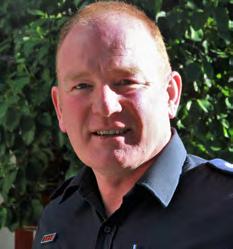
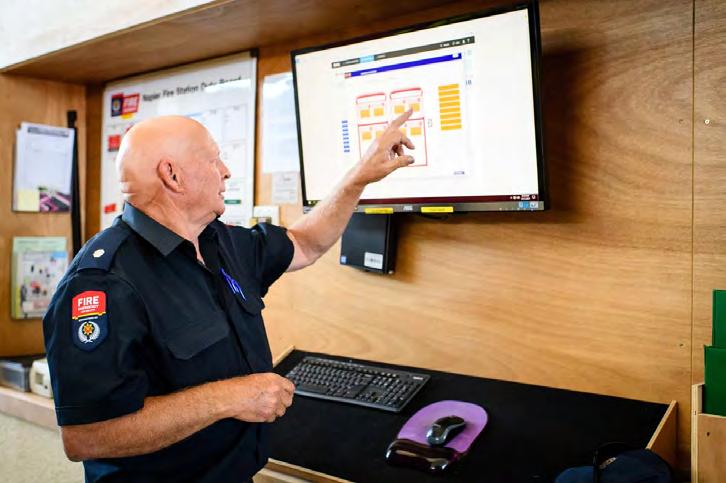
Des Hosie
Cullum
Peni-Wesche
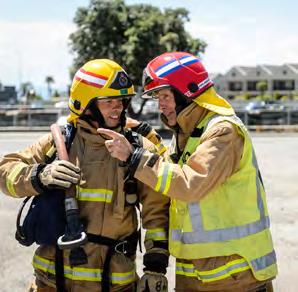
The impacts of climate change, wildfire risk, and other natural hazards are being felt more acutely across Aotearoa New Zealand. At FENZ, responding to emergencies is our core business. But alongside response sits a deliberate focus on learning and continuous improvement – reviewing what happened, understanding what worked, and identifying what needs to change or be sustained.
This ensures that the experiences of our personnel today strengthen our ability to respond in the future. This intent is reflected in the whakatauākī gifted to the FENZ Operational Assurance team: Mā te mōhio ka anga whakamua, which translates to: Through knowledge, we improve.
Learning the lessons makes a difference In 2023, FENZ completed an operational review of its response to the Auckland floods and Cyclone Gabrielle, in line with our established practice of reviewing responses to significant incidents. Following the tragic death of two firefighters at Muriwai, an independent accident investigation was also commissioned to learn from this catastrophic event and to reduce the likelihood of anything similar occurring in the future.
Taken together, these reviews prompted FENZ to examine and strengthen its policies, procedures, and training programmes. A particular focus was placed on raising firefighter awareness of landslide hazards and
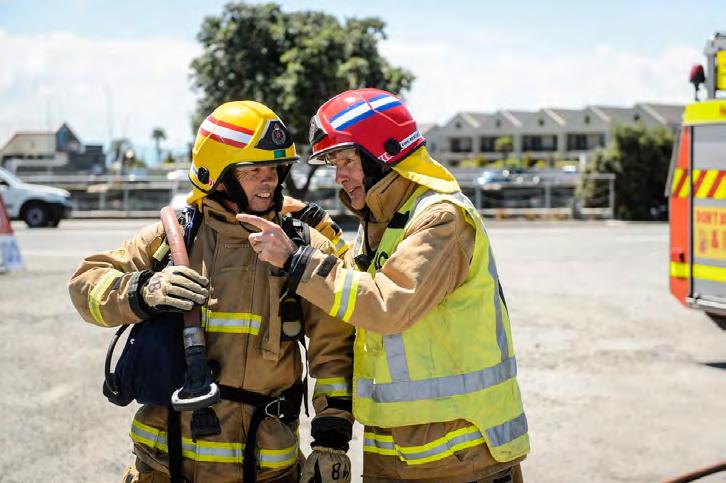
on improving how dynamic risk assessments are undertaken in complex, rapidly changing environments.
We now have tangible evidence that these lessons have translated into change. At the time of writing, completion of the national landslide training module sits at 89 per cent. We also have qualitative evidence of this learning in practice. This includes a published case study following a landslide during a severe weather event in Ravensbourne, as well as early findings from the operational review into the 2025 Nelson–Marlborough severe weather responses.
Together, these examples demonstrate how lessons identified through reviews are being converted into improved capability, safer decision-making, and more informed responses on the ground.
What does lessons management look like at FENZ?
We often hear the term ‘lessons learned’, but that is only one part of a much broader lessons management process. A lesson is not truly ‘learned’ until change has occurred. Lessons management is a methodical, evidence-based approach that begins with collecting observations from people involved in a specific incident or event.
These observations are the building blocks of the process. They are reviewed, analysed, and grouped into themes that allow deeper insights to emerge. Because our workforce consists of both paid and volunteer personnel, it was important that we develop resources to engage in the lessons management process that are accessible to our people, in the way they need them.
To support this, FENZ committed, as part of its 2024–25 Statement of Performance Expectations, to implementing a Lessons Management Framework as a single source of truth for the organisation. Developed with Executive Leadership Team backing, their framework provides a consistent approach to lessons management across a workforce of more than 14,500 paid and volunteer personnel.
This work has been formally recognised, with the Operational Assurance team named as finalists in the 2025 AFAC (Australasian Fire and Emergency Authorities Council) Lessons Management Awards.
Embedding the culture
We have been deliberately working to embed continuous improvement into our organisational culture. This means ensuring our people feel confident and supported to share their observations from incidents and events,
and that there is a clear, structured process in place to analyse those insights, identify themes, and generate lessons.
In practice, this has strengthened the way we capture, connect, and use knowledge across the organisation. We have also lifted our maturity in conducting debriefs and After-Action Reviews, enabling more consistent reflection and learning at both operational and organisational levels.
We have integrated a lessons management approach into our operational reviews, which highlight key learnings in an objective, respectful, and mana-enhancing way. Importantly, we track recommendations and collect evidence of implementation so we can demonstrate where positive change has occurred and actively share these outcomes across the organisation.
Beyond FENZ, we remain connected to other public sector agencies through shared practice, and to the wider fire and emergency sector through doctrine and professional networks via AFAC. This connection allows us to test our thinking, learn from others, and continue lifting our approach to lessons management.
What is one thing that organisations can do today?
We recommend that organisations start by creating the right authorising environment to enable lessons management. Public servants need to clearly articulate how lessons management and continuous improvement support their organisation’s strategic outcomes and gain visible support from senior and executive leaders to do so.
When evidence-based, and people can see that their insights lead to real change, learning becomes part of everyday practice.
As one member of the FENZ team says, “It’s tempting to jump straight into developing tools and templates. But you need a strong foundation before you build the house.”
Once that authorising environment is in place, organisations can begin to develop simple, fit-for-purpose approaches that meet their people where they are. For example, a policy team might use a short After-Action Review at the end of a policy sprint to identify what worked well and what could be improved next time. A health and safety practitioner might develop short, plain-language case studies to highlight learnings about operational hazards in a way that is accessible to frontline staff.
When lessons are visible, evidence-based, and people can see that their insights lead to real change, learning becomes part of everyday practice. This is when lessons management is most effective.
Des Hosie is the National Operations Adviser for Operational Assurance and Lessons Management Lead at FENZ.
Cullum Peni-Wesche is the National Adviser for Operational Assurance at FENZ, and a recent board member and New Professionals co-chair of Hāpai Public.
Managing incivility in the public sector
Drawing on recent studies, Dr Ao (Ollie) Zhou from Te Whare Wānanga o Waikato – University of Waikato, Dr Alina Haider from Te Herenga Waka – Victoria University of Wellington, and Dr Daniel Duan from Te Kunenga Ki Pūrehuroa – Massey University explore what managers and employees can do about incivility in the workplace.



AUTHORS
Dr Ao (Ollie) Zhou
Dr Alina Haider
Dr
Daniel Duan
Workplace incivility – everyday rudeness, dismissiveness, or disrespect – may seem minor, but its effects are far from trivial. Defined as “low-intensity behaviour with an ambiguous intent to harm”, incivility can damage wellbeing and productivity for both individuals and teams. How is incivility tackled in the Aotearoa New Zealand public sector?
Unlike overt bullying or harassment, incivility is subjective, subtle, and often plausibly deniable – a dismissive tone in a meeting or being excluded from a conversation. These behaviours sit below the threshold of most formal complaint processes, and those on the receiving end are often unsure whether what they experienced was intentional and worth flagging.
The public sector context can create fertile ground for incivility. Public servants work under a distinctive mix of pressures: high public scrutiny, remuneration that often lags behind comparable private sector roles, and frequent restructuring driven by shifting political priorities. While New Zealand’s public sector has comparatively strong structures to promote respect and inclusion, including the Code of Conduct (Public Service Commission, 2026), these formal mechanisms are largely designed for clear-cut misconduct, such as bullying and harassment, rather than the grey area that incivility occupies.
Raising concerns about incivility can feel like overreacting or unnecessarily disrupting group harmony, particularly when the behaviour in question is tied to the stress of an organisational restructure or shifting team dynamics. That gap between what formal processes can address and what people actually experience day to day is where
managers and employees need practical strategies.
What can managers do?
Drawing on interviews and focus groups across 13 New Zealand public sector organisations, we found that managers are central to how public organisations prevent and address workplace incivility.
Effective managers intervene early, especially during periods of significant organisational change or when stress and uncertainty can amplify tensions. Rather than waiting for behaviours to escalate into formal complaints, they recognise and respond to rudeness when it first appears. This might mean a private conversation with the person concerned, or raising the issue in a team discussion before patterns become entrenched. Early intervention sends a clear signal that disrespectful behaviour is noticed and will not be overlooked.
Effective managers also model the behaviour they expect. They are consistently inclusive and courteous in their own interactions, which helps to establish team norms that others follow. When managers themselves are dismissive or inconsistent – friendly one day, curt the next – it creates confusion and erodes trust.
Managers also play a critical role in creating psychologically safe team environments, where members feel comfortable raising concerns. This means not only having opendoor policies, but actively inviting feedback, responding constructively when issues are raised, and following through with action. Our study suggests that when employees see their managers take concerns seriously, they are

more likely to speak up and less likely to disengage.
Practically, it also means recognising that incivility often thrives in ambiguity: unclear roles, inconsistent standards, and unspoken frustrations all create fertile ground for rude behaviour. The most effective managers address these underlying conditions rather than simply reacting to incidents after the fact.
What can employees do?
Individual workers can also take steps to protect themselves from incivility at work. Our ongoing exploratory research suggests that people who speak up constructively in difficult interpersonal situations have a better chance of diffusing tension and preserving their agency. Speaking up can be a hard choice, and speaking up well is a skill that requires practice.
Incivility often triggers strong emotions, and people typically either avoid confrontation or react emotionally. Yet neither response works well over time. Avoidance signals that rudeness is tolerated, while emotional reactions can harm professional standing and give the other party reason to justify further undermining. Speaking up constructively is a middle path that sets clearer boundaries without escalation.
What does this look like in practice? It involves a firm response that is calmly delivered in the moment and focused on solving the work
issues at hand. This redirects attention to the task while signalling professionalism and personal agency. Because the response is measured, it is harder for others to dismiss or argue against it. Over time, this behaviour can have a compounding effect by signalling that rude conduct is neither helpful nor welcome.
Speaking up constructively takes selfregulation and preparation. Rudeness may reflect pressures occurring elsewhere in a person’s life or be a passive-aggressive response to unresolved issues. Being aware of its possible roots can help people stay grounded, and mentally anticipating difficult interactions can make it easier to stay measured. Importantly, managers have a responsibility to create environments where people feel comfortable speaking up, linking individual action back to the team conditions that make it possible.
Looking ahead
Tackling workplace incivility is a team effort that requires action from both managers and employees. Managers who intervene early, model civil behaviour, and build psychologically safe environments help create the conditions for healthier teams. Employees who learn to speak up constructively can reinforce those conditions in everyday interactions.
Our ongoing research continues to explore what works in practice, and we welcome
conversations with public sector leaders, managers, and team members who are grappling with these challenges. If you would like to discuss this research or explore opportunities for collaboration, please get in touch at o.zhou@waikato.ac.nz
Ao (Ollie) Zhou is a lecturer in Human Resource Management at the Waikato Management School, University of Waikato. Her research focuses on harmful organisational behaviours such as workplace incivility and bullying, gendered hiring practices, workplace harmony, and employment relations.
Alina Haider is a lecturer in the School of Management at Victoria University of Wellington. She studies leadership, ambivalence, and mistreatment in work relationships. Her current research looks at how people engage in self-advocacy to protect their interests and wellbeing at work.
Daniel Duan is a lecturer in the School of Management and Marketing at Massey University. His research focuses on workplace wellbeing, including stress and coping. His current research projects examine interpersonal harmony, proactive work behaviours, work engagement, and workplace mistreatment.
IMAGE BY FREEPIK ON MAGNIFIC
Steward what we have
Trevor Manners, Partner of Infrastructure and Capital Projects at Deloitte, argues for smarter, longer-term decisions with Aotearoa New Zealand’s infrastructure.

AUTHOR Trevor Manners
The release of the Te Waihanga Infrastructure Commission’s National Infrastructure Plan (NIP) is a defining moment for infrastructure stewardship in Aotearoa New Zealand. We are at a critical juncture where choices made now will determine how well we respond to ageing assets, tight budgets, and capital needs that already exceed what we can fund and maintain. Demographic change, climate impacts, and more frequent severe weather are accelerating the strain on our infrastructure systems.
We spend heavily on infrastructure, but too often fail to protect that investment over time. As the NIP notes, much of what New Zealand needs already exists. Yet many of the assets that support our communities and productivity were built decades ago and have not been managed in ways that keep pace with today’s demands.
The gap between how we build and maintain our assets is less about technical know-how and more about decision-making. Decisions are centred on the choices we make about our assets, such as what we fund, defer, and prioritise. The NIP challenges us to move beyond age-based renewals or fixing things only once they fail. Done well, asset management is not a maintenance function; it is a policy lever that helps shape national wellbeing and economic performance.
Asset decisions are public policy decisions. They determine access to services, affordability, resilience, and productivity. If we accept that change is needed, the question is simple: where do we start?
Where to start on the journey to reshape how we invest in, and look after, our infrastructure
A sensible place to start is challenging the idea that asset management is a back-office technical discipline. It is a core leadership function. That means agreeing on the standard of service and condition we will manage to, then maintaining assets proactively to avoid unplanned and reactive work wherever possible. Today, we often accept reactive maintenance as the answer to our problems, as opposed to investing in prevention. The shift is cultural; manage what we already own strategically, with a bias to building real longterm value and fiscal responsibility.
The NIP defines a pathway to better manage our assets by implementing a disciplined approach to understanding what we own. Are these the right assets, and are they in the right place? What condition are they in, and are they fit for a clearly defined purpose? Are they the right size and configuration, and can they deliver the performance we expect?
Understanding our assets, priorities, and needs help us to shape decisions that inform. Should we keep investing, or should we change course? Answering these questions is how policy intent becomes priorities, service levels, and funded work programmes.
Fundamentals of asset management can help navigate our challenges
New Zealand’s challenges are not unique, but our response can be. We have the capability and scale to respond to an ageing population, major water renewals, flood resilience needs, and a health system under pressure. The task is to let these realities shape our asset strategies, not the other way around. Disciplined asset

frameworks, and performance expectations that support tough trade-offs now, and prevent today’s maintenance burden from being pushed onto future generations.
Moving towards a system focused on sustainable infrastructure investments Reducing long-term fiscal pressure starts with policy that enables better stewardship of the assets we already have. Asset management is not about ‘making do’ until we can build something new. It is about optimising the public portfolio and prioritising resources where they create the most value, investing to extend life and performance, improving access and equity where demand requires, and when assets no longer serve a purpose, divesting and recycling capital into higher-value priorities.
Policy and planning must lead. Decisionmakers need clarity on the public sector’s individual and shared priorities so that settings, incentives, and accountabilities line up. A stewardship mindset, organising asset owners around shared outcomes, breaks down traditional silos and drives coordinated, system-level planning across transport, energy, water, spatial planning, and social infrastructure. The payoff is infrastructure that is more affordable, reliable, higher-performing, delivers against community expectations, and ultimately more resilient.
The NIP is clear: leaders must put asset management at the centre of policy and planning, with stewardship of what we already own as the default. That shift reduces reliance on costly ‘build more’ solutions and focuses attention on extracting more value from existing assets. Strong infrastructure stewardship means making deliberate, strategic choices so that long-term value, not short-term fixes, guides how New Zealand invests.
management aligns investment with outcomes, shifting us from short-term fixes to an intergenerational view of value.
Short-term, reactive planning erodes public value. It produces inconsistent, stop-start investment that becomes unaffordable over time. Moving to proactive, strategic asset management requires clearer longterm settings through legislation, funding
Asset management is not a maintenance function; it is a policy lever that helps shape national wellbeing and economic performance.
Trevor Manners, Partner Infrastructure and Capital Projects at Deloitte, has a passion for infrastructure as an enabler of societal outcomes that help us learn, heal, work, and play. Working across the asset lifecycle, from portfolio strategic planning through to maintenance and operations, Trevor understands the challenges and complexities asset owners face when navigating infrastructure issues. His areas of focus include strategic asset management, asset planning, governance, capital delivery models, procurement, and maintenance. He works collaboratively with clients to help shape their decision-making to best achieve their organisational priorities and outcomes.
IMAGE BY WIRE STOCK ON MAGNIFIC
Book review
Communications professional and former journalist Farheen Hussain reviews How to Rebuild Trust in Journalism by Tim Watkin.

AUTHOR Farheen Hussain
“Journalism is a relationship … it’s not a product.”
That line, which appears at the end of the introduction to Tim Watkin’s How to Rebuild Trust in Journalism, captures the heart of this thoughtful and timely book. Across more than 180 pages, Watkin explores one of the most pressing questions facing the media today: why do people no longer trust the news, and what can journalists do to earn that trust back?
The book is as clear and practical as its title suggests. Watkin, RNZ’s executive editor for audio and an award-winning journalist, structures the chapters with the instincts of a seasoned reporter. He begins by laying out the scale of the problem, tracing the historical roots of media distrust, and then offers practical ways to repair journalism’s relationship with the public.
What I appreciated most is that he practises what he preaches. Every argument is backed by research, data, and examples from Aotearoa New Zealand, the United States, and Europe. More than once, I found myself pausing to look up the studies he cited.
One of the book’s most reassuring insights is that distrust in journalism is not new. Watkin quotes legendary American journalist Walter Lippmann, who wrote in 1919 of “an increasingly angry disillusionment about the press”. In other words, people have been accusing journalists of bias and distortion for more than a century.
What has changed is the environment in which journalism operates. Social media spreads misinformation at lightning speed, newsroom budgets are shrinking, and political polarisation is deepening. Reading this, I was reminded of India’s ‘WhatsApp University’, a tongue-in-cheek term for people who trust random forwards more than verified reporting!
One of the book’s most useful ideas is that trust rests on two pillars: competence and intention. Audiences need to believe that journalists know what they are doing and that they are genuinely trying to serve the public. RNZ’s own research found that people value accuracy, truthfulness, factual reporting, and the absence of obvious bias.
The historical chapters are particularly engaging.
From the New York Sun’s 1835 ‘Great Moon Hoax’ to New Zealand newspapers using phrases such as “there is a report …” to launch gossip, Watkin shows that sensationalism and misinformation are hardly new inventions.
His central argument is that journalism must become more relational and less transactional. Audiences should not be asked to trust blindly; journalists need to be more transparent about how stories are reported, verified, and edited.
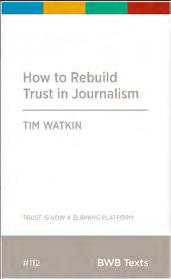
Watkin’s solutions are practical rather than grand: reduce secrecy, explain decisions, admit mistakes, and show care. Just like you would do in any relationship.
As someone who has spent much of my career in journalism, I found the book both comforting and confronting. It is comforting because it reminds us that criticism of the media is not new and that journalism has weathered such challenges before. It is confronting because it leaves no room for complacency. Trust is not owed to journalists simply because they publish. It must be earned, story by story, through competence, transparency, and care.
After reading the book, I see it as a practical blueprint for journalists to improve and for audiences to expect more. Trusting and gaining trust are the ways to a happier world. Watkin would approve.
Farheen Hussain is a Wellington-based communications professional and former journalist with more than a decade of experience covering politics, society and public policy in India. She holds a Master’s in Global Business from Te Herenga Waka—Victoria University of Wellington and a Master’s in Political Science and International Relations. Her work spans journalism, strategic communications, and international engagement, with a particular interest in media, public policy, and the stories that shape how people understand the world.
Did you know? Six fascinating facts about general elections
We uncover some fascinating facts about general elections, thanks to the Electoral Commission.
1
2
THE ELECTION WORKFORCE
A general election is an enormous and complex event. This year the Electoral Commission is recruiting about 25,000 people to fill about 28,000 roles (some people do more than one role). Most of the temporary election workforce is based in voting places or electoral headquarters across the country. People are paid workers, not volunteers, and from local communities.
THE
ELECTORAL COMMISSION PRINTS MORE THAN 9 MILLION VOTING PAPERS
This is more than enough for all of New Zealand’s eligible voting population and extra as contingency planning. The Commission wants to make sure everyone can have their say. Voting papers are only printed once nominations close, so it’s a tight turnaround! Every voting paper and every ballot box have unique identifiers, so the Commission knows exactly how many votes have been issued, how many ballot boxes there are, and how many votes are expected to be in each ballot box when votes are counted after the close of voting.
3
70,000 HOURS OF VOTING
In 2023, the Electoral Commission had more than 800 advance voting places and 2300 election day voting places offering nearly 70,000 hours of voting. The voting services provided in the 2023 General Election included 15 Kaupapa Māori voting places to guide voters through the voting process in te reo Māori or English. The Commission also plans for as many voting places as possible to be fully accessible. In 2023, it provided 1495 fully accessible voting places and 962 voting places accessible with assistance.
4
VOTES ARE COUNTED BY HAND – TWICE
All votes at a general election are counted by hand, not counting machines. On election day, the Commission does the ‘preliminary count’. This includes all the ordinary votes cast on or before election day. This gives the preliminary results, which are released on election night. Immediately after election day, the official count is started, which involves counting all the ordinary votes again and checking and counting special votes. Cross checks are also conducted, to make sure no one has voted more than once. Quality assurance checks on the final results are made before they are released.
5
VOTING PAPERS ARE STORED FOR SIX MONTHS
Voting papers are kept for six months after an election in case they are needed for a legal challenge. They are held in secure storage, in sealed boxes, and no one has access to them. Secrecy provisions mean that requests cannot be made to see a person’s voting papers. After six months, voting papers are destroyed securely. The papers are shredded and prepared for recycling.
6
ORANGE GUY HAS NOT ALWAYS BEEN KNOWN AS ORANGE GUY
Orange Guy used to be known as ‘Elector Schnackengrubensteinwitz’ or ‘Mr Elector’. As that is a bit of a mouthful, he has been known as Orange Guy since 2011. Pup joined Orange Guy in 2020. Pup is an inquisitive and smart Jack Russell/Dachshund cross, full of enthusiasm!
Orange Guy and Pup work together to help voters with everything they need to know about enrolling to vote and voting.
For more facts about elections, visit the Electoral Commission’s website vote.nz here
Hāpai Public | Institute of Public Professionals Aotearoa New Zealand
PO Box 5032, Wellington 6140, New Zealand office@hapaipublic.org.nz hapaipublic.org.nz