







JEFF ARENS, Schuster Co. | IMTA'S Chairman of the Board
The catalyst for establishing the Iowa Motor Truck Association was simple but powerful: a group of truckers wanted a voice at the state capital. At the time, the railroad lobby was highly active, visible, and influential. Iowa truckers recognized the need to ensure their industry was equally represented at the Statehouse.
In 1943, IMTA hired its first full-time lobbyist at the Iowa Capitol. Since then, the association has maintained a strong and respected presence during every legislative session. Much of our work goes unnoticed—because we are successful in stopping harmful proposals before they gain momentum. We monitor a wide range of legislative issues, from general business concerns to trucking-specific initiatives.
Most trucking-related issues are nonpartisan, often earning support from both Democrats and Republicans. Sometimes IMTA leads on an issue; other times, we work alongside a broader coalition of business organizations— either advancing beneficial legislation or opposing measures that could negatively impact trucking and the business community.
The IMTA Board of Directors plays a critical role in setting a strategic vision for our advocacy efforts. This group represents companies of all sizes and sectors, bringing thoughtful leadership to the process of prioritizing our legislative agenda. At the same time, IMTA staff continually gather data and feedback from members. That input is invaluable in guiding how we allocate resources and represent the industry at the Capitol. It’s a proven process—one that has delivered meaningful results for Iowa’s trucking industry for decades.

This legislative session, we can add another important win.
As I write this column, Senate File 2426 has just been signed by the Governor. This legislation strengthens the ability of Iowa’s enforcement community to ensure our roads and highways are as safe as possible.
The bill includes several key provisions. It requires individuals obtaining a Commercial Driver’s License (CDL) for the first time to demonstrate English language proficiency before receiving their license—addressing a growing concern at its source. It also establishes clear consequences for noncompliance. Drivers who cannot demonstrate proficiency during a roadside inspection may face a serious misdemeanor, including potential jail time and a $1,000 fine. The vehicle will be placed out of service, and the carrier may face a $10,000 fine.
This is good legislation. This is sound public policy.
IMTA worked closely with the Department of Public Safety (Iowa State Patrol) and the Iowa Department of Transportation to advance this effort. Through this collaboration, we are helping make Iowa’s roads safer for everyone.
This is the work of your association. It doesn’t always make headlines, and it often happens behind the scenes—but it matters. It protects our industry, supports our drivers, and strengthens the businesses that keep Iowa moving.
Because when IMTA shows up, we’re not just representing an industry— we’re protecting livelihoods, families, and the future of trucking in Iowa.
BRENDA NEVILLE | IMTA'S President & CEO
In the almost four decades I have had the privilege of working for Iowa’s trucking industry, I have seen firsthand the many outstanding operations that keep this state moving. Because of the quality companies that belong to our association, advocating for trucking has often been the easy part of my job.
But over the last four or five years, I have also witnessed something troubling.
I have seen bad actors infiltrate this industry at an alarming rate. I have heard the frustration from responsible carriers who have watched unsafe operators cut corners, ignore regulations, underbid good companies, and create unnecessary danger on our highways.
Frankly, it has been discouraging—and unacceptable.
That is why May 14 was such an important day for trucking.
In a unanimous 9-0 decision, the United States Supreme Court ruled that freight brokers can be held accountable under state law when they negligently hire unsafe motor carriers. The decision is a major victory for safety and a powerful reminder that accountability still matters in American trucking.
Not only was this ruling historic, it was a badly needed morale boost for the good companies.
For more than three years, trucking has operated in one of the most difficult environments I have seen in my career. During that time, many responsible carriers felt like they were being punished for doing things the right way while bad actors continued to gain ground.
If there is one thing I know about IMTA members, it is this: they are deeply committed to safety.
Our members invest heavily in their people, equipment, maintenance, training, compliance, and safety culture. They understand that safety is not a slogan—it is a responsibility that must be woven into every aspect of an operation.
Unfortunately, unsafe operators continued finding opportunities within the supply chain, often at the expense of responsible carriers that were committed to doing things the right way. And as is too often the case, it took tragic crashes and senseless loss of life before meaningful change began to take shape.
This Supreme Court decision represents another important step toward restoring accountability.
In the case before the Court, the freight broker argued it could not be held responsible for selecting an unsafe carrier because federal law shielded it from liability. The Supreme Court rejected that argument unanimously, reaffirming that safety accountability still matters in trucking and that states retain the authority to protect the public from unsafe operations.
That distinction matters enormously.
This is a victory for the companies that have invested in building strong safety cultures. It is a victory for the companies that do things the right way every single day—from hiring and training drivers to maintaining equipment and enforcing operational standards.
And it is a victory for the responsible carriers who have suffered while watching bad actors take freight, create dangerous conditions, and damage the reputation of an industry filled with hardworking professionals.
Most importantly, this decision sends a strong message that safety still matters in trucking. Strong safety cultures matter. Responsible operators matter. Doing things the right way still matters.
After several difficult years, this ruling serves as an important reminder that while bad actors may grab headlines for a season, integrity still matters in the long run—and there is no shortage of integrity within the IMTA membership.
And for the many trucking companies that never compromised their commitment to safety, this decision feels like long overdue recognition that doing things the right way still matters after all.




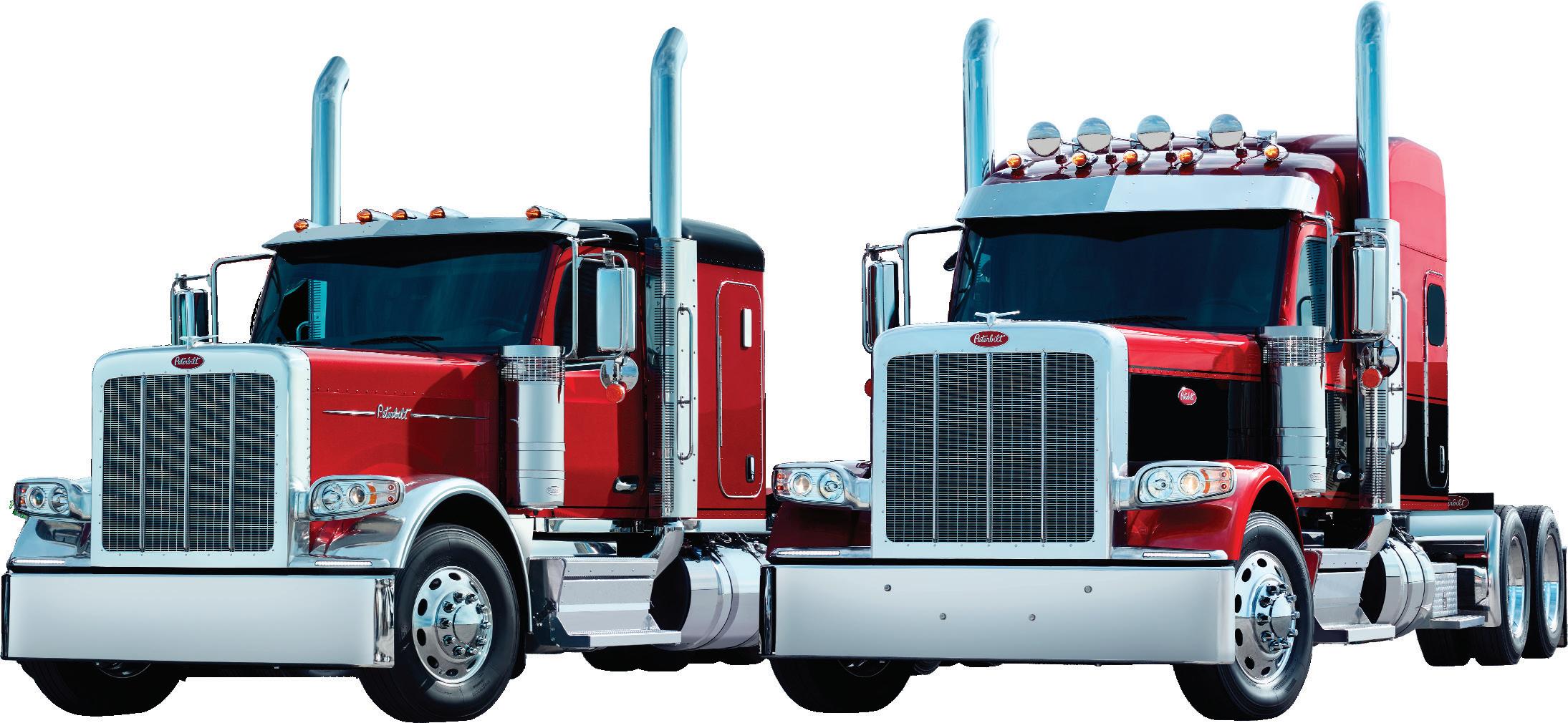



A conversation with FMCSA Administrator Derek Barrs
At a time when the trucking industry faces mounting challenges, from fraud and regulatory gaps to evolving safety demands—leadership at the federal level has never been more critical. During a recent visit to Iowa, FMCSA Administrator Derek Barrs sat down with the Iowa Motor Truck Association (IMTA) staff to discuss his career, the current state of the industry, and his vision for restoring safety, fairness, and integrity across America’s roadways.
Barrs brings decades of hands-on experience to his role. His career in law enforcement began in 1991 as a deputy sheriff in Madison County, Florida. Ten years later, he joined the Florida Highway Patrol, where he built a reputation for deep involvement in commercial vehicle safety. Over nearly two decades, Barrs worked across virtually every aspect of enforcement—inspections, audits, crash response, training, and regulatory education—ultimately retiring as Chief in 2020.
That breadth of experience has shaped his leadership approach at FMCSA. “If you can name it, I’ve probably done it,” Barrs noted,
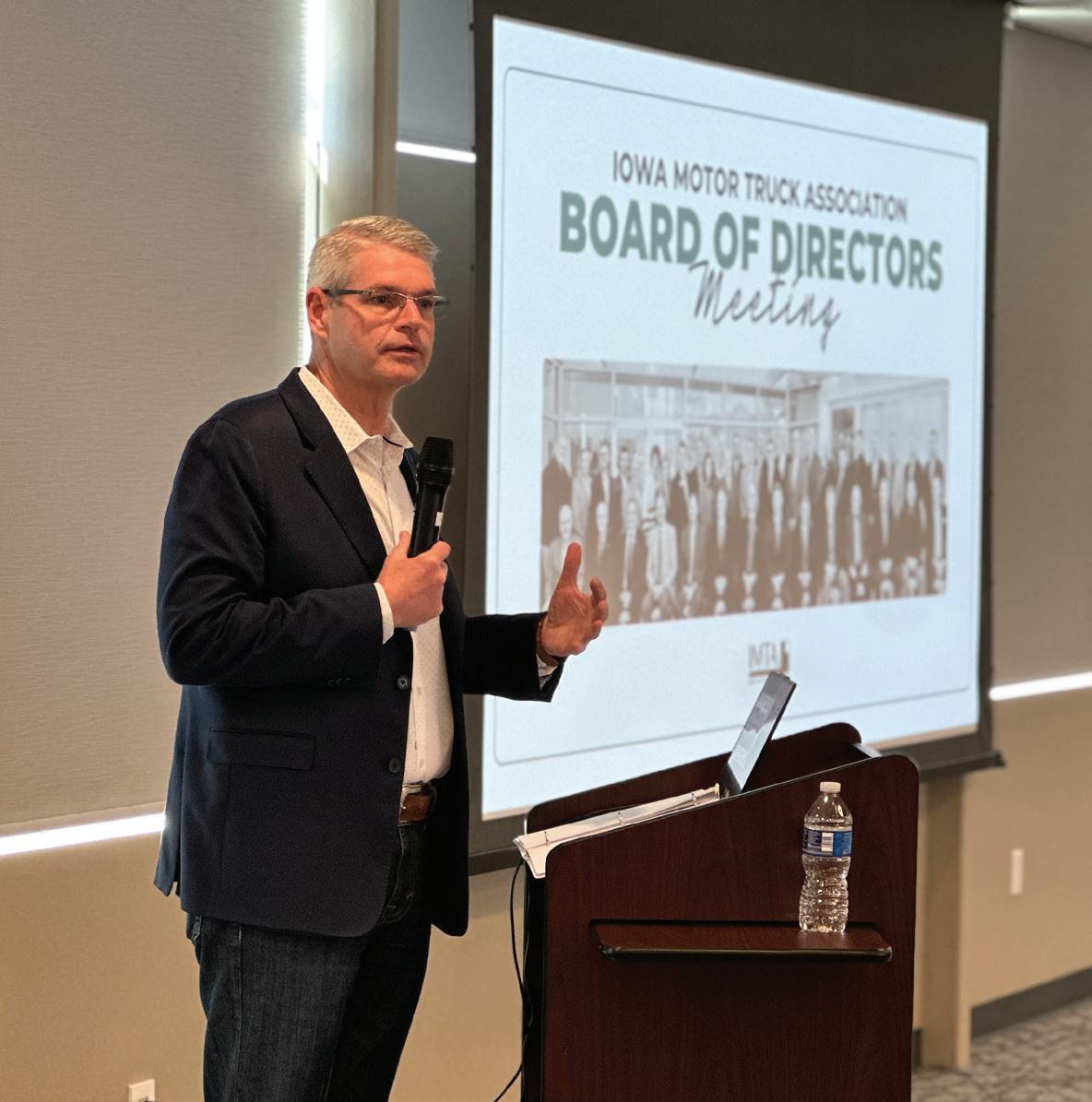
emphasizing his firsthand understanding of both enforcement and industry operations.
Since stepping into the role of FMCSA Administrator seven months ago, Barrs has taken an unusually visible and proactive approach. Rather than remaining behind a desk in Washington, he has spent significant time in the field—visiting regional offices, speaking at state trucking association events, visiting trucking companies, participating in roadside inspections, and attending as many industry events as possible.
These experiences, he says, have been eye-opening.
“I knew there were issues that had crept up over the past four to five years,” Barrs explained, “but I didn’t fully understand just how bad those issues had become.”
Chief among those concerns is the rise of systemic fraud affecting critical components of the industry. Barrs pointed to widespread problems involving driver training providers, electronic logging devices (ELDs), and even the Drug & Alcohol Clearinghouse. Particularly troubling is the persistence of “chameleon carriers” and bad actors that evade enforcement by rebranding and re-entering the system under new identities.
“People who have no business being in this industry have been allowed right in the front door,” he said, describing the resulting environment as chaotic for companies striving to operate safely and compliantly and also problematic for overall highway safety.
Despite these challenges, Barrs is quick to highlight meaningful progress already underway.
One major enforcement success involves English Language Proficiency (ELP) standards. Since last June, more than 20,000 drivers have been placed out of service for failing to meet these requirements—an action Barrs says directly improves roadway safety.
FMCSA has also taken aggressive steps to clean up the Entry-Level Driver Training (ELDT) provider’s registry. Nearly 7,000 training providers have been removed for failing to meet federal standards, signaling a renewed commitment to ensuring that a Commercial Driver’s License (CDL) represents a meaningful and verified qualification.
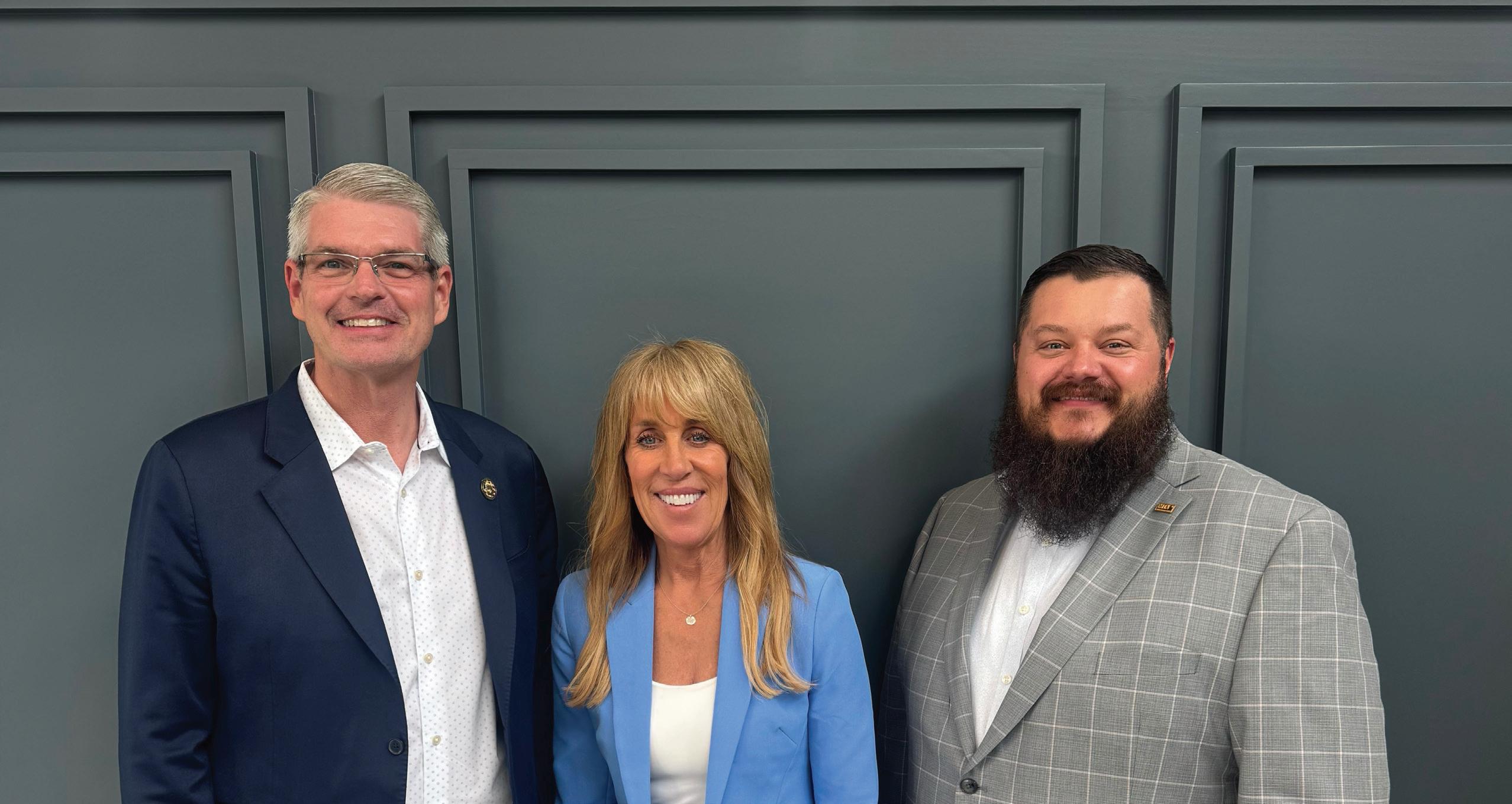
“Getting back to a place where having a CDL means something is critical,” Barrs emphasized.
“The trucking industry is vitally important, and we have to ensure that we are allowing the industry to operate at the highest level possible.”
Electronic logging device oversight has also been strengthened. Through enhanced vetting processes, FMCSA has blocked approximately 450 ELD providers from gaining approval and removed an additional 80 from the registry.
These enforcement efforts align closely with broader federal priorities, including the recent executive order focused on enforcing “commonsense rules of the road” for truck drivers. Barrs credits strong leadership within the U.S. Department of Transportation for enabling FMCSA to take decisive action.
Looking ahead, Barrs made clear that the agency’s work is far from finished. A key focus will be “futureproofing” recent progress—ensuring that reforms cannot easily be reversed and that regulatory frameworks remain resilient over time.
Several rulemakings are expected in the near term. These include efforts to strengthen ELDT provider requirements, eliminate ELD self-certification, and enhance the vetting process for new carriers entering the market. Additionally, FMCSA is encouraging industry participation in an open rulemaking related to the DataQs system, with a comment deadline set for July 31.
One of the most anticipated developments is the launch of MOTUS, a new carrier registration system designed
to identify and prevent fraud more effectively. Barrs believes this system will play a critical role in eliminating chameleon carriers and improving FMCSA’s ability to investigate and remove bad actors from the industry.
Beyond policy and enforcement, Barrs consistently returns to one central theme: partnership.
“I view the Administration as a business where the trucking industry is our customer,” he said.
This philosophy represents a notable shift toward collaboration and responsiveness. Rather than imposing top-down regulations in isolation, Barrs emphasizes the importance of listening to carriers, understanding their challenges, and working together to develop practical solutions.
That message resonated strongly with IMTA leadership, who share the goal of restoring fairness and integrity across the industry. As Barrs acknowledged, meaningful progress depends on active engagement from stakeholders at every level.
In closing, he offered a straightforward but powerful message to IMTA members and the broader trucking community: participation matters.
“Having carriers who are willing to share their concerns and come forward with ideas on how we can make things better makes all the difference and we are here to listen and take action,” Barrs said.
As FMCSA continues its efforts to strengthen oversight, combat fraud, and modernize regulatory systems, that spirit of collaboration may prove to be one of the agency’s most valuable tools.
The United States Supreme Court has issued one of the most important trucking-related decisions in years, and the impact will be felt across the transportation industry for decades to come. In a unanimous 9-0 ruling in Montgomery v. Caribe Transport II, the Court clarified the responsibilities of freight brokers, reinforced the importance of safety in transportation, and delivered what many in trucking view as a long-overdue victory for responsible carriers and professional drivers.
At the center of the case was a fundamental question: Should freight brokers be held accountable when they knowingly hire unsafe motor carriers that later cause catastrophic accidents?
The Supreme Court answered with a decisive “yes.”
For trucking companies that prioritize compliance, safety scores, driver qualification standards, maintenance programs, and federal regulations, the ruling represents a major win. It rewards responsible operations while exposing reckless and negligent broker practices that have harmed the industry’s reputation for years.
The case stemmed from a devastating 2017 crash on Interstate 70 in Illinois. Shawn Montgomery had pulled to the side of the highway because of a mechanical issue when a tractor-trailer operated by Caribe Transport II veered off the roadway and slammed into his vehicle. The crash resulted in catastrophic injuries, including the amputation of Montgomery’s leg. The shipment had been arranged through freight broker C.H. Robinson Worldwide.
Montgomery argued that the broker should never have hired Caribe Transport II in the first place because federal safety regulators had already assigned the carrier a “conditional” safety rating. According to the lawsuit, the carrier had deficiencies involving driver qualifications, hours-of-service compliance, and crash history.
C.H. Robinson attempted to dismiss the lawsuit by arguing that federal law—specifically the Federal Aviation Administration Authorization Act of 1994 (FAAAA)—preempted state negligence claims against freight brokers. The company argued that because brokers are federally regulated, states could not impose liability through negligent hiring lawsuits.
But the Supreme Court disagreed.
Writing for the Court, Justice Amy Coney Barrett explained that the FAAAA contains an important safety exception that preserves the authority of states to regulate matters involving motor vehicle safety. The Court concluded that negligent hiring claims directly concern motor vehicle safety because they involve decisions about which trucking companies are trusted to haul freight on America’s highways.
That distinction is critical.
The Court essentially ruled that economic deregulation of trucking was never intended to become a shield for unsafe business practices. Congress may have wanted to reduce government interference in freight pricing and routes, but it did not intend to eliminate accountability when public safety is at risk.
For the trucking industry, this ruling sends a powerful message: Safety matters.
For years, many responsible carriers have argued that some brokers chased cheap freight capacity without properly vetting the carriers they hired. In some cases, brokers allegedly ignored poor safety records, failed inspections, or questionable compliance histories in order to move freight at lower costs.
That practice created frustration across the industry.
Professional carriers that invested heavily in safety programs, insurance, equipment maintenance, and regulatory compliance often found themselves competing against unsafe operators willing to cut corners. Many trucking executives argued the system rewarded risk-taking while penalizing responsible businesses.
The Supreme Court’s ruling may finally begin to correct that imbalance.
Now brokers face greater pressure to thoroughly vet carriers before awarding loads. That means reviewing FMCSA safety ratings, insurance compliance, inspection histories, crash data, and operating authority status more carefully than ever before.
This creates a more level playing field for reputable trucking companies.
Companies with strong CSA scores, clean safety histories, modern equipment, and compliant driver programs may now have a competitive advantage because brokers will be incentivized to avoid risky carriers. In other words, the market could begin rewarding safety instead of simply rewarding the cheapest rate.
That is why many trucking leaders consider this decision a massive industry victory.
Importantly, the Court did not suggest brokers are automatically liable every time an accident occurs. Justice Brett Kavanaugh emphasized in a concurring opinion that brokers acting reasonably and selecting reputable carriers should still be able to defend themselves successfully against lawsuits.
That clarification matters because the ruling is not anti-broker. Instead, it establishes accountability standards that encourage better decisionmaking throughout the freight supply chain.
Responsible brokers who carefully vet carriers and prioritize safety should have little to fear.
In fact, many quality brokers may actually benefit from the ruling because it pushes the industry toward higher operational standards overall. Brokers already performing strong due diligence now have legal validation for their practices, while those relying on questionable carriers face increased scrutiny.
The decision also reinforces public confidence in the trucking industry at a time when safety concerns continue to dominate headlines. Fatal crashes involving commercial vehicles often receive enormous media attention, and the actions of a small number of unsafe operators can damage the reputation of the entire industry.
By affirming that safety accountability remains a priority under federal law, the Supreme Court acknowledged the importance of protecting both motorists and professional drivers on America’s roads.
The ruling could also have broader implications beyond freight brokerage.
Insurance companies may begin reevaluating underwriting practices. Brokers may increase documentation requirements for carriers. Shippers may demand stronger compliance verification before freight is awarded. Technology platforms focused on carrier vetting and safety analytics could see growing demand.
In short, the entire transportation ecosystem may evolve because of this decision.
For trucking companies already committed to professionalism and compliance, that evolution is welcome news. The trucking industry has long struggled with bad actors operating under weak oversight, fraudulent authorities, unsafe equipment, and poor driver management. Honest carriers often bore the financial burden of maintaining compliance while competing against operators willing to ignore the rules.
This ruling sends a clear signal that safety cannot be ignored in pursuit of lower freight costs.
The Supreme Court’s unanimous decision also carries political significance. In today’s polarized environment, unanimous rulings are increasingly rare. The fact that all nine justices agreed underscores how strongly the Court viewed the connection between broker decisions and highway safety.
That unanimity gives the ruling enormous legal weight moving forward.
Ultimately, Montgomery v. Caribe Transport II represents far more than a technical legal dispute. It marks a turning point in how accountability is viewed across the transportation industry. The message from the nation’s highest court is unmistakable: Safety is not optional, and those who participate in the freight economy must take reasonable steps to protect the public.
For responsible trucking companies, professional drivers, and safety-focused operators across America, that is not just a legal victory.
It is a BIG WIN for the trucking industry.

Growth continues in 2026, but Iowa's trucking industry faces soft freight demand, rising costs, and a shifting economic landscape.
The U.S. economy in 2026 continues to show resilience— but for Iowa’s trucking industry and the broader freight economy, the story is far more complicated. While GDP growth remains steady and consumers are still spending, persistent inflation, rising costs, and shifting trade dynamics are creating a challenging environment on the ground.
For motor carriers across Iowa, the takeaway is clear: the economy is growing, but freight is not keeping pace.
On paper, the economy is holding up well. Real GDP is projected to grow by approximately 2.2% this year, a solid performance considering elevated interest rates and global uncertainty. Consumer spending remains the primary driver, supported by steady incomes and relatively strong financial markets.
Freight demand, particularly in the goods economy, remains subdued. Industry data shows that despite broader economic growth, “the freight economy remains subdued,” reflecting weaker activity in key freight-generating sectors.
For Iowa carriers, this aligns with what many are seeing firsthand: loads are available, but volumes and margins remain under pressure.
Inflation may no longer dominate headlines the way it did in recent years, but it remains a daily reality for both businesses and households. Since 2020, consumer prices have climbed more than 29%, fundamentally reshaping the cost structure of the economy.
Fuel prices are a major part of that story. Ongoing geopolitical tensions, particularly in the Middle East,
have pushed energy costs higher. Impacting everything from diesel prices to fertilizer and food production.
Tariffs continue to add to the cost burden. Higher import costs are working their way through supply chains, increasing expenses for shippers and, ultimately, consumers.
The result is continued pressure on affordability, something that is becoming the defining economic theme of 2026.
Labor Market, Softer Manufacturing
The labor market is beginning to cool, with unemployment rising modestly to around 4.3%.
While still relatively low, the shift reflects slower hiring and growing caution among employers.
Manufacturing, a key driver of freight in Iowa and across the Midwest, is already feeling the effects. Roughly 82,000 manufacturing jobs have been lost since early 2025, as higher input costs and weaker global demand take a toll.
Tariffs are playing a role here as well. About half of all U.S. imports are inputs for domestic manufacturing, meaning higher tariffs directly increase production costs. That, in turn, can reduce output—and freight demand.
For Iowa’s trucking sector, the implications are significant. Manufacturing, agriculture, and construction are core freight drivers in the region. When one slows, it quickly shows up in load boards and rate sheets.
Inventory and Trade Shifts Impact Freight
Another factor weighing on freight demand is inventory management. Many businesses built up inventory ahead of tariff increases and are now working through those stockpiles. This has delayed new orders and reduced shipping volumes in the short term.

Economic Snapshot
▶ 2.2% – GDP growth (2026)
▶ 4.3% – Unemployment rate
▶ +29% – Prices since 2020
Costs & Inflation
▶ Fuel prices elevated
▶ Inflation still “sticky”
▶ Tariffs raising costs
Freight Trends
▶ Freight demand soft
▶ Inventories are still high
▶ Retail growth uneven
Trucking Industry
▶ -42K carriers since 2022
▶ Employment trending down
▶ Truck sales below replacement
Freight Drivers
▶ -82K manufacturing jobs
▶ Imports = key inputs
▶ Core sectors: retail, manufacturing, construction
Bottom Line
▶ Growth ≠ freight strength
▶ Costs are still high
▶ Capacity tightening
“Supply chains are working down inventories…to avoid raising prices—for now,” according to industry analysis.
Trade patterns are also changing. While crossborder freight with Mexico remains relatively strong, volumes from Canada have softened, reflecting broader economic trends and changing demand.
For Iowa carriers involved in agricultural exports or crossborder freight, these shifts are worth watching closely.
If demand has been soft, costs have not. Over the past several years, trucking expenses— from equipment and insurance to labor and maintenance—have climbed significantly.
At the same time, freight rates have declined from pandemic-era highs. The result is a widening gap between costs and revenue, creating one of the toughest operating environments in recent memory.
That pressure is forcing change across the industry.
Since late 2022, more than 42,000 carriers have exited the market, a decline of roughly 11.6%. Smaller fleets and independent operators have been hit hardest, often lacking the financial cushion to weather prolonged periods of low rates and high costs.
Adding to the challenge is the cost of equipment. New truck prices continue to rise due to regulatory requirements and tariffs, while high interest rates make financing more expensive.
As a result, Class 8 truck sales remain below replacement levels—an indication that fleets are delaying purchases and stretching the life of existing equipment.
For some carriers, particularly smaller operations, the situation is becoming increasingly difficult. Debt levels are rising, maintenance is being deferred, and

access to credit is tightening. If costs remain high and freight demand does not improve, industry analysts warn that more exits could follow.
Consumers Feeling the
While consumer spending remains a pillar of the economy, there are signs of strain. High prices and elevated interest rates are making it harder for households to afford bigticket purchases like homes, vehicles, and appliances.
Surveys show that many consumers believe it is a bad time to buy large items—an outlook that directly affects freight demand for durable goods.
A Supply-Driven Recovery?
Looking ahead, the trucking industry may be entering a different kind of recovery—one driven more by supply reduction than demand growth.
“Demand-based recoveries are easy,” one industry analysis notes. “Supply-based recoveries are more difficult—but we are in the middle of one.”
As weaker carriers exit the market and capacity tightens, conditions could gradually improve for those who remain. However, without a significant uptick in freight demand, the recovery is likely to be slow and uneven.
The economic outlook for the rest of 2026 will depend heavily on the Federal Reserve’s next moves. Interest rate decisions will influence everything from consumer spending to equipment financing and business investment.
The broader economy may be holding steady—but for trucking, the road ahead still requires careful navigation.
In many ways, 2026 is shaping up to be a year defined not by rapid growth, but by resilience. And for Iowa’s carriers, resilience has always been part of the job.
This article is a compilation of several economic reports by numerous economists.







A look at the major policy decisions and transportation-related developments from Iowa's 2026 legislative session
After 112 calendar days and a marathon closing session, the 2026 legislative session officially adjourned on Sunday, May 3rd. Throughout the course of the session nearly 1800 individual bills were filed, and when combined with unfinished business from the 2025 session, over 3000 bills were up for consideration. Add 755 amendments between the two chambers and it’s safe to say there was no shortage of activity at the Capitol this year!
Over the three and a half months of the session, IMTA reviewed and monitored hundreds of bills related to transportation, taxation, business environment, workforce, public safety, and
the judicial system – both good ideas and bad. A summary of IMTA’s legislative wins and other transportation-specific bills can be found on page 16.
The following is a summary of the high profile bills of the 2026 session.
With the passage of Senate File 2472, Iowa property taxpayers are projected to save $4.2 billion over the next six years. SF2472 caps local government revenue growth at 2% annually, quadruples the Homestead Tax Exemption over 3 years, and retains exemptions for veterans and seniors. The bill also shifts the burden of proof to assessors when disputes arise over assessed values. It also creates First Home Iowa Accounts to promote homeownership.
Unfortunately, as negotiations between the chambers progressed toward the end of the
session, the fuel tax indexing provision that was included in the original version of SF2472 was removed and was not reintroduced as a standalone bill.
No agreement was reached on reformation of the use of eminent domain related to the proposed carbon capture pipeline in Northern and Western portions of the state.
House File 2799 introduced means to modernize the state’s economic toolkit and allow Iowa to better compete for high-quality, good-paying jobs and longterm business investment throughout the state.
Education
House File 2610 aims to establish a common community college course numbering system that streamlines attaining and transferring course credits. The bill also aligns secondary career and technical education (CTE) funding to high-skill, high-demand, high-wage jobs.
Senate File 2220 will align Iowa requirements with national recommendations for identifying talented and gifted students, which ensures all students are evaluated for TAG programs.
Healthcare
House File 2676, often referred to as the Governor’s “MAHA” bill, requires the state to continuously request waivers that allow the state to implement restrictions on purchasing unhealthy foods through the SNAP and Summer EBT programs. HF2676 also includes provisions allowing over-the-counter distribution of ivermectin, eliminates certain food dyes and additives from school meal programs, and requires that Iowa medical school students complete at least 40 hours of coursework on nutrition and metabolic health, along with continuing education requirements.
Senate File 2218 requires state agencies to utilize the Systematic Alien Verification for Entitlements (SAVE) system to confirm citizenship and immigration status for professional licenses. State entities must also utilize e-Verify to determine employment eligibility for public hires. SF2218 also increases pre-trial and bail penalties for certain criminal offenses by illegal immigrants.
As passed, Senate File 639 requires that the Iowa Supreme Court establishes and maintains a specialty business court for the purpose of expeditiously resolving complex commercial and business litigation cases.
As part of the agriculture and natural resources appropriations bill, a water quality funding package of $319 million over the next twelve years aims to renovate and expand water quality infrastructure across Iowa. The proposal includes both shortterm and long-term investments to improve water treatment infrastructure to remove nitrates from drinking water sources, incentivize cover crop and field buffer strips, wetland conservation, and overall water quality monitoring.
At the end of the session, Governor Reynolds praised the accomplishments of the session: “As I reflect on the end of my final legislative session, I’m incredibly proud of the work we’ve accomplished together on behalf of Iowans this year. We kept our promise by passing meaningful property tax relief and reform…took intentional steps to make Iowa a healthier state by refocusing food assistance programs on nutrition…and we passed a comprehensive plan to improve water quality in Iowa.”

IMTA's 2026 legislative priorities produced significant wins for the highway safety and industry accountability
IMTA Delivers for our Members –
Legislative Victories from the 2026 Session
IMTA delivered two significant wins for our members and Iowa’s trucking industry during the 2026 legislative session.
English Language Proficiency Testing and Enforcement
Senate File 2426 was IMTA’s signature legislative priority for the session. The bill requires the DOT to examine an applicant’s ability to satisfy the English language proficiency requirements outlined in 49 CFR 391.11(b)(2) prior to issuing or renewing a CDL.
The bill also provides law enforcement with stronger tools to enforce these critical safety requirements at roadside. Beginning July 1, 2026, drivers who fail the roadside ELP assessment will be arrested and charged with a serious misdemeanor, punishable by a $1000 fine and up to 1 year of jail time.
Motor carriers whose drivers fail the ELP assessment at roadside will also be criminally charged with a simple misdemeanor and a $10,000 fine per violation. This element of the bill is a critical component to addressing the chameleon carrier crisis that has made its way onto America’s roads, levying significant financial penalties against the carriers who make a habit of hiring unqualified, unsafe drivers.
The bipartisan passage of SF2426 is the result of continuous conversations with the regulatory agencies and extensive lobbying with legislators from both sides of the political aisle. With votes of 39-5 in the Senate and 73-22 in the House, the bill was sent to Governor Reynolds, who signed the legislation into law on May 3rd, 2026.
Another win for the trucking industry arrived on May 2nd, when the Senate unanimously passed House File 2598, which was previously unanimously passed by the House. HF2598 establishes a new requirement that first-time CDL applicants must certify to the DOT that they have completed an approved training course on the recognition and prevention of human trafficking. This requirement will ensure that future generations of Iowa truckers continue to be on the front line of the fight against human trafficking.
Other Transportation Bills in the 2026 Session
In addition to our lead priorities for this session, IMTA tracked dozens of other transportation and business-related bills throughout the session. Some notable items from the session include:
▶ IFTA Permits: House File 992 was passed by both chambers and awaits the Governor’s signature. This bill increases the fee for IFTA decals from $0.50 to $1.00 each. The national average is currently $5.00 per decal.
▶ Noise Cameras: Senate File 2284 would have prohibited the use of automated vehicle noise enforcement systems, or “noise cameras” from issuing a citation based on noise emitted from a vehicle’s brake or exhaust system while decelerating. The bill was amended multiple times to expand its scope to include license plate readers and other technology-based enforcement mechanisms. While the final version of the bill passed the Senate, the House did not concur with the final amendment, and it did not pass before the end of the session.
▶ Increasing Statewide Speed Limits: Senate File 378 was passed and is expected to be signed by Governor Reynolds. SF378 increases the default speed limit on twolane state highways and rural roads from 55 mph to 60 mph, effective July 1, 2026.
▶ Third-Party Litigation Financing Agreements: Senate File 2419 was a holdover bill from 2025, aimed at addressing the issue of third-party litigation financing.
▶ Autonomous Vehicles: Numerous bills were introduced to restrict operation of autonomous commercial motor vehicles in the state. IMTA opposed these bills as they introduced unnecessary regulatory burdens, created unique liability statutes for AVs, and restricted potential innovation. None of the measures were ultimately passed.
IMTA launches a bold new initiative to strengthen the future of trucking advocacy in Iowa
Advocacy Powers Iowa’s Trucking Future
As the Legislative Recap and IMTA’s legislative victories highlight, advocacy has always been the number one priority of the Iowa Motor Truck Association since 1942.
A strong political action committee (PAC) is essential to our advocacy efforts. Truck PAC Iowa is IMTA’s second-most valuable political capital tool, behind only the strong reputation earned from member engagement with elected officials.
Truck PAC Iowa provides the financial backing and resources needed to support pro-trucking, probusiness candidates who understand the critical role that trucking plays in the daily lives of every Iowan.
With campaign costs rising, every dollar matters more than ever. IMTA’s PAC has historically maintained funding of about $75,000 per year for many years. A decade ago, that positioned us in the upper end of average PAC size throughout the state. But over the years, we’ve lost ground compared to others and need to reenergize our fundraising to ensure continued viability of Truck PAC Iowa.
That’s why IMTA is launching the Truck PAC 250 Leadership Club – a bold new fundraising campaign to supercharge our advocacy efforts!
The Truck PAC 250 Leadership Club is seeking 250 individual donors who are willing to commit to an annual contribution of at least $100 –though contributions of any size are welcome! These commitments, combined with traditional fundraising activities, will help push Truck PAC Iowa past $100,000 for the first time in IMTA history and deliver the financial firepower needed to elect leaders who stand up for Iowa’s trucking industry!
Founders Club ($1,000+):
▶ Branded memento, candidate meet & greets, framed certificate, lapel pin, Donor Wall + Lifeliner recognition
Executive Club ($1,000+):
▶ Candidate meet & greets, framed certificate, lapel pin, Donor Wall + Lifeliner recognition
Champion Club ($500-$749):
▶ Framed certificate, lapel pin, Donor Wall + Lifeliner recognition
Pacesetter ($250-$499):
▶ Certificate, lapel pin, Donor Wall + Lifeliner recognition
Leader ($100-$249):
▶ Lapel pin, Donor Wall + Lifeliner recognition
Friend of the Campaign ($25-$99):
▶ Donor Wall + Lifeliner recognition
JOIN THE TRUCK PAC 250 LEADERSHIP CLUB TODAY!
Your contributions are an investment in the continued strength, safety, and success of Iowa’s trucking industry. Join today by scanning the QR code, then recruit others to match your contribution. Together, we can keep Iowa moving forward!

Data-driven analysis impacting the trucking industry
The American Transportation Research Institute (ATRI) Board of Directors, led by Chairman Derek Leathers of Werner Enterprises, reviewed and approved the 2026 Top Research Priorities.
ATRI’s RAC selected a diverse set of research priorities designed to address some of the industry’s most critical issues focused on improving safety, enhancing driver’s health and wellness, and understanding how major weather events impact trucking operations. The 2026 ATRI top research priorities are:
Outcomes of Coaching Practices and Front-Line Management on Safety
The trucking industry has increasingly adopted a proactive approach to safety that relies on coaching and front-line management. This research will identify industry best practices for driver coaching that have the greatest impact on safety outcomes.
Advancing “Beyond Compliance"
Over 15 years ago, ATRI published the first research examining potential benefits of an “Alternative Compliance” program – a concept that would motivate and reward motor carriers for voluntary investments in safety technologies, strategies, and programs that have proven safety benefits. Now referred to as “Beyond Compliance,” that same concept continues to generate interest by industry and government. This research will examine potential incentives for participation in a Beyond Compliance program and develop a pilot test methodology and evaluation plan.
State Benchmarking: Identifying the Best Business Climate States for Trucking
There currently exists significant variances in the 50 states’ economic, operational and regulatory environments for motor carriers. This research will develop a benchmarking index based on state
data relating to each state’s business climate measures including insurance costs and litigation exposure, taxes and fees assessed on truck fleets, labor costs including workers compensation, and operational costs such as fuel prices, tolls and parking availability.
Assessing the Costs and Benefits of Federal and State Regulations by Stakeholder Group
The trucking industry is subject to myriad regulations at the state and federal levels. This research will develop a template for trucking industry regulatory costbenefit analyses that index regulations based on how beneficial they are, whether they are clearly understood and implemented by the industry, and the degree to which they are enforced.
Quantifying the Relationship Between Medical Card Status & Operational Impacts
The nation’s truck drivers face myriad health and wellness challenges exacerbated by the sedentary nature of truck driving, extended periods away from home, and inconsistent support for exercise and healthy eating. This research will utilize drivers’ medical card status as a proxy for driver health and quantify the nexus between driver health and increased industry operational costs.
Major Weather Event Impacts on Trucking
Major weather events such as hurricanes, wildfires and snowstorms have a significant impact on roadway operations, particularly when the impacts close major freight routes for an extended period. This research will utilize case studies to identify best practices for truck fleets, state Departments of Transportation and State Trucking Associations for preparing for and responding to major weather events.


ATRI President Rebecca Brewster has announced that she will retire in early 2027, after serving the organization for 34 years, 25 of which she has led ATRI as its president and chief operating officer.
During her tenure at ATRI, the organization has grown into the trucking industry’s most respected source for industry data and analysis, capturing numerous awards for research excellence.
“Serving the trucking industry through ATRI has been one of the greatest privileges of my life and I sincerely appreciate the Board’s long-time support of and confidence in my leadership,” said Brewster. “The ATRI team is well-positioned to carry on ATRI’s mission of research to improve the industry’s safety and productivity and I look forward to working with the new leader on the transition.”
ATRI’s Board of Directors, led by Werner Enterprises Chairman Derek Leathers, has appointed a search committee of Board members to identify Brewster’s successor. ATRI Board member Brenda Neville, Iowa Motor Truck Association President and CEO will chair the search committee.
“Rebecca’s leadership of ATRI has made a lasting impact on the trucking industry,” said Leathers.
“We are grateful for her three decades of leadership and the legacy she will leave behind.”
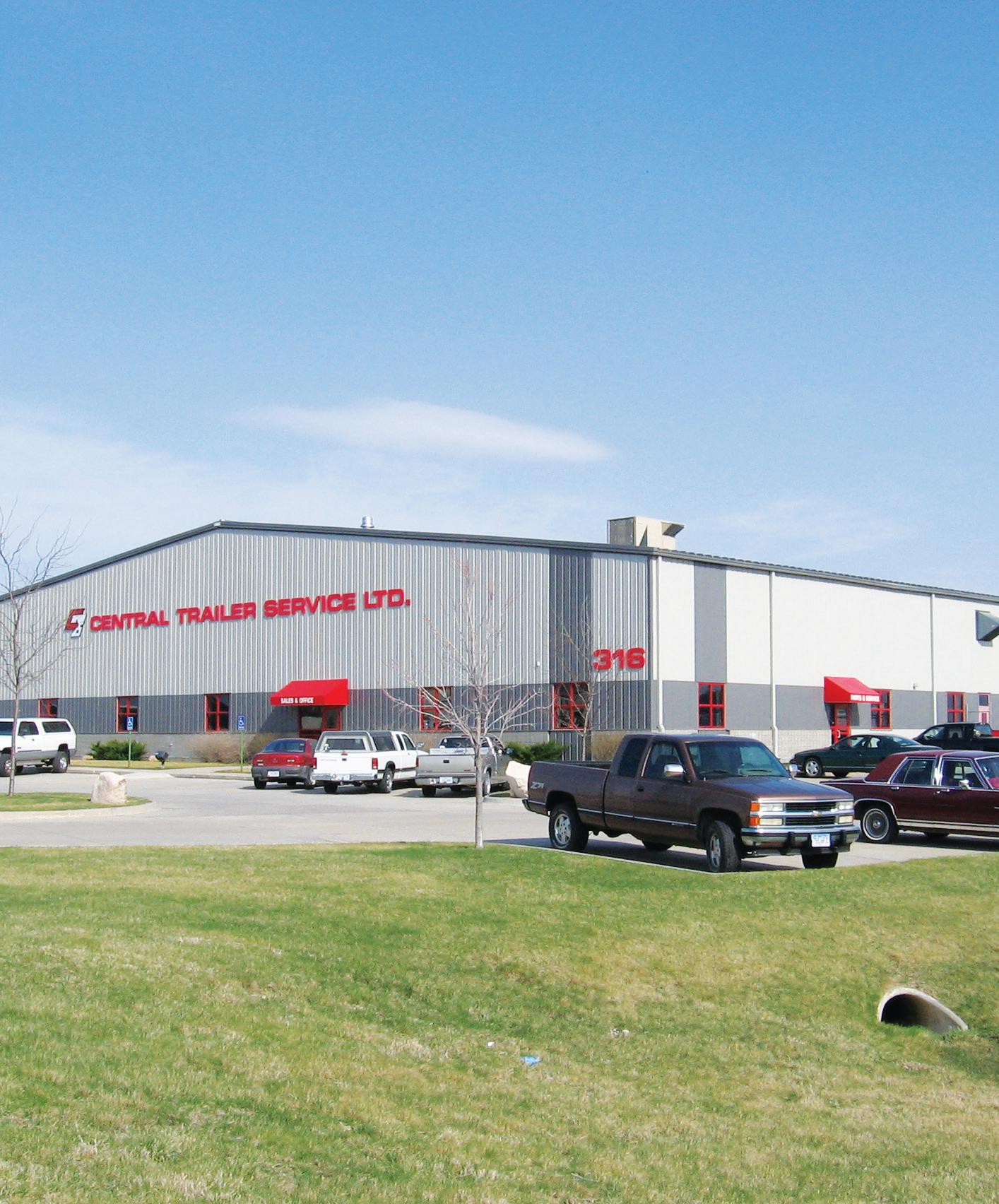
• Skilled workforce and knowledgeable parts representatives
• New & Used Trailer sales, Truck Bodies
• Authorized Warranty & Repair Center for: Strick - Merritt -MorganWabash - Wilson - Transcraft - Landoll - Benson- Vanguard/CIMC
• Fully stocked parts department with statewide delivery
• Major Parts suppliers for all makes and models of trailers and van bodies







A proposed rule by the U.S. Food and Drug Administration would eliminate the 510(k)-clearance requirement, which served as the primary obstacle for labs seeking certification to perform oral fluid testing despite its approval for regulated use over three years ago. The proposal also paves the way for a wider modernization of federal drug testing, from incorporating additional methods like hair testing to strengthening the nation’s capacity to react quickly to emerging drug threats, such as fentanyl and synthetic cannabinoids.
This breakthrough came after six Members of Congress sent a letter to the U.S. Department of Health and Human Services.
“Trucking relies on a strong federal drug testing program to protect public safety and ensure that impaired individuals are not operating commercial motor vehicles,” said ATA President & CEO Chris Spear. “Following years of advocacy focused on cutting red tape, ATA is pleased that FDA has finally created a pathway to implement oral fluid testing. This major development
also lays the groundwork for the eventual adoption of hair testing. Empowering employers with these tools will make drug testing more accurate, more cheatresistant, and less invasive. The result will be a stronger trucking workforce and safer roads for everyone.”
For well over a decade, ATA has warned that the federal government’s overreliance on urine testing has created dangerous gaps in the system—including widespread drug test “cheating.” According to an analysis of Quest Diagnostics data, substituted and invalid urine specimens increased by more than 370% and 36%, respectively, between 2022 and 2023 among federally regulated, safetysensitive employees—a troubling trend that underscores how vulnerable the current system has become.
Oral fluid testing was approved for regulated use in 2023, yet no U.S. laboratory has been able to obtain certification due to the 510(k)-clearance process. The 510(k) requirement also risked further delaying the adoption of hair testing once HHS issues its guidance.

GREG HODGEN | CEO of Groendyke Transport and the chairman of the American Trucking Associations
“60 Minutes” recently pulled back the curtain on a problem the trucking industry has warned about for years. The problem is so called “chameleon carriers”— trucking companies that rack up serious safety violations, shut down on paper, and then reappear under new names, new Department of Transportation numbers and sometimes even the same address.
The report showed how these operators exploit gaps in oversight to stay on the road, often until a crash exposes the danger they pose to the public.
To anyone who works in trucking, this wasn’t a revelation. It was confirmation. When the pandemic era freight boom created a red-hot market and drew a surge of new entrants chasing high rates, it quickly became clear that too many were cutting corners, skirting basic compliance, and treating safety as an obstacle instead of responsibility.
There is no place in trucking for that kind of behavior. Bad actors don’t just undercut the professionals who invest in training, maintenance, and a culture of safety; they put everyone on the road at risk. Responsible carriers should not have to compete against companies willing to gamble with public safety.
But the deeper lesson is that chameleon carriers don’t thrive because the rules are unclear. They thrive because enforcement doesn’t always reach the point where it matters most: the front door of the industry.
Federal law recognizes that risk. That’s why new motor carriers are supposed to undergo a safety audit within their first year of operation. The purpose is simple: confirm early on that a carrier has real safety systems in place before problems turn into tragedies. Too often, however, the system doesn’t work as designed.
Because of staffing shortages and resource constraints at the Federal Motor Carrier Safety Administration, many new entrants wait far longer than a year for an audit, and some never receive one at all. The agency’s own data shows that fewer than one in four carriers
enrolled in the New Entrant Safety Assurance Program receive a safety audit, and of those that do, barely 60 percent are completed on time. Most of these audits are performed by state enforcement agencies that are already stretched thin and struggling to recruit and retain qualified commercial vehicle enforcement officers.
That gap is exactly where chameleon carriers operate. When early audits are delayed or skipped, bad actors don’t disappear. They adapt.
Here’s the hard truth: you can’t enforce safety standards with empty desks. And you can’t sustain a serious safety effort on good intentions alone. If Congress wants the Transportation Department to carry out its safety critical mission, appropriators must ensure that the Federal Motor Carrier Safety Administration has the resources to do the job. Highway safety doesn’t happen only in Washington. It happens in the field where investigators, inspectors, and enforcement teams make sure the rules are followed.
As administrator Derek Barrs noted in the “60 Minutes” report, his agency needs more manpower to oversee an industry as vast and complex as trucking. Today, many safety audits are conducted remotely rather than onsite at a carrier’s place of business. Although virtual reviews can play a role, they limit investigators’ ability to fully assess operations, detect fraud, and verify whether a carrier is truly compliant.
Congress has a straightforward opportunity in this year’s appropriations process: lock in accountability that lasts. That means fully resourcing the Transportation Department’s safety mission, ensuring staff conduct inspections, investigations, and oversight at the pace this moment demands—especially at the state and field level.
The “60 Minutes” investigation shows what happens when oversight arrives too late. The solution is to make sure it arrives early and consistently. If Congress wants to break this cycle for good, it must give the New Entrant Safety Assurance Program the resources it needs to do the job the law already envisioned.
DOUG MARCELLO | Shareholder at Saxton & Stump, Chief Legal Officer of Bluewire
The Federal Motor Carrier Safety Administration’s new Motus registration system is rolling out in Phase II this spring, and every carrier, broker, and freight forwarder in the country will be required to verify their identity and business information when they access the new system for the first time.
Most carriers will treat this as a compliance task. A form to fill out, a system to learn, a box to check before getting back to operations.
That is the wrong frame.
Your FMCSA registration record is not just an administrative file. For the approximately 800,000 existing registrants, it is a document that plaintiff attorneys’ access in discovery, review for discrepancies, and use to build the narrative that your company operates with systemic disregard for regulatory requirements.

The Motus transition is a required self-audit of that record. Carriers who approach it as a litigationdefense exercise—not just a compliance
update—will emerge with a cleaner regulatory profile and one fewer vulnerability in the evidentiary landscape on which nuclear verdict cases are built.
The regulation specifically notes the relationship of this registration to safety analysis. “In general, registration information collected informs prioritization of the agency’s activities and aids in assessing and statistically analyzing the safety outcomes of those activities.”
The connection between your FMCSA registration record and your litigation exposure runs through the Reptile Theory framework covered in the DENUCLEARIZATION series. Plaintiff attorneys building a systemic failure narrative do not limit their discovery to your safety scores. They pull your full regulatory profile.
The Bottom Line
Motus will surface these discrepancies through its identity and business verification process, which FMCSA has built with fraud prevention at the forefront. Discrepancies the system finds need to be resolved. The question is whether you find them first, proactively, or if the system surfaces them reactively.
Proactive carriers will clean their record before Phase II goes live. Reactive carriers discover their gaps in the middle of the transition—and in the middle of active litigation.

What Motus Replaces:
The current Unified Registration System (URS) and the FMCSA Portal—the web-based system carriers use to manage registration, access crash and inspection history, and interact with FMCSA systems, including the Drug and Alcohol Clearinghouse. Both will be disabled once Phase II goes live.
Phase I (already live — December 8, 2025):
Supporting companies—BOC-3 filers, insurance and surety companies, and transportation service providers—have been setting up accounts and creating business profiles. If you use a process agent service or a transportation service provider for your FMCSA filings, they are already in the system.
Phase II (second quarter 2026):
All regulated entities gain access. This is when carriers, brokers, and freight forwarders will be required to use Motus for new registrations, authority changes, biennial updates, and all other registration transactions. The current URS will be disabled for new applications.
Identity Verification:
Every new applicant—and every existing registrant accessing the system for the first time—must complete identity proofing using a smartphone or tablet and a valid government-issued ID. This is not optional.
Business Verification:
Motus will confirm your company’s legal name, principal place of business address, ownership structure, company officials, and compliance status against independent sources. Inaccurate information will be flagged.
The Pre-Phase II Checklist: FMCSA's Own Guidance, Reframed for Defense
FMCSA published its own pre-transition checklist in the Federal Register. Here is each item reframed through the litigation defense lens:
▶ Review your registration records for accuracy and make updates now. Your legal name, principal place of business, ownership structure, and company officials must match the facts about your organization. Discrepancies between your registration and your actual operations are evidentiary vulnerabilities. Fix them before the system's business verification process finds them—and before plaintiff counsel does.
▶ Review process agent and insurance filings. Your BOC-3 process agent designations and your insurance filings must be current and accurate. A lapsed or outdated process agent designation can affect service of process in litigation—and
can be presented as evidence of regulatory inattentiveness. Your insurance filings must reflect your actual current coverage and authority.
▶ Save a copy of your current records. FMCSA specifically recommends saving a copy of your existing records to match Motus data for safety and security purposes. Do this. Having a documented baseline of what your record showed before the transition is also useful if discrepancies surface during the verification process.
▶ Review your FMCSA Portal authorized users and remove anyone who has left, changed roles, or no longer needs access. Outdated authorized users in your FMCSA Portal account are a security vulnerability—and they are exactly the kind of organizational gap that plaintiff attorneys point to as evidence of systemic disorganization. Clean the access list before the transition.
▶ Prepare for identity verification. Every person who will access the Motus system for your company will need a valid government-issued ID and a smartphone or tablet for the facial recognition component. Identify who in your organization will need access to the system and ensure they are prepared. An eight-business-day processing delay applies to paper form submissions during the transition—using Motus directly avoids that delay.
What to Watch
FMCSA has explicitly asked carriers to clean up their records before Phase II goes live. This is rare—federal agencies almost never tell regulated entities to selfaudit before a new system is implemented. The fact that FMCSA is making this request reflects how significant the discrepancy problem is expected to be.
For carriers with complex organizational structures— multiple operating authorities, affiliated entities, recent acquisitions, or changes in ownership—the Motus verification process is particularly important. The business verification component will check ownership structure and company officials against independent sources. Organizational changes that have not been reflected in FMCSA records are the most likely sources of discrepancies.
It’s imperative for carriers to be diligent in inspecting their records for the new Motus system since one oversight could cost them millions of dollars in future litigation. If you have questions about Motus or need assistance in inspecting the records, please reach out to me at any time.
About the Author: Doug Marcello is a trucking defense attorney—with a CDL—who has represented trucking clients across the country, having been specially admitted for cases in 35 states. Doug has served on the advisory board of the American Trucking Research Institute. Doug is a member of the American Trucking Association Safety Council as well as trucking law organizations including TIDA and Transportation Lawyers.
When people think about the trucking industry, they think about drivers. But behind every mile traveled and every load delivered is another critical workforce—fleet maintenance technicians.
And today, that workforce is under strain.
Across the country—and increasingly here in Iowa— trucking companies are facing a growing shortage of diesel technicians. While the broader economy and freight demand often dominate industry conversations, many fleets are discovering that one of their biggest operational challenges isn’t finding freight or drivers—it’s keeping trucks on the road.
The numbers tell a clear story. According to recent industry research, more than 65% of diesel repair shops are understaffed, with nearly one in five technician positions unfilled.
This isn’t just a hiring challenge—it’s a structural issue. The trucking industry already employs tens of thousands of technicians, yet demand continues to outpace supply. Each year, tens of thousands of additional technicians are needed to replace retirees and keep up with industry growth.
For Iowa carriers, this often shows up in very practical ways: longer repair times, increased outsourcing, and difficulty maintaining preventive maintenance schedules.
At its core, the technician shortage is not caused by a lack of interest, it’s caused by a breakdown in the workforce pipeline.
More than 60% of new technicians enter the field without formal training, forcing fleets to invest significant time and resources to get them up to speed. On average, companies must provide over 350 hours of training and spend more than $8,000 per technician before they are fully productive.
Even then, skill gaps remain. Many graduates of training programs still lack proficiency in key areas, particularly as trucks become more advanced and reliant on electronic systems.
Barriers to entry also play a role. The cost of tools—often thousands of dollars—can deter potential workers. Others cite limited awareness of diesel technician careers or competition from other industries like automotive repair and agriculture, both of which are strong in Iowa.
Hiring is only part of the problem. Keeping technicians is equally difficult.
Research shows that nearly half of diesel technicians have considered leaving the industry, often citing pay, working conditions, or limited career advancement.
For trucking companies, this creates a cycle: recruit, train, lose talent, and start again.
In rural states like Iowa, the challenge can be even more pronounced. Competition for skilled labor is intense, and smaller fleets often struggle to match the wages or benefits offered by larger companies or other industries.
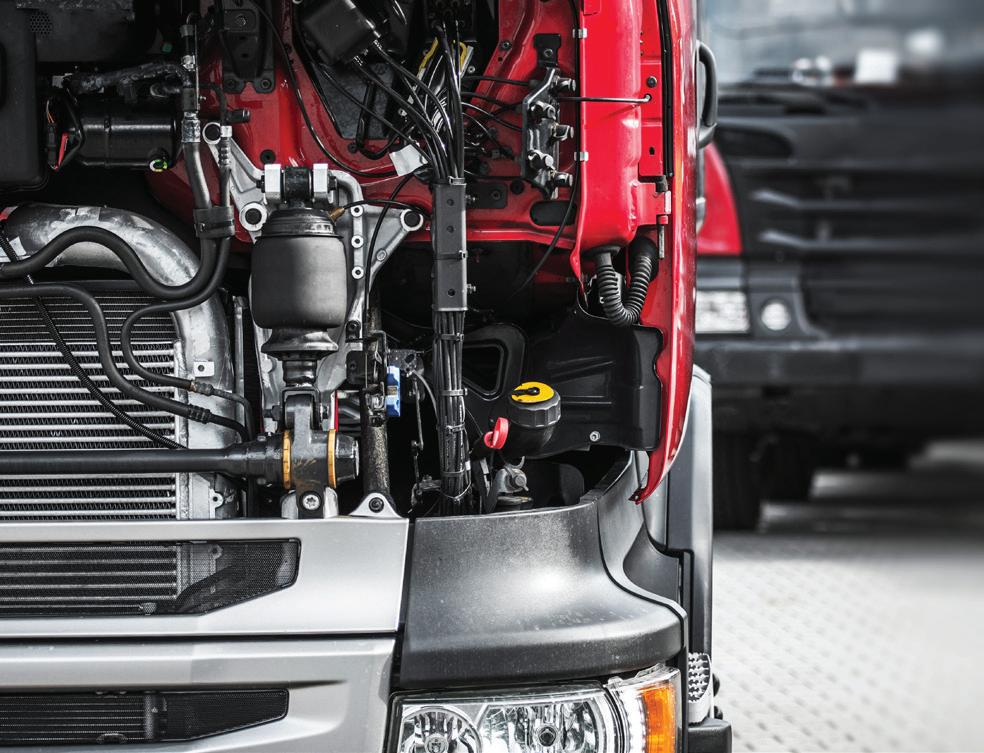
The technician shortage isn’t just a workforce issue—it’s a business issue.
When trucks sit idle waiting for repairs, the costs add up quickly. Missed deliveries, delayed schedules, and lost revenue all stem from a lack of available maintenance capacity.
Industry estimates suggest that technician shortages contribute to billions in lost productivity across the trucking sector.
Preventive maintenance also suffers. Without enough technicians, routine inspections can be delayed, increasing the likelihood of breakdowns and more expensive repairs down the road.
For Iowa carriers—many of whom operate on tight margins—these impacts are significant.
At the same time, the role of the diesel technician is evolving.
Today’s technicians are no longer just mechanics— they are increasingly diagnosticians, working with advanced electronics, sensors, and software systems. Trucks are becoming more complex, requiring higher skill levels and continuous learning.
This shift creates both challenges and opportunities. While it raises the bar for training, it also makes the profession more attractive to younger workers interested in technology and problem-solving.
Some fleets are also turning to digital tools and automation to improve efficiency. New systems can streamline work orders, reduce administrative time, and allow technicians to spend more time “turning wrenches” instead of handling paperwork.
Addressing the technician shortage will require long-term commitment from the industry.
Partnerships with community colleges, technical schools, and high schools are a critical first step. Expanding apprenticeship programs and creating clear career pathways can help attract new entrants into the field.
Equally important is changing the perception of the job. Diesel technicians are highly skilled professionals working in a technology-driven environment, with opportunities for advancement and competitive pay.
For states like Iowa, where agriculture, manufacturing, and trucking all depend on diesel-powered equipment, investing in technician training isn’t just an industry priority, it’s an economic necessity.
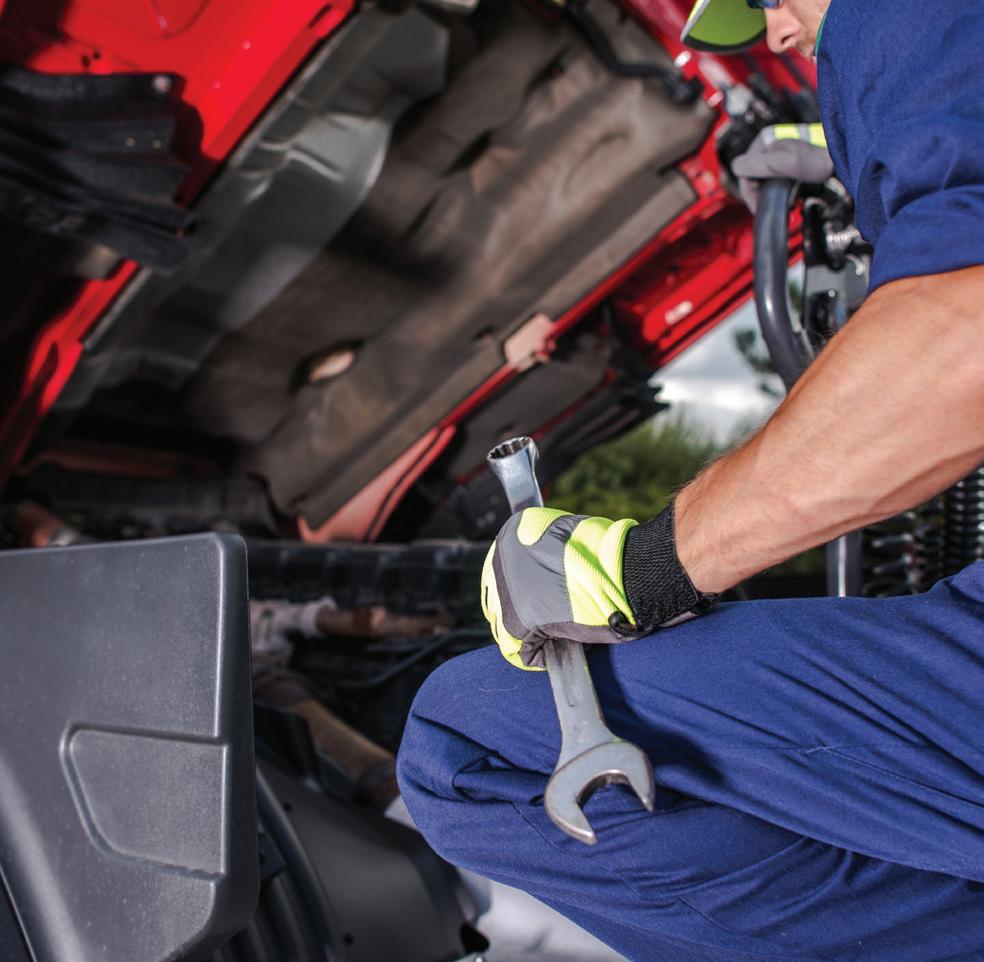
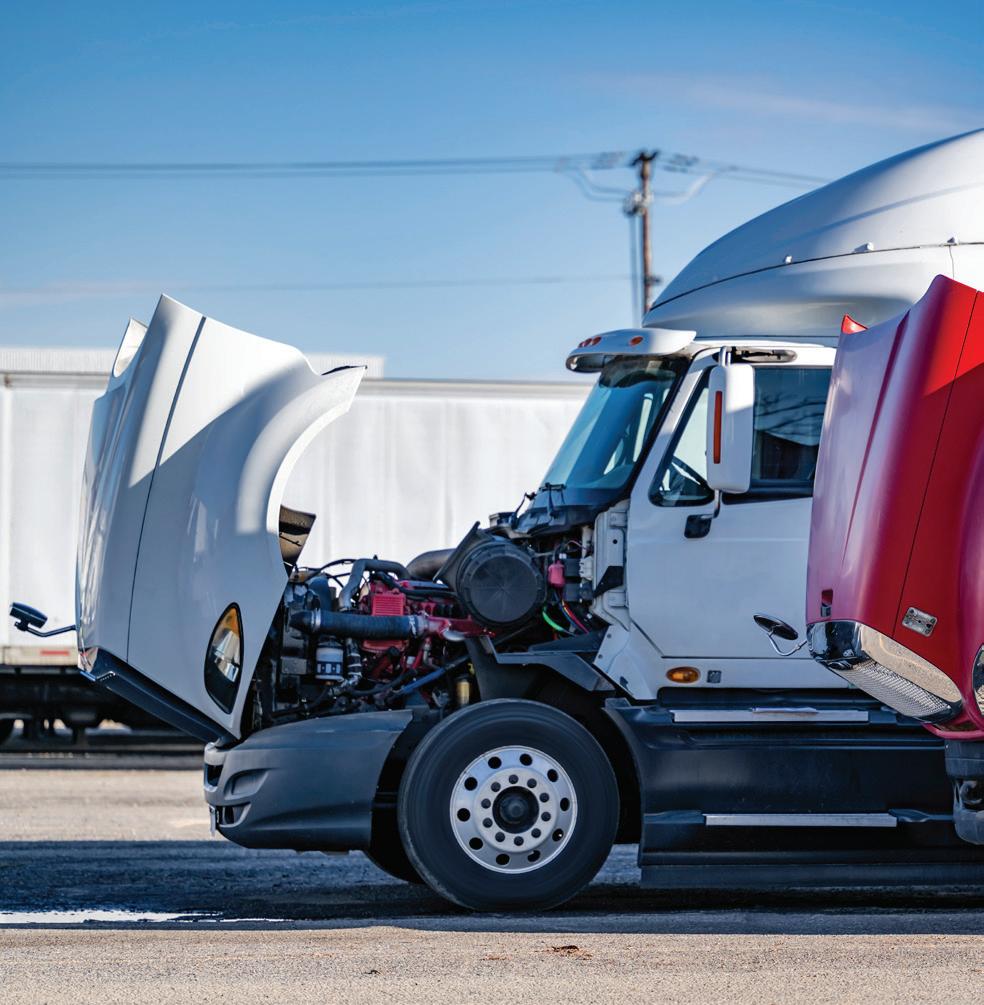
The trucking industry has always been resilient, adapting to changing markets, regulations, and technologies. The diesel technician shortage is simply the next challenge to address.
For fleet operators, the focus will be on retention, training, and efficiency. For associations and policymakers, the priority is building a stronger workforce pipeline.
And for the next generation of workers, the opportunity is clear: a stable, high-demand career at the center of America’s supply chain.
Because at the end of the day, trucks don’t move without drivers—but they don’t move at all without technicians.


Clifton
Craftsmen
Hanifen Towing
Iowa
Katz,
Lube-Tech
MHCS P.C.
Sanco Thermo King
Thermo

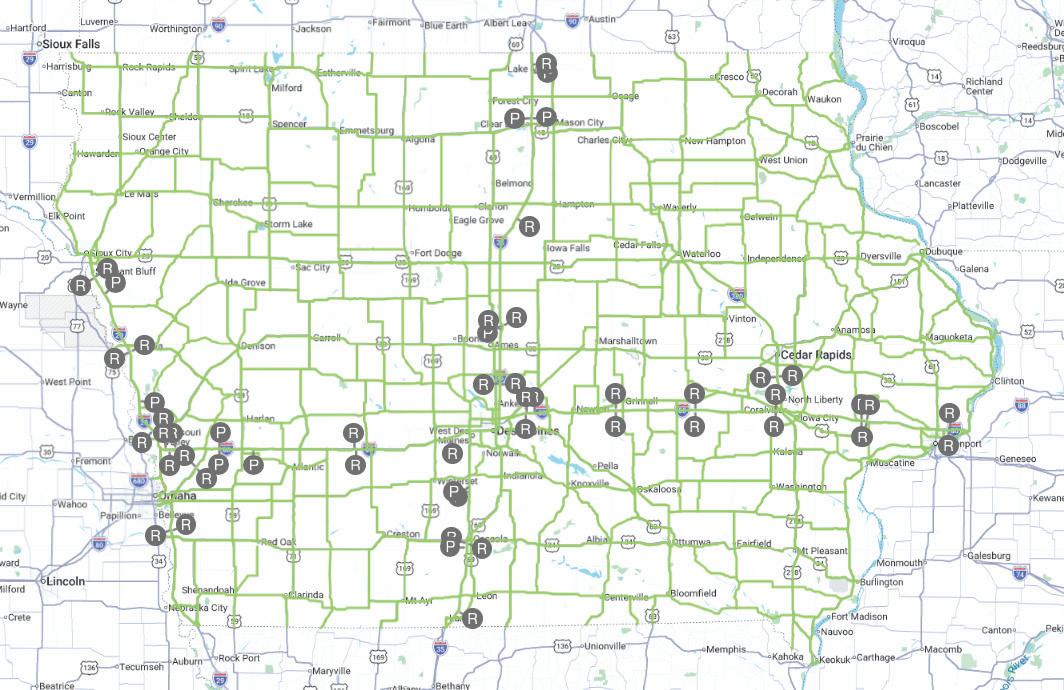
Providing safe and free commercial truck parking is critical in Iowa to improve safety, reduce driver fatigue, and support the nation’s supply chain with the efficient flow of freight traffic, especially along our major corridors of I-80, I-35, and I-29.
To keep drivers rested and productivity high along our vital truck routes, the Iowa Department of Transportation is working on opportunities to
expand Iowa’s parking capacity and continue reimagining the state’s rest area system.
The Iowa DOT currently maintains a total of 38 rest areas and 12 parking-only locations offering drivers approximately 830 truck parking stalls and modern rest area amenities across Iowa. Several new expansion projects are in the works to accommodate the rapid growth of truck traffic through the state.
A remodel of the aging Onawa rest area at Mile Marker 110 along I-29 in western Iowa, built in 1971, is starting this summer. The location will have approximately 35 truck parking stalls. The reconstructed westbound I-80 rest stop at Mile Marker 208 near Victor – halfway between Des Moines and Iowa City – will receive a new parking lot with the goal to increase its truck parking capacity to 25 following the resurfacing project that is scheduled for completion in June.
Engineers and planners are also looking at unique and feasible ways to answer the need for more parking and restrooms with “vault toilets.” Vault toilets are non-flush restroom structures built on the base of a concrete vault. The system collects waste in a sealed underground tank, which requires periodic pump-offs. These waterless
restrooms are commonly used in national parks, golf courses, remote campsites, trailhead areas, etc.
A pilot vault toilet will be added later this year to the former eastbound Wilton parking only at Mile Marker 268 – about halfway between Iowa City and Davenport. In 2030, the construction of 30 new truck-only parking stalls and a second vault toilet are programmed for the prior westbound Wilton rest area, around the same location.
DOT District 6 Transportation Planner Sam Shea points out that the vault toilet projects will be placed at the former rest areas, which recently reopened as “no-services” rest areas. “We know how important it is that long-haul drivers have safer and more available opportunities to pull off the interstate and rest, and we’re excited to add a different option that meets basic needs and expands our truck-only parking capacity,” Shea says.
The DOT has also committed resources to update Iowa’s rest area system with modern features and amenities, including indoor WIFI, vending, handicap accessible areas, pet recreation and picnic areas, and adult changing stations.
For carriers whose drivers have older children or young adults with disabilities as passengers, travel can be challenging when it comes to something as frequent as overnight sleeps or periodic restroom stops. There has been a gap in accessibility that has long gone unaddressed in public transportation infrastructure, leaving families with few, if any, dignified options while traveling.
To close that gap, Iowa DOT began installing heightadjustable, adult-size changing tables in all new rest areas currently under construction – and several more that are undergoing renovations. These upgraded restrooms are providing private and sanitary spaces for individuals who need assistance.
In 2021, as some of Iowa's oldest rest areas started undergoing renovations, these important amenities were included in the plans to meet the changing needs of motorists. Today, there are 18 rest areas with adult changing stations that give families and caregivers technologically equipped options to accommodate their essential necessities.
The Iowa 511 Traveler Information System is your source for identifying truck parking and rest area locations through an app, website, and phone service.
This Iowa DOT tool is designed not only to provide real-time traffic/construction project updates for the commercial trucking industry, but when the “Rest Area” layer is turned on, it also helps drivers locate truck-only parking and rest area locations that offer truck parking throughout Iowa.
When checking the 511ia. org map or app with the Construction layer selected, drivers can also toggle the “Commercial Vehicles” feature in the Layers area to display commercial vehicle-specific details. This converts any current or future construction events with size or weight limitations into restriction icons and also turns on related layers such as weigh stations.





IMTA members heard directly from leaders driving change in transportation, business, and beyond.
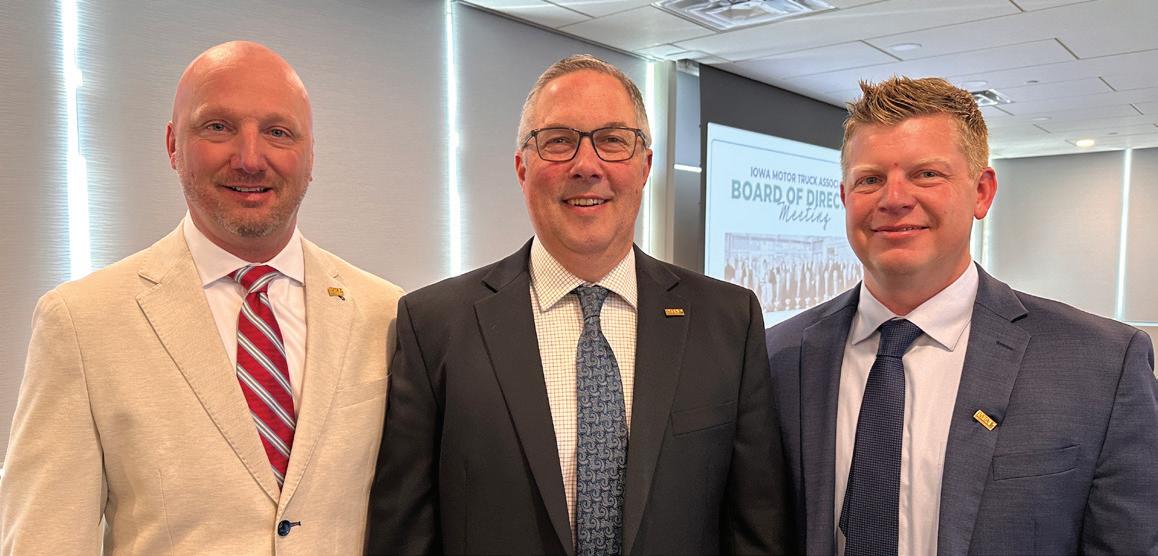
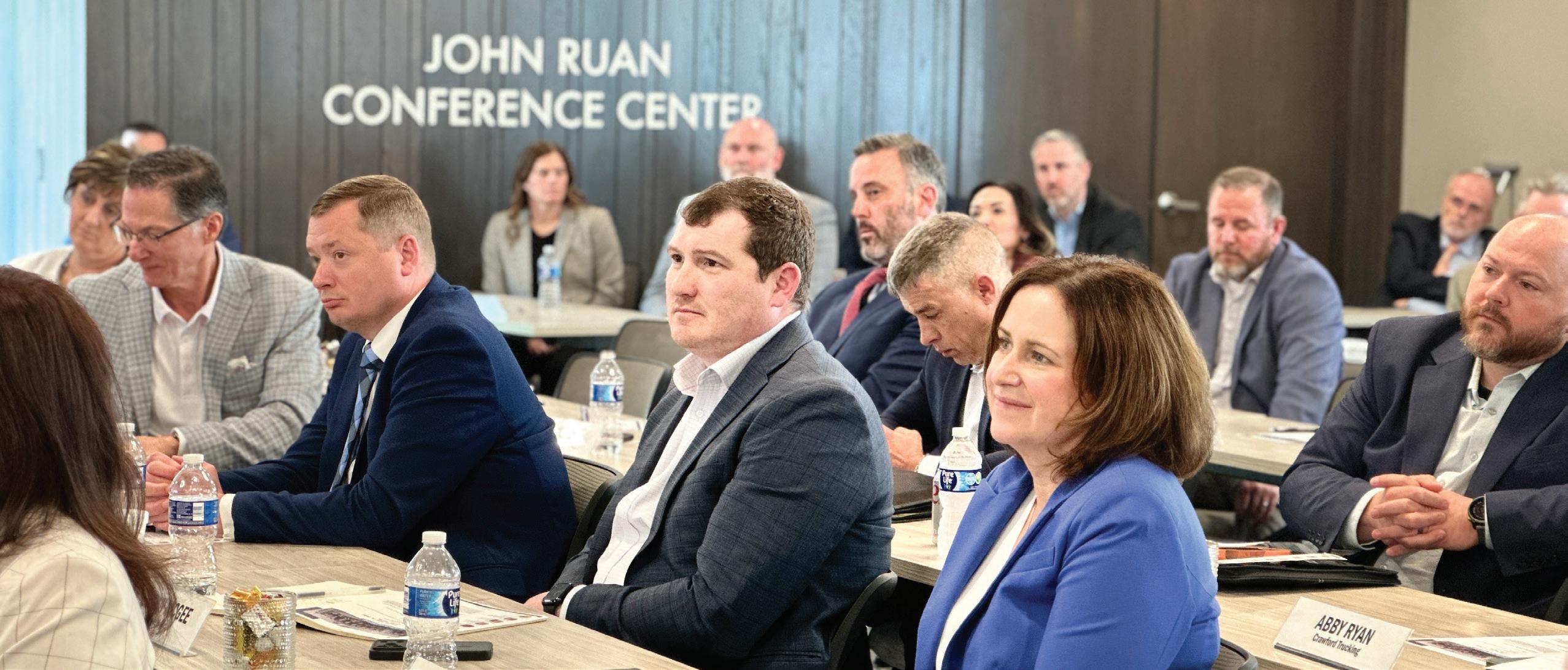
The Iowa Motor Truck Association welcomed trucking leaders from across the state to its Spring Board of Directors Meeting, bringing together industry executives, regulators, and association leaders for a day focused on leadership, advocacy, and the future of trucking.
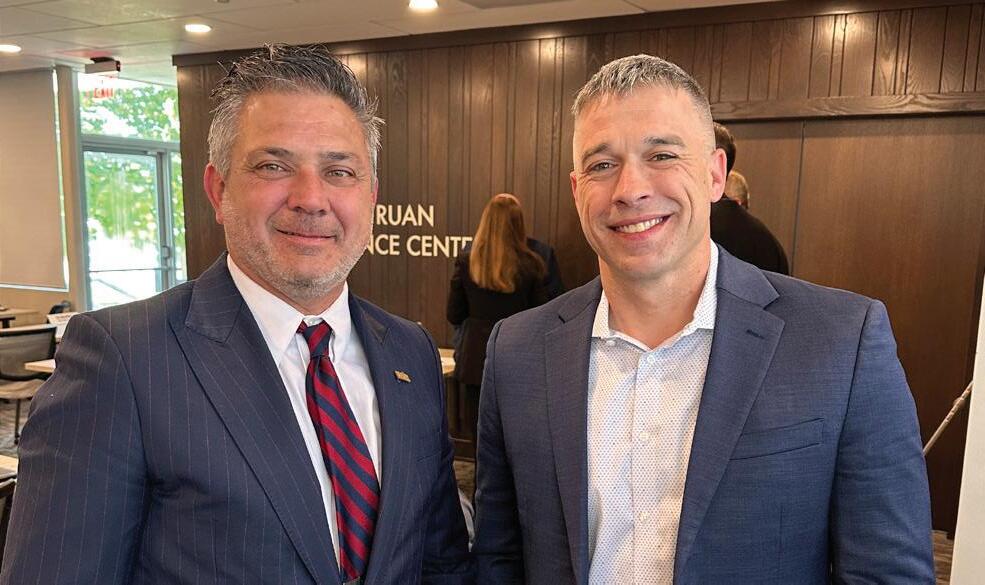
The highlight of the meeting was an in-person appearance by FMCSA Administrator Derek Barrs, who provided updates on federal priorities, regulatory developments, and the agency's focus moving forward. His visit gave IMTA members a unique opportunity to hear directly from the nation's top trucking regulator during a period of significant change across the industry.
Attendees also heard from transportation attorney Larry Hall of Chartwell Law, who examined the growing impact of nuclear verdicts and discussed how safety culture, technology, policies, and post-accident response can influence courtroom outcomes.
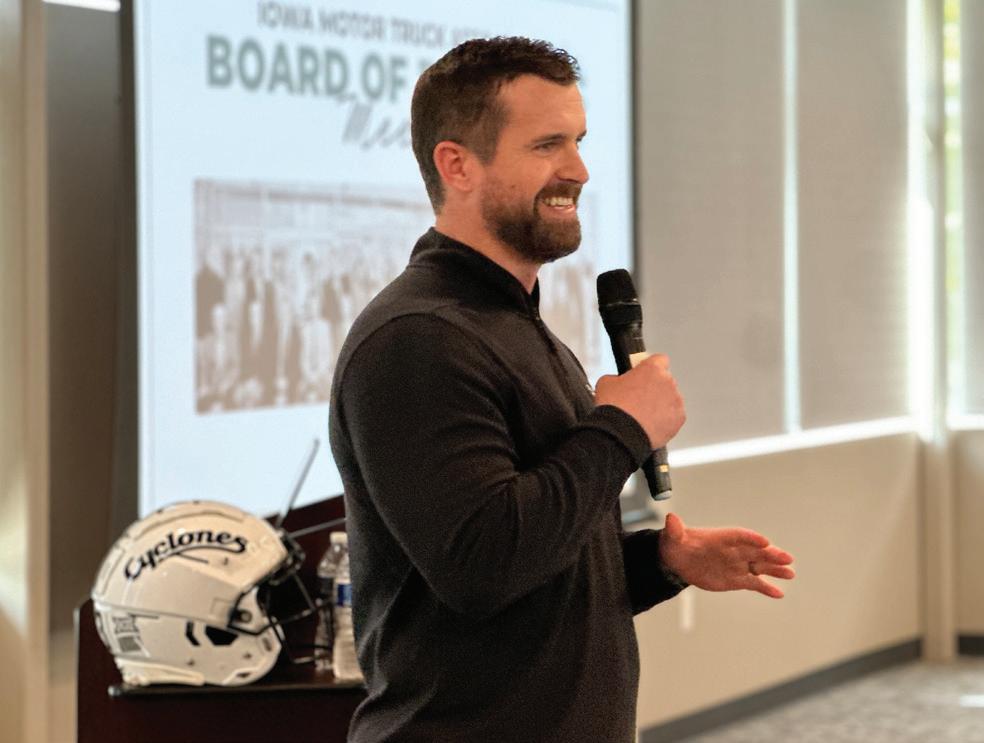
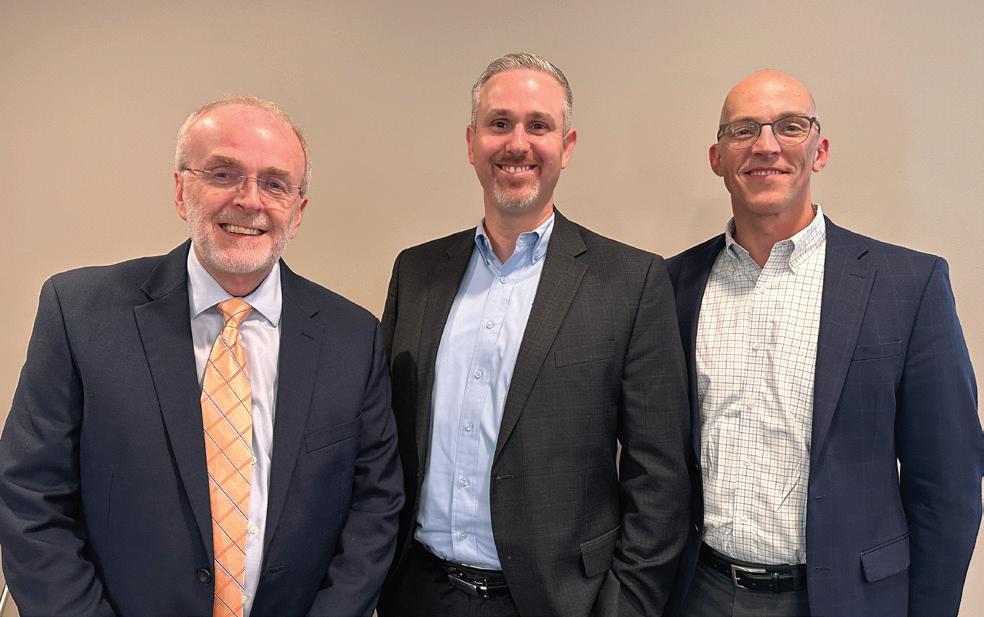
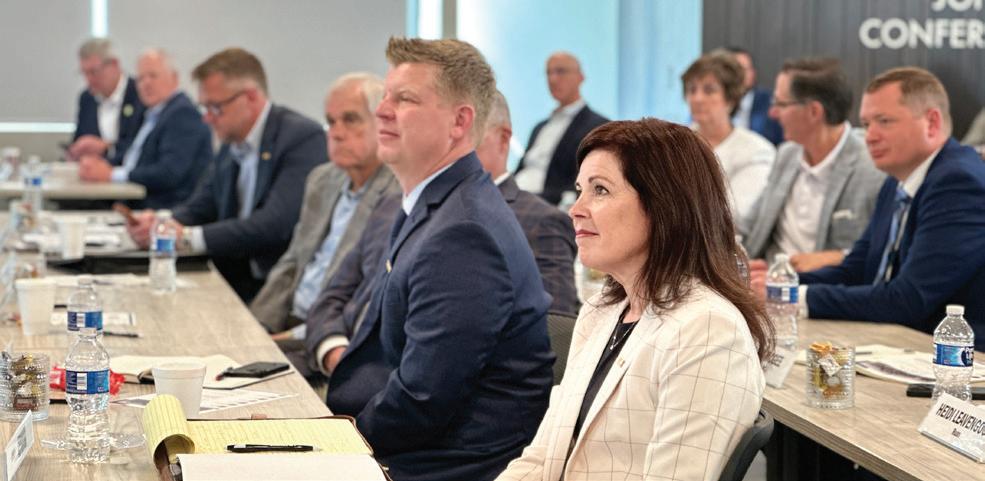
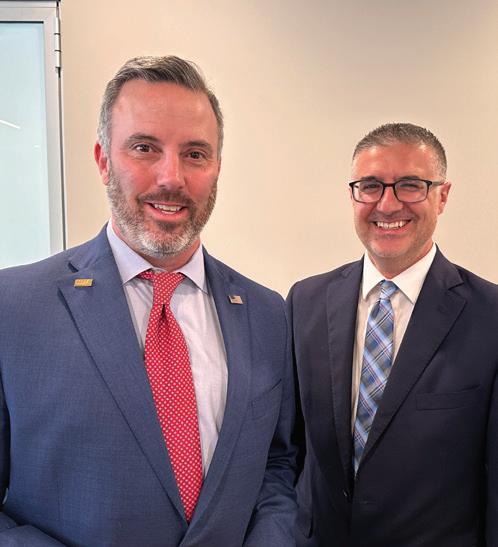
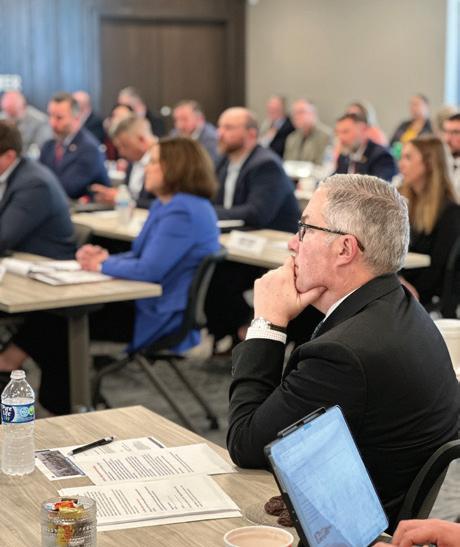
Adding a different perspective to the program was Iowa State University's new head football coach, Jimmy Rogers, who shared lessons on leadership, accountability, and building a winning culture. His message resonated with attendees as he highlighted the importance of trust, communication, and developing strong teams.
The meeting also included updates from IMTA leadership on advocacy efforts, association initiatives, and key priorities impacting Iowa carriers. Together, the presentations reinforced the value of strong leadership, industry engagement, and a unified voice for Iowa trucking.
Mitch Amhof · VP of Operations
Amhof Trucking, Inc. · Eldridge, IA
Melinda Anderson · VP & CFO
Ennis Corporation · Clarion, IA
Jerry Bender · VP Midwest Wheel Companies · Des Moines, IA
Dale Decker · CEO
Decker Truck Line, Inc. · Fort Dodge, IA
Seth Delutri · EVP/Corp. Counsel
TMC Transportation · Des Moines, IA
Adrian Dickey · President
Dickey Transport · Packwood, IA
Preston Hinkle · Region Sales Mgr.
MHC Kenworth · Des Moines, IA
KJ Hueneman · President
Decker Truck Line, Inc. · Fort Dodge, IA
Chris Hummer · President
Don Hummer Trucking · Cedar Rapids, IA
Matt Hurd · CFO
Hanifen Co. Inc. · Des Moines, IA
Tom Jones · President
Solar Transport · Des Moines, IA
Dean Kloewer · President
Panama Transfer, Inc. · Panama, IA
Brad Kohlwes · VP
Argee Transport · Des Moines, IA
Heidi Leavengood · CFO
Ruan · Des Moines, IA
Greg McCoy · President & CFO
Foodliner, Inc. · Dubuque, IA
Don McGlaughlin · VP of Risk Management
Heartland Express · North Liberty, IA
Brent McKenzie · VP of Transportation
Hy-Vee, Inc. · West Des Moines, IA
Dave Neuwohner · Safety Manager
All Seasons Trucking, Inc. · Dubuque, IA
Mark Olson · CEO
Olson Explosives, Inc. · Decorah, IA
Aaron Peterson · Owner
Peterson Transportation, Inc. · Manson, IA
Ken Reif · President
Valley Distribution Corp. · West Burlington, IA
David Riggan · VP
TanTara Transportation Corp. · Muscatine, IA
Abby Ryan · CFO
Crawford Trucking · Des Moines, IA
Jon Sarrazin · President
Quest Liner, Inc. · Dubuque, IA
Jack Sawyer · President
Des Moines Transportation Co. · Urbandale, IA
Adam Shouse · Director of Sales & Service
US Cargo Control · Urbana, IA
Steve Sukup · President & CFO
Sukup Manufacturing Co. · Sheffield, IA
Nick Thummel · VP
Keane Thummel Trucking, Inc. · New Market, IA
Rory Triplett · Executive VP
Relion Insurance Solutions · Iowa City, IA
A.J. Tucker · President
Tucker Freight Lines · Dubuque, IA
Lance Votroubek · VP & GM, Van Div.
Warren Transport, Inc. · Waterloo, IA
Jeff Wangsness · President
JMT Trucking Company · Des Moines, IA
Industry experts explore the trends, regulations, and risks influencing today's trucking operations
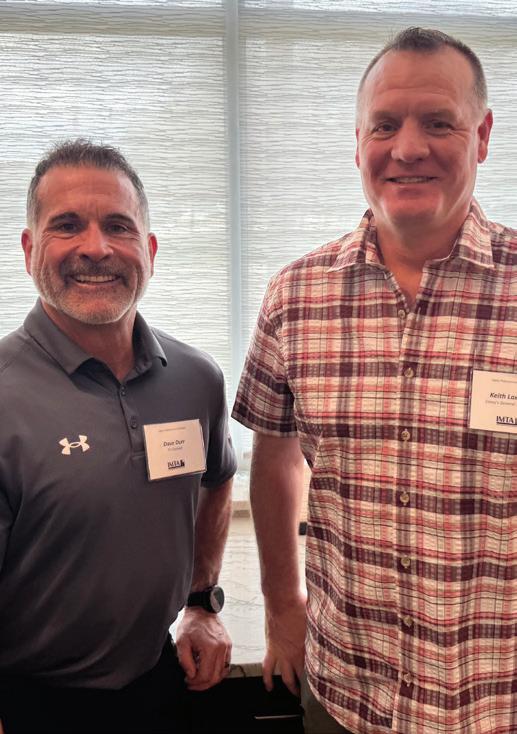
Safety professionals from across Iowa recently gathered for the IMTA Safety Professionals Conference, where industry leaders explored the challenges and opportunities shaping today's trucking environment.
Hosted by the Iowa Council of Safety Management (ICSM), the two-day event brought together safety directors, fleet leaders, professional drivers, and subject matter experts for discussions focused on compliance, litigation, driver health, and fleet safety.
Attendees heard from a variety of national and industry experts, including Dan Horvath of the American Trucking Associations, who provided a federal regulatory update, and FMCSA Division Administrator Amanda Bax-Whittle, who discussed the agency's modernization efforts and the future of compliance.

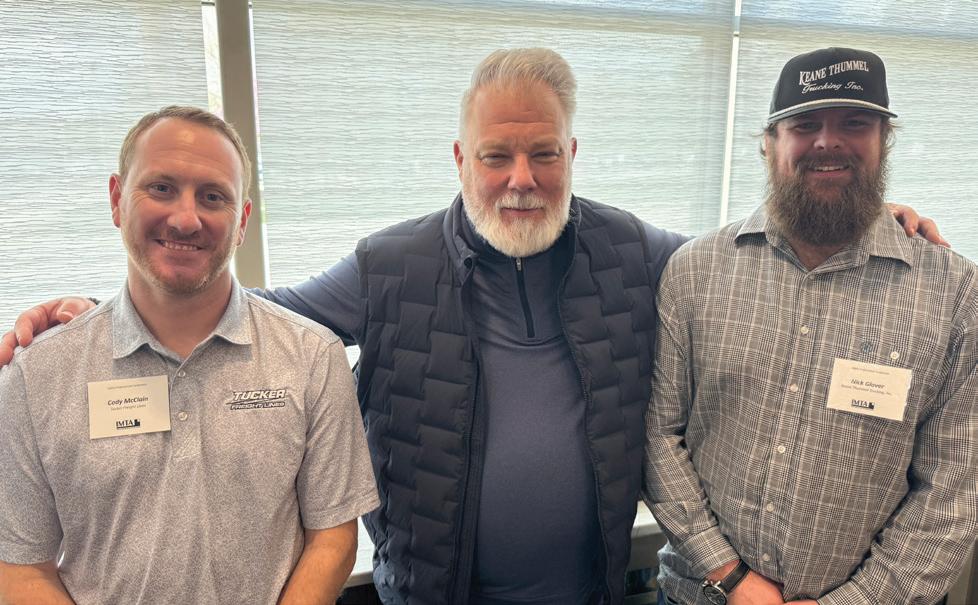


One of the conference's most talked-about sessions featured attorneys Larry Hall and Matt Kouri of Chartwell Law, who examined the growing impact of nuclear verdicts and strategies carriers can use to better defend themselves against high-risk litigation.
Driver wellness also remained a key theme throughout the conference. Sessions explored topics including sleep apnea, tire and wheel safety, and practical approaches to improving driver health and overall safety performance.
The conference also featured a professional driver panel, giving attendees the opportunity to hear firsthand perspectives on building and maintaining a strong safety culture.
As regulations, technology, and operational challenges continue to evolve, the Safety Professionals Conference remains an important opportunity for Iowa's safety leaders to learn, connect, and stay ahead of the issues impacting their fleets.
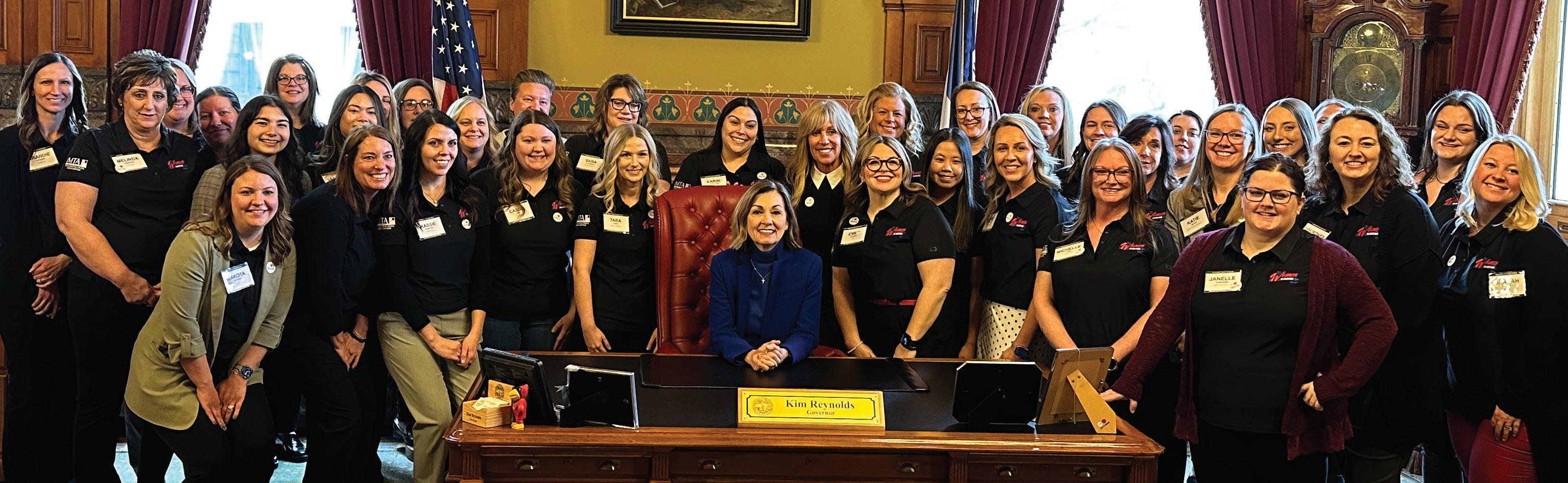
IMTA Women in Motion members step into the legislative process at the Iowa Capitol
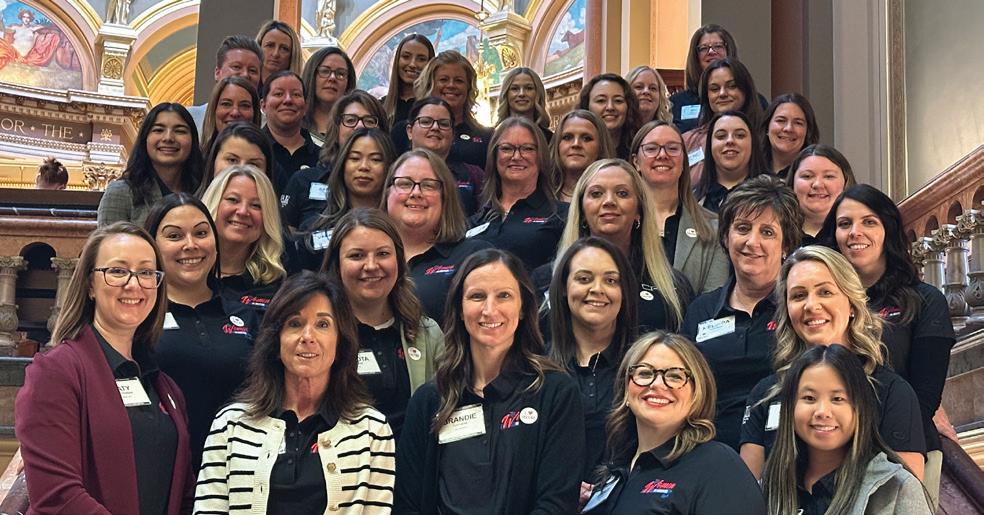
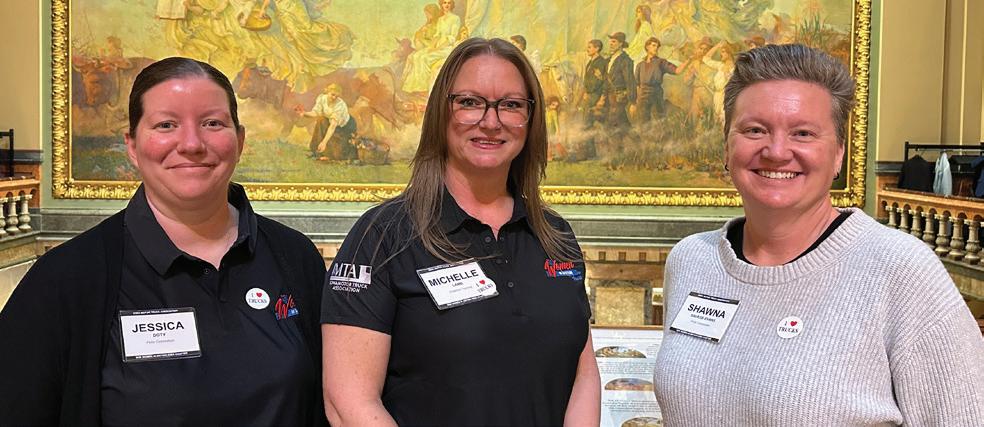
Members of the Women in Motion gathered in Des Moines for the IMTA Women in Motion Iowa Day at the Capitol.
The event brought together women from across Iowa's trucking industry for a day of leadership, advocacy, and connection. Participants kicked off the program with an Advocacy 101 session before heading to the Iowa State Capitol to meet directly with lawmakers and discuss issues impacting trucking, workforce development, highway safety, and Iowa's business climate.
Attendees also had the opportunity to visit the House chamber and meet Governor Kim Reynolds, providing a firsthand look at the legislative process in action.
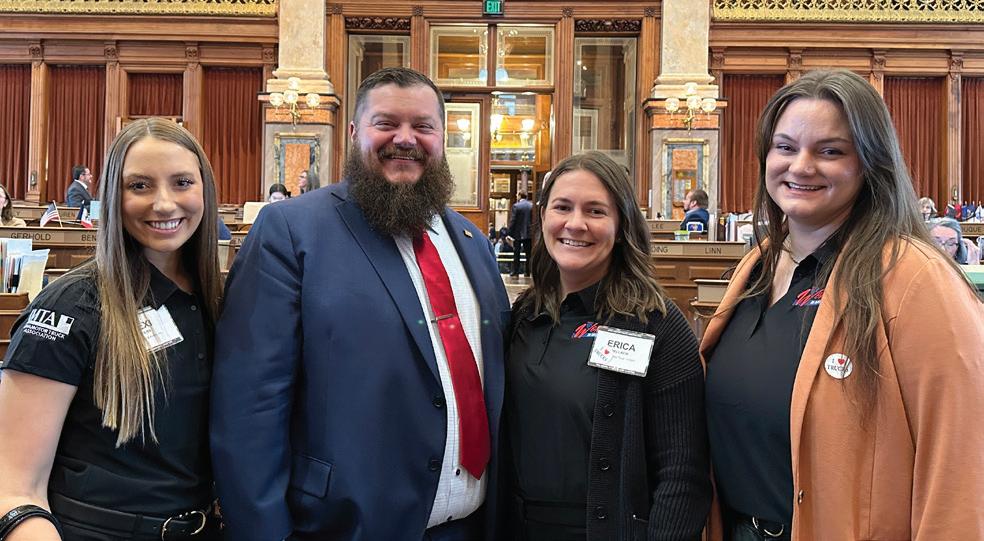


“What stood out most from both our launch event and Day at the Capitol was the genuine enthusiasm surrounding this program,” said Brenda Neville, President & CEO of the Iowa Motor Truck Association. “Women are looking for opportunities to connect, support one another, and continue growing as leaders within the industry.”
The Day at the Capitol marked another milestone for the rapidly growing Iowa Chapter of Women in Motion, which continues to create opportunities for leadership development, mentorship, and industry engagement. The momentum continues on July 8, when members will gather in Eastern Iowa for the chapter's next networking and leadership event.

Opportunities to connect, learn, and lead
IMTA FINANCE SYMPOSIUM
June 25, 2026
Iowa Motor Truck Association Des Moines, IA
WOMEN IN MOTION IOWA CHAPTER SUMMER NETWORKING EVENT
July 8, 2026
Eastern Iowa
CELEBRATING DRIVERS & TECHNICIANS
July 21, 2026
Webinar
IMTA LEGAL SYMPOSIUM
August 6, 2026
Iowa Motor Truck Association Des Moines, IA
IMTA SHOW TRAILER AT THE IOWA STATE FAIR
August 13–23, 2026
Iowa State Fairgrounds Des Moines, IA
INSURANCE INSIGHTS FOR TRUCKING COMPANIES
August 18, 2026
Webinar
MAINTENANCE PROFESSIONALS CONFERENCE
September 2, 2026
Iowa Motor Truck Association Des Moines, IA
ELECTION 2026: POLITICAL ANALYSIS & INSIGHTS
September 15, 2026 Webinar
IMTA MANAGEMENT CONFERENCE
September 23–24, 2026
Hyatt Regency Hotel & Conference Center Coralville, IA
Scan the QR Code or
LEARN MORE AT: www.iowamotortruck.com FOR MORE INFO

For trucking and other skilled trades, sustaining talent means building roles people can stay in and grow with over time.
I recently ran into my old friend Jimmy, who I first knew when he was dating a friend in college. Back then, he had an enviable lifestyle. While the rest of us were flat broke and pulling all-nighters studying, he was driving a semitruck coast to coast, making good money and seeing parts of the country most of us had only read about.
Jimmy grew up on a farm, but trucking gave him a bigger world. He drove through New York City, across the Midwest, and out to California, hauling all kinds of freight. He loved the independence, the people, and the sense of purpose. For about twenty years, it worked. Then life changed. With kids at home and a sick mother, the time away stopped making sense. He left trucking and moved into construction to be closer to home.
Jimmy’s story gets to the heart of a broader issue. Across industries today, leaders have a bigger job than just managing operations. They are competing for people. Labor shortages are affecting trucking, construction and other skilled trades at the same time. Building and maintaining a workforce pipeline is more competitive than ever, and it is no longer just a human resources function. It is a core leadership responsibility.
The trucking industry makes this challenge especially visible. A 900 billion dollar-plus industry, trucking is powered largely by small businesses, and like many small businesses, it is struggling to sustain its workforce. A key reason is not simply compensation, but lifestyle. Long hours and time away from home make it difficult for many drivers to stay in the profession as their lives evolve.

At the same time, the workforce is aging.
According to the American Transportation Research Institute (ATRI), the average truck driver in the United States is 47, and retirements are accelerating. ATRI data projects that the trucking industry will face a shortage of 160,000 drivers by 2030.
Fewer young workers are entering the field, often because they are not exposed to it early or do not see it as a long-term option. Similar pressures are emerging in construction and other labor-dependent industries.
Some aspects of work can be automated, but many cannot. Jobs like trucking and construction depend on human skill, judgment, and endurance. That reality requires a different kind of leadership and workforce. Jimmy did not leave trucking because he stopped valuing the work. He left because the structure of the job no longer fit his life.
Leaders who recognize this shift are better positioned to respond. Increasing pay alone is not enough. Workers are making decisions based on flexibility, stability, and the ability to be present for their families. In trucking, that may mean designing routes that get drivers home more often or creating more predictable schedules. In construction, it may mean clearer career pathways and investments in retention.
Another critical piece is building the future workforce. Leaders can no longer assume that talent will find them. When companies actively engage with students through school visits and hands-on experiences, interest in careers like trucking rises significantly. Without that effort, only a small share of young people consider these paths.
Jimmy’s story is not unusual. It is a reminder that people’s needs change, and work must change with them. The leadership challenge today extends beyond attracting workers to designing roles that people can sustain over time.
In a labor market where competition is high and expectations are shifting, the leaders who succeed will be those who manage a changing workforce. The future of their organization depends on how well they understand and support the people doing the work.
About the Author: Suzanna de Baca is CEO of Story Board Advisors, where she helps business leaders, boards, and family-owned companies navigate growth, change and culture. A former CEO across multiple industries and current faculty member at Iowa State University’s Ivy College of Business, she writes and speaks nationally on leadership, strategy, governance, and communications to strengthen teams and performance. She can be reached at sdebaca@storyboardadvisors.com.

to support risk management and workforce strategies, helping you create and manage the culture you want.
We transform risk into brighter opportunities.
& Loss Control
Scan to learn more or to get in touch with one of our Transportation Specialists

SIDE BODY COMPONENTS
LANDING GEAR COMPONENTS
UNDERCARRIAGE COMPONENTS
FLOORING
NOSE BODY COMPONENTS ROOFING REAR BODY COMPONENTS
SWING DOORS ROLL-UP DOORS ACCESSORIES