

emily@iowamotortruck.com


emily@iowamotortruck.com
JEFF ARENS, Schuster Co. | IMTA'S Chairman of the Board
Back in 1942, a group of Iowa truckers grew increasingly frustrated with legislation being proposed at the state capitol. They headed to the capitol to speak directly with lawmakers, only to leave even more discouraged when they realized their biggest competitor at the time— the railroads—had several lobbyists working on their behalf, while trucking had no one.
That experience set the wheels in motion. In the spring of 1943, the trucking industry secured its first lobbyist at the state capital and, more importantly, gained a seat at the table. That seat has now been in place for more than 80 years.
Having a voice at the capitol is the reason IMTA was formed, and while advocacy may not be the flashiest member benefit, it is by far the most important. Much like our industry itself, advocacy is often underappreciated because it is done so well. When we are successful, freight gets delivered efficiently—and when IMTA is successful, harmful legislation never becomes law.
If we are doing our job, members rarely hear about the legislative initiatives that could have had a significant negative impact on our operations and our bottom line. That work happens quietly, behind the scenes, but it is critical to the success of our industry.
On page 18, you will find IMTA’s legislative priorities. This document is the result of extensive input and hard work from IMTA leadership, members, and staff. As you review the different areas that are highlighted

in that document, I believe you will agree that IMTA is staying on top of what is important to the trucking industry. That is the value of advocacy, and I know I sleep better at night knowing someone is constantly looking out for our interests at the capitol.
Another important component of our advocacy efforts is the financial support we provide to legislators. This is often the least understood part of the advocacy equation. The myth is that PACs are corrupt or inappropriate; the reality is that they are transparent, legal, and highly regulated tools that allow industries and individuals to support candidates who understand their issues.
IMTA has maintained a state PAC for decades, and historically, we have taken a very conservative approach to PAC fundraising. That approach worked well for many years, but the landscape has changed. Our PAC total has not grown in more than 20 years, while the cost of political campaigns has continued to rise. As a result, IMTA has lost ground in this area.
To be clear, our political capital remains strong. IMTA’s advocacy efforts are highly respected, and trucking remains a visible and vital industry in Iowa. However, effective advocacy requires many pieces to fit together, and a strong, well-supported PAC is one piece of the puzzle that must be strengthened.
As we move forward, it is essential that members take an active role in supporting IMTA’s advocacy efforts. That starts with understanding the value of the IMTA PAC and recognizing it as a critical tool in protecting our industry’s future. Whether through engagement, education, or financial support—even at modest levels—every member has a role to play. In today’s political environment, we cannot afford to sit on the sidelines. If trucking wants to keep its seat at the table, we must all help make sure that seat remains secure.
What an interesting time we live in. Protests and unrest seem to dominate the headlines. While events in Minneapolis captured national attention, demonstrations have become a regular occurrence at our own State Capitol. Disruption has become a tactic of choice.
I don’t always understand the tactics, but I do understand the passion. People care deeply about the direction of our communities, our state, and our country. So do I. Still, watching the erosion of civility in a system and process I deeply respect brings a mix of frustration and concern. I remember when Democrats and Republicans were willing to reach across the aisle because they understood the value of governing for the greater good. They had vastly different philosophies, but they also understood compromise.
One of my earliest lessons at the Capitol came during a gas tax debate. I watched a Republican and Democratic senator go after each other in subcommittee. The passion— and the anger—were palpable. Yet just a few hours later, I saw them sitting side by side at a favorite gathering spot, sharing a beer and talking about their grandchildren.
That moment defined statesmanship for me. Principled disagreement. Personal respect. A shared understanding that shaping public policy was about improving the state—not feeding egos. To say I long for those days is an understatement.
Two additional lessons from those early years still guide me today: First, the best legislation is the legislation you can pass. Second, a good negotiation is one where neither party gets everything they want. Those principles have shaped how we advocate at IMTA.
Our members are passionate—and that passion fuels our efforts at the Statehouse. But we are also disciplined. We are judicious with our political capital. We balance member expectations with the practical realities of what it takes to move legislation across the finish line. We invest our time and resources in initiatives that will deliver meaningful, operational impact.
The three-year battle to cap non-economic damages is a perfect example. There were other lawsuit abuse reforms we could have pursued, but we determined that a cap would make the most meaningful difference to our members. It was painful. It required incredible endurance and perseverance. But in the
BRENDA NEVILLE | IMTA'S President & CEO
end, the impact justified the fight. We knew that if we succeeded, it would make a real difference. And it did.
Negotiation has also reshaped my own thinking. Early in my career, as a natural competitor, I equated “winning” with getting our way. Experience has taught me otherwise. The give-and-take required to pass legislation often strengthens the final product. In many cases, negotiations—even with detractors—result in stronger, more applicable and durable solutions. This session is proving that lesson once again.
IMTA has taken the lead on two critically important initiatives. The first requires human trafficking awareness training for new CDL holders. When drivers obtain their CDL, they will complete 30 minutes of training. Professional truck drivers are uniquely positioned to identify trafficking victims. They are often in the right place at the right time. Empowering them with awareness is not just good policy—it saves lives.
The second initiative strengthens enforcement against bad actors. Drivers who fail the English Language Proficiency test would face jail time, a $1,000 fine, and immediate impoundment of their truck. Carriers would face escalating civil penalties for violations. The legislation also codifies that anyone testing for a CDL must pass an English proficiency exam.
Both initiatives required negotiation. Both required compromise. And both, at the time of this writing, have advanced out of House and Senate Transportation Committees. At the end of the day, this work isn’t about politics. It’s about safety. It’s about integrity. It’s about protecting an industry that keeps Iowa moving—and protecting the families who share the road with us.
In a time when disruption often feels louder than dialogue, I remain convinced that disciplined advocacy, principled negotiation, and a willingness to compromise still work. That is work worth negotiating for. That is work worth fighting for. This is the work that IMTA is proud to do each and every day.





A policy blueprint to restore safety & fairness in trucking
The trucking industry depends on professionalism, accountability, and compliance. Every day, qualified drivers and responsible carriers move America’s freight safely and efficiently—forming the backbone of the nation’s economy. These professionals operate within a regulatory framework designed to protect public safety and ensure a level playing field. However, that framework is increasingly being undermined.
A growing number of bad actors are exploiting gaps in enforcement, licensing, and data systems, allowing unqualified and noncompliant operators to remain on the road. The consequences are serious and farreaching: compromised safety, unfair competition, erosion of public trust, and—most tragically—the loss of innocent lives. These outcomes are not isolated incidents; they are symptoms of systemic failure.
The conclusion is unavoidable: the current system is not working—and incremental fixes are no longer sufficient.
Recognizing the urgency of the moment, a task force composed of eight state trucking association executives convened in early summer 2025 with a clear objective: identify the most critical policy and enforcement failures affecting trucking safety and compliance and develop actionable solutions that can be implemented without years of regulatory delay.
Over several months, the task force conducted a comprehensive review of industry pain points, enforcement gaps, and data integrity failures. The result was a detailed report that moves beyond problem identification and delivers a practical roadmap for reform. The initiative quickly gained broad industry support, with state trucking associations aligning behind the effort and multiple national organizations formally endorsing its findings.
The report, titled “The Fight for Fairness and Safety: Paving the Way for a Trucking Resurgence,” was distributed nationwide to state legislatures, members of Congress, federal regulators, and the current Administration, including Transportation Secretary Sean Duffy and FMCSA Administrator Derek Barrs.
“America’s trucking industry is built on the hard work of family-owned businesses, owner-operators, and professional drivers who follow the rules,” said Mark Colson, Chair of the Task Force and President of the Alabama Trucking Association. “But bad actors and illegal operators have exploited regulatory loopholes, creating unacceptable safety risks and economic harm. This report identifies the most serious failures and offers solutions we are committed to seeing implemented. Doing so will save lives, protect legitimate businesses, and strengthen the industry.”
At the core of the task force’s work is a commitment to systemic correction, not surface-level reform. The report identifies several priority areas where policy and enforcement improvements can produce immediate and measurable impact, including:
▶ Strengthening CDL integrity by closing licensing loopholes that allow unqualified drivers to obtain credentials
▶ Overhauling the Federal Motor Carrier Management Information System (MCMIS) to restore confidence in safety data accuracy and usability
▶ Improving cross-border credential verification to ensure workforce integrity and consistent enforcement
▶ Reforming oversight of non-domiciled CDLs to strengthen accountability and compliance
▶ Addressing English language proficiency enforcement to close critical safety gaps
▶ Combating trucking fraud, including broker and carrier schemes that undermine legitimate operators
▶ Protecting Electronic Logging Device (ELD) integrity by ending manipulation and hours-of-service fraud
Importantly, many of the recommended solutions are administrative and enforcement-based, meaning they can be implemented quickly through existing authority rather than lengthy legislative or rulemaking processes.
“Some may say this plan is aggressive—and it is, because it has to be,” said Brenda Neville, President
NATIONAL CHAIR:
Tony Bradley
Arizona Trucking Association
TASK FORCE CHAIR:
Mark Colson
Alabama Trucking Association
Paul Enos
Nevada Trucking Association
and CEO of IMTA and a member of the task force. “The deterioration of safety and compliance in this industry must be stopped. IMTA represents carriers who invest heavily in compliance and safety, yet they are forced to compete against operators who ignore the rules. That is not sustainable. It discourages the true professional drivers and puts the public at risk. Eliminating bad actors is not optional—it is essential.”
With the support of state trucking associations, national organizations including ATA and TCA, and growing engagement from lawmakers and regulators, the report’s recommendations are gaining meaningful traction.
“We believe the solutions outlined in this report are both viable and necessary,” said Tony Bradley, President of the Arizona Trucking Association and National Chair of the Trucking Association Executives Council. “State trucking associations are committed to sustained, coordinated action. We will continue pressing for implementation until these solutions are fully realized.”
The path forward is clear. Restoring safety, fairness, and confidence in the trucking industry requires decisive leadership, consistent enforcement, and the political will to close long-standing loopholes. This effort represents a critical step toward that goal— and toward a safer, stronger future for trucking.
To read the full report, visit www.truckingresurgence.com
John Esparza
Texas Trucking Association
Shannon Newton
Arkansas Trucking Association
Brenda Neville
Iowa Motor Truck Association
Rebecca Oyler
Pennsylvania Motor Truck Association
Eric Sauer
California Trucking Association
IMTA staff and volunteer leaders have always made it a priority to have a positive working relationship with our enforcement and regulatory partners (IDOT and DPS). These partners were among some of the first to see the report “The Fight for Fairness and Safety: Paving the Way for Trucking Resurgence,” and discussion started almost immediately with enforcement partners on what needed to be done in Iowa to further ensure that only the safest drivers were behind the wheel of commercial motor vehicles.
The Iowa DPS has been extremely active and effective in their efforts specific to the English Language Proficiency Executive Order that was published in late June. Since that time almost 500 drivers have been placed out of service due to their failure to pass the roadside ELP testing. DPS has also partnered with ICE agents at several locations across the state to ensure drivers have the proper credentials. When they don't, appropriate action is taken without unnecessary publicity and fanfare—as it should be—and, most importantly, these efforts make us all safer.
“We are extremely fortunate to have the support that we do from our regulatory partners. They listen to our concerns, and they understand the importance of these efforts to ensure only the safest drivers are on the road,” said Jeff Arens, IMTA’s Chairman of the Board.
The IMTA officers have met with the DPS for regular updates on enforcement activities while also collaborating on possible legislative initiatives that would further strengthen and complement Iowa’s enforcement efforts.
IMTA has introduced legislative language designed to equip enforcement with the tools necessary to make a meaningful impact.
“A professional truck driver must have the proficiency in English to communicate effectively and read road signs. This must be a non-negotiable and I am extremely proud that IMTA is leading the charge on this,” said IMTA Chairman of the Board Jeff Arens.
SF2426
This legislative initiative provides additional strength and support to enforcement of ELP out-of-service violations. This legislation is modeled after legislation that was passed in May 2025 and imposes fines on both drivers who fail to demonstrate Englishlanguage proficiency and the carrier who employs the driver. Additionally, the commercial motor vehicle (CMV) and cargo are impounded until the carrier fine is paid in full and a driver is presented who meets all requirements to operate a CMV.

Additional noteworthy provisions of this legislation:
▶ Drivers found to be in violation would be charged with a serious misdemeanor (jail time) and assessed a $1,000 penalty, placed outof-service, and their CDL downgraded until they can demonstrate the required Englishlanguage proficiency to remedy the OOS order.
▶ Commercial motor carriers whose driver, whether an employee or independent contractor, is found to be in violation of the ELP requirements shall be subject to a $3,000 fine for the first violation, $5,000 fine for the second violation, and $10,000 fine per occurrence for each violation beyond the second.
▶ The carrier shall be notified of the location of any CMV involved in a violation. Upon full payment of the carrier fine, and presentation of a driver who meets all requirements to operate a CMV, the carrier shall be allowed to take possession of the vehicle.
▶ If the carrier is unable to either pay the fine in full, or present such driver within 12 hours after notification, the owner of any cargo being transported by the CMV shall be notified and allowed to arrange for the transfer of the cargo to another vehicle.
▶ Neither the state nor the owner of such cargo shall be held liable for any damages that result from the CMV being impounded, or for any reasonable action to transfer cargo.
▶ Additionally, this legislation would amend Iowa Code 321.188 to add a requirement that
applicants for a Commercial Learner’s Permit (CLP) or Commercial Driver’s License (CDL) demonstrate English-language proficiency as measured by a standardized test to be developed by the Iowa Department of Transportation, prior to being issued a CLP or CDL. Such standardized testing shall include both an interview component and a road signs/signals component, mirroring the roadside process.
▶ All proceeds from the OOS associated with ELP proficiency will be directed to the Road Use Tax Fund.
June 25, 2025 - January 30, 2026
▶ 500 drivers were placed OOS for failure to demonstrate English proficiency
YTD Fiscal Year 2026 October 1, 2025 - January 30, 2026
▶ 207 drivers have been placed OOS for failing the interview
▶ 13 drivers have been placed OOS for failing the road signs and signals examination










As the 2026 Iowa legislative session geared up, the Iowa Motor Truck Association was prepared to advance legislative initiatives aligned with the association’s strategic priorities (highlighted on pages 18 & 19).
“We take a very strategic approach to our legislative efforts. Our volunteer leaders and staff are deliberate in ensuring we use our political capital wisely,” said IMTA First Vice Chair Brian Kohlwes. “The officers meet a couple times each year to discuss legislative priorities and their alignment with making a positive impact not only for IMTA members, but for the entire State of Iowa.”
With that in mind, IMTA crafted legislation specific to the ELP (highlighted on page 10) and is also leading legislation focused on human trafficking.
Human trafficking affects an estimated 50 million people globally. Rooted in greed, vulnerability, and the demand for cheap labor and commercial sex, this crime occurs in every state and across all socioeconomic classes. Because traffickers often exploit transportation systems, those same systems can become a lifeline for survivors.
Truckers Against Trafficking (TAT) was founded to empower truck drivers and transportation professionals as allies in the fight against human trafficking. TAT provides training, law enforcement partnerships, and advocacy efforts aimed at ending trafficking and restoring dignity to survivors. While many IMTA members include this training in new driver orientation and ongoing programs, more can be done.
Many states are advancing legislation to make this training more accessible.
Proposed Iowa Legislation (SF2167 / HF 2598)
Using recent legislation from Louisiana as model language, Iowa would require new CDL/CLP applicants to provide documentation certifying that the applicant completed a minimum of thirty minutes of DOT-approved, industry-specific training on the recognition and prevention of human trafficking. This coursework may be completed during the applicant's ELDT-approved training, or separately prior to filing the initial license application.
The Iowa Department of Transportation, the Iowa Department of Education, and the State Board of Education shall identify and establish industry-specific anti-trafficking training materials for use in instruction
on the recognition, prevention, and effective reporting of human trafficking by applicants as a requirement to obtain any class of commercial driver’s license.
IMTA STRATEGIC PRIORITY: TIER 1
IMTA will advocate for legislative and regulatory measures that strengthen driver qualification, training, and enforcement standards. By addressing unsafe and noncompliant practices, IMTA seeks to elevate professional drivers, enhance public safety, preserve public trust, and ensure carriers and drivers meet or exceed established requirements.
Infrastructure Funding
Since its formation in 1942, investing in Iowa’s roads and bridges has been a top priority. IMTA has been part of the road coalition since the mid-1950s and has played an active role in past gas tax increases.
The Road Use Tax Fund (RUTF) is a primary source of DOT infrastructure funding and is comprised of Fuel Tax, Annual Vehicle Registrations, and Fees for New Vehicle Registrations. The Iowa DOT has noted that the purchasing power of RUTF has declined in recent years due to inflation in construction materials.
▶ From 2016 to 2025, total Fuel Tax receipts only increased by 1.81% primarily due to decreased fuel purchases related to improved fuel efficiency.
▶ Annual Vehicle Registrations total receipts increased 31.87% and New Vehicle Registrations total receipts increased 36.83% in the same period.
The proposed legislation would implement an annual fuel tax adjustment based on the Consumer Price Index for Urban Consumers (CPI-U) to maintain long-term viability of the Fuel Tax portion of RUTF.
IMTA supported a similar provision in the 2015 fuel tax legislation, though it was removed before final passage.
The legislative proposal to include indexing has the following provisions:
▶ Adjustments would take effect annually on July 1, beginning in 2027, based on the previous calendar year CPI-U, capped at 3%.
▶ This CPI-U cap limits the annual adjustment to a maximum of $0.01/gallon (Approximately $22M in total new receipts)
▶ The Iowa Department of Revenue (IDR) would be required to calculate the rate adjustment, rounded to the nearest 1/10 of a cent by March 1, annually.
▶ The General Assembly would be specifically authorized to review the IDR calculation and may vote to stop the automatic adjustment from taking effect, no later than April 30 each year.
▶ No negative adjustments would be allowed.
▶ Adjustments would apply to all taxable vehicle fuel types.
Other Notes
▶ This legislation would not be an immediate, significant cash transfusion into the RUTF like the 2015 fuel tax bill.
▶ Iowa fuel taxes currently rank 27th nationally.
▶ 26 states currently utilize indexing for annual fuel tax adjustments.
▶ Carriers utilizing fuel surcharges or pass-throughs would not experience cost impact, except on empty miles.
▶ Out-of-state consumers purchasing fuel in Iowa would contribute a significant portion of these additional funds.
This proposal is part of the Senate property tax package. With separate packages proposed by the House and Governor, further work is needed to unify legislation. However, preliminary conversations with nearly 100 lawmakers from both parties indicate strong support for an indexing provision.
In May 1978, a group of twelve IMTA members gathered at Terrace Hills Golf Course for a round of golf. Primarily leaders from IMTA’s Allied Division, they had also invited several carrier members. Afterward, as the conversation turned to politics, they began discussing the idea of organizing a fundraiser for IMTA’s political action committee.
At the time, MOPAC (Motor Operators Political Action Committee) had never hosted a fundraiser. The group determined that a golf outing could both raise money and build awareness. Doug Boyt of Precision Sewing and his friend Ed Mattis volunteered to lead the effort.
In May 1979, the first official MOPAC Golf Outing was held at Terrace Hills Golf Course in Altoona, Iowa. Twentyfour golfers participated, and all proceeds benefited MOPAC. That event marked the beginning of a tradition that continues today. The annual PAC golf outing now attracts nearly 200 golfers and remains the largest fundraiser for IMTA’s political action committee.
Political Action Committees (PACs) 101: Why It Matters to Trucking You’ve likely heard the term “Political Action Committee,” or PAC, but many members aren’t exactly sure what one is—or why it matters to the trucking industry. Here’s a simple overview.
A Political Action Committee (PAC) collects voluntary contributions from individuals and uses those
funds to support candidates running for public office. PACs allow groups with shared interests— like the trucking industry—to pool resources and speak with a stronger, unified voice.
For trucking, decisions made at the state and federal levels directly affect daily operations. Fuel taxes, infrastructure funding, regulations, workforce development, environmental standards, and highway safety policies all shape how we do business. The lawmakers elected determine how these issues are addressed.
Our PAC supports candidates who understand the essential role trucking plays in keeping the economy moving. Nearly every product Americans rely on spends time on a truck, and ensuring policymakers recognize that reality is critical to maintaining a strong supply chain.
PAC contributions are voluntary and separate from membership dues. Funds are used specifically for political purposes, including supporting pro-trucking, pro-business candidates and building relationships with policymakers who influence legislation impacting our industry.
Participation in our PAC is one of the most effective and transparent ways to protect the interests of trucking. Together, we can ensure our industry has a seat at the table—today and into the future.

AI-powered hiring and training as a courtroom defense strategy
DOUG MARCELLO | Shareholder at Saxton & Stump, Chief Legal Officer of Bluewire
Billboard attorneys have a playbook. Hiring. Training. Supervision. These three attack vectors appear in virtually every trucking lawsuit.
Their weapon? A hired expert who claims your hiring failed to meet the “industry standard of care.” Opinion. Subjective. No data.
The defense that changes everything: AI-verified, objective, data-driven hiring decisions that make subjective expert testimony irrelevant.
For decades, trucking litigation has been a battle of opinions. Their expert says your hiring was negligent. Your expert says it was reasonable. The jury decides based on who seems more credible. More persuasive. More impactful.
AI fundamentally changes this dynamic. When you can demonstrate that your hiring decision was based on objective analysis of driver attributes correlated with safety performance—both from your fleet and industrywide databases—you transform from defending an opinion to presenting irrefutable evidence.

The Details How AI-driven hiring works:
1. Analyze your current drivers: Identify the traits that correlate with the best safety records and retention.
2. Apply that analysis to applicants: How do their attributes match drivers who have proven safe in your fleet?
3. Expand to industry databases: Validate findings against broader data sets for dual-perspective defense.
4. Add cognitive testing: Not personality tests, but cognitive assessments that impact decision-making and safe performance.
The result: "Analysis of this driver's history at the time of hiring confirmed she had attributes demonstrating a history of safe operation for our fleet. Moreover, in analyzing her background with AI applied to an industry database, she was in the highest percentile of drivers who are prospectively safe."
Data. Objective. Not just one person's subjective opinion. The script is flipped.
Bison Transport—perennially recognized as one of the safest fleets in North America—has adopted cognitive testing as part of its hiring process. Safety Director Garth Pitzel has documented how these assessments have positively impacted driver hiring and retention.
The carriers winning in 2026 are not just hiring better drivers—they are eliminating the expert opinion battle entirely by building defensible, data-verified hiring systems.
The Bottom Line
Undermine the attack of billboard lawyers by applying AI data analysis for objective proof of safe hiring and meeting the standard of care. Proof that flips the script and denies the plaintiff one of their three vectors of attack.
Another common target among plaintiff attorneys is driver training.
For most fleets, training is the weakest leg. Not because they don’t train. Because they train wrong. The industry’s standard approach—generic videos, annual check-the-box sessions, one-size-fits-all onboarding—isn’t training. It’s a compliance exercise. And it’s building the plaintiff’s case for them.
Dr. Gina Anderson, a doctor of education and founder of Luma Brighter Learning, puts it bluntly: humans forget nearly half of what they hear within the first hour. That’s the forgetting curve. It’s neuroscience. And the industry’s training model ignores it completely.
In litigation, this matters enormously. When a plaintiff’s expert testifies that your training was “inadequate,” “generic,” and “not tailored to the driver’s known deficiencies,” your check-the-box records prove their point. You spent the time. You spent the money. You built their case.
The nuclear verdict math: Companies already commit resources to training. They’re just committing them ineffectively—creating liability instead of eliminating it.
What effective training actually looks like Anderson identifies the core principles that separate defensible, result-producing training from the industry’s status quo:
▶ Individualized, not generic. Assess each driver’s prior knowledge, skills, and behavioral patterns before training begins. A 30-year veteran locked into outdated habits needs different training than a new CDL holder. AI and performance data can build tailored learning paths right now—the technology exists.
▶ Continuous, not annual. A three-day onboarding dump followed by annual refreshers is neuroscience malpractice. Effective training uses spaced repetition—delivering content sevenplus times across varied formats and timelines to build neural connections that stick.
▶ Proactive, not reactive. The industry waits for a speeding event, then sends a video on speeding. The driver already knows not to speed. The issue is behavior, not knowledge. Proactive training addresses patterns before they become incidents—and before they become exhibits.
▶ Authentic, not abstract. A generic parking lot safety video is forgettable. A just-in-time simulation of the specific parking lot the driver is heading to?
That’s authentic learning. Technology, especially AI, can deliver this kind of context-specific, emotionally resonant experience at scale.
▶ Micro-learning, not marathon sessions. True micro-learning isn’t just “short videos.” It cultivates connection and presence through all five interaction modes for learning. The most powerful—learner-to-self, which builds mindfulness and situational awareness—is the one the industry almost never addresses.
The AI defense connection
This is where denuclearization meets AI-powered defense.
The old model: A plaintiff’s expert offers a subjective opinion that your training was “inadequate.” Your defense? A binder of sign-in sheets and completion certificates. Subjective opinion versus check marks.
The new model: AI-driven, data-founded training that generates objective, measurable evidence at every stage. You can show the individualized learning path built for the specific driver. You can show the performance data that informed it. You can show the continuous reinforcement and how the driver’s metrics responded. You can show proactive intervention before any incidents occurred.
The shift: From “we trained them” to “here’s exactly what we trained them on, why, and the measurable results.” That’s not a check mark. That’s a defense.
Denuclearization in action
Effective training doesn’t just reduce accidents. It dismantles the plaintiff’s case.
One Luma Brighter Learning client shifted from checkthe-box training to science-based, individualized training. When they went to court, they showed authentic, justin-time learning with measurable outcomes. The result: a case projected at millions resolved for $250,000.
That’s the ROI of doing it right. That’s denuclearization.
The Bottom Line Training is not a check mark. It is not annual. It is not generic. It is not one-size-fits-all.
Effective training is individualized to the driver, continuous in its delivery, proactive in its focus, authentic in its content, and defensible in the courtroom. AI and data-driven platforms make this possible today. The technology has caught up with the learning science. The only thing missing is adoption.
About the Author: Doug Marcello is a trucking defense attorney—with a CDL—who has represented trucking clients across the country, having been specially admitted for cases in 35 states. Doug has served on the advisory board of the American Trucking Research Institute. Doug is a member of the American Trucking Association Safety Council as well as trucking law organizations including TIDA and Transportation Lawyers.
Leading the way for Iowa’s trucking industry in Iowa and DC
IMTA will look for opportunities to advance these priorities through legislative initiatives, coalition/partnerships, education and training.
I. Economic Growth – IMTA advocates for initiatives and development of economic growth policies, tax policies, innovative programs and funding mechanisms that foster a pro-business environment while also strengthening the prosperity of Iowa through successful investment and development of new and existing business and industry.
II. Infrastructure Funding – Good roads and bridges are essential to the efficient movement of goods and products that Iowans depend on. Iowa’s trucking industry will always be a strong advocate and leader in supporting continued investment into Iowa’s commercial highway system. In addition to supporting a gas tax, IMTA will continue to advocate for the addition of an indexing provision that would call for regular increases to this user fee rather than relying on lawmakers. IMTA is opposed to tolling and all other inefficient and unfair schemes that are offered to fund roads and bridges.
III. Lawsuit Abuse Reform (tort reform) – IMTA will continue to support innovative lawsuit abuse initiatives that will focus on curbing the ongoing abuse of the
judicial system and its propensity to target motor carriers/trucking industry. Creating predictability and certainty for motor carriers is at the heart of this important priority. Through these initiatives, leveling the playing field will be paramount while also stabilizing the insurance market and curbing the abuse of the trial bar.
IV. Legalization of Marijuana – IMTA is opposed to the legalization of recreational marijuana.
V. Protecting the Integrity of the Professional Driving Workforce – IMTA will advocate for legislative and regulatory measures that strengthen driver qualification, training, and enforcement standards. By supporting policies that address unsafe and noncompliant practices, IMTA seeks to elevate professional drivers, enhance public safety, preserve public trust and ensure that carriers and drivers operating in our industry meet or exceed established requirements.
VI. Truck Parking – IMTA will continue to advocate for additional truck parking in the State of Iowa.
IMTA will actively monitor these issues and look for possible opportunities for continued legislative action as well as additional training and education for the membership.
I. DOT (Department of Transportation) Initiatives –IMTA will continue to monitor the priorities, practices and activities of the Iowa DOT that specifically impact the trucking industry. IMTA will also continue to collaborate and partner with IDOT in developing initiatives and programming that will further advance the trucking industry’s ability to serve every Iowan. IMTA strives to maintain a positive and professional relationship with this regulatory partner.
II. DPS (Department of Public Safety) Initiatives – IMTA will continue to monitor the priorities, practices, and
activities of the Department of Public safety as it relates to Motor Vehicle Enforcement (MVE). IMTA will continue to work towards maintaining a positive and open line of communication with this enforcement partner to ensure that Iowa’s trucking industry and the motoring public are served in a fair, effective and respectful manner.
III. Independent Contractor Model – IMTA will be unwavering in its efforts to protect the current IC model, while Iowa has a very favorable code language regarding independent contractors, there is continued movement in other states and on the national level

to change this model, and IMTA must be diligent in staying on top of these ongoing developments and ensure that independent contractors continue to have a favorable business environment.
IV. Regulatory Reform – IMTA members strive to comply with a wide scope of regulations at the local, state, and federal levels. The regulatory environment can be overly burdensome, especially when regulations overlap or become outdated. IMTA will continue to advocate for the streamlining and modernization of regulations based on sound data and stakeholder input.
V. Safety Policy & Emerging Safety Technologies –IMTA will continue to support the development
of safety policies and safety technologies that improve and enhance a carrier’s ability to operate safely and efficiently while also protecting the professional truck driver and the motoring public.
VI. Workforce – IMTA will support continued collaboration and innovation between public and private sectors to meet the workforce needs of Iowa’s trucking industry. IMTA also supports the development of incentives and innovative educational programs to address the workforce needs in the trucking industry.
VII. Labor Issues – IMTA will monitor labor initiatives to ensure that the current labor environment is favorable to IMTA members/Iowa trucking companies.
The issues below are recognized to be impactful to trucking and IMTA will continue to monitor these issues on the state and national level.
I. Distracted Driving – IMTA will advocate for legislation and policies on both the state and national level that can be effectively initiated and enforced to secure meaningful results in curbing or eradicating the distracted driving epidemic that results in far too many crashes and fatalities.
II. Energy & Environment – IMTA will advocate for state and federal policies that provide cost-effective, realistic goals for emission and carbon reduction supported by data and research, while establishing realistic technical standards for trucking equipment and achievable practices for operations of all sizes.
III. Federal Preemption/F4A – IMTA will advocate for and support development of initiatives/action plans that maintain federal preemption of state regulation of driver meal and rest breaks, support preemption of other state regulation of interstate trucking, including restrictions on piece-rate competition.
IV. Workers Compensation – IMTA supported and was actively involved in the workers compensation legislation
Topics that have been brought to IMTA staff through member input and warrant further discussion, review and monitoring as to activities in other states specific to these issues.
that was passed in 2017 which resulted in muchneeded changes to Iowa’s workers compensation laws, bringing the system back into balance. This legislation resulted in an immediate workers compensation rate decrease for Iowa trucking companies. These changes must be preserved to protect a workers compensation system which will keep Iowa competitive with other states.
V. CSA – IMTA will continue to push for the implementation of FAST Act provisions regarding CSA and advocate for other appropriate policies regarding accuracy, and suitability for Safety Fitness Determination and Beyond Compliance purposes.
VI. Hours of Service Regulations – IMTA will continue to advocate for common-sense measures backed by data and research to balance fatigue and productivity.
VII. Mandates – IMTA is opposed to mandates of any kind and supports market-driven solutions.
I. Right to Repair
II. Predatory Towing
III. Limiting the Size of Government
IV. Size & Weight



FMCSA Issues Final Nondomiciled CDL Rule, Raising Standards for States
On Wednesday, February 11, the FMCSA announced its final rule on nondomiciled commercial driver’s licenses (CDLs) and commercial learner’s permits (CLPs), limiting how states may issue and renew those credentials for noncitizens.
The rule establishes stricter eligibility standards, limiting nondomiciled CDLs and CLPs to specific immigrant visa categories and outlining documentation states must use to verify immigration status. By issuing the final rule, FMCSA moves beyond the interim emergency rule released in September 2025, which was paused due to litigation. The new rule is scheduled to take effect in mid-March.
“A critical safety gap allowed unqualified drivers with unknown driving histories to get behind the wheel of commercial vehicles,” said FMCSA Administrator Derek Barrs in a February 11 statement. “If we cannot verify your safe driving history, you cannot hold a CDL in this country.”
FMCSA estimates that existing rules contributed to 17 crashes and 30 fatalities in 2025 involving drivers with nondomiciled CDLs who would not qualify under the new standards.
As with the interim rule, nondomiciled CDLs will be limited to individuals holding H-2A, H-2B, or E-2 visas. Applicants must present an unexpired foreign passport and a valid Form I-94 confirming eligible status.
While U.S.-licensed drivers are subject to strict screening through national databases for violations such as DUIs, reckless driving, and crash history, states generally cannot access foreign driving records. FMCSA cited this gap as a key concern.
Employment authorization documents (work permits) will no longer be accepted for nondomiciled CDL applications. According to the Federal Register notice, reliance on those documents proved “administratively unworkable” and led to regulatory noncompliance.
The final rule also clarifies that states may not issue a nondomiciled CDL or CLP valid for more than one year.
The rule does not apply to drivers licensed in Canada or Mexico, as U.S. reciprocity agreements require recognition of those credentials. The interim rule generated more than 8,000 public comments, drawing both support and opposition.
U.S. Rep. Harriet Hageman (R-Wyoming) has introduced the Safety and Accountability in Freight Enforcement (SAFE) Act, directing federal regulators to study the scope of chameleon carriers nationwide and develop new technology to prevent them from resurfacing under new identities.
Specifically, the bill would:
▶ Require a nationwide study on the prevalence and impact of chameleon carriers.
▶ Direct FMCSA to develop and implement an advanced automated screening tool to flag suspicious registration applications before unsafe operators receive new USDOT numbers.
▶ Strengthen coordination between federal and state agencies to identify shared ownership structures, recycled equipment, and other red flags.
▶ Preserve due process by requiring human review and establishing a clear appeals process.
The legislation requires the Comptroller General to report to Congress within one year on the number of chameleon carriers currently operating, along with fatalities, serious injuries, and property damage cases linked to them—both nationally and by state.
A 2012 Government Accountability Office (GAO) report found that carriers exhibiting “chameleon” characteristics were three times more likely to be involved in severe crashes. The GAO also concluded that FMCSA’s investigative programs were not well designed to identify suspected chameleon carriers.
The bill further directs the Department of Transportation to assess gaps in its ability to detect and mitigate chameleon carrier activity and recommend potential changes to federal law. In addition, FMCSA would be required to establish the automated screening system designed to flag companies attempting to evade enforcement by re-registering under
new identities, while maintaining an appeals process for companies denied registration.
Within 30 days of enactment, the FMCSA Administrator would be required to brief Congress on ongoing efforts to address the issue. The Department of Transportation’s Inspector General would then have two days to submit a report evaluating the effectiveness of the new detection tool.
Under the proposed legislation, a “chameleon carrier” is defined as a company that reconstitutes under a new identity to avoid federal safety orders, evade civil penalties, escape a negative compliance history, sidestep higher insurance premiums, or misrepresent ownership or insurance information to secure more favorable coverage.
After months of declining to enforce English language proficiency (ELP) as an out-of-service (OOS) violation for commercial drivers, California reversed course in December and now may have some of the strictest ELP enforcement policies in the country.
California is not only enforcing ELP as an OOS violation, but the state licensing agency is also following up directly with drivers cited for ELP violations. Those drivers are now required to report to a licensing office and complete an ELP assessment or risk losing their CDL.
The shift comes after California faced the potential loss of up to $200 million for failing to comply with federal requirements. On December 23— the same day 17,000 non-citizens were slated to have their licenses revoked—the state aligned its enforcement practices with federal ELP standards.
The impact has been immediate. California-based inspectors issued more than 400 ELP violations in January alone—an increase of more than 300% over the 2025 monthly average. That marks a significant change in roadside enforcement practices in the Golden State.
By formally tying continued CDL eligibility to English language proficiency—even after a credential has been issued—California may now have some of the most stringent ELP enforcement standards for commercial drivers in the United States.

The American Transportation Research Institute (ATRI) has new research on the scope of tort litigation in the trucking industry and the factors that influence case outcomes. Also included are new updates on third-party litigation financing, carrier policies and procedures that impact the likelihood of lawsuits, whether Federal Motor Carrier Safety Regulations represent full compliance or minimum standards, and a new plaintiff focus on product liability suits.
Using a variety of federal and industry litigation data sources, the research analyzes six years of truck tort cases. In 2022 alone, the report estimates that there were 12,817 state truck-tractor tort cases, as many as 147 of which were improperly prevented from reaching federal court— where cases are often more protected from potential bias. The largest half of awards—those most damaging to the industry—rose at an average rate of 5.7 percent per year.
The report identifies numerous factors that statistically lead to higher awards, including types of negligence (such as improper hiring or onboarding) and injuries (such as moderate and severe traumatic brain injury). It found that settlements were lower than verdicts in cases with awards of $5 million or more but higher than verdicts with awards under $1 million. Three types of alleged negligence were statistically correlated with defense victories, including improper turn, improper merge, and failure to yield.
Trial strategies were analyzed, and it was discovered that counterclaims—where evidence of plaintiff negligence was presented—did not result in statistically lower awards, underscoring jury bias faced by motor carriers. Nonmedical awards were more than 10 times higher than medical awards in 17.8 percent of cases, indicating the presence of exaggerated nonmedical claims.
“Both frivolous and excess litigation pose grave challenges to the trucking industry today. They drain significant time and resources that could otherwise be spent on improving industry operations and safety,” said Nathan J. Meisgeier, Werner Enterprises President and Chief Legal Officer. “ATRI’s data-driven insights on case outcomes are a valuable resource for decisionmakers.”
“ATRI’s report underscores the need for fair and balanced reforms to the legal system and the importance of remaining vigilant in this challenging legal environment,” said Renee Amar, Louisiana Motor Transport Association Executive Director. “Its assessment of the current litigation environment serves as an important wake-up call for policymakers.”

Scan the QR code to access the full report available on ATRI's website.
RISING INSURANCE COSTS AND STRATEGIES FOR MANAGING RISK
The American Transportation Research Institute (ATRI) is seeking motor carriers to participate in research on rising insurance costs and strategies for managing risk.
Trucking auto liability premiums rose by 36 percent per mile in the past 8 years amid persistent unprofitability for insurers, even as truck crashes declined over the past 4 years. In 2025, insurance cost/availability and lawsuit abuse, a primary contributor to rising insurance costs, were voted as the third- and second-greatest issues facing the trucking industry, respectively.
In response to this financial pressure, fleets are reevaluating their total cost of risk by pursuing a variety of new technologies, training protocols, and insurance schemes, such as self-insurance or captives. Prior ATRI research detailed how fleets reduced coverage and raised deductibles from 2018 to 2020 in search of savings, self-
incentivizing safety improvements but still experiencing higher premiums. ATRI’s Research Advisory Committee (RAC) identified expanding upon this prior research as a top priority in order to better understand and assess industry-wide trends in the ongoing adoption and effectiveness of these strategies.
Motor carriers are requested to submit data on their coverage stacks for the years 2021 through 2024, in addition to information on their use of safety technology and alternative insurance arrangements. All data is kept completely confidential for analysis in aggregate form only, and ATRI will sign non-disclosure agreements as desired.
All participating carriers will receive a customized report that compares their fleet’s cost of risk to an anonymized peer group.
Motor carriers can complete the survey by scanning the QR code.

The Increasing Risk of Cargo Theft for Trucking and Logistics Service Providers (LSPs) in the Digital Age. Cargo theft has always been a problem – in recent years, however, the crime has been exacerbated with rapidly expanding visibility into supply chains, goods movement and an increasing reliance on information systems. While supply chain visibility and automation have dramatically improved operational efficiency over the last two decades, that same digital environment has given cargo thieves opportunities to redirect and ultimately steal cargo, costing the industry billions.

65% of motor carriers experienced cargo theft in 2023 or prior years
100% of LSPs reported theft in 2023
73.5% of stolen cargo is never recovered
Every company that experienced theft in 2023 reported an increase over the previous year.
$1,800,000 per
$521,135 per motor carrier $1.8B – $6.5B Annually, including indirect assets
ATRI RESEARCHERS SURVEYED TRUCKING COMPANIES AND LSPs TO
Pilferage – Still the most common crime impacting motor carriers, pilferage typically involves stealing partial loads from inside trailers or pallets at warehouses.
Straight Theft – The second most common cargo theft crime, straight theft is when an entire load of cargo is stolen, often with a carrier’s equipment.
Strategic Theft – The most quickly growing form of cargo theft is strategic theft, planned and targeted theft of specific cargo, sometimes involving load boards, fleet/identity impersonation, and/or double-brokering. For LSPs, the majority of thefts were strategic.
Elevating the voice and visibility of Iowa’s trucking industry
IMTA’s public relations efforts remain a top priority as the association works to strengthen awareness and public trust in Iowa’s trucking industry. Through hands-on outreach, partnerships, and statewide initiatives, IMTA continues to highlight the people and companies that keep Iowa moving.
in Action
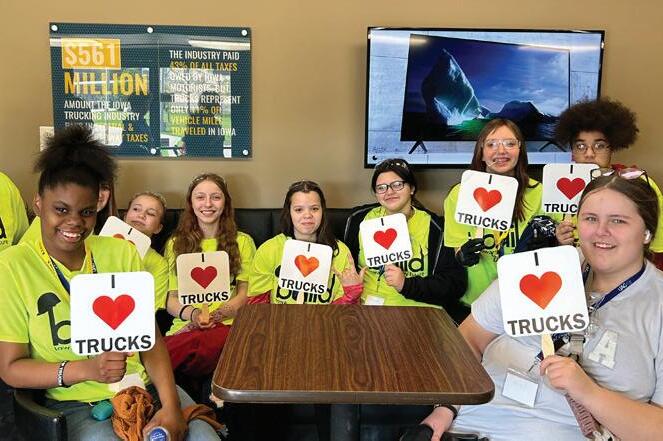
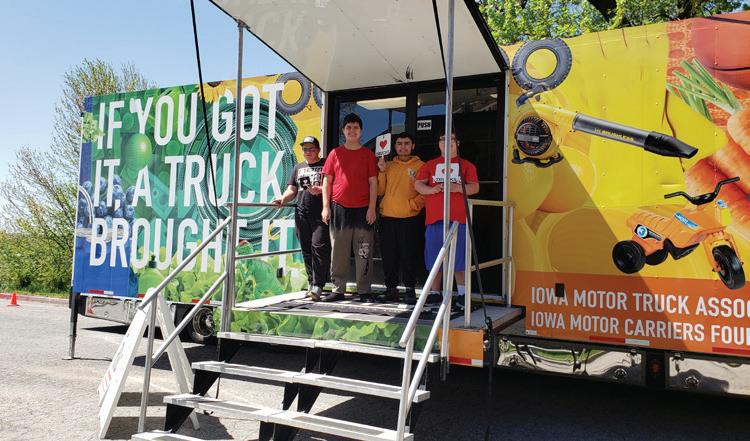
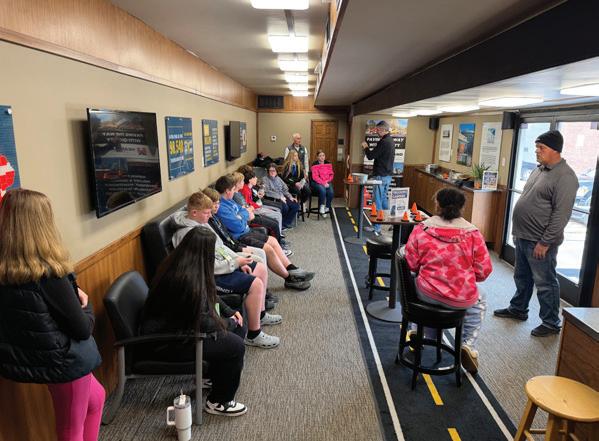
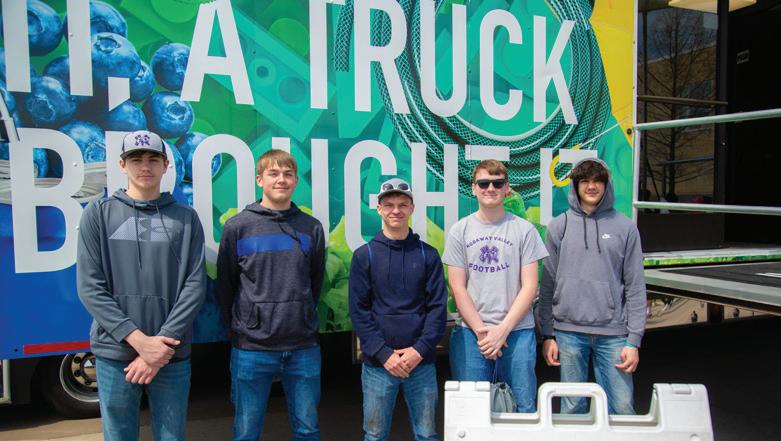
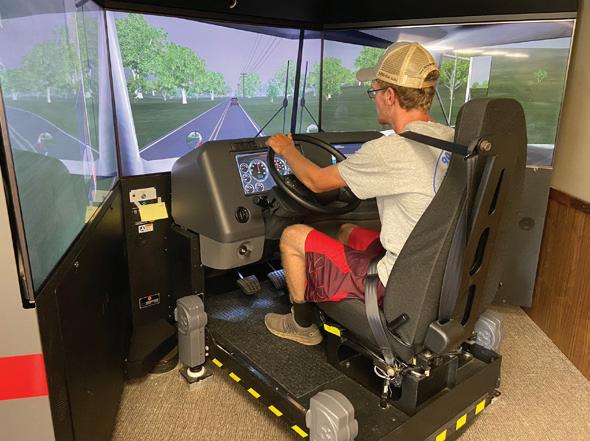
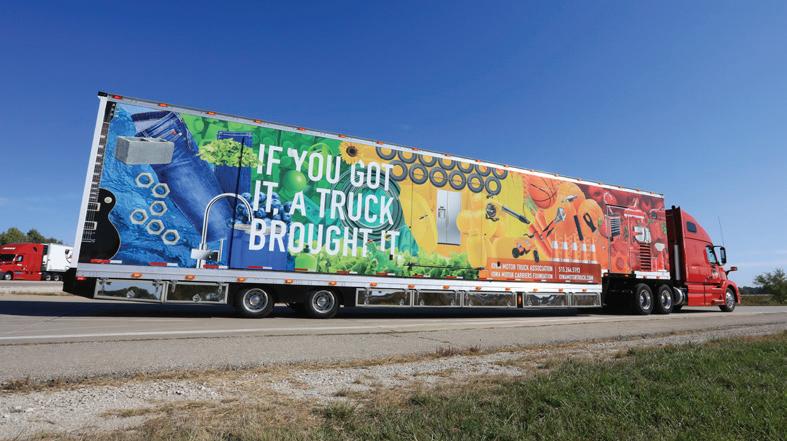
The IMTA Show Trailer is gearing up for another busy season. From career fairs to FFA and Build Our Future events, the trailer and driving simulator remain powerful tools for engaging students and the public.

“We are committed to telling the positive story of this industry and enhancing our efforts to raise awareness,” said IMTA President Brenda Neville. “These initiatives are about more than visibility—they’re about building relationships and reinforcing why trucking is essential to Iowa’s future.”
Here’s what’s ahead in 2026.
In 2025, the trailer participated in 55 events and welcomed more than 22,000 visitors. Early bookings indicate even greater impact in 2026.
IMTA members may also reserve the trailer for company or community events. Contact the IMTA office for availability.

When the 2026 LEAD IMTA Council gathered for its annual strategic planning session, the discussion centered on launching a statewide trucking outreach campaign. From that conversation, the framework for the Keep Moving Iowa Trucking Tour began to take shape.
Tour Objective
Trucking is essential—not as a slogan, but as a fact.
The Keep Moving Iowa Trucking Tour is designed to clearly and confidently tell that story while positioning the industry as a trusted and indispensable partner in Iowa’s economy and communities.
The tour will also serve as the foundation for a long-term effort to elevate industry awareness, strengthen key relationships, and build sustained momentum for future programs.
Tour Overview
In fall 2026 (date to be determined), the tour will travel statewide for one week, highlighting the people, companies, and commitment required to keep Iowa moving.
The tour will showcase:
▶ The professionalism of Iowa’s trucking workforce
▶ Innovation and technology shaping modern trucking
▶ Trucking’s critical role in Iowa’s economy and infrastructure
▶ Diverse and rewarding career pathways
Throughout the week, the tour will connect students, educators, workforce partners, legislators, regulators, and community stakeholders with Iowa-based trucking companies and industry leaders for a firsthand look at trucking’s impact.
Industry Responsibility & Leadership
The trucking industry recognizes its responsibility to Iowa—to operate safely, lead with integrity, invest in people, and pursue better outcomes for everyone who depends on trucking.
Because everyone depends on trucking.
The tour will highlight real-world examples of leadership, accountability, and innovation across the industry.
Planned Highlights
▶ Statewide proclamation recognizing trucking’s essential role
▶ Fleet and terminal tours
▶ Simulator demonstrations and cab experiences
▶ Career exploration events
▶ Stories from industry professionals
More details will be announced as planning progresses, with multiple opportunities for member involvement.
August 13-22
IMTA will again maintain a strong presence at the Iowa State Fair, which attracts more than one million visitors annually. Located just off the main concourse, the IMTA Show Trailer serves as a high-visibility platform to showcase Iowa’s trucking industry.
Open daily from 8:00 a.m. to 8:00 p.m. during the 11-day fair, the trailer offers meaningful engagement with thousands of attendees. IMTA members are
invited to volunteer and may sign up to host the trailer for a full day.
Additional campaigns are planned to launch during the fair to further expand exposure for Iowa’s trucking community.
Interested in participating? Contact the IMTA office to join the volunteer list.

Cedar Rapids, IA 319-777-0503 Wichita, KS 316-722-6034
Davenport, IA 563-391-4300
Great Bend, KS 620-792-2491
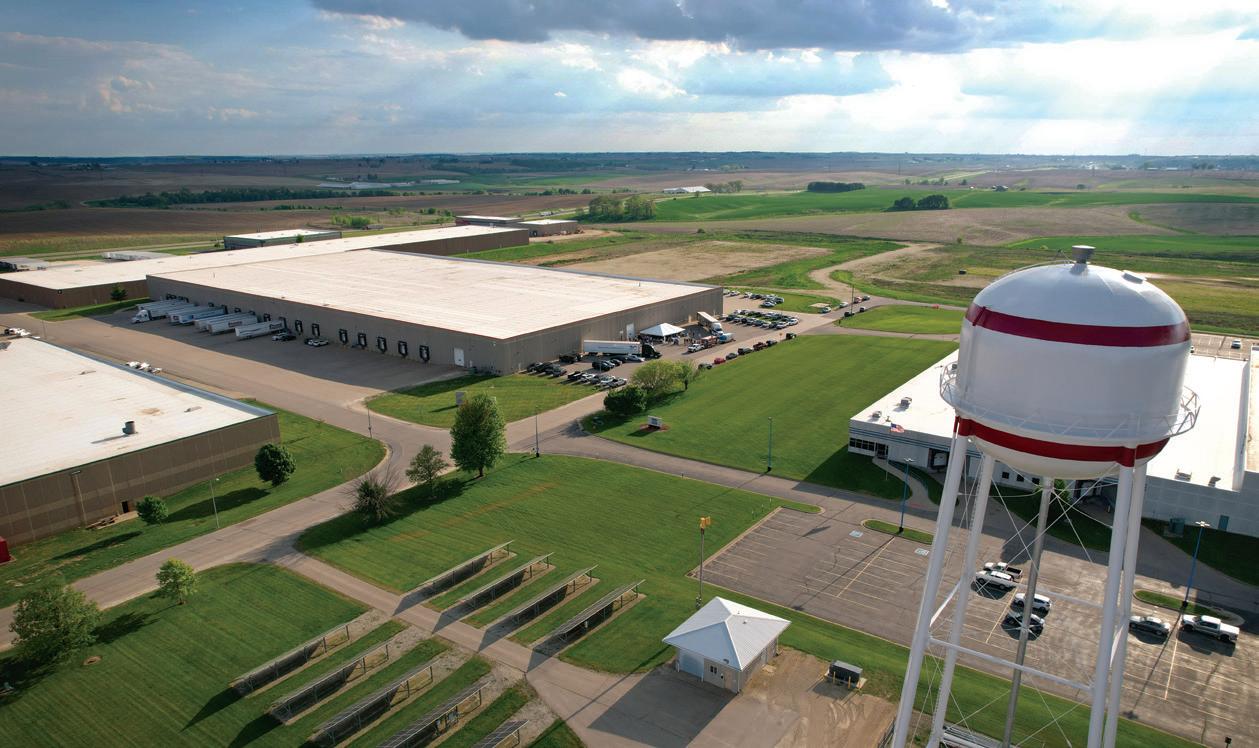

Construction, infrastructure, and service developments impacting Iowa carriers
Key Route Impacts for Iowa Carriers as Construction Season Ramps Up
As Iowa’s transportation system continues to advance, staying ahead of DOT construction projects and work zone safety is critical for navigating today’s fast-paced logistics landscape. This season, crews will be working on a mix of existing and new interstate and multi-lane road projects that may impact your route schedules across the state.
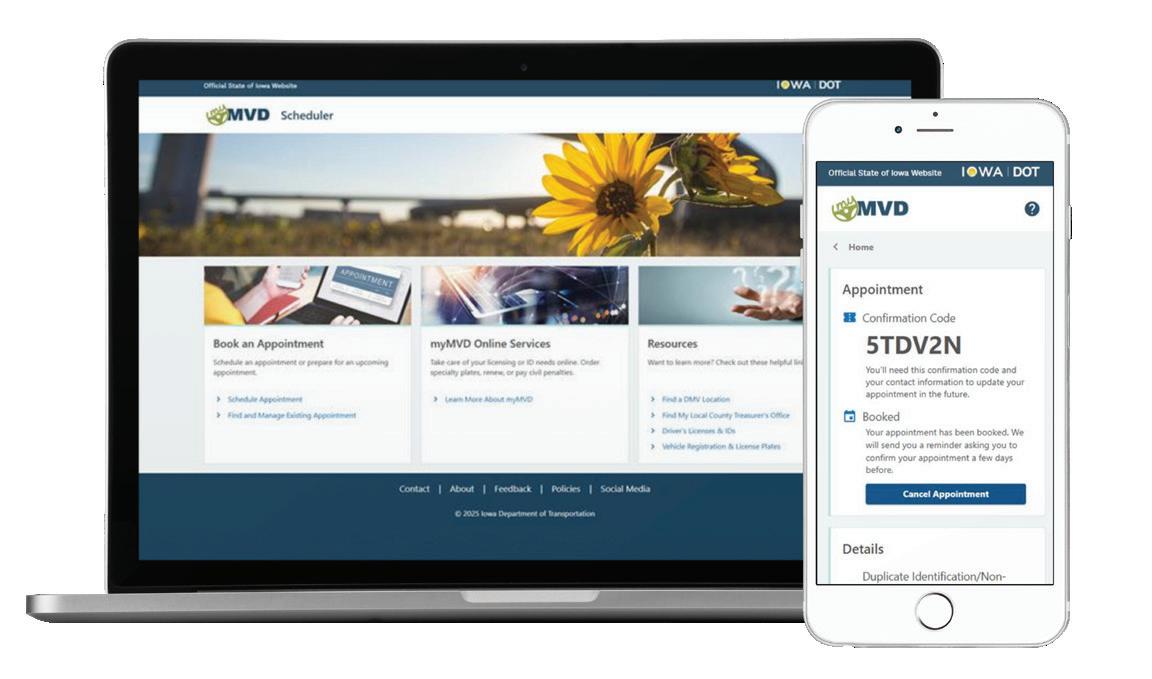
We’re also excited to highlight licensing innovations with the launch of a new statewide online scheduling and in-office queuing system designed to streamline access to essential services—including CDLs— and vehicle registration for faster, easier, and more consistent DMV experiences for your drivers.
I-35
▶ Three new NB lanes will start construction from Ankeny to Huxley.
I-80
▶ Removal of old EB pavement on Raccoon River Bridges in Dallas County.
U.S. 30
▶ Grading/paving to replace bridges over Skunk River in Story County.
Northeast Mixmaster - Des Moines I-35/80/235
▶ Shift EB traffic north to the old WB lanes to build new EB lanes.
Southwest Mixmaster - Des Moines I-35/80/235
▶ Later this year, reconstruction of the interchange will begin north of University Avenue and continue south to the Ashworth Road overpass south of the interchange.
Hickman Road InterchangeClive/Urbandale I-35/80
▶ The NB I-35 and EB I-80 University Avenue on-ramp and Hickman Road off-ramp open to traffic this spring based on the completion date of the Walnut Creek Bridge.
I-80 Grand Prairie Parkway Interchange
– West Des Moines I-80
▶ EB work continues and WB improvements are planned for 2026.
I-35
▶ Resurfacing and paving in Franklin, Cerro Gordo, and Worth Counties.
U.S. 65
▶ Completion of paving from 19th Street to 27th Street in Mason City in Cerro Gordo County.
I-35
▶ Grading and paving for future lane expansion north of North River to south of Badger Creek in Warren County.
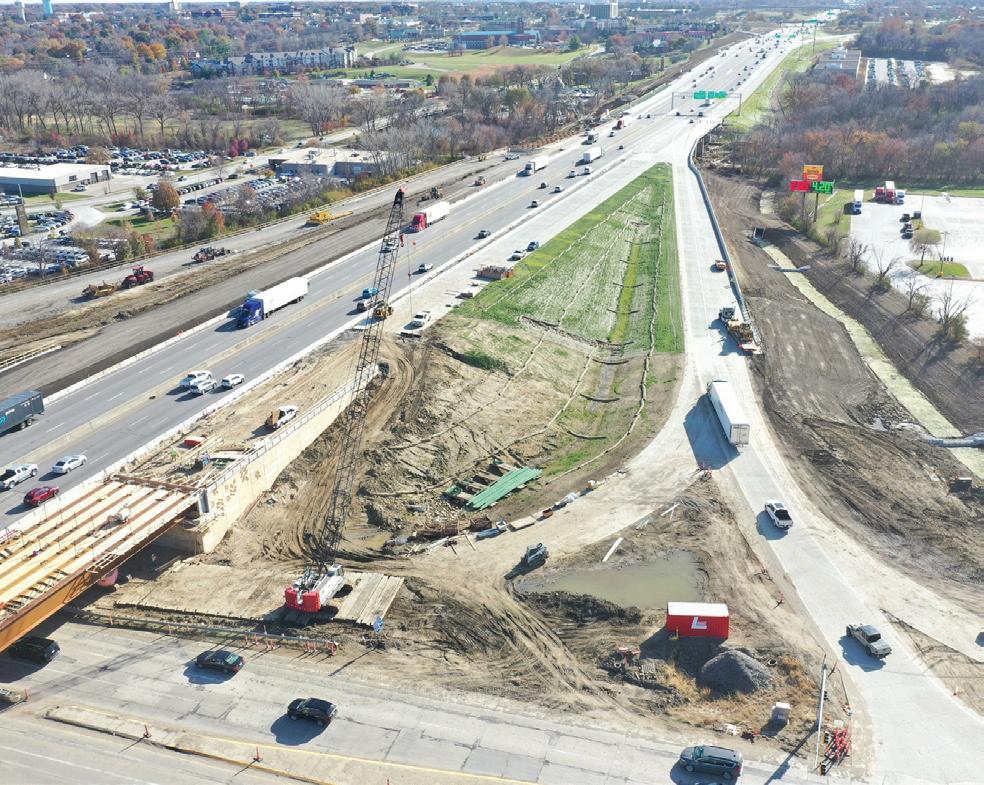
I-380 Corridor Reconstruction – Cedar Rapids/Coralville/Iowa City
▶ Boyson Road Interchange in Hiawatha anticipated to open in summer.
▶ Continued widening on I-380 NB/SB from north of Forevergreen Road to Swan Lake Road, including the Penn Street interchange in North Liberty.
▶ U.S. 30 WB to I-380 SB loop ramp construction.
▶ Continued construction and widening on I-380 NB/SB from north of 120th Ave to U.S. 30, including the Wright Brothers Boulevard interchange in Cedar Rapids.
▶ Resurfacing, replace outside shoulder NB and SB north of County Home Road to north of County Road W36.
I-80
▶ Middle Road Interchange Reconstruction in Scott County.
▶ Pavement rehabilitation EB and WB east of the Rest Areas to west of County Road V66 in Iowa County.
U.S. 20
▶ Resurfacing from Farley to Swiss Valley (EB) in Dubuque County.
▶ Repairs on Julien Dubuque Bridge over Mississippi River.
▶ Paving from Hudson Road to U.S. 63 in Black Hawk County.
U.S. 30
▶ Grading/paving/widening east of Lisbon to west of Stanwood in Cedar County.
▶ Pavement markings over the Wapsipinicon River in Clinton County.
U.S. 218
▶ Completion of paving from Cedar River in Janesville to IA 116 in Waverly in Bremer County.
Iowans can visit a new, single scheduling website to make appointments for DMV services—including CDLs—at any Iowa DOT service center or county treasurer office in 79 participating counties.
Unlike separate motor vehicle service location processes in the past, the new system connects 103 state and county DMV office locations, making it the most comprehensive and efficient scheduling tool the agency has ever implemented.
U.S. 61
▶ Paving of Segment 3 from north of Mediapolis to north of IA 78 in Des Moines County.
U.S. 63
▶ Grading and structures at NW bypass around Oskaloosa in Mahaska County.
I-29
▶ Grading and paving for new interchange at County Road D38 at Sergeant Bluff in Sioux County.
▶ Grading, paving, and a bridge replacement at the IA 175/Monona interchange in Clayton County.
I-80
▶ Patching from east of I-880 to west of Silver Creek Bridge in Pottawattamie County.
▶ South of County Road L19 to south of I-880 SB in Pottawattamie County.
U.S. 20
▶ Pavement replacement from east of Franklin Avenue to east of Humboldt Avenue near Moville in Woodbury County.
Work Zone Safety
Drivers are urged to practice work zone safety by increasing following distances, eliminating distractions, and using the Iowa 511 Traveler Information System as a tool for real-time traffic/construction project updates.
When checking the 511ia.org map or app with the Construction layer selected, drivers can also toggle the “Commercial Vehicles” feature in the Layers area to display commercial vehicle-specific details. This converts any current or future construction events with size or weight limitations into restriction icons, and also turns on related layers such as weigh stations and other restrictions.
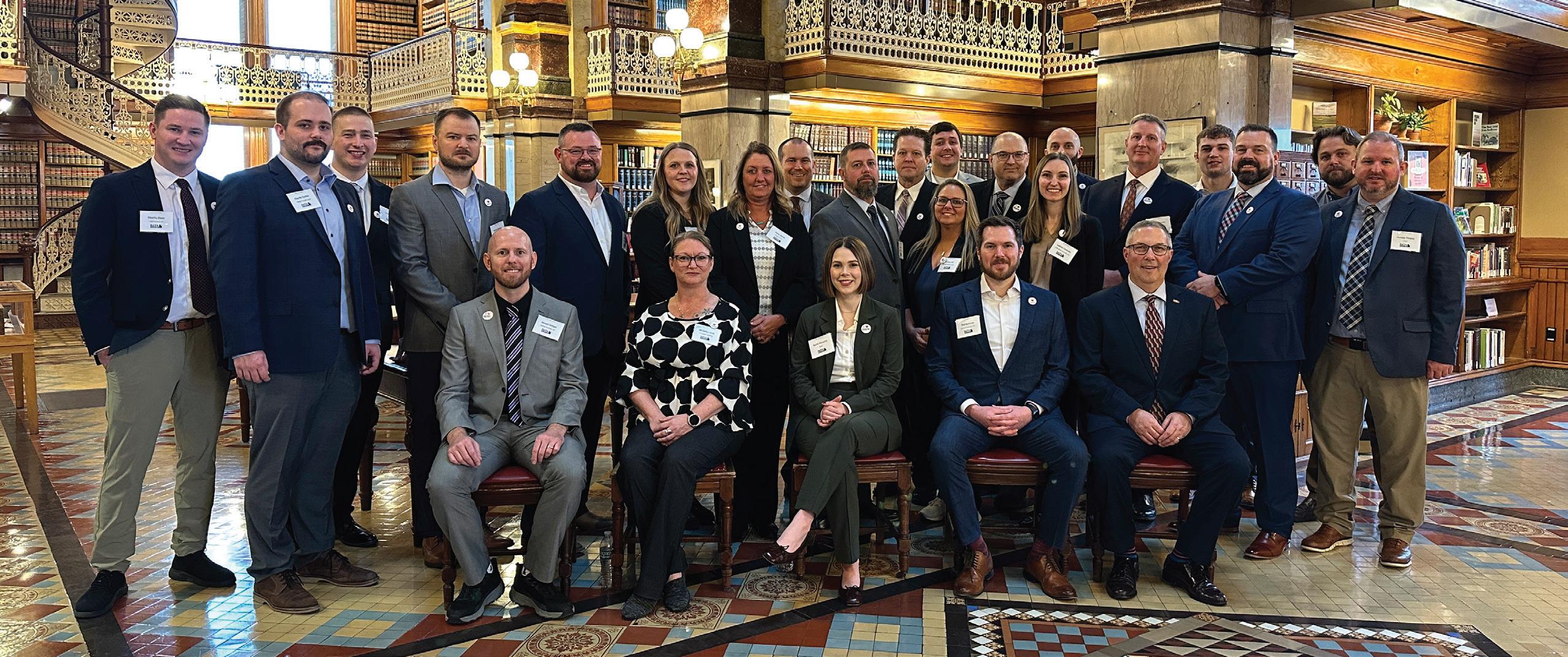
The 2026 IMTA Leadership Class is officially underway, as participants gathered for their first sessions focused on advocacy, leadership, and industry engagement.
The class began by building connections and exploring the vital role IMTA plays in advancing Iowa’s trucking industry. Participants heard from IMTA leadership, including Chairman Jeff Arens of Schuster Company, and took part in meaningful discussions around what it truly means to lead from within.
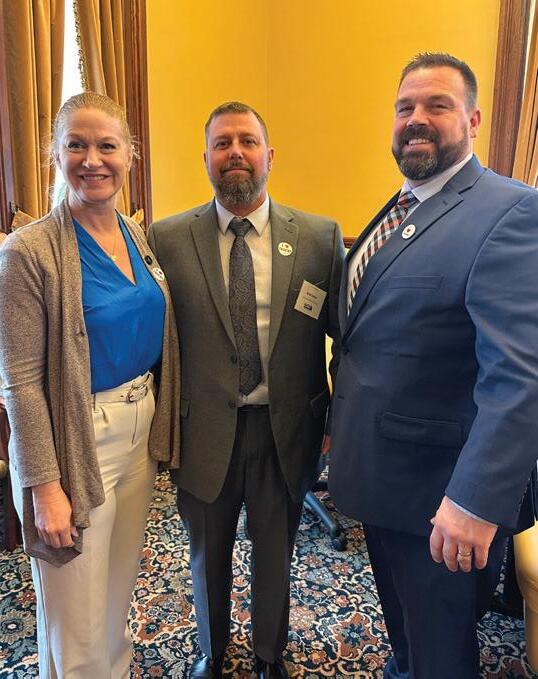
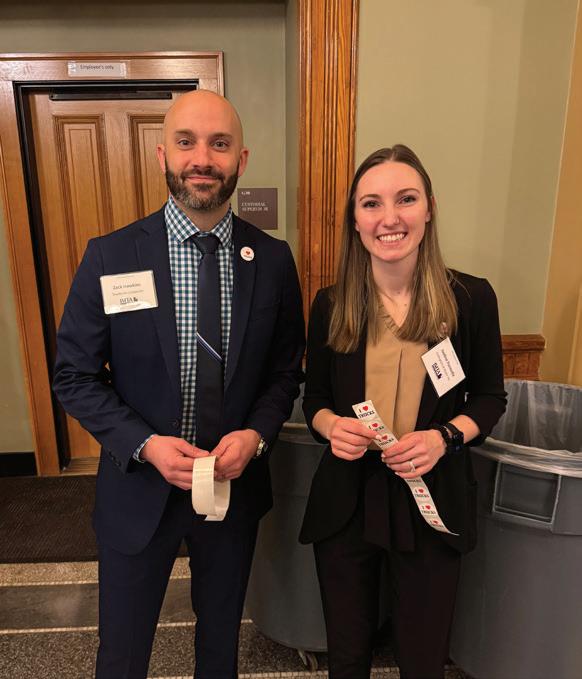
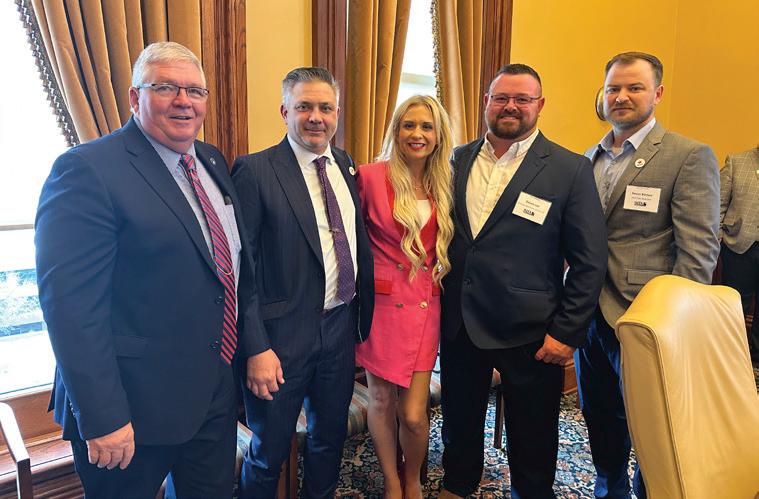
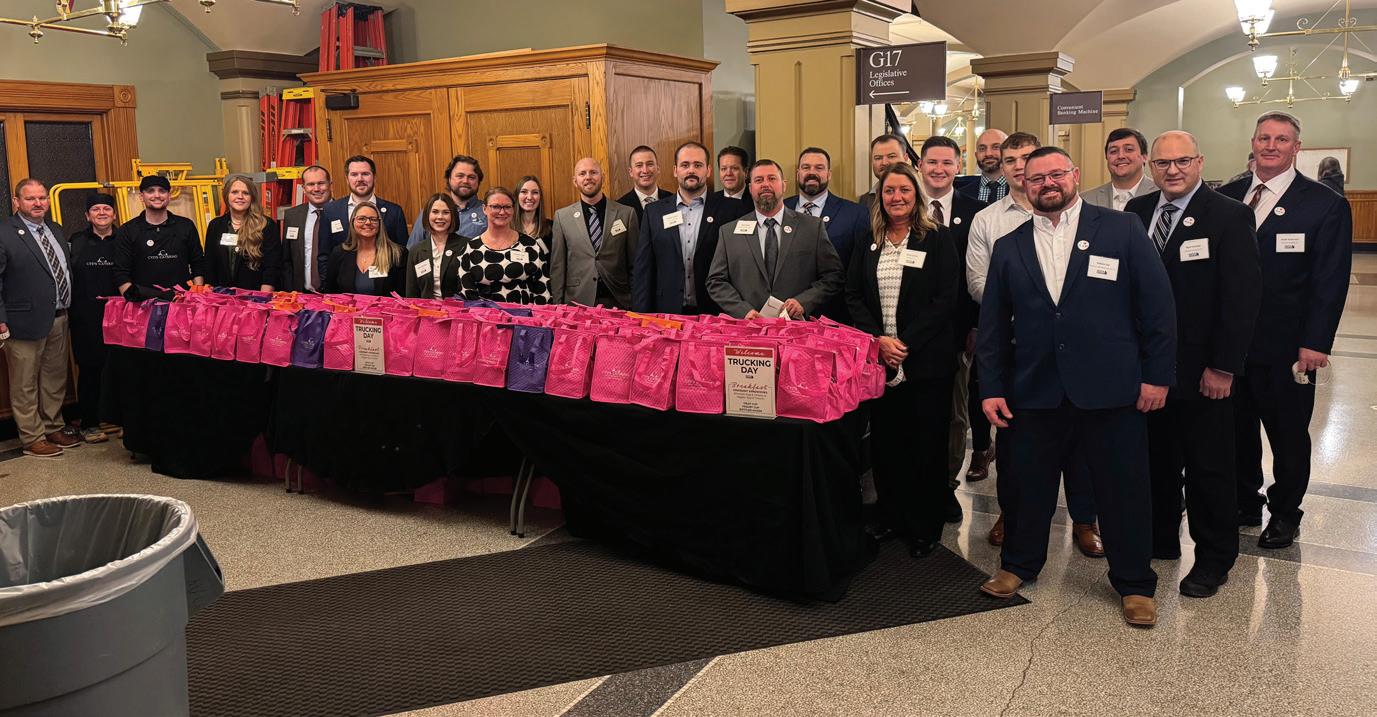
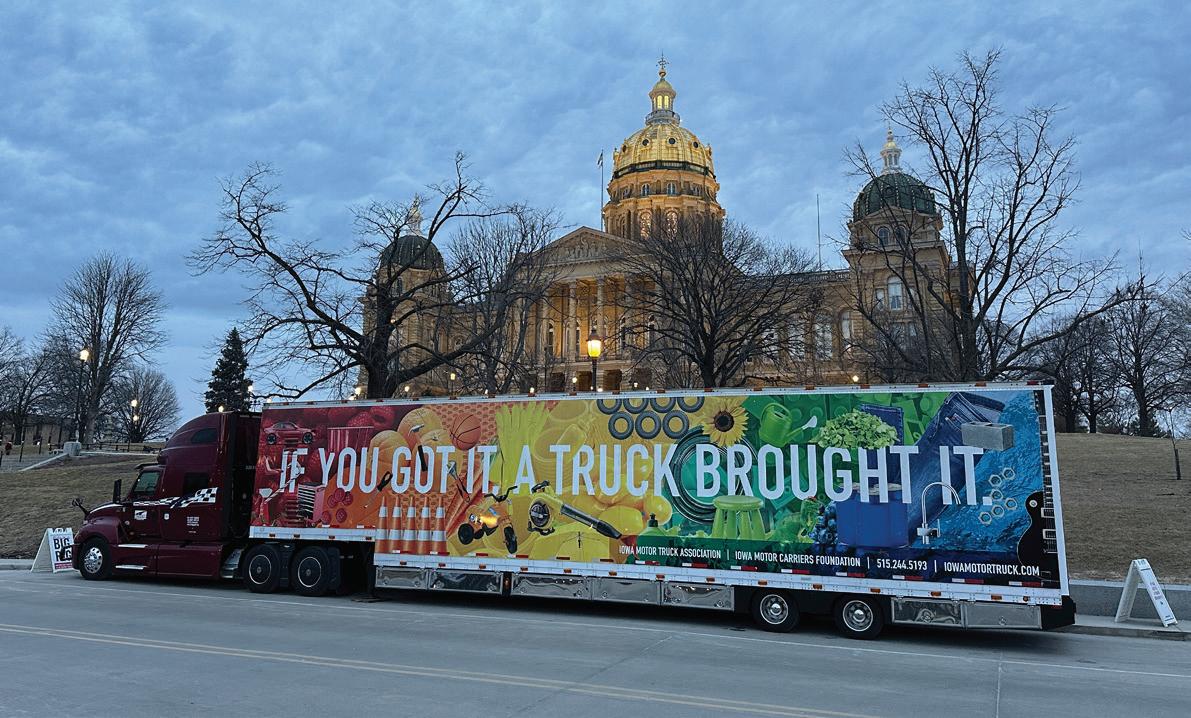
A highlight of the kickoff was Trucking Day at the Capitol, where class members engaged directly with legislators and Transportation Committee leaders, gaining firsthand experience in advocacy and the legislative process.
Additional sessions in March and April will focus on professional development, communications training, and a collaborative group project, culminating with presentations and recognition at the IMTA Management Conference in September.
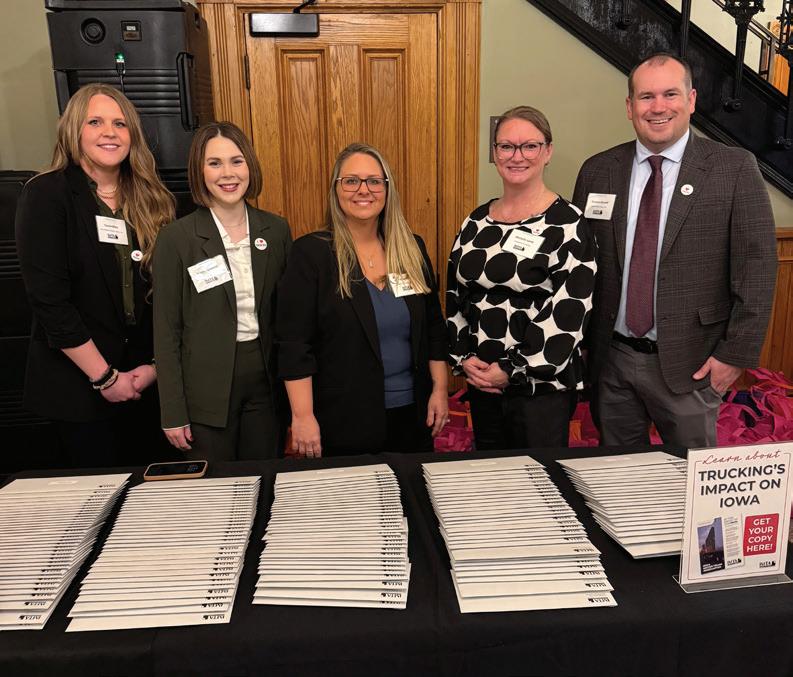
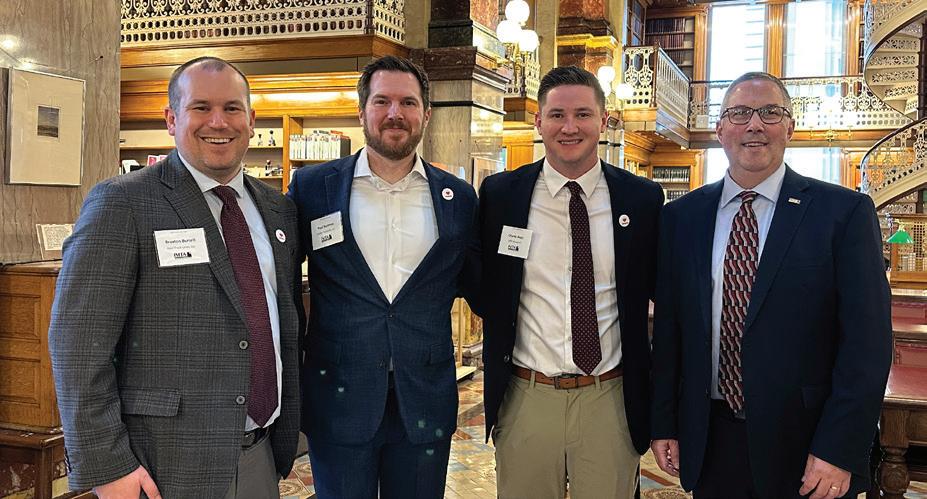

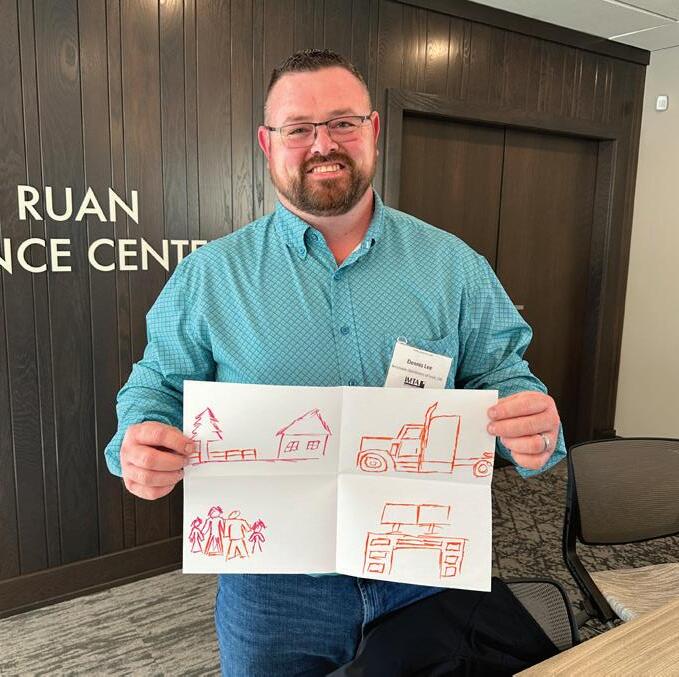











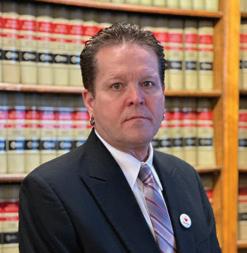








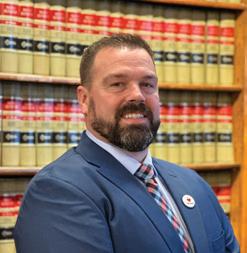




The LEAD IMTA Council drives strategic industry impact
The LEAD IMTA Council exists for one reason: to engage the next generation of industry leaders and put them to work.
Comprised of selected professionals from IMTA member companies across Iowa, the Council serves as a leadership pipeline for the Iowa Motor Truck Association—bringing fresh perspective, strategic thinking, and real accountability to the table. This is not a classroom. It’s a working group.
At their recent strategic planning session in Des Moines, the 2026 Council did not simply discuss ideas—they built one.
Out of that session came the framework for the Keep Moving Iowa Trucking Tour, a bold statewide initiative envisioned for fall 2026. The objective is clear: elevating public awareness, strengthen stakeholder relationships, and position trucking as the essential, responsible, and economically critical industry it is.
This isn’t branding for the sake of branding. It’s strategic industry advocacy.
Through company tours, technology demonstrations, workforce engagement, and direct connection with educators, legislators, and community leaders, the Tour is designed to generate measurable impact—stronger perception, deeper partnerships, and long-term workforce momentum.
Following the session, Council members were tasked with reviewing and refining the campaign blueprint. The message was clear: this is an aggressive endeavor, and it will require effort. But effort drives outcome.
That’s the return.
The LEAD IMTA Council was created to develop leaders who don’t wait for direction—they shape it.
And in 2026, they’re doing exactly that.




LOZIER Rasmussen Group

KARMI CASTELLANO Solar Transport

MOLLIE RHOADES Ascendance Truck Centers

DANY LYNN Tucker Freight Lines






Insights and updates from the Iowa Council of Safety Management
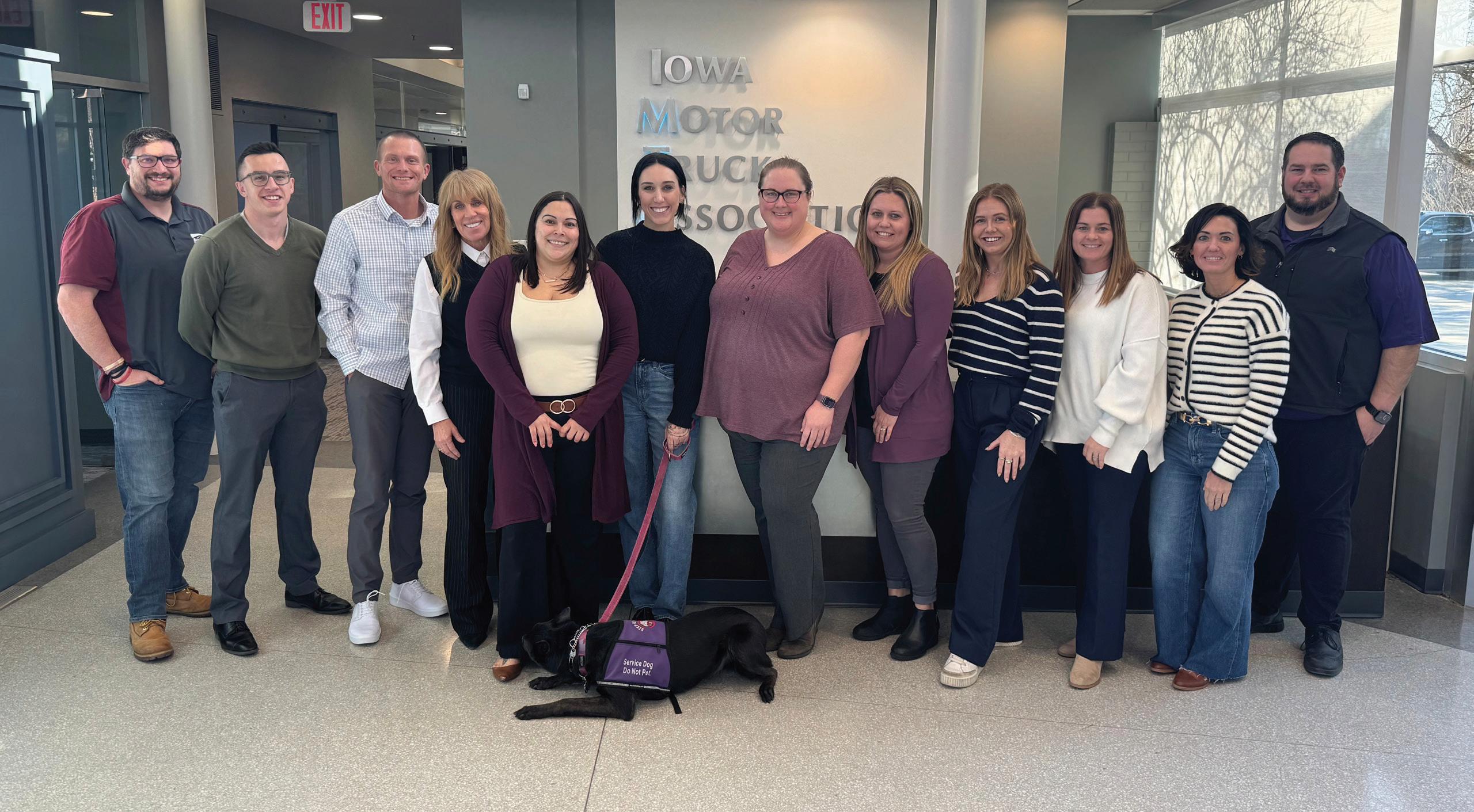
The Iowa Council of Safety Management (ICSM) recently brought members together at the IMTA office in Des Moines for a focused Mini-Conference centered on today’s most pressing safety issues
Sessions addressed evolving workplace drug trends—including oral fluid testing, cannabis, and fentanyl—along with practical guidance on identifying suspicious activity
and strengthening cargo and facility security. The program also featured hands-on DataQ training led by representatives from the Iowa State Patrol and Iowa DOT, equipping attendees with strategies to protect and improve their company’s safety profile.
As always, the value of this event was in the practical takeaways and peer-to-peer conversation— exactly what ICSM is designed to provide.
IOWA COUNCIL OF
Scan the QR code for more information. Safety Managers
Interested in ICSM membership?

Record momentum for IMTA’s newest statewide initiative
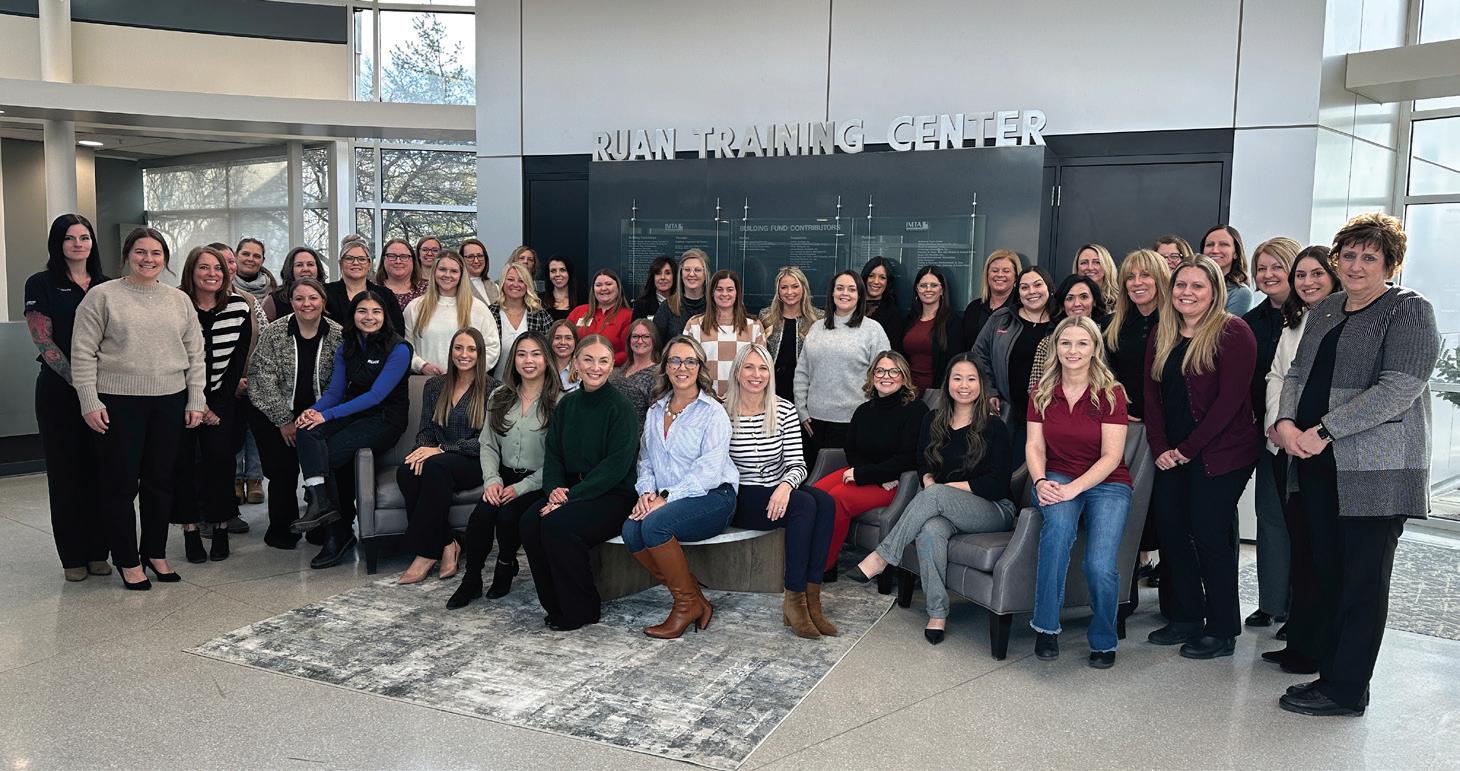
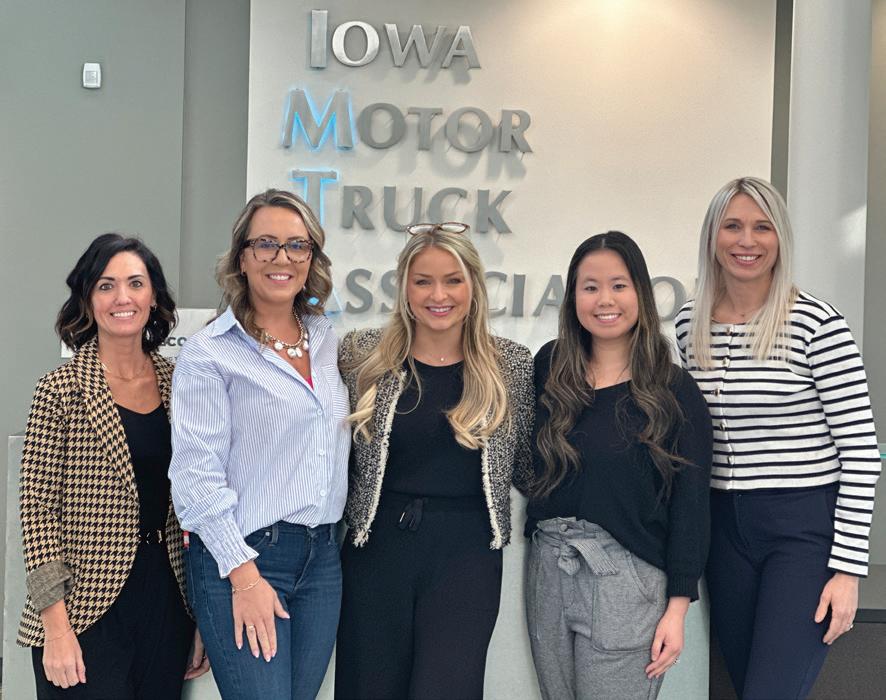
IMTA’s inaugural Women in Motion (WIM) Iowa initiative is off to an inspiring start. With over 70 women already enrolled, the Iowa Chapter is gaining momentum quickly— and setting its sights on reaching 100 members!
The official launch event brought together nearly 50 women from across the industry for a day centered on connection, leadership, and shared experience. Panelists Melinda Anderson, Ennis Corporation, and Heather DeBaillie, CAT Scales, offered candid insights drawn from decades of industry leadership. Tabletop discussions and an open forum reinforced a clear message: women across Iowa’s trucking industry want intentional opportunities to connect, collaborate, and grow—together.
Key priorities moving forward include launching an Iowa-specific mentor/mentee program, hosting four statewide events in year one, and ensuring networking remains at the heart of the chapter’s mission. The energy is strong—and this is only the beginning.


Sign up for WIM today! Scan the QR code for more information.




Opportunities to connect, learn, and lead
ATRI RESEARCH UPDATE
March 17, 2026 | Webinar
SAFETY PROFESSIONALS CONFERENCE
April 15 - April 16, 2026 | Iowa Motor Truck Association (Des Moines)
TOP 10 REGULATORY & COMPLIANCE ISSUES
April 21, 2026 | Webinar
HR ESSENTIALS FOR TRUCKING COMPANIES
May 19, 2026 | Webinar
IMTA SPRING GOLF OUTING
May 21, 2026 | Legacy Golf Club (Norwalk)
IOWA TRUCK DRIVING CHAMPIONSHIPS
June 11 - June 12, 2026 | Prairie Meadows Hotel & Conference Center (Altoona)
PROMOTING TRUCKING THROUGH PUBLIC RELATIONS
June 16, 2026 | Webinar
WOMEN IN MOTION IOWA
CHAPTER SUMMER SOCIAL
June 17, 2026 | Eastern Iowa
IMTA FINANCE CONFERENCE
June 25, 2026 | Iowa Motor Truck Association (Des Moines)
CELEBRATING DRIVERS & TECHNICIANS
July 21, 2026 | Webinar
IMTA LEGAL SYMPOSIUM
August 6, 2026 | Iowa Motor Truck Association (Des Moines)
IMTA SHOW TRAILER AT THE IOWA STATE FAIR
August 13 – 23, 2026 | Iowa State Fairgrounds (Des Moines)
INSURANCE INSIGHTS FOR TRUCKING COMPANIES
August 18, 2026 | Webinar
MAINTENANCE PROFESSIONALS CONFERENCE
September 2, 2026 | Webinar
ELECTION 2026: POLITICAL ANALYSIS & INSIGHTS
September 15, 2026 | Webinar
IMTA MANAGEMENT CONFERENCE
September 23 - September 24, 2026 | Hyatt Regency Hotel & Conference Center (Coralville)
Scan the QR Code or
LEARN MORE AT: www.iowamotortruck.com FOR MORE INFO

Leadership lessons for trucking in 2026
SUZANNA DE BACA | CEO of Story Board Advisors
Last fall, on a morning drive from Central Iowa to Sioux City, I shared the road with a steady stream of semis moving freight through the heartland. I was heading to Morningside University to spend two days as an Executive in Residence speaking about leadership in a changing and disrupted world.
I stopped at a truck stop along the way. Drivers were fueling up, grabbing coffee and heading back out. It struck me that the issues I planned to discuss in the classroom were not abstract case studies to them. They were real and immediate. Tariffs. Pricing pressure. Labor shortages. Regulatory change. Uncertainty about what comes next. These challenges were shaping decisions every day, from the cab of a truck to the corner office.
That moment feels especially relevant as 2026 unfolds.
After a prolonged freight downturn, carriers face thin margins, shifting trade policy and rising insurance and regulatory costs. At the same time, artificial intelligence, automation and data-driven tools are reshaping how fleets operate and how leaders make decisions. Longrange planning is harder when the rules keep changing.
In this environment, leadership matters more than ever.
Later that day, I asked the students to analyze companies facing disruption. I posed a simple question: “What should the leaders do?” The most common answer was to be nimble and adapt. They were right. But adaptability alone is not enough. How leaders show up for their people during uncertainty is as important as the change they request. Values and clear communication are equally important when answers are incomplete.

Trucking leaders may sit in the driver’s seat of their organizations, but their people are the ones on the road. Drivers, dispatchers, technicians, and frontline managers feel uncertainty
first. When leaders make changes without explaining why, trust erodes quickly. Listening, explaining decisions, and acknowledging the impact of change builds credibility and resilience across the organization.
Strong leaders also anchor themselves in what does not change. In trucking, those anchors might be safety, service, respect for drivers, or long-term customer relationships. When rates fluctuate and regulations evolve, clear values stabilize decisions and prevent reactive choices. In uncertain times, principle-based decisions matter more than perfect forecasts.
Leaders also cannot wait for clarity before acting. The instinct to pause and plan can become a trap. Progress often comes from learning by doing; piloting technology, adjusting networks, testing ideas at manageable scale allow nimble organizations to build as they learn.
Leadership in 2026 requires operating in the fog of uncertainty. Markets turn without warning and recovery rarely follows a straight line. Leadership does not require perfect visibility, but it does require clear direction confidence, and forward movement. Share what you know. Acknowledge what you do not. Explain how decisions will be made.
The trucking industry has navigated disruption before and will do so again. The leaders who succeed will not be the ones who predict the future perfectly, but those who stayed adaptable, grounded in values and clear in communication while keeping their organizations moving forward, even when the road ahead was not fully visible.
As I drove home the next day, I found myself hoping that today’s leaders recognize what this moment demands: clarity, adaptability and the courage to move forward. Because that mindset will determine not just who survives uncertainty, but who is ready to lead when the road finally opens.
About the Author: Suzanna de Baca is CEO of Story Board Advisors, where she helps business leaders, boards, and family-owned companies navigate growth, change and culture. A former CEO across multiple industries and current faculty member at Iowa State University’s Ivy College of Business, she writes and speaks nationally on leadership, strategy, governance, and communications to strengthen teams and performance. She can be reached at sdebaca@storyboardadvisors.com.

Des Moines, IA (800) 888-0248
Cedar Rapids, IA (800) 332-5435
Kansas City, MO (800) 821-7402

MAX HEAVY DUTY BRAKES
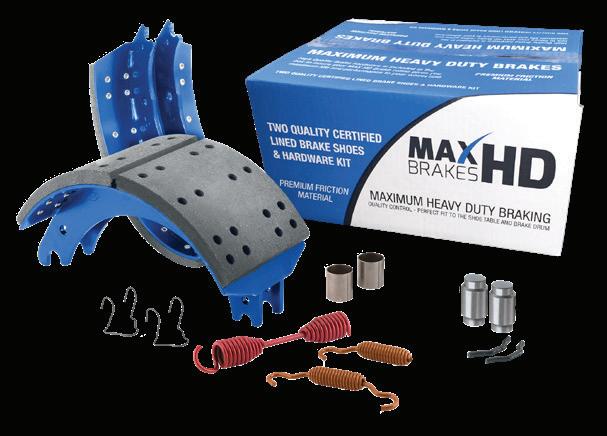
QUALITY CONTROL – Perfect fit to the shoe table and Brake drum.
ASK ABOUT OUR MAX HD BRAKE STOP BOXES
High Quality Brake hardware is included in the box to insure your MaxHD Brake reline gives you maximum life and performance to your wheel end
Relined in Chariton, IA at Midwest Wheel’s MaxHD Remanufacturing Facility!

Clear Lake, IA (800) 397-5630
Joplin, MO (866) 318-9111
Davenport, IA (800) 553-1886
Springfield, MO (800) 785-3705
Sioux City, IA (800) 943-3534
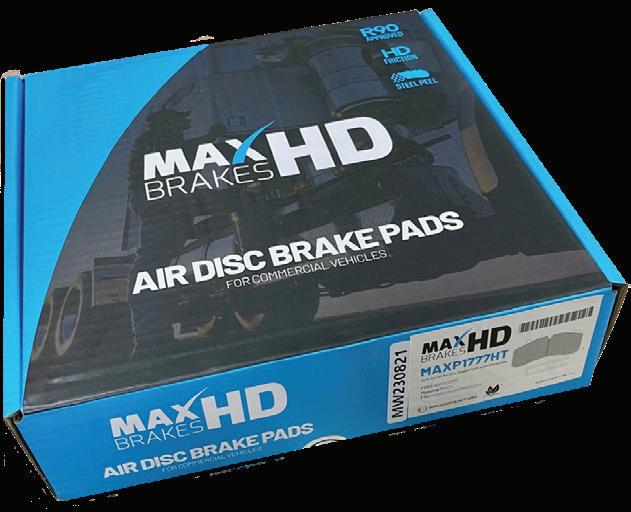
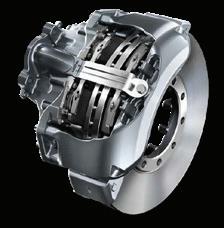
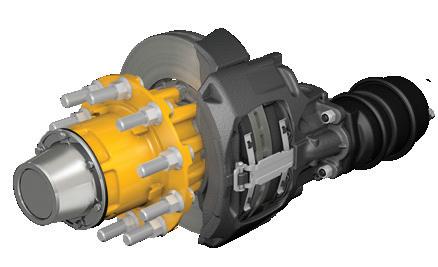
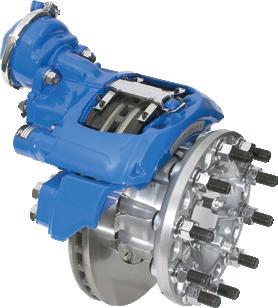
Omaha, NE (800) 322-8757 • DISC BRAKE PADS • BRAKES CHAMBERS • ROTORS • CALIPERS
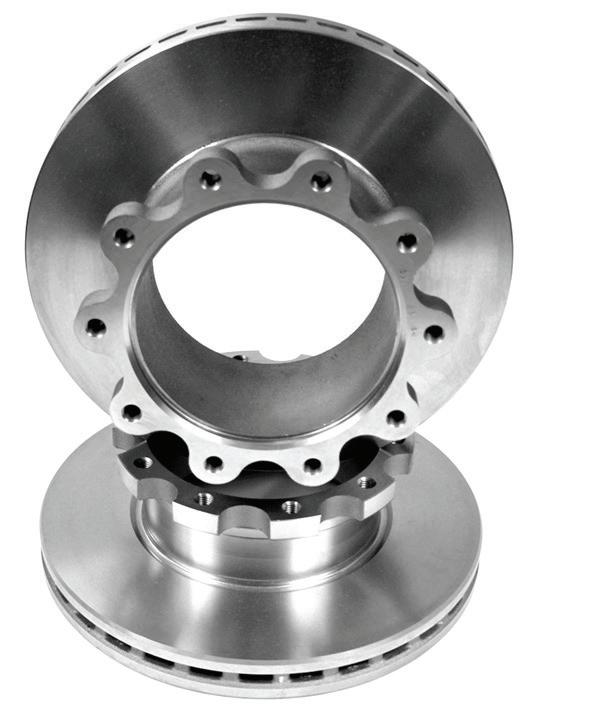
WE STOCK A COMPLETE LINE OF MAXHD: