Partners of OH Today
CONTENTS From the President
4
Self-Care for Healthcare Workers
6
The MTC and Rolls-Royce: Innovation Through Adversity
8
The Editor
Join iOH Today. Only £10 per year Free Student Membership
Lynn Pratt
• Quarterly OH Today Magazine, plus access to all back issues • Members’ support line, for free one-on-one confidential advice • Professional networking events throughout the year • Exclusive discounts and deals on OH events, software and more
2
OH TODAY
Student membership free for first year, then £10 a year
Return to the Front Line
18
Feeling Furloughed
24
A Day in the Life of a Flu Outbreak
27
Interview: Lynda Bruce
29
Obituary: Lynn Faulds Wood
31
Hygiene in Spirometry
32
Supporting our clients and caring for ourselves
34
Hamish Pratt Copyright © iOH (Formerly AOHNP) 2020 Published by iOH (Formerly AOHNP) ioh.org.uk 61 Waverley Road, Kenilworth, CV8 1JLE email: admin@ioh.org.uk
ioh.org.uk
12
board@ioh.org.uk
Production Editor Member benefits include:
Coronavirus Explained
Views expressed in OH Today are those of the contributors and not necessarily those of the iOH. Nor does iOH necessarily endorse any products or services mentioned or advertised in the publication.
OH TODAY
3
From the President Lucy Kenyon
A
s I write for this special issue, I reflect on my recent return to the NHS to provide OH services. I can give a first-hand account of the commitment of those working not just on the frontline, but across all services. OH has a key role to play in occupational, health, safety, wellbeing and welfare.
I can give a first-hand account of the commitment given by all those working not just on the front line, but across all services
We are also back to my student days of ward cleaners, where our housekeeping staff are allowed to do a great job, rather than carry out time and motion-based tasks. Time is being taken to read ID badges and everyone knows each other by their first name. I also discovered that the MTC were using their research engineers to explore ways to help the NHS. MTC have been working with St Barts Hospital and the Royal College of Anaesthetists to reduce the
risks associated with Exposure Prone Procedures such as intubation. On starting my NHS role, it became clear that we needed to address rehydration of front line staff who were wearing face fit masks for hours. The MTC immediately appointed a research engineer, Charlie, to explore ways to develop new PPE with integrated hydration packs which were light enough to wear whilst carrying out clinical procedures. He expanded his research to look at face fit that would cause fewer pressure areas on the face. Such great innovation. I am delighted to introduce this edition of OH Today with efforts to improve life for employees working during this unique period in our recent history. Lucy Kenyon and Neil Loach ⏛
OH Medical is a specialist agency that recruits Occupational Health and Wellbeing professionals nationwide. We can provideboth temporary and permanent members of staff at all levelsof seniority and responsibility from OH Technician, OH Nurse, OH Advisor to OH Physician
4
OH TODAY
info@ohmedical.co.uk 01582 235500 www.ohmedical.co.uk
OH TODAY
5
By Neil Loach
Vice President of iOH and Senior Lecturer at the University of Derby
The country and world has endured weeks of unprecedented challenge due to coronavirus. As we go further into the crisis, we need to be mindful of how well healthcare workers may be coping with the unprecedented way of caring for our most vulnerable COVID-19 patients.
N
eil Loach, Vice-President of iOH has written the free e-book looking at the ways in which healthcare workers can take care of themselves, while at the same time remembering to keep an eye open for signs of distress in fellow workers. Neil said “I have a keen interest in the psychological wellbeing of healthcare workers and I’m a lifelong advocate for good mental health among NHS staff after seeing many worker referrals while in practice as a
Lead Nurse for Occupational Health within the NHS”. Using the work of Keith Carlson, an American nurse and career coach, he has adopted a nursing process approach, in the hope that it resonates with healthcare workers and creates familiarity. He has also used his own photographs in the book as a way of practicing his own mindfulness. Opposite are some of Neil’s tips mentioned within the book.
Download on Apple Books https://apple.co/2y5QLcy
6
OH TODAY
Stay hydrated.
While this may seem obvious, staying hydrated is often a challenge for nurses. To combat dehydration, take small sips of water throughout your shift. Consider investing in an insulated tumbler to keep beverages at the preferred temperature.
3
Eat well, plan healthy meals.
2
Take Breaks.
When you are busy with patients, it can be easy to overlook your own needs. Making time for breaks throughout your shift is important; a few quick trips to the toilet can prevent unnecessary and painful urinary tract and bladder infections.
4
Keep in touch with friends and family.
As a nurse, you may be burning through calories faster than you think. You will need to frequently refresh your energy reserves so make sure you have healthy meals and snacks readily available. Avoid relying on foods and drinks that contain high levels of caffeine and sugar. Instead, select nutritious foods that are portable and require minimal preparation.
Shift work and being on-call can wreak havoc on your personal life. While it may be essential to pass on an outing with friends or family at the moment, maintaining these relationships virtually can do wonders for your emotional health. Though you can’t say yes to every invitation, strive to virtually meet up with others outside of work at least once a day.
5
6
Use mindfulness.
Meditation techniques, like deep breathing and guided imagery, can be instrumental in relieving stress and refocusing on the present. With a growing number of smart phone apps as well as meditation videos designed solely for nurses, finding a suitable format and style has never been easier. Mood selfassessment tools are available and there are also many apps available on your smartphone to assist with this also.
7
Sleep is so important.
Even if you are not working the night shift, creating a relaxing sleep environment can ensure you get the rest you need. Blackout curtains, eye masks, earplugs and white noise apps on your phone can be helpful options.
Exercise if you can.
Stamina and strength are necessary to perform your job duties properly, and exercise can help. Find an exercise you enjoy — whether it is walking, cycling or yoga — and do it at least a few times a week. There are plenty of free apps available that will help with the current situation. When the gyms re-open there are often discounts available for healthcare workers that will then allow you to try out a few different exercises and find what works best for you.
8
Be kind to yourself.
Take time to remind yourself what an awesome job you are doing. Be kind to yourself and rest assured that you are not alone in this. Talk about how you are feeling and seek the advice and guidance of your managers and peers. You would do well to keep a journal of your thoughts and feelings so that you can reflect on them later. Remember, YOU are doing an awesome job! ⬛
OH TODAY
7
Background image by veeterzy/Pexels
SELF CARE
1
INNOVATION THROUGH ADVERSITY By Rolls-Royce and the Manufacturing Technology Centre
T
he COVID-19 pandemic has led to an unprecedented response from UK industry to support healthcare workers and reduce the risk to their health at work. From start-ups and small family owned companies, to large multinational corporations and Formula 1 teams, all organisations are united in their shared aim to support the NHS and healthcare workers.
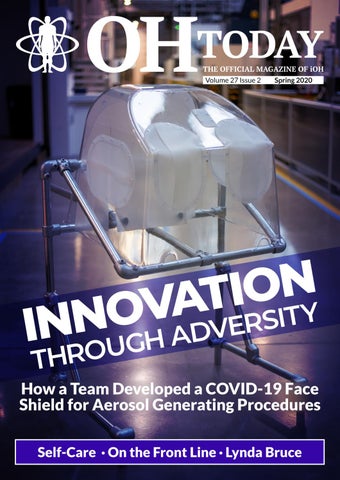
How a team came together to develop a shield to reduce exposure to COVID-19 in healthcare workers undertaking Aerosol Generating Procedures. 8
OH TODAY
In just under a week, a team from Rolls-Royce working with medical specialists from the Royal London Hospital and engineers at The Manufacturing Technology Centre (MTC) in the UK have developed, tested and put a shield into clinical trial. The shield has been developed to reduce the exposure to COVID-19 of front-line healthcare staff undertaking Aerosol Generating Procedures (AGPs) without compromising healthcare delivery. The fastmake prototype activities were supported with funding from Innovate UK. Evidence from previous viral outbreaks suggests the initial dose and the amount of virus correlates with illness severity. Healthcare workers who undertake AGPs in
patients with COVID-19 are at risk of exposure to high viral load due to these procedures. AGPs are medical procedures such as intubation. These procedures have the potential to aerosolise the viral particles found in the patient’s airway exposing the healthcare practitioner to viral load, but also causing contamination of the surrounding environment.
From Concept to Design The design concept was a shield for use in AGPs to reduce the healthcare workers’ exposure. This concept was first trialled by a doctor in Taiwan in early March 2020. Medical specialists found that undertaking AGPs on COVID-19 patients in full surgical PPE inevitably took longer than usual. This is due to the time involved in pre-procedure preparation when time was of the essence in many cases. Dr Ian Renfrew, Consultant Interventional Radiologist, with his medical colleagues, sketched preliminary designs of a shield which they provided to the Rolls-Royce team, led by Andy York, to convert into an engineering solution for clinical use. This was the first time the MTC and Rolls-Royce engineers had worked on an engineering solution for the healthcare industry, as they predominantly work together on projects for the aerospace industry. ▶
OH TODAY
9
•
four hospitals to quickly implement staff training in the use of the AGP Shield and subsequent trial use in a clinical setting.
Visibility of the patient behind a physical barrier with a flexible rear curtain that conforms around the patient
•
Multiple access points for assisted procedures
•
Enough space for equipment required
•
Access points for oxygen delivery
•
Capable of being left in place after the procedure to maintain containment without compromising continued patient care
•
Re-usable and easy cleaned using standard hospital cleaning materials
•
Minimal certification requirements to expedite implementation
•
Scalable
•
Lightweight
The time from initial design to prototype concept and production for bench trials was a day. Usually this process would take at least a week. Dr Ian Renfrew, Director of Interventional Radiology, the lead medical specialist whose initial call stimulated the request, commented: “Great to witness the willingness of numerous industrial partners uniting in the best example of multidisciplinary working I’ve seen to bring the AGP Shield to fruition. Thanks also to the early adopters in over 30 hospitals whose feedback and contributions are now creating a growing body of experience that is being shared and documented.”
Design and Prototype testing Using medical education equipment, from a teaching hospital, the first prototype was tested at the MTC, with guidance and input from doctors from the Royal London, Coventry and Bridgend Hospitals, who joined in person, recognising the current guidelines and virtually. The engineers were taught to intubate using medical simulation models. The team also focused on the ergonomic aspects of undertaking AGPs including the space required for the various items of equipment needed during the procedure, tailoring the solution in real-time. With the results from the bench trials, further design iterations were completed in collaboration with the
10
OH TODAY
existing MTC production supply chain. This was to enable small batch production suitable for testing in a hospital or clinical setting. In parallel guidance was sought from Medicine and Healthcare Products Regulatory Agency (MHRA) and BSI, the UK national standards agency, on the categorisation of the shield. Both organisations were supportive, and the designs comply with their recommendations.
Testing in a clinical setting The shields produced in the first production batch were distributed to four hospitals, within a week of initiating the project. The MTC/RollsRoyce team personally delivered each shield, with usage and cleaning instructions, backed up with videos produced by the medical team involved. This enabled each of the
capability. To scale production volume, the MTC Team redesigned the AGP Shield to enable manufacture using a variety of techniques and materials, based on available resources. The Rolls-Royce team engaged a wider and larger supply chain network, including Aston Martin’s Leather & Trim team to support volume manufacture.
Feedback from use of the AGP shield in a clinical setting was overwhelmingly positive with a growing interest from other Andy York from Rolls-Royce commented hospitals. This resulted in a that: “All the staff from the MTC and Rollsgrowing demand to produce the Royce have been fully invested in modifying AGP Shield at volume from the initial design to a now scalable, within and outside the UK. The lightweight model. This model can help team is reduce risk to Feedback from use of the AGP the health of using this shield in a clinical setting was clinicians such ongoing feedback to overwhelmingly positive with as Ian and his make a growing interest from other hospitals. colleagues further while they improvements to the shield; the care for patients both in the UK and abroad. latest design, which is 70% lighter The dedication and dynamism of the team and stackable to enable has been incredible. This is truly transportation and cleaning, is now multidisciplinary working and the best of ready for dispatch. There are in excess human kindness.” of 200 units in use across 30 hospitals in the UK at present. The MTC has open sourced fabrication versions of the patented design and Performance assessment of manufacturing details on its website, the AGP shield in a computer enabling global manufacture of the shield. simulation environment This coupled their own production capability for direct requests for a one-piece The shield essentially creates a negative lightweight version of the shield, will help pressure environment where local reduce the exposure risk of healthcare extraction used in the procedure helps to workers undertaking AGPs as they care for facilitate the rapid removal of airborne patient with COVID-19 in their particles including viral particles. ARUP, communities. who provide specialist services to the NHS, performed computational fluid dynamics The MTC have started work on customised (CFD) simulations in a 3D theatre versions of the AGP shield for use in other environment for the performance clinical settings beyond anaesthesia such as assessment of the AGP shield. The CFD dentistry and endoscopy. simulations show a large (~85%+) reduction in viral load exposure during AGPs. There If you are interested in understanding more are plans to publish the results of simulation about the project and the MTC, and/or wish testing of the AGP shield. to request an AGP shield or access the design documents please visit the MTC website: Manufacture http://www.the-mtc.org/news-items/ intubation-shield-supporting-our-frontlineAs previously highlighted, initial nhs-workers ⬛ manufacture was as a small batch utilising the existing MTC production supply chain
Left: the shield developed by Rolls-Royce and the MTC sitting on a stand.
OH TODAY
Images supplied by Rolls-Royce/Manufacturing Technology Centre.
The design requirements for the shield included:
11
The Government’s COVID-19 Recovery Strategy
T Cutting through the information to bring you an explanation On December 31, 2019, the World Health Organisation’s (WHO) reported a previouslyunknown virus behind a number of pneumonia cases in Wuhan, Eastern China. What started as an epidemic mainly limited to China has now become a truly global pandemic. The disease has been detected in more than 200 countries with much of Europe and the Americas experiencing the worst outbreaks,
forcing countries to announce restrictions and lockdowns on citizens. The UK has seen nearly a quarter of a million confirmed cases and over 30,000 deaths as of mid-May 2020. The true number of infections and deaths is likely to be considerably higher. In this feature we explore how the UK will recover from COVID-19, risk groups, how the threat will be monitored and the race for effective treatments. ▶
he UK government unveiled its coronavirus recovery plan. The government’s 50-page document, called “Our Plan to Rebuild: The UK Government's COVID-19 recovery strategy” is split into three steps of lifting restrictions. A new slogan has also been unveiled, “STAY ALERT, CONTROL THE VIRUS AND SAVE LIVES”.
•
Major sports events to go ahead behind closed doors.
•
Those who can should work from home ‘for the foreseeable future’.
•
Those in the food production, construction, manufacturing, logistics, distribution and scientific research sectors should return to work from Wednesday. Hospitality and ‘nonessential businesses’ remain closed for now until at least July.
The document applies to England only and states that people must respect the rules in Scotland, Wales, and Northern Ireland when travelling there.
•
Primary schools open for reception, Year 1 and Year 6 from 1 June in small classes. Key workers encouraged to send their children to school.
Prime Minister Boris Johnson said the plan was “conditional and dependent as always on the common sense of the British people.
•
Up to six people from different households will be allowed to meet from 1 June.
What's in the 50-page 'roadmap' out of lockdown?
•
All nonessential shops can reopen on 15 June as long as they are COVIDsecure. ▶
The plan sets out the further lockdown loosening at the start of June and further changes potentially from 4 July.
•
12
OH TODAY
People will be advised to wear face coverings on public transport and in enclosed spaces.
OH TODAY
13
Threat
PCR Tests
Plans to measure the threat from Covid-19 in England, has been launched by the government with a new five-level, colour-coded alert system. The prime minister says it will assist in deciding how what social-distancing measures should be in place.
Level
Description
Action
Aslevel 4 and there is a material risk of healthcare services being overwhelmed
Social distancing measures increase from today’s level
A COVID-19 epidemic is in general circulation; transmission is high or rising exponentially
Current social distancing measuresand restrictions
A COVID-19 epidemic isin general circulation
Gradual relaxing of restrictions and social distancing measures
COVID-19 is present in the UK, but the number of cases and transmission is low
No or minimal social distancing measures;
COVID-19 isnot known to be present in the UK
Routine international monitoring
What is the ‘R’? R stands for “effective reproduction number”. The R value - often referred to as R0 or R-nought - refers to the average number of people that one infected person will go on to infect in a population. It is a measure of how transmissible, or contagious, a disease is but not how deadly. An R value of one means the average person infected with the disease will transmit it to one other person. This means the disease is spreading at a stable rate. But an R of more than one means the disease spreads exponentially. An R of less than one means the rate of infections decreases so it will eventually die out. Even if the UK’s R value for the new coronavirus is stable or even dropping, modelling has shown that in most cases where lockdown measures are lifted, the R value can quickly rise above one.
14
OH TODAY
Screening for COVID-19
enhanced testing, tracing and monitoring
Antibody Screening
Polymerise chain reaction (PCR) and antibody testing are the main ways for testing for Covid-19. Both techniques have issues, and researchers are looking into alternative ways to screen. PCR tests detect the genetic information of the virus, the RNA. They are only useful if someone is actively infected. They detect the presence of an antigen, rather than the presence of the body’s immune response, or antibodies.By detecting viral RNA, which will be present in the body before antibodies form or symptoms of the disease are present, the tests can tell whether or not someone has the virus very early on. By scaling PCR testing to screen vast swathes of nasopharyngeal swab samples from within a population, public health officials can get a clearer picture of the spread of a disease like Covid-19 within a population.
The UK Government has approved a test that will show if someone has had coronavirus in the past. The new test - from Swiss pharmaceutical firm Roche looks for antibodies in the blood to see if a person has had the virus and might now have some form of immunity. A reliable antibody test has been sought since the beginning of the pandemic. Recently 3.5 million antibody tests turned out to be ineffective. It is expected that the test will be used initially for health and social care staff. An antibody test is already in use at the UK Government research facility Porton Down. This test will make estimates about the spread in the population but it is not thought to be accurate enough to give individuals information about their status of infection. There is no that evidence people who have recovered from COVID-19 have antibodies so they may be reinfected.
Who’s Most at Risk? The Office for National Statistics, ONS analysis shows that people working in social care in England and Wales have been twice as likely to die with coronavirus as the general working-age population. But healthcare workers have been no more likely to die than other workers. Nearly two-thirds of the 2,494 20to 64-year-olds whose deaths were linked to Covid-19 were men.
And 63 were male security guards, making them almost twice as likely to die as even men working in social care.
Ethnic minority males appear to have an increase in the risk of dying with Covid-19 if they have other underlying health issues.
The study up to 20 April, factored in age but did not take account of people's ethnicity, location, wealth or underlying health conditions.
Specific male occupations had noticeably higher death rates linked to Covid-19, including: • taxi drivers and chauffeurs (36.4 deaths per 100,000) • chefs (35.9) • bus and coach drivers (26.4) • sales and retail assistants (19.8). ▶
It cannot yet prove the deaths were caused by the jobs people do or by other factors.
OH TODAY
15
Contains public sector information licensed under the Open Government Licence v3.0.
Measuring the
Test, Track and Trace The UK's "test, track and trace" strategy known as contact tracing is being rolled with 25,000 new contract tracers including 3000 clinicians being recruited. Contact tracing is a well-established method for controlling the transmission. The process involves a person who is infected recounting their movements and activities to build up a picture of who else might have been exposed. This is crucial with Covid-19 due to the highly infectious nature of the virus, symptoms can take several days to appear and people may be asymptomatic, passing the virus on without knowing it. Health and Social Care Secretary Matt Hancock says that implementation of a “test, track and trace” approach will be key to avoiding a second wave of infections. “I think if we do test, track and tracing well and we keep the social-distancing measures at the right level we should be able to avoid a second wave,” he said. But, he said, there is a caveat. “Winter is going to be extremely difficult when you also have the flu circulating and you have all the other respiratory infections which can get confused with this.” Contact tracing done by humans involves an interviewer asking a person who is infected where they have been and who they have been in contact with. It is possible to get in touch with those people who potentially have the virus and ask them to be tested or self-isolate. Residents in the Isle of Wight are currently trialling a new contact tracing app. The NHS Covid-19 app is intended to supplement medical tests and contact-tracing interviews
16
OH TODAY
to prevent a resurgence of Covid-19 when lockdown measures are eased. It will work by using Bluetooth signals to detect when two people's smartphones are near each other. If one person later registers themselves as being infected, an alert can be sent to others judged to be highly contagious. This might be based on the fact they were exposed to the same person for a long period of time or that there had been multiple instances of them being in the vicinity of different people. The trial on the Isle of Wight will help NHSX test the system, and to judge how willing a population is to install and use the app. An experiment was recently conducted on an RAF base. There have been concerns that this risks hackers or that users may be able to reidentify anonymised users. Concerns are outweighed by the benefits of adopting a centralised approach. NHSX says that the app will help spot geographical hotspots where the disease is spreading and work out how to optimise the app's algorithms to make its risk-model as accurate as possible, which in should help it decide who needs to be told to self-isolate or request a test. It is also hoped that it will gain new insights into how the virus spreads, such as the degree to which transmission becomes less likely the more time passes since first symptoms NHSX believes another major benefit is that its app can make use of people self-diagnosing themselves before they obtain test results.
The Rush to Find Effective Treatments Scientists around the world are working on potential treatments and vaccines for the new COVID-19 disease. Antivirals, blood plasma transfers, plasminogen activators, stem cell and immunosuppressants are amongst those being investigated. We describe them briefly below.
Antivirals There are many companies developing or testing antivirals against SARS-CoV-2, the virus that causes COVID-19. Antivirals target the virus and can help people who already have an infection. They work in different ways, sometimes preventing the virus from replicating and blocking it from infecting cells. Remdesivir has been around for around 10 years and was found to show that its use blocked the virus from replicating in MERS. The FDA issued an order for emergency use of Remdesivir despite a recent study in the Lancet, who reported that there were no benefits compared to those on a trial that were given a placebo. Other drugs being trialled are Kaletra, Favipiravir and Arbidol but further research is needed
Blood plasma transfers The NHS require people who’ve recovered from coronavirus (COVID-19) to donate blood plasma, as part of a clinical trial The trial will tell us how effective convalescent plasma (plasma from people who’ve had coronavirus) is for treating coronavirus patients.
If you have tested positive for COVID-19, or you have had symptoms, you can help by registering to donate plasma here.
Plasminogen Activator Scientists at The University of Aberdeen suggest an aerosol version of a ‘clot-busting’ drug called tissue plasminogen activator (tPA) could help lung injury complications caused by the virus. The research, by Claire Whyte and Nicola Mutch from the university’s Cardiovascular and Diabetes Centre and honorary research fellow Gael Morrow, has been published in the Journal of Thrombosis and Haemostasis. Similar diseases to COVID-19, such as seasonal flu, can create inflammation which results in deposits the protein called fibrin, a major component of blood clots. The fibrin build-up reduces the amount of oxygen the lung can take in. Oxford and Reading University and the Royal Free Hospital in London are also backing this.
Stem cells Stem cells appear to help some people with severe COVID-19. A group of researchers has used a stem cell treatment on a patient in Beijing, China to effectively boost the immune system to fight the COVID-19 coronavirus.
Immunosuppressants The University of Southampton is trialling a new drug developed by UK bio-tech company Synairgen. It uses the protein interferon beta, which our bodies produce when we get a viral infection. Initial results from the trial are expected by the end of June. Interferon beta is commonly used in the treatment of multiple sclerosis. ⬛
OH TODAY
17
RETURN TO THE
many of us in the private sector felt the same. Four weeks ago, I was fast tracked back into the NHS and have been redeployed back onto the wards at the John Radcliffe to assist my colleagues.
FRONT LINE
I list my availability weekly and there are up to 60 shifts per day listed. An hour before my shift I am allocated to a ward. This has ranged from general medicine, orthopaedics, cardiac critical care and acute respiratory wards. All the wards have covid positive patients. The hospital is eerily quiet, no visitors, no outpatients, the everyday hustle and bustle of a hospital corridor is silent.
Former nurses, doctors and healthcare workers were told ‘the NHS needs you’ in a recruitment drive to support the fight against coronavirus (Covid-19) in March. Retired NHS workers and those in the private sector have been asked to ‘stand up, step forward and save lives’ to help the NHS tackle the biggest global health threat in a century. We follow Su, Gill, Sally-Anne and Sally on their journey.
SU CHANTRY I work as an occupational health manager at Williams Grand Prix Engineering. I have a degree in public health nursing and am registered on part 3 of the NMC register as a SCPHN Occupational health. I also have my own occupational health business supporting the health and wellbeing of local small and medium businesses. My recent work in occupational health has been focused very much on the public health and infection risk management of the Covid-19 crisis, however after the
Right: Su Chantry working in the NHS
18
OH TODAY
lockdown and social distancing guidelines on 23rd March, much of the clinical facing occupational health work has stopped. My 15-year career in occupational health has always been in the private sector and my NHS memories are fond but in a long distant past. There was a call out campaign for clinical staff to assist the NHS and retired nurses were called back to nursing. As an active registrant I felt I had to assist my NHS colleagues and applied through the rapid response recall service to work. I think
I’ve sat and held a scared middleaged patient’s hand as he has wept at the reality of just how sick he had been and just how thankful he was to the nurses and doctors who were caring for him.
It’s been an enlightening return to the wards. Each ward I arrive on I feel like the new girl. I arrive proudly wearing my ID attached to my Queen’s Nurse lanyard, but this has to be discarded as soon as I change into my scrubs. None of the adornments we nurses like to wear are allowed – no badges, no lanyards, no name badges: the infection control measures strictly applied. I have not witnessed any shortage of PPE where I have been working. We are all veiled in surgical masks and non-verbal eye communication at two metre distances has been heightened in the Covid_19 crisis: I find myself winking and nodding to convey my positive willingness to assist. It takes up to 15 minutes to don level 2 PPE and that in itself is exhausting. Time of dressing is logged by the senior nurse who allocates break time on the nurse board to ensure you do not overtire. Even donning off is exhausting and time consuming. The relief to be free of the kit is uplifting, but the dread of knowing you have to put it all on again soon is bubbling away while you try to quench your insatiable thirst in the break. The technology has moved on so far from my traditional days of ward work in the 1990s – that’s been a challenge. But the nursing process has not changed. On
some wards I have been allocated my own case load, other wards have reverted to task nursing, just to ensure that all the work on the shift gets done. I have sat for over an hour with one very agitated patient who was clawing at his CPAP fighting to breathe; he was fighting with every ounce of strength he had against every millilitre of sedation meds the doctor was giving him. I’ve sat and held a scared middle-aged patient’s hand as he has wept at the reality of just how sick he had been and just how thankful he was to the nurses and doctors who were caring for him. I have been chasing my tail on the relentless observations and medication list and I have become as alert as a hawk in watching saturations and respirations as we battle with the virus, and to wean a recovering patient gradually off oxygen. I have dug deep into my critical care nursing memory to remember the multiples of acronyms used in the NHS. I may not be part of the permanent team but have shared the highs and lows with the amazing staff I have shared a shift with. I leave a gift of funky headbands made by my children to ease sore ears from the straps of PPE – its our little way of saying thanks. I shower at work, take my food box and go home to a further home decontamination regime to reassure my family; they are my key-workers and are all staying safely at home. It’s hard to switch off; as an occupational health specialist nurse I am well aware of the impact this crisis will have on mental health of so many – let alone the nurse colleagues I am working with. I know when I return to my occupational health work this will be a key element of the role occupational health will have in the community. In the meantime, my Queen’s Nurse lanyard is all set for the next shift. ▶
OH TODAY
19
I am used to donning my smart skirt, top and heels and driving around the UK to my contracts to provide Occupational Health. I am a Specialist Nurse Practitioner (PH) in Occupational Health and like most of us in OH, my work towards the end of March had been decimated as Factories had to close their doors and furlough their staff. Although I still had a couple of large Food Production Companies to support, I suddenly found myself with excess time on my hands. I had to make a decision about whether I spend my time pruning the roses or answer the email that I received from the NMC about returning to the frontline. A friend who works in Acute Medicine on the “Front-line”, said that the pressures were becoming difficult, so the decision to return seemed the most perfectly natural thing to do. Prior to leaving the NHS to work in Occupational Health, I was an A&E Sister as well as working within ICU. I simply could not sit at home doing nothing knowing that my nursing colleagues were struggling. I involved my family who were concerned about the PPE
I joined the Rapid Response and NHSP Bank Nursing and I was inducted at the Birmingham Nightingale. I was advised by NHSP that I would need to bring my own uniform and realised to my horror that I did not have one. I knew At the end of my shift, I left the ward our Village WI had been exhausted, sad, relieved that I got involved in “Sewing for through the first shift without any the NHS” so I put the catastrophes but with a feeling that I had call out on our Village Facebook site and within done something so unbelievably rewarding. twenty four hours, I had issue, but I reassured them that I would a set of scrubs, wash-bag, headband and not put myself in harm’s way. tucked inside the scrubs was a lovely card from the WI thanking for me for my NHS So, I completed my application forms, work and the card travels in my rucksack started some “E Learning” and organised every time I go to the Hospital. a sort of on- Line induction for myself. I familiarised myself with the new The night before my first shift on an abbreviations such as DOL’s and NEWS Acute Medical Covid ward my dreams and learned as much as I could about were wracked with images of me being Covid-19. I’m from a time when the notes frog marched off the ward by the were hand-written and observations were Constabulary into the back of a van with a recorded manually so I know the blanket over my head for causing untold challenge would be immense. chaos on the ward!
20
OH TODAY
Left: Gill Furber in her scrubs
This could not be further from the truth. The staff were aware of my years away from the wards and this did not bother them. After a whistle stop tour of the ward, my task was to support the Staff Nurse for the shift. I was introduced to the new world of donning and doffing of PPE. I dropped things, bumped into everyone, kept getting the donning and doffing in the wrong order, had to keep asking for directions to clinical rooms and the sluice. Gradually I started to relax and I found myself carrying more technical tasks including ECG’s. I four Coronavirus positive gents to care whilst the Staff Nurse had a break. The one comment that made me realise that I had made the right decision was from a patient whose wife had died the previous day on another ward,” Don’t leave, stay with me” he said as I was about to doff the PPE. So, I did and whilst I helped him to drink his brew, we sang some rude songs together, (songs that my Mancunian Grandfather had taught me as a child) and he said, “you’re not a posh
Brummy after all”. At the end of my shift, I left the ward exhausted, sad, relieved that I got through the first shift without any catastrophes but with a feeling that I had done something so unbelievably rewarding. It is tough and it is sad but really, nursing is nursing, abbreviations may be a little like another language and not having to hold mercury thereover under the tongue for three minutes is something be applauded, but the patients are still the same, worried, scared, poorly and in need of the type of care that I was taught to deliver many years ago. When this is all done and we get back to something like normal, I will continue with my Bank Work because there are always going to be patients who need someone to sing rude songs to them in the middle of the night when they are frightened.
SALLY-ANNE EVANS Following the call for clinical staff to return to the NHS, I duly did my bit and applied to the NHSP mid-March 2020. I had heard nothing further, so on 26th March I also applied through the NHS returner’s scheme. They were prompt to contact me, have a Skype interview, check my documents and email through the contract, but then I heard nothing further until 28th April when they required a DBS check. Meanwhile early April, the NHSP cleared me without having to do any occupational health checks but unfortunately there was no trust in my area; I live in the South West where the number of cases have been rather underwhelming in comparison to other
regions. On 10th April I was informed a local community NHS trust had been added to the NHSP list, so I contacted the trust to ask a few practical details such as what to wear as I didn’t have any uniform. During the conversation I was informed I required some clinical updating which I understood, however, the trust, didn’t have the present capability to carry out that kind of ad hoc training for agency staff. They suggested I join their bank where it would be done with other NHS staff, so I decided to apply via that route. From 14th April I exchanged over 50 emails, 3 phone calls, had a Skype interview and did over 10 hours of online training to be offered a zero hours contract of employment. ▶
OH TODAY
21
Images supplied by contributing authors.
GILL FURBER
I finally start on 11th May with a clinical induction, followed by more online training via Microsoft Teams for Systems, and then I will join the swabbing team. During that time the NHSP phoned me 3 times to ask why I wasn’t taking up their shifts and I had to explain about the lack of update training. On 4th May the NHSP sent an invite to apply for a home-based telephone role for the new clinical contact case worker. Despite originally being taken on by NHSP, this role involved a completely new application and a re-send of all my documents; I am now waiting to see if this has been accepted.
months. On reflection, getting back to the NHS to help with the pandemic has taken huge effort and persistence, but I was determined to see it through. Many others I know have had the same issues, so it is not for want of trying. My personal documentation has been sent via email 4 times, the people at the other end are so swamped with applicants.Doing everything remotely for job application is extremely frustrating, but I look forward as I take my first steps back into the “Firm”, though not without slight trepidation.
Left: Sally-Anne Evans
From the call to arms, starting in midMarch to my first work day has taken 2
SALLY GREENWOOD I am an OH Travel Health Specialist working for Roodlane Medical. I found that I had some spare time on my hands in the evenings since the lockdown. When I received the email asking to help the NHS, I really felt drawn, but unfortunately due to my personal circumstances I was unable to. One evening I had an idea to make some jewellery angels to donate to the NHS front line volunteers. Jewellery making is my passion and I set to work. I delivered them to the NHS workers and I was so touched by the lovely thank you messages from them.
staff who have been struggling to get them during the crisis. The group were absolutely fantastic and they have been so supportive. My sewing skills have been put to good use and I have delivered my first order to a very satisfied customer. If you like sewing or you are an NHS worker and you are searching for scrubs visit directory of Scrub making hubs. Both my jewellery making and sewing have really helped me through this crisis. ⬛
Below: Sally Greenwood’s jewellery being received by NHS workers.
I also saw an advert for a local scrub group who were looking for volunteers to sew scrubs. I hadn’t sewn for some time but I felt I might improve my sewing skills whilst helping at the same time. The “Scrub Hubs” are a network of voluntary community groups who love to sew and make scrubs to order for NHS
22
OH TODAY
OH TODAY
23
Feeling Furloughed.
I
love my job. I have been in OH since 1996 and, while the actual practice may have changed over time, the purpose has not: supporting and advising employers and employees to work safely and healthily. Its who I am. So, when I was furloughed (and I was expecting it), I wasn’t upset. I had seen it coming and knew that it wasn’t going to be permanent. I had already volunteered with the NHS when they had asked for help and I had also contacted local services like the GP surgery, churches, local parish council etc. to let them know I was healthy, keen and available for whatever they needed. I had knocked on my neighbours’ doors the week before and gave them my number in case they needed anything – we live in a very rural place and the hamlet has six houses. I had a different sense of purpose and thought I had prepared myself. Seven weeks on and I have yet to have a call asking for me to do anything. I have no sense of purpose. I wake up in the morning and get up only because my two dogs tell me its time to get up. Sometimes I persuade them to settle back down but more often than not they want their breakfast. After that I make a cup of tea then wonder what I can do as the usual morning activities only takes a very small part of the day. I have not particularly hungry as I’m not really using much energy and I’m finding it hard to fall asleep as I’m not tired from using my brain or my body. I’ve started to worry
that my work skills and knowledge are becoming obsolete and that when it’s time to go back I won’t be any good. In fact, I feel I am so useless that I’m not even any good for voluntary work! With my professional head on, I keep
24
OH TODAY
asking myself – could I be depressed? Unlikely, I tell myself as I quickly go through the PHQ/GAD in my head. I’ve just lost my sense of purpose – without my job what use am I? Webber (2020) comments that 45% of people admitted to feeling anxious, stressed, isolated, bored, unappreciated and sad so I don’t feel alone in my experience. Webber also says “how leaders respond to this modern-day crisis is also determining the welfare of their teams – they need to influence the ability of their people to keep going and stay motivated under very difficult circumstances” and fortunately my leaders have responded well. My team lead has arranged for a catch up each week via zoom where I get to see my colleagues. This is lovely but I actually feel jealous that some colleagues are still working, because they are doing face to face work (how bizarre is that). Everybody, furloughed or not, appear to be coping OK. But then I probably seem ok to them too – which make me wonder if they really are all as ok as they seem. Jim our CEO has given us updates so far and it has always been a positive message. I knew I just needed to hold on, keep my skills up to date and keep myself occupied. My employer arranged training sessions and classes via Zoom, which I have signed up for; but then I immediately worried that I wouldn’t be any good – my brain is no longer in ‘work mode’. I have undertaken four training sessions so far and have found them very
useful. They have also helped to fill in the time but finding the motivation to get stuck in can be really hard some days. I’ve taken to writing a list of things to do each morning. I even write down what to eat and when, to help keep the portion ▶
OH TODAY
25
sizes down, as I’m not as active as I normally am. I don’t let myself go to bed at 7pm because there is nothing else to do. I maintain communication with my grown-up children every day and do FaceTime with my granddaughter which is fun; at the age of three she can take the phone from her mum and we have a play – she has adapted so well thanks to her amazing parents. I list things that ‘need’ to be done even though they are so small, like groom the dogs, sweep the floors, water the plants, complete training/ homework – ticking each of those off has given me a sense of achieving something. So, with this new 'way of ‘working’ I am finding a new purpose – keeping myself ready to step back into the job I love when I am asked to return. It’s a different purpose but at least I’ve found one. I still feel unsettled and worry unceasingly that my skills are so dented that I won’t be as useful as I was. But I keep telling myself
that once back I’ll slip straight back into it but with improved skills because I’ve been given this time to work on it. It’s given me an insight into the effects that employees experience from being absent for any length of time whatever the reason. I now understand, in a small way, that sense of being deskilled and the awful feeling of losing confidence in being able to do a ‘proper’ job. The advice I will give for a supported return to work plan for the manager to consider will include the hours someone goes back to, to increase the work stamina but also the opportunity to engage with in-house training or working with a mentor for a short period of time - subject to what is operationally feasible - in order to address that sense that they feel deskilled from lack of use and the dent in their confidence that may require addressing. ⬛
A Day in the Life of a Flu Outbreak A retired member’s experiences of nursing in the late 1960s.
I
was a student nurse in the late 1960’s early 1970’s in Glasgow. It was very different back then. Most of the nursing staff were student nurses with a backbone of trained staff supported by nursing auxiliaries. There were no male nurses in the city at all. Trainee nurses lived in the nurses home for first year, or two then you could move out but you had to be local. You could get engaged but not married without Matron’s permission. There was a very small and basic ITU and a bigger CCU. Heart disease being what it was in Glasgow. Students had to do night duty, but fortunately, I loved it and spent quite a long time on nights to balance out colleagues who struggled. Night shifts were, on the whole, manned by student nurses, second and third years with two auxiliaries per ward with up to 30 patients. Night Sister would be on duty to cover the whole hospital. Surgical wards took turns at being “ receiving ward” or “ surgery ward” and some nights it got quite lively trying to keep on top of all the drips and post op obs. So a hospital mainly staffed by 18 and 19 year olds with mature auxiliaries providing support. They were invaluable!
26
OH TODAY
Glasgow had large numbers of smokers with chest issues and major heart disease. When they started measuring cholesterol it was not elevated till it was over 8 and 12 was not unusual. Medical wards were inundated with admissions. We were situated in Nightingale wards with beds in the day room, beds up the middle of the ward and on one night a bed in the store room. As is usual on nights we were losing people in the early hours, sometimes three or four in a night. We were used to lose patients, but nothing like this. Porters used to come up with the special trolley and take the body to the mortuary as usual, but at this time they just left trolleys out in the corridor. At times we had double-decker bodies. Staff used to take bets on who would lose the most, and although not in good taste the dark humour got us through. I remember there was no such thing as PPE. There was still a Fever Hospital for anything considered a serious threat to public health but things like flu you just got on with.
Medical Wards were generally a bit quieter but until ITU opened we got all the overdoses too, most were put on forced diuresis and needed a lot of watching.
The plan was to try not to have admissions overnight to medical but at this time it was not working. The Receiving ward went out of the window too, it was a case of who had a bed, normally, recently vacated!
One particular time we had a bad flu outbreak, could have been National, I don’t recall.
One particular night shift I admitted a middle aged lady at about 1am accompanied by her husband. She was ▶
OH TODAY
27
heavy smoker with bronchitis and now flu. I eventually got her settled and on O2. I reassured and chatted to husband, he came back into the ward to see her briefly to say goodbye and reassured her he would be back the next day. We still had very rigid visiting hours.
Staff used to take bets on who would lose the most, and although not in good taste the dark humour got us through.
She was confused and upset and managed to wake half the ward, then she dislodged her oxygen, had an anoxic attack and had a very good attempt at strangling me. The SHO was called and he prescribed a mild sedative. We had several very ill patients keeping us on our toes that night. In the meantime I assisted with a lumbar puncture with the SHO on another lady who had very odd symptoms and was worrying me. I had bleeped him to come and review her earlier. About 5am my first lady took a turn for the worse, She probably arrested but despite having the SHO on the ward to help she just gently slipped away. There were no crash teams in those days and I don't think it would have made a difference. We started hourly checks as quite a few of our patients just slipped away in their sleep, heating was switched off overnight and low temperatures did not help. The Night Sister phoned the husband. I did the report handover to the morning staff and on heading home, I got into the lift rather than take stairs and husband was in it. He just looked at me, said: “ You didn’t save her!” He burst into tears. We managed to get into the corridor after what seemed ages and we had a cry together. They were a couple with no children and were devoted to each other. He knew she was ill but was confident we could “make her well again”. We talked for a good while and then I took him to ward.
28
OH TODAY
In those days too much contact with relatives was frowned upon so I slipped away before being reprimanded. I have never forgotten this night, and although as nurses we lose many over the years, this is the one that stayed with me and I can still see his face. Not in a bad way, but I remember it still. There was no support for staff in those days, or relatives come to that. You were just expected to get on with it. We were close as a student group and supported each other. It was a very different world to today, my mother was a nurse as was my godmother, what I experienced was familiar to them too.
INTERVIEW
Lynda Bruce WRITTEN BY LYNN PRATT, EDITOR
I had the pleasure of catching up with Lynda Bruce, Specialist Community Public Health Nurse (OH) and Fellow of Royal Society of Public Health and Associate Fellow of the Higher Education Academy. Lynda lectures on the Occupational Health course at the RGU and volunteers her time to help support members through the iOH Support Line.
How did you get into OH?
Just as an aside my other lady, who had the lumbar puncture, died that day too. On post mortem examination she was found to have had such severe kidney infection in both kidneys, they had basically disintegrated. I’m not sure what they put down as cause of death, but I would assume kidney failure! They ran out of mortuary space in all the hospitals at this time and hired chiller lorries from Christian Salvesen to store the bodies. Crematoriums put on extra shifts to try and cope with backlog. Grave space was at a premium too. The City of Glasgow did not want new graveyards opening up just for Flu. I’m quite convinced most death certificates were signed as complications of chest disease without any further investigation. We came out the other side and life continued, as it does, but you never lose sight of the humanity in all of this. Memories of times past remain with me as vividly as when they happened when it comes to some of my patients. ⬛
I found Occupational Health , as I am sure many people do , by accident when working for a nursing agency . I was assigned jobs with an OH provider owned at the time by Aberdeen University and at the same time I was also assigned to work with a large oil company as their onsite Nurse. Both roles were so different to my previous nursing experience – which had been in CCU and I really enjoyed the interaction with mainly well fit people and the level of autonomy. At the time I was a widowed mum of 3 very young children so the Monday to Friday 09001700 hours were great.
I am keen to give back to a career that has offered me so many benefits which is why I am happy to volunteer for the helpline with iOH.
Both organisations offered me a job and I chose to accept the position with the OH company. They funded me through my OH education starting with an innovative four week course at Aberdeen University called an Occupational Health Practice Nurse Course validated by the RCN.
What are you currently doing? I am really lucky in my current work situation. I set up a Private Limited Liability Company in 2005 –I am the owner and Managing Director with a
fabulous team –we are a nurse led organisation and have a successful operation in Aberdeen where we do our best to practice what we preach especially with regards to team working in a supportive environment. Then a few years ago I was asked to work at RGU as a temporary lecturer in Occupational Health on the distance learning course. I was already a Practice teacher so had some previous exposure to the curriculum. I am now a part time lecturer on the course working with my two full time Colleagues two days a week. I really enjoy the academic role- I have terrific colleagues and supporting the students to develop their OH practice is a great privilege. I am getting towards the end of my career and am keen to give back to a career that has offered me so many benefits which is why I am happy to volunteer for the helpline with iOH - Association of Occupational Health and Wellbeing Professionals. ▶
OH TODAY
29
You wear several OH “hats”. How do you organise your time? Time management is central to my daily life –I use a timer a lot and keep track of what I do carefully so I can be sure I give every aspect of my life at work and at play the time it deserves. I am also a keen list maker –I start every day with a list and get a great deal of pleasure from ticking off when the task is completed!
Who and what has inspired/ guided you most? I think that being a nurse is at the core of being in Occupational Health- I am inspired by all the practitioners I have worked with in the past and now. I also continue to really enjoy being able to help and support patients, newcomers to OH and OH students. In today’s world we often speak about random acts of kindness –I feel these are daily occurrences with the people I work
practised a quality system called Deming Management(The Deming cycle is a continuous quality improvement model which consists of a logical sequence of four key stages: Plan, Do, Study, and Act.) which chimed well with my aspirations. When that branch of business was sold to a larger OH company, I decided to set up my own Company-a decision I have never regretted.
continue to move forwards as a group. My OH lecturer at Queen Margaret’s Edinburgh taught us all that OH is full of characters and this remains true –OH is home to many diverse characters that bring their passion to the speciality.
What are the challenges of running your own business?
I think the future of OH is hopefulwe should be at the forefront of supporting employers with sickness absence and it may be that will include OH nurses being the person who is most involved-we understand the work place and the people whose health impacts their work ability .
The biggest challenge is currently creating organisational resilience so we can survive and perhaps grow during Covid 19. Early indications are positive. My company is supported by professional support –our Financial Director is a Chartered Accountant; our Contracts Director is qualified in Law and Contracts and our Operations are directed by a very experienced administrator. The professional team know they are trusted and valued, and we strive to work
OH SHOULD ALSO BE THE LEADERS IN HELPING OUR INCREASINGLY DIVERSE WORKFORCE TO STAY IN WORK AS LONG AS THEY WANT TO AND HELP ENSURE THEY ARE NOT HARMED IN ANYWAY BY WORK. with every day and this coupled with my nursing ethics are guiding principles.
What inspired you to start your own business? In my role working for the Occupational Health Company I became the Chief Occupational Health Nurse –but I also became the Business Development Manager. It seemed to me there could be ways to organise a business that resulted in a better work environment and so started to look at how to do so in 1999-I then went to work for a terrific organisation that is now a leading private hospital and they gave me the freedom to set up Occupational Health business from scratch – the organisation actively
30
OH TODAY
collaboratively. We all know we can work from home whenever feasible not just presently.
Where do you get support from? All my colleagues in all my work areas, family, and professional networking.
Do you have any advice for those considering going into OH or considering further academic study? Congratulations on starting a career in Occupational Health-I think it is a speciality that can only grow and develop. I see a bountiful future for OH if we
Obituary - Lynn Faulds Wood
How do you see the future of OH?
OH should also be the leaders in helping our increasingly diverse workforce to stay in work as long as they want to and help ensure they are not harmed in anyway by work. Of course this utopia is dependant on OH finding a voice based on concord and the good of OH rather than any other concerns.
How does doing voluntary work for iOH and the support line fit with your other OH “hats”? I have been volunteering with iOH for about a year. My other hats sit very well with being able to confidentially support colleagues. The issues raised to date have mainly been either commercial activity based or ethical dilemmas. My experience means I do have the opportunity to offer alternative view points for consideration that may help people to move forwards. ⬛
iOH are saddened to learn that Lynn Faulds Wood has died after suffering a massive stroke. Lynn was a patron of the Association of Occupational Health Nurses (AOHNP) from 2000-2007. She spoke at a number of AOHNP conferences regarding the importance of the awareness of Bowel Cancer and was a great advocate for Occupational Health. Lynn worked for the Daily Mail, The Sun and moved to breakfast TV, before making her mark on Watchdog as a consumer journalist working alongside her husband John Stapleton. She contributed to a programme “Doctor Knows Best” and in an edition of World in Action she achieved the programmes highest audience of 10.3 million viewers. Lynn was diagnosed with stage three bowel cancer but later recovered. Following this she set up the charity, Lynn’s Bowel Cancer Campaign. She identified that the workplace, schools and hospitals provided the ideal setting to support the promotion of healthy bowel awareness to a large group of people. She worked with members of the association and OH professionals to tackle this difficult area. Ann Ramsey -current BP UK Health Manager and ex AOHNP Regional Director, comments that Lynn provided Occupational health Nurses with the momentum to promote relevant cancer prevention activities. Her enthusiasm and passion were inspiring, and we related to her on a number of levels. She was also notable for rejecting an MBE in 2016 saying the honours system needs to be dragged 'into the 21st Century'. Jo Henderson-Tchertoff, a former campaigner worked with Lynn on “Lynn’s Bowel Cancer Campaign” paid tribute to her saying that she was an amazing lady. She was funny, kind, and generous and a real campaigner for so many people. She saved so many lives by being so passionate about her cause. She really will be sadly missed. ⬛
OH TODAY
31
Hygiene in Spirometry
The aim being to determine whether the Vitalograph BVF protects against crosscontamination at various flow rates.
Recent Findings on Reducing the Risk of Cross-Contamination
Results Sponsored by
Without the use of a filtration barrier, risks of cross-contamination increase dramatically. The term ‘crosscontamination’ refers to the process by which bacteria or other micro-organisms are unintentionally transferred from one object to another, with harmful effects. With no filtration barrier in place there is nothing to stop aerolised droplets carrying bacteria and potentially harmful viruses from entering the testing environment. Now, with the outbreak of COVID-19, the role of these aerosolised droplets in the transmission of viruses has increasingly been recognised. The use of a Bacterial Viral Filter (BVF™) for each test subject has long been recommended during spirometry testing¹,²,³. This type of filter has been shown to significantly reduce the risk of cross-contamination and patient
32
OH TODAY
The great news was that the results showed >99.999% effectiveness for prevention of microbial transfer to equipment. The Vitalograph BVFs also reduced potential transfer from equipment to user to a level below levels of detection. When a new BVF is used for every patient, the interior of the device is also protected meaning that only exterior surfaces require cleaning with a 70% isopropyl alcohol impregnated cloth. The findings were echoed by Professor Dunne on social media in light of the on-going pandemic of COVID-19 when he recommended the use of BVFs during spirometry testing to reduce the risk of cross-infection.
infection during testing. Earlier this year, Professor Colum Dunne and colleagues at the University of Limerick and Nelson Labs in the USA rigorously tested Vitalograph BVFs to assess their effectiveness in preventing bacterial or viral transfer to and from spirometry devices. Unlike standard barrier filters which trap expectorated matter whilst allowing viruses and bacteria to pass through, the Vitalograph BVF uses electrostatically charged material to trap expectorated matter plus bacteria and viruses. This creates very effective protection against cross-contamination. The report summarises the work completed which verified and highlighted that the Vitalograph BVF is effective in preventing cross-contamination.
The report can be viewed on the Vitalograph website4. Based on these studies, the Vitalograph BVFs carry a Certificate of CrossInfection Efficiency.
Testing Procedure
Summary
Nelson Labs tested both new Vitalograph BVFs and BVFs that were over 7 years old to verify that they continued to function as specified for the entirety of their shelf live. The BVFs were tested for bioburden (the number of bacteria living on a surface that has not been sterilised) crosscontamination prevention in a laboratory environment. The efficiency of the filter was tested using a Vitalograph spirometer flowhead (found on device models such as Pneumotrac, ALPHA, ALPHA Touch and Compact Expert spirometers) to calibrated flow rates ranging at; low (< 55 L/min), medium (between 55 L/min – 750 L/min) and high (> 750 L/min) with highest tested flow rate being 960 L/min (well in excess of what a subject would be expected to achieve in a clinical setting).
Vitalograph BVFs, when used in conjunction with our devices, provide an efficient solution giving better than
References: 1. Graham, B., Steenbruggen, I., Miller, MR., et al. (2019). Standardization of Spirometry 2019 Update. An Official American Thoracic Society and European Respiratory Society Technical Statement. Am J Respir Crit Care Med Vol 200, Iss 8, pp e70–e88 2. Levy, ML., Quanjer, PH., Booker, R., Cooper, BG., Holmes, S., Small, IR. Diagnostic Spirometry in Primary Care. Proposed standards for general practice compliant with American Thoracic Society and European Respiratory Society recommendations. Primary Care Respiratory Journal (2009); 18(3): 130-147 3. Ward. S. and Cramer, D. Bacterial/Viral Filters in Pulmonary Function Departments. Access online; http://www.wales.nhs.uk/sitesplus/documents/861/ bacterial%20viral%20filter%20info.pdf 4. Vitalograph Cross Contamination Report for Bacterial Viral Filters. Accessible online at; https:// vitalograph.co.uk/downloads/view/284 ⬛
Above: a Twitter thread from Prof Dunne (@ProfColumDunne) about Vitalograph BVFs.
Images supplied by Vitalograph.
S
pirometry testing is a key component of any Occupational Health surveillance program. Practitioners know that a subject is asked to carry out maximal inspiratory and expiratory breathing manoeuvres into a spirometer. The majority of spirometers used in occupational health today are flow-sensing spirometers which are open circuit systems. This means that all the expired air from the test subject goes through the flowhead and out of the other end, with very little resistance in between.
99.999% protection from bacterial and viral cross infection. They provide a significant level of protection for the subject, the device and the user against cross contamination during spirometry manoeuvres. Along with recommended cleaning the exterior of the spirometer flowhead using a 70% isopropyl alcohol impregnated wipe between subjects, this will also help in reducing the risk of the spread of COVID-19 and other bacteria and viruses between subjects and the operators during spirometry testing.
Right: Vitalograph’s Left: A diagram of
BVF Certificate of
Vitalograph’s
Cross-Infection
Bacterial Viral Filter
Efficiency.
OH TODAY
33
Supporting our clients and caring for ourselves: brief guidance By Libby Morley It is important that we acknowledge the possible impact on the mental health of workers across all sectors including ourselves as providers of Occupational Health. It is also important however that we do not medicalise what is likely to be a normal reaction during these most unusual of times. Having a listening ear and a chance to express our feelings can be enough to manage our emotional response to these unprecedented times. That said, we are undoubtedly facing a rise in many of the risk factors that can lead to suicidal thoughts and mental ill health such as unemployment, financial crisis, bereavement, depression, alcohol and drug use, guilt and shame all of which could be especially pertinent during and after this pandemic. It will be helpful for us to familiarise ourselves with local support services, national organisations and the details of what Employee Assistance Providers offer, not only to direct employees but to their wider family. Further, OH practitioners could make themselves aware of any sector-relevant charities that provide wellbeing support and in some cases support during financial hardship, for example: • • • • • •
https://www.lighthouseclub.org/ for the construction sector https://www.veteransservicelse.nhs.uk/ for veterans https://www.firefighterscharity.org.uk/how-wehelp-2 for firefighters https://www.retailtrust.org.uk/about-us for retail and supporting services https://www.hospitalityaction.org.uk/ for the hospitality sector https://www.bwcharity.org.uk/about-us/oursupport-services for current and former bank workers
For NHS staff, the NHS has partnered with Headspace, UnMind and Big Health to offer a suite of apps for no charge to assist staff with their mental health. The apps offer support in everything from guided meditation, tools to battle anxiety and help with sleep problems. Regarding support for day to day management by OH practitioners in their role, it is imperative that any information referred to is from a current and valid source for example the British Government, the
34
OH TODAY
World Health Organisation and Public Health England. We are also likely to benefit from increasing our knowledge on common mental health challenges such as anxiety, panic-attacks, depression, and suicidal thoughts. iOH members can access knowledge leaders on a variety of OH related topics and we encourage you to approach any member of the board to explore this further. Regarding caring for our own mental fitness, let us connect with our peers via Facebook, JiscMail or other virtual platforms that enable regular opportunities to offload and share expertise. A balanced approach to exposure to social media and the news is, I find, crucial. I aim to have a specific time frame in which to access information on the various social media and news platforms and have personally felt overwhelmed with the multitude of information combined with the sadness of much of what I read. Members are welcome to contact a confidential and supportive listener by emailing me (Libby Morley) via email in the first instance at libby@mindshiftconsultancy.co.uk. Lastly, I think it is helpful to be reminded of and to implement the actions described in the Five ways to Wellbeing, an evidence-based guidance tool that supports resilience. Obviously, we may to be a little creative in bringing some of them to life during the current restrictions! Here is the link https://www.nhs.uk/conditions/stress-anxietydepression/improve-mental-wellbeing/ ⬛
Join iOH Today. Only £10 per year Free Student Membership Member benefits include: • Quarterly OH Today Magazine, plus access to all back issues • Members’ support line, for free one-on-one confidential advice • Professional networking events throughout the year • Exclusive discounts and deals on OH events, software and more
ioh.org.uk Student membership free for first year, then £10 a year
OH TODAY
35
BSc (Hons) / PG Dip SPECIALIST COMMUNITY PUBLIC HEALTH NURSING in Occupational Health The course is for NMC Registered Nurses who want to gain a specialist qualification in Occupational Health Nursing. If you have either a Diploma, Advanced Diploma in Nursing Studies or Degree, the course can be studied at either BSc (Hons) to top up your qualifications or MSc level for those that are ready to progress.
Applications are now open University of Derby Kedleston Road Derby DE 22 1GB
CONFIRMED: Course going ahead in September 2020
Neil Loach Senior Lecturer and Pathway Lead for Occupational Health Core Modules:
Option Modules:
•
Evidence Based Project
•
Ergonomics in Practice
•
Leading for Quality
•
Principle of Long Term Conditions Management
•
Principles of Practice Assessment
•
V100 NM Prescribing
•
Public Health and Health Improvement
•
V300 NM Prescribing (2 Modules)
Duration: 1 year Full Time or 2 Years Part-Time
Apply: derby.ac.uk/applyonline