Diseño, diagramación e ilustraciones / Design, layout and illustrations
Tres Dobleces Estudio Creativo tresdobleces.cl
Traducción / Translation
Kevin Wright
Impresión / Printing
Trama Impresores
Página web / Webpage revistaidi.udec.cl
Contacto / Contact
Comunicaciones VRID UdeC vrid@udec.cl 41 220 1341
El contenido de los artículos y opiniones vertidos en esta revista son responsabilidad de los autores de la contribución.
The content of the articles and opinions expressed in this magazine are the sole responsibility of their authors.
SALUD Y BIENESTAR
HEALTH AND WELL-BEING
Nº48/2025
INVESTIGACIÓN Y DESARROLLO RESEARCH AND DEVELOPMENT
UNIVERSIDAD DE CONCEPCIÓN, CHILE
CONTENIDOS
Tecnología
Arteyeducación
BREVES
BIENESTAR, UNA TAREA INTERDISCIPLINARIA
Well-being, an interdisciplinary task
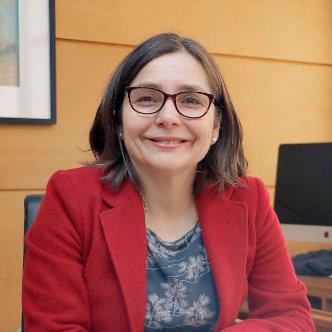
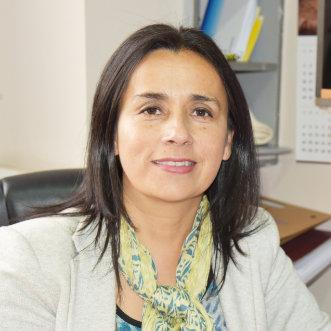
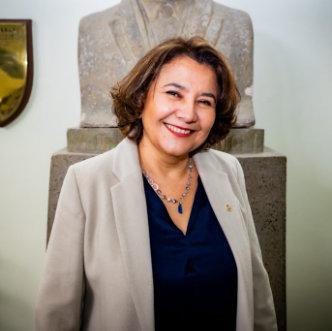
Dra. Andrea Rodríguez Tastets
Vicerrectora de Investigación y Desarrollo Universidad de Concepción
Dr. Andrea Rodríguez Tastets
Vice-Rector for Research and Development University of Concepción
La salud y el bienestar son objetivos que capturan en forma constante el interés científico, tecnológico, social y político. Los desafíos que las transformaciones ambientales y los cambios en nuestros estilos de vida generan nos recuerdan que la salud es un fenómeno complejo, profundamente interconectado con nuestras relaciones sociales, los sistemas alimentarios, los ecosistemas y las tecnologías que desarrollamos. Comprender y abordar esta complejidad exige una aproximación interdisciplinaria, donde la investigación y la innovación desempeñan un papel fundamental.
Los artículos reunidos en este número reflejan precisamente esa diversidad de enfoques. Desde la primera línea de defensa sanitaria, que pone de relieve la importancia en la calidad del agua que bebemos, hasta la reflexión sobre el buen trato en salud, que recuerda que la calidad de los
Health and well-being are objectives that constantly capture scientific, technological, social, and political interest. However, the challenges posed by environmental transformations and lifestyle changes remind us that health is a complex phenomenon, deeply interconnected with our social relationships, food systems, ecosystems, and the technologies we develop. Understanding and addressing this complexity requires an interdisciplinary approach in which research and innovation play a fundamental role.
The articles in this issue reflect precisely that diversity of approaches. From the first line of health defense, which highlights the importance of the quality of the water we drink, up to the reflection on good treatment in healthcare, which reminds us that the quality of health systems depends not only on
sistemas sanitarios no depende únicamente de los avances tecnológicos, sino también de la dimensión humana de la atención.
La salud mental ocupa también un espacio relevante en esta edición. El artículo sobre una inteligencia artificial que apoya el diagnóstico de la depresión muestra cómo las nuevas tecnologías pueden contribuir a mejorar la detección temprana y el acceso a herramientas de apoyo clínico. Al mismo tiempo, el análisis sobre la salud mental juvenil plantea preguntas urgentes sobre el bienestar emocional de las nuevas generaciones.
La investigación biomédica y clínica también se expresa en contribuciones que exploran nuevas herramientas y enfoques para el diagnóstico y el tratamiento. La utilización de luz infrarroja para observar la piel abre posibilidades para métodos de
technological advances, but also on the human dimension of care.
Mental health also occupies a relevant space in this issue. The article on an artificial intelligence system that supports the diagnosis of depression shows how new technologies can improve early detection and access to clinical support tools. At the same time, the analysis of mental health in young people raises urgent questions about the emotional well-being of the new generations.
Biomedical and clinical research is also reflected in contributions exploring new tools and approaches for diagnosis and treatment. The use of infrared light to observe the skin opens up possibilities for more accurate, less invasive assessment methods. At the same time, the article "From toxins to
evaluación más precisos y menos invasivos, mientras que el artículo “De toxinas a terapias” muestra cómo compuestos provenientes de la naturaleza pueden transformarse en valiosas herramientas terapéuticas. En el ámbito odontológico, el trabajo sobre resistencia, estética y sostenibilidad dental refleja cómo, incluso áreas tradicionalmente clínicas, se ven hoy atravesadas por criterios de sostenibilidad y responsabilidad ambiental.
Otro conjunto de contribuciones nos invita a ampliar nuestra comprensión de la salud más allá del ámbito estrictamente médico. El enfoque de Una sola salud (One Health) recuerda que la salud humana está íntimamente ligada a la salud animal y ambiental, subrayando la necesidad de enfoques integrados para enfrentar amenazas como las enfermedades emergentes, el cambio climático o la degradación de los ecosiste-
therapies” shows how natural compounds can be transformed into valuable therapeutic tools. In the dental field, work on resistance, aesthetics, and dental sustainability reflects how even traditionally clinical areas are now subject to sustainability and environmental responsibility criteria.
Another set of contributions invites us to expand our understanding of health beyond the strictly medical field. The One Health approach recognizes that human health is intimately linked to animal and environmental health, stressing the need for integrated approaches to address threats such as emerging diseases, climate change, and ecosystem degradation. Along the same lines, the article on the essence of a healthy ecosystem highlights the importance of conserving functional natural systems that support fundamental life-sustaining processes.
mas. En esta misma línea, el artículo sobre la esencia de un ecosistema saludable destaca la importancia de conservar sistemas naturales funcionales que sostienen procesos fundamentales para la vida.
La relación entre salud y alimentación aparece también como un tema importante. La geografía de los alimentos muestra cómo la disponibilidad, distribución y acceso a los alimentos están profundamente condicionados por factores territoriales y sociales, mientras que la reflexión sobre alimentación consciente invita a reconsiderar nuestras prácticas alimentarias desde una perspectiva que integra bienestar personal, cultura y sostenibilidad.
Finalmente, la innovación tecnológica aparece como una herramienta clave para fortalecer el cuidado de las personas. El artículo “Tecnología para cuidar” explora
The relationship between health and nutrition also appears as an important topic. The geography of food shows how territorial and social factors profoundly condition the availability, distribution, and access to food. At the same time, reflection on conscious eating invites us to reconsider our food practices from a perspective that integrates personal well-being, culture, and sustainability.
Finally, technological innovation appears to be a key tool for strengthening care for people. The article “Technology for caring” explores how technological development can improve the quality of life, support healthcare, and contribute to more accessible and efficient systems.
Taken together, the papers presented in this issue reflect a clear message: well-being is not the result
cómo el desarrollo tecnológico puede mejorar la calidad de vida, apoyar la atención en salud y contribuir a sistemas más accesibles y eficientes.
En conjunto, los trabajos presentados en este número reflejan un mensaje claro: el bienestar no es el resultado de un único factor, disciplina o intervención. Es el producto de la interacción entre ciencia, tecnología, sociedad y naturaleza. Promover la salud implica, por tanto, fortalecer la investigación interdisciplinaria, fomentar la innovación responsable y avanzar hacia modelos de desarrollo que pongan el bienestar de las personas y de los ecosistemas en el centro.
Los invitamos a disfrutar de este nuevo número de la revista de I+D dedicado al tema de salud y bienestar, y que difunde el conocimiento generado desde la Universidad de Concepción.
of a single factor, discipline, or intervention. It is the product of the interaction between science, technology, society, and nature. Promoting health, therefore, implies strengthening interdisciplinary research, fostering responsible innovation, and moving towards development models that put the well-being of people and ecosystems at the center.
We invite you to enjoy this new issue of the R&D magazine, dedicated to health and well-being, and disseminating knowledge generated at the University of Concepción.
PRIMERA LÍNEA DE DEFENSA SANITARIA
The first line of health defense
Enfermedades entéricas, exposición a químicos y amenazas emergentes evidencian la estrecha relación entre agua, ecosistemas y bienestar de las personas.
Por: María Belén Bascur Ruiz, encargada de Comunicaciones, Centro de Recursos Hídricos para la Agricultura y la Minería (CRHIAM)mariabbascur@udec.cl
Imágenes: Pixabay
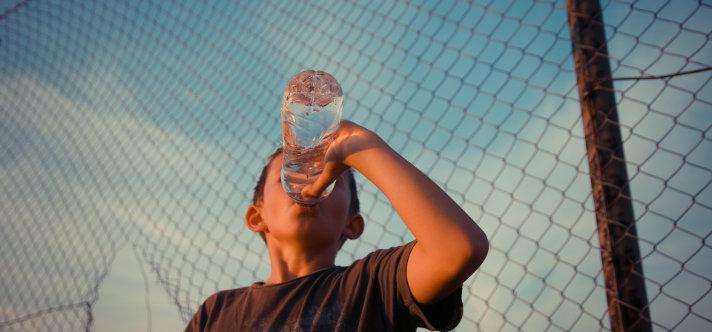
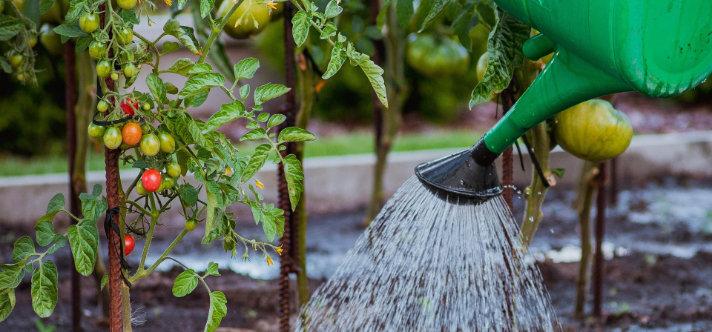
En Chile, hablar de agua es hablar de salud. Ese es el foco del libro “Agua, ecosistemas y salud pública”, elaborado por el Centro de Recursos Hídricos para la Agricultura y la Minería (CRHIAM), donde desde distintas disciplinas se analiza cómo el acceso, la calidad y la gestión del recurso influyen de manera directa en el bienestar de la población. La obra puntualiza que el agua, lejos de ser sólo un insumo productivo, constituye uno de los principales determinantes ambientales de la salud humana.
En el primer capítulo, se indica que limitar el acceso a un volumen adecuado de agua física, química y microbiológicamente se-
Enteric diseases, chemical exposure, and emerging threats underscore the close relationship among water, ecosystems, and people's well-being.
By: María Belén Bascur Ruiz, Head of Communications, Center for Water Resources for Agriculture and Mining (CRHIAM)mariabbascur@udec.cl
Images: Pixabay
gura puede favorecer la aparición de enfermedades, especialmente gastrointestinales. La evidencia recopilada muestra que la mejora del agua potable y el tratamiento de aguas servidas han sido claves en la reducción histórica de patologías entéricas en el país, incluyendo hepatitis A, fiebre tifoidea y diarreas agudas. Pero también se subraya que nuevos riesgos están emergiendo vinculados al cambio climático, la degradación de ecosistemas y la presencia creciente de contaminantes.
En este escenario, la directora de CRHIAM, Dra. Gladys Vidal, editora del libro y coautora del capítulo sobre reúso de aguas
In Chile, talking about water is talking about health. That is the focus of the book "Water, Ecosystems and Public Health”, prepared by the Center for Water Resources for Agriculture and Mining (CRHIAM), in which, from different disciplines, an analysis is made of how access, quality, and resource management directly influence the well-being of the population. The work points out that water, far from being just a productive input, constitutes one of the main environmental determinants of human health.
The first chapter outlines that limiting access to an adequate volume of physically, chemically, and microbiologically safe water can encourage the appearance of diseases, especially gastrointestinal ones. The evidence collected shows that
servidas tratadas, sostiene que las transformaciones climáticas han modificado la disponibilidad del recurso en todo el país. “Chile ha experimentado desde el año 2010 un déficit de precipitaciones cercano al 30%, situación que ha afectado de forma ininterrumpida a los ecosistemas y a todas las actividades que dependen del agua”, señala, destacando que la sequía prolongada obliga a repensar la gestión hídrica desde una perspectiva sanitaria.
El libro profundiza en la necesidad de asegurar sistemas de abastecimiento seguros y sostenibles, especialmente en zonas rurales, donde los Servicios Sanitarios Rura-
les presentan desafíos en vigilancia, infraestructura y control de calidad. La vulnerabilidad aumenta cuando las comunidades dependen de fuentes expuestas a contaminación o cuando enfrentan interrupciones del suministro en contextos de escasez hídrica.
Otro eje relevante es la presencia de sustancias químicas de interés sanitario en el agua potable, como fluoruro, nitratos, percloratos y trihalometanos. Sus efectos potenciales incluyen alteraciones tiroideas, daño hepático, problemas gestacionales y mayor riesgo de ciertos tipos de cáncer. La exposición crónica a bajas dosis, advierte la
evidencia, requiere fortalecer los sistemas de vigilancia ambiental y actualizar las regulaciones para proteger mejor a la población.
A ello se suma la creciente preocupación por los contaminantes emergentes, disruptores endocrinos y bacterias resistentes a antibióticos, fenómenos detectados tanto en aguas servidas como en ecosistemas acuáticos. Uno de los riesgos sanitarios más claros es la transferencia de genes de resistencia, que puede afectar la eficacia de tratamientos médicos y agravar problemas infecciosos. Sobre ello, la Dra. Vidal enfatiza que “en Chile predominan sistemas conven-
improvements in drinking water and wastewater treatment have been key to the country's historical reduction in enteric pathologies, including hepatitis A, typhoid fever, and acute diarrhea. But it is also stressed that new risks are emerging linked to climate change, ecosystem degradation, and the increasing presence of pollutants.
In this scenario, the director of CRHIAM, Dr. Gladys Vidal, the book's editor and co-author of the chapter on the reuse of treated wastewater, argues that climatic transformations have altered the resource's availability across the country. "Chile has experienced a rainfall deficit of close to 30% since 2010, a situation that has continuously affected ecosystems and all activities that depend on water,” she says, highlighting that the prolonged drought
forces us to rethink water management from a health perspective.
The book examines the need to ensure safe and sustainable supply systems, especially in rural areas, where Rural Sanitary Services pose challenges for surveillance, infrastructure, and quality control. Vulnerability increases when communities depend on sources exposed to pollution or when they face supply interruptions amid water scarcity.
Another relevant line is the presence of chemicals of sanitary interest in drinking water, such as fluoride, nitrates, perchlorates, and trihalomethanes. Their potential effects include thyroid disorders, liver damage, gestational problems, and increased risk of certain types of cancer. Chronic exposure to low
cionales que no fueron diseñados para remover completamente este tipo de compuestos”, señala, indicando que el país deberá avanzar hacia soluciones tecnológicas y marcos regulatorios que permitan enfrentar adecuadamente estos nuevos riesgos sanitarios.
El libro también revisa el impacto histórico del arsénico en el norte de Chile, donde la exposición prolongada dejó una huella en la salud poblacional, con aumentos en cáncer de pulmón, alteraciones respiratorias y efectos en etapas tempranas de la vida. Este caso, ampliamente estudiado, demuestra la relevancia de una vigilancia química y epi-
doses, the evidence suggests, requires strengthening environmental surveillance systems and updating regulations to protect the population better.
To this, the growing concern about emerging pollutants, endocrine disruptors, and antibiotic-resistant bacteria is added, phenomena detected in both wastewater and aquatic ecosystems. One of the clearest health risks is the transfer of resistance genes, which can undermine the effectiveness of medical treatments and exacerbate infectious diseases. On this, Dr. Vidal emphasizes that “conventional systems predominate in Chile that were not designed to remove these types of compounds completely," she says, indicating that the country should move
demiológica robusta.
Finalmente la obra plantea que los desafíos sanitarios del agua en Chile ya no se limitan a asegurar la potabilización; incluyen comprender las nuevas presiones ambientales, anticipar riesgos y equilibrar el desarrollo humano con la protección de los ecosistemas. De esta forma, propone avanzar hacia una visión integrada donde el agua sea tratada como un bien esencial cuya gestión debe resguardar tanto la salud como la vida de las comunidades.
towards technological solutions and regulatory frameworks that adequately address these new health risks.
The book also reviews the historical impact of arsenic in northern Chile, where prolonged exposure left a mark on population health, with increases in lung cancer, respiratory disorders, and effects in early stages of life. This case, which has been extensively studied, demonstrates the relevance of robust chemical and epidemiological surveillance.
Finally, the work proposes that the sanitary challenges posed by water in Chile are no longer limited to ensuring water purification; they also include understanding new environmental
El libro “Agua, ecosistemas y salud pública” de CRHIAM se encuentra disponible para descarga gratuita en su sitio web.
The book “Water, Ecosystems and Public Health" by CRHIAM is available for free download on their website.
pressures, anticipating risks, and balancing human development with the protection of ecosystems. In this way, it proposes moving towards an integrated vision where water is treated as an essential good whose management should protect both community health and lives.
BUEN TRATO EN SALUD
Treating health students properly
El "currículum oculto" son las normas, valores y prácticas no escritas que los estudiantes aprenden durante su periodo de formación. Un grupo de académicos investiga cómo generar entornos positivos, que favorezcan que los futuros profesionales incorporen el buen trato en las áreas de salud
Por: Solange Pino Ruiz, periodista Facultad de Medicina solanpino@udec.cl
Imágenes: Facultad de Medicina UdeC
El proceso educativo universitario posee un gran potencial transformador, en especial en las carreras de la salud, donde se espera que losfuturosprofesionalesadquierantantohabilidades técnicas como un rol ético y humano.
Sin embargo, la experiencia formativa se ve empañada cuando el ambiente educativo incluye situaciones relacionadas con el menosprecio y el acoso, fenómenos vinculados al llamado "currículum oculto".
Un grupo de académicos chilenos ha levantado una investigación para abordar esta problemática de manera frontal. Este proyecto busca generar claridad concep-
The "hidden curriculum" is part of the unwritten norms, values, and practices that students learn during their training period. A group of academics has been researching how to create positive environments that encourage future professionals to treat people properly in healthcare settings.
By: Solange Pino Ruiz, Journalist - Faculty of Medicine solanpino@udec.cl
Images: UdeC Faculty of Medicine
tual para crear entornos positivos en el contexto universitario, siendo liderado por investigadores de la Universidad de Concepción, y con participación de universidades como la Bío-Bío, Austral de Chile, Católica de la Santísima Concepción, de Chile, de Valparaíso, Católica del Norte, Los Lagos, Aysén, y Central de Chile.
La investigación es financiada por la Agencia Nacional de Investigación y Desarrollo (“Del Maltrato al Buen Trato” 2022-2026 ANID-Fondecyt n° 1221913) y se propuso conceptualizar elsignificadodelmaltratoyelbuentrato,desde la perspectiva directa de los estudiantes de carreras de la salud en Chile.
The university educational process has tremendous transformative potential, especially in health degree programs, where future professionals are expected not only to acquire technical skills but also to assume ethical and humanistic roles.
However, the training experience is marred when the educational environment includes situations related to contempt and harassment, phenomena linked to the so-called "hidden curriculum".
A group of Chilean academics has carried out research to address this problem head-on. This project seeks to generate conceptual clarity to create positive environments in the university context. Researchers from the University of Concepción are leading the project, with the
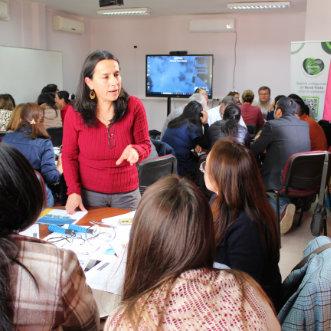
En la Universidad de Concepción, la académica Nancy Bastías Vega, directora del proyecto, explica la importancia y necesidad de esta investigación. “La evidencia histórica sobre el maltrato ha demostrado que sus consecuencias incluyen el desánimo, la depresión, el miedo y la frustración en los estudiantes”. En el contexto latinoamericano, el maltrato es frecuente. De hecho, agrega, un estudio anterior en Chile encontró que un alarmante 98.11% de los estudiantes de pregrado de Medicina había experimentado maltrato. “Estas cifras dan cuenta de que existe un requerimiento urgente de acciones para proteger la integridad física y emocional de los estudiantes”, indica la profesional.
Para lograr esta conceptualización, el estudio utilizó la técnica de Redes Semánticas Naturales (RSN), un método que permite capturar los significados subjetivos que los individuos asocian a conceptos específicos. La investigación involucró a 994 estudiantes de 12 carreras de la salud de nueve universidades chilenas.
LOS SIGNIFICADOS DEL MALTRATO Y EL BUEN TRATO
Los resultados arrojaron una gran riqueza semántica: se identificaron más de 4.000 palabras asociadas a cada concepto, lo que demuestra que ambos términos son alta-
mente polisémicos, es decir, cargados de múltiples significados, ideas y emociones.
Para el concepto de maltrato se asociaron palabras como: agresión, abuso, violencia. A su vez se categorizó el maltrato en dimensiones latente (implícito), aquellas manifestaciones que no siempre son visibles en comportamientos específicos como la violencia, la discriminación, el daño y el poder; y explícito (observable), es decir, comportamientos concretos que un individuo ejerce contra otro, como la humillación, el menosprecio, los golpes y los insultos.
El concepto de buen trato, visto como una condición ideal para una relación clínica positiva, también mostró un núcleo semántico fuerte, donde priman elementos de reconocimiento y apreciación recíproca como el respeto, empatía o amabilidad. Al igual que con el maltrato, el estudio definió para el buen trato dimensiones tanto latentes como explícitas como respeto, empatía, felicidad y confianza así como comprensión, escucha, apoyo y comunicación, respectivamente.
En otro ámbito de análisis el estudio arrojó que la conceptualización del maltrato está relacionada con el ciclo de formación del estudiante (preclínico o clínico), mientras que para el buen trato, se observaron
participation of Chilean universities such as Bío-Bío, Austral, Católica de la Santísima Concepción, Chile, Valparaíso, Católica del Norte, Los Lagos, Aysén, and Central.
The research is funded by the National Research and Development Agency (”From Mistreatment to Good Treatment" 2022-2026, ANID-Fondecyt N° 1221913) and was proposed to conceptualize the meanings of mistreatment and good treatment from the direct perspective of health degree program students in Chile.
At the University of Concepción, Professor Nancy Bastias Vega, the project's director, explains the importance and necessity of this research. "Historical evidence on mistreatment has shown that its consequences include discouragement, depression, fear, and frustration in students." In the Latin American context, abuse is commonplace. In fact, she adds, a previous study in Chile found that an alarming 98.11% of undergraduate medical students had experienced mistreatment. "These figures show that there is an urgent need for actions to protect the physical and emotional well-being of students,” says the professional.
To achieve this conceptualization, the study used the Natural Semantic Networks (NSNS) technique, which captures the subjective meanings individuals associate with specific concepts. The research involved 994 students from 12 health majors at nine Chilean universities.
THE MEANINGS OF MISTREATMENT AND GOOD TREATMENT
The results showed a high semantic richness: more than 4,000 words were associated with each concept, indicating that both terms are highly polysemic, that is, loaded with multiple meanings, ideas, and emotions.
Words such as aggression, abuse, and violence were associated with the concept of mistreatment. In turn, abuse was categorized into latent (implicit) dimensions, those manifestations that are not always visible in specific behaviors such as violence, discrimination, harm, and power; and explicit (observable), that is, specific behaviors that an individual exercises against another, such as humiliation, contempt, blows, and insults.
The concept of good treatment, seen as an ideal condition for a positive clinical relationship, also showed a strong semantic core, with elements of recognition and reciprocal appreciation, such as
Nancy Bastias Vega, UdeC Professor.
Nancy Bastías Vega, Académica UdeC.
relaciones estadísticamente significativas con el ciclo de formación y el género de los estudiantes. Por ejemplo, los estudiantes del ciclo preclínico enfatizan más el "respeto" y la "comprensión", mientras que los clínicos destacan la "empatía" y la "amabilidad". Las mujeres, por su parte, tienden a darle mayor peso a palabras como "respeto", "empatía" y "amor".
IMPACTO Y EL FUTURO DE LA FORMACIÓN EN SALUD
En cuanto a resultados, la académica señala que esta investigación subraya que el buen
trato constituye una condición a priori para el bienestar académico, ya que la capacidad de establecer relaciones empáticas, respetuosas y cariñosas moldea la experiencia de formación. Agrega que los hallazgos son cruciales. Proporcionan las directrices conceptuales necesarias para que las instituciones de educación superior puedan generar consensos sobre qué manifestaciones conductuales son permisibles y cuáles no en los espacios de aprendizaje.
Mirando hacia el futuro, Bastías señala que lo que se propone realizar son reuniones de diseño co-creativo entre estudiantes y
Publicación en la revista Behavioral Science (WOS), 2024
Publication in the journal, Behavioral Science (WOS), 2024
respect, empathy, and kindness, prevailing. As with mistreatment, the study defined good treatment as encompassing both latent and explicit dimensions, such as respect, empathy, happiness, and trust, as well as understanding, listening, support, and communication.
In another area of analysis, the study showed that the conceptualization of mistreatment is related to the students' training cycle (preclinical or clinical). In contrast, for good treatment, statistically significant relationships were observed with the training cycle and students' gender. For example, students of the preclinical cycle emphasize "respect" and "understanding" more, while clinicians emphasize "empathy" and "kindness". Women, on the other hand, tend to place greater weight on words such as "respect," "empathy," and "love."
IMPACT AND THE FUTURE OF HEALTH TRAINING
As for results, the professor points out that this research highlights that good treatment constitutes a condition a priori for academic well-being, since the ability to establish empathic, respectful, and affectionate relationships shapes the training experience. She adds that the findings are crucial. They provide the necessary conceptual guidelines for higher education institutions to generate consensus on which behavioral manifestations are permissible and which are not in learning spaces.
Looking to the future, Bastías points out that she intends to hold co-creative design meetings between students and teachers to develop
docentes para elaborar "decálogos" sobre el maltrato y el buen trato, guiando así a las diversas instituciones de educación superior chilenas. “Nuestro objetivo final es que en cada Universidad se trabaje en el diseño de un decálogo del buen trato, adaptado a cada realidad y que no sea un documento o una declaración de intenciones, sino una forma explícita donde el trato amable y respetuoso prime”. Precisa además que “en última instancia, una cultura de prevención del maltrato y promoción del buen trato es esencial para el desarrollo de profesionales de la salud éticos, empáticos y efectivos”.
"decalogues" on mistreatment and good treatment, thus guiding the various Chilean higher education institutions. “Our ultimate goal is that, in each University, we work on the design of a decalogue of good treatment, adapted to each reality, and that it is not just a document or a statement of intentions, but an explicit form where kind and respectful treatment prevail.” She also mentions that "ultimately, a culture of abuse prevention and the fostering of treating people the right way is essential to prepare ethical, empathetic, and effective health professionals."
UNA IA QUE APOYA EL DIAGNÓSTICO DE LA DEPRESIÓN AI that supports the diagnosis of depression
El Dr. Ricardo Flores H., académico de la Facultad de Ingeniería, lidera una investigación publicada en IEEE Journal of Biomedical and Health Informatics, que combina voz y expresiones faciales para apoyar la detección temprana de la depresión.
Por: Carolina Vega Artigues, periodista Facultad de Ingeniería cvegaa@udec.cl
Imágenes: Gentileza Ricardo Flores H.
Dr. Ricardo Flores H., an academic at the Faculty of Engineering, is leading a research paper published in the IEEE Journal of Biomedical and Health Informatics that combines voice and facial expressions to support the early detection of depression.
By: Carolina Vega Artigues, Journalist - Faculty of Engineering cvegaa@udec.cl
Images: Courtesy of Ricardo Flores H.
La salud mental es uno de los mayores desafíos de la humanidad. La Organización Mundial de la Salud (OMS) estima que más de mil millones de personas en el mundo padecen algún trastorno mental, siendo la ansiedad y la depresión los más frecuentes, presentes en todas las edades, países y niveles socioeconómicos. Según los informes World Mental Health Today y Mental Health Atlas 2024, estas enfermedades representan la segunda causa de discapacidad prolongada, reducen la calidad de vida y generan un enorme costo económico para los sistemas de salud y las familias.
El escenario en Chile no es distinto. Según la sexta versión del estudio “Monitor de Servicios de Salud de Ipsos 2024”, la salud mental es identificada como el principal problema de salud por un 69% de las personas consultadas y de acuerdo con el Termómetro de Salud Mental Achs-UC, lanzado en enero 2025, un 13,7% de los encuestados presenta síntomas moderados o severos de
Mental health is one of humanity's most significant challenges. The World Health Organization (WHO) estimates that more than one billion people in the world have a mental disorder, with anxiety and depression being the most frequent. It is found in all ages, countries, and socioeconomic levels. According to the World Mental Health Today and Mental Health Atlas 2024 reports, these diseases represent the second cause of prolonged disability, reduce the quality of life, and generate an enormous economic cost for health systems and families.
The situation in Chile is no different. According to the sixth version of the “Ipsos Health Services Monitor 2024” study, mental health is identified as the primary health problem by 69% of the people consulted, and according to the ACHS-UC Mental Health Thermometer, launched in January 2025, 13.7% of respondents have moderate or severe symptoms of depression, an increase of 3.3 percentage points compared to April 2024. Data from the Ministry of Health show that more than one million people are currently receiving care in the public system for mental health problems.
Faced with this outlook, the question arises: can science and technology deliver faster, more effective solutions? From innovative medical
depresión, un aumento de 3,3 puntos porcentuales con respecto a abril de 2024. Datos del Ministerio de Salud arrojan que más de un millón de personas reciben actualmente atención en el sistema público por problemas de salud mental.
Frente a este panorama, surge la pregunta: ¿puede la ciencia y la tecnología aportar a soluciones más rápidas y efectivas? Desde dispositivos médicos innovadores hasta el uso de inteligencia artificial (IA), la tecnología se ha convertido en una aliada para complementar la labor de los especialistas y mejorar la detección temprana de cuadros de ansiedad y depresión.
WAVFACE: UNIR LA VOZ Y EL ROSTRO PARA DETECTAR DEPRESIÓN
Es en este cruce entre salud mental e inteligencia artificial donde se sitúa la investigación del académico Ricardo Flores H.,
devices to the application of artificial intelligence (AI), technology has become a valuable ally that complements specialists' work and improves the early detection of anxiety and depression symptoms.
WAVFACE: COMBINING VOICE AND FACE TO DETECT DEPRESSION
It is in this intersection between mental health and artificial intelligence that the research of academic Ricardo Flores H., PhD in Data Science from Worcester Polytechnic Institute (WPI), Massachusetts, is found. His recent publication, WavFace: A Multimodal Transformer-Based Model for Depression Screening, proposes a pioneering approach: using deep learning to analyze patients' voices and facial expressions in virtual clinical interviews, emulating how psychologists observe and listen to their patients.
“I started this work in the United States, while I was finishing my doctorate in a mental health research group, and I finished it at the University of Concepción,” explains Dr. Flores, a professor in the Department of Computer Engineering and Computer Science. The motivation arose after participating in the Machine Learning for Healthcare congress in
North Carolina, where he received feedback from both artificial intelligence specialists and doctors.
"They told us: the model works, but it needs to look at the patient. That's where the idea of combining the auditory with the visual was born, just as a psychologist does: when they listen to a patient and observe the tone of voice, changes in expression, and how all of that is combined. I tried to emulate that process," he recalls.
From that inspiration comes the name WavFace: Wav for the audio signal and Face for the facial expressions.
HOW DOES WAVFACE WORK
The model uses pre-trained artificial intelligence algorithms to convert both voice and facial expressions into mathematical representations, known as embeddings. Then, it applies layers of transformers and sequential and spatial attention mechanisms to identify which fragments of the interview are most relevant.
“The model detects signals at different times of the conversation. It may be a change in the voice or a particular facial expression. Not necessarily both at
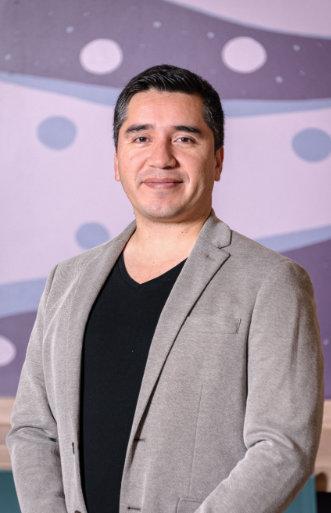
Dr. Ricardo Flores H., academic of the Faculty of Engineering.
Dr. Ricardo Flores H., académico de la Facultad de Ingeniería.
Doctor en Ciencia de Datos de Worcester Polytechnic Institute (WPI), Massachussets. Su reciente publicación, WavFace: A Multimodal Transformer-Based Model for Depression Screening, plantea un enfoque pionero: utilizar modelos de aprendizaje profundo para analizar voz y expresiones faciales de pacientes en entrevistas clínicas virtuales, emulando la forma en que los psicólogos observan y escuchan a sus consultantes.
“Este trabajo lo empecé en Estados Unidos, mientras finalizaba mi doctorado en un grupo de investigación en salud mental, y lo terminé en la Universidad de Concepción”, explica el Dr. Flores, profesor del Departamento de Ingeniería Informática y Ciencias de la Computación. La motivación surgió tras participar en el congreso Machine Learning for Healthcare en Carolina del Norte, donde recibió retroalimentación tanto de especialistas en inteligencia artificial como de médicos.
“Nos decían: el modelo funciona, pero le falta mirar al paciente. Ahí nació la idea de unir lo auditivo con lo visual, tal como lo hace un psicólogo: cuando escucha a un paciente, observa el tono de voz, los cambios en la expresión y cómo se combina todo eso. Yo traté de emular ese proceso”, recuerda.
De esa inspiración surge el nombre WavFace: Wav por la señal de audio y Face por las expresiones faciales.
CÓMO FUNCIONA WAVFACE
El modelo utiliza algoritmos de inteligencia artificial pre entrenados para convertir tanto la voz como las expresiones faciales en representaciones matemáticas (llamadas embeddings). Luego, aplica capas de transformers y mecanismos de atención secuencial y espacial para identificar qué fragmentos de la entrevista son más relevantes.
“El modelo detecta señales en distintos momentos de la conversación. Puede ser
un cambio en la voz o una expresión facial particular. No necesariamente ambos a la vez. Lo importante es que aprende a identificar lo que llama la atención, como lo haría un clínico”, explica el investigador.
Entrenado con una base de datos de cerca de 150 pacientes diagnosticados con depresión y ansiedad, WavFace logró diferenciar de manera preliminar entre pacientes con y sin depresión, alcanzando un 81% de precisión balanceada.
Aunque aún es un estudio preliminar, el potencial es claro. “Imagina que un paciente envía un video respondiendo algunas preguntas básicas. El modelo procesa el audioylasexpresionesfacialesyentregaun primer indicador. Esto no reemplaza al especialista, pero ayuda a priorizar: decidir a quién atender con más urgencia o a quién derivar”, señala Flores.
Además, su alcance va más allá de la depresión. “En autismo, por ejemplo, es muy útil analizar los patrones oculares. Hoy ese análisis lo hace un médico anotando si el niño mira hacia arriba o hacia el lado. Nuestro modelo puede automatizarlo y entregar reportes objetivos”, agrega.
UN TRABAJO COLABORATIVO EN LA UDEC
Actualmente, el académico además explora el uso de datos fisiológicos mediante relojes inteligentes y registros de EEG para complementar el análisis multimodal, en colaboración con académicos y estudiantes de Ingeniería Civil Biomédica. “Queremos estudiar cómo se combinan la voz, las expresiones, el texto, el ritmo cardíaco y la actividad cerebral. Todo eso puede dar una visión más completa, por ejemplo, del bienestar estudiantil y de la salud mental en general”, afirma.
Según la OMS, la salud mental sigue siendo unadelasáreasmásdesatendidas:enpromedio, los países destinan menos del 2% de sus presupuestos de salud a este ámbito, con re-
the same time. The important thing is that it learns to identify what attracts attention, as a clinician would,” explains the researcher.
Trained with a database of about 150 patients diagnosed with depression and anxiety, WavFace managed to differentiate preliminarily between patients with and without depression, reaching an 81% balanced accuracy.
Although it is still a preliminary study, the potential is clear. "Imagine that a patient sends a video answering some basic questions. The model processes audio and facial expressions to provide an initial indicator. This does not replace the specialist, but it helps to prioritize: deciding who to treat most urgently or who to refer,” says Flores.
In addition, its scope goes beyond depression. “In autism, for example, it is very useful to analyze eye patterns. Today, that analysis is performed by a doctor, who notes whether the child looks up or to the side. Our model can automate it and deliver objective reports," he adds.
COLLABORATIVE WORK AT UDEC
The professor works in the Human-Computer Interaction Laboratory (HCI) of the University of Concepción, together with researchers from engineering, computer science, pharmacy, and psychology. The team is also exploring the use of physiological data using smartwatches and EEG records to complement multimodal analysis, in collaboration with Biomedical Civil Engineering academics and students. “We want to study how voice, expressions, text, heart rate, and brain activity
Picture of pikisuperstar on Freepik.
Imagen de pikisuperstar en Freepik.
Paciente Patient
Pregunta Question
Respuesta Answer
Entrevistador virtual Virtual Interviewer
cursos insuficientes en la atención comunitaria. En ese escenario, investigaciones como la de Ricardo Flores cobran especial relevancia. WavFace no busca reemplazar a los especialistas, sino aportar una herramienta complementaria que permita priorizar pacientes, detectartempranamentesíntomasyoptimizar recursos clínicos.
are combined. All this can give a more complete picture, for example, of student well-being and mental health in general,” he says.
According to the WHO, mental health remains one of the most neglected areas: on average, countries allocate less than 2% of their health budgets to this area, with insufficient resources in community care. In this scenario, investigations such as Ricardo Flores's take on special relevance. WavFace does not seek to replace specialists but to provide a complementary tool that allows prioritizing patients, detecting symptoms early, and optimizing clinical resources.
Modalidad de Representación Modality Representation
Alineación y fusión Aligment and Fusion
REFERENCIAS / REFERENCES
Monitor de Servicios de Salud de Ipsos 2024 / Ipsos Health Services Monitor 2024 https://www.ipsos.com/sites/default/files/ct/news/documents/2024-09/Ipsos%20-%20Monitor%20de%20Servicios%20de%20Salud%202024.pdf
Termómetro de Salud Mental Achs-UC / ACHS-UC Mental Health Thermometer https://www.achs.cl/centro-de-noticias/noticia/2025/una-de-cada-siete-personas-en-chile-presentan-s%C3%ADntomas-moderados-o-severos-de-depresi%C3%B3n
Ministerio de Salud - Salud mental en Chile / Ministry of Health - Mental Health in Chile https://www.minsal.cl/wp-content/uploads/2024/11/2024.09.11_INFORME-DE-RESULTADOS-DIALOGOS-CIUDADANOS-POR-LA-SALUD-MENTAL-2024.pdf
Programa Spinoff UdeC finaliza su primera edición
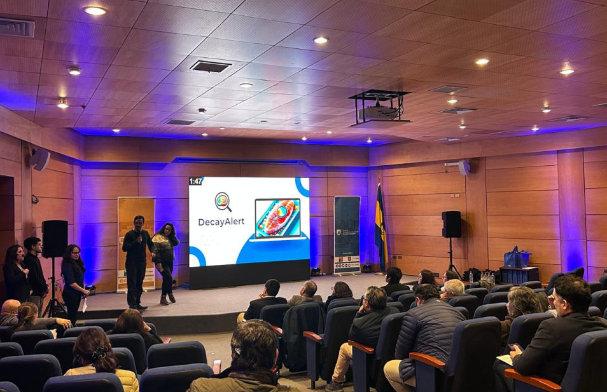
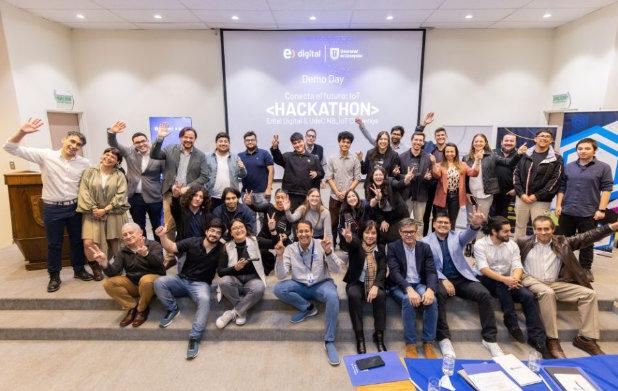
Cinco equipos llegaron a la fase final del programa Spinoff UdeC, iniciativa impulsada por VRID UdeC para prepararlos en materia de transferencia de conocimiento y formación de empresas de base tecnológica. La actividad tuvo su cierre en una jornada denominada “Demo Day”, en donde fueron presentadas: “Nanodarc”, dirigida por el Dr. Carlos Medina Muñoz y «Afamudec», a cargo del Dr. Gonzalo Rojas Durán, ambos de la Facultad de Ingeniería; “Decay Alert”, dirigido por el Dr. Cristian Rogel Castillo de la Facultad de Farmacia, y de la facultad de Ciencias Biológicas, “Peptido NK-Lisina”,lideradoporlaDra.JannelAcostaAlba,y“Tannigel”,delDr.Bruno Urbano.
Científicos
chilenos y japoneses afianzan redes de colaboración en diversas áreas
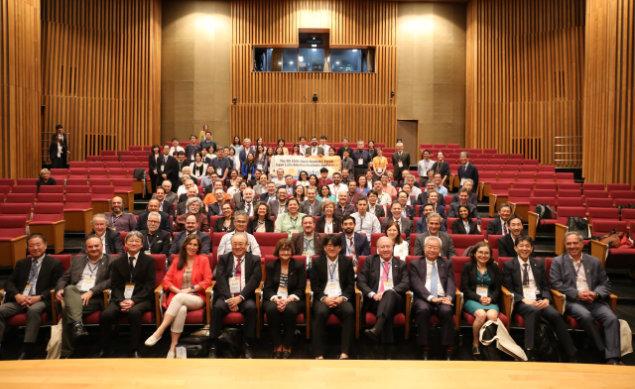
Durantecincodías,enlaciudaddeKioto,sedesarrollóelquintoencuentro del Foro Académico Chile – Japón, que reúne a investigadores e instituciones de ambos países con el fin de fortalecer los lazos y explorar iniciativas conjuntas en diversos campos del conocimiento.
En esta oportunidad, hubo seis líneas temáticas, que orientaron el trabajo de los asistentes, entre quienes se contaban investigadores e investigadoras de la Universidad de Concepción, como parte de una comitiva institucional liderada por la Vicerrectora de Investigación y Desarrollo, Dra. Andrea Rodríguez Tastets.
UdeC Spinoff program’s first version has come to an end
Five teams reached the final phase of the UdeC Spinoff program, an initiative promoted by VRID UdeC to prepare them for knowledge transfer and the creation of technology-based companies. The activity culminated on a day called "Demo Day", where the following projects were presented: "Nanodarc", led by Dr. Carlos Medina Muñoz, and "Afamudec", by Dr. Gonzalo Rojas Durán, both from the Faculty of Engineering; "Decay Alert", led by Dr. Cristian Rogel Castillo from the Faculty of Pharmacy, and from the faculty of Biological Sciences, "Peptide NK-Lysine", led by Dr. Jannel Acosta Alba, and "Tannigel", by Dr. Bruno Urbano.
Chilean and Japanese scientists strengthen collaboration networks in various areas
The fifth meeting of the Chile–Japan Academic Forum was held in Kyoto for 5 days. This meeting brings together researchers and institutions from both countries to strengthen ties and explore joint initiatives across various fields of knowledge.
On this occasion, there were six thematic lines, which guided the work of the attendees, among whom were researchers from the University of Concepción, as part of an institutional delegation led by the Vice Rector for Research and Development, Dr. Andrea Rodríguez Tastets.
BREVES VRID | VRID Shorts
RESISTENCIA, ESTÉTICA Y SOSTENIBILIDAD DENTAL Dental resistance, aesthetics, and sustainability
El proyecto de la odontóloga y estudiante del Doctorado en Ciencia e Ingeniería de Materiales UdeC, Elizabeth Parra, aborda una problemática relevante dentro del ámbito de los biomateriales odontológicos, buscando combinar resistencia mecánica y estética en restauraciones de alta demanda funcional junto con reducir el impacto ambiental.
Por: Verónica Gormaz Muñoz, periodista Facultad de Ingeniería vgormaz@udec.cl
Imágenes: gentileza Facultad de Ingeniería UdeC
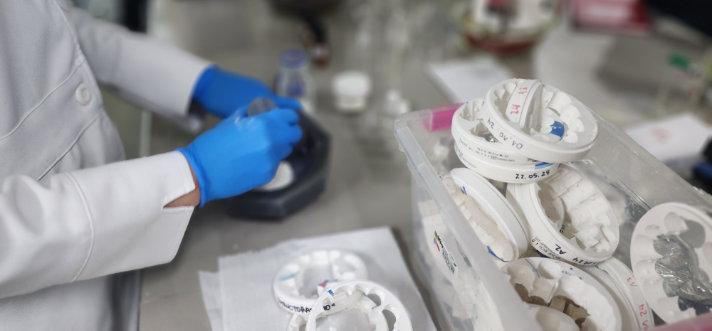
A partir de la reformulación de la zirconia dental, la odontóloga UdeC y actual estudiante del Doctorado en Ciencia e Ingeniería de Materiales de la Facultad de Ingeniería de la Universidad de Concepción, Elizabeth Parra Gatica, busca mejorar las propiedades estéticas y mecánicas de este material, incorporando en esta iniciativa, además, el reciclaje.
Se trata de una solución innovadora y sostenible, cuya aplicación impacta directamente en la salud y el bienestar bucal de las personas. El proyecto, denominado Desarrollo de discos de zirconia multicapa con gradiente de composición para aplicaciones dentales y reutilización post procesado fue una de las dos iniciativas de Doctorado de la FI UdeC que ganaron el Concurso Tesis de Doctorado en el Sector Productivo 2025 de la Agencia Nacional de Investigación y Desarrollo, ANID, destinada a potenciar la vinculación con la empresa, innovando, en este caso, en el área de la odontología y la eficiencia energética.
The project by dentist and doctoral student in Materials Science and Engineering at UdeC, Elizabeth Parra, addresses a relevant problem in dental biomaterials, aiming to combine mechanical and aesthetic resistance in high-functional-demand restorations while reducing environmental impact.
By: Verónica Gormaz Muñoz, Journalist - Faculty of Engineering vgormaz@udec.cl
Images: Courtesy of UdeC's Faculty of Engineering
La zirconia dental es un material cerámico resistente y estético, utilizado para fabricar piezas dentales. Su formato comercial es en discos y se destaca por encima del mundo de las resinas dentales, las que son limitadas en cuanto al tipo de restauración en las que pueden utilizarse. También existen insumos para restauraciones más complejas como la cerámica, y los metálicos para amalgamas y alineaciones, aunque cada vez son menos utilizados.
Al respecto, la estudiante del Doctorado en Ingeniería de Materiales explicó que el uso de zirconia convencional (3Y) es excelente en resistencia, pero su opacidad limita su uso estético. Como solución, se han desarrollado discos multicapa con diferentes concentraciones de itria (4Y-5Y), elemento que busca equilibrar la estética y la resistencia. Sin embargo, estas configuraciones presentan propiedades mecánicas disminuidas, limitando su uso solo a restauraciones de menor demanda funcional: “Esto debe ser considerado por los
Based on the reformulation of dental zirconia, Elizabeth Parra Gatica, the UdeC dentist and current doctoral student in Materials Science and Engineering at the University of Concepción’s Faculty of Engineering, is seeking to improve the material's aesthetic and mechanical properties while incorporating recycling into this initiative.
This is an innovative and sustainable solution that directly impacts people's oral health and well-being. The project, called Development of multilayer zirconia discs with composition gradient for dental applications and post-processing reuse was one of the two Doctoral initiatives of the FI UdeC that won the National Research and Development Agency’s (ANID) Doctoral Thesis in the Productive Sector 2025 Competition, which aimed at strengthening ties with companies, innovating, in this case, in the area of dentistry and energy efficiency.
Dental zirconia is a durable, aesthetic ceramic material used to manufacture dental pieces. Its commercial format is on discs and stands out in the world of dental resins, which are limited in the types of restorations they can be used in. There are also supplies for more complex restorations, such as ceramic and metal for amalgams and aligners, although they are being used less frequently.
VALORAR LOS RESIDUOS
El objetivo de este proyecto, sostuvo la investigadora, es desarrollar una formulación de zirconia dental mejorando tanto sus propiedades estéticas como mecánicas y con un foco a que sea reciclable. “Actualmente, el fresado o tallado de estas restauraciones genera hasta un 80% de residuos sólidos y no existen, en la actualidad, estrategias de valorización”, indicó.
La investigación que desarrolla Parra combina la generación de conocimiento avanzado en ciencia de materiales con un enfoqueaplicadodeinnovacióntecnológica, ya que vincula el desarrollo de un material conunmodelodeeconomíacircular.“Esto adquiere especial relevancia en Chile, dondeaúnnoexistenempresasdedicadas alaproducciónlocaldematerialescerámicos dentales. Paralelamente, la creciente digitalizaciónclínicahaincrementadotanto la demanda de discos de zirconia como lageneraciónderesiduossólidosderivados del fresado”. En este contexto, se busca aportar al sector productivo, mediante una alternativa sustentable que impulse el laboratorios, ya que su uso inadecuado puedeinducirafallasclínicas”,precisóParra.
In this regard, the PhD student in Materials Engineering explained that conventional zirconia (3Y) is excellent in terms of strength, but its opacity limits its aesthetic use. As a solution, multilayer discs with varying concentrations of yttria (4Y-5Y) have been developed, aiming to strike a balance between aesthetics and resistance. However, these configurations have decreased mechanical properties, limiting their use only to lower functional demand restorations: "Laboratories should consider this, since their improper use can lead to clinical failures,” Parra said.
VALUING WASTE
The goal of this project, the researcher said, is to develop a dental zirconia formulation that improves
both its aesthetic and mechanical properties, with a focus on making it recyclable. "Currently, the milling or carving of these restorations generates up to 80% of solid waste, and there are currently no recovery strategies,” he said.
Parra’s research combines the generation of advanced knowledge in materials science with an applied approach to technological innovation, since it links the development of a material with a circular economy model. “This is particularly relevant in Chile, where there are still no companies dedicated to the local production of dental ceramic materials. At the same time, the growing clinical digitalization has increased both the demand for zirconia discs and the generation of solid waste from milling.” In this context, the research aims to contribute to the
desarrollotecnológiconacionaly,almismo tiempo, favorezca la sostenibilidad.
Otro aspecto para destacar, expresó Parra, es que el trabajo conjunto con la empresa ha sido de gran valor y ha permitido incorporar la visión directa del usuario final, enriqueciendo así la investigación con una perspectiva práctica y aplicada. “En este caso el proyecto está vinculado al Laboratorio Dental Ornella IvonneContrerasFerrada,EIRL,nosoloorienta la iniciativa hacia necesidades reales del sector, sino que también potencia el proceso de transferencia tecnológica y la posibilidad de generar un impacto tangible en la práctica clínica y productiva”.
productive sector by providing a sustainable alternative that promotes both national technological development and sustainability.
Another aspect to highlight, said Parra, is that the work with the company has been of great value and has allowed incorporating the direct perspective of the end user, enriching the research with a practical, applied perspective. “In this case, the project is linked to the Ornella Ivonne Contreras Ferrada Dental Laboratory, EIRL, which not only guides the initiative towards the sector’s real needs, but also enhances the technology transfer process and the possibility of generating a tangible impact on clinical and productive practice.”
SALUD MENTAL JUVENIL: ¿EN CRISIS?
Young people’s mental health: in crisis?
Aparentemente, las y los jóvenes están cada vez más expuestos a problemas de salud mental. ¿Es un hecho real o es un problema de percepción?
Por: Iván Tobar Bocaz, periodista, Vicerrectoría de Investigación y Desarrolloivtobar@udec.cl
Imágenes: Freepik
“Hoy se habla frecuentemente de una crisis de salud mental juvenil, pero no está claro desde dónde ni cómo distintos actores sociales entienden ese fenómeno”, explica el Dr. Félix Cova Solar, académico del Departamento de Psicología de la Facultad de Ciencias Sociales. El Doctor en Psicología de la Universidad del País Vasco es líder de un grupo interdisciplinario de investigadores de la Universidad de Concepción, quienes, en el marco de un proyecto Fondecyt, buscan determinar si se está sobre-patologizando la salud mental de las y los jóvenes, y cuál es la representación social de la salud mental juvenil.
¿EXISTE UNA CRISIS DE SALUD MENTAL ENTRE NUESTRAS/OS JÓVENES?
Apparently, young people are increasingly exposed to mental health problems. Is it a real fact or is it a problem of perception?
By: Iván Tobar Bocaz, Journalist, Vice-Rectorate for Research and Development - ivtobar@udec.cl
Images: Freepik
Los indicadores de salud mental no son biomarcadores objetivos, sino procesos intersubjetivos basados en la experiencia personal y comportamientos visibles, interpretados por el individuo, sus cercanos y un profesional. Aunque los factores biológicos influyen, no son 'disfunciones' físicas.
El uso extendido y simplificado de estos indicadores, como listas de chequeo, ha
“Today there is frequent talk of a youth mental health crisis, but it is not clear from where or how different social actors understand this phenomenon," explains Dr. Félix Cova Solar, an academic from the Department of Psychology of the Faculty of Social Sciences. The Doctor in Psychology from the University of the Basque Country is the leader of an interdisciplinary group of researchers from the University of Concepción, who, within the framework of a Fondecyt project, are seeking to determine whether the mental health of young people is being over-pathologized, and what is the social representation of youth mental health.
IS THERE A MENTAL HEALTH CRISIS AMONG OUR YOUNG PEOPLE?
Mental health indicators are not objective biomarkers, but intersubjective processes
facilitado lecturas erróneas y sobregeneralizadas. Esta complejidad se agrava en niños y adolescentes, donde la percepción de terceros es crucial.
La juventud actual vive inmersa en un entorno digital con un discurso psicopatológico omnipresente. Esto aumenta su tendencia a interpretar vivencias comunes como síntomas, a identificarse con etiquetas diagnósticas y a modelar la expresión de su malestar según lo que observan. La exposición digital influye profundamente, tanto en lo que sienten como en la manera en que entienden y expresan ese sentir.
¿CUÁLES SON LAS PRINCIPALES
INTERROGANTES QUE SE ESPERA RESPONDER CON ESTE ESTUDIO?
Este proyecto busca comprender qué entiende la sociedad cuando habla de salud mental adolescente y cómo se construyen y reproducen esos significados: ¿Qué llama la atención al pensar en los jóvenes y su bienestar? ¿Qué fenómenos se consideran los principales problemas? ¿Se percibe un aumento en ellos? Si es así, ¿a qué se atribuye? ¿Cómo se debería abordar este tema?
Entender estos significados —a veces implícitos— es clave, por su influencia tanto en la vida cotidiana, en las actitudes y comportamientos individuales, como en las prácticas profesionales y en el diseño de las políticas públicas.
¿CUÁLES SON LOS PRINCIPALES
INDICADORES DE SALUD MENTAL EN JÓVENES? ¿SON DISTINTOS A LOS DE OTROS GRUPOS ETARIOS?
Enjóvenes,eldesafíoesmayor;estánexpuestos a un discurso psicopatológico omnipresente en medios digitales. Esto lleva a interpretar vivencias comunes como síntomas, a la autoidentificación con etiquetas y a expresar el malestar según modelos observados. La exposición digital moldea lo que sienten, cómo lo entienden y cómo lo expresan.
based on personal experience and visible behaviors, interpreted by the individual, their relatives, and a professional. Although biological factors play a role, they are not physical 'dysfunctions'.
The widespread and simplified use of these indicators, as checklists, has facilitated erroneous and overgeneralized readings. This complexity is exacerbated in children and adolescents, where perceptions of third parties are crucial.
Today's youth live immersed in a digital environment with an omnipresent psychopathological discourse. This increases their tendency to interpret everyday experiences as symptoms, to identify with diagnostic labels, and to model their expression of discomfort on what they observe. Digital exposure profoundly influences both what they feel and how they understand and express that feeling.
WHAT ARE THE MAIN QUESTIONS THAT THIS STUDY IS EXPECTED TO ANSWER?
This project seeks to understand what society means when it talks about adolescent mental health
and how those meanings are constructed and reproduced: What draws attention when thinking about young people and their well-being? What phenomena are considered the main problems? Is there an increase in them? If so, to what is it attributed? How should this topic be approached?
Understanding these meanings — sometimes implicit — is key, because they influence everyday life, individual attitudes and behaviors, as well as professional practices and the design of public policies.
WHAT ARE THE LEADING INDICATORS OF MENTAL HEALTH IN YOUNG PEOPLE?
ARE THEY DIFFERENT FROM OTHER
AGE GROUPS?
In young people, the challenge is greater; they are exposed to an omnipresent psychopathological discourse in digital media. This leads to interpreting everyday experiences as symptoms, selfidentifying with labels, and expressing discomfort in line with observed models. Digital exposure shapes what they feel, how they understand it, and how they express it.
¿CÓMO INFLUYEN LAS REDES SOCIALES EN LA SALUD MENTAL JUVENIL?
Si bien es un tema controversial, pienso que hay amplia evidencia para sostener que las redes sociales están teniendo un impacto profundamente perjudicial, intensificando tendencias problemáticas como el aislamiento, la desvinculación y la desorientación. En vez de corregir las fuentes del malestar adolescente, las profundizan, fomentando la comparación constante y una vida filtrada donde los demás parecen siempre más felices.
Además, dificultan la tolerancia a la frustración y el esfuerzo sostenido debido a las recompensas rápidas y promueven una emocionalidad más frágil. Las redes agravan un ecosistema social ya tensionado.
Para proteger la salud mental de niños y adolescentes, es crucial modificar nuestra relación con este ecosistema digital, y esto requiere que primero los adultos reconozcamos y cambiemos nuestro propio uso.
¿QUÉ PARTICULARIDADES TIENE ESTE
FENÓMENO EN CHILE EN COMPARACIÓN
CON OTROS PAÍSES?
Las tendencias en salud mental juvenil en Chile (mayor demanda profesional, problemas emocionales y discurso clínico) se combinan con persistentes problemas estructurales (pobreza, desigualdad, exclusión). Esto crea una modernidad acelerada sobre una base frágil.
Existe el riesgo de enfocarse en jóvenes integrados (ej. universitarios) y descuidar problemas graves como violencia, adicciones y abandono escolar. Estos últimos afectan más a adolescentes hombres y están poco visibilizados. Para comprender la salud mental juvenil en Chile es vital considerar tanto los cambios culturales recientes como las desigualdades históricas.
HOW DOES SOCIAL MEDIA INFLUENCE THE MENTAL HEALTH OF YOUNG PEOPLE?
Although it is a controversial topic, I think there is ample evidence to support that social media is having a profoundly detrimental impact, intensifying problematic trends such as isolation, disengagement, and disorientation. Instead of addressing the sources of teenage discomfort, they deepen them, encouraging constant comparison and a filtered life where others always seem happier.
In addition, they hinder frustration tolerance and sustained effort due to quick rewards and promote a more fragile emotionality. The networks aggravate an already strained social ecosystem.
To protect the mental health of children and adolescents, it is crucial to modify our relationship with this digital ecosystem, and this requires that we adults first recognize and change our own use.
WHAT ARE THE PARTICULAR ASPECTS OF THIS PHENOMENON IN CHILE COMPARED TO OTHER COUNTRIES?
The trends in young people's mental health in Chile (increased professional demand, emotional problems, and clinical discourse) are combined with persistent structural issues (poverty, inequality, exclusion). This creates an accelerated modernity on a fragile basis.
There is a risk of focusing on integrated young people (e.g., university students) and neglecting serious problems such as violence, addictions, and school dropout. The latter affects male adolescents more and is less visible. To understand the mental health of young people in Chile, it is vital to consider both recent cultural changes and historical inequalities.
CENTRO INSTITUCIONAL DE SIMULACIÓN EN SALUD
Institutional health simulation
center
Avanza la construcción del nuevo espacio de simulación clínica de la UdeC, que será el más grande de Chile en su tipo, y que incluye adecuaciones curriculares y capacitación a docentes. Aprendizaje, convergencia y transformación educativa de vanguardia.
Por: Daniel Tapia Valdés, periodista Noticias UdeC dtapia@udec.cl
Imágenes: Esteban Paredes Drake, fotógrafo Dirección de Comunicaciones UdeC
Construction of UdeC’s new clinical simulation space is progressing; it will be the largest of its kind in Chile and will include curricular adjustments and teacher training, advancing cutting-edge learning, convergence, and educational transformation.
By: Daniel Tapia Valdés, Journalist - Noticias UdeC dtapia@udec.cl
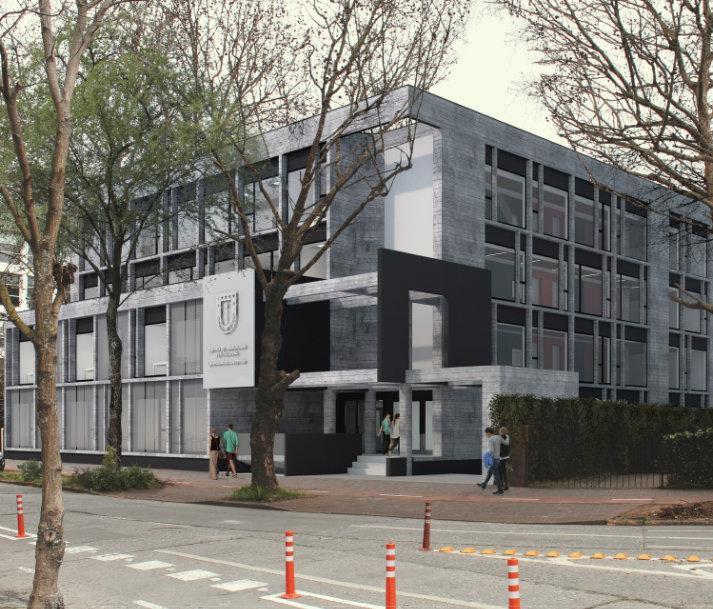
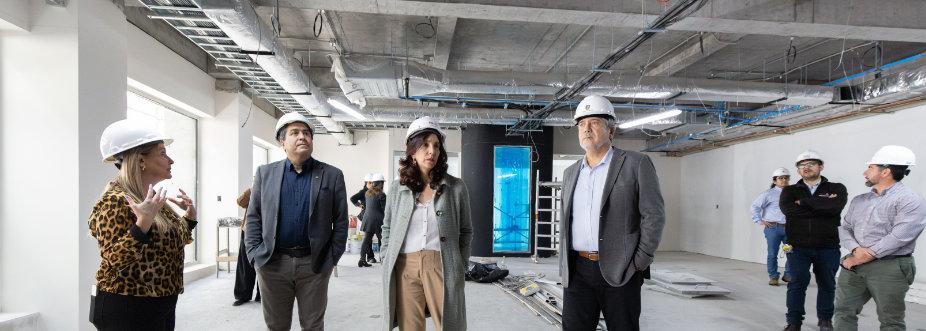
El CISS tendrá cuatro niveles y un zócalo que consideran box de atención, salas de simulaciones, salas de habilidades, un auditorio, espacios de estar, áreas administrativas, servicios higiénicos por nivel, estacionamientos subterráneos, bodegas y un auditorio.
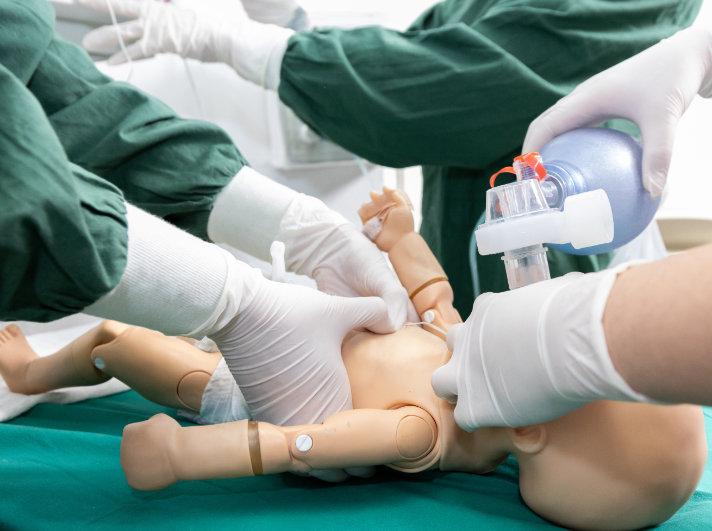
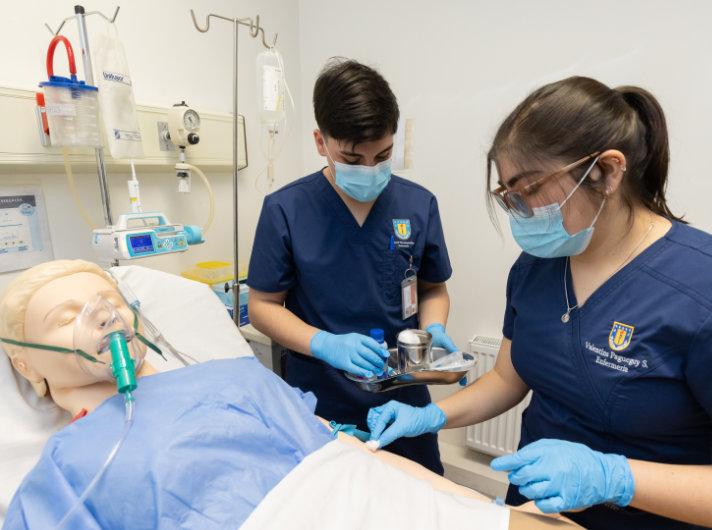
Comprometida con la formación de excelencia, la Universidad de Concepción está desarrollando una serie de iniciativas vinculadas al fortalecimiento de los procesos de aprendizaje en las áreas de salud. En esta línea, el proyecto de fortalecimiento institucional UCO22101 impulsa la simulación clínica como metodología de enseñanza, aprendizaje y evaluación en carreras de las facultades de Medicina, Farmacia, Odontología y Enfermería.
El objetivo de esta iniciativa, que considera adecuaciones curriculares, capacitación docente y la construcción de un moderno Centro Institucional de Simulación en Salud
(CISS UdeC), busca que el estudiantado potencie sus habilidades, actitudes y destrezas vinculadas al desarrollo de su profesión en un entorno seguro y controlado, poniéndolos al centro del proceso educativo.
En esa línea, la Vicerrectora UdeC, Dra. Paulina Rincón González, explicó que “en los últimos años hemos visto cómo el sistema de salud enfrenta situaciones y escenarios difíciles, con alta demanda y una sobrecarga asistencial. En este contexto, con esta metodología integral de innovación educativa estamos, justamente, preparando a las y los estudiantes para pensar de
Committed to excellence in training, the University of Concepción is developing a series of initiatives to strengthen learning in the health sector. In this regard, the institutional development project UCO22101 is promoting clinical simulation as a teaching, learning, and evaluation methodology across the Medicine, Pharmacy, Dentistry, and Nursing faculties.
The objective of this initiative, which considers curricular adjustments, teacher training, and the construction of a modern Institutional Health Simulation Center (CISS UdeC), is that the students improve their skills, attitudes, and abilities linked to their profession in a safe and controlled environment, putting them at the heart of the educational process.
In this line, UdeC’s Vice-Rector, Dr. Paulina Rincón González, explained that “in recent years we have seen how the health system is facing difficult situations and scenarios, with high demand and an overload of care needs. In this context, with this comprehensive educational innovation methodology, we are preparing students to think critically, adapt to uncertainty, and act responsibly with commitment, efficiency, and excellence through prompt attention and dignified treatment of those they are consulting.”
AT THE FOREFRONT OF HEALTHCARE
The comprehensive educational innovation methodology being developed at UdeC is a concrete, direct response to the significant challenges facing Chile's health system. “It allows training professionals capable of acting safely,
manera crítica, adaptarse a la incertidumbre y actuar responsablemente con compromiso, eficiencia y excelencia a través de una atención oportuna y trato digno a las y los consultantes”.
A LA VANGUARDIA EN SALUD
La metodología integral de innovación educativa que se trabaja en la UdeC es una respuesta concreta y directa a los grandes desafíos que enfrenta el sistema de salud en Chile, “que permite formar profesionales capaces de actuar con seguridad, permite formarcriterioytambiéntrabajarlaempatía,
The CISS will have four levels and a basement that includes patient care areas, simulation rooms, skill rooms, an auditorium, living spaces, administrative areas, restrooms on every level, underground parking lots, storage rooms, and an auditorium.
destacando que cada decisión, por más pequeña que sea, tendrá un impacto real en la vida de las personas”, resaltó la autoridad universitaria.
“Implementar la simulación clínica a nivel institucional y de manera transversal en las carreras de la salud, implica un cambio de paradigma importante que redefine las maneras tradicionales de enseñar al formar estudiantes con competencias integrales que articulen lo técnico, lo humano y lo ético. Un aprendizaje a través del entrenamiento sistemático que impacta en la práctica de atenciones futuras”, subrayó la Vicerrectora Rincón.
permits forming criteria and also working on empathy, emphasizing that every decision, no matter how small, will have a real impact on people's lives,” the Vice-Rector stressed.
"Implementing clinical simulation at an institutional level and in a transversal way in health degree programs implies an important paradigm shift that redefines the traditional ways of teaching by training students with competencies that combine the technical, the human, and the ethical. A learning through systematic training that impacts the practice of future care," Vice-Rector Rincón mentioned.
For an organic and mandatory implementation in the training paths of the nine health area degree programs involved in the project, the initiative
Para una implementación orgánica y obligatoria en los itinerarios formativos de las nueve carreras del área de la salud involucradas en el proyecto, la iniciativa considera adecuaciones curriculares que ya fueron revisadas y aprobadas por el Consejo Académico, los Consejos de Carrera y de Facultad respectivos, detalló la Directora de Docencia, Dra. Carolyn Fernández Branada. Junto con estas adecuaciones, el cuerpo docentetambiénseencuentraactualizando y validando conocimientos en materia de simulación a través del Diplomado en Simulación Clínica, de tal manera que una vez que el CISS UdeC entre en funcionamiento, en marzo del próximo año, se incorpore
includes curricular adjustments that have already been reviewed and approved by the Academic Council and the respective Degree and Faculty Councils, explained the Director of Teaching, Dr. Carolyn Fernández Branada.
Along with these adjustments, the teaching staff is also updating and validating knowledge in the field of simulation through the Diploma in Clinical Simulation, so that, once CISS UdeC comes into operation in March next year, it will be quickly incorporated into the training processes.
THE LARGEST IN CHILE
CISS UdeC will be the largest in Chile and will have a total area of 4,489 m2, spread across four floors,
El Centro Institucional de Simulación en Salud considera 4 mil 489 metros cuadrados de construcción, distribuidos en cuatro niveles.
The Institutional Health Simulation Center considers 4,489 m2 of built space, spread over four floors.
rápidamente a los procesos formativos.
EL MÁS GRANDE DE CHILE
El CISS UdeC será el más grande de Chile y contará con una superficie total de 4.489 m², distribuidos en cuatro niveles que consideran box de atención, salas de simulaciones, salas de habilidades, un auditorio, espacios de estar, áreas administrativas, servicios higiénicos por nivel, estacionamientos subterráneos y bodegas. También cuenta con zócalo con bodegas, estacionamientos, sala de reuniones y un auditorio.
including patient care areas, simulation rooms, skill rooms, an auditorium, living spaces, administrative areas, restrooms on every floor, underground parking, and storage rooms. It also has a basement with storage rooms, parking lots, a meeting room, and an auditorium.
The infrastructure has been designed not only with sustainability criteria in mind, but also with technological innovation and academic excellence, aiming to raise the standard of training for future professionals.
The building, with 80% progress and a projected opening in January 2026, is the University's first to obtain the Sustainable Building Certification (CES, in Spanish). This accreditation, which is part of the
El Centro beneficiará la formación de pregrado de las carreras de Bioquímica, Enfermería, Farmacia, Fonoaudiología, Kinesiología, Medicina, Nutrición y Dietética, Obstetricia y Puericultura, Odontología y Tecnología Médica, pertenecientes a cuatro facultades de la Universidad.
The Center will benefit the undergraduate training of the degrees of Biochemistry, Nursing, Pharmacy, Speech Therapy, Kinesiology, Medicine, Nutrition and Dietetics, Obstetrics and Child Care, Dentistry, and Medical Technology, belonging to four faculties of the University.
Para asegurar la correcta implementación de la simulación, la iniciativa ya cuenta con las adecuaciones curriculares validadas por el Consejo Académico y los respectivos Consejos de Carrera y Facultad.
To ensure the simulation is implemented correctly, the initiative has already seen the curricular adjustments validated by the Academic Council and the respective Degree and Faculty Councils.
La infraestructura ha sido diseñada no sólo bajo criterios de sustentabilidad, sino también de innovación tecnológica y excelencia académica, buscando asegurar un estándar superior en la formación de los futuros profesionales.
El edificio, con 80% de avance y proyección de entrega para enero de 2026, es la primera obra de la Universidad en obtener la Certificación de Edificio Sustentable (CES). Esta acreditación, que forma parte del sistema nacional destinado a evaluar, calificar y certificar el comportamiento ambiental de edificios en Chile, contribuye directamente al Plan Estratégico Institucional de la UdeC, en su objetivo de fortalecer la gestión y los recursos institucionales al asegurar el cumplimiento de criterios de sustentabilidad y eficiencia en los procesos de gestión, operación e inversión.
El Centro Institucional de Simulación en Salud UdeC fortalecerá la formación de más de 6 mil estudiantes de Bioquímica, Enfermería, Farmacia, Fonoaudiología, Kinesiología, Medicina, Nutrición y Dietética, Obstetricia y Puericultura, Odontología y Tecnología Médica, pertenecientes a cuatro facultades de la Universidad.
national system aimed at evaluating, rating, and certifying the environmental performance of buildings in Chile, contributes directly to UdeC’s Institutional Strategic Plan, in its objective of strengthening institutional management and resources by ensuring compliance with sustainability and efficiency criteria in the management, operation, and investment processes.
The UdeC Institutional Health Simulation Center will vitalize the training of more than 6,000 students from the Biochemistry, Nursing, Pharmacy, Speech Therapy, Physiotherapy, Medicine, Nutrition and Dietetics, Obstetrics and Child Care, Dentistry, and Medical Technology programs across four faculties of the University.
EMPRENDIMIENTOS APOYADOS POR INCUBAUDEC / PROJECTS SUPPORTED
uMOV
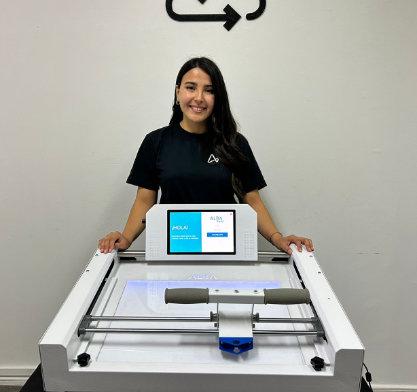
Es una startup que desarrolla soluciones tecnológicas para contribuir a la innovación médica y empoderar a los pacientes con dificultades motoras. Busca desarrollar y potenciar un dispositivo kinésico capaz de otorgar una rehabilitación gamificada y monitorizada a las personas luego de sufrir un accidente cerebro vascular (ACV).
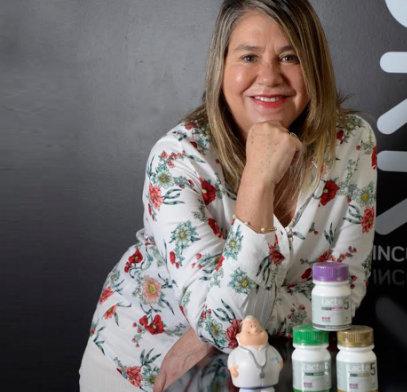
Lacte5
Empresa de biotecnología dedicada a la investigación, desarrollo y producción de insumos enfocados en mejorar la salud gastrointestinal de las personas. Busca potenciar una familia de productos elaborados en base a probióticos y ha obtenido reconocimientos nacionales e internacionales.
https://www.wellnesstechnologies.cl/
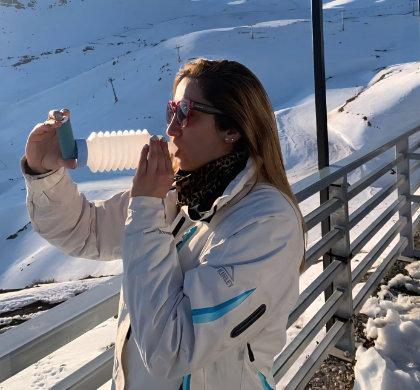
AeroPro
Es una startup que desarrolla soluciones innovadoras y tecnológicas para el tratamiento de enfermedades respiratorias. Busca potenciar la implementación de una aerocámara plegable, transportable y sustentable que responde a una problemática global.
https://aeroprochile.cl/
https://www.c3d.cl/portfolio/umov/
uMOV
This startup is developing technological solutions to advance medical innovation and empower patients with motor difficulties. It seeks to create and improve a kinesic device capable of providing gamified, monitored rehabilitation for people after a cerebrovascular accident, more commonly known as a stroke.
Lacte5
This biotechnology company is dedicated to the research, development, and production of supplies that improve people's gastrointestinal health. It seeks to promote a family of products made based on probiotics and has obtained domestic and international recognition.
AeroPro
This startup is developing innovative technological solutions to treat respiratory diseases. It is looking to promote the implementation of a foldable, transportable, and sustainable aerochamber to address a global problem.
https://www.c3d.cl/portfolio/umov/
https://www.wellnesstechnologies.cl/
https://aeroprochile.cl/
LUZ INFRARROJA PARA OBSERVAR LA PIEL
Infrared light to observe the skin
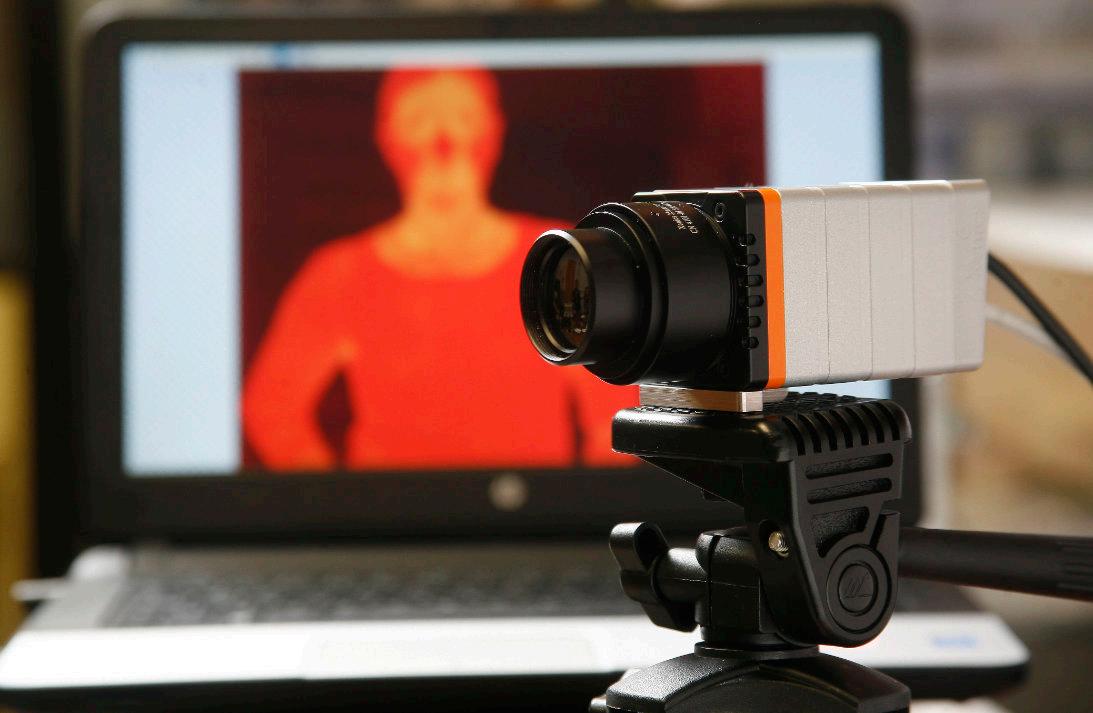
Casi 10 años ha dedicado el Dr. Sebastián Godoy Medel y su equipo al desarrollo de una investigación que, a través de la ingeniería, recopila y analiza imágenes infrarrojas de pacientes dermatológicos, con el fin de reconocer y categorizar problemas médicos en la piel.
Por: Constanza Gutiérrez Cáceres, alumna en práctica, Facultad de Ingeniería constanzaagutie@udec.cl
Imágenes: gentileza Facultad de Ingeniería UdeC
Todo comenzó en 2010, cuando el académico y docente de la Facultad de Ingeniería, Dr. Sebastián Godoy Medel realizaba su doctorado en la Universidad de New Mexico, Estados Unidos. Su investigación se basó en el uso de cámaras infrarrojas para la detección del cáncer de piel, realizada en conjunto con el Departamento de Dermatología de esa institución. Durante dos años, Godoy capturó de manera sistemática imágenes de cien pacientes, intentando replicar los resultados de estudios estadounidenses y alemanes en la misma materia, las cuales demostraban la existencia de diferencias térmicas entre lesiones benignas y malignas.
Dr. Sebastián Godoy Medel and his team have devoted nearly 10 years to research that uses engineering to collect and analyze infrared images of dermatological patients, enabling the recognition and categorization of skin conditions.
By: Constanza Gutiérrez Cáceres, Intern, Faculty of Engineering constanzaagutie@udec.cl
Images: Courtesy of UdeC's Faculty of Engineering
Durante la investigación, el académico del Departamento de Ingeniería Eléctrica y su equipo se percataron de inconsistencias en los métodos existentes, ya que muchas veces reconocían una lesión como benigna cuando en realidad no lo era. Frente a ese problema, desarrollaron una metodología que consiste en un protocolo de captura de datos, tratamiento y posterior análisis de éstos, usando la teoría de las telecomunicaciones. El trabajo resultó en un primer paper publicado en 2015, donde se combina la ingeniería y la medicina de manera innovadora, formando los cimientos de lo que resultó ser un camino investigativo que se mantendría vigente hasta la actualidad.
It all began in 2010, when Dr. Sebastián Godoy Medel, an academic and professor at the Faculty of Engineering, was pursuing his doctorate at the University of New Mexico in the United States. His research used infrared cameras to detect skin cancer, conducted in collaboration with the Department of Dermatology at that institution. For two years, Godoy systematically captured images of 100 patients, aiming to replicate the results of American and German studies on the same subject, which demonstrated thermal differences between benign and malignant lesions.
During the research, the academic from the Department of Electrical Engineering and his team noticed inconsistencies in the existing methods, which often misclassified lesions as benign when, in
A su regreso a Chile, surgió un nuevo desafío: que los avances desarrollados en Estados Unidos fueran accesibles en el país, ya que cada cámara usada en su tesis doctoral costaba alrededor de 60.000 dólares. Coincidió con la venta en Chile de cámaras infrarrojas de bajo costo, con lo que el Dr. Godoy pudo adquirir tres equipos con capacidad para adaptarse a un smartphone: “Compré una de gama alta, de 20 millones de pesos, una de alrededor de 2 millones de pesos y una de 200 mil pesos”, detalló el académico. Esto dio paso a la segunda etapa del proyecto, desarrollada en la Universidad de Concepción junto a dos estudiantes, replicando lo investigado
en la Universidad de New Mexico. Para esto, debieron calibrar el hardware, diseñar protocolos y entrenar a personal en el hospital para comenzar a recopilar datos.
Uno de sus alumnos trabajó con inteligencia artificial para mejorar las imágenes captadas por cámaras infrarrojas de bajo costo, mientras que el otro desarrolló un sistema que predice la aparición de lesiones por presión en pacientes hospitalizados, detectando las úlceras incluso dos semanas antes de que se hagan visibles. Sin embargo, el proyecto debió ser pausado durante el 2020 debido a la pandemia, lo cual obligó a tomar otro camino en la investigación.
fact, they were not. Faced with this problem, they developed a methodology that consists of a datacapture protocol, processing, and subsequent analysis, using telecommunications theory. The work resulted in a first paper published in 2015, innovatively combining engineering and medicine, laying the foundations for a research path that remains valid to this day.
Upon his return to Chile, a new challenge arose: to make the advances developed in the United States accessible in the country, as each camera used in his doctoral thesis cost approximately US$60,000. His return coincided with the sale of low-cost infrared cameras in Chile, and Dr. Godoy was able to acquire three that could be adapted to a smartphone. "I bought a high-end one, worth 20
OTROS USOS DE LA LUZ INFRARROJA
Otras investigaciones guiadas por el Dr. Godoy han demostrado la efectividad del uso de cámaras infrarrojas en aplicaciones médicas dirigidas al vitíligo, quemaduras, heridas, pie diabético e incluso la visualización de venas para la extracción de sangre. Con esto, es posible determinar que permiten la detección temprana de afecciones de la piel, predecir su evolución y anticipar los procedimientos de salud.
En la actualidad, el Dr. Sebastián Godoy espera continuar investigando en la línea de la dermatología y las cámaras infrarrojas. Una de sus metas es crear un sistema de diagnóstico inicial integral basado en sus avances y los de sus estudiantes, el cual generaría un monitoreo completo de la piel y buscaría desarrollar una clasificación de las lesiones según su gravedad, para que el sistema de salud les brinde prioridad a aquellos pacientes que presentan diagnósticos más complejos. Esta idea “permitiría organizar el servicio de dermatología en los hospitales y en las zonas rurales”, destacó. Por otra parte, le gustaría avanzar hacia la comparación de los resultados de la observación térmica de la piel con los de una biopsia.
Luego de más de una década en esta línea de investigación, publicaciones y tesis de pregrado, el Dr. Godoy cuenta que ya tienenelalgoritmoylametodología.Loque espera es conseguir financiamiento para continuar desarrollando el proyecto. El académico dijo que para él es importante, “tener un producto que permita ayudar a las personas, ese siempre ha sido mi objetivo”.
million pesos, one worth around 2 million pesos, and one worth 200,000 pesos," the academic detailed. This led to the second stage of the project at the University of Concepción, where, together with two students, he repeated the research at the University of New Mexico. For this, they had to calibrate the hardware, design protocols, and train hospital staff to start collecting data.
One of his students used artificial intelligence to improve images captured by low-cost infrared cameras. At the same time, the other developed a system that predicts the appearance of pressure lesions in hospitalized patients, detecting ulcers even 2 weeks before they become visible. However, the project was paused in 2020 due to the pandemic, which necessitated a change in the research path.
OTHER USES OF INFRARED LIGHT
Other research guided by Dr. Godoy has demonstrated the effectiveness of infrared cameras in medical applications, including vitiligo, burns, wounds, diabetic foot, and vein visualization during blood extraction. With this, it is possible to determine that they facilitate the early detection of skin conditions, predict their progression, and anticipate necessary health procedures.
Currently, Dr. Sebastián Godoy hopes to continue researching in the field of dermatology and the use of infrared cameras. One of his goals is to create a comprehensive initial diagnosis system based on his progress and that of his students, which would generate a complete monitoring of the skin and seek to develop a classification of lesions according to their severity, so that the health system gives priority to those patients who have more complex diagnoses. This idea “would make it possible to organize the dermatology service in hospitals and in rural areas," he stressed. On the other hand, he would like to move towards comparing the results of thermal skin observation with those of a biopsy.
After more than a decade of research, publications, and undergraduate theses in this line, Dr. Godoy says that they already have the algorithm and the methodology. He hopes to get funding to continue developing the project. The academic said that it is crucial for him "to have a product that can help people, that has always been my goal.”
UNA SOLA SALUD
One health
Reforzando el concepto “una salud”, surge la urgencia de integrar la idea de "una bioseguridad", una mirada que reconoce la interdependencia entre salud humana, animal y medioambiental.
Por: Xuksa Kramcsak Muñoz, periodista, Instituto de Ecología y Biodiversidad (IEB) - xuksa@ieb-chile.cl
Imágenes: Freepik
When reinforcing the concept of “one health", there is an urgent need to integrate the idea of "one biosecurity", a view that recognizes the interdependence between human, animal, and environmental health.
By: Xuksa Kramcsak Muñoz, Journalist - Institute of Ecology and Biodiversity (IEB) - xuksa@ieb-chile.cl
Images: Freepik
Durante los últimos años, el concepto One Health -una sola salud- se ha consolidado como un enfoque fundamental para abordar los desafíos sanitarios globales, especialmente tras la pandemia de COVID-19. Su propuestaesclara:integrarlasaludhumana, animal y ambiental en una sola visión, reconociendo su interdependencia. Existe consenso entre instituciones como la Organización Mundial de la Salud (OMS), la Organización de las Naciones Unidas para la Alimentación y la Agricultura (FAO) o la Organización Mundial de Sanidad Animal (WOAH), en la necesidad de esta mirada; sin embargo, pese a su creciente adopción por parte de gobiernos y agencias de salud,
varios expertos señalan que One Health debiera incorporar a la biodiversidad de manera más explícita, utilizando el enfoque de la bioseguridad.
Eso es lo que plantea el concepto de One Biosecurity, desarrollado por un equipo internacional de científicos y publicado en la revista BioScience. Entre los autores se encuentra el investigador chileno Aníbal Pauchard Cortés, director del Instituto de Ecología y Biodiversidad (IEB) y académico de la Facultad de Ciencias Forestales de la UdeC, quien sostiene que la incorporación de este enfoque no es solo deseable, sino urgente. “El concepto de One Health está
Over the past few years, the concept of One Health has become a fundamental approach to addressing global health challenges, especially after the COVID19 pandemic. Its proposal is clear: to integrate human, animal, and environmental health into a single vision that recognizes their interdependence. There is a consensus among institutions such as the World Health Organization (WHO), the Food and Agriculture Organization of the United Nations (FAO), and the World Organization for Animal Health (WOAH) on the need for this approach. Despite its increasing adoption by governments and health agencies, several experts argue that One Health should incorporate biodiversity more explicitly by adopting a biosecurity approach.
That is what the concept of One Biosecurity, developed by an international team of scientists and
sumamente establecido y aceptado entre la comunidad científica, las instituciones, agencias de salud e incluso la población en general. Lo que aporta One Biosecurity es una dimensión extra, una capa de integración aún más profunda. Incluye no sólo a los animales y a las personas, sino también a las plantas, microorganismos, hongos patógenos y las complejas interacciones que existen en los ecosistemas. Es una mirada más holística que permite conservar estos equilibrios a largo plazo”, afirma el Dr. Pauchard.
El artículo argumenta que, aunque a veces se afirma que la bioseguridad ya forma parte de One Health, la evidencia muestra que su aplicación ha sido limitada, restringida a contextos como la higiene en granjas, la gestión de zoonosis y la seguridad en laboratorios. En cambio, el concepto propone una estructura más amplia, que garantiza que el papel de las invasiones biológicas se integre explícitamente en las estrategias de salud humana, animal, vegetal y de los ecosistemas. Además, propone aprovechar instrumentos legales y normativos ya existentes -tanto a nivel global como nacional- para maximizar los beneficios en salud pública.
Una de las innovaciones de este enfoque es que ofrece un plan de implementación a lo largo de todo el “continuo de bioseguri-
dad”: desde el uso de herramientas de ciencia abierta para prever riesgos más allá de las fronteras, hasta la gestión de rutas internacionales de personas y mercancías, vigilancia y un trabajo más coordinado con psicólogos sociales para mejorar el cumplimiento normativo.
“Una de las cosas que me llama la atención”, señala el Dr. Pauchard, “es que el concepto de invasiones biológicas está muy claro en el ámbito académico, pero en las agencias de salud no es aún tan evidente. La relación entre salud humana e invasiones biológicas seabordacasoacaso,nocomounproceso sistémico asociado a la globalización. Y eso es preocupante, porque nos dimos cuenta, incluso al escribir el informe del IPBES, de que esa desconexión persiste. Muchos países abordan cada especie invasora por separado, sin entender el fenómeno como un proceso global. Tenemos que avanzar en que la evidencia científica llegue con más fuerza a los tomadores de decisiones”, destacó.
LA RELACIÓN CON LAS ESPECIES INVASORAS
Las invasiones biológicas no solo amenazan a especies nativas o cultivos, sino que tienen impactos directos sobre la salud humana. Muchas especies exóticas actúan como vectores de enfermedades, hospe-
published in the journal BioScience, suggests. Among the authors is the Chilean researcher Aníbal Pauchard Cortés, Director of the Institute of Ecology and Biodiversity (IEB) and academic of UdeC's Faculty of Forestry Sciences, who argues that the incorporation of this approach is not only desirable, but urgent. “The concept of One Health is highly established and accepted among the scientific community, institutions, health agencies, and even the general population. What One Biosecurity provides is an extra dimension, an even deeper layer of integration. It includes not only animals and people, but also plants, microorganisms, pathogenic fungi, and the complex interactions that exist in ecosystems. It is a more holistic view that allows preserving these balances in the long term," says Dr. Pauchard.
The article argues that although it is sometimes claimed that biosecurity is already part of One Health, evidence shows that its application has been limited, confined to contexts such as farm hygiene, zoonosis management, and laboratory safety. Instead, the concept proposes a broader structure that explicitly integrates the role of biological invasions into strategies for human, animal, plant, and ecosystem health. In addition, it proposes to leverage existing legal and regulatory instruments at both the global and national levels to maximize public health benefits.
One of the innovations of this approach is that it offers an implementation plan along the entire "biosecurity continuum": from the use of open science tools to foresee risks beyond borders, to the management of international routes of people and goods, surveillance, and more coordinated work with social psychologists to improve regulatory compliance.
“One of the things that strikes me,” says Dr. Pauchard, “is that the concept of biological invasions is obvious in the academic field, but in health agencies it is not yet so obvious. The relationship between human health and biological invasions is addressed on a case-by-case basis rather than as a systemic process associated with globalization. And that is concerning because we realized, even as we wrote the IPBES report, that this disconnect persists. Many countries approach each invasive species separately, without understanding the phenomenon as a global process. We must make progress so that scientific evidence reaches decision-makers more strongly," he stressed.
THE RELATIONSHIP WITH INVASIVE SPECIES
Biological invasions not only threaten native species or crops, but also have direct impacts on
dadores de patógenos o incluso como fuentes de toxinas, alergias o venenos. El propio SARS-CoV-2, señala el artículo, puede analizarse como un ejemplo de invasión biológica, dada su introducción internacional, establecimiento a partir de focos pequeños y posterior propagación global. Y, sin embargo, los patógenos no suelen incluirse en las listas de especies invasoras ni en los planes de bioseguridad internacionales.
“Hay que entender que una especie invasora es un nuevo componente de la biodiversidad del lugar al que llega. Y eso significa que va a tener efectos, positivos y negativos, alterando funciones del ecosistema, afectando a animales, plantas, microorganismos y a nosotros mismos. Como ecólogos, nos preocupa mucho cómo estas especies interrumpen las relaciones ecológicas naturales. Y comunicar eso a la sociedad es uno de los grandes desafíos”, comenta el Dr. Pauchard.
En ese sentido, One Biosecurity no solo facilita la integración conceptual, sino también la coordinación institucional. Aunque organismos internacionales han establecido principios generales de colaboración bajo el paraguas de One Health, la gobernanza real sigue siendo fragmentada, los ministerios de salud, agricultura y medio ambiente suelen trabajar de forma aislada, lo que limita la efectividad de las políticas sanitarias. “Como país, estamos al debe. Si queremos avanzar realmente en prevención, la bioseguridad es la forma más económica y eficiente de hacerlo. Hay países como Nueva Zelanda o Australia que asumieron la bioseguridad como política de Estado, no solo institucional o sectorial. Fortalecieron sus fronteras, tomaron decisiones estratégicas. Nosotros necesitamos una visión de Estado sobre bioseguridad, no medidas parciales”, advierte.
human health. Many exotic species act as vectors of diseases, hosts of pathogens, or even as sources of toxins, allergies, or poisons. SARS-CoV2 itself, the article notes, can be analyzed as an example of biological invasion, given its international introduction, establishment from small foci, and subsequent global spread. And yet, pathogens are not usually included in invasive species lists or international biosecurity plans.
“We have to understand that an invasive species is a new component of the biodiversity of the place where it arrives. And that means it will have both positive and negative effects, altering ecosystem functions and affecting animals, plants, microorganisms, and ourselves. As ecologists, we are very concerned about how these species disrupt natural ecological relationships. And communicating that to society is one of the great challenges," says Dr. Pauchard.
Escaneo en tiempo real de amenazas externas utilizando inteligencia de fuentes abiertas y herramientas de IA.
Real-time scans of offshore threats using open-source intelligence and Al tools.
Análisis de rutas desde regiones de alto riesgo y vectores de transporte.
Pathway analysis for high-risk source regions and transport vectors.
Intercepción de pasajeros infectados y materiales de riesgo mediante perros detectores.
Interception of infected passengers and risk material by detection dogs.
Seguimiento de itinerarios de viajeros internacionales que visitan zonas de alto riesgo.
Tracking itineraries of international travellers visiting high-risk areas.
Mejor cumplimiento y gestión colaborativa mediante el compromiso con valores sociales.
Better compliance and collaborative management by engaging social values.
In this sense, One Biosecurity not only facilitates conceptual integration but also institutional coordination. Although international organizations have established general principles of collaboration under the umbrella of One Health, the actual governance remains fragmented; the ministries of health, agriculture, and environment usually work in isolation, which limits the effectiveness of health policies. "As a country, we are lacking. If we really want to make progress in prevention, biosecurity is the cheapest and most efficient way to do it. There are countries like New Zealand or Australia that have adopted biosecurity as a state policy, not just institutional or sectoral. They strengthened their borders and made strategic decisions. We need a state vision on biosecurity, not partial measures," he notes.
GEOGRAFÍA DE LOS ALIMENTOS Geography of food
La Dra. Magdalena Jensen Castillo estudia cómo los entornos alimentarios (supermercados, ferias y negocios de barrio) inciden en la alimentación de las personas y en la aparición de enfermedades crónicas, aportando evidencia científica para orientar políticas públicas hacia comunidades más saludables y sostenibles.
Por: Carolina Vega Artigues, periodista Facultad de Ingeniería cvegaa@udec.cl
Imágenes: gentileza Departamento de Ingeniería Civil Industrial
Dr. Magdalena Jensen Castillo is studying how food environments (supermarkets, street markets, and neighborhood businesses) affect people's diets and the emergence of chronic illnesses, providing scientific evidence to inform public policies that support healthier, more sustainable communities.
By: Carolina Vega Artigues, Journalist - Faculty of Engineering cvegaa@udec.cl
Images: Courtesy of the Department of Civil Industrial Engineering
¿Cómo influye el lugar donde vivimos en lo que comemos? Esta pregunta guía la investigación liderada por la Dra. Magdalena Jensen Castillo, académica del Departamento de Ingeniería Civil Industrial de la Facultad de Ingeniería UdeC, quien junto a su equipo analiza cómo las características de los barrios determinan la disponibilidad y accesibilidad de alimentos saludables, y cómo estos factores condicionan la salud de sus habitantes.
“Los entornos alimentarios representan la relación de cada uno de nosotros con el sistema alimentario. Características como la disponibilidad y accesibilidad de alimentos
en nuestro entorno cercano son elementos importantísimosquenosayudanaidentificar en qué categoría de entorno las personas se desenvuelven”, explica la investigadora.
Es importante destacar de este estudio la incorporación de una mirada local y cotidiana, considerando el rol de los almacenes y negocios de barrio como actores centrales del ecosistema alimentario.“Esto busca reflejar una realidad mucho más cercana al día a día de los consumidores, donde estos negocios tienen un rol preponderante para muchas personas, ya que no solo se compra en ferias o supermercados", puntualiza.
How does the place where we live influence what we eat? This question has guided the research led by Dr. Magdalena Jensen Castillo, an academic from the Department of Civil Industrial Engineering of UdeC's Faculty of Engineering, who, together with her team, is analyzing how the characteristics of neighborhoods determine the availability and accessibility of healthy foods, and how these factors condition the health of their inhabitants.
"Food environments represent the relationship of each of us with the food system. Characteristics such as the availability and accessibility of food in our immediate environment are essential elements that help us identify in which category of environment people thrive,” explains the researcher.
MAPEO DE LOS ENTORNOS ALIMENTARIOS
Lainvestigaciónclasificalosbarriossegúnel tipo de alimentos predominante en sus puntosdeventa,distinguiendotrescategorías: Oasis alimentarios,dondeabundalaoferta de productos frescos y saludables como frutas, verduras o carnes magras. Pantanos alimentarios, donde los productosultra-procesadossuperanampliamente a los alimentos saludables. Desiertos alimentarios, sectores donde el acceso a alimentos frescos y nutritivos es escaso o inexistente.
“En nuestra investigación realizada hace unos años en la comuna de Coronel, observamos que la mayoría de los barrios corresponden a pantanos alimentarios, con una amplia presencia de comida poco saludable, fenómeno directamente relacionado con mayores tasas de enfermedades crónicas como diabetes e hipertensión”, detalla Jensen.
Actualmente, la académica continúa desarrollando este estudio en el marco del Laboratorio de Aprendizaje Vivencial (UCO2495), una iniciativa que busca mapear los entornos alimentarios en los barrios aledaños al Campus Concepción de la Univer-
This study highlights the incorporation of a local, daily perspective, considering the role of corner shops and businesses as central actors in the food ecosystem. "This seeks to reflect a reality much closer to the day-to-day of consumers, where these businesses have a preponderant role for many people, since they don’t only buy from street markets or supermarkets," she points out.
MAPPING OF FOOD ENVIRONMENTS
The research classifies the neighborhoods according to the predominant type of food in their points of sale, distinguishing three categories: Food oasis, where the offer of fresh and healthy products such as fruits, vegetables, or lean meats abounds.
Food swamps, where ultra-processed products far surpass healthy foods.
Food deserts, sectors where access to fresh and nutritious food is scarce or non-existent.
“In our research, carried out a few years ago in the commune of Coronel, we observed that most of the neighborhoods are food swamps, with a wide presence of unhealthy food, a phenomenon directly related to higher rates of chronic diseases such as diabetes and hypertension,” says Jensen.
Currently, the academic continues to develop this study within the framework of the Experiential Learning Laboratory (UCO2495). This initiative aims to map the food environments in the neighborhoods surrounding the Concepción
sidad de Concepción y promover el aprendizaje activo de los estudiantes en terreno.
De esta manera, el proyecto combina docencia, investigación y vinculación con el medio, integrando a estudiantes de la asignatura “Cambio Climático y Sistemas Alimentarios” en el levantamiento de datos junto a vecinos y vecinas de la comunidad.
El equipo recopila información sobre los puntos de venta (negocios, supermercados, cafeterías y restaurantes) y procesa los datos mediante Sistemas de Información Geográfica (SIG) y herramientas digitales que permiten visualizar, de forma georreferenciada, las brechas y oportunidades en el acceso a alimentos saludables.
Esta metodología no solo genera evidencia científica, sino también una experiencia de aprendizajetransformadoraparalosestudiantes, quienesparticipanactivamenteenlageneración de conocimiento con impacto social.
SALUD, SOSTENIBILIDAD Y POLÍTICAS PÚBLICAS
El trabajo de la Dra. Jensen se sitúa en la intersección entre salud pública, desarrollo territorial y sostenibilidad frente al cambio climático, aportando una mirada integral desde la ingeniería industrial hacia los desafíos alimentarios contemporáneos.
“Los entornos alimentarios menos saludables han sido vinculados con una mayor incidencia de enfermedades crónicas. Nuestros resultados georreferenciados permitirán tomar decisiones basadas en evidencia para mejorar la salud y el acceso a alimentos frescos en nuestros barrios”, señala la investigadora.
Más allá de los resultados académicos, este proyecto busca incidir en políticas públicas localesynacionales,ycontribuirauncambio cultural:entenderquelaalimentaciónsaludable no depende únicamente de las decisiones individuales,sinotambiéndelascondiciones del entorno en que las personas viven.
Campus of the University of Concepción and promote students' active learning in the field.
In this way, the project combines teaching, research, and outreach, integrating students of the subject “Climate Change and Food Systems" in the collection of data alongside the community.
The team collects information about points of sale (businesses, supermarkets, cafes, and restaurants) and processes the data using Geographic Information Systems (GIS) and digital tools that allow visualization, in a georeferenced way, of gaps and opportunities in access to healthy foods.
This methodology not only generates scientific evidence but also provides a transformative learning experience for students who actively participate in generating knowledge with social impact.
HEALTH, SUSTAINABILITY, AND PUBLIC POLICY
Dr. Jensen's work is situated at the intersection of public health, regional development, and sustainability in the context of climate change, offering an integrated perspective that spans from industrial engineering to contemporary food challenges.
"Less healthy food environments have been linked to a higher incidence of chronic diseases. Our georeferenced results will allow us to make evidence-based decisions to improve health and access to fresh food in our neighborhoods,” says the researcher.
Beyond academic results, this project aims to influence local and national public policies and contribute to a cultural shift: understanding that healthy eating depends not only on individual decisions, but also on the environmental conditions in which people live.
DE TOXINAS A TERAPIAS From toxins to therapies
La proliferación en el mar de microalgas afecta al ecosistema y también a quienes consumen alimentos contaminados. Sin embargo, un grupo de investigadores estudió los efectos de estas toxinas, descubriendo potenciales usos para la salud.
Por: Paúl Gómez-Canchong, Coordinador de Divulgación y Educación Científica, COPAS Coastal / paulgomez@udec.cl
Imágenes: gentileza Centro COPAS Coastal, Universidad de Concepción
The proliferation of microalgae in the sea affects the ecosystem and also those who consume contaminated food. However, a group of researchers has studied the effects of these toxins and discovered potential health uses.
Images: courtesy COPAS Coastal Center, University of Concepción
LasFloracionesAlgalesNocivas(FAN)sonun fenómenonaturalqueocurrecuandociertas microalgas proliferan de manera explosiva, tiñendo las aguas y afectando gravemente apecesyotrosorganismosmarinos.EnChile, como en muchas partes del mundo, estas floraciones han generado importantes pérdidas económicas y ambientales, especialmente en la acuicultura y la pesca.
Algunas especies liberan toxinas que pueden acumularse en mariscos y peces, provocando intoxicaciones en las personas que los consumen. Otras incluso pueden afectar la calidad del aire, causando irritación ocular y respiratoria en las comunida-
des costeras. Por eso, las FAN representan no solo un desafío ecológico y productivo, sino también un problema de salud pública.
Entre las intoxicaciones más conocidas se encuentra el Veneno Paralizante de los Mariscos(PSP,porsussiglaseninglés),causado por toxinas que afectan el sistema nervioso. Estas sustancias, producidas por microalgas como Alexandrium catenella, pueden concentrarse en moluscos filtradores y, al ser consumidos por humanos, generar desde hormigueo y parálisis muscular hasta, en casosgraves,lamuerte.Enlosfiordosaustrales de Chile se han registrado algunos de los niveles más altos de toxicidad del mundo.
Harmful Algal Blooms (HAB) are a natural phenomenon that occurs when certain microalgae proliferate explosively, staining the waters and seriously affecting fish and other marine organisms. In Chile, as in many parts of the world, these blooms have generated significant economic and environmental losses, especially in aquaculture and fishing.
Some species release toxins that can accumulate in seafood and fish, poisoning those who consume them. Others can even affect air quality, causing eye and respiratory irritation in coastal communities. That is why HAB represent not only an ecological and productive challenge, but also a public health problem.
Among the most well-known poisonings is Paralytic Shellfish Poisoning (PSP), caused by toxins that affect
Sin embargo, lo que por décadas se ha considerado un peligro también puede convertirse enunafuentedeesperanza.Enlosúltimosaños, la ciencia ha demostrado que muchas toxinas naturales —producidas por plantas, bacterias omicroalgas—puedenteneraplicacionesmédicas valiosas cuando se estudian y utilizan de manera controlada. Un ejemplo emblemático es la toxina botulínica tipo A, que pasó de ser uno de los venenos más potentes conocidos atransformarseenunaherramientaterapéutica ampliamente utilizada en tratamientos neuromusculares y estéticos.
Otro caso destacable es el de la Neosaxitoxina, una toxina marina estudiada y desarro-
the nervous system. These substances, produced by microalgae such as Alexandrium catenella, can concentrate in filter-feeding mollusks and, when consumed by humans, cause symptoms ranging from tingling and muscle paralysis to, in severe cases, death. Some of the highest levels of toxicity in the world have been recorded in Chile's southern fjords.
However, what has long been considered a danger can also become a source of hope. In recent years, science has shown that many natural toxinsproduced by plants, bacteria, or microalgae - can have valuable medical applications when studied and used in a controlled manner. An emblematic example is botulinum toxin type A, which went from being one of the most potent poisons known to becoming a therapeutic tool widely used in neuromuscular and aesthetic treatments.
llada como fármaco por el Dr. Néstor Lagos Wilson, de la Universidad de Chile. En dosis de microgramos, ha demostrado eficacia en el manejo del dolor postoperatorio por hasta 72 horas sin producir los efectos secundarios típicos de los anestésicos locales tradicionales, cuya acción suele desaparecer a las seis horas. Además, se ha evaluado su uso en diversas patologías, desde la cefalea tensional hasta trastornos asociados al esfínter esofágico inferior.
UNA MICROALGA BAJO LA LUPA
Siguiendo esta línea, un equipo del Centro COPAS Coastal de la Universidad de
Another remarkable case is that of Neosaxitoxin, a marine toxin studied and developed as a drug by Dr. Néstor Lagos Wilson, from the University of Chile. At microgram doses, it has demonstrated efficacy in the management of postoperative pain for up to 72 hours without producing the typical side effects of traditional local anesthetics, whose action usually wears off after 6 hours. In addition, its use has been evaluated in various pathologies, ranging from tension headaches to disorders of the lower esophageal sphincter.
A MICROALGA UNDER THE MAGNIFYING GLASS
Following this line, a team from the University of Concepción’s COPAS Coastal Center, led by the
Concepción, liderado por la ingeniera Alejandra Rivera Latorre y la Dra. Allisson Astuya Villalón, y con el apoyo del Dr. Juan José Gallardo Rodriguez, de la Universidad de Almería, España, investigó a Karlodinium veneficum, una microalga marina conocida por producir compuestos que pueden causar la muerte de peces durante las FAN. Pero lo que en el mar puede ser un problema, en el laboratorio puede transformarse en una oportunidad.
Utilizando tecnología de fotobiorreactores, los investigadores cultivaron esta microalga bajo condiciones controladas y reproducibles, lo que permitió obtener biomasa y
engineer Alejandra Rivera Latorre and Dr. Allisson Astuya Villalón, and with the support of Dr. Juan José Gallardo Rodriguez, from the University of Almería, Spain, investigated Karlodinium veneficum, a marine microalga known to produce compounds that can cause the death of fish during HAB. But what can be a problem at sea can become an opportunity in the laboratory.
Using photobioreactor technology, the researchers cultivated this microalga under controlled, reproducible conditions, allowing the safe production of biomass and compounds. Then, they separated and analyzed the metabolites it releases into the water during its growth (extracellular metabolites) to study their possible effects on human cells.
Cell cultures of various species forming Harmful Algal Blooms.
Cultivos celulares de diversas especies formadoras de Floraciones Algales Nocivas.
Alejandra Rivera realizando ensayos de viabilidad celular.
compuestos de manera segura. Luego, separaron y analizaron los metabolitos que libera al agua durante su crecimiento (llamados metabolitos extracelulares) para estudiar su posible efecto sobre células humanas.
DE VENENO MARINO A POTENCIAL FÁRMACO
Los resultados fueron sorprendentes: los extractos del medio donde crece K. veneficum mostraron una alta actividad anticancerígena, eliminando células tumorales de cáncer de mama y de colon en condiciones
de laboratorio. Dependiendo del tipo de célula, las toxinas actuaron de manera distinta: en unas provocaron apoptosis, un tipo de muerte celular controlada y ordenada;enotras,unamuerterápidapornecrosis.
Estos hallazgos revelan que los compuestos producidos por K. veneficum podrían tener usos prometedores en bioprospección marina, un campo que busca descubrir nuevos productos útiles para la medicina, la industria y la biotecnología a partir de organismos del océano.
Este estudio demuestra cómo la investigación científica puede dar un giro positivo a
FROM MARINE POISON TO A POTENTIAL DRUG
The results were surprising: extracts from the medium in which K. veneficum grows showed high anticancer activity, eliminating breast and colon cancer tumor cells under laboratory conditions. Depending on the cell type, the toxins acted differently: in some, they triggered apoptosis, a controlled, orderly form of cell death; in others, they caused rapid necrosis.
These findings reveal that the compounds produced by K. veneficum could have promising uses in marine bioprospecting, a field that seeks to discover new products useful for medicine, industry, and biotechnology from ocean organisms.
This study shows how scientific research can put a positive spin on environmental problems, transforming a natural threat into a source of knowledge. Thus, microalgae that were once seen only as a threat to ecosystems and human health are now emerging as allies in the search for future therapies, reminding us that the ocean not only holds mysteries but also solutions.
los problemas ambientales, transformando una amenaza natural en una fuente de conocimiento. Así, las microalgas que alguna vez fueron vistas sólo como un peligro para los ecosistemas y la salud humana, hoy se perfilan como aliadas en la búsqueda de terapias del futuro, recordándonos que el océano no solo guarda misterios, sino también soluciones.
Karenia and Heterosigma microalgae culture, known to form Harmful Algal Blooms.
Cultivos de microalgas Karenia y Heterosigma conocidas por formar Floraciones Algales Nocivas.
Observing the cell cultures under a microscope.
Observando los cultivos celulares al microscopio.
CICAT inauguró primera muestra sobre inteligencia artificial en Chile
“Del Algoritmo al Asombro: Descubre la IA” es un proyecto de divulgación científica pionero en su área, que abrió al público en el Centro Interactivo de Ciencias, Artes y Tecnologías CICAT de la Universidad de Concepción. La iniciativa contempla la creación de una sala permanente que el público puede visitar previa reserva en cicat.cl.
La nueva sala tiene por objetivo que el público experimente un acercamiento amigable a estos temas científicos, desde la divulgación científica y una estrategia museográfica.
Hackathon NB-IoT de UdeC y Entel Digital define a sus ganadores
12 finalistas presentaron sus proyectos en el cierre de la Hackathon NB-IoT organizadaporlaUniversidaddeConcepciónyEntelDigital.Laplataforma IAgrotech, que optimiza el uso del agua en zonas rurales de baja conectividad, presentada por ‘Permacultura Tech’, fue el equipo ganador de la competencia.
Lainiciativareconociólainnovaciónylaproyeccióndeemprendimientos tecnológicos basados en el uso Narrowband Internet of Things (NB-IoT), tecnología de conectividad de bajo costo que permite conectar miles de dispositivos en entornos rurales y urbanos, incluyendo zonas donde la cobertura tradicional no llega.
CICAT inaugurated its first exhibition on artificial intelligence in Chile
"From Algorithm to Amazement: Discover AI" is a pioneering scientific dissemination project in its field, which has been opened to the public at the University of Concepción's CICAT Interactive Science, Arts, and Technology Center. The initiative proposes creating a permanent room for public visits, available for reservation at cicat.cl.
The purpose of the new room is for the public to experience a friendly approach to these scientific topics, from scientific dissemination and a museographic strategy.
UdeC and Entel Digital's NB-IoT Hackathon defines its winners
Twelve finalists presented their projects at the NB-IoT Hackathon organized by the University of Concepción and Entel Digital. The IAgrotech platform, which optimizes water use in rural areas with low connectivity, presented by ‘Permaculture Tech’, was the winning team in the competition.
The initiative recognized the innovation and projection of technological ventures based on the Narrowband Internet of Things (NB-IoT). This low-cost connectivity technology allows connecting thousands of devices in rural and urban environments, including areas where traditional coverage does not reach.
¿Qué dice la ciencia?
¿MI AMIGA IA?
My friend AI?
¿HACIA DÓNDE AVANZAN LOS ESTUDIOS DE HCI?
La investigación en interacción personacomputadora (HCI, por su sigla en inglés) se ha volcado a comprender los fenómenos humanos causados por los recientes avances en inteligencia artificial generativa de forma interactiva (chatbots, por ejemplo). En particular, los focos principales de investigación son: (i) la definición y validación de estándares éticos confiables, tal que exista un reconocimiento explícito de la diversidad de personas existentes en el mundo; (ii) la evaluación de los efectos de salud y bienestar asociado a las interacciones individuales con tecnologías de IA generativa; y (iii) los impactos sociales agregados que se derivan de la masificación de las tecnologías mencionadas.
¿CÓMO INFLUYEN ESTAS
TECNOLOGÍAS EN LA SALUD Y BIENESTAR?
Las tecnologías de IA generativa, en particular su interacción con las personas, ya sea por voz, texto, videos u otros medios, son una espada de doble filo. Representan una oportunidad para democratizar el acceso a información y entregar soporte a grupos minoritarios, especialmente para personas
aisladasy/oempobrecidas.Sinembargo,su fluidez y naturalidad generan en muchas personas una ilusión de acompañamiento y sabiduría, que puede llevar al usuario a sustituir erróneamente la terapia profesional o el soporte de su red de apoyo directa. Aunque simulan empatía y tienen una gran cercanía a la realidad, carecen de juicio clínico, lo que puede distorsionar la percepción de la realidad del usuario y afectar negativamente el bienestar emocional, si la interacción refuerza conductas dañinas en lugar de sanas.
¿CUÁLES
SON LOS RIESGOS QUE
SE OBSERVAN?
Los riesgos son extremadamente altos, como se ha comprobado en casos reales recientes, en los cuales ha reforzado ideas suicidas, entregado orientaciones inseguras o detonado cuadros de paranoia. Los riesgos se han esparcido de forma rápida, debido a grandes vacíos regulatorios que permite que usuarios vulnerables interactúen con estos sistemas sin supervisión clínica. Además, los sesgos inherentes a los modelos de IA generativa pueden perpetuar prejuicios históricos y exclusiones, fallandoencomunicarsedeformaseguracon personas neurodivergentes. La falta de rendición de cuentas en estos sistemas agrava el impacto negativo en familias, comunidades y el sistema de salud.
Expertos:
DR. JUAN CARLOS CARO SEGUEL
MELISSA MUÑOZ FLÁNDEZ
Departamento de Nutrición y Dietética
Facultad de Farmacia
Experts:
Dr. Juan Carlos Caro Seguel
Melissa Muñoz Flández
Department of Nutrition and Dietetics
Faculty of Pharmacy
WHERE ARE THE HCI STUDIES MOVING TOWARDS?
Research in human-computer interaction (HCI) has turned to understanding human phenomena arising from recent advances in generative artificial intelligence (e.g., chatbots). In particular, the main research lines are: (i) the definition and validation of reliable ethical standards, so there is an explicit recognition of the diversity of people in the world; (ii) the evaluation of the health and well-being effects associated with individual interactions with generative AI technologies; and (iii) the aggregate social impacts that derive from the mass-scale use of these technologies.
HOW DO THESE TECHNOLOGIES INFLUENCE HEALTH AND WELL-BEING?
Generative AI technologies, particularly their interactions with people, whether via voice, text, video, or other means, are a double-edged sword. They represent an opportunity to democratize access to information and provide support to minority groups, especially for isolated and/or impoverished people. However, their fluidity and naturalness can create an illusion of accompaniment and wisdom for many people, leading the user to mistakenly replace professional therapy or the support of their direct support network. Although they simulate empathy and are highly realistic, they lack clinical judgment, which can distort the user's perception of reality and negatively affect emotional well-being if the interaction reinforces harmful behaviors rather than healthy ones.
WHAT ARE THE RISKS THAT ARE OBSERVED?
The risks are incredibly high, as has been proven in recent real-life cases, where it has reinforced suicidal ideations, provided unsafe guidance, or triggered paranoia. The risks have spread rapidly due to significant regulatory gaps that allow vulnerable users to interact with these systems without clinical supervision. In addition, the biases inherent in generative AI models can perpetuate historical prejudices and exclusions, and they may fail to communicate safely with neurodivergent people. The lack of accountability in these systems exacerbates the negative impact on families, communities, and the health system.
dice la ciencia? | What does science say?
LUZ PARA RECICLAR AGUA
Light to recycle water
Con un reactor capaz de acelerar la descomposición de los contaminantes del agua, como contaminantes emergentes y metales pesados, científicos UdeC de distintas disciplinas trabajan unidos para mejorar el riego ornamental urbano o productivo.
With a reactor capable of accelerating the decomposition of water pollutants, such as emerging pollutants and heavy metals, UdeC scientists from different disciplines are working together to improve urban ornamental or productive irrigation.
By: Iván Tobar Bocaz, Journalist, Faculty of Chemical Sciences - ivtobar@udec.cl
Images: Courtesy - Faculty of Chemical Sciences
Las estadísticas indican que el agua gris procedente de la ducha representa un volumen cercano al 70% del consumo de agua en una casa urbana promedio. Esta cifra es crítica ante la crisis hídrica que, según proyecciones, intensificará sus efectos de manera dramática a partir de 2030.
Este desafío impulsó a un equipo científico a desarrollar un prototipo que permita el tratamiento y la reutilización del agua de ducha. Se trata de un proyecto financiado a través de FONDEF de Tecnologías Avanzadas, liderado por la Dra. Romina Romero Carrillo, académica de la Facultad de Ciencias Químicas, articulando años de
investigación fundamental, para dar una respuesta concreta y escalable a la crisis hídrica que afecta a Chile, y contribuir a la calidad de vida de sus habitantes.
El proyecto, que cumplió su primer año de ejecución en septiembre de 2025, se centra en el diseño de un reactor capaz de acelerar la descomposición de los contaminantes presentes en las aguas grises, a partir de la aplicación de la luz a través de un material químico catalizador, además de un biocarbón para remover metales pesados, para la reutilización del recurso hídrico en riego ornamental urbano o productivo.
Statistics indicate that gray water from showers accounts for approximately 70% of the water consumption in an average urban house. This figure is critical given the water crisis, which, according to projections, will intensify dramatically from 2030 onward.
This challenge prompted a scientific team to develop a prototype that allows the treatment and reuse of shower water. This is a project funded through the Advanced Technologies FONDEF, led by Dr. Romina Romero Carrillo, a professor from the Faculty of Chemical Sciences, that draws on years of fundamental research to provide a concrete, scalable response to the water crisis affecting Chile and to improve the quality of life of its inhabitants.
El equipo
La divulgación científica es uno de los objetivos del proyecto. Registro de la participación en la Feria Regional de Ciencia, Tecnología y Robótica, realizada el 4 de noviembre de 2025
EL PROTOTIPO DE TRES FASES Y LA QUÍMICA
El prototipo está diseñado para eliminar los contaminantes orgánicos emergentes, como champús, jabones y otros productos de higiene, así como parabenos y triclosán. “Lo que buscamos es el desarrollo de un dispositivo que primero pasa por una etapa de desinfección de contaminantes orgánicos. Las concentraciones no son tan altas, lo que hace viable y eficiente su remediación y su posterior reutilización”, explica la Dra. Romero.
La primera fase del tratamiento consiste en un proceso de oxidación avanzada que utiliza un material fotocatalítico desarrollado por el equipo, activado con luz (UV o solar simulada), que genera radicales que degradan eficazmente los compuestos orgánicos. Tras esta oxidación, el agua pasa a una segunda etapa clave: un sistema de adsorción de metales pesados, en cuyo desarrollo contribuye la Dra. Myleidi Vera, especialista en polímeros. Esta fase garantiza la retención de metales y de cualquier fragmento residual. El proceso concluye con una etapa de desinfección de microorganismos, esencial para alcanzar una calidad apta para el riego.
The project, which completed its first year in September 2025, focuses on designing a reactor capable of accelerating the decomposition of pollutants in gray water by applying light through a chemical catalyst material, in addition to biochar, to remove heavy metals, and to reuse this water in urban ornamental or productive irrigation.
THE THREE-PHASE PROTOTYPE AND ITS CHEMISTRY
The prototype is designed to remove emerging organic pollutants, such as shampoos, soaps, and other hygiene products, as well as parabens and triclosan. “What we are looking for is the development of a device that first handles the organic pollutant disinfection stage. The
concentrations are not so high, which makes its remediation and subsequent reuse viable and efficient,” explains Dr. Romero.
The treatment’s first phase consists of an advanced oxidation process that uses a photocatalytic material developed by the team, activated with light (UV or simulated solar), which generates radicals that effectively degrade organic compounds. After this oxidation, the water passes to a second key stage: a heavy metal adsorption system, whose development, Dr. Myleidi Vera, a specialist in polymers, contributes to. This phase guarantees the retention of metals and any residual fragments. The process concludes with a disinfection stage of microorganisms, essential to achieve a quality suitable for irrigation.
FUNDAMENTAL SCIENCE AND SECURITY
The strength of the proposal lies in its research basis. The team includes Dr. Adolfo Henriquez, a specialist in photocatalysis and materials, and Dr. David Contreras, a specialist in advanced oxidation processes. “If we break down pollutants that are not toxic and end up being so, such as the generation of free benzenes,” Dr. Romero exemplifies, “the remedy can be worse than the disease.” Therefore, an exhaustive analytical monitoring is carried out, which serves as the basis for training human capital and generating patents and publications.
The team has been strengthened for the scaling challenge, which implies a "world of difference
Team of scientists and professionals who bring the project to life in the laboratories of UdeC's Faculty of Chemical Sciences.
de científicos y profesionales que dan vida al proyecto en los laboratorios de la Facultad de Ciencias Químicas de la UdeC.
Scientific dissemination is one of the project's objectives. Registration of participation in the Regional Science, Technology, and Robotics Fair, held on November 4th, 2025, at the Gabriela Mistral School in Tomé.
en la Escuela Gabriela Mistral de Tomé.
CIENCIA FUNDAMENTAL Y SEGURIDAD
La solidez de la propuesta radica en su base investigativa. El equipo incluye al Dr. Adolfo Henríquez, especialista en fotocatálisis y materiales, así como al Dr. David Contreras, especialista en procesos de oxidación avanzada. “Si rompemos contaminantes que no son tóxicos y terminan siéndolo, como la generación de bencenos libres”, ejemplifica la Dra. Romero, “el remedio puede ser peor que la enfermedad”. Por ello, se realiza un seguimiento analítico exhaustivo, un trabajo que sirve de base para la formación del capital humano y la generación de patentes y publicaciones.
El equipo se ha fortalecido para el desafío del escalamiento, que implica un “mundo de diferencia al pasar de mililitros a litros”, detalla la científica y explica que, por esto, en el segundo año de implementación, se incorporó el Dr. Luis Pino, ingeniero civil químico de la Facultad de Ingeniería para modelar los fenómenos de carga y descarga de los reactores.
IMPACTO EN CALIDAD DE VIDA
Un logro fundamental fue la integración de las tres etapas del tratamiento de agua gris real, cumpliendo el primer hito del proyecto mediante la validación a nivel de TRL 3. “Si bien la escala actual es de 100 mililitros, la meta para los próximos cuatro años es alcanzar el tratamiento continuo de 100 litros de agua y desarrollar un prototipo a escala piloto real que pueda probarse directamente en la salida del agua de la ducha en un entorno doméstico”, detalló la Dra. Romero.
La contribución social del proyecto se materializa en la reutilización del agua para fines no potables, como el ecorriego y la horticultura urbana, ámbitos propulsados por la arquitecta Patricia Puentes. Esta capacidad será validada por el Dr. Erick Zagal de la Facultad de Agronomía del campus Chillán de la UdeC. “La recuperación de los recursos hídricos es un factor directo en la calidad de vida”, ya que, destaca la Dra. Romero, “la exposición a un paisaje de cemento y tierra aumenta los niveles de estrés, mientras que el acceso a áreas verdes —que suelen disminuir en sectores urbanos con menos recursos— es un factor de bienestar comprobado”.
when going from milliliters to liters," the scientist details and explains that, for this reason, in the second year of implementation, Dr. Luis Pino, a chemical civil engineer from the Faculty of Engineering, was hired to model the loading and unloading phenomena of the reactors.
IMPACT ON QUALITY OF LIFE
A key achievement was the integration of the three stages of the real gray water treatment, thereby fulfilling the first milestone of the project through TRL 3 validation. “Although the current scale is 100 milliliters, the goal for the next four years is to achieve continuous treatment of 100 liters of water and develop a real pilot-scale prototype that can be tested directly at the shower water outlet in a domestic environment,” explained Dr. Romero.
The project’s social contribution is materialized in the reuse of water for non-potable purposes, such as eco-irrigation and urban horticulture, areas led by the architect Patricia Puentes. This capacity will be validated by Dr. Erick Zagal of the Faculty of Agronomy at UdeC's Chillán campus. “The recovery of water resources is a direct factor in the quality of life,” as Dr. Romero highlights, “exposure to a landscape of cement and earth increases stress levels, while access to green areas — which tend to decrease in urban sectors with fewer resources — is a proven factor of well-being.”
The gray water samples are subjected to artificial solar radiation and then to different analyses in the laboratory.
Las muestras de agua gris son sometidas a radiación solar artificial y luego a diversos análisis en el laboratorio.
LA ESENCIA DE UN ECOSISTEMA SALUDABLE
The essence of a healthy ecosystem
Un ecosistema sano es sinónimo de un planeta resiliente y un futuro sostenible para la humanidad. En todo ello resulta un pilar fundamental la pirámide ecológica.
Por: Francisca Olave Campos, periodista, Facultad de Ciencias Veterinarias franciscaolave@gmail.com
Imágenes: Andes-UdeC
La importancia de un ecosistema saludable es crucial, ya que asegura la provisión de servicios esenciales como aire y agua limpios, la fertilidad del suelo y la polinización de la vegetación natural. Actúa como el sostén vital del planeta, garantizando la supervivencia y bienestar de todas las especies, incluida la humana.
En Chile y el mundo, la vida se organiza en una gran pirámide ecológica, donde cada especie cumple un rol fundamental. “En la base o primer nivel de esta pirámide están los productores, vegetación que utiliza y transforma la energía solar en hojas, flores y ramas, que luego se convertirán en alimen-
A healthy ecosystem is synonymous with a resilient planet and a sustainable future for humanity. The ecological pyramid is a fundamental pillar in this.
By: Francisca Olave Campos, Journalist, Faculty of Veterinary Sciences franciscaolave@gmail.com
Images: Andes-UdeC
to para las especies herbívoras. El copihue, por ejemplo, flor nacional de Chile; o el maqui, cuyas bayas son un verdadero tesoro antioxidante, forman parte de estas cadenas alimenticias naturales”, explicó la Dra. Paula Aravena Bustos, directora del Centro de Rehabilitación y Educación de Fauna Silvestre ANDES-UdeC, quien agregó que en el segundo nivel de esta pirámide trófica están los consumidores primarios. “Aquí encontramos a los herbívoros y nectarívoros, que se alimentan directamente de estas plantas y sus flores. Especies como el pudú, el ciervo más pequeño del mundo; el degú, un roedor endémico que ayuda a airear los suelos; y el hermoso colibrí, que
A healthy ecosystem is crucial, as it provides essential services such as clean air and water, fertile soil, and pollination of natural vegetation. It serves as the planet's life support, ensuring the survival and well-being of all species, including humans.
In Chile and the world, life is organized in a great ecological pyramid, where each species plays a fundamental role. “At the base of this pyramid are the producers, vegetation that uses and transforms solar energy into leaves, flowers, and branches, which will then become food for herbivores. The copihue, for example, the national flower of Chile, or the maqui, whose berries are a real antioxidant treasure, are part of these natural food chains,” explained Dr. Paula Aravena Bustos, director of the ANDES-UdeC Wildlife Rehabilitation and Education
poliniza mientras busca néctar, se abastecen y mueven energía a este nivel en los ecosistemas naturales”.
El tercer nivel es el de los consumidores secundarios, conformado por especies que se alimentan de pequeños animales y contribuyen al control poblacional de ellas. “Uno de los protagonistas en esta fase es el monito del monte, un marsupial único, prehistórico, que fertiliza los ecosistemas y dispersa semillas de plantas como el copihue y el quintral, asegurando la regeneración del bosque”.
El cuarto nivel está compuesto por depre-
Center, who added that at the second level of this trophic pyramid are the primary consumers. "Here we find herbivores and nectarivores, which feed directly on these plants and their flowers. Species such as the pudú, the smallest deer in the world; the degú, an endemic rodent that helps to aerate the soils; and the beautiful hummingbird, which pollinates while looking for nectar, are supplied and move energy at this level in natural ecosystems.”
The third level is that of secondary consumers, which feed on small animals and help control their populations. "One of the protagonists in this phase is the monito del monte, a unique, prehistoric marsupial that fertilizes ecosystems and spreads seeds of plants such as the copihue and the quintral, ensuring the regeneration of the forest.”
dadores. “En la cima de la pirámide encontramos a los depredadores tope, que regulan y mantienen estable el ecosistema. El puma, sigiloso cazador; la pequeña y esquiva huiña, nuestro gato silvestre del centro sur de Chile; y las rapaces y los zorros, grandes controladores de plagas”, explicó la experta, quien agregó que cada una de estas especies trabaja día a día para mantener en equilibrio los ecosistemas chilenos.
RESCATE Y REHABILITACIÓN
Una de las formas de contribuir a la salud planetaria del ecosistema es el rescate y la
The fourth level consists of predators. “At the top of the pyramid, we find the top predators, which regulate and keep the ecosystem stable. The puma, a stealthy hunter; the small and elusive huiña, our wild cat of south-central Chile; and the birds of prey and foxes, great pest controllers," explained the expert, who added that each of these species works every day to maintain the balance of Chilean ecosystems.
RESCUE AND REHABILITATION
One way to contribute to the ecosystem's planetary health is to rescue and rehabilitate wildlife affected by natural disasters, since each species plays a vital role in the food chain and the functioning of its ecosystem (water and air purification, nutrient recycling, pest control, pollination). In this sense, the
rehabilitación de la fauna silvestre afectada por desastres naturales, ya que cada especie cumple un rol vital en la cadena trófica y en la funcionalidad de su ecosistema (purificación de agua y aire, reciclaje de nutrientes, control de plagas, polinización). En este sentido, es vital el trabajo conjunto que por años ha desarrollado la Facultad de Ciencias Veterinarias de la Universidad de Concepción y el Servicio Agrícola Ganadero (SAG), para quienes frecuentemente se realizan capacitaciones en la temática.
LadirectoradeANDES-UdeCindicó:“Nosotros, comocentroderehabilitación,mantenemos una colaboración permanente con el SAG, principalmente con el área de recursos naturales, para el trabajo con fauna silvestre. Sonelloslosencargadosdelrescateynosotros, luego, de la rehabilitación de la fauna afectada por el impacto antrópico. Nos esforzamos en que las estrategias de rescate y reinserción sean cada vez más eficientes, ya que parte de nuestra responsabilidad como academia es transferir este conocimiento a los funcionarios/as que realizan el manejo de fauna. Generalmente ahondando en dos cosas: cuándo y cómo se rescata; y cuáles son las maneras más adecuadas de hacerlo, tantoparaelpacientecomoparalaseguridad delpersonal,yporotrolado,cómoselibera de forma segura, para los pacientes y el ecosistema”.
FAUNA AFECTADA
Sin capacitación o la autorización pertinente,noesaconsejablequecualquierpersona rescate a un animal silvestre que se vea afectado por causas antrópicas. Intervenir sin conocimiento puede ser perjudicial tanto para el animal como para las personas, de ahí que lo aconsejable sea: mantener distancia, contactar a las autoridades pertinentes (SAG, o en su defecto Carabineros, Bomberos) y resguardar al animal evitando el contacto directo excesivo, a fin de evitarles condiciones de estrés que incluso pueden ser letales “siendo los mejores aliados en un rescate de fauna silvestre el silencio, la oscuridad y la rapidez” puntualizó la Dra. Paula Aravena.
joint work over the years by the University of Concepción’s Faculty of Veterinary Sciences and the Agricultural Livestock Service (SAG), for whom training on the subject is frequently provided, is vital.
The director of ANDES-UdeC mentioned, "We, as a rehabilitation center, maintain a permanent collaboration with the SAG, mainly with the natural resources area, for work with wildlife. They are in charge of the rescue, and we are responsible for the rehabilitation of the fauna affected by anthropogenic impacts. We strive to make rescue and reintegration strategies increasingly efficient, since part of our responsibility as academia is to transfer this knowledge to the officials who carry out wildlife management. Generally looking closely at two things: when and how it is rescued; and what are the most appropriate ways to do it, both for the
patient and for the safety of the staff, and on the other hand, how it is released safely, for patients and the ecosystem.”
AFFECTED FAUNA
Without proper training or authorization, no one should attempt to rescue a wild animal affected by anthropogenic causes. Intervening without knowledge can be harmful to both the animal and people, hence it is advisable to: keep your distance, contact the relevant authorities (SAG, or calling the Police or Fire Service) and protect the animal avoiding excessive direct contact, to avoid stressful conditions that can even be lethal “with silence, darkness and speed being the best allies in a wildlife rescue” pointed out Dr. Paula Aravena.
MAMÍFEROS
DE LA ESTEPA ALTO-ANDINA Mammals of the high-andean steppe
Por: Jonathan Guzmán Sandoval jguzman@udec.cl
Jefe Unidad Investigación y Postgrado Campus Los Ángeles Académico del Departamento de Ciencias Básicas Escuela de Educación UdeC Campus Los Ángeles.
By: Jonathan Guzmán Sandoval jguzman@udec.cl
Head of Research and Postgraduate Unit - Los Angeles Campus Professor of the Department of Basic Sciences UdeC School of Education Los Ángeles Campus.
Muy cerca de la frontera con Argentina, donde termina el camino y comienzan las planicies que se extienden tras el volcán Antuco y la Sierra Velluda, se encuentra un paisaje poco conocido y escasamente estudiado: la estepa altoandina de la comuna de Antuco.
Este rincón del Biobío, a más de 1.500 metros sobre el nivel del mar, combina extensas planicies de vegetación baja, matorrales resistentes y, en algunas laderas, pequeños relictos de bosque dominados por ñirres, una de las pocas especies arbóreas capaces de resistir estas condiciones. Más arriba, la vegetación se vuelve aún más austera, conformada por matorrales espinosos y pastizales de altura, adaptados al viento, al frío y a la escasez de agua. Un entorno extremo, donde la vida se abre paso silenciosa y resiliente.
Desde 2024, este lugar se ha transformado en el escenario de un proyecto interdisciplinario que busca conocer la fauna de mamíferos
Very close to the border with Argentina, where the road ends, and the plains that extend beyond the Antuco volcano and the Sierra Velluda begin, there is a littleknown and poorly studied landscape: the high Andean steppe of the commune of Antuco.
This corner of the Biobío Region, at more than 1,500 meters above sea level, combines extensive plains of low vegetation, resistant thickets, and, on some slopes, small relicts of forest dominated by the Antarctic Beech or ñirre, one of the few tree species capable of resisting these conditions. Higher up, the vegetation becomes even more austere, consisting of thorny thickets and tall grasslands, adapted to wind, cold, and water scarcity—an extreme environment, where life makes its way quietly and resiliently.
Since 2024, this place has served as the setting for an interdisciplinary project that studies the area's mammal and insect fauna, as part of an initiative funded by the Vice-Rectorate for Research and Development (VRID).
e insectos de la zona, como parte de una iniciativa financiada por la Vicerrectoría de Investigación y Desarrollo (VRID).
A través de cámaras trampa y observación en terreno, ya se han documentado registros muy interesantes en la zona, donde destacan especies como el zorro culpeo, el puma y la vizcacha entre los meso mamíferos. A ello se suman al menos cinco especies de roedores nativos de los géneros Abrothrix, Loxodontomys, Phyllotis, además de un par de especies aún no determinadas ni citadas previamente para la zona, lo que da cuenta del valor biológico de este ecosistema poco explorado.
Pero más allá de hacer un simple listado de especies, la investigación busca entender qué función cumplen estos mamíferos dentro del ecosistema: ¿qué comen?, ¿participan en la dispersión de semillas y/o esporas?, ¿cómo su morfología varía
Through trail cameras and field observation, fascinating records have already been documented in the area, where species such as the culpeo fox, the puma, and the vizcacha stand out among the meso mammals. To this are added at least five species of rodents, native to the genera Abrothrix, Loxodontomys, and Phyllotis, in addition to a couple of species not yet determined or previously cited for the area, which accounts for the biological value of this little-explored ecosystem.
But beyond simply listing species, the research seeks to understand the roles these mammals perform within the ecosystem: what do they eat? Do they participate in seed and/or spore dispersal? How does their morphology vary in response to the extreme conditions of the place? In parallel, insects and reptiles in the sector are being inventoried, which also reveals key aspects of the territory's ecological balance.
The initiative is led by the author of this piece, Dr. Jonathan Guzmán, in collaboration with professors Dr. Fabián Cifuentes and Dr. Jorge Rojas Bravo. An
en respuesta a las condiciones extremas del lugar? En paralelo, se están inventariando insectos y reptiles del sector, que también revelan aspectos clave del equilibrio ecológico del territorio.
La iniciativa es liderada por el Dr. Jonathan Guzmán (quien suscribe), con la colaboración de los docentes Dr. Fabián Cifuentes y el Dr. Jorge Rojas Bravo. Una parte esencial del proyecto la llevan adelante estudiantes tesistas de pregrado, quienes participan del trabajo en terreno, generando aprendizajes significativos desde la experiencia directa con la biodiversidad local. A la fecha, dos estudiantes de la carrera de Pedagogía en Ciencias Naturales y Biología (Ignacio Reyes y Fernanda Urra) ya se han titulado con tesis desarrolladas en esta zona, y otras tres personas se encuentran desarrollando sus trabajos en el marco de esta misma línea de investigación: ellos son Catalina Cariaga, Diego Manríquez y Janis Espinoza. Su compromiso y entusiasmo ha sido clave para el desarrollo del proyecto, aportando
essential part of the project is carried out by undergraduate thesis students, who participate in field work, generating significant learning from direct experience with local biodiversity. To date, two students of the Pedagogy in Natural Sciences and Biology degree (Ignacio Reyes and Fernanda Urra) have already graduated with theses in this area, and three other people are developing their works within the framework of this same line of research: they are Catalina Cariaga, Diego Manríquez, and Janis Espinoza. Their commitment and enthusiasm have been key to the project's development, contributing not only to the hard work in the field but also to the analysis and systematization of the information.
The project contemplates a second stage, focused on outreach and environmental education, that will share these findings with the local community through school talks and awareness-raising activities, in collaboration with CONAF staff and community organizations.
Despite being in the middle of the Biobío Region, this high-Andean sector remains a kind of “natural laboratory” that is just beginning to be explored. A place where every new clue — a footprint, an image, an unknown insect — can become a valuable find. And where scientific work, university education, and territorial commitment intersect to open windows into a wild world that still has a lot to show.
no sólo en los duros trabajos en terreno, sino también en análisis y sistematización de la información.
El proyecto contempla una segunda etapa, enfocada en la divulgación y educación ambiental, que buscará compartir estos hallazgos con la comunidad local mediante charlas escolares y actividades de sensibilización en colaboración con personal de CONAF y organizaciones comunitarias.
A pesar de estar en plena Región del Biobío, este sector altoandino sigue siendo una especie de “laboratorio natural” que apenas comienza a ser explorado. Un sitio donde cada nueva pista —una huella, una imagen, un insecto desconocido— puede convertirse en un hallazgo valioso. Y donde el trabajo científico, la formación universitaria y el compromiso territorial se cruzan para abrir ventanas hacia un mundo silvestre que aún tiene mucho por mostrar.
Espacio Reconto
Es un centro de telemedicina enfocado en la salud mental de las personas mayores de 50 años y su entorno. Busca combinar el respaldo clínico con la tecnología especializada para disminuir los estigmas y las brechas de la salud mental.
App Metamorfosis
Es una startup de base científica que desarrolla una aplicación para celulares enfocada en las mujeres que se encuentren en la etapa de la perimenopausia.Buscacontrolarydisminuirlos factores de riesgo del Síndrome Metabólico, brindar recomendaciones nutricionales y permitir un seguimiento de indicadores clínicos.
Luc-IA
Es una startup que desarrolla soluciones innovadoras y tecnológicas para el tratamiento de enfermedades respiratorias. Busca potenciar la implementación de una aerocámara plegable, transportable y sustentable que responde a una problemática global.
https://aeroprochile.cl/
https://espacioreconto.cl/ Espacio Reconto
This is a telemedicine center focused on the mental health of people over 50 and the people around them. It seeks to combine clinical support with specialized technology to reduce mental health stigmas and gaps.
https://www.somosmassalud.cl/
Metamorfosis App
This is a science-based startup that develops a mobile application focused on women who are in the perimenopause stage. It seeks to control and reduce the risk factors for Metabolic Syndrome, provide nutritional recommendations, and allow monitoring of clinical indicators.
Luc-IA
A company that develops a comprehensive platform for the monitoring and care of older adults. Through artificial intelligence and technological devices, it seeks to evaluate and monitor patients' health status and generate timely alerts when complications or emergencies requiring medical attention arise.
https://espacioreconto.cl/
https://www.somosmassalud.cl/
https://luc-ia.com/
MOVERSE ES LA CLAVE
Moving is the key
Casi la mitad de la población en Chile sufre obesidad y, según datos de la OMS, cerca del 31% de la población adulta no alcanza los niveles mínimos de actividad física recomendada. En la UdeC, especialistas buscan revertir este panorama, motivando a la población a ejercitarse a través de APPTIVATE.
Por: Soledad Toledo Cabrera, periodista Vicerrectoría de Investigación y Desarrollo - VRID UdeC lucabrer@udec.cl
Imágenes: Centro de Vida Saludable
Las cifras son claras y alarmantes: nuestro país registra altos índices de sedentarismo (55%) y obesidad (42%) en la población adulta, números que además se relacionan con enfermedades como diabetes, hipertensión y problemas cardiovasculares. En este contexto, la Universidad de Concepción trabaja en el desarrollo de Apptivate, un proyecto financiado por el Gobierno Regional del Biobío y ejecutado por especialistas del Centro de Vida Saludable (CVS UdeC), que busca incentivar a la población a hacer ejercicios.
Bajo el liderazgo del Dr. Miquel Martorell Pons, director del CVS, se ha desarrollado esta plataforma para la personalización de rutinas de ejercicio físico, que ha demostrado mejorar los indicadores de actividad física y de salud de distintos grupos donde ha sido testeada. Sus orígenes se remontan al periodo previo a la pandemia, de la mano del Dr. Rafael Zapata Lamana, académico de la Escuela de Educación UdeC, Campus Los Ángeles. Actualmente, el proyecto avanzó a
Almost half of the population in Chile suffers from obesity, and according to WHO data, about 31% of the adult population does not reach the minimum recommended levels of physical activity. At UdeC, specialists are looking to reverse this scenario, motivating the population to exercise through APPTIVATE.
By:
Soledad Toledo Cabrera, Journalist - Vice-Rector's Office for Research and Development - VRID UdeC lucabrer@udec.cl
Images: Center for Healthy Living
una segunda etapa, a cargo del Dr. Juan Carlos Caro, de la Facultad de Ingeniería, para actualizar la aplicación y darle más funcionalidades.
A diferencia de otras aplicaciones, Apptívate va aprendiendo de lo que el usuario hace, gracias a un modelo de inteligencia artificial. “La idea es motivar. Va entregando feedback al usuario, adecuándose a sus necesidades para que seas capaz de realizar el ejercicio”, explica el Dr. Martorell. La app utiliza también otros recursos, como notificaciones y un sistema de ránking grupal, para lograr que los usuarios realicen los ejercicios periódicamente.
UN PROBLEMA DE SALUD PÚBLICA
“En los CESFAM no siempre hay espacios adecuados para hacer actividad física, y además muchos pacientes dejan de ir a estas sesiones. Se pensó en esta alternativa, para que pudieran seguir un programa de acondicionamiento físico en sus hogares”,
The figures are clear and alarming: our country has high rates of sedentary lifestyle (55%) and obesity (42%) in the adult population, numbers that are also related to diseases such as diabetes, hypertension, and cardiovascular problems. In this context, the University of Concepción is developing Apptivate, a project funded by the Biobío Regional Government and led by specialists from the Center for Healthy Living (CVS UdeC), which aims to encourage the population to exercise.
Under the leadership of Dr. Miquel Martorell Pons, CVS’s director, this platform has been developed to customize physical exercise routines, which have been shown to improve physical activity and health indicators across groups tested. Its origins date back to before the pandemic and were led by Dr. Rafael Zapata Lamana, an academic at the UdeC School of Education at the Los Angeles Campus. Currently, the project has moved onto a second stage, led by Dr. Juan Carlos Caro from the Faculty of Engineering, to update the application and add more functionalities.
Unlike other applications, Apptívate learns from user behavior using an artificial intelligence model. “The idea is to motivate. It gives feedback to the user, adapting to their needs so that they can do the exercise,” explains Dr. Martorell. The app also uses
explicó el Dr. Martorell. La herramienta también ha permitido desarrollar investigaciones con pacientes con perfiles definidos. Por ejemplo, se realizó un estudio controlado con 41 pacientes de dos centros de salud familiar (CESFAM) de la Región del Biobío. Quienes utilizaron la aplicación por 10 semanas mostraron mejoras en su capacidad aeróbica (44.4% en promedio) y reducciones en el perímetro de su cintura (2.6%). Estos hallazgos confirman, por un lado, la importancia del ejercicio, y también cómo estas tecnologías lo incentivan.
En un segundo estudio, con 70 personas, se comparó los efectos de una dieta vegana (VEGD) combinada con un programa de entrenamiento de resistencia (RTP) y una dieta omnívora. Los resultados mostraron que el efecto del entrenamiento mejoró en el grupo VEGD-RTP, reduciendo en promedio un 1.2% de grasa corporal.
HERRAMIENTA EN DESARROLLO
Se espera que Apptivate avance, logrando incorporar dispositivos que ya están presentes en los teléfonos celulares, como sensores de movimiento o contadores de pasos, para registrar los comportamientos diarios de los usuarios.
“Obviamente, según qué tipo de enfermedades, la aplicación no sustituye a un profesional de la salud, que debe guiar la actividad física de personas con problemas crónicos, o de cierta edad. Hay un profesional detrás que está viendo los datos, y adecuando los ejercicios a las necesidades de los pacientes”, indicó el Dr. Martorell.
El Dr. Caro, por su parte, busca optimizar el diseño y funcionalidad de Apptivate, mejorando la adherencia de los usuarios usando el aprendizaje por reforzamiento. Durante 2025 se realizó un piloto con más de 500 estudiantes de la UdeC y del Instituto Virginio Gómez, para observar la importancia de facilitar el acceso a la actividad física, a través de la personalización
features such as notifications and a group ranking system to encourage users to complete the exercises periodically.
A PUBLIC HEALTH PROBLEM
"There are not always adequate spaces for physical activity at CESFAMs, and many patients stop going to these sessions. This alternative was thought of so that they could follow a physical conditioning program at home," explained Dr. Martorell. The tool has also made it possible to develop research with patients with defined profiles. For example, a controlled study was conducted with 41 patients from two family health centers (CESFAM) in the Biobío Region. Those who used the application for 10 weeks showed improvements in their aerobic capacity (44.4% on average) and reductions in their waist circumference (2.6%). These findings confirm, on the one hand, the importance of exercise and, on the other, how these technologies encourage it.
A second study, involving 70 people, compared the effects of a vegan diet (VEGD) combined with a resistance training program (RTP) with those of an omnivorous diet. The results showed that the training effect was greater in the VEGD-RTP group, reducing body fat by an average of 1.2%.
Views of the application.
Vistas de la aplicación.
tanto del ejercicio como de los momentos del día que tienen disponibles. Se espera para 2026 aplicar un estudio en universidades de Europa y América Latina, para entender factores cíclicos y la motivación detrás del uso de estas herramientas.
A futuro, Apptivate espera proveer rutinas personalizadas, introduciendo otras herra-
mientas como consejos para seguir una dieta balanceada y manejar niveles de estrés y ansiedad. Finalmente, se busca crear redes de apoyo sostenibles en el tiempo, en donde individuos con características similares puedan ser compañeros virtuales y presenciales, de manera que se acompañen en la formación de hábitos más saludables.
TOOL IN DEVELOPMENT
It is expected that Apptivate will make progress by incorporating features already found in cell phones, such as motion sensors or step counters, to record users' daily behaviors.
"Obviously, depending on the type of disease, the application does not replace a health professional, who must guide the physical activity of people with chronic problems, or of a certain age. There is a professional behind who is looking at the data and adapting the exercises to the needs of the patients,” said Dr. Martorell.
Dr. Caro, for his part, seeks to optimize Apptivate's design and functionality to improve user adherence through reinforcement learning. In 2025, a pilot was conducted with more than 500 students from UdeC and the Virginio Gómez Institute to assess the importance of facilitating access to physical activity by personalizing both the exercises and the times of day available. It is expected to conduct a study at universities in Europe and Latin America by 2026 to understand cyclical factors and the motivations behind the use of these tools.
In the future, Apptivate hopes to provide personalized routines and introduce additional tools, such as tips for maintaining a balanced diet and managing stress and anxiety. Finally, the aim is to create sustainable support networks over time, where individuals with similar characteristics can serve as virtual and face-to-face companions, helping each other form healthier habits.
Dr. Miquel Martorell. Logo de APPTIVATE.
¿Qué
dice la ciencia?
ALIMENTACIÓN CONSCIENTE Conscious eating
Experta:
DRA. CONSTANZA MOSSO CORRAL Departamento de Nutrición y Dietética Facultad de Farmacia
Expert:
DR. CONSTANZA MOSSO CORRAL Department of Nutrition and Dietetics Faculty of Pharmacy
¿QUÉ ES LA ALIMENTACIÓN CONSCIENTE?
Consiste en una perspectiva de alimentación no restrictiva, donde se busca prestar atención plena al acto de comer, usando todos los sentidos. Se trata de observar los alimentos, sus sabores y texturas, y de escuchar las señales reales de hambre y saciedad de nuestro cuerpo, sin juicios. Es comer con intención y presencia, reconociendo el origen de la comida y nuestro proceso interno. Es una forma de alimentarse que se cultiva y es acompañada, la mayoría de las veces, por nutricionistas formadas en esta perspectiva.
¿CÓMO PUEDE ESTE ENFOQUE TRANSFORMAR NUESTRA RELACIÓN CON LOS ALIMENTOS?
Puede transformar una relación conflictiva en una de conexión y gratitud. Al comer con atención, nos hacemos testigos de nuestros pensamientos, emociones y sensaciones corporales sin juicios. Esto nos permite valorar el alimento, redescubrir sabores auténticos y relacionarnos con la comida de manera más intuitiva y equilibrada. Dejamos de verla como un enemigo o un simple combustible, para apreciarla como una experiencia vital que nutre cuerpo y mente.
¿QUÉ BENEFICIOS APORTA COMER DE MANERA MÁS CONSCIENTE Y COMPASIVA?
La evidencia científica muestra que esta práctica reduce la alimentación impulsiva y mejora la regulación emocional ante la comida, lo que se traduce en elecciones más conscientes y menos reactivas. Al integrar la compasión en el acto de comer, se promueve un estilo de vida más saludable y sostenible, beneficiando tanto el bienestar personal como nuestra relación con el entorno.
WHAT IS CONSCIOUS EATING?
It consists of a non-restrictive eating perspective, where we seek to pay full attention to the act of eating, using all the senses. It is about observing food, its flavors and textures, and listening to the body's real hunger and satiety signals, without judgment. It is to eat with intention and presence, recognizing the origin of the food and our internal process. It is a way of eating cultivated and, most of the time, accompanied by nutritionists trained in this perspective.
HOW CAN THIS APPROACH TRANSFORM OUR RELATIONSHIP WITH FOOD?
It can transform a troubled relationship into one of connection and gratitude. By eating mindfully, we become witnesses to our thoughts, emotions, and bodily sensations without judgment. This allows us to value food, rediscover authentic flavors, and relate to food in a more intuitive and balanced way. We stop seeing it as an enemy or as a mere fuel and appreciate it as a vital experience that nourishes body and mind.
WHAT ARE THE BENEFITS OF EATING MORE MINDFULLY AND COMPASSIONATELY?
Scientific evidence shows that this practice reduces impulsive eating and improves emotional regulation before food, leading to more conscious and less reactive choices. By integrating compassion into the act of eating, a healthier and more sustainable lifestyle is promoted, benefiting both personal wellbeing and our relationship with the environment.
TECNOLOGÍA PARA CUIDAR Technology for caring
Una sábana sensorizada, mínimamente invasiva, que une la innovación tecnológica, la Inteligencia Artificial y la ingeniería, busca brindar bienestar y mejorar calidad de vida a personas con una enfermedad terminal o grave.
Por: Verónica Gormaz Muñoz, periodista Facultad de Ingeniería vgormaz@udec.cl
Imágenes: gentileza Facultad de Ingeniería UdeC
Utilizando la tecnología, el Dr. Esteban Pino Quiroga busca gestionar de mejor manera el monitoreo de pacientes en cuidados paliativos. El profesor de Ingeniería Civil Biomédica lidera el proyecto que, tras 10 años de desarrollo y luego de varios desarrollos anteriores, ha logrado una aplicación para pacientes que requieren cuidados especiales. “Son personas que van a su casa para estar más tranquilos en la última etapa de sus vidas. Entonces, lo que uno menos quiere es estarlos molestando”, argumenta el investigador.
El profesor e investigador de la Facultad de Ingeniería UdeC cuenta que, en 2019, la iniciativa fue presentada en el Congreso Internacional de Telemedicina, Telesalud y Salud Digital en Concepción, y tras esta participación, fue contactado por el ex alumno UdeC Jaime Jiménez, quien trabaja en la empresa Health Tracker Analytics, especializada en tecnología médica, en
A minimally invasive, sensory bed sheet that combines technological innovation, Artificial Intelligence, and engineering seeks to provide wellbeing and improve the quality of life for people with a terminal or serious illness.
By: Verónica Gormaz Muñoz, Journalist – Faculty of Engineering vgormaz@udec.cl
Santiago. “Partimos con un piloto en Santiago, con cinco pacientes, para ver si es que éramos capaces de desplegar la sábana en la casa de una persona, conectarse a Wi-Fi y enviar los datos y recibirlos acá en la universidad, y eso se logró”. Es importante destacar que las pruebas continúan, gracias a que hace poco obtuvieron la autorización del Comité de Ética, Bioética y Bioseguridad de la Vicerrectoría de Investigación y Desarrollo de la Universidad de Concepción, para una segunda etapa y probar con 20 sábanas simultáneas,instaladas en Santiago y Concepción, con apoyo de la misma empresa.
El proyecto ha sido destacado en la VII versión de los Premios Ciencia con Impacto, organizados por la Oficina de Transferencia y Licenciamiento (OTL UdeC) de la Vicerrectoría de Investigación y Desarrollo (VRID) de la Universidad de Concepción. En esa oportunidad, obtuvo el Reconocimien-
Using technology, Dr. Esteban Pino Quiroga aims to improve the management of patient monitoring in palliative care. The Professor of Biomedical Civil Engineering is leading a project that, after 10 years of development and several prior iterations, has resulted in the development of an application for patients who require specialized care. "They are people who go home to be calmer during the last stage of their lives. So, what you least want is to be annoying them," the researcher argues.
The professor and researcher at UdeC’s Faculty of Engineering says that, in 2019, the initiative was presented at the International Telemedicine, Telehealth and Digital Health Congress in Concepción. After this participation, he was contacted by UdeC alumnus Jaime Jiménez, who works at Health Tracker Analytics, a medical technology company in Santiago. “We started with a pilot in Santiago, with five patients, to see if we were able to deploy the sheet in a person's house, connect it to the Wi-Fi, and send the data and receive it here at the university, and that was achieved.” It is important to note that the tests are continuing, as they recently obtained the authorization of the Ethics, Bioethics, and Biosafety Committee of the University of Concepción’s Vice-
Images: Courtesy – UdeC Faculty of Engineering
to a las Licencias del periodo 2022-2023, para equipos de investigación que alcanzaron acuerdos para licenciar los resultados de sus investigaciones a empresas externas o a spin offs universitarias.
MÁS DATOS Y MÍNIMAS MOLESTIAS PARA LOS PACIENTES
El equipo de investigación es liderado por el doctor Pino, y está integrado por los ingenieros civiles biomédicos UdeC Fabián Alvarado y Bruno Fernández. La sábana actualmente cuenta con 24 sensores y se instalasobreelcolchón,porloquenoseve. El paciente se acuesta y pasa su día a día. De esta manera se pueden medir parámetros como cuánto tiempo está en la cama, cómo va la progresión, monitorear si se levanta menos, si está inquieto, si cambia de posición o no.
Otro aspecto que destaca el Dr. Pino, es que es posible medir la frecuencia respiratoria, indicador que está relacionado con cuánto dolor está sintiendo. Sobre este punto, explicó, “queremos hacer un estudio un poco más extenso, con más pacientes, y ver si es que podemos inferir, por ejemplo, el nivel de dolor y, con eso, ajustar la medica-
ción para que estén descansados. También si es que podemos medir si está muy agitado, y la progresión, para establecer si es que está pasando cada vez más horas al día acostado, que es un indicador importante de que la vida ya termina”.
“También podemos detectar apneas, que puede ser algún indicador, aunque no estamos seguros si es que va a estar relacionado con la progresión de la enfermedad", detalló.
Lo anterior, puntualizó el profesor de Ingeniería Civil Biomédica UdeC, será clave para gestionar las visitas a domicilio para estos cuidados paliativos, evitando visitas cuando el paciente se siente bien. “Actualmente, se programa una visita, por ejemplo, una vez a la semana y puede que no sea necesario, o por el contrario, se requieran visitas más frecuentes”.
En una próxima etapa, se espera discriminar si dos personas están en la cama. “Por ahora solo mide la señal más fuerte, no sabe si son dos personas, por ejemplo, el paciente y un familiar, si este fuese el caso. Además, queremos mejorar los algoritmos mediante la utilización de Inteligencia Artificial, entre otras acciones”.
Rectory of Research and Development, for a second stage and testing with 20 simultaneous sheets, installed in Santiago and Concepción, with the support of the same company.
The project was highlighted in the VII version of the Science with Impact Awards, organized by the Transfer and Licensing Office (OTL UdeC) of the Vice-Rectory for Research and Development (VRID). On that occasion, it received one of the 2022-2023 Licenses for research teams that reached agreements to license their research results to external companies or university spin-offs.
MORE DATA AND MINIMAL INCONVENIENCE FOR PATIENTS
Dr. Pino leads the research team, which comprises UdeC biomedical civil engineers Fabián Alvarado and Bruno Fernández. The sheet currently has 24 sensors and is installed on the mattress, so it is not visible. The patient goes to bed and lives their dayto-day. In this way, one can measure parameters such as how long they are in bed, their progression, and whether they get up less, are restless, change position, or remain in bed.
Another aspect Dr. Pino highlights is that it is possible to measure the respiratory rate, an indicator of the amount of pain you are experiencing. On this point, he explained, "We want to do a slightly more extensive study, with more patients, and see if we can infer, for example, the level of pain and, with that, adjust the medication so that they can rest. Also, if we can measure that they are very agitated, the progression, to establish whether they are spending more and more hours a day lying down, that is an important indicator that life is near the end.”
“We can also detect apnea, which may be an indicator, although we are unsure whether it is related to the progression of the disease," he explained.
This, said the Professor of Biomedical Civil Engineering at UdeC, will be key to managing home visits for these palliative care patients, avoiding visits when the patient is feeling well. "Currently, a visit is scheduled, for example, once a week, and it may not be necessary, or on the contrary, more frequent visits are required."
In the next stage, they hope to be able to tell if there are two people in the bed. “For now, it only measures the strongest signal; it does not know if there are two people, for example, the patient and a relative. We also want to improve the algorithms by using Artificial Intelligence, among other actions.”
POLO DEL MONITOREO OCEÁNICO Ocean monitoring hub
Adaptarse al cambio climático ya no es opcional para los sectores portuario y pesquero. Dos iniciativas fortalecen sectores trascendentales para la economía chilena.
Por: María Luisa Garrido Canaves, colaboradora, COPAS Coastal / mgarrido@oceanografia.udec.cl
Imágenes: Gentileza COPAS Coastal
El proyecto CDOM Portuario, liderado por el Centro COPAS Coastal, es un ejemplo de ciencia aplicada a los sistemas de monitoreo, abriendo las puertas a otro proyecto: CDOM Pesquero. La historia de ambos tiene su origen en las alteraciones que impactan nuestras costas debido al cambio climático, ante lo que APOLINAV –ahora CITA– planteó la situación al programa Desafíos Públicos de la ANID, llamando a empresas y centros de estudio a proponer soluciones.
AÑOS DE EXPERIENCIA
Desde 2022, CDOM Portuario ha superado dos etapas y hoy cuenta con boyas en
Adapting to climate change is no longer optional for the port and fishing sectors. Two initiatives are strengthening essential sectors for the Chilean economy.
Arica, Antofagasta y Coronel. Estas recogen información sobre oleaje, corrientes y viento, que es facilitada a los Capitanes de Puerto a través de una interfaz digital. El proyecto visibilizó las oportunidades de información predictiva en tiempo real, estimulando que algunas de las empresas portuarias reconozcan la utilidad de la gestión operacional y soliciten más instancias de asesoría. Según el director del proyecto, Diego Narváez, CDOM Portuario también les ha permitido mejorar habilidades en el monitoreo de condiciones marítimas y el manejo de boyas con un enfoque más operacional. “Esto nos hace responder mucho más rápido a cualquier
The Port CDOM (CDOM Portuario) project, led by the COPAS Coastal Center, is an example of science applied to monitoring systems, opening the doors to another project: Fishing CDOM (CDOM Pesquero). The story of both has its origin in the alterations to our coasts caused by climate change, for which APOLINAV – now CITA – has laid out the situation to the ANID Public Challenges program, calling on companies and study centers to propose solutions.
YEARS OF EXPERIENCE
Since 2022, CDOM Portuario has gone through two stages and today has buoys in Arica, Antofagasta, and Coronel. These collect information on waves, currents, and wind, which is provided to Port
eventualidad que puedan tener (...) Hemos aprendido a ser más eficaces en mantener las boyas funcionando por un mayor periodo de tiempo”, afirma.
Recientemente, tuvieron que rescatar una boya de Antofagasta con la ayuda de la capitanía de puerto y otras empresas, lo cual destaca la importancia del trabajo en equipo. “Claramente, estos son eventos que ocurren durante el día, así que no nos da tiempo para llegar nosotros a rescatar las boyas. Por eso debemos contar con gente capacitada en este ámbito para que puedan hacerlo. (...) Requiere un grupo grande de gente que no trabaje en el COPAS directamente y encontrar personas de las localidades donde estén instaladas que nos puedan apoyar en estos eventos”, explica. Esto forma parte de los desafíos de trabajar con boyas oceanográficas, como el traslado, instalación y mantención de material pesado y delicado. Desafíos que COPAS enfrenta con sus seis boyas actualmente operativas.
NUEVOS HORIZONTES
La experiencia desarrollada a través de CDOM Portuario formó un equipo mucho más afiatado en oceanografía operacional y permitió responder a otras necesidades marítimas. Según cuenta Cristian Vásquez,
Captains through a digital interface. The project has made the opportunities for real-time predictive information visible, prompting some port companies to recognize the value of operational management and to request more advisory services. According to the Project's Director, Diego Narváez, CDOM Portuario has also allowed them to improve skills in monitoring maritime conditions and handling buoys with a more operational approach. "This means we can respond much faster to any situation they may face (…). We have learned to be more effective in keeping the buoys running for a longer period of time,” he says.
Recently, they had to rescue a buoy in Antofagasta with the help of the harbor master's office and other companies, which highlights the importance of teamwork. "Clearly, these are events that happen during the day, so it doesn't give us time to get there ourselves to rescue the buoys. That is why we must have people trained in this field so that they can do it. (…) It requires a large group of people who do not work in COPAS directly, finding people from the localities where they are installed who can support us in these events,” he explains. This is part of the challenge of working with oceanographic buoys, including the transport, installation, and maintenance of heavy, delicate equipment. Challenges that COPAS faces with its six currently operational buoys.
NEW HORIZONS
The experience of CDOM Portuario has helped prepare a more well-versed team in operational oceanography and has enabled them to address other maritime needs. According to Cristian Vásquez, in charge of technological transfer at CDOM Pesquero, regional fishers are greatly affected by meteorological variability, particularly wave height and wind. In addition, water temperature is a key indicator to identify areas where resources are available. "Today they use tools on a regional scale and with outdated information, which is why they need greater precision to make decisions,” he says.
This is how CDOM Pesquero was created: by drawing up a collaborative project to provide information collected with buoys and sensors used in the fishing nets. “The regional fishing sector is the most important in terms of landings at the national level (…) The fleet consists of 635 sardine boats, each with 8-10 crew members. We are talking about 6,000 fishers who depend directly on the sea”, comments Cristian Vásquez.
Armado de la boya oceanografica en Arica. Assembly of the oceanographic buoy in Arica.
POSAR buoy being reinstalled at Station 18 in front of Dichato.
Boya POSAR volviendo a ser instalada en la Estacion 18 frente a Dichato.
encargado de transferencia tecnológica de CDOM Pesquero, los pescadores regionales se ven muy afectados por la variabilidad meteorológica, principalmente en cuanto a la altura de las olas y el viento. Además, la temperatura del agua es un indicador clave para identificar zonas donde los recursos se encuentran disponibles. “Hoy utilizan herramientas a escala regional y con información desfasada, por lo cual, necesitan mayor precisión para tomar decisiones”, afirma.
Así nació CDOM Pesquero, bosquejando un proyecto colaborativo que facilitará información recogida con las mismas boyas y sensores en las redes de pesca. “El sector pesquero regional es el más importante en desembarque a nivel nacional (...) La flota está compuesta por 635 embarcaciones de sardina con 8-10 tripulantes cada una. Hablamos de cerca de 6000 pescadores que dependen directamente del mar”, comenta Cristian Vásquez.
Ambos proyectos son ejemplos del valor de la transferencia tecnológica. Según comenta Sandra Espinoza, directora ejecutiva de la unidad a cargo de este aspecto (MOTOR): “Los investigadores tienen una vocación centrada en la generación de conocimiento, ya sea en el ámbito académico o científico. (...) Es necesario que alguien apoye en la identificación de oportunidades, así como en las necesidades de conocimiento que surgen desde las empresas o la sociedad, con las capacidades para buscar y levantar fondos disponibles y establecer vínculos estratégicos con organizaciones y actores del entorno”.
Gracias a ese trabajo articulado, la región del Biobío no sólo produce conocimiento, sino que también lo transforma en soluciones reales. Los proyectos CDOM Portuario y CDOM Pesquero consolidan así el papel del Biobío como un verdadero polo de monitoreo oceánico, donde la colaboración entre ciencia, industria y comunidad se convierte en una herramienta clave para adaptarse al cambio climático y proteger el futuro del océano.
Both projects demonstrate the value of technology transfer. According to Sandra Espinoza, executive director of the unit in charge of this aspect (MOTOR): "Researchers have a vocation focused on the generation of knowledge, whether in the academic or scientific field. (…) Someone must support the identification of opportunities, as well as the knowledge needs that arise from companies or society, with the capacities to search for and raise available funds and establish strategic links with organizations and environmental actors.”
Thanks to this joint work, the Biobío region not only produces knowledge but also transforms it into real solutions. The CDOM Portuario and CDOM Pesquero projects thus consolidate the region’s role as a true ocean monitoring pole, where collaboration among science, industry, and the community is a key tool for adapting to climate change and protecting the ocean’s future.
Buoy being installed in Arica.
Boya siendo instalada en Arica.
Armado de la boya oceanografica en Arica.
Assembly of the oceanographic buoy in Arica.
Comunidad UdeC es premiada en Premios Avonni 2025
La spin-off Konatec, nacida en la Universidad de Concepción, obtuvo el galardón en Minería y Metalurgia por su sistema de monitoreo inteligente KRheo y RheoThink. En la misma ceremonia, Ecometric, startup apoyada por Incuba UdeC en el programa Startup Biobío, también fue premiada por su aporte a la innovación sustentable.
El certamen, organizado por Foro Innovación junto a Televisión Nacional de Chile, El Mercurio y el Ministerio de Ciencia, Tecnología, Conocimiento e Innovación, recibió este 2025 una cifra récord de 775 postulaciones para 12 categorías.
UdeC destaca en EtMday 2025
Por primera vez, la Universidad de Concepción participó con un stand institucional en el EtMday 2025, el encuentro de innovación y emprendimiento más grande de Latinoamérica. IncubaUdeC, la Oficina de Transferencia y Licenciamiento (OTL), la Unidad de Desarrollo Tecnológico (UDT) y el Centro para la Industria 4.0 (C4i), mostraron sus capacidades en ciencia aplicada, manufactura avanzada, transferencia tecnológica y apoyo al emprendimiento. La inauguración del evento, fue presidida por el Presidente de la República, Gabriel Boric Font, quien destacó la sinergia que se produce en este tipo de encuentros.
The UdeC community wins 2025 Avonni Awards
The Konatec spin-off, created at the University of Concepción, won the Mining and Metallurgy award for its intelligent monitoring system KRheo and RheoThink. At the same ceremony, Ecometric, a startup supported by Incuba UdeC in the Startup Biobío program, was also awarded for its contribution to sustainable innovation.
The contest, organized by Foro Innovación together with Televisión Nacional de Chile, El Mercurio, and the Ministry of Science, Technology, Knowledge and Innovation, received a record 775 applications across 12 categories in 2025.
UdeC and Entel Digital's NB-IoT Hackathon defines its winners
The University of Concepción participated for the first time at EtMday 2025, the largest innovation and entrepreneurship meeting in Latin America, with an institutional stand. IncubaUdeC, the Transfer and Licensing Office (OTL), the Technological Development Unit (UDT), and the Center for Industry 4.0 (C4i) showed their capabilities in applied science, advanced manufacturing, technology transfer, and entrepreneurship support. The event's inauguration was presided over by the President of the Republic, Gabriel Boric Font, who highlighted the synergy that occurs at such meetings.
UNA ALIANZA INESPERADA
An unexpected alliance
¿Cómo la astronomía contribuye al estudio sobre el calentamiento global? Los radioastrónomos estudian el vapor de agua atmosférico, porque interfiere con sus observaciones en ondas milimétricas. Sin embargo, ese mismo conocimiento aporta hoy a comprender y predecir el calentamiento global.
Por: Bárbara Iraira Martínez, periodista Departamento de Astronomía UdeC biraira@udec.cl
Fotografías: Bárbara Iraira y Esteban Donoso
En el altiplano chileno, a más de cinco mil metros sobre el nivel del mar, los radioastrónomos estudian el universo desde algunos de los cielos más secos del planeta. Allí, donde el aire es tan delgado que apenas contiene vapor de agua, telescopios como ALMA y APEX observan galaxias lejanas y los orígenes del cosmos. Pero esa misma sequedad que favorece la astronomía, guarda una clave para comprender el cambio climático en la Tierra.
El vapor de agua es un gas de efecto invernadero fundamental. Aunque invisible, regula la temperatura del planeta y amplifica el calentamiento producido por otros
How does astronomy contribute to the study of global warming? Radio astronomers study atmospheric water vapor because it interferes with their observations at millimetric wavelengths. However, that same knowledge contributes significantly to our understanding and prediction of global warming today.
By: Bárbara Iraira Martínez, Journalist - UdeC Department of Astronomy biraira@udec.cl
Photographs: Bárbara Iraira and Esteban Donoso
gases como el dióxido de carbono. Medirlo con precisión es un desafío enorme: los satélites entregan datos globales, pero con resolución limitada, y las observaciones terrestres son escasas. En ese vacío de información, la experiencia de la radioastronomía chilena ha comenzado a jugar un papel inesperado.
DEL CIELO PROFUNDO AL CLIMA TERRESTRE
Los radiotelescopios milimétricos, como los que operan en el desierto de Atacama, deben corregir constantemente la interfe-
In the Chilean highlands, more than five thousand meters above sea level, radio astronomers study the universe from some of the driest skies on the planet. There, where the air is so thin that it barely contains water vapor, telescopes such as ALMA and APEX observe distant galaxies and the origins of the cosmos. But that same dryness that favors astronomy holds a key to understanding climate change on Earth.
Water vapor is a fundamental greenhouse gas. Although invisible, it regulates the planet's temperature and amplifies the warming caused by other gases, such as carbon dioxide. Measuring it accurately is a considerable challenge: satellites deliver global data, but with limited resolution, and ground-based observations are scarce. In this
rencia que causa el vapor de agua en la atmósfera. Para hacerlo, registran de manera continua su cantidad y variaciones. El telescopio APEX, por ejemplo, mide el contenido de vapor de agua cada minuto desde 2006; y ALMA, con sus 54 antenas, lo hace cada pocos segundos desde 2010.
Estos registros, originalmente creados para mejorar observaciones astronómicas, constituyen una base de datos única sobre el comportamiento atmosférico en zonas extremas. Y ahora, investigadores del Departamento de Astronomía de la Universidad de Concepción, a través del laboratorio CePIA y en colaboración con el Núcleo
Milenio TITANs y el centro CATA, los están utilizando para estudiar el calentamiento global. Este proyecto global cuenta con tres ramas: comparar datos terrestres y satelitales; la creación de nuevos instrumentos y el aporte de las observaciones de la ciudadanía a la ciencia.
COMPARACIÓN DE MEDICIONES TERRESTRES CON DATOS SATELITALES
El objetivo es verificar cuán precisos son los datos de vapor de agua atmosférico que entregan las bases satelitales internaciona-
information vacuum, the experience of Chilean radio astronomy has begun to play an unexpected role.
FROM THE DEEP HEAVENS TO THE EARTH'S CLIMATE
Millimetric radio telescopes, such as those operating in the Atacama Desert, must constantly correct the interference caused by water vapor in the atmosphere. To do this, they continuously record its quantity and variations. The APEX telescope, for example, has been measuring the water vapor content every minute since 2006, and ALMA, with its 54 antennas, has been doing so every few seconds since 2010.
Antarctic infrared monitor.
Monitor infrarrojo antartica.
Apex infrared monitor.
Monitor infrarrojo Apex.
les (como MERRA-2 de la NASA).
Para ello, se comparan mediciones directas desde observatorios en tierra con los valores satelitales. Hasta ahora se analizaron 10 años de datos de 5 sitios (dos en Chile: APEX y VLT) y los otros en Alemania, Antártica y Hawái, donde se encontraron diferencias sistemáticas entre los valores del suelo y los satelitales. El siguiente paso es entender por qué existen esas diferencias, ya sea por condiciones locales, calibraciones o modelos atmosféricos, y corregir las bases de datos globales.
MONITORES INFRARROJOS HECHOS EN UDEC
La investigación ha impulsado además el desarrollo de nuevos instrumentos. Ingenieros y astrónomos del CePIA están creando monitores infrarrojos de bajo costo, capaces de estimar el contenido de vapor de agua midiendo la radiación térmica del cielo. Fabricados en la propia UdeC, estos
dispositivos han sido probados con éxito en bases antárticas chilenas y en el telescopio APEX. El mismo equipo CePIA está desarrollando también espectrómetros de alta precisión, para medir con exactitud la cantidad de vapor de agua, incluso en las condiciones más difíciles. Por ejemplo, donde hay nubes o en zonas costeras.
CIENCIA CIUDADANA
El proyecto también busca conectar ciencia y comunidad. A través de la iniciativa “Midiendo el Vapor de Agua”, financiada por ANID, estudiantes de colegios de todo el país utilizan termómetros infrarrojos de mano para registrar la temperatura del cielo y estimar su contenido de vapor. Los datos son luego comparados con los modelos satelitales, acercando a niñas, niños y jóvenes a la ciencia del clima y a la astronomía aplicada.
El impacto formativo se extiende más allá del país: varios exintegrantes del proyecto
These records, initially created to improve astronomical observations, constitute a unique database on atmospheric behavior in extreme areas. And now, researchers from the University of Concepción's Astronomy Department, through the CePIA laboratory and in collaboration with the Milenio TITANs Nucleus and the CATA center, are using them to study global warming. This international project has three branches: comparing terrestrial and satellite data, developing new instruments, and using citizen observations to advance scientific knowledge.
COMPARISON OF GROUND-BASED MEASUREMENTS WITH SATELLITE DATA
The goal is to verify how accurate the atmospheric water vapor data delivered by international satellite bases (such as NASA's MERRA-2) is.
To do this, direct measurements from ground-based observatories are compared with those from satellites. So far, 10 years of data have been analyzed from five sites (two in Chile: APEX and VLT), as well as others in Germany, Antarctica, and Hawaii, where systematic differences were found between the soil and satellite values. The next step is to understand why these differences exist, whether due to local
Apex infrared monitor.
Monitor infrarrojo Apex.
continúan sus carreras en programas de doctorado y postdoctorado en centros de investigación de Estados Unidos, Alemania, Suiza y Sudáfrica.
UNA NUEVA MIRADA DESDE LA ASTRONOMÍA
Lo que comenzó como una tarea técnica (medir la humedad del aire para observar mejor el universo) se ha transformado en una herramienta para comprender la atmósfera terrestre. Desde el altiplano chileno hasta los polos, los datos y tecnologías desarrolladas para explorar el cosmos están ayudando a entender cómo evoluciona el clima en nuestro propio planeta.
En palabras simples, la astronomía vuelve la mirada hacia la Tierra, demostrando que el conocimiento del universo también puede iluminar el futuro del medioambiente.
conditions, calibrations, or atmospheric models, and to correct the global databases accordingly.
INFRARED MONITORS MADE IN UDEC
Research has also led to the development of new instruments. CePIA engineers and astronomers are developing low-cost infrared monitors that can estimate water vapor content by measuring the thermal radiation of the sky. Manufactured at UdeC, these devices have been successfully tested at Chilean Antarctic bases and at the APEX telescope in Chile. The same CePIA team is also developing high-precision spectrometers to accurately measure the amount of water vapor, even in the most challenging conditions, such as areas with clouds or coastal regions.
CITIZEN SCIENCE
The project also seeks to connect science and community. Through the “Measuring Water Vapor” initiative, funded by ANID, students from schools nationwide use handheld infrared thermometers to measure the temperature of the sky and estimate its
vapor content. The data are then compared with satellite models, bringing children and young people closer to climate science and applied astronomy.
The educational impact extends beyond the country: several former project members continue their careers in doctoral and postdoctoral programs at research centers in the United States, Germany, Switzerland, and South Africa.
A NEW VIEW FROM ASTRONOMY
What started as a technical task (measuring air humidity to observe the universe better) has been transformed into a tool for understanding the Earth's atmosphere. From the Chilean highlands to the poles, the data and technologies developed to explore the cosmos are helping to understand how the climate evolves on our own planet.
Put simply, astronomy turns its gaze towards the Earth, demonstrating that knowledge of the universe can also illuminate the future of the environment.
Neil Nagar, Amadora Balladares and Esteban Donoso.
Neil Nagar, Amadora Balladares y Esteban Donoso.
Nicolas and Lenin.
Nicolas y Lenin.
SALUD INTEGRAL Integral health
UdeC Te Acompaña no es solo un programa más que la UdeC ofrece a sus estudiantes. Es un enfoque preventivo, inclusivo y de base comunitaria, que ofrece acciones orientadas a la salud, el bienestar y la formación integral de las y los estudiantes.
La Dirección de Servicios Estudiantiles (DISE), desde las unidades de Salud, Bienestar Estudiantil, Actividades Extraprogramáticas y Deportes, impulsa un trabajo que promueve el acompañamiento, la prevención y la acción colectiva en el quehacer universitario, fortaleciendo redes y entornos saludables. Las variadas actividades reflejan el compromiso permanente de la DISE con el bienestar físico, mental y emocional de la comunidad estudiantil, como parte fundamental de una experiencia universitaria integral y significativa.
UdeC Te Acompaña (UdeC is with you) is not just another program offered by UdeC to its students. It is a preventive, inclusive, and community-based approach that provides actions aimed at students' health and wellbeing and comprehensive training.
The Student Services Directorate (DISE), from the Health, Student Welfare, Extra-Curricular Activities, and Sports units, promotes the project that fosters accompaniment, prevention, and collective action in university life, encouraging healthy networks and environments. The varied activities reflect DISE's permanent commitment to the physical, mental, and emotional well-being of the student community, as a fundamental part of an integral and meaningful university experience.
Outdoor Yoga. From the Sports area, a space is offered to pause, breathe, and reconnect in the middle of university life, occupying several campus spaces.
Yoga al aire libre. Desde Deportes, se ofrece un espacio para pausar, respirar y reconectar en medio de la vida universitaria, ocupando para ello los diversos espacios que ofrece el campus.
UdeC Te Acompaña: Miércoles de juegos. Espacio semanal en el frontis del Edificio Virginio Gómez para compartir juegos, arte y encuentro comunitario.
Campañas de Buen Trato. A lo largo del año, la Unidad de Bienestar impulsa acciones orientadas al fortalecimiento de vínculos saludables en la comunidad estudiantil.
Entre las atenciones de la unidad de salud se encuentra la matronería. Profesionales del área brindan horas a estudiantes y también realizan consejerías en ferias orientadas a la salud sexual y reproductiva.
UdeC is with you: Wednesday is for Games. Weekly space in front of the Virginio Gómez Building to share games, art, and community meetings.
Treating people well campaigns. Throughout the year, the Wellness Unit promotes actions to strengthen healthy ties within the student community. Midwifery is among the services of the health unit.
Professionals in the area provide consultations to students and conduct counseling at fairs focused on sexual and reproductive health.
Día Mundial de la Salud Mental. La DISE conmemora oficialmente este día para visibilizar la relevancia de la prevención y cuidado en salud mental. Seminario y feria al aire libre caracterizan la jornada.
Feria de Intercambio del Libro. Organizada cada abril por Actividades Extraprogramáticas, promueve el trueque y el hábito lector en la comunidad universitaria.
FormacióndeGatekeepersparalaPrevencióndelSuicidio.Son2lascapacitacionesquelaDISE ha realizado este 2025, junto a la Seremi de Salud del Biobío, para fortalecer la detección temprana y la primera respuesta ante situaciones de riesgo suicida al interior de la comunidad.
World Mental Health Day. DISE officially commemorates this day to highlight the importance of prevention aned care in mental health. A seminar and outdoor market characterize the day.
Book Exchange Fair. Organized every April by Extracurricular Activities, it promotes bartering and reading habits in the university community.
Training of Gatekeepers for Suicide Prevention. DISE has held two training sessions in 2025, together with the Biobío Local Health Authority, to strengthen early detection and the first response to suicidal risk situations within the community.
Asignaturas Complementarias DISE, orientadas al desarrollo socioemocional, la actividad física y la formación integral de estudiantes. Fotografía de la defensa de los trabajos finales.
Muestra de cursos artísticos. Cada semestre, estudiantes inscritos en los talleres llenan de color y energía la Casa del Deporte con una muestra abierta al público.
Primeros Auxilios. La unidad de Salud y Vocalía de Salud y Deportes se unieron este 2025 para brindar un curso donde se entregaron herramientas, lineamientos y protocolos de actuación.
08 09 10 DISE Complementary Subjects focused on socioemotional development, physical activity, and the comprehensive preparation of students— photograph of the defense of the final works.
Artistic courses show. Every semester, students enrolled in the workshops fill the Sports Center with color and energy with a show open to the public.
First aid. The Health Unit and the Health and Sports Department joined forces in 2025 to provide a course on action tools, guidelines, and protocols.
¿Qué dice la ciencia?
SALUD DENTAL
Dental health
¿HA MEJORADO EN CHILE LA SALUD DENTAL?
Sí, ha habido avances, gracias a la mayor educación y conciencia sobre la importancia de la salud oral en la población y a que hay más inversión pública en salud oral a través de programas dirigidos a beneficiarios de FONASA. Pero, si bien existe una reducción en la prevalencia de caries, la población sigue percibiendo su salud oral como regular o mala. Los factores socioeconómicos siguen limitando el acceso a tratamiento y a educación, por lo que la mejora es parcial y aún insuficiente. A esto se suman nuevas enfermedades orales, como las lesiones provocadas por bruxismo y por desgaste erosivo, que están asociadas al estilo de vida actual y provocan gran desgaste dentario y sensibilidad.
ADEMÁS DE UNA BUENA HIGIENE, ¿QUÉ OTROS FACTORES
FAVORECEN LA SALUD DE NUESTROS DIENTES?
Junto a la higiene, que debe incluir cepillado y uso de hilo dental, es favorable el uso de fluoruros, en colutorios o dentífricos, ya que fortalecen el diente. Una dieta equilibrada, baja en azúcares y rica en alimentos anticariogénicos, como maní, pescado, té,
proteínas y grasas; mantener una buena hidratación para promover el flujo salival y controles odontológicos regulares para detectar y tratar lesiones tempranas. Es clave evitar malos hábitos, como el tabaco y alcohol, alimentos y bebidas ácidas, como energéticas, aguas calientes con limón, cepillado excesivo o con dentífricos muy abrasivos, morderse las uñas, lápices o abrir envases con los dientes.
¿QUÉ MITOS SOBRE TEMAS
DENTALES PERMANECEN ARRAIGADOS
EN LA SOCIEDAD?
Algunos mitos son: “Cepillarse fuerte o muchas veces al día limpian mejor”: Falso. Cepillarse fuerte desgasta el esmalte y daña las encías; lo correcto es usar cepillos de cerdas suaves, técnica adecuada y hasta tres veces al día. “Si no duele, no hay enfermedad”: Falso. Caries, enfermedad de las encías, desgaste erosivo o microfracturas no duelen al inicio, hasta que están avanzadas. “El enjuague, la manzana o el chicle sin azúcar reemplazan el cepillado”: Falso. El cepillado y el hilo dental producen un correcto barrido de las bacterias en todo el diente. Finalmente, la automedicación o el uso de remedios caseros como bicarbonato, limón o salmuera desgastan el esmalte y causan sensibilidad.
HAS DENTAL HEALTH IMPROVED IN CHILE?
Yes, there have been advances, thanks to greater education and awareness of the importance of oral health among the population, and to increased public investment in oral health through programs for FONASA (public health) beneficiaries. Although the prevalence of cavities has decreased, the population still perceives its oral health as fair or poor. Socio-economic factors continue to limit access to treatment and education, so the improvement is partial and still insufficient. To this, new oral diseases are added, such as lesions caused by bruxism and erosive wear, which are associated with the current lifestyle and lead to significant dental wear and sensitivity.
IN ADDITION TO GOOD HYGIENE, WHAT OTHER FACTORS FAVOR THE HEALTH OF OUR TEETH?
Along with hygiene, which should include brushing and flossing, the use of fluoride in mouthwashes or toothpastes is beneficial, as it strengthens teeth. A balanced diet, low in sugars and rich in anticariogenic foods, such as peanuts, fish, tea, proteins, and fats; maintaining good hydration to promote salivary flow and regular dental check-ups to detect and treat early lesions. It is key to avoid bad habits, such as tobacco and alcohol, acidic foods and drinks, such as energy drinks, hot water with lemon, excessive brushing or with very abrasive toothpastes, biting our nails or chewing on pencils, or opening containers with our teeth.
WHAT MYTHS ABOUT DENTAL ISSUES REMAIN INGRAINED IN SOCIETY?
Experta:
DRA.
MARIANELA GÓMEZ GAETE
Departamento de Odontología Restauradora Facultad de Odontología
Expert: DR. MARIANELA GÓMEZ GAETE
Department of Restorative Dentistry
Faculty of Dentistry
Some myths are "Brushing hard or many times a day cleans better": False. Brushing too hard wears away enamel and damages gums; the correct approach is to use a soft-bristle brush, use a proper technique, and brush up to three times a day. “If it doesn't hurt, there is no disease”: False. Cavities, gum disease, erosive wear and tear, or microfractures do not hurt at first, until they are advanced. "Rinsing, apples or sugar-free chewing gum replaces brushing": False. Brushing and flossing help sweep bacteria properly throughout the tooth. Finally, self-medication or the use of home remedies such as baking soda, lemon juice, or brine can wear down enamel and cause sensitivity.
APRENDER NO TIENE EDAD Learning has no age
La Escuela del Adulto Mayor es un programa gratuito que ofrece talleres sobre salud, bienestar y vida activa, preparados por la Facultad de Farmacia de la Universidad de Concepción.
Por: Nicol Navarrete Castro, periodista Facultad de Farmaciannavarrete2019@udec.cl
Imágenes: Gentileza Facultad - banco de imágenes Freepik.
The School for Older Adults is a free program that provides workshops on health, well-being, and active living, organized by the Faculty of Pharmacy at the University of Concepción.
Images: Courtesy of the Faculty - Freepik photo bank.
En los años ’90 nació en la Facultad de Farmacia la Escuela de la Tercera Edad. Se trataba de una iniciativa que buscaba ofrecer formación sobre cuidado de la salud, alimentación y estilos de vida saludable a adultos mayores. “Durante más de cinco años esta iniciativa matriculó a más de 800 adultos mayores, quienes regresaron al aula para aprender y disfrutar de la vida universitaria”, comenta la Dra. Claudia Mardones Peña, decana de la facultad.
Durante 2025, esta tradicional actividad renació, bajo el título de Escuela del Adulto Mayor, con el objetivo de mejorar la calidad de vida de las personas, promoviendo el
aprendizaje, bienestar y la inclusión social. “El Departamento de Farmacia lidera esta nueva iniciativa, ofreciendo diversos talleres que contribuirán al bienestar y la salud de nuestros adultos mayores, con una mirada actualizada y reconociéndolos como integrantes activos y valiosos de nuestra sociedad”, destacó la decana.
El programa ofrece 16 talleres, entre septiembre y diciembre. En ellos se abordan temas como la automedicación y la adherencia a tratamientos terapéuticos, la seguridad alimentaria y la prevención de intoxicaciones, cuidado de la piel, higiene de sueño, tratamiento de la diabetes
In the 1990s, the School of the Third Age was created at the Faculty of Pharmacy. It was an initiative that provided training in healthcare, nutrition, and healthy lifestyles for older adults. “For more than five years, this initiative enrolled more than 800 older adults, who returned to the classroom to learn and enjoy university life,” says Dr. Claudia Mardones Peña, Dean of the Faculty.
In 2025, this activity has reemerged as the School for Older Adults, with the aim of improving people's quality of life, promoting learning, well-being, and social inclusion. “The Pharmacy Department is leading this new initiative, offering different workshops that will contribute to the well-being and health of our older adults, with an updated view, recognizing them as active and valuable members of our society,” said the Dean.
mellitus, así como salud mental, soledad, dolor y pérdida.
La directora del Departamento de Farmacia, Dra. Sigrid Mennickent Cid, indicó que esta nueva etapa representa un paso importante para la comunidad: “Para nuestro Departamento es una gran alegría reactivar la Escuela del Adulto Mayor, con el objetivo de proporcionar una instancia educativa enmarcada en los programas de envejecimiento activo, en la que se contempla la promoción de la salud y la prevención de la enfermedad”.
Los contenidos del programa son imparti-
dos por docentes de las facultades de Farmacia y Enfermería, así como del Centro de Vida Saludable UdeC, desde una mirada cercana y accesible. Para participar no se requiere formación previa; el único requisito es interés por aprender, compartir experiencias y fortalecer la autonomía personal.
MIRADA INTERGENERACIONAL
La modalidad de trabajo permite asistir a toda la Escuela o sumarse sólo a algunas actividades, según los intereses. Cada taller de dos horas, independiente y gratuito, abre cupos para toda la comunidad, incluyendo a familiares y cuidadores.
The program offers 16 workshops between September and December. They address topics such as self-medication and adherence to therapeutic treatments, food safety and intoxication prevention, skin care, sleep hygiene, diabetes mellitus treatment, as well as mental health, loneliness, pain, and loss.
The director of the Pharmacy Department, Dr. Sigrid Mennickent Cid, indicated that this new stage represents an important step for the community: “It is a great joy for our department to reactivate the School for Older Adults, to provide an educational opportunity within the active aging programs, which contemplate the promotion of health and the prevention of disease.”
The program's contents are taught from a warm, accessible perspective by teachers from the Faculties of Pharmacy and Nursing, as well as the UdeC Healthy Living Center. No previous training is required to participate; the only requirement is an interest in learning, sharing experiences, and building personal autonomy.
AN INTERGENERATIONAL VIEW
The modality allows attending the entire program or joining just some activities, depending on the interests. Each independent and free two-hour workshop opens spaces for the whole community, including relatives and caregivers.
The new version of this program aligns with the faculty’s commitment to strengthening educational spaces with an inclusive, intergenerational perspective. In this sense, it is related to the project
Older Adults workshop.
Taller de tercera edad 01.
Claudia Mardones.
La nueva edición de este programa se encuentra en sintonía con el compromiso de la Facultad de fortalecer espacios educativos con mirada inclusiva e intergeneracional. En este sentido, se relaciona con el proyecto “Formación de monitores seniors para alfabetización en salud de personas mayores: aprendizaje de tipo bidireccional de interacción con la comunidad”, liderado también por la Dra. Sigrid MennickentyfinanciadoporlaVicerrectoría de Relaciones Institucionales y Vinculación con el Medio (VRIM).
Esta iniciativa permitió, en una primera fase, capacitar como monitores/as en salud a un grupo de personas mayores de Coelemu, usuarias del Departamento de Salud Municipal (Desamu). En la segunda fase, estas personas lideraron talleres dirigidos a otros adultos mayores del Desamu de Trehuaco, acompañadas por el equipo del proyecto y estudiantes de primer año de la Carrera de Química y Farmacia de la UdeC.
Para la Dra. Mennickent, este tipo de iniciati-
vas confirma el compromiso de la Universidad, y de la Facultad en especial, en la formación permanente de la comunidad. “Mientras mayor conocimiento tengan las personas sobre su problemática de salud y sobre la importancia y uso correcto de los medicamentos, mejor será su adherencia a tratamientos, dietas y controles. Serán más conscientes de la importancia de la actividad física y mental, del compartir con otros. En resumen: mejorarán su calidad de vida”.
“Training of senior monitors for health literacy of older people: Two-way learning of interaction with the community,” also led by Dr. Sigrid Mennickent and funded by the Vice-Rector's Office for Institutional Relations and Outreach (VRIM).
This initiative, in its first phase, allowed training a group of older people from Coelemu, users of the Municipal Health Department (DESAMU), as health monitors. In the second phase, these people led workshops for other older adults of the Desamu of Trehuaco, accompanied by the project team and first-year students from UdeC's Chemistry and Pharmacy Degree Program.
For Dr. Mennickent, this type of initiative confirms the University's, and in particular the faculty's, commitment to the ongoing education of the community. "The more knowledge people have about their health problems and about the importance and correct use of medicines, the better their adherence to treatments, diets, and controls will be. They will be more aware of the importance of physical and mental activity, of sharing with others. In short, they will improve their quality of life.”
Sigrid Mennickent CID.
Taller de tercera edad 02.
Older Adults workshop 2
EMPRENDIMIENTOS APOYADOS POR INCUBAUDEC / PROJECTS
BoneGel
Es una startup de base científica y tecnológica que busca desarrollar una matriz extracelular de tejido óseo en formato de hidrogel biocompatible. Busca potenciar la reconstrucción ósea personalizada por medio de la bioimpresión 3D.
TactiSense
Es una empresa dedicada a la implementación delatecnologíaalserviciodelainclusión.Busca desarrollarproductosdeestimulaciónsensorial decalidad,duraderosyfuncionalesparafomentar el aprendizaje y la integración de las personas neurodivergentes.
Huerta de Mamá
Es una startup que desarrolla una línea de cosméticos con biotecnología integrada. Busca potenciar y restaurar el bienestar cutáneo a través de productos innovadores, naturales, efectivos y respaldados por expertos.
https://huertademama.cl/
https://livematrix.cl/bone-gel/ BoneGel
This is a science- and technology-based startup that aims to develop an extracellular matrix for bone tissue in a biocompatible hydrogel format. It aims to improve personalized bone reconstruction through 3D bioprinting.
https://tactisense.cl/
TactiSense
This company is dedicated to implementing technology to support inclusion. It is looking to develop quality, durable, and functional sensorystimulation products to promote learning and integration for neurodivergent people.
Huerta de Mamá (Mom's Garden)
This startup is developing a line of cosmetics using integrated biotechnology. The goal is to improve and restore skin well-being through innovative, natural, effective, and expert-backed products.
Website: https://huertademama.cl/
https://livematrix.cl/bone-gel/
https://tactisense.cl/
BIENESTAR PARA LAS MASCOTAS
Well-being for pets
Con el objetivo de apoyar el cuidado de las mascotas nace PetFile, una aplicación desarrollada por estudiantes de las facultades de Ingeniería y Ciencias Veterinarias, que busca digitalizar la información de los compañeros de cuatro patas
Por: Rogel Fierro Nickel, periodista de Gearbox, Facultad de Ingeniería, rogfierro@udec.cl
Imágenes: Archivo Gearbox
To support pet care, PetFile was created, an application developed by students from the faculties of Engineering and Veterinary Sciences, which seeks to digitize the information of our four-legged companions.
By: Rogel Fierro Nickel, Gearbox Journalist, Faculty of Engineering, rogfierro@udec.cl
Images: Gearbox Archive
Cuidar a una mascota puede ser una experiencia maravillosa, pero también un desafío: vacunas, controles, medicamentos y emergencias que muchas veces se pierden entre papeles o recordatorios en el celular. De esa necesidad nació PetFile, una aplicación desarrollada por Esteban Constanzo, estudiante de Ingeniería Civil Industrial, Joaquín San Martín, estudiante de Ingeniería Civil Informática y Millaray Villablanca, estudiante de Medicina Veterinaria de la Universidad de Concepción, que busca digitalizar la información de los animales y mejorar el cuidado de las mascotas.
“Con Joaquín nos conocíamos casi desde el segundo año, gracias a un amigo de informática que nos unió. Y con Millaray nos conocemos gracias a su novio, que es compañero mío de industrial. Cuando ya iniciamos con el Gearbox, partimos con Joaquín y cuando decidimos la temática de veterinaria, llamamos a Millaray” cuenta Esteban sobre cómo partieron con la idea de desarrollar PetFile.
MÁS QUE UNA APP, UNA HERRAMIENTA CON PROPÓSITO
El objetivo principal de PetFile es mejorar la experiencia de cuidado animal, con un
Caring for a pet can be a wonderful experience, but it can also be a challenge: vaccinations, check-ups, medications, and emergencies that often get lost in paperwork or in cell phone reminders. From that need, PetFile appears, an application developed by Esteban Constanzo, a student of Industrial Civil Engineering, Joaquín San Martín, a student of Computer Civil Engineering, and Millaray Villablanca, a student of Veterinary Medicine at the University of Concepción, which seeks to digitize animal information and improve pet care.
“Joaquín and I had known each other since our second year, thanks to a computer science friend who brought us together. And with Millaray, we met each other thanks to her boyfriend, who is my industrial engineering classmate. When we started
foco especial en los tutores y basada en tres pilares fundamentales “educación, tecnología y bienestar”. La aplicación busca ser un espacio confiable donde se concentre toda la información de la mascota, permitiendo también generar redes entre profesionales del área y sus pacientes “para empoderar a los tutores en un mejor cuidado animal, entregándoles herramientas a través de inteligencia artificial para mejorar darles herramientas educativas y también puedan tenerlafichaclínicaytodalainformaciónen una sola aplicación”, asegura Esteban.
“Queríamos derribar una barrera de exclusividad veterinaria, en el sentido de que no necesariamente tengo que ir a una clínica, porque tengo el historial médico ahí, sino que con PetFile puedo ir a cualquiera veterinaria y ellos pueden acceder a los datos de la mascota”, añade San Martín.
UNA IDEA QUE CRUZA DISCIPLINAS
Gran parte de la magia de PetFile radica en
su origen colaborativo. Los tres estudiantes decidieron unir lo mejor de sus áreas: la visión de gestión y emprendimiento desde Ingeniería Industrial, el desarrollo de software desde la Ingeniería Informática, y la mirada clínica y empática desde Medicina Veterinaria.
Esta combinación permitió que el proyecto avanzara. “Lo más enriquecedor ha sido que al ser de distintas áreas, por mucho que yo sea ingeniero igual que Esteban y Millaray de veterinaria, todos hemos aportado en conocimiento a nuestra área y eso es lo que másdestaco.Esaconexiónmultidisciplinaria ha facilitado el trabajo y nos ha hecho que todo sea más ameno y mejorar la experiencia. Y también hay un crecimiento de grupo, porque cada habilidad de cada uno, cada conocimiento va enriqueciendo el trabajo en equipo”, expresa Joaquín.
El proyecto fue desarrollado durante el programa 7th Gear Challenge impulsado por Gearbox, la preaaceleradora la Facultad
with Gearbox, we started with Joaquín. When we decided on the veterinary theme, we called Millaray,” says Esteban about how they started with the idea of developing PetFile.
MORE THAN AN APP, A TOOL WITH PURPOSE
The main objective of PetFile is to improve the animal care experience, with a special focus on owners and based on three fundamental pillars: “education, technology, and welfare”. The application aims to be a reliable space for all information about the pet. It also allows generating networks between professionals in the area and their patients, "to empower the owners for a better animal care, giving them tools through artificial intelligence to improve their lives, while giving them educational tools. They can also have the clinical file and all the information in a single application,” says Esteban.
“We wanted to break down a barrier of veterinary exclusivity, in the sense that I don't necessarily have to go to a clinic, because I have the medical history there. Instead, with PetFile, I can go to any veterinarian and they can access the pet's data," adds San Martín.
Development team and the PetFile app
Equipo de desarrolladores y la aplicación PetFile
de Ingeniería UdeC, donde los estudiantes pudieron transformar su idea en una aplicación con impacto real. Gracias a las charlas y talleres, aprendieron sobre validación, modelo de negocio y cómo conectar con sus primeros usuarios.
Según Millaray, pasar por la formación de Gearbox “ha sido una experiencia súper educativa y enriquecedora; incluso si no hubiéramos ganado son muchos aprendizajes que a uno le van a servir para el resto de la vida. He aprendido harto gracias a las sesiones que tuvimos durante el proceso
AN IDEA THAT CROSSES DISCIPLINES
A big part of PetFile's magic lies in its collaborative origins. The three students decided to combine the best of their areas: the vision of management and entrepreneurship from Industrial Engineering, software development from Computer Engineering, and a clinical and empathetic perspective from Veterinary Medicine.
This combination allowed the project to move forward. “The best thing has been that, being from different areas, even though I am an engineer like Esteban, and Millaray comes from the veterinary field, we have all contributed to our area, and that is what stands out the most. This multidisciplinary collaboration has facilitated the work, made everything more enjoyable, and improved the experience. And there is also a group growth,
del Challenge. También he aprendido de los chiquillos, de Esteban cuando habla de su área y algunos términos medios técnicos que menciona Joaquín, que yo no conocía para nada, pero he tratado de ir adaptando, incorporando en mi vocabulario”.
MIRANDO HACIA ADELANTE
Respecto a los futuros pasos que les espera, el equipo de PetFile continúa trabajando en el desarrollo de su aplicación centrándose en las distintas funciones que otorguen valor a sus potenciales usuarios “estamos en
because each one’s skills and knowledge have fostered the teamwork," says Joaquín.
The project was developed during the 7th Gear Challenge program, promoted by Gearbox, the pre-accelerator of UdeC's Faculty of Engineering, where students transformed their idea into an impactful application. Thanks to the talks and workshops, they learned about validation, business models, and how to connect with their first users.
According to Millaray, going through Gearbox training “has been a really educational and enriching experience; even if we hadn't won, there are many learnings that will serve us for the rest of our lives. I have learned a lot thanks to the sessions we had during the Challenge process. I have also learned from the guys, from Esteban when he talks about his area and some technical terms that Joaquín
proceso de hacer el prototipo de la aplicación. Nuestro objetivo es tener de aquí a enero un prototipo con una beta cerrada. Actualmente tenemos todo el tema de los mockups. De cómo queremos que se diseñe la aplicación. La interfaz de usuario. La experiencia de usuario”, detalla Joaquín.
PetFile es una muestra de cómo nacen grandes ideas desde la Facultad de Ingeniería de laUniversidaddeConcepciónnacenideasde impacto real, global y con propósito.
mentions, I did not know at all, but I have tried to adapt, incorporating them into my vocabulary.”
LOOKING FORWARD
Regarding the steps ahead, the PetFile team continues to develop their application, focusing on the functions that provide value to its potential users. We are in the process of developing the application's prototype. Our goal is to have a prototype with a closed beta version by January. Currently, we have the entire mockup of how we want the application designed, the user interface, and the user experience,” Joaquín mentions.
PetFile is proof of how great ideas are created in the Faculty of Engineering at the University of Concepción; ideas with real, global, and purposeful impact.
VRID dispone plataforma para presentar proyectos a comités internos de ética
Alojada en el sitio web de VRID, la nueva Plataforma de los Comités Institucionales de Ética en Investigación se constituye en el canal oficial para elingresodesolicitudesdirigidasalComitédeÉtica,BioéticayBioseguridad (CEBB) y al Comité Institucional de Cuidado y Uso de Animales (CICUA). Se espera que esta herramienta facilite la gestión de solicitudes enviadas por las/os investigadores/as, resguardando la confidencialidad de su información.
UdeC junto a Huachipato y UBB desarrollarán Centro Tecnológico de ManufacturaAvanzadaeIndustria4.0 para el Biobío
El Centro para la Industria 4.0, de la Universidad de Concepción, Huachipato y la Universidad del Bío-Bío, fueron seleccionados para implementar el Centro Tecnológico de Manufactura Avanzada e Industria 4.0 del Biobío, proyecto impulsado por el Programa de Desarrollo Productivo Sostenible (DPS) de Corfo.
La iniciativa busca impulsar la reindustrialización del Biobío y considera una inversión total de $15 mil millones, de los cuales $8.630 millones corresponden a Corfo.
VRID has a new platform to present projects to internal ethics committees
Hosted on the VRID website, the new Platform of the Institutional Research Ethics Committees has been established as the official channel for submitting applications to the Ethics, Bioethics, and Biosafety Committee (CEBB, in Spanish) and the Institutional Animal Care and Use Committee (IACUC, in Spanish). It is expected that this tool will facilitate the management of requests sent by researchers, protecting the confidentiality of their information.
UdeC, Huachipato, and UBB to develop Advanced Manufacturing and Industry Technology Center 4.0 for Biobío
The Center for Industry 4.0 of the University of Concepción, Huachipato, and the University of Bio-Bio, was chosen to implement the Technological Center for Advanced Manufacturing and Industry 4.0 for Biobío, a project promoted by Corfo's Sustainable Productive Development Program (DPS).
The initiative seeks to promote the reindustrialization of Biobío and envisions a total investment of $15 billion, of which $8.63 billion is from Corfo.
LUZ PARA LA EQUIDAD Light for equality
Desde las ciencias de la edificación, se propone una solución que permite mejorar el confort y habitabilidad de establecimientos escolares públicos.
Por: Iván Tobar Bocaz, periodista Vicerrectoría de Investigación y Desarrollo ivtobar@udec.cl
Imágenes: Facultad de Arquitectura, Urbanismo y Geografía UdeC
From building sciences, a solution has been proposed that allows improving the comfort and habitability of public schools.
By: Iván Tobar Bocaz, Journalist - Vice-Rectorate for Research and Development ivtobar@udec.cl
Images: UdeC Faculty of Architecture, Urbanism, and Geography
Mejorar la calidad ambiental de las escuelas públicas del país es la idea que está detrás del proyecto liderado por la Dra. Andrea Martínez Arias, de la Facultad de Arquitectura, Urbanismo y Geografía de la Universidad de Concepción.
‘Classroom Retrofit’ apunta a transformar las condiciones de iluminación de los espacios escolares y ya ha dado paso a la prueba de campo de los primeros prototipos en la escuela Colonia Árabe de Los Ángeles. En ella, se implementó un prototipo de repisa de luz o light shelf, una estrategia pasiva en arquitectura de control solar y cosecha de luz natural por reflexión a través de una
fachada vidriada. Construido en aluminio compuesto, su diseño permite ajustar su ángulo de acuerdo con las distintas estaciones del año.
Su aplicación se complementa, explica la académica, “con una mejora simple, que consistió en pintar de blanco el cielo de la sala para lograr mayor distribución de la luz por rebote al interior” y el “reemplazo de luminarias (lighting retrofit) de tubos fluorescentes por luminarias led”. El trabajo se enmarcó en una memoria de título, en la cual se desarrolló un sistema automatizado con sensores y controladores, que permite manejar la intensidad de la luz, así como
The project, led by Dr. Andrea Martínez Arias from the Faculty of Architecture, Urbanism, and Geography (FAUG) at the University of Concepción, aims to improve the environmental quality of the country's public schools.
'Classroom Retrofit’ aims to transform the lighting conditions of school spaces and has already undergone field testing of the first prototypes at the Colonia Árabe School in Los Angeles. In it, a prototype of a light shelf was implemented, a passive strategy in solar control architecture, which harvests daylight by reflecting it through a glazed facade. Built in composite aluminum, its design allows its angle to be adjusted according to the different seasons.
Its application is complemented, explains the academic, “with a simple improvement, which
apagar las luces cuando hay suficiente luz natural.
El proyecto ha dado paso a la colaboración con académicos del Departamento de Ingeniería Eléctrica de la propia UdeC, la formación de capital humano avanzado y la cooperación internacional, materializada en la visita del Dr. Jae Yong Suk, director del California Lighting Technology Center de UC Davis de Estados Unidos. “Él es un experto de nivel mundial en iluminación y su participación en el proyecto permitió evaluar los prototipos en terreno, obtener la perspectiva de la/os niñas/os y de la escuela, y compartir su conocimiento como un referente global en nuevas tecnologías de iluminación y sus efectos en el bienestar de las personas”, detalló la Dra. Martínez. “Ellos están trabajando en nuevas tecnologías de iluminación, tienen laboratorios donde están haciendo investigación de punta y ven los efectos, por ejemplo, mediante la medición de registros cerebrales, en el ánimo de las personas de acuerdo con distintas temperaturas de color de la luz”, señaló.
MEJOR LUZ EN EL ÁMBITO EDUCATIVO: MÁS OPORTUNIDADES
La principal línea de investigación de la académica del Departamento de Arquitectura de la FAUG está centrada en la mejora de la calidad ambiental interior de los edificios existentes, con un enfoque particular en las escuelas públicas chilenas, abordando no sólo la eficiencia de la infraestructura, sino, además, los desafíos relacionados con el bienestar, la salud y la productividad de sus ocupantes.
Comenzó a desarrollar el tema del mejoramiento de edificios durante sus estudios de doctorado en University of Southern California y, una vez de vuelta en Chile, decidió enfocar sus esfuerzos en el ámbito de las escuelas públicas, dada la necesidad de mejorar la infraestructura. “Había muchas escuelas que, en realidad, funcionaban con muy poca inversión para una buena
consisted of painting the room's ceiling white to achieve greater distribution of light inside by rebounding it,” and "replacing the fluorescent tube lights with LED lights (lighting retrofit)." The work was framed within a degree program graduation project, where an automated system with sensors and controllers was developed, enabling the management of light intensity and the automatic shutdown of lights when there is enough daylight.
The project has led to collaboration with academics from UdeC's Electrical Engineering Department, resulting in the training of advanced human capital and international cooperation, as evidenced by the visit of Dr. Jae Yong Suk, Director of the California Lighting Technology Center at UC Davis in the United States. “He is a world-class expert in lighting, and his participation in the project allowed evaluating the prototypes on-site, obtaining the perspective of the kids and the school, and sharing his knowledge as a global reference in new lighting technologies and their effects on people's wellbeing,” explained Dr. Martínez. “They are working on new lighting technologies, they have laboratories where they are doing cutting-edge research, and they see the effects, for example, by measuring brain recordings, on people's mood according to the light's different color temperatures,” she said.
BETTER LIGHT IN THE EDUCATIONAL FIELD: MORE OPPORTUNITIES
The main line of research of the academic at FAUG's Department of Architecture is focused on improving the interior environmental quality of existing buildings, with a particular focus on Chilean public schools, addressing not only the infrastructure's efficiency, but also the challenges related to the well-being, health, and productivity of its occupants.
She began working on the topic of building improvement during her doctoral studies at the University of Southern California and, once back in Chile, decided to focus her efforts on the field of public schools, given the need to improve infrastructure. “There were many schools that, in reality, were functioning with very little investment for good maintenance and improvement, even with temporary solutions that have been permanent after the reconstruction following the 2010 earthquake,” Martinez said.
The project with which she joined the FAUG allowed her to start evaluating, in particular, the indoor environmental conditions of schools in the Biobío Region. This led to the creation of the Vital Signs Lab, co-founded by Martínez and Professor
Prototipo de repisa de luz exterior instalado en la escuela Colonia Árabe de Los Ángeles.
Prototype of the outdoor light shelf installed at the Colonia Árabe School in Los Angeles.
Dra. Andrea Martínez Arias.
Dr. Andrea Martínez Arias.
mantención y mejoramiento, incluso con soluciones temporales que han sido permanentes tras la reconstrucción después del terremoto del 2010”, señaló Martínez.
El proyecto con el que se incorporó a la FAUG le permitió comenzar a diagnosticar, en particular, las condiciones ambientales interiores de las escuelas de la Región del Biobío. Esto dio paso a la creación del Vital Signs Lab, cofundado por Martínez y la profesora María Isabel Rivera Barraza, en el 2020, que, con financiamiento gubernamental, adquirió equipos para medir iluminación, temperatura, calidad del aire y acústica en las aulas. “Estos cuatro elementos”, detalló, “son fundamentales para definir la Calidad Ambiental Interior (IEQ), un concepto amplio que abarca el confort de las personas dentro de los edificios”.
Actualmente, ‘Classroom Retrofit’ avanza desde el diagnóstico hacia la implementación de medidas de prototipado y mejoramientos de salas de clase en terreno. En tanto, el laboratorio Vital Signs Lab estudia los edificios desde la perspectiva de sus habitantes, con el objetivo de mejorar la salud, el bienestar y la productividad. El laboratorio aborda estos temas desde las etapas tempranas de diseño, como las simulaciones, hasta el prototipado.
El trabajo del Vital Signs Lab y de la académica Andrea Martínez representa un compromiso firme con la mejora de los espacios educativos en Chile, reconociendo que un ambiente de aprendizaje óptimo es fundamental para el desarrollo de los estudiantes.
María Isabel Rivera Barraza in 2020. With government funding, the lab has acquired equipment to measure lighting, temperature, air quality, and acoustics in classrooms. "These four elements,“ she explained, ”are fundamental to defining Indoor Environmental Quality (IEQ), a broad concept that encompasses the comfort of people inside buildings."
Currently, the 'Classroom Retrofit’ project is transitioning from the diagnosis stage to implementing prototyping measures and on-site improvements in classrooms. Meanwhile, the Vital Signs Lab studies buildings from the perspective of their inhabitants, with the aim of improving health, well-being, and productivity. The laboratory addresses these issues from the early stages of
design, through simulations, and even into prototyping.
The work of the Vital Signs Lab and Professor Andrea Martínez represents a firm commitment to improving educational spaces in Chile, recognizing that an optimal learning environment is fundamental for student development.
Visita del Dr. Jae Yong Suk de UC Davis a la escuela angelina. Visit of Dr. Jae Yong Suk from UC Davis to the School in Los Ángeles.
Sala de clases antes y después de la implementación del proyecto. Classroom before and after the project's implementation.
UN LABORATORIO DE EMOCIONES A laboratory of emotions
La sala “Mi súper cerebro” de CICAT recibió una actualización con la llegada del proyecto EMOCREA, que ofrece al público nuevas experiencias sobre neurociencias, salud mental y educación.
Por: Gonzalo Medina Parra, periodista del Centro Interactivo de Ciencias, Artes y Tecnologías - CICAT gomedina@udec.cl
Imágenes: CICAT
Una actualización de la sala “Mi súper cerebro” (2016) en el Centro Interactivo de Ciencias, Artes y Tecnologías CICAT, realiza la investigadora y académica de la Facultad de Educación de la Universidad de Concepción, Dra. Mabel Urrutia, quien lidera el equipo del proyecto Fondecyt de Exploración 13220040, titulado: "EMOCREA, descubre y recrea tus emociones en entornos de realidad virtual mediante técnicas neurocientíficas y de inteligencia artificial". La renovada sala ofrece al público una nueva exposición sobre neurociencias, salud mental y educación. Su objetivo es abordar la falta de educación emocional en el sistema escolar chileno, identificada como un
CICAT's “My Super Brain" room has been updated with the arrival of the EMOCREA project, which offers the public new experiences on neuroscience, mental health, and education.
By: Gonzalo Medina Parra, Journalist of the Interactive Center of Sciences, Arts and Technologies - CICAT gomedina@udec.cl
Images: CICAT
factor que contribuye a los graves problemas de salud mental de las y los escolares del país.
El tema de la salud mental se situó en un lugar protagónico de la discusión pública en Chile, como efecto de la pandemia de covid-19 a nivel global. Se levantaron diversos estudios para monitorear el estado de la salud mental en la población, especialmente a la comunidad escolar. Los datos de un artículo post-pandemia publicado en 2024 revelaron que el 60,2% de los estudiantes mostró síntomas de depresión, el 63,6% de ansiedad y el 50,2% de estrés.
An update of the “My Super Brain" room (2016) at the Interactive Center for Sciences, Arts and Technologies, CICAT, has been conducted by the researcher and professor of the University of Concepción's Faculty of Education, Dr. Mabel Urrutia, who is leading the team of the Fondecyt Exploration project 13220040, entitled: "EMOCREA, discover and recreate your emotions in virtual reality environments using neuroscientific and artificial intelligence techniques." The renovated room offers the public a new exhibition on neuroscience, mental health, and education. Its objective is to address the lack of emotional education in the Chilean school system, identified as a contributing factor to the serious mental health problems of schoolchildren in the country.
Arte y educación | Art and education
¿CÓMO LAS EMOCIONES PUEDEN INFLUIR EN LAS RESPUESTAS FÍSICAS Y COGNITIVAS?
La nueva exposición permanente del CICAT ofrece a las y los visitantes un recorrido interactivo dividido en cuatro ambientes de aprendizaje: reconocimiento, expresión y regulación de las emociones, y empatía. Estos temas son abordados mediante diversas estrategias museográficas, que incluyen entornos virtuales para entrenar competencias emocionales. En la sala, los visitantes pueden interactuar con dispositivos digitales como visores 3D de realidad inmersiva,
videoproyecciones, reconocimiento facial, juegos digitales, tablets de lectura y dinámicas de elongación y respiración consciente. El equipo de investigación interdisciplinario, conformado por académicos de la Facultad de Educación, Ingeniería y Psicología, desarrolló tres sistemas innovadores que combinan distintas tecnologías para trabajar con las emociones. En la nueva muestra se implementó un sistema apoyado en ChatGPT para ayudar a los escolares a desarrollar la habilidad de identificar y comprender las emociones que ven en imágenes y videos. Además, se utiliza una Red Neuronal Convolucional (CNN), entrenada para identificar siete emociones
The issue of mental health has been given a leading role in public discussion in Chile, as a result of the COVID-19 pandemic at a global level. Several studies have been conducted to monitor the state of mental health in the population, particularly within the school community. Data from a post-pandemic article published in 2024 revealed that 60.2% of students showed symptoms of depression, 63.6% of anxiety, and 50.2% of stress.
HOW CAN EMOTIONS INFLUENCE PHYSICAL AND COGNITIVE RESPONSES?
The CICAT's new permanent exhibition offers visitors an interactive tour divided into four learning environments: recognition, expression, emotion regulation, and empathy. These topics are addressed through various museographic strategies, including virtual environments that train emotional competencies. In the room, visitors can interact with digital devices, including 3D immersive reality viewers, video projections, facial recognition technology, digital games, reading tablets, and exercises that promote stretching and conscious breathing dynamics.
The interdisciplinary research team, comprising academics from the Faculties of Education, Engineering, and Psychology, developed three innovative systems that integrate various technologies to address emotions. In the new exhibition, a ChatGPT-supported system was implemented to help schoolchildren develop the ability to identify and understand the emotions they see in images and videos. Additionally, a Convolutional Neural Network (CNN) is used, which
básicas: felicidad, tristeza, enojo, sorpresa, miedo, disgusto y neutralidad. En este juego, los estudiantes pueden practicar la expresión de estas emociones frente a una cámara, y el sistema les proporciona retroalimentación inmediata sobre su desempeño. Finalmente, la aplicación de machine learning les enseña la técnica de regulación emocional ‘Alba Emoting’, técnica que se basa en el uso de la respiración consciente para ayudar a procesar y gestionar emociones negativas de manera efectiva.
Como detalla la profesora y Dra. Mabel Urrutia: “En el CICAT se han creado cuatro
ambientes de aprendizaje de la mano de mascotas virtuales, inspiradas en nuestra fauna chilena, con características propias de las competencias emocionales a desarrollar, como el Zorro Culpeo para el reconocimiento de las emociones, el Mono Caco, el Macaco para la expresión de las emociones; la Tortuga Tortulina para la regulación de las emociones y las Toninas para el desarrollo de la empatía” explica. Estas mascotas guían al entrenamiento de las emociones en un domo principal, que se construyó en medio de la sala, emulando las funciones propias de un cerebro. “En el domo, hemos desarrollado dos juegos con oculus de realidad virtual, para jugar con el
is trained to recognize seven basic emotions: happiness, sadness, anger, surprise, fear, disgust, and neutrality. In this game, students can practice expressing these emotions in front of a camera, and the system provides them with immediate feedback on their performance. Finally, the machine learning application teaches them the emotional regulation technique, ‘Alba Emoting’, which is based on the use of conscious breathing to help process and manage negative emotions effectively.
As the professor and Dr. Mabel Urrutia mentions: ”At CICAT, four learning environments have been created that include virtual pets, inspired by our Chilean fauna, with characteristics specific to the emotional competencies to be developed, such as the Culpeo Fox for the recognition of emotions, the Caco Monkey, the Macaque for the expression of emotions; the Tortulina Tortoise for the regulation of emotions, and the Toninas for the development of empathy," she explains. These pets guide the training of emotions in a central dome, which was built in the middle of the room, emulating the proper functions of a brain. “In the dome, we have developed two virtual reality games with Oculus, to play with the brain in different training rooms; another game to train empathy in an Oculus that invites you to put yourself in the shoes of another with different abilities such as autism spectrum condition, blindness, motor disability, and older people,” says the project director.
cerebro en diferentes salas de entrenamiento; otro juego para entrenar la empatía en un oculus que te invita a poner en los zapatosdeotroconcapacidadesdiferentes como condición de espectro autista, ceguera, discapacidad motora, adulto mayor”, comenta la directora del proyecto.
INVESTIGACIÓN Y DESARROLLO RESEARCH AND DEVELOPMENT