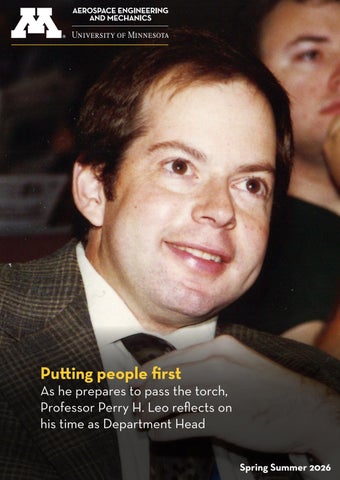
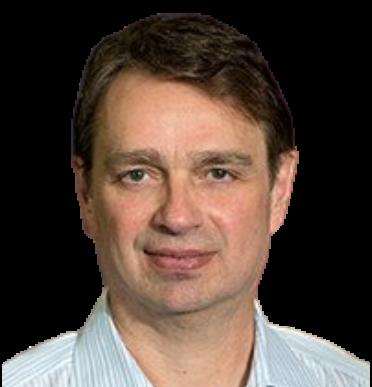
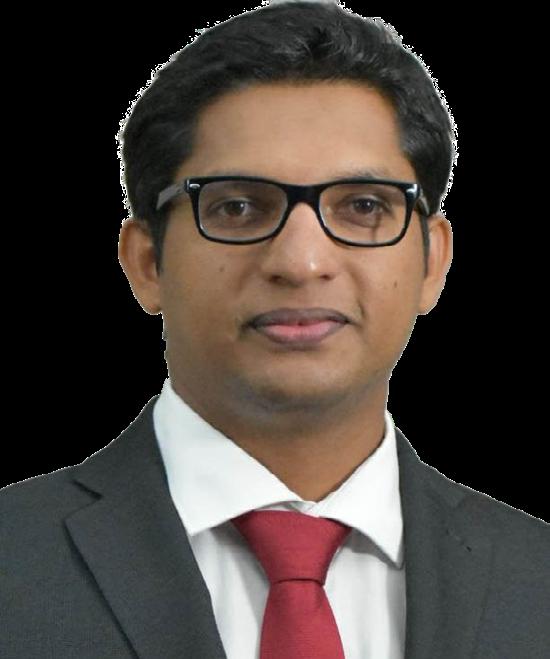
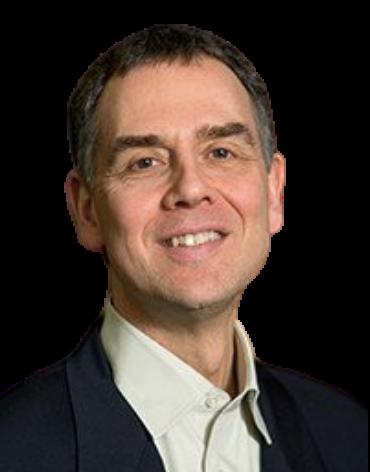
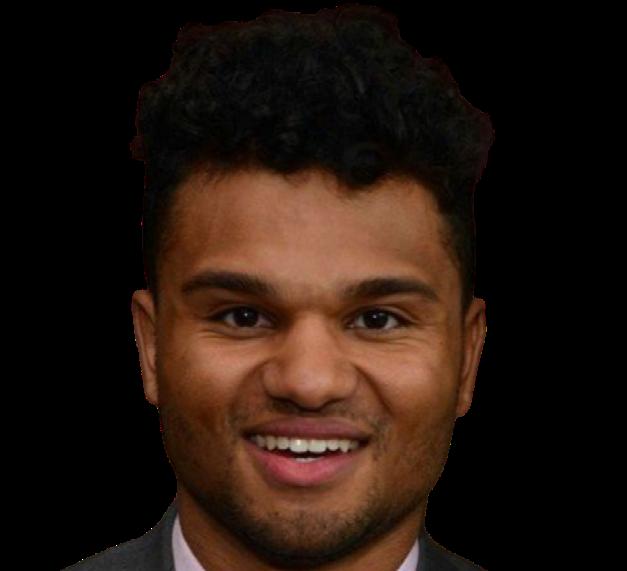
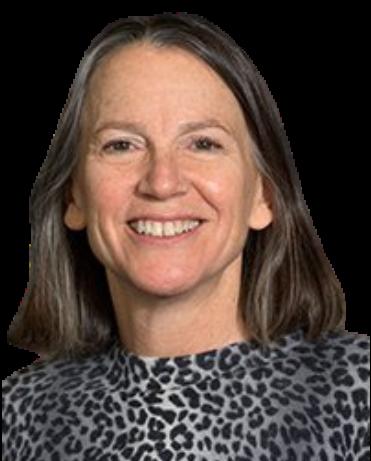
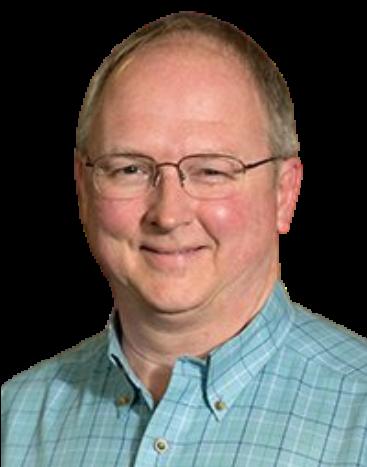
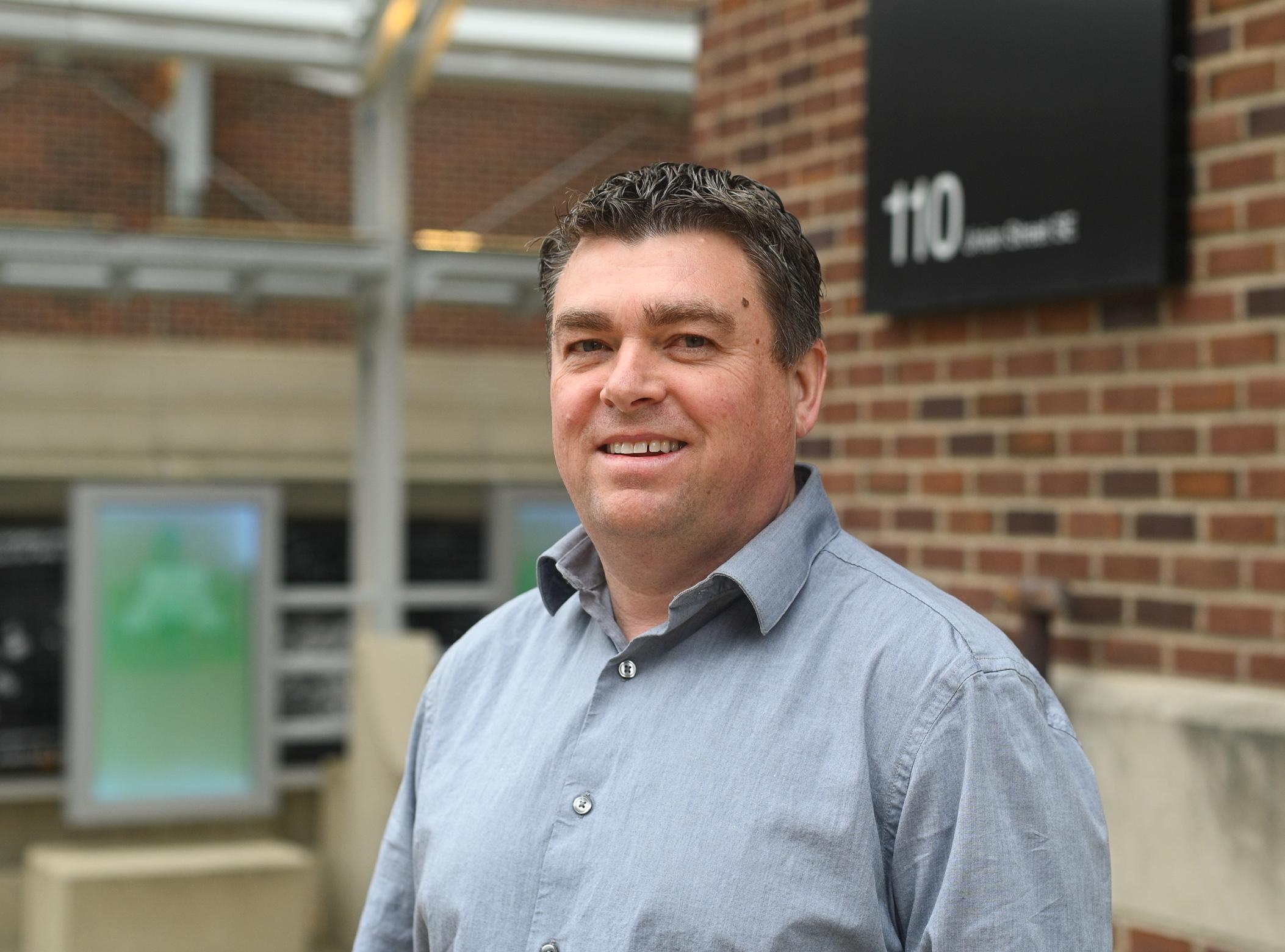
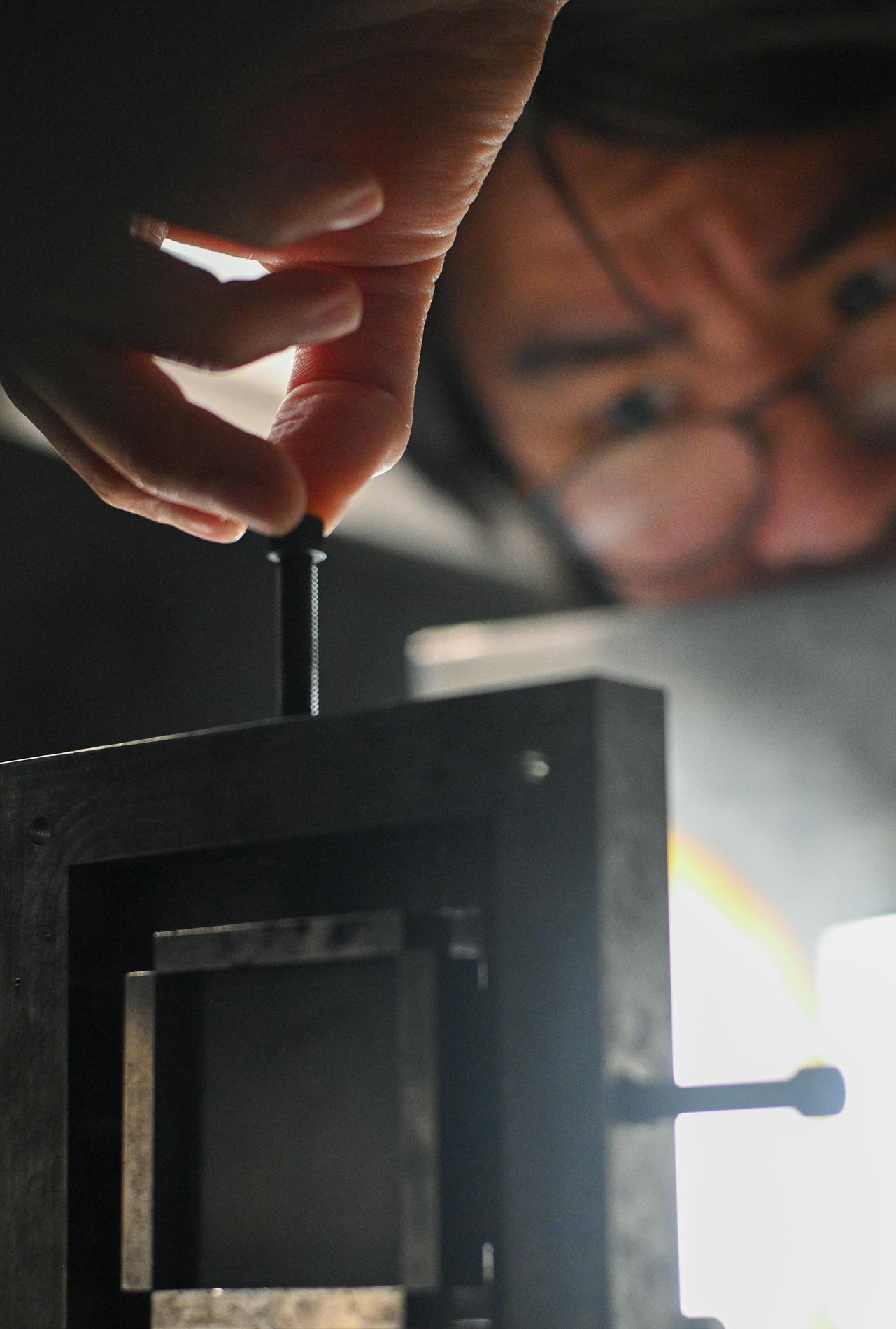
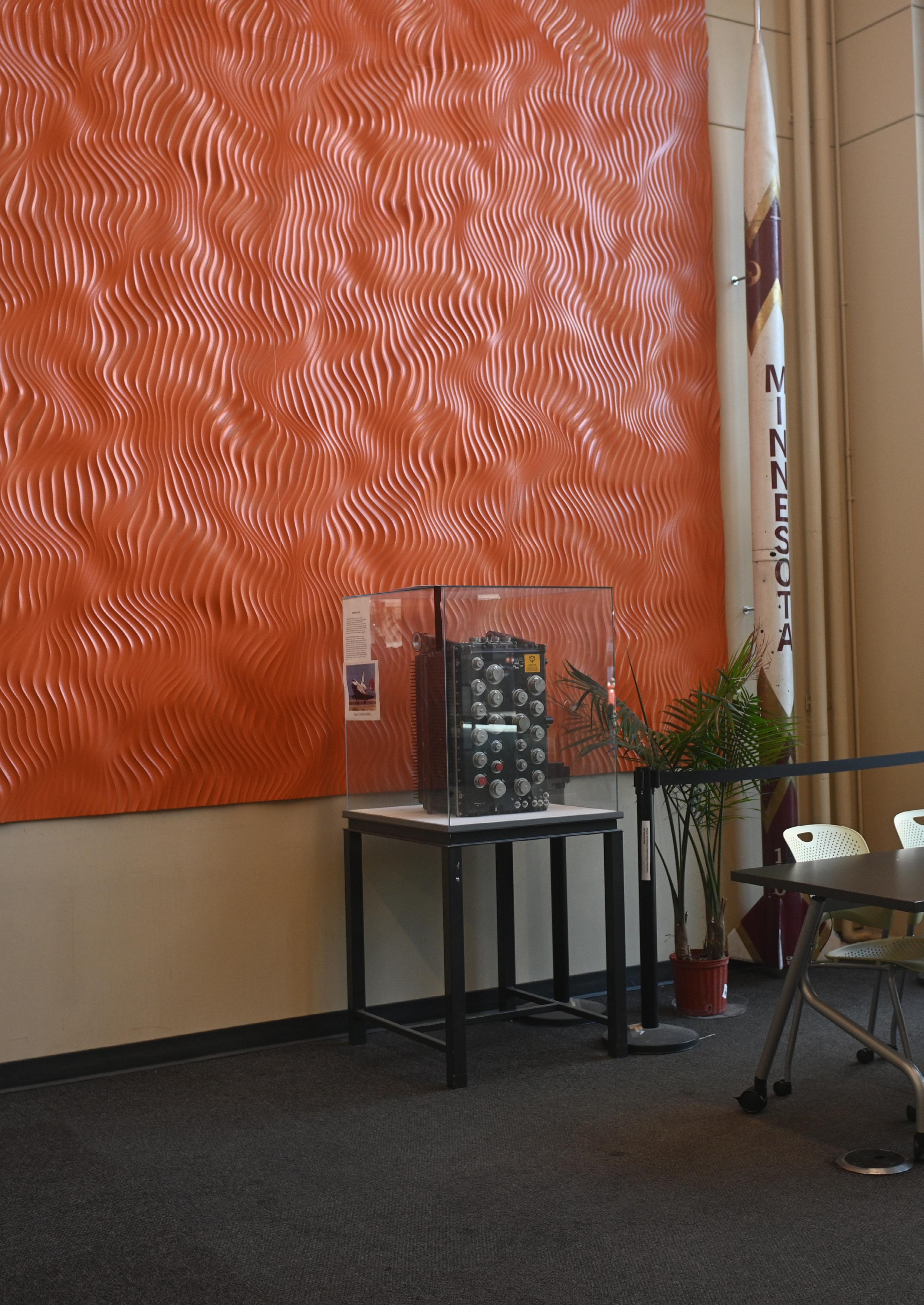
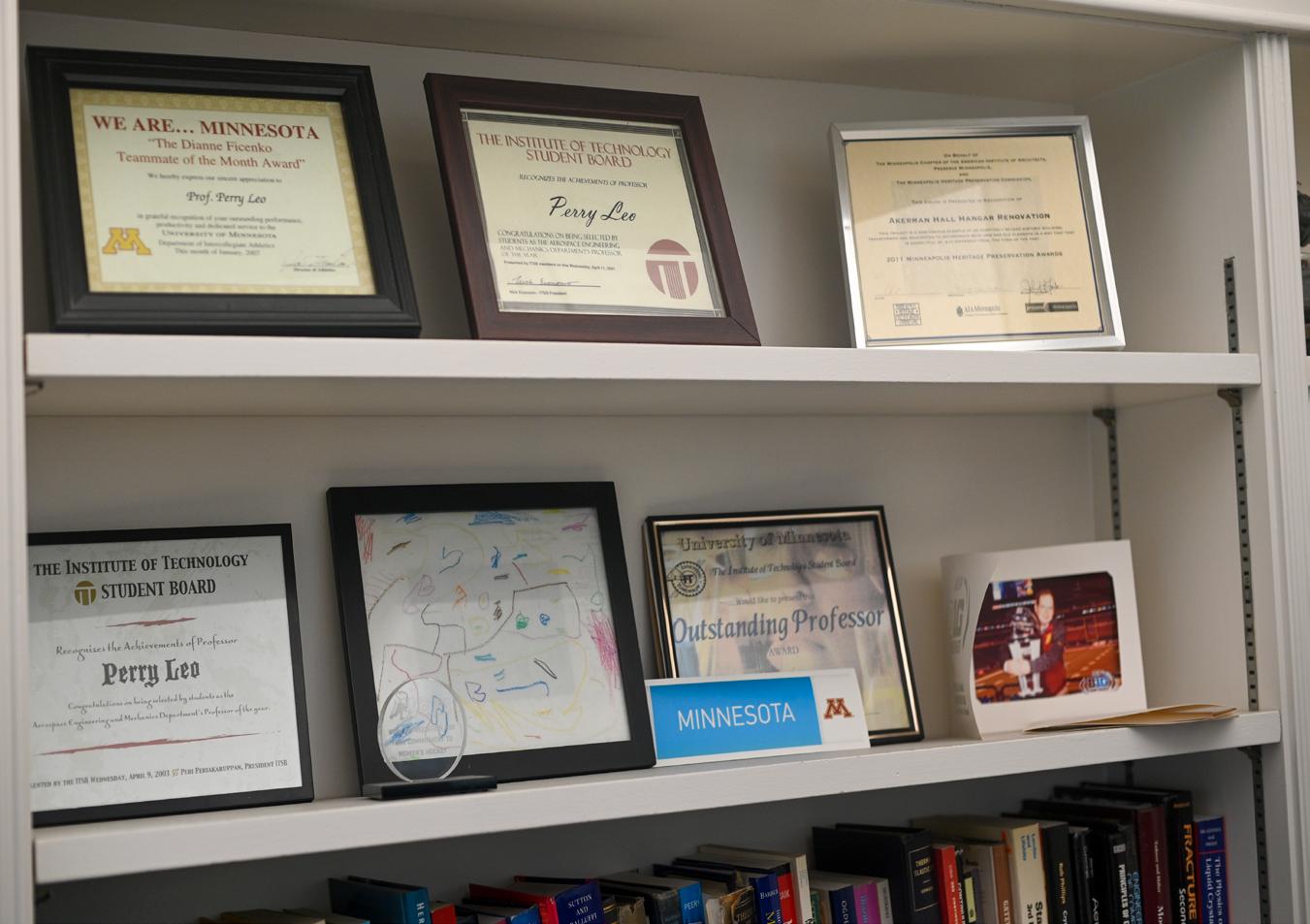
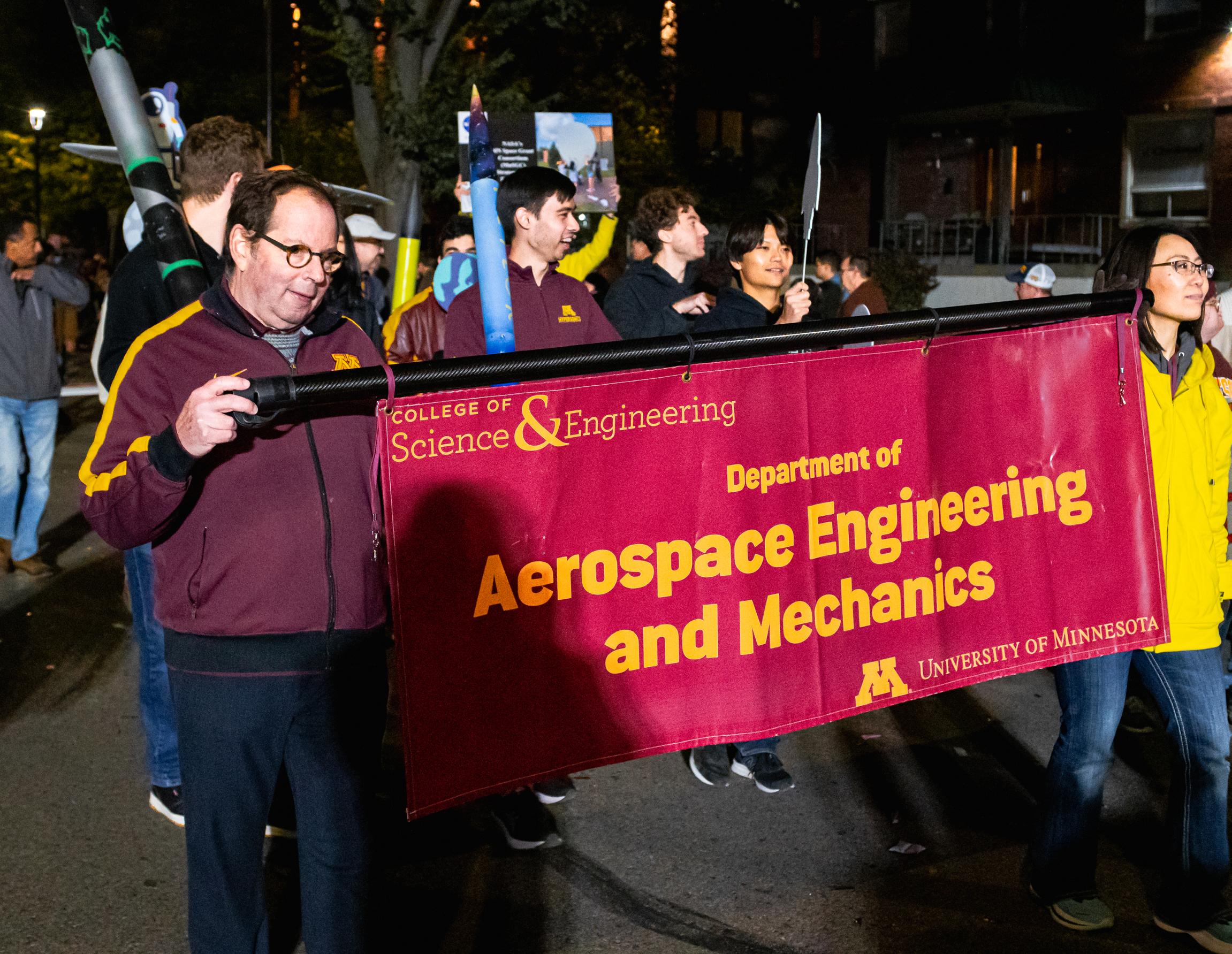
As he prepares to pass the torch, Professor Perry H. Leo reflects on his time as Department Head
DEPARTMENT OF AEROSPACE
ENGINEERING AND MECHANICS
University of Minnesota 110 Union St SE Minneapolis, MN 55455
Email: aem-department@umn.edu
Phone: 612-625-8000
cse.umn.edu/aem
Department Head
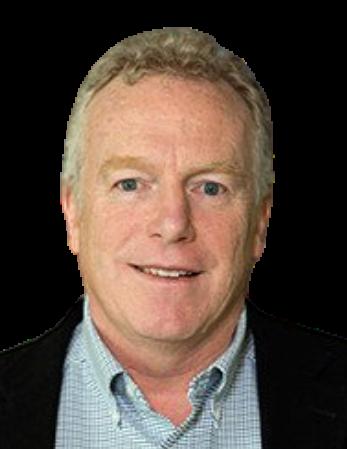
Perry Leo
Associate Department Head
Graham Candler
Director of Graduate Studies
Ryan S. Elliott
Director of Undergraduate Studies
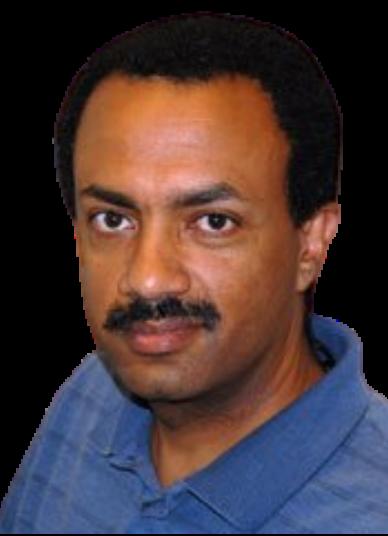
Yohannes Ketema
Senior Administrative Director
Hongna Byström
Editorial Staff
Andrew Carman
Questions about the magazine? aem-comm@umn.edu
Welcome to the latest edition of the AEM Magazine.
As we head into summer, I’m excited to share several updates that reflect the continued growth and impact of our department. First, we celebrate Professor Tom Schwartzentruber for being a recent recipient of the Distinguished McKnight University Professorship. This prestigious award is one of the University’s highest honors recognizing outstanding faculty members.
Next, you will read about the Earth Cup, an exciting project that faculty and students are working on that has the potential to impact climate change. This project has many implications for aerospace engineering as a whole, and we look forward to partnering with other universities as the project expands.
Our undergraduate program continues to grow each year. We had the pleasure of welcoming 104 new undergraduate students to the program at the start of our spring semester. Current students have been hard at work as they finish up their classes, and you will read about two of them in this issue.
The graduate program has also seen tremendous success lately. We celebrated our updated rankings of 12th among public universities and 17th overall for aerospace engineering graduate programs, an accomplishment that would not be possible without our dedicated faculty and staff. You will have the opportunity to read about the program from a PhD student’s perspective in this magazine.
Finally, I want to thank all of you for being part of our community. We need your support more than ever as we continue to improve and grow our department. You are a vital part of the equation that enables us to support the work, people, and progress that makes AEM thrive.
Perry Leo, Department Head
Faculty
Graham V. Candler
McKnight Presidential Endowed Chair, Associate Department Head
Demoz Gebre-Egziabher Professor & Director of Minnesota Space Grant Consortium
Ryan Caverly Associate Professor, McKnight Land Grant Professor
Ryan S. Elliott Professor & Director of Graduate Studies
Anabel del Val Assistant Professor
Melissa Green Associate Professor
Maziar S. Hemati Associate Professor, Russell J. Penrose Faculty Fellow
Richard D. James Distinguished McKnight University Professor
Yohannes Ketema Professor & Director of Undergraduate Studies
Perry H. Leo Professor & Department Head
Suraj Ravindran Assistant Professor
Tom Schwartzentruber Distinguished McKnight University Professor
Ellen K. Longmire Professor
Joseph W. Nichols Associate Professor
Kirsten Strandjord Assistant Professor
Ellad B. Tadmor Professor, Russell J. Penrose Professor
Kshitiz Upadhyay Assistant Professor
Yue Yu Assistant Professor
Damennick Henry Assistant Professor
Teaching & Research Faculty
Travis W. Drayna Research Professor
Helsa Contract Assistant Professor
Everett Wenzel Research Associate Professor
A. Flaten Associate Director of the MN Space Grant Consortium & Contract Professor
Knutson Research Associate Professor
Anubhav Dwivedi Research Assistant Professor
Mueller Industrial Professor of Design
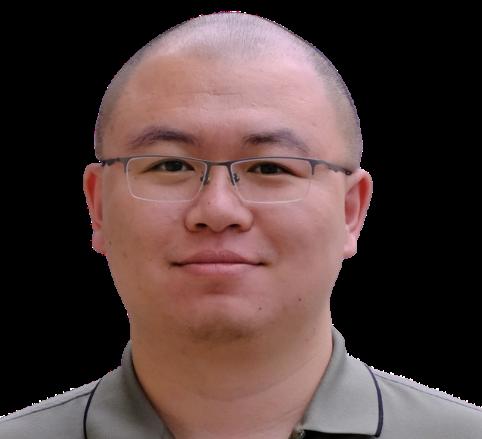
James
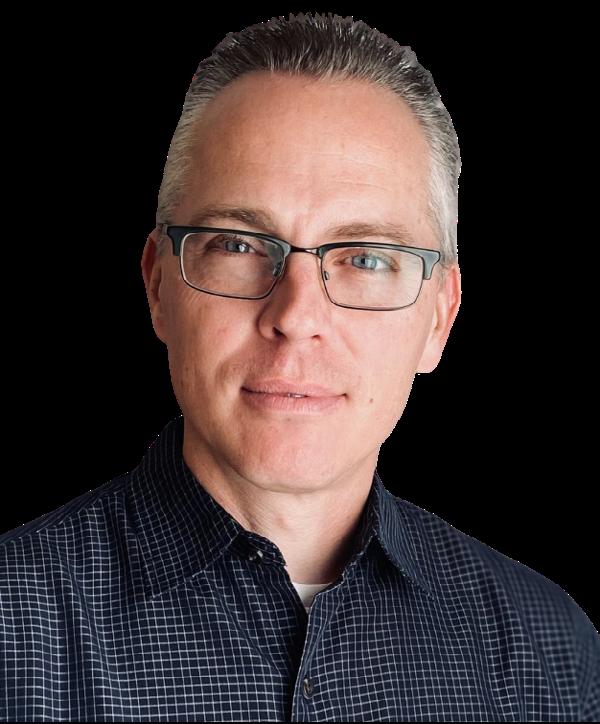
Todd
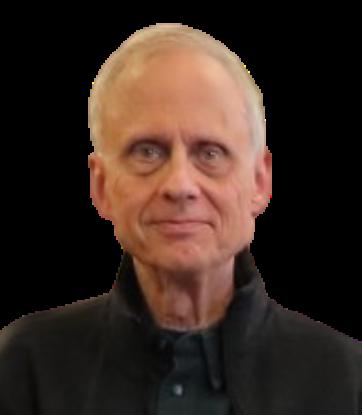
Anthony
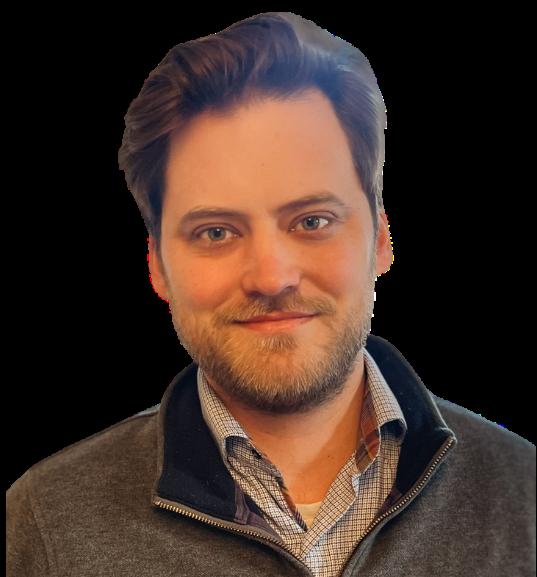
Joseph
Professor Tom Schwartzentruber Receives Distinguished McKnight University Professorship
Tom Schwartzentruber, a professor in the Department of Aerospace Engineering and Mechanics, is one of fourteen faculty members from across the University of Minnesota to receive the 2026 Distinguished McKnight University Professorship — one of the University’s highest honors recognizing outstanding faculty members who have recently achieved full professor status.
Professor Schwartzentruber joined the faculty in the Department of Aerospace Engineering and Mechanics at the University of Minnesota in 2008, after which he received a Young Investigator Program Award from the Air Force Office of Scientific Research and the University of Minnesota Taylor Career Development Award for exceptional contributions by a candidate for tenure.
Schwartzentruber currently leads the Computational Gas Dynamics Laboratory, which uses computer simulations to study complex gas behavior at a molecular level. This
work also focuses on how gases interact with surfaces, particularly in high-altitude or micro-scale environments where traditional fluid dynamics approaches don’t apply. Schwartzentruber has been involved with numerous publications on the subject, including two books, and is considered an expert in his field.
“It feels great to be recognized by the University for my research impact. I have been very fortunate to work with outstanding graduate students and collaborators here at the University of Minnesota,” said Schwartzentruber. “I am grateful for the McKnight research funding as it will enable me to continually seek out and lead in emerging research areas.”
Along with the title of Distinguished McKnight University Professor, Schwartzentruber will receive $120,000 over the course of five years to be used for scholarly activities.
Department Celebrates Historic NASA Launch
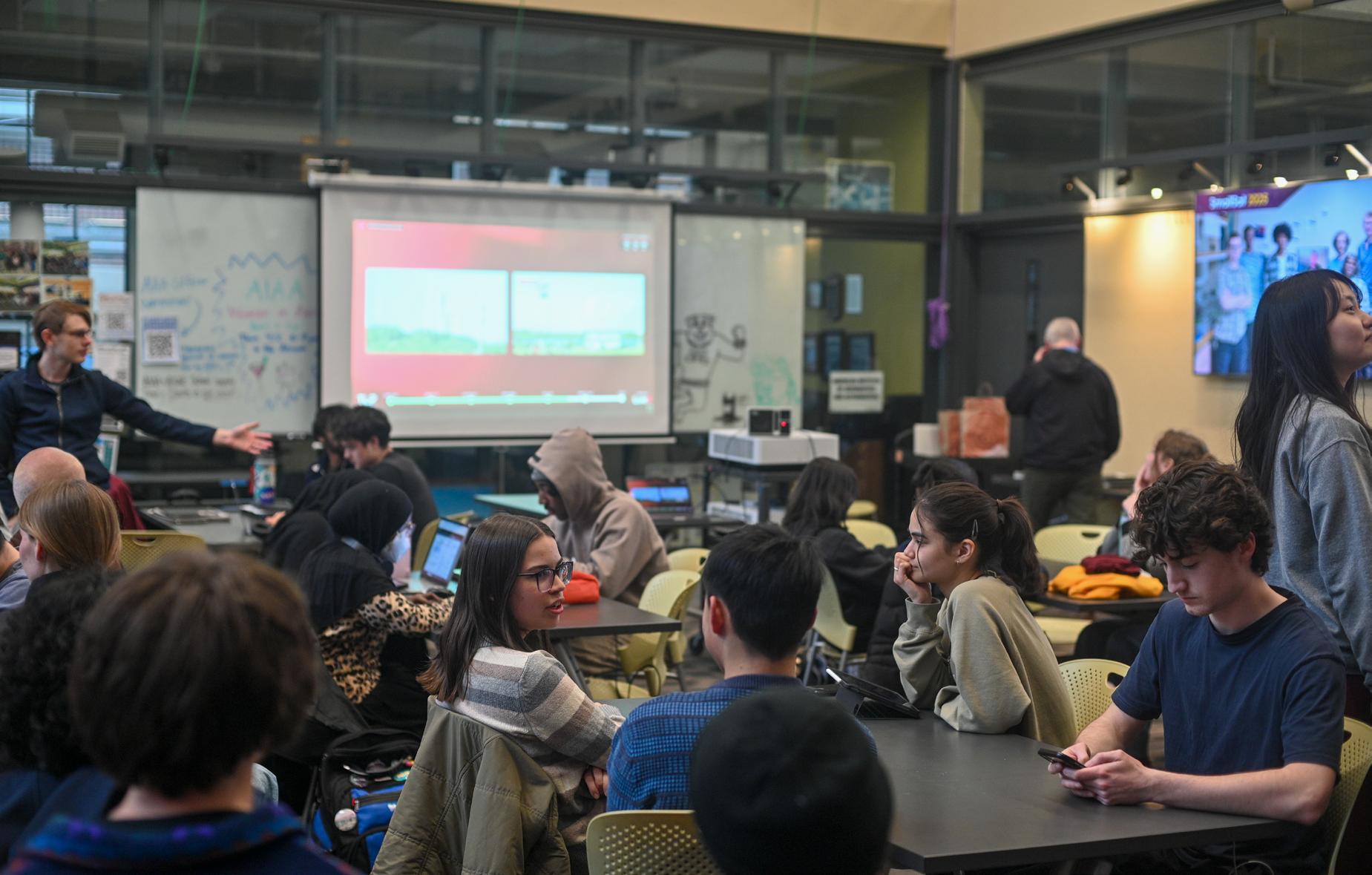
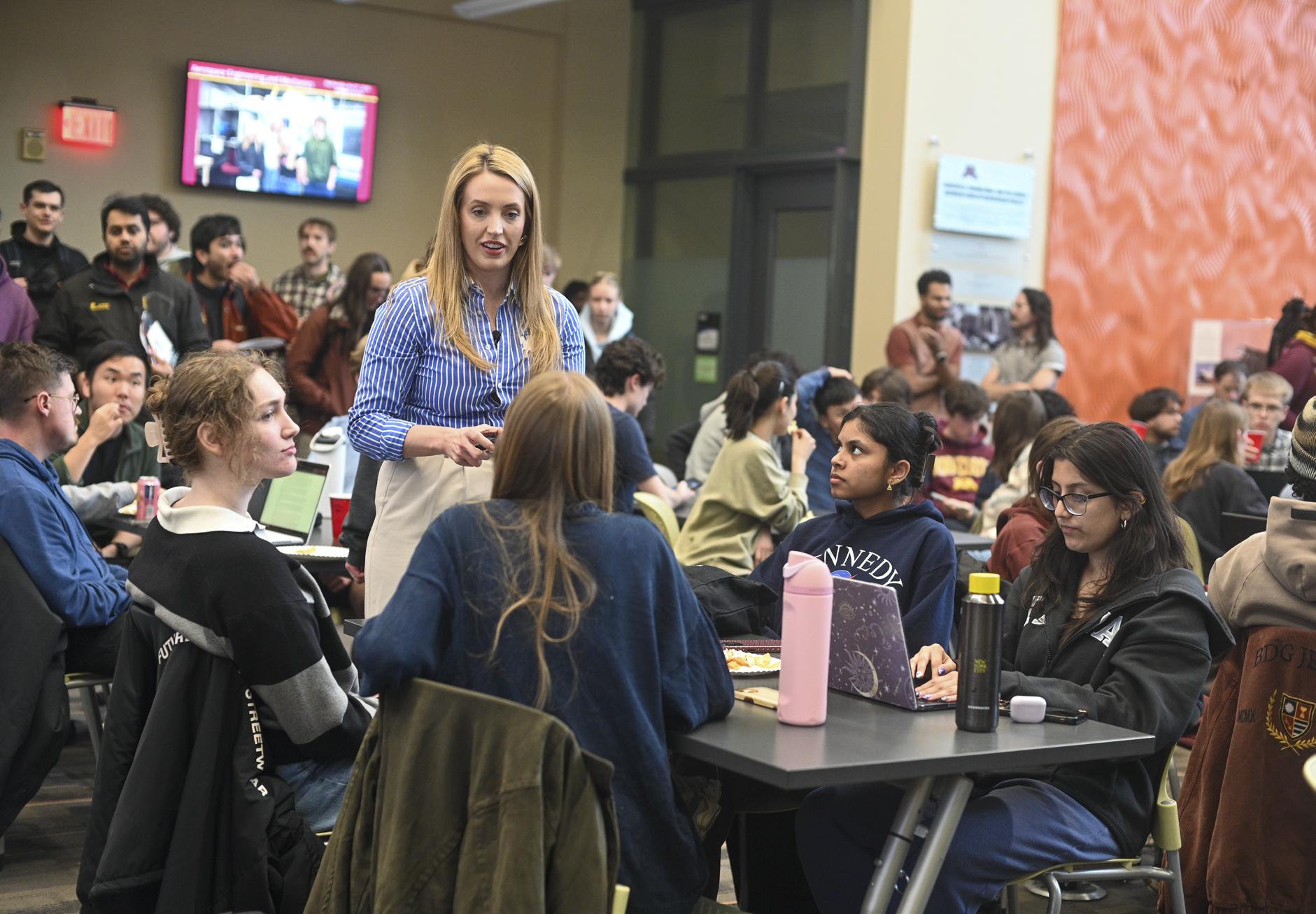
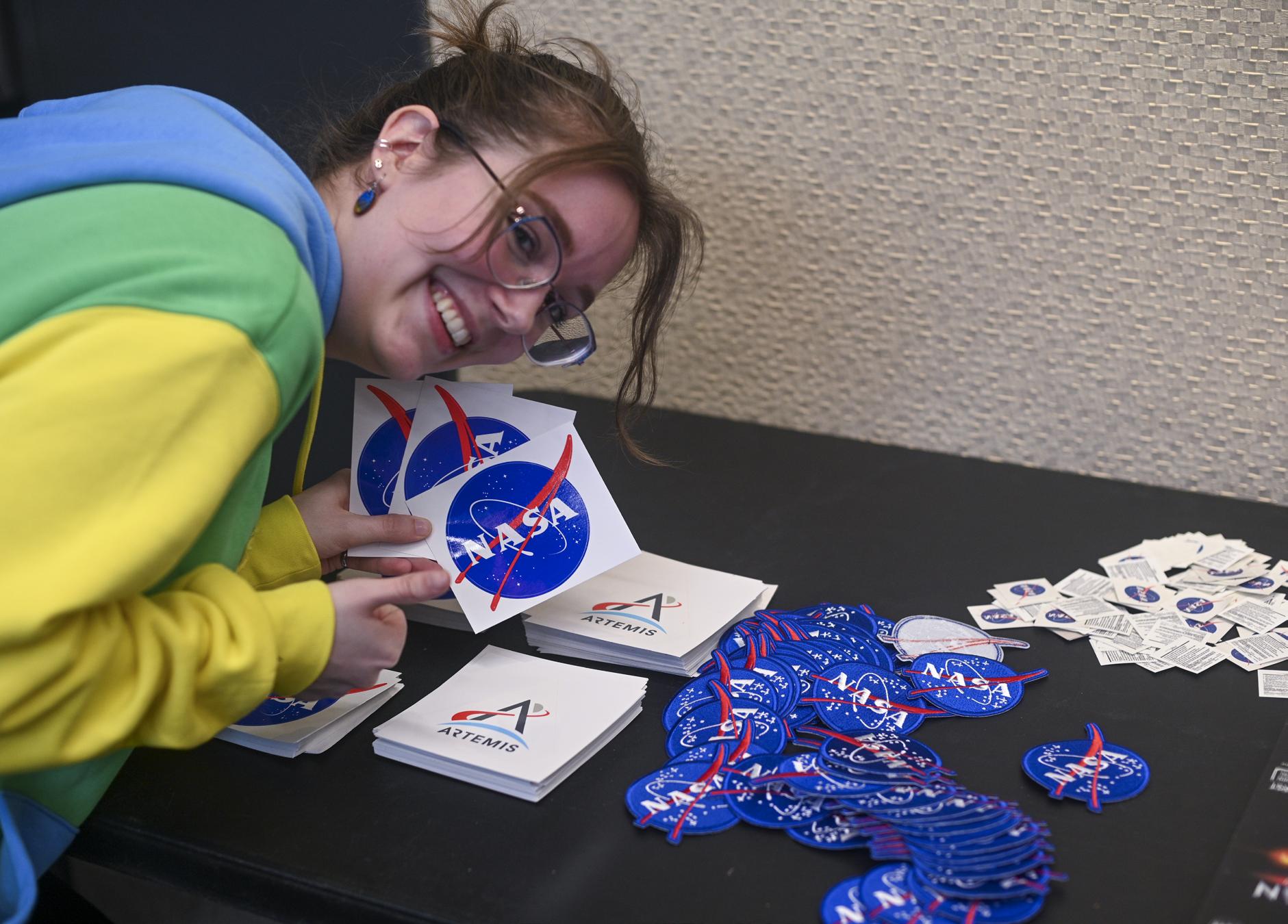
The department recently came together for a NASA Artemis II watch party. The atrium was packed with students, faculty, and staff — even some local journalists joined in on the action and spoke with attendees. Several students and faculty were featured on local news channels to talk about what the launch meant to them as well as the engineering behind Artemis II.
Students were thrilled to witness such a historic moment. For many, it was a reminder of why they decided to chase their dreams in aerospace engineering.
“Seeing stuff that’s similar to what we’ve been studying in school being tested and executed, it’s kind of like a preview for our future careers,” said PhD student Mel Nightingale.
The event was a great way to come together and celebrate what can be accomplished through aerospace engineering.
It’s kind of like a preview for our future careers.”
- Mel Nightingale, PhD student
Undergraduate Program Highlights
Student Highlights
ASHLYN KNEELAND
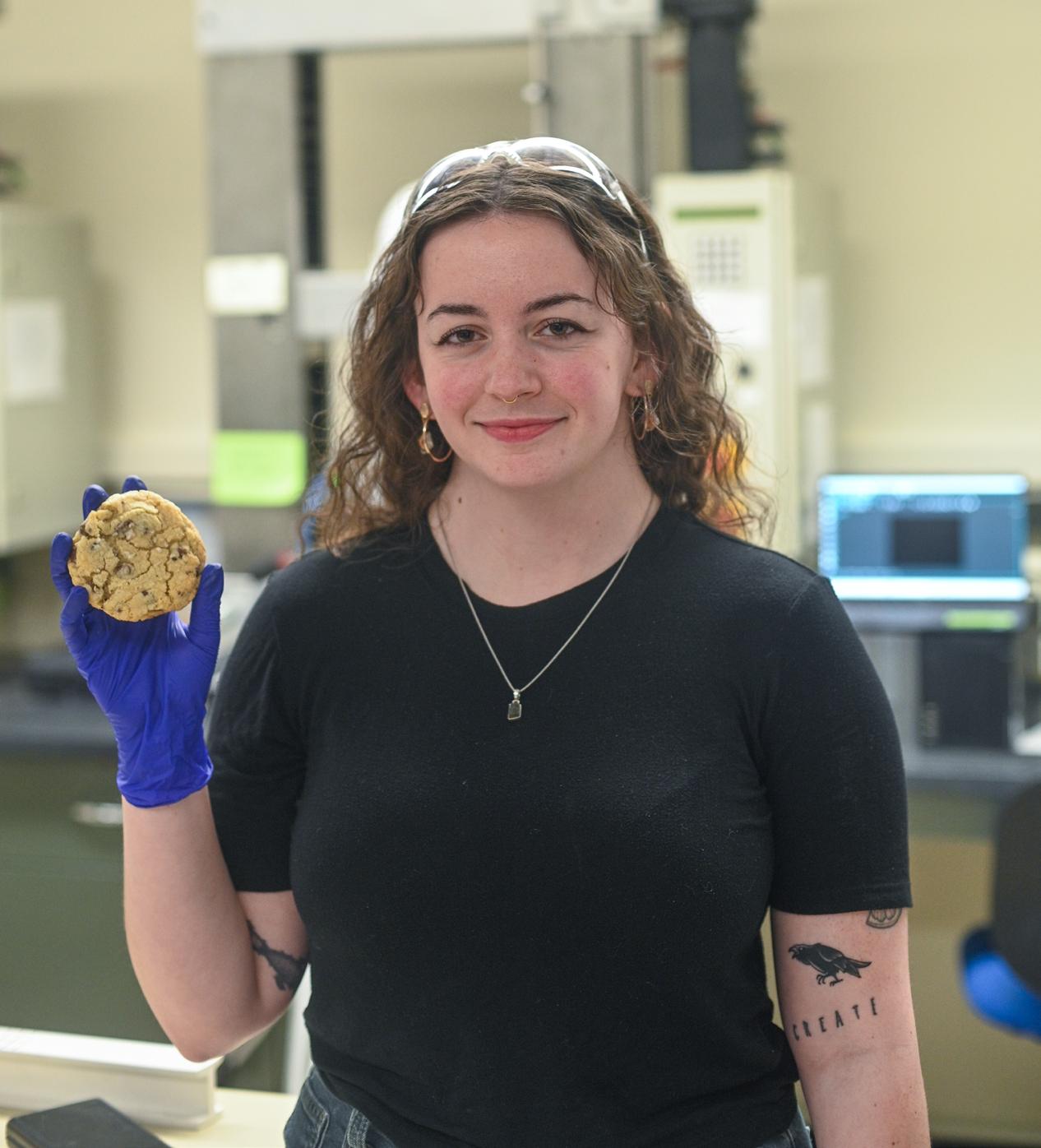
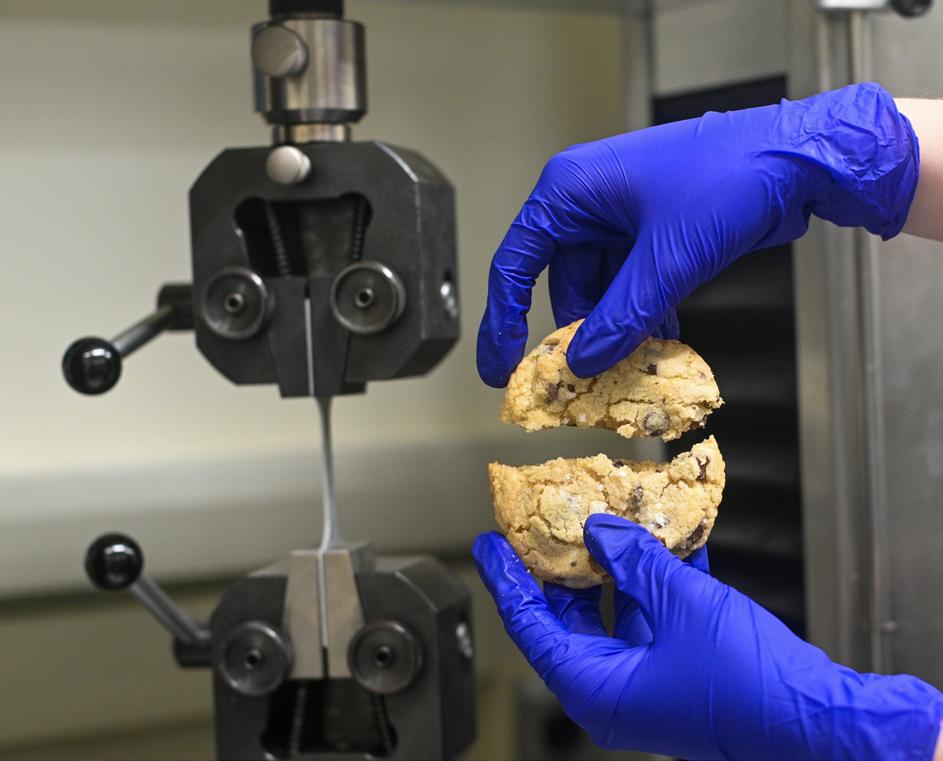
For many people, engineering can seem complicated or difficult to understand. Senior Ashlyn Kneeland hopes to change that narrative by applying what she’s learned as an aerospace engineering major to a more approachable topic: food.
“I love good food, so I wanted to start making the foods I enjoy,” she said. “I came to the realization that cooking is really science.”
Kneeland’s interest in aerospace began with a childhood fascination with space, rockets, and planes. That passion led her to study aerospace engineering and mechanics, along with materials science, giving her both a big-picture and detailed understanding of how things are built and why they work.
“I want to work with recycled materials to make manufacturing more sustainable,” she said. “I’d love to apply that in the aerospace industry.”
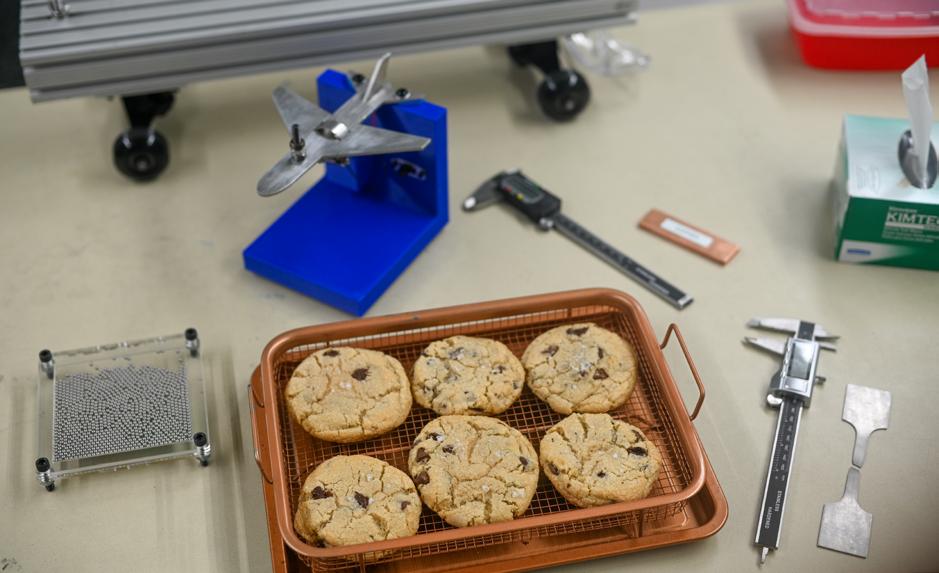
Alongside her studies, Kneeland is developing a project that uses cooking to explain engineering concepts in everyday life. Inspired in part by her father, a chef, her interest in cooking grew from simply enjoying food to understanding how it’s made.
“It gives me a deeper understanding of what I’m eating and expands that appreciation,” she said.
She approaches cooking much like engineering by starting with the basics and digging into the details. Adjusting baking time and temperature mirrors how materials are treated to change their properties, while ingredient ratios resemble the balance needed in propulsion systems. Even sensory cues, like smell and texture, can be compared to instruments monitoring performance.
“So when I’m making something, I start asking questions,” Kneeland said. “Why does it turn out this way? Those are little engineer questions. I’m trying to show that we all think like engineers.”
After graduation, Kneeland will begin working as a mechanical design engineer. While she steps into her professional role, she hopes to keep growing her idea of blending food and STEM.
“I hope combining food and STEM keeps me curious and inspires whatever comes next.”
ALEX KIM
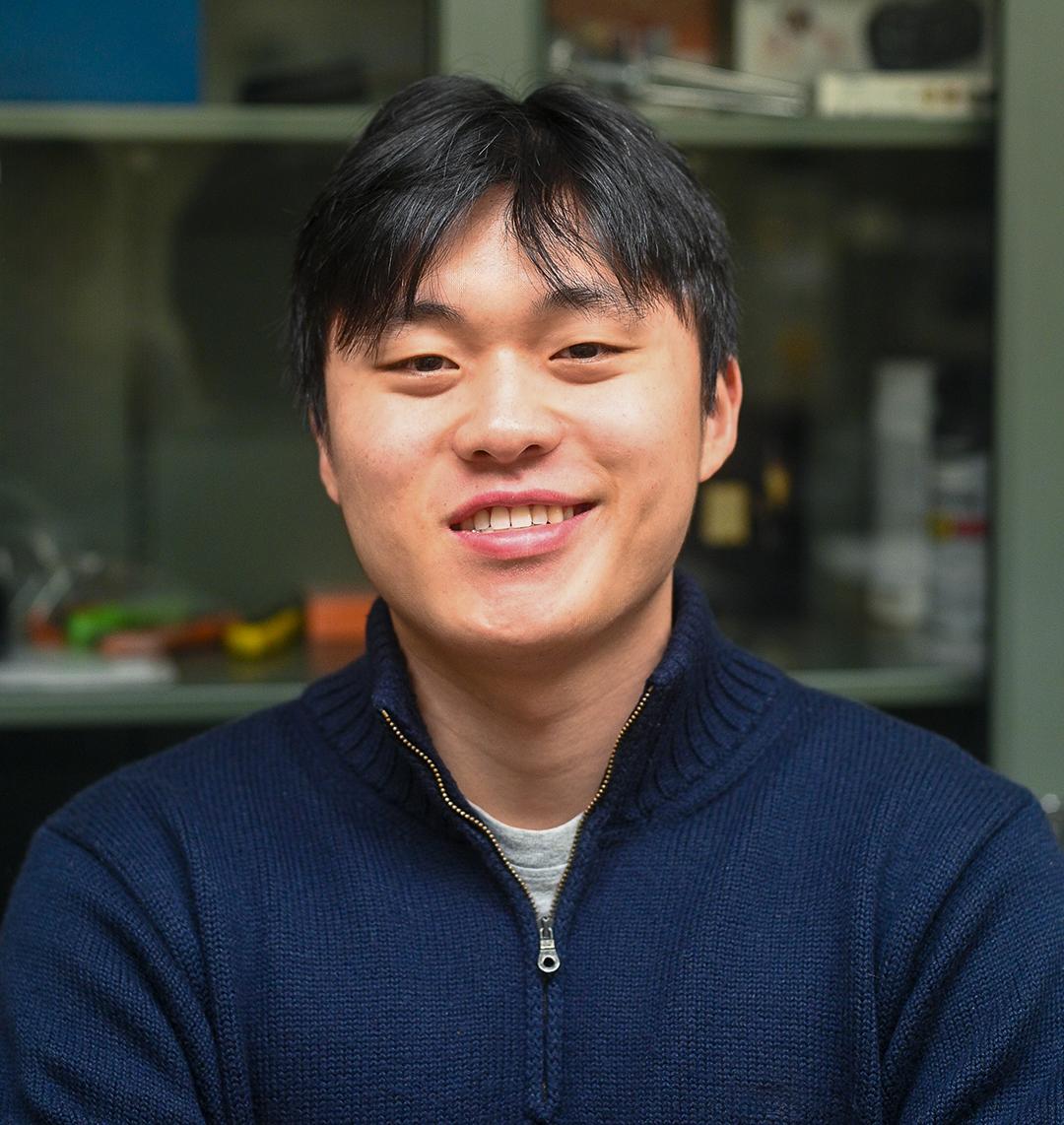
The path to a dream career can seem narrowly defined to many students. For senior Alex Kim, preparing to begin his career at Boeing, the journey has been anything but linear.
What drew Kim most was Boeing’s rotational program, which allows employees to explore different roles before specializing.
“What was really appealing to me was the opportunity to spend time figuring out what I wanted to do,” he said. “Going through multiple rotations and trying different things sounded super appealing.”
That sense of exploration reflects a broader uncertainty among students. “I’m still figuring out what exactly I like doing,” Kim added.
Kim built a strong technical foundation through coursework in coding, heat transfer, and fluid dynamics, while gaining hands-on experience with the AIAA CanSat team.
“Having real-world engineering experience was crucial,” he said.
Leading the team also strengthened his ability to combine technical and leadership skills, something that proved valuable in interviews.
Internships further shaped his path, including roles in mechanical, energy, and systems engineering. “Both of those roles definitely helped me a lot,” he noted.
Kim emphasizes openness as a guiding principle.
“Aerospace engineers shouldn’t feel limited to just aerospace,” he said. “It helps to look outside the industry as an undergrad.”
That mindset aligns with Boeing’s model, which exposes employees to a wide range of work, from testing and integration to mission control and business operations. Even paths like software engineering remain accessible, with training and education support available.
Beyond engineering, Kim discovered an interest in finance and operations while managing budgets for the CanSat team.
“I just love running the finances,” he said. “That was one of my favorite parts.”
His experience underscores the importance of understanding the business side of engineering.
After graduation, Kim will move to El Segundo, California, a major aerospace hub. Along with better weather, he’s excited about being surrounded by industry leaders and opportunities for growth.
Before heading west, he’ll spend the summer working with the University of Minnesota’s energy and facilities team.
Overall, Kim wants his experience to let students know they don’t have to have everything figured out.
“It’s always great to continue learning and have an open mind so you can always keep improving.”
Senior Design
Undergraduate students in the Department of Aerospace Engineering and Mechanics build strong fundamentals each year through a core curriculum focused on aerospace systems, structures, and fluid mechanics. In their final year, students test those skills in AEM 4331 and AEM 4333, a two-semester capstone featuring hands-on engineering projects sponsored by industry partners across the Twin Cities.
The courses place students in the role of working engineers, complete with deadlines, project requirements and budgets. The experience pushes them to apply technical knowledge while sharpening the communication and collaboration skills essential for their careers.
“It’s a good way to see every side of a project that isn’t just engineering,” said Tiffany Shen, a team lead for one of this year’s groups. “The soft skills, communicating with our sponsor and in the group, help us become well-rounded when it comes to seeing what engineering is.”
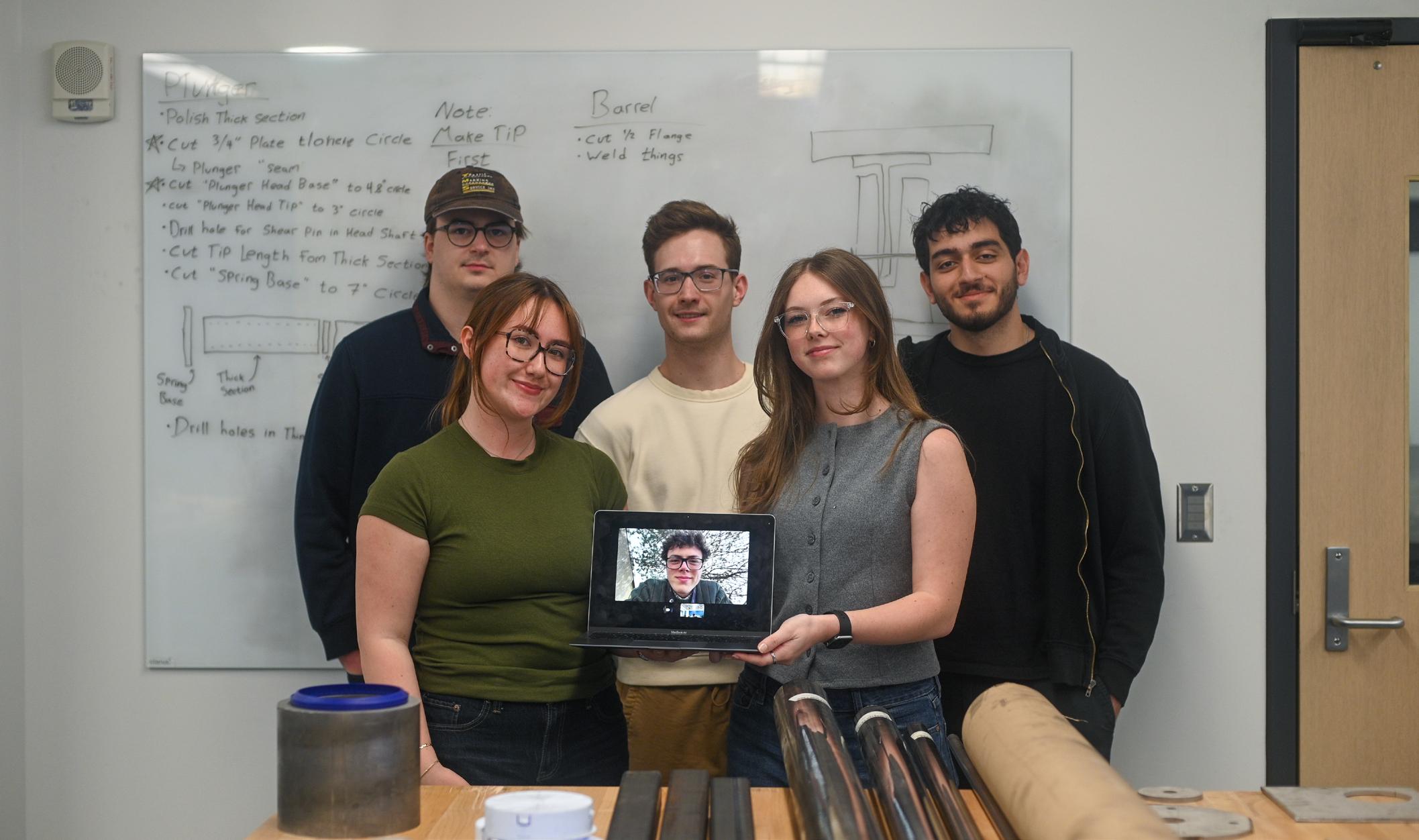
Shen and her teammates, Rory Beggs, Maya Nalezny, Toby Rosaaen, Jordan Sarkis, Lucas Shea, and Daniel Tereshko, have spent the year developing a system that can launch hailstones of varying sizes at flight probes to simulate severe weather for Collins Aerospace, with a focus on hailstorm conditions. These probes are critical safety instruments that provide essential data to flight crews.
“The big goal of the project is to redesign the current equipment they have,” Tereshko said. “A lot of what we’ve been doing this semester is trying to find a manufacturer that can meet the safety standards we’re targeting.”
Capstone projects vary widely depending on the sponsoring organization, each presenting unique challenges.
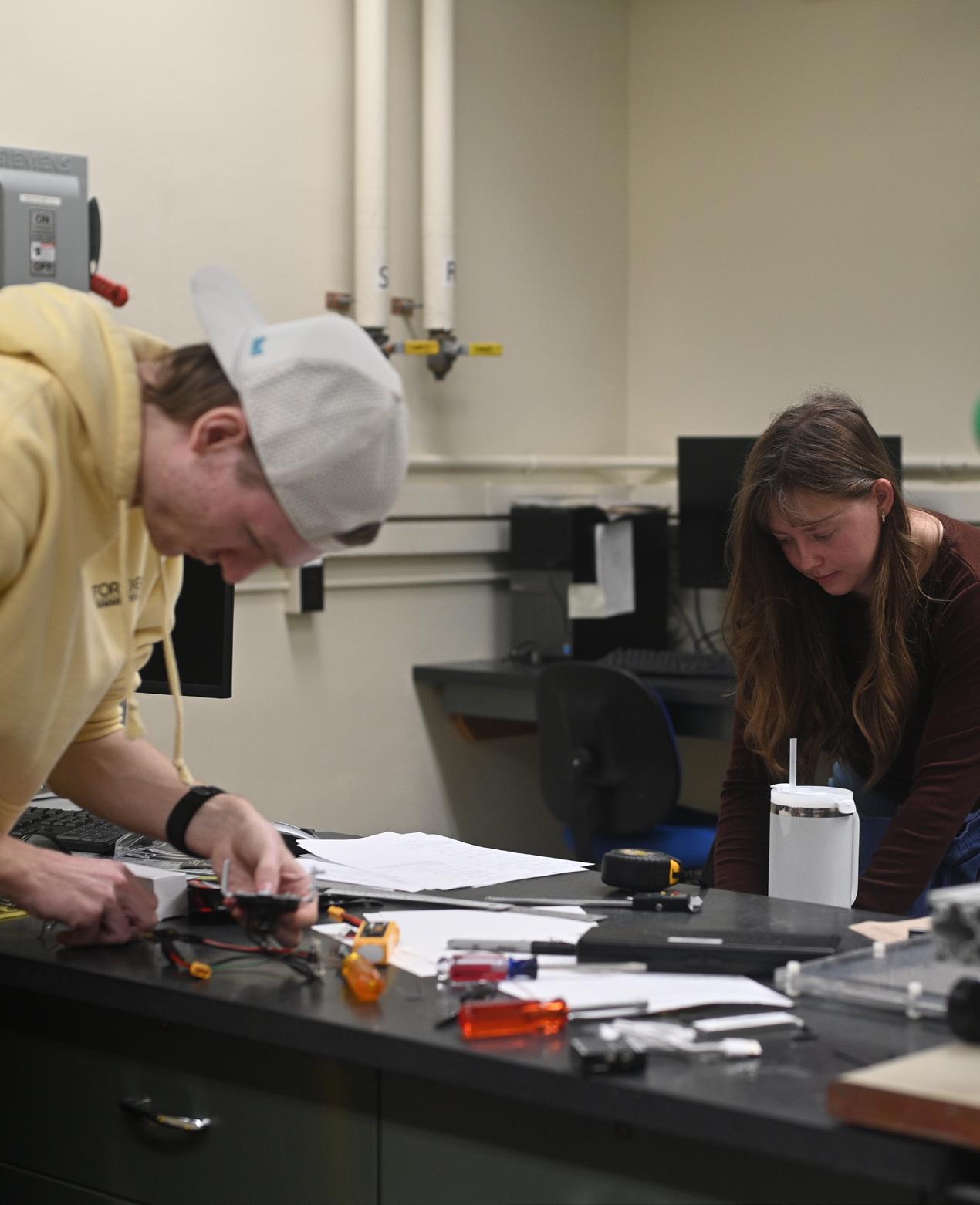
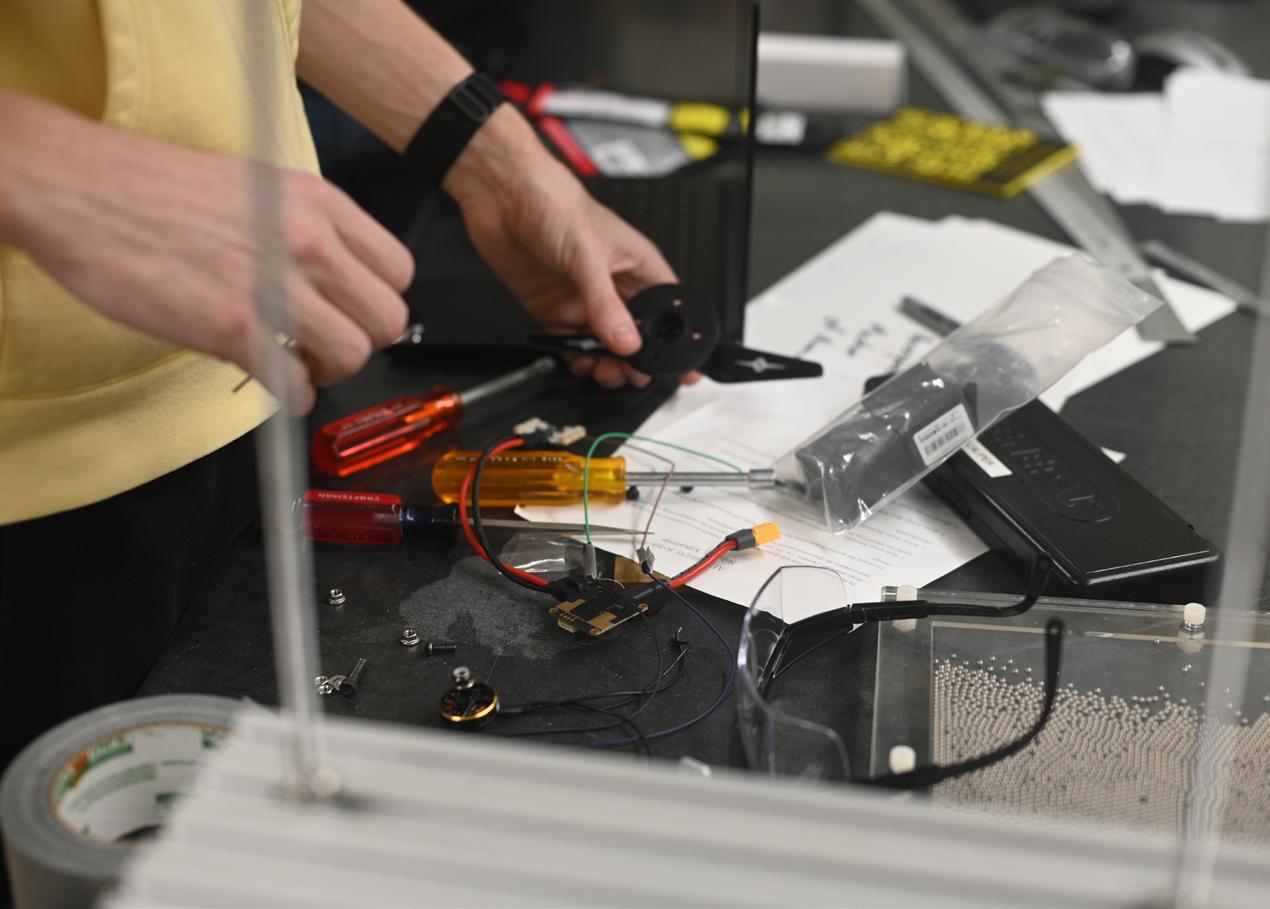
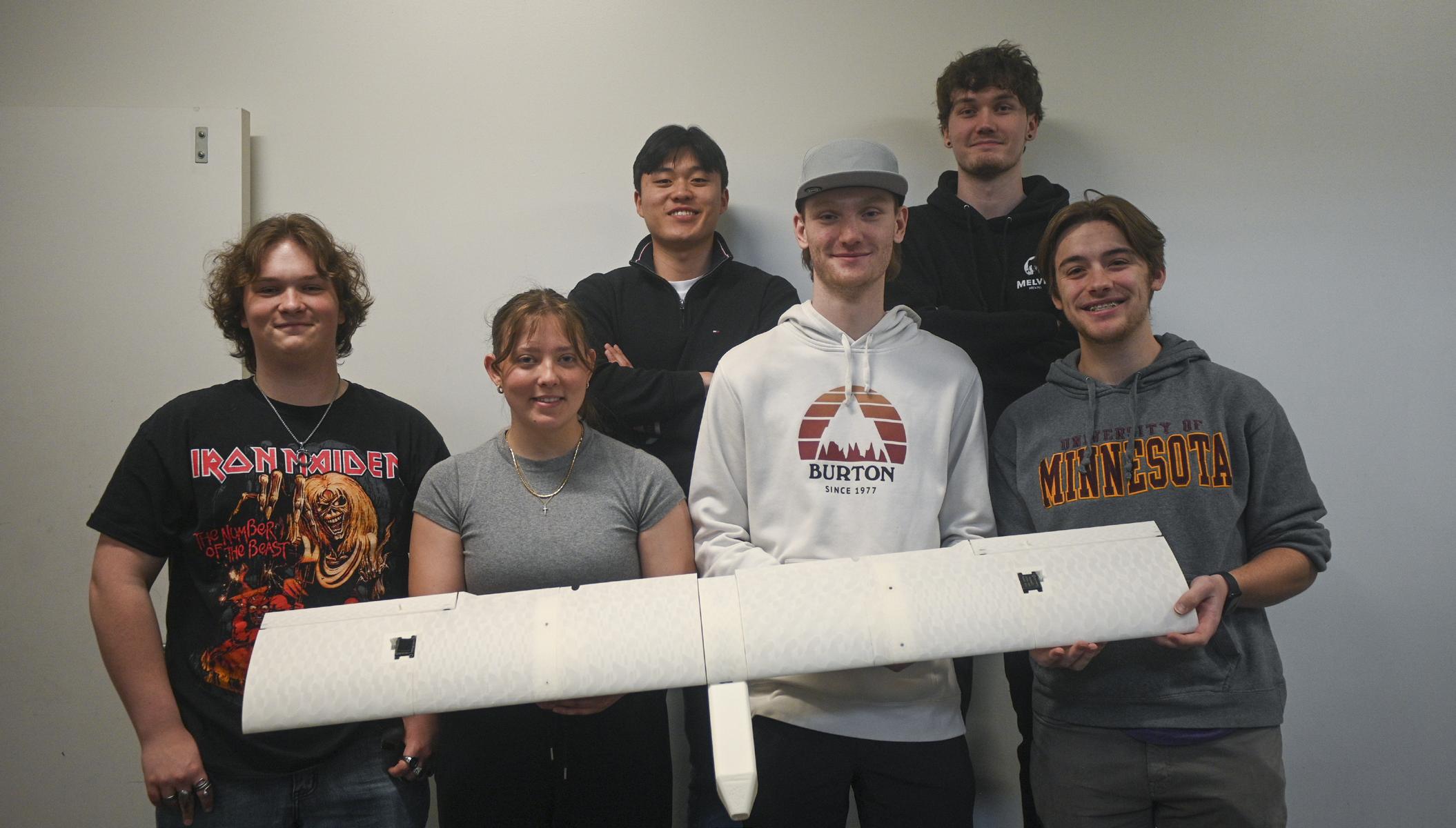
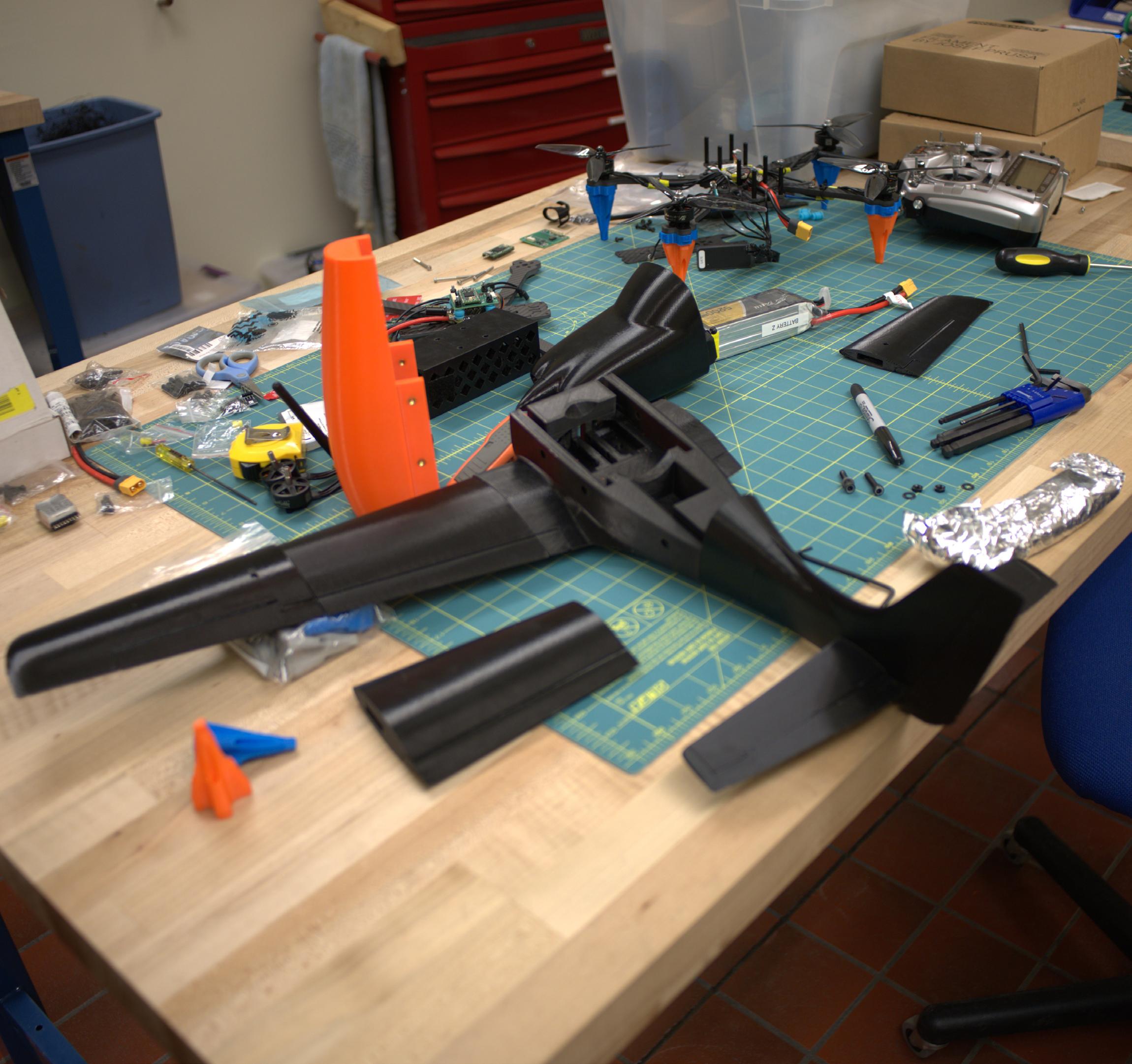
For team leads Hunter Anderson and Jocelyn Prewett, the focus is a fixed-wing, 3D-printable aircraft with vertical takeoff and landing (VTOL) capability, sponsored by Sentera for agricultural use. Anderson and Prewett’s team, Thomas Herbert, Alexander Kim, John Kronkvist, Cole Monroe and Franklin Woolley, have prioritized making the aircraft easily repairable, so users can fix issues with tools commonly available on a farm.
“The whole idea is that a farmer could buy this drone and fly it over their field to get data about their crops,” Anderson said.
Despite working on different projects, students across teams agree that their prior coursework has been essential preparation.
“You learn how a wing works, and now we’re at a point where we’re the ones deciding which wing to use and what airfoil shape fits our design and why,” Kim said.
The hands-on, project-based work comes with challenges. Students face tight timelines, difficulties sourcing materials and the complexity of translating abstract concepts into physical designs. Many have returned to the drawing board after encountering unforeseen constraints.
“We learn the theory behind it all, but the math doesn’t tell you how to design a plane,” Herbert said. “There are so many variables, and they all depend on each other. We have to iterate constantly, adjusting one aspect and then revisiting everything else before refining it again.”
Working through those challenges has proven to be one of the most valuable aspects of the experience.
“Some of the electronics I designed last semester ended up being unnecessary, but the work wasn’t wasted because it informed how other parts of the design came together,” Tereshko said. “I’ve learned that engineering isn’t about getting it right the first time, it’s about refining your understanding as you go and adapting as the design evolves.”
Navigating that uncertainty signals a shift from traditional coursework. Moving from equations with defined answers to open-ended design problems has been both demanding and rewarding.
“There’s usually one expected result for a lab, so it’s easy to put something together and present it,” Prewett said. “Learning how to clearly explain our ideas and reasoning without relying on technical jargon has been a really nice change of pace.”
I’ve learned that engineering isn’t about getting it right the first time, it’s about refining your understanding as you go and adapting as the design evolves.” - Daniel Tereshko, undergraduate student “
The capstone projects have particularly been useful for students planning on entering the workforce after graduation.
“Realizing that I can read, understand, and apply complex engineering standards has been the most rewarding part so far,” said Beggs, who began working at Collins Aerospace in January 2026. “It connects directly to what I’ll be doing as I grow in my career, so discovering that I both enjoy it and excel at it has been incredibly fulfilling.”
Together, these capstone experiences bridge the gap between classroom learning and professional practice. By combining technical rigor with real-world constraints, the courses prepare students not just to solve engineering problems, but to navigate ambiguity, communicate effectively and contribute meaningfully from day one in their careers.
Collins Aerospace Team
Front row (left to right): Tiffany Shen, Rory Beggs, Maya Nalezny Back row (left to right): Toby Rosaaen, Daniel Tereshko, Jordan Sarkis
Sentera Team Front row (left to right): Cole Monroe, Jocelyn Prewett, Hunter Anderson, Thomas Herbert Back row (left to right): Alex Kim, Franklin Woolley
Advanced Air Mobility Simulator for Artificial Intelligence Copilot Studies
AsterLabs
Sustained Operations in Very Low Earth Orbit (VLEO)
Storm Detection and Tracking Platform for Low Earth Orbit
Boeing Short Field Cargo Transport Aircraft
Collins Aerospace
Hail Test Capability for Air Data Sensors
Honeywell
Detect, Decode, and Navigate Using Satellite-based Signals Of Opportunity
Northrop Grumman
Tube Launched Unmanned Aerial Vehicle
Sentera
3D Printed Fixed-Wing Unmanned Aerial Vehicle #1
3D Printed Fixed-Wing Unmanned Aerial Vehicle #2
UMN AEM Department
CubeSat Solar Race to Mars
Payload Gimbal System for Stratospheric Science
University Consortium for Applied Hypersonics
Hypersonic Projectile Design UCAH Project
Interested in becoming a sponsor? Contact:
Graduate Program Highlights
Integrated Degree Program
The Department of Aerospace Engineering and Mechanics at the has launched a new integrated degree program that allows students to earn both their bachelor’s and master’s degrees in aerospace engineering and mechanics on an accelerated timeline.
“We recognized sustained interest from students,” said Ryan S. Elliott, Director of Graduate Studies in AEM. “While there were previously ways to achieve some of what this program offers, it became clear that creating a structured pathway was the best way to bring those opportunities together.”
Students enrolled in the integrated degree program can reduce the time required to complete a master’s degree by up to one year while taking graduate-level courses at the undergraduate tuition rate. The program also enables students to apply for external fellowships, expanding both funding opportunities and professional development options.
Another advantage of completing both undergraduate and graduate degrees in the Department of Aerospace Engineering and Mechanics is flexibility.
“Our master’s degree program allows students to tailor their coursework to align with their interests and career goals,” Elliott said.
The integrated degree responds to the increasing complexity of modern aerospace engineering, as employers continue to value the specialized skills and advanced training gained through graduate study. By creating an academic pathway that bridges broad undergraduate preparation with advanced theoretical knowledge, the program equips students to enter the workforce sooner and make an immediate impact.
As the first program of its kind in the department, Elliott anticipates it will continue to evolve.
“We hope to expand access to more students in the future,” Elliott said. “We want to understand their interests and continue refining the program to meet their needs.”
Applications for the integrated degree program opened in early March. Applicants will be notified of admission decisions by mid-June.
For more information, visit the Integrated Degree Program page on the Department of Aerospace Engineering and Mechanics website.
Student Highlight: Peter Yip
A decade ago, graduate school wasn’t even on Peter Yip’s radar. Today, he’s on the cusp of earning his PhD, driven by a curiosity for complex problems and a passion for research that reshaped his path from medicine to the cutting edge of aerospace engineering.
If you had asked Peter Yip about his plans after completing his undergraduate degree, graduate school might not have been his answer. Now, as a PhD candidate in the Department of Aerospace Engineering and Mechanics at the University of Minnesota, Peter is gearing up for his final defense.
“I think what’s funny is, if you were to tell me 10 years ago, ‘Peter, you’re going to do grad school,’ I probably would have laughed,” Yip reflected. “It wasn’t until I became a research engineer that I realized I actually really enjoy the research process.”
Yip’s decision to pursue graduate school was driven by the opportunity to conduct research at the highest level. Initially, he had spent much of his life intending to pursue medicine, but his interest in engineering was sparked by exposure to advanced physics in high school.
Combined with an admiration for the engineering mindset, Yip decided to carve out a different path.
“I love the idea of not necessarily needing to bolster problem-solving with just rote memorization,” Yip said. “If you have good physical intuition, you can actually solve problems better.”
He attended the University of Central Florida, where he applied his passion for math and physics to problemsolving as an undergraduate in the mechanical engineering department. After graduation, Yip began working as a mechanical packaging engineer but quickly realized the role didn’t align with his interests.
He decided to pursue a Master of Science in mechanical engineering at Johns Hopkins University in Maryland, where he developed an interest in elastodynamics — the study of how solid materials deform, vibrate, and transmit waves over time when subjected to forces, before returning to their original shape.
Yip began studying how solid particles impact materials and how damage evolves, with a particular focus on high-speed flight vehicles. He also took on a role as a research engineer at Lockheed Martin’s Advanced Technology Laboratories, where he gained exposure to forward-looking research and a wide range of projects.
One of the most transformative experiences came through his participation in a program focused on hypersonic flight.
“I was interested, but I didn’t know anything about hypersonic flight,” Yip recalled. “I ended up asking around at the company, and a mentor of mine told me about an area that combines the solid mechanics I was interested in with fluid dynamics and the aerospace side of things. I remember thinking it sounded super complex and difficult, which made it a challenge I wanted to tackle.”
“I remember thinking it sounded super complex and difficult, which made it a challenge I wanted to tackle.”
- Peter Yip, PhD candidate
This newfound interest led Yip to pursue his PhD in the Department of Aerospace Engineering and Mechanics at the University of Minnesota, a leader in hypersonics research.
His work centers on high-speed particle impacts on hypersonic vehicles, with the main focus on how materials behave when struck at extremely high pressures and velocities. The research has important implications for the future of space travel.
“There’s still a question of how well current hypersonic systems can fly through adverse weather conditions,” Yip said. “If you’re flying at such high speeds, how do you make sure the vehicle can survive things like dust storms on Mars or even rain here on Earth?”
Yip uses both computational and experimental techniques to study how materials behave under these extreme conditions. His research aims to uncover how engineers can design space vehicles capable of withstanding such forces and has already led to some surprising findings.
“If you think about a ball hitting a wall at a really high speed, you would expect the stress to be concentrated right at the point of contact. A compressible fluid, whose density changes significantly in response to pressure or temperature variations, would hit the wall and spread out,” Yip explained. “What we’ve found is that solids hit and push straight in, while liquids hit, spread out, and create powerful pressure around the edges, sometimes making them even more damaging.”
It may sound challenging, and that’s because it is. One of the most difficult aspects of the research is the level of detail required for both computational and experimental work.
“When I’m using computational techniques, I need to understand the underlying tools, what they’re doing, and sometimes even develop new ones,” Yip said. “At the same time, my experiments require a high level of detail. Balancing both and communicating that work in a way that isn’t oversimplified can be tough.”
Looking ahead, Yip plans to continue his work at the Advanced Technology Laboratories and expand his research in computational and applied mechanics, building a team and collaborating with experts from the University of Minnesota.
Although the weather may not be as sunny as his home state of Florida, Yip reflects positively on his time in the department.
“It’s been a difficult journey, to say the least, but would I do it again? Absolutely.”
Grad Program Ranks in the Top 20 Among Public Universities
The graduate program in the Department of Aerospace Engineering and Mechanics at the University of Minnesota consistently ranks in the top tier across the country due to its research activity, faculty resources, and academic achievements of students.
The program recently ranked 12th among public universities and 17th overall in the nation according to U.S. News and World Report, a step up in both categories compared to last year.
#12 #17
Ranked graduate program among public universities
Ranked aerospace engineering program overall
FEATURE STORY
Racing For Earth’s Future
Faculty and students in the Department of Aerospace Engineering and Mechanics are using their expertise to participate in a competition with the ultimate goal of protecting our planet from climate change.
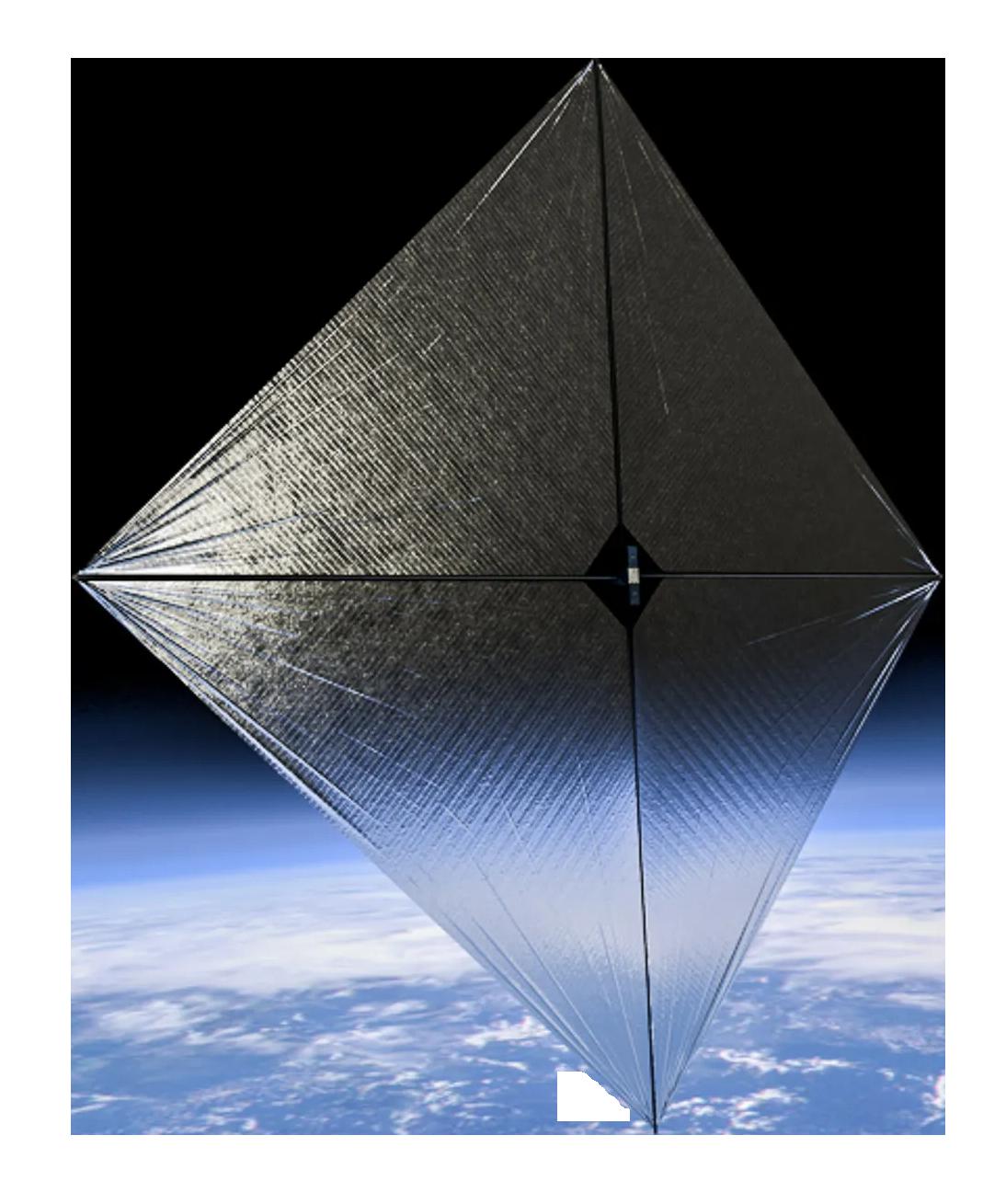
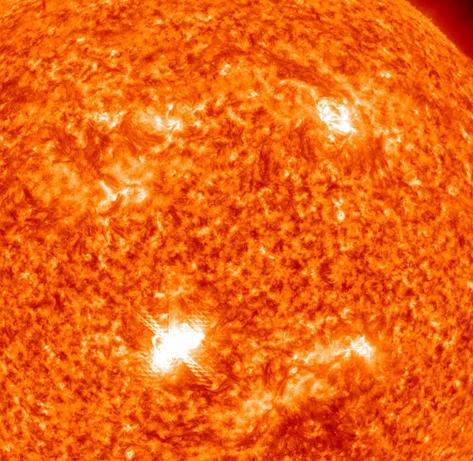
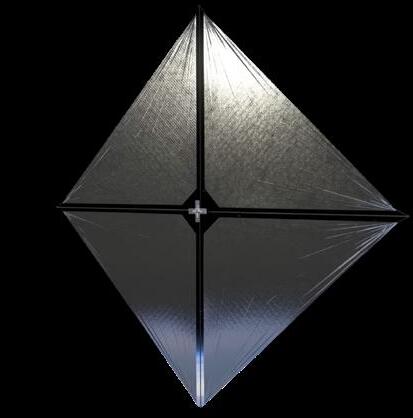
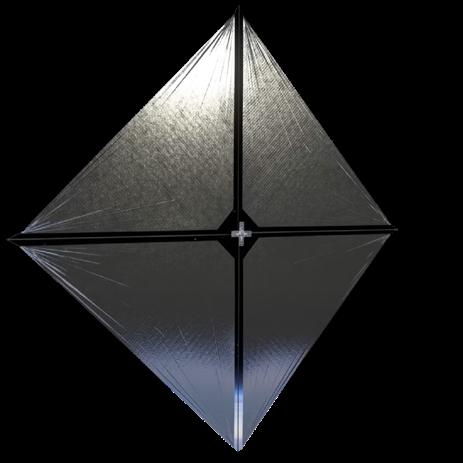
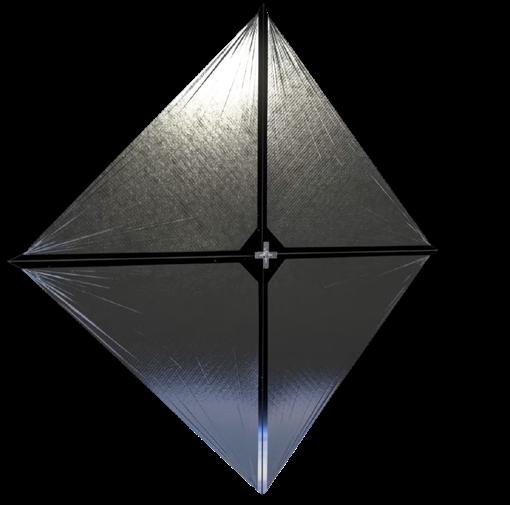
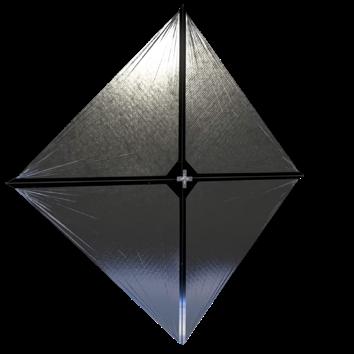
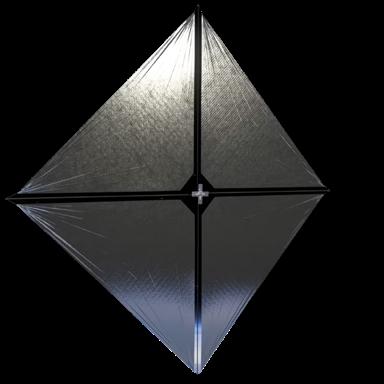
The Earth Cup is a space race motivated by climate change challenges. The competition centers around the idea of solar sails. Modern spacecraft rely on propulsion to move through space. While the specific method varies, they all share one Achilles’ heel — fuel. The amount of fuel a spacecraft can carry directly limits the lifetime of modern space missions. Solar sails aim to shift away from this paradigm.
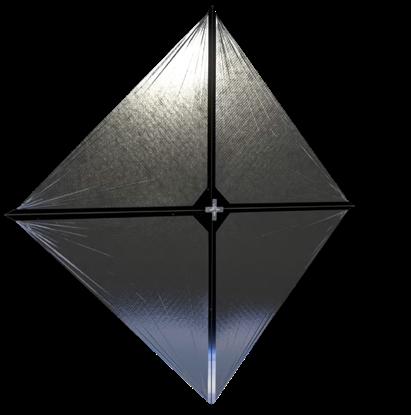
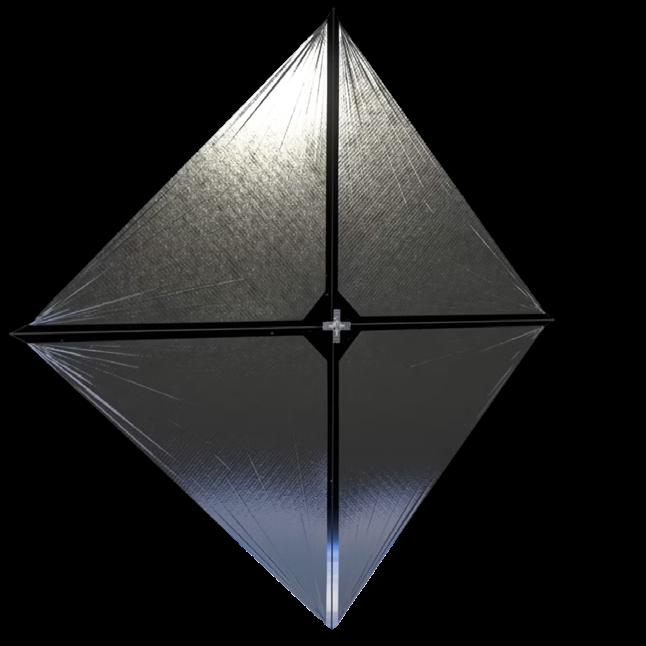
Rather than relying on traditional fuel sources, solar sails operate using photons from the sun. These sails must be extremely large, lightweight, and reflective so photons can bounce off their surface, transferring momentum that allows the spacecraft to maneuver through space.
The concept of solar sails dates back to the early 1900s, even appearing in science fiction in the 1950s and ’60s, but practical research has only recently
become possible thanks to advances in materials and space-ready electronics.
Associate Professor Caverly is leading the group participating in the competition and is currently working on a NASA-sponsored project to design and validate a concept for controlling the attitude of these large, next-generation solar sails. He has seen firsthand the potential solar sails hold for future missions.
“With solar sails, there is no fuel limit,” said Caverly. “The intensity depends on how close you are to the sun and how the spacecraft is angled relative to it. This affects both the strength and direction of the momentum that allows you to move.”
Assistant Professor Damennick Henry is focused on understanding the spacecraft’s orbit and is working closely with Caverly to determine how orientation can be used to extend orbital lifetime and maintain altitude for as long as possible.
HOW DO SOLAR SAILS WORK?
“On my side, it’s really about thinking through how to leverage the dynamics to get where you want to go, which is still crucial for solar sails,” he explained. “Even though we have some control authority, we still have to work with the natural dynamics to design the trajectory. In some sense, it’s this natural force that we have to understand and learn how to use.”
Extending mission duration is just one potential benefit of solar sails. They could also enable spacecraft to operate in regions that are inaccessible to traditional spacecraft.
“If we wanted to place a spacecraft between Earth and the sun to monitor phenomena like solar flares that can affect our satellites, we could get much closer using a solar sail,” said Henry. “There’s a balance between solar radiation pressure and the gravitational forces of the Earth and sun that allows a sail to essentially ‘hover’ — something a conventional spacecraft cannot do.”
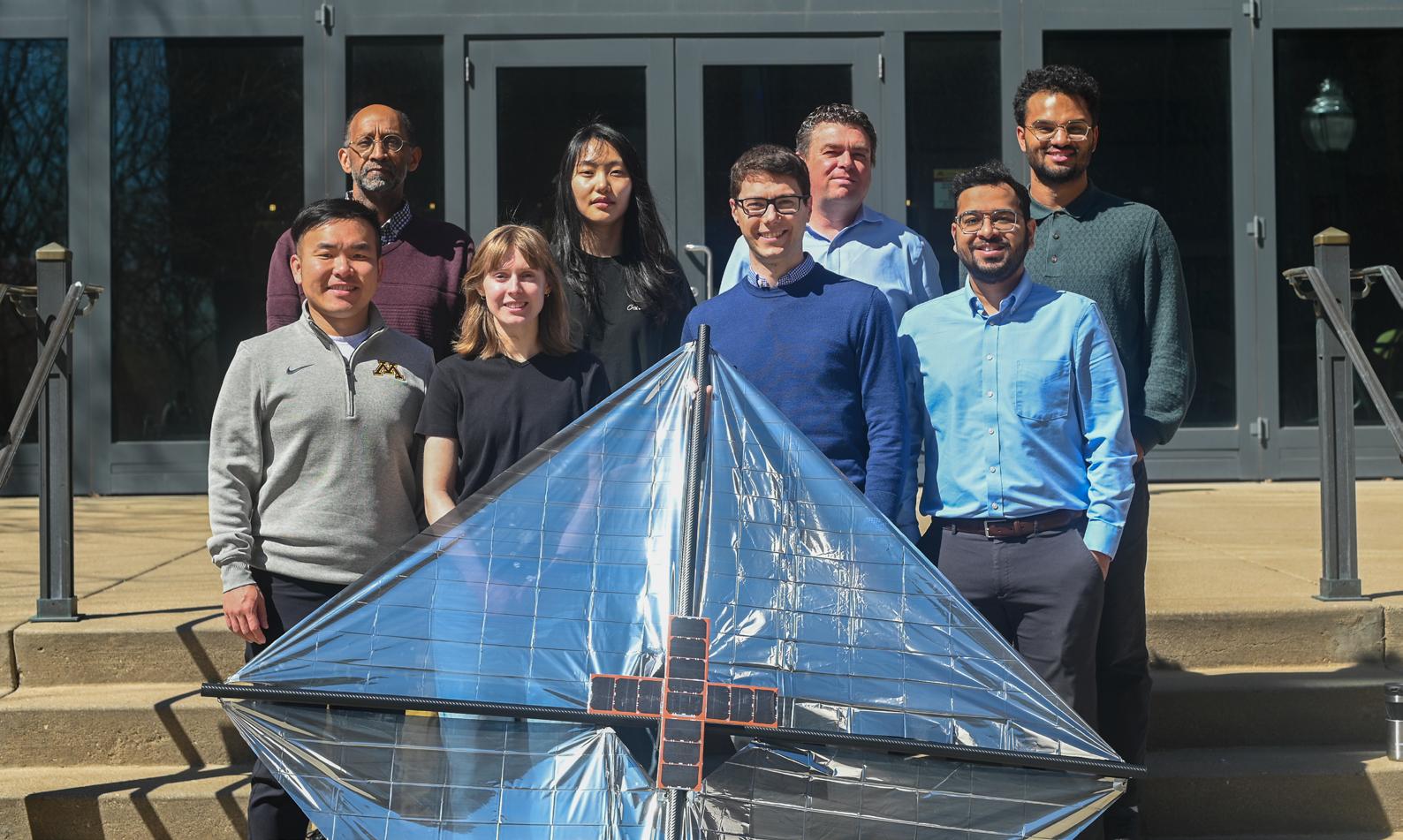
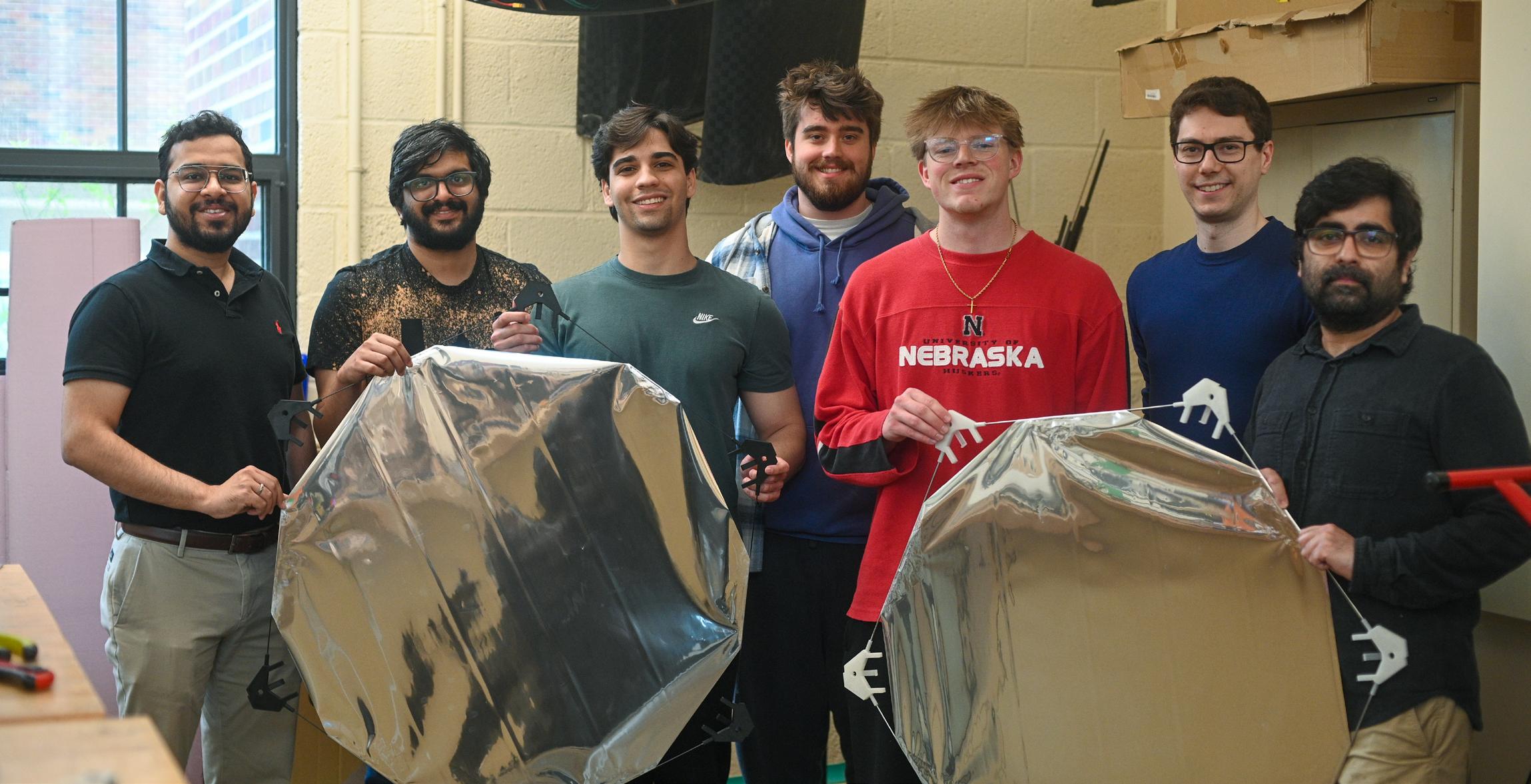
Front row (left to right): Ping-Yen Shen, Jasmine Thayer, Ryan Caverly, Kshitiz Upadhyay Back row (left to right): Demoz Gebre-Egziabher, Soojeong Lee, Tom Schwartzentruber, Damennick Henry
This competition brings together some of the biggest challenges in
each of our
fields.”
- Ryan Caverly, associate professor
While solar sails won’t replace traditional spacecraft, they could unlock entirely new types of missions that are currently impractical due to fuel constraints. Interstellar travel may even become more feasible, opening the possibility of visiting nearby star systems.
It may sound like something out of a movie, but Caverly and Henry believe competitions like the Earth Cup bring those ideas closer to reality.
“I think the really exciting thing about
the competition is that we’re starting to chip away at challenges that once existed only in science fiction,” said Henry. “Having spacecraft that are more responsive to needs here on Earth opens up an entirely new way of thinking about space systems in general.”
The competition is centered on exploring the use of solar sails to block a small portion of sunlight, effectively acting as a thermostat to help lower Earth’s temperature. This approach has the advantage of being both adjustable and reversible.
To achieve this ambitious goal, the competition begins with a series of increasingly complex races designed to advance the technology while also building an international workforce capable of developing these systems.
The first phase involves creating an initial design, which will be evaluated before Caverly, Henry, and the rest of the team is selected to move forward to a flight scheduled for early 2027.
RACE ONE
STEP 1: Teams will respond to specific technical challenges posed in the challenge guidelines
STEP 2: On-orbit challenge where as many as 50 teams will complete specific mission objectives
The team, dubbed the Midwest Alliance for Solar Sail Technology, is made up of faculty members, students and researchers at the University of Minnesota and beyond.
Professor Demoz Gebre-Egziabher is focusing on navigation, developing strategies for onboard GPS systems; Assistant Professor Kshitiz Upadhyay is addressing structural challenges, applying his expertise in soft materials to ensure the sail remains lightweight yet durable during launch; and Professor Tom Schwartzentruber is modeling the aerodynamics of the low Earth orbit environment, including atom-level interactions to better understand drag on the vehicle.
“This competition brings together some of the biggest challenges in each of our fields,” said Caverly. “If we can solve these problems for solar
Associate Professor Ryan Caverly and Assistant Professor Kshitiz Upadhyay with the Senior Design group they are sponsoring to help work on the project.
sails, those solutions can extend far beyond this application, with major implications for aerospace engineering as a whole.”
The University of Minnesota team is also partnering with researchers from Missouri S&T and the University of Michigan, forming a collaboration that spans a wide range of expertise. Students will play an active role as well, assisting with the design and assembly of various components.
While the team has made strong progress toward the initial race, they recognize that continued success will require broader support.
“Looking ahead, future races will require us to tackle increasingly complex challenges,” said Caverly. “To do that, we’ll need large, capable teams.”
JOIN THE RACE
With many major space centers located on the coasts, Caverly and his colleagues see this effort as an opportunity to grow a strong aerospace workforce in the Midwest. A key part of that vision is engaging the broader community, from University of Minnesota alumni to regional industry leaders.
As the Earth Cup pushes solar sail technology from theory toward reality, the work being done by the Midwest Alliance for Solar Sail Technology is a tangible step toward addressing one of the world’s most pressing challenges. Advancing this effort will require collaboration beyond the lab. Alumni, industry partners, students, and community members all have a role to play in building the expertise, resources, and momentum needed to succeed.
By getting involved through research partnerships, mentorship, funding, or advocacy, you can help propel this work forward and contribute to a future where space technology plays a critical role in protecting our planet. Interested? Contact rcaverly@umn.edu
Putting People First
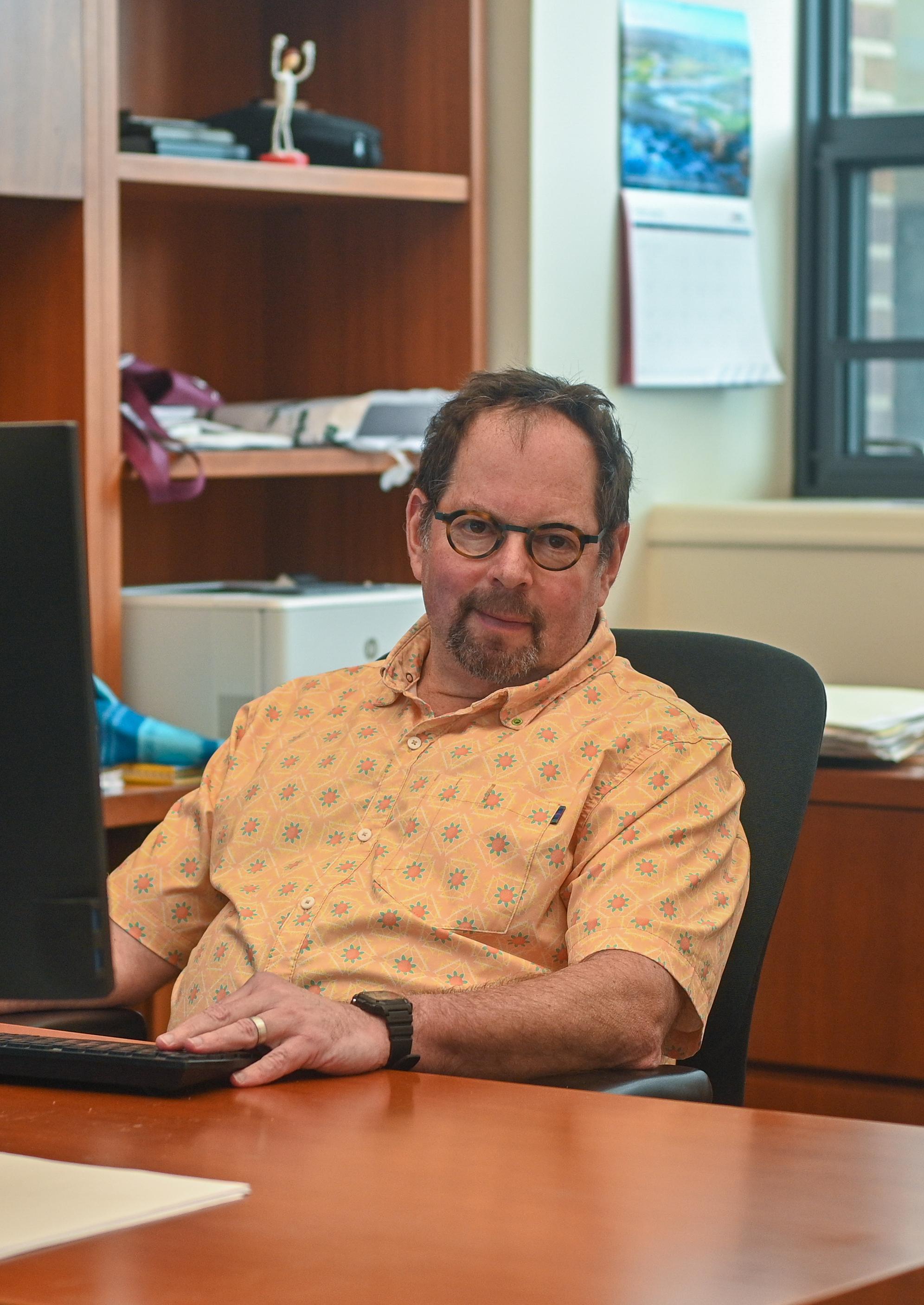
After years of shaping both people and programs, Professor Perry H. Leo steps down as department head, leaving behind a legacy defined by a steadfast commitment to community and mentorship.
“You have to think about the whole picture.”
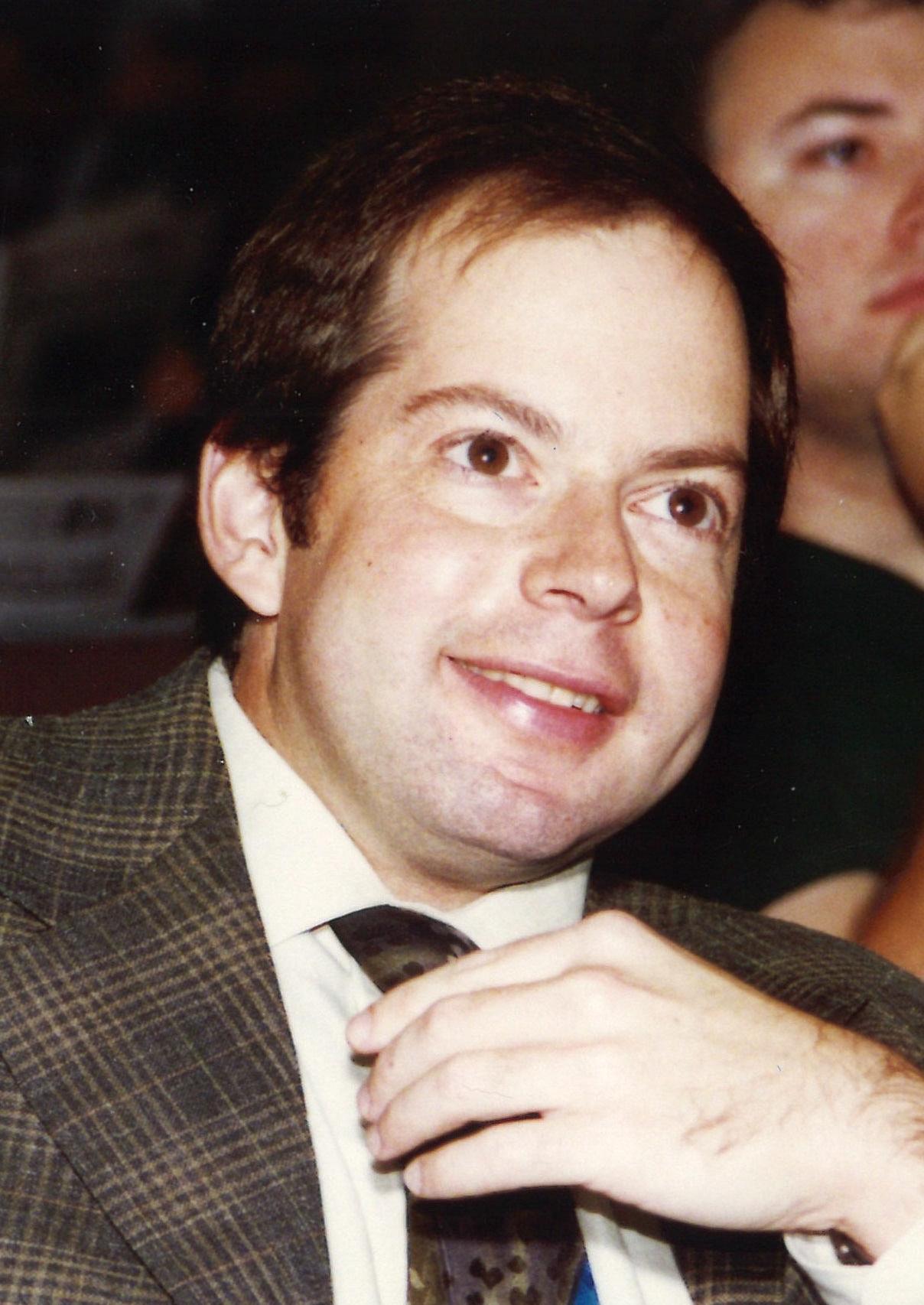
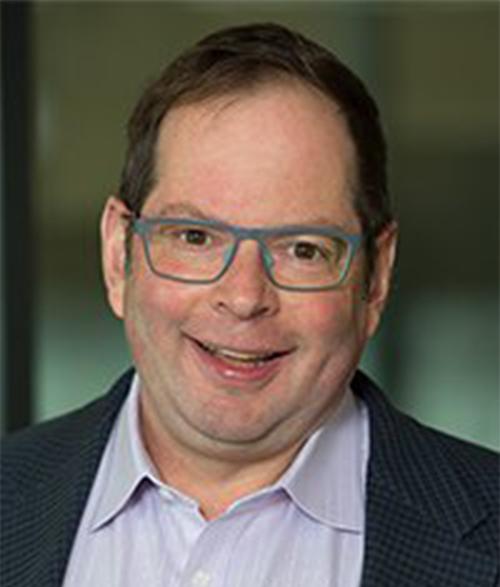
Professor Perry Leo is stepping down from his role as Head of the Department of Aerospace Engineering and Mechanics after many years of dedicated leadership.
For over a decade, he has guided the department through significant growth and achievement while continuing to contribute as a teacher, researcher, and mentor. Alongside his administrative leadership, he has advised graduate students, published extensively, and collaborated with universities and research centers around the world — all while balancing a busy family life.
Leo, who grew up in upstate New York, worked himself through the ranks of the faculty at the University of Minnesota starting as an assistant professor in the fall of
1988. His research focused on advanced materials, or how different materials blend together to form new materials.
His path into the department wasn’t exactly conventional. As an undergraduate, his focus was in mechanical engineering and materials science, followed by a PhD in metallurgical engineering and materials science. In many ways, he came into the field from the “mechanics side” rather than through a traditional aerospace pipeline.
“I’ve always been interested in engineering, but the aerospace part came later.” Leo reflects. “Seeing how excited our students are to be aerospace engineers has really helped keep my enthusiasm level up.”
An openness to evolving interests would become a defining feature of both his career and his approach to teaching and leadership. When considering opportunities, Leo had options, including positions at government research labs, but the appeal of a public, land-grant university ultimately stood out.
“The Big Ten appealed to me,” he says, pointing to the broader mission and more diverse student body compared to private institutions. Just as important was location. “Being in the Twin Cities was a big factor.”
The biggest influence for Leo was the department itself.
“When I interviewed, everybody was super friendly. It had a very collegial feel,” he recalls. That sense of community would remain a focus throughout his career.
Leo’s early days in the department were, by his own description, sparse. He remembers sitting alone in a second-floor office with little more than an old cube-style computer, wondering what to do next. At the time, Leo was the first new assistant professor that had been hired in years. Things began to shift in the early 1990s as new faculty arrived, transforming the department’s environment and energy.
“That made things a lot better,” he recalls. “It changed the atmosphere.”
What he takes the most pride in, however, isn’t administrative milestones. People have been the number one focus for Leo when it comes to fostering a positive culture in the department.
“We all know each other and we support one another. That’s part of our identity.”
From mentoring students who went on to succeed to supporting faculty through tenure and promotion, relationships have been at the core of his work.
“You don’t hire somebody just because they’re good at research if they’re difficult to work with,” Leo says. “You have to look at the whole person.”
He believes the department’s relatively small size is an important reason why the people-first approach is so critical.
“We’re a smaller community. We all know each other and we support one other,” he explains. “That’s part of our identity.”
The aerospace field itself has evolved significantly over the years that Leo has led the department. Early in his career, the focus leaned heavily toward commercial aircraft, with less emphasis on space. Over time, that balance shifted, driven in part by private-sector innovation.
Through it all, the department has maintained a consistent philosophy: focus on strong fundamentals.
“We’ve always done basic, fundamental engineering work,” Leo says. “We hire good people and trust them to focus on the important problems.”
That approach, he believes, has allowed the department to adapt without chasing trends. At the same time, the department has been able to devote time and resources to improving key areas.
“Our teaching has gotten a lot better,” Leo says candidly. “The research has stayed strong, but teaching has improved vastly.”
Stepping into leadership brought its own challenges, especially early on. One of the most difficult periods came when he assumed responsibilities during a predecessor’s illness.
“That was hard,” he recalls. “He was very well liked, and we had to keep things going.”
From that experience, and guidance from colleagues, he learned a key lesson about leadership:
“Most of the time, people just want guidance. It’s not really about you. They just want to hear that things are going to be okay.”
That mindset proved valuable again during later challenges, including the disruptions of COVID-19.
“As long as you keep communicating, the details matter less,” Leo says.
If you ask Leo about highlights, he acknowledges the department’s research breakthroughs, but the memories that stick out the most are those with students.
His first graduate student went on to a successful career in medicine and academia. Another undergraduate, who initially struggled, eventually started his own company. There are also lighter memories, like flying in a plane with a grad student who was also an experienced pilot.
“I wouldn’t do that again,” Leo says.
These moments, big and small, reflect what he values most: the long-term impact of building relationships.
Even after years of leadership, he isn’t done exploring.
“I’d like to do a little more research,” Leo says, mentioning ongoing collaborations and projects he hopes to revisit.
He also sees opportunities in the department’s curriculum, particularly in blending foundational knowledge with modern tools and more hands-on learning.
“Students want more hands-on projects, and I think that’s a good direction,” Leo says, while emphasizing the importance of maintaining strong fundamentals.
Despite the challenges and changes over the course of 28 years, one thing remains constant: he still enjoys coming to work.
“I really like the people,” Leo says simply. His connection to the Twin Cities extends beyond campus. His family has deep ties to the area, and the community has been an important source of support.
“It’s more than just work,” he reflects. “You have to think about the whole picture.”
That said, there may be one change ahead:
“I’d prefer not to be here in the winter, if I can make that work.”
From the Development Office
Thank you to the many alumni and friends in our community who provide support for our students, faculty, research, and programs.
Gifts of all kinds, from benefactors like you, allow us to attract and retain worldrenowned faculty, invest in ground-breaking research, enhance our academic programs, and ensure that our deserving students receive scholarships and fellowships.
To learn more about giving opportunities and the powerful impact your support can make, please contact Sarah Averkamp at (612)626-0515 or averkamp@umn.edu.
RECENT AEM DONORS
Steven Anschutz
Dr. Vibhor Bageshwar
Daniel Baseman
Gary Chapman
John Clemens
Roger Engdahl
Roger Engdahl & Susan Green
Kenneth Ewald
Janet Fransen
Dr. Paul Freeman
Olga Gerasimchuk
Kristen Gerzina
Alford Hanson Jr.
Gregory Happ
Dr. David Holger
Greg Jakus
Joseph Manthey
Justin Miedema
Kurt Niederluecke
Dr. A. Arda Ozdemir
Douglas Petesch
Mary Snustad
Karl Thompson
Dr. Erik Tylczak
John Virnig
Sally Wagner
Dr. V. Gregory Weirs
Sarah Averkamp
CSE Associate Director of Development
AEM Development Officer
linkedin.com/company/umn-aem
umn_aem
Your gift, along with those from our community, provides the essential work of inspiring and educating our students to address the complex challenges of tomorrow.
To make a gift, please visit: cse.umn.edu/aem/support-aem