
Lining Boards Installation Guide
This guide covers installing Intrim tongue & groove lining boards. Made from responsibly sourced, fingerjointed Radiata pine, the boards come primed and ready to paint Suitable for indoor and sheltered outdoor areas like porches and alfresco spaces
ON-SITE
Upon delivery, store Intrim lining boards in a covered area, away from sunlight and inclement weather ® Unload by hand, crane or forklift, and stack boards on timber gluts spaced 450mm apart and at least 150mm above the ground Cover boards loosely with plastic for rain protection and airflow; this helps them reach moisture equilibrium Carry boards on their edge to avoid damage to the primer or substrate, and do not drag them If damaged, sand the area and apply wood sealer or primer to primed or pre-oiled boards to prevent moisture ingress
MOISTURE AND MOVEMENT
All Intrim lining boards are kiln-dried during production to a moisture content of between 12 and 15 per cent, which is designed to minimise the potential for expansion and contraction following installation
® Nevertheless, timber is hygroscopic and will react to seasonal changes in weather conditions during the service life of the installation despite pre-seasoning efforts by the manufacturer Consideration should therefore be given to the way that boards will interact with their environment by absorbing moisture from or releasing moisture into the local atmosphere over time
ACCLIMATISATION
The transition of dry lining boards from storage in controlled environments – such as a warehouse or distribution centre, to installation in uncontrolled settings, typically within buildings under construction, presents several challenges It is therefore essential to begin preparing Intrim® lining boards for potential expansion and contraction immediately upon delivery to the job site
Intrim lining boards are seasoned to a moisture content of 12 to 15 percent, which is suitable for the mild conditions prevalent across much of coastal Australia When these boards are installed in more humid regions, such as tropical North Queensland, they will absorb atmospheric moisture and expand in width Conversely, when installed in arid inland areas, the boards tend to lose moisture and contract in overall width
® These changes generally occur within weeks of installation as the timber seeks to reach equilibrium with the ambient relative humidity – a state known as equilibrium moisture content (EMC) At EMC, the timber remains stable, neither expanding nor contracting, and is in harmony with its environment
To mitigate issues associated with board expansion or contraction, it is advisable to allow the boards to achieve EMC prior to installation Industry best practice recommends acclimatising lining boards on site, near their intended installation location, for one to two weeks before fixing them into position Longer acclimatisation periods may be necessary in conditions that are exceptionally dry, hot, or wet Products intended for external applications may also require extended acclimatisation compared to those used in controlled interior environments.
Prior to installation, ensure that the lining boards are ready by using a moisture meter to record readings from multiple boards within the batch. If the measurements confirm that the timber has equilibrated with the anticipated in-service moisture levels indicated in the following chart, the boards may then be installed.
Lining Boards Installation Guide
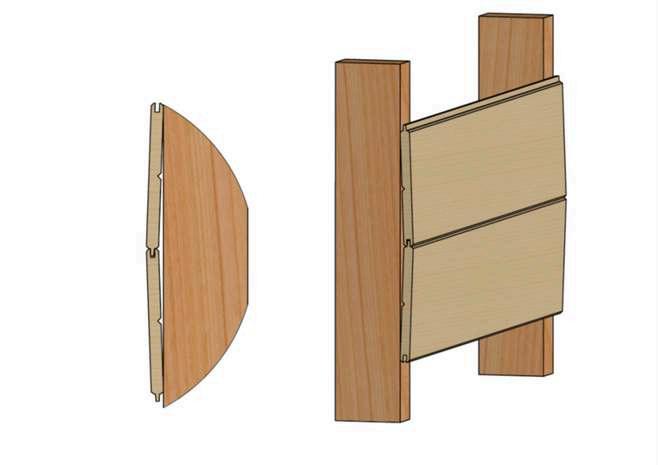
llowing these recommendations can lining boards to equalise on site, bly resulting in issues like ‘tenting’, e boards lift from supports at tongue roove joints.
INSTALLATION
General Guidelines
Lining Boards Installation Guide
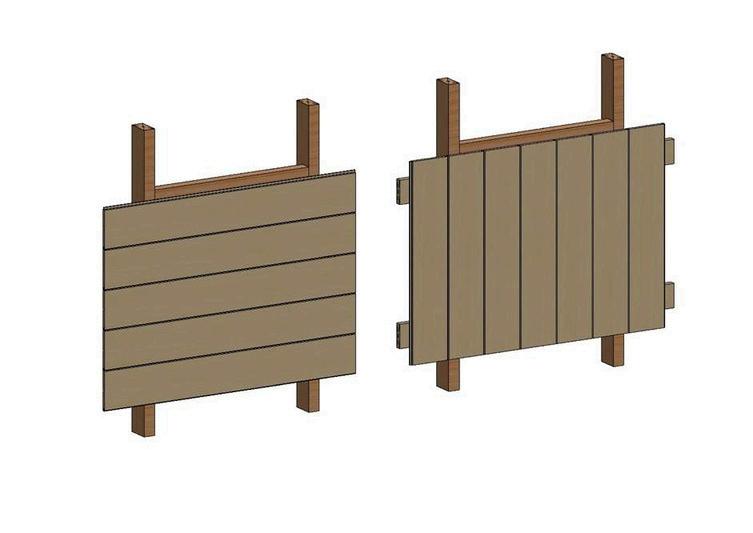
® Boards can be installed horizontally, vertically, or diagonally, and should be fastened at the recommended centres If spans are increased, insufficient support may cause distortion of wall or ceiling linings
Check Intrim lining boards with a moisture meter to confirm consistent moisture levels before installation. Wall and ceiling framing must comply with AS1684.2 or AS4100 and be protected near the building envelope using vapour-permeable membranes, which let water vapour escape while blocking external moisture.


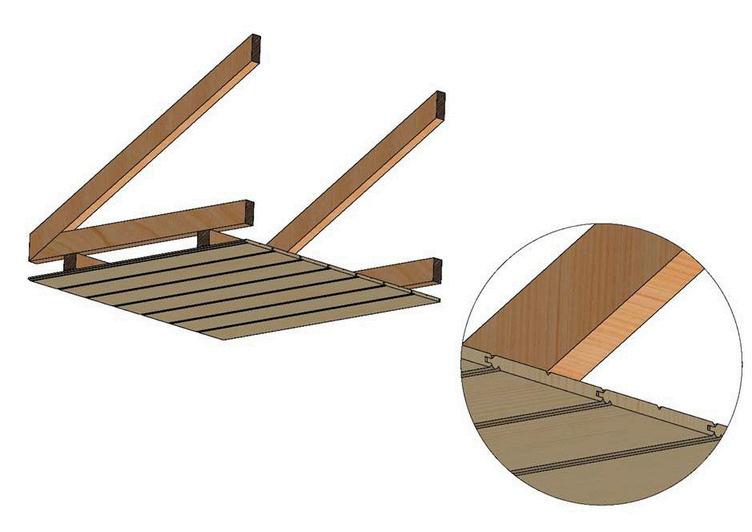
Lining Boards Installation Guide
Whenever feasible, and prior to installation of lining boards, it is recommended to apply a preliminary finish –such as paint, oil, or varnish – to all surfaces of each board, including the reverse side Wood coatings help to regulate moisture transfer into the substrate, and an initial topcoat promotes uniform moisture-related movement across every surface of the board Applying preliminary coatings also reduces the risk of primer visibility at joints in the event of shrinkage following installation
For exterior applications, such as under patios, alfrescos or eaves, it is essential to reseal any exposed timber areas during installation using an appropriate preservative, such as Tanalised Enseal Clear or Ecoseal Additionally, these areas should be reprimed with either a primer or topcoat Utilising these supplementary products provides enhanced protection to vulnerable sections, particularly end grain, against fungal decay
Direct Fix Installation Method
1 Check lining boards for dimensional consistency and ensure that moisture content is within optimal range
2 Where possible, apply a pre-installation topcoat to all surfaces of the lining boards Any cuts, holes and notches installed into the exterior lining boards should also be resealed and reprimed before boards are fixed to the frame
3 Check framing for straightness and plumb Pack, cripple or level studs as required to ensure the lining surface will be even
4 Apply a bead of construction adhesive to each batten or stud Position the first board with tongue facing towards the installation and secure to framing supports with brad or nails
5 Install subsequent boards, checking periodically for straightness and plumb Avoid over- cramping Boards should have a snug fit, without being connected so tightly as to inhibit expansion at the joint
6 Place butt end joints over battens or studs, staggering these joints over the surface of the installation
7 If required, the final lining board can be ripped or trimmed with a power saw to fit the remaining space Face fix trimmed boards into position with brads or nails, ensuring that bare timber exposed by ripsawing is resealed and reprimed prior to installation
Face vs Secret Fixing
Lining boards can be secured to framing by either face fix or secret fix methods according to the preferences of the installer
When using the face fix method, boards should be fixed with at least two brads or nails at each stud, taking care to position fasteners at least 15mm from the edges and ends of products, where splitting can occur
If the secret fix method is selected, one brad or nail should be driven through the tongue of the board at each stud, ensuring that the head of the fastener is punched sufficiently below the surface of the timber to allow the next board to be fitted over the top
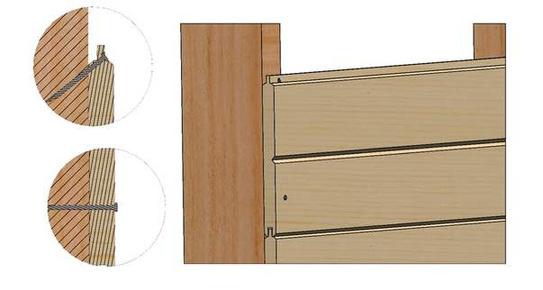
EXPANSION GAPS
Lining Boards Installation Guide
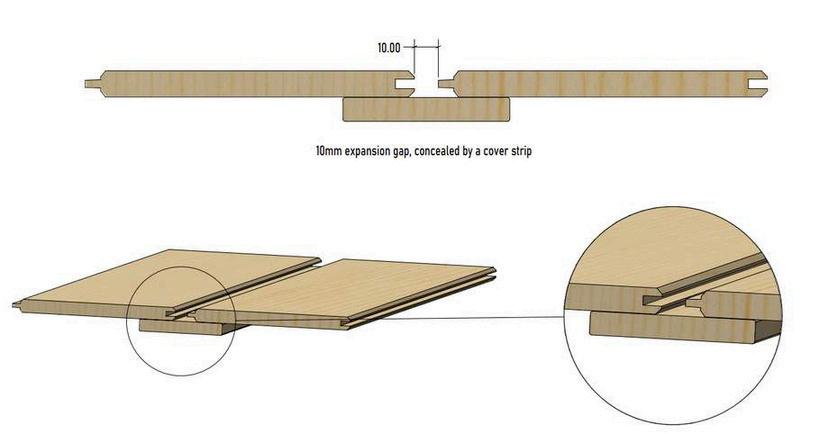
In moisture-laden interior and exterior applications, allowances should be made for changes in the equilibrium moisture content and width of lining boards through the provision of expansion gaps and control joints
As a general rule, a 10mm expansion gap should be left at the top and bottom of horizontal applications, or at the left- and right-hand sides of vertical installations This will prevent surfaces from distorting after products are fitted
Larger lining board systems may require the installation of control joints at intervals of approximately three metres These controls can be concealed under a cover strip if preferred by the installer or homeowner
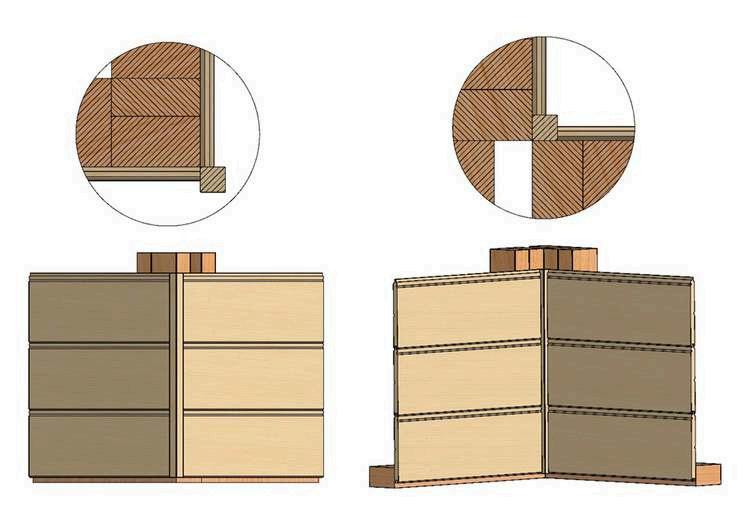
CORNER AND TRIM DETAIL

Lining Boards Installation Guide
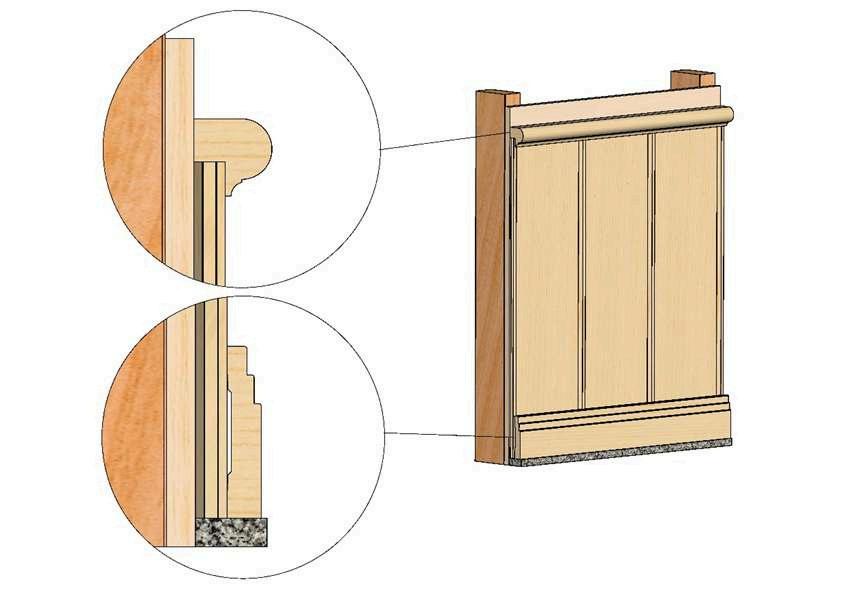
FASTENER SPECIFICATION
Intrim lining boards should be fixed to framework with quality timber fasteners in accordance with the table below
Where pneumatic nailing guns are used, care should be taken to ensure that fasteners are not over- driven as this may cause boards to split or distort For a typical finishing gun, a pressure of 120psi is usually sufficient to drive the head of the nail flush with the surface of the lining board
FASTENER DURABILITY
Lining Boards Installation Guide
Fasteners should have an appropriate level of durability for the intended application.
Inland exterior environments: choose a nail or brad that has been hot dip galvanised for protection against corrosion caused by exposure to moisture or high levels of humidity.
Coastal environments: airborne salt can cause pitting corrosion in fasteners protected by galvanic coatings. Stainless steel nails or brads should be selected for these applications.
Interior applications: bright steel fasteners are acceptable except where boards are to be installed in moisture laden areas such as bathrooms and laundries Select a hot dip- or electro-galvanised fastener for long-term durability in these locations
FINISHING
®
Intrim lining boards are factory primed and will accept topcoats with minimal preparation For best performance, apply at least one preliminary coat of quality topcoat to the front, back, edges and ends of boards before they are fitted to framework Wood coatings slow down the transfer of moisture into the substrate, and an initial application of topcoat will ensure any that moisture- related movement that does occur is consistent across all of the board’s surfaces
Preliminary coatings also minimise the potential for primer ‘show through’ at joints if shrinkage occurs after installation The preparation and finishing of boards should be undertaken in a tradesman-like manner to the requirements laid out in AS/NZS2311 – Guide to the Painting of Buildings, and according to the following guidelines:
1 Fill any nail holes with a quality wood filler and lightly sand to an even finish
2 Sand and spot prime any areas that require additional attention with a quality primer/sealer
3. Ensure that the surface of the lining board is free of dirt and contaminants. If necessary, clean gently with a light dilution of detergent or sugar soap and water
4 Apply chosen topcoats in accordance with the manufacturer’s recommendations
Take care when applying finishes to the tongue and groove joint between boards Some finishes, especially film forming polyurethane coatings, can cause boards to be bonded together at the joint, inhibiting movement and causing cracking and splitting within the lining board system
RESIN BLEED AND LIGHT REFLECTIVE VALUE
Dark paint colours have the potential to cause several issues when applied to Radiata pine in exterior applications because of the way these colours absorb solar radiation instead of reflecting it away from the timber substrate
The most common of the issues is referred to as resin bleed, which occurs when pockets of resin within the timber mobilise on the surface of the painted board as a sticky, honey-coloured material. If it has occurred, resin bleed is typically found on timbers that have been coated with dark coloured paints, as these finishes tend to increase temperatures on the surface of the installation (beyond the melting point of resin).
It is for this reason that Intrim Group recommends the application of light coloured paints to products in exterior applications. Referring to the light reflective value (LRV) scale where 0 is pure black and 100 is pure white, installations finished in paints with an LRV of 45 and greater are cooler to the touch and will be less prone to issues such as resin bleed
Light reflective values are published by all major paint manufacturers and can usually be found online
MAINTENANCE
Exterior products should be cleaned every six to twelve months with a mild detergent and soft bristle brush to remove dirt, pollen and other contaminants While cleaning, inspect sealants, flashings and fixings and maintain them as needed
Note that pressure washing has the potential to damage protective coatings and can cause surface checking or aggravate moisturerelated movement by forcing water deep into the substrate It should generally be avoided
Finishes should be reapplied in accordance with the manufacturer’s recommendations, or when existing coatings have started to deteriorate
Do not burn offcuts or residues collected from preservative treated timber This waste should be disposed of by approved local authority methods DISPOSAL OF OFFCUTS AND WASTE

Lining Boards Installation Guide