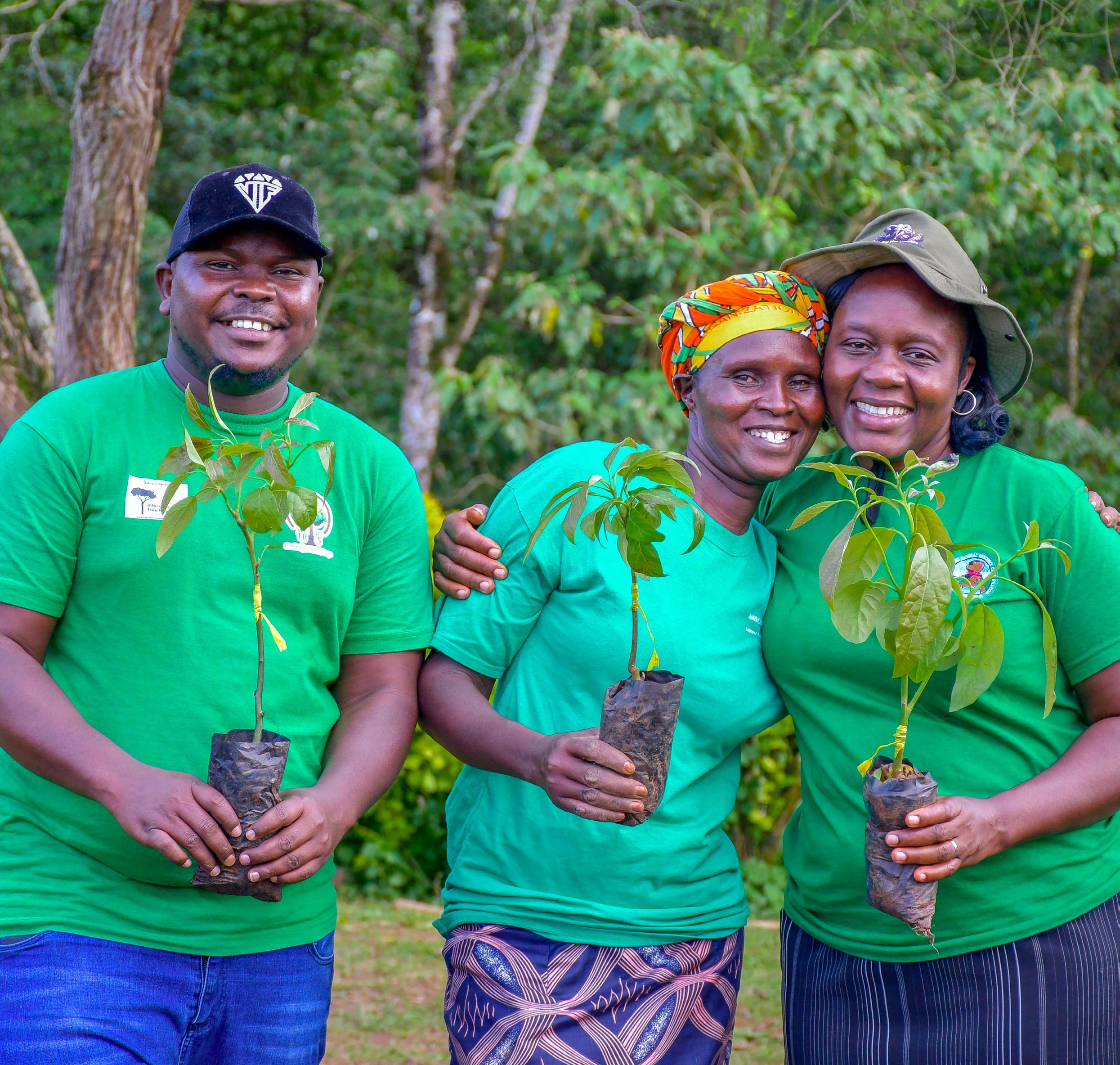

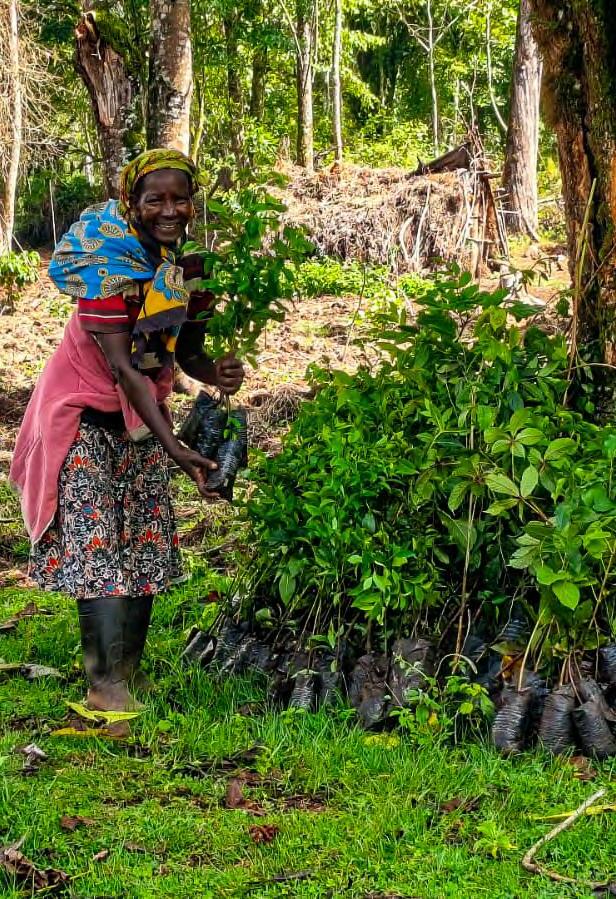
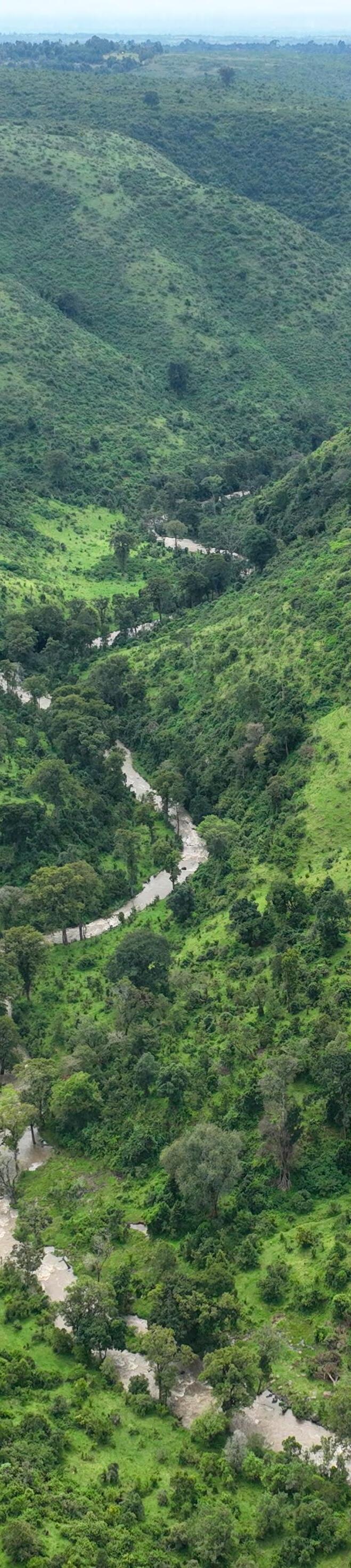
The importance of the International Tree Foundation’s work is becoming ever clearer as climate change increasingly affects communities around the world. Through our Community Led Tree Planting initiatives in Africa, we are helping to address the everyday challenges these communities face. This work is strengthened by our tree-planting programmes in the UK and Ireland, as well as the planting days we organise globally. Together, these efforts are building a community with the knowledge, skills and resources to create meaningful change through practical action and advocacy.
As we look to 2026 and beyond, ITF’s main challenge will be securing sustainable funding. The world is facing many pressures, and some run counter to efforts to tackle the effects of climate change on people’s lives. Encouragingly, both institutional and individual supporters continue to recognise the exceptional quality and value of the work carried out by the ITF community. I would like to thank everyone for their dedication, hard work and commitment over the past year.
This Annual Report highlights our achievements over the past year. We hope you find it informative and inspiring, and that it strengthens your belief that ITF merits your support.
Tom Lupton Chair
Governing document
Memorandum & Articles of Association
Patron
His Majesty King Charles III
Board of Trustees
Mr T Adlam
Mr S Barber
Mr JI Drori
Mr B Farmer
Mr JW Kamau (resigned 31 August 2025)
Mr J Kimani
Ms A Lowndes
Mr TG Lupton
Ms C MacQueen
Ms M Reru
Prof K Schreckenberg (resigned 15 June 2025)
Dr Stephen Vickers
Ms R Wanyoike (resigned 14 April 2025)
Chief Executive Officer
James Whitehead
Registered office
The Old Music Hall, 106—108 Cowley Road, Oxford, OX4 1JE
Bankers
CAF Bank Ltd, 25 Kings Hill Avenue, Kings Hill, West
Malling, Kent, ME19 4JQ
Barclays Bank plc, Leicester, LE87 2BB
Independent Auditor
Ben Hayes FCA, Wenn Townsend, 30 St. Giles, Oxford, OX1 3LE
Charity number 1106269
Company number 5219549
Just £2 can pay for a tree that provides food for today and protects nature for tomorrow. Make a gift today.
We believe in the power of trees; when they’re planted properly, they transform landscapes and lives. We focus our efforts where they’re needed most – places with threatened ecosystems, endangered tree species and climate-vulnerable communities. Together, through tree planting, we tackle social, economic and environmental challenges.
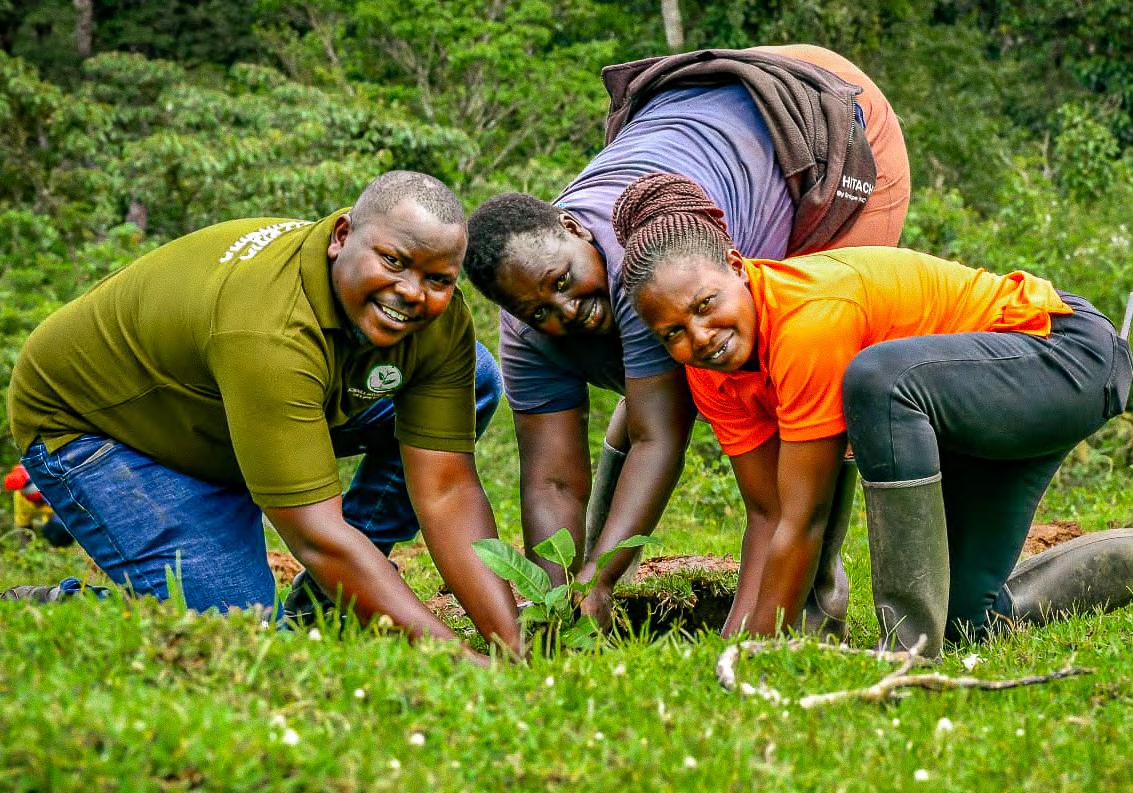
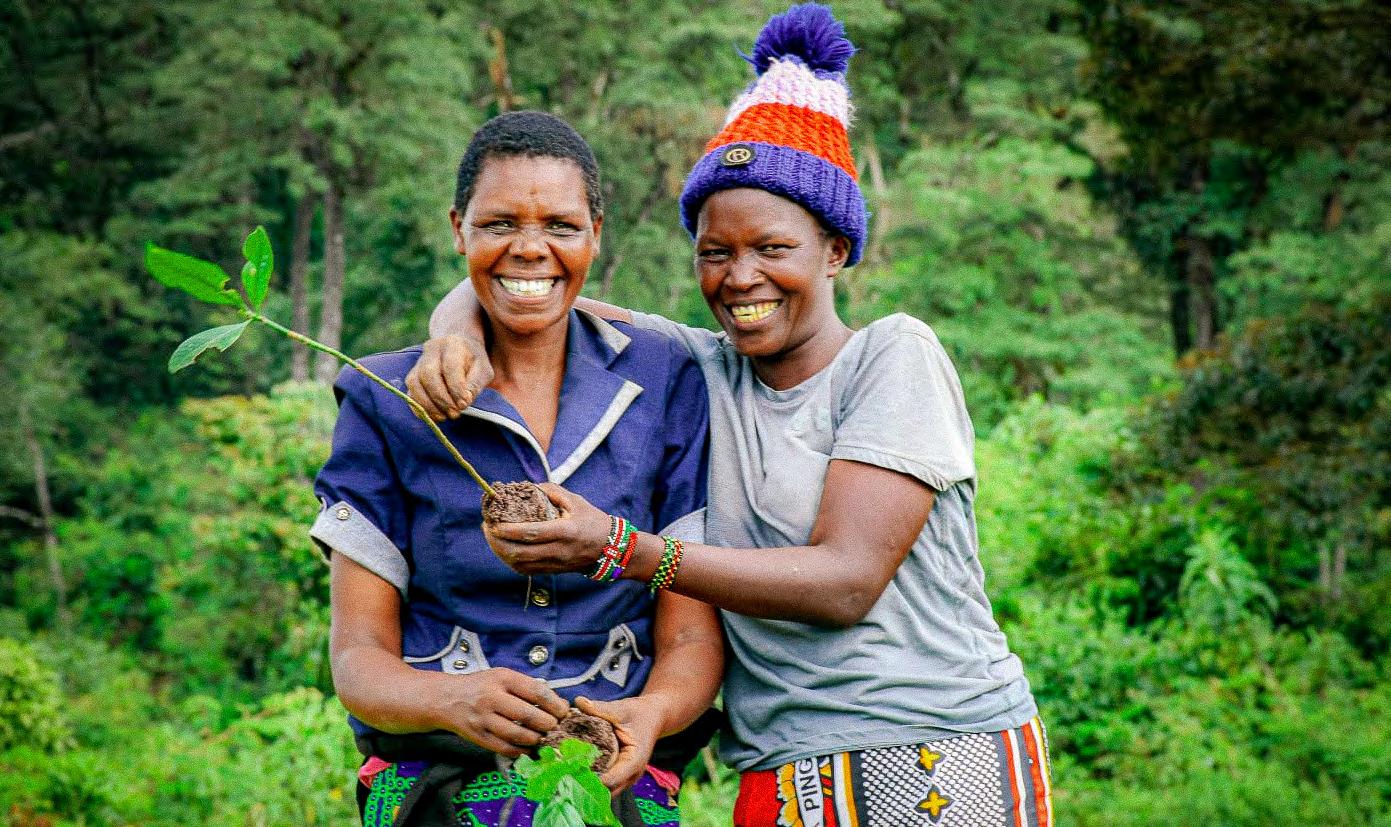
It takes a community to restore a forest. That’s why we’re community-led. That means that local people, who depend on their local forest, lead the restoration. Communities identify their own needs and ideas. And together we implement practical, locally-driven solutions that include everyone – especially women, young people and vulnerable groups.
It’s how we’ve done it for over a hundred years and with your help, it’s what we’ll be doing for a hundred more.
Our mission goes beyond planting trees. We’re helping communities thrive with better livelihoods, stronger economies and healthier ecosystems.
We’re the world’s oldest tree planting charity. We started in the foothills of Mount Kenya in 1922.
Our mission
To work with local communities to plant trees and restore forests in places where, together, we can make the fastest, most lasting impact for communities and the future of our planet.
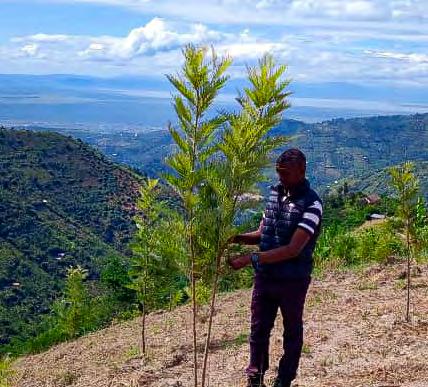
Our approach ensures an impressive 80% or higher tree survival rate.
We combine indigenous knowledge and scientific methods to propagate and grow endangered trees. The trees are then planted back into the forest, increasing resilience and ensuring we don’t lose any of these vital species.
Teaching people to grow trees and create their own nurseries provides a new income source, while the trees themselves produce nuts, fruit and other resources which can be sold, creating sustainable livelihoods which will grow as the trees do.
In many communities where we work, women have little agency over land while carrying the burden of tending it. Through education and training for women, we strengthen forest restoration and the local economy.
Time in nature is proven to boost physical and mental health. Our work helps people, who might not otherwise have the opportunity, to spend time in green spaces and connect with nature.
Trees capture carbon and cool our planet. They bring rain, combat drought, clean the air, keep soil stable, reduce the effects and likelihood of natural disasters.
• Combats the devastating effects of climate change
• Improves soil and yields
• Provides shelter and food for people and wildlife
• Restores or protects existing forests
• Restores ecosystems and helps biodiversity to flourish
• Improves access to vital resources like food and medicine
• Equips people with sustainable livelihoods.
Thousands of communities depend on forests for food, medicine and fuel. Planting trees on homesteads and farms improves access to these vital resources while protecting oldgrowth forests.
By planting trees and rewilding, we restore habitats, help species to return and ensure nature and biodiversity can flourish once again.
When trees are planted on farms, they improve the soil which leads to higher yields. Trees also give shelter and food for families and livestock.
Tree planting helps marginalised communities to enhance their wellbeing and economic independence. That’s a win-win for people and their environment.
Our work in East Africa is making a real difference, driving progress on 8 out of the 17 of the UN’s Sustainable Development Goals (SDGs).
From boosting social and economic development to managing natural resources sustainably and tackling climate change head-on, we’re creating fast and lasting impact where it makes the biggest difference.

542,250 trees planted
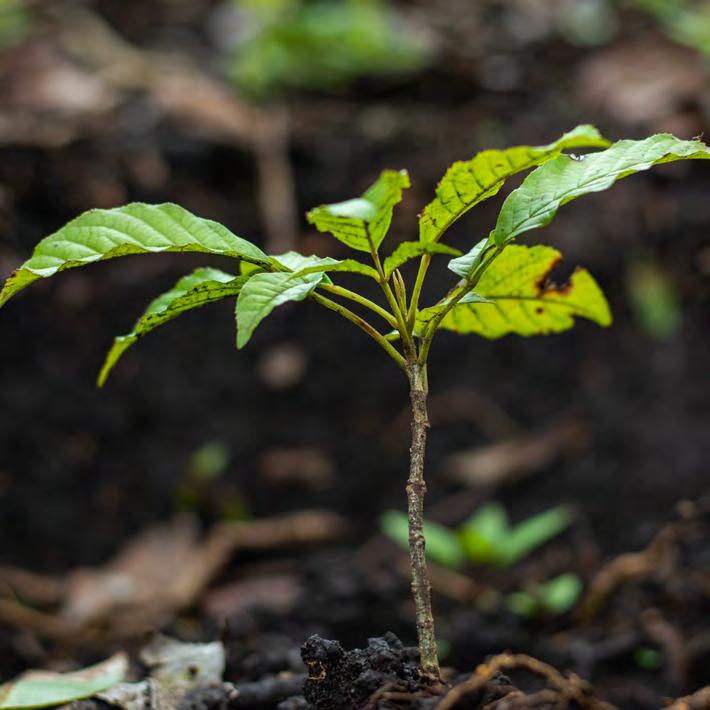

50 community organisations increased forestry and agroforestry capacity

1,450 young people learned about our environment and conservation
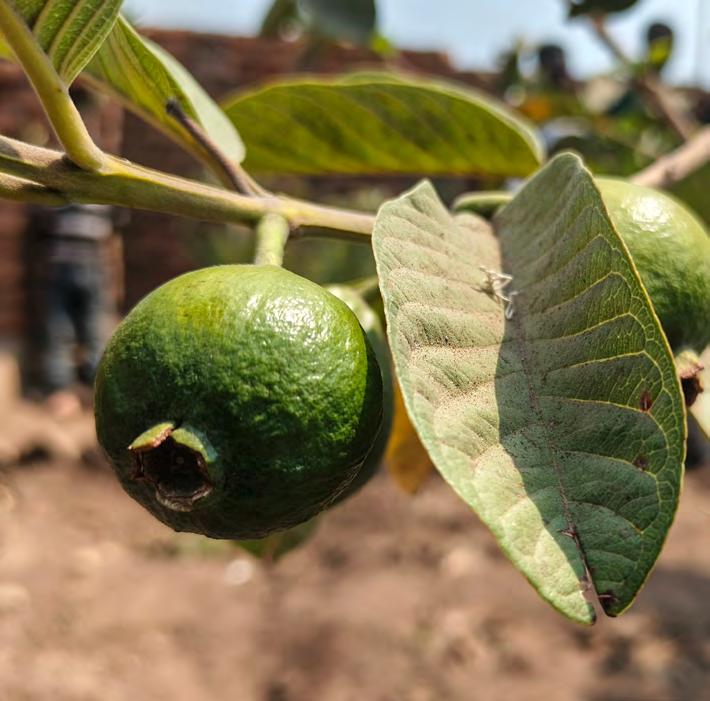

31,150 women and girls benefiting from trees

25 projects increased biodiversity or ecosystem services
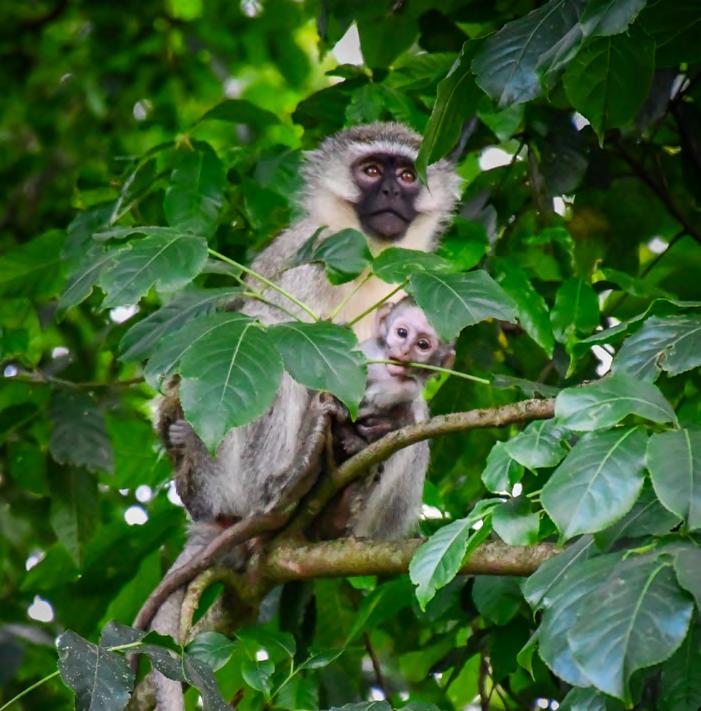

500 hectares of forest conserved or restored

15,500 families increased their household income
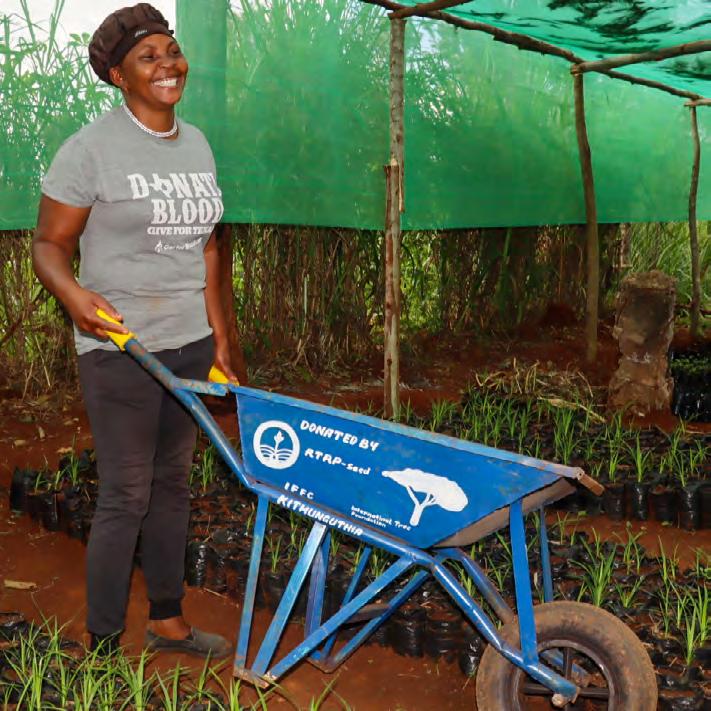

42,300 people reached through awareness campaigns
The events of 2025 have shown starkly that we are living through a climate and nature crisis that is placing unprecedented pressure on both ecosystems and the communities that depend on them.
At the International Tree Foundation, planting trees is central to our response to the climate crisis. Working alongside communities to grow and plant the right trees, in the right places, remains at the heart of our mission and has done for more than a century.
But trees rarely deliver their full potential in isolation. Across our programmes, tree planting is integrated into a wider set of activities designed to build resilience and restore ecosystems in ways that endure. Community-run nurseries create local ownership. Agroforestry improves soil health while increasing food production and farm incomes. In drylands and degraded forests, water harvesting, soil restoration and careful site management underpin long-term survival. Alongside this, our work brings in practical solutions that improve daily life while reducing pressure on forests, like fuel-efficient ecostoves that need less firewood and improve air quality.
Within this report, we also highlight women’s empowerment. This is not an add-on to our work; it’s central to effective restoration. In many communities, women manage natural resources yet have the least access to land, training and income. When women are supported, trees are better cared for, nutrition improves and income is reinvested. We have seen this first-hand – increased confidence and decision-making power leads to healthier landscapes and more resilient families. Supporting women in our work is simply about making the work effective and ensuring lasting impact.
Care and quality are vital to our work. We are focused on making every pound go further. Our model is built on partnership, working with trusted local organisations who understand their landscapes and can deliver efficiently. Rather than short-term planting, we invest in skills, systems and local ownership so trees survive and benefits continue long after funding ends. With over 80% tree survival rates and a strong track record of increasing incomes and yields, we prioritise approaches that deliver multiple outcomes at once. Careful monitoring, community-led design and a century of experience mean we focus resources where they make the greatest difference. The result is practical, lasting change that represents strong value for money, both for communities and for funders seeking meaningful impact.
As climate impacts intensify, the need for restoration that is thoughtful, locally led and built to last has never been greater. Our work tells the story of trees planted with purpose that bring lasting prosperity for people and nature.
James Whitehead, CEO
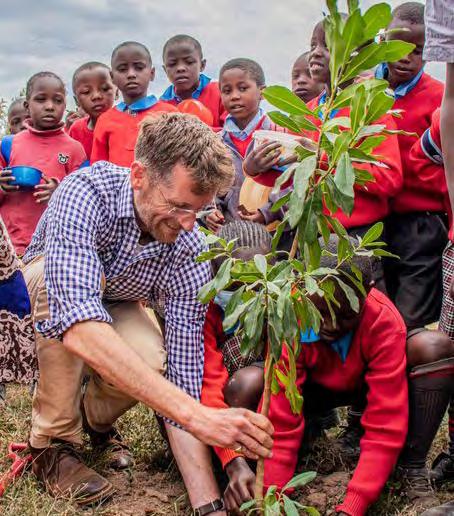
“Following the large-scale planting campaigns of 2024, this year focused on intensified monitoring, reporting and verification. Our efforts concentrated on maintaining trees, boosting survival rates and assessing longterm impacts.
“Canopies are forming just four years after planting in Dundori Forest. Rivers in Irangi Forest have been recharged, increasing water supply for local communities. Birdsong and insect activity have intensified. Elephant populations in Meru Forest are rising. And small animals such as dik-diks, antelopes, hares and worms are thriving in Ndaragwa Forest. These indicators demonstrate a clear revival of biodiversity across restored ecosystems.”
Mercy Kimani, Kenya Programme Manager
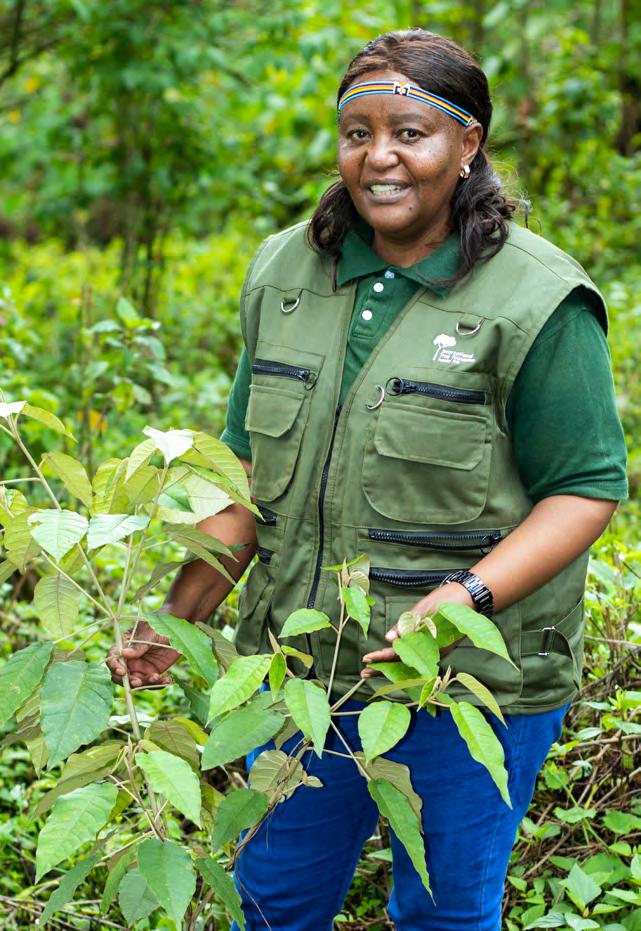
beehives have been given out and 40% of recipients have already harvested honey, creating sustainable, nature-based livelihoods that complement restoration efforts
“We have planted about 10 species in the forest, some of them are medicinal. These are beneficial for our health and even for animals.”
Josephine Wangari, Kamuyu
Our partner MEFECAP planted 16,000 indigenous trees, including 2,800 threatened species, helping to rehabilitate 10 hectares of degraded forest in Upper Imenti. For Edith Karimi, the opportunity to work during the planting season has already made a difference. With the wages she earned, Edith bought her first goat and now produces three litres of milk each day. “I can count myself as a person with an income,” she says. “I sell some milk and use the rest for my family. Thank you to ITF for this project.”
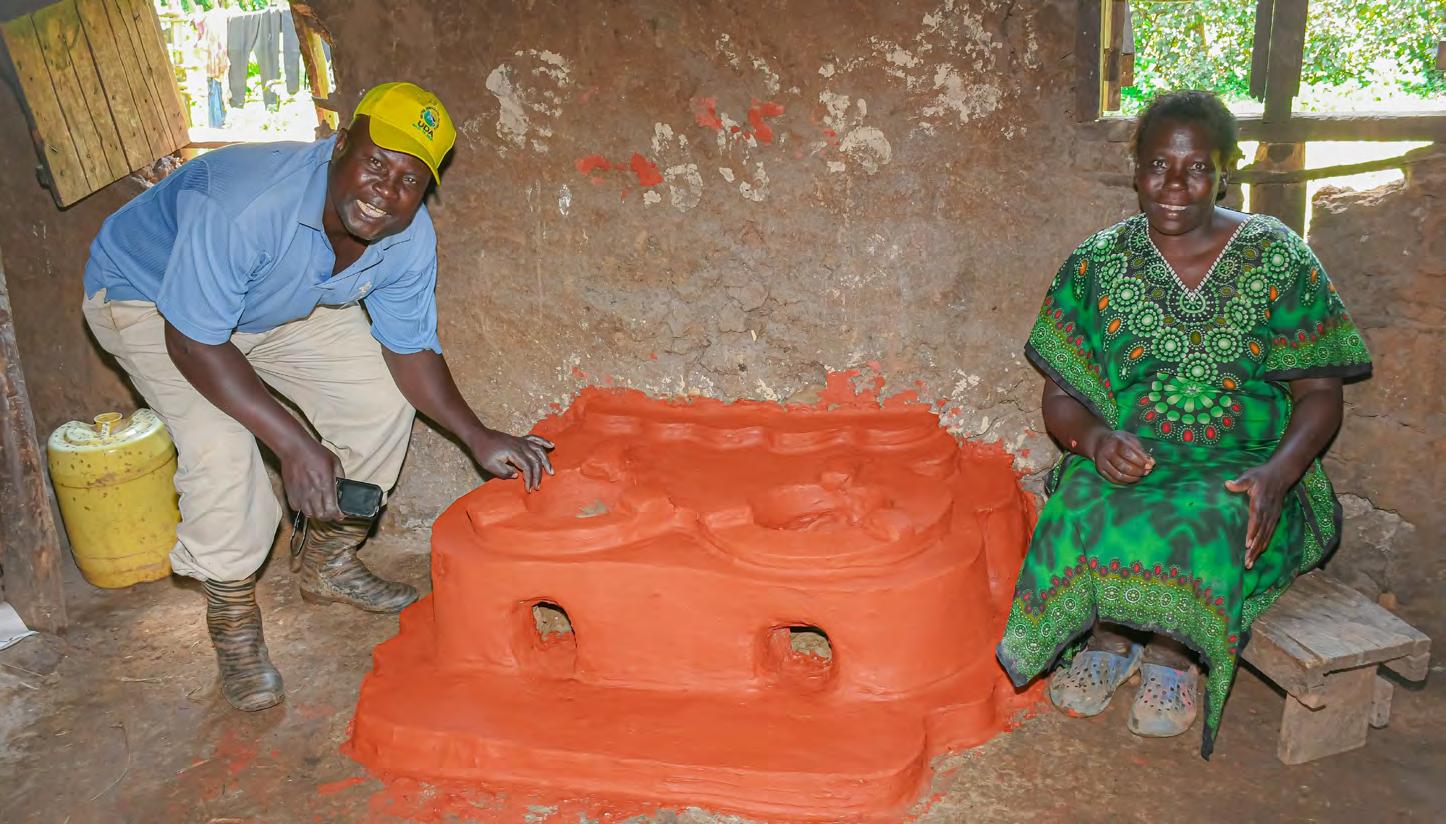
A clean cooking project is helping protect forests while improving daily life for local families. The project introduced 300 eco-stoves to households living near Malava Forest, Kakamega. These stoves use a third less firewood and produce less smoke, creating healthier homes while reducing pressure on the forest. The initiative has also trained 30 local eco-preneurs to build and install the stoves, creating green jobs and strengthening community ownership of forest conservation.
In Kitui County, teacher Lilian Motovi has inspired her whole community to plant trees. Her school received seedlings for students to plant. Watching them grow sparked Lilian’s own passion, and she began planting trees at home, which in turn sparked the passion of her neighbours. “Even my neighbours were inspired to plant trees when they visited my home,” she says. “I contacted KDC who gave us 3,000 trees which I gave to my neighbours to plant in their farms. The trees are doing very well.”
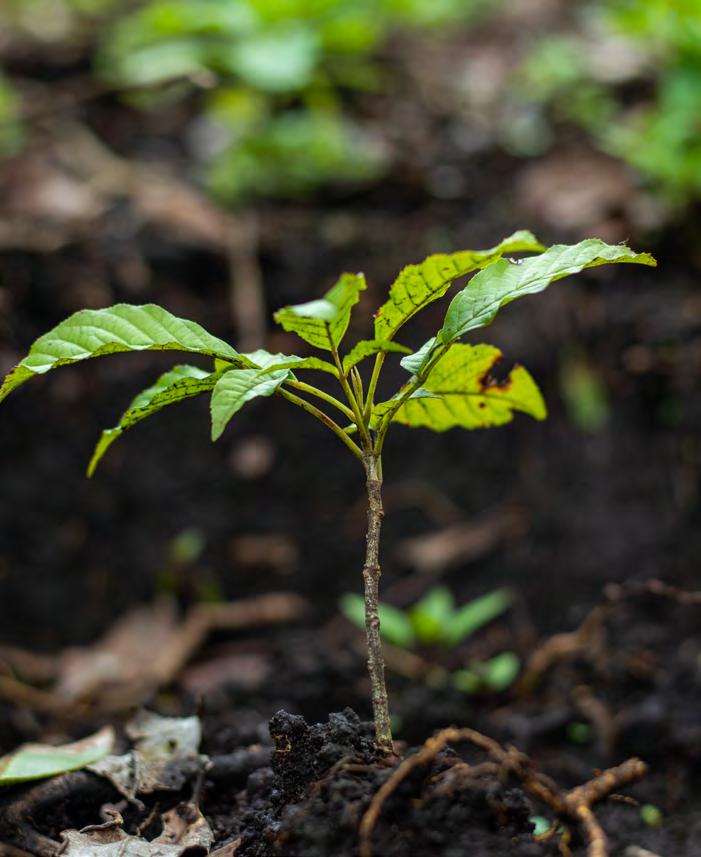
“In 2023 I received and planted 200 trees on my farm near the road. Since then I have been nurturing the trees. They are doing really well. My trees have been attracting passersby who take pictures, admiring them and posting them on social media, which is a good way of creating awareness on the importance of trees. Through the trees I’ve planted, many people have seen the benefits. And they have started to plant trees on their farms too.”
26 different species planted in just one project in Kakamega
In Kobujoi Forest, a restoration project is helping forests recover while creating new opportunities for local people. So far, 35,000 seedlings have been planted to restore forest and farmland. The project has also created employment for 170 community members who work as forest scouts, nursery staff and tree planters.
One of them is Kelvin Lagat, who has used the income from his work to buy a calf and begin building a more secure future. He has also gained new skills, working as a mason to help construct water infrastructure for the community tree nursery. “If it were not for this project, I would not be where I am now,” says Kelvin.
39% women’s representation in the Community Forest Association in Iloro –up from 14% – giving more women a voice in managing local forests
In Meru, members of the Community Forest Association harvested beans and potatoes grown through intercropping with newly planted trees, creating both food and income. They generously donated a tenth of their harvest to orphanages and homes supporting people living with disabilities. The remaining produce was sold, providing vital income for the farmers.
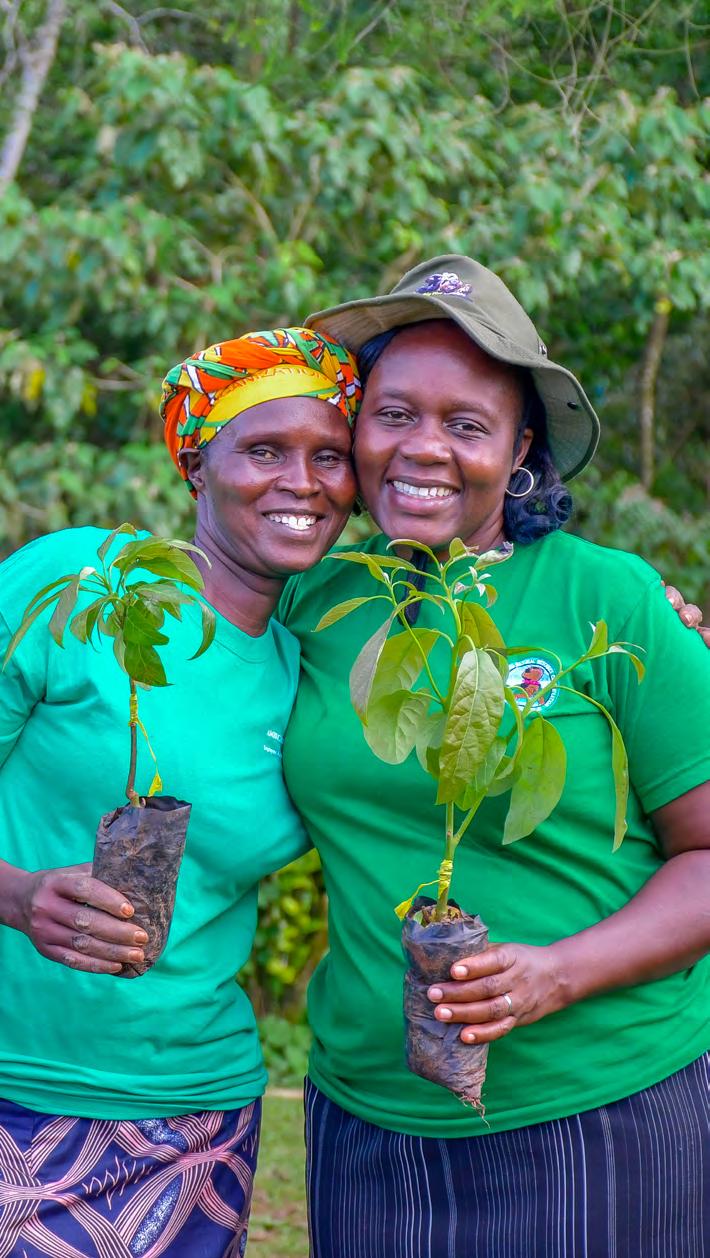
Kenya is home to around 1,100 native tree species. Yet today, nearly 10% of them are threatened with extinction.
Losing even a single tree species can trigger a chain reaction of ecosystem collapse: forests are more vulnerable to fire and disease, habitats shrink, countless wildlife species and microorganisms are pushed to extinction and tree-dependent communities are plunged into crisis. Once a species is extinct, it’s lost forever.
That’s why we’re working with local communities and partners across the country to identify, grow, plant and restore threatened native trees so that none of these precious species disappear from the planet.
Restoring threatened species begins in the forest itself. With training from specialists at Botanical Gardens Conservation International and the National Museums of Kenya, we’re equipping community members to identify and monitor “mother trees”.
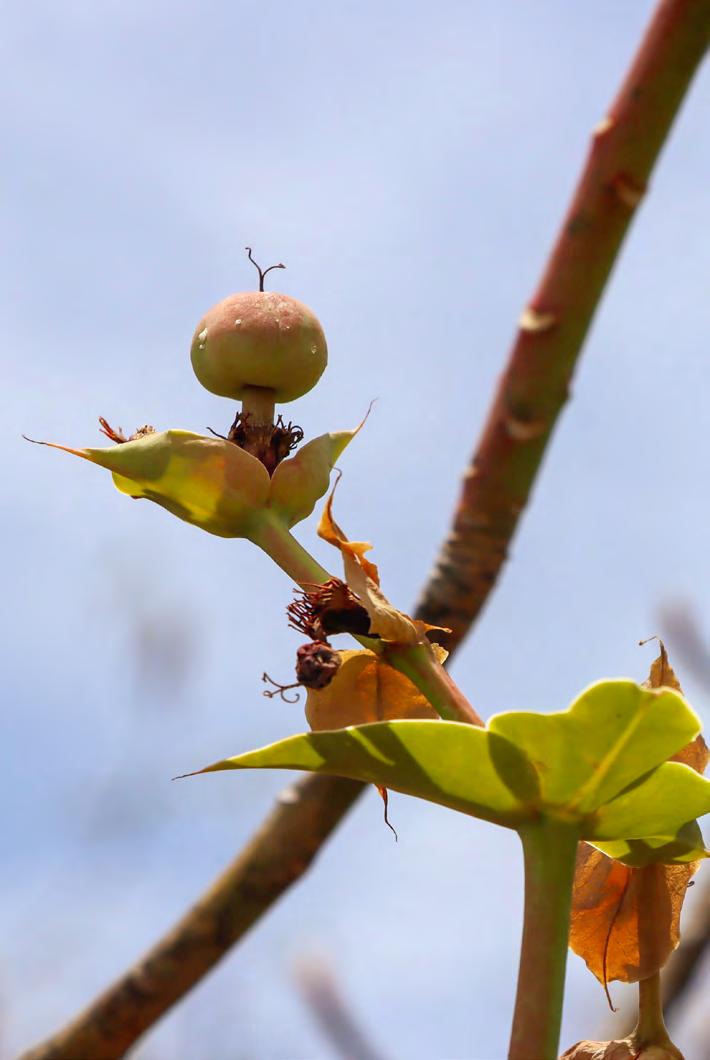
Mother trees are often the largest and oldest trees in the forest. They play a vital ecological role, connected to surrounding plants through underground fungal networks that allow trees to exchange nutrients and chemical signals.
Once identified, these trees are carefully monitored. Participants track seasonal flowering and fruiting cycles, so that seeds can be harvested when they are mature and most likely to germinate.
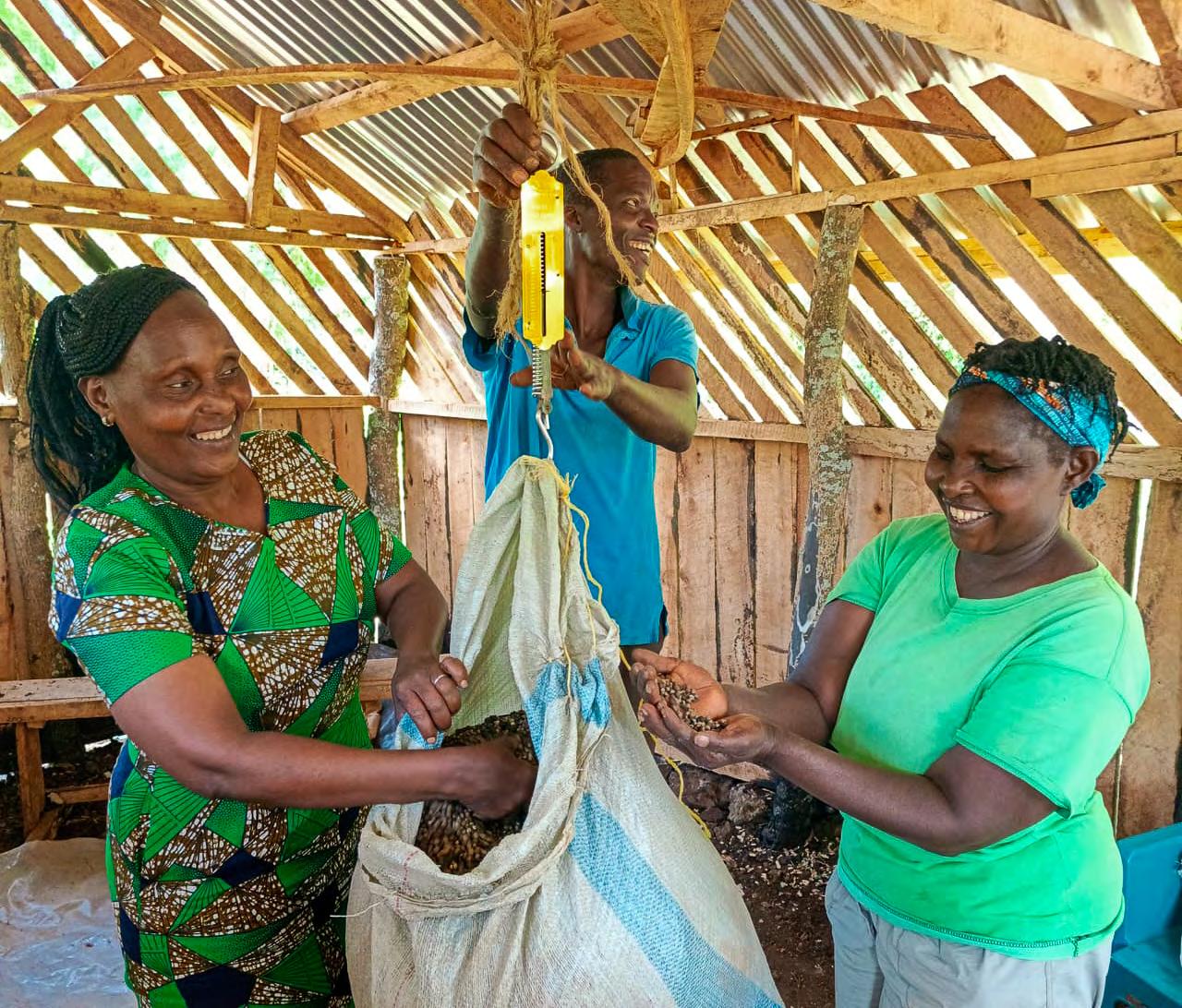
Once seeds have been collected, they are nurtured in community nurseries. Local partners receive training in careful seed handling and nursery management so that as many seeds as possible germinate. Seeds must be cleaned, stored and sown correctly and seedlings carefully tended to so that they develop strong roots and stems.
These nurseries are centres of learning and opportunity where local people develop practical skills and create new sources of income.
“Through training programmes, I have acquired skills in seed collection, the propagation of both threatened and native trees and nursery management,” says Simon Kairu, who now works as a forest scout caring for newly planted trees.
“The income generated from this initiative has significantly contributed to my ability to finance my son’s university education,” he says. “This project has profoundly transformed my life and career trajectory.”
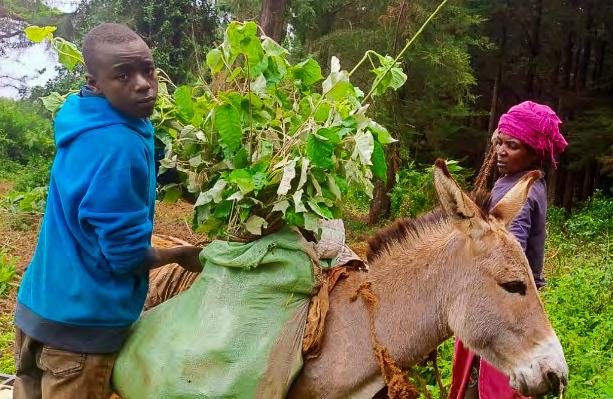
After about nine months, the seeds have grown into seedlings which are now ready to be planted back alongside other indigenous trees to rebuild healthy, diverse forests.
Ruth Kimunto plays a vital role ensuring that the trees reach their new home, “The initiative employs my donkeys to transport trees to locations inaccessible to tractors,” she explains. “Through the income generated from this service, I have been able to fulfil essential obligations. I have been able to pay for my rent and my three children’s education.”
By identifying threatened species, nurturing seedlings and restoring them to the landscape, communities are helping secure the future of Kenya’s remarkable tree diversity. These restoration projects are also creating sustainable employment for local people who are working as forest scouts, nursery managers and planting and monitoring teams.
Together we can ensure that none of Kenya’s precious trees go extinct while growing healthy, resilient forests for the next generation. Thank you for supporting this vital work.
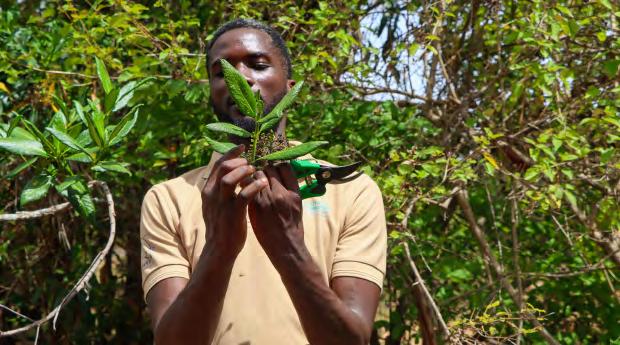
“In Uganda, we exceeded our tree planting goals, planting over 57,000 trees and restoring over 40 hectares of degraded land in the Rwenzori, Bwindi and Mount Elgon regions. On top of this, we’ve enhanced food security for marginalised communities and supported village savings, micro-businesses and financial literacy. Community enterprises at the permaculture centre also continued to grow, with fish farming, poultry management and other sustainable initiatives.”
Wycliffe Matika, Africa Programme Manager
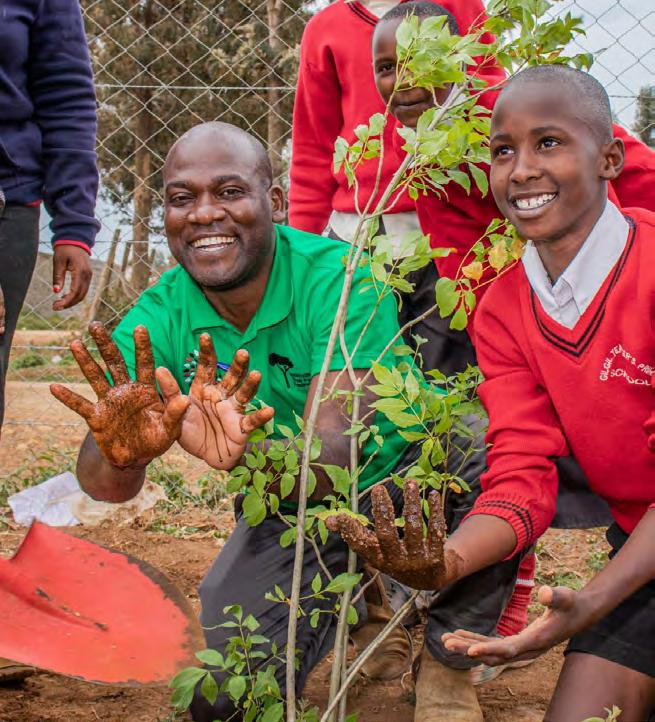
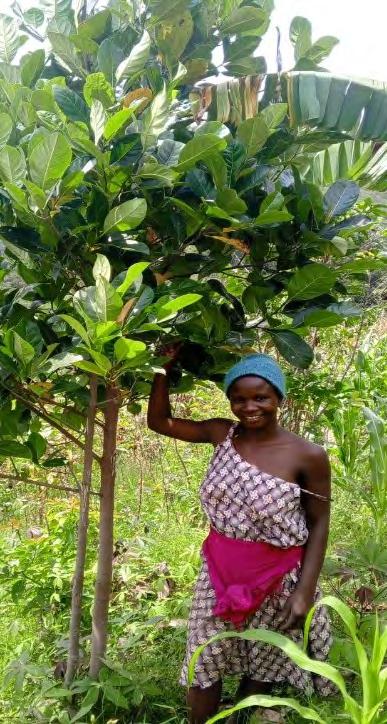
In Kasese District, tree planting is helping families rebuild both their environment and their livelihoods. Through the project, 22,700 trees have been planted and cared for by local communities. Nziabake Eunice from Mbunga Village received several seedlings, including jackfruit. “My jackfruits are growing well and have started showing signs of fruit.” She is hopeful that as they mature, they will provide both income and food for her family while improving the surrounding environment.
A pilot project planted 100 Hass avocado trees in Nyanamo Town Council to support future livelihoods and resilience. Seedlings of Hass avocados, which are drought-resistant, were given out to community members, marking the first time this variety has been grown in the area. The pilot is helping assess how well the trees adapt to local soils, with the aim of scaling up planting in the future. If successful, the project could provide both improved nutrition and a reliable source of income for families across the community.
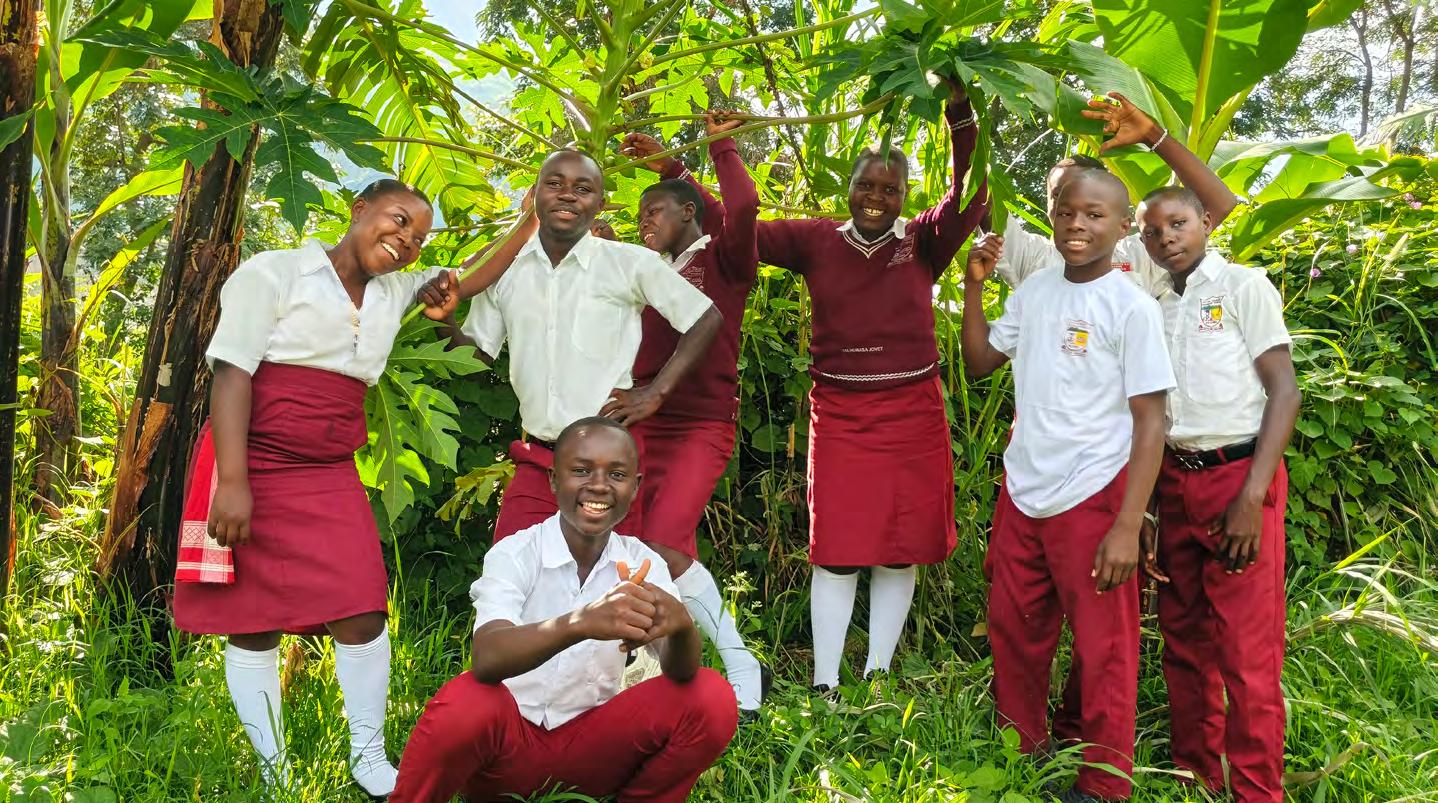
“A big change is coming to my village in the near future. This change will come if everyone works hard in planting trees and protecting the environment. I’m playing my part and I encourage everyone in my village to also play their part.”
Sezonga Gilido, Bwindi
50 young people living with disabilities have been upskilled through sustainable livelihood training and education
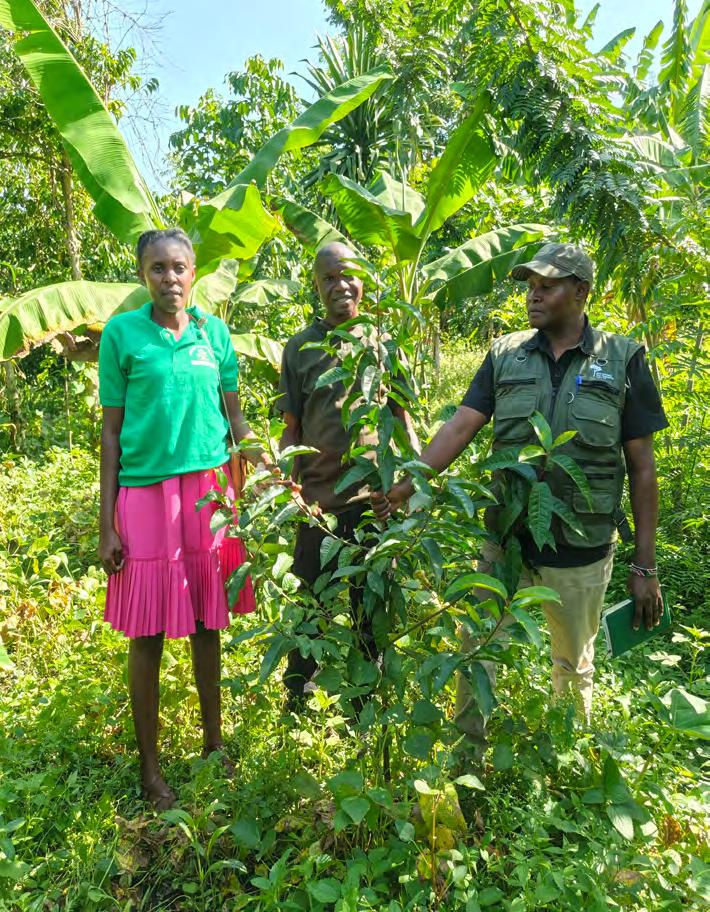
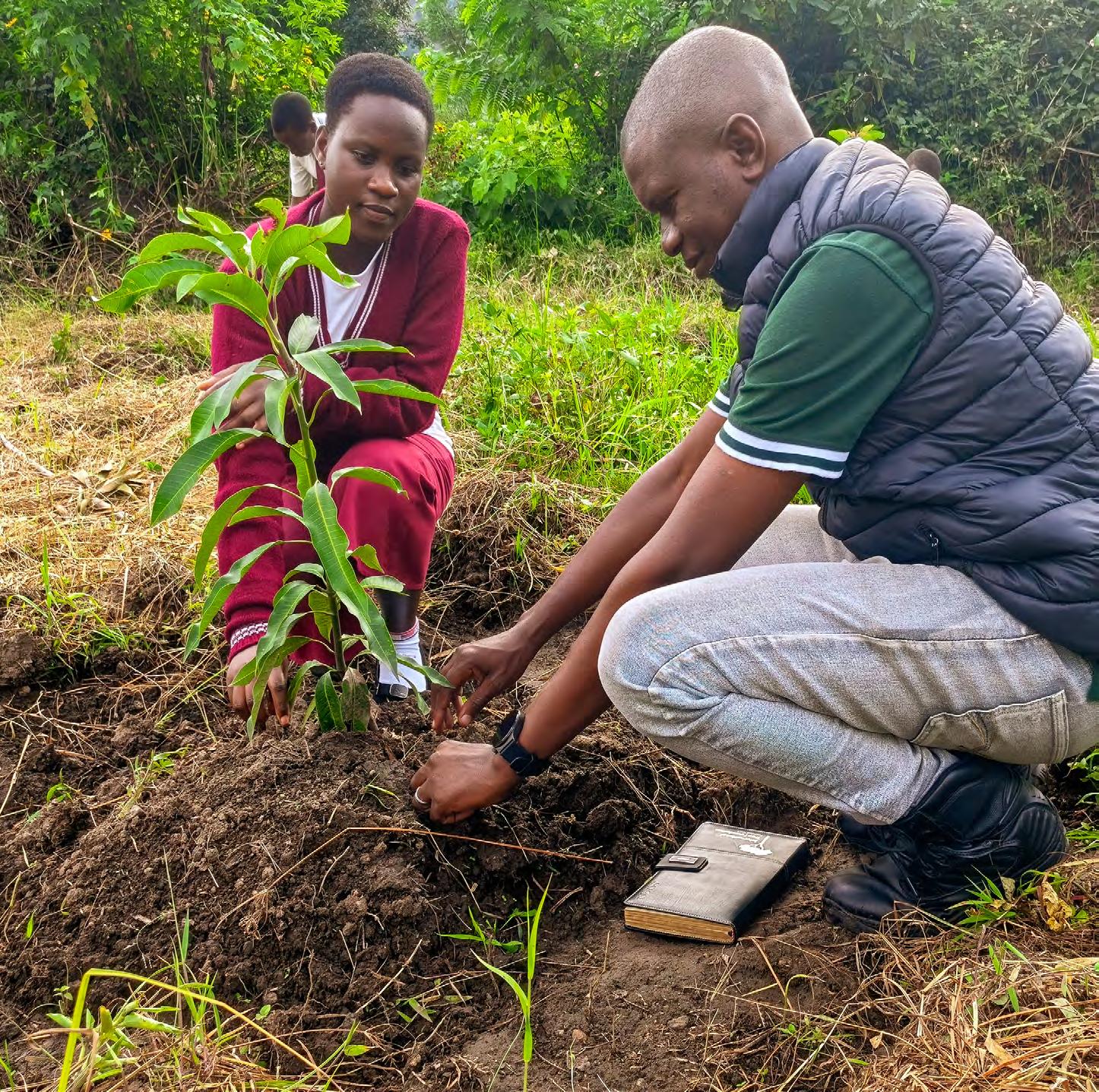
19 different species planted in Bwindi Forests with the Center for Research Uptake in Africa
Restoration projects are creating new opportunities for people who are often left behind. Binyinyi Tereza received training in sustainable farming thanks to the Karambi Group of People with Disabilities. “It was a turning point for me. I gained valuable skills in sustainable farming and started my own backyard garden, which has been truly life-changing,” she said. “Not only have I improved my access to nutritious food, but my selfesteem has also soared. I’m now passionate about sharing my knowledge with my neighbours, teaching them how to grow their own vegetables. My dream is to expand my garden into a thriving business, inspiring others in my community and beyond.”
The role of women is central to whether trees survive and whether communities truly benefit. In many of the places we work, women collect firewood, grow food, manage water and care for family health, yet they often have the least access to land, training and income. When women are included in restoration, trees are better cared for, household nutrition improves and income is reinvested in sustainable outcomes and wellbeing. Through womenled nurseries, initiatives and training, we see stronger landscapes and more resilient communities. Simply put, including women in restoration ensures effective and lasting impact.
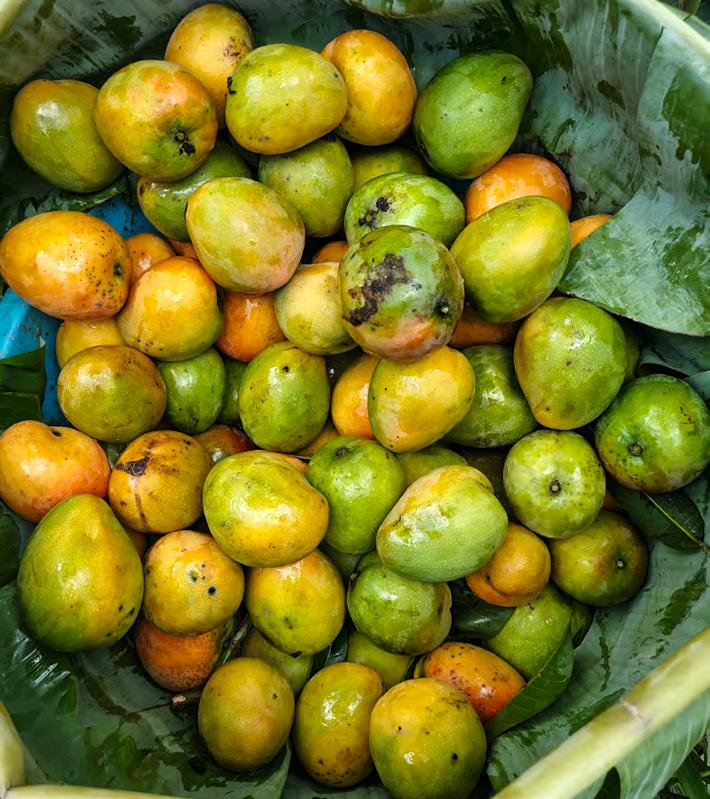
“In Tanzania, ITF is proud to have reinvigorated flagship projects in the vital landscapes of Usambara and Katavi. We have planted a total of 45,700 diverse trees, contributing to the restoration of important land, including school grounds, public spaces and smallholder farms.
“This progress has been made possible thanks to the support of our donors, partners and stakeholders, all of whom contributed to making this year noteworthy.”
Wycliffe Matika, Africa Programme Manager
Over the last three years, we’ve planted trees in Wamweru water catchment, an important ecosystem for communities in Wamweru and neighbouring villages. “It provides clean water to over 1,000 households,” says Emmanuel Chrispin from Mirumba village water committee. “The ecosystem also provides habitat for many animals including primates.”
“In the last three years since the tree planting project started at Wamweru, the water table has risen, enabling us to access water throughout the year.”
“Our school environmental club has 35 members. We started by potting 1,000 seedlings which we later planted. Since then we have grown more than 11,000 trees in our nursery. These trees will provide different fruits to the students. And they will enhance our school. We will enjoy shade during the dry season and also earn income from the sale of seedlings to the community.”
Issa Mohammed Abdi, Usevya Secondary School
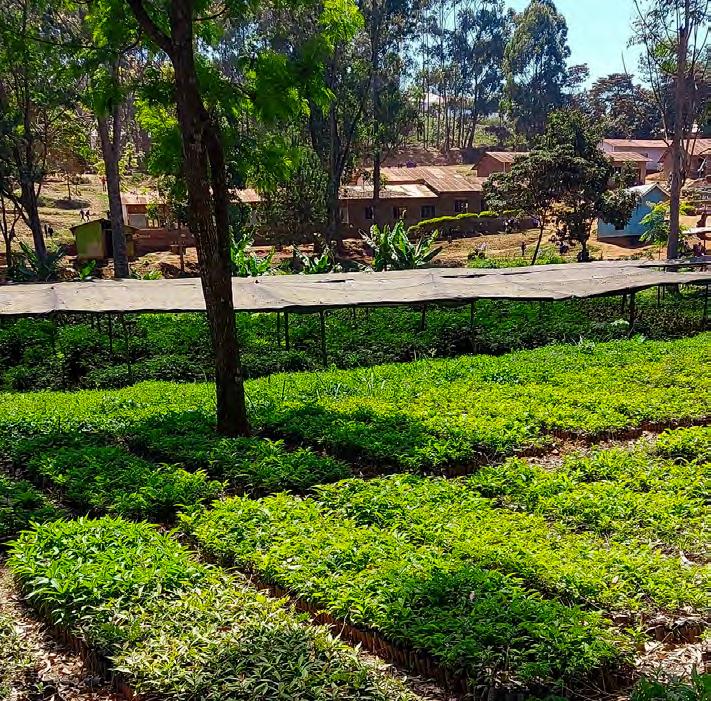
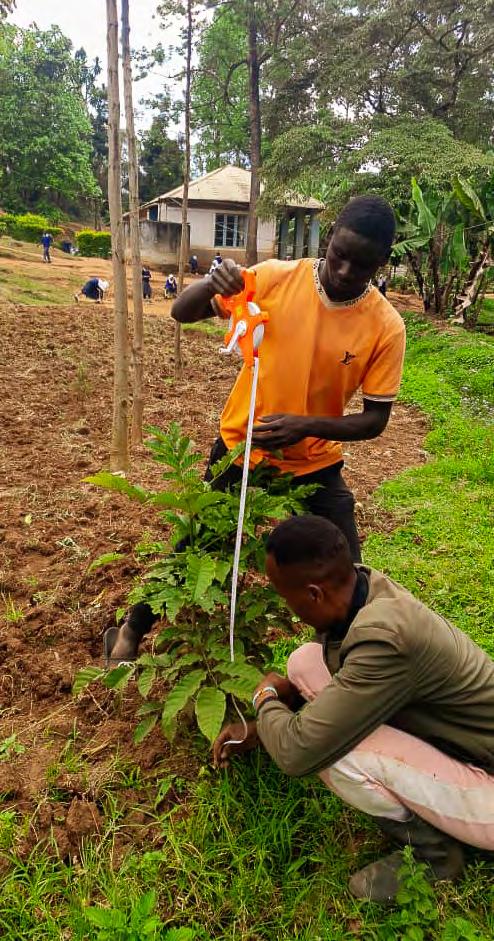
households affected by climate change have been supported thanks to ITF
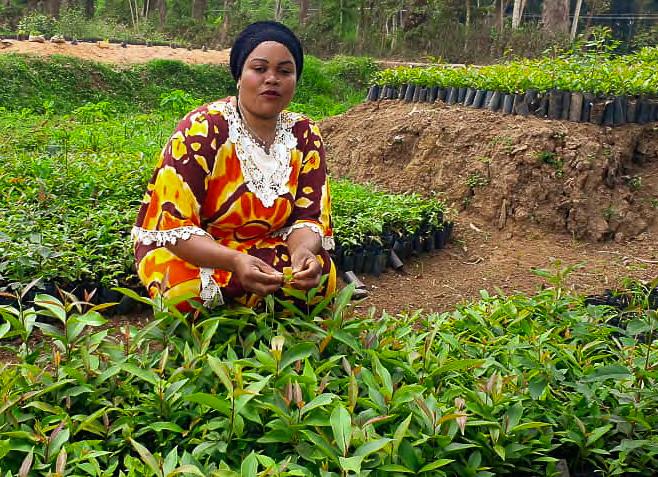
“This project has improved my life as I have been employed at the tree nursery. Thanks to this opportunity I earned some money to buy school uniform for my fourth child.”
Saumu Juma, Lushoto
Lazaro Mkwama is a farmer in Mirumba Village who grows fruit trees among his other crops. “I have planted over 200 fruit trees, including oranges, guavas, avocados, bananas and pawpaw. I have also introduced herbs.”
Some of his trees are only three years old, but they are already providing food. “I have benefited from fruits and shade. Every year the trees produce more fruits, so every year I get more benefits from the trees. Not just income, but improved nutrition.”
His system of mixed farming is circular, maximising his results at no extra cost to him. “I also feed my chickens vegetables I grow with manure from the chickens. This system is why my environment is changing positively.”
880 climate change advocates trained in schools. Their hard work has planted orchards, edible gardens and green belts, enhancing biodiversity and creating greener, more positive learning environments
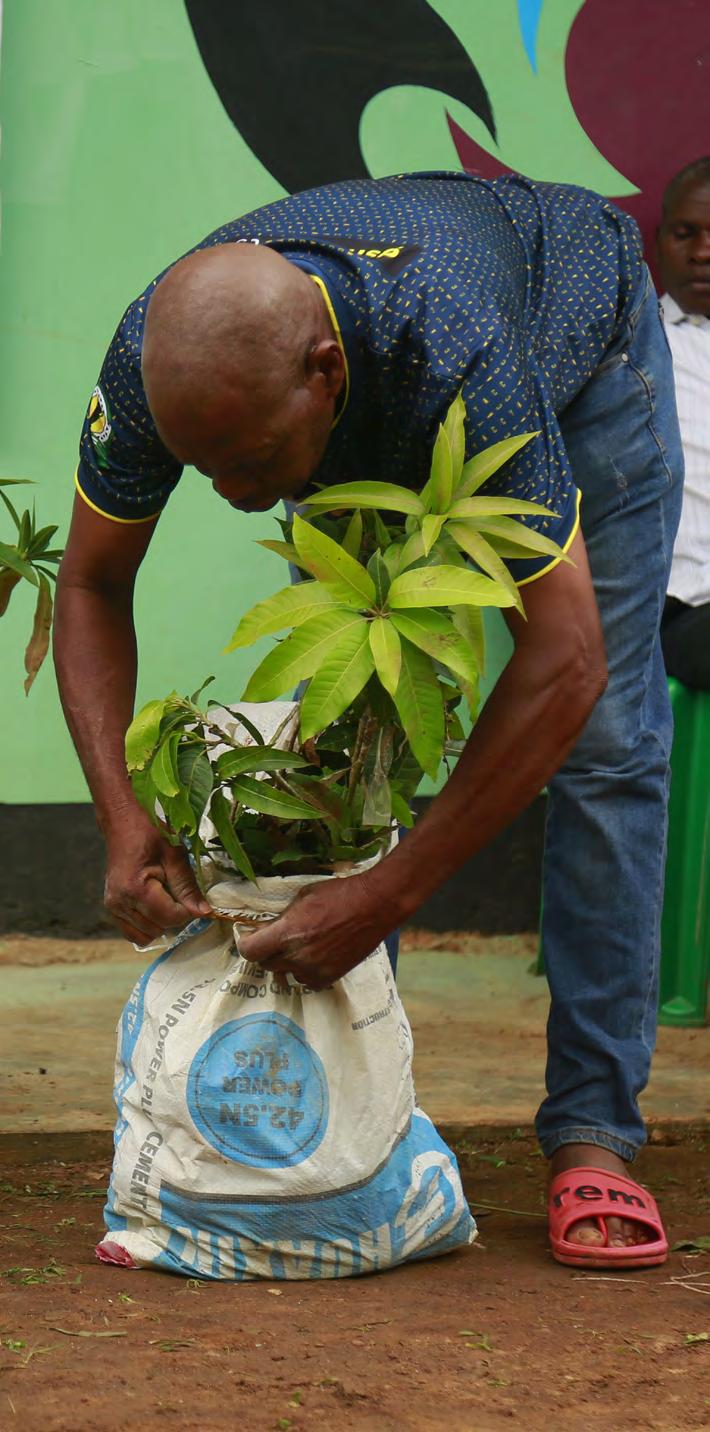
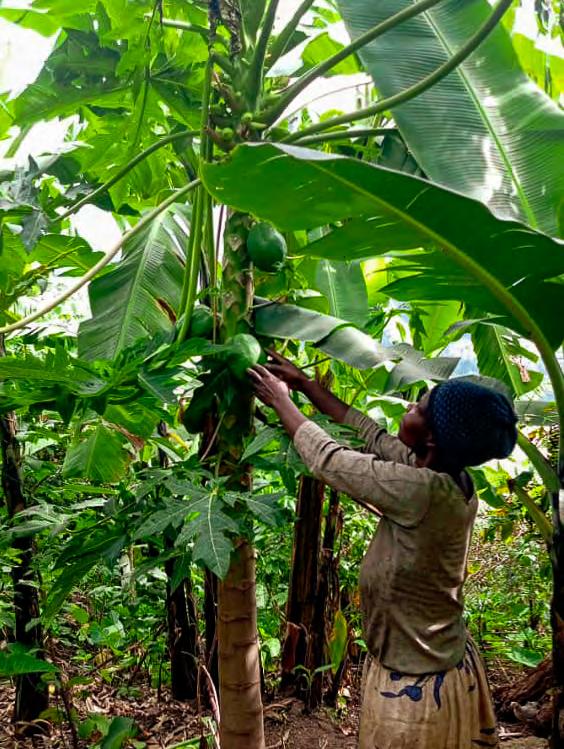
“We have planted and nurtured many trees in our school. From the trees we have planted we are getting good shade and fruits. When we leave school, we will continue being environmental ambassadors in our homes and in the communities, telling them about the importance of conserving our environment.”
Baraka Msunga Mageti, Mirumba Secondary School
40 hectares of land restored across schools, farms and vital water catchment areas, helping communities rebuild the landscapes they depend on
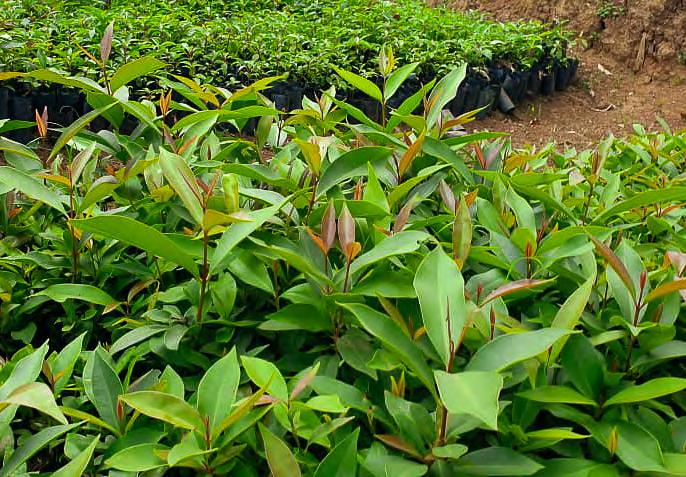
36,000 agroforestry trees planted with Changamoto Youth Development Organization

“In 2025, we worked with community groups across the UK and Ireland. It has been a privilege to discover new partners and projects and also to work again with our long-standing partners –watching their knowledge and skills grow in the arena of community engagement and tree planting has been inspiring.
“The programme seeks to leverage the wellspring of enthusiasm for nature restoration in the UK. By engaging community volunteers, we not only inspire nature connection amongst the general population, with all its associated health benefits, we can also avoid the high contractor costs that are often associated with tree planting, thereby simultaneously planting trees efficiently and increasing our impact for people and planet.”
Sam Pearce, UK and Ireland Programme Manager
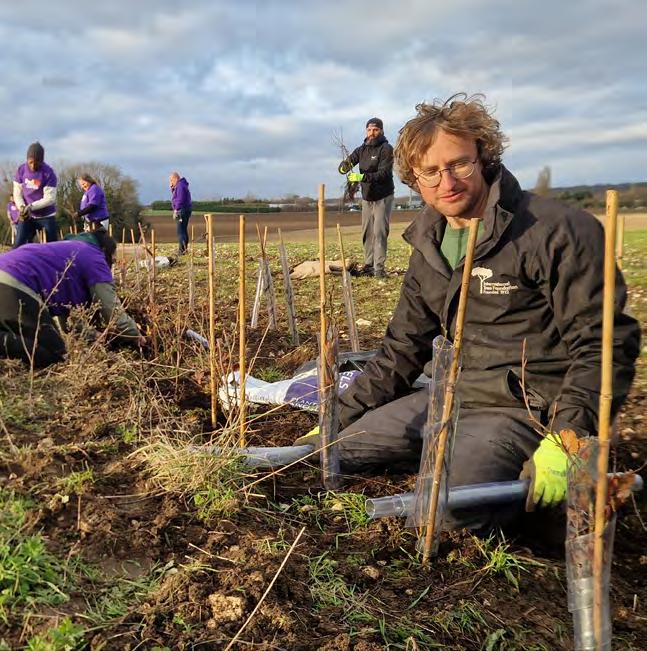
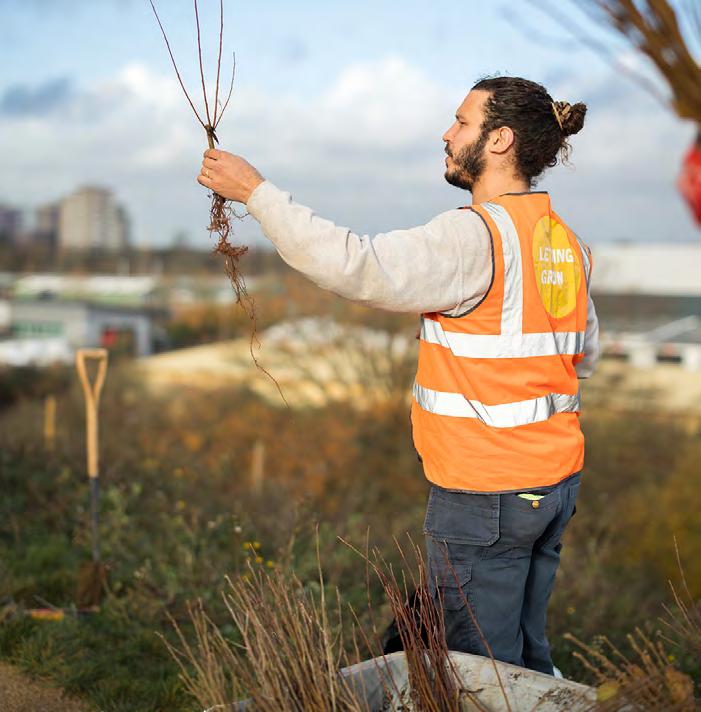
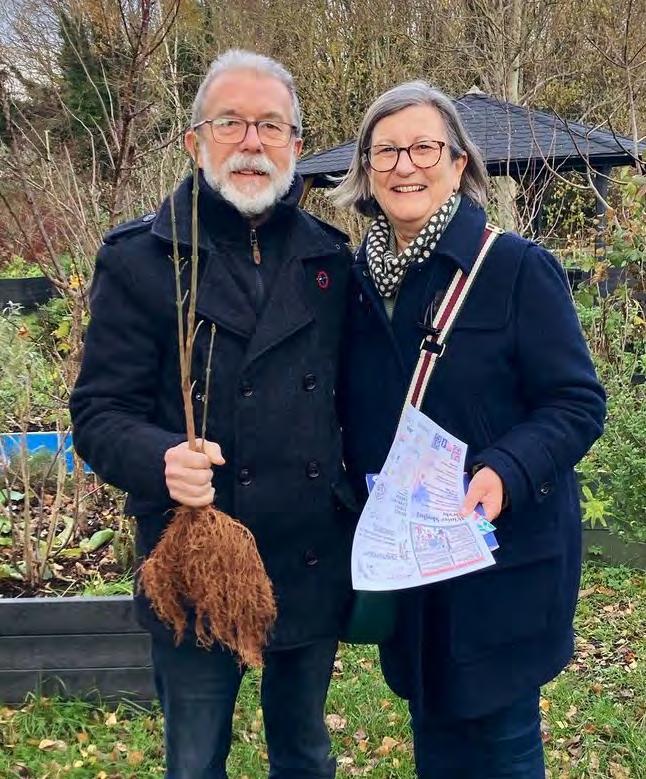
Through our Garden Tree Giveaway project we gave out 5,000 free trees to 3,000 households. The trees were distributed by volunteers, food banks and community networks in Oxfordshire. The project has helped local people take local climate action in their gardens while helping to increase tree cover across the county.
4,000 trees planted at Huntingdon Racecourse, with local community group Creating Nature’s Corridors
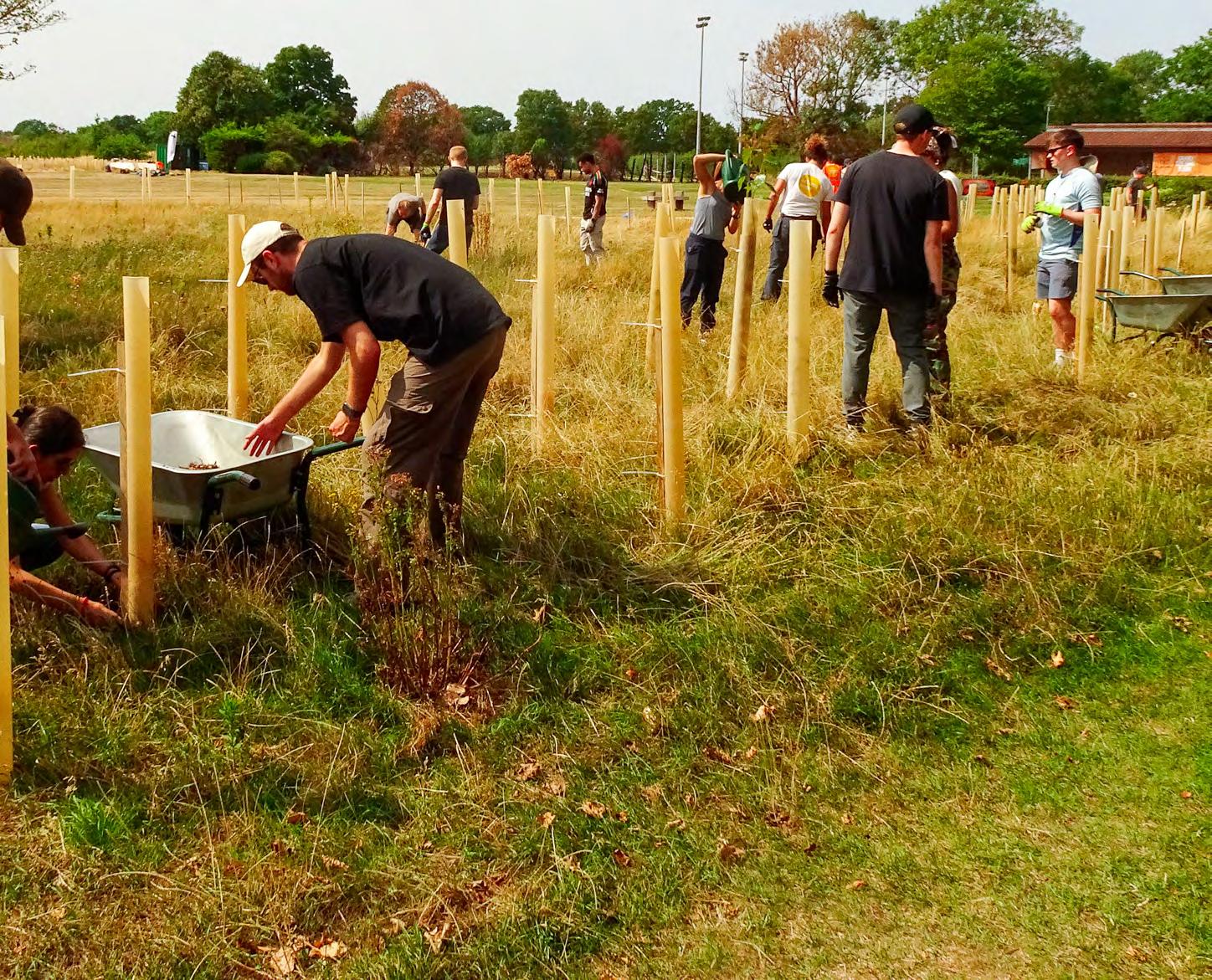
It was an extremely hot and dry summer in 2025 and many newly-planted trees were struggling to survive across the UK. But volunteers from Oxford Economics were on hand to help out at a site in Ealing, London, where they were able to complete a full day of tree maintenance and care to help ensure the trees got the water they needed. The survival rate was over 85%, which is highly encouraging in these difficult circumstances.
31 community groups equipped to plant and protect trees
Volunteers spent a hot day weeding, mulching and watering hedging whips planted three years ago at the Blue Cross rehoming centre. Their tireless work helped the young hedgerow thrive in the dry conditions, protecting it for generations to come.
A biodiversity study of two urban planting projects revealed a 250% boost in insect life compared to adjacent unplanted areas. The trees were planted in 2019 and are now attracting over 75 different species of insects and other invertebrates, including many pollinators.
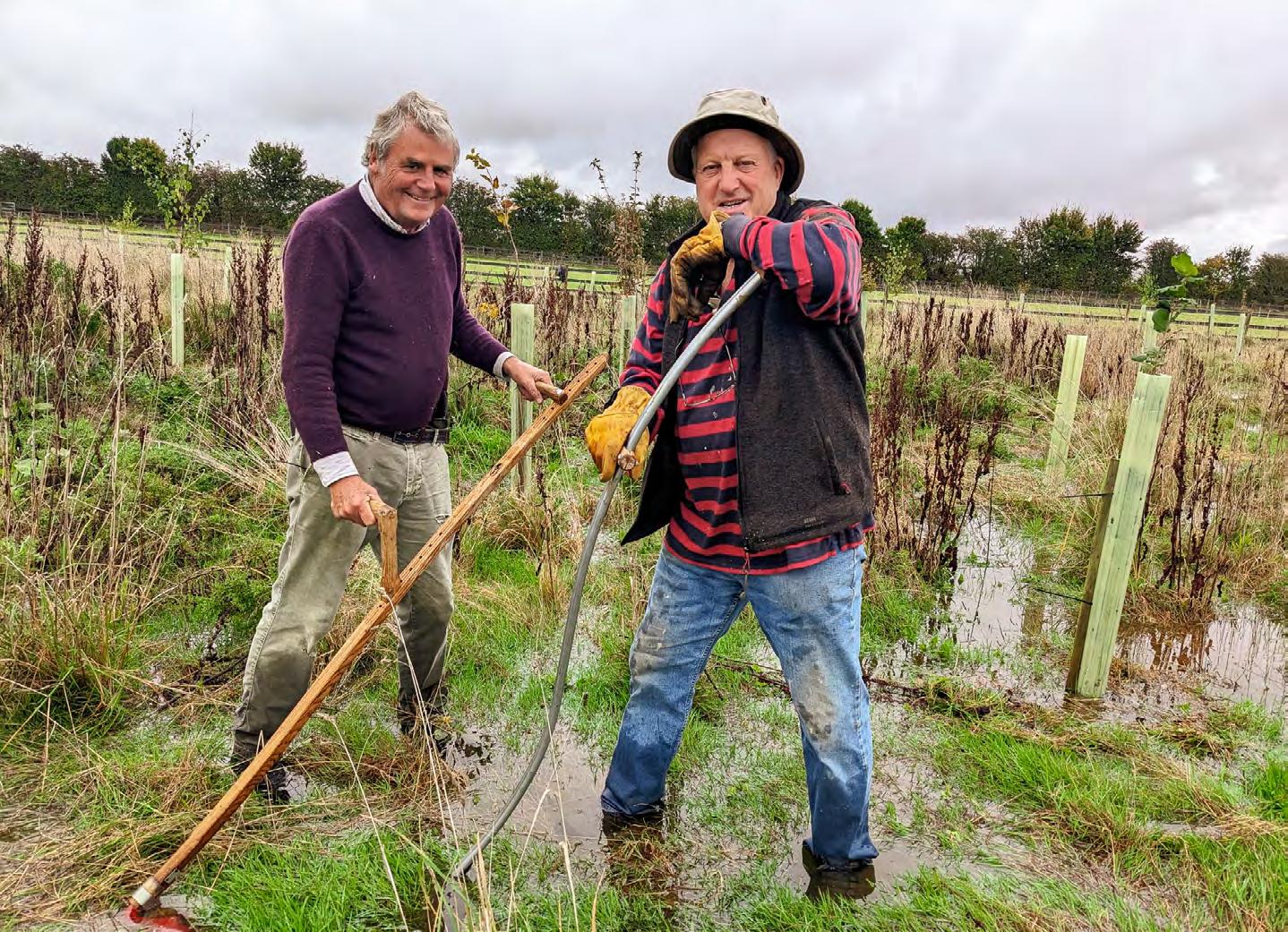
24,000 trees were planted at the Lowther Estate on the edge of the Lake District. These trees are part of a large-scale assisted ‘re-wilding’ scheme that ITF has been supporting for two years. Thorny trees, such as hawthorn and blackthorn, were planted around native broadleaf species to create a natural defence, keeping the trees protected in their youth from grazing animals.
Alongside tree planting, this project has seen the introduction of beavers, the restoration of rivers and the re-naturalising of meadows – all in a bid to rebalance the needs of nature and sustainable farming in the region. Our annual monitoring of the project found a 90% survival rate. This is a testament to the quality of the planting by the community.
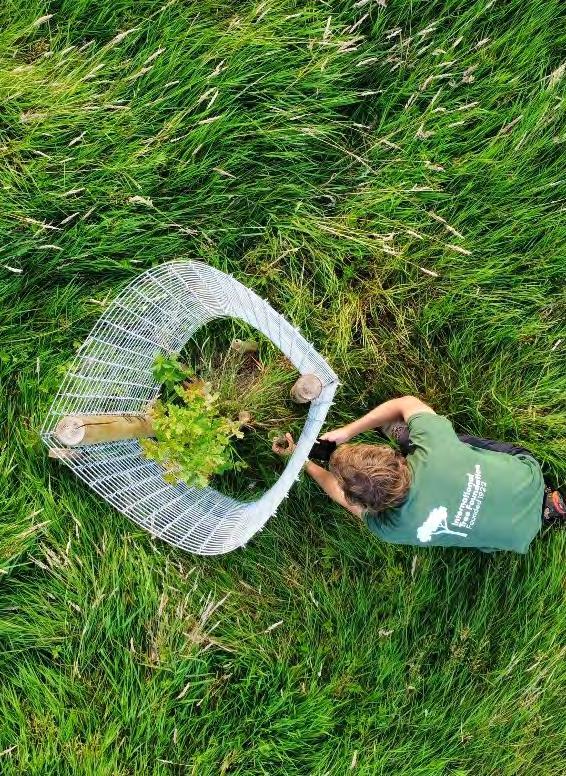
80 people came out to plant trees and restore the landscape in West Lothian, Scotland
“We’ve been able to plant wildlife-friendly hedging and an orchard within the school grounds at Saint Leonard’s School, Banbury. We’re incredibly grateful for the opportunity to create outdoor spaces that inspire a deeper connection with nature. While the orchard will eventually provide fruit, for now, the children will learn about the seasons and engage in naturebased activities. These experiences not only nurture their appreciation for the natural world but also support their mental wellbeing.”
Caroline Debus, Headteacher
In 2026, the International Tree Foundation will continue to focus on high-quality, communityled restoration that delivers benefits for people, nature and climate. While the global funding environment for environmental charities remains challenging, we enter the year with a diverse funding pipeline, strong partnerships and a clear focus on sustainable growth.
Across East Africa, we plan to support the planting of at least 600,000 trees in partnership with local communities, while continuing to invest in the care and monitoring of more than two million trees established in recent years. Alongside tree planting, we will strengthen our work on livelihoods, biodiversity conservation, agroforestry and community capacity-building, ensuring that restoration delivers lasting benefits for local people.
In the UK, we will continue to expand our support for community tree planting, community orchards and naturebased wellbeing programmes, while helping local groups build the skills and confidence needed to care for trees over the long term.
Across all our programmes, we will strengthen monitoring, evaluation and learning, including use of GIS and new approaches to biodiversity and socioeconomic impact assessment. We will also invest in staff development, organisational resilience and fundraising capacity, enabling us to remain a trusted partner for communities, supporters, companies and funders.
Above all, we will remain committed to restoring landscapes and strengthening communities through practical action, long-term partnerships and a belief that local people are at the heart of successful restoration.
ITF continues in good financial health. Despite a small reduction in overall income for the year, our total funds at the year-end were £892,327 (2024: £642,022) of which our unrestricted reserves increased to £470,964 (2024: £459,329). These reserves include a number of designated funds designed to support tree sustainability and survival, the future development of our UK programme and the new Strategic Opportunities Fund.
ITF has varied funding streams but receives a significant proportion from grant income. Grant income was received from several sources and formed 66% of total income. Other sources of funding came from individual giving (9%), corporate giving (18%) and other sources (7%).
ITF received a higher level of funding from legacies (£62,153) than in past years. We are extremely grateful to all supporters who kindly remember us in their wills.
The proportion of total expenditure that was spent on direct charitable activity was 94% (2024: 96%).
Expenditure on governance has decreased in 2025 to £13,590 (2024: £23,506). Cost of raising funds have dropped to £68,459 (2024: £70,517).
The trustees regularly review the principal risks facing the charity and the measures in place to manage and mitigate them. Risk management is integrated into strategic planning, programme delivery and financial oversight.
The current global economic situation remains uncertain. As with many charities, this translates into a more challenging fundraising environment in terms of individual and corporate giving. Furthermore, reductions in bi-lateral aid are reducing the funding available for programmes in Africa.
Income from legacies is, by its nature, uncertain. ITF is now less dependent on legacies than in the past.
A reasonable proportion of our grant income is short-term which makes forward financial planning harder. We are also mindful of the risks associated with over-reliance on funding from any one institutional donor, particularly any that are in turn dependent on individual or corporate income.
1. Nurture our existing key funder relationships.
2. Increase focus on gaining new major funding from trusts and foundations.
3. Seek to diversify funding sources, particularly by engaging corporate donors.
4. Seek to build more long-term funding relationships with trusts and companies.
5. Use unrestricted income to support the growth and sustainability of the charity.
As digital communication and financial reporting becomes more widely adopted, ITF and other charities, including our partners, are exposed to risk from fraudulent activities. Additionally, ITF is aware that there is the possibility of internal and external misappropriation of funds.
1. ITF Key Management Personnel and Board will continue to ensure that the Finance Policy is kept current and reviewed annually.
2. The procedures on transferring funds to external partners, particularly internationally, in order to mitigate the risk of fraud, will be followed by ITF staff and continually reviewed.
3. Conducting partner due diligence prior to establishing new partnerships.
ITF is committed to robust systems of safeguarding as it applies to staff, volunteers, trustees, partners, contractors and the communities and participants with whom we work.
1. Adherence to safeguarding policy is mandatory in partner contracts and incident reporting mechanisms have been established throughout ITF, and with our partner organisations and programme participants.
2. Our Board of Trustees regularly reviews our policy and approach and implements additional measures where appropriate.
The Trustees review the reserves policy of the charity annually. This review covers the nature of the income and expenditure streams of the charity, and the need to match variable income with fixed costs. Trustees recognise that the charity needs to have sufficient cash and reserves to absorb short term fluctuations in income. The level of unrestricted reserves needs to consider both the plans of the charity and the wider economic climate.
The Trustees resolved that it is appropriate to maintain a policy of having a level of general unrestricted reserves equivalent to a minimum of six months’ running costs, with a desire to build this as the organisation grows.
Funds as of 31st December 2025:
Restricted £421,363
General £293,345
Designated £177,619
Total £892,327
With general unrestricted reserves now standing at £293,345 (2024: £312,220) the reserves policy is met. Six months budgeted unrestricted running costs stood at approximately £188,000.
The ITF Reserves policy provides both a minimum reserves position (6 months) and an ideal reserves position (12 months) to allow the organisation to weather extreme events and to invest in growth and new opportunities. We closed the year between these parameters.
During 2025, we received a number of generous donations and grants. The list below details those above £3,000:
Arbor Day Foundation, At Heart Limited, Botanical Gardens Conservation International, Cielo Talent Management Limited, Cyril Hugh Kleinwort Foundation, Ecologi, Embassy of the Kingdom of the Netherlands, Ernest Kleinwort Charitable Trust, Fondation Franklinia, Get Laid Beds, Green Impact, Just One Tree, National Lottery Community Fund, Ofenheim Charitable Trust, One Tree Planted, Seyfarth Shaw LLP, Sony Music Group, St Mary’s Church Iffley, States of Guernsey, Strand Europe, The Address, The Adrian Swire Charitable Trust, The Big Give Trust, The Tresanton Trust, TreeSisters, UPS Foundation, Usertopia, Vale of the White Horse DC, Vumbuzi Impact Africa (VIA) Foundation as well as several generous individual donations, legacies and bequests.
ITF would not be able to do our important work without the support of our donors. We seek to maintain the highest possible standards in fundraising and relationships with our supporters and we take pride in providing excellent supporter care.
ITF is registered with the Fundraising Regulator and bound by its Code of Fundraising Practice. We continue to monitor compliance as this Code is revised, to ensure all our fundraising activities are operating to the highest standards. We received no complaints relating to fundraising via the Fundraising Regulator in 2025.
We ensure we are compliant with the General Data Protection Regulation (GDPR).
Trustees and the Senior Management Team regularly review all aspects of our fundraising, including plans, performance and compliance. We produce annual plans and reviews, and monitor performance against targets and performance indicators quarterly.
We deliver some fundraising activities with the support of professional fundraising organisations. We ensure these organisations are fully compliant with fundraising regulations and with our own policies.
The Trustees (who are also directors of ITF for the purposes of company law) are responsible for preparing the Trustees’ Annual Report and the financial statements in accordance with applicable law and United Kingdom Generally Accepted Accounting Practice (United Kingdom Accounting Standards).
Company law requires the Trustees to prepare financial statements for each financial year. Under company law the Trustees must not approve the financial statements unless they are satisfied that they give a true and fair view of the state of affairs of the charitable company and of the incoming resources and application of resources, including the income and expenditure, of the charitable company for that period. In preparing these financial statements, the Trustees are required to:
Select suitable accounting policies and then apply them consistently;
• Observe the methods and principles in the Charities SORP 2019 (FRS 102);
• Make judgements and estimates that are reasonable and prudent;
• State whether applicable UK accounting standards have been followed, subject to any material departures disclosed and explained in the financial statements; and
• Prepare the financial statements on the going concern basis unless it is inappropriate to presume that the charitable company will continue in business.
The Trustees are responsible for keeping adequate accounting records that are sufficient to show and explain the charitable company’s transactions, disclose with reasonable accuracy at any time the financial position of the charitable company and enable them to ensure that the financial statements comply with the Companies Act and the provisions of the charity’s constitution. They are also responsible for safeguarding the assets of the charity and hence for taking reasonable steps for the prevention and detection of fraud and other irregularities.
In so far as the Trustees are aware:
There is no relevant audit information of which the charitable company’s auditor is unaware; and The Trustees have taken all steps that they ought to have taken to make themselves aware of any relevant audit information and to establish that the auditor is aware of that information.
The International Tree Foundation was constituted as a company limited by guarantee and is governed by Articles of Association and Standing Orders. The charity was registered with the Charity Commission in October 1965 (under former name ‘The Men of the Trees’).
The members of the Board are its Trustees for the purpose of charity law and are the Directors of the charitable company for the purpose of company law. Appointment of Trustees is governed by the Articles of Association of the charitable company. The Trustees have authority to co-opt new Trustees to fill casual vacancies arising during the year. The number of Trustees appointed should not be less than three and no more than twelve. There was one new Trustee appointment in the period and no Trustee resignations.
The Trustees had four full formal meetings in 2025. In addition to the full Board meetings, there are committees for Finance, Fundraising, People and Operations, and Programmes that met during the year. Trustees are responsible for the strategic direction and policy of ITF.
Alongside the CEO, the management team comprised of Africa Programmes Manager, Communications & Engagement Manager, Kenya Programme Manager, Finance Manager and UK & Ireland Programmes Manager.
ITF is an equal opportunities employer and applies objective criteria to assess merit. Pay reviews are held with staff annually. A benchmarking process is undertaken periodically.
The Trustees are aware of the major strategic, business and operational risks that ITF faces and are of the opinion that there are systems in place to minimise any perceived risks. Reports are regularly submitted to the Board on all issues that might affect the running of the organisation, and a risk register is maintained and reviewed regularly by senior managers, and biannually by the Trustees.
In deciding on which activities to undertake we have taken into consideration Charity Commission guidance on public benefit. The Trustees are satisfied that the charity meets these guidelines with regard to delivering public benefit.
Approved by the Board of Trustees on 25th June 2026 and signed on its behalf by:
Tom Lupton, Chair Company number 5219549 Charity number 1106269
We have audited the financial statements of International Tree Foundation (the ‘charitable company’) for the year ended 31 December 2025 which comprise the Statement of Financial Activities, the Balance Sheet, the Statement of Cash Flows and notes to the financial statements, including a summary of significant accounting policies. The financial reporting framework that has been applied in their preparation is applicable law and United Kingdom Accounting Standards, including Financial Reporting Standard 102 The Financial Reporting Standard applicable in the UK and Republic of Ireland (United Kingdom Generally Accepted Accounting Practice).
In our opinion the financial statements:
• Give a true and fair view of the state of the charitable company’s affairs as at 31st December 2025, and of its incoming resources and application of resources, including its income and expenditure, for the year then ended;
• Have been properly prepared in accordance with United Kingdom Generally Accepted Accounting Practice; and
• Have been prepared in accordance with the requirements of the Companies Act 2006.
We conducted our audit in accordance with International Standards on Auditing (UK) (ISAs (UK)) and applicable law. Our responsibilities under those standards are further described in the Auditor’s responsibilities for the audit of the financial statements section of our report. We are independent of the charitable company in accordance with the ethical requirements that are relevant to our audit of the financial statements in the UK, including the FRC’s Ethical Standard, and we have fulfilled our other ethical responsibilities in accordance with these requirements. We believe that the audit evidence we have obtained is sufficient and appropriate to provide a basis for our opinion.
In auditing the financial statements, we have concluded that the trustees’ use of the going concern basis of accounting in the preparation of the financial statements is appropriate.
Based on the work we have performed, we have not identified any material uncertainties relating to events or conditions that, individually or collectively, may cast significant doubt on the charitable company’s ability to continue as a going concern for a period of at least twelve months from when the financial statements are authorised for issue.
Our responsibilities and the responsibilities of the trustees with respect to going concern are described in the relevant sections of this report.
The trustees are responsible for the other information. The other information comprises the information included in the trustees’ annual report, other than the financial statements and
our auditor’s report thereon. Our opinion on the financial statements does not cover the other information and, except to the extent otherwise explicitly stated in our report, we do not express any form of assurance conclusion thereon.
In connection with our audit of the financial statements, our responsibility is to read the other information and, in doing so, consider whether the other information is materially inconsistent with the financial statements or our knowledge obtained in the audit or otherwise appears to be materially misstated. If we identify such material inconsistencies or apparent material misstatements, we are required to determine whether there is a material misstatement in the financial statements or a material misstatement of the other information. If, based on the work we have performed, we conclude that there is a material misstatement of this other information, we are required to report that fact.
We have nothing to report in this regard.
In our opinion, based on the work undertaken in the course of the audit:
• The information given in the trustees’ report (incorporating the directors’ report) for the financial year for which
• The financial statements are prepared is consistent with the financial statements; and
• The directors’ report has been prepared in accordance with applicable legal requirements.
In the light of our knowledge and understanding of the charitable company and its environment obtained in the course of the audit, we have not identified material misstatements in the directors’ report.
We have nothing to report in respect of the following matters in relation to which the Companies Act 2006 requires us to report to you if, in our opinion:
• Adequate accounting records have not been kept, or returns adequate for our audit have not been received from branches not visited by us; or
• The financial statements are not in agreement with the accounting records and returns; or
• Certain disclosures of directors’ remuneration specified by law are not made; or
• We have not received all the information and explanations we require for our audit; or
• The trustees were not entitled to prepare the financial statements in accordance with the small companies’ regime and take advantage of the small companies’ exemptions in preparing the directors’ report and from the requirement to prepare a strategic report.
As explained more fully in the trustees’ responsibilities statement, the trustees (who are also the directors of the charitable company for the purposes of company law) are responsible for the preparation of the financial statements and for being satisfied that they give a true and fair view, and for such internal control as the trustees determine is necessary to enable the preparation of financial statements that are free from material misstatement, whether due to fraud or error.
In preparing the financial statements, the trustees are responsible for assessing the charitable company’s ability to continue as a going concern, disclosing, as applicable, matters related to going concern and using the going concern basis of accounting unless the trustees either intend to liquidate the charitable company or to cease operations, or have no realistic alternative but to do so.
Our objectives are to obtain reasonable assurance about whether the financial statements as a whole are free from material misstatement, whether due to fraud or error, and to issue an auditor’s report that includes our opinion. Reasonable assurance is a high level of assurance, but is not a guarantee that an audit conducted in accordance with ISAs (UK) will always detect a material misstatement when it exists. Misstatements can arise from fraud or error and are considered material if, individually or in the aggregate, they could reasonably be expected to influence the economic decisions of users taken on the basis of these financial statements.
Irregularities, including fraud, are instances of non-compliance with laws and regulations. We design procedures in line with our responsibilities, outlined above, to detect material misstatements in respect of irregularities, including fraud. The specific procedures for this engagement and the extent to which these are capable of detecting irregularities, including fraud is detailed below:
• Enquiry of management, those charged with governance and the entity’s solicitors around actual and potential litigation and claims;
• Reviewing minutes of meetings of those charged with governance;
• Reviewing financial statement disclosures and testing to supporting documentation to assess compliance with applicable laws and regulations;
• Performing audit work over the risk of management override of controls, including testing of journal entries and other adjustments for appropriateness, evaluating the business rationale of significant transactions outside the normal course of business and reviewing accounting estimates for bias.
Because of the inherent limitations of an audit, there is a risk that we will not detect all irregularities, including those leading to a material misstatement in the financial statements or non-compliance with regulation. This risk increases the more that compliance with a law or regulation is removed from the events and transactions reflected in the financial statements, as we will be less likely to become aware of instances of non-compliance. The risk is also greater regarding irregularities occurring due to fraud rather than error, as fraud involves intentional concealment, forgery, collusion, omission or misrepresentation.
A further description of our responsibilities for the audit of the financial statements is located on the Financial Reporting Council’s website at: www.frc.org.uk/auditorsresponsibilities. This description forms part of our auditor’s report.
This report is made solely to the charitable company’s members, as a body, in accordance with Chapter 3 of Part 16 of the Companies Act 2006. Our audit work has been undertaken so that we might state to the charitable company’s members those matters we are required to state to them in an auditor’s report and for no other purpose. To the fullest extent permitted by law, we do not accept or assume responsibility to anyone other than the charitable company and the charitable company’s members as a body, for our audit work, for this report, or for the opinions we have formed.
Benjamin Hayes BSc FCA (Senior Statutory Auditor)
For and on behalf of Wenn Townsend
Chartered Accountants and Statutory Auditor 30 St Giles Oxford OX1 3LE
25th June 2026
Statement of financial activities (including income and expenditure account) for the year ended 31st December 2025 All income and expenditure derive from continuing activities. The statement of financial activities includes all gains and losses recognised during the period.
31st December 2025
Approved by the Board of Trustees on 25th June 2026 and signed on its behalf by:
Tom Lupton, Chair Company number:
5219549
of cash flows for the year ended 31st December 2025
894,848
General information and basis of preparation
International Tree Foundation is a charitable company limited by guarantee in the United Kingdom. In the event of the charity being wound up, the liability in respect of the guarantee is limited to £10 per member of the charity. The address of the registered office is given in the charity information in these financial statements. The nature of the charity’s operations and principal activities are detailed in the Trustees’ Report.
The charity constitutes a public benefit entity as defined by FRS 102. The financial statements have been prepared in accordance with Accounting Reporting by Charities: Statement of Recommended Practice applicable to charities preparing their accounts in accordance with the Financial Reporting Standard applicable in the UK and Republic of Ireland (FRS 102) issued in October 2019, the Financial Reporting Standard applicable in the United Kingdom and Republic of Ireland (FRS 102), the Charities Act 2011, the Companies Act 2006 and UK Generally Accepted Accounting Practice.
The financial statements are prepared on a going concern basis under the historical cost convention modified to include certain items at fair value. The financial statements are prepared in sterling which is the functional currency of the charity and rounded to the nearest £1.
The significant accounting policies applied in the preparation of these financial statements are set out below. These policies have been consistently applied to all years presented unless otherwise stated.
Unrestricted funds comprise accumulated surpluses and deficits on general funds. They are available for use at the discretion of the Board of Directors in furtherance of the charitable objectives of the charitable company.
Designated funds comprise funds set aside by the Board of Directors out of unrestricted funds for specific future purposes or projects.
Restricted funds comprise monies raised for, and their use restricted to, a specific purpose, or donations subject to conditions imposed by the donor or through the terms of an appeal.
All incoming resources are included in the Statement of Financial Activities (SoFA) when the charity is legally entitled to the income after any performance conditions have been met, the amount can be measured reliably and it is probable that the income will be received.
For donations to be recognised the charity will have been notified of the amounts and the settlement date in writing. If there are conditions attached to the donation and this requires a level of performance before entitlement can be obtained, then income is deferred until those conditions are fully met or the fulfilment of those conditions is within the control of the charity and it is probable that they will be fulfilled.
Donated facilities and donated professional services are recognised in income at their fair value when their economic benefit is probable, it can be measured reliability and the charity has control over the item. Fair value is determined on the basis of the value of the gift to the
charity. For example, the amount the charity would be willing to pay on the open market for such facilities and services. A corresponding amount is recognised in expenditure. No amount is included in the financial statements for volunteer time in line with the SORP (FRS 102).
For legacies, entitlement is the earlier of the charity being notified of an impending distribution or the legacy being received. At this point income is recognised. On occasion legacies will be notified to the charity, however it is not possible to measure the amount expected to be distributed. On these occasions, the legacy is treated as a contingent asset and disclosed.
Investment income and bank interest receivable is fully accrued at the balance sheet date.
All expenditure is accounted for on an accruals basis and has been classified under headings that aggregate all costs related to the category. Expenditure is recognised where there is a legal or constructive obligation to make payments to third parties, it is probable that the settlement will be required and the amount of the obligation can be measured reliably. It is categorised under the following headings:
The costs of raising funds consist of investment management fees and merchandising costs.
Charitable expenditure comprises those costs incurred by the charity in the delivery of its activities and services for its beneficiaries. It includes costs that can be allocated directly to such activities, and those costs of an indirect nature necessary to support them.
Governance costs include those costs associated with meeting the constitutional and statutory requirements of the charity and include the audit fees and costs linked to the strategic management of the charity.
Irrecoverable VAT is charged as an expense against the activity for which expenditure arose.
All costs are allocated between the expenditure categories of the Statement of Financial Activities on a basis designed to reflect the use of the resource. Costs relating to a particular activity are allocated directly, others are apportioned on the basis of estimates of the proportion of time spent by staff on those activities.
Grant commitments are initially recognised in full as liabilities when an agreement is signed with the grantee. Subsequently at each period end, the grant agreements are considered on a case by case basis as to whether a constructive obligation exists for the future payments or if substantive review conditions exist such that the settlements are not considered probable. Where the future payments are not considered probable, the amounts are deferred and removed from liabilities until the review conditions have been met.
Tangible fixed assets are stated at cost less accumulated depreciation.
Tangible fixed assets are depreciated at rates calculated to write off the cost of each asset over its estimated useful life as follows:
Office equipment, furniture and fittings 25%-33% straight line basis
Debtors and creditors receivable/payable within one year
Debtors and creditors with no stated interest rate and receivable or payable within one year are recorded at transaction price.
Rentals payable under operating leases are charged to the Statement of Financial Activities as incurred over the term of the lease.
When employees have rendered service to the charity, short-term employee benefits to which the employees are entitled are recognised at the undiscounted amount expected to be paid in exchange for that service.
The charity is an exempt charity within the meaning of schedule 3 of the Charities Act 2011 and is considered to pass the tests set out in Paragraph 1 Schedule 6 Finance Act 2010 and therefore it meets the definition of a charitable company for UK corporation tax purposes.
The financial statements have been prepared on a going concern basis as the trustees believe that no material uncertainties exist. The trustees have considered the level of funds held and the expected level of income and expenditure for 12 months from authorising these financial statements. The budgeted income and expenditure is sufficient with the level of reserves for the charity to be able to continue as a going concern.
3 Investment income and interest
5 Total resources expended
Support costs are allocated on the basis of estimates of the proportion of time spent by staff on those activities.
Cost allocation includes an element of judgement and the charity has had to consider the cost benefit of detailed calculations and record keeping. Therefore the support costs shown above are a best estimate of the costs that have been so allocated. Support costs comprise:
Within the above total employment cost are £137,331 (2024: £131,473) of costs for our Africa team employed through Sustainet Group Limited (an international sustainable development organisation based in Nairobi, Kenya).
The average number of employees analysed by function was:
No employees received total employee benefits (excluding employer pension costs) exceeding £60,000 during the current period (2024: none).
The Trustees neither received nor waived any remuneration during the period (2024: £nil).
The total amount (including employer pension costs) received by key management personnel is £290,353 (2024: £251,421). The Charity considers that its key management personnel comprise the Chief Executive, Africa Programme Manager, UK & Ireland Programme Manager, Communications & Engagement Manager, Finance Manager and Kenya Programme Manager.
One Trustee (2024: 1) was reimbursed for directly incurred out of pocket expenses during the period totalling £35 (2024: £29).
8 Net income/(expenditure)
10
amounts falling due within one year
11 Creditors: amounts falling due within one year
Deferred income at 1st January - 236,053
Resources deferred during the year - -
Amounts released from previous periods - (236,053)
Deferred income at 31st December - -
Deferred income represents grant income received in advance which is deferred until the charity is entitled to the income under the terms of the grant agreements.
12 Creditors: amounts falling due after more than one year
(34,984) (16,021) Long
liabilities - (13,852) (13,852) 470,964 421,363 892,327
All designated funds held are represented by cash at bank and in hand.
642,022
International Programmes:
Sustainable Community Forestry Enhancing Food Security and Improving Livelihoods for Persons with Disabilities
Women’s empowerment and environmental restoration in Kasese, Uganda
Kenya Programme (Watu wa Miti) Mount Kenya Forest Landscape Restoration
Upscaling Community-led Restoration of Degraded Landscapes in Dundori Forest and Kakamega Tropical Forest (Kenya)
the mainstreaming of threatened species into ITF’s restoration programme in Kenya’s
International Programmes:
Sustainable Community Forestry
Enhancing Food Security and Improving Livelihoods for Persons with Disabilities
Women’s empowerment and environmental restoration in Kasese, Uganda
Kenya Programme (Watu wa Miti)
Mount Kenya Forest Landscape Restoration
Upscaling Community-led Restoration of Degraded Landscapes in Dundori Forest and Kakamega Tropical Forest (Kenya)
Upscale of drylands restoration in Kitui/Tharaka
Upscaling the mainstreaming of threatened species into ITF’s restoration programme in Kenya’s water towers
Africa Drylands
A bequest from the Estate of the late Mrs MM Gare in 1999, to be utilised in the environmental regeneration of the Sahara region through the establishment of community tree planting projects.
Sustainable Community Forestry
Supporting local community-based organisations to raise and plant trees and to restore local forests. Major funders include: Ecologi, Sony Music Group, States of Guernsey, St Mary’s Church Iffley, TreeSisters, Tresanton Trust and other corporate, trust and individual donors.
Kenya Programme (Watu wa Miti)
Supporting the planting of trees in Kenya by local community-based organisations. Funders include: Botanic Gardens Conservation International (BGCI) / International Climate Initiative (IKI), Ecologi, Franklinia Foundation, Green Impact, Just One Tree, One Tree Planted, Plant for the Planet, The Big Give Trust, TreeSisters, plus other individual and corporate donors.
UPS
UPS supports building awareness in the front line of climate change and promotes the role of trees in improving the quality of life in cities around the world with volunteers from UPS as well as supporting ITF’s work in the UK and in Africa.
PayPal Events Programme
Supporting ITF's charitable purposes including specific activities in the UK and Mexico.
Corporate tree planting events programme ITF’s programme engaging employees and staff teams in tree planting projects across the world.
Company Forest Programme
Corporate support for transformative community tree planting in Africa and the UK.
Community Tree Planting
Helping local communities in the UK plant trees. Major funders include Ecologi, Edward Cadbury Charitable Trust, Ernst Kleinwort Charitable Trust, National Lottery Community Fund, Plant for the Planet, The Adrian Swire Charitable Trust, support for UK planting through our UPS Foundation funding relationship, together with a number of individual, local authority grant and corporate donors.
Susan Cooke legacy
A bequest from the Estate of the late Susan Cooke, to carry out work in Northern Ireland.
Tree Power
Education programme supporting teachers and schools to inspire new generations about the local and global importance of trees and forests.
Big Give 2023 M&E
Funds raised through our Winter appeal to help develop and fund ITF's monitoring, evaluation and communications.
This designated fund addresses a need to provide a resource to maintain, protect and ensure survival of trees across our tree-planting work worldwide, especially with respect to extreme weather effects due to climate change.
This designated fund provides seed funding for development of our UK and Europe programme and to enable expansion of our work in these regions ahead of our securing of additional restricted funding.
This designated fund provides financial resources to invest in new project opportunities, strengthen ITF’s future income potential, invest in small-scale pilots or research that could lead to larger programmes, deliver funding ahead of anticipated restricted income to enable a project to move forward quickly and deliver funding where the trustees determine there is a particular funding requirement which cannot be met out of ITF’s unrestricted reserves.
Significant transfers made during the period:
Allocation of funds to support ITF’s charitable mission Restricted
Allocations from project funding to support ITF’s fund to develop, enhance and strengthen the UK and Europe programme
Allocations from project funding to support ITF’s fund set up to maintain, protect and ensure survival of trees across our tree-planting work worldwide, especially with respect to extreme weather effects due to climate change
15 Reconciliation of net movement in funds to net cash flow from operating activities
16 Lease commitments
At 31st December 2025 total future minimum lease payments under non-cancellable operating leases were as follows:
International Tree Foundation Kenya, a charity, was incorporated under Kenyan law during the year ending 31st December 2019, to enable Kenyan donors to make donations to help ITF meet its objectives. The Board of Trustees of ITF Kenya is a subset of the full ITF Board of Trustees, therefore ITF Kenya is viewed as being controlled by ITF and therefore a subsidiary for accounting purposes.
For the year ending 31st December 2025, ITF was entitled to exemption from preparing consolidated accounts as the parent and the group headed by it qualify as small under section 383 of the Companies Act 2006 and the parent and the group are considered eligible for the exemption as determined by reference to sections 384 and 399(2A) of the Companies Act 2006.
ITF Kenya is deemed a dormant entity as no transactions took place during the year.
During the year ended 31st December 2025, ITF received a £5,000 grant from the Ofenheim Charitable Trust (2024: £nil). ITF Trustee Stephen Barber is also a trustee of the Ofenheim Charitable Trust.
During the year ended 31st December 2025, ITF received £30,609 of sub-grants from Botanic Gardens Conservation International (2024: £nil) as part of the IKI RTRP-Seed project and paid £14,774 in grants to the Botanic Gardens Conservation International in relation to another project. ITF Trustee Jon Drori is also a trustee of Botanic Gardens Conservation International. There were no other related party transactions to disclose in 2025 (2024: none).
£127,426 (2024: £195,835) of grant commitments have not been accrued due to substantive review conditions applying to future payments within the grant agreements. These commitments are expected to be settled in 2026-2028 and will be funded through future restricted grant income.
The charity has been notified that it is due to receive a final distribution from an estate in which it is a named beneficiary. Probate has been granted, and the charity’s entitlement to a share of the residual estate has been confirmed.
At the reporting date, the timing and amount of the final distribution cannot be measured reliably, as the executors have not yet finalised the estate’s remaining liabilities and realisations.
In accordance with the Charities SORP (FRS 102), the legacy has not been recognised as income in these financial statements. It will be recognised when the amount becomes quantifiable and receipt is probable.
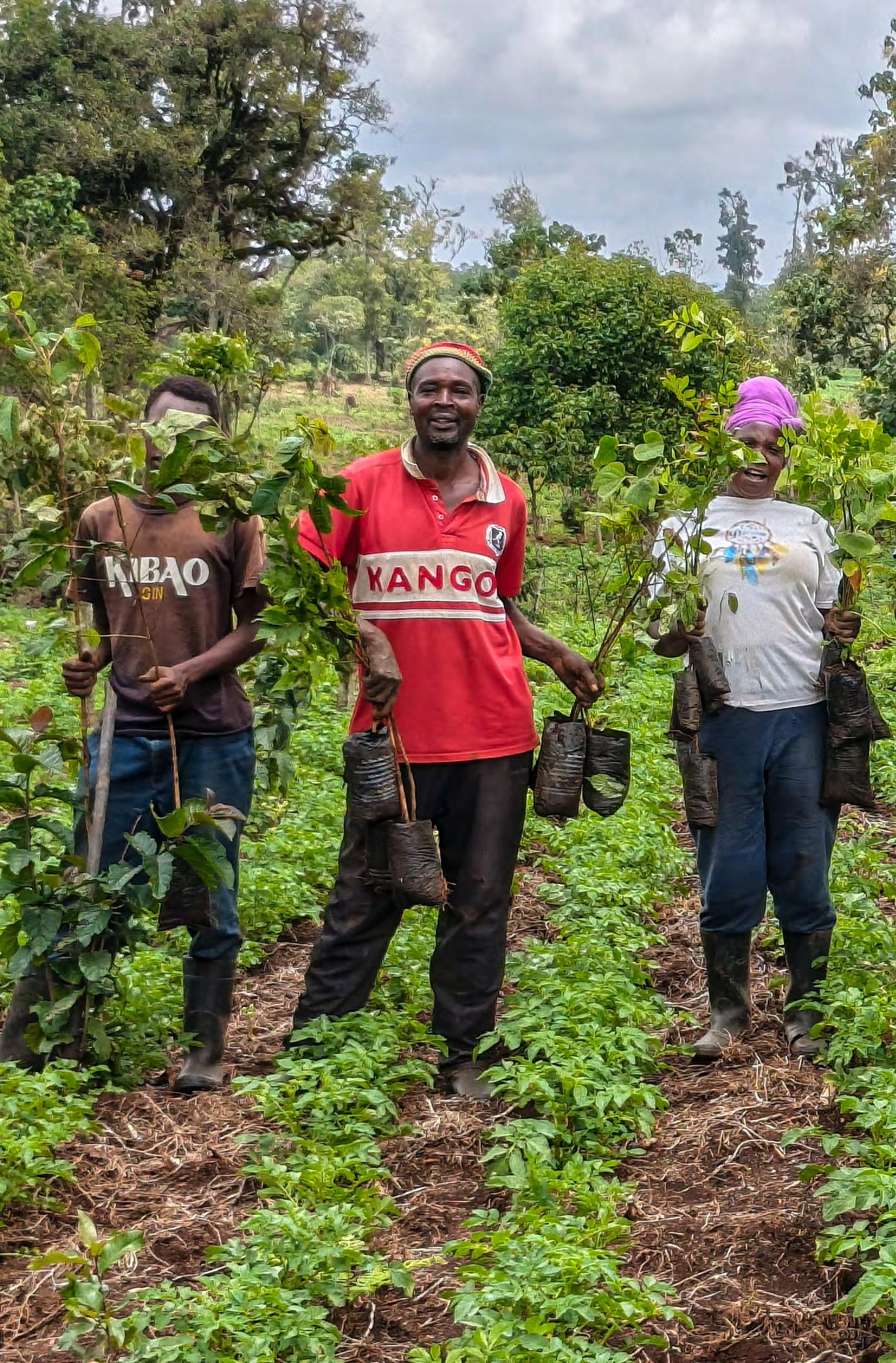
Across the world, but especially in the places we’re planting trees, natural disasters are intensifying. Countless species are threatened with extinction. And the health, safety and livelihoods of millions of people are at risk.
It’s not too late. But we need to act now. Trees are food-growers, shade-givers, crophelpers and incomeearners. They are drought-stoppers, floodfighters, air-cleaners and planet-coolers.
We can harness the power of trees to protect our future. By planting more trees in places where they make a fast and lasting impact, we can safeguard our planet for generations to come.
Please donate today and help more communities to restore their local landscape and transform their lives through the power of trees.
Just £2 can pay for a tree that provides food for today and protects nature for tomorrow.
Make a gift today at internationaltreefoundation.org/donate
The impact of ITF’s work has been made possible thanks to the backing of our supporters and donors, the tireless work of our community partners and the dedication of our staff and of our trustees and volunteers who freely gave their time. Thank you also to Botanical Gardens Conservation International, Cyril Hugh Kleinwort Foundation, Ecologi, Embassy of the Kingdom of the Netherlands, Ernest Kleinwort Charitable Trust, Fondation Franklinia, Green Impact, Just One Tree, National Lottery Community Fund, Ofenheim Charitable Trust, One Tree Planted, States of Guernsey, The Adrian Swire Charitable Trust, The Tresanton Trust, TreeSisters, UPS Foundation and VIA Foundation. Together, we are creating lasting change and moving towards a greener future.