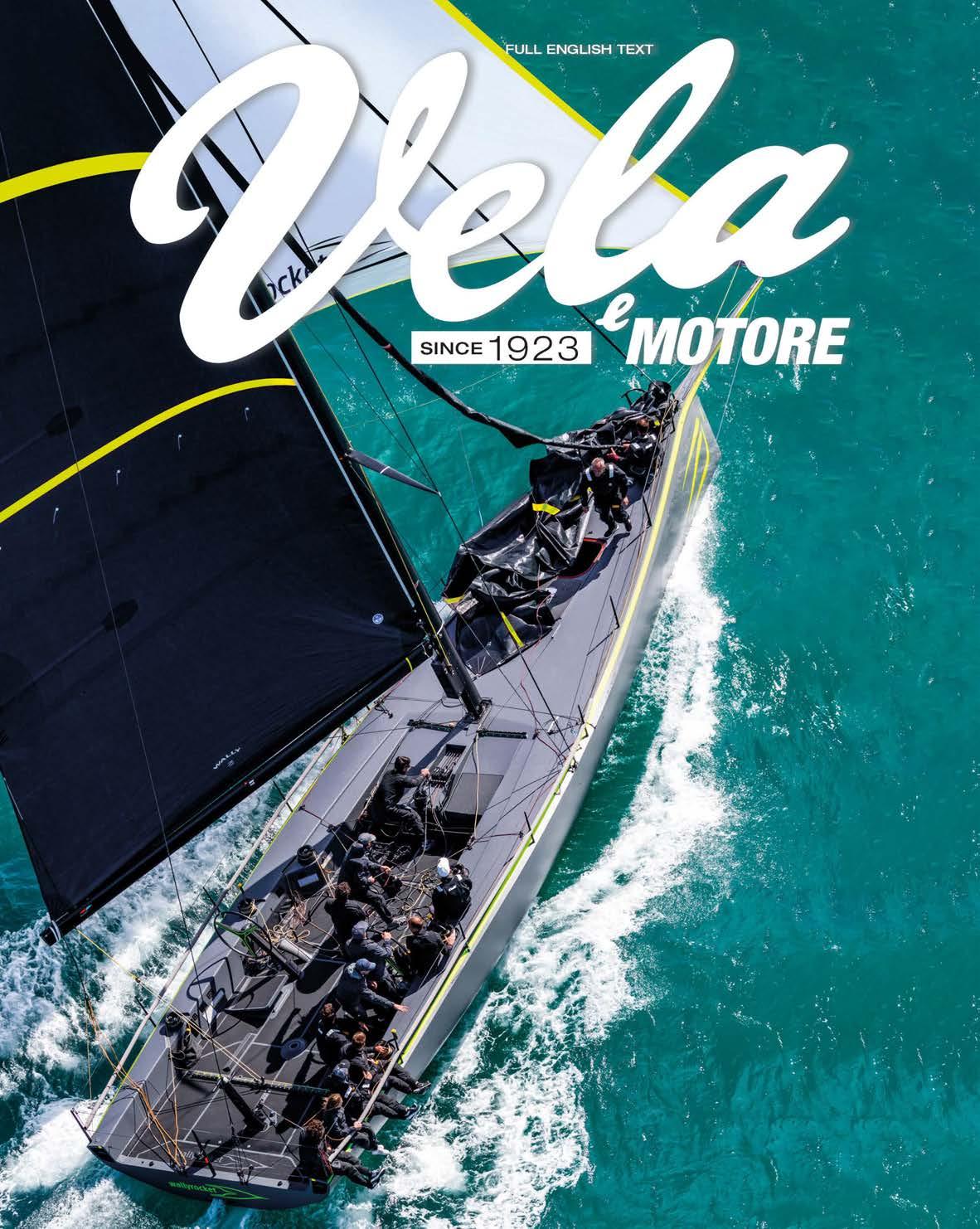
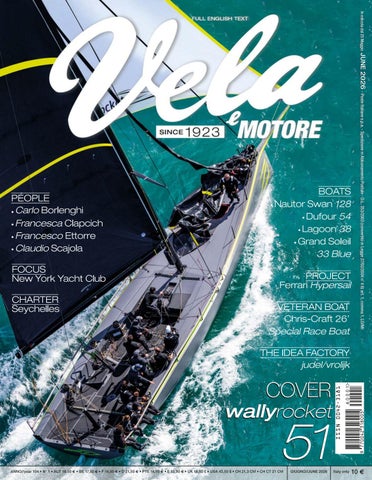
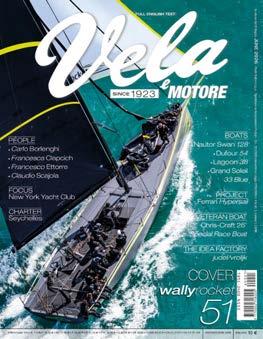
Vela e Motore, rivista nautica fondata nel 1923, è tornata in edicola. Il suo patrimonio di documenti è un valore per tutta la nostra comunità. È un sogno, cullato a lungo nel nostro cuore, che si avvera
Vela e Motore, a boating magazine founded in 1923, is back on newsstands. Its archive of documents is a valuable resource for our entire community. This is a dream we have cherished for a long time, and it is now coming true
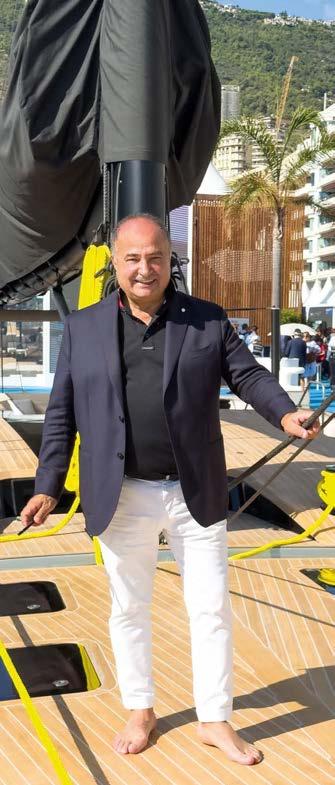
by Francesco Michienzi

C’è un momento in cui il fruscio della carta ti ferisce e ti ricorda che qualcosa di prezioso sta per svanire. Per me quel momento è arrivato sfogliando, con mani tremanti e sguardo attento, le annate di Vela e Motore.
Fondata nel 1923, questa rivista non è mai stata soltanto carta e stampa: è un archivio di rotte, volti, progetti e storie. Restituirla alla luce è stato molto più di un intervento editoriale: è stato realizzare un sogno che non sapevo di custodire. Ogni numero recuperato è come una barca rimessa in mare. Tra le pagine ho ritrovato rotte tracciate da mani esperte, racconti di tempeste e regate, il lavoro dei cantieri e il sorriso dei marinai. Ho toccato lettere ingiallite, fotogra e che rievocano il profumo del sale, e per no una lettera di Gabriele D’Annunzio che ringrazia il cantiere Baglietto per lo yacht che aveva costruito per lui. Frammenti vivi di un passato che chiedeva soltanto di essere ascoltato. Restituire voce a queste storie signi ca restituire memoria a una comunità intera, offrendo alle nuove generazioni una bussola fatta di esperienza e passione.
C’è un’emozione quasi religiosa nello SFOGLIARE PAGINE che hanno raccontato tempeste, regate, progetti; si sente la continuità e la linea che unisce CHI SCRIVEVA E CHI LEGGERÀ.
There is an almost religious sense of wonder in LEAFING THROUGH PAGES that have chronicled storms, regattas and projects; one can feel the continuity and the thread linking those WHO WROTE them and those who WILL READ THEM.
Il percorso non è stato semplice. Restaurare, ricucire, catalogare richiede tempo, cura e amore. Ci sono stati giorni di fatica e notti in cui la responsabilità di custodire 103 anni di storia pesava forte. Ma ogni sforzo è stato ricompensato dal vedere occhi illuminarsi, dall’ascoltare aneddoti tornare vivi intorno a un tavolo, dal sapere che quella eredità potrà continuare a navigare. Ho capito che il gesto non era soltanto mio: era la risposta a un bisogno collettivo di radici e orizzonti.
La carta ha un valore che il web, per sua natura uido, non sempre può offrire. La sicità di una rivista regala permanenza, autenticità e una fruizione lenta che permette di cogliere dettagli, collegare immagini e testi, conservare credibilità storica. Questo non signi ca ri utare il digitale: carta e digitale insieme aumentano la possibilità che quelle parole sopravvivano. Per questo abbiamo deciso di bilanciare, non di scegliere.
Oggi, con Vela e Motore tornata in edicola, avverto un misto potente di orgoglio e responsabilità. Essere editore e direttore di una testata con oltre un secolo di vita signi ca custodire una voce che ha attraversato decenni, documentato cambiamenti tecnici e culturali ed è appartenuta a una comunità di lettori, autori, cantieri e storici. È un patrimonio che non è mio in senso privato: è di tutti coloro che amano il mare e la sua storia. Abbiamo davanti migliaia di documenti e ci vorrà tempo prima di renderli tutti accessibili. È un impegno che assumo con gioia: mettere a disposizione materiale per ricerche storiche, mostre, rinascite editoriali signi ca alimentare competenze, estetiche e pratiche della marineria. La conservazione è formazione: dalle vecchie pagine si possono trarre soluzioni tecniche, ispirazioni, modelli narrativi e iconogra e che altrimenti andrebbero perduti. Sapere da dove veniamo aiuta a decidere dove andare. Ringrazio i miei collaboratori per la passione e l’impegno con cui hanno lavorato a questo ritorno. Ringrazio i lettori e i vecchi abbonati che, in questi mesi, ci hanno inviato centinaia di messaggi calorosi. Il loro affetto ci ha confermato che custodire la memoria è un dovere affettivo e civile. Oggi, con Vela e Motore di nuovo alla luce, sento di aver dato al passato una seconda vela. Perché il mare, come la memoria, ha bisogno di vento per continuare a raccontarsi.
There comes a moment when the swish of paper stings and reminds you that something precious is about to vanish. For me, that moment came as I leafed through the back issues of Vela e Motore, my hands trembling and my gaze xed on the pages.
There comes a moment when the swish of paper stings and reminds you that something precious is about to vanish. For me, that moment came as I leafed through the back issues of Vela e Motore, my hands trembling and my gaze xed on the pages.
Founded in 1923, this magazine has never been merely paper and ink: it is an archive of routes, faces, projects and stories. Bringing it back to light was much more than an editorial project: it was the realisation of a dream I hadn’t even known I’d been harbouring. Every issue I’ve recovered is like a boat set free on the water once more. Within its pages, I’ve rediscovered routes charted by expert hands, tales of storms and regattas, the work of shipyards, and the smiles of sailors.
I touched yellowed letters, photographs that evoked the scent of salt, and even a letter from Gabriele D’Annunzio, thanking the Baglietto shipyard for the yacht they had built for him. Vivid fragments of a past simply waiting to be heard. Giving these stories a voice again means restoring the memory of an entire community and offering future
Il
lettering
della testata è quello originale dei tempi passati.
La parola vela ha assunto un peso maggiore rispetto alla parola MOTORE. A questa seconda categoria di barche abbiamo riservato uno spazio per quelle storiche e anche con una particolare rilevanza culturale.
The headline lettering is the original design from days gone by. The word sail has taken on greater prominence than the word MOTOR. Within this second category of boats, we have set aside a section for historic vessels and those of particular cultural signi cance.
generations a compass built on experience and passion. It has not been an easy journey. Restoring, mending and cataloguing require time, care and love. There have been days of hard work and nights when the responsibility of safeguarding 103 years of history weighed heavily on us. But every effort was rewarded by seeing eyes light up, hearing stories come to life around a table, and knowing that this legacy will live on. I realised that this gesture was not just mine: it was a response to a collective need for roots and horizons.
Paper has a value that the web, by its very nature uid, cannot always offer. The physicality of a magazine offers permanence, authenticity and a leisurely reading experience that allows one to notice details, connect images and text, and preserve historical credibility.
This does not mean rejecting digital media: when used together, print and digital media increase the likelihood that those words will survive. That is why we have decided to strike a balance rather than choosing one over the other.
Today, with Vela e Motore back on newsstands, I feel a powerful mix of pride and responsibility. Being the publisher and editor of a magazine with over a century of history means safeguarding a voice that has spanned decades, documented technical and cultural change, and served a community of readers, authors, shipyards and historians. This heritage does not belong to me personally: it belongs to everyone who loves the sea and its history. We have thousands of documents before us, and it will take time to make them all accessible. It is a task I undertake with joy: making material available for historical research, exhibitions and new publications nurtures the skills, aesthetics and traditions of seafaring. Preservation is education: from the pages of the past, we can draw on technical solutions, inspiration, narrative models and iconography that would otherwise be lost. Knowing where we come from helps us decide where to go. I want to thank my collaborators for their passion and dedication during this relaunch. I would also like to thank our readers and long-standing subscribers, who have sent us hundreds of warm messages over the past few months. Their affection has con rmed that preserving memory is both an emotional and a civic duty. Today, with Vela e Motore back in print, I feel I have given the past a second chance to sail. Because the sea, like memory, needs the wind to keep telling its story.
by
1923
DIRETTORE RESPONSABILE //Editor in chief Francesco Michienzi f.michienzi@barcheisp.it
DIRETTORE EDITORIALE //Editorial director Barbara Borgonovo b.borgonovo@barcheisp.it
ART DIRECTOR
Francesca Villirillo gra ci@barcheisp.it
GRAFICA E PUBBLICITÀ //Graphic and Advertising Tamara Viganò info@barcheisp.it
FOTOGRAFO//Photographer Andrea Muscatello redazione@barcheisp.it
HANNO COLLABORATO A QUESTO NUMERO
Contributing editors/writers BluePassion, Guido Cantini, Alberto Mario Capelli, Joseph Culicchia, Ornella D’Alessio, Olimpia De Casa, Stefano Gattini, Julien Gazeau, Sacha Giannini, Gerald Guetat, Marin Le Roux, Jean-Marie Liot, Gilles MartinRaget, Filippo Michienzi, Jean-Bernard Nicolas, Martina Orsini, Chiara Risolo, Sailing Energy, Henri Thibault, Niccolò Volpati, Carlo Zazzera
SEGRETERIA DI REDAZIONE //Editorial assistant redazione@barcheisp.it
EDITORE //Publisher
International Sea Press Srl, Viale Brianza, 17/A - 20821 Meda, T. +39 0362 344140, F. +39 0362 73790 redazione@barcheisp.it
STAMPA //Printing Tipolitogra a Pagani Passirano (BS)


CONCESSIONARIA PUBBLICITÀ //Advertising
International Sea Press Srl, Viale Brianza, 17/A - 20821 Meda T. +39 0362 344140 b.borgonovo@barcheisp.it, info@barcheisp.it
Gian Marco Lari T. +39 0773 742260 M. +39 335 6268932 m.lari@barcheisp.it
Giovanni Berruti M. +39 337 254344 g.berruti@barcheisp.it
Concessionaria per il Principato di Monaco e la Costa Azzurra
Advertising for Principality of Monaco and Côte d’Azur INVESTOR MEDIA MONACO Sarl Andrea Dini a.dini@barcheisp.it
DISTRIBUZIONE //Distribution
Press-di Distribuzione Stampa e Multimedia S.r.l.Via Cassanese 224, 20090 Segrate (MI)
DISTRIBUZIONE ESTERO
Sole Agent for Distribution Abroad JOHNSONS INTERNATIONAL NEWS ITALIA srl Via Valparaiso, 4 - 20144 MILANO
UFFICIO ABBONAMENTI
Viale Brianza, 17/A - 20821 Meda, tel. +39 0362 344140 Abbonamento annuo € 30; abbonamento estero € 60 Europa; € 75 resto del mondo; un numero € 10,00; arretrati € 15. Pubblicazione in attesa di registrazione al Tribunale di Milano Tutti i diritti sono riservati. Vietata la riproduzione se non autorizzata per iscritto. Printed in Italy.
How to subscribe - Subscription: International Sea Press Srl, Viale Brianza, 17 - 20821 Meda, tel. +39 0362 344140. Subscription rates (one year): Italy € 30,00 - Europe € 60,00 - all over the world € 75,00. Published quarterly. All rights reserved: reproduction in whole or in a part of any article without prior written permission from the publisher is strictly prohibited. Printed in Italy.
Questo numero è stato chiuso in Redazione il 29 Aprile 2026. This issue ended on 29th April 2026.


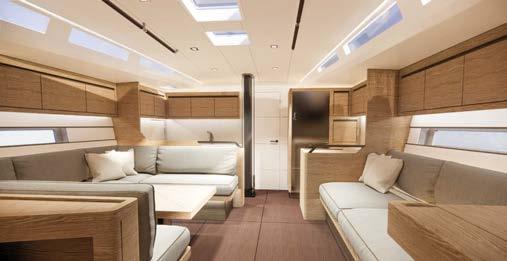
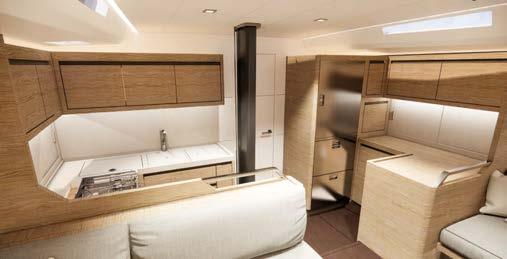
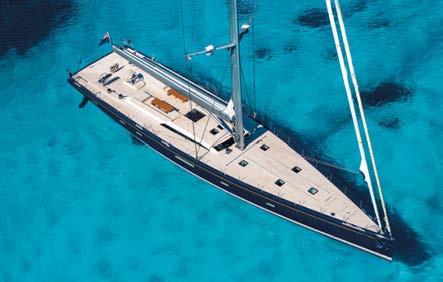
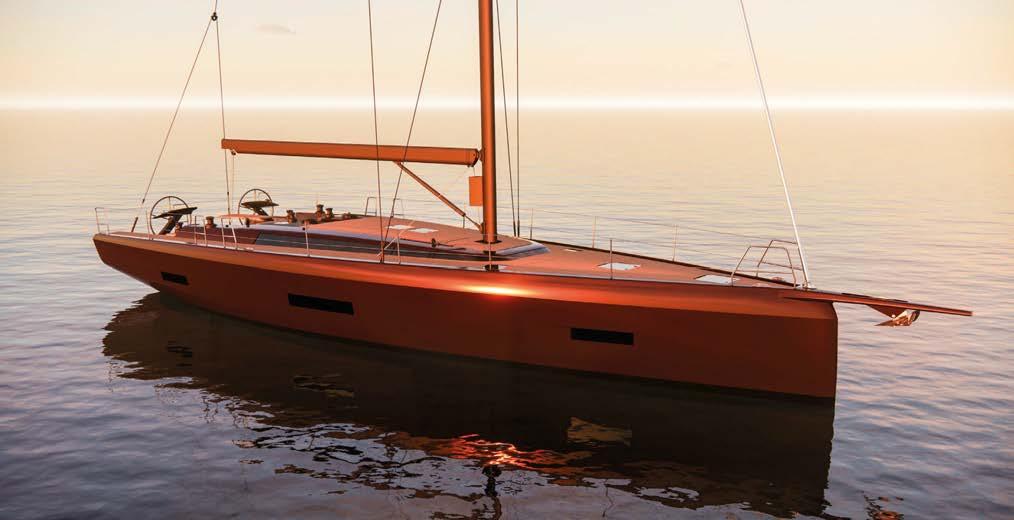
Un vero maxiyacht in soli 56 piedi, proposto da IceYachts, che unisce sportività, lusso e innovazione.
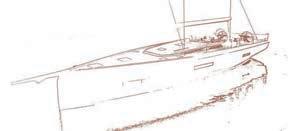
Progettata dallo studio Felci Yachts Design, ICE56 conserva il caratteristico Dna sportivo del cantiere e, oltre a garantire prestazioni a vela interessanti, offre anche un comfort ed un’eccellenza costruttiva elevati, caratteristiche tipiche di imbarcazioni di dimensioni superiori. Il design esterno, derivato direttamente dal Maxi Ice di 80 piedi, è caratterizzato da una tuga lante e sportiva, ma con una maggiore super cie vetrata che dona all’interno un’eccezionale luminosità e una vista panoramica sull’orizzonte. L’armonia tra eleganza e funzionalità è evidente anche nel pozzetto, che, con i suoi 5 metri di baglio massimo, offre spazi particolarmente ampi, ideati per il massimo comfort. Il tavolo regolabile in altezza può essere facilmente trasformato in una grande zona prendisole per momenti di relax durante le navigazioni.
A true maxi yacht at just 56 feet, from IceYachts, combining sportiness, luxury and innovation.
Designed by Felci Yachts Design, the ICE56 retains the shipyard’s characteristic sporty DNA and, in addition to delivering impressive sailing performance, offers a high level of comfort and build quality –features typically found on larger vessels. The exterior design, derived directly from the 80-foot Maxi Ice, features a sleek, sporty deckhouse with a larger glazed area that oods the interior with light and offers a panoramic view of the horizon. The harmony between elegance and functionality is also evident in the cockpit, which, with its 5-metre maximum beam, offers particularly spacious areas designed for maximum comfort. The height-adjustable table can be easily converted into a large sunbathing area for moments of relaxation whilst sailing.
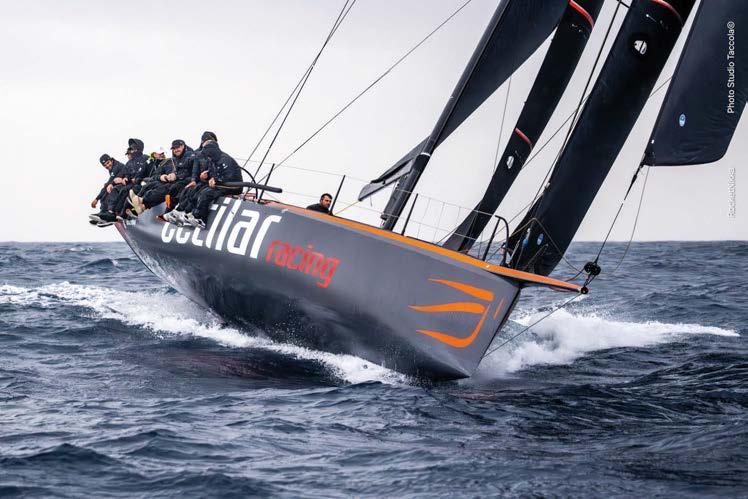
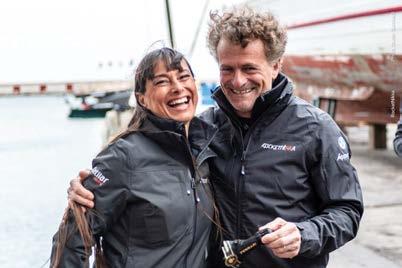
RocketNikka è la barca con cui l’imprenditore, velista e pilota automobilistico Roberto Lacorte, già armatore e timoniere della barca volante FlyingNikka, torna alle regate di vela d’altura a rating.
RocketNikka is the boat on which entrepreneur, sailor and racing driver Roberto Lacorte – formerly the owner and helmsman of the FlyingNikka –is returning to rating-based offshore sailing regattas.
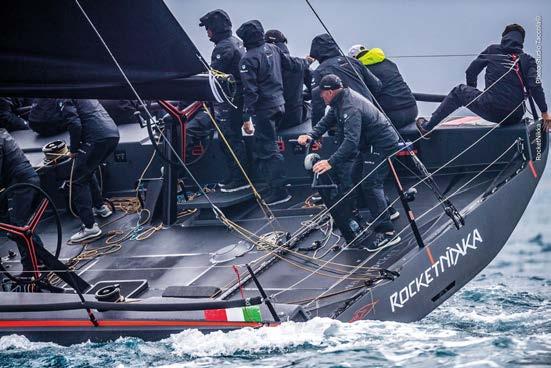
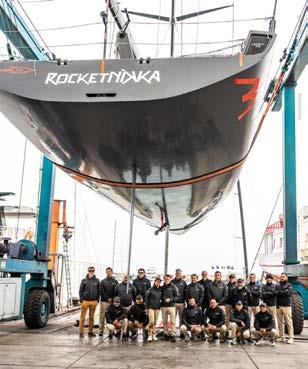
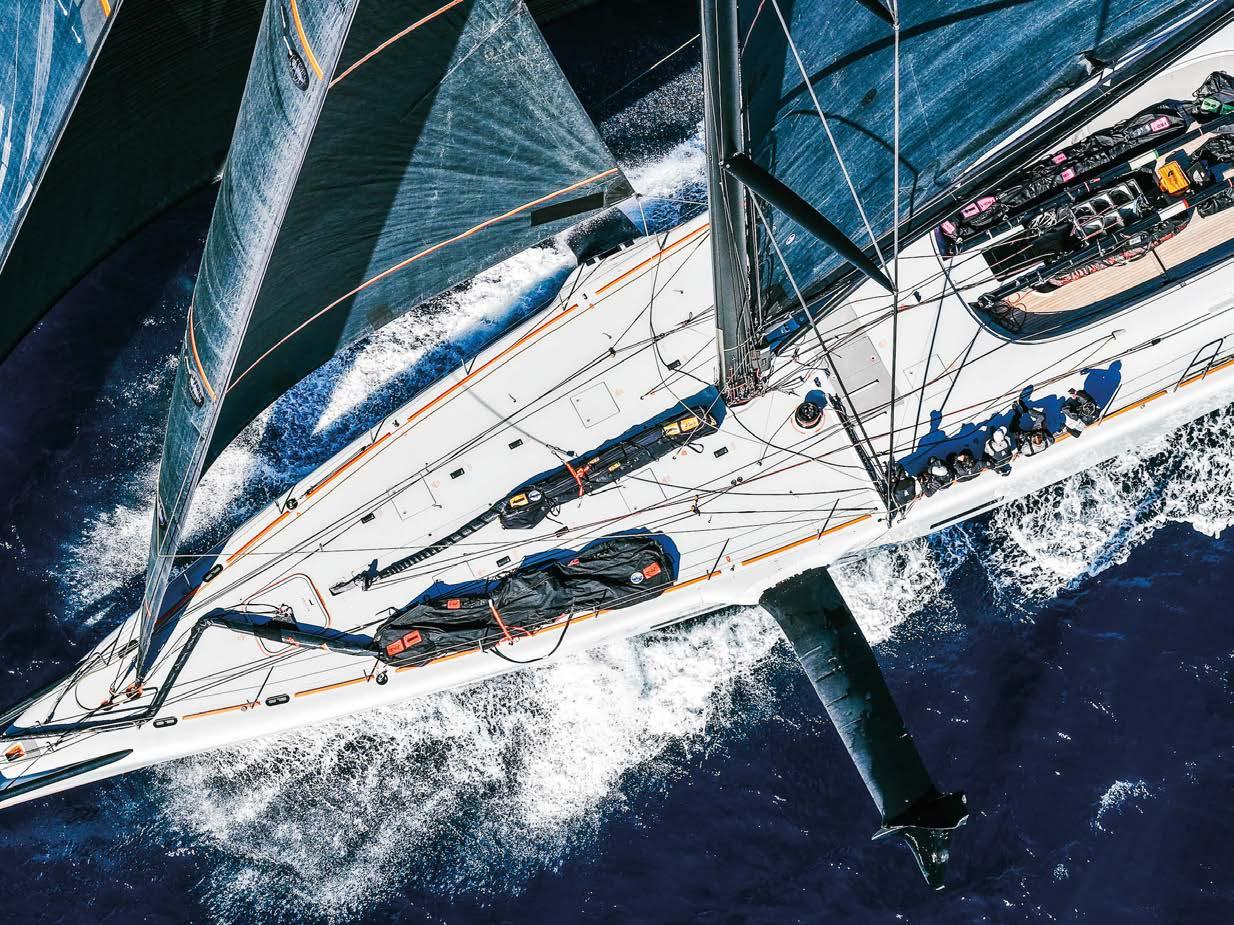
RocketNikka è un monoscafo lungo poco meno di 16 metri appartenente alla classe wallyrocket51. Costruito dal cantiere Wally Yachts, con l’obiettivo dichiarato di essere la barca da regata più veloce al mondo in tempo corretto, è un racer puro, moderno e performante con cui il team Nikka Racing ha già partecipato al Campionato del Mondo ORC a Sorrento e sarà sulla linea di regata alla Sardinia Cup a Porto Cervo di giugno e alla Middle Sea Race (Malta, 17 ottobre). A bordo di RocketNikka, un equipaggio di alto pro lo formato dallo stesso Lacorte nel ruolo di timoniere, dal Team Manager di Nikka Racing Alessio Razeto, oltre a Lorenzo Bressani, Enrico Zennaro, Silvio Arrivabene, Diego Negri, Lorenzo De Felice, Matteo Celon, Giulio Desiderato, Marco Carpinello, Filippo Vulcanile, Nikolay Kornev, Federico Giovannelli ed Emilia Cortesi, con Andrea Fornaro impegnato nel ruolo di coach.
RocketNikka is a monohull just under 16 metres in length, belonging to the wallyrocket51 class.
Built by Wally Yachts with the stated aim of being the world’s fastest racing yacht on corrected time, it is a pure, modern, high-performance racer. The Nikka Racing team has already competed in the ORC World Championship in Sorrento and will be on the starting line at the Sardinia Cup in Porto Cervo in June, as well as the Middle Sea Race (Malta, 17 October). On board RocketNikka is a high-pro le crew comprising Lacorte himself as helmsman, Nikka Racing Team Manager Alessio Razeto, and Lorenzo Bressani, Enrico Zennaro, Silvio Arrivabene, Diego Negri, Lorenzo De Felice, Matteo Celon, Giulio Desiderato, Marco Carpinello, Filippo Vulcanile, Nikolay Kornev, Federico Giovannelli and Emilia Cortesi, with Andrea Fornaro acting as coach.
The Southern Wind 108 Kalantis has been delivered to its owners in Cape Town.
Kalantis, the third vessel in the semi-custom SW108 range, features exterior and interior design by Nauta. With Kalantis, Nauta continues to re ne its design language, offering a yacht that balances performance, comfort and contemporary, understated elegance, with innovations to enhance life on board. The yacht re ects the lifestyle of its young and dynamic owners, combining sailing performance with the comfort essential for long-range cruising. Kalantis’s distinctive feature is the Seaside Lounge, a transformable space at the stern that creates a direct connection with the sea. Thanks to an innovative system developed jointly by Southern Wind and Nauta, the stern opens up, revealing an out-and-out beach area.
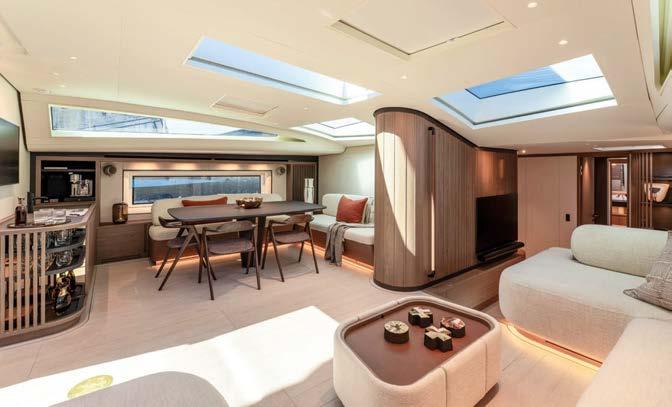
Kalantis, terzo esemplare della linea semi-custom SW108, è caratterizzato da un design esterno e interno rmato da Nauta. Con Kalantis, Nauta continua a perfezionare il suo linguaggio di design, offrendo uno yacht che bilancia prestazioni, comfort e un’eleganza contemporanea e discreta, con innovazioni mirate al miglioramento della vita a bordo. Lo yacht ri ette lo stile di vita dei suoi giovani e dinamici armatori, combinando prestazioni a vela con il comfort indispensabile nelle crociere a lungo raggio. Il tratto distintivo di Kalantis è la Seaside Lounge, uno spazio trasformabile a poppa che crea una connessione diretta con il mare. Grazie a un sistema innovativo, sviluppato congiuntamente da Southern Wind e Nauta, la poppa si apre, rivelando una vera e propria beach area.
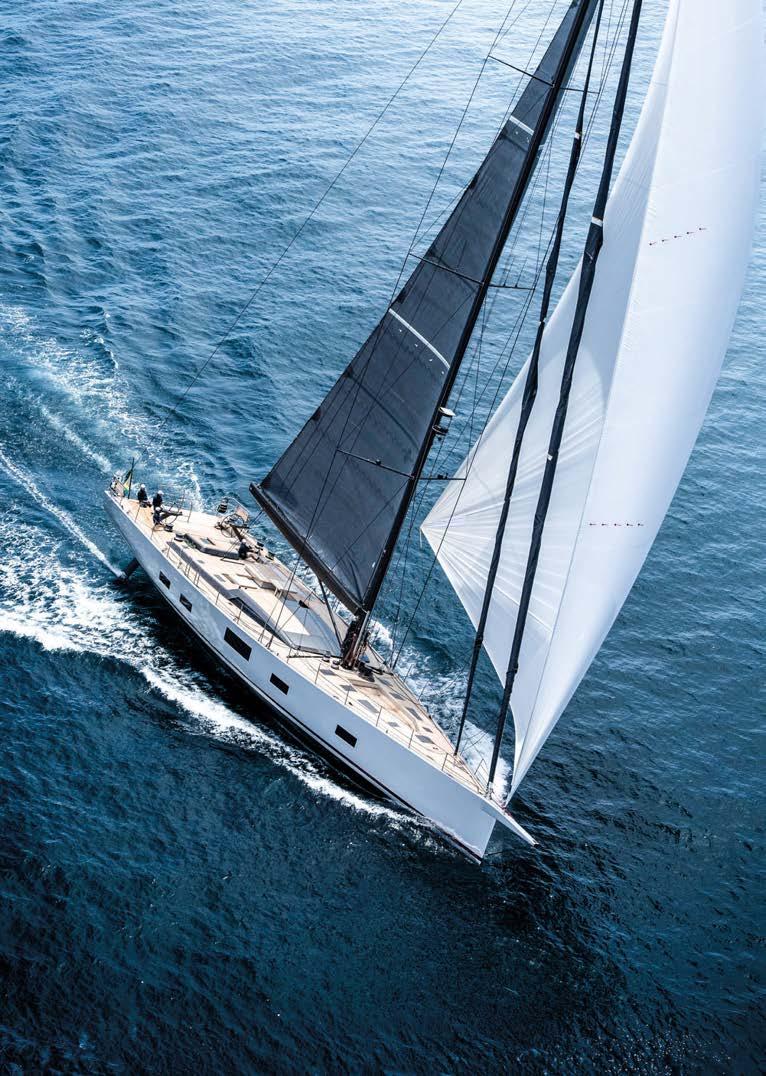
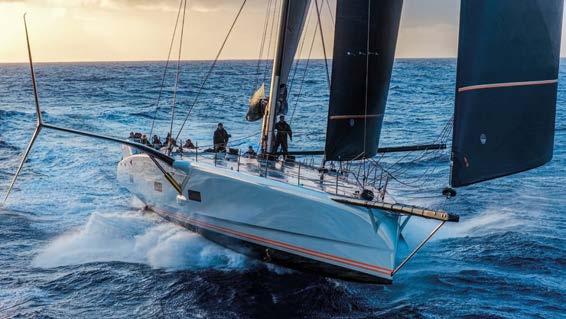
Raven ha stabilito un nuovo record, conquistando il primo posto nella Rorc Transatlantic Race 2026.
“È stato davvero fantastico vedere Raven esibirsi così bene al suo debutto”, afferma Mattias Svenlin, Project Coordinator di Baltic Yachts. “L’imbarcazione ha fatto esattamente ciò per cui era stata progettata. Vederla navigare con tanta sicurezza e velocità è stato incredibilmente grati cante per tutto il team. Siamo molto orgogliosi della collaborazione con l’armatore e il team di progetto e non vediamo l’ora di continuare a sviluppare insieme questo straordinario yacht”.
Raven has set a new record, taking rst place in the 2026 RORC Transatlantic Race..
“Seeing Raven perform so well on her debut was truly fantastic”, says Mattias Svenlin, Project Coordinator at Baltic Yachts. “The boat did exactly what she was designed to do. Seeing her sail with such con dence and speed was incredibly rewarding for the whole team. We are very proud of our collaboration with the owner and the project team, and we look forward to continuing to develop this extraordinary yacht together”.

















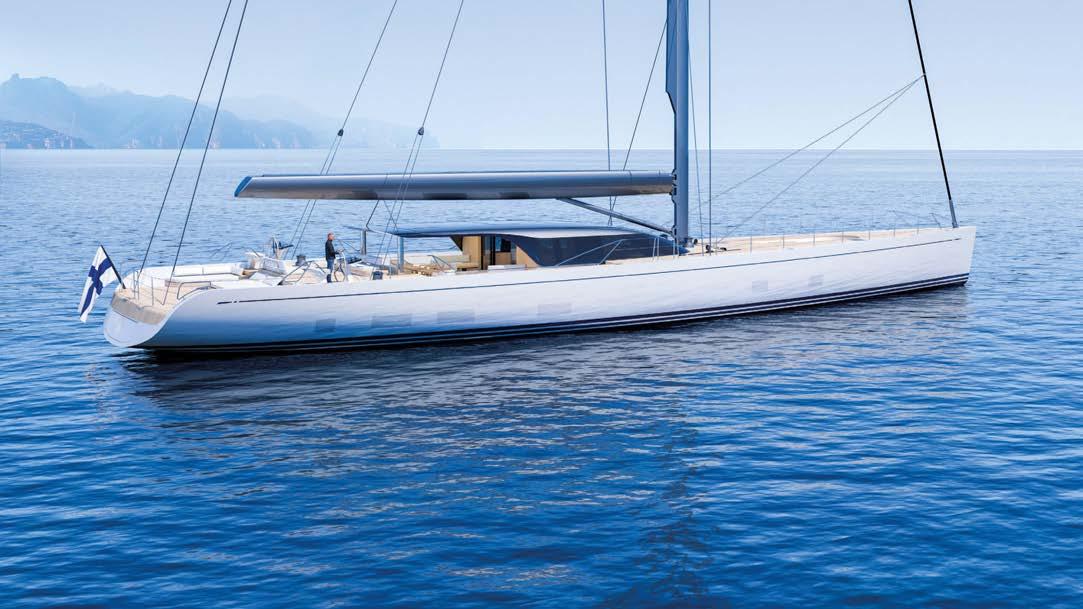
Nautor Swan ha avviato la costruzione dell’Alloy 44, il più grande yacht a vela mai realizzato dal cantiere nlandese e il primo yacht in alluminio nei suoi 60 anni di storia Nautor Swan has begun construction of the Alloy 44, the largest sailing yacht ever built by the Finnish shipyard and the rst aluminium yacht in its 60-year history
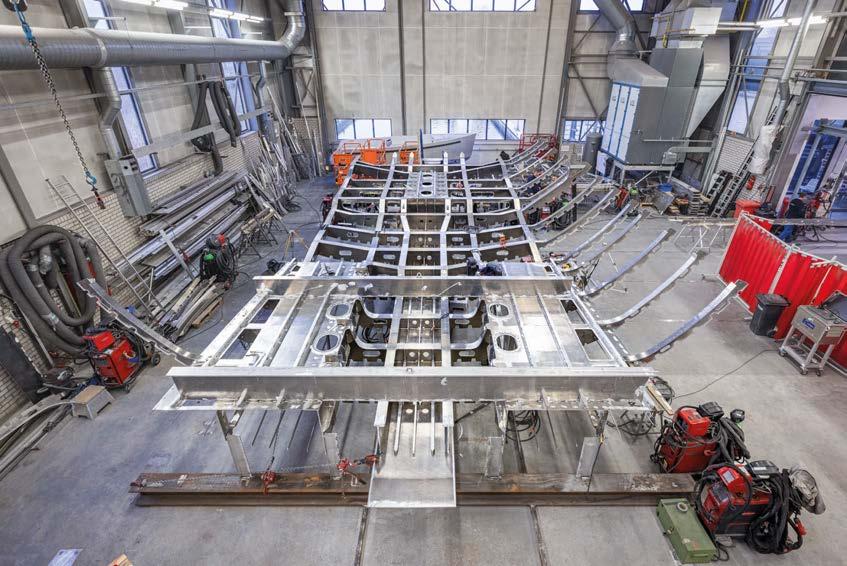
Lungo 43,5 metri e largo 9,45 metri, Swan Alloy 44 sarà dotato di una chiglia telescopica che consentirà un pescaggio da 4,30 a 6,30 metri.
“Questo è il mio primo yacht a vela e provo un’emozione speciale dopo tanti yacht a motore”, ha dichiarato Massimo Perotti. “Per Nautor Swan, questo progetto apre un nuovo capitolo. Porta il brand in dimensioni mai esplorate prima, ma con la volontà di rimanere fedele ai valori che hanno de nito Swan in questi sessant’anni di storia unica”.
Measuring 43.5 metres in length and 9.45 metres in beam, the Swan Alloy 44 will be tted with a telescopic keel, allowing a draught ranging from 4.30 to 6.30 metres. “This is my rst sailing yacht, and I feel a special sense of excitement after so many motor yachts”, said Massimo Perotti.
“For Nautor Swan, this project opens a new chapter. It takes the brand into uncharted territory whilst remaining faithful to the values that have de ned Swan throughout its sixty-year history”.
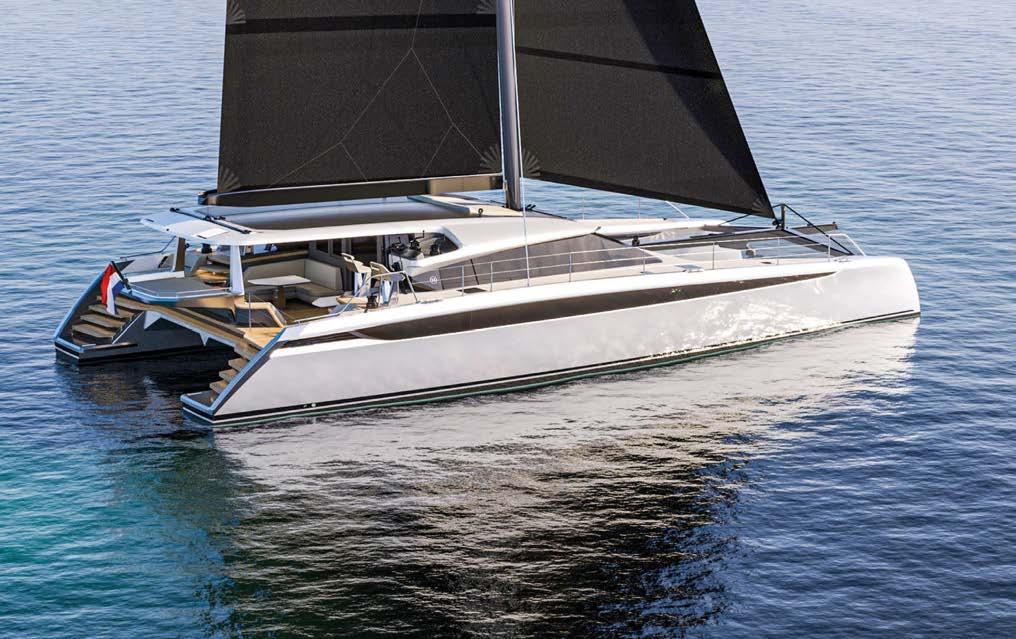

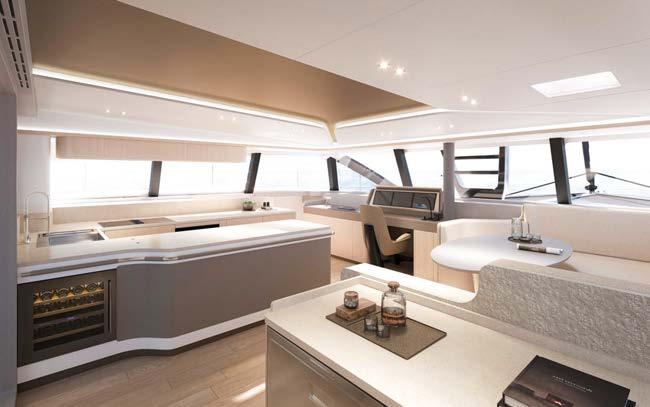
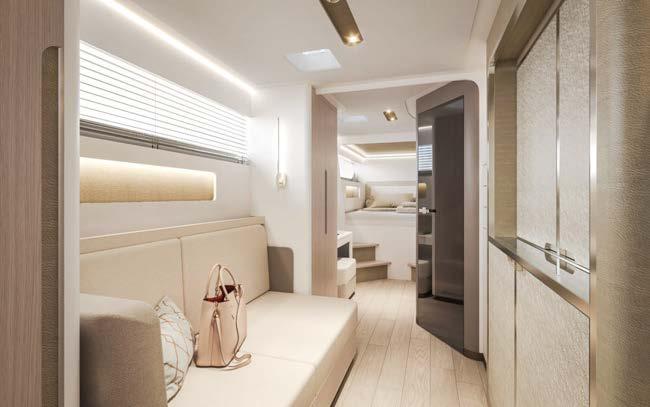
Il cantiere nautico Holld Yachts sta costruendo un catamarano a vela interamente in bra di carbonio.
Con sede a Zwartsluis, il cantiere nautico olandese è specializzato nello sviluppo di yacht all’avanguardia che uniscono ingegneria ad alte prestazioni e maestria artigianale. L’Holld 74 presenta un’alta rigidità e resistenza, con una notevole ef cienza in termini di peso. Sviluppato in collaborazione con Linda Chevallerau, sarà realizzato secondo standard di qualità e ri nito per soddisfare i gusti dei suoi armatori. La costruzione procede secondo i piani, con la data di completamento prevista per gennaio 2027. Sono stati installati anche i due motori Yanmar e si è proceduto all’integrazione dei sistemi elettrici.
The Holld Yachts shipyard is building a sailing catamaran entirely of carbon bre.
Based in Zwartsluis, the Dutch shipyard specialises in developing cutting-edge yachts that combine high-performance engineering with master craftsmanship. The Holld 74 offers high rigidity and strength, with remarkable weight ef ciency. Developed in collaboration with Linda Chevallerau, she will be built to high standards and nished to suit her owners’ tastes. Construction is proceeding as planned, with completion scheduled for January 2027. The two Yanmar engines have also been installed, and the electrical systems have been integrated.
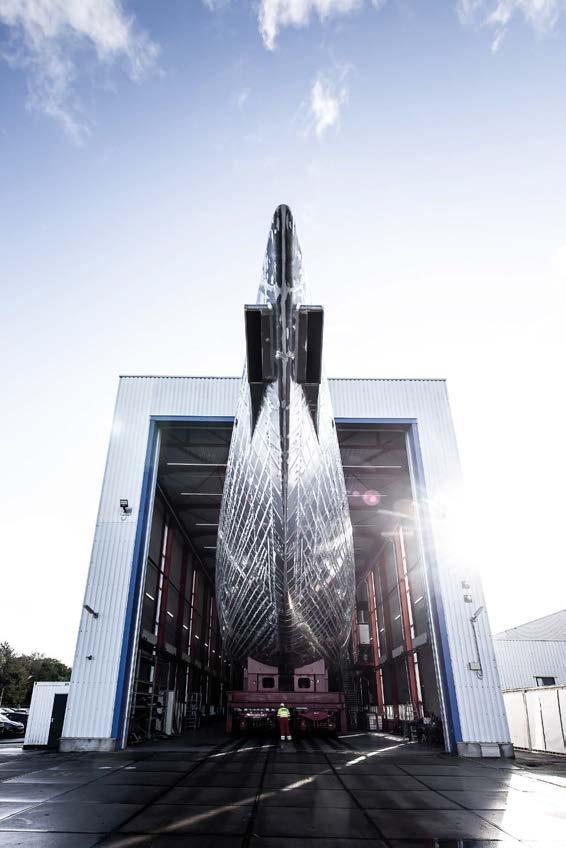


Vripack Yacht Design, in collaborazione con Vitters Shipyard, annuncia che SY Zero, il primo superyacht a vela al mondo progettato per funzionare senza combustibili fossili, sta entrando nelle fasi nali di costruzione. Lo yacht di quasi 70 metri è il risultato di oltre 60.000 ore di ricerca e sviluppo e rappresenta un momento epocale nella progettazione di yacht sostenibili. Elegante e leggera, quando navigherà a vela, l’imbarcazione fenderà l’acqua senza lasciare traccia, generando energia elettrica grazie alle sue linee classiche e armoniose che celano una ricchezza di dettagli raf nati.


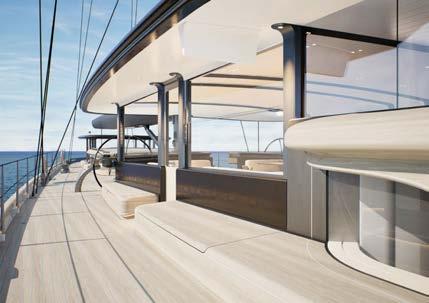
Vripack Yacht Design, in collaboration with Vitters Shipyard, is delighted to announce that SY Zero, the world’s rst sailing superyacht designed to operate without fossil fuels, is entering the nal stages of construction. The nearly 70-metre yacht is the result of more than 60,000 hours of research and development, marking a landmark moment in sustainable yacht design. Elegant and lightweight, the vessel will glide through the water without leaving a trace, generating electricity thanks to its classic, harmonious lines that conceal a wealth of re ned details.
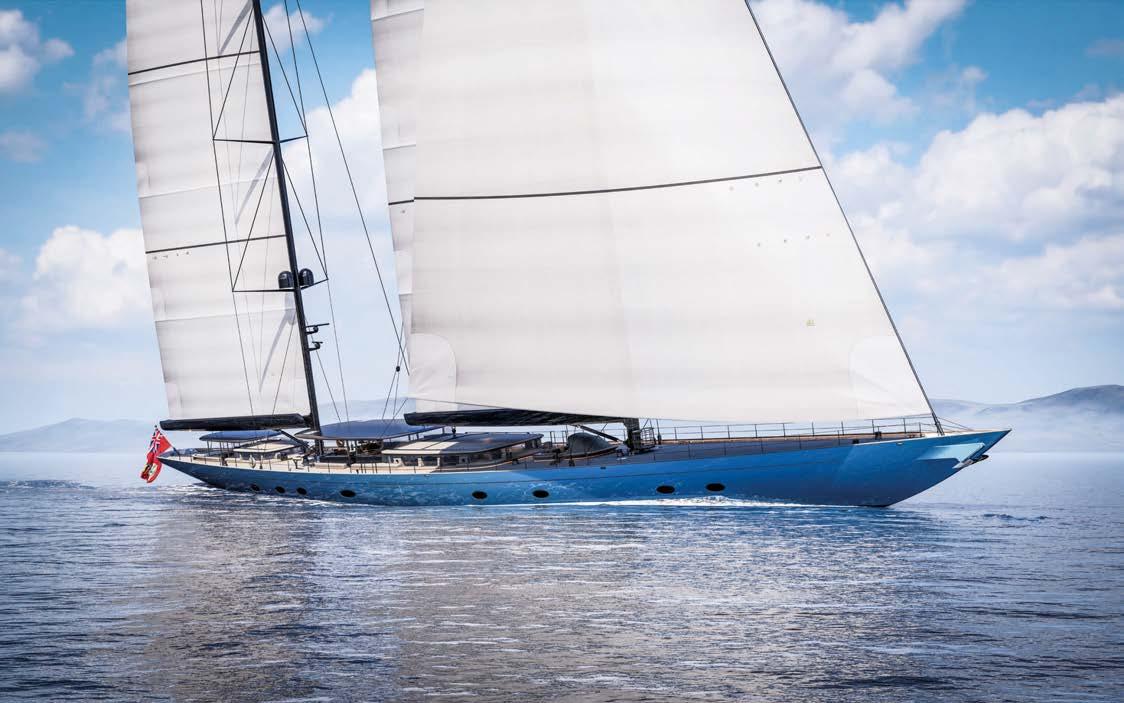
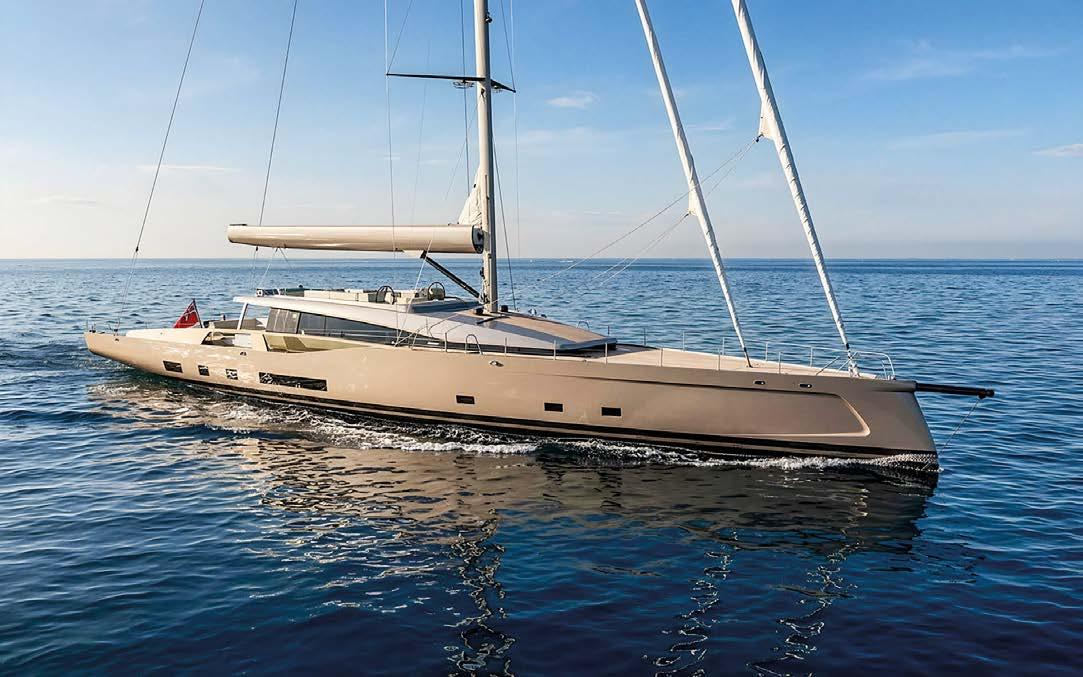
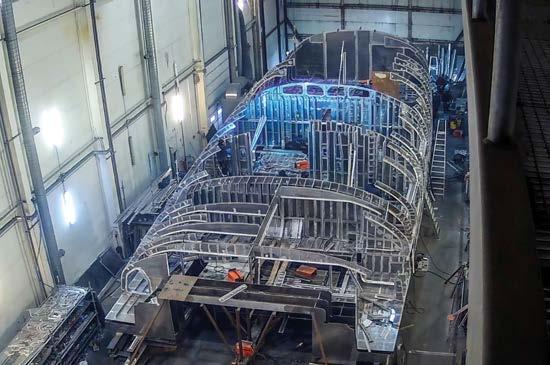
La propulsione ibrida avanzata consente allo yacht di operare in modalità a basse emissioni.
The advanced hybrid propulsion system enables the yacht to operate in lowemission mode.
La costruzione di CO.ONE 140 di Conrad è in una fase avanzata. Si tratta dell’ammiraglia a vela con ybridge e del primo modello di una nuova gamma di imbarcazioni
Construction of the Conrad CO.ONE 140 is at an advanced stage. This is the agship ybridge sailing yacht and the rst model in a new range of vessels
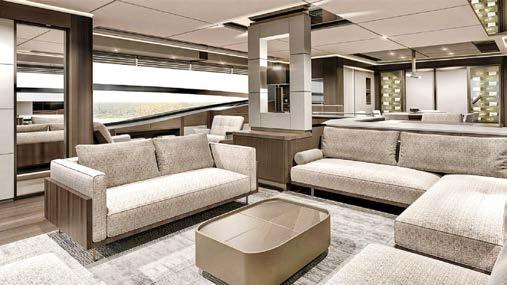
Il design esterno, le linee dello scafo, lo stile e il concept degli interni sono stati creati dallo yacht designer Frank Neubelt in collaborazione con German Yacht Couture. L’architettura navale e l’ingegneria sono state sviluppate insieme a Deltamarin per realizzare una piattaforma di navigazione tecnicamente avanzata ed ef ciente. Lo yacht ha uno scafo in alluminio leggero con una sovrastruttura in bra di carbonio. Il recupero di energia durante la navigazione riduce ulteriormente il consumo di carburante, mentre il piano velico ottimizzato minimizza l’utilizzo del motore e le emissioni durante le crociere a lungo raggio.
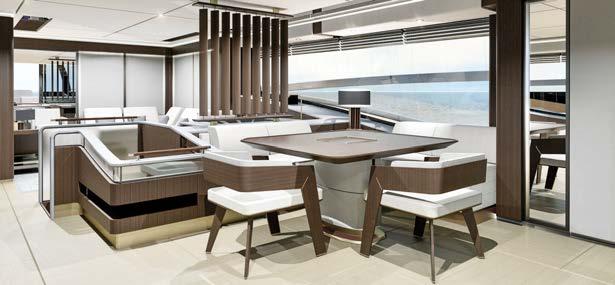
Yacht designer Frank Neubelt created the exterior design, hull lines, style and interior concept in collaboration with German Yacht Couture.
The naval architecture and engineering were developed in conjunction with Deltamarin to create a technically advanced and ef cient sailing platform. The yacht features a lightweight aluminium hull and a carbon bre superstructure.
Energy recovery during sailing further reduces fuel consumption, whilst the optimised sail plan minimises engine use and emissions during longrange cruising.
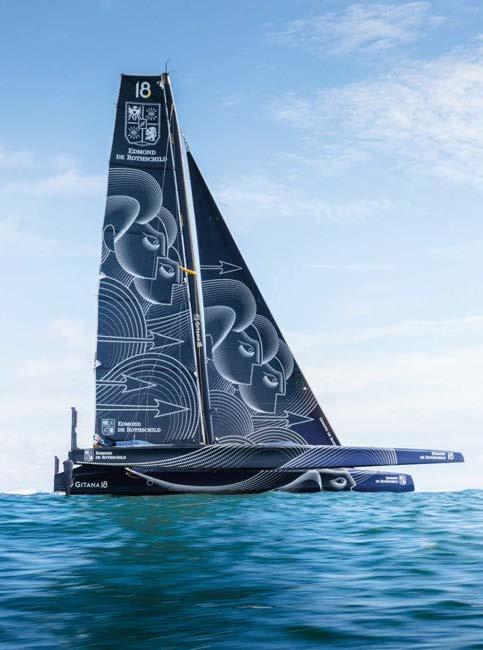
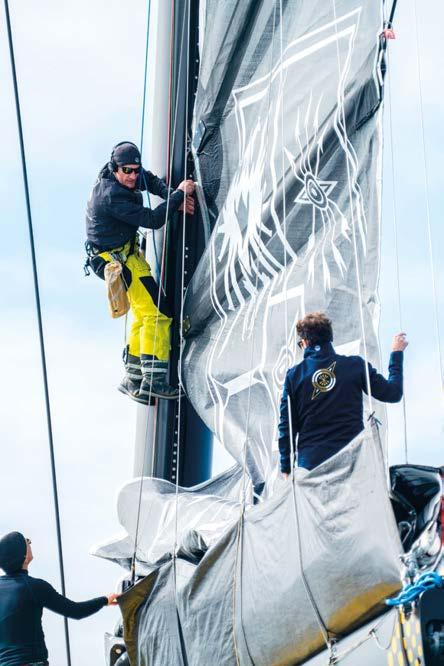
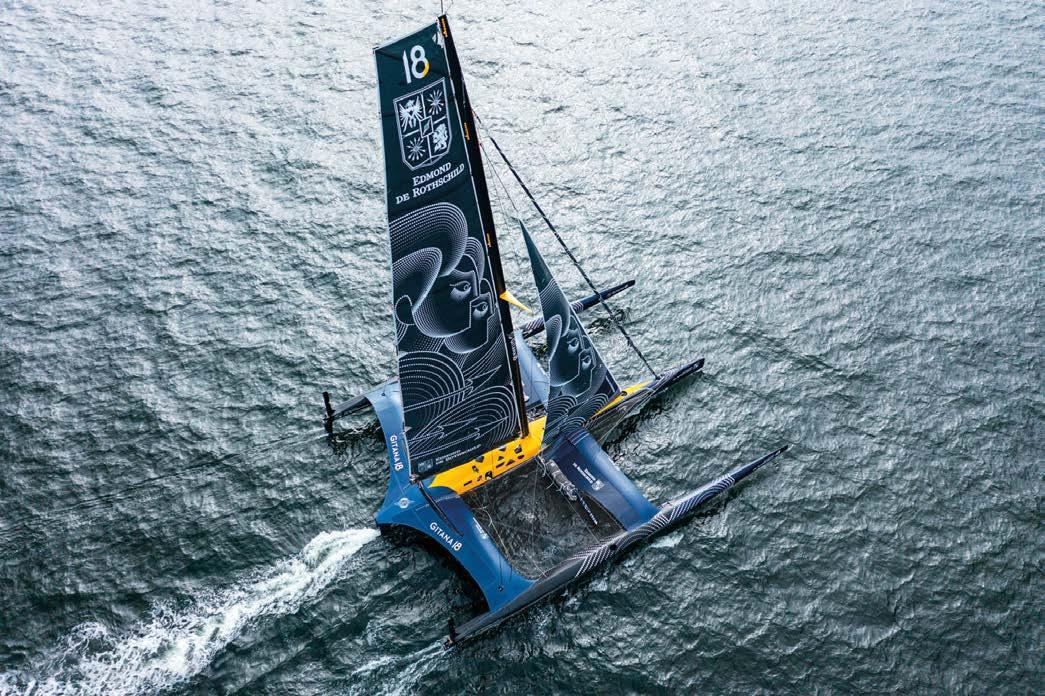
Il maxi-trimarano Gitana 18, ventottesima unità della storia Gitana, presenta foil retrattili a “Y” con ali superiori oltre i 5 metri, che garantiscono elevata portanza e ampie opzioni di assetto. Ha timoni con geometria a “U”, studiati per minimizzare i fenomeni di cavitazione. La carena centrale è dotata di deriva con ampia super cie verticale, soluzione inedita per un trimarano di questo tipo. Albero e armo hanno sartie dinamiche e regolabili durante la navigazione per variare la potenza della randa. Il pozzetto e la tuga sono integrati strutturalmente allo scafo centrale, per una maggiore rigidità.
The Gitana 18 maxi-trimaran, the twenty-eighth vessel in Gitana’s history, features retractable ‘Y’shaped foils with upper wings exceeding 5 metres in length, providing high lift and a wide range of trim options. It has ‘U’-shaped rudders designed to minimise cavitation. The central hull is tted with a drop keel featuring a large vertical surface area, a rst for a trimaran of this type. The mast and rigging feature dynamic shrouds that can be adjusted whilst underway to vary the mainsail’s power. The cockpit and deckhouse are structurally integrated into the central hull for greater rigidity.


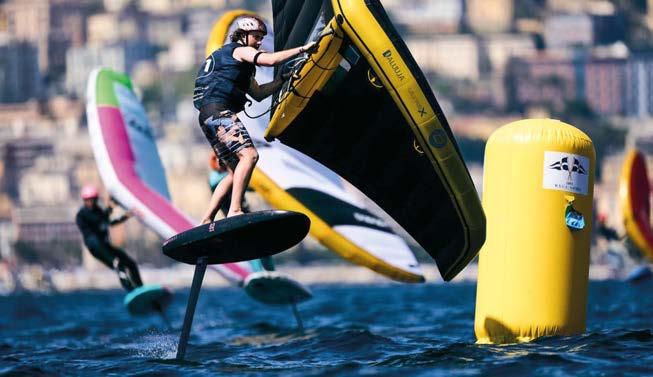
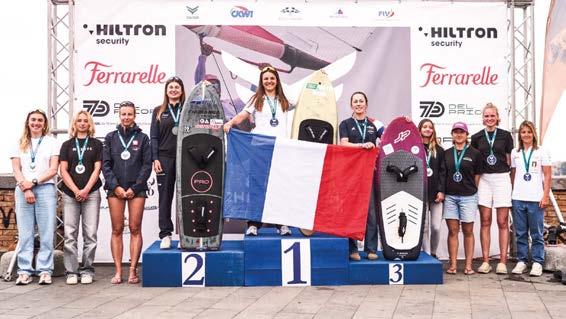
Vittorie francesi all’Europeo Wingfoil di Napoli by Carlo Zazzera
French dominance at the European Wingfoil Championships in Naples
Il circuito internazionale 2026 prevede due tappe della World Cup, in programma a Gizzeria, in Calabria, dall’8 al 12 giugno, e a Cagliari dal 30 settembre al 4 ottobre.
The 2026 international circuit includes two World Cup events, scheduled to take place in Gizzeria, Calabria, from 8 to 12 June, and in Cagliari from 30 September to 4 October.
Parla francese l’Europeo Formula Wing di IWSA 2026, classe internazionale di World Sailing.
A Napoli, dall’8 al 12 aprile, si è svolto il campionato continentale con l’organizzazione del RYCC Savoia, nell’ambito delle manifestazioni di Napoli Capitale Europea dello Sport 2026. Doppietta transalpina con Julien Rattotti, vincitore del titolo continentale maschile, e Vaina Picot, che si è imposta nella competizione femminile. Ma hanno brillato anche gli atleti azzurri, con il padrone di casa Ernesto De Amicis e la talentuosa Maddalena Spanu sul secondo gradino del podio. Al terzo posto ancora due francesi: Thomas Proust e Kylie Belloeuvre. Sono stati oltre cento gli atleti in gara, provenienti da 19 nazioni, che si sono dati battaglia nelle acque che il prossimo anno ospiteranno la 38ª America’s Cup. Mirco Babini, presidente di IWSA International Wing Sport Association, che ha collaborato all’organizzazione con la Federazione Italiana Vela e la Classe Kiteboarding, ha sottolineato: “Una prima volta nel golfo di Napoli assolutamente entusiasmante. Un evento organizzato da un circolo storico come il Savoia, che ha dimostrato una grande capacità organizzativa. Il format è vincente: i ragazzi si sono divertiti, le gare sono state tante e hanno messo in luce nuovi giovanissimi under 17. Essere partiti dal teatro dell’America’s Cup 2027 è stato un grande privilegio”.
The 2026 IWSA Formula Wing European Championship, an international class recognised by World Sailing, was a French affair. The continental championship took place in Naples from 8 to 12 April and was organised by the RYCC Savoia as part of the Naples European Capital of Sport 2026 events.
A French one-two was achieved by Julien Rattotti, who won the men’s continental title, and Vaina Picot, who triumphed in the women’s competition. Italian athletes also shone, with local favourite Ernesto De Amicis and the talented Maddalena Spanu taking second place on the podium.
Third place went to two more French athletes: Thomas Proust and Kylie Belloeuvre. Over a hundred athletes from 19 countries competed, battling it out in waters that will host the 38th America’s Cup next year. Mirco Babini, president of the IWSA International Wing Sport Association, who collaborated with the Italian Sailing Federation and the Kiteboarding Class to organise the event, emphasised: “An absolutely thrilling debut in the Gulf of Naples – an event organised by a historic club like the Savoia, which demonstrated great organisational skills. The format is a winner: the youngsters had a great time, there were plenty of races, and they showcased some very young under-17s. Starting at the venue for the 2027 America’s Cup was a great privilege”.
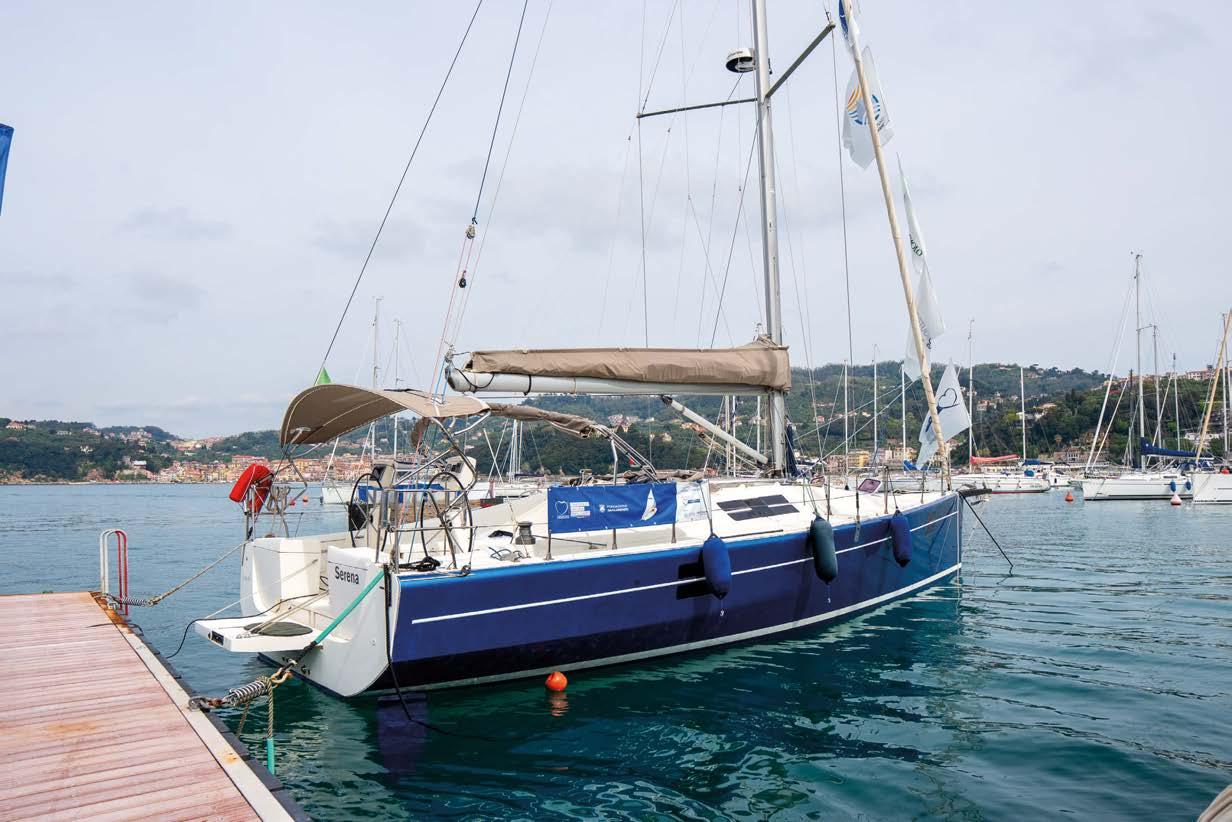
La barca, per il terzo anno, sta svolgendo attività di prevenzione cardiovascolare nelle piccole isole
consecutive year, the boat is conducting
prevention activities on the small islands by Ornella D’Alessio
Sia per quanto riguarda la prevenzione della Cardioteam Foundation, sia per la Fondazione Sanlorenzo che la sostiene.
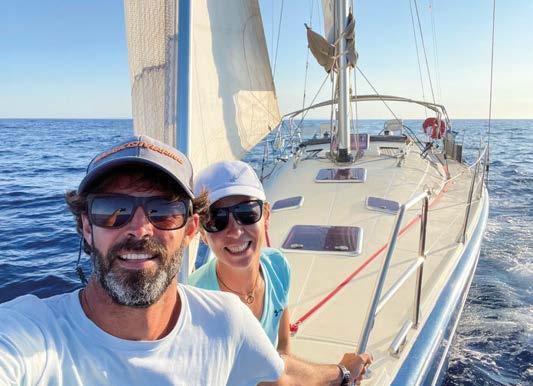
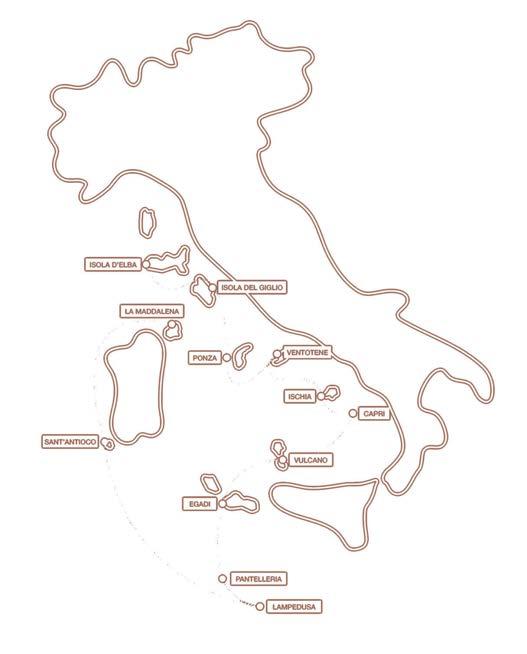
Partendo dallo Yacht Club di Genova, come richiesto dal presidente YCI Carlo Cameli, Silvia e Raphael Sicouri e il team medico attraverseranno il Tirreno facendo tappa nelle piccole isole italiane, territori straordinari ma fragili dove l’accesso ai servizi sanitari può essere complesso e discontinuo. Quattordici tappe, oltre sei mesi di navigazione e migliaia di miglia nautiche per portare la prevenzione direttamente nelle comunità isolane. Nel cuore dell’estate la missione di prevenzione proseguirà tra le Isole Eolie, con uno screening camper attivo a Vulcano e Lipari, per poi raggiungere le Isole Egadi e Trapani. Dopo la pausa di agosto, la navigazione riprenderà verso sud con Pantelleria e Lampedusa, per concludersi in Sardegna tra Cagliari, Sant’Antioco, Alghero e La Maddalena, alla ne di ottobre. “Il progetto Una vela per il cuore è profondamente vicino alla nostra mission e alla nostra sensibilità”,sottolinea Massimo Perotti, tra i fondatori di Fondazione Sanlorenzo, “con i miei gli Cecilia e Cesare, abbiamo deciso di crearla per sostenere le comunità isolane nell’accesso ai propri bisogni fondamentali, come l’istruzione, la mobilità, l’imprenditoria locale: quello dell’accesso alla prevenzione e alle cure mediche è forse il diritto più importante e siamo orgogliosi di dare il nostro contributo sostenendo Cardioteam, proprio partendo dal nostro territorio, la Liguria”.
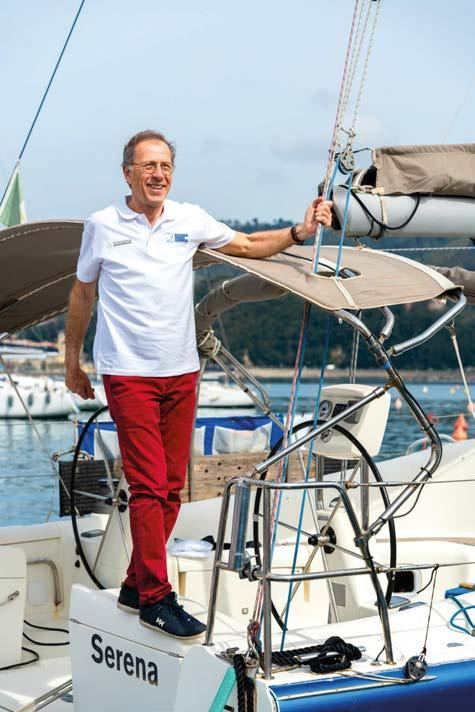
It’s all about the heart. This applies to both the Cardioteam Foundation’s prevention work and the Sanlorenzo Foundation, which supports it.
del cardiochirurgo Marco Diena, presidente della CARDIOTEAM FOUNDATION, che dal 2010 promuove progetti di prevenzione cardiovascolare in tutto il territorio nazionale.
The initiative stems from the vision of Marco Diena, a cardiac surgeon and president of the CARDIOTEAM FOUNDATION, which has been promoting cardiovascular prevention projects throughout the country since 2010.
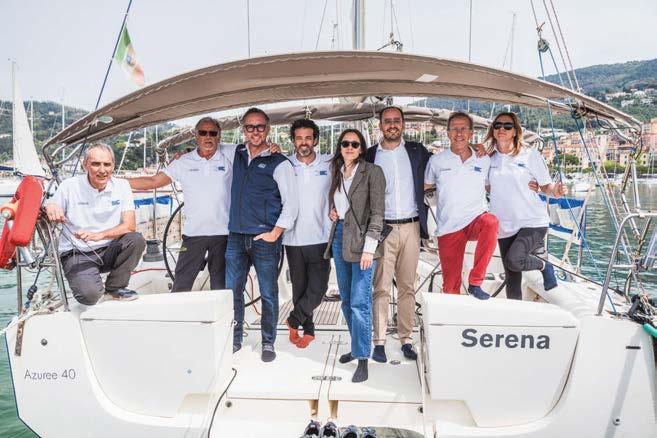
Setting sail from the Genoa Yacht Club, as requested by YCI President Carlo Cameli, Silvia and Raphael Sicouri, along with the medical team, will cross the Tyrrhenian Sea, stopping at small Italian islands – extraordinary yet fragile places where access to healthcare services can be dif cult and sporadic. The mission will make fourteen stops, spend more than six months at sea, and cover thousands of nautical miles to bring preventive healthcare directly to island communities. In midsummer, the preventive healthcare mission will continue across the Aeolian Islands, with a mobile screening unit operating in Vulcano and Lipari before moving on to the Egadi Islands and Trapani. Following the August break, the cruise will resume, heading south to Pantelleria and Lampedusa, before concluding in Sardinia –visiting Cagliari, Sant’Antioco, Alghero and La Maddalena – at the end of October. “The Una vela per il cuore project is deeply aligned with our mission and values”, emphasises Massimo Perotti, one of the founders of the Sanlorenzo Foundation.
“Together with my children, Cecilia and Cesare, we set it up to help island communities meet their basic needs, such as education, transport and local enterprise. Access to preventive healthcare and medical treatment is perhaps the most important right of all, and we are proud to make our contribution by supporting Cardioteam, starting right here in our own region, Liguria”.


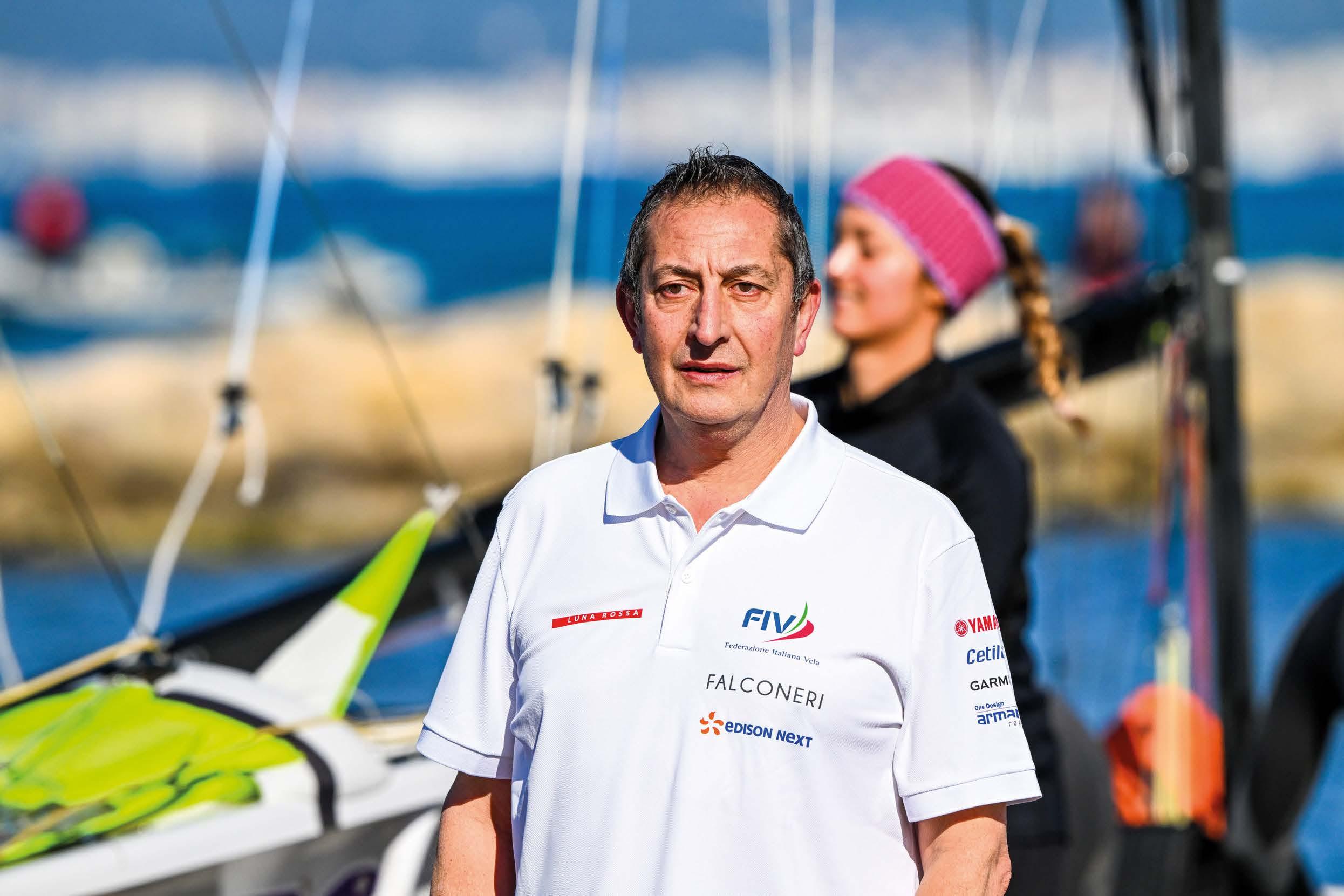
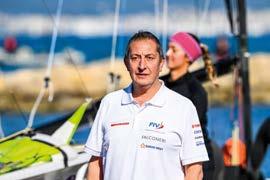
Francesco Ettorre, da dieci anni alla guida della Federazione Italiana Vela, rieletto con il 96% dei consensi, oggi anche nella Giunta Nazionale del CONI e vicepresidente di Eurosaf. Sotto la sua presidenza la FIV ha raggiunto 160.000 tesserati, oltre 760 società af liate e quasi 4.000 manifestazioni l’anno
Francesco Ettorre, who has been at the helm of the Italian Sailing Federation for ten years, was re-elected with 96% of the vote. He now also serves on the CONI National Executive Committee and is vice-president of Eurosaf. Under his presidency, the FIV has reached 160,000 members, has over 760 af liated clubs, and organises almost 4,000 events a year
by Ornella D’Alessio - photo by Martina Orsini, Sailing Energy
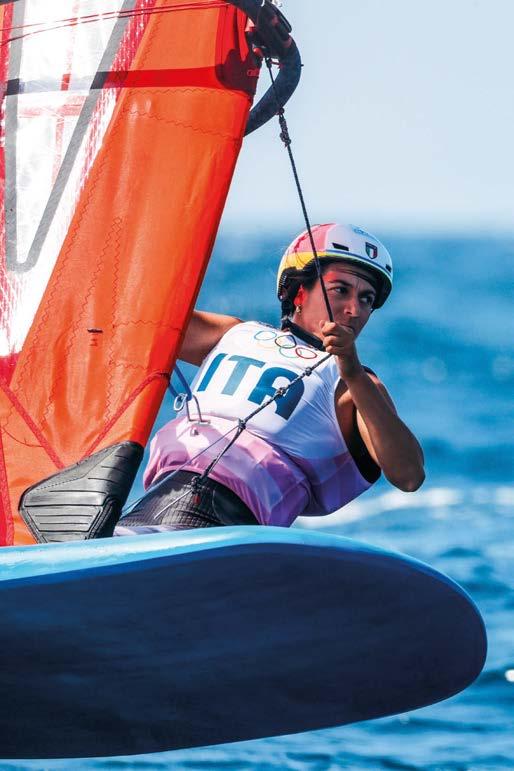
Ogni anno, le 509 scuole di vela in Italia, con ISTRUTTORI QUALIFICATI, sono la garanzia di ingresso per oltre 35 mila giovani Fra questi, molti si avviano alla pratica agonistica.
Every year, Italy’s 509 sailing schools, staffed by QUALIFIED INSTRUCTORS, provide an opportunity for over 35,000 young people to take up the sport. Many of them go on to compete at a competitive level.
Che ruolo ha la Federazione Italiana Vela nello sviluppo dell’attività sportiva tra i giovani?
Immenso. Tutto è cominciato dalle scuole con il progetto vela-scuola 2.0, realizzato insieme al Ministero dell’Istruzione, per intercettare giovanissimi all’inizio degli studi scolastici, elementari e di primo grado, e trasmettergli tutto ciò che la vela può apportare, unendo sport, competenze STEAM, PCTO e strumenti digitali. In questi anni abbiamo avvicinato alla vela più di 50.000 giovani, non solo grazie al progetto VelaScuola, ma anche grazie alle scuole di vela, ai nostri club, che sono realtà importanti, e alle squadre agonistiche che da ormai 7 anni dominano a livello giovanile. Il percorso è partito dal mondo delle scuole per arrivare, con successo, ai ragazzi delle squadre agonistiche. L’obiettivo è avvicinare i bambini alla vela con un metodo solido. Nel 2025 la Federazione, insieme a UniCredit, ha anche rafforzato il Piano Sviluppo Territorio Para Sailing, mettendo a disposizione delle società risorse per attrezzature, imbarcazioni adattate e strutture accessibili. Inoltre, abbiamo la Para Sailing Academy, un progetto itinerante in collaborazione con IBSA che permette di avvicinarsi al nostro sport no al perfezionamento nella squadra nazionale.
Quali sono state le maggiori soddisfazioni durante i suoi tre mandati? Aver contribuito a fare della vela uno sport praticato da molti. I numeri sono cresciuti a livello esponenziale. Nel 2025 abbiamo superato i 155.000 tesserati e, ad oggi, la FIV è tra le prime 10 federazioni a livello nazionale. Con il CONI e Sport e Salute abbiamo un rapporto consolidato da anni, che ci permette di guardare al mondo sportivo con grande ottimismo e voglia di crescere sempre. I rapporti sempre più stretti tra Federazione e Governo - che non si limitano al Ministero dello Sport, ma si intrecciano con il Turismo e le Disabilità - ci hanno permesso di migliorare il nostro posizionamento istituzionale. Rispetto al passato è uno sport più reputato. Questo è il risultato del lavoro straordinario degli atleti. Chiunque può controllare il ranking internazionale e vedere dove si trova l’Italia, con le sue medaglie olimpiche. Abbiamo uno staff tecnico di primo piano, stabile da oltre
La FIV è una FEDERAZIONE SPORTIVA
NAZIONALE che conta oltre 150.000 tesserati, distribuiti in 741 Società Sportive Af liate in tutto il territorio nazionale. Il suo scopo è promuovere, propagandare, organizzare e disciplinare l’attività velica e, in particolare, lo sport della vela in tutte le sue forme, comprese le più innovative quali windsur ng, kitesur ng e parasailing, spaziando dalla promozione della cultura nautica ai ragazzi delle scuole no alla vela olimpica.

The FIV is a NATIONAL SPORTS FEDERATION with over 150,000 members, spread across 741 af liated sports clubs throughout the country. It aims to promote, publicise, organise and regulate sailing activities, particularly the sport of sailing in all its forms, including the most innovative, such as windsur ng, kitesur ng and parasailing, ranging from promoting nautical culture among schoolchildren to Olympic sailing.

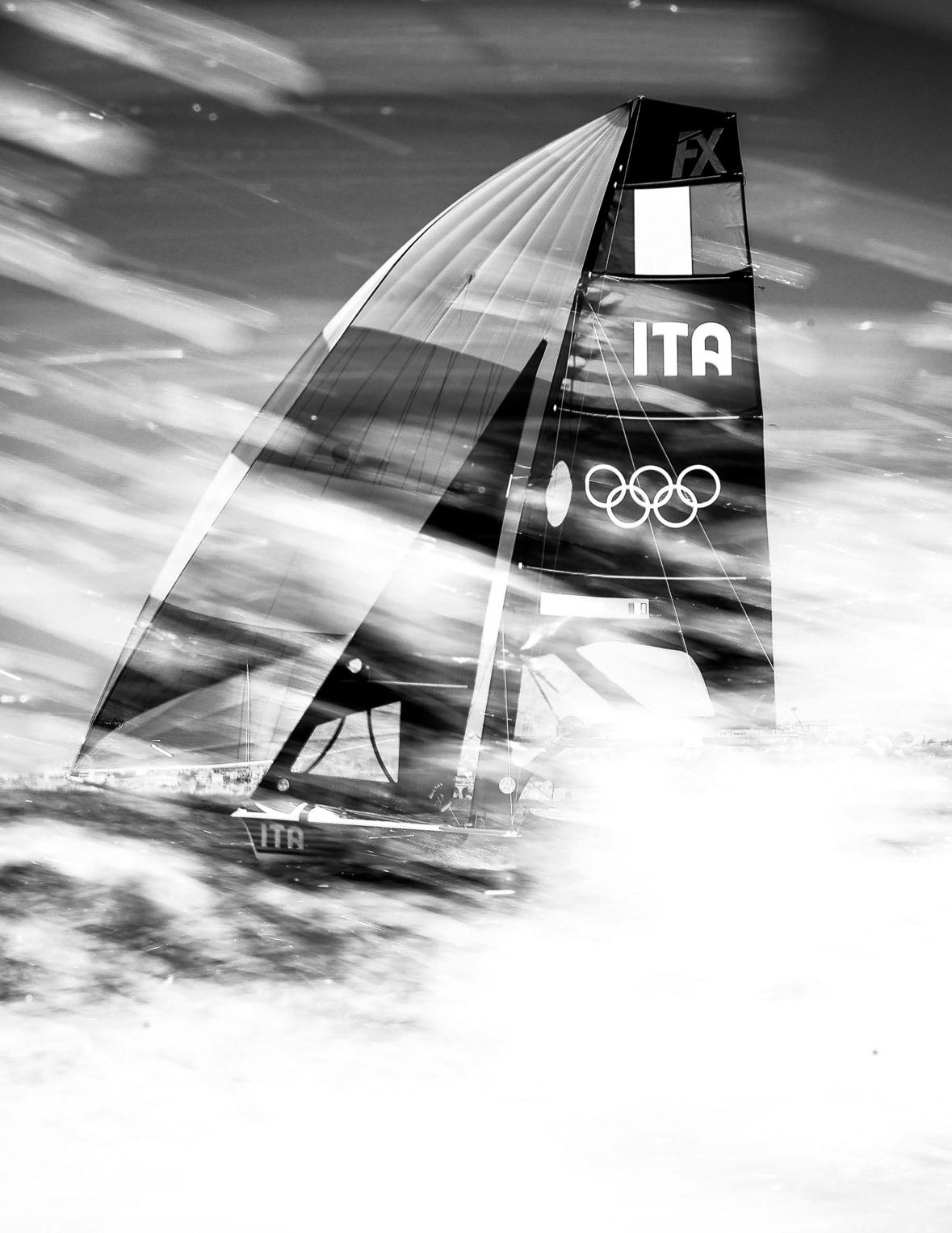
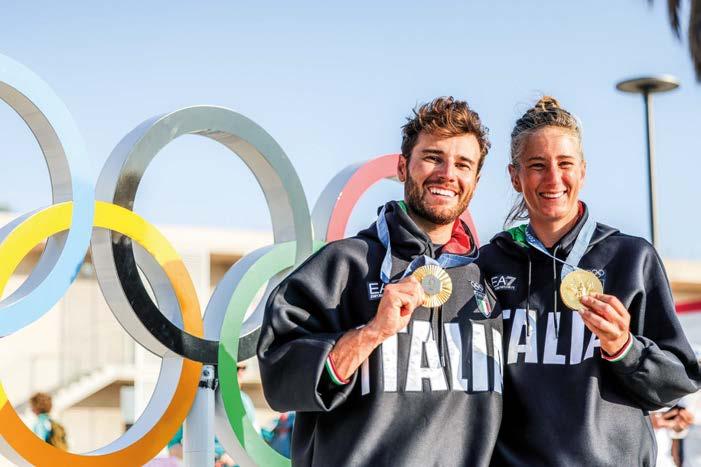


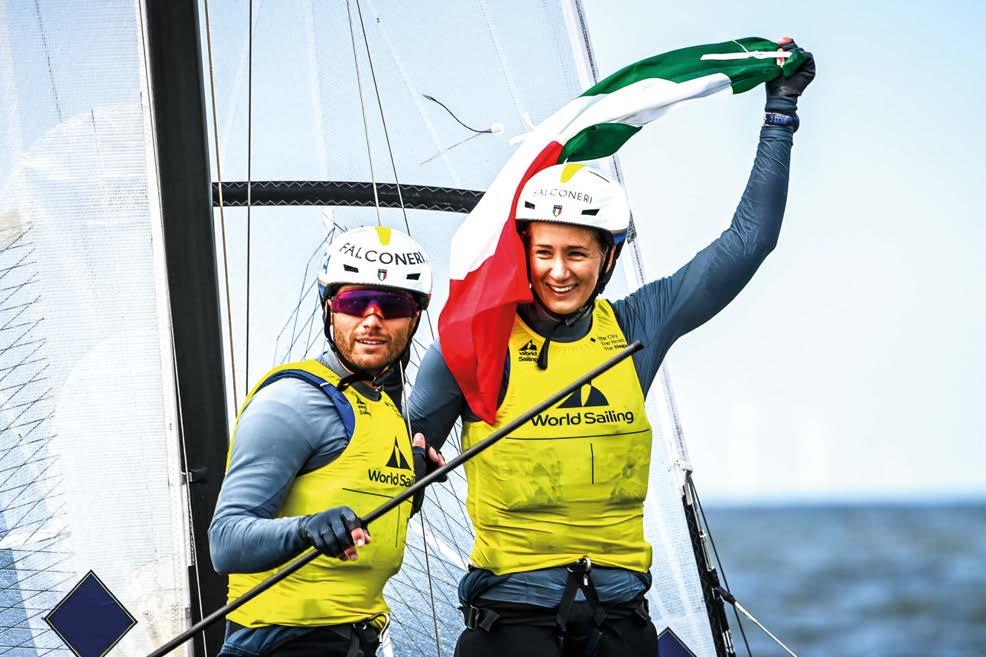
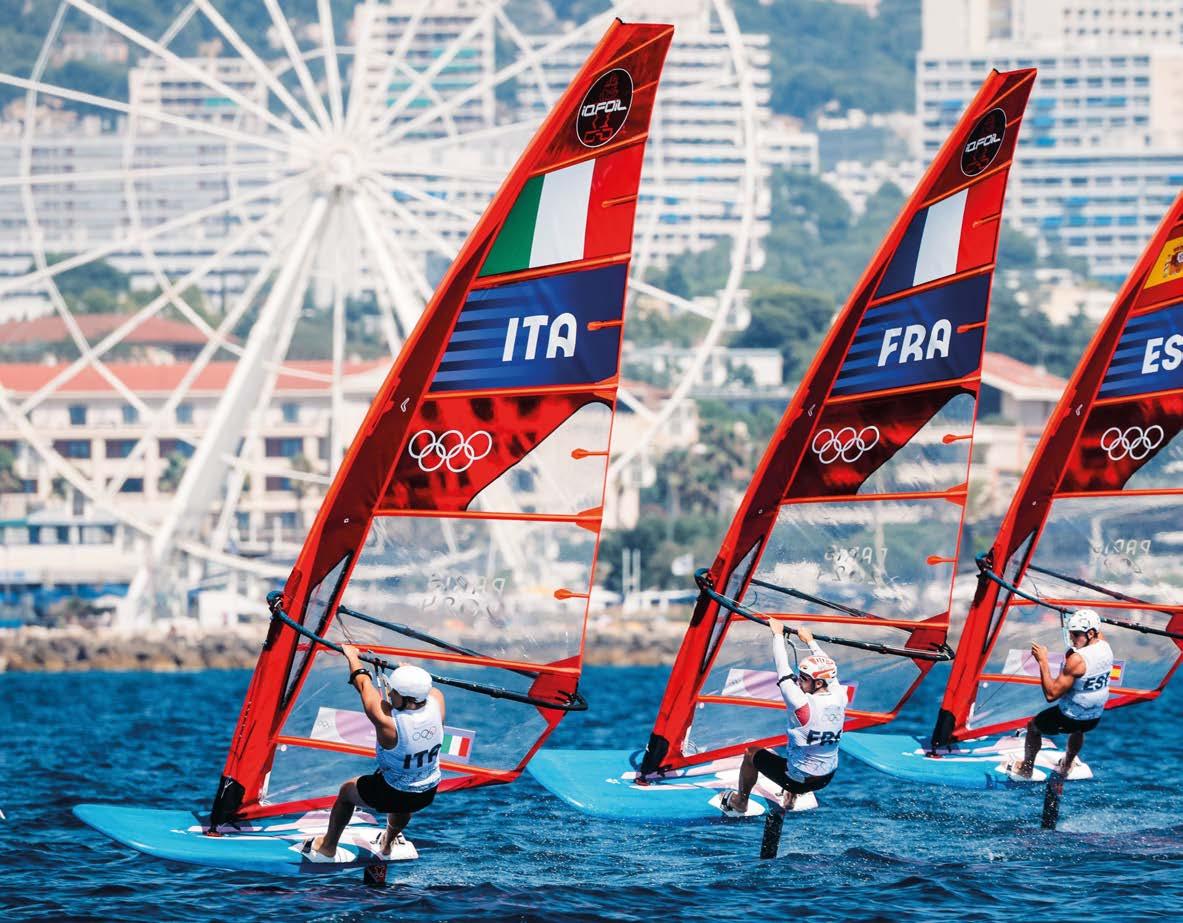
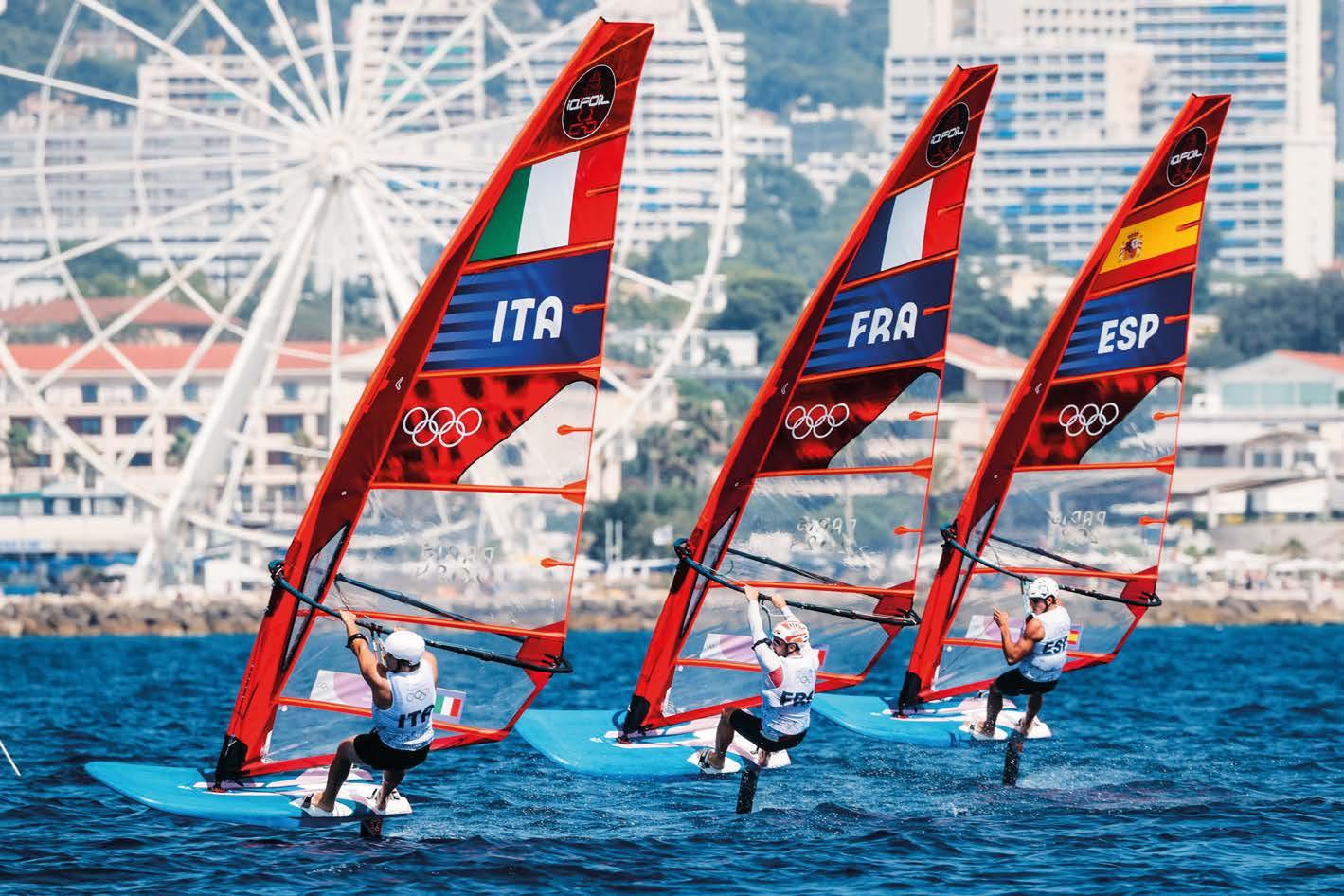
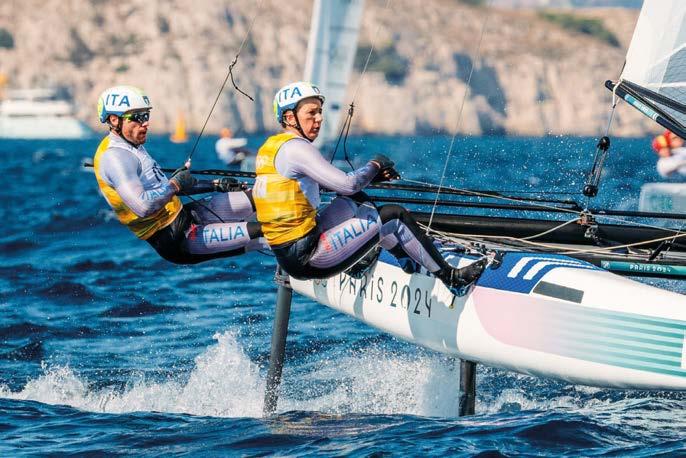
La FIV lavora alla formazione di un team nazionale solido e coerente, il TEAM ITALIA, che rappresenta un vero e proprio laboratorio sportivo basato su una metodologia uni cata. I risultati più recenti includono le medaglie d’oro vinte da Ruggero Tita e Caterina Banti (classe Nacra 17) a Tokyo 2020 e a Parigi 2024, e da Marta Maggetti (classe iQFOiL) a Parigi 2024, ottenute dopo le medaglie olimpiche già conquistate da Alessandra Sensini, Diego Romero e Giuseppe Devoti negli anni passati.
The FIV is working to build a strong and cohesive national team, TEAM ITALIA, which serves as a genuine sports development programme based on a uni ed methodology. The most recent results include gold medals for Ruggero Tita and Caterina Banti (Nacra 17 class) at Tokyo 2020 and Paris 2024, and for Marta Maggetti (iQFOiL class) at Paris 2024, following the Olympic medals already won by Alessandra Sensini, Diego Romero and Giuseppe Devoti in previous years.


10 anni, che segue i ragazzi dagli under 16 no alle Olimpiadi, con una minima dispersione di talenti. Prima c’era una falla nel passaggio dall’attività giovanile a quella olimpica, una fase delicata in cui molti abbandonavano. Oggi quella falla è chiusa: staff che dialogano, obiettivi coerenti, continuità tra i settori giovanile e olimpico. Il lavoro tra Alessandra Sensini, che guida il settore giovanile, e Luca De Pedrini, responsabile della squadra olimpica, dà unità all’intero percorso. Come vede il futuro della vela in Italia? Mai come adesso lo vedo luminoso - non solo per i risultati che auspichiamo continuino, ma anche per ciò che oggi la vela rappresenta nel panorama sportivo: non più una disciplina di nicchia, ma molto diffusa. I grandi eventi internazionali portano anche a questo. L’anno scorso abbiamo portato in Italia i Mondiali delle classi olimpiche. Questi appuntamenti ci quali cano e aiutano a diffondere il messaggio della vela. Il futuro è roseo. I risultati non sono mai matematici, ma la visibilità del movimento della vela è un dato di fatto. La Coppa America è un evento planetario che darà un impulso incredibile a tutto il movimento. L’effetto booster si è già avuto dopo le regate di Cagliari di maggio, grazie a questo tutto il movimento farà un altro salto di qualità. Ma la vera domanda non è: quante persone guarderanno la vela? Piuttosto: quante saliranno a bordo di una barca dopo averla scoperta? Questa è la s da.
A major one. It all began in schools with the ‘Sailing-School 2.0’ project, run in partnership with the Ministry of Education, to engage very young children at the start of their school careers – in primary and lower secondary schools – and introduce them to everything sailing has to offer, combining sport, STEAM skills, the PCTO programme and digital tools. Over the past few years, we have introduced more than 50,000 children to sailing, not only through the VelaScuola project, but also through sailing schools, our clubs, which play a vital role, and the competitive teams that have dominated the youth scene for the past seven years. The journey began in schools and has successfully led to young people joining competitive teams. The aim is to introduce kids to sailing at an early age, using a robust approach. In 2025, the Federation, together with UniCredit, also strengthened the Para Sailing Regional Development Plan, providing clubs with resources for equipment, adapted boats and accessible facilities. Furthermore, we have the Para Sailing Academy, a travelling project in collaboration with IBSA that allows participants to get involved in our sport, from participation to joining the national team.
What have been your greatest achievements during your three terms in of ce? Helping to make sailing a sport enjoyed by many. The numbers have grown exponentially. By 2025, we had exceeded 155,000 registered members, and today the FIV ranks among the top 10 national federations. We have had a long-standing relationship with CONI and Sport e Salute, which allows us to look at the sporting world
La Federazione Italiana Vela promuove la cultura velica nelle scuole attraverso un progetto riconosciuto dal Ministero dell’Istruzione e del Merito, il VelaScuola, che consente allo sport della vela di essere presente nelle scuole di tutta Italia, contribuendo alla crescita di oltre 34.000 alunni grazie all’applicazione di metodologie quali STEAM (Science, Technology, Engineering, Art and Mathematics).
The Italian Sailing Federation promotes sailing culture in schools through the VelaScuola project, recognised by the Ministry of Education and Merit, which enables the sport of sailing to be introduced in schools across Italy and contributes to the development of more than 34,000 pupils through methodologies such as STEAM (Science, Technology, Engineering, Art and Mathematics).
150,000
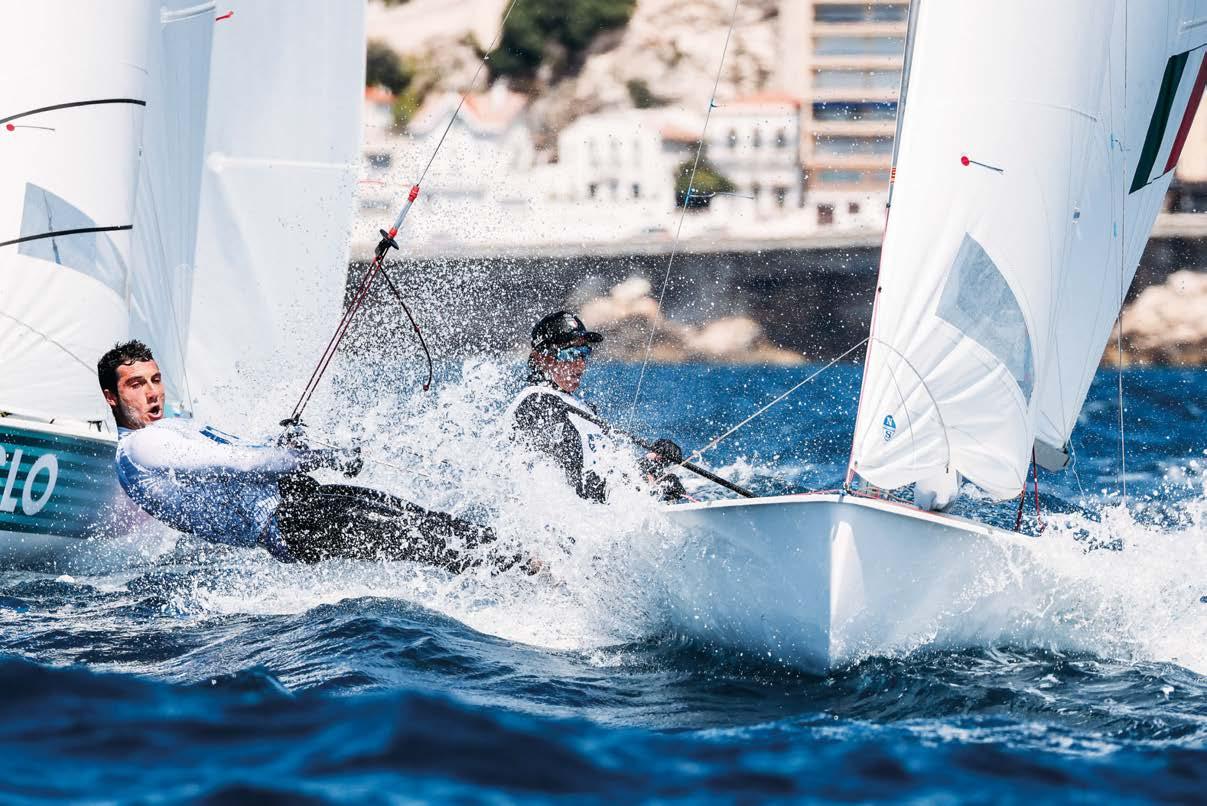
ll 2024 è stato un anno straordinario per la vela italiana grazie alle due medaglie d’oro alle Olimpiadi di Parigi.
MEMBERS
Thanks to the two gold medals at the Paris Olympics, 2024 was an exceptional year for Italian sailing.
with great optimism and a desire to keep growing. The increasingly close ties between the Federation and the Government, which extend beyond the Ministry of Sport to include Tourism and Disability, have enabled us to improve our institutional standing. Compared with the past, the sport enjoys a much better reputation. This is the result of the athletes’ extraordinary work. Anyone can check the international rankings and see where Italy stands, with its Olympic medals. We have a top-class technical staff, which has remained stable for over 10 years, supporting young athletes from the Under-16s right through to the Olympics, with minimal loss of talent. Previously, there was a gap in the transition from youth to Olympic level, a delicate phase during which many dropped out. Today, that gap has been closed: staff who communicate, have consistent objectives, and continuity between the youth and Olympic sectors. The collaboration between Alessandra Sensini, who leads the youth sector, and Luca De Pedrini, head of the Olympic team, brings unity to the entire process.
How do you see the future of sailing in Italy? I’ve never seen it look brighter – not only because of the results we hope will continue, but also because of what sailing now represents in the sporting world: no longer a niche sport, but a widely popular one. Major international events also contribute to this. Last year, we brought the World Championships for the Olympic classes to Italy. These events raise our pro le and help spread the message of sailing. The future looks bright. Results are never guaranteed, but the visibility of the sailing movement is a fact. The boost was already felt following the regattas in Cagliari in May, and as a result, the whole movement is set to take another leap forward. We will take another leap forward in quality. But the real question is not: how many people will watch sailing? Rather, how many will step aboard a boat after discovering it? That is the challenge.
Di grande rilevanza per la FEDERAZIONE ITALIANA VELA è
l’implementazione di iniziative che coinvolgano gruppi svantaggiati o persone con disabilità, favorendo l’integrazione e la partecipazione attiva attraverso il progetto della Para Sailing Academy, un’Academy itinerante sul territorio nazionale pensata per offrire la possibilità alle persone con disabilità e alle loro famiglie di provare lo sport della vela.
The ITALIAN SAILING FEDERATION places great importance on initiatives involving disadvantaged groups or people with disabilities. These efforts aim to promote integration and encourage active participation through the Para Sailing Academy project. This mobile academy travels throughout the country, providing opportunities for people with disabilities and their families to experience sailing.
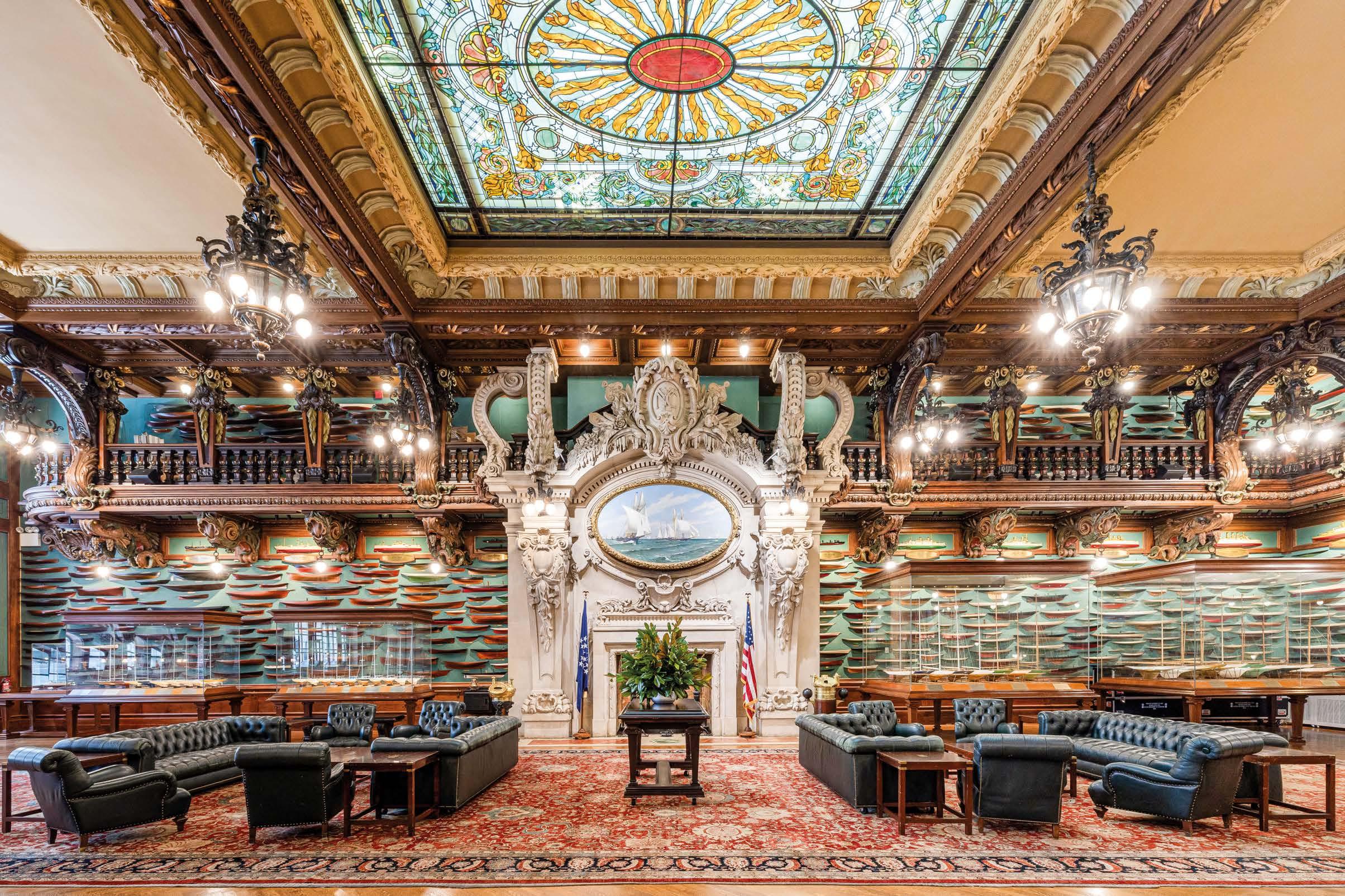
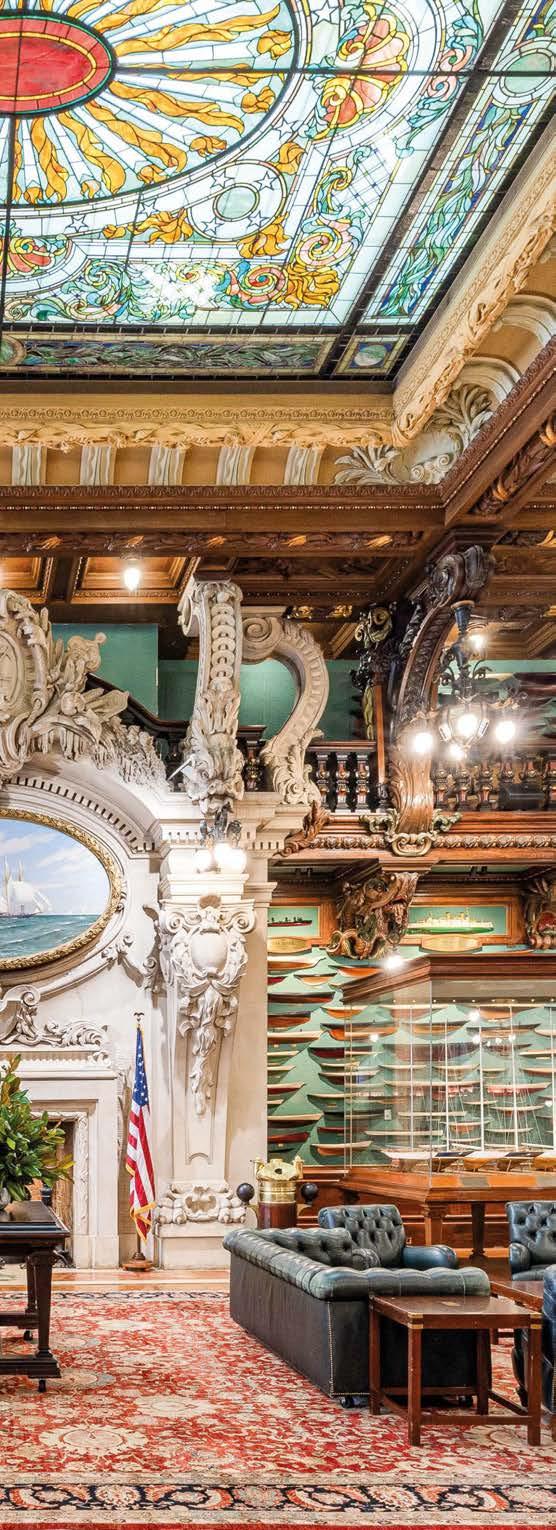



L’esclusivo circolo che conta oltre 3 mila e 400 soci è una vera istituzione. Un monumento. Fedele alle proprie origini, interpreta il futuro con misura e intelligenza. Oggi è guidato da una donna che Vela e Motore ha avuto il privilegio di incontrare
This exclusive club, boasting over 3,400 members, is a true institution –a monument. Staying true to its roots, it looks to the future with prudence and intelligence. Today, it is led by a woman whom Vela e Motore had the privilege of meeting by Sacha Giannini - photo by ROLEX/Carlo Borlenghi
Il losofo e antropologo francese Marc Augé sosteneva che il tempo non avesse età.
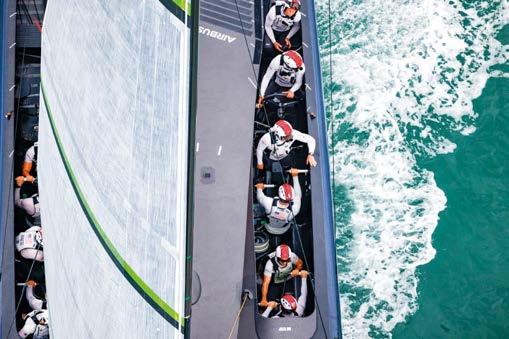
Il New York Yacht Club, fondato il 30 luglio del 1844 da nove gentiluomini dell’alta borghesia, è la prova evidente di tale convinzione. È il luogo dove la memoria non invecchia: racconta piuttosto la complessità e le contraddizioni di una storia coinvolgente che dura da oltre 180 anni. È il luogo in cui la tradizione abbraccia sempre più l’audacia del futuro: il peso del fronte scultoreo in pietra dell’edi cio a Midtown Manhattan si alleggerisce dietro la levità dei nuovi core in alluminio a nido d’ape, delle bre di carbonio del Patriot sensibilità tattica scommette sull’intelligenza arti ciale e sulla portanza di foil arms capaci di far volare oltre i 50 nodi, aggiornando così istinti e strategie di regata per il nuovo millennio.
Il New York Yacht Club non è il circolo più antico del mondo, ma è senza dubbio il più rinomato per i successi sportivi: un palmarès di ben 25 vittorie nella sola America’s Cup dal 1851 al 1983, anno quest’ultimo in cui l’imbarcazione Australia II americano Liberty. Il Club tuttavia trovò l’opportunità di reinventarsi in molte altre attività e regate. La popolarità del Club risiede soprattutto al 37 West sulla quarantaquattresima strada a Manhattan. L’edi cio “suggestiona” l’estetica urbana con un eclettismo decorativo in stile tardo vittoriano che, nella frenetica New York, assume quasi le sembianze di un affascinante Ghostbusters building. Iscritto nel National Register of Historic Places, con una biblioteca che conta oltre 8 mila libri e una Model room di 420 metri quadrati, è sicuramente lo Yacht Club più prestigioso di tutta l’America, sia per la sua posizione strategica ed economica - è al centro di una delle più importanti città al mondo –sia per un elenco celebre di membri ed ex soci, una sorta di di titani della nanza, senatori e per no un presidente, Franklin Delano Roosevelt. Insomma, un gotha di personaggi che contano e di lantropi che nel tentativo di riportare la Coppa a Manhattan, ha nanziato le s de nel NYYC per la 36a e la 37a edizione dell’America’s Cup con spirito pionieristico e patriottismo nutrendo così una delle più affascinanti dicotomie linguistiche e concettuali del nostro tempo: il rigore conservativo da etichetta in stile Gentlemen’s Clubs che valorizza la memoria, l’eleganza e la discrezione attraverso equilibri e dress code tradizionali, dialogando con l’innovazione velica e il design d’avanguardia dell’AC75Patriot American Magic.Il Club riesce a preservare la sua storia, il suo stile, la sua missione e, attraverso la partecipazione, le competenze e l’integrità morale dei propri membri, continua a promuovere sempre di più il nuovo nell’idea che la miglior cosa del progresso risieda nel fatto che questo arrivi anche gradualmente “un giorno alla volta” come affermava il presidente Abramo Lincoln, ma anche per poter riconoscere “il proprio passato senza giudicarlo, perché altrimenti si perderà probabilmente il proprio futuro” sosteneva Winston Churchill.
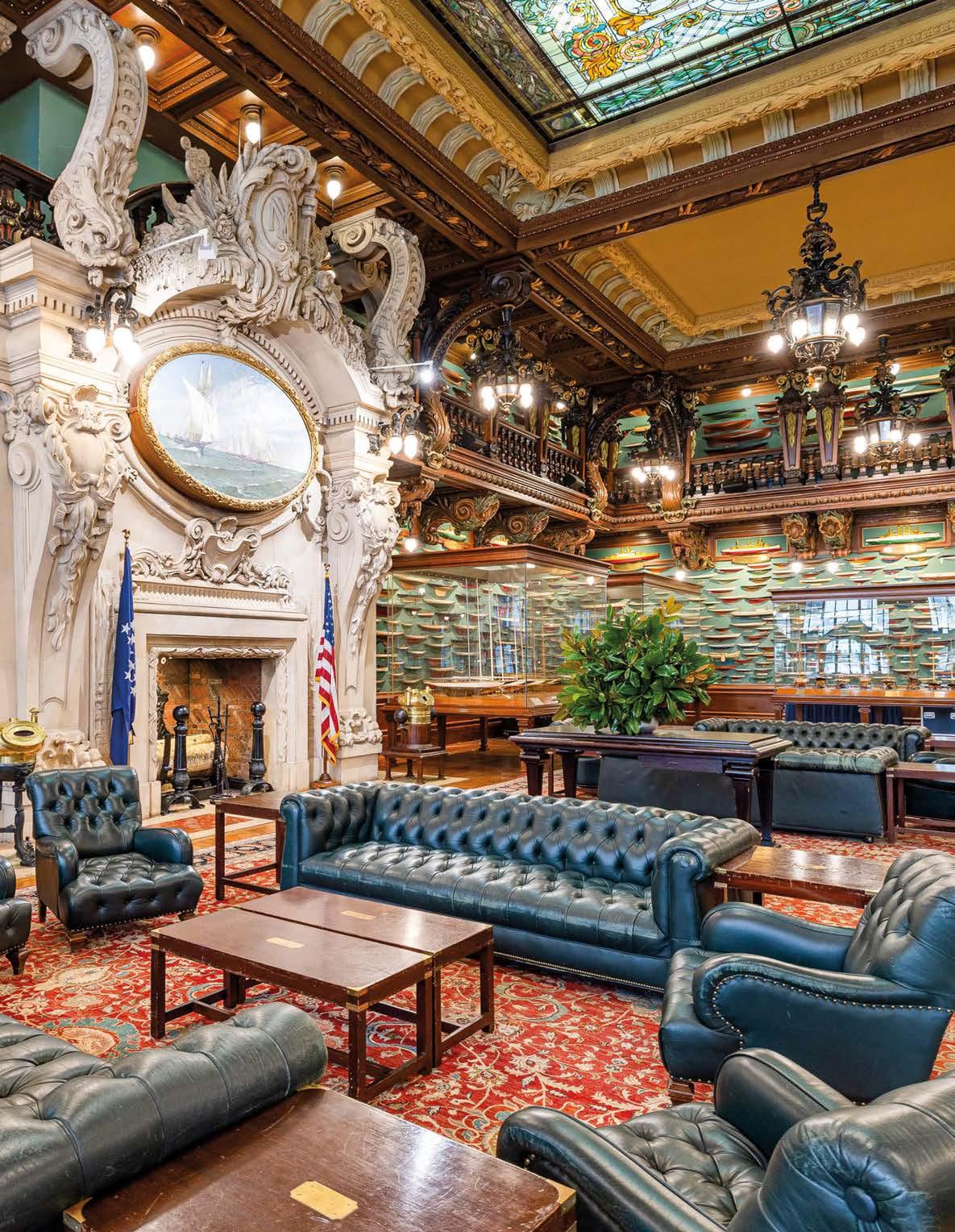
Lo stile opulento Beaux-Arts newyorkese che abbellisce la sede storica di Midtown a Manhattan, è il risultato di un concorso di progettazione vinto nel 1898 dall’architetto americano Whitney Warren e dal suo neo socio Charles D. Wetmore. L’edi cio è diventato un vero e proprio monumento di Manhattan, con uno stile che racconta quel potere di una élite di banchieri e industriali del secolo scorso, che ha cercato nell’ordine, nella simmetria e negli ornamenti intrisi di grandiosità, la rappresentazione della crescita economica e della propria rispettabilità, attraverso un linguaggio arricchito da un incredibile dizionario linguistico che conteneva quasi tutto, dall’eclettismo, al neoclassicismo ed accademismo all’interno di una “mappa culturale” aderente ai grandi schieramenti ideologici ed economici propri dell’Età dell’oro, dell’American Renaissance.
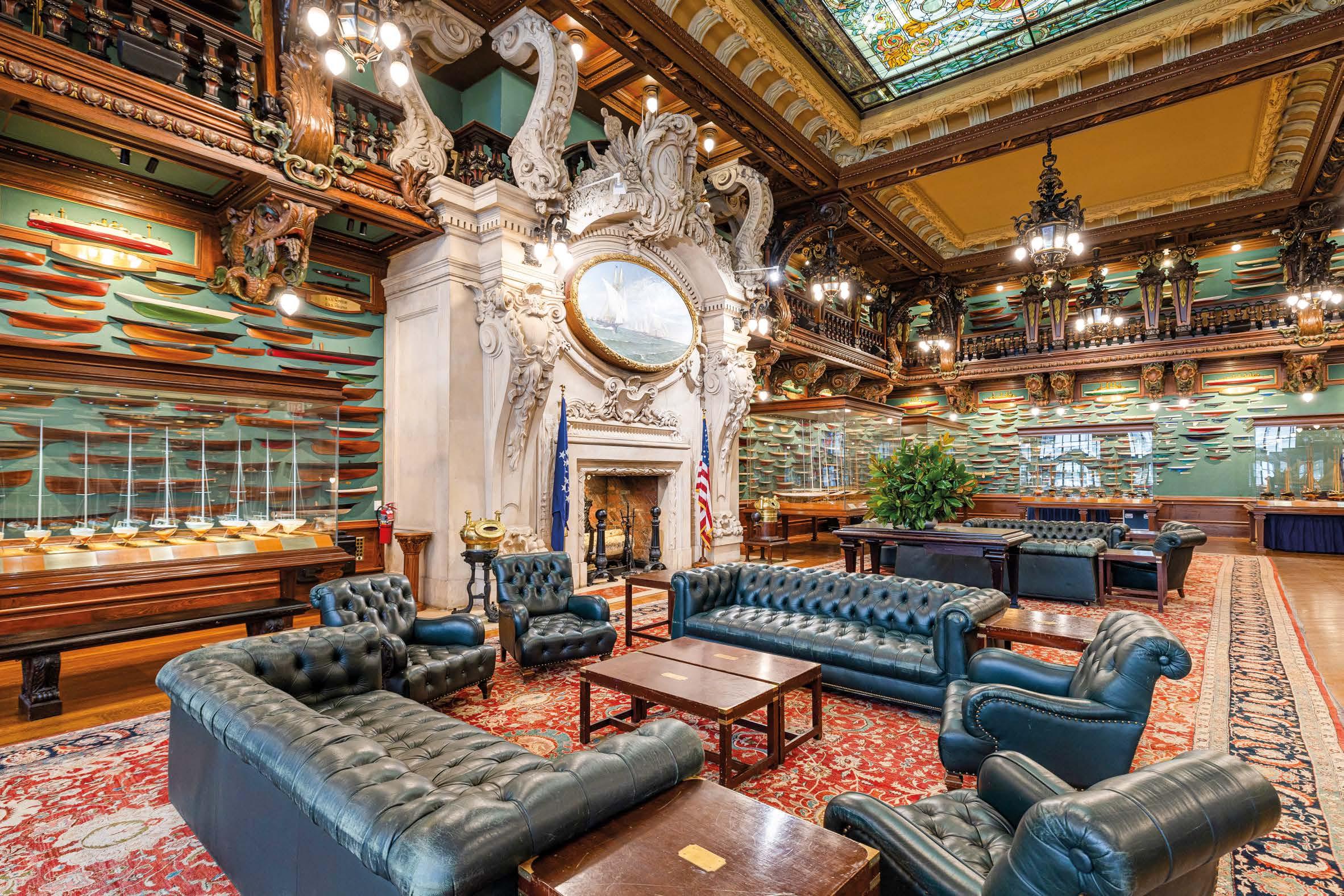
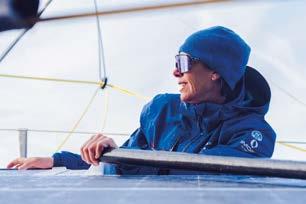
La nomina di Clare Harrington è storica. Un segno di progresso, di avanzamento senza precedenti. Racconta un naturale percorso professionale con un epilogo più che meritato.
Clare Harrington’s appointment is historic. It signi es progress and unprecedented advancement. It narrates the story of a natural career progression that has culminated in a well-earned achievement.
Harrington: «Il mio yacht club è differente»
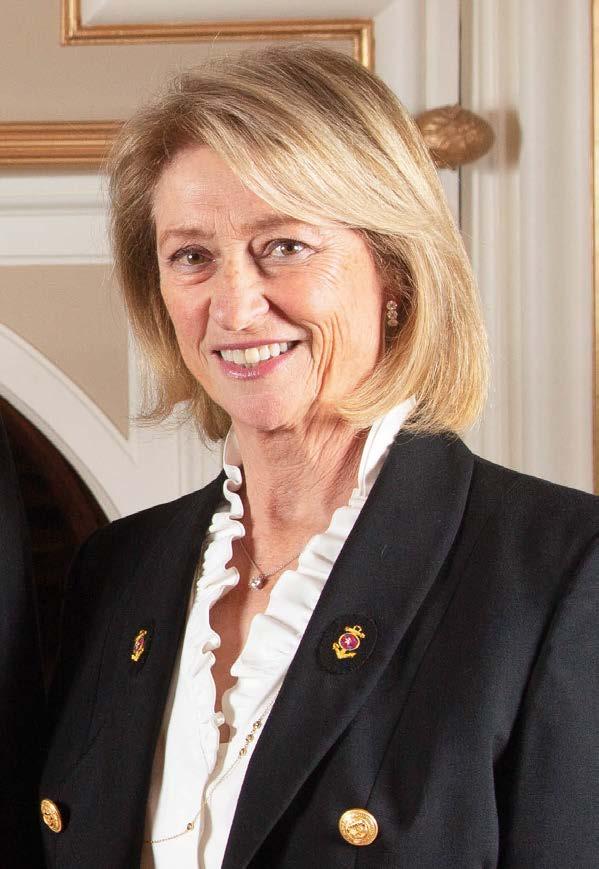
Oggi il New York Yacht Club è sotto la guida di una neo eletta lady, Clare Harrington, la prima donna nella storia del circolo a coprire la carica di Commodoro. Velista e skipper, cresciuta regatando nel Massachusetts, sull’isola di Martha’s Vineyard, ha il privilegio e la responsabilità di rappresentare, per due anni di mandato, tutte le missioni del club e, insieme agli altri duciari, anche il mantenimento del benessere delle sedi storiche e degli oltre 3 mila e 400 membri provenienti da tutto il mondo, selezionati esclusivamente su invito. Nella selezione dei membri esiste un codice morale piuttosto rigido. Si cita testuale un passaggio per comprendere meglio. Sono ammesse “persone di buona reputazione che abbiano dimostrato passione, competenza e partecipazione ad attività nautiche, tra cui regate e crociere in barca a vela, crociere in motoscafo, scienze marine e nautiche, marineria, arte e manufatti marini e altre attività marittime uniche e degne di nota”. Clare, anche prima di questa importante nomina, ha sempre cercato di promuovere il coinvolgimento delle donne nella vela e nel Club, portandole alla guida di comitati, equipaggi misti o team femminili, come per la Women’s America’s Cup o la NYYC Women’s International Championship, no a coprire ruoli manageriali e di coordinamento d’uf cio. Forse la sua lunga attività di promozione femminile ha stimolato l’apertura delle frontiere di genere anche a bordo degli AC75 nella prossima 38esima America’s Cup 2027, dove il nuovo protocollo di regata, rmato dal team New Zealand, detentore del titolo, prevede l’obbligo di inserire almeno una velista donna nel team di bordo, segnando un passaggio epocale verso l’inclusività, oltre a un ospite e un intruso costituito da un pacco batterie che consente energia per controllare le vele, sostituendo i grinder/cyiclor, che fornivano la pressione idraulica necessaria a farlo nelle due precedenti edizioni dell’America’s Cup. Vela e Motore l’ha incontrata.
Commodoro Harrington, che cosa rappresenta per lei il New York Yacht Club? Per me il Club è tradizione, è il nostro posto esclusivo nel panorama dello yachting internazionale. È una missione. Un bene da preservare con lo sguardo sempre rivolto al futuro, al progresso e all’innovazione per promuovere la vela non soltanto negli Stati Uniti, ma in tutto il mondo. Il Club è un luogo unico. Non contempla - come invece accade in molti altri circoli - inutili distrazioni, ovvero campi da tennis, tornei di vara natura, cene mondane in calendario. Siamo molto orgogliosi del nostro pro lo. Riconosco che dall’esterno possa sembrare restrittivo, ma in realtà evidenzia ciò che siamo, un vero Yacht Club.
La sua nomina, per molti, è stata un evento storico, unico nel suo “genere”. La gente ne ha fatto un gran parlare, ma mi piace pensare che non sia un dettaglio così importante. In nessun momento, sia quando ero Commodoro dell’Edgartown Yacht Club o durante la mia stagione nel Race Committee a New York o come Vice Commodoro, ho sentito che fossi stata nominata perché donna. Posso sinceramente dire che ho avuto sempre la ducia, la complicità e il supporto delle persone che mi hanno dato queste cariche, semplicemente perché sentivano che ero la persona giusta al momento giusto. Credo con tutta me stessa in questo, anche perché sarebbe terribilmente sbagliato mettere qualcuno in una posizione che non sa gestire. Il fallimento sarebbe dietro l’angolo.
La sua carriera è stata un crescendo. Prima di diventare nel dicembre del 2025 Commodoro, quali ruoli ha svolto all’interno dello Yacht Club? Per cinque, sei anni mi sono occupata della race committee, e sono stata la prima donna a farlo, poi, nel 2021, sono stata nominata Rear Commodore, quindi Vice Commodoro. Questo lasso di tempo è molto utile per comprendere una realtà così complessa da tutti i suoi punti di vista. Che cosa signi ca essere al comando di uno Yacht Club? È davvero un grande lavoro. Bisogna essere sempre attenti ai bisogni
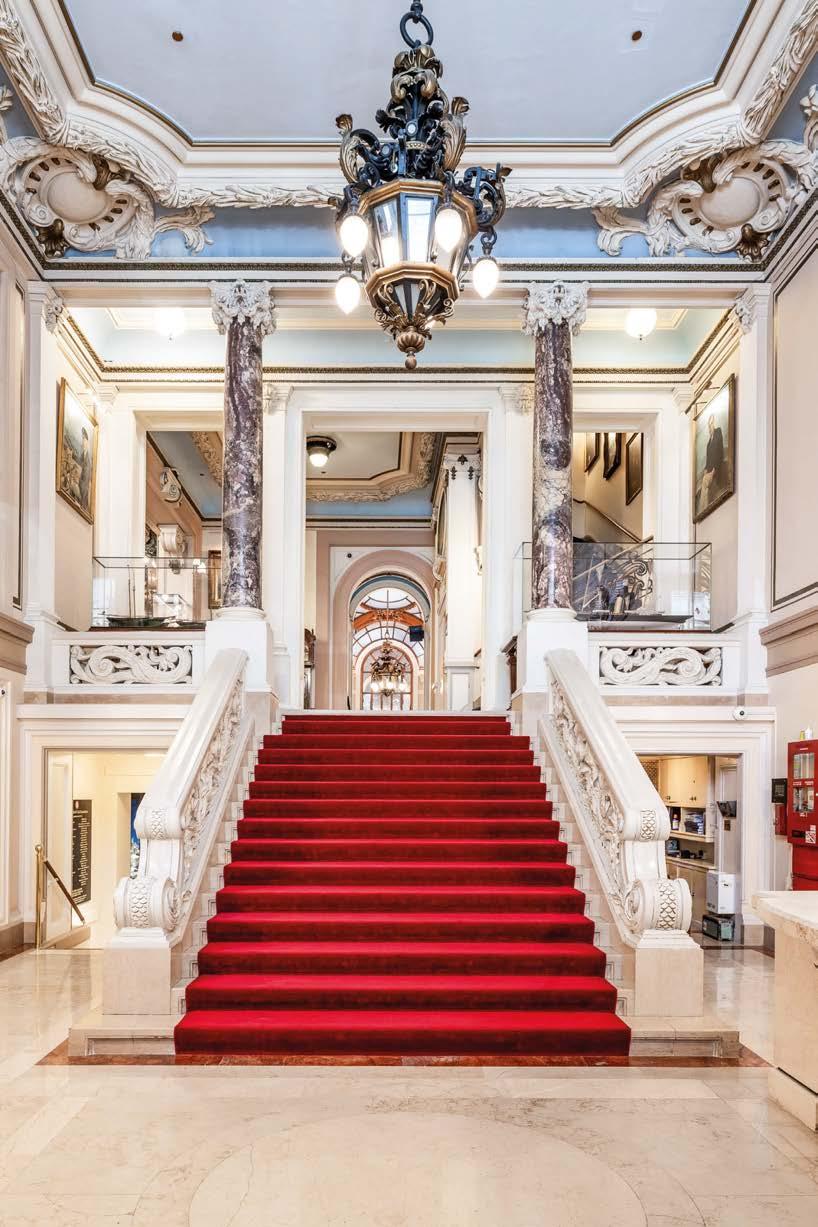
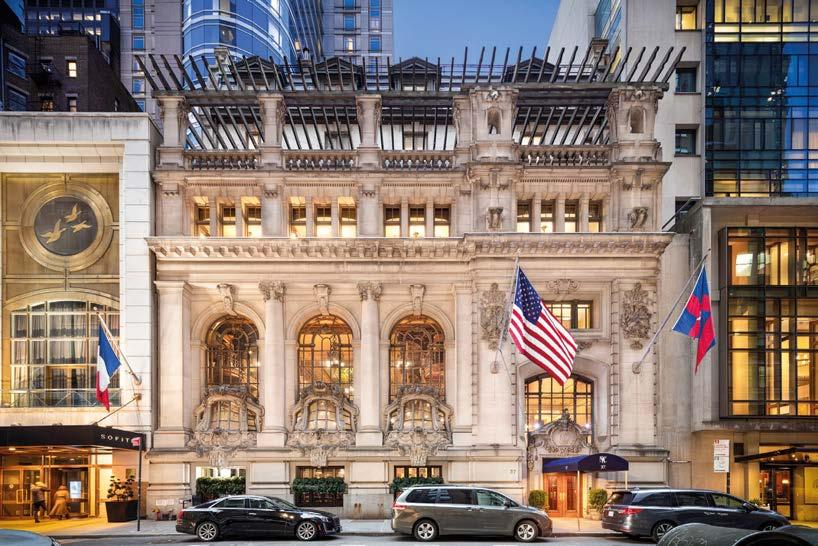
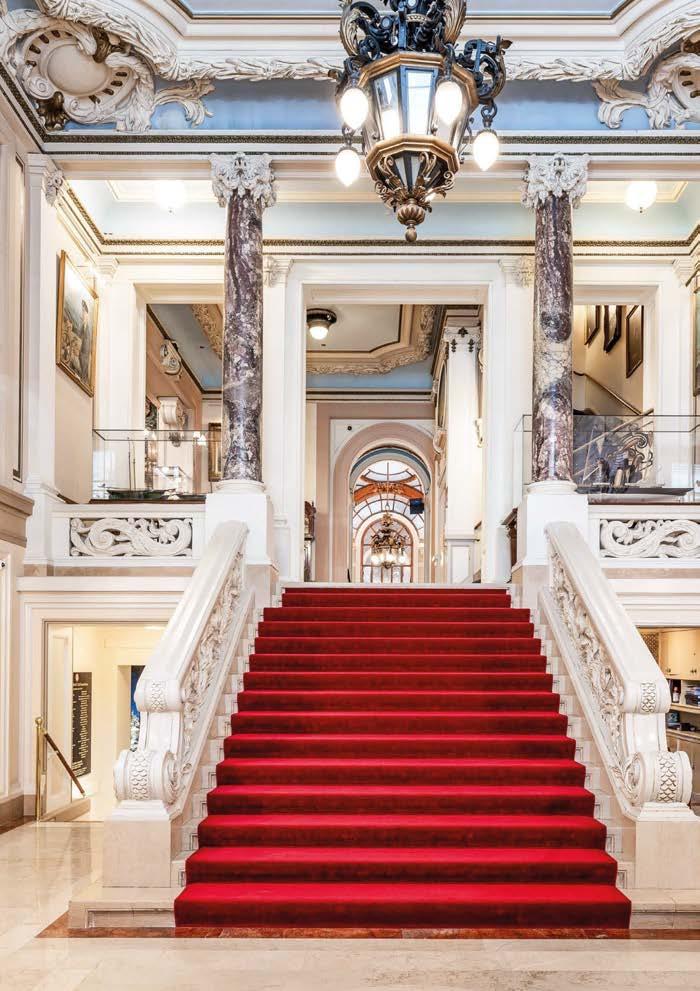
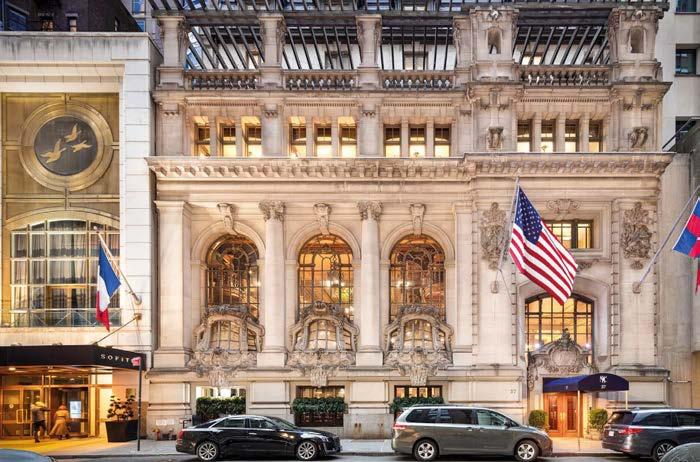

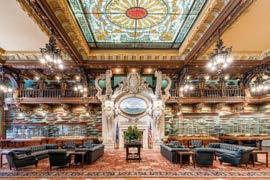
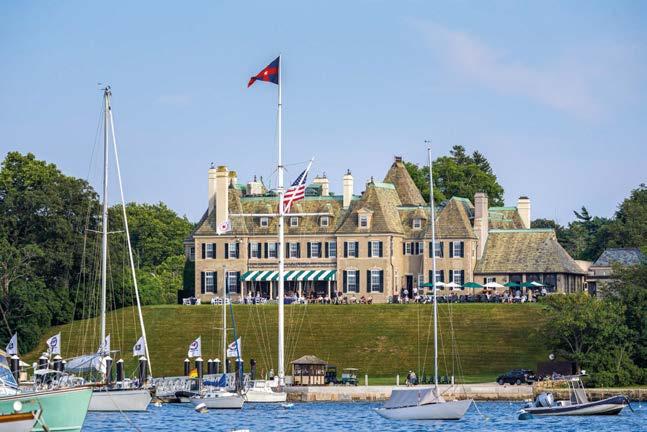
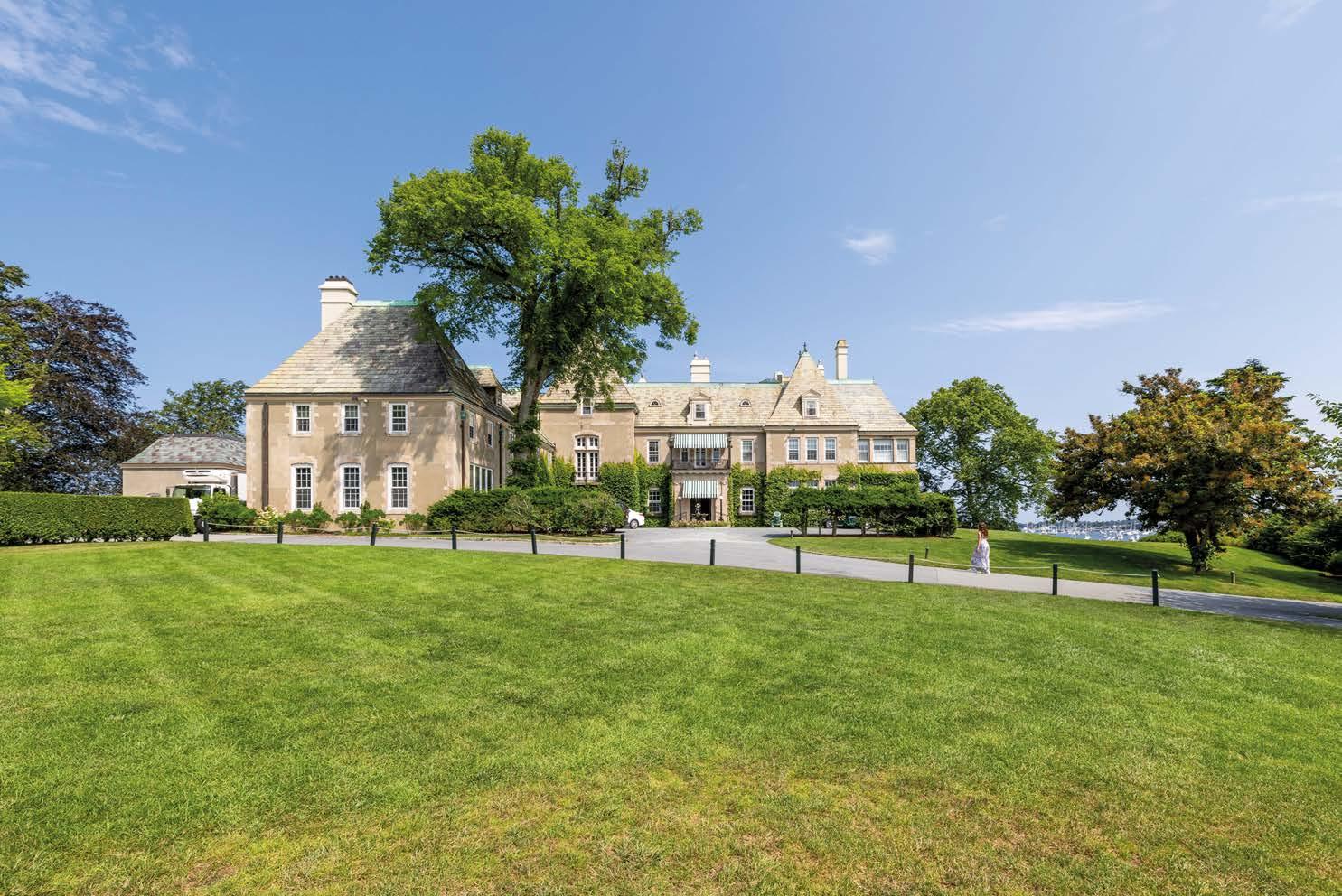
Sollevata su un podio a fasce, la facciata è a quattro campate, composta da un ordine ionico gigante per tre aperture e da una quarta solitaria del padiglione d’ingresso, che bilancia in modo asimmetrico il prospetto, quasi un escamotage per far sembrare l’edi cio più grande di quanto non lo sia in realtà. Le tre campate individuano il piano nobile e sono ritmate da grandi nestre ad arco a tutto sesto, la cui parte inferiore è traforata da elaborate volute a bow window dentro una cornice che raf gura le poppe di allegorici vascelli e galeoni con ghirlande di alghe e conchiglie che pendono da mensole a forma di onda. All’inter no c’è la sala principale del Club, sopra la quale si trova la biblioteca con nestre continue e di coronamento del fronte. I piani superiori dell’edi cio ospitano 19 lussuose camere d’albergo a disposizione dei soci e dei loro ospiti. La facciata scultorea è una vera protagonista, incastonata tra il prestigioso Harvard Club e il So tel boutique hotel. Oltre alla sede centrale di Manhattan, nel 1988 il Club ha scelto l’Harbour Court come sede sul lungo mare dello storico porto di Newport, nel Rhode Island.
Rising from a stepped plinth, the façade features four bays, with a large Ionic order spanning three openings and a solitary fourth bay for the entrance pavilion, creating an asymmetrical balance – almost a visual illusion to make the building appear larger than it actually is. The three bays de ne the main oor and are punctuated by large roundarched windows, the lower sections of which are pierced by elaborate bow-window volutes within a frame depicting the sterns of allegorical ships and galleons, with garlands of seaweed and shells hanging from wave-shaped corbels. Inside lies the Club’s main hall, with the library above, featuring continuous windows crowning the façade. The upper oors of the building contain 19 luxurius hotel rooms that are available for use by members and their guests. The sculptural façade is a true centrepiece, nestled between the prestigious Harvard Club and the So tel boutique hotel. In addition to its Manhattan headquarters, the Club chose Harbour Court in 1988 has a waterfront clubhouse on the historic haourbor of Neport, Rhode Isl.
«Prima del 1983, il grande focus del Club è sempre stato la Coppa America.
Dopodiché abbiamo iniziato a diversi care, in particolare con l’acquisizione nel 1988 di HARBOUR COURT A NEWPORT, centro di ogni attività velica. Amo la Coppa, il Club e le rispettive storie, perché mi piacciono le s de e tutte le competizioni».
«Before 1983, the Club’s main focus was always the America’s Cup.
After that, we started to diversify, especially with the acquisition of HARBOUR COURT IN NEWPORT in 1988, the centre of all sailing activities.
I love the Cup, the Club and both their histories because I enjoy challenges and all forms of competition».
e ai desideri di quasi 3 mila e 500 membri, ma è necessario anche preservare l’integrità strutturale, nonché la bellezza dei due club storici, quello di New York e quello di Newport. Fortunatamente abbiamo una Fondazione e le donazioni ci consentono di nanziare le numerose attività che, nel tempo, le rispettive sedi richiedono.
Progetti per il futuro? Il vero tema non è tanto che cosa faremo quest’anno o l’anno prossimo. Il mio obiettivo principale è essere il più presente e responsabile possibile per il bene dei membri e per onorare il ruolo che il Club svolge nel mondo della vela internazionale. Non sono qui per apportare chissà quali cambiamenti, anche perché non ne abbiamo bisogno. C’è un clima di grande serenità. L’interesse nel voler partecipare e diventare socio è molto alto, soprattutto nella fascia di età 25-35 anni. Tutto questo, direi, è meraviglioso: in fondo non esistono club con un tale forte ascendente sui giovani.
Un commento sulla prossima America’s Cup? Non vedremo American Magic nell’AC38 a Napoli. Il fondatore del team, Doug DeVos, ha voluto cambiare rotta per creare servizi e un centro di allenamento per giovani a Pensacola, in Florida. Sta investendo molta energia lì e nel
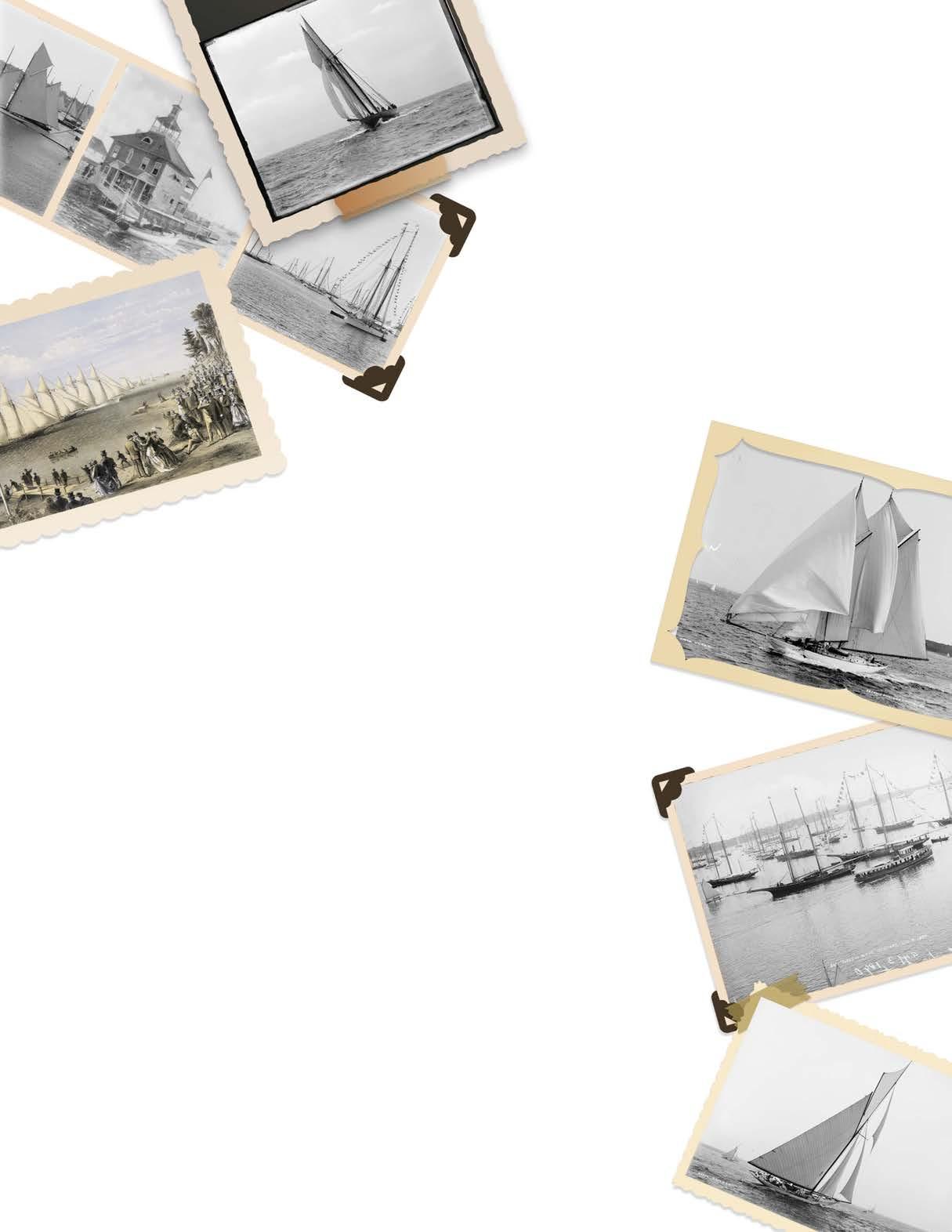
22 Agosto 1851: “America rst, your Majesty, there is no second”. Questa storica citazione esprime ancora oggi, dopo 175 anni dal suo annuncio, quello spirito competitivo e ambizioso che già nutriva gli animi dell’allora nascente circolo velico newyorkese NYYC al suo primo debutto internazionale, appena fuori dalle acque di Cowes, nella contea inglese dell’isola di Wight, per disputare la Coppa delle 100 Ghinee, la prima di una lunghissima serie imbattuta di s de. Quando la Regina Vittoria, invitata ad assistere a quella che doveva essere più un’esibizione di conferma della supremazia velica britannica, venne invece informata della scon tta dell’intera otta inglese e del trionfo dello schooner America, si decretò, di fatto, la storia del NYYC e del suo Guidone a croce rossa con stella bianca su sfondo blu. La bassa, lunga e nera goletta americana stravolse tutte le previsioni. In onore di questa importante vittoria, la coppa venne ribattezzata America’s Cup. “… Non c’è un secondo” è forse una delle frasi più iconiche dello sport e anche la più signi cativa, perché trasmette il senso della vittoria, declinando classi che e piazzamenti intermedi come scon tte: o si vince o si perde!
22 August 1851: “America rst, Your Majesty, there is no second”. This historic quote still re ects, 175 years after it was rst spoken, the competitive and ambitious spirit that already powered the hearts of the then edgling New York Yacht Club (NYYC) during its rst international appearance off the coast of Cowes, in the Isle of Wight, to compete for the 100-Guinea Cup, the rst in a long, unbeaten sequence of challenges. When Queen Victoria, invited to witness what was supposed to be more of a display con rming British sailing supremacy, was instead informed of the defeat of the entire English eet and the triumph of the schooner America, the history of the NYYC and its ensign – featuring a red cross with a white star on a blue background –was effectively sealed. The low, long, black American schooner de ed all expectations. In honour of this remarkable victory, the cup was renamed
Il New York Yacht Club è la prova - riuscita ed evidente - di come il PASSATO, anche molto lontano, possa dialogare in modo costruttivo con il futuro, aprendosi con misura a tutte le INNOVAZIONI che ciò comporta.
The New York Yacht Club exempli es how the PAST – even the distant past – can engage positively with the future by thoughtfully adopting INNOVATIONS.
The French philosopher and anthropologist Marc Augé argued that time knows no age.
The New York Yacht Club, founded on 30 July 1844 by nine gentlemen of the upper middle class, stands as clear proof of this belief. It is a place where memory does not fade; instead, it recounts the complexities and contradictions of an engaging history spanning over 180 years. It is a place where tradition increasingly blends with the boldness of the future: the weight of the building’s sculptural stone façade in Midtown Manhattan is lightened by the airiness of the new honeycomb aluminium cores and the carbon bres of the Patriots AC75, whilst tactical insight now relies on arti cial intelligence and the lift of foil arms capable of ying at over 50 knots – thereby modernising racing instincts and strategies for the new millennium. The New York Yacht Club is not the oldest in the world. Still, it is undoubtedly the most renowned for its sporting
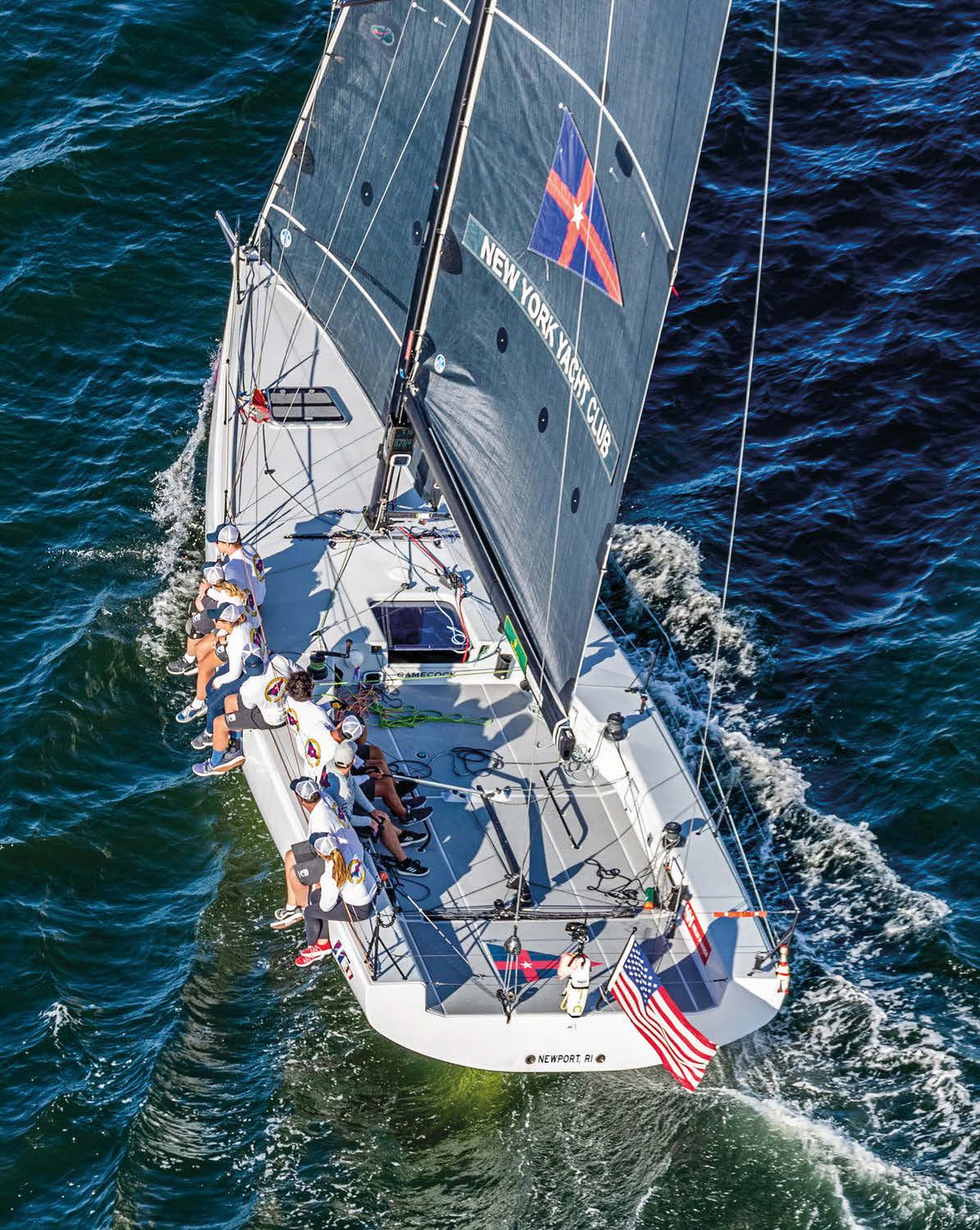
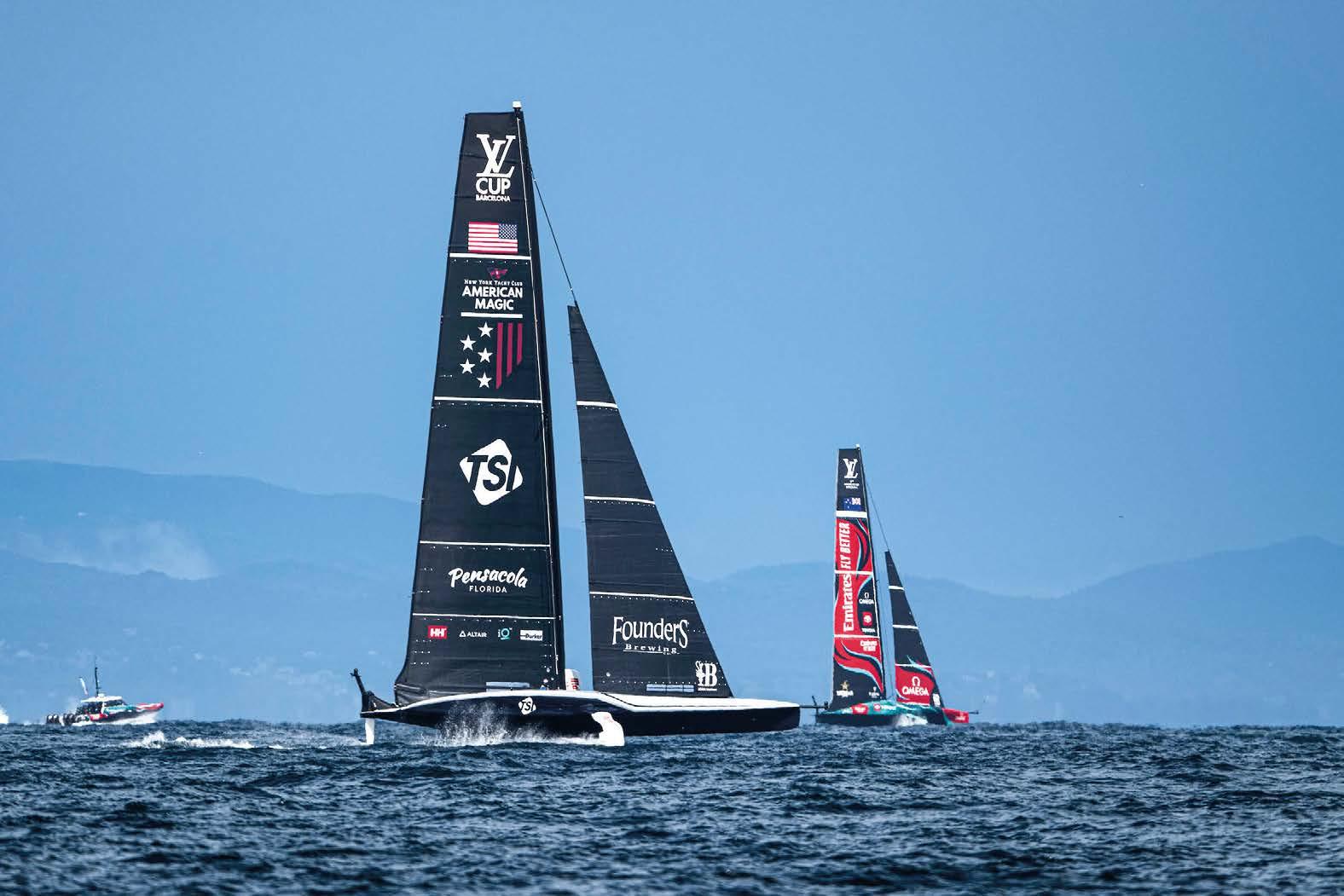
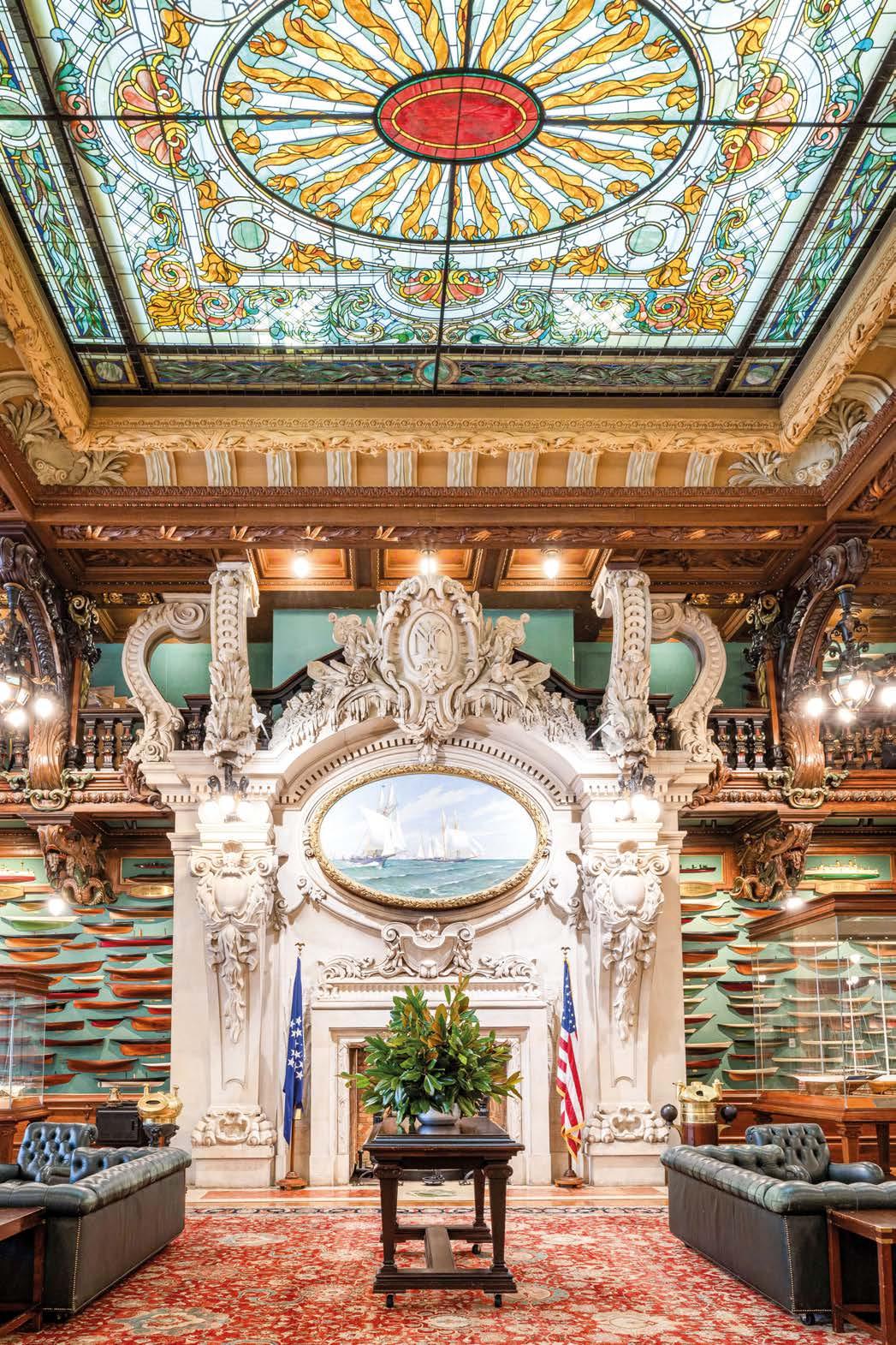
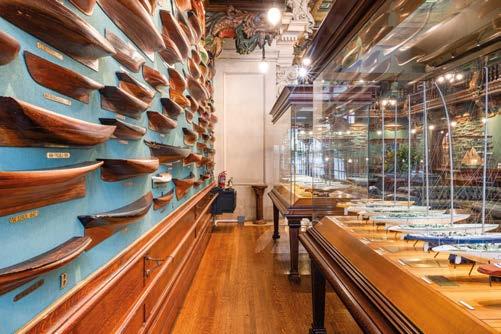
achievements: it boasts a record of no fewer than 25 victories in the America’s Cup alone between 1851 and 1983, the latter being the year in which the yacht Australia II defeated the American defender Liberty. The Club nonetheless went on to nd new success in many other activities and regattas. The Club’s popularity is centred primarily at 37 West 44th Street in Manhattan. The building ‘enriches’ the urban landscape with its late-Victorian decorative eclecticism, which, amid the hustle and bustle of New York, almost resembles a charming ‘Ghostbusters’ building. Listed on the National Register of Historic Places, with a library housing over 8,000 books and a 420-square-metre model room, it is undoubtedly the most prestigious yacht club in America, both for its strategic and economic location – situated in the heart of one of the world’s most important cities – and for its illustrious list of members and former members, a veritable Who’s Who of nancial titans, senators and even a president, Franklin Delano Roosevelt.
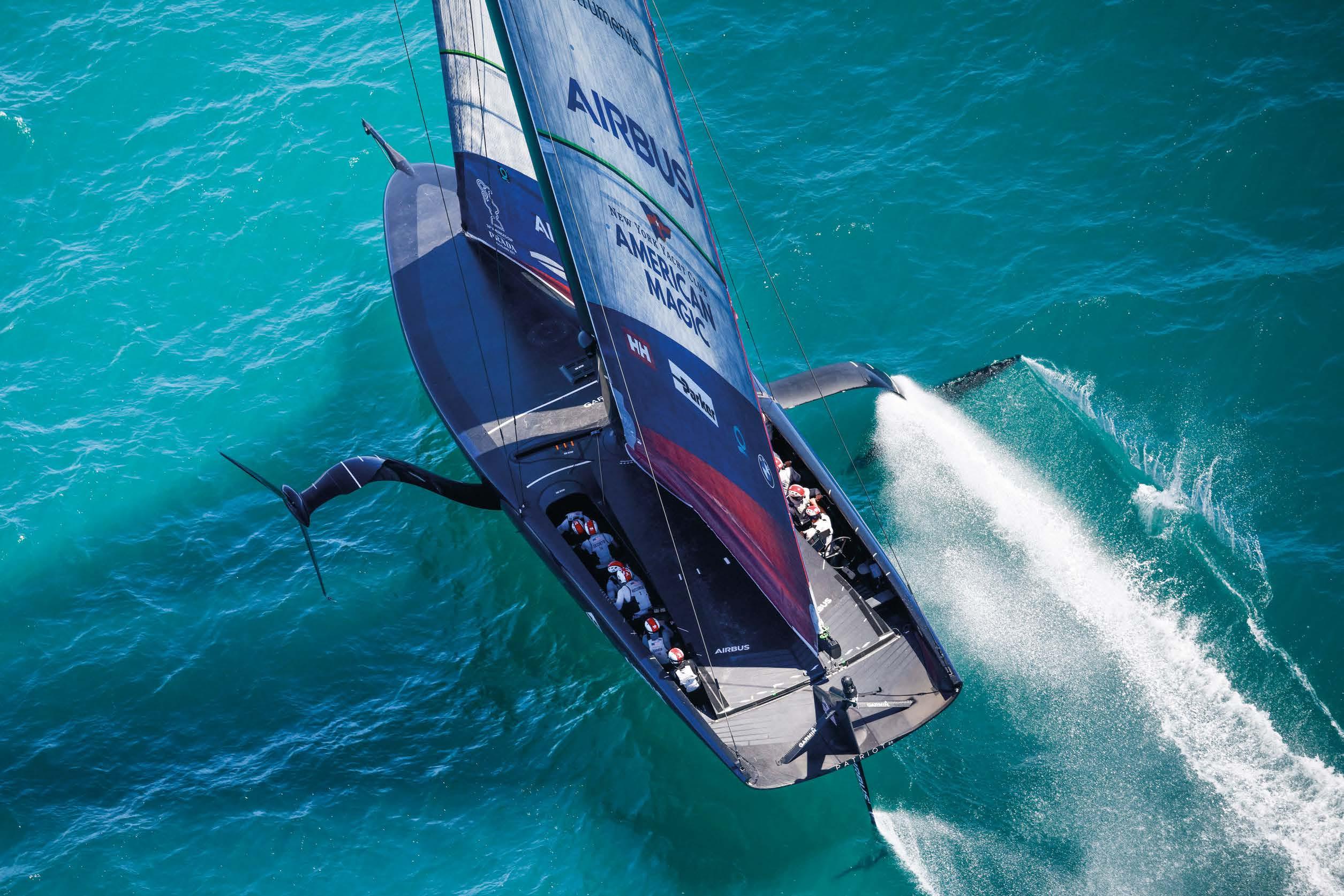
In short, an elite group of in uential gures and philanthropists, in a bid to bring the Cup back to Manhattan, funded the NYYC challengers for the 36th and 37th America’s Cup contests with a pioneering spirit and patriotism, thereby nurturing one of the most fascinating linguistic and conceptual dichotomies of our time: the conservative rigour of Gentlemen’s Club etiquette, which celebrates memory, elegance and discretion through traditional balance and dress codes, engaging in dialogue with the sailing innovation and avant-garde design of American Magic’s AC 75 Patriot. The Club succeeds in preserving its history, its style and its mission and, through the participation, the expertise and moral integrity of its members, it continues to increasingly promote innovation, based on the belief that the best aspect of progress lies in the fact that it comes about gradually, ‘one day at a time’, as President Abraham Lincoln stated, but also to be able to acknowledge ‘one’s past without judging it, for otherwise one will likely lose one’s future’, as Winston Churchill maintained. The grand New York Beaux-Arts style that decorates the historic Midtown Manhattan headquarters results from a design competition won in 1898 by the American architect Whitney Warren and his new partner Charles D. Wetmore. The building has become a true Manhattan landmark, its style re ecting the power of an elite group of bankers and industrialists from the last century, who sought to express, through order, symmetry, and ornamentation steeped in grandeur, a symbol of economic growth and their own respectability, using a language enriched by an extensive stylistic lexicon that covered nearly everything, from eclecticism to neoclassicism and academicism, within a ‘cultural map’ aligned with the major ideological and economic currents of the Gilded Age and the American Renaissance.
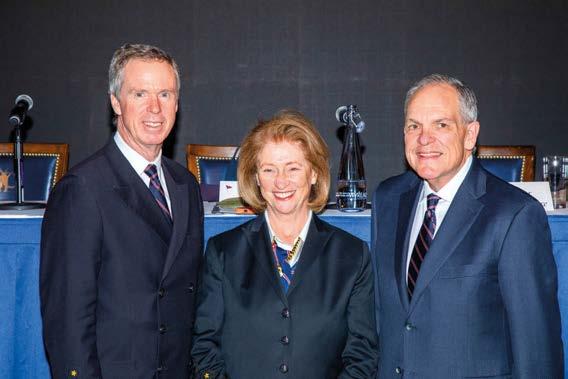
Today, the New York Yacht Club is led by a newly elected woman, Clare Harrington, the rst woman in the club’s history to hold the position of Commodore. A sailor and skipper who grew up racing in Massachusetts on Martha’s Vineyard, she has the privilege and responsibility of representing all the club’s missions for a two-year term and, together with the other trustees, also ensures the upkeep of the historic premises and the welfare of the more than 3,400 members from around the world, selected exclusively by invitation.
There is a fairly strict code of conduct governing member selection. To clarify, here is a direct quote: “We welcome individuals of good standing who have demonstrated passion, expertise and involvement in nautical activities, including regattas and sailing cruises, motorboat cruises, marine and nautical sciences, seafaring, marine art and artefacts, and other unique and noteworthy maritime activities”.
Before this signi cant appointment, Clare has consistently aimed to promote women’s involvement in sailing and within the Club, encouraging them to take on leadership roles in committees, mixed crews, or all-female teams – such as the Women’s America’s Cup and the NYYC Women’s International Championship – and even to hold managerial and administrative positions. Perhaps her longstanding efforts to promote women’s participation have helped break
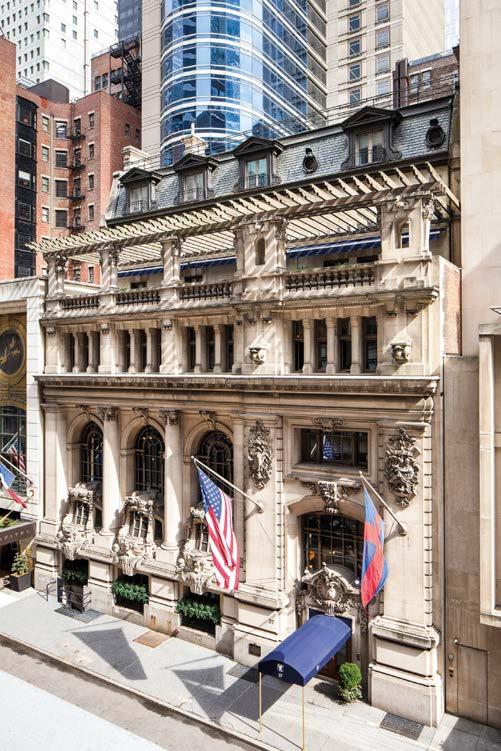
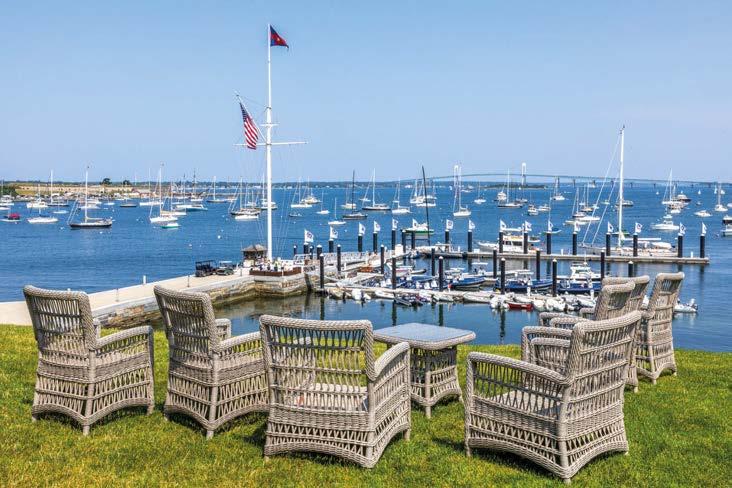
La sede centrale del New York
Yacht Club
si trova a Manhattan, tra il prestigioso
Harvard Club
e il So tel boutique hotel.
down gender barriers even on board the AC75s in the upcoming 38th America’s Cup in 2027, where the new racing protocol, signed by defending champions Team New Zealand, mandates the inclusion of at least one female sailor in the onboard crew, marking a pivotal step towards inclusivity – along with the presence of a guest, and an ‘intruder’ in the form of a battery pack enabling electric power to control the sails, replacing the grinders/cyclors, who provided the hydraulic pressure necessary to do this in the previous two America’s Cup competitions.
Commodore Harrington, what does the New York Yacht Club mean to you? To me, the Club represents tradition; it is our distinctive place within the international yachting community. It is a mission –a valued asset to be preserved – while always looking ahead, embracing progress and innovation to promote sailing not only in the United States but around the globe. The Club is a unique place. Unlike many other clubs, it does not include unnecessary distractions such as tennis courts, social tournaments, or glamorous dinners on the calendar. We are very proud of this facet of our identity. I recognise that from an outside perspective it may seem restrictive, but in fact it emphasises what we are: a genuine Yacht Club.
For many, your appointment was a historic event, unique in its kind. People talked about it extensively, but I like to think that’s not such a crucial detail. At no point – whether I was Commodore of the Edgartown Yacht Club, during my time on the Race Committee in New York, or as Vice Commodore – did I feel that I had been appointed solely because I was a woman. I can honestly say that I have always had the trust, understanding, and support of those who appointed me to these roles, simply because they believed I was the right person at the right time. I believe in this wholeheartedly, not least because it would be terribly wrong to place someone in a position they cannot handle. Failure would be imminent.
Your career has steadily advanced. Before becoming Commodore in December 2025, what positions did you hold within the Yacht Club? For ve or six years, I was responsible for the race committee – I was the rst woman to serve in that role – then, in 2021, I was appointed Rear Commodore, and later became Vice Commodore. This period has been very valuable for understanding such a complex organisation from all perspectives.
What does it mean to be at the helm of a yacht club? It truly is a signi cant responsibility. You must be continually attentive to the needs and wishes of nearly 3,500 members, while also maintaining the structural integrity, as well as the beauty, of the two historic clubs, those in New York and Newport. Fortunately, we have a foundation, and donations enable us to fund the many activities that the respective properties require over time.
Plans for the future? The real issue isn’t so much what we’ll do this year or next year. My main aim is to be as present and responsible as possible for the bene t of the members and to honour the role the Club plays in international sailing. I’m not here to make any major changes, partly because we don’t need them. There is a very calm atmosphere. There is a strong interest in joining and becoming a member, particularly among the 25–35 age group. I would say all this is wonderful: after all, few clubs have such a strong appeal to young people.
Any thoughts on the upcoming America’s Cup? We won’t see the American Magic team competing in AC38 in Naples. The team’s founder, Doug DeVos, has decided to change direction to establish facilities and create a training centre for young people in Pensacola, Florida. He is investing signi cant energy there and in the Olympic programme. Additionally, Doug has recently acquired the Rockwool Denmark SailGP Team, so he is also concentrating on this new project.
Immortala regate da quasi mezzo secolo. È il fotografo uf ciale di Luna Rossa. I suoi scatti hanno fatto il giro del mondo. Fenomenologia dell’uomo che mette a fuoco il mare
He has been capturing regattas for nearly fty years. He is Luna Rossa’s of cial photographer. His photographs have been seen worldwide. Phenomenology of the man who sharpens the sea by Chiara Risolo
PHOTOGRAPHER SINCE
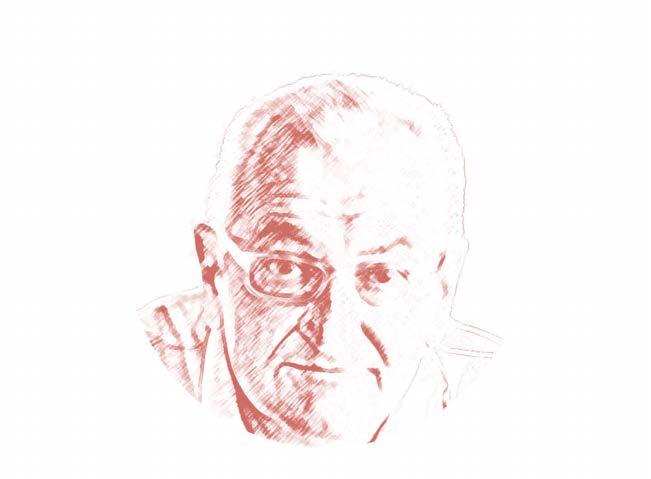
Carlo, come certamente saprà, questo è il primo numero di un giornale rinato per mano di chi ama la carta stampata quanto un fotografo la luce.
Ciò premesso, lei, senza dubbio, è il terzo occhio della vela. Traduco: noi due abbiamo una missione. Dobbiamo spingerci oltre i con ni del “quando ha iniziato, perché e bla bla bla”, concedendoci, in luogo di sterili perifrasi, anche il lusso di qualche parolaccia. In soldoni: se io, per dirla alla Bukowski, non sanguinassi un po’ nell’intento di raccontare un Borlenghi inedito, avrei sprecato un’occasione, lei, il suo tempo. A freddo, così, ha smesso di fumare? Ho ridotto drasticamente. Cinque, al massimo sei bionde al giorno. La prossima, in base ai suoi calcoli, la fumiamo insieme. Volentieri.
Ha imparato a nuotare? Macché.
Carlo Borlenghi
è nato a Bellano, sul Lago di Como, nel 1956. Esercita la professione di fotografo dal 1979. Borlenghi was born in Bellano, on Lake Como, in 1956. He has been working as a photographer since 1979.
Sarò sincera: il fatto che lei non sappia nuotare è surreale. Anacronistico. È come se... che ne so... come se Gesù fosse ateo. A proposito, crede? Prega? Non credo, non prego e in chiesa vado proprio se devo. Allora ci va. Si chiamano funerali, pensavo avesse colto. Già, si muore. Giustappunto, lei svolge una professione straordinaria, tuttavia talvolta rischiosa. Se l’è mai vista brutta? Ha mai pensato “qui ci lascio le penne”? Altroché! Una decina di anni fa a Palma di Maiorca. Ero a bordo di un elicottero per fotografare un J Class. Con me c’era un mio collaboratore. A un certo punto lo sento urlare come un matto. Eravamo a un millimetro dalla testa d’albero dell’imbarcazione e la possibilità di agganciarla non era poi così remota. Il pilota non riusciva più a salire di quota. Panico. Non ricordo come, ma per fortuna siamo usciti dal guano. Ricordo invece molto bene l’atterraggio: abbiamo toccato terra dopo una serie di rimbalzi al cardiopalma. Ripenso anche a Dubai. Scena della tragedia s orata sempre in elicottero. Questa volta ero con un giornalista. ‘Sto co... aveva uno di quegli orribili borselli con mille tasche. Senza rendersene conto, ha in lato la tracolla nella pedaliera, bloccandola di fatto. Può immaginare?
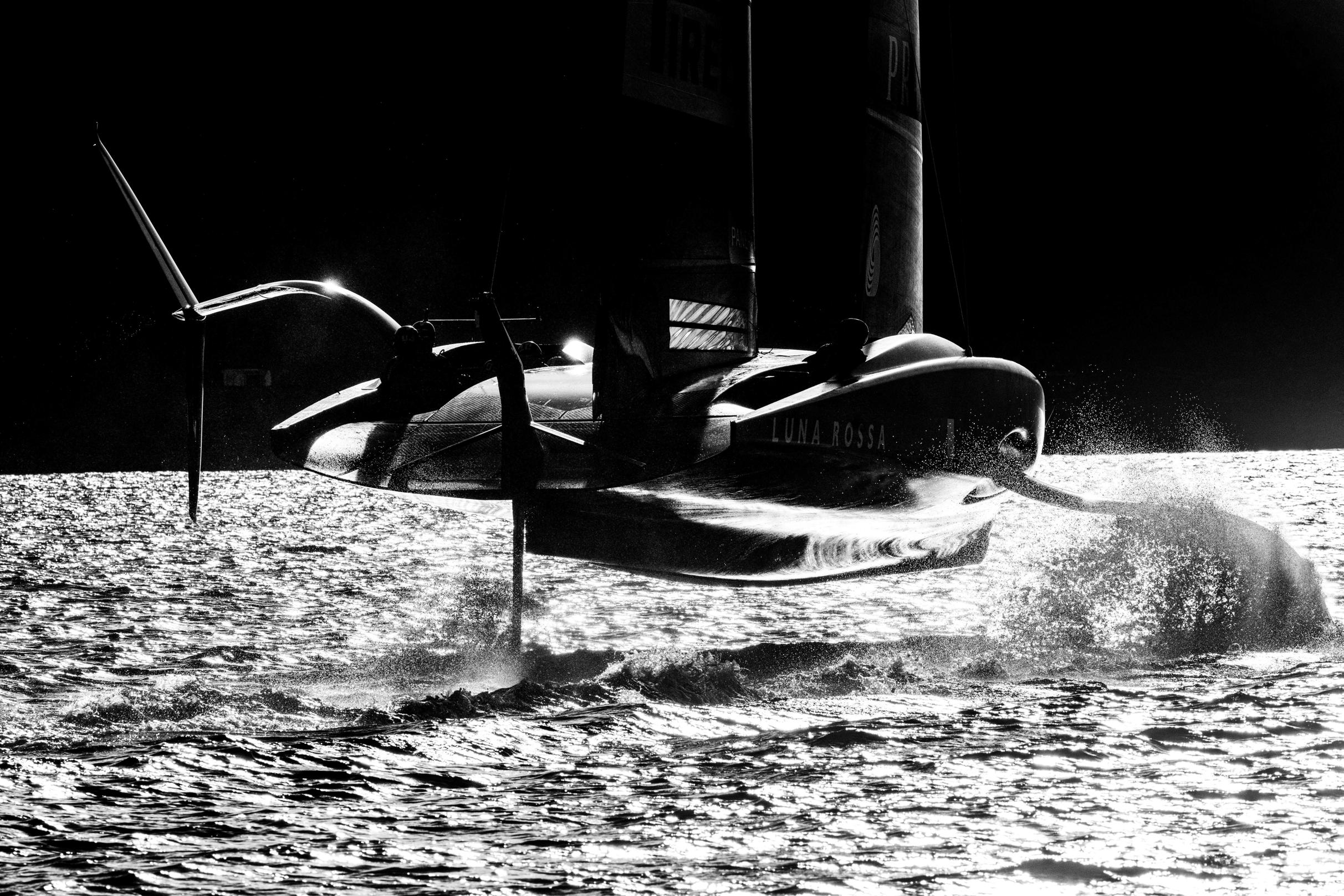
L’archivio di Carlo Borlenghi conta oltre 13 milioni di foto. Un patrimonio INESTIMABILE per il mondo della vela.
Carlo Borlenghi’s archive holds over 13 million photographs. It is a PRICELESS resource for the sailing world.
Il pilota, oltretutto, non capiva: non riusciva a capire perché questo diavolo di coso non rispondesse più ai comandi. Alla ne è andata bene, ma quanta paura. Fermi tutti, ho il titolo del prossimo Pirata dei Caraibi di Gore Verbinski: Borlenghi e la maledizione dell’elica. Per la verità ho visto la morte in faccia anche in acqua. Era il 2016. Mi trovavo sul Lago di Garda per immortalare la Foiling Week di Malcesine. Pierre Casiraghi ha perso il controllo del suo GC32 Malizia che in un attimo ha sovrastato il gommone da cui scattavo. Praticamente mi sono ritrovato il foil sopra la testa.
Però se siamo qui a parlarne, signi ca che ha avuto tempo e modo di mettersi in salvo. Per evitare l’impatto il comandante ed io ci siamo spalmati come burro sul pane lungo i tubolari, non ricordo se a dritta o a sinistra. E se fosse stato necessario buttarsi in acqua? Scherza, vero?
Come non detto. Cambiamo rotta. Lei ha iniziato la professione di fotografo nel 1979 collaborando con Uomo Mare Vogue. Il suo cv, se me lo consente, lo af derei a un box. Qui le chiedo: al di là di questa collaborazione che le ha consentito di avvicinarsi al gotha internazionale della vela, il primo lavoro commissionato da un cantiere se lo ricorda? Ho un vuoto sul nome. Ital... Ital... Costruiva barche da ume in alluminio. Un giorno - siamo sempre nel ’79 –si avvicina un tizio e mi dice: “Devo fotografare un paio di imbarcazioni”.
Mi spiega dove, quando, perché, percome. Tutto perfetto. Peccato per il cachet. Tirchi? No, no. Il problema era un altro. Il cantiere chiese a me di quanti care, ma io ero alle prime armi e non avevo assolutamente il polso del mercato. Una vocina mi suggeriva di chiudere a 500 mila lire. Nell’incertezza, mi confrontai con un collega più esperto, Massimo Vitali. Mi suggerì: “Carlo, porta un’idea vincente e chiedi 3 milioni”. Io: “Sei matto?” Lui: “No”.
Il lavoro di Borlenghi ha ricevuto numerosi premi, tra cui il premio Omega 2003 come miglior fotografo sportivo. Nel 2007 ha vinto il Grand Prix de l’Image Course au Large –Salon Nautique de Paris e ha ricevuto una targa dal Presidente della Repubblica Italiana Giorgio Napolitano “per i molti anni di intensa attività a favore del mondo della vela”.
Borlenghi’s work has garnered numerous awards, including the 2003 Omega Award for Best Sports Photographer. In 2007, he won the Grand Prix de l’Image Course au Large – Salon Nautique de Paris. He received a plaque from the President of the Italian Republic, Giorgio Napolitano, “in recognition of his many years of dedicated work in support of the world of sailing”.
Un bel po’ di quattrini per l’epoca. Com’è andata? È andata che al cantiere ho portato un’idea vincente e a casa i miei primi 3 milioni di lire. Ma soprattutto è andata che grazie all’amico Vitali ho imparato una grande lezione, ovvero come gira, o meglio, come dovrebbe girare il mondo del lavoro.
Come? Se le idee sono buone hanno un valore punto, quindi un prezzo dif cilmente trattabile.
Per te, cantiere X, sono troppo caro? Pazienza, tanti saluti e arrivederci. Vado a pescare. Sacrosanto, però ammetterà che quelli erano indiscutibilmente altri tempi. Oggigiorno è ancora possibile essere così tranchant? Io ragiono in questo modo, crisi sì, crisi no, concorrenza sì, concorrenza no. È una questione di rispetto per il proprio lavoro. Chi si vuole svendere è liberissimo, prego si accomodi.
Si “accomodano” in tanti? Di servizi fotogra ci a 200 euro è pieno il mondo, senza considerare i danni di immagine per la professione causati dall’avvento dei social.
In che senso? Oggi apri un pro lo Instagram, immortali una barchetta al calar del sole, metti insieme qualche ltro, qualche follower, qualche like e complimenti vivissimi: sei un fotografo di grido.
L’unico grido che percepisco ora è di dolore, il suo. Stemperiamo? Sigaretta? Non posso, troppo presto.
Encomiabile, non insisto. Ad ogni modo lei non corre il rischio di nire nel mucchio degli improvvisati. Anzi, è consapevole, vero, di essere un Numero Uno? Non direi mai di me stesso, nemmeno sotto tortura, di essere un Numero Uno. Più che altro so di non essere un pirla, ecco. Faccio il mio.
Santa miseria, è vero che chi si loda si imbroda, ma qui, Carlo, parlano le fotogra e. Facciamo così: provi almeno a spiegare che cos’è “il mio”. Il mio è portare al cantiere o al team gli scatti migliori stando sempre dietro le quinte. Io sono semplicemente al servizio di altre persone.
E niente, è impossibile cavarle anche solo un milligrammo di ego. Allora, mi dica: come è stato “essere al servizio” di Raul Gardini? Mmm Gardini... raramente ho conosciuto un uomo più determinato e carismatico di lui. Potrei raccontare mille aneddoti condivisi, ma ce n’è uno in particolare che sottolinea il suo spessore.
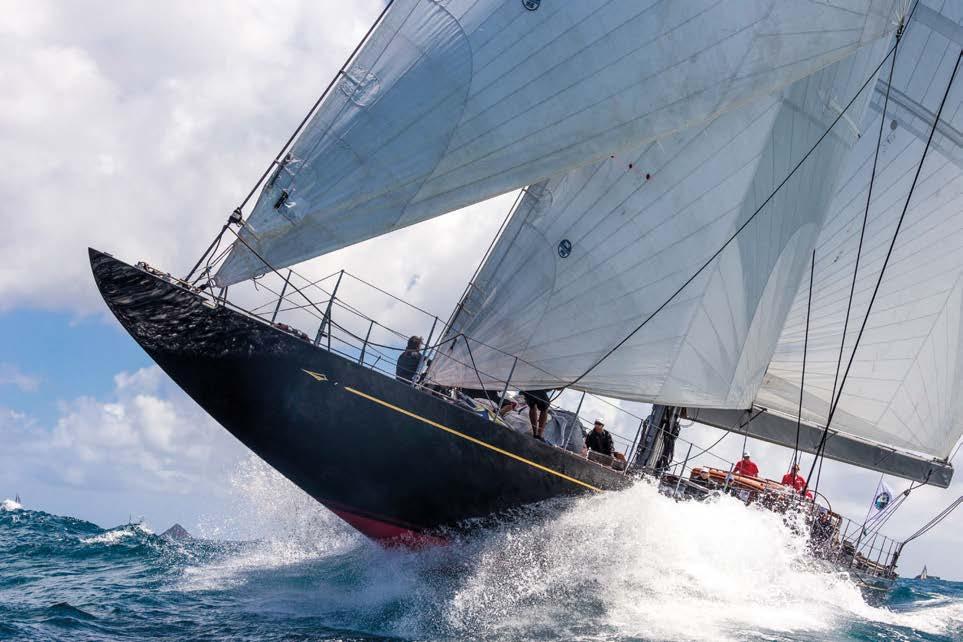


«I social non fanno bene alla professione. Oggi con uno SMARTPHONE in mano tutti si sentono fotogra . Questa cosa mi irrita moltissimo».
«Social media isn’t bene cial for the profession. These days, with a SMARTPHONE in hand, everyone believes they’re a photographer. That really gets on my nerves».

San Diego, America’s Cup 1992. Un giorno mi chiama e mi dice: “Carlo, si dimentichi il Moro, non mi interessano più le foto della barca. Lei deve documentare l’uso scorretto che i neozelandesi fanno del bompresso”. “Dottore, d’accordo, ma io non capisco niente di vela”. “Non si preoccupi, le metto accanto un velista, sarà lui a dirle quando scattare. Poi mi porta le foto e io faccio quello che devo”.
Cioè? La cosa giusta, ovvero consegnare le prove del magheggio all’International Jury. Ricorderà che la protesta di Gardini e Paul Cayard, skipper e timoniere del Moro, fu accolta Vele spietate, più che spiegate. Se dico Patrizio Bertelli invece? Geniale, un maniaco della perfezione. Un ricordo, vediamo... Sì, ce l’ho. In fase di personalizzazione della prima Luna Rossa, per capirci quella con lo scafo grigio, la striscia rossa e la scritta Prada, mi chiese un parere puramente estetico. Allora la bandiera italiana era posizionata a poppa. A centro barca c’era il logo giallo e viola di uno Yacht Club. “Carlo, che ne pensa?
Le piace?”. “Dottore, la barca è bellissima, ma il logo... siamo italiani, al centro metterei la bandiera”. Mi diede retta e così fu. Ovviamente tutti gli avevano detto che la barca era perfetta così, un orilegio di ahh, ohh, uhh! La famosa reverenza per il “padrone”, un grande classico. Ebbi semplicemente il coraggio di dire la mia, lui di cambiare idea. Beh, nessuna delle due cose è scontata. Ad ogni modo, lei ha citato aneddoti parecchio datati. Nostalgia della vela che fu? Direi di no, anzi mi reputo molto fortunato perché ho vissuto da vicino l’evoluzione di questo meraviglioso sport.
Più che di evoluzione, forse bisognerebbe parlare di rivoluzione. Negli Anni ’80 se qualcuno avesse anche soltanto ipotizzato l’avvento dei cosiddetti cyclors, molti si sarebbero fatti delle grasse risate. Fantascienza. È cambiato tutto, vero. Una volta i protagonisti in mare erano gli uomini. Mettevi a fuoco le facce arate dalla fatica e dal sudore, i muscoli, il movimento dei corpi, la capacità sica e psichica di fronteggiare qualunque tipo di imprevisto. Oggi intravedi appena caschi di gente che pedala e pedala. L’attenzione si è spostata sulle barche: missili che volano sull’acqua. Per stargli dietro devi usare mezzi velocissimi. Non esistono più le soste alle boe. Scatti per 3, 4 ore ininterrottamente. Detto ciò, è giusto andare avanti. Credo davvero che abbia poco senso rimpiangere il passato. Ogni epoca, in fondo, ha il suo fascino.
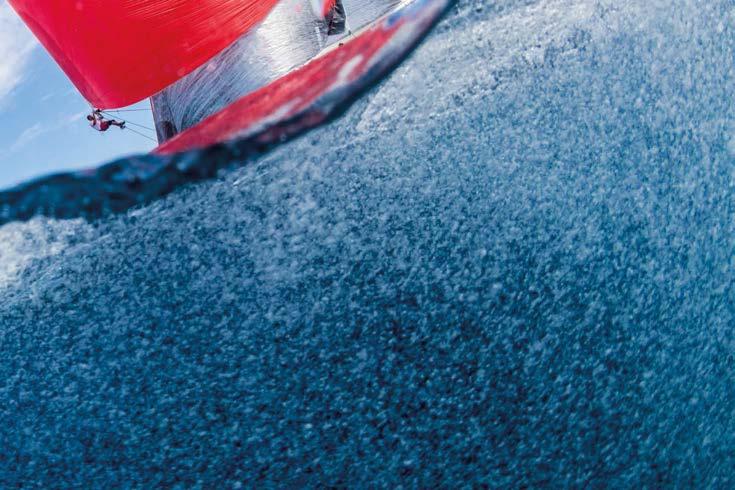
«Ho visto la morte in faccia anche in acqua. Era il 2016. Mi trovavo sul Lago di Garda per immortalare la FOILING WEEK di Malcesine. Un GC32 ha perso il controllo e in un attimo ha sovrastato il gommone da cui scattavo. Praticamente mi sono ritrovato il foil sopra la testa».
«I’ve looked death in the face, even out on the water. It was 2016. I was on Lake Garda to photograph the Malcesine FOILING WEEK. A GC32 lost control and, in an instant, loomed over the dinghy from which I was taking photos. I basically found myself with the foil right above my head».



è famoso per aver realizzato alcune delle immagini più suggestive mai catturate dell’America’s Cup. La sua attenzione per i dettagli e la perfezione della fotogra a sono straordinarie e la sua postproduzione è considerata la migliore nel mondo della vela.
Carlo Borlenghi is celebrated for capturing some of the most stunning images in America’s Cup history. His meticulous attention to detail and the excellence of his photography are extraordinary, and his postproduction work is considered among the best in the sailing world.
L’entusiasmo che da sempre lo caratterizza lo porta a essere sempre aperto e disponibile a qualsiasi avventura o innovazione e a essere continuamente aggiornato sia nel campo fotogra co sia in quello tecnologico.
His characteristic enthusiasm means he is always eager to embrace any adventure or innovation and stays constantly up to date in both photography and technology.
A proposito di scatti, le è mai capitato di bucare un momento topico? Mi è capitato eccome. Ce n’è uno in particolare che mi sta qui... ogni volta che ci penso mi sale la pressione.
Quale? Auckland, gennaio 2021, Prada Cup. Ricorderà la clamorosa scuf ata di American Magic. Bene, anzi malissimo. Ero a bordo di un elicottero, ma il pilota era su un’altra traiettoria, non ha virato e io ho perso la foto. Non ho immortalato il disastro della concorrenza, non so se mi spiego...
Si spiega, si spiega. Se l’è mangiato vivo? Il pilota intendo. L’ho insultato in inglese e in italiano. Le parolacce nella nostra lingua sono più ef caci. Giusto. Altri momenti da dimenticare? Mah, più che foto bucate, a volte la vera criticità è legata all’imbarcazione che segui. Se devi realizzare un servizio fotogra co di una barca lenta che non vince mai, ragazzi, è dura. Tuttavia, anche in questo caso, il modo di portare a casa il risultato si trova.
Per esempio? Mandi la moglie dell’armatore della barca perdente, tutta bella brandizzata a congratularsi con i vincitori e scatti. O mandi tutto il team ad applaudire. I giornali pubblicano sempre la foto della premiazione. Quindi, praticamente è fatta: sei in edicola. Ah, però! Di necessità virtù. Carlo, dobbiamo quasi salutarci. Chiuderei con una domanda che la collega Francesca Fagnani fa sempre ai suoi ospiti durante la
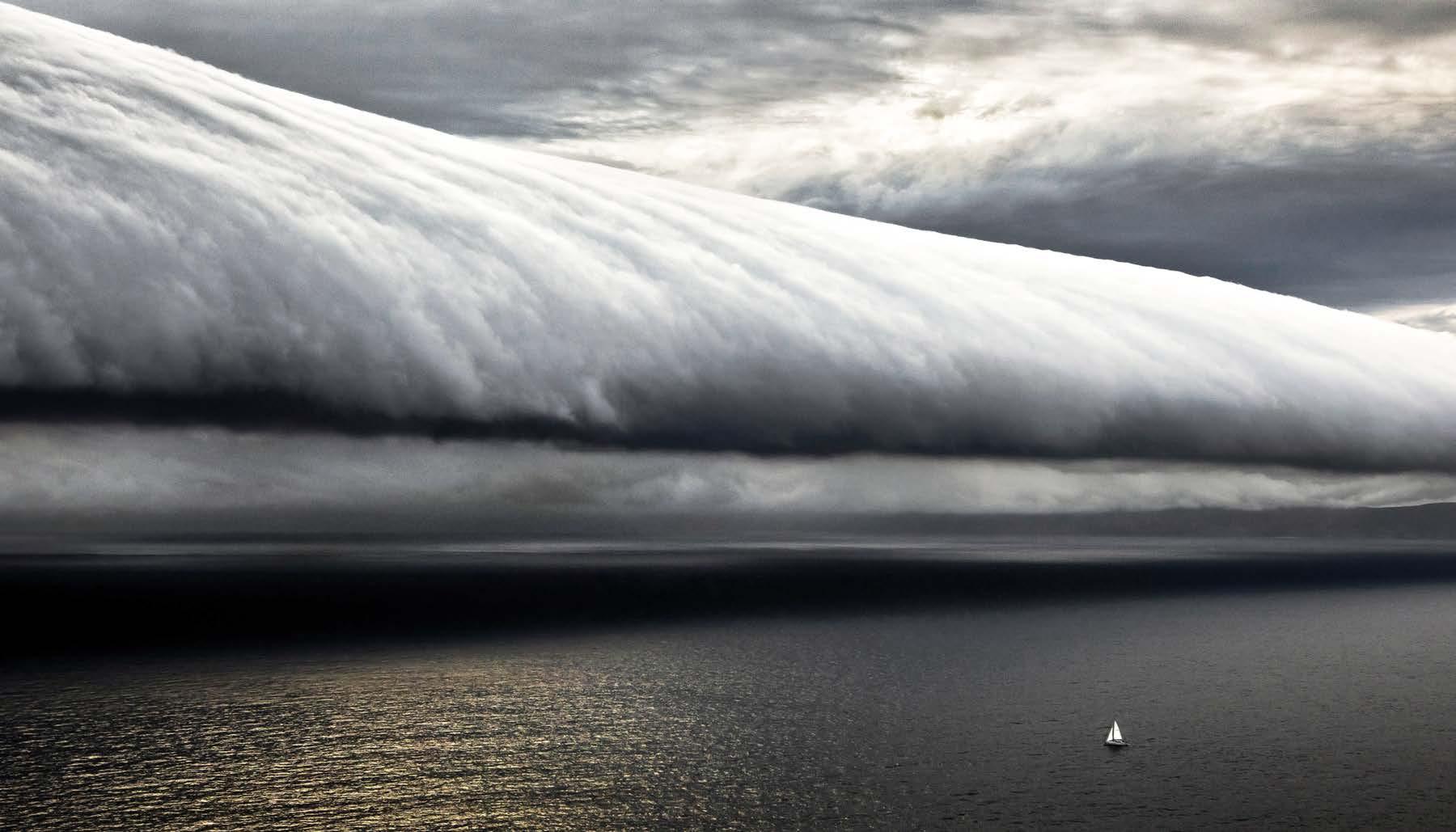
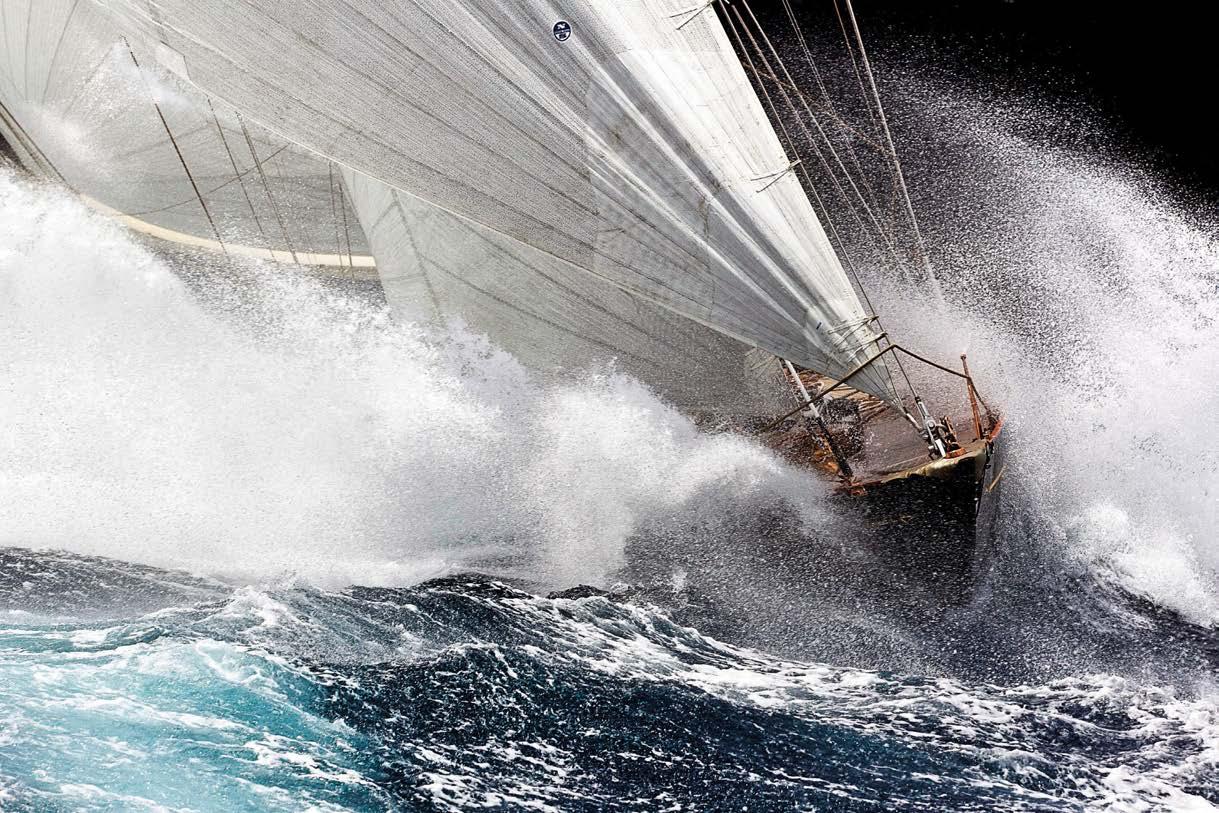
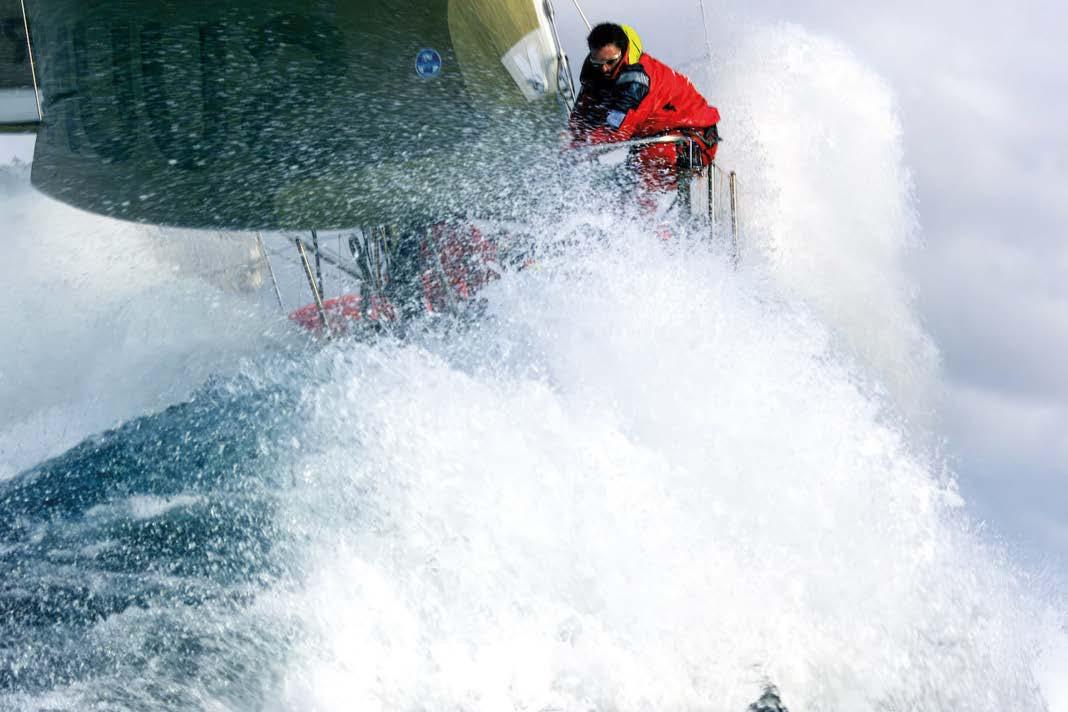
Carlo, as you are no doubt aware, this is the rst issue of a magazine revived by those who love print as much as photographers love light.
That said, you are, without a doubt, the third eye of the sail. In other words, the two of us have a mission. We must push beyond the con nes of ‘when did you start, why, and blah blah blah, allowing ourselves, instead of sterile circumlocutions, even the luxury of a few swear words. In a nutshell: if I, to quote Bukowski, didn’t bleed a little in my attempt to portray a previously unseen Borlenghi, I would have wasted an opportunity, and you, your time. Just like that, out of the blue, you’ve given up smoking? I’ve cut down drastically. Five or six blondes a day at most.
The next one, according to your calculations, we’ll smoke together. I’d love to.
Have you learnt to swim? Not a chance.
I’ll be honest: the fact that you can’t swim is surreal. Anachronistic. It’s as if... I don’t know... as if Jesus were an atheist. By the way, do you believe? Do you pray? I don’t believe, I don’t pray, and I only go to church if I have to.
So, you do go. They’re called funerals; I thought you’d get the point. Right, people die. Precisely – you have an extraordinary job, though it can be risky at times. Have you ever been in a tight spot? Ever thought, ‘I’m going to bite the dust here’? You bet! About ten years ago, in Palma de Mallorca, I was on a helicopter to photograph
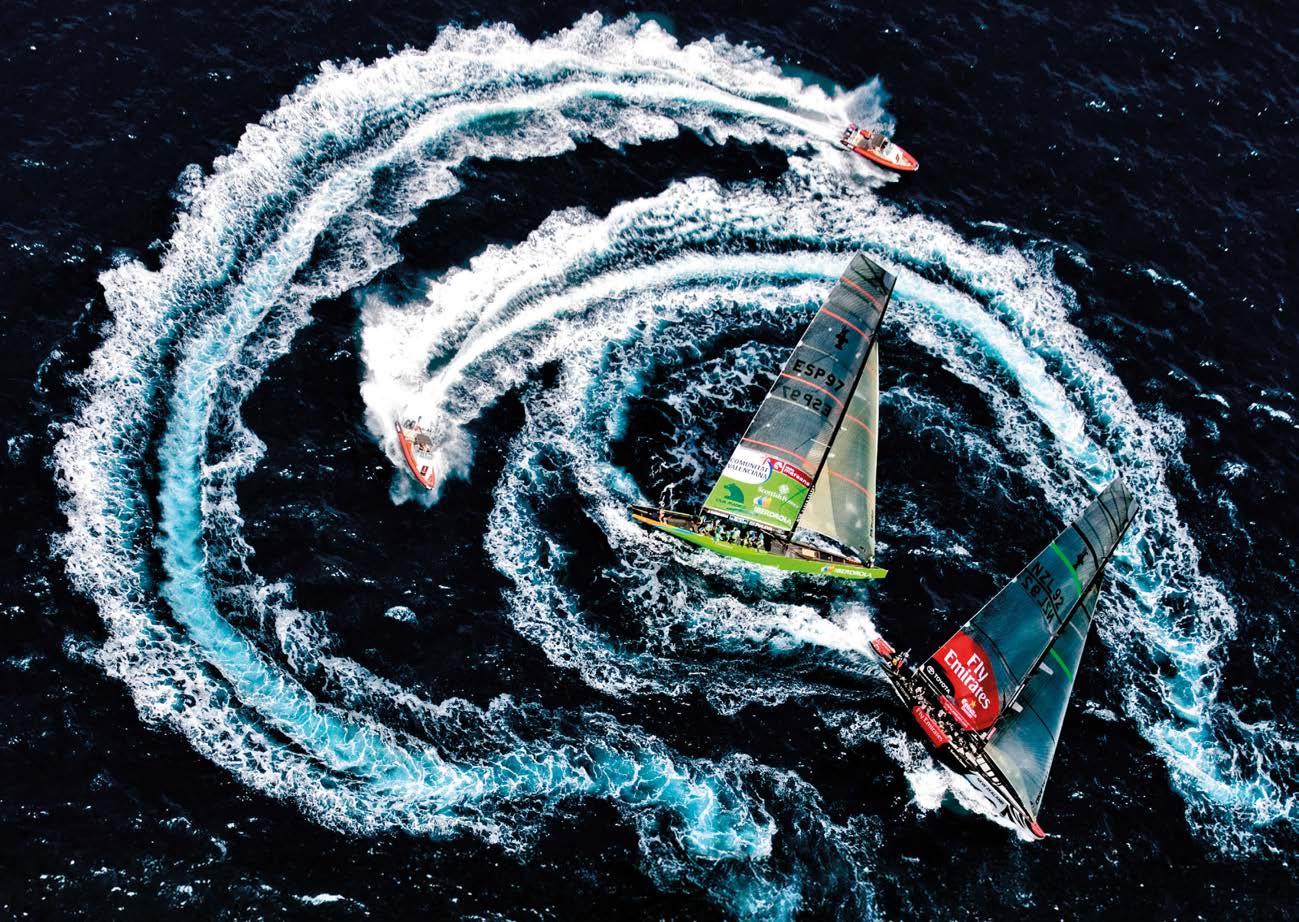
a J-Class yacht with one of my colleagues on board. At one point, I heard him screaming like a madman. We were just a hair’s breadth from the masthead of the boat, and the chance of snagging it wasn’t exactly remote. The pilot couldn’t gain any more altitude. Panic set in. I don’t remember how, but luckily, we escaped that mess. I remember the landing very well: we touched down after a series of heart-stopping bounces. I also think back to Dubai – another near-tragedy, again in a helicopter. This time, I was with a journalist. ‘That bl...’ he had one of those horrible bags with a thousand pockets. Without realising it, he’d got the shoulder strap caught in the pedal assembly, effectively jamming it. Can you imagine? The pilot, on top of everything else, didn’t understand – he couldn’t gure out why this bloody thing wasn’t responding to the controls anymore. It all turned out ne in the end, but what a scare. Hold on a minute, I’ve got the title for Gore Verbinski’s next Pirates of the Caribbean: Borlenghi and the Curse of the Propeller. To be honest, I’ve had a close call with death on the water, too. It was 2016. I was on Lake Garda lming Malcesine Foiling Week. Pierre Casiraghi lost control of his GC32 Malizia, which in an instant loomed over the dinghy from which I was taking photos. I practically found myself with the foil directly above my head. But if we’re here talking about it, it means you had the time and opportunity to get to safety. To avoid the impact, the captain and I spread ourselves out like butter on bread along the tubes – I can’t remember whether it was on the starboard or port side. What if it had been necessary to jump into the water? You’re joking, aren’t you?
Never mind. Let’s change the subject. You began your career as a photographer in 1979 working with Uomo Mare for Vogue. If I may, I’d like to summarise your CV in a box. So here’s my question: apart from this collaboration, which allowed you to mingle with the international sailing elite, do you remember the rst job you were commissioned to do by a shipyard?
I can’t quite remember the name. Ital… Ital… He built aluminium river boats. One day –this was back in ’79 – a bloke came up to me and said: “I need to photograph a couple of boats.” He explained where, when, why, and how. Everything was perfect. It was just a shame about the fee.
Stingy? No, no. The problem was something else. The shipyard asked me to quote a price, but I was a novice and had absolutely no feel for the market. A little voice suggested I settle for 500,000 lire. Unsure, I consulted a more experienced colleague, Massimo Vitali. He suggested: “Carlo, come up with a winning idea and ask for 3 million”. Me: “Are you mad?” Him: “No”.
Quite a bit of money for those days. How did it go? Well, I took a winning idea to the shipyard and brought home my rst 3 million lire. But above all, thanks to my friend Vitali, I learnt a valuable lesson: how the world of work operates, or rather, how it should operate. How? If ideas are good, they have value, full stop, so their price is hardly negotiable. Do you think I’m too expensive, shipyard X? Never mind, goodbye and good luck. I’m off shing.
Absolutely right, but you must admit those were undeniably different times. Is it still possible to be so blunt these days? I see it this way: crisis or no crisis, competition or no competition. It’s a matter of respect for one’s own work. Anyone who wants to sell themselves short is free to do so; please, go ahead.
Do many people ‘go ahead’? The world is full of photo shoots for 200 euros, not to mention the damage to the profession’s image caused by the rise of social media. What do you mean? These days, you set up an Instagram pro le, snap a photo of a little boat at sunset, throw on a few lters, rack up a few followers and likes, and before you know it, you’re a hotshot photographer.
It seems to me that this subject causes you distress. Let’s calm down. A cigarette? I can’t. It’s too early.
Commendable, I won’t press the point. In any case, you’re not at risk of ending up among amateurs. Indeed, are you truly aware that you’re Number One? I’d never claim that of myself, not even under torture, that I’m Number One. More than anything, I know I’m not a fool, that’s all. I do what’s mine.
Goodness me, pride indeed comes before a fall, but here, Carlo, the photographs speak for themselves. Let’s put it this way: at least try to explain what ‘I just do what’s mine” means. My own is to provide the best shots for the set or the team, whilst always staying behind the scenes. I’m simply there to serve others.
And that’s it – I couldn’t squeeze even a milligram of ego out of you.
«Per essere un bravo fotografo non basta la tecnica. Bisogna essere anche un po’ psicologi. È necessario entrare nella testa delle persone per capire davvero “da che parte prenderle”».
«To be a good photographer, technique alone isn’t enough. You also need to be a bit of a psychologist. You have to understand people’s minds to really know ‘how to approach them’».
Raul Gardini.
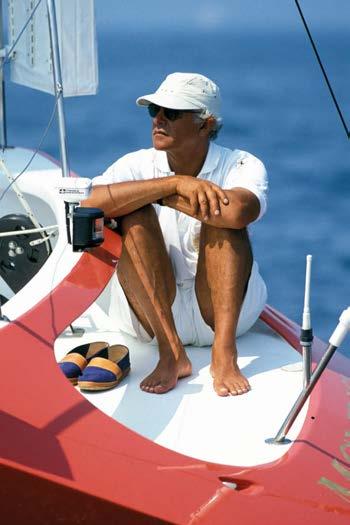
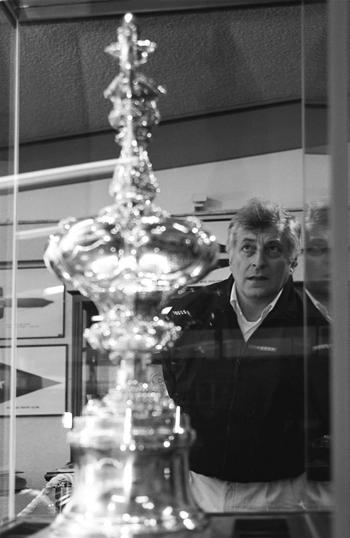
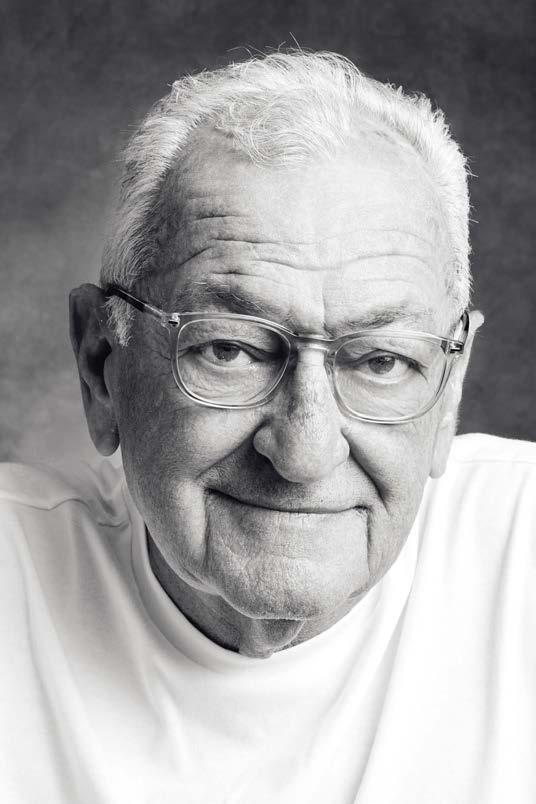
Comasco, nato a Bellano nel 1956, voce rauca e disarmante umiltà. Ha iniziato a fotografare regate locali quasi per gioco nel 1979. Galeotta fu la stretta collaborazione, durata ben 12 anni, con Uomo Mare Vogue, magazine che gli ha permesso di girare il mondo, conoscere giganti della nautica e immortalare competizioni veliche di respiro internazionale. A soli 27 anni, nel 1983, ha documentato le epiche imprese di Azzurra, la prima barca italiana presente all’America’s Cup di Newport, Rhode Island. Dal 1994 segue Giovanni Soldini in tutte le sue incredibili avventure, mentre dal 2000 è il fotografo uf ciale di Luna Rossa. Ogni anno edita libri, calendari e colleziona innumerevoli premi che attestano il suo encomiabile impegno di una vita spesa davvero in mezzo al mare (nonostante non sappia nuotare).
A native of Bellano in the Lake Como region, born in 1956, with a hoarse voice and disarming humility. He began photographing local regattas almost as a hobby in 1979. His breakthrough came through a close collaboration, lasting twelve years, with Mare Vogue*, a magazine that allowed him to travel the world, meet renowned gures in sailing, and capture international sailing competitions on lm. At just 27 years of age, in 1983, he documented the epic exploits of Azzurra, the rst Italian boat to compete in America’s Cup in Newport, Rhode Island. Since 1994, he has followed Giovanni Soldini on all his remarkable journeys, and since 2000, he has been the of cial photographer for Luna Rossa. Every year, he publishes books and calendars, and collects numerous awards attesting to his dedication to a life truly spent at sea (despite being unable to swim).
«Una volta i protagonisti in mare erano gli uomini. Mettevi a fuoco le facce arate dalla fatica e dal sudore, I MUSCOLI, il movimento dei corpi, la capacità sica e psichica di fronteggiare qualunque tipo di imprevisto. Oggi intravedi appena caschi di gente che pedala e pedala».
«Once, the protagonists at sea were men. You’d focus on faces marked by fatigue and sweat, THE MUSCLES, the movement of bodies, and the physical and mental resilience to handle any unexpected event. Today, you glimpse helmets on people pedalling repeatedly».
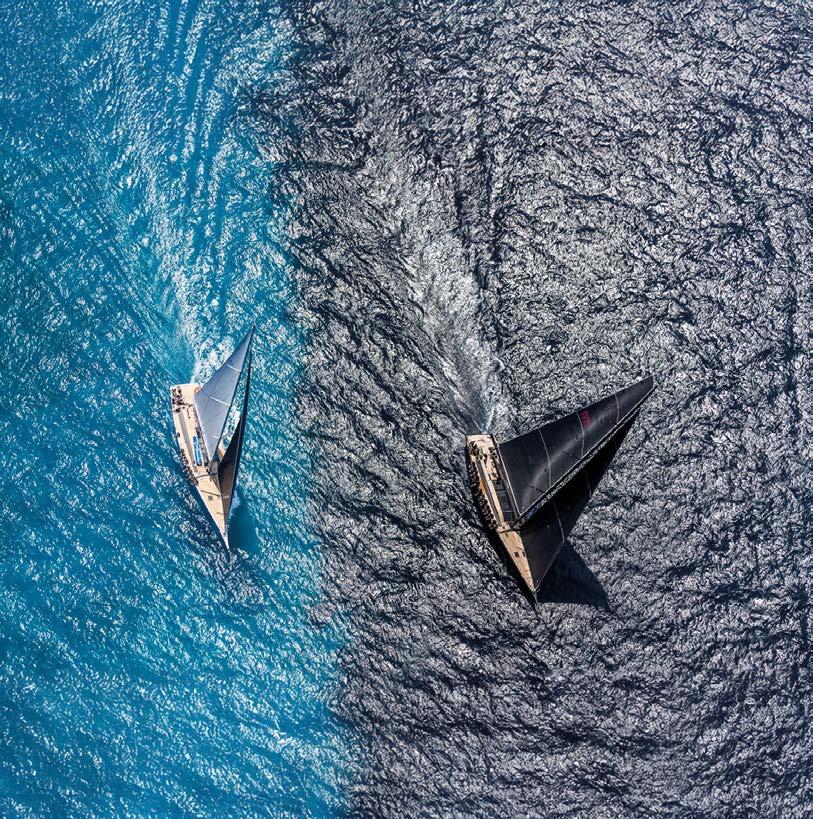
So, tell me: what was it like ‘being at the service’ of Raul Gardini? Mmm, Gardini... I’ve rarely met a man more determined and charismatic than him. I could recount a thousand shared anecdotes, but there’s one in particular that highlights his calibre. San Diego, America’s Cup 1992. One day, he called me and said, “Carlo, forget about the Moro, I’m no longer interested in photos of the boat. You must document the New Zealanders’ improper use of the bowsprit.” “Doctor, all right, but I don’t know anything about sailing.” “Don’t worry, I’ll put a sailor by your side; he’ll tell you when to take the shot. Then bring me the photos, and I’ll do what I have to do”.
What do you mean? The correct action is to submit evidence of the foul play to the International Jury. You’ll recall that the protest lodged by Gardini and Paul Cayard, skipper and helmsman of the Moro, was upheld.
Fierce sails, rather than unfurled. What if I mention Patrizio Bertelli instead? a perfectionist. A memory, let’s see… Yes, I’ve got it. During the customisation phase of the rst Luna Rossa – to be clear, the one with the grey hull, the red stripe, and the Prada logo – he asked me for a purely aesthetic opinion. At the time, the Italian ag was positioned at the stern. In the centre of the boat was the yellow and purple logo of a Yacht Club. “Carlo, what do you think? Do you like it?” “Doctor, the boat is beautiful, but the logo... we’re Italian, I’d put the ag in the centre.” He listened to me, and that’s how it was done. Obviously, everyone had told him the boat was perfect as it was, a chorus of ‘ahh, ohh, uhh!’;
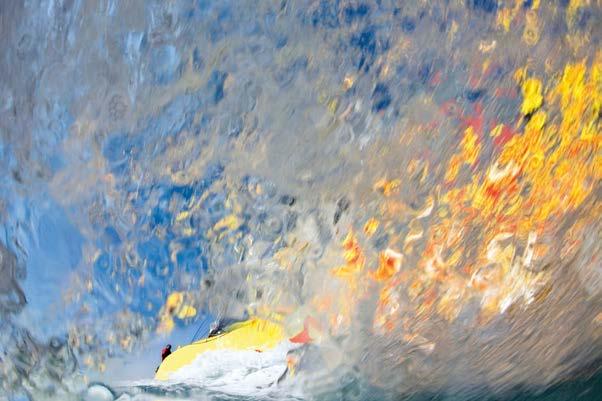
The famous deference to the ‘boss’ is a real classic. I dared to speak my mind, and he dared to change his mind. Well, neither of those things is a given. In any case, you’ve mentioned some rather outdated anecdotes. Nostalgia for sailing as it once was? I wouldn’t say so; in fact, I consider myself very lucky to have witnessed the evolution of this wonderful sport at rst hand.
Rather than evolution, perhaps we should speak of a revolution. In the 1980s, if anyone had even suggested the advent of so-called ‘cyclors’, many would have had a good laugh. Science ction. Everything has changed. Once, the protagonists at sea were men. You’d focus on faces marked by fatigue and sweat, the muscles, the movement of bodies, and the physical and mental resilience to deal with any unexpected event. Today, you glimpse helmets on people pedalling repeatedly. The focus has shifted to the boats: missiles racing across the water. To keep up with them, you need to use extremely fast vessels. There are no longer stops at the buoys. You take shots for 3 or 4 hours continuously. That said, it’s right to progress. I truly believe there’s little point in regretting the past. Every era, after all, has its own charm.
Speaking of photos, have you ever missed capturing a key moment? I de nitely have. There’s one in particular that really lingers with me... every time I think about it, my blood pressure rises. Which one? Auckland, January 2021, the Prada Cup. You’ll remember American Magic’s spectacular capsize. Well, actually, it was a disaster. I was on board a helicopter, but the pilot was on a different ight path; he didn’t turn, and I missed the shot. I didn’t capture the competition’s disaster, if you know what I mean... You certainly do. Did you give him a piece of your mind? The pilot, I mean. I swore at him in English and Italian. Swear words in our language are more effective. That’s right. Any other moments best forgotten? Rather than missed shots, sometimes the real challenge is in the boat you’re following. If you’ve got to do a photo shoot of a slow boat that never wins, lads, it’s a tough one. Still, even then, there’s always a way to get the job done.
For example? You send the wife of the losing boat’s owner, all dressed up in branded gear, to congratulate the winners and snap away. Or you send the whole team to applaud. Newspapers always publish the photo of the prize-giving ceremony. So, it’s practically done: you’re on the newsstands.
Oh, really! Make the best of a bad situation. Carlo, it’s almost time to say goodbye. I’d like to nish with a question that my colleague Francesca Fagnani always asks her guests on the Belve programme. Here it is: “If you had the chance to bring someone back to life for two minutes, who would it be and what would you say to him/her? My father. I was very young when he died. Instead of saying anything to him, I’d show him my photos. I’d tell him, “Look, I’ve done all this.” And if I had more than two minutes, I’d take him to watch a regatta.
Hit and sunk. In the end, neither of us smoked. That’s for the best.

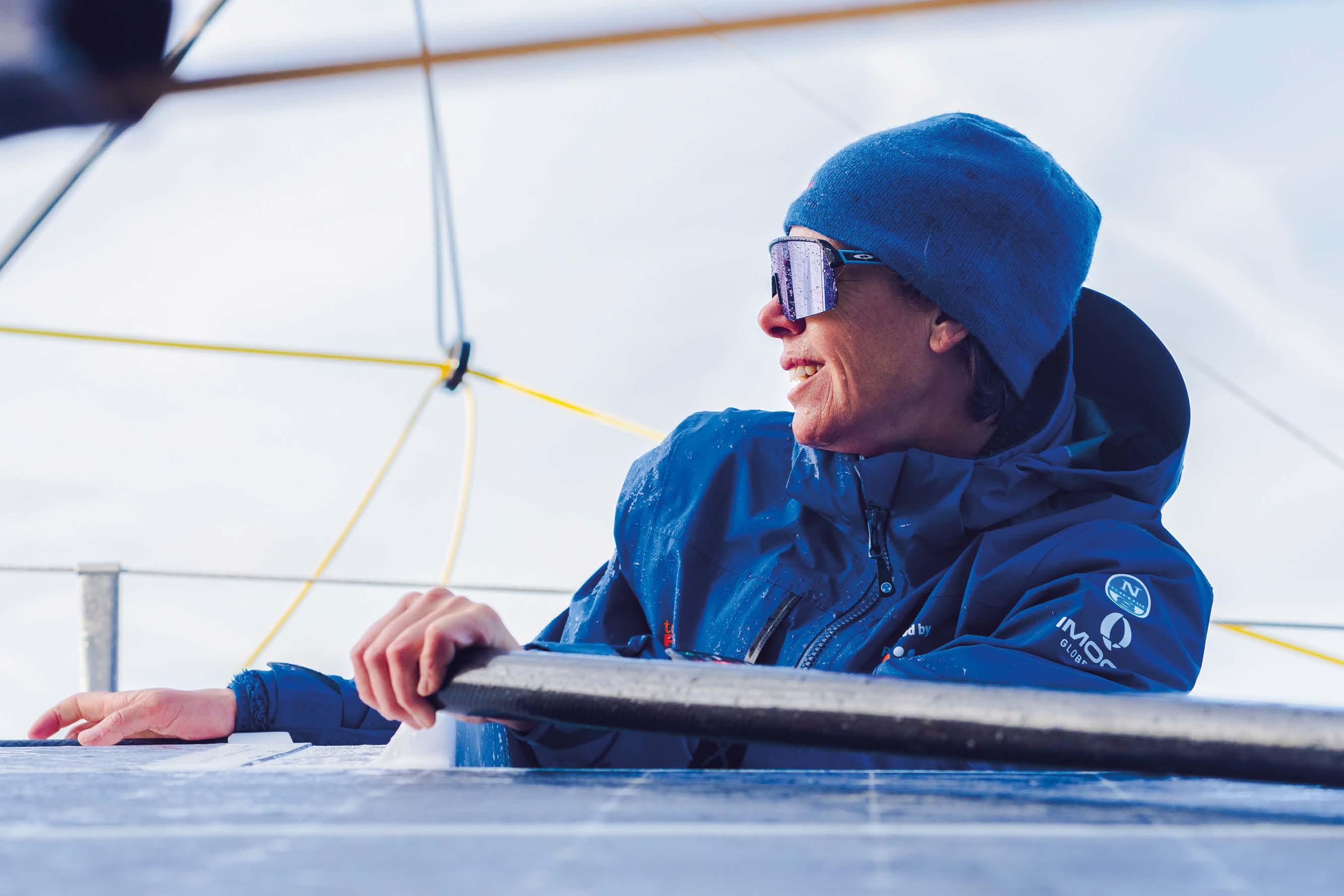
A tu per tu con l’atleta italo americana da record nella vela oceanica, per conoscere progetti, s de e sogni di una skipper impegnata su più fronti
Face to face with the recordbreaking Italian-American ocean sailor to learn about the projects, challenges and dreams of a skipper active on several fronts
by
Olimpia De Casa photo by Marin Le RouxpolaRYSE / 11th Hour Racing
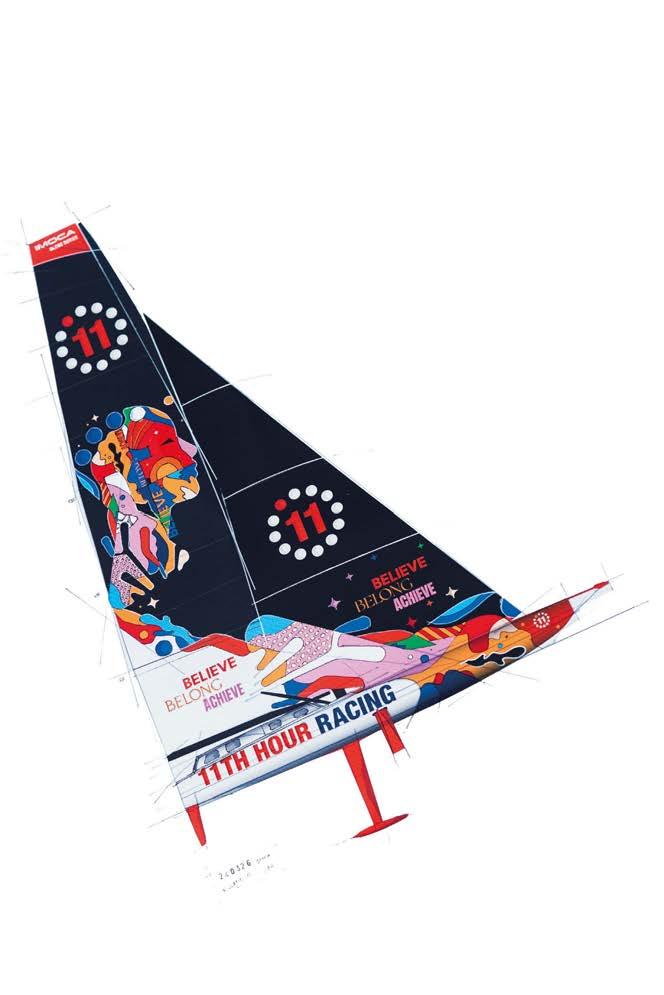
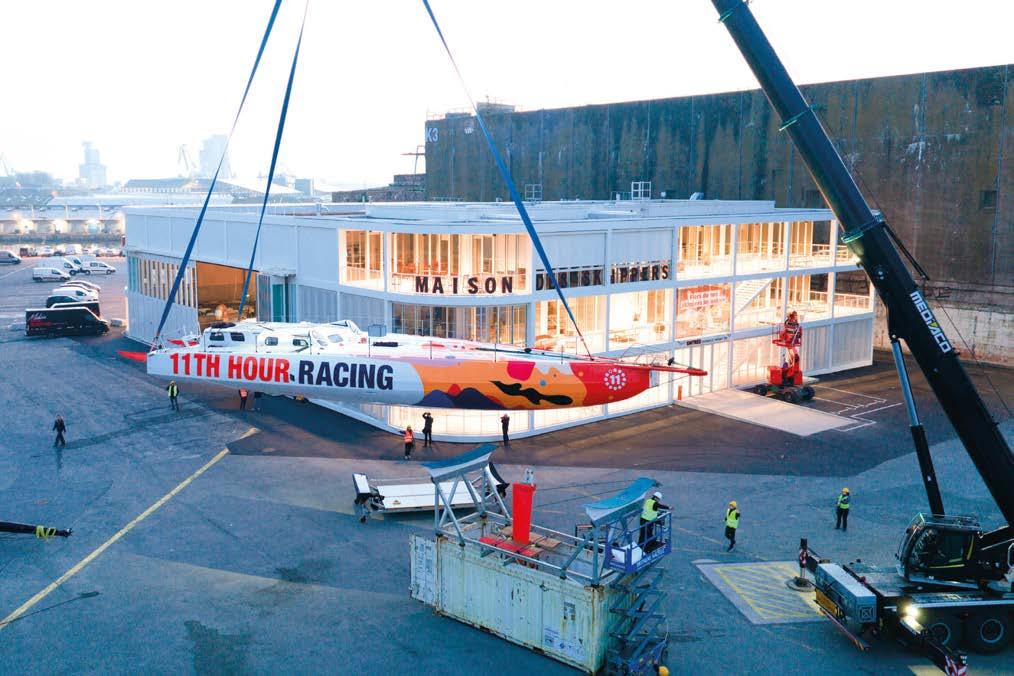
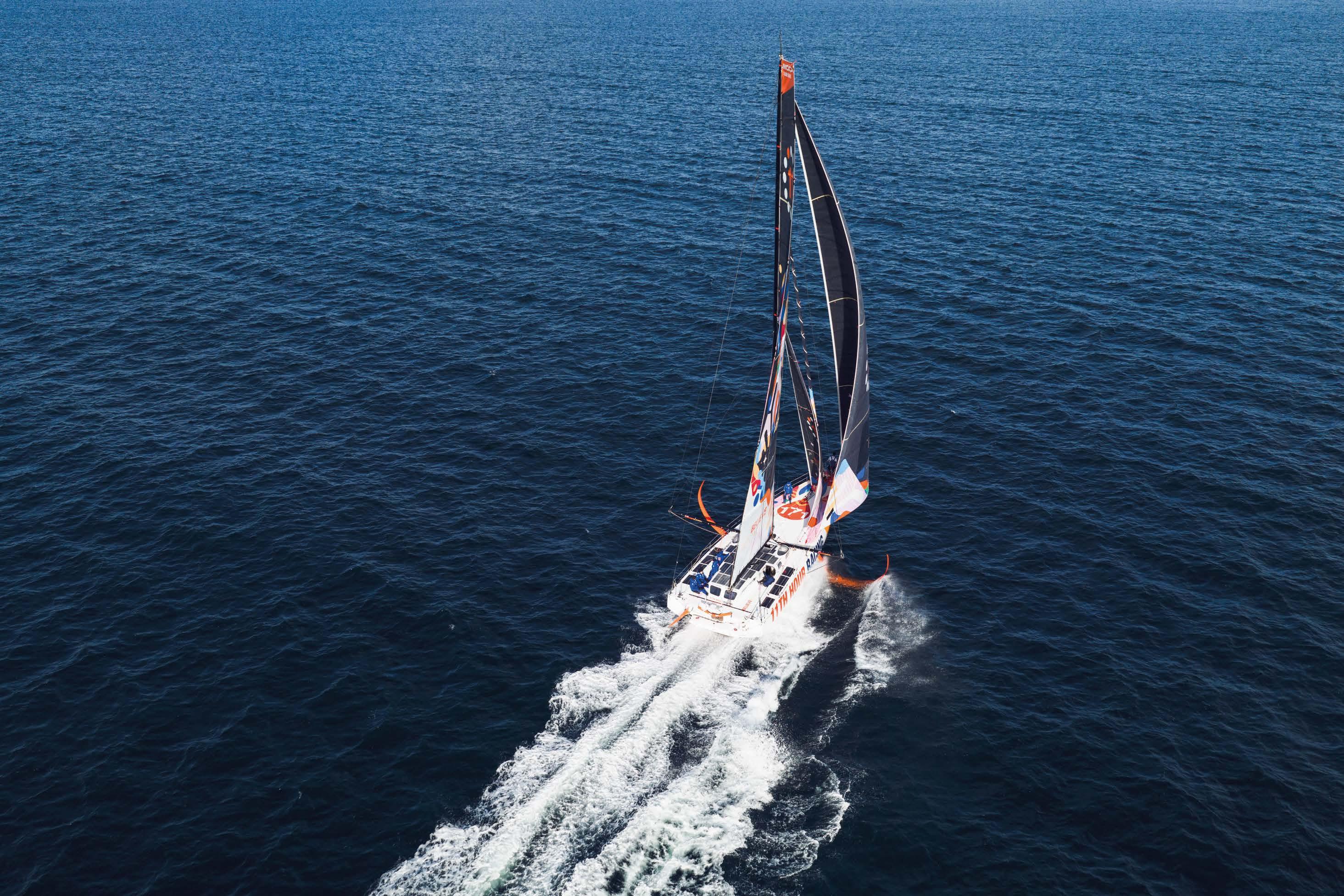
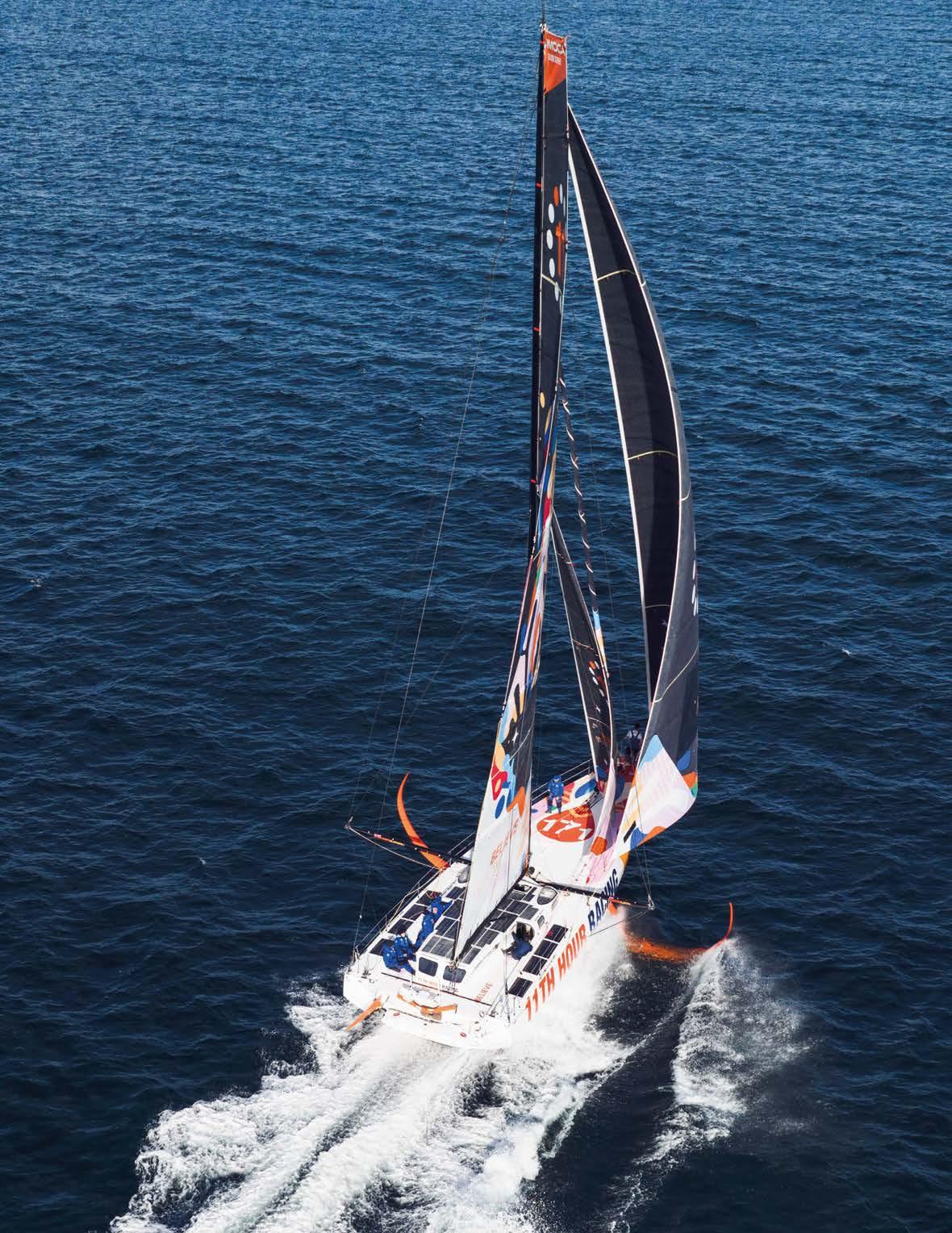
«I commenti ricevuti su IMOCA sono stati molto lusinghieri, ci è stato più volte detto che la nostra è una delle barche più belle della otta».
«The feedback we’ve received about IMOCA has been very attering; we’ve been told on several occasions that ours is among the most beautiful boats in the eet».
«Non è così scontato, per un PROGETTO NUOVO e una squadra composta in larga parte da giovani, arrivare alla vigilia delle grandi regate oceaniche con una barca così OTTIMAMENTE PREPARATA».
«It is by no means a foregone conclusion that a NEW PROJECT and a crew largely composed of young sailors will arrive on the eve of the major ocean races with a boat so WELL PREPARED».
Questa nuova identità visiva rispecchia anche la sua? Assolutamente. È stata pensata in totale coesione con i valori del nostro team. Si doveva offrire un’immagine conseguente. Quel volto raf gurato sulla randa vuole veramente rappresentare le nostre idee e i nostri sogni. Ci sono poi tanti altri elementi che, in modo più o meno esplicito, concorrono a trovare, in chi osserva, il suo signi cato. L’obiettivo non era semplicemente arrivare a un’estetica accattivante e ricca di bei colori, ma lanciare un messaggio che lasciasse anche la libertà di leggere e rintracciare quello più af ne a sé. Sarà che, esattamente come avviene quando si legge un libro o si visita una mostra, ciò che condiziona e indirizza in qualche modo il vissuto è proprio il rapporto unico e intimo che si instaura con l’opera e i suoi protagonisti, è bello sapere che il design elaborato per 11th Hour Racing farà letteralmente il giro del pianeta, sostenuto dal vento che spingerà un progetto intriso di senso di appartenenza, connessione e sostegno reciproco. La barca, l’ex Malizia-
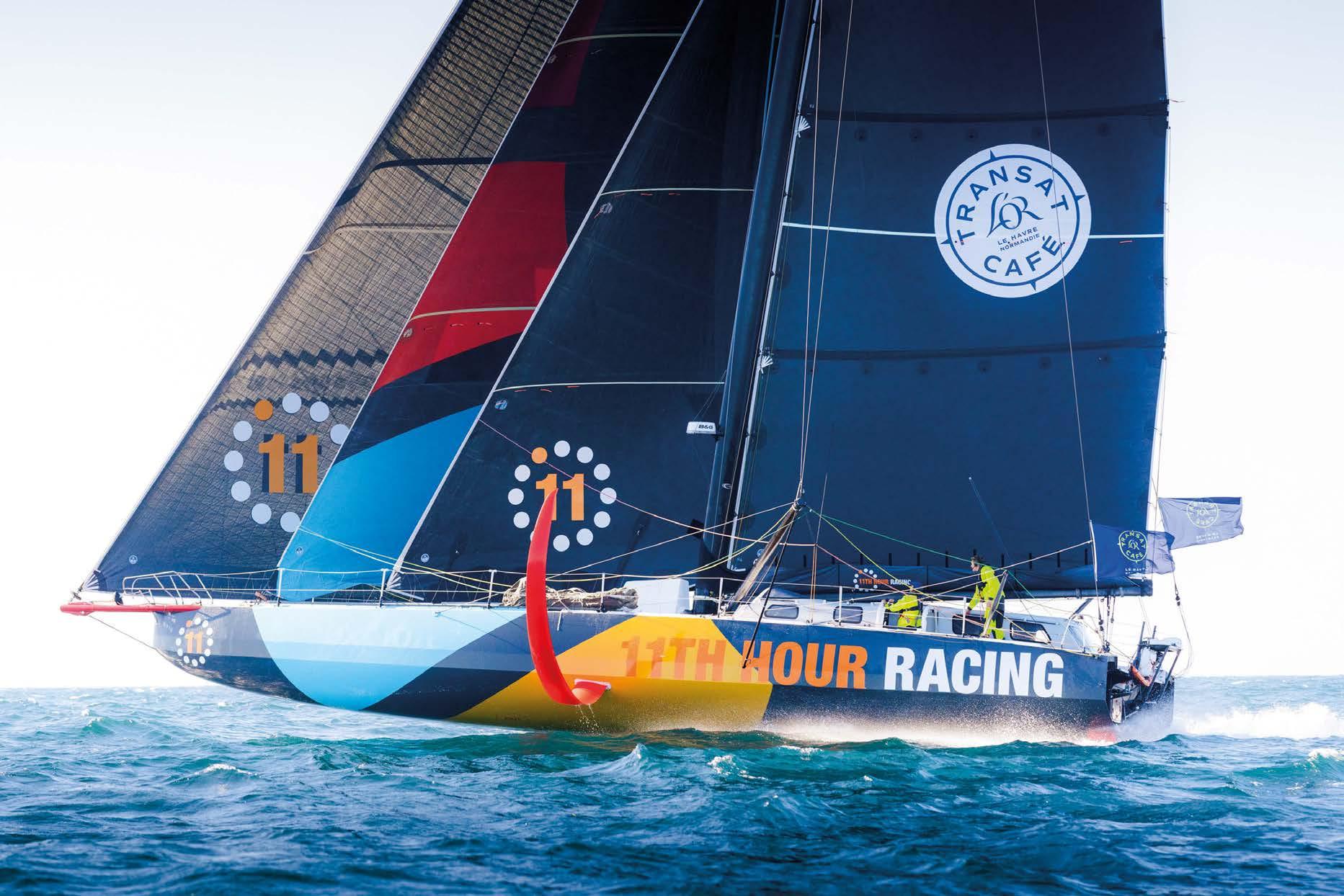
hanno le stesse necessità e caratteristiche. Vista inoltre la mole di miglia affrontata nelle due traversate transatlantiche autunnali, c’era poi da abbassare un po’ del peso che inevitabilmente una barca usata guadagna in tratte così lunghe. Oltre a eliminare tutto il super uo, siamo riusciti a spostare il baricentro in avanti per ridurre l’angolo di incidenza dei foil e riuscire quindi a navigare un po’ meno sulla poppa. In che modo? Modi cando, ad esempio, la disposizione del generatore e delle batterie. Un’operazione non propriamente semplice, se si considera che ogni nuova collocazione ha comportato un ripensamento, anche in relazione ai supporti e agli adeguamenti strutturali. L’obiettivo è sempre quello di ottenere il miglior compromesso tra af dabilità e leggerezza per andare il più veloce possibile in ogni condizione.
È stata dunque nalizzata alla ricerca dell’equilibrio massimo la rimozione della scatola (il cosiddetto “optimist capovolto”, ndr) posizionata a prua dell’albero? Esatto, quella struttura contenente schiuma, tra l’altro non esattamente bella e responsabile di una visibilità non ottimale, era stata aggiunta per aiutare a raddrizzarsi durante il test di stabilità a 90° che l’imbarcazione deve superare. La sua eliminazione è stata tutt’altro che facile: ha richiesto alla nostra ingegnere di progetto, Noémie Provost, studi molto precisi e approfonditi per essere sicuri di riuscire ad avere la meglio su quel test.
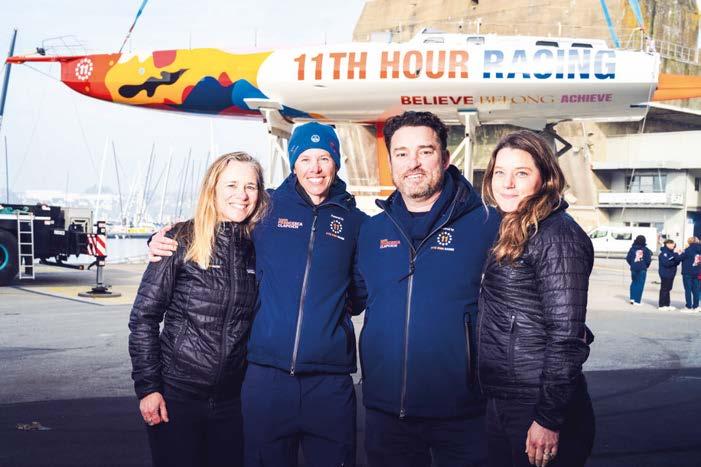
Il programma 2026 del Team Francesca Clapcich Powered by 11th Hour Racing prevede quattro regate oceaniche: la 1000 Race (precedentemente nota come Bermudes 1000 Race), la Vendée Arctique-Les Sables d’Olonne, The Ocean Race Atlantic a ne estate e la leggendaria Route du RhumDestination Guadeloupe, a novembre. Insieme, rappresentano un impegnativo mix di regate in equipaggio completo e in solitario con focus sull’Oceano Atlantico. Tutte e quattro le competizioni assegnano punti per la classi ca IMOCA Globe Series, il campionato mondiale annuale di vela oceanica in cui Clapcich si è classi cata al quinto posto nel 2025. Due delle prove in solitario (Vendée Arctique-Les Sables d’Olonne e Route du Rhum-Destination Guadeloupe) valgono anche ai ni della selezione e della quali cazione per il Vendée Globe.
The 2026 programme for Team Francesca Clapcich Powered by 11th Hour Racing features four ocean races: the 1000 Race (formerly the Bermudes 1000 Race), the Vendée ArctiqueLes Sables d’Olonne, The Ocean Race Atlantic in late summer, and the legendary Route du Rhum-Destination Guadeloupe in November. Together, they form a challenging mix of crewed and solo races, with a focus on the Atlantic Ocean. All four races award points towards the IMOCA Globe Series standings, the annual world championship of ocean sailing, in which Clapcich nished fth in 2025. Two of the solo races (Vendée Arctique-Les Sables d’Olonne and Route du Rhum-Destination Guadeloupe) also count towards selection and quali cation for the Vendée Globe.
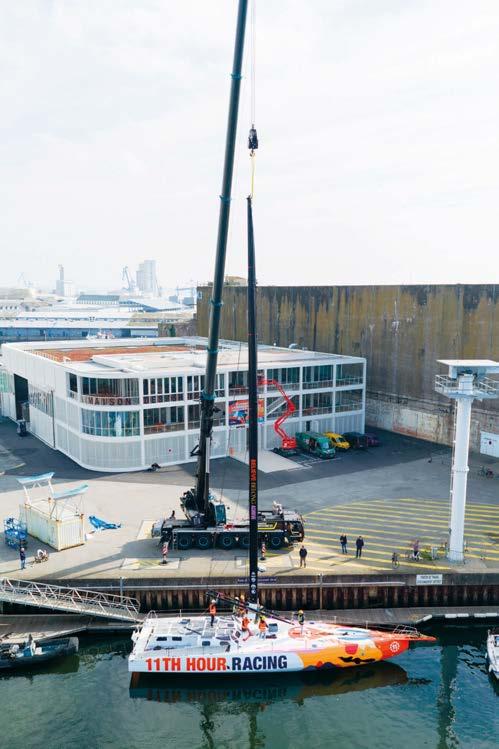
PARTICIPATE
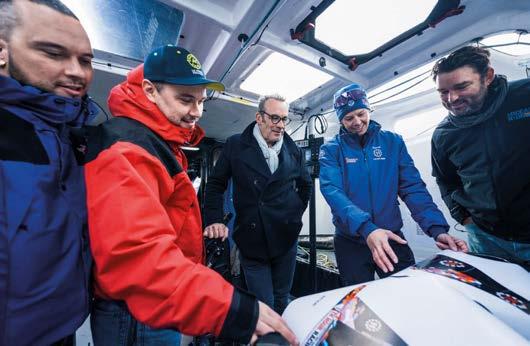
Più in generale, come stanno andando i test delle prime prove in mare? Sono molto soddisfatta. Siamo stati tra i primi a mettere la barca in acqua dopo l’inverno e quindi in tempi piuttosto stretti, considerati tutti i lavori realizzati, la verniciatura e le nuove vele comprese. Durante le navigazioni effettuate in questo nuovo scorcio di stagione non abbiamo registrato alcun problema tecnico particolarmente importante. È un motivo di orgoglio, ma anche la testimonianza di un lavoro invernale svolto molto bene e di una conoscenza già molto approfondita della barca da parte del team tecnico. Non è così scontato, per un progetto nuovo e una squadra composta in larga parte da giovani, arrivare alla vigilia delle grandi regate oceaniche in programma nel 2026 con una barca così ottimamente preparata.
A proposito di training, su quali aspetti si sta focalizzando? Al momento sto lavorando sulle manovre. È un aspetto che richiede concentrazione massima per arrivare ad affrontarle nel modo e nei tempi migliori, specie quando si regata in solitario e si devono fare i conti con priorità, strategie, tattiche e fatiche diverse. Mi dedico poi costantemente alla preparazione sica e mentale, entrambe fondamentali per superare con tempestività i momenti più duri sia durante gli allenamenti sia nelle lunghe regate propedeutiche al Vendée Globe.
A quali dettagli è necessario prestare attenzione su un IMOCA 60 che dovrà volare sull’oceano? Per vincere le regate devi prima di tutto nirle. Serve quindi avere piena ducia nel mezzo e nei materiali impiegati a bordo. La barca deve essere preparata molto bene per evitare rotture una volta in mare. Come sempre, la parte più dif cile è la gestione del tempo, che rincorriamo perennemente. Per questo è necessario lavorare con scrupolo anche a livello di priorità, sapendo esattamente cosa va fatto prima e cosa dopo.
Massima concentrazione a parte, come affronta la vigilia di una grande competizione? Ricorre a “riti” o segreti per trovare un suo equilibrio interiore? Non sono scaramantica, non credo troppo nella fortuna calata dall’alto, penso piuttosto che vada in qualche modo creata. L’unica cosa che faccio è chiedere a mia glia Harriet, di quattro anni, quale dei suoi pupazzetti di peluche voglia farsi un’avventura in barca. Lei me ne af da ogni volta uno diverso e aspetta il mio rientro per sapere quali imprese abbia vissuto con me in mezzo al mare.
La curiosità, che solitamente è femmina, riguarda anche Vela e Motore, che continuerà a seguire Francesca Clapcich verso la s da più ambiziosa di sempre: tagliare il traguardo del Vendée Globe 2028.
Born in 1988, a native of Trieste but a citizen of the world, with the spirit of a ghter and eyes and a heart always ready to take in and embrace the world, Francesca Clapcich – “Frankie” to her friends and the sailing community – is in top form as ever.
Renowned for her determination and meticulous planning, leaving nothing to chance, she is currently tackling the IMOCA campaign alongside her main sponsor, 11th Hour Racing, to compete in the 2028 Vendée Globe – a solo, non-stop, unassisted round-the-world race –in a 60-foot IMOCA. If she were to complete the race – widely regarded as the toughest of them all – she would become the rst woman in the world to have competed in the ‘Big Four’ of sailing: the Olympics, the America’s Cup, The Ocean Race and the Vendée Globe. She will tackle the race aboard the boat purchased in October 2025 from Boris Herrmann (on the eve of the Transat Café L’OR, which she nished in second place alongside co-skipper Will Harris) and which has spent the winter in the shipyard in Lorient, the home of offshore racing, where the
team is based and where we spoke to Francesca remotely. The meeting with Vela e Motore took place around ten days after the launch of his newly restyled IMOCA.
This ‘makeover’ involved not only the hull and sail livery but also technical modi cations to improve performance at sea. Regarding the former, of cially unveiled on 24 March after four months of intense work to modify and re ne every aspect with a view to greater competitiveness, Clapcich has no doubts: “Stefano and Marco Schiavon (the twin brothers behind the award-winning Italian studio Van Orton Design, ed.) have been outstanding. Together with naval graphic designer JeanBaptiste Epron, they have succeeded in giving creative form to the three pillars of the ‘Believe, Belong, Achieve’ campaign for a fair and sustainable world. They did so by developing a design featuring a face as its central motif, incorporating graphic elements from the natural world to highlight the intertwining of humanity and nature. The feedback received has been very attering; we have been told on several occasions that ours is one of the most beautiful boats in the eet”.
Does this new visual identity also represent yours?
It was designed to be fully in line with our team’s values. We needed to present a consistent image. The face depicted on the mainsail is meant to represent our ideas and dreams. There are also many other elements, more or less explicit, that help the observer discover its meaning.
The aim was not simply to achieve an eye-catching aesthetic rich in beautiful colours, but to send a message that also allowed people the freedom to interpret and nd the meaning that resonated most with them.
Perhaps it is because, just as when reading a book or visiting an exhibition, what shapes and guides the experience is the unique, intimate relationship forged with the work and its protagonists. It is wonderful to know that the design created for 11th Hour Racing circumnavigate the globe, propelled by the wind that will drive a project steeped in a sense of belonging, connection and mutual support.
The boat, the former Malizia-Seaexplorer, with which Herrmann completed his round-the-world voyage in the 2024 Vendée Globe, has undergone modi cations to improve its reliability and ef ciency.
What speci c aspects did the technical team focus on?
In the initial phase of the work, the focus was on adapting the IMOCA to my speci c requirements, as not all skippers have the same needs or characteristics. Furthermore, given the sheer number of miles covered during the two autumn transatlantic crossings, we also needed to reduce some of the weight that a used boat inevitably gains over such long distances. As well as removing everything super uous, we managed to shift the centre of gravity forward to reduce the angle of incidence of the foils and thus sail a little less on the stern.
How? By altering, for example, the layout of the generator and the batteries. This is no simple task, as each new con guration requires a rethink, including changes to mounting brackets and structural modi cations. The aim is always to strike the best balance between reliability and lightness to go as fast as possible in all conditions.
Was the removal of the box (the so-called “upside-down Optimist”, ed.) positioned at the bow of the mast, therefore aimed at achieving maximum stability? Exactly. That foam- lled structure – which, incidentally, wasn’t exactly attractive and was responsible for sub-optimal visibility – had been added to help the boat right itself during the 90° stability test that it must pass. Removing it was far from easy: it required our project engineer, Noémie Provost, to conduct highly precise, in-depth studies to ensure we could pass that test.
More generally, how are the initial sea trials progressing?
I’m very pleased. We were among the rst to launch the boat after the winter, so we were working to a fairly tight schedule, given all the work that had been carried out, including the paintwork and the new sails.
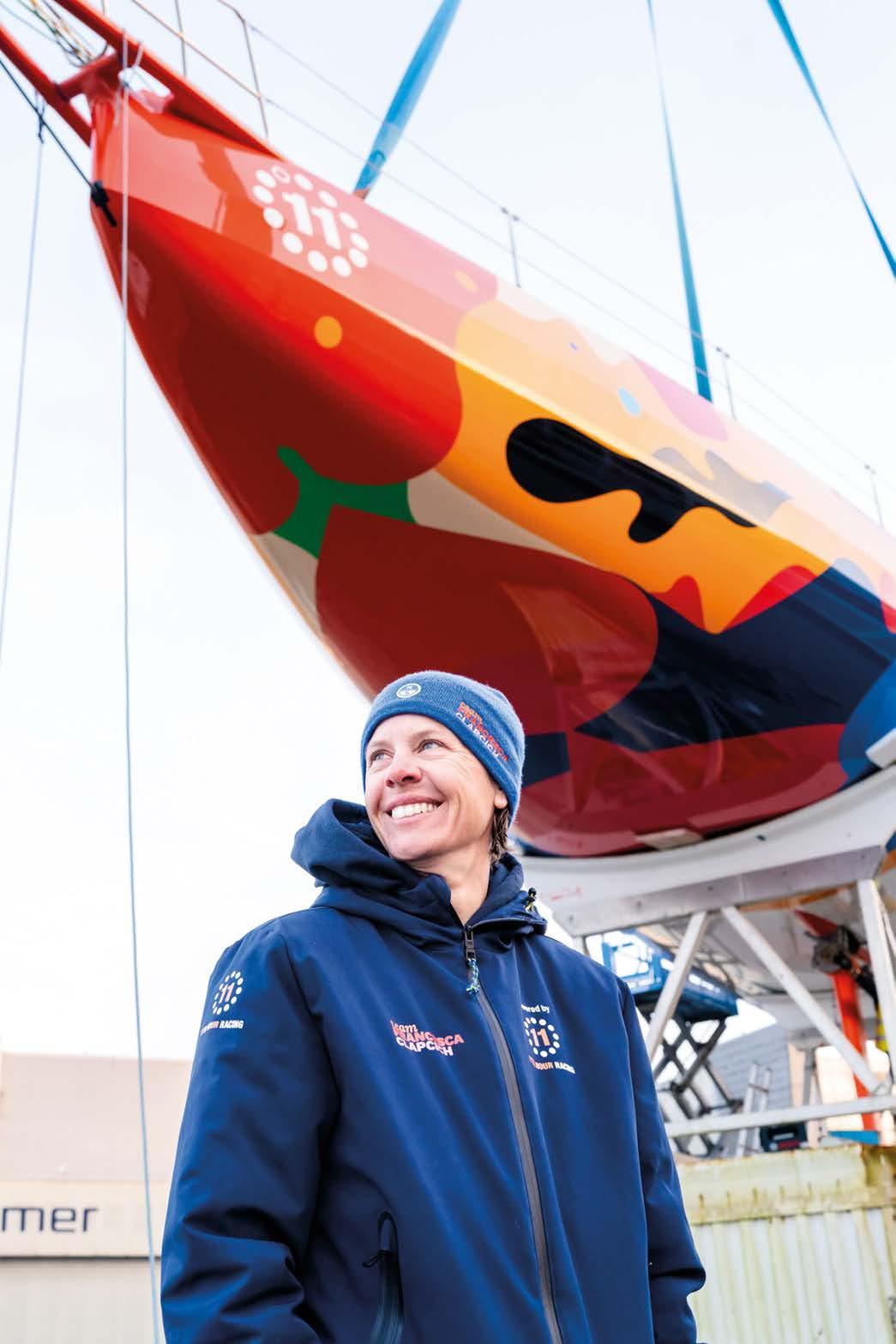
«Non sono scaramantica
troppo nella fortuna calata dall’alto, penso piuttosto che vada in qualche modo creata. L’unica cosa che faccio
è chiedere a mia glia Harriet anni, quale dei suoi PUPAZZETTI
di peluche voglia farsi un’avventura in barca».
«I’m not superstitious
I don’t really believe luck falls from the sky – I think it needs to be created. The only thing I do is ask my fouryear-old daughter, which of her to go on a boat adventure. She gives me a different one each time and waits for my return to hear about the adventures it has had with me at sea».

During the sailings we’ve undertaken so far this season, we haven’t encountered any particularly signi cant technical issues. It is a source of pride and a testament to a job well done over the winter and to the technical team’s already in-depth knowledge of the boat. It is not to be taken for granted that, for a new project and a team largely made up of young people, we arrive on the eve of the major ocean races scheduled
Speaking of training, what aspects are you focusing on? t the moment, I’m working on manoeuvres. It’s an area that requires total concentration to ensure I execute them as effectively as possible and at the right time, especially when racing solo and juggling different priorities, strategies, tactics and physical demands. I also devote myself constantly to physical and mental preparation, both of which are essential for overcoming the toughest moments promptly, both during training and in the long races leading up to the Vendée Globe.
What details do you need to pay attention to on an IMOCA 60 that’s set to sail across the To win races, you rst have to nish them. You therefore need complete con dence in the boat and the materials used on board. The boat must be thoroughly prepared to avoid breakdowns once at sea. As always, the hardest part is managing time, which we are constantly chasing. That’s why it’s essential to work meticulously when prioritising, knowing exactly what needs to be
Apart from staying fully focused, how do you cope on the eve of a major competition? Do you have any ‘rituals’ or secrets for I’m not superstitious; I don’t really believe luck falls from the sky – I think it needs to be created. The only thing I do is ask my four-year-old daughter, Harriet, which of her soft toys wants to go on a boat adventure. She gives me a different one each time and waits for my return to hear about the adventures it has had with me at sea.
Curiosity, usually considered a female trait, also extends to Vela e Motore, which will continue to follow Francesca Clapcich as she takes on her most ambitious challenge yet: crossing the nish line of the 2028
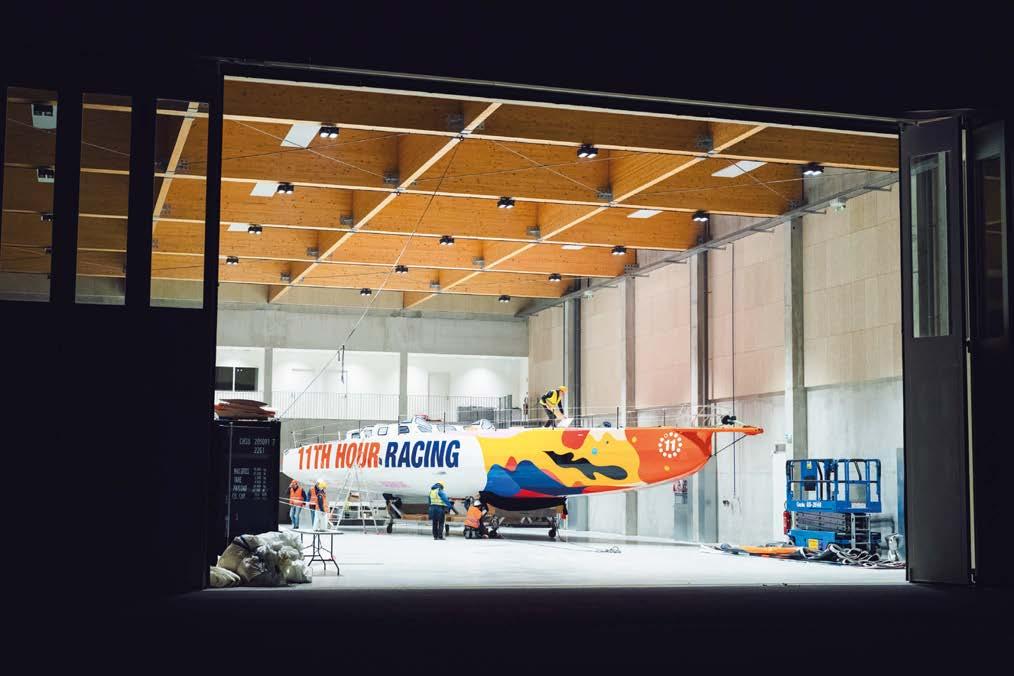
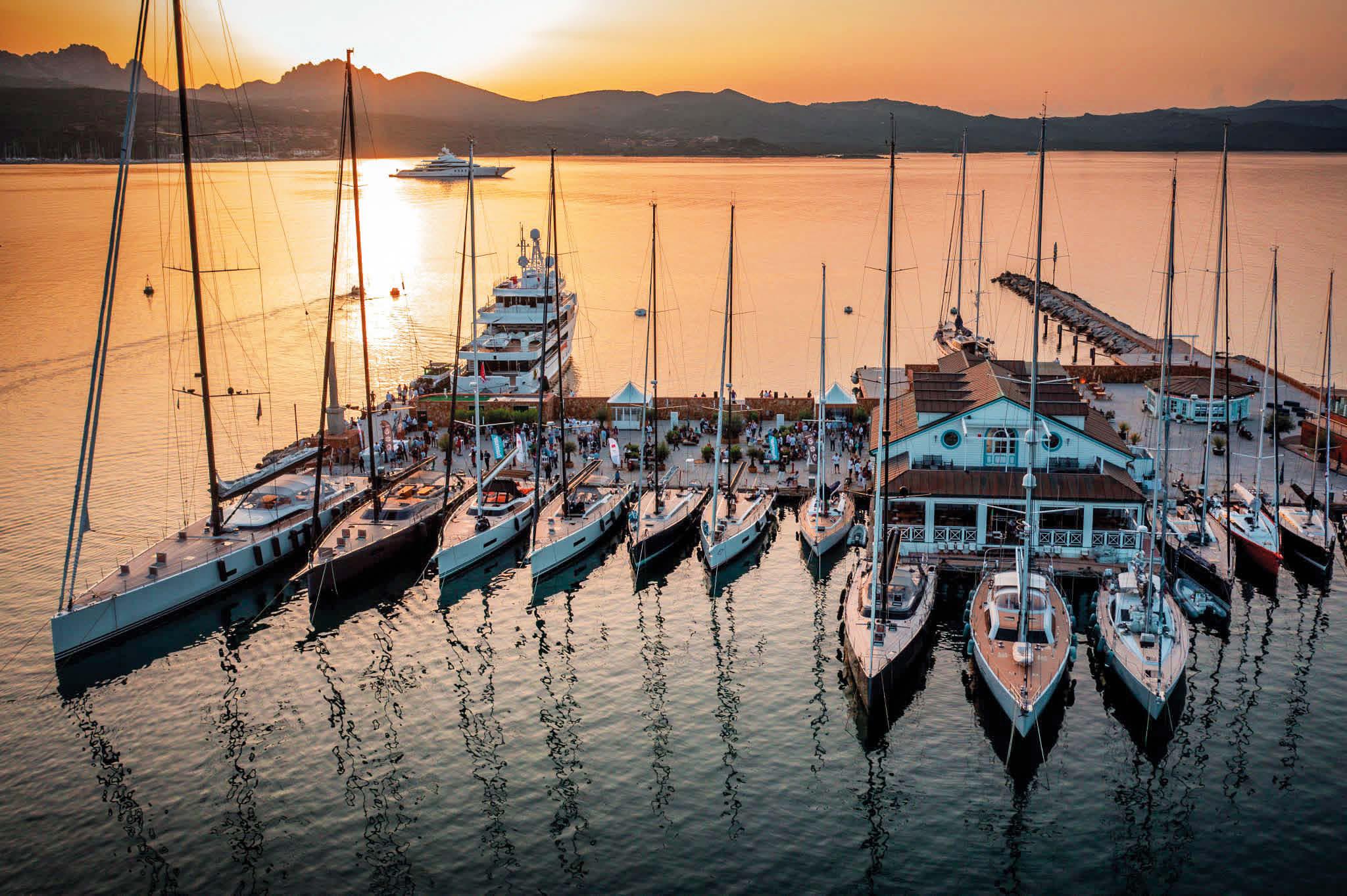
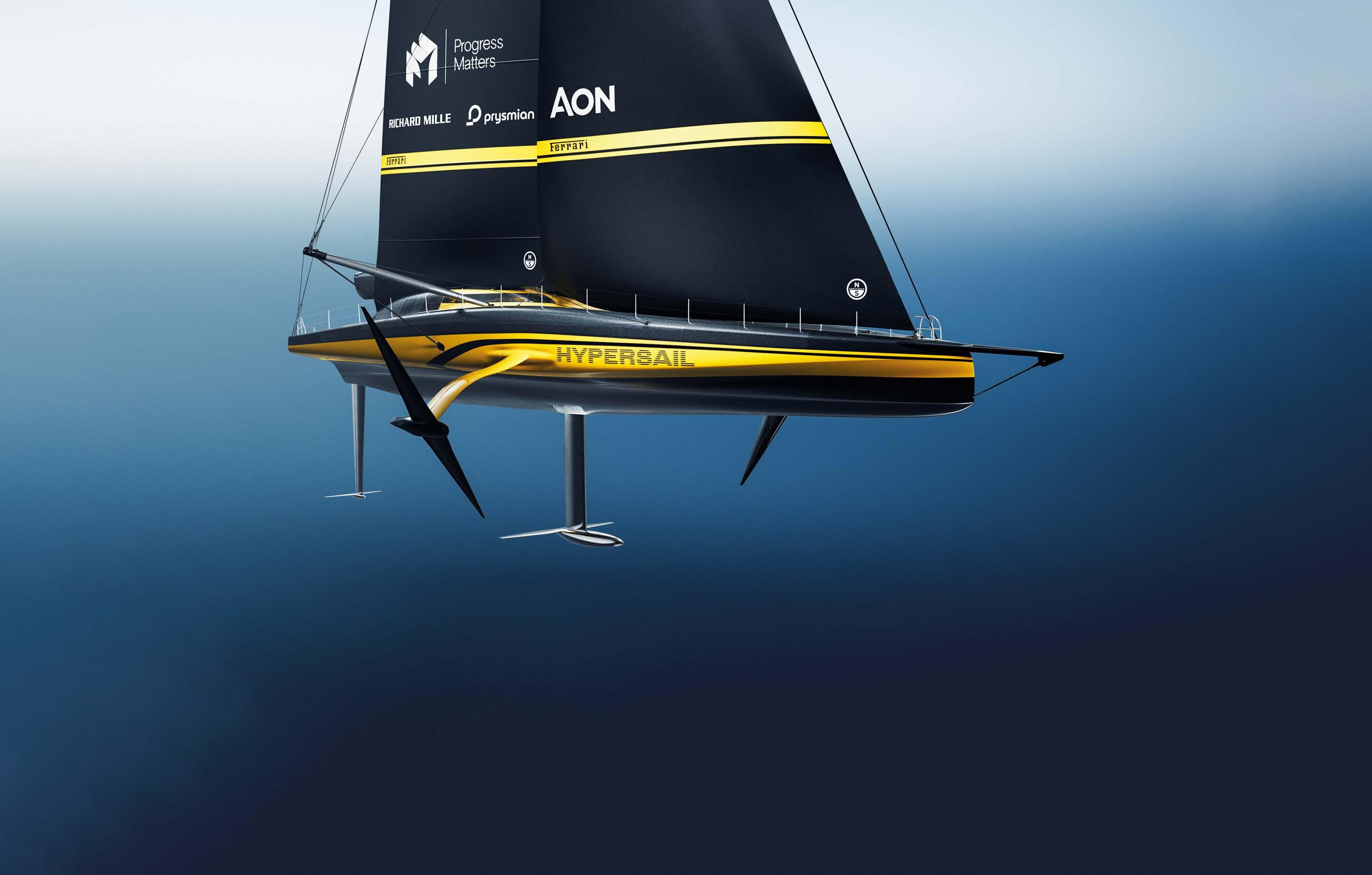
Nel agship store di Milano è stata svelata la livrea di Hypersail, il monoscafo da 100 piedi con i foil di Ferrari che si pre gge l’obiettivo di stracciare tutti i record oceanici
The Hypersail, the 100-foot monohull tted with Ferrari foils and aiming to break all ocean records, had its livery unveiled at the Milan agship store by Niccolò Volpati
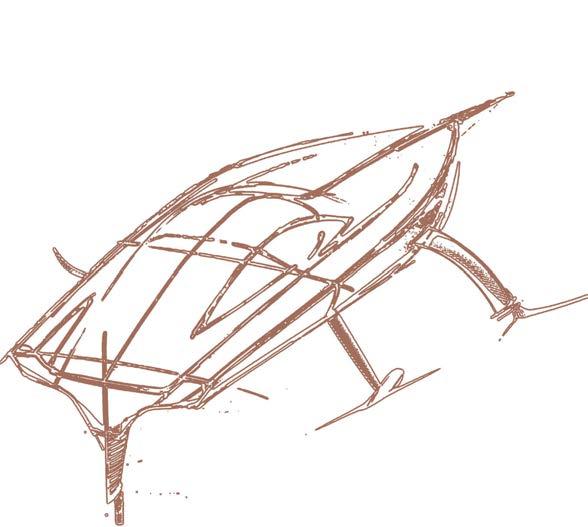
La vera s da è orchestrare i numerosi sistemi di controllo a bordo e assicurarne l’ef cienza costante.
The real challenge is to coordinate the numerous on-board control systems and ensure they remain consistently ef cient.
“Gli unici limiti sono la natura e la tecnologia oggi disponibile”, afferma Enrico Voltolini, project leader di Ferrari Hypersail.
Le dimensioni di questo progetto sono: 20 metri di baglio, 40 di altezza e 30 di lunghezza. Inizierà a navigare nel 2027 e l’obiettivo è battere tutti i record oceanici esistenti. Per farlo serviranno performance e resistenza. Hypersail è progettata per raggiungere 50 nodi, ma soprattutto per navigare a 40 nodi per lunghi periodi. Lo sviluppo del progetto, curato dal Tech Team Ferrari, dal Ferrari Design Studio e dall’architetto navale Guillaume Verdier, si è concentrato sull’idrodinamica e sull’aerodinamica. Senza limiti, se non la ricerca della performance maggiore sin dall’inizio. “Abbiamo scartato l’idea di un trimarano – spiega Flavio Manzoni, Chief Design Of cer – perché il monomarano offre una resistenza idrodinamica inferiore. Ovviamente ci saranno i foil, ispirati alle più recenti barche di Coppa America, di enormi dimensioni, e lo scafo avrà una chiglia basculante tra le due ali”.
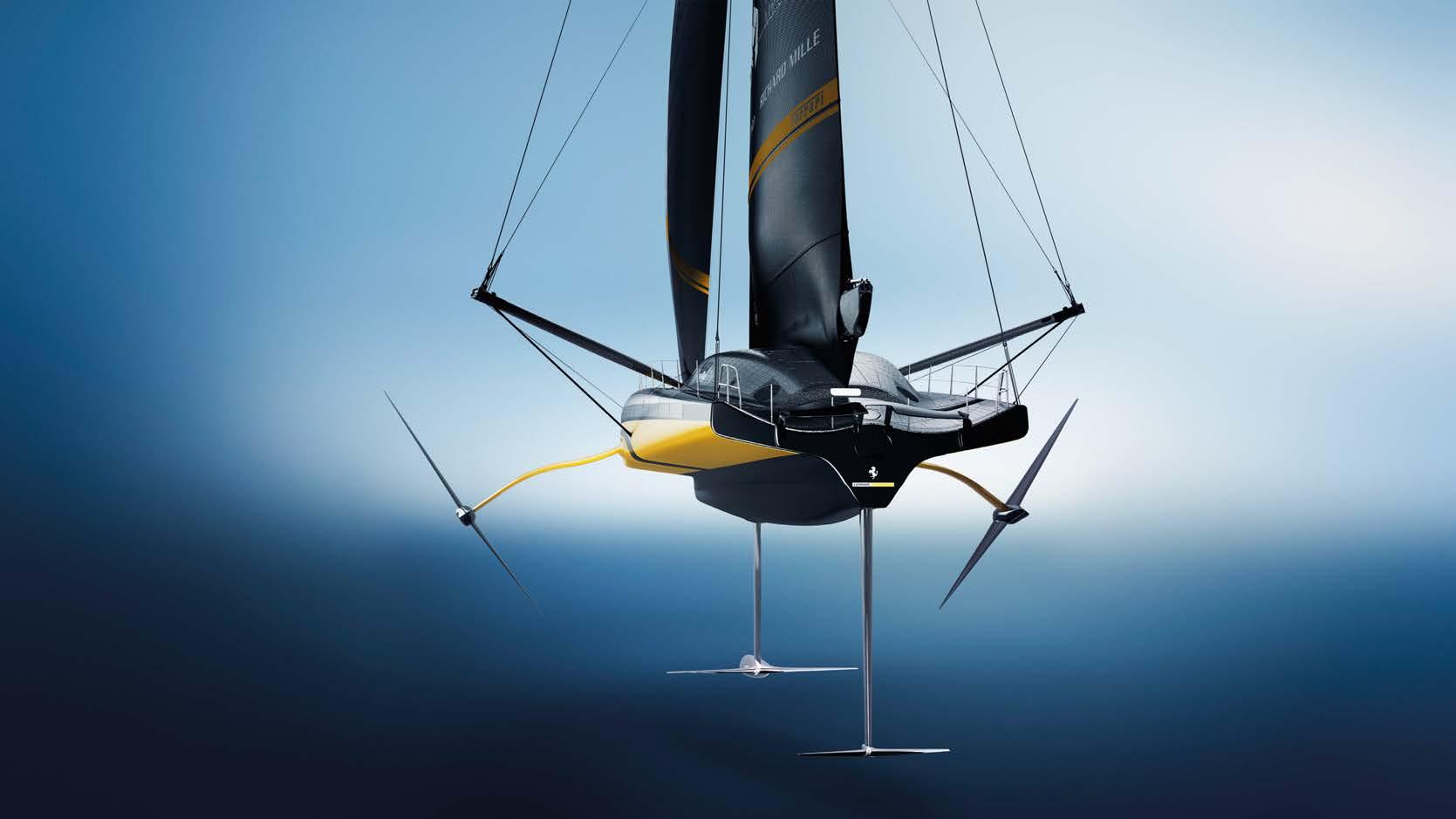
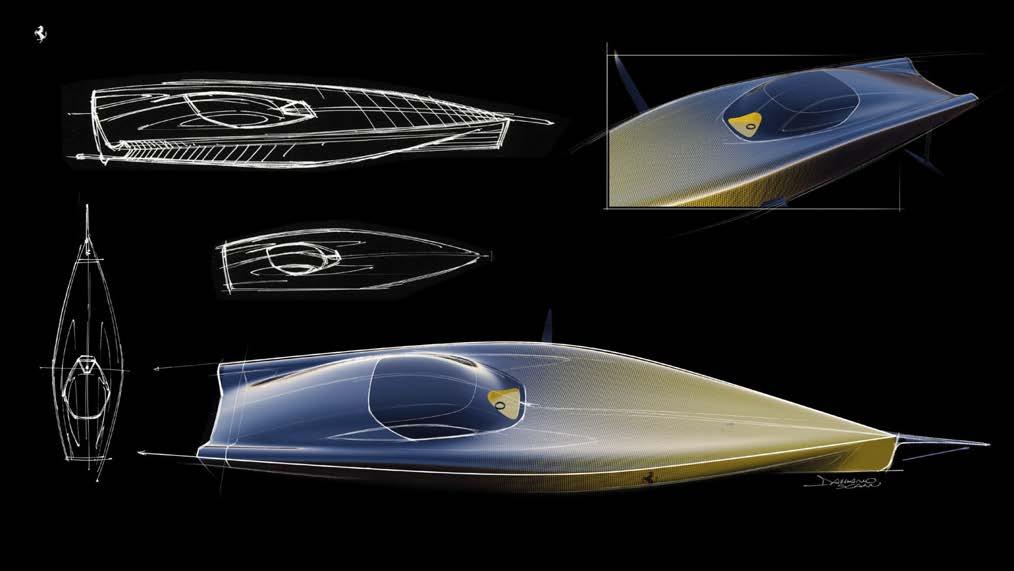
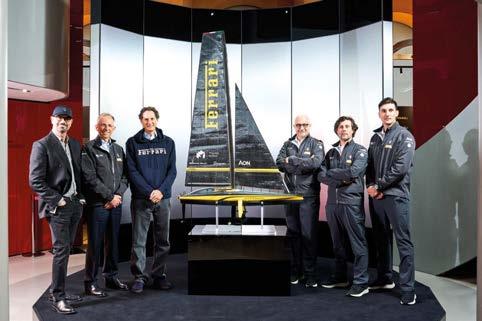
“The only limits are nature and the technology available today”, says Enrico Voltolini, project leader of Ferrari Hypersail.
The dimensions of this futuristic project are: 20 metres in beam, 40 metres in height, and 30 metres in length. It will set sail in 2027 to break all existing ocean records. To do so, it will require both performance and endurance. Hypersail is designed to reach 50 knots, but above all to sail at 40 knots over long distances.
The development of the project, led by the Ferrari Tech Team, the Ferrari Design Studio and naval architect Guillaume Verdier, focused on hydrodynamics and aerodynamics. There are no limits, other than the pursuit of maximum performance from the very outset.
“We ruled out the idea of a trimaran”, explains Flavio Manzoni, Chief Design Of cer, “because a monohull offers lower hydrodynamic drag. There will obviously be foils – inspired by the latest America’s Cup boats – of enormous dimensions, and the hull will have a pivoting keel between the two wings”.
Both the on-board and shore-based teams will be made up of experienced sailors from the America’s Cup, the SailGP circuit and ocean races.
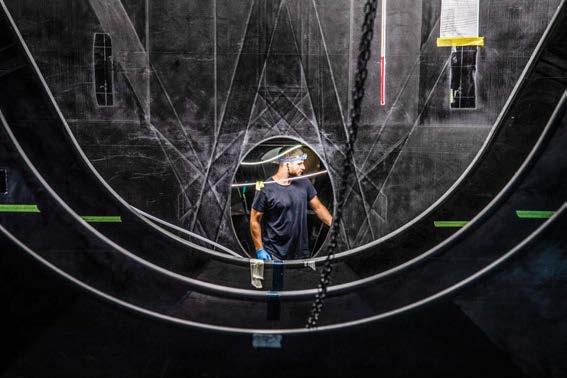
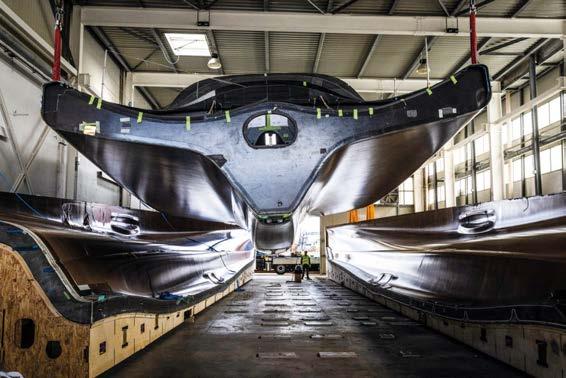
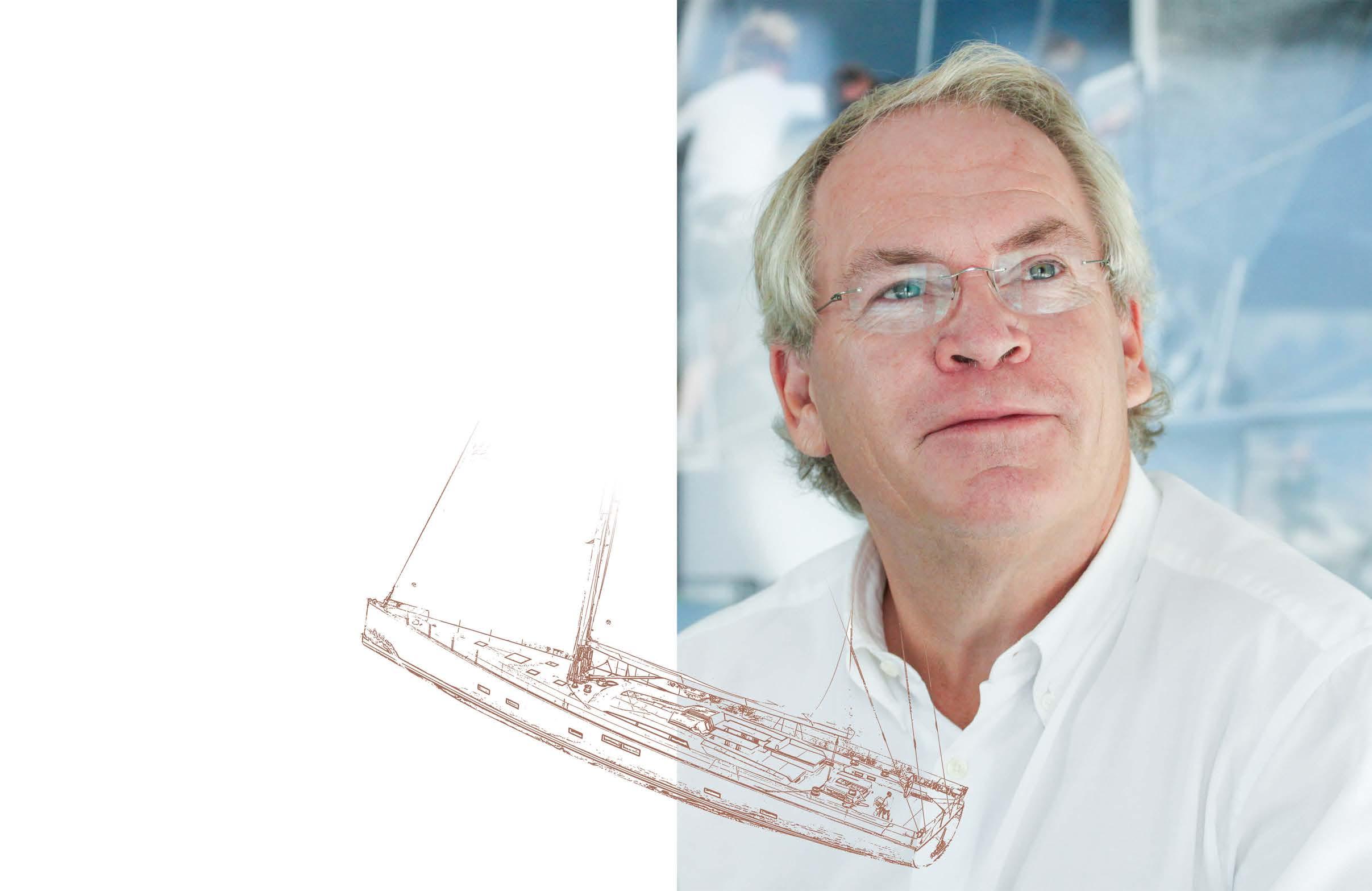
Fondato ad Amburgo nel 1978 da due architetti navali, è un punto di riferimento nella progettazione. Tra le 800 barche rmate nora, spiccano numerosi yacht da regata ad altissime prestazioni che hanno fatto la storia. Anche della Coppa America
Founded in Hamburg in 1978 by two naval architects, it is a leading name in yacht design. Among the 800 boats it has designed to date, numerous highperformance racing yachts that have made history stand out, including those in the America’s Cup by Sacha
Giannini
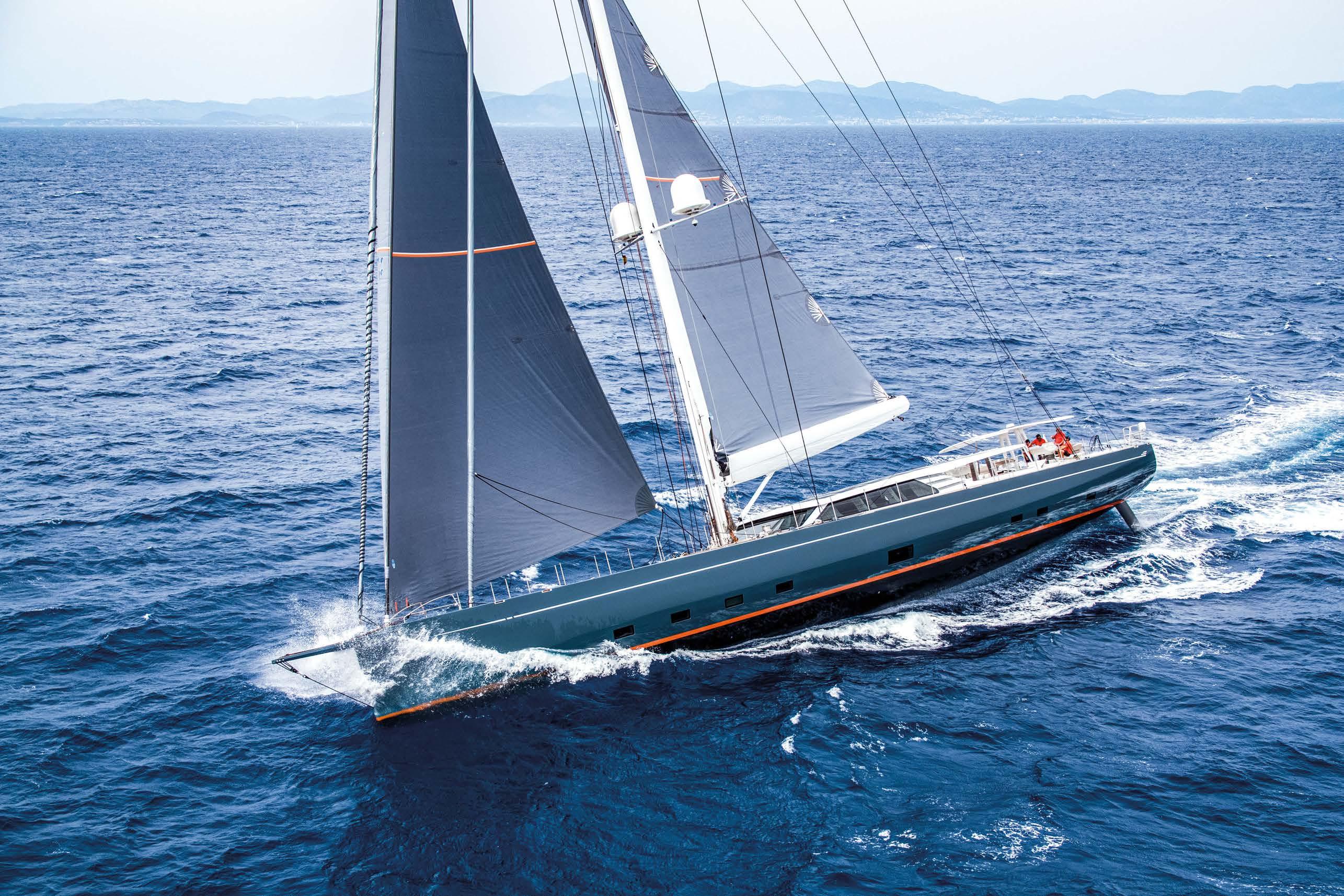
Tuttavia, questo non signi ca che sia così semplice ottenerla, anzi. Basti pensare che è il risultato di una serie di compromessi dinamici – e rompicapo – tra rollii, zavorre e momenti sbandanti. Non a caso, dietro a ogni progetto, ci sono professionisti molto abili sia nel combinare parametri, materiali e regolamenti, sia nell’interpretare, al limite dei rating, eventuali bug di classe e sfruttare ogni libertà concessa dai regimi, transitori e turbolenti, dei ussi idrodinamici di carena, no a trasformarli in bene ci e alleati.
Professionisti di spessore come quelli che lavorano nello studio
Yacht Design & Engineering judel/vrolijk & co di Bremerhaven in Germania, specializzato nell’ottimizzazione di carene, appendici e piani velici per privati e brand internazionali nel racing e nel cruising.
Oltre all’acclarata esperienza, l’abilità del team è anche quella di sapersi confrontare quotidianamente con l’uso di programmi
La sensazione di stabilità a bordo è un tema che oggigiorno non dovrebbe preoccupare più di tanto, ormai la si dà quasi per scontata. Baltic 146 PATH
44.6M
TECNICAL DATA Baltic 146 Path
Cantiere//Shipyard
Naval architect, Exterior designer and interior designer
Delivery year
Lunghezza f.t.//L.O.A.
Baglio//Beam
Pescaggio//Draft
Dislocamento
Displacement
Baltic Yachts judel/vrolijk & co 2021 44.60m 9.35m 3.40/5.90m
172 t
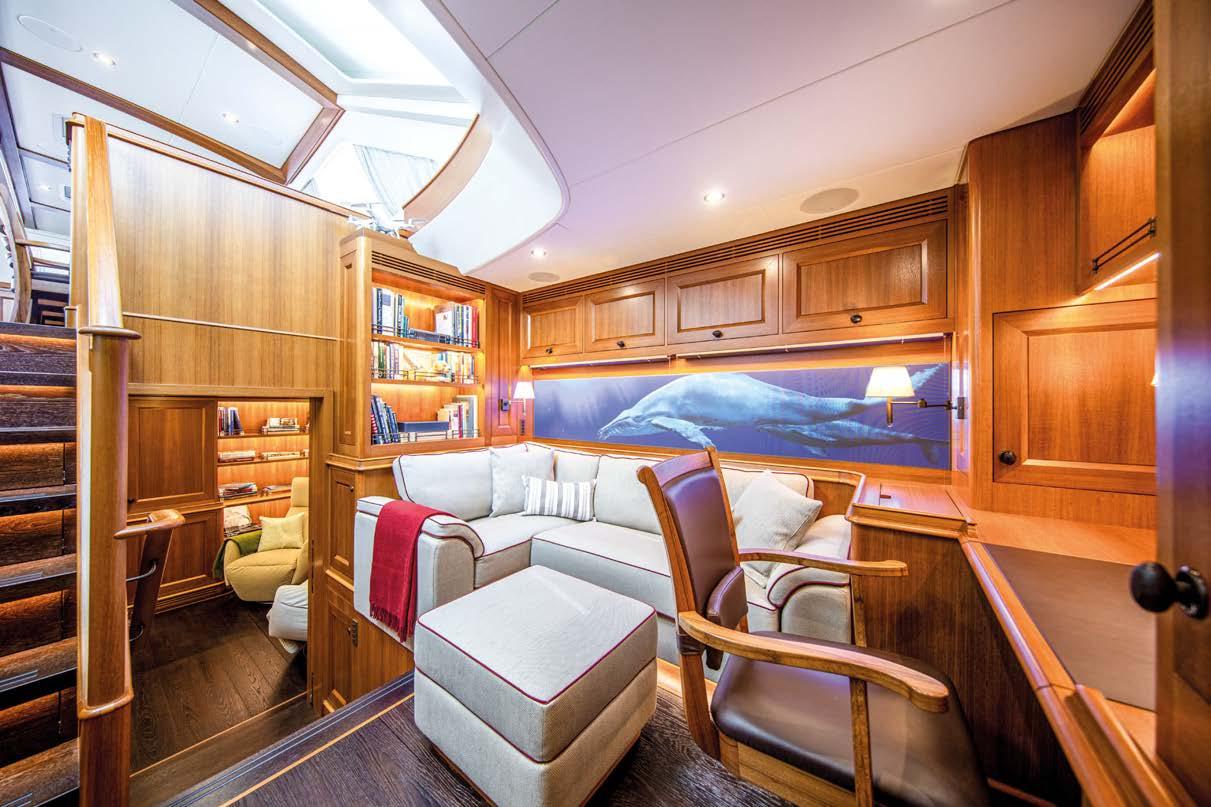
Cantiere//Shipyard
Naval architect
Exterior designer and interior designer
Delivery year
Lunghezza f.t.//L.O.A.
Baglio//Beam
Pescaggio//Draft
Dislocamento
Displacement
Wally Yachts
judel/vrolijk & co
Wally Yachts/ Luca Bassani
2018
28.30m
6.65m
4.50/6.20m
35.50 t
di modellazione digitale integrati alla uidodinamica computazionale (CFD), con modelli a elementi niti (FEA e FEM), con la prototipazione e i test in vasca (ETFT), per poter giocare d’anticipo e vedere oltre l’orizzonte.
Per Rolf Vrolijk, cofondatore dello studio, il braccio sbandante, il centro di gravità, il centro di deriva, la carena e quello velico sono i ferri del mestiere, parametri d’uso essenziali e riconducibili a un’unica grandezza metacentrica, necessaria a bilanciare la potenza velica con lo sbandamento dello scafo e, attraverso la sua altezza, a de nire il grado di stabilità ed equilibrio al rollio e alle scuf e involontarie.
Con Vrolijk lavorano anche altri pezzi da novanta, Torsten Conradi, Johan Siefer e Tobias Kohl. Coadiuvati da un team di esperti, sono costantemente alla ricerca del perfetto equilibrio tra performance e comfort. Attraverso la regolazione dei pesi, delle linee di carena e dei materiali, riescono sempre a mantenere “positivo” questo vettore GM senza rendere mai troppo “duro” (a sbandare) lo scafo, evitando di pregiudicare traguardi e vittorie, boline e bordi controvento che, peraltro, richiedono di potersi anche coricare sui anchi.
Il ne, naturalmente, è la soddisfazione del cliente. “La nostra missione più grande”, confessa Rolf Vrolijk. “È quella di realizzare la barca
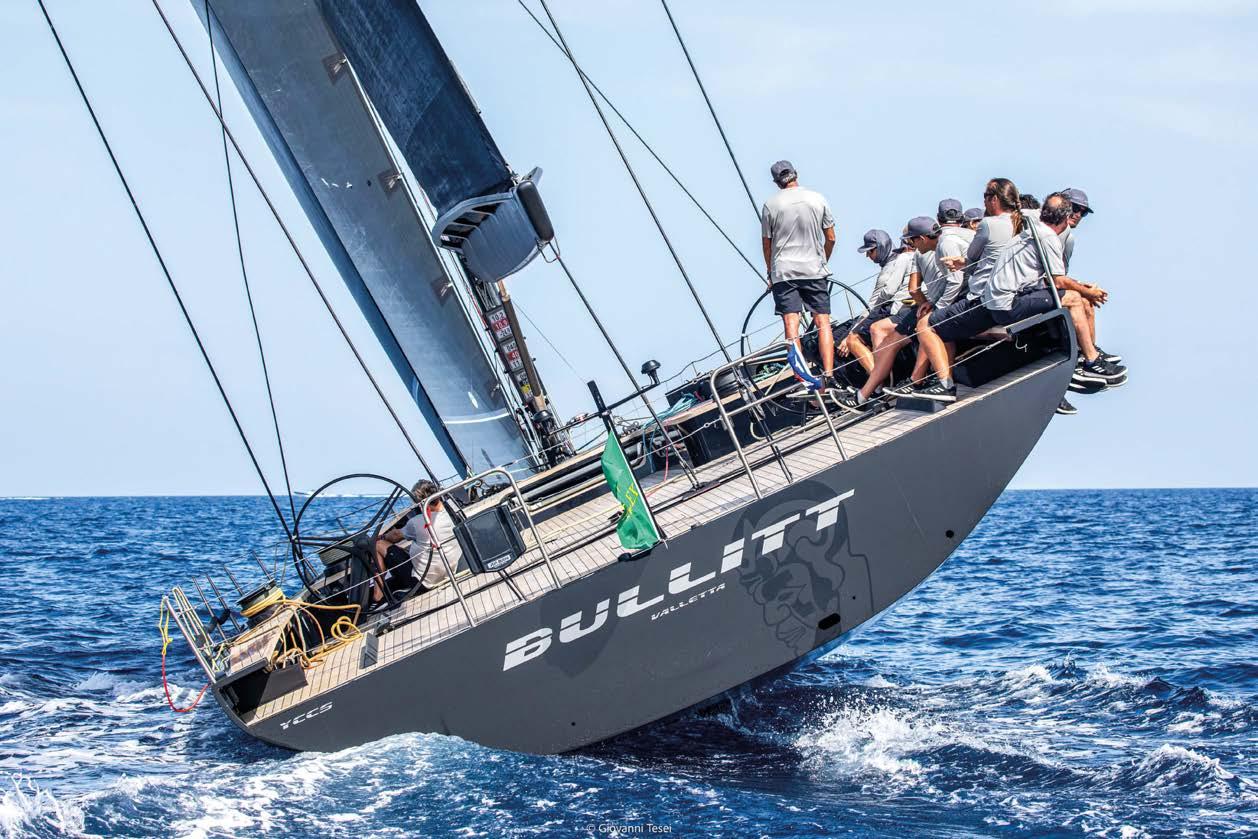
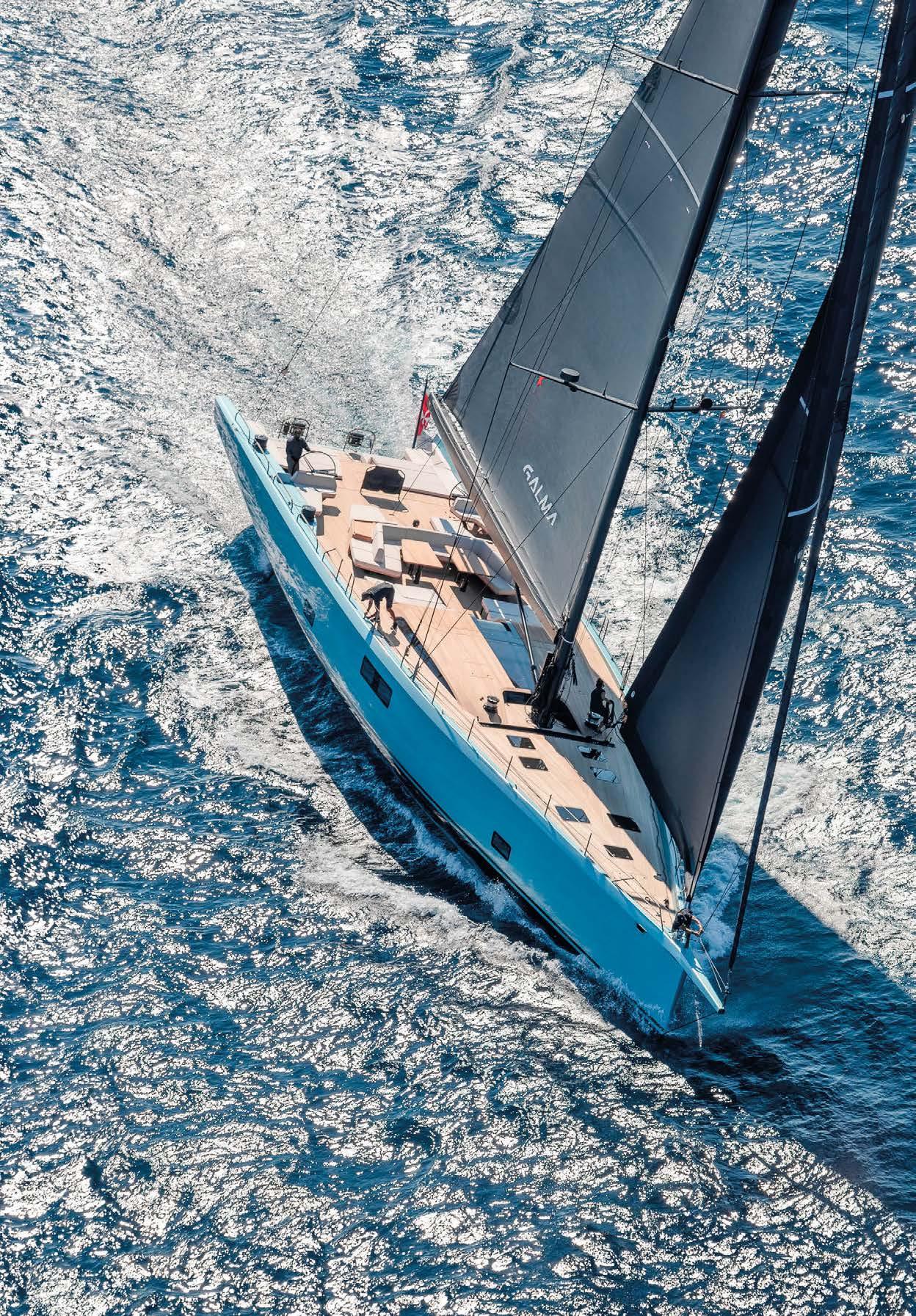
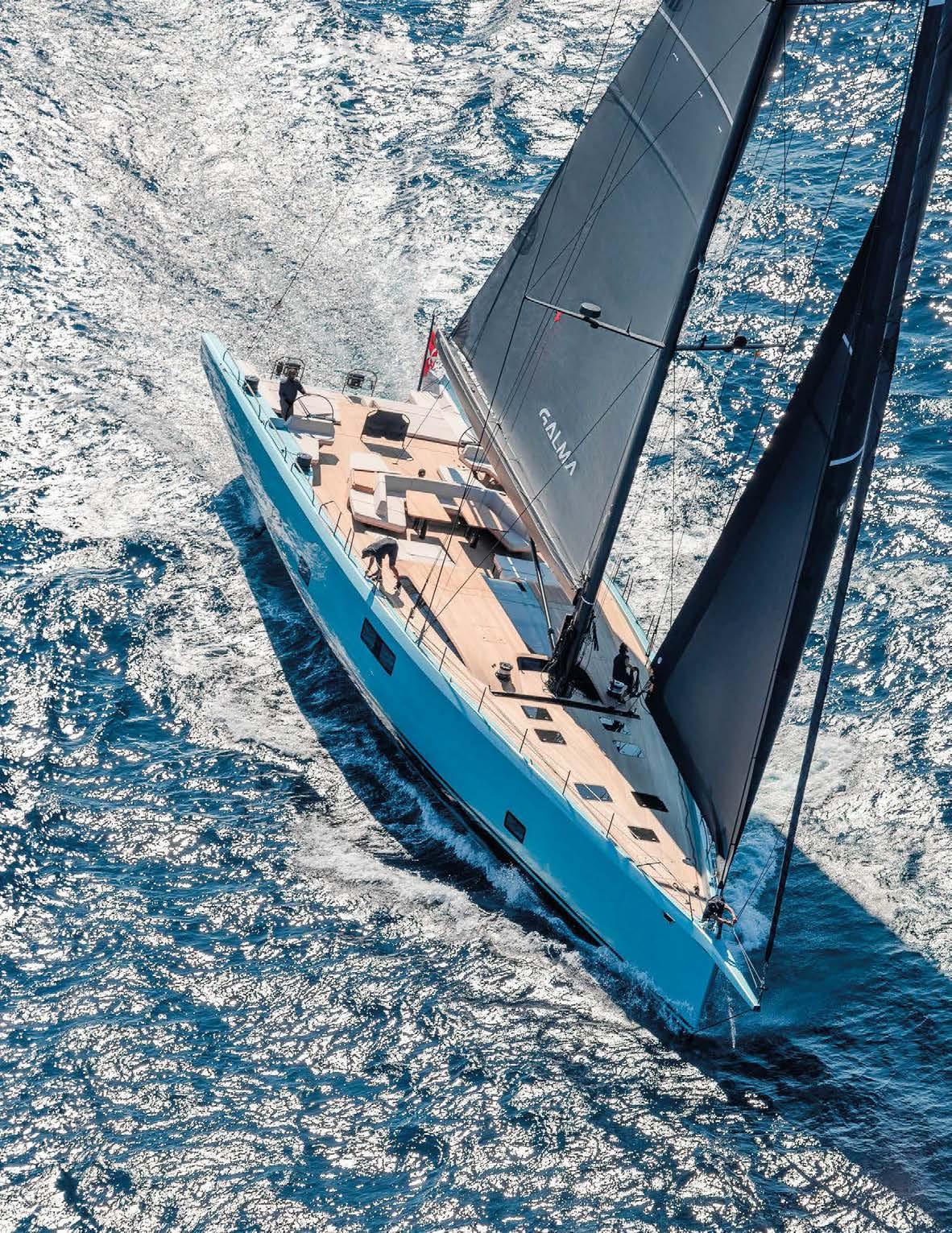
TECHNICAL DATA wallywind110
Cantiere//Shipyard
Naval architect
Exterior designer and interior designer
Delivery year
Lunghezza f.t.//L.O.A.
Baglio//Beam
Pescaggio//Draft
Dislocamento//Displacement
by
Cantiere//Shipyard
Naval architect
Exterior designer and interior designer
Delivery year
Lunghezza f.t.//L.O.A.
Baglio//Beam
Pescaggio//Draft
Dislocamento
Displacement
Baltic Yachts
judel/vrolijk & co
Nauta Design 2015 35m
8.07m
3.65/5.85m
88 t
giusta per i nostri armatori, perché vogliamo che siano felici e che tornino ancora da noi per eventuali futuri progetti”. “Per diversi anni”, prosegue il progettista, “abbiamo lavorato a stretto contatto con i proprietari, siamo saliti a bordo delle loro barche per ascoltare da vicino e interpretare al meglio le necessità di ciascuno. Col tempo alcuni hanno iniziato a chiederci imbarcazioni sempre più grandi e confortevoli, da 60, 80 e 100 piedi. Ricordo il nostro primo Maxi Yacht di 112 piedi, Saudade, costruito da Royal Huisman nel 1994 e tutti i lavori per Baltic Yachts, brand molto importante per la storia del nostro studio, per il quale abbiamo progettato quasi ogni dimensione possibile, dai 42 ai 175 piedi di Pink Gin”.
In principio fu Amburgo. È qui che nel 1978 viene fondato lo studio, che oggi vanta un team di 15 persone. Studio che n da subito si è distinto per lo sviluppo di yacht a vela grazie a progetti ingegneristici ad alta specializzazione aerodinamica e idrodinamica e a un design esterno molto dettagliato. “All’inizio si faceva tutto a mano con una matita”, ricorda Vrolijk, “poi abbiamo dovuto disegnare vettorialmente in 2D. Ora, se non realizziamo un disegno in 3D o un’analisi CFD, diventa quasi impossibile lavorare. Del resto, sono tecnologie necessarie per raggiungere standard di qualità elevatissimi”.
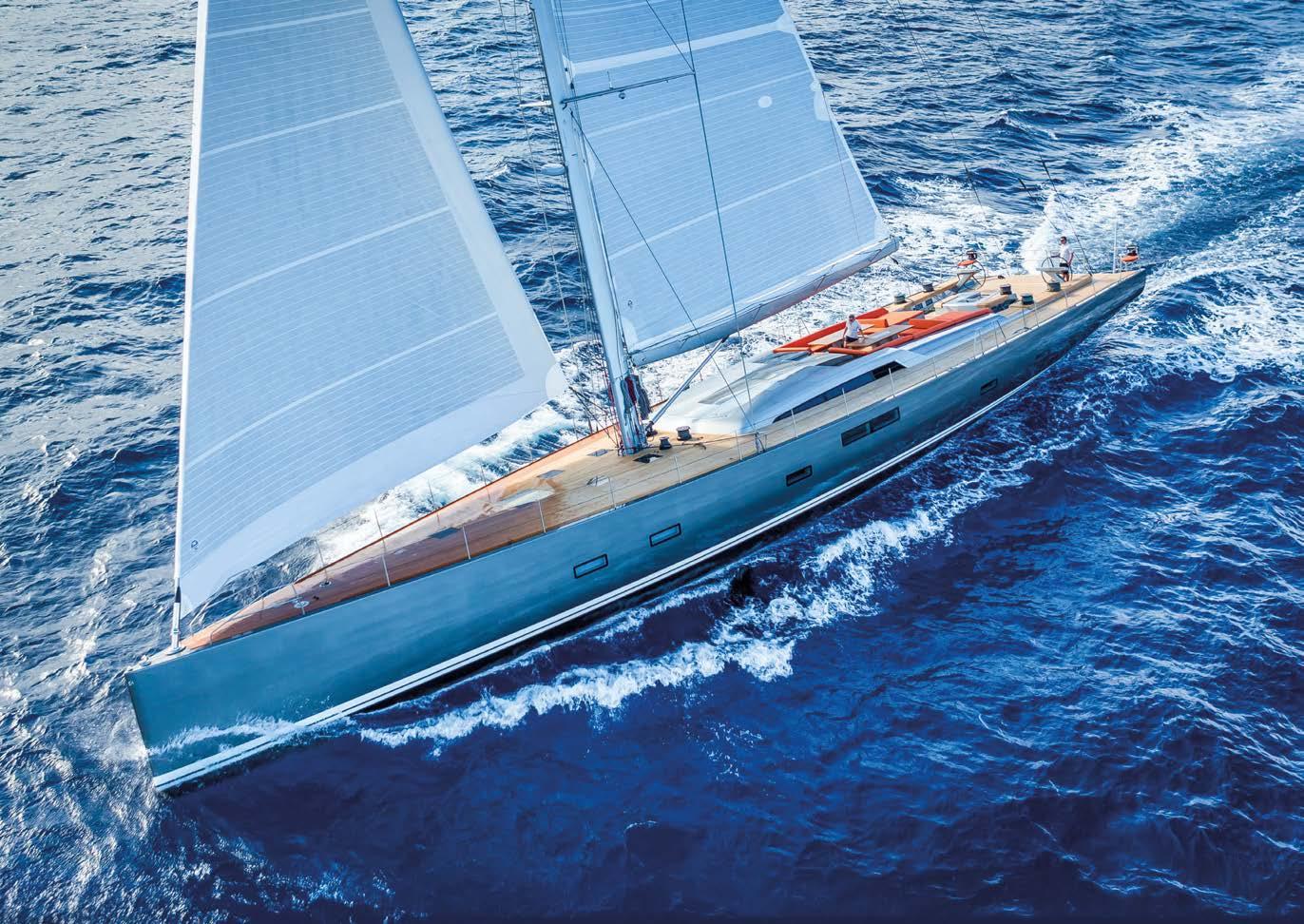
Il Maxi Yacht Racer Saudade di 112 piedi, costruito in alluminio da Royal Huisman nel 1994, è il primo maxi yacht disegnato da judel vrolijk & Co.
The 112-foot Maxi Yacht Racer Saudade, built in aluminum by Royal Huisman in 1994, is the rst maxi yacht designed by judel vrolijk & Company.
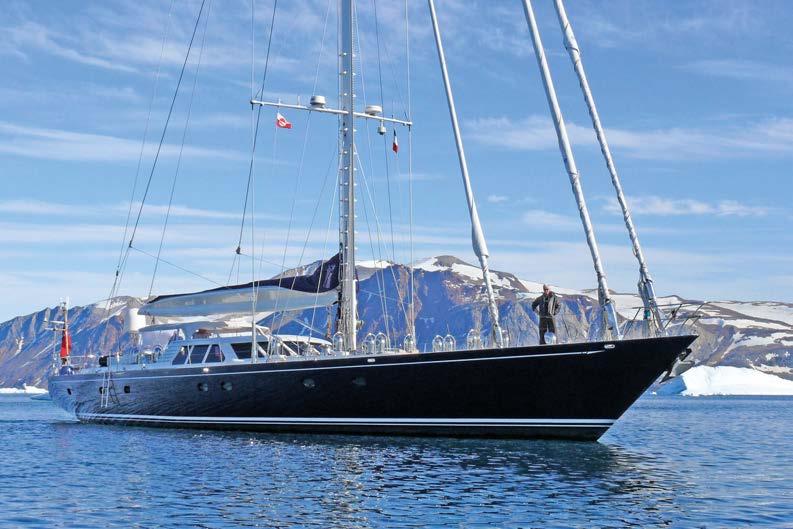
Con più di 800 imbarcazioni rmate, dai racer alle barche di serie, dai fast cruiser ai superyacht custom, lo studio collabora da anni, tra gli altri, con i cantieri Baltic Yachts, Wally, Contest Yachts e Hanse, realizzando modelli di serie e custom da crociera come il mitico 175 Pink Gin di cui sopra, lo sloop in carbonio più grande del mondo.
Con Saudade 112 ft, il wallywind 110 Galma, il Baltic 116 Doryan, lo studio ha potuto sperimentare ogni materiale e dimensione, l’adozione pionieristica di compositi in sandwich di Kevlar e Carbon, no a tirare le moderne linee dei Transpac TP52, racer puri di quasi 16 metri, dove il full-carbon, il nido d’ape, la laminazioni su stampi in carbonio e la ricerca della leggerezza, confermano da sempre lo spirito del team il cui motto è “innovare per sempli care”.
Fondamentale in questo senso è l’engineering, un vero e proprio “credo”, nonché una divisione dello studio che, in particolare, fa capo a Johan Siefer.
L’ingegneria, intesa come ottimizzazione tecnica, per Vrolijk e il suo team è ovunque, dentro ogni cosa e richiede la massima attenzione: nei maxi e super yacht i sistemi elettrici, meccanici e idraulici, rispetto ad altre parti, necessitano di continui upgrade.
“Penso che la complessità ingegneristica delle barche sia il primo problema, la dimensione è il secondo. Possiamo consigliare a un cliente certe imbarcazioni solo se siamo sicuri che avrà le persone giuste a bordo, che possono intervenire soprattutto sulle parti elettriche, persone autorizzate a farlo sull’alto voltaggio e sui sistemi connessi. Questo vale anche per molta attrezzatura di coperta, sempre più so sticata. Chi, ad esempio, è in grado di disalberare 90 metri di carbonio, controllarlo, eseguire il test non-distruttivo, decidere cosa deve essere fatto e riarmarlo?”, argomenta il progettista. “In proporzione alla LOA, alla complessità e al modo in cui si intende usare la barca, il nostro lavoro è assicurare che la performance venga sempre garantita, sempli cando la manovrabilità e il peso del sistema tecnologico di bordo”, assicura. Detto ciò, la loso a progettuale dello studio non prescinde mai dal dialogo con l’armatore, anche se, come ammette Vrolijk, in questa direzione qualcosa è cambiato: “Oggi le relazioni sono più professionali, soprattutto quando si tratta di maxi yacht a vela o a motore. Dobbiamo confrontarci anche con i team manager dei progetti, i sub contractor e numerosi esperti. Noi siamo i coordinatori, l’alfa e l’omega del progetto e la bilancia nel grande esercizio di equilibri con i designer di interni e esterni. A ciò aggiungo che oggi sta diventando davvero tutto costoso. Un 100 piedi che abbiamo fatto 10 anni fa costava meno di 10 milioni; oggi il doppio, e se parliamo di una barca da racing, per esempio di 100 piedi, siamo sui 30 milioni. Quindi abbiamo davvero una grande responsabilità”, ammette Vrolijk. A scorrere i successi dello studio nel quasi mezzo secolo di vita, non v’è dubbio alcuno che abbia spalle molto larghe per farsene carico. Con eccellenti risultati.
Tanta ingegneria, certo, ma anche grande attenzione al tema della sostenibilità. “Spesso al centro dei dibattiti c’è il tipo di propulsione impiegata. In realtà la questione è molto più complessa e articolata. Bisogna tenere conto dell’intero ciclo di vita della barca nella sua totalità. Pensiamo alla vetroresina: con un’adeguata manutenzione resiste anche per 60 anni”, spiega Johan Siefer. “Sperimentiamo continuamente nuovi prodotti rispetto alle bre classiche e alle resine di derivazione petrolchimica. Bioresine, ad esempio, ricavate da scarti dell’industria agroalimentare, nonché resine riciclate o naturali, come la canapa. Oltre a ciò, siamo impegnati nello sviluppo di una shing boat per il futuro e nella consulenza per il ripristino museale di alcune barche storiche”, prosegue Siefer. “La barca, soprattutto se di grandi dimensioni, necessita di parecchia energia. In fondo, è ‘una piccola città’ in un’area circoscritta. Il sole, il vento aiutano, ma non bastano”, conclude Rolf Vrolijk.
A great deal of engineering, certainly, but also a strong focus on sustainability. “The type of propulsion system used is often at the heart of the debate. In reality, the issue is far more complex and multifaceted. We need to take into account the boat’s entire life cycle. Take breglass, for example: with proper maintenance, it can last for up to 60 years”, explains Johan Siefer. “We are constantly experimenting with new products as alternatives to traditional bres and petrochemical-based resins. Bio-resins, for instance, which derive from waste from the agri-food industry, as well as recycled or natural resins, such as hemp. In addition to this, we are working on developing a shing boat for the future and providing consultancy for the museum restoration of certain historic boats”, continues Siefer. “A boat, especially a large one, requires a great deal of energy. After all, it is ‘a small town’ within a con ned space. The sun and wind help, but they are not enough”, concludes Rolf Vrolijk.
«Fietje, Torsten ed io abbiamo dato un notevole apporto al mondo delle regate, contribuendo ai successi di team impegnati in diverse competizioni, dall’Admirals Cup del 1983 no all’America’s Cup del 2003 ad Auckland e del 2007 a Valencia, in cui io fui nominato chief designer di Alinghi, che vinse due volte, rispettivamente con SUI-64 e SUI-100. Ricordo che la vittoria degli elvetici del 2003 fu un evento storico: portò la Coppa in Europa per la prima volta dal 1851».
«Fietje, Torsten and I have made a signi cant contribution to the world of yacht racing, helping teams competing in various regattas achieve success, from the 1983 Admirals Cup to the 2003 America’s Cup in Auckland and the 2007 America’s Cup in Valencia, where I was appointed chief designer of Alinghi, which won twice, with SUI-64 and SUI-100. I recall that the Swiss victory in 2003 was historic: it brought the Cup to Europe for the rst time since 1851».
Rolf Vrolijk
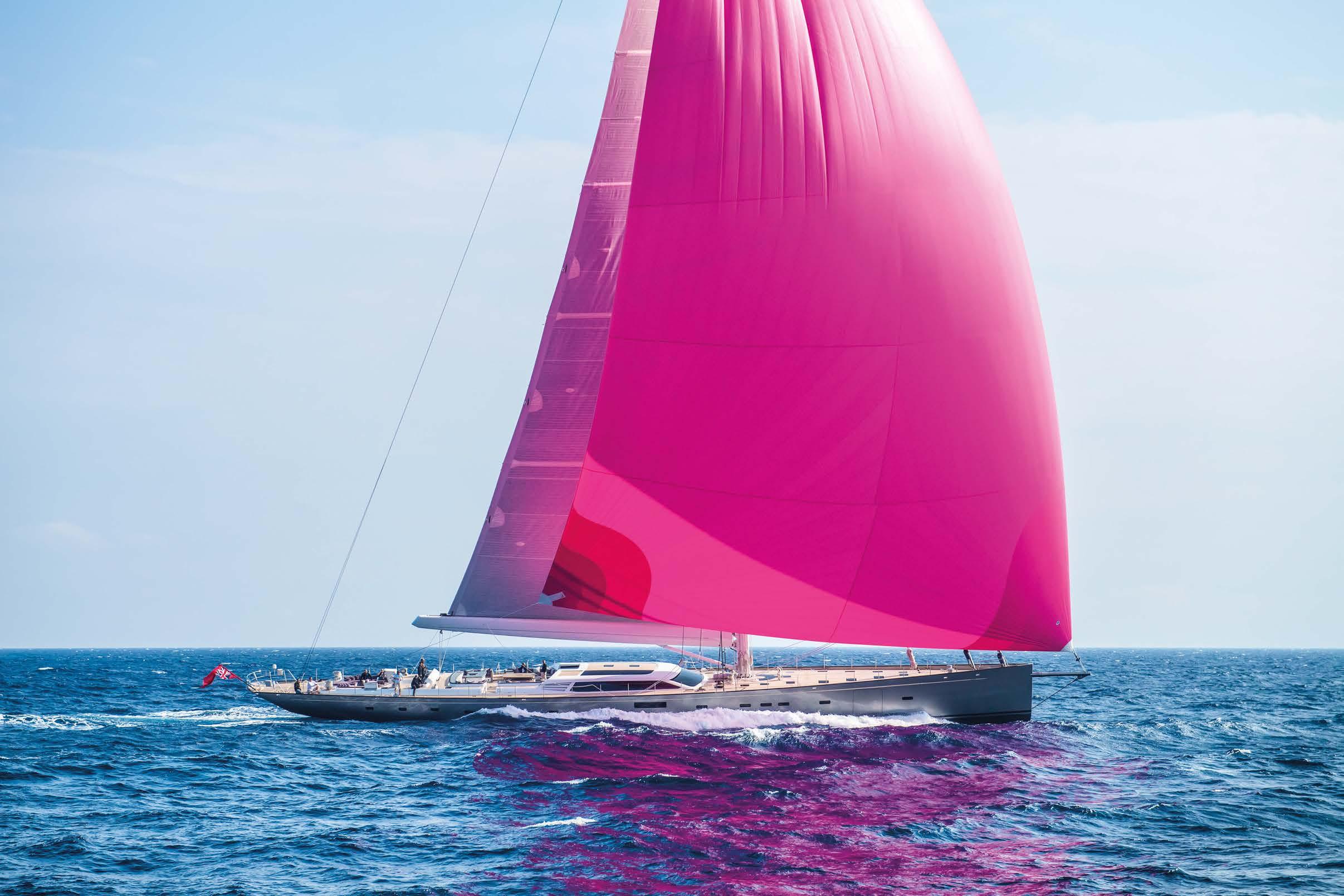
«In futuro le barche da crociera saranno sempre più intelligenti, PIÙ SEMPLICI da condurre e con meno rigging. Verranno integrati gradualmente anche sistemi foil per migliorare le portanze e le resistenze, ma anche autopiloti più so sticati, sistemi di gestione delle vele come i FURLING per garantire un’esperienza in mare agevole».
«In the future, cruising yachts will become increasingly intelligent, EASIER to handle, and require less rigging. Foil systems will also be gradually integrated to improve lift and reduce drag, alongside more sophisticated autopilots, sail management systems such as FURLING systems, and everything else that can ensure a smooth experience at sea». Rolf Vrolijk
The feel of stability on-board is an issue that shouldn’t cause too much concern these days; it’s now almost taken for granted.
However, this doesn’t mean it’s that simple to achieve – quite the contrary. Suf ce it to say that it is the result of a series of dynamic trade-offs between roll, ballast and leeway moments. It is no coincidence that behind every project are professionals who are highly skilled at combining parameters, materials and regulations, and at interpreting loopholes within any class, pushing ratings to their limits, whilst exploiting every freedom afforded by the transient and turbulent regimes of the hull’s hydrodynamic ows, to the point of turning them into advantages and allies. Highly skilled professionals such as those working at the Yacht Design & Engineering judel/vrolijk & co studio in Bremerhaven, Germany, which specialises in optimising hulls, appendages and sail plans for private clients and international brands in racing and cruising.
In addition to their proven experience, the team’s skill lies in their daily use of digital modelling programmes integrated with computational uid dynamics (CFD), nite element analysis (FEA and FEM), prototyping and tank testing (ETFT), enabling them to stay one step ahead and look beyond the horizon. For Rolf Vrolijk, co-founder of the rm, the heeling arm, the centre of gravity, the centre of heeling, the hull and the sail are the tools of the trade, essential performance parameters that can be traced back to a single metacentric parameter. This parameter is necessary to balance sail power with hull heeling and, through its height, to de ne the degree of stability and resistance to rolling and unintended capsizing.
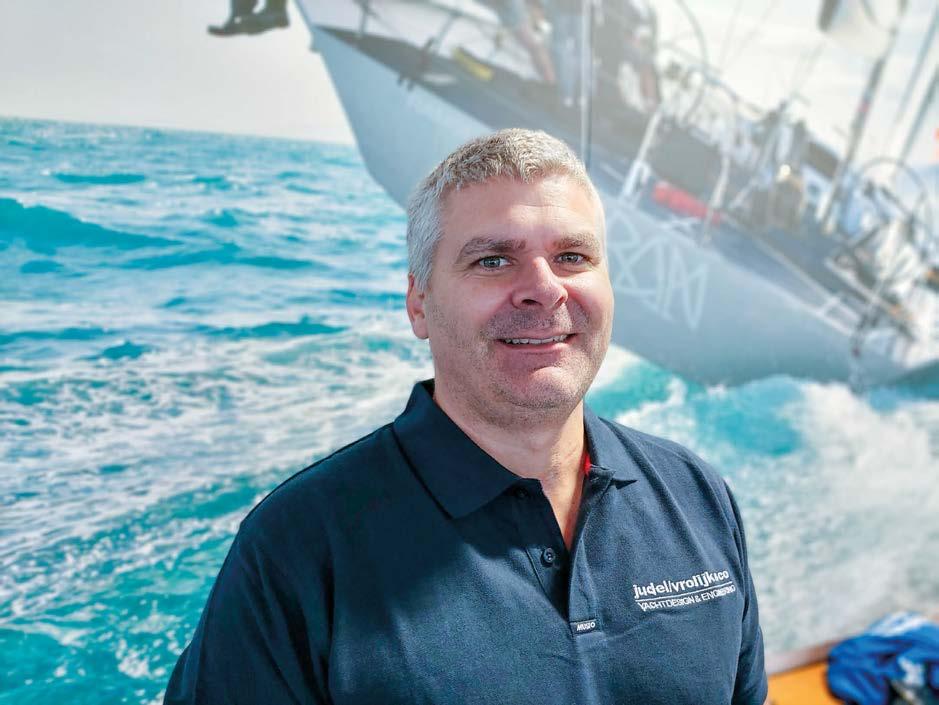

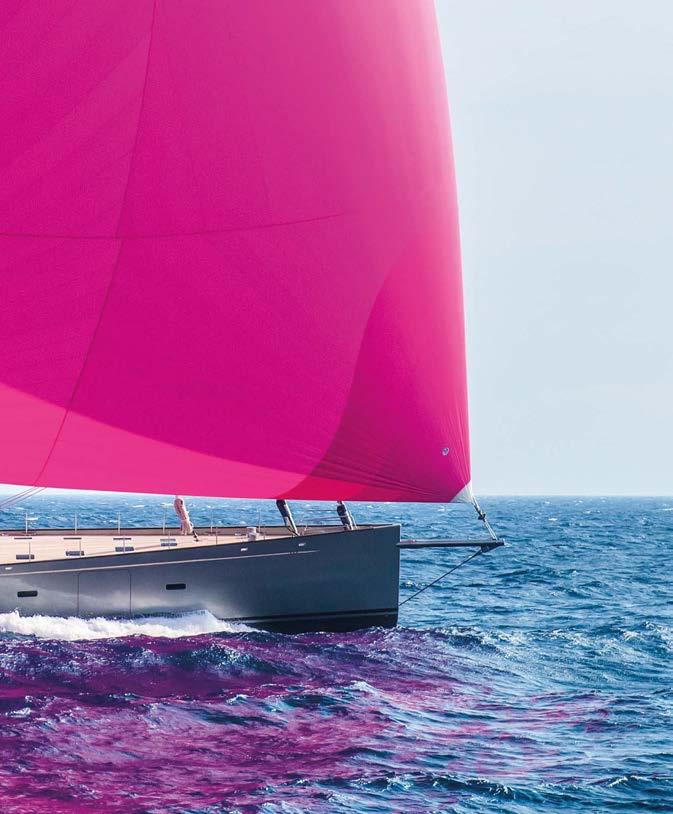
Naval architect
Exterior designer and interior designer
Delivery year
Lunghezza f.t.//L.O.A.
Baglio//Beam Pescaggio//Draft
Dislocamento Displacement
Baltic Yachts
judel/vrolijk & co
judel/vroljik & co and Design Unlimited
t
Baltic Pink Gin, at 175 feet in length, is the largest sloop with an 18-ton carbon composite hull and deck.
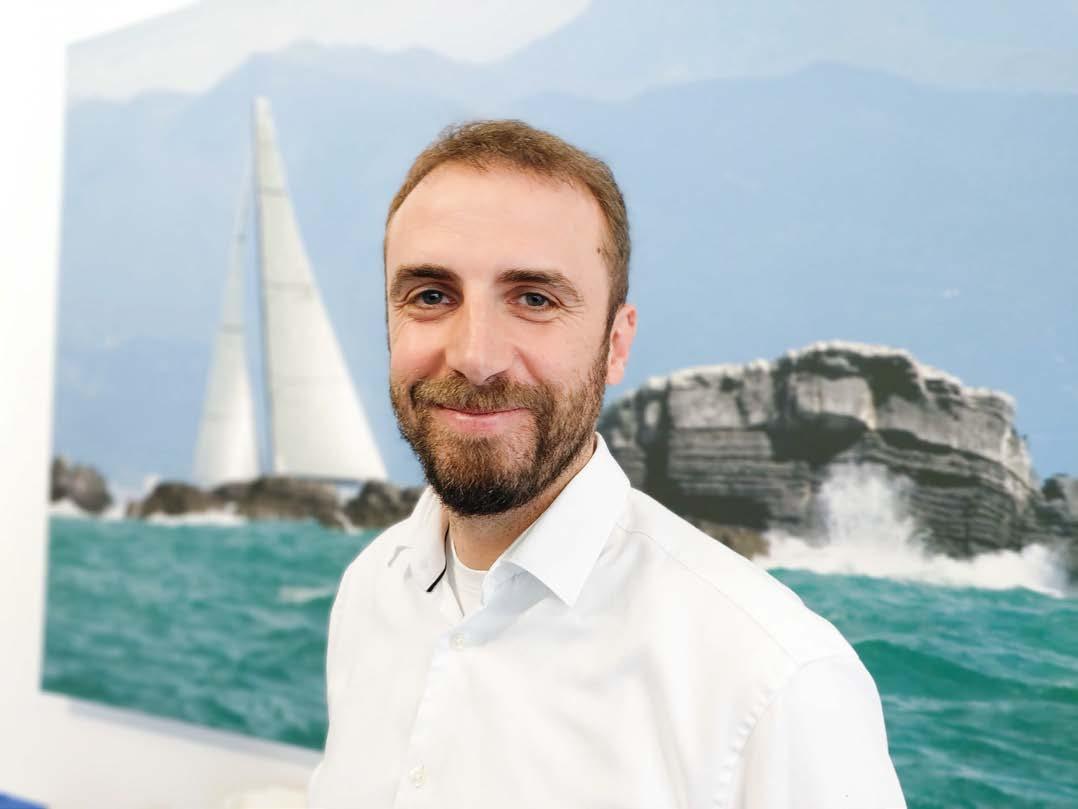
«Al giorno d’oggi, su una barca forse puoi rinunciare a un deckhand, ma devi assolutamente avere a bordo un INGEGNERE e un tecnico per risolvere molte questioni!».
«These days, you might be able to manage without a deckhand on a boat, but you absolutely must have an ENGINEER and a technician on board to sort out all sorts of issues!». Johan Siefer
Con Saudade 112 ft, il wallywind 110 Galma, il Baltic 116 Doryan, lo studio ha sperimentato ogni materiale e dimensione, l’adozione pionieristica di compositi in sandwich di Kevlar e Carbon prepreg, no a tirare le moderne linee dei Transpac TP52, racer puri di quasi 16 metri, dove il full-carbon, il nido d’ape, la laminazione su stampi in carbonio e la ricerca della leggerezza, confermano da sempre lo spirito del team il cui motto è “innovare per sempli care”.
With the Saudade 112 ft, the wallywind 110 Galma and the Baltic 116 Doryan, the rm was able to experiment with every material and dimension, pioneering the use of Kevlar and Carbon sandwich and composites, right through to designing the modern lines of the Transpac TP52s, pure racers of almost 16 metres, where full-carbon honeycomb laminates on carbon moulds and the pursuit of lightness have always embodied the team’s spirit, whose motto is ‘innovate to simplify’.
Working alongside Vrolijk are other heavyweights: Torsten Conradi, Johan Siefer and Tobias Kohl. Supported by a team of experts, they are constantly seeking the perfect balance between performance and comfort. By adjusting the ballast, the hull lines and the materials, they always manage to keep this GM vector ‘positive’ without ever making the hull too ‘stiff’ (in terms of heel), thereby avoiding compromising results and victories, particularly when sailing close-hauled and upwind, which, incidentally, require the boat to be able to heel over.
The aim, of course, is customer satisfaction. “Our greatest mission”, admits Rolf Vrolijk, “is to build the right boat for our clients, because we want them to be happy and to come back to us for any future projects”.“For several years”, continues the designer, “we have worked closely with the owners; we have boarded their boats to listen closely and interpret each person’s needs as best we can. Over time, some began asking us for ever-larger and more comfortable vessels, ranging from 60 to 80 to 100 feet. I remember our rst 112-foot Maxi Yacht, Saudade, built by Royal Huisman in 1994, and all the work for Baltic Yachts – a brand of great signi cance in our studio’s history – for which we designed almost every possible size, from 42 to the 175 feet Pink Gin”.
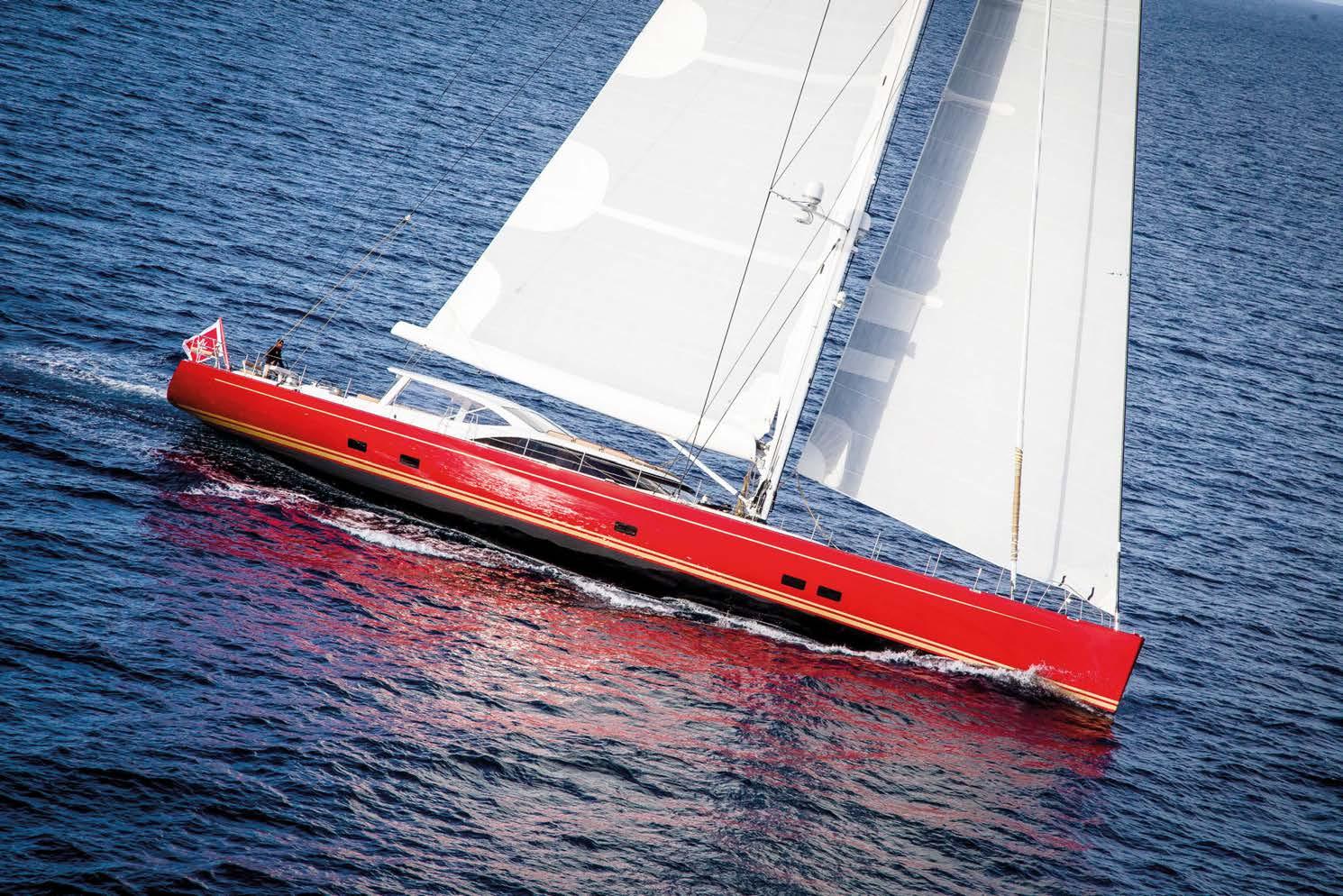
It all began in Hamburg. It was here, in 1978, that the rm was founded, and today it boasts a team of 15 people. From the very start, the rm has distinguished itself in the development of sailing yachts through highly specialised aerodynamic and hydrodynamic engineering projects and meticulously detailed exterior design. “At the start, everything was done by hand with a pencil”, recalls Vrolijk, “then we had to switch to 2D vector drawing. Now, if we don’t produce a 3D model or a CFD analysis, it becomes almost impossible to work. After all, these technologies are essential for achieving the very highest quality standards”.
With more than 800 vessels to its name – ranging from racers to production boats, fast cruisers to custom superyachts – the rm has been working for years with shipyards including Baltic Yachts, Wally, Contest Yachts and Hanse, producing both production and custom cruising models such as the legendary 175 Pink Gin mentioned above –the world’s largest carbon- bre sloop.
With the Saudade 112 ft, the wallywind 110 Galma and the Baltic 116 Doryan, the rm was able to experiment with every material and dimension, pioneering the use of Kevlar and Carbon sandwich and composites, right through to designing the modern lines of the Transpac TP52s, pure racers of almost 16 metres, where full-carbon honeycomb
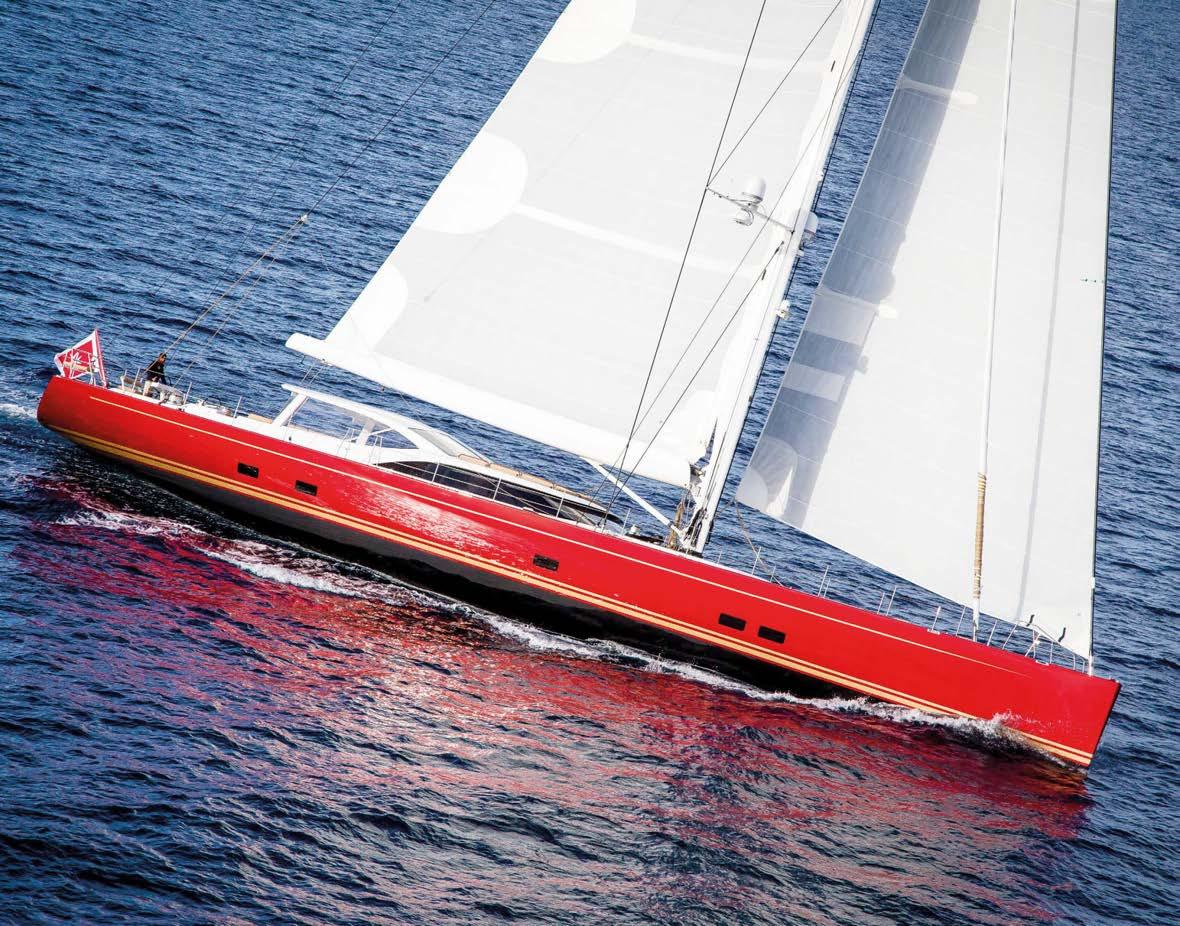
laminates on carbon moulds and the pursuit of lightness have always embodied the team’s spirit, whose motto is ‘innovate to simplify’. Engineering is fundamental in this regard; it is a veritable ‘creed’ and a division of the rm, headed in particular by Johan Siefer. For Vrolijk and his team, engineering – understood as technical optimisation – is everywhere, within everything, and demands the utmost attention: on maxi and super yachts, the electrical, mechanical and hydraulic systems, compared with other parts, require constant upgrades.
“I think the engineering complexity of the boats is the primary issue; size is the second. We can only recommend certain vessels to a client if we are sure they will have the right people on board – people capable of working on the electrical systems in particular, and authorised to handle high-voltage circuits and related systems. This also applies to much of the deck equipment, which is becoming increasingly sophisticated. Who, for example, is capable of dismantling 90 metres of carbon bre, inspecting it, carrying out non-destructive testing, deciding what needs to be done, and reassembling it?” argues the designer. “In proportion to the LOA, the complexity, and the intended use of the boat, our job is to ensure that performance is always guaranteed whilst simplifying the manoeuvrability and the weight of the on-board technological system”, he assures us.
TECHNICAL DATA
Cantiere//Shipyard
Naval architect
Exterior designer and interior designer
Delivery year
Lunghezza f.t.//L.O.A.
Baglio//Beam Pescaggio//Draft
Dislocamento Displacement
Baltic Yachts
judel/vrolijk & co
judel/vrolijk & co and Nauta Design 2015 35.50m 8.25m 3.50/5.50m 94.35 t
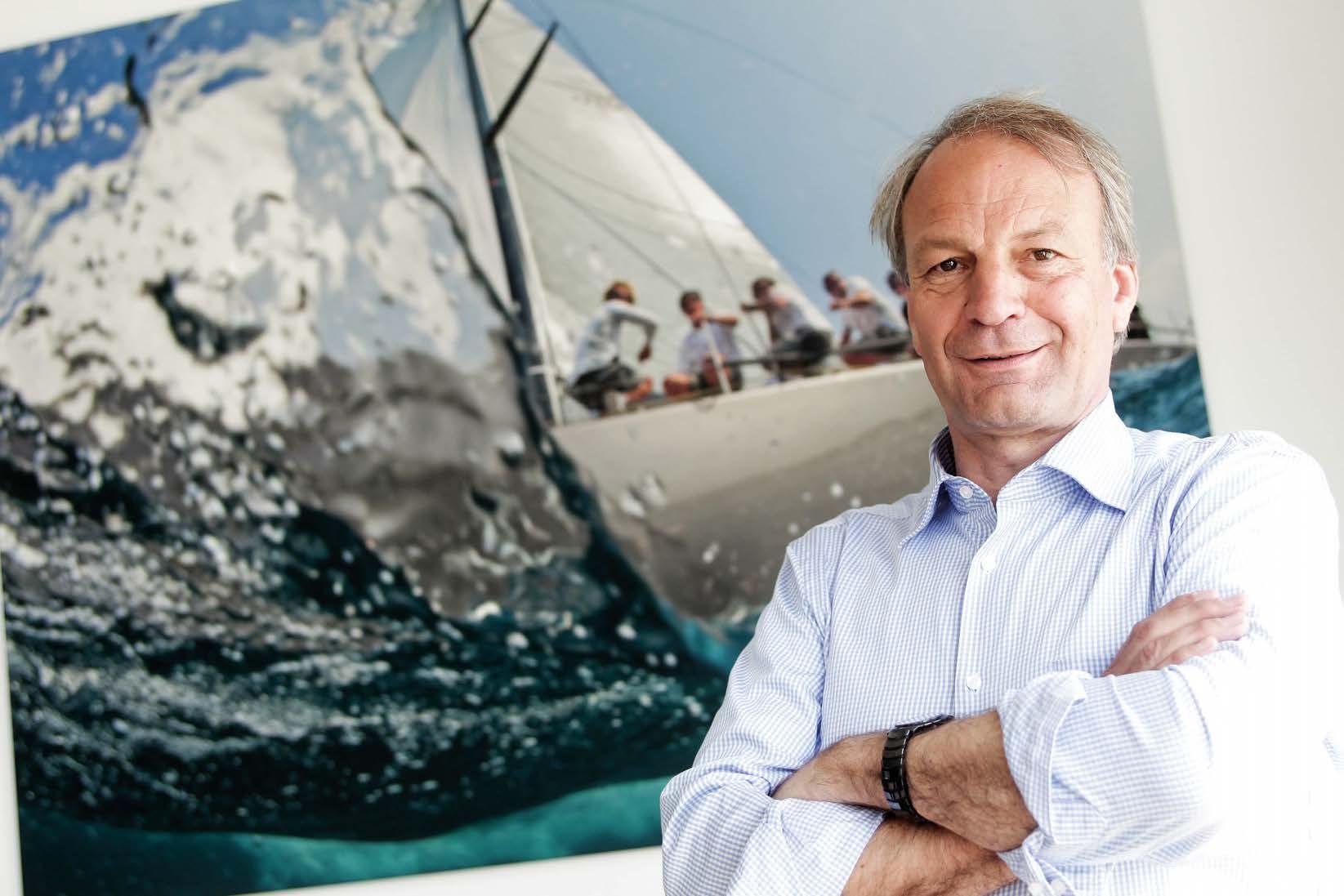
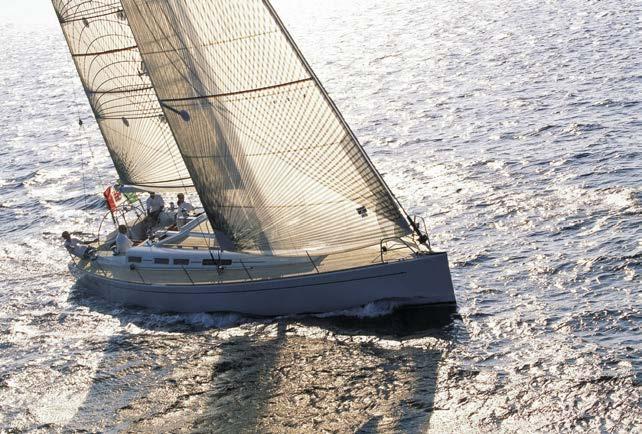
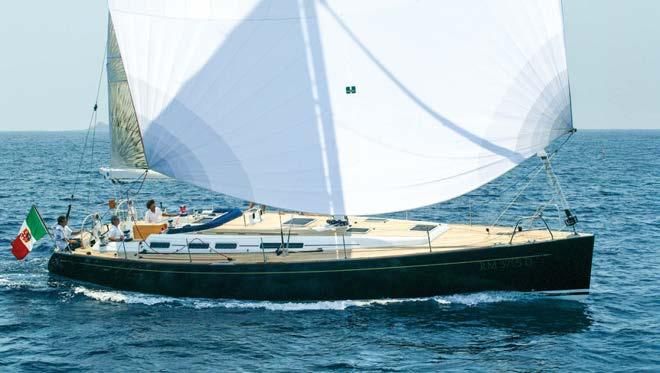
Antonio Santella, Senior Advisor per lo sviluppo dei nuovi prodotti, ha evidenziato i valori fondanti di queste nuove linee, che manterranno l’inconfondibile eleganza delle linee Swan, integrando comfort, protezione, capacità di crociera a lungo raggio e soluzioni innovative per la sostenibilità, come l’idrogenerazione e altre fonti di energia rinnovabile.
Antonio Santella, Senior Advisor for New Product Development, highlighted the core values of these new lines, which will retain the unmistakable elegance of the Swan range whilst combiningcomfort, safety, long-range cruising capability and innovative sustainability solutions, including hydroelectric power generation and other renewable energy sources.
this regard: “Today, relationships are more professional, especially when it comes to maxi sailing or motor yachts. We also have to liaise with project managers, subcontractors and numerous experts. We are the coordinators, the alpha and omega of the project, and the balancing force in the great exercise of equilibrium with the interior and exterior designers.
I would add that everything is becoming truly expensive these days. A 100-footer we built 10 years ago cost less than 10 million; today it’s double that, and if we’re talking about a racing yacht, say a 100-footer, we’re looking at around 30 million. So we really do have a huge responsibility”, admits Vrolijk.
Looking back over the rm’s successes across its nearly halfcentury of existence, there is no doubt whatsoever that it has the strength to shoulder that burden. With excellent results.
Cantiere//Shipyard
Naval architect
Delivery year
Lunghezza f.t.//L.O.A.
Baglio//Beam
Pescaggio//Draft
Dislocamento//Displacement
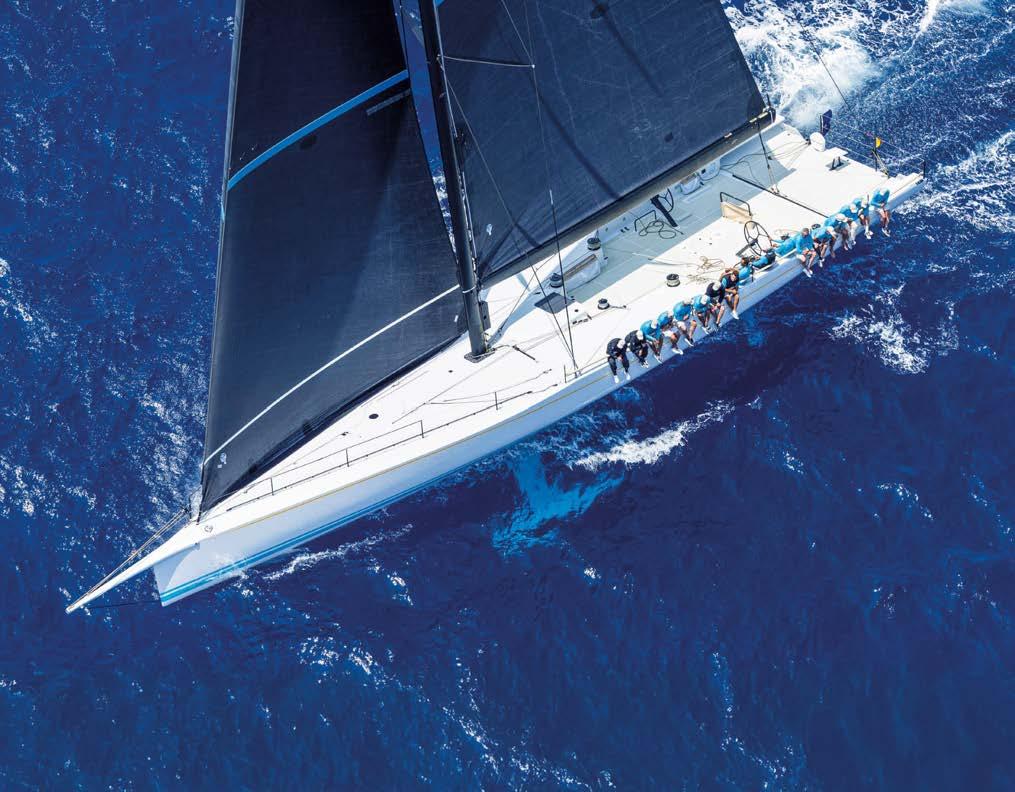
Claudio Scajola, sindaco di Imperia, traccia la rotta della sua città. Non ha dubbi: sarà sempre più nodale per la blue economy. Anche grazie alla nuova Marina destinata a diventare l’approdo più esclusivo del Mediterraneo
Claudio Scajola, Mayor of Imperia, is charting a course for his city. He has no doubt it will become an increasingly important hub for the blue economy. This is partly thanks to the new marina, which is set to become the most exclusive in the Mediterranean by Francesco Michienzi and Chiara
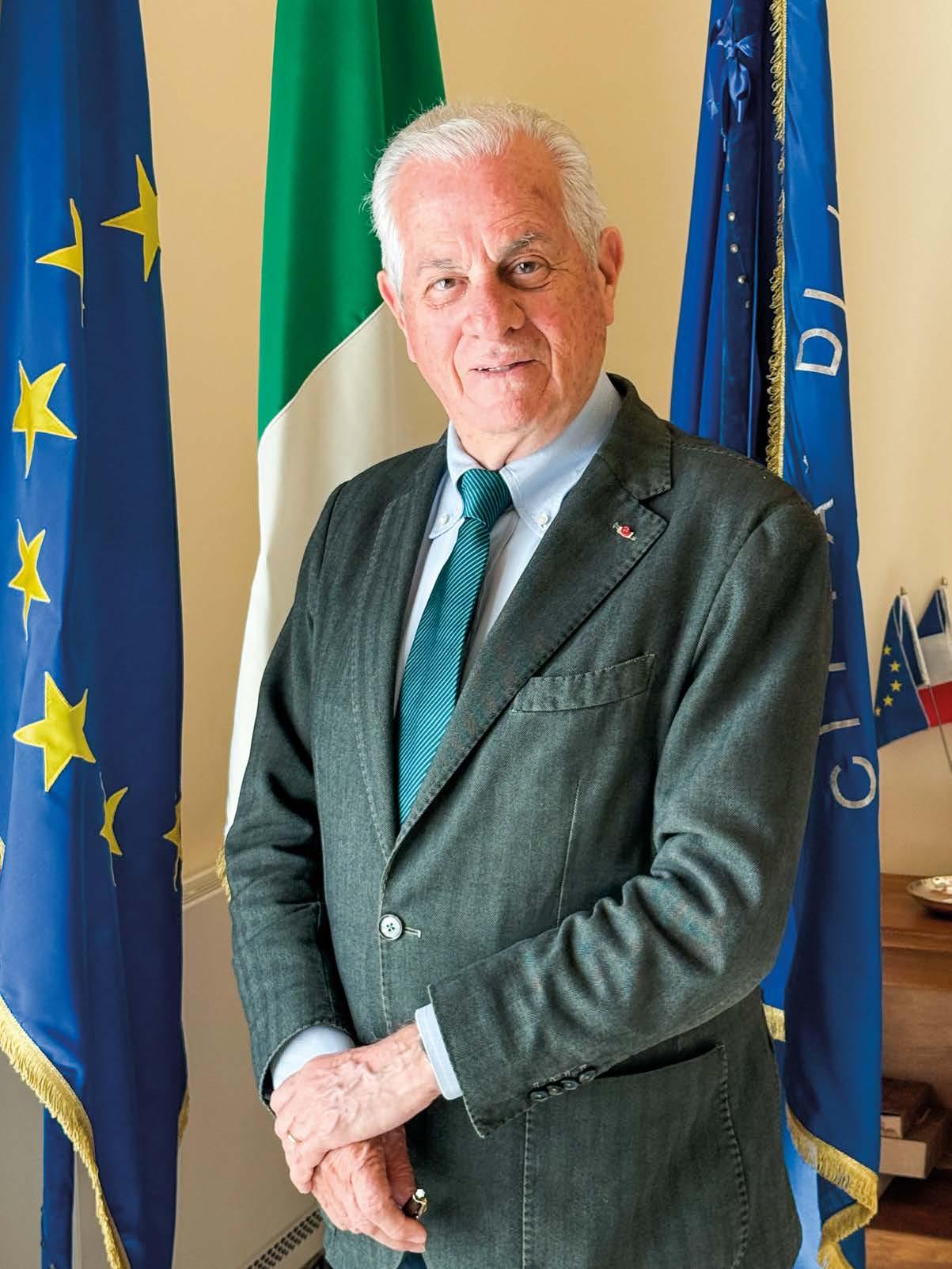
l’attracco di yacht lunghi no a
THE MOORING FACILITIES CAN ACCOMMODATE VESSELS UP TO 90 METRES IN LENGTH.
È stato più volte ministro della Repubblica e dal 2018 è sindaco di Imperia. Eppure, Claudio Scajola non è soltanto un uomo delle istituzioni.
È anche un “uomo di mare”: ha intuito, sa timonare, conosce i venti, non teme l’imprevisto e non perde mai di vista l’orizzonte.
Vela e Motore lo ha incontrato al suo posto di comando, il Palazzo Comunale al 157 di Viale Giacomo Matteotti, dove si reca ogni giorno per amministrare una città che ama moltissimo.
Sindaco, quali sono le ragioni principali che fanno di Imperia un punto di riferimento per il turismo nautico? Sono due. Io le chiamo opportunità. La prima è quella che ci ha donato il Creatore, la bellezza del territorio. A Imperia il mare è bello. Chiunque navighi nelle nostre acque può ammirare i cetacei e i velisti possono contare su un vento particolare che dà loro molta soddisfazione. La seconda riguarda speci camente il porto: è un ex scalo commerciale e, come tale, è dotato di spazi molto ampi. Ha moli imponenti, ad esempio, che garantiscono protezione in caso di mareggiate. La banchina, grande anch’essa, può essere sfruttata per ospitare eventi.
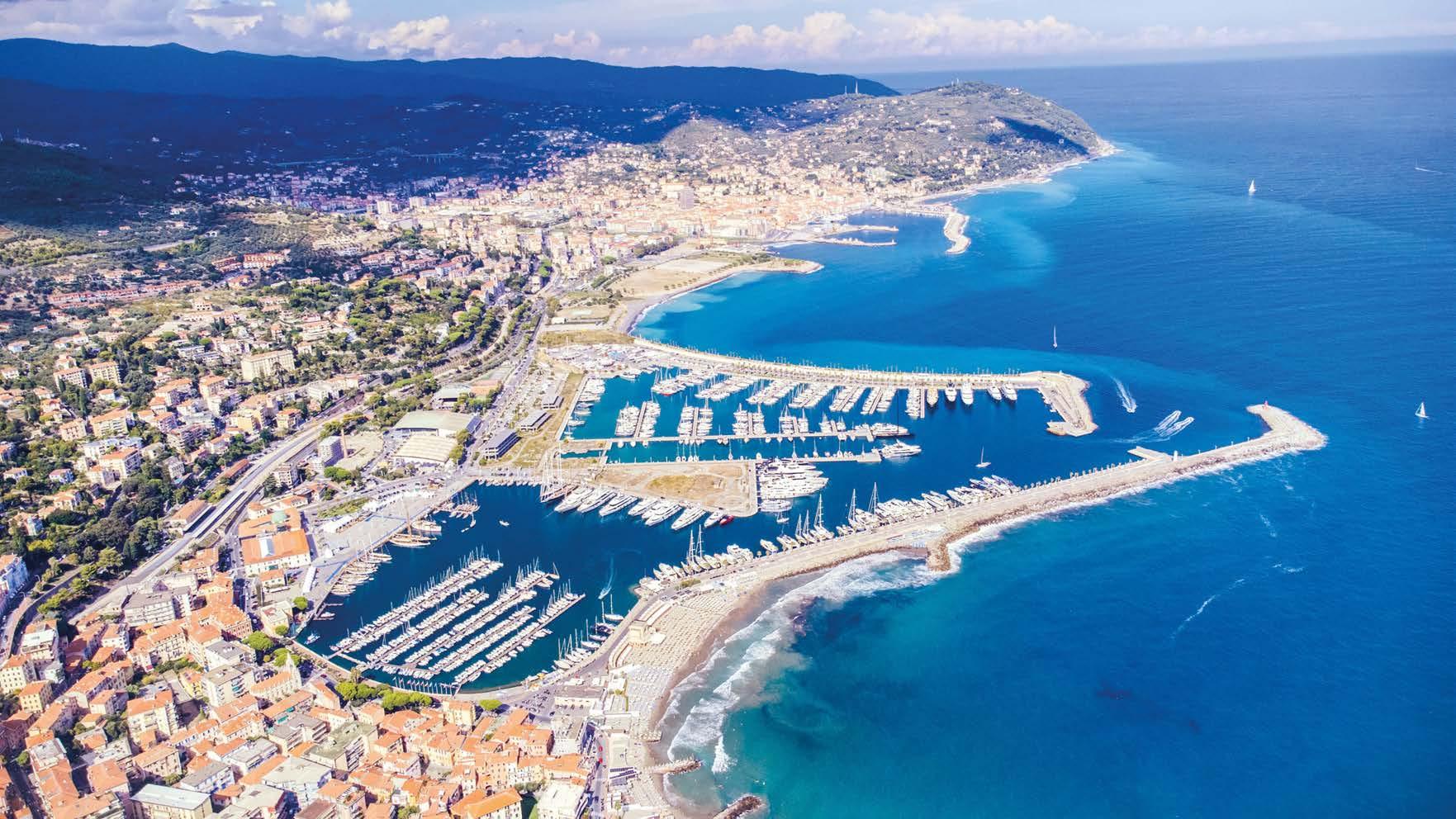
Il nuovo porto di Imperia prevede la realizzazione di un moderno polo nautico con oltre 1.200 posti barca. L’investimento di circa 159 milioni di euro punta a riquali care il waterfront cittadino tramite energie rinnovabili e infrastrutture avanzate.
The new port in Imperia will feature a modern marina with more than 1,200 berths.
The investment of around €159 million aims to regenerate the city’s waterfront using renewable energy and advanced infrastructure.
Completano il piano di riquali cazione gli spazi per la comunità. Una passeggiata pedonale collegherà il porto al PARCO URBANO e a via Scarincio.
Community spaces complement the regeneration plan. A pedestrian walkway will connect the harbour to the URBAN PARK and Via Scarincio
Senza contare l’attrattiva del Museo Navale e del Planetario, entrambi ricavati negli spazi degli ex Magazzini Generali di Calata Anselmi. I fondali, aggiungo, ci permettono di ospitare agilmente imbarcazioni di 90 metri. Inoltre, tenga presente che la nostra Marina è inserita all’interno della città. Non è un “garage” per ormeggiare le barche lontane dalla vita. Proprio per questo mi piace dire che stiamo de nendo la costruzione di un Porto Grand Hotel, dove si possa soggiornare. E stare bene.
Vele d’Epoca. Che cosa rappresenta questo evento per la città, che, oltretutto, nel 2026 celebra i suoi primi quarant’anni? È motivo d’orgoglio. Iniziative di questo genere si organizzano anche in altri luoghi. Tuttavia, gli appassionati di questi bei legni d’epoca da noi trovano un’accoglienza particolare per le ragioni che illustravo prima: possono vivere il centro della città con tutti i comfort e gli agi che ciò comporta. La partecipazione è molto sentita e ambita, tanto che abbiamo trasformato la kermesse in un appuntamento annuale.
A proposito di Coppa America, è notizia recente il gemellaggio tra lo Yacht Club di Imperia e il Reale Yacht Club Canottieri Savoia di Napoli che, come è noto, sarà la sede delle attività logistiche e di rappresentanza della 38ª edizione. Lo Yacht Club di Napoli è senza dubbio tra i circoli nautici più esclusivi e prestigiosi al mondo, quindi non possiamo che essere molto eri di questo risultato. È un incontro tra eccellenze. Preciso, per completezza di informazioni, che il nostro Yacht Club è gemellato da tempo anche con la Marina di Newport, sede storica dell’America’s Cup.
Sindaco, lei è anche un diportista, come lo è stato il presidente Silvio Berlusconi che, oltretutto, ha posseduto yacht meravigliosi. Le cronache raccontano di una profonda amicizia tra di voi. Avete mai navigato insieme? La sua Principessa VaiVia è stata ospite di Vele d’Epoca per due edizioni di la, una quindicina d’anni fa circa. Certo, ho avuto il piacere di salire a bordo delle sue
vivo e caro che ho è con lui su una piccola barca a motore. Siamo usciti
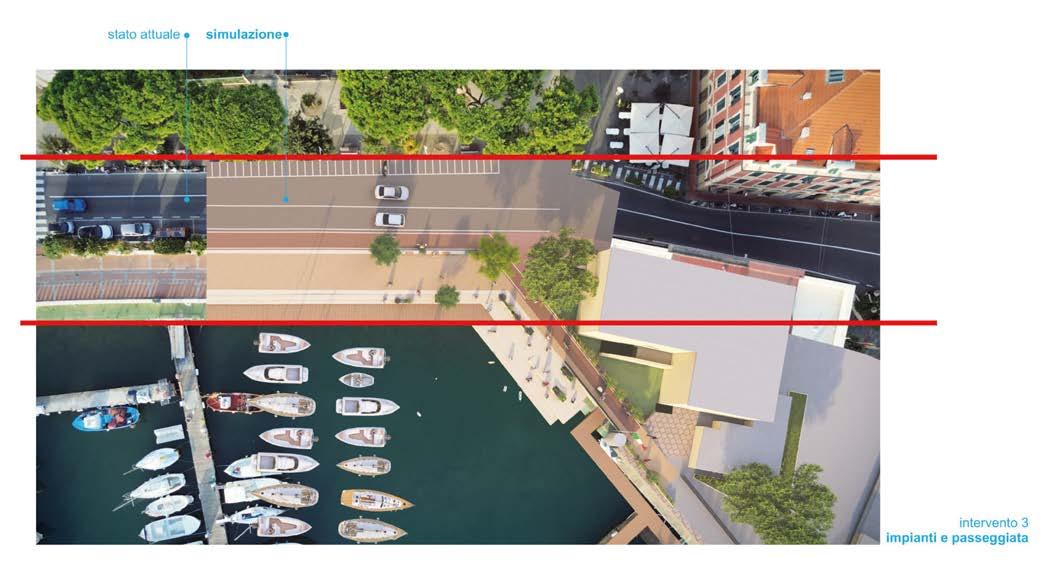
Il cuore del progetto sarà la Hall del Mare, che ospiterà un albergo a cinque stelle con darsena privata, centro benessere e terrazze panoramiche.
La struttura, organizzata in due corpi a “L”, accoglierà al piano terra la sede dello Yacht Club, un bar-ristorante e la reception portuale; ai piani superiori uf ci e spazi dedicati agli ospiti.
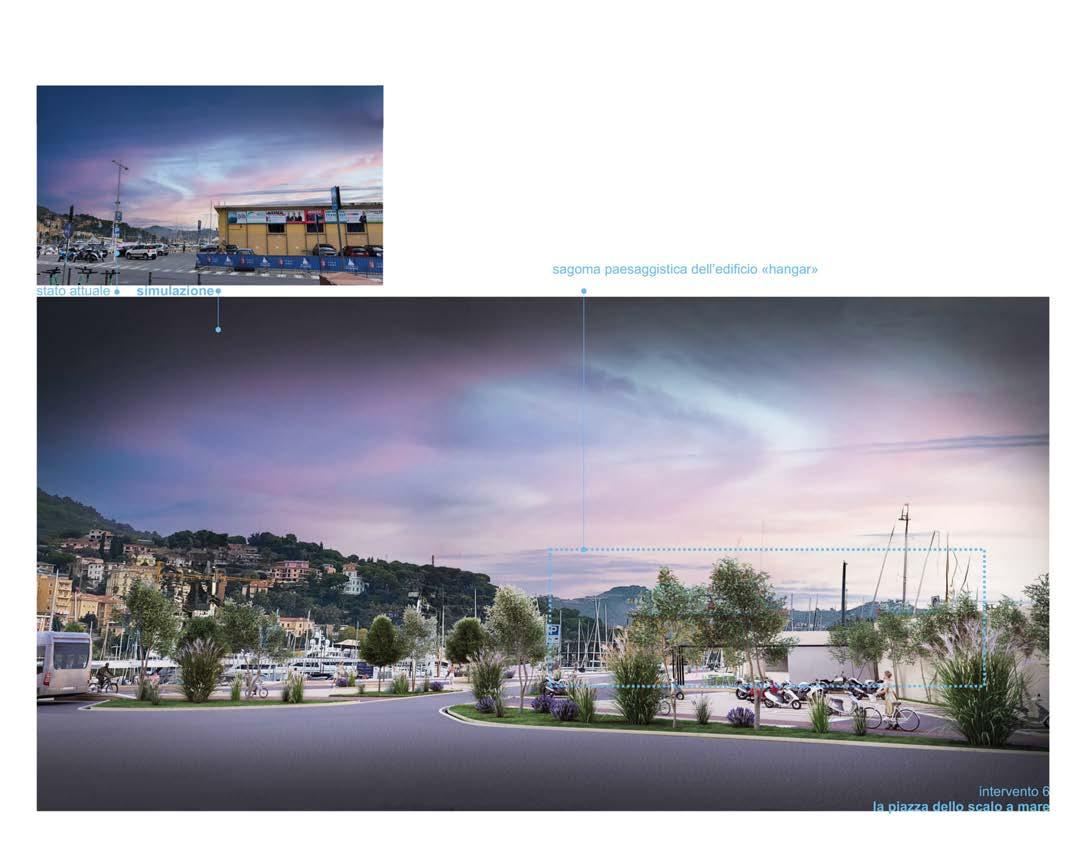
The centrepiece of the project will be the Hall del Mare, which will house a ve-star hotel with a private dock, a wellness centre and panoramic terraces. The building, comprising two L-shaped wings, will accommodate the Yacht Club’s headquarters, a barrestaurant and the port reception on the ground oor. The upper oors will house of ces and guest accommodation.
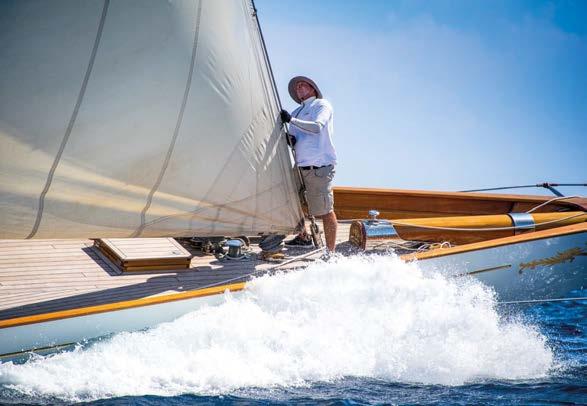
Abbiamo ricordato anche la nostra adolescenza. Il presidente, da ragazzo, per le vacanze estive si recava spesso a Bordighera in colonia. Mi raccontò di come riusciva sempre a scottarsi sotto il sole avendo
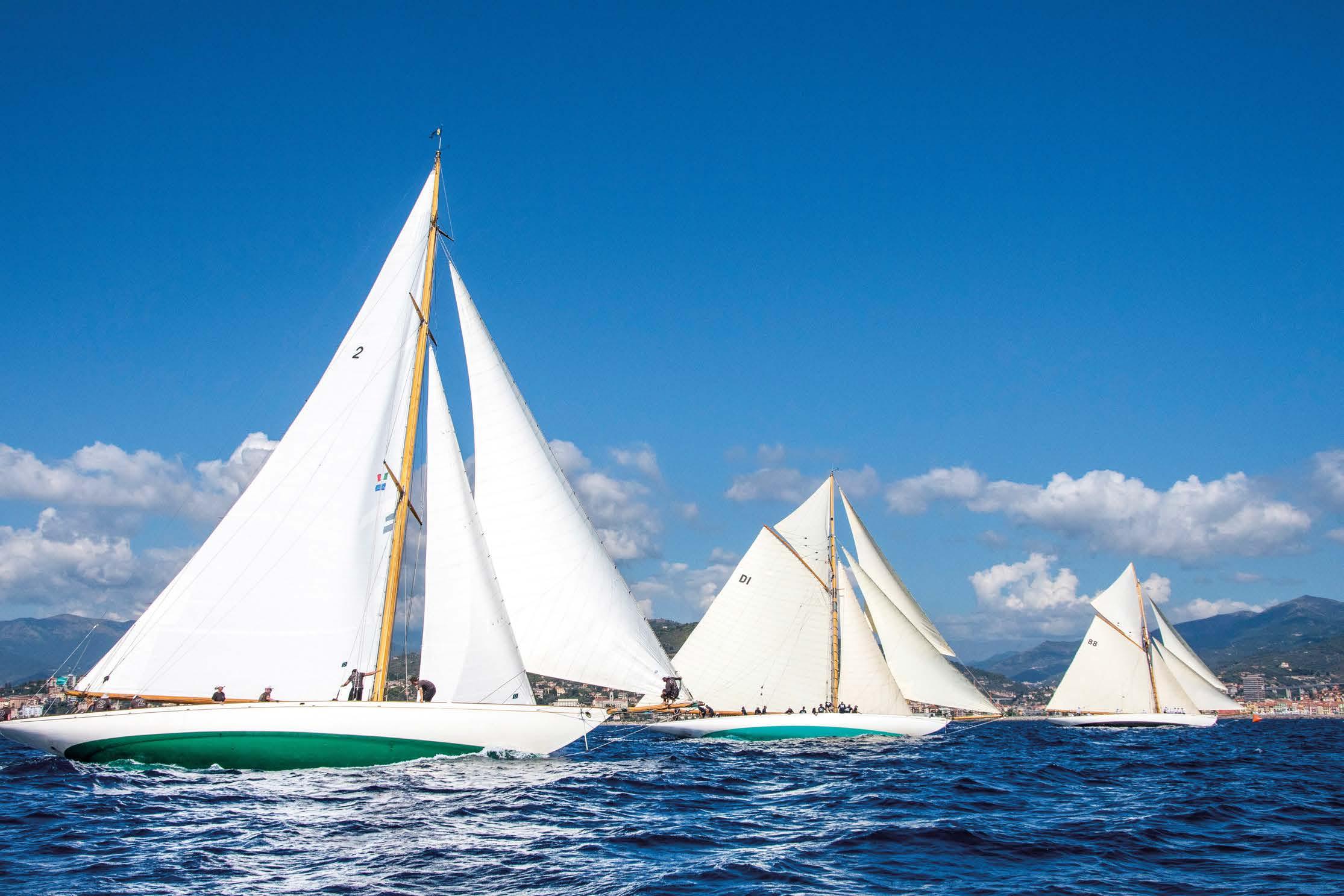
Dal 2 settembre al 5 settembre 2026, Imperia ospiterà il raduno storico delle Regine del mare.
From 2 to 5 September 2026, Imperia will host the historic gathering of the Queens of the Sea.
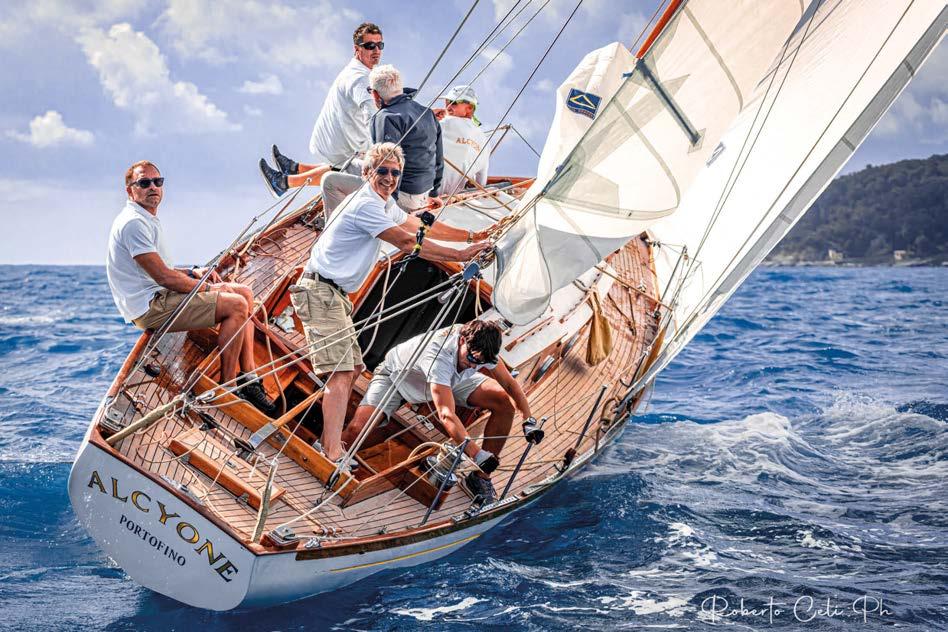
Il mare. Qual è l’insegnamento più grande che le ha dato? Questo: quando c’è la tempesta, non devi pensare di batterla. Devi soltanto mettere un minimo di vela, aprire il tambuccio, scendere giù e sdraiarti; se sei credente recitare una preghiera. E, casomai, bere un buon bicchierino di rum. Poi la tempesta nisce.
Sindaco, torniamo al porto. Qual è lo stato dell’arte in merito al suo completamento? Siamo usciti dalle secche. Finalmente siamo in dirittura d’arrivo. Abbiamo dato la concessione per fare ripartire i lavori alla Marina di Imperia, che è società al cento per cento del Comune. Ahinoi, un’inchiesta farlocca aveva bloccato tutto per anni. Ricordo che gli imputati sono stati assolti perché il fatto non sussiste e aggiungo che una delle ragioni che mi ha spinto a fare il sindaco della mia città è stata proprio la volontà di dipanare questo groviglio di problemi.
La nuova Marina contemplerà anche una parte dedicata al re tting? Sì, perché c’è grande richiesta in merito. Nel dettaglio, abbiamo previsto un allargamento signi cativo dell’attuale zona dedicata alla cantieristica.
In qualità di sindaco, che cosa la rende più orgoglioso? Di aver messo ordine in una città dove c’era il senso dell’abbandono. Ho messo ordine nei conti e nella struttura burocratica, che ora ha meno dipendenti di prima ma una duplice produttività. Credo di aver reso questa città più accogliente e più bella, esaltandone le caratteristiche. Del resto, lo scopo della vita è quello di amare il bello. E di mantenerlo. Questo si può fare se si uniscono l’attenzione, la passione e la visione, unitamente a tanto, tanto amore. Senza amore nulla si costruisce.
Il suo sogno per la città? Che le ultime due aree industriali, ferme da oltre un cinquantennio, possano avere un nuovo e dignitoso sviluppo. Trasformare una città è sempre molto complicato, ma doveroso. Non possiamo vivere di nostalgia. Dobbiamo agire per costruire il futuro
Sul sito uf ciale, veledepoca.com, sono disponibili tutte le informazioni utili relative al bando di regata, comprensive del modulo di iscrizione. Allora buon vento a chi parteciperà e, naturalmente, a Imperia.
On the of cial website, veledepoca.com, you’ll nd all the relevant information about the notice of race, including the entry form. So fair winds to all those taking part, and, of course, to Imperia.
Duemilaventisei, i primi quarant’anni di Vele d’Epoca di Imperia, la rinomata sailing week ligure che richiama le signore del mare da tutto il mondo.
Gli “anta”. Segnano un primo e signi cativo bilancio in merito a tutto ciò che è stato, unitamente alla consapevolezza che - per fortuna - c’è ancora parecchio asfalto da mordere.
Miglia per la verità.
Già, perché le quaranta candeline in questione sono quelle che, nell’anno in corso, si accinge a spegnere Vele d’Epoca di Imperia, evento velico che trasforma la città ligure, gioiello incastonato a Ponente, nella capitale assoluta delle regate classiche nel Mediterraneo.
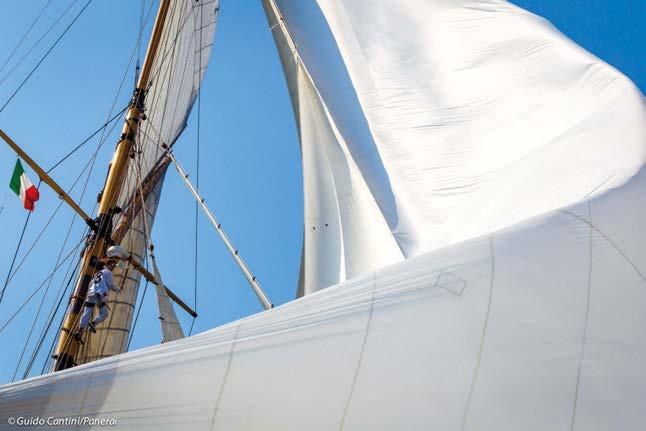
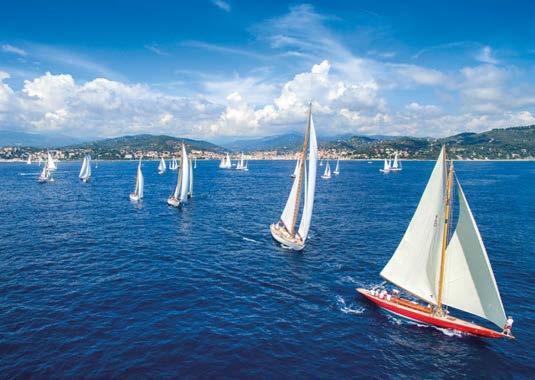
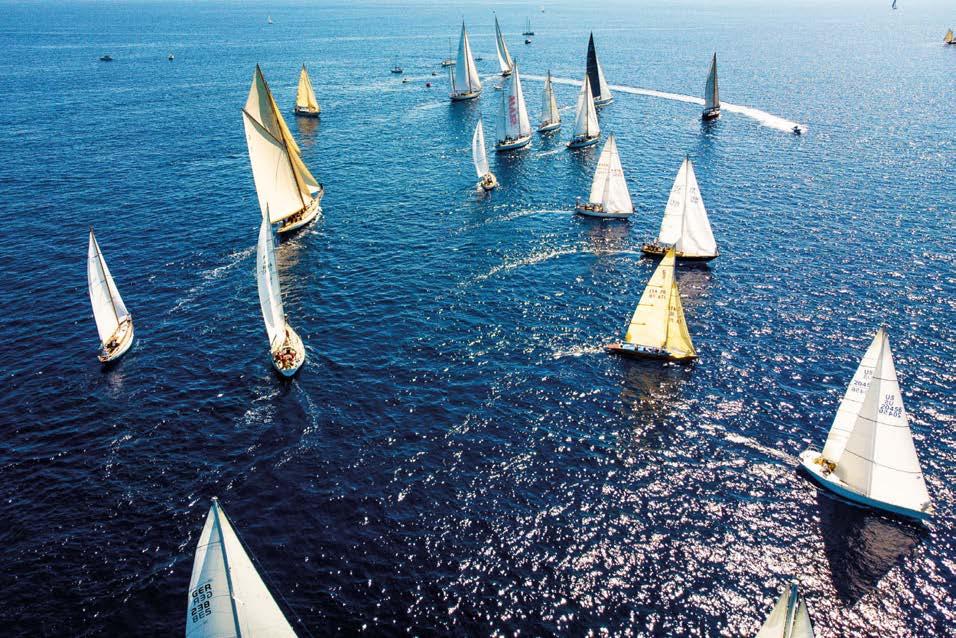
Ripercorrendo le numerose edizioni non ci sono dubbi: la kermesse è indiscutibilmente sempre più nodale nel panorama delle competizioni internazionali. Il famoso bilancio di cui sopra registra infatti numerosi più. Lo fa in termini di entusiasmo, indotto per l’economia del territorio, eco mediatica e partecipazione. Un dato su tutti: nel 1986 le imbarcazioni ormeggiate alla banchina di Calata Anselmi pronte a s darsi erano 27, nel 2025 ben 60. Imbarcazioni, oltretutto, di armatori del calibro di Silvio Berlusconi, Gianni Agnelli, Raul Gardini, Alberto Rusconi, Miuccia Prada e Patrizio Bertelli, le sorelle Alessandra e Allegra Gucci, Luca Cordero di Montezemolo, e quei giganti di Olin Stephens, Cino Ricci e Giovanni Soldini. In 8 lustri, tondi tondi, a Imperia si è avvicendato, di molo in molo, davvero il gotha dell’imprenditoria e della vela che conta. L’edizione del 2026, in particolare, prevede due momenti clou da mettere subito in agenda. Dal 28 agosto al primo settembre Imperia ospiterà la nale del Campionato Mondiale della classe 12 metri Stazza Internazionale, mentre dal 2 al 5 settembre prenderanno il largo le cosiddette vele storiche, le “signore del mare”.
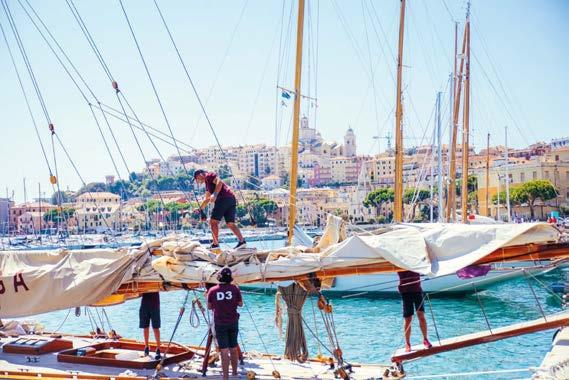
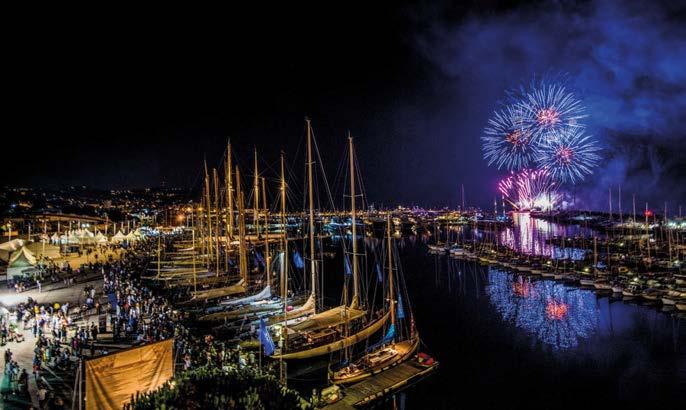
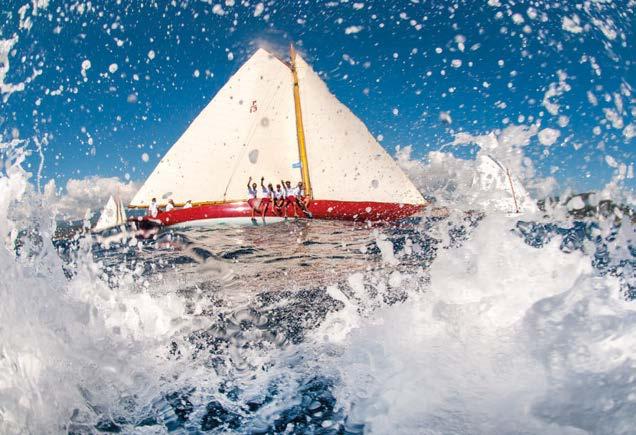
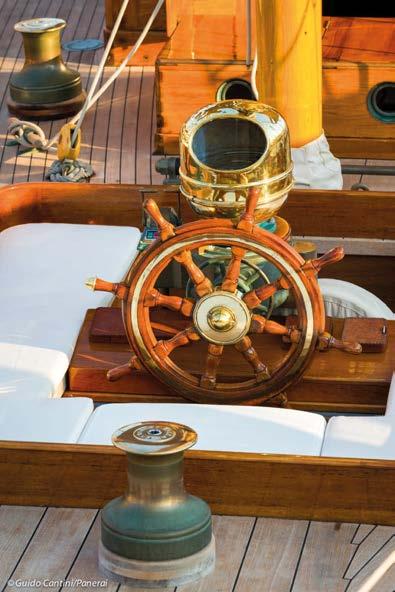
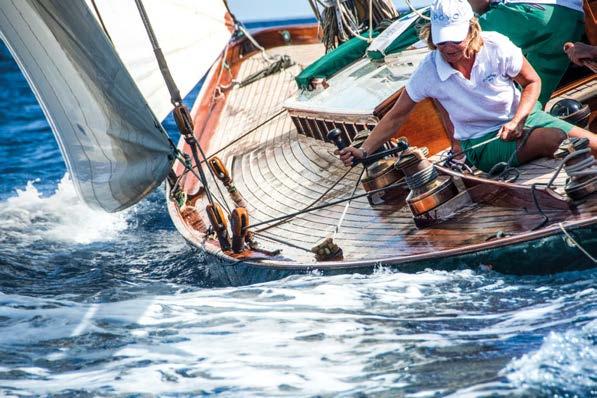
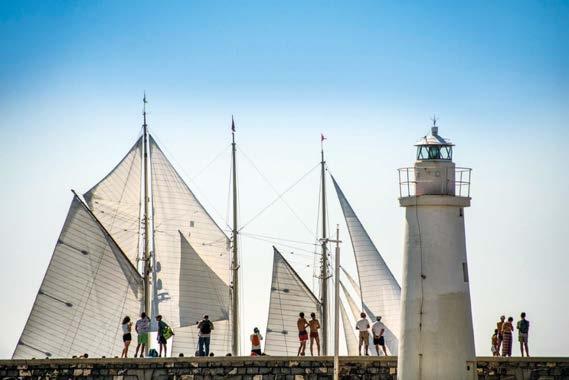
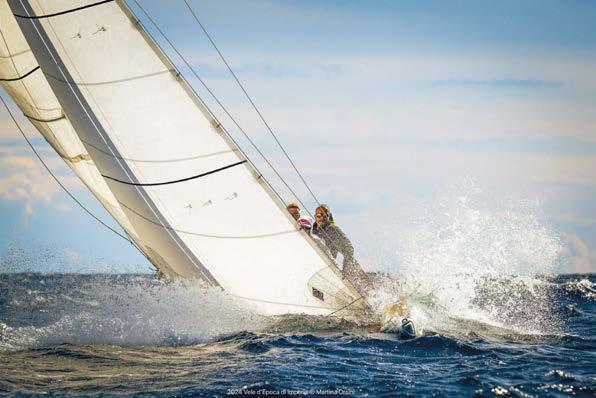
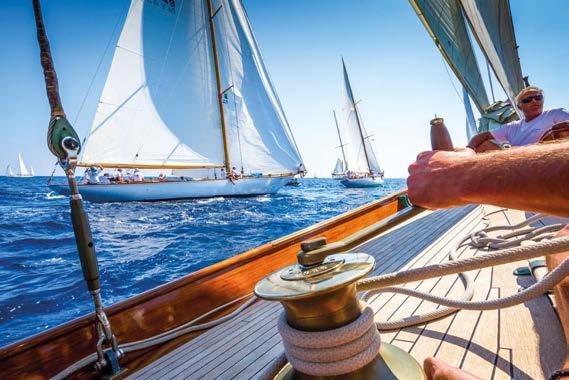
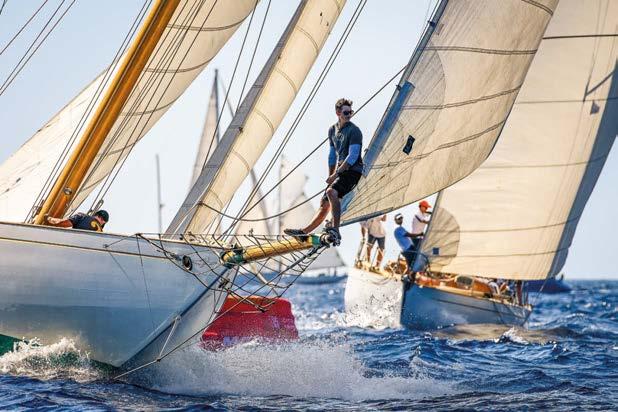
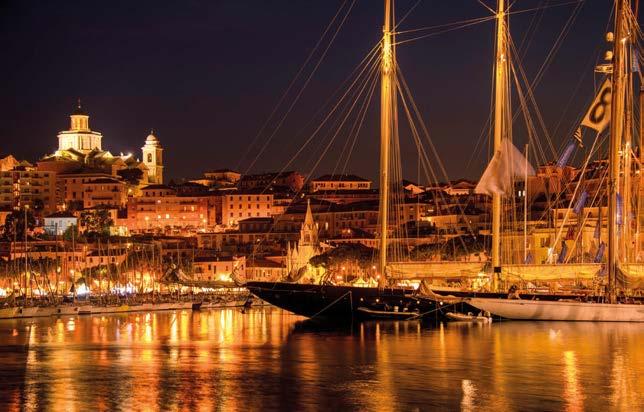
2026: the rst forty years of Vele d’Epoca in Imperia, the renowned Ligurian sailing week attracting classic yachts from around the world.
The ‘forties’. They mark a rst, signi cant milestone in looking back on everything that has been, coupled with the realisation that – thankfully –there is still plenty of ground to cover.
Miles, actually. Indeed, the forty candles in question are those that Vele d’Epoca di Imperia is set to blow out this year, a sailing event that transforms the Ligurian city – a jewel nestled in the west – into the undisputed capital of classic regattas in the Mediterranean.
Looking back over the many editions, there is no doubt: the event is increasingly pivotal in the international competition scene. The aforementioned assessment records numerous increases. This is true in terms of enthusiasm, the economic impact on the local area, media coverage and participation. One gure stands out above all others: in 1986, there were 27 boats moored at the Calata Anselmi quay ready to compete; by 2025, there were as many as 60
What’s more, these were boats owned by the likes of Silvio Berlusconi, Gianni Agnelli, Raul Gardini, Alberto Rusconi, Miuccia Prada and Patrizio Bertelli, sisters Alessandra and Allegra Gucci, Luca Cordero di Montezemolo, and the giants of the industry: Olin Stephens, Cino Ricci and Giovanni Soldini. Over the course of a good 40 years in Imperia, the very cream of the business and sailing worlds has passed through, from pier to pier. The 2026 edition, in particular, features two highlights that are well worth noting in your diary. From 28 August to 1 September, Imperia will host the nal of the 12-metre International Tonnage Class World Championship, whilst from 2 to 5 September, the so-called historic sailing vessels, the ‘ladies of the sea’, will set sail.
He has served as a minister of the Republic on several occasions and has been mayor of Imperia since 2018. Yet Claudio Scajola is not merely a man of the institutions.
He is also a ‘man of the sea’: he has a keen instinct, knows how to steer, understands the winds, is unafraid of the unexpected, and never loses sight of the horizon.
Vela e Motore met him at his command post, the Town Hall at 157 Viale Giacomo Matteotti, where he goes every day to run the city he loves dearly.
Mayor, what are the primary factors that make Imperia a premier destination for nautical tourism? There are two. I call them opportunities. The rst is the one bestowed upon us by the Creator: the beauty of the area. The sea is beautiful in Imperia. Anyone sailing in our waters can admire the cetaceans, and sailors can count on a distinctive wind that gives them great satisfaction. The second relates speci cally to the port: it is a former commercial port and, as such, boasts very spacious facilities. It has, for example, imposing piers that protect against
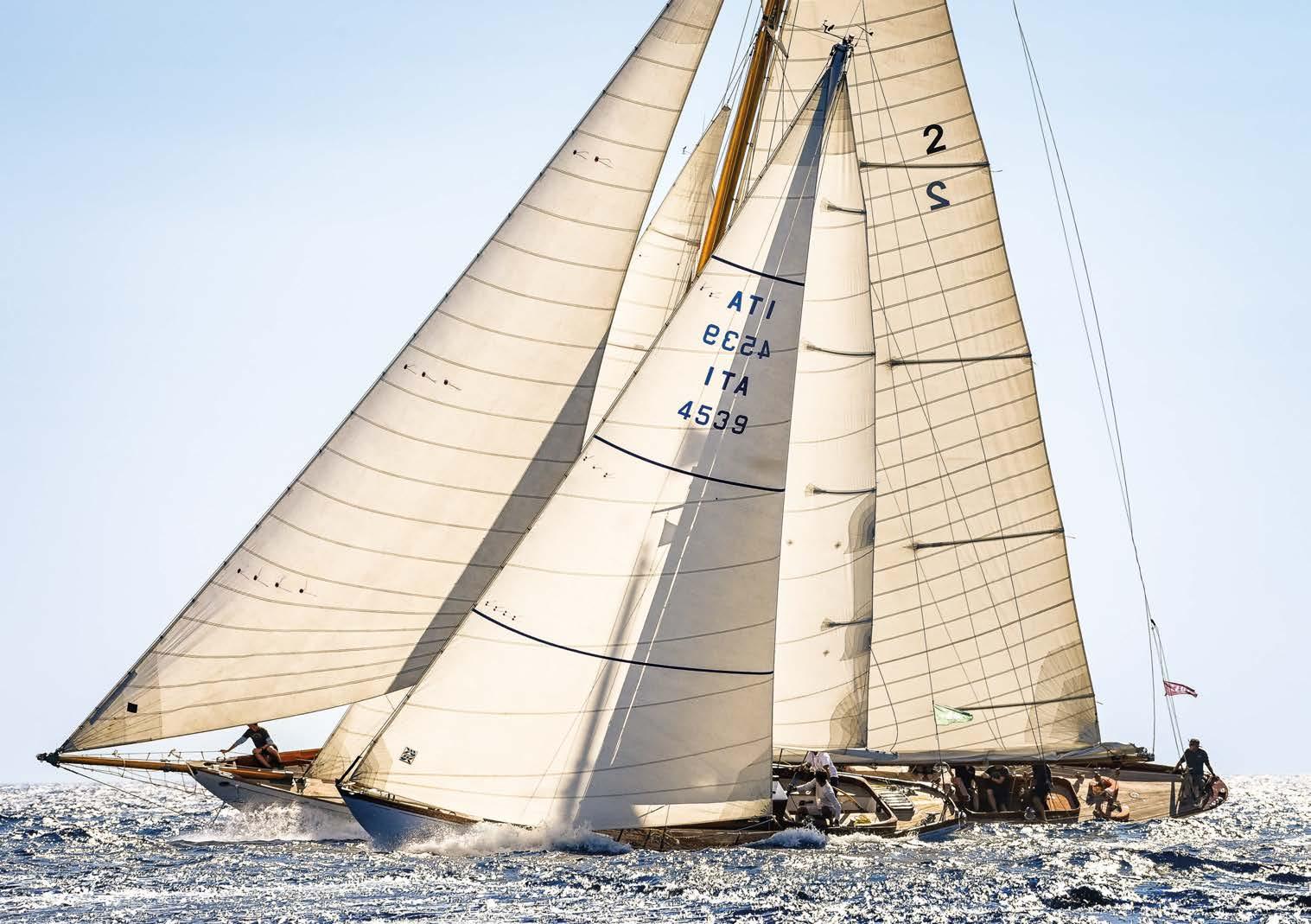
The water depth, I might add, allows us to accommodate vessels up to 90 metres long easily. Furthermore, bear in mind that our marina is situated within the city. It is not a ‘garage’ for mooring boats, far removed from everyday life. This is precisely why I like to say that we are planning to build a Porto Grand Hotel where one can stay and feel at home.
Vele d’Epoca. What signi cance does this event hold for the city, especially as it prepares to celebrate its 40th anniversary in 2026? It is a source of pride. Events of this kind are also organised elsewhere. However, enthusiasts of these beautiful vintage wooden yachts nd a particularly warm welcome here for the reasons I mentioned earlier: they can experience the city centre with all its comforts and amenities. Participation is deeply felt and highly sought-after, so much so that we have made the festival an annual event.
Speaking of the America’s Cup, there has recently been news of a twinning arrangement between the Imperia Yacht Club and the Reale Yacht Club Canottieri Savoia in Naples, which, as is well known, will serve as the headquarters for the logistical and representative activities of the 38th edition. The Naples Yacht Club is undoubtedly one of the world’s most exclusive and prestigious sailing clubs, so we cannot help but feel very proud of this achievement. It is a meeting of excellence. For the sake of completeness,
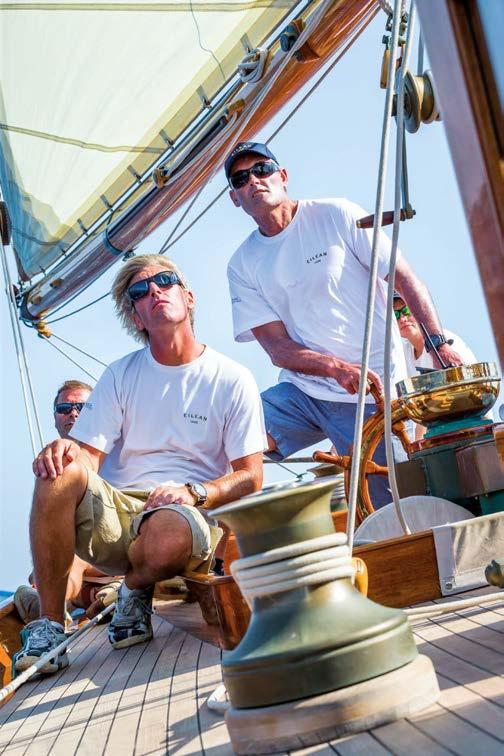
«Imperia ospiterà, dal 28 agosto al primo settembre, la nale del Campionato Mondiale della classe 12 Metri Stazza Internazionale, protagonista assoluta della COPPA
AMERICA dal 1958 al 1987. È chiaro come ciò sottolinei, ancora una volta, il ruolo sempre più determinante di questa città nel panorama mondiale delle competizioni veliche».
«Imperia will host the nal of the 12-Metre International Class World Championship from 28 August to 1 September. This class was the undisputed star of the AMERICA’S CUP from 1958 to 1987. This clearly underscores, once again, the city’s increasingly pivotal role in the global sailing competition scene».
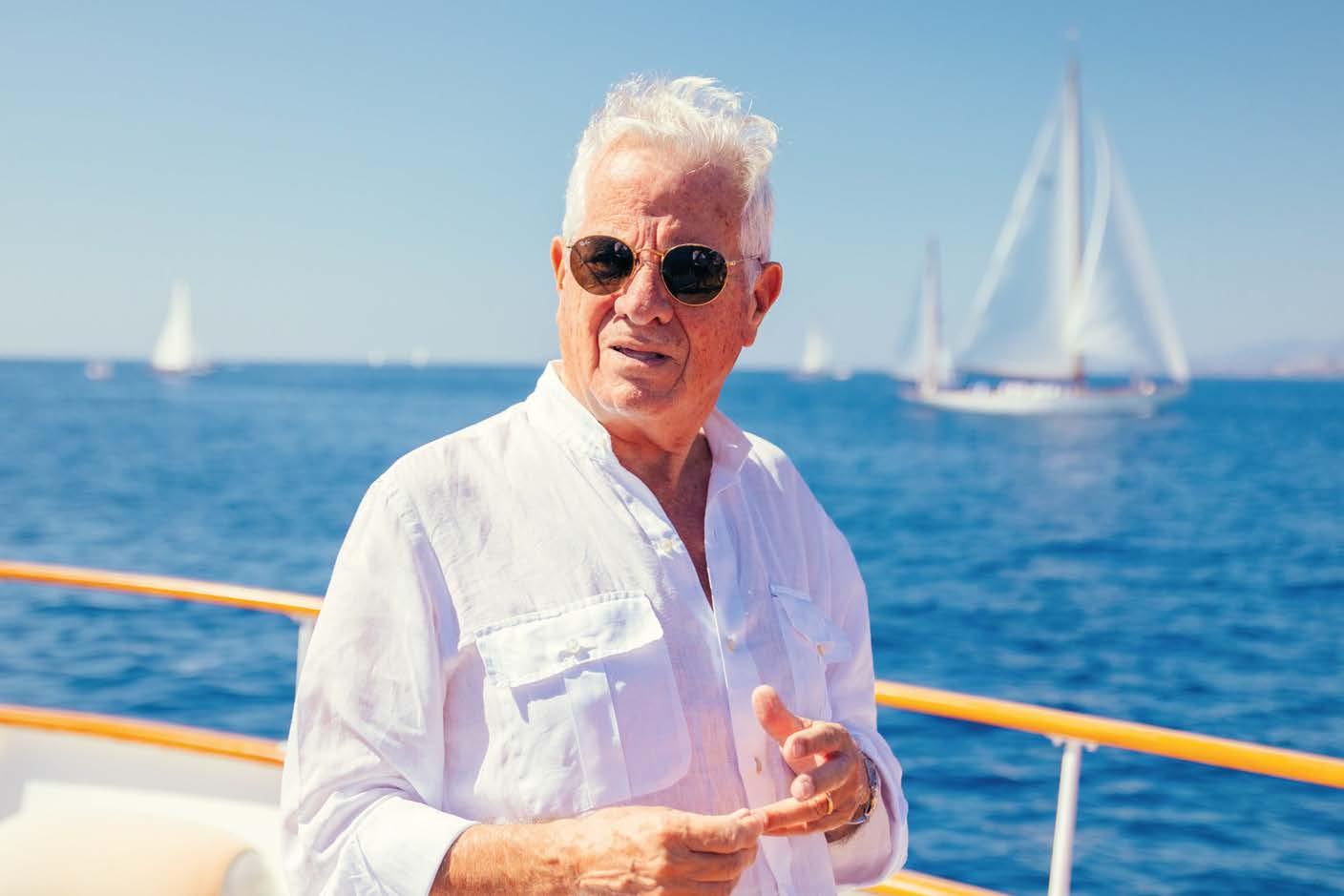
«In qualità di sindaco, la cosa che mi rende più ORGOGLIOSO è aver messo ordine in una città in cui c’era il senso di abbandono».
I should point out that our Yacht Club has also been twinned with Newport Marina, the historic home of the America’s Cup, for some time.
Mayor, you are also a yachtsman, as was former Prime Minister Silvio Berlusconi – and he, moreover, owned some magni cent yachts. Reports speak of a close friendship between you. Have you ever sailed together? His Principessa VaiVia was a guest at Vele d’Epoca for two consecutive editions, about fteen years ago. Of course, I had the pleasure of boarding his boats – I think on at least a couple of occasions – but my most vivid and cherished memory is of being with him on a small motorboat. We set out on our own to admire the beauty of his villa in Sardinia from the sea. We also reminisced about our teenage years. As a boy, the president often went to Bordighera for summer camp. He told me how he always managed to get sunburnt because of his very fair skin. My relationship with him is unforgettable. He has been part of the story of my life. For twenty years, we worked side by side, and I learnt a great deal from him. We combined his genius with my organisational skills. I can say that I worked with Berlusconi to build a Forza Italia rooted in the local community, in a relentless search for the best people.
Mayor, give yourself a mark as a boater. I’m an amateur. I had recently got married, already had two children and shared a sailing boat with my two best friends. After getting it back into shape, we thought it only right to reward our hard work with a lovely cruise together. We set off from Imperia, bound for Stromboli. I remember my father-inlaw looking at me with suspicion, thinking he’d handed his daughter over to a madman. After all, I was suddenly going from the little dinghy I was used to sailing in front of my beach to embarking on this demanding adventure. What can I say? On the other hand, life is only truly lived if you take on challenges. There is no life without challenges. In any case, I haven’t been out on a boat for some time. But I love the sea, and if I don’t see it for too long, I suffer.
The sea. What is the greatest lesson it has taught you? This: when a storm hits, you mustn’t try to ght it. You need to trim the sails to a minimum, open the hatch, go below deck and lie down; if you’re a believer, say a prayer. And, if you like, have a little glass of rum. Then the storm will pass.
Mayor, let’s get back to the port. What is the current status regarding its completion? We’ve got out of the shallows. We’re nally on the home stretch. We have granted the concession to restart work to Marina di Imperia, a company wholly owned by the council. Alas, a bogus investigation had brought everything to a standstill for years. I recall that the defendants were acquitted because there was no case to answer. I would add that one of the reasons I became mayor of my city was precisely the desire to untangle this web of problems.
Will the new marina also include an area dedicated to re tting? Yes, given the considerable demand for this. Speci cally, we have planned a signi cant expansion of the current shipbuilding area.
As mayor, what makes you most proud? To have restored order to a city that had felt neglected. I have brought order to the accounts and to the bureaucratic structure, which now has fewer staff than before but twice the productivity. I believe I have made this city more welcoming and more beautiful, highlighting its unique qualities. After all, the purpose of life is to love beauty. And to preserve it. This can be achieved by combining focus, passion, and vision with a great deal of love. Without love, nothing can be built.
«As mayor, the thing I’m most PROUD of is having brought order to a city that had been left in a state of neglect».
What is your dream for the city? That the last two industrial areas, which have been dormant for over fty years, might be redeveloped meaningfully. Transforming a city is always a complex task, but it is essential. We cannot live on nostalgia alone. We must take action to build the future.
Performance sottovela, volumi, comfort a bordo, facilità di conduzione, l’ultimo nato in casa Swan è maxi in tutto
Performance under sail, volume, comfort on board, ease of handling, the latest addition to the Swan family is maxi in every way
by Niccolò Volpati -
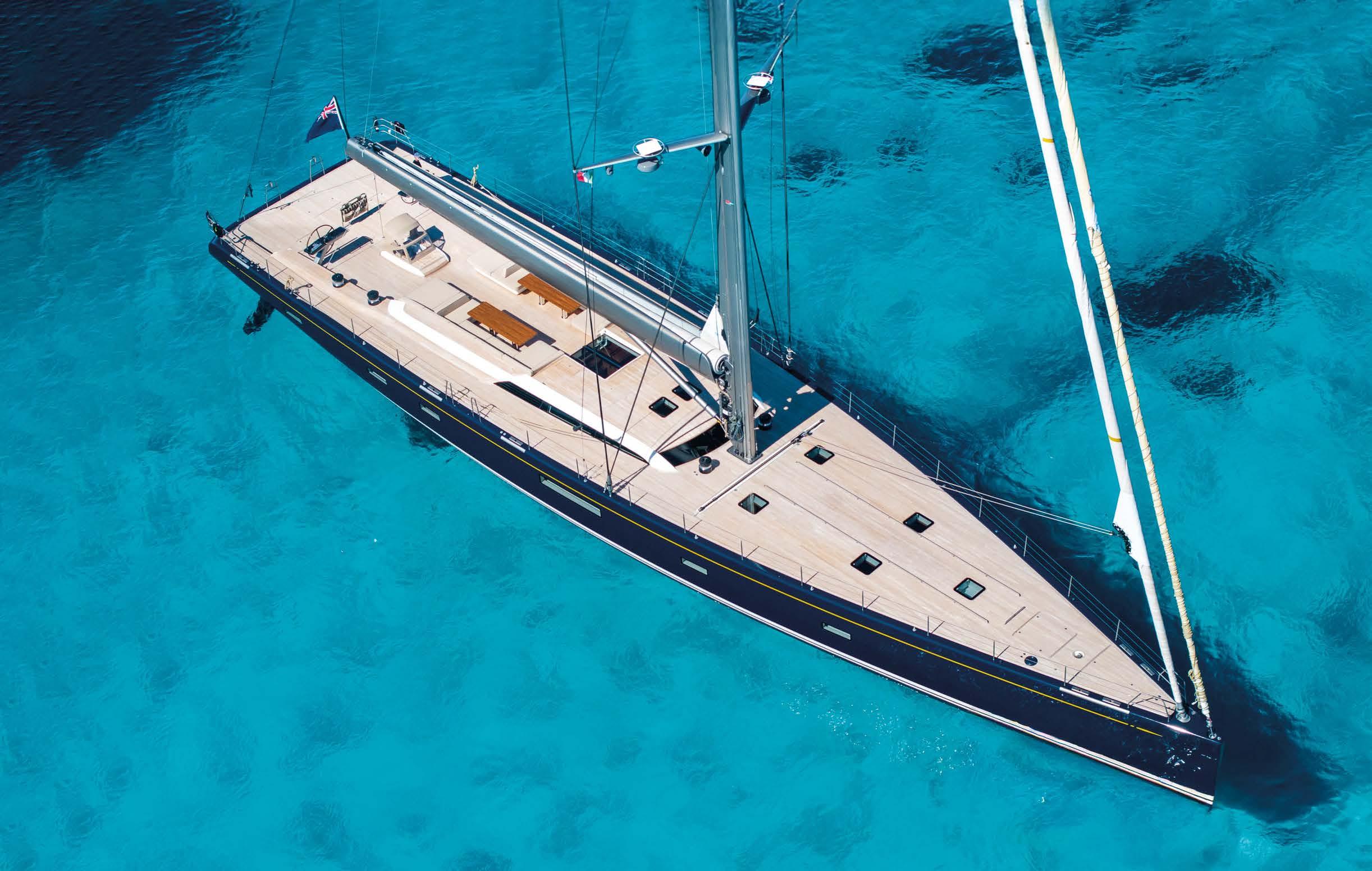
by Stefano Gattini/Studio Borlenghi
. 9 m8
Il 128, così come tutti gli Swan dal 1981 ad oggi, è stato disegnato da Germán Frers.
“Le linee d’acqua sono ottimizzate per un vento reale tra 8 e 10 nodi, ma ovviamente si tratta di una barca in grado di navigare ovunque anche con altri regimi di vento”, spiega il progettista. La loso a è sempre la stessa e anche questo maxi non si discosta: una barca confortevole, adatta a lunghe permanenze a bordo, ideale per navigare tanto e in tutti gli oceani del mondo. In due parole: performance sottovela e comfort a bordo. La coperta, curata da Lucio Micheletti, presenta un pozzetto diviso in tre aree. A ridosso della tuga, protetti dallo sprayhood a scomparsa, c’è la classica con gurazione con due divanetti a C e relativi tavoli per gli ospiti. Verso poppa, lo spazio è sgombro per consentire la personalizzazione preferita dall’armatore.
La poppa, oltre a un garage che può ospitare un tender di quattro metri e mezzo, si trasforma in una beach area molto ampia, da utilizzare durante le soste in rada. La zona centrale del pozzetto è dedicata alle manovre. Le ruote del timone sono in posizione avanzata proprio per assicurare il massimo controllo, sia della regolazione delle vele sia di tutto ciò che si trova intorno ai 39 metri di lunghezza di scafo. Swan 128 ha un’attrezzatura di coperta sorprendente, soprattutto considerate le dimensioni della barca. Il occo è autovirante e, tra i captive winch e i winch elettrici, non è dif cile immaginare che non richieda un equipaggio numeroso per condurlo e manovrarlo. L’unica cosa che non mi ha del tutto convinto è che a poppavia delle due ruote del timone avrei voluto avere qualche centimetro in più di super cie calpestabile.
Il quadrato, accessibile tramite un tambuccio d’ingresso extra large, offre tre livelli di luce naturale con vista panoramica sia in piedi sia da seduti. Le due aree, ben distinte tra salotto e zona pranzo in versione standard, offrono numerose personalizzazioni, tra cui i day bed per fruire delle ampie nestrature a scafo anche in navigazione. La TV lounge può essere convertita in un’ampia sala da pranzo in grado di ospitare dieci ospiti.
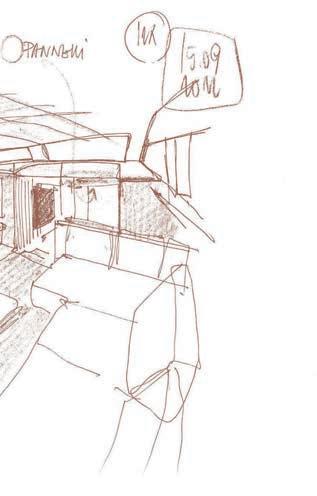
The raised ward room, accessible via an extra-large entrance companionway, offers three levels of natural light with panoramic views both standing and seated. The two areas, clearly divided between the saloon and dining area in the standard version, offer numerous customisation options, including day beds to enjoy the large hull windows even while sailing. The TV lounge can be converted into a large dining room seating up to ten guests.
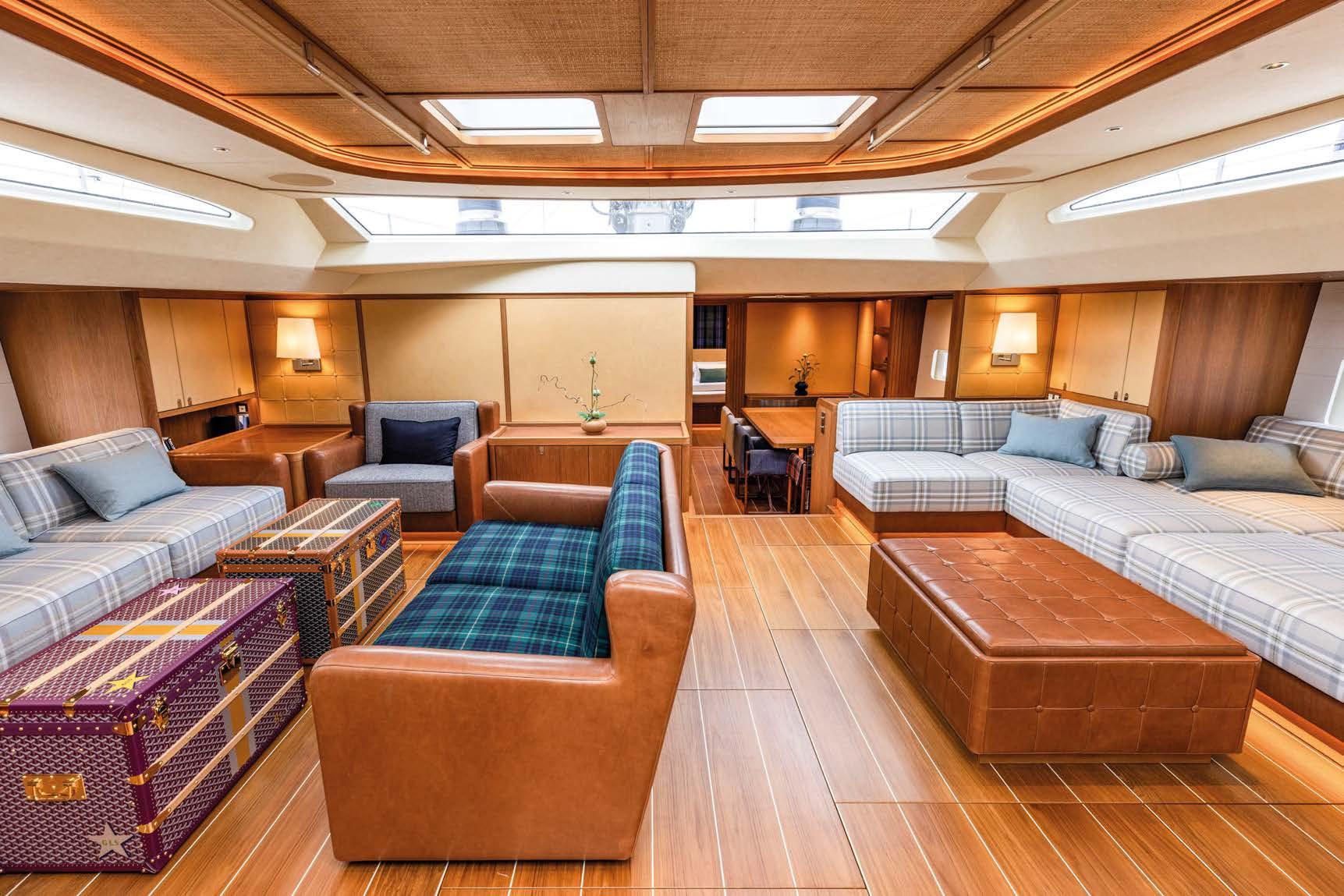

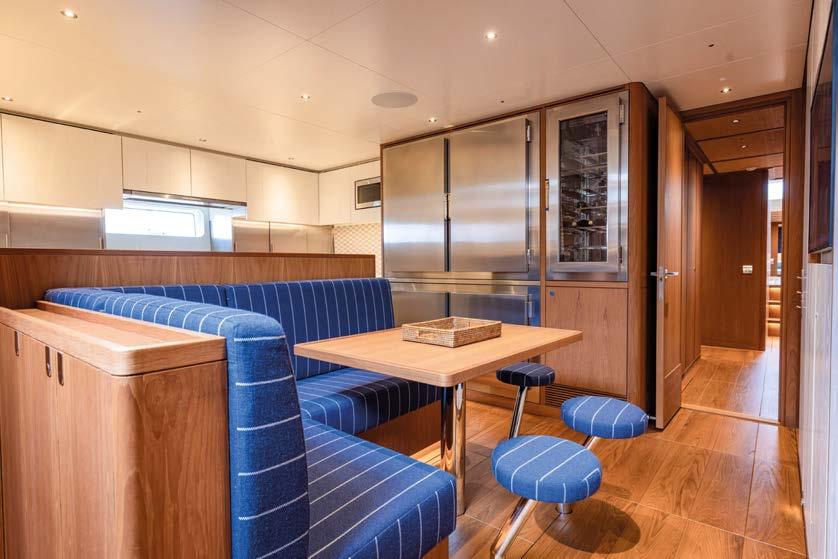
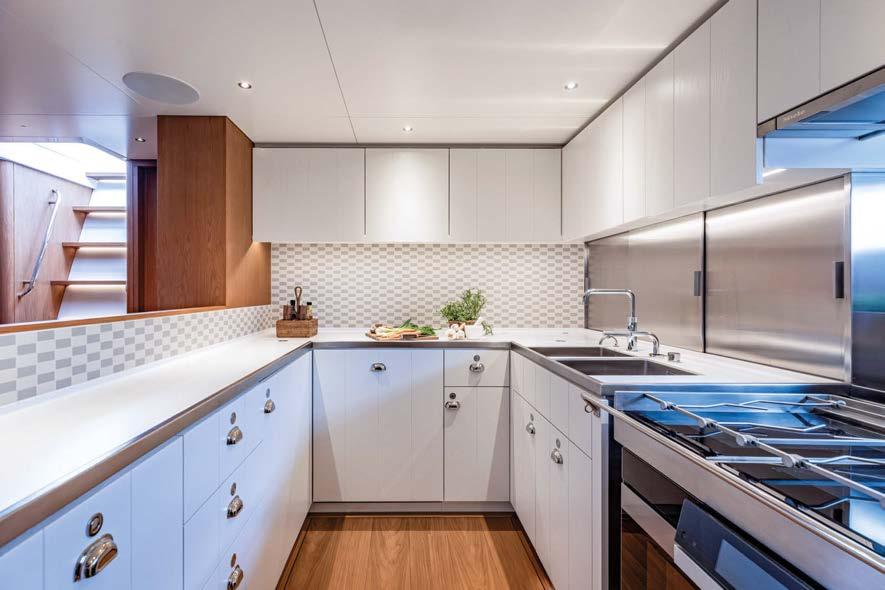
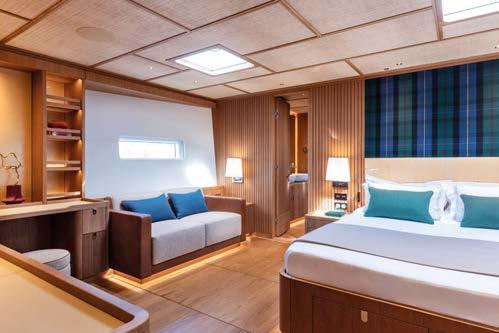
L’appartamento armatoriale è con gurato con cabina e bagno entrambi a tutto baglio. In nite le possibilità di personalizzazione, data l’ampiezza degli ambienti e i vincoli strutturali ridotti della zona, ben delimitata da paratie dalla forma regolare. Le varie cabine ospiti possono assumere diverse con gurazioni con letti singoli o matrimoniali, ulteriori letti pullman e bagni completabili con bidet.
The owner’s apartment features a full-beam cabin and a bathroom. There are endless possibilities for customisation, given the spaciousness of the rooms and the reduced structural constraints of the area, which is well de ned by regular-shaped bulkheads. The various guest cabins can be con gured in different ways, with single or double beds, additional pullman beds, and bathrooms that can be equipped with a bidet.
Lo spazio non manca, ovviamente, ma c’è un gradino che può far perdere l’equilibrio se ci si sposta inavvertitamente un po’ indietro quando si timona. Non è detto che succeda, ma con 39 metri di scafo, forse qualche centimetro in più per il timoniere si sarebbe potuto prevedere. Al timone non sono solo le prestazioni a sorprendere, ma anche la sensazione che si prova. Non c’è quasi alcun trascinamento; lo si deduce dalla scia, praticamente inesistente. La carena è perfettamente parallela alla super cie dell’acqua e sfrutta appieno la lunghezza di galleggiamento. Inoltre, il sistema studiato appositamente per i timoni rende molto docile la conduzione. Sono a bordo di una barca da 40 metri con un dislocamento a secco di 123.000 chili, eppure ho la sensazione di essere su uno scafo grande la metà. È molto maneggevole e reattiva. Le correzioni di rotta, anche le più minime, non sono mai un problema. Il vento non è particolarmente forte; si è navigato sempre tra sei e otto nodi di reale, e con randa e occo siamo riusciti a stringere la bolina no a 27° di apparente. Con 6,6 nodi di reale, gli strumenti indicavano ben 9 nodi di velocità e quando l’aria era leggermente rinforzata, allargando l’andatura di pochi gradi, abbiamo superato i dieci nodi. Il progetto di Frers prevede uno sbandamento di non più di 20° in condizioni ottimali che si traduce in un notevole comfort in navigazione. Gli interni sono frutto della collaborazione tra Frers, il cantiere e l’architetto Misa Poggi. I volumi sono così ampi che il margine di personalizzazione è notevole. In questo caso, l’armatore ha scelto di dedicare la parte centrale al living e di spostare la zona pranzo verso prua. Tutta la prua è dedicata alla cabina armatoriale e si trova ben distante dalla zona dell’equipaggio, collocata invece a poppa. Non si creda però che si tratti di una zona sacri cata, tutt’altro. Sono ampie le cabine, l’area living e, sempre a poppa, si trova la cucina. Per accedere alla zona equipaggio, la scaletta si trova al centro del pozzetto, tra le due ruote del timone, in modo da essere separata dalla discesa
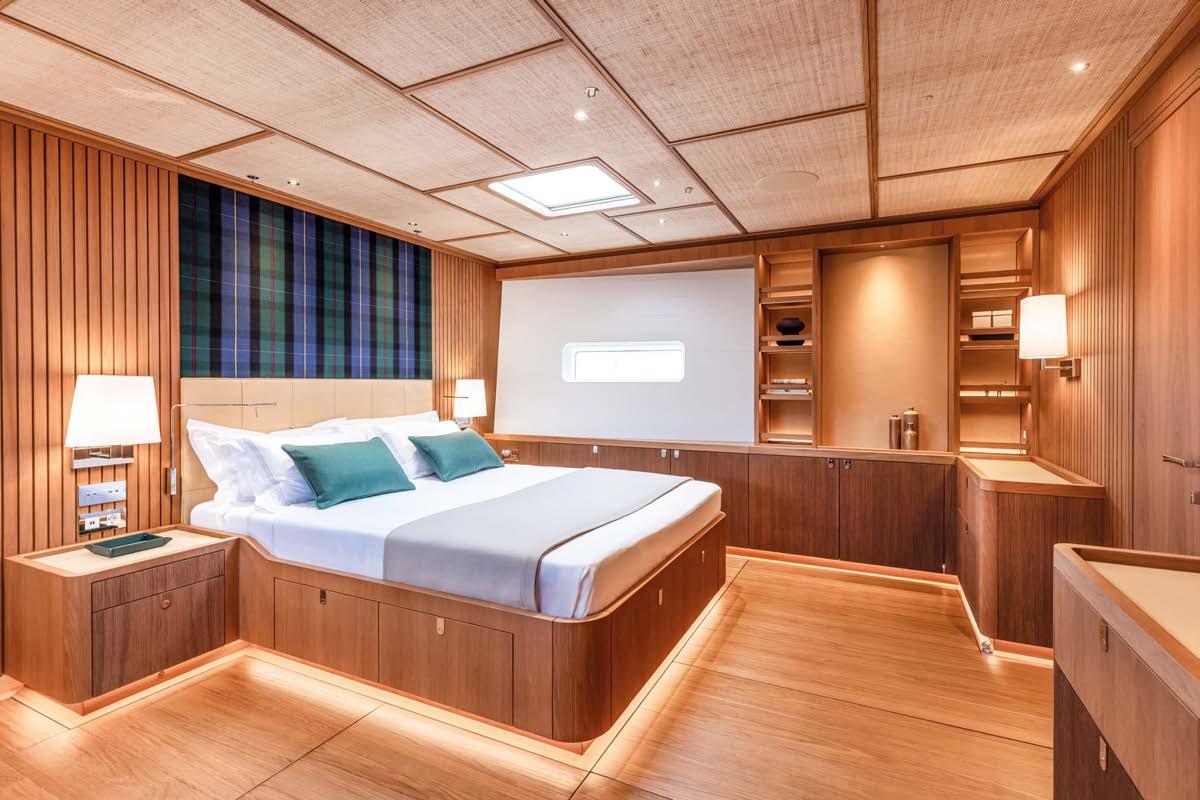
Misa Poggi ha realizzato per gli interni un layout ottimale e FLESSIBILE, con un ampio appartamento dedicato all’armatore nella zona di prua e una GENEROSA area per l’equipaggio a poppa.
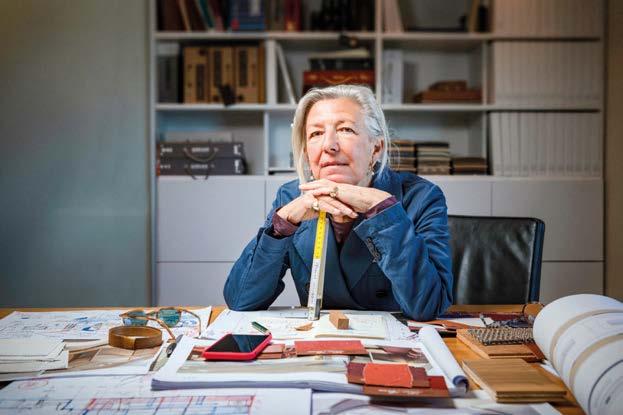
Misa Poggi has created an optimal, FLEXIBLE layout for the interiors, with a spacious owner’s apartment in the bow and a GENEROUS crew area in the stern.
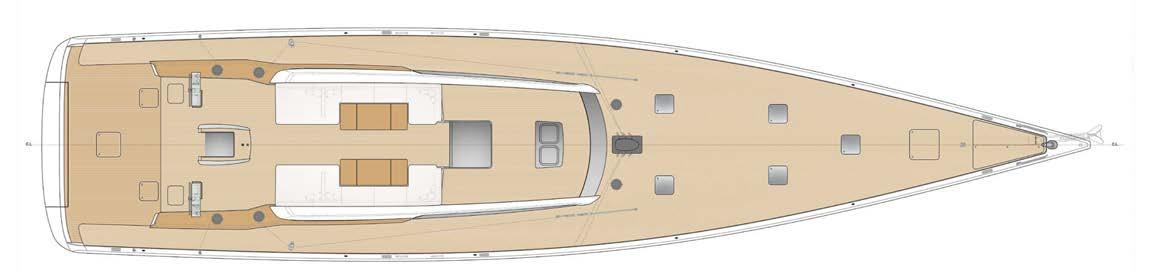
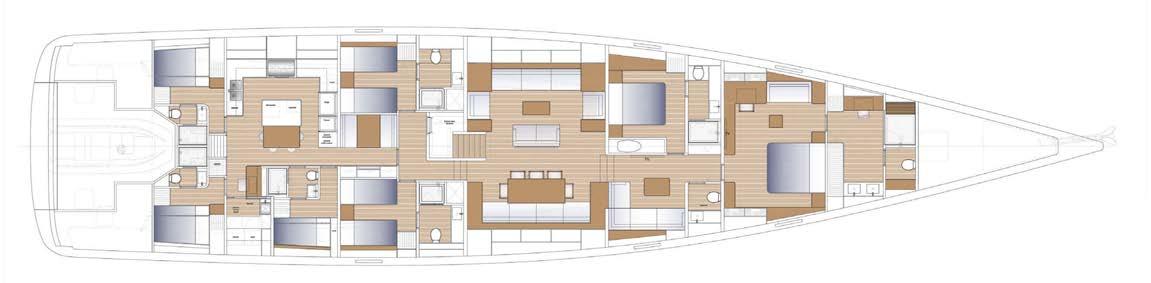
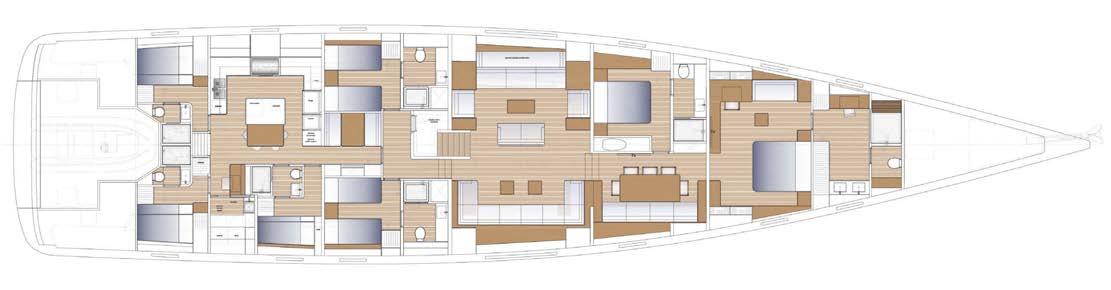
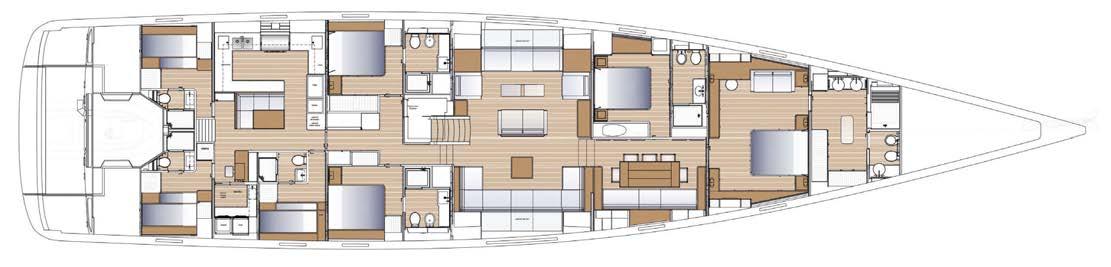
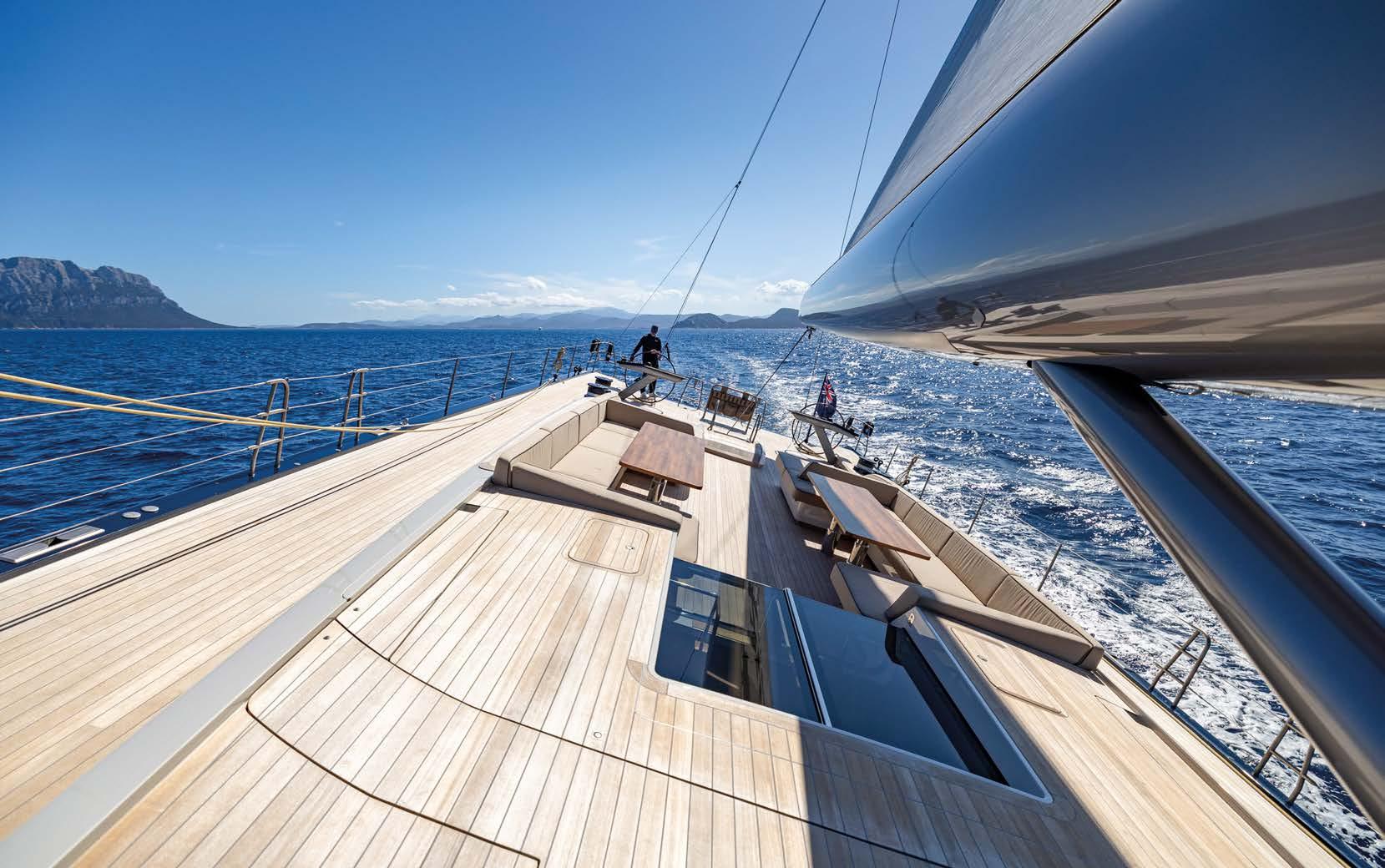
Da 55 anni, tutti
i modelli Swan sono stati realizzati nello stesso luogo e dalle STESSE FAMIGLIE, tramandando il know-how di padre in glio.
For 55 years, all Swan models have been made in the same place and by the SAME FAMILIES, passing down their expertise from father to son.
Like all Swans built between 1981 and the present day, the 128 was designed by Germán Frers.
“The waterlines are optimised for true winds of between 8 and 10 knots, but this is obviously a boat that can sail in all conditions”, explains the designer. The philosophy remains the same, and this maxi is no exception: it is a comfortable boat, ideal for long stays on board and extensive sailing in all the world’s oceans. In two words: performance under sail and comfort on board. The deck, designed by Lucio Micheletti, features a cockpit divided into three areas. Close to the deckhouse, protected by a retractable sprayhood, is the classic con guration with two C-shaped sofas and tables for guests. Towards the stern, the space is left clear to allow for customisation according to the owner’s preferences. The stern, in addition to a garage that can accommodate a four-and-ahalf-metre tender, transforms into an extensive beach area to be used at anchor. The central area of the cockpit is dedicated to manoeuvring. The steering wheels are positioned forward to ensure maximum control, both of the sail adjustment and of everything around the 39-metre-long hull.
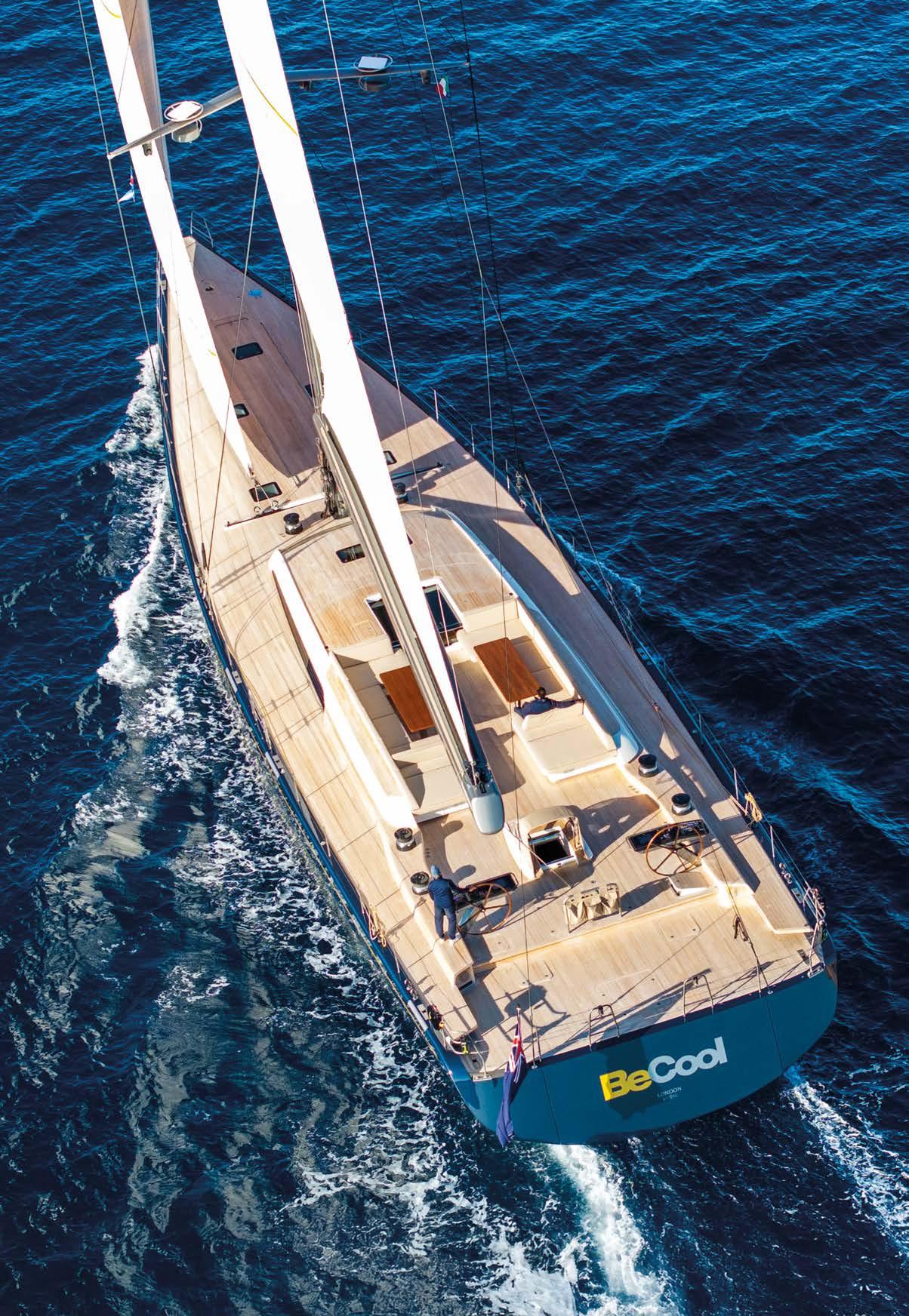
Il pozzetto presenta la tipica distinzione in tre aree che caratterizza tutti gli Swan. La zona anteriore, a ridosso della tuga e protetta da sprayhood e bimini, è dedicata agli ospiti. L’area centrale del pozzetto include tutti gli elementi per la conduzione della barca, dalle timonerie in posizione avanzata e panoramica ai winch per il controllo delle vele. Tutta la poppa è dedicata al beach club, che si connette senza soluzione di continuità alla grande plancetta.
The cockpit features the typical three-area layout characteristic of all Swans. The forward area, close to the deckhouse and protected by a sprayhood and bimini, is reserved for guests. The central area of the cockpit includes all the elements for sailing the boat, from the forward-positioned, panoramic steering positions to the winches for controlling the sails. The entire stern is dedicated to the beach club, which connects seamlessly to the large platform.

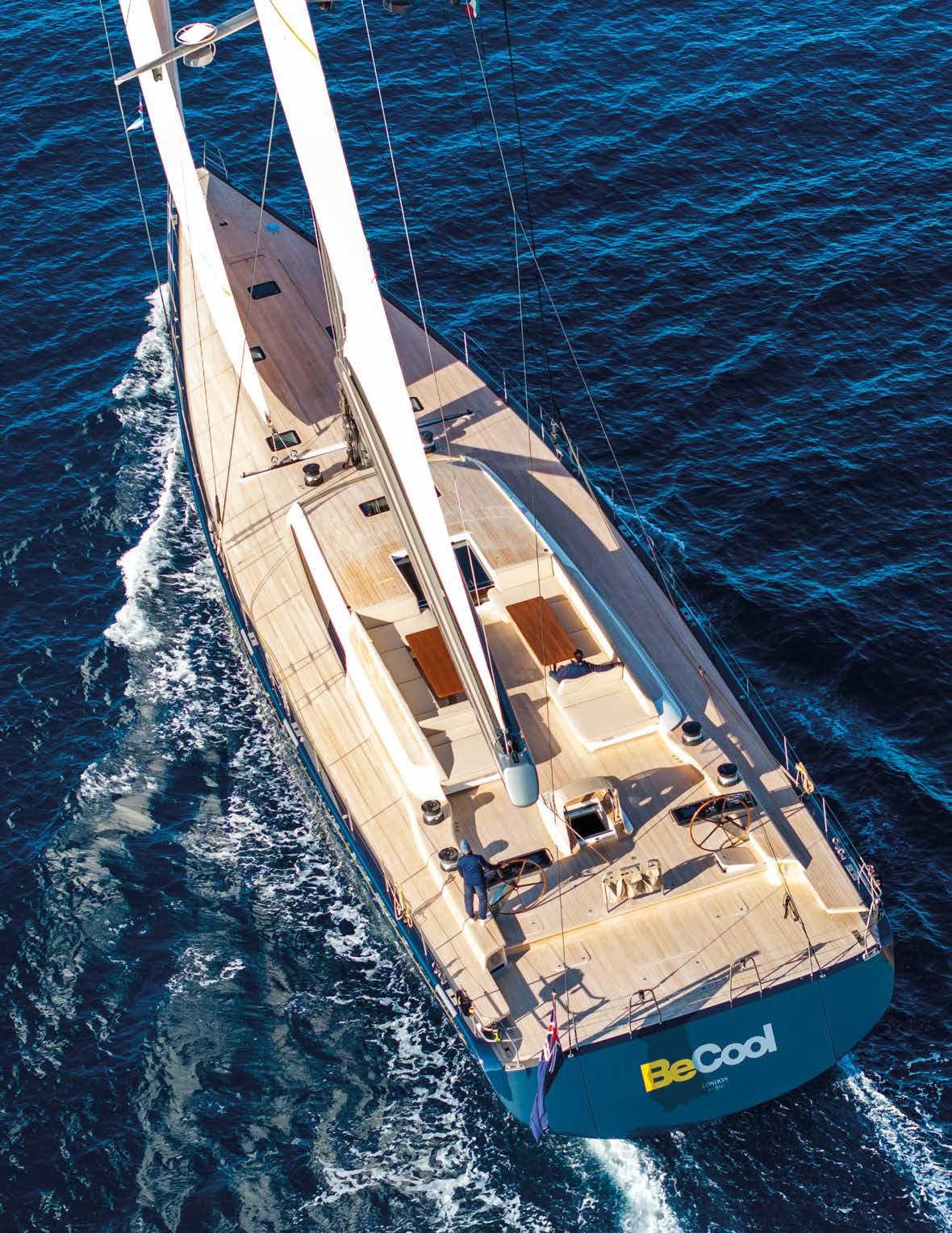
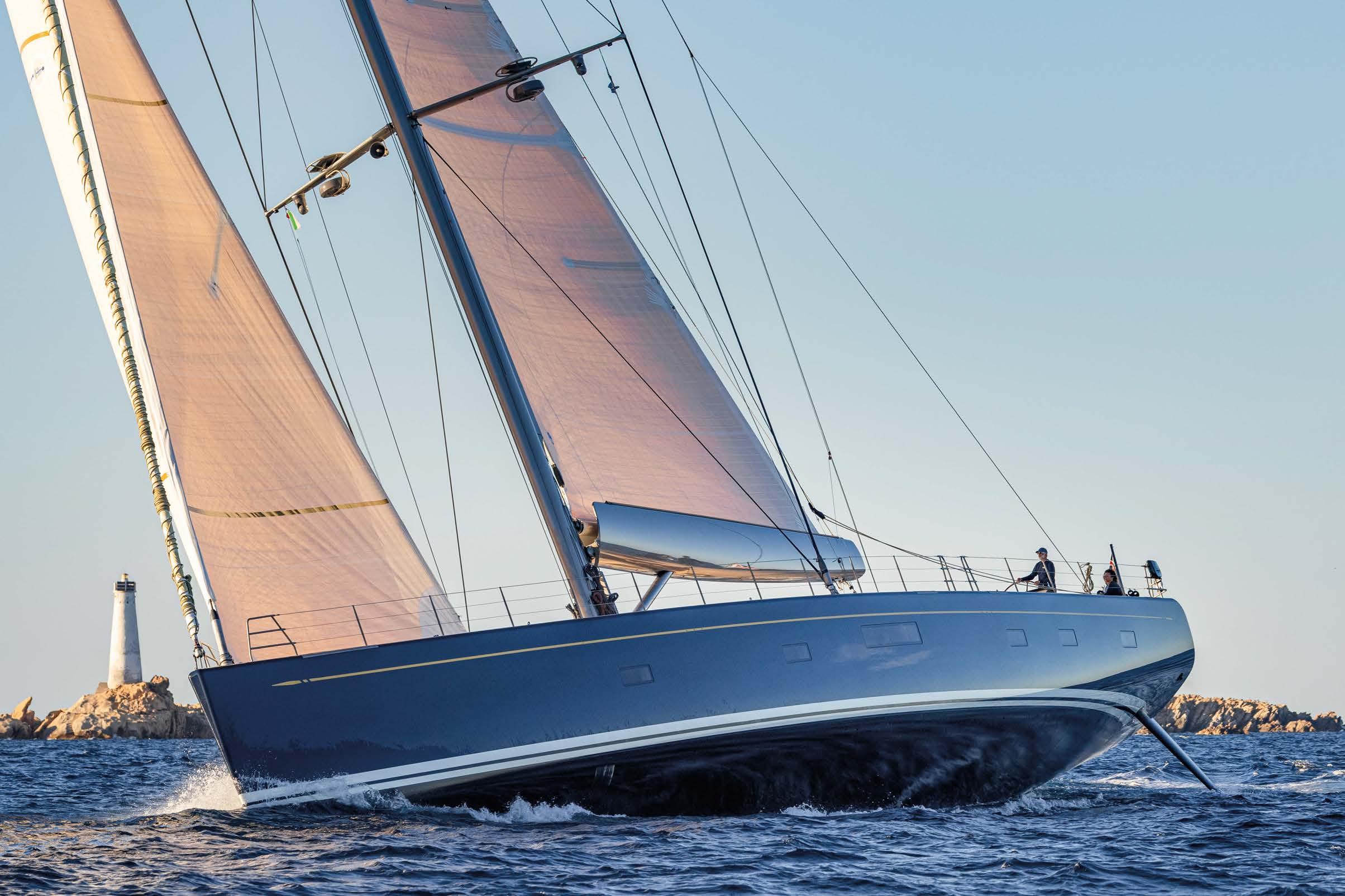

Una barca a vela molto grande non è mai facile da condurre. Germán Frers e il cantiere, però, hanno trovato la soluzione. I timoni sono voluminosi anche perché, se non fossero così, lo scafo sarebbe dif cile da manovrare, anche all’ormeggio. Possono però essere sinonimi di attrito e quindi di fatica nel navigare. Invece Swan 128 ha un sistema simile a quello di una bicicletta, che consente di avere un “timone pieno” quando si deve manovrare in porto e un “timone ridotto”, ideale in navigazione. È tutto merito di due ingranaggi, due ruote dentate che fungono da demoltiplicatore quando serve. La sensazione è quella con il servosterzo di un’auto.
La conduzione è davvero semplice, anche perché in navigazione le correzioni di rotta sono, tutto sommato, contenute. Sembra davvero di essere a bordo di una barca più piccola e agile rispetto ai 39 metri dello scafo dello Swan 128.
Let’s be honest, handling a very large sailing boat is never easy. However, Germán Frers and the shipyard have found a solution. The rudders are large to make manoeuvring easier, even at mooring. Large rudders can, however, be synonymous with friction and therefore make sailing more dif cult.
The Swan 128, however, has a system similar to that of a bicycle, allowing a ‘full rudder’ when manoeuvring in port and a ‘reduced rudder’ for sailing. This is all thanks to two gears and two cogwheels that act as a reduction gear when needed. It feels the same as a car with power steering.
Steering is effortless, partly because course corrections are minimal when sailing. You really feel as though you are on board a smaller, more agile boat than the Swan 128’s 39-metre-long hull.

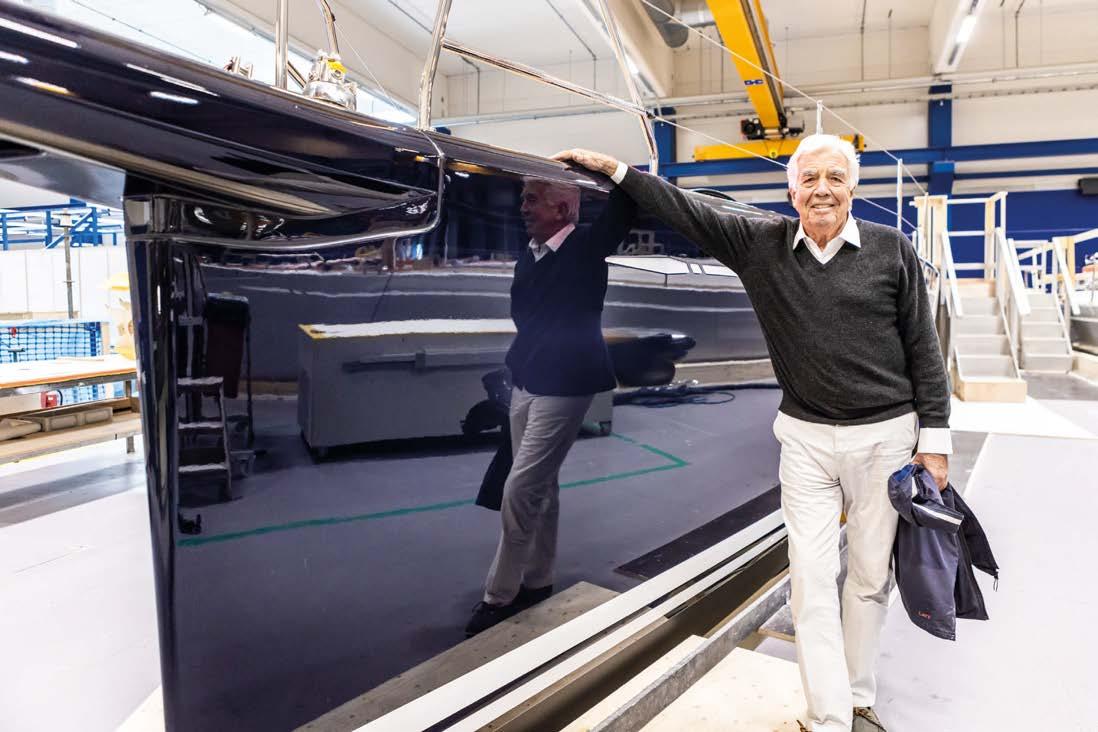
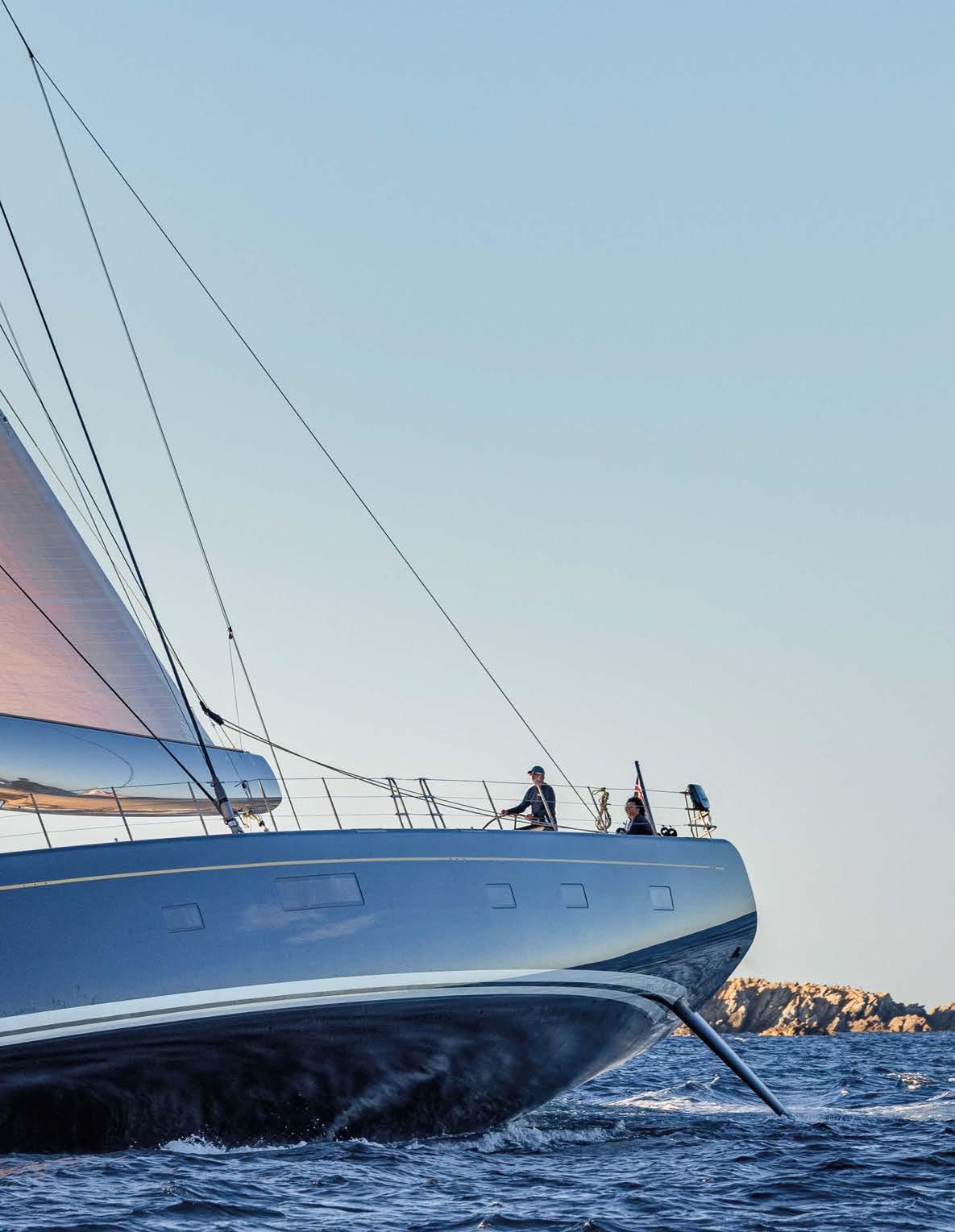
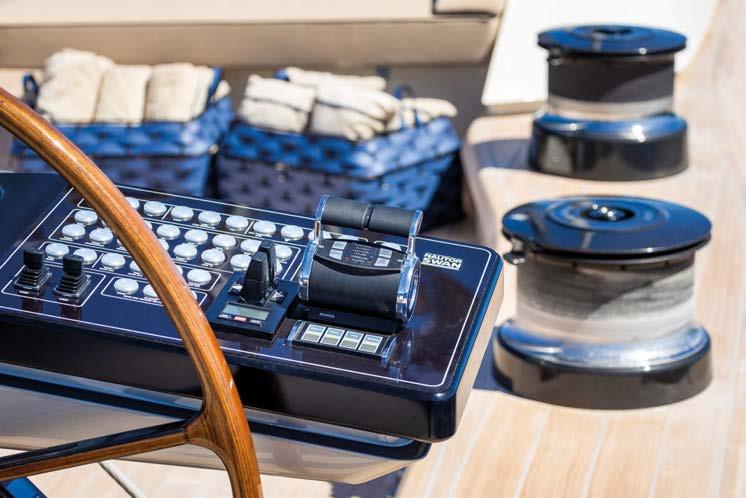
Over the last ten years, the collaboration between Studio Frers and the shipyard has resulted in the completion of 13 projects, seven of which are over 80 feet in length.
The Swan 128 has impressive deck equipment, especially given its size.
The jib is self-tacking and, with captive winches and electric winches, it is not dif cult to imagine that it does not require a large crew to sail and manoeuvre it. The only thing that didn’t convince me entirely was that I would have liked a few more centimetres of oor space behind the two rudder wheels. There is plenty of space, of course, but there is a step that could cause you to lose your balance if you move back slightly while steering. This doesn’t necessarily happen, but perhaps a few more centimetres could be provided for the helmsman on a 39-metre hull. Not only is the performance impressive at the helm, but the sensation you experience is too. There is almost no drag, as evidenced by the practically non-existent wake. The hull sits perfectly parallel to the water’s surface, making full use of the waterline length. Furthermore, the system designed speci cally for rudders makes steering very easy.
I am on board a 40-metre boat with a dry displacement of 123,000 kilograms, yet I feel like I am on a hull half the size. It is very manoeuvrable and responsive. Even the slightest course corrections are never a problem.
The wind was not particularly strong. We sailed at speeds of between six and eight knots true wind and, with the mainsail and jib, we managed to reduce the apparent wind angle to 27°. With a true wind of 6.6 knots, the instruments showed a speed of 9 knots.
When the wind picked up slightly, widening the sailing point by a few degrees, we exceeded 10 knots. Frers’ design allows a heel of no more than 20° in optimal conditions, resulting in remarkable comfort when sailing.
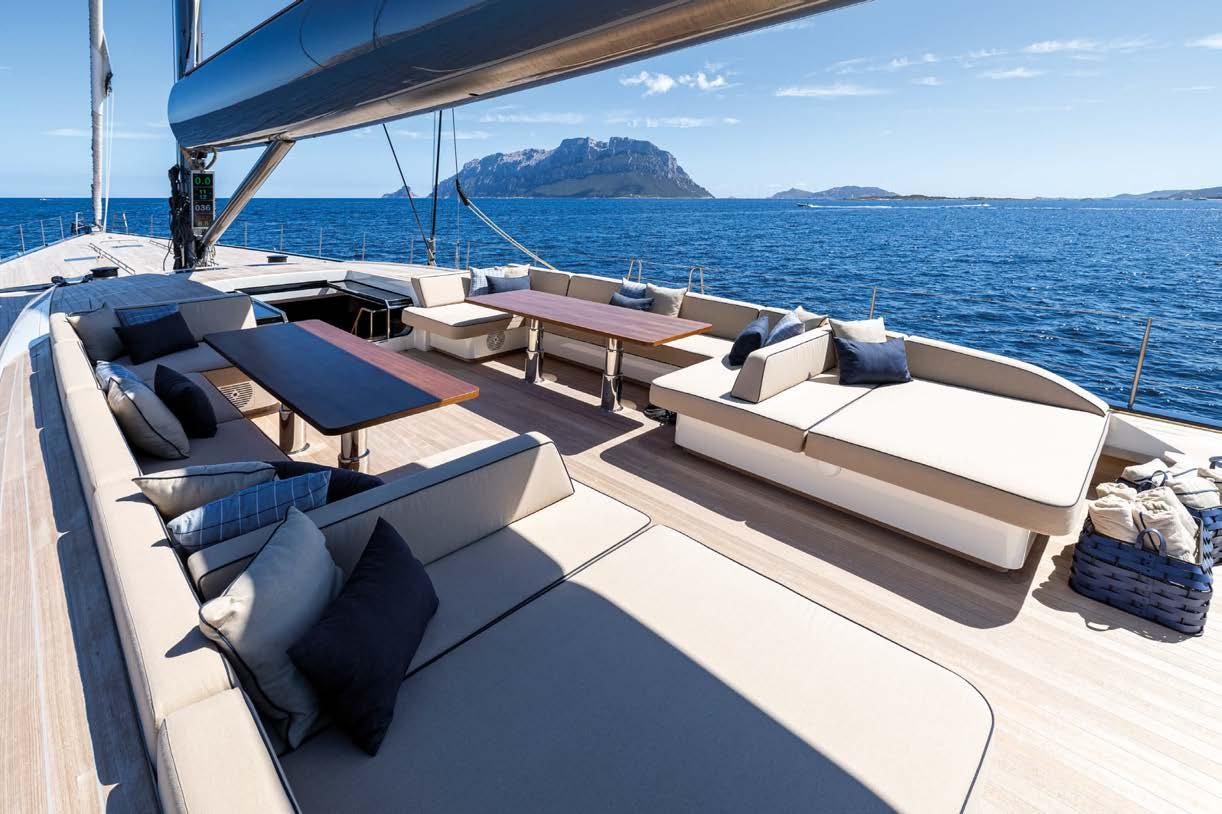
VELOCITÀ MAX DI BOLINA NODI HAULING MAX SPEED IN KNOTS
SUPERFICIE VELICA M2
SAILING SURFACE M2
NAUTOR SWAN
Pietarsaari, Finlandia Nautor Swan Srl Viale San Bartolomeo,362 I-19126 La Spezia www.nautorswan.com
PROJECT
Frers Naval Architecture & Engineering (naval architecture) • Lucio Micheletti (deck) • Misa Poggi (interiors)
SCAFO
Lunghezza scafo 38,98m • Lunghezza al galleggiamento (LWL) 35,94m • Baglio massimo 8,65m • Pescaggio 4,70m • Pescaggio chiglia telescopica 3,70/5,70m • Dislocamento a vuoto 122.800 kg • Dislocamento a pieno carico 136.200 kg
• Zavorra 39.500 kg • Serbatoio carburante 5.500 l
• Serbatoio acqua 2.650 l
PIANO VELICO
Randa 443,80 m2
• Genoa 401,50 m2
• Spinnaker 1.180 m2
Località//Place Pietarsaari, Finlandia
Mare//Sea state Calmo//Calm
Persone a bordo//People on board 14
Combustibile imbarcato 1,200 l
Fuel volume on board
Acqua imbarcata 850 l
Water volume on board
Vento forza Tra sei e otto nodi
Wind speed Between six and eight knots


RAPPORTO LUNG./LARG. L/W
4.5
MOTORE
405 kW (550 cv)
CERTIFICAZIONE
CAT A
PREZZO
A partire da 21.000.000 € EX-RIG, Iva Esclusa
DISLOCAMENTO DISPLACEMENT
HULL
Length 38.98m • LWL 35.94m • Beam 8.65m • Draft 4.70m • Lifting keel draft 3.70/5.70m • Light mass displacement 122,800 kg • Full mass displacement 136,200 kg • Ballast 39,500 kg • Fuel tank volume 5,500 l • Water tank volume 2,650 l
SAIL PLAN
• Main sail 443.80 m2 • Genoa 401.50 m2
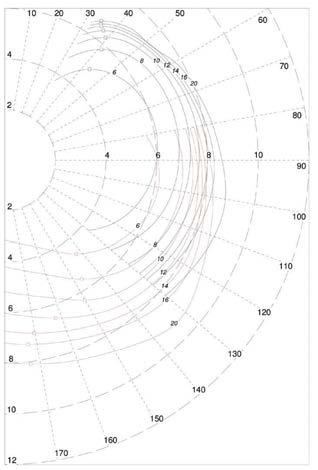
PIANO VELICO SAIL PLAN


• Spinnaker 1,180 m2
MAIN PROPULSION
405 kW (550 hp)


EC CERTIFICATION CAT A PRICE
Starting at 21,000,000 € EX-RIG, EX VAT
P: h. della randa//mainsail E: base della randa//boom
GENOA
I: h. del triangolo di prua//forestay
J: base del triangolo di prua mast front face-forestay
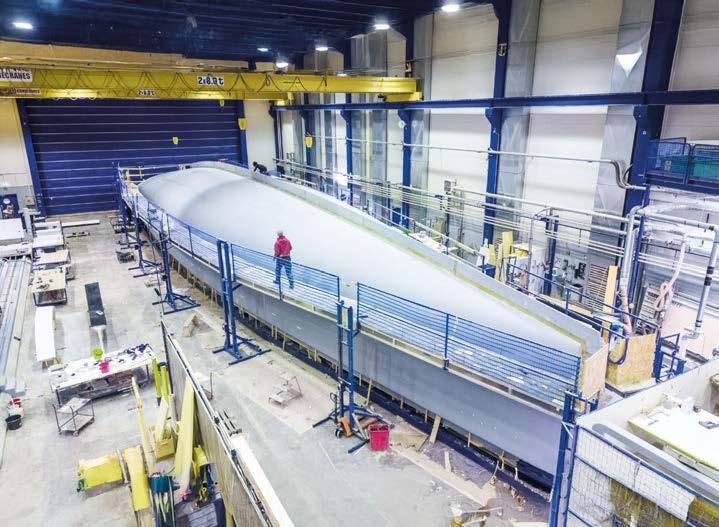
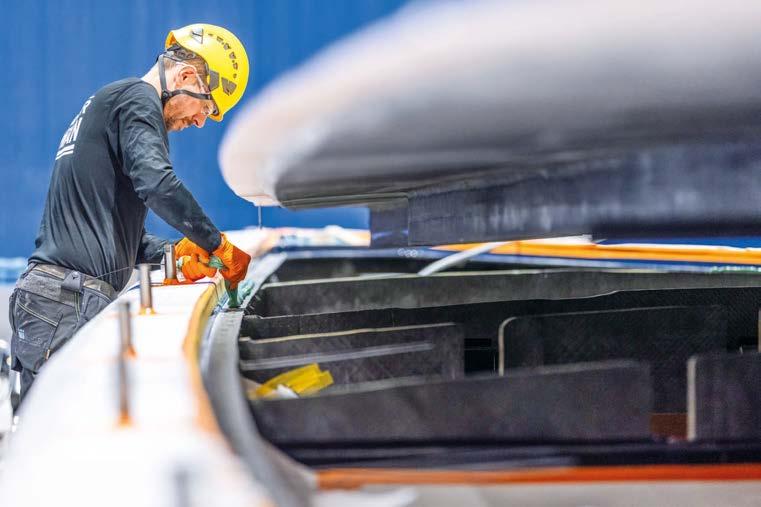
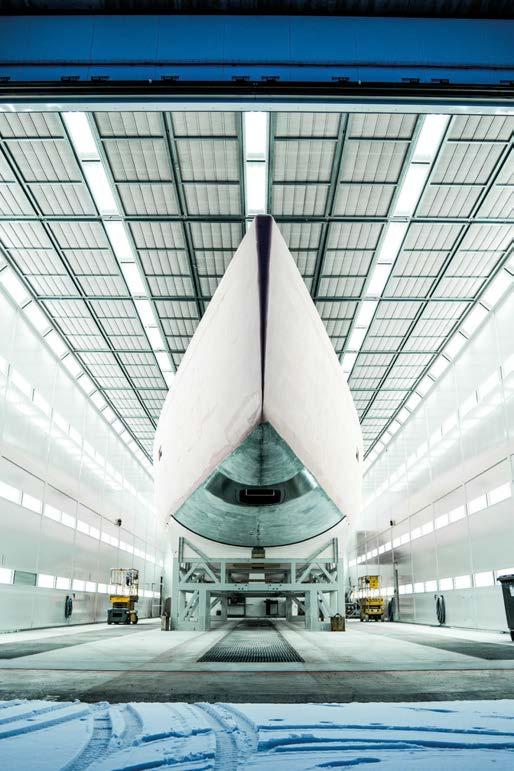
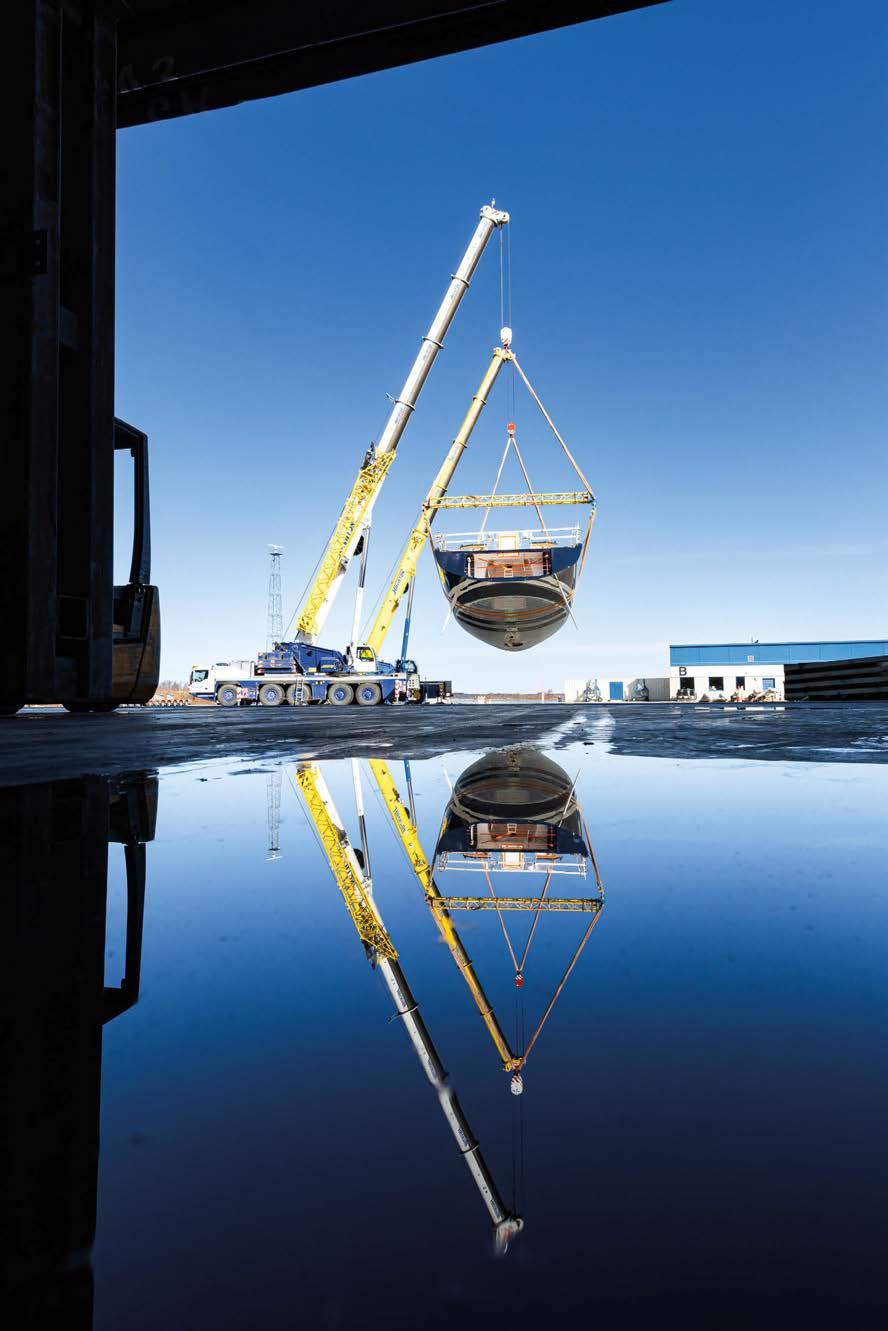
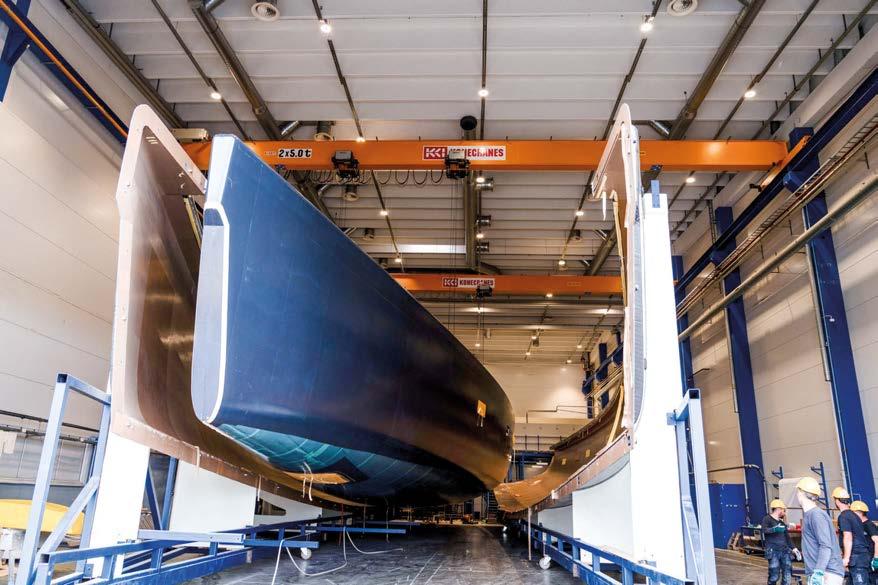
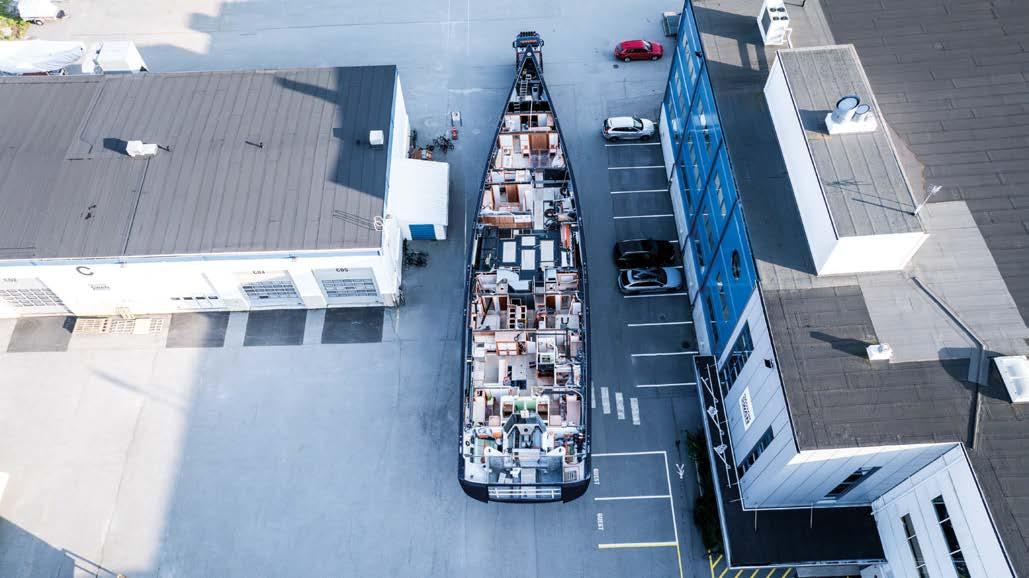
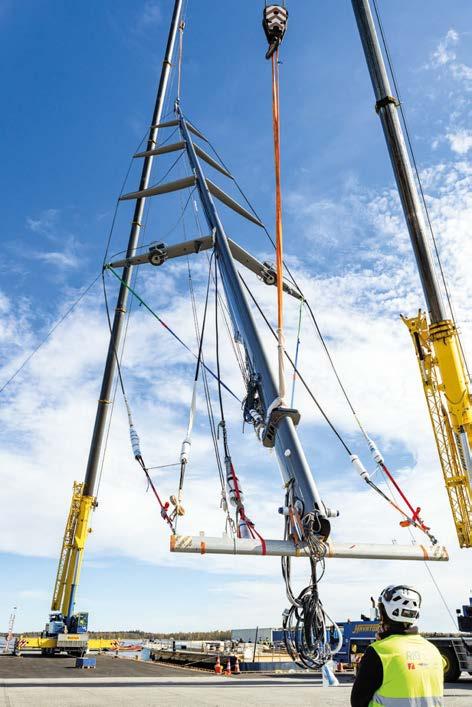
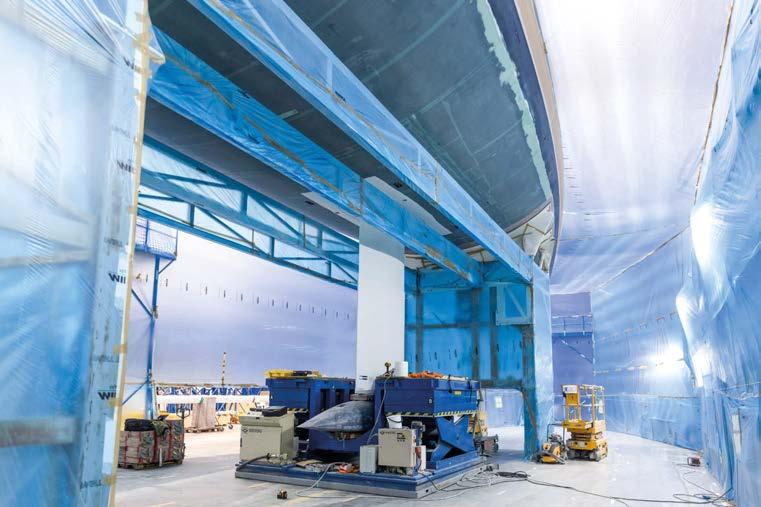
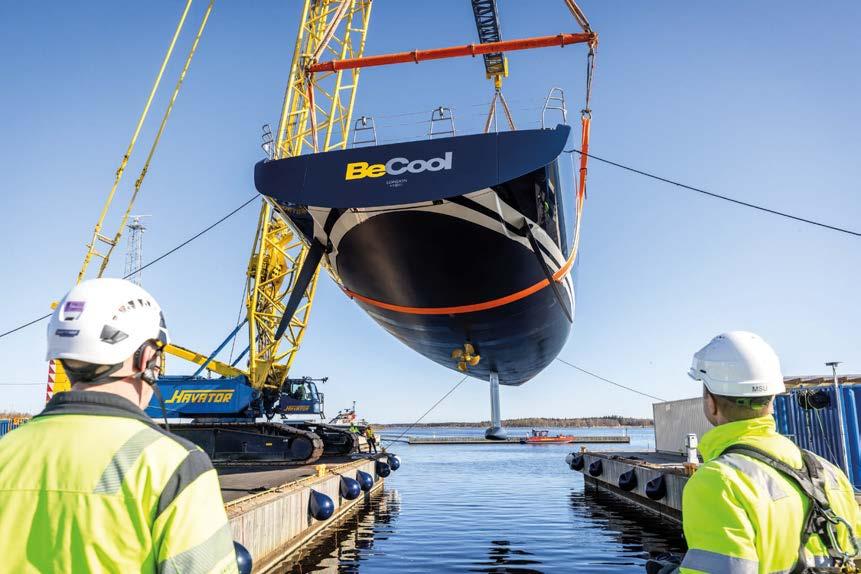
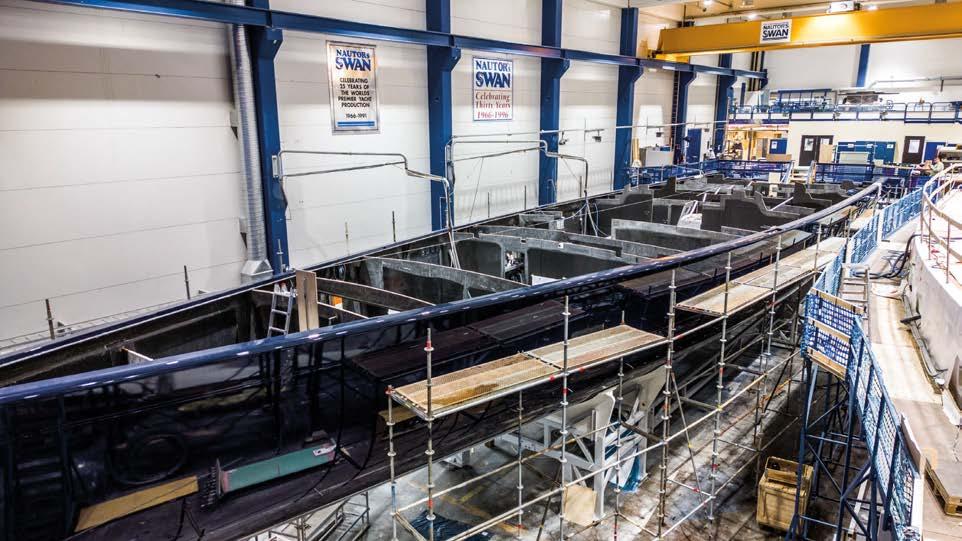
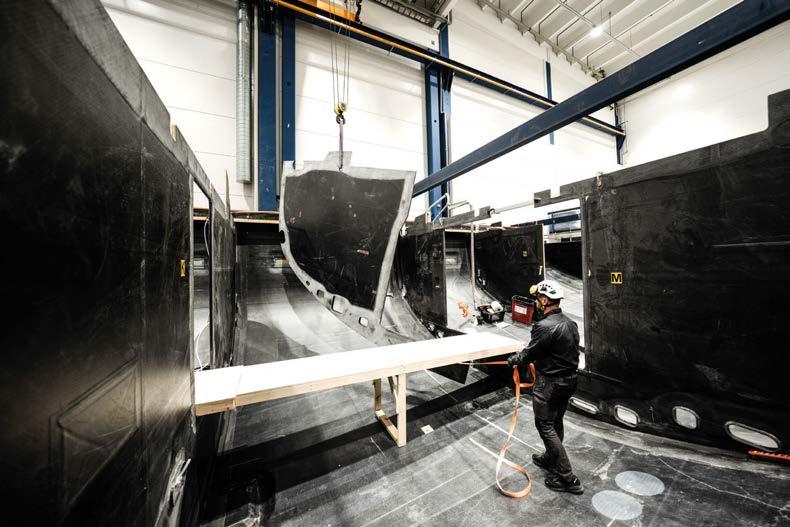
I Maxi Swan sono realizzati in full carbon.
La tecnologia utilizzata è la laminazione sandwich con tessuti in bra di carbonio preimpregnati in resina epossidica, con tecnologia Sprint, e anima in Corecell, prodotti e ingegnerizzati da Gurit. Il procedimento prevede la postcura in forno per circa 18 ore, con una curva caratteristica che raggiunge 90°, e una postcura in due fasi principali, più una terza fase nale.
Maxi Swans are made entirely of carbon bre.
The technology used is sandwich lamination with carbon bre fabrics pre-impregnated with epoxy resin, using Sprint technology, and a Corecell core, produced and engineered by Gurit.
The process involves post-curing in an oven for approximately 18 hours, with a characteristic curve reaching 90°, and is divided into two main phases, plus a third nal phase.
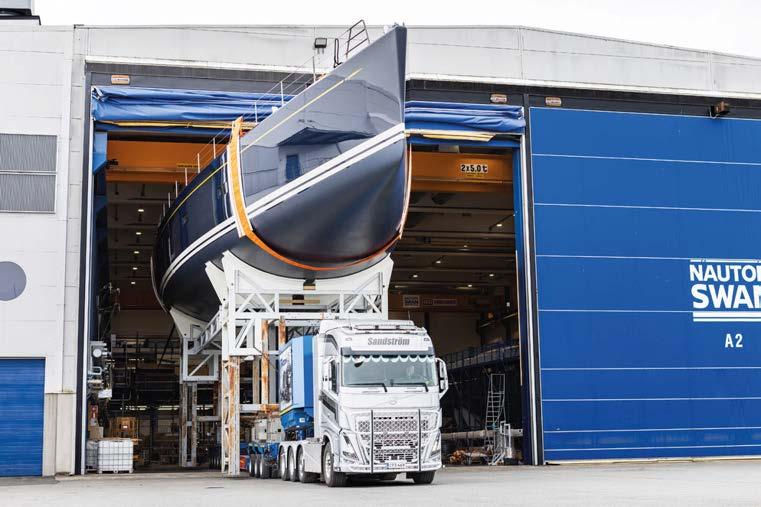
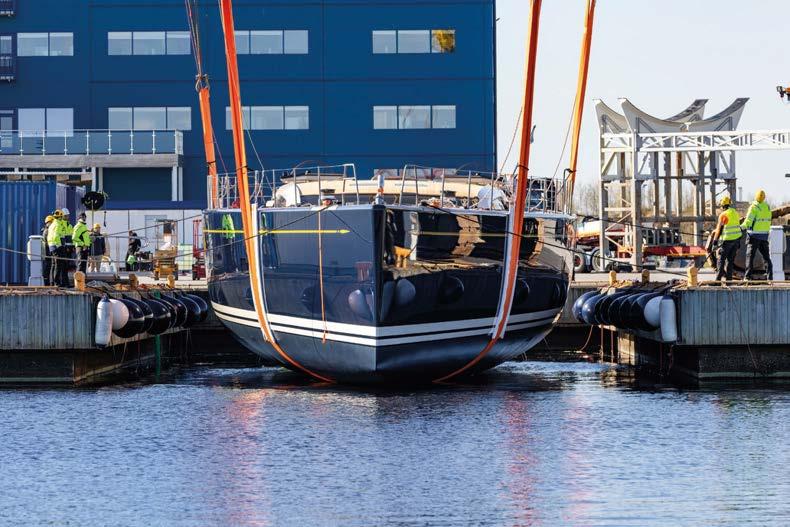
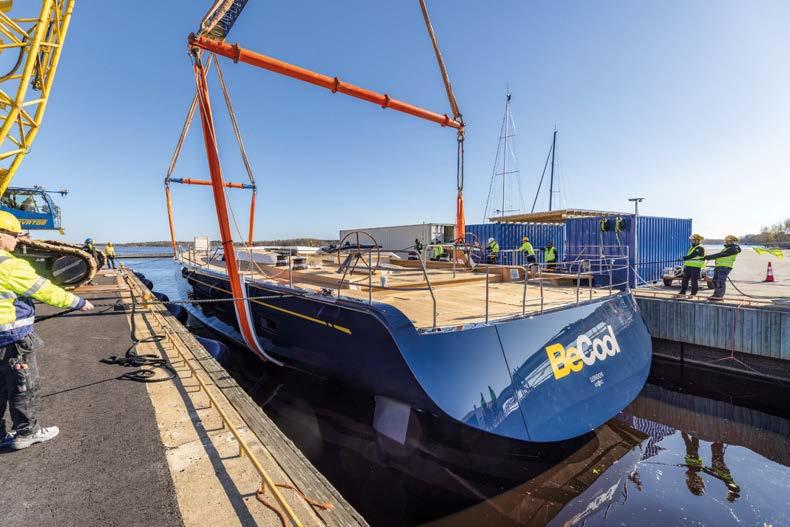
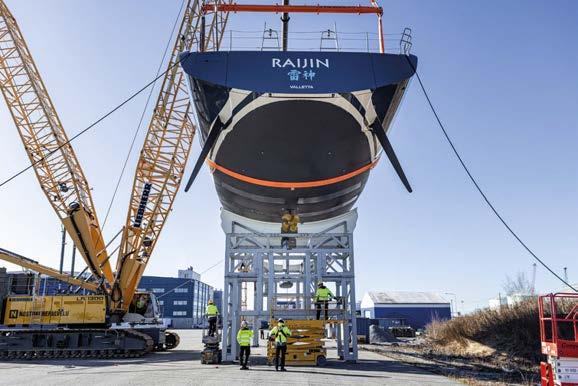
The interiors are the result of collaboration between Frers, the shipyard and architect Misa Poggi. The volumes are so large that there is considerable scope for customisation. In this case, the owner chose to dedicate the central part to the living area and move the dining area towards the bow.
The entire bow is dedicated to the master cabin and is located well away from the crew area, which is located at the stern. However, this is not a sacri ced area, far from it. The cabins are spacious, as is the living area, and the galley is also located in the stern. To access the crew area, the ladder is located in the centre of the cockpit, between the two steering wheels, to be separate from the companionway below deck for the owner and his guests.
Il secondo Swan 128 è stato varato con successo presso il Boatbuilding Technology Centre (BTC) di Nautor Swan. Questa nuova barca si chiama Raijin, dal nome della divinità giapponese del tuono, dei fulmini e delle tempeste. Swan 128 rappresenta l’apice della produzione Nautor Swan, de nendo un nuovo punto di riferimento nel mondo dei maxi yacht in termini di tecnologia e design. Rispetto al primo esemplare, Be Cool, Raijin introduce importanti novità sia nello stile degli interni sia nei sistemi di gestione energetica e di propulsione. La tecnologia Dual Energy è stata sviluppata in collaborazione con Danfoss, che dispone di un’elevata esperienza nella propulsione marina. Il sistema ottimizza la produzione e il consumo di energia in ogni fase, riducendo consumi ed emissioni. Durante la navigazione a vela, l’energia può essere generata e immagazzinata per un utilizzo successivo, sia per la propulsione in modalità elettrica sia per i servizi di bordo, con l’obiettivo di evitare l’uso dei generatori all’ancora.
L’imbarcazione è dotata di un motore elettrico principale con elica a passo variabile, di due generatori Cummins da 130 kW e di un generatore Fischer Panda da 30 kW. Il sistema consente inoltre di generare tra 30 e 50 kW durante la navigazione a vela. Il pacco batterie da 189 kWh mantiene in funzione tutti i sistemi di bordo in modalità silenziosa per 8 ore.
The second hull of the Swan 128 has been successfully launched at Nautor Swan’s Boatbuilding Technology Centre (BTC).
This new masterpiece has been named Raijin, after the Japanese god of thunder, lightning and storms. The Swan 128 represents the pinnacle of Nautor Swan’s production, setting a benchmark in the world of maxi yachts for both technology and design.
Compared to the rst hull, Be Cool, Raijin introduces notable differences in interior styling, energy management, and propulsion. The dual-energy technology has been developed in collaboration with Danfoss, leveraging Danfoss’s extensive expertise in marine propulsion.
The system optimises energy production and consumption at every stage, reducing fuel use and emissions. While sailing, energy can be generated and stored for later use, for both electric propulsion and onboard systems, to avoid generator use at anchor. The yacht is equipped with a main electric motor with a variable-pitch propeller, two 130 kW Cummins generators and a 30 kW Fischer Panda generator. With a variable-pitch propeller and electric drivetrain, the system can generate 30–50 kW of regenerative power while sailing.
A large hotel battery bank with a capacity of 189 kWh enables up to 8 hours of fully silent operation with all systems running.
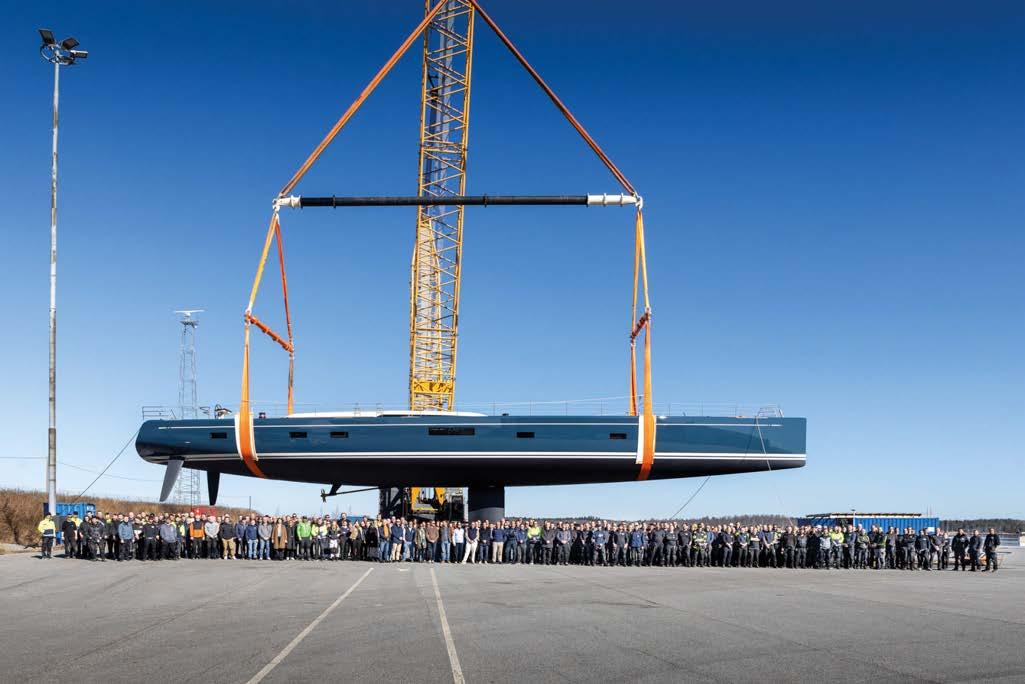
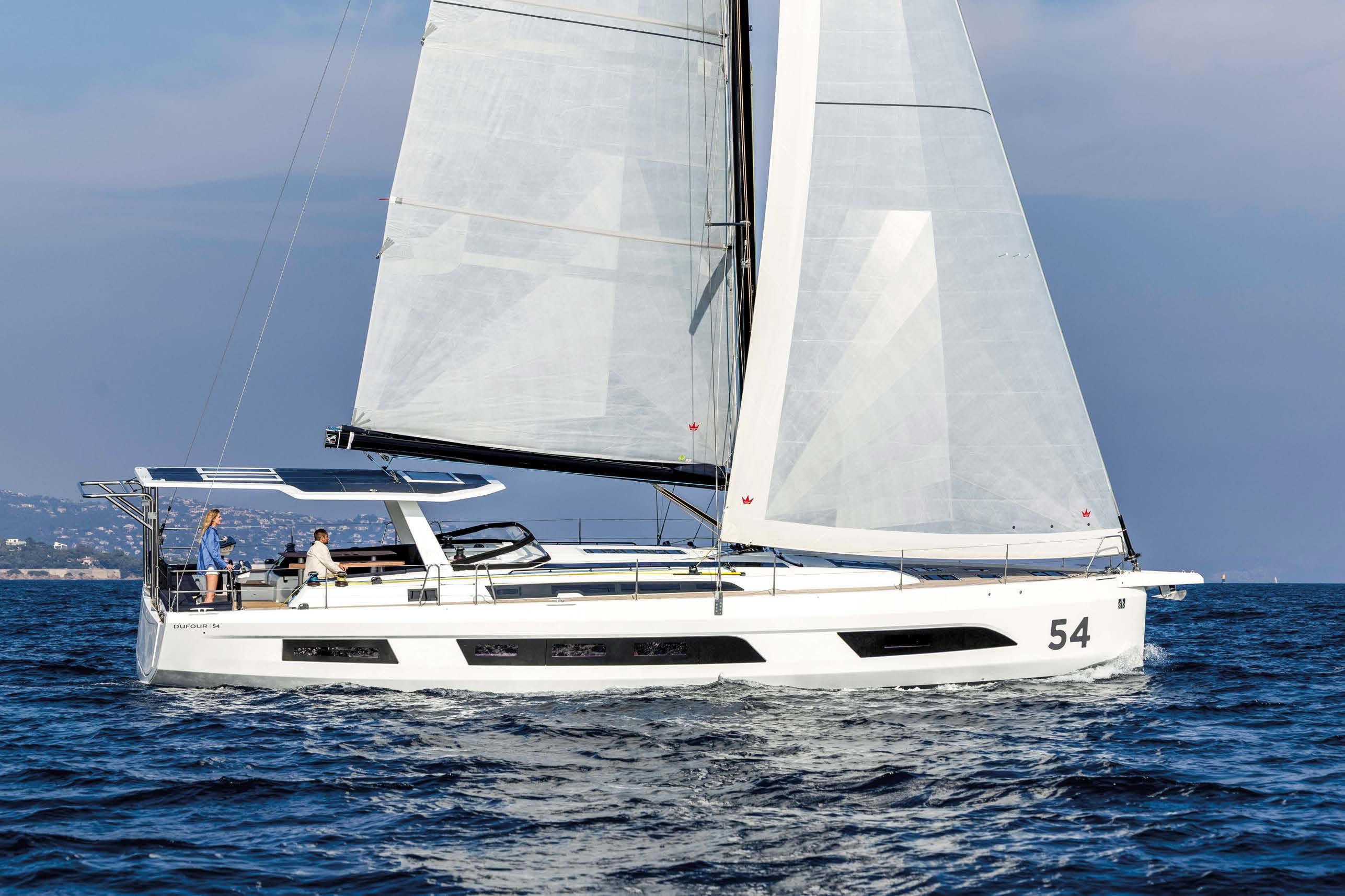
Confortevole lo è di sicuro, visti gli spazi in coperta e i volumi degli interni, ma le linee d’acqua e il piano velico garantiscono anche ottime prestazioni sottovela
It’s de nitely comfortable, given the space on deck and the volumes below, but the waterlines and the sail plan also ensure excellent performance under sail
È veloce, ma non passa di moda in fretta. Dufour e Felci Yacht Design sono un binomio indissolubile: è così da quando Umberto Felci ha aperto il suo studio e ha iniziato a collaborare con il cantiere francese.
Una collaborazione proseguita anche quando la proprietà del cantiere è passata di mano. Cambiano i proprietari, ma non i progettisti. Umberto Felci, la cosa è nota, è stato un regatante e un appassionato di barche da regata. Il suo studio le progetta da sempre, insieme a quelle di serie. Il Dufour 54, come tutti i modelli precedenti del cantiere disegnati da Felci, è indubbiamente una barca da crociera, ma le prestazioni sottovela sono comunque di tutto rispetto. Rappresenta, secondo me, al meglio il concetto moderno di crociera. Navigare in vacanza o in famiglia, infatti, non è più sinonimo di lentezza. Le super ci in coperta sono ampie, così come i volumi sottocoperta, ma le linee d’acqua garantiscono velocità sottovela: questa è la loso a di Felci e di Dufour. Nel golfo di Genova le condizioni sono perfette. Il vento sof a tra 17 e 19 nodi e le onde misurano due metri. Viene proprio voglia di fare una veleggiata. Sono condizioni che potrebbero mettere in crisi una barca da crociera, ma non è il caso di Dufour 54. Il timone è morbido, ma sempre reattivo, anche con il mare formato. Non soffre nemmeno l’onda di poppa. Sulla randa abbiamo preso una mano di terzaroli e il genoa è quello tradizionale, non l’autovirante. Non è dif cile mantenere la rotta e la sensazione al timone è quella di avere tutto sotto controllo, anche quando si stringe la bolina e ci si avvicina alla direzione del vento. Con un angolo di 50 gradi la barca parte. È subito reattiva, prende il suo passo e non sembra proprio volerlo abbandonare. Per farla correre è suf ciente mantenere l’angolo e lo si può
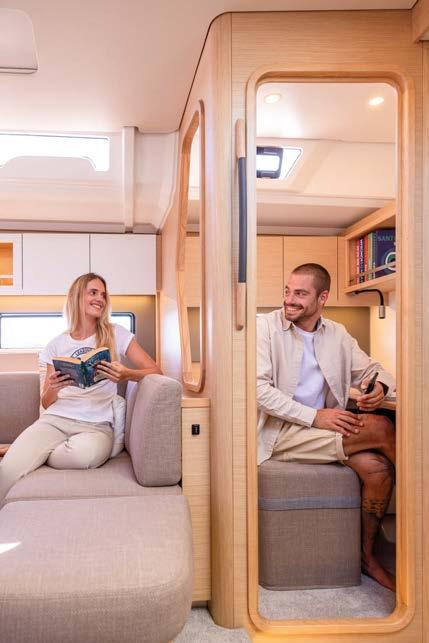
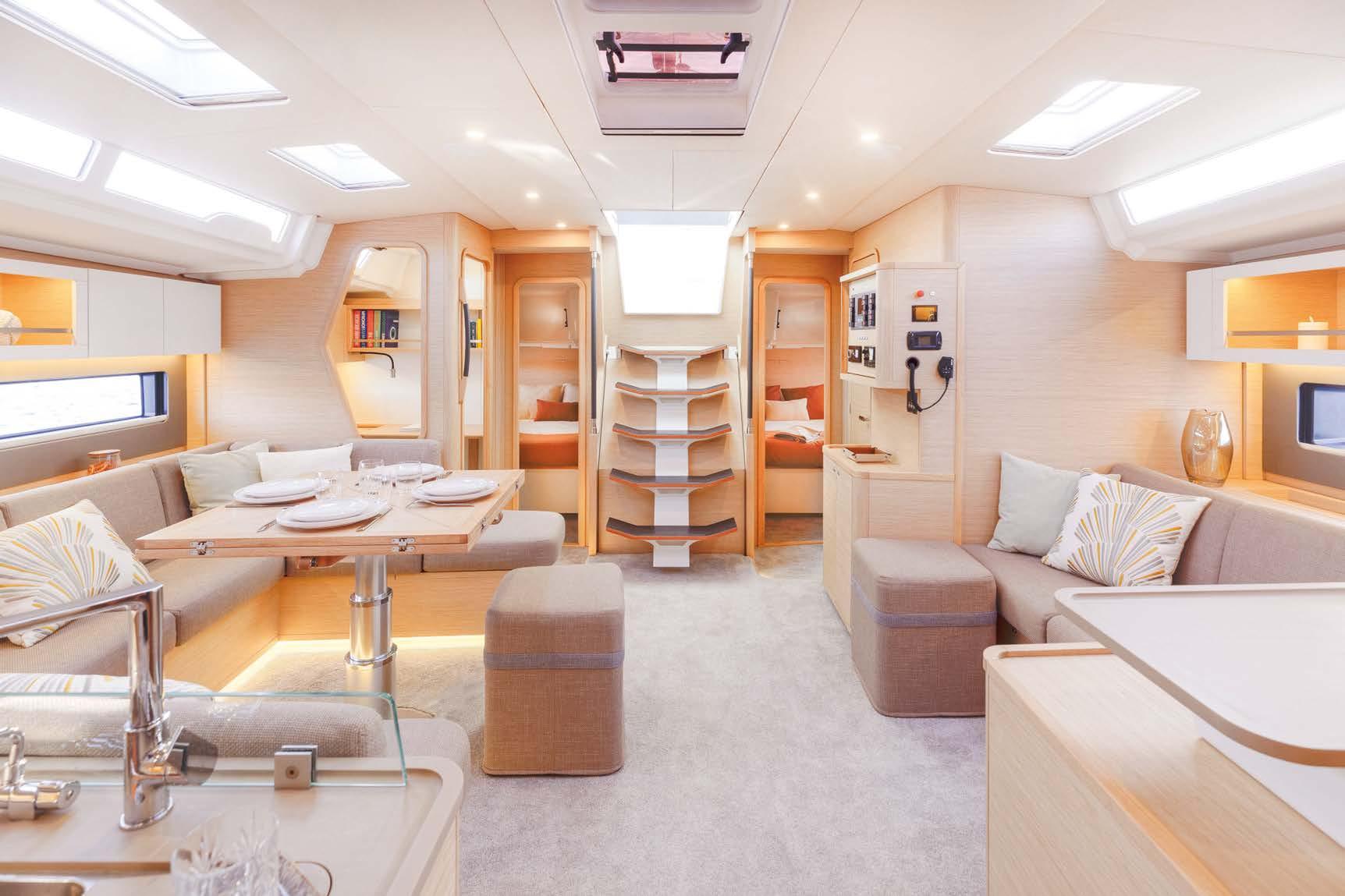
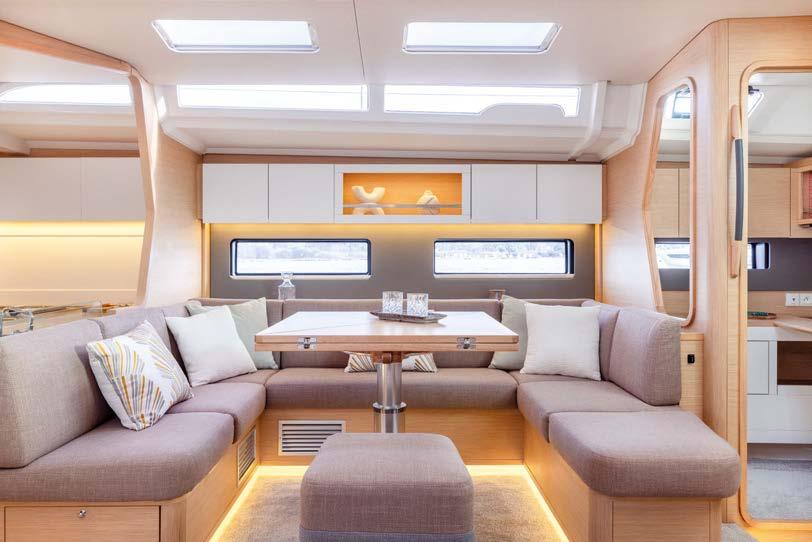
L’eleganza si percepisce dal design e da tanti dettagli. Ottimo l’equilibrio tra allestimenti e spazi a disposizione. C’è tutto, ma non si ha mai la sensazione di saturazione degli spazi.
The elegance can be seen in the design and from a lot of details. The balance between the areas available is excellent. It’s got everything, but you never get the feeling of getting overburdened by the spaces.
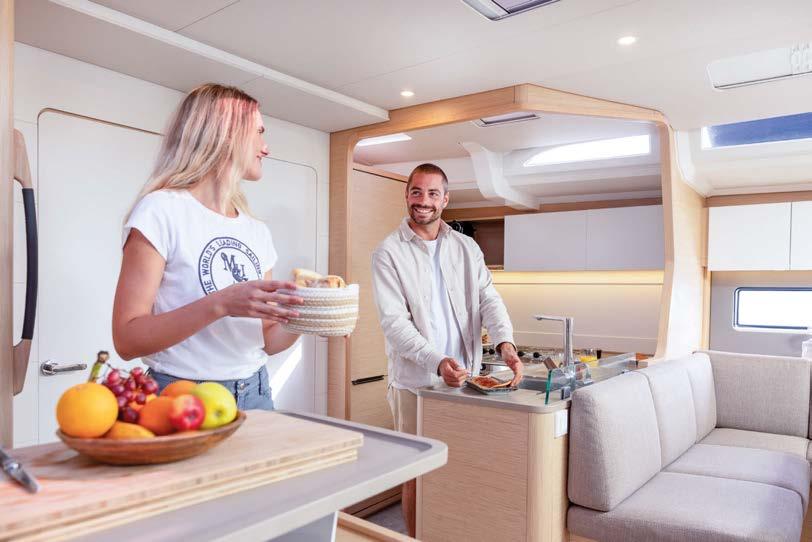
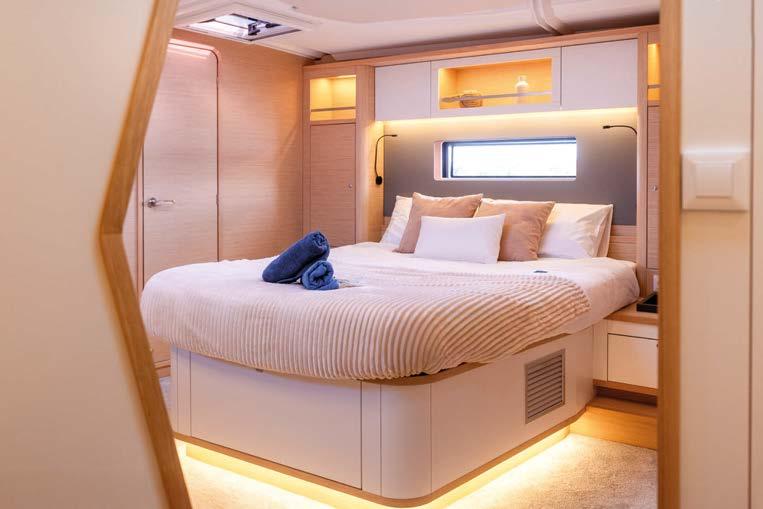
fare anche con un certo margine. Sulla testa c’è un voluminoso hardtop. È una scelta sempre più diffusa, anche perché gli armatori vogliono evitare i raggi del sole a picco mentre si naviga a vela. In ogni caso, la visibilità non è particolarmente compromessa, anche perché ci sono ampie vetrate che consentono di controllare la regolazione delle vele. L’hardtop rigido ha un vantaggio: può ospitare il trasto di randa sopra di sé. Il modello della prova aveva il pacchetto “Ocean” con due winch in più, per un totale di sei, tutti a portata di mano del timoniere e di chi è addetto alle manovre. Inoltre, il boma è maggiorato e c’è il genoa al posto del occo autovirante. Il quadrato del pozzetto è allestito con due panche a L e due tavoli separati con il camminamento al centro. Le gambe dei tavoli sono telescopiche e, grazie all’aggiunta di cuscini, le panche diventano due prendisole. In pratica, c’è tutta l’attrezzatura necessaria per navigare a vela, ma anche un’ampia zona relax. I passavanti laterali sono ampi, peccato per le sartie basse, molto diagonali, che rendono leggermente scomodo l’accesso verso prua quando ci si trova a centro barca. La coperta è ricca di oblò e di nestrature. Ne ho contati ben diciassette. E gli interni sono pertanto molto luminosi. La dinette è molto ampia ed è allestita con un tavolo da pranzo estensibile, circondato da un divanetto e da una seduta, in modo da ospitare molte persone. La cucina si trova a ridosso dell’armatoriale di prua ed è divisa in due: a dritta, lavabo e fuochi; a sinistra, stipetti e piano di lavoro. È uno spazio molto ben sfruttato dove non manca nulla. Ma la particolarità degli interni sta nella loro personalizzazione. Il cantiere offre così tante opzioni da sembrare quasi una barca custom. L’armatoriale a prua, ad esempio, è disponibile in tre versioni: “Master Cabin”, “Master Suite” e “Double Cabins”. La prima è la versione con la testata letto all’estrema prua e il bagno separato in due locali: uno per la sola doccia, molto ampia, e uno per wc e servizi. “Master Suite”, invece, prevede il bagno con box doccia separato in un unico locale all’estrema prua, la cuccetta collocata in diagonale per ottimizzare lo spazio e l’ultimo locale è adibito allo spazio vanity. In ne, la versione “Double Cabins” è quella con la zona di prua occupata da due cabine e due bagni, cioè l’allestimento più adatto al charter o a un armatore che vuole il maggior numero di posti letto a bordo. A poppa ci sono altre due cabine matrimoniali con due bagni, ma anche in questa zona è possibile personalizzare. Uno dei due bagni, infatti, può essere adibito a locale per il carteggio e ha lo stesso volume del bagno ed è quindi una zona carteggio raccolta, ma decisamente ampia. In conclusione, si può dire senza timore di smentita che Dufour 54 è una barca ideale per un armatore che ama la crociera comoda, ma non intende rinunciare alle prestazioni sottovela, e anche per il charter o, comunque, per un armatore che ha intenzione di andare in crociera con tanti ospiti.
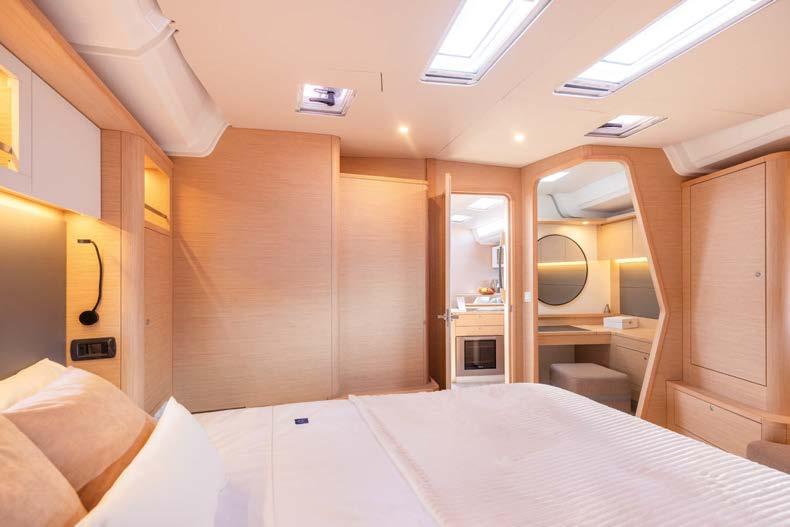
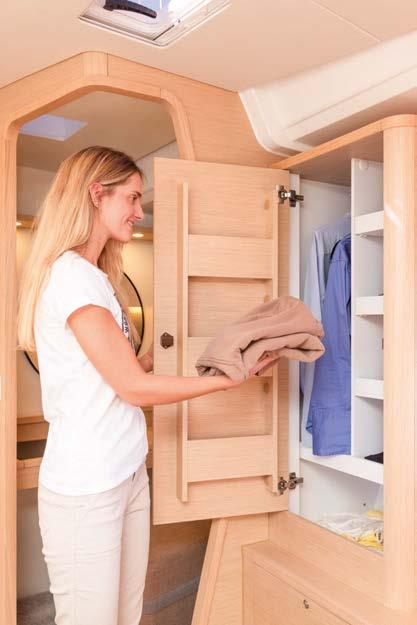
OTTENERE la barca che si DESIDERA. Sia a prua, sia a poppa si possono scegliere numerose versioni per personalizzare gli interni.
Many options to get the boat YOU WANT. Both at the bow and stern, you can choose from numerous versions to customise the interiors.
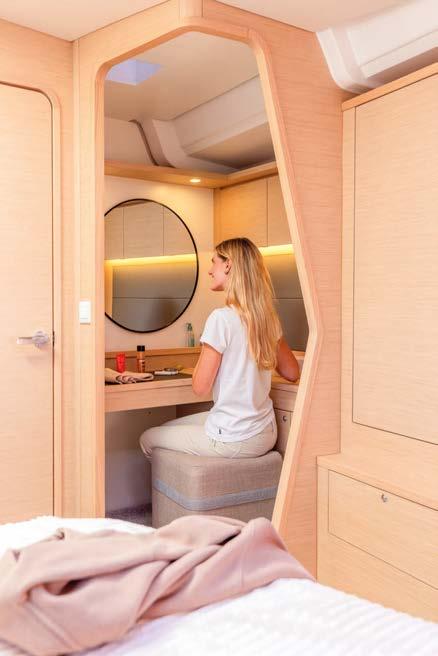
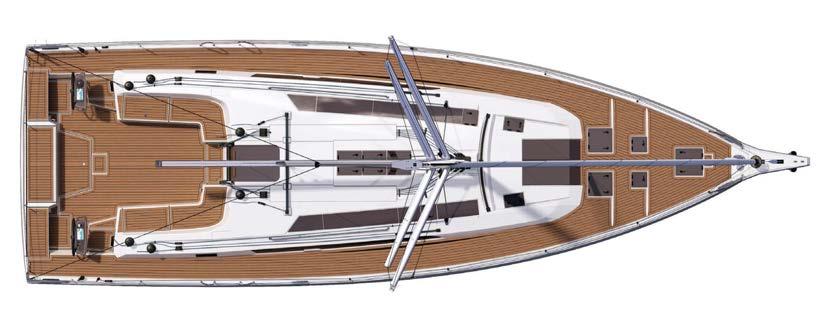
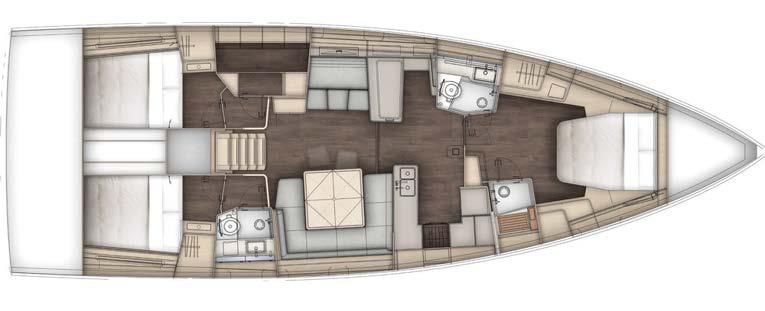
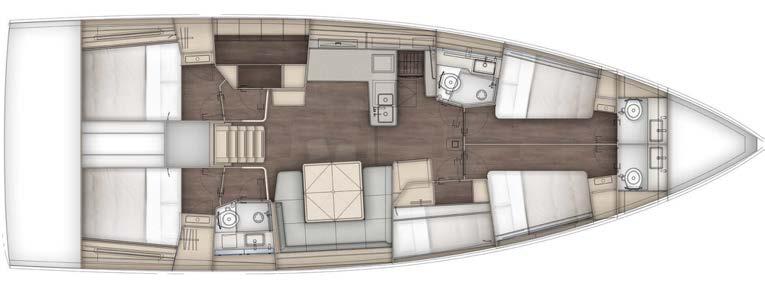
Le alternanze dei materiali usati, la ricercatezza dei loro accostamenti e le scelte dei colori e delle niture creano una qualità di grande livello.
The succession of the materials used, the re nement of their combinations and the choices of colours and nishes create a high level quality.
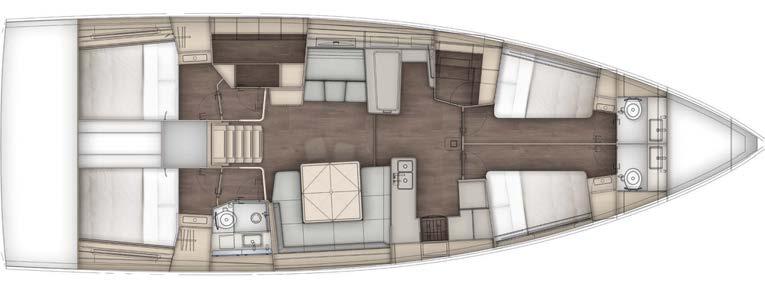
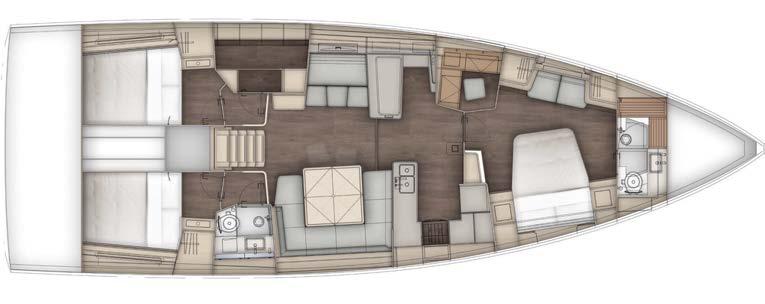
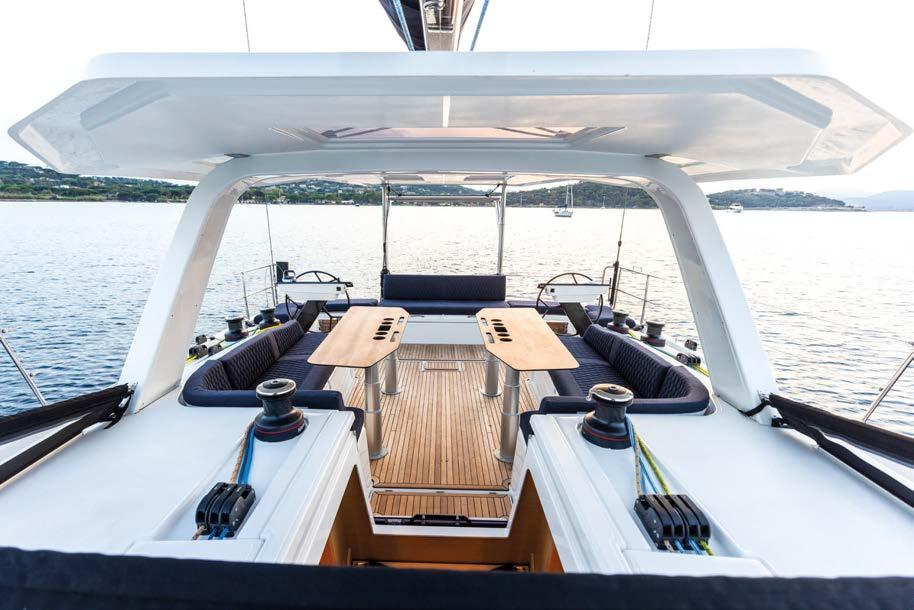
Sotto le sedute del timoniere si trovano grill e un lavabo, utilizzati comodamente dalla piattaforma di poppa. Le due ruote del timone sono morbide e reattive, per no quando si affronta mare formato e vento teso.
Under the helmsman’s seats are a grill and a sink, both conveniently accessible from the stern platform. The two rudder wheels are smooth but also responsive, even when facing rough seas and strong winds.
It’s quick, but it isn’t a boat that is going to go out of fashion in a hurry. Dufour and Felci Yacht Design have formed an unbreakable bond, and it has been that way since Umberto Felci opened his studio and started working with the French yard.
It is a partnership that continued even when Dufour changed hands – so the owners changed, but the designers didn’t. As is well known, Umberto Felci is a competitive sailor and a passionate racer. His studio has been designing racing yachts for a long time, as well as production-line boats. The Dufour 54, like all of the boats Felci has done for the rm, is undoubtedly a cruiser, but it nevertheless comes with some quite respectable sailing performance, which means it represents the modern concept of this kind of boat, in my opinion. So going off with the family, or on a sailing holiday, is no longer synonymous with being slow. The deck area is considerable, but the waterlines ensure that it is fast under sail: that is the approach taken by Felci and Dufour.
The conditions in the Gulf of Genoa were perfect, with the wind at between 17 and 19 knots and two-metre waves. It really made you want to go sailing, but some conditions could pose problems for a cruiser. That wasn’t the case with the Dufour 54 – it is soft at the helm, but always reacts well, even in rougher waters. And it isn’t bothered by taking the sea on the stern. We had one reef in the mainsail and a traditional genoa, rather than a self-tacking one. It wasn’t dif cult to hold course, and the feeling that you get at the helm is that everything is under control, even when sailing close hauled, and you get close to the wind. It reacts quickly, and at fty degrees, the boat takes off and gets on its way with no sign of wanting to stray from its course.
To get it moving, you have to keep the angle, and you can even do that with a bit of margin. You have a substantial hardtop above you. That’s a design choice that is becoming increasingly common, not least
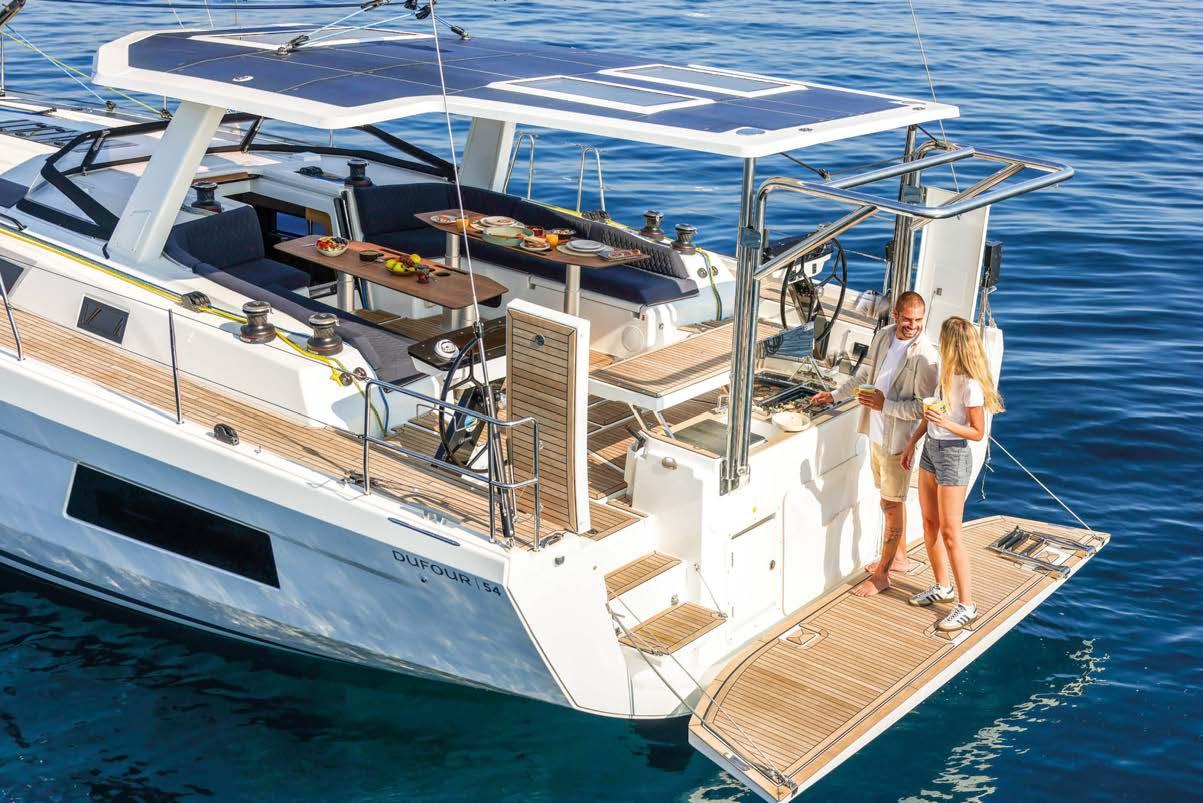
VELOCITÀ MAX DI BOLINA NODI HAULING MAX SPEED IN KNOTS 9.5
SUPERFICIE VELICA M2 SAILING SURFACE M2
144
DUFOUR YACHTS
La Rochelle, Francia www.dufour-yachts.com
PROGETTO
Felci Yacht Design e Luca Ardizio (interni)
SCAFO
Lunghezza f.t. 16,84m • Lunghezza scafo 15,90m
• Lunghezza al galleggiamento (LWL) 14,85m
• Bagliomassimo 5,25m
• Dislocamento 16.000 kg
• Zavorra 4.900 kg
• Pescaggio 2,40m
• Serbatoiocarburante 450 l • Serbatoioacqua 450 l
• Randa 77 m²
• Genoa 67 m²
MOTORE
Yanmar 4JH110
• 4 cilindri
• Potenza 80,9 kW (110 cv)
Località//Place Genova
Vento forza Tra 17 e 19 nodi
Wind speed Between 17 and 19 knots
Altezza onda//Wave height
2m
Persone a bordo//People on board 4
Carburante imbarcato
Fuel volume on board
Acqua imbarcata
Water volume on board
30 l
150 l
RAPPORTO LUNG./LARG. L/W
3.2
DISLOCAMENTO DISPLACEMENT
16
• Cilindrata 2,0 l • Alesaggiopercorsa 84mm x 90mm
• Regimedirotazione 3200 giri/min
• Peso a secco 229 kg
CERTIFICAZIONE CE
CAT A
PREZZO
A partire da 455.000 € più Iva
PROJECT
Felci Yacht Design and Luca Ardizio (interiors)
HULL
LOA 16.84m
• Length 15.90m • LWL
• Maximum beam 5.25m
• Displacement
• Ballast 4,900 kg
• Draft 2.40m
• Fueltankvolume 450 l
• Watertankvolume 450 l • Mainsail
• Genoa 67 m2
MAIN PROPULSION
Yanmar 4JH110
• Outletmechanicalpower
80,9 kW (110 hp)
• 4 cylinders • Sweptvolume 2.0 l
• Bore&Stroke 84mm x 90mm
• Maximalrotationalspeed 3200 rpm
Vento sostenuto e onda formata non sono un problema. Dufour 54 si timona facilmente anche in condizioni abbastanza impegnative. Il motore Yanmar da 110 cavalli consente di superare gli otto nodi di crociera a motore. L’ideale per lunghi trasferimenti, quando non c’è vento.
Strong winds and rough seas are no problem. The Dufour 54 is easy to steer even in fairly challenging conditions. The 110-horsepower Yanmar engine allows you to exceed eight knots when cruising under power. Ideal for long journeys when there is no wind.
• Dryweight 229 kg
EC CERTIFICATION
CAT A
PRICE
Starting price 455,000 € Excl.VAT
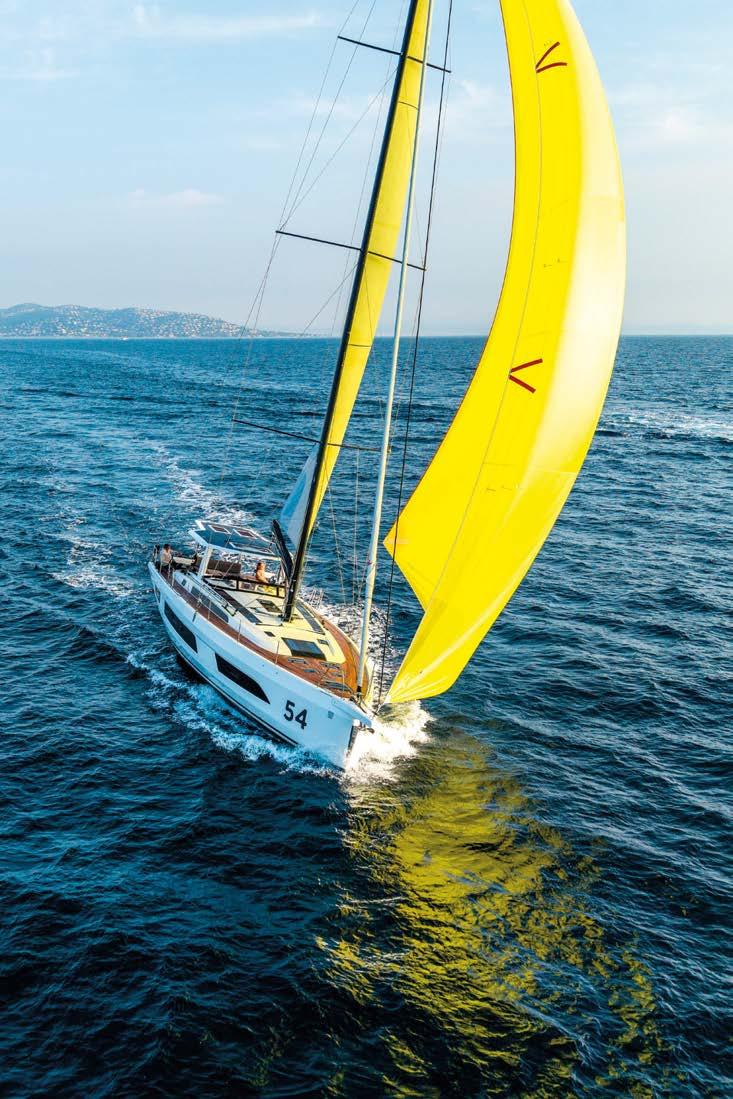
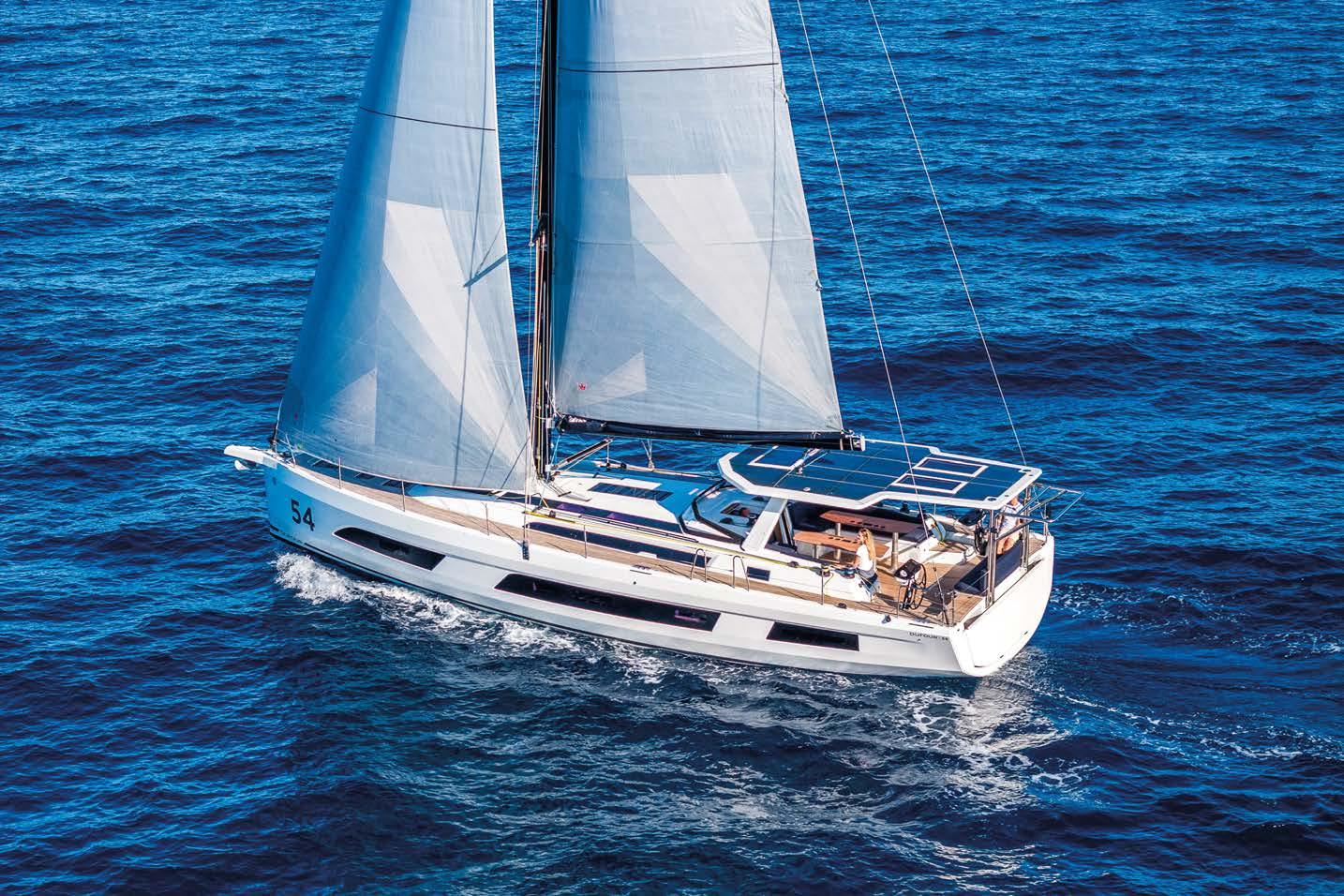
L’hardtop rigido offre un indubbio VANTAGGIO: protezione dal sole per l’intero quadrato del pozzetto, senza impedire la visuale di randa e genoa grazie alle ampie nestrature.
The rigid hardtop offers an UNDENIABLE ADVANTAGE: sun protection for the entire cockpit area without obstructing the view of the mainsail and genoa, thanks to the large windows.
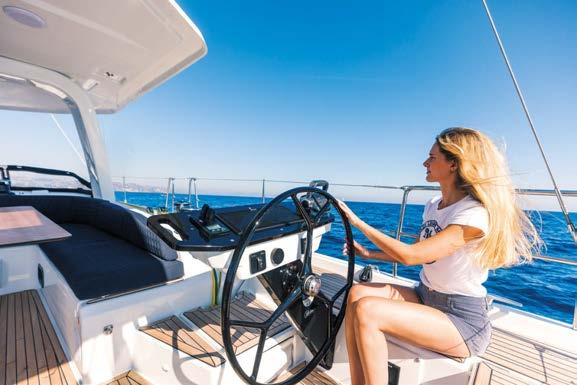
The table legs are extendable, and the seats become sun pads with the addition of some cushions. So basically it has everything needed for sailing, as well as having a substantial relaxation area. The side decks are expansive, so it is a shame that the rigging is so low and diagonal, making it slightly uncomfortable to get forward from midships.
The deck is covered with portholes and windows – I counted as many as seventeen of them. And that makes the interiors very light. The dinette is very substantial and set up with an extendable dining table surrounded by a sofa and a seat, so that it can accommodate a lot of people. The galley is next to the master cabin in the bows, and is split in two – to the right you have the sink and hob, while on the left there are cabinets and a work surface. It is an area that has been very well designed, with nothing left out. But the really special thing about the interiors is how they can be customised, and the yard offers so many options that it almost feels like an entirely custom-made boat. So the master room in the bow, for example, comes in three versions: Master Cabin, Master Suite and Double Cabins. The Master Cabin is the version with the bedhead right in the bow, and the bathroom is divided to give a separate, substantial shower cubicle and another for the wc and basin.
The Master Suite set-up comes with a separate shower cubicle set in its own space far forward, the bed arranged diagonally to optimise the available space, and the remaining room as a vanity area. And nally, the Double Cabins option, as the name suggests, has two bedrooms and two bathrooms, making it the best choice for chartering or owners who want as many sleeping spaces as possible.
Going aft, there are two other double rooms with their own bathroom, but there are customisation possibilities there too. One of the two bathrooms can be used as a map area, and since it occupies the same space as a bathroom, it’s large and comfy. So you can safely say that the Dufour 54 is a perfect boat for a buyer who wants comfortable cruising, but still wants some performance under sail. At the same time, it is also an ideal charter for taking many guests on a cruise.
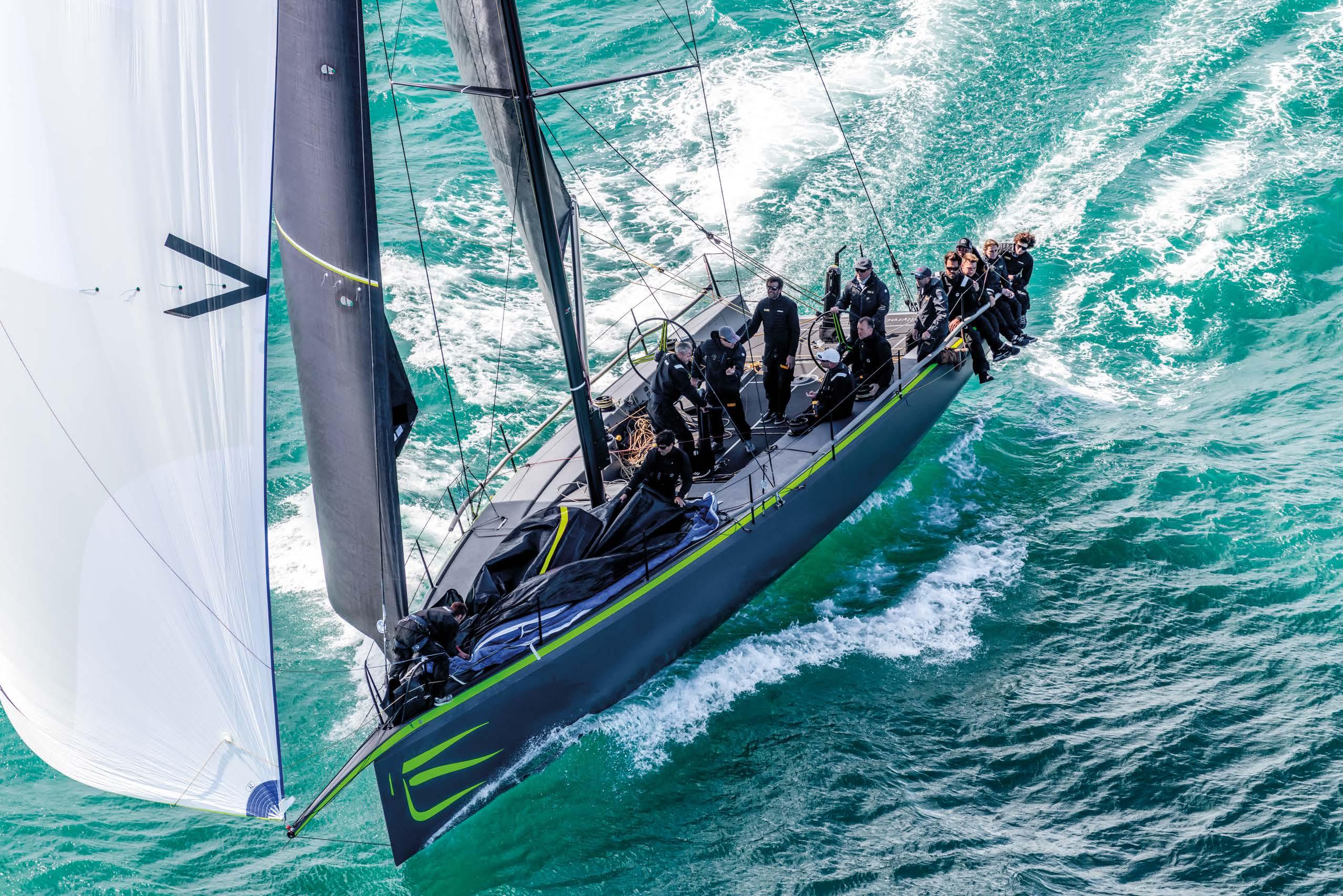
Progettato da Botin in collaborazione con Vasco Vascotto e Luca Bassani, è il nuovo 50 piedi di Wally. Un racer puro che promette grandi soddisfazioni al suo armatore
Designed by Botin in collaboration with Vasco Vascotto and Luca Bassani, this is Wally’s new 50-foot yacht, a pure racer that promises great satisfaction to its owner by Niccolò Volpati photo by Gilles Martin-Raget
“Devi osservare il penultimo display dei jumbo in base d’albero. Indica i gradi di sbandamento dello scafo. È in virtù di questi che ti regoli per la rotta”.
È l’indicazione che mi è arrivata da Vasco Vascotto, timoniere di mille regate, incluse quelle di Coppa America. Per il wallyrocket51, a dire il vero, non si è limitato a prendere in mano il timone: ha seguito i lavori sin dall’inizio, essendo anche il project manager di questa nuova barca. Vascotto, inoltre, è stato uno dei precursori del circuito TP52 e, senza dubbio, wallyrocket51 è un racer che si propone come valida alternativa a questa tipologia. Il dislocamento è molto contenuto: soltanto 6,5 tonnellate per un’imbarcazione che misura fuori tutto quindici metri e mezzo. Scafo e coperta sono in sandwich con bre di carbonio pre-impregnate unidirezionali e biassiali. Hanno una diversa densità a seconda delle aree in cui sono impegnate. L’obiettivo? La robustezza, ma con il minimo peso possibile. La costruzione è sottovuoto e tutti i cicli in forno per scafo e coperta sono stati monitorati e registrati a una temperatura minima di 80 gradi centigradi. La chiglia, che ha un pescaggio di tre metri e mezzo, è stata ssata con un bulbo in piombo di tremila chilogrammi. Nella pinna è stato integrato un trim tab azionato elettricamente in coperta. Di anco ai pulsanti di quest’ultimo ci sono quelli dei water ballast, che hanno una capacità di circa 600 litri, 300 per parte: per riempirli e svuotarli si utilizza un compressore (in generale occorre meno di un minuto per riempirli completamente). A parole sembra un’operazione complessa, in pratica è molto semplice, tanto che Vascotto ha mostrato grande entusiasmo per la facilità con cui si azionano entrambi. Gli ho fatto notare che non mi sarei mai aspettato tanto slancio da parte di un triestino per dei serbatoi d’acqua. Mi ha sorriso e ha aggiunto: “Purtroppo non hanno ancora inventato gli spritz ballast. Questa è una barca da regata, non c’è nulla di casuale. Tutto è stato curato nel minimo dettaglio. È complicato, se non addirittura impossibile, trovare un’attrezzatura del genere a bordo di un’imbarcazione di serie”.
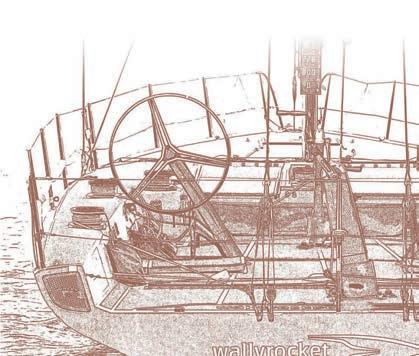

Due coffee grinder al centro e tutti i carrelli esterni. Il pozzetto è progettato per ottimizzare gli spazi per le manovre e consentire a ciascuno degli undici membri dell’equipaggio di disporre dello spazio necessario.
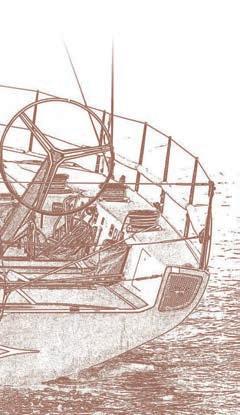
Two coffee grinders in the centre and all the external trolleys. The cockpit is designed to maximise manoeuvring space and ensure that each of the eleven crew members has the space they need.
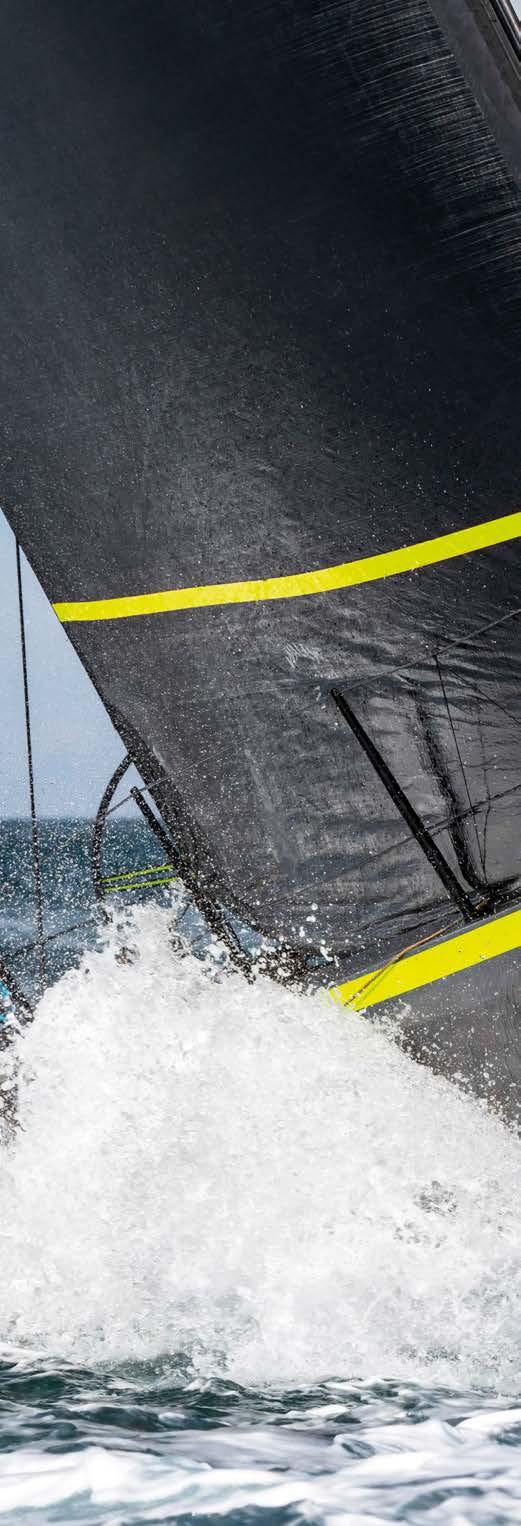
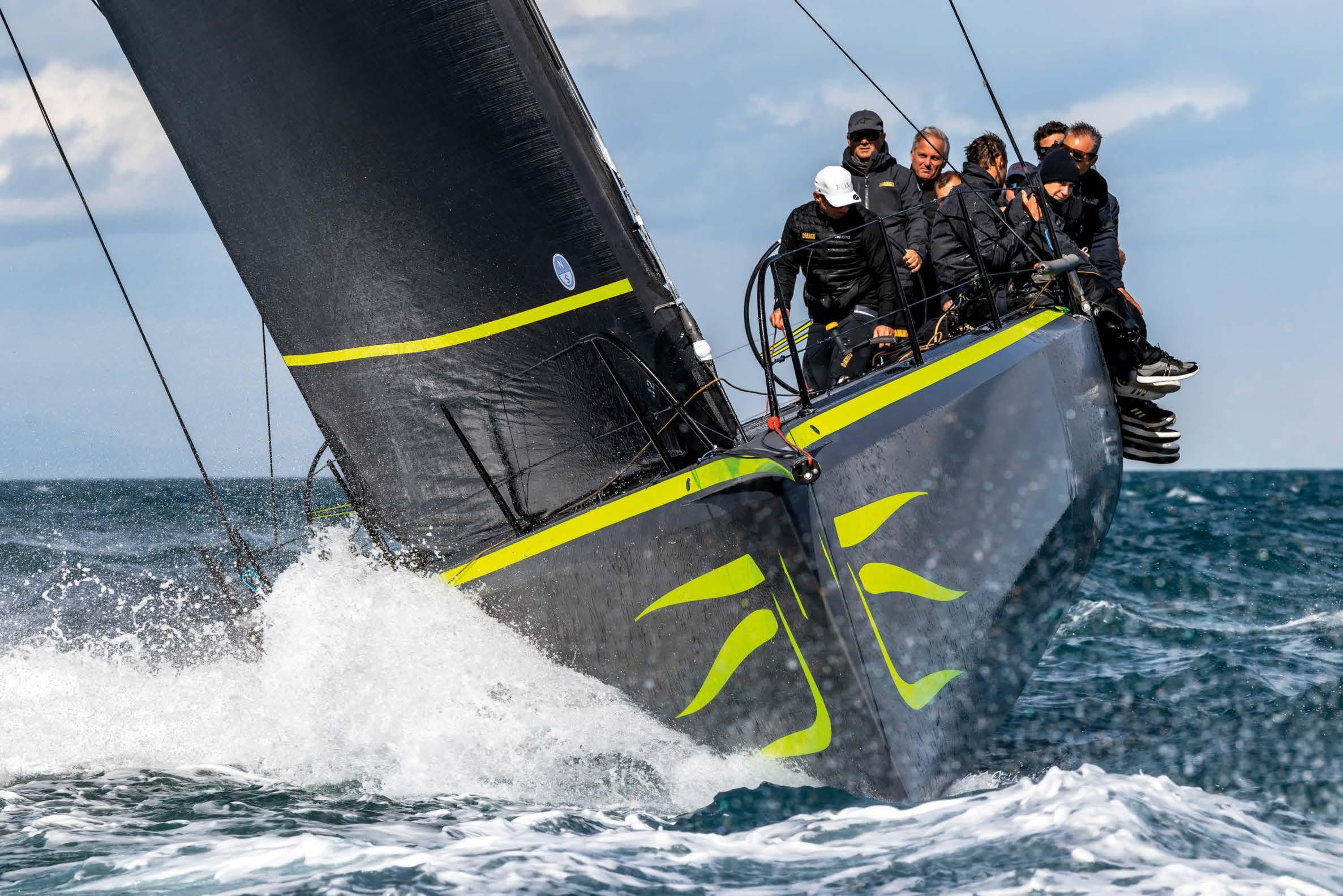
Cantiere
Shipyard Naval architecture
Concept
Structural engineering
Lunghezza f.t.//L.O.A.
Lunghezza al galleggiamento//LWL
Baglio massimo
Maximum beam
Pescaggio//Draft
Dislocamento a secco
Light mass displacement
Sup. velica totale
Total sail area
Randa//Mainsail
Fiocco//Jib
Gennaker
Water ballast
Wally – Ferretti Group
Via Ansaldo, 7
I-47122 Forlì
T. +39 0543 787511
www.wally.com
Botin Partners
Luca Bassani
Pure Design &Engineering
15.50 m 14.68 m 4.30 m
m
kg
2x 640 l
In coperta, oltre ai due timoni, ci sono due coffee grinder e i carrelli sono tutti esterni alla zona centrale destinata alle manovre. “Questa scelta ha permesso di ottenere una barca molto asciutta. Non avrebbe avuto senso impegnarsi a realizzarne una super leggera per poi imbarcare 400 litri d’acqua durante una regata costiera. Ci è capitato di navigare per tre ore di la a diciotto nodi di velocità e alla ne abbiamo riempito quattro spugnette d’acqua”, ha puntualizzato. Barca asciutta, vero. Anzi, asciuttissima e, di conseguenza, leggera anche quando si naviga veloci.
A Valencia il vento non era tantissimo, circa sette nodi, ma wallyrocket51 ha comunque regalato emozioni. Ha navigato costantemente più veloce dell’intensità del vento. Di bolina, con 7,4 nodi di reale, è sfrecciato a 9,2 nodi. L’angolo che è riuscito a stringere è stato davvero notevole: siamo arrivati a 17° di apparente. Anche quando il vento è leggermente calato, le prestazioni sono sempre state eccellenti: con 7,5 nodi di reale, la velocità è stata di 8,9 nodi; con 6,7 nodi di vento, il Gps ne ha indicati 8,2.
Con il gennaker la musica non è cambiata. A bordo con noi c’era anche Luca Bassani, rma del concept, che ha precisato: “Siamo convinti che la tendenza ormai sia quella di distinguere tra crociera pura e regate. Per questo motivo Wally ha deciso di realizzare un racer come questo”. L’architettura navale, invece, è stata realizzata dallo studio Botin, con l’ingegneria strutturale di Pure Design&Engineering. Il progetto nale prevede la realizzazione di sei wallyrocket51 che formeranno un circuito autonomo, ma potranno partecipare anche a tutte le regate classiche, dalla Giraglia al Fastnet. E dovrebbe essere proprio quest’ultima la prima competizione prevista in calendario. “Questa è una barca che prevede una mano di terzaroli per la randa e stiamo studiando la possibilità di inserire la seconda proprio per il Fastnet”, ha annunciato Vascotto.
I futuri armatori di wallyrocket avranno l’imbarazzo della scelta: regate tradizionali, lunghe e costiere, ma anche la possibilità di s darsi con gli altri velisti che comporranno il circuito.
Tornano a Vascotto, non c’è che dire... a bordo con lui è un’altra storia, si può soltanto imparare. “Stringi ancora di due gradi, ok, buon angolo. Attento che sta per arrivare un salto di vento, poggia deciso”, mi ha sussurrato all’orecchio. Devo riconoscere che per qualche minuto mi sono sentito un abile timoniere. Vascotto ha proprio ragione: osservando i display alla base dell’albero, tutto sembra facile e intuitivo. Quando ho visto wallyrocket51 in banchina, però, ho pensato esattamente il contrario. Mi sono dovuto ricredere: con un minimo di sensibilità al timone si prova il gusto di correre veloci. Più veloci dell’intensità del vento. E senza troppa fatica.
wallyrocket51 è stato studiato per un EQUIPAGGIO di 11 persone e per formare un proprio CIRCUITO, ma anche per partecipare a tutte le regate, lunghe o costiere e classiche, come la Giraglia o il Fastnet.
The wallyrocket51 has been designed for a CREW of 11, to sail its own CIRCUIT, and to compete in all regattas, whether long-distance, coastal, or classic, such as the Giraglia or the Fastnet.
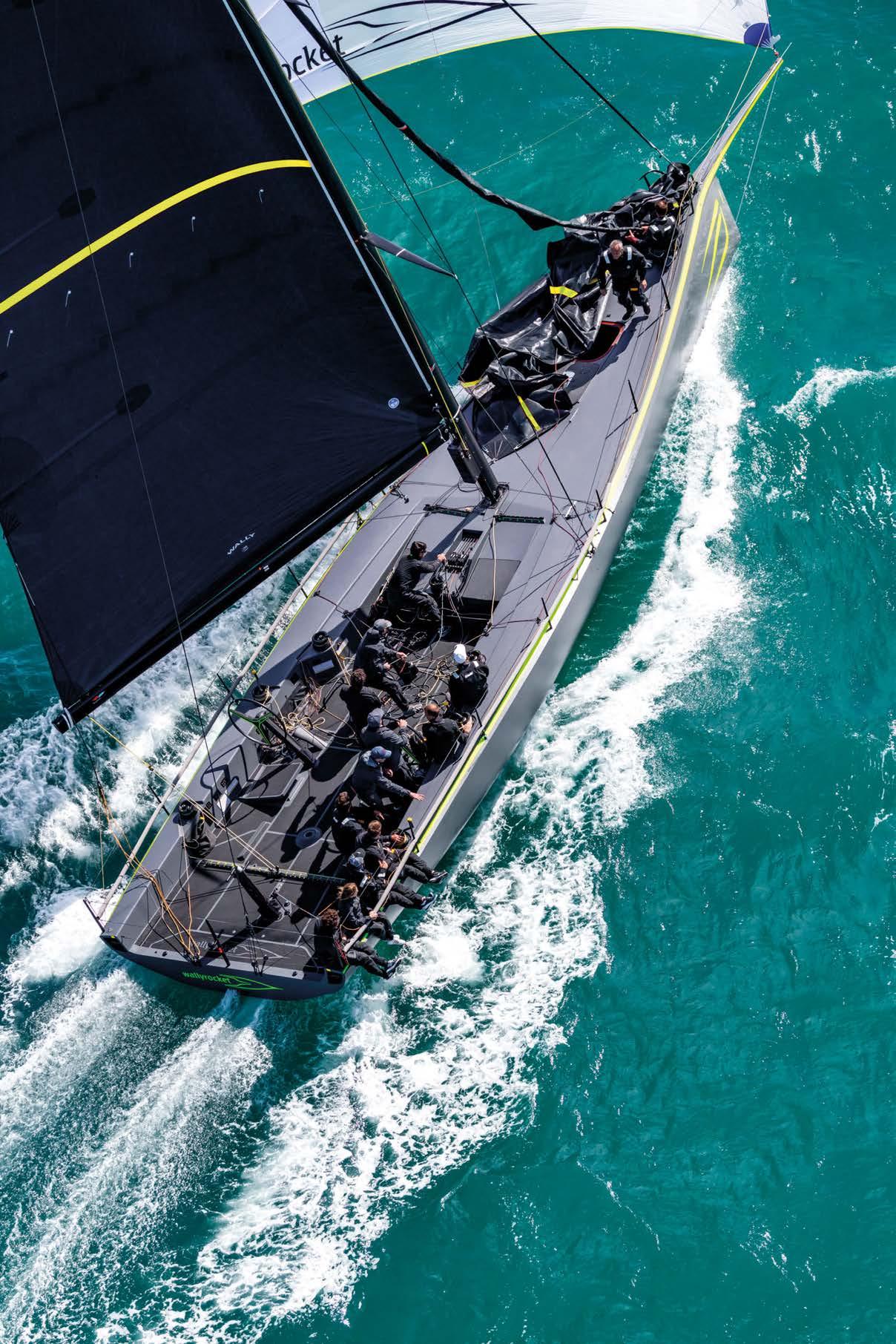
I risultati dei wallyrocket51 e 71 al loro debutto sono stati molto promettenti. Nel 2025 wallyrocket51 e wallyrocket71 hanno ottenuto questi successi:
• ORC Mediterranean Championship –Tre Gol Sailing Week (Sorrento, maggio 2025)
• 1° posto assoluto.
• Campionato Nazionale ORC Tirreno Centrale e Meridionale (Sorrento, maggio 2025)
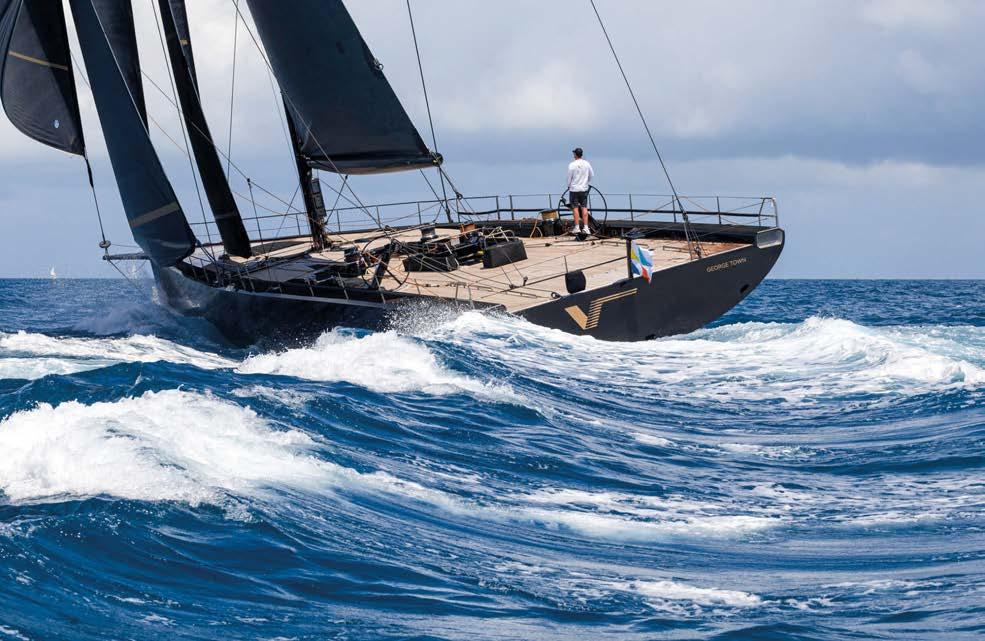
• 1° posto nale, serie chiusa con vittoria conclusiva.
• Admiral’s Cup – Channel Race (Cowes, luglio 2025) – 1° in tempo compensato IRC (Classe AC1).
• wallyrocket71, dopo il debutto di Django 7X alla Giraglia, ha vinto il Rolex IMA Maxi Grand Prix World Championship durante la Maxi Yacht Rolex Cup di Porto Cervo.
The results of the wallyrocket51 and 71 on their debut were very promising. In 2025, the wallyrocket51 and wallyrocket71 achieved the following successes:
• ORC Mediterranean Championship Tre Gol Sailing Week (Sorrento, May 2025)
• 1st place overall
• ORC Central and Southern Tyrrhenian National Championship (Sorrento, May 2025)
• 1st place overall, series concluded with a nal victory.
• Admiral’s Cup – Channel Race (Cowes, July 2025) – 1st in IRC corrected time (AC1 Class).
• wallyrocket71, following Django 7X’s debut at the Giraglia, won the Rolex IMA Maxi Grand Prix World Championship during the Maxi Yacht Rolex Cup in Porto Cervo.
new boat.
Vascotto was also one of the pioneers of the TP52 class, and there is no doubt that the wallyrocket51 is a racer that offers a viable alternative to this class. Its displacement is very low: just six and a half tonnes for a boat with an overall length of fteen and a half metres. The hull and deck are constructed using a sandwich structure with unidirectional and biaxial pre-impregnated carbon bres. Their density varies depending on the speci c areas they cover. The aim? Robustness with the lowest possible weight. The construction process is vacuumassisted, and all oven cycles for the hull and deck were monitored and recorded at a minimum temperature of 80 degrees Celsius. The keel, with a draught of three and a half metres, has been tted with a lead bulb weighing three thousand kilograms. An electrically operated trim tab has been integrated into the n.
Next to the buttons for the trim tab are those for the water ballast tanks, which have a capacity of around 600 litres, 300 litres on each side. A compressor is used to ll and empty them (it generally takes less than a minute to ll them). It sounds complicated, but in practice it’s very simple – so much so that Vascotto was really enthusiastic about how easy they are to operate. I pointed out to him that I’d never have expected such enthusiasm from someone from Trieste over a couple of water tanks. He smiled at me and added: “Unfortunately, they haven’t invented ballast spritzes yet. This is a racing boat; nothing is left to chance. Every detail has been carefully considered. It’s dif cult, if not impossible, to nd equipment like this on a production boat”.
On deck, in addition to the two rudders, there are two coffee grinders, and the trolleys are all located outside the central manoeuvring area. “This design keeps the boat dry. It wouldn’t have made sense to go to the trouble of building a super-light boat only to take on 400 litres of water during a coastal race. We happened to sail for three hours straight at eighteen knots, and in the end, we only lled four small sponges with water”, he pointed out. A dry boat, indeed. In fact, extremely dry and consequently light, even when sailing fast.
In Valencia, the wind wasn’t particularly strong – around seven knots – but the wallyrocket51 still put on a thrilling display. It consistently sailed faster than the apparent wind speed. Upwind, with a 7.4 real wind, it raced along at 9.2 knots. The angle it managed was truly remarkable: we reached 17° apparent. Even when the wind dropped slightly,
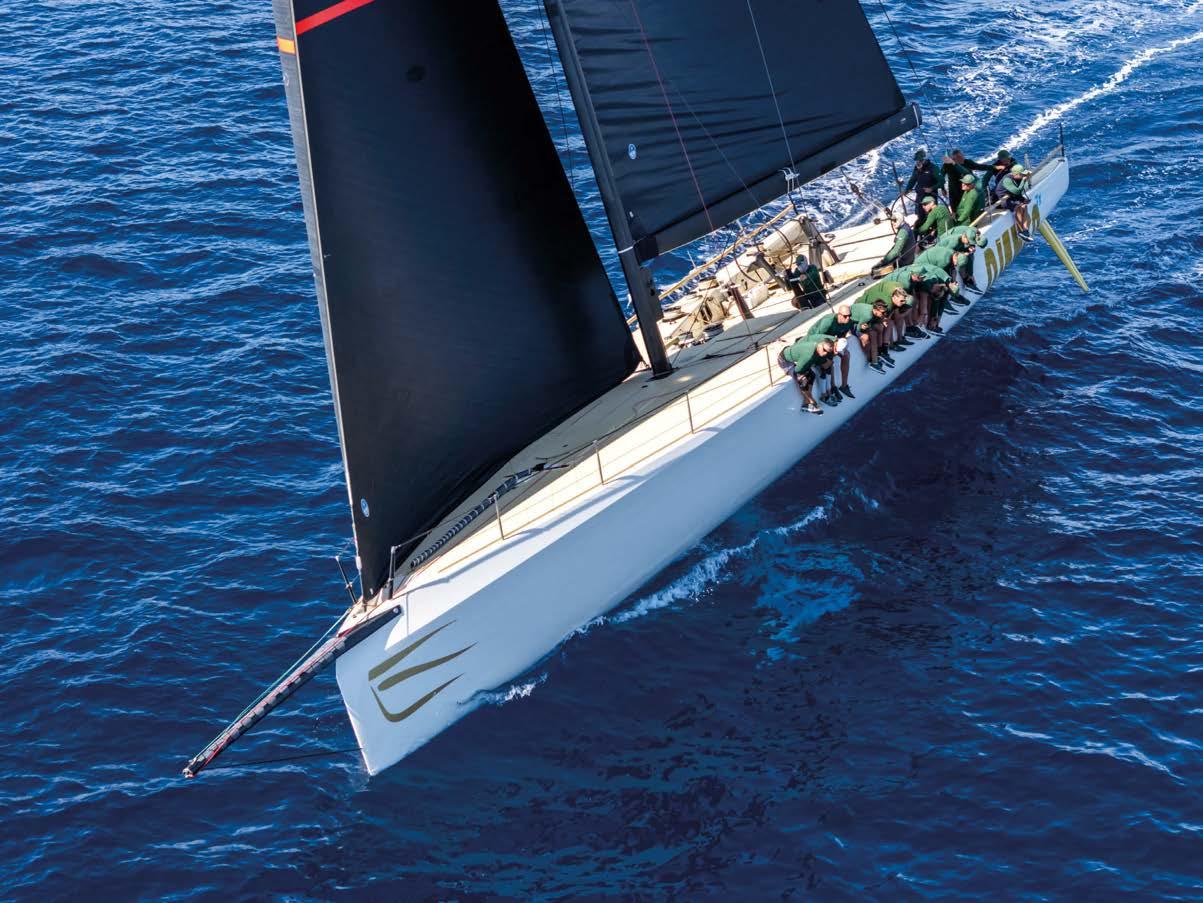
Dopo il 51, è la volta del 71, che ha l’obiettivo di ride nire i limiti di performance nel circuito delle regate Maxi. Il progetto è frutto di una stretta collaborazione tra lo studio Botin Partners per l’architettura navale, il team Wally e il costruttore Team Marine. wallyrocket71 è leggermente più corto dei Maxi 72 e, per questo, è più leggero di ben due tonnellate. Ha una chiglia e un albero più piccoli, che gli permettono di essere più reattivo con il vento leggero e di sviluppare forti accelerazioni. Invece, rispetto a un Maxi 72, i water ballast sono circa il 35% più grandi. I sistemi di bordo consentono di trasferire le 2,7 tonnellate di acqua da un lato all’altro della barca in circa sei secondi, rendendo le virate più rapide ed ef caci. Ottimizzare esclusivamente le andature di bolina o di lasco signi ca limitare le possibilità della barca, mentre wallyrocket71 è stato progettato per eccellere su ogni percorso e con qualsiasi condizione di vento.
Following the 51, it is now the turn of the 71, which aims to rede ne the limits of performance in the Maxi racing circuit. The project is the result of close collaboration between Botin Partners (naval architecture), the Wally team and the builder Team Marine. The wallyrocket71 is slightly shorter than the Maxi 72 and, as a result, is a full two tonnes lighter. It has a smaller keel and mast, allowing it to be more responsive in light winds and accelerate more quickly. In contrast to a Maxi 72, however, the water ballast tanks are approximately 35% larger.
The on-board systems allow the 2.7 tonnes of water to be transferred from one side of the boat to the other in around six seconds, making tacks faster and more effective. Optimising solely for upwind or downwind sailing limits the boat’s potential, whereas the wallyrocket71 has been designed to excel on every course and in all wind conditions.
Lunghezza f.t.//L.O.A.
Baglio massimo Maximum beam
Pescaggio//Draft
Sup. velica di bolina
Upwind sailing surface
Sup. velica di poppa
Downwind sailing surface
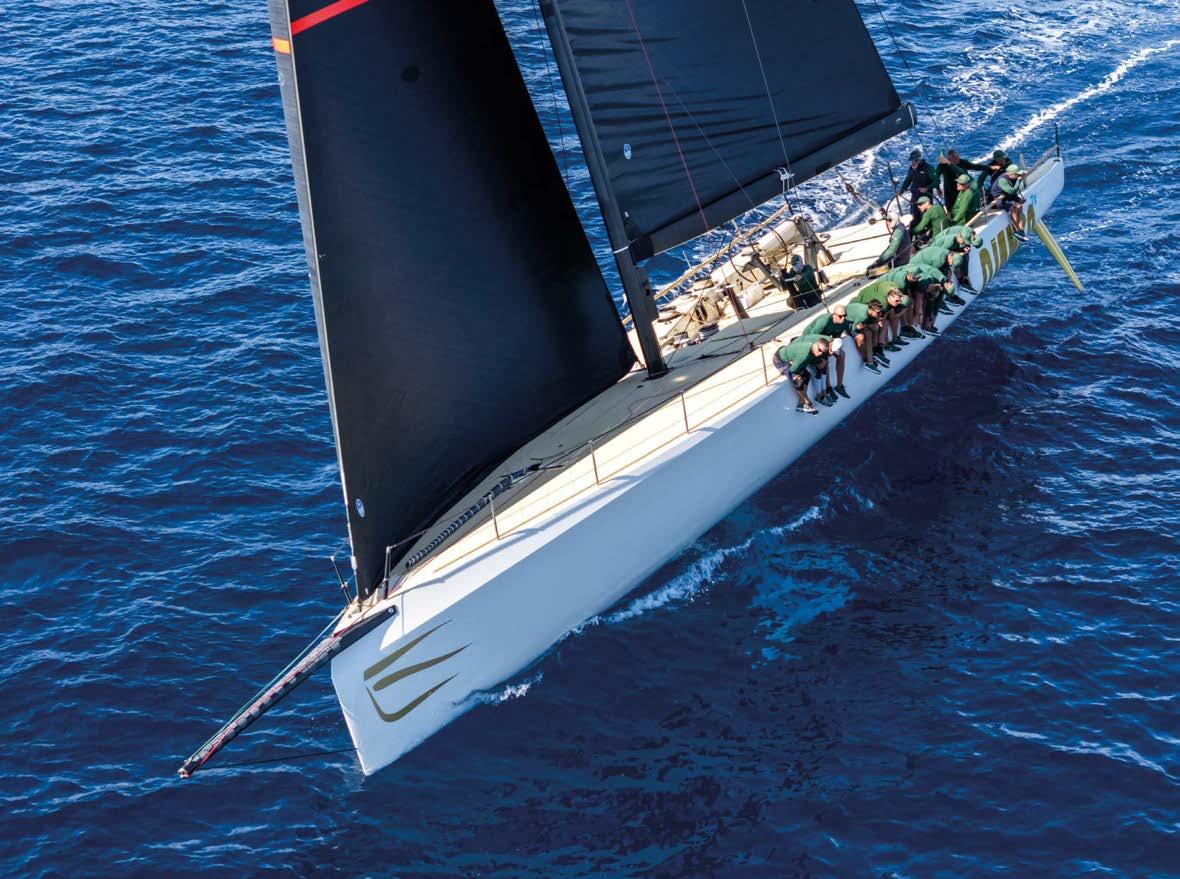
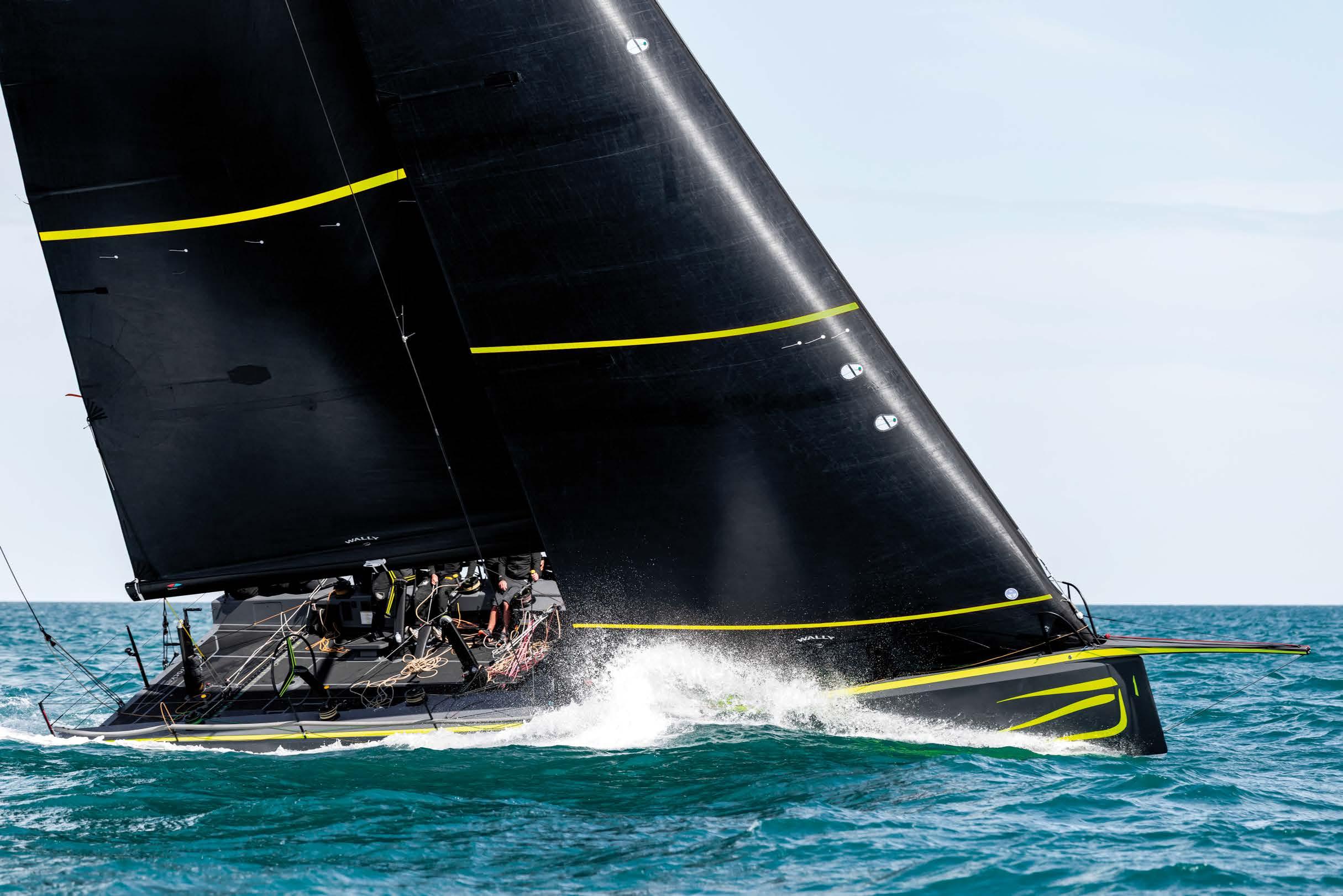
conduttore della stagione di racing 2026. A ogni regata del calendario, lo yacht Wally più performante ottiene punti validi per la classi ca stagionale complessiva, sia nella categoria Maxi sia in quella rocket. Il trofeo nale viene assegnato a Les Voiles de Saint-Tropez al termine della stagione.
The Wally Performance Trophy is the central theme of the 2026 racing season. At every regatta on the calendar, the best-performing Wally yacht earns points towards the overall season standings in both the Maxi and Rocket categories. The trophy is awarded at Les Voiles de Saint-Tropez at the end of the season.
6 – 12 September
26 September – 4 October
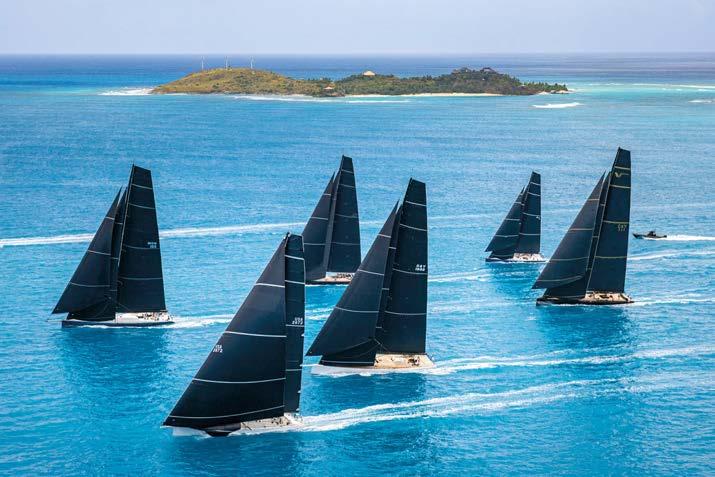
L’angolo di bolina è molto stretto. Si riesce ad arrivare a 17° di apparente. La barca è molto leggera e performante, e lo si nota anche alle andature portanti.
The upwind angle is very tight. You can achieve an apparent wind angle of 17°. The boat is very light and highperformance, as evidenced by its downwind performance.
cruising and racing. That is why Wally decided to build a racer like this”.
The naval architecture was by Botin, with structural engineering by Pure Design & Engineering. The nal design involves the construction of six wallyrocket 51s, which will form a self-contained circuit and will also be eligible to compete in all the classic regattas, from the Giraglia to the Fastnet. It is precisely the latter that is set to be the rst event on the calendar. “This is a boat that requires one reef in the mainsail, and we are looking into the possibility of adding a second reef speci cally for the Fastnet”, announced Vascotto. Future wallyrocket owners will be spoilt for choice: traditional regattas, long-distance races and coastal races, as well as the chance to compete against other sailors on the circuit.
As for Vascotto, there’s no doubt … being on board with him is a whole different story; you can only learn from him. “Tighten it up another two degrees, OK, good angle. Watch out, a gust’s coming, bear away decisively”, he whispered in my ear. I must admit that for a few minutes I felt like a skilled helmsman. Vascotto is absolutely right: looking at the displays at the base of the mast, everything seems easy and intuitive. However, when I saw wallyrocket51 at the quay, I thought exactly the opposite. I had to change my mind: with just a touch of sensitivity at the helm, you get a taste of racing fast. Faster than the wind speed. And without too much effort.
I PESI sono molto contenuti: una tonnellata in meno rispetto ad altri 50 piedi. Water ballast e trim tab sono azionati da una PULSANTIERA in coperta e, di conseguenza, sono molto facili da utilizzare.
The WEIGHT is very low: a tonne less than the other 50-footers. The water ballast and trim tabs are operated via a CONTROL PANEL on deck, making them very easy to use.
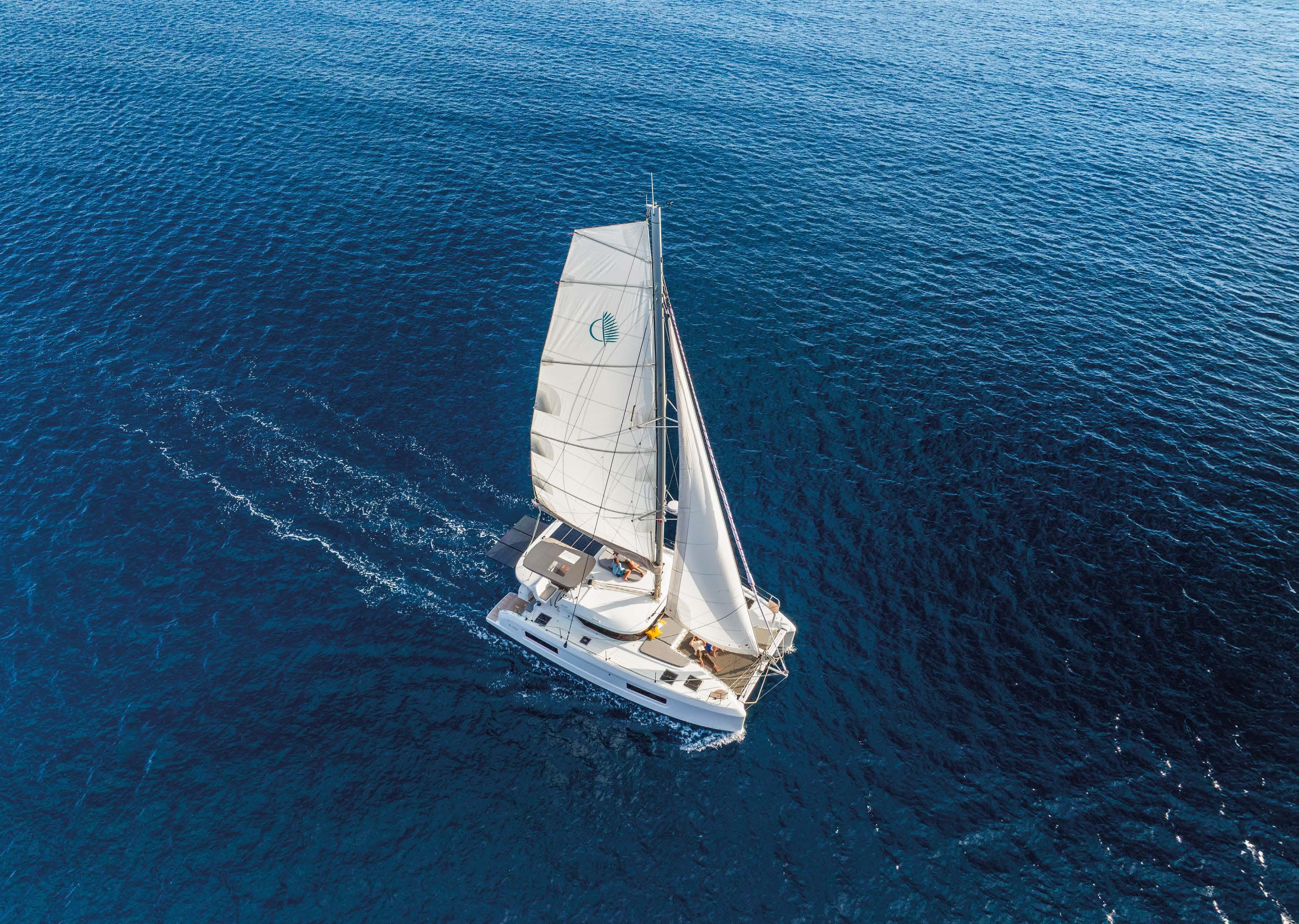
La parola d’ordine è comodità. Le super ci sono ampie così come i volumi sottocoperta. È la sorella del 43’, ma non dà l’idea di essere a bordo di un catamarano più piccolo
The watchword is comfort. There are large surfaces, and the space below deck is spacious. It is the sister boat of the 43’, but it doesn’t feel like a smaller catamaran
by Sacha Giannini and Niccolò Volpati
photo by Julien Gazeau
Gli Exclusive days Lagoon da sempre sono un irrinunciabile invito a riconnettersi con la natura, un esercizio necessario – e infallibile – per ritrovare sé stessi. Sono un’occasione per risvegliare lo spirito avventuroso che ciascuno possiede, spesso anestetizzato dalla vita che va di corsa.
Lo sanno bene i “cat addicted” che ogni anno accorrono numerosi all’evento di Bordeaux. E lo sa bene Boris Diaw, ex cestista francese e campione NBA, proprietario di un bellissimo Seventy 7, con il quale dal 2018 naviga a tappe alla scoperta di luoghi ameni e inediti. Agli ospiti del prestigioso happening tenutosi lo scorso marzo, Boris ha saputo trasmettere, con una mirabile narrazione, tutta la bellezza che ogni volta incontra, miglio dopo miglio. Non solo, Boris 3D (nickname che si è guadagnato per la sua mirabile versatilità in campo), oltre a essere la vera guest star, è stato il padrino del nuovissimo 38, catamarano entry level di Groupe Bénéteau.
Il 38, come qualunque altro Lagoon, per la verità, è un catamarano che naviga per davvero, perfetto per chi, ai bagni di sole in rada, preferisce la cosiddetta experience.
Il layout prevede la cucina spostata verso prua e un tavolo interno che può essere unito a quello del pozzetto. La sensazione è pertanto quella di un unico grande open space.
The layout features a galley moved forward and an interior table that can be joined to the cockpit table. The result is the feeling of a single large open space.
Quintessenza del concetto di marinità, ha già convinto alcune decine di armatori sulla carta, impazienti di metterlo in acqua al più presto. È un cruiser fatto e nito, un omaggio alla convivialità e non occorre avere un occhio particolarmente allenato alla lettura dei piani generali per rendersene conto. Interni ed esterni comunicano senza soluzione di continuità. Ogni millimetro è stato pensato per animare la vita a bordo, che sia a prua, a poppa, in pozzetto, in tuga, in plancia di comando…
Il 38 è glio di un’idea connessa alla performance, all’analisi quantitativa e a uno “scientismo” ideologico di calcolo, di algoritmi, di modelli previsionali e sperimentali che promettono di soddisfare i bisogni dei clienti con doti di navigabilità, di spazi XXL, di brand positioning, no alla costruzione di perfette scenogra e in cui vivere la propria esperienza e percezione di bordo, immersa tra luxury, intelligenza arti ciale e professata sostenibilità, dichiarata nell’uso di recycled upholstery, di FSC certi ed wood e per almeno il 45% della strati cazione di bioresine scomponibili a ne vita. Se liberare le barche dalla propria massa ri ette quella ricercata leggerezza al dislocamento e al galleggiamento, nel nuovo Lagoon 38 anche il design ha il suo “peso” in questo gioco di illusioni e levità, privandosi di alcune regole ordinarie per una rinnovata ricerca tra shape, paint, tra water beam, port e starboard bow, acquisendo nuovi slanci e inaspettati masconi dai
Le niture per paratie e arredi, made in Alpi, sono chiare, molto luminose, sand oak per sintetizzare, mentre per il pagliolato il cantiere ha optato per soluzioni più “dark”. Coerente con il mantra stilistico degli ultimi anni, less is more, anche il 38 si fa portavoce di un’eleganza essenziale, pulita. La prova del 9? La scelta di adottare il Solid surface, il Corian, il vetro (in abbondanza) e la totale assenza di inutili orpelli. Insomma, quello che non serve non c’è.
Detto ciò, seppur fedele agli stilemi contemporanei, Lagoon 38 non vuole essere uno dei tanti. Dirimente in questo, la scelta di af dare gli esterni a Patrick le Quément, gli interni a Nauta e lo studio delle carene a VPLP.
Saltano subito all’occhio la poppa generosa per facilitare l’imbarco, il layout uido, la timoneria sfalsata a mezzanino, la prua dritta e alta che addirittura non sembra appartenere a due sca distinti ma distanziati e tenuti separati da un secondo pozzetto prodiero, modulare e avvolgente, ricavato a ridosso della tuga disciplinata dalle regole e dalle linee familiari del marchio. Con uno spiccato biancore del gelcoat a scafo, in coperta, in tuga, sul y e sui passavanti, la cinetica visiva dell’osservatore conduce all’esplorazione sopra e sotto il galleggiamento, attraverso un ritmo che anima un lavoro di decostruzione dei con ni e delle funzioni ordinarie, per intercettare i movimenti e le pause di bordo. Per capire il 38 no in fondo bisogna viverlo, abitarlo. Come sul 43, l’avanzamento dell’albero svincola la dinette da invadenti puntelli e mastre, consentendo alla galley di disporsi a baglio guardando verso prua. Il tavolo esterno e quello interno possono
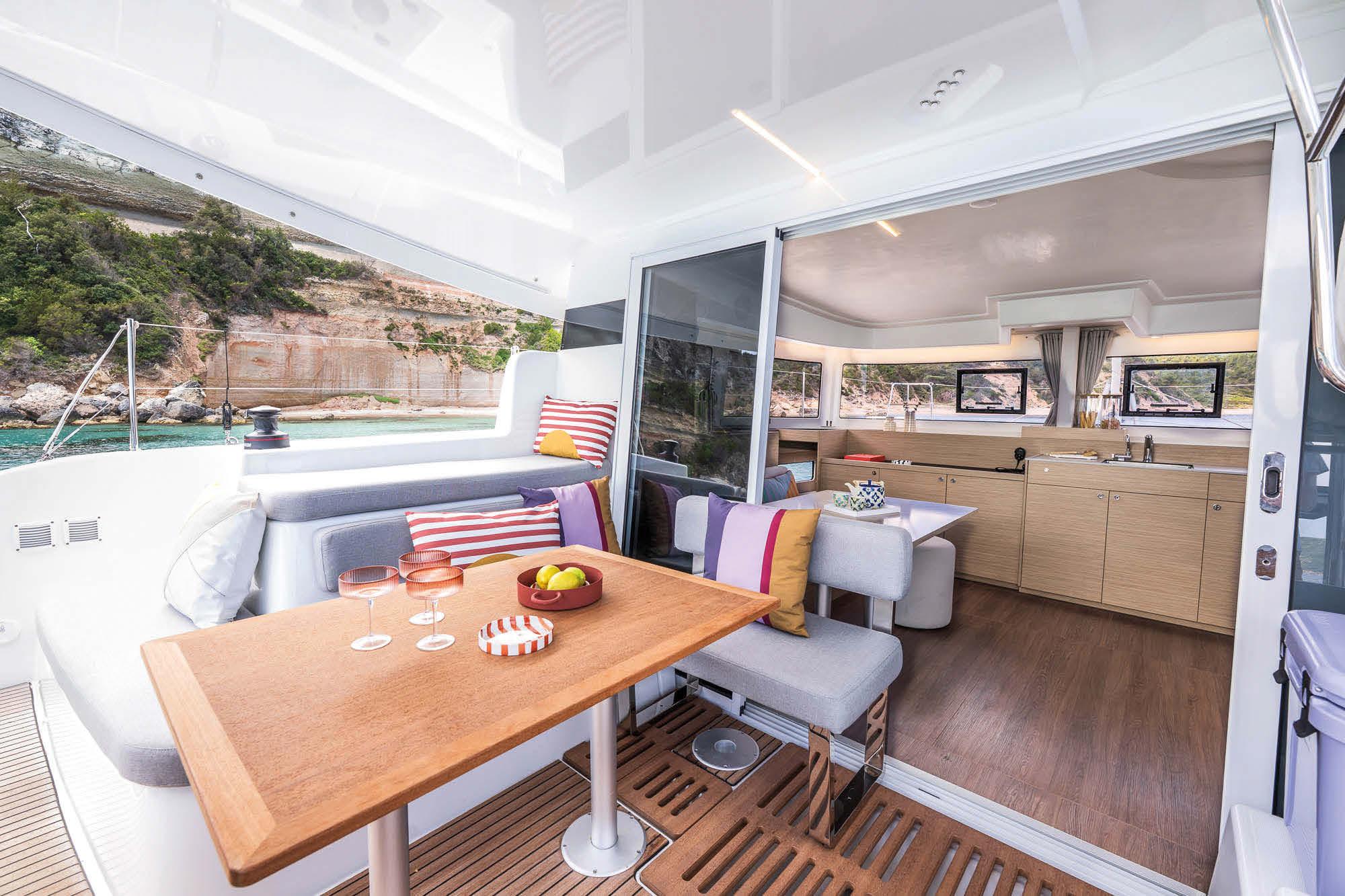
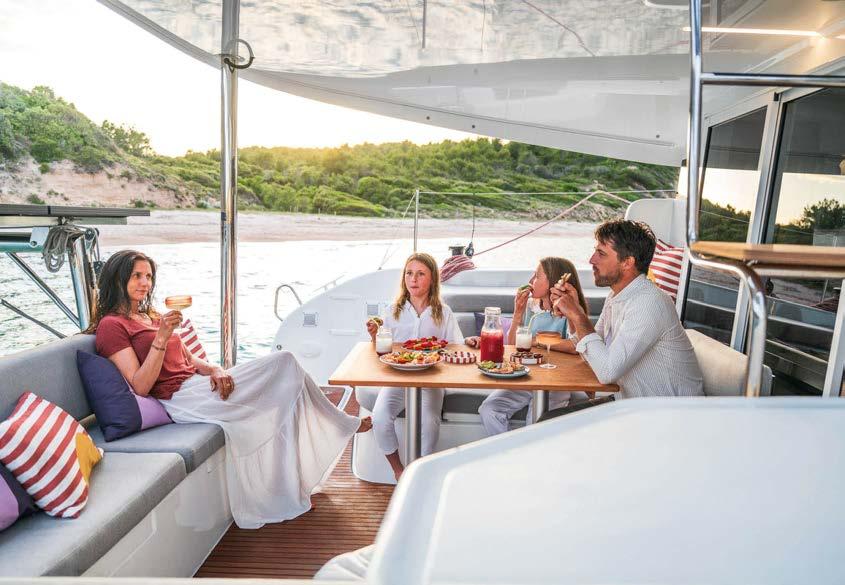
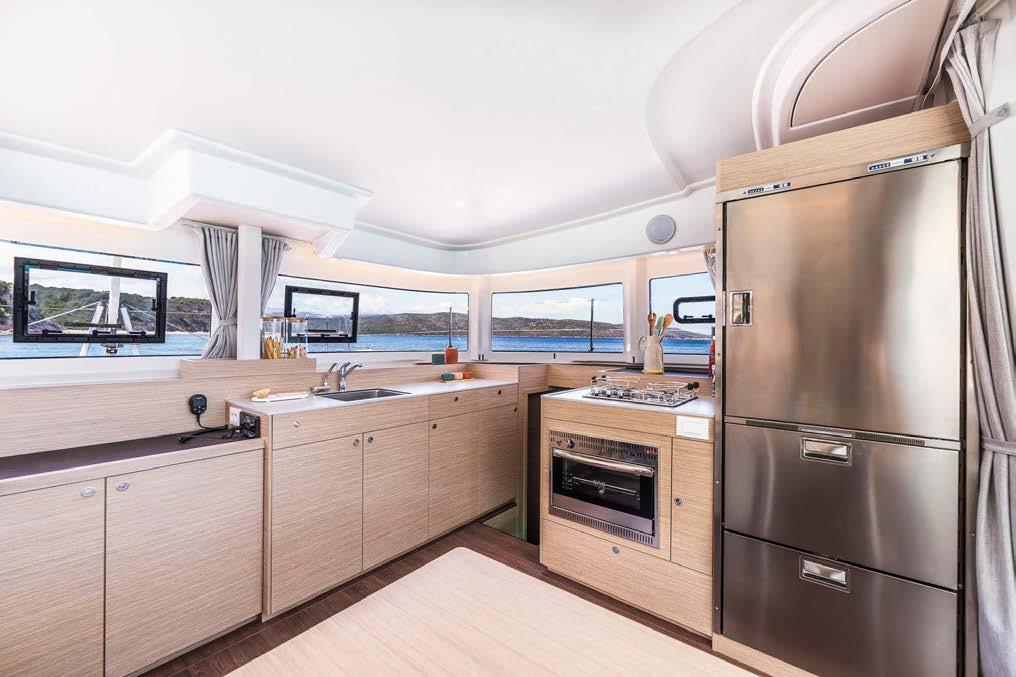
essere uniti con moduli aggiuntivi, scorrendo una vetrata retrattile a scomparsa che si apre a uno spazio continuo di convivialità per ospitare no a 10 persone contemporaneamente. È una barca aperta, mediterranea, estiva, con una predisposizione di coperta votata al pieno godimento della vita en plein air, con una poppa spalancata al mare e una deck house chiusa su tre lati e ben centrata sul pro lo e sui baricentri di dislocamento.
Le cabine hanno un layout semplice, molto razionale e attento alla funzionalità notturna e a quella di stivaggio. Gli sca , alti e potenti, sono costruiti per infusione in sandwich di balsa con pelli in bre di vetro “E” impregnato di vinilestere per i primi strati a contatto con l’acqua e con poliestere isoftalico per la restante strati cazione. Dotato di generose valvole e prese a mare in bronzo, il 38 non contempla alcuna deriva zavorrata, ma solo due robuste pinne sottovela, ef caci e utili a proteggere sca e timoni. Controstampato parzialmente in sentina, nel cielino della dinette e in alcune soluzioni d’arredo dei bagni, ha tuttavia compartimenti di prua e di poppa su ogni scafo, separati dalla zona giorno da paratie stagne. Non potendo armare un genoa in sovrapposizione potente e oltrepassare le sartie a lo murata, il di 22 m² con trasto a prua via dell’albero a lo tuga e una randa da 56 m² su un albero di 18,5 metri dall’acqua. Verso poppa, il y si estende no a sovrastare il pozzetto a protezione di pioggia e sole, ma l’assenza di battagliole o tientibene in quota limitano un po’ gli equilibri di bordo per regolare lazy bag, cerniere e “issate” incattivite. In plancia la timoneria è ben corredata di plotter, strumenti e rinvii di rigging, dove 8 stopper controllano altrettante manovre correnti con un solo winch elettrico a sinistra del timoniere, di valido aiuto per i solitari ma che lascia tuttavia qualche riserva solo sull’abilità e coordinamento del tailer di turno a gestire tutto in uno! Una tasca dedicata sotto l’uscita del winch raccoglie il “bando” di scotte, drizze e borose ma rischia, in nome dell’ordine, di “intrecciare” anche usi e funzioni. Un tubolare inox piegato sotto la ruota del timone è pensato come “pedana” per scrutare prue e orizzonti, ma la sua limitata sporgenza condiziona di fatto la funzione di rialzo agevole per poggiapiedi, perché è misurato più per l’uso a mezzo piede o per brevi posture divaricate “a papera” piuttosto che per pose prolungate.
Lagoon ha scelto di non avere un hardtop, anche perché il nessuna timoneria, ci sono il prendisole e i pannelli solari. La ruota del timone è una sola, sulla dritta e in posizione rialzata rispetto al piano di calpestio del pozzetto. La visibilità è buona e consente un controllo accettabile degli sca e delle vele. Fuori dalla diga foranea ci attende un po’ d’aria, ma non troppa, tanto da poter srotolare il Code 0. Meglio rispetto al occo autovirante che ha una super cie velica piuttosto contenuta. L’organizzazione delle manovre
non è semplicissima perché la scotta di randa si trova vicino alla ruota del timoniere, ma il winch per il Code 0 è in pozzetto. Inoltre, la scotta del Code 0 taglia il passavanti laterale ostacolando il camminamento verso prua. Le prestazioni e la reattività al timone sono da crociera, del resto Lagoon 38 è nato per questo. Non è nervosa ed è facile da timonare. È una barca che perdona molto, nel senso che si naviga tranquillamente anche quando il vento raggiunge i 15 nodi. Il Code 0 ha un ampio range e possiamo permetterci di utilizzarlo da 60° a 120°. Intorno ai 100° di angolo si ottiene la prestazione migliore in funzione dell’intensità del vento. Con meno di tredici nodi, infatti, si naviga a più di otto di velocità: un valore accettabile per un catamarano da crociera che ha nella ricerca dello spazio sopra e sottocoperta la sua priorità. I due sca disegnati da VPLP hanno un baglio accentuato verso poppa e molto volume a prua. Il primo per aumentare la super cie del pozzetto, il secondo per garantire due cabine di prua ampie e confortevoli, anche in altezza. Nonostante questa caratteristica, Lagoon 38 è un catamarano che non ha le vele solo per rappresentanza: consentono infatti performance suf cienti sottovela. I motori sono ovviamente due e si tratta di due Yanmar da 29 cavalli.
Sono disponibili due layout a tre o a quattro cabine. Nel primo caso, lo scafo di sinistra è interamente dedicato all’armatore, con un bagno dai volumi molto ampi. Two layouts are available, with three or four cabins. In the rst case, the port hull is entirely dedicated to the owner and features a very spacious bathroom.
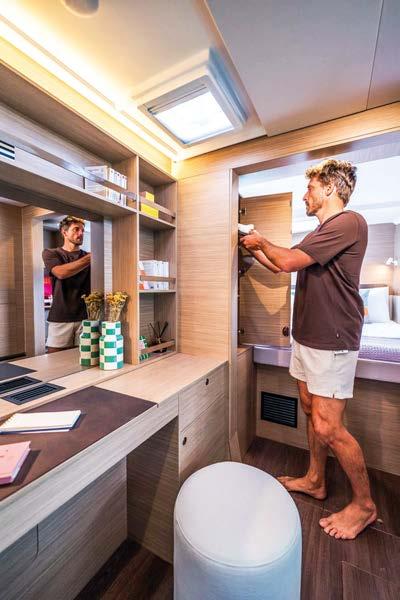
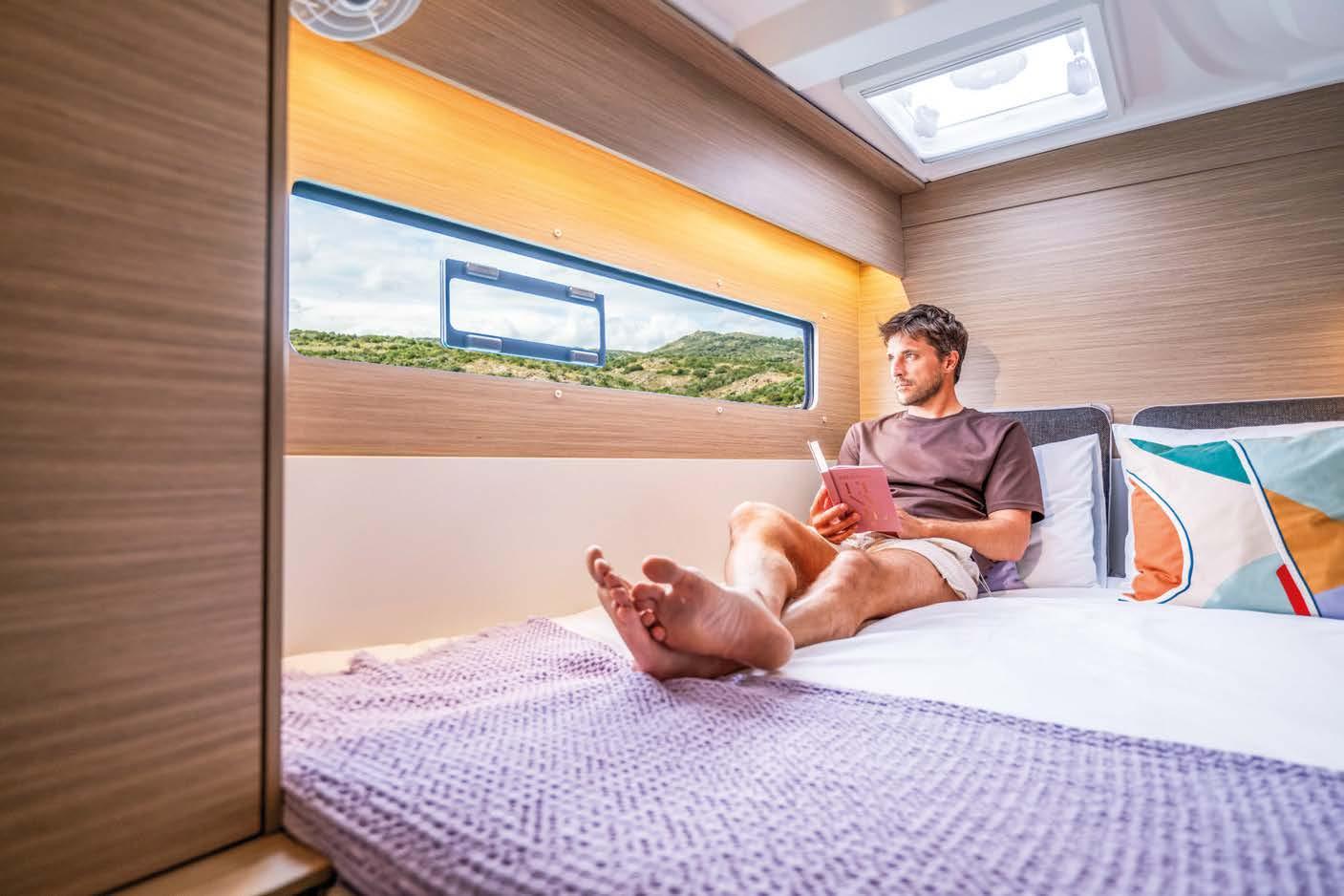
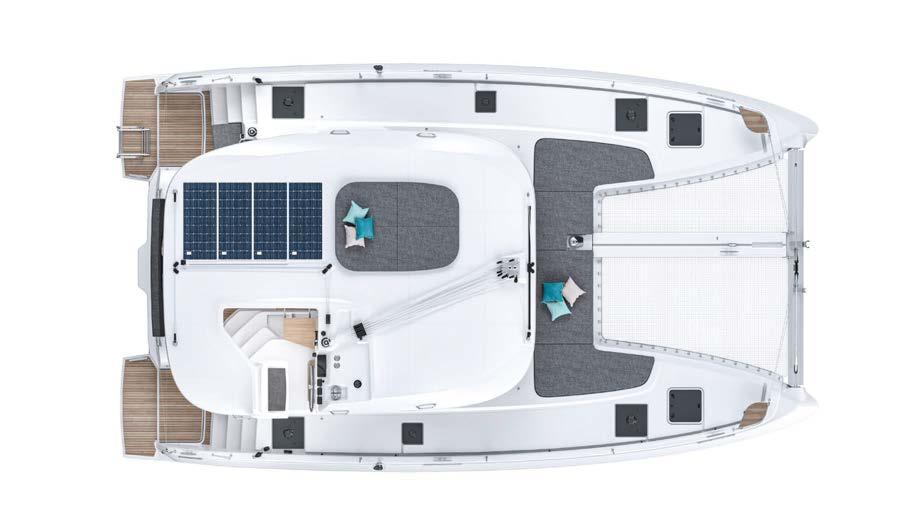
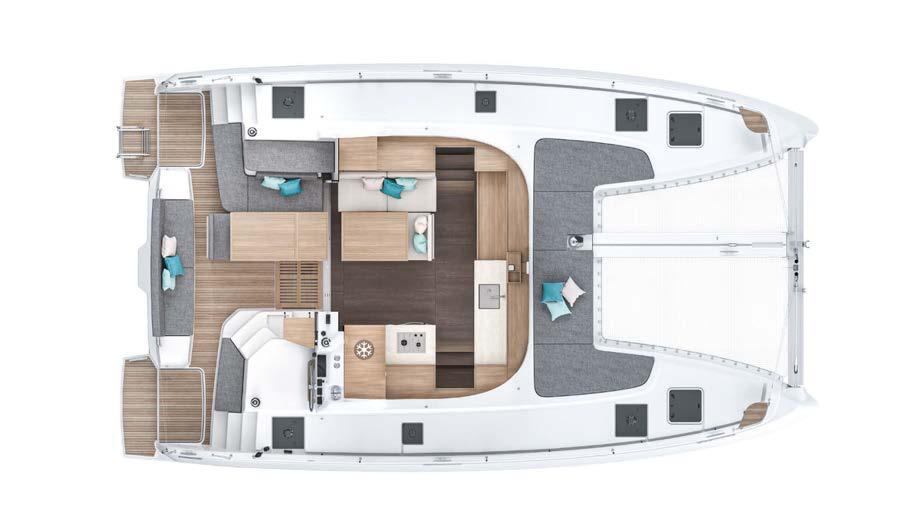
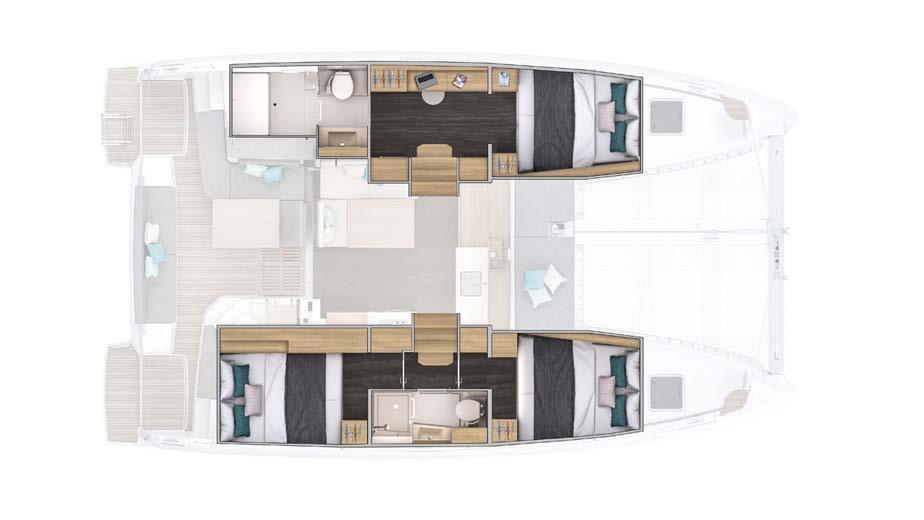
Il pozzetto è ampio, con le due spiaggette a poppa a pelo d’acqua, la zona di prua molto vivibile grazie alla cuscineria e alla rete tra i due sca . Inoltre, sull’hardtop c’è un prendisole.
The cockpit is spacious, with two small beaches at the stern at water level, and the bow area is very comfortable thanks to the cushions and net between the two hulls. There is also a sun deck on the hardtop.
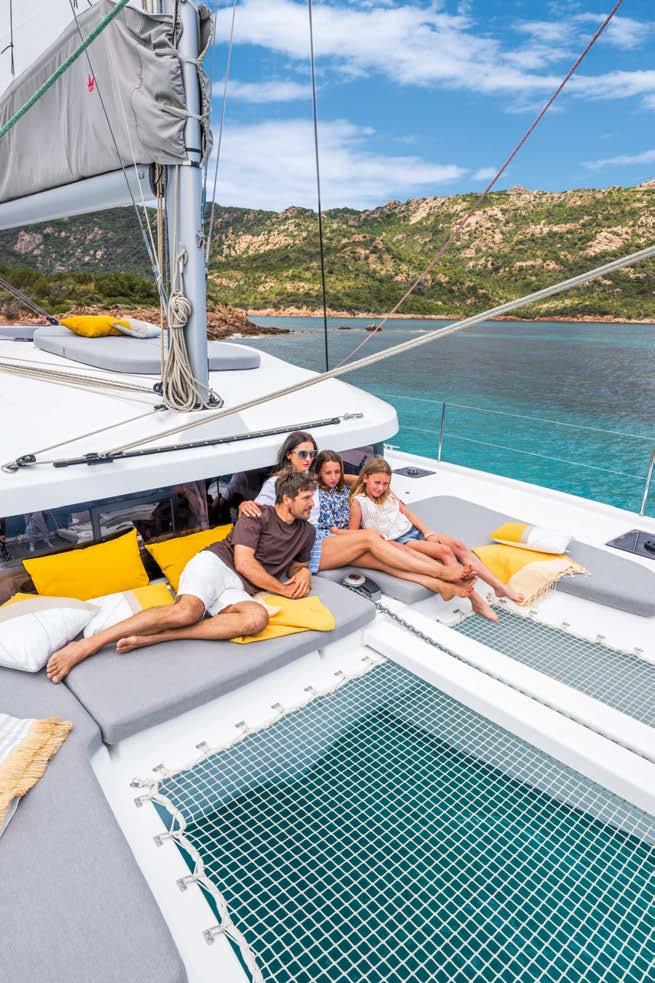
Una potenza adeguata tanto che, senza tirare il collo ai propulsori, si raggiungono tranquillamente i sette nodi di velocità. Anche i trasferimenti a motore, quindi, non sono un problema. E i 400 litri di capacità dei serbatoi per il carburante permettono di fare una crociera senza l’assillo di dover fare spesso rifornimento.
The Lagoon Exclusive Days have always been an unmissable invitation to reconnect with nature, a muchneeded – and infallible – occasion during which to rediscover oneself.
They offer an opportunity to reawaken the adventurous spirit within all of us, but the pace of our hectic lives often subdues it.
Cat addicts are well aware of this, and they turn up in droves every year at the event in Bordeaux. They include former French basketball player and NBA champion Boris Diaw, the owner of a beautiful Seventy 7 that he has been using to discover new, lovely locations since 2018.
Delivering an admirable speech at this prestigious event in March last year, Boris shared the beauty that he nds every time he sets out, mile after mile. And this wasn’t all, as Boris 3D (a nickname earned because of his extraordinary versatility) was not only the star of the show, but also the godfather , the entry-level catamaran from
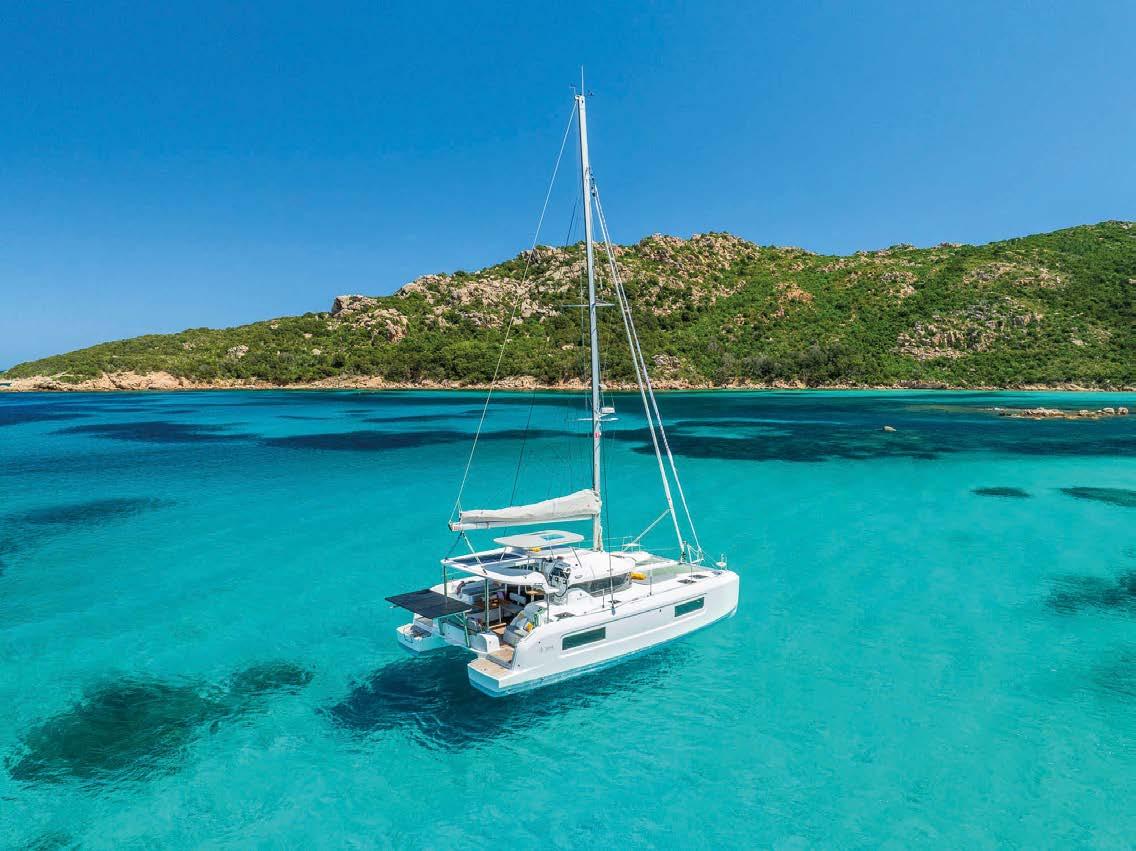
, like any other Lagoon, is a catamaran that can really sail, and it is ideal for anybody who would rather do that than just sunbathe at anchor. It is the perfect distillation of the sailing concept and has already convinced dozens of buyers who have bought boats off-plan and are anxious to get them in the water as soon as possible. It is a cruiser through and through, a homage to sociability, and you don’t need to be particularly skilled in understanding blueprints to realise that. Inside and out communicate with each other without any contrived continuity
Every inch has been designed to make life on board more lively, whether forward, aft, in the cockpit, the deckhouse, or at the helm… is the product of an idea linked to performance, to quantitative analysis and an ideological belief in science with calculations, algorithms, predictive and experimental models, designed to meet client needs in terms of handling under sail, of outsize spaces, of brand positioning, right up to the construction of perfectly-crafted environments in which to enjoy your own experience and on board feel, immersed between luxury, arti cial intelligence and obvious sustainability, shown in the use of recycled upholstery, FSC certi ed wood and – for at least 45% of the layering – organic resins that can be broken down when no longer needed.
VELOCITÀ MAX DI BOLINA NODI HAULING MAX SPEED IN KNOTS
LAGOON
162 quai de Brazza CS 81217 F-33072 Bordeaux Cedex, Francia T. +33 (0)557 809280 info@cata-lagoon.com - www.cata-lagoon.com
PROGETTO
VPLP Design (naval architecture), Patrick le Quément (exterior design) e Nauta Design (interior design)
SCAFO
Lunghezza f.t. 13,12m • Lunghezza scafo 11,38m
• Baglio massimo 6,65m • Pescaggio 1,26m
• Dislocamento 10.240 kg • Serbatoi acqua 500 l
Località//Place Barcellona - Spain
Altezza onda//Wave height 1m
Persone a bordo//People on board 4
volume on board
SUPERFICIE VELICA M2
SAILING SURFACE M2
• Serbatoi carburante 400 l • Sup. velica totale 77,7 m2 • Sup. velica randa 55,7 m2 • Sup. velica genoa 22 m2 • Sup. velica Code 0 54 m2
MOTORE
2x 29 cv Yanmar 3YM30 • Potenza 21,3 kW (29 cv)
• 3 cilindri in linea • Cilindrata 1,26 l • Alesaggio per corsa 80mm x 84mm • Regime di rotazione massimo 3200 giri/minuto
CERTIFICAZIONE CE
CAT A
PREZZO
A partire da 342.000 € Iva esclusa
PROJECT
VPLP Design (naval architecture), Patrick le Quément (exterior design), and Nauta Design (interior design)
HULL
P: h. della randa//mainsail E: base della randa//boom
GENOA
DISLOCAMENTO DISPLACEMENT
LOA 13.12m • Length 11.38m • Maximum beam 6.65m • Draft 1.26m • Displacement 10,240 kg
• Water tank volume 500 l • Fuel tank volume
400 l • Sailing surface 77.7 m2
• Main sail sailing surface 55.7 m2 • Genoa sailing surface 22 m2
• Code 0 sailing surface 54 m2
MAIN PROPULSION
I: h. del triangolo di prua//forestay J: base del triangolo di prua//mast front face-forestay
2x 29 cv Yanmar 3YM30 • Outlet mechanical power 21.3 kW (29 hp) • 3 in-line cylinders • Swept volume 1.26 l • Bore&Stroke 80mm x 84mm • Maximal rotational speed 3200 rpm
EC CERTIFICATION
CAT A
PRICE
Starting price 342,000 € + VAT
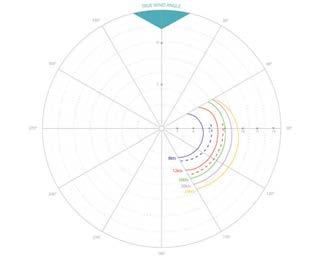
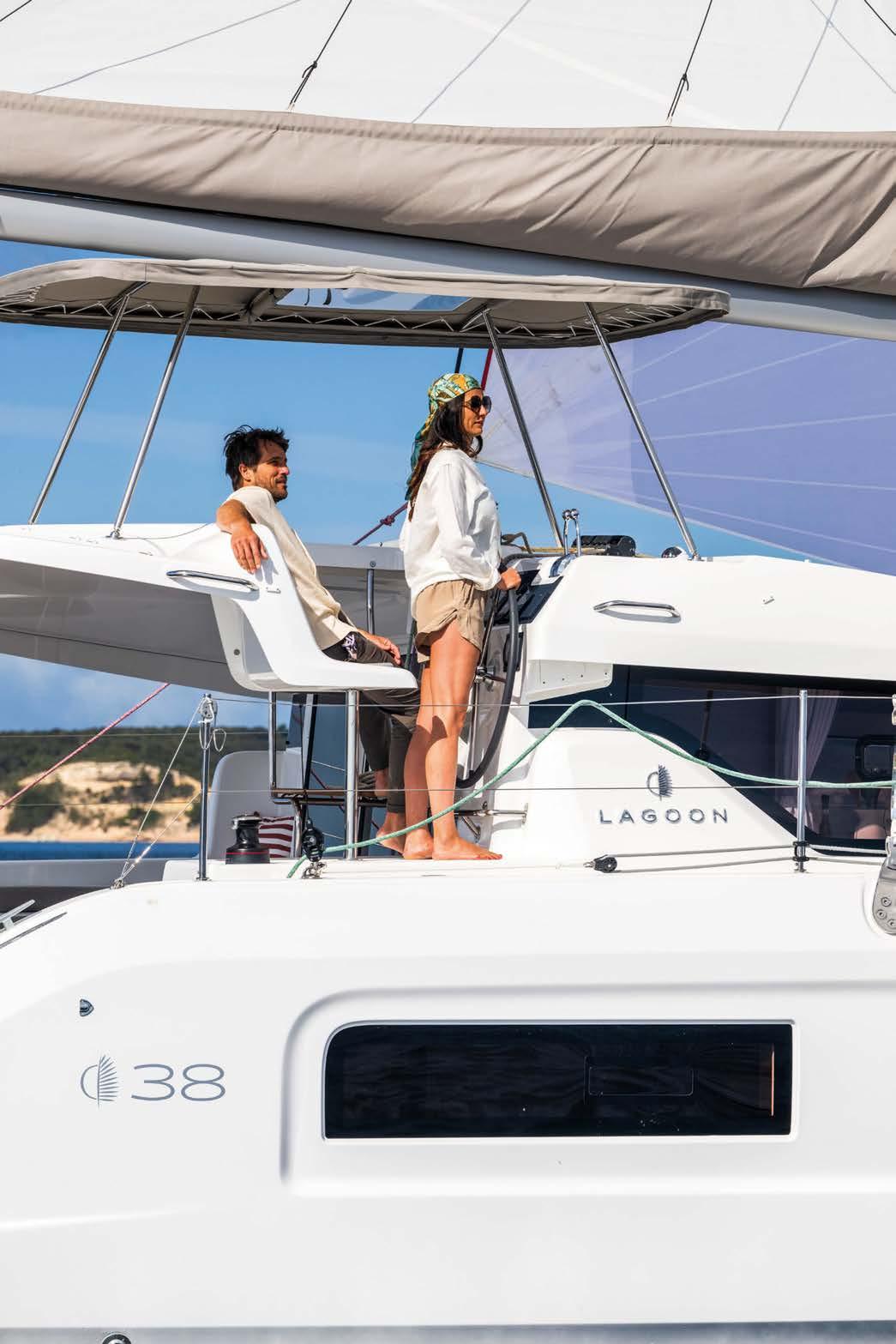
If freeing boats from their mass re ects a quest for lightness in terms of displacement, the design of the new Lagoon 38 also has its own “weight” in terms of this play of illusion and levity. It has discarded some of the standardised rules to seek out a new relationship between shape, paint, waterline beam, port and starboard bow, acquiring new impulses and unexpectedly large loaf areas which open up just above the waterline with an edge banding that wraps around the sides and overlaps the hull, creating a step over the water on each side.
The nishes for the bulkheads and furniture, made by the Alpi rm, are light and very luminous, with sand oak to tie it together, while for the parquet oor, the yard has gone for darker solutions. Following the less-is-more mantra of recent years, the 38 is also the spokesperson for an essential, clean elegance. So what is the ultimate test?
The decision to use a solid surface (Corian), lots of glass, and the complete absence of pointless frippery. Basically, what isn’t needed is left out. That said, while still staying true to contemporary styling, the Lagoon 38 doesn’t just want to be one of many. Hence, the decision to entrust the exteriors to Patrick le Quément, the interiors to Nauta and the hull design to VPLP.
The substantial stern area immediately makes getting on board easier, the uid layout, and the staggered helm area with its mezzanine level. This tall, vertical bow doesn’t feel as if it is part of two different hulls – they are actually set apart by a second adaptable and welcoming cockpit forward, that nds a space behind a deckhouse whose design is driven by the rules and the brand’s family lines. The gelcoat stands out for its whiteness on the hull, deck, deckhouse, ybridge, and sidedecks. Anyone seeing it is led to look further, above and below the water level through a rhythm that gives life to a deconstruction of the limits and ordinary functions, to capture movement and pauses on board. To really understand the 38, you have to experience it and live on it. As on the 43, placing the mast further forward frees the dinette from invasive
In navigazione è tutto facile perché la barca, come ci si aspetta da un catamarano da crociera, non è NÉ TROPPO REATTIVA, né “nervosa”.
When sailing, everything is easy because the boat, as you would expect from a cruising catamaran, is NEITHER TOO RESPONSIVE nor ‘nervous’.
supports and coamings and allows the galley to be set across the beam, looking forward. The outside and inside tables can be joined by extra sections, and a retractable window opens onto a continuous social area that seats ten people in all. It is an open, sunny, Mediterranean boat with the deck set up to make the most of open-air living, with a stern open to the water and a deckhouse closed on three sides, centred on the centre of buoyancy.
The cabin layout is simple, very rational and functional both for nighttime use and for storage. The tall and strong hulls have been built using a balsa sandwich construction, with “E” breglass impregnated with vinylester in the rst few layers that contact the water, and isophthalic polyester for the rest. Fitted with generously-sized valves and bronze seacocks, the 38 hasn’t opted for ballasted keels, but rather for two strong ns that work well when under sail, and can protect the hulls and rudders. With slight offsets in the bilge, in the dinette ceiling and in some of the bathroom furniture, it still has bow and stern compartments in each hull that are separated from the day area by watertight bulkheads. Since it can’t use an overlapping genoa and go beyond the shrouds set in the sides, the 38 carries a standard self-tacking, 22 square metre jib with a traveller forward of the mast ush with the deckhouse, and a 56 square metre mainsail on a mast that stands 18.5 metres above the water. Going aft, the ybridge extends to overhang the cockpit, working to protect from both sun and rain, but the lack of rails or grab handles in any quantity does rather restrict your ability to adjust the lazy bag, hinges, and any sails that haven’t been raised properly. The helm station is nicely tted out with plotters, instruments and rigging blocks, where eight stoppers handle the running rigging with a single electric winch to port of the helm, which is very useful for lone yachtsmen but places a question mark over the ability and coordination of the person working as tailer to handle everything!
A special pocket under the winch exit gathers sheets, halyards, and ree ng lines, but there is a risk – in the name of being orderly – of muddling up their uses and functions. A stainless steel tube bent under the wheel has been added as a step to enable the bows and horizon to be seen. Still, it doesn’t stand out much, which affects how easily it works as a stand. It’s alright for getting half a foot on or for short use in odd positions, but not big enough for prolonged use. Lagoon has decided against a hardtop, not least because the 38 isn’t the 43. There is no helm station “upstairs”, but there is a sun pad and solar panels. There is just one wheel, set to starboard and raised above the cockpit oor level. The sightlines are good, with acceptable visibility of the hulls and sails. We found a bit of wind as we got outside the harbour wall, but not too much so that we could unfurl the Code 0. This was better than the self-tacking jib, which doesn’t have a lot of sail surface. The organisation of the rigging isn’t very simple,
because the mainsail sheet is close to the wheel, but the winch for the Code 0 is in the cockpit. What is more, the Code 0 sheet closes off the side deck and blocks access to the bow. The performance and response to the helm are those of a cruising boat, and the Lagoon 38 has been created for that. It isn’t nervous and is easy to helm. It is a boat that is very forgiving, given that it sails calmly when the wind strengthens, until it gets to over fteen knots. The Code 0 has a wide range of use, from 60° to 120°. You get the best performance at around 100 degrees for wind strength. So when it is under 13 knots, you go over 8, which is an acceptable speed for a cruising catamaran that has prioritised space above and below decks. The two hulls designed by VPLP have a beam that increases going aft, and plenty of space forward. The rst increases the cockpit’s surface area; the second provides two large, comfortable forward cabins, including in terms of headroom. Despite that, the Lagoon 38 is a catamaran whose sails aren’t just for show: they deliver acceptable performance.
There are obviously two engines, two 29 hp Yanmars. They deliver enough power that, without crucifying the engines, you can easily get to seven knots. So motor-powered passages are not a problem, especially as the 400-litre capacity of the tanks means that you can cruise without worrying about needing frequent stops to refuel.
Il occo standard è autovirante, ideale se si vuole condurre Lagoon 38 con equipaggio ridotto o per no da soli.
The standard jib is self-tacking, ideal if you want to sail the Lagoon 38 with a small crew or even alone.
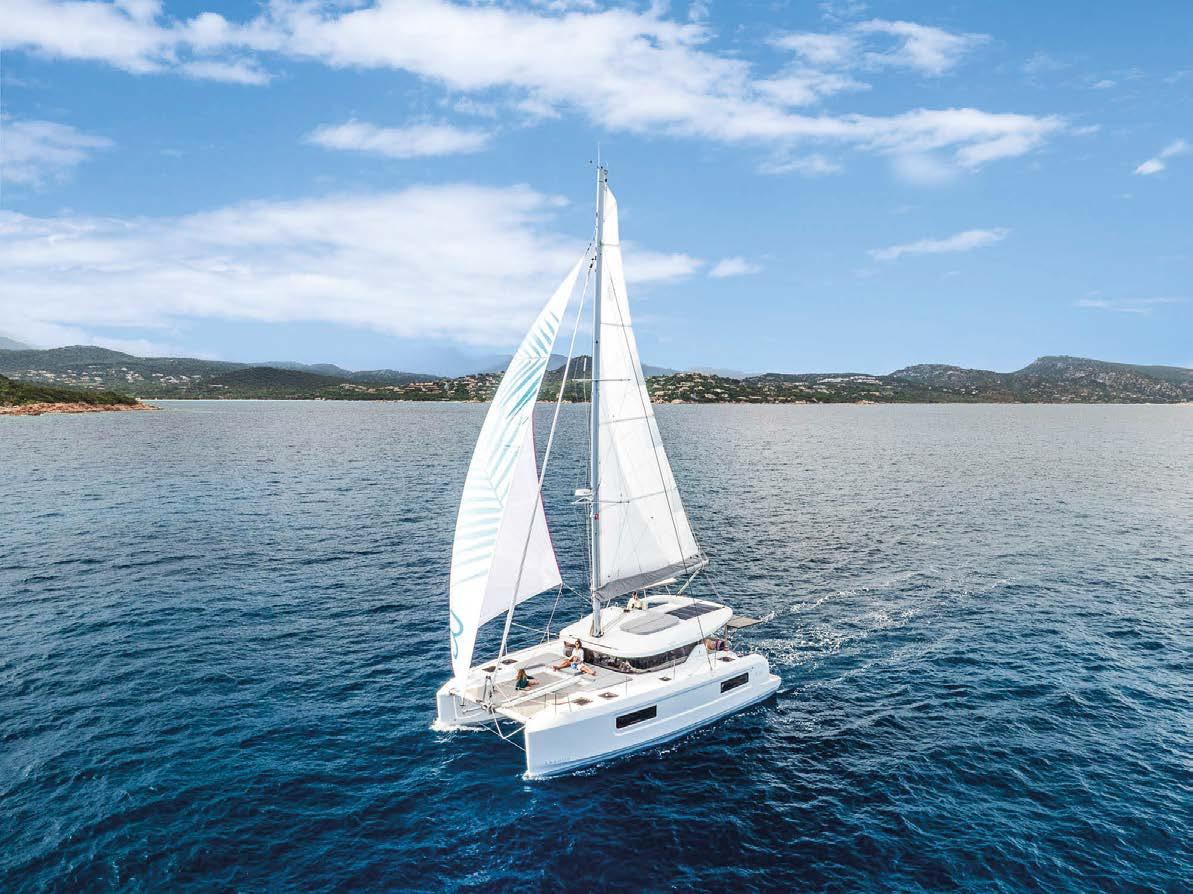
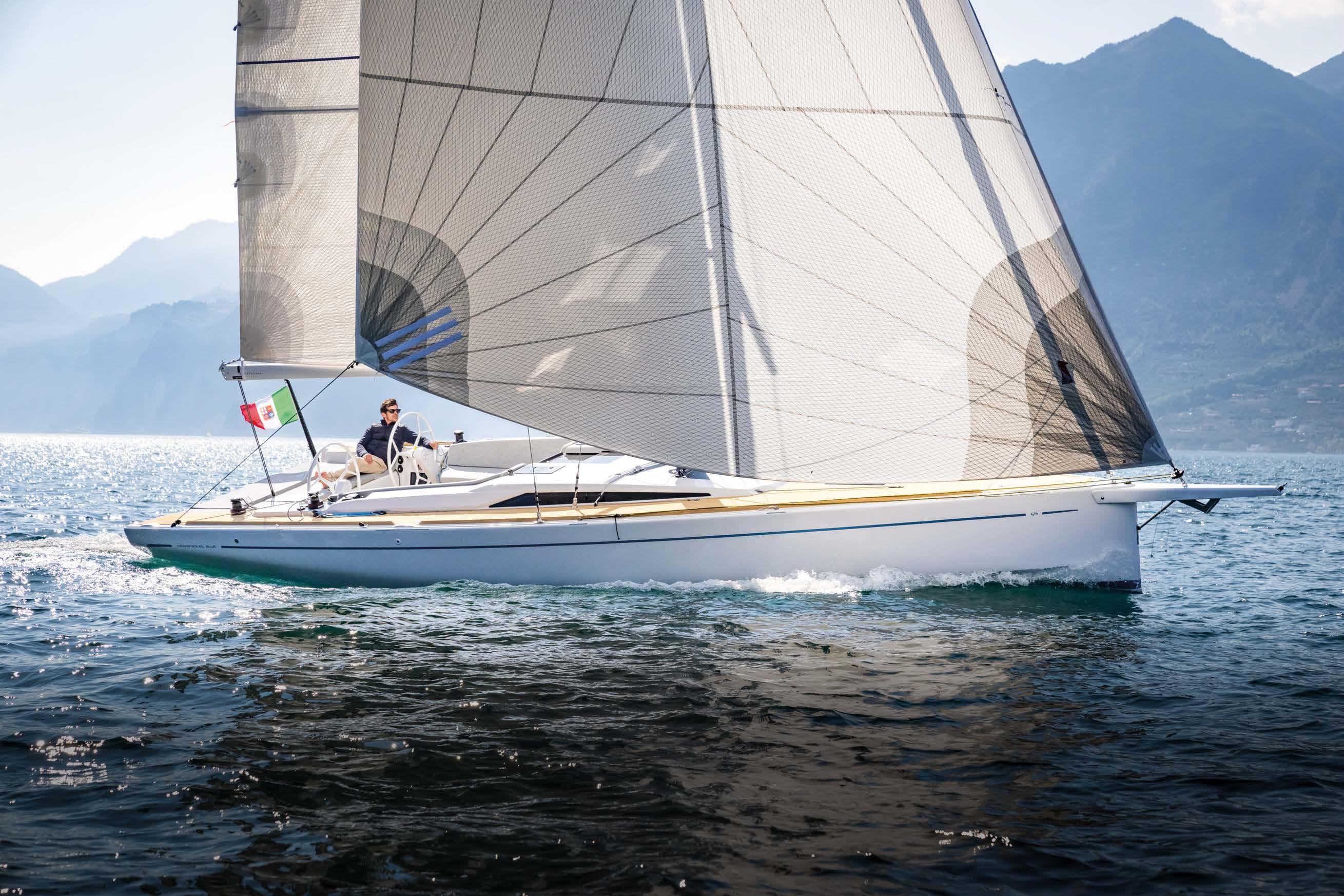
Nel Grand Soleil 33 Blue design, ef cienza e tecnologia si incontrano in una barca a vela con motore ausiliario elettrico che guarda al futuro della crociera weekend
Design, ef ciency, and technology all come together in the Grand Soleil 33 Blue, a sailing boat equipped with an auxiliary electric motor, which has its sights set on the future of the weekend cruiser
by Joseph Culicchia
Abbiamo provato il Grand Soleil Blue progettato da Matteo Polli per quanto riguarda l’architettura navale e da Nauta Design per gli interni e la coperta.
È lunga fuori tutto 11,30 metri, lo scafo è 9,99 metri, quindi è omologata natante, ha un baglio di ben 3,70 metri che permette di avere molta abitabilità e un pescaggio di 2,20 metri. L’albero è molto arretrato in modo da avere un occo con tanta tela e la randa è square top.
La barca presenta linee tese con il disegno della poppa largo e molto spazioso, il prendisole, comodo anche durante la navigazione, è dotato di divanetti sulla poppa dietro ai due timoni a ruota. La scia della barca è piatta perché la poppa è molto larga e rende dolce la navigazione. Si possono inserire delle draglie in carbonio o in dyneema e i candelieri si possono mettere ed estrarre a piacimento. Il progetto di questa imbarcazione rispecchia la visione dell’ingegnere che da appassionato e da regatante ha reso la barca veloce con un concept differente dai 2 modelli precedenti.
Le crocette sono acquartierate, il che rende la barca molto piacevole da sentire anche durante le manovre. Durante il test a Malcesine, a nord del Lago di Garda, vi erano delle condizioni di acqua piatta, con Ora, vento da sud, variabile dai 10 no a raf che di 19 nodi.
Al primo impatto ho percepito la facilità nel gestire l’imbarcazione anche senza l’aiuto di altre persone grazie anche al occo autovirante e al rolla occo. La vela di prua è dotata di garrocci tessili. Tutte le drizze sono rimandate a poppa e non c’è bisogno di dover andare a prua per dover issare e sistemare la randa sulle bitte intorno all’albero. Importante per questa loso a di barca è che i winch siano elettrici af nché si possano issare e ammainare facilmente randa, occo e gennaker.
Durante l’uscita, il setting della barca era perfetto per le condizioni meteo presenti, quindi randa full batten, senza mani di terzaroli (38 m²), occo (26 m²), e durante le andature portanti gennaker di (100 m²). Nell’armo della barca vi sono anche code zero e genoa. Le vele sono realizzate con materiali termoplastici dalla veleria OneSails.
Le vele 4T FORTE sono le prime “green sails” al mondo. Le membrane e il loro assemblaggio sono progettati per soddisfare i più alti standard in termini di impatto ambientale e opzioni riciclabili.
La navigazione di bolina era piacevole e lineare, con un angolo di 40° e 15 nodi di vento si manteneva una velocità tra i 6/7 nodi. Al lasco abbiamo raggiunto 10,4 nodi. In andatura portante, la barca oscillava da un angolo di 130/155° con una velocità media di 8,5 nodi. La scelta del doppio timone a ruota, a mio parere, è conforme con l’idea di privilegiare la comodità di movimento a bordo; anche se durante le manovre avrei preferito un timone singolo per avere più precisione nell’uscita dalle manovre. L’imbarcazione è costruita utilizzando una resina termoplastica di nuova generazione, frutto
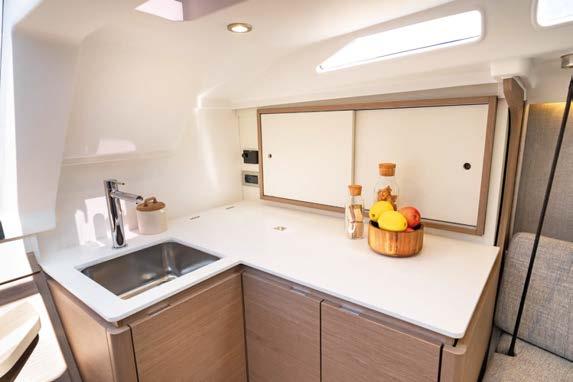
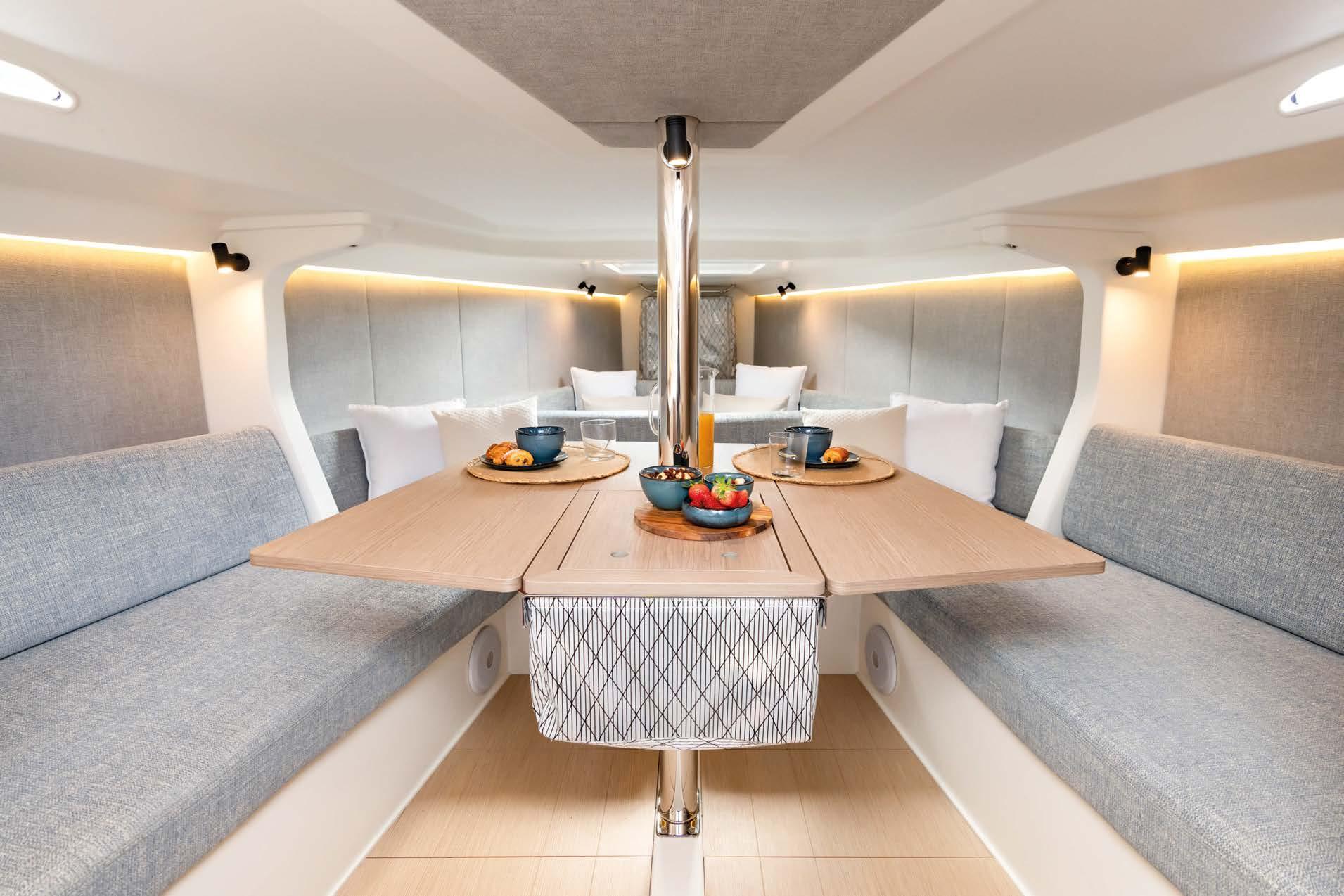
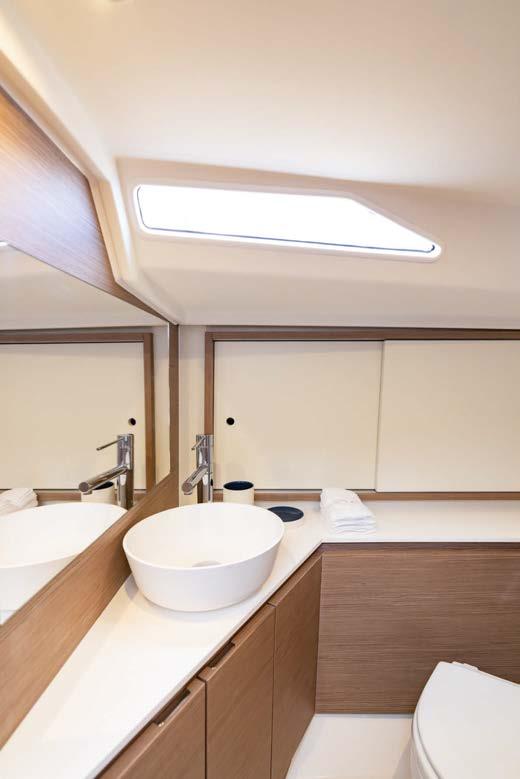
GS Blue è anche una barca per godersi una giornata al mare o, volendo, un ne settimana. In coperta, a poppa, il prendisole è estensibile per avere più super cie a disposizione durante le soste in rada. Gli interni, invece, non hanno una grande abitabilità, ma c’è un divanetto che si trasforma in cuccetta, una piccola cucina e locale bagno.
The GS Blue is also ideal for enjoying a day or a weekend at sea. The sun deck at the stern can be extended to provide additional space during harbour stops.
The interior is not exceptionally spacious, but it features a sofa that converts into a berth, a small galley and a bathroom.
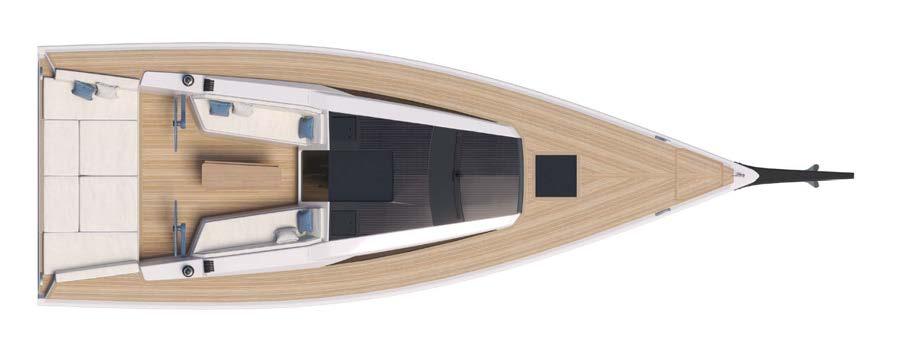
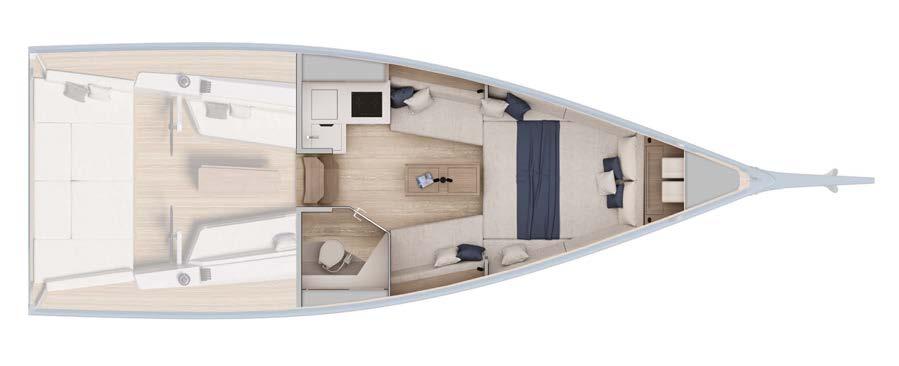
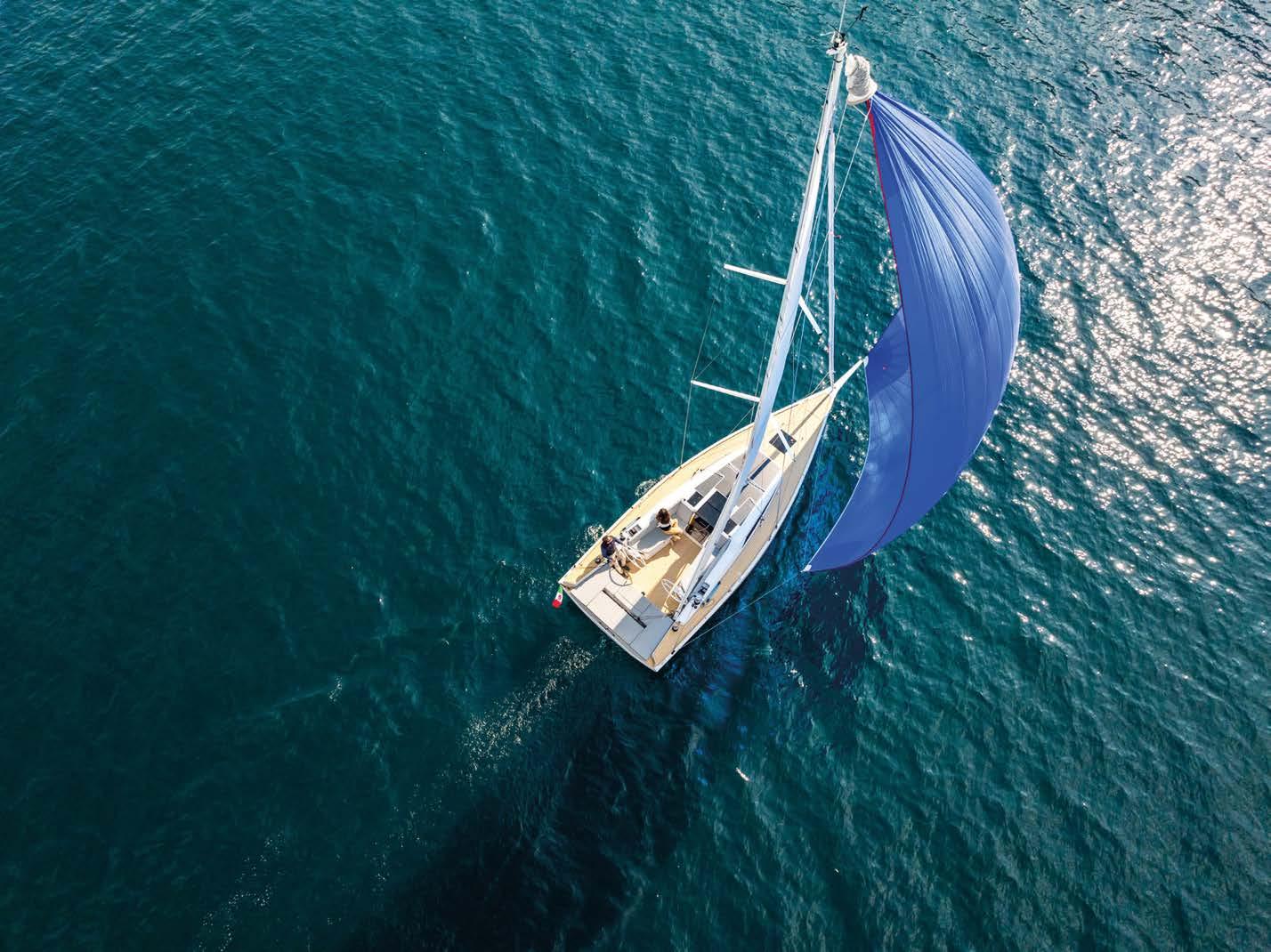
La barca è stata realizzata con una resina termoplastica, una tecnologia sviluppata da NL Comp, riciclabile a ne vita. Infatti, attraverso un processo chimico, che non richiede calore, si può sciogliere la resina e dividerla dalle bre di vetro. In questo modo, le bre di vetro si possono ripulire e riutilizzare.
The boat was made using thermoplastic resin, a recyclable technology developed by NL Comp. Through a chemical process that does not require heat, the resin can be melted and separated from the glass bres. This enables the bres to be cleaned and reused.
della ricerca e dello sviluppo di NL Comp, azienda impegnata nell’innovazione sostenibile nel settore nautico. A differenza delle resine tradizionali, questo materiale è completamente riciclabile al termine del ciclo di vita del prodotto. Attraverso un processo chimico a freddo, che non richiede quindi l’impiego di calore, la resina può essere sciolta e separata dalle bre di vetro che compongono la struttura. Le bre, una volta ripulite, possono essere riutilizzate per nuove applicazioni, riducendo signi cativamente l’impatto ambientale e promuovendo un’economia circolare anche nella costruzione di imbarcazioni. Attenzione alla sostenibilità anche con l’innovativo sistema di propulsione da 6 kW rmato e-Propulsion, supportato da batterie al litio da 8 kW per una durata ottimale. Inoltre, l’imbarcazione è dotata di un sistema d’idrogenazione che sfrutta l’elica e il pod del propulsore, capace di generare 250 watt di energia a
A completare il sistema, sono presenti pannelli solari che forniscono ulteriori 340 W, contribuendo a garantire un’autonomia maggiore e a rendere l’imbarcazione ancora più eco-compatibile. Grazie al pacco batterie standard, il GS Blue è in grado di navigare per 30 miglia nautiche a una velocità di circa 5 nodi, equivalenti a circa 6 ore di utilizzo continuo del motore. Con il pacco batterie doppio, l’autonomia arriva a 12 ore. Il sistema fotovoltaico Solbian, che sviluppa circa 340 W di potenza, è perfettamente integrato nella tuga e progettato per essere calpestabile, con una nitura antiscivolo che
VELOCITÀ MAX DI BOLINA NODI HAULING MAX SPEED IN KNOTS 7.8
SUPERFICIE VELICA M2
SAILING SURFACE M2
64
CANTIERE DEL PARDO Via F.lli Lumiere 34 I-47122 Forlì (FC) T. +39 0543 782404 www.cantieredelpardo.com
PROGETTO
Matteo Polli (architettura navale) e Nauta Design (interni e coperta)
SCAFO
Lunghezza f.t. 11,30m • Lunghezza scafo 9,99m
• Baglio massimo 3,70m • Pescaggio 2,20m
• Dislocamento 3.500 kg • Sup. velica randa 38 m²
• Sup. velica occo 26 m²
• Sup. velica gennaker 100 m²
CERTIFICAZIONE CE CAT C
PREZZO
Base da 229.000 € Iva esclusa
PROJECT
Località//Place Malcesine, Lake Garda
Ventoforza Tra 10 e i 16 nodi
Wind speed Between 10 and 16 knots
Lago//Lake state Calmo//Calm
Persone a bordo//People on board 6
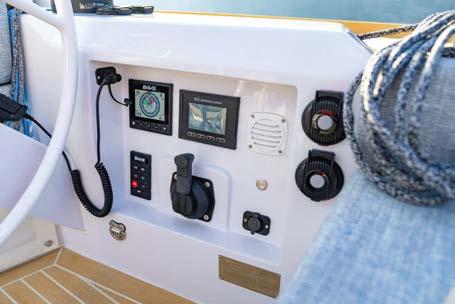
RAPPORTO LUNG./LARG. L/W 3
Matteo Polli (naval architecture) and Nauta Design (interiors and superstructure)
HULL
Jib surface 26 m²
• Gennaker surface 100 m²
«Tutto il progetto è stato sviluppato per poter dividere e riciclare facilmente i materiali, inclusi i LEGNI e gli ACCIAI».
DISLOCAMENTO DISPLACEMENT
3.5
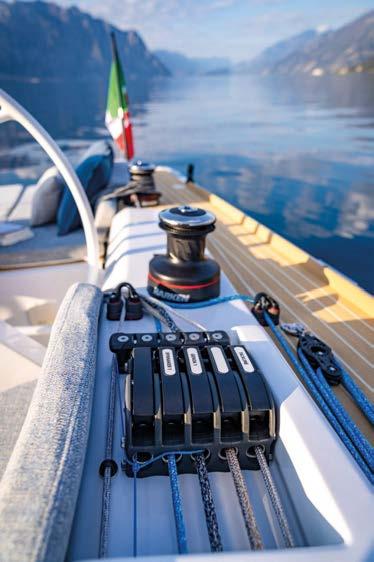
«The entire project was designed to
facilitate the easy separation and recycle of materials, including WOOD and STEEL». Matteo Polli
Al lasco (130–155°) la barca performa bene, senza esplosività in raf ca, coerente con una carena pensata per il comfort. In bolina stretta (40° TWA), il risultato è sorprendentemente buono per una barca da crociera, con velocità attorno ai 6,5-7 nodi.
When running on the quarter, at an angle of 130–155°, the boat performs well without any sudden bursts of speed in gusts, which is consistent with a hull designed for comfort. When sailing close-hauled (40° TWA), the result is surprisingly good for a cruising boat: speeds of around 6.5–7 knots can be achieved.
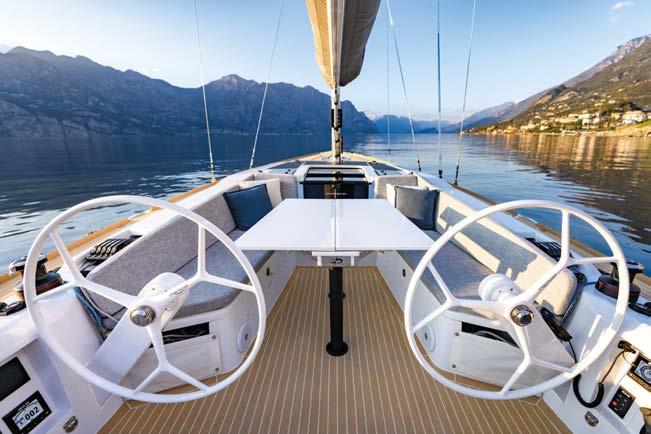
L’idrogenazione serve perché, se l’utilizzo del propulsore nella giornata è limitato, l’energia che si ottiene dall’elica mentre si naviga a vela consente di rientrare in porto con le batterie nelle stesse condizioni di quando si è partiti. I pannelli solari, invece, permettono di ricaricare durante la settimana. Ipotizziamo che la barca venga utilizzata nel weekend, grazie ai pannelli, durante la settimana, le batterie ritornano cariche al 100%. In questo modo, non è necessaria la corrente dalla banchina. Ovviamente, è possibile anche ricaricare le batterie con il cavo e la colonnina.
Hydrogenation is necessar y because if you limit your use of the propeller during the day, the energy obtained from it while sailing will allow you to return to port with the batteries in the same condition as when you left. Solar panels enable charging during the week. Let’s assume that the boat is only used at weekends. Thanks to the solar panels, the batteries are fully charged by the end of the week. This means that it is not necessar y to connect to the shore power supply to ensure the propulsion system is ready for use. It is also possible to recharge the batteries using a cable and a charging station.
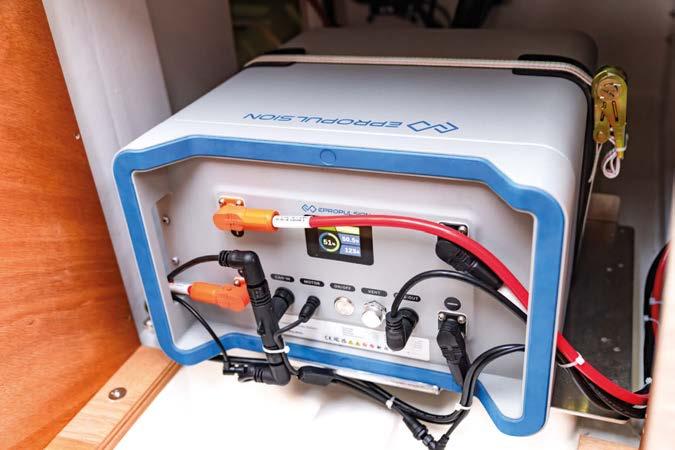
Oltre a ricaricare il banco batterie del motore, questo impianto può trasferire l’energia in eccesso al banco destinato ai servizi di bordo, assicurando un bilanciamento ottimale delle cariche e una maggiore ef cienza energetica globale. Per ricaricare completamente le batterie, utilizzando solamente i pannelli solari, il tempo necessario è di circa una settimana rispecchiando l’idea del progetto di lasciare che le batterie durante la settimana si ricarichino e il weekend si possa uscire in barca senza aver usato cavi in banchina.
We tried out the Grand Soleil Blue, whose naval architecture was designed by Matteo Polli, and whose interiors and deck are the work of Nauta Design.
It is 11.30 metres long overall, and the hull is 9.99 metres, giving it a natante small boat classi cation. The beam reaches up to 3.70 metres, providing ample room, and the draught is 2.20 metres. The mast is set well back, allowing for a sizable jib, while the mainsail features a square top.
The boat features a streamlined shape with a wide and spacious aft section. The sun pad, which is also comfortable for use while underway, is tted with sofas aft of the two wheels on the stern.
With such a wide stern, the wake is at, and that makes it comfortable when sailing. You can add lifelines in carbon bre or Dyneema, and the stanchions can be left up or taken down as you like. The design of the boat re ects the vision of the engineer who, as an enthusiast and competitive sailor, has made the boat fast, using a different concept from the two preceding models.
The sloping cross-trees make the boat very pleasant, even when manoeuvring. During the test at Malcesine, located on the northern shore of Lake Garda, we experienced at water with the southern Ora wind varying from 10 knots upwards, accompanied by gusts of up to 19 knots. One of the rst things I noticed was how easy it was to handle the boat, even without assistance from others, thanks in part to the self-tacking jib and furler. The foresail is tted with fabric sliding sails. All of the halyards run through to the stern, and there is no need to go forward to raise and trim the mainsail on the cleats around the mast.
A signi cant aspect of this approach to yachting is that the winches are electric, allowing the mainsail, jib, and gennaker to be raised and lowered easily. The boat was perfectly set up for the weather conditions during our test, featuring a full-batten mainsail (38 m²) without ree ng, a jib (26 m²), and, while going downwind, a 100 m² gennaker.
It also has a code zero and genoa. The sails have been made from thermo-plastic materials produced by the OneSails rm, and the
4T FORTE are the rst “green sails” in the world. The membranes and their assembly are designed to satisfy the highest standards in terms of environmental impact and recycling options. Sailing close hauled was pleasant, with an angle of 40 degrees and 15 knots of wind, it maintained a speed of between 6 and 7 knots. We got to 10.4 knots on a broad reach.
Going downwind, the boat tilted to an angle of 130/155 degrees with an average speed of 8.5 knots. The choice to t a double wheel was, I would say, in line with the concept of favouring comfortable movement on board; even though, while manoeuvring, I would have preferred a single wheel to get greater precision when coming out of a manoeuvre. The boat is built using a new generation thermoplastic resin, which emerged from R&D by NL Comp, a rm specialising in sustainable innovation in the nautical sector. In contrast to traditional resins, this material is completely recyclable at the end of its life cycle. Using a chemical process which does not require heat, this resin can be lique ed and separated from the glass bre that composes the structure.
Once cleaned, the bres can be reused for new applications, signi cantly reducing the environmental impact and promoting a circular economy even in boat building. They have also paid attention to sustainability with the innovative 6 kW system by e-Propulsion, which is driven by 8 kW lithium batteries for optimal duration.
Furthermore, the boat is equipped with a hydrogenation system that integrates with the propeller and propulsion pod, allowing it to generate 250 watts at a speed of six knots.
To complete the system, solar panels provide an additional 340 watts, contributing to a greater range and making the boat even more eco-friendly.
The standard battery pack enables the GS Blue to travel approximately thirty nautical miles at a speed of around ve knots, which translates to around six hours of continuous engine use. With the double pack, that increases to twelve hours. The Solbian photovoltaic system, which produces approximately 340 watts, is seamlessly integrated into the deckhouse and is designed to be walked on, featuring an anti-slip nish for added safety.
In addition to recharging the engine battery pack, this system can transfer excess energy to the pack that powers on-board hospitality services, ensuring an optimal balance of loads and improved overall energy ef ciency. If you use the solar panels alone, it takes around a week to completely recharge the batteries, which aligns with the design project’s idea of having them recharge before going out again on the weekend, without needing to set up a cable on the quayside.
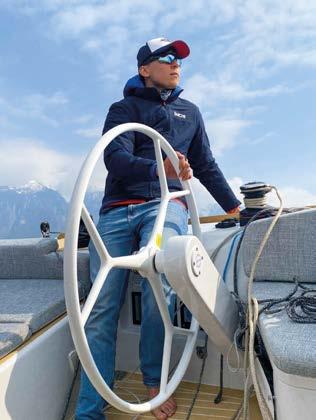
Vi è anche un pacco batterie, separato da quello del motore, per una questione di SICUREZZA e di comodità per l’utilizzo anche dei winch elettrici con cui si possono issare le vele SENZA FATICA.
There is also a separate battery pack, which is distinct from the engine’s battery, due to safety and ease of use considerations for the electric winches. This allows you to raise the sails with MINIMAL EFFORT.
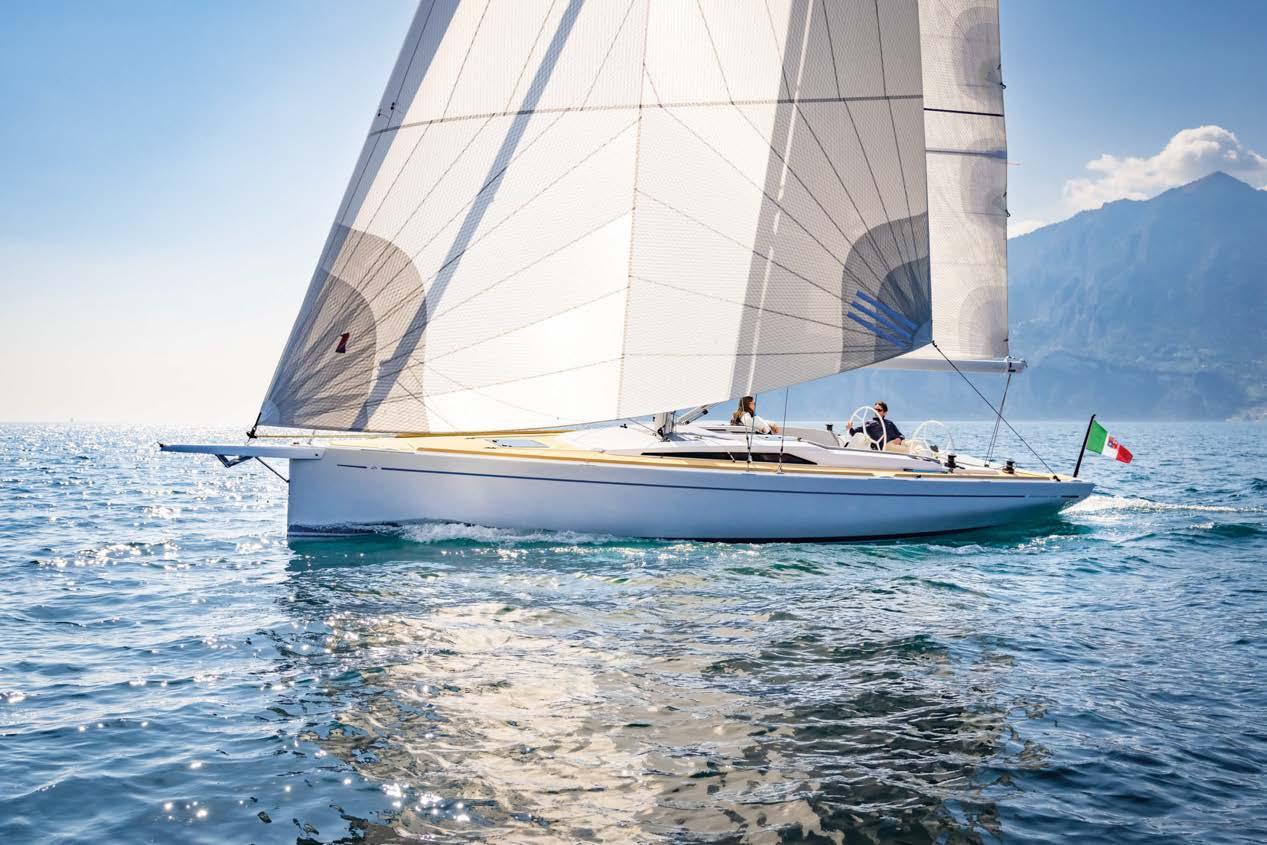
Vela e Motore propone
IL MEGLIO delle offerte del mercato internazionale di imbarcazioni e superyacht
Vela e Motore brings you THE BEST of the international boat and superyacht market.
Veleggiare nell’arcipelago di Seychelles signi ca risvegliarsi con un tuffo nel turchese, per qualche bracciata nell’acqua calda dell’Oceano Indiano (28°), tra rocce granitiche e l’esplosione esuberante della vegetazione, nella bellezza assoluta
Sailing through the Seychelles archipelago means waking up to a dip in the turquoise waters, taking a few strokes in the warm Indian Ocean (28°C), amid granite rocks and lush, vibrant vegetation, surrounded by sheer beauty by Ornella D’Alessio
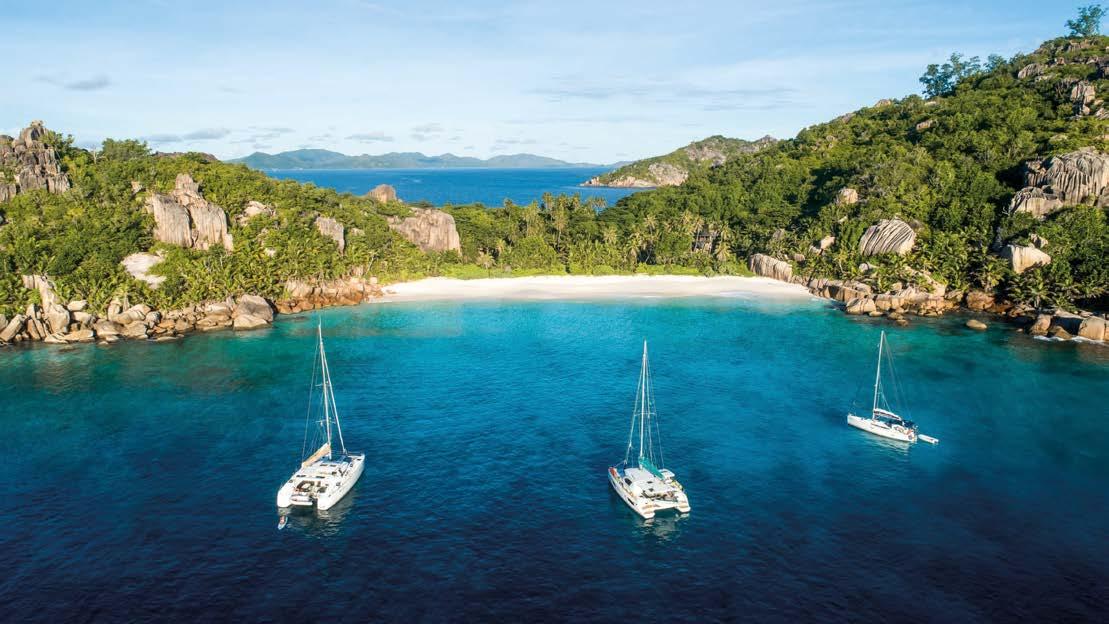
Il legame con la natura è molto forte da queste parti: la difesa dell’ambiente è importante e lo hanno capito da tempo. In giro e sulle spiagge non si vedono né plastica né bottiglie abbandonate, una vera rarità a queste latitudini.
C’è la consapevolezza che si tratta di un patrimonio fragile, che il rapido sviluppo edilizio e il boom del turismo rischiano di compromettere. Mahé, dove si atterra, primeggia per le dimensioni, è la più grande dell’arcipelago. Tante spiagge, grandi, spettacolari e bianchissime dominate dai 905 metri di altezza del Morne Seychellois. E proprio da Mahé, punto di partenza naturale per esplorare le isole granitiche interne, prende forma l’itinerario di una settimana o di dieci giorni a bordo di un comodo catamarano (18,9m). Gli alisei di sud-est, regolari nella buona stagione, disegnano bordi tesi e puliti; il mare, spesso protetto dalla barriera corallina, offre navigazioni tecniche, mai ostili. Appena mollati gli ormeggi, la prua punta verso Sainte-Anne Marine National Park, un arcipelago in miniatura a poche miglia dalla capitale. Qui i fondali passano dal turchese al blu in poche lunghezze. Si naviga a vista, scandagliando l’acqua con gli occhi prima ancora che con la strumentazione di bordo. L’ancoraggio, su sabbia chiara, è saldo; la sera il vento cala e la rada si trasforma in uno specchio. La mattina seguente si fa rotta su Coco Island, poco più di uno scoglio granitico incastonato nel reef. L’avvicinamento richiede attenzione: correnti leggere ma costanti e teste di corallo isolate. È il genere di tratto che restituisce il senso pieno della navigazione tropicale, tra regolazioni ni di randa e genoa e un timone sempre vivo. In acqua, il fondale è un giardino di coralli. Proseguendo verso est si raggiunge La Digue, isola iconica per le sue spiagge e per l’atmosfera sospesa, summa del meglio delle isole di Mahé e Praslin. Si gira soprattutto in bicicletta. La spiaggia più celebre, dove si celebrano anche matrimoni, è AnseSource d’Argent, una lunga striscia di sabbia bianca inframmezzata da massi granitici rosa all’interno dell’Union Estate Farm, ex piantagione di cocco e vaniglia, dove vivono alcuni esemplari di tartarughe giganti di Aldabra. Con le due ruote si raggiungono facilmente anche Anse Patates, intima e raccolta, Anse Severe, con molti chiringuitos, Anse Banane, orlata da un bananeto, e, a sud, Grand Anse, Petite Anse e Anse Coco, non per fare il bagno: qui le correnti sono troppo forti (soprattutto da novembre a maggio), ma per assaporare l’incanto della natura.
Nel 2025, con Albatross Yachting & Vacanze nell’arcipelago delle Seychelles, hanno navigato più di 2.000 persone provenienti da tutto il mondo. Oltre a queste crociere, è possibile noleggiare barche a vela o catamarani, con o senza skipper, partendo da Praslin e scegliendo tra 19 imbarcazioni diverse, da 36 a 60 piedi.
In 2025, more than 2,000 people from around the world sailed with Albatross Yachting & Vacanze in the Seychelles archipelago. In addition to these cruises, you can hire sailing boats or catamarans, with or without a skipper, departing from Praslin and choosing from 19 different vessels, ranging from 36 to 60 feet.
Il giorno dopo la prua cerca l’ombra verde di Cousin Island, riserva naturale e santuario di uccelli dal 1968, popolata da specie rare e tartarughe giganti. L’ancoraggio è regolamentato e la visita avviene con guide autorizzate: un promemoria che la vela, qui, convive con ecosistemi fragili. Da bordo si osservano uccelli marini e si ascolta il frangersi dell’onda sul reef, mantenendo distanze e rispetto. Si entra quindi a Baie Sainte Anne, sull’isola di Praslin, un’insenatura ampia che offre un buon ridosso. È uno di quei porti naturali dove la manovra d’ancoraggio diventa racconto: dare fondo su sabbia, controllare che l’ancora lavori correttamente, veri care l’allineamento con le altre barche. La baia è viva, ma mai frenetica; la sera le luci si ri ettono sull’acqua piatta. Da qui si naviga verso Grande Soeur, isola privata circondata da fondali cristallini, e poi verso Curieuse, nel Parco Nazionale Marino, per nuotare nelle acque celesti e calde di Anse Saint Jose e visitare la casa del dottore, oggi il piccolo edi cio coloniale è un piccolo museo con i ruderi dell’antico lebbrosario, e poi passeggiare tra le palme Coco de Mer verso Baie Laraire per il pranzo creolo cotto alla brace, dall’altra parte dell’isola dove vivono decine di tartarughe giganti. La navigazione tra queste isole è un continuo aggiustare rotta e vele per sfruttare gli alisei senza forzare l’andatura. Le distanze sono brevi, ma ogni miglio richiede una lettura attenta del mare. La costa nord di Praslin regala un ancoraggio scenogra co ad Anse Lazio: sabbia chiara, massi granitici levigati, acqua profonda quanto basta per tenere la barca in sicurezza, conquista ogni anno uno dei primi posti tra le spiagge più belle al mondo. Il controllo meteo è fondamentale: con vento da nord l’esposizione aumenta e conviene piani care una partenza anticipata. Rientrando verso Mahé si può fare scalo ad Anse Major, una baia raccolta raggiungibile solo via mare o con un sentiero costiero. L’ancoraggio è tecnico su fondali che scendono rapidamente; la soddisfazione è quella di chi sa leggere le carte e i colori dell’acqua. In ne, Silhouette Island, selvaggia e montuosa, e poi Beau Vallon, ampia e ventilata, la preferita dai turisti, spesso animata da un piacevole termico pomeridiano. Qui la vela torna protagonista: si issa tela piena al tramonto, sfruttando le ultime brezze prima di rientrare alla base. La crociera si chiude alla marina di Eden Island, alle porte di Victoria: un approdo moderno incastonato tra canali e banchine ordinate. Alle Seychelles la vela non è solo spostamento: è disciplina dolce, attenzione costante, dialogo continuo, e indimenticabile, tra barca, vento e barriera corallina.
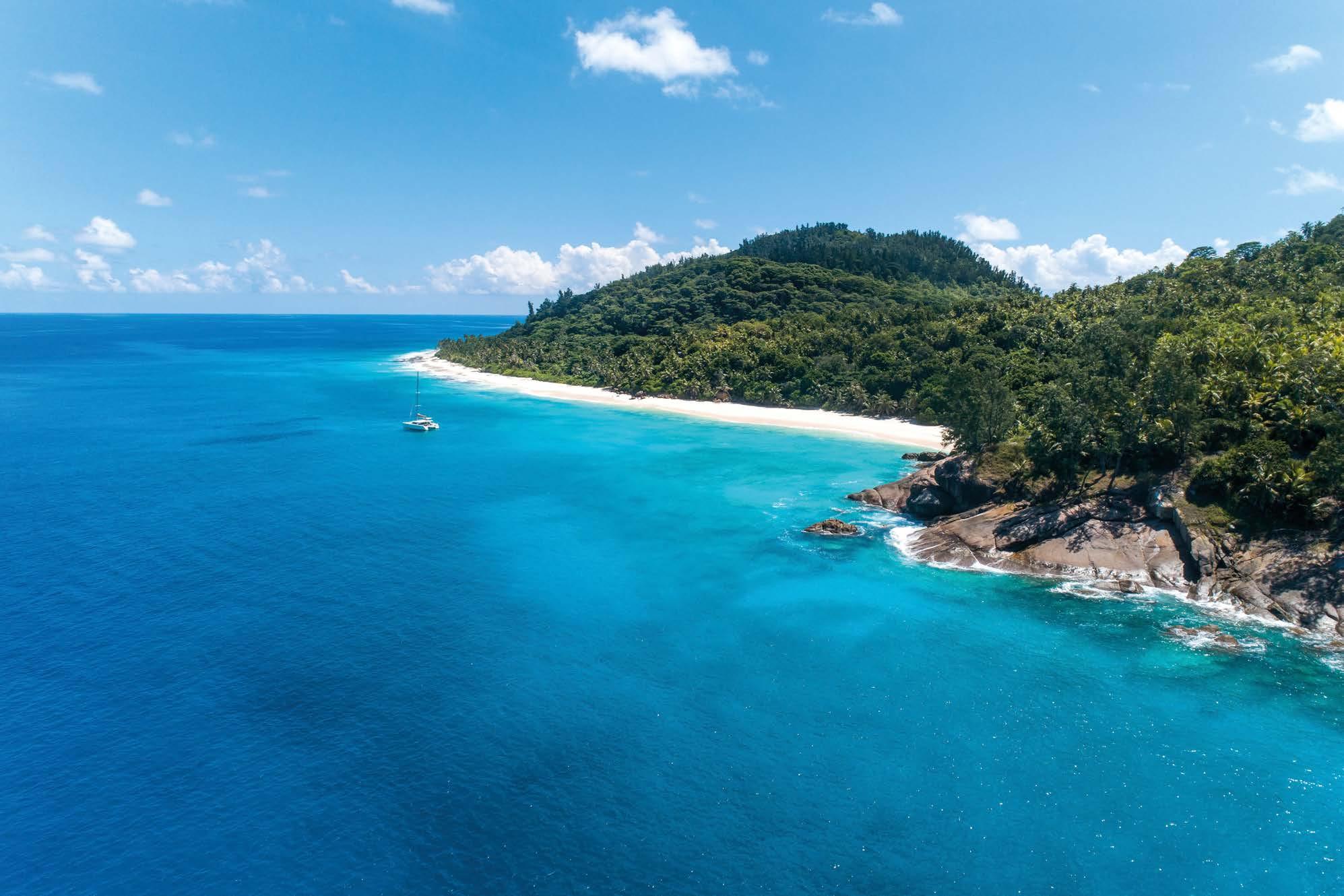
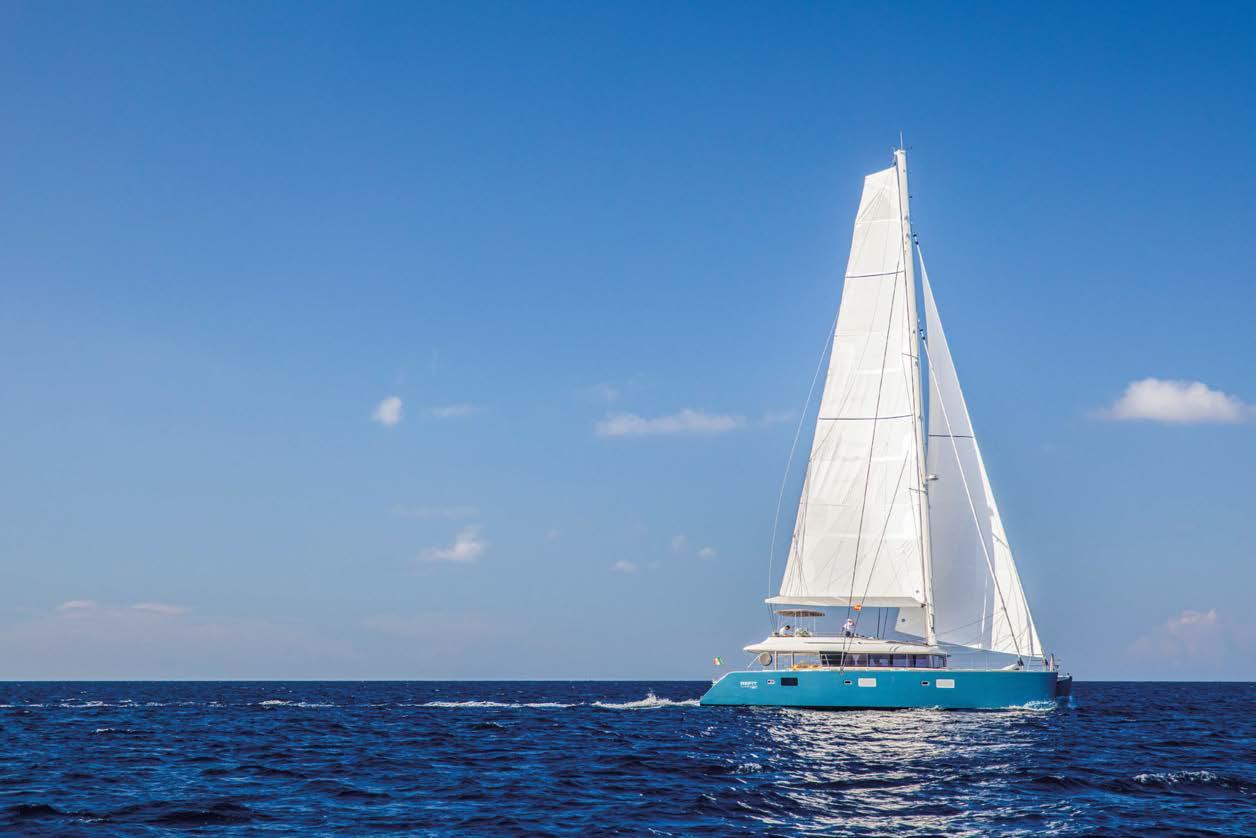
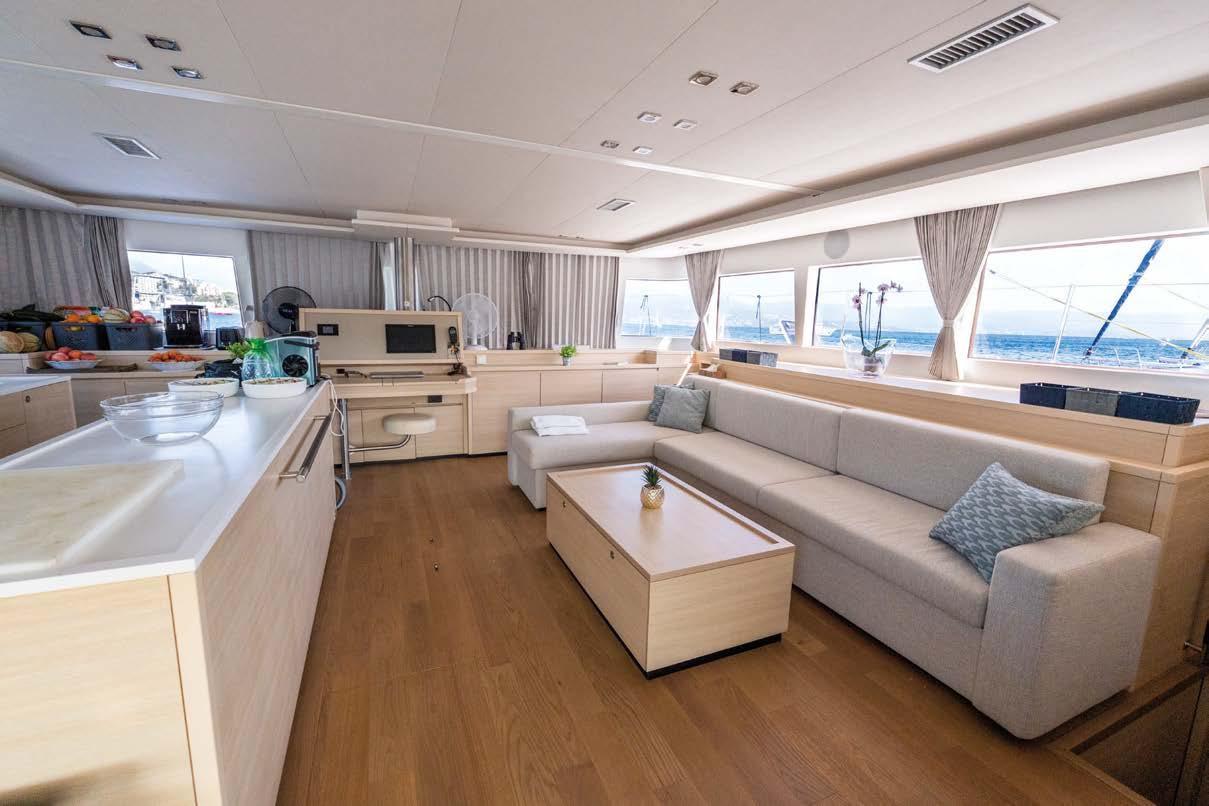
1.584 €
A WEEK PER PERSON

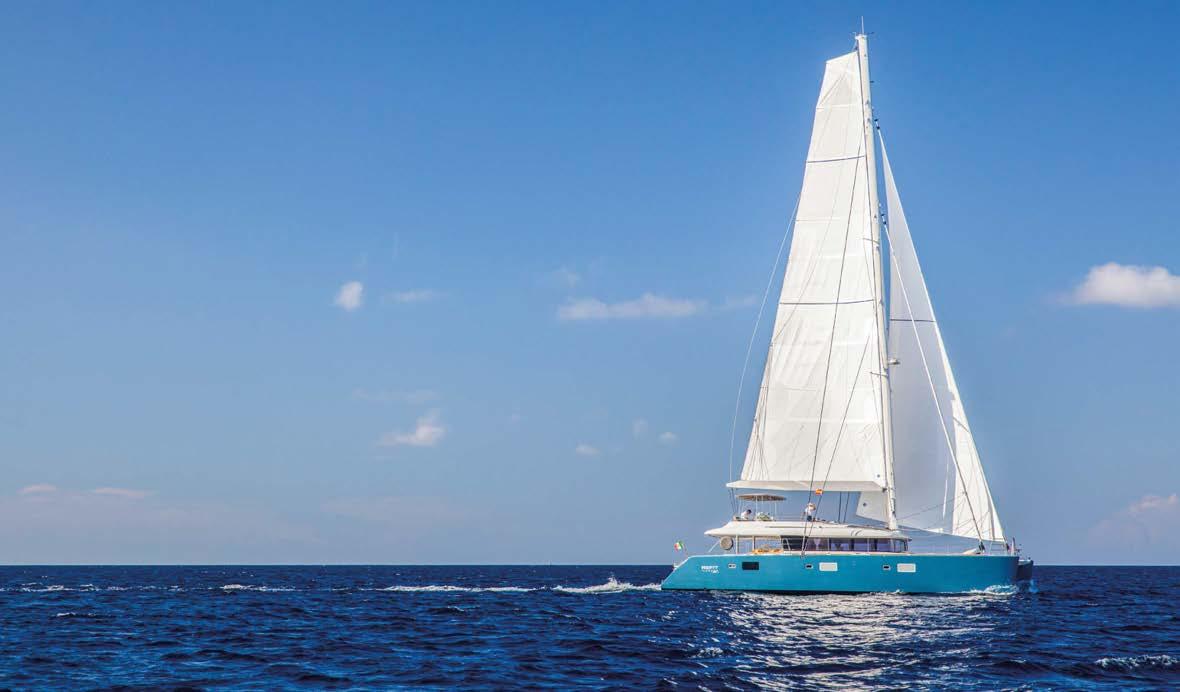
La otta è composta da quattro catamarani Lagoon 620 lunghi 18,20 metri, costruiti nel 2019 nei cantieri Lagoon di Bordeaux, in Francia. Hanno 6 spaziose cabine doppie con bagno e 2 cabine con bagno per l’equipaggio: lo skipper, che gestisce la navigazione, e un o una hostess/cuoco che prepara i pasti ispirati ai sapori e alla cucina creola. Le navigazioni sono brevi, no a 3 ore al giorno, offrendo ampia possibilità di scendere a terra per conoscere le isole, avere tempo libero o fare snorkeling.
The eet comprises four 18.20-metre Lagoon 620 catamarans, built in 2019 at the Lagoon shipyard in Bordeaux, France. They feature six spacious double cabins with en-suite bathrooms, plus two crew cabins with bathrooms: one for the skipper, who manages the sailing, and another for a hostess or chef who prepares meals inspired by Creole avours and cuisine. The sailing trips are short, lasting up to three hours a day, offering ample opportunity to go ashore to explore the islands, enjoy some free time, or go snorkelling.
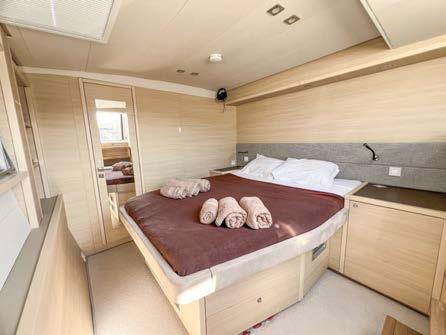
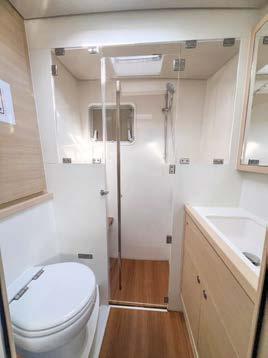
Il costo base per una settimana a bordo del catamarano Lagoon 620 in pensione completa parte da 1.584 euro a persona; la crociera di dieci giorni parte da 1.944 euro a persona. Le partenze sono sempre garantite, indipendentemente dal numero di ospiti a bordo. Ogni settimana sul sito sono presenti delle offerte. Albatross Yachting & Vacanze (albatross.it)
The connection with nature is very strong in these parts: protecting the environment is a priority, and people have long understood this. You won’t see any plastic or discarded bottles lying about on the beaches – a real rarity in these parts.
There is an awareness that this is a fragile heritage, which rapid construction and the tourism boom risk undermining. Mahé, where you arrive, stands out for its size; it is the largest island in the archipelago. Mahé boasts many beaches that are vast, spectacular, and snow-white, with Morne Seychellois standing at 905 meters. From Mahé, the ideal starting point to explore the inner granite islands, a one-week or ten-day journey unfolds aboard a comfortable 18.9-meter catamaran. The south-easterly trade winds, which blow steadily during the good season, create crisp, clean shifts in the wind; the sea, often sheltered by the coral reef, offers technical sailing conditions that are never hostile. As soon as we cast off, the bow points towards Sainte-Anne Marine National Park, a miniature archipelago just a few miles from the capital. Here, the seabed shifts from turquoise to blue over the space of a few boat lengths. We navigate by sight, scanning the water with our eyes before consulting the onboard instruments. The anchorage, on light-coloured sand, is rm; in the evening, the wind drops and the bay becomes a mirror. The following morning, you’ll set course for Coco Island, a little more than a granite outcrop nestled within the reef. The approach requires caution: there are light but steady currents and isolated coral heads. It is the sort of stretch that truly captures the essence of tropical sailing, with ne-tuning of the mainsail and genoa and a rudder that’s always responsive. Underwater, the seabed is a coral garden. Continuing eastwards, you reach La Digue, an island renowned for its beaches and dreamlike atmosphere, combining the best of Mahé and Praslin.
The main way to get around is by bicycle. The most famous beach, where weddings are also held, is Anse Source d’Argent, a long stretch of white sand interspersed with pink granite boulders, within the Union Estate Farm, a former coconut and vanilla plantation that is home to a few Aldabra giant tortoises. By bike, you can also easily reach Anse Patates, a quiet and secluded spot; Anse Severe, with its many beach bars; Anse Banane, bordered
The basic price for a week on board the Lagoon 620 catamaran on a full-board basis starts at €1,584 per person, whilst a ten-day cruise starts at €1,944 per person. Departures are guaranteed, regardless of the number of guests on board. Special offers are available on the website every week. Albatross Yachting & Vacanze (albatross.it)
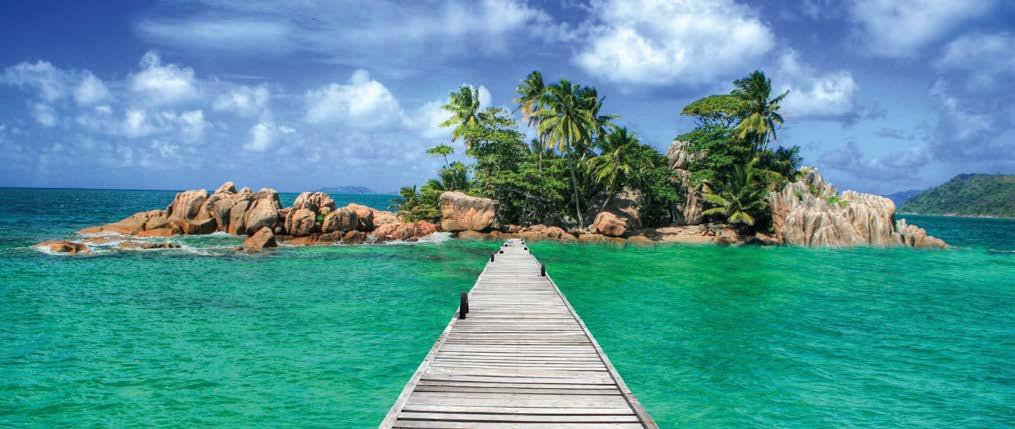
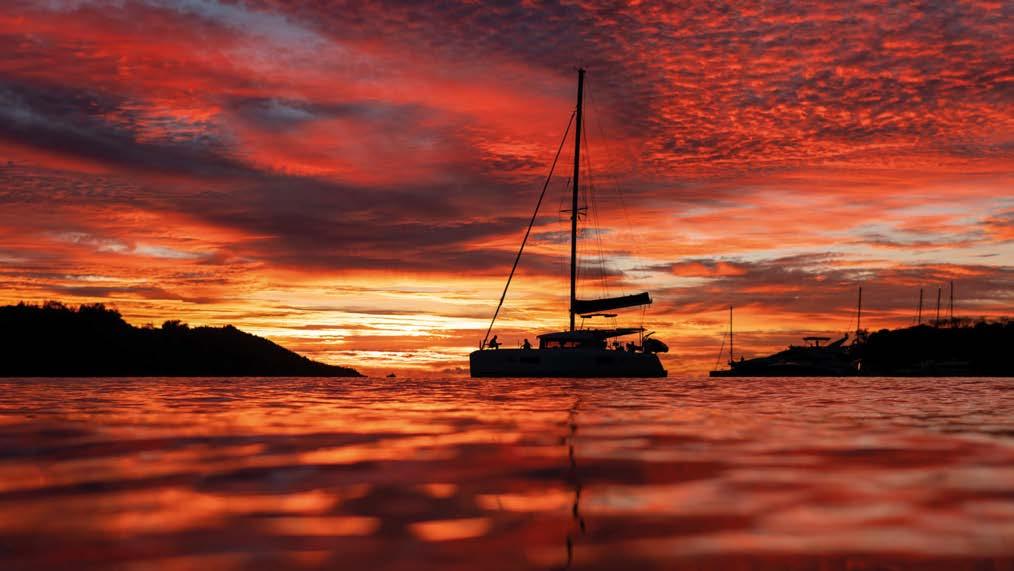
Island, a nature reserve and bird sanctuary since 1968, home to rare species and giant tortoises. Anchoring is strictly regulated, and authorised guides lead visits: a reminder that sailing here coexists with fragile ecosystems. From on board, you can watch seabirds and listen to the waves breaking on the reef, whilst keeping your distance and showing respect. We then enter Baie Sainte Anne, a wide inlet on the island of Praslin, offering good shelter. It is one of those natural harbours where the anchoring manoeuvre becomes a story in itself: dropping anchor on the sand, checking that the anchor is working properly, and verifying alignment with the other boats. The bay is lively, yet never hectic; in the evening, the lights are re ected on the calm water. From here, we sail to Grande Soeur, a private island surrounded by crystal-clear waters, then on to Curieuse in the Marine National Park to swim in the warm, azure waters of Anse Saint Jose and visit the Doctor’s house. Today, the small colonial building is a museum housing the ruins of the old leper colony. We then stroll amongst the Coco de Mer palms towards Baie Laraire for a Creole barbecue lunch on the other side of the island, where dozens of giant tortoises live. Sailing between these islands requires constant adjustments to the course and sails to make the most of the trade winds without pushing the boat too hard. The distances are short, but every mile demands a careful reading of the sea. The north coast of Praslin offers a picturesque anchorage at Anse Lazio: white sand, smooth granite boulders, and water deep enough to keep the boat safe. It ranks among the world’s most beautiful beaches year after year. Checking the weather is essential: with a northerly wind, exposure increases, so it is advisable to plan an early departure.
On the return journey to Mahé, you can stop off at Anse Major, a secluded bay accessible only by sea or via a coastal path. Anchoring here is a technical challenge on a seabed that drops away steeply; the reward is for those who can read the charts and the colours of the water. Finally, Silhouette Island, wild and mountainous, and then Beau Vallon, spacious and breezy, a favourite with tourists, often enlivened by a pleasant afternoon thermal. Here, sailing takes centre stage once more: full sails are hoisted at sunset, making the most of the last breezes before returning to base. The cruise ends at the marina on Eden Island, just outside Victoria: a modern harbour nestled between canals and orderly quays. In the Seychelles, sailing is not just about getting from A to B: it is a gentle discipline, demanding constant attention and a continuous, unforgettable dialogue between the boat, the wind and the coral reef.
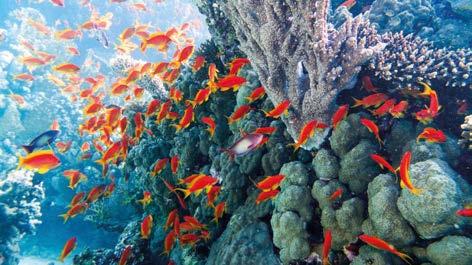
La navigazione tra queste isole è un continuo aggiustare rotta e vele per sfruttare gli alisei senza forzare l’andatura. Le distanze sono brevi, ma ogni miglio richiede una lettura attenta del mare.
Sailing between these islands is a constant adjustment of course and sails to take advantage of the trade winds without forcing the pace. The distances are short, but every mile requires a careful reading of the sea.
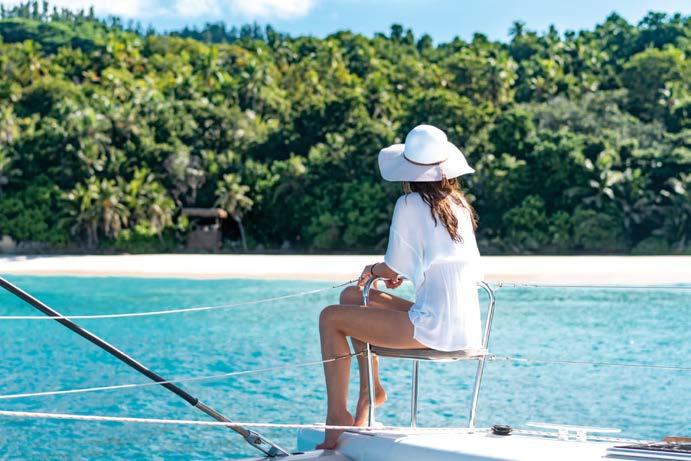
Al Sainte Anne Marine National Park (SAMNP), la Marine Conservation Society Seychelles (MCSS) ha trapiantato 16.678 colonie di corallo in quattro siti di ripristino, contribuendo a rigenerare circa 4.280 metri quadrati di habitat di barriera corallina. Le colonie vengono coltivate in nursery marine e poi trapiantate su reef degradati, una tecnica riconosciuta a livello internazionale per accelerare la resilienza delle barriere coralline, sempre più minacciate dal riscaldamento degli oceani, dallo sbiancamento e dalle pressioni antropiche.
At Sainte Anne Marine National Park (SAMNP), the Marine Conservation Society Seychelles (MCSS) has transplanted 16,678 coral colonies to four restoration sites, helping to regenerate approximately 4,280 square metres of coral reef habitat. The colonies are grown in marine nurseries before being transplanted onto degraded reefs, an internationally recognised technique for boosting the resilience of coral reefs, which are increasingly threatened by ocean warming, bleaching and human pressures.
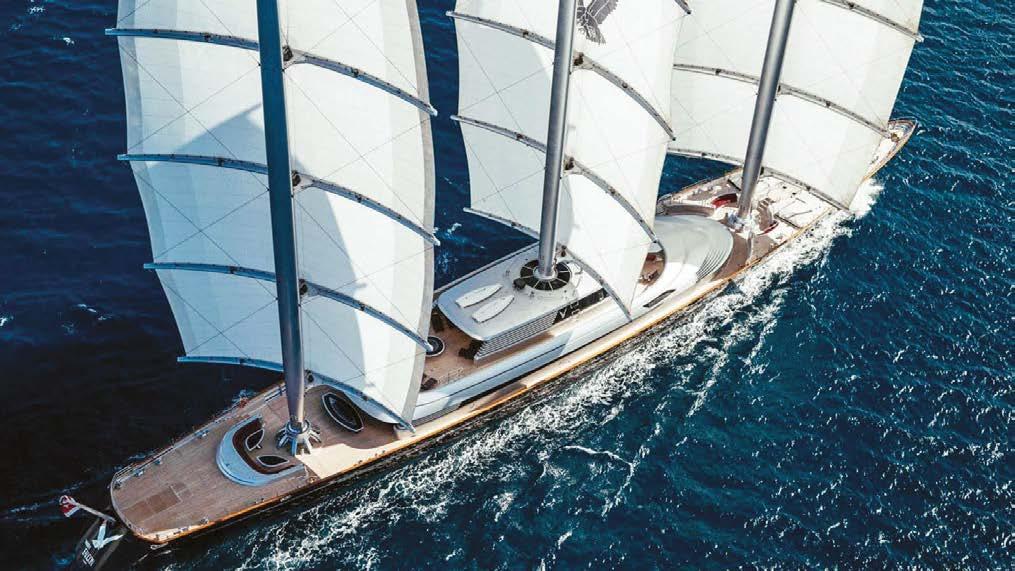
Rate: from € 490,000 p/week + expenses
GuestsLength (m)Max speed
Built / Re t 2006 / 2023 • Cruisespeed 14 knots
• Cabins 6 • Crew 19
u International Yacht Company https://iyc.com 16 88 12
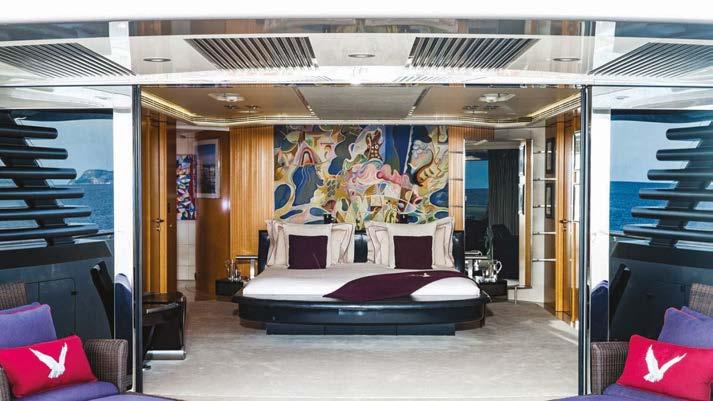
Fancy
Rates from (per week) € 115,000
Year built 2023
Length 32,92m
Beam 7.55m
Draft 3.35m
Engine 350 hp engine
Fuel capacity 4,000 l
Cabins 4
Guests 9
u Bernard Gallay
www.bernard-gallay.com
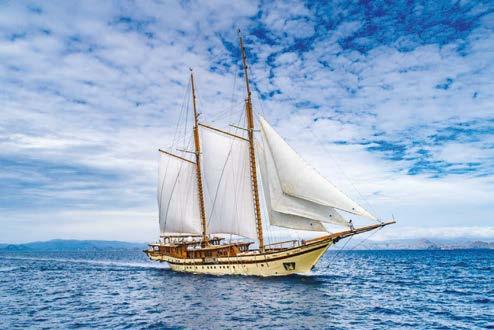
Rates from (per week) € 180,000
Year built 2012
Length 32.55m
Beam 7.20m
Draft 5.20m
Engine 300 hp (220 kW)
Diemmax d6lr-300
Fuel capacity 1,800 l
Cabins 4
u Bernard Gallay www.bernard-gallay.com
Rates from $ 182,000 p/week + expenses
Length 65.2m
Built 2014
Max speed 10 knots
Cruise speed 8 knots
Guests 14
Cabins 7
Crew 20
u International Yacht Company https://iyc.com
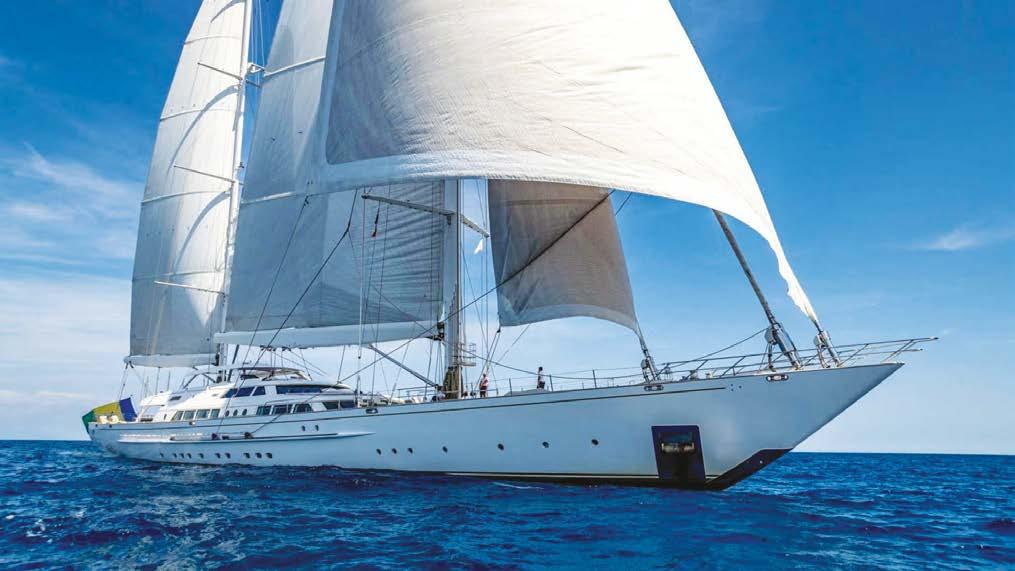
SPIRIT OF THE C’S
Rates from (per week) $ 210,000 p/week + expenses
GuestsLength (m)Max speed
15 64 12
Built / Re t 2003 / 2023 • Cruisespeed 12 knots
• Cabins 5 • Crew 13
u International Yacht Company https://iyc.com
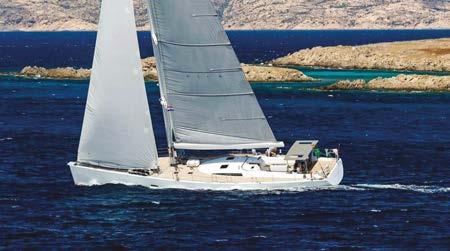
Ikigai
Rates from (per week) €28,000
Year built / Re t 2002 / 2024
Length 25,13m
Beam 6.00m
Draft 3.50m
Displacement 61,00 t
Engine 300 hp Yanmar
Cabins 3
Guests 8
u Bernard Gallay
www.bernard-gallay.com
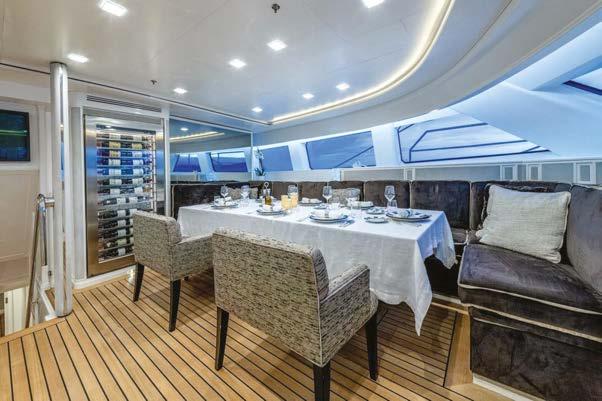
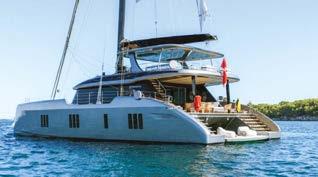
Apollo 99
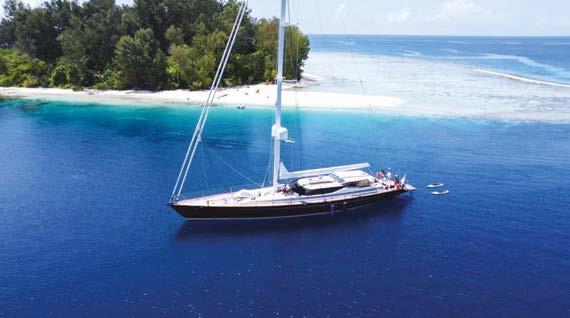
Rates from (per week) €85,000
Length 23.99m
Built 2023
Beam 11.53m
Draft 2.60m
Cabins 4
Guests 8
Crew 4
Engine 2x 160 kW
u Bernard Gallay
www.bernard-gallay.com
Rates from (per week) € 85,000
Year built / Re t 1999 / 2026
Length 36.83m
Beam 8.16m
Draft 3.58m
Displacement 142,00 t
Engine 540 hp
Caterpillar 3408-C
Diesel Engine
u Bernard Gallay www.bernard-gallay.com
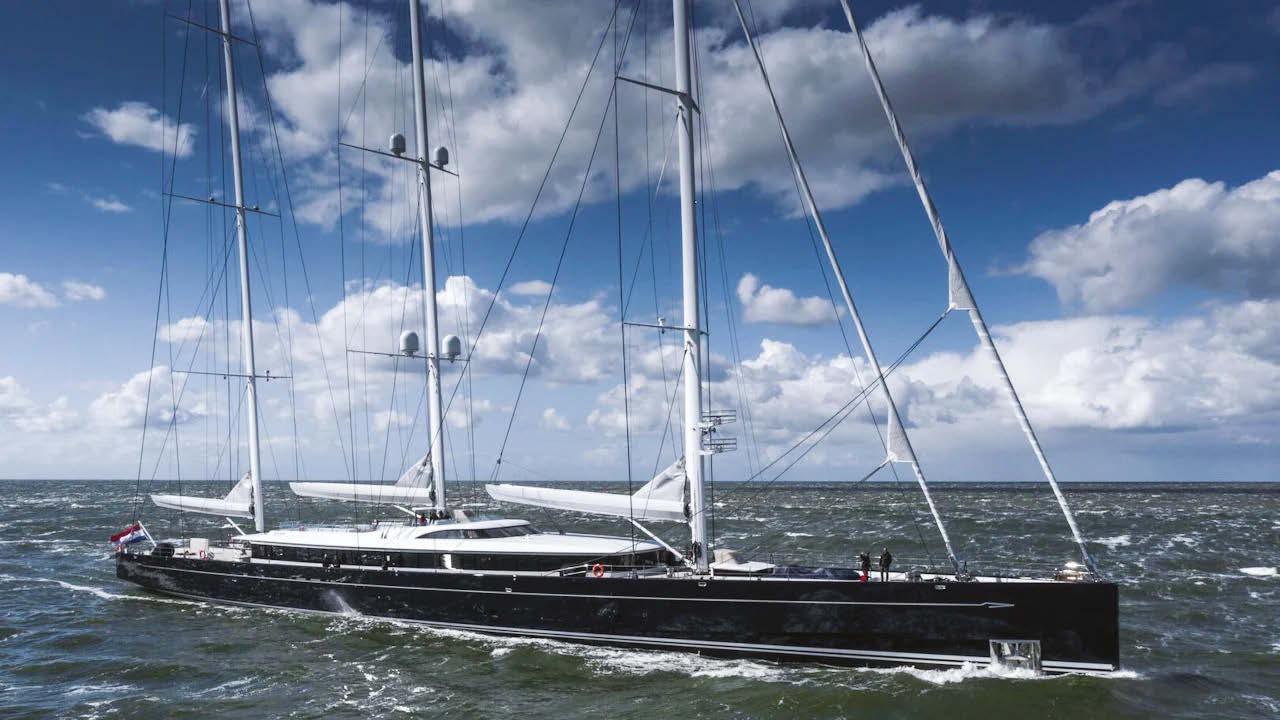
Rates from € 550,000/wk
GuestsLength (m)Max speed
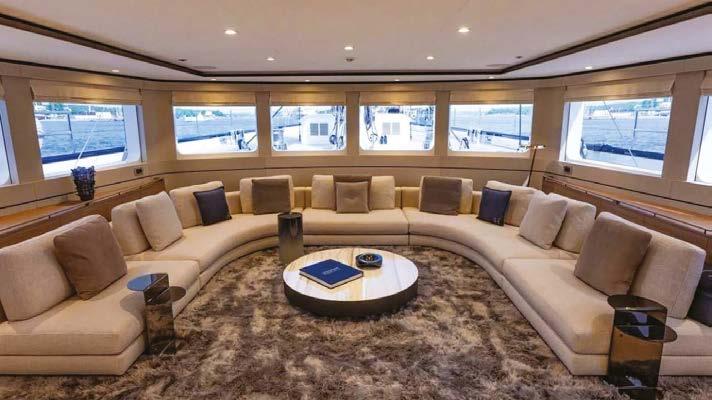
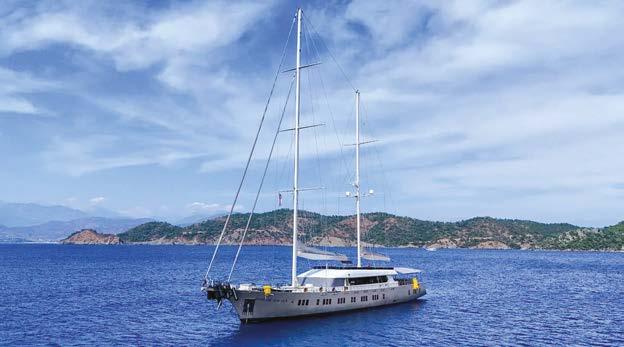
Summer high from € 94,500 p/week + expenses
Length 47m
Beam 10m
Year built 2025
Cruising speed 10 knots
Max speed 15 knots
Guests 22
Cabins 10
u World Yacht Group
https://worldyachtgroup.com
Rates from € 21,385* p/week + expenses
Year re t 2011
Length 23.4m
Beam 6.4m
Builder
Cruisingspeed 10 knots
Guests 7
Cabins 3
u World Yacht Group
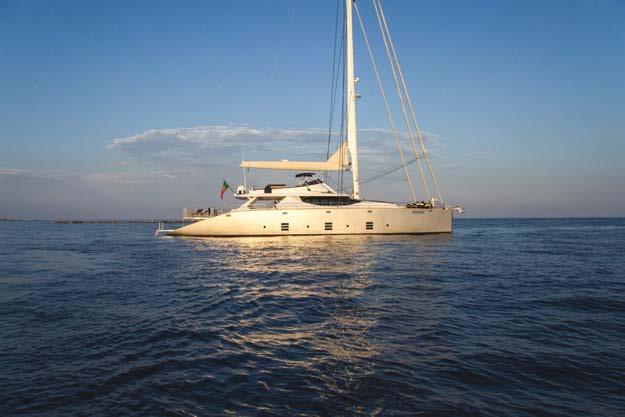
Year Built /Year re t 2011 / 2018
Cruisingspeed 9 knots
Guests 11
Cabins 4
Crew 5
u World Yacht Group
https://worldyachtgroup.com
https://worldyachtgroup.com
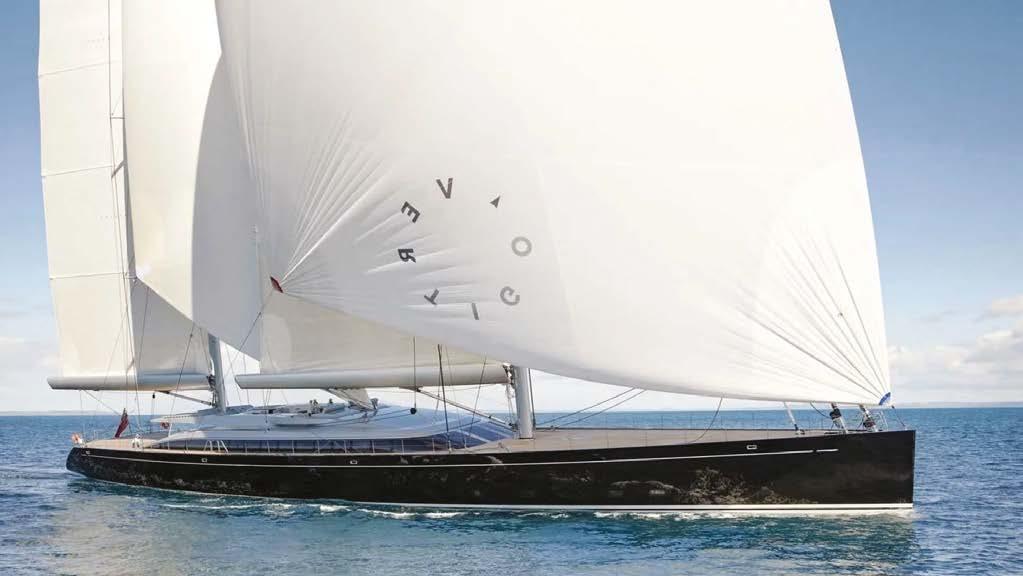
Rates from € 360,000 p/week + expenses
GuestsLength (m)Max speed
Built / Re t 2011 / 2019 • Cruise speed 12 knots
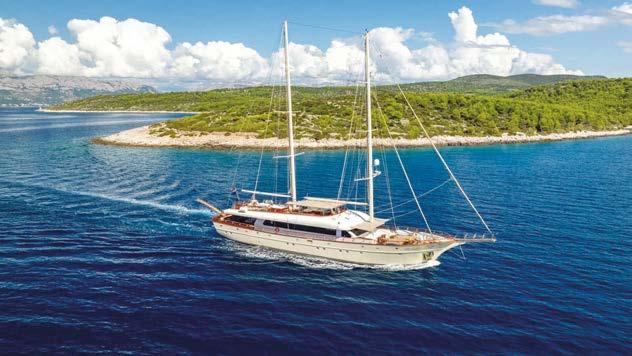
Rates from € 75,000 p/week + expenses
Length 45m
Built 2019
Maximumspeed 11 knots
Cruisespeed 9 knots
Guests 12
Cabins 6
Crew 9
u International Yacht Company https://iyc.com
u International Yacht Company https://iyc.com 15 67.2 12
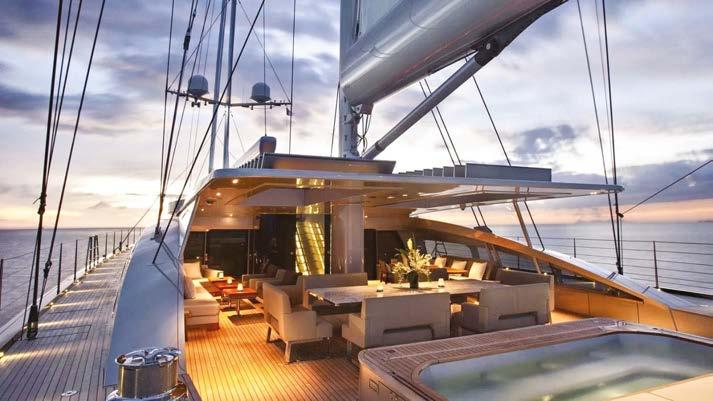
Rate from € 70,000 p/week + expenses
Length 48m
Built 2019
Maximumspeed 12 knots
Cruisespeed 8.5 knots
Guests 12
Cabins 6
Crew 9
Rate from € 110,000 p/week + expenses
Length 46m
Built / Re t 2017 / 2026
Maximumspeed 12 knots
Cruisespeed 10 knots
Guests 12
Cabins 6
Crew 10
u International Yacht Company https://iyc.com
I principali appuntamenti sportivi in calendario by
Olimpia De Casa
Il tabellone che segue è frutto di una selezione mirata, realizzata dalla redazione di Vela e Motore secondo il criterio di valutazione ritenuto più in linea con l’interesse dei lettori. Non vuole pertanto essere un elenco completo degli eventi sportivi in programma su scala globale, che sarebbe impossibile, oltre che dispersivo, riportare in queste pagine.
The main sporting events on the calendar.
The table below is the result of a carefully curated selection by the editorial team at Vela e Motore, based on evaluation criteria deemed most relevant to readers’ interests. It is therefore not intended to be a comprehensive list of sporting events taking place worldwide, which would be impossible –and, moreover, too unwieldy – to include in these pages.
31/5 - 7/6
Range Rover Sardinia Cup www.yccs.it
4 - 7 Porquerolles’s Classic www.yachtclubporquerolles.fr
4 - 7 Cowes Classics Regatta www.cowesclassicsregatta.org
7 Vendée Arctique - Les Sables d’Olonne www.vendeearctique.org
7 - 9 Regata Internazionale Brindisi-Corfù www.brindisi-corfu.com
10 - 13 Cyclades Cup www.cyclades-cup.com
10 - 14 ETF26 GP Campione del Garda www.etf26.com
June
12-20
12 - 14 NYYC Annual Regatta www.nyyc.org
12 - 20 Loro Piana Giraglia www.loropianagiraglia.com
15 - 20 Rolex TP52 World Championship www.52superseries.com
16 - 19 Race Week at Newport www.nyyc.org
19 - 21 Swan Heritage Reunion www.nautorswan.com
19 - 27 Massilia Cup Offshore - Trophée Barcelona www.cntl-marseille.com
20 Round Ireland Yacht Race, www.roundireland.ie
20 - 21 Canada Sail Grand Prix www.sailgp.com
20 - 28 Kieler Woche www.kieler-woche.de
22 - 27 Campionato Italiano Assoluto d’Altura Edison Next www.yachtclubgaeta.it
24 Tour Voile www.tourvoile.fr
24 - 28 Argentario Sailing Week www.argentariosailingweek.it
28 Gotland Runt www.gotlandrunt.se
28/6 - 5/7 Foiling Week www.fragliavela.org
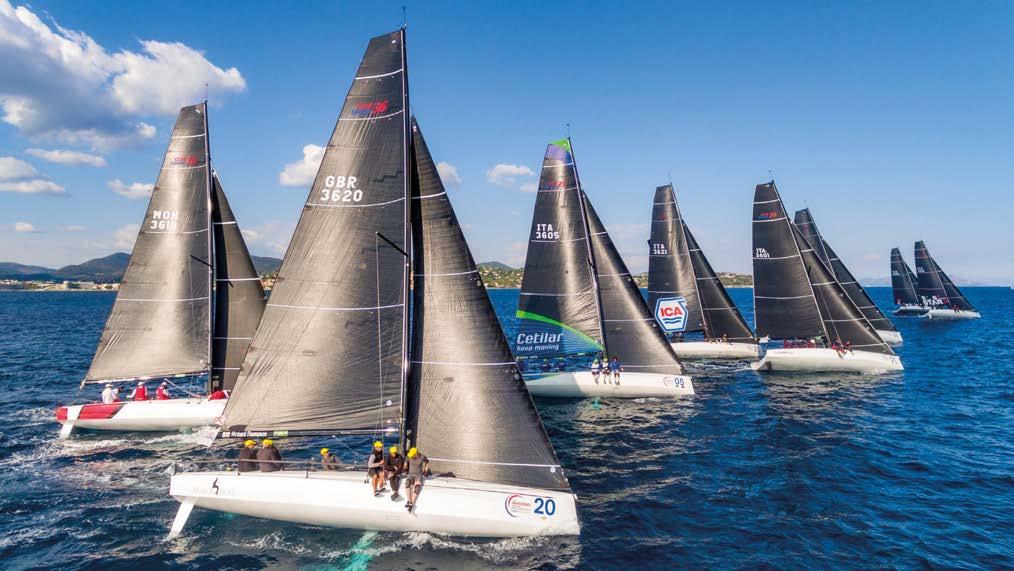
Luglio//July 2026
1 - 4 Swan Porto Rafael Challenge www.nautorswan.com
2 - 4 Coppa Primavela Kinder Joy of Moving www.yachtclubgaeta.it
3 Cowes to Dinard Saint Malo Race www.rorc.org
3 - 5 Coppa Europa Smeralda 888 www.yccs.it
4 Cooking Cup www.compagniadellavela.org
5 Aegean 600 Offshore Sailing Challenge www.aegean600.com
9 - 18 Drheam Cup www.drheam-cup.com
11 Round the Island Race www.roundtheisland.org.uk
24 - 26 Taittinger RSYC Regatta www.royalsolent.org
25 - 26 Emirates Great Britain Sail Grand Prix www.sailgp.com
1 - 7 Cowes Week www.cowesweek.co.uk
1 - 8 Copa del Rey Mapfre www.regatacopadelrey.com
7 - 9 Safe Harbor Race Weekend www.shmarinas.com/safe-harbor-race-weekend
7 - 15 ORC European Championship www.orceuro2026.com
9 Round Britain and Ireland Race www.roundbritainandireland.rorc.org
12 ETF26 GP Lorient www.etf26.com
18 - 23 Palermo - Porto Cervo - Montecarlo www.palermo-montecarlo.it
22 - 23 Rockwool Germany Sail Grand Prix www.sailgp.com
28/8 - 1/9 Campionati Italiani Giovanili in Singolo Kinder Joy of Moving www.cvr.ra.it
28/8 - 6/9 Imperia Sailing Week www.veledepoca.com
2 The Ocean Race Atlantic www.theoceanrace.com/it/atlantic
3 - 6 40 Malouine La Trinquette www.snbsm.com
5 - 6 CentoMiglia Internazionale del Garda www.centomiglia.it
5 - 6 Spain Sail Grand Prix www.sailgp.com
6 - 12 Maxi Yacht Rolex Cup www.yccs.it
7 - 10 Campionati Italiani Giovanili in Doppio www.garganosailingteam.it 10 Regata delle Isole www.classemini.it
13 - 19 Rolex Swan Cup www.yccs.it
15 - 20 Dé Azimut - Lorient Agglomération www.de -azimut.net
17 - 20 Ibiza JoySail www.ibizajoysail.com
19 - 20 Rolex Switzerland Sail Grand Prix www.sailgp.com
19 - 26 The Régates Royales www.yachtclubdecannes.com
24 - 27 24H Ultim www.classeultim.org
26/9 - 4/10 Les Voiles de Saint-Tropez www.lesvoilesdesaint-tropez.fr
1 - 11 Barcolana www.barcolana.it
2 - 4 Campionato Italiano J/70 www.j70.it
5 Cannes - Malta Race www.yachtclubdecannes.com
7 ETF26 GP Quiberon www.etf26.com
14 - 18 Veleziana Sailing Week www.veleziana.it
14 - 18 Raduno Vele Storiche Viareggio www.velestoricheviareggio.org
15 - 18 Campionato Italiano Classi Foil www.fragliavela.org
15 - 18 ClubSwan 28 USA League Finals www.nautorswan.com
17 Venice Hospitality Challenge www.yachtclubvenezia.it
17 Rolex Middle Sea Race www.rolexmiddlesearace.com
21 - 24 CICO - Campionato Italiano Classi Olimpiche Edison Next, Napoli www.federvela.it
27 - 31 ClubSwan 50 World Championship www.nautorswan.com
October RADUNO VELE STORICHE VIAREGGIO 14-18
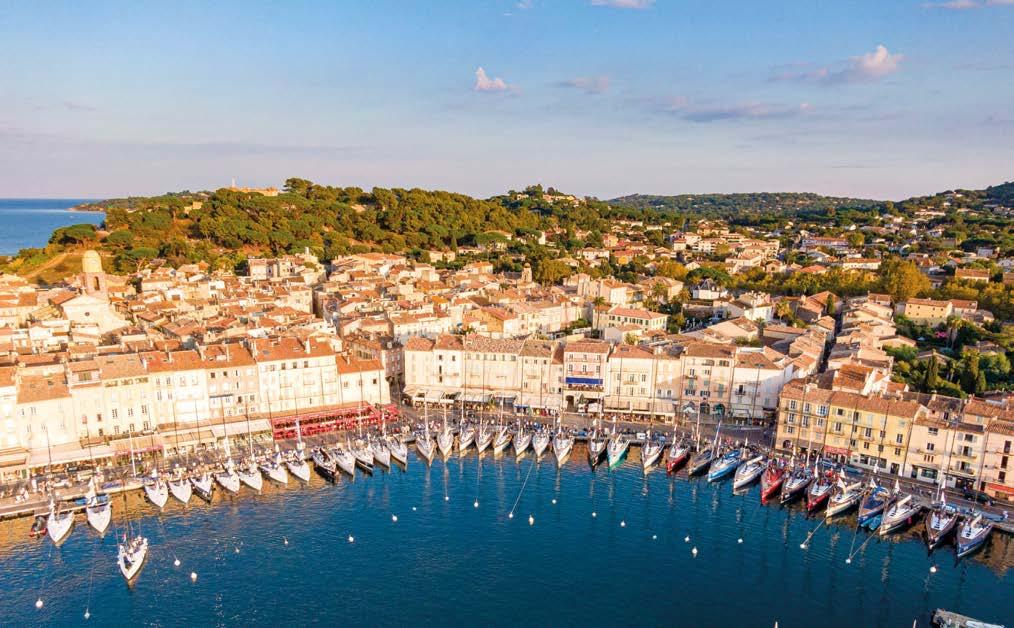
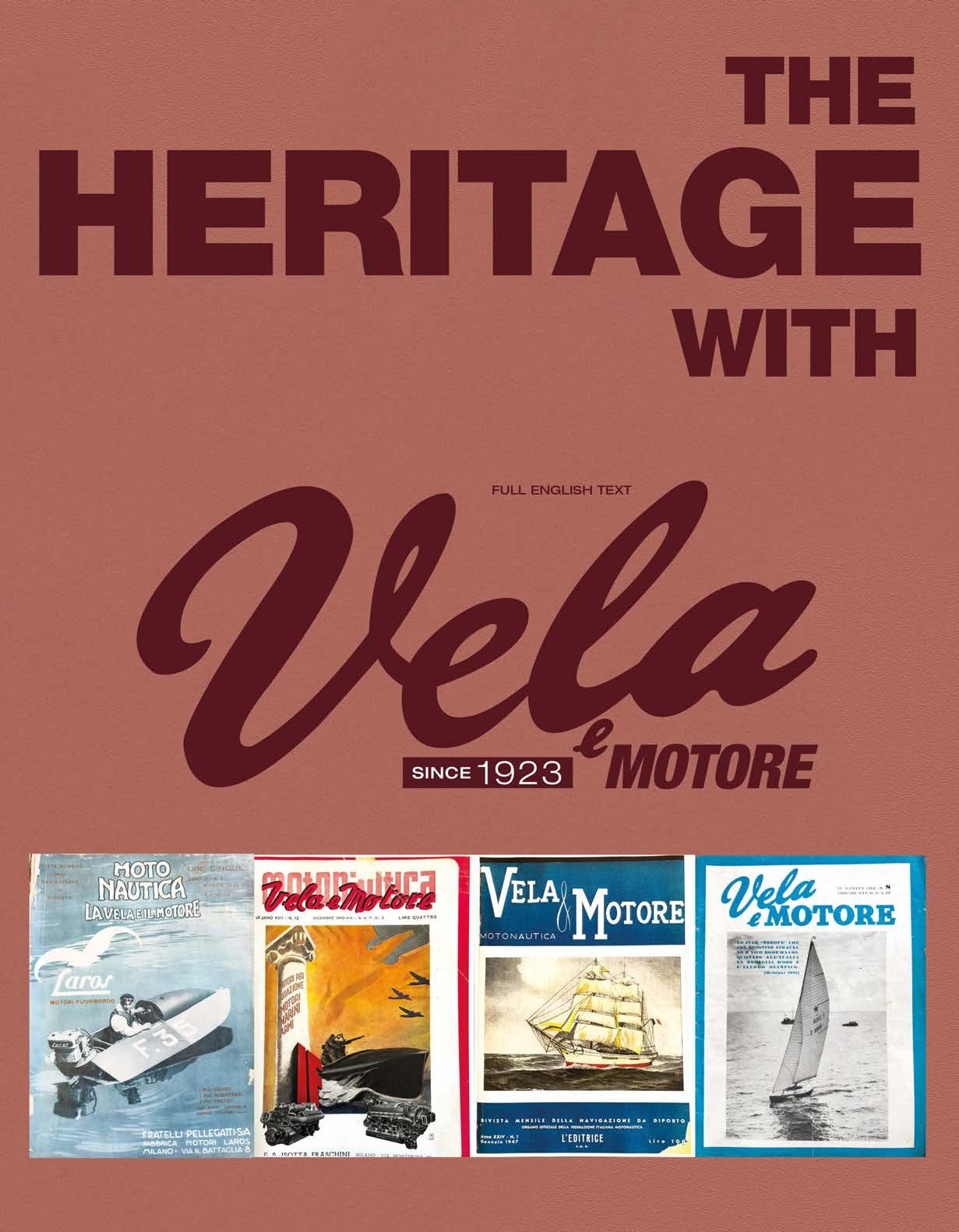
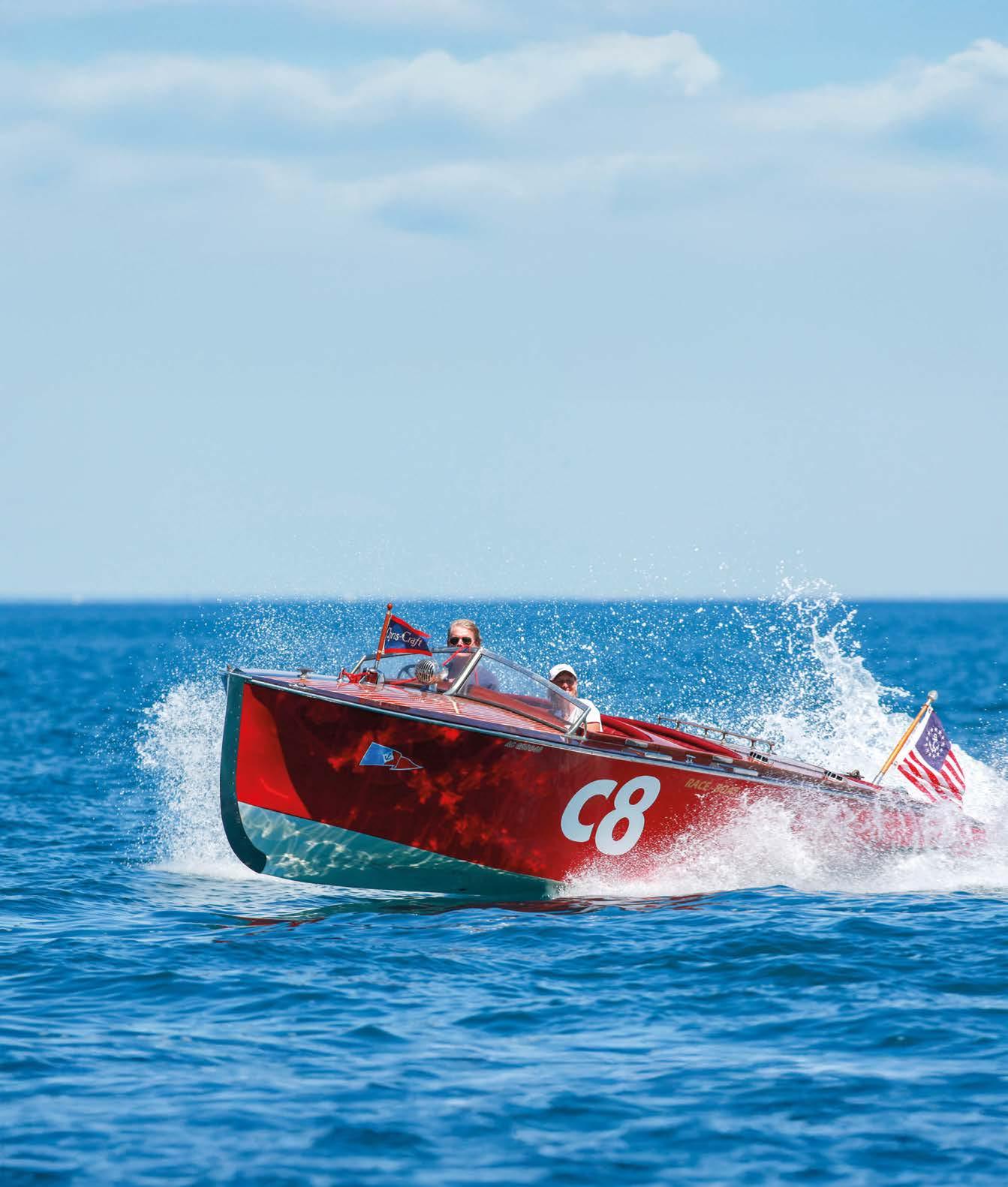
Negli Anni ’30, un cantiere navale americano varò sette runabout da competizione, una sorta di antefatto dei Magni ci Sette. Tre di essi sono sopravvissuti negli States
In the 1930s, an American shipyard launched seven racing runabouts, a sort of precursor to the Magni cent Seven. Three of them survive in the United States by Gerald Guetat - photos by Henri ibault - Archives DR, Jean-Bernard Nicolas, Henri ibault
L’uomo al volante di questa imponente imbarcazione da diporto a tre cabine non è certo un novellino quando si tratta di restauri complessi ed esemplari.
Ma questa Chris-Craft Special Race Boat da 26 piedi è senza dubbio uno dei suoi capolavori. JeanBernard Nicolas esercita la sua arte da oltre trent’anni. La sua lunga e invidiabile reputazione gli procura talvolta ogni sorta di indizio su potenziali reperti, che egli integra con indagini approfondite. Questa volta gli si presentò davanti uno scafo in mogano dalle linee slanciate, risalente probabilmente all’epoca d’oro dei runabout americani. Da vero intenditore, il nostro uomo, fondatore del Chris-Craft Club France, decise immediatamente di acquistare quel relitto rimasto in deposito per decenni e avvolto nel mistero. Era lunga 26 piedi e gli unici documenti doganali rimasti, timbrati a Port-Vendres – sul Mediterraneo, vicino al con ne con la Spagna – nel 1957, descrivevano, in modo molto succinto, ma con la bella calligra a corsiva dei funzionari governativi dell’epoca, una Chris-Craft Race Boat del 1938, allora equipaggiata con un modesto motore Scripps da 95 cavalli. Non sembrava granché per una macchina da corsa dei ruggenti Anni Trenta. Circolavano altre informazioni frammentarie su questo scafo. Secoli fa, la barca era stata avvistata in Africa da un agente di trasporto di merci francese di Tarbes. Poi, molto più tardi, era stata vista di nuovo, abbandonata nella zona di Saint-Tropez. Questo caso sembra decisamente radicato nel sud della Francia. Ma come ricomporre la storia, così insolita e intricata, di una cosiddetta Chris-Craft assemblata ad Algonac, nel Michigan, negli Anni ’30, a partire da questi frammenti di ricordi? E, prima di tutto, quella carcassa era davvero una Chris-Craft? Il lavoro è iniziato sul serio con una meticolosa ispezione di ogni centimetro quadrato del vecchio telaio in legno, durante la quale Jean-Bernard non ha rilevato alcun numero di scafo visibile. Una delusione, ma non un motivo per scoraggiarsi. Smontando la staffa dell’albero di trasmissione, cosa che evidentemente non era mai stata fatta sin dall’origine, una scritta “Chris-Craft” ha dissipato all’improvviso ogni dubbio, così come un numero di serie “957” che apparteneva, di fatto, a una serie del cantiere nautico dello stesso periodo. Con la sua lunghezza comprovata di 26 piedi e un’origine accertata, era ora il turno degli specialisti americani, ai quali chiedere di approfondire la famosa serie di sette imbarcazioni. La serie di Special Race Boat da 26 piedi rappresentava una sorta di “variazioni sullo stesso tema”.
Le regate sono state parte integrante del Dna di Chris-Craft sin dalla fondazione del cantiere nel 1922. La lunghezza di 26 piedi è rimasta lo standard del cantiere originario no alla conclusione degli Anni ’30. Una serie limitata di sette Special Race Boat degli Anni ’30 è stata costruita attorno a questi tripli pozzetti
slanciati ed eleganti. Purtroppo, gli archivi di ChrisCraft non sono molto ricchi di dettagli su questa serie speciale, destinata a competere nell’esclusiva categoria degli 850 Cubic Inch Inboard Runabouts, riservata per lo più a una manciata di gentleman driver. Dei sette esemplari costruiti, tre sono sopravvissuti e sono ancora in servizio negli Stati Uniti: Madoshumi V, Jay-Dee II e Star, mentre uno è stato esportato in Inghilterra. Oltre al potente motore V8 A120 ChrisCraft, sembra che gran parte delle impressionanti prestazioni di queste Special Race Boats fosse dovuta ad alcune modi che apportate al modello standard originale da 26 piedi a triplo pozzetto: un rivestimento più leggero sui anchi e un rinforzo della struttura a prua. Gli storici americani del cantiere navale di Algonac hanno raccolto le parole di un ex carpentiere che ha costruito lo scafo originale numero uno, il Madoshumi V, e ricordava di aver leggermente modi cato il disegno della carena. Non è dato sapere se gli altri sei abbiano ricevuto lo stesso trattamento. Questo scafo n. 1 della serie fu consegnato al suo proprietario, Herbert Mendelsohn, di Detroit. Lo scafo n. 2 fu battezzato Jay-Dee II dal suo armatore, Jack Dunn, di Miami, in Florida. Entrambi erano piloti esperti e regalavano grandi emozioni agli spettatori durante le gare a cui partecipavano: in inverno, in Florida, in sedi come Miami, o agli eventi del Palm Beach Yacht Club sul lago Worth; e in estate, alla Harwood Round Manhattan Race a New York, alla Presidential Cup Regatta a Washington D.C. o ad Atlantic City, nel New Jersey. Queste imbarcazioni da regata Chris-Craft, molto ricercate, si possono ammirare ancora oggi, sempre impressionanti come un tempo, alla Clayton Race Boat Regatta sul ume San Lorenzo (New York). Qual è stata la sorte della Miss Felicity alla ne degli Anni ’30? Nessuno lo sa, se non che nì in Africa. Alla ne degli Anni ’50, circa vent’anni e una guerra mondiale dopo, quasi nessuno in Europa aveva mai sentito parlare di queste speciali Chris-Craft, giocattoli ef meri per milionari di un’epoca passata. Inoltre, nessun collezionista era interessato alle vecchie barche di legno, che spesso nivano nel camino. Nel 1957, chi poteva essere attratto da un guadagno speculativo usurpando l’etichetta di “Race Boat” senza il minimo valore aggiunto di mercato?
E tanto meno per assicurarsi che comparisse stampata sui documenti doganali francesi. Così, convinto di avere tra le mani un’autentica rarità - oltre che affascinante - come un oggetto d’antiquariato che non avrebbe mai potuto essere contraffatto, Jean-Bernard si è dedicato al restauro, se non alla ricostruzione, nel 2018. Con oltre il novantacinque per cento di mogano nuovo, ogni componente originale è stato accuratamente smontato, studiato, misurato e poi fedelmente riprodotto. Nel laboratorio, dove la polvere era sospesa nell’aria, indossare la mascherina non era una novità, nonostante lo scoppio della pandemia. Ci sono voluti due anni di intenso lavoro a tempo pieno per realizzare questa splendida runabout laccata di rosso.
Potente, slanciata e dalle linee eleganti, questa ChrisCraft Special Race Boat incar na il meglio del design americano degli Anni ’30.
Powerful, long and sleek, the Chris-Craft Special Race Boat runabout embodies a pinnacle of American design from the 1930s.
Prima di raggiungere questo risultato, è stato necessario compiere scelte cruciali, nel rispetto dei riferimenti storici, senza escludere qualche tocco personale. È molto probabile che questa imbarcazione da regata speciale sia stata una delle ultime realizzate della serie, il che ha portato all’installazione di un telaio del parabrezza Chris-Craft risalente alla seconda metà degli Anni ’30, più aerodinamico rispetto alla versione piatta originale ereditata dagli Anni ’20. Allo stesso modo, è stata preferita una linea di coperta a lo, in linea con lo spirito dell’epoca, al posto della falchetta dei modelli precedenti, che appariva molto più datata. Sotto il cofano, un V8 Mercruiser da 420 cavalli occupa ora lo spazio che era destinato a un V8 Chris-Craft A120 da 13 litri e 275-350 cavalli (a seconda della versione), solitamente montato all’epoca. A prescindere dalla dif coltà di trovare un buon esemplare degli anni giusti, l’attuale con gurazione è stata una scelta più pratica, poiché più potente e più facile da manutenere. Dopo un lungo lavoro di ri nitura e numerosi colpi di scena, il giorno del varo uf ciale è arrivato nel settembre 2021,

Le ancate laccate sono una caratteristica tipica delle imbarcazioni da regata Chris-Craft sin dagli esordi del cantiere. Queste barche ChrisCraft, molto ricercate, si possono ammirare ancora oggi, sempre impressionanti come un tempo, alla Clayton Race Boat Regatta sul ume San Lorenzo (New York).
The lacquered sidewalls are typical of ChrisCraft racing boats from the beginning of the boatyard. These highly soughtafter Chris-Craft race boats are to be seen today, always as impressive as ever, at the Clayton Race Boat Regatta on the Saint Lawrence River (New York).
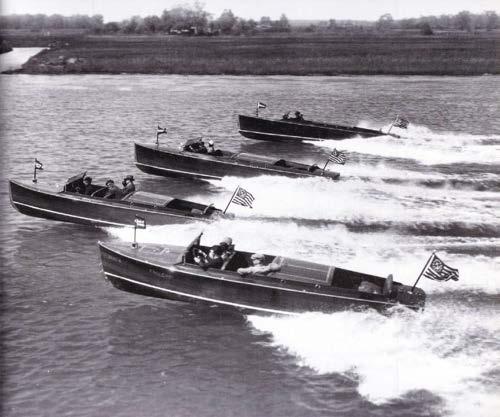
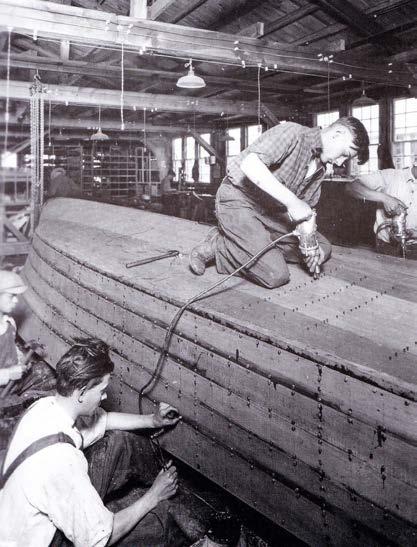
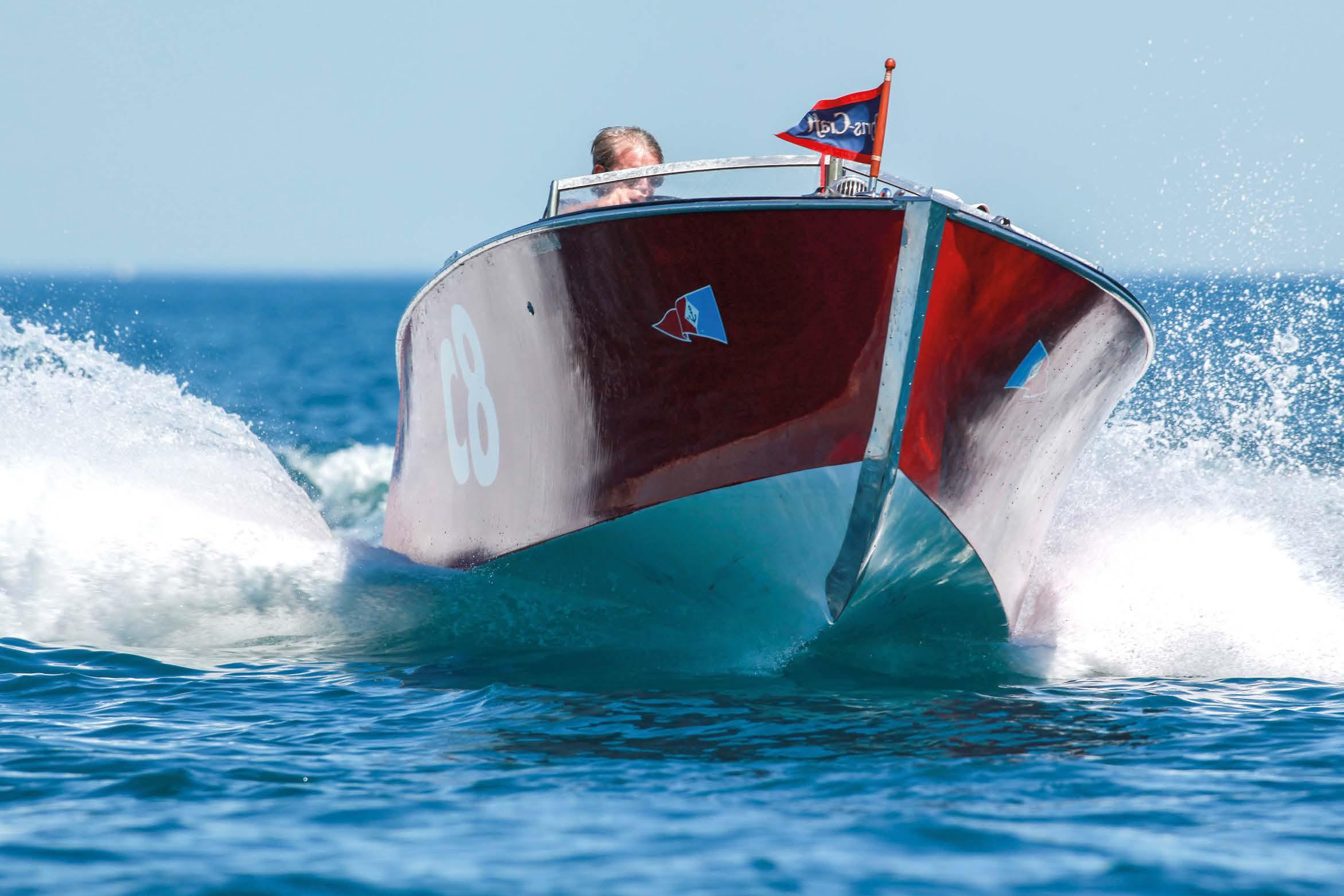
Cantiere//Boatyard
Modello//Model
Tipo//Type
Serie//Series
Anno//Year
Lunghezza f.t.//Length
Larghezza//Width
Motore//Engine (current):
Motore originale
Engine original
Tipo//Type
Potenza//Power
Velocità//Speed
Chris-Craft
26’ Runabout
Triple cockpit
Special Race Boat
durante la Monaco Classic Week, in un contesto altamente competitivo. Il nome di Miss Felicity, conservato n dagli Anni ’50 – forse anche prima –ha fatto da portafortuna a questa barca miracolosa. All’inizio del prestigioso evento, l’armatore di uno yacht di 79 metri ormeggiato nel porto di Monte Carlo si è subito avvicinato a Jean-Bernard, offrendosi di acquistare la Special Race Boat. Ma questo tesoro non è in vendita. Oggi, oltre all’emozione travolgente di guidare questa barca in mogano a oltre quaranta nodi durante numerose uscite di piacere – con grande disappunto di alcuni armatori moderni che stanno s dando l’antenato a duello – Jean-Bernard assapora il bel tributo che gli specialisti americani di Chris-Craft hanno dedicato per il lavoro che ha portato a termine. Un trio di imbarcazioni simili è molto noto negli Stati Uniti. La storia ricorderà che questi tre moschettieri sono ora quattro, insieme a Miss Felicity. Sulla carta ci sono ancora tre Special Race Boats, se esistono, da qualche parte. Distrutte o nascoste, gli appassionati stiano attenti.
The man behind the wheel of this impressive triple-cockpit runabout is no novice when it comes to dif cult and exemplary restoration work.
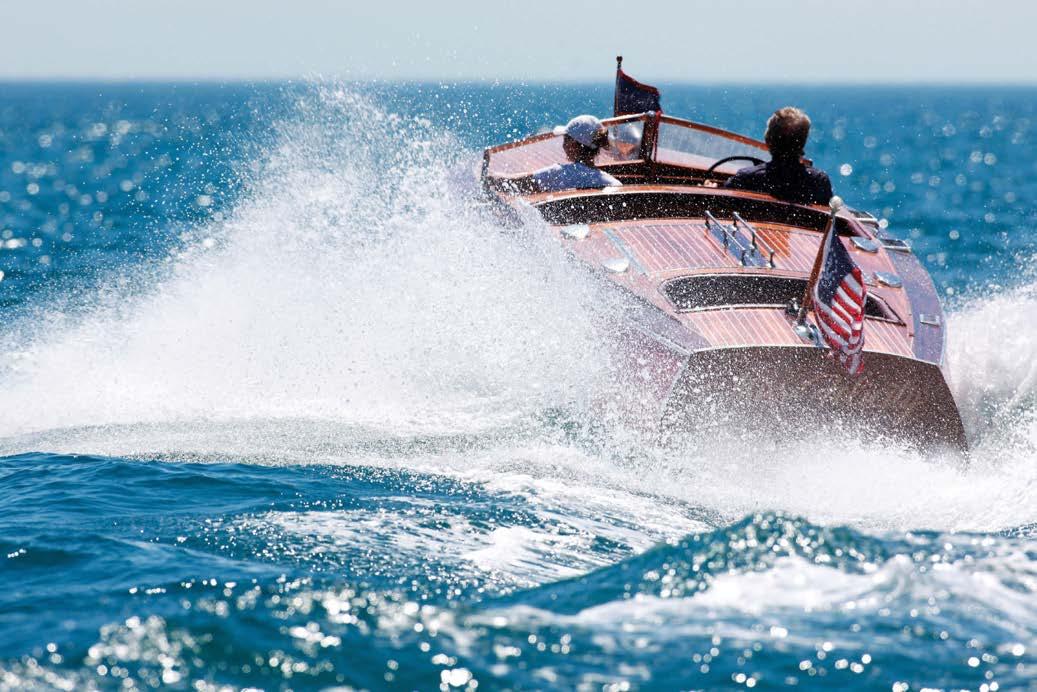
But this 26-foot Chris-Craft Special Race Boat is undoubtedly one of his masterpieces. Jean-Bernard Nicolas has practised his art for over thirty years. His long and enviable reputation sometimes brings him all kinds of clues about potential nds, which he supplements with in-depth investigations. This time, he was told of a sleek mahogany hull, probably dating back to the golden age of American runabouts.
A ne connoisseur, our man, founder of the Chris-Craft Club France, promptly decided to buy this wreck, stored for decades and shrouded in mystery. It was 26 feet long, and its only remaining custom papers, sealed in Port-Vendres - on the Mediterranean near the Spanish border - in 1957, described, very brie y but in the beautiful cursive handwriting of the government of cers of the time, a ‘Chris-Craft Race Boat 1938’, then equipped with a modest 95 hp Scripps engine. That did not sound much for such a racing machine from the Swinging Thirties. Other snippets of information were circulating about this hull. Eons ago, the boat was spotted somewhere in Africa by a French freight agent from Tarbes. Then, she was seen again, much later, abandoned in the Saint-Tropez area. This case seems decisively rooted in southern France. But how to assemble the unlikely, puzzling history of a so-called Chris-Craft, assembled in Algonac, Michigan, in the 1930s, from these fragments of memory? And rst and foremost, was this wreck really a Chris-Craft? Things began in earnest with a meticulous search of every square centimetre of the old wooden frame, where Jean-Bernard nally found no visible hull number.
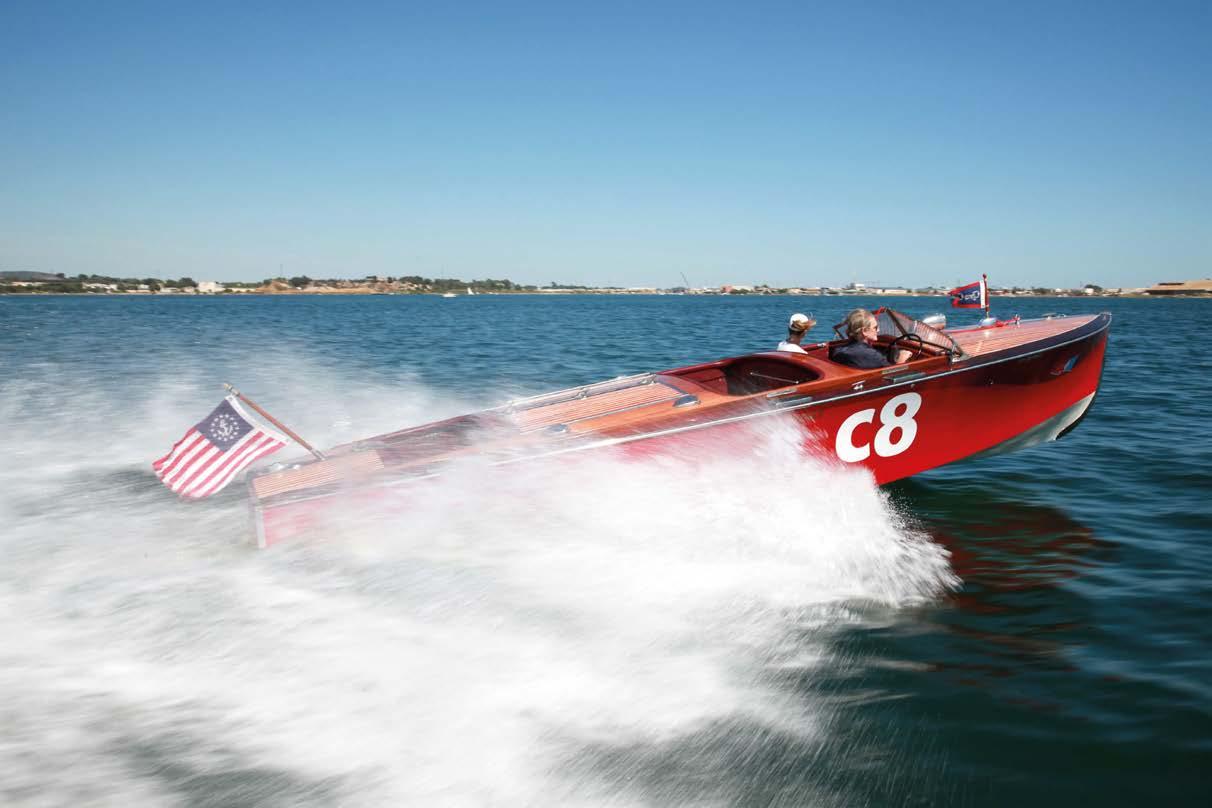
Disappointing, but not despondent. On dismantling the propeller shaft bracket, something which had obviously never been done since the boat’s origin, a ‘Chris-Craft’ marking removed all doubts, as did a part number marking ‘957’ which, in fact, belonged to a series from the boatyard of the matching period. With its proven 26-foot length and origin, it was now the turn of the American specialists to be asked to nd out more about this famous series of seven boats.
The 26’ Special Race Boat series was a kind of “variations on the same theme”. Racing has been in Chris-Craft’s DNA since the boatyard’s founding in 1922. The 26’ length has been the original yard’s standard since then, until the end of the 1930’s.
A limited series of seven Special Race Boats from the 1930s was built around these slender, sleek triple cockpits. Unfortunately, the Chris-Craft archives are not very detailed about this special series, which was intended to compete in the very exclusive 850 Cubic Inch Inboard Runabouts, mostly reserved for a handful of gentleman drivers. Of the seven built, three have survived and remain in service in the US: Madoshumi V, Jay-Dee II, and Star. Of the seven copies of this limited edition, one is known to have been exported to England. In addition to a powerful A120 Chris-Craft V8, it seems that most of the impressive performance of these Special Race Boats was due to some alterations made to the original standard 26’ Triple Cockpit model: a lighter planking on the sides and a reinforcement of the framing in the stern. American historians of the Algonac boatyard have collected the words of a former carpenter who framed the original hull number one, Madoshumi V, and who remembered slightly modifying the bottom design. It is not said that the other six had the same treatment. This hull #1 of the series was delivered to her owner, Herbert Mendelsohn, of Detroit.
L’esperienza di Jean-Bernard è un caso raro in Francia, sia per la sua durata sia per la lunga serie di successi. La rinascita del suo Chris-Craft 26’ personale ha rafforzato il desiderio di questo appassionato incondizionato dell’artigianato di qualità non solo di continuare a condividere la sua passione, ma anche di sviluppare il suo cantiere navale. Dopo oltre trent’anni sulle rive della Garonna, sta valutando un nuovo trasferimento nel Mediterraneo. Lavorare ancora a lungo, in un ambiente più soleggiato, con il mare accessibile in ogni momento per il piacere della navigazione: il progetto di questo eccezionale restauratore merita di essere seguito con attenzione.
Jean-Bernard’s experience is rare in France, both for its duration and for its long list of successes. The rebirth of his personal Chris-Craft 26’ has redoubled the desire of this unconditional lover of ne workmanship not only to continue sharing his passion but also to develop his boatyard. After more than thirty years on the banks of the Garonne, he is considering a move to the Mediterranean. To continue working for a long time to come in a sunnier environment, with the sea accessible at all times for the pleasure of sailing, this outstanding restorer’s project deser ves to be followed with attention.
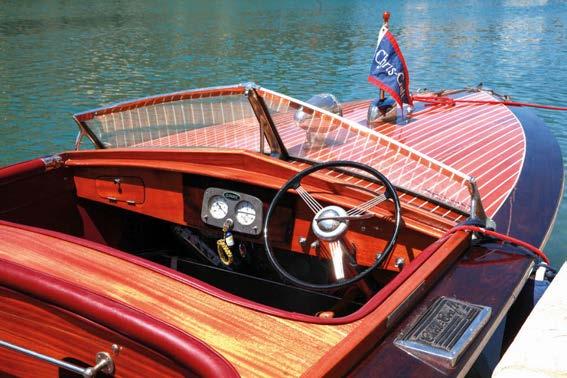
Hull #2 was christened Jay-Dee II by her owner, Jack Dunn, of Miami, Florida. Both were experienced racing drivers and gave the spectators a good time during the races they entered, in winter in Florida, in venues like Miami or the Palm Beach Yacht Club events on Lake Worth, and in summer, the Harwood Round Manhattan Race in New York, the Presidential Cup Regatta in Washington D.C. or in Atlantic City, New Jersey. These highly sought-after Chris-Craft race boats are to be seen today, always as impressive as ever, at the Clayton Race Boat Regatta on the Saint Lawrence River (New York).
What was the fate of Miss Felicity at the end of the 1930’s? Nobody knows apart from the fact that it
La guida a destra è una caratteristica TIPICA delle imbarcazioni da diporto americane e questa barca da corsa Chris-Craft degli Anni ’30 non fa eccezione.
Right-hand drive is TYPICAL of American runabouts, and this Chris-Craft racing boat from the 1930s is no exception.
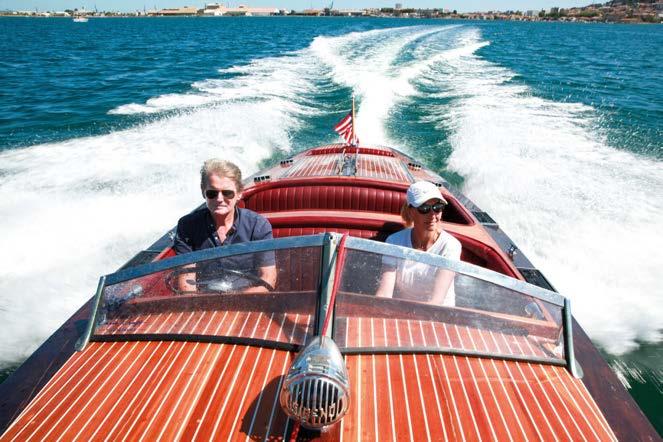
ended in Africa. In the late 1950s, some twenty years and a World War later, hardly anyone in Europe had ever heard of these special Chris Crafts, short-lived toys for millionaires from a bygone era. In addition, no collector was interested in old wooden boats, which often ended up in the replace. Back in 1957, who could be attracted by a speculative gain by usurpating a ‘Race Boat’ label with not the slightest market added value. Even less so to ensure it would appear in print on French Customs papers. So, con dent that he had in his hands an authentic rarity - as well as being fascinating - like an antique that could never have been counterfeited, Jean-Bernard set about restoring, if not reconstructing it in 2018. With over ninety- ve per cent new mahogany, each original component was carefully extracted, studied, measured and then faithfully copied. In the workshop, where dust was in suspension, wearing a mask was not a new constraint despite the outbreak of the pandemic. It took two years of intense, full-time labour to produce this stunning red-lacquered runabout. Before reaching this achievement, crucial choices had to be made regarding historical references, without excluding a few personal touches. It’s very likely that this Special Race Boat was one of the latest made in the series, which led to the mounting of a Chris-Craft windscreen frame from the second half of the 1930s, more streamlined than the original at version inherited from the 20’s. Similarly, a ush deck line, in the spirit of the period, was preferred to the coaming of the bonnets, looking much older. Beneath the hood, a 420bhp Mercruiser V8 is now lling the space which was destined to a Chris-Craft 13-litre 275-350bhp (depending on the version) A120 V8 usually tted at the time. Irrespective of the dif culty of nding a good example from the correct years, the current setup was a more practical move, being more powerful as well as easier to service. After a great deal of nishing and many twists and turns, the day of the of cial release arrived in September 2021, during Monaco Classic Week, amid a highly competitive eld. The name of Miss Felicity, preserved since the 1950s - perhaps even earlier - acted as a good luck charm for this miraculous boat. At the beginning of the prestigious event, the owner of a 79m yacht moored in Monte Carlo harbour came immediately to Jean-Bernard, offering to buy the Special Race Boat on the spot. But this treasure is not for sale. Today, in addition to the wild exitement of steering the mahogany beast at over forty knots during many pleasure rides, much to the disappointment of a few modern boat owners who are making in challenging the ancestor to a duel, Jean-Bernard savours the ne tribute he received from the American Chris-Craft specialists for the work he has accomplished. A trio of similar boats are very well known in the United States. History will record that these three musketeers now number four, along with Miss Felicity. On paper, there are still three Special Race Boats somewhere, if they still exist. Destroyed or hidden, amateurs beware.