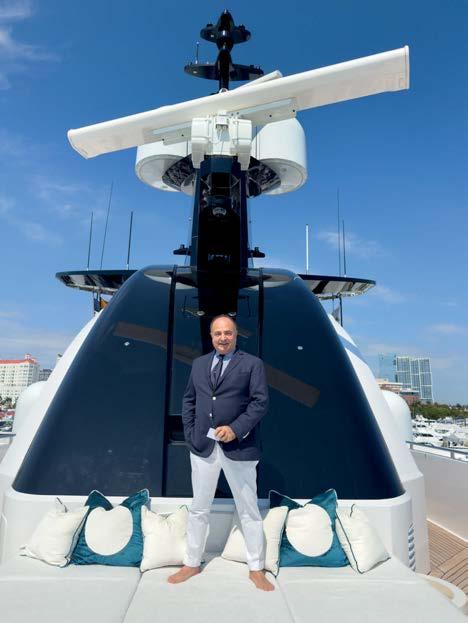
Ci sono vicende che hanno del miracoloso e che possono essere prese in prestito per interpretare il nostro mondo
Some events border on the miraculous, which can be drawn on to help us make sense of our world by Francesco Michienzi
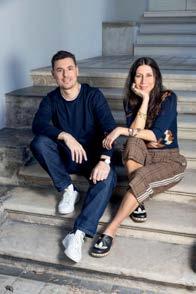
Due imprenditori della moda decidono di investire nel mondo della nautica, acquistando ciascuno un cantiere. Portano con sé senso estetico, capacità di rilancio e disponibilità a correre rischi.
Entrambi appassionati piloti di aerei da turismo, a un anno di distanza l’uno dall’altro, subiscono un incidente con il loro velivolo e, per un intreccio di circostanze fortunate e prontezza, si salvano. Miracolosamente. La notizia ha un sapore quasi cinematografico, ma merita di essere letta anche come metafora utile a comprendere più a fondo la condizione dell’industria e delle persone che vi operano.
L’arrivo di manager provenienti dal fashion system in un cantiere nautico è la dimostrazione che industrie differenti possono trarre vantaggio dall’incontro di sensibilità e know‑how. Design, marketing e cultura d’impresa possono rinnovare la produzione e l’immagine di un settore tradizionale. L’incidente e la salvezza, sotto forma di miracolo, mettono in luce due elementi: la fragilità umana dinanzi all’imprevisto e l’importanza di chi, nonostante i pericoli, continua a scegliere di agire. Non è semplicemente il fato a proteggere: dietro la sopravvivenza ci sono formazione, procedure, reattività e forse anche una dose di fortuna.
La vicenda offre anche l’individuazione di figure simboliche. Da un lato gli imprenditori che investono, sperimentano e si espongono, dall’altro chi insiste nel ritenere che un’azienda possa salvarsi a prescindere, nonostante debiti rilevanti (i sindacalisti che stanno seguendo da vicino una vicenda dolorosa nota a tutti parlano di una cifra di oltre 400 milioni di euro), confidando in soluzioni magiche o in negoziati che non cambiano la sostanza. Il contrasto pone una domanda cruciale: “È meglio puntare su soluzioni coraggiose e rapide o rimanere ancorati a ragionamenti ormai poco realistici?”.
Se il cantiere nautico ha bisogno di rinnovamento, allora l’arrivo di imprenditori disposti a investire e a mettere in gioco competenze esterne può essere una risorsa vitale. La salvezza metaforica dell’impresa non può basarsi soltanto sul destino. Richiede capitale, visione e un patto di fiducia tra management, lavoratori e territorio. L’ostinazione del Faraone d’Egitto nell’Esodo è un’immagine potente di chi si rifiuta di ammettere la realtà e continua a opporsi al cambiamento nonostante i segni contrari. Come recita la Bibbia: “Ma io irrigidirò il cuore del faraone e moltiplicherò i miei segni e prodigi nel paese d’Egitto”. Il monito è chiaro.
La vicenda di investitori che portano NUOVA LINFA a un cantiere e sopravvivono a un incidente è ricca di metafore: parla di rischio e opportunità, di fortuna e preparazione, di CONTRAPPOSIZIONI tra chi agisce e chi si illude.
The story of investors who bring NEW LIFE to a shipyard and survive an accident is rich in metaphor: it speaks of risk and opportunity, of luck and preparation, and of the CONTRAST between those who act and those who delude themselves.
L’orgoglio e l’ostinazione possono prolungare una crisi fino a renderla irreversibile, mentre una scelta saggia dovrebbe consistere nel riconoscere i limiti e aprirsi a soluzioni concrete. La storia suggerisce che il comparto nautico, come altri settori in crisi, ha bisogno di attori capaci di assumere rischi ponderati, ma anche di ascoltare i lavoratori e di affrontare i vincoli (compresi i debiti) con trasparenza. La speranza non basta, servono piani concreti che mettano insieme capitale, competenze e tutele sociali. L’incidente è un evento non intenzionale che evidenzia la necessità di progettare la resilienza e piani di gestione dell’imprevisto.
Marcus Aurelius, nelle sue Meditazioni, ci dice: “Tu hai il potere sulla tua mente, non sugli eventi esterni. Realizza questo e troverai forza”. In pratica, invita a distinguere ciò che si può controllare — scelte imprenditoriali, competenze e strategie — da ciò che è contingente e imprevedibile. La vicenda di questi due imprenditori, che portano nuova linfa a un cantiere e sopravvivono a un incidente, parla di rischio e opportunità, di fortuna e preparazione, di contrapposizioni tra chi agisce e chi si illude. Più che celebrare il miracolo, la lettura utile è che l’industria nautica potrebbe avere proprio bisogno di figure disposte a rischiare e innovare, ma nel perimetro di accordi che tutelino i lavoratori e affrontino realisticamente i problemi finanziari. Se si sceglie la via dell’audacia, questa deve essere accompagnata da rigore, responsabilità e dialogo sociale. A queste figure si affianca la storia recente di Stassi Anastassov, nuovo Amministratore Delegato del Gruppo Ferretti, che nella sua prima lettera ai dipendenti ha fatto una promessa: i suoi primi mesi saranno dedicati all’ascolto e all’apprendimento. La sua metodologia è significativa e merita attenzione. Prima di prendere decisioni, si presenta a tutti i dipendenti, li ascolta e trascorre molto tempo con il fondatore del gruppo, ascoltandone la visione e le preoccupazioni. Infine, al Salone Nautico di Venezia, si presenta ai giornalisti con grande empatia, spiegando come intende operare. Per me è stato un incontro inaspettato, ho visto un manager capace e determinato. Sono certo che non farà sconti a nessuno, ma il suo approccio, che parte dall’ascolto, dal rispetto e dall’educazione come base per introdurre cambiamenti efficaci, mi è sembrato un buon inizio. L’esempio mostra che leadership e innovazione non sono solo una questione di competenze tecniche: l’ascolto, la capacità di costruire relazioni e la trasparenza verso i lavoratori e l’opinione pubblica sono strumenti fondamentali per legittimare il cambiamento ed evitare fratture sociali. Un manager esterno, con visione e fermezza, ma anche con rispetto, può favorire la modernizzazione senza azzerare il capitale umano dell’azienda. Ho letto il libro di Mel Robbins La teoria di lasciare andare, un saggio perfetto per sottolineare questo percorso di cambiamento che trova eco nelle idee sulla necessità di “lasciare andare” esitazioni e paure per passare all’azione. Applicato al mondo aziendale, il concetto incoraggia leader e parti interessate a lasciar andare convinzioni paralizzanti, siano queste la certezza che “tutto andrà bene comunque” o il timore di cambiare, e a prendere decisioni rapide e misurate per il rilancio. Lasciare andare l’orgoglio, l’illusione di soluzioni magiche o la paralisi per indecisione è la condizione per costruire piani concreti e condivisi.
L’esempio del manager del Gruppo Ferretti mostra che innovazione e disciplina possono andare di pari passo con rispetto e ascolto. Se l’industria nautica italiana vuole mantenere la sua leadership, ha bisogno di attori che sappiano rischiare con rigore, che ascoltino i lavoratori e che, quando serve, lascino andare l’inerzia per agire.
Two fashion entrepreneurs decided to invest in the yachting industry, each buying a shipyard. They brought an eye for design, a knack for revitalising businesses, and a willingness to take risks.
Both are keen recreational pilots; within a year of each other, they were involved in aircraft accidents and, thanks to a combination of fortunate circumstances and quick thinking, survived. Miraculously. The story has an almost cinematic quality, but it is also worth reading as a metaphor that helps us gain a deeper understanding of the state of the industry and the people working within it.
The arrival of fashion-industry managers at a shipyard demonstrates that different sectors can benefit from the convergence of sensibilities and expertise. Design, marketing, and corporate culture have the power to rejuvenate a traditional industry’s production and image.
“You have to move before you’re ready” (devi muoverti prima di essere pronto). Quello di Mel Robbins è un invito a lasciare andare L’INERZIA e ad agire con DECISIONE.
“You have
to move before
you’re
ready”. Mel Robbins’ message urges you to shake off INERTIA and take decisive ACTION

The incident and subsequent rescue, seen as a miracle, emphasise two key points: human vulnerability when facing the unexpected, and the significance of those who, despite risks, persist in taking action.
Protection isn’t just a matter of luck: it relies on training, procedures, responsiveness, and sometimes a bit of luck. The story also features symbolic figures. On one side are entrepreneurs who invest, experiment, and risk everything; on the other, those who believe a company can be saved regardless of debts (trade unionists who are closely following a painful affair with which everyone is familiar are putting the figure at over 400 million euros), place their faith in magic solutions or negotiations that do not change the core issues.
This contrast raises a crucial question: “Is it better to opt for bold, swift solutions or to cling to arguments that are now largely unrealistic?”. If the shipyard needs a revamp, the arrival of entrepreneurs willing to invest and bring in external expertise can be a vital asset. The business’s metaphorical survival cannot rely solely on fate. It requires capital, vision and a bond of trust among management, workers and the local community. The stubbornness of the Pharaoh of Egypt in the Book of Exodus is a powerful image of someone who refuses to acknowledge reality and continues to resist change despite the evidence to the contrary.
As the Bible says: “But I will harden Pharaoh’s heart and multiply my signs and wonders in the land of Egypt”. The warning is clear.
Pride and stubbornness can prolong a crisis to the point of irreversibility, whereas a wise course of action is to acknowledge one’s limitations and remain open to practical solutions. History suggests that the nautical sector, like other sectors in crisis, needs players capable of taking calculated risks, listening to workers, and addressing constraints (including debt) transparently. Hope is not enough; concrete plans are needed that bring together capital, skills and social safeguards. An incident is an unintentional event that highlights the need to build resilience and to plan for the unexpected. Marcus Aurelius, in his Meditations, tells us: “You have power over your mind, not over external events. Realise this and you will find strength”. In essence, he urges us to distinguish between what we can control— business decisions, skills and strategies—and what is contingent and unpredictable. The story of these two entrepreneurs, who revitalise a shipyard and endure an accident, highlights themes of risk and opportunity, luck and preparation, and the difference between proactive action and self-delusion. Rather than simply celebrating this miracle, the more useful takeaway is that the boating industry may well need people willing to take risks and innovate, but within a framework of agreements that protect workers and realistically address financial issues. If one chooses the path of boldness, it must be accompanied by rigour, responsibility and social dialogue. This is illustrated by the recent story of Stassi Anastassov, the Ferretti Group’s new CEO, who, in his first letter to staff, promised that his first few months would be devoted, above all else, to listening and learning. His approach is noteworthy and deserves attention. Before making any decisions, he introduces himself to all the staff, listens to them, and spends a great deal of time with the group’s founder to hear his vision and concerns. Finally, in Venice, he spoke to journalists with great empathy, explaining how he intends to approach his work. For me, it was an unexpected meeting; I saw a capable and determined manager. I am certain he will not cut anyone any slack, but his approach – which is based on listening, respect and courtesy as the foundation for effective change – seemed to me to be a good start. This example shows that leadership and innovation are not merely matters of technical skills: listening, relationship-building, and transparency towards employees and the public are essential tools for legitimising change and preventing social divisions. An external manager with vision, resolve, and respect can drive modernisation without undermining the company’s human capital.
I’ve read Mel Robbins’ book The Let Them Theory, an essay that perfectly captures this journey of change and resonates with the idea that we need to ‘let go’ of our hesitations and fears to take action.
When applied to the business world, this concept encourages leaders and stakeholders to let go of paralysing beliefs – whether it is the certainty that “everything will turn out fine anyway” or the fear of change – and to make swift, measured decisions to drive recovery. Letting go of pride, the illusion of magic solutions, and paralysis caused by indecision is essential to developing concrete, shared plans.
The example of the Ferretti Group manager shows that innovation and discipline can go hand in hand with respect and listening. To stay ahead, the Italian boating industry requires players capable of taking calculated risks, listening to their workers, and, when needed, overcoming inertia and taking action.
DIRETTORE RESPONSABILE //Editor in chief Francesco Michienzi f.michienzi@barcheisp.it
DIRETTORE EDITORIALE //Editorial director Barbara Borgonovo b.borgonovo@barcheisp.it
ART DIRECTOR
Francesca Villirillo grafici@barcheisp.it
GRAFICA E PUBBLICITÀ //Graphic and Advertising
Tamara Viganò info@barcheisp.it
FOTOGRAFO//Photographer Andrea Muscatello redazione@barcheisp.it
HANNO COLLABORATO A QUESTO NUMERO
Contributing editors/writers
Mariateresa Campolongo, Alberto Mario Capelli, Carlo Cattaneo, Giovanni Gasparini, Emanuela Ferro, Sacha Giannini, Filippo Michienzi, Barbara Morassut, Marco Negri, Paolo Picciotto, Chiara Risolo, Niccolò Volpati
SEGRETERIA DI REDAZIONE //Editorial assistant redazione@barcheisp.it
EDITORE //Publisher
International Sea Press Srl, Viale Brianza, 17/A - 20821 Meda, T. +39 0362 344140, F. +39 0362 73790 redazione@barcheisp.it
STAMPA //Printing
Tipolitografia Pagani Passirano (BS)
ON LINE
Barche www.barchemagazine.com



CONCESSIONARIA PUBBLICITÀ //Advertising
International Sea Press Srl, Viale Brianza, 17/A - 20821 Meda T. +39 0362 344140 b.borgonovo@barcheisp.it, info@barcheisp.it
Gian Marco Lari
T. +39 0773 742260 M. +39 335 6268932 m.lari@barcheisp.it
Giovanni Berruti M. +39 337 254344 g.berruti@barcheisp.it
Concessionaria per il Principato di Monaco e la Costa Azzurra
Advertising for Principality of Monaco and Côte d’Azur INVESTOR MEDIA MONACO Sarl Andrea Dini a.dini@barcheisp.it
DISTRIBUZIONE //Distribution
Press-di Distribuzione Stampa e Multimedia S.r.l.Via Cassanese 224, 20090 Segrate (MI)
DISTRIBUZIONE ESTERO
Sole Agent for Distribution Abroad JOHNSONS INTERNATIONAL NEWS ITALIA srl Via Valparaiso, 4 - 20144 MILANO
UFFICIO ABBONAMENTI
Viale Brianza, 17/A - 20821 Meda, tel. +39 0362 344140 Abbonamento annuo € 75; abbonamento estero € 175 Europa; € 210 resto del mondo; un numero € 10,00; arretrati € 15. Pubblicazione mensile registrata al Tribunale di Milano in data 05/04/2004 al n. 233/2004. Tutti i diritti sono riservati. Vietata la riproduzione se non autorizzata per iscritto. Printed in Italy. Iscrizione ROC 34967 del 17/09/2020.
How to subscribe - Subscription: International Sea Press Srl, Viale Brianza, 17 - 20821 Meda, tel. +39 0362 344140. Subscription rates (one year): Italy € 75,00 - Europe € 175,00 - all over the world € 210,00. Published monthly. All rights reserved: reproduction in whole or in a part of any article without prior written permission from the publisher is strictly prohibited. Printed in Italy.
Questo numero è stato chiuso in Redazione il 5 Giugno 2026. This issue ended on 5th June 2026. Manoscritti e fotografie, anche se non pubblicati, non si restituiscono. Gli articoli firmati sono la libera espressione degli Autori e non rispecchiano necessariamente la linea editoriale del giornale. Even if not published, handwritten manuscripts and pictures cannot be returned. The signed articles are the free expression of the writers and do not necessarily reflect the editorial policy of the magazine.





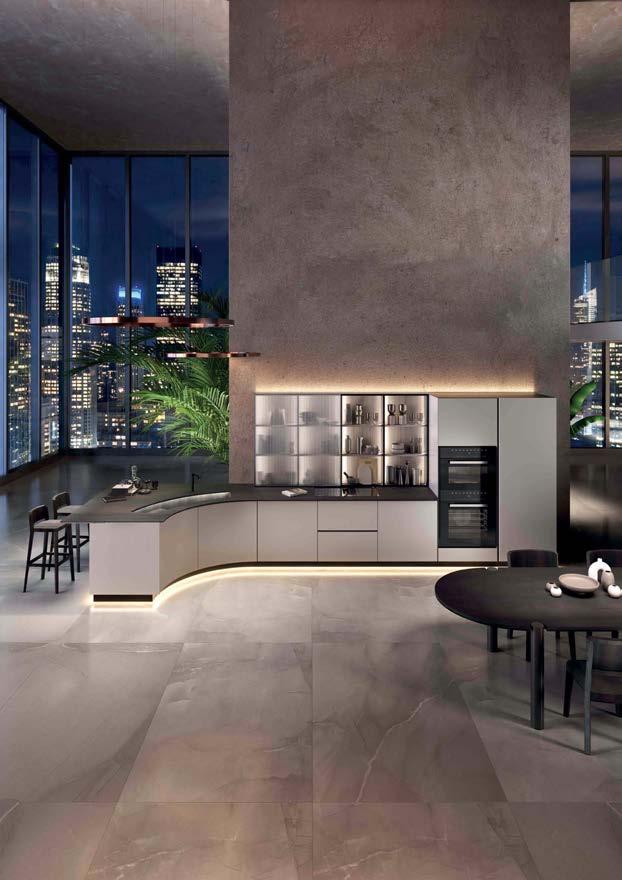
Il segno distintivo di Virgola è la curva: un principio strutturale ed ergonomico che delinea una geometria morbida, quasi calligrafica per una nuova architettura domestica. Eliminando la frammentazione degli spigoli, la composizione sostituisce il punto fermo con una pausa naturale. Il progetto per Aran Cucine è firmato da Massimo Iosa Ghini.
Virgola’s defining feature is the curve: a structural and ergonomic principle that creates a soft, almost calligraphic geometry for a new domestic architecture. By eliminating sharp edges, the design replaces the full stop with a natural pause. The project for Aran Cucine is designed by Massimo Iosa Ghini.
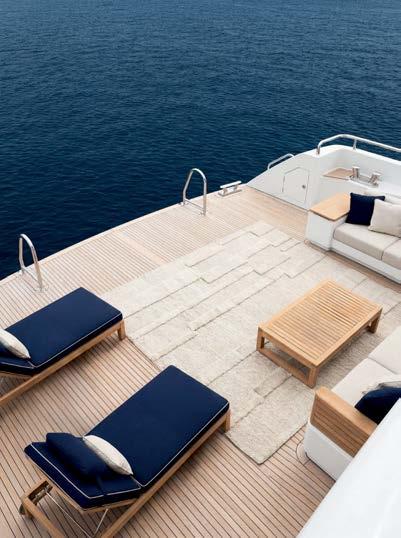
Carpet Edition entra nel mondo nautico con tappeti pensati per rispondere a esigenze specifiche. Il General Manager Valentina Erba ha dichiarato: “Forme morbide, colori neutri, sagome armoniose e dettagli che diventano firma, perché ogni armatore possa riconoscersi nella propria imbarcazione, come in un abito tailor-made”.
Carpet Edition is entering the nautical world with carpets designed to meet specific requirements. Valentina Erba, General Manager, said: “Soft shapes, neutral colours, harmonious lines and signature details, so that every owner can identify with their boat, just as they would with a tailor-made suit”.
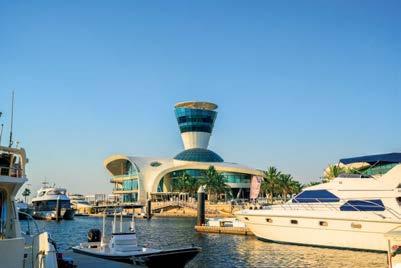
Yas Marina ha ottenuto ufficialmente l’accreditamento internazionale TYHA Superyacht Ready, diventando il primo porto turistico di Abu Dhabi e il secondo negli Emirati Arabi Uniti a conseguire questa certificazione.
Yas Marina has officially been awarded the TYHA Superyacht Ready international accreditation, making it the first marina in Abu Dhabi and the second in the United Arab Emirates to achieve this certification.
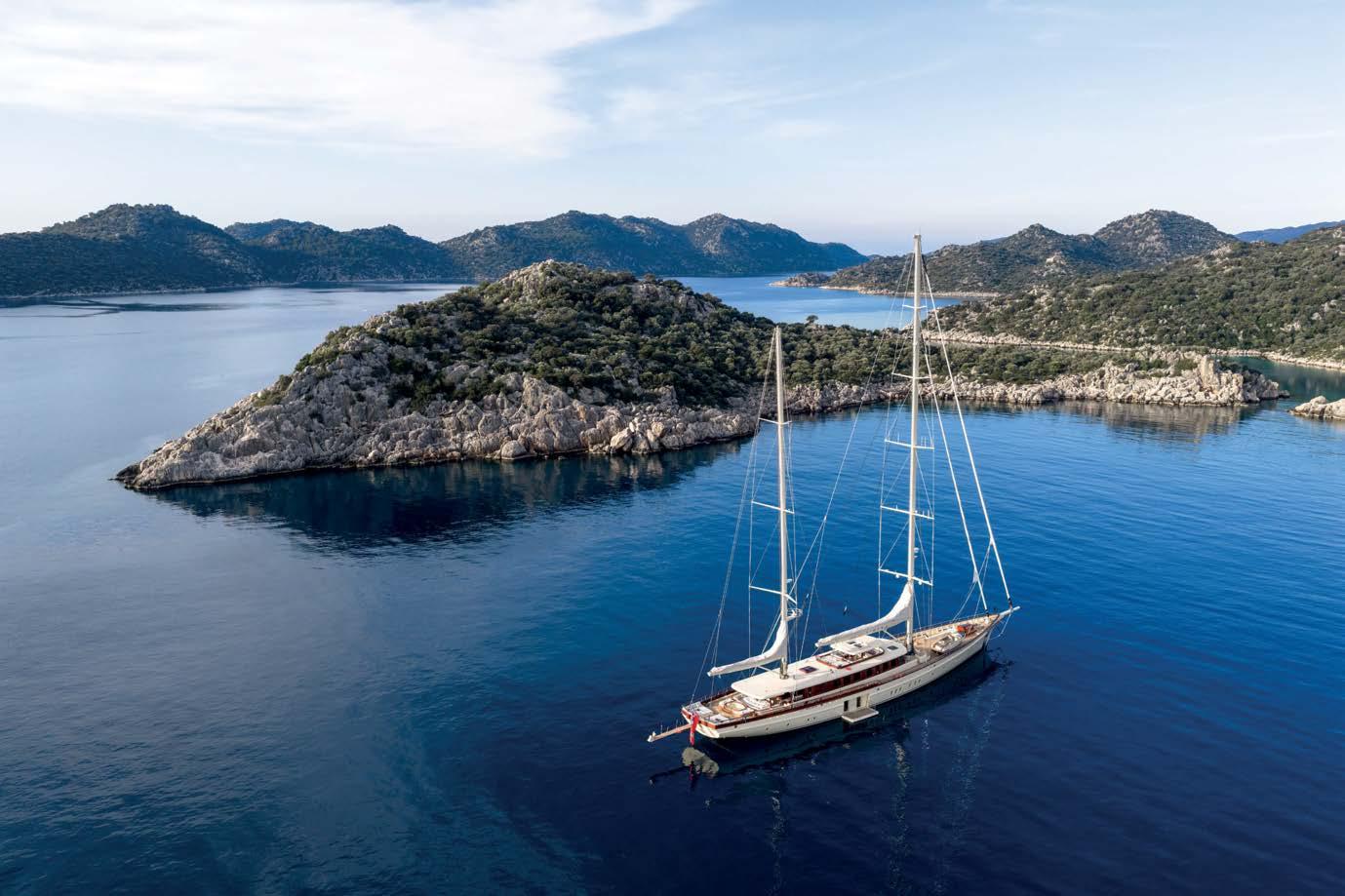
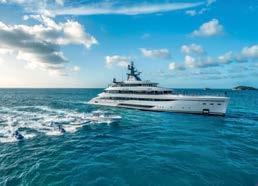
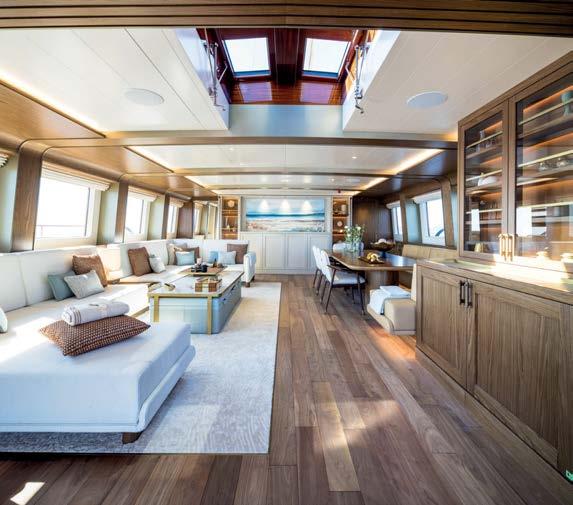
È stata varata Simena, ammiraglia di 62 metri di lunghezza, costruita da Ares Yachts, che fonde linee classiche con uno stile contemporaneo.
Lo yacht ha dimostrato le sue prestazioni durante le lunghe prove in mare al largo di Antalya, in Turchia, superando le aspettative in termini di velocità e manovrabilità. Simena è ora in vendita tramite Northrop & Johnson e sta attirando potenziali armatori da tutto il mondo. Armato a ketch, ha una randa di 470 metri quadrati, una mezzana di 249 metri quadrati, 596 metri quadrati di genoa e 356 metri quadrati di fiocco. Grazie alla flessibilità di questo armo, le vele possono essere regolate per adattarsi a un’ampia gamma di condizioni, garantendo la massima velocità e manovrabilità.
Simena, a 62-metre flagship built by Ares Yachts, has been launched. The yacht blends classic lines with a contemporary design.
She demonstrated her performance during extensive sea trials off the coast of Antalya, Turkey, exceeding expectations for speed and manoeuvrability. Simena is now for sale through Northrop & Johnson and is attracting potential owners worldwide. Rigged as a ketch, it has a mainsail of 470 square metres, a mizzen of 249 square metres, a genoa of 596 square metres and a jib of 356 square metres. Thanks to the flexibility of this rig, the sails can be adjusted to suit a wide range of conditions, ensuring maximum speed and manoeuvrability.
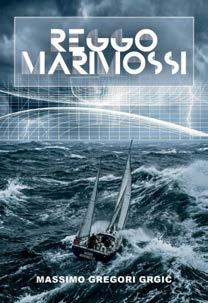
Massimo Gregori Grgic v ha pubblicato un nuovo romanzo per i tipi di Youcanprint. Reggomarimossi è un romanzo che unisce l’epica della grande navigazione, con i suoi ritmi e le sue leggi spietate, alla forza di una storia d’amore inattesa, celebrando il coraggio di inseguire un orizzonte ancora tutto da scrivere.
Massimo Gregori Grgicv’s has published a new novel with Youcanprint. Reggomarimossi is a novel that combines the epic scale of seafaring – with its
La poltrona di guida
P 400J Matrix Junior evoluzione compatta della linea Matrix di Besenzoni, è apprezzata per la qualità dei materiali, l’ergonomia e il design. È una seduta che porta a bordo il comfort tipico delle imbarcazioni di fascia alta, con dimensioni adatte anche a barche più contenute.
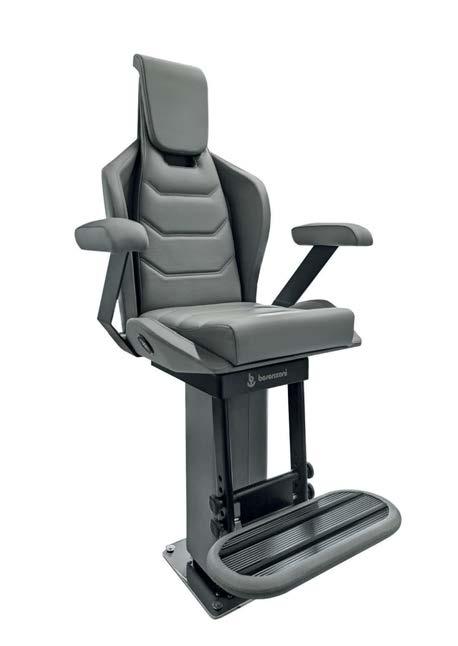
P 400J Matrix Junior helm seat, a compact evolution of Besenzoni’s Matrix range, is highly regarded for the quality of its materials, ergonomics, and design. It brings the comfort typically found on high-end vessels to your boat, whilst its dimensions make it suitable even for smaller vessels.
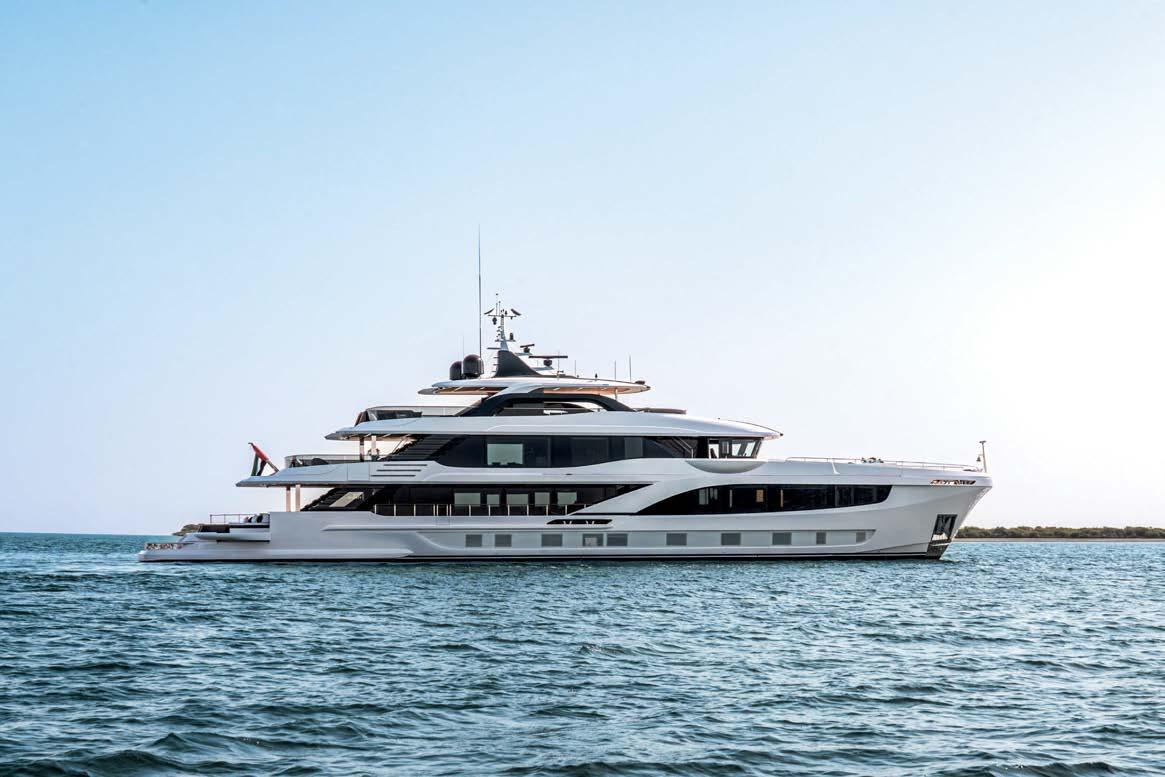
Majesty ha varato il superyacht 145 dagli scali del suo cantiere di Umm Al Quwain. Il progetto è firmato da Cristiano Gatto Design. La propulsione è affidata a due motori di 2.400 cavalli.
Majesty has launched the 145 superyacht from its shipyard in Umm Al Quwain. The design is by Cristiano Gatto Design. The yacht is powered by two 2,400-hp engines.
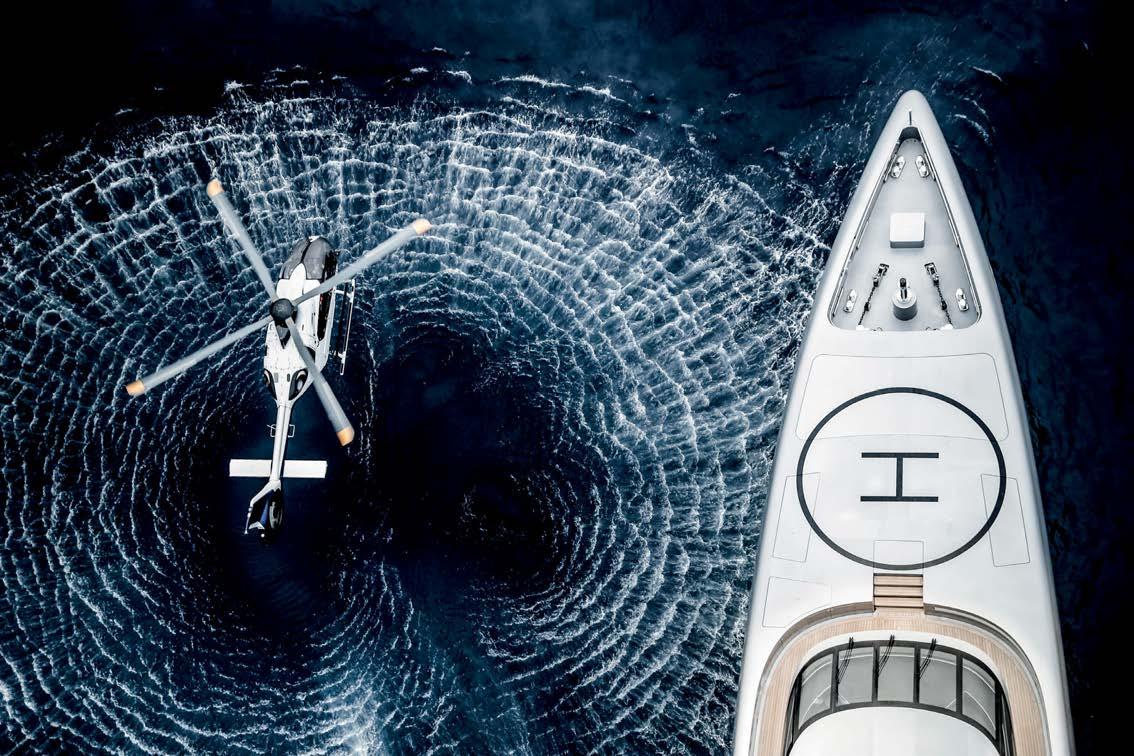
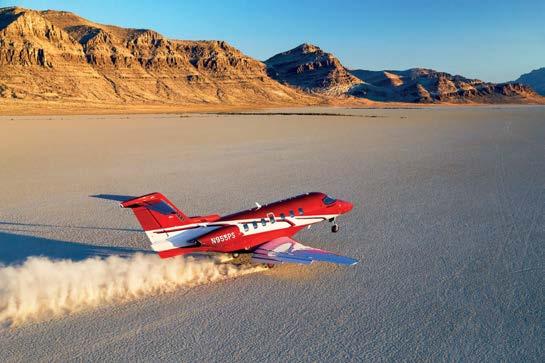
X-1 Jets ha ampliato i vantaggi dei propri programmi JetCard.
L’integrazione comprende un’allocazione dedicata alle Missioni Speciali, che garantisce l’accesso immediato a soluzioni di aviazione critiche proprio quando è più necessario. Le ore JetCard non sono più limitate ai soli viaggi programmati.
Una parte di ogni programma può ora essere mobilitata istantaneamente per missioni speciali, tra cui: evacuazioni di emergenza (mediche o geopolitiche), trasporto di merci critiche di alto valore e accesso a regioni complesse o soggette a restrizioni.
X-1 Jets has expanded the benefits of its JetCard programmes.
The package includes a dedicated allocation for Special Missions, ensuring immediate access to critical aviation solutions when they are needed most. JetCard hours are no longer restricted to scheduled flights.
A portion of each programme can now be deployed instantly for Special Missions, including: emergency evacuations (medical or geopolitical), the transport of critical high-value cargo, and access to complex or restricted regions.
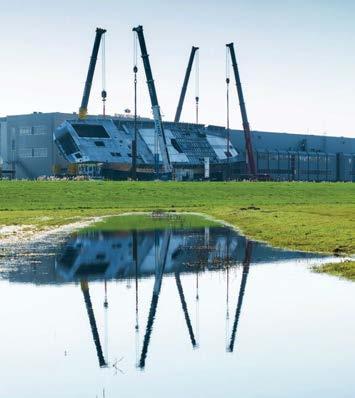
Il team di Royal Huisman ha completato la tornitura della parte principale dello scafo numero 2 della serie Trident presso il cantiere navale di Vollenhove. Il progetto numero 412 di questo schooner con flybridge, yacht a vela di 81 metri, costruito in alluminio, è pronto per le fasi successive di allestimento e di integrazione dei sistemi.
The Royal Huisman team has completed the turning of the main section of hull number 2 in the Trident series at the Vollenhove shipyard. Project number 412, an 81-metre aluminium flybridge schooner, is now ready for the next stages of outfitting and systems integration.
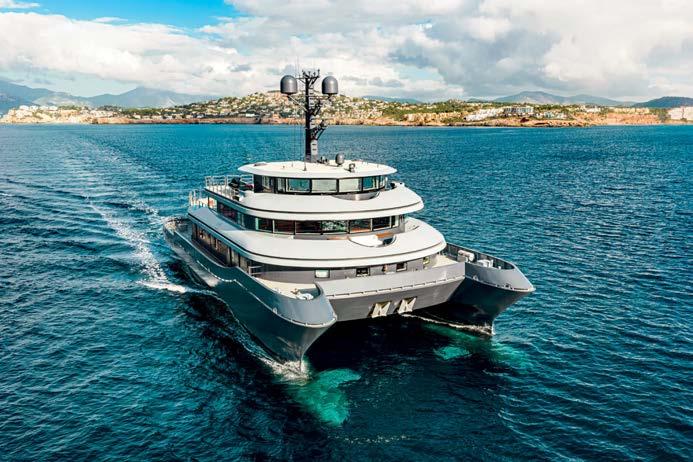
Nurja, superyacht con scafo Small Waterplane Area Twin Hull, dopo una completa ristrutturazione durata tre anni, presso il cantiere navale tedesco Abeking & Rasmussen, è in vendita grazie a Ocean Independence. Il superyacht di 40,5 metri si presenta come una delle imbarcazioni tecnicamente più avanzate sul mercato.
Nurja, a superyacht with a Small Waterplane Area Twin Hull design, is now for sale through Ocean Independence after a comprehensive three-year refit at the German shipyard Abeking & Rasmussen. The 40.5-metre superyacht is among the most technically advanced vessels on the market.
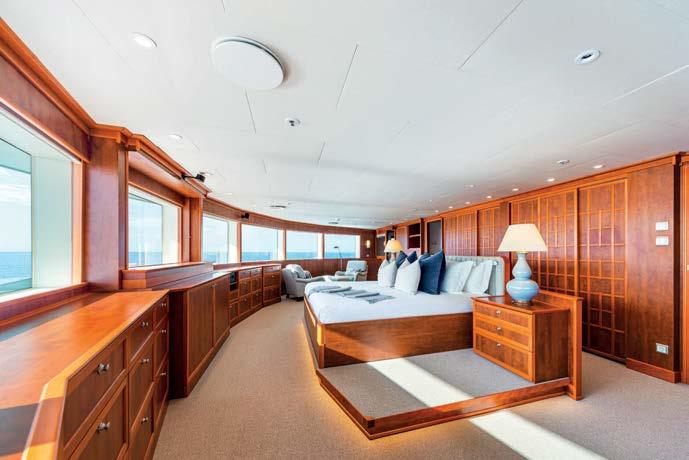
Simone Malaspina, General Manager della Divisione Solutions di Laghezza SpA, presenta Soluzione Nautica, business line dedicata allo yachting, nata con l’obiettivo di semplificare la gestione delle operazioni doganali e logistiche.
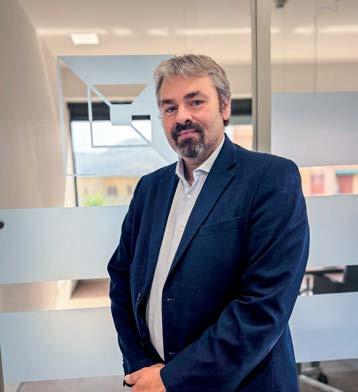
Simone Malaspina, General Manager of the Solutions Division at Laghezza SpA, has presented Soluzione Nautica, a business line dedicated to the yachting sector, established to simplify the management of customs and logistics operations.
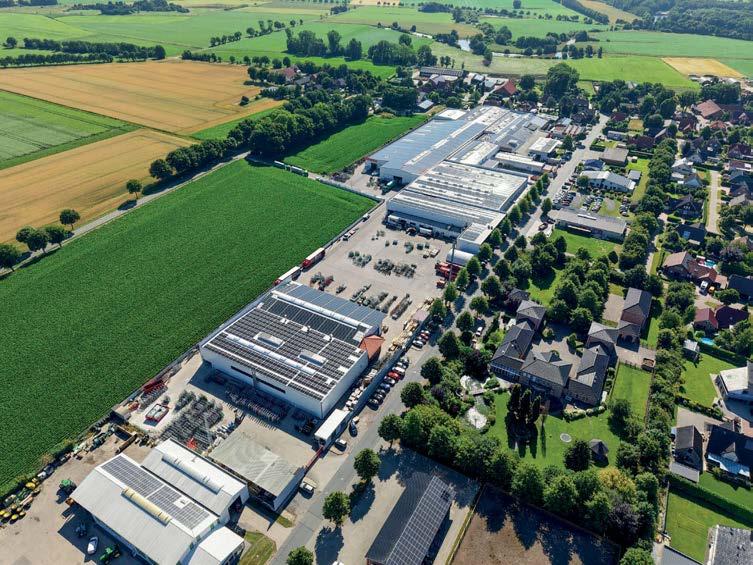
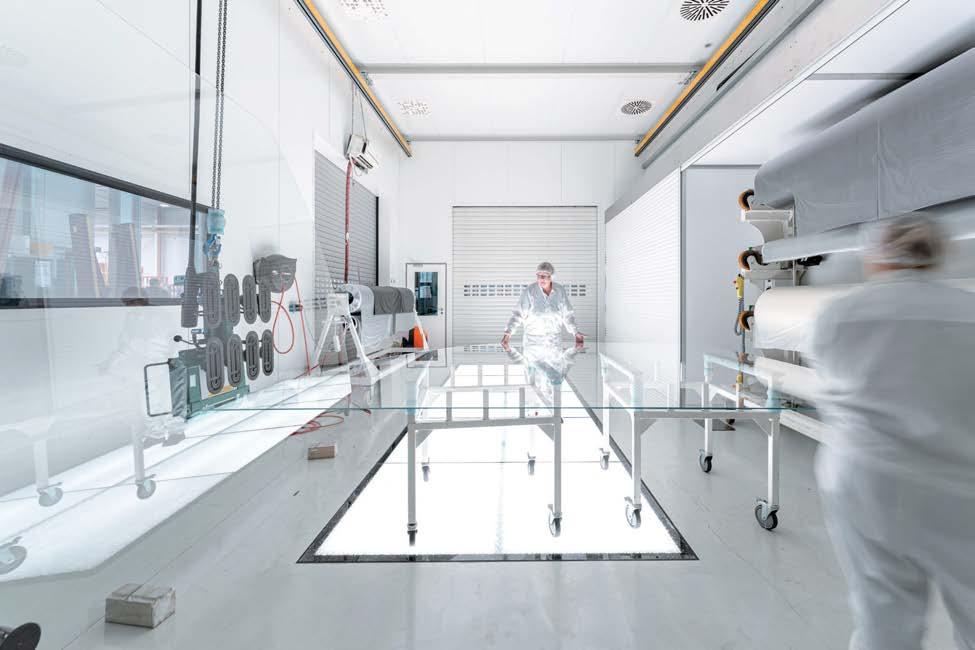
In 25 anni, Yachtglass ha fornito migliaia di elementi in vetro ad alta precisione per progetti che spaziano dagli yacht explorer di 27 metri fino ad alcuni dei superyacht più grandi e tecnologicamente avanzati al mondo. L’azienda ha collaborato con molti dei cantieri navali più prestigiosi del settore, sia in Europa sia all’estero. Silvia Buck, Ceo di Yachtglass, afferma: “Il traguardo raggiunto conferma la nostra reputazione sul mercato, di cui siamo molto orgogliosi. La nostra fornitura più grande per uno yacht è stata composta da quasi 600 pannelli di vetro e lo yacht più lungo per cui abbiamo fornito vetro misurava circa 140 metri”.
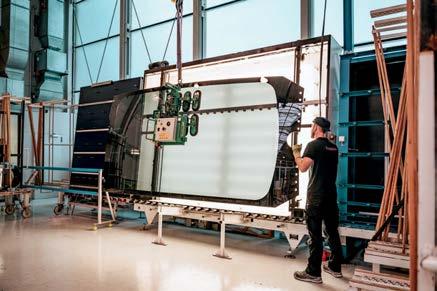
Over the past 25 years, Yachtglass has supplied thousands of high-precision glass components for projects ranging from 27-metre explorer yachts to some of the world’s largest and most technologically advanced superyachts. The company has worked with many of the industry’s most prestigious shipyards, both in Europe and abroad. Silvia Buck, CEO of Yachtglass, says: “This achievement reinforces our reputation in the market, which we are very proud of. Our largest ever supply for a yacht comprised almost 600 glass panels, and the longest yacht for which we

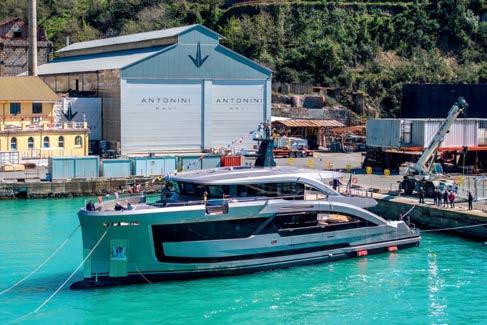
Antonini Navi ha varato Seamore 34, il primo yacht realizzato presso il cantiere di La Spezia. È un passaggio concreto che segna l’ingresso del brand nel segmento dei superyacht in acciaio fino a 500 GT. Il concept del progetto è stato sviluppato dai tecnici del cantiere, mentre il design degli interni è firmato dallo studio milanese Hot Lab.
Antonini Navi has launched the Seamore 34, the first yacht built at its La Spezia shipyard. This marks a significant step forward, signalling the brand’s entry into the steel superyacht segment for vessels up to 500 GT. The project concept was developed by the shipyard’s engineers, whilst the interior design is by the Milan-based studio Hot Lab.
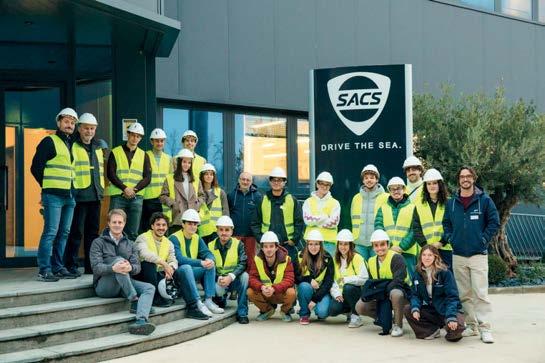
SACS Tecnorib e IED Milano proseguono un percorso condiviso tra industria e formazione. All’inizio di ogni anno accademico viene definito un brief progettuale concreto per gli studenti del corso di Product Design, legato ai valori, alla visione e alle sfide del settore nautico contemporaneo. Il progetto di tesi SACS TEC – Waves of Change, focalizzato sulla trasformazione della navigazione in un’esperienza immersiva, ecologica e connessa, coinvolgerà quest’anno 34 laureandi di varie nazionalità.
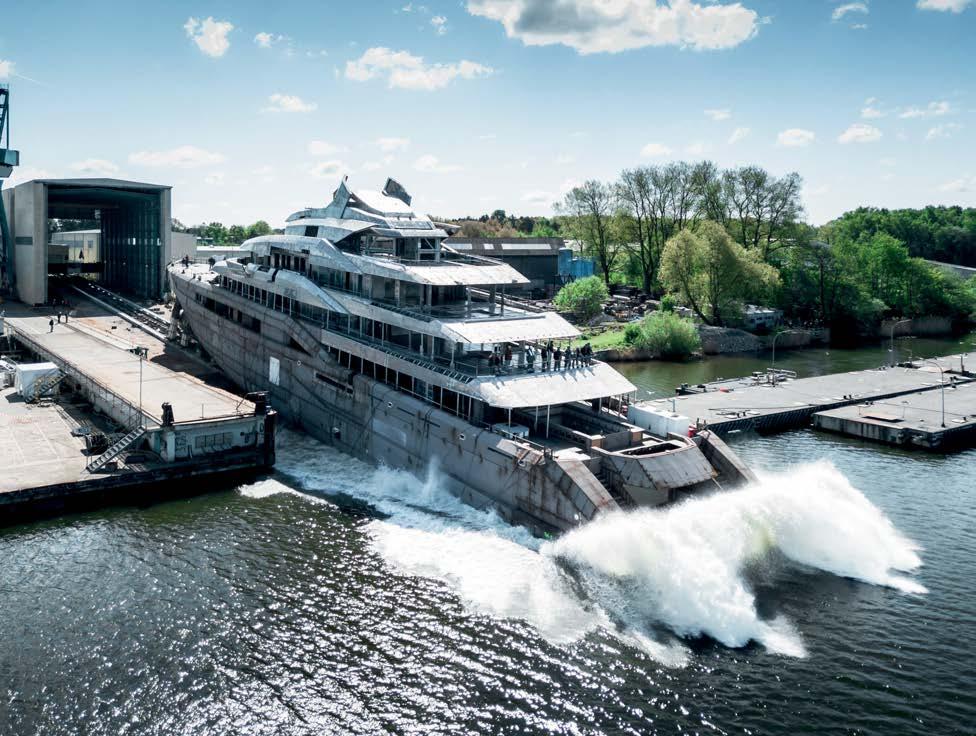
Lürssen ha completato la struttura architettonica in acciaio del Project ZIGGY, lungo 101,4 metri, disegnato dallo studio Harrison Eidsgaard. Il progetto è stato commissionato da un cliente nordamericano ed è stato presentato a Lürssen da Thom Conboy & Associates. WMG è il rappresentante dell’armatore per la costruzione. Dopo il varo tecnico, ZIGGY entra nella fase di allestimento. La consegna è prevista per il 2028.
SACS Tecnorib and IED Milan are continuing their joint initiative linking industry and education. At the start of each academic year, a project brief is prepared for students on the Product Design course, aligned with the values, vision, and challenges of the contemporary nautical sector. This year, the SACS TEC thesis project – Waves of Change, which focuses on transforming navigation into an immersive, eco-friendly and connected experience, will involve 34 final-year students from various nationalities.
Lürssen has completed the steel superstructure of Project ZIGGY, a 101.4-metre vessel designed by Harrison Eidsgaard. The project was commissioned by a North American client and brought to Lürssen by Thom Conboy & Associates. WMG is acting as the shipowner’s representative during construction. Following the technical launch, ZIGGY is now entering the outfitting phase. Delivery is scheduled for 2028.
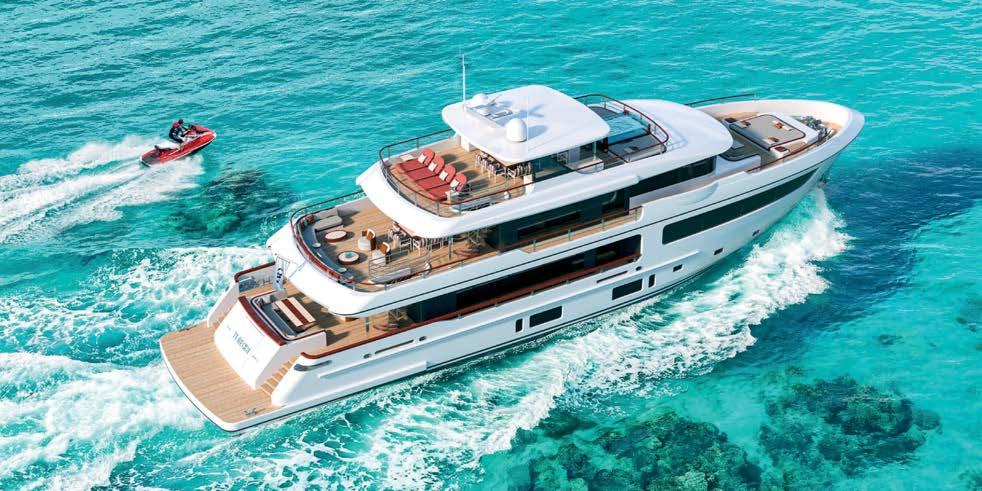
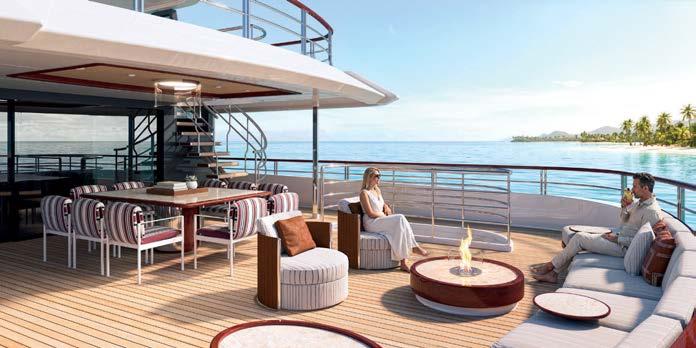
Il Gruppo, presieduto da Alessandro Tureddi, con sede centrale a Londra e sedi operative a Pisa e Viareggio, ha presentato il progetto Calypso 38M
The Group, chaired by Alessandro Tureddi and headquartered in London, with operational offices in Pisa and Viareggio, has unveiled the Calypso 38M project
Ogni elemento è progettato per dialogare con il mare e la luce naturale grazie a grandi vetrate. Every element is designed to interact with the sea and natural light via large windows.
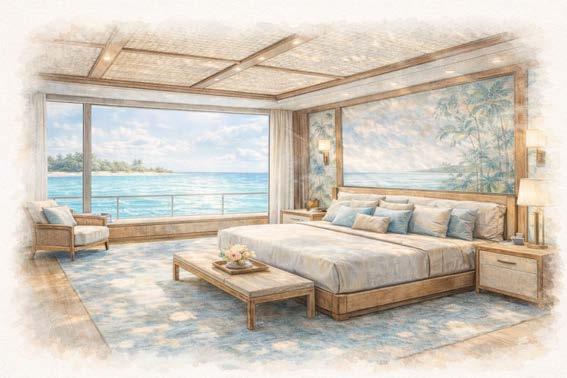
Il progetto di 38,61 metri di lunghezza fuori tutto, 8,50 di larghezza e 2,20 di pescaggio, presentato dal cantiere toscano Tureddi, incarna l’essenza dell’esclusività nautica contemporanea e valorizza il gusto dell’esperienza autentica, intima e rilassata. Le suggestioni evocate da Calypso sembrano perfette per descrivere una floating villa in metallo che vuole interpretare l’anima del barefoot luxury attraverso un design tattile che fonde l’eleganza coloniale con la cultura estetica dei tempi moderni. Grazie a 2 motori Cat 32, navigherà alla velocità di crociera di 13 nodi; la massima è di 16 nodi. L’autonomia sarà di 4.000 miglia.
The project, measuring 38.61 metres in overall length, 8.50 metres in beam and with a draught of 2.20 metres, presented by the Tuscan shipyard Tureddi, embodies the essence of contemporary nautical exclusivity and celebrates the appeal of an authentic, intimate and relaxed experience. The imagery evoked by Calypso seems perfect for describing a floating metal villa that aims to capture the spirit of barefoot luxury through a tactile design that blends colonial elegance with the aesthetic culture of the modern era. Powered by two CAT 32 engines, it will cruise at 13 knots; the top speed is 16 knots. Its range will be 4,000 miles.
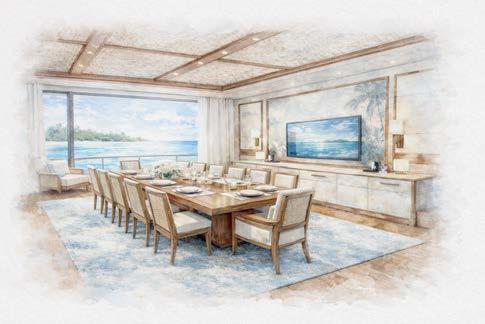
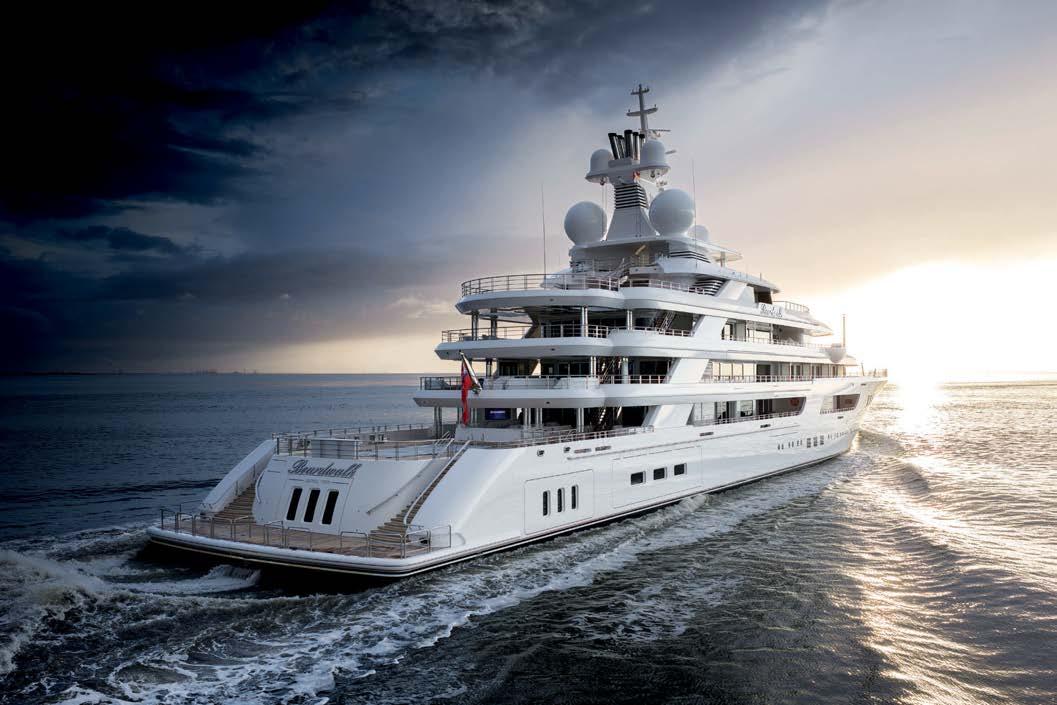
Boardwalk, lungo 117 metri, è diverso da qualsiasi altro Lürssen precedente ed è tra i più grandi yacht in stile tradizionale mai costruiti, sia per lunghezza sia per volume.
Frank Woll ha lavorato al design degli esterni e a stretto contatto con la compianta Amy Halffman, Suzanne Glover e Teresa Francis per gli spazi interni.
Boardwalk, measuring 117 metres in length, is unlike any previous Lürssen yacht and ranks among the largest traditional-style yachts ever built by length and volume.
Frank Woll worked on the exterior design and collaborated closely with the late Amy Halffman, Suzanne Glover and Teresa Francis on the interior design.
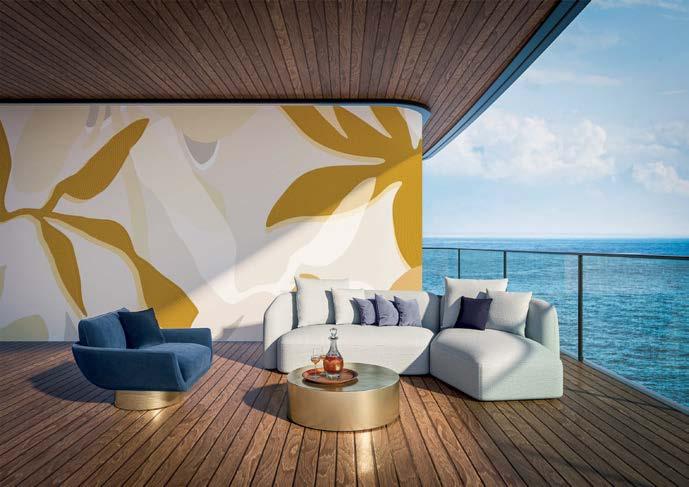
Wall/Pepper porta la qualità, sia tecnica sia estetica, e l’emozione delle sue carte da parati a bordo di yacht e navi da crociera, interpretando con stile e personalità anche le superfici degli “ambienti galleggianti” grazie a soluzioni decorative performanti.
Wall/Pepper brings the technical and aesthetic quality, as well as the emotional appeal, of its wallpapers to yachts and cruise ships, adding style and personality to the surfaces of these ‘floating spaces’ through high-performance decorative solutions.
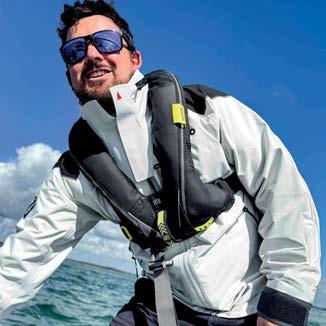
Harken presenta il giubbotto di salvataggio Deckvest VITO AFS di Spinlock. Si tratta dell’evoluzione del modello già utilizzato nelle regate offshore più impegnative, che introduce l’Advanced Flotation System (AFS), migliorando notevolmente prestazioni e sicurezza.
Harken has presented the Spinlock Deckvest VITO AFS lifejacket. This is an evolution of the model already used in the most demanding offshore races, featuring the Advanced Flotation System (AFS) to enhance performance and safety.
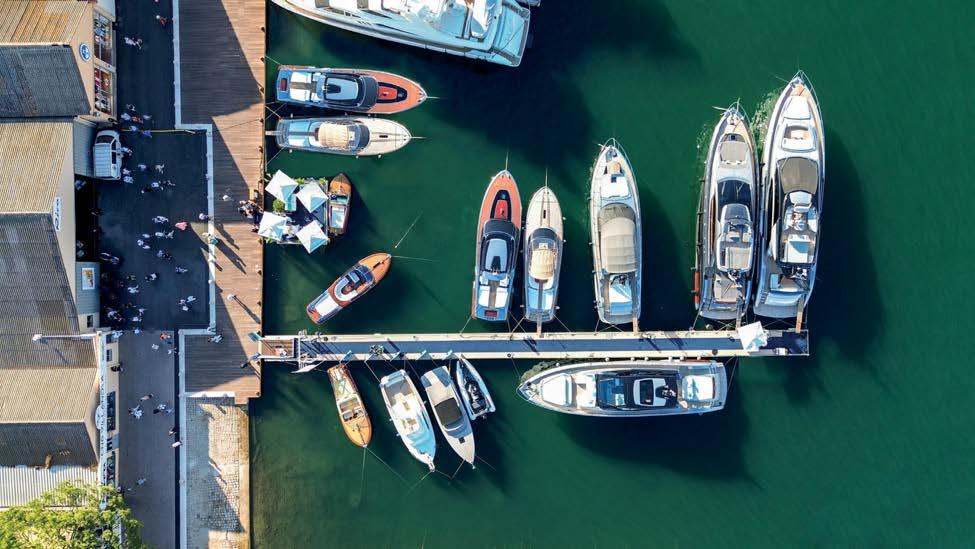
Monaco Boat Service inaugura la stagione estiva in Riviera con due eventi esclusivi pensati per attirare armatori, appassionati di nautica e figure di spicco del panorama nautico internazionale
Monaco Boat Service is set to kick off the Riviera summer season with two exclusive events to attract yacht owners, boating enthusiasts and leading figures from the international nautical lifestyle scene
L’atmosfera di quest’anno è ispirata al tema Saint-Tropez, Les Années De Brigitte Bardot.
This year’s atmosphere will be inspired by the Saint-Tropez, Les Années De Brigitte Bardot.
Il 5 giugno scorso è stato inaugurato il nuovo pontile di Monaco Boat Service a Saint-Tropez. Fondata nel 1959, l’azienda monegasca è da tempo un punto di riferimento per i servizi di ormeggio, di assistenza tecnica e di gestione di yacht tra Monaco e Saint-Tropez. Oggi, il porto turistico dispone di pontili in grado di ospitare imbarcazioni Riva fino a 25 metri di lunghezza. Per Monaco Boat Service, Saint-Tropez rappresenta molto più di una base operativa: è un simbolo, una location mitica e strategica, un vero e proprio “luogo in cui essere”.
Non a caso, dagli Anni ’50, quando il jet set internazionale scoprì la magia della Costa Azzurra a bordo dei leggendari motoscafi Riva, questo borgo provenzale è diventato sinonimo di libertà, lusso e stile senza tempo. A fine giugno, i riflettori si sono spostati sul ritorno del Riva Trophy, l’evento biennale organizzato da Monaco Boat Service che unisce il Principato e Saint-Tropez nello spirito della Dolce Vita firmata Riva, ricco di regate, concorsi d’eleganza, incontri esclusivi e momenti conviviali. Un format che lo ha consacrato come uno degli eventi più prestigiosi del Mediterraneo, pronto a scrivere un nuovo capitolo nell’estate del 2026.
On 5 June, the new Monaco Boat Service pontoon was officially opened in Saint-Tropez. Founded in 1959, the Monaco-based company has long been a leading provider of berthing services, technical assistance and yacht management between Monaco and Saint-Tropez. Today, the marina’s pontoons accommodate Riva boats up to 25 metres in length. For Monaco Boat Service, Saint-Tropez represents much more than an operational base: it’s a symbol, a mythical and strategic location, a genuine “place to be”. Not coincidentally, since the 1950s, when the international jet set discovered the magic of the Côte d’Azur aboard legendary Riva motorboats, this Provençal village has become synonymous with freedom, luxury and timeless style.
At the end of June, the spotlight shifted to the return of the celebrated Riva Trophy, the biennial event organised by Monaco Boat Service that connects the Principality and Saint-Tropez in the spirit of the Dolce Vita signed by Riva, featuring regattas, concours d’élégance, exclusive gatherings and convivial moments. This format has firmly established the Riva Trophy as one of the most glamorous events in the Mediterranean, and it is now ready to write a new chapter in the summer of 2026.
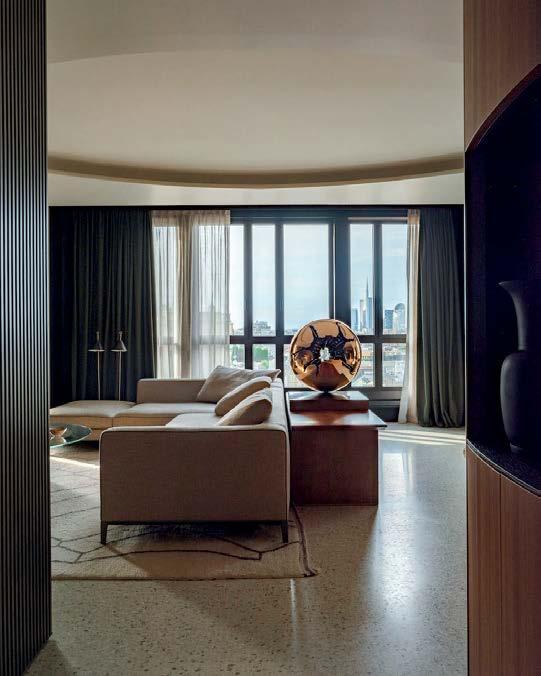
Nel centro di Milano prende forma il progetto di un attico dal fascino borghese, completato da una terrazza panoramica con piscina privata. Un intervento firmato da Flaviano Capriotti che si misura con un’eredità architettonica forte, rendendola una matrice di ricerca più che un vincolo formale.
In the heart of Milan, a penthouse project with bourgeois charm is taking shape, complemented by a panoramic terrace with a private swimming pool. Designed by Flaviano Capriotti, the project engages with a strong architectural heritage, treating it as a source of inspiration rather than a formal constraint.
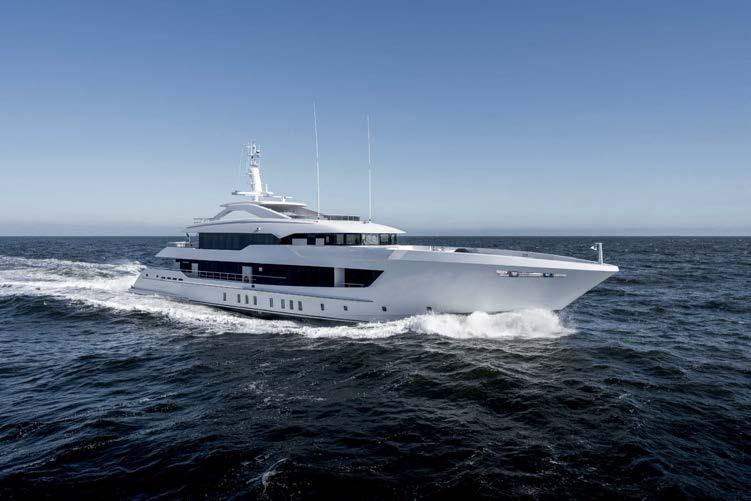
Heesen Yachts annuncia il battesimo ufficiale di Pa’lante
Le linee esterne sono di Omega Architects, mentre gli interni sono di Luca Dini Design & Architecture. Silvia Margutti, architetto capo dello studio, ha collaborato con il reparto di ingegneria d’interni di Heesen per adattare l’imbarcazione allo
Heesen Yachts has announced the official christening of Pa’lante The exterior design is by Omega Architects, whilst the interiors are by Luca Dini Design & Architecture.
Silvia Margutti, the firm’s chief architect, worked with Heesen’s interior engineering department to tailor the yacht to the owners’
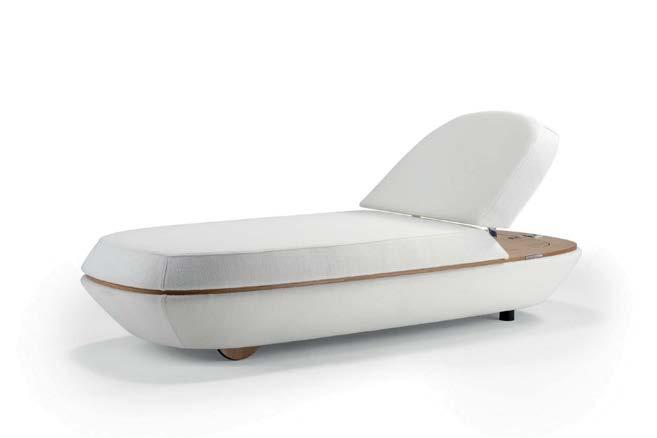
Reflex amplia la collezione Orizzonte con il lancio di un nuovo letto e del lettino Sunbed disegnati da Pininfarina. Sono presenti gli schienali reclinabili semplicemente applicando pressione con le mani, proprio come gli accessori in legno che possono essere infilati nella fessura orizzontale che divide il prodotto in due parti.
Reflex is expanding its Orizzonte collection with the launch of a new bed and the Sunbed, both designed by Pininfarina. The backrests can be reclined simply by applying pressure with your hands, and the wooden accessories can be slotted into the horizontal groove that divides the product into two parts.
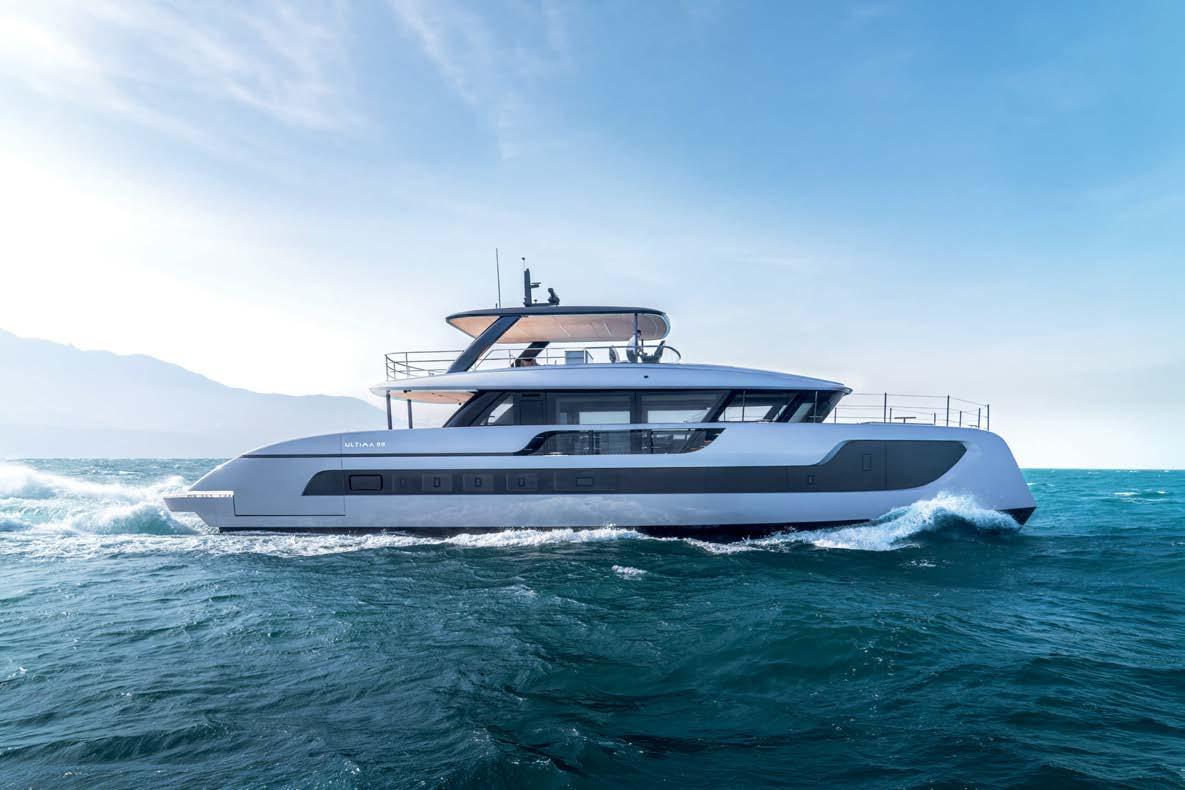
Al Singapore
Yachting Festival
Sunreef Yachts
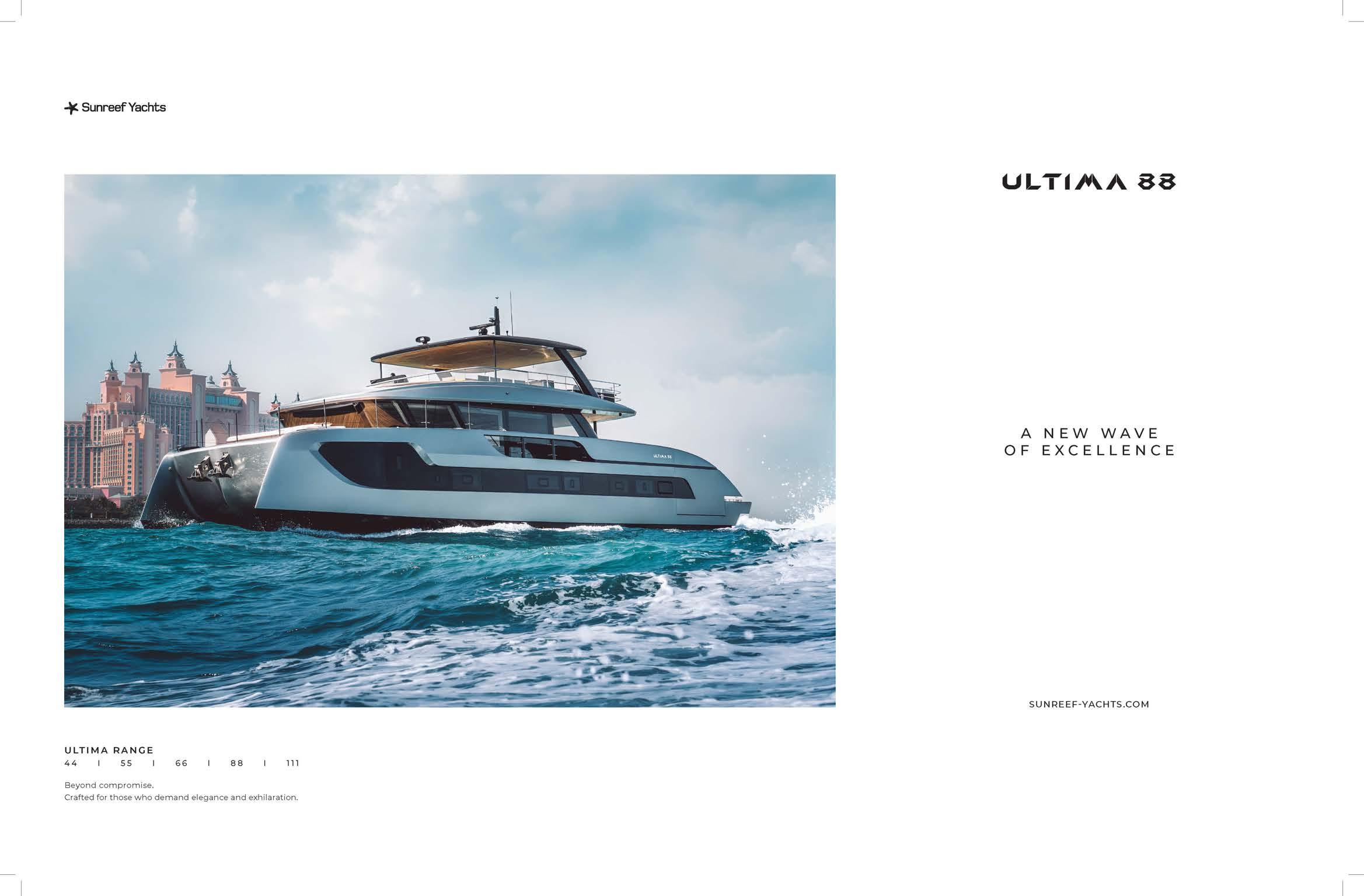
ha presentato in anteprima mondiale Ultima 88
At the Singapore Yachting Festival, Sunreef Yachts unveiled the Ultima 88 in its world premiere
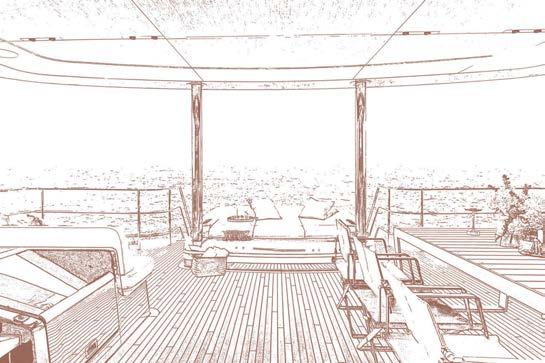
svelavano gli interni dello yacht.
Tenutosi al Nebula Bar di One°15 Marina di Singapore, Motion 88 ha riunito un pubblico di Vip locali, media, clienti e amici intimi del marchio, offrendo agli ospiti un’anteprima privilegiata dell’atteso modello. Ultima 88 incarna la visione di Sunreef Yachts, fondendo innovazione all’avanguardia con un’estetica raffinata e un design orientato alle prestazioni. Lo yacht offre un ottimo equilibrio tra velocità, efficienza e comfort in mare. Combinando l’agilità di un monoscafo con la stabilità, gli ampi spazi abitativi e il pescaggio ridotto di un multiscafo. Progettato per elevare la vita a bordo, lo yacht, all’ancora, si trasforma in un vero e proprio rifugio sul mare. Le zone giorno e relax sono state progettate per ridurre al minimo l’uso dell’illuminazione artificiale e dell’aria condizionata. Per questo varo, Sunreef Yachts ha dato il benvenuto al campione spagnolo di tennis Carlos Alcaraz, che ha scelto Ultima 88 come suo primo yacht. Questa collaborazione segna il suo ingresso nel mondo della nautica di lusso con la linea più recente di yacht del cantiere.
Sunreef Ultima 88 dispone di oltre 400 metri quadrati di superficie abitabile dove è possibile navigare in modo confortevole e sostenibile. La linea Ultima riflette l’impegno dell’azienda per l’innovazione, coniugando design, bellezza intrinseca, velocità, lusso, ed efficienza energetica.
The Sunreef Ultima 88 offers more than 400 square metres of living space, delivering a comfortable and sustainable sailing experience.
The Ultima range reflects the company’s commitment to innovation, combining speed, luxury and energy efficiency.
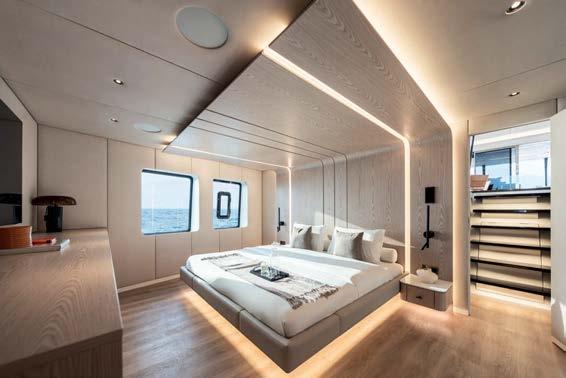
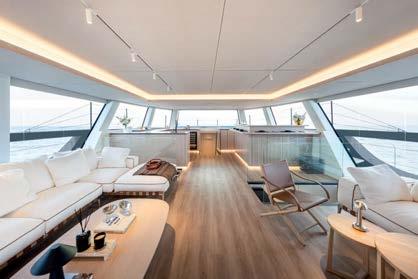
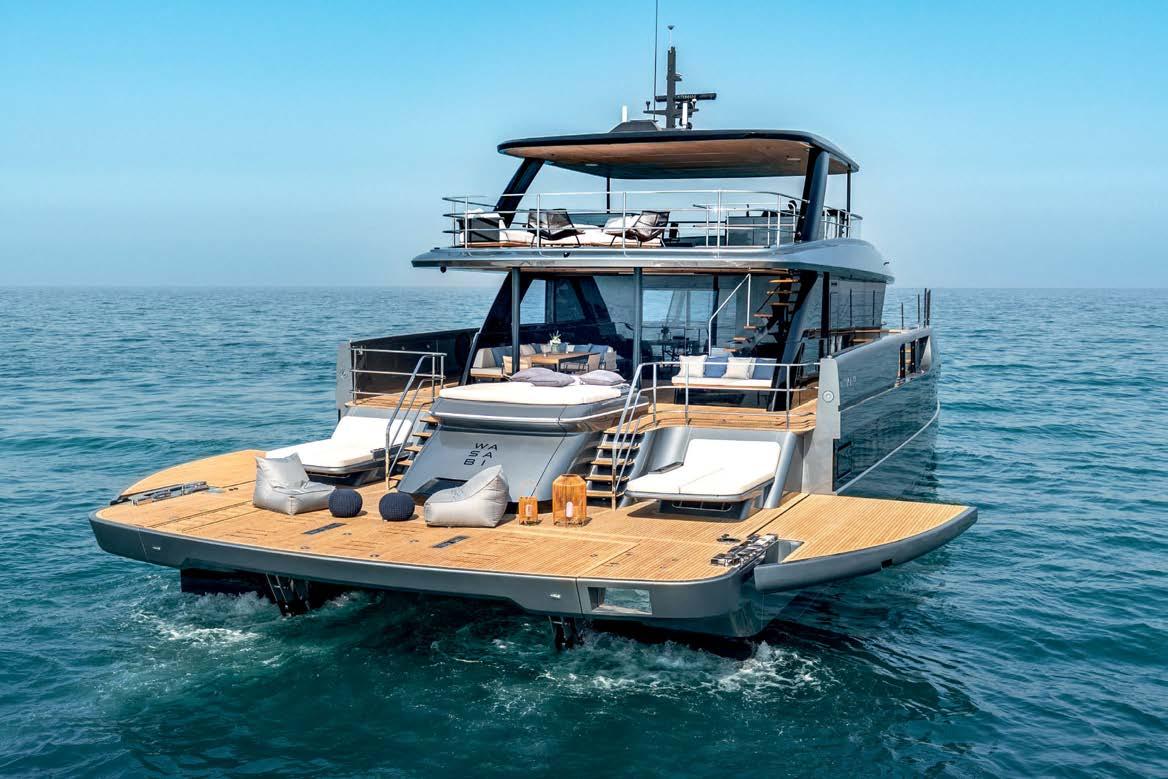
Le ampie murate apribili e lo spazioso garage di poppa creano un Ocean Lounge walkaround senza soluzione di continuità, offrendo una connessione unica con il mare e un ambiente ideale sia per il relax sia per l’avventura.
The large, opening side panels and the spacious aft garage create a seamless Ocean Lounge walkaround, offering a unique connection with the sea and an ideal setting for both elaxation and adventure.
At the Motion 88 event, guests were among the first to discover the Ultima 88, thanks to exclusive content, including the first images and videos revealing the yacht’s interior.
Held at the Nebula Bar at One°15 Marina in Singapore, Motion 88 brought together an audience of local VIPs, media representatives, clients and close friends of the brand, offering an exclusive preview of the eagerly awaited model. The Ultima 88 embodies Sunreef Yachts’ vision, blending cuttingedge innovation with refined aesthetics and performance-oriented design.
The yacht offers an excellent balance of speed, efficiency and comfort at sea. It combines the agility of a monohull with the stability, spacious living areas and shallow draught of a multihull. Designed to enhance life on board, the yacht becomes a true sanctuary at sea when at anchor. The living and relaxation areas have been designed to minimise the use of artificial lighting and air conditioning. For this launch, Sunreef Yachts welcomed Spanish tennis champion Carlos Alcaraz, who has chosen the Ultima 88 as his first yacht. This partnership marks his entry into the world of luxury yachting with the shipyard’s latest range of yachts.
Il campione di Formula 1 sceglie per la seconda volta il cantiere di Sarnico. Semaforo verde per il 102’ Corsaro Super
The Formula 1 champion has chosen the Sarnico shipyard for the second time. The green light has been given for the 102nd Corsaro Super
by Chiara Risolo
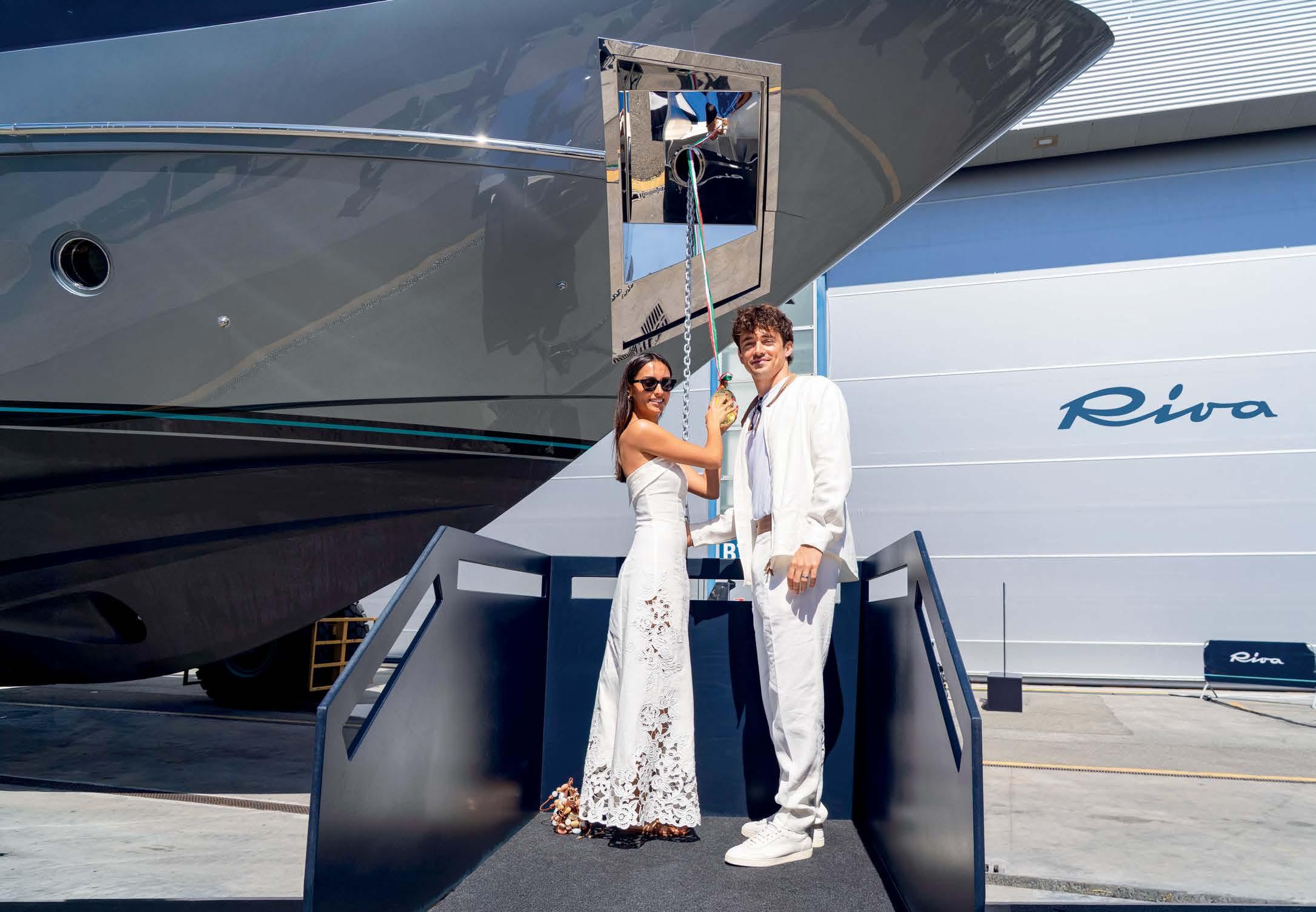
Fedele al Cavallino Rampante, nonostante le lusinghe di altre scuderie. Fedele alla sua Alexandra Saint Mleux, benché sia corteggiato da donne bellissime. E fedele a Riva, sebbene possa permettersi di staccare un assegno a sei zeri per qualsivoglia megayacht. Charles Leclerc, già armatore di un Riva 82’ Diva, si è regalato un Riva 102’ Corsaro Super. Il campione di Formula 1 solcherà i mari del bel mondo al timone di un altro capolavoro made in Sarnico, uscito, come sempre, dalla matita di Officina Italiana Design in collaborazione con Ferretti, gruppo cui il brand fa capo.
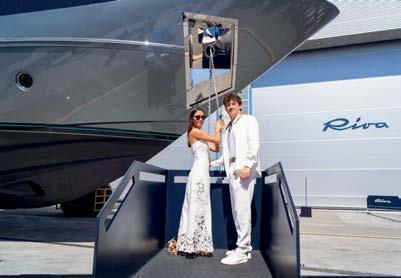
Alla cerimonia di varo, emozionante come si conviene, il campione monegasco e la sua novella sposa si sono presentati di bianco vestiti proprio come il giorno delle nozze celebrate lo scorso febbraio nel Principato. Dettaglio di stile che non ha stupito gli astanti: in fondo anche la “promessa” rinnovata al cantiere ha un non so che di sacro, un’allure romantica, per così dire.
Beninformati riferiscono che il pilota abbia partecipato attivamente alla scelta degli arredi, schierando sulla griglia di partenza, in pole position, Minotti per gli esterni e Poliform per gli interni, due
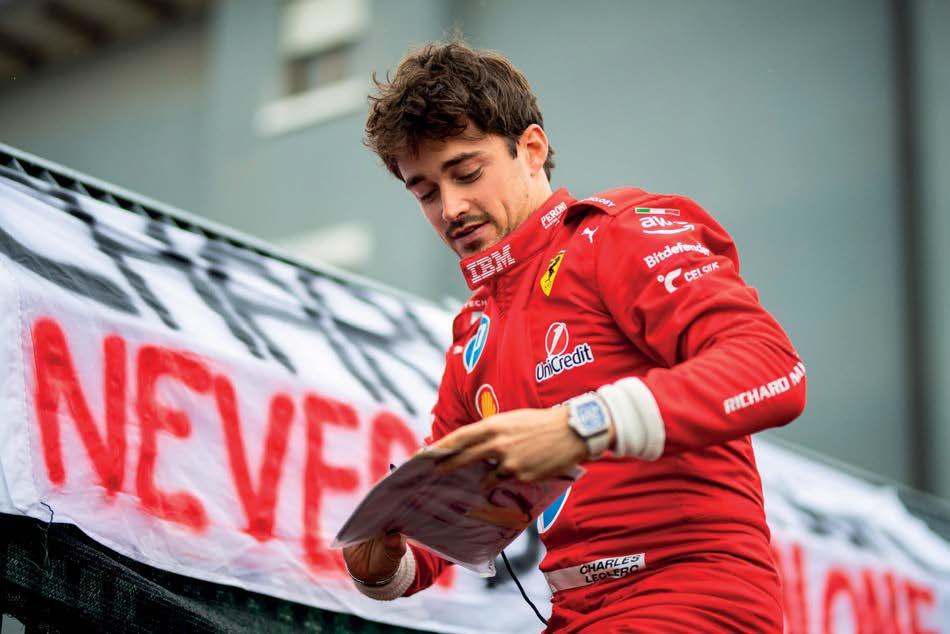
Leclerc ha vinto i campionati di GP3 Series nel 2016 e di Formula 2 nel 2017, ha debuttato in Formula 1 nel 2018 con la Sauber, è in Ferrari dal 2019. Ha disputato 179 Gran Premi e ne ha vinti 8, oltre a 53 podi.
Leclerc won the GP3 Series championship in 2016 and the Formula 2 championship in 2017, and made his Formula 1 debut in 2018. He has competed in 179 Grands Prix, winning 8 of them, as well as 53 podiums.
icone in assetto perfetto con lo stile raffinato e inconfondibile di Riva.
Bellezza, in questo caso più che mai, chiama Riva 102’ Corsaro Super è spinto da una coppia di motori Mtu 16V 2000 M96L - 2.638 cavalli - EPA TIER III ciascuno. Una dicitura lunghissima, ma doverosa da specificare e facilmente traducibile: questa propulsione farà navigare Madame e Monsieur Leclerc a una velocità massima di 28 nodi (24 quelli di crociera). Certo, ben lontani dai 360 chilometri orari della sua monoposto, la Ferrari SF-26. Ma un po’ di meritato riposo non si nega a nessuno. Nemmeno al “corsaro” di Maranello.
Loyal to the Prancing Horse, despite the advances from other teams. Loyal to his Alexandra Saint Mleux, even though he is courted by beautiful women.
And loyal to Riva, even though he could easily write a six-figure cheque for any mega-yacht. Charles Leclerc, already the owner of a Riva 82’ Diva, has treated himself to a Riva 102’ Corsaro Super
The Formula 1 champion will sail the seas at the helm of yet another masterpiece from Sarnico, designed, as always, by Officina Italiana Design in collaboration with Ferretti, the group to which the brand belongs. At the launch ceremony, which was as moving as one would expect, the Monegasque champion and his new bride appeared in white, just as they had on their wedding day last February in the Principality. This stylish touch came as no surprise to those present: after all, the ‘vow’ renewed at the shipyard has a certain sacred quality, a romantic allure, so to speak. Well-informed sources report that the designer played an active role in selecting the furnishings, lining up Minotti for the exteriors and Poliform for the interiors, placing them on the starting grid in pole position – two iconic brands that perfectly complement Riva’s refined and unmistakable style.
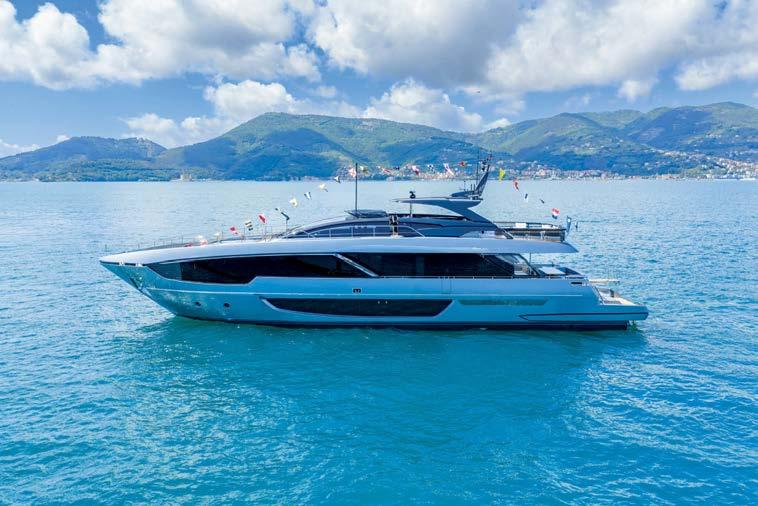
In this case, more than ever, beauty demands power: the Riva 102’ Corsaro Super is powered by a pair of MTU 16V 2000 M96L engines – 2,638 hp each, EPA Tier III. A very long description, but one that needs to be specified and is easily understood: this propulsion system will allow Madame and Monsieur Leclerc to sail at a top speed of 28 knots (cruising speed 24 knots). Admittedly, this is a far cry from the 360 km/h of his single-seater, the Ferrari . But a bit of well-deserved rest is something no one should be denied. Not even the ‘corsair’ from Maranello.
Riva 102’ ha un beach club che misura oltre 35 metri quadrati ed è dotato di una piattaforma gonfiabile dedicata all’utilizzo dei water toys, con scaletta e rampa di risalita customizzata.
The Riva 102’ has a beach club measuring over 35 square meters and is equipped with an inflatable platform dedicated to the use of water toys, with a ladder and customized boarding ramp.
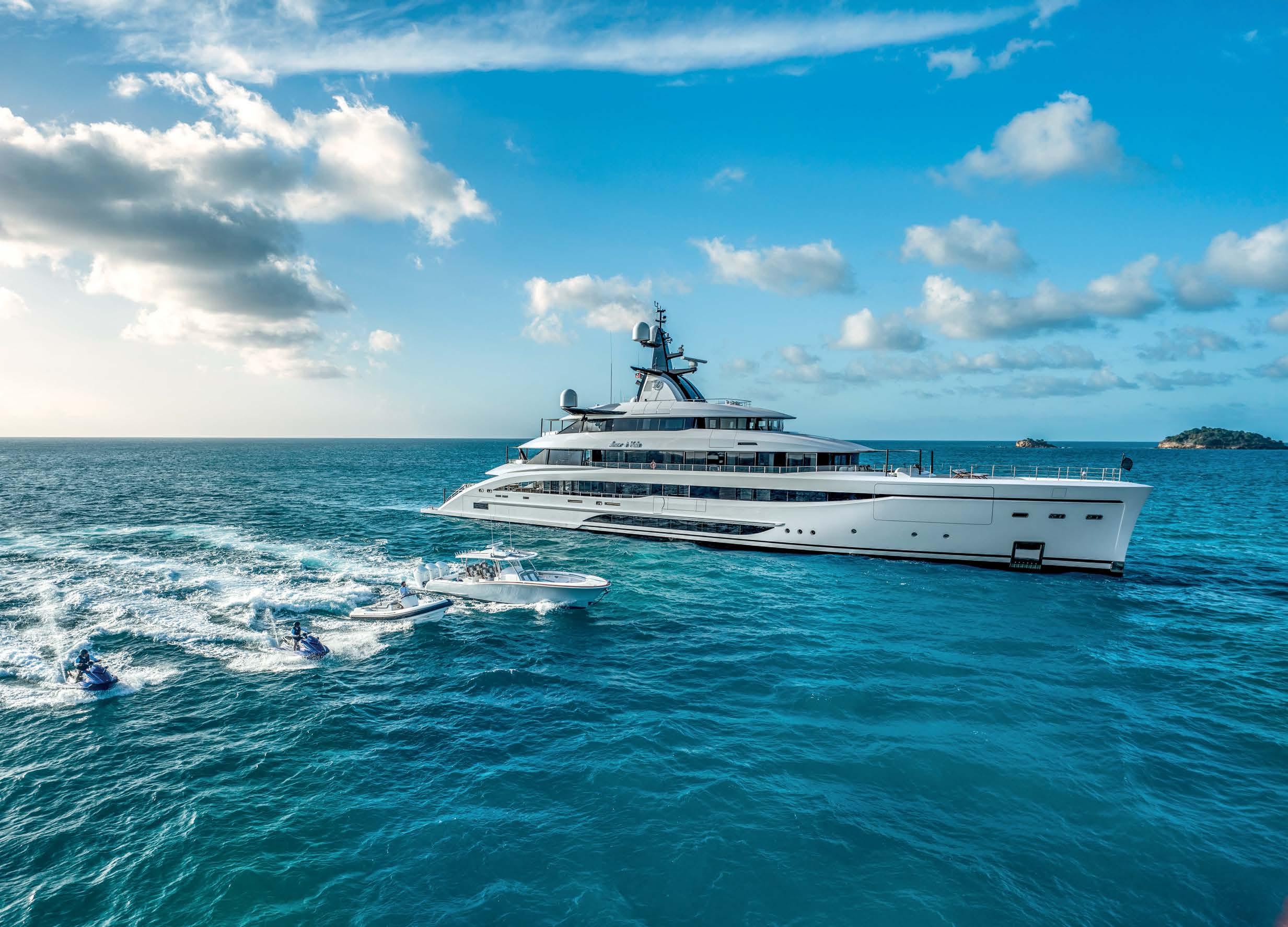
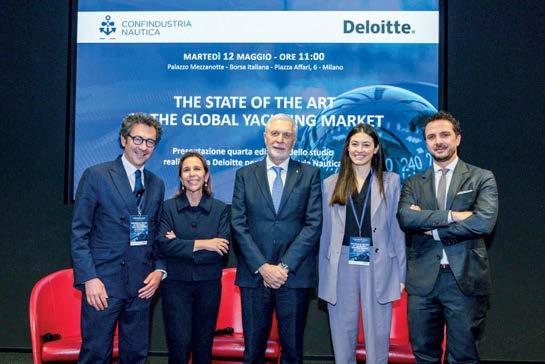
È stato presentato presso la sede di Borsa Italiana lo studio, commissionato da Confindustria Nautica, sullo stato dell’arte del mercato globale
The study, commissioned by Confindustria Nautica on the current state of the global market, was presented at the Borsa Italiana headquarters by Niccolò Volpati
A Palazzo Mezzanotte, a Milano, presso la sede di Borsa Italiana, è stato presentato lo studio realizzato da Deloitte e commissionato da Confindustria Nautica. Giunto alla quarta edizione, rappresenta una sorta di check-up completo del mercato nautico da diporto, sia mondiale sia nazionale. E cosa dicono gli esami del sangue?
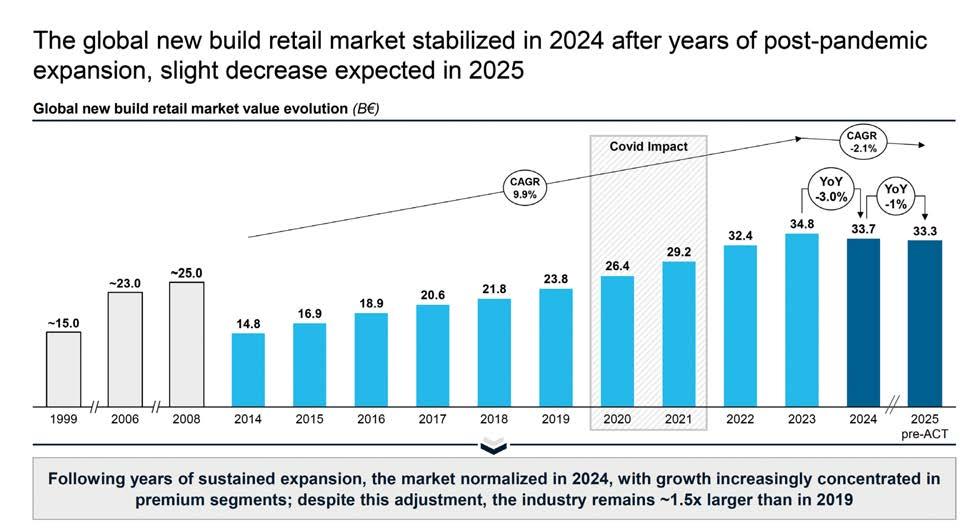
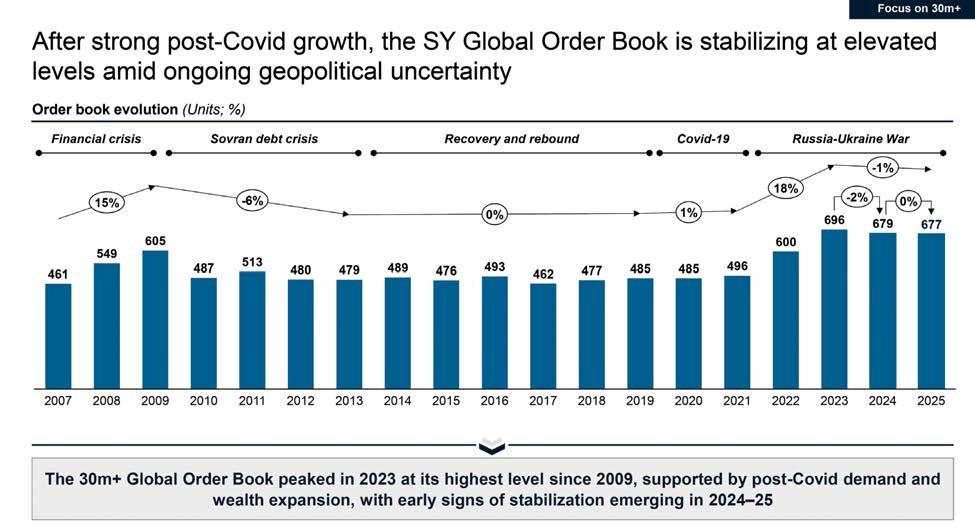
Alcuni valori sono nella norma, altri un po’ meno. Cominciamo dalle transaminasi. Il mercato globale della cantieristica si è attestato nel 2025 a un giro d’affari di 33,3 miliardi di euro. Nel 2023 le cose andavano un po’ meglio; il valore, infatti, raggiunse il record di 34,8 miliardi di euro. Si tratta di una lieve flessione, meno 2,1% in due anni. “Non significa che siamo in crisi – afferma Stefano Pagani Isnardi, direttore Ufficio Studi di Confindustria Nautica –
ma di una stabilizzazione”. Nella fase post-Covid, infatti, il mercato ha vissuto un vero e proprio boom, è naturale, quindi, che ci sia una sorta di assestamento. Il dato, pertanto, non preoccupa più di tanto; le transaminasi sono, tutto sommato, nella norma. I numeri di Deloitte entrano nello specifico e raccontano che la nautica inboard cresce del 2%, mentre quella outboard cala dell’11% e la vela del 3%. Questa disomogeneità non sorprende: la nautica inboard è costituita anche e soprattutto dai grandi yacht, mentre quella outboard rappresenta la fascia media e piccola delle imbarcazioni, che sono ovviamente più in difficoltà. I numeri, di fatto, confermano una sensazione già percepita. Rispetto alle transaminasi, i valori del colesterolo sono, invece, molto rassicuranti.
Il mercato mondiale della cantieristica nautica si attesta a 33,3 miliardi di euro nel 2025. Nel 2023 era di 34,8 miliardi. The global shipbuilding market is projected to reach €33.3 billion in 2025. In 2023, it was valued at €34.8 billion.
Se il mercato globale cala, quello nazionale cresce. È in controtendenza. Come si spiega?
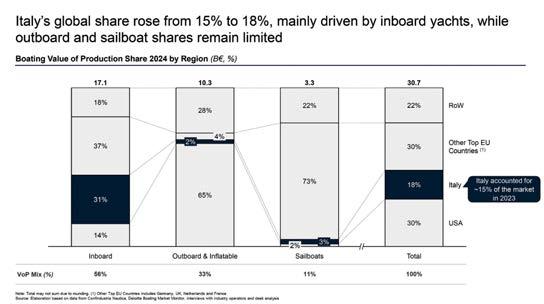
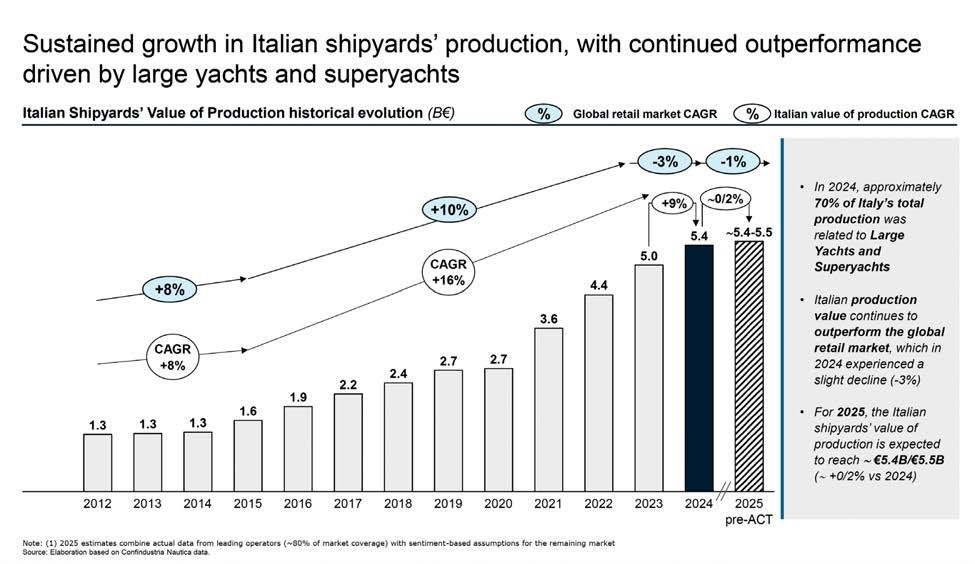
La cantieristica italiana è leader nel settore dei superyacht e proprio questo comparto traina il mercato, con una crescita del 5% negli ultimi due anni. Siamo sempre più leader nella produzione di barche da 50 metri e oltre. La quota di mercato, infatti, passa dal 34 al 36% in un solo anno.
Vuol dire che per ogni 100 superyacht venduti nel mondo lo scorso anno, 36 sono stati costruiti in Italia. Qual è, invece, il valore fuori norma?
La glicemia, ovvero l’export verso gli USA, sceso in un solo anno del 22%. È un problema da non sottovalutare per l’industria italiana, soprattutto perché esportiamo molto: il 90% della produzione va all’estero e, di questo, ben il 70% verso Paesi extra-UE. Che cosa ha fatto schizzare la glicemia?
I dazi di Trump e ancora di più l’incertezza su questa
tassazione. Il presidente americano è solito cambiare idea dalla sera alla mattina e non c’è alcuna stabilità sull’ammontare del dazio. Il problema è che una barca non si consegna come un pacco di Amazon; ci vuole più tempo e, quando arriva in dogana negli Stati Uniti, se il dazio è in vigore, lo si deve pagare per forza. E chi paga? Non l’armatore che ha acquistato la barca a un determinato prezzo, perché quando ha stipulato il contratto magari non c’era alcun dazio oppure era in una percentuale più bassa. I dazi e la loro continua fluttuazione intaccano il margine di profitto dei cantieri; è quindi ovvio che l’export sia crollato del 22%.
In definitiva, qual è il referto? I valori degli esami indicano che la situazione non è grave. Non serve una trasfusione di sangue. La glicemia però è fuori norma e si deve correre ai ripari. Il medico ci suggerirebbe di smetterla con i dolci. La ricetta che propone Roberta Laveneziana, Senior Manager Mid & Small Cap di Borsa Italiana, è quotarsi. Qualcuno l’ha già fatto: per esempio, un cantiere italiano medio/ piccolo che è passato da 9 milioni all’inizio della quotazione a 120 milioni di euro in un solo anno. Quotarsi in borsa può servire a finanziare il progetto di un’azienda e la sua crescita. “Su un totale di 401 imprese quotate in Borsa in Italia – afferma Laveneziana – circa una settantina sono grandi aziende, le altre appartengono alle PMI (Piccole e Medie Imprese). È un suggerimento anche per l’industria nautica italiana”. La burocrazia è tanta e spesso rappresenta un ostacolo per i cantieri italiani. Se si riesce a superarla, però, si ha un’azienda trasparente e quindi affidabile ai fini del credito. Serve strutturarsi e trasformarsi in una realtà più manageriale e meno a gestione familiare.
At Palazzo Mezzanotte in Milan, the headquarters of Borsa Italiana, the study commissioned by Confindustria Nautica and carried out by Deloitte was presented.
Now in its fourth edition, it provides a comprehensive overview of the global and domestic recreational boating market. What do the test results show? Some indicators are within the normal range, while others are less so. The global shipbuilding market reached a turnover of €33.3 billion in 2025. By 2023, the figure had reached a record high of €34.8 billion. This represents a slight decline of 2.1% over two years.
“It doesn’t mean we’re in crisis”, says Stefano Pagani Isnardi, director of the Research Department at Confindustria Nautica, “but rather that things are stabilising”. In the post-COVID period, the market has experienced a real boom, so it’s only natural that there should be a settling-in phase. The figures, therefore, are not particularly worrying. Deloitte’s figures provide more detail, showing that the inboard boating sector has grown by 2%, whilst the outboard sector has fallen by 11% and the sailing sector by 3%. This disparity comes as no surprise: the inboard sector consists largely of large yachts, whereas the outboard sector comprises mediumsized and small boats, which are obviously struggling more. The figures, in fact, confirm a feeling we already had.
But, whilst the global market is declining, the domestic market is growing. It is bucking the trend.
L’export verso gli USA, per effetto dei dazi di Trump, è crollato del 22% in un solo anno.
Exports to the US have plummeted by 22% over the past year due to Trump’s tariffs.
How can this be explained? The Italian shipbuilding industry is a leader in the superyacht sector, and this segment is driving market growth, with 5% growth over the past two years. We are increasingly at the forefront of building boats measuring 50 metres or more. In fact, our market share has risen from 34% to 36% in just one year.
This means that, for every 100 superyachts sold worldwide last year, 36 were built in Italy. But what figure stands out? Exports to the US fell by 22% in just one year. This is a problem that should not be underestimated for the Italian industry, particularly since we export a great deal: 90% of production goes abroad, with up to 70% going to non-EU countries. What caused this spike in the level? Mainly, Trump’s tariffs and the
uncertainty around them. The US president often changes decision overnight, making the tariff rate unpredictable. Unlike a typical Amazon parcel, a boat delivery takes longer. When the boat reaches U.S. customs, any applicable tariff must be paid. Who bears this cost? Not the boat owner, who signed the contract at a set price, possibly before the tariff was announced or at a lower rate. Fluctuating duties are eroding shipyards’ profits, which clearly explains the 22% drop in exports. What’s the verdict? The test results indicate that the situation isn’t critical, but some levels are abnormal and require action. Roberta Laveneziana, Senior Manager for Mid & Small Caps at Borsa Italiana, suggests listing on the stock exchange as a solution. Some companies have already taken this step; for instance, a small- to medium-sized Italian shipyard increased its value from €9 million at listing to €120 million within a year. Listing can provide funding for projects and foster growth. “Out of a total of 401 companies listed on the stock exchange in Italy”, says Laveneziana, “around seventy are large firms, whilst the rest are SMEs (small and mediumsized enterprises). This is also a point to bear in mind for the Italian boatbuilding industry”. There is a great deal of red tape, which often poses an obstacle for Italian shipyards. If they can overcome it, however, they will have a transparent company and therefore one that is creditworthy. They need to restructure and transform themselves into a more professionally managed organisation rather than a family-run business.
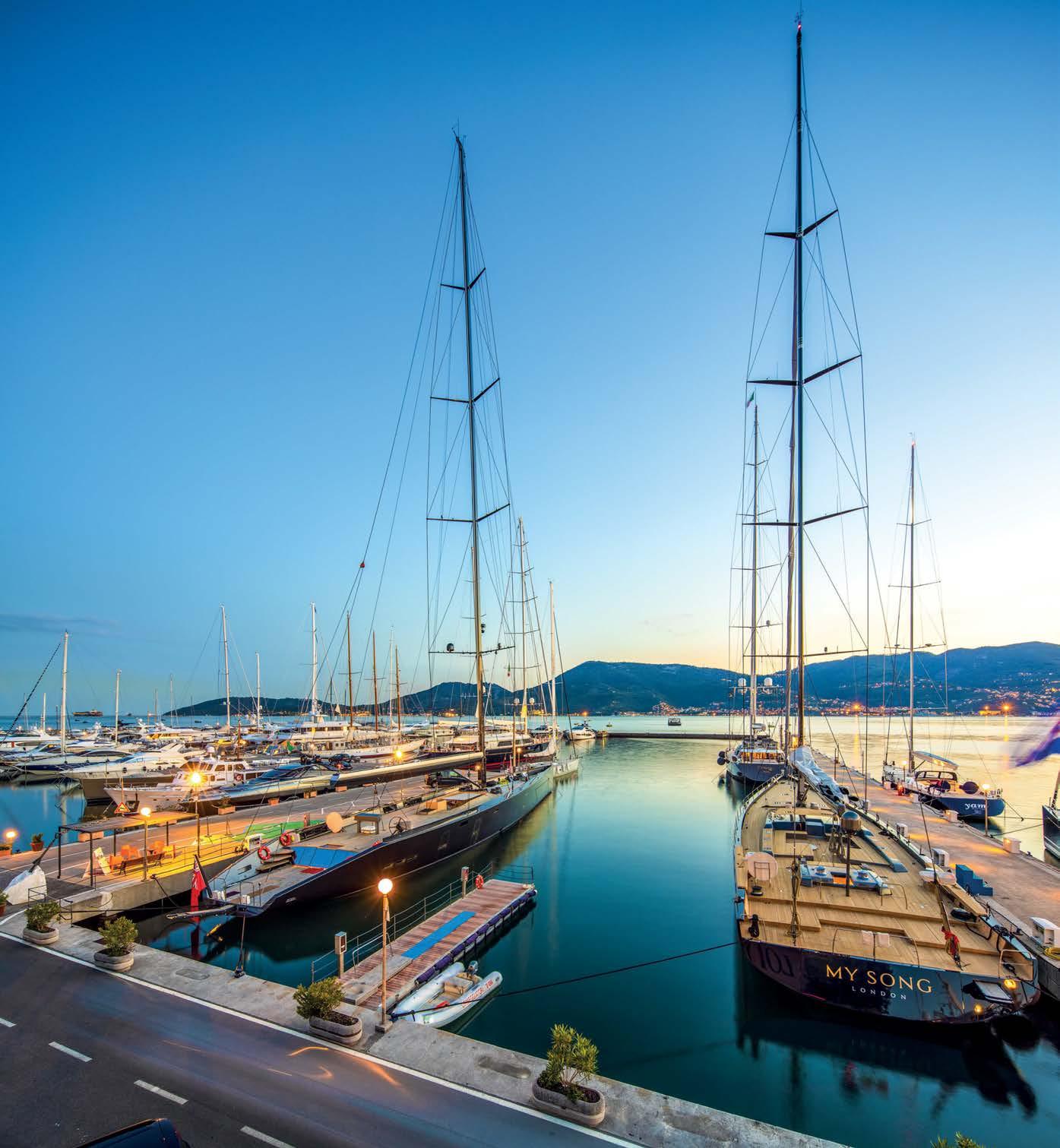
Consigli preziosi e, soprattutto, autorevoli per ormeggiare la propria imbarcazione senza rischi. E spiacevoli sorprese
Valuable, expert advice on how to moor your boat safely and avoid any unpleasant surprises
by Barbara Morassut*
Nel settore della nautica da diporto, il contratto di ormeggio è uno dei temi più dibattuti, soprattutto negli ultimi anni a causa di eventi
atmosferici estremi che ormai colpiscono in ogni stagione, mettendo a dura prova le strutture portuali e le imbarcazioni in esse ricoverate. La domanda che armatori e gestori si trovano a fronteggiare è sempre la stessa: Chi risponde dei danni? Il primo aspetto da chiarire è la natura giuridica. Il contratto di ormeggio è definito come un contratto atipico, non avendo una disciplina specifica. Ciò non significa che esista un vuoto normativo, poiché è possibile ricorrere, per analogia, alle norme che regolano istituti affini, in base al contenuto concreto del contratto stipulato tra le parti. In linea generale, il concessionario del porto si obbliga, a fronte del pagamento di un corrispettivo, a mettere a disposizione dell’armatore uno spazio acqueo delimitato e protetto all’interno del porto o dell’approdo turistico. A questo nucleo essenziale si affiancano, nella prassi, una serie di servizi accessori: fornitura di acqua, energia elettrica, assistenza in banchina, sorveglianza e, specialmente nei mesi invernali, il rimessaggio dell’imbarcazione in strutture adeguate. Il contenuto del contratto è pertanto determinante per individuare la disciplina applicabile e, di conseguenza, il regime di responsabilità del gestore. E così, nel tempo, si è operata una distinzione consolidata: se il contratto ha ad oggetto esclusivamente la messa a disposizione di uno spazio acqueo e l’utilizzo delle strutture portuali, si applica per analogia la disciplina della locazione.
In questo caso, il concessionario è tendenzialmente estraneo a qualsiasi responsabilità per danni subiti dall’imbarcazione durante la sosta, salvo che questi derivino da vizi della struttura stessa. Se invece il contratto prevede anche l’obbligo di custodia della barca, il rapporto è ricondotto nell’alveo del deposito.
In tal caso, il gestore assume una responsabilità più pregnante, rispondendo dei danni materiali riportati dall’imbarcazione durante l’ormeggio, della sua perdita, nonché dei danni alle pertinenze e agli accessori di bordo.
È importante sottolineare che la custodia non deve essere necessariamente esplicitata nel testo del contratto: essa può desumersi dal complesso delle prestazioni offerte, dalla presenza di personale di sorveglianza, dalla recinzione dell’area, dall’accesso controllato ai pontili. In altre parole, anche un contratto apparentemente limitato alla sola locazione dello specchio d’acqua potrebbe essere qualificato come deposito se, di fatto, il porto eroga un servizio di guardiania continuativo. Qualora il contratto sia qualificato come deposito, il gestore non risponde automaticamente di qualsiasi danno. Per liberarsi dalla responsabilità, egli dovrà dimostrare di aver adottato tutte le precauzioni suggerite dall’ordinaria diligenza nella custodia dell’imbarcazione. Rilevano, a questo fine, la manutenzione delle strutture, la tempestiva comunicazione delle allerte meteo, l’adozione di misure di emergenza in caso di maltempo e la presenza di personale qualificato.
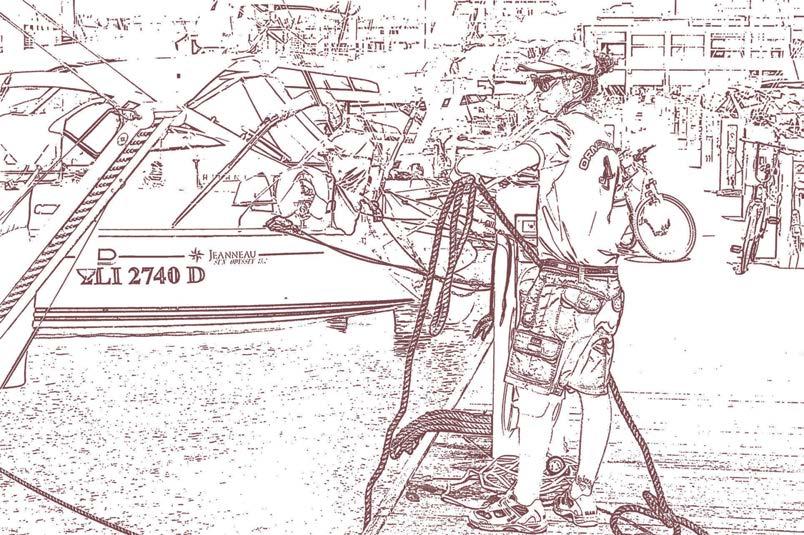
Un ulteriore profilo da considerare riguarda la possibile limitazione contrattuale della responsabilità: molti gestori inseriscono clausole che escludono o limitano la propria responsabilità per eventi atmosferici eccezionali o cause di forza maggiore. Tali clausole, pur legittime in linea di principio, devono essere valutate con attenzione, in quanto, se particolarmente onerose per l’armatore, potrebbero essere soggette alla disciplina delle clausole vessatorie, che richiede specifica approvazione per iscritto. Infine, nonostante la legge non imponga una forma specifica per la validità del contratto di ormeggio, la prassi consiglia vivamente di redigere un accordo scritto, con la massima chiarezza. L’armatore dovrà in particolare verificare se il contratto prevede o meno un obbligo esplicito di custodia; quali eventi sono coperti e quali esclusi dalla responsabilità del gestore; se sono presenti clausole limitative della responsabilità e, in caso affermativo, se queste siano state specificamente approvate; le modalità di comunicazione in caso di emergenza. Il contratto di ormeggio rimane una figura giuridicamente sfumata, la cui disciplina dipende in larga misura dal contenuto concreto delle obbligazioni assunte dalle parti, per tale ragione affidarsi alla consulenza di un professionista prima di sottoscrivere un contratto di ormeggio non è un lusso, ma una precauzione tanto ragionevole quanto conveniente per ogni armatore.
In un contesto in cui gli eventi atmosferici avversi sono sempre più frequenti e i valori in gioco, economici e affettivi, spesso considerevoli, è essenziale che armatori e gestori portuali affrontino il rapporto contrattuale con la necessaria consapevolezza giuridica.
In a context where adverse weather events are increasingly frequent and the values at stake – both financial and emotional – are often considerable, it is essential that shipowners and port operators approach their contractual relationships with the necessary legal awareness.
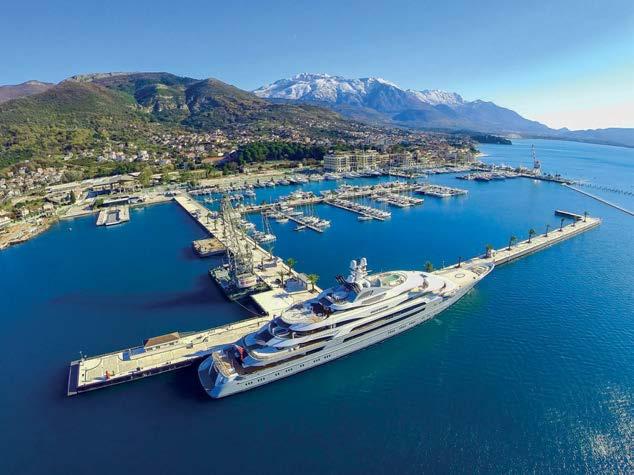
In the recreational boating sector, mooring contracts are among the most hotly debated issues, particularly in recent years, as extreme weather events now occur in every season,
placing a heavy strain on port facilities and the boats moored there. The question shipowners and operators always face is the same: Who is liable for damages? The first point to clarify is the legal nature of the agreement. The mooring contract is atypical because it is not governed by specific legislation. This does not mean there is a regulatory vacuum, as it is possible to apply, by analogy, the rules governing similar arrangements, depending on the specific terms of the contract entered into between the parties. Generally speaking, the port concessionaire undertakes, in return for payment of a fee, to make available to the shipowner a defined and protected area of water within the port or marina. In practice, this core service is complemented by a range of additional services: the supply of water and electricity, on-quay assistance, security, and, particularly in winter, boat storage in suitable facilities.
The content of the contract is therefore decisive in determining the applicable law and, consequently, the operator’s liability regime. Over time, a well-established distinction has emerged: if the contract relates exclusively to the provision of a water area and the use of port facilities, the rules governing tenancy apply by analogy. In this case, the dealer is generally not liable for any damage sustained by the boat whilst it is moored, unless the damage results from defects in the structure itself. If, however, the contract also includes an obligation to look after the boat, the relationship is treated as a bailment. In such cases, the operator assumes greater liability, being liable for any physical damage sustained by the vessel whilst moored, for its loss, and for damage to its fittings and equipment.
It is important to note that the provision of security services need not be explicitly stated in the contract; it can be inferred from the range of services offered, the presence of security staff, the fencing of the area, and controlled access to the jetties.
In other words, even a contract that appears to be limited solely to the lease of the body of water could be classified as a deposit if, in fact, the port provides a continuous security service. Where the contract is classified as a storage agreement, the operator is not automatically liable for any damage. To be released from liability, the operator must demonstrate that they have taken all the precautions required by the standard of care expected in the custody of the vessel. To this end, the following factors are relevant: the maintenance of facilities, the prompt communication of weather warnings, the implementation of emergency measures in the
Il contratto di ormeggio è una figura giuridica atipica, non regolata né dal codice civile né da quello della navigazione.
A seconda dei servizi inclusi, può qualificarsi come LOCAZIONE o DEPOSITO, con obbligo di custodia e piena responsabilità per danni, perdita o furto dell’imbarcazione.
Fondamentale, per armatori e gestori, redigere il contratto in forma scritta e con CLAUSOLE CHIARE.
A mooring contract is an atypical legal arrangement, governed neither by the Civil Code nor by the Navigation Code. Depending on the services included, it may be classified as a LEASE or a STORAGE AGREEMENT, involving an obligation to care for the vessel and full liability for damage, loss, or theft. It is essential for shipowners and operators to draw up the contract in writing and ensure it contains CLEAR CLAUSES.

event of adverse weather, and the presence of qualified staff. Another aspect to consider is any contractual limitation of liability: many operators include clauses that exclude or limit their liability for exceptional weather conditions or force majeure events. Whilst such clauses are legitimate in principle, they must be carefully assessed, as they may be subject to the rules governing unfair terms if they are particularly onerous for the shipowner, and these rules require specific written approval. Finally, although the law does not require a specific form for the validity of a mooring contract, it is strongly recommended in practice that a written agreement be drawn up with the utmost clarity. In particular, the shipowner must check whether the contract includes an explicit duty of care; which events are covered and which are excluded from the operator’s liability; whether there are any liability-limitation clauses and, if so, whether they have been specifically approved; and the procedures for communication in the event of an emergency. A mooring contract remains a legally ambiguous concept, the terms of which depend largely on the specific nature of the obligations undertaken by the parties; for this reason, seeking professional advice before signing a mooring contract is not a luxury but a sensible and cost-effective precaution for any shipowner.
La legge non impone una forma specifica per il contratto di ormeggio, ma la prassi consiglia un accordo scritto e chiaro, verificando in particolare se sia previsto un esplicito obbligo di custodia.
*L’Avv. Barbara Morassut è titolare dello Studio Legale Morassut, con sede principale a Bologna dal 1996. Nel corso degli anni ha sviluppato una rete consolidata di corrispondenti in numerose città italiane e all’estero. Nel 2009 ha aperto un domicilio a Roma, frutto della collaborazione con professionisti del Foro Capitolino. Nel settembre 2021, a seguito del completamento del Master in “Arbitrato e tecniche di gestione delle controversie” l’Avv. Morassut ha conseguito il titolo di arbitro.
Lo Studio offre servizi di consulenza e assistenza altamente qualificati sia in fase stragiudiziale sia in sede giudiziale, operando nei settori del diritto civile, commerciale-societario e, in particolare, del diritto marittimo e dello yachting. Tra le principali aree di intervento rientrano la consulenza e l’assistenza nella redazione e nella revisione di contratti di costruzione e vendita di yacht, contratti di central agency e di yacht management. Lo Studio si occupa inoltre della gestione del contenzioso in ambito marittimo e contrattuale.
The law does not prescribe a specific form for a mooring contract, but best practice recommends a clear, written agreement, paying particular attention to whether it includes an explicit duty of care.
Barbara Morassut, Solicitor, is the founder of Morassut Law Firm, which has maintained its main office in Bologna since 1996. Over the years, she has built a well-established network of correspondents across numerous Italian cities and abroad. In 2009, she opened an office in Rome following a collaboration with legal professionals from the Roman Court. In September 2021, following the completion of a Master’s degree in ‘Arbitration and Dispute Management Techniques’, Morassut was appointed as an arbitrator.
The firm offers highly specialised advisory and legal services in both out-of-court and court proceedings, operating in the fields of civil law, commercial and corporate law, and, in particular, maritime and yachting law.
Key areas of practice include advice and assistance with the drafting and review of yacht construction and sales contracts, central agency agreements, and yacht management contracts.
The firm also handles litigation in maritime and contractual matters.
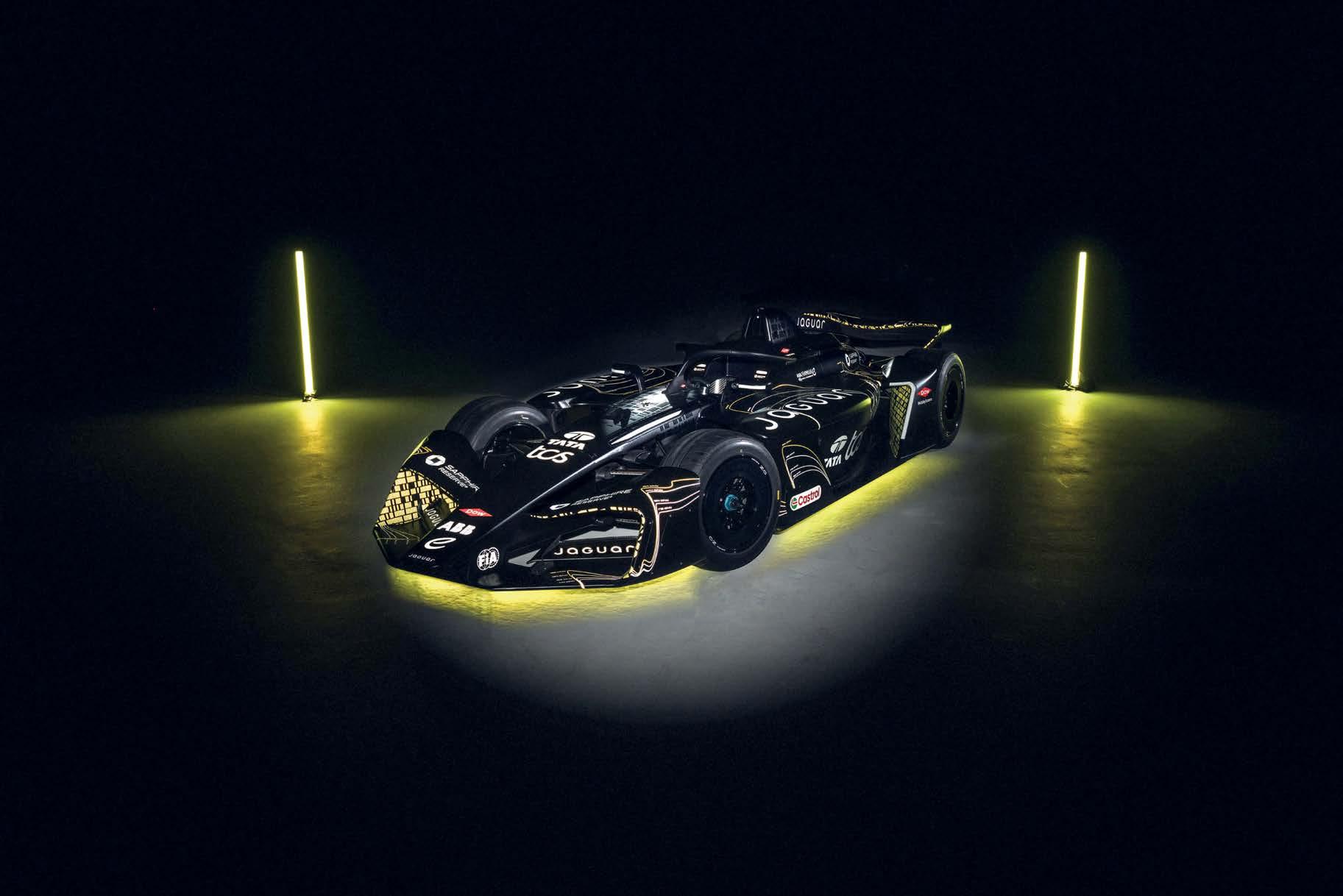
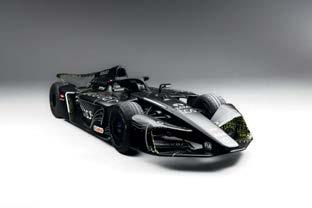
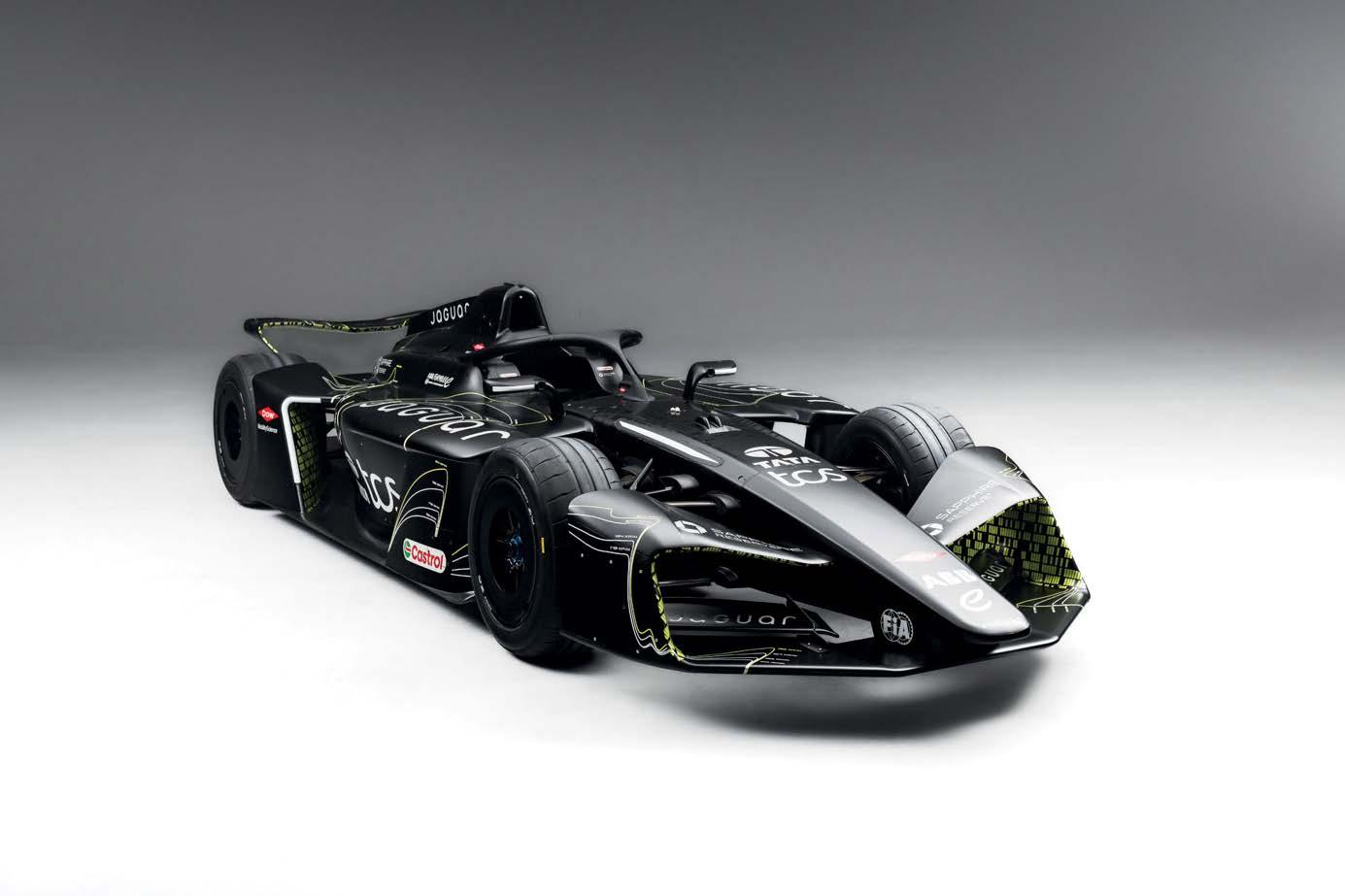
Jaguar TCS Racing, il team con il maggior numero di vittorie nel Campionato del Mondo ABB FIA Formula E, ha presentato la vettura di sviluppo GEN4
by Marco Negri
Jaguar TCS Racing, the team with the most wins in the ABB FIA Formula E World Championship’s history, has unveiled its GEN4 development car
i 245 km/h nella sua modalità da 350 kW, e consente quasi 80 km/h in più rispetto alla vettura GEN1, con 199 km/h raggiunti al simulatore. Questo incremento di potenza è accompagnato da importanti innovazioni strutturali, a cominciare dall’introduzione della trazione integrale attiva permanente. Una novità assoluta per una monoposto a ruote scoperte, che modifica profondamente l’equilibrio dinamico e le strategie di guida. Jaguar TCS Racing è il team di maggior successo nella storia della Formula E, con 25 vittorie e altri 33 podi; ha vinto il Campionato del Mondo a squadre e il titolo Costruttori nel 2024. L’ampliamento del perimetro di sviluppo della GEN4 offre un margine ancora più ampio per lo sviluppo della tecnologia in pista a diretto vantaggio dei futuri clienti di Jaguar su strada.
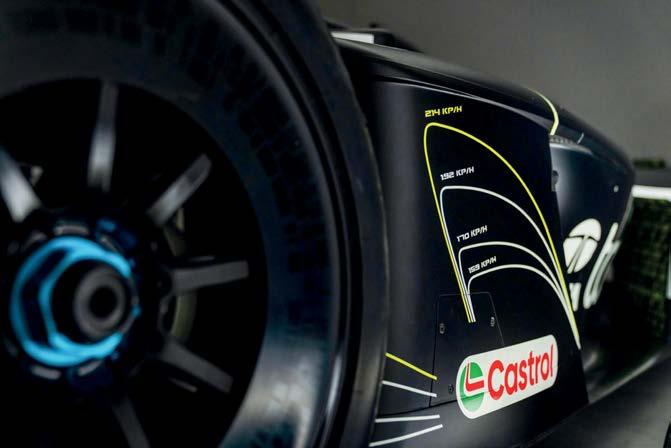
L’ingegnere Jack Lambert, responsabile dell’integrazione tecnica, ha dichiarato: “L’era GEN4 rappresenta una straordinaria opportunità per Jaguar. Come costruttore, impariamo costantemente dallo sviluppo dei nostri propulsori da corsa e l’ampliamento del campo di applicazione della GEN4 ci consentirà di rimanere all’avanguardia nell’innovazione in pista in vista della prossima generazione di auto stradali elettriche di Jaguar”.
Jack Lambert, Head of Technical Integration, said: “The GEN4 era presents an extraordinary opportunity for Jaguar. As a manufacturer, we continually learn from developing our racing powertrains, and the expansion of GEN4’s scope for manufacturers will enable us to remain at the forefront of innovation in electric track technology, ahead of Jaguar’s next generation of electric road cars”.
The GEN4’s maximum power output has increased from 350 kW to 600 kW; permanent active all-wheel drive and regenerative braking with a capacity of 700 kW have been introduced.
Using data from Jaguar TCS Racing’s ‘driverin-the-loop’ simulator, the car, with a power-to-weight ratio of 600 kW, reaches a top speed of 277 km/h before braking for the chicane. This is over 30 km/h faster than the current I-TYPE 7 GEN3 Evo car, which reaches 245 km/h in its 350 kW mode, and almost 80 km/h faster than the GEN1 car, which reached 199 km/h in the simulator. This increase in power is accompanied by significant structural innovations, beginning with the introduction of permanent active all-wheel drive.
This is a first for an open-wheel single-seater and profoundly alters the dynamic balance and driving strategies. Jaguar TCS Racing is the most successful team in Formula E history, with 25 wins
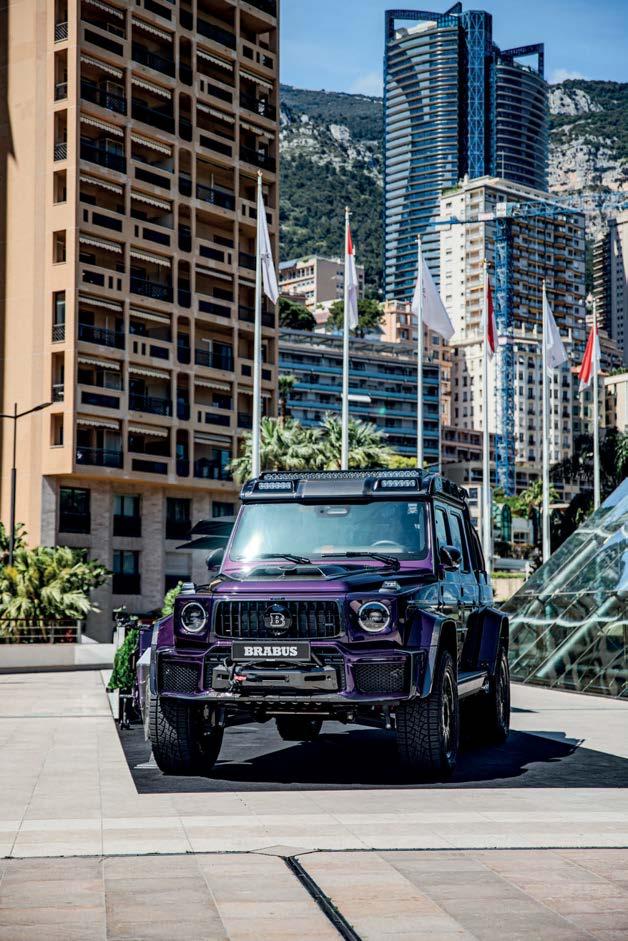
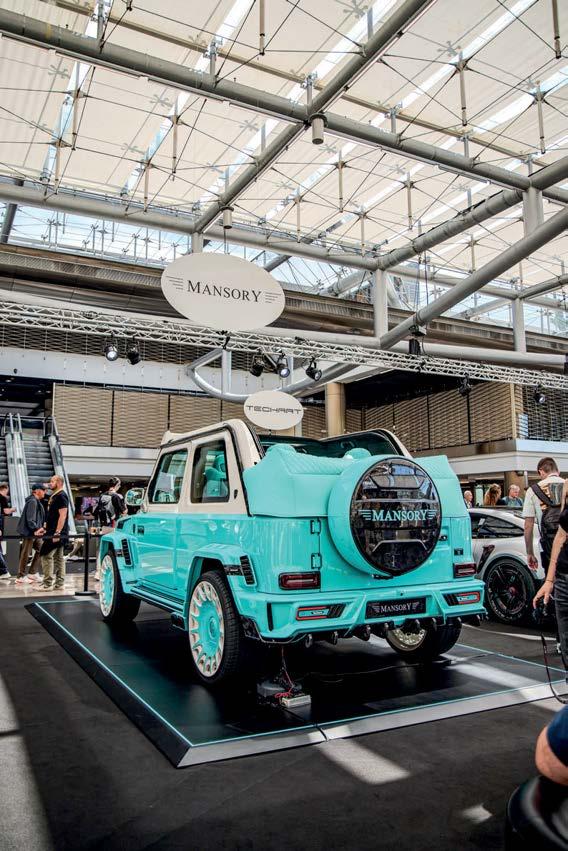
La 21ª edizione ha registrato un numero record di visitatori e moltissime vendite concluse prima della chiusura del salone
by Marco Negri
The 21st edition attracted a record number of visitors and saw many high-value sales concluded before the exhibition closed
A Monaco abbiamo ammirato oltre 235 supercar, auto d’epoca, motociclette e orologi di pregio.
Organizzato sotto l’alto patrocinio del Principe Alberto II di Monaco, Top Marques consolida ulteriormente il suo status di uno dei saloni automobilistici più esclusivi al mondo. Molti i marchi di prestigio, tra cui Aston Martin, Ferrari, Bentley, Rolls-Royce, Pagani, Mercedes-Benz, Maserati, McLaren, Morgan, Bugatti, Lamborghini, Porsche e Audi. La 21ª edizione ha ottenuto risultati senza precedenti sotto ogni aspetto. L’entusiasmo commerciale è stato innegabile. Le vendite di supercar, alcune con un valore a sette cifre, sono state registrate in ogni padiglione. Molto bene è andata a un rivenditore di auto d’epoca che ha piazzato tutti i veicoli presenti nel suo stand.
Un espositore di orologi, invece, ha collocato 18 segnatempo a un prezzo minimo di 30.000 euro ciascuno, e anche il settore della gioielleria ha confermato numerose vendite. Non si è trattato di una semplice vetrina, bensì di un vero e proprio mercato ai massimi livelli del settore automobilistico di lusso. Tra i principali motivi del successo di questa edizione si annovera l’evento privato inaugurale, dedicato ai collezionisti. Per la prima volta, infatti, i collezionisti più esigenti hanno avuto accesso esclusivo all’intera manifestazione.
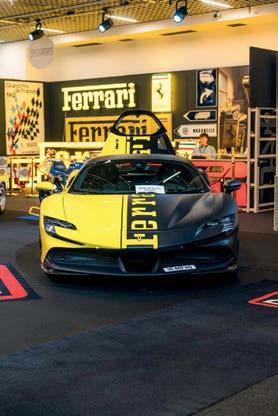
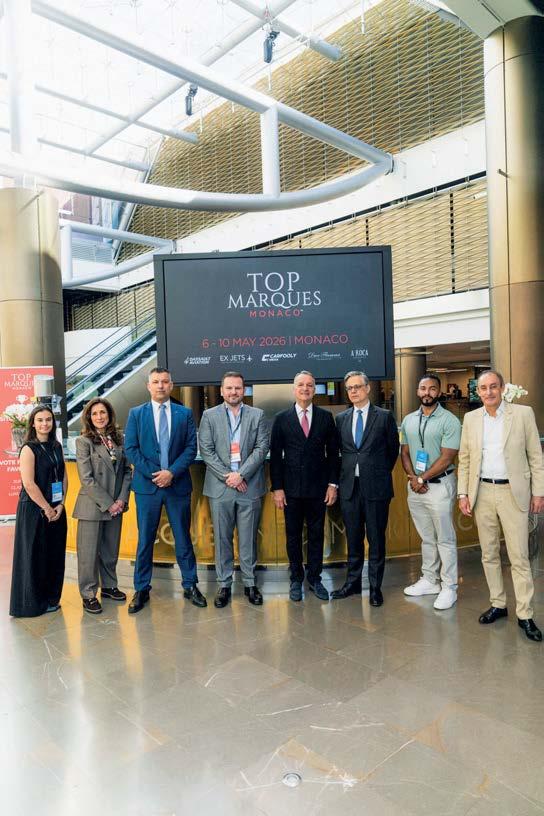
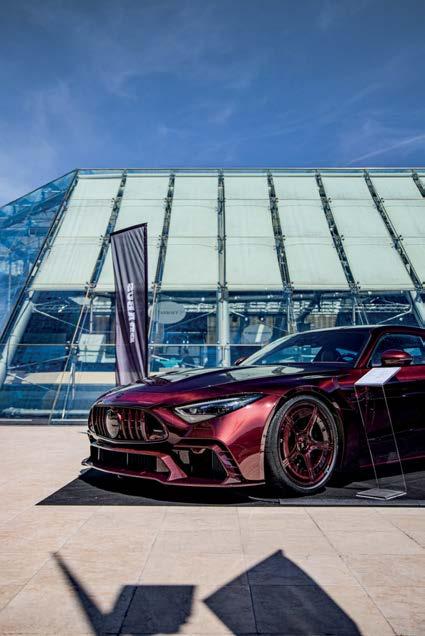
Molte delle auto presentate per la prima volta a Monaco, veri e propri capolavori unici, erano esposte anche nella Sala Supercar, epicentro del Salone e sede di una serie di anteprime mondiali.
Many of the cars unveiled for the first time in Monaco – true one-off masterpieces – were also on display in the Supercar Hall, the heart of the Motor Show and the venue for a series of world premieres.
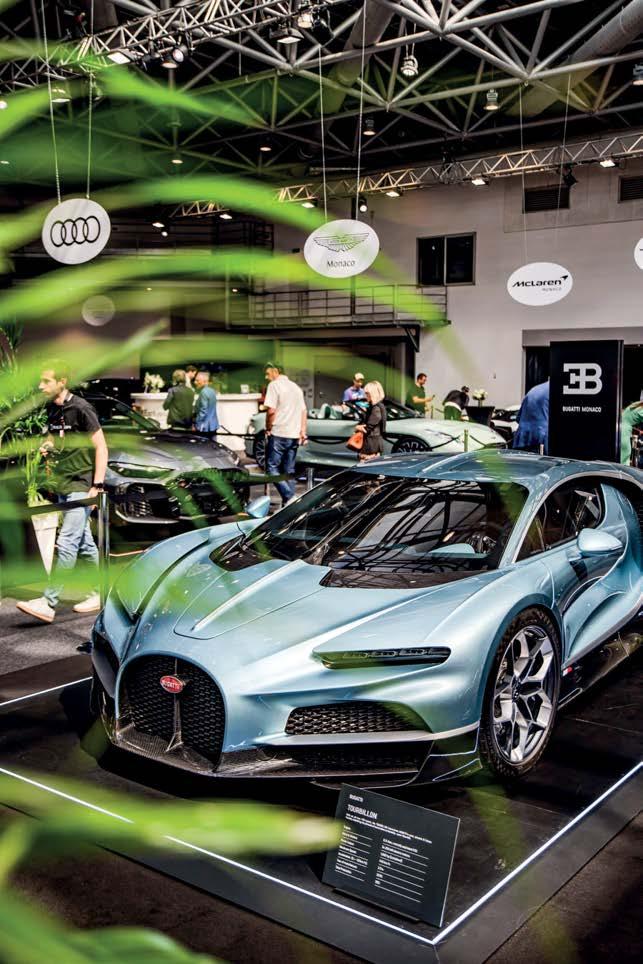
In Monaco, we admired more than 235 supercars, classic cars, motorcycles and luxury watches.
Organised under the patronage of Prince Albert II of Monaco, Top Marques further consolidates its standing as one of the world’s most exclusive motor shows. Many prestigious brands were represented, including Aston Martin, Ferrari, Bentley, Rolls-Royce, Pagani, Mercedes-Benz, Maserati, McLaren, Morgan, Bugatti, Lamborghini, Porsche and Audi. The 21st edition achieved unprecedented results across the board. The commercial enthusiasm was undeniable. Supercar sales, some with sevenfigure price tags, were recorded across every hall.
A classic car dealer fared particularly well, selling every vehicle on his stand. A watch exhibitor, meanwhile, sold 18 timepieces priced at a minimum of €30,000 each, and the jewellery sector also reported numerous sales. This was not merely a showcase but a genuine marketplace at the very pinnacle of the luxury automotive sector.
One of the main reasons for this year’s event’s success was the private opening, dedicated to collectors. For the first time, the most discerning collectors were granted exclusive access to the entire event.
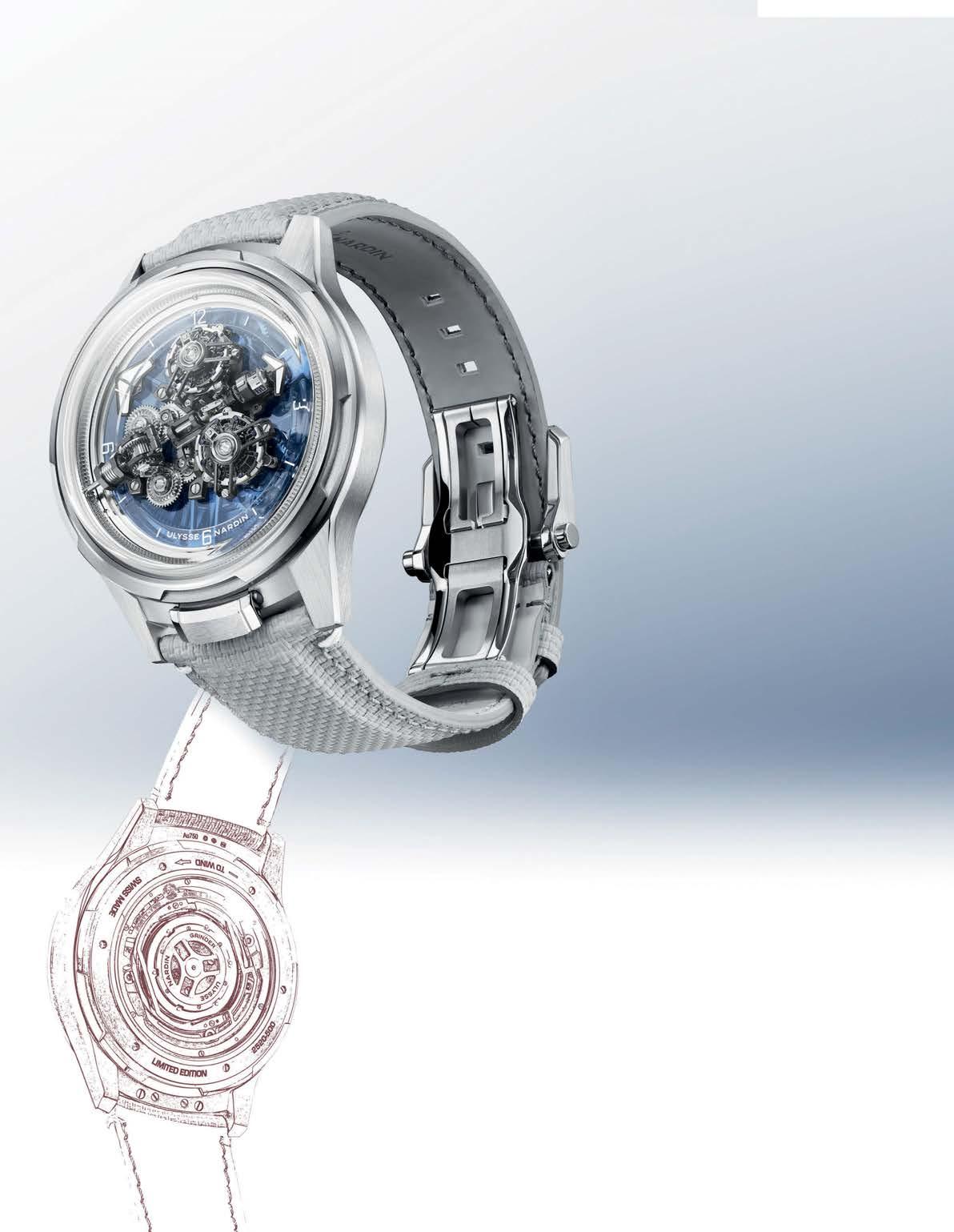
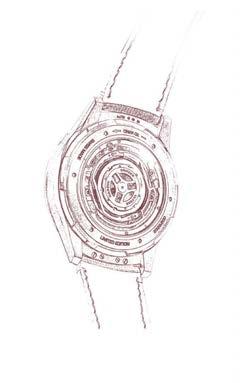
Il [Super] Freak è il primo doppio turbillon automatico al mondo, una configurazione senza precedenti
The [Super] Freak is the world’s first automatic double tourbillon, an unprecedented design
by Carlo Cattaneo
Negli ultimi 25 anni, il concetto del Freak è stato esplorato in tutte le sue espressioni, ciascuna delle quali ha superato i limiti precedenti.
Con il [Super] Freak, la Maison fa convergere tutta la sua esperienza per creare qualcosa di completamente nuovo: un’audace reinterpretazione plasmata da 180 anni di tradizione, innovazione e artigianalità. Nel cuore pulsa un calibro in-house completamente nuovo, l’UN-252, un concentrato di potenza meccanica composto da ben 511 componenti. Ci sono voluti quattro anni di sviluppo intensivo per dare vita a questo capolavoro tecnico. Concepito come la massima concentrazione del meglio del Freak, questo modello riunisce i meccanismi più emblematici e le invenzioni brevettate della collezione, introducendo al contempo un livello di complessità senza precedenti, in particolare grazie all’integrazione di un doppio tourbillon e di un display dei secondi, ora possibile grazie al nuovo sistema cardanico brevettato.
Maurizio Granai +39 335 6113832
gpymarine.it
L’ora
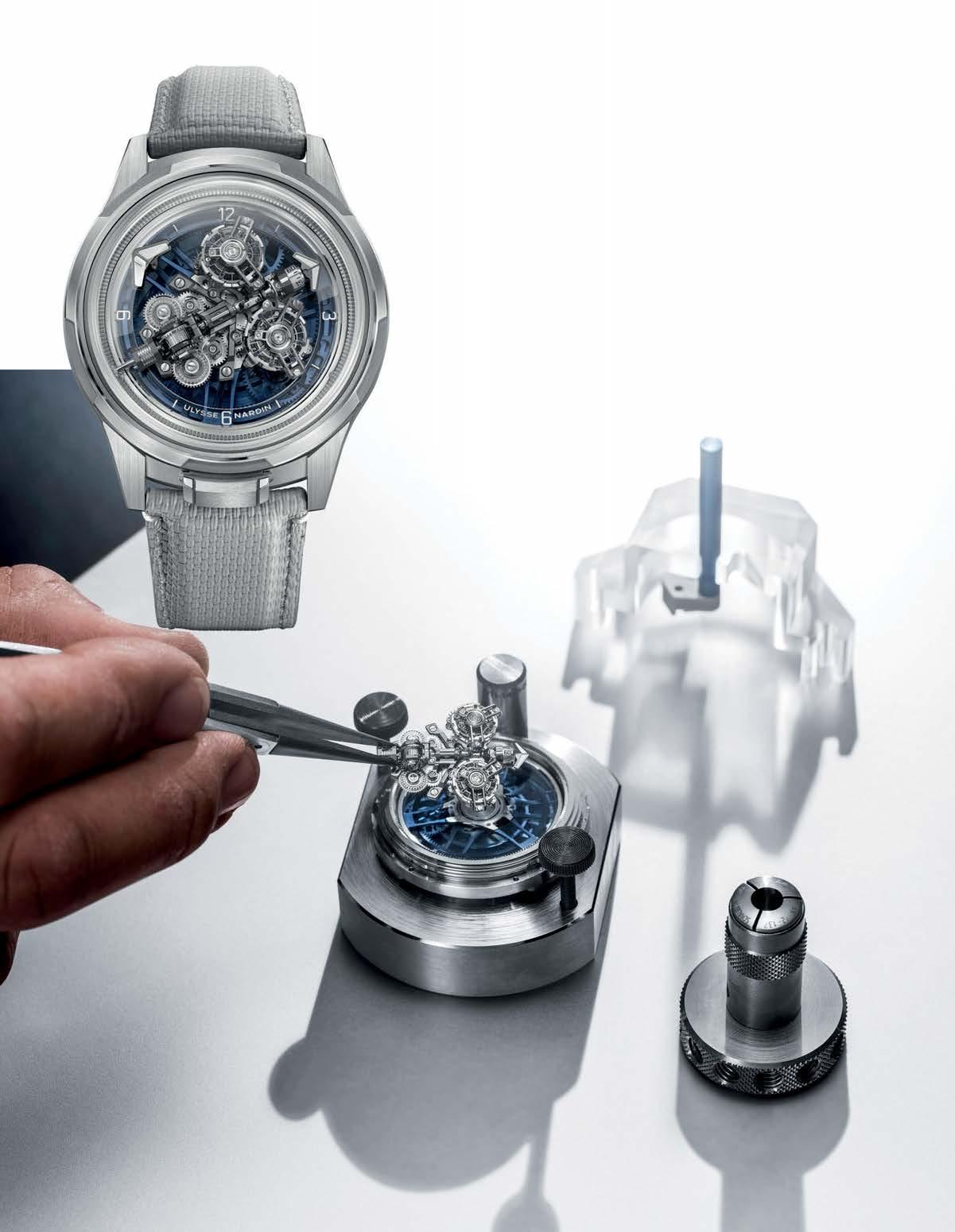
Over the past 25 years, the Freak concept has been explored in all its forms, each pushing the boundaries further than the last.
With the [Super] Freak, the Maison brings together all its expertise to create something entirely new: a bold reinterpretation shaped by 180 years of tradition, innovation and craftsmanship.
At its heart beats a completely new in-house calibre, the UN-252, a powerhouse of mechanical engineering comprising no fewer than 511 components. It took four years of intensive development to bring this technical masterpiece to life. Conceived as the ultimate distillation of the best of the Freak, this model brings together the collection’s most iconic mechanisms and patented inventions, whilst introducing an unprecedented level of complexity, notably through the integration of a double tourbillon and a seconds display, now made possible by the new patented gimbal system.
Una genesi travagliata, poi la rinascita. Cronaca di un albergo destinato al successo, anche e soprattutto grazie alla cucina di Jonas Zörner
A troubled start, followed by a rebirth. The story of a hotel destined for success, thanks largely to Jonas Zörner’s cuisine
by Emanuela Ferro –
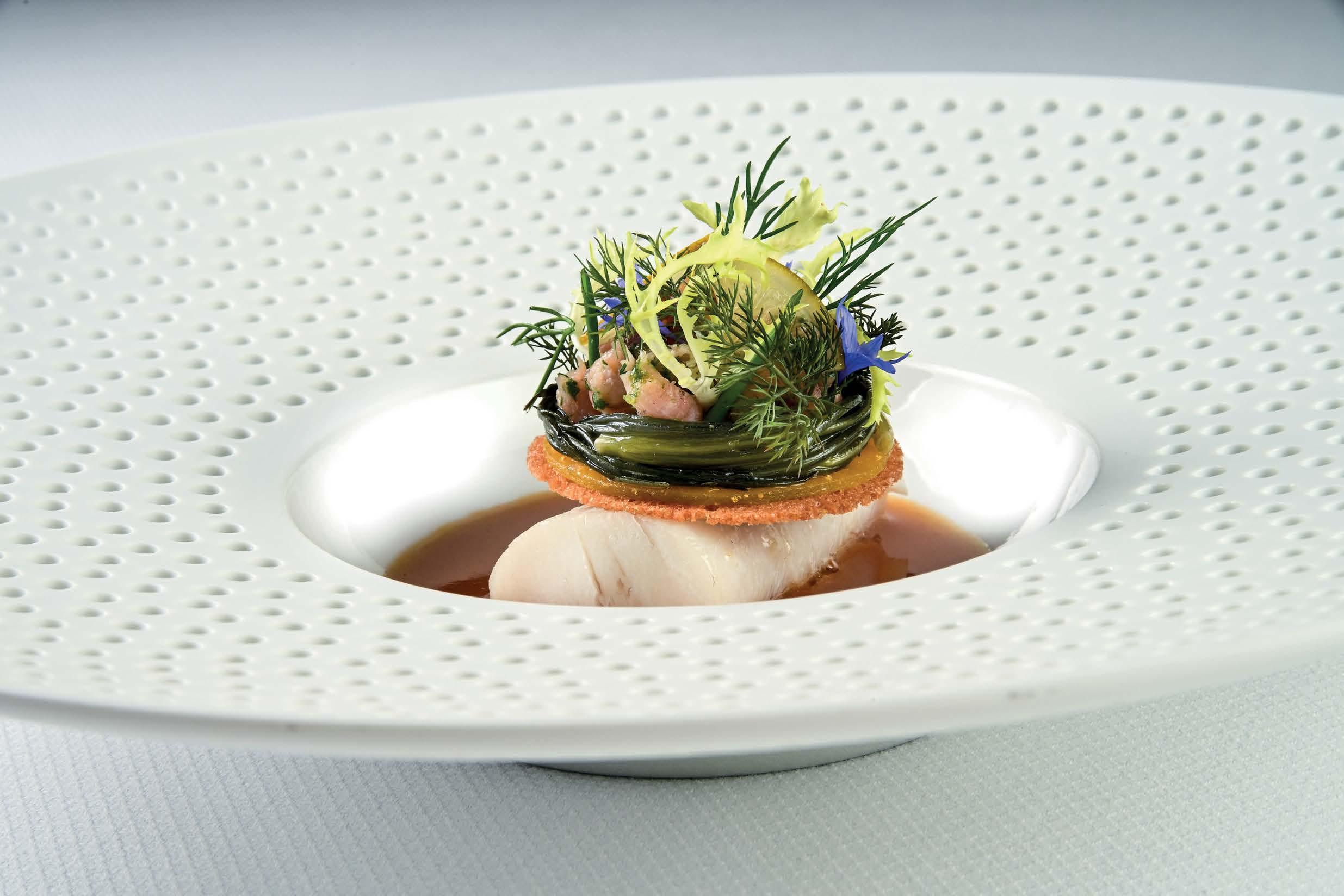
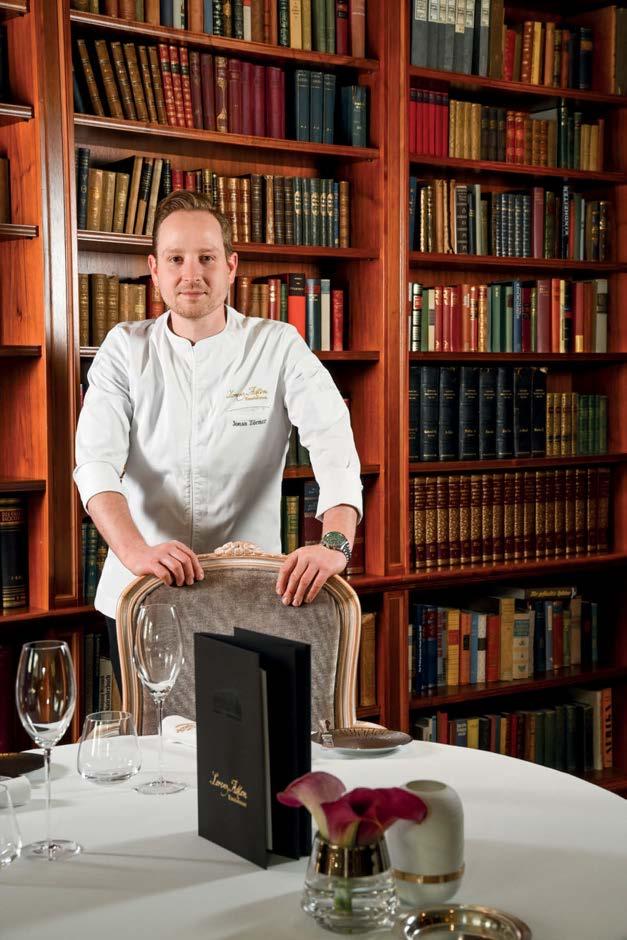
I pilastri
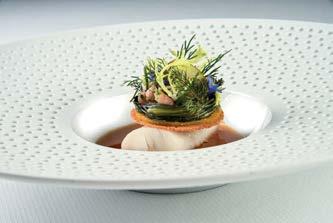
irrinunciabili della cucina di Zörner? MATERIE
PRIME di altissima qualità, tecnica francese e l’immancabile tocco di ITALIANITÀ. The cornerstones of Zörner’s cuisine? Top-quality INGREDIENTS, French techniques and that unmistakable ITALIAN flair.
L’unico hotel al mondo a essere stato inaugurato due volte da un capo di Stato è un’araba fenice più volte risorta dalle sue ceneri.
Aperto nel 1907 di fronte alla Porta di Brandeburgo, ebbe come padrino d’eccezione l’imperatore Guglielmo II, che lo preferiva alle fredde e poco confortevoli residenze reali. Rifiorito durante la Repubblica di Weimar come meta di artisti e celebrità, rimasto in auge durante il Terzo Reich fino all’apice delle Olimpiadi berlinesi del 1936, trasformato in ospedale durante la guerra, fu in gran parte distrutto da un incendio appiccato dalle truppe sovietiche nel 1945, ma continuò a funzionare fino alla demolizione nel 1984. Dopo la caduta del Muro di Berlino è stato ricostruito dal Gruppo Kempinski, storico protagonista della hôtellerie di alta gamma, e nuovamente inaugurato nel 1997: a tagliare il nastro, il presidente Roman Herzog. Dal voluttuoso tè del pomeriggio alla raffinata selezione di caviali, le consuetudini create dal visionario Lorenz Adlon sono ancora il cuore dell’offerta dell’albergo che porta il suo nome, ma è soprattutto il ristorante gourmet a celebrarne l’amore per l’alta cucina (quella francese, in particolare) che lo trasformò da giovane apprendista artigiano in commerciante di vini, ristoratore, straordinario organizzatore di catering, fino a diventare un imprenditore di successo.
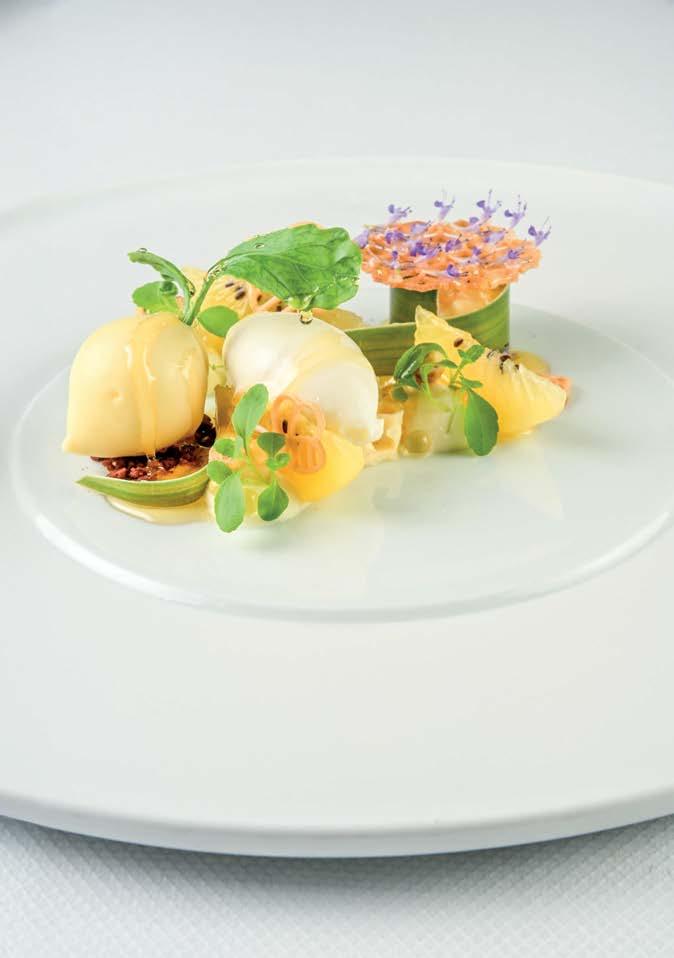
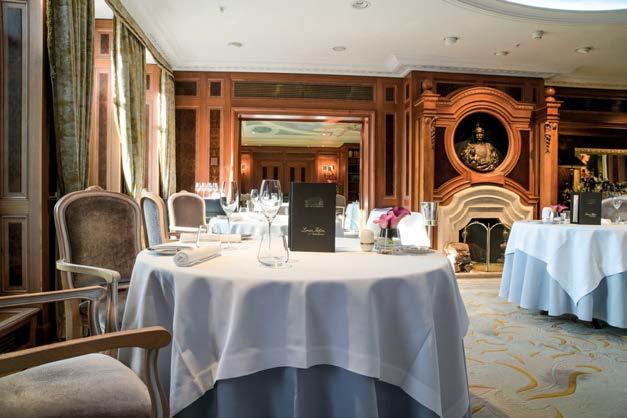
Sotto lo sguardo severo del kaiser prussiano o circondati dai libri della storica biblioteca, con un occhio alla Porta di Brandeburgo illuminata, coccolati da un servizio naturalmente impeccabile, scoprirete l’arte del Master Chef berlinese Jonas Zörner, grande appassionato di cucina classica che si affida con maestria artigianale a tecniche e tradizioni culinarie francesi, eppure sorprende per il sofisticato equilibrio tra sapidità e acidità che caratterizza i suoi piatti, sostenuti da materie prime di altissima qualità.
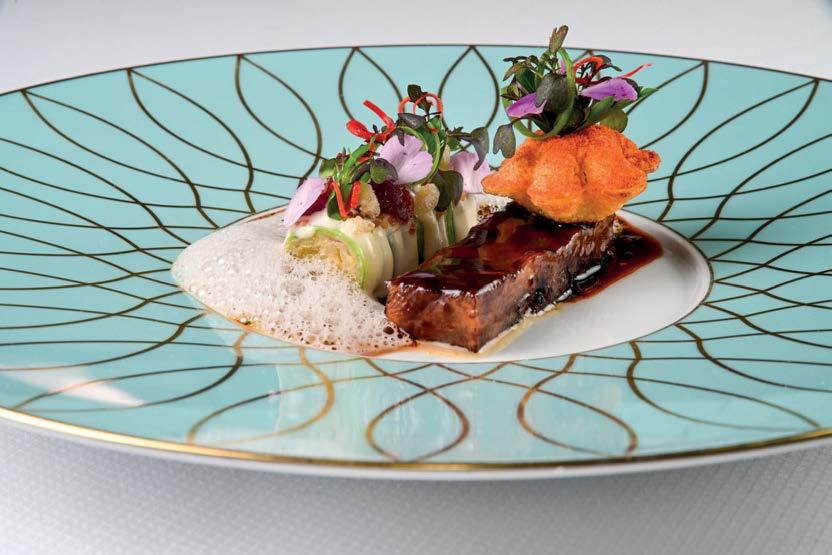
Eccellente la CARTA DEI VINI. Molte etichette, anche le più ricercate, si possono degustare al CALICE.
The WINE LIST is excellent. Many wines, including some of the most sought-after, are available by the GLASS.
Con lui, una squadra affiatata e cosmopolita, profondamente coinvolta nello sviluppo di nuovi piatti e nella creazione dei quattro menu stagionali, che parla anche italiano grazie al sous-chef e pasticciere Stefano Martinelli. La ricca e pluripremiata selezione dei vini può essere degustata anche al bicchiere in abbinamento alle proposte da cinque o sei portate, alle quali si affianca la carta Signature, adatta a chi preferisce scegliere in libertà ma anche a chi vuole personalizzare il menu inserendo qualche variante.
The only hotel in the world to have been officially opened twice by a head of state is a phoenix that has risen from the ashes time and again.
Opened in 1907 opposite the Brandenburg Gate, it had an exceptional patron in Emperor Wilhelm II, who preferred it to the cold and less comfortable royal residences. It enjoyed a resurgence during the Weimar Republic as a destination for artists and celebrities, remained in vogue throughout the Third Reich until the height of the 1936 Berlin Olympics, was converted into a hospital during the war, was largely destroyed by a fire started by Soviet troops in 1945, yet continued to operate until its demolition in 1984. Following the fall of the Berlin Wall, the hotel was rebuilt by the Kempinski Group, a long-standing leader in the luxury hotel industry, and reopened in 1997; the ribbon was cut by President Roman Herzog. From sumptuous afternoon tea to a refined selection of caviar, the traditions established by the visionary Lorenz Adlon remain at the heart of the offering at the hotel that bears his name. Above all, the gourmet restaurant celebrates his love of haute cuisine (French cuisine, in particular), which transformed him from a young apprentice craftsman into a wine merchant, restaurateur, extraordinary caterer, and ultimately a successful entrepreneur. Whether under the stern gaze of the Prussian Kaiser or surrounded by the books of the historic library, with a view of the illuminated Brandenburg Gate, and pampered by impeccable service, you will discover the art of Berlin-based Master Chef Jonas Zörner, a great enthusiast of classical cuisine who, with masterful craftsmanship, draws on French culinary techniques and traditions, yet surprises with the sophisticated balance between savouriness and acidity that characterises his dishes, underpinned by ingredients of the very highest quality. He is supported by a close-knit, cosmopolitan team, deeply involved in developing new dishes and creating the four seasonal menus. The team also speaks Italian, thanks to sous-chef and pastry chef Stefano Martinelli. The extensive, award-winning wine list is also available by the glass to accompany our five- or six-course set menus. In addition, we offer a Signature menu, ideal for those who prefer to choose freely, as well as for those who wish to personalise their meal by adding a few extra dishes.

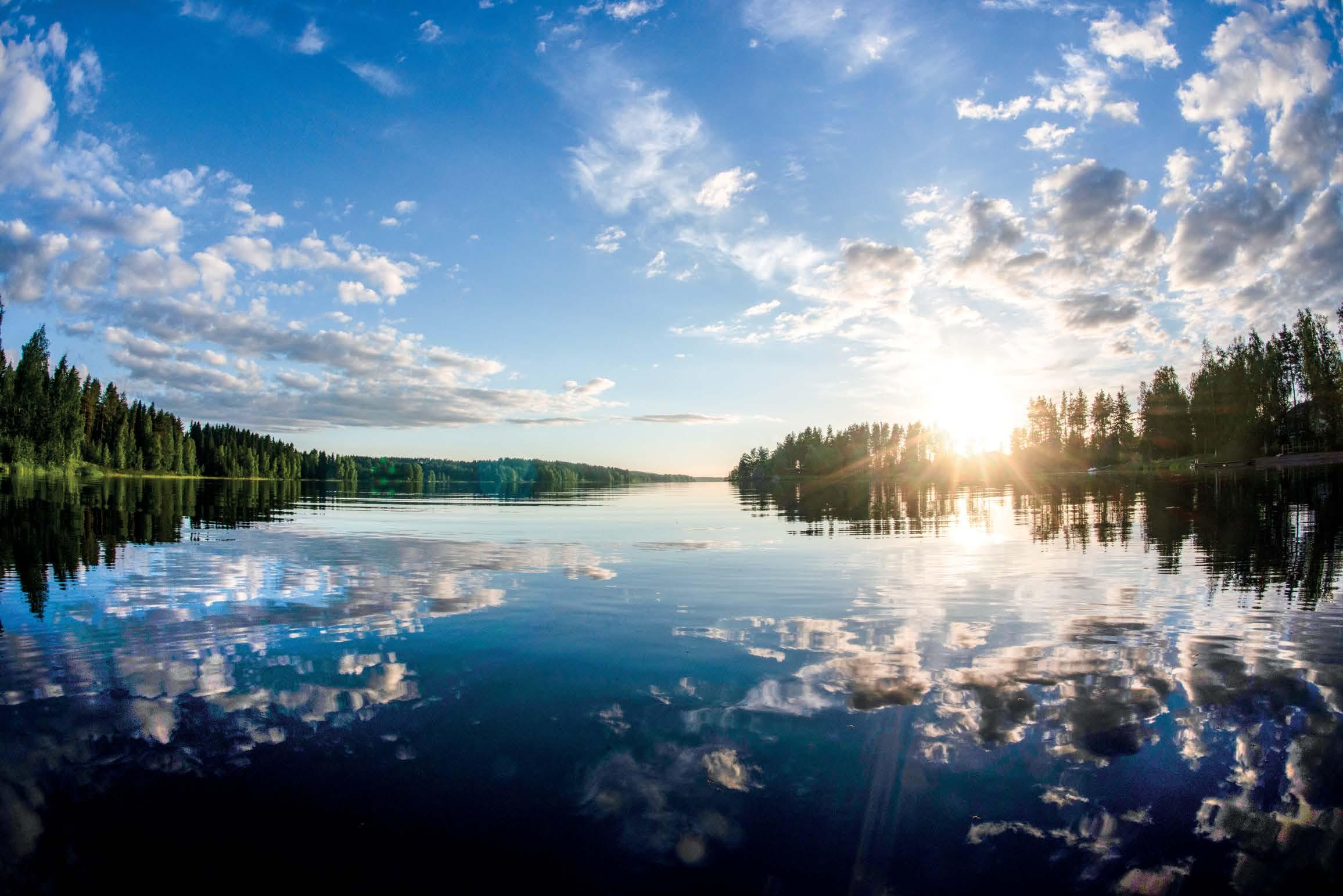
Destinazione Lapponia. Sulle tracce dei Sami, esperti cacciatori e allevatori di renne. Animali da cui traggono sostentamento e grazie ai quali scandiscono anche l’incedere del tempo
Destination: Lapland. In the footsteps of the Sami, expert hunters and reindeer herders. They derive their livelihood from the animals and mark the passing of time by them
by Emanuela Ferro - photo by Paolo Picciotto
In Lapponia si cammina su tappeti di muschio che sembrano non avere conosciuto orma umana, tra boschi e laghi mai violati, immersi in una natura intatta e completamente selvaggia.
In Lapland, you walk on carpets of moss that seem never to have known a human footprint, through untouched forests and lakes, immersed in unspoilt, completely wild nature.
Sápmi, la terra dei Sami, meglio conosciuta come Lapponia, è un vasto territorio nell’estremo Nord dell’Europa, che comprende una delle aree di transumanza più ampie e meglio conservate del pianeta.
I cacciatori Sami arrivarono qui oltre diecimila anni fa, seguendo il ritiro dei ghiacci, e dal XVI secolo si trasformarono in allevatori di renne, che pascolano in questi luoghi, incuranti dei confini che le nazioni hanno imposto. Si cammina su tappeti di muschio che sembrano non avere conosciuto orma umana, tra boschi e laghi mai violati, immersi in una natura intatta e completamente selvaggia, nell’intraducibile wilderness. Eppure, persino nell’“ultima area selvaggia d’Europa”, è difficile trovare luoghi dove nessuno sia già passato: tutto ciò che vive qui lascia tracce, discrete ma visibili, e ogni volta che pianti la tua tenda, sai che forse l’hanno già fatto, proprio nello stesso punto, i cacciatori dell’età della pietra o, due secoli fa, gli allevatori di renne. Semplicemente ci sono modi diversi di rapportarsi con l’ambiente e in Lapponia si vedono tutti: dalle non-tracce dei Sami, che da anni vivono qui in armonia con esso, fino ai segni eclatanti e crudeli di chi ha saputo trarre vantaggio da una terra dura ma ricchissima, costruendo immense dighe e centrali idroelettriche, scavando le miniere più grandi del mondo. I Sami non sfuggono a un copione ormai noto: pionieri, colonizzazione, privatizzazione delle terre, tasse, nuovi confini. Non hanno mai voluto combattere, quindi non sono stati sterminati, ma assorbiti e uniformati a una cultura differente, questo sì. Oggi ci sono (non in Russia, dove la situazione si fa ogni giorno più difficile), parlamenti Sami, scuole Sami, tradizioni Sami, ma per molti anni la lingua è stata messa al bando e gli unici che avevano mantenuto qualche diritto erano gli allevatori di renne, una minoranza rispetto all’intera popolazione autoctona.
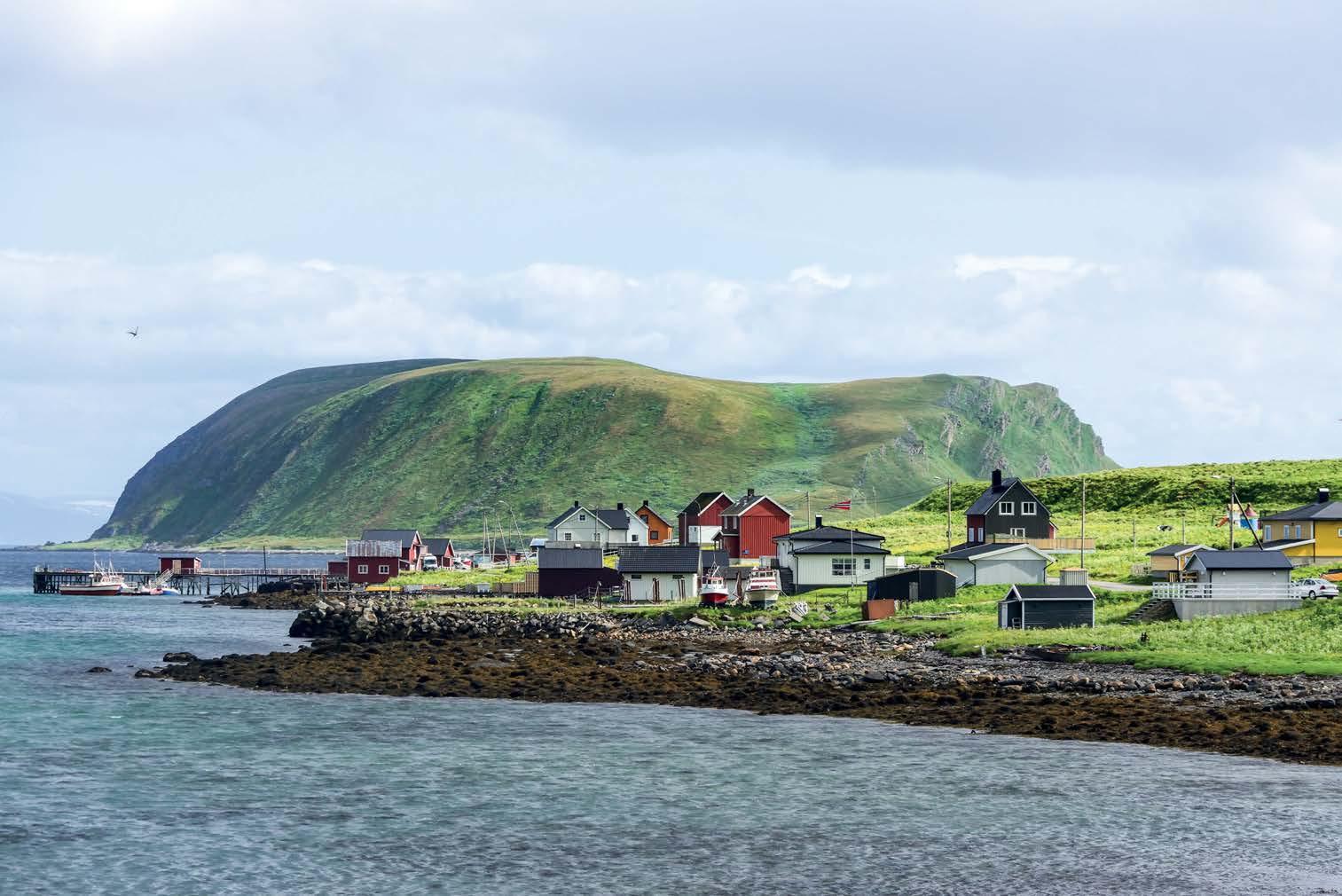
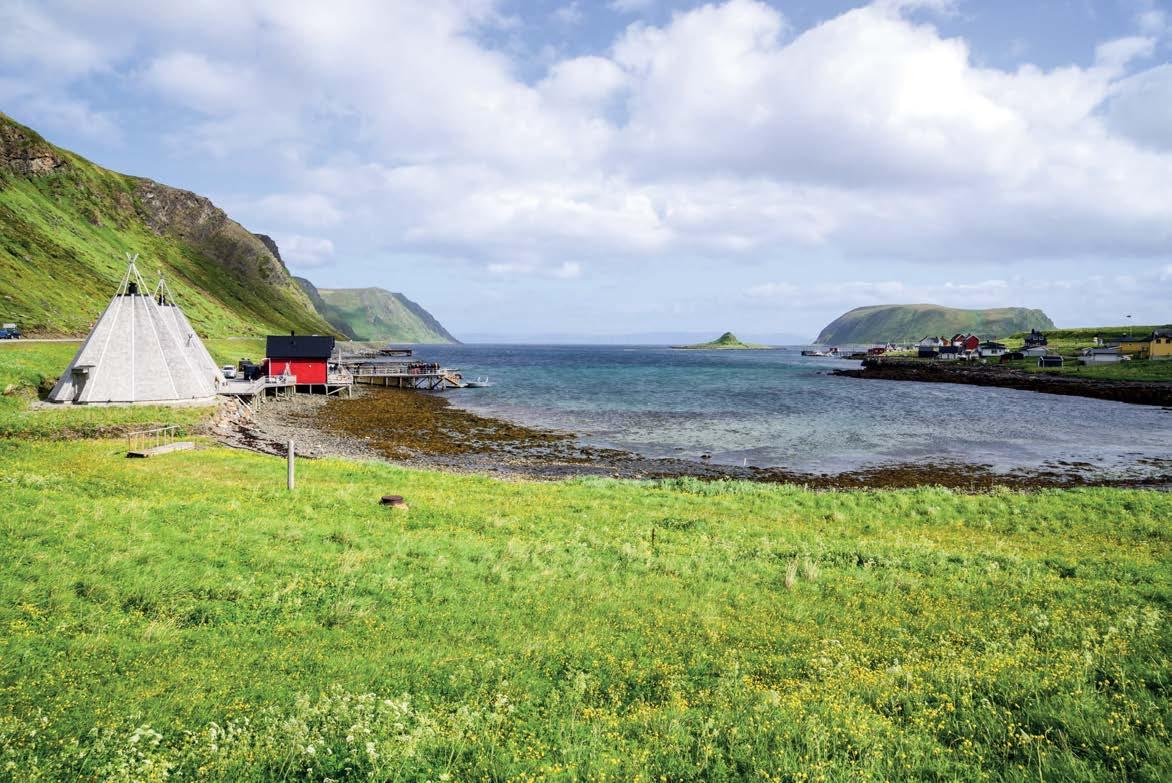
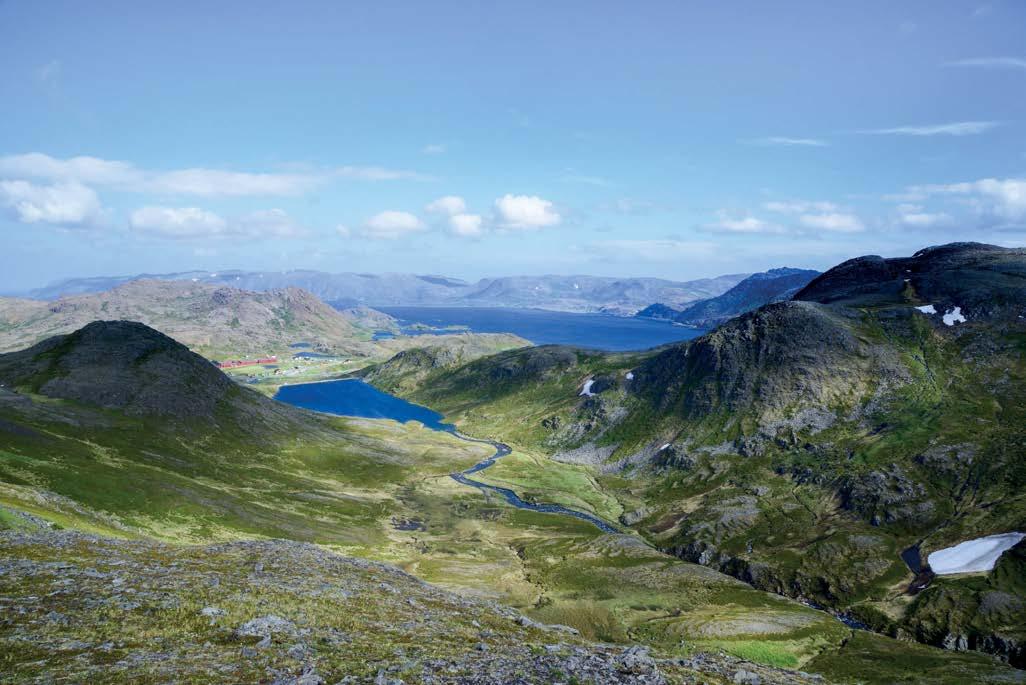
Per immergersi davvero nella NATURA e nella CULTURA del luogo, bisogna spingersi ancora più a nord, oltre il Circolo Polare Artico, fino a Inari.
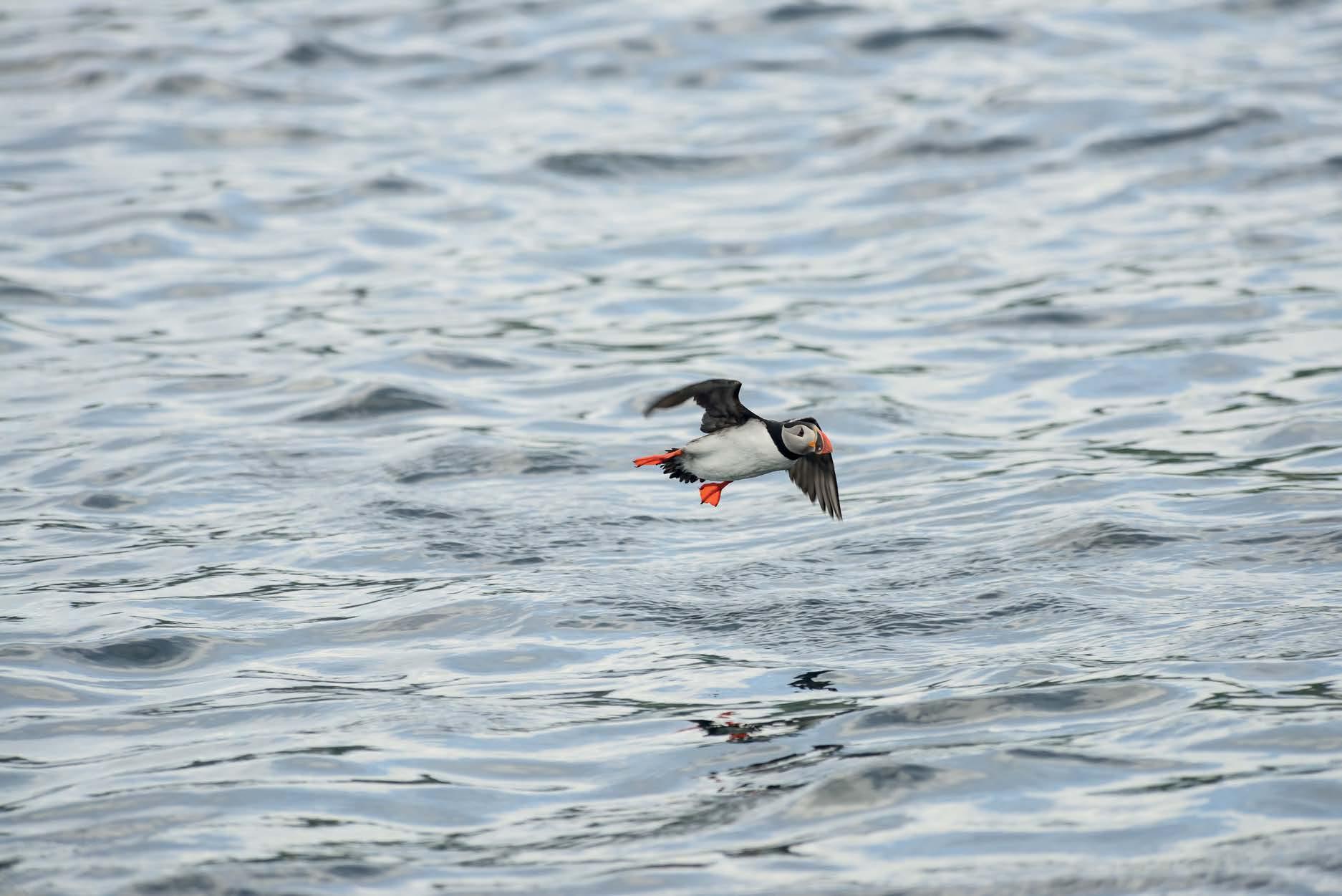

La natura offre spettacoli mozzafiato; la fauna è ricchissima: lupi grigi, sterne, pulcinelle di mare, orsi bruni e wolverine sono solo alcune delle specie che, insieme alle megattere, si possono incontrare durante le escursioni a Knivskjellodden.
Nature offers breathtaking sights; the wildlife is incredibly rich: grey wolves, terns, puffins, brown bears and wolverines are among the species that, along with humpback whales, can be spotted on excursions to Knivskjellodden.
Meno di 300 chilometri di panorami indimenticabili ci separano da Nordkapp, meta iconica per tutti i viaggiatori on the road. Una destinazione e un evento (il sole di mezzanotte) a cui chi è arrivato fin qui non può sfuggire, nonostante le folle e l’atmosfera da autogrill.
Ben altre sensazioni premieranno chi non si rassegna all’ovvio e sarà disposto a percorrere i 9 chilometri di sentiero fangoso che conducono a Capo Knivskjellodden – un po’ più a nord di Capo Nord – per ammirare il celebre altopiano a picco sul mare da una prospettiva sconosciuta ai più e per firmare il “libro di vetta”. In questa tiepida notte di giugno siamo in cinque a goderci il panorama e l’inaspettata compagnia di un gruppo di megattere, che emergono tra le onde a un passo dalla scogliera. Qualche ora più tardi, allo scoccare della mezzanotte, ci contenderemo un fazzoletto di spazio sotto il celeberrimo globo di metallo insieme ad altre migliaia di turisti.
Torniamo verso sud diretti ad Alta e ai suoi siti di arte rupestre. Per migliaia di anni questo popolo di cacciatori-raccoglitori ha inciso sulle rocce affioranti dal mare il racconto della sua vita quotidiana, dei rituali e dei miti. La luce radente illumina un diario per immagini sopravvissuto alla preistoria, svela un mondo abitato da persone e animali (renne, alci, orsi, volpi, lepri, oche, anatre, cigni, cormorani, salmoni, balene) e restituisce le immagini di manufatti ancora perfettamente attuali, dalle imbarcazioni agli sci, dagli archi agli arpioni ai tamburi, ricordandoci che l’estremo Nord è molto più di un magnifico paesaggio.
Sápmi, the land of the Sami, better known as Lapland, is a vast territory in the far north of Europe, encompassing one of the largest and best-preserved reindeer-herding areas on the planet.
The Sami hunters arrived here over ten thousand years ago, following the retreat of the ice, and from the 16th century onwards they became reindeer herders, whose herds graze across these lands, heedless of the borders imposed by nations. You walk across carpets of moss that seem never to have known a human footprint, through untouched woods and lakes, immersed in unspoilt, utterly wild nature, in the indescribable wilderness. And yet, even in ‘Europe’s last wilderness’, it is hard to find places where no one has ever been: everything that lives here leaves traces, subtle but visible, and every time you pitch your tent, you know that perhaps Stone Age hunters, or reindeer herders two centuries ago, have already done so in the same spot. There are different ways of relating to the environment. In Lapland, you can see them all: from the subtle footprints of the Sami, who have lived here in harmony with nature for generations, to the stark and cruel signs left by those who have exploited this harsh yet incredibly rich land, building immense dams and hydroelectric power stations and digging the world’s largest mines.
The Sami have not escaped a now-familiar pattern: pioneers, colonisation, land privatisation, taxes, and new borders. They never wanted to fight, so they were not exterminated; they were instead absorbed and assimilated into a different culture – that much is true. Today, there are Sami parliaments, Sami schools, and Sami traditions (not in Russia, where the situation is becoming more difficult by the day). Still, for many years, the language was banned, and the only ones who retained any rights were the reindeer herders, a minority compared with the entire indigenous population. The Sami live in an extreme natural environment, with temperatures ranging from -40 °C to 30 °C.
They have adapted to these harsh conditions alongside the reindeer, the animal from which they have derived their entire livelihood for centuries, using it for transport, food and protection from the cold: every part of the reindeer is used – the hide, antlers, bones and, of course, every edible part. And it is by the life of these animals that the seasons have always been marked: the cycle begins in late March with the migration to the mountain pastures, where the calves are born in May; at the start of summer, the herds are rounded up so the calves can be branded, and then they return to pasture until September, when each community selects the adult males for slaughter. Autumn is the season of fighting and mating, until the final gathering of the year around December, when the reindeer are divided into smaller groups to face the harshest part of winter at lower latitudes. Although herders now track the reindeer using helicopters, pick-up trucks and snowmobiles and no longer travel alongside the herds, the branding round-up remains an important event in the community’s life. Children learn from a very young age to herd the entire herd into the enclosure, to catch the animals with a lasso and to brand them on the ear: tradition dictates that a young Sami becomes the owner of his first reindeer when he cuts his first tooth.
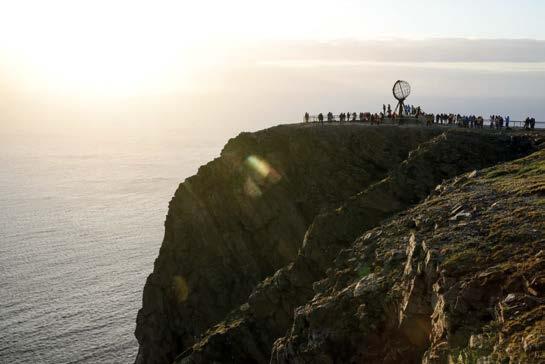
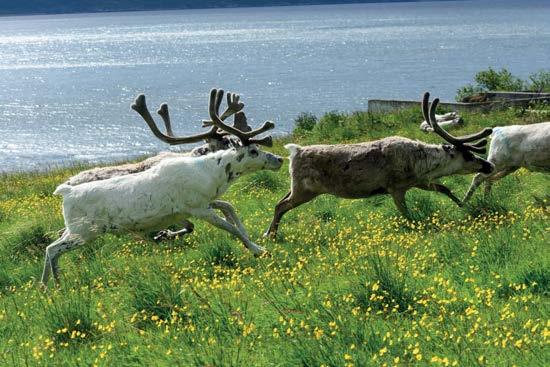
I BAMBINI imparano fin da piccolissimi a spingere l’intera mandria nel recinto, a catturare gli animali col lazo e a incidergli il marchio sull’orecchio: tradizione vuole che un PICCOLO SAMI diventi proprietario della sua prima renna con lo spuntare del primo dentino.
CHILDREN learn from a very young age to herd the entire herd into the enclosure, to catch the animals with a lasso and to brand them on the ear: tradition dictates that a YOUNG SAMI becomes the owner of his first reindeer when he cuts his first tooth.
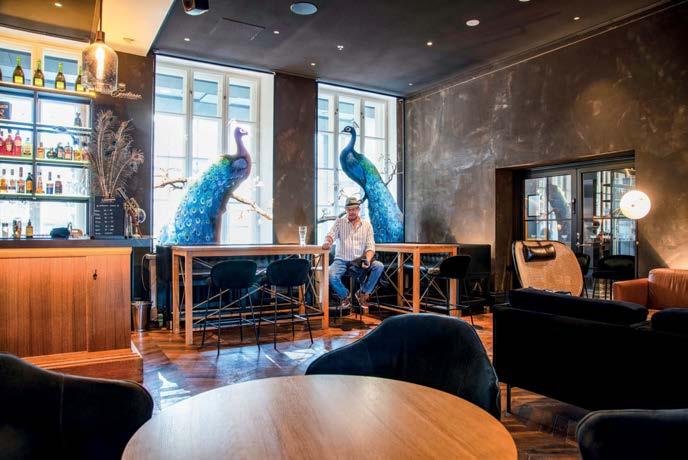
Nata in Svezia nel 1963, Scandic è la catena leader nei paesi nordici, che coniuga comodità informale e sostenibilità ecologica con strutture moderne, attente all’impatto ambientale, in alcuni casi ospitate in edifici storici o di grande impatto architettonico.
A Helsinki, il sontuoso Grand Central occupa spazi già parte del complesso della stazione ferroviaria, gioiello Art Nouveau del 1919. Quando fu costruito nel 1936, il Pohjanhovi di Rovaniemi rappresentò un perfetto esempio di funzionalismo internazionale con comodità mai viste prima a queste latitudini, dall’ascensore alla cucina elettrica. Lo Scandic Karasjok ospita il ristorante Storgammen, che propone un’atmosfera e una cucina tradizionali Sami. Di fronte alla Cattedrale dell’Aurora boreale, lo Scandic Alta è una struttura moderna e funzionale. Gli alberghi della catena sono rinomati per la colazione a buffet di alto livello con prodotti biologici locali e ricette tradizionali.
Founded in Sweden in 1963, Scandic is the leading hotel chain in the Nordic countries, combining casual comfort and environmental sustainability with modern facilities designed to minimise environmental impact, some of which are housed in historic buildings or structures of great architectural significance. In Helsinki, the sumptuous Grand Central occupies spaces that were once part of the railway station complex, an Art Nouveau gem dating from 1919. When it was built in 1936, the Pohjanhovi in Rovaniemi was a perfect example of international functionalism, offering comforts never before seen in these parts, from lifts to electric cookers. In perfect harmony with the surrounding nature, the Scandic Karasjok is home to the Storgammen restaurant, which offers a traditional Sami atmosphere and cuisine. Opposite the Northern Lights Cathedral, the Scandic Alta is a modern and functional establishment. The hotels in the chain are renowned for their high-quality breakfast buffet featuring local organic produce and traditional recipes.
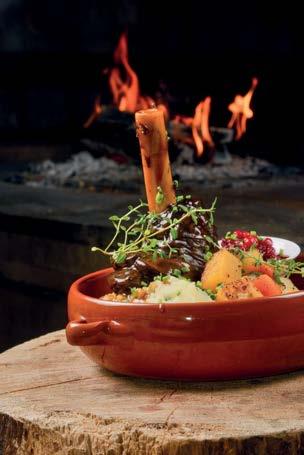
enjoy traditional
In June, the days seem to go on forever, and Rovaniemi – far removed from the glitz and glamour of Christmas – is simply a lively little town, perfect for outdoor activities and evenings by the river. To truly immerse yourself in the local nature and culture, head even further north, beyond the Arctic Circle, to Inari, home to the Sami Parliament and Siida (European Museum of the Year 2024).
Just across the border lies its Norwegian twin, Karasjok, home to an open-air museum and the new Parliament building, whose design and materials reflect local culture.
Less than 300 kilometres of unforgettable scenery separate us from Nordkapp, an iconic destination for all road travellers. It is both a destination and an event (the midnight sun) that no one who has made it this far can miss, despite the crowds and the motorway service station atmosphere. Fewer than 300 kilometres of unforgettable scenery separate us from the North Cape, an iconic destination for all road travellers. It is both a destination and an event (the midnight sun) that no one who has made it this far can miss, despite the crowds and the motorway service station atmosphere.
A very different experience awaits those who refuse to settle for the obvious and are willing to trek 9 kilometres along a muddy path to Cape Knivskjellodden – a little further north than the North Cape – to admire the famous plateau overlooking the sea from a perspective unknown to most and to sign the ‘summit book’. On this balmy June night, five of us enjoy the view and the unexpected company of a pod of humpback whales, which surface amongst the waves just a stone’s throw from the cliffs. A few hours later, at the stroke of midnight, we’ll be jostling for a tiny patch of space beneath the famous metal globe alongside thousands of other tourists. We head south again, towards Alta and its rock art sites. For thousands of years, these hunter-gatherer people carved the story of their daily lives, rituals and myths into the rocks jutting out of the sea. The low-angled light illuminates a pictorial diary that has survived from prehistoric times, revealing a world inhabited by people and animals (reindeer, moose, bears, foxes, hares, geese, ducks, swans, cormorants, salmon, whales) and brings to life images of artefacts that remain relevant today, from boats to skis, from bows to harpoons to drums, reminding us that the far North is much more than a magnificent landscape.
I Sami vivono in un ambiente naturale ESTREMO, caratterizzato da temperature minime che scendono anche a meno 40 °C.
The Sami people live in an EXTREME natural environment, characterised by minimum temperatures that can drop to -40 °C.

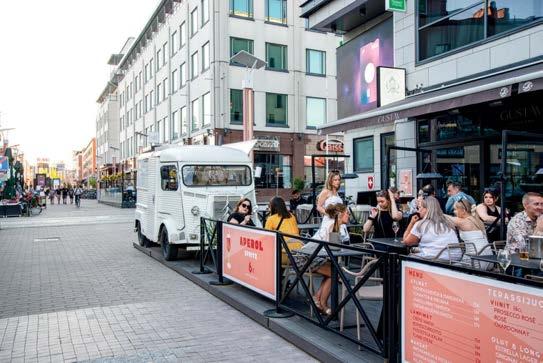

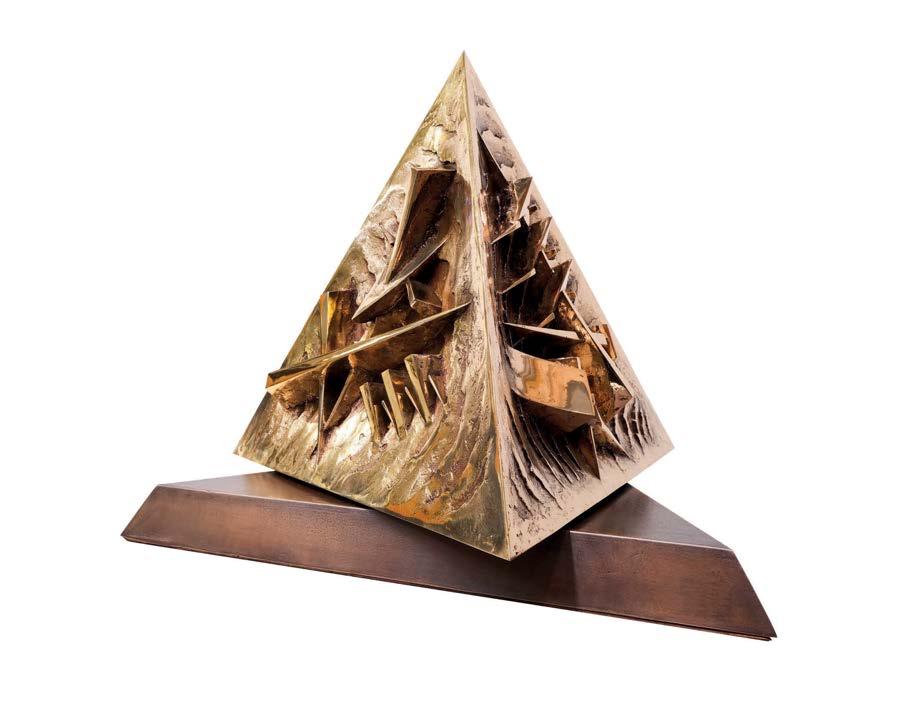
Giunta alla sua decima edizione, la kermesse ha richiamato collezionisti e galleristi da tutto il mondo e dedicato spazio anche allo yachting
Now in its tenth year, the event drew collectors and gallery owners globally and included a dedicated yachting section by Giovanni Gasparini* photo by © Nicolas Brasseur
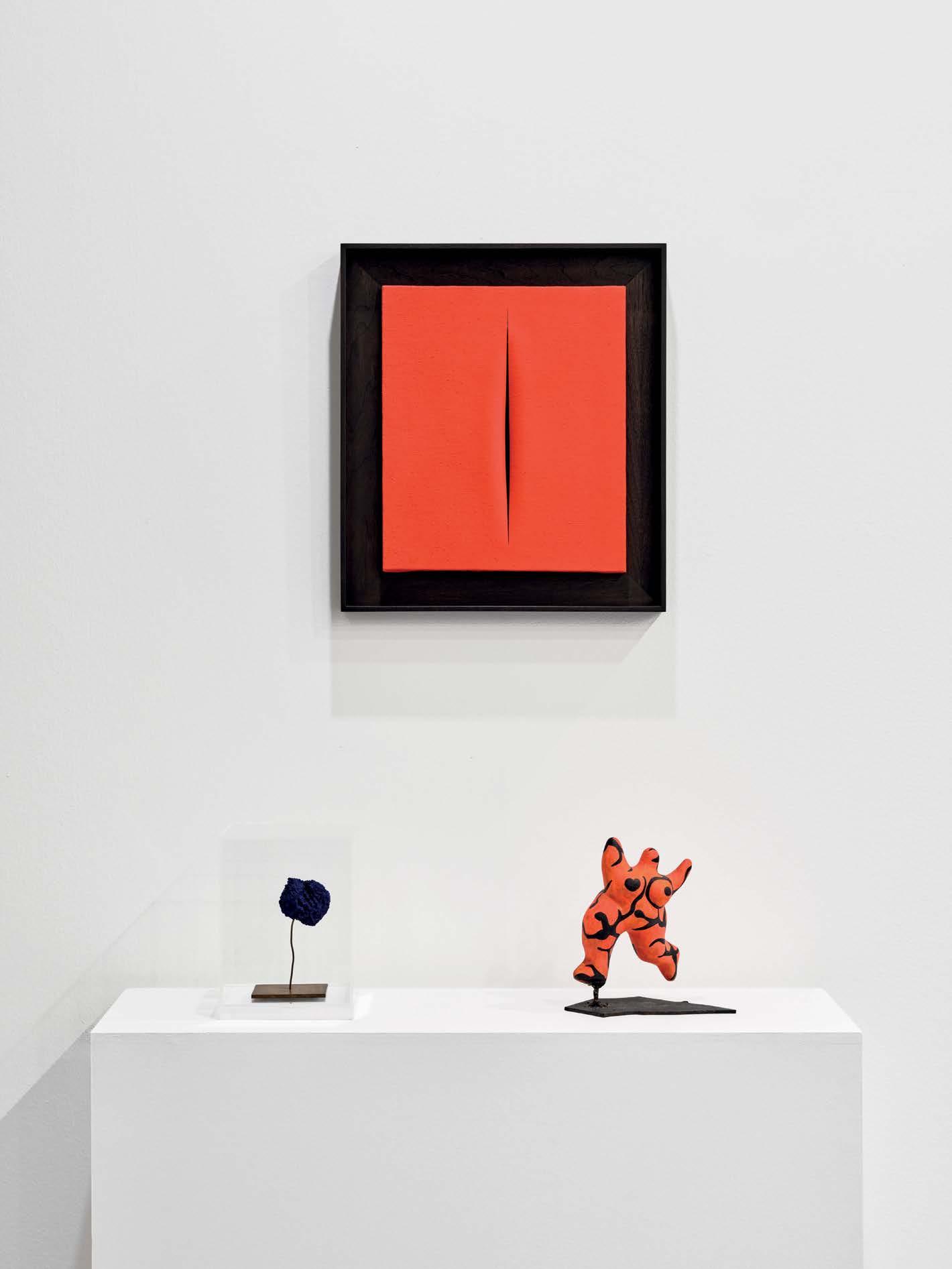
Come si conviene, anche la decima edizione di Art Monte-Carlo ha riempito di bellezza gli occhi dei visitatori.
Organizzata all’interno del Grimaldi Forum da Informa, gruppo internazionale specializzato in eventi di lusso come il Monaco Yacht Show, la kermesse ha richiamato appassionati e collezionisti da tutto il mondo che quest’anno hanno potuto ammirare anche “opere d’arte” galleggianti. Guidati dalla vulcanica Lia Riva, figlia dell’indimenticato Carlo, oggi a capo della società Monaco Boat Service, hanno avuto il privilegio di visitare il famoso tunnel Riva. Costruito agli inizi degli Anni ’60 come riparo per i famosi motoscafi durante la stagione fredda, il “caveau” continua a essere meta di chiunque voglia vedere da vicino i leggendari Ariston, Aquarama, Tritone, Florida... Non solo. Art Monte-Carlo ha coinvolto anche un altro alfiere dello yachting, Sanlorenzo. Il cantiere guidato da Massimo Perotti, infatti, nella sua sede monegasca ha ospitato la presentazione del progetto fotografico One World, a cura della filantropa Armelle Martignoni Caumont Caimi: un libro di grande impatto, con prefazione di Steve McCurry, che raccoglie per immagini la dignità di donne, uomini e bambini che abitano terre lontane e, il più delle volte, difficili, perché provate da conflitti e crisi economiche.
All’edizione 2026 hanno partecipato in tutto 26 gallerie e il Grimaldi Forum si è trasformato in un salotto davvero esclusivo: tra teste coronate, direttori di musei, facoltosi imprenditori, banchieri e business advisor, si sono palesati anche Ron Arad, gigante del design, e il fotografo di fama internazionale Juergen Teller.
“Earthly Delights”, mostra collettiva curata da Stefano Rabolli Pansera, è stata il fulcro di una nuova sezione espositiva di Art Monte-Carlo e comprendeva opere di Alvaro Barrington (Emalin), Francis Alÿs (Jan Mot), Leonora Carrington (rossogranada), Marcel Dzama (David Zwirner), Hans Josephsohn (Kesselhaus Josephsohn/Galerie Felix Lehner), Martin Kippenberger (Galerie Layr), Ed Ruscha (Studio Bruno Tonini), Giovanni Stanchi e Stefania Tejada (Maison d’Art).
“Earthly Delights”, a group exhibition curated by Stefano Rabolli Pansera, formed the centrepiece of a new section at Art Monte-Carlo and featured works by Alvaro Barrington (Emalin), Francis Alÿs (Jan Mot), Leonora Carrington (rossogranada), Marcel Dzama (David Zwirner), Hans Josephsohn (Kesselhaus Josephsohn/Galerie Felix Lehner), Martin Kippenberger (Galerie Layr), Ed Ruscha (Studio Bruno Tonini), and Giovanni Stanchi and Stefania Tejada (Maison d’Art).

Nato nel 2016, Art Monte-Carlo è un SALON D’ART che si è affermato come evento artistico di qualità sulla Costa Azzurra, rispondendo alle esigenze dei numerosi collezionisti e appassionati d’arte della regione.
Launched in 2016, Art Monte-Carlo has established itself as a premier ART EVENT on the French Riviera, catering to the needs of the region’s many collectors and art enthusiasts.

Il percorso espositivo è stato trasversale in termini di stili, epoche e culture. La galleria parigina Mitterrand, per esempio, ha esposto le curiose opere surreali dei coniugi Lalanne, ma anche di Lucio Fontana - immancabile la tela rossa tagliata - di Mimmo Rotella, di Josef Albers e di Yves Klein. La galleria A&R Fleury si è focalizzata sul Secondo dopoguerra, esponendo i dipinti astratti di Hans Hartung e la vivacità di Sam Francis, contrapposta al rigore del nero di Soulages. Ben rappresentata anche l’Italia, con la presenza delle gallerie Barovier & Toso, Cortesi, Accademica, Barbara Paci, Secci e Continua.
As one would expect, the tenth edition of Art Monte-Carlo was a feast for the eyes.
Organised at the Grimaldi Forum by Informa, an international group specialising in luxury events such as the Monaco Yacht Show, the fair attracted art lovers and collectors from around the world, who this year were also able to admire floating ‘works of art’. Led by the dynamic Lia Riva, daughter of the unforgettable Carlo and now head of Monaco Boat Service, they had the privilege of visiting the famous Riva tunnel. Built in the early 1960s as a shelter for the famous motorboats during the cold season, the “caveau” remains a destination for anyone wishing to see the legendary Ariston, Aquarama, Tritone and Florida up close... And that’s not all. Art MonteCarlo has also brought on board another leading name in yachting, Sanlorenzo. The shipyard, led by Massimo Perotti, hosted the presentation of the One World photography project at its Monegasque headquarters.
La decima edizione di Art Monte-Carlo ha ospitato ventisei importanti gallerie inter nazionali di arte moder na e contemporanea in un’atmosfera elegante e con una scenografia curata nei minimi dettagli.
The tenth edition of Art Monte-Carlo hosted twenty-six leading international galleries specialising in modern and contemporary art, set within an elegant venue featuring a meticulously designed exhibition layout.
A&R Fleury.

















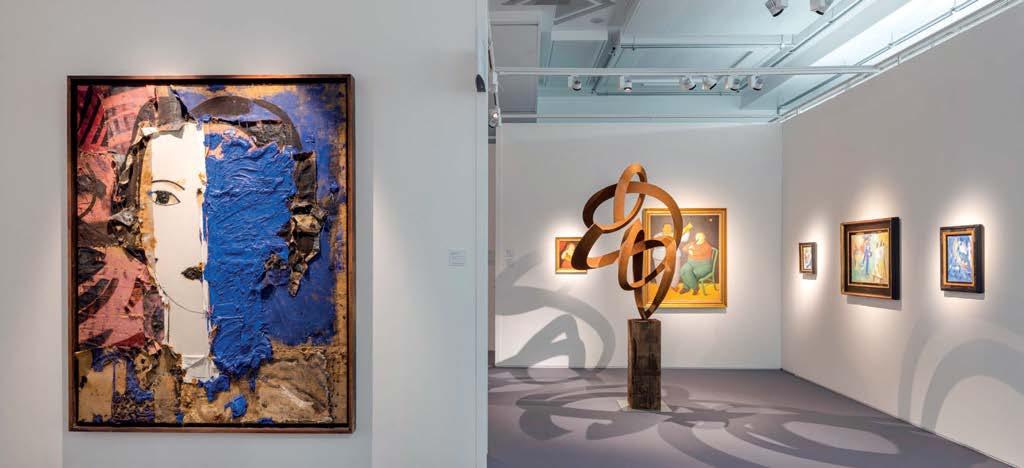
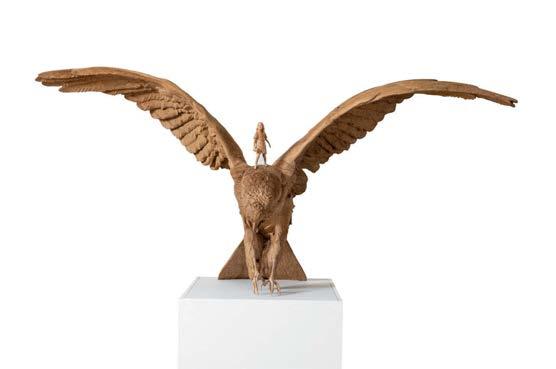
Patrocinato da S.A. il Principe Alberto II di Monaco, l’evento ha coinvolto anche
RIVA e SANLORENZO, autentici fuoriclasse dello yachting.
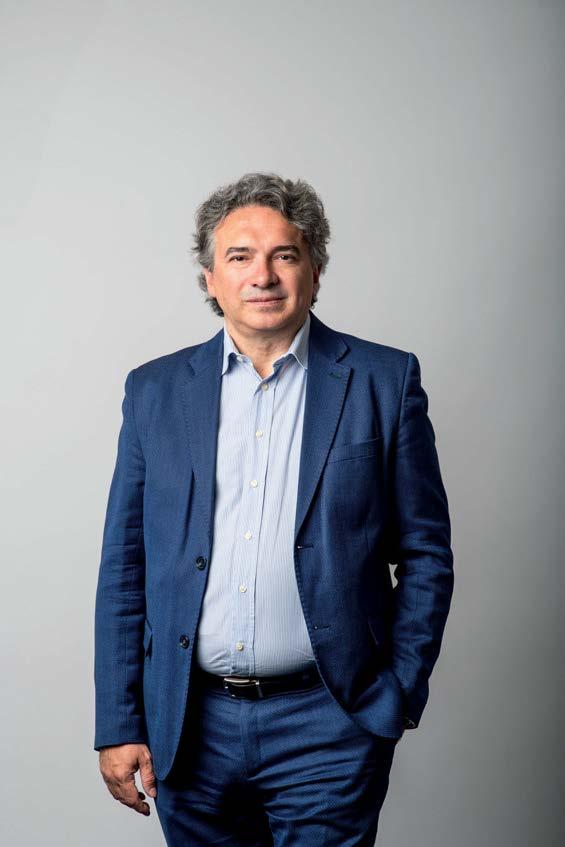
Under the patronage of H.S.H. Prince Albert II of Monaco, the event also featured RIVA and SANLORENZO, both true champions of the yachting world.
The project, curated by philanthropist Armelle Martignoni Caumont Caimi, is a powerful book with a foreword by Steve McCurry that captures in images the dignity of women, men and children living in distant and, more often than not, difficult lands beset by conflict and economic crises. A total of 26 galleries took part in the 2026 edition, and the Grimaldi Forum was transformed into a truly exclusive gathering: among royalty, museum directors, wealthy entrepreneurs, bankers and business advisers, design giant Ron Arad and internationally renowned photographer Juergen Teller were also in attendance. The exhibition spanned a wide range of styles, periods and cultures. The Parisian Mitterrand Gallery, for example, showcased the intriguing surrealist works of the Lalanne couple, alongside pieces by Lucio Fontana – including the unmissable slashed red canvas – Mimmo Rotella, Josef Albers and Yves Klein. The A&R Fleury gallery focused on the post-war period, exhibiting the abstract paintings of Hans Hartung and the vibrancy of Sam Francis, set against the austerity of Soulages’s black. Italy was also well represented, with galleries including Barovier & Toso, Cortesi, Accademica, Barbara Paci, Secci and Continua.
Advisor – Art & Passion Assets Altiqa Group
Le Patio Palace 41, Avenue Hector Otto MC - 98000 Monaco +377 97 98 62 15 - www.altiqa.group
Email: giovanni.gasparini@altiqa.group Mobile: +33 6 43 91 20 53
*Giovanni Gasparini è consulente nell’ambito della gestione d’arte e dei beni da collezione dei clienti privati della società monegasco/svizzera Altiqa, cui mette a disposizione le conoscenze maturate nel mondo delle case d’asta londinesi. Dal 2010 collabora con ArtEconomy24 de Il Sole 24 Ore, commentando il mercato internazionale dell’arte e del collezionismo. Ha svolto attività d’insegnamento a Londra, ove ha fondato e diretto il MSc in Art, Law & Business a Christie’s Education, e attualmente è a Milano presso la SDA Bocconi, ove ha conseguito la Laurea in Economia. Alla passione per l’arte e le automobili classiche accompagna quella per lo yachting e la vela in particolare.
Giovanni Gasparini is an art and collectables management consultant for private clients of the Monegasque/Swiss company Altiqa, to which he brings his knowledge of the world of London auction houses. Since 2010 he has collaborated with ArtEconomy24 of Il Sole 24 Ore, commenting on the international art and collectibles market. He has taught in London, where he founded and directed the MSc in Art, Law & Business at Christie’s Education, and currently in Milan at SDA Bocconi, where he graduated in Economics. His passion for art and classic cars is matched by his love for yachting and sailing in particular.
In alto Gerhard Richter, Green-BlueRed, 1993. A fianco, Anna DellerYee, The Gathering of the Clouds, 2026. Sotto, a destra: Jemima Murphy, Invincible Blooms; a sinistra: Mika Ninagawa, Gathered Silence Blossoming Light, 2026.
At the top, Gerhard Richter, GreenBlue-Red, 1993. At the side, Anna Deller-Yee, The Gathering of the Clouds, 2026. Below, on the right: Jemima Murphy, Invincible Blooms; on the left: Mika Ninagawa, Gathered Silence Blossoming Light, 2026.
Soddisfatta Louise Simpson, responsabile dell’asta di Arte Moderna e Contemporanea di Phillips.
L’asta di Londra, che ha raggiunto tre milioni di sterline, è stata trainata congiuntamente da Gerhard Richter e da Banksy. “La nostra asta di Arte Moderna e Contemporanea ha registrato un ottimo risultato, trainata congiuntamente dagli elevati prezzi ottenuti per le opere di punta di Banksy e di Gerhard Richter. L’asta si è aperta con Sink – Osborne Street di Andrew Cranston, che ha più che raddoppiato la stima minima, seguito da un risultato eccellente per William Kentridge e da importanti debutti in asta di Jemima Murphy e Anna Deller-Yee. L’eccezionale gruppo di opere presentate in ULTIMATE, la piattaforma di Phillips per pezzi straordinari e unici, ha visto i due Autoritratti di Robert Mapplethorpe posizionarsi tra i primi dieci, insieme a un ottimo risultato per Woman in Feather Hat, New York, di Irving Penn”.
Louise Simpson, head of Phillips’ Modern and Contemporary Art auction, expressed her satisfaction.
The London auction, which raised three million pounds, was driven by Gerhard Richter and Banksy. “Our Modern and Contemporary Art auction achieved an excellent result, driven by the high prices realised for key works by Banksy and Gerhard Richter. The auction opened with Andrew Cranston’s Sink – Osborne Street, which more than doubled its low estimate, followed by an excellent result for William Kentridge and significant auction debuts for Jemima Murphy and Anna Deller-Yee. The exceptional group of works presented in ULTIMATE, Phillips’ platform for extraordinary and unique pieces, saw Robert Mapplethorpe’s two Self-Portraits rank among the top ten, alongside an excellent result for Irving Penn’s Woman in Feather Hat, New York”.
Hanno vissuto la Prima e la Seconda Repubblica di Ferretti, gruppo dove si sono fatti davvero le ossa. Fino al giorno in cui hanno deciso di prendere il largo per costruire altrove il proprio porto sicuro
They rose through the ranks at Ferretti during its First and Second Republics, a period when they really cut their teeth. Until the day they decided to set sail and build their own haven elsewhere
by Chiara Risolo -
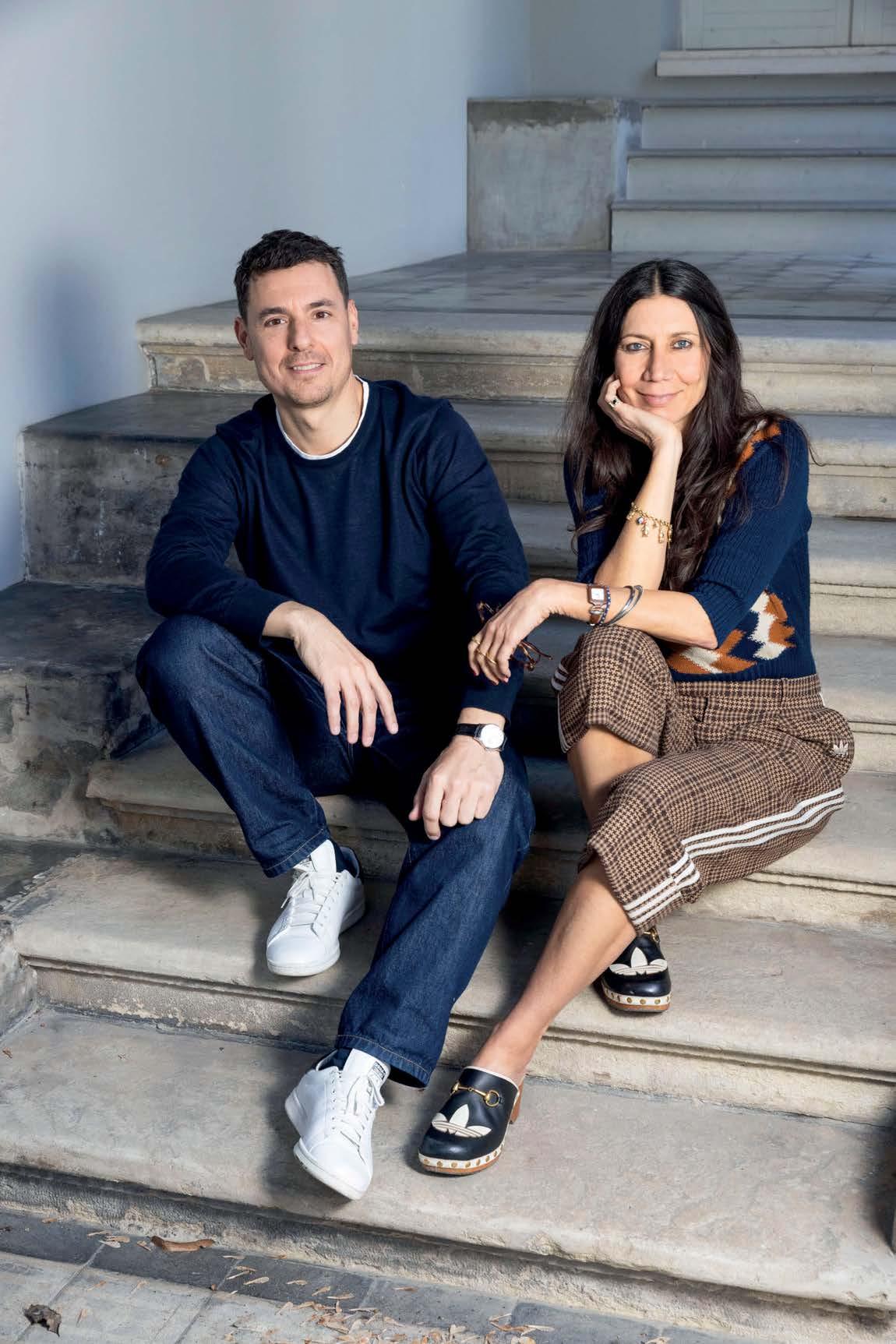
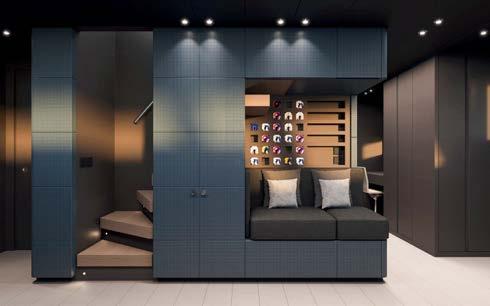
Lei di Ravenna, lui di Terni. Lei classe che non si dice perché è una signora, lui 1983.
Lei, negli anni dell’Università, alla nautica nemmeno ci pensava: iscritta alla Facoltà di Architettura, ha discusso una tesi sull’assistenza alloggiativa in caso di calamità naturali, convinta del fatto che un giorno avrebbe lavorato per e con la Protezione Civile. Lui, invece, nato in una regione senza mare, ha sempre avuto il pallino per le barche: agli esami di terza media ha portato un modellino in balsa di uno yacht costruito con le sue mani. Si chiamava TR001.
Lei e lui sono Francesca Burdisso ed Emiliano Capponi, timonieri dello studio ravennate che riporta i loro cognomi uno attaccato all’altro.
Ringraziando Iddio, la storia che segue non ha aloni melanconici generati da traumi infantili né qualsivoglia accenno di mestizia. Eppure, i due architetti, raccontandosi, almeno fino a un certo punto, ricordano Alice e Mattia, i protagonisti di quel capolavoro firmato Paolo Giordano, Per anni si sono sfiorati senza mai incontrarsi, ignari, oltretutto, di essere destinati a diventare le due metà di un intero, professionalmente parlando. Entrambi si sono fatti le ossa alla corte del Gruppo Ferretti, sotto il regno di Norberto Ferretti, sapendo pochissimo, quasi nulla per la verità, l’uno dell’altra. Si sono stretti la mano soltanto quando il cantiere ha deciso di centralizzare l’Ufficio Stile a Forlì, dove, per giunta, Francesca è diventata il di lui supervisore. Poi è arrivata la Seconda Repubblica del Gruppo, quella italo-cinese, e i due si sono separati nuovamente. Fino alla reunion per il grande salto alla conquista dell’indipendenza nel 2019, anno di fondazione dello
Burdisso, lei aveva altri piani per il suo futuro. Come mai a un certo punto è approdata al mondo della nautica? Nel 2005 fui chiamata da Fulvio Dodich, ravennate come me e allora amministratore delegato di Ferretti. Per me fu un colpo di fulmine: l’ambiente e il lavoro mi piacquero immediatamente.
Io ho sempre saputo che avrei fatto questo mestiere. Iniziai dapprima in un piccolo cantiere navale a Orte. Nel 2006 mandai un curriculum in Ferretti. Mi presero.
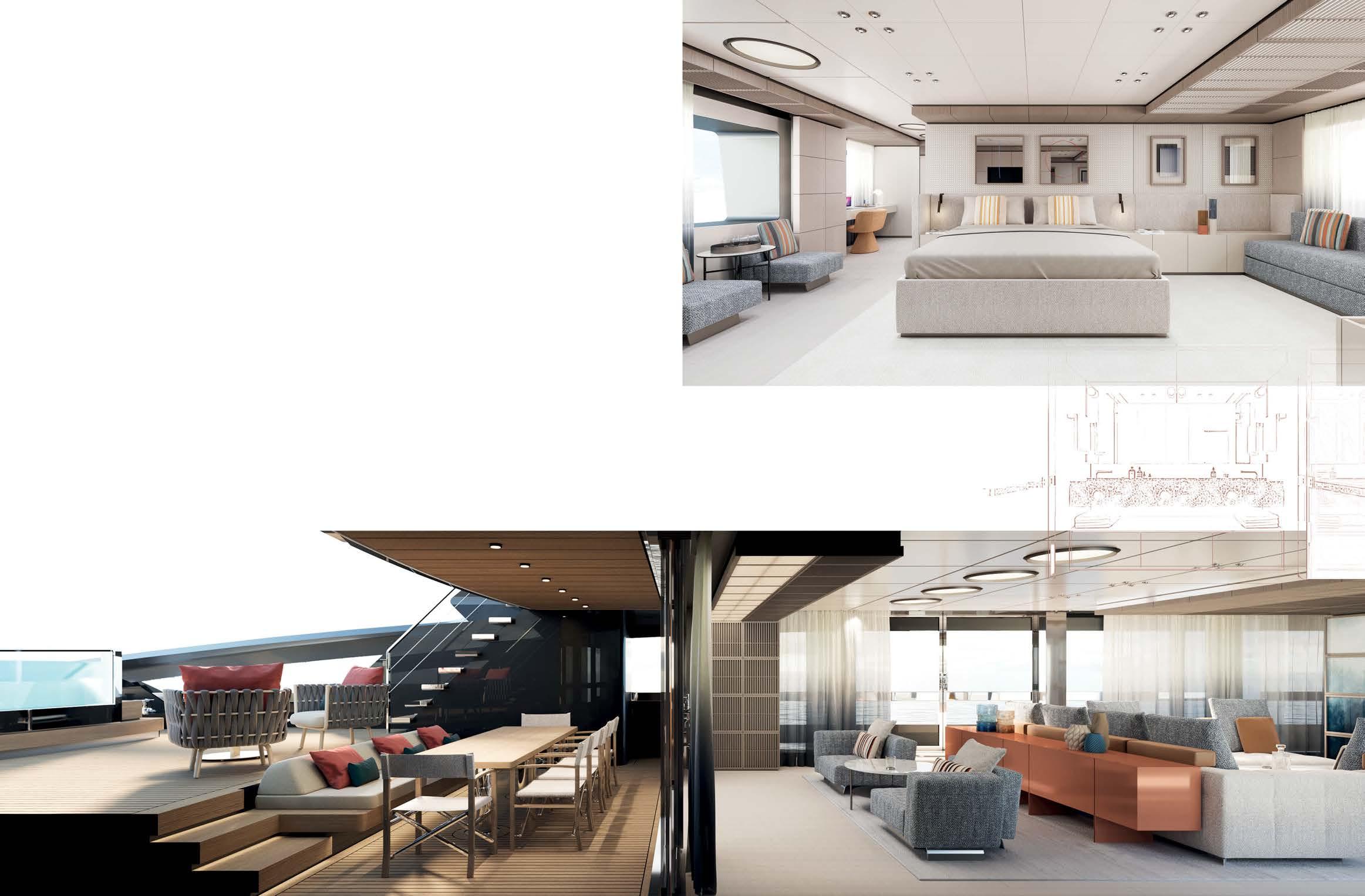
VanDutch 75 rappresenta una nuova era nel segno del design made in Italy per il brand olandese di Cantiere del Pardo dal 2020, lo Studio ha reinterpretato lo stile VanDutch in una chiave più contemporanea e mediterranea.
The VanDutch 75 heralds a new era of Italian design for the renowned Dutch brand, acquired by Cantiere del Pardo in 2020. BurdissoCapponi Yachts & Design has reimagined the VanDutch style with a more contemporary, Mediterranean twist.
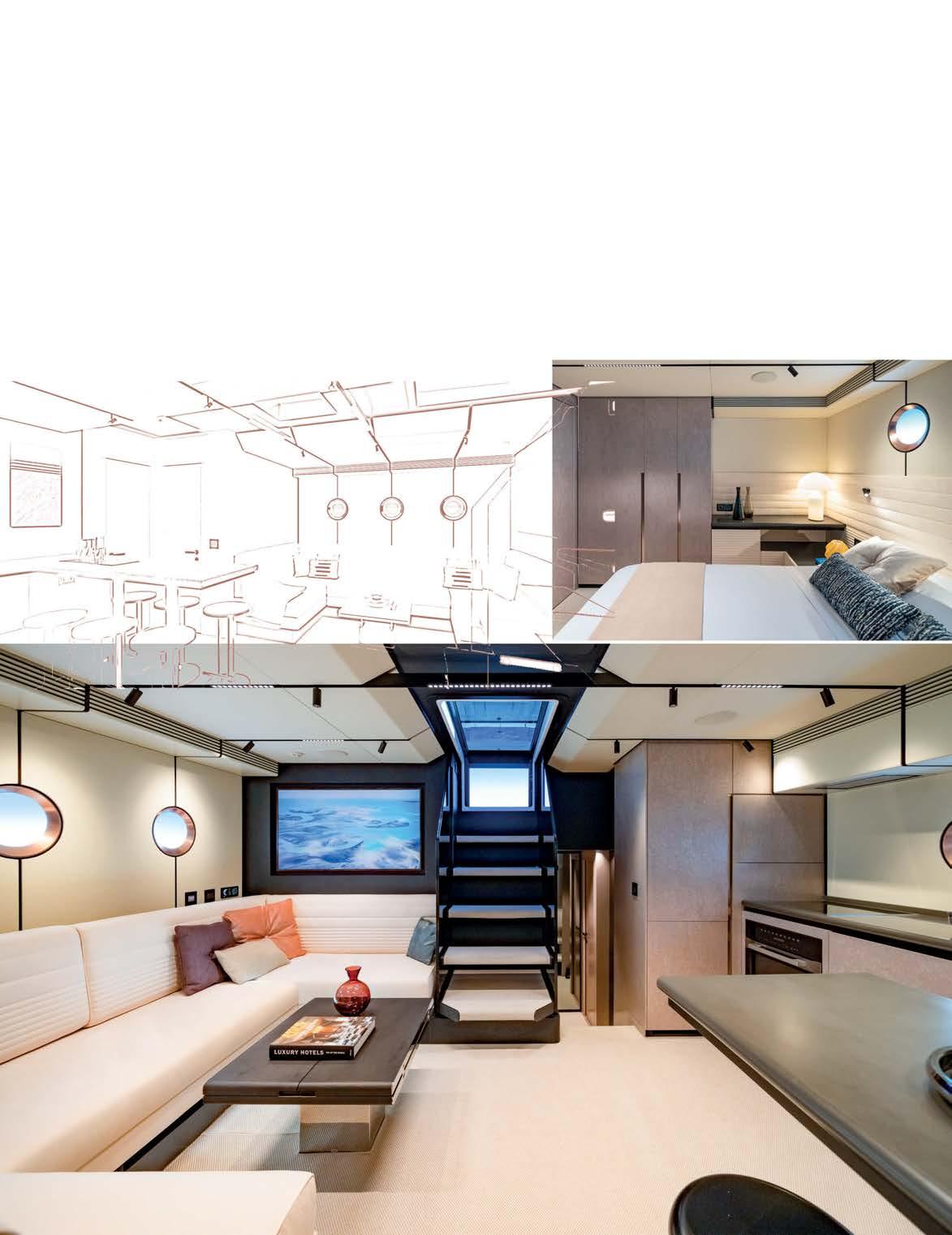
Avete lavorato per la stessa azienda senza saperlo. Poi un giorno accade che...
Capponi: Accade che mi ritrovo sulla testa Francesca.
Burdisso: Già, ero cattivissima, terribile! (tuona divertita, ndr). Scherzi a parte, mi accorsi molto presto che Emiliano aveva una marcia in più, ma soprattutto con il passare del tempo capimmo che entrambi eravamo mossi dalle stesse intenzioni: volevamo uscire dalla comfort zone del posto fisso per costruire qualcosa che fosse soltanto nostro. Quindi avete rassegnato le dimissioni.
Burdisso: Esatto. Ci presentammo all’ufficio del personale insieme. La responsabile di allora non fece alcuna resistenza. Ci guardò e ci disse che era chiarissimo quanto fossimo motivati a spiccare il volo. Coraggiosi.
Burdisso: Fu un bel salto nel buio, vero. Anche perché, come
amo sottolineare, siamo usciti da Ferretti Group senza magheggi, nel senso che non abbiamo portato via nemmeno l’ombra di un cliente. L’onestà paga sempre, o almeno così dicono.
Burdisso: Assolutamente. Infatti, in men che non si dica, è arrivata la prima commessa. Ancora una volta grazie a Fulvio Dodich. Era al comando della divisione Superyachts di Rosetti. Ci chiamò per disegnare gli interni di un 38 metri in acciaio. Sergio Cutolo di Hydro Tec stava già lavorando al progetto degli esterni.
Capponi: La barca si chiamava Emocean, un Explorer destinato a una coppia di armatori giovani entrambi, ma con le idee molto chiare.
In sintesi: Rosetti, un cantiere storico e solido; Cutolo, una garanzia; Dodich, un professionista serio e autorevole. Il vostro battesimo del mare non poteva andare meglio...
Capponi: Sì. Emocean fu presentata al Cannes Yachting Festival del 2021. Piacque moltissimo. Ricordo che proprio in occasione del boat show fu venduta anche la seconda unità, Makasea.
Altroché spiccare il volo. Eravate già nella stratosfera della nautica.
Capponi: Per noi fu una bellissima vetrina, confermo. Di questo Explorer, in effetti, si parlò molto e bene.
Burdisso: Da qui, non tardarono ad arrivare altre commesse. Oltre al Makasea, che - fatto alquanto curioso - gli armatori vollero esattamente come Emocean, salvo piccolissime modifiche, ci siamo misurati con gli interni di Doge, un 40 metri di Ocean King. Ancora una volta un Explorer che fu presentato al Monaco Yacht Show del 2025. Poi?
Capponi: Impossibile non menzionare Pardo Endurance 72 E, naturalmente, il progetto di VanDutch 75, un’esperienza quest’ultima molto stimolante, perché ci è stato chiesto di reinterpretare in chiave mediterranea il Dna del cantiere.
Avete citato due brand che fanno capo a Cantiere del Pardo. È azzardato supporre che potrebbe essere l’anticamera di una collaborazione esclusiva?
Capponi: È certamente un gruppo solidissimo per cui è davvero interessante lavorare. Detto ciò, noi amiamo spaziare. Progettiamo dal tender di 3 metri e mezzo, penso ad Amy 330e di Amare Group, una “seppia” futuristica con motore elettrico Mitek Revolve, al mega yacht di 40 metri come Doge appunto. Del resto, cambiando la scala di progetto cambia l’approccio, cambiano le prospettive, gli stimoli, gli strumenti. La pluralità è un valore cui difficilmente potremmo rinunciare. Il filo conduttore qual è? In altre parole, come definireste il vostro stile?
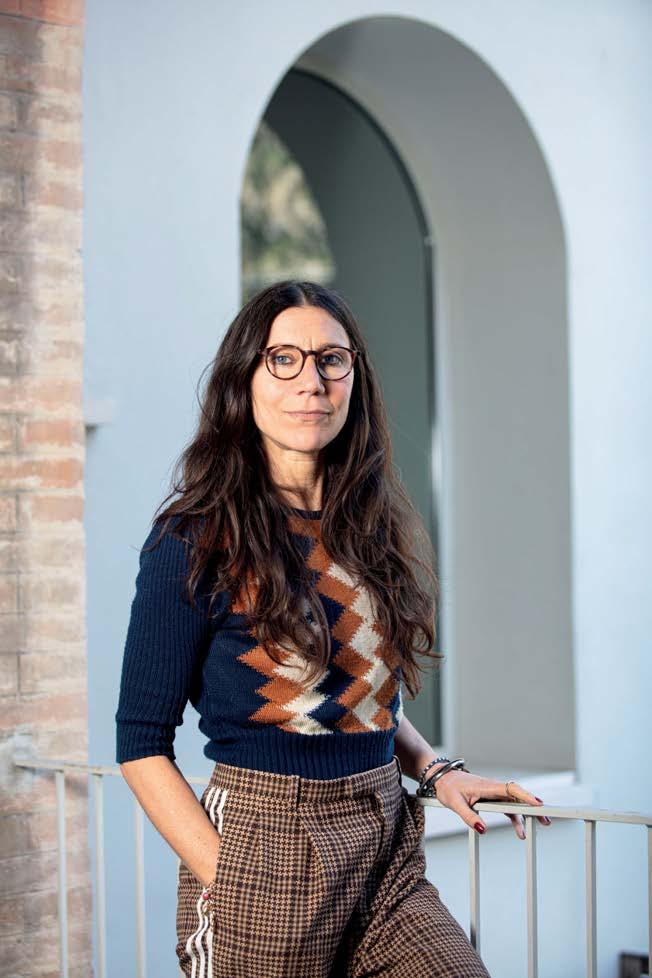
Burdisso: Senza dubbio asciutto, dove lo spazio prevale sulla decorazione. Nel nostro lavoro portiamo avanti una ricerca su temi che sono diventati un po’ il filo conduttore del nostro stile: come l’attribuzione di un valore estetico all’elemento tecnico, la definizione razionale della percezione spaziale e l’utilizzo “onesto” dei materiali. Non amo il lusso ostentato. Materiali semplici, naturali. Onesti per dire.
Onesto? In che senso?
Burdisso: Se decidiamo di utilizzare il legno, usiamo il legno vero. Idem per la pietra o per il marmo. Non cerchiamo qualcosa che ne simuli l’effetto. Non amiamo il lusso ostentato, materiali semplici, naturali, onesti per definirne correttamente la dizione.
A proposito di onestà, solitamente, intervistando coppie, emerge l’idea che si vada d’amore e d’accordo.
Burdisso: Noi? Ah, noi litighiamo tantissimo! Più che altro è un fatto caratteriale. Io sono istintiva, mi lascio guidare dalle emozioni. Emiliano, invece, è molto razionale, prima ragiona e poi decide. Io sgomito dall’interno, lui stringe dall’esterno. Ma il nostro equilibrio, in fondo, è proprio questo.
«Nel 2005 fui chiamata da Fulvio Dodich, ravennate come me e allora amministratore delegato di FERRETTI. Per me fu un colpo di fulmine: l’ambiente e il lavoro mi piacquero immediatamente».
«In 2005, I was approached by Fulvio Dodich, who, like me, is from Ravenna and was then FERRETTI’s CEO. It was love at first sight for me: I took an instant liking to the environment and the work». Francesca Burdisso
«Il progetto degli interni di EMOCEAN, Explorer della divisione Superyachts di Rosetti, è stato il nostro trampolino di lancio. Curiosamente, gli armatori della seconda unità, MAKASEA, hanno chiesto che fosse identica».
«The interior design of EMOCEAN, an Explorer from Rosetti’s Superyachts division, served as our springboard. Notably, the owners of the second vessel, MAKASEA, requested that it be identical».
She is from Ravenna; he is from Terni. As befits a lady, let’s not dwell on her age; he was born in 1983.
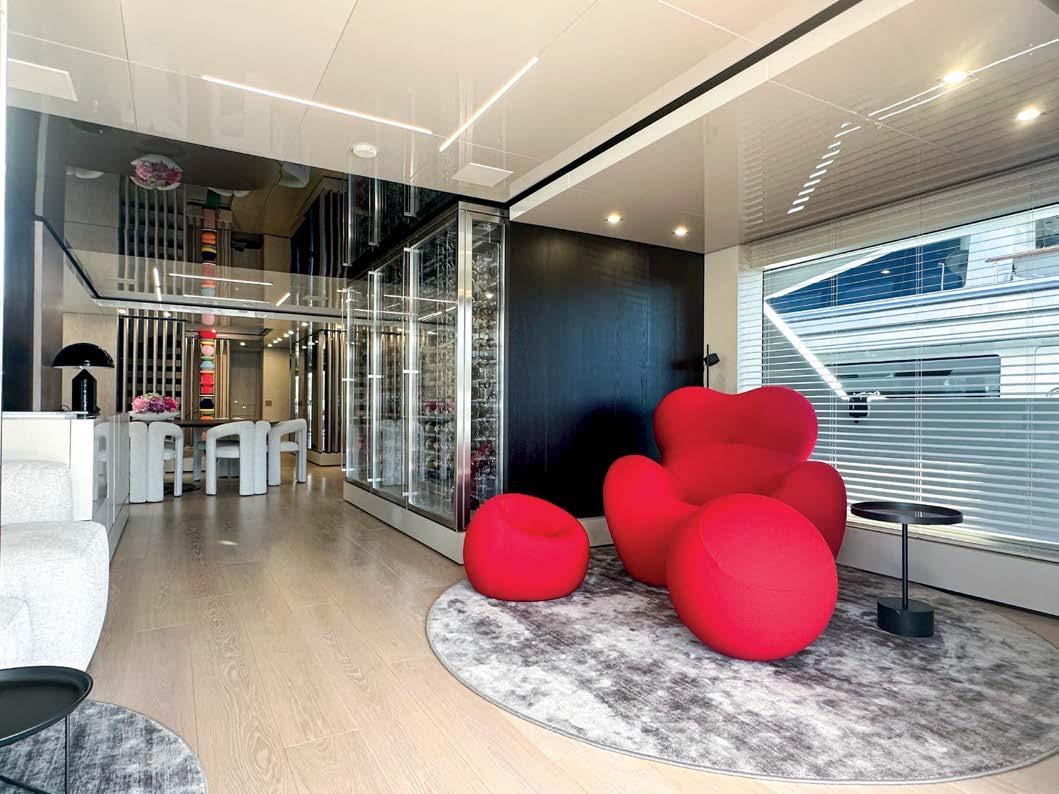
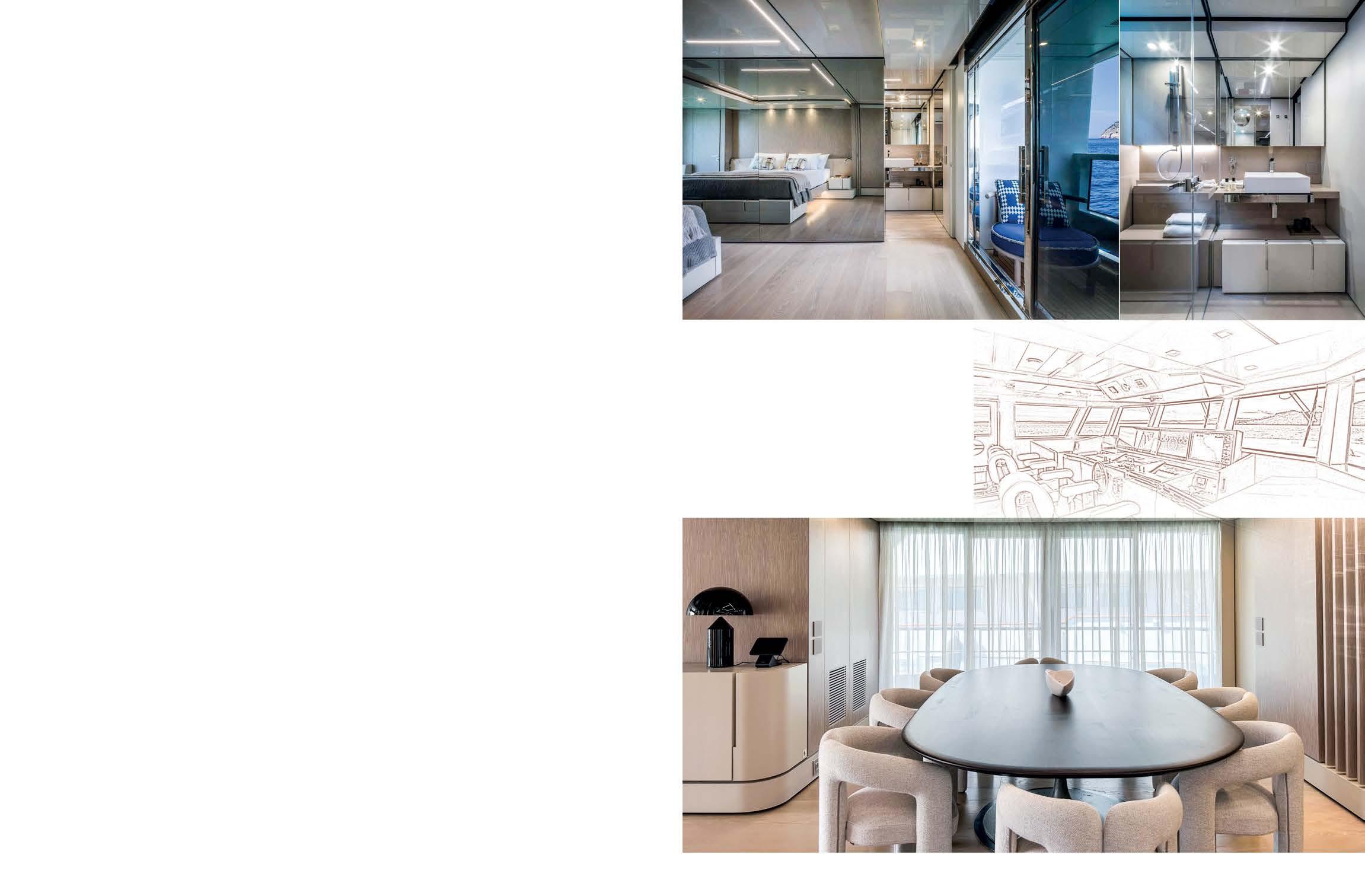
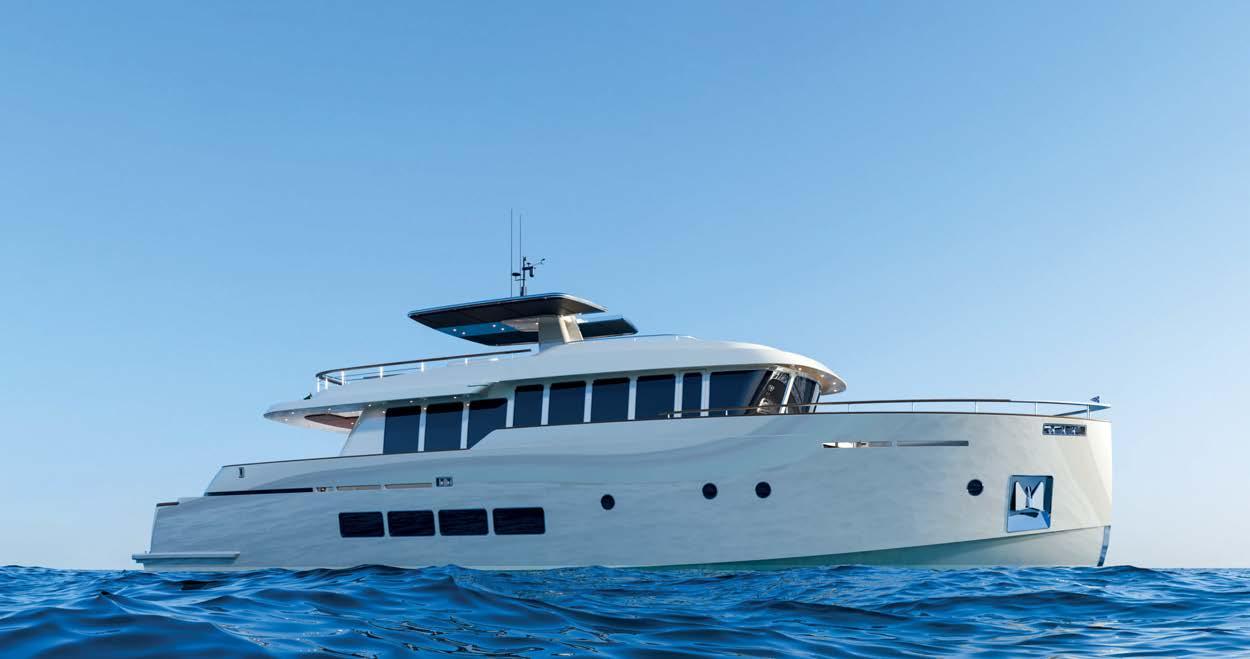
«Lavorare con Norberto Ferretti e Gianni Zuccon è stato molto stimolante. Due giganti. Entrambi AUTOREVOLI e mai autoritari. Abbiamo IMPARATO tantissimo, soprattutto a spaccare il capello in quattro».
«Working with Norberto Ferretti and Gianni Zuccon was incredibly inspiring. Two giants. Both HIGHLY RESPECTED yet never overbearing. We learnt a great deal, especially how to split hairs».
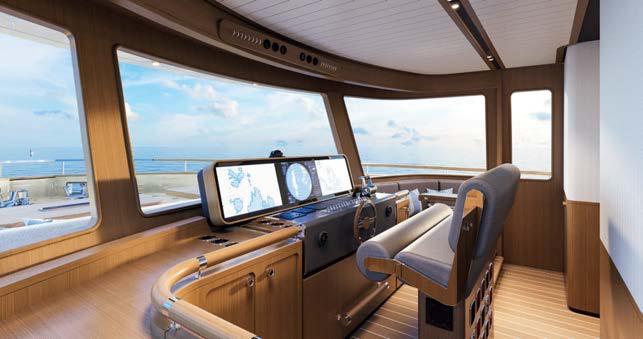
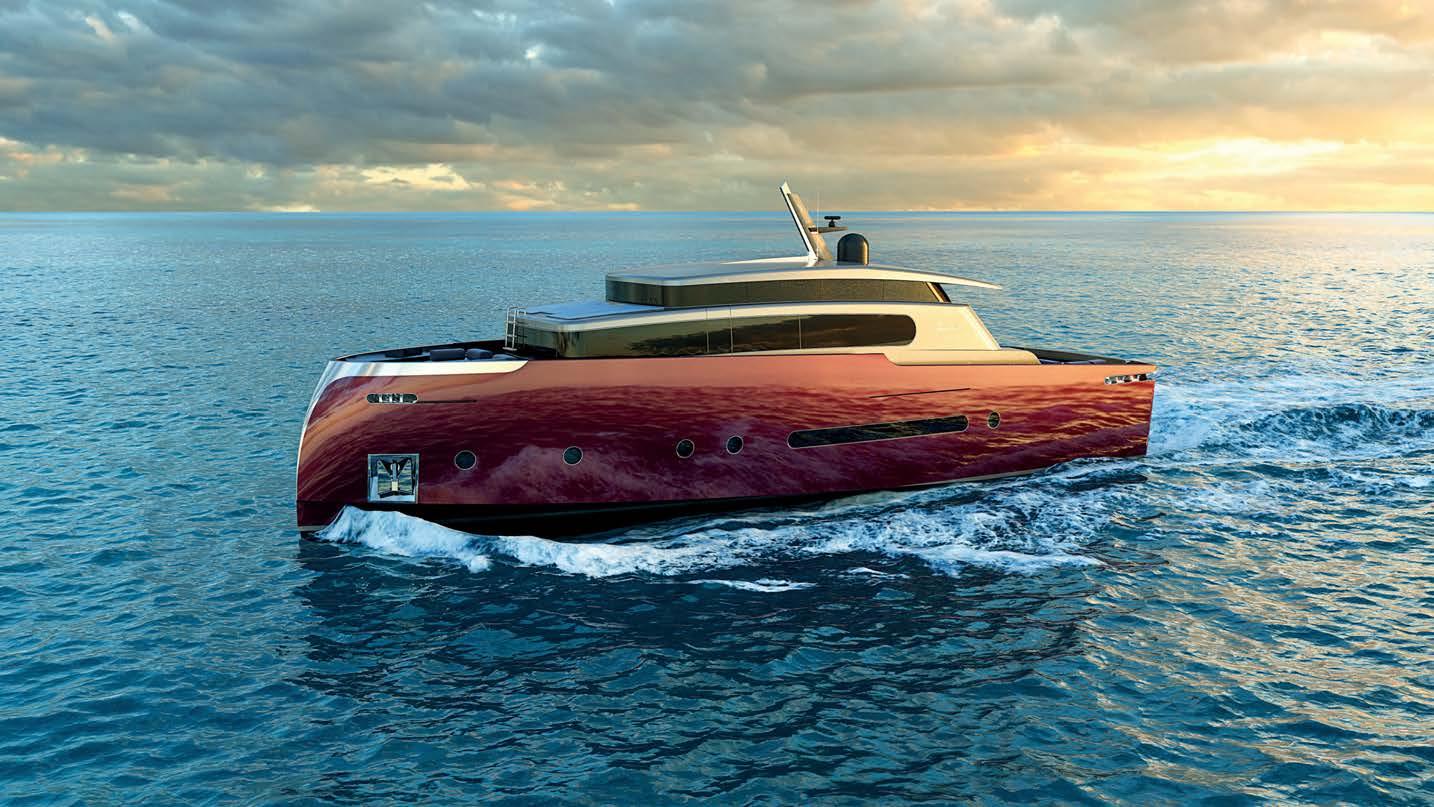
They only shook hands when the shipyard decided to centralise the Design Department in Forlì, where, as it happened, Francesca became his supervisor. Then came the Group’s Second Republic, the Italian-Chinese one, and the two parted ways once more. Until their reunion for the big leap towards independence in 2019, the year the studio was founded, Barche met them.
Burdisso, you had other plans for your future. How did you end up in the yachting industry? In 2005, I was approached by Fulvio Dodich, who, like me, is from Ravenna and was then Ferretti’s CEO. It was love at first sight for me: I took an instant liking to the environment and the work.
Capponi? I always knew I’d end up in this line of work. I started at a small shipyard in Orte. In 2006, I sent a CV to Ferretti, and they took me on.
You both have been working for the same company without realising it. Then one day it happens that...
Capponi: It just so happens that I’ve ended up with Francesca as my boss.
Burdisso: Yeah, I was really naughty, terrible! (she exclaims with a laugh, ed.). Joking aside, I realised very early on that Emiliano was a cut above the rest; but above all, as time went on, we realised we were both driven by the same desire: to step out of the comfort zone of a permanent job and build something entirely our own.
So you’ve handed in your resignation.
Burdisso: Exactly. We went to the HR office together. The manager at the time didn’t put up any resistance. She looked at us and said it was perfectly clear how keen we were to spread our wings.
Brave.
Burdisso: It was quite a leap in the dark. Especially because, as I like to point out, we left the Ferretti Group without any underhand dealings – in the sense that we didn’t take a single customer with us.
Honesty always pays off, or so they say.
Burdisso: Absolutely. In fact, in the blink of an eye, the first commission had come in. Once again, thanks to Fulvio Dodich, who was head of Rosetti’s Superyachts division. He called us to design the interiors of a 38-metre steel yacht. Sergio Cutolo of Hydro Tec was already working on the exterior design.
Capponi: The boat was called Emocean, an Explorer built for a couple of owners both were young but had very clear ideas.
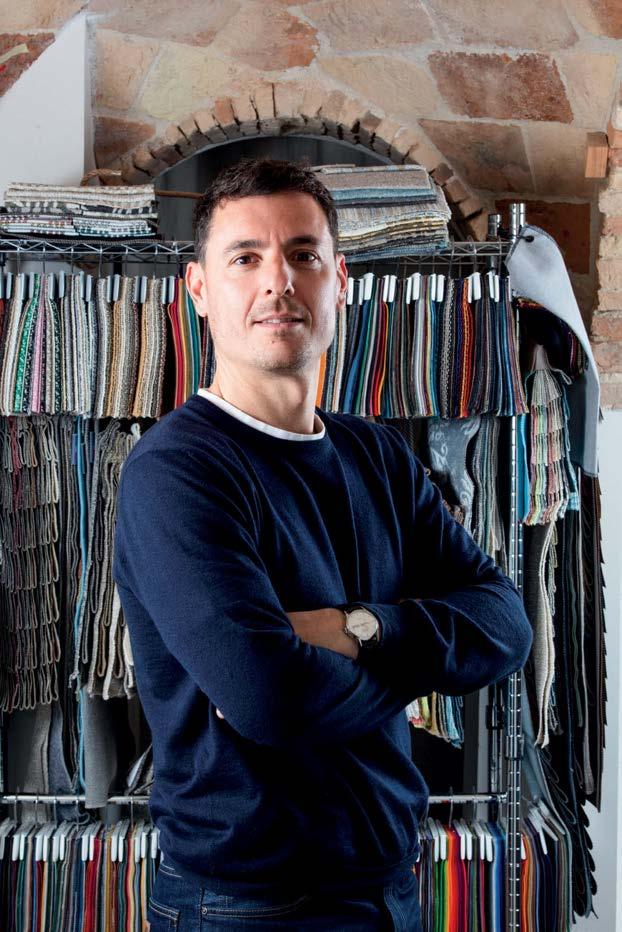
In short: Rosetti, a long-established and reliable shipyard; Cutolo, a name you can trust; and Dodich, a serious and respected professional. Your maiden voyage couldn’t have gone better...
Capponi: Yes. Emocean was unveiled at the 2021 Cannes Yachting Festival and was a huge hit. I remember that the second vessel, Makasea, was also sold at the boat show.
You weren’t just taking off – you were already in the stratosphere of the boating world.
Capponi: It was a wonderful showcase for us, I can confirm. In fact, there was a lot of positive talk about this Explorer.
Burdisso: It wasn’t long before further commissions followed. In addition to the Makasea, which, curiously enough, the owners wanted to be exactly like the Emocean, apart from a few minor changes, we also worked on the Doge’s interiors, a 40-metre vessel from Ocean King. Once again, it was an Explorer model, unveiled at the 2025 Monaco Yacht Show.
And then?
Capponi: It would be remiss not to mention the Pardo Endurance 72. And, of course, the VanDutch 75 project – a truly inspiring experience, as we were asked to reinterpret the shipyard’s DNA with a Mediterranean twist.
«Io HO SEMPRE SAPUTO che avrei fatto questo mestiere.
Iniziai dapprima in un piccolo cantiere navale a Orte. Nel 2006 mandai un curriculum in Ferretti. Mi presero».
«I ALWAYS KNEW I’d end up in this line of work.
I started at a small shipyard in Orte. In 2006, I sent a CV to Ferretti, and they took me on».
Emiliano Capponi
Il briefing dell’Endurance 72 di Pardo Yachts chiedeva di rispettare il family feeling del cantiere; lo studio si è ispirato all’Endurance 60, rivedendone i canoni stilistici in un’ottica ancora più contemporanea ed elegante. Gli ambienti alternano la classicità del legno a materiali tecnici e a tessuti, utilizzati e dosati secondo un preciso schema e un particolare uso dinamico delle linee inclinate. L’essenza principale è quella del noce grigio con finitura opaca, utilizzata solo per le parti che definiscono il design dell’imbarcazione - velette dei cielini, pagliolato del main deck, basamenti delle tappezzerie, boiserie.
The design brief for the Pardo Yachts Endurance 72 called for
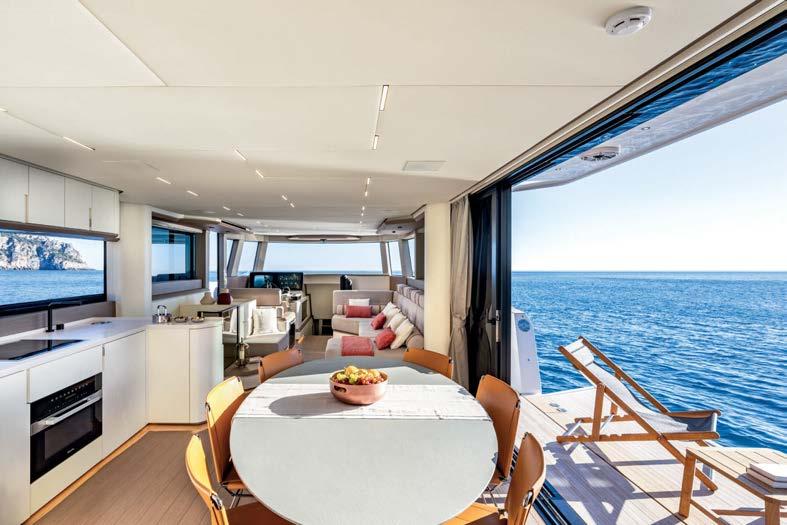
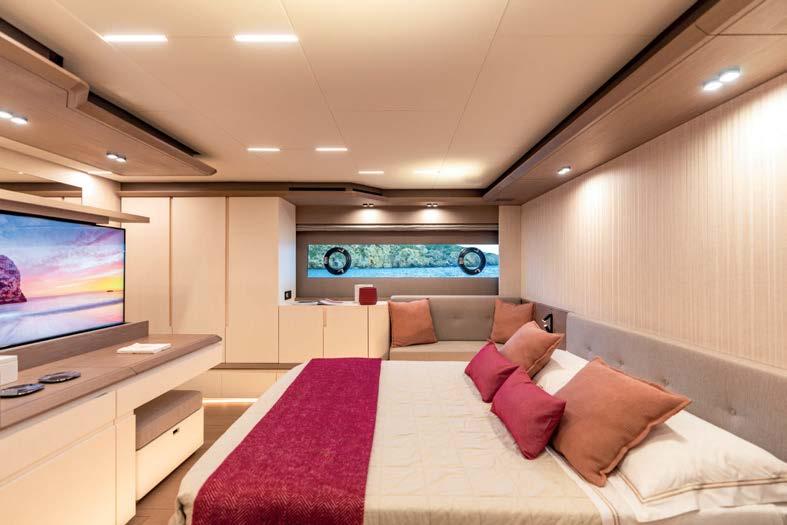
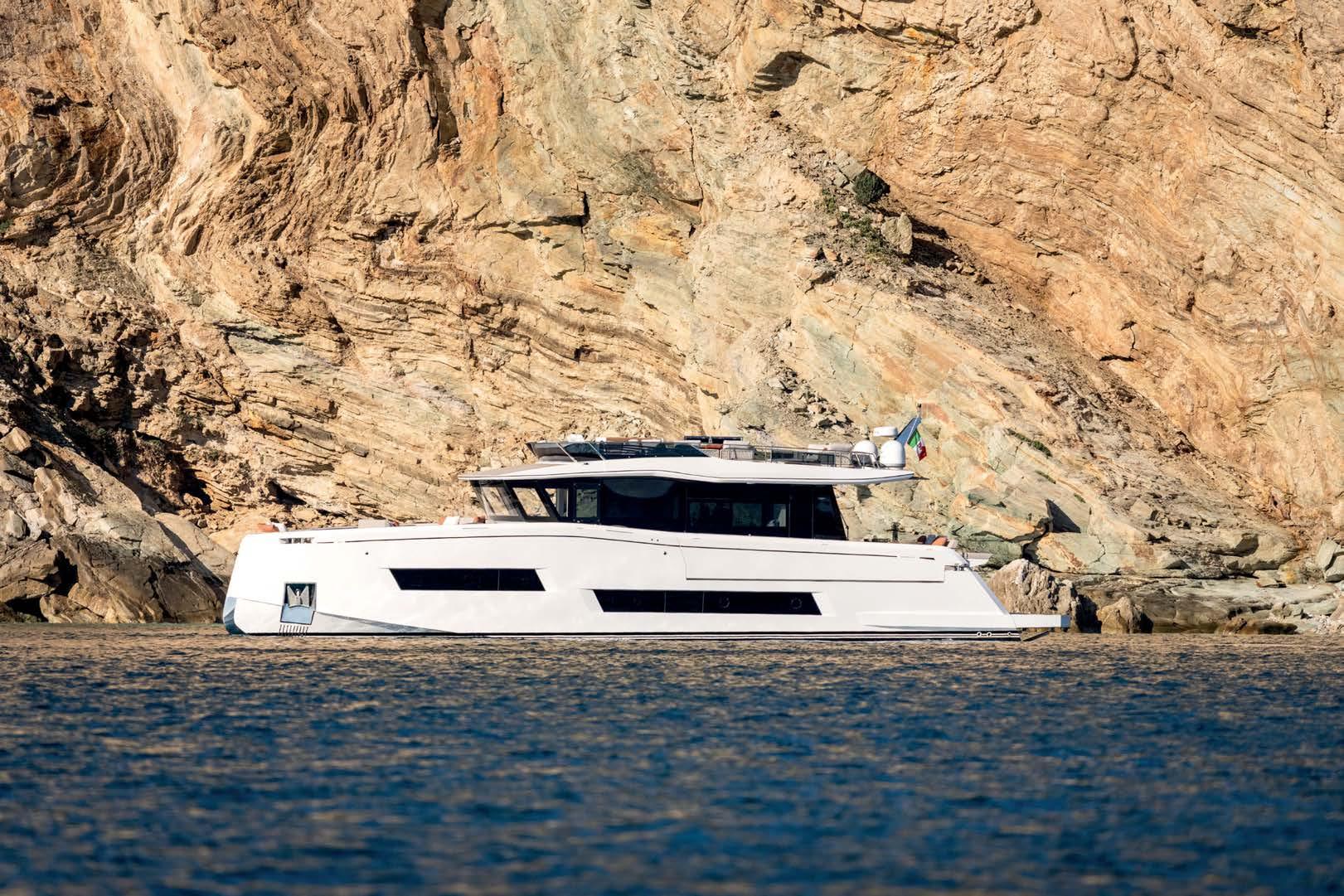
You mentioned two brands that are part of Cantiere del Pardo. Is it fair to suggest this could be a precursor to an exclusive partnership?
Capponi: It’s certainly a very close-knit team, which makes it a real pleasure to work with. That said, we love to explore different areas. We design everything from 3.5-metre tenders – such as the Amare Group’s Amy 330e, a futuristic ‘cuttlefish’ fitted with a Mitek Revolve electric motor – to 40-metre mega-yachts like the Doge. After all, changing the scale of a project changes the approach, perspectives, inspiration, and tools. Diversity is a value we could hardly do without.
What is the common thread? In other words, how would you characterise your style?
Burdisso: Undeniably understated, where space takes precedence over decoration. In our work, we explore themes that have come to define our style: attributing aesthetic value to technical elements, the rational definition of spatial perception, and the ‘honest’ use of materials. I don’t care for ostentatious luxury. Simple, natural materials. Honest, so to speak.
Honest? In what sense?
Burdisso: If we decide to use wood, let’s use real wood. The same goes for stone or marble. We’re not looking for something that merely imitates the look. We don’t like ostentatious luxury; we prefer simple, natural, honest materials – to put it plainly.
Speaking of honesty, the impression that usually emerges when interviewing couples is that they get on very well.
Us? Oh, we argue loads!
It’s really more a question of personality. I’m instinctive; I let my emotions guide me. Emiliano, on the other hand, is very rational; he thinks things through before making a decision. I push from the inside; he pulls from the outside. But that, ultimately, is what makes
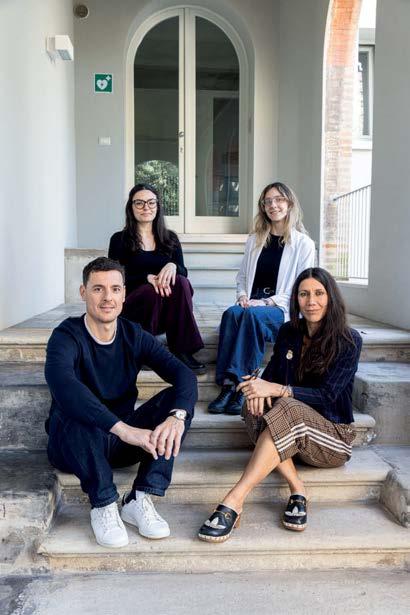
«Lavorare in esclusiva per un cantiere può essere interessante e lusinghiero, ma preferiamo essere TRASVERSALI e misurarci con diverse tipologie di prodotto. La pluralità, oltre a essere un valore, è idealmente un LABORATORIO di pensieri in divenire. È libertà».
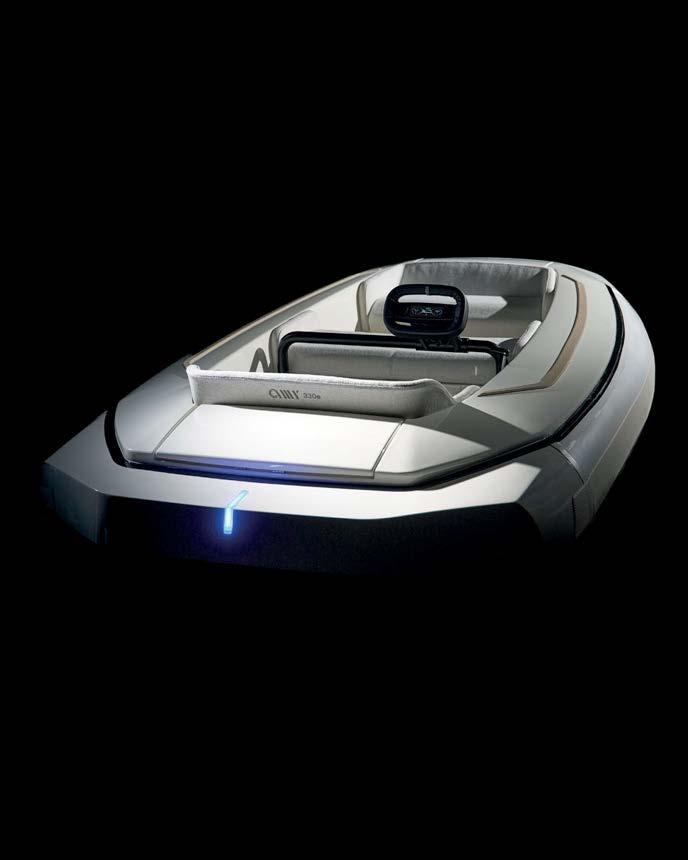
«Working exclusively for a single shipyard may be appealing and flattering, but we prefer to take a BROADER APPROACH and test our skills across a range of projects. Diversity, as a core value, is essentially a LABORATORY for the evolution of ideas. It is freedom».
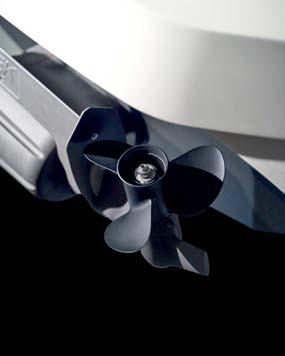
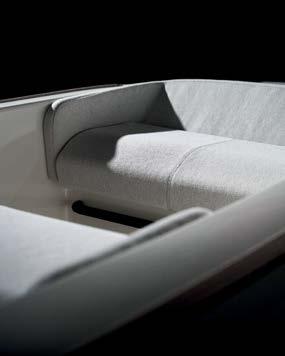
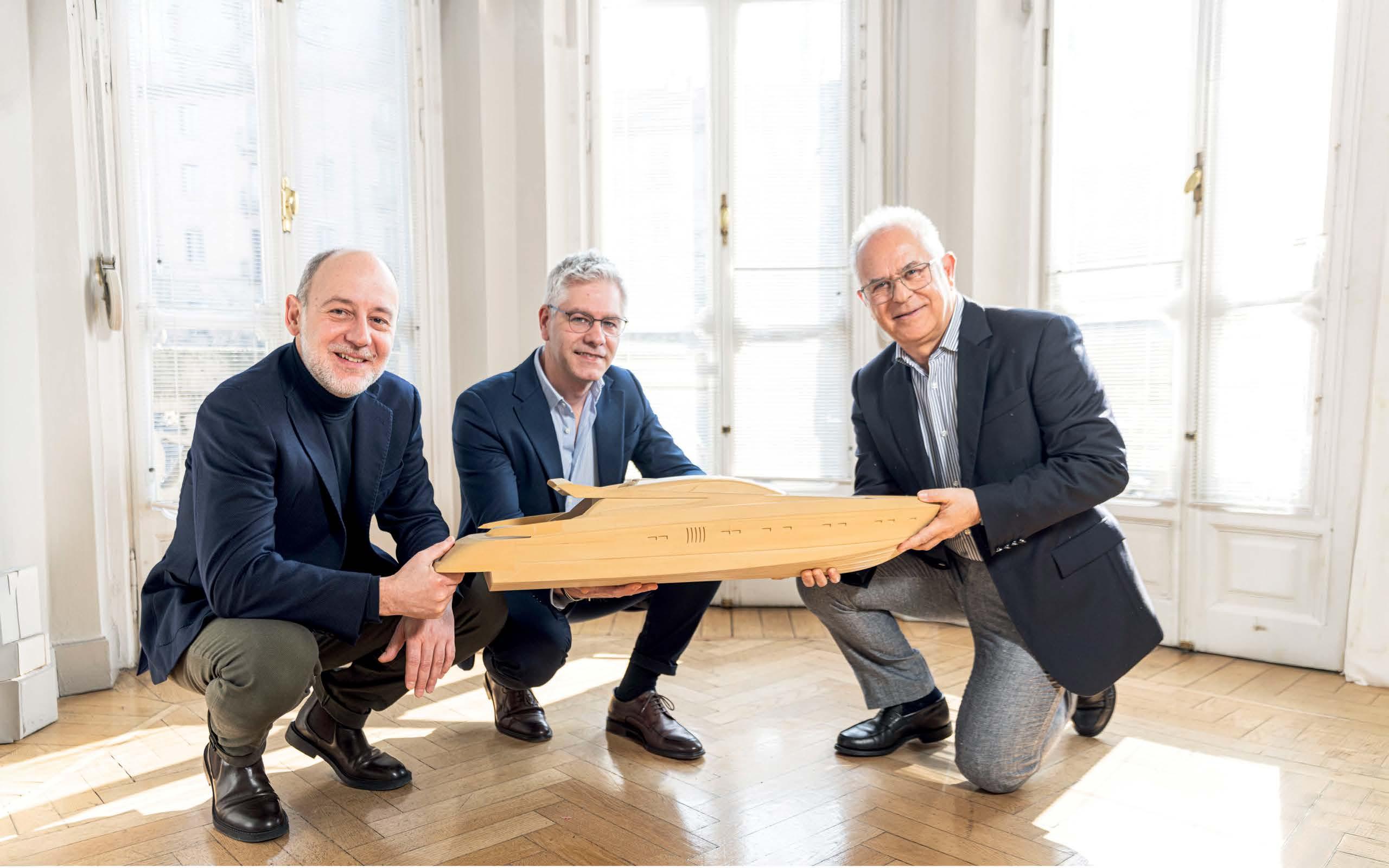
Fondato nel 2004, è uno studio capace di muoversi con naturalezza tra automotive e nautica. Un percorso costruito su metodo, dialogo con i cantieri e su una solida cultura del progetto che interpreta la barca come spazio abitativo e piattaforma di lifestyle
Founded in 2004, this firm can move naturally between the automotive and nautical industries. Its trajectory is based on method, dialogue with shipyards, and a solid design culture that interprets yachts as living spaces and lifestyle platforms
by
Quartostile è uno studio di design che nasce nel 2004 a Torino, in quella che è una città lontana dal mare ma dove la cultura progettuale si trasmette con lo stesso rigore in tutti gli oggetti afferenti al disegno industriale.
Matteo Broglia, Franco Carone e Andrea Sartori fondano
Quartostile lasciando i centri stile in cui lavorano per seguire un sogno: disegnare imbarcazioni. E così un’amicizia diventa progetto di vita, poi studio, poi realtà riconosciuta a livello internazionale. Dietro ci sono notti, fine settimana, sacrifici. E, soprattutto, la stessa passione, la stessa attenzione al dettaglio, lo stesso metodo e la stessa dedizione che ancora oggi guidano ogni progetto. L’esordio ha il sapore delle sfide affrontate con entusiasmo, di un percorso ancora tutto da scoprire e da costruire. Tra i primi progetti prende forma l’86 Flying Sport sviluppato insieme a Carlo Cerri, uno yacht che introduce una soluzione allora sorprendente: un ponte fly integrato nella linea grazie al salone ammezzato. Seguono le navette per Fratelli Rossi e i lobster per Royal Yacht, mentre lo studio muove i primi passi nei grandi saloni internazionali. Il debutto al Monaco Yacht Show resta ancora oggi un ricordo emblematico: l’allestimento dello stand procede fino all’ultimo minuto mentre l’equipaggio di una barca ormeggiata di fronte osserva la scena e scommette se riusciranno a terminarlo in tempo. Ce la faranno. Eccome! Nel frattempo, mentre il mare entra sempre più stabilmente nel lavoro dello studio, si consolida anche il primo amore professionale dei tre fondatori: l’automotive. Quartostile inizia a collaborare con case automobilistiche internazionali lavorando su interni, esterni, concept car e modelli di produzione. Un’esperienza che rafforza ulteriormente il loro metodo progettuale. “Fin dall’inizio abbiamo pensato a Quartostile come a un vero Centro Stile, capace di seguire l’intero processo creativo, dalla ricerca stilistica allo sviluppo dei modelli matematici destinati alla produzione”, raccontano Broglia, Carone e Sartori.
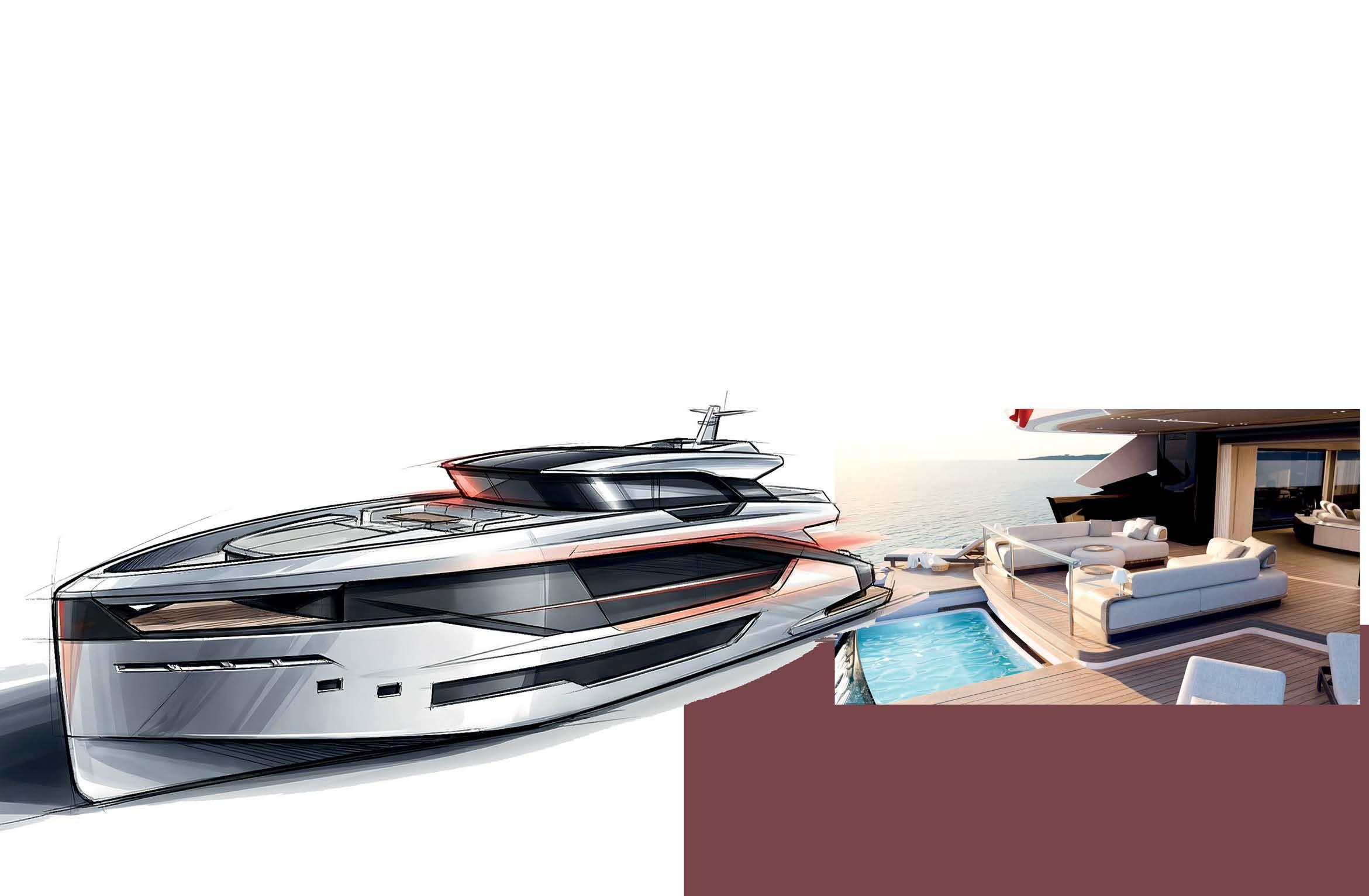
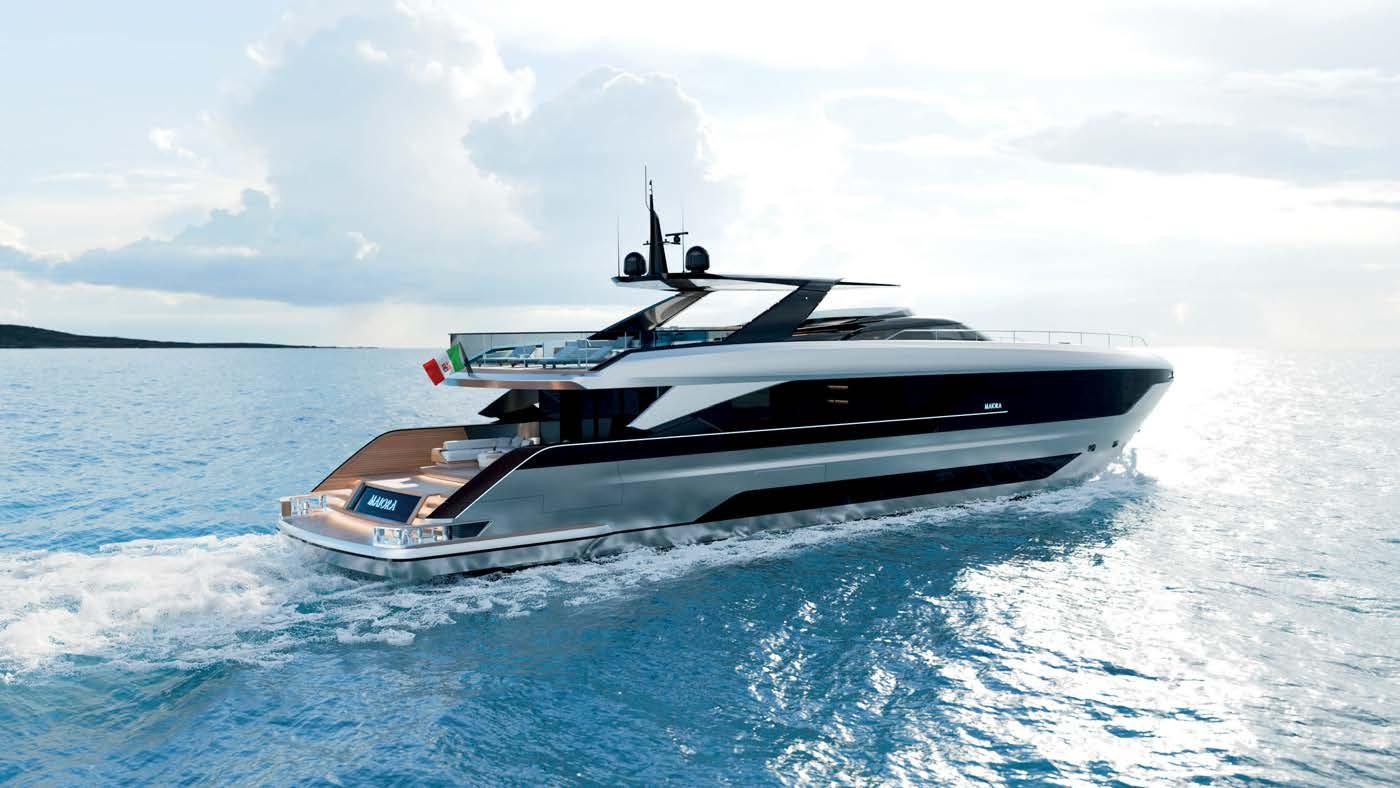
Tra le collaborazioni più significative degli ultimi anni spicca quella con Maiora. Dopo aver firmato modelli come Exuma, Maiora 30 e il 36 Harmony, lo studio torinese è oggi autore dell’exterior design della nuova generazione, rappresentata da Exuma 36, M30 e M38 «Innovare non significa rompere con l’heritage, ma accompagnarlo verso una nuova consapevolezza: evolvere le proporzioni valorizzando scenari abitativi sempre più fluidi tra interni ed esterni». L’obiettivo è tracciare segni riconoscibili ma mai invasivi, linee capaci di definire un’identità senza inseguire mode passeggere: «Un buon progetto non rincorre le tendenze: crea riferimenti destinati a durare».
One of the most notable collaborations in recent years has been with Maiora. The Turin-based studio has designed models like the Exuma, Maiora 30, and 36 Harmony. Now, they are responsible for the exterior design of the new generation, including the Exuma 36, M30, and M38 «Innovation does not mean abandoning heritage, but guiding it toward a new understanding: evolving proportions while enhancing fluid living spaces that blend interiors and exteriors». The goal is to create distinctive yet unobtrusive features and lines that establish a lasting identity, avoiding fleeting trends: «Good design does not follow trends; it sets enduring references».
Lo studio ha collaborato con realtà come Cerri Cantieri Navali, Azimut Benetti, Falcon Yachts, Sogica, Prinz Yachts, 12thSense, Mondomarine e Maiora, integrando TRADIZIONE cantieristica e innovazione tecnologica in progetti diversi per scala e complessità.
Per lo studio torinese la vera sfida è tracciare SEGNI che siano distintivi senza essere invasivi; linee capaci di definire un’IDENTITÀ riconoscibile ma allo stesso tempo pure, equilibrate e durature.
The studio has collaborated with companies including Cerri Cantieri Navali, Azimut Benetti, Falcon Yachts, Sogica, Prinz Yachts, 12thSense, Mondomarine and Maiora, combining shipbuilding TRADITION with technological innovation across projects of varying scale and complexity.
For the Turin-based studio, the real challenge is to create DESIGNS that are distinctive without being intrusive; lines that define a recognisable IDENTITY that is, at the same time, pure, balanced and enduring.
Designer e modellatori collaborano sin dalle prime fasi creando un flusso continuo in cui creatività, cultura industriale e conoscenze tecniche si integrano senza gerarchie. Non ci si ferma al bel segno: linee e volumi vengono studiati come un equilibrio tra tensione e morbidezza, tra rigore e sensualità, sempre dentro i vincoli concreti del progetto. La cultura delle superfici, degli highlights, delle proporzioni, dell’ergonomia e del manufacturing diventa così un patrimonio condiviso che attraversa ogni settore in cui lo studio opera. Questa contaminazione tra automotive e nautica trova espressione in numerosi progetti sviluppati negli anni. Nascono yacht come la Sogica 55 e 47, disegnati e modellati in ogni minimo dettaglio, oppure il S16000 12thSense, chase boat che ha anticipato un segmento oggi molto diffuso. Le collaborazioni con rinomati cantieri si susseguono: dagli interni per Azimut alla rinascita di Falcon Yachts, dalle customizzazioni per i Benetti Tradition al concept 70 m Innovation, fino ai progetti con Mondomarine nelle Langhe degli Stroppiana. Senza dimenticare il Prinz 54, tra i primi progetti ad adottare infusione sottovuoto e motorizzazioni Ips. Un percorso che si intreccia con l’automotive attraverso collaborazioni con marchi come Alfa Romeo e Maserati, oltre a progetti one-off sviluppati insieme al maestro Giorgetto Giugiaro. Al centro del lavoro di Quartostile resta però sempre lo yacht inteso come vero spazio abitativo. “Quando iniziamo un progetto non pensiamo semplicemente a disegnare una barca, ma a una piattaforma di lifestyle”. La chiave di un buon progetto è, quindi, l’equilibrio tra esterni e interni: proporzioni armoniose che non compromettano la fruibilità degli spazi e layout capaci di interpretare davvero la vita a bordo. “Non è l’oggetto in sé a emozionare, ma l’esperienza che nasce dal suo incontro con la luce, con l’orizzonte, con la quiete dell’acqua. Il nostro compito è dare forma a questa relazione”, riferiscono. L’attenzione è sempre rivolta alla persona che vivrà quegli spazi. Oggi questo approccio si avvale anche delle tecnologie immersive: attraverso la realtà virtuale è possibile navigare negli ambienti ancora prima che lo yacht venga costruito, valutare la luce naturale, percepire i volumi, testare configurazioni e personalizzazioni come se l’imbarcazione fosse già pronta a salpare.
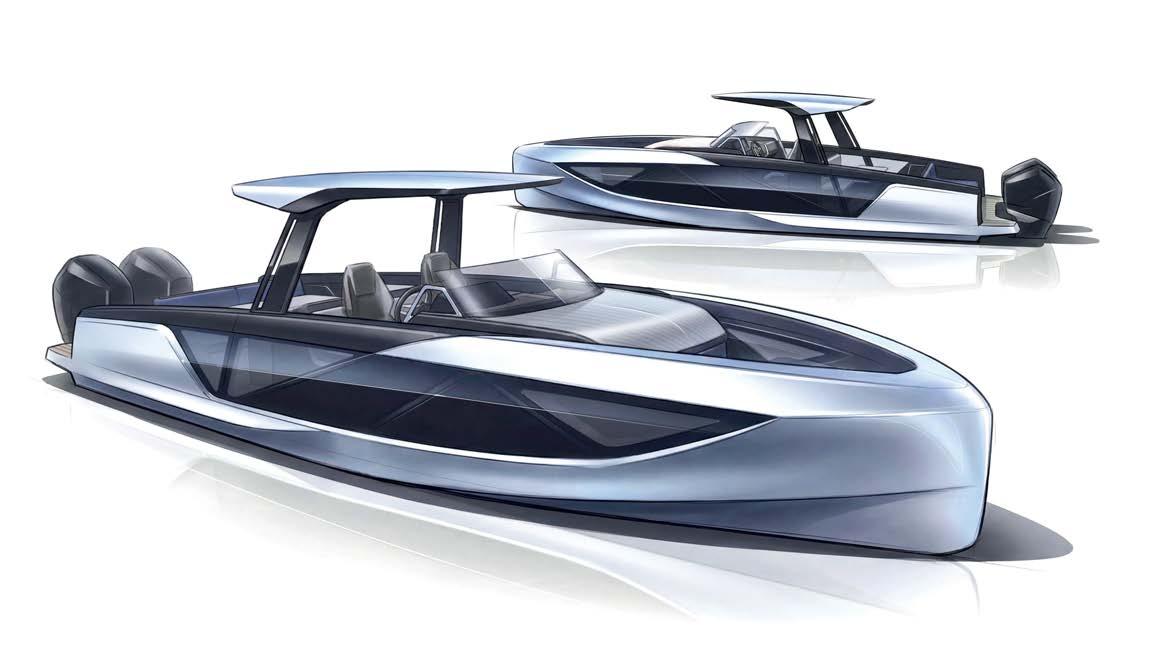
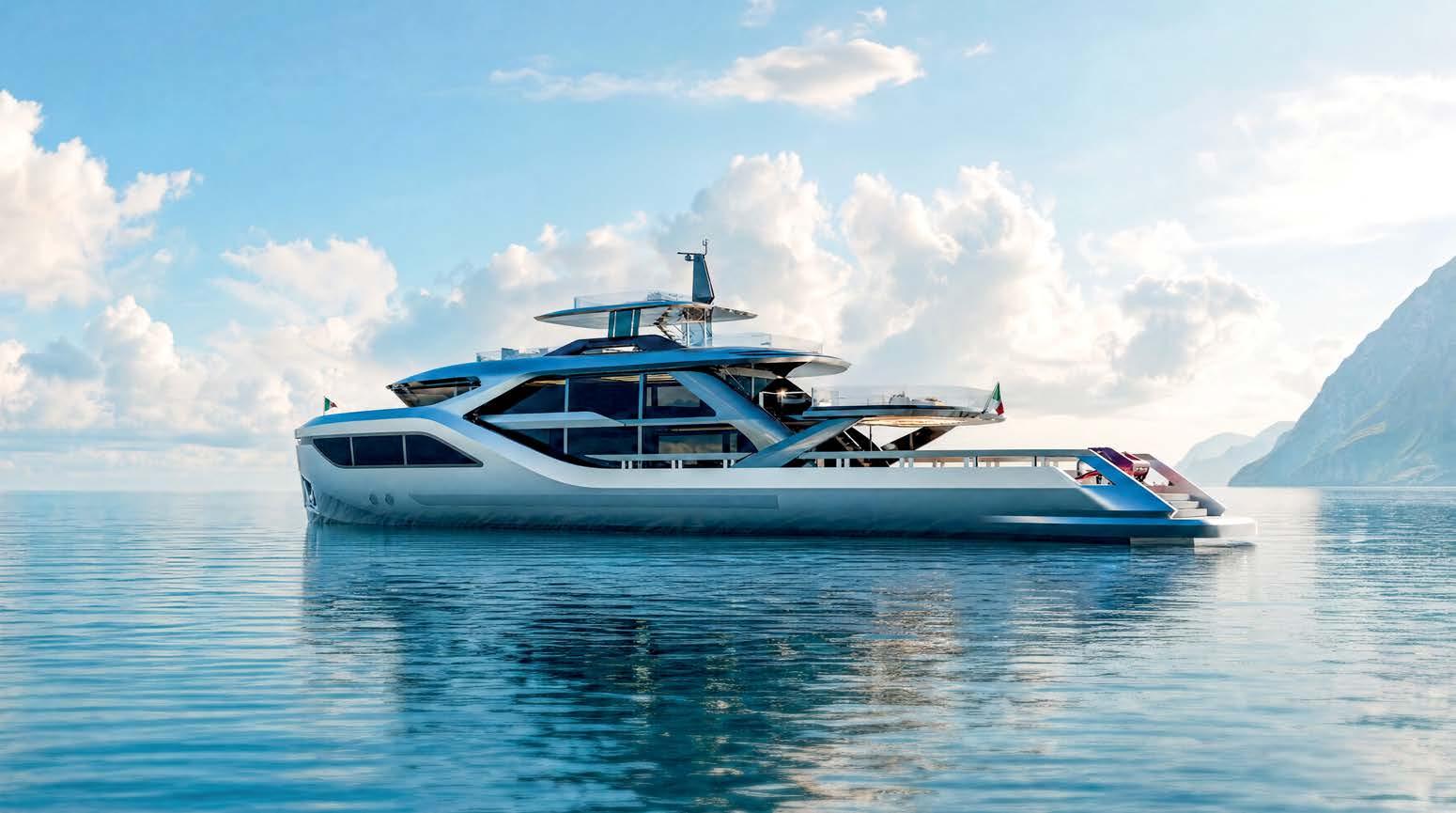
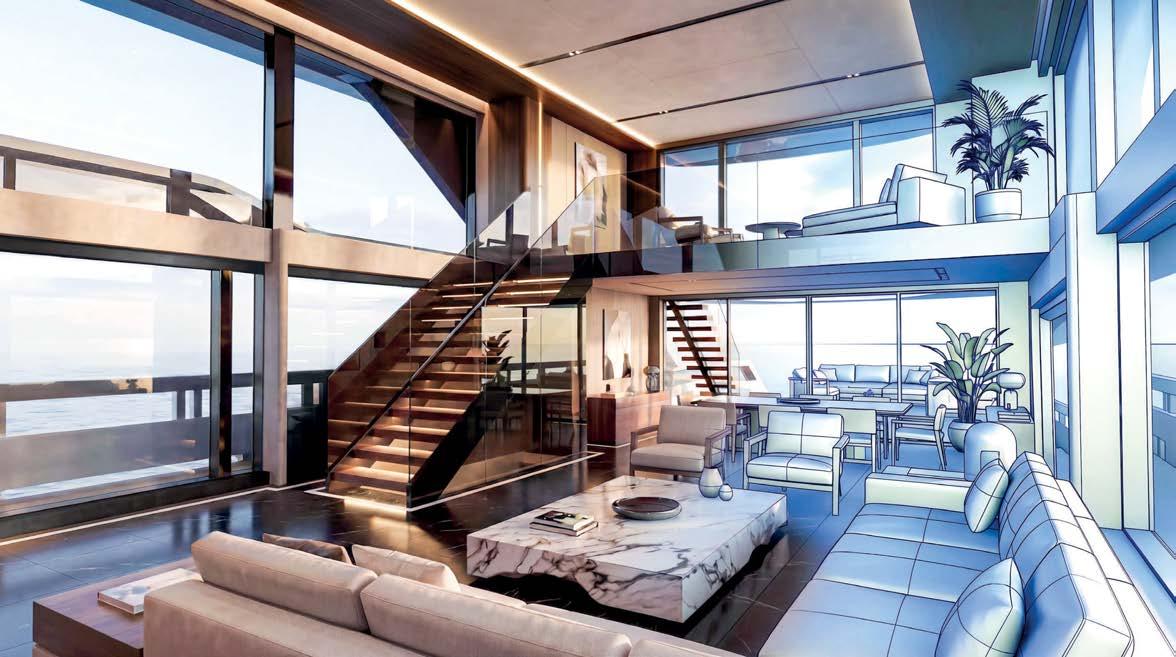
«Quando iniziamo un progetto non pensiamo semplicemente a disegnare una barca, ma a una PIATTAFORMA di lifestyle».
«When we start a project, we don’t simply think about designing a boat but about a lifestyle PLATFORM».
E50
Un Expedition Vessel di 50 metri che ridefinisce il linguaggio del design navale, combinando propulsione ibrida e una ricerca formale ispirata al mondo automotive. Le superfici scolpite e i volumi dialogano con un layout innovativo.
A 50-metre Expedition Vessel that redefines the language of naval design, combining hybrid propulsion with an automotive-inspired aesthetic. The sculpted surfaces and treatment of volumes interact with an innovative layout.
Quartostile è stato, per molti anni, l’unico studio sul territorio piemontese a offrire una possibilità di INTERNSHIP a chi desiderava intraprendere una carriera da yacht designer, diventando un punto di riferimento per GIOVANI PROGETTISTI che cercavano un luogo in cui imparare davvero il mestiere.
For many years, Quartostile was the only studio in the Piedmont region to offer an INTERNSHIP to those wishing to pursue a career as a yacht designer, becoming a goto destination for YOUNG
Accanto al metodo progettuale, un altro elemento definisce l’identità dello studio: il rapporto con i clienti e i cantieri. “Prima ancora di essere uno studio, Quartostile è una famiglia”, dichiarano. Un principio che si traduce in un approccio fondato sul dialogo e sulla condivisione del progetto. Lo studio lavora con realtà produttive molto diverse: dai cantieri altamente industrializzati ai progetti completamente custom, adattando ogni volta il proprio metodo alle esigenze del processo costruttivo. Non si tratta di imporre uno stile, ma di interpretare identità, desideri e vincoli tecnici per trasformarli in un progetto coerente.
È anche per questo che, per molti anni, Quartostile è stato l’unico studio di progettazione sul territorio piemontese a offrire una possibilità di internship a chi desiderava intraprendere una carriera da yacht designer, diventando un punto di riferimento per giovani progettisti che, lontani dai grandi distretti nautici, cercavano un luogo in cui imparare davvero il mestiere. Dopo oltre venti anni di attività, Broglia, Carone e Sartori seguono personalmente ogni progetto con la stessa curiosità e la stessa passione degli inizi. In un settore in cui tecnologia e linguaggio formale cambiano rapidamente, Quartostile continua a muoversi con una convinzione semplice ma solida: il design non è solo forma, ma visione. È la capacità di trasformare un’intuizione in spazio, esperienza e, infine, in un modo unico di vivere il mare.
Quartostile is a design studio founded in 2004 in Turin, a city far from the sea, where design culture is applied with the same rigour to all industrial design objects.
Matteo Broglia, Franco Carone, and Andrea Sartori founded the firm, leaving the style centres where they were working to pursue a common dream: designing boats. Thus, a friendship became a life project, then a design firm, and then a business known on the international market. Behind this success are endless nights, weekends, and sacrifices. Above all, the same passion, the same attention to detail, the same method and dedication that still drive every one of their projects.
The beginning had the taste of challenges met with enthusiasm, of a journey yet to be discovered and charted. Among the first projects was the 86 Flying Sport, developed in collaboration with Carlo Cerri.
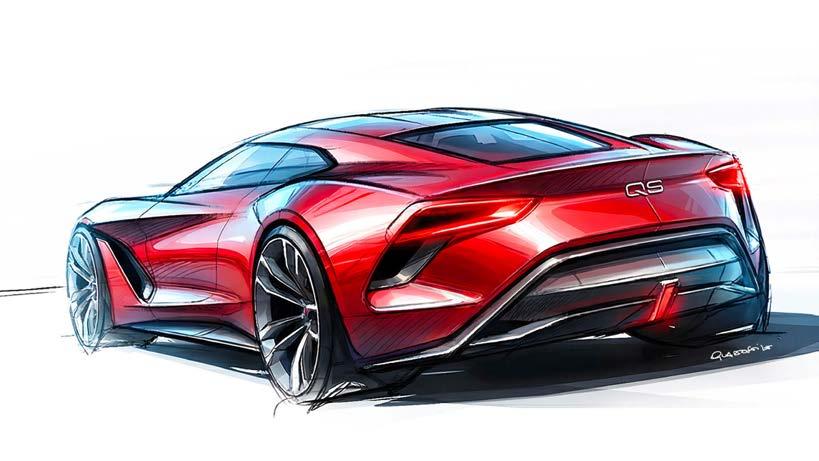
This yacht introduced a highly surprising solution for its time: an integrated flybridge enabled by a split-level saloon. It was followed by tenders for Fratelli Rossi and lobster boats for the Royal Yacht, while the firm was taking its first steps at major international shows. The debut at the Monaco Yacht Show remains an emblematic memory: the stand was set up until the very last minute, while the crew of a yacht docked in front of them watched the scene and placed bets on whether they would be able to finish it on time. And they did. Very much so!
In the meantime, as the sea became an increasingly integral part of the firm’s operations, the three founders’ first professional passion also became more firmly established: the automotive industry.
Quartostile began collaborating with international carmakers to design interiors, exteriors, concept cars, and production models. This experience further reinforced the firm’s design method. “Since the beginning, we conceived Quartostile as a true Style Centre,
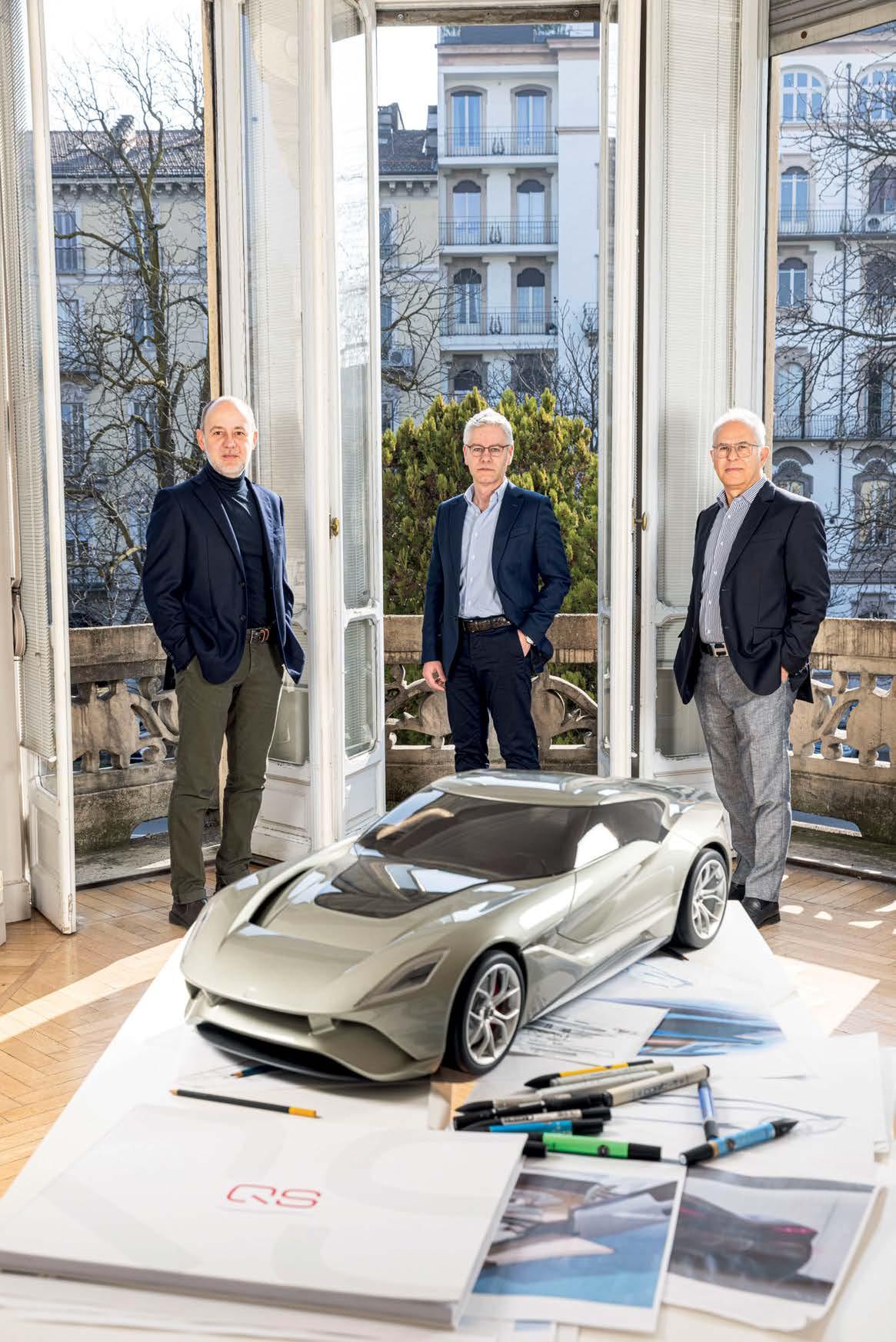
Quartostile è uno studio fondato a Torino da Matteo Broglia, Franco Carone e Andrea Sartori, con oltre vent’anni di esperienza tra AUTOMOTIVE e yacht design.
Quartostile is a studio founded in Turin by Matteo Broglia, Franco Carone and Andrea Sartori, with over twenty years’ experience in AUTOMOTIVE and yacht design
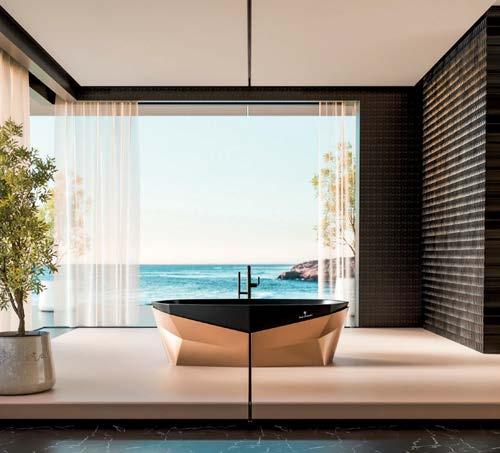
Aureas, vasca da bagno disegnata da Quartostile, si distingue per geometrie decise, superfici scolpite e un’estetica contemporanea e distintiva, in cui lusso, tecnologia e benessere si fondono in perfetto equilibrio. Firmata Tonino Lamborghini, è prodotta da Glass Design.
Aureas, a bathtub designed by Quartostile, stands out for its bold lines, sculpted surfaces and a distinctive contemporary aesthetic, in which luxury, technology and well-being come together in perfect harmony. It is designed by Tonino Lamborghini and manufactured by Glass Design.
capable of handling the entire creative process, from stylistic research to the development of mathematical models for production”, as Broglia, Carone, and Sartori tell us. Designers and model-makers collaborate from the earliest design phases, creating a continuous flow in which creativity, industrial culture, and technical know-how converge on a level playing field, free of hierarchy. A beautiful look is not enough: lines and volumes are studied as a balance between tension and softness, between rigour and sensuality, always within the concrete boundaries of the project. The culture of surfaces, highlights, and proportions in ergonomics and manufacturing thus becomes a common heritage that permeates every industry in which the firm operates. This contamination between the automotive and nautical industries finds expression in countless projects developed over time. Yachts like the Sogica 55 and 47, designed and modelled in every detail, or the S16000 12thSense, a chase boat that anticipated a highly popular segment today. Collaborations with renowned shipyards followed one another: from interiors for Azimut to the rebirth of Falcon Yachts, from customisations for Benetti Tradition to the concept 70 m Innovation, and projects with Mondomarine in the Stroppiana family’s Langhe region. Not to forget the Prinz 54, which was one of the first projects to adopt vacuum infusion and IPS engine systems. A journey intertwined with the automotive industry, thanks to collaborations with brands like Alfa Romeo and Maserati, and one-off projects developed in collaboration with Maestro Giorgetto Giugiaro.
However, Quartostile’s work remains focused on the yacht as an
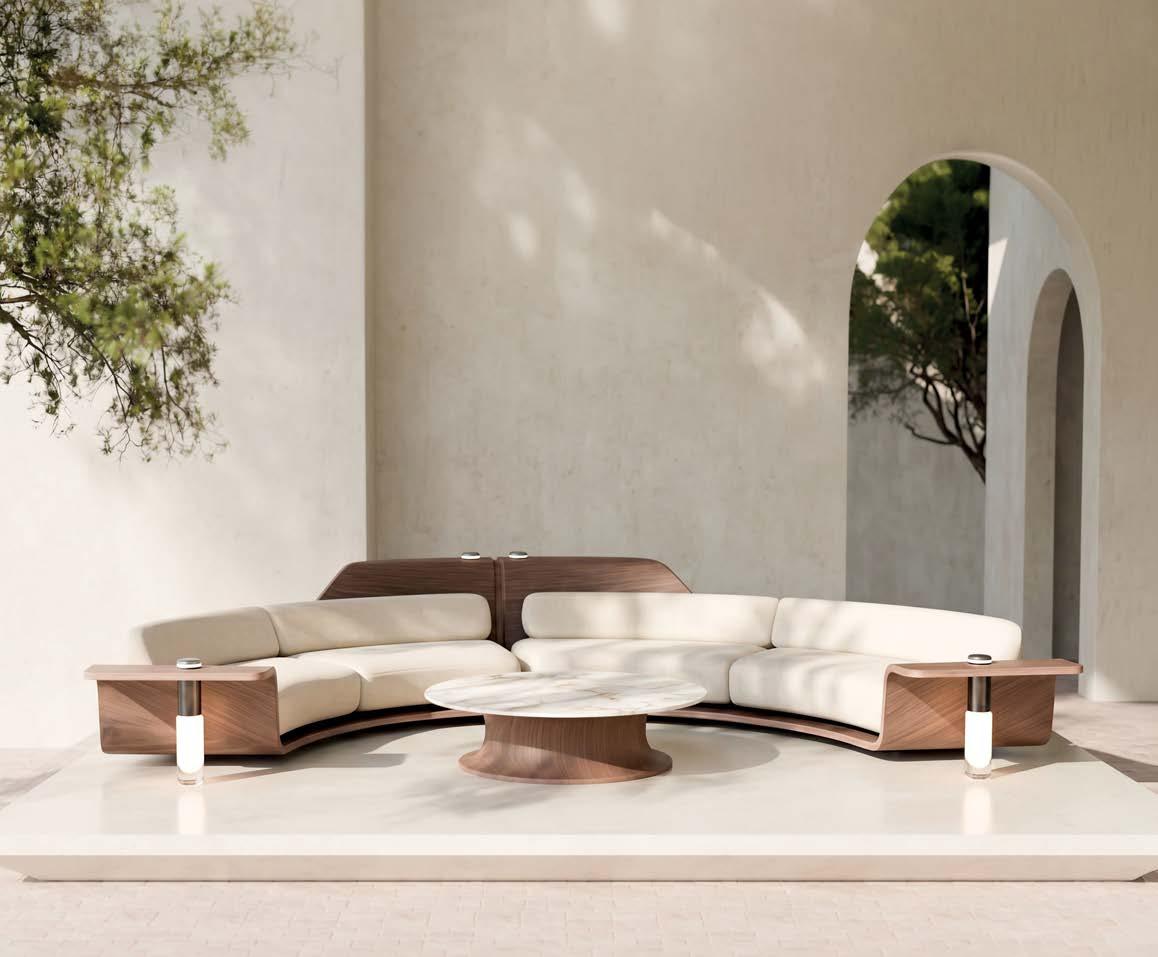
Thalè
Curve come onde, luce come orizzonti. La struttura in noce Canaletto curvato disegna sinuosità che evocano il moto del mare, mentre le lampade d’atmosfera integrate nei sostegni laterali trasformano ogni momento in un’esperienza sensoriale senza tempo. Un progetto nato per vivere all’aperto, in giardino, in terrazza o sul ponte di uno yacht, dove il confine tra design e natura semplicemente scompare.
Curves like waves, light like horizons. The curved Canaletto walnut frame creates sinuous lines that evoke the movement of the sea, whilst the mood lighting integrated into the side supports transforms every moment into a timeless sensory experience. A design created for outdoor living, whether in the garden, on the terrace or on the deck of a yacht, where the boundary between design and nature simply disappears.
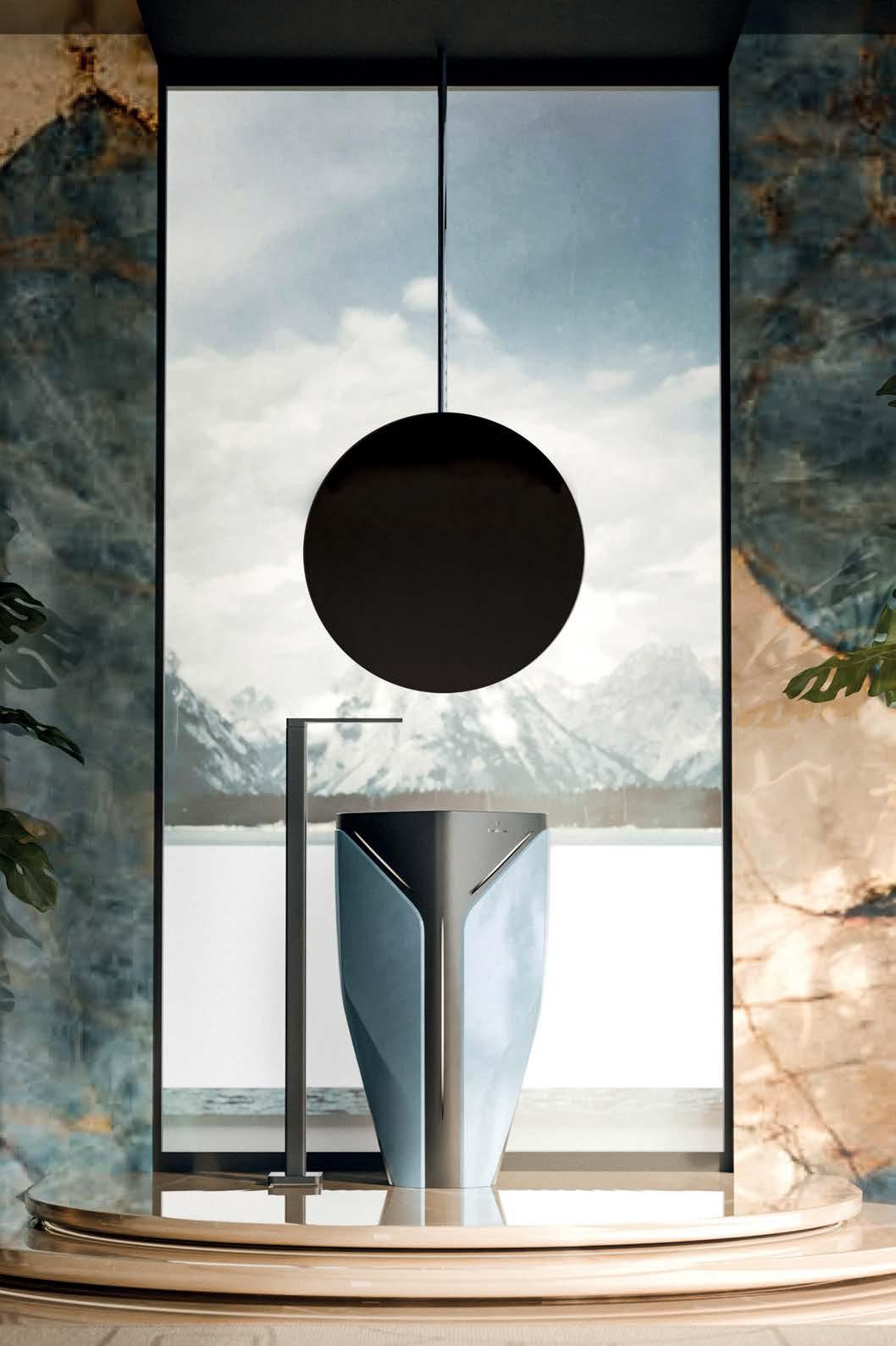
Iconico, lavabo freestanding disegnato da Quartostile, ha linee aerodinamiche ed è caratterizzato da un elemento luminoso, ideato come una vera anima che attraversa il prodotto, donandogli un carattere deciso ed emozionale. È prodotto da Glass Design per Tonino Lamborghini.
Iconico, the freestanding washbasin designed by Quartostile, features aerodynamic lines and is characterised by a light element, conceived as the very soul of the product, lending it a bold and evocative character. It is manufactured by Glass Design for Tonino Lamborghini.
«Innovare non significa rompere con l’HERITAGE, ma accompagnarlo verso una nuova consapevolezza: evolvere le proporzioni valorizzando scenari abitativi unici. Questa è la strada per distinguersi con ELEGANZA».
«Innovation does not mean breaking with HERITAGE, but rather guiding it towards a new understanding: evolving proportions whilst enhancing unique living spaces. This is the way to stand out with ELEGANCE».
horizon, with the tranquillity of the sea. Our task is to give shape to that relationship”, they tell us. Their main focus is always on the person who will be inhabiting those spaces. Today, this approach can also draw on immersive technologies: through virtual reality, customers can navigate the environments even before the yacht is built. They can assess the natural light, perceive the volumes, and test configurations and customisations as if the yacht were ready to set out to sea.
Alongside its distinctive design method, the firm’s identity is defined by another element: its relationship with customers and yards.
“Even before being a design firm, Quartostile is a family”, they insist. A principle that translates into an approach founded on dialogue and on a shared project. The firm works with very different manufacturers: from highly industrialised shipyards to completely custom-made projects, and adapts its method to the needs of the building process every time. It is not about imposing a style, but rather interpreting identities, desires, and technical constraints to transform them into a consistent project. And this is also why, for many years, Quartostile was the only design firm in the Piedmontese territory to offer internship opportunities to anyone who wished to embark on a career as a yacht designer, thus becoming a point of reference for young designers who were far from the large nautical districts but were looking for a place to truly learn the craft truly.
After twenty years of operations, Broglia, Carone, and Sartori personally supervise every project with the same curiosity and passion they had in the beginning. In an industry where technology and formal language change rapidly, Quartostile continues to move with a simple yet strong belief: design is not only about shape but also about vision. It is the ability to transform an intuition into space, experience,
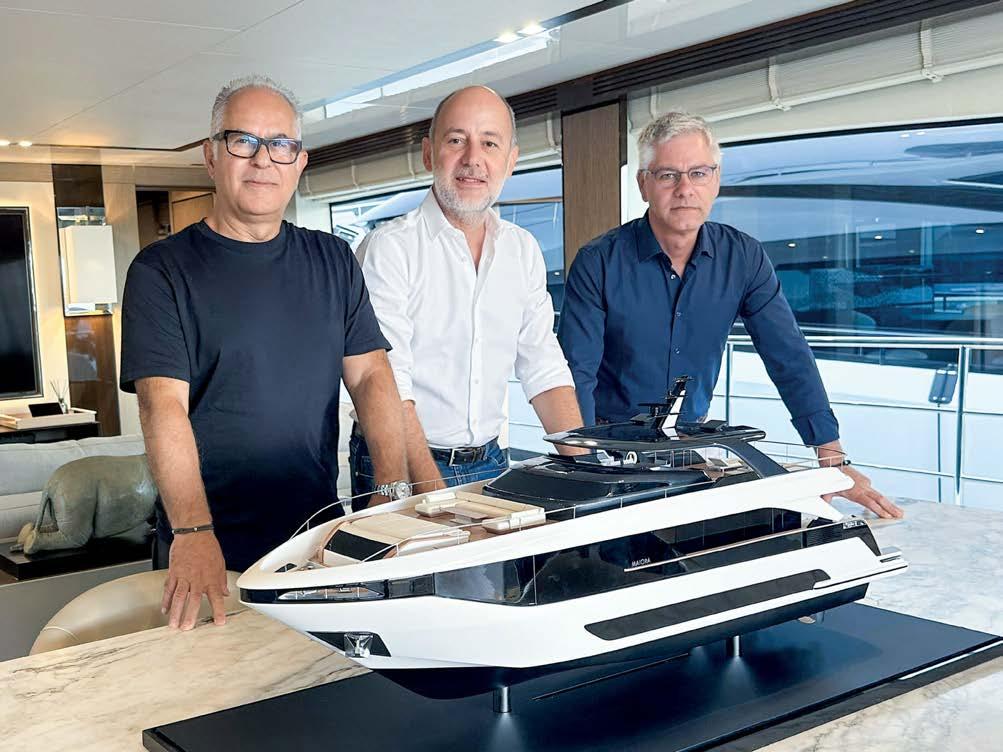
Micad, studio di ingegneria e architettura navale fondato a Lecce da Amedeo Migali, negli ultimi anni è stato protagonista di una transizione ed evoluzione, passando da partner tecnico a firma di design globale, capace di dare vita a uno yacht nella sua interezza
Micad, a naval engineering and architecture firm founded in Lecce by Amedeo Migali, has undergone a significant transformation in recent years, evolving from a technical partner into a full-service design firm capable of designing and building a yacht from start to finish by Sacha Giannini - photo by Andrea Muscatello
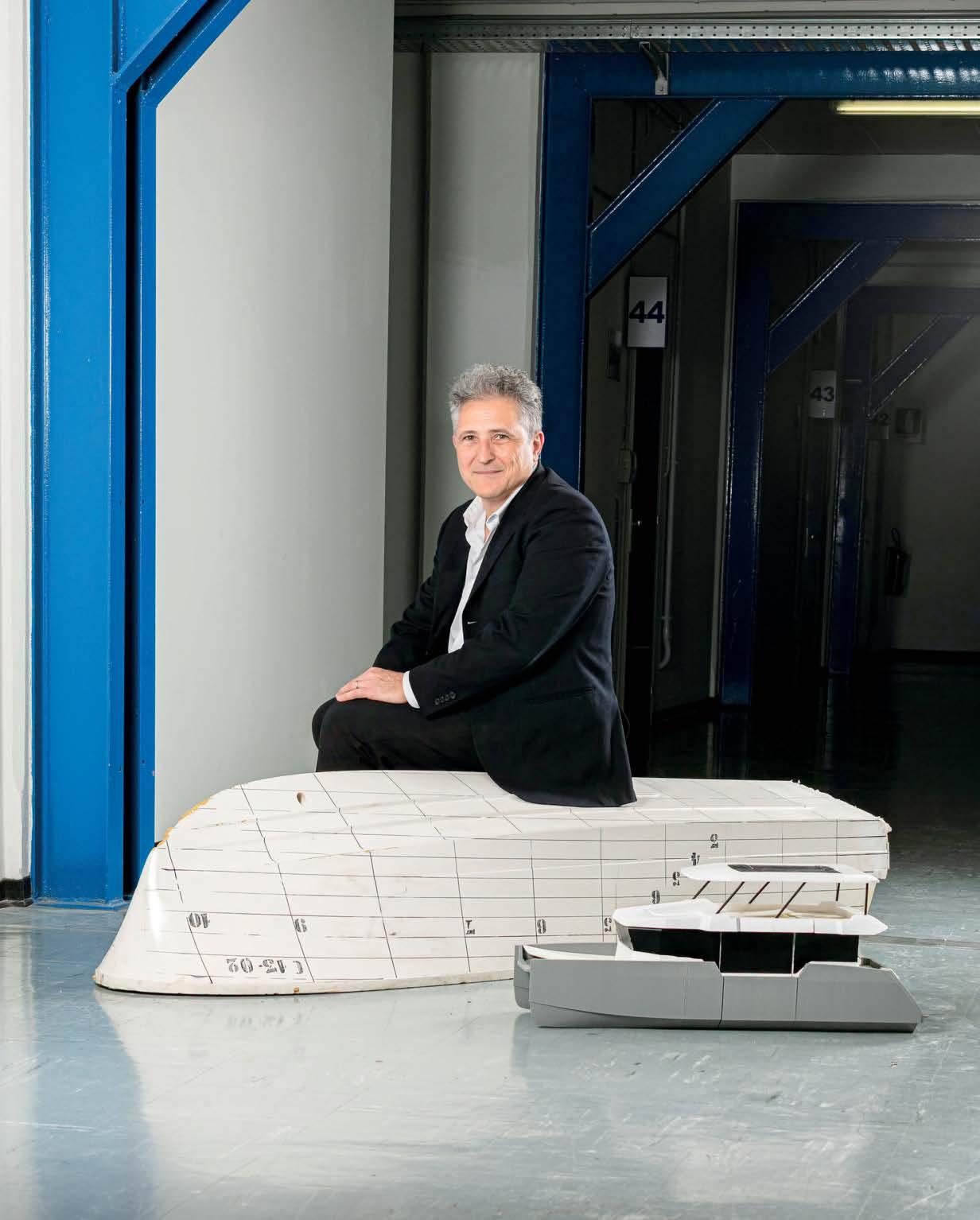
Da
quando nel secolo scorso il Futurismo iniziò a esaltare la velocità come nuova forma d’arte, tanto da definire l’automobile da corsa addirittura “più bella della Nike di Samotracia”,
come si legge nel Manifesto del Movimento avanguardista scritto da Filippo Marinetti, l’idea di andare forte ha acquisito sempre più svariate interpretazioni, sino a diventare, tra le altre, un parametro per misurare il valore di un mezzo, qualunque esso sia.
In Puglia, a Lecce, c’è un uomo, appassionato di mare e di barche, che proprio sulla velocità ha costruito una brillante carriera. È Amedeo Migali, classe 1972.
Esperto in fluidodinamica numerica sperimentale, e professore a contratto all’Università di Trieste, dove tiene un corso in materia di carene veloci, è il patron di Micad, studio di ingegneria e architettura navale, fondato nella città pugliese nel 2007. Più recente, è del 2014, l’apertura di una seconda sede, a Trieste, vicina all’ateneo, ma anche al primo cantiere per cui l’ingegnere ha lavorato, Monte Carlo Yachts.
Oggi Micad è senza dubbio uno dei più ricercati studi di progettazione navale in Italia. Offre consulenza a brand di spessore quali Azimut Benetti Group, Hanse, Greenline, Bénéteau, Bavaria, Bluegame, FIM, Prestige e Silent, per citarne soltanto alcuni. E, grazie a una comprovata autorevolezza, ne imbarca di nuovi: “Abbiamo iniziato da poco due collaborazioni molto interessanti, una con Tureddi Yachts, l’altra con Sacs Tecnorib”, racconta.
Micad offre consulenza a brand di spessore, quali Azimut Benetti Group, Hanse, Greenline, Bénéteau, Bavaria, Bluegame, FIM, Prestige e Silent.
Micad provides consultancy services to leading brands such as the Azimut Benetti Group, Hanse, Greenline, Bénéteau, Bavaria, Bluegame, FIM, Prestige and Silent.
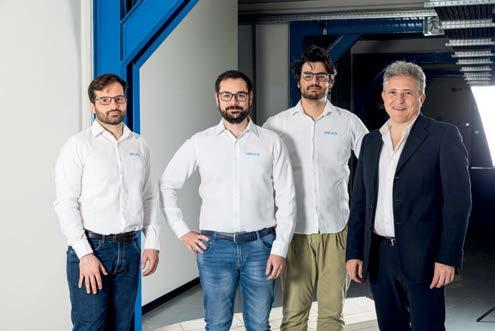
L’ingegnere, oltre a conoscere e insegnare i segreti delle resistenze e delle portanze, studia con cura e creatività carene capaci di rimanere performanti anche a bassi valori dislocanti – quelli intermedi per intenderci – garantendo consumi ridotti e comfort sull’onda. Modella le geometrie dello scafo, le ottimizza, le scava, le veste di rails e redan, spingendosi fin sopra al “ginocchio”, dove le scelte tra spigoli vivi e profili curvi, tra volumi, distribuzione dei pesi e ruote di prua, condizionano e definiscono le prestazioni dell’imbarcazione al fine di ottenere la massima efficienza a qualunque andatura.
Facciamo un po’ di chiarezza. Se si vuol correre forte sull’acqua, ci sono soltanto due possibilità: planare oppure costruire uno scafo lunghissimo con una lunghezza fuori tutto di oltre 100 metri (per poter raggiungere punte di 25-30 nodi).
Entrare in planata è un’impresa semplice, ciò che invece è davvero complesso è trasformare l’accelerazione iniziale in una velocità di crociera che però non impatti sui consumi e sulla struttura stessa della barca.
Quando questa corre veloce, infatti, l’acqua colpisce lo scafo con enorme forza e quindi l’imbarcazione deve essere progettata per resistere a urti e pressioni che possono piegare o addirittura rompere l’opera viva. Ebbene, il delicato lavoro di Micad consiste nel consentire la transizione di moto e il mantenimento della velocità di crociera in totale sicurezza, con il massimo rendimento e comfort, equilibrando spinte verticali, distribuzione dei carichi e baricentri, non solo con l’intuito e l’esperienza, ma anche trovando una metrica esatta attraverso verifiche, misurazioni e calcoli chirurgici.
Amedeo Migali è convinto che ci siano ampi margini per migliorare sempre di più le carene. Detto ciò, molto dipende anche dal loro peso, poiché questo valore diventa il driver principale della qualità di una barca, condiziona prestazioni e consumi ed è legato a doppio filo anche al tema della sostenibilità, peraltro molto caro allo studio leccese.
Che cosa significa? Che una barca non deve essere semplicemente bella e performante. Deve essere progettata tenendo conto dell’intero ciclo di vita. Ecco perché l’approccio di Migali e del suo staff si basa sulla logica del Life-Cycle Assessment (LCA).
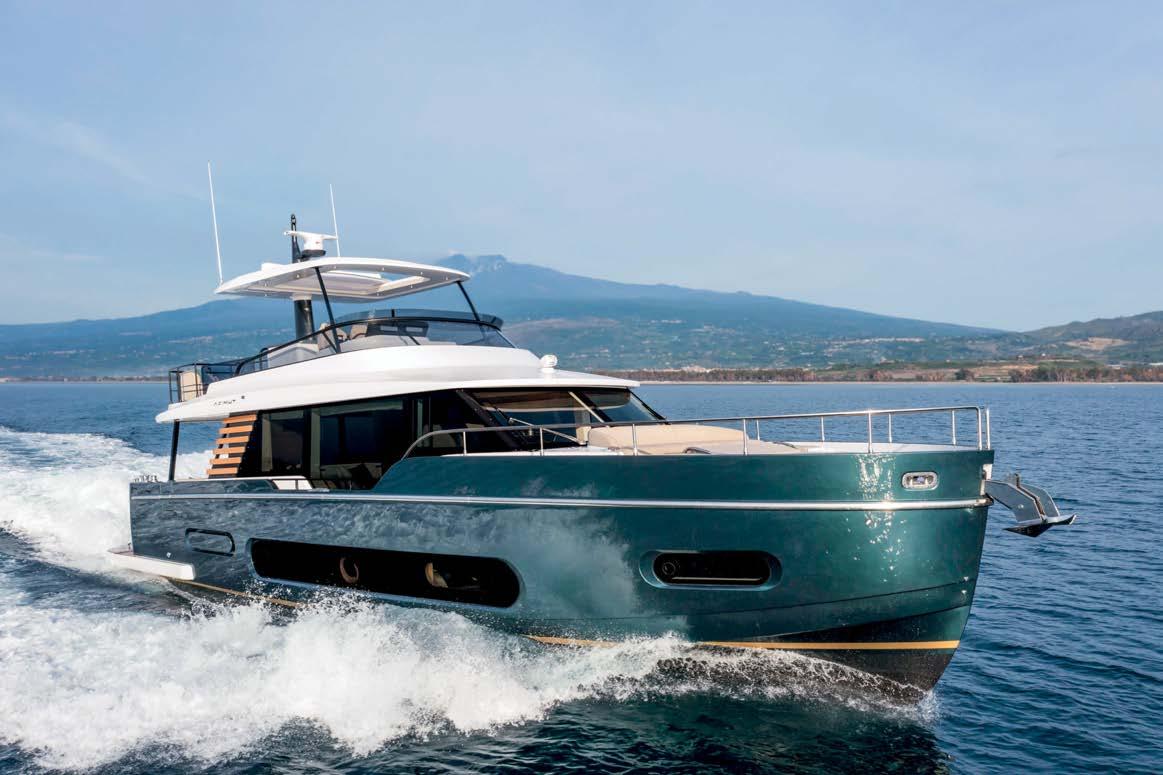
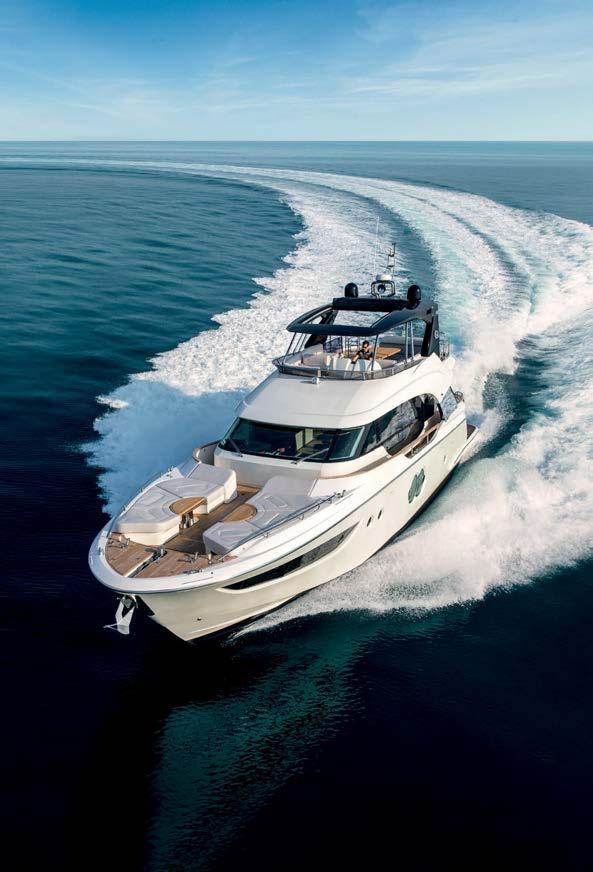
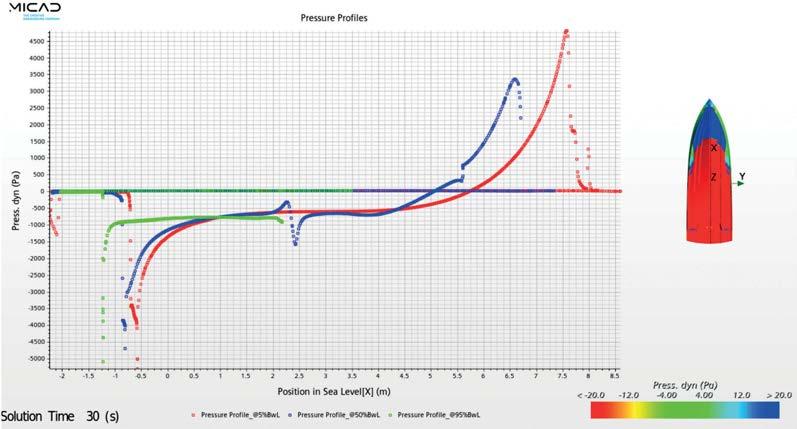
Con i calcoli di idrodinamica numerica è possibile determinare i valori di pressione dinamica sul fondo. Questi grafici ne rappresentano la distribuzione lungo diverse sezioni longitudinali dello scafo. In legenda si vede che la linea rossa rappresenta la distribuzione ottenuta facendo un taglio molto vicino alla chiglia (per evitare di stare sull’angolo di chiglia, ci siamo messi in questo grafico al 5% della semilarghezza dello scafo), la linea blu rappresenta la distribuzione lungo una buttock al 50% della semilarghezza dello scafo, quella verde al 95% della semilarghezza.
Valutare correttamente queste pressioni ci aiuta a determinare se abbiamo distribuito correttamente gli angoli di rialzamento del fondo e l’andamento delle superfici dello scafo, e a capire dove eventualmente piazzare i pattini idrodinamici e le eventuali prese dinamiche sul fondo.
Using computational fluid dynamics, it is possible to determine the dynamic pressure values on the hull bottom. These graphs show their distribution along various longitudinal sections of the hull. The legend shows that the red line represents the distribution obtained from a section very close to the keel (to avoid the keel angle, we have placed this section at 5% of the hull’s half-width in this graph), the blue line represents the distribution along a buttock at 50% of the hull’s half-width, and the green line at 95% of the hull’s half-width.
Correctly evaluating these pressures helps us determine whether we have correctly distributed the bottom’s rake angles and the contour of the hull surfaces, and to understand where to place any hydrodynamic skids and dynamic intakes on the bottom.
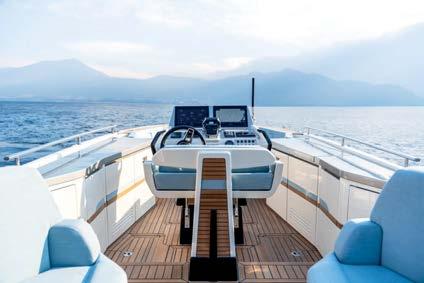
Amedeo Migali è convinto che ci siano AMPI MARGINI per migliorare sempre di più le carene.
Amedeo Migali is convinced that there is AMPLE SCOPE to further improve the hulls.
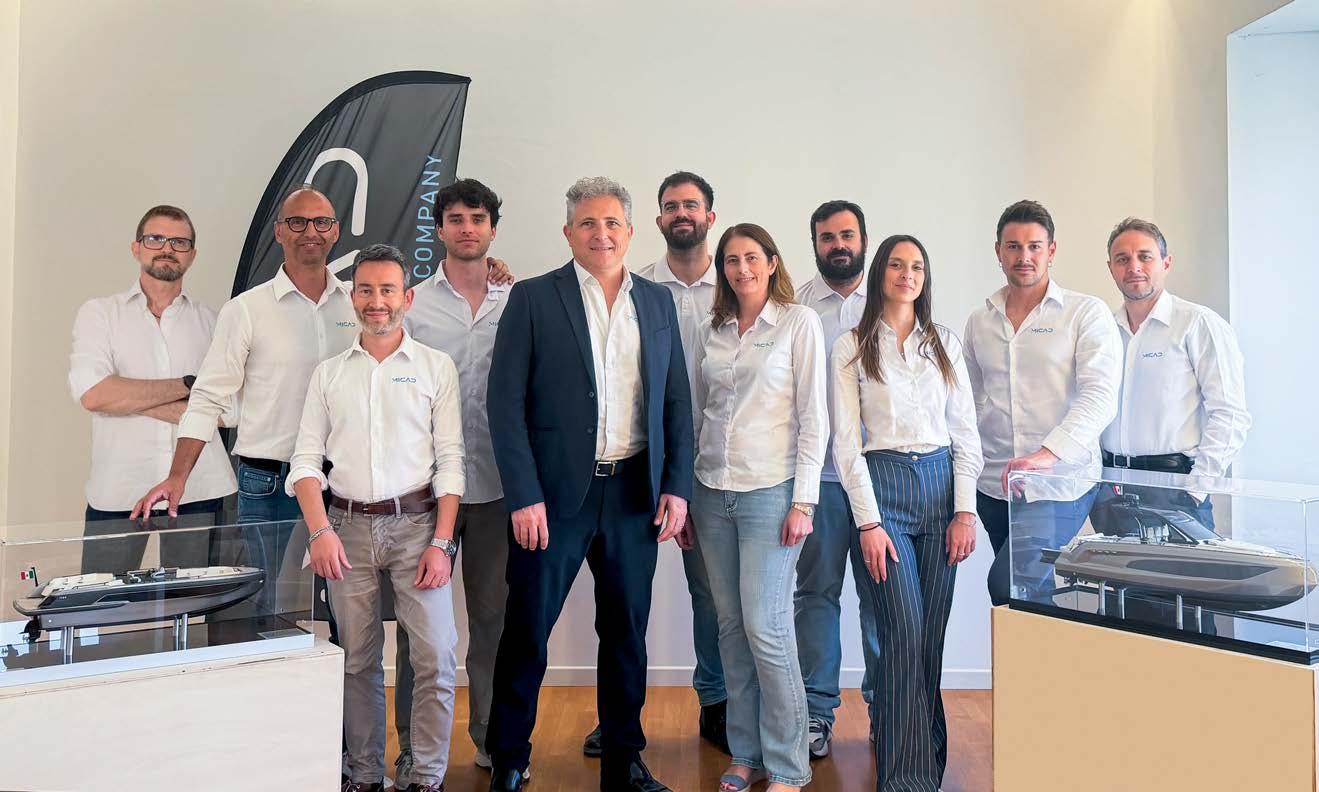
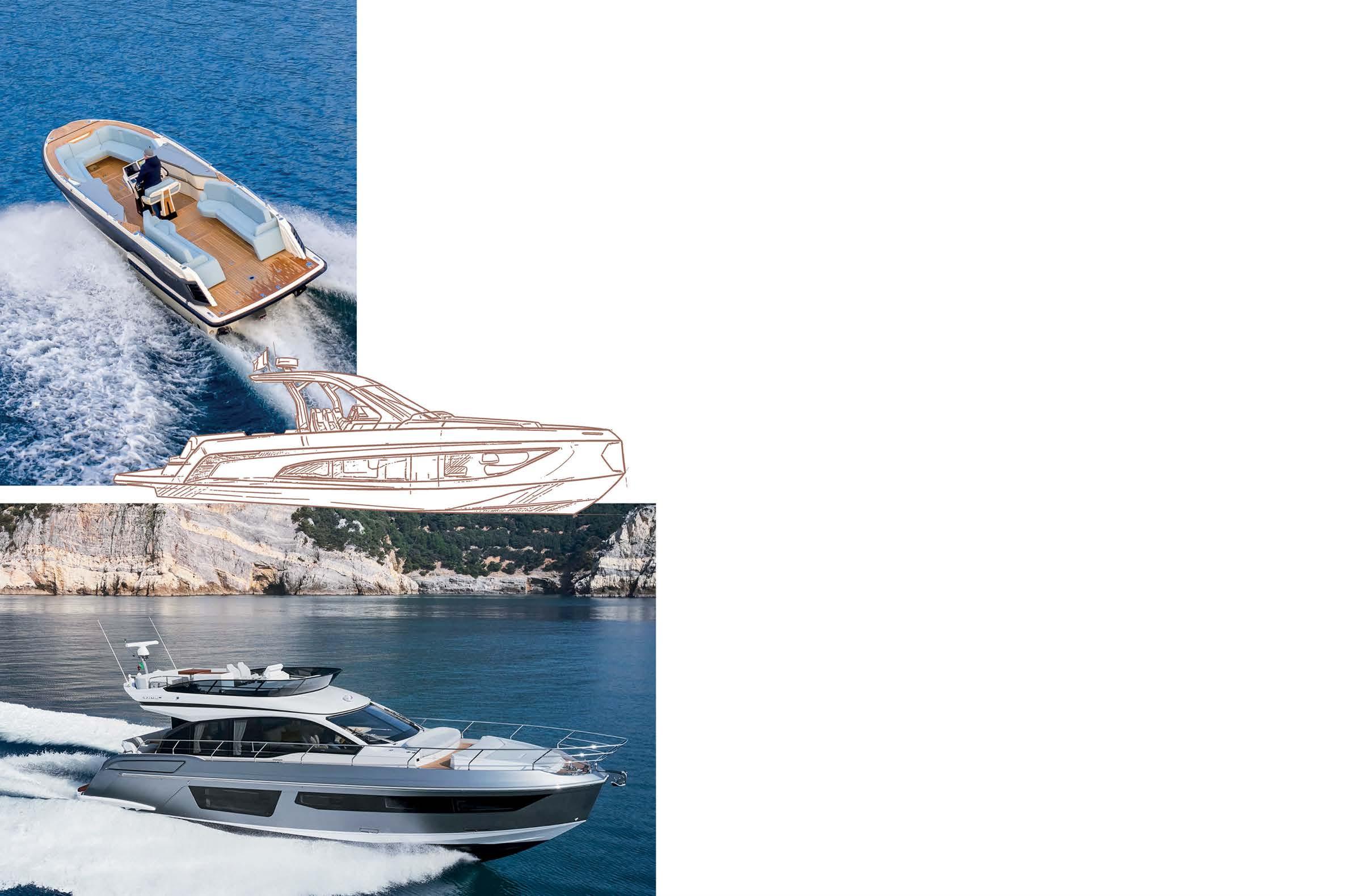
Amedeo Migali, fondatore di Micad, ha indirizzato il cambiamento puntando sulle persone, con campagne di formazione, progetti pilota e ingenti investimenti in ricerca e sviluppo. Questa spinta propulsiva consente allo studio di offrire alla propria clientela il massimo grado di integrazione tra i vari aspetti che definiscono la bontà di un progetto, tenuta del mare, comfort, funzionalità, prestazioni, sostenibilità ed estetica.
Amedeo Migali, founder of Micad, has driven this change by focusing on people through training programmes, pilot projects and substantial investment in research and development. This driving force enables the firm to offer its clients the highest level of integration across the aspects that define the quality of a design: seaworthiness, comfort, functionality, performance, sustainability and aesthetics.
È fondamentale costruire imbarcazioni in grado di resistere all’usura, al passare del tempo e alle mode.
“È un atto di responsabilità verso il cantiere, il cliente e l’ambiente. Non ci limitiamo a montare i componenti, ma misuriamo, ad esempio, quanto sia semplice smontarli e smaltirli. Ci assicuriamo che ogni vano, sentina o valvola sia realmente ispezionabile, mettendo le persone e le loro competenze al centro del processo. Il nostro obiettivo è anticipare le esigenze future di chi è a bordo, facilitando ogni operazione di manutenzione o di rimozione. È un principio che molti cantieri e armatori apprezzano molto”, spiega l’ingegnere.
Per Migali “scomporre” una barca non vuol dire soltanto separare la resina dalla fibra. Bisogna smontarla secondo una logica differenziata di smaltimento. Basti pensare ai semplici cielini rivestiti in sky o in pelle, incollati su strati di legno tra loro legati da resine fenoliche, oppure agli imbonaggi a scafo o ai mobili, sempre più saldati al fasciame. Per fare tutto ciò occorre uno standard di riferimento, un modello che misuri efficacemente le variabili e analizzi i dati per tipologia. A tal proposito, Migali, diversi anni fa, ha lavorato con un comitato tecnico ISO per mettere a punto una norma internazionale, attualmente in vigore, che stabilisce le regole per valutare in modo realistico quanto durerà e come invecchierà una barca. In quest’ottica, nel 2025 è nato il progetto LIFE (Leisureboat Innovation For Environment) in risposta a un bando del Consiglio Nazionale delle Ricerche per l’innovazione sostenibile nel settore della nautica da diporto. Emblematica l’ONDIA 36, un prototipo di imbarcazione da diporto a ridotto impatto ambientale, alla cui progettazione ha partecipato anche Micad. Alimentata da un motore termico entrobordo, tiene conto della durabilità con particolare attenzione allo smontaggio per il riciclo.
From the time, in the last century, when Futurism began to exalt speed as a new form of art, to the point that Filippo Marinetti, in the movement’s manifesto, saw a racing car as “more beautiful than the Nike of Samothrace”,
the idea of going fast has taken on increasingly varied interpretations, until it became, amongst other things, a parameter for measuring the value of a means of transport, whatever its form. In Puglia, in Lecce, there is a man who is passionate about the sea and boats and has built a brilliant career focused on speed. We are talking about Amedeo Migali, born in 1972, an expert in experimental and numerical fluid dynamics, and an adjunct professor at the University of Trieste, where he teaches a course on fast hulls. He is also the owner of Micad, an office specialising in engineering and naval architecture, founded in Lecce in 2007. More recently, in 2014, a second office was opened in Trieste, in a location that is close not only to the university but also to the first yard Migali worked for, Monte Carlo Yachts.
Nowadays, Micad is unquestionably one of the most prestigious naval design firms in Italy. He is a consultant to well-known brands such as Azimut Benetti Group, Hanse, Greenline, Bénéteau, Bavaria, Bluegame, FIM, Prestige and Silent, just to name a few. His track record of expertise means he is bringing others on board: “We have just begun two very interesting partnerships, one with Tureddi Yachts, and the other with Sacs Tecnorib”, he says.
Migali, as well as understanding and teaching the secrets of resistance and lift, takes a careful and creative look at hulls that maintain high performance even at low, or perhaps more accurately, intermediate, displacement levels, ensuring low fuel consumption and a comfortable ride over the water. He models the hull geometry, optimises it, adds rails and redans – even above the knees – where the pronounced chines, curved profiles, weight distribution, and stem determine what the boat will do to obtain the greatest efficiency at any speed. Just to be clear.
If you want to move fast on the water, there are just two ways to do it: by planing or by building a boat over 100 metres long (which would reach peaks of 25-30 knots). Entering a glide is straightforward, but what is really complicated is converting the initial acceleration into a cruising speed that doesn’t affect fuel consumption or the boat’s structure. When it moves fast, the water hits the hull with enormous force, so the boat has to be protected to withstand the blows and pressure, which can bend or even break the hull. The delicate work done by Micad is to allow the change in momentum and for speed to be maintained in complete safety, with as much comfort and performance as possible, balancing out vertical forces, weight distribution and centre of gravity, not just through insight and experience, but by finding an exact assessment method, using checks, measurement and precise calculation.
Amedeo Migali is convinced that there are significant margins for further improvement in hulls. That said, a lot depends on how much they weigh, since that is the main driver of a boat’s quality, as it determines performance and fuel consumption and is strongly linked to sustainability issues, which the Lecce studio takes very seriously. So what does this all mean? That a boat shouldn’t simply be beautiful and fast. It has to be designed with its entire existence in mind. That is why Migali and his staff’s approach is based on life-cycle assessment (LCA). You absolutely have to build boats that wear well, enduring both the weather and changing fashions.
“It is a matter of responsibility towards the yard, the client and the environment. We are not restricting ourselves to putting together components, but – for example – we measure how easy it is to take
Il nostro obiettivo è anticipare le esigenze future di chi è a bordo, facilitando ogni operazione di manutenzione o di rimozione.
Our aim is to anticipate the future needs of those on board, making maintenance or removal work easier.
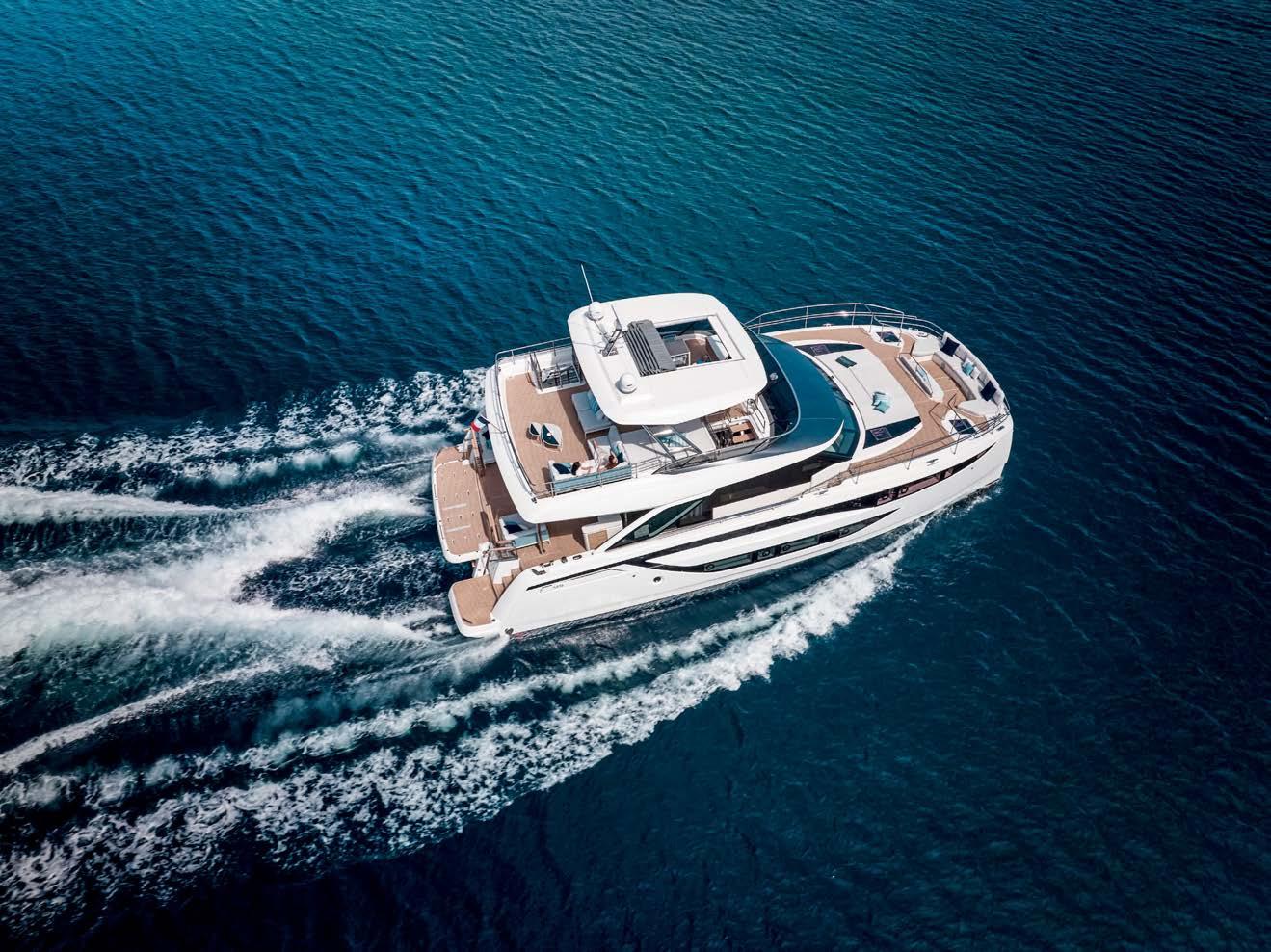
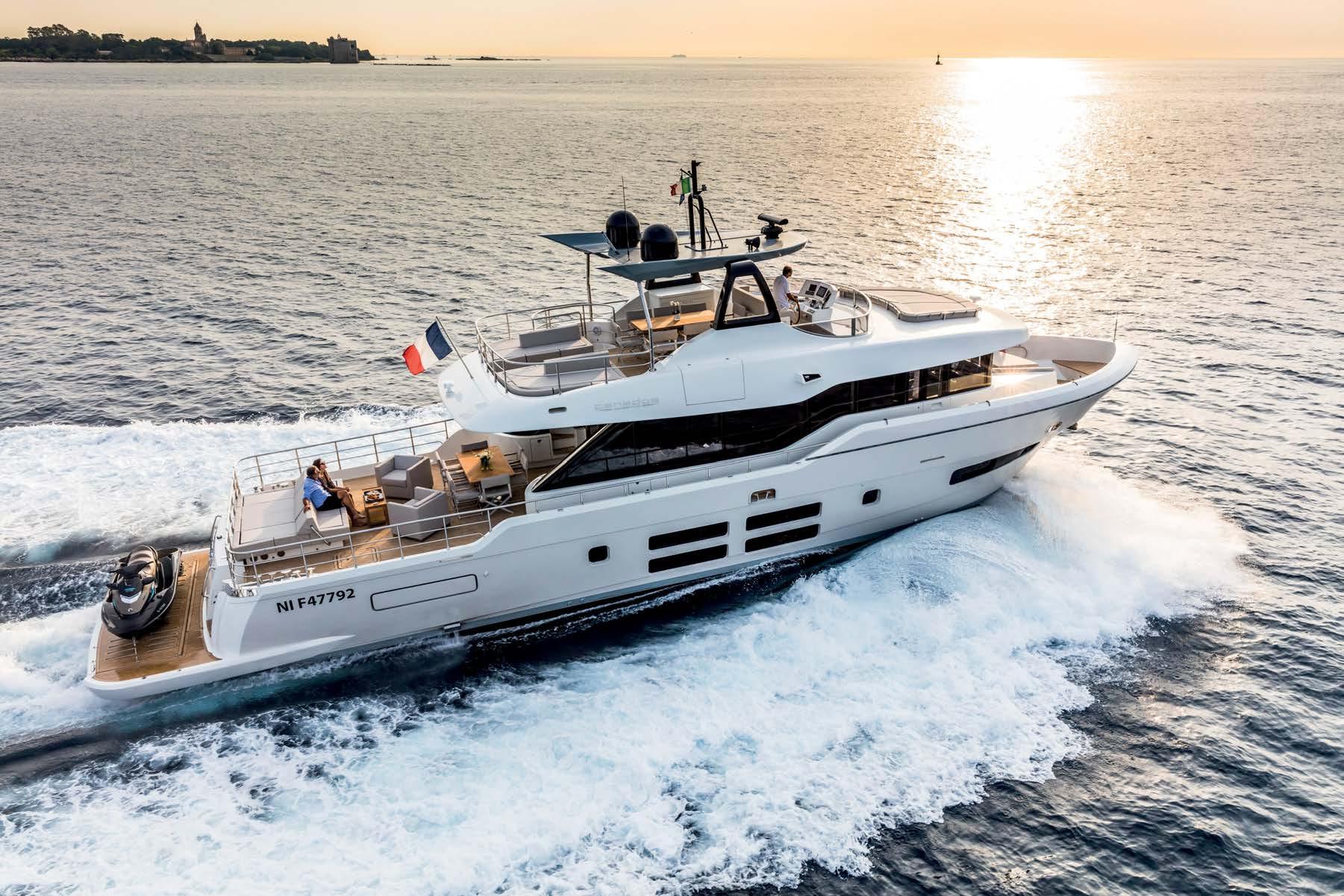
Nel team
Micad lavorano ingegneri navali e meccanici, progettisti, architetti, sviluppatori di software e project manager.
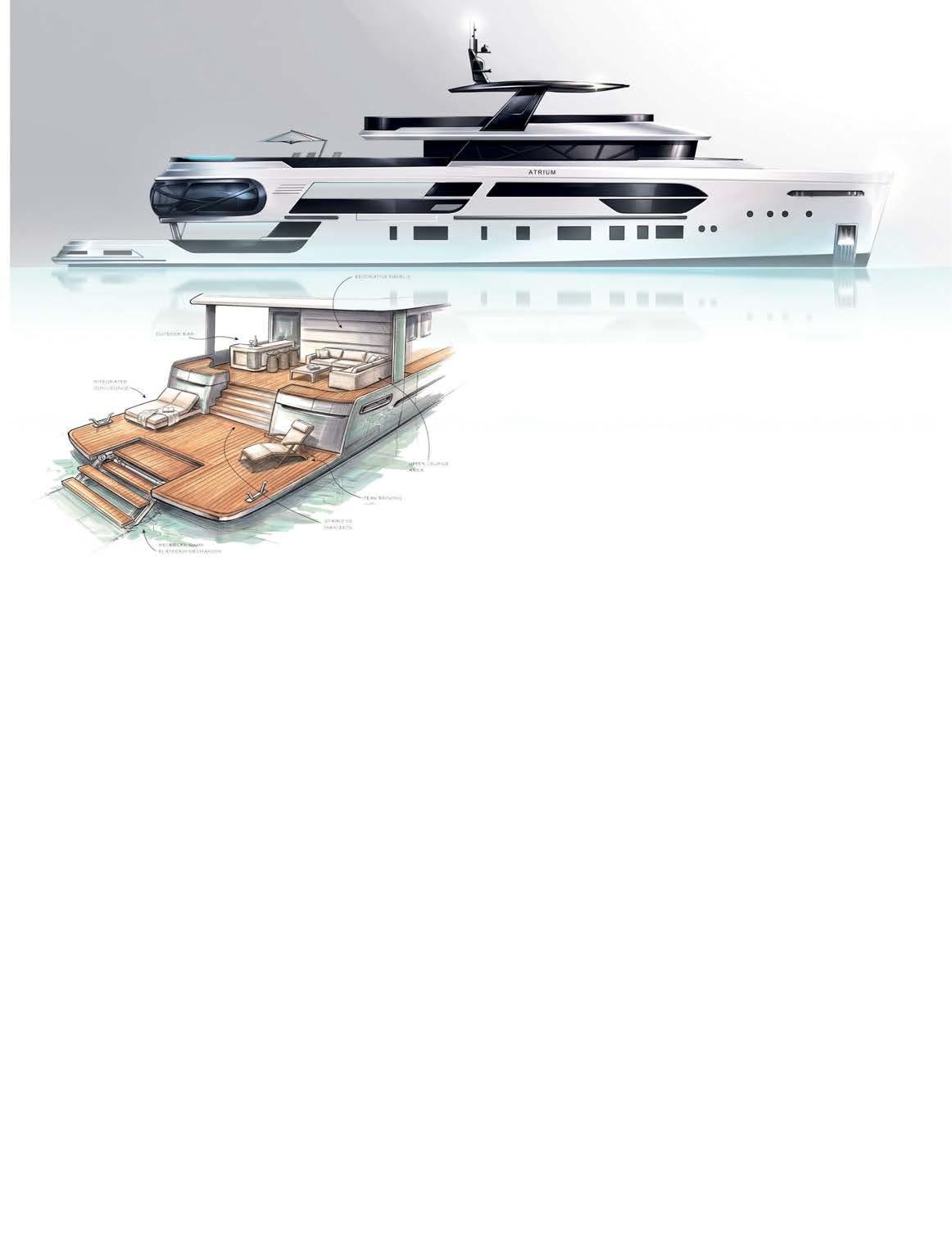
The Micad team comprises naval and mechanical engineers, designers, architects, software developers and project managers.
them apart and dispose of them. We ensure that every area, bilge, or valve is genuinely accessible, with a focus on people and their skills. Our aim is to anticipate the future needs of those on board, assisting with every maintenance or removal operation. That is a principle that a lot of yards and buyers greatly appreciate”, explains the engineer. Migali feels that “deconstructing” a boat isn’t just a question of separating resin from glass fibre. You have to separate out the waste material when you take it apart. Take, for example, skylights set in blue material or leather, mounted on wooden strips bound together with phenolic resins, or the coaming on the boat or furniture, which is increasingly welded to the planking. To do all that, you need a standard to refer to, a model that can accurately measure variables and analyse data by type. A few years back, with this in mind, Migali worked with an ISO technical committee to create an international rule, the one that is now used to set regulations to give a realistic assessment of how a boat will age. It has sparked the LIFE (Leisureboat Innovation For Environment) project, launched in 2025 in response to a call from the Italian National Research Council for sustainable innovation in the yachting sector. A flagship for this is the ONDIA 36, an environmentally friendly yacht prototype that Micad helped plan. It is powered by an inboard-outboard combustion engine, and has been designed to last, with special attention
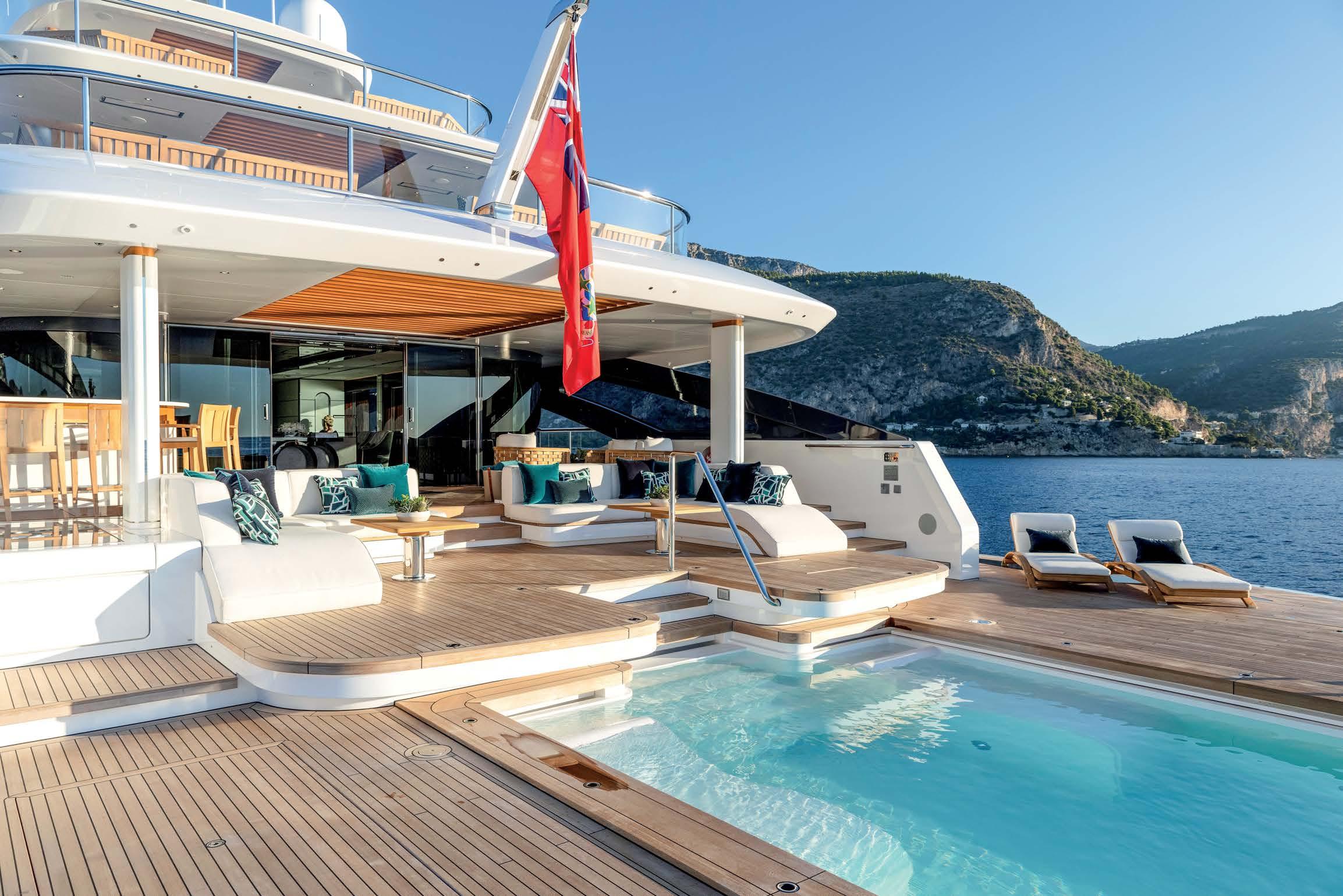
6 7 m
7 m
Sessantasette
Sessantasette
metri vista mare. Firmata da RWD per gli esterni e da Sinot Yacht Architecture & Design per gli interni, questa ammiraglia è un osservatorio privilegiato. Tailor-made, of course
metri vista mare. Firmata da RWD per gli esterni e da Sinot Yacht Architecture & Design per gli interni, questa ammiraglia è un osservatorio privilegiato. Tailor-made, of course
Sixty-seven metres with sea views. Designed by RWD for the exterior and by Sinot Yacht Architecture & Design for the interior, this flagship vessel offers a privileged vantage point. Tailor-made, of course by Mariateresa Campolongo - Credits Breed Media - Jeff Brown
Sixty-seven metres with sea views. Designed by RWD for the exterior and by Sinot Yacht Architecture & Design for the interior, this flagship vessel offers a privileged vantage point. Tailor-made, of course by Mariateresa Campolongo - Credits Breed Media - Jeff Brown
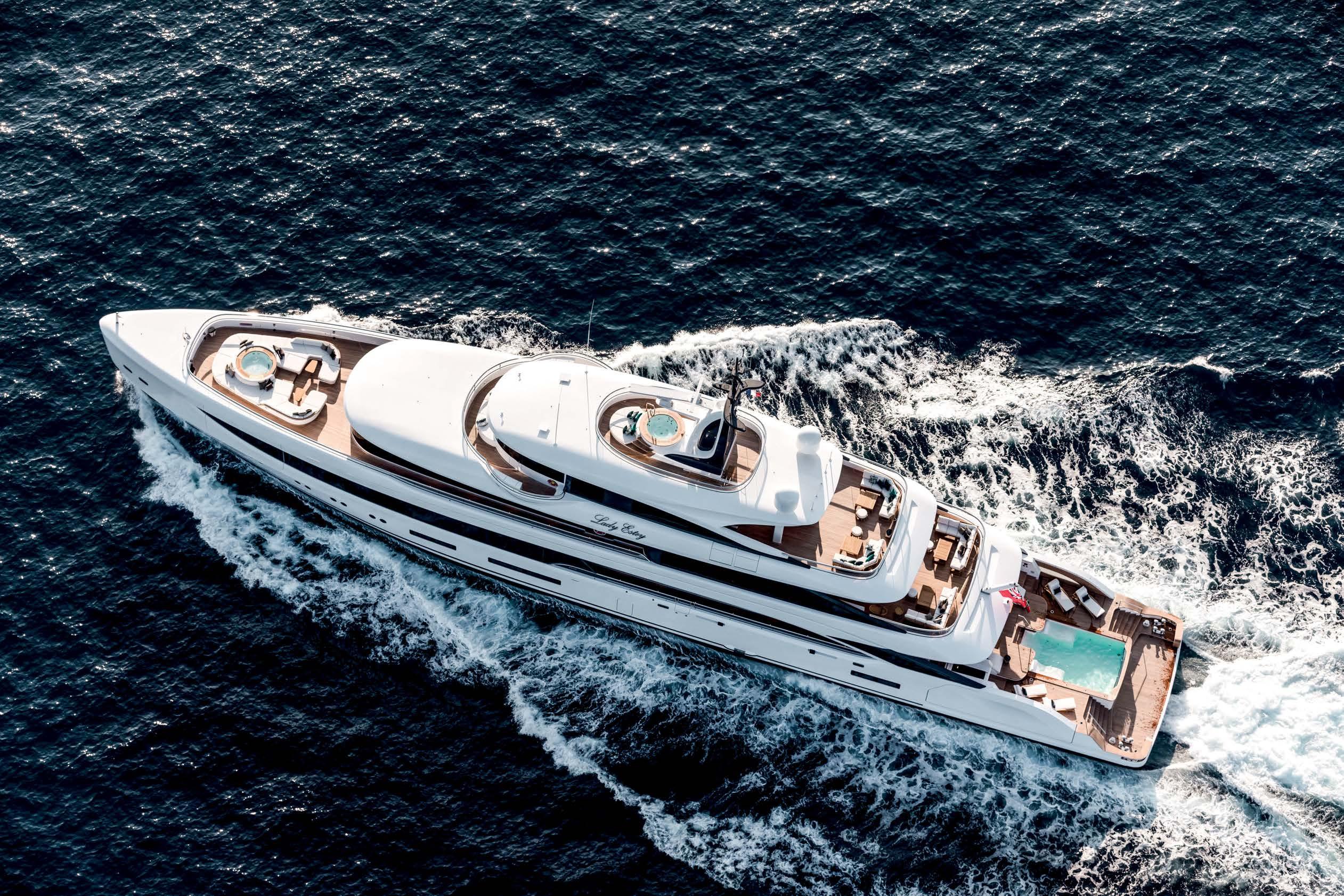
Per il progetto di Lady Estey, Benetti ha collaborato a stretto contatto con RWD per l’exterior design, con SINOT YACHT ARCHITECTURE & DESIGN per gli interni e con Engage Maritime, che ha rappresentato un armatore al suo primo superyacht, accompagnandolo in ogni fase del percorso.
For Lady Estey’s project, Benetti worked closely with RWD on the exterior design, with SINOT YACHT ARCHITECTURE & DESIGN on the interiors, and with Engage Maritime, which has represented a first-time superyacht owner, providing support every step of the way.
Vedere Lady Estey dal vivo, anche se nel contesto sempre un po’ frenetico di un boat show, permette di cogliere qualcosa che, sulla carta, rischia di passare in secondo piano:
la misura dell’intervento tailor-made su una piattaforma già fortemente caratterizzata come il B.Now 67M con Oasis Deck di Benetti. La base progettuale è nota, con quella poppa aperta che ha riscritto il rapporto tra yacht e mare, ma qui la sensazione è che il lavoro di personalizzazione sia andato ben oltre la semplice scelta di materiali o di arredi. Gli esterni, firmati RWD, mantengono la pulizia e la forza orizzontale tipiche della linea, mentre gli interni, sviluppati con Sinot Yacht Architecture & Design, cambiano decisamente atmosfera rispetto al concept originale, pensato con palette chiare.
Salendo a bordo, ciò che colpisce è la qualità del percorso. Non si ha mai la percezione di uno spazio “riempito”, bensì di ambienti pensati secondo una gerarchia precisa. Il main salon, impreziosito da un pianoforte a coda, dialoga con l’Oasis Deck in modo naturale, senza soluzione di continuità, mentre la poppa mantiene quella forza scenografica che è diventata il segno distintivo di gamma.
La configurazione è tradizionale, con la lounge a poppa e la dining room a pruavia, ma viene reinterpretata attraverso arredi su misura e un bar centrale integrato in un mobile custom, realizzato in marmo Lasa con struttura interna in acciaio inox.
La continuità tra interno ed esterno è stata assicurata abbinando, ad esempio, tonalità
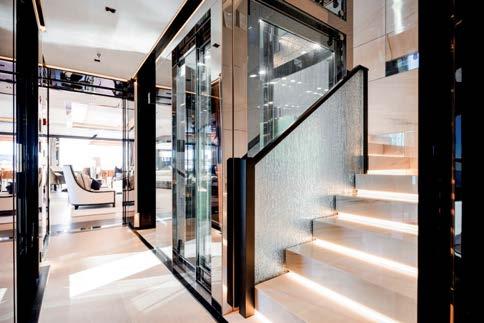
La scala è una realizzazione full custom ed è uno degli elementi più distintivi di FB287: accompagna il passaggio dalle tonalità scure delle aree ospiti alla luminosità del vano scala in marmo Calacatta con inserti metallici.
The bespoke staircase is one of the most distinctive features of FB287: it bridges the transition from the dark tones of the living areas to the brightness of the stairwell, which is clad in Calacatta marble with metallic inlays.
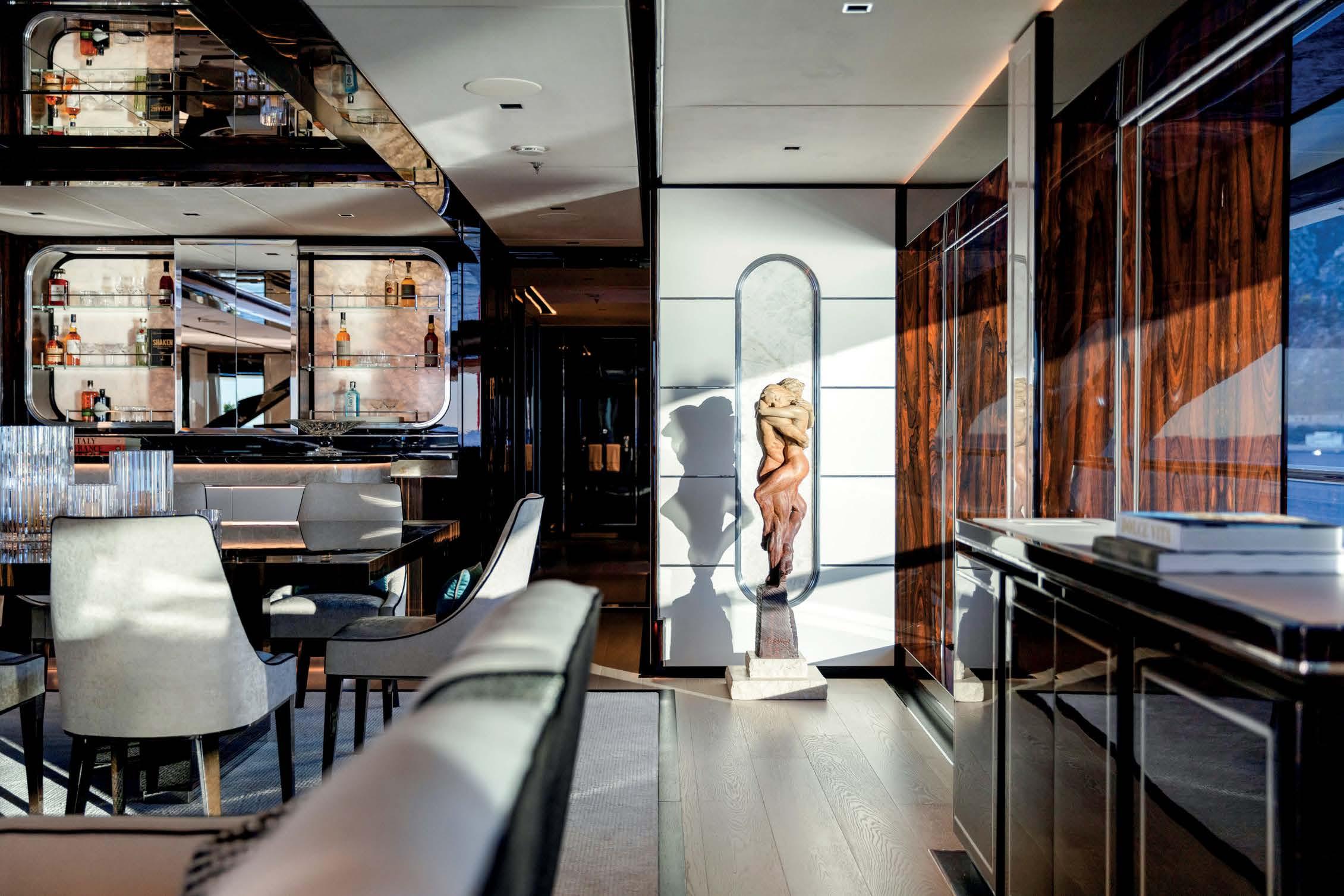
e larghezza delle doghe dei paglioli interni in rovere a quelle dei ponti esterni in teak, e utilizzando per i cielini interni materiali affini a quelli impiegati all’esterno. Questa coerenza rafforza la filosofia di armonizzazione degli spazi indoor e outdoor propria della linea B.Now.
Le customizzazioni a bordo di FB287 sono numerose: dall’ascensore rettangolare alla scala centrale in marmo con balaustra in vetro, fino a corridoi più ampi per gli ospiti, alle porte tagliafuoco per le cabine e alle piscine. La balaustra è un elemento in vetro completamente personalizzato – lavorato a mano e perfezionato dopo numerosi tentativi per individuare la texture e il pattern desiderati – che diventa un dettaglio identitario, una firma progettuale.
Barche ha visitato Lady Estey con Davide Siggia, designer dello studio Sinot Yacht Architecture & Design, che ha indicato nel “flow” la parola chiave del progetto: stessi materiali, stessi dettagli, stessa atmosfera lungo tutta l’unità, senza creare gerarchie troppo marcate tra cabina armatore, cabine ospiti e aree comuni. L’idea non era quella di ostentare superiorità, ma diffondere una ricchezza coerente in ogni ambiente. Per questo motivo, rispetto al concept originario più chiaro, l’armatore ha chiesto fin dall’inizio un linguaggio basato su materiali più scuri e laccati, con un uso esteso di acciaio e legni come Makassar con finitura trasparente per le superfici più intense e sicomoro sbiancato per quelle più luminose.
A bordo di FB287 le personalizzazioni sono numerose: dall’ascensore rettangolare alla scenografica
SCALA CENTRALE in marmo con balaustra in vetro, fino a corridoi ampliati per gli ospiti, porte tagliafuoco custom per le cabine e PISCINE realizzate su disegno.
The FB287 features a host of bespoke touches: from the rectangular lift to the striking CENTRAL STAIRCASE in marble with a glass balustrade, wider corridors for guests, custommade fire doors for the cabins, and bespoke SWIMMING POOLS.
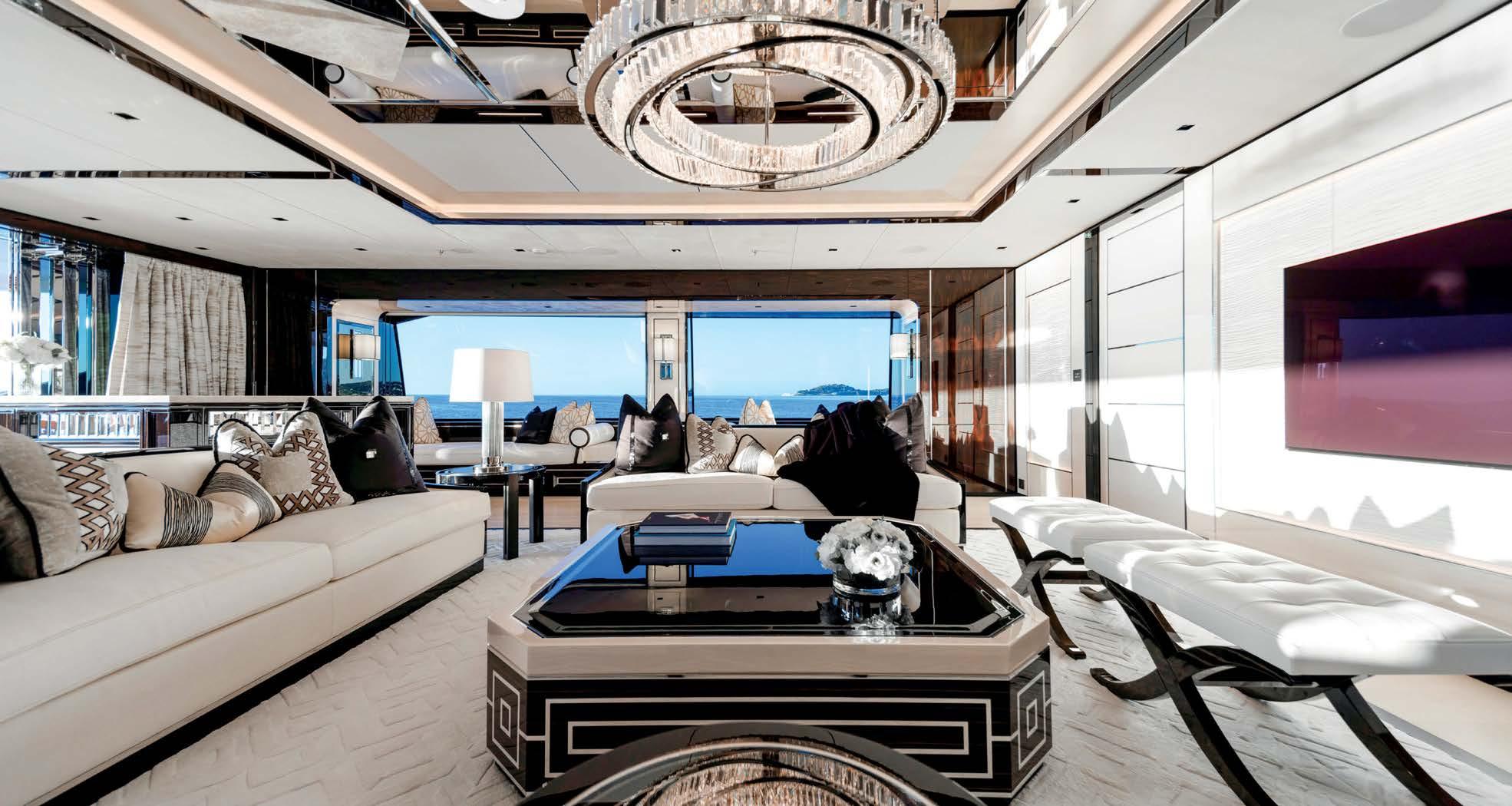
Il B.Now 67M è stato concepito per sfumare i confini tra indoor e outdoor e, così come le aree esterne, anche gli inter ni offrono uno stile originale, realizzati secondo precisi dettami dell’armatore.
The B.Now 67M is designed to blend indoor and outdoor spaces seamlessly. Similarly, the interiors of the FB287 also showcase a unique style, customised to the owner’s exact specifications.
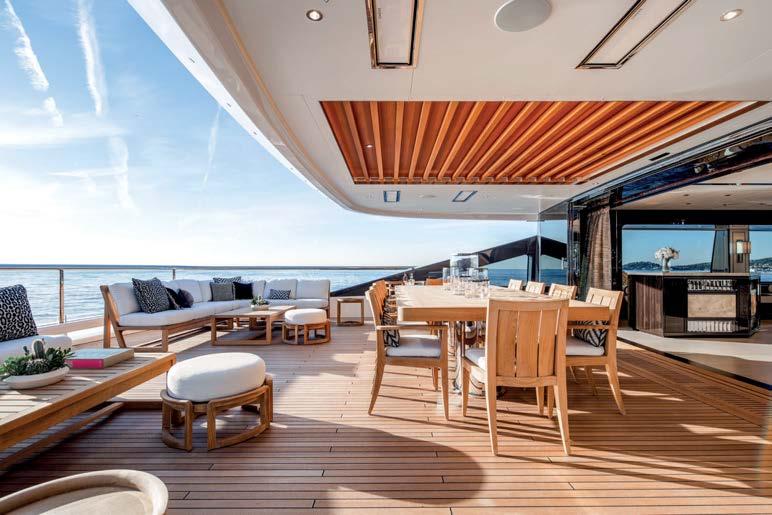
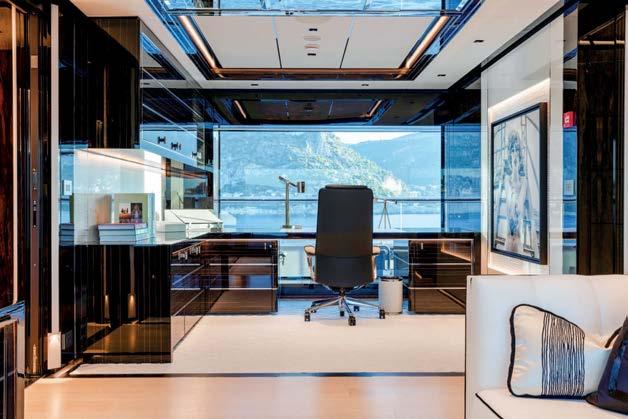
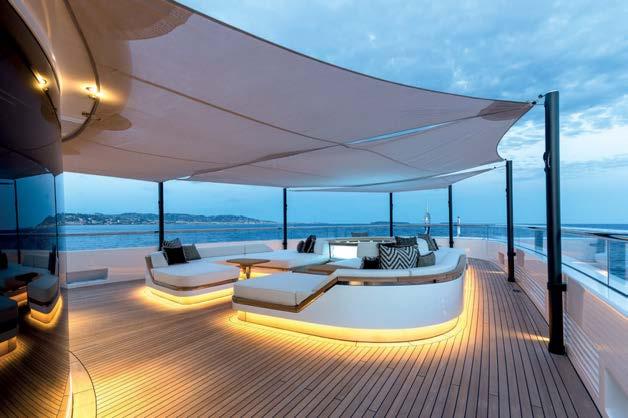
Anche gli inserti in acciaio sono stati studiati per essere il più possibile continui, riducendo le interruzioni visive e contribuendo a quella sensazione di compattezza e coerenza materica che si percepisce camminando lungo il ponte.
È spostandosi verso l’alto che si scoprono alcune scelte molto interessanti. L’observation deck, oltre a offrire una vista dominante sull’orizzonte, ospita una piscina con funzione spa che diventa un vero punto di osservazione privilegiato: immersi nell’acqua, con lo sguardo che corre verso l’orizzonte, si percepisce chiaramente l’intenzione di trasformare il ponte in un luogo esperienziale, non solo contemplativo. Qui il rapporto con il mare è diretto, quasi fisico, e la quota diventa un valore aggiunto.
Scendendo al lower deck, si incontra un’altra area chiave del progetto: la zona wellness. La palestra è stata concepita come un grande spazio aperto, ma con l’esigenza di garantire privacy alla zona trattamenti. Per questo è stato introdotto un sistema a doppio pannello scorrevole che, quando necessario, consente di separare l’area massaggi e beauty dal resto della gym. Attraverso una porta si accede alla vera spa, con hammam, doccia e sauna, una configurazione fortemente voluta dall’armatore, che ha seguito da vicino ogni scelta. Nel progetto originale era prevista anche la possibilità di aprire maggiormente verso l’esterno, soluzione che sarà implementata su un’unità successiva; qui, invece, si è preferito privilegiare un’atmosfera più raccolta e protetta. Anche l’upper deck, interamente dedicato all’armatore, restituisce un’idea precisa di privacy e controllo dello spazio.
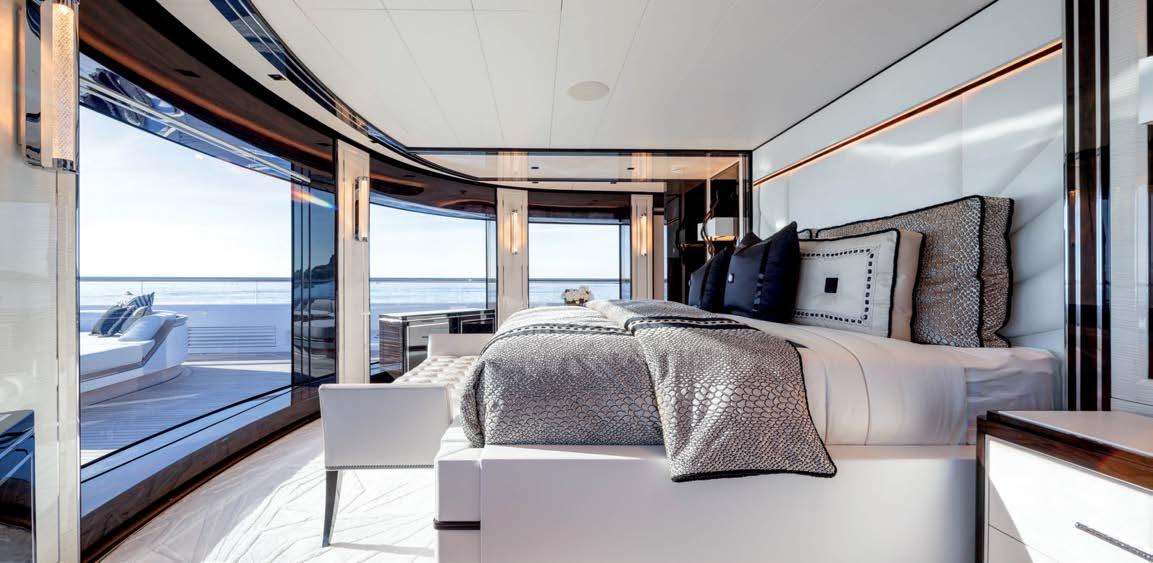
Benetti B.Now Lady Estey di 67 metri di lunghezza e 11,2 di baglio massimo, accoglie 14 ospiti in 7 cabine assistiti da 17 persone di equipaggio distribuite in 10 CABINE.
Benetti B.Now Lady Estey, 67 meters long and with a maximum beam of 11.2 meters, accommodates 14 guests in 7 cabins assisted by 17 crew members distributed across 10 CABINS.
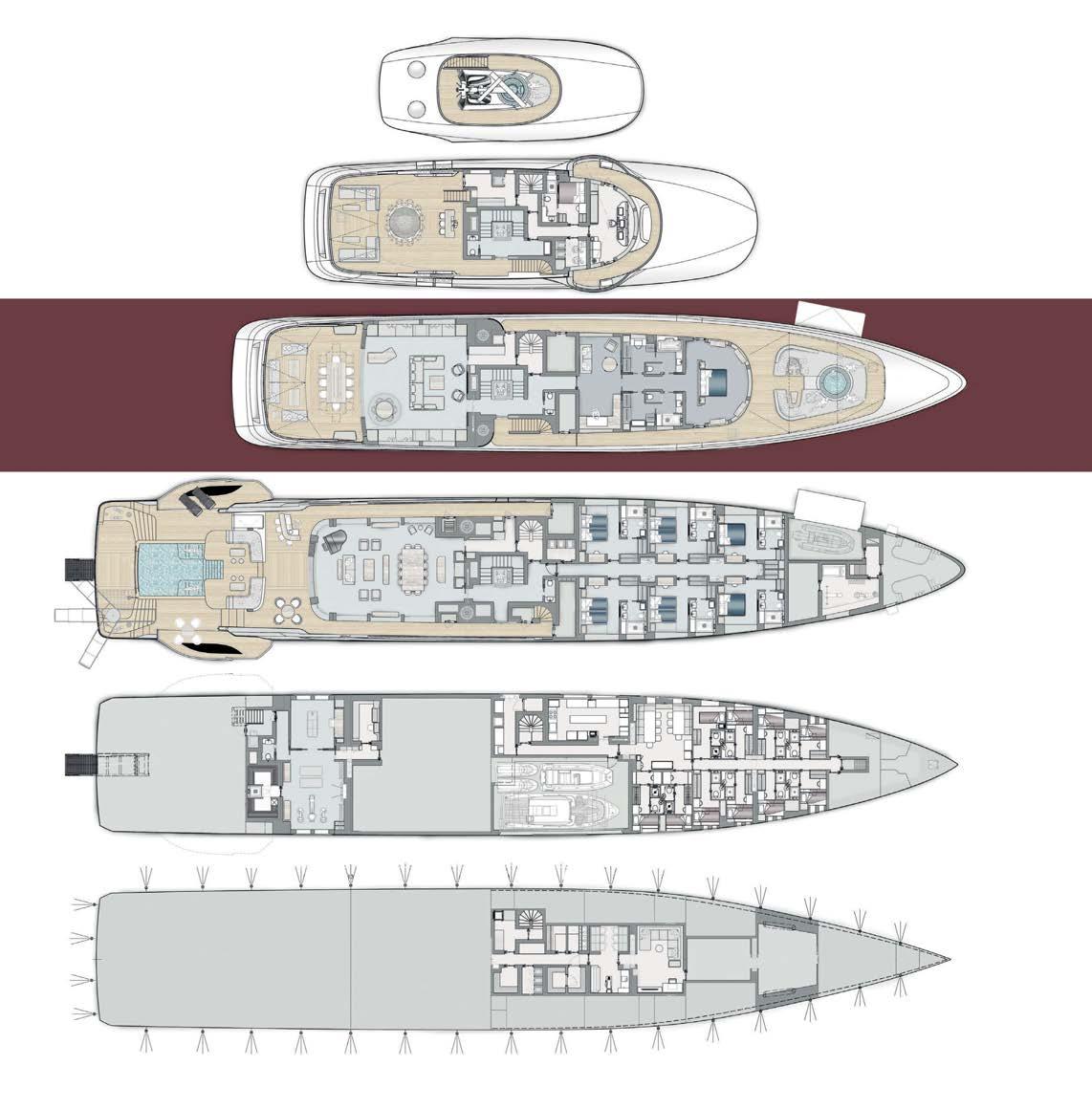
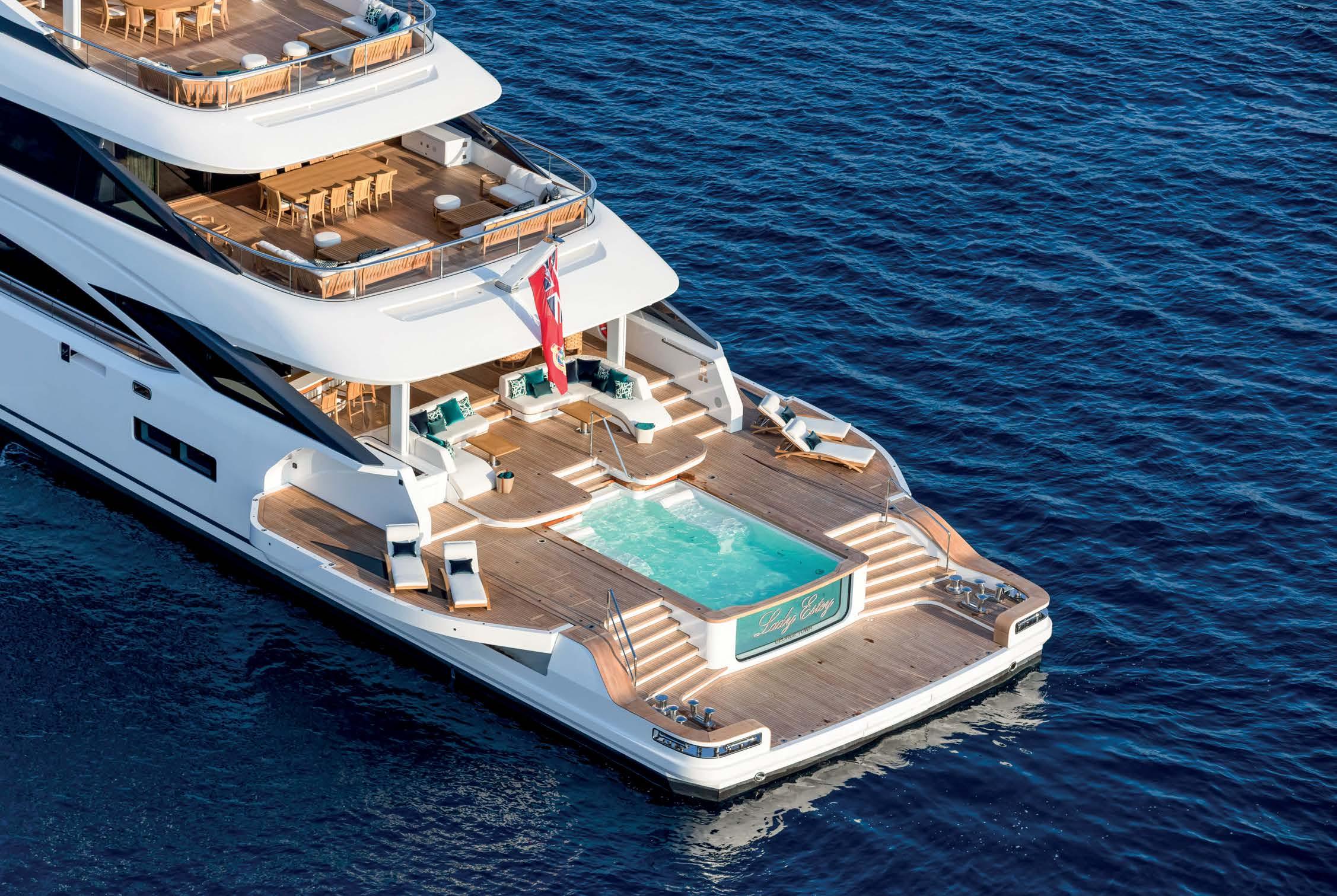
Top Speed KNOTS 16.3
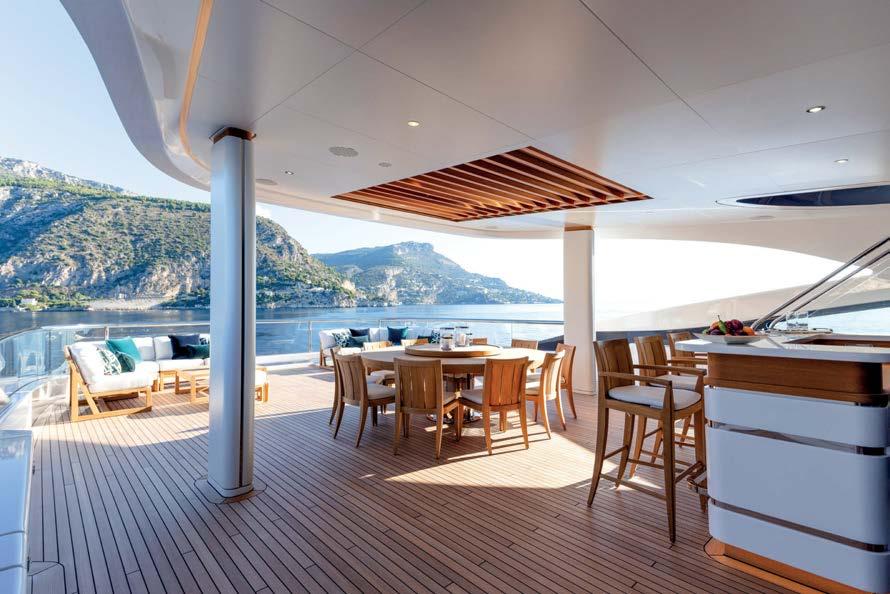
Oltre all’infinity pool dell’Oasis Deck, a bordo è posizionata una piscina con funzione spa sull’observation deck e una vasca armatoriale a prua, profonda 40 centimetri, con effetto cascata verso poppa.
Besides the infinity pool on the Oasis Deck, there’s a spa pool on the observation deck and a 40-centimeter-deep owner’s bath at the bow, featuring a waterfall effect flowing toward the stern.
poppa costituiscono un appartamento indipendente, dimostra quanto
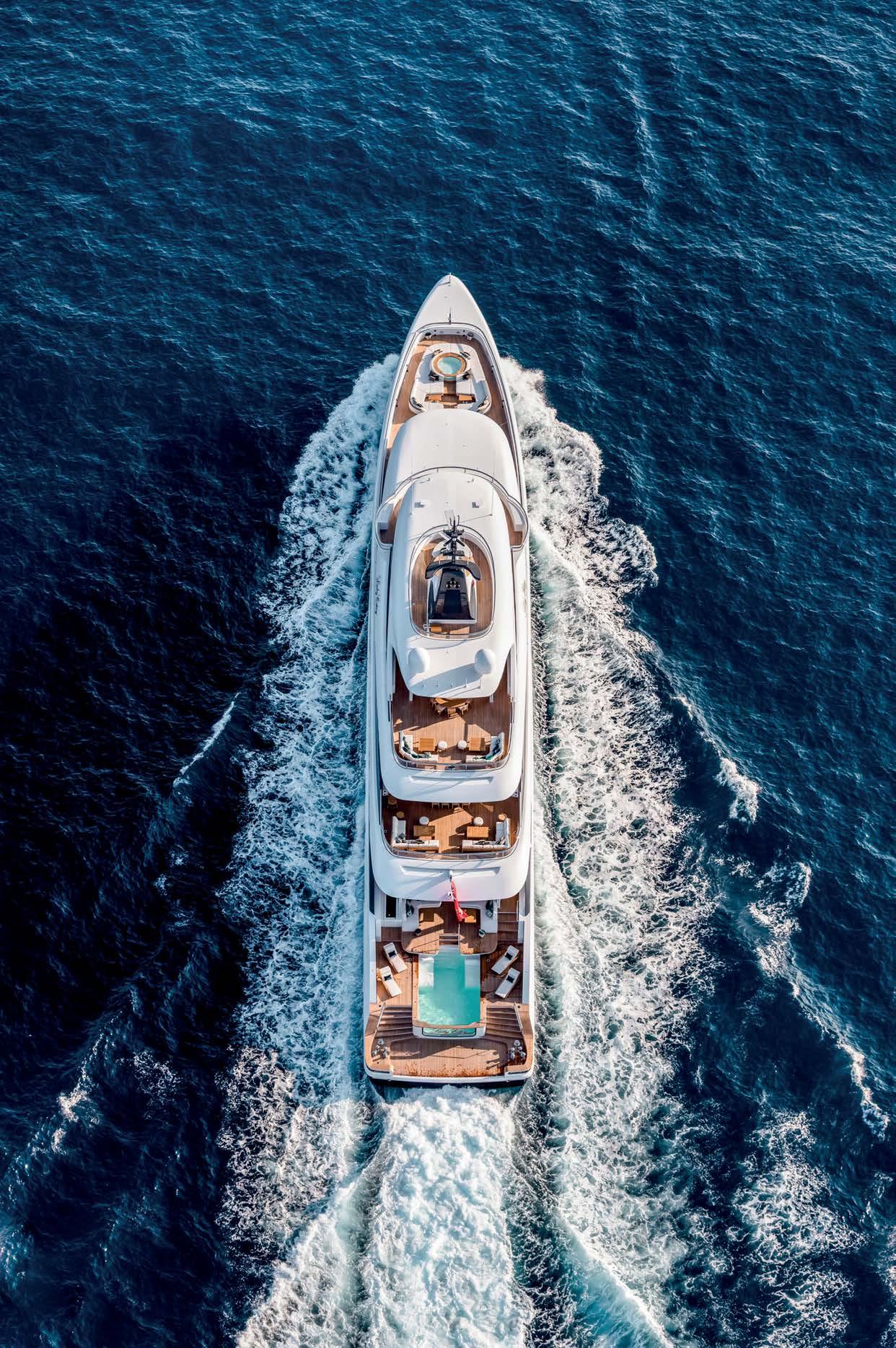
Seeing Lady Estey in the flesh, even amid the inevitably hectic atmosphere of a boat show, allows one to appreciate something that, on paper, might otherwise be overlooked:
the extent of the bespoke work carried out on a B.Now 67M with Oasis Deck. The design basis is well known, with its open stern that has redefined the relationship between yacht and sea, but here the impression is that the customisation has gone far beyond the simple choice of materials or furnishings.
The exteriors, designed by RWD, retain the clean lines and horizontal strength typical of the range, whilst the interiors, developed with Sinot Yacht Architecture & Design, offer a markedly different atmosphere from the original concept, which featured
Upon boarding, the layout’s quality is immediately striking. There is never the impression of a ‘cramped’ space, but rather of areas designed according to a precise hierarchy. The main saloon, adorned with a grand piano, flows naturally into the Oasis Deck, whilst the stern retains the dramatic impact that has become the hallmark of the range. The layout is traditional, with the lounge aft and the dining room forward. Still, it is reinterpreted through bespoke furnishings and a central bar integrated into a custom-made unit crafted from Lasa marble
Continuity between interior and exterior is ensured by matching, for example, the shades and width of the internal oak floorboards to those of the external teak decks, and by using materials for the interior ceilings similar to those used externally.
This consistency reinforces the philosophy of harmonising indoor and outdoor spaces that is characteristic of the B.Now line. There are numerous : from the rectangular lift to the central marble staircase with a glass balustrade, wider guest corridors, fire-rated doors for the cabins, and the swimming pools. The balustrade is a fully bespoke glass feature –handcrafted and refined after numerous attempts to achieve the desired texture and pattern – that becomes a defining detail, a design signature.
La nave è stata costruita con scafo in acciaio e sovrastruttura in alluminio. Il dislocamento a pieno carico è di 1.250 tonnellate.
L’architettura navale è stata sviluppata da Benetti e da Pierluigi Ausonio di Plana. La stazza è di 1.300 GT.
The vessel features a steel hull and an aluminium superstructure, with a fullload displacement of 1,250 tonnes. Benetti and Pierluigi Ausonio Plana designed the naval architecture. Its international tonnage is 1,300 gross tonnes.
BENETTI, AZIMUT BENETTI BRAND Via Michele Coppino, 104 I-55049 Viareggio T. +39 0584 3821 www.benettiyachts.it
PROGETTO
Benetti Shipyard • Pierluigi Ausonio Studio Plana (architettura navale) • RWD (concept + designer esterni)
• Sinot Yacht Architecture & Design (concept + designer inter ni)
SCAFO
AUTONOMIA MN RANGE NM
4500









Lunghezza f.t. 67m • Larghezza max 11,20m • Immersione massima 3,10m • Scafo e Sovrastruttura Acciaio/Alluminio • Dislocamento a pieno carico 1.250 t • Capacità casse combustibile 110.000 l • Capacità cassa acqua 30.000 l • Cabine armatore e 6 cabine ospiti per 14 persone • Cabine equipaggio 10 cabine per 17 persone
MOTORI PRINCIPALI



RAPPORTO PESO POTENZA MASS OUTLET POWER

2x Cat 3512E • 1.350 kW • Generatori 3x Cat C7.1 –150 ekW • Elica di prua Schottel 200 kW
• Stabilizzatori Nayad Dynamics • Velocità massima 16 nodi • Autonomia a 12 nodi 4.500 nm
CLASSIFICAZIONE





463 kg kw
Lloyd’s Register – Cayman Island
PROJECT
Benetti Shipyard • Pierluigi Ausonio Studio Plana (naval architecture) • RWD (concept + exterior design)
L’autonomia è di circa 4.500 miglia nautiche alla velocità di crociera economica di 12,5 nodi. The range is approximately 4,500 nautical miles at the economical cruising speed of 12.5 knots.


RAPPORTO LUNG./LARG. L/W 6.3

• Sinot Yacht Architecture & Design (concept + interior design)
HULL
L.O.A. 67m • Max width 11.20m • Max draft 3.10m
• Hull and superstructure Steel/Aluminium • Full-load displacement 1,250 t • Fuel tank volume 110,000 l
• Water tank volume 30,000 l • Master cabin and 6 guest cabins for 14 people • Crew: 10 cabins for 17 people
MAIN PROPULSION
2x CAT 3512E • 1,350 kW • 3x CAT C7.1 generators – 150 ekW • Schottel bow thruster 200 kW • Nayad Dynamics stabilisers • Maximum speed 16 knots
• Range at 12 knots 4,500 nm





CLASSIFICATION
Lloyd’s Register – Cayman Islands





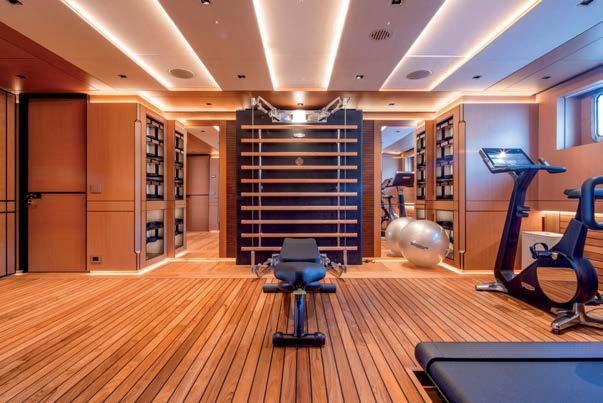
La palestra è stata concepita come un grande spazio aperto, ma con l’esigenza di garantire privacy alla zona trattamenti. Per questo è stato introdotto un sistema a doppio pannello scorrevole che consente di separare l’area massaggi e beauty dal resto della gym.
The gym has been designed as a large open space, while ensuring privacy for the treatment area.
To this end, a double-panel sliding system has been installed, which, when necessary, allows the massage and beauty area to be separated from the rest of the gym.
Barche has visited Lady Estey with Davide Siggia, a designer at Sinot Yacht Architecture & Design, who identified ‘flow’ as the project’s key concept: the same materials, details and atmosphere throughout the vessel, without creating overly pronounced hierarchies among the master cabin, guest cabins and communal areas. The idea was not to flaunt superiority but to create a consistent sense of luxury in every space. For this reason, in contrast to the original, lighter concept, the owner requested, from the outset, a design language based on darker, lacquered materials, with extensive use of steel and woods such as Makassar, and a clear finish for the darker surfaces and bleached sycamore for the lighter ones.
The steel inlays have also been designed to be as continuous as possible, reducing visual interruptions and contributing to a sense of compactness and material consistency whilst walking along the deck. Moving upwards, you discover some truly fascinating features.
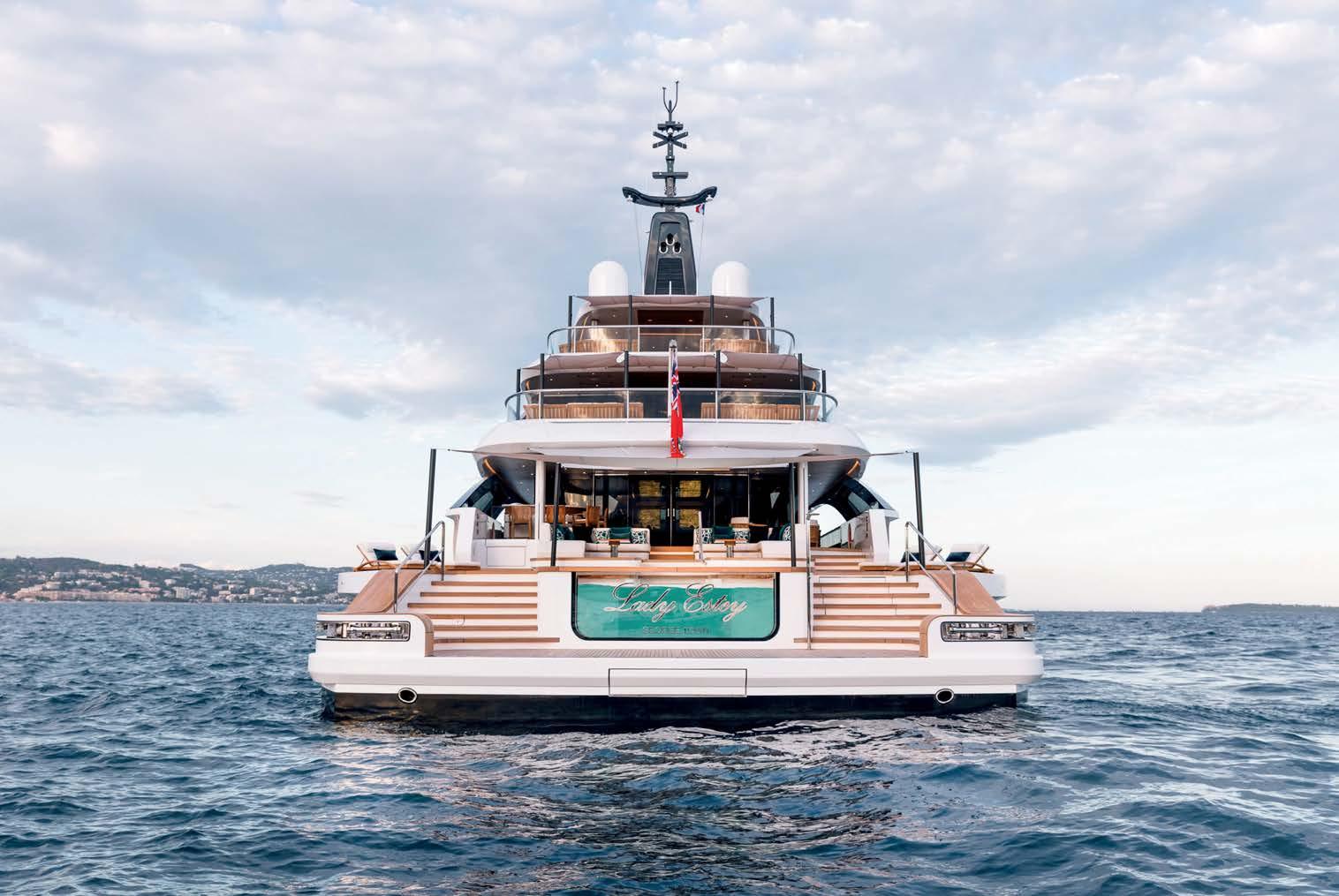
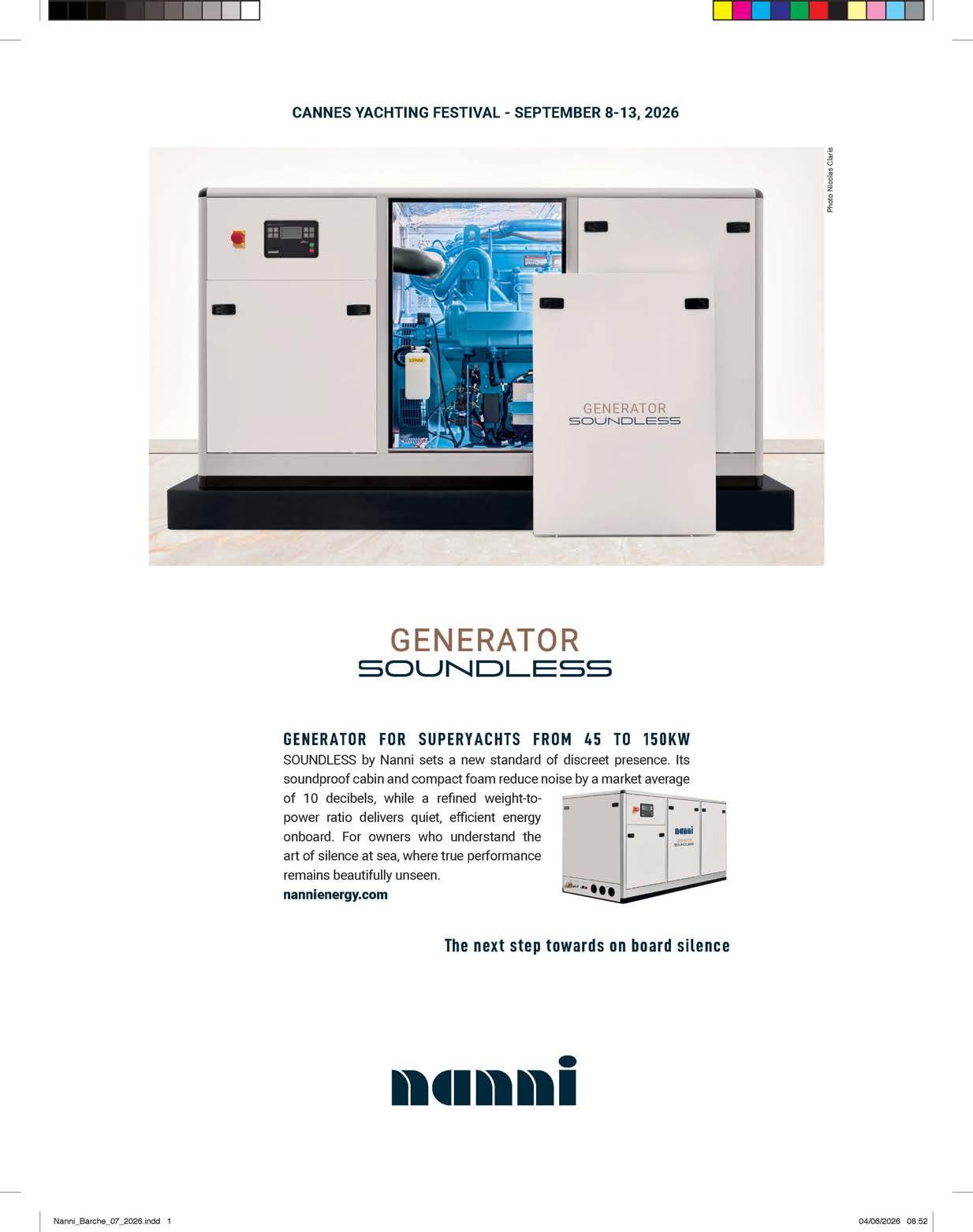
The observation deck, in addition to offering a commanding view of the horizon, features a spastyle pool that becomes a privileged vantage point: immersed in the water, with your gaze sweeping towards the horizon, you can clearly sense the intention to transform the deck into an experiential space, not merely a contemplative one. Here, the connection with the sea is direct, almost physical, and the elevation becomes an added bonus.
Going down to the lower deck, you come to another key area of the project: the wellness zone. The gym has been designed as a large open space, while ensuring privacy for the treatment area. To this end, a double-panel sliding system has been installed, which, when necessary, allows the massage and beauty area to be separated from the rest of the gym. A door leads into the spa area, which features a hammam, shower and sauna – a layout specifically
requested by the owner, who oversaw every detail of the design. The original design also included the option to open up to the outside, a feature that will be incorporated into a future vessel; here, however, the preference was for a more intimate and secluded atmosphere.
The upper deck, entirely dedicated to the owner, also conveys a distinct sense of privacy and control over the space. The forward suite, the office and the private saloon aft form a self-contained suite, a sense reinforced by the absence of a staircase connecting this area directly to the aft main deck. It is a choice that is physically apparent as one walks around the yacht: the functions are separate, yet without any sense of rigidity. Overall, Lady Estey demonstrates how far a semi-custom platform can be pushed to create a truly personal experience without losing the original model’s identity.
Benetti ha sviluppato una serie di soluzioni SU MISURA per rispondere alle richieste di un armatore alla ricerca di un linguaggio d’interni fortemente personalizzato, coerente con la propria VISIONE.
Benetti has developed a range of BESPOKE solutions to meet the requirements of a client seeking a highly personalised interior design that reflects their VISION.
La velocità massima è di 16,3 nodi, l’autonomia è di 4.500 miglia nautiche a 12 nodi. In sala macchine ci sono 2 motori Cat di 1.350 kW ciascuno.
The maximum speed is 16.3 knots, with a range of 4,500 nautical miles at 12 knots. The engine room houses two CAT engines, each rated at 1,350 kW.
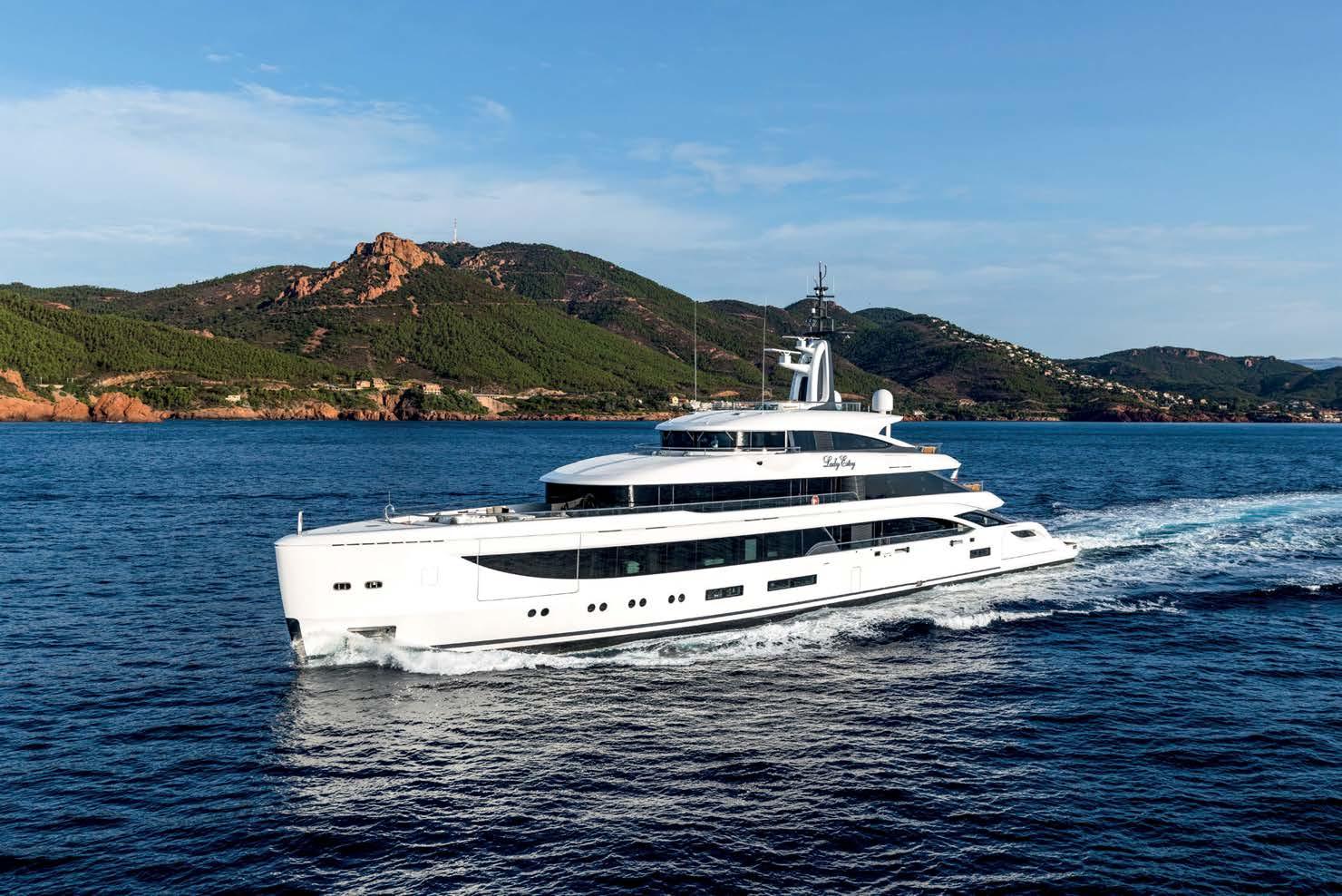
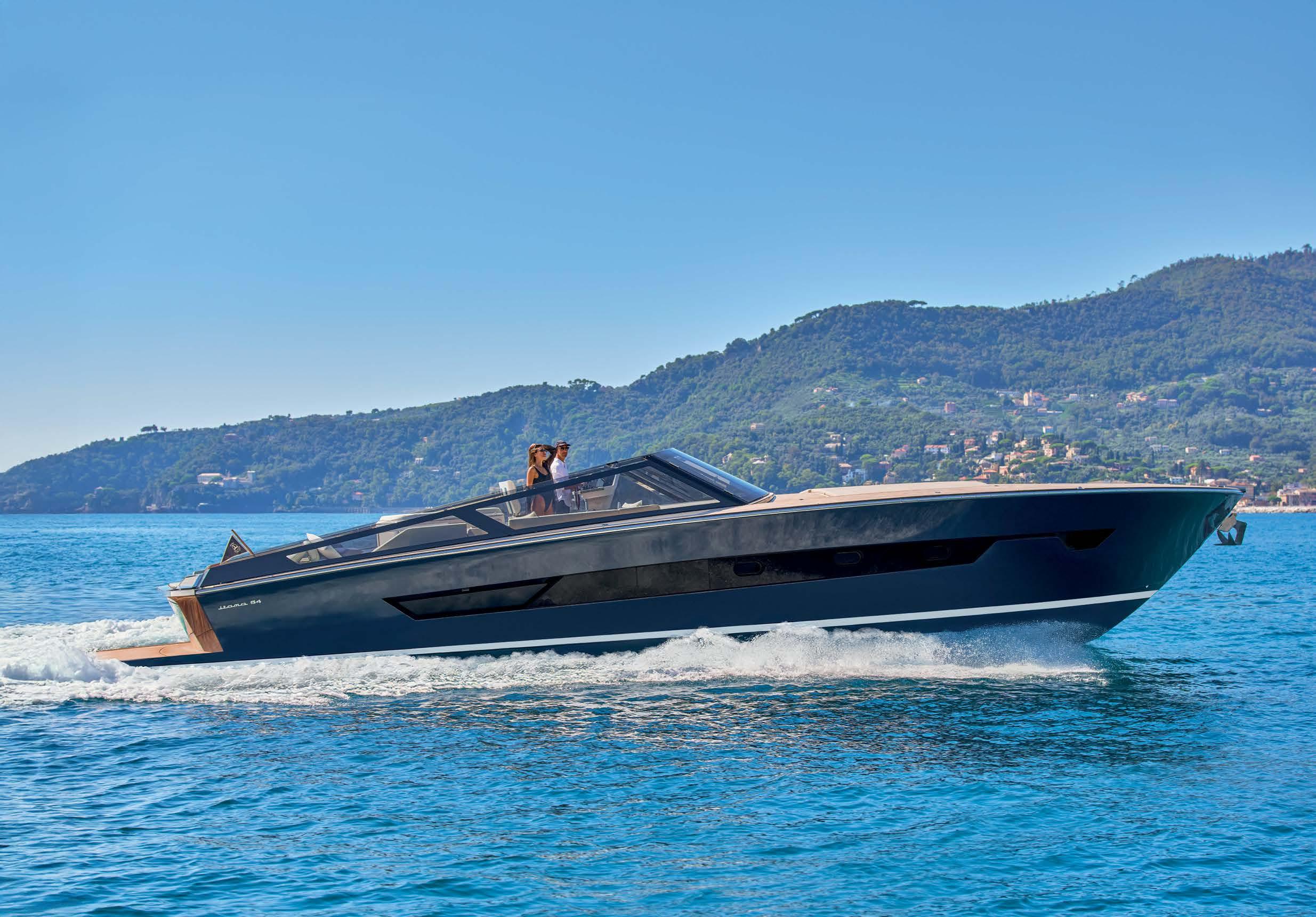
16 .4 m4
Fedele agli stilemi del cantiere, si mostra con un layout rinnovato e più funzionale. Al timone? Una garanzia, come sempre. Per navigare bene e veloce
16 .4 m4
True to the shipyard’s signature style, it features a revamped, more functional layout. At the helm? A sure bet, as always. For smooth, speedy sailing by Niccolò Volpati - photo by Massimiliano Romualdi
Al timone di Itama 54 la tentazione di affondare la manetta è fortissima perché è fortissima –e dunque rassicurante – anche la sensazione di assoluto controllo dell’imbarcazione.
Questo nuovo open è un irresistibile invito alla navigazione e alla velocità, che si raggiunge agilmente grazie ai due potenti Man da 850 cavalli ciascuno (montati sulla versione optional; quella standard prevede 730). Appena supera la fase di dislocamento, lo scafo si distende: assetto e visibilità sono perfetti. Vira facilmente e il giusto: non s’inclina troppo, né troppo poco. È maneggevole e facile da condurre.
La prova è avvenuta con mare calmo, anche se, ovviamente, non sono mancate le onde di scia generate dalle numerose barche in transito al largo di Cannes. Eppure, il passaggio è sempre stato morbido perché la V di prua ha permesso di fenderle chirurgicamente.
Tra la plancia e la sala macchine c’è tutta la tecnologia che serve, senza inutili eccessi. Ci sono, ad esempio, i correttori di assetto Interceptor, made in Quick, che rappresentano senza dubbio un valido aiuto persino per gli armatori più esperti. Anche i dati relativi ai consumi confermano l’idea che valga davvero la pena sfruttare i cavalli a disposizione: per navigare a 20 nodi, infatti, ci vogliono poco meno di dieci litri per miglio, a 25 nodi ne bastano otto. In realtà, più si “spinge” e più Itama 54 dà il meglio di sé.
Gli interni e la coperta sono stati realizzati da Tommaso De Luca. Il compito – ammettiamolo – non era affatto semplice: si trattava di ammodernare senza tuttavia stravolgere il Dna della barca, anche perché lo stile Itama, che gli armatori peraltro si aspettano, non è mai stato in discussione. Ebbene, De Luca ha centrato in pieno l’obiettivo. In coperta, la zona di poppa è tradizionalmente occupata dal prendisole triplo e dalla piattaforma bagno. Il quadrato del pozzetto sfrutta al meglio la superficie a disposizione perché, di fatto, è come se fosse raddoppiato.
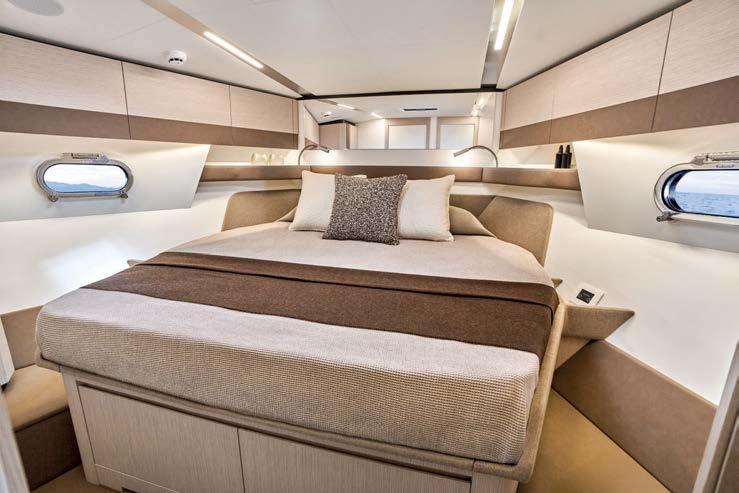
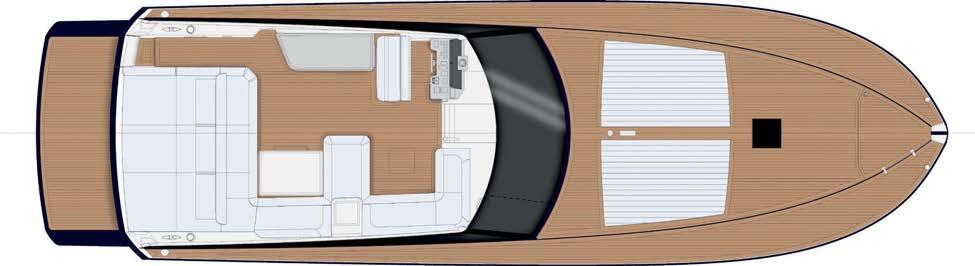
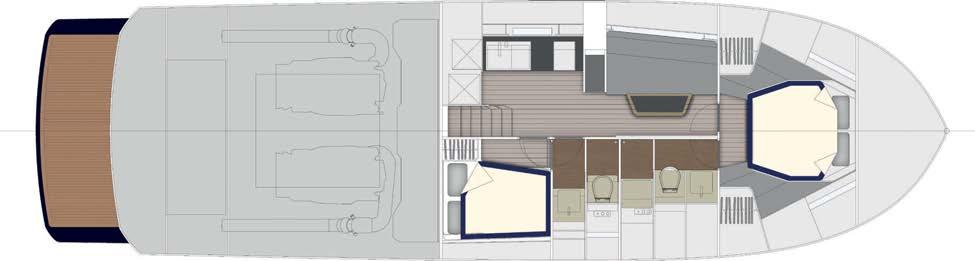
Sottocoperta non manca davvero nulla, ma gli spazi sono più di “servizio”.
Itama 54 è un open e, come tale, va vissuto appieno all’aperto. Gli interni sono razionali e funzionali. L’allestimento si sviluppa lungo tutta la lunghezza, garantendo due cabine con due bagni en suite, una grande cucina e un divanetto lineare di fronte alla tivù.
Below deck, nothing is missing, but the spaces are more ‘service’oriented.
The Itama 54 is an open and, as such, is best enjoyed outdoors.
The interior is practical and functional. The layout extends the full length of the vehicle, providing two cabins with two en-suite bathrooms, a large kitchen and a long sofa facing the TV.
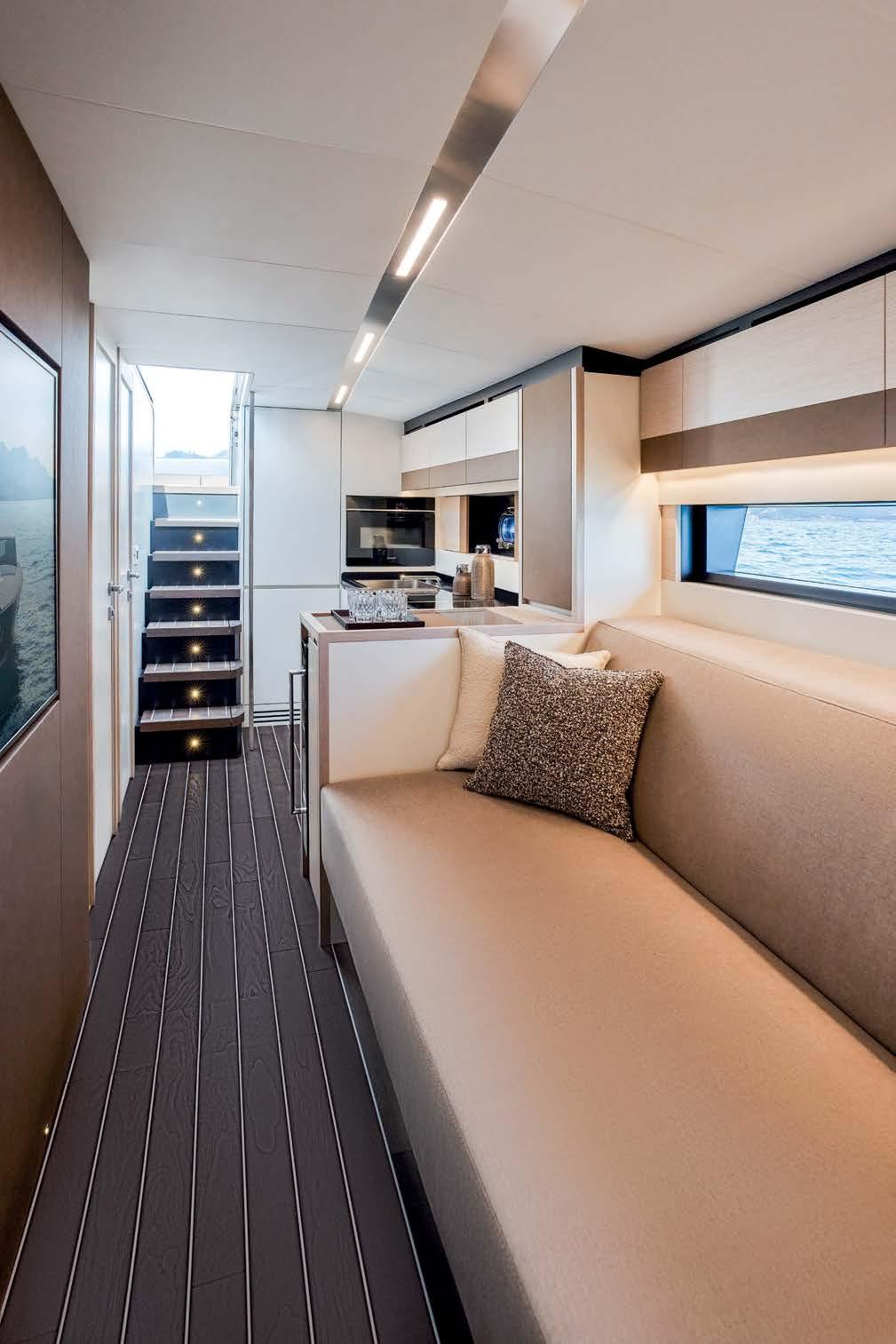
Il layout concentra tutta l’area living in POZZETTO e il prendisole con la piattaforma a poppa. La prua, come da tradizione, rimane SGOMBRA e arredata con soli due prendisole a incasso.
The layout concentrates the entire living area in the COCKPIT and on the sun deck, with the aft platform. The bow, as is traditional, remains FREE, featuring only two recessed sun loungers.
Ci sono il classico divano a U intorno al tavolo da pranzo, il mobile cucina e la consolle di guida, ma anche un altro angolo per il living con un secondo divanetto. L’accesso a prua, come per tutti gli Itama, avviene attraverso il parabrezza, ma il portello, questa volta, non si trova al centro, bensì a dritta. In questo modo, il passaggio è sempre agevole ma leggermente defilato, il che consente di ottenere un allestimento più funzionale. La zona di prua è sgombra e occupata solamente dal doppio prendisole, leggermente incassato rispetto al piano di calpestio della tuga, ed è una soluzione perfetta, perché i cuscini rimangono nascosti alla vista senza alterare le linee delle fiancate che restano pulite.
Non c’è la battagliola che risulterebbe un pugno nell’occhio sotto il profilo estetico.
Sottocoperta, il layout dimostra che in fase di progettazione non c’è mai stata l’ossessione per i volumi. Il comfort c’è, si vede, si respira, ma senza forzature. Quando si scende la scaletta, per esempio, non ci si imbatte in un classico disimpegno e a poppa non si trova una cabina che, rimanendo sotto il piano di calpestio del pozzetto, sarebbe stata sacrificata in altezza. Si accede piuttosto a un corridoio che, a sua volta, consente l’accesso alle cabine, tutte con bagno en suite.
Quella armatoriale è all’estrema prua e il bagno ha un box doccia separato. La cabina degli ospiti, invece, è ubicata leggermente più a poppa, pur restando nella zona di prua della barca. Gli interni offrono anche una grande cucina lineare con un generoso piano di lavoro e un divanetto, sempre lineare da 4-5 posti. Tutto si sviluppa in lunghezza. Ma è nella natura di Itama, che va vissuto soprattutto in superficie.
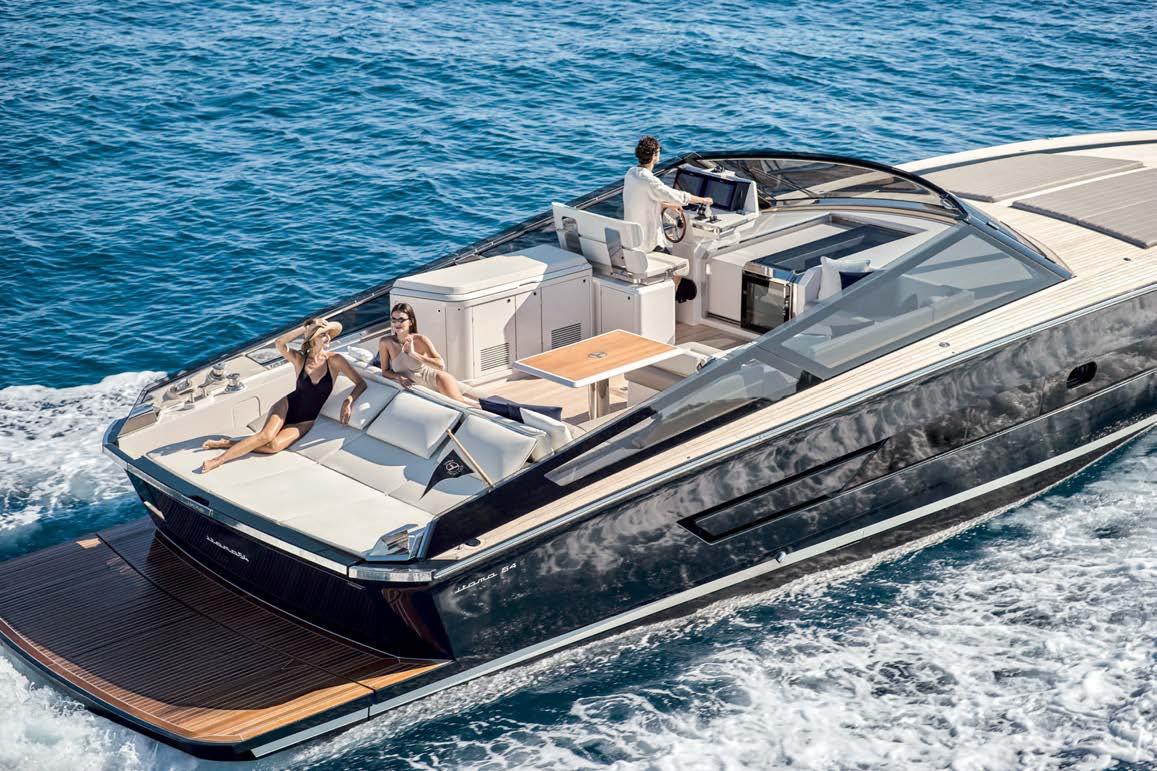
VELOCITÀ MAX NODI TOP SPEED KNOTS 33.4
AUTONOMIA MN RANGE NM 300
ITAMA
Ferretti Group Brand Via Classicana, 68 I-48122 Ravenna (RA) www.itama-yacht.com
PROGETTO
Tommaso De Luca (interni ed esterni) e Ferretti Engineering
SCAFO
Lunghezza f.t. 16,44m • Larghezza massima 4,73m • Pescaggio 1,70m • Dislocamento a vuoto 19.500 kg • Serbatoio carburante 2.500 l
• Serbatoio acqua 450 l
MOTORE
DELLA PROVA CONDITIONS ON TEST
Località//Place Cannes Mare//Sea state Calmo//Calm Vento forza//Wind speed Assente//No wind Persone a bordo//People on board 10 Carburante imbarcato 1.600 l Fuel volume on board
Acqua imbarcata 450 l Water volume on board
2x Man i6-850 • Potenza 626 kW (850 cv) • 6 cilindri in linea • Cilindrata 12,42 l • Alesaggio per corsa 126 mm x 166 mm • Regime di rotazione massimo 2300 giri/minuto • Peso 1.215 kg
CERTIFICAZIONE CE CAT B
RAPPORTO PESO POTENZA MASS OUTLET POWER
PREZZO
1.290.000 € – Base – Iva esclusa – Franco cantiere
Da zero a planata in 10 secondi
KG KG
16 kg kw
PROJECT
Tommaso De Luca (interiors and exteriors) and Ferretti Engineering
HULL
LOA 16.44m • Maximum beam 4.73m • Draft 1.70m
Gliding time of 10s from 0 to glide
Da zero alla massima velocità in 39 secondi
Gliding time of 39s for a speed change from 0 to 33.4 knots (maximum speed)
RAPPORTO LUNG./LARG. L/W
3.5
• Light mass displacement 19,500 kg • Fuel tank volume 2,500 l • Water tank volume 450 l
MAIN PROPULSION
2x MAN i6-850 • Outlet mechanical power 626 kW (850 hp) • 6 in-line cylinders • Swept volume 12.42 l • Bore&Stroke 126 mm x 166 mm • Maximal rotational speed 2,300 rpm • Weight 1,215 kg
EC CERTIFICATION CAT B
PRICE
1.290.000 € – Base - Excl. VAT – EX YARD
MIGLIO (VELOCITÀ DI CROCIERA) L/ NA MI (CRUISING SPEED)
8.2
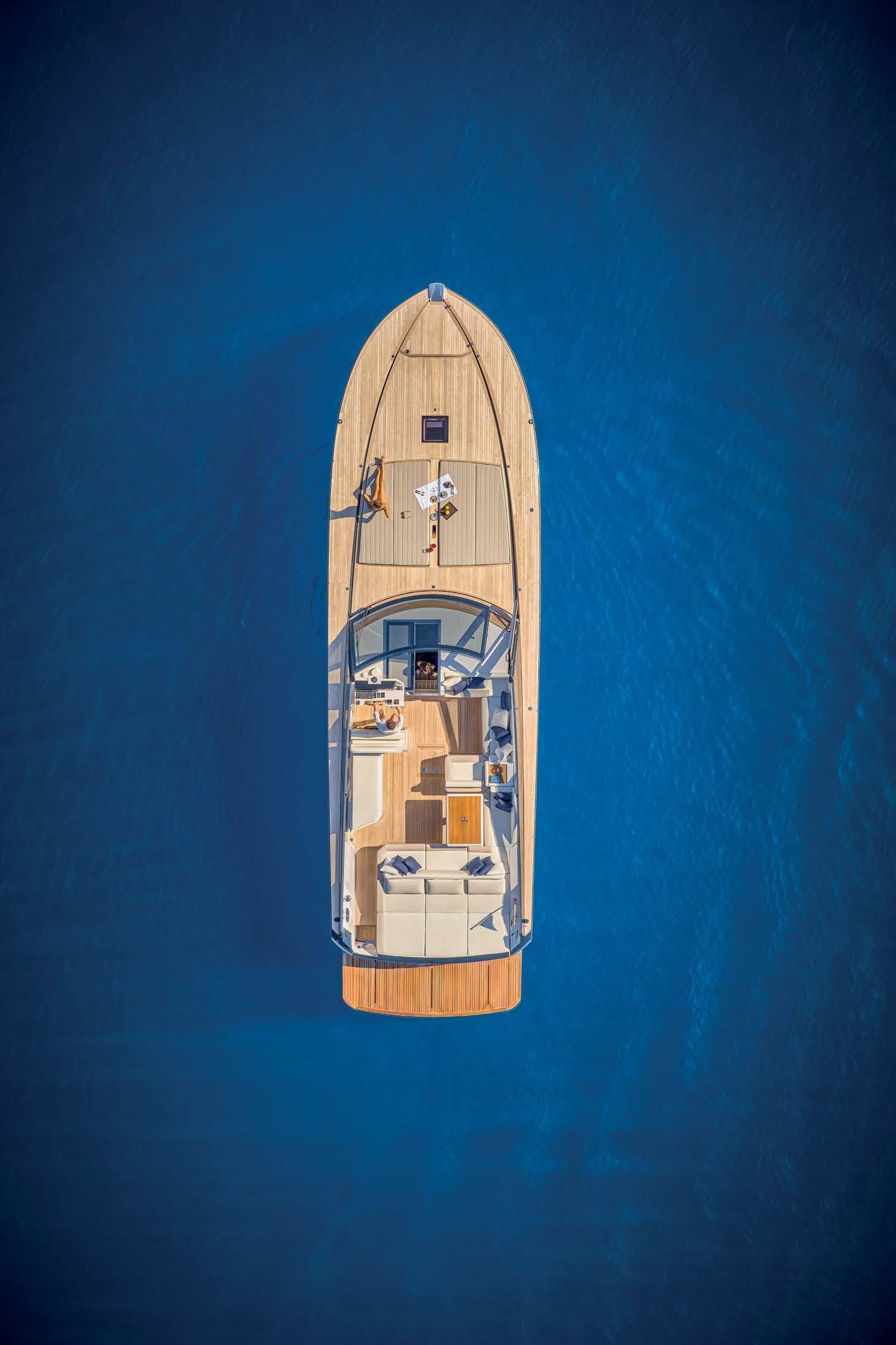
At the helm of the Itama 54, the temptation to open the throttle wide is overwhelming, as is the feeling of absolute control over the boat – equally reassuring.
This new open boat is an irresistible invitation to sail and speed, easily achieved thanks to the two powerful Man engines, each delivering 850 horsepower (in the optional version; the standard version comes with 730). As soon as it passes the displacement phase, the hull settles: trim and visibility are perfect. It turns easily and just right: it doesn’t bank too much or too little. It is manoeuvrable and easy to handle. The test took place in calm seas, although wake waves were generated by the numerous boats passing offshore from Cannes. Yet the ride remained smooth throughout, as the V-shaped bow allowed it to slice through
technology you need, without any unnecessary excess. For example, the Interceptor trim tabs by Quick are undoubtedly a valuable aid, even for the most experienced owners. The fuel consumption figures also confirm that it is well worth making the most of the available horsepower: to cruise at 20 knots, it takes just under ten litres per mile, whilst at 25 knots, eight litres are sufficient. In reality, the harder you push it, the
Tommaso De Luca designed the interiors and superstructure. The task – let’s face it – was by no means straightforward: the aim was to modernise the boat without compromising its DNA, not least because
De Luca has hit the mark perfectly. On deck, the aft section is traditionally occupied by the triple sun deck and the swim platform. The cockpit makes the most of the available space, as if it has been doubled in size. There is the classic U-shaped sofa around the dining table, the galley and the helm console, as well as another living area with a second small sofa. As with all Itama models, access to the bow is via the windscreen, but this time the hatch is on the starboard side rather than in the centre. This keeps access easy, though slightly off-centre,
The foredeck is free, featuring only the double sunbathing area,
This is a perfect solution, as the cushions remain out of sight without spoiling the clean lines of the hull. There is no handrail, which would have
I PRENDISOLE di prua sono leggermente incassati rispetto al piano di calpestio della tuga: in questo modo risultano quasi INVISIBILI. E l’effetto è très chic.
The bow SUN LOUNGERS are set slightly below the deckhouse deck level: this makes them almost INVISIBLE. The effect is très chic.
Below deck, the layout shows that an obsession with sheer volume never drove the design phase. Comfort is evident – you can see it and feel it – without any sense of contrivance. When you descend the ladder, for example, you do not encounter a traditional hallway. At the stern, there is no cabin that, being situated below the cockpit floor level, would be compromised on headroom. Instead, you enter a corridor which, in turn, provides access to the cabins, all of which have en-suite bathrooms.
The master cabin is at the very bow, and the bathroom has a separate shower cubicle. The guest cabin, on the other hand, is situated slightly further aft, whilst remaining in the bow section of the boat. The interior also features a large, linear galley with a generous worktop and a linear sofa seating 4–5 people. Everything unfolds in length. But it is like the Itama that it is best enjoyed on deck.
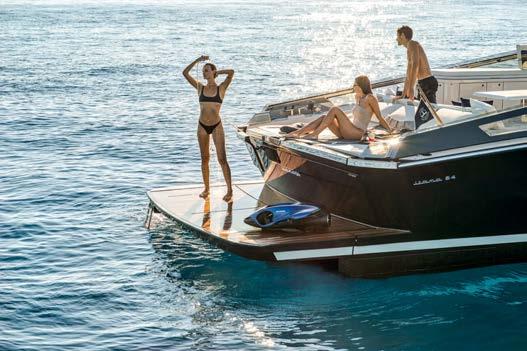
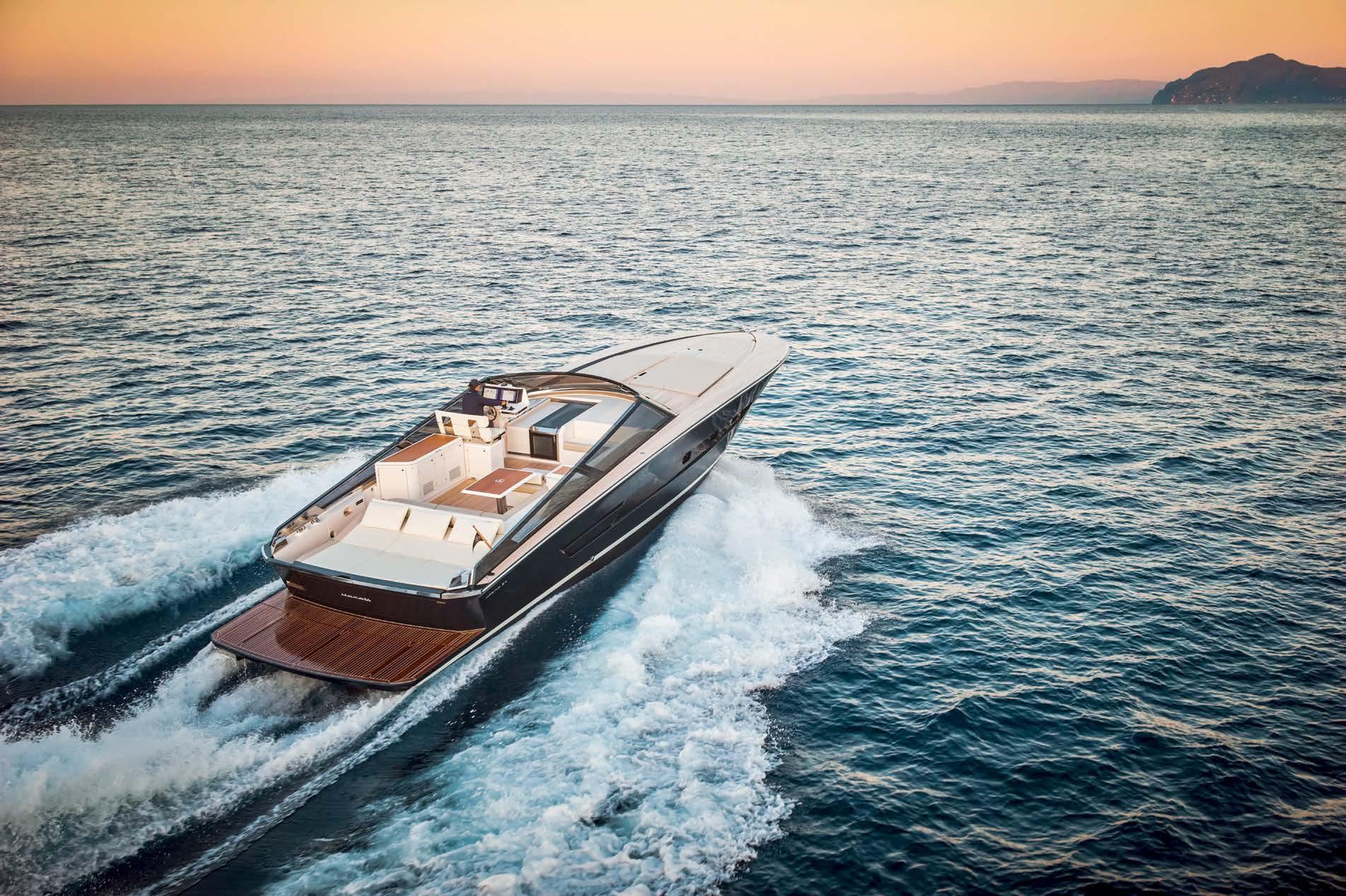
Sempre Man e sempre con la linea d’asse. Si può però scegliere la potenza: la versione standard monta una coppia da 730 cavalli, quella opzionale da 850.
Still a MAN and still with an in-line layout. However, you can choose the power output: the standard version comes with a 730-horsepower engine, whilst the optional version has an 850-horsepower engine.
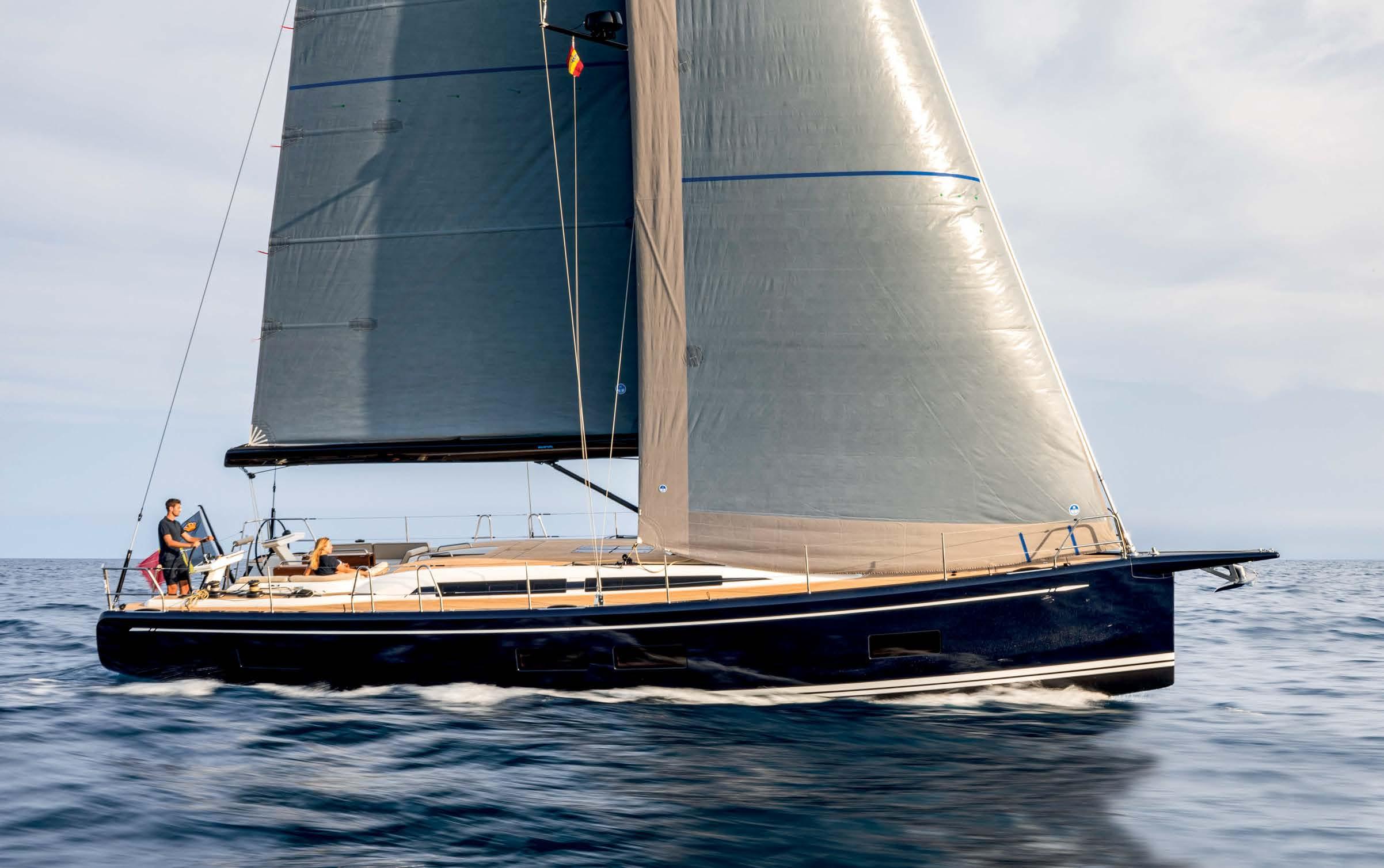
Ha segnato la storia del cantiere. Dopo 45 anni, è tornato in acqua, rivisto e corretto. La firma, naturalmente, è sempre quella di Frers It is a boat that has marked the yard’s history. And after 45 years, it is back on the water, reworked and adjusted. It is, of course, the work of Frers
Progettato nel 1981 da Germán Frers, lo Swan 51 segnò l’inizio della collaborazione tra il famoso architetto e il cantiere.
Uno yacht solido, robusto, pensato per navigare ovunque e in ogni condizione. Un modello destinato a durare. E così fu. Dopo 45 anni e ben 700 imbarcazioni costruite da Nautor su progetto di Frers, dalla matita infallibile di Germán è nato un nuovo 51’ che, naturalmente, interpreta le necessità degli armatori contemporanei. La domanda sorge spontanea: “Che cosa sarà cambiato rispetto al passato?”. Comfort, robustezza e performance sottovela ci sono sempre. Per la verità, gli ingredienti sono gli stessi – la mano, del resto, è sempre la stessa – ma il risultato finale evidenzia alcune novità. Il baglio, ad esempio, non cambia molto: misura 4,85 metri, mentre quello degli Anni ’80 ne misurava 4 e mezzo. Eppure, nonostante una manciata di centimetri in più, l’abitabilità del pozzetto appare molto più estesa. In generale, i volumi degli interni e la superficie in coperta sono molto generosi. A ben vedere, anche nel confronto con il più recente Swan 48, il nuovo 51’ sembra offrire più spazio, pur mantenendo le linee più snelle. Il test è avvenuto nel Golfo di Saint-Tropez con un vento molto leggero, quindi in una condizione che può mettere a dura prova una barca di 18 tonnellate di dislocamento. E invece... Invece Swan 51 ha navigato bene e senza particolare fatica. Si è mosso anche quando l’intensità della brezza è scesa a tre nodi, mentre a sei ha viaggiato praticamente alla stessa velocità del vento.
Gli interni sono stati curati da Misa Poggi, si possono scegliere tra quattro atmosfere per rispecchiare il gusto personale di ciascun armatore.
Interior styling has been curated by renowned designer Misa Poggi, with achoice of four distinctive atmospheres to reflect each owner’s personal taste.
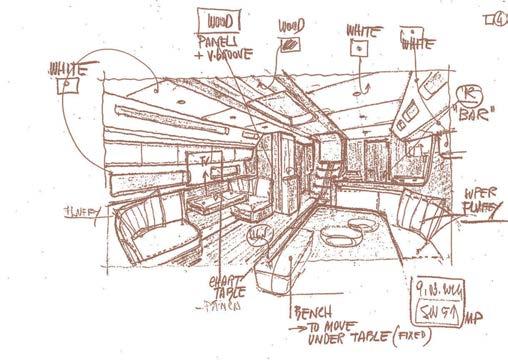
Solo stringendo al massimo la bolina, arrivando a un angolo di apparente di circa 30 gradi, ha perso qualcosa, ma si è trattato comunque di meno di un nodo rispetto al vento. In sintesi, la barca non ha mai fatto venire la voglia di ammainare le vele per attaccare il motore.
Il piano velico e l’allestimento della coperta sono coerenti con la filosofia del bluewater cruiser a cui il cantiere ci ha abituati. Il genoa è tradizionale, chi desiderasse l’autovirante lo può richiedere come optional. I carrelli si trovano a ridosso della tuga, lasciando così i passavanti laterali sgombri. Risulta facile, pertanto, accedere alla prua, dove si trova una calavele molto profonda, tanto da contenere tutti i parabordi in dotazione.
La randa è avvolgibile nel boma e la posizione dell’albero è spostata verso poppa, più a centro scafo. In questo modo la barca risulta più reattiva. Me ne sono accorto al timone, perché è stato sufficiente un leggero rinforzo del vento a farla accelerare immediatamente. Il doppio timone ha dei vantaggi: un pescaggio ridotto che, nella versione optional, arriva a soli 2,05 metri, permettendo di ancorare e ormeggiare su bassi fondali, e in navigazione, evita la tendenza alla straorza. La chiglia standard misura 2,54 metri, quella optional 3,20 metri. I winch sono tutti esterni al quadrato del pozzetto: comodi da utilizzare, ma mai di intralcio per chi vuole godersi il relax in navigazione. Al centro ci sono due tavoli che si trasformano in prendisole e si possono unire diventando un unico tavolo da pranzo per dieci persone.
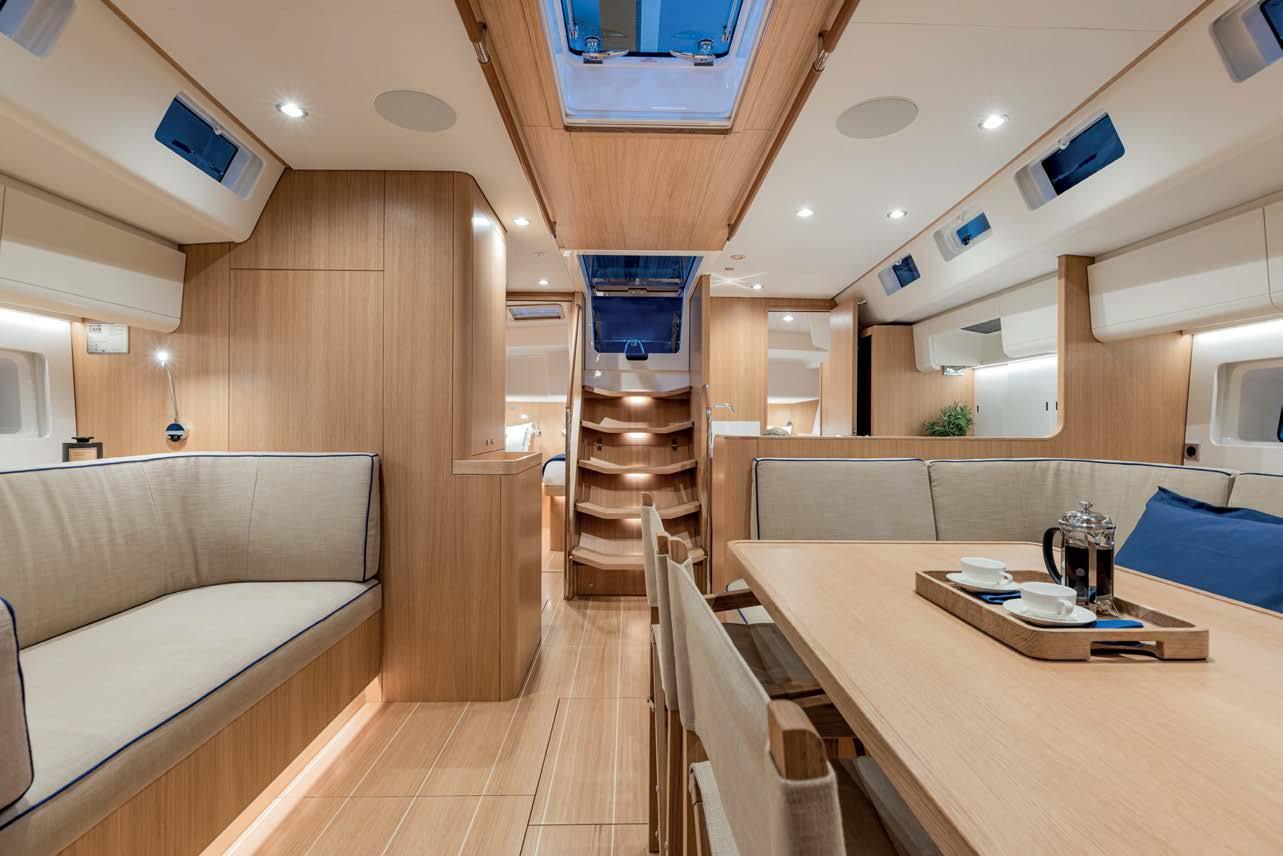
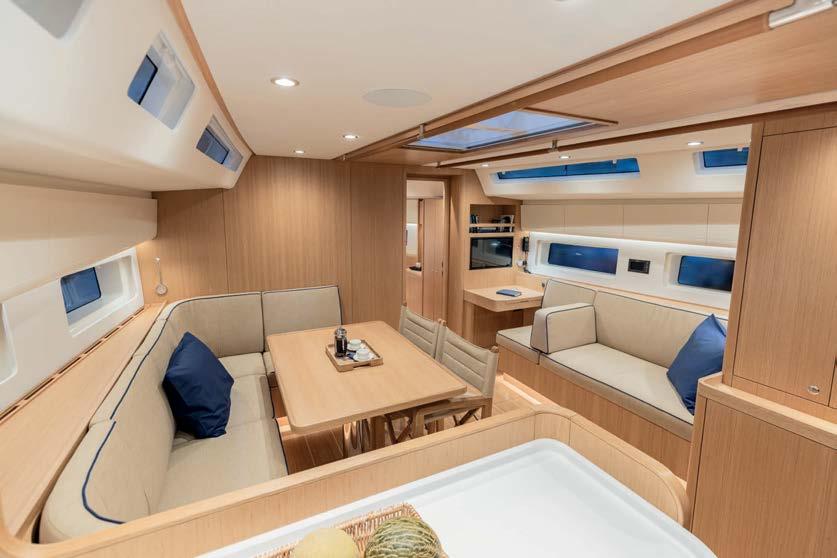
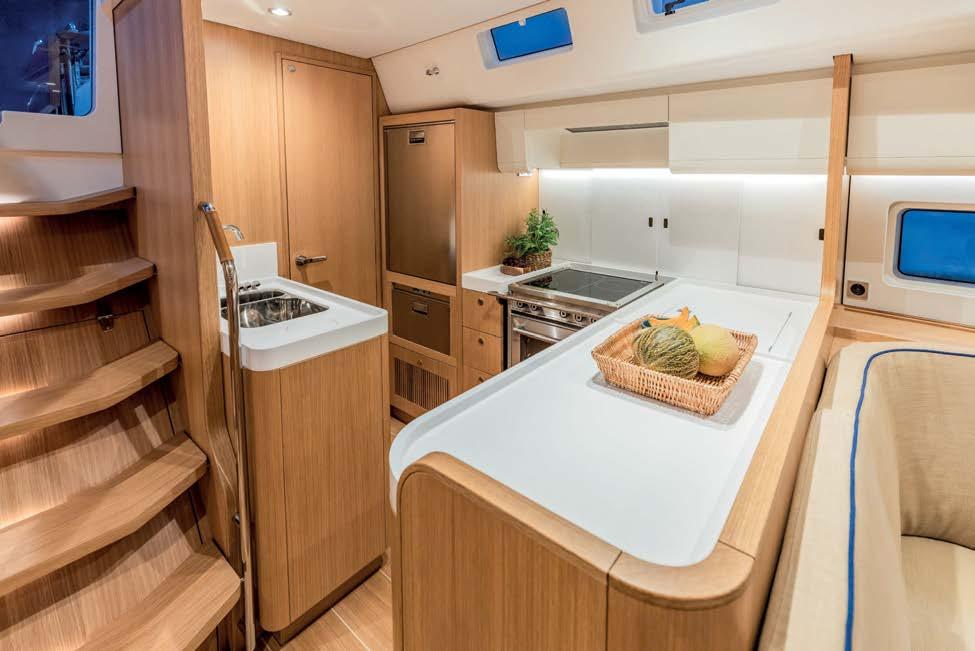
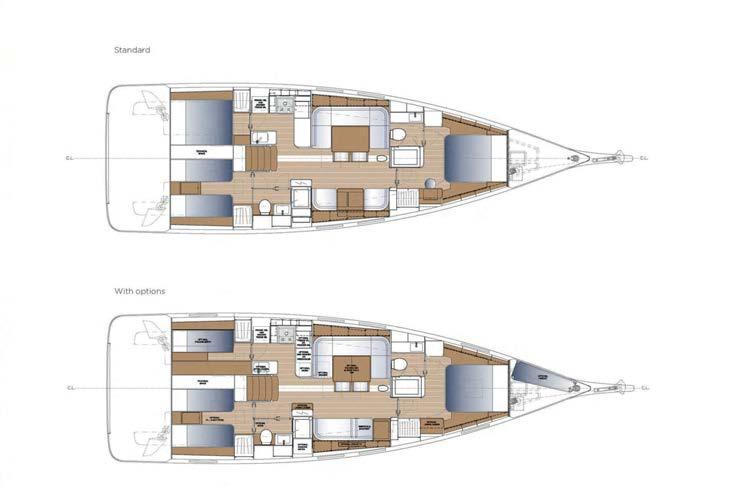
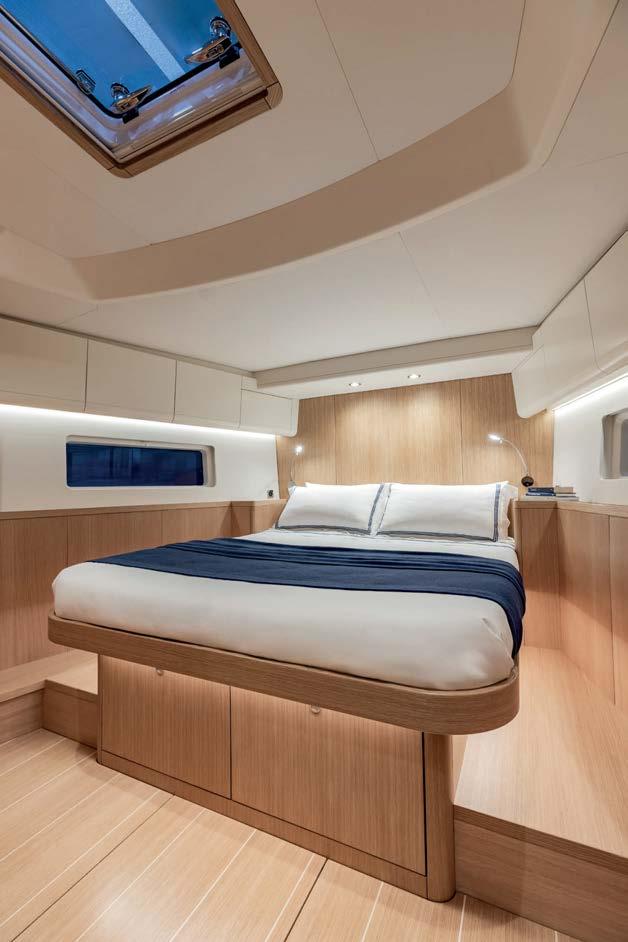
All’estrema poppa c’è il garage dove si può alloggiare un tender di 2,85 metri con motore abbattibile. In coperta, e non solo, ci sono i tanti dettagli a cui il cantiere ci ha abituato. Sono tutti pensati da chi sa che cosa vuol dire navigare. L’ancora, per esempio, è alloggiata sul musone strutturale e si trova all’estrema prua, cioè distante dallo scafo. Questa soluzione consente di evitare che la catena danneggi il dritto di prua quando si dà fondo o si recupera l’ancora.
Sottocoperta la sensazione è all’altezza delle aspettative: eleganza, comfort e uno stile classico che però non sembra mai invecchiare. Grandi volumi e tanta luminosità anche perché gli oblò sulla tuga sono numerosi. La dinette offre molte sedute intorno al tavolo da pranzo e sul divanetto lineare a dritta. Il layout prevede la cucina a centro barca, sulla sinistra appena si scende sottocoperta. Non è sdoppiata, ma non è comunque sacrificata. È collocata, infatti, in corrispondenza del baglio massimo dello scafo. La scelta di non prevederla più a prua, a ridosso della cabina armatoriale, permette di mantenere volumi maggiori in questo locale.
Tre cabine e due bagni. Tutti voluminosi e fatti per trascorrere molto tempo a bordo.
Three cabins and two bathrooms. All spacious and designed for spending plenty of time on board.
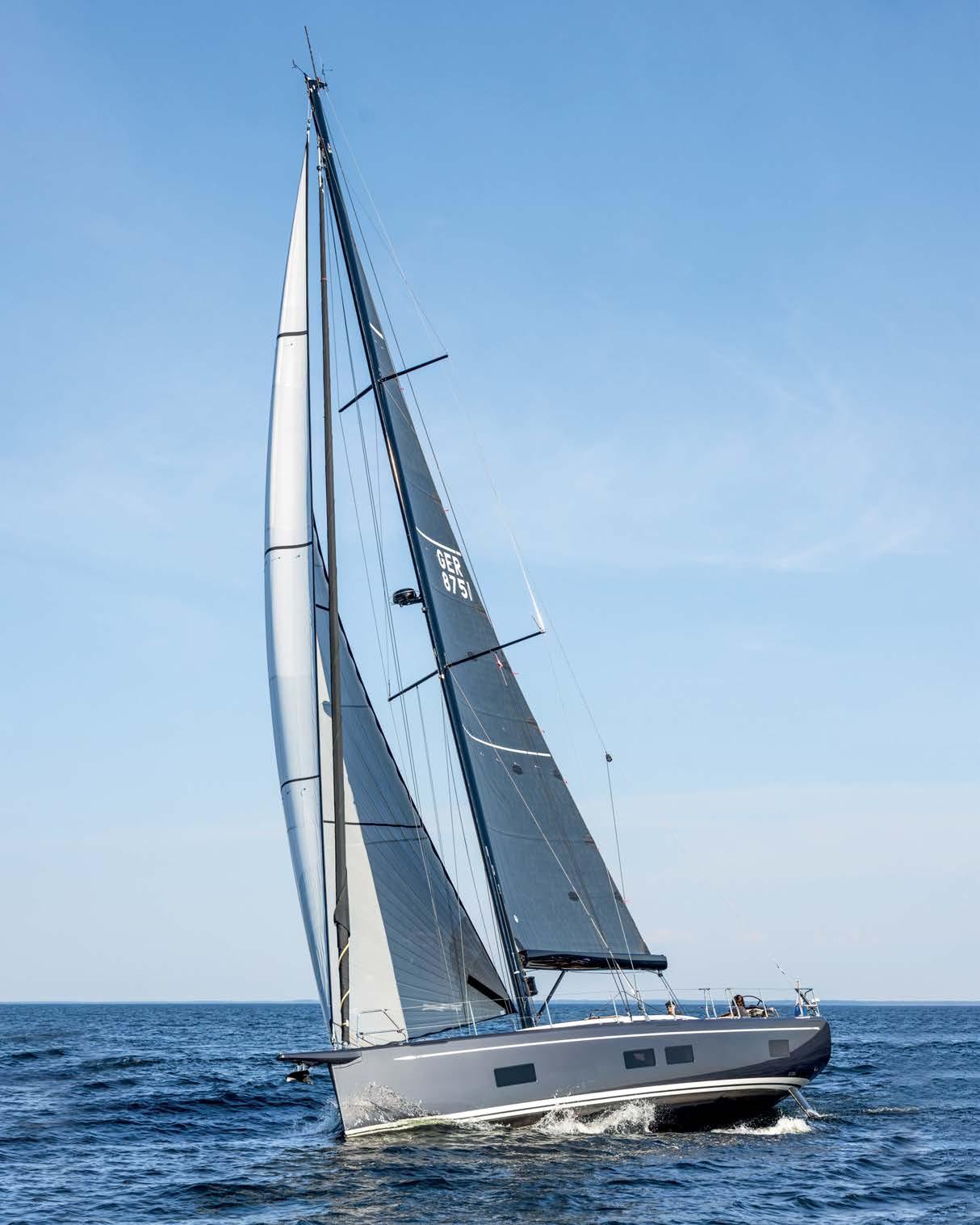
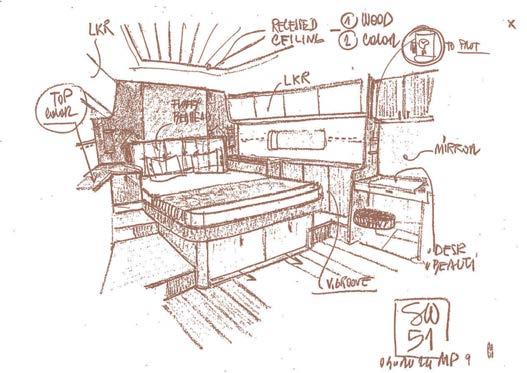
La TUGA nel complesso è quella tradizionale di uno Swan, ma ha un design più attuale che si traduce anche nell’integrazione di OBLÒ APRIBILI.
Overall, the DECK HOUSE is a traditional Swan model, but it features a more contemporary design, including the incorporation of OPENABLE PORTHOLES.
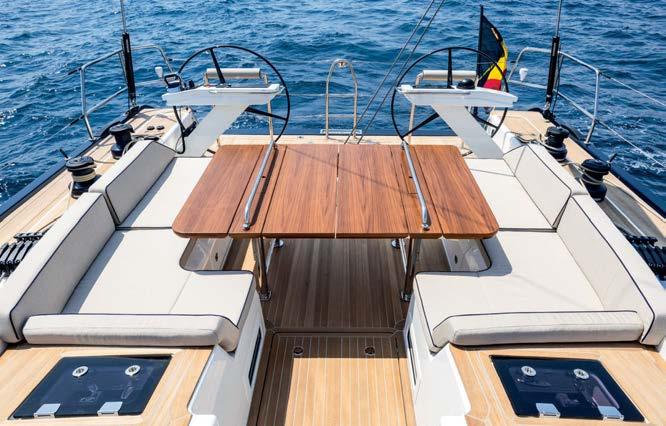
I due tavoli del pozzetto si congiungono e le gambe telescopiche consentono di trasformare l’area in un grande prendisole.
The two cockpit tables can be joined together, and the telescopic legs allow the area to be transformed into a large sun deck.
Oltre alla cuccetta matrimoniale, nell’armatoriale di prua, si trovano il bagno con box doccia separato e un capiente armadio. A poppa ci sono altre due cabine, una matrimoniale e una con due letti singoli paralleli. Il bagno per questi due locali è uno solo. In definitiva, la filosofia bluewater è perfettamente rappresentata, sia per i volumi degli interni, sia per gli spazi in coperta, ma soprattutto per la facilità di conduzione e le performance sottovela. Se sarà inossidabile e destinato a diventare un modello iconico, come il 51’ del 1981, sarà il tempo a dirlo.
Designed in 1981 by Germán Frers, the Swan 51 marked the beginning of the architect’s partnership with the yard.
A solid, robust yacht designed for sailing anywhere and in any condition. A model designed to last. And that is how it was. After 45 years and with as many as 700 units built by Nautor on the Frers design, it is Germán’s unfailing eye that has brought about the creation of the new 51’, a boat that, of course, responds to the requirements of contemporary owners.
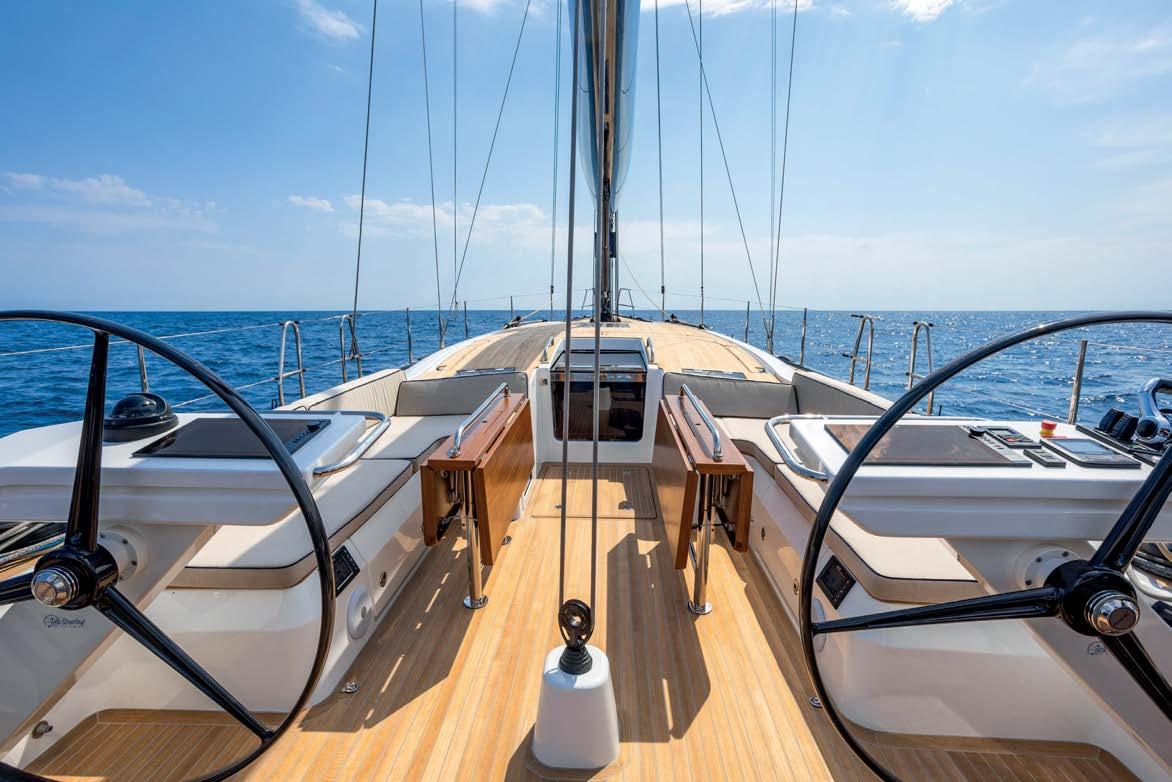
VELOCITÀ MAX DI BOLINA NODI HAULING MAX SPEED IN KNOTS 5.8
SUPERFICIE VELICA M2
SAILING SURFACE M2 147
NAUTOR SWAN
Pietarsaari, Finlandia
Nautor Swan Srl
Viale San Bartolomeo, 362 I-19126 La Spezia www.nautorswan.com
PROGETTO
Germán Frers
SCAFO
Lunghezza f.t. 16,90m • Lunghezza scafo 15,55m
• Lunghezza al galleggiamento (LWL) 14,67m
• Baglio massimo 4,85m • Pescaggio 2,45m
• Dislocamento a vuoto 18.000 kg • Zavorra 6.300 kg
• Serbatoio carburante 650 l • Serbatoio acqua 500 l
• Randa 80 m2 • Genoa 67,10 m2
• Gennaker 275 m2
Località//Place Saint-Tropez
Mare//Sea state Calmo//Calm
Vento forza Leggero a regime di brezza
Wind speed Light breeze wind
Persone a bordo//People on board 7
Carburante imbarcato
Fuel volume on board
Acqua imbarcata
Water volume on board
650 l
350 l
MOTORE
Yanmar 4JH80 • Potenza 58,8 kW (80 cv) • 4 cilindri
• Cilindrata 2,0 l • Alesaggio x corsa 84 mm x 90 mm
• Regime di rotazione massimo 3200 giri/minuto
RAPPORTO LUNG./LARG. L/W
• Peso a secco 229 kg
CERTIFICAZIONE CE CAT A
3.5
PREZZO
Prezzo base 1.450.000 €, Iva esclusa
PROJECT
Germán Frers
RANDA P: h. della randa//mainsail
E: base della randa//boom


HULL
LOA 16.90m • Length 15.55m • LWL 14.67m
GENOA
I: h. del triangolo di prua//forestay





DISLOCAMENTO DISPLACEMENT
• Maximum beam 4.85m • Draft 2.45m • Light mass displacement 18,000 kg • Ballast 6,300 kg • Fuel tank volume 650 l • Water tank volume 500 l • Main sail 80 m2 • Genoa 67.10 m2 • Gennaker 275 m2
MAIN PROPULSION
J: base del triangolo di prua//mast front face-forestay


18
Yanmar 4JH80 • Outlet mechanical power 58.8 kW (80 hp) • 4 cylinders • Swept volume 2.0 l
• Bore&Stroke 84 mm x 90 mm • Maximal rotational speed 3200 rpm • Dry weight 229 kg
EC CERTIFICATION CAT A
PRICE
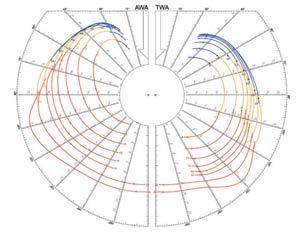
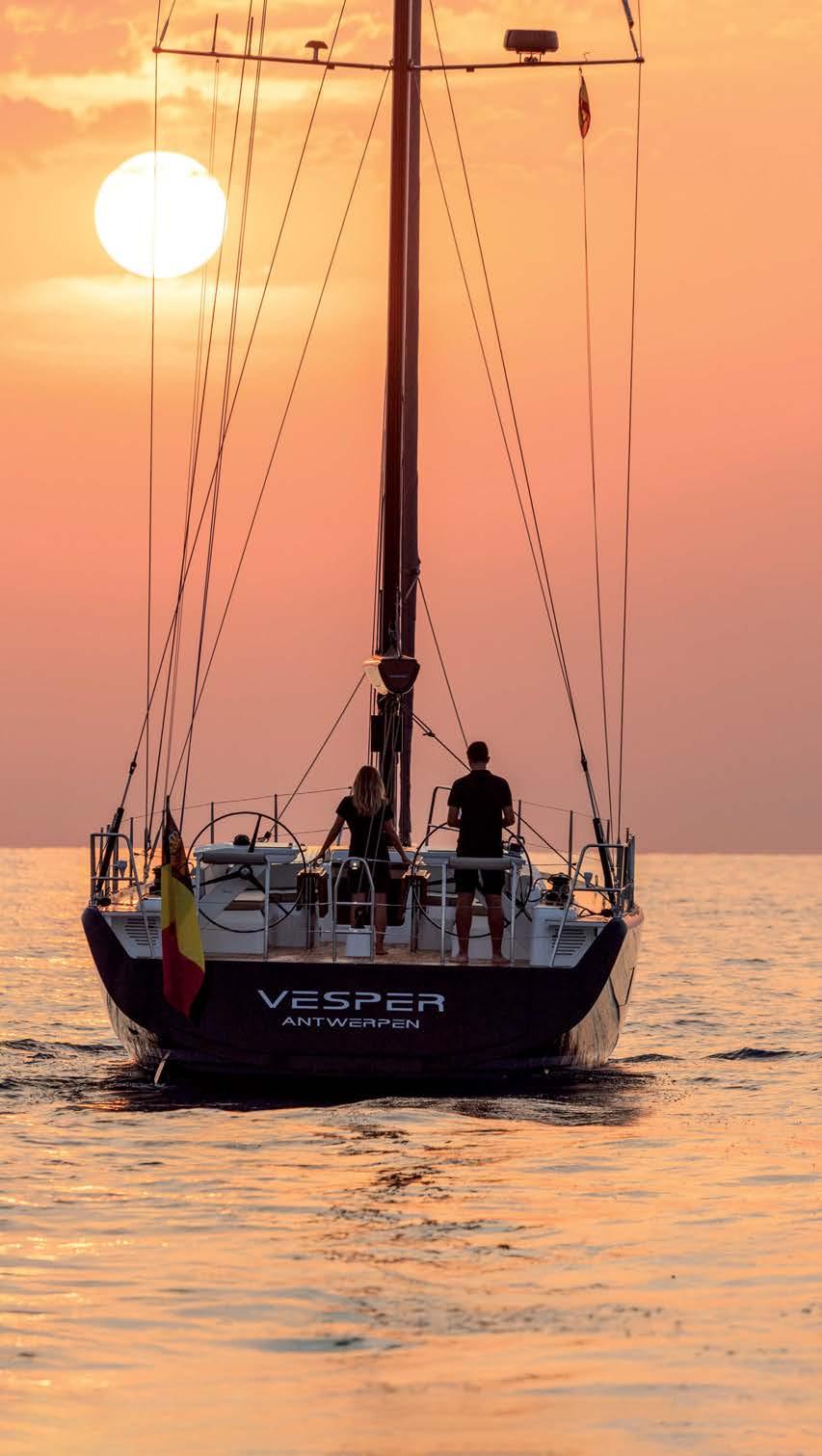
A
POPPA, una piattaforma abbattibile favorisce la discesa in
mare e l’alaggio del tender, che naturalmente dispone di un comodo GARAGE
.
AT THE STERN, a folding platform facilitates launching and hauling in the tender, which naturally has a convenient GARAGE
Which immediately begs the question as to what had changed. It still has the same level of comfort, strength and performance under sail. And, in truth, it has the same ingredients, and of course, the guiding hand is still the same, but the outcome does have a few additions.
The beam, for example, hasn’t changed much: it measures 4.85 metres, whereas the 1980s model measured 4.5 metres. Yet despite only a few extra centimetres, the cockpit feels much roomier. The interior volumes and deck surfaces are generous overall. In hindsight, even compared with the most recent Swan 48, the new 51’ appears to offer more space while retaining the narrower lines.
Our trial took place on the Gulf of Saint-Tropez in light winds, in conditions that can prove a real test for a boat displacing 18 tonnes. And yet… the Swan 51 sailed well and without difficulty. It even performed well when the breeze dropped to three knots, and at six it sailed at nearly the same speed as the wind. Only when sailing close to the wind and reaching around 30 degrees did it lose anything, but it was only a knot under wind speed. Overall, I never felt the need to strike the sails and start the engine.
The sail plan and deck layout are in line with the bluewater cruiser approach the yard has made us used to. The genoa is traditional, and a selftacking version is optional. The travellers are aft of the deckhouse, freeing the side decks. This makes it easy to reach the bow, where there is a sail locker large enough to hold all the fenders supplied with the boat. The mainsail furls into the boom, and the mast is now set further aft, nearly amidships. That makes the boat more responsive. I realised this at the helm, as a slight increase in the wind immediately makes it accelerate. The twin wheels are a plus: a limited draught, which in the optional version is just 2.05 metres, means you can anchor and tie up in shallow waters. The standard draught is 2.54 metres, or you can have a 3.20m version. The winches are all outside the cockpit and are easy to use, but never get in the way when you want to relax while sailing.
Anche con venti leggeri, Swan 51 si è comportato egregiamente. Le performance assomigliano a quelle di una BARCA DA REGATA con velocità di poco inferiori all’intensità del vento.
Even in light winds, the Swan 51 performed exceptionally well. Its performance is comparable to that of a RACING YACHT, with speeds just below the wind speed.
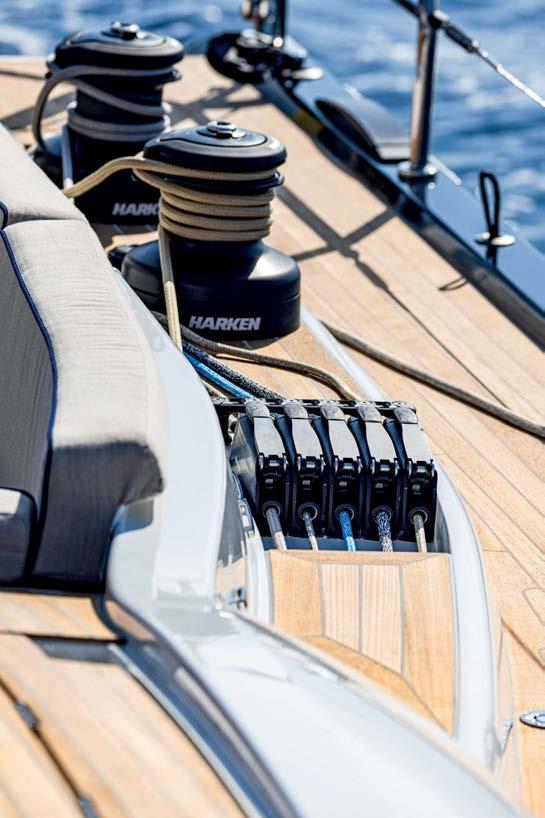
Two tables in the middle can be converted into sunbeds or joined to form a single ten-person dining table. Deep in the stern, there is a garage that can house a 2.85-metre tender with a removable engine. On the deck and elsewhere, there are so many details the yard has made us used to, all of which are designed by people who know what sailing really means. The anchor, for example, is housed in the structural bow roller at the extreme bow, well away from the hull. This prevents the chain from damaging the stem when you drop or weigh anchor. Below decks, the feeling is in line with expectations: elegance, comfort, and a classic style that never seems to age. There is significant volume and a great deal of light, in part because there are many portholes in the deckhouse. The dinette has many seats around the dining table and on the sofa set to starboard. The galley is set amidships, just as you go down the companionway. It is not galley-style, but it is not too small, and it is where the boat is at its widest. Moving it back from the forward area next to the master cabin creates more space in this part of the boat. In addition to the double bed in the forward owner’s room, there is a bathroom with a shower cubicle and a sizeable wardrobe. Heading aft, there are two other cabins, one double and the other twin with parallel beds, and one bathroom shared between them. So the bluewater approach is perfectly represented in both interior volumes and deck space, but above all in the ease of handling and performance under sail. Time will tell whether it stands the test of time and becomes as iconic as the 51’ from 1981.
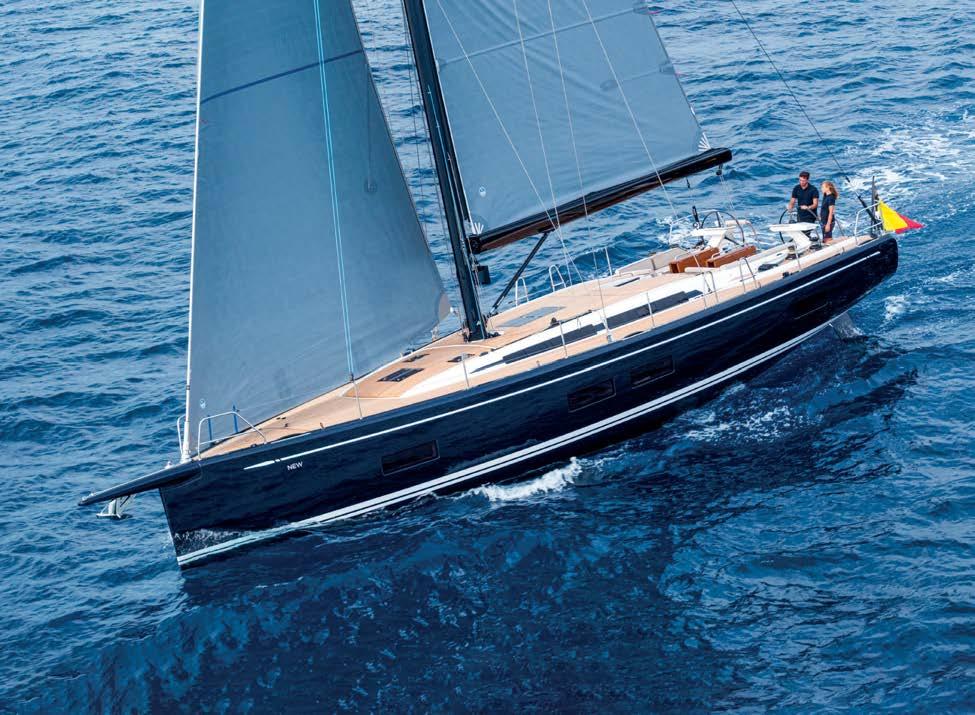
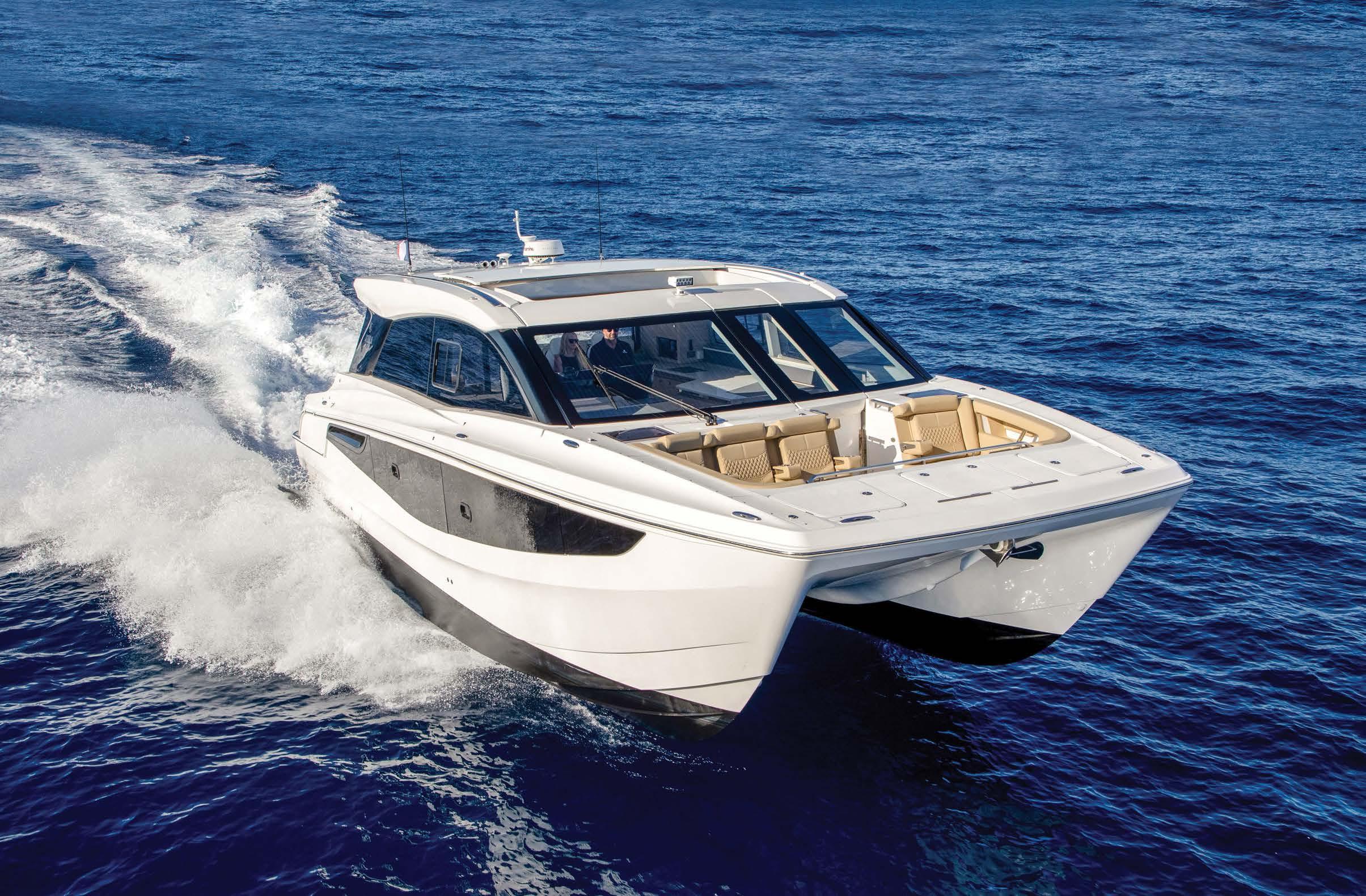
Parola d’ordine: efficienza. Questo sport cruiser con foil integrati ha soddisfatto tutte le aspettative. In termini di comfort, consumi e prestazioni
The watchword: efficiency. This sport cruiser with integrated foils has exceeded all expectations – in comfort, fuel efficiency and performance
by Sacha Giannini
Iniziamo subito dicendo che Aquila 46 coupé ha un’efficienza quasi doppia rispetto a un monoscafo.
Il merito è del foil laminato in fibra di carbonio, delle nervature rail, del ginocchio deflettore, delle chines strip e di due piccole pinne stabilizzatrici a poppa sul lato interno, che scongiurano il movimento oscillatorio e garantiscono un impeccabile bilanciamento laterale.
Durante il test, effettuato con circa 1.000 litri di carburante (su 2 mila e 330 imbarcabili), il vento soffiava a 10 nodi da sud e il mare era poco mosso, caratterizzato talvolta da onde incrociate provocate da altre barche in transito. A bordo eravamo in 4, due membri dell’equipaggio, chi scrive e Alain Raas, Global Brand Director di Aquila Power Catamarans.
Spinti da 2 Volvo Penta D6 da 480 cavalli ciascuno, abbiamo navigato per oltre 600 miglia e i dati emersi sono stati decisamente soddisfacenti: a 1000 giri abbiamo registrato 6 nodi di velocità con
Il tavolo trapezoidale della cucina si abbassa a filo ponte per far guadagnare spazio.
The trapezoidal galley table lowers flush with the deck to save space.
La vetrata di poppa del salone si APRE TOTALMENTE per creare continuità tra esterni e interni.
The aft glass panel in the saloon OPENS FULLY, creating a seamless transition between the interior and exterior.
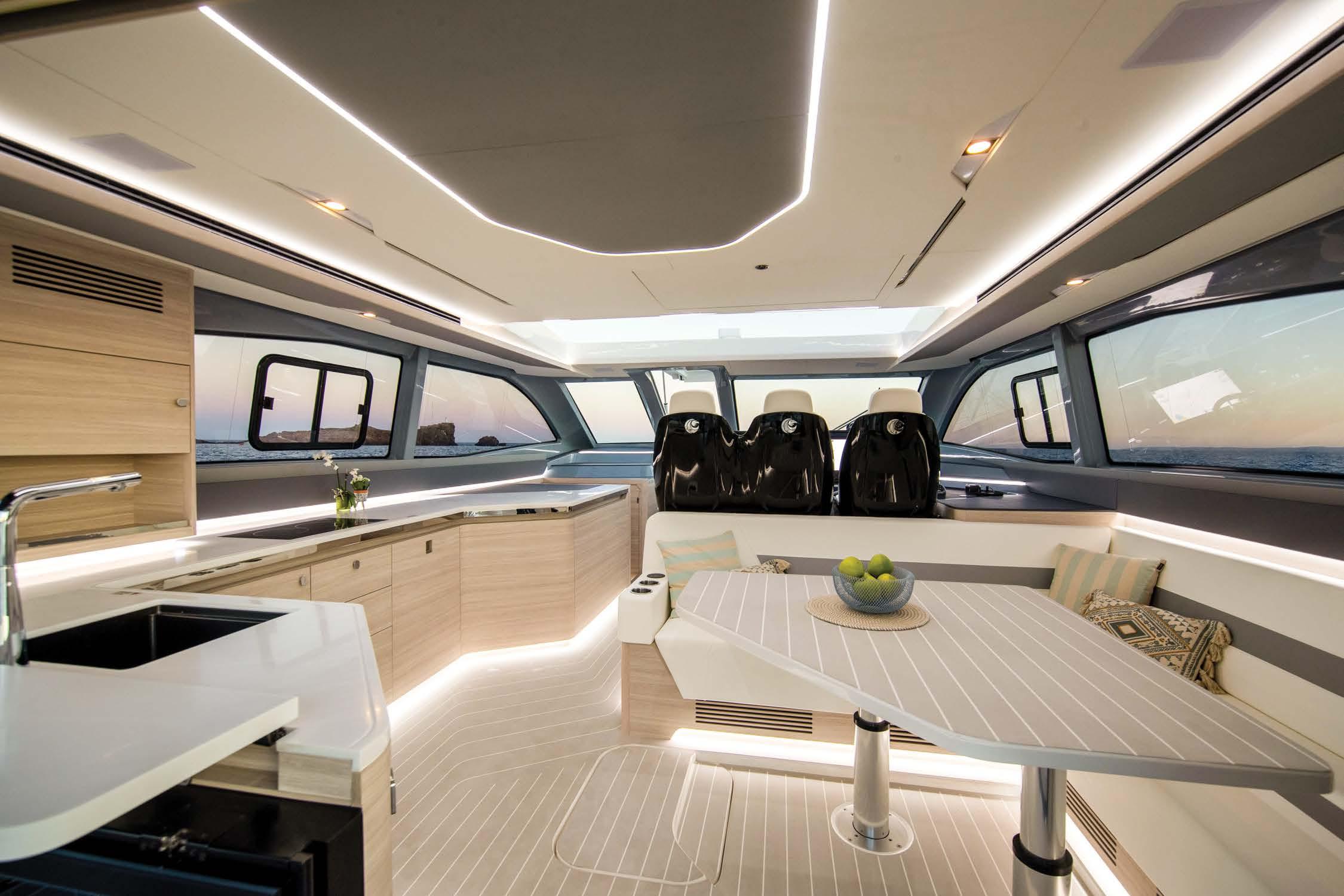
un consumo di soli 9,5 litri all’ora. Consumo che è aumentato in modo costante e proporzionale ogni 500 giri. L’assetto migliore lo abbiamo raggiunto tra i 26 e i 29 nodi a 4 mila e 500 giri, con un consumo di 97 litri/ora.
Per completezza di informazione, è opportuno segnalare una lieve flessione dell’efficienza in termini di autonomia, rilevata tra i 10 e i 15 nodi, dovuta all’effetto semidislocante. Una volta raggiunti i 25, 30 la prestazione è nettamente migliorata grazie ai semi-foil integrati. Detto ciò, è risaputo che a basse velocità si fa un po’ più fatica a muoversi in eco mode perché i gradini redan e i foil non sono pensati per una navigazione lenta. Aquila 46 coupé ha un’ottima manovrabilità, oltre a un’eccellente stabilità longitudinale che scongiura il rischio di delfinare e, alle alte velocità, un mirabile lift con buona tenuta di mare che azzera pericolosi spin-out.
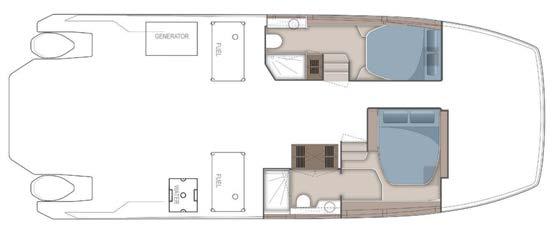
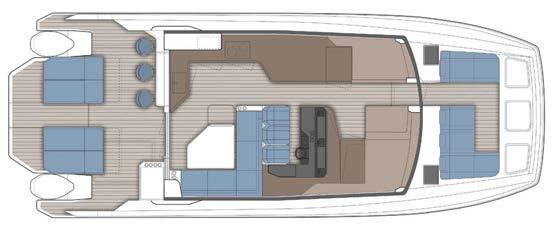
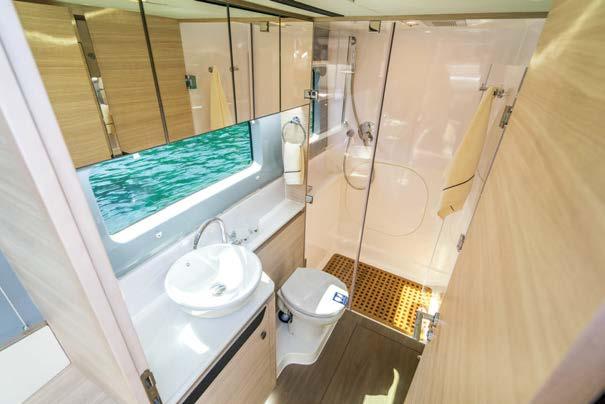
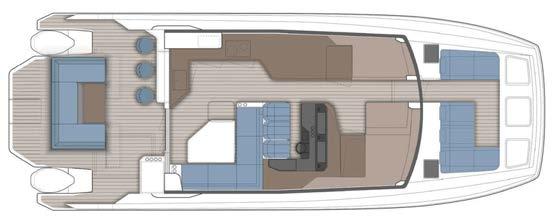
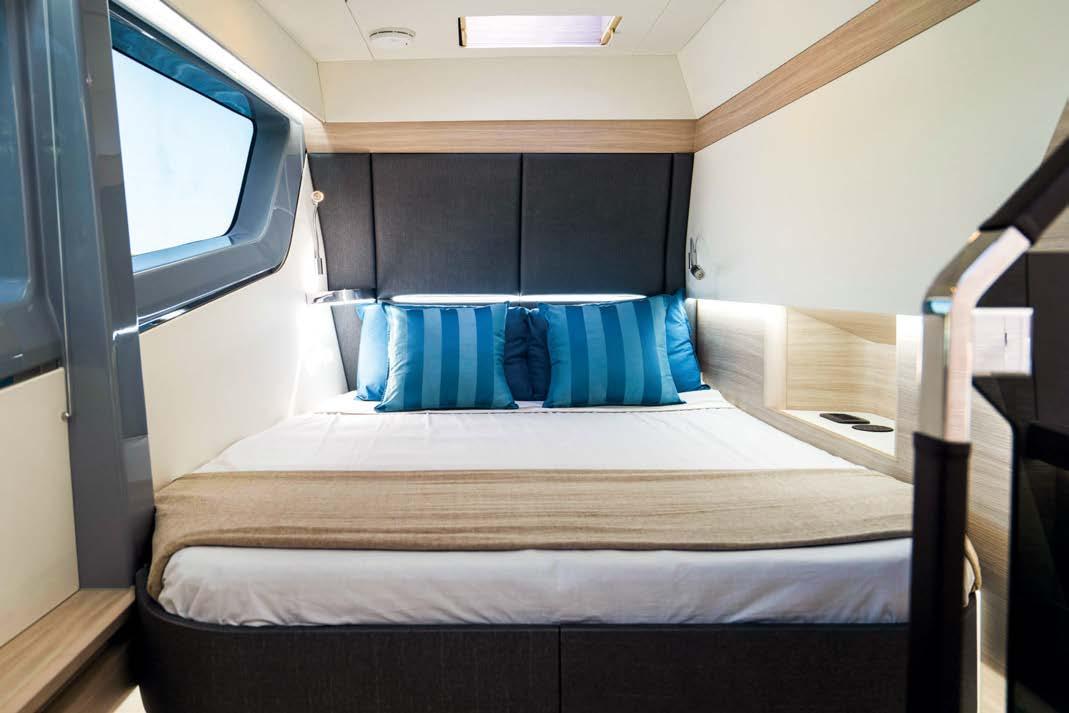
VELOCITÀ MAX NODI TOP SPEED KNOTS
42.7
AUTONOMIA MN RANGE NM 600
AQUILA USA INC.
www.aquilaboats.com contact@aquilaboats.com
PROGETTO
Aquila - Morrelli & Melvin Design & Engineering
SCAFO
Lunghezza f.t. 14,44m • Baglio massimo 5,46m
• Pescaggio alla chiglia 1,10m • Dislocamento 14.500 kg • Capacità serbatoio carburante 2.334 l
• Capacità serbatoio acqua 440 l • Capacità serbatoio acque nere 160 l • Massima potenza installabile 1.200 cv
MOTORE
2x Volvo Penta D6 480 cv (353 kW) DPI Sterndrive
• Optional 2x 600 cv (447 kW) V12 Verado Mercury
CONDIZIONI DELLA PROVA CONDITIONS ON TEST
Località//Place Cannes
Mare//Sea state Poco mosso//Little rough Vento forza//Wind speed 12 nodi//knots Direzione vento//Wind direction SSE
Altezza onda//Wave height 0.5-1m
Persone a bordo//People on board 4
Combustibile imbarcato
CERTIFICAZIONE CE
14 (B offshore) • 22 (C coastal) • 32 (D inland)
PREZZO
RAPPORTO PESO POTENZA MASS OUTLET POWER
MSRP Franco fabbrica 1.309.900 US $
PROJECT
Aquila - Morrelli & Melvin Design & Engineering
HULL
LOA 14.44m • Maximum beam 5.46m • Draft 1.10m
• Displacement 14,500 kg • Fuel tank volume 2,334 l
Plana in 9 secondi a 3000 giri/minuto It glides in 9 seconds at 3000 rpm
Velocità da 0 a 42 nodi in 45 sec
20.5
• Water tank volume 440 l • Waste water tank volume 160 l • Maximum power rated 1,200 hp
MAIN PROPULSION
Gliding time of 45s for a speed change from 0 to 42 knots
RAPPORTO LUNG./LARG. L/W
2x Volvo Penta D6 480 hp (353 kW) DPI Sterndrive • Optional 2x 600 hp (447 kW) V12 Verado Mercury
EC CERTIFICATION
14 (B offshore) • 22 (C coastal) • 32 (D inland)
PRICE
MSRP ex-factory is 1,309,900 US $
2.6 LITRO MIGLIO (VELOCITÀ DI CROCIERA) L/ NA MI (CRUISING SPEED)
3.3
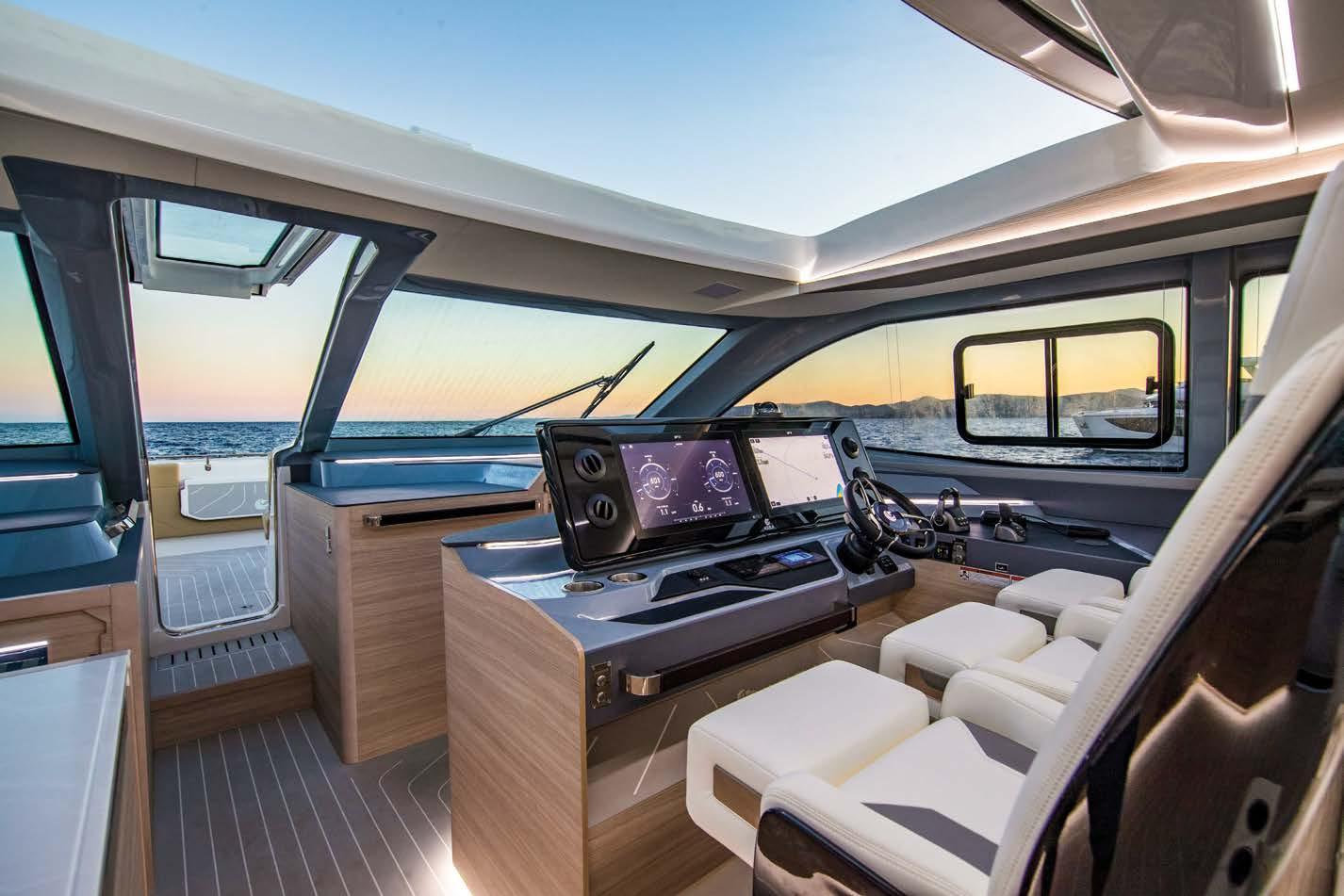
La postazione di comando è dotata di schermo touchscreen Simrad da 22 pollici. Tutto è intuitivo e a portata di mano: manette, joystick e controllo del bow thruster La posizione delle tre sedute in fila della timoneria può essere regolata con un semplice pulsante.
The dashboard is fitted with a 22inch Simrad touchscreen. Everything is intuitive and within easy reach: throttles, joysticks and the bow thruster control.
The position of the three seats in a row in the wheelhouse can be adjusted at the touch of a button.
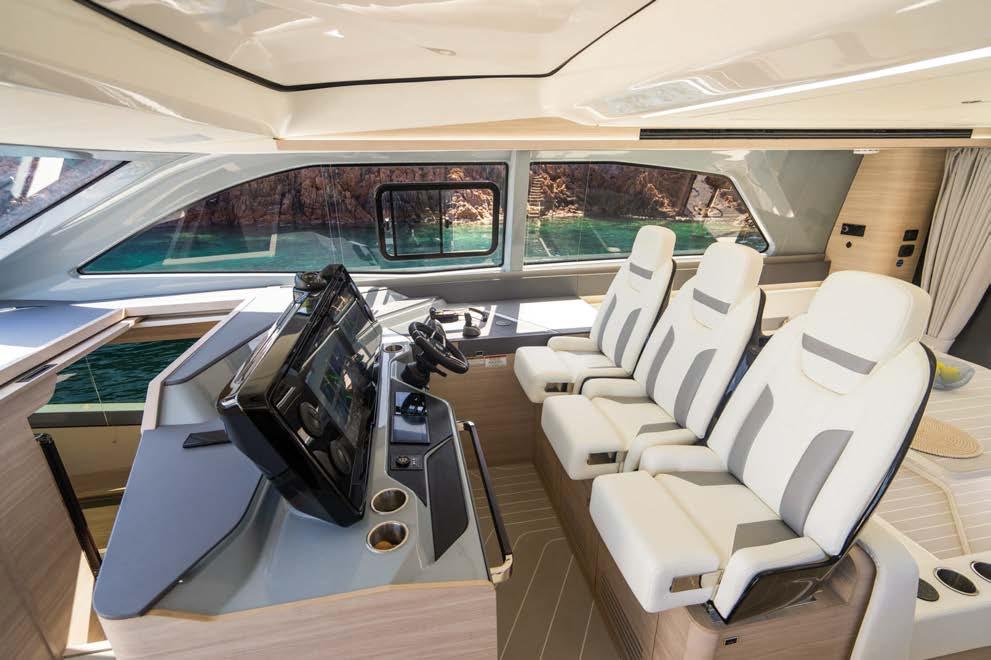
Let’s start by noting that the Aquila 46 coupé is almost twice as efficient as a monohull.
This is due to the carbon-fibre laminated foil, the rail ribs, the deflector knee, the chine strips, and two small stabilising fins at the stern on the inside, which prevent rolling and ensure impeccable lateral balance.
During the test, with approximately 1,000 litres of fuel on board from a total of 2,330 litres, the wind was 10 knots from the south, and the sea was mildly choppy, with occasional cross-waves caused by passing boats. We were four on board: two crew members, myself, and Alain Raas, the Global Brand Director at Aquila Power Catamarans.
Powered by two Volvo Penta D6 engines, each producing 480 horsepower, we sailed over 600 miles, and the results were very encouraging: at 1000 rpm, we recorded a speed of 6 knots with a fuel consumption of just 9.5 litres per hour.
Fuel consumption increased steadily and proportionally with every 500 rpm. We achieved the best performance between 26 and 29 knots at 4500 rpm, with a fuel consumption of 97 litres per hour. For completeness, it is worth noting a slight drop in efficiency with respect to range, observed between 10 and 15 knots, due to the semi-displacement effect. Once you reach 25 or 30 knots, performance
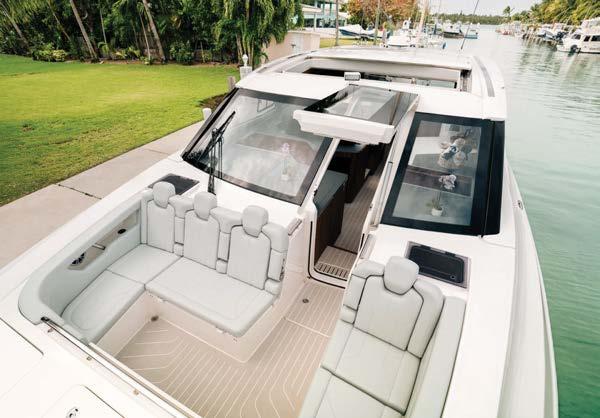
L’Aquila Hydro Glide carbon fiber foiling system è un brevetto sviluppato nel 2018 da Gino Morrelli e Pete Melvin in esclusiva per il marchio americano. È un’ottima soluzione per ottimizzare i consumi, ridurre l’usura dei motori e migliorare la velocità con meno cavalli a disposizione. Il sistema è integrato nello scafo tramite ancoraggi solidi e permette un pescaggio contenuto. Leggermente più profondo rispetto a entrambi gli scafi, non supera tuttavia le eliche dei motori, garantendo così una navigazione sicura e tranquilla.
The Aquila Hydro Glide carbon-fibre foiling system is a patented development created in 2018 by Gino Morrelli and Pete Melvin, exclusively for the American brand. It is an excellent solution for optimising fuel consumption, reducing engine wear and improving speed with less available horsepower. The system is integrated into the hull via solid mountings and allows for a shallow draught. Although slightly deeper than both hulls, it does not extend beyond the propellers, ensuring safe and smooth navigation.
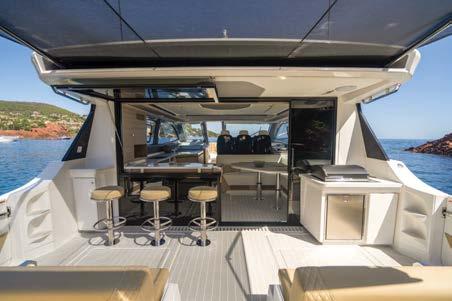
improves significantly thanks to the integrated semifoils. That said, it’s well known that at low speeds it’s a bit harder to move in eco mode because the stepped hull and foils aren’t designed for slow sailing. The Aquila 46 coupé offers superb manoeuvrability and excellent longitudinal stability, preventing porpoising. At high speeds, it provides impressive lift and good seakeeping, eliminating the risk of dangerous spin-outs.
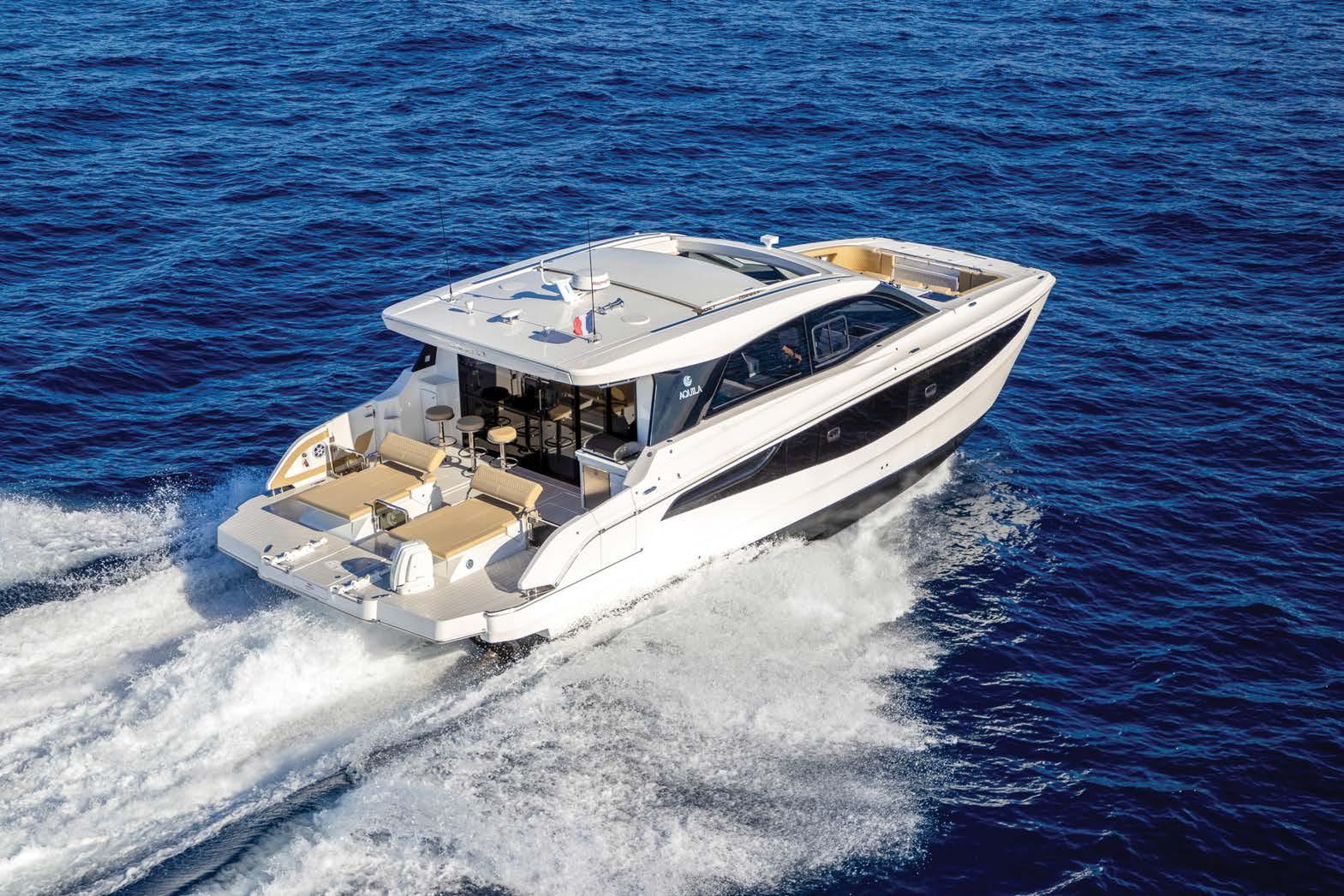
Scafo e coperta sono interamente realizzati per infusione di vinilestere. Nessun componente strutturale è in legno, ma solo in PVC Core a densità variabile.
The hull and deck are constructed entirely using vinyl ester infusion. No structural components are made of wood; instead, they are made from a variable-density PVC Core.
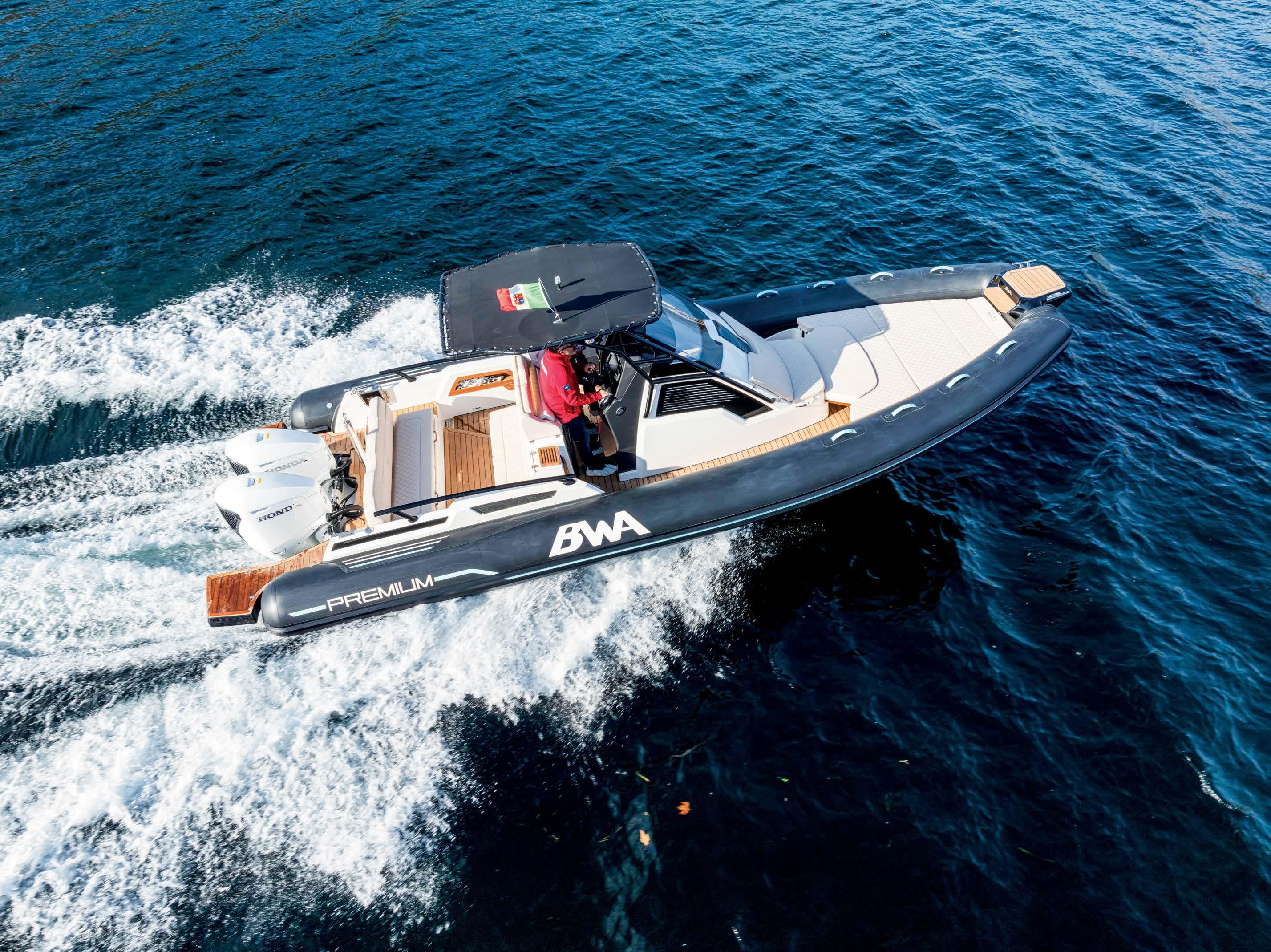
In meno di dieci metri c’è tutto ciò che occorre per una breve crociera, in totale comfort e sicurezza. Le performance? Ottime, come da tradizione del cantiere
In less than ten metres, you have everything you need for a short cruise, in complete comfort and safety. The performance? Excellent, in keeping with the shipyard’s tradition by Niccolò Volpati - photo by Andrea
Il layout di coperta è caratterizzato da materiali e finiture di pregio. Spiccano le eleganti cuscinerie con cuciture a vista.
The deck layout features high-quality materials and finishes. The elegant cushions with visible stitching are a particular highlight.
L’autorevolezza di BWA è fuori discussione. Il cantiere tiene dritta la barra da oltre un settantennio, arco temporale di tutto rispetto, durante il quale ha messo in acqua circa 15 mila battelli pneumatici.
L’ultimo si chiama Premium 32. Di nome e di fatto. È un gommone perfetto per uscite giornaliere, ma anche per crociere a corto e medio raggio. Ha la stessa carena del GTO 328. Coperta e interni, invece, cambiano. Partiamo da questi ultimi: la cabina con bagno ha volumi più che sufficienti per accogliere comodamente due persone (nella versione optional, la toilette può essere ricavata in un locale separato). All’esterno, colpiscono l’hardtop total black, le cuscinerie esclusive, il teak sul piano di calpestio e, in generale, la qualità ineccepibile dei materiali e le finiture di pregio.
In mare conferma le sue eccellenti doti di navigazione. Sullo specchio di poppa Premium 32 monta due fuoribordo Honda V6 da 200 cavalli ciascuno, che mi hanno consentito di raggiungere la velocità massima di oltre 44 nodi. L’efficienza delle linee d’acqua ha permesso la planata a soli 9,6 nodi e 2 mila 450 giri al minuto. Il consumo? Decisamente contenuto: 23 litri all’ora, per entrambi i propulsori.
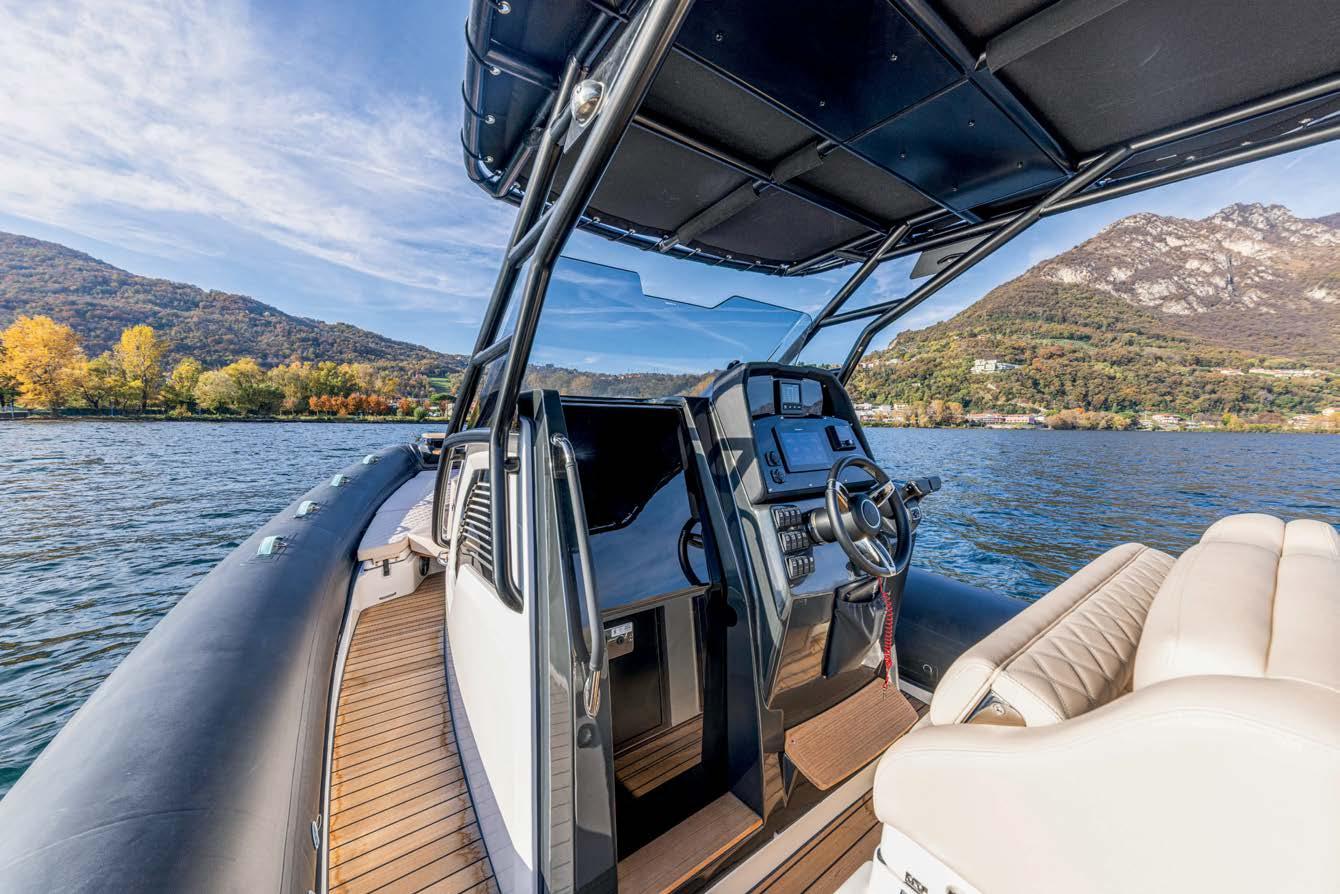
VELOCITÀ MAX NODI TOP SPEED KNOTS
AUTONOMIA MN RANGE NM
BWA, RIBITALY SRL
Via Solferino 7 I-20121 Milano www.bwa.it
PROGETTO
Ufficio tecnico del cantiere
SCAFO
Lunghezza f.t. 9,65m • Lunghezza di omologazione 8,75m • Larghezza massima 3,55m • Diametro tubolari 0,65m • Compartimenti 7 • Dislocamento 2.400 kg • Serbatoio carburante 540 l
• Serbatoio acqua 72 l
• Potenza massima installabile 2x300 cavalli
MOTORE
2x Honda BF200 V6 • Potenza 147,1 kW (200 cv)
Località//Place Lago di Garlate//Lake Garlate Altezza onda//Wave height
a bordo//People on board
• 6 cilindri a V60° • Cilindrata 3.583 cc • Alesaggio per corsa 89 mm x 96 mm • Rapporto al piede 2,00:1 • Peso 284 kg
CERTIFICAZIONE CE
RAPPORTO PESO POTENZA MASS OUTLET POWER
CAT B
PREZZO
121.000 €, Iva e motori esclusi
Da zero a planata in 3 secondi
Gliding time of 3s from 0 to glide
Da zero a velocità massima in 19 secondi
kg kw
PROJECT
Shipyard technical department
HULL
Gliding time of 19s for a speed change from 0 to 44.3 knots (maximum speed)
RAPPORTO LUNG./LARG. L/W 2.7
LOA 9.65m • Length 8.75m • Maximum beam 3.55m • Tube’s diameter 0.65m • 7 compartments
• Displacement 2,400 kg • Fuel tank volume 540 l
• Water tank volume 72 l
• Maximum rated power 2x300 hp
MAIN PROPULSION
2x Honda BF200 V6 • Outlet mechanical power 147.1 kW (200 hp) • 6 V60° cylinders • Swept volume 3,583 cc
• Bore&Stroke 89 mm x 96 mm
• Sail ratio 2.00:1 • Weight 284 kg
EC CERTIFICATION
CAT B
PRICE
121.000 € Excl. VAT – Bare boat
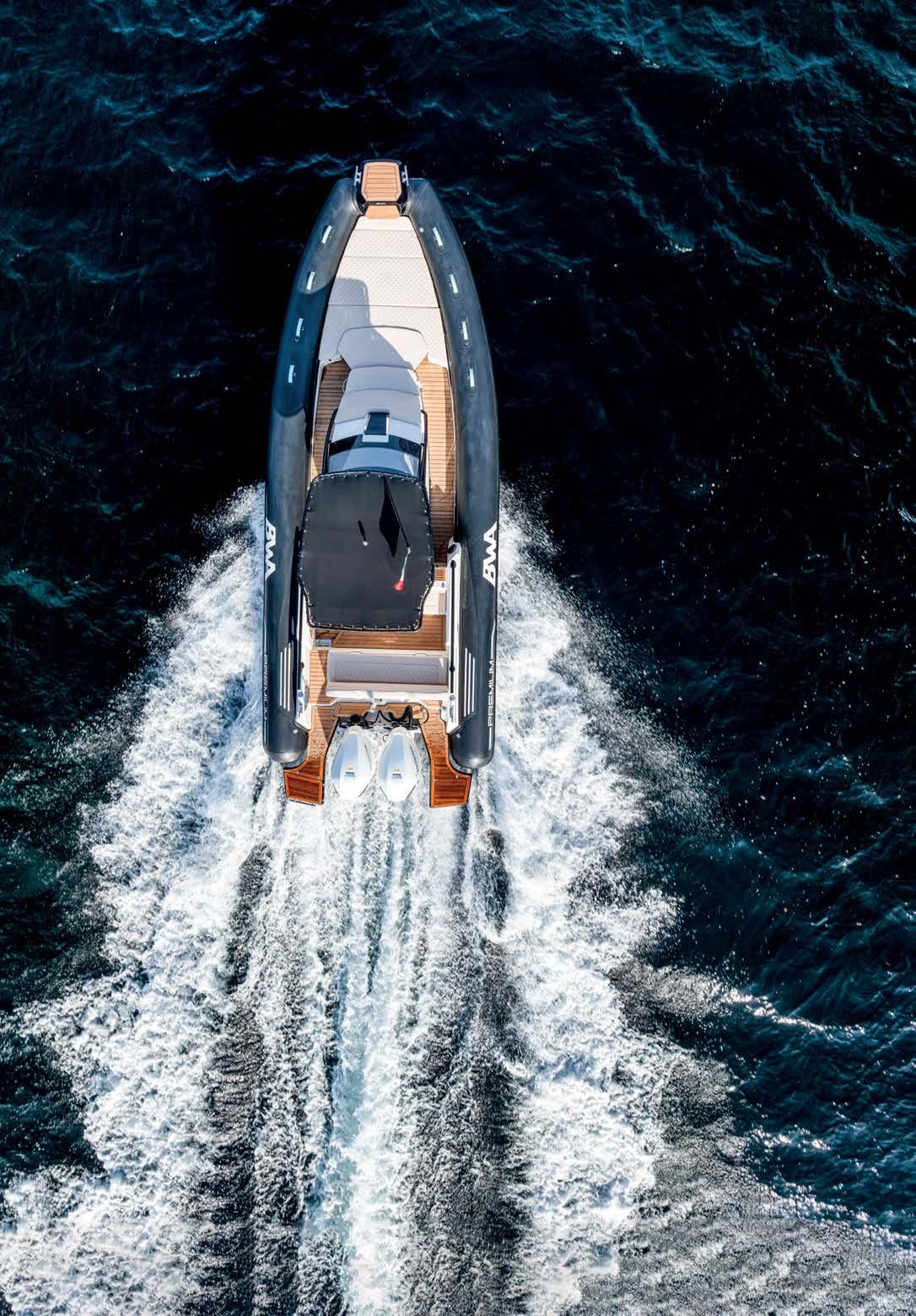
La navigazione è STABILE, sicura, confortevole e mai noiosa, sia per gli ospiti, sia per il PILOTA. Quest’ultimo può contare su una postazione di comando ampia.
The sailing experience is STABLE, safe, comfortable and never boring for both guests and the HELMSMAN, who can rely on a spacious helm station
Del resto - ricordiamolo - Honda è stata tra le prime realtà a introdurre il sistema di carburazione magra che permette di risparmiare carburante ai medi regimi.
L’accoppiata tra Premium 32 e questi due fuoribordo assicura un consumo inferiore ai 3 litri per miglio fino a quasi 40 nodi di velocità. Di conseguenza, anche l’autonomia, garantita da un serbatoio di 540 litri, ne trae beneficio: rimane sempre sopra le 200 miglia. Soltanto spingendo il battello al massimo, precisamente tra i 40 e 44,3 nodi, è necessario un quantitativo maggiore di benzina.
La stabilità, la sicurezza e il comfort di navigazione, come è noto, fanno parte del Dna del cantiere. Premium 32 non fa eccezione: l’assetto è sempre corretto, ben disteso sulla superficie dell’acqua, vira agevolmente a qualsiasi andatura e, soprattutto, a bordo si ha sempre la sensazione di avere tutto sotto controllo.
Il merito è anche di una postazione di guida ottimale, di un parabrezza e di un hardtop che non ostacolano mai la visuale. La plancia di comando è più ampia rispetto a quella del GTO 328 e accoglie tutti i display necessari per la navigazione.
La lunga esperienza del cantiere nella costruzione si nota da alcuni dettagli come, per esempio, la presenza di numerosi tientibene in acciaio inox. L’allestimento, fedele al nome del battello, è appunto premium. La zona living del pozzetto è ben protetta grazie a fiancate in vetroresina che sormontano i tubolari a poppa. La gamba del tavolo è telescopica e dotata di un comando elettroidraulico: si può trasformare facilmente in un generoso prendisole.
A poppavia del divanetto per il pilota e il copilota non mancano il mobile bar e un frigorifero a cassetto. La prua è allestita come prendisole e sotto la cuscineria a cellule chiuse sono stati ricavati ampi gavoni per lo stivaggio (altri ancora si trovano a poppa sotto il divanetto lineare del pozzetto).
L’ancora esce dall’occhio di cubìa; pertanto, il musone è ricoperto di teak per agevolare la discesa in banchina quando si è ormeggiati di prua.
Le spiaggette che circondano i due fuoribordo sono ampie per consentire un facile accesso al mare e, infine, i camminamenti intorno alla consolle di guida e al divanetto lineare collocato a pruavia di essa, sono larghi e confortevoli. What else?
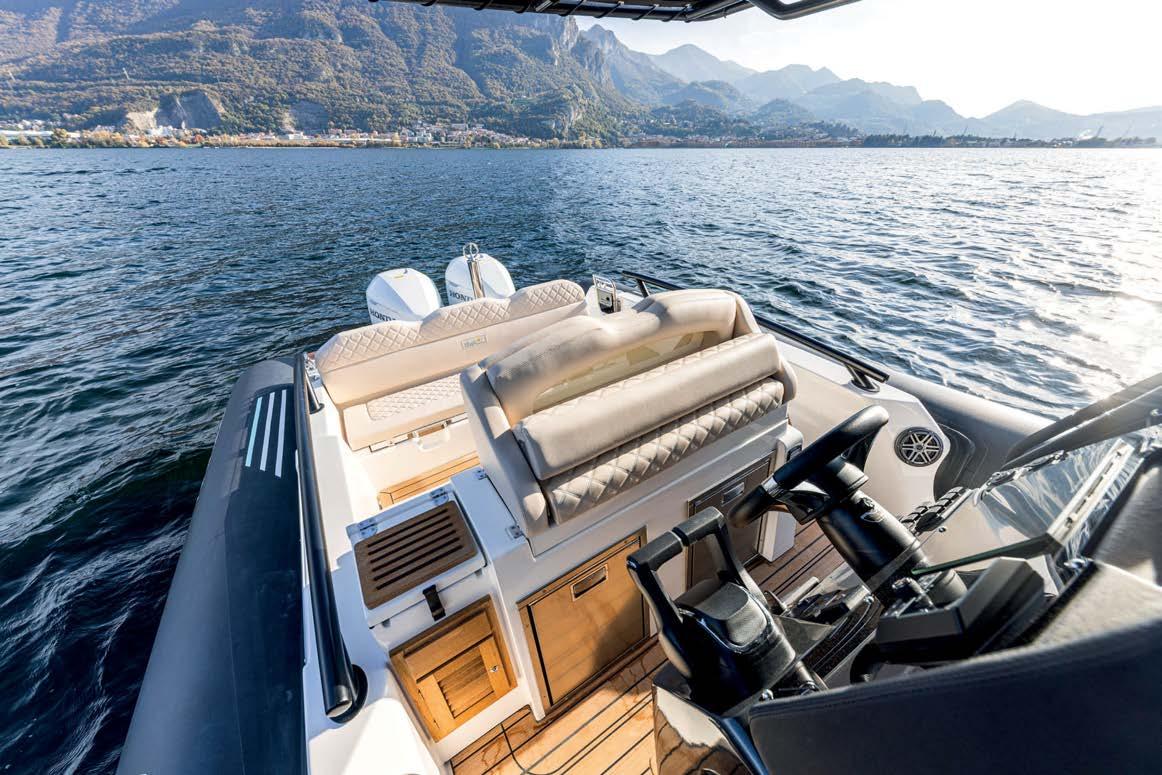
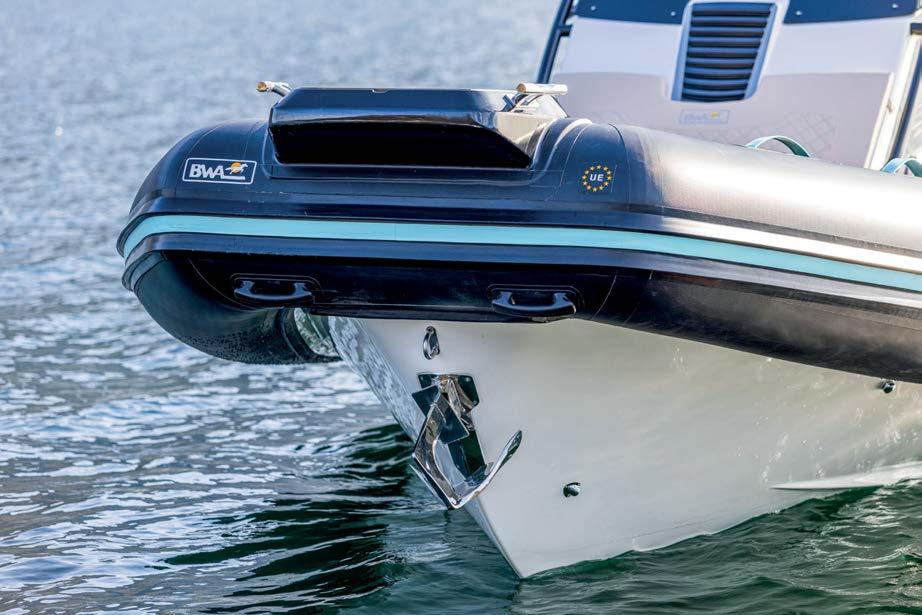
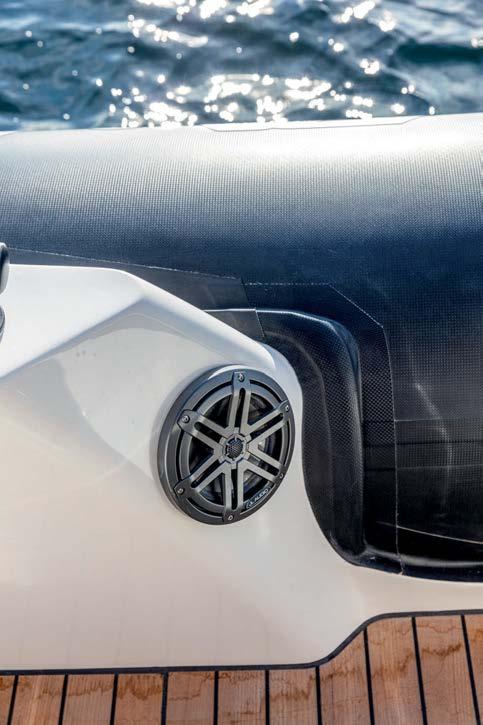
BWA’s reputation is beyond question.
The shipyard has been going strong for over seventy years – a truly impressive track record – during which it has launched around 15,000 inflatable boats.
The latest model is the Premium 32. It lives up to its name in every respect. It is the ideal inflatable boat for day trips and short- and medium-range cruises. It shares the same hull as the GTO 328
The deck and interior, however, are different. Let’s start with the latter: the cabin with a bathroom offers more than enough space to comfortably accommodate two people (in the optional version, the toilet can be housed in a separate compartment). On the outside, the all-black hardtop, the exclusive cushions, the teak on the deck, and, overall, the impeccable quality of the materials and fine finishes are particularly striking. At sea, it proves its excellent seagoing qualities.
The Premium 32 is fitted with two Honda V6 outboard motors, each producing 200 horsepower, allowing me to reach a top speed of over 44 knots. The efficiency of the hull lines enabled the boat to reach planing speed at just 9.6 knots and 2,450 rpm. Fuel consumption?
Very low indeed: 23 litres per hour for both engines. After all, let’s not forget that Honda was among the first manufacturers to introduce the lean-burn system, which saves fuel at medium revs. The combination of the Premium 32 and these two outboard engines ensures a fuel consumption of less than 3 litres per mile at speeds of up to 39 knots. Consequently, the range provided by a 540-litre fuel tank also benefits: it consistently remains above 200 miles. Only when pushing the boat to its maximum speed, specifically between 40 and 44.3 knots, is a greater quantity of fuel required.
As is well known, stability, safety and a comfortable sailing experience are part of the shipyard’s DNA. The Premium 32 is no exception: it always sits perfectly on the water, gliding smoothly across
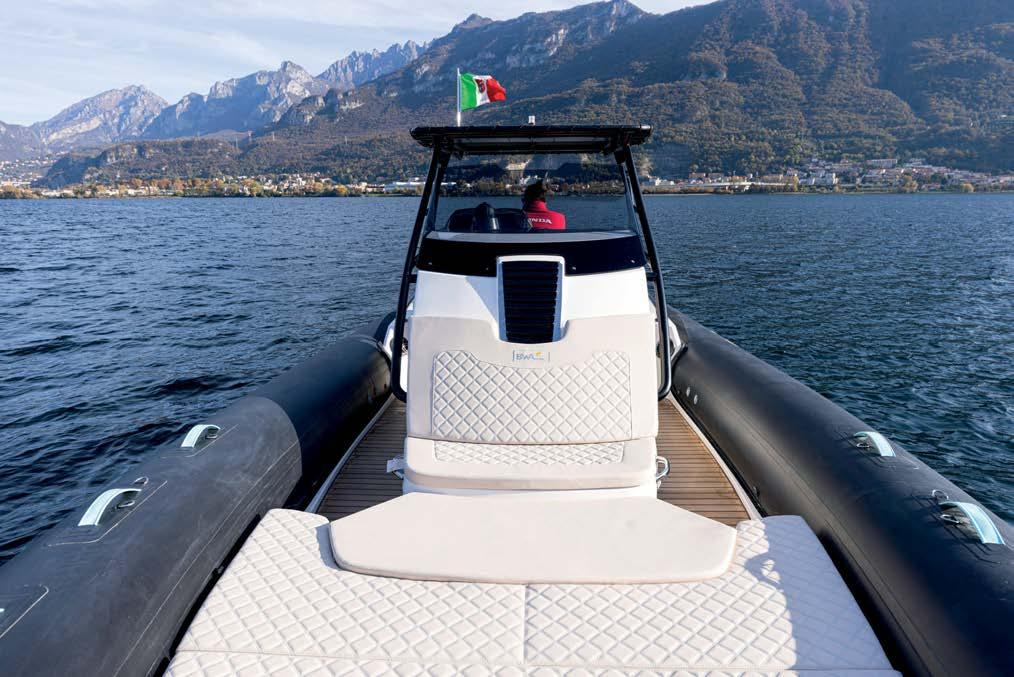
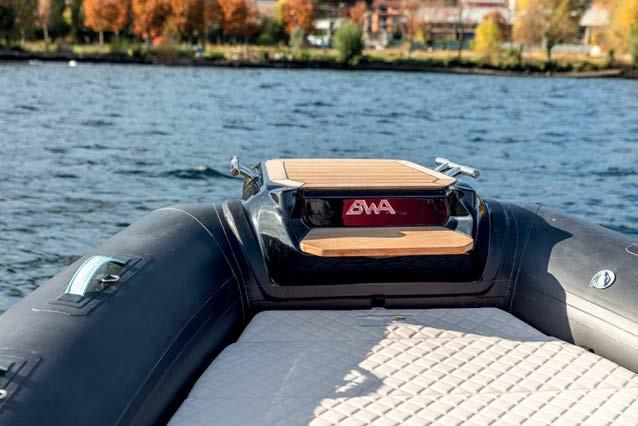
the surface, turning effortlessly at any speed, and, above all, you always feel completely in control on board. This is also thanks to an optimal driving position, a windscreen and a hardtop that never obstructs the view. The dashboard is wider than the GTO 328’s and houses all the displays needed for navigation. The shipyard’s long experience in boatbuilding is evident in details such as the numerous stainless-steel handrails. The fit-out, true to the boat’s name, is indeed premium. The cockpit’s living area is well sheltered by fibreglass sides that extend over the tubular frames at the stern. The table leg is telescopic and fitted with an electrohydraulic control system, allowing it to be easily converted into a spacious sunbathing area. Behind the pilot and co-pilot seats, there is a bar cabinet and a drawer-style fridge. The bow has been fitted out as a sun deck, and spacious storage lockers have been created beneath the closed-cell cushions (with further lockers aft beneath the cockpit’s bench seat). The anchor is drawn out through the hawse; consequently, the bow is covered in teak to make it easier to disembark onto the quay when moored bow-to. The small decks surrounding the two outboard engines are spacious enough to allow easy access to the sea, and the walkways around the helm console and the linear bench seat forward of it are wide and comfortable. What else?
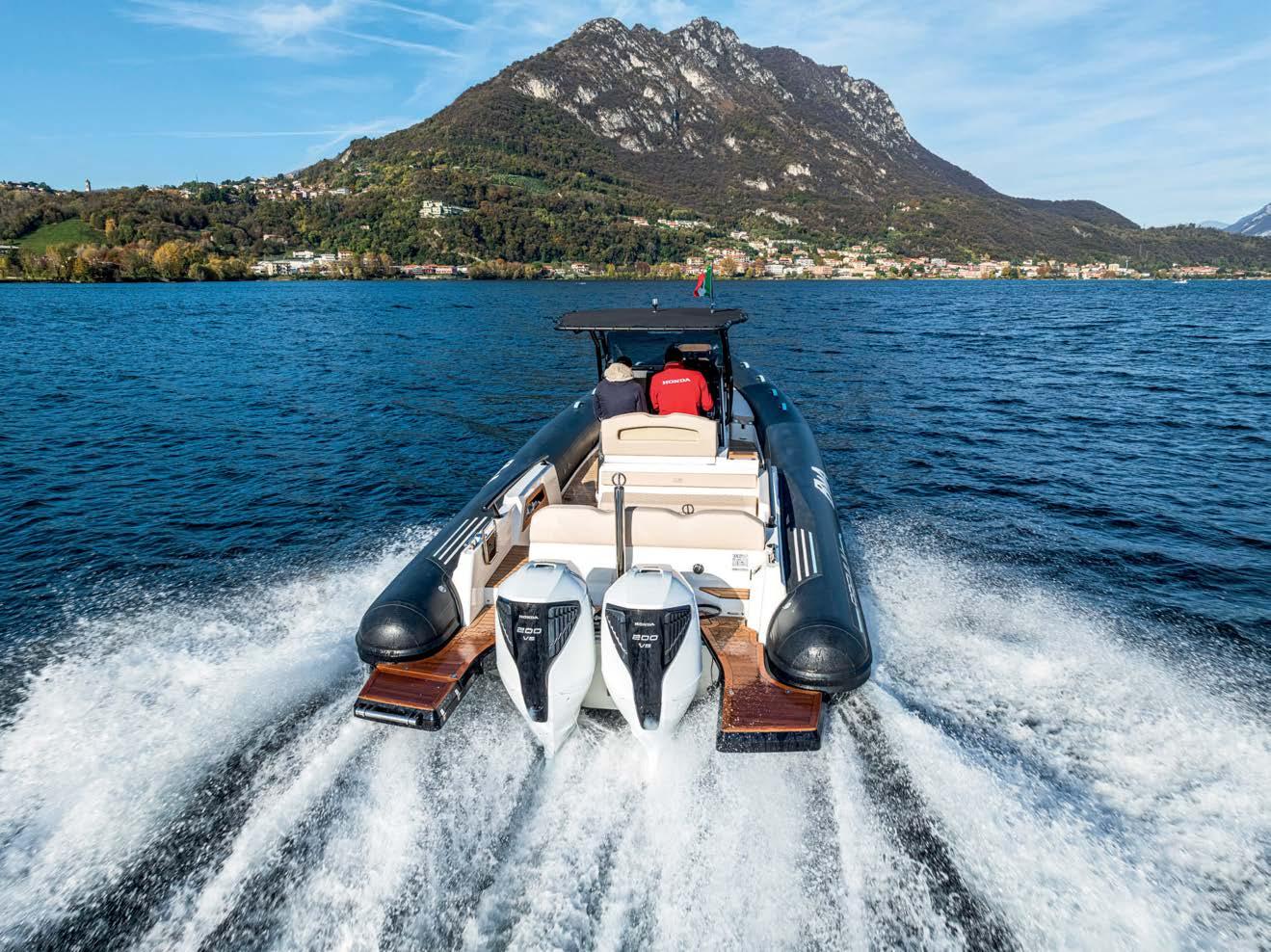
Due Honda V6 da 200 cavalli sono sufficienti per superare i 44 nodi di velocità. La motorizzazione massima arriva addirittura a una coppia da 300 cavalli.
Two 200-horsepower Honda V6 engines are sufficient to reach speeds of over 44 knots. A pair of 300 hp engines can provide the maximum rated power.
Barche propone ogni
mese IL MEGLIO delle proposte del mercato internazionale di imbarcazioni e superyacht
Barche brings you THE BEST of the international boat and superyacht market every month
Deep Blue II
Rate: from summer high: € 155,000 / week
Guests Lenght (m) Max speed
Built/Refit: 1996/2022 • Beam: 9m • Draft: 2.44m • Gross tonnage: 440 GT
Staterooms: 5 • Cabins Configuration:
Double (3) • Cruising speed: 14 Knots. u Fraser Yachts
https://www.fraseryachts.com
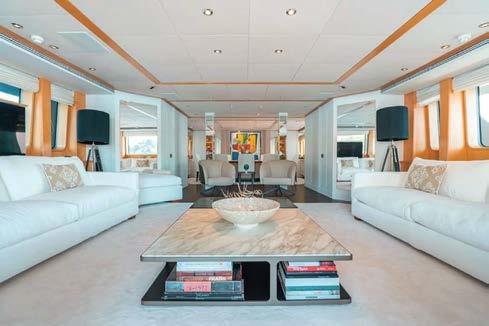
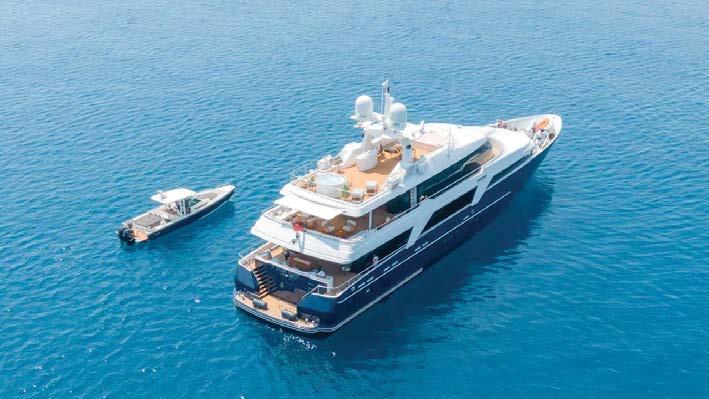
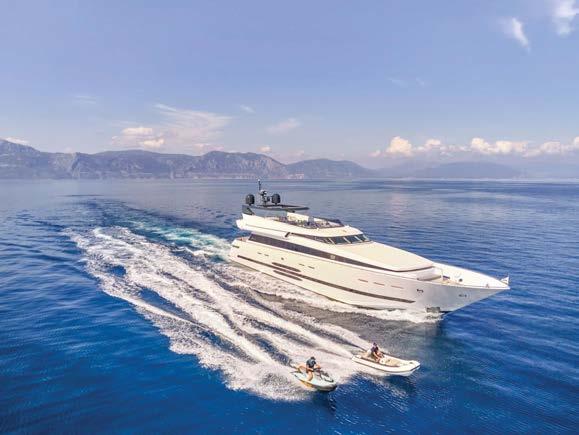
O’NEIRO
Built 2023, length 36.13m, beam 24’3”, draft 2.8m, gross tonnage 233 GT, cruising speed 18 Knots, max speed 20 Knots, engines 2x MTU (2000 hp), guests 10, staterooms 6, crew 7.
Rates from € 88,000 P/WEEK u Fraser Yachts
https://www.fraseryachts.com
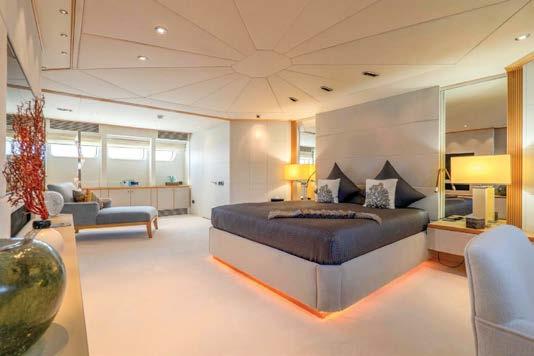
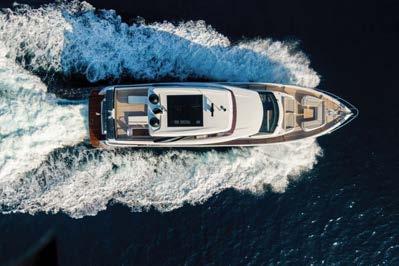
Ferretti 860 Vittoria
Built 2022, length 26.95m beam 6.22m, draft 2.08m, cruising speed 24 Knots max speed 32 Knots, guests 12 cruising & 8 sleeping, staterooms 4, crew, 4 cabins configuration double (3), Twin (1).
From € 69,000 P/WEEK u Fraser Yachts
https://www.fraseryachts.com
Rates From 695.000 €/week
Guests Lenght (m) Cabins
Year/refit: 2015/2025 • Beam: 12.60m • Draft: 3.70m • Crew: 19
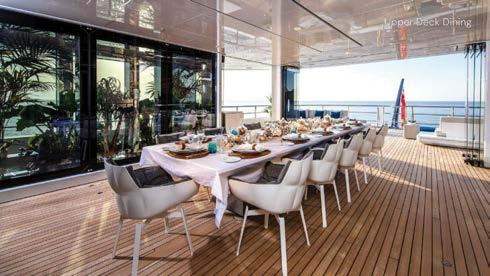
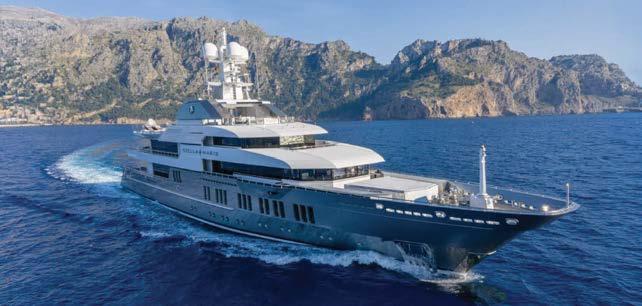
Riva Figurati Year 2021, gross tonnage
219 length 33.50m, beam 7.27m, draft 1.99m, cabins
5, guests11, crew 6, cabins 5, pullmans 1, cruising speed 13 knots, max speed
24 knots, range 430. From € 138,000 per week
u Camper & Nicholsons https:// camperandnicholsons.com
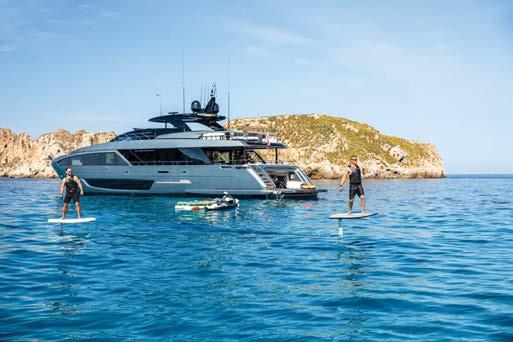
Built 2023, length 29.06m, beam 6.76m, guests 11, cabins 5, crew 4, engines 2 X MTU 16V2000M862216 HP.
Rate: from € 80,000 € 90,000 per week.
u Patrick Marine Yachts www.patrickmarineyachts. com
Benetti Classic 122 Length 37.2m, beam 7.9m, year built 2007, cruising speed 14 Knots, max speed 17 Knots, engines & generators 2x MTU 1,550 HP. Summer high from € 144,375 p/week + expenses.
u World Yacht Group worldyachtgroup.com
Rate: from € 79,000 p/week + expenses
Guests Lenght (m) Max speed
16 33 11
Built/refit: 2010/2024 • Cruise speed: 13 knots • Cabins: 5 • Crew: 6 • Gross tonnage: 180 gt • Beam: 7m • Draft: (f/m) 2.9m • Engines: 2x man 1360 hp. u IYC - International Yacht Company https://iyc.com
Azimut Love T Length 35.17m, beam 7.50m, year 2022, cruising speed 21 knots, max speed 26 knots, engines 2x 2,400 Mph (1790 KW) MTU 16V 2000 M93. Summer high from € 140,000 p/week + expenses.
u World Yacht Group worldyachtgroup.com
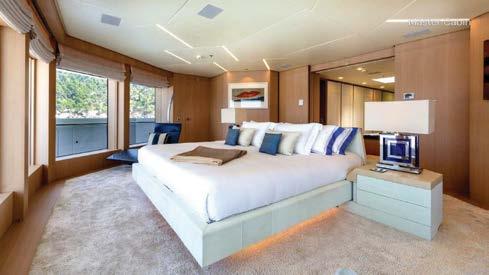
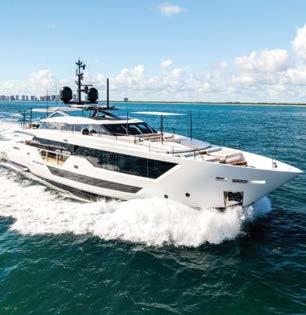
Mangusta Five Stars Length 28.05m, beam 6.66m, builder, year/refit 2006/2018 cruising speed 25 knots, max speed 35 knots, engines & generators 2 x MTU 2,000 hp. From € 59,500 p/week + expenses. u World Yacht Group worldyachtgroup.com
90’ Pershing Length 27.43m, beam 6.25m, year / refit 2007 / 2018, cruising speed 30 knots, max speed 45 knots engines 2x MTU 10V 2000 M93. Summer high from $ 59,000 p/week + expenses.
u World Yacht Group worldyachtgroup.com
Custom Line Evexias I Year 2024, length 32.85m, beam 7.40m draft 2.03m, guests 8 cabins 5, crew 5 gross tonnage 226 cruising speed 17 knots. From $120,000 / Week u Camper & Nicholsons press@ camperandnicholsons.com https:// camperandnicholsons.com
Numarine Ammonite Length 24m, beam 5.79m, year/refit 2012/2023, cruising speed 22 knots, max speed 30 knots, engines Twin CAT Model: C18 Acert. Summer high from € 54,250 p/week + expenses.
u World Yacht Group worldyachtgroup.com
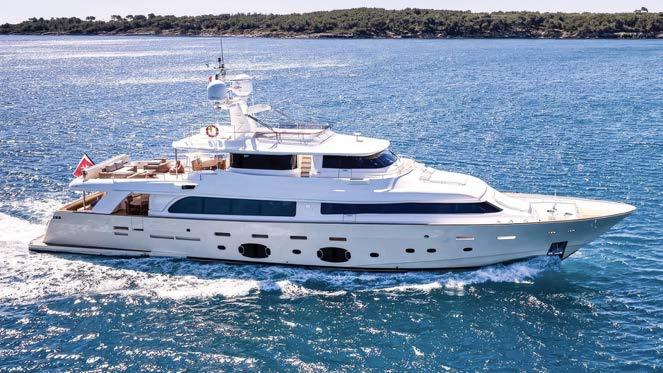

Cranchi Endurance 39 2003, lago di Garda. 2 x Volvo Penta KAD 300. Dinette convertibile, cabina di poppa separata a tutto baglio con letto matrimoniale, un bagno completo e una cucina attrezzata. Sempre utilizzata in acqua dolce sul lago di Garda. Full optional. Price € 105.000. u Valbroker tel. 0039 3475006999 info@valbroker.com, www.valbroker.com
Abbate Bruno Primatist 53 Model year 2010, Toscana. 2x Volvo Penta D 11 IPS 900. Cabina matrimoniale a prua, matrimoniale a centro barca ed una con due letti a castello. Full optional: generatore, Joystick, elica di prua, aria condizionata. Versione con plancetta di poppa in teak allungata. Price € 359.000. u Valbroker tel. 0039 3475006999 info@valbroker.com, www.valbroker.com
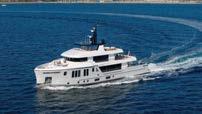
116’ Custom
Year 2025, length 116’, beam 25’ 3’’, max draft 7’ 7’’, cabins 5, engines caterpillar, power 715.00 hp, cruising speed 11 kn, max speed 13 kn, displacement: 687842 lb. Price € 14,650,000. u Denison Yachting www.denisonyachtsales. com sales@denisonyachting.com
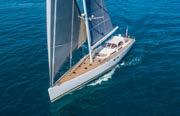
Baltic 78
Year/refit: 2008/2023, length 23.99m, beam 5.99m, 14 cabine, 5 bagni + 2 cabine equipaggio, Immersione 4,13m, motorizzazione Volvo Penta 260 HP.
Price € 1,650,000 IVA. assolta. u Media ship www.mediaship.it




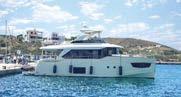



17/18/19 e 23/24/25



Latisana (UD) - loc. Aprilia Marittima tel. 0431.53146 - 53060

Leeuwin 55’
Year 2024, LOA 55 ft 2 in, display length 55 ft, beam 27’ 5”, engine details Suzuki DF300AP, fuel capacity: 423 gals, water capacity 105 gals, master double stern, guest double forward.
Price USD:$ 997,999. u United Yacht Sales www.unitedyacht.com

Absolute Navetta 58 2017, Grecia. Motorizzato con 2xD8 800 Volvo Penta. Sottocoperta sono presenti due cabine matrimoniali e una terza cabina doppia con bagno. Full optional: aria condizionata, piattaforma idraulica, antenna satellitare, colorazione speciale scafo champagne, terza stazione di pilotaggio.

Aventurer
Year/Refit 1986/2021, length 25.91m, gross tonn. 120, draft 1.98m, beam 6.96m, min draft 1.98m, max draft 1.98m, sleeps 10, staterooms 4, twin cabins 2, fuel tank 11,355 l.
Price $ 1,495,000. u Northrop & Johnson www.northropandjohnson. com
Price € 895.000. u Valbroker tel. 0039 3475006999 info@valbroker.com, www.valbroker.com
Azimut Atlantis 43 2017, Liguria. 2xVolvo Penta D6 400, 450 ore di moto. Full optional. Manutenzioni e tagliandi regolari effettuati da centro assistenza Volvo autorizzato.
Price € 440.000. u Valbroker tel. 0039 3475006999 info@valbroker.com, www.valbroker.com
Absolute Navetta 52 2017 Liguria. 2x Volvo Penta IPS 600. Dispone di 3 cabine (Master a centro barca con bagno en-suite, VIP a prua e una terza cabina ospiti con letti doppi). Full Optional: generatore, radar, gps, pilota automatico, elica di prua, aria condizionata, joystick, dissalatore.
Price € 835.000 u Valbroker tel. 0039 3475006999 info@valbroker.com, www.valbroker.com
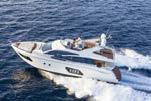
Absolute 60 Fly 2016, Liguria. 2x Volvo Penta D11 IPS950 con solo 260 ore di moto. 3 cabine doppie con servizi e cabina marinaio doppia. Full optional, terza stazione di comando a poppa, AIS.
Price € 980.000. u Valbroker tel. 0039 3475006999 info@valbroker.com, www.valbroker.com
Beam Lenght (m) Guests
Year/Refit: 2008/2021 • Draft: 3.72m
• Gross tonnage: 179 • Net tonnage: 53 • Engines: 2x MAN 440 HP
• Fuel tank capacity: 9500 Itrs. u Aqua Marina Yachts
Email: marketing@aquamarina.co.il https://aquamarina.co.il
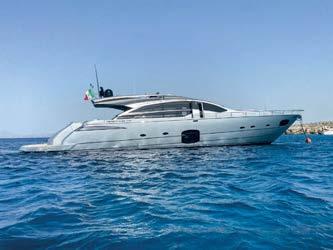
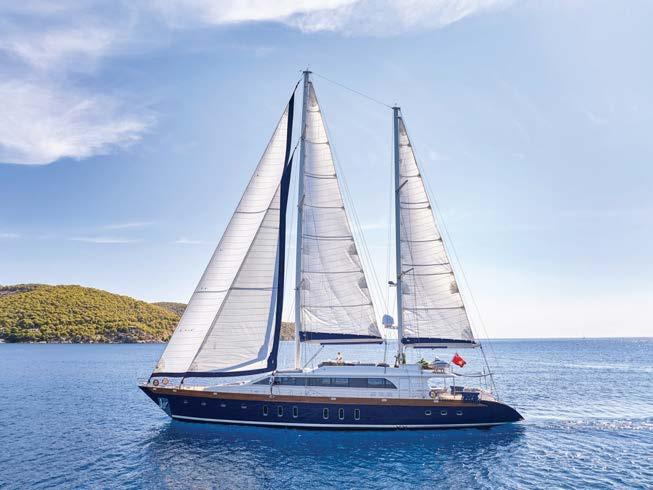
Pershing 82
Perfect conditions, private use only, several improvements 2021. Price € 3.790.000 IVA pagata Central Agency. u CMM Yacht Service +39 0721 960511 info@cmmyachtservice.com www.cmmyachtservice.com
Sarnico 45’ Open
Year 2005. Engines MAN 2x610HP. 1400 engine hours approx. Bow thruster. Master cabin at bow with double bed and private bathroom with shower. Stern cabin with two flat beds and private bathroom with shower. Price € 237.000.
u Archipelago – Giorgio
Dalla Pietà 39 333 7886745 info@archipelagodp.it www.archipelagodp.it
Dalla Pietà DP 58’ HT
Year 2007. 2 Engines MAN
1100 HP. Hours 1050, speed 35 kn side Power bow thruster, water maker, saloon and cabins flooring in fitted carpet, 3 cabins +1 crew cabin, 3 +1 bathrooms.
Price € 490.000. u Archipelago – Giorgio
Dalla Pietà 39 333 7886745 info@archipelagodp.it www.archipelagodp.it
Dalla Pietà DP 58’ HT
Year 2008. 2 Engines MAN
1100 HP. Hours 1360, speed 35 kn, side power bow thruster, water maker, boat in perfect conditions saloon and cabins flooring in fitted carpet. 3 cabins + 1 crew cabin. 3+1 bathrooms.
Price € 495.000. u Archipelago – Giorgio
Dalla Pietà 39 333 7886745 info@archipelagodp.it www.archipelagodp.it
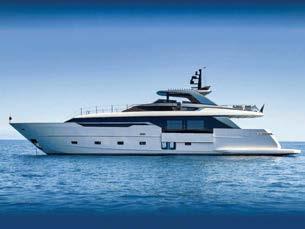
Sanlorenzo SL96A
Anno: 2020, LOA: 29,06m, larghezza 6,76m, 2x MTU 16V 2000 M 86, cabine 5 ospiti + 3 equipaggio (10 ospiti totali).
Prezzo € 6.900.000 IVA pagata. u Forwardyachts S.r.l. Porto MirabelloLa Spezia. T. 0187934692 info@forwardyachts.com www.forwardyachts.com Mengi Yay € 2,490,000 EX VAT
Princess 420 FLY
Year 1997. Engine Volvo Penta 2x370HP. Hours 330 ca. Max speed 28 kn, bow thruster, generator, boat in good conditions, burl essence, salon and cabins flooring in mahogany thread.
Price € 145.000. u Archipelago – Giorgio
Dalla Pietà 39 333 7886745 www.archipelagodp.it
Dalla Pietà DP48’ Altair
Year 2001, engines CAT 3196 2x660hp, hours 1100 ca. speed 30 kn, bow thruster, tender, garage, boat in good conditions, 3 cabin version with 2 bathrooms, semi-shiny cherry wood interiors, parquet flooring.
Price € 155.000.
u Archipelago – Giorgio
Dalla Pietà 39 333 7886745 www.archipelagodp.it
Akhenaton
Year/Refit 2005/2024, LOA 31.25m, beam 7,20m, draft 2,70m, displacement 84,00 t, engine 2x 250 HP (190 KW) CUMINS 6CTA8.3MI, guests 10, crew 5, fuel capacity, 6,040 l, water capacity, 4,880 l, cruising speed 10 knots. Price: € 995,000. u Bernard Gallay Yacht Brokerage www.bernard-gallay.com info@bernard-gallay.com
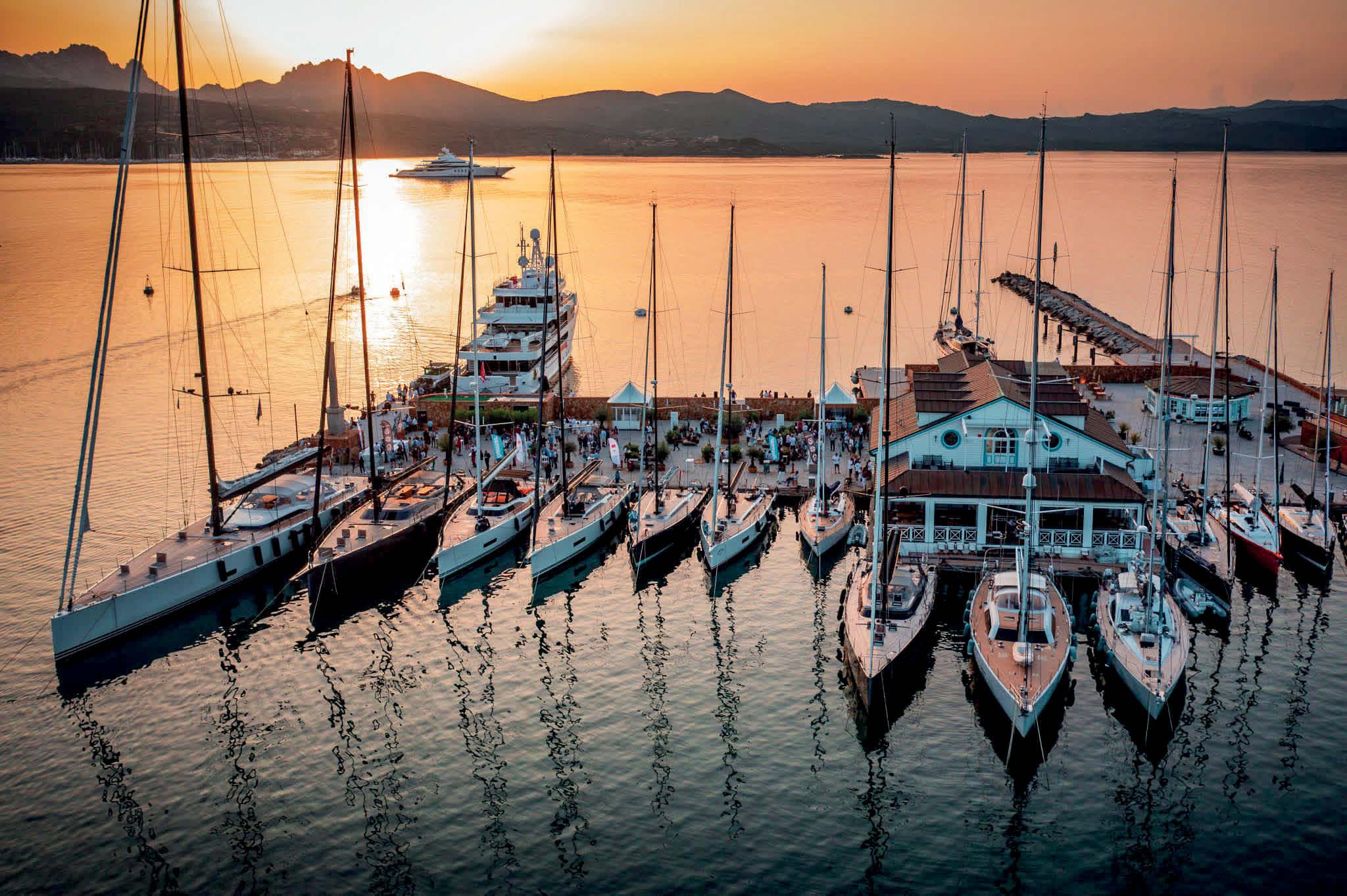
Sanlorenzo Chameleon
Year 2023, length 27m, beam 6.5m, draft 1.93m, gross tonnage 95, max speed 29Kts, staterooms 4, guests 8.
Price $ 7,990,000. u FGI Yacht Group info@fgiyachtgroup.com www.fgiyachtgroup.com
Cranchi 43
Year 2009, Engines 2 x Volvo D6 IPS 435 Hp, LOA 11,95 m, Beam 4,13 m. Price € 190.000 + comm. u Inmar snc 329.0907407 info.inmar@gmail.com www.inmar.it
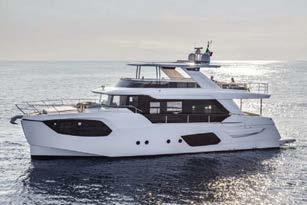
Magnum Marine 50 Anno 1994, 15,30m, 2x1080 Stewart Stevenson, Sardegna, € 380.000. u Santa Marina Yachts +39 335 334 192 info@smy.it
Magnum 44 Anno 2003 - € 675.000. u Santa Marina Yachts +39 335 334 192 info@smy.it
Pershing 90
Anno 2009, ottime condizioni generali, unico proprietario. New Asking price € 1.900.000 IVA pagata. u CMM Yacht Service +39 0721 960511 info@cmmyachtservice.com www.cmmyachtservice.com
Absolute Navetta 68
Anno 2023, lunghezza 20,53m, larghezza 5,63m, motori 2 x 1.000 Hp, Volvo Penta D13, cabine 8 ospiti + 2 equipaggio. Price € 2.650.000 + IVA se dovuta u Forwardyachts S.r.l. Porto Mirabello - La Spezia. T. 0187934692 info@forwardyachts.com www.forwardyachts.com
Otam 58
Anno 2008, 18,70m, 2x1675 Caterpillar, Campania, € 990.000. u Santa Marina Yachts +39 335 334 192 info@smy.it
Anno 2025, pari al nuovo. Unico proprietario, solo 90 ore motore. € 990.000 IVA non pagata. u CMM Yacht Service +39 0721 960511 info@cmmyachtservice.com www.cmmyachtservice.com
Azimut S7
Year 2020, lunghezza 21,37m, motori 3x Volvo Penta IPS 1050 - 800 Hp. Price € 2.090.000, IVA pagata. u Forwardyachts www.forwardyachts.com +39 0187 934692 +39 392 4685455
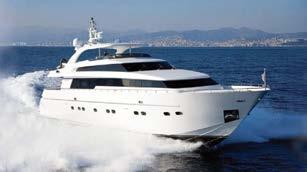
Magnum Marine 40 Anno 1990, 12,24m, 2x380 Caterpillar, Toscana, €2 60.000. u Santa Marina Yachts +39 335 334 192 info@smy.it
Magnum 63 Anno 1987, 2x 1675 Caterpillar anno 2011 Prezzo € 1.575.000. u Santa Marina Yachts +39 335 334 192 info@smy.it
Fairline Squadron 62
Year 1993, LOA 18,97m, beam 5,21m, max draft 1,45 m, sostituzione motori in corso.
Price € 485.000. u Inmar snc 329.0907407 info.inmar@gmail.com www.inmar.it
San Lorenzo SL 88
Anno 2005/Refit 2025/2026, lunghezza 26,75m, larghezza 6,75m, motori 2x 2.000 Hp - MTU 16V2000M91. Prezzo: € 3.000.000 trattabile u Forwardyachts S.r.l. Porto Mirabello - La Spezia. T. 0187934692 info@forwardyachts.com www.forwardyachts.com
Otam 45
Anno 2003, 14,90m, 2x715 Caterpillar, Liguria, € 380.000. u Santa Marina Yachts +39 335 334 192 info@smy.it
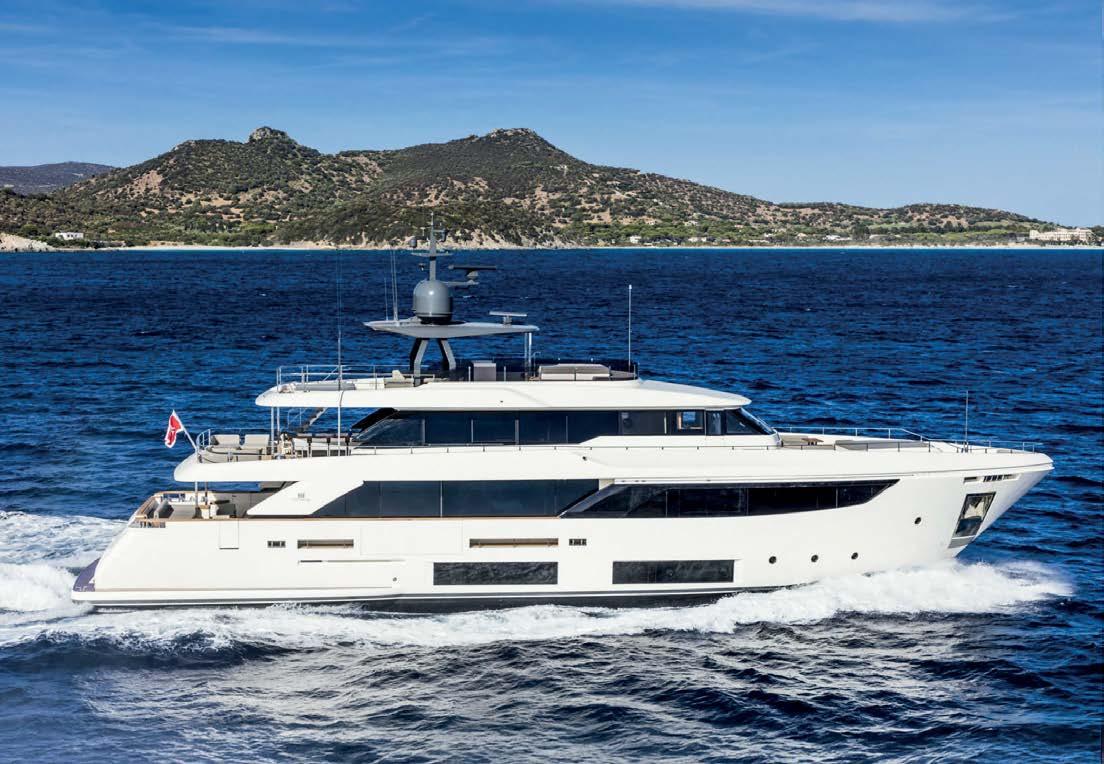

Price $ 10,900,000
Beam Lenght (m) Max speed
Year/refit: 2018 • Draft: 2.06m tonnage: 349 • Cruising speed:
• Hull material: GRP • Staterooms:
• Guests: 11. u FGI Yacht Group www.fgiyachtgroup.com
Pershing 80
Prezzo € 1.590.000 IVA pagata 1350 ore motore, disponibilità immediata. u CMM Yacht Service +39 0721 960511 info@cmmyachtservice.com www.cmmyachtservice.com
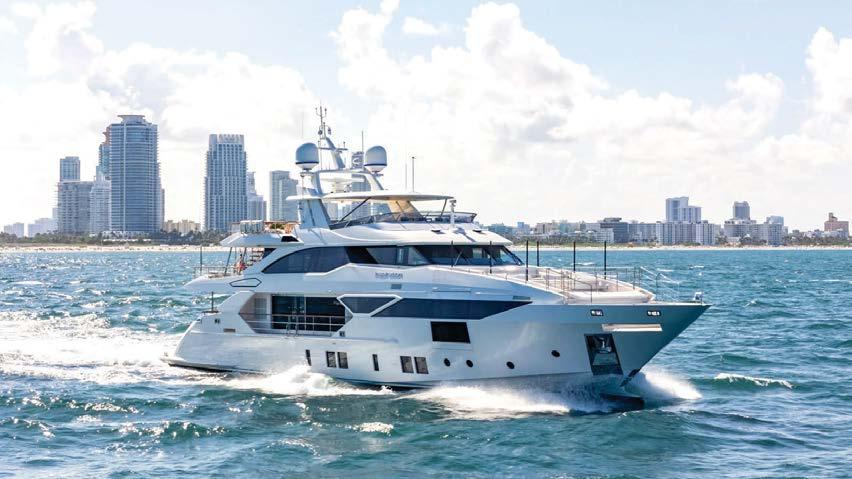
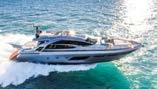
Pershing 8X Year 2021, LOA 22.85m beam 5.86m, cabins 4, max speed 48 kn, cruise speed 41 kn, engines 2xMTU 2,638 hp. Price € 4,800,000 VAT Paid u Idea Yachting SARL https://ideayachting.com info@ideayachting.com
DP 56’ Year 2001, LOA 17,71m, beam 4,90m, 2x800 MAN 8CIL. Price € 330.000. u Inmar snc 329.0907407 348.1250078 info.inmar@gmail.com www.inmar.it
Beneteau First 345 Year 1989, LOA: 10,56m, beam 3,44m, draft 1,90m, 1x Yanmar 3GM (1990) 20 Hp, 14,80 kW. Price € 38.900 + comm. u Inmar snc info.inmar@gmail.com www.inmar.it C&C 51.8 Year 1991, LOA 15,75m, beam 4,75m, max draft 3,40m. Price € 120.000. u Inmar snc 329.0907407348.1250078 info.inmar@gmail.com www.inmar.it
30 Year 1990, LOA 9.30m, beam 2.60m, max draft m 1.00, 2 x Volvo Penta 200 Hp. Price € 26.000. u Inmar snc 329.0907407 info.inmar@gmail.com www.inmar.it
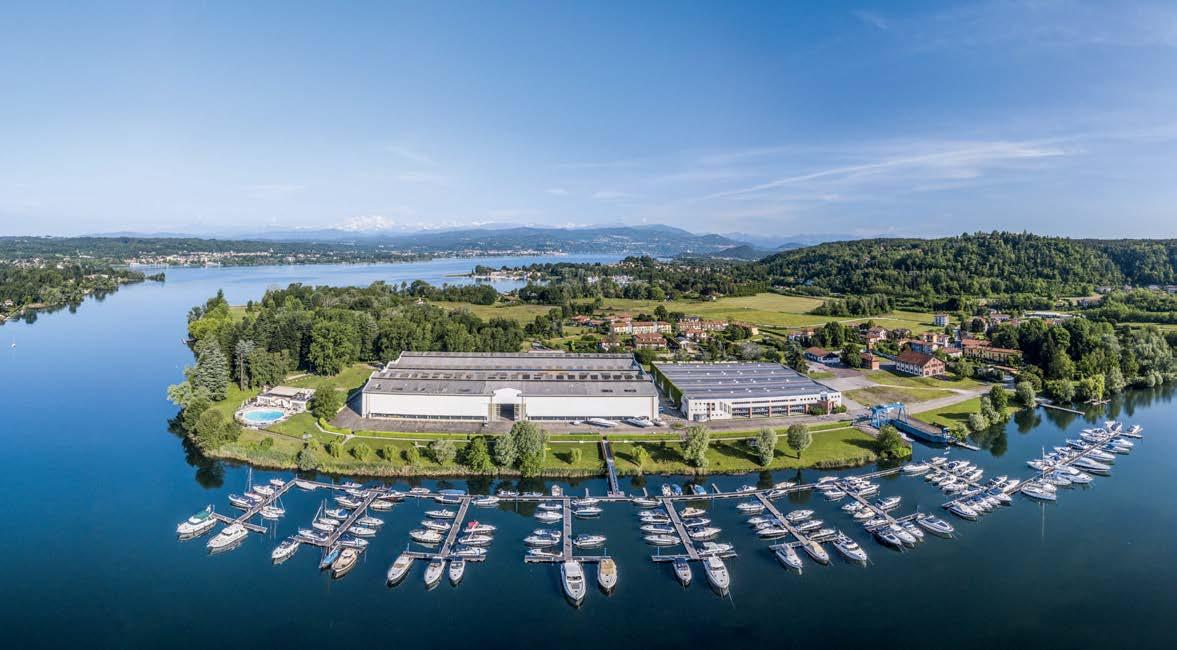


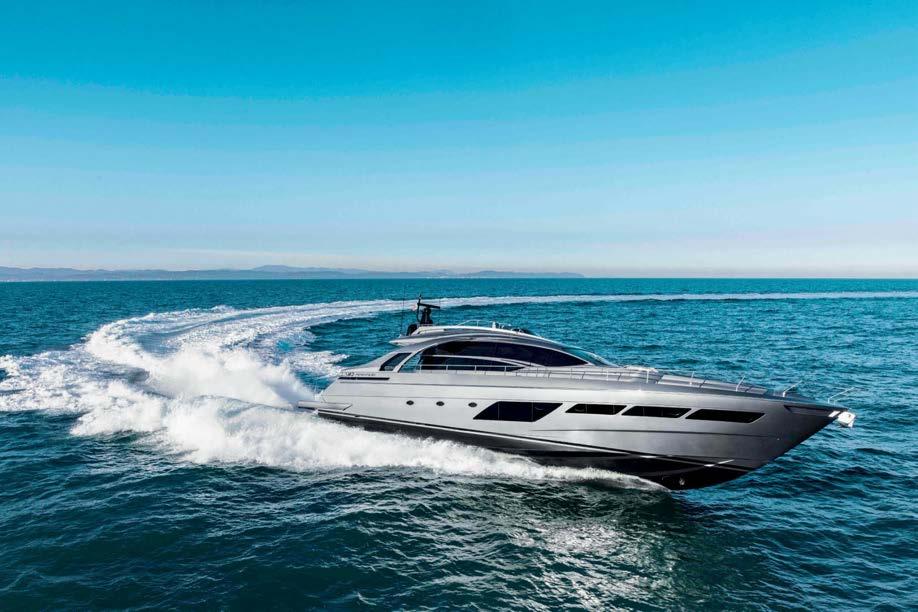
PERSHING 6X
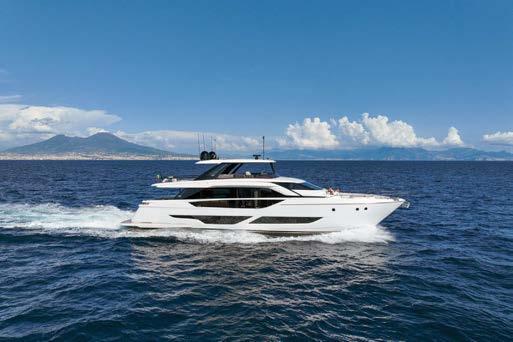
FERRETTI YACHTS 860
LOA: 26,95 m
ENGINES: 2 x MAN 2000 Hp ENGINES HOURS: 161
€ 6.290.000 + VAT
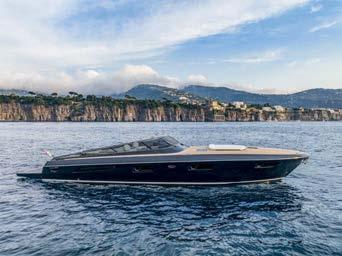
62RS YEAR: 2023 LOA: 19,03 m, LAYOUT: 3 cabins ENGINES: 2 x MAN V12 1400 hp MAX SPEED: 40 kn
SOLARI POWER 60 COUPÈ
2025 LOA: 16,43 m, LAYOUT: 3 cabins ENGINES: 2 x VOLVO PENTA D13 – 1000 ENGINES HOURS: 227
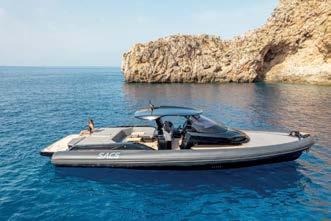
SACS STRIDER 15 YEAR: 2024 LOA: 15 m, LAYOUT: 2 cabins ENGINES: 2x Volvo Diesel D6 - 440hp ENGINES HOURS: 98 PRICE: 719.000€ +VAT
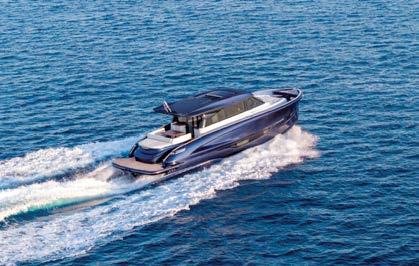
€ 2.290.000 + VAT
FERRETTI YACHTS 670
2025 LOA: 20,24 m, LAYOUT: 3 cabins
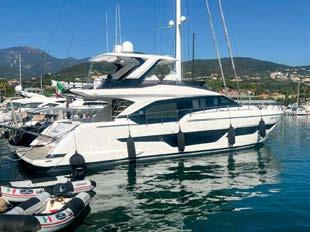
2 x MAN 1200 hp
SPEED: 32 kn
2.890.000 € + IVA
Loon
Price $ 42,950,000
Guests Lenght (m) Max speed
16 67.5 13
Built / refit: 2010 / 2025 • Beam: 11.4m
• Gross tonnage: 1295 GT
• Cruise speed: 12.5 knots • Cabins: 7
• Crew: 18 • Hul: steel
• Superstructure: aluminium.
u IYC - International Yacht Company
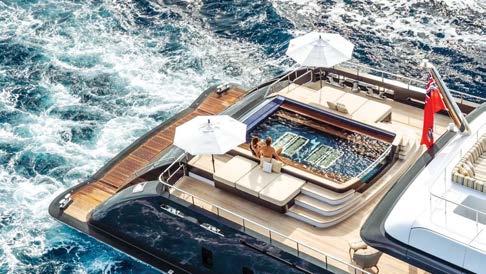
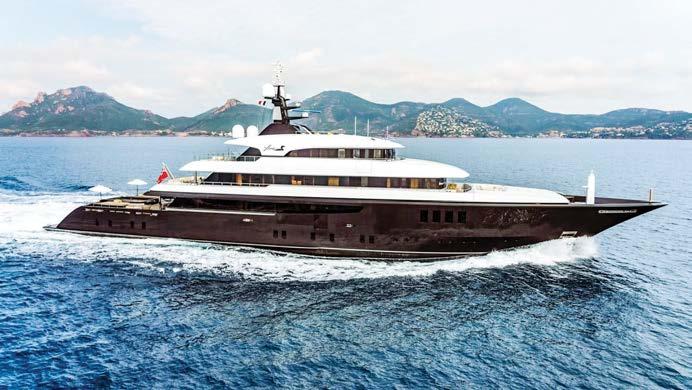
Benetti Confessa
Price € 26,100,000
Guests Lenght (m) Max speed
17 40.8 11
Beam: 8.5m • Gross tonnage: 386 GT
• Cruise speed: 14 knots • Cabins: 5
• Crew: 9 • Hull: GRP.
u IYC - International Yacht Company
Spirit of Venice
Build 2018, length 27.32m, gross tonn. 80, draft 2.1m, beam 6m, guests 7, cabins 3, max speed 12 Knots. Price € 1,100,000. u Northrop & Johnson www.northropandjohnson. com
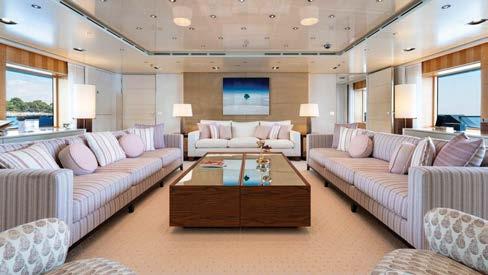
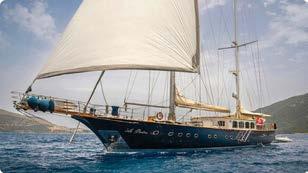
Le Pietre
Build 2009/2024, length 39m, guests 8, cabins 4, crew 6, gross tonn.183, draft 4.05m, max speed 12 Knots, cruising speed 10 Knots. Price € 3,990,000. u Northrop & Johnson www.northropandjohnson. com
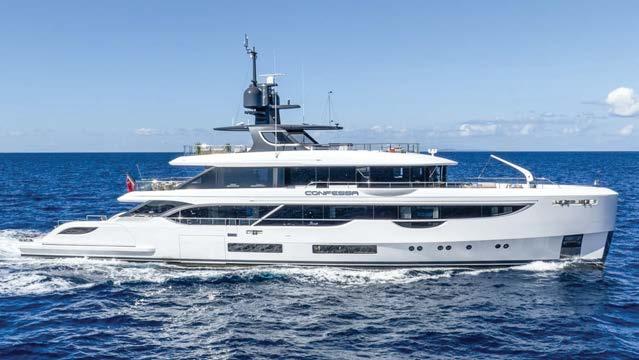
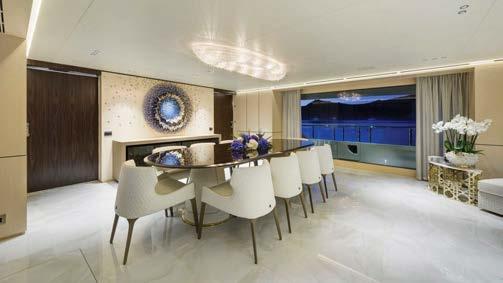
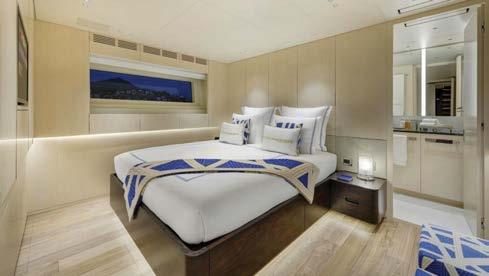
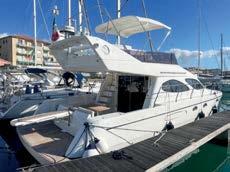
CARNEVALI C145
Anno 2016 - 3 cabine + 2 bagni 2 x 625 hp Volvo Penta EB linea asse TD € 380.000.
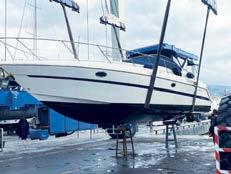
CRANCHI MEDITERRANEE 41
Anno 2000 - 2 cabine + bagno2 x 370 hp Volvo Penta Entrobordo linea asse TD€ 95.000.
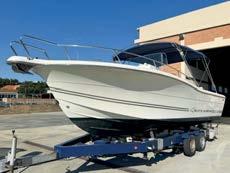
KELT WHITE SHARK 265
Natante - Anno 2006 - 1 cabina - 2 x 175 hp Evinrude FB B€ 44.000.
CAYMAN 40 WA HT
Anno 1998 - 2 cabine + bagno 2 x 425 hp Caterpillar EB linea asse TD € 125.000.
PORTOFINO MARINE 47 FLY
Anno 2004 - 2 cabine + 2 bagni - 2 x 480 hp Cummins Entrobordo linea asse TD€ 198.000.
CRANCHI ENDURANCE 39
Anno 2003 - 2 cabine + bagno2 x 285 hp Volvo Penta EFB TD - € 79.000.
LATITUDE 46 - TOFINOU 8
Natante - Anno 2016 - 4 posti letto - 1 x 10 hp Nanni Entrobordo linea asse D - Trattativa riservata.
ALTAMAREA WAVE 35
Anno 2017 - Natante - 2 posti letto + bagno - 2 x 300 hp Suzuki FB B. € 128.000.
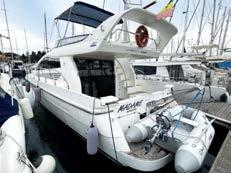
ENTERPRISE MARINE 46 FLY
Anno 2005 - 3 cabine + 2 bagni + cabina marinaio - 2 x 575 hp Volvo Penta Entrobordo linea asse TD - € 159.000.
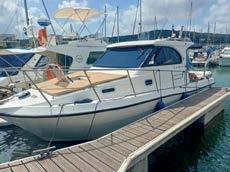
PLASTIK SPACE 310
Natante - Anno 2004 - 2 cabine + bagno - 2 x 230 hp VM Entrobordo linea asse TD€ 49.000.
CATALINA 309
Natante - Anno 2009 - 2 cabine + bagno - 1 x 21 hp Yanmar Entrobordo linea asse D€ 75.000.
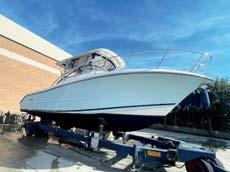
Anno 2009 - 4 posti letto + bagno - 2 x 300 hp Yamaha FB Benzina € 120.000.
NM NAUTICA MARE srl Via Pitagora 30, 57027 San Vincenzo (LI) - Tel.
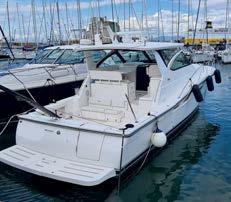
TIARA 4200 OPEN
Anno 2006 - 2 cabine + bagno2 x 670 hp Cummins Entrobordo linea asse TD€ 320.000.
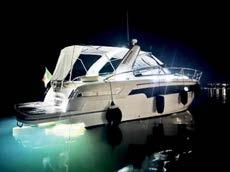
BAVARIA SPORT 28
Natante - Anno 2010 - 2 cabine + bagno - 2 x 230 hp Volvo Penta EFB B - € 59.000.
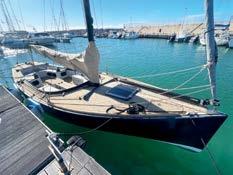
ROSEWEST CAPE COD 9
Natante - Anno 2016 - 2 posti letto - 1 x 14 hp Nanni Entrobordo linea asse D - € 58.000.
POSTI BARCA IN VENDITA, varie dimensioni: Marina di San Vincenzo (LI) • Marina di Scarlino (GR) • Marina Cala De’ Medici (LI) • Porto Mirabello (SP). Prezzi su richiesta.

Sunreef Petite Belle
Price € 15,500,000
Cabins Lenght (m) Year Built
Beam: 13.41m• Gross tonn.: 299
• Draft: 2.2m • Max speed: 16.5 Knots
• Cruising speed: 12 Knots
• Guests: 10 • Crew: 4. u Northrop & Johnson www.northropandjohnson.com 2025 28.63 5
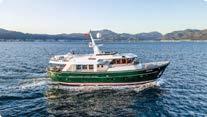
Yosma Year/refit 1993/2022, length 21.7m, gross tonn. 77, draft 2m, beam 6m, guests 4, cabins 2, crew 3, min draft 2m, max draft 2m, fuel tank 3,434 13,000 l.
Price € 1,390,000. u Northrop & Johnson www.northropandjohnson. com
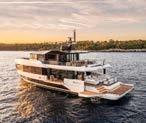
Arcadia A96 Year: 2024, length 29,7m, beam 7,92m, draft 1,8m water capacity 2.000 l, fuel capacity 12.700 l, engine type Volvo penta, gross tonnage 214, guest cabin 5, crew cabin 3, cruise speed 18 Knots. Price € 11.000.000. u Btwo Marine https://btwomarine.com
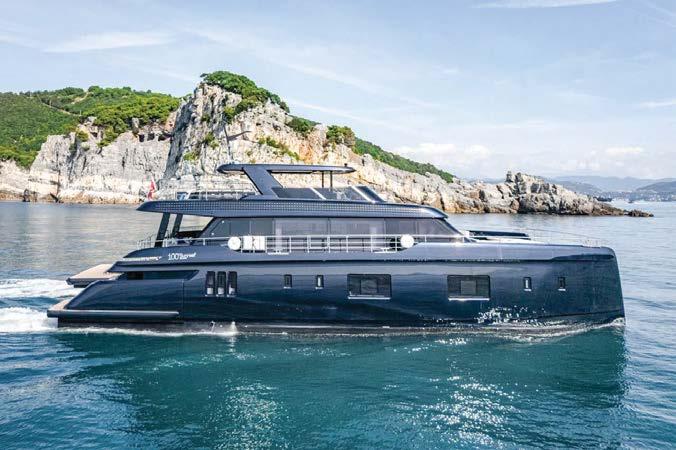
Bluegame Baric BGX73
Built 2025, length 22.68m, beam 5.6m gross tonnage 64.55 GT, maximum speed 30 knots cruise speed 26 knots guests 6, cabins 3, crew 2.
Price € 3,800,000. u IYC - International Yacht Company https://iyc.com
Cerri 86 Flying Sport Year 2007, LOA 23.99m beam 6.35m, draft 1.30m, cabins 4, heads 4, max speed 40 kn, cruise speed 31 kn, fuel tank capacity 7,000 l, displacement 64,500 Kg, Engines 2xMTU 2,000 hp.
Price € 1,550,000 VAT Paid. u Idea Yachting SARL https://ideayachting.com info@ideayachting.com
Etoile des Bergers Year 2022, LOA 14.03m, beam 3.96m, max speed 42 knots, cruising speed 32 knots, 2 cabins and an elegant saloon, guests 4, displacement 10,00 T, draft 1.10m, 2x VOLVO IPS 650 (480 HP). Price: € 850,000. u Bernard Gallay Yacht Brokerage www.bernard-gallay.com
Solaris 64 RS “DALI” Year 2020, LOA 19.40m, beam 5.42m, draft 2.90m, Engine Volvo Penta D4180/175 HP @ 2,800 rpm, Cabins 3, 6 guests. Price: € 1,790,000 VAT Not Paid. u YMB Yachting LLC https://yacht-marinebrokerage.com

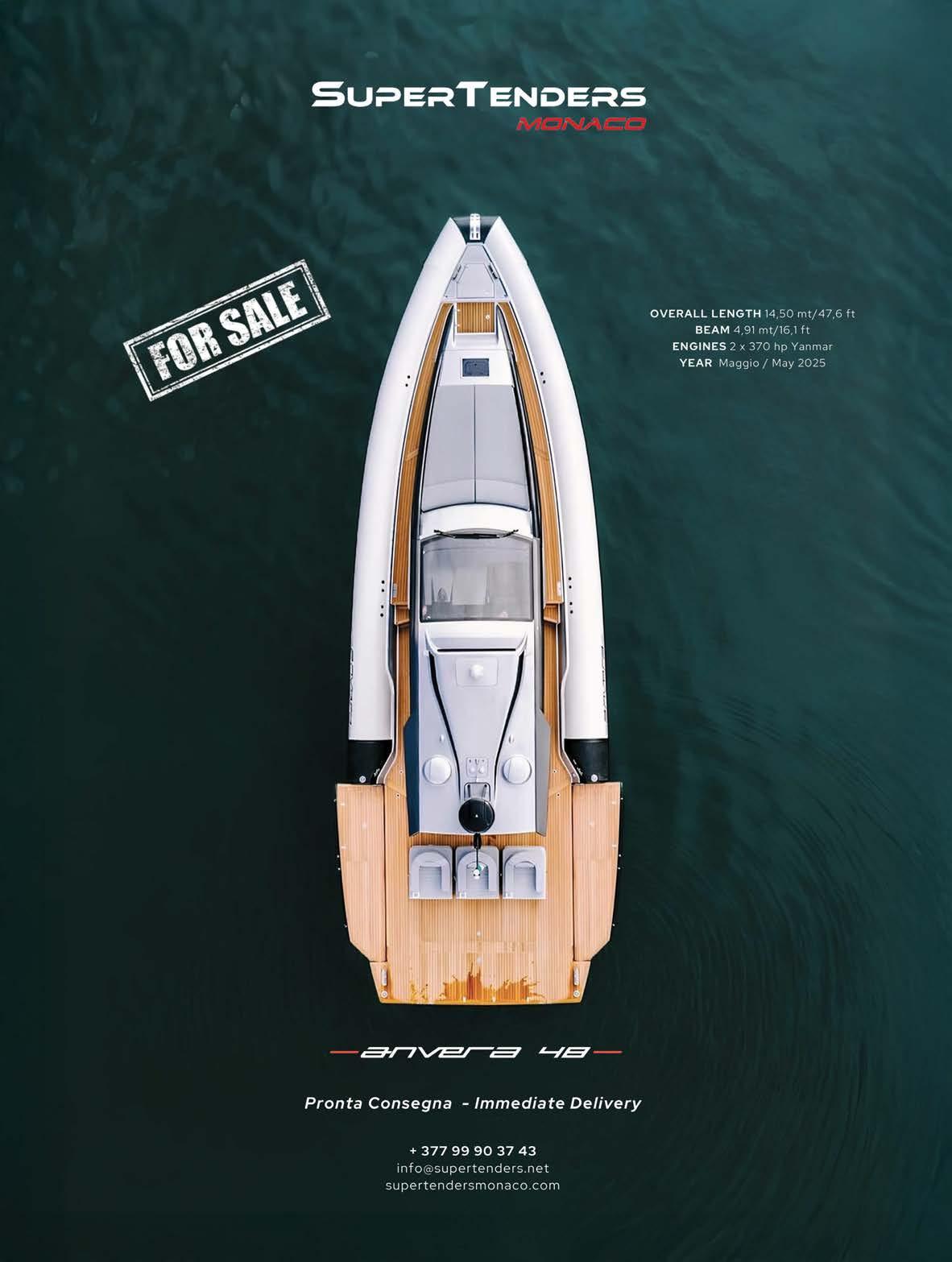
Azimut Grande 36M
Price € 13,950,000
Guests Lenght (m) Max speed
22 35.5 10
Year: 2023 • Gross tonn.: 279 • Draft: 1.9m • Beam: 7.5m • Range: 1,400 NM
• Fuel tank: 5,019 g (19,000 L)
• Fresh water: 977 g (3,697 L) • Cruising speed: 18 Knots • Staterooms: 5
• Crew Sleeps: 7. u Northrop & Johnson www.northropandjohnson.com
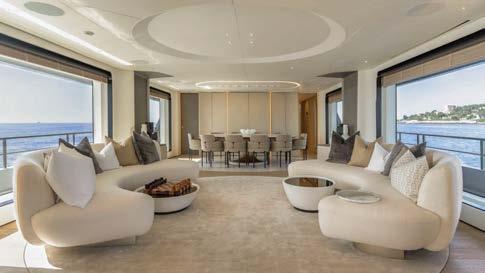
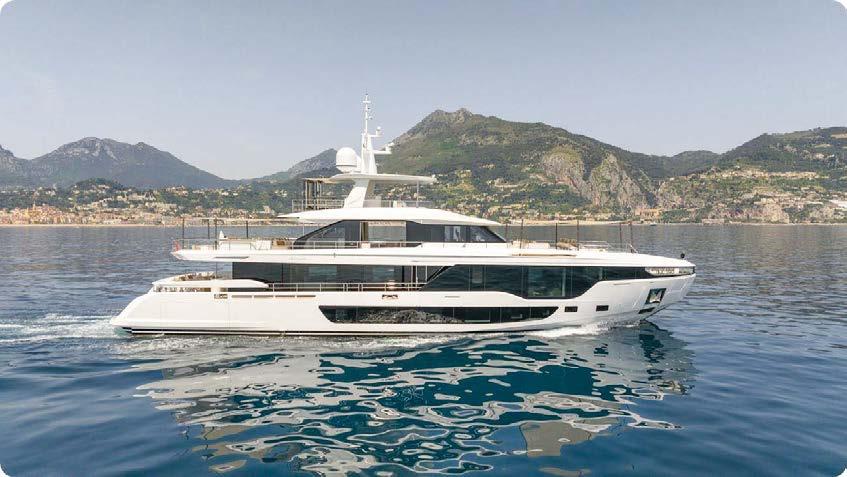
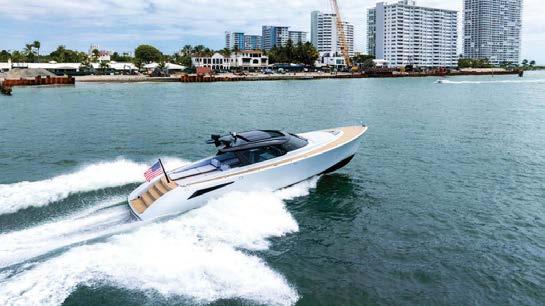
Overmarine Mangusta 72
Year 2007, LOA 22,17m cabins 3, cruising speed 38 kn, beam 5,56m, draft 1,15m engines 2xMTU 1500hp, heads 3, max speed 45 kn, cruising speed 38 kn, hull material GRP.
Price € 690,000 VAT Paid u Idea Yachting SARL https://ideayachting.com info@ideayachting.com
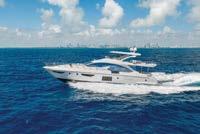
Year 2015, length 24.38m draft 5.67 ft, cabins 4, twin MAN V12 engines –1800 HP each with approx. 940 hours, hydraulic swim platform.
Price $ 2,520,000 u Florida Yachts International https://fyiyachts.com
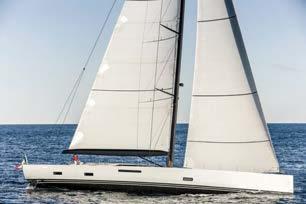
55 Wajer
Built 2024, length 55’, beam 14’ 4’’, draft 4’, staterooms 2, engines 3x Volvo D6-IPS650 480.00hp. Price $ 2,700,000 u Denison Yachting www.denisonyachtsales. com sales@denisonyachting.com
Motoryacht
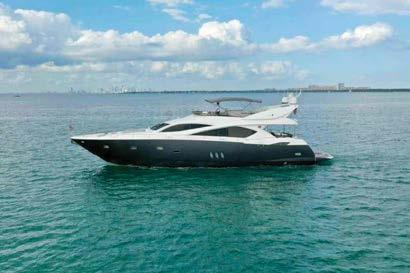
Year 1988, length 24.38m
draft 5.5 ft, cabins 3, max speed 22 kn, Twin MTU 8V396 TB93 Diesels, one full beam master stateroom with a king bed, two guest staterooms each with twin berths.
Price $ 499,000 u Florida Yachts International https://fyiyachts.com
Built 2020, cruising speed 10.50 kn, max speed 13 kn, length 33.77m, beam 25’ 11’’, draft 19’ 10’’, cabins 4. Price € 21,000,000 u Denison Yachting www.denisonyachtsales. com sales@denisonyachting.com
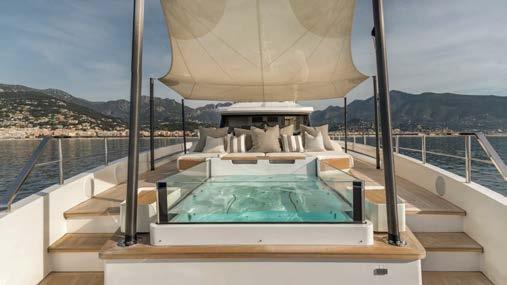
Sunseeker Manhattan 82
Year 2006, length 24.99m draft 5.67 ft, cabins 4, upgraded twin 2012 Caterpillar C32. Price $1,299,000 u Florida Yachts International https://fyiyachts.com
Year 2010, LOA 20.47m, beam 5.6m, draft 1.65m, engines 2 x MAN (1,200hp), Generator 2 x ONAN 17kW, displacement 43 tons, fuel capacity 3,800 L, water capacity 1,330 L cabins 3 guest.
Price € 695,000 u Horizon Yacht https://horizonyachteurope.
Year built: 2020, LOA 20.80m, beam 5.18m, Main Engines: 2 x 1150 hp CAT C18, draft 1.60m, maximum speed 32 knots, cruise speed 28 knots, guests 8, cabins 4. Price € 1,750,000 u Capital Yachting https://www.capitalyachting. com
Riva 38 Rivamare
Year 2021, length 11.89m, guest cabins 1, max speed 40 knots, draft 1.2m, beam 3.5m, hull material fiberglass, range 299nm, guests 8, cruising speed 31 knots, engines 2x Volvo Penta D6 400.
Price € 765,000 Ex VAT u Super Yachts Monaco https://www. superyachtsmonaco.com
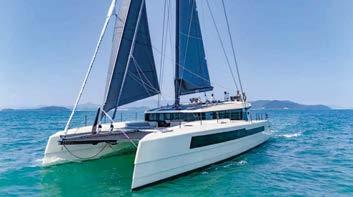
McConaghy 75 Year built 2023; length 23,30m, beam 9,80m, draft 4,50m, displacement 36,90 t, engine 2 x YANMAR 150HP. Price € 5,782,095 u Bernard Gallay Yacht Brokerage www.bernard-gallay.com
Alhambra Price € 4,995,000 Guests Lenght (m) Max speed
Build: 1970/2022 • Cabins: 5 • Crew: 6
• Gross Tonn.: 172 • Draft: 2.7m
• Beam: 6.92m • Range: 2,300 Nm
• Double cabins: 3 • Convertible cabins: 2. u Northrop & Johnson www.northropandjohnson.com
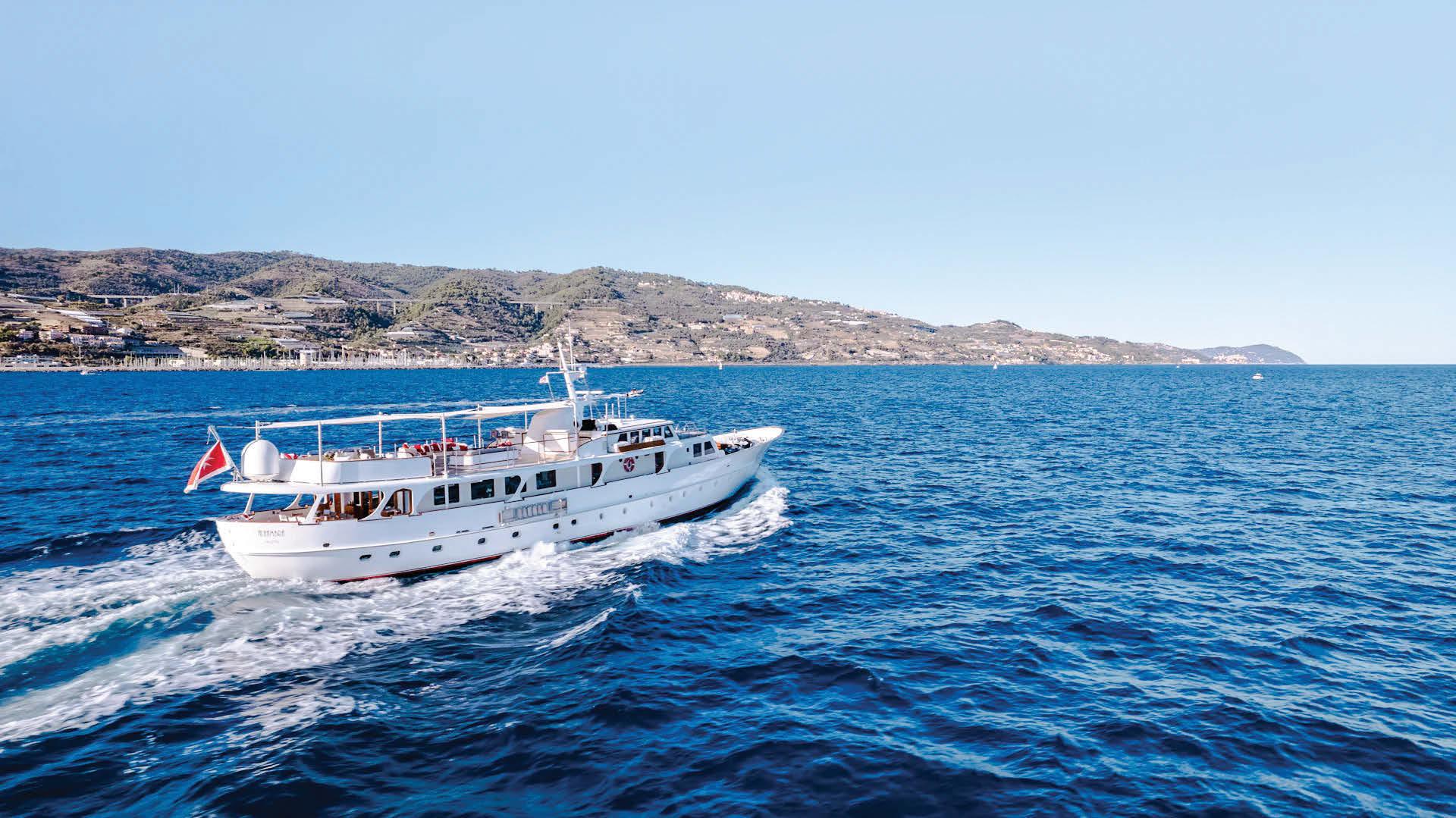
T. 0187934692 info@forwardyachts.com www.forwardyachts.com
info@forwardyachts.com www.forwardyachts.com
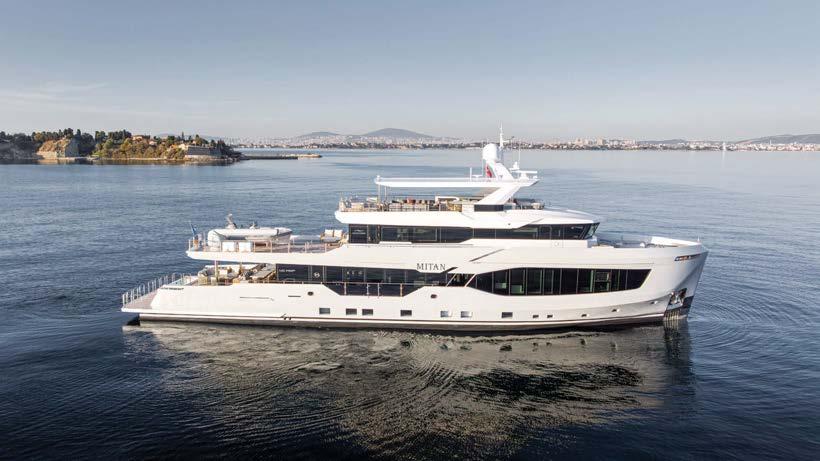
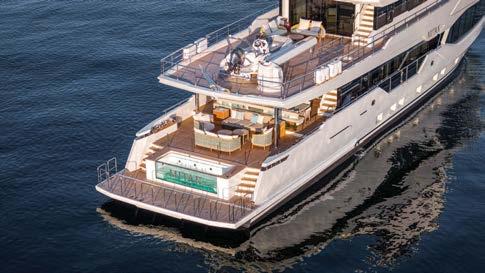
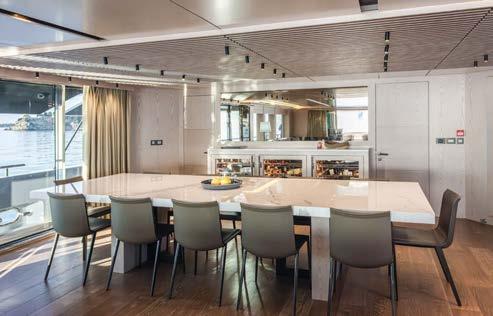
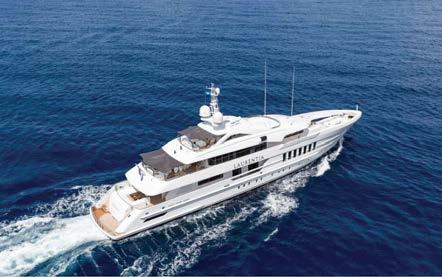
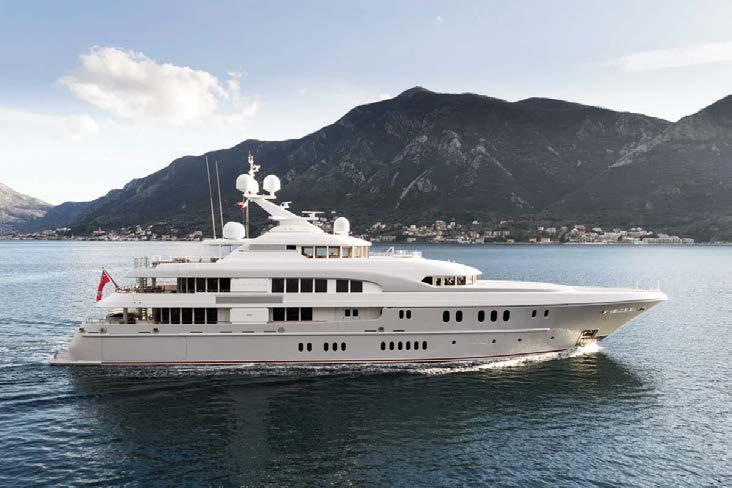
CRN Navetta 43 Palatial Price € 10,900,000
Guests Lenght (m) Max speed
Year 2013 • Refit: 2024 • Beam 8.65m Draft 2.43m • Cabins 5 • Crew 9 • Engine 2 X 1,500 HP caterpillar C32-C u Bernard Gallay Yacht Brokerage www.bernard-gallay.com info@bernard-gallay.com 15 43 12
Azimut 53
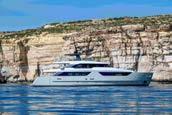
Sanlorenzo Unique S Year 2024, length 36m, beam 25’ 11’’, draft 6’ 7’’, staterooms 5, engines CAT, POWER 1193 hp. Price € 14,300,000. u Denison Yachting www.denisonyachtsales. com sales@denisonyachting.com
Aegean 66 Price $ 23,500,000
Guests Lenght (m) Year
2028 66 16
Gross Tonn. 1,324 • Draft 3.5m
• Beam 12m • Range 5,000 NM
• Staterooms 8 • Crew Cabins 11
• Crew Sleeps 19 • Crew Mess 1 • LWL 57.65m • Fuel Tank 5190,000 l • Fresh Water 15,850 g 60,000 l. u Northrop & Johnson www.northropandjohnson.com/
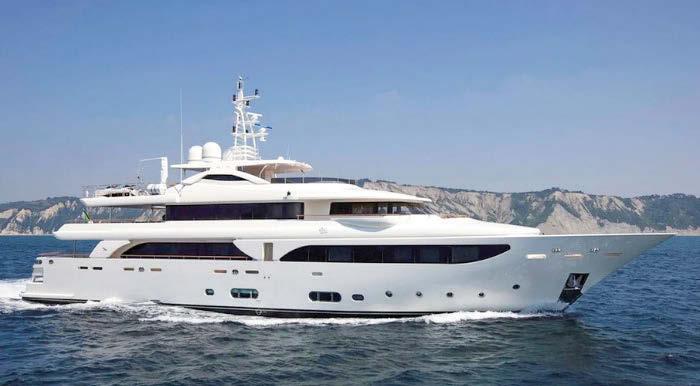
102’ Alpha Vivace Year 2022, length 102’, beam 26’ 7’’, draft 5’ 6’’, staterooms 5, max speed 15 kn, heads 6, engines 2 x Cat C12.9 Acert 1000.00hp Price $ 10,400,000. u Denison Yachting www.denisonyachtsales. com sales@denisonyachting.com
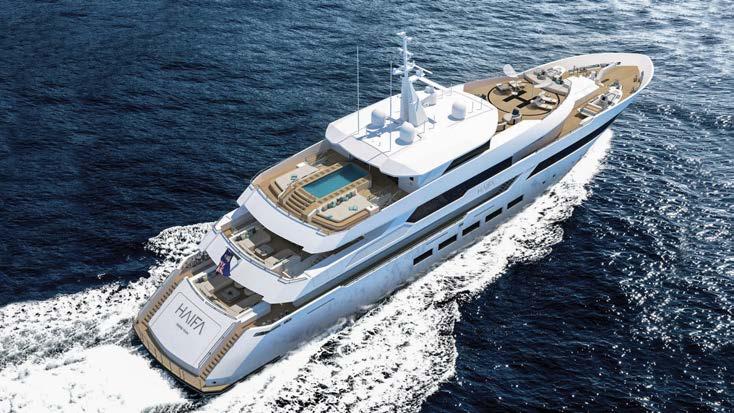
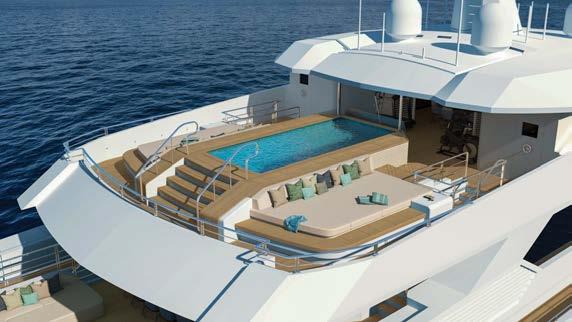
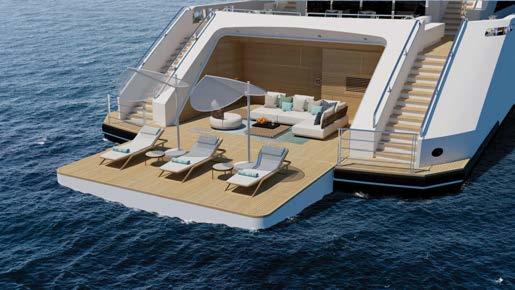
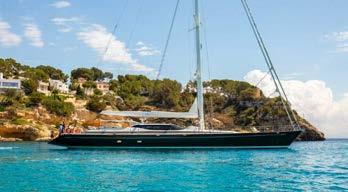
Whimsy
Year built 2005, length 23,98m, beam 5,93m draft 3,20m, cruising speed 10 knots cabins 3. Price € 1.390.000 VAT paid. u Brokerage www.bernard-gallay.com
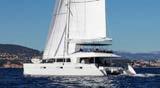
Lagoon 620 Lady M
Year/refit 2014/2025, length 18,90m, beam 9,80m, draft 1,55m, speed 9 knots, cabins 3 guests 6, crew 2. Price: € 1,050,000 - Ex VAT.
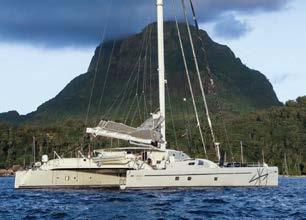
Ferretti Yachts
Custom Line 100
Year 2012, length 30.48m, beam 23’9”, cruising speed 24 engines 2x mtu, power 5200, draft 6.5 ft cabins 5.
Price: $ 4,300,000. u Florida Yachts International https://fyiyachts.com
Pursuit S 408 Sport
Year: 2017 LOA 42 ft 8 in, display, length 40 ft, beam 13’, water capacity 65 gals, fuel capacity 450 gals, engine details Yamaha 350 C.
Price: $ 425,000. u United Yacht Sales ttps://www.unitedyacht.com
Magic Cat
Year/refit 1995/2022, length 25,00m, beam 11,70m, draft 3,20m, engine 2x 110 HP YANMAR 4JH110, cabins 4, guests 8. Price: € 2.595.000 . u Bernard Gallay Yacht Brokerage www.bernard-gallay.com
Thandeka
Year built / refit 1999 / 2026, length 36,83m, beam 8,16m, draft 3,58m, cabins 4, guests 8. Price € 6.800.000. u Bernard Gallay Yacht Brokerage www.bernard-gallay.com
Azimut Grande 30M
Year 2017, length 28.96m, cabins 5, beam 22’6”, cruising speed 23, engines 2x mtu power 4372. Price: $ 4,995,000. u Florida Yachts International https://fyiyachts.com
Vitalia II
Year/refit 2003/2026, length 36,80m, beam 16,90m, draft 5,85m, cruising speed 10 knots.
Price: € 3,950,000 - VAT
Paid u Bernard Gallay Yacht Brokerage www.bernard-gallay.com
Year 2019, length 29.2m, draft 2.2, cabins 5, max speed 6, there are three crew cabins accommodating 5 crew members along with the galley and crew mess.
Price: $ 6,426,000. u Florida Yachts International https://fyiyachts.com
Baglietto 116
Year 2000, length 35.36m cabins 4, guests 10, twin inboard high-speed turbo-charged Deutz Diesel Engines.
Price: $1,990,000. u Florida Yachts International https://fyiyachts.com
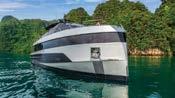
WALLYWHY150
Year 2025, length 23.99m, beam 6.78m, draft 2m, guests 8, max speed 23 kts, engines Volvo Penta D13 IPS 1200 - 900 MHP. Price: € 7,250,000 EX VAT. u Super Yachts Monaco contact@ superyachtsmonaco.com
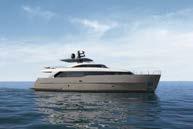
Sanlorenzo SD90
Year built 2025, length overall 27.43m, beam 7m, draught 1.9m, cruising speed 13 Kn, maximum speed 17 Kn. Price: € 8.900.000 - VAT NOT PAIO. u Lengers Yachts www.lengersyachts.com