2026 - 2027
2026 - 2027
We are pleased to present to you the International School Bangkok Middle School Program of Studies for the 2026-27 school year. In this document you will learn more about our learning program, along with our policies and philosophy around assessment and home learning. The Program of Studies shares details about the courses available in Middle School for the 2025-26 school year. We invite students and parents to use it to develop a personalized learning plan that meets school requirements while also appealing to individual needs and interests.
At ISB, we value our Mission, to help students achieve their academic and personal potential; be passionate, reflective learners; become caring global citizens; and lead healthy, active and balanced lives. It is important to us that we develop learners who are creative, adaptable, self-managing, socially-intelligent, globally-minded, and value-driven (ISB Learner Attributes). We want students to enjoy middle school because we know that students who enjoy school learn better.
The ISB Middle School learning experience also includes the Wild Panthers Outdoor Education program – an experiential learning opportunity for all middle school students that is different at each grade level. Middle school students, in small groups of no more than 24, spend 3 days and 2 nights engaging in experiential learning outdoors. Students are housed at our own Environmental Wilderness Campus (EWC), a few hours bus ride from ISB. This program focuses on the development of: our learner attributes, leadership skills, and collaboration, all while engaging with nature.
You are invited to review this document thoroughly. The table of contents page directs you to different areas of our program, and each course description contains information about the grade level learning goals, length of course, and any possible prerequisites needed. There are also links to curriculum standards along with essential questions for each course. Some courses are limited to certain grade levels and/or teacher recommendation. If you have questions about these placements, please contact the current teacher in that subject or talk to one of our middle school counselors.
Please feel free to contact one of the counselors or administrators in the Middle School office, if you have any questions regarding ISB or the scheduling process. We look forward to making the 2025-26 school year a successful learning experience.
Dennis Harter Cindy Plantecoste Amarit Marwaha Principal Dean of Academics Dean of Students
International School Bangkok accepts students who can be successful and grow in our school given our resources and program. Admission to ISB is contingent on completion of all requirements provided by the ISB Admissions Office. Once prospective students are approved by the Admissions Office, then they are scheduled for a program planning session with a school counselor.
Grade placement of students is determined by the Middle School Principal upon recommendation of the counselors at the time of admission. Grade placement is, in most cases, based upon the age of the student and/or the number of years of schooling successfully completed.
Students who have not completed a grade level will, in the majority of cases, be placed in that grade again upon admission if it is the age-appropriate level for ISB. Students who have finished a grade level and apply to ISB after the beginning of the school year will, in the majority of cases, be placed in that grade again upon admission if it is the age-appropriate level for ISB and depending on the timing of the arrival.
Students with learning needs learn best when they are educated with typically developing peers to the maximum extent possible. We are able to meet the needs of most students in the regular classroom with differentiated instruction through accommodations and consultation. Some students may receive additional support in class through:
• small group instruction
• specific, directed support, and co-teaching
Students with mild and moderate learning needs who require a higher level of support may attend a small group learning support class to work on the individualized learning goals on their Individualized Learning Plan (ILP).
This Program of Studies will help students and families plan their academic program. Before selecting courses, it is helpful to know the requirements, objectives, and general sense of the course. When planning a program, the following questions can be useful:
1. What courses are required in my grade level?
2. What courses would provide me with a good level of challenge?
3. What elective courses would be fun to explore and allow me to take safe “risks” to extend my learning in a balanced manner?
4. What learning am I passionate about?
5. Have I considered my home learning, activities, out-side interests, and out-of-school responsibilities when choosing my courses so that I can maintain a healthy, active, and balanced life?
Early in the second semester, students register for classes for the following year. Students have some choice in elective courses, depending on their grade level, and will be placed in those as best we can, depending on class enrollment, scheduling constraints or conflicts, and course requirements. Students will be placed automatically in required courses (e.g. PE, Social Studies, Math, Science, English, etc.) according to their grade and current teacher recommendation. On occasion, a student’s schedule may need to be changed due to administrative reasons such as balancing the number of students in a particular class section. A change may also occur, on rare occasions, at the start of a semester due to the availability of electives in a given period. We appreciate your flexibility when this occurs.
We do our best to schedule students correctly the first time. It is therefore very important for students and parents to discuss and decide upon course choices as best they can during the registration period. Occasionally, a student starts a course and realizes that the level of challenge in the curriculum is not right for him/her. Students may request to add and/or drop courses during the first five days of the semester. Approval for these changes is subject to available space and a clear understanding about the reasons for the change. Teachers, counselors, and administrators may discuss the change request before approving it, based on individual circumstances.
• Typical reasons for a change being approved include:
• Medical reasons
• A prerequisite has not been completed
• The student has been misplaced
• The student’s preference for that choice has changed (or it wasn’t a high choice in the first place).
As a general rule, we do not make schedule changes for a student to be placed with friends or with a particular teacher.
It is important to note that requests that come at the start of the school year are often hard to meet because classes have already been scheduled, are often full, and conflicts may prevent a change. This is why it is so important for students to get the requests right during the registration process. We intentionally build the schedule to accommodate requests as best we can.
Our course requirements are designed to allow for the maximum amount of student choice and to allow for all students to follow a personalized pathway of study about which they are passionate. At the same time, it is our responsibility to ensure that middle school students are exposed to a wide array of learning areas. For this reason, we do have some minimal requirements regarding elective courses.
SEMESTER 1
ADVISORY
ENGLISH
MATH
SCIENCE
SOCIAL STUDIES
WORLD LANGUAGE OR NATIVE LANGUAGE OR EAL OR INTENSIVE STUDIES
PE/WELLNESS
MUSIC - (BAND/CHOIR/ORCHESTRA) REQUIRED
VISUAL ARTS 6 - REQUIRED
SEMESTER 2
ADVISORY
ENGLISH
MATH
SCIENCE
SOCIAL STUDIES
WORLD LANGUAGE OR NATIVE LANGUAGE OR EAL OR INTENSIVE STUDIES
PE/WELLNESS
MUSIC - (BAND/CHOIR/ORCHESTRA) REQUIRED
DRAMA 6 - REQUIRED
SEMESTER 1
ADVISORY
ENGLISH
MATH
SCIENCE
SOCIAL STUDIES
WORLD LANGUAGE OR NATIVE LANGUAGE OR EAL OR INTENSIVE STUDIES
PE/WELLNESS
SEMESTER 2
ADVISORY
ENGLISH
MATH
SCIENCE
SOCIAL STUDIES
WORLD LANGUAGE OR NATIVE LANGUAGE OR EAL OR INTENSIVE STUDIES
PE/WELLNESS
SEMESTER 1
ADVISORY
ENGLISH
MATH
SCIENCE
SOCIAL STUDIES
WORLD LANGUAGE OR NATIVE LANGUAGE OR EAL OR INTENSIVE STUDIES
SEMESTER 2
ADVISORY
ENGLISH
MATH
SCIENCE
SOCIAL STUDIES
WORLD LANGUAGE OR NATIVE LANGUAGE OR EAL OR INTENSIVE STUDIES
PE PE
WELLNESS 8
Elective
In grade 6 the required electives are:
ART OR DTE ELECTIVE (IF NOT MET IN G7)
Elective
• Music (Students will choose one of: Band, Choir or Orchestra) - year-long classes
• Visual Arts 6 - semester-long visual arts class
• Drama 6 - semester-long performing arts class
Over the span of grades 7 and 8, students will typically have up to 7 elective semester slots available for student choice (4 slots in grade 7, and 3 slots in grade 8, as illustrated in the green boxes).
Students may select from the range of elective courses but must fulfill two elective requirements in their selection of elective courses:
• One semester of a Design, Technology and Engineering (DT&E) course
• One semester of a Visual Arts (VA) course
*Students must take at least 1 Art elective or 1 DTE Elective in G7
*Note that the Wellness 8 course is required of all G8 students and will be automatically built into their schedule.
If a student desires to take a year-long elective such as a music class or an additional language (World Language or Native Language), the course would fill two of the available slots for semester electives in a given year.
• Any non-Thai student who enrolls at ISB during their time in middle school is required to take one semester of Thai Language and Culture
• Thai Nationals must study Native Thai every year that they study at ISB
HERE ARE SOME EXAMPLES OF WHAT THE ELECTIVE CHOICES COULD LOOK LIKE OVER TWO YEARS
GRADE 7 GRADE 8
SEMESTER 1 SEMESTER 2 SEMESTER 1
2D
visual art)
Design (required DT&E)
8 (required Gr.8 course)
GRADE 7 GRADE 8
SEMESTER 1 SEMESTER 2 SEMESTER 1
2
2
GRADE 7 GRADE 8
SEMESTER 1 SEMESTER 2
SEMESTER 1 SEMESTER 2
Through our advisory program, we build communities where students are known, feel valued, support others, and grow.
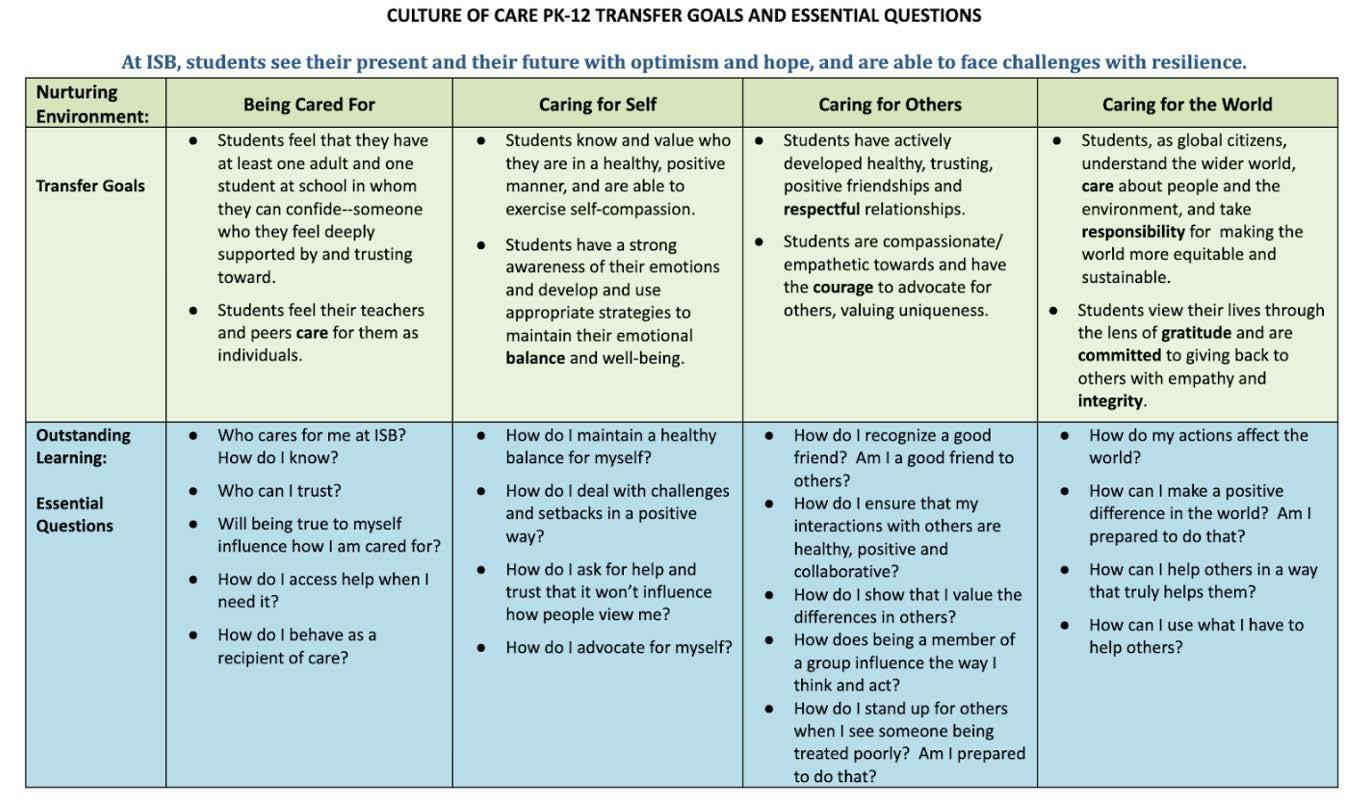
• Culture of Care Framework
• Our Middle School employs ISB’s Culture of Care Framework to guide and ground our students’ interpersonal and intrapersonal growth. This framework is the foundation of our Social and Emotional Learning (SEL) in our advisory program. The framework is broken down into the following strands: Being Cared For, Caring for Self, Caring for Others, Caring for the World.
Other Advisory Learning Goals reaffirm and support students to develop the following skills and dispositions:
• HAL: Habits and Attitudes for Learning: Responsible Learner, Engaged Learner, Collaborative Learner
• Digital Citizenship: ISTE Standards (Click on the Digital Citizenship Strand)
• Executive Functioning Skills: Impulse Control, Flexible Thinking, Self-Monitoring, Planning and Prioritizing
• ISB’s Values: Care, Responsibility, Commitment, Gratitude, Courage, Balance, Respect, Integrity
• ISB’s Learner Attributes: Creative, Globally Minded, Adaptable, Value-Driven, Socially-Intelligent, Self-Managing
• Reflection and Goal Setting (HAL and/or curricular goals)
Units are responsive and are regularly updated based on the needs of the students and our community.
Our advisory program helps us break the MS community into grade-level communities, and smaller communities within each grade level. It helps our large school retain the feel of a small and supportive community. Advisory groups provide a safe space for students to connect with others, develop relationships and grow as learners, and individuals. Each advisor serves as a trusted adult and advocate for the students in their advisory.
In groups of 9-13, students meet with their advisor at least three days a week.
• Mondays are often a day of pause, where students have time to plan for the week ahead and to engage and it is a time for advisors to intentionally check in on how their students are doing (socially and academically). This is a time to look over the week’s schedule, upcoming events, and activities, and to support students so they are able to participate in the life of the school fully.
• One to two other days of the week are also designated as times when students will engage in advisory lessons. As we also prioritize students feeling known and being cared for, the conversations focus on experiences that connect with each student’s life. This is where we attend to our social and emotional learning curriculum (SEL).
• Fridays The week typically ends with community building events, where individual advisory groups or entire grade levels get together to celebrate achievements, engage in some spirited competitions, or just have fun by playing games while learning to keep good company with each other.
• On days when the advisory does not meet, students engage in:
• Tutorial: Allows students to receive academic support with essential standards, support with executive functioning skills or opportunities for extension.
• Assemblies: Brings the grade-level or school community together for events, celebrations, or community-building activities.
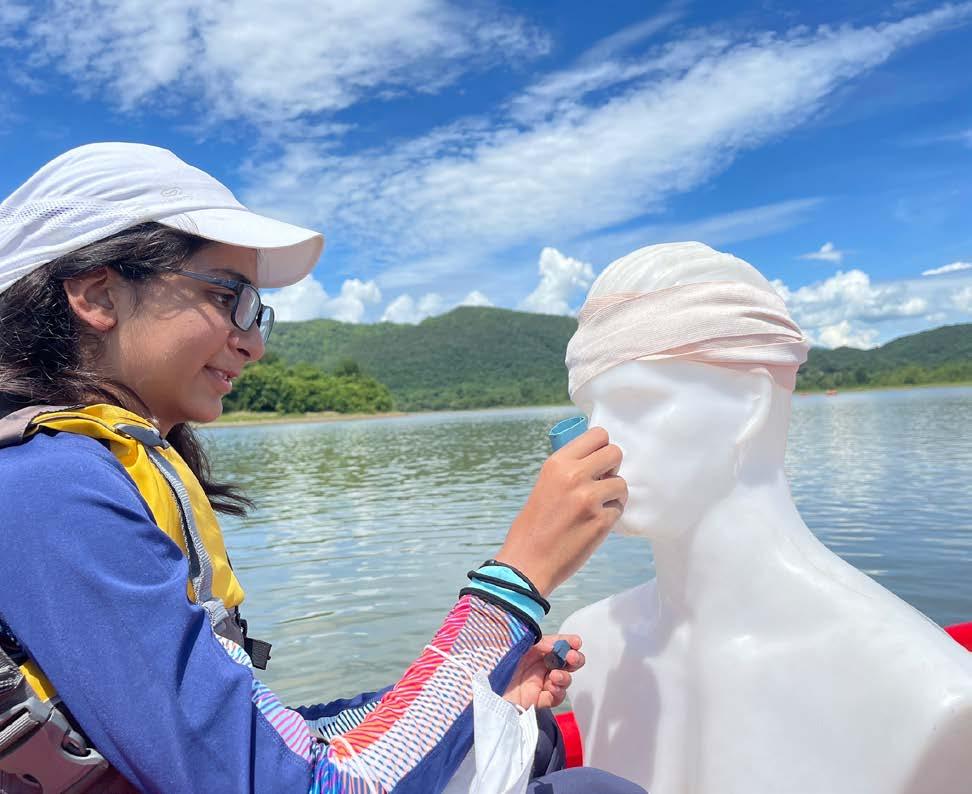
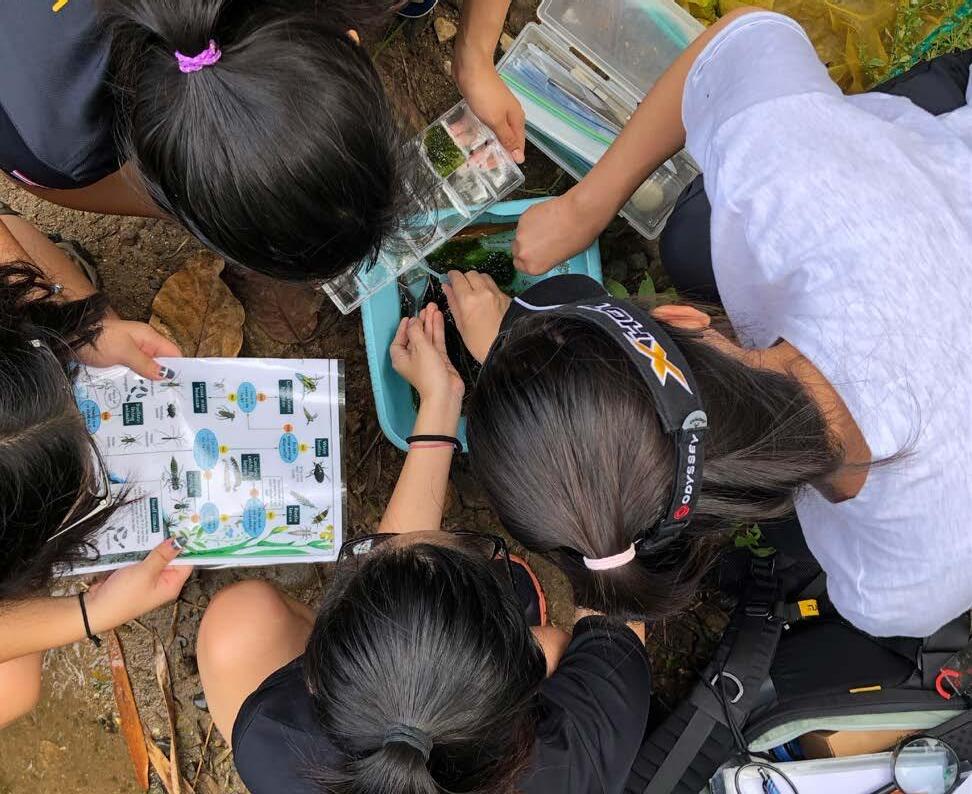
Outdoor Education is an integral component of a student’s education at ISB. Through the development of skills, attitudes, and values, our Outdoor Education program empowers students to take on challenges, apply problem-solving strategies in reallife situations, and to develop character skills that build resilience, giving students “strength for the journey ahead.” The program helps students develop the tools to thrive both at ISB and in the years beyond. Students participate in our Wild Panthers program each year of middle school.
Through experiential outdoor education, students establish a connection with nature, and with each other. Engaging in learning via multiple environments helps develop competence and confidence in familiar and unfamiliar settings.
The Experiential Outdoor Education program enhances the traditional education model and is designed to help students to:
• Develop a renewed sense of responsibility, organization and a belief that perseverance can overcome adversity.
• Develop a variety of strategies for solving complex real world problems unseen in a typical school day.
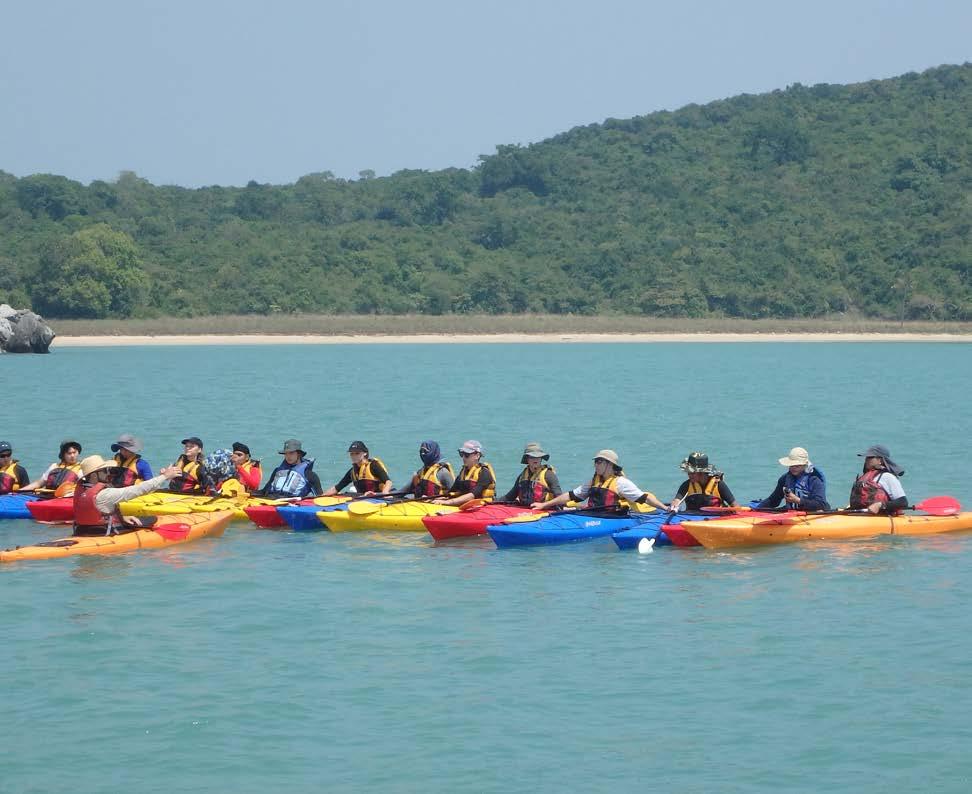
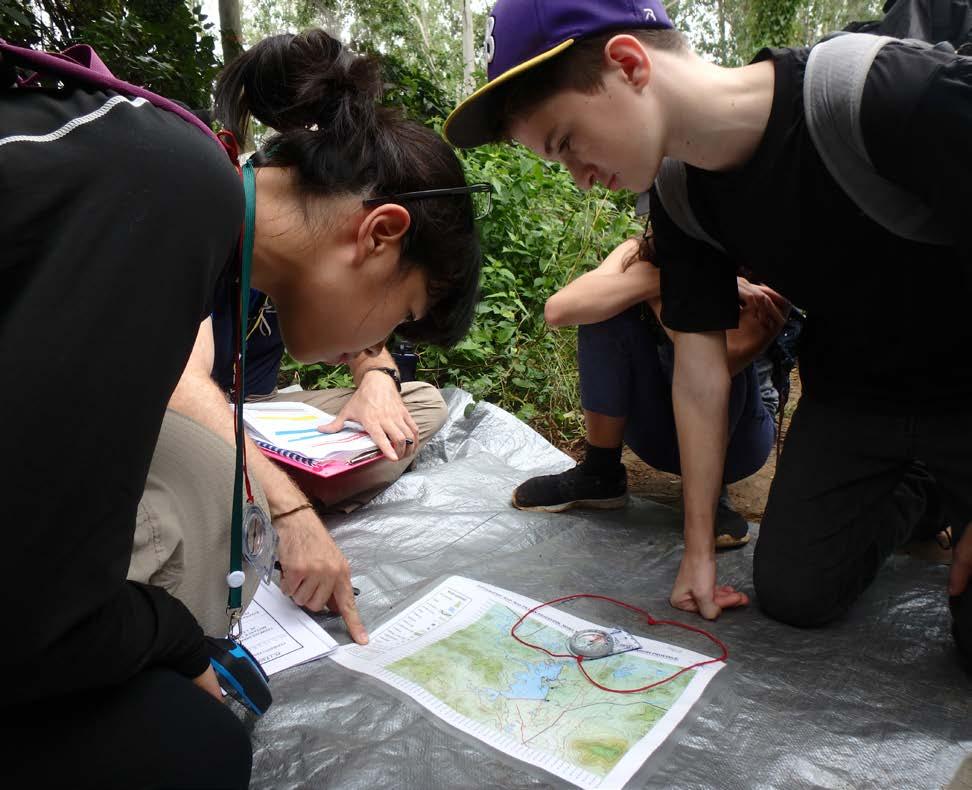
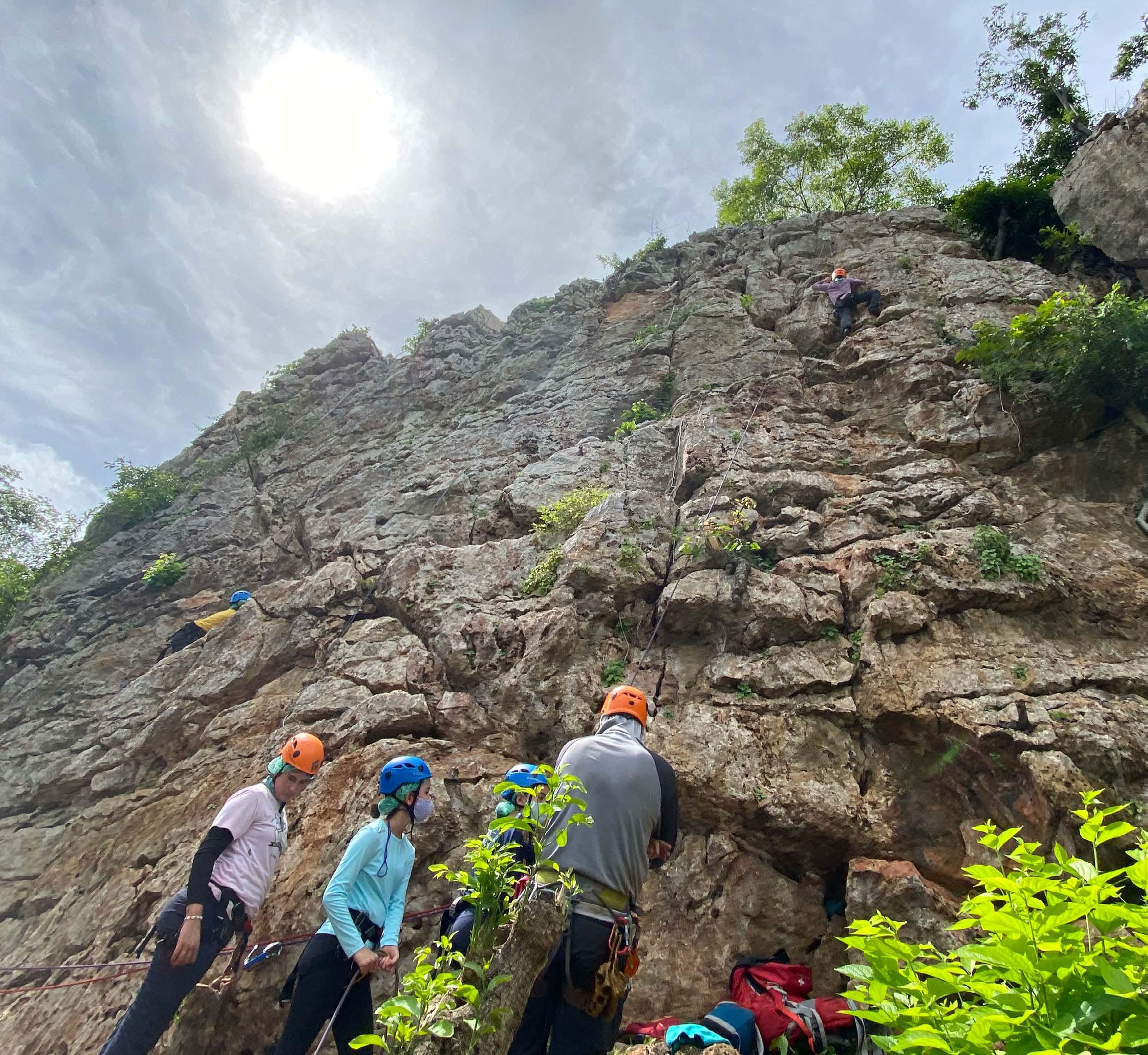
• Develop an awareness of how pressure impacts decision making and gain experience in dealing with these pressures, especially in group situations.
• Transfer the new skills and knowledge to their student life, and to life beyond school.
• Develop a variety of personal and collaborative tools and the commitment to take action.
Each expedition is 3 days and 2 nights and will be hosted at ISB’s Environmental Wilderness Campus (EWC). Each expedition is unique in the scenario-based challenges that it poses to students, allowing them to solve problems and to step out of their comfort zone in an atmosphere of safety and cooperation. Students reflect on their experiences and the learning that took place, and are asked to transfer this learning to other parts of their life both now and for the future, identifying how each experience will serve them when faced with other difficult or challenging situations.
OVERVIEW AND UNIT QUESTION
EXPERIENTIAL LEARNING
ENVIRONMENTAL FOCUS AND PERSONAL REFLECTION
‘THE CALL OF THE WILD’
Why do people choose the wilderness to test themselves?
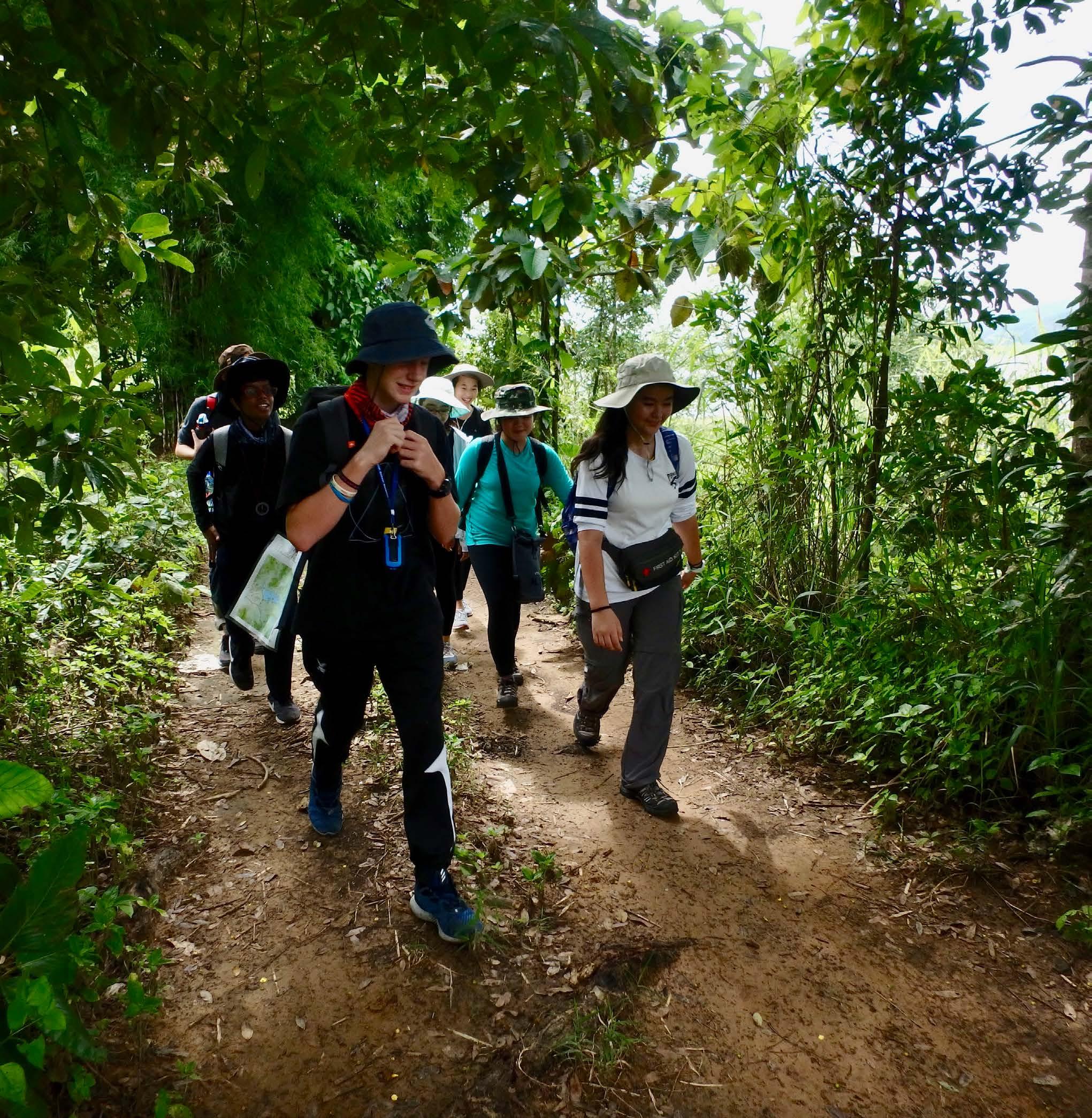
Students complete workshops in each skill and then are required to use these skills on a hike. An instructor accompanies each team and provides assistance if required.
Students use acquired skills to complete a compass orienteering course and geocaching course using GPS.
Students play a game of ENVIROQUEST. Each student takes the role of a member of the food chain (herbivore, omnivore, carnivore etc.) trying to seek out food and water to survive.
Students experience Thai culture through cooking Thai dishes.
Movie: Bear Grylls Running Wild
All students take turns in serving meals, washing dishes and cleaning up after meals.
Environmental Education
Balance in nature and food chains
Respecting the planet
Minimal impact hiking
Character Education
How can I find a positive balance in my life?
What learning from this experience is transferable for me? (Home, school or socially)
How can I improve my personal organization using what I have learned from this experience?
Outdoor Safety Code
Planning an expedition Basic 1st aid
Navigation:
• Features of a map
• Map orientation
• Using coordinates to identify locations
• Understanding contour lines and elevation
• Using a magnetic compass to take a bearing
• Use of a GPS app to establish position on a map
• Use of a GPS app to “go to” a given waypoint
Log Book & Written Test:
Students are able to demonstrate their knowledge and understanding of outdoor safety, navigation and environmental awareness through their logbook and a written test (consisting of recall, understanding & application questions). An opportunity to complete the test and logbook orally is available to students who feel that they are unable to express themselves adequately in writing.
Teamwork & Leadership:
Teachers observe students in a variety of group challenge situations & under a variety of pressures. Teachers also use logbooks to assess goal setting and reflection on learning and the ability to see the transfer of this learning into other situations.
OVERVIEW AND UNIT QUESTION
‘PUSHING THE LIMITS’
What does pressure do to me?
EXPERIENTIAL LEARNING
Students compete in a 3-day Adventure Race in teams of 7 or 8.
Day 1: Students are dropped off in teams in an area within a 1-hour hike to camp. Students must use map and compass to find a series of locations and complete navigation, first aid, and knot tying tasks.
Students complete workshops in navigation, rockclimbing and abseiling.
Day 2: Teams rotate through rock-climbing, abseiling and Temple of Discovery, spending 90 minutes at each activity.
At all stations, good teamwork is essential to complete the tasks successfully.
Day 3: Teams participant in ‘Mission Eggpossible’, requiring team members to take responsibility for one section of the challenge
Movie: Extreme Mountain Challenge
All students take turns in serving meals, washing dishes and cleaning up after meals.
ENVIRONMENTAL FOCUS AND PERSONAL REFLECTION
Environmental Education Overview of EWC Environmental technologies at work
Understanding how we can minimize our impact on the environment by thinking about packaging goods, disposing of trash
Character Education
When I was under time pressure, or unsure about where I was, how did I respond?
How did my responses impact others in the team?
How can this experience change my life for the better?
What learning from this experience is transferrable for me? (Home, school or socially)
How did I push myself or control myself when in challenging situations?
Review Outdoor Safety Code
Navigation:
• Review of G6 skills
• Using a bearing to find a location
• Orientating a compass
• Using coordinates
• Using scale to measure distance
Climbing / Abseiling
• Putting on a harness and helmet
• Names of basic climbing equipment
• Climbing calls
• Belaying with an ATC
• Back-up belaying with a prussic
• Fitting climbing shoes
• Basic climbing techniques
• Abseiling with a top- belay
Log Book & Written Test:
Students are able to demonstrate their knowledge and understanding of outdoor safety, rock- climbing, abseiling, navigation and environmental awareness through their logbook and a written test (consisting of recall, understanding & application questions). An opportunity to complete the test and logbook orally is available to students who feel that they are unable to express themselves adequately in writing.
Teamwork & Leadership:
Teachers observe students in a variety of group challenge situations & under a variety of pressures. Teachers also use logbooks to assess goal setting and reflection on learning and the ability to see the transfer of this learning into other situations.
OVERVIEW AND UNIT QUESTION
‘JUST ADD WATER’
How well do I make decisions?
Students complete workshops focused on water safety, canoe and kayak skills and techniques, basic 1st aid, and navigation and course plotting with map and compass
Students compete in a “Search and Rescue” scenario in kayaks and canoes. Students will use their skills and knowledge to navigate around a lake to locate and provide 1st aid treatment to 3 missing persons.
Students are asked to reflect on their family experiences and their journey, and consider where their path may take them from here by listening to the story:
“Oh The Places You’ll Go!” By Dr. Seuss. They are encouraged to reflect on what sort of person they want to be and what they want to achieve in life.
All students take turns in serving meals, washing dishes and cleaning up after meals.
ENVIRONMENTAL FOCUS AND PERSONAL REFLECTION
Environmental Education
Understanding the Mae Prajan reservoir & the need to preserve and respect water as a valuable resource.
Looking at the EWC as a model for sustainable technologies
What can I do in my life to preserve the environment?
Character Education How well do I respond under pressure?
How does being prepared and having background knowledge help me to respond to a situation?
How can I improve my ability to quickly analyze a situation, and make good decisions?
How can this experience change my life for the better?
What learning from this experience is transferable for me? (Home, school or socially)
Review Outdoor Safety Code
Radio communication
Navigation:
• Review of Grade 7 skills
• Plotting a course on a map using bearings
Canoe / Kayak Skills
• Moving boats safely
• Fitting a PFD
• Lightening safety
• Capsize safety
• Basic paddle strokes. Forward, sweep, reverse sweep, rudder stroke.
• Canoe/Kayak signals “raft up” “OK” and directions
First Aid:
• Scene safety
• Primary assessment
• Action
• SOAP note recording
Gathering and prioritizing information in order to make good decisions
Log Books & Written Test:
Students are able to demonstrate their knowledge and understanding of Flat-water safety and systems, canoeing, kayaking, navigation, first aid and environmental awareness through their logbook and a written test (consisting of recall, understanding & application questions). An opportunity to complete the test and logbook orally is available to students who feel that they are unable to express themselves adequately in writing.
Teamwork & Leadership:
Teachers observe students in a variety of group challenge situations & under a variety of pressures. Teachers also use logbooks to assess goal setting and reflection on learning and the ability to see the transfer of this learning into other situations.
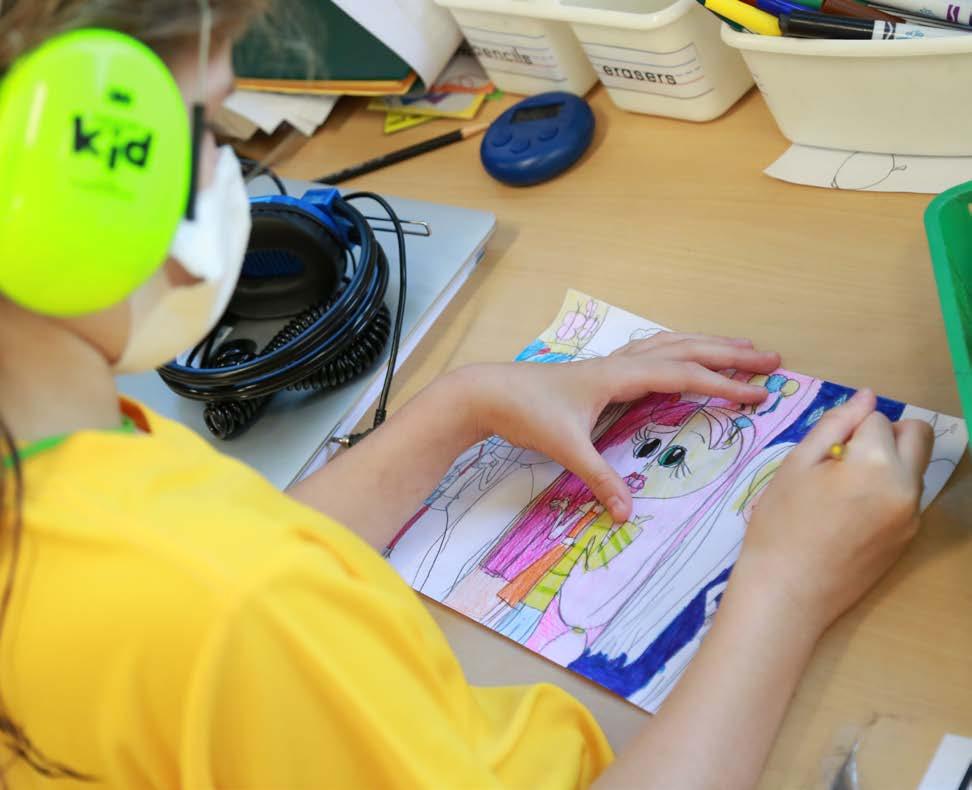
ISB’s Life Centered Education (LCE) program supports and celebrates students with intellectual and developmental disabilities who benefit from a highly individualized approach to learning. The program focuses on developing essential academic, social, and life skills that foster confidence, independence, and meaningful participation in the school community.
At ISB, we believe that learning within a diverse and inclusive environment enriches the experience of all students. We are proud to celebrate and promote neurodiversity as a vital part of our community.
In our evolution of becoming an inclusive school community, we have shifted from seeing inclusion as a special place where services are delivered to seeing inclusion as a belief of belonging. A strong belief that all students are valued for who they are and what they can do. As a result, we are a strong learning community that continues to evolve in our knowledge, understanding, and practices. Being an inclusive school allows all our students to experience a more diverse community that is more reflective of the “real world” as stated in our guiding principle that “Students will have greater opportunities to learn in authentic, real-world situations.”
1. Families who are committed to a strong home–school partnership should have access to an education that meets the needs of all their children.
2. Whenever possible, siblings from the same family should be able to attend the same school.
3. ISB believes we can successfully meet the diverse learning needs of an increasing number of students.
4. Schools should reflect the diversity of society and not selectively exclude students.
5. The ISB community grows stronger through a deeper understanding and acceptance of individuals with diverse learning differences.
6. Serving students with a wide range of learning support needs enhances the professional growth of ISB educators and benefits all students.
ISB is an active member of international inclusive education networks, including Next Frontier Inclusion (NFI) and SENIA, which provide ongoing guidance, training, and collaboration opportunities to help schools effectively serve a diverse range of learners.
Students receiving services through the Life Centered Education (LCE) program participate in content and subject-area classes alongside same-aged peers to the maximum extent appropriate. The amount of time each student spends in general education and LCE classes is determined by their individual learning profile and specific support needs.
The goal of the LCE program is to develop functional academic skills, social-emotional growth, and life skills that foster increasing independence. This individualized approach ensures that each student receives targeted instruction from skilled professionals while remaining a valued and active member of the ISB community.
This program serves students who:
• have a diagnosed intellectual or developmental disorder or disability
• have limited adaptive skills
• require a highly individualized modified curriculum and support structure focusing on functional academics and life skills
The LCE program does not serve students who have severe emotional or behavioral support needs, or require frequent one-to-one support and/or the use of safety holds. The ability to address significant health needs is assessed on a case-by-case basis.
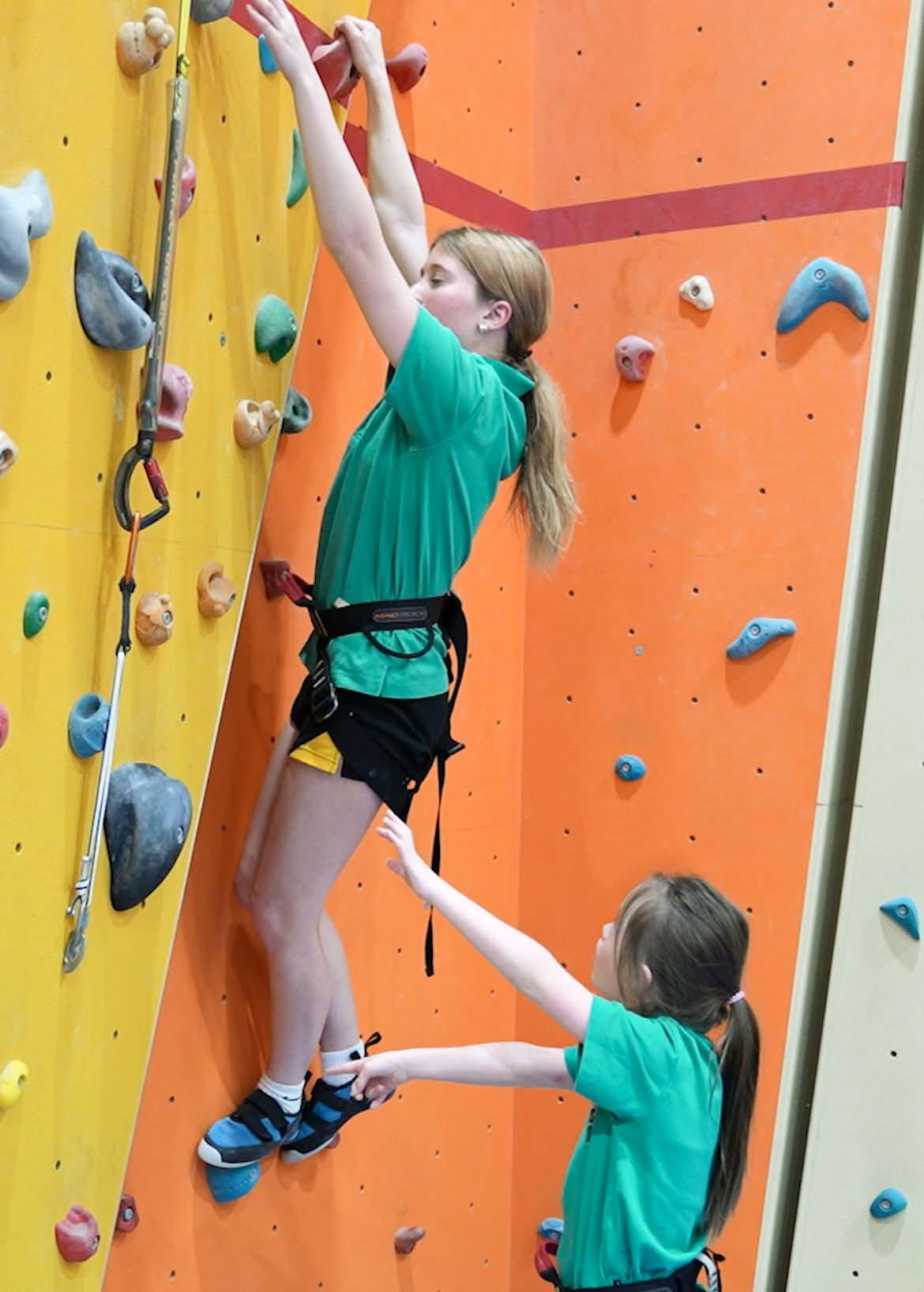
The Middle School Counseling Program at ISB supports the school’s vision and mission by providing a comprehensive, proactive, responsive, and developmentally appropriate approach to student well-being. The program fosters a safe and inclusive school environment by addressing students’ academic, social, and emotional needs while celebrating and valuing the diversity within the community. By equipping students with skills for self-awareness, decision-making, and interpersonal growth, the program aligns with ISB’s commitment to nurturing compassionate, engaged learners prepared for a dynamic and interconnected world.
Our work is driven by core beliefs that guide our practice and interactions with students, colleagues, and families.
We believe that:
• diversity, in all its forms, is to be embraced and celebrated
• all people are capable of change and growth
• balance and well-being significantly enhance learning and personal development
• everyone can learn to develop solutions to their own problems
• self-management, including self-advocacy, self-expression, and self-care, are critical life skills
School counselors are highly trained educators in PreK-12 settings who uphold ethical and
professional standards. They design, implement, and manage comprehensive school counseling programs that promote and enhance student success.
The ISB Middle School Counseling Department consists of three school counselors, a school psychologist who works across the middle and high school divisions, and an exceptional counseling secretary. The MS Office can direct parents and guardians to the appropriate school counselor for their child.
The school counselors partner with students, parents, teachers, and administrators to create a safe and positive environment. They provide academic, social, and emotional guidance that enhances students’ ability to achieve their academic and personal potential.
• Advocate for every student’s social and emotional well-being by managing crisis intervention, addressing student transition concerns, and making referrals to appropriate resources. All ISB educators have a professional and ethical obligation to support children in need of help or protection.
• Respond to referrals from parents, teachers, and administrators to address concerns. Students can also self-refer to receive guidance and support and are called in for a quick check-in at least once a semester. School counselors collaborate with parents for any ongoing individual involvement with students.
• Provide group counseling interventions on various topics, such as social skills, friendship, emotional regulation, and study skills. These interventions involve bringing together students with similar needs. Parents/guardians are approached for consent before a student joins a group.
• Serve as a parent resource by offering individual consultations, providing parent information, and facilitating educational or support meetings. School counselors also arrange parent/teacher/student meetings and offer structured parent education opportunities throughout the school year.
• Coordinate the Student Support Team (SST) process, which includes learning specialists, an administrator, teachers, and parents. The SST meets regularly to discuss students experiencing learning difficulties. It aims to identify and address concerns to ensure students receive the services they need to succeed. Parents are always involved when their child is referred to the SST.
• Assist with the admissions process by meeting with students and families to discuss subject selection and any personal learning needs. School counselors also help new students settle in through orientation programs, monitoring friendships, and hosting new student lunches.
• Uphold confidentiality, professional and ethical guidelines as outlined in the ASCA School Counselor Professional Standards & Competencies and Ethical Standards for School Counselors, adopted by the International School Counselor Association.
The Middle School Counseling team is experienced, dedicated, and committed to working in partnership with staff and parents to provide the support required for all students to thrive.
MS Counselor Lindsey Moore lindseym@isb.ac.th
MS Counselor Eric Motzko ericmo@isb.ac.th
MS Counselor Brenda Perkins brendap@isb.ac.th
Psychologist
TBD
TBD
Counseling Secretary Khun Namwan sariyam@isb.ac.th
All of our course descriptions will provide the following information:
• Program Philosophy
• Links to the program standards
• Titles of units of instruction or assessment categories
• Essential Questions that support the learning taking place in the unit
• Other important information about the course
As our curriculum at ISB is dynamic, rooted in recent research, and responsive to student learning needs. Our units of instruction are continually being updated, and revised.
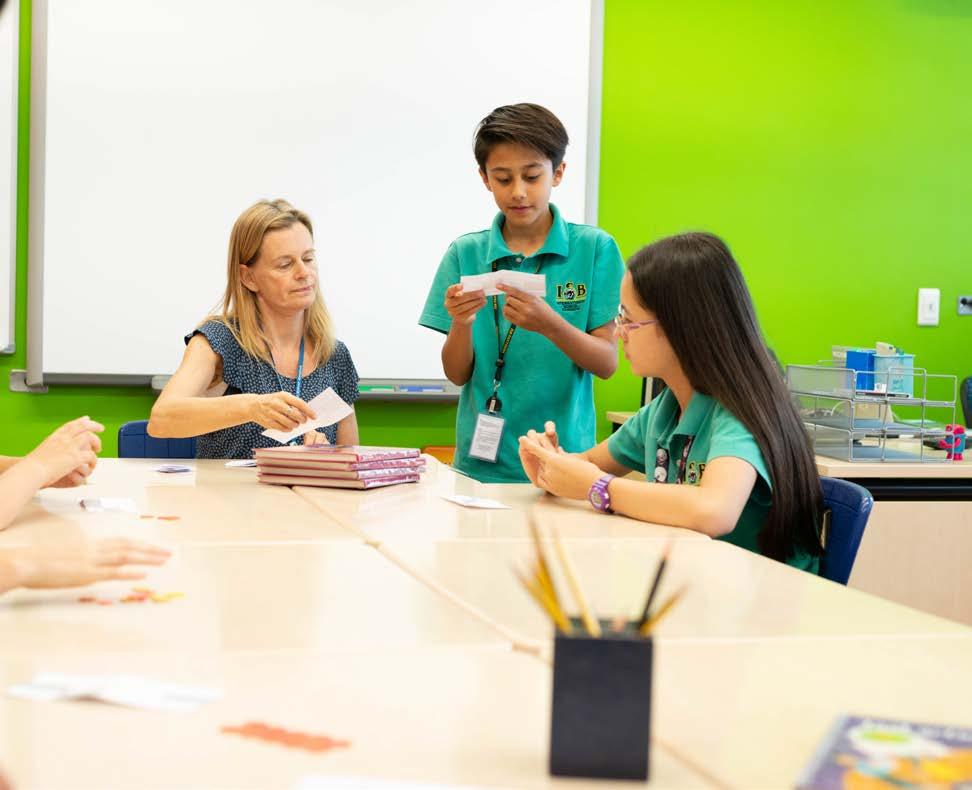
We believe language is at the heart of human communication, thinking, feeling, and making sense of ourselves and our world. We believe literate global citizens have highly developed expressive and interpretive capacities for language that are used purposefully, creatively, and flexibly in varied and complex contexts of our world. We believe that literacy instruction is strongest when it is grounded in purpose and aligned to research and best practices that support both the foundational skills of reading and writing and the deeper thinking needed for comprehension and expression..
• write and speak effectively for an identified purpose and audience
• actively dialogue with others through effective listening, questioning, and responding
• develop a deeper understanding of human experience through literature
• critically interpret and evaluate information, authors and their intentions demonstrate stamina, volume, and fluency in reading and writing
• express and explore knowledge, needs, and opinions interpret others, and express themselves both for pleasure and learning
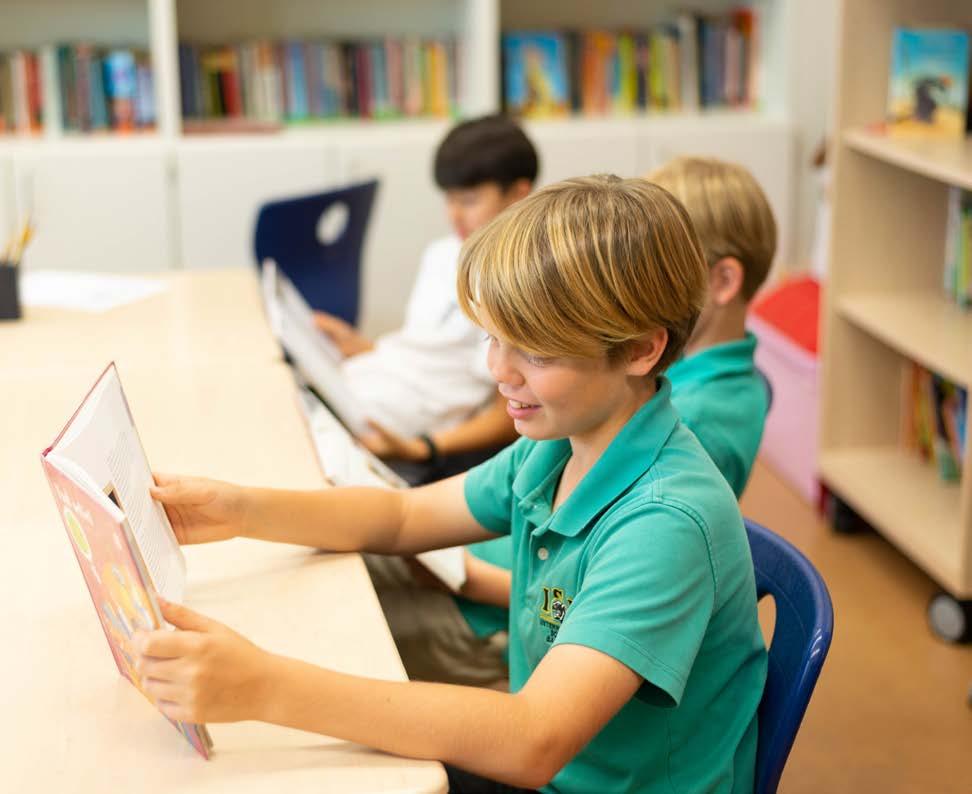
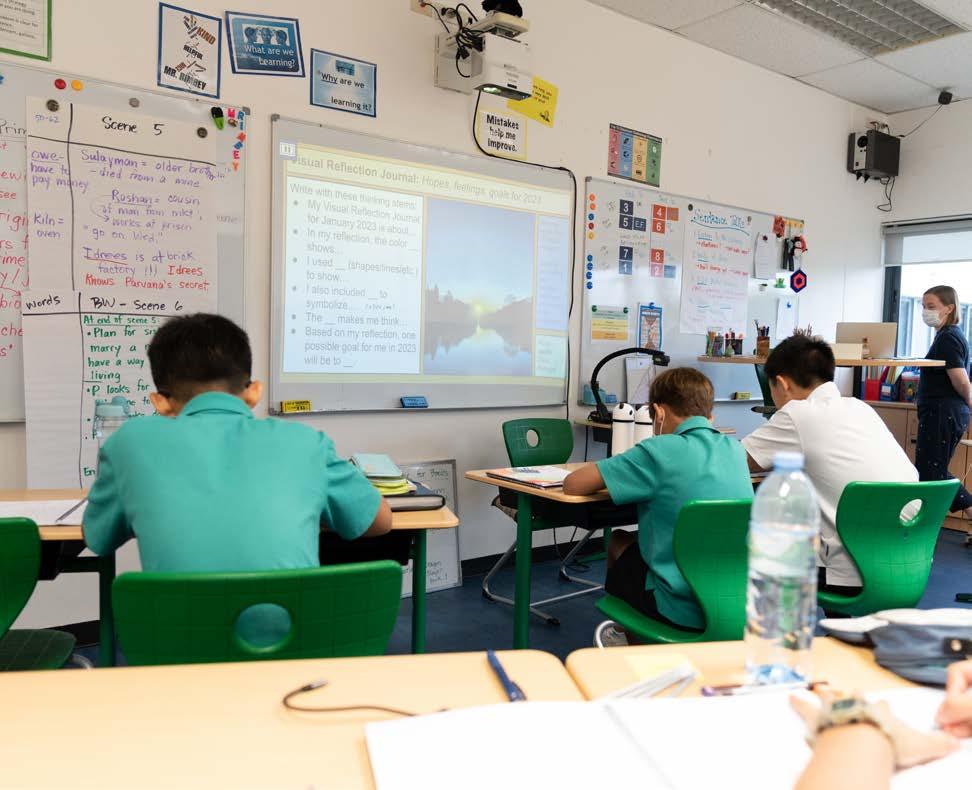
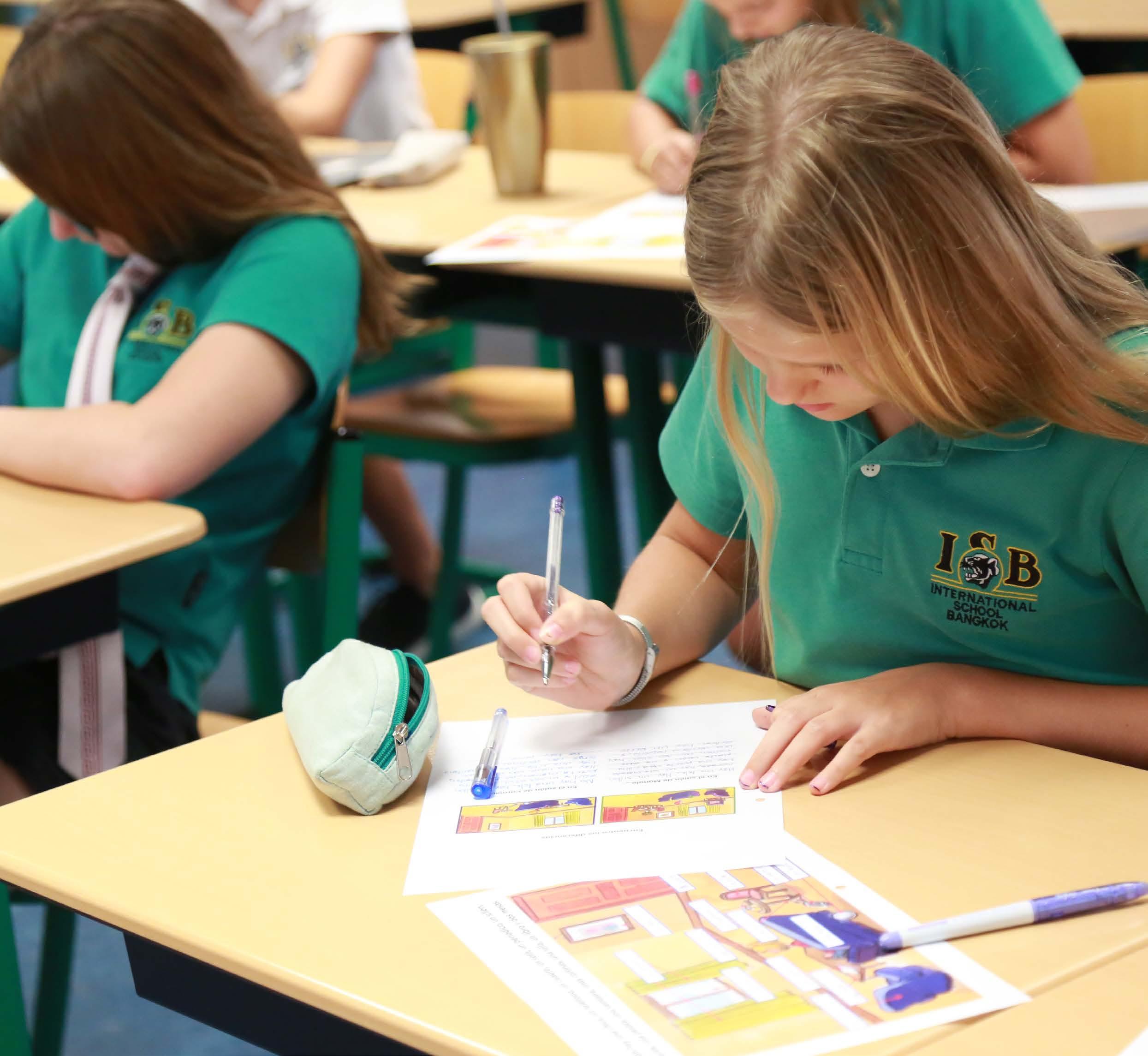
• actively construct understanding by connecting to prior knowledge and experiences
• effectively use appropriate media for expressive and interpretive communication
• use metacognitive skills to monitor and direct the process and product in pursuit of a goal
We believe literacy best develops when . . .
• there is a literacy-rich environment and community with ample opportunities for collaboration
• the focus is on developing the learner, not merely the text or activity
• there is inquiry, choice, access, and ownership in accomplishing meaningful tasks for authentic audiences
• there are daily opportunities with significant time to read, write, speak and listen in a safe, interactive, environment
• skills, processes and strategies are explicitly modeled, followed by guided practice and multiple opportunities to apply within varied contexts throughout the years
• learners are given timely and meaningful feedback explicitly taught across disciplines
• framed within a developmentally appropriate, aligned, and coherent curriculum
Our English courses encompass reading, writing, listening, and speaking. Units of study focus on specific reading or writing concepts, with listening and speaking embedded within each unit.
MS ELA utilizes the Common Core Grade 6-8 English Language Arts Standards. The Middle School ELA curriculum is currently under review. Complete unit overviews will be shared by teachers before the start of units during the 26-27 school year.
We believe that...
• social studies learning is the study of how humans interact with each other and the environment over time, in order to make informed and reasoned decisions that guide social action in a diverse and interdependent world.
• being globally minded is grounded in thinking openly in order to evaluate information, reflect critically, plan strategically, and work independently and collaboratively to investigate problems big and small.
• providing opportunities to engage with our learner attributes and empower each other to experience multiple perspectives and experiences, realize our impact and make positive contributions to our world. Being truly empathetic, having the desire to make connections with others and seeing the good, will allow for solution-oriented problem-solving.
Social Studies throughout grades six to eight focuses on overarching themes, or strands. At each grade level students learn specific topics in connection to these themes.
In each Social Studies unit, students investigate compelling and supporting questions through the disciplinary lenses of civics, economics, geography, and history. They use evidence, reasoning, and communication to construct explanations, evaluate sources, and take informed action.
The overarching themes are organized according to CONCEPTS and SKILLS:
CONCEPTS::
• Identity & Culture – People’s cultural practices and belief systems help shape how they understand themselves and their communities. As societies interact, these shared and evolving identities are influenced by exchange, adaptation, and resistance.
• Human Impact & Innovation – Throughout history, humans have adapted to and transformed their environments using available resources and technologies. These choices create both progress and challenges, revealing how innovation reflects societal priorities and consequences.
• Global Interdependence – Connections among people, places, and systems, through trade, migration, and communication, create both cooperation and competition. As global networks expand, they deepen cultural exchange, economic reliance, and shared global challenges.
• Conflict & Cooperation – Communities and civilizations have long relied on both cooperation and conflict to organize, protect, and advance their interests. Social and political movements arise when groups challenge authority or injustice, shaping who benefits from systems of power.
• Power & Systems – Societies develop systems of rule, law, and governance to organize people and manage resources. As states expand, competing ideas about power, rights, and order influence how authority is gained, maintained, or challenged.
SKILLS:
• Developing Questions & Planning Inquiry – Students learn to ask compelling and supporting questions that spark curiosity and guide investigation. As they move through middle school, they learn to refine questions, identify the disciplinary concepts needed to explore them, and plan inquiries using structured methods for gathering evidence. Students begin to see inquiry as an iterative process of curiosity, focus, and direction.
• Evaluating Sources & Using Evidence – Students learn to analyze, evaluate, and use evidence from multiple sources to build and defend interpretations. Over time, they develop skill in determining source credibility, recognizing perspective and bias, and organizing data to support claims. By grade 8, students synthesize information from diverse viewpoints and use evidence to reason through complex historical and contemporary issues.
• Communicating Conclusions & Taking Informed Action – Students express conclusions through discussion, debate, writing, and multimedia presentations that consider purpose, audience, and format. They learn to collaborate, revise ideas, and use evidence to advocate for reasoned perspectives. As they mature, students connect classroom learning to real-world contexts, demonstrating civic engagement by proposing informed actions on issues that matter to them and their communities.
This unit exemplifies the type of inquiry-based learning students experience in Middle School Social Studies, where they explore a conceptual strand through the C3 Framework. In the example below, the conceptual strand is Conflict and Cooperation. The Middle School Social Studies curriculum is currently under review. Complete unit overviews will be shared by teachers before the start of the units.
Revolution: Causes, Costs, and Consequences
Compelling Questions
• Why do revolutions happen, and who truly benefits when societies try to change?
• Which mattered more in shaping outcomes: the ideas people believed in or the social structures they lived in?
Supporting Questions
• What is a revolution, and what motivates people to challenge authority?
• How was American society organized before their revolution, and how did conflict and cooperation among colonists influence the outcome?
• How was French society structured before their revolution, and how did privilege, poverty, and power drive change?
• How did revolutionary leaders and movements use different strategies to create change?
• How did ideas about liberty, rights, and equality expand and where did they fall short?
We believe...
• mathematics is an essential universal language, necessary as a reasoning tool to solve problems and make sense of our world
• mathematical thinkers use reasoning and apply skills to solve problems and make informed decisions about their world
We believe successful mathematical thinkers are able to:
• explore, question, and engage in dialogue with others
• recognize and use interconnections of mathematical ideas to build understanding
• select, apply, evaluate, and adapt multiple strategies and tools to solve problems
• apply the skills and procedures of mathematics efficiently, appropriately, and accurately
• clearly communicate thinking in varied ways using the language of mathematics
• reflect, justify, evaluate, and extend their own thinking as well as the thinking of others
• demonstrate conceptual understanding
• demonstrate curiosity, risk-taking, flexibility, perseverance, self-reliance, and creativity
We believe mathematics learning happens best when learners build upon prior knowledge to actively construct and monitor their understanding through developmentally appropriate, challenging, and meaningful investigations aligned to the Common Core State Standards of Mathematics.
The Middle School mathematics program is committed to providing each student with academic challenges and opportunities to communicate mathematically. Computers, calculators, and other tools are used in the mathematics program to develop understanding and aid in problem-solving. Mathematics instruction is designed to foster curiosity and self-confidence in doing mathematics. The mathematics program strives to give students a balance between conceptual understanding and problem-solving. All middle school students are pre-assessed to determine the appropriate course level for them to experience suitable challenges and meet their mathematical readiness.
The Grade 6 mathematics course follows an accelerated pathway based on the Common Core State Standards. Students learn all Grade 6 standards as well as a portion of the Grade 7 standards.
The Grade 7 mathematics course continues this accelerated progression. Students complete the remaining Grade 7 standards and engage in all Grade 8 Common Core State Standards, preparing them for high school mathematics content in Grade 8.
Grade 6-8 Math Standards
Students in Grade 8 are placed in mathematics courses aligned with their academic readiness, which is determined by multiple indicators, to ensure an appropriate level of challenge. The courses are outlined below.
ISB’s Math 6 course is an accelerated program that covers both Math 6 and selected Math 7 Common Core State Standards.
This course builds a strong conceptual foundation and prepares students to continue into Math 7, moving them along a pathway toward high school mathematics and, ultimately, AP and IB mathematics in Grade 11.
Areas
Ratios, Rates, and Percentages
• How can understanding the structure of shapes help us determine the area of geometric figures?
• How do decomposition, rearrangement, and nets reveal where area and surface area formulas come from?
• How do ratios describe relationships between quantities, and why are these relationships useful for making sense of real-world comparisons?
• How are unit rates used to compare quantities and solve real-world problems?
• How do equivalent ratios and percentages help us make sense of proportional situations?
Fractions and Decimals
Equations and Expressions
Proportional Relationships
Percentage Increase and Decrease
Rational Numbers
• How does the relationship between multiplication and division allow us to operate on all non-negative numbers, including fractions and decimals?
• How does our understanding of decimals and fractions help us develop efficient algorithms?
• How do expressions and equations model relationships between quantities and help us represent equivalent mathematical ideas?
• How do variables and exponents allow us to generalize patterns and determine unknown values in mathematical situations?
• What makes a relationship proportional, and how does the constant of proportionality define the connection between two quantities?
• How can proportional relationships help us solve real-world problems?
• How can percentages be used to describe and analyze change relative to an original amount?
• How does proportional reasoning help us model and solve real-world problems involving percentages?
• How do integers numbers represent quantities, and how do we compare and interpret them?
• How do the properties of arithmetic apply when operating with all rational numbers?
• How does the coordinate plane help us represent location and distances using integers?
ISB’s Math 7 course is an accelerated program that extends students’ learning into the remaining Math 7 Common Core State Standards and Math 8 Common Core State Standards.
This course deepens students’ algebraic reasoning and prepares them to transition into Integrated Mathematics 1 in Grade 8, supporting continued progression toward AP and IB mathematics in Grade 11.
Rigid Transformations and Congruence
Scale Drawings, Similarity, and Slope
Writing and Solving Equations
Inequalities, Expressions, and Equations
Linear Relationships
Functions and Volume
Exponents and Scientific Notation
Pythagorean Theorem and Irrational Numbers
• How are rigid transformations (translations, rotations, reflections) defined and performed?
• When are two figures considered congruent, and how can sequences of transformations prove congruence?
• How can transformations be used to prove properties about the sum of angles in a triangle?
• What defines a scaled copy of a figure, and how are scale factors used to represent realworld measurements?
• How does dilation transform a figure, and what role does the center of dilation play?
• How is similarity related to sequences of transformations (rigid motions and dilations)?
• What is the connection between similar triangles and slope?
• How can diagrams or physical representations be used to represent and write linear equations of the form px+q=r and p(x+q)=r?
• How are inverse operations used systematically to solve linear equations, including those requiring the distributive property?
• How is solving an inequality similar to and different from solving an equation, and how are solutions represented?
• How can properties of operations be used to write equivalent expressions?
• How can algebraic equations be manipulated strategically to solve for an unknown?
• How can proportional relationships be recognized, represented, and applied in various contexts?
• How can tables, graphs, and equations be used to model non-proportional linear relationships?
• How can the solution to a system of two linear equations be found and interpreted graphically?
• How do we define whether or not a relationship between inputs and outputs is a function?
• How can tables, graphs, and rules be used to represent and interpret functional relationships?
• How are the formulas for the volume of prisms, cylinders, and cones related, and how are they used to solve geometric problems?
• How are the properties for exponents developed and applied to simplify complex expressions involving multiplication, division, and powers of powers?
• How can scientific notation be used to represent and compare extremely large and small numbers efficiently?
• How is the Pythagorean Theorem derived and used to find unknown side lengths in right triangles and distances in the coordinate plane?
• What are irrational numbers, and how can they be distinguished from rational numbers using decimal representation?
ISB’s Math 8 Core course covers the Math 8 Common Core State Standards.
This course deepens students’ algebraic reasoning and prepares them to transition into mathematics core courses in high school (with AP and IB options).
Mathematics 1 in Grade 8, supporting continued progression toward AP and IB mathematics in Grade 11.
Exponents and Scientific Notation
• How are the properties for exponents developed and applied to simplify expressions?
• How can scientific notation be used to represent and compare extremely large and small numbers efficiently?
Solving Equations
Volume & Pythagorean Theorem
• How is solving an inequality similar to and different from solving an equation, and how are solutions represented?
• How can properties of operations, such as the distributive property, be used to write equivalent expressions?
• How can algebraic equations be manipulated strategically to solve for an unknown?
• How is the Pythagorean Theorem derived and used to find unknown side lengths in right triangles and distances in the coordinate plane?
• What are irrational numbers, and how can they be distinguished from rational numbers using decimal representation?
• How are the formulas for the volume of cylinders, cones, and spheres related, and how are they used to solve geometric problems?
Functions & Linear Relationships
Systems of Equations
Angle Relationships
• How do we define whether or not a relationship between inputs and outputs is a function?
• How can tables, graphs, and rules be used to represent and interpret linear relationships?
• How are the slope and intercept of a line determined from tables, graphs, or two points to write an equation?
• How can the solution to a system of two linear equations be found and interpreted graphically?
• How can I use systems of equations to solve real-world problems?
• How can I analyze angle relationships in parallel lines and triangles?
• How can I represent angle relationships algebraically?
ISB’s Integrated Mathematics 1 course builds directly on the Math 6 and Math 7 pathway and covers foundational high school standards necessary for the study of Algebra and Geometry, with a focus on connections between geometric transformations, linear modeling, statistics, and functions.
This course marks the beginning of the high school mathematics sequence and positions students for continued success in the Integrated Mathematics pathway, leading toward AP and IB mathematics in Grade 11.
Rigid Transformations and Congruence
Congruence
One-Variable Statistics
Linear Equations and Systems
Coordinate Geometry
Two-Variable Statistics
Linear Inequalities
Functions
Exponential Functions
• How can geometric constructions be used to explore properties of shapes, generate conjectures, and justify geometric statements without relying on measurements?
• How are translations, reflections, and rotations defined without reference to a coordinate grid?
• How are SSS, SAS, and ASA congruence criteria justified using rigid transformations?
• How are clear and logical narrative proofs constructed to justify geometric statements?
• How are data distributions described using displays (histograms, dot plots, box plots) and measures of center (mean, median)?
• How do standard deviation and outliers influence the interpretation and comparison of data sets?
• How are linear equations written to model real-world relationships between variables?
• How are valid algebraic moves used to write equivalent equations and isolate variables?
• How are systems of linear equations solved and interpreted using graphing, substitution, and elimination methods?
• How does coordinate notation (e.g., (x,y)→(x+3,y+1)) connect rigid transformations to functions?
• How are slopes used to prove conjectures about parallel and perpendicular lines, and how is point-slope form applied?
• How is the distance formula (derived from the Pythagorean Theorem) used to classify figures and solve geometric problems?
• How are two-way tables and relative frequencies used to identify associations in categorical data?
• How are scatter plots, lines of best fit, residuals, and correlation coefficients used to model and evaluate linear associations?
• How are linear inequalities solved and represented in one and two variables?
• How are systems of linear inequalities used to model constraints and determine a solution region that satisfies all conditions?
• How is function notation used to represent and interpret relationships between quantities?
• How are key features of functions—such as intercepts, extrema, and average rate of change—identified and applied?
• How are domain, range, and piecewise functions used to model specific contexts?
• How are inverse functions found and interpreted?
• How are exponential relationships characterized, and how do they model growth and decay in real situations?
• How are fractional exponents, exponent rules, and percent change used to analyze and solve exponential problems?
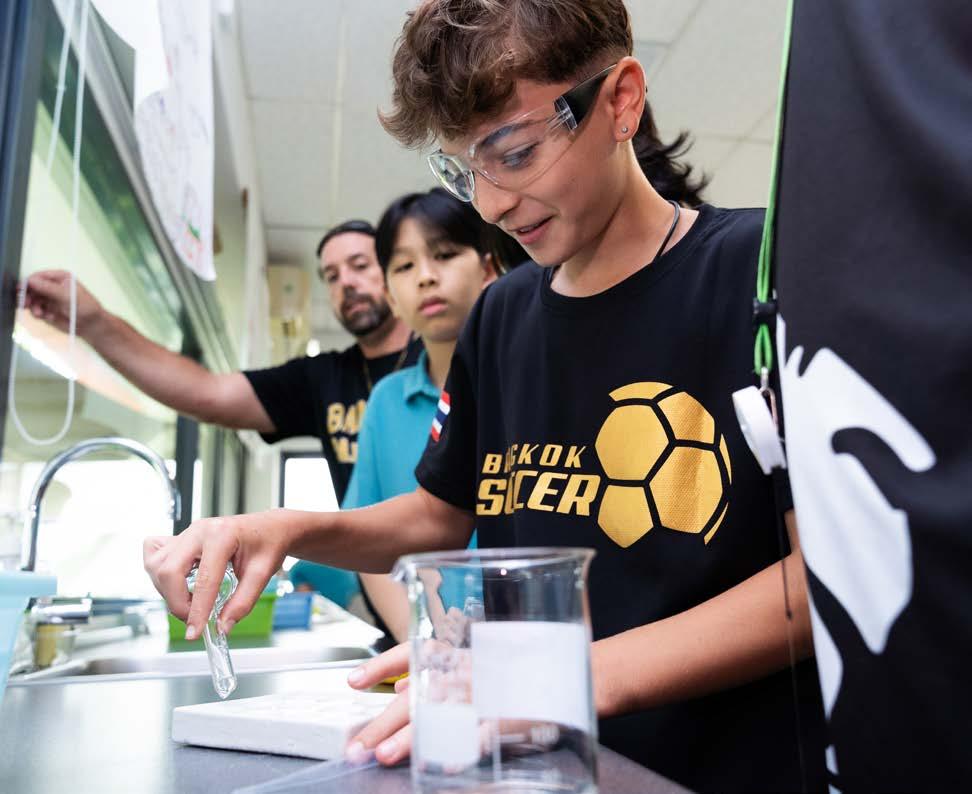
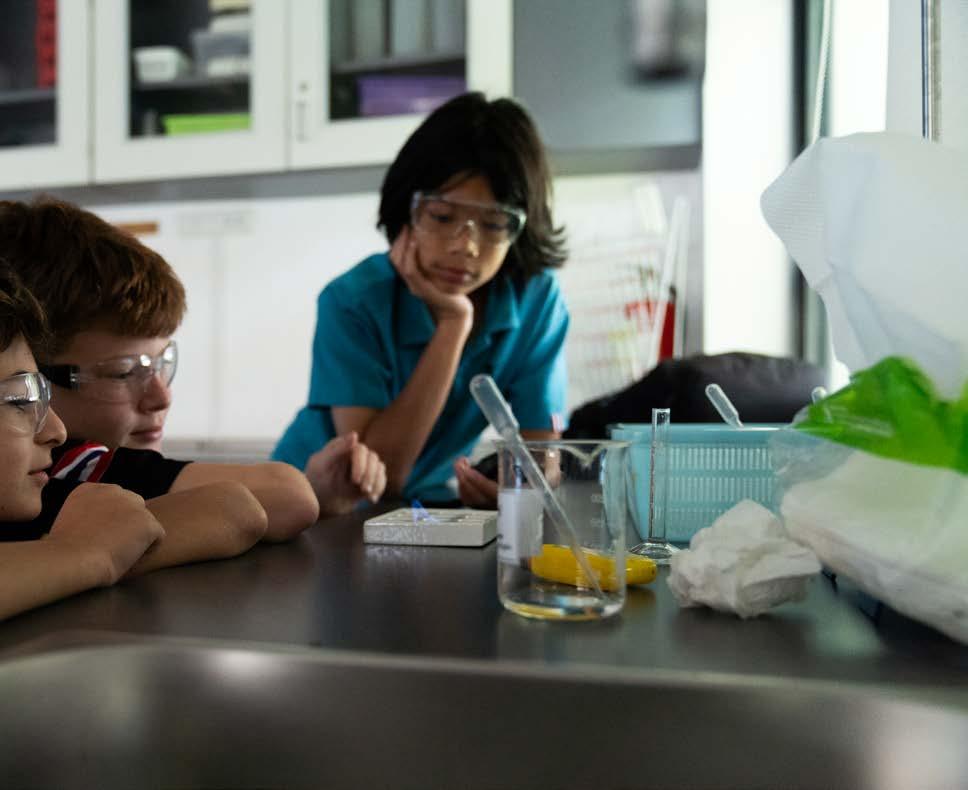
Science is a way of making sense of the natural world by investigating phenomena and constructing evidence-based explanations. It is a collaborative, creative, and evolving process that connects curiosity to problem solving, innovation, and real-world application.
The goal of science education is to develop scientifically literate students who:
• actively display an interest in science as a means of expanding their curiosity and willingness to explore and speculate on the changing world in which they live by asking testable questions, identifying patterns, and pursuing explanations for the phenomena they observe.
• understand the nature of living things, of Earth and its place in space and time, and of the physical and chemical processes that explain the behavior of all material things.
• engage in the science and engineering practices used by scientists and engineers: asking questions, modeling, investigating, analyzing data, constructing explanations, and arguing from evidence using a claim, evidence, reasoning based model.
• communicate scientific understanding and findings clearly, to a range of audiences, using the most effective means in order to justify conclusions on the basis of evidence.
• apply scientific knowledge and reasoning to current and future applications of science while taking into account ethical and social implications of decisions.
• recognize that science is a human endeavor shaped by diverse cultural perspectives and that scientific knowledge evolves as new evidence and technologies emerge.
ISB’s science program engages students in making sense of real-world phenomena through investigations that integrate the three dimensions of the NGSS: Disciplinary Core Ideas, Science and Engineering Practices, and Crosscutting Concepts. Through authentic scientific and engineering practices: questioning, modeling, investigating, analyzing data, and arguing from evidence, students deepen their curiosity, critical thinking, and understanding of how science explains and shapes the world around them.
Next Generation Science Standards
This unit illustrates the inquiry-based approach of Middle School Science, where students investigate realworld phenomena and use evidence and reasoning to explain what they observe.
The Middle School Science curriculum is currently under review. Complete unit overviews will be shared by teachers before the start of the units.
Anchoring Phenomena
Inquiry Focus
Science and Engineering Practices
Science Core Ideas
• How can we keep food cold when our typical methods aren’t available, for example, after a power outage or natural disaster?
• Students investigate flameless heaters and chemical ice packs to explore how chemical reactions can release or absorb thermal energy. They create models to test their ideas about thermal energy retention, then evaluate and optimize their designs using data on temperature change, cost, and usability.
• Asking questions and defining problems, planning and carrying out investigations, analyzing and interpreting data, constructing explanations, engaging in argument from evidence, and designing solutions.
• Understanding exothermic and endothermic reactions, thermal energy transfer, and systems thinking. Applying criteria and constraints to iterative design. Using data to evaluate and refine design performance.
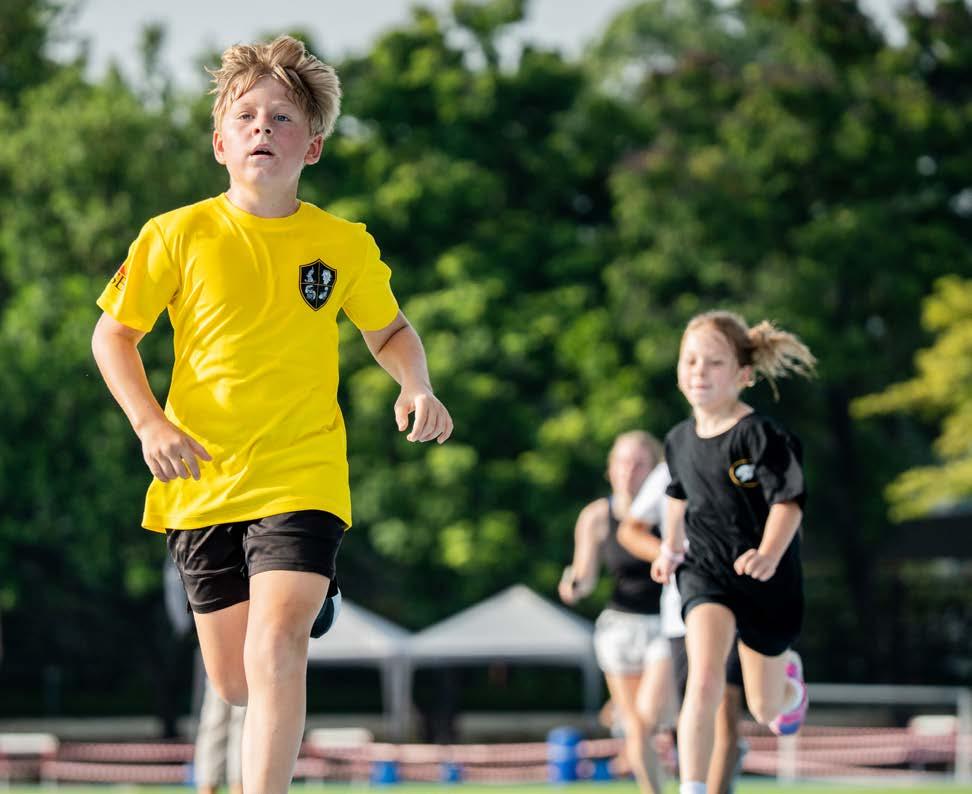
We believe physical education is an integral component of a student’s education at ISB. The goal of ISB’s Physical Education program is to develop the values, knowledge, skills and competencies needed to enhance and commit to maintaining a healthy, active and balanced life. Individuals who are physically literate move with competence and confidence in a wide variety of physical and health related activities and in multiple environments that benefit the healthy development of the whole person.
Physical Education at ISB aims to develop physically literate students who understand and demonstrate:
• that individuals and groups consistently develop the motivation and ability to communicate, apply, and analyze different forms of movement
• that the personal choices they make related to their physical well-being will affect their quality of life
• the intrinsic rewards of being active
• an appreciation of the artistic, creative, strategic and competitive aspects of physical activity.
• the ability to set appropriate goals and persevere in attaining them
• Physical Education at ISB encourages individuals to make healthy, active choices that are both beneficial to and respectful of their whole self, others, and their environment
In this course, students are introduced to a wide variety of activities that develop personal, group, and team skills appropriate to their age and skill level. Students will be expected to work individually, in pairs, and cooperatively in teams. Activities include Aquatics, Gymnastics, Ultimate Teammate, Racquet Sports, Team Games and Track & Field. Students are assessed to the standards and benchmarks for each unit. Fitness is interwoven in all activities with a focus on the health related components of fitness.
In this course, students learn more advanced strategies and techniques of physical activities, they will build on what they learned in grade six, as well as continuing to develop their team play and sporting awareness. Interpersonal skills, such as sportsmanship, inclusive behavior and helping others are an ongoing focus. In Gymnastics, we introduced all apparatus in the Gymnastics learning space. We will explore new activities, such as Snorkeling, Australian Rules Football, Floor Hockey, and multi activity units such as Hoops, as well as a number of other diverse activities throughout the year. As in 6th grade, personal fitness is interwoven in all activities.
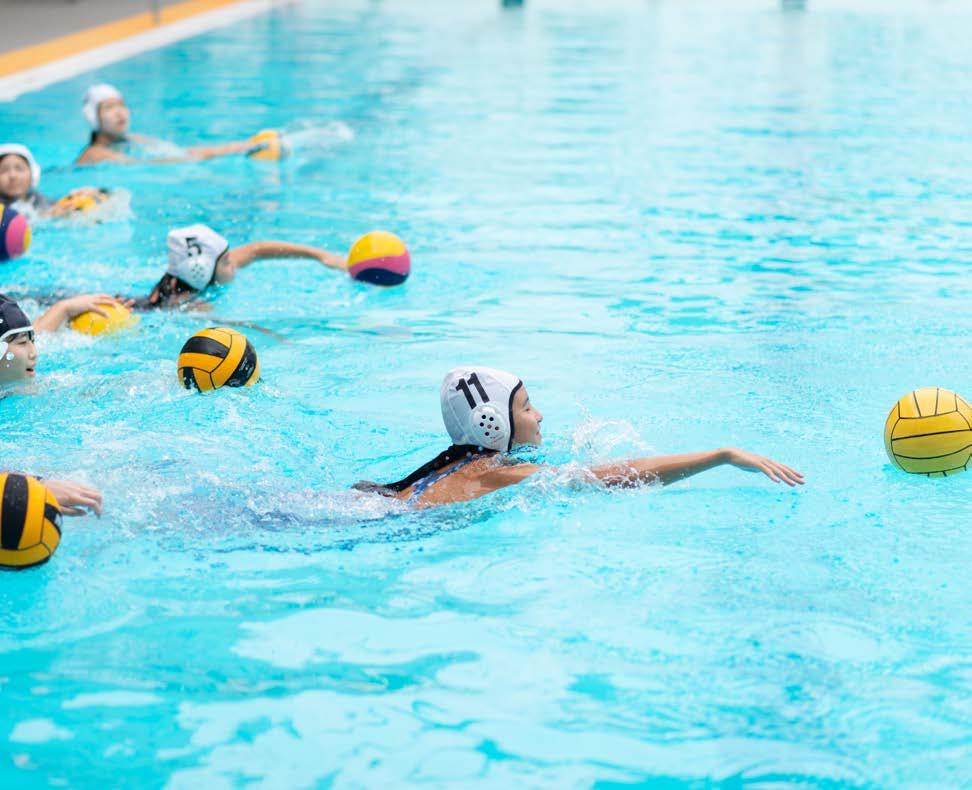
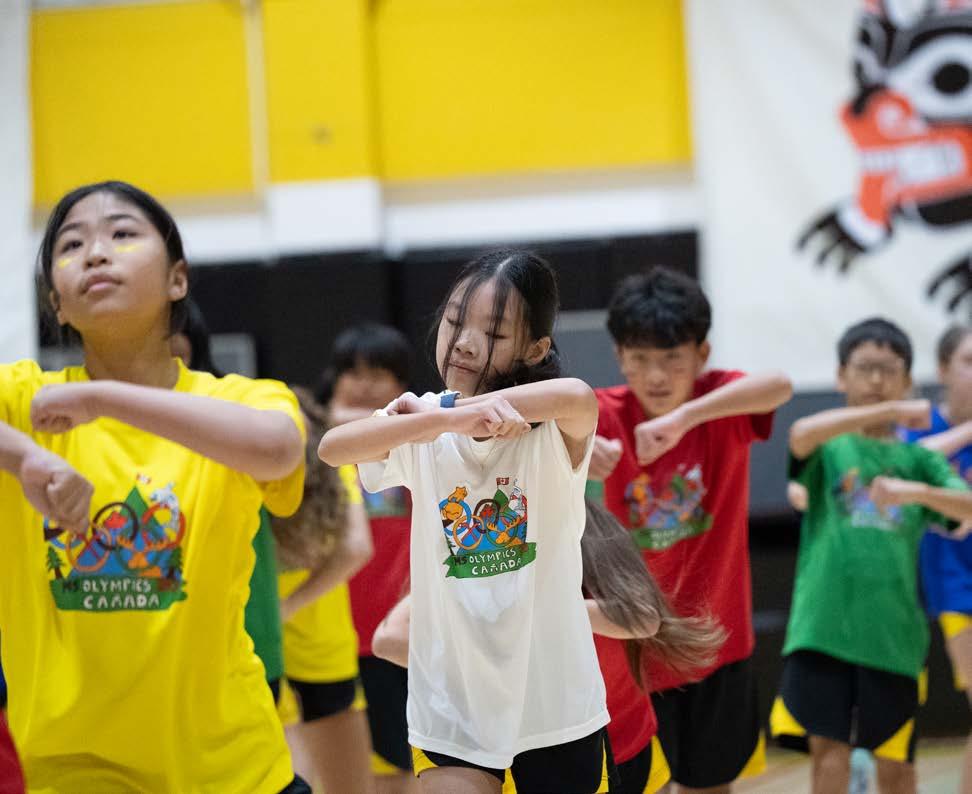
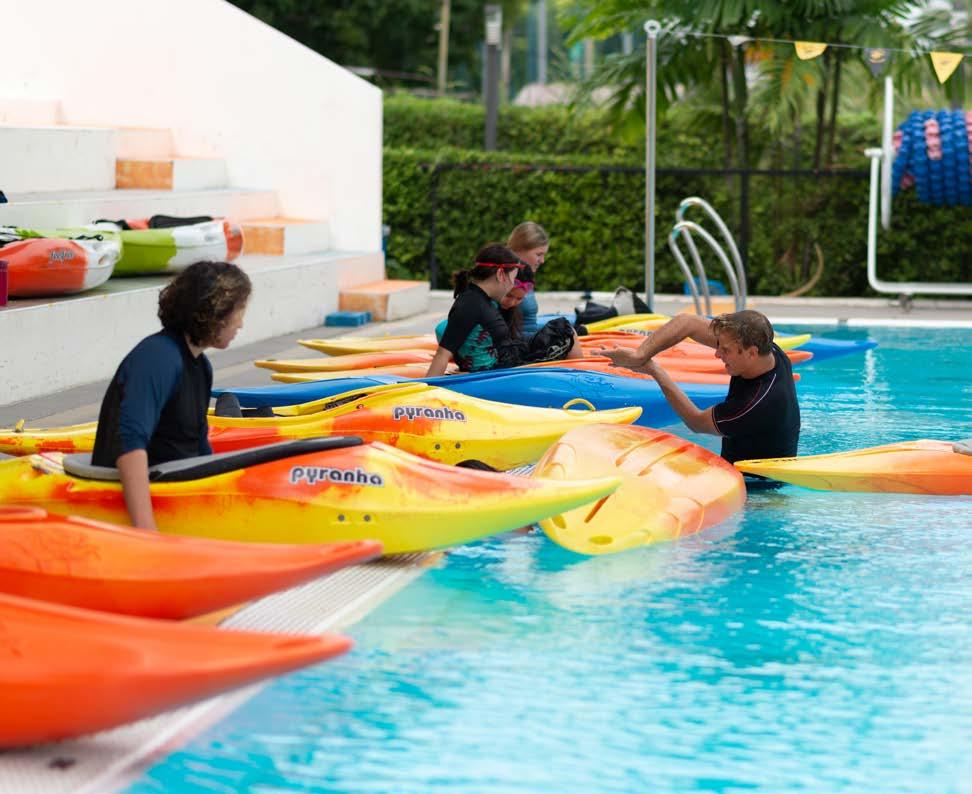
In this course there are opportunities for students to take more control and responsibility for their own learning. We will make use of the Sport Education Model to encourage students to explore the different roles available in sports teams. In the Dance unit, students work in groups to create and perform their own dance routine. Students are also introduced to new activities such as Kayaking, Water Polo, Touch Rugby, Ultimate Frisbee, while we revisit other activities, albeit with a different focus, like Badminton and Volleyball. Throughout all units, we continually emphasize skill development, spatial awareness and team concepts. As in 6th and 7th grade, personal fitness is interwoven in all activities. Again acquiring and demonstrating positive interpersonal skills continues to be a major focus within the different activities students participate in throughout the year.
Active Participation
Physical Fitness
Safety and Interpersonal Skills
Movement Skills and Concepts
Movement Strategies
Students will actively participate in a wide variety of program activities, according to their capabilities, while applying behaviors that enhance their readiness and ability to take part in physical activity.
Students will participate in sustained moderate to vigorous physical activity. Assess their level of health-related fitness during various physical activities and monitor changes in fitness levels over time. Develop and implement a personal plan to meet their fitness goals.
Students will demonstrate behaviors and apply procedures that maximize the safety, both physical and emotional, of all participants. Students will demonstrate inclusive team behavior and appropriate attitudes towards winning and losing.
Students will perform smooth transfers of weight and rotations, in a variety of situations. Students will perform a wide variety of locomotor movements, while responding to a variety of external stimuli. Students will send, receive, and retain a variety of objects.
Students will demonstrate an understanding of the components of a range of physical activities. Describe common features of specific categories of physical activities, and apply a variety of tactical solutions to increase chances of success in physical activities.
We believe health and well-being education makes a significant contribution to the social, emotional, physical and cognitive (learning potential) development of our students. The goal of ISB’s health and well-being program is to develop individual values, attitudes, competencies and beliefs that will empower students to commit to their own and others’ health and well-being throughout their lifetime.
Health and well-being education at ISB aims to develop students who understand:
• the personal choices they make related to health and well-being will improve their quality of life
• goal setting skills are essential to the development of healthy behaviors
• physical, social and emotional development, and well-being are interrelated
• our values, beliefs and assumptions affect our decisions
• how to locate appropriate, accurate and reliable health information to support informed decisions
• how effective communication enhances their health and well-being and reduces risks
• the structure of the human body and patterns of growth and development
• they have the right to feel safe and know how to create safe boundaries
Health and well-being education at ISB encourages young people to lead healthy, active, and balanced lives. Students are provided with opportunities to acquire and effectively apply the knowledge, attitudes and skills necessary to understand and manage emotions, set and achieve positive goals, feel and show empathy for others, establish and maintain positive relationships, and make responsible decisions.
Health and Well-being classes are integrated into our Physical Education program in grades 6 and 7. In grade 8, each student will take a one-semester stand-alone Health and well-being course.
Students will independently use their learning to:
• take personal responsibility for lifelong health
• enjoy being active and healthy throughout their lives
• make choices to enhance their wellness and that of others
• make informed use of health-related information, products and services
• develop resilience and secure identity and sense of self
Practicing Health Enhancing Behaviors & What is Wellness?
Nutrition
Human Growth & Development Puberty and Emotional Management
• What factors affect overall well-being?
• How can the ability to access Health Enhancing Behaviors to avoid or reduce health risks?
• Why is it important to assume responsibility for personal health behaviors?
• How can I embrace healthy practices and behaviors that will maintain or improve the health of myself or others?
• How will personal actions and decisions affect one’s overall health?
• What are the absolute best foods that I should eat on a regular basis?
• Why are diet and exercise important for my brain to work well?
• What are the benefits of healthy eating and active living?
• How can I develop and maintain my health and well-being?
• How do I understand and manage in a positive way the changes that are happening to me?
• What does it mean to Access Valid Information, Products, and Services?
• Where can I access appropriate information on physical changes, reproduction, and sexual health?
• How do you think information, products, and services have changed for Pubescent teens?
• What mental and emotional changes take place during adolescence?
• What physical changes take place during the adolescent years?
• How can I develop and maintain my health and well-being?
Character Strengths, Values & Goal Setting
• What are the character strengths, family values, and qualities like altruism and compassion that can increase happiness and well-being?
• Why is it important to take responsibility for personal health behaviors?
• How do internal influences, such as attitudes, values, and beliefs, shape health behaviors?
• What healthy practices and behaviors can improve or maintain personal and community health?
Decision Making & The Adolescent Brain
• What does brain research reveal about emotions and their role in emotional responses?
• How can we develop our brains to enhance resilience?
• What circumstances support or interfere with healthy decision-making?
• When is a thoughtful decision-making process necessary for health-related situations?
• How can we determine whether individual or collaborative decision-making is most appropriate?
• What personal, social, and cultural factors influence emotional responses in different situations?
• How can we predict the short-term impact of decisions on ourselves and others?
• How can we analyze the outcomes of health-related decisions to improve future choices?
Healthy Relationships and Communication
• How can practicing kindness and gratitude contribute to happiness and well-being?
• What does it mean to have a positive friendship, and how can I be a good friend?
• How can I evaluate and improve my listening skills?
• In what ways does effective interpersonal communication benefit personal health and well-being?
• How can verbal and nonverbal communication skills enhance overall wellbeing?
• What are the most effective ways to communicate kindness, empathy, compassion, and care for others?
• How can I respect another person’s consent or non-consent in different situations?

Maintaining Happiness, Pursuing Meaning and Developing Communication Skills for Health and Well Being
The Adolescent Brain Under Construction
Mental Health
Relationships and Sexual Health
• How can I contribute to different groups and communities in order to enhance my own and others’ well-being?
• How do I develop healthy communication skills?
• How do I cope with conflict?
• How do my personal values, beliefs, and attitudes contribute to my health, wellbeing, safety, and activity levels?
• How do I identify and implement effective goals that will help me achieve lifetime well-being?
• What are the qualities of mind that will help with personal happiness and meaning in life and how do we cultivate this?
• How does adolescent brain development impact thinking, behavior, and decision-making?
• How will personal actions and decisions affect one’s overall health?
• How does our awareness of neuroscience (our brain) shape our thinking, feelings, and behaviors?
• What is mental health, and why is it important for overall well-being?
• How do our everyday habits influence our mental health?
• What are common mental health challenges that teenagers face, and what causes them?
• How can we identify personal stressors that impact our mental health?
• What coping strategies can help us manage stress, anxiety, or other difficult emotions?
• How can documenting & analyzing our habits help us make positive changes to support our mental well-being?
• What resources and strategies can we use to seek help and maintain our mental health over time?
• How can I develop and maintain healthy relationships throughout my life?
• How do I understand and manage the changes that are happening to me?
• What makes a healthy relationship and how do I develop safe boundaries for myself and others?
• What are the values, expectations, rights, and responsibilities in relationships?
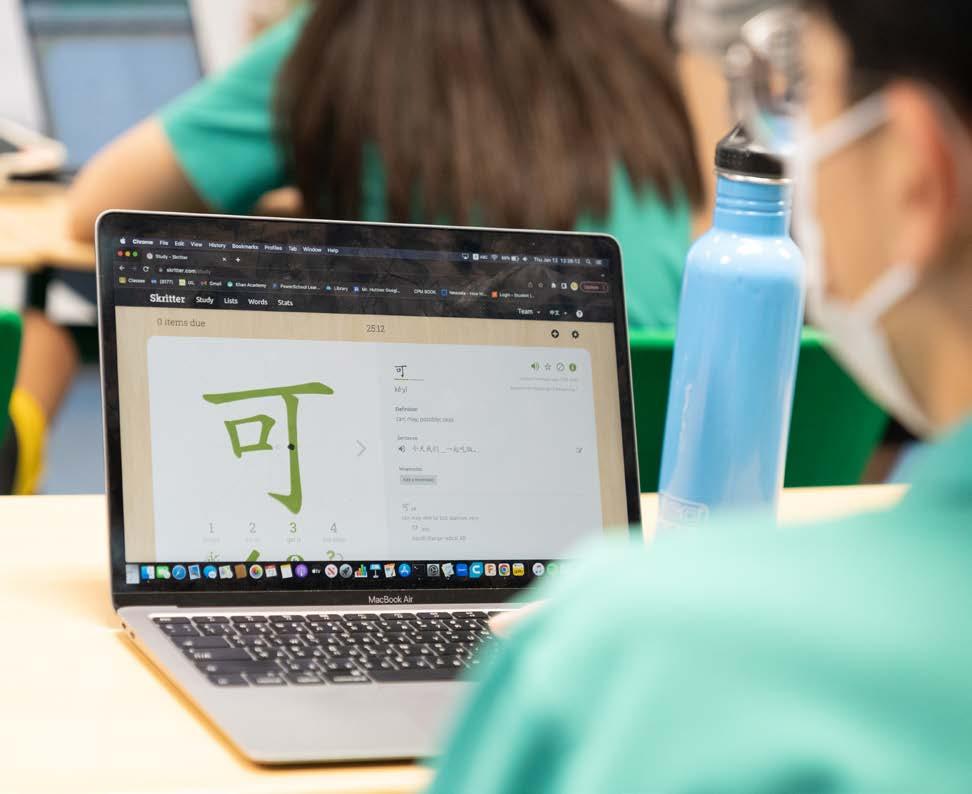
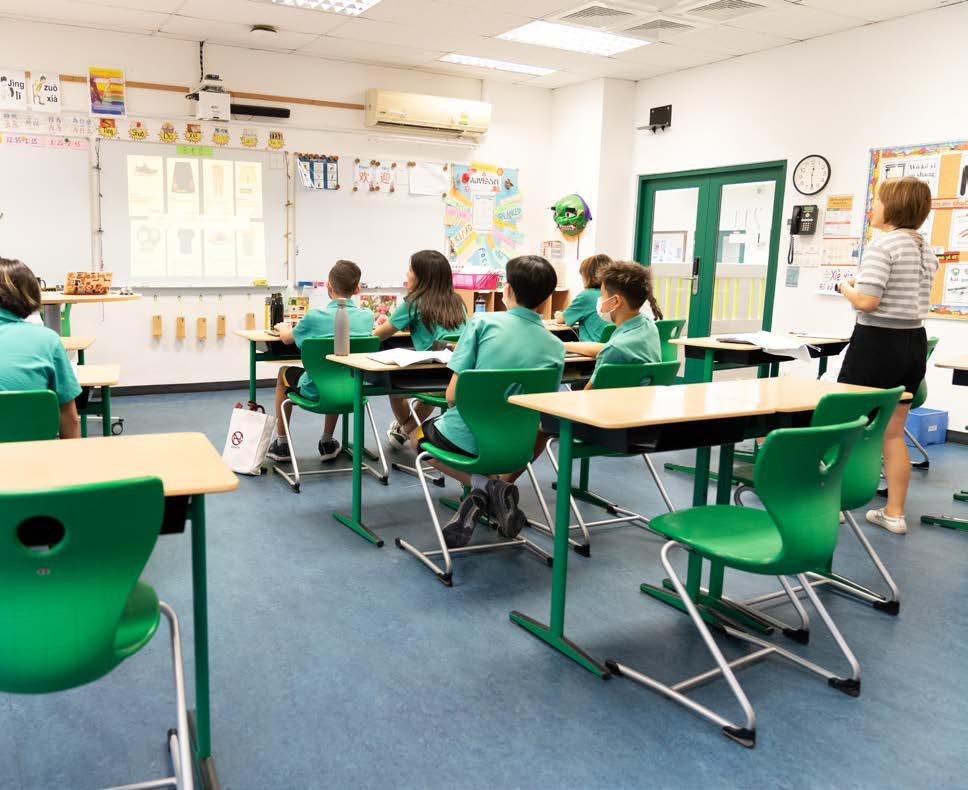
We believe communication is at the heart of the human experience. To thrive as global citizens, we need to effectively communicate within a wide range of multicultural contexts.
We believe world language learners are able to:
• communicate effectively and confidently in the international community
• understand and respond appropriately to spoken, written and body language
• clearly communicate ideas and information appropriate to a given audience
• generalize and apply language in new situations
• connect to prior learning and cross curricular concepts and ideas
• understand the nature of language and gain insight into other languages
• understand the concept of culture and gain insight into other cultures
• display cultural sensitivity to diverse perspectives, practices and products
• be flexible, tenacious, self-reliant, reflective, and take risks
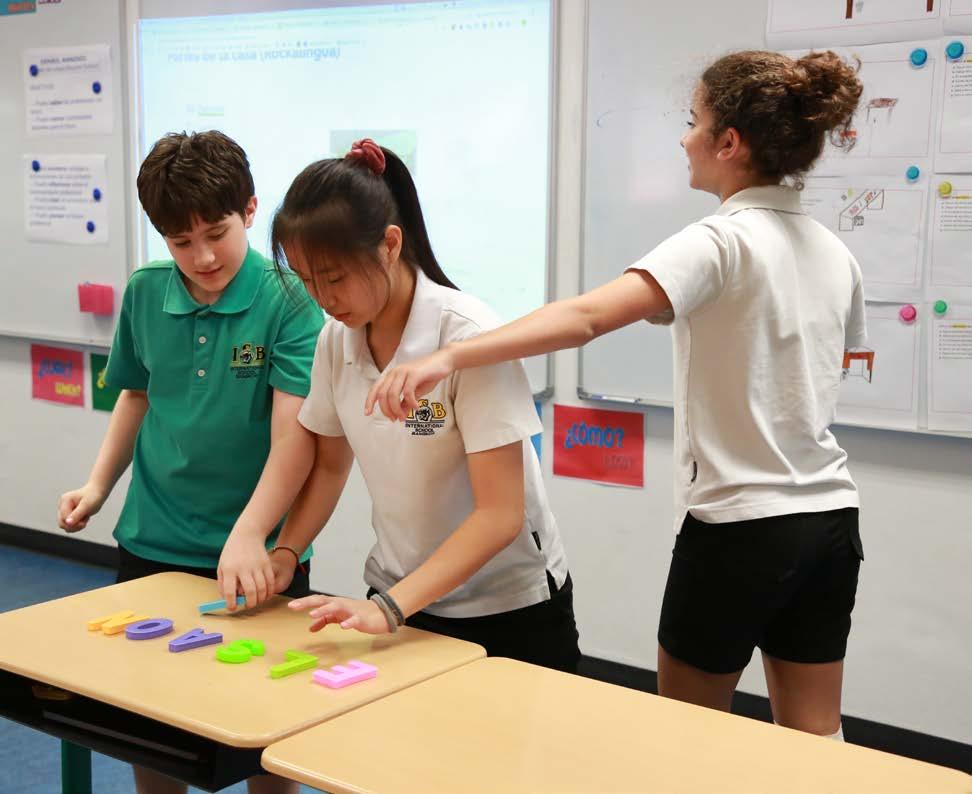
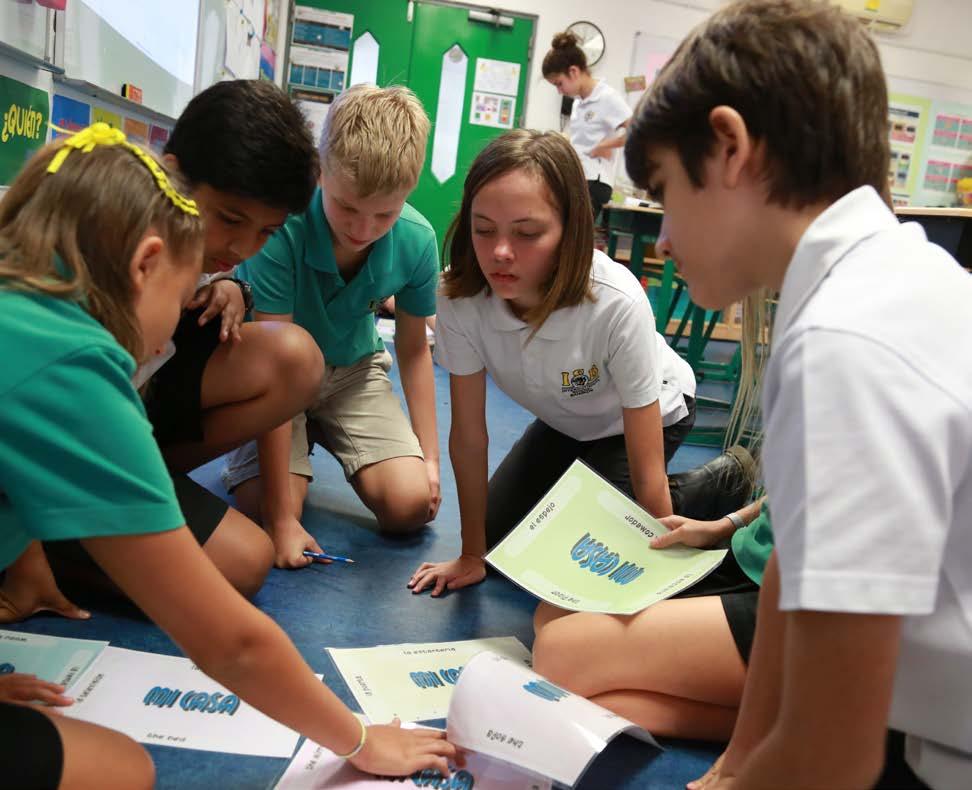
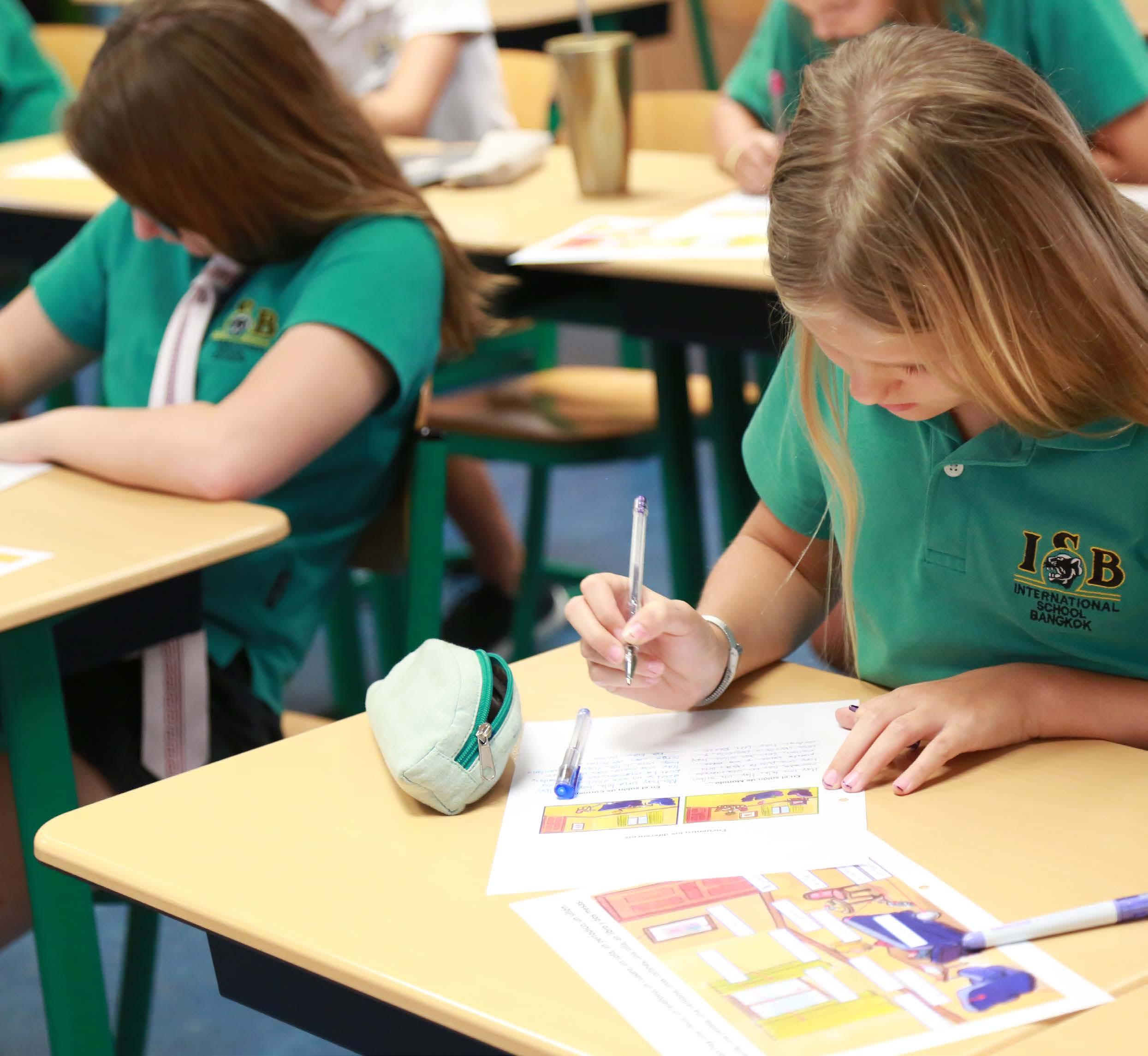
We believe world language learning happens best with a communicative approach, where learners build upon prior knowledge to actively construct and monitor their understanding through meaningful engagement that often extends beyond the school setting. The language learning expectations and experiences are developmentally appropriate and aligned to a coherent proficiency-based curriculum with multiple entry points.
• In the MS World Language program (Language B), we offer French, Mandarin, and Spanish.
• Thai Nationals are required to study Thai.
• Any students new to ISB will be given a language placement test to support appropriate
• course placement.
• One semester of “Thai Language and Culture” is required for non-Thai students who enroll at ISB during MS.
8
Grade 9
World Language standards
This course focuses on the learning standards for Level 3 on the ISB World Language Continuum.
The Individual - Who am I
Family and Friends
School - Daily Routines - Activities and sports
Home
• How can I communicate when my ideas are more complex than my ability to express them?
• How can I explore other cultures without stereotyping?
• How can the approaches to learning a language help solve problems both within and outside my language classes?
• How can learning a language help us respond open-mindedly to different ideas and values?
This course focuses on the learning standards for Level 4 on the ISB World Language Continuum.
Around Town
Shopping in Town
Food and Eating Out
Vacation and Travel
• How does language change in different situations?
• How do customs and products increase the understanding of cultures? (perspectives, traditions)
• How do customs and products increase the understanding of cultures? (perspectives, traditions)
• How does language change in different situations?
This course focuses on the learning standards for Level 5 on the ISB World Language Continuum.
Tourism and hobbies
Health and Emergencies
The Environment
Childhood (hobbies and entertainment)
• How does language change in different situations?
• How can we be an effective communicator?
• How can the approaches to learning a language help solve problems both within and outside my language classes?
• How can learning a language help us respond open-mindedly to different ideas?
This course focuses on the learning standards for Level 3-4 on the ISB World Language Continuum which aligns to the HS Language 1 course.
Self, Family and Friends
Home
School - Daily Routines
Activities - Shopping in Town
Food and Eating Out
Media, Sports and Entertainment
• How can I communicate when my ideas are more complex than my ability to express them?
• How can learning a language help us respond open-mindedly to different ideas and values?
• How can the approaches to learning a language help solve problems both within and outside my language classes?
• How do customs and products increase the understanding of cultures? (perspectives, traditions)
• How do customs and products increase the understanding of cultures? (perspectives, traditions)
• How can learning a language help us respond open-mindedly to different ideas and values?
Getting to Know Each Other
Go Shopping
Around Town
Eating Out
Exploring the Kingdom
• How can I communicate when my ideas are more complex than my ability to express them?
• How do customs and products increase the understanding of cultures? (perspectives, traditions)
• How do customs and products increase the understanding of cultures? (perspectives, traditions)
• How do customs and products increase the understanding of cultures? (perspectives, traditions)
• How can learning a language help us respond open-mindedly to different ideas and values?
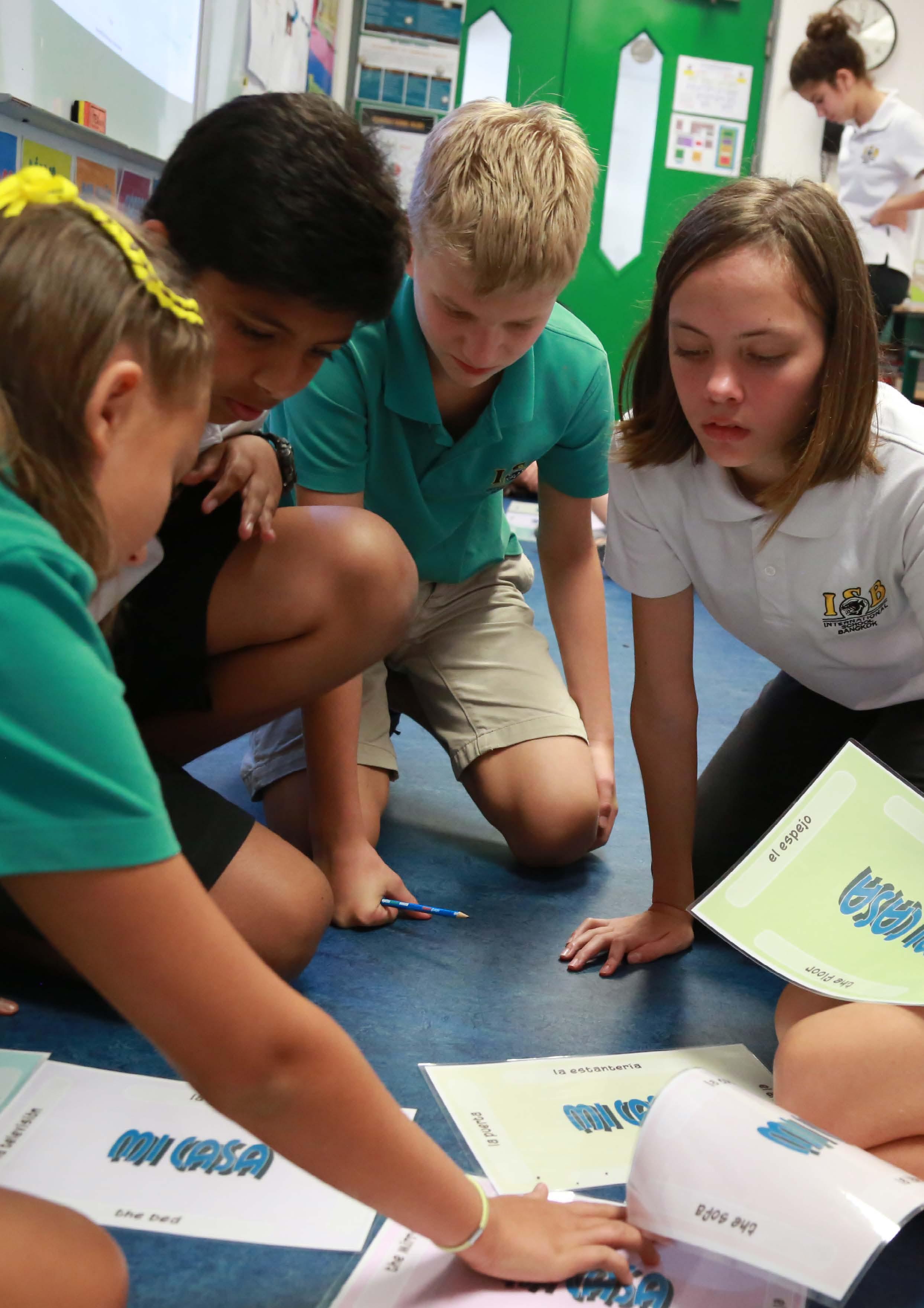
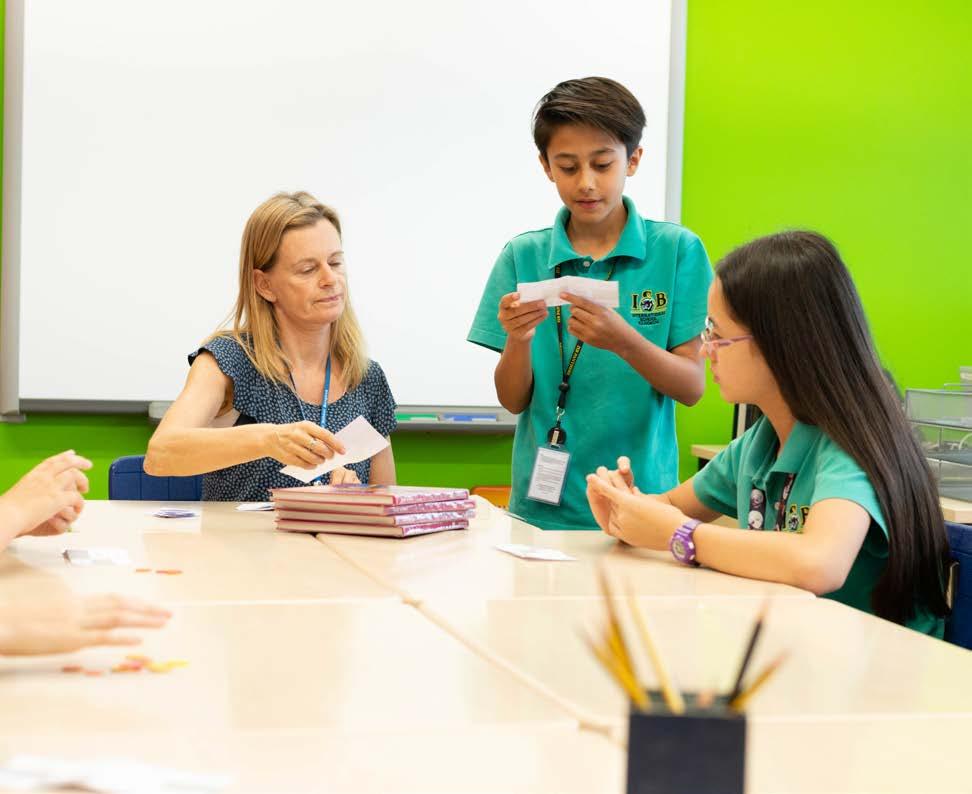
The International Baccalaureate Organization describes Language A as “a language in which students are academically competent.” Language A is frequently the language spoken at home. Language A programs focus on analysis, organization, producing text, and using language as opposed to language acquisition. (Language acquisition is the focus of our Language B, or World Language Program).
We believe that...
• language is at the heart of human communication, thinking, and feeling
• language is a marker of identity and culture, helping us to make sense of ourselves, our perspectives and our world
• it is our right to maintain our own language and be empowered to acquire other languages whenever possible (academic language of the school, and additional languages)
• multilingualism and multiculturalism are assets in our increasingly interconnected world, leading to higher levels of empathy and risk-taking
• native language learning benefits an individual’s emotional well-being, enhances academic
• success, and promotes the acquisition of additional languages
We believe that Native Language Learning happen best when students...
• understand the nature of learning and how it connects across and between languages
• engage in various aspects of language, literature, and culture
• explore a wide range of literary and non-literary text types, writing styles and techniques
• actively dialogue with others through effective listening, questioning, and responding
• use metacognitive skills in authentic contexts
• engage with accessible, meaningful, language-rich learning experiences
• have exposure to engaging, challenging and culturally inclusive practice
• actively use language to promote global-mindedness
• experience a strong home-school partnership
A native/near native language is generally described as a language that is used on a daily basis with at least one parent. A child with native/near native language is typically orally conversant, and is comfortable expressing emotions in this language. This language also links the child to his or her cultural identity. Literacy skills may or may not be present. On occasion, students who have had extensive prior experience with a non-native language in an immersion setting might exhibit the level of proficiency that we would expect from a near native language learner, and would therefore qualify to take part in the program.
In the MS we offer native language classes as part of our regular academic program in the following languages (minimum of 6 students): French, Japanese, Korean, Mandarin, Spanish in addition to Thai, if there is sufficient enrollment. We offer these particular languages in the MS, as there is a continuous support for study of these native languages in the HS through grades 9 and 10 and the IB Language A program.
Our Thai native language program is a requirement for all Thai nationals. This program is formally offered during school hours. This requirement does not necessarily exclude a student from studying another World Language. Students interested in this option should speak with their counselor to see the impact that this might have on other aspects of our MS program.
All students who wish to take a native language class will need to take an oral proficiency assessment. Literacy skills will also be assessed as determined by the teacher.
Our MS native language classes may have a mix of students from grade 6, 7, and 8, and we expect a wider range of levels of proficiency in the skills of reading, writing, speaking and listening. Teachers of our native language program will identify the proficiency level of each student in the four main skills and support each child to demonstrate continued growth and progress through differentiated instruction, and individualized support.
Our MS native language classes provide for a combination of independent study, with teacher support, and full group instruction around cultural aspects of the language being studied. There will often be individualized approaches to learning due to the diverse ages and skills of the children in the class. The curriculum and emphasis of the class will also vary based on the needs of the learners in the class.
The overarching goal of our program is to support students to make progress with and develop their native language. While the program seeks to guide students toward proficiency at IB language A level by graduation, depending on the level of proficiency of the child when s/he enters the program, we cannot guarantee that the child will achieve the level of proficiency needed to be successful with the IB language A program in the high school.
The course content and curriculum for our Native Mandarin, Spanish, French, Korean and Japanese courses have been influenced by the learning goals outlined in the MYP (Middle Years Program) Framework for Language A.
As the Native Language Program offers mixed-grade class, the program was designed as a three-year sequence of units. Below you can find the units that make up the three years of instruction.
Immigration and Refugees
Artificial Intelligence
Culture, Heritage, and Religious Influences on Identity
• What causes people to become refugees?
• What is the difference between an immigrant and a refugee?
• How might immigrants and/or refugees integrate and contribute to their new societies?
• How might immigrants and/or refugees put a strain on their new societies?
• To what extent does the media portray the points of view of immigrants and refugees?
• What is intelligence?
• Should we be excited or worried about AI?
• What is the past, present and future impact of the AI on your life?
• Can one person change culture?
• Is there a standard by which cultural norms should be evaluated?
• Is it ever appropriate for outside cultures to intervene?
• What is culture?
• What similarities and differences exist between cultures? (ISB, family, home country...)
• How do different cultures approach similar situations and
• challenges?
• How do cultures change over time?
Wealth and Poverty
• What forms of poverty are there, other than material poverty?
• What moral issues arise from poverty?
• What should our response be to poverty?
• What is my responsibility towards poverty?
Friendship
Advertisement
Travel and Tourism
• Why are friends so important to us?
• What is love? What is friendship?
• How can we differentiate real friendship from superficial friendship?
• How are we manipulated by what we see, hear and read?
• What techniques do advertisers employ to influence our behaviour and decisions?
• Are advertisements necessarily cultural? Why or why not?
• How does culture influence advertisement?
• What kind of tourist are you?
• How can travel and tourism promote global citizenship?
• How are the perspectives of those who travel different from those who don’t?
Media and Technology
• What are some precautions one must always take when using the internet?
• What are some dangers of using the internet?
• What does it mean to adapt a message to its audience?
• How do we decide what measures should be taken to protect young Internet users?
• Should schools take actions to protect young people online?
Environmental concerns
Health and Wellbeing
• How is the environment connected to my actions?
• What are the consequences of our common humanity on the environment?
• Is a balanced lifestyle cultural?
• How do my cultural values influence lifestyle and how it impacts my health?
• How do my views on health and wellness compare to the views of my classmates, or those of my host culture?
• To what extent can communication with others help to develop my wellbeing?
• To what extent are my beliefs about health and wellness shaped by my cultural influences as opposed to science?
• To what extent is one lifestyle healthier than another?
Thai Native Continuum
THAI NATIVE LEVEL 1
This course includes a wide range of differentiated levels. Some students may still be developing their literacy in Thai and may be at foundations level. In these cases, it is expected that a student may take more than one year to progress to Level 2. When this happens the student may be placed in Thai Level 1 again.
Fostering Good Citizenship in a Democracy
Exploring Thai Folktales
Cultural Heritage: Sukhothai the dawn of happiness
Amazing Thailand
• How do characters’ ethics and values inspire us to live harmoniously in Thai and global society?
• How can writers effectively organize opinions, evidence, and reasoning to support a thesis?
• How do Thai folktales reflect the values, beliefs, and traditions of Thai culture?
• What techniques do storytellers use to make narratives engaging and meaningful?
• How does the history of Sukhothai represent the foundations of Thai culture and identity?
• What strategies can writers use to present information clearly and effectively?
• How can we creatively promote the learning and conservation of Thai culture through innovative ideas and actions?
• Why is it valuable to understand Thailand’s geography, and how does it shape our understanding of the country?
• How does Thailand’s natural environment influence the way of life for Thai people?
Crafting Persuasive Argument: Community Voices
Informative Writing in News and Advertising: Thai Insights
Narrative Journeys: Khun Chang Khun Phan and Thai Wisdom
Cultural Heritage: Ayutthaya and Thonburi
• How do rights and responsibilities shape our communities?
• Why is evidence essential in supporting an argument?
• How does understanding our community improve our lives?
• Why is news media important to society?
• How do reporters write engaging and informative articles?
• As Thai citizens, how can we promote Thai culture within our communities?
• How can we use elements of Thai folktales to inspire and develop our own personal narratives?
• What techniques can writers use to effectively convey personal experiences and lessons through storytelling?
• How did the histories of Ayutthaya and Thonburi shape Thailand’s cultural heritage and identity?
• What can we learn from the art, architecture, and traditions of Ayutthaya and Thonburi to understand Thailand’s past and present?
Informative Texts for Global Citizenship
Creating Compelling Arguments for Impact
Crafting Rattanakosin Narrative Text
Thai Artistry Unveiled: The Thai Ramayana
• How can learners analyze and respond to informative texts, and create their own informative texts to enhance their understanding of global citizenship?
• How can learners craft compelling arguments to drive positive change in both Thai and global communities?
• How can learners create a short story showing understanding and fostering pride in Rattanakosin history?
• How can learners creatively promote the learning and conservation of Thai arts through innovative ideas and actions?
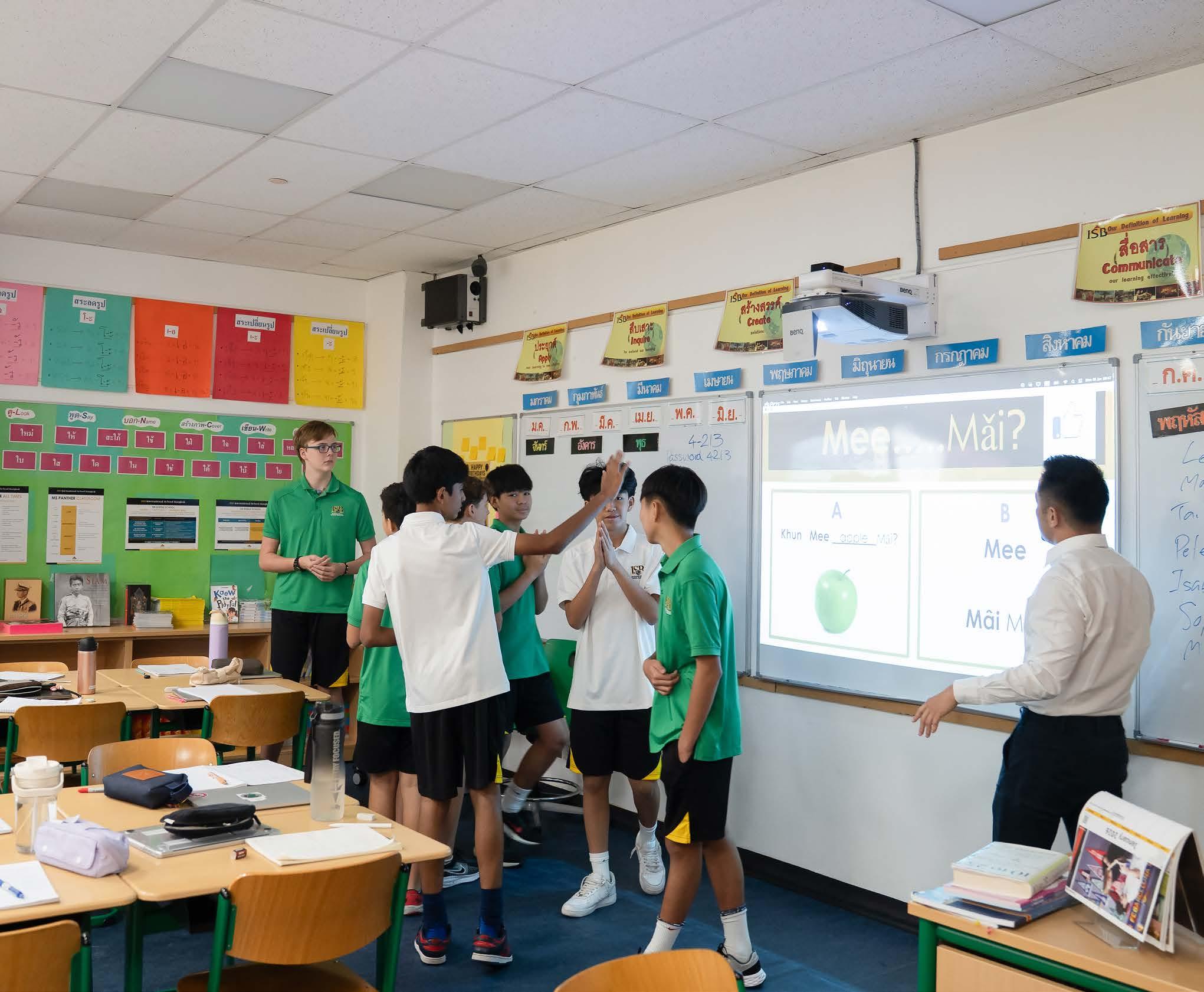
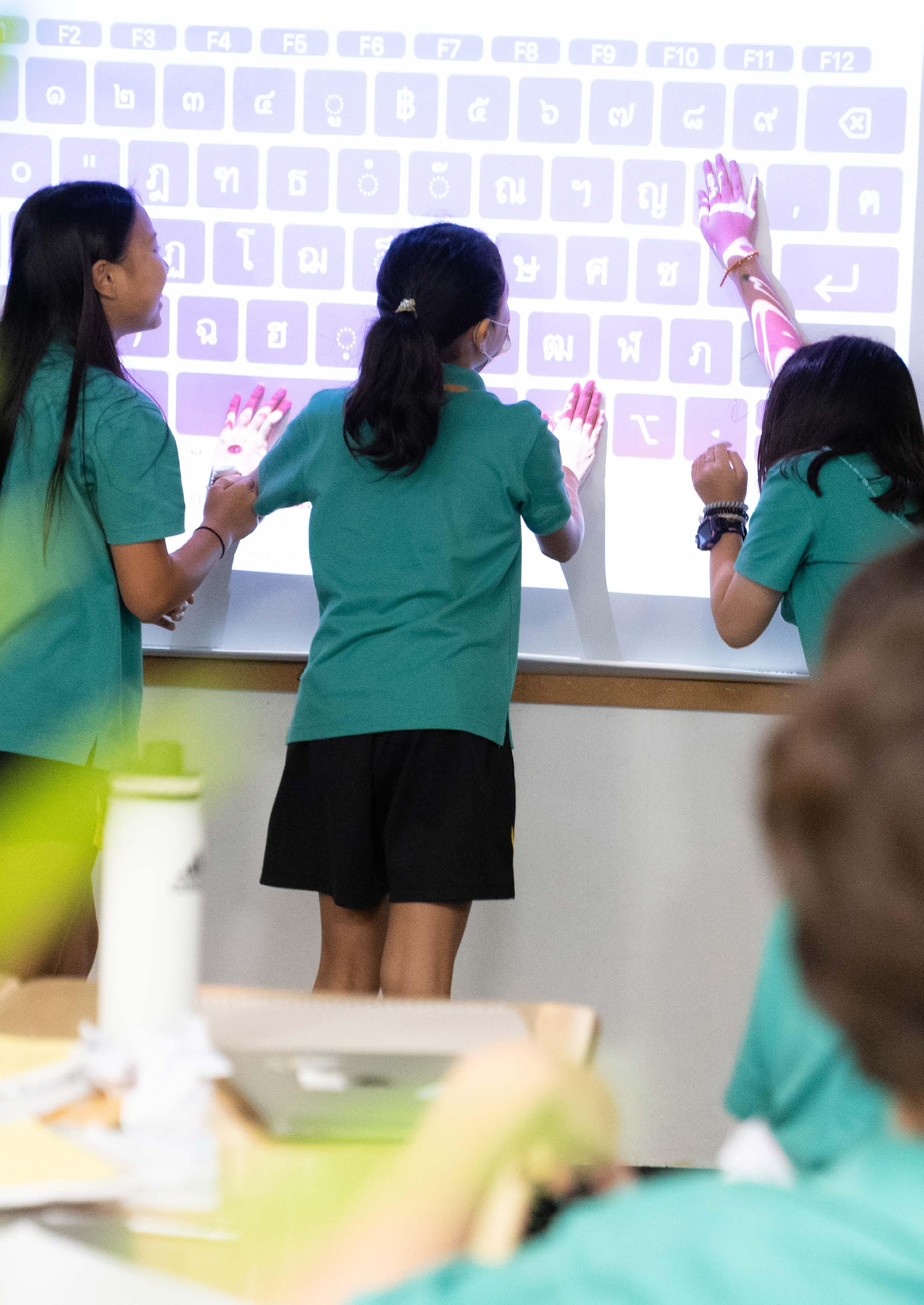
We believe English as an Additional Language learners can participate fully in the academic and social life of the school. Our learners are supported and encouraged in their English language acquisition, the exploration of their identities, and the development of their full linguistic repertoires. Multilingualism is an asset in our increasingly interconnected world; by empowering our learners to be multilingual, students can engage in social, academic and other enriching experiences. Students develop into literate global citizens with highly developed expressive and interpretive language skills who show respect and understanding for all cultures. They are encouraged to use these skills purposefully, creatively and flexibly to thrive in the varied and complex contexts of our world.
Long Term Transfer Goals: Students learning English as an Additional Language will continue to use their full linguistic repertoire independently and collaboratively to:
• Seek to understand and engage with the world around them.
• Embrace their multilingualism and cultural diversity as active participants in their local and global communities.
• Communicate effectively as multilinguals, using their language skills to access knowledge, apply their learning and make meaning.
• Build upon their growth mindsets in order to self-reflect and effectively self-manage in their personal and professional lives.
Common Agreements: We agree that students learning English as an Additional Language learn best when given opportunities to use their full linguistic repertoire to:
• Engage in multi-modal, authentic learning opportunities within a safe, nurturing, culturally inclusive and language-rich environment.
• Develop cognitively, linguistically and socially as multilingual learners in all classes.
• Experience systematic opportunities to talk, reflect and take risks with language.
• Access appropriately challenging curricula.
• Work independently and collaboratively.
• Meet high expectations that derive from research-based language instruction.
• Continue to develop their home languages in partnership with their families.
• Students applying to Grade 6 - 8, who are not yet fluent in English and/ or have never previously studied in an English language school, will participate in an English language (EAL - English as an Additional Language) screening at ISB or online.
• In the MS EAL program, we offer three levels of support at Grade 6 and Grade 7: Beginner, Intermediate, Advanced. We offer two levels of support at Grade 8: Intermediate and Advanced.
• Movement between these levels is a team decision based on EAL and core class performance, as well as standardized and internal assessments related to reading, writing, speaking, and listening skills. Students’ journey through the EAL program and expected learning outcomes at each level of service can be seen through the Pathway to Proficiency
• G6-7 EAL Beginner students attend the English Foundations class. There is a focus on grammar and vocabulary, and an emphasis on speaking, listening, reading and writing to prepare them for the transition to the mainstream English class. A variety of language skills will be developed and practiced through authentic contexts and broad themes.
ENGLISH FOR ACADEMIC PURPOSES
EAP Standards
• Beginning EAL
• Intermediate EAL
• Advanced EAL
ENGLISH FOUNDATIONS
English Foundations Standards
Identity
Human rights
Sustainability
• Listening
• Speaking
• Reading
• Writing
Unit strands are based on student needs and core class content.
• English Language Arts
• Science
• Social Studies
• What is identity?
• How can people and communities have their own unique identities, yet still respect other identities and cultures?
• How can I be an effective communicator?
• What are human rights?
• Why are children’s rights violated in some places
• How can I connect and communicate information to others?
• What is sustainability?
• Why is sustainability important?
• How do purpose and audience influence the way I communicate?
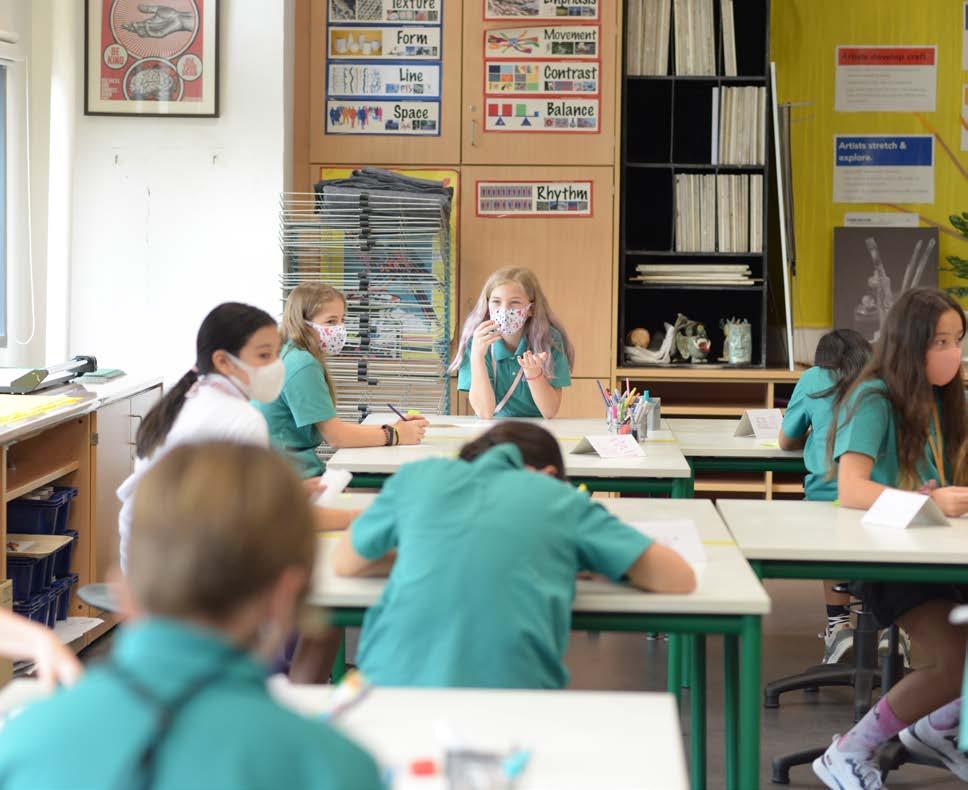
We believe all learners should be provided the opportunity to reach their fullest potential and contribute to our learning community. Students benefit from an array of pedagogical approaches and strategies and in a diverse learning community. We believe in an authentically inclusive community of learners where all are valued, feel safe, and are recognised for their contributions to our learning experiences. By providing intentional focus and support for our neurodivergent learners, we can better meet students’ personal and academic needs. We actively collaborate with learners to identify strengths and areas for growth so that they are involved in decisionmaking and can effectively self-advocate. We coach our neurodivergent learners so they are empowered to be successful and self-directed. We embrace the learning opportunities and skill development that can happen when mistakes are made and students recognise their resilience and curiosity. Our learners are encouraged to use their knowledge and skills purposefully, creatively, and flexibly in order to thrive in the varied and complex contexts of our world.
Long Term Transfer Goals: In our Learning Support program, students will be empowered to:
• view their self-awareness as a contribution to their confidence, autonomy, and self-advocacy
• build upon their strengths and growth mindsets in order to regulate, reflect and effectively manage their lives
• seek to understand different perspectives and listen with empathy
• communicate effectively
• challenge themselves and set meaningful personal goals
• prioritise their health and wellbeing
• identify how they learn and engage in effective learning strategies
Common Agreements: We agree that learning happens best when we provide opportunities for learners to practice
• growing their knowledge, understanding, and skill application with learning experiences that are universally designed (UDL)
• learning dispositions, self-reflection, and skill development in a space where neurodiversity is valued and celebrated in belief and action
• engaging in a flexible learning context
• collaborating with others
• making decisions
• participating actively in a learning environment that is safe and nurturing, and encourages academic and personal growth
The Middle School Admissions Committee reviews files of incoming students with learning needs to review previous special programming. This information is used to determine appropriate services for students.
Using the Multi-Tiered System of Supports (MTSS) approach, the Middle School offers three levels of support: Tier 1, Tier 2, and Tier 3. All students receive Tier 1 support in the classroom. Students receive Tier 2 support from a team of teachers when they need extra support with grade level standards. Students who perform significantly below grade level expectations and require academic remediation will receive Tier 3 support from the Learning Support team. Parents are notified when this occurs. Tier 3 support includes a scheduled Intensive Studies (IS) class that can be every other day or every day, and additional support in core classes if necessary. Students in Tier 3 have a dedicated case manager and also have an Individualized Learning Plan (ILP), which is shared with the student, parents, and teachers.
Speech and/or Language Therapy: Therapy is available through the Learning Support Program to students who qualify for these services. Occupational Therapy is also available as needed.
Each student has an Individualized Learning Plan (ILP) with specific academic, speech/language, social, and/or executive functioning skills goals and objectives. These goals are based on students’ areas for growth. Narrative reports detailing students’ progress towards these goals are shared with parents/guardians at the end of each semester.
We believe...
• the arts help us to make sense of and/or respond to the world through creative and symbolic expressions
• through artistic inquiry, people explore emotions and ideas using visual, auditory and kinesthetic mediums, developing aesthetic appreciation and creativity
We believe through the arts, learners:
• assimilate sensorial experiences
• imagine, create, develop and refine original ideas
• apply understandings and skills of a given art form
• create, communicate, perform and/or critique their own and others’ works
• interpret social, historical, political and cultural contexts when viewing and/or performing
• engage in creative, critical, analytical, and metacognitive thinking skills
• take risks, imaginative leaps and persever
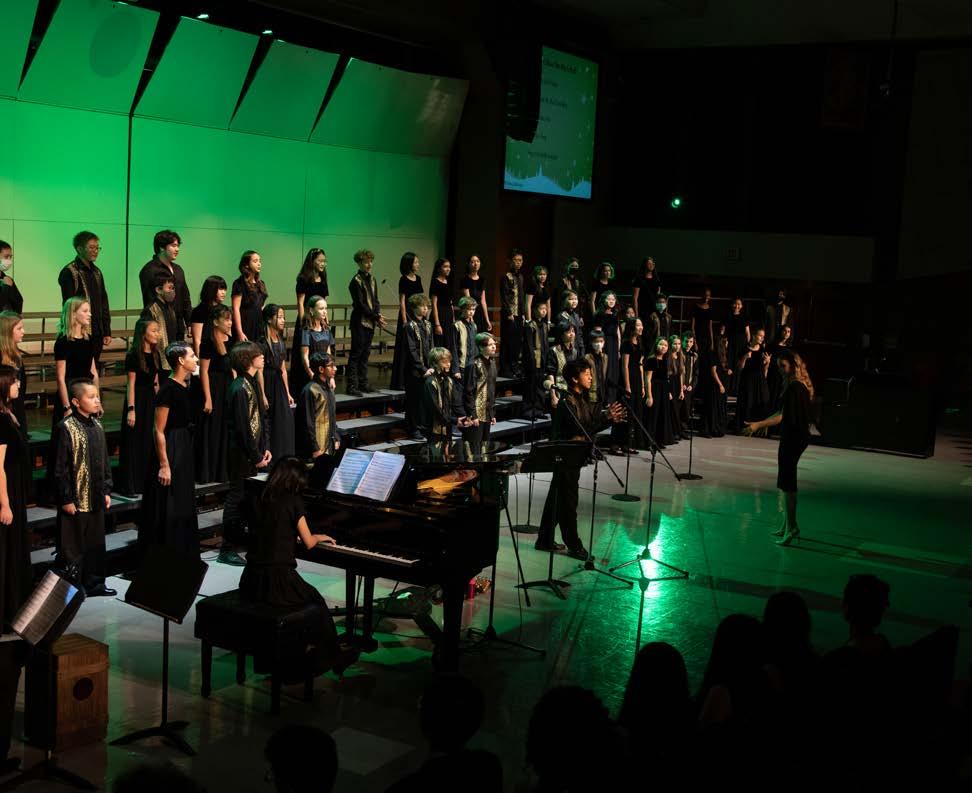
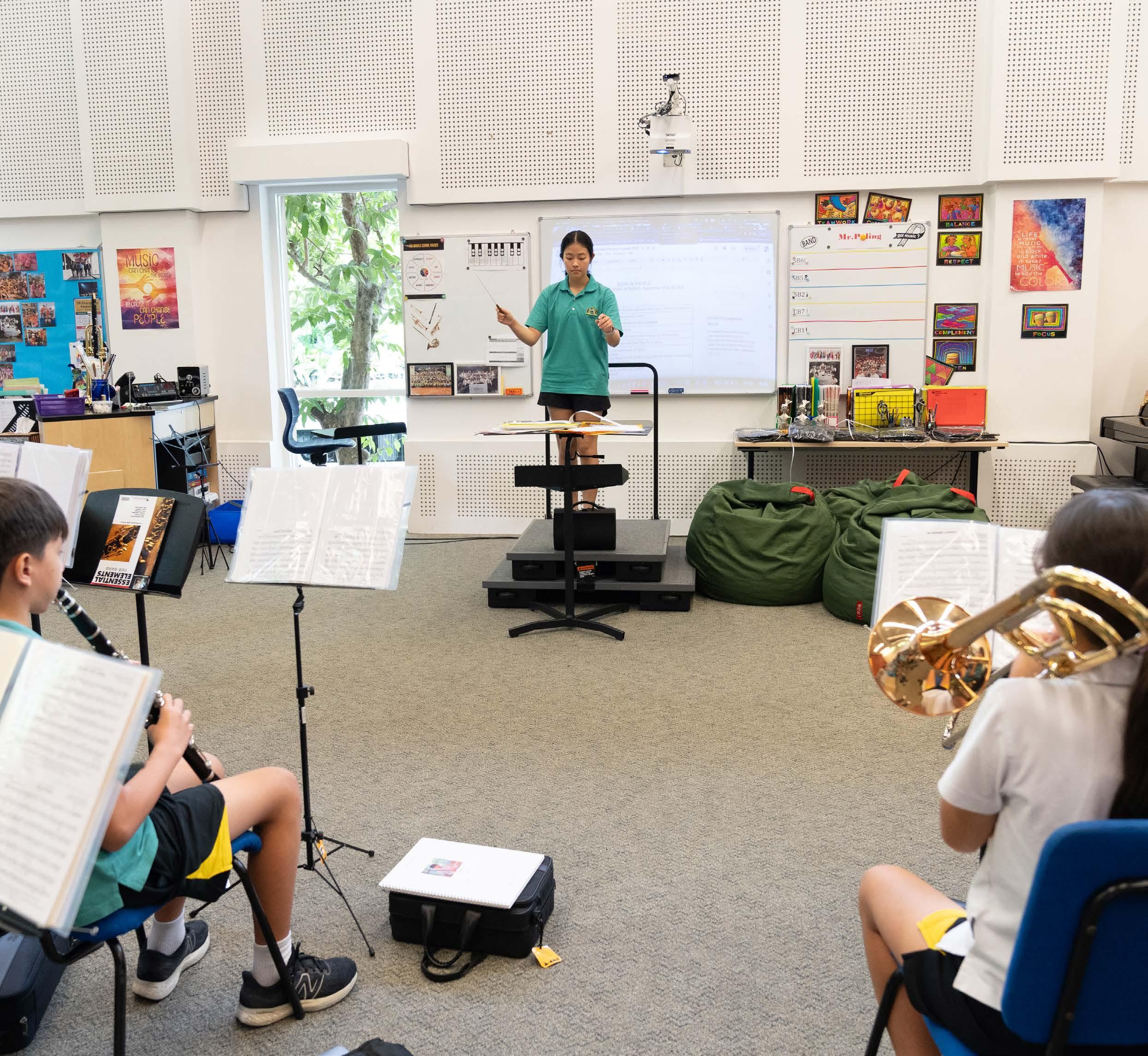
We believe artistic learning happens best when:
• creative experimentation, exploration and choice are the norm
• making mistakes and risk-taking are encouraged and celebrated
• students are immersed in aesthetically rich and safe environments
• the focus is on both the creative process and the product / performance students experience the arts process of going from ideas to expression, justification and explanation
• students make connections across their learning
• students frequently create, collaborate and communicate their art to an audience
• a range of artistic concepts, skills, processes, and techniques are experienced with multiple opportunities for application
• students receive timely and meaningful feedback which moves their learning forward
• there is a developmentally appropriate, aligned, coherent curriculum
Music Standards
Creating
Performing, Presenting, Producing
Responding
Connecting
• How do musicians generate creative ideas?
• How do musicians make creative decisions?
• How do musicians improve the quality of their creative work so that it best expresses their ideas and intentions?
• When is creative work ready to share?
• How do performers select repertoire?
• How does understanding the structure and context of musical works inform performance?
• How do performers interpret musical works?
• How do musicians improve the quality of their performance?
• When is a performance ready to present? How do context and the manner in which musical work is presented influence audience response
• How do individuals choose music to experience?
• How does understanding the structure and context of music inform a response?
• How do we discern musical creators’ and performers’ expressive intent?
• How do we judge the quality of musical work(s) and performance(s)?
• How does music help us to understand our common humanity?
• How do musicians make meaningful connections to creating, performing, and responding?
• How do the other arts, other disciplines, contexts, and daily life inform creating, performing, and responding to music?
• BEGINNING BAND
• CONCERT BAND
• SYMPHONIC BAND
• Band includes a variety of wind and percussion instruments (flute, oboe, clarinet, bassoon, saxophone, trumpet, French horn, trombone, euphonium, tuba, drum, and mallet percussion.
• Middle School Band is open to all students of varying levels of development and ability. Instruction is designed to help students develop proper technique, confidence on a band instrument and nurturing passion, leadership & creativity.
• The Middle School Band is divided into three different groups based on ability and experience levels. (Beginning, Concert, Symphonic).
• Smaller instruments such as flute, trumpet, alto sax, clarinet need to be purchased by the family.
• Larger instruments such as tuba, euphonium, trombone, French horn, oboe, bassoon, bass clarinet, tenor and baritone saxophones are supplied by school on a first come first serve basis.
• Students entering the band program without prior experience should try the various band instruments with a music teacher at the Beginning Band Drive in April to see if they are suited to play certain instruments (or schedule an appointment with band teachers). A student should choose an instrument based on ease of producing a sound, matching physical qualities with an instrument and one that the student wants to play.
• Symphonic Band students can also audition for the annual AMIS Asian Middle School Honor Band Festival, which is held in various countries throughout South Eastern Asia. If students pass the recorded, blind audition, they will have a chance to travel and participate in the honor band. There, they will rehearse and perform with band students from other international schools in Asia under a guest conductor. They will also have an opportunity to explore the host country’s culture, which AMIS includes as part of the experience.
• More advanced students will have opportunities to develop leadership skills by conducting and leading the bands at various performances.
• Students will have opportunities to enhance their creativity by using Garageband and Noteflight, an online music composition website.
The goal of choir is to develop musically literate students who:
• Generate and conceptualize artistic ideas by exploring various vocal techniques and creative approaches to music-making
• Develop and refine musical skills in vocal technique, focusing on breath control, pitch accuracy, tone quality, and expressive dynamics
• Interpret and perform a range of musical works, applying their understanding of musical symbols, notation, and stylistic elements to convey expressive intent
• Analyze and evaluate music from diverse genres and cultures, enhancing their appreciation of global musical traditions
• Collaborate within an ensemble to blend voices, listen actively, and support collective musical expression in a respectful, inclusive environment
• Set personal and ensemble goals and use feedback to reflect on their progress, fostering a growth mindset and perseverance in achieving musical proficiency
• Present and share artistic work through performances, building confidence and stage presence while engaging meaningfully with audiences
• Make informed artistic choices based on their understanding of musical structure, cultural context, and personal expression
Foundations of Choral Singing Performing
• What are the fundamental skills needed to be a successful choir member?
• How do music theory and sight-reading contribute to our ability to perform music?
• Why is it important to use healthy singing techniques?
Listening Literature Connecting Responding
Small Ensemble Unit Creating Performing
• How do melody, harmony, rhythm, timbre, and texture interact to shape the overall character and mood of a piece of music?
• In what ways can listening to and analyzing music help us make personal connections, recall memories, and experience emotions?
• How does our unique perspective and cultural background influence the way we interpret and feel about a piece of music?
• How do musicians improve the quality of their creative work?
• When is a performance judged ready to present? How do context and the manner in which musical work is presented influence audience response?
• How do the other arts, other disciplines, contexts, and daily life inform creating, performing, and responding to music?
BEGINNING ORCHESTRA:
• Beginning Orchestra is for students who: A.) are interested in learning to play the violin, viola, cello, or string bass for the first time B.) Have taken private lessons on their string instrument for less than 1 year, or have not had consistent/recent private lessons, or C.) Have previously played a string instrument but would like to learn to play a different instrument (for example, many violin players choose to learn the viola, cello, or bass in this class)
• Students learn the fundamental technical skills needed to play string instruments
• Students learn in a large-group setting
• Students enrolled in this class are required to perform in several evening performances throughout the year
• Students improvise and compose their own music as well as listen to, analyze and respond to music
• Students are allowed to either rent or purchase an instrument, or borrow an instrument from ISB (as inventory allows)
Pre-Requisite: Beginning Strings, prior enrollment in Concert Orchestra, or by audition
• For students who have mastered basic skills and are ready to expand their technical and expressive abilities
• Continue progressing through Essential Elements Book 2
• Focus areas include:
• Tone quality
• Advanced bowing techniques
Rhythm and pitch accuracy
• Perform a diverse repertoire representing various musical styles and historical contexts
• Emphasize performance preparation and consistent individual practice
• Work collaboratively toward polished ensemble performances
• Present at least one public concert each semester to demonstrate musical growth and achievement
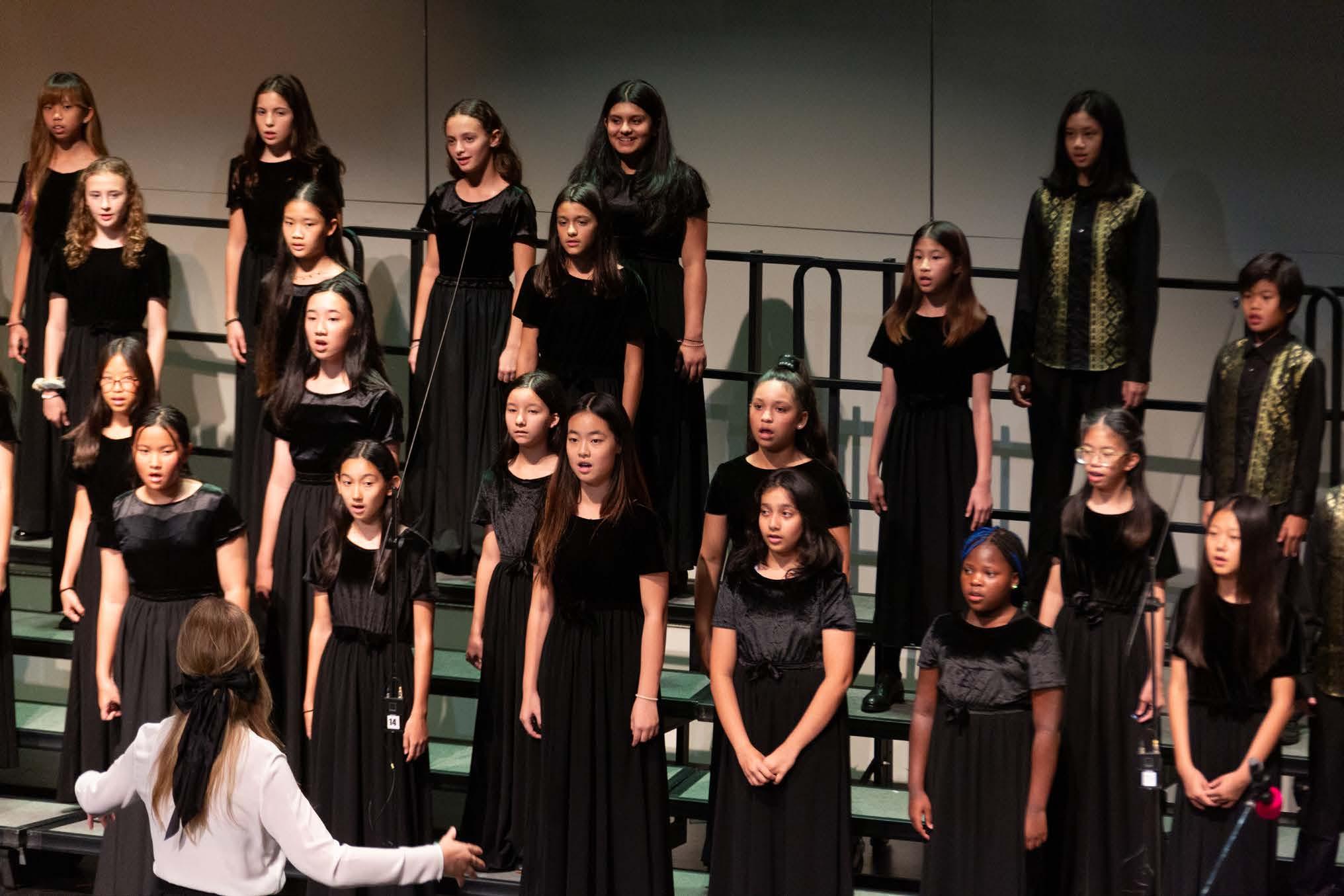
Pre-Requisite: Prior enrollment in String Sinfonietta, or by audition.
• String Sinfonietta is an intermediate ensemble for experienced string players seeking to refine their skills and explore complex repertoire.
• Students focus on expressive phrasing, advanced bowing styles, shifting, vibrato control, and ensemble communication.
• Repertoire spans various musical genres and historical periods, demanding precision and artistry.
• Students are introduced to shifting and vibrato, building confidence in applying these techniques in ensemble settings.
• Students represent the school in two major performances per school year.
• Extensive home practice is expected, and participation may lead to opportunities such as IASAS Cultural Convention and AMIS auditions.
• This level emphasizes musical interpretation and polished performance in a variety of settings.
Pre-Requisite: Prior enrollment in Chamber Orchestra, or by audition.
• Chamber Orchestra is a mastery-focused ensemble designed for dedicated string players aiming for advanced performance skills.
• The repertoire includes original orchestral works and contemporary compositions.
• Students focus on mastering techniques such as thumb positions, advanced shifting, and intricate bowing styles.
• Leadership opportunities, including section leadership, allow students to develop as ensemble leaders.
• This level includes two large-scale performances in the evenings.
• Students in Chamber Orchestra may have opportunities such as the IASAS Cultural Convention and AMIS auditions.
• Students are expected to practice rigorously and contribute to high-profile concerts that showcase their technical mastery and musical artistry.
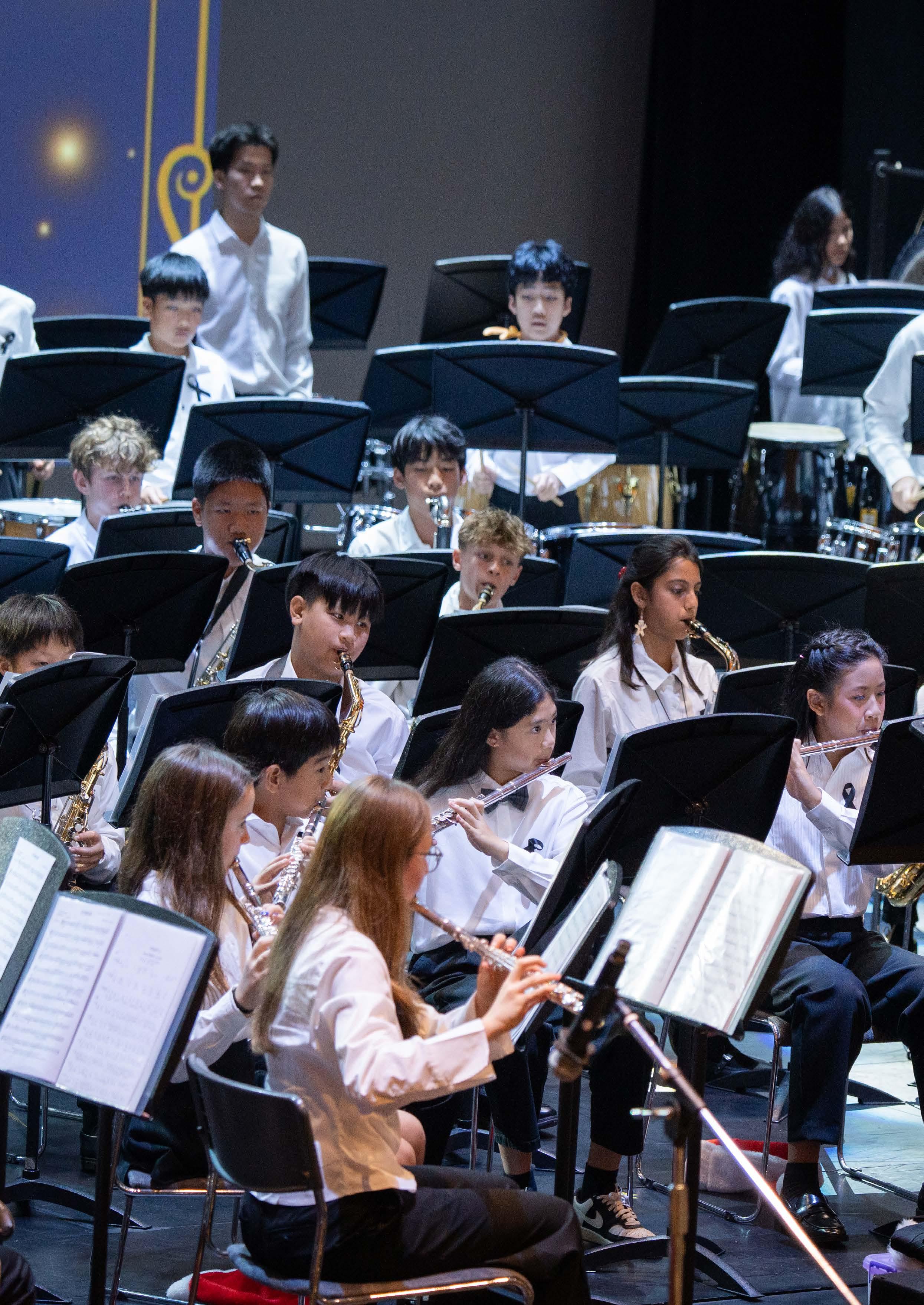
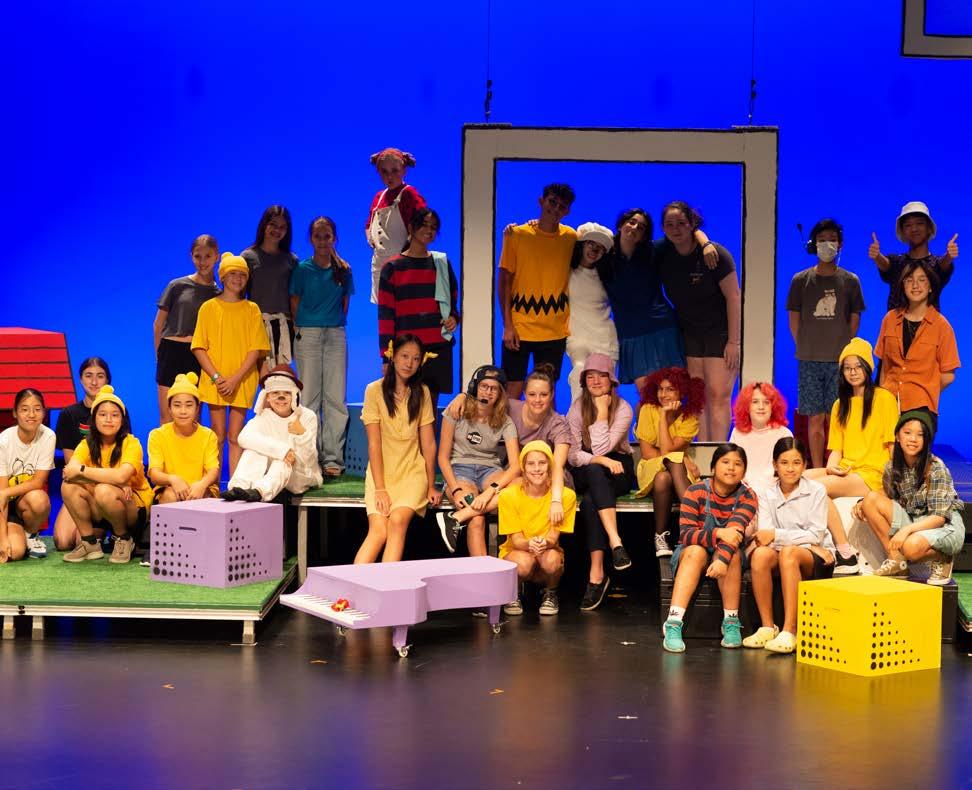
We believe...
• the Performing Arts help us to make sense of and/or respond to the world through creative and symbolic expressions
• through artistic inquiry, people explore emotions and ideas using visual, auditory, and kinesthetic mediums developing performance skills and an appreciation of Drama
We believe through the arts, learners:
• assimilate sensorial experiences
• imagine, create, develop and refine original ideas
• apply understandings and skills of a given art form
• create, communicate, perform and/or critique their own and others’ works
• engage in creative, critical, analytical, and metacognitive thinking skills
• take risks, imaginative leaps, and persevere

We believe artistic learning happens best when:
• creative experimentation, exploration and choice are the norm
• making mistakes and risk-taking are encouraged and celebrated
• students are immersed in interactive and creatively safe environments
• the focus is on both the creative process and the product / performance students experience the arts process of going from ideas to expression, justification and explanation
• students make connections across their learning
• students frequently create, collaborate and communicate their art to an audience
• a range of artistic concepts, skills, processes, and techniques are experienced with multiple opportunities for application
• students receive timely and meaningful feedback which moves their learning forward
• there is a developmentally appropriate, aligned, coherent curriculum
Assessed using the National Core Arts Drama Standards focusing on the essential standards of Creating and Performing:
Creating
Performing
Stillness and Energy
Why Walk When You Can Dance* (*guest dance artist dependent)
Superheroes Unite
Slay the Jabberwock
• How do we create a piece of drama?
• How does drama affect an audience?
• How do we build an ensemble?
• How does an actor prepare?
• What makes a strong performance?
• Learn and develop foundational performance and ensemble skills necessary for creating and staging a duet performance inspired by a stimulus.
• Develop performance skills through choreographed movement and dance.
• Workshop content is tailored based on guest dance artist’s specialization.
• Apply physical theatre skills to devise a short collaborative piece inspired by superheroes
• Explore how voice and physicality combine to create exciting and believable characters. Focus on developing and performing poetry while mastering basic performance skills.
This program is a broad introduction to the basics of drama. Students learn that we can all experience the stage in different ways. Through the development of a safe, collaborative environment, students learn some of the fundamental skills required to be transformative, creative and expressive.
Assessed using the National Core Arts Drama Standards focusing on the essential standards of Creating and Performing:
Creating
Performing
• How do we create a piece of drama?
• How does drama affect an audience?
• How do we build an ensemble?
• Has our artistic intention been realized? How do we know?
• How does an actor prepare?
• What makes a strong performance?
The overall goal of the drama program is to foster positive self-confidence in students by encouraging them to explore through dramatic skills learned in this course. These skills are not limited to creating a stronger stage performer but also transfer in all areas of education by aiding students to become more self-confident, better public speakers, and creative presenters.
Methods of instruction in drama include, but are not limited to, a series of practical explorations, teacher-led workshops, student-led peer review, student devised & improvisational projects, discussions, and reflections on individual and group work.
Drama (for Grade 7 and 8 - all levels): This program explores theater practice in more depth, and offers students more opportunities for performance. Students go deeper into character exploration, feeling and expression, and begin to understand more about the devising process, through basic script writing and play development. Many theater forms are explored throughout the semester, examples of which could include, but are not limited to: physical theatre, devising techniques, improvisational theatre, mask work, scene studies and script analysis.
Students can take this course for both semesters in Grade 7 and 8 (subject to change depending on class enrollment numbers). Units are designed to help all students in a variety of levels reach their own potential
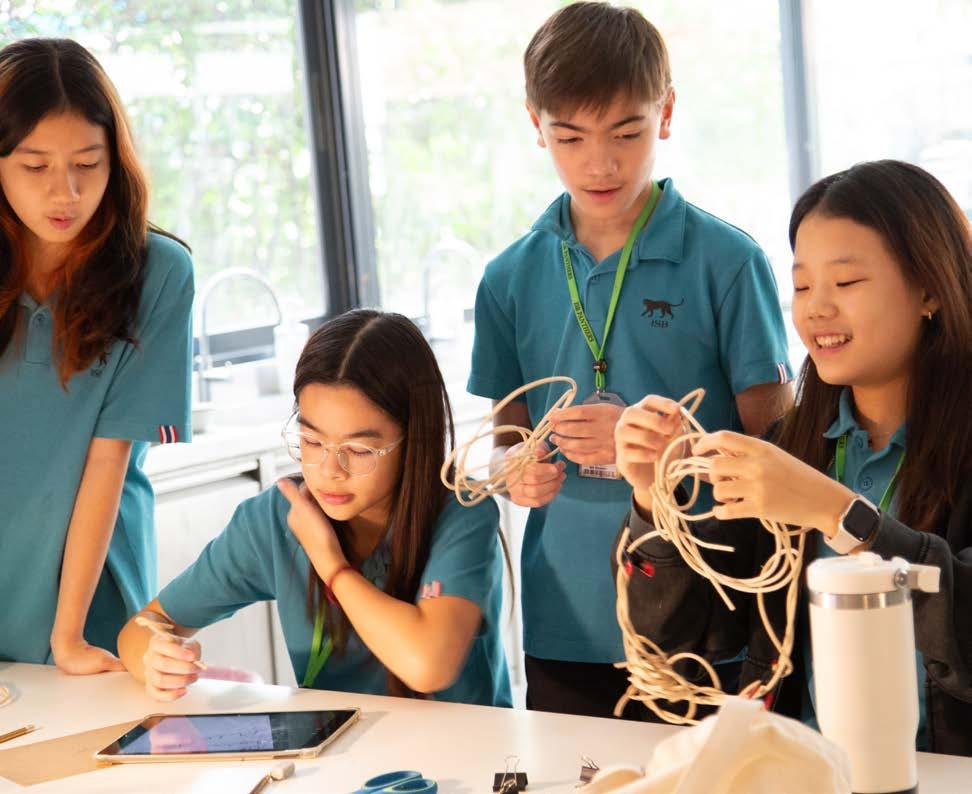
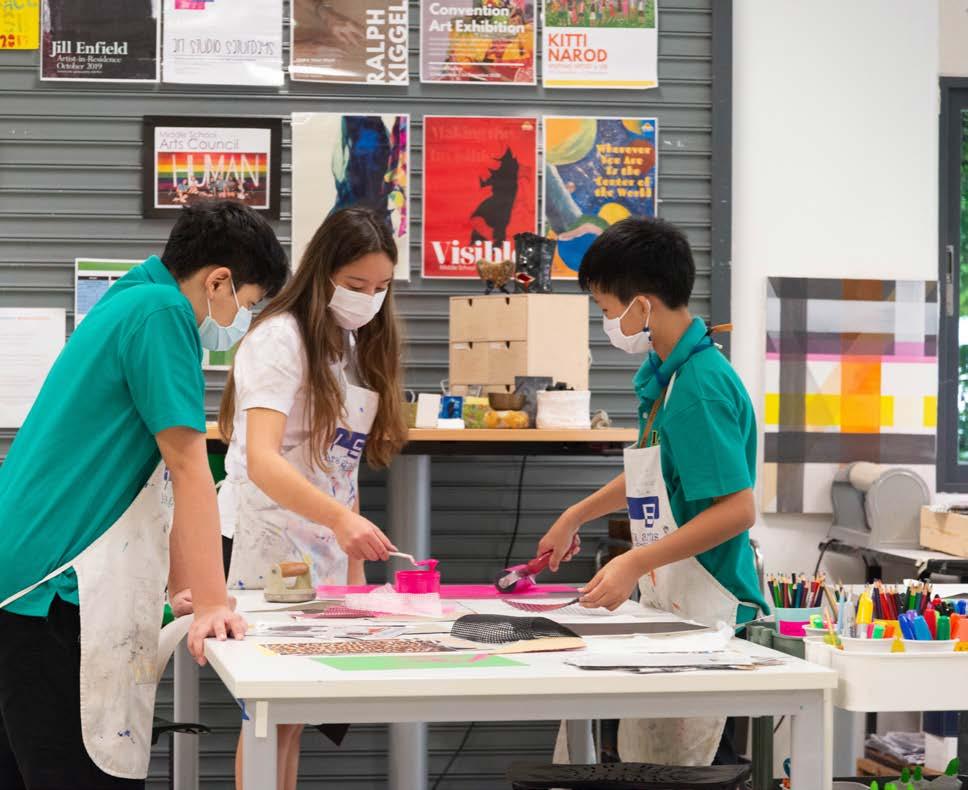
Visual Arts Standards
All Visual Arts courses focus on students as artists, allowing them to build upon personal experiences and passions to create authentic, meaningful work. The Studio Habits of Mind serve as a framework for everything students experience in these classes. Working as artists, students become more agile thinkers. They observe more closely, are curious, ask questions, think creatively, and approach challenges with an open mind and persistent work ethic. Students maintain a sketchbook for drawings, research, idea development, media trials, and reflection. These courses can help prepare students for high school Visual Arts courses including AP 2-D or 3-D Art and Design, IB Visual Arts, and SUPA (Syracuse University)courses, but most importantly, they lead to a more fulfilling life and connect students to their humanity.
• Students develop the concepts, mindsets and skills employed by artists as a way to think and act creatively and artistically.
• Students are engaged and persist throughout the entirety and complexity of creative and artistic processes, including creating, presenting, responding and connecting.
• Students take risks through sustained investigation and solution-based outcomes.
• Students explore, appreciate and engage with the role of art and artists in communities, societies and worlds.
• Students see themselves as artists and curators and embody a growth mindset.
• Students develop an understanding of self and the world through the visual arts.
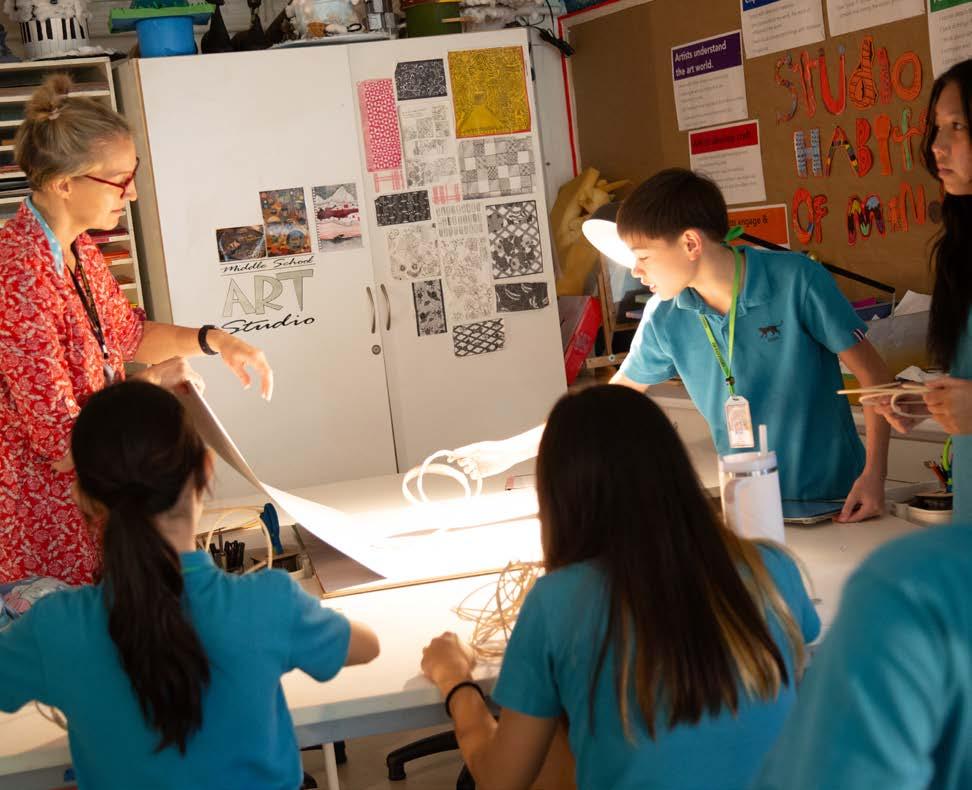
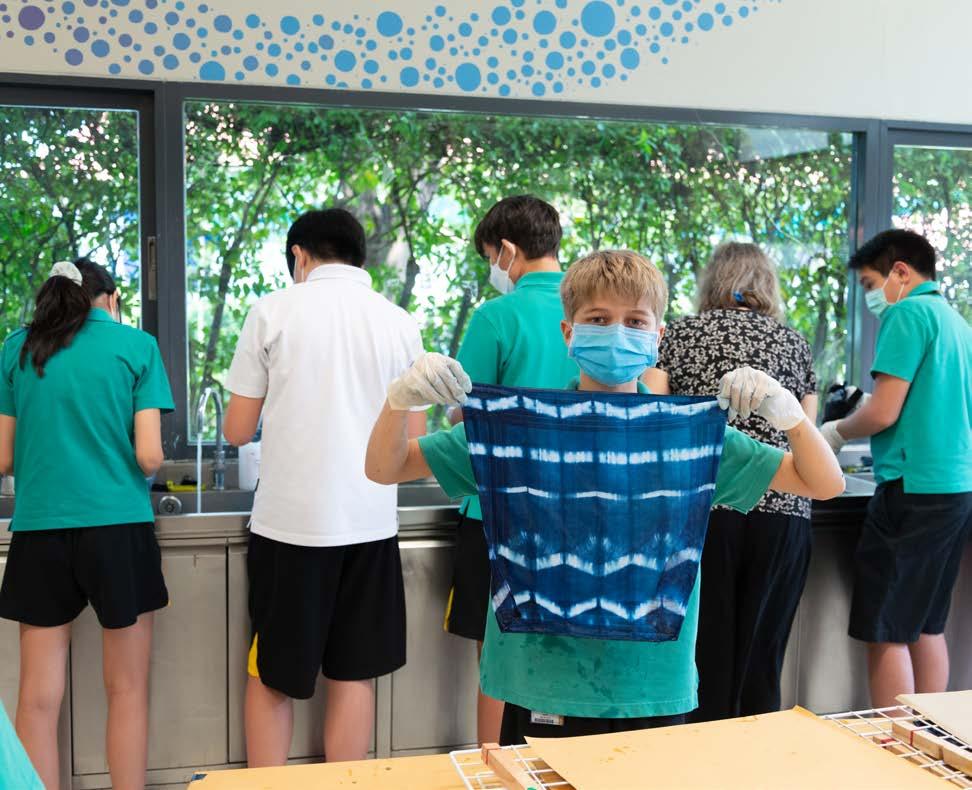
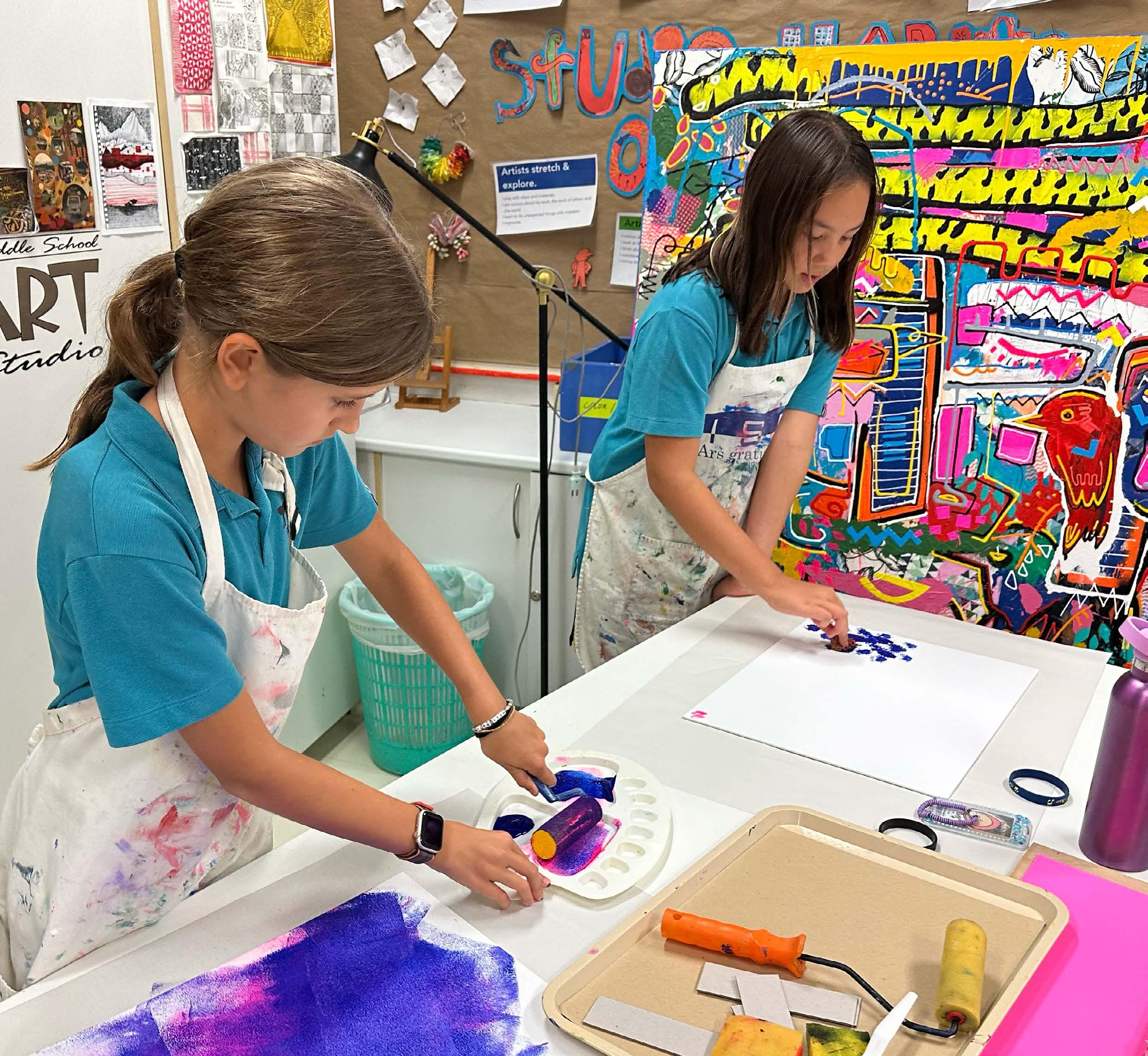
Students will work individually and collaboratively to create art that reflects their personal experiences as they transition from Elementary to Middle School. They will also engage with the work of other artists, within the classroom, their community, and from around the world. In this collaborative studio course, students learn to value questions over answers and resilience over perfection. We focus on sharpening observational skills, building tolerance for ambiguity, and using peer feedback to navigate the creative process.
Creating
Presenting
Responding
Connecting
• How does collaboration expand the creative process?
• How do artists create works of art that effectively communicate?
• How does refining artwork affect its meaning to the viewer?
• How do life experiences influence the way we relate to art?
• How does engaging in creating art enrich people’s lives?
Students are required to purchase a middle school sketchbook.
The following Visual Arts courses are available to students in grade 7 and 8. Students must take at least one Visual Arts course in grade 7 or grade 8. They may repeat these courses as the content is adapted based on students’ interests, art opportunities within Bangkok, and current events.
Students will work individually and collaboratively to create art in a variety of two-dimensional media which may include: drawing, painting, photography, collage, printmaking, batik. They will also engage with the work of other artists, within the classroom, their community, and from around the world. More than just finding answers, this course is about asking the right questions. In an authentic studio setting, students develop the critical thinking and grit needed to thrive in ambiguous situations, learning how to turn failure into progress alongside a supportive community of peers.
Creating
Presenting
Responding
Connecting
• Why do artists follow or break from established traditions?
• What role does persistence play in revising, refining and developing work?
• What criteria are considered when selecting work for presentation, portfolio or collection?
• What can we learn from our responses to art?
• How do images influence our views of the world?
• How do people contribute to awareness and understanding of their lives and community through art making?
• How is art used to impact the views of a society?
Students are required to purchase a middle school sketchbook.
Students will work individually and collaboratively to create art in a variety of three-dimensional media and different sculptural-making methods which may include: clay, plaster, cardboard, wire. They will also engage with the work of other artists, within the classroom and from around the world. Set within an authentic studio environment, this course cultivates curiosity, observational acuity, and critical thinking. The curriculum prioritizes rigorous inquiry over immediate answers, fostering the resilience to navigate failure and ambiguity while leveraging the vital role of peer collaboration.
Creating
Presenting
Responding
Connecting
• What factors prevent or encourage people to take creative risks?
• How do artists and designers learn from trial and error?
• What criteria, methods and processes are used to select work for preservation or presentation?
• How do life experiences influence the way we relate to art?
• How does making art attune people to their surroundings?
• How does art help us understand the lives of people of different times, places and culture?
Students are required to purchase a middle school sketchbook.
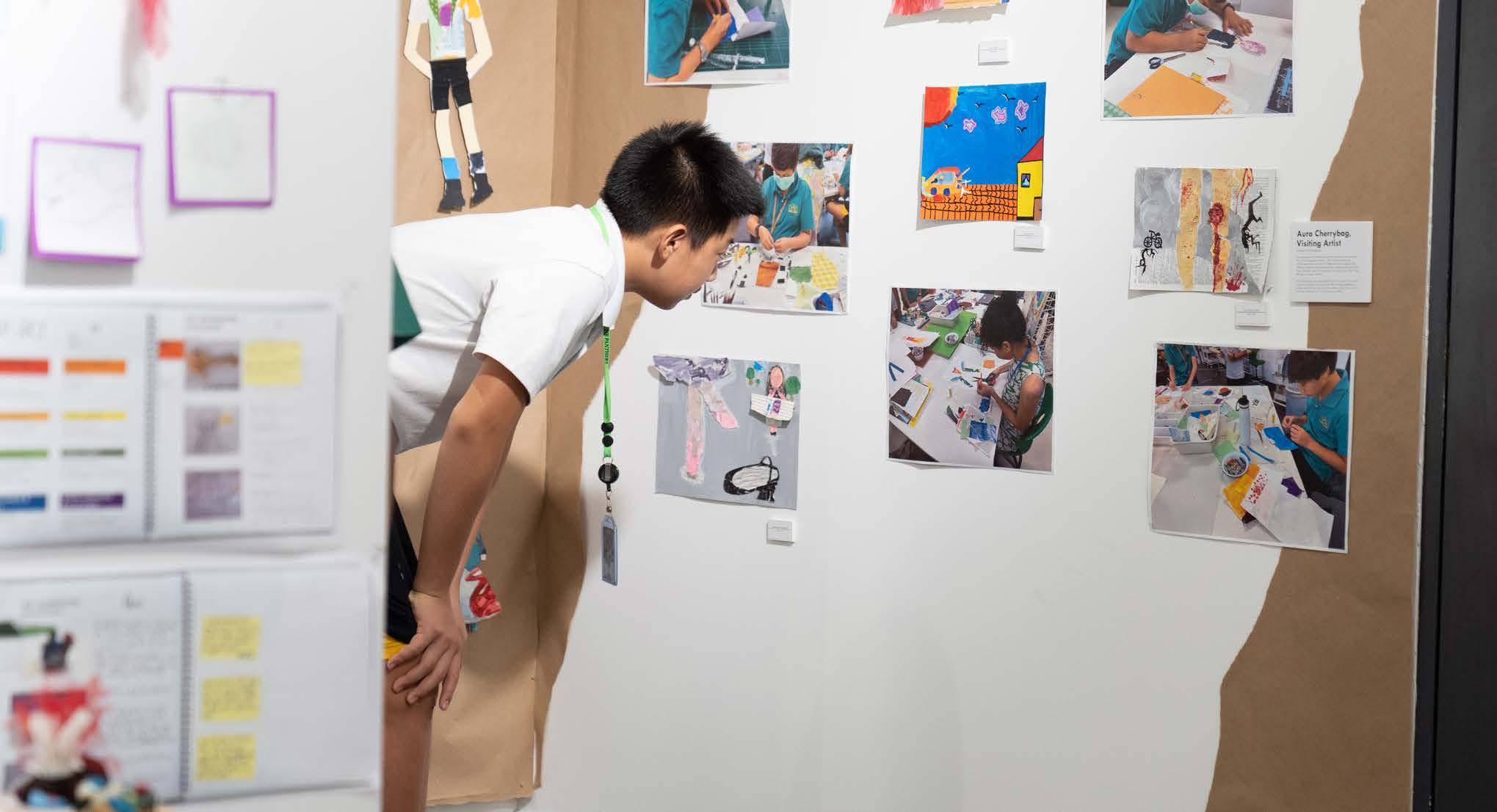
(Grade 7 - 8. This course is for students with high interest and/or aptitude in art.)
Prerequisite: Art 6 and one other middle school art course, or Art 6 and Portfolio Review and Teacher Approval
Advanced Art is a semester-long course for students who are passionate about the arts, seeking rigor, and looking to access a pathway to AP 2-D or 3-D Art & Design, IB Visual Arts, or SUPA (Syracuse University) courses in high school. To be eligible for Advanced Art students must have completed Art 6 and at least one other visual arts course in middle school or pass a portfolio review, and have teacher approval.
Advanced Art combines advanced application of the Elements and Principles of Design with the Studio Habits of Mind. We focus on building visual literacy and Developing Craft, ensuring students master both the technical skills and the critical thinking habits, like Stretching and Exploring, essential to the working artist.
Students in this course will follow the artistic process, focusing on ideation, technique and skill exploration, experimentation, and refinement, creating and presenting their work. Students will learn about composition and study the work of other artists. They will have the opportunity to work with a visiting artist and/or take a field trip.
The topics, themes, and media will vary semester to semester and be determined in consideration with what is being taught in concurrently offered middle school art classes.
The following are the primary areas of study:
Focus on Creative and Divergent Thinking: Students will explore traditional and non-traditional approaches to art-making, fostering innovation and originality.
In-Depth Media Exploration: Techniques such as printmaking, collage, painting, and mixed media will be emphasized, allowing students to refine their craftsmanship.
Portfolio Development: Projects will be designed to help students build a cohesive portfolio, showcasing their growth and achievements.
Nurturing Creative Competencies:
• Tolerance for Ambiguity: Learning to navigate uncertainty
• Idea Generation and Imagination: Encouraging innovative thinking and exploration of diverse perspectives
• Valuing Influence and Collaboration: Understanding the importance of teamwork, and cultural influences in art-making
• Questioning over Answering: Prioritizing curiosity and critical inquiry in the creative process
• Experimental Execution: Embracing iterative processes and risk-taking in their work
Creating
Presenting
Responding
Connecting
• What conditions, attitudes, and behaviors support creativity and innovative thinking?
• How do artists become accomplished in art forms?
• What is an art museum?
• How do objects, artifacts, and artworks collected, preserved, or presented cultivate appreciation and understanding?
• What is the value of engaging in the process of art criticism?
• How can the viewer “read” a work of art as text?
• How does knowing and using visual art vocabularies help us understand and interpret works of art?
• How does art help us understand the lives of people of different times, places, and cultures?
• How does art preserve aspects of life?
Students must have teacher permission to enroll in this course.
Students are required to purchase a middle school sketchbook and maintain an artist’s journal throughout the semester.
Students will work with a visiting artist and/or attend Visual Arts Field Trips.
Design, Technology and Engineering is a process that links creativity and innovation across a range of technologies and contexts. It is an iterative process where all students benefit from learning about, and working with contemporary, emerging and traditional technologies that shape the world in which we live.
The goal of Design, Technology and Engineering at ISB is to develop students who:
• Understand how creative and innovative solutions can be refined through the development of a particular vision, and/or spontaneous inspiration.
• Manage projects independently and collaboratively from conception to realisation.
• Make informed and ethical decisions about the role, impact and use of technologies in the economy, environment and society for a sustainable future.
• Build self-efficacy and perseverance through extensive trialling and acceptance of failure in order to reflect, constantly evaluate and build on success.
• Collaboratively and effectively produce design solutions to opportunities, challenges and/or problems that matter.
• Critique/evaluate the ideas and work of self and others to determine viability, feasibility and/or impact of the design solutions/product.
• Work effectively and respectfully with diverse teams, supporting individual learning and contributing to the learning of others.
Armed with the mindsets and methods of design thinking, students are able to identify situations where they can better the world—and have the personal and collaborative tools and resolve to take action.
DT&E courses are available to students in Grade 7 and 8. Students must take at least one DT&E course during their time in Grade 7 or Grade 8.
DT&E courses are available to students in Grade 7 and 8. Students must take at least one DT&E course during their time in Grade 7 or Grade 8.
All DT&E courses include the building of essential design skills from craft to creative thinking, as well as, learning about contemporary design and lifestyle. These skills help prepare students for high school DT&E classes including Coding, Cyber security, VEX Robotics, Design, IB Design Technology and AP Computer Science courses.
Understand
Design
Make
Evaluate
• Why do we need to research existing products, when we intend on creating a new one?
• How can I represent the real-world and solutions to its challenges?
• How can I leverage technology to visualize concepts and ideas?
• Design is an iterative process, therefore, when is the best time to evaluate ideas and solutions?
This class is about using the most up-to-date design programs to digitally model solutions and to real-world problems. This class is built around the Design Cycle, communication, and creativity. They will learn how to use Fusion 360 to create their designs and then fabricate using the appropriate CAM machine.
The course begins with short projects to introduce students to the CAD/CAM software, equipment, materials, processes, and safety protocols. The final project will emphasize the design cycle, requiring students to identify an authentic problem or opportunity and use the process to create solutions.
CAD = Computer Aided Design, for example; Fusion 360, Illustrator & Photoshop
CAM = Computer Aided Manufacture, for example; 3D printing and laser cutting
The DT&E: Coding course is a hands-on effort and takes students through a variety of coding experiences. Students learn the fundamentals of coding and game design including: conditional statements, variables, user interface design, mathematical expressions, loops. physics, data structures, art, and sound.
This course focuses on developing students’ skills and knowledge in the Invention Center workshop. Students will learn and create using wood, metals, plastics, and recycled materials to produce eco-friendly solutions. The course involves both individual and collaborative efforts to identify a problem, research possible solutions, design their solution using the design cycle, and then fabricate and test it.
The course begins with short projects to introduce students to the workshop equipment, materials, processes, and safety protocols. The final project will emphasize the design cycle, requiring students to identify an authentic problem or opportunity and use the process to create solutions. This course offers hands-on, authentic learning experiences.
This is a hands-on exploration of engineering and design principles using LEGO’s Spike Prime robots. With a challenge-based approach to learning, students will be presented with a variety of open-ended problems to solve. By developing strategic thinking routines, applied math skills, critical reflection, and their own creativity, students will learn the basics of computer programming and design processes.
Prerequisite: Robotics Engineering 1
This is a hands-on exploration of engineering and design principles using Spike Prime robots. With a challenge-based approach to learning, students will be presented with a variety of open-ended problems to solve. By developing strategic thinking routines, applied math skills, critical reflection, and their own creativity, students will learn the basics of computer programming and design processes.
Students will explore innovative and non-traditional approaches to design and technology, fostering originality and adaptability.
Core techniques such as CAD modeling, coding, prototyping, and fabrication processes will be emphasized, allowing students to refine their technical expertise and craftsmanship.
Projects are structured to help students create a cohesive portfolio, showcasing their technical, problemsolving, and creative growth.
Nurturing Design Competencies
• Empathy and Understanding: Developing user-focused designs that address real needs
• Iteration and Risk-Taking: Embracing experimental processes and learning from failure
• Collaboration and Influence: Valuing teamwork and diverse perspectives in the design process
• Critical Inquiry: Prioritizing curiosity and asking thoughtful questions to drive innovation
Understand
Design
Make
Evaluate
• How do we identify and research real-world problems to inform our design process?
• What tools and strategies can help us empathize with users and stakeholders?
• How do we generate and refine ideas to develop innovative and functional solutions?
• What role does iteration play in creating effective design for the intended user?
• How do we apply technical skills and craftsmanship to bring designs to life?
• What processes and tools are most effective for prototyping and fabricating solutions?
• How do we determine the success and functionality of our designs?
• How does feedback inform improvements and future iterations of a product?
Students must have teacher permission to enroll in this course.
Prerequisite: Students ideally should have taken both DTE: Product Design and DTE: 3d modeling and making.
Student First Name: _________________________ Student Last Name: ____________________
• A one semester of Visual Arts 6 and a one semester of Drama 6
• A year-long music class (Choir, Band, or Strings)
• A World Language or a Native Language
Thai Nationals must study Thai language
Non-Thais who enroll in ISB in grade 6 will be required to take one semester of Thai Language & Culture in grade 7 or grade 8
Students taking Intensive Studies (LS) or English for Academic Purposes (EAP) are exempt from World/Native Language.
Please select one year -long music class that you want to take in grade 6.
Choir
Band
Check if you are new to Band
Check if you have some experience in Band (Instrument: ____ ____)
Strings/Orchestra
Check if you are new to Strings/Orchestra
Check if you have some experience in Orchestra (Instrument: _____ _)
Do you currently take a support class (EAP or Intensive Studies)? Yes / Level: _______ No
Are you a Thai National? Yes If so, your course registration process is complete No If you are not Thai, please select 1 language choice either Native Language or World Language as below:
Please indicate the number of years you have studied the selected language:
French ____year (s)
Spanish _____years (s)
Mandarin ______year (s)
Semester 1
Core courses (compulsory)
Language
Semester 2
Advisory English
Math Science
Social Studies
PE/Wellness
World/Native Language or English for Academic Purpose (EAP) /Intensive Studies (IS) Electives (semester or year-long)
Language Options:
Native Languages
World Languages
Elective Options:
& Technology
requirement
Native language: French
Native language: Spanish
Native language: Mandarin
Native language: Japanese
Native language: Korean
World Language: French
World Language: Spanish
World Language: Mandarin
Advanced Art
DT&E: 3D Computer Modeling and Making
DT&E: Coding
DT&E: Product Design
DT&E: Robotics 1
DT&E: Robotics 2 Prerequisite: Robotics 1
Other Elective
Notes:
• Non-Thai students who enroll at ISB during their Middle School years or who did not take Thai as a World Language in ES are required to take one semester of Thai Language and Culture (semester elective)
• If you are Thai, you will be assigned to Thai Native class (take one credit for Native Language)
• Students must fulfill one semester of Visual Art or one semester of Design Technology & Engineering (DT&E) in grade 7.
• Please contact your counselor if you want to take both a native language and a world language.
1 G7
2 Registered at ISB with a Thai passport Skip this if you are not Thai.
3 If you take EAL or Intensive Studies
Skip this if you are not EAL/LS
4 Native Language If you are not Thai, you have to select one language.
5 World Language
6 Elective: 1st Choice
7 Elective: 2nd Choice
8 Elective: 3rd Choice
9 Elective: 4th Choice
10 Elective: 5th Choice
11 Elective: 6th Choice
Choose one from the list. There are two pages
Choose one from the list. There are two pages
Choose one from the list. There are two pages
Choose one from the list. There are two pages
Choose one from the list. There are two pages
Choose one from the list. There are two pages
Let’s write down the courses you want before selecting them on PowerSchool.
2 Registered at ISB with a Thai passport
3 If you take EAL or Intensive Studies 4 Native Language
5 World Language
6 Elective: 1st Choice
7 Elective: 2nd Choice
8 Elective: 3rd Choice
9 Elective: 4th Choice
10 Elective: 5th Choice
11 Elective: 6th Choice
Grade 8 General Course Requirements
Semester 1
Core courses (compulsory)
Language
Semester 2
Advisory
English
Math
Science
Social Studies
PE/Wellness
World/Native Language or English for Academic Purpose (EAP) /Intensive Studies (IS) Electives (semester or year-long)
Language Options:
Native Languages
World Languages
Native language: Spanish
Native language: Mandarin
Native language: French For native speakers only.
Native language: Japanese
Native language: Korean
World Language: French
World Language: Spanish
World Language: Mandarin
New
*All students need to take at least one language in grade 8, including EAL and LS students.
Elective Options:
Design & Technology
DT&E: 3D Computer Modeling and Making **Meets DT&E requirement
DT&E: Coding
DT&E: Product Design
DT&E: Robotics 1
DT&E: Robotics 2
Other Elective Drama
Prerequisite: Robotics 1
Notes:
• 8th Graders are able to select three semester elective courses.
• Non-Thai students who enroll at ISB during their Middle School years or who did not take Thai as a World Language in ES are required to take one semester of Thai Language and Culture (semester elective)
• Students must fulfill one semester of Visual Art and one semester of Design Technology & Engineering (DT&E) class at some point in grade 7 or grade 8.
• Non-Thai students who enroll at ISB during their Middle School years or who did not take Thai as a World Language in ES are required to take one semester of Thai Language and Culture (semester elective)
• If you are Thai, you will be assigned to Thai Native class (take one credit for Native Language)
Course Selections Listing on PowerSchool.
1 G8 Core Compulsory
2 Registered at ISB with a Thai passport Skip this if you are not Thai.
3 If you take EAL or Intensive Studies Skip this if you do not take one.
4 If you want to take a native language
5 If you want to take a world language
6 Elective: 1st Choice
7 Elective: 2nd Choice
8 Elective: 3rd Choice
9 Elective: 4th Choice
If you are not Thai, please select one language.
Choose one from the list. There are two pages
Choose one from the list. There are two pages
Choose one from the list. There are two pages
Choose one from the list. There are two pages 10 Elective: 5th Choice
Choose one from the list. There are two pages 11 Elective: 6th Choice
2 Registered at ISB with a Thai passport
3 If you take EAL or Intensive Studies
4 If you want to take a native language
5 If you want to take a world l anguage
6 Elective: 1st Choice 7 Elective: 2nd Choice
8 Elective: 3rd Choice
9 Elective: 4th Choice
Elective: 5th Choice
Elective: 6th Choice
Choose one from the list. There are two pages