The IGS Global Scholar’s Prize Winning Entry 2024
The Rise of Chloe Ting
By Isabel-Mary Keenan
The IGS Global Scholar’s Prize Winning Entry 2024
The Rise of Chloe Ting
By Isabel-Mary Keenan
Isabel-Mary Keenan Year 12
Writing this essay allowed me to unpack the complexities of body image and self-worth in the age of social media. Reflecting on my journey during lockdown and the impact of influencers like Chloe Ting, I aimed to highlight how social media, though a source of inspiration, can also blur the line between motivation and self-criticism. My research shed light on the immense pressures young people face today, particularly regarding unrealistic body ideals that are so often promoted online. This essay is a call to recognise both the power and potential harm of social media, especially in shaping young minds during formative years.
– Isabel
By Isabel-Mary Keenan
When I first heard of Chloe Ting, I was sitting in my bedroom, nestled into the pillows of my bed, calling my long-distance best friend, Mika. It was April 2020, and the world outside my window was still. The streets were empty, the sky muted, and even the air felt quieter, as though the world itself was holding its breath. Both of us were in lockdown, thousands of miles apart, and we couldn’t believe we were living through a global pandemic. The fact that an unknown virus was spreading across the world amazed our thirteen-yearold selves. Personally, I was elated at the idea of not having to go to school in person. No more sitting through science class – that was all that mattered to me.
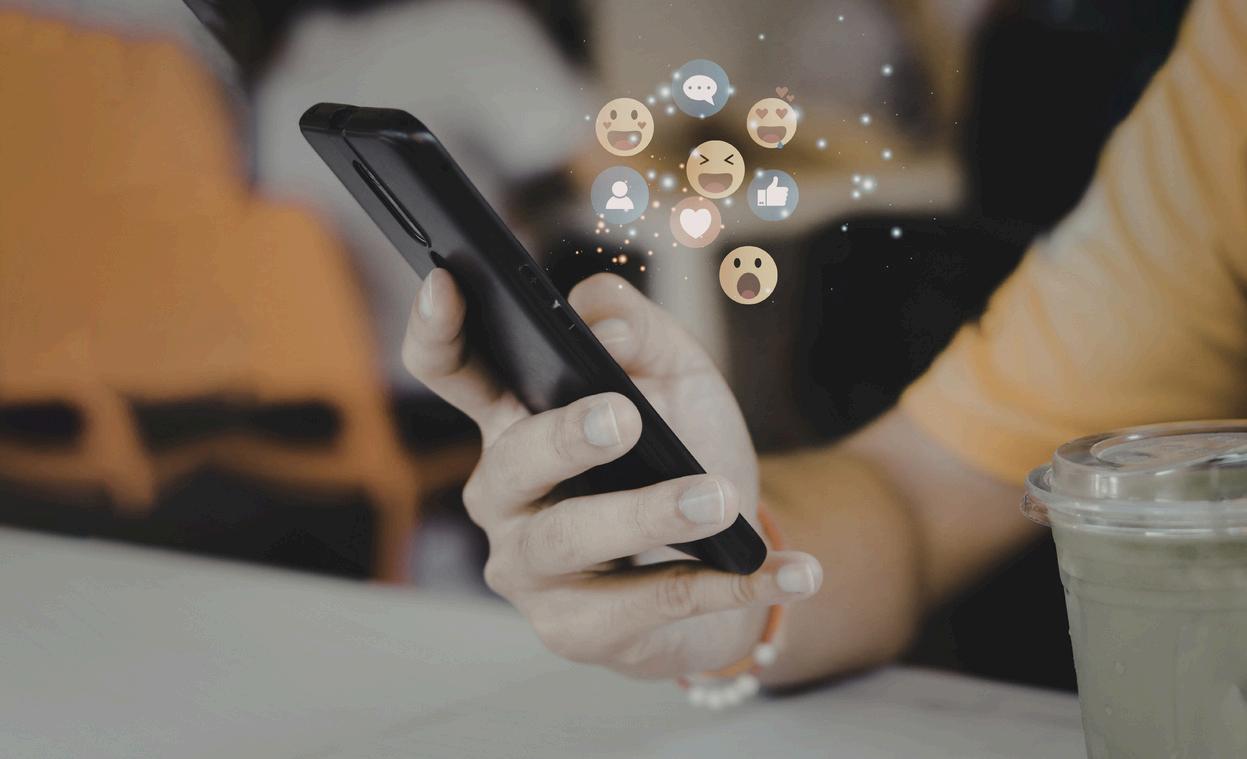
However, I had become someone who was chronically online. Every second seemed to dissolve into scrolling, clicking, swiping – I was lost in the endless loop of content, each swipe numbing my sense of self just a little more. TikTok, Netflix, YouTube – they all seemed to reach out with their invisible hands, pulling me deeper into their endless scroll of content.
When Mika first mentioned Chloe Ting’s name, my curiosity spiked, and my fingers furiously flew across the keyboard, pulling up her name in seconds. What I found was a fitness influencer, dressed in activewear that clearly showed off her six-pack and hourglass figure. It was as if the screen itself glowed, her top video, ABS IN TWO WEEKS, shining through the screen. I glanced down at my own stomach, and suddenly, a wave of discomfort washed over me, like cold water splashing onto my skin. The more I stared at her abs, the smaller I felt. Suddenly, I was too aware of my body, too aware of the way my clothes clung to my skin. I tugged at the edges of my shirt, suddenly so uncomfortable at the way my clothes felt.
For the rest of lockdown, I did a Chloe Ting workout video everyday. I would roll out of bed, the creak of the floorboards beneath me the only sound in the quiet house, and pressed play on another one of her videos. Her voice echoed through my room, guiding me through each movement, as if she alone held the key to a new,
better version of myself. I watched her results videos with an almost painful longing, my eyes glued to the screen, desperate to see the same transformation in myself as I saw in the other girls. Their before-and-after photos flashed across the screen like promises of perfection, and I waited, each day, to wake up and find my reflection changed. I constantly compared myself to everyone I follow on Instagram and TikTok. My thumb would hover over the follow button,
adding fitness influencers to my feed like they were pieces of a puzzle I was trying to solve, hoping they had the secret to the body I wanted.
At this point in time I was thirteen turning fourteen and I weighed fiftyfour kilograms.
I know now that fifty-four kilos was in fact underweight for my height at the time. I also know that my experience during lockdown was not unique. In the absence of physical interaction, spaces like YouTube, Instagram, and TikTok increasingly became the lens through which many, especially young teens like myself, measured self-worth. The algorithm thrived on the promotion of beauty standards, body ideals, and fitness regimes, often glamorising unattainable or unhealthy body images.
"THE CONSTANT BOMBARDMENT OF IDEALISED IMAGES—WHETHER IT’S FITNESS INFLUENCERS LIKE CHLOE TING OR MODELS ON INSTAGRAM—CREATES AN ENVIRONMENT WHERE THE LINE BETWEEN INSPIRATION AND SELFCRITICISM BECOMES BLURRED".
`Stem4, a youth mental health charity, surveyed 1,024 children and young people aged 12 to 21 on how they felt about their bodies. According to the survey, three out of four children dislike their bodies, which increased to eight in 10 people aged 18 to 21. In addition, “Nearly half of all children and young people aged from 12 to 21 questioned said they have become withdrawn, started exercising excessively, stopped socialising completely or self-harmed because they are regularly bullied or trolled online about their physical appearance.”
These statistics reflect a reality that so many young people are facing today. Social media, while a powerful tool for connection and creativity, has also become a breeding ground for comparison and selfdoubt. The constant bombardment of idealised images—whether it’s fitness influencers like Chloe Ting or models on Instagram—creates an environment where the line between inspiration and self-criticism becomes blurred. It has created an environment where ideas and concepts such as, ‘pro-anorexia’, which present anorexia as a lifestyle choice, promoting anorexic bodies as the epitome of female beauty, have become accepted and normalised. Hashtags like #thinspiration or #bonespo lead to images of severely underweight individuals, shared as motivation for others to achieve the same level of thinness. Young people are spending more and more time on social media
together, as a “child or adolescent watches up to 5 hours of television per day and spends an average of 6 to 7 hours viewing the various media combined” , highlighting how exposure to idealised bodies has increased. A study measured
recorded indicators of disordered eating in a “media naïve population” of Fijian schoolgirls after the introduction of Western television. The key indicators of disordered eating were notably more common after extended exposure to television, indicating a detrimental effect of media on body image. This data reveals a recurring theme among participants expressing a desire for weight loss as a way to emulate television characters.
This highlights how societal discourses on female beauty standards create the perfect environment for fitness influencers like Chloe Ting to become successful. What can start as simply scrolling on social media can turn into exposure to harmful content, normalising unhealthy behaviours like starvation, purging, and extreme dieting.
"SOCIAL MEDIA... HAS BECOME A BREEDING GROUND FOR COMPARISON AND SELF-DOUBT."
The experiences I faced during lockdown—filled with anxiety over body image and the overwhelming influence of social media—reflect the long term impact of societal beauty standards, and the perfect breeding ground for these ideas social media has become.
Thus, adolescents and adults alike have become more exposed to discourses of idealised body image, leading to the rise of unhealthy eating habits and an overall decline in mental health, forcefully demonstrating the crippling effects of social media on the self perception of adolescents.