
Rikaz | Rikaz sa Rikaz sa Rikaz com
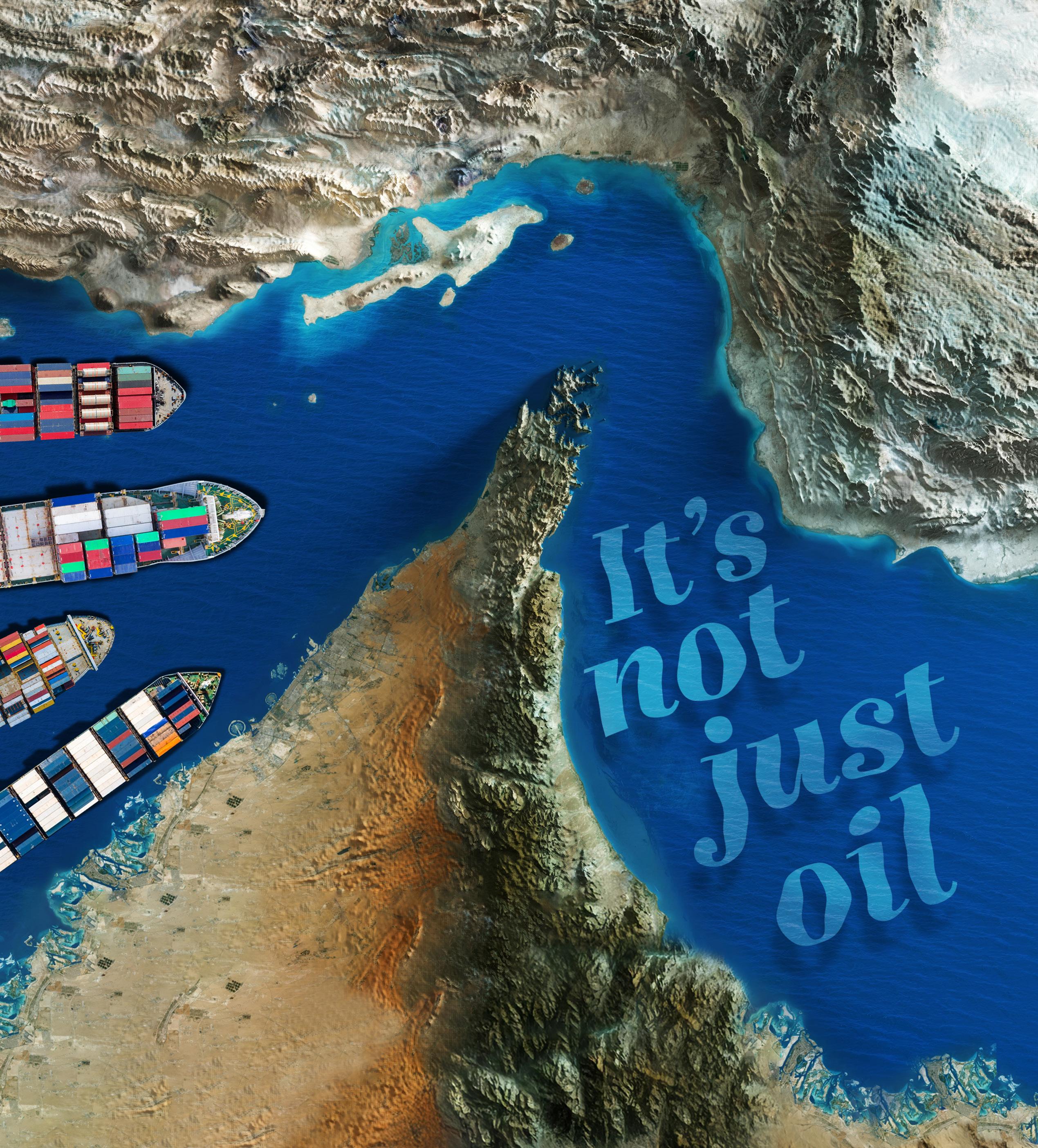
Very few nations remain unaffected by the war in the Middle East. The most obvious impact is on the supply and price of crude oil, and gas. But, what is not obvious is likely to reveal itself in the second half of this year.
For example, Qatar contributes over 30% of the world's highpurity helium, which is a by-product of the LNG production process. This helium is essential in the manufacture of semiconductor chips, and for cooling MRI machines – used to generate highly detailed images of internal organs and tissues – in hospitals. Additionally, LNG is used in the manufacture of urea, an important fertiliser in agriculture. Besides, Qatar also manufactures urea. Now that Qatar is unable to export both products, fertiliser companies around the world are desperately looking for supplies. Shortage of fertiliser will impact agriculture. Crops will be harvested, but may not be in the quantity seen in 2025.
Disruption in supply of PPE resin from Saudi Arabia is impacting the electronics industry and electric vehicle manufacturers.
Oil and gas are just the top two names in a long list of casualties of this war where business is concerned. Our cover story has names of some more products and their use cases.
Another interesting story is on the challenges social media platform X is encountering in its efforts to build a financial ecosystem. Social platforms have spent years trying to make interactions seamless. But financial services bring friction back into the picture.
As always, we look forward to your feedback on our stories.
MAY - JUN 2026
VOLUME 26
ISSUE 58
editor@ifinancemag.com www.internationalfinance.com
The blockade has disrupted supply chains, raising famine risk



‘AI IS THE FUTURE OF BANKING, BUT THE CHALLENGE IS ETHICS’
Brett King
It is hard to code ethical guardrails into artificial intelligence because we can't even agree on ethics as humans

50 Natasha Hamilton-Hart: ‘Responsibility without authority fails’
60 Thomas Engelmann: ‘Scaling sustainable fuels is the path to cleaner aviation’
104 Panagiotis Kriaris: ‘X may begin interoperability before locking in finance’
112 Dr Albena Pergelova: ‘Women bosses act holistically in decision-making’
66 Fuelling Filipino Dreams, Asialink simplifies financing nationwide
88 Tenge Bank JSCB: Building the future of business in Uzbekistan



Beijing Auto Show: Europe collaborates, US frets
Insurers court risk, explore world beyond bonds
When fintechs stop playing nice, and start becoming banks
John Ternus and Apple’s battle for the postsmartphone era
Property agents are struggling to engage data at scale amid automation's emergence

As active ETFs proliferate, meaningful differentiation becomes harder to sustain


www.internationalfinance.com
Director & Publisher Sunil Bhat
Editorial
Prajwal Wele, Agnivesh Harshan, CL Ramakrishnan, Prabuddha Ghosh
Production Merlin Cruz
Design & Layout Vikas Kapoor
Technical Team Prashanth V Acharya, Bharath Kumar
Business Analysts
Alice Parker, Indra Kala, Stallone Edward, Jessica Smith, Susan Lee, Mark Pinto, Richard Samuel
Business Development Managers Christy John, Gwen Morgan, Janet George
Business Development Directors Sid Jain, Sarah Jones, Sid Nathan
Head of Operations Ryan Cooper
Accounts Angela Mathews
Registered Office INTERNATIONAL FINANCE is the trading name of INTERNATIONAL FINANCE Publications Ltd 843 Finchley Road, London, NW11 8NA
Phone
+44 (0) 208 123 9436
Fax +44 (0) 208 181 6550
Email info@ifinancemag.com
Press Contact editor@ifinancemag.com
Associate Office Zredhi Solutions Pvt. Ltd. 5th Floor, Sai Complex, #114/1, M G Road, Bengaluru 560001 Ph: +91-80-409901144

The McKinsey & Company reports that global fintech is entering a phase of steady, disciplined growth driven by AI, digital assets, and evolving models. After volatility, the sector is shifting toward sustainability and profitability. Fintech revenues reached about $650 billion in 2025, around 4% of financial services, and could approach $2 trillion by 2030. Investment activity has surged over 40% since 2023, with fintech firms leading acquisitions. Digital assets like stablecoins saw $35 trillion in transactions, though limited to true payments. As per McKinsey, AI will boost efficiency, risk management, and customer experience across the industry.
Virgin Media O2 is focusing on long-term network upgrades while reporting mixed financial trends. Despite widespread price increases, its average revenue per user declined, indicating pressure on consumer spending. The company is investing heavily in full-fibre infrastructure through Project Mustang and its nexfibre partnership, aiming to replace legacy DOCSIS networks with faster XGS-PON technology by 2028. Fibre coverage has expanded significantly, though construction activity has slowed, reflecting a more targeted and phased rollout strategy.
Tether slowed its gold purchases in the first quarter of 2026, signalling a shift in how it manages reserves backing its USDT stablecoin. Gold buying dropped sharply to about six metric tonnes from 27 tonnes in the previous quarter, even as total holdings reached roughly 132 tonnes valued at nearly $19.8 billion. Gold accounts for around 10% of reserves, while US Treasury bills dominate. The firm also holds Bitcoin as part of its portfolio. The slowdown reflects a more balanced reserve strategy, despite earlier ambitions to increase gold exposure significantly.

These devices deliver high-performance printing with speeds of up to 57 pages per minute in enterprise models. They feature high-speed duplex printing for automatic double-sided output and scan up to 200 images per minute for rapid digitisation. The printers provide professional-grade monochrome laser resolution for business documents. AI capabilities include HP AI Scan with OCR for converting documents into editable files and smart formatting tools for auto-naming and translation.
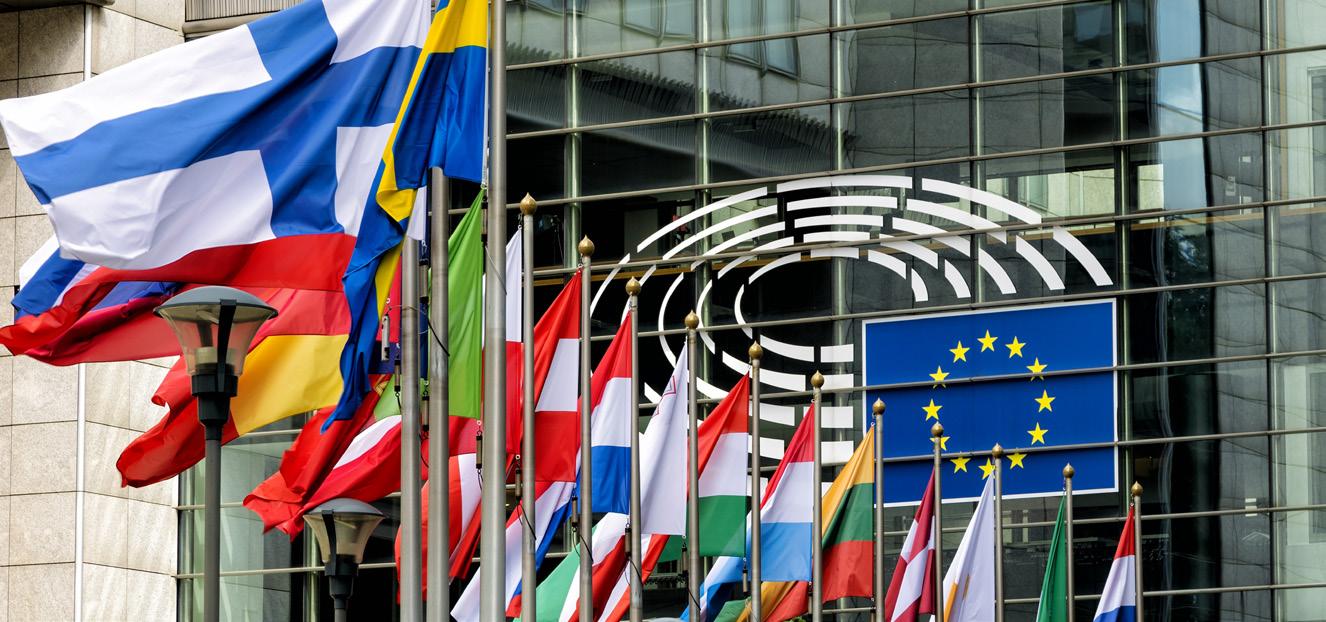
The European Union and South American trade bloc Mercosur are moving ahead with a free trade agreement (FTA), amid pressure from Trump tariffs. While Germany and Spain back the deal, France and environmental groups have raised concerns over agriculture and deforestation. Though the European Parliament has challenged the pact, the European Commission is applying it provisionally. The EU is also accelerating trade deals with India and
Australia to offset declining US trade. However, economists warn that these agreements can neither fully replace the US' economic weight nor counter strong Chinese competition. "The elephant in the room is China. And this is not just about tariffs. If you look at what China has done in Asia and in Africa, it has been about investment and the energy transition, too," said Lucrezia Reichlin, professor of economics at the London Business School.

Source: Claight | In Billion US Dollars

The American automobile company's boss recently announced R&D projects on variants of R2 EVs, as part of the business' ongoing focus on producing smaller and more affordable SUVs

ABASIAMA IDARESIT FOUNDER OF WILD FUSION
Abasiama Idaresit has been a pioneering name, when it comes to advancing Nigeria's digital transformation initiatives, strengthening tech-driven marketing and AI adoption strategies
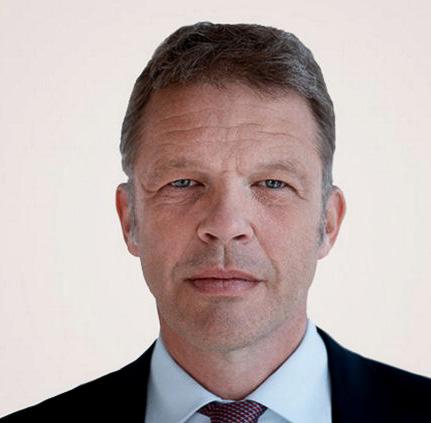
Under the veteran German banker's leadership, Deutsche Bank has increased its pre-tax profit by 7% to 3.0 billion euros, while net profit recorded its highest quarterly amount in the Q1 2026
Despite the weaker performance, Airbus maintained its full-year guidance and reiterated its target of delivering around 870 aircraft in 2026
BMW beat key profit expectations in the Q1 2026, despite a narrowing core margin putting pressure on its business

Airbus reported a weaker-than-expected Q1 2026 as ongoing engine supply shortages slowed aircraft deliveries and squeezed profits, highlighting the mounting pressure being faced by the global aviation supply chain.
The European planemaker posted adjusted operating profit of €300 million ($351 million) for the quarter ended March 31, a sharp 52% decline from a year earlier and below analyst expectations of €348 million. Revenue also fell 7% year-on-year to €12.65 billion.
At the centre of Airbus’ challenges is a continuing engine supply crunch involving US-based supplier Pratt & Whitney, which has delayed deliveries of engines needed for the European giant’s best-selling A320neo aircraft family. The company delivered 114 commercial aircraft during the quarter, down 16% from the 136 jets delivered in the same period in 2025. Boeing, meanwhile, handed over 143 aircraft in the quarter, signalling a potential recovery for Airbus’ long-time American rival.
Despite the weaker performance, Airbus maintained its full-year guidance and reiterated its target
of delivering around 870 aircraft in 2026. The company also reaffirmed plans to raise A320-family production to between 70 and 75 aircraft per month by the end of 2027, although that target had already been revised lower earlier this year because of supply-chain disruptions.
Chief Executive Guillaume Faury acknowledged that the company remains in disagreement with Pratt & Whitney over late engine shipments, though discussions are continuing in parallel with the goal of resolving the issue at the earliest. Airbus has reportedly explored the possibility of seeking damages tied to the delivery delays.
The quarter was also affected by an administrative delay involving nearly 20 aircraft intended for Chinese customers, though Airbus said the issue has since been resolved. At the same time, rising global fuel prices are driving stronger demand for fuel-efficient aircraft, which Airbus sees as a long-term positive despite current operational setbacks.
Airbus’ defence and helicopter divisions provided some support during the quarter. Revenue rose 7% year-on-year, while helicopter deliveries increased to 56 units, helping partially offset weakness in the company’s commercial aircraft business.


With its first-quarter earnings beating expectations, German automobile giant BMW maintained its 2026 financial guidance. However, it has to deal with the headwind in the form of American tariffs, while intense competition in China has put the premium carmaker under pressure in its largest single market.
While taking note of Donald Trump's recent announcement of raising the levy on EU (European Union) auto imports from 15% to 25%, which rattled the German automotive industry, CEO Oliver Zipse said, "But this is merely a threat intended to get the European Union to uphold its side of a trade deal."
In Q1 2026, BMW beat key profit expectations for the quarter, despite a narrowing core margin putting continued pressure on its business. The venture reported first-quarter pretax earnings at 2.3 billion euros ($2.70 billion), exceeding analysts' forecast of €2.2 billion in a company-provided consensus. BMW's EBIT (Earnings Before Interest and Taxes) margin in its core automotive business, a key metric for its success, stood at 5.0%, down from 2025's tally of 6.9% but ahead of analysts' forecast of 4.7%.
Group revenue missed expectations, falling 8.1%
to 31 billion euros, due to the falling quarterly sales and weak demand in China. Rivals Mercedes-Benz and Audi were also under pressure as Chinese automakers, apart from extending their lead in their home market, the world's largest, are now pushing deeper into Europe. American tariffs and the ongoing Middle East conflict cloud the outlook further.
As per Zipse, BMW expects a moderate decline in its group result in 2026, in a range of 4% to 6%, after 5.3% in 2025. As for the threatened American tariff hike, the company expects the EU to reduce its own tariffs on US imports to avoid an escalation.
BMW is turning to cost reductions to offset headwinds like tariff pressures and high raw material costs in a weak global automotive market. The company has not announced job cuts either, as its focus remains on factory efficiencies and reduced investment, having developed the Neue Klasse platform (a forthcoming, all-electric vehicle architecture) to overhaul its product portfolio.
Tariffs, including US levies at their current rate, along with another EU tariff on China-made EVs, put a 1.25-percentage-point impact on BMW's car margin in the first quarter.
UniCredit CEO Andrea Orcel said he does not expect the bank to build a large enough stake to gain full control of Commerzbank
The bank also upgraded its annual income guidance, expecting results to reach the upper end of its projected range
Italian lending giant UniCredit reported a record first-quarter profit, beating analysts' expectations. While raising its full-year outlook, the venture also announced the formal takeover bid for Germany's Commerzbank. The Andrea Orcel-led company is now putting all its efforts into completing the €35 billion all-share takeover of Commerzbank after shareholders approved the capital increase needed for the deal. Orcel said he does not expect the bank to build a large enough stake to gain full control of Commerzbank. The offer has faced strong opposition in Germany, with Commerzbank CEO Bettina Orlopp calling the development "unusual" because it does not include a premium. She, however, said that her organisation was willing to negotiate things out.
Residential property sales in Abu Dhabi remained broadly stable, with transactions rebounding in April, stated the Abu Dhabi Real Estate Centre (ADREC). More than 3,200 residential units worth over AED13 billion ($3.54 billion) were sold in the month, compared with around 2,600 transactions in March. January and February recorded approximately 2,700 and 3,100 deals respectively. The March slowdown reflected seasonal factors including Ramadan, Eid Al Fitr holidays, weather disruptions, and regional developments. Sales of ready-to-move residential units remained consistent. ADREC said the data provides greater transparency into transaction activity and market behaviour across Abu Dhabi’s property sector.

The British banking giant reported a 12% rise in Q1 profit for 2026 as higher lending income and tighter cost controls supported earnings despite growing economic uncertainty. Operating profit before tax increased to £2 billion from £1.8 billion a year earlier, beating analyst expectations. The British bank also upgraded its annual income guidance, expecting results to reach the upper end of its projected range. However, as per NatWest, the domestic economic outlook has weakened due to inflation concerns, slower growth expectations, and the Iran conflict's impact on energy markets. The lender recorded a £283 million impairment charge linked to geopolitical risks while maintaining strong customer activity across retail and commercial operations.
International Monetary Fund (IMF) Managing Director Kristalina Georgieva said that the global economy could face a "much worse outcome" if the Middle East conflict drags on and oil prices hit around $125 per barrel. The continuation of the Iran war meant that the global lender's "reference scenario", assuming a short-lived conflict, which forecast a minor GDP slowdown to 3.1% and a price increase to 4.4%, was no longer possible. "This scenario, with every day that passes, is further and further behind in the rear-view mirror," Georgieva said. The war's continuation, a forecast of an oil price around or above $100 per barrel, and rising inflation meant the IMF's "adverse scenario" was already in effect.
President Donald Trump's dual strategy of striking Iran and imposing tariffs globally has triggered a severe economic crisis
During his 2024 campaign, Donald Trump projected himself as the terminator who would finish off the inflation that was tormenting average Americans since the COVID-19 pandemic, apart from keeping the United States out of expensive foreign wars and putting American workers first through tough trade policy.
The OECD now warns that US headline inflation could hit approximately 4.2% in 2026, up from a previous forecast of just 3%
As the 2026 midterm elections approach, all three of those pledges are far from being fulfilled, and the reason is a collision between two of his own decisions. First is the decision to strike Iran, and the second is taxing imports at the highest rate in more than a century.
The consequences are showing up where voters feel them most directly, at the gas pump, in the grocery aisle, and at car dealerships. Surveys show consumer confidence at record lows. If the pain persists into November, Donald Trump’s Republicans could face a serious reckoning at the ballot box.
In late February, Donald Trump ordered joint US-Israeli strikes on Iran. Tehran swiftly responded by closing the Strait of Hormuz, the narrow
channel in the Persian Gulf through which roughly a fifth of the world’s oil supply passes daily. That one decision triggered an enormous energy price shock that economists say has reversed much of the hard-won progress the United States made on inflation during 2024 and 2025.
Brent crude, the global oil benchmark, surged from about $70 per barrel before the conflict to over $110 at its peak after Iran shut the strait. When Tehran briefly signalled a partial reopening, prices fell below $90, only to climb back above $105 as tensions remained high. The US benchmark, WTI crude, approached $96. As a direct result, US inflation accelerated to 3.3% in March 2026, the highest rate in two years, driven largely by fuel.
The OECD now warns that US headline inflation could hit approximately 4.2% in 2026, up from a previous forecast of just 3%
The IMF’s managing director, Kristalina Georgieva, has described the situation as a “reversal” of what had been a positive trajectory for prices. Simply put, two years of painful interest-rate increases to bring inflation under control have been significantly set back in a matter of weeks.
Since the Iran strikes began, pump prices across the United States have risen by roughly 50 cents per gallon, with station price boards changing numbers almost daily in some areas. In California, the aver-

age has already crossed five dollars per gallon.
Nationally, analysts expect average US gasoline prices to head toward three dollars fifty if oil stays above $100. The national average was already at $4.16 per gallon on April 8, up from $3.25 just a month earlier, according to AAA data.
Polling shows that voters are angry and anxious. A Reuters/Ipsos survey in early March found that 67% of Americans expect gas prices to get worse over the next year as a result of the Iran campaign.
That fear cuts across party lines. Over 44% of Republicans and 85% of Democrats share it. Only 29% of respondents approved of the strikes at all, and 64% said Trump had never clearly explained what the United States was trying to achieve.
A separate Pew Research survey later in March found that 69% of Americans were worried about rising fuel costs from the conflict. Nearly six in ten Republicans told Pew that gas prices were their biggest concern about the war, while close to eight in ten Democrats said the same.
That bipartisan pain matters enormously heading into November. When a President’s own supporters feel the squeeze at the pump every time they fill their tank, the political shelter that wartime solidarity usually offers starts to crack. Inflation, unlike foreign policy abstractions, is something voters experience personally and remember when they vote.
The disruption to the Strait of Hormuz has inflicted damage well beyond fuel prices. Oil is a raw material for plastics, fertilisers and chemicals, so when its price spikes, the cost of hundreds of everyday products rises in turn. Shipping routes have been disrupted, adding delays and costs throughout global supply chains.
Researchers at the Dallas Federal Reserve modelled the inflation impact depending on how long Hormuz stays restricted. If it remains closed for one quarter, it adds roughly 0.35 percentage points to 2026 inflation.
Two quarters of closure add 0.79 percentage points. Three-quarters would add approximately 1.47 per-
centage points on top of existing pressures. These figures translate directly into higher prices on goods ranging from groceries to building materials, even if the war itself ends.
OECD economists also note that because of the way prices ripple through supply chains, households will still be feeling the effects in rent, transport costs and consumer goods as they head to the polls in November.
The Iran shock is not arriving in a vacuum. It is hitting on top of a separate cost increase that Donald Trump himself created. Namely, his sweeping tariff programme, which has imposed taxes on imported goods at levels the United States has not seen in over a hundred years.
When Trump’s second term began, the average effective tariff rate, the actual percentage tax paid on imports, stood at roughly 2.5%
By April 2025, it had jumped to an estimated 27%, the highest in more than a century.
Legal challenges and negotiated deals have since brought it down to approximately 11.8% as of early 2026, with CNN tracking the effective rate at around 16.8% by the end of 2026.
Even at those reduced levels, the tax burden on imported goods is vastly higher than anything Americans faced before Trump’s second term. Initially, companies absorbed most of the extra costs rather than passing them on to shoppers.
In 2025, the US government collected roughly $187 billion more in tariff revenue than in 2024, almost a 200% increase, and businesses
covered an estimated 80% of those costs internally. But that cushion is being depleted.
JPMorgan analysts and industry consultants warn that the corporate share of these costs could fall to around 20% in 2026 as pre-tariff stockpiles run out and businesses begin repricing. The bill is now migrating to household budgets.
Research by the Centre for American Progress, drawing on Harvard Business School analysis, found that between October 2024 and March 2025, prices of everyday nondurable goods such as cleaning products and toilet paper rose approximately 5%
Furnishings climbed around 8%. Clothing jumped roughly 14% A Yale Budget Lab estimate puts the ultimate annual cost to the average US household at approximately $1,700 once tariffs are fully passed through.
Food is now entering the pressure zone as well. Tariff effects typically take 12 to 18 months to work through to consumer prices fully, meaning peak pressure will fall between April and October 2026, right in the heart of election season.
Food prices were already up 2.9 % year-on-year in January 2026. Yale’s modelling implies an effective annual food cost increase of around $1,500 for a typical household once tariff effects are fully felt. Combined with higher fuel bills, those numbers become punishing for families already stretched thin after years of post-pandemic inflation.
The sharpest tariff increases
Inflation rate in the United States from April 2025 to March 2026
fall on metals, vehicles, electrical equipment and computers, raising the cost of cars, appliances and new home construction. Consumer goods with thin margins and heavy import dependence, such as coffee and fresh produce, have seen particularly sharp price swings. For a middle-income family, the combined effect feels less like an America-first economic strategy and more like being squeezed from every direction at once.
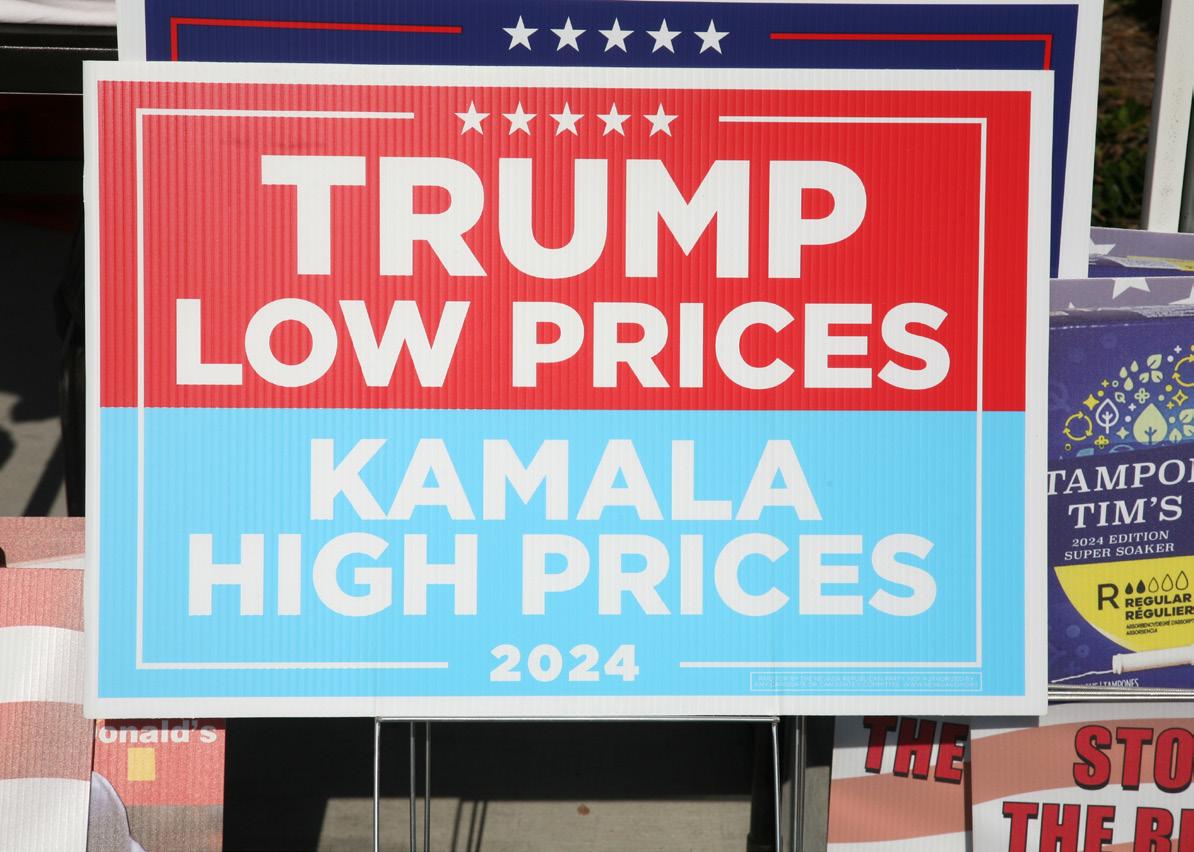
The University of Michigan’s Index of Consumer Sentiment, one of the most closely watched measures of how Americans feel about the economy, fell to a record low in April 2026. The US dollar has also weakened to its lowest point in four years. While a weaker dollar helps American exporters, it also makes imported goods more expensive, piling onto the inflation already generated by tariffs and the energy shock. JPMorgan Chase chief executive Jamie Dimon, writing in his annual shareholder letter on April 6, laid out the compounding risk in stark terms.
“Now, because of the war in Iran, we additionally face the potential for significant ongoing oil and commodity price shocks, along with the reshaping of global supply chains, which may lead to stickier inflation and ultimately higher interest rates than markets currently expect,” said the document.
Donald Trump’s standing on
the Iran conflict itself remains fragile. The same Reuters/Ipsos poll showing only 29% approval for the strikes found that roughly two-thirds of respondents felt the administration had never given a clear picture of what military victory was supposed to look like. When people see their purchasing power shrinking without a clear benefit to offset that sacrifice, frustration tends to find expression in protest votes, especially in the tightly contested districts that decide control of Congress.
Donald Trump could still seek a diplomatic de-escalation with Iran, but after framing the military campaign as a defining test of American resolve, any visible retreat risks being labelled as capitulation. He could roll back tariffs to ease household budgets, but that would contradict a central pillar of his economic philosophy and anger the constituencies that have benefited
from protection.
The White House has already quietly delayed planned tariffs on some furniture and Italian pasta in early 2026, a move analysts read as political damage control rather than principled policy. Wall Street has coined the nickname “TO,” standing for “Totally Chicken Out,” for the administration’s pattern of pulling back from tariff threats whenever markets or polls react badly, suggesting investors see trade policy as more performative than strategic.
Piecemeal retreats like these, however, may not be sufficient to change how voters feel about their household bills by November.
The Dallas Fed’s research suggests that even a relatively brief Hormuz disruption will keep inflation elevated through the end of 2026. The 12-to-18-month lag for tariff pass-through means price pressures will be near their peak immediately before Election Day.
Independent analysts estimate that Donald Trump’s combined policies will cost typical households between $1,500 and $1,700 per year. Consumer sentiment is already at a record low. Neither has the conflict toppled Iran’s leadership, nor has it delivered the concessions the White House sought.
However, the combined arithmetic of oil shocks and tariff costs is already eroding Trump’s standing at home, and as November approaches, his most dangerous political adversary may not be a foreign one, but the monthly household budget.
editor@ifinancemag.com
Both Iran and the United States tried to play hardball with the maritime chokepoint to get the better of each other at the negotiation table in Islamabad
IF CORRESPONDENT
Something has changed in the United Kingdom after February 2026. Petrol is markedly more expensive, and supermarket prices are soaring. The words "stagflation" and "recession risk" are coming up in the news more frequently, and everyone's saying that the reason for all of this is a war that has broken out far away from British shores.
The military conflict involving the United States, Israel, and Iran began on February 28, 2026. It was not just a geopolitical event, but the beginning of an economic crisis reshaping the daily lives of millions of people in the United Kingdom.
This article is an attempt to explain what is happening, why it matters, and what it means for ordinary British workers, families, and businesses.
The worst part of the Middle East conflict has
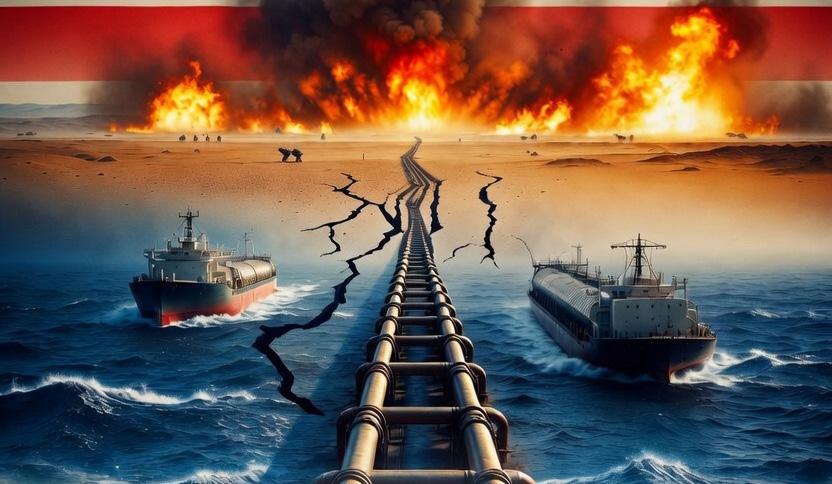
been the blockade of the Strait of Hormuz, which passes one-fifth of all oil and LNG. Both Iran and the United States tried to play hardball with the maritime chokepoint to get the better of each other at the negotiation table in Islamabad. The biggest victim of the geopolitical power play has been global energy security.
Before the war, a barrel of Brent crude oil traded at $70-$72, but within weeks, future prices shot up to $119 per barrel. The prices that buyers were actually paying on the spot market (where oil is bought and sold for immediate delivery) reached $150 at the time, driven by intense panic buying and shortage fears.
The shock was specifically compounded for the United Kingdom, as the European country imports a large portion of its

ECONOMY FEATURE IRAN BRITAIN ENERGY
energy. Net import dependency stood at 43.8% in 2024, which means that when global energy prices spike, the UK does not have enough domestic supply to shield itself.
Wholesale gas prices inside the UK surged from 78 pence per therm at the end of February to 171 pence per therm in the weeks that followed. That is more than double in a matter of weeks.
The International Energy Agency (IEA) described what happened as the single most significant supply disruption in the history of the global oil market. Global oil supply fell by over 10 million barrels per day in March 2026 alone.
The ripple effects were felt almost immediately at petrol stations across the UK. The average price of petrol rose from 131.6 pence per litre to 140.2 pence per litre. Diesel jumped from 141.1 pence to 158.7 pence per litre. These were not gradual, creeping increases. They happened within a month.
The official measure of inflation in the UK, known as the Consumer Price Index (CPI), rose to 3.3% in March 2026. That sounds like a modest number until you consider that just two months earlier, the Bank of England (BoE) had been close to hitting its 2% target and was preparing to start cutting interest rates. Those plans are now on hold indefinitely.
The largest driver of the March inflation rise was motor fuel, which went up by 8.7% in a single month. The last time fuel prices rose that sharply in a single month was during the early period of the Ukraine war. Food inflation is expected to follow.
The Food and Drink Federation has warned that food prices could rise by as much as 9% by the end of 2026 if supply disruptions continue. Part of the reason
is fertiliser. Producing nitrogen fertiliser requires enormous amounts of natural gas, and many fertiliser suppliers in the Gulf and Egypt can no longer export their products because of the maritime blockade.
British farmers are facing doubled fertiliser costs, and many have decided it is simply not worth planting crops this year. Less domestic food production means more imports. More reliance on imports, in a disrupted global market, means higher prices at checkout.
There is also an unusual and little-discussed risk around carbon dioxide gas, which the food industry depends on for slaughtering livestock humanely, carbonating drinks, and preserving packaged goods.
The government has already invested 100 million pounds to reopen an industrial plant on Teesside specifically to ensure a domestic carbon dioxide supply. Major retailers like Tesco say shortages have not yet reached shelves, but the Food and Drink Federation is not ruling out significant gaps in availability by the summer if the Strait remains closed.
Britain’s economy was beginning to recover early in 2026. GDP grew by 0.5% in February, which was a small but encouraging sign. That momentum has now been cut short. The EY Item Club, one of the UK’s most respected economic forecasting bodies, now expects the economy to grow by zero in both the second and third quarters of the year. For the full year of 2026, it has cut its growth forecast from 1.4% down to 0.7%.
Matt Swannell, the Chief Economic Adviser to the EY Item Club, warns that the labour market is entering a period of severe distress. Matt remarked, "Spiralling energy costs and disruption to sup-

ply chains will push the UK to the brink of a technical recession... The heightened energy prices from the war are also set to deliver the 'biggest hit since the pandemic' to the jobs market, with the jobless rate projected to peak at 5.8% by the middle of 2027."
The International Monetary Fund has gone further in some respects. It identified the United Kingdom as the country that suffered the biggest downward revision to its growth forecast among wealthy nations in its spring 2026 outlook. The IMF now expects UK GDP to grow by just 0.8% in 2026, compared to 1.3% predicted earlier.
The OECD, another major international economic body, expects Britain to have the second-lowest growth rate and the second-highest inflation rate among G7 nations. The United States, by contrast, is expected to grow by 2.3%. The gap is stark.
Why is Britain being hit harder than most? Several reasons compound each other. The UK is a net importer of gas. It has very limited gas storage, estimated at just two days of supply at the peak

2,523,665
of the crisis. Its economy is highly integrated with international trade and supply chains. And its growth was already sluggish entering 2026, leaving very little buffer when the shock arrived.
The word economists are reaching for to describe this situation is stagflation. That is what happens when an economy stops growing, but prices keep rising. It is the worst of both worlds, and it is the same condition that devastated many Western economies in the 1970s during the oil embargo. The last thing any government wants to see return.
Behind the big numbers are real people losing real work. British employers cut 11,000 jobs in March 2026, the first clear month where the economic fallout from the Iran conflict showed up directly in employment figures. Analysts from EY Item Club estimate that approximately 250,000 jobs could be lost by mid-2027 if current conditions persist.
The unemployment rate stood at 5.2% at the start of 2026. Forecasters now expect it to rise to 5.8% by mid-2027,
which would mean over 2.1 million people looking for work. That would be the highest level of unemployment in more than a decade.
The sectors bearing the brunt are those that depend heavily on energy or on consumer spending. Manufacturing, hospitality, logistics and construction are all under severe pressure.
Businesses that were already operating on thin margins are finding that rising energy costs, supply chain delays, and weakening customer demand are simply too much to absorb simultaneously.
Many companies are moving into what economists call a defensive posture. Instead of hiring, investing, or expanding, they are cutting costs and building cash reserves to survive the uncertainty.
The Deloitte CFO Survey, which measures confidence among finance directors at major British companies, recorded a collapse in sentiment to a net figure of minus 57% in late March. That is the most pessimistic reading since the height of the COVID-19 pandemic.
Source: Statista
Consumers are pulling back Ordinary households are responding to the situation predictably. When things feel financially uncertain and prices are rising, people spend less. Consumer confidence, as measured by the Deloitte Consumer Tracker, fell to minus 14.1% in the first quarter of 2026, its lowest level since 2023.
Spending power is expected to fall by 0.3% across the year for the average household. People are cutting back on things they do not consider essential. Travel has taken a particularly sharp hit. Spending on travel fell by 3.3% in March 2026, the first such decline recorded by Barclays in five years.
Jet fuel prices have more than doubled since the conflict began, and airlines are passing those costs on to passengers. International holidays are being postponed. People are choosing domestic breaks instead, or simply staying home.
The hospitality sector, which was already struggling with the April 2026 increase in the minimum wage and higher business rates, is now facing what in-
dustry figures are calling a summer of shortages. Breweries are worried about carbon dioxide availability ahead of the football World Cup in June, usually one of the most commercially important periods in the calendar.
Chancellor Rachel Reeves has been walking a difficult line. On one side, there is enormous pressure to protect households and businesses from rising costs. On the other hand, the government is painfully aware that uncontrolled spending could damage Britain’s fiscal reputation and push up borrowing costs, as happened during the 2022 mini-budget crisis.
"This is not our war, but it is pushing up bills for families and businesses. That's why it's my number one priority to keep costs down... Obviously, no sensible person is a supporter of the Iranian regime, but to start a conflict without being clear what the objectives are... I do think that is a folly and it is one that is affecting families here in the UK," The Chancellor said.
The approach taken has been cautious and targeted. Rather than offering blanket support to everyone, the government has focused on the most vulnerable. It has extended the existing 5 pence cut in fuel duty, saving the average driver around 90 pounds per year. It is also working on contingency plans for further energy bill support in the autumn, when demand for gas heating typically rises sharply.
To fund these measures, the government has expanded the windfall tax on electricity generators. Companies that generate electricity from gas-linked sources are currently making exceptional profits because of how electricity pricing works in the UK market.
The government has raised the Electricity Generator Levy from 45% to 55%, capturing more of those windfall profits and redirecting them toward household support. This levy has also been extended beyond its original 2028 end date.
The government has explicitly said it cannot absorb every price rise on behalf of the population. It is a difficult message to deliver, but it reflects the reality that with national debt on track to reach 100% of GDP by 2029, the room for large unplanned spending is very limited.
Internationally, Reeves has been vocal in criticising the war itself. She has called it a mistake and a folly, language that puts her at odds with US Treasury Secretary Scott Bessent, who has defended the conflict as a necessary cost for long-term global security.
Reeves led a joint statement signed by finance ministers from 11 countries, including Japan, Australia, Spain, and the Netherlands, calling for a negoti-
ated resolution and the reopening of the Strait of Hormuz. The diplomatic tension with Washington adds another layer of uncertainty to the UK’s economic relationships.
Normally, when inflation rises sharply, a central bank’s response is to raise interest rates. Higher rates make borrowing more expensive, which cools spending and helps bring prices down. But the Bank of England (BoE) is in an unusual bind.
Before the Iran conflict, financial markets expected the Bank to start cutting its main interest rate in April 2026, as inflation had been falling toward the 2% target. Now, with inflation at 3.3% and rising, those cuts have been shelved. But the Bank is not raising rates either.
The reason is that the economy is simultaneously weakening. Raising rates

aggressively into a slowing economy risks causing a deeper recession. The Monetary Policy Committee has held the rate at 3.75% and is expected to keep it there for some time.
Economists describe this as an unenviable balancing act. If the Bank holds firm, inflation may become entrenched, especially if workers begin demanding higher wages to keep up with rising petrol and food costs. If it cuts rates, it risks fueling inflation further. The most likely outcome, according to analysts, is that rates stay on hold until around mid2027, when inflation is expected to gradually return closer to target.
For homeowners approaching the end of fixed-rate mortgage deals, this is unwelcome news. Over a million British households are expected to face higher mortgage payments in the coming months as their fixed deals expire, adding to the broader pressure on household budgets.
Some of the starkest stories from the current crisis involve British manufacturers. Energy-intensive industries (those that need enormous amounts of gas or electricity to operate) are in genuine difficulty. Steel, chemicals, glass, ceramics, cement, and paper are all facing input cost increases that many cannot absorb or pass on.
The British Plastics Federation has reported that 58% of its member companies are experiencing severe or significant operational impacts. Almost all of its members are reporting rising raw material and energy costs.
Some firms have added surcharges of up to 30% to their prices, which risks sending customers to overseas competitors, particularly American ones, who benefit from access to cheap domestic natural gas and are insulated from the Hormuz disruption.
The construction sector is also struggling. Output had already fallen by 2% in the three months to February 2026, with private housebuilding dropping 6.5%. The conflict has made things worse through supply chain delays and surging material costs.
Bricks, cement, asphalt, and insulation are all more expensive to produce when energy costs are this high. Construction experts have warned that many projects are moving from commercially challenging to commercially unviable.
One of the most unexpected consequences involves renewable energy. Two major offshore wind projects off the Norfolk coast are facing delays because key components, specifically steel turbine foundations and offshore substations, were ordered from suppliers in the UAE. Those components cannot currently be shipped through the Strait
of Hormuz. The conflict that is driving demand for cleaner energy is simultaneously delaying the infrastructure needed to deliver it.
Growth has stalled. Inflation is rising. Jobs are being lost. Businesses are pulling back. Consumers are cutting spending. And the root cause of all of it, the blockade of a narrow waterway seven thousand kilometres away, shows no immediate sign of resolution.
What makes the situation particularly difficult is that even a ceasefire would not instantly fix things. Energy infrastructure that has been damaged takes time to rebuild. Supply chains that have been disrupted take months to restore. And business confidence, once lost, is slow to return.
Britain’s vulnerability at this moment reflects structural issues that existed long before the conflict began. The country is too dependent on imported energy. Its gas storage is inadequate. Its industrial base has been gradually hollowing out for decades. The current crisis has exposed all of that with uncomfortable clarity.
The months ahead will be tough, particularly for lower-income households, energy-intensive industries, and anyone whose livelihood depends on consumer spending. The government and the Bank of England are trying to prevent the worst outcomes. But the margin for error is small, and the decisions being made in Washington, Tehran, and on the waters of the Persian Gulf will matter as much as anything decided in Downing Street or Threadneedle Street. editor@ifinancemag.com
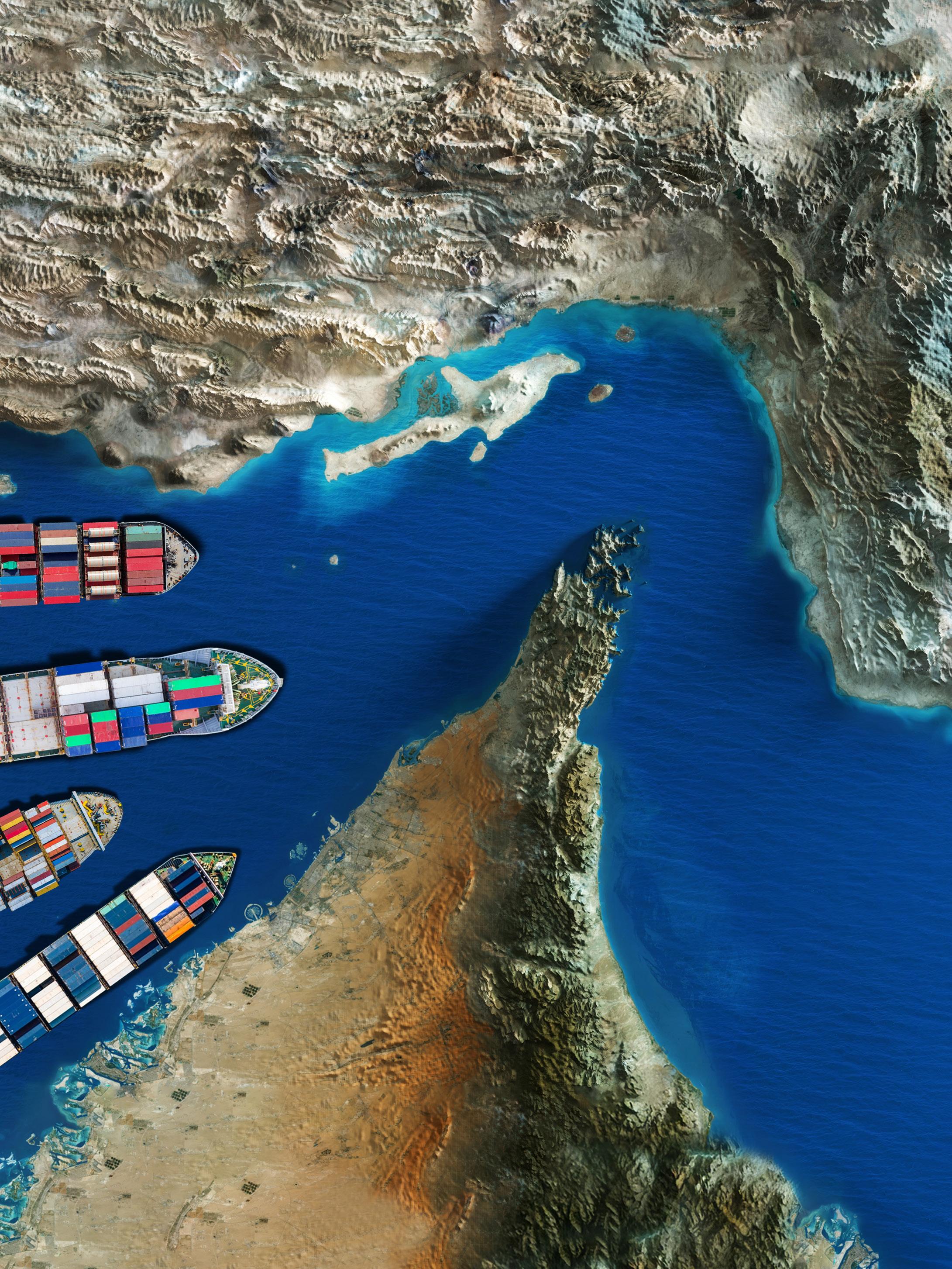
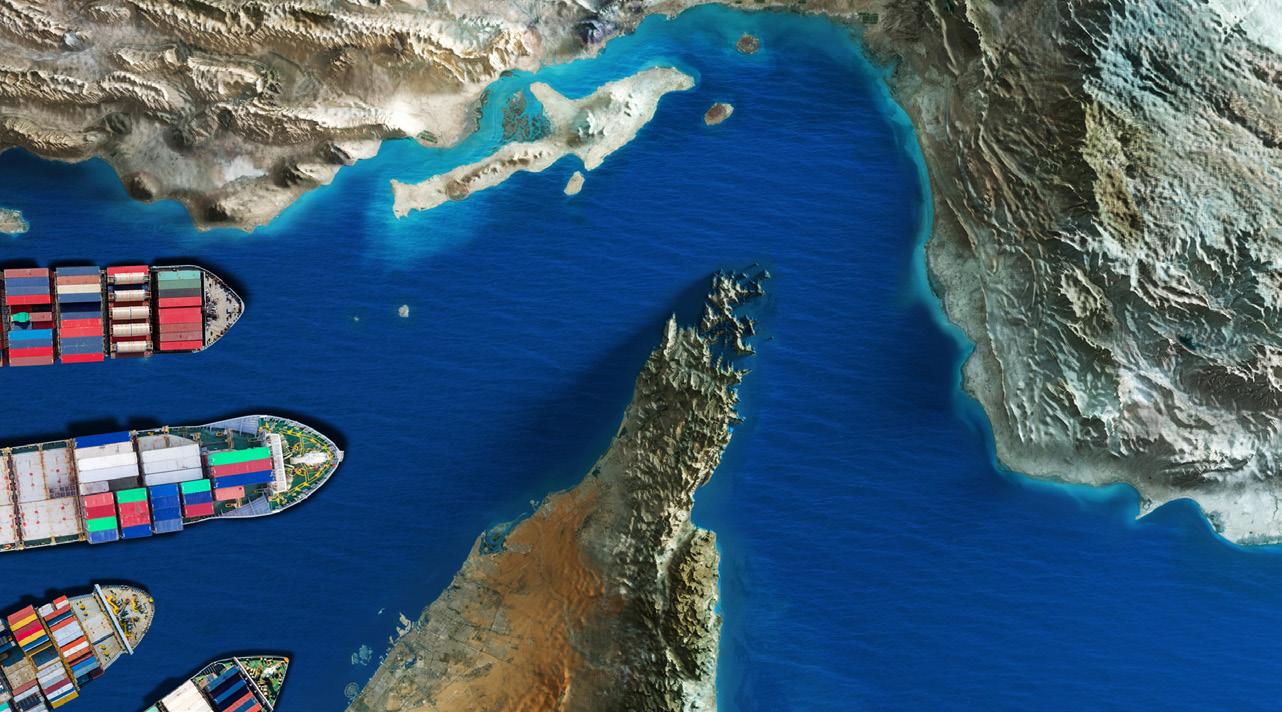
Strait of Hormuz blockade disrupts global fertiliser flows and agricultural supply chains, raising risks of food shortages, rising prices and long term impact on global food security

IF CORRESPONDENT
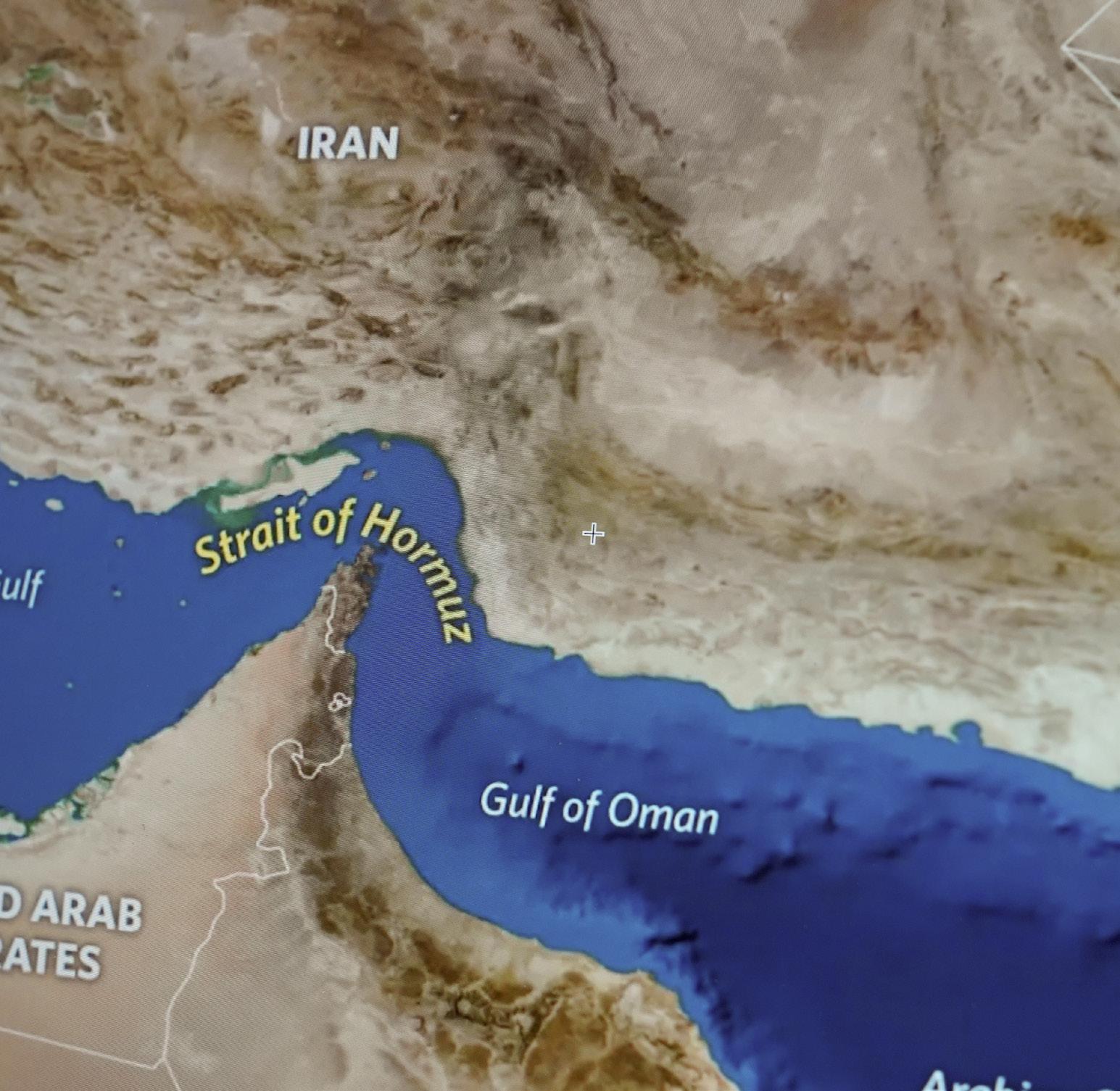
The Strait of Hormuz is a narrow strip of water between Iran and the Arabian Peninsula, roughly 33 kilometres wide. People everywhere are talking about how closing the Strait of Hormuz has created an oil shortage. But what most people overlook is that until the spring of 2026, it was the world’s most important fertiliser highway.
When the United States and Iran effectively shut down the waterway in late February, global energy markets responded loudly. However, the consequences for the global food supply represent a slower, quieter, and more dangerous impact that many people have not noticed.
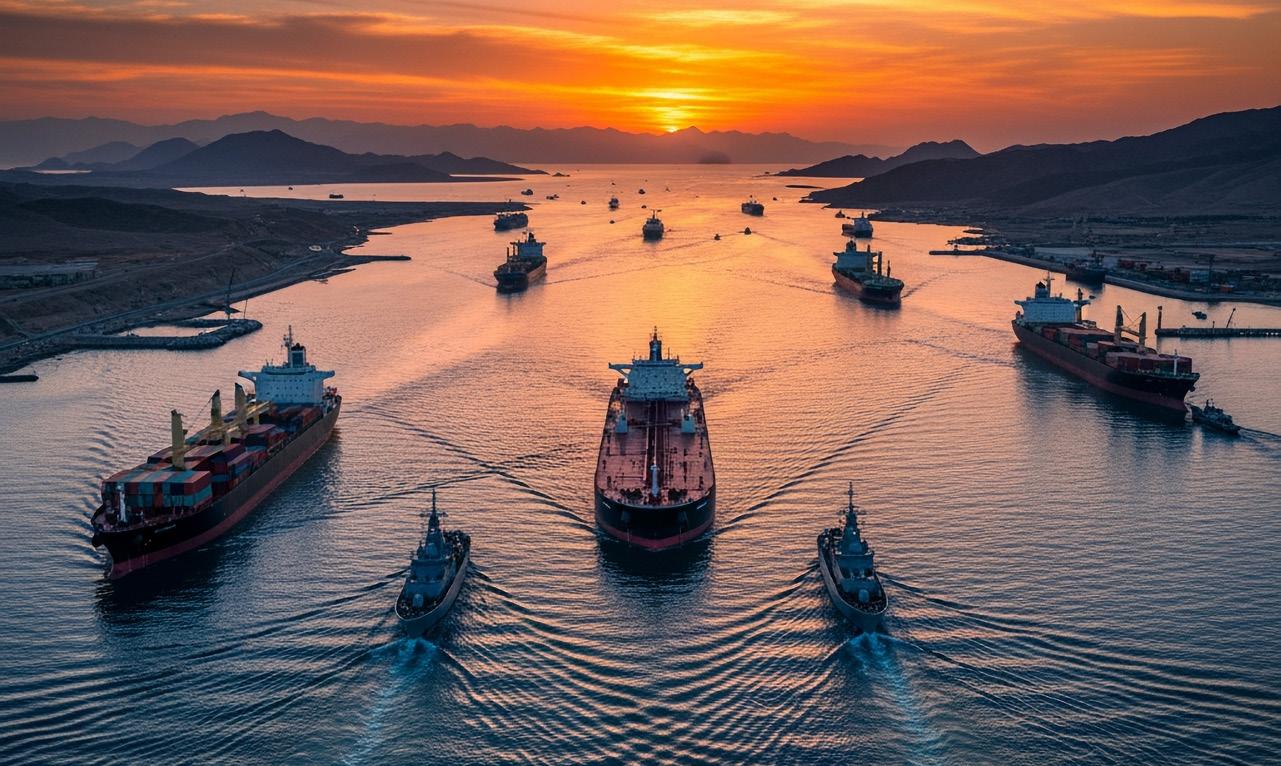
Before the conflict, around 130 ships passed through the Strait of Hormuz every day, but by March 16, that number collapsed to single digits, representing a reduction of 95%. This left more than 750 commercial vessels either stranded in the Persian Gulf or circling in holding patterns outside the conflict zone, waiting for a signal that never came. These ships weren’t just deterred by the physical danger of being caught in a war zone. The most decisive factor in their decision was the prohibitive cost of insuring a ship through the strait, which spiked overnight.
Marine war insurance is a specialised financial contract that has existed for centuries to protect ship owners if a vessel is damaged or destroyed in a conflict zone. In normal times, coverage costs between 0.125% and 0.25% of the ship’s value for a single voyage. For a typical large cargo vessel valued at around $120 million, this translates to roughly $48,000 per transit.
However, the financial landscape changed dramatically during the conflict. Following attacks on vessels in the Gulf, and reports of mines in shipping lanes, insurers repriced premiums to between 1% and 10% of the hull value. This dramatic shift pushed the cost of a single transit for the same vessel to $1.2 million.
At these rates, most shipping companies turned around and called it quits. Now, navigating across the strait for ordinary commercial trade was near im-
possible, regardless of military risk.
Ships that really needed to reach the Gulf started taking detours around the southern tip of Africa, adding weeks of transit time and burning significantly more fuel in the process. The world’s most efficient trade artery had been blocked, and global supply chains were about to discover how dependent they had become on it.
When the strait closed, the world’s focus was primarily on oil. The Persian Gulf supplied approximately 20% of the world’s daily petroleum consumption, causing energy markets to react with extreme alarm. However, this fixation on oil obscured a more significant vulnerability. The region also produces a substantial portion of the world’s industrial and agricultural raw materials.
One of the most critical materials is helium, with Qatar alone supplying nearly one-third of the global total. Far from being used only for party balloons, helium is essential for cooling the superconducting magnets inside MRI scanners. Without a reliable supply, hospitals globally risk losing their diagnostic imaging capabilities.
Additionally, the Gulf region is a major hub for chemical feedstock and agricultural components. It ships roughly a third of the world’s methanol, which is a foundational ingredient for manufacturing plastics, resins, paints, and synthetic fibres. Furthermore, the region supplies about half of the world’s seaborne sulphur, a critical resource required for producing phosphate fertilisers and refining battery metals such as nickel and cobalt.
But among all the commodities that pass through the Hormuz corridor, nitrogen fertiliser is perhaps the most important.
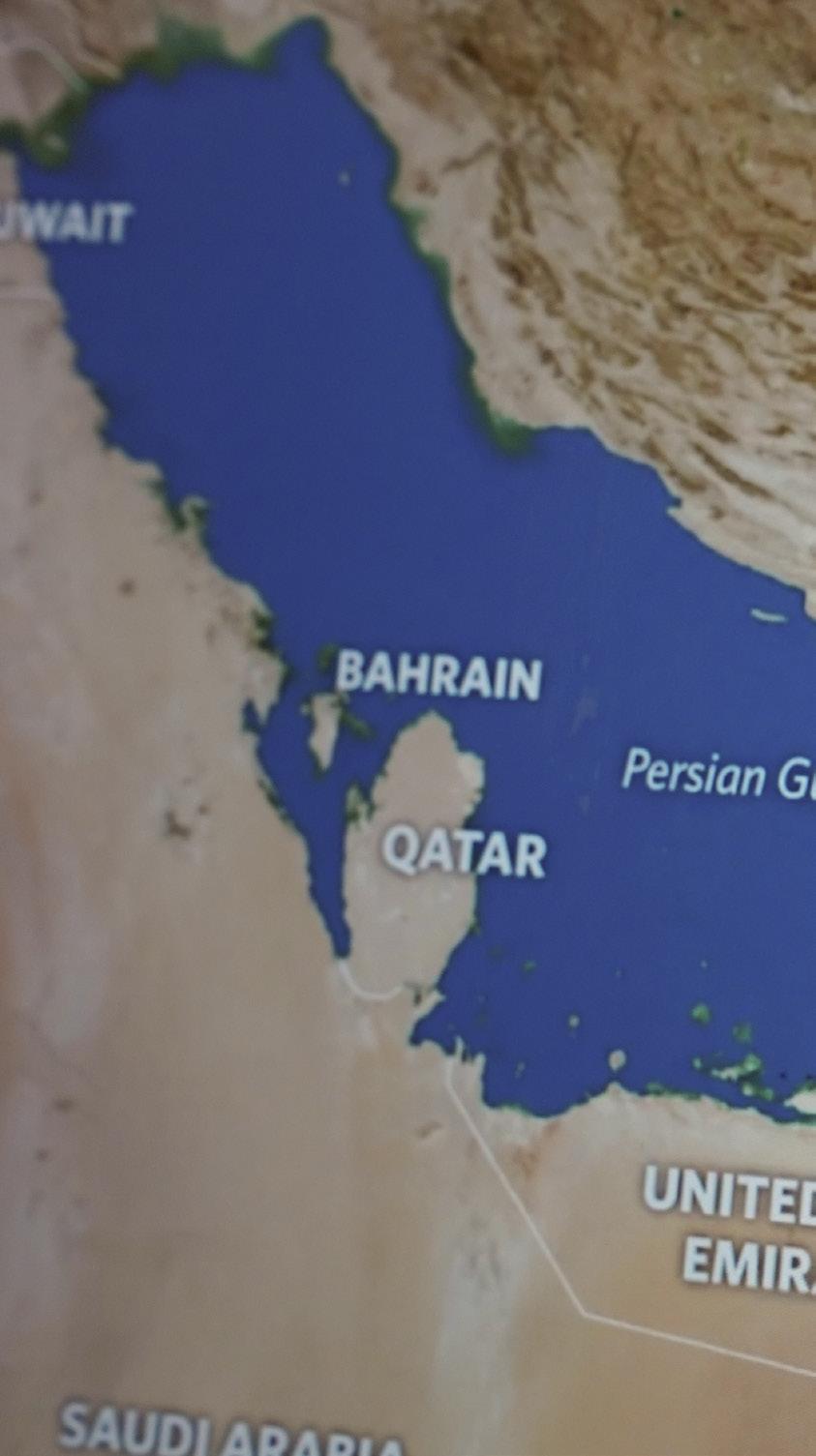
Approximately 33% of all globally traded fertilisers passes through the Hormuz corridor. For urea, the world’s most widely used nitrogen fertiliser, that figure rises to 46%. Nearly half the world’s supply of the single most important agricultural input on the planet was suddenly unable to reach the farmers who needed it.
To understand this, it’s important to familiarise ourselves with the chemistry. In the 19th century, there was an influential English economist and demographer known as Thomas Robert Malthus who believed that the population growth of the world would outpace the food supply, leading to an inevitable social crisis.
FEATURE STRAIT OF HORMUZ
In his ’Essay on the Principle of Population’, he noted that the human population was doubling (geometrically) every 25 years back then, while food production increased arithmetically (linearly). He envisioned that there would be a point of crisis which would lead to wars, famine and extreme poverty.
However, in the 20th century, German scientist Fritz Haber successfully synthesised ammonia from nitrogen gas (from the air), and hydrogen gas under high pressure and temperature using an osmium catalyst.
With this information, Carl Bosch transformed Haber’s laboratory into a massive industrial-scale process for the company BASF by 1913. This created industrial fertilisers that would lead to green revolutions across the globe, feeding billions of people effortlessly. Mal-
thus’s apocalyptic predictions did not come true because of scientific advancements, which led to the creation of the mass production of nitrogen fertilisers.
However, the blockade on the Strait of Hormuz has cut off the supply of natural gas, which is both a raw material and a source of energy in fertiliser production. This development inadvertently might cause the fulfilment of the Malthusian prophecy.
The numbers bear this out starkly. “We have 30%-35% of crude oil, which is not moving, 20% of natural gas…and between 20% to 30% of other fertilisers that are not moving out,” said Maximo Torero, Chief Economist of the Food and Agriculture Organization.
Countries like Qatar, Saudi Arabia, and the UAE have built massive industrial complexes converting cheap do-
mestic gas into exportable fertiliser.
Qatar State Fertiliser Company (QAFCO) operates the single largest urea production facility on earth, and supplies 14% of the global urea on its own. When the conflict disrupted regional gas infrastructure and made maritime export impossible, QAFCO went offline.
Saudi Arabia’s SABIC petrochemical complexes declared force majeure (a legal term meaning circumstances beyond their control prevented them from fulfilling their contracts). Storage silos filled to capacity with nowhere to send their product, and production halted. In one stroke, 14% of the world’s urea supply vanished from the market.
This isn’t just a Gulf issue. Natural gas prices spiked globally as buyers scrambled for alternative supplies, and this crushed fertiliser production in Europe too.
In Europe, natural gas accounts for up to 80% of the variable cost of making fertiliser. When gas prices spiked by 60% following escalation of the conflict, major producers found themselves making fertiliser at a loss.
Yara International (one of the world’s largest fertiliser companies) cut production at its European plants to 35% of capacity. This removed the equivalent of millions of tonnes of finished products from an already devastated market.
Fertiliser prices are spiking at an alarming rate. Urea was traded around $450$490 per tonne in early February, but it is now being sold at over $700 per tonne by late April. That is roughly a 50% increase in mere weeks.
Other fertiliser products are also seeing a surge, with liquid nitrogen variants
jumping 22% month-over-month. Consequently, distributors are now rationing retail sales, and dealers have stopped quoting future prices because there is arguably no reliable way to predict what replacement inventory would cost.
The most dire consequence of all is the catastrophic timing, as the Northern Hemisphere’s spring planting season is just beginning. This matters because farming, unlike most other industries, cannot pause and resume. Crops have biological windows in which fertilisers must be in the ground, or else you face a permanent yield loss. There isn’t a way to catch up next year.
In an April survey of over 5,700 farmers across all 50 states, the American Farm Bureau Federation found that 70% of respondents could not afford necessary fertiliser, with regional impacts varying significantly. In the South, nearly 80% of farmers were priced out because crops such as cotton, rice, and peanuts require fertiliser close to planting time, preventing them from pre-purchasing stock. Conversely, the Midwest saw some protection through advance purchasing as 67% of farmers locked in their supplies early, though one-third of the region’s farmers remained entirely exposed to volatile spot prices.
The small farmers were hit the hardest. Large-scale commercial operations were better positioned to pre-book supplies months in advance and had the financial depth to absorb price shocks. However, smallholders and family farms operating on thin margins, purchasing inputs closer to planting time, did not have the time to adjust or cope with the doubled prices.
“The skyrocketing cost of fuel and fertiliser is creating more economic hardship for farmers who have already endured years of losses,” said Zippy Du-
vall, President of the American Farm Bureau Federation. “Without the necessary fertilisers, we’ll face lower yields, and some farmers will reduce acres altogether.”
University specialists and soil scientists, who calculate the economic efficiency of fertilisers, revised their guidance as urea prices rose. The optimal application rate for corn in Illinois dropped by 6 pounds per acre.
It might sound like a modest change, but the relationship between fertiliser and yield is not linear. Research from precision agriculture companies reveals that cutting application rates significantly below the optimal level creates disproportionate yield losses.
For example, a farmer who uses half the recommended nitrogen does not get half the yield reduction. It can be considerably worse. This means farmers who ration inputs very aggressively in response to price shocks end up losing a lot more in crop revenue for what little they can save on fertiliser.
This effect will alter planting decisions going forward. Corn, a very nitrogen-hungry crop, might be abandoned in favour of soybeans, which can absorb some of the nitrogen they need from the atmosphere. This is going to reduce the total caloric output, and markets are going to adjust well beyond the 2026 harvest.
Torero has warned that policy coordination is now essential to prevent the crisis from deepening. “We need to avoid export restrictions…especially now for fertilisers and energy,” he said, cautioning that without coordination, vulnerable countries could be priced out of essential supplies.
David Laborde, Director of Agrifood Economics at the FAO, echoed this concern from the demand side. “If we have
The Indian government has moved quickly to protect its domestic fertiliser production, declaring an emergency guarantee of gas supply to fertiliser sectors at 70% of historical consumption

rising demand because biofuels start to consume more…and lower supply because we have less input…food prices will go up,” he warned.
India has structural vulnerabilities which the fertiliser shock makes worse. It imports 90% of its fertiliser raw materials. The kharif season (the monsoon planting cycle sown in June and July) produces almost 100 million tonnes of rice, which is the cornerstone of food security for more than a billion people.
The Indian government has moved quickly to protect its domestic fertiliser production, declaring an emergency guarantee of gas supply to fertiliser sectors at 70% of historical consumption. The FACT plant in Ambalamedu, Kerala, which produces NPK and DAP fertilisers, was flagged as a critical operation requiring protection.
Indian diplomats secured alterna-
tive fertiliser imports, arranging 2.5 million tonnes from Morocco, and 3 million tonnes from Russia via the much longer Cape route. Both these deals cost significantly more than what Gulf supplies usually cost.
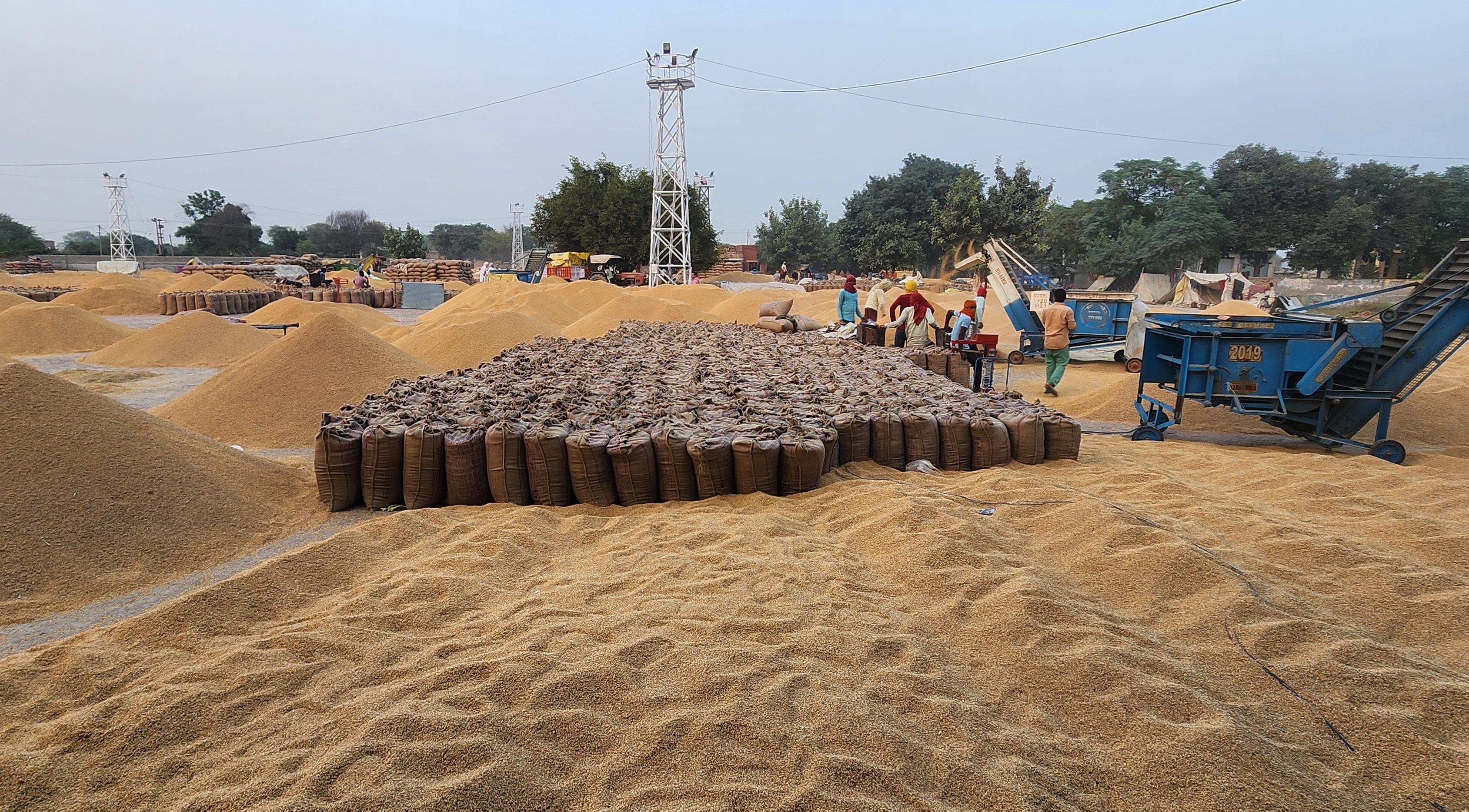
Farmers in Punjab are anxious. India’s most productive agricultural state saw widespread panic buying and hoarding. Retailers report distributors bundling unwanted products with essential ones, forcing farmers to buy expensive supplementary inputs they do not need in order to access granular urea.
Harjinder Singh of Saidwan village in Kapurthala is one of thousands facing the consequences of this shortage firsthand. “I had never realised that getting a bag of urea would be such an ordeal, when paddy cultivation is still over a month away. Generally, the time after wheat harvesting is for celebrations. This year, the days preceding the harvest were filled with anguish because of the quality of grains. Post-har-
vest, we are grappling with urea shortage,” he said.
The situation could be further complicated by the weather. The Indian Meteorological Department forecasts the 2026 southwest monsoon projected rainfall at 92% of the long-period average, the lowest first forecast in at least 25 years. Global agencies simultaneously indicated that there is a 62% probability of El Nino conditions developing in the summer months, which is associated with weaker monsoons. The convergence of potential drought, depleted reservoirs, and fertiliser shortages creates a genuinely alarming picture for the next kharif harvest.
The urgency was captured sharply by the head of the UN Task Force on April 21. “With hunger looming, life-saving fertiliser shipments cannot wait,” the official said. “If we don’t get some solution immediately, the crisis will be very significant and severe, particularly for the poorest countries.”
Russia found itself in a powerful position as the Persian Gulf fertiliser infrastructure went down. Russia exports 23% of the world’s ammonia and 14% of its urea via the Black Sea and Baltic ports, which are unaffected by the Hormuz closure.
In what analysts are calling ’fertiliser diplomacy’, Russia leverages exports to cultivate political relationships across the Global South. Countries in Africa, like Nigeria, Ghana, and Ethiopia, are pre-purchasing Russian fertilisers for the third quarter of 2026 on terms that go beyond commercial transactions.
Senior Russian officials have been explicit about their strategy. “The escalation of hostilities in the Persian Gulf region has led to the closure of the Strait of Hormuz. The logistics and trade-economic architecture, as well as global energy and food security, are on the brink of collapse,” said Russian diplomat Alexander Venediktov. He described the
situation as fraught with ’very serious consequences’ for countries dependent on imported hydrocarbons, fertilisers, and food, and was candid about Moscow’s positioning. “Nitrogen additive prices have risen by 30%. In the current extremely challenging situation, Russia is ready to act in coordination with its friends, countries of the Global South and East.”
It is not the first time Russia has done this. They used a similar approach during the Black Sea Grain Initiative in 2023, when grain export negotiations became a lever for extracting broader diplomatic concessions.
China has pursued a parallel strategy from the supply side by implementing strict export controls on phosphate fertilisers and urea to prioritise domestic agricultural security, which has subsequently cut off critical volumes to Southeast Asia and other import-dependent regions. This has further tightened a global market that was already in crisis.
Unlike oil price spikes, fertiliser or agricultural shocks don’t announce themselves immediately. Oil prices go up at the petrol pump within days, but fertiliser shortages take months to reveal the economic damage. The crisis has a built-in delay mechanism. We will see the consequences of what is happening now in the third and fourth quarters of this year.
The World Bank has observed that markets are already pricing in expectations for a smaller harvest, as evidenced by a 13% increase in wheat prices and a 7% rise in cereal indices.
The actual supply reduction has not yet materialised, but when it does, food price inflation will skyrocket.
higher grocery bills and compressed farm margins. However, for lower-income nations, it can be devastating.
Nations across Sub-Saharan Africa and South Asia will suffer significantly because they rely heavily on imports, and lack the capacity to subsidise fertilisers. In tropical and sub-tropical regions, the relationship between fertiliser application and crop yield is stark due to nutrient depletion in the soil. If things remain unchanged, we can expect a 40%-50% reduction in maize yield across African countries.
The UN World Food Programme and the Food and Agriculture Organization expect the combined effects of conflict, fuel price inflation, and fertiliser shocks to push an additional 45 million people into food insecurity. This is on top of the 318 million people already facing severe food insecurity worldwide. At least 18 million people are expected to cross the hunger threshold in East and Southern Africa alone.
The lesson we can learn is structural. Our global economic system was built on the philosophy of maximum efficiency and minimum inventory to eliminate redundancy, but that is because the world was predictable and global trade was always available.
isers free of charge to prevent crop failure. Additionally, India redirected its gas supply from industrial users to fertiliser plants to address the crisis.
These are emergency measures improvised under pressure. In the long run, we will need something more durable. Domestic fertiliser production capacity in import-dependent countries has to improve.
Economic models suggest that the effects of the 2026 shock will likely persist for years. Even under an optimistic scenario in which the Strait reopens by mid-year, urea and phosphate prices are going to be elevated well into 2028. Qatar’s Ras Laffan gas complex has been attacked, and is damaged. It might take years to be fully operational again. Maritime insurers also need prolonged periods of stability before war risk premiums subside.
The yield this spring cannot be retroactively restored. The harvest will be what it will be. The world’s food supply depends on an unbroken chain of energy, chemistry, shipping, and trust. Breaking any one link in this chain can have severe consequences in every direction, affecting farmers in Arkansas and Punjab, grocery shoppers in Lagos and Jakarta, and boardrooms in Rotterdam and Chicago.
For wealthy countries, this means editor@ifinancemag.com
But things have changed as governments are now confronting the problem in real time. Spain has allocated €500 million to subsidise farmers from price shocks, while Ghana distributed fertil-

International Finance Awards recognises industry talent, leadership skills, industry net worth and capability on an international platform. After careful consideration of nominations by a qualified research team, winners are declared on the strength of their application and past accomplishments. Winning an International Finance Award is a recognition of their continuous efforts and commitment to improving business performance.
ECONOMY FEATURE LOGISTICS & GEOPOLITICS

Shorter distance cannot yet overcome the triple threat of Western sanctions, unpredictable ice behaviour, and prohibitive operational costs
NORTHERN SEA ROUTE ARCTIC SHIPPING

IF CORRESPONDENT
ECONOMY FEATURE LOGISTICS & GEOPOLITICS
Imagine a shipping lane that cuts the distance between China and Europe almost in half. No pirate-infested waters, no clogged canals, no geopolitical minefields in the Middle East. Just a straight shot across the top of the world. That is the pitch for the Northern Sea Route, a 5,600-kilometre corridor running along Russia’s Arctic coastline from the Kara Strait in the west to the Bering Strait in the east.
In 2025 and 2026, this route has generated enormous excitement. Record numbers of ships are making the crossing. Chinese container vessels are completing the journey in under three weeks. India is signing mineral deals with Russia that could send a new category of cargo through the frozen north. On paper, the Arctic is open for business.
But the full picture is considerably more complicated, and considerably less flattering. While one set of numbers is climbing, another is falling. The route is simultaneously booming and contracting, expanding in one narrow slice while collapsing in the far larger slice that actually matters. Understanding why requires separating two very different things that often get confused in the headlines.
When analysts talk about the Northern Sea Route, they are actually describing two distinct corridors that happen to share the same geography.
The first is a domestic Russian export pipeline. Giant tankers loaded with liquefied natural gas and crude oil depart from Russian Arctic ports and sail to customers in Asia. This traffic makes up roughly 82% of everything that moves on the route. It is not international trade in the conventional sense. It is Russia shipping its own natural resources to
paying customers.
The second is genuine international transit, where a ship travels the full length of the route from one end to the other without stopping at Russian ports. Think of a Chinese container ship loading goods in Shanghai and sailing them all the way through Arctic waters to a port in Germany. This is the category that is genuinely booming, and it is also the far smaller of the two.
In 2025, the total cargo moved along the Northern Sea Route fell for the second year in a row, dropping to 37.02 million metric tonnes, roughly 870,000 tonnes less than in 2024. This reverses years of growth and sits quite far from the Russian government’s official targets of 80 million tonnes by 2024, and 200 million tonnes by 2030.
At the same time, the number of international transit voyages reached a record 103 in 2025, up from 97 the year before. Those voyages moved approximately 3.2 million tonnes of cargo. So, the transit boom is real, but it is also responsible for less than 9% of the route’s total traffic.
Peter Sand, Chief Analyst at freight intelligence platform Xeneta, put the scale of the transit trade in stark perspective. “The number of ships transiting the Northern Sea Route last year was a record high. But we counted 15 ships, so that’s what a record high looks like,” he said. On the economics, Sand was equally direct: “Shorter distance is clearly attractive. But you still have to factor in expensive transit costs.”
The surge in container transits is not happening because the Arctic route has suddenly become easy or cheap. It is happening because the alternative routes have become painful.

Since late 2023, militant groups in Yemen have been attacking cargo ships in the Red Sea near the Bab al-Mandab strait, one of the world’s busiest waterways. In response, most major shipping lines diverted their vessels around the southern tip of Africa via the Cape of Good Hope. By mid-2024, traffic through the Suez Canal had fallen by roughly 70%, costing Egypt an estimated $800 million a month in lost revenue.
For a Chinese exporter, rerouting
In 2025, the total cargo moved along the Northern Sea Route fell for the second year in a row, dropping to 37.02 million metric tonnes, roughly 870,000 tonnes less than in 2024

around Africa adds enormous distance, time, and fuel cost to every shipment. In that context, the Arctic option began to look less like a gamble and more like a reasonable hedge. Chinese operators, primarily NewNew Shipping Line and Sea Legend, moved roughly 400,000 tonnes of container cargo through the Arctic in 2025, a 2.6-fold increase on the previous year. Not everyone is convinced.
Søren Toft, Chief Executive of Mediterranean Shipping Company, the
world’s largest container line, was categorical: “The debate around the Arctic is intensifying, and commercial shipping is part of that discussion. Our position at MSC is clear. We do not, and will not use the Northern Sea Route.”
The route’s possibilities were demonstrated dramatically when the container ship Istanbul Bridge completed the first direct container connection between China and the United Kingdom via the Northern Sea Route, finishing the crossing in a record 20 days at an av-
erage speed of 16.7 knots. The same season, the vessel Newnew Polar Bear departed Shanghai on July 16 and arrived at the Russian port of Arkhangelsk in under a month, delivering 497 containers carrying auto parts, PVC film, and steel before loading Russian timber for the return leg.
South Korea is watching closely. Its Ministry of Oceans and Fisheries scheduled a September 2026 container transit to evaluate whether it could replicate China’s Arctic logistics model. South
ECONOMY FEATURE LOGISTICS & GEOPOLITICS
NORTHERN SEA ROUTE ARCTIC SHIPPING
Korean shipyards already lead the world in building large ice-capable commercial vessels, and Japan has deep expertise in research icebreakers. Between them, the two countries could form a powerful North Pacific logistics network feeding into the Arctic corridor.
For all the excitement about containers, the Northern Sea Route’s economic engine runs almost entirely on fossil fuels. Energy cargoes make up 83% of all traffic. Liquefied natural gas alone accounts for 58% of total volumes, crude oil for 21%, and gas condensate for roughly 4%
The port of Sabetta, the main export terminal for the massive Yamal LNG project in Siberia, handled about 90% of the route’s entire cargo turnover in 2025, moving 29.1 million tonnes.
The volume contraction in 2025 is happening precisely because these fossil fuel operations are running into serious trouble. LNG shipments fell 2.7% due to maintenance shutdowns at the Yamal plant and a shortage of the specialised ice-capable vessels needed to run them. Crude oil exports from Gazprom’s Novoportovskoye field are, in what officials diplomatically call, a ‘smooth decline’, which is a polite way of saying the oil field is running dry. Coal shipments through the route collapsed by nearly 29%
The route’s future growth was supposed to come from two enormous new projects. Novatek’s Arctic LNG 2 was designed to produce nearly 20 million tonnes of gas a year from three production trains. Rosneft’s Vostok Oil was described as the largest new oil development on earth in two decades, holding an estimated 45 billion barrels of reserves with a target output of 115 million tonnes a year by 2033. Between them, these two projects were supposed

to deliver the volumes that would justify Moscow’s infrastructure investment and its ambitious shipping targets.
Neither is producing anywhere near what was planned.
Western sanctions imposed following Russia’s invasion of Ukraine have created a chokepoint that no icebreaker can smash through.
Arctic LNG 2 depends on a fleet of approximately 21 highly specialised Arc7 ice-class LNG carriers. These are not ordinary tankers. They are purpose-built vessels capable of navigating independently through thick Arctic ice. Russia ordered 15 of them from its domestic Zvezda shipyard. By early 2026, exactly one had been delivered. The rest
of the construction programme is frozen because the shipyard cannot access the imported marine equipment, specialised cryogenic containment systems, and international financing it needs.
The alternative, building them at South Korean yards, which are the world’s leading builders of such vessels, is entirely blocked by sanctions.
Four Arc4 LNG carriers were actually completed in 2024 at Hanwha Ocean in South Korea, but they are currently sitting idle off the coasts of Indonesia and Europe. Even though the European Union removed several of these vessels from its sanctions lists in July 2025, no international operator will charter them. The reputational risk and the fear of secondary sanctions are simply too great.
Arctic LNG 2 did manage to export
Transporting the cargo requires a 770-kilometre pipeline to the Kara Sea, a deep-water port called Sever Bay, and a fleet of up to 50 vessels, including at least 10 Arc7 tankers

16 gas cargoes in late 2025, but it is operating only its first production train at a fraction of its designed capacity, often selling gas at steep discounts to Asian buyers because it has no other options. Novatek has now put all three successor projects, Arctic LNG 1, Arctic LNG 3, and Ob LNG, on indefinite hold.
Vostok Oil has not shipped a single commercial cargo
Transporting the cargo requires a 770-kilometre pipeline to the Kara Sea, a deep-water port called Sever Bay, and a fleet of up to 50 vessels, including at least 10 Arc7 tankers. As of 2026, the pipeline is less than half built, the port is under construction, and the specialised fleet does not exist. US sanctions imposed on the project’s operator, RN-
Vankor, in January 2025 further restricted access to the technology needed to move forward.
On January 1, 2027, the European Union’s ban on Russian LNG imports takes effect. In February 2026, 100% of Yamal LNG exports were still flowing into EU ports, totalling over 1.5 million tonnes in that month alone. Europe is not just a customer. It provides transshipment facilities, vessel maintenance, crew changes, and insurance services for the 14 specialised Yamalmax Arc7 carriers that run the Yamal operation. Replacing those services for Asian routes would require Novatek to source an estimated 32 to 40 additional conventional LNG carriers. Under the current sanctions environment, that is essentially impossible.
Russia’s workaround for the sanctions blockade has been to build a ‘shadow fleet’, a collection of ageing, poorly maintained tankers operating under obscure ownership structures, frequently flying flags of convenience, and regularly switching off or spoofing their tracking systems to hide where they are going, and where they have been.
Shadow fleets are nothing new. Iran and Venezuela have used similar arrangements to keep their oil moving. But the Arctic amplifies the risks to an entirely different level. A mechanical failure in the Mediterranean can be handled with tugs and salvage crews. The same failure in the Barents Sea, hundreds of kilometres from the nearest port, in temperatures that can kill an exposed person in minutes, is a potential catastrophe.
An oil spill from an uninsured, structurally substandard tanker in Arc-
tic waters would be an environmental disaster on a scale that would take decades to address.
Malte Humpert, founder of The Arctic Institute, has been direct about the trajectory. “It’s not a question of if, just a matter of when,” he said of a major accident or spill.
Research shows that pollution concentrations along sections of the route are exceeding maximum permissible limits.
European nations have responded aggressively. In January 2026, fourteen European countries issued a joint declaration warning that shadow fleet tankers without valid safety documents and internationally recognised insurance would be classified as stateless vessels under international maritime law, giving coastal states the legal authority to intercept and detain them. That rhetoric quickly became action.
Belgian and French forces boarded the tanker Ethera in the North Sea on suspicion of false flagging and forged documents. French naval commandos boarded the Grinch, a crude oil tanker owned by a Moscow-based company but flying a Comoros flag, in the Alboran Sea, and escorted it to Marseille. Swedish coast guards took control of the cargo vessel Caffa in the Baltic Sea to inspect its documents and seaworthiness. These interceptions were in European waters, but they establish the legal precedent and the operational willingness to police the routes that Russian Arctic oil must use to reach global markets.
A widely repeated assumption about Arctic shipping is that climate change is steadily melting the ice and making the route easier to navigate every year. The
NORTHERN SEA ROUTE ARCTIC SHIPPING
reality is far more dangerous.
The overall Arctic sea ice maximum in winter 2026 reached 14.278 million square kilometres in March, tying the 2025 record as the lowest ever recorded in 47 years of satellite data. But within that global picture, regional behaviour was violent and unpredictable. A persistent, unstable polar jet stream drove fierce Arctic winds that expanded sea ice in the eastern Bering Sea by 60% in just two weeks.
The ice pushed abnormally far south, blocking the False Pass shipping channel in the Aleutians, and extending down to within 30 miles of Unimak Pass, a vital route for westbound commercial vessels heading into the Pacific.
Ships facing this kind of ice do not just risk damage from the ice itself. Wind-driven sea spray at near-freezing temperatures instantly freezes onto a vessel’s hull and superstructure, building up hundreds of tons of ice that can alter the ship’s centre of gravity, and capsize it.
The logistical consequences were severe. AIS tracking data from March 2026 showed that commercial vessels entirely abandoned the ice-choked Unimak Pass. Traffic through the alternative Amukta Pass surged by 800% year-on-year. Routes plotted entirely south of the Aleutian Islands saw an 88% increase in traffic as shipmasters chose longer journeys to guarantee they would arrive at all.
This matters enormously for the viability of the Northern Sea Route as a container shipping corridor. Modern container logistics depend on precision scheduling, with arrival times calculated to the hour. A route capable of generating a 60% ice expansion across a critical chokepoint in a fortnight is fundamentally incompatible with the
reliability that global supply chains require. Research has also identified a correlation between ocean heat flowing into the Arctic through the Bering Strait and sea ice conditions across the following summer, meaning that conditions a year ahead remain difficult to predict with confidence.
Even setting aside the ice anomalies and the geopolitics, the basic economics of running container ships through the Arctic are extremely challenging.
The route is shorter, there is no question about that. Rotterdam to Yokohama via the Suez Canal is roughly 12,840 nautical miles. Via the Northern Sea Route it is about 5,770 nautical miles. At 16 knots, the Suez voyage takes around 33 days; the Arctic crossing takes around 15. That is a significant saving in fuel and time.
But the savings are eaten up by a cost stack that applies to every Arctic voyage, and has no equivalent on southern routes. Mandatory icebreaker escorts charged by Russia’s state nuclear fleet operator, Rosatomflot, can easily reach $180,000 per voyage even during relatively mild autumn conditions. Insurance premiums for Arctic operations are routinely $40,000 to $50,000 higher per voyage than equivalent Suez coverage.
Bureaucratic friction adds further cost. The Suez Canal requires 48 hours’ advance notice for transit, while the Russian administration requires permit applications up to four months in advance, making it impossible to respond to the spot-market conditions that modern shipping alliances depend on. Basic permits and compliance add another $20,000 per voyage.
The per-container economics are similarly unflattering. Based on standard calculations for a vessel travelling at 16 knots and consuming 45 tonnes of fuel per day at $650 per tonne, the cost of shipping one empty container unit via the Arctic works out to roughly $648. On filled containers, factoring in directional imbalances, costs can double.
Humpert, of The Arctic Institute, sees the imbalance as structural. “The NSR will exist only as a transport route with mostly one-directional traffic,” he said. “Outside factors, such as unfavorable market conditions, varying ice levels and the lack of available Russian icebreakers, may yet dash Mr Putin’s hope to establish the route as a northern export highway.”
There is also a fundamental size problem. The Suez Canal regularly accommodates vessels carrying 24,000 containers or more. The shallow straits and narrow icebreaker-cleared channels of the Arctic limit viable vessels to roughly 2,000 to 4,000 containers. The fuel savings of a shorter journey are essentially cancelled out because the same cargo requires five or six smaller ships instead of one large one.
The Suez route also generates revenue at multiple intermediate ports along the way, places like Singapore, Colombo, Jeddah, and Piraeus, while the Arctic offers no commercial stops at all across thousands of kilometres of uninhabited coastline.
Russia’s control of the Northern Sea Route is not purely economic. Moscow treats the route as internal national waters, requiring foreign vessels to obtain advance permission, carry Russian pilots, and pay Russian icebreaker fees. This gives Russia surveillance of
FEATURE NORTHERN SEA ROUTE

Western allies have begun pushing back directly. In early 2026, the United States, Canada, and Finland launched the ICE Pact, a collaborative programme to jointly build allied icebreakers
foreign ships near sensitive military installations and allows its Northern and Pacific naval fleets to move without transiting NATO-monitored straits.
Russia’s official position is bullish. Vladimir Panov, Special Representative for Arctic Development at Rosatom, described a corridor in ascent: “The Northern Sea Route is developing rapidly, becoming a viable and efficient global logistics route. This is facilitated by various factors, including the development of advanced technologies, the construction of new-generation nuclear icebreakers, and growing interest from international shippers.”
Western allies have begun pushing back directly. In early 2026, the United States, Canada, and Finland launched the ICE Pact, a collaborative programme to jointly build allied icebreakers. The strategic intent is to create an escort
capability that does not depend on Russian assets, allowing allied nations to accompany commercial vessels through the Northern Sea Route under international maritime law without paying Russian tariffs.
NATO simultaneously launched the Arctic Sentry framework in February 2026, integrating surveillance systems from Nordic allies to create continuous monitoring from the Baltic to the Arctic Ocean, tracking Russian military movements and providing independent navigational intelligence to commercial operators.
The Suez Canal, meanwhile, is recovering. Since the beginning of 2026 it has processed 1,315 vessels carrying a total of 56 million tonnes, generating $449 million in revenue, a marked improvement on the equivalent period a year earlier. Major carriers, including CMA
CGM and Maersk, have reaffirmed their commitment to the route. As CMA CGM’s CEO put it plainly, there is no alternative to the Suez Canal.
The Northern Sea Route will continue to grow in specific, narrow circumstances for Chinese state-aligned operators willing to pay premium costs for geopolitical insulation, for Indian mineral supply chains being built outside Western and Chinese control, and for Russia’s own hydrocarbon exports when its projects eventually come back online. But the idea of the route as the next great artery of global trade remains, for now, a story about what might one day be possible rather than what is actually happening.
editor@ifinancemag.com
The financial sector’s ability to fund the industrial expansion that Hungary desperately needs is being constrained
IF CORRESPONDENT


For sixteen years, Viktor Orban fought with the European Union (EU), cuddled up to Russia and China, and built a formidable political machine, prolonging his rule. Then came April 12, 2026, and Hungarian voters did something remarkable. They showed him the door.
The centre-right Tisza Party, led by the telegenic former teacher and activist Peter Magyar, won 53.5% of the popular vote and captured 138 of the country’s 199 parliamentary seats. That is a twothirds supermajority, the kind that lets a government rewrite constitutional rules if it chooses to. For a country that had grown accustomed to democratic backsliding and institutional decay, the result was genuinely seismic.
But elections are easy compared to governing. Peter Magyar now inherits an economy that is, to put it plainly, a mess. Hungary barely grew in 2025, expanding at just 0.4%, one of the weakest performances in the entire Central and Eastern European region. The government is spending far more than it collects.
Billions of euros in EU funds have been frozen because the previous administration refused to clean up its institutions. A massive influx of foreign investment in electric vehicle factories is running into serious trouble. And the banking sector, which should be a pillar of economic stability, is being squeezed so hard by taxes that its profitability is shrinking.
None of this is impossible to fix. But fixing it will require juggling several extremely difficult tasks at the same time, with very little room for error.
The most urgent item on Magyar’s to-do list is unlocking somewhere between 18
and 19 billion euros that the European Union has been sitting on because of concerns about rule-of-law violations and corruption under the Orban administration. To put that number in perspective, it represents roughly 11% of Hungary’s entire annual economic output. For a country with a stretched budget and sluggish growth, that money is a lifeline.
The political obstacle to accessing those funds has essentially disappeared with Viktor Orban’s defeat. The EU, which was deeply frustrated with Budapest for years, now has a willing partner in Magyar’s pro-European administration. But the removal of the political obstacle has simply revealed the next one, which is execution.
The European Recovery and Resilience Facility, the main mechanism through which a significant portion of this money flows, has a hard deadline at the end of August 2026. That means the new government has only a few months to legislate the required reforms, implement them credibly, and convince Brussels that the changes are real rather than cosmetic.
That is an extraordinarily tight timeline for any government, let alone one that is just getting on its feet. Bureaucracies do not transform overnight. Institutions that were built to serve one set of political interests do not simply flip a switch and become transparent and accountable. If Hungary misses this window, the consequences are severe. The government would have to impose painful spending cuts to fill the gap, the kind that would hurt ordinary people, derail the modest economic recovery that analysts are projecting, and rapidly erode the political goodwill that Peter Magyar’s landslide victory has temporarily provided.
Viktor Orban
Former Hungary PM
1988: Founded the Alliance of Young Democrats
1989: Participated in the opposition round table
1993: Became Fidesz's first president
1998: Became Hungary's second youngest PM

Bond markets have already signalled cautious optimism. After the election results came in, money started flowing back into Hungarian sovereign debt, with investors pricing in the expectation of lower risk, a cleaner business environment, and restored fiscal credibility. The long-term prize, Euro adoption, is also back on the table now that the new government is genuinely pro-European. But all of that optimism is conditional. It evaporates quickly if the government

fumbles the EU funds question.
Even if the EU money comes through, Hungary faces a structural fiscal challenge that will not be resolved by a single capital injection. The government deficit is expected to reach 5.1% of GDP in 2026, up from an already elevated 4.6% the previous year.
The EU has formally flagged Hungary through what is known as the Ex-
cessive Deficit Procedure, essentially placing the country on a watchlist and demanding corrective action. The Hungarian Fiscal Council calculated that a spending adjustment worth 1.7% of GDP was needed to comply with European fiscal rules, and that estimate was made before things got even worse. By February 2026, the deficit had already burned through roughly half its fullyear budget, largely because the outgoing Orbán administration spent lavishly
in the run-up to the election.
The pre-election giveaways were considerable. The minimum wage was raised by 11% at the start of 2026. Mothers with multiple children received a lifetime income tax exemption. A fourteenth month of pension payments was disbursed. Bonuses were handed out to military and law enforcement personnel. Housing support packages were extended to public sector workers. Every one of these measures costs real money,
FEATURE
HUNGARY VIKTOR ORBAN INVESTMENT
and none of it was properly funded. The incoming government is now stuck with the bill.
Here is where things get politically complicated. Peter Magyar campaigned on promises of his own, including cuts to value-added tax, lower taxes on low-income workers, and the preservation of pension and family support programmes. Those are popular commitments. But making good on them while simultaneously reducing a deficit that is already too large requires a level of fiscal creativity that borders on the miraculous.
Something will have to give, and the new government will have to decide fairly quickly what that something is. If it pursues austerity to satisfy Brussels, it risks alienating the voters who just handed it a historic mandate. If it keeps spending, it risks losing the EU funds and spooking the bond markets that are currently giving it the benefit of the doubt.
The projected economic recovery, real GDP growth of 2.3% in 2026, rising modestly to 2.1% in 2027, is real but fragile. It is being driven largely by consumer spending, fuelled by those pre-election wage increases and government transfers. Exports are also expected to pick up as new automotive factories come online and German industrial demand recovers. But inflation remains sticky.
Consumer prices are expected to ease from 4.5% in 2025 to around 3.6% in 2026, but the National Bank of Hungary is keeping interest rates elevated at around 6.25% to make sure inflation does not reignite. Higher borrowing costs are fine for controlling prices, but they make it more expensive for businesses and homeowners to borrow, which dampens investment and economic activity.
Hungarian banks have had a rough few years, and 2025 was no exception. The sector’s combined after-tax profits fell by 8% to just under 1.5 trillion Hungarian forints, a direct result of an aggressive tax regime that the Orbán government imposed and repeatedly extended.
The total additional tax burden on Hungarian banks in 2025 amounted to roughly 830 billion forints, composed of a financial transactions fee that surged 31%, an extra-profit tax that climbed 29%, and special sectoral levies that rose by 18%
The original justification for these taxes was that banks were making windfall profits thanks to the high-interest-rate environment that came with the inflation crisis. The argument had some surface logic to it. When the central bank raises rates sharply, commercial banks typically see their net interest margins widen, meaning the gap between what they pay depositors and what they charge borrowers grows. The government’s position was that this passive profit boost should be partially redirected to the public finances.
The problem is that what was sold as a temporary emergency measure became permanent. Banks have now been operating under this heavy burden for several years, and the effects are visible. Return on equity has fallen. Banks have become more cautious about lending.
Capital that could have been deployed into business loans or mortgages has instead been transferred to the state. The financial sector’s ability to fund the industrial expansion that Hungary desperately needs is being constrained.
To cope, banks have been cutting costs aggressively, primarily by closing branches. The network shrank from 1,401 locations to 1,300 in a single year.
Peter Magyar campaigned on promises of his own, including cuts to valueadded tax, lower taxes on low-income workers, and the preservation of pension and family support programmes
But interestingly, overall employment in the sector actually rose, from around 39,800 to 40,500 workers.
That tells you where the money and energy are going. Banks are investing in technology, hiring data scientists, software engineers, cybersecurity professionals, and compliance specialists, while shrinking the frontline retail workforce. Mobile banking, AI-driven risk assessment, and automated customer service are replacing the branch teller.
This digital pivot isn’t a mere cost-saving exercise. Research on banking systems in emerging markets consistently shows that banks which
2010: Got appointed in Hungary's Foreign Ministry
2011: Joined the Hungary's Permanent EU Representation
2015: Took a post in PM's Office
2024: Joined the Tisza Party

embrace digital infrastructure can reduce their reliance on expensive external debt funding and manage liquidity more efficiently. For Hungarian banks, technology is partly a lifeline in an environment where traditional profitability is being taxed away.
The new government has signalled awareness that the banking tax regime needs to change. Unwinding those levies would immediately improve bank capitalisation, lower the cost of credit for businesses, and stimulate the corporate lending that drives private sector investment. But here again, the government faces a dilemma. Every forint of
tax revenue it gives back to the banks is a forint it needs to find somewhere else to plug the fiscal hole.
One of Hungary’s biggest economic bets over the past decade has been attracting foreign investment in electric vehicle manufacturing and battery production. The logic was sound. Europe is transitioning away from combustion engines. Batteries are the critical component of the new automotive era. If Hungary could position itself as the battery capital of Europe, it would secure high-value manufacturing for decades.
The results have been impressive on paper. Hungary captured 47% of all Chinese electric vehicle-related foreign direct investment entering the European Union in 2023.
Two projects have become symbols of this strategy. Contemporary Amperex Technology Co. Limited, better known as CATL, the world’s largest battery manufacturer, is building a 7.3-billion-euro gigafactory in Debrecen. BYD, the Chinese electric vehicle giant, is constructing a 4.64-billion-euro manufacturing plant in southern Hungary.
The reason Chinese companies are so keen to invest in Hungary is partly
FEATURE HUNGARY
VIKTOR ORBAN INVESTMENT
about access. The European Union has imposed tariffs of up to 27% on electric vehicles imported from China, and the American market is essentially closed to them. By manufacturing inside the EU, Chinese firms can sell their products as European-made and sidestep those barriers. Hungary, under Viktor Orban, was a particularly welcoming host, offering generous subsidies and asking few political questions.
Under Peter Magyar, the political equation has shifted somewhat. But the deeper problem with these investments is not political. It is structural. BYD has already delayed the start of mass production at its Hungarian factory until late 2026, and the plant is expected to operate well below its initial capacity targets for at least the first two years.
More troublingly, BYD is simultaneously developing a separate one-billion-euro factory in western Turkey, where labour costs are lower, and production is expected to hit 150,000 vehicles annually by 2027. Hungary simply cannot compete on labour costs with Turkey, and its workforce is already stretched thin. This points to a vulnerability at the heart of the investment model. Hungary has attracted enormous amounts of capital, but much of it is in the form of assembly operations rather than genuine centres of research and innovation.
Chinese companies have historically brought their own workers with them, as CATL did in Germany, where 40% of factory staff were imported from China, rather than training and employing local people. Without requirements to share technology or develop local supply chains, Hungary risks becoming a sophisticated screwdriver factory, assembling components that are designed, engineered, and largely produced elsewhere.

The new government needs to insist on more. That means pushing for technology transfer agreements, mandating local supplier development, requiring meaningful research and development investment, and creating conditions where Hungarian engineers and scientists can genuinely participate in the innovation, not just the assembly. Otherwise, the moment production can be done more cheaply somewhere else, those factories will move.
Hungary’s digital sector is larger and more sophisticated than many people outside the region realise. It accounts for about 6.7% of the country’s total economic output, worth approximately 31.5 billion US dollars in 2025.
The country is a European leader in broadband infrastructure, with 37% of households connected to gigabit-speed internet in 2024, more than double the EU average of 18%. The national strat-
egy aims for 95% gigabit coverage and 90% of public services delivered digitally by 2030.
In advanced manufacturing, the adoption of “Industry 4.0” technologies, which encompasses smart sensors, real-time data analytics, digital twin modelling, and AI-assisted quality control, is transforming what Hungarian factories can produce and how efficiently they operate.
The story of TDK Electronics, a major global manufacturer, illustrates the shift vividly. The company replaced its legacy systems, which included fax machines and isolated software programmes running on outdated computers, with unified digital manufacturing systems that allow managers to monitor and adjust production in real time. The efficiency gains were substantial.
Hungary has also made genuine progress in artificial intelligence (AI) research. The government-backed Artificial Intelligence National Laboratory re-

cently completed a five-year programme involving eleven research institutions. The results included breakthroughs in predictive maintenance for factories, the development of language models specifically optimised for the Hungarian language, and research into autonomous robotics. The follow-up programme, backed by a budget of 20 billion forints, is explicitly designed to turn these research outputs into commercially viable products within three to four years.
Pharmaceutical and biotech companies are emerging as one of the more exciting growth areas. Firms like “Avidin Ltd,” which uses AI to identify cancer drug targets, and “ChemPass,” which develops AI-assisted discovery platforms for new medicines, represent exactly the kind of high-value intellectual property creation that Hungary needs more of.
These are companies that are not easily relocated to cheaper jurisdictions, because their value lies in people’s
knowledge, networks, and accumulated research, not in physical assembly capacity.
The main gap in Hungary’s digital story is at the level of small and medium-sized businesses. While the country’s large manufacturers and financial institutions are digitally sophisticated, many smaller companies have been slow to adopt even basic tools like cloud software, digital invoicing, or enterprise resource planning systems.
Some of this is cultural caution. Some of it is cost. Some of it is the result of regulations, including strict data sovereignty laws, that make cloud adoption complicated. Bridging this gap is critical to raising the country’s overall productivity and ensuring that smaller businesses can remain relevant as supply chains become increasingly digital.
Hungary’s solar energy story is one of the more striking examples of policy-driven transformation anywhere in Europe. The government originally set a target of six gigawatts of installed solar capacity by 2030. That target was surpassed by 2025, when capacity exceeded nine gigawatts. The new target is 12 gigawatts, and analysts expect it to be met comfortably.
The success has, however, created new problems. Solar power is inherently intermittent. It generates electricity when the sun shines and nothing when it does not. Hungary’s grid was not designed to manage a system where a huge proportion of generation can disappear on a cloudy day or overnight.
Onshore wind, which would provide a useful complement to solar because it tends to blow when the sun is not shining, has been virtually frozen for a decade due to zoning restrictions. Geo-
thermal energy, which Hungary has a significant natural capacity for, remains largely undeveloped.
The result became painfully obvious during the severe cold period in January 2026, when demand for electricity hit record levels and the grid struggled to cope. The lesson is clear. Hungary needs to invest heavily in battery storage, grid upgrades, and diversification of its renewable energy mix, including wind and geothermal, before the next crisis arrives. The government has put incentive frameworks in place, including tax credits worth 30% of eligible investment costs for battery storage projects, but turning policy incentives into built infrastructure takes time.
The Magyar administration faces an exceptional set of challenges simultaneously, each one difficult enough to occupy a government’s full attention on its own. It must unlock billions in frozen EU funds, stabilise a budget that is significantly over its limits and reform the tax environment strangling the banking sector.
It must upgrade its foreign investment strategy from assembly-line attraction to genuine innovation partnerships. It must close the digital divide between large companies and smaller businesses. And it must fix an energy grid that is increasingly unable to handle the very renewable energy it has successfully encouraged.
The decisions made in the next twelve months will shape Hungary’s economic trajectory for the better part of a decade. The foundations are there. The goodwill is there. What is needed now is execution.
editor@ifinancemag.com
Beijing Auto Show highlights the collaboration between European and Chinese companies while US carmakers insist on protectionism
The Beijing Auto Show 2026 was a proud display of the Chinese industry's next-generation capabilities. Huawei's intelligent car business unveiled its new assisted driving system, which the company believes can reduce collisions by 50% compared with its predecessor.
Many of the vehicles, which made their debut in Beijing Auto Show, will likely end up being
in European markets
AI took centerstage in the event, with Huawei introducing an in-car voice-activated agent dubbed Celia. CATL, on the other hand, grabbed headlines through its flying car concept, apart from displaying a lighter-weight product offering over 1000-km range, with the product reportedly possessing charging capability from 10% capacity to 98% in under seven minutes.
The Chinese electric vehicle giant BYD rewrote the innovation playbook, by making a giant freezer the main piece of attraction in its pavilion. Inside of the freezer, a car dripping with icicles showed the company's new fast-charging system’s ability to power up a battery even in temperatures of -30° Celsius.
Western automakers up for collaboration
Despite the Chinese automobile industry being known for its brutal price wars and overcapacity,
both Chinese companies and their foreign counterparts are gung ho about their prospects.
Germany's Volkswagen, the largest overseas automaker by market share in the world's second-largest economy, unveiled its new electric ID.UNYX 08. It has tied up with Xpeng to develop the vehicle's electrical architecture, while Horizon Robotics took part in realising the in-car AI agent.
Huawei, in 2026 alone, will be investing 18 billion yuan ($2.6 billion) in smart driving research and development. Its software and components are currently used in some 50 models, with the company anticipating the number to double to 100 by the year-end. CATL, which increased its research budget by 19% to $3.2 billion in 2025, will be raising another $5 billion in the coming days.
Despite industry profit falling 18% in Q1 2026, along with dipping sales profit margin, revenues and outputs, the Chinese automotive sector is in no mood to back down on the R&D front, while foreign automakers are collaborating with local ecosystem players to ramp up their technology game in the biggest global car market.
Many of the vehicles, which made their debut in Beijing Auto Show, will likely end up being in European markets in the coming days.
"The stronger presence and engagement of global companies at the Beijing Auto Show highlights China's rising importance as a centre for automotive innovation, and one of the world's
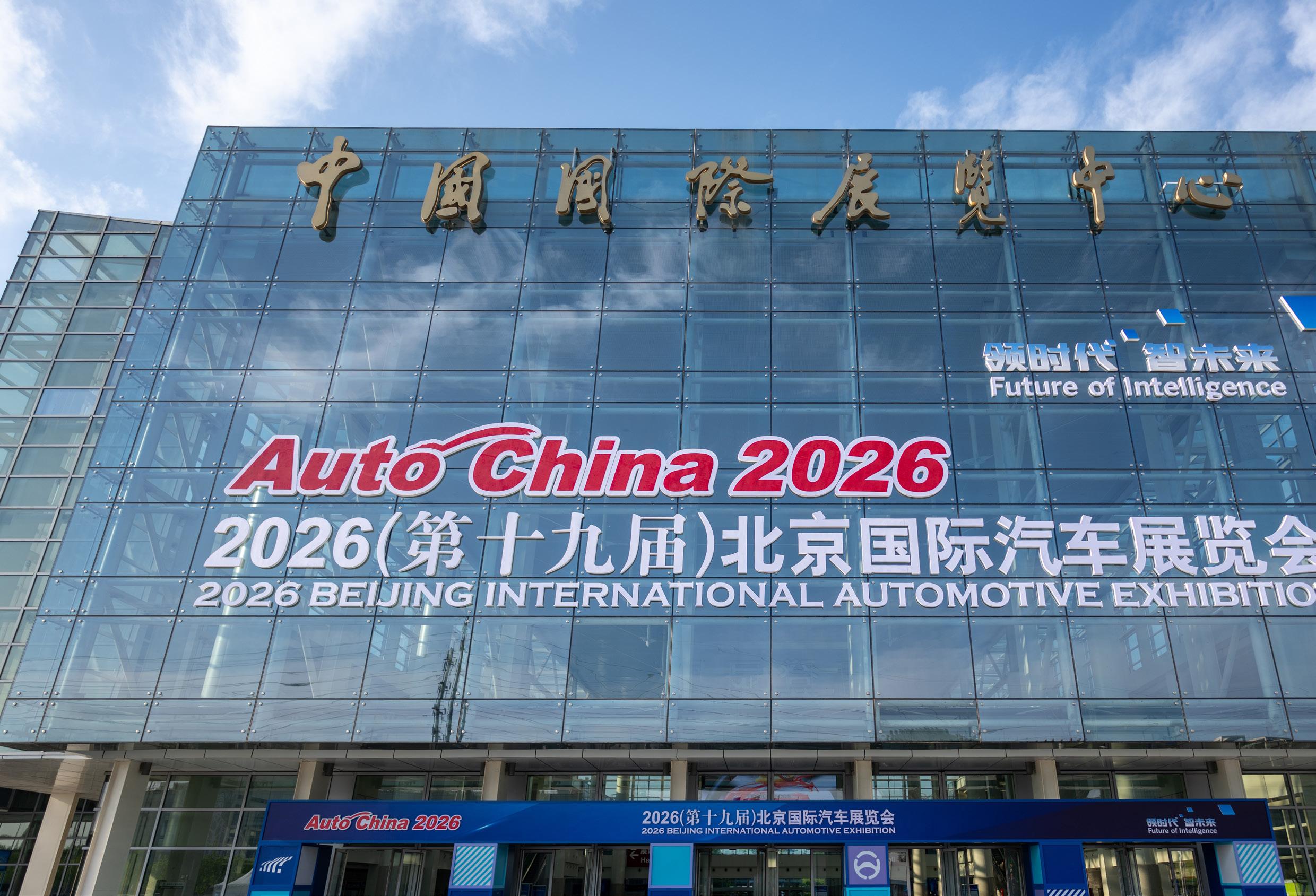
fastest-evolving car markets, especially as the industry speeds up its transition toward electric and smart mobility technologies," Cui Dongshu, secretary-general of the China Passenger Car Association (CPCA), told the Global Times.
There was a change in tone among Western automakers during the auto show. Andreas Mindt, Volkswagen's Head of Design, dubbed the event as ‘arguably the world's largest’, while noting positive developments like more participants, global premieres, and new car launches, alongside rapid progress in EVs, battery technology, and self-driving systems.
"Volkswagen Group has been part of Auto China since 1990. No other international automotive player has such a great history like we have in China. China is like a fitness centre for the automotive industry. We saw it, we embraced it, and we
changed ourselves," said Oliver Blume, the German automaker's CEO.
Volkswagen, with the goal of defending its position as China's top-selling foreign automaker, will be launching over 20 new energy vehicle (NEV) models in the world's largest vehicle market, a tally which will reach around 50 by 2030.
Volkswagen's German peer, Mercedes-Benz, too is making electrification and intelligent technologies as pivots of their vehicle line-ups in China, while putting equal focus on luxury and high-end custom offerings.
As per Cui, the increasing engagement between global automakers and their Chinese counterparts only shows the evolution of the world's largest vehicle market as a key hub for innovation, testing, and competition across new ideas, products, and business models.
"More and more domestic and overseas car brands are putting more investment into electrification, a
move that clearly demonstrates there is no such thing as ‘overcapacity’ because the market demand is huge and expanding," he noted.
While the Beijing Auto Show gave a glimpse of the changing reality of the global automobile sector, with European automakers now seeing their Chinese counterparts as peers more than rivals, their American counterparts have taken a different direction.
Ford CEO Jim Farley doesn't want Chinese companies on American shores, citing the move to be ‘devastating’ to domestic manufacturing. General Motors boss Mary
Million Units) Source: China Association of Automobile Manufacturers China New Energy Vehicle Sales
Barra shares this view. In early 2026, she called the deal by Canada to allow Chinese EVs into the North American country a risk to the continent's auto manufacturing sector, jobs and national security.
Both Farley and Barra found support within the Alliance for Automotive Innovation (AAI). AAI, that represents the US Big Three (General Motors, Ford Motor Company and Stellantis) and several other US manufacturers, has been stating that China poses a real threat to the American automotive sector.
In December 2025, AAI had urged Congress to maintain the Joe Biden-era ban on import of certain Chinese technologies and software, including vehicles produced in the world's second-largest economy.
As per Rivian CEO RJ Scaringe, two factors: extremely low cost of capital due to heavy government subsidies and equally cheaper labour costs, compared to the figures in the United States, are giving Chinese EVs massive advantages over their Western counterparts. While current American tariffs do help balance prices and protect US manufacturing, Scaringe still wants a long-term protectionist solution.
Farley previously described Chinese made cars as an ‘existential threat’ to the US auto market, citing technological advances, along with subsidies and labour infrastructure support that reduce production costs. Despite Washington imposing tariffs of over 100% on Chinese vehicles, the Ford CEO strictly advised the Donald Trump administration against changing import rules, as China manufacturing EVs in the US will end up
affecting American automakers on consumer price points.
As per Bloomberg data, in 2025, BYD surpassed Ford in total global vehicle sales, by dispatching approximately 4.6 million units, while Ford's global wholesales declined nearly 2% to 4.4 million units.
However, there is an irony. Ford reportedly discussed the potential of joint ventures between the American auto company and Beijing-based Xiaomi with President Donald Trump, with the plan of allowing China to manufacture electric vehicles in the United States and sell them through a US-controlled joint venture. Ford denied the reports.
Ford also held talks with BYD to expand battery-supply partnerships, and explored manufacturing collaborations in Europe with Hong Kong-based Geely Automobile Holdings.
In January 2026, in the middle of the US-Canada trade war, Canada granted China an annual quota of 49,000 EVs, while stating that vehicles within this quota would enjoy the most-favoured-nation (MFN) tariff rate of 6.1% and be exempted from the 100% additional tariff.
The move from the Mark Carney government had one motive: catalysing considerable new Chinese joint-venture investment in Canada, with Ottawa itself taking the lead by working with Chinese auto manufacturers on timely vehicle certifications.
However, both Washington and Ottawa have an intertwined supply chain, with car parts and vehicles moving with ease under trade pacts first enacted three decades ago. Chi-
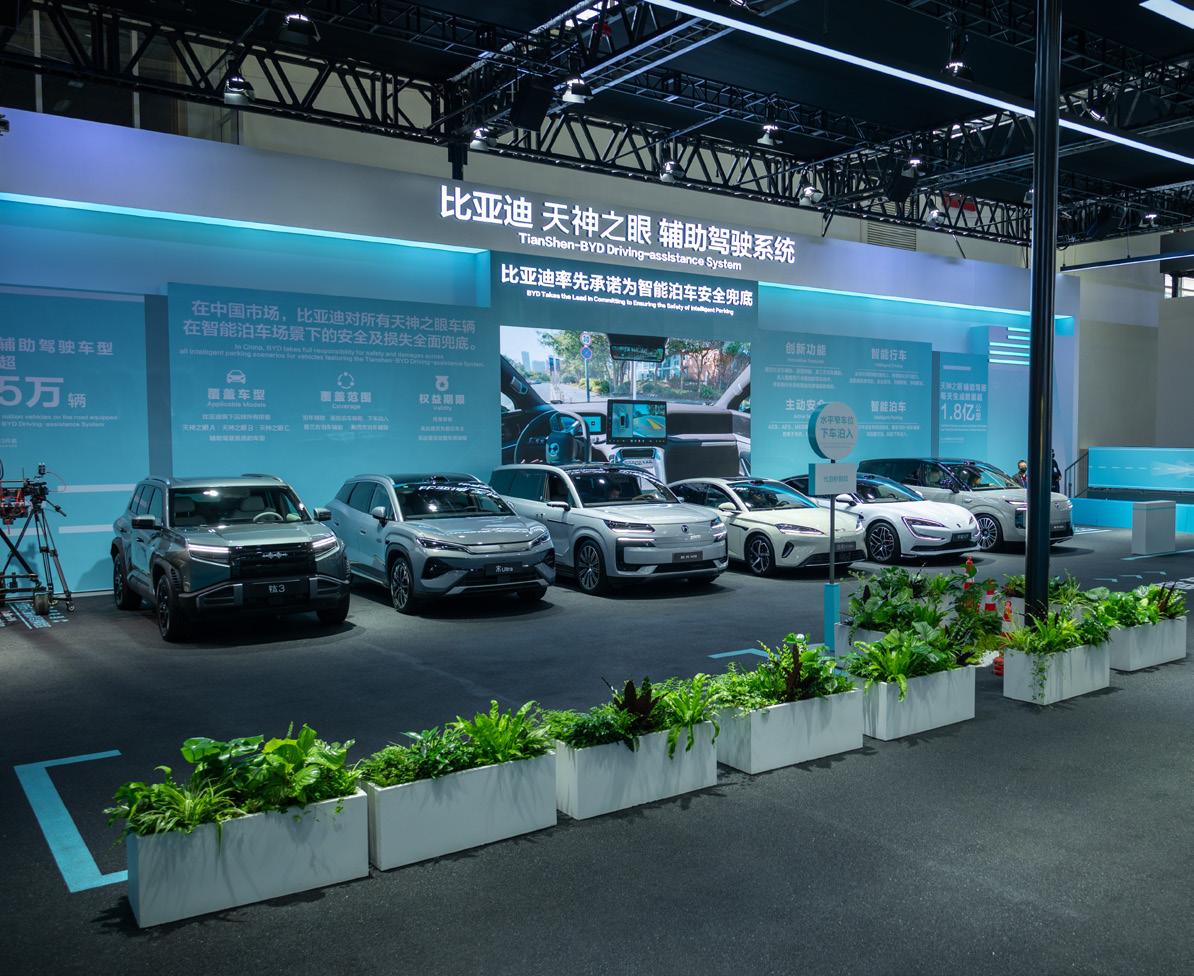
na's entrance in North America is bothering Uncle Sam given the fact that Canada is a major sales driver for Detroit’s carmakers. In 2025, Ford Motor, GM and Jeep maker Stellantis sold more than 700,000 vehicles combined in Canada.
Things have changed in Trump 2.0, with Canada’s auto industry taking a massive hit due the Trump administration levying tariffs on vehicles and parts made there. American automakers, to save themselves from the punitive measure, scaled down manufacturing in the neighbouring country.
Chinese players have jumped in to fill the void. As per reports, Chery, by end of April 2026, shipped the first vehicles to the North American country, including J5 from the sub-brand Omoda and Jaecoo. BYD, in March, registered its passenger vehicle manufacturing plants with Transport Canada’s Appendix G preclearance registry, the first Chinese automaker to do so in the Northern American country's consumer vehicle segment. Expect others to follow suit.
There has been opposition against the Canada-China EV deal. CVMA (Canadian Vehicle Manufacturers' Association) President Brian Kingston, apart from warning about Chinese automakers benefiting from ‘weak or non-existent labour rights’ that suppress wages and distort competition, informed the House of Commons that the 49,000-vehicle quota is “equivalent to 30% of the total number of EVs sold in Canada last year”. The lobby group has also backed the Conservative Party’s proposal to scrap the Chinese EV quota.
However, what is trumping these concerns is the vehicle buying preference of the Canadians. A poll by Nanos Research Group for Bloomberg News, conducted among 1,009 Canadians in early 2026, saw 53% of the participants stating the China factor would have no effect on their buying decision.
A rare political consensus was witnessed on April 28, with more than 70 Democrat lawmakers urging
Trump not to permit Chinese automakers to build or sell cars in the United States, with the urge of "not ceding the American auto industry to a strategic competitor intent on global dominance" emerging as the common theme.
The following day, Republican Bernie Moreno and his Democrat colleague Elissa Slotkin introduced bipartisan legislation to harden the American ban further. These political actions might have been triggered by Trump's January statement, in which he expressed his openness to Chinese automakers building vehicles in the United States.
However, warning signs have already started showing up. Despite Pete Hoekstra, US Ambassador to Canada, announcing that Chinese-made EVs entering Canada will be barred from crossing into the United States, a Daily Mail report claims that ‘cheap Chinese Cars’ have been spotted in Texas towns bordering Mexico, despite a January 2025 executive order (that banned building or selling of Chinese vehicles in the US).
"Chinese-manufactured vehicles are legal in Mexico. El Paso residents are just miles from the southern border and have seen Chinese vehicles, such as Geely Auto and BYD, slip into the city," according to the report. The information, if authenticated, could unsettle policymakers and industry players.
editor@ifinancemag.com
NATASHA HAMILTON-HART
With no authority, it is even harder for leaders to work with people and evaluate their performance
'Responsibility

CL RAMAKRISHNAN
There is no denying that rules and regulations play an integral part in the behaviour of individuals at the workplace. Although rules provide fairness and consistency, an overload can impede the process and prevent employees from being proactive, which is not a good sign for an organisation.
According to Natasha Hamilton-Hart, Professor in the Department of Management and International Business at the University of Auckland Business School, rules may turn detrimental when they hinder one's ability to perform effectively. Even though they are supposed to regulate power and provide control, rules do not always lead to people being accountable for their actions. Therefore, Natasha claims that the solution is to have more authority within the organisation, which enables individuals to make decisions, and delete those rules that are unnecessary. Too many rules are an issue in many organisations as they prevent them from making progress and hamper leaders' actions. With no authority, it is even harder for leaders to work with people and evaluate their performance.
Professor Natasha Hamilton-Hart has extensively published on governance systems in Southeast Asia, focusing on state institutions and property rights. Her current research explores the relationship between the economics-security nexus in East Asia, as well as the role of hierarchy, which she wrote about extensively in her recently released book ’Stupid Rules: Reducing Red Tape and Making Organisations More Effective and Accountable’ (Agenda Publishing).
Natasha earned her PhD from Cornell University and has previously held positions at the Australian National University and the National University of Singapore.

In an exclusive interview with International Finance, Professor Natasha Hamilton-Hart discusses the negative impact of too many rules on organisational effectiveness, claiming that accountability is better achieved through proper delegation of authority. She stresses how rules-based organisations tend to discourage decision-making, inhibit leadership, and impede progress, accentuating the importance of hierarchical empowerment, which allows people to make decisions and remove bureaucratic barriers.
International Finance: In your book 'Stupid Rules: Reducing Red Tape and Making Organisations More Effective and Accountable,' you argue that some rules reduce productivity. What led you to question ruleheavy systems in the first place?
Natasha Hamilton-Hart: I returned to New Zealand after many years working in Singapore, and found processes surprisingly cumbersome. I had far less control over several aspects of my work, and the rule book was much longer. I then noticed that much of the country seemed to be ’stuck’, unable to deliver public infrastructure efficiently, bogged down in litigation, and many people were fearful of action in case they broke the rules.
In what ways does authority make people more responsible for their decisions?
It is perhaps paradoxical, but if someone has clearly defined authority, meaning they can make decisions based on discretionary judgement, then they can be held to account for those decisions. In contrast, if a manager is reduced to only following and enforcing rules, he or she is not really accountable when things go wrong despite rule-following.
Organisations often introduce new rules after mistakes occur. Why does this response fail to address the underlying issue?
In some cases, a new rule may fix the problem, if the situation really does call for a non-discretionary rule. We can consider a few examples where this might apply, such as speed limits for driving or the requirement to file expense claims within a certain number of days. But often, the problem is a ’mistake’ that is unlikely to be fixed with a simple rule. That could be because the person who made the ’mistake’ has bad judgement, or is a bully, or something like that. In that scenario, a longer, more detailed rule book on its own won’t fix the problem. It just means everyone, including high-functioning personnel, is tied down by red
NATASHA HAMILTON-HART UNIVERSITY OF AUCKLAND BUSINESS SCHOOL
Inside the organisation, the primary accountability mechanism should be a well-functioning hierarchy, with oversight and understanding systems that hold managers responsible for detecting and dealing with bad behaviour, such as fraud or harassment
tape, and you still have the incompetent or abusive person to deal with. In other situations, it may be that sometimes mistakes are inevitable, and it does not necessarily signal that the person is incompetent. There are simply situations where the correct decision is not obvious. It is a classic insight originally put forward by Frank Knight, that management in a hierarchy is there to make decisions under uncertainty. Sometimes, the decision may turn out to be the wrong one. It is up to the organisation’s more senior levels to figure out whether the manager is not up to the job, or whether the decision was in fact a reasonable one in the circumstances.
Having studied governance systems in Southeast Asia for more than two decades, how did that research
shape your views on authority and bureaucracy?
Southeast Asia showcases a huge variety of bureaucratic systems, both in government and business. Some systems are very informal in practice, meaning that a person’s actual authority may not correspond to their position on the organisation’s chart. Other systems can deliver in a purposeful and disciplined manner. What I noticed was that these more purposeful organisations were not actually rule-bound: decision-makers had quite wide latitude to make choices. But they were still constrained to pursue organisational purpose (rather than their own whims or private interests) by the hierarchy above them.
Some people worry that giving more authority could lead to abuse of power, so how can organisations balance authority with democratic accountability? Accountability mechanisms are definitely important. But not every organisation needs to be a democracy. Inside the organisation, the primary accountability mechanism should be a well-functioning hierarchy, with oversight and understanding systems that hold managers responsible for detecting and dealing with bad behaviour, such as fraud or harassment. But then,

AUTHORITY ACCOUNTABILITY
organisations themselves need to be held accountable to ensure their purpose is aligned with what society accepts. My view is that this alignment is best ensured by democratic mechanisms for making and enforcing laws, which may include delegating authority to regulatory agencies or the police, but which ultimately places the decisions about what is or is not acceptable in the hands of the voting public. But other mechanisms might serve the same functions. In some theories, the threat of war or rebellion creates incentives for good government. But this obviously does not always work.
Modern organisations frequently give leaders responsibility without real authority. How does this gap influence decision-making and performance? Responsibility without authority is a terrible mix. There is a quote in the book from Edmund Burke, who detected this problem in the aftermath of the French Revolution. If you have responsibility but lack the authority to execute, you will either get nothing done or be forced to deliver by taking shortcuts that can have disastrous consequences. It results in poor quality outputs and places undue pressure on staff, ultimately leading to low morale and burnout.
People sometimes resist decision-making authority even while complaining about too many rules. Why do individuals feel uncomfortable with that responsibility? Well, it probably depends a bit on cultural habits. In societies like New Zealand’s, which is quite egalitarian and conflict-averse, people often find it uncomfortable to tell others what to do, or to point out that their work was not up to standard. So, they prefer to be able to point to a rule book or set of independent, supposedly objective standards, as a kind of backup. And of course, if you don’t exercise personal discretion, you are less to blame if things go badly.
If organisations or governments want to reduce “stupid rules,” what practical steps should they take first? The first place to look is probably the areas where rules (including standards) or procedural requirements have grown lengthy and complex. The tenpage dress code that General Motors used to have is a light-hearted example. It was reduced to two words:
’dress appropriately’. A simple rule, but it needs a dose of authority as a backstop. In technical areas, there could well be a need for complexity and detail. But if detailed standards and procedures appear to be trying to specify and standardise things that are really context-specific or uncertain, then rule proliferation or increasingly detailed formalised standards could well be replaced with something much simpler: a basic statement of purpose. That allows people the discretion to exercise their professional judgement and skill at all levels in the hierarchy.
editor@ifinancemag.com

Airlines say rules requiring the use of sustainable aviation fuel (SAF) from 2030 is not feasible due to high costs and scarce supply
Europe's aviation sector is buzzing, with airlines reportedly preparing to challenge European Union's rules requiring the use of synthetic sustainable aviation fuel (eSAF) from 2030, over concerns like high costs and scarce supply.
Trade group Airlines for Europe (A4E) has taken an adversarial stand against the SAF norms. Calling eSAF a ’nascent technology,’ A4E said projects would only produce 0.7% of volumes needed to meet the climate targets set by EU for the industry.
The use of eSAF falls under the "ReFuelEU Aviation" initiative, that sets requirements for aviation fuel suppliers to gradually increase the share of SAF blended into the conventional aviation fuel supplied at EU airports. The rule made it mandatory for regional airports to have 2% SAF in their overall fuel mix, a ratio which must rise to 6% in 2030. By 2050, every European airport should have 70% SAF in their fuel mix.
As per the aviation industry, the supply of synthetic jet fuel is not abundant, and the planned production facilities won't come online any time soon to meet the mandate.
While cooking oil and animal waste have been the preferable raw materials for the fuel, the resultant SAF costs three to five times more than traditional jet fuel, while making up a paltry 0.3% of global jet fuel supply. The synthetic version (eSAF) is made from renewable energy sources, like captured carbon dioxide or green hydrogen, which too are expensive.
Another vocal critic has been the European Regions Airline Association (ERA). In October 2025, ERA stated that the policy's implementation would create structural disadvantages for smaller regional carriers. The association revealed that the SAF's supply is massively
concentrated at the major European aviation hubs, leaving smaller, regional airports without access, thereby exposing Europe’s most remote communities to rising costs, complex compliance burdens, and the risk of reduced connectivity.
Even the International Air Transport Association (IATA), the industry's apex trade association, is not impressed by ’ReFuelEU Aviation’. Willie Walsh, the Director-General, publicly panned the policy, by stating, "SAF production growth fell short of expectations as poorly designed mandates stalled momentum in the fledgling SAF industry. If the objective is to increase SAF production to further the decarbonisation of aviation, then they need to learn from failure and work with the airline industry to design incentives that will work."
"Fuel costs remains a key driver of airline profitability, accounting for roughly 30% of operating expenses. Any increase, whether linked to SAF or other factors, naturally draws close attention. The recent Iran crisis is a good illustration of how sensitive airlines are to fuel price fluctuations. A4E recently pointed out that scaling SAF successfully will require not just higher production volumes, but also lower production costs and thus lower prices. For the EU’s ambitions to materialise, attracting private investment will be essential, which in turn depends on clear and stable market conditions for project developers," according to Catherine Galano, Executive Director at Frontier Economics, and Stefan Rohm, Senior Principal at Frontier Economics.
FEATURE REFUELEU AVIATION SAF AIRLINES FOR EUROPE
Free carbon permits effectively mean that using fossil fuels carries no additional cost. As these permits are phased out, the cost of inaction increases.
This changes the equation: the cost gap between fossil jet fuel and SAF narrows, which can support SAF uptake. Over time, rising carbon prices combined with more efficient SAF production could even make fossil fuels more expensive than their decarbonised alternatives.
That said, this does not fully address competitiveness concerns. Policy measures need to be designed as part of a coherent and consistent overall framework.
As per the IATA's updated estimates for Sustainable Aviation Fuel (SAF) production, in 2025, SAF output was expected to reach 1.9 million tonnes (2.4 billion litres), nearly double the 1 million tonnes produced in 2024. In 2026, production growth is projected to slow, reaching 2.4 million tonnes.
Despite this increase from the 2024 tally, SAF will account for only 0.6% of total jet fuel consumption in 2025, rising to 0.8% in 2026. At current prices, the SAF premium was estimated to add approximately $3.6 billion in fuel costs for the airline industry in 2025.
"Mandates in the EU and UK have failed to accelerate SAF production and adoption. In Europe, ReFuelEU Aviation has sharply increased costs amid limited SAF capacity and oligopolistic supply chains. Fuel suppliers have raised profit margins so that airlines pay up to five times the price of conventional jet fuel and double the market price of SAF, without guaranteeing supply or consistent documentation. In the UK, SAF mandates have also triggered price spikes, forcing airlines to absorb significant costs. In total, airlines paid

a premium of $2.9 billion for the limited 1.9 million tonnes of SAF available in 2025," according to the report.
"Competitiveness is a legitimate concern for European carriers, especially when compared with airlines based outside Europe. This is at the core of arguments that SAF rules risk creating an uneven playing field. That said, it is important to consider what alternative Net Zero policies may be and wider implications for the sector. We find that alternative narrative oftentimes rely on the reduction of demand as a decarbonisation lever, which would ultimately harm the entire sector, including passengers. From an economic perspective, incentives matter. Penalties can encourage faster investment in SAF, fleet renewal, or innovative business models. In that sense, they can also create an opportunity for European carriers to be trailblazers, as suggested in the Draghi report. This does not mean regulatory distortions disappear. There is still a strong case for funding mechanisms to support the SAF value chain and for
continued R&D in aeronautics. These tools can help share risks and sustain competitiveness over the medium to long term," according to Catherine Galano and Stefan Rohm of Frontier Economics.
"In the EU, a lack of financial support, specifically for more nascent technologies like those used to produce cellulosic SAF and e-fuels is limiting SAF supply. We call these nascent technology fuel pathways ’advanced SAF’. In a 2025 study, we find that lack of revenue certainty is the primary barrier for advanced SAF production coming online in the EU. High upfront capital costs and market uncertainties continue to delay final investment decisions," Chelsea Baldino, Fuels Program Lead at The International Council on Clean Transportation, told while speaking with International Finance. Airlines also have a role to play. In that respect, it is encouraging that A4E has not ultimately challenged the 6% mandate as strongly as initially feared. Walsh sees a SAF supply shortfall, and

that, in his opinion, will force airlines to review their 2030 SAF commitments.
"Regrettably, many airlines that have committed to use 10% SAF by 2030 will be forced to re-evaluate these commitments. SAF is not being produced in sufficient amounts to enable these airlines to achieve their ambition. These commitments were made in good faith, but simply cannot be delivered," he observed.
Walsh also said that transporting SAF to Europe could increase its overall carbon footprint.
On this, Catherine and Stefan told International Finance, “From an economic perspective, SAF should be produced where it is most cost-effective and abundant, considering the footprint of logistics as well as the decarbonisation performance of various fuel types. For instance, importing competitively priced eSAF with higher emissions reduction potential could, in some cases, deliver greater overall benefits than relying on alternatives such as HEFA produced locally.”
“That said, the carbon footprint of imports does support the case for developing a European SAF value chain. More broadly, energy sovereignty and security, highlighted by the Ukraine and Iran conflicts, also strengthen the argument for domestic production,” they remarked.
Also, EU is reportedly mulling over completely phasing out free carbon emissions allowances for the aviation sector, moving to full auctioning by 2026 to align with climate goals.
A study from the International Council of Clean Transportation (ICCT), published in October 2025, found SAF costing between two to five times more than fossil jet fuel, with mechanisms like public and private investment and cost sharing being crucial for building a deep ecosystem, that will in turn make airlines' green transition a budget-friendly one.
"Although SAF can be made from many different materials and conver-
sion processes, all of them are currently costlier than fossil jet fuel. The European Union Aviation Safety Agency estimated that the average production cost of SAF in 2024 ranged from €1,461 per tonne (for biofuels) to €7,695 per tonne (for e-fuels). We calculate that this is a cost premium of 2.1–10.6x compared with fossil jet fuel by converting fossil jet production costs from the International Energy Agency, reported in US dollars per litre, into equivalent units," according to the report.
"Meeting EU targets will require what could be described as an 'investment shock' to scale production capacity. Today’s SAF output, despite exceeding the EU’s 2% mandate in 2025, is largely based on biofuels such as HEFA, which face feedstock limitations and are unlikely to cover more than about 10% of global demand even under optimistic assumptions. Given the scale of investment needed, attracting private capital is critical. But investors need long-term visibility on demand and revenues. This is precisely what mandates and penalties are designed to provide. The current slow growth could mean that the signal from mandates is still too weak. But it may also reflect uncertainty about how firmly these policies will be enforced. This highlights the importance of regulatory stability, alongside targeted support mechanisms to improve project financeability," Catherine and Stefan told the International Finance
Investigating the reason behind SAF's high price, ICCT found a correlation high value of feedstocks that power the production. Virgin vegetable oil is more expensive than kerosene. Making waste-based SAF, on the other hand, with high cellulosic content is expensive due to inefficient supply chains for
sourcing raw material and the enzymes needed to break down feedstocks into "’drop-in’" fuel.
eSAF requires high quantities of renewable electricity to produce renewable hydrogen (i.e., hydrogen produced via electrolysis using 100% renewable electricity) and extract diluted carbon dioxide from the atmosphere.
Then add the project mismanagement. As per ICCT, SAF projects take minimum five years to reach final investment decision (a critical stage during project development that indicates whether projects are ready to move forward to construction), and many projects fail before reaching this stage. The ratio of SAF projects reaching final investment decision, as per consulting group BCG, was at dismal 30% in 2025.
Noting that helping advanced SAF producers reach financial investment decision in the EU is an urgent priority for the bloc's policymakers, Baldino remarked, "The EU’s Sustainable Transport Investment Plan (STIP) announced several measures the EU is taking to address economic issues. The Commission will launch pilot projects, including one that sets up a double-sided auction for e-SAF. This double-sided auction will establish a ’market intermediary’ that connects SAF suppliers and consumers, offering long-term contracts to provide revenue certainty to fuel producers as well as short-term contracts on the offtake side. The Commission also commits to assessing the feasibility of an EU-wide double auction to support both aviation and marine sustainable fuels. If designed and implemented quickly, such measures could provide the certainty needed to get today’s advanced SAF projects off the ground and accelerate progress toward fulfilling ReFuelEU SAF targets."

While the ICCT study validated IAF's apprehensions about SAF shortfall, Boston Consulting Group's March 2026 estimates couldn't promise a better future either.
The report, prepared after interviewing more than 500 executives at about 200 aviation-related companies, found that airlines and airports are investing only 1% to 3% of revenue or budget allocation to SAF, with high production costs and fuel prices remaining the major challenges to adoption.
"While SAF supply increased 1,150% worldwide over the last three years, announcements for new production facilities fell by 50% to 70% from 2022 to 2023, largely due to economic uncertainty, and higher energy and operating costs," BCG stated, while projecting the fuel's supply to fall 30% to 45% short of commercial aviation's 2030 targets.
Giving their take on the BCG report, Catherine and Stefan said, "Airlines are
only one part of the investment landscape. Aircraft and engine manufacturers, airport operators, and private investors are also contributing. Public funding - through EU instruments like the Hydrogen Bank or national programmes - already plays a role as well. Beyond reducing uncertainty, the key challenge is how to allocate risk efficiently across all these stakeholders. Incentives and risk-bearing capacities differ along the value chain. Airlines are central because they ultimately drive demand, but they are not the only actors that matter."
All the studies had one thing common: they pointed out the massive cost of E-kerosene and other SAF raw materials.
Baldino answered, "There are several options for the EU to address these economic concerns. First, the ETS includes a mechanism where 20 million allowances from the ETS go towards re-
imbursing airlines to cover a percentage of the price gap between SAF and fossil fuels between 2024 and 2030. Assuming an EU-ETS price of 80 €/tCO2e, the total subsidy fund would come to €1.6 billion. However, given that the vast majority of SAF on the market is commercial Hydro processed Esthers and Fatty Acid (HEFA), and the programme only runs until 2030, it is likely that most, if not all, of this ETS funding will not help close the cost gap for advanced SAF. The ETS is currently under review, though, so the Commission has an opportunity to expand the SAF allowances programme and earmark some of the SAF allowances for advanced SAF pathways."
Despite industry concerns, it seems that EU is in mood to slow down on its SAF game. It has already launched the "eSAF Early Movers Coalition," bringing together member states that have committed to scaling up the fuel's production. Austria, Finland, France, Germany, Luxembourg, Netherlands, Portugal and Spain have so far announced their participation, with the goal of mobilising at least €500 million ($580 million) for large-scale eSAF projects.
In December 2025, one of Europe’s leading SAF innovators, Metafuels, awarded construction firm McDermott a contract for its eSAF plant in Rotterdam. Metafuels will construct the plant at the Evos terminal in the Port of Rotterdam. It will utilise Metafuels’ high-yield methanol-to-jet technology, "’aerobrew’," and serve as a blueprint for large-scale eSAF production across Europe.
Finnish venture Liquid Sun too launched what it claims is Europe’s eSAF pilot plant in Espoo. The unit will convert biogenic carbon dioxide and
In a 2024 IATA survey, 86% of travellers agreed that governments should provide production incentives for airlines to access SAF


In November 2023, Virgin Atlantic flew the first transatlantic flight on 100% Sustainable Aviation Fuel.
Airbus' next-generation single-aisle aircraft will come with a projected fuel efficiency improvement of up to 30%, using 100% SAF.



As per EASA, in 2024, SAF production in Europe represented only 0.53% of the region's total jet fuel use.
In 2024, Brazil mandated aviation fuel operators to reduce carbon footprints by 10% in 2037, through SAF.
The International Civil Aviation Organization (ICAO) has set a target for SAF to constitute at least 5% of aviation fuel by 2030.
Airbus and Qantas have jointly invested into Climate Tech Partners, a venture capital fund focused on advancing SAF start-ups.
As per DataHorizzon Research, the SAF market will increase from $3.25 billion in 2024 to $56.8 billion by 2033.
hydrogen produced with renewable electricity into synthetic crude oil, which will be then refined into eSAF. Yes, the continent is scaling up its eSAF efforts. But, two questions remain: Will enough eSAF be available to each and every European airport by 2030? Will the green journey be budget-friend-
ly for both airlines and the passengers? The immediate priority for the EU will be to take the aviation sector stakeholders into confidence, and make sure that the journey to a carbon-free future remains on track.
editor@ifinancemag.com
THOMAS ENGELMANN KGAL INVESTMENT MANAGEMENT GMBH & CO
It’s understandable that airlines are concerned about costs and competitiveness, but the direction of travel is clear
‘Scaling sustainable fuels is the path to cleaner aviation’

PRABUDDHA GHOSH
The biggest talking point of Europe's aviation sector has been the European Union's "ReFuelEU Aviation" initiative, which aims to gradually increase the share of SAF (sustainable aviation fuel) blended into the conventional aviation fuel supplied at the continent's airports. Industry stakeholders are opposing the proposal, with trade group Airlines for Europe (A4E) citing concerns like SAF's high costs and scarce supply. International Finance asked Thomas Engelmann, Head of Energy Transition at KGAL Investment Management GmbH & Co., regarding what should be the ideal implementation roadmap for "ReFuelEU Aviation."
Engelmann-led KGAL invests in energy transition-related projects and companies working in the domain. Thomas also acts as Managing Director for PtX Development Fund, the Power-to-X GmbH.
Previously, he was Global Head of Transaction and Investment Management, Infrastructure Equity, at Allianz Global Investors GmbH. Between 2008 and 2013, he worked for KGAL as Senior Director in the Renewable Energies and Infrastructure department, helping to build up the Renewable Energies portfolio. Engelmann gained his in-depth industry experience through various global senior management positions at Siemens AG and Siemens Financial Services (SFS).
He has held leadership positions in corporate M&A, as commercial director of industrial power plants, and as senior investment director, which show his significant know-how in technology-driven sustainable impact investments. He holds a Master’s in Business Administration and was a member of the Siemens Technical Graduate Programme. He is also a qualified Chartered Financial Analyst (CFA) and a Chartered Alternative Investment Analyst (CAIA).

International Finance: Synthetic sustainable aviation fuel is in the spotlight as European airlines prepare to challenge the EU’s 6% usage mandate by 2030. What is your view on this?
Thomas Engelmann: Understandably, airlines are concerned about costs and competitiveness. But the direction of travel is clear: decarbonising aviation requires scaling sustainable fuels, and some of the cost will ultimately be reflected in ticket prices.
Against geopolitical uncertainty and accelerating climate impacts, the EU’s 2030 targets are a key part of improving both climate performance and energy resilience. ReFuelEU provides a predictable timeline — what matters now is execution across the value chain.
European carriers may face penalties by the end of 2026 for missing emission targets. With the sector already under strain from the Middle East crisis, will this EU rule add further pressure?
ReFuelEU places the formal compliance obligation primarily on fuel suppliers: if blending requirements are not met, penalties apply at that level. Airlines buy the blended fuel, so the impact is mainly through fuel prices.
The practical way to reduce pressure is to lock in supply early. Long-term offtake agreements between
Sustainable Aviation Fuel (SAF) is a non-petroleum-based jet fuel derived from waste oils, fats, biomass, or synthetic sources, capable of reducing CO2 emissions by up to 80%. It is a cleaner version of conventional aviation jet fuel
fuel suppliers and SAF/e-SAF producers help bring projects to financial close, scale production, and avoid penalties and volatility.
In December 2025, IATA projected just 2.4 million metric tonnes of SAF availability in 2026, about 0.8% of total aviation fuel demand. Is the 2030 target real-
Biogenic SAF can scale where sustainable waste feedstocks are available at a competitive cost. E-SAF needs new, capital-intensive plants and typically requires 10-year purchase commitments to reach financial close
istic given this slow growth?
For conventional, biogenic SAF, the ramp-up is feasible because the pathways are proven and projects are already delivering volumes, especially from wastebased feedstocks.
The tougher part is e-SAF (synthetic fuels). Those projects are capital-intensive and typically need longterm purchase commitments to secure financing. If the industry converts the mandate into bankable offtake contracts now, the 2030 target is achievable. If not, supply will remain constrained.
The EU began phasing out free carbon permits for airlines in 2025. Will this make the transition to SAF significantly more expensive for carriers?
Phasing out free allowances will make carbon costs more visible, and part of that will be reflected in fares. That said, the transition to lower-carbon fuels cannot be postponed if aviation wants to deliver real CO2 reductions this decade.
As a rough order of magnitude, meeting the 2030 blending targets could add around €20 to a typical return ticket, with variation by route and fare type. For very low fares, the percentage impact can look larger — but delaying action risks higher costs and a more abrupt adjustment later.
Aviation also has an important advantage: meaningful emission reductions are possible through fuel switching without waiting for a full fleet renewal. Other industries must invest in parallel into the production progress (e.g. green steel production facilities).
SAF is central to aviation’s 2050 decarbonisation goals, yet production remains limited. What key factors are holding back supply?
The bottleneck is not the mandate — it’s the speed at which long-term offtake agreements are signed. Those
contracts are what unlock financing and investment in new production capacity, especially for e-SAF.
Biogenic SAF can scale where sustainable waste feedstocks are available at a competitive cost. e-SAF needs new, capital-intensive plants and typically requires 10-year purchase commitments to reach financial close.
In short: stable policy plus bankable contracts equal new supply. Without contracts, projects slip, and volumes for 2030 remain out of reach. The prices per tonne can only go down, if scale effects are kicking in.
IATA has criticised the EU’s SAF mandate as costly and constrained by limited regional availability. Should the EU reconsider its 2030 target?
In my view, the EU should keep the 2030 target stable. Changing the rules now would undermine confidence and slow investment just as the market is starting to scale. Today’s aircraft can already use blended fuels. SAF is one of the fastest routes to near-term CO2 reductions in aviation. Europe also has strong strategic reasons to build domestic e-SAF capacity and reduce dependency.
The priority is execution: convert mandated demand into long-term purchase commitments, bring projects to financial close, and build supply.
A 2025 Boston Consulting Group report found that airlines are allocating only 1% to 3% of their budgets to SAF. How much more investment is needed to scale up effectively?
Most of the investment need is upstream — in new SAF and especially e-SAF production capacity — rather than on airline balance sheets. Airlines will mainly feel the effect through fuel prices and supply contracts.
To give an illustration, meeting the 2030 e-SAF ramp-up in Europe likely requires multi-billion-euro annual fuel purchase commitments and double-digit billions in capital investment for new plants. The exact numbers depend on technology, electricity prices, and project location.
What turns those figures from "aspirations" into steel in the ground is straightforward: long-term, bankable offtake agreements.

What about claims by airlines that fuel producers are inflating SAF prices while failing to scale supply?
In the short term, prices are being shaped by tight supply, regulatory uncertainty, and high financing costs for new projects. The real question is whether higher prices are accompanied by measurable progress in contracted volumes and delivered supply.
To reduce both costs and volatility, the market needs transparency and long-term contracts that enable producers to invest. Clear certification and reporting also help ensure that SAF premiums are linked to verified blending and emissions reductions.
Willie Walsh, the Director-General of the IATA, has argued that transporting SAF to Europe could increase its overall carbon footprint. Do you agree with this concern? Transport emissions matter and should be reflected transparently in lifecycle accounting. But that does not automatically argue against imports — it argues for smart supply chains and robust sustainability criteria. At the same time, Europe should scale domestic SAF and e-SAF capacity wherever feasible. Otherwise, it risks trading one dependency for another. One- third of SAF and e-SAF production in Europe should be feasible.
To meet the 2030 target, should stakeholders, including the EU, IATA, and airlines, collaborate on a revised and unified roadmap?
The most useful “roadmap” is practical: long-term contracting, clear certification and reporting, infrastructure readiness, and mechanisms that accelerate bankable e-SAF projects. If we want supply to grow, we need to turn targets into purchase commitments that projects can finance against
Stakeholders should align on implementation—but within a stable policy framework. Reopening the mandate would create uncertainty and likely slow investment in a market that still needs scale.
The most useful "roadmap" is practical: long-term contracting, clear certification and reporting, infrastructure readiness, and mechanisms that accelerate bankable e-SAF projects. If we want supply to grow, we need to turn targets into purchase commitments that projects can finance against.
Done well, this is not only a climate policy — it is also an industrial and energy resilience opportunity for Europe.
editor@ifinancemag.com
CRAIG VILE DIRECTOR VALPAL NETWORK
As real estate agents struggle to engage data at scale, automation emerges as the key to converting untapped opportunities
For years, real estate agents have been told the same thing: ‘Work your database more’. It’s become one of the most repeated pieces of advice in the industry, often delivered with the implication that the opportunity is obvious, and the only barrier is effort.
But that framing misses an uncomfortable truth. Most agents aren’t failing to work their database because they don’t want to. They’re failing because, practically, it’s impossible.
The average UK estate agency sits on a database of thousands. For many, it’s somewhere between 3,000 and 10,000 contacts. For larger or multi-branch businesses, it can stretch far beyond that.
Within those databases sits a familiar mix:
• Past valuations
• Portal enquiries
• Applicants and tenants
• Landlords who have drifted out of contact
And within that mix, there is opportunity – bound to be. The issue is not whether value exists. It’s whether it can realistically be accessed. Because when you break it down, the operational challenge becomes obvious.
Let’s take a mid-sized agency with 5,000 contacts. Even allowing for a modest three minutes per interaction: dialling, attempting contact, leaving a message, scribbling notes - that equates to 250 hours of work. That’s over six full working weeks for one person at-
tempting a single pass. That’s before you consider the reality of how conversations actually convert:
• Not everyone answers
• Follow-up is often required
• Engagement happens over time, not in one call
In practice, properly working a database is not a one-off task. It’s an ongoing process that requires consistency over weeks and months. Which is where the model begins to break down.
This is the point often overlooked. The industry hasn’t been ignoring its database. It has been structurally unable to work it at scale. Agents are busy. Teams are stretched. Priorities are immediate. When faced with the choice between:
• progressing live deals
• booking new valuations
• or systematically working through thousands of historic contacts …the database inevitably falls down the list. It is the mountain in the office that is never climbed. Not because it isn’t valuable, but because it isn’t urgent. And over time, that creates what might be called a database illusion. The belief that the data is being ‘used’, when in reality large portions remain untouched for months or even years.
Why this matters more now
In a stronger market, this inefficiency is often masked. Instructions come more easily. Buyers are more decisive. Deals move faster.

But in a more uncertain environment, where affordability is tighter, confidence is lower and competition for instructions is higher, data becomes a more valuable commodity, and the cost of not engaging becomes more visible.
The shift that’s underway
For a long time, the advice has remained the same: “Work your database.” What’s changed is the ability to actually do it. Because the traditional model was never scalable. It was always constrained by time, headcount and competing priorities. That constraint is now being removed. Not through more effort but through automation.
Where automation comes in
This is where the conversation around AI becomes more practical. Not as a replacement for agents. Not as a shortcut to winning instructions. But as a way of solving a long-standing operational problem. When database engagement is automated through a combination of voice, email and SMS, it becomes possible to:
• respond instantly
• follow up consistently
• maintain contact over longer decision cycles
In other words, to do what agents have always intended to do, but rarely had the capacity to execute fully. And when that happens, the results begin to speak for themselves. We are already seeing cases where around 5% of previously unworked database contacts convert into active, ‘hot’ opportunities once consistent
engagement is introduced.
Not because those opportunities didn’t exist before, but because they were never being reached.
What makes this shift particularly significant is not just what it enables now, but what it suggests for the future. There was a time when having a CRM was a differentiator; today it is a baseline.
That same pattern is beginning to emerge here. Consistent, automated engagement of a database will not remain a competitive advantage indefinitely. It will become a part of how agencies operate routinely. So, the question is not whether this approach will be adopted, but when.
Estate agents have never lacked data. What they have lacked is the ability to act on it consistently, at scale. That gap, between data held and data actively worked, has always existed, until now. And in a market where every instruction matters more, the agents who close that gap first will be the ones who benefit most.
Craig Vile is Director at The ValPal Network, which provides instant online valuation services and a range of additional products to over 1,000 estate and letting agency brands with more than 4,300 offices across the UK
editor@ifinancemag.com
For nearly three decades, Asialink has been dedicated to offering accessible, fast, and convenient financing to every Filipino, from small entrepreneurs to individuals
In a country where the cost of living and doing business continues to rise, access to fair and flexible financing remains a major challenge for many Filipinos. Be it individuals or MSMEs (micro, small, and medium enterprises), the story remains the same: consistent refusal from mainstream banks, with demands like extensive documentation, high income requirements, or large collateral. For hardworking business owners trying to stay afloat or families striving to reach their dreams, these barriers can feel insurmountable.
As a result, many are left with no choice but to turn to informal lenders offering quick but high-interest loans, a risky move that can lead to unmanageable debt and unstable financial futures. This is the reality Asialink Finance Corporation seeks to change.

Empowering Filipinos through accessible financing
Founded in 1997, Asialink Finance Corporation has become one of the Philippines’ most trusted and rapidly growing non-bank financial institutions, with over 250 branches across the country. For nearly three decades, Asialink has been dedicated to offering accessible, fast, and convenient financing to every Filipino, from small entrepreneurs to individuals.
Its wide range of financial products is designed to support the diverse needs of its clients. Key among these is Sangla OR/CR (Car & Truck Loans), under which the applicant gets quick access to cash by using his/her vehicle’s OR/CR as collateral, without surrendering any unit.
Again, the term 'Sangla' comes into play. While it means pawning or depositing, OR and CR are the official receipt and "Certificate of
Registration" of the vehicle.
"Sangla OR/CR is a type of collateral loan that is protected by an asset pledged by the borrower. Naturally, the OR/CR of the truck is the asset to be used in exchange for a loan amount of the same value. What makes Sangla OR/CR a popular truck loan in the Philippines is that the unit itself remains in the borrower’s care. This loan is recommended for individuals who need immediate cash. For an interest rate of 1.5% per month, we would gladly accept any year model as long as the truck is in good physical and running condition," Asialink told International Finance.
The benefit of getting the best auto loan in the Philippines from Asialink is the variety of options the company offers.
Next is "Car & Truck Financing," where businesses get cash access for new or pre-

owned vehicles to grow their operational footprints.
The applicant can get a brand-new car and enjoy the latest technology and features. If the individual is not ready to buy a new car, then he/she can use an auto loan for a used one.
When it comes to availing auto loans in Southeast Asian nations, banks have been known for their high-interest rates, along with a strict screening process for applicants. Asialink offers interest rates for car refinancing and second-hand car financing as low as 1.5%.
On the property front, there is "Real Estate Mortgage," where the applicant gets to use his/her property’s value to access funds for expansion or investment. Then there is "Real Estate Financing," which turns a Filipino's dream of owning property into reality with flexible payment terms.
Finally, the WAIS Loan (Women’s Access to Inclusive Support) has emerged as a special financing programme that empowers women entrepreneurs in the Philippines to build and scale their MSMEs with flexible and affordable loans.
Through its innovative suite of loan products, Asialink has helped thousands of Filipinos turn their dreams into reality, from start-up business owners who grew their fleets to families who finally secured their own homes. The recently launched WAIS Loan stands as a testament to Asialink’s commitment to financial inclusion. By focusing on women-led MSMEs, this programme firmly recognises the vital role of Filipino women in shaping communities and driving economic progress.


The WAIS Loan offers accessible capital, personalised repayment terms, and a digital-first application process for enhanced convenience. With special interest rates designed to support women entrepreneurs, it addresses the financial inclusion gap where only a small percentage of women-led businesses secure formal financing. Supported by international partners such as the Asian Development Bank and the International Finance Corporation, WAIS leverages
Asialink’s nationwide branch network, inhouse lending systems, and customer-centric approach to deliver efficient, tailored, and scalable solutions that empower women to start, stabilise, and grow their businesses with confidence. The programme features simplified application requirements, faster loan processing, and flexible repayment schedules. By combining digital access with branch-
The recently launched WAIS Loan stands as a testament to Asialink’s commitment to financial inclusion. By focusing on women-led MSMEs, this programme firmly recognises the vital role of Filipino women in shaping communities and driving economic progress
based support, WAIS ensures women entrepreneurs across urban and rural areas can confidently access financing when they need it most.
"With its growing network, customer-first approach, and continuous digital transformation, Asialink Finance Corporation continues to redefine what accessible financing means for Filipinos. Whether you’re expanding your business, purchasing your first vehicle, or building a secure future for your family, Asialink is your partner in achieving success," the business concluded.
Insurers are allocating more capital to private markets and also partnering with asset managers
For a long time, insurance companies have been predictable investors. They bought government bonds, held high-grade corporate debt, and focused on stability. If there was one part of the financial system that did not chase trends, it was insurance. That is starting to change -- slowly, but meaningfully.
Bond yields have been low for years. Naturally, they are exploring alternatives. But that explanation only tells part of the story
Over the past few years, insurers have been moving deeper into private credit and alternative assets. It is not always obvious from the outside, but the scale is growing. Deals like American International Group partnering with CVC Capital Partners, or increased activity from firms such as Oaktree Capital Management, are part of a broader pattern.
Insurance capital is flowing into areas that used to be dominated by banks or specialised lenders. That raises a slightly uncomfortable question: are insurers still playing it safe, or are they quietly stepping into the world of shadow banking?
It’s not just about chasing yield
At first glance, it is easy to say insurers are just looking for better returns. Bond yields have been low for years. Naturally, they are exploring alternatives. But that explanation only tells part of the story.
According to Dr Jassem Alokla, Senior Lecturer in Finance at ARU, England, United Kingdom, the shift is being driven by a mix of factors rather than a single trigger.
"All three -- opportunity, necessity, and competitive pressure are at work," he told International Finance.
There is definitely an opportunity element. Private credit tends to offer higher spreads than public bonds, partly because these investments are less liquid and often more complex. For insurers willing to hold assets long-term, that premium is attractive. Still, the bigger issue is structural.
Life insurers, in particular, are always trying to match long-term liabilities, things like annuities, with assets that generate predictable cash flows. In a world where traditional bonds do not always deliver enough return, that becomes harder to do. So, they look elsewhere.
"Insurers aren’t just chasing yield. They’re trying to close an asset-liability mismatch problem," Alokla explains.
There is also the fact that banks have pulled back from certain types of lending since the 2008 global financial crisis. That gap didn’t stay empty for long. Private credit funds stepped in, and insurers followed, often through partnerships with asset managers.
In a way, insurers did not just decide to enter private markets. The market shifted, and they adapted.

The shift is real, but not dramatic yet It would be easy to assume insurers are rapidly abandoning bonds, but they are not. Traditional fixed income still dominates portfolios. Government bonds and investment-grade corporate debt remain the core. That has not changed overnight.
What has changed is the mix within that core. There is a gradual move away from purely public bonds toward private credit, infrastructure debt, and real estate lending. It is not always visible unless you look closely at portfolio breakdowns, but the direction is clear.
Alokla describes it as 'material and rising’, but not something that overturns the whole system.
Derek Guo, Chief Legal Officer at MetLife China, sees it as even more measured.
"It is not a significant shift, but a very slight move. Life insurance is still focused on steady and long-term return," he told International Finance.
That difference in tone is interesting. It shows how this trend isn’t being experienced in the same way everywhere. In some markets, it feels like a meaningful evolution. In others, it still looks like a small adjustment. The truth is probably somewhere in between.
this shadow banking?
This is where things get a bit more complicated. If you look at what insurers are actually doing, lending to companies through private credit, structuring deals, working with asset managers, it starts to resemble activities traditionally associated with banks.
Or, more precisely, with what’s often called shadow banking. Alokla acknowledges that similarity, but with a caveat.
"Partly, in a functional sense. Their private-credit intermediation resembles shadow banking," he says. But he’s careful not to overstate it.
Insurers don’t take deposits. They operate under strict solvency rules. They’re regulated very differently from banks and most non-bank lenders. While the activity may look similar, the framework around it isn’t the same.
Guo takes a firmer stance, especially from a Chinese perspective. "I don’t think so. Insurance is a highly regulated industry, and capital invested in private credit is closely monitored with public disclosure," he added. He also points out that regulators impose limits on how much insurers can invest in these areas.
So, whether insurers are part of the shadow banking system depends on how you define it. If you focus
on what they do, the comparison holds. If you focus on how they are regulated, it becomes less clear.
One of the challenges with private credit is that the risks don’t always show up immediately. Unlike publicly traded bonds, these assets aren’t priced every day. Valuations often rely on internal models. That can make portfolios look stable, even when underlying conditions are changing.
"Transparency is uneven. There is a real risk of valuation error," Alokla said.
That does not mean insurers are ignoring risk. Many have built sophisticated systems to manage these exposures. But across the sector, the level of transparency and consistency can vary.
Liquidity is another issue. Private credit is not easy to sell quickly. In normal conditions, that is fine

-- insurers typically invest for the long term. But in stressed scenarios, it can become a constraint.
At the same time, the structures themselves are becoming more complex. As insurers go deeper into private markets, they are dealing with layered products, bespoke deals, and sometimes indirect exposure through funds.
Guo acknowledges that the risk profile is changing. "This will definitely increase the risks for insurers," he says, comparing it to traditional fixed income.
At the same time, he points to safeguards, limits on concentration, strict monitoring of assets, and regulatory disclosure requirements.
The real question is not how private credit performs in good times. It is what happens when things go bad. If defaults rise or valuations fall, in-
surers could face pressure on their balance sheets. That might show up as lower capital ratios.
There is also the issue of liquidity. While insurers are not banks, they are not completely immune to stress. Higher-than-expected policy surrenders, or other cash needs, could force them to raise funds, possibly at unfavourable prices.
Alokla points to several possible transmission channels, valuation markdowns, liquidity strain, and broader financial linkages.
"Interconnectedness can amplify shocks," he says.
Still, he emphasises that insurers generally have strong capital buffers. They are not starting from a weak position. Guo, speaking from a legal perspective, keeps it more straightforward.
"We have solvency ratios strictly monitored by regulators," he added.
In other words, the system is designed to absorb stress, even if the risks are evolving.
For most people, the real concern is not how insurers invest. It is whether those investments could affect payouts, savings, or retirement products. The short answer is: not immediately.
If private credit investments underperform, the first impact is usually on insurers themselves, their earnings, their capital, and their margins.
Source: Industry Estimates, Rating Agencies, Academic Research
Only in more extreme scenarios would it start to affect policyholders directly. Alokla explains that modern insurance frameworks are built with buffers.

"The risk is not zero, but protection is substantial," he noted.
Still, as insurers take on more complex assets, the margin for error narrows. It becomes more important that risks are properly understood, and managed.
Regulators are watching, but still catching up
Regulators aren’t ignoring this shift. In fact, across different regions, there’s growing attention on private credit exposure, valuation practices, and systemic risk. But keeping up isn’t easy.
"Data and valuation gaps persist," Alokla notes.
Private markets are, by definition, less transparent than public ones. That makes oversight more challenging. Guo, again, offers a more confident view from China.
thing important: regulation isn’t uniform. The risks, and how they’re managed, can vary significantly depending on the market.
Temporary shift or something bigger?
So, is this just a response to current conditions, or something more permanent? There’s no single answer.
Alokla leans toward a longerterm view. The combination of low yields, evolving liabilities, and growing private markets suggests this trend isn’t going away anytime soon. The role of insurers in credit markets is expanding, even if gradually.
Guo is more cautious.
"I see it as a temporary cyclical response," he declares.
For now, insurers still look like what they have always been: stable, conservative, and heavily regulated. But underneath, things are moving. They are allocating more capital to private markets. They are partnering with asset managers. They are stepping into spaces once dominated by banks.
It’s not a dramatic transformation. There’s no sudden break from the past. But it is a shift, and one that could reshape how credit flows through the financial system.
Whether that makes insurers more resilient or introduces new risks is still an open question. What is clear is that the line between traditional insurance and shadow banking is no longer as sharp as it once was, and that is quietly becoming one of the more important changes in global finance.
"I think the regulator is closely monitoring liquidity and solvency. The current framework can guide investment strategy," he added. That difference highlights some- editor@ifinancemag.com
Both views make sense. Market conditions clearly played a role in accelerating the shift. But once insurers build capabilities in private credit, and start relying on those returns, it’s not always easy to step back.
Over the years, many banks have either partnered with fintechs or invested in them, not just to compete, but to stay relevant as the industry evolves
IF CORRESPONDENT
For a long time, fintech companies liked to position themselves as the alternative, something different from traditional banks, not a part of the same system. Not banks, but better. Faster onboarding, cleaner apps, fewer fees, financial services stripped of the baggage that traditional institutions had accumulated over decades.
This is not a simple story of disruption. Nor is it a clean, linear shift. It is, as some experts suggest, something more uneven, more conditional
They did not need banking licences. Instead, they built on top of banks, quietly plugging into the system while presenting a very different face to customers. But now that model is changing.
After years of back-andforth with regulators, Revolut finally getting its UK banking licence feels like more than just a company milestone. It’s a sign of where the industry is heading. Fintechs are no longer happy sitting in the middle. They want to run the whole show, as banks themselves.
But this is not a simple story of disruption. Nor is it a clean, linear shift. It is, as some experts suggest, something more uneven, more conditional and, perhaps, more fragile than it first appears.
Inside the numbers
To really get a sense of how big this shift is, you just
have to look at what companies like Revolut are doing today.
It is no longer just a payments app. Over time, it has quietly expanded into savings, currency exchange, stock and crypto trading, and now even lending. It operates across Europe, the UK, the US, and parts of Asia-Pacific, less like a regional player and more like a global financial platform in the making.
The scale is hard to ignore. Revolut says it has around 70 million customers worldwide, with about 13 million in the UK alone. That’s massive for a company that, not too long ago, wasn’t even a bank.
Traditional banks have noticed. Over the years, many have either partnered with fintechs or invested in them, not just to compete, but to stay relevant as the industry evolves.
At the same time, more fintechs are going all in. Players like Monzo and Starling Bank in the UK, N26 in Europe, SoFi in the US, and Nubank in Latin America have already secured banking licences. This isn’t happening in one market; it is happening everywhere.
Even traditional banks are not just sitting back. Big names like JPMorgan Chase and DBS Bank are putting serious effort into digital and AI. They are starting to feel a lot more like fintechs than oldschool banks.
When you step back and look at it, the gap really isn’t what it used to be. Fintechs and banks are slowly meeting somewhere in the middle.
Around 20% of traditional banking services have already shifted to fintech banks and are expected to reach 35% by 2030
Revolut has 13 million customers in the United Kingdom and 70 million customers globally
Historically, getting a banking licence takes years and costs millions of dollars


A US national banking charter allows operation across all 50 states under one regulator
Traditional banks' core infrastructure was largely built in the 1960s-1970s
For Ron Shevlin, Chief Research Officer at Cornerstone Advisors, one of the United States’ leading independent investment consulting firms, the narrative of a sweeping transformation may be overstated.
"It’s more a wave than a shift," he told International Finance, pointing to the influence of regulatory cycles. In his view, the current momentum is tied in part to a more accommodating political and regulatory environment, one that could easily change.
"The 'wave' will subside with the next change in the White House," he said.
This framing matters. It suggests that the move toward banking licences is not inevitable, but contingent, shaped by external conditions as much as by internal strategy. Still, even a wave has direction. The direction, at least for now, is clear.
In order to understand why fintechs are moving toward licences, it helps to look at how they started.
In the early days, most fintechs did not bother becoming banks. They simply teamed up with licenced institutions, more or less 'borrowing' their infrastructure to get going. It helped them move
fast, skip the heavy regulatory burden, and focus on building a smooth user experience.
"The partner bank model was always a workaround. A way to access banking infrastructure without the regulatory overhead. It was fine for early-stage fintechs that needed to move fast," Shevlin explains.
But as these companies scaled, the limitations became harder to ignore.
Relying on sponsor banks, often smaller institutions, introduced friction. Product development could be constrained. Strategic flexibility could be limited. Most importantly, control was never fully in the fintech’s hands.
"If a sponsor bank changes its risk appetite, or gets acquired, or gets regulatory heat, the fintech suffers," Shevlin notes.
In other words, the very structure that enabled rapid growth can become a bottleneck at scale.
The economics of becoming a bank
Beyond control, there is a more fundamental driver, which is 'money’.
"Why now?" Shevlin explains: "Two reasons: the regulatory environment and profitability."
At the heart of this is lending.
"The profits in banking come from lending. Without a licence, you cannot lend," Shevlin noted.
Many fintechs built their businesses around payments, earning revenue from interchange fees or subscriptions. But these revenue streams have limits like thin margins and intense competition.
A banking licence changes the equation for fintechs.
They can raise cheaper funds by holding deposits, move into lending products like loans and credit cards, keep more of the revenue instead of sharing it, and plug directly into payment systems. These things fundamentally reshape how their business works.
If the economics explain the 'why’, the evolution of the industry explains the 'how’.
According to Chris Skinner, CEO of The Finanser, the shift toward licences is particularly evi-

dent among neobanks.
"You cannot put all fintechs in the same bracket. But those who are neobanks, light banking services, have all started moving into getting banking licences in the past few years," he told International Finance
Not all fintechs want to be banks. Payment specialists, infrastructure providers, and enterprise platforms may continue to operate through partnerships.
But for neobanks, companies that already resemble banks in everything but regulation, the move toward licences feels like a natural progression.
As they make that transition, the line between fintech and traditional banking begins to blur.
"Totally," Skinner says when asked whether the distinction is disappearing. "There are many fintechs that are no longer fintechs. They are banks," he added. He cites Monzo and Starling Bank.
For years, traditional banks dismissed fintechs as niche players, useful for innovation, perhaps, but not a serious threat to core business lines. That view is becoming harder to sustain.
"It has been a slow burn," Skinner observes, citing data suggesting that a growing share of traditional banking services is shifting toward fintech providers.
The trend is expected to accelerate in the coming years. The scale is already substantial.
For example, Revolut has millions of customers in the UK alone,
and tens of millions globally. If even a fraction of those users transition to full banking relationships, the impact could be significant.
For traditional institutions like HSBC or Barclays, this is not just a competitive challenge; it is a structural one.
One reason fintech banks may be well-positioned to compete is technology. Traditional banks, in many cases, still operate on legacy systems built decades ago, long before the internet, let alone mobile or cloud computing. Fintechs, by contrast, started from scratch.
"The critical thing about neobanks is that they began with no legacy infrastructure. The new banks built theirs specifically to leverage today’s technologies," Skinner explains.
This gives them an edge in areas such as user experience, product development speed, data analytics, and integration with emerging technologies like AI.
As the industry enters what Skinner describes as 'another big change with AI’, this technological foundation could become even more important.
"The new banks have far more ability to use intelligence," he said.
If tech and money are pushing fintechs toward licences, regulation is the one thing that can still slow things down, or change the direction.
On one hand, there are signs of support. Regulators in markets like the UK have actively encouraged
innovation, creating frameworks that allow fintechs to experiment and grow.
"Regulators are now pretty comfortable with fintechs. In fact, they want to encourage more innovation in finance," Skinner said.
On the other hand, the relationship is not without tension. Things like KYC checks have actually become a sticking point, especially for fintechs trying to move from simple payments or prepaid models into full-fledged banking. Customers who signed up with minimal documentation may suddenly be required to provide detailed identification, leading, in some cases, to account closures and dissatisfaction.
At a broader level, regulatory attitudes can shift with political cycles.
"It’s a back-and-forth thing," Shevlin notes, particularly in the US context. This creates uncertainty. What looks like a supportive environment today may not remain so tomorrow.
Amid all this discussion of licences, regulation, and strategy, there is a simpler question: does it matter to customers?
Shevlin offers a blunt perspective: "Americans do not really care if a fintech has a charter or not, until that fintech fails."
It is a reminder that, for most users, the appeal of fintech lies in experience, ease of use, transparency, and convenience. Regulatory status is largely invisible, at least until something goes wrong.
This creates an interesting dynamic. Fintechs may pursue licences for economic and strategic
reasons, but the customer-facing narrative may not change much. At least, not immediately.
Despite the momentum, not every fintech will or should become a bank.
"There are different paths," Skinner says.
For example, companies like Stripe, Adyen, and Airwallex focus on payments and financial infrastructure, often in partnership with banks. For these firms, a banking licence may offer limited additional value relative to the complexity it introduces. Even among neobanks, timing matters.
"Fintechs need to scale to a certain point before the economics make sense," Shevlin argues, suggesting that pursuing a licence too early can be risky.
Historically, obtaining a licence has been a lengthy and expensive process, one that requires significant resources and regulatory engagement. The current environment, with faster approval cycles, may not last. Lately, this has been a major shift in fintech.
Both Shevlin and Skinner see a landscape in flux, but not necessarily one that follows a single trajectory. For Skinner, the long-term vision is expansive.
"The landscape of 2035 is one where many fintechs have worked together to build a new world of global banking. It’s a brave new world," he said.
In this vision, the dominance of traditional banks could give way to
a more diverse ecosystem, one that includes global digital banks, regional challengers, and specialised fintech platforms.
For Shevlin, it is a bit more measured. This wave of fintechs chasing licences may continue for now, but it won’t be steady or last forever.
What really comes through is that this isn’t a simple disruption story. Fintechs aren’t just trying to replace banks anymore. In many cases, they are becoming them. But it is not a straight path. It is shaped by regulation, economics, timing, and all of it. Getting a licence opens doors, but it also brings new pressures.
More than anything, it shows a mindset shift. Fintechs are no longer operating outside the system; they are stepping right into it. Whether that truly reshapes banking is still an open question.
For now, what is clear is that the boundaries are changing. And in finance, as in many industries, when boundaries shift, everything else tends to follow.
Tokenised cash and programmable money offer an alternative to settlement cycles stretching across hours, sometimes days; systems reconciling data after the fact; liquidity getting locked in transit
In many ways, modern finance feels like it is pulling in two different directions at once. On one side, markets have never been faster; trades happen in milliseconds, algorithms reacting before people even notice what has changed. But when it comes to actually moving the money, settling trades, clearing obligations, closing the loop, it still runs on timelines that feel a bit out of step with everything else.
Settlement cycles stretch across hours, sometimes days. Systems reconcile data after the fact. Liquidity gets locked in transit. And behind it all, multiple ledgers attempt to reflect the same transaction, often requiring layers of verification to confirm what should already be known.

Tokenised cash is the digital representation of traditional currency or assets on a blockchain

Programmable money is digital currency embedded with code-based rules that automatically execute payments when specific conditions are met
For decades, this worked. It was reliable, regulated, and predictable. But now, that model is being quietly challenged, not by disruption at the edges, but by a structural rethink of how money itself should move.
Financial institutions are beginning to explore something that, until recently, sat firmly in the realm of experimentation: tokenised cash and programmable money. What started as a blockchain curiosity is now evolving into a serious attempt to redesign the underlying rails of finance.
And unlike past waves of innovation, this one is not being driven solely by startups or crypto-native firms. It’s being built from within the system itself.
The timing is not accidental. Across the financial ecosystem, pressure has been building. Transaction volumes are increasing. Markets are becoming more interconnected. And expectations around speed driven by digital platforms in every other industry are starting to reshape what institutions consider acceptable.
Anil Thapa, a fintech expert and data analyst based in Manchester, sees this shift emerging from a fundamental mismatch between infrastructure and demand.
"A lot of the current infrastructure is still built around older assumptions. Separate ledgers, delayed updates, and manual reconciliation between parties. That works, but it creates inefficiencies that become more obvious as transaction volumes increase and as markets demand faster execution," he told International Finance.
At its core, the issue is not just speed: it’s duplication.
Financial institutions often end up keeping their own versions of the same data, only matching things up after the transaction is done. It’s built that way for trust, but it does slow things down.
Tokenised cash offers a different approach. Instead of each participant maintaining its own record, transactions can exist on a shared ledger, visible and verifiable in real time.
"Instead of each participant maintaining its own ledger and then reconciling later, everyone is effectively looking at the same state in real time. From a data perspective, that’s a big shift; it improves transparency, reduces duplication, and makes audit trails much cleaner," Thapa explains.
That shift from fragmented records to a shared source of truth is one of the key forces driving institutional interest.
What makes this moment different from earlier blockchain experiments is that the conversation has moved beyond theory.
Emma Landriault, Executive Director working on JPM Coin at JPMorgan, describes a growing demand from institutional clients, not for abstract innovation, but for practical, integrated solutions.
"We see growing interest from large institutional players who want more native on-chain cash solutions from pre-eminent and reputed financial institutions. These institutions typically participate actively in both crypto and real-world asset digital transactions, which is why native on-chain deposit-based cash solutions fit well with their needs," she told International Finance
In other words, the infrastructure around digital assets is expanding, but without a corresponding form of digital cash, the system remains incomplete.
“A deposit token is a digital representation of a bank deposit that operates on blockchain networks, designed for institutional use cases. Institutional clients can treat deposit tokens in the same way they would treat a traditional bank deposit on their balance sheet”
— Emma Landriault
Tokenised deposits aim to fill that gap.
Unlike stablecoins, which are typically issued by non-banks and backed by separate reserves, deposit tokens are tied directly to regular bank deposits. They operate within the same regulatory and liquidity rules as regular banking, which makes them familiar and easier for institutions to use as part of their everyday financial operations.
"A deposit token is a digital representation of a bank deposit that operates on blockchain networks, designed for institutional use cases. Institutional clients can treat deposit tokens in the same way they would treat a traditional bank deposit on their balance sheet," Landriault explains.
That distinction matters. It means tokenised cash is not positioned as a re-

placement for existing systems, but as an extension, one that integrates with treasury management, accounting, and liquidity frameworks already in place.
Several large financial institutions have already started testing, and in some cases using, tokenised cash in real-world settings.
So far, the push has mostly come from big global banks, especially on the institutional side. Use cases are showing up in areas such as cross-border payments, treasury operations, and digital asset transactions.
For instance, platforms such as JPM Coin are being used by institutional clients to move money between corporate
accounts more efficiently, cutting down the time it takes to settle transactions.
This hasn’t happened overnight. The groundwork has been there for a while, but it’s really only in the last few years that things have started to pick up pace. What used to be small pilot projects are gradually turning into something more real, as the tech improves and institutions get more comfortable using tokenised cash.
The response has been fairly steady. On the inside, teams working with these systems are already noticing improvements - less time spent on reconciliation, better visibility into transactions.
For clients, particularly large ones, the appeal is straightforward: faster settlement, more control over liquidity, and the ability to plug into existing systems
without having to overhaul everything.
That said, adoption is still cautious. Most institutions aren’t replacing their current systems just yet. They’re running these alongside what they already have.
Much of the conversation around tokenised money focuses on speed, faster payments, instant settlement, and real-time transfers. But the more meaningful impact may lie elsewhere in how capital is used.
"In traditional systems, settlement delays mean capital is often tied up for a period of time, even after a transaction is agreed. That creates inefficiency, especially at scale," Thapa notes.
When transactions settle instantly, capital is no longer stuck in limbo. It can be redeployed immediately, improving liquidity and reducing risk.
There’s also the question of certainty. In today’s systems, the completion of a transaction often involves multiple stages, execution, clearing, and settlement, each introducing potential delays or points of failure. Tokenised systems collapse those stages into a single, atomic process.
"Tokenised money allows transactions to settle almost instantly, and more importantly, allows both sides of a transaction to complete simultaneously. That removes a lot of the uncertainty and risk that exists today," Thapa noted.
For institutions operating at scale, those incremental efficiencies add up. They reduce the need for intermediaries, simplify post-trade processes, and eliminate much of the operational overhead tied to reconciliation.
If tokenised cash really takes hold, it
could start to quietly change how markets function day to day.
Today, financial systems are structured around time, trading hours, settlement windows, and batch processing cycles. Even in an increasingly digital world, these constraints remain.
But programmable, tokenised money introduces the possibility of continuous operation.
"Do you see programmable money enabling truly 24/7 financial markets?"
$16 trillion: Estimated value of tokenised assets by 2030
80%+: Central banks exploring or piloting digital currencies globally
24/7: Potential operating model for payments and settlement with tokenised cash
Trillions locked daily: Capital tied up globally due to settlement delays
Growing adoption: Major banks are already processing real transactions using tokenised deposits
Source: Libertify
is no longer a hypothetical question; it’s becoming a design consideration.
Thapa believes the implications could be significant.
"When settlement becomes instant, and systems operate continuously, the delay between decision and execution effectively disappears. That should improve liquidity, since capital is no longer sitting idle waiting for settlement," he added.
At the same time, continuous markets introduce new dynamics.
Faster reactions can improve efficiency, but they can also amplify volatility. Without natural pauses in the system, markets may become more sensitive to real-time information.
"There’s also a structural shift for institutions. Many existing processes are built around defined operating hours. Moving to a 24/7 model requires a different approach to liquidity management, risk monitoring, and even staffing," Thapa said.
While tokenisation improves infrastructure, programmability changes behaviour. Money, in this setup, isn’t just sitting idle anymore; it can actually "do" things, carrying instructions and acting on them when certain conditions are met.
So a payment might go through the moment a contract is fulfilled, collateral can shift on its own, and liquidity can move depending on what’s happening in the market.
"Yes, and I think this is where things start to get really interesting. Transactions are no longer just instructions; they can carry conditions and logic," Thapa noted.
When combined with data and artificial intelligence, the implications
“There’s also a structural shift for institutions. Many existing processes are built around defined operating hours. Moving to a 24/7 model requires a different approach to liquidity management, risk monitoring, and even staffing”
— Anil Thapa
expand further. Over time, these systems may move beyond fixed rules and start adjusting on their own, reacting to changes as they happen.
"Over time, I expect this to evolve into more autonomous systems where both execution and decision-making become increasingly automated," he emphasised.
This is where the idea of 'programmable money' begins to feel less like infrastructure and more like an operating layer for financial activity.
With that shift comes a different kind of risk. Traditional financial systems are built to manage delays, human errors, and operational inefficiencies. Programmable systems introduce new vulnera-

bilities, ones tied to code, data, and automation.
"The nature of risk changes quite a bit. Instead of dealing mainly with delays or manual errors, the focus shifts to system design, code quality, and data reliability," Thapa said.
Smart contracts, once deployed, execute automatically and often irreversibly. A flaw in logic can scale quickly, with consequences that are difficult to unwind.
Then there is the question of how reliable the data actually is. These systems depend on outside inputs to make decisions, and if that data is wrong or tampered with, the results can go off track just as quickly.
Add AI into the mix, and things get more complicated. Questions around
model behaviour, transparency, and whether decisions still reflect what’s happening in the real world start to matter a lot more. The emphasis, as Thapa puts it, shifts toward proactive risk management, testing, validation, and continuous monitoring.
Despite the momentum, tokenised finance is unlikely to replace existing systems overnight. In fact, the near-term reality is more hybrid than transformative.
"Tokenised financial infrastructure is no longer theoretical. However, parallel financial infrastructure will co-exist for years to come," Landriault said. Legacy systems are deeply embedded, and institutions cannot simply
abandon them. Instead, the focus is on integration, connecting new technologies with existing frameworks.
"Scalable, institutional-grade capabilities will be the result of incremental adaptation over the years ahead, rather than overnight transformation," she added.
This gradual approach reflects both technical and regulatory realities.
One of the bigger hurdles is still getting different systems to talk to each other smoothly. Rules and regulations are also catching up, trying to make sense of new forms of money. And for institutions, there’s the added task of investing in the kind of infrastructure that can actually connect all of this.
As Thapa puts it, the system is “progressing, but not fully there yet.”
One of the more persistent misconceptions around tokenised money is that it represents a break from traditional finance. In practice, it looks more like an evolution.
"I tend to see it more as an evolution of financial infrastructure rather than a completely new concept. Most institutional work in this space is focused on improving existing systems using tokenisation, not replacing them," Thapa added.
That distinction is important.
Tokenised cash is not coming up on its own; it is growing alongside things like CBDCs, stablecoins, and the systems already in place today, each serving its own purpose. Over time, these pieces could start fitting together, shaping a more connected and flexible financial system.
editor@ifinancemag.com

JOE EDE STRATEGIST AML
As active ExchangeTraded Funds (ETFs) proliferate, meaningful differentiation becomes harder to sustain
Active Exchange-Traded Funds (ETFs) have moved from niche innovation to mainstream allocation. Global assets under management reached $1.4 trillion in 2025 and are projected to rise to $4.2 trillion by 2030, according to BlackRock.
Asset managers have responded accordingly, with new launches accelerating rapidly as firms compete to capture inflows.
But while market growth creates opportunity, it also creates congestion. And in the active ETF space, congestion quickly leads to a more dangerous outcome: commoditisation.
The structural risk of commoditisation
As active ETFs proliferate, meaningful differentiation becomes harder to sustain. Many strategies cluster around similar exposures, with widespread adoption of so-called “shy active” approaches, where portfolios remain closely aligned to benchmarks to limit tracking error, resulting in limited performance dispersion.
The ETF structure itself reinforces this dynamic: any short-term advantage can be quickly observed, replicated, and eroded.
Even sophisticated investors analysing performance in detail often find marginal differences and unreliable indicators of future returns. As a result, product features alone rarely determine outcomes. In a crowded mar-
ket, decision-making inevitably shifts beyond the product.
Why product innovation isn’t enough
Some issuers have pursued structural innovation to preserve differentiation. Fidelity’s semi-transparent ETF structure is a notable example, designed to limit holdings disclosure and protect intellectual property.
However, such approaches are complex, expensive, and largely confined to the largest players. They can also introduce trade-offs that are less aligned with the simplicity and ease of use investors associate with ETFs.
For most issuers, durable product-level differentiation remains out of reach, making brand, rather than structure, the decisive lever for success.
Brand as the decisive lever
In crowded markets where performance, pricing, and structure blur together, brand becomes the primary signal investors rely on. A strong brand does more than create awareness. It establishes trust, clarity, and mental availability at the moment decisions are made.
Brand answers questions that products cannot. Who do I believe? Who feels credible? Who seems meaningfully different?
This is where the winners begin to separate from the rest.
In practice, the brands that succeed in active ETFs do so by being unmistakably clear in investors’ minds. For some, this clarity is driven by scale and sustained visibility. For others, it comes from a sharply defined point of view. What matters is not size, but coherence.
JPMorgan demonstrates how this works at scale. Backed by early-mover advantage and a long-established reputation, its active ETF franchise is reinforced through disciplined investment in share of voice and tightly aligned messaging. The brand consistently anchors itself around deep research and advanced technology, with flagship ranges such as Research Enhanced Index ETFs acting as clear proof points. The result is sustained mental availability, reflected in JPM’s leading AUM position in actively managed ETFs across EMEA and its ninth-place ranking across ETFs overall.
Smaller issuers achieve the same outcome differently. WisdomTree entered a crowded European ETF market without the legacy recognition of larger competitors, yet established a clear and differentiated position by communicating what it stands for. Built around the idea of thinking differently and uncovering new opportunities, the brand avoided imitation and instead focused on distinctiveness. The campaign line “Who’d want an ordinary ETF?” captured that po-
sitioning succinctly, helping propel WisdomTree into the top 15 ETF issuers by AUM in EMEA.
The implication for active ETF brands
As active ETFs continue to grow, success will depend less on incremental product features and more on perception. Investors naturally gravitate towards what feels familiar and credible, yet even the largest brands work continuously to maintain that advantage.
For challengers, the lesson is clear. Neither product innovation, performance data, nor distribution alone will drive sustained success. In a market defined by convergence, brands that are clearly understood, consistently communicated, and meaningfully differentiated will rise. The rest risk blending into the background.
Joe Ede is a Strategist who brings commercial instinct, curiosity and clarity to the AML team. After joining AML as an intern, Joe gained broader business experience at a fast-growing Insurtech startup, working across teams to drive strategic improvements rooted in customer insight. That grounding in how businesses operate now shapes the way he approaches marketing strategy. Joe returned to AML as a Junior Strategist in October 2024 and quickly built a reputation for strong proposition development, combining deep research with clear, commercially viable thinking, eventually earning a promotion to Strategist in January 2026
editor@ifinancemag.com

FAROOQ SHAIKH SENIOR DATA SCIENTIST KEFRON
Don’t ask whether the floor of clerks is being cleared out; ask what your teams are doing with the space this creates
As you read this, an accounts payable (AP) clerk is busy keying invoice data into a system that could read it automatically. Another is chasing an approval by email that a workflow engine could route in seconds. A third may well be reconciling a supplier statement that artificial intelligence (AI) could cross-reference against the ledger overnight.
None of these AP staff chose a career in finance to do that work. And increasingly, they will not have to. That’s precisely where fear arises: If AI can do all of those tasks, what is left? The anxiety is understandable.
However, as someone who builds the AI systems that power these workflows, my perspective is that AI is not coming for AP jobs. It is coming for the parts of the AP job that nobody actually wants to do.
Accounting is deterministic, AI is probabilistic
Accounting, at its core, is a deterministic discipline. A VAT calculation either conforms to the rules or it does not. There is no “probably correct” in a set of audited accounts.
AI works differently. Every prediction an AI model makes has a probability attached to it. Even the most capable models available today are fundamentally probabilistic systems. They infer and predict. They surface the most likely answer based on patterns learned from
historical data.
In most domains, that is fine and often remarkable. In accounting, it creates a specific and important gap because the output of an AP process can not live in a world of probabilities. It lives in a world of certainties. A model might correctly extract and match invoice data at an impressive rate, genuinely transforming the economics of AP operations. But in a business processing hundreds of thousands of invoices a month, even a small error rate produces a meaningful volume of items where humans need to step in, understand the context, apply the rules, and take accountability for the answer.
High automation rates and human oversight are not contradictory ideas. They work together.
Decades ago, businesses ran their accounting operations with literal floors of office workers performing calculations by hand. When automated software arrived, it did not just speed things up, it eliminated that layer of work entirely. Despite this, finance did not collapse as a profession. It grew. Those who adapted moved into new roles involving analysis, forecasting, and decision-making that the software could not handle. What looked like the end of a job role at the time turned out to be the start of a more valuable one.
AI in Accounts Payable is the same story, one chapter later. The manual invoice keying, the approval chasing, the statement reconciliation – this is today’s floor of clerks and AI is clearing it.
While independent research and real-world practitioner experience show that AI substantially reduces the volume of manual processing, it does not eliminate the need for human involvement. It simply concentrates it.
When execution becomes cheap, judgement becomes valuable
There is a useful principle that keeps showing up across different professions touched by automation: As the cost of execution falls, the value of judgement rises.
When invoice routing and matching become largely autonomous, AP professionals can stop spending their days on process and start spending them on decisions. They have more time to ask important questions.
Which vendor relationships need attention? Where is cash sitting unnecessarily? Which exception requires escalation? Which anomaly is a data error, and which one is a fraud signal worth investigating?
With AI handling the analytical burden, AP teams can spend their time on quality control, stakeholder relationships, and compliance. This is work that directly drives spend optimisation and better financial control.
Where human value grows
● Cash flow and working capital: When AP teams are not buried in processes, they can engage more meaningfully with treasury. AP moves from a downstream processor to an active contributor to liquidity strategy.
● Supplier risk: AI is good at flagging anomalies. It is not good at interpreting them (yet). Business context, supplier history, and relationship knowledge still sit with people, meaning trust remains human-led.
● Complex exceptions: Real-world AP contains ambiguity: partial deliveries, pricing disputes, contract interpretation, non-PO service invoices. These are precisely the situations where experienced AP professionals earn their place.
● Controls and accountability: Someone needs to define the policies AI agents operate under and audit their decisions. When an AI system approves a fraudulent invoice, the algorithm is not accountable. Fi-
nance teams require human ownership of the process.
● Build basic AI literacy: Understand how the model extracts data, matches invoices, and flags exceptions. That knowledge makes you incredibly difficult to replace.
● Own the exceptions: Somewhere between 2% and 7% of invoices or transactions will consistently need human judgement, regardless of how good the automation is. Become the expert who resolves disputes, interprets ambiguous contracts, and applies context that a model cannot infer.
● Get involved early: AP professionals who contribute to how systems are configured report the highest job satisfaction and see the fastest improvements in their teams.
● Strengthen relationships: Use the time you save to deepen ties with suppliers, treasury, and procurement. Relationships cannot be replaced by AI.
● Move up, not out: Once AI has automated processes, the AP professionals who matter most will be the ones who understand cash flow, supplier strategy, and compliance well enough to make decisions on information that AI can only surface. Start building that knowledge now.
Will some entry-level, manual roles disappear? Yes, and it is important to acknowledge that directly. However, the skills that made someone effective at AP are not obsolete. They will become the foundation for overseeing a more powerful system.
Done well, AI transforms AP from a transaction processing function into a source of financial intelligence. The tools handle scale while people handle consequence.
Don’t ask whether the floor of clerks is being cleared out; ask what your teams are doing with the space this creates.
Farooq Shaikh is a senior data scientist at Kefron. He is a specialist in information management and AI- powered accounts payable automation platforms editor@ifinancemag.com


Tenge Business provides entrepreneurs with opportunities to open online business accounts through a mobile app

At the recently concluded 13th Annual International Finance Awards ceremony, held on January 29, 2026, at Dubai's Jumeirah Emirates Towers, Tenge Bank received two prestigious global honours: "Best Foreign Bank – Uzbekistan" and "Most Innovative Digital Credit Products for Individual Entrepreneurs –Uzbekistan."
Upon winning the awards, Beibit Khamitovich Faleev, Chairman of the Management Board of

Tenge Bank JSCB, said, "International recognition is particularly important for Tenge Bank. These awards reflect our team's systemic efforts aimed at working out cutting-edge digital solutions to support the development of entrepreneurship in Uzbekistan. We will continue to strengthen our position in the field of innovation by creating modern services that make financial services easier, faster, and more accessible. I would like to thank our customers for their trust and for choosing our bank."

The awards highlighted the observations made by foreign experts regarding Tenge Bank. They acknowledged the bank's significant contributions to the development of digital financial services in Uzbekistan, its support for entrepreneurs, and its innovative approach to online lending through the "Tenge Business Platform."

manage their finances entirely remotely, open current accounts, conduct international transactions, make deposits, and obtain financing within minutes.

The Tenge Business platform has become a key element of the financial institution's digital transformation strategy. It enables entrepreneurs to
The online lending service for individual entrepreneurs has become a key factor in the bank's international recognition. It provides the opportunity to obtain loans of up to UZS 300 million, without collateral, for a term of up to 36 months, with a completely end-to-end online process and an average application review time of 20 minutes.
"The Tenge Business digital ecosystem includes: opening an account online, currency exchange operations, SWIFT transfers, deposit placement, business, tax and budgetary payment management, applications for POS-terminals and corporate cards issuance both through desktop and mobile versions. Together with consumer-friendly design, regular optimisation of clients’ pathways and special attention to digital safety matters, this makes the
platform one of the most functional in the country," the company told International Finance
Tenge Bank's loan portfolio also includes products for Uzbek businesses which want to hire a fleet of vehicles to increase operational footprints. With an interest rate of 26%, the loan amount goes upto UZS 5 billion. Further tailoring the product as per the needs of the individual entrepreneurs and legal entities, the financial institution has also introduced

"Preferential Auto Loan," which helps applicants acquire new vehicles from "UzAuto Motors."
Tenge Business also provides entrepreneurs with opportunities to open online business accounts through a mobile app. This solution also opens an ocean of possibilities for the applicants, as they get the access of host of functions like online deposit accounts, accounts in foreign currencies, payments in different currencies, SWIFT-transfers, currency

"The bank will continue to develop its digital infrastructure, expanding the functionality of Tenge Business and implementing technological solutions aimed at improving the accessibility, comfort and quality of financial services for entrepreneurs across the country"

Faleyev Beibit Khamitovich Chairman of the Board
exchange, POS-terminals (which accept Uzcard, Humo, AmEX, Visa and Mastercard cards for payment), corporate cards and last but not the least; certificates and extracts.
In fact, Tenge Bank is the exclusive partner of American Express in the Central Asian country for the reception of payments. Knowing American Express's role as a globally integrated payment company that provides customers with access to products, knowledge and experience that enrich life and help build a successful business, the company has taken the partnership to a deeper level, by introducing elements like the ability to withdraw cash in local currency and contactless payments.
"The bank will continue to develop its digital infrastructure, expanding the functionality of Tenge Business and implementing technological solutions aimed at improving the accessibility, comfort and quality of financial services for entrepreneurs across the country," Beibit Khamitovich Faleev concluded.
Despite refining hardware and perfecting chip architecture, Apple has been lagging big time, in terms of integrating AI in its devices
For fifteen years, Tim Cook ran Apple with the precision of a Swiss watch. He turned a company already famous for its gadgets into one of the most valuable businesses in human history, growing its market value from roughly $350 billion to an almost incomprehensible $4 trillion.
John Ternus, the 50-year-old engineer, has spent the last 25 years as the quiet force behind virtually every piece of hardware Apple has released
He built a supply chain so efficient it was studied like scripture at business schools. He quietly expanded Apple’s services division, think App Store fees, Apple Music, iCloud subscriptions, until it was generating over $100 billion every year. By the time Cook announced on April 20, 2026, that he would step down as CEO and shift to an Executive Chairman role from September 1, most observers agreed that his mission has been accomplished.
His chosen successor is John Ternus, a 50-yearold engineer who has spent the last 25 years as the quiet force behind virtually every piece of hardware Apple has released. The appointment signals something deliberate. Apple is not turning to a finance wizard or a marketing genius. It is turning to someone who has spent his career thinking about how things are built.
The man behind the machines Ternus graduated from the University of Pennsylvania in 1997 with a degree in Mechanical Engineering and Applied Mechanics. He was a competitive swimmer at university, winning events in the 50-metre freestyle and 200-metre individual medley. His final undergraduate project was a mechanical feeding arm controlled by head movements, designed for people with quadriplegia, an early sign of someone drawn to engineering with purpose rather than just performance.
Before Apple, Ternus spent four years at a startup called Virtual Research Systems, designing early virtual reality headsets. That experience, building hardware meant to sit on someone’s face and convincingly alter their perception of the world, planted seeds that would prove relevant decades later.
He joined Apple in 2001 at 26. One early story captures his character well. During production of the Apple Cinema Display, a factory mistakenly milled 35 grooves into the back panel instead of the specified 25. To most eyes, the two versions looked identical. Ternus insisted on correcting the manufacturing process anyway. That is not the instinct of someone who accepts good enough.
Over the years, Ternus rose steadily. He became Vice-President of Hardware Engineering in 2013 and Senior Vice-President in 2021. Along the way, he oversaw every generation of the iPad, en-
Ternus Mechanical Engineer
1997: Joined Virtual Research Systems
2001: Joined Apple
2013: V-P of hardware engineering
2021: Senior V-P of hardware engineering

gineered the miniaturisation of AirPods, and took control of iPhone and Apple Watch hardware.
His most significant achievement, however, was leading the Mac’s transition away from Intel processors to Apple’s own custom-designed chips, the M-series. This was not a minor tweak. It was the equivalent of replacing the engine in a car while the car was still driving. The result was a line of laptops and desktops that outperformed competitors at a fraction of the power consumption, and it gave Apple total control over one of the most critical components in its products.
His most recent hardware statement, before being elevated to CEO, was the March 2026 launch of the MacBook Neo. Priced at $599, this was Apple doing something it almost never does, which is competing on price. The device made deliberate compromises. It capped memory at 8GB, offered only two USB ports, and dropped certain display refinements. But it kept the aluminum build, the crisp Liquid Retina screen, and Apple’s powerful A18 Pro chip.
The result was the best Mac launch week for first-time buyers in the company’s history. Ternus understood that there was an enormous market of students and budget-conscious consumers who
wanted the Apple experience but could not justify paying premium prices.
To ensure the hardware pipeline does not suffer in Ternus’s absence from that role, Apple elevated Johny Srouji, the architect of Apple Silicon, to a new position of Chief Hardware Officer, overseeing hardware engineering, chip design, and platform architecture.
gap that cannot be hidden
Here is the uncomfortable truth about Apple in 2026. The hardware is extraordinary. The software intelligence is not.
While Apple was refining aluminum finishes and perfecting chip architecture, the rest of the technology world was pouring money into artificial intelligence (AI) at a scale that is difficult to fully absorb. In a single quarter of 2025, companies like Google, Meta, Microsoft, and Amazon collectively committed an estimated $120 billion to AI infrastructure, covering data centres, custom processors, and the enormous computational power required to train and run large AI models. On an annual basis, their combined projection exceeds $660 billion. Google alone invests between $91 billion and $93 billion per year into this infrastructure.
Apple spent approximately $14 billion on AI-specific investment over the same period.
TERNUS
That is not a small gap. The companies spending more are building AI systems that can reason through complex problems, understand images and audio in real time, execute multi-step tasks across multiple applications, and improve themselves continuously through interaction with hundreds of millions of users.
Meanwhile, Siri, Apple’s voice assistant, which was genuinely pioneering when it launched in 2011, remained stuck in an architecture built around matching voice commands to pre-programmed responses. Ask Siri to set a timer or call a contact, and it performs reliably. Ask it to do anything that requires genuine reasoning or contextual understanding, and the gap between Apple and its competitors becomes embarrassingly apparent.
Apple’s internal culture also worked against it. Hardware engineering is a world of certainties. A product either functions within its specifications, or it does not. There is no acceptable rate of random failure. Artificial intelligence is the opposite of that.
Large language models, the kind powering Google’s Gemini or OpenAI’s ChatGPT, are probabilistic. They do not compute a single correct answer. They generate the most statistically likely response based on patterns learned from vast amounts of training data. They make mistakes. They occasionally produce confident nonsense. Crucially, they improve not through laboratory refinement but through deployment to real users at massive scale.
Apple, under Cook, was simply not culturally equipped to release
The App Store is a toll booth on the most lucrative stretch of the digital economy. Wall Street largely concurred. When the Cook-to-Ternus transition was announced, Apple’s stock barely moved, settling after a minor fluctuation of between 1% and 2.5%

something that might occasionally embarrass the company. So, features announced at Apple’s developer conferences in 2024 and 2025 were delayed, scaled back, or launched in such a limited form that even loyal Apple users struggled to understand what the fuss was about.
The honest acknowledgement of this situation led to a significant and somewhat humbling strategic decision. In early 2026, Apple finalised a multi-year deal with Google, estimated at $1 billion annually, to embed Google’s Gemini AI architecture directly into the iOS ecosystem.
As things stand today, Apple does not need to win the AI race. It just needs to ensure that whatever AI the world uses, Apple gets a cut
of the subscription fee.
Through its App Store commission structure, 30% in the first year and 15% thereafter, Apple collected nearly $900 million from generative AI applications in 2025 alone, primarily from ChatGPT, with contributions from Claude and Grok.
In 2026, that figure is projected to exceed $1 billion. Google, Meta, and Microsoft are spending hundreds of billions of dollars building AI capabilities, while Apple passively monetises their distribution. It is, from a purely financial perspective, an almost elegant arrangement.
This dynamic gives John Ternus something invaluable as he assumes the CEO role. Namely, time. Apple’s core financial machinery is

not at risk. The services division is robust. The installed base of 2.5 billion active devices is loyal and deep.
The App Store is a toll booth on the most lucrative stretch of the digital economy. Wall Street largely concurred. When the Cook-to-Ternus transition was announced, Apple’s stock barely moved, settling after a minor fluctuation of between 1% and 2.5%
Morgan Stanley described the transition as "evolutionary rather than transformational." Wedbush Securities maintained an Outperform rating with a $350 price target.
The Google partnership solves an immediate problem but creates a long-term one. Apple’s core identity
is inseparable from its control over every layer of the user experience. Ceding the reasoning engine of its products to a competitor is a compromise that may be necessary today but cannot be permanent.
Apple has an internal initiative, codenamed Project Ajax, aimed at building its own frontier-scale AI model. Rumours of custom M5based AI server chips for 2026 and 2027 deployment suggest this project is advancing. By the end of the decade, Apple needs to own its cognitive infrastructure the way it owns its silicon.
Culturally, Ternus must help Apple’s engineering teams become comfortable with imperfection in a specific, bounded way. The hardware can and should remain flaw-
less. But AI features must be allowed to ship, iterate, and improve through real-world use rather than retreating into development cycles that last years. These are two different disciplines, and Apple must learn to hold both simultaneously.
The wearables and smart home roadmaps cannot slip further. Smart glasses represent the most significant new hardware category since the smartphone, and Apple cannot afford to be two or three years behind Meta when it launches. The HomePad needs to reach consumers before Google Nest and Amazon Alexa become so embedded in households that switching feels impossible.
Apple Watch needs to evolve from an excellent data collector into an intelligent health companion.
Finally, the developer ecosystem requires urgent attention. Apple’s Foundation Models framework, the tools it provides to outside developers for building AI-powered apps, is currently seen by many in the industry as too restrictive. The local models are too small. The safety guardrails block too many legitimate uses. The rate limits prevent the kind of intensive querying that makes agentic applications possible. If developers cannot build the next generation of AI-native software for iPhone, they will build it for Android, and the users will follow.
editor@ifinancemag.com
Hyperscalers are altering the internet's physical layer to feed the insatiable data requirements of AI, fundamentally altering the economics of global bandwidth
The modern digital economy often seems intangible. None of the software we use (websites, apps, social media, videos, and AI) is tactile. As science fiction writers like to put it, we are dealing with ghosts. Even the words we use (like cloud computing, artificial intelligence, and wireless networks) suggest that they exist in a world untethered from physical constraints.
These subsea systems transport about 95% of all international digital communication and carry around 64,000 terabytes per second of global data
In actuality, the global internet is real and physical. It is anchored to the ocean floor by a web of fibre-optic cables, which function much like the human central nervous system. These subsea systems transport about 95% of all international digital communication and carry around 64,000 terabytes per second of global data. They also make possible $10 trillion worth of daily financial transactions. Due to the tremendous demand for AI and the geopolitical rivalry between the US and China, the submarine cable industry has become a highly contested geostrategic front. The global subsea market is projected to reach $32.8 billion by 2026, with some estimates suggesting it could grow to $60.5 billion by 2036. This expansion is closely linked to the generative AI boom, which is driving
significant growth; consequently, required bandwidth is projected to triple between 2022 and 2027, while overall demand for international bandwidth is expected to double every two years.
Satellite internet is expensive and can cause higher latency. However, submarine cables provide high-throughput, low-latency connectivity, which AI and training workloads demand. Therefore, the industry is predicting $13 billion in new undersea cable investments between 2025 and 2027. The projected capital expenditure has doubled from that of the preceding three years.
There has been a shift within the subsea market as it's changed from a carrier-led consortium to private ownership dominated by a few technology hyperscalers, such as Google, Meta, Amazon, and Microsoft.
These companies are constructing proprietary networks to control their data pathways directly. They already control the vast majority of bandwidth demand on the core trans-Pacific, trans-Atlantic, and intra-Asia routes, and are responsible for almost half of all new cables built since 2021.
The vertical integration into physical infrastructure helps hyperscalers reduce costs and expand capacity. They can dictate landing points to bypass congested or geopolitically sensitive nodes and implement bespoke optical switching technologies to optimise their global data centre interconnects.
Meta launched Project Waterworth, which is set to be the world's largest private subsea cable system. At 50,000 kilometres in length, it is designed to connect the United States, India, Brazil, and South Africa.
Waterworth is rapidly expanding digital economies across the global South by utilising up to 24 fibre pairs to maximise data throughput via spatial division multiplexing. Interestingly, the project sidelines Europe-centric corridors, signalling that Meta is betting big on the global South as a core growth region for AI-driven connectivity.
FASTNET, the flagship cable of Amazon Web Services (AWS), is a transatlantic system from Maryland to County Cork, Ireland. Scheduled for 2028, it is designed to deliver over 320 Tbps of capacity. This is a bid to meet the unique demands of modern AI, which must balance the asymmetry between US-based model training and European data residency laws. Achieving this requires high capacity, low latency, and an ability to route around traditional choke points. FASTNET avoids legacy cable clusters in the US Northeast and the UK. It also incorporates advanced optical switching technology that allows AWS to redirect data to future landing points as AI workloads evolve.
Then, there is the whale among them. As the heaviest investor in privately owned submarine cable systems and the largest owner of submarine cable networks, Google owns significant subsea cables such as Dunant, which provides 250 Tbps, Grace Hopper at 352 Tbps, and Equiano. Additional systems like TPU, Nuvem, and Firmina are scheduled to come online in 2026. By creating alternate routes that isolate infrastructure from carrier-dependent nodes, Google has established a gold standard for hyperscaler infrastructure planning.
Hyperscalers can avoid certain geographic hurdles, but all global data traffic has a few specific maritime choke points. There is nothing more vulnerable and more critical to the internet than the Red Sea.
Around 70% of all global internet traffic and 90% of Europe-Asia data communication is believed to pass through a narrow corridor called the Bab al-Mandab Strait, which is just 26 kilometres (16 miles) wide. This concentration, this choke point, can become a catastrophic point of failure if left undefended.
In March 2024, the region’s fragility was highlighted when four undersea cable systems were severed, disrupting an estimated 25% of all data traffic between
Asia, Europe, and the Middle East. This issue re-emerged when the SMW4 and IMEWE systems near Jeddah in Saudi Arabia failed simultaneously, leading to significant latency spikes and degraded connectivity across the Middle East and South Asia. While Microsoft acknowledged the resulting traffic latency, Pakistan, India, and the UAE were forced to scramble to reroute data through secondary paths.
Repairing these essential assets in conflict-affected waters presents significant challenges. Insurance premiums for repair vessels have skyrocketed due to the presence of Houthi militants and Somalian pirates, leading to situations where cable breaks remain unrepaired for several months. A notable example of this occurred in March 2025, when the PEACE cable broke and remained offline for months on end.
These chronic vulnerabilities are now incentivising the development of new routes to ensure better stability. Key initiatives include Google's Blue-Raman cable, which is designed to travel overland through Israel, and projects like Africa-1, which aim to bypass the Middle East altogether by utilising a route around South Africa.
On one side, there are physical vulnerabilities for these subsea networks, while on the other, a macro-level geopolitical struggle exists for control over the cables. In 2015, China launched the Digital Silk Road (DSR) to export Chinese digital infrastructure to the Indo-Pacific and the Global South, leveraging financing to secure dip-

lomatic alignment. The initial foray was conducted by Huawei Marine Networks, which successfully captured approximately 15% of the global market by 2019.
Following US sanctions, the entity was rebranded as HMN Technologies, and Hengtong Optic-Electric acquired an 81% stake in the company by late 2025. Hengtong has since become one of the top three global optical fibre manufacturers, controlling over 25% of the domestic Chinese market and 15% of the international market. The dominant market position is further strengthened by end-to-end vertical integration and a portfolio of over 5,000 patents.
The Chinese claim that they are trying to ensure stability so that trade happens seamlessly. However, a team of marine engineers from Lishui University (in Zhenjiang province across the coast of Taiwan) applied for a patent for a dragging type submarine cable cutting device in 2020. According to Newsweek, which inspected the patent, it was described as an ocean towing type cutting device.
The Lishui University authors explicitly wrote: “With the development of science and technology, more and more submarine cables
and communication cables are laid on the seabed in all parts of the world, and in some emergency situations, the cables need to be cut.”
Scientists Zhang Shusen, Dai Ying, Fu Changrong, Gao Zikun, Li Xuping and Ji Guangyao co-authored the document.
The patent was either rejected or retracted later, without providing an explanation.
The US responded to Chinese advancements through a comprehensive campaign to excise Chinese state-linked firms from the global subsea ecosystem.
Marsha Blackburn, a Republican Senator, said, “Undersea cables are a critical component of our digital economy and national security. If we let hostile actors control or threaten that infrastructure, we are effectively surrendering a key lever of global influence.”
Washington systematically dismissed Sino-American cable partnerships. The Pacific Light Cable Network (PLCN) was forced to drop its Hong Kong-linked leg and reroute capacity via Taiwan and the Philippines. Regulators in the US had warned that the original configuration could place sensitive data under Chinese jurisdiction. The GAP-1 system, a trans-Pacific cable

involving Amazon, Meta, and China Mobile, was effectively shelved in 2023. This left hundreds of millions in construction costs stranded after China Mobile withdrew amid geopolitical pressure.
The confrontation with the most consequences happened with the SeaMeWe-6, a 19,000-kilometre system which links Western Europe and Southeast Asia. HMN Technologies made a bid that was three times cheaper than Western competitors.
However, the US State Department used diplomatic pressure and warned of serious sanctions and a ban on American purchasing capacity on the line if HMN won the contract. The US Trade and Development Agency offered financial incentives to steer countries towards American suppliers.
The pressure succeeded, and the contract was awarded to SubCom for $600 million (about $130 million more than HMN's bid).
China retaliated and withdrew its 20% funding from SMW6, and announced a parallel Europe-Middle East Asia cable that mirrored the same route but was built exclusively by Huawei. Now there is a structural bifurcation with the US suppressing Huawei's share of planned global cable contracts to around 10%. This is far behind France's Alcatel Submarine Networks at 41% and SubCom at 21%
mentation and decoupling between great powers is leading to the fragmentation of the internet into eastern and western blocs, creating a techno-nationalist paradigm where political alliances are more important than network efficiency.
The biggest winner in this geopolitical conflict is India, which is slowly becoming a global hub for data. All the rerouted traffic coming away from the South China Sea and the Red Sea is finding itself in India.
India has 950 million internet users, and its digital economy is expected to reach 20% of GDP by 2027. Anil Kumar Lahoti, Chairman, Telecom Regulatory Authority of India (TRAI), said, “India’s data transmission capacity is set to quadruple with new undersea systems, turning the country into a critical junction between Europe, the Middle East, and Asia.”
Without this cable overhaul, India cannot anchor the AI driven workloads of the next decade. Reliance Jio's India-Asia-Express (IAX) and India-Europe-Express (IEX) systems are contributing over 200 Tbps to this growth. Mumbai hosts at least 14 cable landing stations.
Despite all the money that's been poured into these projects, they are still dangerously vulnerable. Over 80% of all cable faults occur in shallow waters because of commercial fishing trawlers and anchoring, or mundane accidents with devastating consequences.
cables in the Baltic Sea and near Taiwan, though it is hard to prove that it was done deliberately.
There is also a shortage of dedicated repair vessels around the world, which makes the threat even worse. Most repair vessels are Chinese-owned, and there are fewer trusted Western ships, which makes Americans and Europeans wary.
Security analysts worry that passive data extraction devices could theoretically be inserted into cables. Even if such an event were to happen, no one would know.
The global submarine cable market is now a logistical necessity for the telecommunications industry. Hyperscalers are internalising the internet's physical layer to feed the insatiable data requirements of artificial intelligence, fundamentally altering the economics of global bandwidth.
In 21st-century geopolitics, physical choke points (like the Red Sea) have demonstrated how asymmetric threats are and how ill-equipped repair fleets can be, to the detriment of intercontinental connectivity. Washington has been campaigning to block Chinese firms from Western networks, and has been trying its best to stop the Digital Silk Road.
Huawei has been excluded from many Western consortia, and Chinese firms are systematically building parallel networks with China, Russia, Pakistan, and allied African and Middle Eastern states. Analysts have found that this frag- editor@ifinancemag.com
In an era of heightened tensions, accidents and deliberate attacks are in a grey zone. Anchor dragging by state-aligned vessels has disrupted
But this has structural costs. As the bifurcation of the subsea architecture into politically aligned spheres continues. The physical cables that once supported the globe are now being instrumentalised to divide it.
Social platforms have spent years trying to make interactions instant, seamless, almost effortless. But financial services don’t really work that way. They bring friction back into the picture
It doesn’t start with a grand announcement or a flashy product launch. It starts quietly, with small changes in product direction, subtle integrations, a shift in language from ‘engagement’ to transactions. Over time, the intent becomes clearer. Social platforms are no longer content with being where conversations happen. They want to be where the money is.
“X, among many others, claims to want a superapp, but none exhibit the open nature that made WeChat and Alipay succeed in China”
That’s the context behind X (formerly Twitter) and its plans for ‘X Money’, a payments and wallet system that could push the platform into the financial services space.
It’s a move that fits into a broader industry pattern: technology companies steadily expanding into finance, attempting to build ecosystems that go beyond content and into commerce.
The move toward financial services isn’t happening because platforms suddenly discovered payments. It’s happening because the traditional model, advertising, is no longer enough on its own.
Digital advertising continues to dominate revenue streams, but growth has slowed. Privacy regulations have tightened. User acquisition has
plateaued in mature markets. Platforms are now searching for ways to deepen their relationship with users, and more importantly, to participate directly in economic activity. Payments offer that opportunity. Owning the transaction layer means: Capturing a share of financial flows, increasing user stickiness, gaining deeper behavioural data. It also opens the door to adjacent services like lending, insurance, cross-border transfers, and more. But the path from engagement platform to financial ecosystem is not linear.
Whenever a platform like X moves into payments, comparisons with WeChat follow. The Chinese platform has become shorthand for what a ‘super-app’ could look like: messaging, payments, commerce, and services all embedded in one interface.
But according to Richard Turrin, a fintech and AI expert from Shanghai in China who often speaks on Asian and China-centric policies, that comparison is often misunderstood.
“X, among many others, claims to want a superapp, but none exhibit the open nature that made WeChat and Alipay succeed in China,” he told International Finance.
The defining feature of Chinese super-apps wasn’t simply integration; it was openness.
“Chinese apps became super because they allowed anyone in the nation to build a mini-pro-

gram tying payments to services hosted on both WeChat and Alipay,” Turrin explains.
That openness created a self-reinforcing ecosystem. Developers built services, businesses integrated payments, and users stayed within the platform because everything they needed was already there. By contrast, Western platforms tend to operate more closed systems.
“The difference with X is that the Chinese payment apps opened their systems to all, something that X will never do,” Turrin adds.
This difference determines whether a platform becomes a true ecosystem or simply a feature-rich application. “So yes, X may certainly bring a host of new features to the app,” he says, “but will fall short of the Chinese payment apps it emulates…So super? Nah, but still a step in the right direction.”
Turrin is blunt about the broader narrative.
“Superapp is really overused, it has become a joke because few understand what went on behind the scenes, and their commitment to openness.”
If the strategic challenge is misunderstood, the operational challenge is often underestimated.
Yurio Darmawan, an operations and product
specialist from Dubai, UAE, points to what actually happens when financial systems are layered onto social platforms.
“If we are talking about real operations flow, the first things that typically break are reconciliation gaps, support volume explosion, fraud spikes, and edgecase handling,” he told International Finance
These are not edge issues, they are central to how financial systems function. Reconciliation ensures that every transaction is accurately recorded. When it fails, discrepancies emerge between what users see and what systems register. Support volumes increase when transactions fail or are delayed. Fraud spikes as attackers exploit new and untested systems.
“Social platforms are built for engagement scale, not financial accuracy at scale,” Darmawan explains. “That difference shows very quickly.”
When things go wrong, the impact is immediate.
“A big brand like X comes with not just massive distribution, but also massive expectations,” he says. “The moment something breaks, it doesn’t stay contained. It escalates fast into a trust and reputational issue.”
From the outside, adding a wallet might seem like a straightforward technical challenge. Build the inter-
face, connect to payment rails, enable transfers.
But the reality is more complex.
“All three, technology, operations, and compliance are complex,” Darmawan says. “But ops and compliance are what hurt the most longterm.” This is where many companies misjudge the problem.
“Most companies underestimate how much of fintech is actually process + people + controls, not just code.” Behind every transaction is a system of checks and balances: Fraud detection mechanisms, dispute resolution processes, compliance monitoring, risk management frameworks.
“These are not ‘supporting functions’; they are core product infrastructure,” he emphasises.
If they fail, the consequences compound quickly. “A ‘payments product’ is often 50% operations engine. You can have a beautiful product, but weak ops will kill it silently.”
Another layer of complexity comes from the cultural difference between tech platforms and financial systems.
Tech companies prioritise speed. They iterate, experiment, and launch quickly. Financial systems, by contrast, prioritise stability, auditability, and control.
“The tension between speed and control is particularly pronounced,” Darmawan notes.
Making speed and control work together isn’t just a matter of tweaking a few things. It usually means rethinking how the system is built in the first place.
$9 trillion Over 75% 500 million 1.3 billion
Over $9 trillion in global digital payments expected by 2028
More than 75% of consumers globally use some form of digital payment X (formerly Twitter) has over
As Darmawan puts it, “Achieving this balance demands phased rollouts, transaction limits, real-time monitoring, and cross-functional alignment between product, operations, and compliance teams.”
Skip those layers, or rush through them, and the downside shows up quickly. What looks like a small glitch on the surface can turn into something much bigger, missed transactions, frustrated users, and eventually, a dent in trust.
There’s a bit of a contradiction here. Social platforms have spent years trying to remove every bit of friction, making interactions instant, seamless, almost effortless. But financial services don’t really work that way.
They bring friction back into the picture, whether platforms like it or not.
Things like KYC checks or identity verification aren’t optional. They’re part of the system. But they interrupt the smooth experience users are used to.
“The key is not to eliminate this friction, but to manage it intelligently,” Darmawan says.
What that looks like in practice is a more gradual approach, letting us-
ers start small, then unlocking more features as they complete verification. It softens the experience without skipping the necessary steps.
Even then, there’s a limit to how smooth things can feel. Financial systems, by nature, come with checks, pauses, and controls. They’re not designed to be completely invisible.
Most of the conversation tends to stay focused on Western markets. But some of the clearest lessons are coming from elsewhere.
In Africa, for instance, mobile money isn’t just an added feature. It has become part of everyday life. But its success was driven by necessity, not convenience.
“Mobile Money scaled because Africa is generally a vast place with low population density,” Samora Kariuki, founder of Frontier Fintech from Kenya told International Finance. “In such a market, you need a low-cost way of distributing financial services.”
The infrastructure already existed in the form of telecom networks. Mobile money simply leveraged it.
“It’s the intuitive way of building financial services in Africa,” he explains.
$250 trillion $208 trillion $220 trillion $1.2 trillion
Cross-border payments market expected to exceed $250 trillion by 2027
Crossborder payments in 2025 estimated at $208 trillion
One of the key misconceptions about super-apps is that they succeed because they offer many features. In reality, they succeed because they become part of everyday life.
“Super-app ecosystems take off in markets where payments infrastructure is still nascent,”
Kariuki says, “but more so where there’s an app that serves daily-life services.”
In China, that service was communication. In Africa, it was access to financial services.
“There has to be an underlying daily life service. That’s what enables super-apps to scale.”
This raises an important question for X.
While widely used, its role in daily life is different from platforms that have successfully integrated payments.
Trust is often seen as a barrier to financial adoption, but Kariuki frames it differently.
“What matters is that users use the app on a daily basis,” he says. “Whatever product is built on top has to have real utility.”
In other words, trust is not just about brand; it’s about usefulness.
Cross-border payments in 2026 projected at $220 trillion Social commerce projected to reach $1.2 trillion globally
problem with significant demand, customers will take a chance.”
In developed markets, competition is intense. Players like PayPal and Venmo already dominate local payments. This makes direct competition difficult.
“X has to innovate for cross-border P2P payments,” Kariuki says. “If they target a local payment use case, they may struggle.”
The opportunity lies elsewhere. Cross-border payments remain inefficient and expensive. Addressing this gap could give X a meaningful role. “The value would be to enable someone in Ghana to send cash easily to someone in Ethiopia at a very low cost.”
Then comes the part that quietly complicates everything - trying to make it work across different countries, each with its own rules.
“Regulatory fragmentation is a major barrier,” Kariuki explains. “It drives up the overall costs of compliance.”
reduces competitiveness.”
The ambition behind X Money reflects a broader shift in how platforms think about their role in the digital economy. Moving into finance is not just an expansion. It is an attempt to redefine what a platform can be.
Industry experts say the path forward is not straightforward.
Platforms already have reach. They have users, attention, engagement. That part isn’t the problem.
But turning that into a financial system…that’s a different game altogether. It’s not just about adding features. It’s about building infrastructure, putting real controls in place, and being okay with operating within limits, something tech platforms aren’t always used to.
Darmawan says platforms can evolve into financial ecosystems, but only if they’re willing to change how they’re built at the core.
Otherwise, it kind of stays surface-level. More features, more add-ons, but not real depth. As per Turrin’s view, the ‘super-app’ idea isn’t really about big ambition or bold vision. It comes down to how things are actually built. How open the system is, how well everything connects, and whether it’s solving something real for people at scale.
X has begun the journey into finance. Whether it becomes transformative or remains incremental will depend not on what it builds, but on how much the company is willing to change.
“If the product solves a real editor@ifinancemag.com
Different markets have different rules, and navigating them requires significant investment. “These costs are then borne by the clients, which
IN CONVERSATION
As X expands into financial services and digital wallets, the platform is positioning itself to capture the next phase of payments, commerce, and creator-driven transactions
‘X may begin
before locking in finance’

The future of payments is no longer solely about transactions, cards, or digital wallets, it is more and more a story of platforms, ecosystems, and who controls the flow of money in an interconnected digital economy. As social platforms and technology companies expand into financial services, the line between communication, commerce, and banking is beginning to disappear. What is emerging are questions around infrastructure, trust, interoperability, and regulation.
In an exclusive interview with International Finance, Panagiotis Kriaris, fintech and payments expert and Director - Head of Business & Corporate Development at Unzer, shares his insights on X’s move into financial services, the future of digital wallets, and whether the Western market is ready for the super-app model.
From a payments and wallet perspective, what stands out to you about a platform like X moving into financial services?
X is moving into financial services because payments deepen platform economics. Advertising is cyclical, and creator tools alone have limitations. Payments, wallets, and financial services create additional revenue streams while making the platform more commercially relevant.
The strategy also aligns with the broader ambition of turning X into a multi-function platform rather than just a media app. For a platform built around conversations, discovery, and creator activity, payments are the missing piece that allows it to capture the entire transaction layer.
If X succeeds in controlling transaction flows, it can directly monetise activities such as payments, tipping, subscriptions, and commerce while also keeping both the revenue and the data within its own ecosystem.

Digital wallets have evolved significantly over the past few years. What does it take for a wallet to move from being a simple payments tool to becoming a broader financial ecosystem?
A wallet becomes a true ecosystem when it moves into everyday money flows such as salaries, bills, subscriptions, credit, and savings. At that point, it is no longer just a checkout tool but becomes part of a user’s daily financial life.
For this to happen, the platform needs control over balances and accounts. That control allows providers to build additional products such as lending, savings, and foreign exchange services while capturing economics that extend far beyond transaction fees.
The real milestone is when a wallet becomes the primary place where users keep and manage their money.
Platforms like X already have distribution, but payments rely heavily on underlying rails and partnerships. How critical is infrastructure versus user reach in determining success?
Distribution is an important starting point, but payments require a strong operational backbone. Acceptance, settlement, dispute handling, compliance, and security are all critical to making the system work reliably.
Infrastructure directly impacts economics and monetisation. The more a platform controls the transaction flow, the more influence it has over margins, customer experience, and the overall product proposition.
The most successful platforms combine large-scale distribution with tight control over key parts of the payments stack. Long-term reliance on outsourcing is rarely a strategic advantage.
Interoperability has been a key challenge in payments. How important is it for a platform like X to integrate with existing financial systems rather than trying to build a closed ecosystem?
X cannot realistically pursue a closed ecosystem strategy in the early stages. Users still need to move money in and out through bank accounts and cards, otherwise adoption will remain limited.
Integration with existing financial systems is therefore essential for driving early usage and trust.
Over time, however, the strategy may gradually shift toward pulling more activity inside the platform itself. The long-term play is likely to start with full interoperability before progressively increasing the amount of financial activity that stays within the ecosystem.
The definition of a super app in the West is also very different from Asia. Asian markets often benefited from dominant payment rails or integrated ecosystems that provided a strong starting point for rapid adoption
Compared to established players like PayPal and Venmo, where do you see the biggest gaps or opportunities for a new entrant like X in the wallet space?
The key difference is positioning within the value chain. PayPal and Venmo primarily sit on the payments side, while X can influence activity much earlier in the process — during discovery, discussion, and decision-making.
That positioning gives X the ability to trigger transactions directly within the platform.
However, for that to work, X needs a clear value proposition tied to its own ecosystem, particularly around creators, subscriptions, or in-app commerce. Otherwise, it risks becoming just another wallet without a compelling reason for users to switch.
Ultimately, success will depend on changing user behaviour by offering something meaningfully more convenient or valuable than existing payment platforms.
Trust and security are central to wallet adoption. Do social platforms face an inherent disadvantage when asking users to store and move money within their ecosystem?
Yes. People are accustomed to using social platforms for communication and content sharing, not for storing money.
As a result, users will compare platforms like X not with other social networks, but with banks and fintech companies — especially when financial problems arise.
The only way to overcome that hesitation is through visible safeguards, strong compliance frameworks, and consistent handling of issues over time. Trust in financial services is built gradually
and largely depends on how platforms respond when problems occur.
The idea of ‘super apps’ often depends on strong payments integration. Do you think the current payments landscape in Western markets supports that model, or limits it?
Building a super app in Western markets is significantly harder because the payments landscape is already fragmented across cards, banks, and multiple digital wallets.
There are also strong incumbents and heavy regulation, which make it difficult for a single player to consolidate the ecosystem.
The definition of a super app in the West is also very different from Asia. Asian markets often benefited from dominant payment rails or integrated ecosystems that provided a strong starting point for rapid adoption.
In Western markets, a more realistic strategy is to build around specific verticals or user communities first, and then expand gradually.
Looking ahead, do you see digital wallets becoming the primary interface for financial services, and what role could platforms like X realistically play in that evolution?
Digital wallets already dominate the financial services interface for many consumers. Payments increasingly happen through Apple Pay, Google Pay, or local wallet providers rather than directly through banks.
Artificial intelligence is now adding another layer by helping users decide when and how to pay, manage subscriptions, and automate financial actions. That evolution shifts wallets from being simple execution tools into decision-making platforms.
Platforms like X can still play an important role by embedding payments directly into social and creator-driven experiences. However, replacing established wallets as the primary financial interface will remain a much more difficult challenge.

The International Finance Awards is more than just an award ceremony — it’s a prestigious global platform that brings together achievers and leaders. Celebrate excellence, build meaningful connections, and experience the unforgettable joy of winning.
It
is hard to code ethical guardrails into artificial intelligence because we can't even agree on ethics as humans
‘AI is the future of banking, but the challenge is ethics’

The future of finance isn’t just about banks or currencies anymore. It’s slowly becoming a story about algorithms, data, and control. As artificial intelligence (AI) starts shaping how money is created, moved, and managed, the power dynamics behind the system are quietly shifting. Central banks are testing digital currencies, while Big Tech is pushing deeper into financial services. The real question now isn’t whether change is coming; it’s who ends up in control.
In an exclusive interview with International Finance, Brett King, founder and CEO of The Futurists Network, Fintech Hall of Fame inductee, and policy advisor to global leaders, including the Obama administration, President Xi’s advisory ecosystem, and GCC governments, shares his perspective on how artificial intelligence is reshaping money, power, and the global financial order.
International Finance: You have long predicted shifts in financial systems. Are we now entering an era where artificial intelligence becomes the core decision-maker in finance rather than human-led institutions? Brett King: Yes, we are witnessing the end of human-led decision-making in banking. We are seeing multiple agentic platforms being deployed right now at scale, including OpenClaw, PayPal, Stripe, Mastercard and others. So, it's fairly inevitable that we'll need fit-for-purpose banking. This requires agentic finance and native AI capabilities, which will exclude most banks in their current technical state. By 2035, agentic banking will be mainstream as neo-banking is mainstream today.
When we discuss the future of money, is the real transformation about inno-
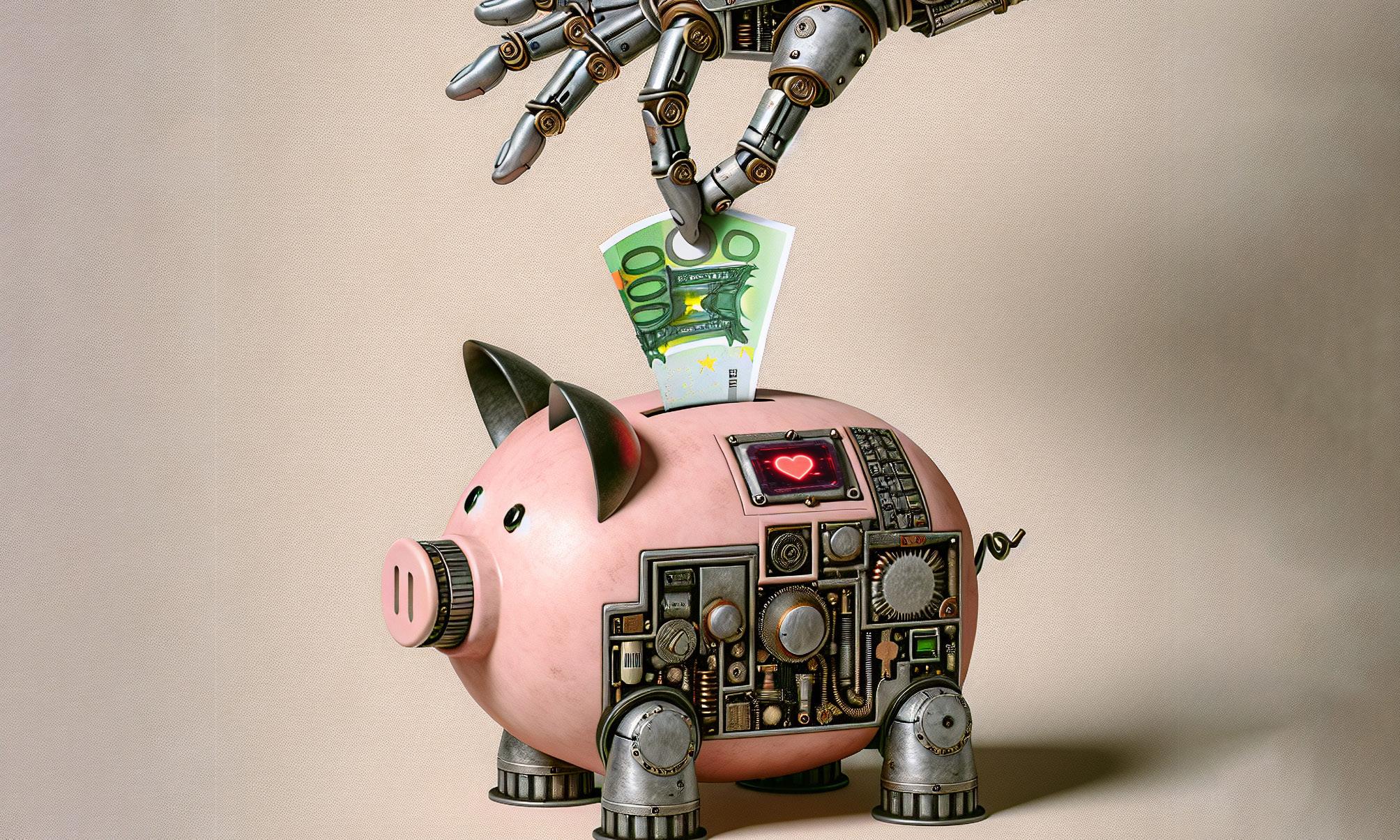
vation, or about who controls financial power?
There is no future for money as we think of it today. The more automation that is put in the system, the less value fiat currency provides, as it is not machine-readable, nor can it move without human intervention. We need smart money, which will include stablecoins, CBDCs, tokens (deposit, utility, etc), and eventually, AI marketplaces will further iterate on digital money.
As AI begins to drive lending, underwriting, and investment decisions, who ultimately holds accountability, the institution, the algorithm, or the data ecosystem behind it?
The institution will hold responsibility, but we will need both human and AI oversight functions to ensure these algorithms work. Ultimately, the quality of the data will determine how well these decisions can be automated. This is why data lakes and foundation models are really critical in the medium term.
Do you believe algorithmic trust can realistically replace traditional trust in banks, and what risks come with that shift?
Absolutely. Firstly, trust in banks will convert to trust in algorithms over time, just as it did with credit cards
online, and online banking. Today, we see neobanks and wallets with higher trust scores than traditional banks, which is a good indication of the path artificial intelligence will take.
Could AI-led finance democratise access to capital globally, or will it deepen the concentration of power among a few dominant players?
Both. The core problem is not the democratisation of capital as much as it is AI's potential to replace human capital. Which is why we hear many of the tech 'broligarchy' talking about Universal Basic Income. The fact is, wealth distribution is the biggest issue for AI at scale moving forward, not access to capital per se. But, at the same time, there will never be an easier time to start your own business or launch a product in the world.
If artificial intelligence becomes the primary gatekeeper of financial access, how do we address the risk of bias and ensure fairness at scale?
We completely need to rethink financial access in this world, but access to AI won't be restricted by bias. All you will need is an internet connection and a smartphone. By 2030, 99% of the planet will have that ca-
pability (projected). The issues with biases are still present in datasets today, but people are self-selecting platforms that focus on accessibility and speed of access. This is why Revolut is now approaching the milestone of being the largest retail bank (by customers) in Europe, and why Ant Group and NuBank have already taken that status in their markets.
With the rise of Central Bank Digital Currencies (CBDCs), are governments enhancing efficiency, or expanding control over how money is used? CBDCs do not give much greater control over how money is used from the account and fraud structures we have today, although they do allow central banks more direct control over the use of the currency and policy mechanisms connected to CBDCs. The key to understanding is that you can't run autonomous systems on fiat currency on a traditional core - they are not fit for purpose. You can create translation layers and so forth, but CBDCs can be purpose-built to mirror trade agreements, for example, allowing only for cross-border transfers consistent with said agreements - programmable money that is policy and process enforced. This allows for much greater use of safety rails and mechanisms on autonomous cross-border trade that we don't have with fiat. Various players, such as the CEO of Circle, have said we'll likely have to move to rollback models over time, so that current payment rails don't support either. So, this is all fit-for-purpose money design.
How concerned should we be about the idea of programmable money being used to influence or restrict economic behaviour?
Again, the banks can restrict money from an individual account to entire countries right now, today. So, this is not the systemic risk it would appear to be. Remember, we will need the ability to stop agentic AI-based criminal organisations using AI to scale crime, which we cannot do with today's rails and account structures. So, we are actually at much greater risk of fraud and crime without programmable money.
Do CBDCs have the potential to genuinely improve financial inclusion, or could they unintentionally weaken the role of commercial banks?
We are already seeing the impact of potential yield from stablecoins being a big destabilising element for traditional deposits, but CBDCs essentially allow anyone with a government ID to have access to basic banking services. So, the answer is, both will happen simultaneously.
Between banks, Big Tech, and governments, which entity do you believe is best positioned to dominate the future financial ecosystem, and why?
The two determinants of success in this world are speed and technical agility. Speed will be defined by your organisation’s culture (how quickly artificial intelligence can be integrated), your tech stack, and how much of it is AI-ready. Banks with on-premise mainframes without access to the cloud or without multi-year digital transformation experience will really suffer through this transition, as they will quickly become less relevant from a systemic perspective. The other issue is market share and those natural shifts. Today, digital banks like NuBank, Revolut, Starling, Chime and others are dominating in their markets because of their ability to acquire customers at scale. AI is going to supercharge that capability, and banks reliant on traditional distribution will simply continue to lose customers pretty rapidly.
For example, HSBC, one of the world's top 20 banks since the 1980s, has 38 million customers globally. And that has remained stable for the last decade, but Revolut has already hit 70 million in that same timeframe. Next, we will see how AI advisory shifts AuM to digital platforms away from product-based banks.
Are we moving toward a model where banks become invisible infrastructure while technology companies own the customer interface?
Yes, absolutely. Banks are either going to be data stores or data pipes, but they won't own the personal AI clients at the front end. This is a bigger shift than most people realise. In 10 years, you'll interact with your AI, and it will execute on your banking and money management, health management, all the administrative elements of your life - you won't use apps. Interfaces will essentially be liquid/generative, sort of chunks of functionality driven by context and the AI. So, you won't use banking apps like you do today.
Your personal AI agent will interact with the bank agent on your behalf. Only when it needs your input will you get something resembling an interaction with a bank today, but it will be minimal.
Do regulators today have the capability to effectively oversee AI-driven financial systems, or are they already falling behind innovation?
Regulators need to be aware of the technology infrastructure in the future. Humans will simply not be able to supervise an AI-based system of this complexity and the speed of artificial intelligence. Most regulators are falling behind, but likely, regulation will start to coalesce into regulatory zones with common policy/process and infrastructure requirements. You need agentic regulation to run agentic banking, not human-based regulation. Also, policy will need to be a feedback loop process, where the data shows trends, the agent model and guardrails are tweaked, and the code is refined. We won't be going to the Senate or Parliament to enact policy like we do today - it will all be in code.
Could artificial intelligence and digital currencies accelerate a shift in global financial power away from traditional economic leaders?
Yes, but likely, China will lead the world in terms of the adaptiveness of their economy from an embedded AI/Autonomous finance perspective, just because of the level of investment they are making in infrastructure, including next-generation energy systems and distributed edge compute.
Where is the US falling short today in terms of preparing for this future?
The big oil/gas lobby has restricted renewables deployment in the US, which leaves the US grid under immense strain as automation demands for energy grow. Secondly, the US remains the only G20 country to not have a dedicated fintech charter and widespread real-time payments adoption. Both would be required in the near term.
In an AI-first world, how do you see the very definition of money evolving; will it remain a static store of value, or become a dynamic, programmable asset?
ARTIFICIAL INTELLIGENCE BANKING
Data will be the new money in many ways. For example, in the mid 2030s, expect longevity to be a big theme for the developed world. Your health data becomes just as valuable as money in that scenario. Thus, the question is how data and money work together in this new system. The reality is that the more automation we put into the world, the less utility money itself will have. It’s highly unlikely that in 60 years we'll use money at all in most parts of the world.
Could we see a future where AI agents transact, invest, and manage money autonomously on our behalf, and what does that mean for human control over finance?
Absolutely. Control is overrated. Efficiency of capital deployment, maximisation of returns and minimisation of risk are far more critical, and this is where artificial intelligence will excel, and outperform humans consistently and absolutely. Just like you won't trust a doctor not using AI in a few years’ time, you won't trust a bank that doesn't use AI to manage your money in the future.
Are we heading toward a fragmented global financial system driven by competing digital currencies and geopolitical tensions?
We are already in a multipolar geopolitical world. In one of my reports, I have described the impact of the Iran war and general large-scale systems automation. Ian Bremmer, a highly regarded political commentator out of NYC, talks about the technology cold war we are entering into between the US tech giants and distributed Chinese tech. By 2050, the largest economies in the world will be smart economies, managed by AI. Extremely resource efficient, by today's standards, but much more energy dependent - this is why the US is not likely to win this in the long term.
What’s the biggest unspoken risk in AI-led financial systems that policymakers may be underestimating today?
Ethics. It is hard to code ethical guardrails into AI because we can't even agree on ethics as humans. Take issues like abortion, transgender kids, vaccines, etc - how do you manage the ethics of those issues in AI when humans themselves can't find agreement.
DR ALBENA PERGELOVA MACEWAN UNIVERSITY SCHOOL OF BUSINESS
CL RAMAKRISHNAN
As women across the globe continue to reshape entrepreneurship, their businesses are increasingly driving innovation and social impact. Yet, despite growing recognition, women entrepreneurs still face distinct challenges that influence their journeys, leadership styles, and opportunities for long-term growth and success.
To get more insights on the topic, International Finance got in touch with Dr Albena Pergelova, a professor at MacEwan University School of Business. Albena’s research is interdisciplinary (entrepreneurship and marketing) with a focus on social and emancipatory aspects in entrepreneurship, consumer well-being, and digital technologies. Her research has been published in leading international journals across different fields, and earned numerous international awards.
In an exclusive interview, Dr Albena Pergelova discussed the factors motivating women to pursue entrepreneurship, the systemic barriers faced by women entrepreneurs, and the social changes they contribute to society.
What factors most commonly inspire women to pursue entrepreneurship, and how do these motivations differ from those of men?
Along with the autonomy and financial motivation factors that are common to many entrepreneurs, women entrepreneurs are more likely than men to have social or community-related objectives for their businesses as well. Women are also more likely to have the goal of balancing multiple responsibilities, such as taking care of children or other family members, while building a business.
How does the entrepreneurial journey contribute to self-discovery and identity-building among women entrepreneurs?
In my interviews with women entrepreneurs, I oftentimes hear how women take on new tasks or projects that they did not initially anticipate and the strength and resilience they build along the way. Identity aspects are very salient as well. Women entrepreneurs

wear many hats and, therefore, have intertwined identities as business owners, mothers, community members, and change-makers. Unfortunately, many stereotypes persist about the fit women have in certain industries, and this can affect the entrepreneurial identity of women.
What patterns have you observed in how women approach risk and decision-making when starting or scaling their businesses?
Women tend to have a more holistic approach to decision-making that is grounded in their multiple roles in their family, community, and society in general.
What systemic barriers do women entrepreneurs face in accessing funding, mentorship, and networks, and how can institutions better address these gaps?
Men dominate many networks (including VCs and mentorship groups). This leads to fewer opportunities to be exposed to role models and mentors who understand women’s reality. The persistent funding gap for women entrepreneurs is also critical. In my research, I hear stories about women being asked to take a male co-founder for legitimacy and funding purposes, as well as how the goals of investors can interfere with the mission of the businesses women have started. Addressing those barriers would require systemic change and a shift in mindset, along with institutional support.
How do women-led enterprises contribute to community development and social change differently, or uniquely?
Women often have a clear motivation to contribute to community development with their businesses, and I have seen many examples of social change as a result of women’s businesses. Those can range from education and training for other women in the community, fair wages and consumer education to systemic changes at the meso or macro level, such as addressing poverty alleviation and changing government policies.