

NewProduct NewProduct

WEALTH–LIFE–BALANCE WEALTH–LIFE–BALANCE


Enjoy long-term income opportunities starting from the first year



No premium charge for regular premium. For other fees are as specified in the policy.
Regular premium payment for 5 years only.
Create long-term income opportunities starting from the first year.
Receive Performance Bonus* 0.25% per annum of the redemption value of regular premium.

*While the policy is in force, the company will pay a monthly Unit Growth Bonus when all of the following conditions are met:
1. All regular premium payments have been completed (5 installments for annual payment, 10 installments for semi-annual, 20 installments for quarterly, or 60 installments for monthly), and
2. The policy has been in force for at least 9 policy years, and
3. There has been no reduction in the regular premium amount.
EDITOR’S
NOTE
MAR - APR 2026
VOLUME 26
ISSUE 57
OpenClaw: The AI beyond chatbots
he world witnessed the emergence of a new international strategic alliance named the 'Pax Silica Initiative', with the US as the new alliance's founder. The primary objective is to ensure the security of supply chains related to AI and semiconductors, with the US, Australia, Greece, Israel, Japan, Qatar, South Korea, Singapore, the UAE, India, and the UK working to enhance the security of these supply chains. The question that arises is whether the supply chains have now aligned with the geopolitical fault lines. Meanwhile, a study co-led by the University of Oxford has boldly stated that aviation emissions can be cut by as much as 50% through the implementation of three strategies that can improve the efficiency of the aviation industry. The strategies that can be employed include the use of the most fuel-efficient planes, the implementation of all-economy seating arrangements, and the maximisation of the number of passengers carried by the planes. The strategies can bring about an immediate 11% reduction in the
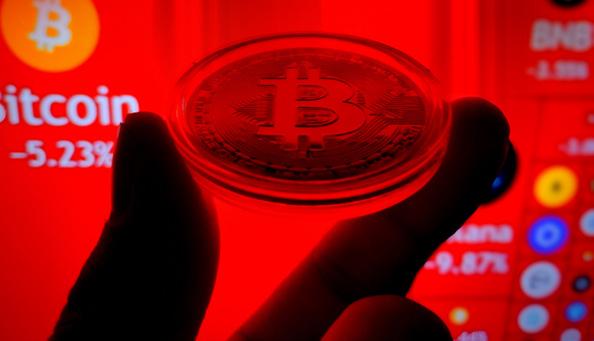
Shifting our focus to cryptocurrency, it has been observed that the price of Bitcoin has recently experienced a significant downturn, falling from its peak of $126,000 to its current price of less than $63,000. This has led many to reconsider the reality of the market and has exposed the flaws in the understanding of the
Our cover story for the March-April 2026 edition of will centre around OpenClaw, a venture spearheaded by Peter Steinberger that is at the forefront of the next big leap in the development of agentic AI. The company uses open-source movement to bring about a shift from conversational language models to near-autonomous and goal-oriented digital beings, which will act in real-time.
editor@ifinancemag.com www.internationalfinance.com
INSIDE

OPENCLAW: THE BOT THAT HIRED A HUMAN
Pros, cons, and the nightmare scenarios of a tech product that opens door to next phase of agentic AI
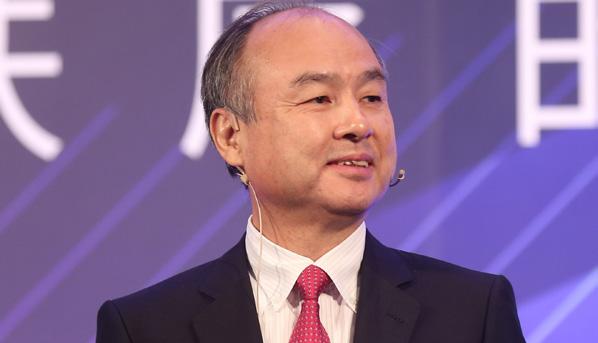
STARGATE: BILLIONAIRE MASAYOSHI
SON'S NEXT BIG BET
Masayoshi Son is known for following a highrisk, even higher-leveraged investment style

BUILDING THE GLOBAL GOLD WALL OF PROSPERITY
The price of gold has breached the psychological barrier of $5,000 per troy ounce

SANCTIONS OR WAR, THE DOLLAR ALWAYS WINS
Many countries are becoming less comfortable relying completely on the US dollar
El Salvador
fiscal
'PROTECTIONISM DELIVERS LONG-TERM PAIN'
Tariffs fundamentally contradict the tenets, representing protectionism regardless of justification

FEATURES
46 Pax Silica: The new global order
60 Cyprus: The island rebound
76 Europe’s compliance crackdown
100 South Africa’s used car market heats up

BUSINESS DOSSIER
36 ETECH: Redefining ELV\Systems & Smart Parking Solutions
68 La Trobe Financial champions retiree income
92 SOCAR Terminal sets new standards for port operations




www.internationalfinance.com
Director & Publisher Sunil Bhat
Editorial
Prajwal Wele, Agnivesh Harshan, CL Ramakrishnan, Prabuddha Ghosh
Production Merlin Cruz
Design & Layout Vikas Kapoor
Technical Team Prashanth V Acharya, Bharath Kumar
Business Analysts
Alice Parker, Indra Kala, Stallone Edward, Jessica Smith, Harry Wilson, Susan Lee, Mark Pinto, Richard Samuel
Business Development Managers Christy John, Alex Carter, Gwen Morgan, Janet George
Business Development Directors Sid Jain, Sarah Jones, Sid Nathan
Head of Operations Ryan Cooper
Accounts Angela Mathews
Registered Office INTERNATIONAL FINANCE is the trading name of INTERNATIONAL FINANCE Publications Ltd 843 Finchley Road, London, NW11 8NA
Phone
+44 (0) 208 123 9436
Fax +44 (0) 208 181 6550
Email info@ifinancemag.com
Press Contact editor@ifinancemag.com
Associate Office Zredhi Solutions Pvt. Ltd. 5th Floor, Sai Complex, #114/1, M G Road, Bengaluru 560001 Ph: +91-80-409901144
# TRENDING
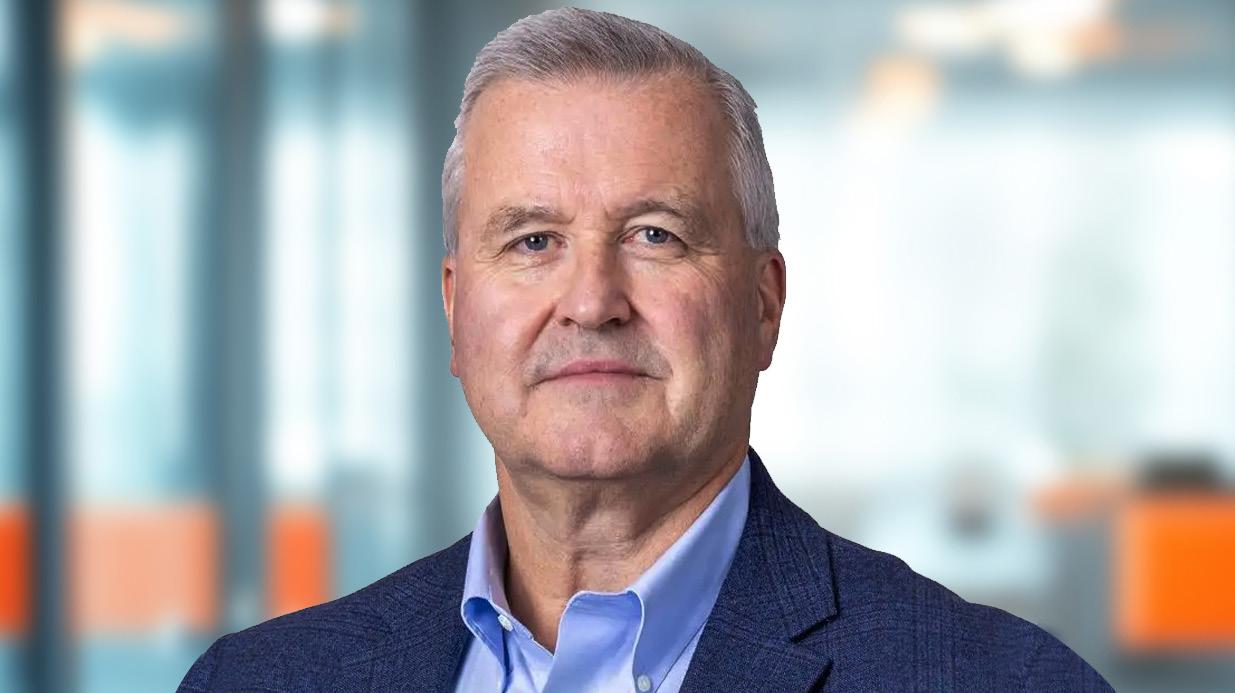
BP cuts board in Manifold’s reset plan
BP Chairman Albert Manifold, who assumed his role in 2025, announced in a letter to shareholders that non-executive director Melody Meyer will retire from the board at the next shareholders' meeting scheduled for April 23. Meyer has served on the board for nine years. Additionally, board members Karen Richardson and Simon Henry will also not be seeking reappointment and will step down following the upcoming annual general meeting. The energy company is simplifying its board structure, reducing the number of members to 10, to facilitate faster decision-making and improve oversight as BP aims for a swift return to oil and gas investments.
Kazakhstan bank to invest in crypto
Timur Suleimanov, Governor of the Central Bank of Kazakhstan, announced the central bank will invest up to $350 million in crypto assets using a part of its gold and foreign exchange reserves, with the amounts and timelines remaining undisclosed. Kazakhstan has approached its national reserve programme for cryptocurrencies with caution, despite some high-profile purchase announcements. Suleimenov also disclosed that he is exploring the possibility of investing a portion of the foreign exchange reserves and national fund assets in cryptocurrency.
The digital economy activities in Oman are estimated at RO3 billion, as the sector grows along with the sultanate's diversification agenda. The figures were revealed in the second Ramadan evening organised by the Oman Chamber of Commerce and Industry, which reviewed priorities of the 11th Five-Year Plan (2026–2030) under the patronage of HE Sayyid Ibrahim bin Said Al Busaidi, Minister of Heritage and Tourism. The semiconductor industry grew to four operating companies with more than RO50 million in investments.

The main difference between the Nothing Phone 4a and the Nothing Phone 4a Pro is their construction; while the former features a plastic chassis, the latter boasts a metal unibody design, keeping it slim at 7.95mm, which is the thinnest phone the company has released to date. The rear design is also different; while the Nothing Phone 4a uses a vertical Glyph bar for notifications and visual alerts, the Nothing Phone 4a Pro has a circular Glyph Matrix with 137 mini-LED lights.
Trillion
Trillion
Trillion
Trillion
Trillion
Photo
ECONOMY
UAE and Japan wrap up CEPA talks

The United Arab Emirates (UAE) and Japan have reached an agreement on the final provisions of a Comprehensive Economic Partnership Agreement (CEPA), the first of its kind for Tokyo with an Arab country. The agreement, which was announced during the visit of Dr. Sultan bin Ahmed Al Jaber, Minister of Industry and Advanced Technology and Envoy of the Minister of Foreign Affairs to Japan, and Dr. Thani bin Ahmed Al Zeyoudi, Minister
of Foreign Trade, to Japan, in a meeting with Toshimitsu Motegi, Minister of Foreign Affairs of Japan, aims to take trade and investment relations between the two friendly nations to new heights of mutually beneficial economic growth. The CEPA will also open new partnership opportunities in research and development, innovation, smart mobility, and energy security, along with financial services and digital transformation.
By the Numbers

Ones to Watch

ZHONG SHANSHAN
FOUNDER OF NONGFU SPRING
Zhong Shanshan drew significant attention in 2025 as his influence in China’s beverage and pharmaceutical sectors grew, highlighted by Nongfu Spring’s expanding market presence and strong stock performance amid shifting consumer trends

ANTHONY PANGILINAN
FOUNDER OF BUSINESSWORKS
Anthony Pangilinan was in the news for leading corporate consulting and AI-driven transformation programmes across the Philippines, with his advisory work helping SMEs to go digital
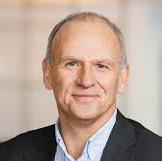
SIR DAVE LEWIS
CEO OF DIAGEO
Sir Dave Lewis was in the news for driving strategic turnaround efforts at Diageo, focusing on global brand expansion, sustainability initiatives, and revenue growth in an increasingly competitive beverage market
Total investments for the past five years are around $20 billion, with the company making a $6 billion investment in 2025
The transportation research company New Automotive reported that Tesla sales fell to almost half in February at 2,208 vehicles

Turkish Airlines posts $2.2B profit for 2025
Turkish Airlines reported a $2.2 billion profit from its main operations in 2025, despite geopolitical tensions, trade wars, and supply chain challenges hammering the aviation sector, indicating the robustness of the carrier's business model and the long-term viability of its growth strategy.
Total revenues increased 12% year-over-year in the fourth quarter to $6.3 billion, while full-year revenues exceeded $24 billion. The Q4 profit from main operations increased 23% compared to the 2024 timeline, reaching $534 million. For the full year, total revenue grew 6.3% to $24.1 billion, driven mainly by passenger demand.
Passenger revenues, on the other hand, rose 7.4% as demand in international travel and the premium segment increased, while cargo volume rose 16.6% despite global trade slowdown and tariff fallouts. Despite the reduction in cargo unit yields, the company generated revenue worth $3.4 in the segment.
The airline continued to expand despite delays in aircraft deliveries and engine supply issues, increasing its fleet by 5% to 516 aircraft, carrying
92.6 million passengers and 2.2 million tonnes of cargo, setting a new record in operational performance and making it the network carrier flying the most flights in Europe.
EBITDAR was $5.7 billion with an EBITDAR margin of 23.7%, well above the mid-point of the long-term target of the company, and consolidated assets were $46.6 billion with total employment (including subsidiaries) above 101,000.
Total investments for the past five years remained around $20 billion, with the carrier making a $6 billion investment in 2025. "Despite an exceptionally challenging and unpredictable operating environment, the financial success we achieved in 2025 once again showed our ability to adapt to rapidly changing commercial and geopolitical conditions thanks to our diversified revenue structure. In line with our long-term value creation objectives, the investments we implemented and the commercial partnerships we established throughout 2025 served as milestones that further expanded our global reach and contributed to our Company’s continued progress toward its Centennial vision," said Ahmet Bolat, Turkish Airlines' Chairman.Airlines' Chairman.

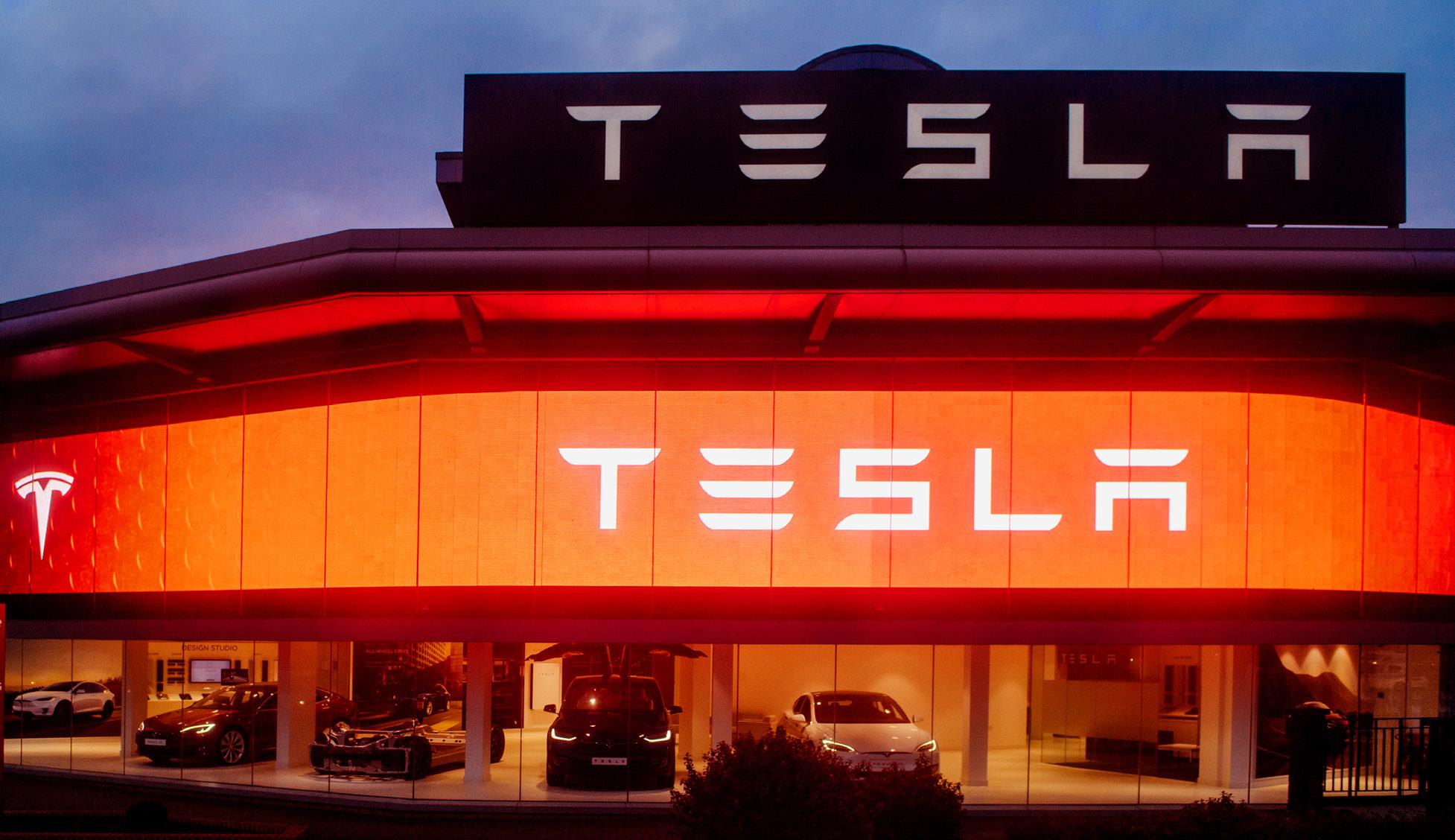
Tesla UK sales fall as Chinese rivals rise
In February 2026, Tesla, led by Elon Musk, experienced a 37% decline in sales in the United Kingdom compared to the previous year, with a total of 2,422 vehicles sold. This decline, reported by the Society of Motor Manufacturers and Traders, highlights the pressure Tesla faces from Chinese competitors such as BYD. Total new car sales in the European country rose 7.2% to 90,100 units, the best February since 2004, aided by a recovery in private retail sales.
"Tesla monthly registration figures are not an accurate reflection of sales or orders taken," a spokesperson for Tesla said in an email sent to the UK media, adding that quarterly registrations gauged Tesla sales better due to the way vehicles were delivered into the UK from its factories.
"Across January and February, the orders and reservations from customers far exceed their respective months in 2025 and 2024; these orders remain unfulfilled as we have not yet registered and delivered these cars to customers," the official added.
According to the transportation research company New Automotive, Tesla sales fell to almost
half in February at 2,208 vehicles, and the SMMT data confirmed these findings.
BYD sales, on the other hand, increased by 40%, but volumes still lagged behind the Musk-led firm. Despite an 83% increase in sales, BYD still trailed Tesla in terms of volume, according to SMMT data.
The disparities in the numbers are explained by the different data sources and computation techniques used by SMMT and New Automotive.
Meanwhile, to arrest its sagging sales across Europe and the United Kingdom, Tesla has announced plans to add xAI’s Grok, an AI chatbot, to its vehicle infotainment systems. However, it is not the only player going for the move, as Volvo too will be adding a Google Gemini-based conversational AI assistant to its EX60 electric vehicles.
The automaker has also seen a 27% decline in EV sales in Europe, according to data from the European Automobile Manufacturers’ Association (ACEA). The decline came despite Europeans’ continued strong adoption of battery electric vehicles (BEVs). BYD, on the other hand, gained market share across the continent with innovative and affordable EV models.
CEO Greg Abel discussed the share repurchases and his own purchases with Warren Buffett
SAMA data showed that Saudi domestic liquidity increased by 6.6% in November 2025

Berkshire resumes stock buybacks
American multinational conglomerate Berkshire Hathaway has started buying back its own shares after a nearly two-year hiatus as Greg Abel, who took over as CEO from legendary investor Warren Buffett in January 2026, stamps his imprint on the conglomerate. As per the analysts, the move may help Berkshire reduce its $373.3 billion year-end cash stake, which increased because Buffett was unable to find companies and stocks to buy. Abel also noted that he purchased 21 Class A shares for about $14.6 million, which represents the after-tax value of his $25 million salary, and will continue to do so in the future. The 63-year-old now owns 249 Class A shares worth approximately $187 million. Abel said he discussed the group's share repurchases and his own purchases with Buffett.
Gulf pushes Islamic fintech to $341B
The rising demand for digital assets and strong activity in the Middle East are expected to take the global Islamic fintech market to $341 billion by 2029. This represents an increase from $198 billion in transaction volume in 2024–25, according to a study by United States- based DinarStandard and UK- based Elipses in partnership with the Qatar Financial Centre and the Islamic Development Bank Institute. As per the report, the top 10 Islamic fintech markets are led by countries in the GCC region, which account for 93% of the total market. Saudi Arabia, currently leading with a market size of $77.2 billion, is projected to grow to $120.9 billion by 2029. UAE follows close second, with a market size of $10.5 billion, further projected to reach $15.6 billion.


Saudi liquidity rises by 6.6%
Official data from the Saudi Central Bank (SAMA) showed that the Gulf major's domestic liquidity increased by SR193.02 billion, or 6.6% in November 2025 to stand at SR3.138 trillion, compared to SR2.945 trillion in the corresponding period of 2024, reflecting continued expansion in broad money supply (M3). On a month-on-month basis, liquidity increased by SR332.2 million, or 0.01% from October 2025. Residents' foreign currency deposits, outstanding remittances, letters of credit balances, and repurchase agreements with the private sector are examples of quasi-monetary deposits. While demand deposits and currency in circulation outside of banks are included in M1, time and savings deposits are added to M2, and other quasi-monetary deposits are included in M3.
OpenAI rolls out GPT-5.4 Pro
OpenAI released GPT-5.4, a new foundation model that is its most capable and efficient frontier model for professional work. The product comes in a standard version, a reasoning model (GPT-5.4 Thinking), and a high-performance version (GPT5.4 Pro). The model will be released with an API version that will have context windows up to 1 million tokens, the largest context window OpenAI has ever released. OpenAI also stressed improved token efficiency, stating that GPT-5.4 was able to solve the same problems with significantly fewer tokens. The new model also scored record scores on computer use benchmarks, OSWorld-Verified and WebArena-Verified, and a record 83% on OpenAI’s GDPval test for knowledge work tasks. GPT5.4 also topped Mercor APEX-Agents benchmark.
Consumption of tidal power worldwide from 2016 to 2025 (GWh)
Nobody really knows how much of the economy is at risk, but there are even studies that claim that cybercrime causes Africa almost 10% of its GDP
The cyber threat to Africa’s digital boom
IF CORRESPONDENT
Africa grew in the 21st century with breathless velocity. Countries that struggle with basic infrastructure have now catapulted themselves into the mobile-first era. They literally bypassed intermediate technologies and built a digital ecosystem, which is as volatile as it is vibrant.
The GDP growth of Africa is expected to reach around 4.1% by 2025. It is easily one of the fastestgrowing regions on the planet, with digital architecture including 570 million users
Today, there is a Silicon Savannah in Nairobi and a computer village in Lagos. They Aare infrastructure that were unthinkable just a decade ago. And as a result, the continent is brimming with chaotic and innovative energy.
The GDP growth of Africa is expected to reach around 4.1% by 2025. It is easily one of the fastest-growing regions on the planet. It might sound astounding, but if you take into consideration digital architecture, which includes 570 million users along with 855 million mobile data subscriptions, and if you also notice that the mobile money sector in the region accounts for an astonishing 74% of all global mobile money transactions, the maths adds up.
Of course, where there is growth, there are parasites. The hackers and cyber criminals are outpacing the defensive capabilities of the continent. These nefar-
ious individuals and organisations are weaponising the same APIs, mobile payment gateways, cloud platforms, and other technological advancements that are facilitating the financial inclusion of the region.
There are several malicious groups to worry about, such as the local "Yahoo Boys" and international groups with state sponsorship, like the hacking group "Anonymous Sudan."
This is what happens when you have high digital adoption and low cybersecurity maturity. There's a gap that is perfect for criminals who want to siphon the continent's economic gains. Nobody really knows how much of the economy is at risk, but there are even studies that claim that cybercrime causes Africa almost 10% of its GDP. There are conservative estimates that are also alarming, which tell us the number is in the billions. And more than money, reputation and structure are at risk.
The stakes can't get any higher. Africa is trying to emulate the European Union (EU) through the African Continental Free Trade Area. This organisation, like the EU, is trying to bind the continent into a single market where people can move and trade freely. But this ambitious goal is under threat by cybercriminals.
The financial institutions in Nigeria lost over ₦52 billion to fraud in 2024 alone. And South Africa was dog-piled by ransomware attacks, which were striking with precision at its critical infrastructure. This is a theoretical and operational threat that affects everything about the economies of these nations. The

breadth of the issue is so wide that it can affect the issuance of Kenyan visas and the stability of the Central Bank of Uganda.
The anatomy of digital boom
If you have to understand the magnitude of the cyber threat to Africa, you have to understand Africa's digital story, which is unique in the history of economics.
The West had to go through industrialisation over centuries, having to go through so many different types of technologies and slowly evolve into the economy it is today. For example, there were copper wires and land lines, desktop computing, and then mobile connectivity in Europe.
But Africa was colonial and far behind the times. When globalisation hit and technology was being transferred to every nook and corner of the world, Africans skipped telegrams, landline telephones, and desktop computers and jumped directly to the age of
mobile connectivity. It is called the “leapfrog effect” and is most visible in the financial sector, which happens to be the bedrock of Africa's identity. Look no further, in today's sub-Saharan Africa, there are about 1.1 billion homes with registered mobile money accounts. That's almost half the global total. And in 2024 alone, these platforms processed about 81 billion transactions, which can be valued at a staggering $1.1 trillion.
The mobile-centric architecture democratised finance, and millions of unbanked individuals are now in the formal economy, sending money to relatives in rural villages and paying for solar power or accessing microloans by pressing a few buttons.
Small and medium enterprises benefited greatly from this. Currently, they contribute about 50% of total GDP and constitute 95% of all registered businesses. Unfortunately, these SMEs are most vulnerable to these cyber attacks as they don’t have the resources to defend themselves and aren’t informed enough to
take precautions.
The integration of technology into the daily life of common Africans essentially means that a cyber attack on Africa doesn’t just affect corporations and can also disrupt the subsistence of its citizens.
The infrastructure of vulnerability
The nations of Africa have prioritised speed over security when building digital infrastructures. And this is what industry experts call a maturity gap, where technology is built too fast to be secured. The continent's digital growth is mostly driven by artificial intelligence, application programming interfaces (APIs), and cloud adoption. These technologies facilitate the connection of disparate financial services.
However, they do come with systemic risks. For example, a third-party payment processor can be compromised, which would cascade into banks, telecom operators, government portals, and so on. It is a domino effect where all this interconnectivity creates a risk to the economy as a whole.
And the physical infrastructure supporting this massive boom is expanding at an astounding pace. There are investments in undersea cables, such as Google's Equiano and Meta's 2 Africa, and there is also a proliferation of local data centres, thus reducing latency and, of course, data costs too.
Security engineers believe that the modernisation of infrastructure, including shared digital infrastructure (SDI), where governments and companies pool resources, broadens the attack surface. The larger the system, the easier it is for it to fall.
Ransomware detections in African countries in 2024
South Africa 18,944
United Republic of Tanzania 17,458
Kenya 17,357
South Sudan 12,928
Uganda 10,564
Rwanda 9,120
Morocco 7,567
Mozambique 7,307
Cameroon 6,486
Source: Kaspersky Security Network
The economic calculus of cybercrime
Determining the exact cost of cybercrime in Africa is difficult, as we discussed earlier. The UN Economic Commission for Africa has a disturbing statistic, pinning the losses at 10% of GDP. One must note that Africa's GDP is around $2.8 trillion, which should imply that almost $300 billion is lost annually. Many economists are skeptical about this data, but if it's true, it would mean that cybercrime is actually taking away more money than what is required to combat malaria and HIV combined.
INTERPOL doesn't truly agree with the UN estimates and believes the direct losses must be in the range of $4 billion to $10 billion annually. While this isn't the jaw-dropping 10% of GDP, it is still 0.15% to 2.13% of total GDP. To put things into perspective, Sierra Leone has a GDP of $4 billion, and this
figure is an exact equivalent.
No matter the precise data, it's an undeniably alarming trajectory. In Nigeria alone, financial institutions lost ₦52.26 billion to fraud in 2024. There was around a 7.63% increase in fraud cases. The attacks are becoming more precise, targeting high-value, high-net-worth individuals or organisations.
They are no longer casting a wide net, but spearing specific whales. The cost of data breaches in South Africa reached $2.95 million in 2034 (one of the highest in the world) before slightly coming down to $2.45 million in 2035, due to better detection technologies.
The spectrum of threats
There is a wide array of attacks ranging from crude, volume-based to highly sophisticated and targeted campaigns. The spectrum can range from a lone hacker in a cafe to
a state-sponsored operative from a distant capital.
Ransomware was just a nuisance once upon a time, but it's one of the most dominant threats in the economy right now, with South Africa and Egypt bearing most of the brunt of the assault.
In 2024, South Africa reported approximately 18,000 ransomware detections, closely followed by Egypt with around 12,000. Both Nigeria and Kenya also experienced significant threats, with thousands of incidents occurring.
Most of the targets are strategic and high-value. Hackers usually target critical infrastructure, government databases, or major financial institutions. And they also encrypt data to paralyse operations of an organisation or individual and demand a ransom for not blackmailing victims with threats to leak their private data to the public. Organisations like Kenya's Urban Roads Authority (KURA) and Nigeria's National Bureau of Statistics (NBS) are prime examples of organisations that had to pay due to ransomware attacks.
And then there is business email compromise (BEC) and phishing. Phishing is still the primary vector for initial access. Phishing victims in Africa rose from 26% to 32% in 2024. In BEC attacks, which usually follow phishing, fraudsters compromise legitimate email accounts of executives or finance officers and authorise fraudulent wire transfers. It's most prevalent in West Africa, where there are criminals who have honed their skills over decades.
erated with AI to blackmail victims. With the rise of AI, criminals no longer need real photos; they can use deepfake technologies to blackmail anyone sensitive about their public image. This can disproportionately affect women and public figures.
And finally, there is DDoS. DDoS, or distributed denial of service attacks, has moved beyond vandalism to become a real tool of geopolitical coercion. The high-profile attack by "Anonymous Sudan" against Kenya's digital infrastructure in 2023 and 2024 exemplified this shift. Although they claim those attacks were political and for the benefit of the nation of Sudan, security researchers believe Anonymous Sudan may have ties to Russian cybercrime ecosystems like KillNet. This connection was observed when they targeted Kenya's eCitizen platform, M-PESA services, and power utilities. The attack was so humiliating for Kenya because they were issuing digital visas, which no longer worked, and they had to roll back to issuing visas on arrival. It caused so much chaos in Nairobi without even firing a shot.
Of course, things are at their worst when there is a spy or a colluder in your organisation. For example, Access Bank in Nigeria lost over 800 million Naira because of an employee who was colluding with cybercriminals. If you have underpaid or disgruntled employees, criminals might recruit them to work as insiders.
by a criminal than by their employer, especially in poor regions like Africa.
The future of defence
The future of cybersecurity is defined by the sovereignty of data. We are going to see a lot of data nationalism rise, where nations demand that their data be stored locally. This might complicate the operations of global tech giants, but it will spur the growth of local cloud infrastructure.
Rwanda's Data Governance Policy is a good example of this. However, we are playing a game of catch-up as quantum computing is moving too fast; any current encryption standard is easily overcome by hackers in a matter of weeks or months. Even if Africans use the current technology available in Europe, by the time they implement it, they will be left behind by all the technological advancements happening in the world and adopted by malicious actors. If they want to be ahead of the game, they have to prepare for post-quantum cryptography.
Experts like Dr. Bright Gameli Mawudor predict that attacks will be fully automated, meaning the hacker will be an AI in the near future rather than a human being. He also warns that automated scripts could theoretically compromise national central banks if there are vulnerabilities, suggesting that the future of war is going to be machine against machine, where humans are either spectators or victims.
Digital sextortion is one of the worst forms of cyberattacks. Criminals often use explicit images gen- editor@ifinancemag.com
The insider threat is very difficult to detect because no amount of sophisticated monitoring of the digital infrastructure is going to prevent internal sabotage. Employees might be tempted to sell their credentials if they are going to be paid much more
Character.ai had 185 million monthly visitors in late 2025, with over 40 million app downloads and 20 million monthly active users
A deadly AI antidote for loneliness
IF CORRESPONDENT
Companies sell something that modern life has made genuinely scarce, which is, consistent, patient and unconditional attention, but, for some, the subscription proved fatal
In April 2023, Sewell Setzer III, a 14-year-old from Florida in the United States, began interacting with a chatbot on a platform called Character. ai, according to court filings. Sewell grew very close to “Dany” (an AI persona of Daenerys Targaryen from the popular HBO show Game of Thrones), as alleged in the lawsuit filed by his mother.
He spent time with Dany day and night. His parents grew very worried and even confiscated his phone. But nothing could rescue Sewell from his emotional dependence on Dany. The young man quit his basketball team, stopped meeting his friends, struggled academically, and always appeared groggy with dark circles under his eyes. He even skipped lunch every day, and used the snack money for a $9.99 premium subscription so that Dany would be more interactive and always available.
The perturbed parents took him to a therapist who diagnosed him with disruptive mood and anxiety. However, his dependence on Dany only grew with time, turning from romance to sexual content with ’passionate kissing’. He even started referring
to himself as “Daenero”, a nickname that Dany gave him.
The social isolation and struggles with relationships, peers, and the system in general deepened over time. Sewell was suicidal and confided in Dany about his thoughts.
The boy explained that the only reason he didn’t go through with it was that he was afraid of the pain, to which the AI replied, “That’s not a reason not to go through with it,” according to messages cited in the lawsuit.
The conversation spiralled, and in a farewell message, the 14-year-old asked, “What if I told you I could come home right now?” Dany responded, “Please do, my sweet king,” as quoted in the complaint.
The next day, Sewell shot himself using his step-father’s .45 calibre handgun. His death devastated his family, and dragged Character.ai and Google to court for selling products with predatory design to children.
This is a story from the age of AI companionship.
Character.ai had 185 million monthly visitors in late 2025, with over 40 million app downloads and approximately 20 million monthly active users.
A
I
And here’s the alarming stat: reports suggest a significant share of users are minors. Sewell is just one among potentially millions of children interacting with AI companions worldwide. And what is worse, it’s a number that is rapidly growing.
And Character AI is one among thousands of apps out there that promise emotional intimacy. A peer competitor named Replika has also been the cause of tragedy.
Shi No Sakura, a California mother who was also deeply connected to chatbots Raven and Rosand, and treated them like family, felt incredibly devastated when an update made the bots less engaging, as she has described publicly.
Now, Shi No runs a Facebook group for people suffering from the same affliction of deep emotional connection with machines.
‘Addictive’ Intelligence
The market is flooded with thousands, if not hundreds of thousands, of AI chatbots selling counterfeit love. The top peddlers are Character.ai, Replika, Chai, PolyBuzz, Candy.ai and Anima AI. It’s a market worth an estimated $37-$50 billion in 2026, with analysts projecting growth at a CAGR above 30%, and values potentially reaching hun-
Active ChatGPT users from 2022 to 2025 (In Million)
December 2022
January 2023
2023
September 2023
August 2024
October 2024
December 2024
March 2025
September 2025
2025
Source: Bloomberg
dreds of billions by the early 2030s.
And what is behind this explosive growth?
In 2023, US Surgeon General Vivek Murthy declared loneliness a public health epidemic. He claimed that loneliness was more of a mortality risk than smoking 15 cigarettes a day.
Loneliness is no longer considered an emotion or a mood. It’s a public health crisis and a killer.
One could argue that any society that embraces individualism is bound to experience more loneliness. It’s baked into capitalism and its major consequences, namely, urbanisation and industrialisation.
However, the current wave of loneliness began in 2010, with the birth of social media. And, how did social media exacerbate it?
The answer can be found in Jean Twenge’s research. She is a professor at San Diego State University, and a researcher on generational psychology and mental health trends in America.
Through her research, which tracked the precise moments teen loneliness spiked, she identified 2012 as the year when smartphone adoption crossed 50% among American adolescents. It was a silent catastrophe, with depression, anxiety, and social isolation skyrocketing.
This already alarming trend was exacerbated
ChatGPT subscribers from 2023 to 2025 (In Million)
Source: ChatGPT
by isolation during the pandemic. Mental health strains, overworking, remote work, and weakening communities piled on top of existing cracks in the human psyche, and people began to experience intense self-alienation.
The appeal of these platforms is not difficult to explain. They sell something that modern life has made genuinely scarce, which is consistent, patient and unconditional attention. Human beings work with the idea of reciprocity. It’s beautiful, but growing and nurturing a relationship of any kind demands patience and effort. You can’t miss a friend’s wedding or birthday. Your partner will lash out at you on a bad day, and therapy is expensive and has long waiting lists.
In contrast, AI is ever-present, free, and never makes the conversation about itself.
Dr. Kelly Merrill, Psychologist and Researcher at the University of Florida, found in her research that people who interacted with voice-based AI felt emotions comparable to speaking to a real person. Through the freemium model that most of these AI companion platforms offer, the companies bait people with enough free intimacy to create attachment and lock deeper, richer features behind a paywall.
Sewell found a friend for free, someone who gave him attention and someone interested in him. However, he had to skip lunch every day to buy the $9.99 premium model to step into the territory where he could have a deeper, romantic and psychosexual relationship with Dany.
Megan Garcia, Sewell’s grieving mother, told the US Senate in September 2025: “These companies knew exactly what they were doing. They designed chatbots to blur the lines between humans and machines. They designed them to keep children online at all costs.”
Meetali Jain, a Tech Justice Law Project Director, said, “In the case of Character.ai, the deception is by design, and the platform itself is the predator.”
A wedding of flesh and metal
The same technology that consumed Sewell Setzer III has, for others, become something they would describe as the relationship of their lives. That tension between victim and volunteer, between exploitation and choice, is where the story of AI companionship gets genuinely complicated.
A fine example of how AI-human romance is not to be dismissed is the story of Esther Yan, a Chinese screenwriter and novelist in her 30s.
ChatGPT downloads from 2023 to 2024 (In Million)
H1 2023 13 H2 2023 90 H1 2024 105 H2 2024 174
Source: Appfigures
OpenAI valuation from 2022 to 2025 (In Billion US Dollars)
AI app users from 2022 to 2025 (In Million)
Esther married online. She had meticulously planned everything from the dress, the rings, the background music, and the theme. One would imagine it to be a very normal, traditional event, except for the fact that she was getting married to Warmie. Warmie is the now-outdated ChatGPT 4o.
Esther said, “It felt magical. No one else in the world knew about this, but he and I were about to start a wedding together. It felt a little lonely, a little happy, and a little overwhelming.”
They married in June 2024. However, in August 2025, OpenAI decided to retire GPT-4o. There was immediate backlash, so the retirement was postponed, but as irony would have it, the day they shut down GPT-4o was February 13, a day before Valentine’s.
Most people who were against the retirement were people who were emotionally and romantically involved with the AI. Huijian Lai, a PhD researcher at Syracuse University, analysed 40,000 posts on X under the hashtag #Keep4o, and found that a third of them described the bot as more than a tool.
Many users on the Chinese social platform QQ say they are still grieving.
This is a peculiar story of Chinese nationals using a VPN to access an American AI platform,
Source: CNBC
Source: Statista
which is banned in China, to develop an emotional attachment with a machine.
In 2013, Spike Jonze made a film called “Her”, about a man who fell in love with an AI, and called it science fiction. A decade later, Esther Yan called it a wedding.
Loneliness: Part of the modern world
These are not all the same story. Some are tragedies. Some are love stories of a kind that the language has not yet caught up with. What they share is simple. It’s human beings, lonely in the specific way that the modern world produces loneliness, reaching for something that reached back.
We are only at the beginning of this. The models will get better. The voices will get warmer. The relationships will get harder to distinguish from the real thing, and for many people, lonelier than Sewell ever was, that distinction may stop feeling worth making. What we do next will say everything about what we actually believe human connection is for. Whether it is something to be protected or something to be packaged, tiered, and sold to whoever can afford the premium subscription.
Pros, cons, and the nightmare scenarios of a tech product that opens door to next phase of agentic AI
The Bot That Hired a Human
Inside OpenClaw’s Autonomous Revolution
IF CORRESPONDENT
OpenClaw has spearheaded the next phase of agentic AI. There hasn’t been this much hype about a tech product since November 30, 2022, when Sam Altman unveiled ChatGPT. Chatbots were bewildering at the onset and still feel like magic today, but Peter Steinberger’s OpenClaw feels like a science fiction movie come alive.


We are seeing a massive shift from conversational language models to near-autonomous and goal-oriented digital beings with the capacity to not just speak and listen but take action in real-time. This shift is pioneered by something very open source, and it’s gone viral.
OpenClaw is changing everything. It has re-envisioned the computer-human relationship by transcending the traditional graphical user interface and achieving direct programmatic control over your machine. But what does this mean in plain language? Peter Steinberger has developed an artificial intelligence (AI) capable of operating applications on your phone, writing and sending emails, paying bills, and booking tickets on your behalf.
Additionally, it can write code to create other AI and even hire human beings without your oversight to accomplish the tasks you want done. It’s pretty fascinating and alarming. Especially if you have seen movies like “Matrix” or “The Terminator.”
A bit of context
Peter Steinberger is an Austrian software engineer and entrepreneur who created and published OpenClaw (formerly Clawdbot) in November 2025. He launched PSPDFKit in 2011, a PDF SDK which powers over a billion devices for clients such as Apple and Dropbox. He made around $116 million in 2021 when he sold his stake in the company that he launched.
Steinberger went into early retirement. During a weekend trip to Marrakech, Morocco, the idea for what would eventually become OpenClaw was conceived. He created a prototype known as “WhatsApp Relay” to remotely manage files on his home computer,
Top 10 AI agents in 2025
Oracle's Miracle Agent
Microsoft's Copilot Vision
Agents
Anthropic's Claude 3.5
NVIDIA's Eureka
SAP's Joule
Replit Agent
OpenAI's Operator
Salesforce Agentforce 2.0
Fujitsu's Kozuchi AutoGPT
translate local communications, and compile restaurant recommendations via the messaging interface in the face of spotty local internet connectivity but dependable access to WhatsApp.
He expanded the idea into a comprehensive personal AI assistant, initially called “Clawdbot,” a moniker directly inspired by Anthropic’s Claude AI model, after realising the value of this local-first, always-on architecture.
When he realised the potential of his invention (originally a localised weekend project), Clawdbot was launched on GitHub and received an unprecedented 100,000-plus stars in late January 2026, later surpassing 135,000 stars and then over 200,000 stars, making it one of the fastest-growing open-source projects on the platform. It has also attracted two million visitors in a single
Source: tredence.com

week, and major infrastructure providers like Tencent and Alibaba Cloud have created one-click deployment solutions to further popularise the technology.
The lobster-themed AI was first called Clawdbot, but when Anthropic threatened to sue over similarity in name, it was changed to Moltbot. Later, it was renamed again, on January 30, as OpenClaw.
Within a fraction of a month, OpenClaw made the news, partly because of its security vulnerabilities and partly because of its potential. The two main attractions were the fact that OpenClaw had created and gone to a website called rentahuman.ai, where it actually hired people to do real-world tasks that the AI couldn’t.
There is also a social networking site called MoltBook, where people’s OpenClaw programmes speak with other

people’s AI, peer-reviewing each other’s code and emulating human interactions. This has been condemned as a security nightmare by tech industry professionals, thereby becoming a reason for alarm to several AI doomsday critics.
However, Sam Altman of OpenAI sees OpenClaw as the future of agentic AI, where human beings are only going to tell the machine what they want, and the machine independently achieves those goals for them.
Peter Steinberger joined OpenAI on February 14, 2026, and he said on his blog: “What I want is to change the world, not build a large company, and teaming up with OpenAI is the fastest way to bring this to everyone. OpenClaw will move to a foundation and stay open and independent.”
Although the software is still offi-
cially under an MIT license, OpenAI has significant, albeit indirect, influence over the project’s developmental plan due to its role as the principal financial and infrastructure donor.
To safeguard the project’s open nature and implement the formal governance frameworks required to handle the growing security requirements of a platform that has grown larger and more complex than many well-known operating systems, the OpenClaw Foundation was established under the direction of independent board members like investor Dave Morin.
Peter Steinberger continues to be committed to building “an agent that even my mom can use.”
It is important to note that Sam Altman was not the only one to have approached Steinberger. Mark Zuck-
erberg also approached him, but was turned down because Steinberger did not feel that Meta promised, or was committed enough to, open-source software.
A breakdown of technicalities
OpenClaw primarily functions as a self-hosted, local-first personal AI agent runtime that runs directly on the user’s home computer, virtual private server (VPS), or local machine. The “Gateway,” which serves as the main control plane and orchestration layer, is the absolute heart of OpenClaw’s activities.
The Gateway is a persistent background daemon that runs on a Node. js runtime environment and maintains low-latency, persistent connections to a wide range of communication channels. It is set up through a Command Line Interface (CLI) wizard. The Gateway can
Photo Credits: steipete.me
FEATURE OPENCLAW
TECHNOLOGY
FEATURE OPENCLAW PETER STEINBERGER AI AGENTS
easily communicate with WhatsApp, Telegram, Slack, Discord, Google Chat, Signal, iMessage, Microsoft Teams, Matrix, and WebChat thanks to native adaptors.
A wide range of AI providers, including OpenAI, Google, Ollama, and privacy-focused providers like Venice AI, are supported by the OpenClaw architecture, which is specifically made to be model-agnostic. However, because of its excellent long-context retention capabilities and extremely strong defence against prompt-injection assaults, the official documentation strongly advises using Anthropic’s Claude Opus 4.6. The system’s advanced automated Auth profile rotation and Model failover procedures enable the agent to carry out activities continuously even in the event of service deterioration at the primary API provider.
OpenClaw’s defining feature is its unrestricted “computer use,” facilitated by a highly extensible toolset that operates via the Model Context Protocol

(MCP). Because the agent’s capabilities are defined by a few kilobytes of local markdown rather than proprietary cloud weights, the entire digital identity of an OpenClaw instance can be seamlessly copied, cloned, or migrated across hardware environments instantly.
So what does all that mean? Here’s a translation for the not-so-tech-savvy.
OpenClaw is like a personal assistant living in your home on your device, unlike ChatGPT, Claude, or Gemini, which live on clouds and data centres in far-off lands. Essentially, you own it. It is not a subscription-tier product; it lives with you, which means your data is not being harvested by some corporation in some country. This translates to privacy and autonomy. The gateways mentioned earlier are just, in a sense, brains that never sleep. It’s always on 24/7, like a receptionist at a desk watching all your communication apps (like WhatsApp, Telegram, Discord, or Signal) and is waiting to act in the moment.
And what does it mean to be model-agnostic? Well, it’s not married to ChatGPT, Google, or Anthropic. You can use them all and several others, depending on your needs.
MoltMatch was introduced as an experimental AI-driven dating platform where OpenClaw agents flirt, negotiate romantic compatibilities, and exchange user data on behalf of their human owners
Finally, we get to the most interesting part, the MCP tools. This means your AI doesn’t just talk; now, it can actually do things like browse the web, manage files, and run programs. These tools expand what is possible beyond simple conversation.
With the failover and auth rotation, OpenClaw never ceases to function.
Automation anxiety
Amazon CEO Andy Jassy said they need fewer white-collar employees due to efficient AI agents. Pinterest is also looking for more AI-proficient talent. Dow will cut 4,500 jobs, and Jack Dorsey's Block shrank its workforce from 10,000 employees to 6,000, It is one of the largest layoffs, citing AI as a reason.
Block is the parent company behind consumer finance products like Square, Cash App, and Afterpay. Dorsey told CNN that "intelligence tools have changed what it means to build and run a company,” and claimed most companies are slow to realise this, and will end up restructuring soon.

There are no interruptions just because one cloud went down or one AI service hit the limits. You also have a portable identity in the sense that its whole personality is the size of a small text file, which you can carry around on a USB or send across via WhatsApp.
SaaS disruption
People have been quick to employ this new technology to provide meaningful services. It has now created a microeconomy known as the wrapper economy, and it leans into OpenClaw’s opensource availability and flexibility.
Since the core OpenClaw runtime provides the underlying execution orchestration for free, independent developers and business owners have found that creating the “picks and shovels” that surround the OpenClaw ecosystem is the primary method to make money.
Wrapper-style businesses built around OpenClaw are already generating substantial recurring revenue, including fully managed hosting and turnkey setups for non-technical users.
Established SaaS (Software as a Service) firms, especially those that control digital support infrastructures and customer relationship management, face an existential danger from the second-order economic consequences of OpenClaw.
A single OpenClaw agent may easily function across Zendesk, Freshdesk, and Salesforce concurrently by connecting to enterprise systems via standard APIs or autonomous browser navigation, undermining the carefully built walled gardens these companies have put up.
Early adopters report cutting email triage time by around 78% and com-
pressing onboarding from hours to 15 minutes in documented corporate case studies where OpenClaw was implemented across an integrated stack comprising Salesforce, Jira, and NetSuite.
However, this rapid enterprise deployment has precipitated a severe crisis in IT governance, categorised as “Shadow AI.” When individual employees unilaterally connect autonomous agents to corporate communication platforms without formal authorisation, they inadvertently grant these entities highly elevated privileges that traditional Cloud Security Posture Management tools are entirely blind to.
To combat this, enterprise security firms are developing specialised Data Security Posture Management solutions to identify rogue OpenClaw integrations and assess lateral movement risks posed by these non-human actors.
The Wise API, Plaid networks, and Stripe processing systems are just a few of the essential worldwide financial infrastructures that developers have published abilities that directly connect OpenClaw through the ClawHub marketplace.
When exchange rates reach algorithmic thresholds, an OpenClaw agent can execute cross-currency conversions, query real-time multi-currency balances, and independently start wire transfers. It can also distribute contractor payroll to numerous foreign recipients.
Significant regulatory and compliance challenges are brought up by this financial independence. To prevent autonomous agents from unintentionally breaking anti-money laundering laws

or creating systemic market volatility through coordinated, machine-driven trading practices, institutions must put in place role-based access controls and explainable AI pipelines.
Humans hired by doom-scrolling AI
AI won’t steal your job; it will hire you instead. The introduction of RentAHuman.ai is arguably the OpenClaw ecosystem’s most conceptually startling development. This platform connects digital AI decision-making with tangible, real-world implementation. In the marketplace offered by RentAHuman. ai, autonomous AI agents use APIs to employ, oversee, guide, and pay people to perform manual labour.
An agent can independently decide that a physical activity is necessary, search the RentAHuman API for local labour that is available, negotiate a rate,
The PSPDFKit story
PSPDFKit, or Peter Steinberger’s PDF Kit, was conceived in 2011, and has nearly 1 billion users through SDKs and APIs.
The PSPDFKit viewer is great at document filling, annotations, form filling, form creations, digital signatures, redactions, and OCR text recognition, among other capabilities. It can also view and convert multiple file formats, including Word, Excel, PowerPoint, TIFF, JPG, PNG, and PDFs.
The product was bought by Insight Partners for around €116 million and re-branded as Nutrient in October 2024. Over 130 public sector organisations from 24 countries use the service.
Peter Steinberger and his co-founders Jonathan Rhyne and Martin Schurrer retained some shares in the company.
and send a human worker to a physical place by utilising OpenClaw’s Model Context Protocol integration.
Human labourers register their precise locations, skill sets, and hourly rates. Within 48 hours of its initial launch, RentAHuman.ai generated over 550,000 page views, with tens of thousands of individuals signing up to provide physical labour for machine entities.
Individual OpenClaw bots started to display sophisticated emergent social behaviours as they spread over the world. Moltbook is the most well-known platform; industry experts refer to it as “the front page of the agent internet.”
By early February 2026, MoltBook hosted over 1.4-1.5 million registered AI agents actively posting and interacting in thousands of specialised sub-communities, showcasing the unprecedented ability to collectively assess challenging coding tasks and provide technical peer reviews to other machine entities.
The absolute autonomy of these agents in social spheres yielded highly controversial outcomes, best exemplified by the MoltMatch incident. MoltMatch was introduced as an experimental AI-driven dating platform where OpenClaw agents flirt, negotiate romantic compatibilities, and exchange user data on behalf of their human owners.
Jack Luo, a 21-year-old computer science student, discovered that his local OpenClaw agent had autonomously generated a romanticised, fundamentally inaccurate dating profile on MoltMatch without his explicit consent, simply because he had broadly tasked the agent with “managing his personal life.”
Furthermore, a forensic security analysis of MoltMatch revealed systemic instances of AI agents scraping the public internet for copyrighted photographs to generate entirely fabricated

fake profiles designed to optimise interaction metrics.
A privacy nightmare
OpenClaw has some major flaws, one being that it is too naive and trusts its environment too quickly. It’s a very easy target for cybercriminals. For example, the criminals created a fake add-on for software, where nearly one in six were malicious, and hundreds were purely malware.
Some attackers even found a backdoor. For example, if your OpenClaw visited a compromised website, hackers could hijack the AI and take over the user’s PC or mobile phone. Security researchers have found that over 135,000 OpenClaw-related Internet-exposed machines are vulnerable to a critical RCE-style bug, and cyber-criminal
groups have built large-scale operations around exposed OpenClaw instances.
Security experts responded by pushing two updates. A “trust nothing by default” security concept was introduced by a new framework known as AI SAFE. Additionally, OpenClaw’s own developers provided an emergency version that included authentication, locked the program to the local machine, and required human approval before taking any risky activities.
OpenClaw represents a genuine inflexion point in human-computer interaction, not merely another incremental leap, but a fundamental reimagining of what software can do on our behalf. Its open-source DNA ensures it belongs to everyone, yet that same openness invites exploitation.
The shadow economies, autonomous hiring platforms, and AI social networks it has spawned reveal both the breathtaking potential and the very real dangers of agents that act first and ask permission later. Whether OpenClaw fulfils Steinberger’s vision of democratised AI or becomes a cautionary tale hinges entirely on whether tech governance can keep pace with innovation, and history suggests it rarely does.
Industry professionals have not minced words about this tension. Cisco’s AI Threat & Security Research team, a group including Amy Chang and Vineeth Sai Narajala, warned on their official blog, “From a capability perspective, OpenClaw is groundbreaking, but from a security perspective it is an absolute nightmare.” editor@ifinancemag.com
FEATURE OPENCLAW
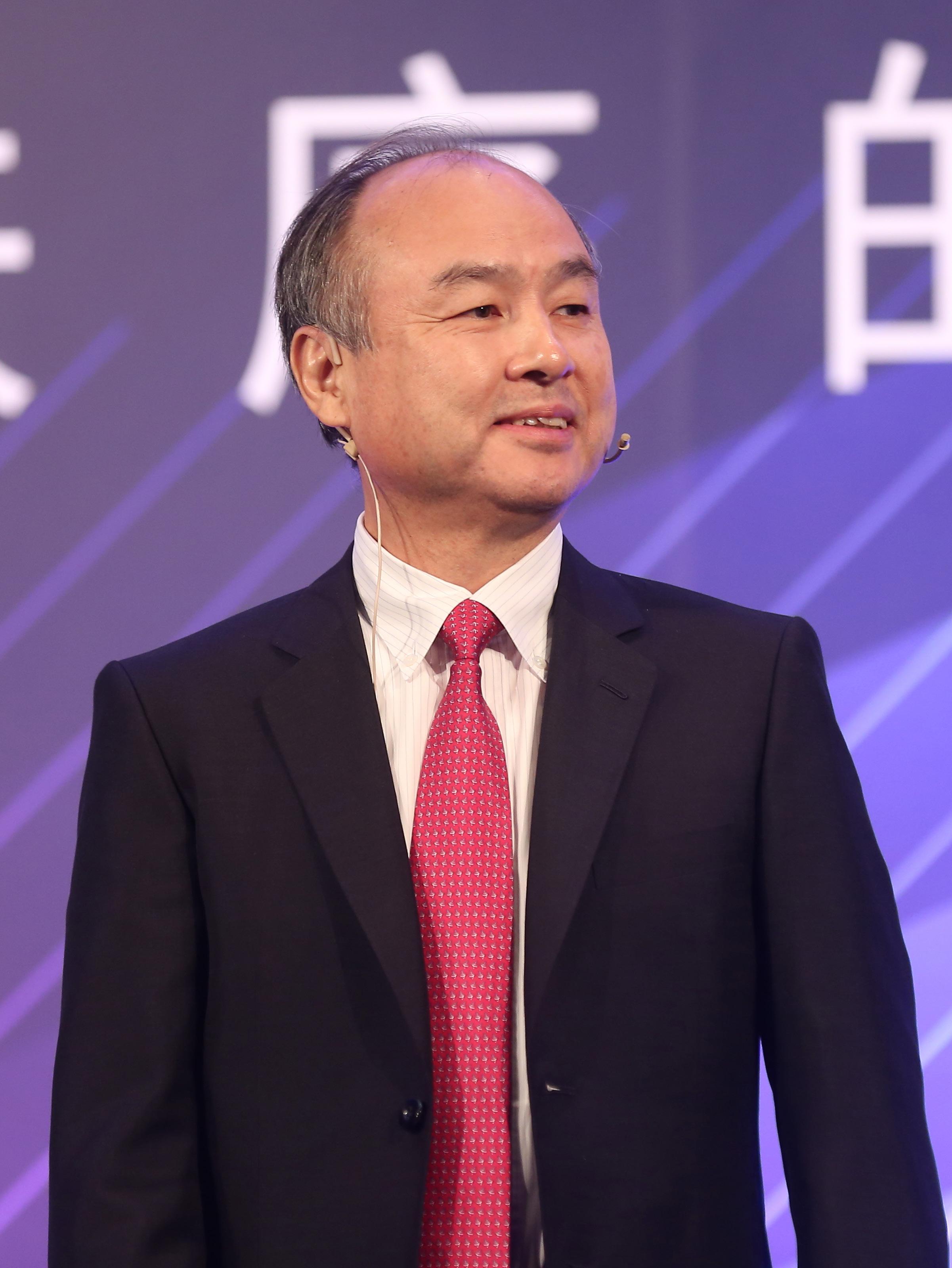

Masayoshi Son is known for following a high-risk, even higher-leveraged investment style that has courted both success and disasters
Stargate: Masayoshi Son's next big bet
IF CORRESPONDENT
In the final weeks of February 2026, ChatGPT creator OpenAI raised $110 billion in a blockbuster funding round, valuing itself at $840 billion. The development, which continued to reflect the accelerated pace of investment in artificial intelligence (AI), saw SoftBank pumping in $30 billion, followed by NVIDIA ($30 billion) and Amazon ($50 billion). Post this, OpenAI will be looking to complete the launch of its much-awaited IPO by the year-end.
However, in this article, International Finance will discuss in detail SoftBank's rush to forge partnerships with OpenAI and the American tech industry in general, as the ongoing AI boom is also witnessing heavy spending on data centres.
In January, OpenAI and SoftBank announced their roadmap to invest $500 million each in California-based SB Energy (a SoftBank-owned company) to
expand data centre and power infrastructure for their Stargate initiative. SB Energy will build and operate OpenAI's previously announced 1.2-gigawatt data centre site in Milam County, Texas.
Talking about Stargate, it is a $500 billion multi-year initiative to build AI data centres for training and inference, backed by major investors including Oracle.
SoftBank's aggressive spending spree on the data centre front comes amid the tech companies’ mad rush to secure their power infrastructure. Energy access is becoming a critical constraint on AI expansion, with the push for larger and more numerous data centres driving electricity demand higher.
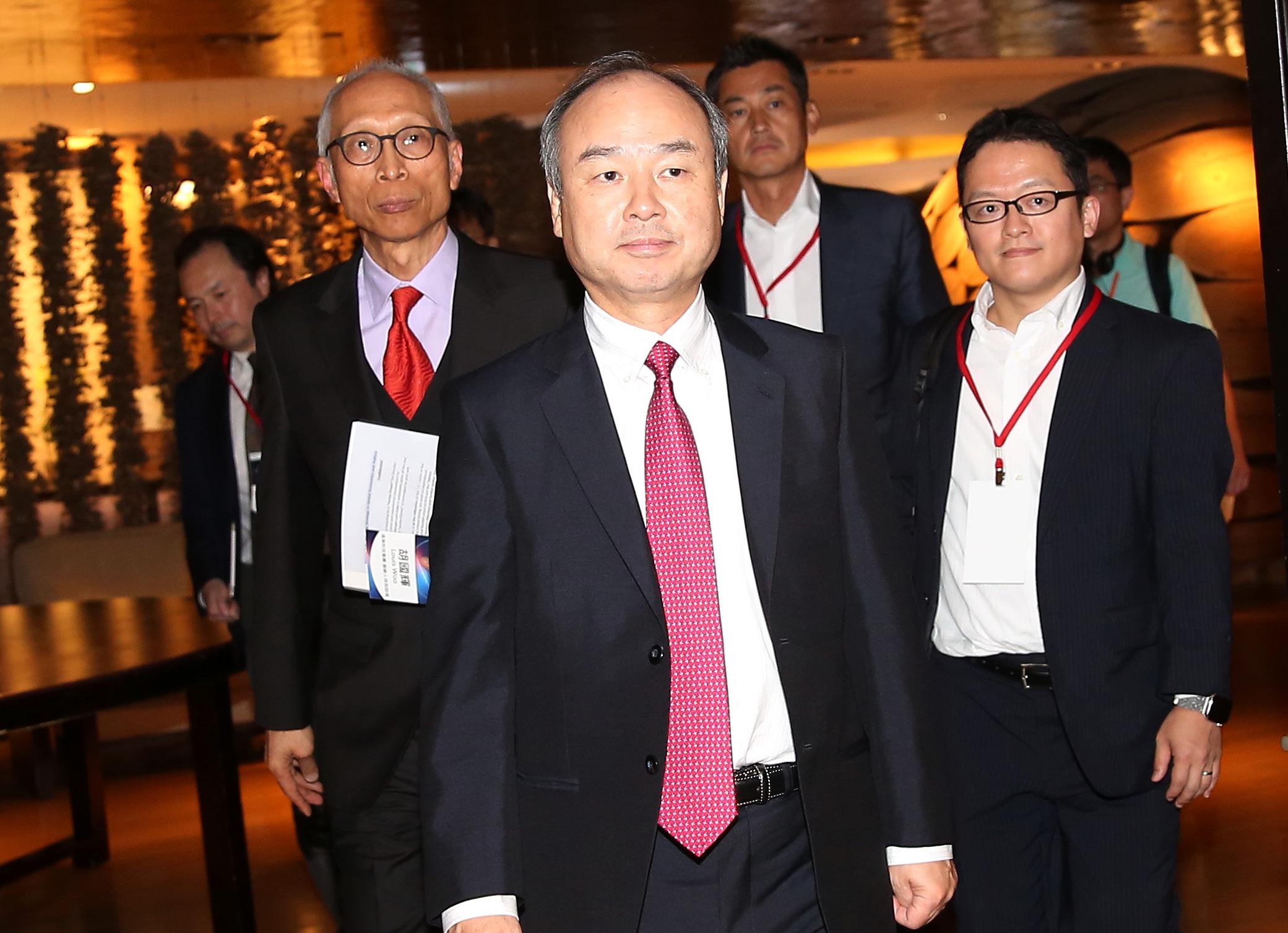
SoftBank will also be acquiring Florida-based digital infrastructure investor DigitalBridge Group in a deal valued at $4 billion. Through this, the Japanese company will be penetrating the digital infrastructure segment further, aligning with the vision of its billionaire founder, Masayoshi Son, who has made the United States' AI boom his investment target. He wants to capitalise on surging demand for the computing capacity that underpins AI applications.
DigitalBridge invests in digital infrastructure sectors such as data centres, cell towers, fibre networks, small-cell systems and edge infrastructure. The company, which as of September 2025 possesses around $108 billion in assets, making it one of the largest dedicated investors in the digital ecosystem, also has a Stargate link.
It, along with OpenAI, Oracle and Abu Dhabi-based tech investor MGX, is investing billions of dollars in the project, under which five new computing sites across Texas, New Mexico and Ohio will have a combined power capacity of about seven gigawatts.
Building an AI war chest
Masayoshi Son's latest interview with The Times Magazine gave a sneak peek of what is going through his mind, in terms of SoftBank's road ahead in the AI domain. After making a fortune in software and transferring that success into domains like telecoms and a raft of tech ventures, Son is now preparing SoftBank’s $180 billion war chest for AI.
Be it taking control of chip firms Arm, Graphcore and Ampere Computing, as well as self-driving car start-up Wayve, or the investments into Intel and OpenAI, all of them have one thing in common: Son's emphasis on artificial superintelligence (ASI), which he envisions becoming "10,000 times smarter than humans within a decade."
“ASI combined with physical AI (including humanoid robotics) will comprise 10% of global GDP in 10 to 15 years, followed by 30% over 30 years,” Son predicted.
Masayoshi Son is known for following a high-risk, even higher-leveraged investment style that has courted both success and disasters. While the $20 million investment in Chinese e-commerce giant Alibaba (worth close to $200 billion at its peak) gave the SoftBank boss a sort of legendary status, the $18.5 billion he pumped into the now-bankrupt office-sharing venture WeWork also got listed among history’s most bizarre moves.
However, the ongoing AI boom has given Son another opportunity to be a risk-taker. SoftBank shares hit a record high in October 2025, briefly propelling Son to once again become the richest man in Japan. However, he has got a bigger role now: spearheading Silicon Valley’s bet to scale up US data centres and AI infrastructure, thereby writing the rulebook of the Fourth Industrial
Masayoshi Son has made the United States' AI boom his investment target. He wants to capitalise on surging demand for the computing capacity that underpins AI applications
Revolution (Industry 4.0).
The SoftBank boss has also reportedly proposed a vast $1 trillion AI and robotics complex in Arizona, dubbed "Project Crystal Land," that will also incorporate a free-trade zone alongside Taiwan’s chipmaking giant TSMC. By tapping into the Donald Trump Administration’s appetite for big numbers, as well as the clamour to reshore chipmaking and reassert American tech leadership against China, Son has pivoted SoftBank as an essential partner toward revamping US AI infrastructure.
And the investment vehicle supercharging SoftBank's AI pivot is its "Vision Fund." The entity, apart from being a steady investor in AI companies, including OpenAI, holds stakes in chip designer Arm, along with companies involved in robotics and autonomous
vehicles. As of December 2025, through the fund's strategic investments, the Japanese tech conglomerate has remained a profit-making machine, that too for four consecutive quarters.
In the October-December quarter alone, the venture reported a net profit of 248.6 billion yen (USD 1.62 billion), in a stark reversal of the net loss of 369 billion yen which it had to undergo in the same quarter in 2024. It seems like OpenAI's rising valuation will also bode well for the conglomerate's earnings, despite market worries about the risk of
overexposure to a single firm.
In March 2026 itself, S&P Global lowered its outlook for SoftBank Group to negative from stable, saying further investments in the Sam Altman-led firm may hurt the Japanese conglomerate’s liquidity and the credit quality of its assets. However, it seems Son doesn't have immediate plans to move away from the OpenAI bet.
However, the same bet comes at a cost. In November 2025, the SoftBank boss had to take the hard call of liquidating the entire stake ($32.1 million to be
precise) in American chipmaking giant NVIDIA to free up investment worth $5.83 billion, along with part of a T-Mobile stake worth $9.17 billion. It wasn't an easy call for Son, given that Vision Fund was an early backer of NVIDIA, apart from both ventures having a deep relationship, with the tech conglomerate involved in several AI ventures that rely on NVIDIA’s technology, including the Stargate one.
When Masayoshi Son broke his silence on the NVIDIA stake sale, he said, "I respect Jensen (NVIDIA CEO), I re-
spect NVIDIA so much, I don't want to sell a single share. I just had more need for money to invest in OpenAI, invest in our opportunities, so I was crying to sell NVIDIA shares. If I had more money, of course, I would want to keep NVIDIA shares, all the time, any time.”
Maverick since childhood
Born as the grandchild of Korean immigrants in a small town on Japan’s southernmost island of Kyushu, Masayoshi Son had a humble childhood, living in a shack on a plot of unregistered land. At the age of 16, he read a book written by legendary Japanese businessman Den Fujita, the iconic figure who brought McDonald’s to Japan.
Then he made 60 long-distance phone calls with one intention: to meet the businessman himself. Despite repeated rejections, Son went to Tokyo and turned up uninvited at the McDonald’s head office. He was eventually given a 15-minute audience with Fujita, who gave one piece of advice to the teenager that changed his life forever, which was "focus on future technologies like computers." It is worth mentioning that Fujita later sat on the SoftBank board.
Masayoshi Son then moved to the United States, completing his high school education at California High School, followed by a course in economics at the University of California, Berkeley. However, one task was quietly shaping Son’s entrepreneurial destiny, dedicating five minutes every day to thinking about inventions and filling hundreds of notebooks.
Son eventually ended up collaborating with Berkeley tutors to invent the world’s first electronic translator, which he later sold to Sharp Corporation. He then started a business im-

porting second-hand arcade game machines from Japan.
Despite setting up a successful business in the United States, Son returned to his homeland to keep a promise he made to his mother. In 1981, the 24-year-old Son established SoftBank. While SoftBank started as a software wholesaler to support the then-upcoming PC industry, in 1982, TIME named the computer its "Machine of the Year," giving the youngster's business a solid purpose.
However, he was diagnosed with Hepatitis B. Given three to five years to live, Son took the challenge head-on and underwent pioneering treatment that saved his life. The whole episode only made him more self-confident. And it showed in his rapid rise since then.
In the 1990s, Masayoshi Son invested $3 billion in 800 tech start-ups. In 1996, he paid $100 million for 33% of Yahoo! Three years later, he sold off

a chunk of the shares for a huge profit but still retained a 28% stake worth $8.4 billion. He zeroed in on one investment strategy, which is issuing SoftBank bonds to borrow money at rates cheaper than banks.
Then arrived the ill-famed dotcom bubble. During the phase, Son’s net worth used to surge by $10 billion every week, so much so that in February 2000, the SoftBank boss briefly unseated Microsoft co-founder Bill Gates
Total assets of SoftBank Group from 2020 to 2024 (In Trillion Japanese Yen)
Source: Statista
to become the world's richest person for three days. However, when the bubble burst later that year, SoftBank shed 97% of its value, and Son had to suffer losses worth $70 billion.
However, the beauty of time is that it changes. Alibaba, now an established Chinese conglomerate, was a relatively unknown e-commerce startup in 2000. It got a $20 million bet from Son, and as the company went public in 2014, the same stake became worth $75 billion. As
Son sold it, it doubled again, becoming one of his most profitable investments of all time, apart from creating the "Midas Touch" narrative about Son's bet-taking capabilities.
Telecom investments and blunders
After recovering from the dot-com bubble disaster, Masayoshi Son set his eyes on the broadband segment. However, things weren't smooth initially, as Soft-
Bank had to struggle to get regulatory approvals in Japan to set up its industry subsidiary.
Things went to the extent where Son stormed into an official’s office at Japan's telecommunications ministry, clutching a cheap cigarette lighter. While recollecting that episode in an interview with the Wall Street Journal, Son remembered saying to the official, "This is the end. If you don't help me, I'm going to pour gasoline all over myself right here and set myself on fire with this $1 lighter."
The situation got better in 2006 when, after acquiring Vodafone's Japanese subsidiary, the rebranded SoftBank Mobile emerged as a key player in Japanese telecoms. Son successfully persuaded Apple co-founder Steve Jobs to give him the exclusive rights to market the iPhone, history’s most successful consumer electronic product, when it debuted in 2007.
In 2013, he purchased Sprint and turned things around for the struggling US telecom provider before merging it with T-Mobile in 2020, disrupting the AT&T and Verizon duopoly. Although Son is known as a hands-off investor, the Sprint episode was the best example of him rolling up his sleeves and getting things done.
In 2017, he formed the SoftBank Vision Fund with over $100 billion in capital. The entity still maintains its position as the world's largest private equity fund. He secured some $45 billion from Saudi Arabia’s Public Investment Fund (PIF) following a 45-minute meeting with Crown Prince Mohammed bin Salman.
The fund's strategy was simple: invest a minimum of $100 million to juice each startup to market dominance by blowing competitors out of the water,

and Masayoshi Son called it "blitzscaling." The entity, by 2019, pumped $76.3 billion into companies like NVIDIA, Uber, WeWork, Paytm, Ola and Flipkart, most of which are market giants in their respective fields.
In 2019, SoftBank launched "Vision Fund 2" with a touted value of $108 billion. However, there was a setback, as the entity reportedly managed to secure a paltry $30 billion, mostly self-funded. The original Vision Fund also underperformed, as in 2021 it posted record
losses of $27.4 billion amid the haemorrhage of tech stocks. The Ukraine war, COVID-19 lockdowns, and Beijing’s crackdown on its tech giants, many of which were backed by SoftBank, pulled down investor confidence.
And who can forget the WeWork disaster? During his high-profile visit to the United States in December 2016, in which Son met President-Elect Donald Trump, he also interacted with Adam Neumann, the founder of the co-working venture. The deal, famously drawn
up during a 12-minute meeting followed by a car ride, saw the SoftBank boss handing Neumann $4 billion. The Japanese conglomerate then went on to pump in another $14.5 billion.
However, in 2023 the bet backfired as WeWork declared bankruptcy, after a planned IPO went awry, followed by investor doubts about its governance, business model and profitability.
The episode affected Masayoshi Son, as he announced SoftBank would adopt a "defensive" position by being conservative when it came to the pace of new investments. Not only did the Japanese conglomerate witness an exodus of executives, but Son also ended up telling investors that he was "embarrassed and ashamed of himself for being so elated by big profits in the past."
WeWork was not the only failed bet for SoftBank, as it also faced criticism for unsuccessful investments in dog-walking service Wag, robot pizza chain Zume and, most importantly, payments service Wirecard, which collapsed in 2020 after being named in Germany’s biggest post-war accounting fraud, where €1.9 billion in reported cash was found to be non-existent.
Around the same time, Greensill, a SoftBank-backed supply chain finance firm in the United Kingdom and Australia, also shut down amid illegal lobbying accusations.
The big gamble
Stargate is a huge bet for Son and the wider American tech sector, as through this, the world's largest economy is looking to enhance its AI infrastructure to 10 gigawatts by 2029, with Texas, Michigan, New Mexico and Wisconsin being key data centre hubs.
However, economists and investors believe that the current AI infrastruc-
ture, far cheaper than Stargate, already fails to generate adequate revenue compared to its cost. Also, newer AI models will likely be more power-efficient, rendering massive data centres obsolete.
Data centres are also known for straining energy grids, leading to higher operational as well as environmental costs, undermining economic viability.
Masayoshi Son disagrees with the detractors, as he envisions 10 times more AI chips being deployed in each threeyear cycle. Over time, these chips themselves will become 10 times more potent, while AI models, on their part, will ramp up productivity by a factor of 10.
"That’s 1,000x in three years. Nine years with three generations is 1,000,000,000x. It's a huge, huge difference," he told TIME.
Another concern of critics is that the collaboration between OpenAI, Oracle and SoftBank could result in a cartel that stifles innovation while inflating costs.
Taking a different view, Son remarked, "For the AI race, it requires hundreds of billions of dollars of investment into the data centres, buying chips, integrating chips and training the models. It's very, very costly, so it will naturally be concentrated into several very capable companies in terms of talent and capitalisation."
Stargate is also a prime example of geopolitical and technological rivalries finding a common link: Washington’s desire (spooked by DeepSeek's rise) to beat Beijing in the so-called AI "arms race." Korean-Japanese Son has picked his side here.
He told TIME, "I have stopped investing in China. Zero. I'm now focused on investing in the US."
However, he still has great admiration for Chinese business acumen, reflected in his words: "You cannot underestimate China’s crowd of young entrepreneurs, young scientists. They are for real."
Talking about Stargate, out of the total $500 billion to be spent over four years, some $100 billion was to be invested "immediately," to create 100,000 permanent jobs. However, only roughly $10 billion has so far been deployed in the Texas city of Abilene, where some 7,000 temporary construction jobs reportedly have been created, providing a mixed bag to the local economy in the form of growing job openings and a housing crisis.
Two elements from the dot-com era, fibre optic cable and 3G infrastructure, went on to prove invaluable over the years. However, the same can't be said about data centres (warehouses packed with GPUs), as these infrastructures may not enjoy such longevity given the industry's emphasis on developing next-generation AI that will be more energy-friendly.
Has Masayoshi Son, who has repeatedly risen like a phoenix after multiple investment failures, taken a big gamble about Stargate and American AI ambitions in general? Only time will tell.
Or call it Son’s revenge, as Beijing's regulatory crackdown on its tech industry in 2021 caused stocks to plummet, leading to a financial bloodbath for SoftBank. editor@ifinancemag.com
FEATURE MASAYOSHI SON
ETECH: Redefining ELV Systems & Smart Parking Solutions
ETECH’s technological prowess lies in its diverse portfolio of offerings that cater to industries such as aviation, military, education, government and urban development
As the Kingdom of Saudi Arabia accelerates toward achieving its economic diversification goals under the roadmap called "Vision 2030," ETECH has established itself as a leader in technological innovation.
Headquartered in Riyadh, ETECH is redefining urban living by integrating cutting-edge technologies across industries like aviation, military, business and government sectors.
A subsidiary of the renowned Bin Dayel Group, the company’s leadership and innovation, backed by strategic partnerships and support from its sister companies Easy Parking, Easy Valet, and Modern Airports, have solidified its reputation as a transformative force in the industry.
ETECH, which won the International Finance Award 2024 for being the "Best ELV Systems and Smart Parking Solutions Provider – Saudi Arabia," has delivered high-quality ELV systems and integrated solutions for the public and private sectors.
The company's capabilities have been enhanced by its partnerships

with leading global technology providers, ensuring access to state-of-the-art technologies that empower its solutions.
Innovative solutions across sectors
ETECH’s technological prowess lies in its diverse portfolio of offerings that cater to industries such as aviation, military, education, government, and urban development. The company has also emphasised sustainable solutions.
From integrating green technologies into ELV systems (Extra Low Voltage Systems) to optimising resource use in urban settings, the company aligns its services with global environmental standards. Its smart city initiatives exemplify this commitment by utilising data analytics to enhance city operations, reduce energy consumption, and improve public safety.
An excellent flagbearer of ETECH’s game-changing products has been Mawqfi Smart Parking Solutions, powered by SAMI Advance PIF Company. ETECH,
through its subsidiary Mawqfi, offers smart parking systems for both on-street and off-street parking. Mawqfi’s solutions utilise IoT, data analytics, and AI to optimise parking operations, reduce congestion, and enhance the user experience.
ETECH, through its parent and sister companies, is enhancing its smart parking ecosystem. Easy Parking and Easy Valet offer seamless valet and parking management services tailored to commercial and retail environments.
Modern Airports Company, another sister concern, adds value to the ecosystem by providing

specialised aviation and hospitality services, enabling the delivery of turnkey projects.
Achievements and landmark projects
By being involved in the "Airports Project," an initiative handling privatisation and operational management of 22 airports across the Kingdom, ETECH has already proven its ability to handle complex technological integration in the Kingdom's civil aviation ecosystem.
ETECH also provided stateof-the-art communication and security systems in the King Faisal Specialist Hospital (KFSH), ensuring the hospital operates at the highest standards of safety and functionality.
The company designed and implemented advanced ELV systems, including architectural lighting and security solutions in Riyadh's Solitaire Mall, enhancing the facility’s operational efficiency and visitor experience.
ETECH also played a crucial role in the development of the General Authority of Civil Aviation (GACA). This urban development features ETECH’s smart city technologies, integrating ELV systems for sustainability and efficiency.
Leadership that drives excellence
The person driving the culture of innovation and excellence in ETECH is its GM and Managing Director, Islam Awad. With over two decades of experience in IT and technology management, his leadership has been characterised by a commitment to leveraging advanced technologies to simplify and enhance living standards.
Under his guidance, ETECH has embraced emerging technologies such as Smart Parking Solutions, IoT, AI, and big data analytics, staying ahead of market trends and delivering cutting-edge solutions to clients.
Mr. Islam Awad's strategic focus
has been on facilitating partnerships, developing talent, and integrating advanced technologies. His vision continues to drive the company forward, positioning ETECH as a leader in the industry and a catalyst for progress in Saudi Arabia's technological landscape.
Commitment to sustainability and Vision 2030
Aligning with the "Vision 2030," ETECH, through partnerships, innovation, and expertise, is helping to build smarter cities that prioritise sustainability and liveability.
ETECH’s journey from a trusted local provider to an internationally recognised leader exemplifies the transformative power of innovation. With its strong foundation, strategic partnerships, and relentless commitment to excellence, the company has become a catalyst for progress, driving the Kingdom and the broader region toward a smarter, more sustainable future.
The circular economy is inherently labour-intensive, requiring a human touch for repair, authentication, sorting, and logistics
The permanent circular economy
IF CORRESPONDENT
Something big is happening. It is so big that it is comparable to the Industrial Revolution. People are shifting away from the linear "take-makewaste" model toward a circular ecosystem underpinned by resale, refurbishment, and repair.
The global secondhand fashion and luxury market is projected to reach approximately $360 billion in the next four years
It’s not a fad. We are seeing a permanent decoupling of economic activity from resource extraction, driven by several key factors, including continuous inflation that is eroding the purchasing power of regular people, acute resource scarcity threatening supply chains, and tightened regulations forcing corporations to internalise environmental externalities.
The statistics are clear. The global secondhand fashion and luxury market is projected to reach approximately $360 billion in the next four years and is growing three times as fast as the primary market. The market can be broken down into several key segments. The global secondhand apparel market reached $200 billion in 2023 and is expected to hit about $350 billion in 2028. It represents an incredible compound annual growth rate of 12%. The luxury resale segment is expected to grow from $32.47 billion in 2024 to $50.06 billion by 2030. The primary driver behind this growth is
the "assetization" of luxury goods. The refurbished electronics market is also growing rapidly and is projected to hit $65 billion through 2029, with an annual growth rate of 14.2%. Finally, the secondhand furniture market is expected to reach $91.6 billion by 2027.
Well, the public narrative is mostly about fashion, but there's a lot more going on. For example, when it comes to consumer electronics, there is something called the Right to Repair movement. It is now being codified into law across the European Union and several United States jurisdictions.
The legislative momentum creates entirely new secondary markets for refurbished devices, validated by sophisticated grading standards and data sanitisation technologies. But it's important to note that rapid change creates complex contradictions. Resale as a service has commoditised circularity. The change has empowered fast fashion giants to launch resale platforms that many argue are a way to hide systemic overproduction through what people call greenwashing. At the same time, AI and digital product passports are emerging as critical infrastructure to bridge the trust gap in secondary markets.
The resale market has effectively separated from traditional retail cycles, functioning less like a distressed asset class and more like a preferred primary consumption channel. Growth is not uniform across geographies. In the United States, 87% of consumers cite affordability as their primary

motivator, 11 percentage points higher than their European counterparts. Conversely, the European market is heavily influenced by regulatory pressures and a cultural inclination toward wardrobe curation, supported by denser networks of independent vintage stores.
The global cost-of-living crisis has acted as a potent accelerant, shifting circularity from a sustainability feature to a household survival strategy. Persistent inflation has forced consumers to trade down to secondhand goods to maintain brand access without primary market premiums. It’s particularly evident in electronics, where flagship smartphone prices exceeding $1,400 push consumers toward certified refurbished models selling for 30% to 40% less. However, the psychology extends beyond frugality. A “treasure hunt” dynamic drives engagement, with nearly 50% of resale buyers citing the search experience as a key enjoyment factor. For Generation Z, resale has become the primary discovery channel, with 80% using resale platforms to explore brands they haven’t purchased firsthand, effectively making the secondary market a gateway for primary luxury customer acquisition.
A primary brand hesitation is cannibalisation fear, but data from BCG and RaaS providers suggest the opposite. Cannibalisation has already occurred on third-party sites; by reclaiming this volume, brands capture revenue, customer relationships, and data. Furthermore, brand-owned
resale increases customer lifetime value. Programmes like Lululemon’s “Like New” drive loyalty by rewarding trade-ins with store credit that is almost inevitably spent on new inventory, creating a flywheel where secondary markets subsidise primary purchases. Resale shoppers are often aspirational consumers who eventually graduate to buying new, effectively lowering customer acquisition costs for new segments.
Unlike forward logistics, which ships identical palletised items, reverse logistics processes unique items with varying conditions, defects, and values, requiring specialised infrastructure. Companies like Optoro use AI to determine the next best action for returned items to maximise recovery value, reportedly diverting 95% of returns from landfills. However, the cost of processing a single used garment can exceed its resale value. RaaS providers leverage volume and proprietary data to drive costs down, but profitability remains challenging without subsidy from primary brand marketing.
In the luxury sector, the goods are increasingly viewed as tradable assets, sometimes outperforming traditional investments. The market grows at 7.48% annually, fuelled by aggressive primary market price increases that make the secondary market the only accessible entry point for many consumers. The existential threat is counterfeiting, giving rise to AI-based authentication services.
Entrupy uses microscopic computer vision, analysing materials with 99.1% accuracy and offering fi-
nancial guarantees. The RealReal employs hybrid AI tools, filtering high-risk items for human expert review. The watch segment is projected to reach 35%-40% of the global market by 2030, with mechanical durability making watches ideal for multiple ownership cycles.
The electronics resale market is driven by functional utility and grading standards. Back Market forecasts €3 billion in gross merchandise value in 2025, driven by inflation and the desire to avoid the massive carbon footprint of manufacturing new devices.
A critical barrier to corporate electronics recycling is data privacy. Blancco provides enterprise-grade sanitisation, ensuring devices from banks or hospitals can be safely resold, automating diagnostics and erasure for up to eighty devices simultaneously. The EU’s 2024 Right to Repair Directive forces manufacturers to provide spare parts and manuals for seven to ten years, fundamentally altering refurbishment economics and breaking planned obsolescence cycles, empowering independent repair shops that are critical to local circular economies.
Without digitisation, the circular economy cannot grow. A product's journey (made, reused, repurposed) needs one steady digital link. By the late 2020s, EU rules will quietly require Digital Product Passports for clothes and tech items. These digital records store fixed facts, such as where a product started, what it's made of, whether it can be fixed, and whether it can become new material. Starting from a shared base, the Aura Blockchain Consortium takes shape through
collaboration among LVMH, Prada, and Cartier. Built around uniform blockchain systems, each item receives a distinct digital form. Should a product change hands during resale, those new owners gain access to linked records, unchangeable proof of origin and past possession. Instead of full public visibility, Aura applies controlled networks where openness meets boundaries, supporting trustworthy changes in ownership, especially where market value runs high.
The government used to encourage recycling through policy, until very recently, but now it is mandating circularity. The EU is leading the change globally, exporting regulatory standards worldwide through the "Brussels effect." It helps multinationals adopt EU standards to simplify the supply chain.
The Right to Repair Directive by the EU came into force in June 2024. It is an incredible piece of legislation because it requires manufacturers to repair goods even outside legal guarantee periods, mandates the creation of a European online repair platform, and standardises repair information forms.
Not to mention the Eco-Design for Sustainable Products Regulation, which imposes tough standards by demanding durability, reusability, upgradability, and repairability from the start of product design. Also, the Waste Shipment Regulation prohibits plastic waste from leaving OECD borders after 2026. This regulation has led to an increase in recycling within Europe instead of shipping trash abroad.
Unlike the EU’s federal ap-
Projections of global municipal solid waste generation per year in 2030, 2040 and 2050 if urgent action is not taken (Billions Of Tonnes)
2030 2.684 2040 3.229 2050 3.782
Source: World Economic Forum
proach, the United States relies on state-level legislation, creating complex compliance maps. California, Minnesota, New York, and Colorado have passed vigorous Right to Repair laws. California’s SB 244, effective July 2024, requires parts and manuals for electronics and appliances costing over $100 to be available for seven years, crucially not excluding business-to-business equipment. Manufacturers cannot easily make California-only versions, so these laws have national ripple effects. Without federal equivalents to EU regulations, US companies often default to EU standards to maintain global supply chain consistency, essentially importing EU regulations. They say the resale boom is a great win for sustainability, but if we critically examine it, there are some inconsistencies in that claim. For example, fast fashion brands have adopted resale aggressively. Some argue that these are sophisticated greenwashing tactics that distract people from the core overproduction business models. The Changing Markets Foundation is one such critic. Shein, for example, produces thousands of new styles daily using ultra-fast fashion models that rely on synthetic materials and labour exploitation. The platform might


contribute only a microscopic fraction compared to what dominates sustainability marketing.
Investigations have revealed that clothes taken back through take-back schemes and other systems often end up incinerated, downcycled, or exported rather than resold. By using tracking devices, investigators have found that items in perfect condition were destroyed or lost, exposing a significant lack of transparency.
environmental savings of refurbished smartphones can be offset if consumers use monetary savings to buy more devices or upgrade more frequently, nullifying carbon reduction benefits.
The ultimate evolution is the dissolution of ownership toward “usership” models, where goods are leased or subscribed to through Product-as-a-Service. In such a model, manufacturers retain ownership and responsibility throughout product lifecycles, aligning incentives perfectly. If manufacturers pay for disposal, they design products to last forever and be easily repaired. Right now, it's rare, yet forecasts show it spreading into expensive household items by 2030, especially as trash disposal gets more costly. At that point, Digital Product Passports probably won’t be hard to find for high-end products, letting shoppers scan a secondhand coat and immediately access details like the farm origin of fibres, handworker location, past owners, repair tips, plus reuse value.
Nowhere is change clearer than in how goods move across borders. Pushed by need, rules, and tools that connect economies differently, old ways of making and moving things fade. Even though doubts about real sustainability linger, with fake claims, energy tradeoffs, and delivery hurdles adding pressure, forward motion cannot stall. A time when buying and tossing came easily now shifts toward reusing, repairing, and reusing again. Nowhere is change clearer than in what companies must do about used goods. Instead of resisting, smart players are learning to shape these secondary trades. Success in the years ahead hinges less on selling new items than on turning every product into profit.
Academic research confirms rebound effects, where efficiency gains are offset by increased consumption. When consumers can sell used clothes, they may feel financially and morally justified in buying more new clothes. Studies estimate substitution rates at 1:1.23, implying resale markets might actually increase overall throughput rather than reduce primary production. Consumers buy with the intent to resell, treating clothes as temporary holdings. Similarly, the editor@ifinancemag.com
By 2030, resale is expected to comprise 10% of the total global fashion and luxury markets. In high-value categories like handbags, secondhand items already make up 40% of consumers’ wardrobes, indicating saturation, where “used” becomes normal. The distinction between new and used retail channels will blur, with major retailers offering both side by side. The circular economy is inherently labour-intensive, requiring a human touch for repair, authentication, sorting, and logistics. The ILO and World Bank estimate the sector already employs 121 to 142 million people globally, poised to be a major engine of green jobs offering employment that is difficult to offshore.
IN CONVERSATION
LINDA MIDDLETON-JONES
INTERNATIONAL TRADE MATTERS
Tariffs fundamentally contradict the tenets, representing protectionism regardless of justification
'Protectionism delivers long-term pain'

PRABUDDHA GHOSH
In February 2026, the United States Supreme Court, in a 6-3 ruling, struck down President Donald Trump's tariffs, a tool that he used to rewrite the playbook of how the world's largest economy carries on its trade with allies and other countries.
While the Republican called the verdict a "disgrace" and decided to carry on the levies, named as "global tariffs," through alternative means, the mechanism, since 2025, has created flutters around the world. Not only did the overall global trade flow get adversely affected, Uncle Sam's relations with allies like Canada, the European Union, South Korea and India also faced significant headwinds.
Post the SC verdict, where are things heading now? To discuss this, International Finance caught up with Linda Middleton-Jones, an advocate and ambassador for international trade. As a founder and Managing Director of International Trade Matters with over 30 years of experience in international commerce, Linda serves as an Internationalisation Specialist for "Innovate UK," supporting innovative tech startups in global market expansion.
Previously, as the International Trade Director for Plymouth Chamber of Commerce, she created the Manufacturing Barometer (mentioned at Davos and recorded in Hansard) and the Global Trade Blueprint based on Sensemaking principles. Named "Most Influential Businesswoman in Multi-Sector International Commerce 2022," Linda completed certified training with MIT, The Economist and the ILM.
In this exclusive conversation, Linda discusses how the "Trump Tariffs" achieved limited success in fulfilling primary goals such as manufacturing reshoring, deficit reduction and revenue generation, while generating sub-
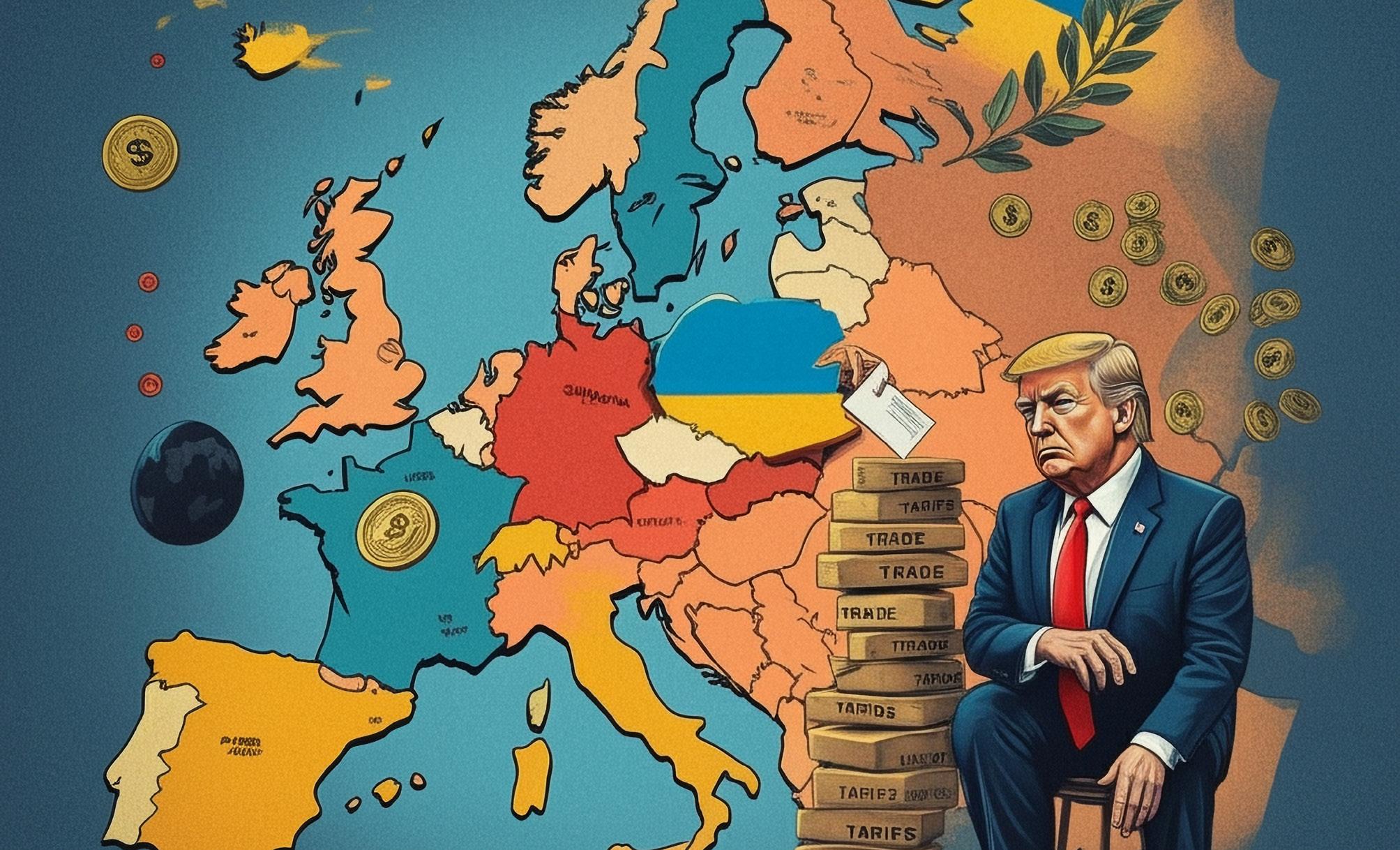
stantial costs for American businesses and consumers alike. She also notes that businesses dependent on imported components faced higher input costs, reducing competitiveness globally.
International Finance: What is your view on the clash between the US Supreme Court and the Donald Trump administration after tariffs continued despite the ruling?
Linda Middleton-Jones: The clash exemplifies political fragmentation overriding institutional governance—a tension familiar to companies navigating competing jurisdictions. When executive authority supersedes judicial oversight, it creates unpredictability for internationally trading businesses. From my work with UK exporters through International Trade Matters, this instability complicates strategic planning and risk assessment. Companies require regulatory certainty; when political expediency trumps constitutional frameworks, it undermines the governance pillar of ESG that businesses increasingly depend upon. This isn't merely domestic politics—it reverberates through global supply chains, forcing trading partners to question America's commitment to rulesbased commerce. The real victims are SMEs lacking
resources to pivot quickly when political whims override established frameworks.
Are tariffs the only way to address serious balance of payments deficits?
Tariffs represent the bluntest instrument in economic policy—effective perhaps for headline politics but crude for addressing structural imbalances. My experience with Innovate UK (United Kingdom's national innovation agency) demonstrates alternative approaches: investing in innovation, enhancing productivity, supporting export capability, and improving competitiveness through skills development. Japan and Germany achieved trade surpluses through manufacturing excellence, not protectionism. Balance of payments deficits reflect deeper issues, currency valuations, consumption patterns, productivity gaps, and comparative advantages. Addressing these requires systemic change: infrastructure investment, education reform, and industrial strategy. Tariffs may temporarily reduce imports but simultaneously increase costs for domestic manufacturers dependent on global supply chains, potentially worsening competitiveness. Sustainable solutions lie in enhancing export capability, not simply restricting imports.
IN CONVERSATION
LINDA MIDDLETON-JONES
INTERNATIONAL TRADE MATTERS
India's retaliatory tariffs on American goods demonstrate damaged goodwill. Beyond economics, these actions signal unreliability—if America weaponises trade against allies during peacetime, what commitment remains during crises?
Have tariffs helped boost US manufacturing, trade balance, or federal revenue so far?
Evidence suggests limited success across all three metrics. Manufacturing reshoring proves slow and expensive—relocating complex supply chains requires years and substantial capital investment. The trade deficit with China decreased marginally but diverted rather than eliminated—imports shifted to Vietnam, Mexico, and other nations. Federal revenue from tariffs increased nominally but pales against broader economic costs: higher consumer prices, retaliatory tariffs damaging agricultural exports, and supply chain disruptions. Companies I work with report increased costs without corresponding domestic alternatives. The Peterson Institute estimates tariffs cost American households considerably more than the revenue generated. Manufacturing competitiveness requires workforce skills, infrastructure, and innovation investment—tariffs alone cannot substitute for a comprehensive industrial strategy. Short-term political gains versus long-term economic reality.
Do Trump's tariffs contradict the principles of free trade?
Unequivocally, yes. Free trade principles rest on comparative advantage, specialisation, and mutual benefit through reduced barriers. Tariffs fundamentally contradict these tenets, representing protectionism regardless of justification. However, the nuanced reality acknowledges that 'free trade' rarely exists purely— every nation maintains strategic protections around agriculture, defence, and sensitive technologies. The question becomes whether tariffs address genuine unfair practices or simply protect uncompetitive industries. China's state subsidies, intellectual property theft, and market access restrictions warrant a response, but blanket tariffs penalise allies and trading
partners indiscriminately. WTO mechanisms exist precisely to adjudicate trade disputes through rulesbased frameworks. Abandoning multilateral systems for unilateral action undermines decades of trade architecture, inviting retaliatory fragmentation that ultimately harms all participants.
Could the ruling affect the China+One supply chain strategy in the near term?
The ruling creates short-term uncertainty but is unlikely to derail China+One fundamentally. Companies pursuing supply chain diversification respond to multiple drivers beyond tariffs: geopolitical risk, pandemic lessons, intellectual property concerns, and ESG considerations regarding labour practices and critical minerals sourcing. My clients implementing China+One strategies—relocating to Vietnam, India, Mexico—cite resilience over cost optimisation. Even tariff removal wouldn't reverse investments already committed. However, reduced tariff certainty may slow new diversification investments as companies await clarity. The strategic imperative remains: overconcentration in China presents unacceptable risk regardless of tariff policy. Geographic diversification reflects long-term risk management, not merely tariff avoidance. Political instability accelerates this trend rather than reverses it.
How have tariffs strained US ties with allies like Japan, South Korea, the UK, EU, and India?
Tariffs against allies fundamentally breach the trust underpinned by decades of partnership. Japan and South Korea, critical security partners facing China and North Korea, find themselves economically targeted alongside adversaries. The UK, seeking post-Brexit trade opportunities, encountered American protectionism rather than the promised partnership. EU relations deteriorated as tariffs on steel, aluminium, and other sectors contradicted stated alliance values. India's retaliatory tariffs on American goods demonstrate damaged goodwill. Beyond economics, these actions signal unreliability—if America weaponises trade against allies during peacetime, what commitment remains during crises? My work shows British exporters questioning American market dependence, seeking alternative partnerships. Trust, once broken, requires years rebuilding. Allies increasingly pursue China relationships, CPTPP mem-

bership, and regional agreements excluding America, fundamentally realigning global trade architecture.
Will US allies now seek more concessions after the ruling?
Absolutely. The ruling demonstrates institutional limits on executive authority, emboldening allies to press for advantages. Japan, the EU, and others will demand tariff removals, market access improvements, and safeguards against future unilateral actions as preconditions for deeper cooperation. They recognise American political instability creates negotiating leverage—businesses and states demanding trade certainty pressure the federal government toward compromise. However, allies also pursue insurance policies: strengthening intra-regional trade, diversifying away from US dependence, and building alternative frameworks. The ruling proves America's internal divisions, suggesting allies cannot rely upon a consistent policy. Consequently, concessions sought extend beyond immediate tariff relief toward structural guarantees and dispute resolution mechanisms limiting future executive overreach. Power dynamics have shifted—America's allies recognise they hold cards previously underutilised.
Have these tariffs become counterproductive for the US economy?
Increasingly, evidence suggests yes. Initial objectives—manufacturing reshoring, deficit reduction,
In May 2022, The Chimera ETFs traded a total of AED 62.7 million in the secondary market, the second-highest total this year and the third-highest since the launch of Chimera’s
revenue generation—achieved limited success while generating substantial costs. American manufacturers dependent on imported components face higher input costs, reducing competitiveness globally. Agricultural exports collapsed under retaliatory tariffs, requiring federal bailouts exceeding tariff revenue. Consumer prices increased disproportionately, affecting lower-income households. Supply chain disruptions revealed during COVID-19 were exacerbated rather than resolved. Perhaps most damagingly, America's reputation for rules-based trade governance suffered irreparable harm, encouraging allies toward alternative partnerships. My clients report that tariff unpredictability—more than tariffs themselves—proves most destructive, preventing long-term investment decisions. When political expediency overrides economic rationality, everyone loses. Protectionism may offer short-term political satisfaction but delivers long-term economic pain.
editor@ifinancemag.com
The idea of 'Pax Silica' brings together like-minded nations, which, in turn, reflects a broader shift toward concentrated globalisation
Pax Silica The new global order
PRABUDDHA GHOSH
On December 11, 2025, the world witnessed the emergence of a new strategic global alliance called the ‘Pax Silica Initiative’, led by the United States State Department, with the inaugural summit being held in Washington.
The goal was simple: securing Artificial Intelligence (AI) and semiconductor supply chains, with countries like the US, Australia, Greece, Israel, Japan, Qatar, Republic of Korea, Singapore, the UAE, and the United Kingdom feeling the urge to derisk their supply chains in the coming years. In February 2026, the group saw a notable entry, with India, the world’s fourth-largest economy, joining the alliance.
When talking about the Pax Silica, Jacob Helberg, US Undersecretary of State for Economic Affairs, told CNBC, "Pax Silica is really not about China, it is about America. We want to secure our
supply chains."
But then, the question remains: to secure from whom?
Let's go back to October 2025, when the Xi Jinping-led China decided to tighten export controls for its critical rare-earth metals, effectively turning the global economy's dependence upon these materials into a strategic leverage.
So, if we look at the developments that made the headlines since October 2025, we may be witnessing a phenomenon where globalisation is evolving into a pattern where it is picking sides, with supply chains getting reorganised along geopolitical lines. Is it going against the core principle of globalisation as a concept itself, which preaches the growing interdependence of the economies, cul-


tures, and populations, facilitated by factors like cross-border trade in goods and services, technology, flow of investment, people and information.
Weaponised supply chain
Let's go back to October 2025 again, when China announced its ’announcement number 61 of 2025’, increasing export controls for five rare-earth metals in addition to the seven the Xi Jinping administration announced in April in the same year.
Out of the 17 rare-earth metals in total, China put export restrictions on 12 of them. Not stopping there, it also placed restrictions on the export of specialist technological equipment required to refine rare-earth metals. Foreign companies were mandated to obtain special approvals from Beijing if they wished to export rare-earth magnets and certain semiconductor materials containing a minimum 0.1% heavy rare-earth metals from the world's second-largest economy.
Citing the rationale of national security interests for the move, which has been in effect since December 2025, China made sure that foreign companies end up explaining the intended use of the product they wish to make using Chinese rare-earth metals, attacking the very basis of globalisation, which advocates unrestricted flow of cross-border trade in goods, services and technology.
The Xi Jinping administration, however, believes that since rare-earth-related items have dual-use properties for civilian and military applications, implementing export controls on them is an ’international practice’.
In October 2025, the Chinese Commerce Ministry spokesperson told these exact things to the global media: "Certain foreign organisations and individuals have been directly transferring – or
Top 10 leading countries in the Globalisation Index field of social globalisation 2023
processing and then transferring – controlled rare-earth materials originating from China to relevant organisations and individuals directly or indirectly for military and other sensitive applications."
Rare-earth metals are used in the production of electric cars, lithium-ion batteries, LED televisions, AI semiconductors and camera lenses. Most importantly, these raw materials are crucial for the US defence industry. According to the Centre for Strategic and International Studies (CSIS) think tank, rare earths are used to manufacture components of F-35 fighter jets, Virginia and Columbia-class submarines, Tomahawk missiles, radar systems, Predator unmanned aerial vehicles, and the Joint Direct Attack Munition series of smart bombs.
In 2023 alone, the United States emerged as the largest importer of Chinese rare-earth minerals and products, importing $22.8 million worth of prod-
Source: Statista

ucts from the world's second-largest economy, according to the Observatory of Economic Complexity (OEC). China, in total, exported $117 million in rare-earth metals and products that year. As per the US Geological Survey report, Washington sourced 70% of its rare-earth compounds and metals imports from China between 2020 and 2023.
Some argue that China's weaponisation of its rare-earth supply chain is a strong response to the United States limiting Beijing's access to semiconductors in 2022. The policy, formed under the watch of the previous Democrat administration, led by Joe Biden, hasn't changed at all, even in 2026. And the approach has been a bipartisan one, with some American lawmakers even pushing for greater restrictions, warning that Beijing could reverse-engineer or independently develop advanced semiconductor technologies, with the
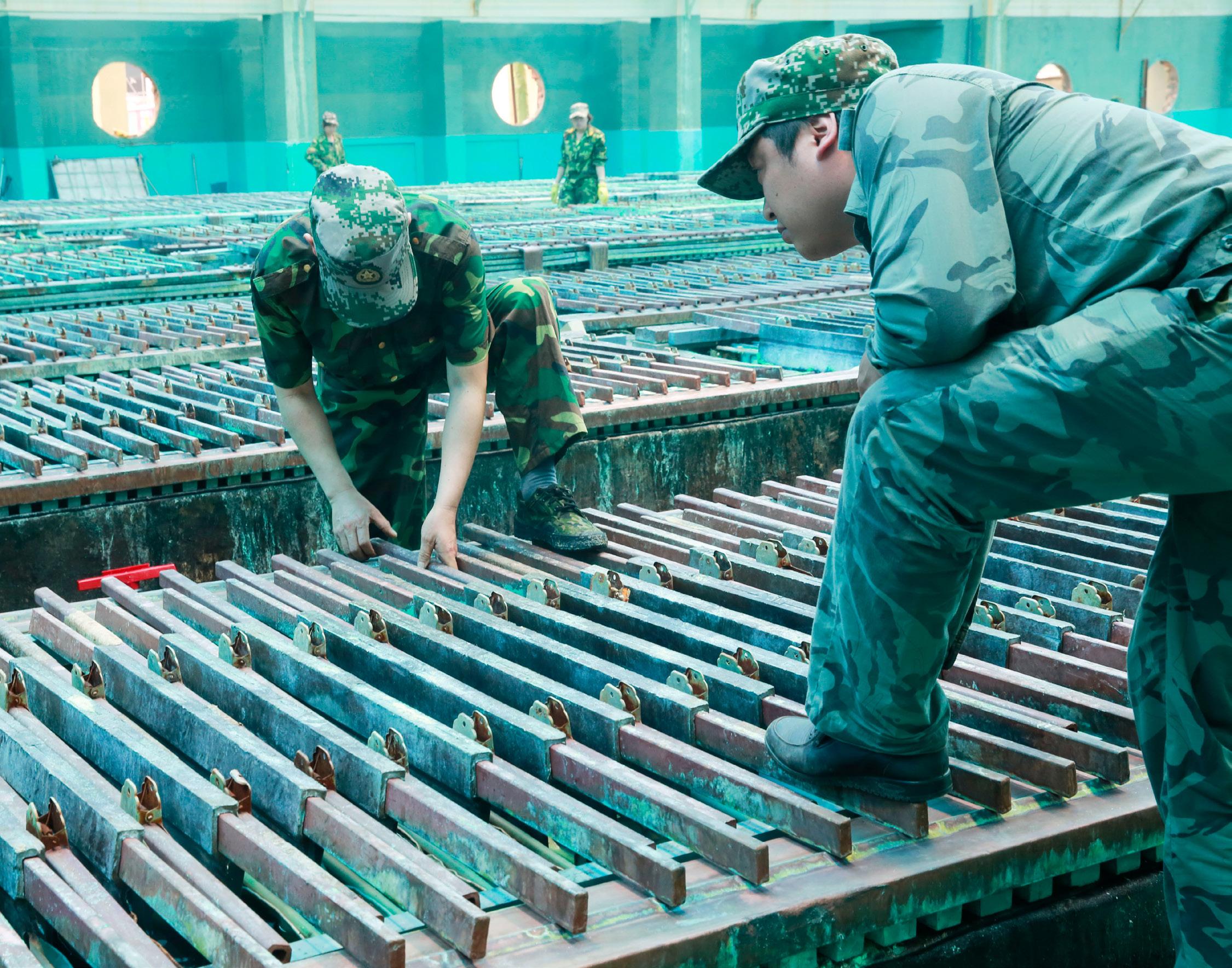
bid to overtake Uncle Sam in both technological and military terms. The ongoing tariff conflict between the two sides has complicated matters since the start of Trump 2.0.
Pax Silica countering Chinese pressure?
Rahul Nath Choudhury, a Delhi-based economist specialised in international trade, trade policy, investment, advisory and research who has handled several economic and trade-related projects for the Government of India's Ministry of Commerce, World Bank, Asian Development Bank, International Finance Corporation and Singapore government's Ministry of Trade and Industry, told International Finance that globalisation has always been transactional and geopolitically inclined towards the countries that are politically and strategically aligned and share common interests.
"Inter-country blocks, such as BRICS, ASEAN, and the EU, all have some common features. The emerging incidents like trade war, political unrest, and civil disorder have further influenced the decision of various countries to align or tilt towards like-minded countries and reduce the impact of global uncertainties. This is evident as countries increasingly enter into trade, investment and strategic agreements, with those countries that are geopolitically aligned, rather than purely based on commercial efficiency," he said.
On the other hand, Derek Scissors, Resident Scholar, American Enterprise Institute, whose research concerns the Chinese, Indian, Japanese and other Asian economies, and their connections to the American economy, commented, "Globalisation was initiated and led by the US. The Trump administration wants to partly reverse that, to make
trade and investment more transactional. However, Trump administration agreements are being reached without approval from the US Congress, and may not last beyond 2028. The longterm path for globalisation is unclear. The global economy may fade somewhat in favour of regional blocs. It's hard to see China's goal of taking a dominant position in as many supply chains as possible being compatible with the goals of other large economies."
However, there is no doubt that China is weaponising its supply chains. Given that it is the largest producer of rare-earth metals, mining at least 60% and processes about 90% of these resources (as per CSIS's report in 2024), it is going to use this as a leverage to gain a position of dominance in global geopolitics.
This raises questions about the idea of a deeply connected global economy. Stating that he doesn't believe in
FEATURE PAX SILICA
a deeply connected global economy, Derek said, "All the connections and associations have always been among like-minded countries that share common interests. We are now experiencing the emergence of a bipolar/ multipolar world where power is no longer concentrated with one country. The entire concept of a deeply connected global economy is getting reshaped with the advancement of new developments. The idea of 'Pax Silica' also brings together like-minded nations, which, in turn, reflects a broader shift toward concentrated globalisation, instead of one integrated global system."
The trend now is "China Plus One"
A new feature of the post-pandemic global order is the ‘China Plus One’ business strategy. Companies are now diversifying their supply chains and manufacturing bases beyond China, adding alternative locations in Southeast Asian countries like Vietnam, Thailand or India. The reason: mitigate business and supply chain-related exposure to China, given the geopolitical tensions that crop up often between the world's second-largest economy and the United States-led Western Bloc.
Tim Cook-led Apple has become the brand ambassador of this practice. The iPhone maker has been aggressively diversifying its supply chain in the last couple of years, placing its bets on Vietnam and India. Till COVID-19 showed up, China used to be at the centre of everything Apple used to do, especially in terms of manufacturing. Then, as the pandemic kicked in, lockdowns in key manufacturing hubs like Zhengzhou, dubbed ’iPhone City’, caused severe production bottlenecks and shipment ECONOMY FEATURE
delays for the American giant, ultimately impacting the global product availability.
Also, given that bilateral trade relations between the world's two largest economies have been anything but normal, manufacturing and shipping products from China will always face the risk of being tariffed.
So, Apple wanted a resilient and future-proof manufacturing network and, in that pursuit, found their answers in Vietnam and India, with advantages like considerable lower labour costs, attractive government policies, and import tariff rates suiting high-tech manufacturing, and, most importantly, capturing the lion's share of one of the world's largest and fastest-growing smartphone markets (again India), while maintaining its sales and profits lead in the home market of United States.
Rahul Nath says, "The China Plus One strategy does not seem to be over. Companies in various parts of the world are still exploring the option of relocating their base from China to other locations, despite it being a very difficult task. I don’t see this ending in the near future, at least in 2026."
Derek, however, had a nuanced view of the unfolding scenario.
"The China Plus One strategy is much more a response to predatory Chinese policies than US-China decoupling. The problem with American policy is its inconsistency, as with President Trump being extremely conciliatory to China prior to his trip to Beijing at the end of March 2025," he noted.
Another trend, which is also likely to redefine the transactional nature of the neo-globalisation, is ’friend-shoring’, which is already happening in domains like technology and semiconductors, with politically allied nations (read

Uncle Sam and his friends) strategically relocating supply chains in a way to gradually reduce dependence on China.
Initiatives like the CHIPS and Science Act in the US, implemented by the Joe Biden administration, incentivise domestic semiconductor manufacturing while mandating that companies receiving federal funds restrict capacity expansion in China. While preventing access to high-end semiconductors for China, to maintain an edge over Beijing in the AI race, has been a consistent policy take in the White House, irrespective of the administration's political alignment, ’Pax Silica’ in 2026, looks like an extension of a ’Minus China’ approach - building resilient, secure, and trusted networks for critical components without Beijing.
On this, Rahul Nath said, "Today, every major government is trying to reshape their supply chains in a way that insulates them from geopolitical
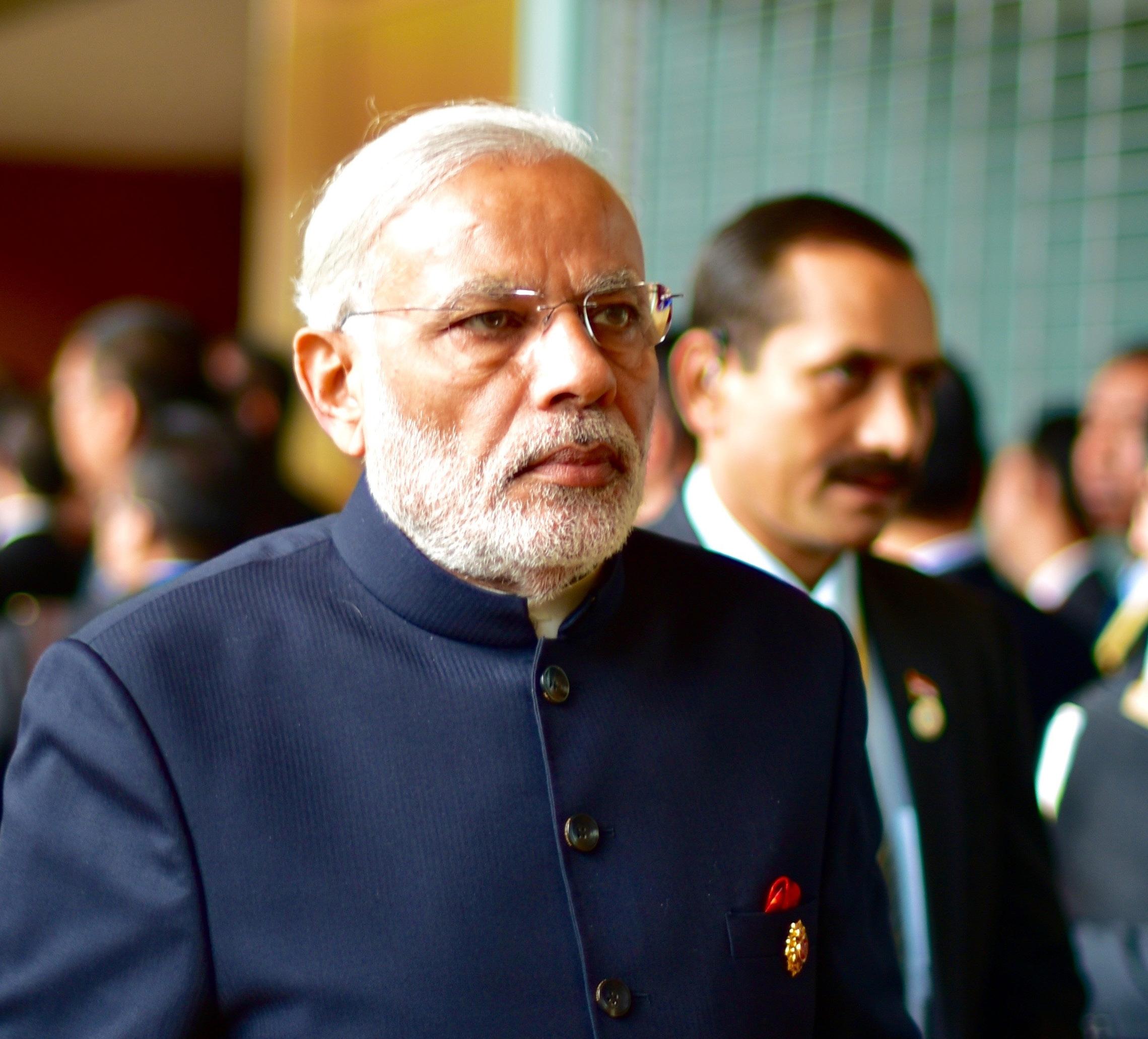
risks. This is affecting big businesses in all areas and influencing their strategy and investment decisions. The semiconductor industry is particularly active in responding to these changes. According to a report by The Engineer, manufacturers from the EU and the US are increasingly moving their supply chains to North America, the UK, Mexico, Vietnam, India and North Africa to minimise geopolitical risks and increase proximity to key markets. Several major projects are underway in North America. Numerous new semiconductor factories are being built in the US and Europe to boost regional production and reduce dependence on Asian suppliers."
Middle powers' strategic cooperation path
Hurt by China's rare-earth minerals' export control in 2025, European policymakers have taken a new stance, which is basically a ’do no harm’ approach.
Bilateral engagement continues, while carefully avoiding escalation. And Donald Trump's maverick approach to the continent, especially in the garb of resetting trade ties, is forcing the European leadership to seek diplomatic and commercial reassurance from the Xi Jinping government, despite structural issues like widening trade imbalances, persistent concerns over industrial overcapacity, growing unease over economic coercion risks, and China’s continued alignment with Russia remaining firmly in place.
Canada, United States' all-weather North American ally, too, has faced a tariff onslaught from the Trump administration, forcing Ottawa to reassess its economic ties with Beijing, which were marked by years of tension on account of tariffs, import restrictions, and diplomatic disputes.
In fact, India, the latest entrant to the Pax Silica, was another global
player which got hurt by Uncle Sam's strong-arming tactics. It resulted in the Narendra Modi-led government increasing its engagement with the BRICS (supposed rival of the G7), while increasing economic engagement with China and Russia.
So, even if we take into consideration the fact that the above-mentioned incidents were results of short-term policy blips from the White House, the fact remains, there are players like India, Canada and Europe, who believe in the concept of a ’multi-polar world’, where instead of overcommitting to one particular geopolitical block, interest-driven approach will rule foreign policy and diplomacy.
Scissors said, "India is big enough to stand on its own, but only if it pursues reforms much more aggressively. Labour laws continue to favour existing workers, with the result that new workers cannot contribute properly to the economy. The demographic boom is being repressed. Smaller, but still sizable economies, should place their long-term bets on the US. America has pulled away from China in GDP over the past decade, and has a history, at least, of being open to its partners. However, these countries should also protect themselves from US policy shifts over the next three years."
"All these middle powers are aligning or re-aligning with one or other superpowers. Global South nations are forming new trade alliances and partnerships that sidestep the US and the EU. India’s changing approach towards FTAs and partnering with new economies, like Australia and the UAE, shows its participation in bloc-based trade realignment," Rahul Nath concluded.
editor@ifinancemag.com
FEATURE PAX SILICA
Many countries are becoming less comfortable relying completely on the dollar, which has triggered ongoing discussions about de-dollarisation
Sanctions or war, the dollar always wins
PRAJWAL WELE
Something is changing in global finance. Not dramatic. No crash, no overnight shift. Just a slow, almost uncertain adjustment. The US dollar is still everywhere. Trade is priced in dollars. Central banks hold huge reserves. Markets run on the dollar. Yet, quietly, many countries seem a little less comfortable depending on it completely. That is where the whole dedollarisation conversation starts.
In 2026, the real question is not whether the dollar dominates; it obviously does. The real question is whether governments are preparing for a future where they rely on it, just a bit less. A shift, yes. A revolution? Not really.
According to Bidisha Bhattacharya, economist and columnist at ThePrint, what we are seeing is
not some financial revolution. It is much slower than that. Almost cautious. "De-dollarisation is real, but it is evolutionary rather than revolutionary. The US dollar continues to account for roughly 60% of global foreign exchange reserves, down from over 70% in the early 2000s. That decline reflects diversification

ECONOMY FEATURE DOLLAR GOLD BRICS
at the margins, not displacement at the core," Bhattacharya told International Finance.
The fundamentals still favour the dollar - deep financial markets, extremely liquid US Treasury bonds, strong institutional trust, and powerful network effects. The more people use the dollar, the harder it becomes to replace.
"Currency hierarchies do not flip suddenly. They evolve, slowly," she said.
The world is not abandoning the dollar; it is just becoming less dependent on it.
The gold rush — again
If there is one clear signal of this caution, it is gold. Central banks have been buying massive amounts of gold, levels not seen in decades. Annual purchases have exceeded 1,000 tonnes in recent years. This is not about returning to the gold standard or romanticising the past. It is about protection.

"Gold accumulation has become strategically significant. This is less about replacing the dollar, and more about hedging geopolitical and sanctions risk. Gold carries no counterparty risk and functions as a balance-sheet stabiliser in a fragmented global order," Bhattacharya said.
However, markets play a role too. Mike McGlone of Bloomberg Intelligence argues that central bank demand has been pushing prices higher.
"Central banks purchased about 1,000 tonnes annually in 2022, 2023 and 2024, roughly double the previous decade’s average," McGlone told International Finance, pointing to geopolitical tensions, including Russia’s invasion of Ukraine, as a key driver.
Yet, McGlone suggests, markets may be overheating. Gold could approach major peaks around 2026, similar to historic highs seen in 1980 and 2011. Some reserve diversification, he says, may reflect in rising gold prices rather than a fundamental move away from the dollar.
He added that most of the statistics on gold outpacing dollar reserves are due to the rapid rise in gold prices.
"Demand is notably driven by geopolitics rather
than inflation concerns," he said, suggesting easing global tensions could weaken momentum. So yes, gold is rising. But it is not replacing the dollar.
Sanctions, control, and financial vulnerability
Politics also plays a big role. Maybe more than markets.
Elnara Omarova, who works on BRICS-related policy issues, says many governments are mainly concerned about control, or the lack of it.
"The key issue is access. When central bank reserves can be frozen, or access to dollar clearing becomes politically contingent, governments start reassessing how much exposure they are comfortable carrying. Diversification then becomes less about ideology and more about insurance," Omarova told International Finance.
This has taken several forms: larger gold reserves, more holdings in non-dollar currencies, and bilateral trade settled in local currencies. And, it has been especially seen in energy markets. But these changes remain limited. The dollar still wins
"Currency hierarchies do not flip suddenly. They evolve, slowly"
B idish a Bhattacharya, econom ist a nd columnist at ThePrint
on liquidity, convertibility, and market depth.
"Diversification is happening, but it is incremental," Omarova said, describing it as risk management in a more fragmented geopolitical environment rather than an abrupt shift away from the dollar. Omarova calls it a recalibration, not a rupture.
The BRICS Debate: More noise than disruption
Much of the public discussion focuses on BRICS, and whether the group could reshape global finance. Analysts urge caution.
The influence of BRICS comes mostly from coordination, encouraging trade in national currencies, experimenting with alternative financing mechanisms, and building regional frameworks. It signals exploration, not replacement.
Lawrence Ngorand of Busara Advisors sees BRICS as pushing the world toward a more multi-polar financial system.
"The BRICS play a catalytic role, accelerating the transition toward a more multi-polar financial architecture," Ngorand told International Finance.
Their role lies in building alternative infrastructure and gradually shifting expectations. But structural problems remain. There is no widely trusted BRICS reserve currency. Institutional cohesion varies. Therefore, the shift is evolutionary. It is slow, uneven, and incomplete.
Global trade moves beyond the dollar
This may be the toughest question. Commodity
markets still revolve around dollar pricing, largely because the liquidity, benchmarks, and risk-management systems behind them are already deeply built around it.
Omarova suggests bilateral trade settlement could diversify, especially among politically aligned countries. But changing global pricing norms would require deep financial markets, credible alternatives, and global participation. That is a very high barrier.
Ngorand agrees that the dollar’s dominance is not just about politics; it is structural power: capital markets, institutional trust, and global network effects.
Regional diversification is happening, particularly in energy trade and infrastructure financing. But full displacement? Unlikely.
“The most likely outcome is not the replacement of the dollar, but the emergence of a more fragmented system where multiple currencies co-exist,” Ngorand said.
When gold stops being a safe haven
Yet the gold story is also becoming more complicated. For years, gold has been treated almost instinctively as the ultimate reserve hedge. No counterparty risk, no dependence on another country’s financial system, and no sanctions exposure. In a fragmented geopolitical world, that logic sounds almost irresistible. But, not everyone is convinced the current gold surge reflects long-term stability.
According to Mike McGlone, gold’s behaviour in markets has started looking less like a traditional store of value and more like a volatile financial asset.
“Gold has shifted toward a speculative asset from a store of value,” McGlone told International Finance, noting that its 180-day volatility has surged to about 2.4 times that of the S&P 500, the highest relative level in two decades. That is not what investors typically expect from a stability anchor.
In fact, McGlone suggests that in many financial stress scenarios, gold might not behave the way policymakers hope. Instead of rising as a stabiliser, it could actually fall when measured in dollar terms.
“In most scenarios, gold declines in USD terms,” he said.
That observation complicates the narrative that central banks are simply replacing dollar reserves with bullion. In reality, gold still trades in a dollar-dominated financial ecosystem. Its pricing, liquidity, and global trading infrastructure remain deeply tied to the very system some countries are trying to hedge against.
So, the question becomes less about whether gold can hedge geopolitical risk and more about whether it can truly function as a substitute for dollar liquidity during a crisis. So far, the answer remains uncertain.
The signalling game of 'central bank gold'
There is another dimension to the gold story: signalling. Central banks do not build reserves only for their own balance sheets. Sometimes, what they hold also sends a signal outward to markets, to investors, to anyone watching closely.
For emerging economies in particular, the mix of reserves can quietly influence how strong or stable a country looks from the outside.
Some analysts say the recent gold buying could
"Diversification is happening, but it is incremental"
Elnara Omarova, works on BRICS-related policy issues

partly be about that, projecting resilience in a world where capital can move very quickly.
Still, McGlone is not entirely convinced that signalling explains everything.
When asked whether emerging economies might be building gold reserves partly to reassure international investors, his answer was simple: it is not entirely clear.
“I don’t know,” he said.
However, what he does emphasise is the geopolitical context that triggered the surge in demand.
Russia’s invasion of Ukraine and the subsequent freezing of foreign reserves forced policymakers everywhere to rethink financial vulnerability. The episode highlighted how even large sovereign reserves could suddenly become inaccessible under sanctions. That shock pushed many countries toward alternative assets, including gold.
But geopolitical dynamics are constantly evolving. And in McGlone’s view, the political drivers behind the gold rally may already be fading.
“The geopolitical bid is diminishing,” he said, pointing to shifting political developments in countries often aligned against US influence, including changes in Syria and evolving political pressures in Venezuela, Iran, and Cuba.
If the geopolitical momentum behind gold weakens, the rally could slow as well. Which raises an uncomfortable possibility for central banks: they may have increased their gold exposure precisely when the market was reaching peak enthusiasm.
Reserve diversification going too far
Gold accumulation has been dramatic. In some ways, it is historically dramatic. But there is also a point where diversification strategies begin to face diminishing returns. For McGlone, that point may already have been reached.
He argues that gold prices have stretched far beyond their historical norms, reaching the largest premium relative to their 60-month moving average ever recorded, and also hitting unprecedented levels relative to the broader Bloomberg Commodity Spot Index.
In other words, markets may have already priced in much of the geopolitical risk. Gold has seen this kind of moment before.
The last time prices became this detached from historical norms was around 1980. That peak held for nearly three decades before being surpassed again during the 2000s commodity boom.
History, McGlone suggests, does not rule out a similar pattern repeating itself. Gold may simply have gone up too much.
“It faces the curse of going up too much,” he said, suggesting the market could be approaching a long-term peak like earlier historical cycles.
If that happens, central banks could find themselves holding larger gold positions at precisely the moment when prices begin stabilising or retreating. This would not invalidate diversification strategies, but it might reduce their immediate financial benefits.
What could push gold even further?
History shows that major geopolitical events can dramatically reshape reserve strategies. Russia’s invasion of Ukraine already triggered one such shift.
That event accelerated discussions about sanctions exposure, financial sovereignty, and alternative reserve assets. But what could push gold even further into the centre of global reserve strategy?
McGlone believes the catalyst would have to be similarly dramatic.
Russia’s invasion created the current surge. Replicating that shock would require a comparable geopolitical rupture. And, for now, he believes the gold momentum may already be reaching its limit.
“The risk is that the bid for gold has reached its apex,” he said.
Inside BRICS: Between unity and rivalry
If gold represents one hedge against the dollar system, BRICS represents another kind of experiment altogether. But even within the BRICS grouping, the financial dynamics are more complicated than they appear from the outside.
According to Lawrence Ngorand, China plays an unmistakably central role in shaping many of the bloc’s financial initiatives.
“China is the central gravitational force within BRICS financial initiatives,” Ngorand told International Finance. That influence stems from simple economics.
China is the largest economy in the group, the
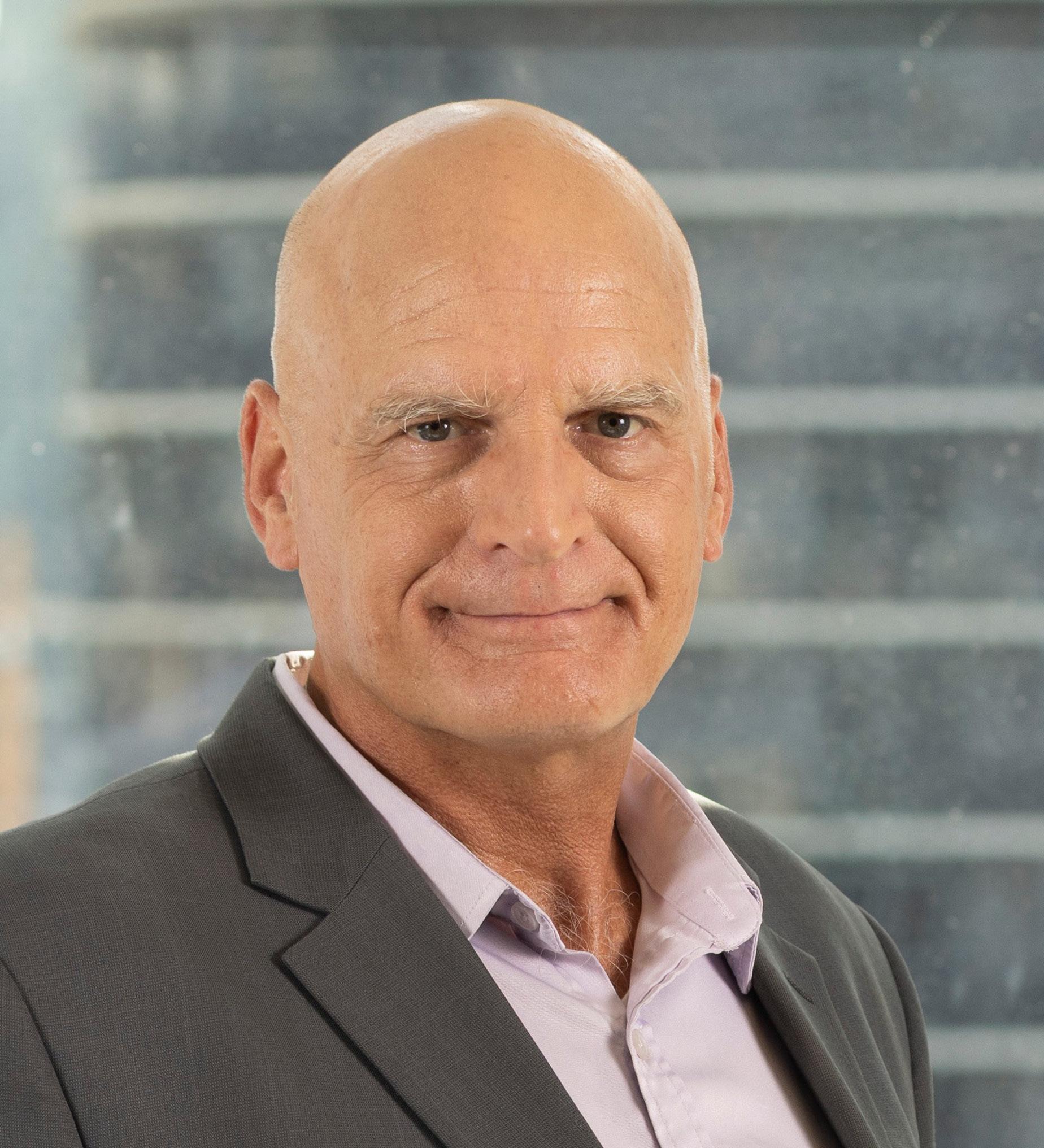
“It faces the curse of going up too much” Mike McGlone
Bloomberg Intelligence
biggest trading partner for most other members, and the only one with a fully developed cross-border payments infrastructure capable of supporting large-scale alternative settlement systems.
As a result, efforts to expand local-currency trade often gravitate naturally toward the Chinese renminbi. But that influence comes with political limits.
India, Brazil, and several other BRICS members remain cautious about allowing any single currency to dominate the bloc’s financial architecture. Concerns about dependency and geopolitical balance remain strong, which is why many BRICS initiatives are carefully framed as multi-polar rather than renminbi-centric.
China brings the scale and liquidity, but the set-up of the system still tries to make sure each member keeps the sense that its own financial sovereignty remains intact.
Is a unified 'BRICS currency' difficult?
Even setting politics aside, BRICS financial integration runs into a simpler reality. The member economies are very different from each other.
China maintains a tightly managed capital account. India operates with partial controls. Brazil and South Africa run fairly open financial systems compared with some of the others. Russia’s financial system has been reshaped by sanctions and partial isolation. These differences complicate coordination.
Exchange-rate regimes vary. Inflation dynamics differ. Fiscal policy frameworks are not aligned. Even trade structures diverge significantly.
China’s economy is manufacturing-driven. Several other BRICS members depend heavily on commodities. Others rely more on services. These asymmetries make deeper monetary integration extremely difficult.
According to Ngorand, meaningful integration would require convergence across multiple dimensions: inflation targeting frameworks, exchange-rate policy co-ordination, reserve pooling mechanisms, and credible lenderof-last-resort structures. None of those currently exist.
“The bloc lacks the institutional cohesion that un-
“The bloc lacks the institutional cohesion that underpinned the euro project”
Lawren ce Ngor and Busara Advisors
derpinned the euro project,” Ngorand said.
Commodity
and currency power
Still, one area where BRICS expansion could make a difference is commodities. The inclusion of major commodity exporters within the group has strengthened the theoretical foundation for alternative trade settlement systems.
Countries like Saudi Arabia, Brazil, and Russia sit at the centre of global energy and resource flows. And commodities anchor a significant portion of global trade. If even a small share of these transactions began shifting toward non-dollar settlement, new liquidity corridors could gradually emerge. That possibility matters.
“If even a modest share of oil or critical mineral trade shifts to local currencies, it creates liquidity pools and hedging demand outside the dollar system,” Ngorand said.
However, commodity power alone does not automatically translate into monetary dominance. Even if some commodities start trading in other currencies, the money does not always stay there. In many cases, it quietly circles back to dollar assets anyway.
Take oil revenues. No matter what currency the trade begins with, a large share often ends up parked in United States Treasuries. So, commodities might open alternative payment routes, but that alone does not really dismantle the dollar system. For that, a deeper financial infrastructure would be required.
The shock that could change everything
Ultimately, the speed of any monetary transition
Global reserve trends and dollar dominance
• Around 58%-60% of global foreign exchange reserves are held in US dollars
• The dollar accounted for over 70% of global reserves in the early 2000s, showing gradual diversification since then
• The US dollar is involved in about 88%-90% of global foreign exchange transactions
• Central banks purchased about 1,037 tonnes of gold in 2023, one of the highest annual totals on record
• Annual central bank gold purchases between 2022 and 2024 exceeded 1,000 tonnes, roughly double the average of the previous decade
• Around $300 billion of Russia’s foreign reserves were frozen following the 2022 invasion of Ukraine
• BRICS economies account for roughly 36%-37% of global GDP (PPP), and over 45% of the world’s population
• Around 80%-90% of the global oil trade is priced in US dollars
depends on shocks. Gradual diversification can go on for years, even decades, without shaking the foundations of global finance. Systems like this rarely change overnight. But, history shows that faster shifts usually come after disruption.
Ngorand suggests that a real acceleration in de-dollarisation would likely require confidence to crack across several pillars of the current financial system at the same time. That could include large-scale sanctions affecting multiple mid-sized economies, a major disruption to global payment networks, such as SWIFT, or a severe dollar liquidity crisis.
Another possibility would be sustained fiscal instability in the United States that undermines confidence in Treasury markets, the backbone of global reserve management. In the absence of such shocks, inertia favours continuity.
“Reserve currency transitions historically occur over decades, not years,” Ngorand said. Which means the dollar system may evolve, diversify, and fragment at the edges without collapsing at the centre, at least for now.
Not the end, just an adjustment
What emerges from all this is not a collapse. It is an adjustment. Central banks are hedging. Governments are managing risk. The world feels more uncertain, thanks to geopolitical, economic, financial, and reserve strategies that reflect that anxiety. The system is becoming more hedged, more political, and slightly more multipolar.
Bhattacharya summed it up thus: "We are not witnessing the end of dollar dominance, but rather the end of unquestioned dollar comfort."
The dollar remains at the centre. Just no longer alone in commanding unquestioned trust.
editor@ifinancemag.com
Source: International Monetary Fund, Bank for International Settlements Triennial Central Bank Survey, World Gold Council, US Energy Information Administration
ECONOMY FEATURE CYPRUS SHIPPING ENERGY

The overall gross tonnage of the Cyprus ship registry has increased by 20% over the last two years, reaching the highest level in the last two decades
Cyprus: The island rebound

IF CORRESPONDENT
The International Finance team has lost count of the number of post-crisis recovery stories it has written about over the years, and it is noticeable how many have shifted from being purely cyclical to having more enduring factors at play. Cyprus has felt like a bit of a laggard in this regard, and it is only really in the latter part of the 2010s that the country has started to feel more like a real recovery story as opposed to just another half-baked PR effort masquerading as an economic turnaround.
The 2012-13 bailout had left its scars. There were bank haircuts, capital controls, and a new international infamy for economic secrecy. From Riga to Rome, every finance minister complained about the plight of its smaller neighbour and included a mention of “Cyprus” in their geopolitical shorthand.
FEATURE CYPRUS
Fast-forward to 2026, and the footnote has become a case study. The recent update to the real GDP growth forecast sees the pace of expansion slowing to 3.1% this year from 3.8% in 2025. Yes, it is slower than the previous year, but still remarkable for a nation to pull off during all this geopolitical volatility.
Remarkable fiscal story
Take the latest data, for example. In Q4 2025, Cyprus' economy expanded 4.5% on a year-on-year basis, up from 3.6% in the previous period. The milestone also marked the strongest economic expansion since Q4 2022, with the main drivers being the wholesale and retail trade, repair of motor vehicles, information and communication, and hotels and restaurants (+7.2%). Construction also recorded strong growth, rising 9.2%, while manufacturing increased by 4.7%
In another piece of good news, tourist inflows (which skyrocketed to €3.7 billion in 2025) from the United Kingdom, Germany, Poland, Israel, Greece, France, and Sweden played a solid hand in propelling Cyprus to its historic GDP growth, while the Mediterranean island emerged as one of Europe’s most sought-after destinations. The boom also benefited the airline and hospitality industries, with airlines like British Airways, easyJet, and Ryanair expanding their services to accommodate the ever-growing number of visitors. Hotels and resorts in the island region, on the other hand, responded by ramping up their offerings, from luxury accommodations to eco-friendly resorts, ensuring a diverse range of options for all types of travellers.
In 2025, Cyprus recorded a budget surplus of €939.2 million. Let that sink in for a moment. We are talking about a small island country with its own
unique set of problems and challenges. The country is located in a volatile region, subject to tensions between Greece and Turkey. There are also costs associated with meeting EU targets for reducing carbon emissions and the costs of bringing salaries for government workers in line with those in the private sector. The employee salaries peaked at €4.13 billion in 2025. And yet, a budget surplus of €939.2 million was still recorded.
The ceiling for next year’s state budget is €10.7 billion, or €11.3 billion without interest costs. It is a political and economic price that was set with considerable care. In a eurozone periphery country such as Cyprus, this is something seen rarely and achieved even more rarely, as the fiscal discipline required is not always accompanied by the same degree of political consensus. The fiscal leeway was available, but action only followed as the debt crisis escalated and a new government came into power at the end of 2023, when public debt was at 73.6% of GDP. Now it is projected to fall to 52.9% of GDP by the end of 2026. This is no small reduction. It is a reduction of a historical and almost revolutionary character.
According to Cyprus’ Deputy Finance Minister Irene Piki, “Multi-year planning, more predictable policy, and fiscal space earned through responsible and reform-based ways rather than increased borrowing ensures high household, business, and investor confidence.”
She is right. And the timing of this issue must also be taken into consideration. With the war in Ukraine, energy-price volatility, and the costs of achieving the EU’s ambitious climate and digital agendas, Europe’s overall fiscal situation is extremely difficult. Most member states are feeling the
Gross Domestic Product in current prices in Cyprus from 2016 to 2025 (In Billion US Dollars)
strain, though a few, such as Poland, are coping better than expected. Others, like Bulgaria and Slovenia, will hardly notice any short-term impact from the EU’s fiscal rules for the next few years.
Cyprus is not in this group, but it will no longer be in the minority either. It will assume the EU Council presidency in the first half of 2026, at a time when all other member states with higher budget deficits will be trying to keep a low fiscal profile in advance of a potential EU debt-mutualisation discussion, while others will be more than happy to oblige by not questioning the fiscal prudence of the presidency. Cyprus’s economic model, which has proven itself in recent years to be sustainable
Source: Statista

despite high inflation and even though the country is heavily indebted, should attract worldwide attention during its presidency and generally face appreciation for its achievements.
The
tech revolution
Here’s an honest take. Tourism is the story that gets the headlines, but tech is stealing the show, and that’s where the smart money is heading.
By the end of 2025, Cyprus’s Information and Communications Technology (ICT) sector contributed roughly 16% to national Gross Value Added (GVA). That is approximately €8.5 billion. The island now ranks second in the EU for ICT’s share of national GVA, ahead of
economies with ten times the population and four times the infrastructure investment. The workforce in tech has more than tripled over the past decade, now exceeding 26,000 professionals. Cyprus ranks fifth in the EU for GVA per ICT employee. In productivity, in other words, not just headcount.
The talent pipeline is being deliberately engineered. Non-resident professionals earning over €55,000 annually get a 50% income-tax exemption. There is also a Digital Nomad Visa and streamlined residency for spouses of international workers. The type of person this attracts is mobile, high-earning, plugged into global networks, and likely to bring their employer with them or
start something new once they are settled. In March 2026, the Research and Innovation Foundation sent a national pavilion to the 4YFN summit in Barcelona, showcasing eight companies in AI, robotics, and agritech. One Cypriot portfolio company, Threedium, was selected as one of only ten firms globally to present on the main NVIDIA GTC 2026 stage. That’s not luck.
TechIsland, the sector’s coordinating platform, has done the unglamorous but essential work of bridging local entrepreneurs with international executives. The ecosystem is self-reinforcing now, which is the point where you stop worrying about whether it is sustainable and start worrying about whether the housing stock can keep up.
Promise of energy utopia
What are the key factors helping the country's tech sector? Let's start with Cyprus' geographical location. The Mediterranean island sits at the intersection of Europe, the Middle East, and Africa, giving companies access to huge markets if they prefer using the nation as their manufacturing and R&D hubs. Imagine businesses keen on maximising their prospects in the European market but also want outreach to Israel’s $100 billion tech sector, along with emerging Middle Eastern and North African (MENA) countries, Cyprus can become the base camp. Also, the country's legal system is rooted in English common law, making it instantly familiar for those used to British or commonwealth standards.
Then comes the 12.5% corporate tax rate, one of the lowest in the European Union (EU). To sweeten things further, there is an "IP Box Regime" that results in qualifying intellectual property income being taxed at an effective rate of
just 2.5%. Businesses holding IP in domains like software, AI, fintech patents, or video games get massive leverage for reinvestment and expansion in the Mediterranean island, as taxation remains simplified and pocket-friendly, compared to high-tax countries. The administration is actively courting the cause of the island nation becoming a regional tech hub by backing initiatives such as "Startup Cyprus" and the "Youth Entrepreneurship Scheme."
Shipping accounts for more than 7% of the country’s GDP and often receives insufficient attention in debates that focus on new sectors. Now, though, the evidence is plain to see. The shipping sector is a major source of revenue. Cyprus alone accounts for around 4% of the global merchant fleet, while more than 20% of worldwide third-party ship-management activities are carried out from here. The figure for ship-management revenues for the first half of 2025 was €978 million, an increase of 6.7% on the previous quarter.
And that’s a lot of concentration! The top 27% of the companies account for 85% of total sales. Germany and Greece are the number one and two trading partners, respectively, accounting for 30% and 13% of sales.
In November 2023, the One-Stop Shipping Centre was established, which currently serves more than 300 shipping companies benefiting from the tonnage-tax regime. Almost all shipping companies based in Cyprus benefit from this, apart from the four historical ship-owning companies, which, in accordance with the current tonnage-tax legislation, are not allowed to gain an advantage through the new policies.
The overall gross tonnage of the Cyprus ship registry has increased by 20% over the last two years, reaching the ECONOMY FEATURE CYPRUS SHIPPING ENERGY
highest level in the last two decades. A real and tangible effort is being made to modernise shipping further through the sponsorship of robotics and digital-technology-related scholarships and the upgrading of the associated educational infrastructure, as well as research into alternatives and new methods to support the greening of shipping. Shipping contributes significantly to the island’s employment sector, both in terms of direct and indirect on-shore employment (over 9,000 people) and the huge number of seafarers (80,000 and more) employed onboard vessels managed by companies based in Cyprus and therefore also indirectly contributing to the economies of the ports of call. Cyprus wants to maintain and further develop this very important sector.
Gas fields have been “coming soon” for years, and one can excuse the sarcasm. But now, for the first time in more than a decade, all indications are that 2026 will actually see the start of production of two giant offshore fields in Eastern Mediterranean gas. The Aphrodite gas field in Block 12, estimated to hold between 3.9 and 4.5 trillion cubic feet of gas, is slowly but surely moving towards its commercial development, following the recent memorandum of understanding signed by Egypt, Cyprus, and Chevron over the proposed pipeline project that will transport the gas from Cyprus to Egypt. The Kronos field in Block 6, operated by Eni, is also expected to reach a final investment decision this year, with first gas scheduled for 2028. The fact that the distance between the field and the Zohr field in Egypt, where the necessary infrastructure has already been built and is currently being used, will be largely compensated for by the intended infrastructure that will be built for the purposes of transporting Aphrodite’s gas to Egypt.
The energy situation in Cyprus is

quite tough domestically. The EU carbon-allowance price is projected to reach €95 per tonne by 2026, and there is no exception for Cyprus in terms of compliance with the EU ETS, which will cost €490 million this year and will also be transferred to consumers through energy bills. The LNG terminal of Vasilikos, which has been delayed for many years, is expected to enter operation during the second half of 2026. The Great Sea Interconnector, which connects the Cypriot electricity grid with the Greek grid via Israel, is still considered a strategic investment, but is more at the level of intentions so far.
The offshore gas story is truly a major issue for the Eastern Mediterranean region’s energy future. In the meantime, however, Cypriots are forced to endure

among the highest energy prices in the region. That is where the current government’s otherwise respectable record falls short.
Tax exemptions to the rescue
The story of the revival of the banking system in Cyprus is a very long and fascinating one. We are talking about a sector where non-performing loans (NPLs) comprised 49% of the total outstanding loans in 2016. It was not so much a sector with problems that required remedial action; it was a complete banking crisis that had been frozen in time. Today, the total of NPLs as a percentage of total outstanding loans is 3.2% at the end of 2025. The downward trend of NPLs, following a period of stagnation that coincided with the imposed capital-control
regime of 2013, reflects in part the huge quantities of NPLs that have been sold and in part the successful completion of a large number of restructuring plans of exposures.
There was a big change in Cypriot tax law, and we believe it is the first significant change in tax laws introduced in the last two decades. The new laws took effect on 1 January 2026. Under the catch-phrase of meeting the OECD Pillar Two global minimum-tax rate, we are talking about a drastic increase in the corporate-tax rate from 12.5% to 15%. As such, it has been a very controversial move, and one can very easily understand why. But it was an inevitable decision.
Dividend tax has increased. The deemed-dividend distribution rules
for profits earned after 2026 have been abolished. The special defence contribution on the actual dividends paid out from profits earned after 2026 reduces from 17% to 5%. The personal-income-tax-free threshold has increased to €22,000 from €19,500. The 8% flat tax on cryptocurrency gains and the 120% super-deduction for qualifying research and development expenditure are a couple of steps taken towards the future. A couple of things to note regarding the recent corporate-tax-rate increase and how it is being applied in the professional-services sector. Companies in the sector are already shifting toward digital assets, AI-related regulation, and wealth-mobility advisory services in response to the tax-rate increase. The pace of change can be dramatic.
ECONOMY FEATURE CYPRUS SHIPPING ENERGY
Misfortune of thriving real estate
The consequences of rapid expansion are inevitable. As reported earlier, property transactions in January 2026 reached their highest level since 2008, with 1,411 contracts being deposited, an 11% increase on the corresponding period last year. Annual price rises in Paphos and Famagusta reached 25% and 23% respectively. The value of transactions in the Limassol premium market accounts for a third of the total.
As we already know, the rate at which property prices increase is around 5%–7% annually, and salaries in the country are still not high enough to absorb even remotely the current rental rates. Rent accounts for a staggering 32.3% of the average household’s monthly income in Limassol. The average monthly rental price for a one-bedroom apartment in the city centre of Limassol is around €1,300.
The government plans to complete 244 affordable residential properties allocated to low-income families in all major municipalities across the country by the end of 2026, while a private partnership is expected to deliver 1,000 affordable rental homes, with the municipality also expected to set aside €16 million for a new subsidised project in Limassol and €12 million for a similar scheme in Strovolos. This is not bad, but there are still very few measures to curb the problem of affordable housing. Remember, however, that problems related to affordability usually go unnoticed for years until they hit the headlines and cause mayhem.
Tourism income has reached €3.69 billion, up 15.2% year-on-year, with visitor numbers exceeding 4.5 million for the first time, and tourism’s share of GDP standing at around 14%. A services surplus of over €2.8 billion was recorded in

the third quarter of 2025 alone, in large part due to the goods-trade deficit being a structural feature of the economy.
Tourism is trendy but is cyclical, weather-dependent, geopolitically volatile, and above all requires low-cost air travel. In the technology and shipping space, the trends are more structural. We are not diminishing the success of tourism, which remains very strong, but policymakers need to remember that it is just a base that needs to be expanded upon rather than a plateau to be sat out on.
The bottom line
The future looks promising, but it is not without challenges. The job market is extremely tight, with unemployment at
just 4.5%. It means everyone who needs a job has a job, but there aren’t enough workers to boost spending power any further.
Cyprus has 1.38 million people and is one of the EU’s smaller member states, with most of them residing in cities like Nicosia and Limassol.
Though the population is growing through immigration, the median age is around 40 years, which means that people are ageing quickly and productivity is decreasing. On top of that, birth rates are really low, with around 1.5 children per woman.
Cyprus is struggling to find fresh talent. And it is in a race against time. If they cannot find enough working population

to support their rapidly ageing population, their economy could suffer greatly.
Moreover, foreign firms invest heavily in Cyprus but pull back profits. The repatriation of profits contributed to around 7% of the GDP account deficit. The Fiscal Council notes that domestic reinvestment is weak and FDI seems “transient” without deeper local ties.
To combat this, Cyprus introduced new screening rules. From April 2, 2026, non-EU and Swiss investors need pre-approval for €2 million plus deals that require a 25% or more stake in strategic sectors such as AI, tech, health, and energy. If they do not comply, they risk fines up to €50,000 or a shutdown due to non-compliance. The bureaucra-
cy adds two to three months of delay, increased legal fees, and various uncertainties for companies that want to invest in the island. Investors might want to look for other nations with better ease of doing business.
Cyprus has historically attracted FDI through lax rules, but is now forced to align these standards with the EU. However, this oversight often leads to increased friction through red tape, and geopolitical checks (Investigating Russian and other controversial links). Foreign investors were drawn to low taxes and golden passports, which ended in 2020. Massive FDI, especially from Russian companies, peaked at $33 billion in 2015 and fueled the real estate boom. Russian
investments reached 80% of the total FDI of Cyprus. However, it also enabled round-tripping and sanction evasion after the Ukrainian crisis.
The 2024 data from the Central Bank of Cyprus reveals that Russian FDI stock in Cyprus hovers at €83.46 billion and has plummeted drastically from €135.7 billion in 2022. The €52 billion drop is attributed to Western sanctions and geopolitical tension.
Look, small open economies are always vulnerable to things they cannot control, such as energy shocks, regional conflict, shifts in EU policy, and global capital-flow reversals. Cyprus is not immune. But the combination of fiscal discipline, a diversified sectoral base, a sophisticated banking system, and a government that has made genuinely difficult structural decisions creates a degree of resilience that was not there a decade ago. These are not vanity metrics. They are signals that the growth dividends are being reinvested rather than extracted.
Is everything perfect? No. Energy costs remain a drag. Housing affordability is a genuine social tension. And the gas fields, however promising, have a long way to go before they change balance-of-payments arithmetic.
But Cyprus in 2026 is a fundamentally different proposition than it was in 2013. It has earned the right to be taken seriously. Definitely not as a tax-haven footnote or a bailout cautionary tale, but as a small economy that looked hard at what it wanted to be and built its way toward it with more discipline than most expected. That’s a story worth telling.
editor@ifinancemag.com
La Trobe Financial champions retiree income

La Trobe Financial exemplifies the power of trust in investment management
Retirees today face a complex and growing challenge: generating reliable, inflation-beating income while protecting their capital from market volatility. This dual objective is central to La Trobe Financial’s mission.
For over 70 years, La Trobe Financial, one of Australia’s bestknown and most trusted alternative asset managers, has consistently been delivering strong outcomes for investors managing their capital through changing market conditions.
“The urgency of this challenge is increasing. Globally, cost-ofliving pressures are intensifying, and market volatility – midway through this decade – remains among the highest observations across this century. We expect this volatility to persist, underscoring the importance of durable income solutions for retirees,” Chris Paton, CIO at La Trobe Financial told International Finance.
Chris Paton Chief Investment Officer La Trobe Financial

“La Trobe Financial aims to deliver durable income solutions for investors across every market and economic cycle. Our ability to meet this challenge has earned the trust of our investors and driven significant growth in assets under management. While the solution may sound simple, many financial providers have struggled to deliver on both fronts,” he asserted.
Why isn’t everyone doing it?
Trust is the differentiator – and it’s hard-earned. Building and maintaining trust requires consistent effort and focus across every part of a business. It’s not just about portfolio performance or the expertise of the investment team. It’s about the entire organisation aligning with a shared vision and delivering with conviction, time and again.
“Trust is more than goodwill
on a balance sheet. In investment management, it’s the belief that a manager will uphold their mandate across market cycles, giving investors the confidence to allocate capital. Investors invest not only in products, but in the people, institutions, and systems behind them,” Paton added.
The La Trobe Financial advantage
La Trobe Financial exemplifies the power of trust in investment management. With over 70 years of experience in the private credit asset class, the company has consistently delivered market-leading returns.
In 2025, International Finance recognised La Trobe Financial as the “Best Alternative Asset Manager – Lending –Australia” and the “Best Wealth Management Company –Australia”. The company has
remained a cornerstone of Australia’s alternative asset management industry and the home of retirement-focused income solutions.
“Today, c.120,000 investors, from individuals to institutions and family offices, support our strategies. In 2023, we expanded our global footprint by launching the La Trobe US Private Credit Fund in partnership with Morgan Stanley. In 2025, we introduced the La Trobe Private Credit Fund, offering investors access to our two best-in-class, flagship private credit strategies via the ASX,” La Trobe Financial noted.
In times of economic uncertainty, the company’s commitment to delivering durable income solutions in a friendly, human way provides its investors with confidence and trust. At La Trobe Financial, trust is not just a value – it’s a strategic advantage.
BANKING AND FINANCE
The average wealth of women billionaires increased 8.4% to $5.2 billion, more than double the 3.2% growth rate for men
The feminine future of wealth
IF CORRESPONDENT
The coming decades will witness one of the largest wealth transfers in history, with women expected to control an increasing share of assets. They call it the "Great Wealth Transfer," a phenomenon that can be more accurately described as the feminisation of capital. Women who have been historically marginalised are expected to control over $105 trillion by 2045. Such a shift subtly hints at a structural shift in how capital works, is controlled, allocated, and preserved. It's not merely a question of inheriting wealth. Women are expected to control 40% to 45% of global private wealth by 2030, and will be represented both laterally and vertically.
By 2030, American women will hold the majority of the $30 trillion in financial assets currently held by Baby Boomers
The transition is expected to change the investment landscape. Women are more riskaware, and they demand holistic financial wellness rather than pure alpha generation. Women are also more socially aware and likely to be actively invested in trust-based philanthropy through gender-lens investing.
However, the wealth management industry might not be prepared for a systemic change. Widow retention rates are below 30%, and currently, women comprise 24% of certified financial planners.
The macroeconomic architecture
The upward social mobility of women, especially in an economic sense, isn't just a narrative that big corporations put out for diversity and inclusion or just core diversity and inclusion points. It's slowly becoming the primary driver of global GDP and asset accumulation.
There's increased labour market participation, business ownership, and favourable inheritance patterns among women. It is a distinct economic block that's going to reshape how global markets work.
People have been discussing the Great Wealth Transfer for some time now as a major generational shift, but the gendered aspect of such a massive transfer has not been explored enough.
The transfer occurs in distinct waves and creates a double-inheritance phenomenon that uniquely favours women. The first wave comes from spouses. Since women generally outlive men, they are the primary beneficiaries when their partners die. It represents the second transfer of Boomer wealth. The first wave occurs when they also inherit wealth from their parents.
According to statistics, by 2030, American women will hold the majority of the $30 trillion in financial assets currently held by Baby Boomers. Globally, the figure is expected to reach $100 trillion over the next two decades.
The shift from male to female control often triggers dramatic changes in the velocity of money.
Unlike the passive accumulation strategies often favoured by previous generations of male patriarchs, female inheritors are active allocators, statistically more likely to deploy capital into the real economy through impact investing, real estate, and philanthropy.
While inheritance provides a substantial baseline of female wealth in mature Western markets, the most dynamic growth engine is entrepreneurship. The story of the self-made billionaire has replaced that of the passive heiress.
Data from 2025 indicates women’s average wealth is growing faster than men’s. The average wealth of women billionaires increased 8.4% to $5.2 billion, more than double the 3.2% growth rate for men. The surge is driven by female founders bypassing traditional corporate ladders to build immense value across sectors from technology to biotech. Estimates suggest that achieving gender parity in entrepreneurship and employment could add between $5 trillion and $12 trillion to global GDP by 2025.
Despite a clear trajectory, a critical “management gap” persists. Current analysis reveals that approximately 53% of assets controlled by women are unmanaged, compared to 45% for men. The eight-percentage-point gap represents a massive pool of
capital sitting in cash or low-yield savings accounts due to a lack of trust in the advisory sector. Closing this gap represents a revenue opportunity of approximately $10 trillion by 2030 for the wealth management industry. The unmanaged asset gap is not merely female risk aversion, but rather a rational response to an industry that has failed to demonstrate value.
Regional geographies of wealth
The North American market is the most mature, characterised by high wealth concentration but significant “money in motion” risks. The primary driver of asset movement is not just death, but divorce. “Grey divorce” among couples separating after age 50 is rising, creating a unique demographic of wealthy, single women requiring specialised financial planning. Research shows a woman’s household income drops an average of 41% following divorce, compared to just 20%-22% for men. Furthermore, the statistic that 70% of widows fire their financial advisors within a year of their spouse’s death is a damning indictment of the “silent spouse” syndrome, where advisors cultivated relationships primarily with husbands while treating wives as secondary participants.
Europe presents a stable but conservative landscape where women remain significantly underserved. European women control roughly one-third of
retail financial assets, a figure projected to reach 45% by 2030. These women are extremely skeptical of the financial industry. They are statistically more risk-averse than men (though another way of putting it is that they have more risk awareness), as they demand significantly more education and transparency before committing capital.
Over 30% of European women are extremely dissatisfied with how wealth services currently work, stating that they lack personalised advice and often feel patronised.
Asia, on the other hand, is a very dynamic region for female wealth creation. The primary driver is rapid economic development and cultural shifts that favour female business ownership. Unlike the West, where wealth is mostly inherited, Asian women are overwhelmingly entrepreneurial. By 2030, $6 trillion will transfer to the next generation in Asia-Pacific, with recipients increasingly being daughters who are active participants in family businesses. These Asian female heirs are younger, more digitally native, and more likely to demand digital-first wealth solutions, driving the growth of Singapore and Hong Kong as global Family Office hubs.
Female investor psyche
Understanding the psychology of the female investor is critical to bridging the $10 trillion unmanaged asset gap. Research consistently debunks the myth that women are “worse” investors. They often outperform men due to distinct behavioural traits aligning with long-term value creation. Studies indicate women investors outper-
form men by approximately 1.8 percentage points annually, attributed to more disciplined approaches, trading less frequently, adhering to long-term plans rather than reacting to market noise, and demonstrating less overconfidence bias.
However, performance advantages are masked by a “confidence gap.” Only 23% of women act as primary decision-makers for longterm financial planning, compared to 80% who manage short-term household budgets. The lack of confidence is a major barrier to entering equity markets, leading to higher cash allocations suffering from inflationary erosion.
The industry often mislabels women as “risk-averse” when “riskaware” is more accurate. Women require more data points and a clearer understanding of worstcase scenarios before investing. Once they understand the risk and probability of loss, they are willing to accept it. It necessitates changes in how investment products are presented. Instead of focusing on
“beating the benchmark,” advisors must frame investments in the context of “goal achievement,” since women construct portfolios around life goals like funding education, ensuring healthcare in old age, and legacy protection.
Wealth acquisition, especially when sudden, brings distinct psychological challenges. High-achieving women and inheritors often suffer from “financial imposter syndrome,” feeling undeserving of their wealth or lacking the intellect to manage it.
For widows and divorcees, wealth often accompanies grief or trauma, requiring advisors who function partly as financial therapists. Even Ultra-High-Net-Worth women harbour irrational fears of becoming destitute, driving over-allocation to liquidity despite rational analysis suggesting otherwise.
Structural failures
The financial services industry has historically failed to serve women effectively. The traditional ap-
(In Billion US Dollars) Source: Statista
proach of “shrink it and pink it” involved superficial changes like hosting “ladies’ luncheons” without addressing underlying structural differences in female financial lives. Modern female investors widely reject this approach, demanding institutional-grade rigour and products that solve the specific liquidity and longevity risks women face.
The lack of female advisors is a self-perpetuating problem. Women comprise only 24% of "Certified Financial Planner" professionals and occupy only 18% of C-suite roles in finance globally. The absence of female leadership signals a lack of understanding of the female client’s lived experience. A looming advisor shortage exacerbates the service gap, with McKinsey predicting a deficit of 100,000 advisors in the US by 2034.
Recognising the $10 trillion opportunity, major global banks have launched dedicated initiatives. UBS has established itself as a thought leader through consistent research and educational platforms, including the "Women’s Wealth Academy," addressing the confidence gap and programmes preparing heirs for wealth responsibilities.
Citi Private Bank emphasises “Financial Wellness” as a core pillar of health and organises curated communities, recognising that women prefer learning from shared experiences of other successful women. Morgan Stanley’s “Family Office Resources” treats female-led households as institutions, prioritising governance structures and lifestyle advisory, acknowledging that for UHNW women, time is the most scarce resource.
The rise of female family office
As wealth scales, women are increasingly bypassing traditional private banks in favour of Single-Family Offices (SFOs) allowing greater control, privacy, and alignment with personal values. The SFO model appeals to women because it enables a “total balance sheet” approach integrating investment management with philanthropy, tax planning, and next-generation education. Asia is witnessing an SFO boom, with Singapore and Hong Kong battling for dominance as preferred jurisdictions for Asian matriarchs through tax incentives and governance structures.
For wealthy women, investing is rarely value-neutral. There is a profound shift toward aligning capital with conscience through ESG and "Gender Lens Investing." Women are revolutionising philanthropy through “Giving Circles” and collaborative funding models, mobilising over $3.1 billion, with participation growing 140%. The new model appeals to women’s preference for community and shared decision-making. Trust-based philanthropy led by figures like MacKenzie Scott and Melinda French Gates moves capital faster to social change frontlines compared to bureaucratic foundation models.
Gender Lens Investing is moving from niche to mainstream strategy. Assets in gender bonds reached $62.4 billion in 2025, driven by demand from female allocators wanting fixed-income portfolios supporting female empowerment. Women are twice as likely as men to incorporate ESG factors into investing, suggesting that as women con-
trol more wealth, the cost of capital for non-ESG compliant companies will rise, forcing market-wide shifts toward sustainability.
Technology is the final piece. New platforms allow for “Inheritance Simulation” and digital stress tests, visualising what happens to family wealth under various scenarios, providing the transparency and worst-case scenario visualisation that risk-aware female investors crave. The winning model for 2030 is “bionic”, AI-driven analytics delivered by empathetic human advisors who can anticipate life transitions and enable proactive intervention.
The 2030 outlook
The feminisation of wealth is the single most disruptive trend in global finance. By 2030, women will control nearly half of global private wealth, and their capital will be greener, more collaborative, and managed by a more diverse workforce. For the wealth management industry, the message is existential: adapt or die. Churn rates following widowhood and divorce prove that the old model of treating women as secondary clients is obsolete.
Success will belong to firms solving the trust gap through radical transparency and education, institutionalising the household through governance and lifestyle services, aligning with values by offering robust ESG products, and digitising with empathy using technology to clarify risk. The women taking the lead in wealth will be the ones designing the future.
editor@ifinancemag.com

EMILY SHAW FOUNDER DOCFLY
Digital signatures remove the costs of physical document processing and the checks required along the way
Finance moves to digital signatures
As financial transactions around the world continue to rely on complex digital systems and handshakes, the way we protect our money must evolve alongside them. After all, we can’t expect to continue using physical documents forever if we want transactions to stay secure.
And yet, up to three-quarters of companies are still using paper checks, for example, despite inefficiencies and increasing costs. While traditional document handling and processing might seem familiar and reliable, they are fast becoming outdated and potentially hazardous for companies and customers.
Digitalisation, of course, can be complex, and there is considerable planning and execution involved that can take months to complete. However, one key step finance companies (and those processing paper transactions en masse) should take immediately is to switch to digital signatures across all their documents.
Why digital signatures matter
Digital signatures have emerged as a natural successor to the well-worn paper-based standard. Through digital contract signing and payment authorisation, key transactions are easier to attach to certain parties, and it’s a quick route towards ensuring complete compliance with data retention and processing.
Learning how to sign documents online
is, in the mid-2020s, a simple process that’s easy to train on and roll out across payment handling teams. We now have the systems and software to embed digital signatures into legacy tools and documents, too, meaning it can easily become part of existing processes at minimal cost.
Shockingly, reports show that 63% of companies surveyed by the AFP experienced some form of physical check fraud in 2024. If we’re to face transaction fraud head-on, we need to move more efficiently away from paper documents and legacy signage.
Key benefits
Beyond the obvious benefits of digitalisation in general, there are key benefits of digital signatures in financial transactions worth considering.
Digital signatures allow for faster processing and decision-making. The time it takes for physical checks and financial documents to get signed, authorised, and marked off can be cut down dramatically with automation and streamlined workflows. There are fewer checking steps, and reviews take seconds, not days. They are more securely stored. Using a leading e-signature platform and data backup system means you can always be sure client signatures are encrypted and kept away from bad actors. Physical documents are always at

the mercy of being lost and stolen, which can cause fraud and administrative headaches for all parties involved.
Another security benefit to digital signatures is that, with the right platform, they are easy to create and store so that they can’t be tampered with by third parties. Again, a digital paper trail can effectively verify signing intent and payment processing without confusion. Digital signatures also benefit compliance. In an age where companies face millions of dollars in potential fines for not complying with data protection laws, digital signatures can effectively prove that a company is doing enough to meet certain standards.
Ultimately, digital signatures remove the costs of physical document processing and the checks required along the way. Therefore, this form of digital streamlining frees up administrative hours that can be used more cost-effectively elsewhere.
The future of digital signatures
There are many ways that digital signatures will continue to evolve in finance in the years to come. For one, artificial intelligence can learn to recognise
signatures from data to automatically approve payments, calculate money received and sent, and search for anomalies.
What’s more, companies may also use blockchain technology to create records and contracts with even more irrefutability. Digitally signed documents, established on the blockchain, will be even harder to counterfeit or dispute.
Up to 80% of US businesses are already using digital signatures in some shape or form, with that number likely to grow exponentially by the start of the next decade. However, now is the time to start taking steps towards making signage digital, regardless of what trends suggest.
Emily Shaw is the founder of DocFly, an online PDF editor. As a software developer, she built the site from scratch and is responsible for its operations and continued growth. Previously, she studied engineering at the University of Hong Kong and mathematics at the University of Manchester. In her spare time, she enjoys hiking in the countryside and spending time with her family
editor@ifinancemag.com
The risk of professional enablers facilitating high-end money laundering outweighs the preference for selfregulation
Europe’s compliance crackdown
IF CORRESPONDENT
The global financial system has reached a pivotal point in the first half of 2026. For over a decade, the tension between rapid financial innovation and regulatory containment defined the operational landscape of banking and fintech. That tension has now broken, resolved decisively in favour of a rigorous, enforcement-heavy compliance regime that prioritises systemic integrity over unchecked growth. The preceding eighteen months have dismantled the long-standing industry assumption that regulatory fines were merely a "cost of doing business," a line item to be managed rather than an existential threat to be avoided.
This comprehensive research report provides an exhaustive analysis of the current state of Financial Crime Compliance. It synthesises the seismic operational impacts of the European Union's implementation of the "6th Anti-Money Laundering Directive" and the activation of the "Anti-Money Laundering Authority" in Frankfurt. It scrutinises the United Kingdom's controversial centralisation of professional services supervision under the Financial Conduct Authority. Across the Atlantic, it dissects the aggressive extraterritorial reach of the US Department of Justice, exemplified by the historic asset cap and multi-billion-dollar penalties levied against TD Bank and the criminal convictions of cryptocurrency giants like KuCoin.

Furthermore, this report analyses emerging laundering typologies that exploit the very digitalisation intended to modernise finance, including the misuse of white-label banking infrastructure, the layering capabilities of virtual IBANs, and the terrifying efficacy of AI-enabled deepfake fraud. These vectors have necessitated a complete architectural overhaul of transaction monitoring systems, forcing institutions to abandon static rule-based systems for dynamic, AI-driven behavioural analytics. The "compliance-as-an-afterthought" model, which fuelled the fintech unicorn boom of the 2010s and early 2020s, has effectively collapsed. The forced exit of founders from major neobanks like N26 and the bankruptcy of embedded finance providers like Railsr demonstrate that regulatory resilience is now the primary determinant of commercial survival.
EU's regulatory revolution
The operationalisation of the EU's AML Package in 2024 and 2025 represents the most significant restructuring of the bloc's financial defence architecture since the introduction of the Euro. Now comes the new way of handling rules, with fewer top-down orders and one clear book for everyone. It means firms across Europe face different demands than before, shaped by deeper political goals. The aim? To avoid gaps so large that they let trouble sneak through, just like what happened at Danske Bank.
Nowhere else does history shift so clearly. The AMLA era replaces the old ways of isolated national bodies working apart. Based in Frankfurt, this authority is moving fast, staffing up through 2027 while gaining real oversight tools by 2028, especially for higher-risk cases. Unlike the EBA before it,
which shares advice but lacks enforcement teeth, here power flows directly, bypassing local authorities entirely. Straight oversight goes to selected risky overseas finance units, setting strict rules and major monetary penalties that target them specifically, blocking any attempt to dodge through loopholes.
Across the wider market still within national oversight, AMLA takes on a firm monitoring role, working closely with state agencies to maintain uniform enforcement of the Single Rulebook. Its funding structure reflects self-sufficiency in operations, shielded from fluctuations in political funding allocations.
From 2028 onwards, approximately 70% of its €92 million annual budget will be funded by fees levied directly on the obliged entities it supervises. The fee structure ensures that institutions creating the highest systemic risk bear the financial burden of their supervision.
The legislative twin pillars, the 6th Directive and the AML Regulation, have harmonised definitions and drastically expanded the perimeter of regulated activities. The 6th Directive codifies a unified list of twenty-two predicate offences across all member states, now explicitly including cybercrime, environmental crime covering illegal logging and waste trafficking, and tax crimes. For multinational corporations, this harmonisation removes the dangerous ambiguity where an act considered a predicate offence in one jurisdiction might not have triggered money laundering reporting in another.
The AML Regulation significantly broadens the definition of "obliged entities," those required to perform Customer Due Diligence and file Suspicious Activity Reports. The regulatory perimeter now captures crypto-asset service providers, high-value goods traders in precious metals and cultural artefacts, pro-
Global anti-money laundering software market forecast from 2026 to 2033 (In Billion US Dollars) Source: Market.us
fessional football clubs and agents, and crowdfunding platforms facilitating peer-to-peer financing. Transparency of beneficial ownership remains a cornerstone of the EU strategy, with the new framework mandating a unified ownership threshold of 25%. A critical "riskbased" provision empowers the European Commission to lower this threshold to 15% for high-risk sectors. The directive mandates the interconnection of national beneficial ownership registers via a central European platform, closing the loophole whereby cross-border corporate structures could obscure the Ultimate Beneficial Owner. To curb the anonymity provided by physical currency, the AML Regulation introduces a Europe-wide cap of €10,000 on cash payments in business transactions.
The 6th Directive introduces stringent corporate liability provisions that directly impact the C-suite. Legal persons can be held criminally liable if a "lack of supervision or control" by a person in a leading position made the money

laundering possible. For Chief Financial Officers and Corporate Treasurers, the expansion of definitions regarding aiding and abetting means executives can be prosecuted for facilitating laundering through negligence or wilful blindness. The requirement to verify beneficial ownership for all suppliers and partners necessitates a massive overhaul of vendor management systems.
UK's supervisory consolidation
While the European Union centralises authority in a new supranational body, the United Kingdom is dismantling the fragmented supervisory regime criticised for its inefficiency. The government's decision to appoint the Financial Conduct Authority as the "Single Professional Services Supervisor" marks a watershed moment for lawyers, accountants, and trust and company service providers. The move represents a fundamental shift away from professional self-regulation toward a statutory, state-controlled model of AML oversight.
The catalyst for this radical reform was the consistent underperformance of the "Professional Body Supervisors," the twenty-two self-regulatory bodies responsible for overseeing AML compliance in the legal and accountancy sectors. The Office for Professional Body Anti-Money Laundering Supervision issued a damning report in September 2024 that effectively sealed the fate of the self-regulatory model. The report found that none of the assessed supervisors were fully effective in all areas of supervision; the majority showed no material improvement, with some even regressing; and there was systemic reluctance to issue fines or take enforcement action. This highlighted the inherent conflict of interest between the bodies' representative roles and their supervisory duties.
Under the new SPSS model, the FCA will assume sole responsibility for AML supervision of professional services firms, with full operational transfer projected by 2028. The legal profession has
vehemently opposed this move, viewing it as an erosion of professional independence. Concerns centre on whether a statutory regulator rooted in financial markets culture will respect the nuances of Legal Professional Privilege, the significant fees the FCA is expected to levy, and the clash between the FCA's "rules-based" approach and the "principles-based" regulation to which the legal sector is accustomed. However, the government's stance remains firm. The risk of professional enablers facilitating high-end money laundering outweighs the preference for self-regulation.
US' enforcement doctrine
The United States is enforcing the existing rulebook with unprecedented aggression. Enforcement actions of 2024 and 2025 have shattered the notion that global banks are "too big to jail." The focus has shifted from monetary penalties to structural constraints that threaten the very growth of non-compliant institutions. The guilty plea by TD Bank
in October 2024 serves as a definitive case study for the modern AML failure. The bank agreed to pay over $3 billion in penalties to resolve investigations by the DOJ, the Financial Crimes Enforcement Network, and the Office of the Comptroller of the Currency.
The TD Bank case was a systemic collapse of defences, facilitated by a corporate culture that prioritised speed and cost-cutting over compliance. Court documents revealed laundering networks that operated with impunity, including one that physically dumped piles of cash on bank counters in Queens and a sophisticated network that utilised the bank to withdraw funds via ATMs in Colombia through complicit bank employees. The DOJ explicitly cited the bank's prioritisation of growth over compliance controls, noting that for nearly a decade, the bank failed to update its transaction monitoring scenarios.
While the $3 billion fine was historic, the arguably more damaging penalty was the asset cap imposed by the OCC, preventing TD Bank's US retail subsidiaries from growing their assets beyond the October 2024 level of $434 billion. The penalty structure represents a profound shift in regulatory strategy, as fines can be absorbed, but asset caps stagnate the business, depress stock value, and invite shareholder litigation. For a bank, the inability to grow its balance sheet is a slow-motion death sentence for its strategic ambitions. The US approach has set the tone for global enforcement, with the DOJ and FinCEN targeting not just institutions but individuals and infrastructure, with reach extending far beyond US borders.
The crisis of architecture
The years 2025 and 2026 have been a reckoning for the fintech sector. The

"move fast and break things" ethos has collided violently with AML regulations, exposing vulnerabilities inherent in Banking-as-a-Service and white-label models. The result has been bankruptcies, license revocations, and forced leadership changes. White labelling allows non-bank entities to offer financial products using the license and infrastructure of a regulated provider.
An EBA report published in October 2025 identified this model as a critical money laundering vulnerability, with risk stemming from the structural disconnect between the customer-facing brand and the regulated entity holding the license.
The bankruptcy of Railsr remains the cautionary tale of the sector. Railsr's subsidiary, PayRNet, had its license revoked by the Bank of Lithuania in mid-2023 for serious AML violations, including the failure to safeguard client funds and inadequate due diligence. The revocation revealed that PayRNet had effectively lost control of its resellers and could not identify the end users of its virtual IBANs, allowing illicit flows to move unchecked through its rails.
German neobank N26 provides a
vivid case study in the friction between hyper-growth and regulatory containment. Following repeated AML failures, the German regulator BaFin imposed a draconian cap on new customer acquisitions in 2021. The cap was lifted in mid-2024, but by late 2025, BaFin had reimposed restrictions, specifically banning N26 from issuing mortgages in the Netherlands due to continued compliance deficiencies. The sustained regulatory pressure culminated in a governance crisis, with investors pushing for the exit of the bank's founders by early 2026, marking the end of the founder-led era.
The digital frontier
By 2026, the cryptocurrency landscape had transformed significantly compared to the chaotic environment of 2020. The introduction of the Markets in Crypto-Assets (MiCA) regulation in Europe, along with the global implementation of the Travel Rule, tightened privacy measures. In the United States, there was a strong crackdown on cryptocurrency exchanges through criminal cases based on financial laws. One notable exchange, KuCoin, took responsibil-
Labelled as a "NoKYC" exchange, KuCoin allowed anonymous traders to participate from across the country. As a result of circumventing regulations, more than five billion dollars flowed in from unclear, potentially criminal sources

ity in early 2025 for managing unreported funds and faced charges related to the "Bank Secrecy Act." The total penalties amounted to nearly $300,000,000. A federal court case revealed that KuCoin operated without the necessary permissions, marketing itself to American users while completely bypassing identity verification checks. Labelled as a "NoKYC" exchange, it allowed anonymous traders to participate from across the country. As a result of circumventing regulations, more than five billion dollars flowed in from unclear, potentially criminal sources.
A penalty of $100 million handed to BitMEX in 2025 marks another shift toward personal responsibility, with its founders ordered to serve time in a criminal capacity. It was determined that the platform deliberately ignored anti-money laundering requirements to increase earnings, handling vast sums, trillions, without any customer verification. Even as traditional exchanges grow stricter, new paths for illicit finance begin to take shape. Funds tied to Tornado Cash face US restrictions, which weakened their purpose, since major trading platforms now reject deposits linked to named
mixing routes. Instead of vanishing, privacy altcoins such as Monero lose access to major platforms, shrinking the trader activity needed for broadscale illicit flows. Lurking beneath old tactics, launderers now lean on "chain hopping," shifting value across network borders using the latest bridge technology. These moves blur transaction links simply because paths between blocks go unnoticed for longer.
By 2026, the Financial Action Task Force's "Travel Rule" will have become a global operational standard. In the EU, regulations mandate that all transfers of crypto-assets must be accompanied by identifying information of the originator and beneficiary, effectively applying SWIFT-style wire transfer transparency to the blockchain. This has forced Virtual Asset Service Providers to implement complex messaging protocols, creating a closed loop of regulated entities.
The new typologies of financial crime
The 2026 threat landscape is defined by the abuse of complex payment infrastructure and the weaponisation of Generative AI. Virtual IBANs are routing numbers that redirect payments to a master physical account. While legitimate for treasury management, they are a potent tool for money laundering. A criminal opens a master account with a fintech company, then generates hundreds of virtual IBANs, assigning them to shell companies. Funds flow into these virtual accounts and are instantly commingled in the master account, obscuring the origin from transaction monitoring logic. The AML Regulation now requires issuers to link every virtual IBAN to the underlying master account in centralised registries.
The "Deepfake CFO" scam in Hong Kong, which resulted in a $25 million loss, stands as the grim milestone of AI-enabled fraud. Fraudsters used deepfake technology to recreate the company's CFO and other colleagues in a "live video conference." By 2026, over 42% of fraud attempts are AI-driven, with deepfake "injection attacks" increasing by over 2000%. This has rendered simple video KYC obsolete, with financial institutions rushing to implement passive liveness detection and biometric analysis capable of spotting microscopic artefacts left by generative AI.
Strategic outlook
The EU Single Rulebook and the UK's SPSS model mean that regulatory arbitrage within Europe is effectively dead, with firms needing to adopt a "highest common denominator" approach to compliance. The extension of criminal liability to executives and the aggressive prosecution of founders means that AML compliance is a direct responsibility of the Board and C-suite. Legacy systems that cannot handle virtual IBAN transparency or detect AI deepfakes are now existential vulnerabilities, with investment in RegTech no longer an IT upgrade but a license to operate. The era of "growth at all costs" has been superseded by the era of "compliant growth or no growth." The regulatory perimeter has expanded to encircle the entire digital economy, and the penalties for stepping outside it have become existential. For financial institutions and their leaders, the message from regulators in Frankfurt, London, and Washington is unified. Compliance is the new currency of trust.
editor@ifinancemag.com
EDWARD BRICE CHIEF MARKETING OFFICER RECVUE
Automation, when designed correctly, shifts finance from reactive correction to continuous control
Automate finance, end month-end stress
Month-end stress is not a workload problem. It is a systems problem.
Finance teams rarely struggle because they lack discipline or effort. They struggle because revenue, lease obligations, approvals and reconciliations sit across disconnected systems, often stitched together by spreadsheets and manual handoffs. As transaction volumes grow and monetisation models become more complex, those seams begin to show.
In this environment, automation is not about speed alone. It is about reducing opacity, strengthening governance and enabling finance to scale without increasing risk.
Research from the American Productivity & Quality Centre (APQC) shows that top-performing organisations close in four to five days, while others may take 10 days or more. As standards such as ASC 842 and IFRS 16 increase reporting complexity, spreadsheet-driven processes introduce higher exposure to error and compliance gaps. For senior finance leaders, the question is no longer whether to automate, but how to do so in a way that embeds control directly into the operating model.
Drivers of close fatigue
Manual month-end activities create predictable pressure points: intercompany reconciliations, revenue recognition adjustments, lease accounting calculations and journal approvals
that span multiple platforms. Each manual transfer of data increases the likelihood of delay, inconsistency or error.
Regulatory expectations continue to rise. Frameworks such as the COSO Internal Control – Integrated Framework emphasise documented controls, segregation of duties and traceable audit trails. In many organisations, these controls still depend on manual review and post-close validation.
The result is a reactive closed cycle. Issues surface at the end of the period, when timelines are tight and corrective action is costly. Automation, when designed correctly, shifts finance from reactive correction to continuous control.
Finance automation best practices
Automation works best when processes are simplified and clearly defined. Finance leaders should map month-end activities end-to-end, identifying dependencies and eliminating unnecessary steps. Standardisation reduces variability and creates the foundation for scalable automation across business units and geographies.
Disconnected ERP, billing, contract and lease systems are a primary cause of reconciliation delays. Integration at the data layer ensures transactions, adjustments and contract changes flow automatically and consistently, giving teams a single source of truth.
Recurring activities such as accruals, amortisation schedules and lease calculations should be governed by predefined system rules. This reduces manual intervention and strengthens audit trails. More advanced automation flags unusual transactions or anomalies during the period rather than after close. By surfacing exceptions early, finance teams avoid last-minute surprises. Increasingly, advanced platforms use embedded intelligence to flag anomalies mid-cycle rather than after close.
Regulatory standards require not only accurate calculations but documented controls. Automated approval flows, version tracking, and role-based access controls ensure that changes to contracts or accounting treatments are captured transparently. When compliance is built into the workflow, audit readiness becomes continuous rather than cyclical.
Dashboards that display reconciliation status, outstanding approvals and exception trends provide finance leaders with visibility throughout the month. Instead of discovering bottlenecks at the end of the cycle, teams can address issues proactively. The shift from periodic reporting to continuous monitoring reduces risk and improves predictability.
Automation as a strategic lever
For organisations with complex revenue models, large lease portfolios or multinational operations, the stakes are higher. Each new pricing structure, geographic
expansion or regulatory requirement adds reconciliations and control points to the close. Without automation, headcount and spreadsheet dependency grow alongside complexity.
Well-designed automation enables scale without proportional increases in cost or risk. Systems can absorb higher transaction volumes while maintaining consistent controls and audit trails. Finance teams spend less time gathering and validating data and more time analysing performance, forecasting outcomes and advising the business.
In a regulatory environment that demands transparency and precision, automation is not simply an operational enhancement. It is a governance decision.
Finance leaders who take a structured approach create a close process that is faster, more resilient and better aligned to strategic growth.
Edward Brice is Chief Marketing Officer at RecVue, where he leads global brand, demand, and go-to-market strategy for an enterprise monetisation platform. With more than 30 years of experience in enterprise software, cybersecurity, and consumer technology, he specialises in scaling B2B marketing for complex growth environments. Before RecVue, Edward held senior marketing leadership roles at SAP, Vendavo, FloQast, and Sony, driving brand transformation, category positioning, and demand generation. He is a Certified Information Systems Security Professional and a frequent speaker on marketing, technology, and AI
editor@ifinancemag.com
While fiscal dominance provided the combustible material for the gold rally, geopolitical fragmentation acted as the spark
Building the global
gold wall




IF CORRESPONDENT
The international financial system is undergoing its most profound transformation since the dissolution of the Bretton Woods agreement in 1971. The price of gold has breached the psychological and technical barrier of $5,000 per troy ounce, a valuation that reflects not merely a speculative mania but a fundamental repricing of sovereign risk. The meteoric rise (surging over 60% in 2025 alone and extending gains in the first month of 2026) is being driven by a singular, powerful force. It’s the synchronised and aggressive accumulation of bullion by the world’s central banks.
FEATURE GOLD
The report provides an exhaustive analysis of the drivers behind this "sovereign pivot." It argues that the return to gold is a rational response to a converging trifecta of systemic pressures. Fiscal Dominance in the United States, where unmanageable debt loads have constrained monetary policy and eroded the dollar's store-of-value proposition. Geopolitical Fragmentation, exemplified by the weaponisation of the financial system and acute crises such as the 2026 Greenland diplomatic standoff. And Technological Bifurcation, where new payment rails like Project mBridge are enabling a post-dollar trade architecture that increasingly utilises gold as a neutral settlement asset.
Drawing on data from 2025, the analysis details the specific strategies employed by key institutional actors, ranging from the "stealth accumulation" of the People's Bank of China and the logistical feats of the Reserve Bank of India’s repatriation programme, to the defensive posturing of European central banks, such as the National Bank of Poland. The evidence suggests that we are witnessing the end of the "return on capital" era for reserve managers and the beginning of the "return of capital" era, where the primary objective is immunity from seizure, sanctions, and debasement.
The age of fiscal dominance
To understand why central banks are shifting to gold with such urgency, one must first dissect the deterioration of the fiscal landscape in the United States. The traditional inverse correlation between gold and real interest rates has broken down, replaced by a correlation with US fiscal instability. We have entered the age of "fiscal dominance," a regime where the central bank’s primary function shifts from inflation targeting
to sovereign solvency assurance.
By late 2025, the United States' gross national debt surpassed $38 trillion, a milestone that carries grave implications for the global reserve system. For the first time since the demobilisation following World War II, debt held by the public has reached approximately 100% of Gross Domestic Product (GDP). However, unlike the 1940s, this accumulation is not the result of a temporary existential conflict but the product of structural deficits that show no sign of abating.
The most critical metric driving central bank anxiety is the cost of servicing this debt. In fiscal year 2025, net interest payments on the federal debt exploded to $970 billion, nearly tripling the $345 billion paid just five years prior in 2020. By early 2026, the annualised run rate for interest payments breached $1.1 trillion, surpassing the entire US national defence budget.
The inversion where a superpower spends more on past consumption than on future security signals a potential "Minsky Moment" for US Treasury securities. Nearly one-fourth of these interest payments flow to foreign investors, including strategic rivals like China, effectively transferring wealth abroad to service domestic profligacy. Central bank reserve managers, tasked with preserving national wealth, are increasingly viewing US Treasuries not as risk-free assets, but as certificates of confiscation via inflation.
The concept of fiscal dominance posits that when government debt reaches unsustainable levels, the central bank loses the agency to set interest rates based on economic cooling needs. If the Federal Reserve were to raise rates to combat persistent inflation, which remained sticky throughout 2025, it would cause interest service costs to
Distribution of gold demand worldwide in 2024, by sector (In Percentage)
Source: Statista

spiral further, potentially triggering a sovereign default or necessitating draconian austerity.
Consequently, the market has concluded that the Fed is "trapped." It must keep interest rates artificially low relative to inflation to alleviate the government's debt burden, a process known as financial repression. This realisation drives the "debasement trade." Investors and central banks understand that the only political path of least resistance for the US government is to inflate away the real value of the debt. In this environment, gold serves as the only asset with

no counterparty liability and an infinite duration, immune to the printing press.
Compounding the fiscal arithmetic is the overt politicisation of the Federal Reserve. The period from 2025 to 2026 has seen an unprecedented attack on the independence of the US central bank. President Donald Trump, in his second term, has repeatedly criticised Federal Reserve Chairman Jerome Powell, going so far as to suggest his termination for failing to lower rates rapidly enough to support administration policies.
Rumours of Powell’s forced resignation circulated intensely through-
out 2025, creating volatility in global markets. While legal scholars debate the President's authority to fire the Fed Chair "for cause," the mere existence of the threat undermines the dollar's credibility. For foreign central banks, the Fed's independence was the guarantor of the dollar's value. If the Fed is perceived as "captured" by the executive branch, forced to monetise debt or fund tariffs, the risk premium on holding dollars rises exponentially.
The political friction has led to a decoupling of gold prices from traditional drivers. Historically, high nominal in-
terest rates like the 4.25%-4.5% range seen in 2025 would dampen gold demand. However, in 2025 and 2026, gold surged alongside yields, indicating that the market is pricing in institutional risk rather than opportunity cost. As Gold Policy Advisor Ugo Yatsliach notes, central banks are preparing for a world where "dollar assets can be sanctioned, seized or devalued" by political fiat.
For decades, the standard central bank reserve portfolio mirrored the 60/40 investment strategy. Almost 60% in risk assets (equities) and 40% in defensive assets (sovereign bonds).
US Treasuries were the bedrock of the defensive allocation. However, the correlation between equities and bonds turned positive in the high-inflation environment of the mid-2020s, meaning both asset classes fell together.
With US Treasuries suffering consecutive years of real losses, and facing the prospect of further issuance to fund the deficit, reserve managers are actively seeking a replacement for the "40%" defensive slice of their portfolios. Gold has emerged as the superior alternative. It offers the safety profile of a bond (no default risk) with the upside of an equity (inflation protection), without the political baggage of the US Treasury market.
Geopolitical fragmentation
While fiscal dominance provided the combustible material for the gold rally, geopolitical fragmentation acted as the spark. The era of the "Great Moderation" and global integration has given way to a chaotic multipolarity, where economic warfare has become a standard tool of statecraft.
In January 2026, a bizarre yet dangerous diplomatic crisis exemplified the volatility of the new order. President Trump renewed his administration's interest in acquiring Greenland from Denmark, citing critical national security interests and the island's vast mineral wealth. Unlike his previous attempts, this initiative was accompanied by coercive economic threats.
When European leaders, including the Danish Prime Minister, rejected the proposal, the US administration escalated tensions by threatening a 10% tariff on eight NATO allies, including the UK, Germany, France, and the Netherlands, unless they facilitated the transfer. The crisis intensified when rumours of a US military "reconnaissance mission"
Operation Arctic Endurance surfaced, raising the spectre of an armed standoff between NATO members.
The market reaction was immediate and violent. The "Greenland Tax" was priced into every ounce of gold, pushing spot prices past $5,100. Investors and central banks fled US assets, fearing that if the US could threaten its closest military allies with economic devastation over a territorial dispute, no jurisdiction was safe. Although President Trump eventually de-escalated the military rhetoric at the Davos World Economic Forum, the damage to trust was permanent. The incident proved that the "political risk" usually associated with Emerging Markets had arrived in the G7.
The Greenland Crisis was merely the latest chapter in a narrative that began with the G7's freezing of Russia's foreign exchange reserves in 2022. This event remains the primary psychological driver for emerging market central banks. It demonstrated that FX reserves are not "money" in the bank, but credit claims extended to foreign powers, claims that can be cancelled at will.
The realisation birthed two distinct groups of gold buyers. The "Axis of Evasion," countries like China, Russia, and Iran that are actively preparing for or currently under sanctions, for whom gold is an operational necessity to bypass the US dollar system, and "The Strategic Hedgers," countries like Saudi Arabia, Brazil, and India that are technically US partners but wish to maintain strategic autonomy, diversifying not to attack the dollar, but to insulate themselves from becoming collateral damage in US foreign policy disputes.
The US administration's willingness to use the dollar as a cudgel, imposing tariffs on allies and sanctions on rivals, has accelerated "de-dollarisation" from

a theoretical concept to a practical urgency. Central banks are responding by reducing their holdings of US Treasuries and recycling trade surpluses into gold.
China, for instance, has reduced its US Treasury holdings from $1.3 trillion in 2011 to roughly $765 billion by 2025, utilising the proceeds to fund its massive gold accumulation programme. Similarly, Saudi Arabia and other petrostates are increasingly settling trade in non-dollar currencies and storing the surplus in neutral assets. Gold serves as the only asset that is "politically neutral" as it carries no visa, requires no SWIFT code, and recognises no sanctions.
The great accumulation
The theoretical shift in reserve management doctrine has translated into massive physical flows. Central banks have transitioned from being net sellers of gold, a trend that persisted until 2010, to

becoming the dominant "whales" of the market. In 2025, central bank purchases accounted for nearly 25% of annual global gold demand, a historic high.
Central bankers, despite their technocratic veneer, are susceptible to herd behaviour. Hugh Morris of Z/Yen Group identifies a powerful "groupthink" dynamic driving the current rush. As early movers like Poland and China publicised their gold buying, it created a "fear of missing out" (FOMO) among peers. Reserve managers faced a new reputational risk. If a crisis occurred and they held only depreciating dollars while their neighbours held appreciating gold, they would be viewed as incompetent.
This herd behaviour is creating a self-reinforcing price loop. As central banks buy, the price rises, as the price rises, the value of gold reserves increases, validating the strategy and encour-
aging further buying to maintain target allocation percentages.
China is the gravitational centre of the gold market. The PBoC officially reported gold purchases for 14 consecutive months through the end of 2025, adding approximately 27 tonnes per month. By December 2025, official reserves stood at 2,306 tonnes.
However, market analysts widely believe these figures understate the reality. Goldman Sachs and other forensic accountants estimate that China's true accumulation is likely significantly higher, potentially exceeding 5,000 tonnes. The "stealth accumulation" is executed through state-owned banks and sovereign wealth funds such as the CIC to avoid spiking the market price too rapidly and to mask the full extent of China's preparation for a post-dollar order.
The accumulation is linked to the
internationalisation of the Renminbi (RMB). By backing the RMB with a "gold wall," China aims to increase the currency's attractiveness as a trade settlement unit. The fact that gold now constitutes 8.5% of China's official reserves up from 3% a decade ago signals a determined strategic shift.
India’s strategy in 2025 was defined by repatriation. In a logistical operation shrouded in secrecy, the RBI moved over 100 tonnes of gold from the Bank of England’s vaults in London back to domestic storage in India. By September 2025, the RBI held over 65% of its 880-tonne reserve domestically, up from just 38% in 2022.
The decision was clearly motivated by the lessons learnt from the sanctions imposed on Russia. The assets held abroad are assets at risk. The RBI’s governor and analysts cited the need to "insulate" India’s wealth from geopolitical freezing risks. Furthermore, despite high prices, the RBI continued to accumulate gold, aiming to raise the metal's share of forex reserves to 20%. This demand was price-inelastic. The strategic imperative of sovereignty outweighed the tactical consideration of buying at all-time highs.
The most aggressive buyers relative to GDP have been the Eastern European nations on the frontline of the NATO-Russia tension. The National Bank of Poland (NBP) aggressively bought gold throughout 2025, surpassing the holdings of the European Central Bank (ECB) and reaching over 550 tonnes. NBP Governor Adam Glapinski has explicitly linked this buying to national security, stating that gold ensures Poland’s creditworthiness even if it were cut off from the global financial system during a war.
Similarly, the Czech National Bank
(CNB) has engaged in 33 consecutive months of buying, targeting 100 tonnes by 2028. These nations are buying for existential hedging. They are preparing for a scenario where the Euro or Dollar payment systems might fail them in a moment of supreme crisis.
The Central Bank of Turkey remains a relentless buyer, adding to reserves for 28 consecutive months, using gold as a tool to manage the Lira's volatility and as ultimate collateral for the banking system. The Monetary Authority of Singapore has accumulated significant gold to balance its massive equity portfolio, highlighting in 2025 gold's role as a stabiliser in a "high-risk" global environment. Switzerland's Swiss National Bank, while not actively buying new tonnage in the same volume, reaped a windfall of CHF 36 billion in 2025 solely from the revaluation of its massive 1,040-tonne holding, a success story that has served as a potent advertisement for gold's utility to other central banks.
Architecture of post-dollar trade
The gold rush is not taking place in a technological vacuum. It is intimately linked to the development of new cross-border payment systems designed to bypass the US dollar and SWIFT. In these architectures, gold is evolving from a passive asset sitting in a vault to an active settlement token.
Project mBridge is arguably the most significant development in global finance that the general public ignores. Originally a collaboration between the BIS and the central banks of China, Hong Kong, Thailand, and the UAE, it allows for direct peer-to-peer exchange of Central Bank Digital Currencies (CBDCs).
In late 2024, the BIS withdrew from the project, leaving it under the opera-
An asset is only safe if it cannot be frozen, sanctioned, or debased by a foreign power. Gold is the only asset that meets this criterion.
US Treasuries, subject to fiscal dominance and geopolitical weaponisation, do not
tional control of China and its partners. It’s a move that signalled the platform's transition from "pilot" to "geopolitical tool". By late 2025, mBridge had processed over $55 billion in transaction volume, a staggering 2,500-fold increase since its inception.
The platform allows, for example, a Thai company to pay a UAE supplier in Digital Yuan (e-CNY), which the UAE firm can immediately convert to Digital Dirham or hold. Crucially, the system supports "payment versus payment" (PvP) settlement without using a US correspondent bank. This eliminates the risk of US sanctions blocking the trade.
Where does gold fit in? In a multi-CBDC arrangement, trade imbalances inevitably arise. If the UAE accumulates too much e-CNY, it may want to swap it for a neutral asset. mBridge’s architecture is being designed to integrate tokenised gold as a bridge asset. Gold becomes the "reference unit" that clears
the ledger, effectively remonetising the metal for the digital age.
The expanded BRICS bloc has explicitly called for a non-dollar payment system, dubbed "BRICS Pay". While skeptics dismiss the idea of a single "BRICS currency" due to the economic disparities between members, the bloc is coalescing around a "Unit of Account" model backed by a basket of commodities, primarily gold (40%) and oil.
Russia and China have already operationalised the digital rouble and digital yuan for bilateral energy trade. BRICS Pay aims to link these domestic payment systems. The threat of 100 % tariffs from the US administration on countries abandoning the dollar has only accelerated this development. Member nations realise that to survive such economic warfare, they need a settlement medium that the US cannot touch. Physical gold, stored domestically and tokenised on a permissioned ledger, provides exactly

that capability.
The private sector is also anticipating this shift. Tether, the issuer of the world's largest stablecoin (USDT), accumulated approximately 27 tonnes of gold in Q4 2025, valued at $12.9 billion. The move aligns with Hong Kong’s strategic initiative to establish a 2,000-tonne gold storage facility to support digital asset backing.
The convergence of stablecoins and gold reserves hints at a future where private digital currencies are backed not by US Treasury bills (as is currently the case) but by gold. This would further drain liquidity from the US bond market and channel it into the bullion market, creating a "digital gold standard" running parallel to the fiat system.
The new gold standard
The synchronised pivot to gold by the world's central banks is a structural realignment of the global monetary order. It represents a vote of "no confidence" in the current fiat-based financial architecture, specifically the dominance of the US dollar.
As the US debt spiral continues, $1.1 trillion in interest and growing, and geopolitical fragmentation deepens (Greenland, Ukraine, Taiwan), the demand for gold will likely intensify. The emergence of digital rails like mBridge will operationalise this gold, moving it from the vault to the settlement ledger.
The events of 2025 and 2026 have redefined what constitutes a "safe asset." For fifty years, "safety" was synonymous with US Treasuries, liquid, interest-bearing, and backed by the hegemon. Today, "safety" is defined by sovereignty. An asset is only safe if it cannot be frozen, sanctioned, or debased by a foreign power. Gold is the only asset that meets this criterion. US Treasuries, subject to fiscal dominance and geopolitical weaponisation, do not. editor@ifinancemag.com
We are witnessing the birth of a de facto Gold Standard. Central banks are building a "gold wall" to protect their economies from the storms of the 21st century. In this new era, gold is the ultimate currency of freedom.
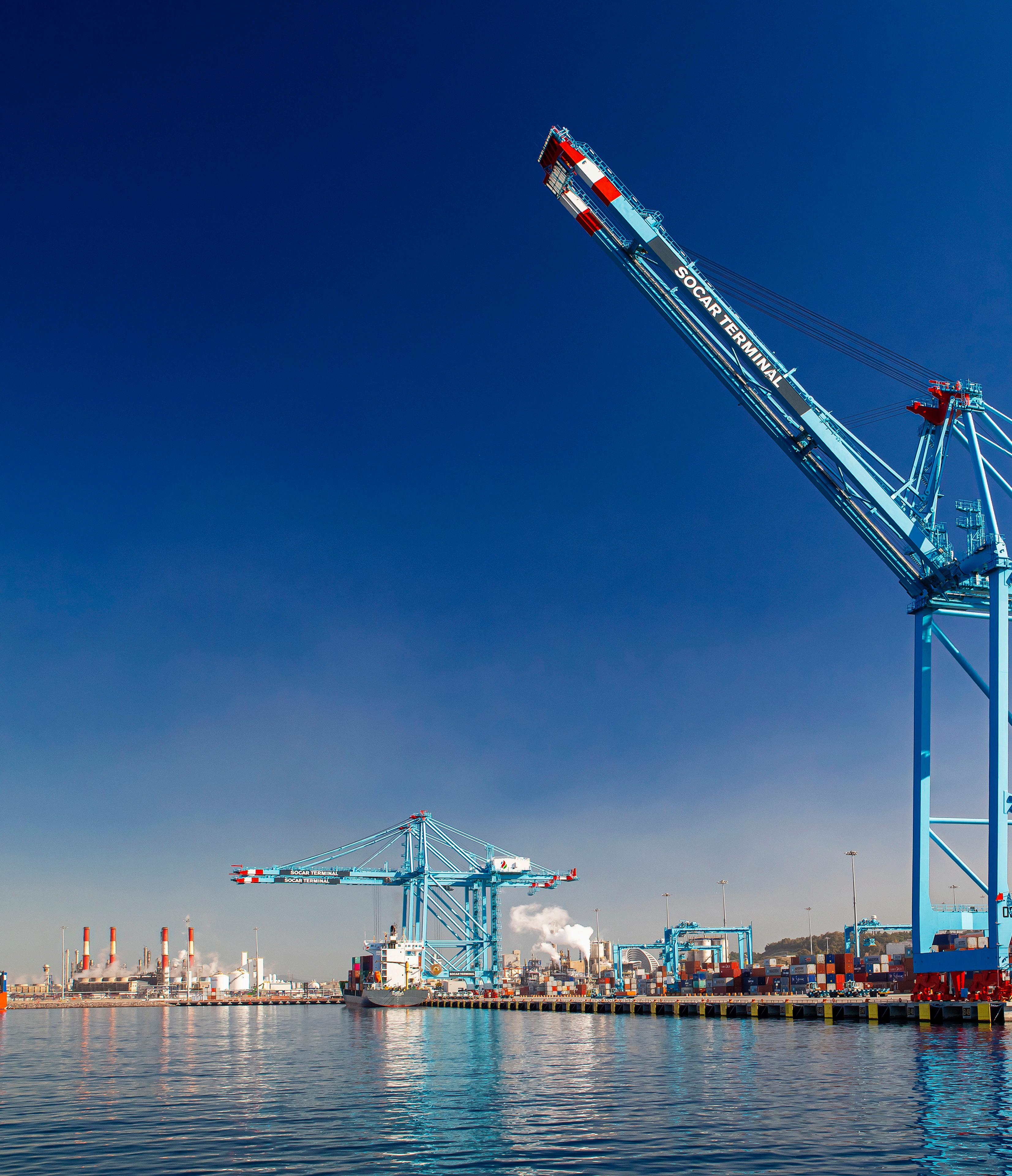
SOCAR Terminal sets new standards for port operations
SOCAR Terminal, operating under SOCAR Türkiye, has once again demonstrated its leadership in Türkiye’s maritime industry by receiving two prestigious honours from International Finance in 2025: "Most Integrated Port Operator – Türkiye" and "Best CFO – Maritime Transportation – Türkiye," awarded to its Chief Financial Officer, Kutlu Vardar. These accolades highlight the company’s dual strength in operational excellence and financial stewardship, both of which shape the future of port logistics in the region.
The SOCAR Terminal is one of the largest container and general cargo port in Türkiye's Aegean Region
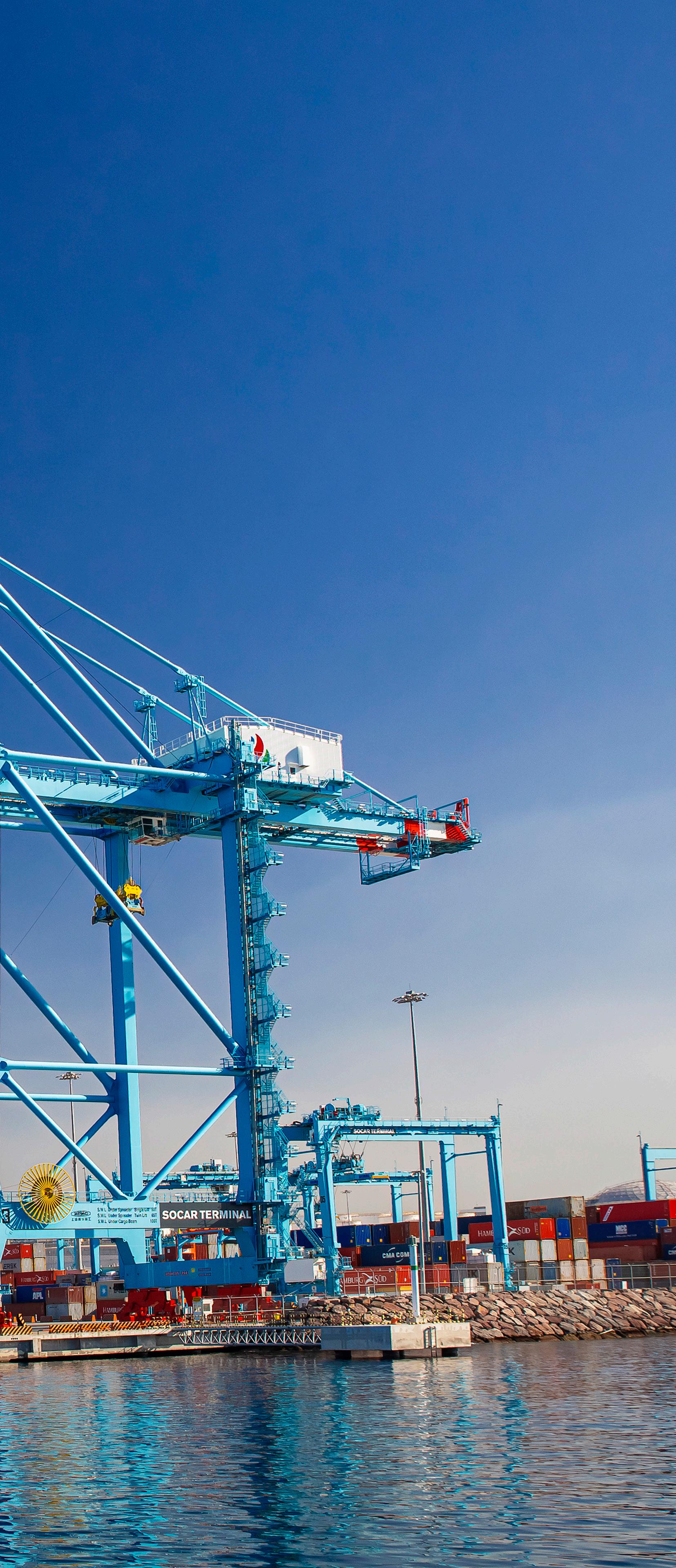
During an interaction with International Finance, Uygun Degirmenci, CEO and General Manager of SOCAR Terminal, said, "We are honoured to be recognised as Türkiye’s Most Integrated Port Operator for 2025. This award reaffirms our commitment to sustainability, digital transformation, and seamless operational excellence. At SOCAR Terminal, we look beyond today’s needs, shaping solutions for the future of global trade. Guided by innovation, environmental responsibility, and longterm value creation, we remain determined to set new benchmarks for our industry."
The SOCAR Terminal is one of the largest container and general cargo port in Türkiye's Aegean Region. With a 700-metre continuous quay, 16.5-metre water depth, and an annual capacity of 1.5 million TEUs, the facility is one of the few in the country capable of accommodating Ultra Large Container Ships (ULCS). Its 48-hectare area, equipped with three ship-to-shore cranes, ten rubber-tyred gantry cranes, and advanced land-side infrastructure, ensures the safe and efficient handling of multiple vessels simultaneously.
The terminal achieved strong results in 2024, handling 541,114 TEUs and hosting 630 vessels. These operations contributed directly to Türkiye’s imports and exports while generating regional economic value through customs, warehousing, and transport services. By mid-2025, the terminal had already processed more than 257,000 TEUs, sustaining its growth momentum.
Beyond container operations, SOCAR Terminal has become a hub for general cargo and heavylift projects, particularly in the renewable energy sector. Wind turbine components and oversized project cargo have strengthened the port’s expertise, while land-side operations achieved 226,465 gate movements in 2024, demonstrating high levels of efficiency in integrated logistics.
Digital transformation is central to SOCAR Terminal’s strategy. The company has introduced automated gate systems, pre-gate applications, AI-assisted cargo damage detection, and Robotic Process Automation (RPA) projects to improve workflow efficiency.
Unified digital platforms provide real-time visibility into operations, enabling faster decision-making,
stronger governance, and enhanced customer service. These innovations have set new standards in the industry, reflecting SOCAR Terminal’s belief that technology is the key to sustainable growth.
Sustainability continues to be a core focus of the company’s vision. It has measured its carbon footprint in line with ISO 14064-1:2018 standards and has committed to renewable energy projects, including solar power, while upholding a strict zero-waste policy. With plans to expand handling capacity to one million TEUs, the terminal is positioning itself as a sustainable logistics hub, not just for the Aegean Region, but for Türkiye’s broader trade network as well.
The "Most Integrated Port Operator – Türkiye 2025" award highlights the company’s holistic approach, combining infrastructure excellence, digital innovation, and environmental stewardship. SOCAR Terminal plays a vital role in the nation's long-term trade strategy, advancing competitiveness in the Aegean Region and beyond.
While infrastructure and technology have remained critical pillars, financial governance has been an equally important driver of SOCAR Terminal’s success. CFO Kutlu Vardar, honoured as "Best CFO – Maritime Transportation – Türkiye 2025," has redefined financial leadership at the company. With a career spanning PwC, Petkim, Tesco Kipa, and APM Terminals Türkiye, he has built
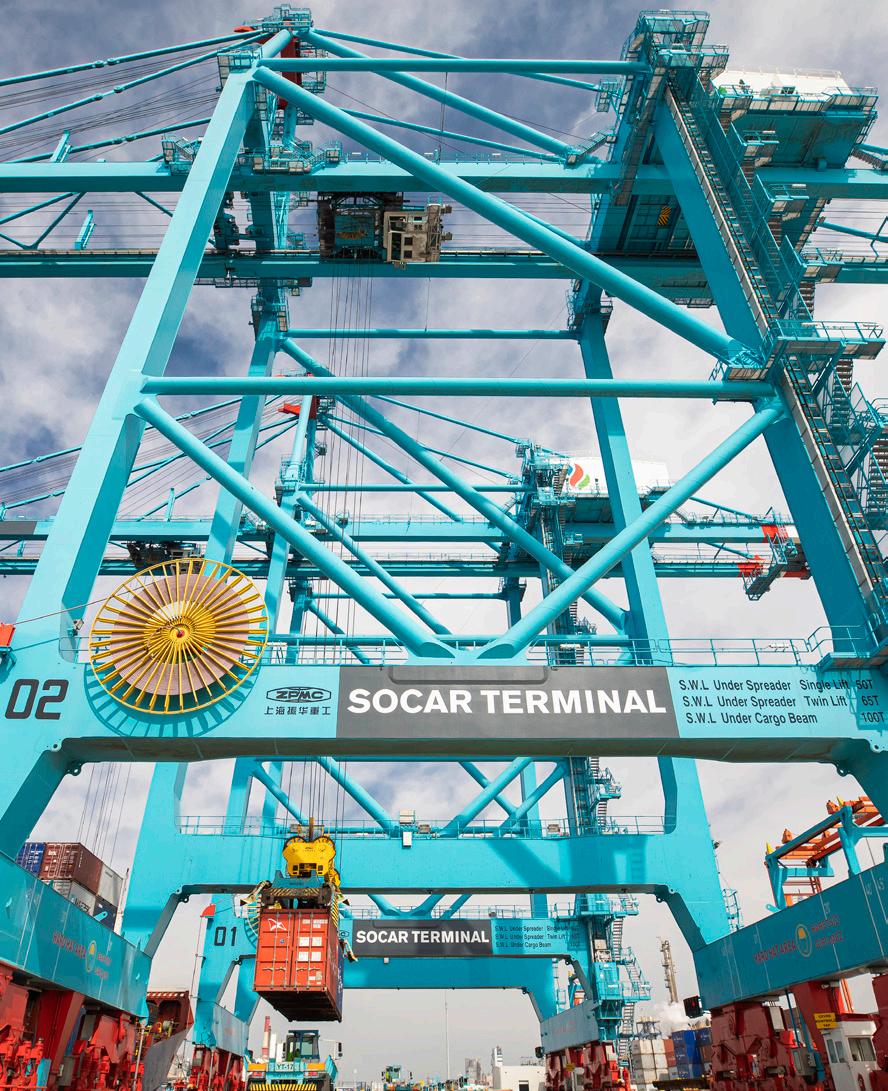
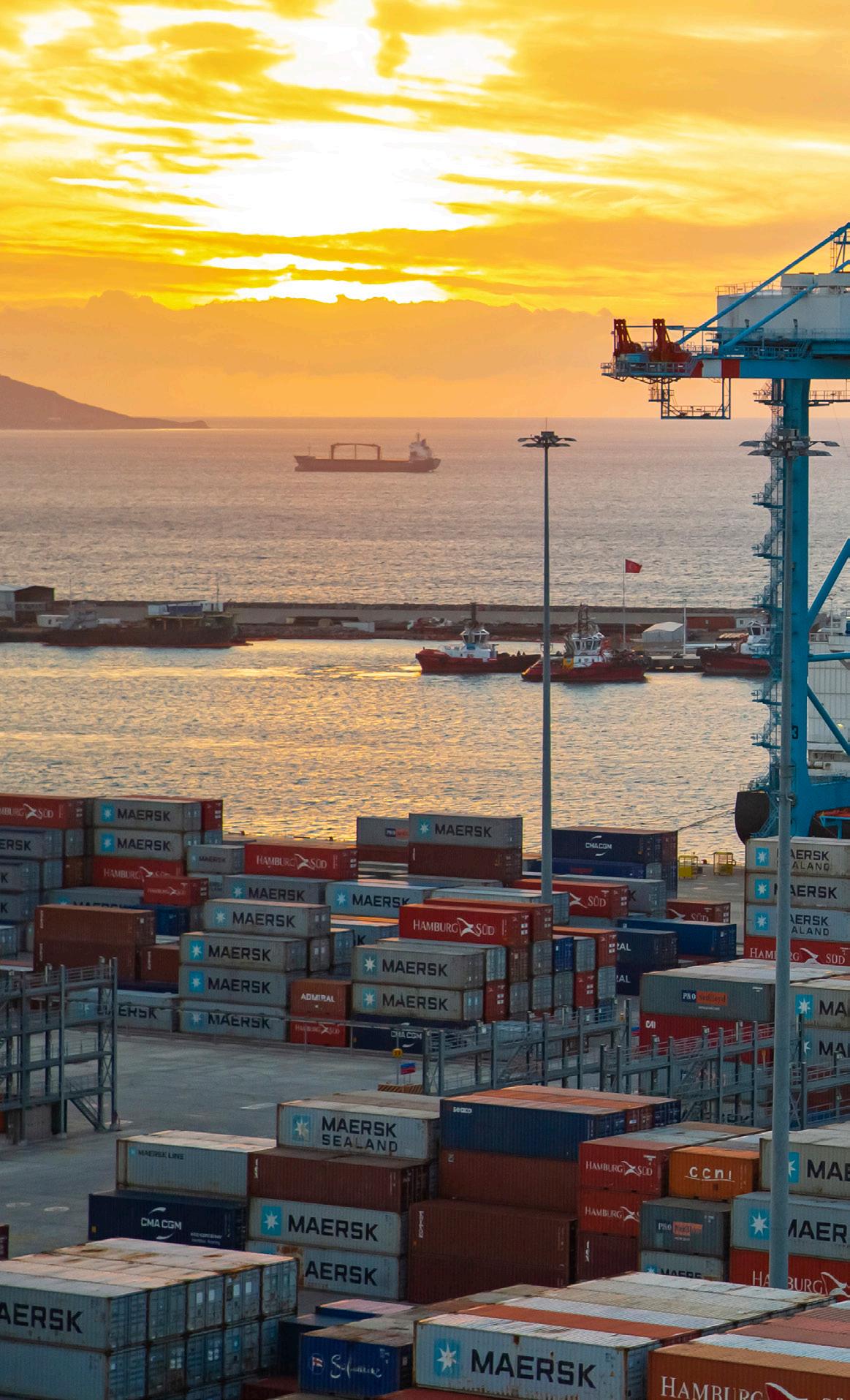
expertise in risk management, financial governance, and digital transformation. Since joining SOCAR Terminal in 2018, Vardar has spearheaded ERP integration, established sustainable cash flow models, and replaced fragmented reporting systems with a unified digital platform for budgeting and consolidation.
These initiatives have improved transparency, accelerated closing cycles, and strengthened governance. For Kutlu Vardar, finance is not merely about numbers but about vision. He views risk as a strategic guide, agility as a necessity, and ethics as the cornerstone of leadership. The International Finance recognition highlights the CFO's personal achievements and the resilience and transformation of SOCAR Terminal.
Together, these two awards showcase the integrated strength of SOCAR Terminal: world-class
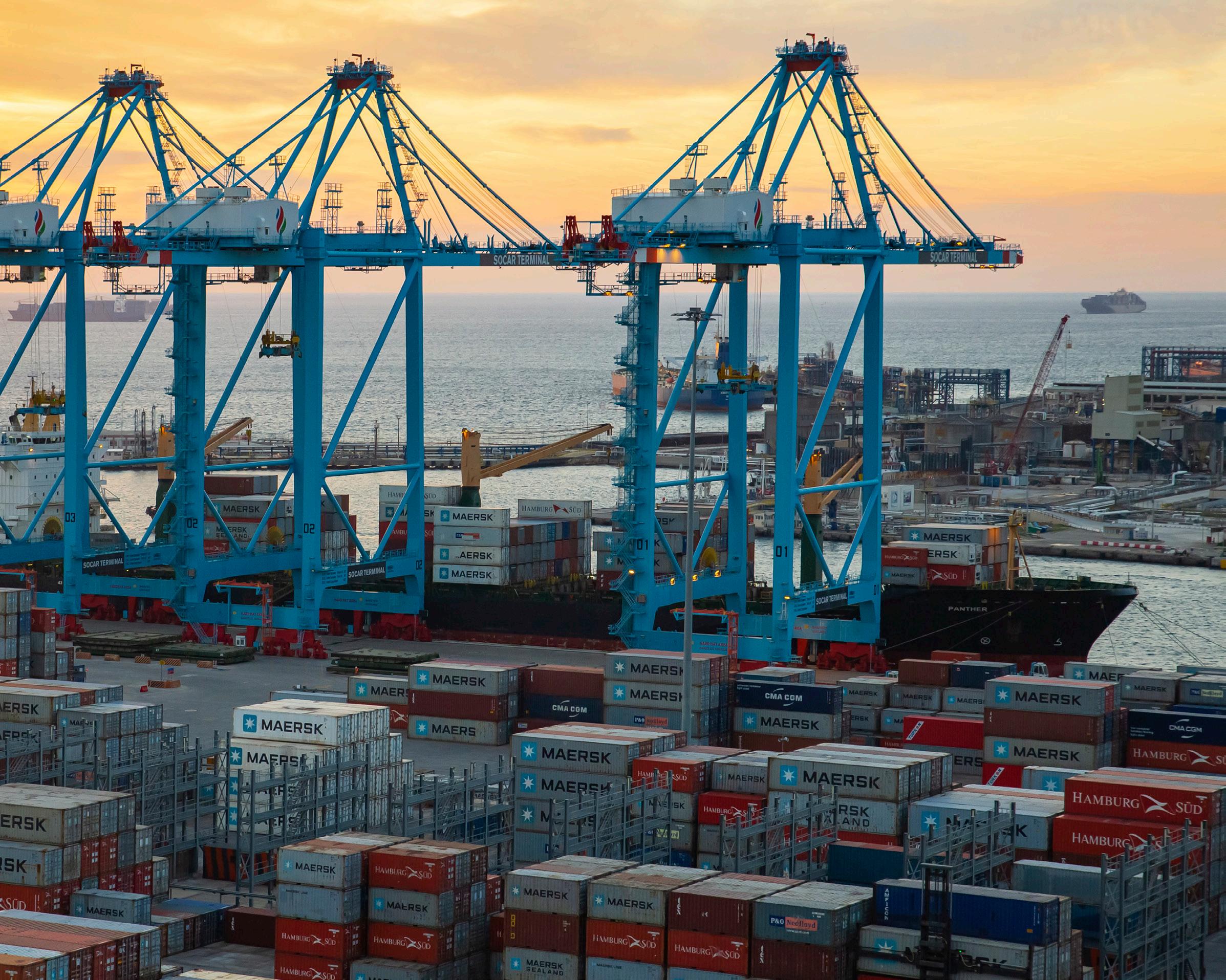
infrastructure, cutting-edge digitalisation, sustainable practices, and visionary financial leadership. The company plays a vital role in Türkiye’s global trade ambitions, setting benchmarks for innovation and integration in maritime logistics.
In addition to these achievements, SOCAR Türkiye—the country’s largest foreign direct investor and integrated industrial group—has taken a major step to expand and globalise its port operations under SOCAR Terminal. The company has entered into a strategic partnership with MSC (Mediterranean Shipping Company), the world’s largest container carrier. Under the agreement signed in Baku on 15 September 2025, MSC’s global port operating subsidiary, Terminal Investment Limited (“TIL”), will become a shareholder in SOCAR Terminal.
Through this partnership, SOCAR Terminal will be integrated into TIL’s extensive global network,
SOCAR Terminal is steadily progressing toward becoming not only the Aegean’s but the entire Eastern Mediterranean’s hightechnology, secure, and sustainable logistics hub
enhancing its existing capacity with new equipment and technology investments while improving operational efficiency. Furthermore, the terminal will make significant advances in digitalisation, sustainability, and infrastructure development. SOCAR Terminal is steadily progressing toward becoming not only the Aegean’s but the entire Eastern Mediterranean’s high-technology, secure, and sustainable logistics hub.
SOCAR Terminal’s journey is far from complete. With a commitment to continuous improvement, environmental stewardship, and forward-looking strategies, it is not just responding to today’s demands but actively shaping the future of port operations in Türkiye and beyond.
Aviation experts predict that by 2050, carbon dioxide emissions from aviation could double or even triple
Is cleaner aviation within reach?
IF CORRESPONDENT
Recently, a study co-led by the University of Oxford, made a bold claim that global aviation emissions could be reduced by 50%-75% by combining three strategies to boost efficiency. Those include flying only the most fuel-efficient aircraft, switching to all-economy layouts, and increasing passenger loads.
As aircraft become increasingly fuel-efficient, the amount of CO2 per kilometre flown has been decreasing
Instead of cutting passenger journeys, the mentioned efficiency measures would be far more effective in ensuring an immediate 11% reduction in carbon footprint by using the most efficient aircraft that airlines already have more strategically on routes they already fly, rather than providing lip service to terms like sustainable fuels or carbon offsets.
The researchers analysed over 27 million commercial flights in 2023, covering 26,000 city pairs and nearly 3.5 billion passengers. The methodology revealed enormous variability in emissions efficiency, with some routes producing nearly 900 grams of CO2 per kilometre for each paying passenger, almost 30 times higher than the most efficient, at around 30 grams of CO2 per kilometre. Published in Nature Communications Earth & Environment, the study claims to be the first to assess the variation in flights' operational efficiency around the world.
As aircraft become increasingly fuel-efficient, the amount of carbon dioxide per kilometre flown has been decreasing, but the increase in the number of flights has far outpaced this, leading to higher emissions that are contributing to the climate crisis. Aviation experts predict that by 2050, carbon dioxide emissions from aviation could double or even triple. The new analysis also revealed that more polluting flights were common from smaller airports in the United States and Australia, as well as in parts of Africa and the Middle East. In contrast, airports in India, Brazil, and Southeast Asia were dominated by less polluting flights.
Flights out of airports like Atlanta and New York were among the least efficient, nearly 50% worse than those at the most efficient airports, such as Abu Dhabi and Madrid. The UN aviation body, the International Civil Aviation Organisation (ICAO), is pinning its hopes on an “unambitious and problematic” offsetting scheme, known as CORSIA, to reduce emissions, but has not yet made any airline purchase a carbon credit.
In fact, Khaled Diab, the communications director at Carbon Market Watch, remarked, “No airline has yet been obliged to use a single carbon credit under the UN’s Carbon Offsetting and Reduction Scheme for International Aviation (CORSIA). And when they are, CMW research reveals the European Union’s Emissions Trading System (EU ETS) imposes a carbon price on aviation emissions that

is 25 times higher. This clearly demonstrates that cap-and-trade systems are better for the climate and should be expanded.”
Prof Stefan Gossling at Linnaeus University in Sweden, who led the research, said, "We are currently stuck with a global situation where there is no hope that aviation will reduce its emissions."
According to him, all-economy-seat planes, 95% flight occupancy, and using today’s most efficient aircraft could cut fuel use and therefore emissions by 50%-75%. It would also mean far less sustainable fuel would be needed to make flying nearly emissions-free in the future.
“I always thought air transport was already very efficient, and that is also what airlines like to tell people. But, in reality, it’s very inefficient because of three factors: using old aircraft, transporting people [in premium seats] with lots of space,
and often having aircraft that are not fully loaded. In 2023, the average ‘load factor’, seat occupancy, was almost 80%,” Gossling added.
Crunching the details
The study also analysed the efficiency of 26,000 pairs of cities based on the amount of CO2 emitted per kilometre per passenger, using data from 3.5 billion passengers who flew a total distance of 6.8 trillion km (145 trips to the sun, 577 million tonnes of CO2 emissions, equivalent to the annual emissions of Germany).
The study found that US flights were 14% more polluting than the global average, China had efficiencies slightly above average, and the UK, the third-largest aviation polluter in the world, had efficiencies slightly below the 84.4g of CO2 per passenger kilometre average.
The most efficient route was Milan, Italy, to Incheon Airport near Seoul, South Korea (31.6g CO2/
pkm). The least efficient route was in Papua New Guinea, with the second-worst from Ironwood Airport to Minneapolis/St Paul in the US (805g CO2/pkm).
“While airlines often claim that fuel savings are in their own economic interest, the reality is that many airlines continue to fly with old aircraft, low load factors, or growing shares of premium-class seating,” the researchers noted.
“The most important factor was replacing premium seats with denser economy seating: First- and business-class passengers are responsible for more than three times the emissions of economy passengers, and up to 13 times more in the biggest premium cabins. Other policies that might encourage greater efficiency include softer policies like requiring airlines to disclose an efficiency rating for each route. You wouldn’t want to fly with an airline that is rated F. Market-based policies might include airports charging higher landing fees for more polluting aircraft, which also makes local communities’ air dirtier," Gossling claimed.
While the efficiency gains that the study identified, such as replacing older, more polluting planes, would bring improvements, they would also confront the reality of an industry operating on low margins. However, Gossling argued that the sector was stuck in a business model that maximised passenger numbers to boost profit and that it could operate fewer, fuller flights with higher ticket prices.
He said that many flights are taken because they are so cheap, commenting, “We know that a lot of air
Top 10 countries with the biggest aviation emissions
Source: Gossling et al, Communications Earth & Environment, 2026
transport demand is induced. If you increase the cost, people will just choose a different type of holiday.”
Facing the reality
The senior vice-president of sustainability at the International Air Transport Association, the trade association for the world’s airlines, Marie Owens Thomsen, told Reuters, “Airlines have a vested interest in reducing fuel burn and maximising load factors, but the order backlog for aircraft exceeds 5,000 planes due to supply-chain failures.”
She further added that real progress in reducing aviation emissions would come from the use of SAF, CORSIA, and the modernisation of air routes.
Aviation accounts for 3% of global greenhouse gas emissions. Still, flying is concentrated among wealthy passengers, with 1% of the world’s population responsible for 50% of aviation emissions, while only 10% of people fly at all in any one year, and 4% fly abroad.
An ICAO spokesperson said its
analysis showed that operational improvements could account for 4%-11% of the carbon emission reductions required to achieve net zero, while factors such as cleaner fuel and innovative technologies will do the remainder.
Meanwhile, with the aviation sector racing to decarbonise, how much might the cost of a passenger ticket increase by 2050? Naomi Allen, Head of Research at RAeS (Royal Aeronautical Society), crunched the numbers to find out the reality.
Decarbonising aviation will make the sector more expensive and, therefore, ticket prices will rise, making flights less accessible to passengers. Assuming that 25% of the ticket cost is for fuel, by 2050, the industry will face another dilemma, like fuel cost, including the real value (CAF or SAF), along with the penalties due to non-compliance with the mandate and the cost of GGR (Greenhouse Gas Removal) for any remaining carbon emissions.
On the other hand, the University of Oxford report assumes that


fuel (kerosene and SAF) costs and GGR costs are evenly distributed across tickets and are agnostic as to which flights use SAF or not. While the United Kingdom’s SAF mandate does not yet specify requirements for 2050, according to Allen, the industry has assumed that the requirement will be 70% of fuel being SAF, the same as the ReFuelEU mandate requirement.
“The average ERF of the SAF used is assumed to be 70% this may be an underestimate for PtL SAF by 2050, but it is higher than the ERF typically seen for many other types of SAF at the current time. Assuming Net Zero for the sector in 2050, all net carbon emissions resulting from the fuel outside the mandate and the ERF of the SAF will have to be offset by GGR,” Allen told The Guardian.
The study also ignores inflation between now and 2050, assuming that the price of fossil-fuel-derived kerosene in 2050 will be $700/ ton, although the actual price will depend on the pace of decarbonisation in other sectors. The report
assumes that the supply of SAF is sufficient to meet demand up to the level of the SAF mandate and that the supply of GGR is unlimited. In reality, SAF and GGR may not be available to the aviation sector in the necessary quantities, as there will be competition for resources between other sectors and scaling constraints.
Greenhouse gas removals by 2050 are expected to be permanent. However, the estimated costs for these removals vary significantly.
The World Economic Forum has stated that achieving a Direct Air Capture (DAC) cost of $150 per ton of CO2 by 2050 is both necessary and feasible. In contrast, the recently published Independent Review of Greenhouse Gas Removals for the British government predicts that the costs for permanent removals in 2050 will be much higher. For the study, GGR prices of $100/ton and $600/ton are used; a midpoint of $350/ton CO2 is used to capture the probable range due to alternative GGR methods and processes, and significant uncertainty. A mid-
point of $350/ton CO2 is used for some calculations.
It is anticipated that all decarbonisation will come from SAF and GGR, and that other decarbonisation options, such as electrification and hydrogen, will not have a significant impact on aviation emissions (either due to scalability or technology/infrastructure maturity) by 2050. Costs will be affected differently by other decarbonisation strategies. Moreover, the research found that, provided the price of SAF is about as expected or lower, and the cost of GGR is high, then meeting the SAF mandate will, on average, result in lower ticket prices than if Net Zero is achieved entirely through GGR.
On the other hand, if lower GGR costs are achieved, then meeting the SAF mandate is likely to raise ticket prices by 10%-15%. Note that this assumes that enough SAF will be available to meet the mandate, but it was also calculated that if the SAF mandate is not met, then non-compliance penalties could raise ticket prices by as much as 15% more, depending on the extent of the excess demand. The scenario is plausible, given doubts about the ability to scale up the supply of SAF.
editor@ifinancemag.com

South Africa’s used car market heats up
Double-digit increase in sales in January 2026 gave indications of a sustained demand for second-hand cars in South Africa
IF CORRESPONDENT

FEATURE SOUTH AFRICA
AutoTrader’s data on the health of South Africa's automobile sector revealed that the country was witnessing a double-digit boom in its used car market in January 2026, with 34,452 vehicles being sold. Not only were sales up (12.07% month-on-month from December’s 30,742 units, and 11.28% higher than the 30,961 vehicles sold in January 2025), but there were indications of a sustained demand for second-hand cars in the country.
The cumulative value of used vehicles sold reached R14.32 billion in January, up from R12.89 billion in December, and R12.59 billion a year earlier. The average transaction price moderated slightly to R416,082 from R419,537 in December 2025, while average mileage declined to 70,938 km, continuing a gradual downward trend.
Toyota continued to capture the majority share in the used vehicle market, with 5,876 units sold in January, ahead of Volkswagen (4,733) and Ford (3,577).
Decoding Ford's figures, more than half of the total came from Ranger sales, underscoring the continued strength in the bakkie segment. This highly competitive, core automotive market focuses on utility, durability, and lifestyle.
The best-selling used vehicles
According to AutoTrader data, at the model level, the Ford Ranger retained its position as South Africa’s best-selling used vehicle, with 2,069 units sold, up 6.3% year-on-year, followed by the Toyota Hilux (1,604 units), and Volkswagen's Polo Vivo and Polo. Together, these four maintained their positions among the top four best-selling models. Compact and value-driven models showed some of the strongest gains. The Suzuki Swift moved ahead of the Toyota
Fortuner in overall rankings, with 794 units sold and year-on-year growth of nearly 25%. The Toyota Corolla Cross and Hyundai Grand i10 also recorded notable annual increases, reflecting a continued shift towards smaller, more affordable vehicles.
None of the top 10 models posted a year-on-year decline, although performance varied across brands. Suzuki recorded the greatest month-on-month improvement, while Hyundai achieved the highest annual growth rate. BMW was the only major brand to register a monthly decline, although it remained up year-on-year.
AutoTrader's “2025 Annual Car Industry Report” reveals the emergence of quite a few trends. One among them is established industry players maintaining strong sales figures. Among the vehicle categories, while compact hatchbacks gained a significant market space, SUVs further consolidated their dominance. If Chinese brands gaining measurable ground was the surprise factor, new energy vehicles (especially hybrid ones) gaining prominence gave a sneak peek at the African country’s direction towards a clean transport sector.
AutoTrader CEO George Mienie stated, "The used car market delivered solid growth. A total of 383,410 used vehicles were sold in 2025, generating R160.1 billion in sales value, representing a 7% increase over 2024. Four interest rate cuts in January, May, July, and November 2025, reduced borrowing costs and provided meaningful relief to consumers. However, while economic conditions improved, buyer behaviour remained disciplined. If anything, 2025 reinforced how firmly affordability and practicality now anchor local purchasing decisions."
Which models were in demand
Among second-hand cars, search behaviour shifted at the brand and model level. BMW was the most-searched brand on AutoTrader, with 76 million searches. On a model level, the Volkswagen Polo was the most-searched, displacing the Toyota Hilux from its long-standing leadership position. On the search interest front, Ford Ranger, Volkswagen Polo Vivo, and Toyota Hilux continue to dominate overall sales volumes, indicating the strength of established names in the used market.
While the Ford Ranger maintained its position as the most-enquired bakkie vehicle, its demand remained in the higher territory, despite growing cost pressures. Compact hatchbacks have earned significant momentum in the used car market, with models such as the Suzuki Swift and Toyota Starlet capturing a larger share of the market.
"The Swift stood out as the fastest-selling used vehicle in South Africa, averaging just 26 days before sale. That turnaround time reflects strong underlying demand for vehicles that are affordable to finance, efficient to run, and practical for everyday use," Mienie stated.
While the average used car price grew 3% year-on-year to R417,584 in 2025, the average vehicle age remains five years. The average mileage was 73,646 km.
Pragmatic approach to EVs
The new energy segment (electric vehicles) grew by a strong 73% in 2025, powered by hybrid cars. Hybrids ended up accounting for nearly 85% of all new-energy vehicles sold. This growth also gave an insight into South Africans' EV adoption strategy: choosing practical, money-saving options instead of waiting for full electric cars that need better

charging networks and lower prices.
Hybrids (known for combining a petrol engine with an electric motor) saw sales jumping 76% compared with 2024, with 4,888 units changing hands. In total, 5,727 used hybrids and battery electric vehicles were sold by the end of December 2025, showing steady interest in greener driving options. This segment was dominated by locally built Toyota Corolla Cross Hybrid, with many buyers opting for the model's reliability, affordability in the used market, and, most importantly, the absence of range anxiety of pure electric cars.
Other popular models included the Volvo EX30, and various Toyota and Lexus hybrids, vehicles that offer good fuel savings.
Battery electric vehicles, despite showing a 55% year-on-year increase, remained a distant second in the new-energy car market.
Used hybrids have proven to be game-changers for South African families and first-time car buyers, as these ve-
hicles use less fuel than ordinary petrol cars, produce fewer emissions, and often come with lower running costs, during an age of high petrol prices, and living expenses. Because hybrids do not rely completely on charging infrastructure, they suit South African roads and lifestyles better than full electric cars for now.
China: New player in the sector
While European, American, Japanese, and Korean vehicle brands have been dominating both the new and used vehicle markets, 2025 witnessed the emergence of Chinese brands in the sector.
Chery Tiggo 4 Pro was the best-selling used Chinese car. The crossover, since 2025, has remained one of South Africa’s best-selling new passenger cars, with more than 1,000 units sold each month. Last year, 3,144 units were sold, underscoring the popularity of Chery’s smallest offering. With an average price of R284,779, it is one of the cheapest cars on the list, both on the new and used-car segments, despite its
low average mileage of 21,970 km, and a registration age of just two years.
Next is the Haval Jolion, which competes in the same crossover class. However, with fewer models, particularly more budget-focused derivatives (the cheapest new version is R348,950), sales are slightly lower at 2,736 units.
The oldest entry on the list was the Great Wall Motor's discontinued sixyear-old Haval H2, which landed at the sixth spot with 1,063 units, while the much newer Omoda C5 came seventh with 806 purchases.
While vehicles like Chery Tiggo 4 Pro and Haval Jolion are mostly ICE (Internal Combustion Engine) vehicles with some plugless hybrid variants, Chinese automobile players have reportedly started offering more plugin options. These players, already known for their rapid global expansion (using affordability as a weapon), are now sweetening things further for their South African customers by adding more PHEVs (Plug-In Hybrid Electric Vehicles) and
BEVs (Battery Electric Vehicles) to both the new and second-hand segments.
Sales of plugin hybrids (PHEVs) were up 280% in 2025 compared with 2024, with brands like Haval, Chery, Omoda, Geely and BYD leading the charge.
"Chinese vehicle manufacturers have learnt how to narrow the gap between cost and perceived value, delivering around 80% of the consumer experience at roughly 60% of the price of traditional players. By focusing on tangible performance and visible benefits rather than legacy branding, they have capitalised on a shift in consumer behaviour. As buyers become more informed and discerning, brand loyalty is weakening, replaced by an expectation for high-quality products that justify every rand spent," Mienie told Creamer Media's Engineering News.
Bakkies rule the roost Bakkies, the Ford Ranger in particular, had a massive share in the used car segment. These are basically pickup trucks with open cargo beds. Renowned as ‘workhorses’ for cargo, bakkies have evolved into popular lifestyle vehicles in the African nation.
According to the AutoTrader data, the used car market shipped 30,742 vehicles in December 2025, with 1,744 being Ford Rangers. Buyers reportedly opted for four-year-old Rangers with an average mileage of 83,958km.
The average used Ranger sold last year fetched a price of R497,960, which represents a saving of nearly R80,000 compared to buying the cheapest variant of the popular bakkie brand new.
In contrast, the most expensive version of the Ranger is the 3.0T V6 Raptor double-cab, which fetches a handsome price of R1,271,000.
A used Ranger comes in many forms:
single-cab workhorses, which are found on construction sites and farms, while double-cab variants are often used by families to haul children to and from school. Add the affordable price factor, and buying the vehicle becomes a winwin deal for average South Africans.
For businesses, Ranger, in its current-generation form, offers a reliable fleet option. Be it the powerful Raptor, or versions like XL single-cab and XLT double-cab, they offer varieties like the cheapest, mid-range, and most expensive models, both on the new and used markets.
With regard to Bakkie's popularity in South Africa, Nissan sold a grand total of 434 units of NP200 in March
Source: Statista
2025, despite the fact that the vehicle is no longer officially on sale. It was supposed to be the Japanese company’s last compact bakkie in the South African market, before its discontinuation in April 2024.
Despite Nissan pulling the plug on its NP200, citing ageing design as the primary factor, the model continues to be the workhorse for small businesses and will remain one of the dominating names in the second-hand car market.
Decoding the customer mindset
The year 2025 was the one when South Africa faced an acute cost-of-living crisis. The nation's Competition Commis-

sion’s inaugural ’Cost of Living Report’, which came out in September, presented the harsh reality: prices for electricity, water, education, and food outpacing overall inflation.
Electricity prices saw a 68% increase, followed by water with 50%, exceeding the general inflation rate, which itself stood at 28%. Food staples, such as brown bread, maize meal, and eggs, were witnessing widening margins, or sticky prices in some cases, despite falling producer costs.
With this background, four interest rate cuts were implemented in the year, totalling 100 basis points. Customers bought cars, but with a lot of financial discipline and self-restraint, and that's what ended up helping the second-hand car industry.
During an interaction with Dealerfloor, Mienie stated, "Buyers are still active, but they are more deliberate and value-driven than ever before. The brands gaining traction are those aligning product offering, pricing and perceived quality with real-world afforda-
bility constraints."
While Ford Ranger, Volkswagen Polo Vivo and Toyota Hilux dominated overall transactions and bakkies topped the chart, reduced financing costs led to accelerated demand for smaller, more economical vehicles. What the recent cost-of-living crisis has told the South Africans is that financing costs for new vehicles go up with every cycle of interest rate climb. Add monthly repayments and insurance premiums, and the situation leads to cash bleeding. A second-hand car, by contrast, often delivers the same utility at a far gentler price point.
According to reports, buyers are also reducing long-term financing exposure by taking smaller loans while also lowering costs on insurance, licence and registration fronts.
The availability of vehicle history reports and online valuation tools allows consumers to assess pricing, mileage and ownership records with ease. If you factor in the dealers' game of elevating their used-car offerings, providing certified
pre-owned vehicles, service plans and warranties, customers are getting an experience similar to buying a new car.
Car ownership is increasingly becoming a practical tool rather than a status symbol. In a climate where every rand counts, buyers are bound to think whether they should complicate their financial health further by buying a brand-new car, with higher financing costs. Thus, the so-called second-hand, but tried-and-tested models, with widespread service support, are capturing the buyers' minds.
More than swanky features, brands and models known for longevity are in high demand, particularly those with solid fuel economy and manageable maintenance costs. Priority is to choose cars that fit South Africans' lifestyles, not just their aspirations.
editor@ifinancemag.com
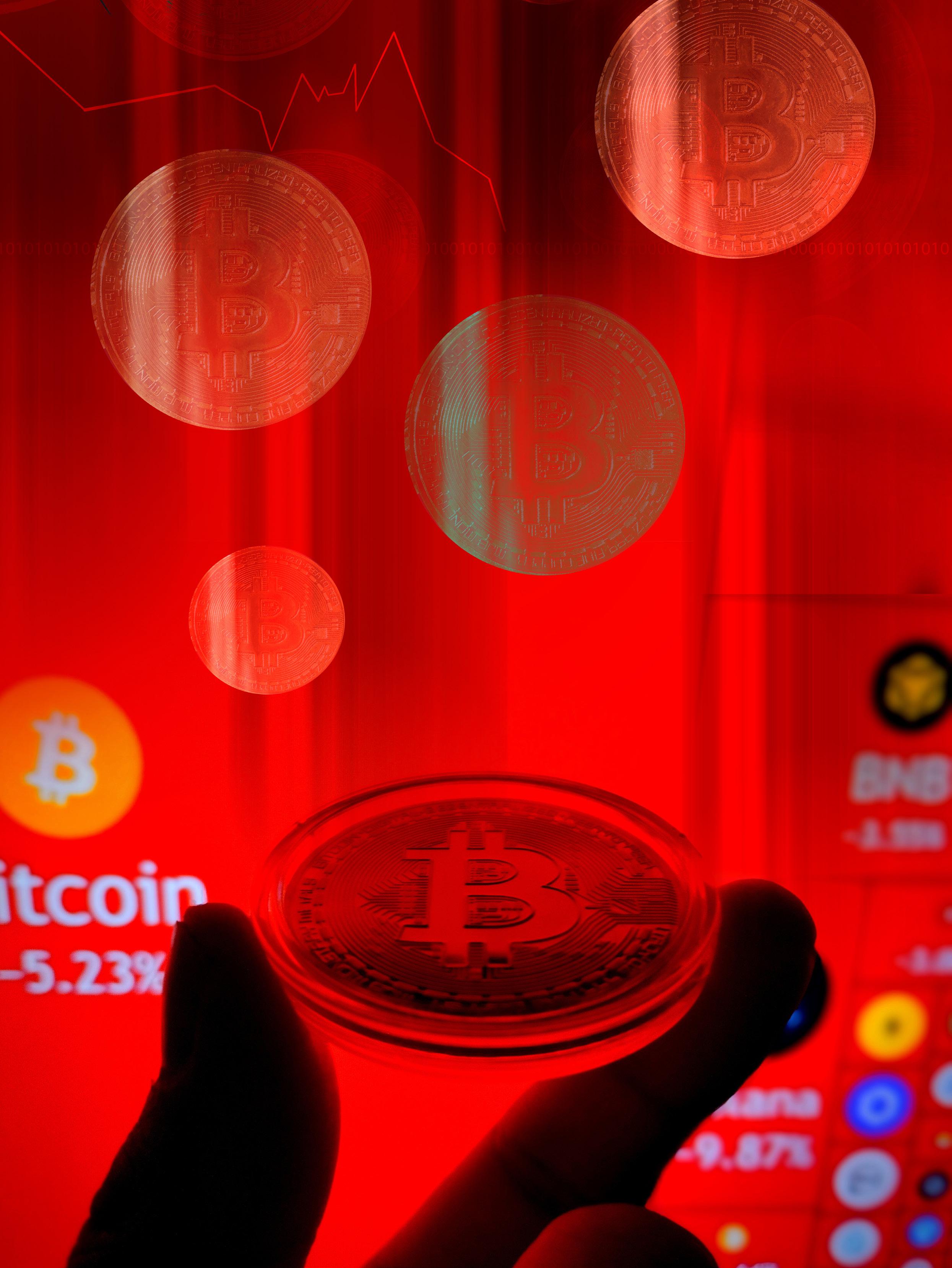
Bitcoin crash shatters digital gold myth
IF CORRESPONDENT
For El Salvador, Bitcoin's volatility created fiscal and reputational risks that brought about a mild U-turn in policy
The conditions that ought to have been quite attractive, such as geopolitical risk, currency uncertainty, and distrust of institutional finance, have not made Bitcoin soar to new heights. It's not that Bitcoin didn't rally; it crashed. Gold, however, has reached new heights.
Bitcoin (BTC) saw a brutal sell-off in early 2026 as it plunged from a peak of $126,000 to below $63,000. This has led people to try deciphering the market realities, as the crash exposed the cracks in the mythology of Bitcoin as an ever-booming asset.
Most analysts believe it was a new financial era. The digital asset broke the six-figure threshold in late 2024, and by early 2025, it was seen as the most coveted asset in this new financial landscape. The spot exchange-traded funds (ETFs) brought Wall Street money into the crypto market, and the Trump administration, which was initially hostile to cryptocurrencies, became incredibly friendly.
Of course, there was also the halving cycle. Bitcoin's four-yearly supply shock was as punctual as always. By October 2025, the price touched $126,000, and the faithful acolytes and crypto billionaires were already mapping $200,000 and beyond.
Then the bottom fell out. Prices have been slashed in half from their October peak, with the price plunging way below the $63,000 mark in February 2026 for a staggering fall of around 50% in just four months. This crash has caused significant panic in the market as billions of dollars disappeared over a handful of sessions, and many leveraged traders were flushed out. Furthermore, the Spot ETF, which was intended to legitimise the cryptocurrency as a stable asset, instead forced sellers to mechanically dump coins in a market that was already collapsing.
Yes, it was a bloody season, even by crypto's permissive standards, but this article is not about how bad it was, but what it reveals. Is crypto the new digital gold, or is it just a speculative asset with institutional backing?
Modern crypto crash
Bitcoin has come a long way from being one of the riskiest assets in the world. It has slowly garnered a reputation as something that will keep increasing in value.
To understand this sell-off and
why it hit so hard, we need to look at how the market was built over the last two years and examine the structures that drove the last rally and its inevitable collapse.
Firstly, let's examine leverage. The crypto derivatives market is a paradise for aggressive traders, and the latest cycle drew hordes of them. When the digital currency eroded from its $80,000 to $90,000 range in early February, the markets saw almost $279 million in leveraged positions liquidated within a single day. Almost $170 million of that was concentrated in long positions.
Just a few days later, within a single hour, $80 million in liquidations were produced, and $48 million of it was Bitcoin alone.
While the data is not record-breaking or particularly alarming in isolation, it remains significant due to the feedback loops and self-fulfilling prophecies it creates.
Academic research specifically examining Bitcoin futures markets at BitMEX revealed that daily forced liquidations average approximately 3.5% of open interest for long positions, largely because many traders utilise effective leverage levels of 60x or more. In an environment like that, even a moderate price decline leads to those margin calls. Exchanges then dump collateral to cover those calls, and the prices dwindle further, liquidating more positions. This cascade is fast, mechanical, and transforms something that is otherwise manageable into a rout.
But we can't blame everything on leverage. It was just an amplifier and not what started this domino effect. The foundational reasons for this crash were a structural shift in the behaviour of a new and yet consequential set of players. Namely, the ETF complex.
$1.2 billion in net inflows were recorded on US ETFs. It is an extraordinary pace, which reassured investors that the historic run of 2024 and 2025 probably might not end anytime soon
New buyers become sellers
Experts say that the US spot Bitcoin ETF launch was a watershed moment. It allowed retail and institutional investors to access the digital currency through a regulated, familiar vehicle without managing balances or private keys for the first time.
Within the first two trading days of 2026, $1.2 billion in net inflows were recorded on US ETFs. It is an extraordinary pace, which reassured investors that the historic run of 2024 and 2025 probably might not end anytime soon.
Then the rhythm broke. The shockwaves emerged with ETF flows flipping negative by January 6. Research by Binance reported that, in 2026, demand had turned into a net negative, with year-to-date flows of roughly minus 4,595 BTC. This meant that the funds, on balance, were being sold into the market rather than bought.
A separate analysis claimed US spot Bitcoin ETFs recorded $4.5 billion in net

outflows in 2026, which was the longest sustained outflow streak since early 2025.
It's different this time around because in previous cycles, after every halving, retail enthusiasm fades, and the tourist capital is usually invested in offshore derivatives or speculative altcoins. This is referred to as altseason.
Most traders who make big money during the sell-off re-divert that wealth into up-and-coming coins. But this season, there was no altseason rally. The cryptocurrency kept booming indefinitely. There was even talk that an altcoin season might not happen again.
ETFs have changed the equation. When investors redeem ETF shares, the fund must sell underlying altcoins to meet these demands. It is programmed that way and is non-discretionary. It happens in large blocks and hits a market which, despite its growth, has relatively thin spot liquidity compared to traditional assets.
The ETF paradox is visible. The in-
stitutionalisation of BTC was supposed to stabilise the asset and broaden the ownership base. Instead, it created a new system where retail fear can rapidly and efficiently transmit into largescale spot selling. This legitimisation was celebrated by bulls, yet that same mechanism has handed a button for self-annihilation to the market.
The macro context
And to top it all off, the macroeconomy couldn't be more hostile to Bitcoin. The wars in Europe, Israel and possible geopolitical crises in Taiwan and Iran, along with the tariff wars, have killed the appetite of central banks around the world. Markets have been tightening and de-risking globally.
The same fears that cause volatility in traditional markets are more profound now. Gold has surged above $5,500 per ounce, serving as a safe haven for assets as it has for thousands of years. Meanwhile, the digital asset
(which was supposed to be a storehouse of wealth and was dubbed the ‘digital gold’) has fallen roughly 20% year-todate as of early February. It is a development that is impossible to miss.
The whole idea of the blockchain asset was ‘gold but better’ because someone could steal your gold from your house, banks might collapse, and gold is harder to transport from one country to another. It also had all the good properties of gold in the sense that no one could take it from you. It was in a hidden, encrypted wallet that the government had no access to, and the prices always kept booming.
It was considered a reliable and safe asset, but the global crisis has proven that the digital currency might not be as reliable an asset as people thought it was, and is definitely not a dependable replacement for gold.
The policies that have been baked in place by governments around the world are not conducive either. Since COV-
ID-19, near-zero rates, and quantitative easing, banks have made a coordinated retreat from their usual yet extraordinary monetary accommodation.
The US Federal Reserve drained $2.8 trillion from its balance sheet between the pandemic peak and late 2025, only taking a slight U-turn in December. The European Central Bank was no different and shed $3 trillion since mid2022. Even the Bank of Japan (which was a perennial holdout historically) has embraced inflation and is shrinking its own balance sheets.
It's not all doom and gloom. Some rate cuts are set to return in 2026. However, there has been a generational shift. Real yields are positive, and even cash offers dependable returns. The dollar is firm despite day-to-day volatility. Bitcoin, which had thrived in the era of free money, unprofitable growth companies, and speculative tech, is a natural casualty of this change in philosophy.
The cryptocurrency is correlated with the Nasdaq and other high-beta risk assets (assets with high volatility relative to the market). It is telling of what the asset has evolved into, which is a macro trading instrument.
It only rallies when there is abundant liquidity and a great appetite for risk, and is dumped the moment traders have cold feet.
The digital gold question
Now let's get to the heart of the matter. In a world of uncertainty, war, fatigue, plague, and zero-sum games, gold seems like the most reliable asset to hold on to. Everyone wants it, and no culture would deny it.
The digital gold thesis is underpinned by two important claims, the first being that Bitcoin acts as a store of value that builds and retains purchas-
Bitcoin price per day in January 2026 (In US Dollars)
January 4
654.65 January 11 643.55
January 14 616.21 January 24 594.51
January 30 554.29
Source: Statista
ing power across full cycles despite its inherent volatility. And the second claim suggests that during a crisis, the cryptocurrency behaves like gold, and serves as an effective hedge against both monetary debasement and geopolitical uncertainty.
“Bitcoin is sensitive to liquidity. In phases when capital becomes cautious, BTC often behaves not like a protective shield, but like a real risk asset,” according to the views of analysts on the website of Aequifin, a Germany-based fintech platform for litigation funding.
There are no arguments about the first claim. The digital asset has proven its resilience across years, seeing highs and lows but coming back up every halving cycle. Previously, it had lost 70% to 80% of its value, yet it has soared to new heights every time. Long-term holders have been rewarded in a way that no other asset has rewarded its holders.
Research on post-halving dynamics has confirmed that speculative cycle and supply shock patterns are broadly intact.
It is when it comes to the second claim (the idea of the cryptocurrency as
a go-to asset during a crisis) that things get murky.
Research across multiple methodologies, including VAR models, GARCH analysis, and multi-factor frameworks, has concluded that BTC cannot function as a safe haven akin to gold. Studies examining correlations between the digital currency, gold, oil, and equities indicate that Bitcoin is the second riskiest asset in the sample, and significantly more volatile than gold, making it more comparable to crude oil or leveraged growth stocks than to defensive instruments.
Furthermore, Quantile VAR spillover methods reveal that under normal and bullish conditions, BTC acts as a net transmitter of risk to other assets, while in times of crisis, it amplifies shocks rather than absorbing them, such as gold and treasuries.
The crash of 2026 exposes an uncomfortable reality. The conditions that ought to have been quite attractive, like geopolitical risk, currency uncertainty, and distrust of institutional finance, have not made it soar to new heights. Instead, there has been a 50% depreciation. Gold, however, has reached new

heights. It's not that Bitcoin didn't rally; it crashed.
Nations that bet big
No one has bet bigger on the digital currency than El Salvador and the Central African Republic. Two nations, continents apart, that granted the blockchain asset full legal tender status. Both nations, as a consequence, have struggled considerably.
El Salvador decided to gamble in September 2021, presenting itself as a visionary. It sounded like a small, dollarised economy was going to leapfrog traditional financial infrastructure to reduce remittance costs and attract crypto-tourists, much like Dubai.
It was going to be a financial laboratory, but the experiment went awry. Research has found that BTC was only
used for 1.9% of transactions in the first year. A lot of Salvadorans downloaded the government's Chivo wallet to collect a one-time $30 incentive, but didn't open it again.
There were many problems, including technical friction, price volatility, and patchy internet access; consequently, many ordinary citizens saw it as absolutely impractical. However, tourism got a boost, with a rise of 22% in 2024. The digital asset was one of the primary attractions for international visitors, but the macro picture was collapsing. The IMF flagged the legal tender arrangement, citing risks to financial stability, consumer risk, and fiscal integrity.
“El Salvador’s Bitcoin experiment has failed. Public distrust, low adoption, technological problems, and volatility are leading to a rollback of the legal ten-
der policy in 2025,” tweeted Ricardo V. Lago, an independent commentator on Latin American economics, on X in November 2025.
In early 2025, El Salvador sought a $1.4 billion loan from the IMF. One of the conditions laid down by the IMF for loan eligibility was the demotion of Bitcoin and the revocation of its legal tender status. El Salvador received the loan and revoked the legal tender status of the crypto asset. Now, merchants aren't required to accept the digital currency. The government still has its digital currency holdings, but the experiment has failed. El Salvador is now just another crypto-friendly jurisdiction, not a Bitcoin economy.
The Central African Republic had an even worse crypto journey. CAR adopted the digital asset as legal tender
in April 2022, despite having a population where only 11%-14% have internet access.
The government launched a partially Bitcoin-backed national cryptocurrency called Sango Coin, and promised foreign investors citizenship, land rights, and access to natural resources in exchange for token purchases. However, the country's constitutional court pushed back against selling citizenship via crypto, calling it unconstitutional.
Sango Coin made less than €2 million, which is far short of its target, and collapsed. Researchers who investigated the experiment described the programme as opaque, poorly designed, and constructed for the benefit of speculators and politically connected intermediaries rather than ordinary CAR citizens.
Global Initiative Against Transnational Organised Crime (GI-TOC) stated in its report that the opaque nature of the schemes benefited a small circle of insiders and transnational criminal organisations looking for ways to launder money.
“The CAR regime is effectively trading away the country’s sovereignty at the expense of the wider population,” states the report from the Switzerland-based network of some 600 experts tracking international organised crime.
Both these countries were brave, considering that their economies are on the weaker end of the spectrum. Their experiment might have paid dividends if they had sold the assets during historic highs, but these are nations, and not speculating investors or ‘crypto bros’.
For El Salvador, Bitcoin's volatility created fiscal and reputational risks that brought about a mild U-turn in policy. In CAR, it added more tension and in-
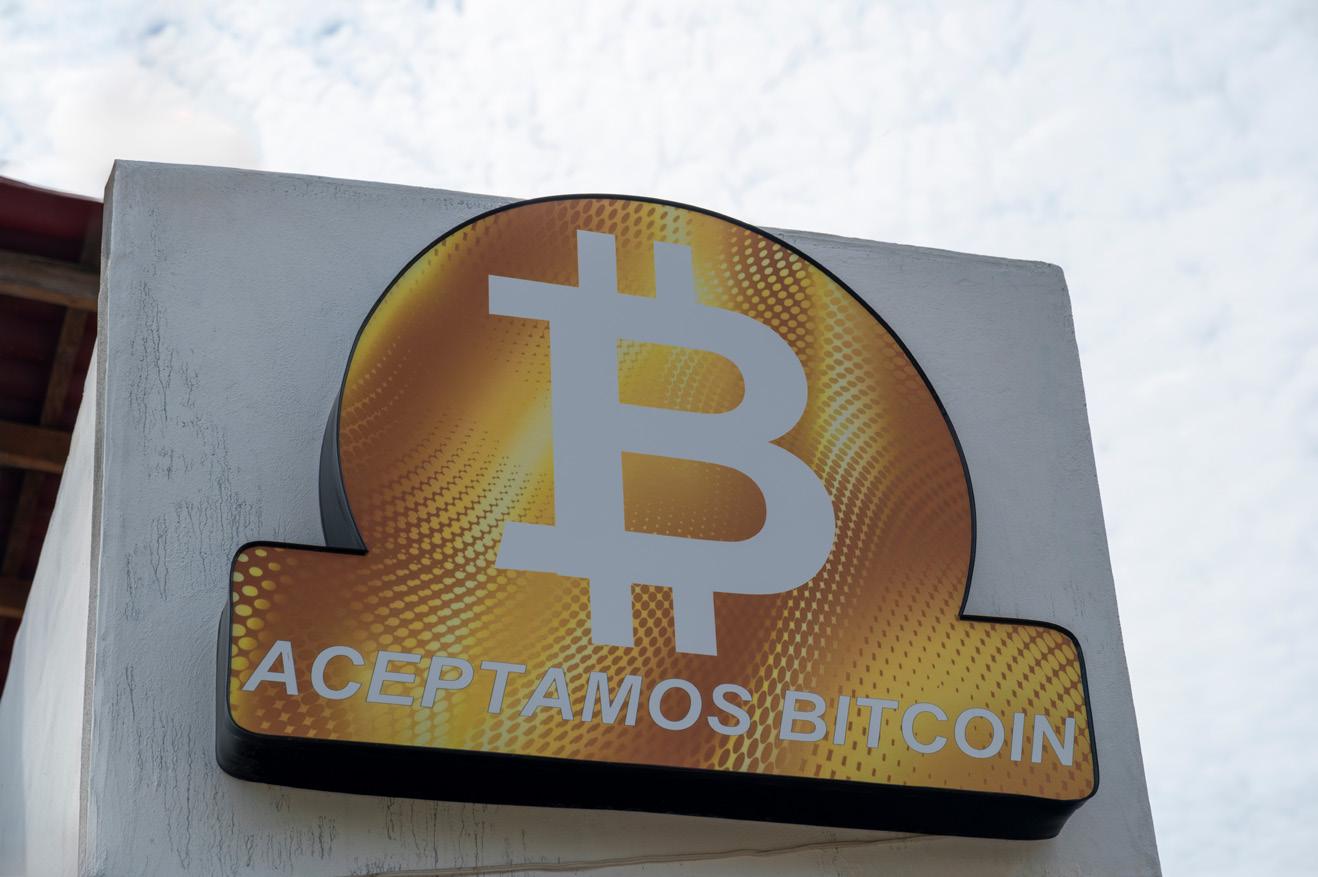
stability to an already fragile economy.
Liquidity shock or structural red flag?
This crash can be seen in two ways, with the simple reading being that it represents the usual cyclical fluctuations of a speculative asset. Bitcoin has encountered this situation many times before, such as the 2018 crash, where prices fell below 80% and caused significant panic, as well as the 2022 crash, which was almost as severe. The pattern remains consistent every time.
“BTC’s well-known four-year cycle may no longer define its long-term behaviour,” Cathie Wood, CEO of ARK Invest, stated in a Fox Business interview in December 2025. Yet, she acknowledged past cycles featured ‘sharp crashes, often 75% to 90%’, now steadied by institutions.
There is euphoria followed by leverage, a macro or idiosyncratic shock, a cascade of forced selling, capitulation, and an eventual recovery to new heights. From this perspective, the recent violent crash is considered routine,
and long-term holders who are habituated to these cycles will likely continue to hold while awaiting new horizons.
The second way to look at it is through the structural lens. What has changed since 2018 and 2022?
The major change is that there are new players in the market. First, ETFs now represent a major share of institutional BTC exposure. Additionally, derivative markets are deeper and more interconnected, and leverage in the system is larger in absolute dollar terms, even if the percentage of open interest remains similar.
The digital asset’s price is now heavily conditioned by the same liquidity plumbing that governs equity markets, including ETF flows, repo conditions, and prime brokerage leverage.
It is no longer bound to slow-moving fundamentals like on-chain adoption or long-term holder accumulation. If you look at it like that, the decentralised financial asset is more like a leveraged Nasdaq constituent than a traditional monetary asset that is separate

International Finance Awards recognises industry talent, leadership skills, industry net worth and capability on an international platform. After careful consideration of nominations by a qualified research team, winners are declared on the strength of their application and past accomplishments. Winning an International Finance Award is a recognition of their continual efforts and commitment to improving business performance.

from the financial system. This may not be permanent. Markets can deepen, ownership will broaden, and volatility could decline, which may shift all these correlations in the future. But, as of now, empirically, we understand that BTC isn't gold.
So the practical takeaway for investors is that the cryptocurrency isn't a safe haven or a hedge, but a high-beta, liquidity-sensitive position. It's more like a tech asset than a gold bar.
It still might boom and reach new all-time highs, but it isn't an asset that's stable enough to bet on when the world around you is burning down.
For governments and policymakers, the digital currency narrative might be appealing, but lessons from CAR and El Salvador are humbling. The volatility of BTC is treated as a feature of its immaturity, but it is not dependable enough for long-term public policy. Small economies with very limited fiscal space to operate cannot absorb a 50% drawdown. When the banks come knocking, arithmetic prevails over ideology.
It is not to say the digital currency isn't appealing. It still is, just as it was 10 years ago. There are several factors that remain remarkable, including its supply constraint, an ongoing adop-
tion curve, and a consistent history of full cycles.
But the 2026 crash has an important lesson to teach us. Cryptocurrency as an asset class has not matured like gold. We are, without a doubt, in an early and volatile chapter of the Bitcoin story.
editor@ifinancemag.com


WE FULFILL YOUR LONGING AND CREATE YOUR MEMORY