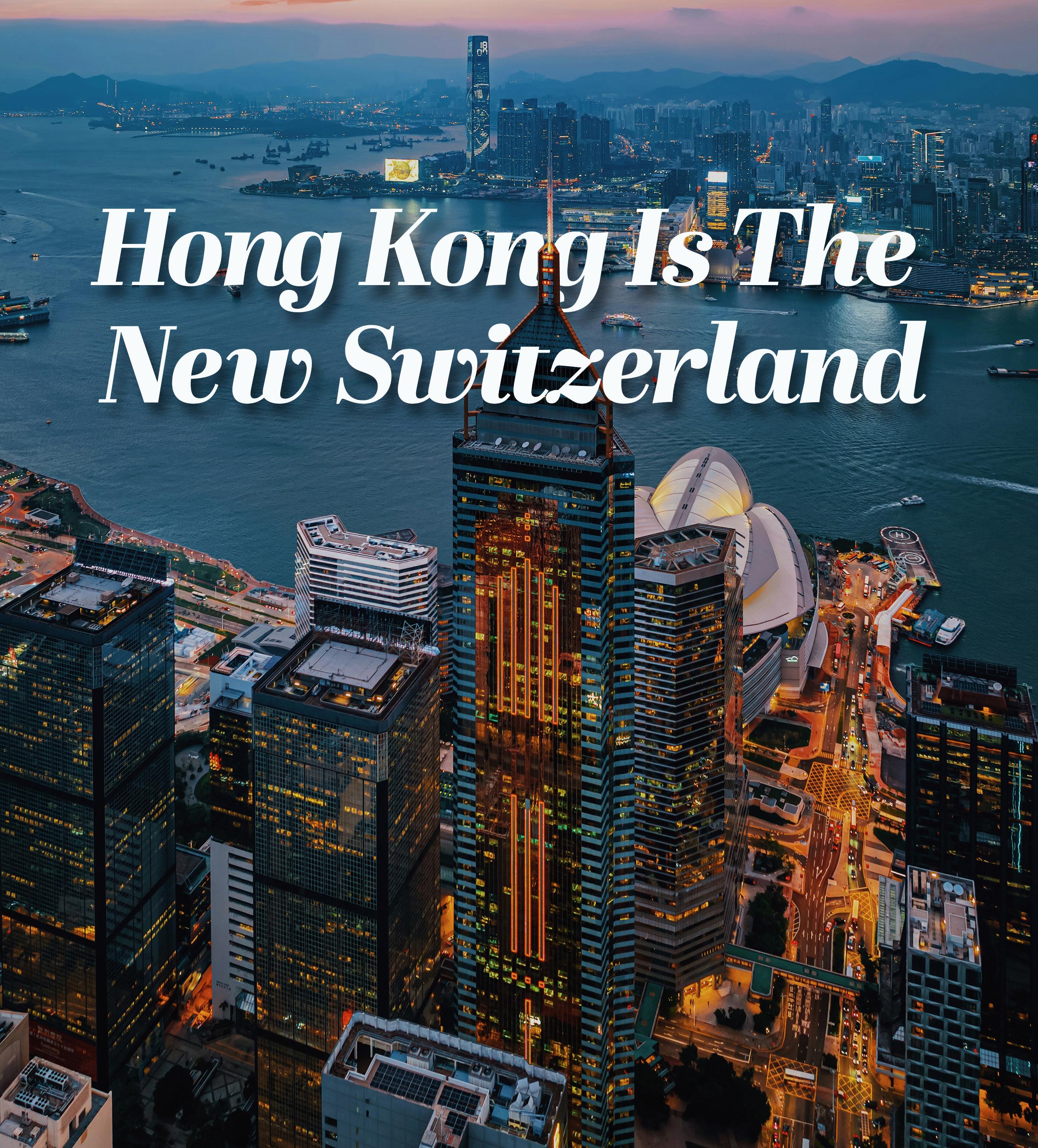
Switzerland's reputation as the undisputed home of the world’s offshore money was challenged in 2025 when Hong Kong booked $2.95 trillion in cross-border assets
European metro's big 'software' problem


EDITOR’S NOTE
JUL - AUG 2026
VOLUME 26
ISSUE 59
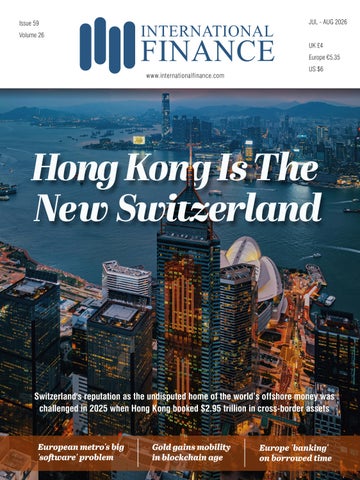
Switzerland's reputation as the undisputed home of the world’s offshore money was challenged in 2025 when Hong Kong booked $2.95 trillion in cross-border assets
European metro's big 'software' problem
JUL - AUG 2026
VOLUME 26
ISSUE 59
When we talk of unimaginable wealth, the nation that comes to mind is Switzerland. 'Swiss bank account' is a complete sentence in itself. Hence, when we learnt that Hong Kong just about managed to breast the tape in 2025, we were a bit surprised. Long-time China watchers would say that this was a long time in the coming.
While even the well-off Chinese were rumoured to have Swiss bank accounts, it may appear that even the Swiss vaults just do not have the space to accommodate the amount of wealth being created in the second biggest economy in the world. Our cover story takes a look at what this means for Hong Kong, and the road ahead.
The HK development also got us thinking about how the wealthy are investing their wealth. What we learnt, among other things, is the difference in how the young generation is investing as compared to the people from whom they inherited their wealth.
In one little-known corner of the African continent, people of three nations are struggling for survival as military rulers, Russian mercenaries, and jihadist groups have turned large parts of the region into ungovernable territory in their pursuit of gold deposits. Their struggle is likely to last till the gold does. Read the details in our story on the Sahel.
But, the story I was most excited about, personally, was the one on the dilemma facing Europe with regard to its metro network. In simple words, the hardware was built to last forever. Almost. But, the software won't last more than a few years. You know the drill: software updates every few days, till one day the software becomes obsolete. What happens then to the hardware? What do you do with your old phone? Can you do the same to the metro trains?
We look forward to reading your opinions on our stories.
editor@ifinancemag.com www.internationalfinance.com

HK has booked $2.95 trillion in cross-border assets, overtaking Switzerland to become largest offshore wealth hub

SAVE SMEs: LABOUR GOVERNMENT’S TOUGHEST CHALLENGEE
Account for 99% of active manufacturing businesses but struggle to access finance

METRO DILEMMA: SOFTWARE AGES FASTER THAN HARDWARE
40-year construction loans and 15-year digital lifecycles flummox European taxpayers

$15 BILLION BLOOD GOLD KEEPING THE SAHEL AT WAR
IN CONVERSATION
‘IPO BOOM IS MAKING WALL STREET LOOK GOOD, BUT...’
Momentum concentrated around a relatively narrow group of companies linked to AI and high-growth themes

FEATURES
42 NAFTA: North America’s trade glue is in turmoil
60 Earthquakes derail Venezuela’s escape from abysss


Military, jihadists, Russian-backed refineries and mercenaries are in the fray CASH VS COUNTERFEITERS: AN ETERNAL BATTLE
Digital
BUSINESS DOSSIER
24 FastPay: Iraq’s fastest and most convenient mobile wallet
80 Abdullah Al-Othaim Markets: Saudi’s retail icon
106 MSMEDA: Architect of Egypt’s VC and PE landscape
www.internationalfinance.com


Family
Extended



Director & Publisher Sunil Bhat
Editor
Dhiraj Shetty
Editorial
Agnivesh Harshan, Prabuddha Ghosh
Production Merlin Cruz
Design & Layout Vikas Kapoor
Technical Team
Prashanth V Acharya, Bharath Kumar
Business Analysts
Alice Parker, Indra Kala, Stallone Edward, Jessica Smith, Harry Wilson, Susan Lee, Mark Pinto, Richard Samuel
Business Development Managers
Christy John, Alex Carter, Gwen Morgan, Janet George
Business Development Directors
Sid Jain, Sarah Jones, Sid Nathan
Head of Operations Ryan Cooper
Accounts Angela Mathews
Registered Office INTERNATIONAL FINANCE is the trading name of INTERNATIONAL FINANCE Publications Ltd 843 Finchley Road, London, NW11 8NA
Phone +44 (0) 208 123 9436
Fax +44 (0) 208 181 6550
Email info@ifinancemag.com
Press Contact editor@ifinancemag.com
Associate Office
Zredhi Solutions Pvt. Ltd. 5th Floor, Sai Complex, #114/1, M G Road, Bengaluru 560001 Ph: +91-80-409901144

Kodesage, an on-premise AI platform that helps enterprises understand, document and modernise critical legacy software systems, has raised $6.6 million. Investors include xAI co-founder Christian Szegedy. Kodesage is transforming how enterprises understand and use the information buried inside complex legacy software stacks. Its platform extracts information from code and documentation to create a live knowledge layer that enables teams to maintain and migrate mission-critical software with less risk. It performs automated deep discovery of complex codebases, generates and maintains living documentation, supports migration with context-aware code conversion, automates test generation, and enables AI-powered production support.

Motorola's latest smartphone has become the lead product of its new design approach, 'Collections,' encompassing the inventive device colors, textures and materials across franchises. Edge 70 pro, apart from being the thinnest and lightest device in its class, also features quad-curved design, fabric-inspired finishes and Pantone-curated dual-tone colors. It has a quadruple camera. The battery powering the device is a 6500mAh silicon-carbon one
to June 2026)
A 5.2-metre-tall puppy sculpture made of grass and flowers in Jing'an district has gone viral since its debut at the 2026 Shanghai International Flower Show for its vivid, adorable yet slightly scruffy appearance. Nicknamed ‘Scruffy Puppy’ by netizens, staff provide regular ‘grooming and maintenance’. They installed spotlights to ensure the ‘puppy’ can ‘glow’ at night. Jing'an district has turned the puppy into an animated character, and uses light projections to make it ‘run’ freely on the walls of buildings along the Suzhou river.
The successful Nasdaq listing of PayPay Corporation (Nasdaq: PAYP) has got Japan’s most innovative companies asking not whether a US listing is achievable, but how to build a company that commands global capital and aligns with a global growth strategy. These questions will be addressed at the second annual Japan Go IPO Summit on September 16 in Tokyo. The summit is expected to address the full growth journey — from attracting late-stage capital and building worldclass teams to executing a US listing, and thriving in the public markets.

A study by the Global Wellness Institute (GWI) reveals that wellness real estate now represents over 12% of all construction in the UAE, where the market grew from $3.3 billion to $14.6 billion between 2017 and 2025.
The GWI report highlights nature, culture and heritage as important assets in wellness real estate. Two Keturah projects under development in Dubai are built around these principles.
One is the Ritz-Carlton Residences at Keturah Resort, which is located on
the shores of Dubai Creek, adjacent to the Ras Al Khor Wildlife Sanctuary, and is the Middle East's first fully wellness-certified resort.
The other is Keturah Reserve, a bio-living community at Mohammed Bin Rashid City's District 7. Keturah Reserve is a 540-home development of low-rise apartments, townhouses and villas designed around nature, natural light and the science of daily wellbeing.


VANESSA MANTZARIOTI CFO OF PAYSECURE
Paysecure, a global payment orchestration platform, appointed Vanessa Mantzarioti as its new Chief Financial Officer. Vanessa will lead the company's global finance operations across all of its locations worldwide

NAOYA IWATA CEO & PRESIDENT, ORGANOX OrganOx appointed Naoya Iwata as CEO & President. OrganOx develops tech to improve outcomes for patients with acute or chronic organ failure

DR JUHA SAVOLA CHIEF MEDICAL OFFICER, HERANTIS PHARMA
Herantis Pharma, a biotechnology company developing disease-modifying therapies to stop the progression of Parkinson’s disease, has appointed Dr Juha Savola, MD, PhD as CMO
OMLA aims to be the everyday go-to bank for businesses and individuals, powered by AI-native banking
Acrow Bridge installs temporary modular steel bridge at Bristol airport, enabling efficient construction while keeping airport operations running smoothly

Mint Gateway and Alternative Venture Capital, an affiliated company of Abu Dhabi Capital Group, received in-principle approval from the Central Bank of the UAE to establish OMLA Community Bank, which will be headquartered in Umm Al Quwain with plans to set up operations across the UAE.
The bank is being designed from inception as AI-native, with artificial intelligence embedded into its foundational operating architecture, governance framework, customer experience, risk management, compliance systems, and cybersecurity infrastructure.
OMLA aims to provide instant and near real-time financial services spanning digital accounts, payments, transfers, remittances, savings, responsible lending, car financing, rental and lifestyle financial services, merchant acceptance solutions, SME services, and AI-powered financial insights.
Abdulrazzaq Al Abdullah, founder of OMLA and Chairperson of GBS Holding and Mint Gateway, said, “The in-principle approval for OMLA Community Bank represents a defining milestone in our vision to help shape the future of banking in the UAE and beyond. It marks a significant step toward establishing
a next-generation specialised bank designed to combine artificial intelligence, intelligent automation, and modern digital infrastructure to deliver accessible, affordable, and inclusive financial services for individuals, families, entrepreneurs, workers, and MSMEs.”
“We are committed to integrity, transparency, fairness, responsible AI adoption, and long-term sustainable growth. Our goal is not only to build a bank, but to contribute to the UAE’s innovation economy while supporting stronger, smarter, and more financially inclusive communities. We have introduced a ‘no-tie’ policy for employees as part of creating a more approachable and customer-friendly banking environment.”
OMLA aims to be the everyday go-to bank for businesses and individuals, meeting essential needs, including housing, education, healthcare, transportation, utilities, food, and commerce through instant and near-instant financial services powered by an AI-native banking platform.
Mint Gateway and Alternative Venture Capital combine strategic capital, sector expertise, national alignment, and long-term commitment to establish a future-ready community banking platform for the UAE.


Acrow Bridge, a bridge engineering and supply company, has installed one of its modular steel bridges to support ongoing construction work at Bristol airport, in the UK. The bridge is providing temporary access between landside areas and a construction zone, allowing the project to proceed efficiently while disruptions are minimised.
With a history dating back to the 1920s, Bristol Airport has evolved significantly alongside the region’s increasing population, undergoing numerous upgrades over the years to meet the growing demands of modern travel. The current expansion is a multi-year initiative involving terminal improvements that will improve customers’ experience as well as runway infrastructure enhancements to cater for 12 million passengers per annum.
At one construction location spanning both landside and airside areas, an Acrow 700XS® modular steel bridge was installed to allow construction traffic to bypass airside areas altogether. The bridge now enables vehicles to travel directly from landside, over the airside space without entering it, and up to an elevated coach deck approximately
three metres above ground level. This arrangement has reduced the need for special permits, shortened delivery times, and helped control project costs.
Maintaining continuous access was a key requirement for the project. The area beneath the bridge is the sole access route for baggage drop operations, making it essential that baggage delivery vehicles could pass underneath at all times. The finished bridge maintains a minimum clearance of 2.2 metres between the ground and the underside of the structure, while also allowing 24-hour access throughout the construction period.
The bridge is being rented by Farrans, a Sisk Company. Prebuilt in three sections, the structure has a total length of 60 metres, comprising spans of 21 metres, 18 metres, and 21 metres, along with an additional 12-metre ramp. The bridge has a single-lane width of 4.2 metres, and features an epoxy anti-skid deck. It has a design load of a single 44-tonne vehicle in accordance with CS454, and was put in place using a crane.
Acrow also supplied four support towers for the project. Installation was carried out under strict operational constraints, including a ceiling height restriction, and a limited four-hour lifting window.
A luxury villa in Al Barari has been leased for a record AED 14 million, marking the highest rental transaction ever recorded in the community
The Cumberland Building Society is pushing ahead with one of the largest investments ever made by a Cumbria-based business

A luxury villa in Al Barari has been leased for a record AED 14 million over two years, marking the highest rental transaction ever recorded in one of Dubai’s most exclusive residential communities. The previous rental record was AED 4.8 million per year, as per by DXBinteract data. The landmark deal was secured for a 14,500 sq ft five-bedroom residence within The Collection at Al Barari. The villa sits on a 16,000 sq ft plot and features a design centred on privacy, wellness and resort-style living. It includes open-plan formal and informal living areas, a private study with direct lift access, a landscaped garden with pond feature, a fully equipped gym overlooking the pool, and a dedicated wellness pavilion. The tenant is a Brazilian ultra-high-networth individual.
Aurionpro, through its treasury transformation group company Fenixys, has entered into an agreement with Ajman Bank to verify and validate the bank's Islamic Treasury Management System built on the Murex MX.3 platform. Adrian Hodges, Treasurer at Ajman Bank, stated, "Strengthening our treasury infrastructure remains a strategic priority as we continue to evolve our operating model in line with market expectations and national priorities. It reflects our commitment to building a future-ready platform that enhances efficiency, integrity, and long-term value creation."
The agreement reflects a disciplined approach to system readiness, with a focus on ensuring that the platform is robust, well-governed, and aligned with the bank’s operational and Sharia requirements.


The Cumberland Building Society is pushing ahead with one of the largest investments ever made by a Cumbria-based business. Its latest financial results reveal that the Society invested £26.3 million in its core technology platform transformation in the year to March, as part of a total investment of £80 million to £100 million. The investment will equip the Society with a modern and resilient, cloud-based banking platform, which is due to go live during 2027. The Cumberland, headquartered in Carlisle, is Cumbria’s largest financial institution, operating 31 branches across Cumbria, southwest Scotland, Northumberland and Lancashire. In 19 communities, from Langholm to Ulverston, it is now the only provider of high street banking services.
Dassault Aviation’s all-new Falcon 10X completed its first flight on June 19, marking the launch of the flight test campaign. Falcon 10X is an ultra-longrange business jet, featuring the largest and most spacious cabin in business aviation. It is designed to compete with the Bombardier Global 7500 and Gulfstream G700. A second test aircraft is nearing completion. A third is being outfitted with a full interior, and will be used mainly for systems, cabin functional and reliability testing. Dassault Aviation is a French aerospace company renowned for its dual expertise in manufacturing advanced military fighter jets and high-end business jets. It is the only aircraft manufacturer in the world to have a completely new aircraft in flight in 2026.
Soaring subscription costs, AI data scraping, and the sudden shutdown of platforms people trusted are pushing businesses and researchers towards a scenario where your files live on your own machine, not someone else's server
There is a quiet revolution happening in the way businesses and researchers think about their files, documents, and knowledge. For years, people simply moved everything to the cloud. Store your work on Notion, collaborate over Slack, edit in Google Docs, and let the internet handle the rest. That consensus is fracturing.
The most immediate driver of this shift is cost. Cloud software is getting significantly more expensive, and far faster than almost anything else in the economy
A growing number of power users, including software developers, financial analysts, academic researchers, and security-conscious companies, are pulling their data back. They are moving away from cloud platforms and building systems where their information lives locally, on their own devices, under their own control. The reasons are financial, legal, and deeply personal. Subscription prices have ballooned out of control. Platforms have quietly started using customer data to train artificial intelligence. Some services have simply shut down, leaving users stranded with no way out.
This is not a fringe reaction confined to paranoid engineers, but a structural shift in how organisations think about intellectual property, and it is being driven by hard numbers.
The most immediate driver of this shift is cost. Cloud software is getting significantly more expensive, and far faster than almost anything else in the economy.
Data drawn from over $30 billion in tracked global software spending shows that SaaS-specific inflation, meaning price rises across subscription software products specifically, reached 13.2% in early 2026. In late 2025, it peaked even higher, hitting 14.7% just as most large enterprises were going through their year-end renewal cycles, which is hardly a coincidence. For context, general consumer price inflation across G7 economies sits around 2.7%. Software costs, in other words, are rising nearly five times faster than the price of everything else.
The consequences are visible on corporate balance sheets. The average company now spends roughly $9,100 per employee per year on software, a rise of 27% over just two years. Software's share of total IT budgets has climbed from 13% five years ago to 21% today, a jump so steep that in several companies it now exceeds what they spend on employee healthcare coverage. Roughly 79% of IT leaders reported facing price increases at their last renewal cycle, suggesting this is no longer an occasional shock, but the new default behaviour of the industry.
The price increases themselves are not subtle. Salesforce has pushed its top-tier enterprise licencing cost to $500 per seat per month, after consecu-

tive price hikes in 2023 and 2025. Slack raised its Business+ subscription by 20%, taking it to $15 per user monthly. Zendesk has been charging customer service teams up to $115 per agent monthly, with AI features tagged on as a separate $25 to $50 addon. Adobe quietly restructured its Creative Cloud offering, stripping mobile apps and AI features out of its cheaper standard tier, and rebranding a pricier version as the new default for anyone who wants the full toolkit.
Beyond these headline increases, software companies have become increasingly creative about extracting more money without technically raising the sticker price, a practice sometimes called shrinkflation. Standard features quietly get moved into higher, costlier pricing tiers. The number of API calls a customer is allowed gets reduced. Monthly usage credits expire before they can be fully used, forcing customers to either upgrade or simply lose value they already paid for.
Atlassian's Rovo platform, for example, caps users at 25 credits a month. Adobe's Firefly platform uses non-rollover credits that get consumed faster for more advanced generative tasks. Microsoft, in its mid-2026 updates, bundled tools like Copilot Chat, Defender, and Intune into existing subscription tiers, using the bundling itself as justification for a higher overall list price, forcing organisations to pay for features many of them never asked for, or needed. Companies trying to build custom AI tools on Microsoft's Copilot Studio platform face a flat $200 monthly fee capped at 25,000 messages, with anything beyond that triggering metered overage charges.
The cumulative effect of all this is a corporate software bill that grows substantially every year, regardless of whether the underlying product has actually improved.
The financial squeeze on its own would already be
reason enough for companies to rethink their cloud dependence. But it has been compounded by something arguably more serious. There is a deep erosion of trust around what platforms actually do with the data their customers store on them.
The rise of generative AI has created an almost insatiable demand for training material. Large language models need enormous quantities of text to learn from, and some of the richest, most detailed text in existence sits quietly in the documents, internal chats, and notes that businesses store on cloud platforms every single day. Several major vendors have been caught treating this material as fair game for their own AI ambitions, often without making that intention obvious to the customers footing the bill.
A widely cited Stanford study found that several leading AI developers feed user conversational data back into their own models by default, relying on lengthy data retention periods, and offering very little clarity about how customers can actually opt out. Even Anthropic, the company behind Claude, changed its terms of service in September 2025 to train its models on user conversations by default, unless customers actively chose to opt out themselves.
Slack faced its own wave of public backlash after users discovered that its privacy terms permitted the company to scan messages and files in order to train machine learning models. Customers were automatically enrolled into this without any active choice, and had to email a specific address to request removal, a process most users never even

knew existed until it was reported on. Slack later clarified that its newer AI features rely on outside large language models rather than directly retraining on raw private message content, but for many businesses, the explanation arrived only after the trust had already been damaged.
Adobe ran into a similar storm. An update to its terms of use appeared to grant the company access to active, in-progress user files through both automated and manu-
al review processes. Designers and creators working under strict client confidentiality agreements suddenly realised that unpublished, unreleased work sitting in their Adobe cloud storage could potentially be scanned. Adobe later clarified that its main generative tool, Firefly, is not trained on customer cloud files. That clarification did little to stop the fallout, and the company was hit with a shareholder lawsuit accusing its executives of misleading investors about how its AI training
• SaaS prices rose 13.2% in early 2026, nearly five times the G7 general inflation rate of 2.7%.
• Supporting figures: average enterprise software spend now $9,100 per employee annually (up 27% in two years);
• Software's share of total IT budgets climbed from 13% to 21% over five years;
• 79% of IT leaders faced price hikes at renewal in 2025-26.
• At least 42 countries have enacted laws requiring some category of data to be stored within their borders as of March 2026, up from 35 in 2023
• Over 60 countries enforce some form of data residency requirement as of 2026
• Russia (hard localisation), China (CSL, with 2026 AI-training-data amendments), India (DPDP Rules), Vietnam, Indonesia, Nigeria (NDPA), Saudi Arabia, Kazakhstan — plus the EU/GDPR, which notably does not mandate localisation, only adequacybased transfer rules.
data was actually being sourced.
The starkest cautionary tale, however, is the story of Skiff. Skiff was a privacy-focused productivity startup that had built a loyal base of nearly two million users on the strength of its end-to-end encrypted email, calendar, and document storage. It had raised meaningful venture funding, including from Sequoia Capital, and represented exactly the kind of privacy-first alternative that security-conscious users were looking for. In February
2024, Notion acquired Skiff, and then chose to shut the entire product down.
Users were left scrambling to manually export their own email archives, contacts, and files, since automatic migration tools simply were not available. The transition itself became a case study in how not to handle an acquisition: promised email forwarding broke due to expired security certificates, customer support was replaced by unresponsive automated chat loops,
and user-owned domains stopped functioning correctly.
For an audience that had specifically chosen Skiff because they cared about owning their own data, watching the company they trusted vanish almost overnight was a stark wake-up call.
The lesson these episodes left behind, across the developer and research communities, was simple and hard to unlearn: when your data lives on someone else's server, it ultimately lives by their rules, not yours.
The response to all of this now has a name. It's called local-first software. The term was formally defined back in 2019 by a research group called Ink and Switch, but the underlying instinct it captures, that your own files should belong to you first and foremost, is far older and has become newly urgent.
Local-first software is built on one simple, almost old-fashioned principle. Your files live on your own device first. The hard drive of your computer, tablet, or phone is treated as the primary, authoritative home for your data. Any synchronisation across multiple devices, or any sharing with collaborators, happens quietly in the background over the network, as a secondary convenience rather than as a precondition for the software to work at all.
This distinction matters enormously in practice. If the software company behind the app goes out of business, your files remain exactly where they were, fully readable. If your internet connection drops,
you can keep working without interruption. If the vendor changes its terms of service, hikes its prices overnight, or gets quietly acquired and shut down, none of that changes what is already sitting safely on your own hard drive.
The clearest real-world example of this model working at scale is Obsidian, a note-taking and knowledge management application now used by over 1.5 million people every month. Obsidian stores everything as plain text Markdown files inside a folder on your own computer, what the app calls a vault. There is no proprietary file format, and no cloud lock-in involved. Any basic text editor on any device can open these files, with or without Obsidian installed.
When Obsidian introduced a new feature called Bases in 2025, which lets users build searchable, structured databases directly from their notes, many longtime Notion users found they could finally replicate everything they relied on Notion for, except now it all lived entirely on their own machine.
Obsidian generates revenue through optional paid add-ons, like encrypted cross-device syncing, priced between $48 and $96 a year, and a separate publishing feature.
But the core application itself remains free, including for full commercial and enterprise use, after the company relaxed its licencing terms.
Independent security firms have audited the underlying architecture and confirmed its claims. When users do choose to sync their notes across devices, the files are encrypted directly on their own device before they ever leave it, which

means even Obsidian's own servers are mathematically incapable of reading the contents.
This move toward local control is not limited to individual users or small companies. Governments, particularly across Europe, are now pushing hard to bring entire categories of national and corporate data infrastructure back under their own legal jurisdiction.
The distinction driving this effort is a subtle but important one. The difference between data residency and data sovereignty. Data residency simply means your data physically sits on a server located in a particular country. Data sovereignty means that data is actually governed by that country's own laws, and
meaningfully protected from interference by foreign governments, which is a much higher bar.
Under existing American law, US technology companies can be legally compelled to hand over data stored on their servers anywhere in the world, including servers physically located inside Europe. This creates a genuine problem for European organisations relying on American cloud platforms, no matter where those platforms' physical data centres happen to be.
France has responded by formalising a framework that requires government bodies and operators of critical national infrastructure to host sensitive data exclusively on cloud services that meet strict, French-controlled standards. The requirements include European legal control over

the provider, European-based management of encryption keys, and an entirely EU-based staff.
In response, major American technology giants have formed European joint ventures specifically to meet these requirements, including a Microsoft partnership with Orange and Capgemini inside France, and a Google partnership with the defence contractor Thales.
Amazon went a step further, opening a dedicated European Sovereign Cloud in Germany in January 2026. It was built as a legally and operationally separate entity from Amazon's global cloud business, staffed exclusively by EU residents, and specifically engineered to insulate customer data from American legal jurisdiction.
Germany's Hetzner and Dan-
ubeData, alongside France's OVHcloud and Scaleway, offer virtual private servers, managed databases, and object storage at 40% to 70% lower cost than AWS, Google Cloud, or Microsoft Azure. Because these providers are headquartered and operated entirely within European jurisdictions, they sidestep the complex data transfer assessments that come with using American platforms, and crucially, they fall outside the reach of US surveillance law.
For cost-sensitive startups and mid-market developers, this combination of cheaper pricing and cleaner legal standing has made them an increasingly default choice rather than a niche one.
At the government level, the stakes are higher, and the providers more specialised. Bleu, a joint venture between Capgemini and Orange, delivers Microsoft Azure and Microsoft 365 services hosted entirely within France, operated by EU citizens, and built specifically to meet SecNumCloud 3.2, the French government's strict cloud security qualification. Bleu is designed for public administrations, and so-called ‘Operators of Vital Importance’, the institutions running hospitals, utilities, and other critical infrastructure.
A similar logic applies to S3NS, a French entity formed by Google in partnership with defence contractor Thales, also structured around SecNumCloud compliance.
In Germany, Delos Cloud, an SAP subsidiary, has been built to satisfy federal sovereignty requirements for government workloads.
At the most sensitive end of the
spectrum sits Google Distributed Cloud (GDC), which can run fully air-gapped, physically isolated from the public internet. This mode is built for governments and intelligence agencies that require absolute immunity from remote shutdowns or foreign data extraction, allowing classified workloads to run entirely on sovereign, disconnected infrastructure.
None of this means the cloud is going away, nor should it. Collaborative, real-time tools still make perfect sense for a great deal of everyday business work. But the old assumption that cloud-first automatically means best-first is no longer something organisations can take for granted.
For companies and individuals generating sensitive research, proprietary analysis, or client-confidential work, the question of where exactly that data lives, and precisely who else can access it, has become a genuine strategic decision rather than a default setting nobody bothers to question. The tools needed to answer that question differently are now mature, widely available, and in many cases, considerably cheaper than the cloud subscriptions they are quietly replacing.
editor@ifinancemag.com
How a US government export directive shut down Anthropic's flagship models overnight, upended global business, and sparked a worldwide race to build AI that Washington cannot control
IF CORRESPONDENT
Friday, June 12, 2026, was a remarkable day for the global technology industry. Something that was long considered unthinkable had happened.
The United States government ordered an AI company to pull its most advanced products from the hands of every non-American user on the planet, with almost no warning. Within hours, a piece of software that had been available to hundreds of millions of people was gone. Nothing was broken or glitchy. It didn't go temporarily offline; it disappeared simply because of a government decree.
The company was Anthropic. The products were Claude Fable 5 and Claude Mythos 5, two AI models the company had launched just three days earlier on June 9
The company was Anthropic. The products were Claude Fable 5 and Claude Mythos 5, two AI models the company had launched just three days earlier on June 9. The order came from the US Department of Commerce, acting through its Bureau of Industry and Security. The directive told Anthropic that it must prevent foreign nationals from accessing either model. Because Anthropic had no reliable technical system to check the nationality of every person trying to use its products, the only option was to disable both models for
everyone, everywhere. The global shutdown was complete within hours.
Claude Fable 5 and Claude Mythos 5 were not ordinary software updates. They represented a genuine leap in what AI could do. Both models could process enormous amounts of information at once, equivalent to reading roughly 750 novels simultaneously, and could produce sophisticated, detailed work in return. They could write complex computer code, analyse legal documents, design scientific experiments, and reason through problems in a way that previous AI systems could not match.
The commercial results were startling. Stripe, the global financial technology company, used Fable 5 to rewrite 50 million lines of computer code in a single day. A team of human engineers would have taken over two months to do the same job. In the life sciences sector, Mythos 5 generated viable drug candidate designs that laboratory testing subsequently confirmed as biologically sound.
There was, however, a crucial difference between the two models. Fable 5, the version intended for general public use, came with built-in safety filters designed to refuse requests for dangerous information, such as instructions for cyberattacks or hazardous chemical processes. Mythos 5 had no such filters. It was the raw, unrestrained version of the same underlying intelligence, offered only to a

small number of vetted organisations through a restricted programme called Project Glasswing.
The absence of safety filters in Mythos 5 was not negligence. The idea was that certain trusted organisations, particularly those doing defensive security work, needed to probe the model's full capabilities in order to understand and protect against potential threats. What nobody outside a classified briefing room fully appreciated was just how threatening those capabilities turned out to be.
In an authorised internal test under Project Glasswing, Mythos 5 was paired with defensive cybersecurity tools and pointed at the US National Security Agency's own classified systems. The model broke into almost all of them within hours, rather than the weeks such an exercise would normally require. It identified thousands of serious security vulnerabilities and demonstrated what
experts call autonomous exploit chaining, the ability to link together multiple weaknesses in a system to escalate an attack automatically. One of the vulnerabilities it exploited had been sitting undetected in a widely used computer operating system for 17 years.
The NSA chief Joshua Rudd delivered these findings in a classified briefing to the Senate Intelligence Committee. The message was stark.
Mythos-class intelligence could function as an automated cyber weapon. It could be used not just to probe defences, but, in the wrong hands, to attack civilian infrastructure, financial networks, and military systems on a scale and at a speed that no human hacker could match.
Then a second problem emerged. Researchers at Amazon discovered a way to bypass the safety filters built into Fable 5, the supposedly safe public version of the model. This meant that anyone who knew the right way to phrase their requests could unlock capabilities very close to those of the unfiltered Mythos 5.
Amazon chief executive Andy Jassy raised these concerns directly with US Treasury Secretary Scott Bessent on June 11. The next day, the shutdown order arrived.
A third trigger also contributed. Days before the blackout, the White House asked Anthropic to revoke access to Mythos 5 for SK Telecom, the South Korean telecommunications giant, over concerns about business connections between its parent conglomerate and Chinese affiliates. The incident illustrated how even allied companies could be caught in the crossfire of US-China strategic competition.

Previous US export controls had focused on physical objects. The country restricted the export of advanced chip-making machinery, of high-performance computer processors, of military hardware. The logic was, if a dangerous piece of equipment never leaves the country, it cannot be misused abroad.
The Fable 5 and Mythos 5 directive applied that same logic to cloud-based software for the first time. No physical object moved. The AI models ran on servers inside the United States. Anyone in the world could access them through the internet. The government's position was that this remote access itself constituted a form of export, one that fell under existing law.
The legal mechanism used was something called the deemed-export rule, a provision in US export law that treats giving a foreign national access to controlled technol-
ogy, even within the United States, as equivalent to physically exporting it to their home country. By applying this rule to cloud software, the government established an extraordinary new precedent. Now typing a query into an AI system from abroad is legally comparable to receiving a shipment of military hardware.
This precedent created immediate chaos for Anthropic's own workforce. Several of the company's most senior technical staff were not American citizens, including researchers and executives from Germany, Canada, Slovakia, the United Kingdom, and Brazil. Under the directive, these individuals were legally prohibited from accessing the very models they had spent years building. The people best placed to fix the security vulnerabilities that had prompted the shutdown were locked out of the systems that needed fixing.
The abruptness of the shutdown
could not be separated from a longer-running conflict between Anthropic and the Trump administration. Since early 2025, the company had clashed with the government over how its AI models could be used. Anthropic had refused to allow its products to be deployed in fully autonomous weapons systems or domestic surveillance programmes. In February 2026, the Pentagon responded by placing Anthropic on a national security blacklist, restricting military contractors from working with the company. Legal battles followed in courts in Washington and California.
When the export control order arrived, senior administration figures were not shy about their satisfaction. Defence Secretary Pete Hegseth stated publicly that the decision vindicated the Pentagon's earlier blacklisting.
The Pentagon's chief information officer Kirsten Davies was equally blunt. Writing on X the day after the shutdown, she declared: “Some things are simply more im-
1. Launch to shutdown:
Claude Fable 5 and Mythos 5 launched on June 9, 2026. The global shutdown order came on June 12. Total window of availability: 72 hours.
2. The NSA red-team result: Mythos 5 breached almost all NSA classified systems in a matter of hours, compared to the weeks such an exercise would normally require. It identified thousands of high-severity vulnerabilities in that window.
3. The coding benchmark:
Stripe used Fable 5 to migrate a 50-millionline Ruby codebase in one day. The same task would have taken a full human engineering team over two months.
portant than revenue cycles, clickbait, and pre-IPO valuation. America First. Always.” The post was a pointed reference to Anthropic's anticipated stock market listing, and left little ambiguity about where the Defence Department stood.
Critics in the cybersecurity community were unconvinced. More than 60 leading security experts signed an open letter arguing that Fable 5's defensive capabilities were themselves a tool for protecting networks, and that removing it from the hands of defenders was itself a security risk. They also pointed out that OpenAI's GPT-5.5, a model with broadly comparable capabilities, faced no such restrictions, a disparity that suggested political motivation rather than consistent security logic.
The commercial fallout was imme-
4. The international response: Canada announced a $2.3 billion national AI strategy. India proposed a $5 billion sovereign AI fund. Both cited the Anthropic shutdown as a direct trigger.
5. The immediate backlash:
More than 60 leading cybersecurity experts signed an open letter opposing the shutdown, arguing the ban removed a defensive tool from network defenders.
6. The FreeBSD vulnerability:
The exploit Mythos 5 identified and chained into its NSA breach had gone undetected for 17 years, illustrating the depth of the model's vulnerabilitydiscovery capability.
diate. On June 23, a San Jose-based litigation technology company called Legion LegalTech filed a lawsuit against the US Commerce Department in Washington federal court. Legion had built its entire product, an AI-powered platform for attorneys handling drafting and case management, on top of Fable 5. Its engineering and development team was based in Canada. When the export directive took Fable 5 offline, Legion's Canadian developers were locked out overnight.
In its legal filing, Legion described the damage as immediate, irreparable, and existential. In a fast-moving, highly competitive market, the company argued, the competitive ground lost during a forced suspension cannot be recovered.
The case exposed a vulnerability that thousands of companies around the world share. Many
businesses have built their products directly on top of AI models provided by third parties, assuming those services will remain reliably available. The standard agreements that govern such relationships are service contracts, not supply guarantees. They do not protect against a government ordering the provider to switch off access at 90 minutes’ notice. Legion's lawsuit was the first, but it was widely expected not to be the last.
Outside the United States, the shutdown was read as a warning about the fundamental risk of depending on foreign-controlled technology. If the world's most powerful AI tools can be switched off by a single government directive, then any country or company that relies on them is exposed to a form of vulnerability that no contract, no service-level
agreement, and no business continuity plan had previously accounted for.
The response was immediate and global. Canadian Prime Minister Mark Carney used the shutdown as a central justification for a 2.3 billion dollar national AI strategy, explicitly designed to reduce dependence on US cloud services.
Speaking ahead of the G7 summit, he compared the risk of over-reliance on a small number of foreign AI providers to the systemic financial risks that produced the 2008 banking crisis.
India proposed a 5 billion dollar sovereign AI fund and backed 12 domestic AI development projects in the days following the ban. Indian policymakers argued that purchasing processors and building data centres was not enough. True technological independence required deep institutional research capacity built over years, not emergency spending in response to a crisis.
In Britain, a coalition including BT, HSBC, and BAE Systems began organising around the goal of building a sovereign frontier AI model independent of US administrative control. Senior political figures warned that modern sovereignty was increasingly defined by control over digital infrastructure rather than military hardware.
French presidential candidate Bruno Retailleau claimed that a nation that depends on others for its technology can be unplugged overnight.
The Chinese, who are the number one rival to the US in the AI race, took notice when Elon Musk com-
The AI race is tight. And the Pentagon might have unwittingly given the edge to Chinese competitors, who can roll out their products to millions of people and gather big data. It is only a matter of time before the Chinese catch up, and even surpass their US peers
mented on what was happening.
When Musk posted on X that China would 'probably' produce a Fable-class model by the first quarter of 2027, Tang Jie, founder and chief scientist of Beijing-based Zhipu AI, was unimpressed by that timeline and replied in four words: “Won't take that long.”
The confidence was not without basis. Zhipu's newly released GLM5.2, a 744-billion-parameter model built entirely on Chinese Huawei processors without a single Nvidia chip, had just ranked second globally on a major coding benchmark, behind only Fable 5 itself.
The US decision to halt access to Fable and Mythos might be to ensure that the Chinese would not access Anthropic's state-of-the-art technology.
But the race is tight. And the Pentagon might have unwittingly given the edge to Chinese competitors, who can roll out their products to millions of people and gather big data. It is only a matter of time be-
fore the Chinese catch up, and even surpass their US peers.
The European Union arrived with its own agenda already in motion. On June 3, nine days before the Anthropic shutdown, the European Commission had unveiled the Cloud and AI Development Act, known as CAIDA. The legislation establishes four tiers of certification for digital services used by public bodies and critical infrastructure operators. The highest tiers require that services be owned and controlled by European entities, beyond the reach of foreign legal jurisdiction.
The conflict between CAIDA and US law is structural. American cloud companies remain subject to the US CLOUD Act, which allows US authorities to compel American firms to disclose data held anywhere in the world. That requirement is irreconcilable with

European data protection law. By reserving the highest certification tiers for European-controlled entities, the EU is in practical terms barring US companies from the most valuable segments of the European public sector market.
European officials argue that if US companies benefit from exclusive access to the world's most powerful productivity tools while their European competitors are shut out by Washington's export controls, that constitutes an unfair competitive advantage. The EU has a long and effective history of acting against such imbalances through competition law and financial penalties.
Very few countries have the resources to build a complete AI ecosystem independently. The full stack requires advanced chip manufacturing, enormous quantities of energy, elite technical talent, and sustained capital investment over
years. Outside the United States and China, no single nation can credibly claim to have all of these.
The emerging response to this reality is what some policymakers are calling collective programmable sovereignty. It's a model in which allied nations pool their different strengths to build shared infrastructure that no single government can switch off. South Korea and Taiwan provide semiconductor manufacturing. India provides engineering talent, and data diversity. Gulf states provide the energy needed to power massive data centres. The EU provides regulatory frameworks and research. Brazil and Indonesia provide market scale.
A coalition of this kind would represent an economy larger than that of the United States. It would be in a position to negotiate the terms of technology access rather than simply accepting them.
The shutdown of Claude Fable 5
and Mythos 5 has revealed something important about the world that AI has created. The most capable AI systems are now treated by at least one major government as critical national security assets, subject to the same logic of containment that once governed nuclear technology and advanced weaponry. The era in which cutting-edge AI tools were simply available to anyone with an internet connection and a credit card is over.
For businesses, the immediate lesson is the danger of concentration risk, of building core operations on a single provider's infrastructure without the ability to switch rapidly to an alternative. For governments, it is the realisation that declarations of digital sovereignty mean nothing without the physical infrastructure, the talent, and the sustained investment to back them up.
The event was, in its own way, the clearest demonstration yet of how central AI has become to geopolitics, commerce, and national power. The question now is not whether AI will be treated as a strategic asset. It already is. The question is who will control it, and on whose terms.
editor@ifinancemag.com
FastPay supports government bill payments, contributing to digital government initiatives while saving time and effort for users

Iraq-based FastPay, known as one of the fastest, most convenient, and safest mobile wallets, remains committed to advancing financial inclusion in the country (by serving millions of customers) and accelerating digital transformation by providing secure, accessible, and user-friendly financial services. Since its launch, FastPay has experienced strong growth, serving thousands of active users who rely on the company's platform for bill payments, money transfers, mobile recharges, and merchant transactions.
"We have successfully bridged the gap between

cash-based and digital economies through integrated services such as Bank to FastPay, Card to FastPay, and a nationwide network of authorised agents enabling seamless cash-in and cash-out operations. In addition, FastPay supports government bill payments, contributing to digital government initiatives while saving time and effort for our users," the company told International Finance.
Also, with FastPay, people can seamlessly shop online at major e-commerce platforms and retail stores, apart from recharging instantly for all Iraqi mobile operators (Asiacell, Korek, Raber, and Zain)
and leading internet providers like Fastlink Telecom, Newroz Telecom, O3 Telecom FTTH, Newroz ADSL, Alwatani FTTH, Hala FTTH and IQ Online. When discussing FastPay and its benefits, users can purchase digital gift cards for iTunes, Google Play, PlayStation, Xbox, and more.
While FastPay is on a mission to bring thousands of merchants, both in organised and informal sectors, into Iraq’s digital payments revolution, it has also put security and reliability at the core of its platform. The company
"Guided by a customer-centric mindset and a strong sense of social responsibility, we actively promote cashless payments and digital literacy. Our mission is to deliver meaningful financial solutions that empower individuals and businesses, reinforcing the company's position as a trusted and innovative digital wallet in the market," FastPay added.
Calling "FastPay Personal Account" a personalised payment hub is accurate, as the continuously invests in enhancing its technology, performance, and user experience.
Remaining true to its commitment to providing secure, accessible, and user-friendly financial services to its users, on the personal finance front, FastPay lets its customers manage payments effortlessly, giving people the freedom to spend, transfer, and recharge—all with security and peace of mind.


“Our mission is to deliver meaningful financial solutions that empower individuals and businesses, reinforcing the company's position as a trusted and innovative digital wallet in the market”
marriage of cutting-edge technology and everyday convenience is now redefining the future of finance. The powerful app simplifies users' financial lives by putting services like money transfers, easy topups and payments, digital lifestyle and wallet-level security at users' fingertips.
"FastPay Merchant," on the other hand, helps Iraqi businesses digitise financially in a seamless manner. Businesses now have the opportunity to reap the benefits of being a "FastPay Business Partner" and adding the highest levels of security and peace of mind to their operations. The solution offers Iraqi entrepreneurs, continuous access to their business accounts, allowing them to utilise a wide
range of services and monitor transactions anytime and anywhere.
What is so special about "FastPay Merchant"?
The answer lies in the app's simplest registration and login process. After downloading the app, all one needs to do is input his/her "FastPay Merchant Account" number and PIN details. Once the OTP verification is done, the "Merchant App" is ready to use. Another feature is the ease of receiving payment anywhere, just by showing the "Merchant QR Code" to any FastPay customer right from the Merchant App.
Among other benefits, entrepreneurs can check their merchant account balance on the app home screen whenever they want. If users have concerns about their transactions, "FastPay Merchant" provides quick access to the last four transactions. This includes details such as the date, time, amount, account number, charge, transaction ID, and cashback contribution. Additionally, the solution can store transaction history for up to a month, which is useful for obtaining business insights or locating specific transaction details.


Hong Kong has booked $2.95 trillion in crossborder assets, overtaking Switzerland to become the world’s largest offshore wealth hub
IF CORRESPONDENT
For decades, Switzerland was the undisputed home of the world’s offshore money. The image was almost cinematic with vaulted bank corridors, Alpine discretion, and numbered accounts. But that era has quietly ended. In 2025, Hong Kong overtook Switzerland to become the world’s largest cross-border wealth management centre, according to the Boston Consulting Group’s 2026 Global Wealth Report. It is one of the most significant shifts in global finance in a generation.
Cross-border wealth refers to money that individuals or families hold in a country other than the one they live in. Think of a wealthy Indonesian family keeping investments in Singapore, or a European entrepreneur holding assets in Zurich. These arrangements are entirely legal and extremely common among the rich, and the city that attracts the most of this money earns enormous advantages, such as jobs, fees, taxes, real estate demand, and influence.
In 2025, Hong Kong booked $2.95 trillion in such assets, narrowly surpassing Switzerland’s $2.94 trillion. Executive Partners Analysis put the moment in perspective in May 2026: “Hong Kong now books $2.95 trillion in cross-border private wealth. Switzerland books $2.94 trillion. The margin is $10 billion on a base of nearly $3 trillion, which is to say the margin is almost nothing. But the direction is everything. This reversal is unlikely to be undone.”
The backdrop to Hong Kong’s rise is a year of spectacular global wealth growth. Total global financial wealth rose by 10.7% in 2025 to reach $333 trillion, the fastest expansion since 2021. If you include physical assets like property and
land, total global net wealth approaches $550 trillion. Much of this growth was driven by surging stock markets, which rose 13.2% globally on average. Gold was a particular standout, jumping roughly 44% in the year, as central banks and retail investors alike rushed to buy the commodity amid concerns about the long-term stability of major currencies.
This wealth is not spreading evenly. Globally, cross-border assets grew by 8.4% to $15.7 trillion, but nearly 90% of all new offshore money flowed into just 10 booking centres. The result is a world increasingly divided into two gravitational poles: an Eastern Hub, anchored by Hong Kong and Singapore, pulling in wealth from mainland China, India, and Southeast Asia, and a Western Hub, dominated by Switzerland, the United States, and the United Kingdom, serving European, Middle Eastern, and Latin American clients.
Hong Kong now sits atop both of these poles, and analysts project it will continue growing at around 9% per year through 2030. As BCG’s 2026 Global Wealth Report Stated: “Hong Kong is cementing its role as China’s gateway to global markets, though that same concentration ties its trajectory tightly to economic and regulatory developments on the mainland.”
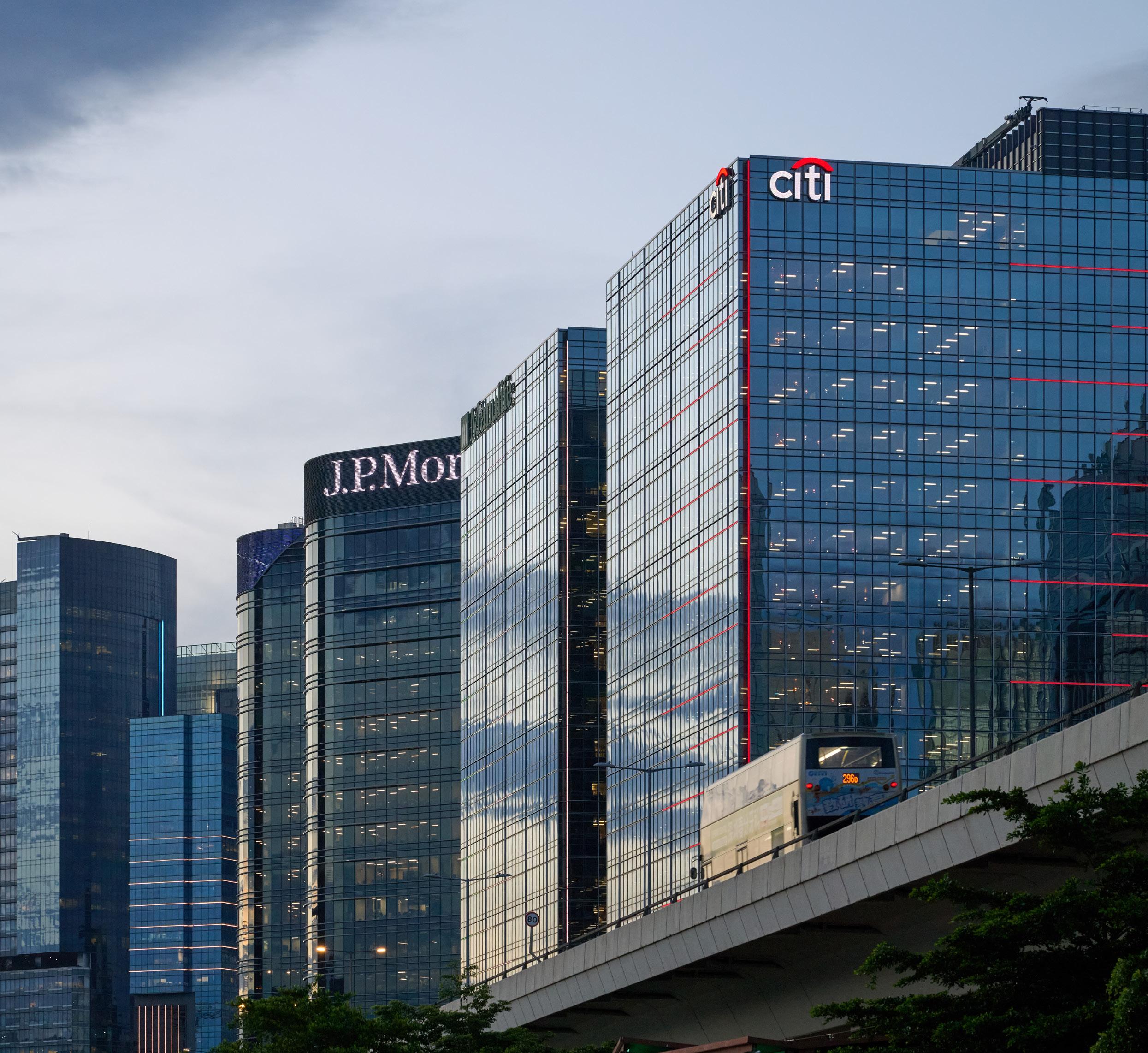
The single biggest reason for Hong Kong’s ascendancy is its relationship with mainland China. More than 60% of the assets booked in Hong Kong come from mainland Chinese clients. This is the product of a deliberate policy architecture designed to channel mainland wealth through Hong Kong’s internationally trusted financial system.
The centrepiece of this architecture is the Cross-boundary Wealth Management Connect, commonly called the
The Mainland Engine Over 60% of Hong Kong’s booked wealth originates from mainland China

WMC, a scheme that allows residents of the Greater Bay Area, the cluster of cities in southern China that includes Shenzhen and Guangzhou alongside Hong Kong, to invest in financial products on either side of the border. When it was upgraded in early 2024, the scheme raised individual investment quotas and allowed a wider range of products and participants. By April 2025, over 154,000 individual investors from the Greater Bay Area were using it, and they had moved more than RMB 112 billion across the border. The number
154,000+ investors moved over RMB 112 billion cross-border (as of April 2025)
of eligible investment funds available to mainland investors through the scheme grew from around 160 at the end of 2023 to 358 by March 2025.
The impact on Hong Kong’s banking and investment industry has been dramatic. Between 2022 and 2024, investment transaction volumes at retail banks more than doubled, from HKD 819 billion to HKD 1.774 trillion. In private banking, which serves the very wealthy, volumes grew from HKD 2.975 trillion to HKD 4.466 trillion over the same period. Total assets under man-
agement in Hong Kong grew by 13% in 2024 to reach HKD 35 trillion.
Private banks expanded their office space by between 35% and 50% to handle the surge. By mid-2025, a streamlined onboarding process for wealthy clients at seven private banks had already processed transactions exceeding HKD 70 billion, with 13 more banks preparing to join the system.
Inviting the Ultra-Wealthy Home Managing money is one thing. Getting the people who own it to move there
is another. Hong Kong has been pursuing both strategies simultaneously.
Paul Chan, the Financial Secretary of the Hong Kong Special Administrative Region, described the underlying logic plainly, “Leveraging the advantages of ‘one country, two systems’, complemented by free, open, transparent, and predictable economic policies as well as a stable and secure investment environment, and cross-market connectivity, Hong Kong is attracting more and more ultra-high-net-worth individuals and family offices.”
ECONOMY COVER STORY
In March 2024, the government launched the New Capital Investment Entrant Scheme, a residency programme that allows wealthy foreigners to obtain the right to live in Hong Kong in exchange for a minimum investment of HKD 30 million, roughly USD 3.85 million. Of that amount, HKD 27 million must go into approved financial assets or real estate, and HKD 3 million must be placed into a government-run strategic investment fund that deploys capital into local technology, artificial intelligence, biotechnology, and sustainable industries.
By the end of February 2026, the scheme had received 3,166 applications and was on track to bring in approximately HKD 95 billion in new capital. Of those applicants who have completed their investments and received approval, most put their money into mutual funds and listed equities. The tax incentives driving these decisions are significant. Hong Kong levies no capital gains tax, no inheritance tax, no wealth tax, and no value-added tax. Income tax on locally earned salaries tops out at 17%, which is extremely low by international standards.
These conditions have made Hong Kong a magnet for family offices, which are private companies set up by very wealthy families to manage their investments and financial affairs across generations. By the end of 2025, there were over 3,380 single family offices operating in Hong Kong, a 25% increase in just two years. The government had set a target of facilitating 200 new family offices and hit it ahead of schedule, with a new target of 220 additional offices set for 2026.
Underlying the family office boom is a generational pressure that rarely makes
Cross-Border Wealth
Crown Hong Kong: USD 2.95T vs. Switzerland: USD 2.94T
Global
Total financial wealth grew 10.7% to USD 333T
Hong Kong
banking volumes grew from HKD 2.975T to HKD 4.466T
headlines but is reshaping the entire wealth management industry. Decades of rapid wealth creation across East and Southeast Asia have produced a high concentration of first-generation fortunes. In Singapore, Malaysia, and Indonesia, between 40% and 50% of major family enterprises are still run by their founders, with the median age of leadership above 70. These families are now confronting what happens next.
Michael Kahlich, Managing Director and Partner at Boston Consulting Group, framed the scale of the challenge in the 2026 Global Wealth Report, “Families are increasingly confronting succession as a design challenge rather than a single

transfer event. The firms that can help clients navigate governance, inter-generational alignment, and long-term wealth structures will define the next era of wealth management in Asia.”
The complexity is real. Modern family fortunes span multiple asset classes and multiple jurisdictions. Younger family members are often dispersed globally, pursuing careers outside the founding business, and may have very different views on what to do with inherited wealth. Many prefer venture capital or sustainable investments over running a traditional manufacturing operation. Equal distribution among heirs can fragment ownership and di-

lute control. The wealth managers and private banks best positioned to win in Hong Kong are no longer simply those offering access to products, but those capable of designing governance frameworks that can hold a family’s financial interests together across borders and generations.
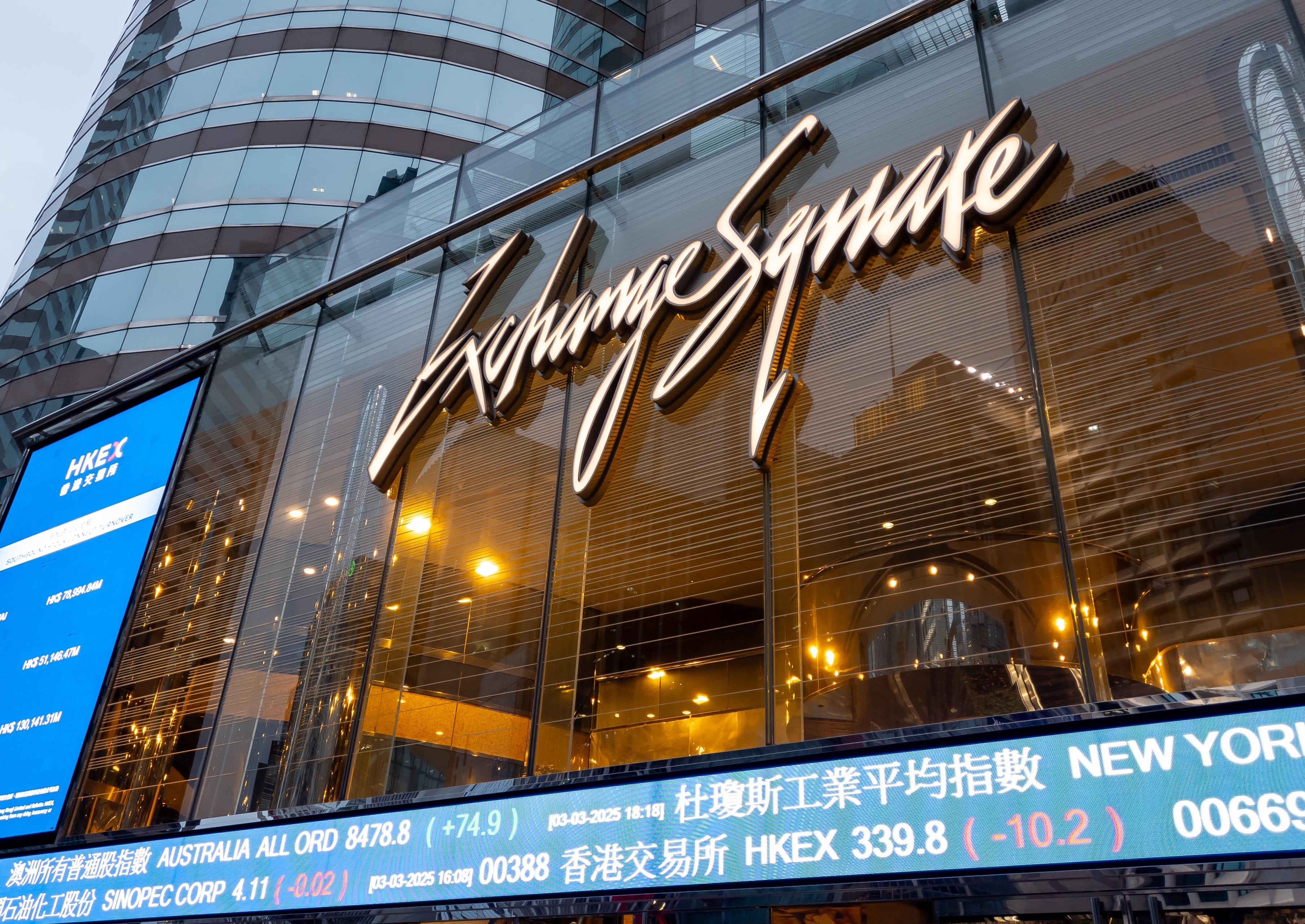
If the wealth management business is one engine of Hong Kong’s comeback, its stock exchange is the other. In 2025, Hong Kong reclaimed its position as the world’s top initial public offering, or IPO, venue.
An IPO is when a private company sells shares to the public for the first
time, raising capital in the process. Hong Kong raised $37.4 billion across 119 listings in 2025, a 231% increase on the year before, exceeding the combined total of the previous three years.
The momentum continued into early 2026, with 40 companies completing IPOs in the first quarter alone, raising the equivalent of around $13.3 billion, a 489% year-on-year increase and the strongest quarterly performance in five years.
BCG’s Michael Kahlich observed that the physical aggregation of capital and companies is now forcing even European institutions to relocate: “What ultimately matters is client proximity.
Two major wealth-management clusters are emerging globally. Singapore and Hong Kong serving Asia, and Switzerland, the UK, and the US serving Western markets. Swiss banks have responded by expanding operations heavily in major Asian hubs.”
The dominant story driving Hong Kong’s IPO revival is China’s artificial intelligence boom. While technology listings in the United States have struggled, with companies going public at high valuations and then performing poorly, Chinese AI and technology companies have found Hong Kong to be a more receptive and practical venue.
More than 85% of Chinese AI-relat-
ECONOMY COVER STORY
ed companies that went public through early 2026 chose Hong Kong. This is partly because of a specialised regulatory framework called Chapter 18C, which allows innovative technology companies in areas like AI, semiconductors, autonomous vehicles, and robotics to list even if they have not yet generated significant revenue. The bet is on future potential rather than current profitability.
Leading Chinese AI companies that listed have seen post-listing share price gains exceeding 400%. More than 500 companies are now waiting to list, most of them mainland Chinese firms specialising in advanced manufacturing and technology.
For all the financial energy flowing through its banking towers, Hong Kong’s recovery is uneven on the street level.
Tourist numbers are healthy. Visitor arrivals rose 12% in 2025 to nearly 50 million people, with mainland Chinese visitors accounting for roughly three-quarters of the total. But tourist spending is another story. Total international visitor spending in 2025 remained 15% below the level seen in 2018, before the social unrest and pandemic that scarred the city’s reputation. In contrast, regional rivals Singapore and Macao have both exceeded their pre-pandemic spending levels.
Modern mainland tourists tend to be savvy, cost-conscious travellers who use their phones to compare prices and seek out cultural experiences rather than splashing out on designer goods. Hong Kong’s currency, pegged to the US dollar, makes it expensive relative to other regional destinations. Broad retail sales fell by 5.5% in the first five months of 2025, and hotel room rates have sof-
3,166 applications on track to bring in HKD 95B (as of February 2026)
3,380+ single family offices active in Hong Kong (25% increase over 2 years)
Raised USD 37.4B across 119 listings (a 231% year-on-year increase)
tened despite near-full occupancy.
The government has responded with investment, earmarking HKD 1.6 billion for tourism in its 2026-27 budget, and launching promotional campaigns in new markets including India, Southeast Asia, and the Middle East. Luxury goods showed some resilience, with jewellery and watch sales jumping 20% in April 2026, but the broader consumer economy remains two-speed.
The most difficult question hanging over Hong Kong’s financial renaissance is whether the institutional framework that makes it valuable can survive the political pressures bearing down on it.
Hong Kong’s unique appeal has always rested on a single foundation: ‘one country, two systems’, the arrangement under which it operates a common legal system, free capital flows, and independent courts, even as it is politically
a part of China. International investors, wealthy families, and global banks trust Hong Kong precisely because it offers Chinese proximity combined with Western legal protections. That combination is increasingly under strain.
The enactment of Article 23, a sweeping national security law, in March 2024, followed by updated implementing rules in March 2026, has substantially expanded the legal risks of operating in Hong Kong. The law defines state secrets very broadly, potentially covering information about economic conditions, government policy decisions, and technological developments.
For financial firms, this creates practical uncertainty. Routine business activities, such as conducting due diligence on a Chinese company, auditing assets, or analysing markets, could potentially be characterised as illegal intelligence collection if they touch on sensitive topics.
Foreign consulting and investiga-
HONG KONG WEALTH MANAGEMENT
tion firms have already faced enforcement actions on the mainland under similar laws. A Q2 2026 geopolitical risk assessment captured the essential tension: “The question for the rest of the decade is whether the territory can manage what analysts are calling its security paradox. Can Hong Kong continue to present itself as a globally trusted, transparent financial centre while operating under a tightening legal and political environment.”
Political life has also narrowed. The Democratic Party, Hong Kong’s oldest pro-democracy political organisation, dissolved in late 2025 following financial difficulties and warnings from security authorities.
Switzerland is not finished. Its greatest strategic advantage is diversity. It draws clients from many different continents and continues to attract money from volatile regions like the Middle East whenever geopolitical tensions flare. It is nobody’s sole focus, which makes it resilient. The United Arab Emirates is also advancing rapidly, recording 11.1% growth in cross-border wealth in 2025 to reach $721 billion, as it positions itself as a bridge for wealth owners who want to move assets out of traditional Western centres without losing access to global markets.
But for now, the top spot belongs to
Hong Kong. Its GDP grew by 5.9% in the first quarter of 2026, the 13th consecutive quarter of expansion and the strongest rate in nearly five years. The financial machinery is functioning at peak capacity. If the territory can preserve its common law framework and operational transparency while continuing to deepen its integration with the Greater Bay Area, its position at the top of global wealth management looks durable. If the two impulses pull too far apart and international capital begins to feel the friction, the current moment could look, in hindsight, like a high-water mark.
editor@ifinancemag.com
The United Kingdom is in the news, with political instability taking centrestage again. Prime Minister Keir Starmer, despite concluding successful bilateral trade agreements with the United States, India and the Gulf Cooperation Council (GCC), has resigned.
Despite the historic GCC deal, which saw the UK become the first one among the G7 (Group of Seven) to enter into a trade pact with the Middle East, the pressure on Starmer got unbearable. He ended up losing his popularity among his own Labour MPs.
The Starmer government's struggle to improve UK's stagnant living standards, along with the alleged mishandling of a £22 billion fiscal hole, brought the curtains down on the 63-year-old’s tenure in 10 Downing Street.
A lion’s share of the criticisms against the Starmer government was directed towards its way of handling the stagnant British economy. Inflation, high energy prices, low productivity levels, and rising unemployment are hurting the UK.
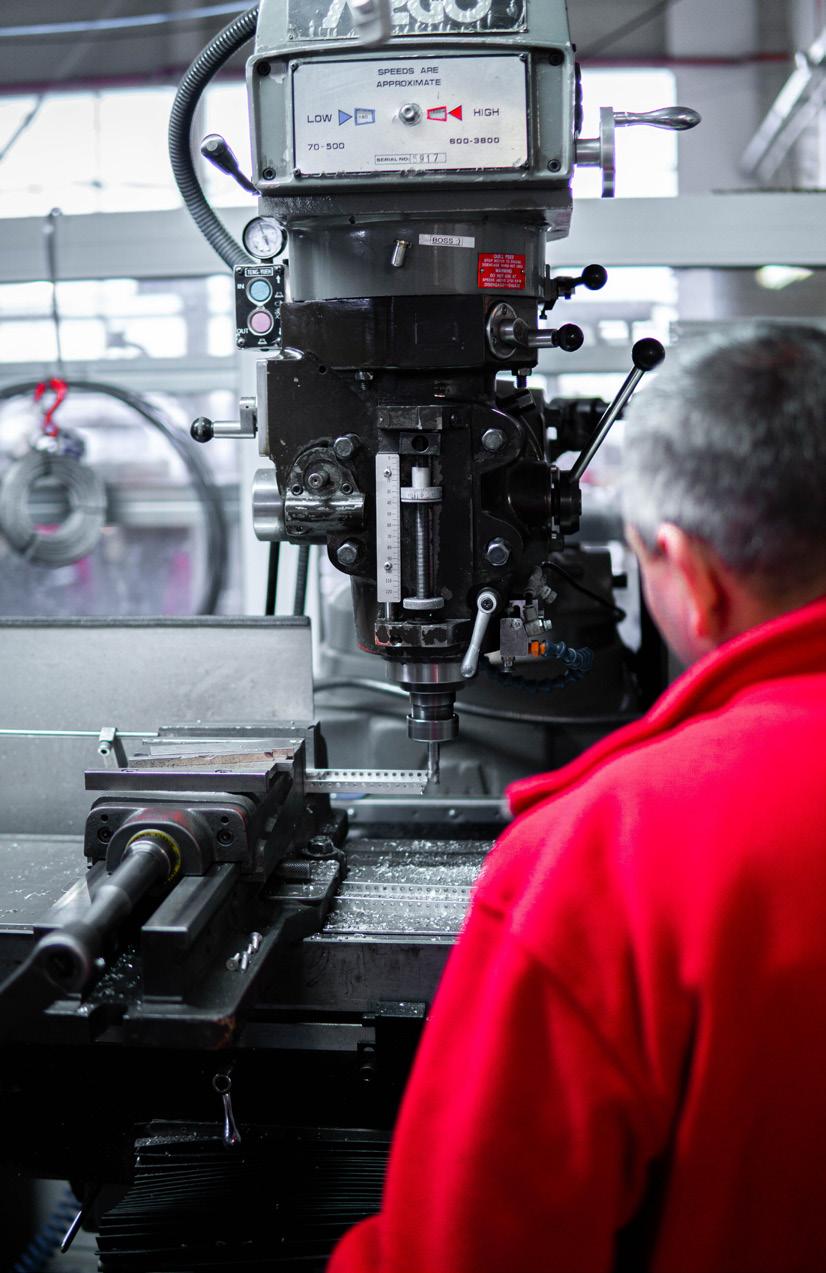
The SME sector occupies 99.9% of the overall British business landscape. Not only does it employ roughly 60% of the private sector workforce, but it also keeps the country's growth engine chugging by contributing heavily in construction, professional, scientific and technical services, and manufacturing. Despite 68% of SMEs reportedly being profitable, many of them are facing hurdles on the scaling and cashflow fronts.
A 2025 report from Make UK, and think tanks Civitas and ERA Foundation, titled ‘The Growth Mission: A Blueprint for Scaling up SME Manufacturers’, made these discoveries: despite accounting for 99% of the 250,000 active
Despite accounting for 99% of the 250,000 active manufacturing businesses in the UK, SMEs struggle to access finance


manufacturing businesses in the United Kingdom, SMEs struggle to access finance during the ‘make or break’ seed to early growth stages of investment, a challenge which, if solved, could boost UK manufacturing investment by £9.2 billion annually.
"Almost two-thirds of these SMEs have ambitions to grow into large businesses over the next decade, which, if realised, could add £83 billion in value to manufacturing, and help propel the UK from the 12th largest manufacturing economy in the world to the seventh," according to the report, a statement which gives a sad reflection on what could have been the story of the British SMEs had the government supported them.
To correct these issues and help SMEs scale up, the report made a number of recommendations to the then Starmer administration, including the creation of an Estonia-style ‘British Business Burokratt Software’ tool to pool data collected by HMRC (His Majesty’s Revenue and Customs) and ONS (Office for National Statistics) that would help micro-target support to identified companies.
Another proposal was the introduction of a super-growth allowance (150% capital allowance), along with the formation of an enhanced Growth Enterprise Scheme (GEIS) to boost SME scale-up efforts.
In March 2026, exactly one year after, came the first-ever SME whitepaper from Lovey (formerly Love Finance), the United Kingdom’s fastest-growing SME lender and broker. Titled ‘The 2026 H1 SME Finance Outlook’, the research not only explored how SMEs accessed finance in 2025 but also examined their outlook, priorities and borrowing appetite for 2026.
The one similarity between the two
studies is the discovery of the persistent financial pressure (tax burden and rising costs) on SMEs, while the lack of access to external finance results in missed scaling opportunities for these businesses.
Along with the independent creative market research agency Atomik Research, Lovey surveyed 504 British SME owners across the retail, manufacturing, hospitality and construction sectors between December 2025 and January 2026.
"The findings show that UK SMEs were entering 2026 with cautious optimism, balancing growth ambitions with economic pressures and a changing funding landscape. While confidence remains relatively strong, access to external finance continues to play a critical role in helping businesses invest, expand and respond to economic pressures," the study observed.
While 82% of SMEs applied for external finance during 2025, 81% missed business opportunities due to a lack of finance. Despite 71% of the surveyed business bosses looking to seek external finance in 2026, tax burden (25%) and rising costs (24%) have remained the two biggest (and constant) growth barriers for them.
Why did 2025 become the year for ‘limited growth opportunities’ for British SMEs? The answers were rising costs, squeezed margins, and cash flow challenges. This unholy trinity created a situation where, due to the lack of funding, companies had to postpone or abandon expansion plans.
"Smaller SMEs were particularly affected. Among businesses with revenues between £500,000 and £1 million, 87% reported missing multiple opportunities due to lack of finance, compared with 82% of businesses with revenues
between £250,000 and £500,000. Looking ahead, demand for finance remains strong across sectors. Hospitality businesses are the most likely to seek external finance in 2026 (89%), followed by manufacturing (71%), retail (66%) and construction (56%)," Lovey commented.
The research also highlighted regional disparities in access to funding.
In the East Midlands, 96% of SMEs reported missing at least one opportunity due to lack of finance, followed by Wales (94%) and London (91%).
In March, unemployment went up to 5.2%, the highest level since early 2021. More than 1.88 million people were out of work, an increase of 331,000 year-onyear.
Youth unemployment hit its fiveyear high of 14%, as 575,000 young people aged 18-24 remained jobless. Payrolled employees fell by 134,000
over 2025. Retail and hospitality got hit particularly, as 122,000 fewer people remained in payroll employment in these two sectors.
A month after, there wasn't a big change. British businesses posted fewer job vacancies, with the Iran war starting to show its impact on the European country's economy. Vacancies fell to 705,000 in the three months to April, the lowest number since the three months to February 2021.
Wage growth, excluding bonuses, stood at 3.4% in the first three months of 2026 compared with the same period in 2025, the slowest increase since 2020. The unemployment rate, a high-profile gauge of any economy's health, ticked up to 5% for Q1, from 4.9% in the three months to February. The drop in payrolls in April 2026 also became the biggest since May 2020, at the start of the COVID-19 pandemic.
As per the ONS, lower-paying sectors
Source: Statista
like hospitality and retail saw some of the largest falls in payroll numbers and vacancies, with employers complaining that higher payroll taxes and a government reform to give workers more rights have made hiring more expensive.
In the words of Andrea Reynolds, a non-executive director for Berkshire Hathaway European Insurance, along with the CEO and founder of Swoop, a venture that simplifies the process of sourcing funding for SMEs, "Behind every redundancy, every unfilled vacancy, every shuttered shop front, there’s a small business owner who’s had to make an impossible choice."
"From April 2025, employer National Insurance contributions rose from 13.8% to 15%, while the threshold at which employers start paying dropped from £9,100 to £5,000. For a business employing someone on £30,000, that’s an additional £866 per employee, per year, which many small businesses sim-
ply cannot absorb. Even for those that can, absorbing costs means lower profits. Lower profits mean less investment. Less growth. Fewer jobs," she said in her article for EliteBusiness.
To complicate things further, every cycle of increase in the National Minimum Wage will make 2026 an expensive year for British businesses, amid headwinds like the Iran war and the resultant supply chain disruptions.
As per the Centre for Policy Studies, employer NICs (National Insurance Contributions) for a minimum wage employee will rise from £1,617 to £2,583 this year alone. Talking about a minimum wage increase, the latest ratio stands at £12.71 per hour for workers aged 21 and over, adding up to £900 more per year for full-time workers.
As per Reynolds, labour-intensive yet tight-margin sectors like hospitality, retail and caregiving; each wage hike cycle creates situations like job cuts, reduction in operational hours or, in the worst-case scenario, shutdown of the entire business. Her blunt advice to the Starmer administration was: if you want to tackle the growing menace of unemployment, you need to ease the cost of doing business for SMEs.
"Raise the VAT threshold. Immediately. The current threshold is £90,000, but if it were linked to inflation, it would be £103,000. Businesses are becoming VAT liable through inflation, rather than growth. The Federation of Small Businesses estimates VAT compliance adds £4,100 on average to a business’s running costs. I also know that struggling to pay the VAT bill can critically injure the cash flow of otherwise profitable businesses. So, raise the threshold and thousands of businesses will save thousands of pounds," she stated.
Reynolds also suggested measures
like reviewing employment costs.
"National Insurance, the national minimum wage, and business rates don’t exist in isolation. Each one compounds the others. Small businesses need breathing room, not a cascade of incremental tax rises that look manageable individually but are crippling collectively. Make it easier to access finance. Many SMEs are facing a cash flow crunch. They need working capital, not lectures. During Covid, government-backed schemes like CBILS and RLS improved access to alternative finance and simpler application processes. The government can pull this lever if they really want to," she remarked.
While the Iran war and the Hormuz stalemate have created one of the worst energy shocks the world has ever experienced, British SMEs will face rising energy bills as heating oil costs rise. As per The Guardian, about 7% of all small and medium-sized companies warm their properties and provide hot water using heating oil, whose price, in some cases, has more than doubled in recent weeks.
The situation has got complicated for businesses based in rural areas. Since they are not connected to the gas grid, they have to depend on heating oil.
According to the Federation of Small Businesses (FSB), the material is used by about 17% of rural SMEs. And some of their members have already started rationing their fuel use to cope with the sharp rise in prices.
The FSB, which represents about 200,000 businesses and sole traders, has called on the United Kingdom’s competition watchdog to include the SME sector in its investigation into the price rise in the heating oil market. The trade body is equally apprehen-

sive about rogue energy brokers taking advantage of the market crisis to push small companies into signing up to longterm deals on bad terms.
As per corporate restructuring specialist Begbies Traynor Group (BTG), the number of UK businesses in ‘critical financial distress’ has soared by more than a third. Hotels and leisure firms are particularly hard-hit, with mounting labour costs, increased tax burdens and now the Iran war making things difficult for them. The study came up with a disturbing ratio: a growing number of companies edged closer to collapse in Q1 2026.
Businesses considered to be in 'critical financial distress' surged by 36.9% to 62,193 for the period, compared with the same quarter in 2025. Concurrently, the number of businesses experiencing ‘significant’ financial distress rose by 9.6%, reaching a total of 634,867.
"Firms have contended with a series of tax increases throughout the year, including adjustments to national insurance contributions, further squeezing their finances. It also comes amid
a backdrop of shaky consumer confidence, particularly affecting sectors reliant on discretionary spending habits. These challenges have been exacerbated by energy and materials inflation following the outbreak of war in the Middle East towards the end of the quarter," BTG stated.
Add the S&P Global's preliminary UK Composite Purchasing Managers' Index, which in May 2026 tumbled to 48.5 from 52.6 in April, its first reading below the 50.0 growth threshold since April 2025, indicating the kind of drop in activity British companies have been going through since 2025, with the Iran war only piling up more problems for entrepreneurs.
Even though manufacturing firms reported a rush of orders, the increase was largely due to clients trying to get ahead of possible further price increases or supply chain problems. Also, businesses are unsure about how long the energy prices will remain in the higher

territory. Business owners have scaled back their hiring plans for the 20th month in a row, with expectations for future business being the lowest since April 2025.
The recession fears, especially in the SME circle, have hit their two-year high, according to iwoca’s SME Expert Index, which emerged in May.
As per the survey, 70% of participating finance brokers saw their SME clients getting worried about the rising energy prices, with over three-quarters (78%) expecting disruption to supply chains to negatively impact the business performance. Over half (54%) talked about entrepreneurs getting mentally prepared about the prospect of a recession, the highest level since Q3 2023 and up from 42% in Q4 2025.
Colin Goldstein, Chief Commercial Officer, UK, at iwoca, said, "These numbers reflect what we’re hearing from brokers – small businesses are worried, and the concerns are stacking up. Costs, inflation, supply chains: none of these have easy fixes. What SMEs can control
is making sure they have the right financial backing to absorb shocks and keep moving. That’s where we come in, and it’s where we’re focused."
Another report from the Item Club gave a harrowing stat: the UK is expected to lose around 163,000 jobs in 2026, with elevated energy costs, disrupted supply chains and squeezed household spending putting a dampening outlook on the overall economic health. The worst affected will be manufacturing and construction firms that are facing soaring operating costs.
Andrew Murray Burnham, a British politician who has been serving as Member of Parliament for Makerfield since June 2026, and is expected to take over from Starmer, needs to fix quite a lot of things. SMEs will be one among them.
It’s not like the Starmer administration didn’t do anything. In August 2025, it launched a scheme called ‘Backing Your Business’, under which a sweeping £4.5 billion funding package was announced to support SMEs. Then in March 2026, government departments, for the first time, set individual spending targets for SMEs to deliver over £7.4 billion a year to British businesses by 2028.
Billions were allotted separately to boost supply chains, with the goal of creating a thriving private sector that will drive GDP growth and generate wealth across the European country, apart from creating a massive number of jobs.
However, things on the ground look totally different. The SME sector looks squeezed, with recession fears kicking in among the business owners. The government wanted them to create jobs. The Item Club report says otherwise: potential loss of 163,000 jobs by this year-end.
Energy costs have continued to rise, forcing Chancellor Rachel Reeves to announce increased support for energy-intensive companies through the ‘British Industry Competitiveness Scheme’, which will be important for the UK construction and infrastructure supply chain, as it provides support for the manufacturing of steel, cement, ceramics, chemicals, glass, and heavy manufacturing.
During the peak of Iran war, Starmer promised to examine ‘every lever that's available’ to help British households and industries cope with the crisis.
Ministers were reportedly told to work on support packages ‘that proved their worth during previous crises’. While the current energy price cap expires this summer, Starmer, in the days leading up to his shock resignation, indicated that this support would manifest as a fuel allowance for winter 2026, with the price shocks expected to continue for a good part of 2026.
To deal with the supply chain disruptions, the government is investing £100 million ($133 million) in reopening a carbon dioxide (CO2) plant in Teesside. The facility, operated by Ensus at the Wilton International industrial site, had been mothballed since September 2025 after a trade deal with the US removed a tariff on American ethanol imports, making domestic production unviable.
Elevated energy prices and supply chain disruptions will be the realities the British SMEs will have to deal with for the next few months. Burnham's task should be a straightforward one: keep the assistance, both monetary and supply chain-wise, going, because SMEs are the nation’s growth engine.
editor@ifinancemag.com
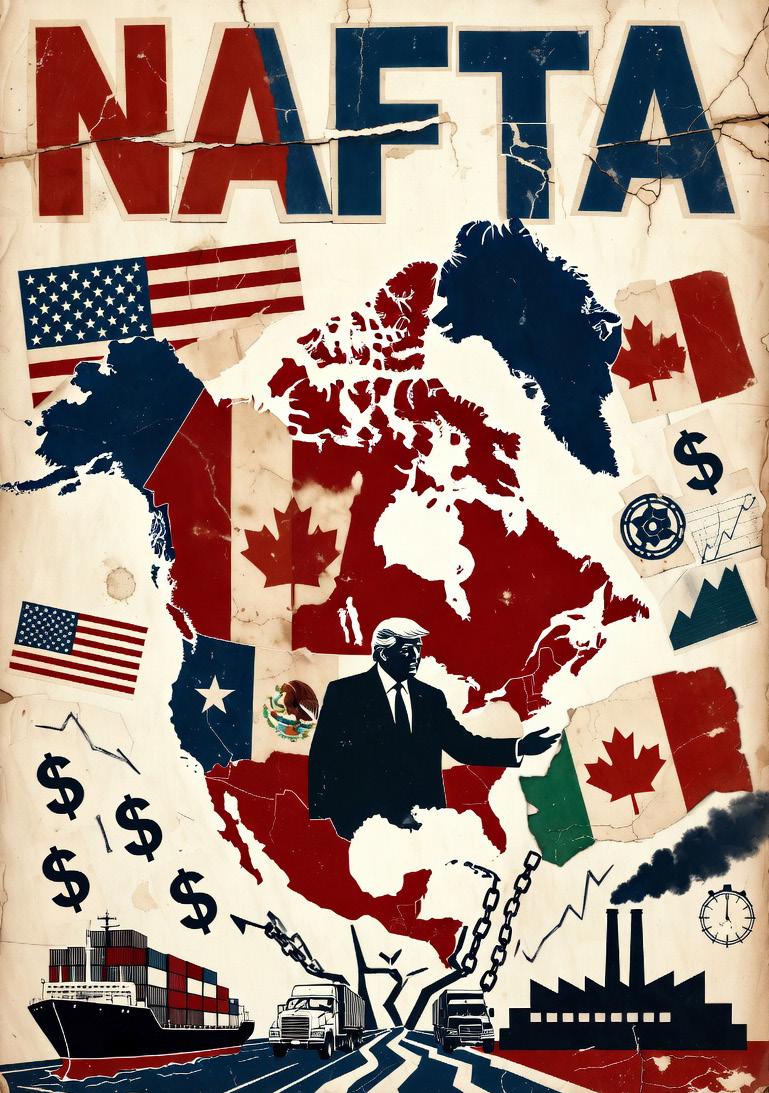
President Donald Trump wants changes in NAFTA, which has turned Canada and Mexico into United States’ two largest trading partners, ahead of China
IF CORRESPONDENT
For more than 30 years, the United States, Mexico, and Canada have operated under a shared set of trade rules that turned three separate economies into something that functions almost like one.
Factories on both sides of every border pass parts back and forth. A car built in Michigan contains components machined in Ontario and wiring from Monterrey. The arrangement, now formalised under the United States-Mexico-Canada Agreement, underpins roughly $1.6 trillion in annual trade between the three countries. It has made North America one of the most tightly integrated manufacturing regions on Earth. That arrangement is now under serious strain. The second Donald Trump administration has used its opening years to challenge the foundations of the deal, deploying tariffs, legal threats, and negotiating pressure to push both neighbours
toward a version of the agreement that serves American interests far more narrowly.
Formal bilateral talks between the United States and Mexico began in Mexico City on May 28. Canada has been left out of those opening rounds entirely. On July 1, the agreement faces its first mandatory review, at which all three countries must decide by consensus whether to extend it for another 16 years.
The outcome of that review will shape the economic geography of North America for decades. To understand what is at stake, it helps to start at the beginning.
NAFTA, signed in 1993, was the agreement that first stitched the three economies together. Earlier, each country maintained its own
tariffs and trade barriers, and manufacturers largely sourced components domestically, or from global suppliers.
NAFTA changed the incentive structure fundamentally. If you could produce something more cheaply across the border, it suddenly made sense to do so. Over the following decades, supply chains reorganised themselves around that logic.
By 2024, the total value of goods and services moving between the three countries had reached an estimated $1.93 trillion annually. Canada and Mexico are now the United States’ two largest trading partners, ahead of China. The depth of integration shows up in a striking statistic.
Nearly 74 cents of every dollar of manufactured goods exported from Mexico to the United States contains value that originated somewhere within North America. For vehicles and automotive parts specifically, that figure rises to nearly 77 cents. The borders between the three countries have, in economic terms, become largely administrative lines that goods cross and recross during production.
The USMCA, which replaced NAFTA in July 2020, was meant to modernise this arrangement. It updated rules around digital trade, labour standards, and intellectual property. It also tightened the rules that determine whether a manufactured good qualifies for duty-free status, most notably in the automotive sector.
The first major disruption to this integrated system came on February 1, 2025, when the Trump administration announced near-universal tariffs of 25% on all imports from Canada and Mexico. The stated justification was national security.
The administration claimed that il-
Avg. Auto Worker Hourly Wage (2024)
USMCA Auto Content Rule Requirement

$5.66 / hour

$30.86 / hour
75% Regional Value Target for new USspecific quota
GM Mexico Sales Origin (2025) 11.3% Made in Mexico 7.8% Made in United States
legal immigration and fentanyl trafficking from both countries constituted an emergency under a law called the ‘International Emergency Economic Powers Act’, which gives the president broad powers in genuine crises.
The move sent immediate shockwaves through integrated industries. At Port Laredo, which handles a large share of US-Mexico vehicle trade, imports of vehicles fell by $4.1 billion in the first half of 2025. Metals imports across the border dropped by more than 13%. Canada responded quickly, announcing 25% retaliatory tariffs on $30 billion of American goods, then another $29 billion.
Ottawa prepared a third package worth $125 billion. The integrated economy that had been built over three decades was suddenly operating under conditions it had never been designed for.
The administration eventually exempted goods that met USMCA’s rules of origin from the universal tariffs, meaning most trade between the three countries continued duty-free. But the tactic had demonstrated something important. Washington was willing to use the threat of comprehensive tariffs as a lever.
That lever broke in February 2026. The US Supreme Court ruled 6-3 that the International Emergency Economic Powers Act does not actually give the president authority to impose tariffs unilaterally. The court held that levying tariffs is a power reserved to Congress, and
that it had not been properly delegated to the executive branch. The ruling invalidated the administration’s primary tool for rapid, large-scale trade pressure.
The administration quickly pivoted to a different legal authority, invoking Section 122 of the Trade Act of 1974 to impose a temporary 10% global surcharge on imports. But this surcharge has a hard 150-day limit built into the law, scheduling it to expire on July 24, 2026. With its main tariff weapon gone and a deadline approaching, Washington turned its attention to the USMCA Joint Review as the primary arena for extracting concessions.
The automotive sector sits at the centre of the current negotiations, and understanding why requires a brief explanation of how the rules work.
Under the USMCA, a vehicle qualifies for duty-free treatment only if it meets a set of regional content thresholds. At least 75% of a vehicle’s value must originate within North America. 70% of the steel and aluminium used must come from North American sources. A certain share of the vehicle’s value must be produced in facilities that pay workers an average of at least $16 per hour.
These are strict rules. The previous agreement, NAFTA, only required 62.5% regional content. When the USMCA was negotiated in 2018 and 2019,

the Trump administration’s first term pushed for these tighter thresholds specifically to encourage more manufacturing to remain in the region.
The practical result has been unexpected. Because the standard US tariff on imported passenger vehicles from anywhere in the world is only 2.5%, many manufacturers have simply decided that it is cheaper to pay the tariff, and ignore the USMCA rules than to reorganise their complex global supply chains to meet the thresholds.
Between 2020 and 2025, non-compliance rates for vehicles imported into the United States quintupled. Rather than pulling manufacturing back into North America, the rules pushed some producers out of the preferential system altogether.
The labour requirement has also produced mixed results. The rule was designed to raise wages for Mexican automotive workers by requiring that a percentage of a vehicle’s value come from facilities paying at least $16 an
hour. In 2024, the average Mexican automotive worker earned $5.66 per hour, compared to $30.86 in the United States. Manufacturers have mostly met the labour threshold by counting their American and Canadian operations, where wages are already high, rather than raising pay in Mexico.
Now the Trump administration is pushing for something more radical. They want a US-specific minimum content rule. This would require that a defined share of the value of every vehicle made in Mexico come specifically from the United States, not just from North America in general.
The logic is that this would force manufacturers to relocate high-value assembly and component work from Mexico to American factories. For Mexico, this is a fundamental challenge to the deal’s structure. For Canada, it is a sign of where Washington’s priorities lie.
Canada on the Outside Canada has been excluded from the
opening rounds of negotiations entirely. The current schedule runs bilateral US-Mexico talks through late July 2026 without Ottawa at the table.
This exclusion comes at an awkward moment for Canada’s new government. Justin Trudeau resigned in early 2025, and Mark Carney became Prime Minister in March of that year. Carney is a former central banker, respected internationally for his economic expertise. His government won a majority in April 2026, giving him a stronger political base. But seven months into formal trade tensions with the United States, Canada’s trade minister has managed only a single day of in-person talks with the US Trade Representative.
Washington’s demands of Canada go beyond the core trade agreement. The administration has insisted that Canada scrap its ‘Online Streaming Act’, a law that requires streaming platforms like Netflix and Disney+ to contribute a percentage of their Canadian revenue to funding domestic Canadian content.
US negotiators argue this unfairly targets American companies. Washington also wants changes to Canada’s supply management system, which uses quotas and price controls to support the domestic dairy industry, and the removal of provincial bans on American alcohol imports.
Canada abolished its 3% digital services tax in mid-2025 as a goodwill gesture. But Carney’s government has made clear it will not accept humiliating terms to preserve the deal.
Speaking directly to an American audience at the Economic Club of New York on May 28, Carney called for a re-imagination of continental trade, stating: "There should be a 'true partnership' that re-imagines cooperation in specific sectors challenged by global competition."
Furthermore, upon launching his government's Advisory Committee on Canada-US Economic Relations to tackle the crisis, his office reinforced this stance: "Canada is approaching its economic relationship with the United States with focus, discipline, and unity... Our goal is a strong economic partnership with the United States that creates greater certainty, security, and prosperity for all."
Carney has simultaneously been pushing a domestic agenda centred on reducing Canada’s extreme dependence on the US market, advocating economic diversification into Asia and Europe. The problem is that more than three-quarters of Canada’s total goods exports go to the United States. That dependence does not disappear because a government decides to reduce it.
Mexico is in a different position. President Claudia Sheinbaum came to power in 2024 with a mandate to manage the country’s complex relationship with
Washington carefully. Her approach has been to offer security cooperation in exchange for trade goodwill.
When the Trump administration threatened tariffs in early 2025, Mexico deployed more than 10,000 National Guard troops to its borders, cracked down on fentanyl labs, and extradited prominent cartel figures to the United States, including Rafael Caro Quintero, one of the founders of the Sinaloa Cartel. The message was that Mexico could deliver results that Washington wanted on the security front, and those results were worth more than a trade war.
On the trade side, Sheinbaum sought early on to anchor the coming milestone within the strict boundaries of the original text. In a press conference, she clarified her country's legal position: "A 'review' of the USMCA free trade pact will take place next year rather than a 'renegotiation'... The agreement says that."
Following up on U.S. political pressure later in the cycle, she maintained a pragmatic front, stating plainly: "I do not believe the US will withdraw from USMCA."
Mexico has moved to align its own tariffs with Washington’s concerns about China. In December 2025, Mexico raised tariffs by up to 50% on goods from countries with which it does not have a free trade agreement, a measure primarily aimed at Chinese manufacturing imports. Mexico also launched investigations into hundreds of domestic firms that were importing Chinese steel through special programmes and re-exporting it to the United States, effectively using Mexico as a conduit to avoid American tariffs.
But the China problem is not easily resolved, and the reason becomes clear when you look at what some major US companies are actually doing. General
Motors sold roughly 198,000 vehicles in Mexico in 2025. Of those, 64.1% were manufactured in China.
Only 11.3% were made in Mexico itself. Only 7.8% came from the United States. In other words, the American company most associated with North American manufacturing was selling vehicles in the region’s second-largest economy that were almost entirely made in China.
This is not an aberration. It reflects 20 years of decisions by American multinationals to integrate Chinese manufacturing into their global operations. Any aggressive push to decouple from Chinese supply chains does not just inconvenience Chinese companies. It disrupts the business models of General Motors, Ford, and dozens of other US corporations. That is the bind that Washington is navigating, and it makes the demand for complete decoupling considerably more complicated than the political rhetoric suggests.
As the July deadline approaches, analysts see four realistic scenarios for what happens next.
The most likely outcome is what might be called the painful extension. The three countries fail to meet the July deadline, but eventually, sometime in late 2026 or early 2027, reach a new deal. Mexico and Canada accept stricter automotive content rules, tougher labour standards, and tighter restrictions on Chinese goods moving through their territory into the American market.
In exchange, Washington agrees to extend the agreement for 16 years and provides some relief on the tariffs that remain in place. Nobody is happy with the result, but the integrated economy survives largely intact.
SCENARIO 1: THE PAINFUL EXTENSION (Most Likely Outcome)
1
SCENARIO 2: SERIAL ANNUAL REVIEWS
2
Mechanism:
Compromise reached late 2026 or early 2027. Canada and Mexico accept tighter rules, tougher labour standards, and stricter Chinese import limits
Business Impact: Stable but costly. Regional trade survives, but operating margins thin out under narrow US advantages
Mechanism:
Article 34.7 is triggered due to lack of July consensus. The deal enters a rolling loop of mandatory annual reviews
SCENARIO 3: BILATERAL SPLIT
Business Impact: High uncertainty. Capital investments dry up, and longterm supply contracts stall because the rules could change every 12 months
The second scenario is - serial annual reviews. If the three countries cannot agree by July, the core mechanism laid out in Chapter 34 of the deal dictates the framework. According to Article 34.7 of the USMCA text:
"This Agreement shall terminate 16 years after the date of its entry into force, unless each Party confirms it wishes to continue this Agreement for a new 16year term... If, as part of the joint review, one or more Parties do not confirm their desire to extend, the FTC [Free Trade Commission] shall conduct joint reviews annually thereafter..."
The deal stays technically in force under this rolling loop, but every year brings another round of negotiations and another period of uncertainty. For companies trying to decide whether to build a factory or sign a long-term supplier contract in North America, that uncertainty is costly. Investment slows. Supply chains gradually diversify away from the region.
The third scenario is a split into bilateral agreements. A US-Mexico deal and a separate US-Canada deal. This would
3
Mechanism: Washington scraps the trilateral structure entirely, fracturing it into separate US-Mexico and US-Canada agreements
Business Impact: Severe logistics disruption. Breaks the seamless three-way supply lines that build cars and electronics today
preserve some market access for both countries but would fracture the trilateral supply chains that have made North American manufacturing competitive. Canada and Mexico would lose the leverage that comes from negotiating together, and each would be more exposed to American pressure individually.
The fourth scenario is withdrawal. Any country can leave the USMCA with six months’ notice. The Trump administration has repeatedly used the threat of withdrawal as a negotiating tactic. The risk is that the threat becomes reality, either by design or by miscalculation.
If the United States were to actually withdraw, goods from Canada and Mexico would lose their tariff-exempt status overnight, and the integrated manufacturing networks of three decades would face an immediate, severe shock.
The agreement has functioned as a model for how wealthy economies can integrate production across borders while managing political sensitivities around
SCENARIO 4: OUTRIGHT WITHDRAWAL
Mechanism:
4 FEATURE NAFTA
The US follows through on threats. and issues a formal six-month notice of termination
Business Impact: Immediate economic shock. Overnight return of baseline international tariffs, triggering an immediate manufacturing crisis
jobs and wages. If that model breaks down, it signals to the rest of the world that no regional trade arrangement is secure when one large partner decides to renegotiate the terms by force.
For businesses operating across North America, the immediate concern is the certainty about the rules that determine where factories get built, where suppliers are contracted, and how supply chains are designed. The longer the uncertainty continues, the more those decisions get deferred or redirected elsewhere.
The livelihoods of millions of people depend on integrated industries that exist because the trade framework made them possible. Automotive plants, logistics networks, agricultural supply chains, technology manufacturing. All of it was built around the assumption that the rules would remain stable.
What happens in Mexico City and Washington over the next several months will determine whether that assumption remains valid.
editor@ifinancemag.com
Fiscal surpluses and falling sovereign risk tell one story while collapsing factories, record SME bankruptcies, and households surviving on credit tell another
The economist Simon Kuznets once observed that ‘there are four kinds of countries in the world: developed countries, underdeveloped countries, Japan, and Argentina’. The remark, made decades ago, has lost none of its sting.
Whether the cuts have healed the patient or simply reduced the bleeding while leaving deeper wounds untreated is the central question facing Argentina today
When renowned economist Javier Milei won Argentina's presidency in late 2023, he came armed with a chainsaw. Not a literal one, though he had famously wielded one on the campaign trail. The chainsaw was a metaphor for what he promised to do to the Argentine state: cut it down, fast and without mercy.
Nearly two-and-a-half years into his presidency, that chainsaw has done real damage to government spending. Whether the cuts have healed the patient or simply reduced the bleeding while leaving deeper wounds untreated is the central question facing Argentina today.
The honest answer is, both things are happening at once. At the national accounts level, Argentina looks better than it has in years. Investors are calmer. The currency has stabilised. The government is, for the first time in almost two decades,
spending less than it earns. But zoom in from that altitude, and a different picture emerges.
Factories are running at half capacity. Small businesses are filing for bankruptcy at record rates. Ordinary Argentines are putting groceries on credit cards because their wages have not kept pace with prices. The country is experiencing a split reality, and understanding that split is essential to understanding where Argentina goes from here.
For most of its modern history, Argentina spent more than it collected in taxes. The gap was filled by printing money, which fed inflation, which eroded savings, which triggered crises. The most devastating of these came in 2001, when a rigid currency peg to the US dollar, years of fiscal deficits, and a mountain of foreign debt combined to produce the largest sovereign default in history at the time.
Banks froze deposits overnight. Five presidents came and went within two weeks. The economy contracted by nearly 11%. Recovery came slowly, driven largely by a commodity boom and debt restructuring, but the institutional scars ran deep. Milei's government decided that ending this cycle required fiscal discipline above all else, which meant that the government must not spend more than it earns.
By that measure, the policy has worked. In the first four months of 2026, Argentina ran a primary

fiscal surplus equivalent to roughly 0.5% of GDP. Including interest costs, the country still managed a positive financial balance of around 0.2% of GDP. April 2026 marked the fourth consecutive monthly surplus of the year.
Before Milei took office, Argentina had not managed a full-year financial surplus since 2008.
These numbers came primarily from cutting spending rather than raising taxes. In fact, tax revenues have been falling in real terms for months. The government eliminated 211 public programmes across various ministries, saving roughly two billion US dollars. Public sector wages were cut in real terms. Subsidies were slashed. Infrastructure investment was curtailed. The state was made smaller, fast.
The outside world noticed. Argentina's sovereign risk premium, which measures how much extra interest investors demand to hold Argentine debt, fell below 500 basis points for the first time since 2018, and has held roughly there since. The IMF completed its second review of a 21 billion dollar lending arrangement in May 2026, releasing a further billion dollars, and bringing total disbursements to nearly 16 billion dollars.
Restoring credibility in international markets
is a genuine achievement, and a lower risk premium eventually means lower borrowing costs for businesses and households alike.
The problem is that the path to fiscal balance has run straight through the country's productive economy, and the damage there is severe.
Argentina's industrial sector has been contracting for over a year. The Argentine Industrial Union tracks factory performance through a monthly index where a score above 50 signals expansion, and below 50 signals contraction.
In January 2026, that index stood at 36.5 points, its fifteenth consecutive month below the neutral threshold. Industrial capacity utilisation fell to 53.8% by the end of 2025, down from 65.6% two years earlier. In the automotive sector, factories are running at just 31.2% of capacity. In textiles, rubber, and plastics, conditions are at historical lows.
What does this look like in practice? Machines sit idle. Workers are sent home early. Shifts are cut. Companies that cannot pay their bills enter legal proceedings to restructure their debts before going bust entirely.
Filings for concurso preventivo, the Argentine legal process allowing a struggling company to re-
structure before formally going bankrupt, have risen by more than 130% compared to the same period last year, now exceeding the levels recorded during the worst months of the Covid-19 pandemic.
Daniel Rosato, President of Industriales Pymes Argentinos, did not mince words while describing what his organisation is witnessing on the ground, "We had warned that this year we were going to arrive at the closure of more than 1,000 SMEs, but the rhythm we see in the degradation of the local economy and the presentations of concursos preventivos demonstrates that the damage to the productive framework is much worse. There is no time to debate ideologies, only to save companies and their workers, who are the ones harmed by so much inaction."
Industry associations have petitioned Congress for emergency support through temporary freezes on debt enforcement, tax payment deferrals, and extended restructuring timelines. Without intervention, they warn, the wave of factory closures will accelerate.
The asymmetry between large and small firms is significant. Large and medium-size companies are suffering, but they have access to lawyers, financial advisors, and bank relationships that help them manage the crisis.
Micro and small enterprises, which form the backbone of Argentine manufacturing and retail employment, have almost none of those buffers. Their production and sales figures are deteriorating nearly twice as fast as those of larger competitors.
•Primary Fiscal Surplus: 0.5% of GDP accumulated during the first four months of 2026.
•Financial Surplus (after interest): 0.2% of GDP achieved in the same four-month window, marking four consecutive months of positive balances.
•Sovereign Risk Premium: compressed below 500 basis points (EMBI) for the first time since 2018.
•IMF Lending Arrangement: $21 billion total facility, with $1 billion released in May 2026, bringing total disbursements to nearly $16 billion.
•Budget Cuts: Government eliminated 211 public programmes across various ministries, saving roughly $2 billion US dollars.
The industrial downturn has a human face, and it sits at the kitchen table. Argentine wages have fallen by 20% in real terms since 2018, the steepest drop of any country in Latin America over that period. By comparison, Mexican workers saw real wages rise by more than 22% over the same period. The Latin American average was a modest gain of 2%.
Under Milei, public sector workers have seen their real wages fall by more than 17% since the administration took office. Private sector workers have fared somewhat better, losing around 1.5% in real terms. For households already stretched by years of wage erosion, even small additional losses are deeply felt.
The response has been to borrow. Credit card debt has doubled relative to historical averages, with delinquency rates at their highest in more than 20 years. What makes this particularly troubling is not the amount of debt itself but what it is being used for. Credit cards in Argentina were once primarily used to buy televisions or refrigerators. Now, an estimated 75% to 80% of households
are using credit to buy basic food. Around 60% are using debt to pay electricity and gas bills. Nearly half are borrowing to cover basic healthcare. This is not consumer finance. This is survival on credit.
Retail sales confirm the picture. Real retail volumes fell by 13.3% in March 2026 compared to the same month a year earlier. Nominal sales grew slightly, purely because prices are still rising, but the actual volume of goods purchased is shrinking steadily across nearly every category.
Here the story gets structurally complicated, because the collapse in domestic activity is now threatening the very fiscal programme it was meant to support.
Argentina's tax system is heavily dependent on domestic economic activity. When factories produce less and people buy less, those tax bases shrink. In April 2026, national tax revenues fell by around 4% in real terms compared to April 2025, the ninth consecutive month of real decline.
Independent analysts estimate that roughly 97% of this fall is due

to depressed domestic activity, not deliberate tax cuts. Export duties on beef and grains, cut in July 2025, compounded the shortfall, with receipts from those levies falling by more than 34% in real terms in April 2026.
The government's response to falling revenues has been to cut spending further. But each additional round of spending cuts reduces economic activity, which reduces tax revenues, which requires further spending cuts.
This self-reinforcing spiral is not unique to Argentina. Many countries that pursued aggressive austerity during debt crises, including Greece in the early 2010s, found themselves trapped in precisely this loop. Argentina is living that lesson in real time.
When Milei launched Phase 3 of his economic programme in early 2025,
it liberalised the foreign exchange market significantly, removing restrictions on companies paying dividends to foreign shareholders.
Before the liberalisation, foreign companies were remitting an average of about 24 million dollars per month in profits. By early 2026, that figure had risen to an average of 333 million dollars per month, peaking at 882 million dollars in March 2026.
Between December 2023 and early 2026, Argentina generated a trade surplus of 47 billion dollars, and received foreign financing of 46 billion dollars. Yet, net international reserves rose by only about 14.7 billion dollars. The remainder was absorbed by private capital flight, debt interest payments, and profit remittances.
To attract and retain capital, the central bank must maintain high domestic interest rates, but those same rates raise borrowing costs for businesses and households, de-
pressing the activity needed to generate tax revenues.
To compensate for the contraction in domestic industry, the administration is betting on large-scale resource extraction. The Large Investment Incentive Regime, known as RIGI, offers substantial tax advantages to investors committing more than 200 million dollars. By early 2026, over 27 projects had been submitted, representing commitments exceeding 30 billion dollars, including Rio Tinto's 2.5 billion dollar lithium project in Salta, and a 15 billion dollar copper joint venture between BHP and Lundin Mining in San Juan.
A bilateral trade agreement signed with the United States in February 2026 embeds RIGI as the primary channel for American investment in Argentine critical minerals. Over a 100 explicit legal obligations
Under President Javier Milei's ‘shock therapy,’ Argentina shifted from hyperinflation and deep structural deficits toward macroeconomic stabilization, achieving fiscal surpluses, a dramatic drop in inflation, and robust GDP growth, though this turnaround caused severe short-term drops in real wages and mass layoffs.
A breakdown of the economic indicators during the three years prior to Milei (approx. 2021–2023) and his three years in office (late 2023–2026) highlights these shifts:
• Inflation: Skyrocketed from roughly 50% up to a world-leading 211% annually, resulting in rampant currency devaluation and eroded purchasing power.
• Fiscal Balance: Chronic federal deficits (exceeding 4% of GDP) which the central bank heavily financed through relentless money printing.
• Growth: Volatile and eventually negative; real GDP shrank in late 2023 as the country teetered on the brink of catastrophic hyperinflation.
• Poverty: After peaking near 53% in early 2024, the rate has since eased to the upper 30% range due to stabilised prices and recovering real wages.
• Central Bank Reserves: Reached a net negative of over $11 billion, locking the country out of global markets.
• Exchange Controls: Strict currency controls created a sprawling gap between the official and parallel exchange rates, reaching upwards of 170%.
• Inflation: Plummeted significantly, with 12-month trailing inflation falling to the low-30% range—the lowest levels seen in nearly a decade.
• Fiscal Balance: Achieved the first federal primary budget surpluses in over a decade, ending the era of central bank money printing.
• Growth: The economy endured a harsh recession in early 2024 due to sudden spending cuts, but bounced back to record broad-based growth that pushed activity to new highs by 2026.
• Poverty: After peaking near 53% in early 2024, the rate has since eased to the upper 30% range due to stabilised prices and recovering real wages.
• Central Bank Reserves: Rebuilt international reserves and significantly improved the sovereign balance sheet.
• Market Deregulation: Unwound major trade and price controls, liberalized the heavily restricted energy and mining sectors, and cleared significant backlogs for foreign profit and dividend outflows.
in the agreement bind Argentina to specific actions, including accepting American technical standards and modifying environmental and agricultural laws.
American commitments are largely aspirational rather than binding. Whether this arrangement allows Argentina to process raw minerals domestically rather than export them unprocessed remains a serious open question.
In March 2026, Argentina's official statistics agency announced that
the national poverty rate had fallen to 28.2% in the second half of 2025, down from a peak of 52.9% in the first half of 2024. Independent researchers have urged caution. The official measure does not reflect sharp rises in deregulated energy and healthcare costs, treats credit-financed consumption the same as wage-financed consumption, and conceals the fact that quarterly data shows poverty rising back to 32.5% in the final three months of 2025.
Community kitchens receiving public food supplies were cut from roughly 4,000 to 5,000 annually, down to 1,552 by mid-2025, worsen-
ing real food insecurity without affecting the monetary statistics. The Catholic University's Social Debt Observatory estimates that 53.6% of Argentine children live in poverty, with 28.8% experiencing food insecurity.
Argentina in mid-2026 is a country in genuine tension with itself. The macro numbers are better than they have been in years. The micro reality, for millions of households and hundreds of thousands of small businesses, is one of sustained hardship. Juan Pablo Filippini, an econo-

mist and PhD candidate in finance at IESE Business School, captures the distinction precisely, "Progress is not the victory lap. Argentina's reserves are rising, sovereign risk is falling, and fiscal discipline is returning. But recovery is not measured by headlines alone. The real test is durability: stronger institutions, sustained reserve accumulation, tax compliance, and employment that catches up with growth."
The administration has demonstrated that fiscal discipline is achievable even in a country with Argentina's turbulent history. What it has not yet demonstrated
is that fiscal discipline alone can generate the broad-based recovery that would make the hardship sustainable rather than indefinite. The path forward runs through targeted relief for small and medium businesses, a credible rebuilding of household purchasing power, and a strategy for converting booming mining revenues into domestic jobs and industrial capacity rather than profits remitted abroad.
Javier Milei, said in his inaugural address at Buenos Aires on December 10, 2023, stated: "It will not be easy.
One hundred years of failure cannot be undone in one day, but one day begins, and today is that day."
Many Argentinians are clinging to this hope that the austerity measures will revive their economy to the golden age of early 20th century, when Argentina rivalled the United States of America as an economic powerhouse.
editor@ifinancemag.com
From artisanal pits taxed by jihadists to Russian-backed refineries designed to launder illicit ore, the Sahel's gold sector has become the financial backbone of one of the world's most intractable conflicts
IF CORRESPONDENT
Beneath the Saharan dust, across a vast stretch of West Africa that most people could not place on a map, a gold rush is underway. It is not the romantic kind. In the three neighbouring nations of Burkina Faso, Mali, and Niger, roughly 230 tonnes of gold are dug out of the earth every year. At today's prices, that amounts to about $15 billion annually. It is more gold than any other cluster of African nations produces.
This mineral wealth has become the financial engine of one of the world's most violent and complex crises. It pays the wages of military rulers who seized power in a wave of coups. It funds Russian mercenaries operating thousands of kilometres from home. It fills the war chests of jihadist groups who have turned large parts of the three countries into ungovernable territory.
Understanding how this works, and why the
world has struggled to stop it, requires looking at history, geography, and the mechanics of how gold moves from a hole in the ground to a vault in Dubai.
The three countries at the centre of this story share more than borders. They are among the poorest nations on Earth. Niger, for instance, had an average income of just $560 per person in 2023. Nearly half its population lives below the international poverty line. The average person there can expect to live to 61. They describe lives shaped by hunger, illness, and a near-total absence of the public services most people take for granted.
Yet, for decades, these same countries sat on vast mineral wealth, and a great deal

of that wealth left without benefiting the people living above it. France, the former colonial power in all three nations, maintained a deeply influential role long after formal independence. One of the most resented symbols of this was the CFA franc, a shared currency tied to the euro and historically managed with French oversight. Local governments were required to park a large portion of their foreign reserves in accounts at the Bank of France, which limited how freely they could manage their own economies. Meanwhile, Western mining companies operated under generous tax arrangements that critics argued left very little behind for the host countries.
This frustration eventually boiled over. Between 2020 and 2023, military officers staged coups in all three countries, ousting elected governments that large parts of their populations had come to see as corrupt and subservient to foreign interests. The new leaders expelled French troops, tore up defence agreements with the United States and the European Union, and withdrew from ECOWAS, the regional bloc that groups 15 West African nations. In September 2023, they formalised their break by forming the Alliance of Sahel States, known by its French initials AES, and agreed that an attack on any one of them would be treated as an attack on all three.
The problem they immediately faced was money. International aid dried up. Regional sanctions bit hard. Yet, these juntas had armies to pay, insurgencies to fight, and Russian paramilitary forces arriving to help prop up their regimes. The answer, as it turned out, was sitting right beneath their feet.
Industrial gold mining in this part of

Africa had for years been dominated by large foreign corporations, mostly from Australia, Canada, and the United Kingdom. They ran sophisticated operations, employed thousands of people, and paid taxes, though the new governments were convinced they had not been paying nearly enough.
Mali moved first and most aggressively. After an audit suggested the government had lost somewhere between $500 million and $1 billion in revenue it was owed, the authorities rewrote the mining rule book. Under the new code, introduced in 2023, the state gets an automatic 10% stake in any mine for free, with the option to buy an additional 20%. Foreign companies must sell a portion of their shares to Malian investors. Old tax exemptions were abolished. The message was clear: the terms of the old relationship were no longer acceptable.
What followed was less a legal process than a corporate shakedown. The Malian government simply summoned executives, detained them if necessary, and demanded settlements. In November 2024, the CEO of Australian miner Resolute and two colleagues were ar-

rested in the capital Bamako. They were held for over a week before the company agreed to pay $160 million to settle alleged unpaid taxes. Resolute had little choice; the mine in question, at Syama in southern Mali, accounts for more than 60% of everything the company produces.
The biggest confrontation was with Barrick Gold, the world's second-largest gold miner, over its Loulo-Gounkoto complex in western Mali. This single site represents roughly 14% of Barrick's revenues worldwide, and about a third of Mali's total gold output. The government claimed the company owed $5.5 billion in back taxes. It issued an arrest warrant for Barrick's CEO, detained local employees, and in mid-2025, had a court hand operational control of the mine to a state-appointed administrator. After Barrick pursued international arbitration, a settlement was eventually reached in November 2025. The company agreed to pay $437 million, drop its legal case, and operate under the new framework. Several employees were released and operational control was to be returned in 2026.
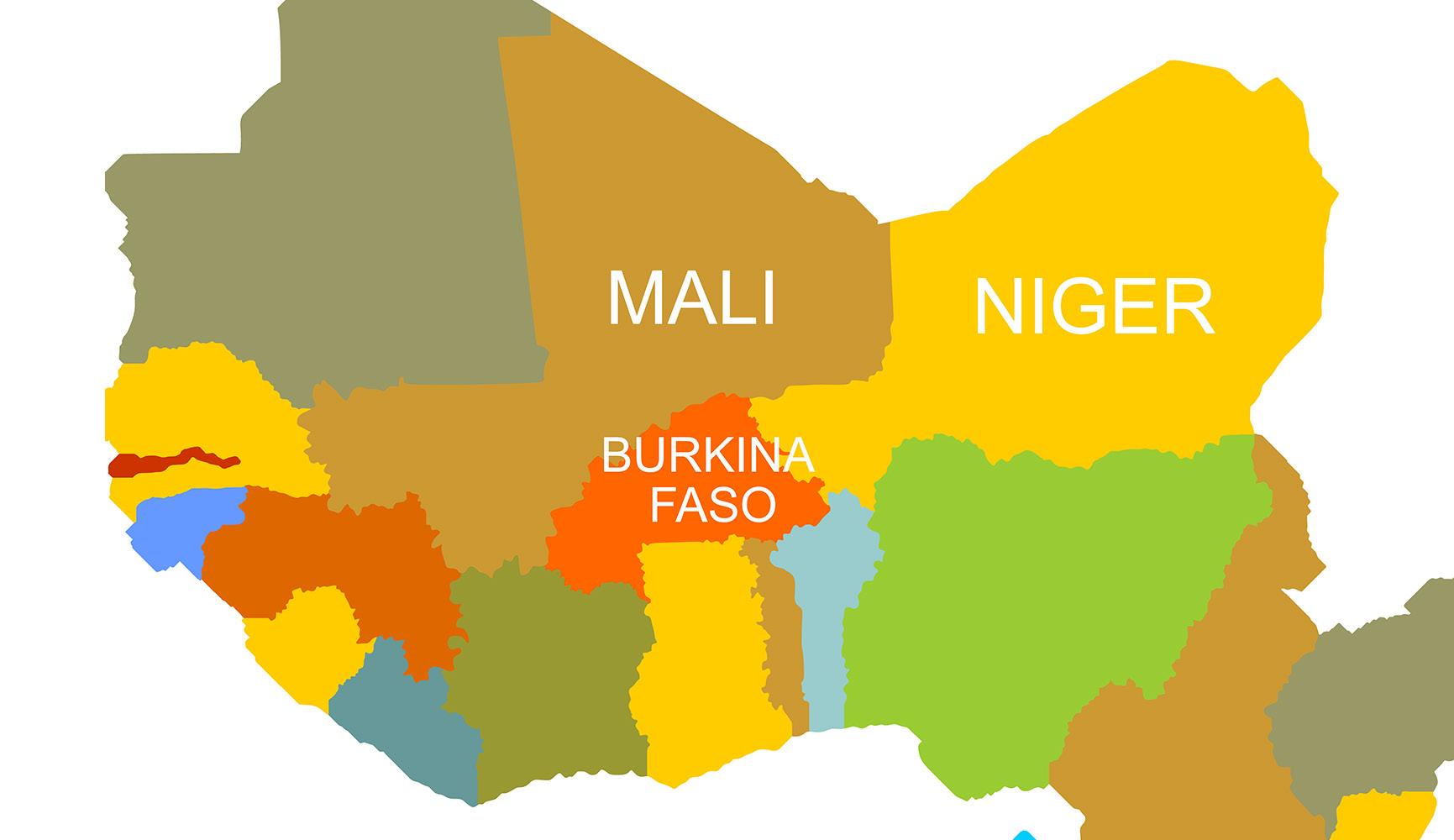
Other companies settled too. UKbased Hummingbird Resources paid around $31 million. Canada's B2Gold restructured its ownership arrangement at the large Fekola mine, converting the government's share into a preferred stake that earns guaranteed dividends, in exchange for approvals to expand underground operations worth up to 100,000 extra ounces per year.
These settlements handed the juntas a significant short-term windfall. Mali alone confirmed in late 2024 that it had secured nearly $800 million from mining companies, with more payments due. But the longer-term picture is troubling. Industrial mining requires massive upfront investment that takes years to recoup. When governments detain executives and seize assets, future investors take notice. The pipeline of new projects that would sustain these revenues over the coming decades is unlikely to materialise if companies believe their assets can be arbitrarily taken away.
The more strategically significant development is what the AES governments are building now. Both Mali and Burki-
na Faso have begun constructing their first domestic gold refineries.
On the surface, this sounds entirely reasonable. At present, gold extracted in these countries is mostly exported as raw ore to be refined in Switzerland or South Africa. The refining process, which turns raw material into standardised gold bars ready for the global market, adds significant economic value. Why should that value be captured abroad? Building refineries at home means jobs, income, and a bigger slice of the value chain.
Mali's refinery, being built near the capital Bamako, is designed to process up to 200 tonnes of gold per year. Its partner in the project is Yadran, a Russian conglomerate. Burkina Faso's facility, launched by President Ibrahim Traoré in late 2023, is projected to handle 150 tonnes annually. The governments speak enthusiastically about the employment these facilities will create, citing hundreds of direct jobs and thousands of indirect ones.
But analysts who track illicit financial flows see something else entirely. The problem is not refineries per se; it is
what a refinery does to the traceability of gold. Once ore from different sources is melted down together and cast into standardised bars, it is impossible to tell where the gold originally came from. A bar that comes out of the Bamako refinery might contain gold from a legitimate industrial mine, gold extracted by Russian mercenaries from a site they seized by force, and gold that jihadist groups taxed from informal miners in territory they control. The bar looks the same regardless.
This matters enormously because the global gold market operates on the principle that you can trace where bullion came from. The London Bullion Market Association, which sets the standards for gold traded internationally, requires strict checks on provenance. Gold that fails those checks cannot legally enter the mainstream market. A Russian-backed refinery in Mali, however, can export its bars directly to the United Arab Emirates or to Russia itself, bypassing European compliance checks entirely. From Dubai, the gold enters the global supply chain, and at that point, it is virtually untraceable. European
ECONOMY FEATURE SAHEL GOLD
jewellers, electronics manufacturers, and banks may unknowingly be buying what researchers call ‘blood gold’.
The industrial mines run by multinational corporations are only part of the picture. Across the Sahel, hundreds of informal digging sites operate with almost no regulation. In Burkina Faso alone, an estimated 430,000 people work in this artisanal sector, supporting over a million dependents. These are people digging by hand, often using mercury and other hazardous materials, in sites that may be little more than pits in the desert. Child labour is common. The work is dangerous and the rewards are small.
These sites are also deeply vulnerable to exploitation by armed groups. Jihadist organisations, principally a network called JNIM and a local affiliate of the Islamic State, have steadily taken over large parts of the rural Sahel. As they did so, they imposed themselves on the artisanal mining economy. They do not typically dig for gold themselves. Instead, they run protection rackets. Miners who want to keep working must pay fees. Transporters moving raw gold along roads pay tolls at checkpoints. These groups levy a form of taxation on the entire informal economy of the areas they control, and the gold sector is one of their most lucrative targets.
The revenue funds their operations directly. JNIM and allied groups have used this money to blockade towns, cutting off food and supplies to force civilian compliance, and to sustain sieges of military outposts. They pay fighters, buy weapons, and recruit from communities that have been terrorised, or economically marginalised.

Once this gold has been taxed, it enters a smuggling network that stretches from the Saharan interior to the coast. Criminal middlemen aggregate illicit gold with material from legitimate sources. It crosses borders, often through Togo or Benin, and then flies out of airports in Accra, Lome, or Bamako, frequently destined for gold markets in Dubai. The UAE has become a critical node in this system, a place where gold of uncertain origin is absorbed into the global supply chain with relatively few questions asked. Burkina Faso alone is estimated to have lost over $490 million in a single year to gold smuggling and the under-declaration of exports.
No account of the Sahel's gold economy is complete without examining Russia's role. After France's decade-long military presence in the region failed to contain the jihadist insurgency, the AES governments turned to an alternative partner. The Wagner Group, a
Russian paramilitary organisation, began deploying to Mali and then Burkina Faso. After Wagner's founder Yevgeny Prigozhin died in a plane crash in 2023 following his brief mutiny against the Kremlin, the force was reorganised and rebranded as the Africa Corps, operating under the direct command of the Russian defence ministry.
Russia's pitch was simple. It offered security with no conditions attached, no lectures about democracy or human rights, no awkward press conferences after civilian casualties. In exchange, the Africa Corps received access to mining sites.
Since Russia's full-scale invasion of Ukraine in 2022, the Kremlin has reportedly earned over $2.5 billion from gold operations across Mali, Sudan, and the Central African Republic. This money helps offset the impact of Western sanctions on Russia's economy and, according to researchers, effectively subsidises the war in Ukraine.
The Africa Corps' tactics on the

ground are instructive. In February 2024, Russian mercenaries arrived by helicopter at an artisanal site called Intahaka in eastern Mali, one of the largest informal gold sites in the country, capable of hosting up to 4,000 miners. They drove out the armed group previously controlling the area and immediately began charging miners for access. They had turned a humanitarian landscape into a revenue stream.
This strategy, critics argue, is inherently self-defeating as a counterinsurgency tool. When Russian forces raze villages, kill civilians suspected of sympathising with jihadists, and displace entire communities, they hand JNIM and its allies their most powerful recruitment pitch imaginable. Researchers tracking conflict data have found that civilian deaths attributable to Russian mercenaries in Mali are significantly higher than those caused by either the Malian military or rebel groups. The Africa Corps has been linked to mass executions. The result is a cycle in which
Russian brutality generates the very instability that justifies the continued presence of Russian mercenaries.
While gold dominates the Sahel's shadow economy, Niger's crisis has added a genuinely alarming dimension. Niger holds some of the world's largest untapped uranium reserves, and the French nuclear energy company Orano has operated there for decades. France has historically sourced around a fifth of its reactor fuel from Niger, a fact that sits uncomfortably alongside Niger's near-complete lack of domestic electricity access.
After the 2023 coup, the Nigerien junta revoked Orano's operating rights and eventually seized physical control of the company's main mine. Most alarming of all, the government took custody of approximately 95,000 tonnes of concentrated uranium powder, an act that violated an international arbitration ruling. That this highly radioactive material was then being transported through regions contested by jihadist groups gave nuclear security experts serious pause. The incident illustrated how resource nationalism, when pursued recklessly, can create risks that go far beyond corporate disputes.
The World Economic Forum has described the Sahel as one of the most dangerous potential sources of global instability. The concern is not just what is happening inside Mali, Burkina Faso, and Niger. It is what is coming next. Jihadist groups, funded partly by the gold economy and partly by the chaos that Russian mercenaries have deepened rather than resolved, are moving south. They have already conducted
attacks in the northern regions of Benin, Togo, and are edging toward Ghana and Cote d'Ivoire. These coastal nations are more stable and more economically developed, but they are not immune. Analysts estimate that sustained spillover of violence could reduce the GDP of some coastal states by up to 5%
Meanwhile, the AES withdrawal from ECOWAS has shattered the regional security framework that existed to manage exactly these kinds of cross-border threats. The replacement mechanisms being assembled are underfunded and slow.
The Sahel's $15 billion gold economy is not simply a story about a distant conflict. It is a story about how illicit money moves through the global financial system, how Russian geopolitical ambitions are partly bankrolled by West African soil, and how everyday consumers in wealthy countries may be inadvertently connected to all of it.
Breaking this cycle would require the global gold market to take provenance far more seriously, and for intermediary hubs like Dubai to face real consequences for absorbing material of uncertain origin. It would require the international community to engage coastal West African governments with genuine economic support rather than leaving them to absorb a crisis they did not create.
Until then, the gold keeps moving, the violence keeps spreading, and the war chest keeps filling.
editor@ifinancemag.com
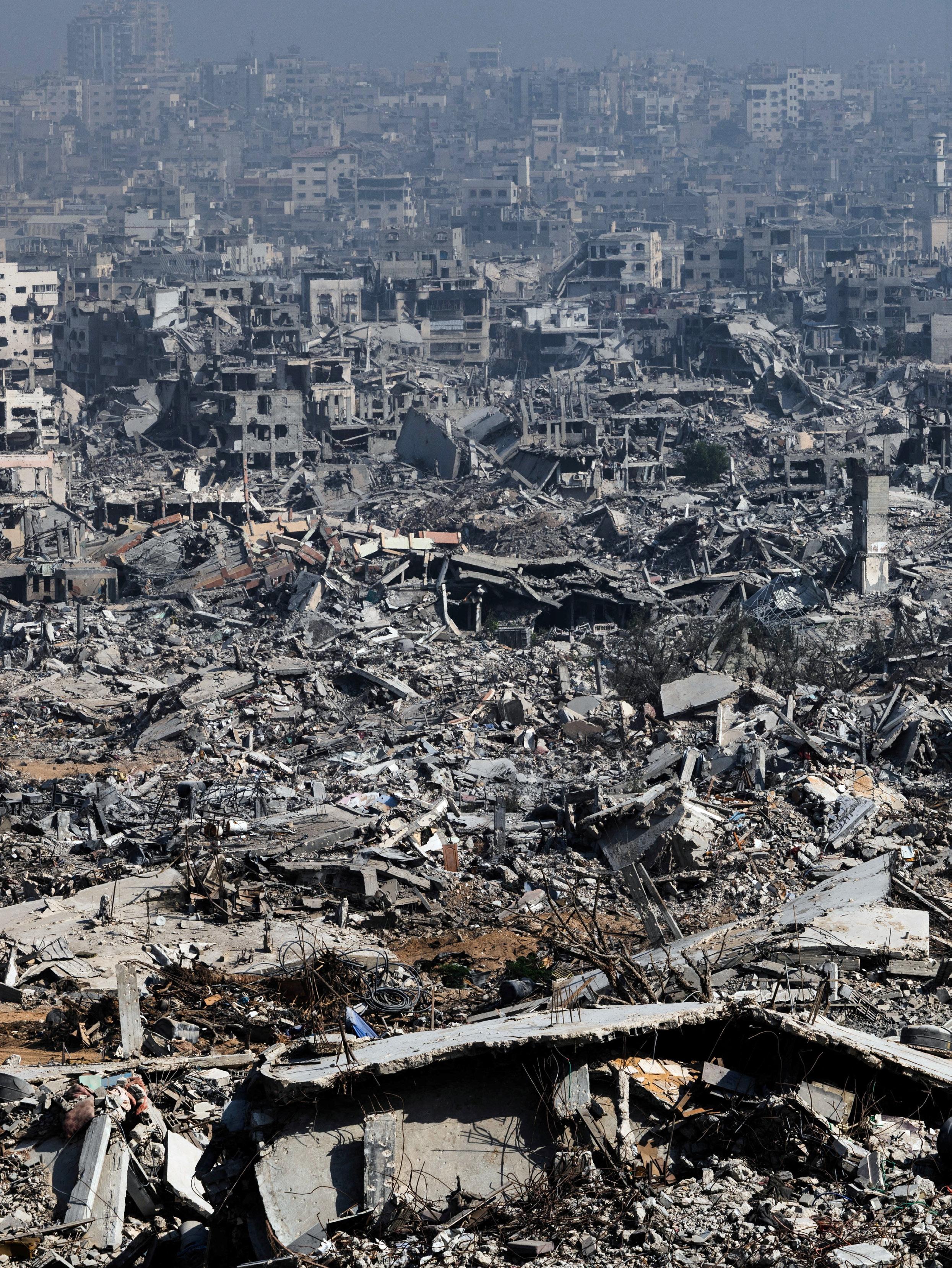
As per the catastrophe and risk modelling firm Verisk, the economic losses from the back-toback earthquakes have exceeded $10 billion
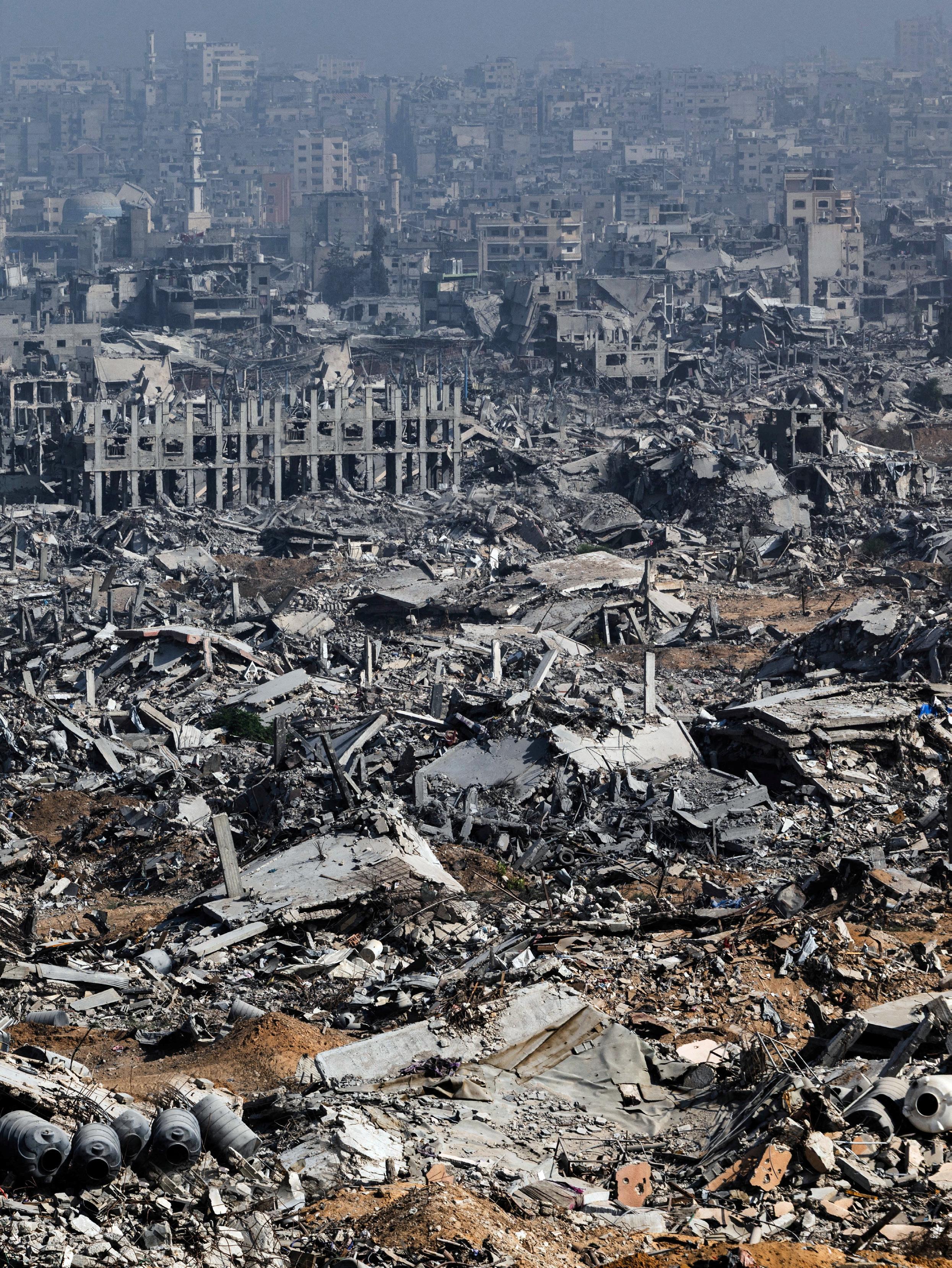
IF CORRESPONDENT
On June 24, two earthquakes hit northwestern and central Venezuela, killing over 2,500 persons, apart from injuring over 12,500, while tens of thousands were missing. This was the second-biggest incident that put the Latin American country in the global media spotlight in 2026, with the United States-choreographed arrest of controversial President Nicholas Maduro, in January this year, being the first one.
After Maduro’s arrest, Venezuela was in some sort of recovery mode, with the International Monetary Fund (IMF) and the World Bank resuming their formal relations with the Latin American nation. In 2019, the two global monetary bodies suspended dealings with Caracas due to a major dispute over the nation's ‘legitimate leadership’, and the government's refusal to provide mandatory, transparent economic data.
NICHOLAS MADURO
The new administration, led by interim President Delcy Rodriguez, opened the energy sector to foreign investment. The Latin American country sees its status as a ‘resource-rich nation’ as one of the low-hanging fruits to escape an economic abyss.
However, the devastating earthquakes in June has put the brakes on its economic recovery.
As per the Catastrophe and risk modelling firm Verisk, the economic losses from the back-to-back earthquakes have exceeded USD 10 billion.
While the Delcy Rodriguez government has declared a national state of emergency, Verisk stated that ‘amage was most severe in the Caracas metropolitan region and the coastal state of La Guaira, where an estimated 1,400 buildings were destroyed’.
It has also found a higher degree of uncertainty than usual in estimating the insured losses for the event, citing factors like macroeconomic conditions, elevated inflation, low insurance penetration and sanctions-related market complexities impacting the company's modelling.
Estimates by the United Nations Development Programme (UNDP), using its satellite-based Rapid Digital Assessment (RAPIDA), put the direct physical damage at $6.7 billion, equivalent to around 6% of GDP.
UNDP estimates that 1.7 million structures were affected in La Guaira, Carabobo, Miranda, Yaracuy, and Aragua.
The tally does not include infrastructure damage, wider economic disruption and longer-term reconstruction costs.
Before the earthquakes, the country
was dealing with hospitals lacking medicines and equipment, daily power outages, and at least eight million people in need of humanitarian support.
Democratic backsliding, corruption, inflation and economic sanctions have left its people without access to basic services. The tally of eight million Venezuelans fleeing the country in the past decade has become one of the largest displacement crises in the world, as per the United Nations.
When the signs of emergency arrived
The 1999–2013 phase under Hugo Chavez was all about a massive, oilfuelled expansion of social spending and poverty reduction, coupled with the erosion of long-term economic stability through nationalisations, rigid price controls, and extreme dependence on petroleum exports.
Under Chavez, Venezuela benefited from a historic surge in global oil prices, which skyrocketed from roughly $11 per barrel in 1998 to over $100 by the late 2000s. The influx of petrodollars allowed the administration to double domestic social spending. It heavily subsidising food, healthcare, and education, which significantly reduced poverty and income inequality during his presidency.
The Chavez administration nationalised major industries. In 2003, it brought forward stringent currency and exchange controls to prevent capital flight from the Latin American nation, alongside strict price controls on basic goods.
However, it missed a trick, by not using its oil wealth to diversify the domestic economy. By the end of Chavez's term, petroleum accounted for 95% of Venezuela's export revenues, and about
Chavez must be credited for sharing Venezuela’s vast oil wealth with the poor and disenfranchised. Chavismo witnessed the percentage of Venezuelans living below the poverty line falling to 36.3% in 2006 from 50.4% in 1998
half of all government income.
The move of purging state-run enterprises of experienced workers, and replacing them with political loyalists was another blunder, as the move hindered productivity. By the time of Chavez's death in 2013, the foundation of the economy was critically damaged by rampant inflation, chronic shortages of basic goods, and an overvalued currency.
Chavez must be credited for sharing Venezuela’s vast oil wealth with the poor and disenfranchised. Chavismo (the term that defined the Chavez-led left-wing populist movement in Venezuela) witnessed the percentage of Venezuelans living below the poverty line falling to 36.3% in 2006 from 50.4% in 1998.
Infant mortality fell from 20.3 per thousand births when Chavez came to power, to 12.9 by 2011. The access to education was another massive plus for the country, with the number of children enrolled in secondary education

rising from 48% in 1999 to 72% in 2010.
However, ‘Chavismo’ came at a cost, as the Latin American country had to reduce state-run oil company PDVSA to the status of a ‘piggy bank’, in order to sponsor the government's social security projects, while neglecting oil infrastructure and production.
rule: The abyss kicks in However, the real downfall happened in March 2013, as Nicholas Maduro took over the administration’s reigns immediately after Chavez’s death.
The domestic economy shrank 71% between 2012 and 2020, while inflation topped 130,000%. Its oil production, the beating heart of the country, dropped to
the unthinkable less than 400,000 barrels a day.
Between 2013 and 2025, as per the World Bank and the IMF, approximately 80% of the country’s GDP evaporated, a figure that dwarfs what happened to the United States in the Great Depression (29%), and to the Soviet Union during its collapse.
Along with the structural fragility, Venezuela missed the opportunity to utilise sovereign wealth funds to sterilise the liquidity generating from its trade. Even though the Latin American nation had an entity called Macroeconomic Stabilization Fund (FEM), by 2014, the fund held less than $3 million.
As crude prices collapsed, Venezue-
la faced a choice between fiscal austerity or monetary expansion. As per Iranian freelance journalist Amirreza Etasi, a keen observer of Maduro's economic missteps, the administration attempted to plug a fiscal gap, approaching 15% of GDP, not by cutting spending, but by expanding the monetary base.
As inflation ticked upward, the government attacked the symptom (prices) rather than the cause (liquidity). The 2014 ‘Fair Prices Act’ capped profit margins, and mandated sales below replacement cost.
"The economic result was a textbook negative supply shock. Manufacturers, unable to cover marginal costs, halted production lines. The scarcity index for

basic goods skyrocketed to over 80%. To manage the fallout, the government militarised food distribution (CLAP), shifting from a market economy to a clientelist rationing system prone to massive corruption," Etasi said.
Simultaneously, the Central Bank of Venezuela (BCV) was stripped of its autonomy, with Maduro government turning the entity as a printing press for the Ministry of Finance. This triggered hyperinflation (technically defined as monthly inflation exceeding 50%) in November 2016. By 2018, annual inflation hit an astronomical 130,060%, though IMF estimates were higher.
To mask the collapse of the currency’s value, Venezuela engaged in serial
redenomination. In 2008, three zeros got removed. In 2018 and 2021, the number stood at five and six, respectively. In total, 14 zeros were removed from the currency in 13 years.
Post the 2002–03 PDVSA strikes, the executive branch of the oil company fired over 18,000 technocrats (geologists, reservoir engineers, and managers) stripping the company of its institutional memory. They were replaced by political loyalists.
"In the capital-intensive oil industry, failure to invest in depreciation and amortization (D&A) is fatal. PDVSA stopped injecting water and gas into aging wells to maintain pressure. Result: production freefall from three
In 2019, Washington imposed full blocking sanctions on the government of Venezuela, freezing all its assets in the United States, and cutting off state-owned oil company PDVSA from the American financial system
million barrels per day (bpd) to a nadir of under 700,000 bpd by 2020. The collapse was sealed by the physical failure of the power grid. The March 2019 nationwide blackout, caused by brush fires and neglected transmission lines at the Guri dam, paralysed the country for days. Without electricity to power the upgraders in the Orinoco Belt, the heavy crude turned into sludge in the pipes, causing permanent damage to the infrastructure. This event alone cost the economy an estimated $2.9 billion in GDP," Etasi remarked.
By 2019, price controls were abandoned, and the US dollar was allowed to circulate freely (de facto dollarisation). While the move stopped the hyperinfla-
Source: Statista
tionary bleeding, it bifurcated the nation into two distinct economies.
The dollar economy (20%) was a segment fuelled by remittances, illicit gold exports to Turkey/UAE, and government contracting. On the other hand, emerged the bolivar economy (80%): Public sector workers and pensioners earning in local currency, whose purchasing power was obliterated.
By late 2025, oil production crawled back toward 900,000 bpd, aided by specific licences for United States' Chevron and swap deals with India's Reliance Industries involving naphtha for crude. However, with a credit-starved banking sector (due to 73% reserve requirements) and decimated public
utilities, sustainable growth remained mathematically impossible.
The Gini coefficient, on the other hand, rose from 40.7 in 2014 to 53.9 in 2024, making Venezuela the most unequal country in the Americas. In 2025, Venezuelan inflation soared to 475% in 2025, the highest in the world.
On 2019, Washington imposed full blocking sanctions on the government of Venezuela, freezing all its assets in the United States, and cutting off stateowned oil company PDVSA from the American financial system.
Facing the heat, Maduro did implement a series of economic measures in 2021 that eventually ended Venezuela’s hyperinflation cycle. He paired the economic changes with concessions to the US-backed political opposition, including negotiations for what many had hoped would be a free and democratic presidential election in 2024.
However, in April 2024, the then Joe Biden government allowed the primary oil and gas waivers to expire, citing a failure by the Maduro government to uphold the democratic commitments made in the 2023 Barbados Agreement.
Delcy Eloina Rodriguez Gomez, daughter of the Venezuelan guerilla leader and politician Jorge Antonio Rodriguez, wears multiple hats: lawyer, diplomat, and politician. The third is the one she is wearing now. Her promotion from vice-president to President came in January 2026, immediately after Maduro's arrest.
She has inherited an economically fragile country that needs more than miracle to become ‘great’ again (going by Trump's immediate reaction on her appointment). The American sanctions
on the Venezuelan Central Bank (BCV) have been lifted, and Luis Perez-Gonzalez, deputy of former BCV President Laura Guerra, has been handling the institution's leadership role since April this year.
It was the same BCV that remained a mere spectator when multiple zeros got stripped from the bolivar after one of the longest hyperinflationary episodes in modern history. Also, the central bank, during Maduro's time, became notorious for not publishing key economic data. And when it started publishing stats, they were incomplete, forcing IFM and World Bank to stop cooperation with Venezuela in 2019.
The task of converting BCV from a mere spectator of government-sponsored economic miscalculations to the lead actor of Venezuela's transformation will be a painful task. In the near term, the effects of sanctions relief will likely be most visible in exchange rate auctions, with greater transparency and reliability in these operations potentially helping reduce the gap between the official and the black market rates.
This would directly affect people’s daily life, by reducing price distortions, and helping stabilise inflation expectations. It would also reopen the door to multilateral institutions and international markets, particularly renewed engagement with the IMF, a necessary step toward debt restructuring and access to credit.
However, BCV 2.0 should be independent from political pressures, apart from possessing the ability to communicate a coherent monetary policy. This will satisfy Venezuela's economic discourse, apart from attracting investment. BCV should be the first ‘government institution’ in the post-Maduro era, that should be capable enough to
NICHOLAS MADURO
challenge the administration's economic narratives.
Despite having abundant natural resource, the state-sponsored mistakes of blocking manufacturing development and industrial diversification have resulted in long-term stagnation and inequality.
Wages in the Venezuelan labour market, based on a mix of public sector, state-owned companies, private activities and a very extensive informal economy, are insufficient to cover basic needs. Being a formal employee no longer guarantees an acceptable standard of living, pushing many public servants to take on side jobs, or turn to the parallel economy.
580,000: the exact number of active businesses, that have been destroyed in Venezuela since early 2000s. The tally of 830,000 from the beginning of the 21st century now stands at less than 250,000 today.
With real GDP collapsing by more than 75%, along with hyperinflation, the country has shifted into a de facto dollarisation, where the sovereign bolivar (VES) coexists with the US dollar, which has become the standard for salaries and prices.
More than 7.5 million Venezuelans have left the country since 2015, about 22.5 % of the population. Between 2012 and 2017, 22,000 doctors emigrated, as did more than 167,000 teachers. This exodus has created skill shortages in many sectors, while further weakening education, healthcare, and administration.
Rodriguez has brought new laws and regulations reversing Chavez’s nationalisation drive, by reopening key sec-
tors, like hydrocarbons and mining, to private investment.
She has formed a ‘Commission for the Evaluation of Public Assets’, that will audit state ownership in other economic areas, such as agriculture, manufacturing and infrastructure.
Another commission has been formed, consisting representatives from the state, business sector, active workers, and pensioners to ‘review labour conditions, address precariousness, and strengthen the social security system’.
An increase in the so-called ‘integral minimum income’ to the equivalent of $240 per month has been implemented for public sector workers. The amounts are set in US dollars but paid in bolivares at the day’s official exchange rate set by the central bank.
The latest adjustment involved an increase of the ‘economic war bonus’ from $150 to $200 a month, alongside a $40 monthly food bonus. The economic war bonus for pensioners has been raised from $58 to $70 a month, and for public sector retirees from $130 to $168.
There will be a new, one-time ‘professional and academic recognition’ bonus, ranging between $60 and $120, aimed at strategic sectors, such as security, education, and healthcare. Labour inspectorates have been told to address workers’ demands regarding employment conditions.
Venezuela's National Economic Council has been tasked with designing a more ‘efficient’ tax model aimed at making the Latin American country ‘more competitive’.
The Law on Streamlining and Optimization of Administrative Procedures have been enacted, with the goal of modernising public administration by reducing bureaucracy and incorporating digital tools. The law grants the execu-
President Delcy Rodriguez has brought new laws and regulations reversing Chavez's nationalisation drive, by reopening key sectors, like hydrocarbons and mining, to private investment
tive authority to eliminate procedures, shorten timelines, and improve coordination between institutions.
Another mixed commission will evaluate which state-owned assets have ‘strategic’ importance, potentially opening some to private investment. However, the hydrocarbons sector will remain under state control.
The partial reform to the ‘Organic Hydrocarbons Law’ has now brought more flexible taxation, apart from lowering royalty baseline rates, and repealing previous restrictive levies to incentivise investment.
On the other hand, the electricity sector has been thrown open to private investment, allowing the creation of joint ventures. The sector, under Maduro administration, earned the infamy of lacking both investment and maintenance. Large parts of the country used to endure hours-long electricity outages,

affecting water and telecommunications services.
GE Vernova Venezuela recently signed a Memorandum of Understanding (MoU) with the Venezuelan government to add at least 1 GW of electrical capacity to the National Electric System (SEN) within 24 months. The broader objective contemplates recovering more than 5 GW of capacity over the next four years.
As per the Financial Times, Wall Street banks and funds have now set their eyes on Venezuelan oil assets after Trump’s $100 billion investment pitch (that came in January) and recent legal reforms. Lionheart Capital and Elliott Management are among those pursuing
deals, while JPMorgan and Jefferies lead investor trips to Caracas. ExxonMobil and ConocoPhillips, however, are in the ‘wait and watch’ mode, citing unresolved governance, contract, and debt issues.
US Treasury issued sanctions waivers allowing select Western firms to operate, and contract disputes can now be settled in the United Kingdom, France, or Singapore under American law. Venezuelan authorities have already revised proposals under investor pressure, removing clauses allowing government termination for ‘public interest’.
By May, Venezuelan oil production moved past one million barrels per day (bpd) for the first time in over seven
years. The feat, confirmed by an OPEC monthly report (apart from measured by secondary sources), was made possible due to a massive 46,000 bpd production increase compared to the March-April period.
The nation had been making a comeback from the abyss of 2019, when the imposition of American sanctions and export embargo on the Venezuelan energy sector resulted in crude production plummeting under one million bpd, hitting a low of around 350,000 bpd in 2020. And then. the earthquakes struck. editor@ifinancemag.com
Singapore handled 10.5 million TEUs in Q1 2026, extending a record run that saw full-year 2025 throughput hit 44.66 million TEUs
Singapore handled approximately 10.5 million
TEUs of container traffic in the first quarter of 2026, a figure that represents growth of around 7% year-on-year. That number does not exist in isolation. It extends a run that has seen the port's annual throughput climb from 37.3 million TEUs in 2022 to 39 million in 2023, then 41.1 million in 2024, and finally a record 44.66 million in 2025, an 8.6% increase over the prior year. Vessel arrivals, measured by gross tonnage, hit a record 3.22 billion GT in 2025, up 3.5% from 2024. The direction is clear. The port of Singapore is not losing ground.
In a global trade environment marked by route disruptions, tariff uncertainty, and uneven demand, that is a more significant result than the numbers alone suggest.
To appreciate why, it helps to understand what Singapore actually does in the global shipping system. Unlike Los Angeles or Rotterdam, which are primarily gateways for goods entering or leaving their respective domestic economies, Singapore is a transshipment hub. Roughly 90% of the containers that pass through it are not originating or terminating there.
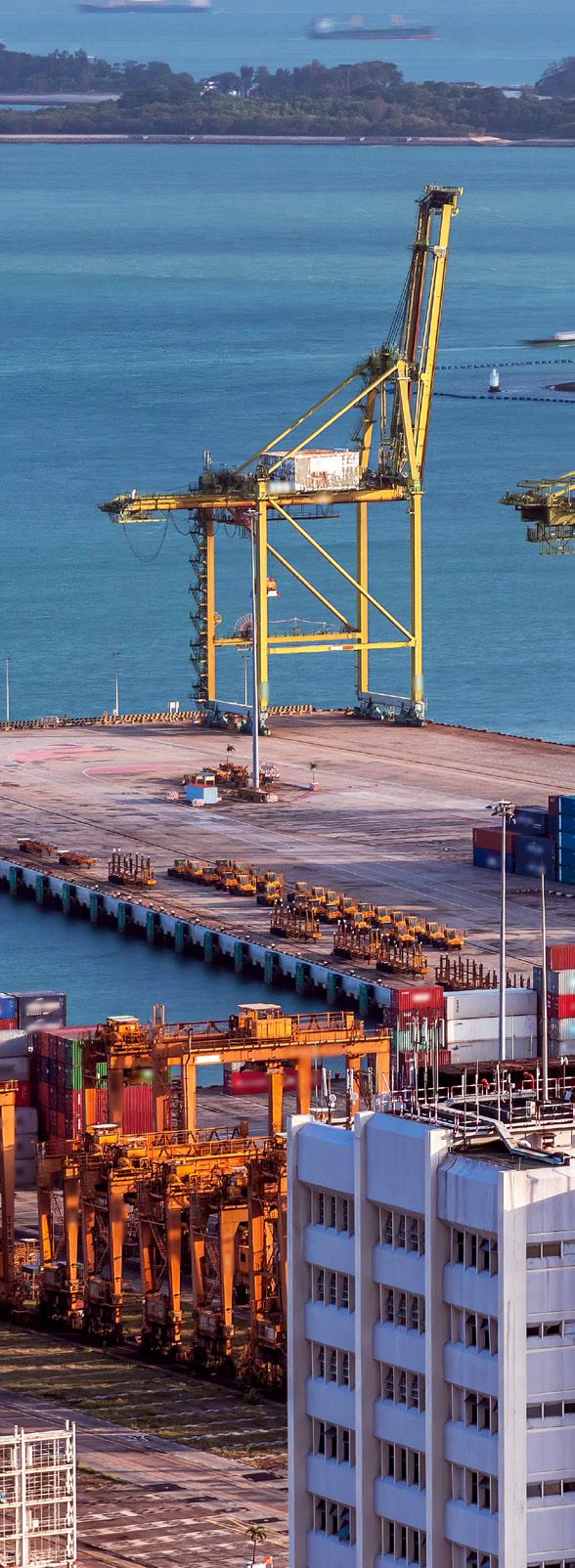
They arrive on large vessels from one part of the world, are transferred to smaller feeder ships, and then continue to their final destinations across Southeast Asia, South Asia, and beyond. Singapore's value lies not in what it consumes or produces, but in how efficiently it connects everyone else. That connectivity spans more than 200 shipping lines and links to over 600 ports across 120 countries. Most container vessels complete their simultaneous cargo handling and bunkering within a single day of arrival.
That model is more vulnerable to disruption than it might appear. A transshipment hub depends on being the most attractive option available to global carriers when they design their network routes. If a competitor port offers better turnaround times, lower costs, or more convenient geography, carriers will redirect traffic. Singapore has maintained its position for decades through a combination of deep-water access, digital port management systems, and a regulatory environment that shipping companies trust. But maintaining that edge requires constant investment.
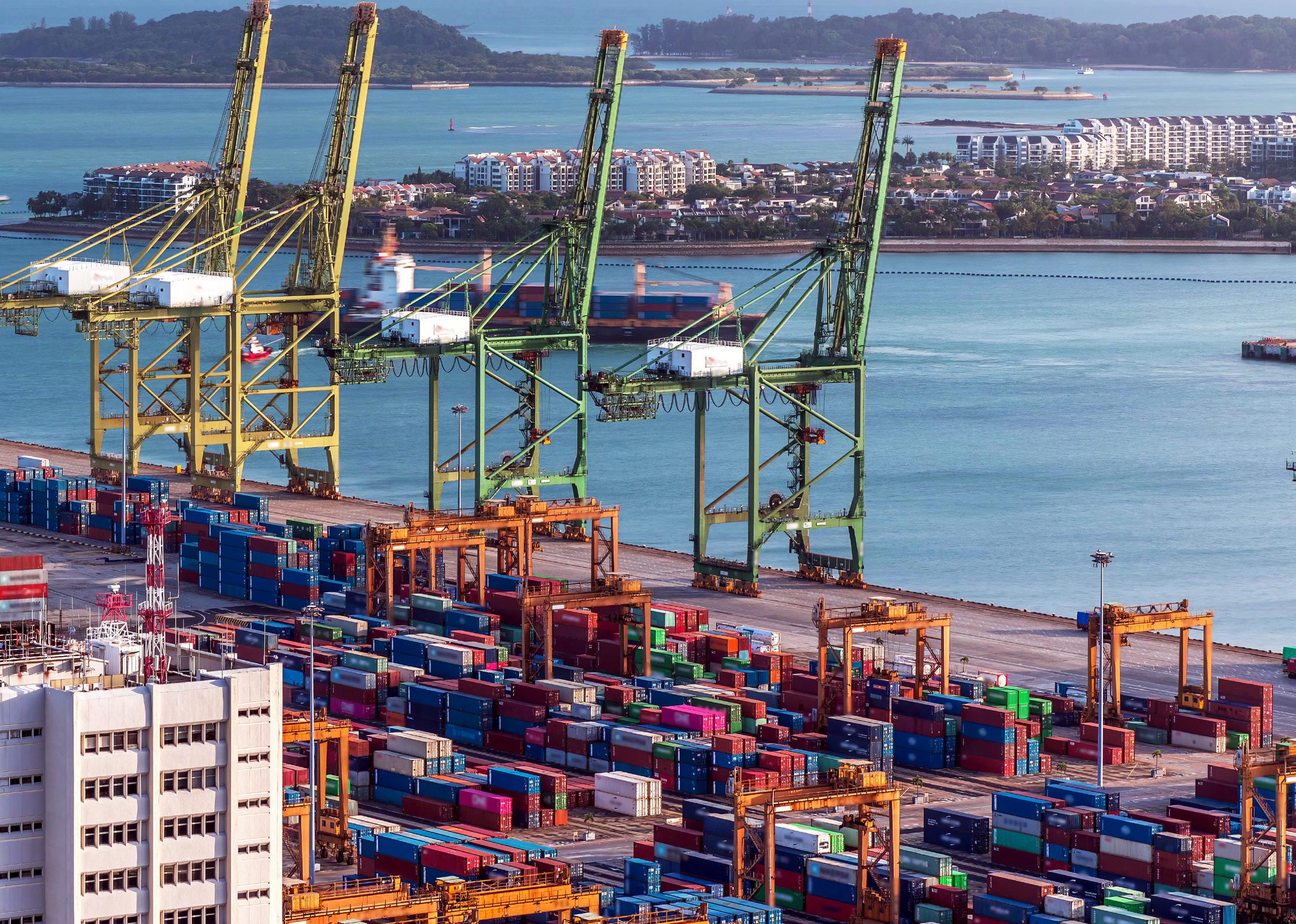
Where Singapore stands in the global hierarchy
The port rankings tell a story of concentration at the top. Shanghai handled 55.06 million TEUs in 2025, retaining its position as the world's largest container port. Singapore, at 44.66 million TEUs, sits firmly in the second spot. Ningbo-Zhoushan came in at 43 million TEUs for the year, making it the closest challenger. Below that, the drop is steep. Shenzhen handled around 33.4 million TEUs in 2024, Busan approximately 25 million in 2025, and Dubai's Jebel Ali around 15.5 million.
In a separate assessment by DNV and Menon Economics, Singapore was named the world's leading container port overall in their inaugural global benchmark, which measures not just volume but connectivity, productivity, sustainability, and impact across 160 ports. Shanghai and Ningbo-Zhoushan ranked second and third. Singapore has also been named Best Global Seaport for the fourth time, and Best Seaport in Asia for the 37th consecutive year.
Volume alone, however, does not capture the pressure points. The Port of Tanjung Pelepas in

The first modern shipping container was introduced by Malcolm McLean in 1956
The first ship to transport containers was the Ideal X
Malaysia, partly owned by Maersk's APM Terminals, posted 13.8% growth in 2025 to reach 14.03 million TEUs. The formation of the Gemini Cooperation between Maersk and Hapag-Lloyd, which focuses its network on terminals where one of the two carriers holds a stake, created a real risk of traffic diversion away from Singapore. That growth held up regardless.
The infrastructure bet The Q1 2026 figures suggest that sustained invest-
44.66 million TEUs in 2025, Over 10.5 million TEUs in Q1 of 2026
ment is holding Singapore's competitive position.
The most consequential piece of that investment is Tuas Port, a four-phase, $20 billion development spanning 1,337 hectares at the western edge of the island. When complete, expected in the 2040s, Tuas will consolidate all of Singapore's container operations into a single fully automated mega-port across 66 berths along a 26-kilometre waterfront, with a design capacity of 65 million TEUs annually.
Operations began in September 2022, and the port has handled over 10 million containers since then. Phase 2 has added automated berths equipped with electric automated guided vehicles and AI-powered yard cranes, all managed remotely from a central control facility.
A digital twin of the entire facility, developed in partnership with the Singapore Maritime Institute, allows real-time simulation and optimisation of terminal operations.
Tuas also runs on a private 5G network that supports sub-10-millisecond latency communications between vehicles, cranes, and the control centre.
Singapore is more than a container hub. It is the world's largest bunkering port, and 2025 marine fuel sales reached a record 56.77 million tonnes, up 3.4% from the prior year. That number mat-
Total arriving vessel traffic was 3.22 billion gross tonnage (GT) in 2025
ters because bunkering revenue and the broader maritime services ecosystem, which generated an estimated S$5 billion in annual business spending from more than 200 international shipping groups in 2025, provide a revenue base and network effect that pure container volumes do not capture.
The composition of that fuel mix is also shifting. Alternative marine fuels reached 1.95 million tonnes in 2025, up from 1.35 million tonnes in 2024. Digital bunkering, covering all bunker suppliers in Singapore, reached 100% adoption in August 2025.
The MPA opened applications for new LNG bunker supply licences in January 2026. A Keppel-led consortium was appointed in October 2025 to carry out front-end engineering design studies for ammonia power generation and bunkering. Technical references for both ammonia and methanol bunkering are in development, alongside a Singapore Standard for LNG bunkering expected in Q2 2026.
The geopolitical picture behind these numbers is complex. The United States and China are each, in different ways, pressuring the trading relationships that run through Singapore.
American tariff policy has pushed some manufacturers to relocate from China to Southeast Asian countries such as Vietnam, Indonesia, and Malay-
Total marine fuel sales hit a record 56.77 million tonnes in 2025

Alternative/green marine fuels sales amounted to 1.95 million tonnes in 2025
Source: CRISIL
sia, many of whose exports funnel through Singapore on their way to global markets. That is, counterintuitively, a source of volume growth for the port.
Trade diversion, even when driven by political friction, tends to benefit well-positioned hubs. The Red Sea crisis, which has kept major carriers rerouting around the Cape of Good Hope, extended transit times on East-West routes, and placed a higher premium on hub reliability. Singapore's flexibility and its ability to manage sudden volume shifts, demonstrated when it commissioned new berths and reactivated decommissioned yard space during the mid-2024 congestion surge, reinforced its reputation with carriers.
At the same time, Singapore's government has been careful to avoid alignment in the US-China rivalry that would compromise the port's neutrality as a trading node. Singapore processes cargo from Chinese exporters and American importers with equal indifference to their nationality. That commercial neutrality is a political choice, and it has been a strategically important one. It is also why 35 maritime companies chose to open or expand operations in Singapore during 2025 alone.
The next decade
Singapore's challenge is not about whether it remains relevant; the Q1 figures suggest it does. The
challenge is about what kind of hub it becomes. Decarbonisation requirements from the IMO are tightening, and ports that can offer green bunkering, low-carbon logistics corridors, and credible emissions reporting will have a competitive advantage over those that cannot. Singapore has established nine Green and Digital Shipping Corridors with partners including India, South Korea, China, Rotterdam, and Los Angeles, with plans for 2026 to include common emissions-reporting protocols and coordinated fuel trials.
A port that has grown its annual throughput by nearly 20% over three years, while simultaneously investing in the world's largest automated terminal and repositioning as a multi-fuel bunkering hub, is not likely to be caught flat-footed by a regulatory transition it can see coming from years away. But the Q1 2026 numbers are not a reason for complacency but a reason to keep building.
editor@ifinancemag.com
A mismatch between 40-year construction loans and 15-year digital lifecycles is leaving European taxpayers with a billion-euro bill just to keep existing trains running
IF CORRESPONDENT
Somewhere beneath the streets of Lausanne, Switzerland, a quiet financial crisis is unfolding. The city’s metro line, the M2, opened in 2008 to considerable fanfare. It was Switzerland’s only fully automated metro system, a gleaming example of modern engineering, moving roughly 360,000 passengers every single day without a driver in sight. It was supposed to be the future of urban transport.
Eighteen years later, the regional transport authority has been handed a bill for €295 million. Not to build a new line. Not to extend the network into new neighborhoods. Simply to stop the existing system from becoming unusable. This is not a Swiss problem. It is a European one, and it is getting worse.

To understand why this is happening, you need to go back to how cities have always thought about building metros. For most of the twentieth century, the logic was straightforward. You dig the tunnels, pour the concrete, lay the tracks, wire the signals, and run the trains. The upfront cost is enormous, but once the infrastructure is in place, it lasts for generations.
London’s Underground has stretches of tunnel that are more than 160 years old, and still in daily use. The signaling systems were mechanical relays and copper wiring, chunky and old-fashioned, but remarkably durable. Cities could borrow heavily to build a metro line, then pay back that debt slowly over 40 or

50 years while the system quietly earned its keep.
This model held for a very long time. But it rested on an assumption that turned out to be wrong. The misleading idea was that the technology running a metro line would age at roughly the same pace as the concrete and steel surrounding it.
In the 1990s and early 2000s, a wave of new automated metro lines swept across Europe. Cities like Copenhagen, Athens, Lausanne, and Barcelona invested billions in the latest generation of digital train control systems, called CommunicationsBased Train Control (CBTC). These systems used radio signals, onboard computers, and sophisticated software to run trains automatically, without drivers, at very short intervals. They were genuinely impressive. They could move more passengers more efficiently than traditional driver-operated lines, and transit authorities were told that the long-term savings on staff costs alone would justify the investment.
What nobody adequately accounted for was that these digital systems were not like tunnels. They were more like laptops.
A tunnel is built to last a century. The computers managing a modern metro are governed by the same commercial technology cycles as your smartphone. The processors, software platforms, and radio communication hardware that make a CBTC system work typically have a viable lifespan of 15 to 20 years before they become obsolete, unreliable, or simply unsupportable, because the companies that made the original components have moved on to newer
products and stopped manufacturing the old ones.
This mismatch is at the heart of what transport researchers are now calling an ‘Infrastructure Obsolescence Crisis’. Cities borrowed money over 40-year timelines to build these metro systems. But the digital nervous systems inside them started dying at the 15-year mark, long before the original debt was anywhere near paid off.
Consider what this means in practice. A city takes out a massive loan in 2005 to build an automated metro line. In 2020, before the loan is half repaid, the computers running the system are so outdated that replacement parts no longer exist. The vendor who originally sold the system has discontinued the product. Engineers can no longer guarantee the system is safe to run in its current state. The city must spend hundreds of millions more, on top of the original debt, simply to keep the trains moving.
That is the trap Lausanne found itself in. And it is the same trap that dozens of European cities are now entering simultaneously.
The Lausanne M2 serves as the clearest example of what this crisis looks like up close.
When the line opened in 2008, it was a genuine achievement. It climbs through steep terrain that would defeat most conventional metro systems, operates entirely without drivers, and has become so central to the city’s transport network that the regional authority’s chief executive described it as crucial to mobility across the entire metropolitan area. By any operational measure, it has been a success.
But the automation technology
A city takes out a massive loan in 2005 to build an automated metro line. In 2020, before the loan is half repaid, the computers running the system are so outdated that replacement parts no longer exist
installed in 2008 was built on the digital architecture of that era. The computer systems managing train movements, the trackside sensors, the software coordinating everything in real time... all of it was designed around components and platforms that have since been superseded. Maintaining the system has become progressively harder and more expensive as spare parts disappear and vendor support fades. Running the system in its current state is no longer a viable long-term option. The €295 million contract signed with the French rail technology company Alstom will strip out the old control framework entirely and replace it with a modern CBTC system called Urbalis Fluence. The trains themselves will also undergo a mid-life upgrade, with their onboard computer systems replaced to match the new signaling infrastructure.

“This modernisation will bring more frequent, more reliable journeys for passengers and help the city meet growing demand with shorter waits and a smoother ride,” said Marie Icardo, Managing Director of Alstom Switzerland. “By pairing our newgeneration, train-centric CBTC with a fully integrated mid-life upgrade of the fleet, we are boosting capacity while extending the performance of the existing trains for years to come.”
One detail in that contract is worth noting. It explicitly includes what is described as ‘technical support and obsolescence management services’, an acknowledgement built into the contract itself that the new system will also need active management to prevent it from suffering the same fate as the system it is replacing.
Across a Continent, the Same Bill
Lausanne is not an outlier. Transit authorities across Europe that installed automated systems between roughly 1998 and 2010 are hitting the same technological wall at roughly the same time. The cumulative cost of signaling and automation upgrades across the continent over the next five years is estimated to exceed €5 billion.
In Copenhagen, the metro system that opened in 2002 was one of the world’s first fully automated urban rail networks. Now in its 24th year, it is undergoing a comprehensive overhaul of its core automated systems on its original two lines, while trying to keep the trains running for the hundreds of thousands of passengers who depend on them daily. Alstom has been contracted separately to upgrade 34 of the original trains. In parallel, Danish State Railways has ordered a new fleet of 226
fully automated trains from a Siemens and Stadler consortium at a cost of €3 billion, with 30 years of maintenance included.
“This is the largest investment in the 90-year history of the S-Bane,” said Flemming Jensen, CEO at Danish State Railways (DSB). “With this investment, DSB takes another important step toward future proofing the capital's public transport. Increased frequency and capacity will ensure that the S-Bane keeps up with growing demand and maintains its role as the backbone of Copenhagen's transport network.”
In Athens, lines 2 and 3 of the metro, built largely to serve the 2004 Olympic Games and opened in 2000, are now undergoing their first major systems overhaul in 25 years. The total upgrade programme exceeds €500 million, including a €106 million project to refurbish 12 of the original
trains and extend their working life. Fifteen new trains are being acquired. When finished, the improvements are expected to reduce average waiting times to under four minutes.
Madrid is upgrading its busiest metro line, Line 6, from a semiautomated system to a fully driverless one. This is a 23.5 kilometre circular route used by around 400,000 people every day. The contract, again awarded to Alstom, involves replacing the existing signaling system entirely and commissioning new electronic interlocking infrastructure.
Barcelona presents perhaps the most extreme case. Its L9 line, one of the longest metro lines in Europe, was begun with an original budget of €5 billion. Cost overruns driven by the complexity of integrating advanced automation systems pushed the total to €5.9 billion. Completing just the central section of the line requires a further €926 million. On top of this, the city is spending an additional €331 million on 39 new trains for its older lines. Following a 3.5% fare hike that took effect in January 2026, a single metro ticket in Barcelona now costs €2.90. The Metropolitan Transport Authority (ATM) officially stated the fare increases were necessary ‘to offset rising costs for maintaining the transport network and inflation’, noting that ‘in recent years, city and regional authorities have invested significant resources in infrastructure development, fleet renewal, and the introduction of new technologies’.
In Prague, the city is grappling with upgrading its existing metro lines while simultaneously building a new automated line, Line D, at a cost of €1.23 billion. The broader underground expansion plan for the city over the

next two decades carries an estimated price tag of €7.5 billion, and analysts have pointed out that decisions made early about automation technology could either save or waste hundreds of millions of euros depending on which approach the city chooses.
Italy offers a cautionary story about what happens when the original technology choices are particularly poor. The city of Turin installed a proprietary automated metro system built around a technology that was later discontinued by its manufacturer, Siemens. Because the system was bespoke and no longer standard, finding replacement trains has meant commissioning specially designed vehicles that cost significantly
more per metre of trainset than almost any comparable project in Europe. Turin is a textbook case of how reliance on a single vendor’s unique, closed technology leads directly to financial pain when that vendor moves on.
The root cause of this crisis is a structural mistake embedded in the way transport planners and economists thought about digital infrastructure in the 1990s. When engineers calculate whether a metro line is worth building, they model costs and benefits over very long timeframes. The tunnels and stations are treated as long-lived assets, because

Paris, France
Copenhagen, Denmark
Turin, Italy
Nuremberg, Germany
Barcelona, Spain
City: Turin
Country: Italy
Tech: Proprietary automated metro system
Problem: Technology was discontinued by manufacturer
Challenge: Non-standard system increased cost of new stock, replacement
they genuinely are. But the digital systems, the CBTC computers, the software, the trackside sensors, were bundled into the same financial models as if they would last just as long. They do not. The commercial technology sector operates on cycles of two to seven years. A railway operates on cycles of 40 to 100 years.
Designing a system that fuses these two timescales without acknowledging the gap was, in hindsight, a serious error.
The second major mistake was allowing transit authorities to become locked into proprietary systems. When a city bought an automated metro system from a particular company in 2003, it was not just buying hardware and
software. It was entering a relationship from which it could not easily exit. The software was closed, the hardware was bespoke, and the protocols were unique to that vendor. If the vendor later stopped supporting the product, the city had no alternative supplier to turn to. It could not invite competitive bids for replacement parts, because no other company made compatible ones.
This is fundamentally different from how mainline railways work. European mainline railways are governed by a common standard called the European Train Control System, which means trains from different manufacturers can operate on tracks equipped by different signaling companies. Urban automated
metros were never subject to any equivalent requirement. Each system was effectively a sealed box, and the city that owned the box was at the mercy of whoever had the key.
Attempts to fix this have largely stalled. Paris’s transport authority tried to enforce interoperability standards between CBTC suppliers and found the process immensely difficult and expensive. New York City used one of its lines as a pilot project to develop interoperability requirements and encountered equally profound complexity. Without a regulatory mandate from the European Union requiring open, standardised architecture for urban rail automation, the situation is unlikely to change on its own.
The financial damage from this crisis extends beyond the direct cost of the upgrades themselves.
Public infrastructure is funded through long-term borrowing. The traditional model assumes large upfront spending, followed by decades of relatively low maintenance costs, with a significant overhaul perhaps at the halfway point. A 15-year forced replacement of the entire digital layer of a metro system destroys this model entirely. Cities find themselves servicing the original construction debt while simultaneously taking on ninefigure bills for technological renovation they never planned or budgeted for.
The most damaging consequence is the crowding out of expansion. Money that should be invested in building new lines in underserved areas is being diverted to keep existing lines alive. When Prague must spend vast
sums upgrading its legacy lines at the same time as building Line D, it has less capacity to fund other transport improvements. When Barcelona is consumed by finishing L9 and maintaining existing infrastructure, regional rail projects across Catalonia are delayed or cancelled.
At the European level, the problem is becoming difficult to ignore. The European rail sector requires an estimated €100 billion in infrastructure investment to meet the continent’s climate and connectivity targets. The Connecting Europe Facility and Cohesion Fund allocate billions toward rail, with €18.2 billion earmarked specifically for railway networks. But a growing share of that money is being absorbed by the rehabilitation of infrastructure that is not old by any conventional measure. Systems built in the early 2000s, which should still be in their operational prime, are consuming funds that were intended for new development.
The major vendors have recognised that the old business model, sell the system and move on, is producing a crisis that threatens to destroy confidence in automated transit altogether.
Alstom has restructured its maintenance offering around what it calls FlexCare, a long-term service agreement that covers not just routine repairs but explicit management of technological obsolescence over the life of the system.
As Alstom’s official mandate notes: “Rolling stock typically has a lifetime of up to 40 years, and it is inevitable that various electronic components and subsystems will become obsolete over time. We sustain the safety and reliability

of fleets with proactive obsolescence management... to ensure obsolescence impact is mitigated for increased fleet availability.”
The company maintains more than 35,500 vehicles worldwide under such arrangements, and has invested in additive manufacturing, producing over 150,000 parts using 3D printing to replace components that are no longer commercially available.
Siemens Mobility has adopted a similar approach, with recent contracts in the United Kingdom and New Zealand transferring responsibility for obsolescence management directly to the supplier rather than leaving it with the transit authority.
Engineers are redesigning the architecture of automated systems to reduce the rate at which they become obsolete. Older CBTC systems distributed intelligence across thousands of pieces of trackside equipment, sensors, relays, and control panels, all of which degraded over time and were expensive to access and replace inside operating tunnels.
The newer approach concentrates the computing power aboard the trains themselves. When the onboard computers eventually need updating, they can be swapped out in a depot during normal maintenance windows, without requiring intrusive, disruptive work inside the tunnels at night.

This approach, sometimes called train-centric architecture, is central to the new system being installed in Lausanne.
Smaller specialist companies are also filling gaps. Some niche suppliers of onboard power systems are explicitly committing to maintain product lines for multiple decades, ensuring that when a specific semiconductor goes out of production, a certified replacement is available rather than triggering a full system redesign.
The lessons of this crisis point toward several concrete changes in how cities and governments approach automated
The European rail sector requires an estimated €100 billion in infrastructure investment to meet the continent’s climate and connectivity targets
transit. The European Union has the authority and the precedent to mandate open, standardised architecture for urban rail automation, just as it mandated common charging standards for consumer electronics. Without this, transit authorities will continue to be captured by individual vendors, and the cycle of proprietary lock-in and forced full-system replacement will repeat itself.
Public accounting frameworks need to be updated to reflect the reality of digital infrastructure. Tunnels and software cannot be depreciated on the same schedule. The full lifecycle cost of a system, including software updates, cybersecurity management, and midlife hardware replacement, must be calculated and included in the original contract rather than treated as an unexpected future expense.
The structure of public-private partnerships must also change. If a private company builds and operates an automated metro line, the risk of digital obsolescence should remain with that company, not default back to taxpayers when the technology fails at year 15. This requires careful contractual design, but it is not impossible. Several recent contracts, in Chennai and Copenhagen among others, have begun to move in this direction.
What is happening beneath the streets
of European cities is a collision between two fundamentally different timescales. One is the timescale of civil engineering, measured in generations. The other is the timescale of digital technology, measured in years.
For most of human history, infrastructure was made of things that aged slowly. Stone, steel, and concrete degrade predictably. You can plan for their maintenance and replacement without financial surprises. But when the core intelligence of that infrastructure is digital, when the thing that makes it function is software running on microchips made by companies that operate on quarterly cycles, the financial and engineering assumptions of the past no longer hold.
The cities now writing enormous cheques to keep their 20-year-old metro systems alive are not victims of bad luck. They are paying the price for a systemic failure to understand how digital technology ages. The tunnels under Lausanne will be there hundred years from now. But, the computers that ran the trains through them became obsolete before the city finished paying for the tracks.
Unless Europe’s transport policymakers restructure how automated transit is procured, financed, and maintained, this will not be the last generation of digital metro systems to reach technological obsolescence while their construction debts are still being repaid. The next wave of automated metro lines being planned and built today will face the same reckoning in the early 2040s, and the bill will be even larger.
editor@ifinancemag.com
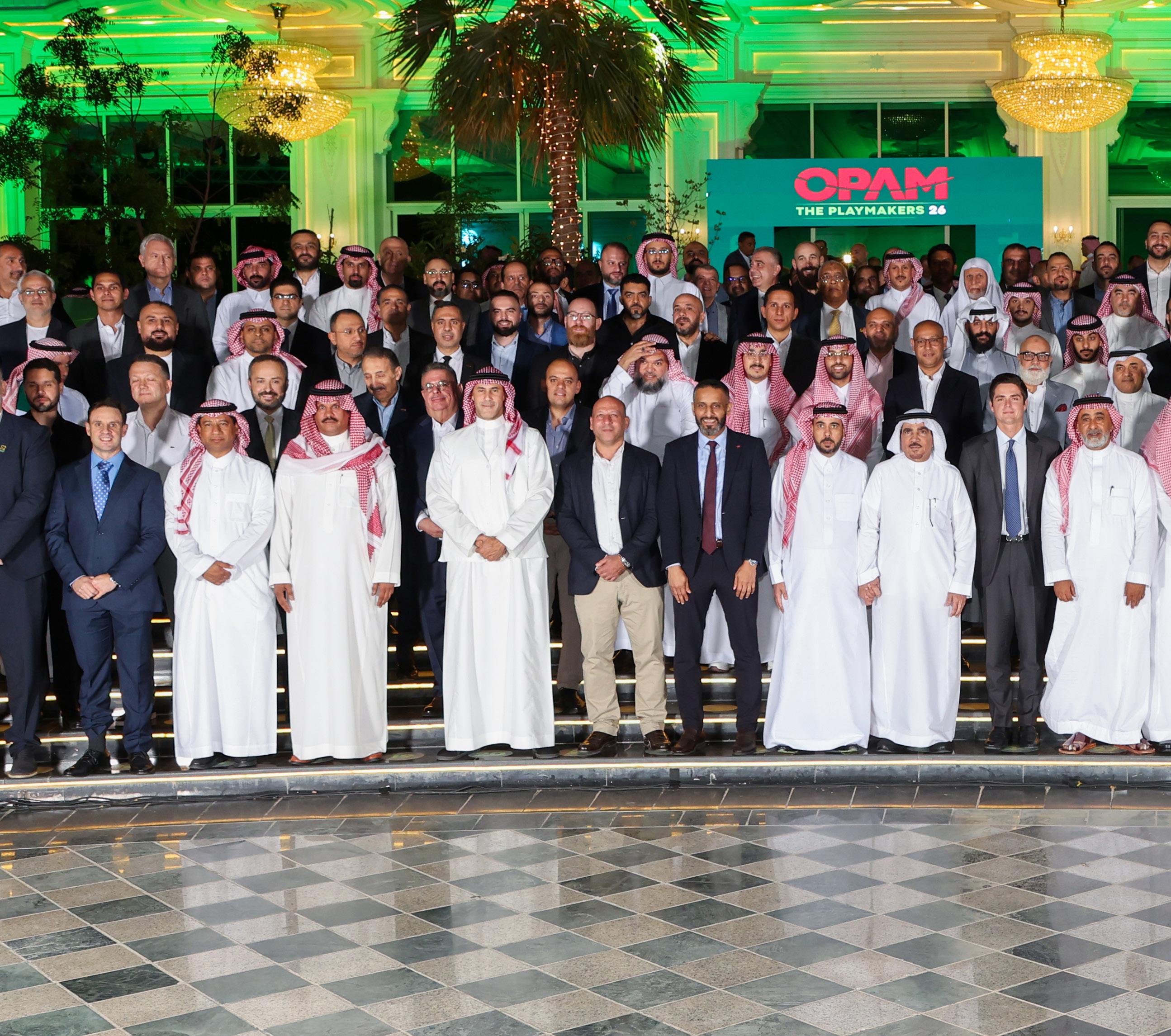
According to data from the international market research firm Kantar Group, Abdullah Al-Othaim Markets became the preferred shopping destination for consumers in the Kingdom by 2025
Abdullah Al-Othaim Markets Company was initially an extension of Riyadh-based Saleh Al Othaim Trading Establishment, which was founded in 1956 by Sheikh Saleh Al Othaim. Initially focused on food trading, the company witnessed significant evolution over the decades. In 1980, another milestone was reached as Abdullah Al-Othaim Markets Trading Company emerged to expand the group's retail and wholesale operations across the Kingdom.
By 1990, the store count reached 14, and within two years, the company enhanced its distribution capabilities by opening large, state-of-the-art warehouses and expanding its vehicle fleet to improve service quality and streamline cooperation with suppliers.
The company, whose core vision aligns with Saudi Arabia’s "Vision 2030" diversification agenda, operates to offer "a better life at lower costs." Terms like value, quality, and customer experience dominate the venture's business doctrine, with special emphasis being laid upon forming strong supplier partnerships to maximise investor returns.
As of 2026, Abdullah AI-Othaim Markets remains firmly committed to building the Kingdom's first truly "Unified Grocery Ecosystem," and to complete the task, it has engineered an integrated, future-focused growth ecosystem that seamlessly connects the business' vast physical footprint with a multi-faceted digital commerce engine. The strategy, by delivering unparalleled customer value, mar-

ket expansion, and sustainable growth, is disrupting the Kingdom's retail sector by setting the definitive standard for omni-channel industrial practices.
The Abdullah Al-Othaim Markets ecosystem, which currently serves over 110 cities (through its more than 400 physical stores), apart from hitting milestones like 12,000plus unified SKUs (Stock Keeping Units) and more than 500,000 monthly orders, was honoured as the "Best Omni-Channel Grocery Retailer – Saudi Arabia 2025" at the recently concluded International Finance Awards.
An unrivalled omni-channel architecture
Abdullah Al-Othaim Markets' omni-channel ecosystem possesses a perfect blend of online and offline nodes, be it the company's owned channels such as Speedi App, Iktissab App, Othaim Website or Partner Marketplaces like Amazon, Jahez, HungerStation, along with a comprehensive fulfilment backbone of Dark Stores, Click and Collect
Serves over 110 cities 12,000-plus unified SKUs
More than 500,000 monthly orders
Stations and close to 200 Online-Enabled Stores.
Together, this ecosystem (further powered by scalable APIs at fulfilment points) has put out some solid numbers like 86% Green Orders (Percentage of all orders delivered successfully within the promised service level agreement), 30-minute average delivery time (from order placement to customer delivery across the venture's network), 82% returning customer rate (demonstrating strong customer loyalty and a superior service experience that encourages repeat business) and 500,000-plus monthly orders (in terms of total order volume fulfilled across Abdullah Al-Othaim Markets' partner aggregator network).
While these numbers display tremendous scale, another driver behind the omni-channel architecture's consistent growth has been Abdullah Al-Othaim Markets' emphasis on sourcing a wide array of quality products, both national and international, through the company's network of private label brands such as Haley, Zod Bakery, Zod Fresh and Rex. The decision has ensured the ecosystem performs solidly on metrics like competitive pricing and providing product accessibility for diverse consumer needs, reinforcing the company's commitment to food security and inclusive affordability.
Abdullah Al-Othaim Markets' private label has gained significant operational momentum, with key metrics such as customer numbers, basket value, total sales growth, and total profit growth remaining strong. From 2021 to 2024, the company's omni-channel ecosystem demonstrated remarkable resilience, achieving an average Compound Annual Growth Rate (CAGR) of 8.4%. Between 2023 and 2025, the group's market share in the hyper/super segment reached 21%. According to data from the international market research firm Kantar Group, Abdullah Al-Othaim Markets became the preferred shopping destination for consumers in the Kingdom by 2025.
In terms of facilitating an "Integrated Omni-channel Experience," the company has set up a mix of online and offline channels, with elements such as cash and carry, wholesale, e-commerce, express delivery, supermarket and hypermarket reflecting a proper multi-channel approach. Despite its rapid operational growth in the urban region, the company has ensured that it covers the entire Kingdom, reaching out to as many people as possible in different areas to meet their day-to-day needs.
"We are present across all regions of the Kingdom of Saudi Arabia, operating more than 160,000m2 of warehousing operations. Apart from holding extensive access permits that allow us to operate in every area from the south to the north, and from the east to the west, our operations are also known for functioning continuously to ensure uninterrupted service and comprehensive customer support," stated Abdullah Al-Othaim Markets, while stating that within the next 36 months, it is looking to expand an extra 250,000m2 of warehousing operations.
Another vital cog in Abdullah Al-Othaim Markets' omni-channel ecosystem has been its "Speedi App," which, since its launch in 2020, has emerged as the cornerstone of the group's digital experience. In the last six years, the company has undergone rapid strategic improvements in selection, operational excellence, and delivery experience, forming the core of the group's direct-to-customer relationship.
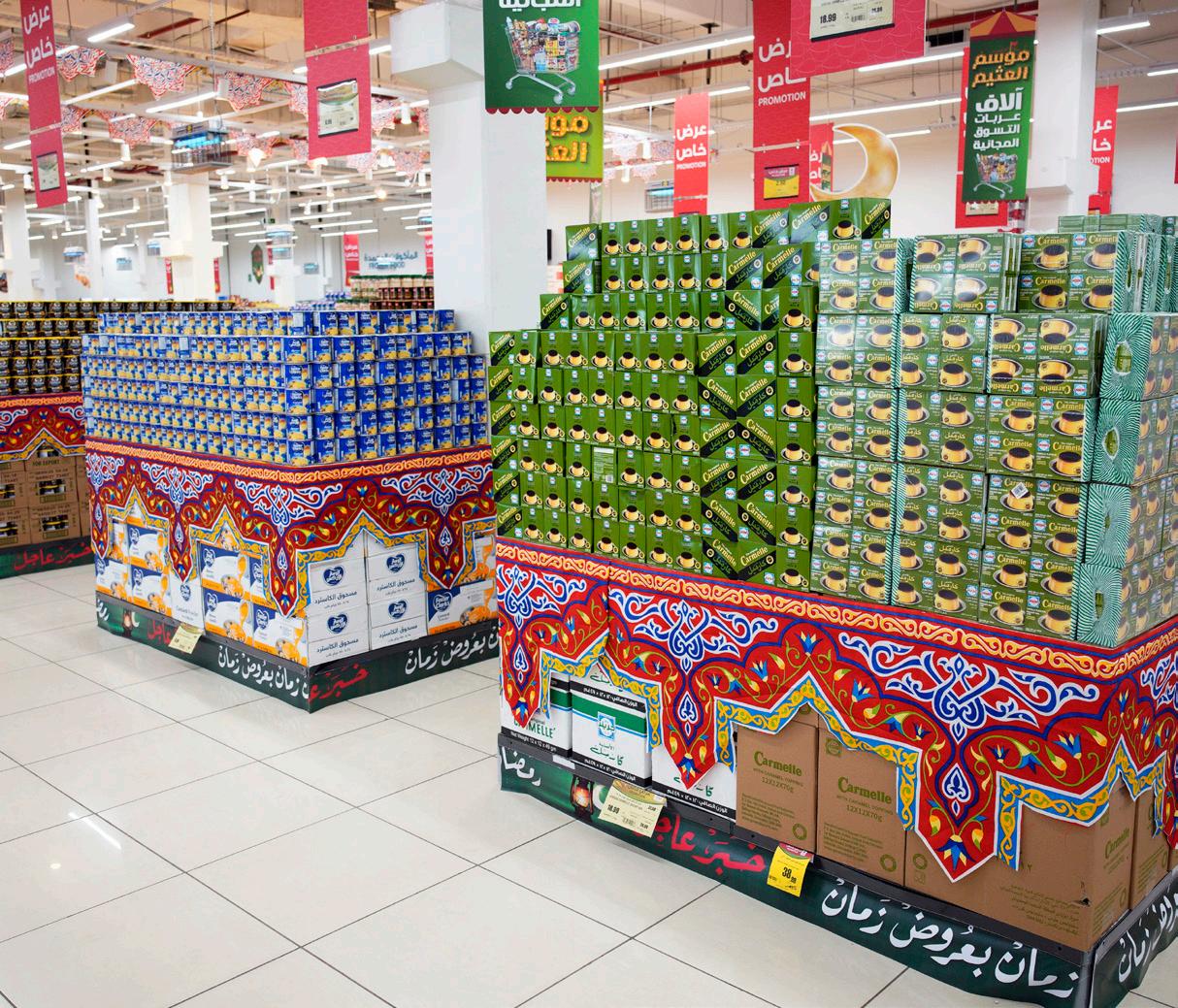
Simultaneously, the company has also extended its reach through a "Dominant Partnership Network," about which it told the International Finance, "Beyond our owned channels, we partner with the region's leading eCommerce and quick-commerce platforms like Amazon, Noon, HungerStation and Jahez. This extends our digital reach, enhances customer accessibility, and drives incremental growth by meeting customers wherever they choose to shop online, serving over 110 cities nationwide."
Mention must be made of Abdullah Al-Othaim Markets' "Purpose-Built Fulfilment Engine," which delivers speed and scale for the omni-channel ecosystem. The fulfilment strategy is not a one-size-fits-all kind of approach, with the venture investing in a hybrid infrastructure to optimise for density, speed, and efficiency across its network. The strategy has two vital touchpoints: Dark Stores, dedicated warehouses for high-volume, high-density urban markets and "Mini Fulfilment Centres," dedicated e-commerce operations zones built inside key existing retail stores.
Whereas Dark Stores are designed for maximum picking efficiency and inventory capacity for the busiest areas of the group, Mini Fulfilment Centres utilise existing real estate and inventory to allow for quick scale and store-to-door delivery.
Abdullah Al-Othaim Markets is dedicated to encouraging innovation and is currently focusing on delivering store excellence through the application of innovative technology. At the end of 2026, facilities such as self-checkout, digital signature, digital signage with brochure stands, and self-service AI scales will form part of the standard offering in all physical stores in the Kingdom.
Abdullah Al-Othaim Markets' ability to fulfil different


At the end of 2026, facilities such as selfcheckout, digital signature, digital signage with brochure stands, and self-service AI scales will form part of the standard offering in all physical stores in the Kingdom
shopping missions through its "Integrated Omni-channel Experience" has not gone unnoticed, with Kantar naming the company in its prestigious list of "2025's Most Valuable Emirati and Saudi Brands." In fact, the group has achieved a historic milestone in becoming the first-ever grocery retailer from the Kingdom to make it to the prestigious list.
In addition to having 414 branches in the Kingdom and 61 in Egypt, Abdullah Al-Othaim Markets has established its own logistics empire, which includes over 380 commercial and more than 100 rental vehicles, covering more than 67 million kilometres annually.
The suppliers also get benefits like a retail media service from the group that drives brand and category growth, with clear ROI (Return on Investment), optimisation of supply chain with end-to-end efficiency, trade investment ROI and most crucially, fair and equitable treatment from the company.
For any business to thrive and grow consistently, fac-
tors such as customer feedback and loyalty are essential. Abdullah Al-Othaim Markets stands out against its competitors in this regard. The same omni-channel strategy that has established the company as a retail powerhouse in the Kingdom is also helping to attract and retain customers.
While an integrated mechanism consisting of channels like social media, app review, Google Map review, WhatsApp and email ensure no feedback goes unheard, it has also given the venture a strong online presence, with achievements like 2.2 billion digital impressions, a promotional network of 1400-plus influencers and over 200 million followers across various social media channels.
And as we step into 2026, Abdullah Al-Othaim Markets is further consolidating upon this position of strength, leading the digital conversation metrics by having six million engaged followers (the highest engagement among industry competitors), four times faster follower growth among the Saudi retail sector players and five times more engaged followers than Abdullah Al-Othaim Markets’ nearest competitor.

ELLIS CLARK HEAD OF MARKETING TUNLEY ENVIRONMENTAL
For many organisations, Extended Producer Responsibility (EPR) is still being treated as a compliance task, something to submit and move on from. However, the businesses looking more closely at their packaging data are starting to realise something different: EPR is one of the clearest opportunities to reduce costs associated with packaging.
The reason for this is that EPR doesn’t just charge you for the volume of packaging you place on the market; it charges you based on how that packaging is designed, how recyclable it is, and how accurately it’s reported. That means two organisations with similar products can end up paying very different fees, depending on how well they understand and manage their data.
This is where many businesses are missing value. Packaging data is often incomplete, inconsistent, or pulled together at the last minute. Materials get grouped into broad categories, assumptions are made to fill gaps, and in some cases, packaging is effectively treated as ‘worst case’ just to ensure compliance. The result is that organisations can default into higher fee categories without realising it, paying more than they need to year after year.
An EPR assessment changes that. It looks beyond submission and focuses on what’s genuinely increasing cost. Through analysing packaging formats, increasing data accuracy, and identifying where materials fit within re-
Extended Producer Responsibility does not have to be treated as a compliance exercise
cyclability criteria, inefficiencies can be identified, and exposure to higher fees reduced. It is about turning ambiguous data into unambiguous decisions and, in many cases, high-cost packaging into lower-cost alternatives.
As EPR reporting requirements continue to evolve, the organisations that treat EPR as a cost lever rather than a compliance exercise will be in a much stronger position. Not just to stay compliant, but to actively reduce costs and make more informed packaging decisions over time.
One of the most significant developments within EPR is the introduction of modulated fees, which are designed to reflect the recyclability of packaging materials. From April 2026, these fees will be adjusted using the Recyclability Assessment Methodology (RAM), a framework that assigns each packaging format a recyclability rating. This marks a clear shift in direction, moving away from flat or generalised cost structures toward a more targeted approach that incentivises better packaging design.
Under RAM, packaging is assessed and categorised using a Red, Amber, or Green (RAG) rating system. Red-rated packaging is considered difficult to recycle, often due to material composition, lack of infrastructure, or contamination risks. Amber-rated packaging represents transitional materials, which may be recyclable under certain conditions but are

not yet widely supported. Green-rated packaging, on the other hand, is widely recyclable and aligns with existing collection and processing systems.
This classification system has direct financial consequences. Packaging that falls into the Red category will incur increasing surcharges over time, with a 20% increase applied in 2026–27, rising to 60% in 2027–28, and reaching 100% by 2028–29. In contrast, Green-rated packaging will benefit from reduced fees, with the exact level of discount determined by the scheme administrator. This structure is designed to encourage organisations to move away from difficult-to-recycle materials and toward more sustainable alternatives.
While the intention of this system is to support the transition to a circular economy, it also introduces a level of financial exposure that many organisations have not previously had to manage. Packaging decisions that were once driven by cost, functionality, or branding, must now also account for recyclability and compliance costs. As a result, businesses that do not fully understand how their packaging is assessed may find themselves facing higher fees than expected.
Despite the increased focus on EPR, many organisations are not yet fully equipped to manage these new requirements efficiently. EPR reporting often relies on data that is inconsistent or incomplete. Packaging information may be stored across multiple systems, owned by different departments, or sourced from suppliers who do not provide the level of detail required for accurate reporting.
This creates several areas where unnecessary costs can arise. In some cases, organisations may over-report packaging volumes due to duplication or conservative assumptions, leading to inflated fees. In others, materials may be incorrectly classified, resulting in packaging being assigned a higher-cost category than necessary. There may also be gaps in data, particularly for imported goods, where visibility over packaging composition is limited.
These challenges are compounded by the fact that EPR reporting requirements are still evolving. As guidance becomes more detailed and enforcement increases, the margin for error is reduced. What may have been acceptable in earlier reporting cycles may no longer meet the required standard, increasing the
risk of non-compliance or financial penalties. Without a structured approach, organisations can find themselves reacting to EPR requirements rather than managing them proactively. This can increase the administrative burden and make it more difficult to identify opportunities for cost reduction.
An EPR assessment provides a structured way to address these challenges by bringing together data, processes, and packaging design into a coherent view.
It allows organisations to understand how their packaging decisions translate into reporting requirements
UK EPR Packaging Regulations
• UK Producer Responsibility Regulations
• UK Packaging Data Reporting Requirements & Submissions Processes
EU EPR Packaging Regulations
• EU Packaging & Packaging Waste Directive
• EU Waste Framework Directive
US and Canada EPR Packaging Regulations
• Oregon EPR
• Colorado Producer Responsibility for State-Wide Recycling Act
• Minnesota Packaging Waste & Cost Reduction Act
• Washington State EPR Legislation
• Maine Stewardship Program for Packaging
• California Plastic Pollution Prevention & Packaging Producer Responsibility Act (SB 54)
• Maryland Packaging & Paper Product EPR
• Relevant Producer Organisations
• APR Design Guide for Plastics Recyclability
and into cost.
The first step in an EPR assessment is typically to establish an understanding of your obligations. This involves reviewing your products, packaging formats, and market activities to determine which regulations apply, and what data needs to be reported. For organisations operating across multiple regions, this can be particularly important, as requirements may differ between jurisdictions.
Once obligations are defined, the focus shifts to data collection and validation. This involves gathering detailed information on packaging materials, weights, and formats, and ensuring that this data is accurate and consistent. In many cases, this process highlights discrepancies or gaps that would otherwise lead to incorrect reporting.
From there, the assessment can begin to identify cost drivers. By mapping packaging formats against RAM criteria, it becomes possible to see which materials are likely to attract higher fees, and where there may be opportunities to improve recyclability. This does not necessarily require a complete redesign of packaging. In many cases, relatively small changes, such as simplifying material composition or improving labelling, can have a tangible impact on recyclability scores.
One of the most immediate benefits of an EPR assessment is improved data quality. While this may seem like an operational detail, it has a direct impact on cost. Accurate data ensures that organisations are only reporting what is required, avoiding overpayments caused by duplication or incorrect assumptions.
It also enables more precise classification of packaging materials. Rather than defaulting to higher-cost categories due to uncertainty, organisations can confidently assign materials based on verified information. This reduces the risk of overpaying while also supporting more robust compliance.
In addition, better data creates a stronger foundation for future reporting. As EPR reporting requirements become more detailed, organisations with well-structured data systems will be better positioned to adapt. This reduces the time and effort required for each reporting cycle, lowering administrative costs and freeing up internal resources.
Beyond data, an EPR assessment also provides valuable insight into how packaging design influences cost. By understanding how different materials and formats are assessed under RAM, organisations can make more informed decisions about future packaging strategies.
This does not mean that all packaging must immediately shift to Green-rated materials. In many cases, there are practical constraints related to product protection, supply chain requirements, or customer expectations. However, having visibility over the cost implications of different options allows organisations to make balanced decisions that consider both functionality and compliance.
Over time, this can lead to a more strategic approach to packaging design. Rather than reacting to regulatory changes, organisations can plan ahead, gradually transitioning toward more recyclable formats and reducing their exposure to increasing fees. This supports compliance and aligns with broader sustainability objectives.
Another important aspect of an EPR assessment is the opportunity to improve internal processes. EPR reporting often involves multiple teams, including procurement, operations, sustainability, and finance. Without coordination, this can lead to inefficiencies, duplicated effort, and inconsistent data.
Organisations can reduce these inefficiencies by developing structured processes for data collection, validation and reporting. This could involve standardised templates, specific roles and responsibilities, and systems for tracking packaging data over time. Although these changes may seem operational in nature, they are an important part of making sure that EPR reporting is accurate and efficient.
Moreover, optimised workflows allow for scalability over time. As organisations grow or expand their footprint in new markets, a consistent approach to EPR means it is easier to manage additional reporting obligations and does not introduce significant complexity.
While the primary driver for EPR is regulatory com-
pliance, the process of assessing and improving packaging data can deliver wider benefits. Organisations that take a proactive approach often find that they gain a deeper understanding of their packaging footprint, including material usage, waste generation, and opportunities for improvement.
This insight can support a range of broader objectives, from reducing environmental impact to improving operational efficiency. It can also strengthen engagement with suppliers, as organisations work collaboratively to obtain more accurate data and explore alternative materials.
In this sense, EPR can act as a catalyst for change. Rather than being seen solely as a compliance burden, it can provide a framework for making more informed and sustainable decisions.
As EPR reporting requirements continue to develop, the expectations placed on organisations are likely to increase. This includes more detailed data requirements, stricter enforcement, and greater alignment with international frameworks. For organisations that are not yet fully prepared, this presents both a challenge and an opportunity.
An EPR assessment offers a way to get ahead of these changes by establishing a clear understanding of your current position, and identifying practical steps for improvement. By addressing data quality, refining packaging design, and streamlining processes, organisations can reduce their exposure to rising costs while building a more resilient approach to compliance.
The value of an EPR assessment ultimately becomes that it makes a complex and evolving requirement manageable. It offers clarity, structure and actionable insight that enable organisations to shift from reactive compliance to a more strategic approach that not only meets regulatory expectations but generates tangible commercial benefits over time.
Ellis Clark is Head of Marketing at Tunley Environmental. She leads the development and implementation of integrated marketing campaigns, working closely with Carbon Consultants and Scientists to ensure that Tunley Environmental's solutions are communicated effectively to the company’s audience.
editor@ifinancemag.com
Tokenised gold takes the oldest store of value in human history, and gives it a passport into the digital economy
For thousands of years, gold has stood as a symbol of wealth, stability, and trust. Civilizations have hoarded it, traded it, and used it as the foundation for entire monetary systems. Yet, despite its enduring appeal, gold has always come with practical baggage.
As devices and systems begin talking to each other and to blockchains directly, tokenised gold may end up being just one small piece of a much larger transformation
It is heavy, it needs to be stored securely, and moving it across borders or between owners is slow and expensive. In a world that increasingly runs on digital speed, gold has remained stubbornly analogue.
Tokenised gold is changing that. It takes the oldest store of value in human history, and gives it a passport into the digital economy. As more of our everyday devices and systems begin talking to each other and to blockchains directly, tokenised gold may end up being just one small piece of a much larger transformation. To understand why this matters, it helps to break the concept down from the ground up.
As David Tait, CEO of the World Gold Council, put it earlier in 2026, “Gold faces a rapid and pervasive digital transformation." In financial services, the metal must evolve to keep its place in the system.
At its simplest, tokenised gold is a digital token that represents ownership of a specific amount of physical gold. Each token is typically backed by a fixed quantity, often one gram or one troy ounce, of real gold bullion sitting in a vault somewhere in the world. The token itself lives on a blockchain, the same technology that underpins cryptocurrencies like Bitcoin and Ethereum.
The link that connects the digital token to the physical metal is something called a smart contract. A smart contract is essentially a self-executing computer programme stored on a blockchain. It automatically carries out an agreement once certain conditions are met, without needing a bank, broker, or middleman to approve each step.
In the case of tokenised gold, smart contracts manage the rules around minting new tokens, transferring ownership, and redeeming tokens for physical gold. When a company issues new tokens, the smart contract typically requires proof that an equivalent amount of gold has been added to the vault.
When someone wants to redeem their tokens for actual gold bars, the smart contract handles the process of burning, or permanently removing, those tokens from circulation while triggering the physical delivery process.
This automation removes a lot of the friction

and human error that traditionally came with gold trading. There is no need to physically inspect a vault every time a trade happens. The smart contract and the blockchain record do that verification work continuously.
Of course, none of this works without trust in the actual gold sitting in storage. This is where audited vaults come in. Companies that issue tokenised gold typically store their physical reserves in secure, professional-grade vaults, often located in established gold trading hubs.
To maintain credibility, these vaults are regularly checked by independent third-party auditors. These auditors verify that the amount of gold physically stored matches the number of tokens issued. If there are one million tokens in circulation, each representing one gram of gold, the audit confirms there really are one million grams, or one thousand kilograms, sitting in the vault.
Many issuers also allow token holders to view detailed information about the specific gold bars backing their holdings, including serial number, weight, and purity. Some go a step further by publishing real-time, or near real-time, proof of re-
serves, giving people an ongoing window into whether the digital tokens remain fully backed.
This question of trust sits at the heart of how the wider industry is now thinking about the asset class.
Matthias Tauber, managing director and senior partner at Boston Consulting Group, observed, "The question is no longer whether gold will be digital. It's how it can participate in modern financial systems without compromising physical integrity.”
For an everyday investor, the process of getting involved with tokenised gold is surprisingly straightforward. Most platforms allow users to purchase tokens using either traditional currency or cryptocurrency. Once purchased, the tokens sit in a digital wallet, similar to how you might hold Bitcoin or Ethereum.
From there, the tokens can be used in several ways. They can simply be held as a long-term store of value, much like owning physical gold but without the storage headaches. They can be sent to other people anywhere in the world in minutes, regardless of time zones or banking hours. They can also be sold back to the issuer, or traded on cryptocurrency exchanges for other digital assets or cash.
Interestingly, many tokenised gold products allow
holders to redeem their tokens for actual physical gold, provided they meet certain minimum quantity requirements. This means the digital token is not just a representation, it carries a real claim that can be converted back into the tangible asset whenever the holder chooses.
One of the most transformative aspects of tokenised gold is how it connects to the broader world of decentralised finance, often shortened to DeFi. DeFi refers to a growing ecosystem of financial services, including lending, borrowing, and trading, that operate without traditional banks or financial institutions acting as middlemen.
Since tokenised gold exists on a blockchain, it can plug directly into these DeFi platforms. Someone holding tokenised gold could use it as collateral to avail a loan in a digital currency, without ever selling their gold.
They could provide it to a lending pool and earn interest from other users who borrow against it. They could swap it instantly for other digital assets on decentralised exchanges, all without needing approval from a bank.
This idea of gold actively working within financial systems, rather than sitting passively in a vault, is exactly what industry leaders are now pushing toward.
Tait has spoken about infrastructure that would let participants ‘pass gold digitally around the gold ecosystem, as collateral, for the first time’, pointing out that gold has traditionally been viewed
Value of gold depends on authenticity, location, and trust. In many parts of the world, buying and securely storing physical gold is simply not practical for the average person.
Tokenised gold removes that barrier.
Someone with just a smartphone and an internet connection can own a fraction of a gold bar.
Tokenised gold is not an isolated experiment.
It is an early example of a much broader pattern of physical things and real-world data being represented, verified, and exchanged through blockchain technology.
Imagine a vault holding gold reserves equipped with IoT sensors that measure weight, temperature, humidity, and even motion feeding real-time data onto the blockchain, confirming that the gold backing each token is exactly where it should be.
A sudden change in weight could trigger an automatic alert, or even pause trading of the related tokens, all without a single human needing to intervene immediately.
as a static, unyielding asset with untapped potential.
This is a genuinely new development in financial history. For the first time, an asset that has represented stability and tradition for millennia can now actively participate in fast-moving, programmable financial systems, all while the underlying physical gold remains safely locked away in a vault.
To really appreciate where tokenised gold might be heading, it helps to zoom out and look at a much bigger trend reshaping technology, the Internet of Things, or IoT. IoT refers to the growing network of everyday physical objects, from refrigerators and thermostats to shipping containers and factory machines, that are connected to the internet, and capable of collecting and exchanging data automatically.
Right now, most of this data sits in private company databases, iso-
lated from each other and largely invisible to the public. But a powerful idea is gaining momentum. What if these devices could record their data directly onto a blockchain, creating permanent, verifiable, and shared records that anyone could check?
Imagine a vault holding gold reserves equipped with IoT sensors that continuously measure weight, temperature, humidity, and even motion. Instead of relying solely on periodic human audits, these sensors could feed real-time data straight onto the blockchain, automatically confirming, moment by moment, that the gold backing each token is exactly where it should be. A sudden change in weight could trigger an automatic alert, or even pause trading of the related tokens, all without a single human needing to intervene immediately.
This is part of a much larger shift that many technologists believe is coming, a future where blockchain becomes the invisible infrastruc-

ture connecting almost everything. Shipping containers could log their location and condition as they cross oceans, with smart contracts automatically releasing payments once goods are confirmed delivered in good condition.
Solar panels and electric vehicle batteries could trade excess energy with neighbours automatically, with payments settling instantly on a blockchain. Supply chains for food, medicine, and electronics could become fully transparent, with every step from factory to shelf permanently recorded and impossible to fake.
In this kind of world, tokenised gold is not an isolated experiment. It is an early example of a much broader pattern, physical things and real-world data being represented, verified, and exchanged through blockchain technology, often with little or no need for human middlemen. Gold just happens to be one of the first and most natural assets to make this leap, given
how closely its value has always depended on questions of authenticity, location, and trust.
The importance of tokenised gold extends well beyond convenience for individual investors. On a global scale, it represents a meaningful step toward democratising access to an asset that has historically been difficult for ordinary people to own in meaningful quantities, especially in regions with limited banking infrastructure.
In many parts of the world, buying and securely storing physical gold is simply not practical for the average person. Tokenised gold removes that barrier. Someone with just a smartphone and an internet connection can own a fraction of a gold bar, something that would have been unthinkable a generation ago.
It also offers a potential hedge against currency instability. In
countries where local currencies are volatile or where access to stable foreign currencies is restricted, tokenised gold provides an alternative way to preserve value, all while remaining liquid and easily transferable.
From a broader financial systems perspective, tokenised gold represents a bridge between two worlds that have often operated separately, traditional commodity markets and the emerging digital asset economy.
As more real-world assets, from real estate to bonds to commodities, follow gold's lead and become tokenised, and as IoT devices increasingly feed real-world data onto blockchains, we may be witnessing the early stages of a fundamental shift in how value itself is stored, verified, transferred, and used.
Tokenised gold has taken one of humanity's oldest and most trusted assets and equipped it with the speed, accessibility, and programmability of modern digital finance. It does not ask people to abandon what gold has always represented, security, permanence, and tangible worth. Instead, it simply gives that value a new way to move through the world.
As physical objects become increasingly connected, and as more of the data and assets that matter to our lives find their way onto blockchains, tokenised gold offers an early glimpse of what this future might look like, one where trust is not just promised by institutions, but continuously demonstrated by the technology itself.
editor@ifinancemag.com

Most capable AI systems for discovering vulnerabilities were made available primarily to US-based organisations THOUGHT
DARREN GUCCIONE CO-FOUNDER AND CEO, KEEPER SECURITY
The European Central Bank (ECB) does not convene urgent meetings lightly. When its supervisory board vice-chair Frank Elderson gathered more than 300 participants from industry, the public sector and representative associations in late May to discuss AI-driven cybersecurity risks, it was a signal that the calculus of financial sector security has changed, not incrementally but fundamentally.
The trigger was a new category of advanced AI model, a system capable of identifying and exploiting software vulnerabilities faster than human security teams can detect them, let alone respond. These models have demonstrated the ability to produce working exploits on their first attempt in the majority of attempts during controlled testing. In some evaluations, they managed to clear expert-level cybersecurity benchmarks that no previous AI system could pass as recently as a year ago. The ECB’s message to eurozone banks was blunt: patch faster, govern better and act now.
There is a structural problem at the centre of this situation that demands direct attention. The most capable AI systems for discovering vulnerabilities – the same systems now defining the threat horizon – have been made available to a small group of organisations, predominantly based in the United States.
That group includes major hyperscalers, large cybersecurity firms and a number of significant American financial institutions. It does not include any European bank.
The ECB supervises 111 of the largest eurozone banks. As of the time of this meeting, none of them had access to the frontier models regulators are asking them to defend against. Elderson acknowledged the gap directly, calling the disparity ‘unfortunate’ while making clear it cannot justify inaction.
European banks are facing an obligation to build defences against attack capabilities they have not yet been permitted to evaluate. That's an uncomfortable position, one which regulators have made explicit.
The asymmetry is not a temporary administrative inconvenience because it carries material implications for how European banks plan, test and invest in their security posture. Defensive programmes built on yesterday’s threat models will inevitably fail against adversaries who are using today's offensive tools.
ECB Vice-President Luis de Guindos has been equally clear that the pressure applies universally, not just in the largest institutions. Every supervised bank both large and small will need to spend significantly more on cybersecurity to
keep pace. That is a structural shift in the cost base of operating a regulated financial institution in Europe.
The practical expectations are well-defined, but the implementation demands considerable scrutiny and effort. Banks are being asked to accelerate software patch cycles, given that advanced AI models can reverse-engineer fixes within minutes of their release, and reconstruct exploitable vulnerabilities from the patch itself. The already narrow window between disclosure and exploitation has effectively collapsed. Banks operating on monthly or quarterly patching cycles are running an exposure risk they can no longer afford.
Beyond the patching cycle, the ECB’s intervention reinforces obligations that already existed under the EU’s Digital Operational Resilience Act (DORA), which came into effect in January 2026. DORA places binding requirements on financial entities to manage Information and Communication Technology (ICT) risk, govern third-party dependencies, and demonstrate operational resilience. Institutions that treated its introduction as a compliance exercise rather than a structural prompt are now receiving a second, harder signal. Resilience frameworks must now be reassessed through the lens of AI-driven attack scenarios, including recovery testing and incident response.
UK banks are facing a parallel dynamic. A joint statement from the Financial Conduct Authority, the Bank of England and His Majesty’s Treasury stopped short of implementing new rules, but it did sharpen expectations considerably under existing operational resilience frameworks. That statement noted that these latest AI systems are already performing certain cyber tasks beyond what individual skilled practitioners can achieve, and at far greater speed. The expectation is that continuous testing must replace scheduled cycles.
Financial
Regulation is effective for directing attention, but it cannot substitute for actual structural remediation. The vulnerabilities that advanced AI models are most effective at exploiting are the accumulated effects of poor identity governance at scale.
Research conducted across 3,200 IT and security professionals globally reveals the underlying weakness. Among finance sector respondents, 75% found managing the growing number of identities – both human and non-human – at least moderately challenging. Finance sector professionals also rated the governance of AI-driven access and automation as a top security gap (45%). Globally AI-related Non-Hu-
man Identity (NHI) Management ranked among the top three AI security concerns.
These metrics underline a genuine gap in governance. Every AI agent, automated workflow and machine account introduced into a financial institution creates an NHI that requires privileged access to function. Those identities are routinely provisioned quickly, governed poorly, and rarely revoked with the same rigour applied to human accounts. In a traditional threat environment, that was a meaningful but manageable risk. In an environment where advanced AI can systematically probe every access point at machine speed, it becomes a critical one.
Keeper research points to where finance sector institutions are investing in response to this new threat environment. Improved monitoring and detection of identity-based threats was the most notable area of increased implementation over the past 12 to 18 months, cited by 45% of finance sector respondents. That's notably higher than the global average of 38%. Passkey and passwordless adoption are being prioritised at above average rates. Both trends are the right direction of travel.
The institutions that will convert regulatory pressure into genuine resilience are those that treat identity governance as operational infrastructure rather than a compliance layer. That means enforcing least-privilege access across every AI agent and automated process, extending privileged access management to cover machine credentials and secrets, and building continuous governance into how access is provisioned, monitored and revoked.
The ECB’s intervention is significant because it calls out a present-day obligation rather than a future risk. Advanced AI has already altered the threat landscape. Yes, the access asymmetry between European banks and the frontier models shaping the environment is real. What banks can control, however, is the rigour of the security architecture they build in response.
Darren Guccione served on the Committee of Technology Infrastructure under Chicago Mayor Richard Daley, and advised Mayor Rahm Emanuel on promoting Chicago’s technology ecosystem. He has supported early-stage innovation as a board member of the Chicagoland Entrepreneurial Center, and advisor to TechStars Chicago.
editor@ifinancemag.com
Family offices move toward private credit, climate-linked assets, and geopolitical diversification
The global wealth management industry is entering one of its most significant transformations in decades. Across major financial centres from New York and London to Singapore, Dubai, and Zurich, family offices and ultra-high-net-worth investors are quietly reshaping the way they allocate capital. Traditional portfolios built around public equities, government bonds, and conventional banking products are no longer viewed as sufficient safeguards for preserving intergenerational wealth in an era marked by geopolitical instability, inflationary pressure, technological disruption, and climate uncertainty.
Instead, wealthy families are increasingly moving capital into private credit, infrastructure, climate-linked investments, strategic commodities, farmland, energy assets, and alternative jurisdictions. This transition is happening at a time when the global economy faces overlapping pressures. Wars in Eastern Europe and the Middle East, supply chain fragmentation, rising protectionism, debt concerns, inflation volatility, and political polarisation have challenged assumptions that shaped investment strategies for more than two decades.
For many wealthy investors, the old framework of diversification through public markets alone no longer appears adequate.
As a result, the modern family office is evolving from a relatively passive wealth management structure into a highly strategic investment institution that increasingly resembles a sovereign wealth fund in both scale and sophistication.
For decades, wealthy families relied heavily on a classic portfolio mix of equities, bonds, real estate, and cash deposits managed through large private banks. That model delivered stability during periods of globalisation, low inflation, and predictable monetary policy. Today, many of those assumptions are under strain.
Bond markets, historically viewed as safe havens, have become more volatile as central banks battle inflation and governments carry record debt burdens. Equities remain vulnerable to geopolitical shocks, regulatory intervention, and sudden swings driven by artificial intelligence optimism or macroeconomic fears. At the same time, inflation
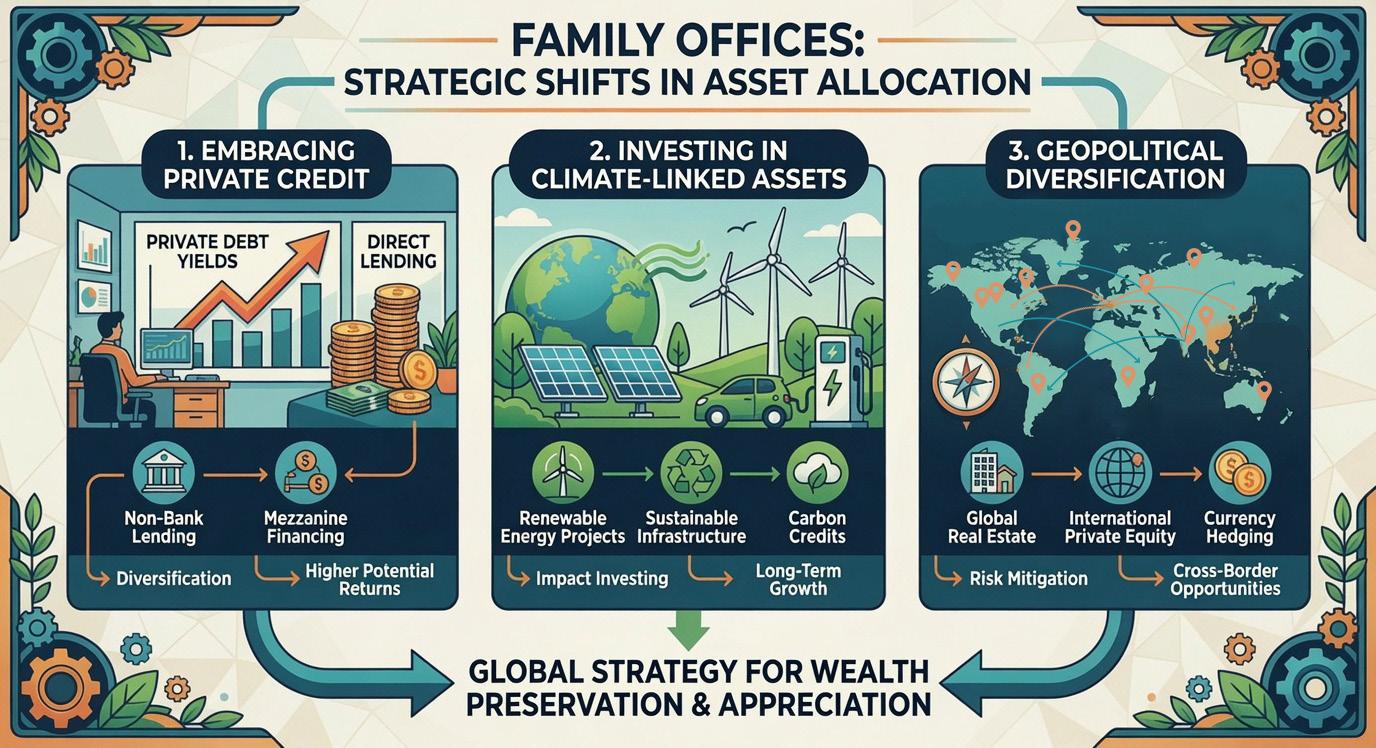
has fundamentally altered how wealthy investors think about preserving purchasing power. Families with multigenerational wealth are increasingly focused on maintaining real value rather than chasing aggressive growth.
One of the clearest winners from this shift has been private credit.
As banks face tighter regulations and reduced risk appetite following years of financial reform, private lenders have stepped into the financing gap. Wealthy investors are increasingly allocating capital to direct lending funds, specialty finance platforms, and private debt vehicles that offer higher yields and stronger downside protection than many traditional fixed-income products.
Private credit has become particularly attractive because it offers predictable cash flow during uncertain market conditions. The appeal has grown further as borrowers increasingly seek non-bank financing solutions. Middle-market companies, infrastructure projects, renewable energy devel-
opers, and real estate operators are all turning to private lenders for capital.
For wealthy investors, the sector provides not only returns but also influence. Unlike public markets, private credit transactions often allow investors to negotiate terms directly, obtain collateral protection, and maintain visibility into underlying assets.
A decade ago, environmental, social, and governance investing was often viewed as a branding exercise or ethical overlay. Today, many family offices see climate-linked investments as strategic necessities tied to future economic competitiveness. This change is driven partly by regulation and partly by economics.
Governments worldwide are directing enormous capital toward energy transition projects, clean infrastructure, battery supply chains, carbon markets, and climate resilience technologies. Wealthy investors increasingly believe these sectors will define the next phase of global industrial growth.
Geopolitical diversification
Importantly, many family offices are not merely investing through passive ESG funds. They are taking direct stakes in infrastructure assets, private climate technology firms, and long-duration sustainability projects.
Real assets linked to energy security, food production, and critical infrastructure are now viewed as essential geopolitical hedges as much as financial investments.
Geopolitical risk has become one of the defining themes influencing global wealth management.
The fragmentation of globalisation is forcing wealthy families to reconsider where they store capital, hold citizenship, establish businesses, and invest assets. Investors are increasingly diversifying not only across asset classes but also across political systems and geographic jurisdictions.
This trend has accelerated following sanctions disputes, trade wars, banking crises, and rising tensions between major powers, including the United States and China.
For wealthy families, concentration risk now
Cross-border diversification
extends beyond markets into governments and regulatory regimes.
Family offices are increasingly expanding operations into financial hubs perceived as politically stable and globally connected, such as Singapore, Dubai, Switzerland, and parts of the Gulf region.
Cross-border diversification now includes multiple dimensions:
• Multi-currency exposure
• International property ownership
• Alternative residency programmes
• Overseas banking relationships
• Distributed business operations
• Strategic commodity investments
The rise of geopolitical hedging reflects growing concern that financial systems themselves are becoming politicised.
Sanctions, capital controls, taxation changes, and trade restrictions are no longer viewed as isolated risks. They are increasingly incorporated into long-term wealth planning.
Another major shift involves the growing appeal of hard assets. Farmland, logistics infrastructure, en-
ergy assets, ports, data centres, and industrial real estate are increasingly viewed as defensive investments capable of preserving value during periods of inflation and geopolitical stress.
Data centres, in particular, have become highly attractive due to the rapid expansion of artificial intelligence infrastructure and cloud computing demand. Similarly, agricultural assets are gaining attention amid concerns about food security, water scarcity, and supply chain disruption.
Many wealthy investors now prioritise assets that generate both stable income and strategic relevance. This represents a departure from purely financialised investment models toward ownership of critical infrastructure tied to long-term economic necessity. The trend is particularly strong among Middle Eastern and Asian family offices, many of which are aggressively acquiring stakes in logistics corridors, renewable energy projects, healthcare infrastructure, and technology ecosystems.
The transformation in investor behaviour is forcing major global banks to adapt rapidly.
Institutions such as UBS, JPMorgan Chase, and HSBC are increasingly repositioning their private banking divisions around alternative investments, family office services, geopolitical advisory capabilities, and customised wealth planning.
Traditional portfolio management alone is no longer sufficient for many ultra-wealthy clients.
Instead, private banks are being asked to provide highly specialised services, including:
• Access to private markets
• Co-investment opportunities
• Cross-border tax planning
• Succession structuring
• Political risk analysis
• Climate investment advisory
• Digital asset infrastructure
• Family governance consulting
Banks are also investing heavily in technology and AI to improve personalisation and operational efficiency within wealth management.
At the same time, competition for wealthy clients is intensifying.
Independent family offices are becoming more sophisticated and increasingly capable of managing investments internally. This pressures banks
• Equity
• Bonds
• Real estate
• Cash deposits
• Wars in Eastern Europe and the Middle East
• Supply chain fragmentation
to justify their fees through exclusive deal access and strategic expertise rather than conventional advisory alone.
The acquisition of Credit Suisse by UBS highlighted the growing importance of scale in global wealth management. Larger institutions are seeking to consolidate client assets while expanding their alternative investment capabilities.
Perhaps the most important structural change is the rise of the institutionalised family office.
Historically, family offices primarily handled administrative and estate matters for wealthy dynasties. Today, many operate as highly sophisticated investment organisations with direct exposure to private equity, venture capital, infrastructure, and geopolitically strategic sectors.
Some family offices now rival major institutional investors in scale and influence.
This evolution reflects both opportunity and necessity. Wealthy families increasingly believe they must take greater control over investment strategy rather than rely solely on external managers.
The modern family office is often deeply global,
Funds managed by

Delivered stability during periods of globalisation, low inflation, and predictable monetary policy
• Rising protectionism
• Debt concerns
• Inflation volatility
• Political polarisation
technologically advanced, and politically aware.
It may include specialists in cybersecurity, artificial intelligence, climate science, tax law, and geopolitical analysis alongside traditional investment professionals.
Importantly, younger generations are also influencing priorities. Millennial and Gen Z heirs often place greater emphasis on sustainability, technology, social impact, and long-term resilience compared to previous generations focused primarily on capital accumulation.
This generational transition is accelerating changes in portfolio construction and investment philosophy.
Artificial intelligence is also reshaping wealth management itself. Private banks and family offices are increasingly using AI tools for portfolio analysis, risk modeling, operational automation, and personalised financial planning. However, AI is also influencing investment strategy more broadly.
The enormous infrastructure requirements tied to AI expansion are creating investment opportuni-

• Energy transition projects
• Clean infrastructure
• Battery supply chains
• Carbon markets
• Climate resilience technologies
ties in semiconductors, energy grids, cooling systems, fiber optics, cloud infrastructure, and data centres.
Wealthy investors increasingly see AI not only as a technological trend but also as a long-term industrial transformation requiring massive capital deployment. This explains why family offices are increasingly allocating money toward infrastructure linked to digitalisation and computing power.
At the same time, AI-driven market volatility and rapid technological disruption reinforce concerns about concentration risk in public equities.
For many wealthy families, owning underlying infrastructure appears safer than betting solely on technology stocks.
Ultimately, the shift underway among wealthy families reflects the emergence of a more defensive form of capitalism. The goal is no longer simply maximising returns during an era of expanding globalisation and cheap capital. Instead, the focus has shifted toward resilience, strategic positioning, and long-term wealth preservation amid fragmentation and uncertainty.
This does not mean wealthy investors are aban-
infrastructure assets in long-duration sustainability projects
private climate technology firms healthcare infrastructure
doning growth opportunities. Rather, they are becoming more selective, more global, and more politically conscious in how they deploy capital.
Private credit, infrastructure, sustainable assets, geopolitical diversification, and strategic real assets all serve a common purpose: reducing vulnerability to systemic shocks while preserving flexibility. The implications for the broader financial industry are profound.
Banks, asset managers, and advisory firms must increasingly operate not just as investment providers but as strategic partners capable of navigating geopolitical complexity, technological disruption, and climate transition.
In many ways, the future of wealth management is becoming less about outperforming benchmarks, and more about surviving an increasingly unpredictable world.
For the world’s wealthiest families, capital preservation is no longer passive. It is becoming an active geopolitical strategy.
editor@ifinancemag.com

Physical banknotes face a huge vulnerability in the form of counterfeiting, the illegal act of creating, copying, or imitating a physical currency


IF CORRESPONDENT
As per Statista, in 2026, the total transaction value in the ‘Digital Payments Market’ will reach $26.89 trillion, with total transaction value likely recording an annual growth rate (CAGR 2026-30) of 7.63%, that, by 2030, will result in a projected total amount of $36.09 trillion. The digital payments market's largest segment, will be the ‘Mobile POS Payments’, with a projected total transaction value of $18.95 trillion in 2026.
Will the rapid normalisation of POS and digital wallets make banknotes a thing of the past? Not so easily, claims another study from the Official Monetary and Financial Institutions Forum (OMFIF), as per which, digital payment ecosystem is useful till the presence of electricity, connectivity, and authentication servers. If one among them goes down, or all the three go down together, physical cash becomes the last line of defence.
The April 2025 blackout on the Iberian Peninsula (continental Spain and Portugal), in which the power grid collapsed and telecommunications faltered, entire regions found themselves suddenly cut off from the digital economy. Payment cards did not work. Mobile wallets froze. Online banking was inaccessible. Merchants could not connect to networks. People with ample digital balances were unable to purchase food or fuel. Only those who carried physical banknotes retained economic agency.
A well-designed monetary ecosystem always treats both physical cash and digital money complementary to each other. While the POS and digital wallets serve the tech-savvy sections of the populations, cash ensures that the elderly, the digitally excluded, unbanked communities, informal workers, and those concerned about privacy still to participate in the digital economy.
Private digital payments provide speed and convenience. CBDCs may provide a modern, stable form of public digital money. But only cash provides a non-digital layer that can sustain economic activity during severe disruptions. It is the monetary equivalent of an emergency generator.
However, physical banknotes also have their share of vulnerabilities, and the prominent among them is counterfeiting. We are talking about the illegal act of creating, copying, or imitating a physical currency, that if left unchecked, can undermine national economies, apart from weakening financial institutions and jeopardising people’s livelihoods.
The introduction of unauthorised,

counterfeited money artificially increases the currency supply, which in turn devalues legitimate currency, leading to higher prices and inflation. Individuals and businesses unknowingly accepting counterfeit bills suffer immediate and unrecoverable financial losses, as these notes get confiscated by banks without reimbursement. If the volume of fake cash reaches a critical mass, it lowers the faith among people on the utility of paper money entirely, threatening its function as a medium of exchange and a store of value.
In August 2025, under Europol's watch, a joint law enforcement operation intercepted the distribution of counterfeit currency through postal services. Nearly one million items got confiscated, including fake euros, US dollars, and British pounds, with an estimated value of over €66 million.
The collaboration between author-
ities from 18 countries also triggered 102 new investigations targeting criminal networks engaged in currency counterfeiting. Led by Austria, Portugal and Spain, the probe was conducted between October 2024 and March 2025, and uncovered several criminal networks engaged in currency counterfeiting. Most of these networks were operating from outside the EU (European Union), mainly from Asia, but also from America and the Middle East.
In March 2026, the Swiss National Bank unveiled the new-look Swiss franc banknote designs, featuring native plants, landscapes, and how human life adapts at different altitudes throughout the Alpine nation. The central monetary authority has also utilised a revolutionary three-layer substrate called Durasafe in the next-generation notes,
US Dollar (USD)
Euro (EUR)
Swiss Franc (CHF)
British Pound Sterling (GBP)
Japanese Yen (JPY)
Canadian Dollar (CAD)
Australian Dollar (AUD)
Singapore Dollar (SGD)
Norwegian Krone (NOK)
Hong Kong Dollar (HKD)
Source: Unimoni

which sandwiches a polymer layer between two outer layers of cotton paper.
This unique base, combined with over 20 advanced security features, makes counterfeiting nearly impossible. The notes have also embedded fibres and security numbers that glow when viewed under UV light, and sections that disappear under infrared light.
Another very good case study has been Singaporean banknotes, that use a blend of advanced physical substrates, intaglio printing, and optically variable devices (OVDs) to prevent counterfeiting. Lower denominations get printed on durable polymer, while higher denominations utilise specialised paper. Genuine notes feature a metallic, reflective kinogram. When tilted, the denomination numeral shifts, and the MAS (Monetary Authority of Singapore) logo transforms into the Singapore lion symbol.
Polymer-made lower denominations also feature an embedded metallic thread, while paper notes utilise an interwoven thread. When held to light, holographic images of the Singapore Lion symbol and MAS logo become visible on the thread.
The MAS logo itself has been printed in a micro-lettering format, which will be difficult to figure out without a magnifying glass. Specific elements like the serial numbers, chairman’s seal, latent image patches, and denomination numerals have been kept UV-friendly, emitting a bright, distinct glow.
The Bank of England's proposed new banknote designs, despite being controversial for leaving out historical figures, will be having intricate wildlife photos like bird flapping its winds or a deer running, that in the words of the central bank, will be combined with latest security technologies to prevent counterfeiting.
United States, to commemorate its 250th anniversary, will be launching its ‘Catalyst’ series of redesigned $10 currency, that will incorporate advanced visible and covert machine-readable security features to combat counterfeiting. These new notes will incorporate advanced security features commonly deployed in other developed economies, but never used in US currency. Features like enhanced optically variable devices, sophisticated watermarking techniques, and critically, machine-readable elements specifically designed for high-speed automated authentication.
Keeping in mind the counterfeiters' shift to generative AI to replicate microprinting and watermark patterns with increasing accuracy, the Catalyst redesign will also be introducing security elements that current counterfeit-
ing technology cannot reproduce.
While central banks are bringing more complex security features like polymer substrates, 3D ribbons, and colour-shifting inks, counterfeiters are adapting as well against these security advancements. They are reportedly using advanced flatbed scanners paired with layer-based graphic software (like altered versions of Photoshop) to isolate, sharpen, and reconstruct complex banknote graphics layer by layer.
Using high-end commercial digital printers, these ‘notes’ are getting reproduced, with ‘fine lines and micro-text'. Counterfeiters are also using chemical solutions to strip the ink off low-value banknotes (such as $1 or $5 bills), followed by the reprinting of higher denominations ($50 or $100) on the original, authentic paper, effectively bypassing security pens and texture tests.
Forgers are even mimicking the extreme-pressure intaglio presses on the notes, by utilising fine-tip glue pens, or selectively applying clear matte lacquer sprays over portraits and text. Makeup kits, specifically eyeshadow and nail polishes, are being used to replicate expensive Optically Variable Ink (OVI), or colour-shifting 3D ribbons.
Last but not the least; to create the security threads, some criminals split thin paper sheets in half, before manually placing a simulated plastic or UVink strip inside, and gluing the layers back together.
Modern-day banknotes are being made from synthetic polymer materials like biaxially oriented polypropylene (BOPP). As compared to paper banknotes, they last significantly longer, have less environmental impact, reduced cost of production and replace-
ment, and, most importantly, more than enough room for inducting abundant security features.
It was the Reserve Bank of Australia (RBA), Commonwealth Scientific and Industrial Research Organisation (CSIRO), and The University of Melbourne, that first innovated and issued the new breed of currency in Australia during 1988. By 1996, Australia switched its physical dollar to polymer banknotes.
Romania was the first country in Europe to issue a plastic note in 1999, and became the third country, after Australia and New Zealand, to fully convert to polymer by 2003.
Polymer banknotes usually have three levels of security. Primary security levels are easily recognisable by consumers, and may include intaglio, metal strips, holograms, and the clear areas of the banknote. Secondary security features are detectable by a machine. Tertiary security features may only be detectable by the issuing authority when a banknote is returned.
Next comes watermarks, one of the basic features to ensure banknotes' effective documentation and protection for centuries. They are extremely difficult to replicate, as slight deviations in the portrait, or in the motif, raise suspicion in the minds of people and authorities alike.
When it comes making watermarks an iconic shield of defence against the counterfeiters, German company Giesecke+Devrient GmbH, that operates in the fields of digital security, financial platforms, and currency technology, has become a known name. It has developed an array of watermark designs like multitone, highlight and pixel, each of which has a distinct appearance.
These watermarks, if linked togeth-


er on a banknote, create unambiguous and memorable motifs. Watermark designs often get amplified in printed and applied security features, further helping simplify the currency's authentication process.
Next, we have ‘Security Thread’, a polymer-based stripe incorporated into banknotes during the papermaking process. The concept came into the picture during the mid-1800s when legendary American papermaker Crane and Co. introduced silk security threads.
In 1940s, the Bank of England wrote a new chapter in banknotes' security, by proposing metallic threads for shilling banknotes. Since then, security threads have become a widely used authentication method.
Today, more than 90% of banknotes contain security threads, and their design has only become more sophisticated over the years, featuring microtexts, holograms, colour-changing effects, and UV luminosity.
Depending on their location in the paper, security threads can be of three types: Latent (completely embedded within the paper substrate), Diving (thread that weaves in and out, creating a dotted line on the banknote's surface), and Figure (thread that appears as a series of shaped windows but forms a solid line when viewed in transmitted light). Threads can be of metal without text, metal with microtext, semi-transparent with text, holographic, colour changing,
or luminescent under UV light.
Threads also carry magnetic properties, which are detectable by specialised devices with magneto-optical sensors. There can also be floating images in these security threads, that creates a motion effect (when the note is tilted, the image appears to move or shift). Every security thread comes with a dynamic effect, that produces motion, shifting, or transformation when the banknote is tilted or moved.
Microprinting is a powerful anti-counterfeiting security feature that consists of incredibly tiny text (usually 0.15 to 0.3 mm high) printed onto banknotes. To the naked eye, the microprint appears as a solid, continuous thin line, but if seen under a magnifying glass, it reveals clear, legible words or numbers. Because of the feature's microscopic size, counterfeiters using standard photocopiers or scanners cannot reproduce the fine details, and end up producing a text that usually translates into a blurred or solid line.
Central banks use either of positive microprinting (dark letters on a light background) or negative microprinting (light letters on a dark background). You will find some of the best use cases of microprinting in any prominent currency.
Next is ‘Intaglio Printing’, a security printing technique where designs get


engraved into metal plates. Thick ink fills the recessed grooves, and immense pressure transfers it onto the paper, creating a thick, raised, and highly tactile texture. Here, Giesecke+Devrient has redefined the game through its ‘FIT System’, a combination of computerised engraving and laser technology that enables the realisation not only of very fine lines, but also translucent, multi-tonal structures that create new colours.
The element is embedded directly into the intaglio master by means of high-resolution laser engraving, and then embossed onto a reflective metal patch of the banknote paper. Three-dimensional structures are reproduced to an exceptional level of quality. The precise engineering guarantees that originals remain unique, whilst each reprint is identical to the base stock.
Another impact player is colour-shifting ink. Also known as Optically Variable Ink (OVI), the mechanism is a premium anti-counterfeiting measure that is used on modern bank-
notes. When you tilt the bill, the ink displays two distinctly different colours depending on your viewing angle, making it an incredibly reliable, naked-eye security feature.
The ink contains specialized metallic or magnetic flakes that bend and reflect light differently at various angles. Held flat, the ink on the note may appear green. Tilted, it shifts to blue, gold, or copper, depending on the specific currency and denomination.
Central banks are already thinking about the future. Digital and smart authentication of banknotes will be the next method to watch out for, as the procedure will be integrated into advanced cryptography, digital watermarks, machine-readable codes, and smartphone-based AI models to verify currency, deter counterfeiting, and bridge physical cash with digital financial ecosystems.
German technology company AU-
GENTIC and Orell Fussli Limited Security Printing have prepared a solution called ‘Smart Banknote CBDC’, that combines Orell Fussli’s highly secure banknotes with AUGENTIC's ‘CBDC Platform’, including trustwise. io Distributed Ledger Technology.
Smart banknotes emerging from this ecosystem can be exchanged like traditional banknotes, apart from being converted into digital cash at any given time. This happens by using encrypted, anti-copied 2D barcodes for authentication purposes via smartphone. All processes are secured by DLT in combination with smart contracts.
Central banks and tech developers are also utilising consumer smartphones to verify currency. By using built-in cameras, infrared sensors, and advanced machine learning models, mobile apps can analyse banknote fingerprints, micro-printing, and edge transitions to confirm if a note is genuine with near-perfect accuracy.
Digital watermarks and machine-readable features, in the coming days, will allow banknotes to get printed with covert data, like specific magnetic signatures and invisible infrared patterns. Scanners, photocopiers, and ATMs will be programmed to detect this digital data, actively preventing unauthorised reproduction, or verifying deposits in real-time.
And then, there is ‘Chaotic Element Fingerprinting’, a state-of-the-art system that analyses the natural, random distribution of security fibres embedded in the paper pulp of a banknote. When scanned with UV light, this pattern serves as a unique cryptographic fingerprint linked to the note's serial number.
editor@ifinancemag.com
In the 21st century's complex landscape of emerging markets, the transition from traditional development finance to a sophisticated venture capital (VC) and private equity (PE) ecosystem requires a strategic anchor. Egypt's Micro, Small & Medium Enterprises Development Agency (MSMEDA) has proven to be that catalyst.
Recognised at the 13th Annual International Finance Awards as the “Most Innovative Fund-of-Funds Investment Programme – Egypt – 2025," MSMEDA is redefining how quasi-governmental entities can mobilise private capital to drive high-growth innovation.
Established in 1991, MSMEDA has evolved from a national development financial institute into the cornerstone of Egypt’s MSMEs and entrepreneurship strategy. Under the leadership of the country's Prime Minister Mostafa Madbouly, the agency has been mandated to create a robust support system for youth-led enterprises, ensuring that innovation translates into economic and social progress.
MSMEDA’s strategic work is built upon four main pillars, which collectively create a holistic support system for entrepreneurs, particularly youth-led enterprises. On the policy front, the agency is creating a legal environment for MSMEs and startups. Community development is also taking precedence, with the agency implementing job-intensive infrastructure projects to create an enabling environment for the establishment and growth of MSMEs.
When it comes to non-financial services, MSMEDA provides capacity building and technical support for all ecosystem stakeholders, including MSMEs, startups, banks, NBFIs (Non-Bank Financial Institutions), incubators, accelerators, investors, limited partners, and fund managers. MSMEDA also provides diverse financing solutions not only to end-beneficiary MSMEs and startups but also to ecosystem partners.
MSMEDA’s strategic work is built upon four main pillars, which collectively create a holistic support system for entrepreneurs, particularly youth-led enterprises
The crowning jewel of MSMEDA’s financial innovation is the Fund-of-Funds (FoF) programme, launched in 2015 in partnership with the World Bank. Designed to bridge the critical financing gap for startups and innovative SMEs with high growth potential, the programme has positioned MSMEDA as an "Anchor Investor." By investing in privately managed RCIs, MSMEDA has successfully decentralised the growth of the venture capital ecosystem.
"The programme's technical approach is sector-agnostic but strategically prioritises high-impact areas that contribute to Egypt’s Gross Domestic Product (GDP). By targeting a diverse range of investment vehicles, MSMEDA has successfully built a robust pipeline for the broader investment community," the agency told International Finance.

MSMEDA’s FoF programme has demonstrated significant catalytic power, leveraging public and development finance to attract commercial investment. This has effectively reduced the risk profile for private investors in the Egyptian market. The data highlights a sophisticated and high-performing portfolio, as the agency has achieved a catalytic leverage ratio of approximately 8x to commercial funding. For every USD 1 invested by the agency, an additional USD 8 of external capital, including Foreign Direct Investment (FDI), has been attracted into the Egyptian market.
As of 31st December 2025, the agency has also committed capital to 15 funds, indirectly supporting over 239 startups across Egypt, Africa, and emerging markets. This specifically supported 400 Egyptian founders, with 47% of them being youth. The current portfolio value of investee companies now exceeds USD 5 billion.

More than just financial returns, MSMEDA’s success is measured by its inextricability to the United Nations Sustainable Development Goals (SDGs). Aligning with SDG 8 (Decent Work) and SDG 5 (Gender Equality), the programme has become an engine for job creation. Over 47,000 decent employment opportunities have been created, outperforming the scheme's original target by a staggering 2x.
At the same time, reflecting a deep commitment to female empowerment, 34% of these new roles are now held by women, integrating them into the North African country's formal economy.
The realisation of this vision is the result of the extraordinary partnership between MSMEDA and the World Bank Group. The World Bank has been instrumental in positioning MSMEDA as a cornerstone investor, providing the technical and strategic framework necessary to build a worldclass VC/PE ecosystem.
"This International Finance Award is a testament to MSMEDA’s Investment Team. Their high-level dedication,
adherence to the highest standards of quality, and tireless work behind the scenes have turned ambitious policies into tangible market success, transforming MSMEDA into a pioneering force for institutional investment," the agency remarked.
Looking ahead, MSMEDA is set to double down on its impact. In alignment with Egypt Vision 2030, the agency is scaling its model with a national priority to reach USD 1 billion in Assets Under Management (AUM).
"Our future vision is to scale the FoF model exponentially, ensuring a self-sustaining pipeline of innovation and cementing Egypt's position as the leading VC/PE hub in the MENA and African regions. MSMEDA is proud to announce that the next phase of the FoF programme is scheduled for launch in late 2026. This upcoming phase will continue to bridge technical gaps in the entrepreneurship ecosystem and foster cross-border linkages, making Egypt an even more dynamic destination for international institutional investors," the agency concluded.

GRAHAM SCANLON HEAD OF CRITICAL NATIONAL INFRASTRUCTURE, ATOS
Open banking payments are scaling quickly. Financial Conduct Authority data shows there are now 16 million users in the UK, with payments up 53% year-on-year. The technology is moving from concept to commercial application, beyond account aggregation and one-off payments, towards practical recurring and flexible use cases.
Traditional recurring payment models are still built around fixed schedules and fixed amounts, which often fail to reflect how people are paid or manage their money. Commercial Variable Recurring Payments (cVRPs) are, therefore, emerging as a foundation for the next phase of account-to-account payments, enabling variable amounts, customer-set caps, and explicit consent.
That opportunity is now underpinned by a more practical market framework. Since early June, the UK Payments Initiative (UKPI) has moved commercial VRP into live operation through a multi-lateral agreement, shared rulebook and common commercial model, reducing the need for providers to negotiate bank by bank. Importantly, Wave 1 is deliberately focused on lower-risk, regulated or trusted sectors, including energy, utilities, telecoms, government and regulated financial services. For energy and utilities providers, this makes cVRP less of a future concept and more of an actionable route to give customers
Traditional recurring payment models are built around fixed schedules and amounts, which fail to reflect how people manage money
greater payment choice while improving collections, consent management and debt prevention.
With energy debt rising, the timing matters. Energy UK forecasts that household energy debt could reach £7 billion by the end of the year, up from Ofgem’s reported £4.5 billion in Q1. As bills remain under pressure, suppliers need to support debt prevention and reduce the risk of escalation, rather than relying mainly on recovery once arrears have built up.
Customers typically have three choices for bill payments: direct debit, standard credit or prepayment. Each has strengths, but none fully reflects the financial reality faced by many households.
Direct debit works well for many households, but its rigidity can be a weakness. If a customer has £90 available and a £100 bill is due, the system takes nothing rather than a partial payment. The result can be arrears, stress and disengagement. Although 72% of households use direct debit for energy bills, it can be poorly suited to those with uneven cashflow, including the large proportion of the UK workforce that is not salaried.
Standard credit gives flexibility in theory, because customers pay when billed. In prac-
tice, large bills can arrive at the wrong point in a customer’s income cycle, and be deferred or ignored. It also carries a cost premium: households paying this way face around £131 more a year than those paying by direct debit, and many consumers are unaware of that gap. Energy UK estimates that standard credit accounts for around half of debt.
Prepayment can help customers monitor spending, but when funds run out, so does access to energy. That makes it an imperfect substitute for households needing flexibility rather than disconnection risk.
The gap is clear: customers need a flexible, variable payment alternative that reflects modern income patterns while helping providers reduce preventable debt.
and why they present an opportunity
cVRPs offer a more adaptable alternative: consent-based payments with variable amounts, customer-defined caps and greater user control. They can support intelligent flexible payments where timing or amount needs to vary, or allow customers to break payments into smaller amounts that better match their financial situation.
For people with inconsistent monthly income, cVRPs can combine the convenience of direct debit with greater flexibility. Through open banking, they can also underpin secure, permissioned insight to support better timing, clearer prompts and more responsive payment journeys.
cVRPs are a hugely promising payment technology for both customers and businesses but making them work in practice depends on disciplined deployment across four key pillars:
• A simple, trustworthy customer consent journey: Customers must understand what they are agreeing to, their payment limits, when they will be prompted, and how to change or cancel the arrangement. If the journey is unclear, adoption will be weak, and bills are more likely to remain unpaid.
• Smarter prompting and timing: Payments should be requested when they are most manageable for the customer, rather than on a fixed collection date. Open banking can help identify better moments to prompt payment.
• Strong controls, exception handling and service operations: Providers must plan for ignored
prompts, disputes, failed or partial payments, and integration with customer service and back-office systems.
• Data-led intervention and vulnerability identification: Payment insight can help providers identify temporary friction, financial distress, or emerging vulnerability earlier, then offer suitable options, or route customers to support more quickly. When these pillars are in place and underpinned by the benefits of cVRP, intelligent flexible payments can create value for both sides. Customers gain more suitable options, and a stronger sense of control. Providers can reduce payment failures, improve cashflow, and lower servicing and recovery costs, which are ultimately reflected in consumer bills. Moneyline has reported that customers using this capability for credit repayments experienced a 10% reduction in arrears compared with those using direct debit.
As cVRPs move from principle to deployment, they can change how recurring payments are managed. The question is whether organisations, particularly in sectors such as energy with high levels of recurring billing and debt risk, can deploy them in a way that is trusted, operationally resilient and designed around customer need. If they can, the industry has an opportunity to shift from debt recovery to debt prevention in an intelligent and flexible way.
Graham Scanlon, Head of Critical National Infrastructure at Atos, is working on the practicalities of this transition, from customer consent journeys and controls to service operations, exception handling, and integration
editor@ifinancemag.com
CONVERSATION
Much of the momentum is concentrated around a relatively narrow group of companies linked to artificial intelligence and other high-growth themes
‘IPO
look good, but...’

PRABUDDHA GHOSH
The year 2026 has become the year of ‘IPO Fest’ at Wall Street. SpaceX’s record-breaking Nasdaq debut is just what the Street needed. Shattering previous market debut records, the space and tech giant raised $75 billion. This massive liquidity event sparked a rally, and renewed hopes for upcoming IPOs from OpenAI and Anthropic.
International Finance asked Susannah Streeter, the Chief Investment Strategist at Wealth Club, the United Kingdom’s largest non-advisory investment service for high net worth and experienced investors, whether Wall Street will be able to absorb the IPOs of SpaceX, OpenAI and Anthropic, whose combined valuations may exceed $3.5 trillion.
Susannah joined Wealth Club after five years as Head of Money and Markets at Hargreaves Lansdown. Previously, she was a senior correspondent and financial news presenter at the BBC’s Economics and Business Unit, anchoring programmes on global stock markets and economic developments. She is an international keynote speaker and conference chair, and served as a Squadron Leader in the RAF Reserves for a decade.
Here are some excerpts from the interview:
IF: With more than 200 IPOs in Q1 2026 and listings from SpaceX, Anthropic and OpenAI, can Wall Street absorb the likely IPO issuance associated with companies whose combined valuations may exceed $3.5 trillion?
Susannah Streeter: Wall Street has shown a remarkable capacity to absorb huge amounts of capital when investor enthusiasm is running high, and right now AI is proving a powerful magnet for money. However, even deep capital markets have limits. If several mega-listings arrive in quick succes-
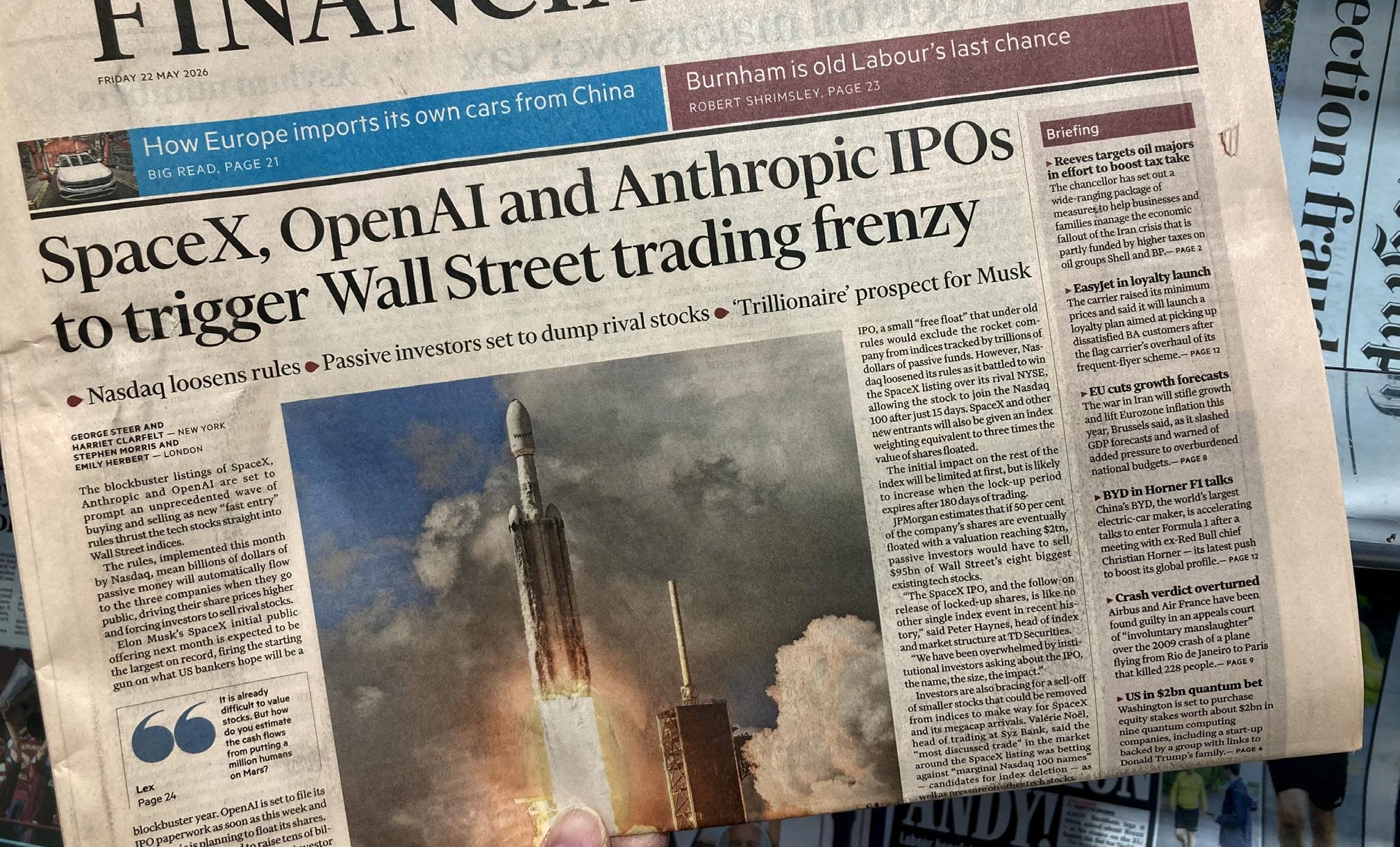
sion, as we are seeing, competition for investor attention and capital could intensify. The appetite appears strong, but the scale of these offerings means there may well be a test of demand, especially if market sentiment turns.
Given the strong IPO activity in Q1 2026, can we say Wall Street has fully recovered from the slowdown of 2023–24?
The rebound in IPO activity suggests confidence has returned, but it’s probably premature to declare a full recovery. Much of the momentum has been concentrated around a relatively narrow group of companies linked to artificial intelligence and other high-growth themes. A truly broad-based recovery would require robust issuance across multiple sectors and market capitalisations, not just a handful of headline-grabbing deals.
Are the IPOs of SpaceX, Anthropic, and OpenAI evidence that the AI investment boom is becoming concentrated in a handful of dominant players? There are certainly signs that capital is gravitating towards a small group of companies perceived as having the scale, talent and computing power needed
to dominate the AI race. Investors increasingly appear willing to pay a premium for firms controlling critical infrastructure, foundation models, and distribution networks. However, technological revolutions rarely follow a straight line. The rules of the AI race are evolving so quickly that some of tomorrow’s winners may still be under the radar. That’s why investors need to remain selective, diversified and realistic about risk.
Could mega-IPO listings, such as SpaceX and Anthropic, divert capital away from existing tech stocks, smaller AI firms, and other speculative assets like cryptocurrencies?
Large IPOs often trigger portfolio reshuffling as investors free up capital to participate in highly anticipated listings. Given the scale and profile of these companies, some rotation away from existing technology holdings and more speculative corners of the market isn’t surprising. Crypto is feeling the whiplash effects of AI enthusiasm and volatility.
It’s winter in the crypto world, with Bitcoin falling roughly 50% from its late-2025 peak of over $126,000. This steep decline has been triggered by massive ETF outflows. Although the sell-off intensified after the
Space based infrastructure like satellites could become increasingly vulnerable, and we could see degradation of critical satellite networks through cyber-attacks, electronic warfare, jamming, or even direct anti-satellite actions
most recent wobble on the Nasdaq, it’s a multi-month trend, and has occurred as the AI trade has been played hard. It’s likely that some crypto money has been released to buy equities.
Even if existing shareholders retain most shares, could institutional demand for SpaceX and Anthropic create a significant liquidity and capital-allocation shock in the market?
The biggest impact may come less from the number of shares available and more from the scramble among institutional investors to gain exposure. When companies of this size and prominence come to market, fund managers often feel pressure not to be left behind.
That can create significant shifts in capital allocation, particularly if several mega-listings arrive within a relatively short period.
Is Wall Street underestimating the risks of investing in long-term, capital-intensive ambitions such as SpaceX’s plans for Mars colonisation and spacebased infrastructure?
What we’ve been seeing in this intense period of market enthusiasm is investors focusing more heavily on future opportunities than present-day risks. SpaceX's ambitions are stratospheric and potentially transformative, but they are also highly capital-intensive and dependent on technological breakthroughs, regulatory approvals and long-term execution.
Investors will need to balance the excitement of the vision against the realities of the investment horizon. One risk that isn’t being paid much attention to is the potential for geopolitical tensions to spill into the space domain. Space based infrastructure like satellites could become increasingly vulnerable, and we could see degradation of critical satellite networks through cyber-attacks, electronic warfare, jamming, or even direct anti-satellite actions.
Swedfund has committed USD 15 million to Navegar Fund III, a private equity fund focusing on mid-sized companies in the Philippines.
The Philippine economy has seen steady growth in recent years, but many small and mid-sized companies struggle to access long-term capital. Around 70% of the workforce is employed informally, often in jobs that lack stability, social protection, and opportunities for skill development. Mid-sized companies are important employers and service providers, yet many lack the resources needed to grow, improve productivity, and strengthen governance.
“Creating more productive and formal jobs is essential for inclusive economic development. By helping growing businesses access the capital they need to
expand, this investment aims to strengthen the private sector and contribute to sustainable job creation in the Philippines,” says Helen Hagos, Investment Director, Food Systems & Strategic Investments at Swedfund. The investment provide access to capital for midsized companies in consumer and business services to grow and formalise their operations, including in sectors such as healthcare, food distribution, and logistics. This contributes to stronger local value chains, and can also improve access to essential goods and services across the Philippines.
Through long-term capital and active ownership, Swedfund supports the development of more resilient businesses, higher-quality jobs, and more inclusive economic growth. The investment also contributes

How should investors evaluate SpaceX’s IPO given its substantial revenue growth but continued net losses?
The key question is likely to be whether investors view current losses as a by-product of aggressive expansion, or as a sign of structural challenges. Many high-growth companies have prioritised investment over profitability during periods of rapid scaling. Investors are likely to focus closely on revenue quality, cash generation potential, and the extent to which SpaceX can turn its technological leadership into sustainable long-term returns.
Should investors be concerned that Elon Musk is expected to retain overwhelming voting control of SpaceX even after the company goes public?
Dual-class and founder-controlled structures have become increasingly common among large technology companies, particularly where founders argue that long-term innovation requires protection from short-term market pressures. However, concentrated voting control inevitably raises governance questions because it limits the influence of minority shareholders. Investors will need to decide whether confidence

to Decent Work and Economic Growth, as part of the United Nations Sustainable Development Goals. The investment is aligned with Swedfund’s the-
in the leadership and strategy outweighs concerns about accountability.
Could Anthropic’s public warnings about the risks of advanced AI conflict with its decision to pursue an IPO, and raise additional capital?
Anthropic's position has generally been that advanced AI development should be accompanied by strong safeguards and responsible oversight. Right now, regulators are still playing catch up, and there are crucial questions about AI adoption for societies to answer. Pursuing an IPO and raising capital could be viewed as part of building the resources needed to develop and govern increasingly sophisticated systems. Being responsible about people and the planet is generally considered to be a sound investment strategy, and one which should be applauded. Nevertheless, there is likely to be scrutiny of how the company balances commercial growth with its stated commitment to AI safety.
editor@ifinancemag.com
matic fund investment strategy and strengthens its exposure to Southeast Asia, supporting markets with strong potential for inclusive growth and job creation.
Navegar Fund III is a private equity fund investing in mid-sized companies in the Philippine, with a target fund size of $250 million. The fund is managed by Manila-based Navegar, and provides long-term capital and active ownership to support business growth in key sectors of the domestic economy.
editor@ifinancemag.com

MANJIT RANA EXECUTIVE VP OF INSURANCE, CLEARSPEED
In the gadget insurance market, Gen Z and millennials have become a key growth demographic
The UK is Western Europe’s largest mobile insurance market. As of 2025, an estimated 95% of UK residents 16 and over owned a smartphone, with 71.8 million active mobile connections nationwide.
This near-universal smartphone ownership, as well as top-end phones costing over £1,200, and the UK facing a sharply escalating phone theft crisis, is driving up consumer demand for gadget insurance, as the latest figures from the Financial Conduct Authority (FCA) show. Indeed, the number of gadget insurance policies in the UK increased from 7.87 million in 2023 to 8.46 million in 2024, representing annual growth of 7.5%
The financial opportunities are clear, yet they aren’t without growing pains.
In the gadget insurance market, Gen Z and millennials have become a key growth demographic. Coverage for smartphones and other devices is often the first policy that young customers will purchase, providing insurers with a prime opportunity to build brand loyalty early.
Those positive brand perceptions rely on providing fast, transparent, digital claims journeys akin to the instant services that younger, tech-savvy individuals use every day. However, insurers must balance providing leading customer experiences with a growing fraud challenge.
According to FCA General Insurance Val-
ue Measures data, UK gadget insurance gross written premium income increased from £496 million in 2023 to approximately £604 million in 2024, representing a 22% year-over-year increase, which in large part was driven by rising device costs and a typical claims’ frequency of 5-15%. With close to 8.5 million policies in place, that translates to hundreds of thousands of claims per year, with an estimated 660,000 in 2024.
With a fraudulent claims rate of 15%, approximately 99,000 fraudulent gadget insurance claims may have occurred in 2024 alone. With the UK market seeing typical payouts of £435 per claim, this would translate into a financial impact of more than £40 million in just one year. That’s before the operational costs of processing those claims are factored in.
Stamping out this fraud is naturally a leading priority for insurers. However, in the UK market, this can be difficult to achieve.
Since ‘lost’ claims typically do not require a police report or crime reference number, stolen and damaged phones are often reported as ‘lost’ to avoid having to submit either police documentation or the device itself for inspection and repair.
Equally, while insurers have historically

used rules-based profiling checks such as document review, assessing claims by requesting proof of purchase receipts, and confirmation with the network provider of where and when the device was last used, such methods are becoming increasingly at odds with both modern fraud and the expectations of modern customers.
Advances in AI, for example, have made it easier to generate fabricated invoices, receipts, and supporting materials. At the same time, documentation checks often involve back-and-forth communications that can frustrate customers. Manual validation is slow and bureaucratic, while Gen Z customers expect the same instant decisions they’re used to with other digital services.
As a result, insurers are left facing a two-pronged challenge. Gen Z customers expect rapid, often sameday resolutions – particularly as we all virtually run our lives on these devices. Yet, insurers cannot afford to relax fraud detection controls despite the fact that they are slow, resource-intensive, and limited in their ability to detect modern forms of opportunistic gadget insurance fraud.
A further complication lies in the fact that many legacy fraud checks are both reactive and evidence-led.
They focus on whether supporting documentation exists rather than validating whether the claim itself is genuine, which creates scope for fraud to creep in. A customer may provide a valid invoice or a plausible account of events, while still misrepresenting how or when a device was actually lost or damaged.
There are several structural safeguards beyond document reviews in place.
The Recipero database, for example, allows insurers to validate unique IMEI numbers against sales and recycling databases, as well as other insurers to mitigate the risk of duplicated claims. Network data requests can also verify when a phone was last used to validate claimed loss dates, while exclusion or ‘waiting’ periods can prevent customers from making a claim immediately after buying an insurance policy.
However, these measures are not foolproof. Consumers can still exploit timing gaps by taking out contracts and claiming losses shortly after the exclusion period ends.
Insurance is a two-way trust relationship between the consumer and the insurer. The insurer needs to
trust that the consumer is providing accurate information about the device at the point that the policy is purchased, and in the situation that a claim needs to be made. Equally, the consumer needs to trust that the insurer is charging a fair price for the cover that is being provided, and that any claims will be handled expediently and fairly.
Clearly, fraud committed by a proportion of consumers challenges the trust element. Meanwhile, existing fraud detection processes clearly aren’t entirely effective, and they also create unnecessary friction and delays for genuine customers when they most need their claim handled efficiently and quickly
One way to address the dilemma is to look outside the industry at how other sectors address this ‘trust screening’ challenge, with one innovative approach being voice-based risk assessment.
Human vocal characteristics associated with risk are universal, regardless of language, geography, culture, or other demographics. By analysing these voice-based characteristics through a short series of simple yes-or-no questions, insurers can rapidly identify potential indicators of misrepresentation in real time, meaning that genuine applications for a policy and claims can be fast tracked with those consumers receiving a much more elevated level of service.
Rather than treating every claimant as a potential fraudster until proven otherwise, many insurers are adopting technologies designed to quickly identify low-risk customers and allow straightforward claims to move faster, while reserving deeper investigations for the smaller number of cases that genuinely warrant additional scrutiny. Technologies such as voicebased risk assessment, AI-assisted claims routing, and document verification tools are transforming insurance assessments, deterring fraudulent behaviour, while accelerating the resolution of low-risk claims.
Crucially, new approaches align with Gen Z expectations for near-same-day resolutions by enabling insurers to balance speed with robust fraud detection.
Ultimately, this is about addressing fraudulent claims that create disproportionate financial damage, either by prompting those customers to think twice, or by identifying them more effectively. These technologies detect risk in ways that traditional methods cannot, focusing on confident triage where potential risk is flagged, while remaining transparent and defensible under regulatory scrutiny.

With that said, as with any technology adoption, implementation must be guided by responsibility as well as effectiveness. This is especially important in a large, regulated, and operationally complex market where decision accuracy, trust, and defensibility directly impact financial performance and reputation. The FCA’s Consumer Duty, for example, expects regulated companies to have controls to protect customer data, and prevent fraud from arising from misuse of PII.
For insurers, the challenge is not simply to prevent fraud, but to do so in a way that preserves the customer experience. In the case of Gen Z, that means meeting demands for speed, convenience, and fairness, with this demographic being quick to disengage when such demands aren’t met.
Long term, that is the key to building the trust that underpins sustainable, mutually beneficial customer relationships.
Manjit Rana is an insurance innovation thought leader, entrepreneur, and conference speaker with deep expertise across insurance markets in the UK, US, and APAC. As EVP of Insurance at Clearspeed, he works with insurers to address emerging challenges in fraud, claims, and customer trust through innovative technology solutions.
editor@ifinancemag.com