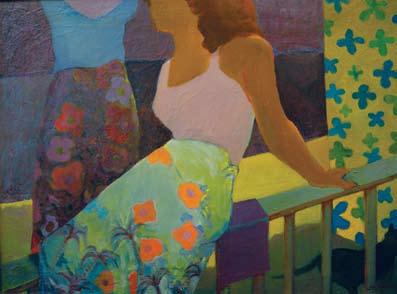
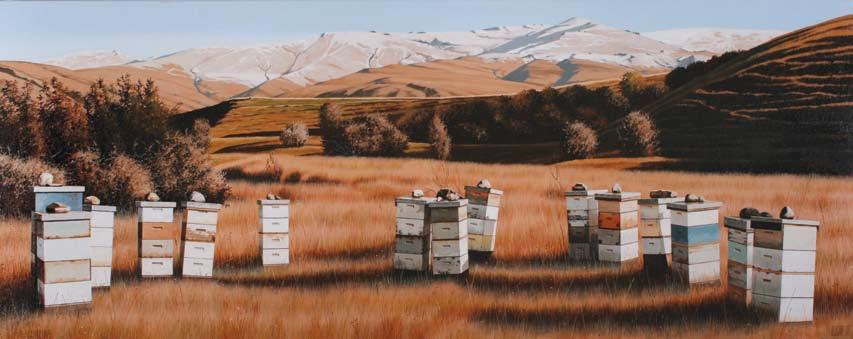
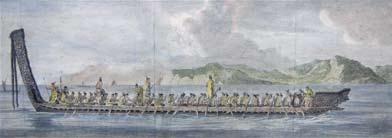
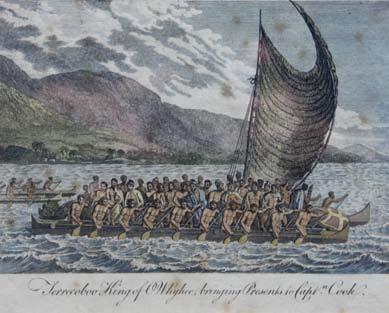
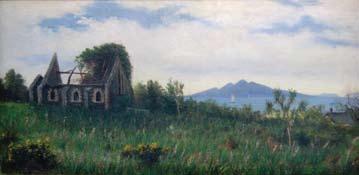
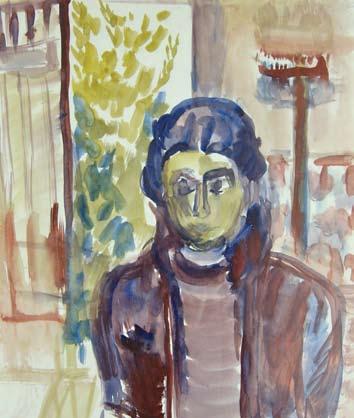
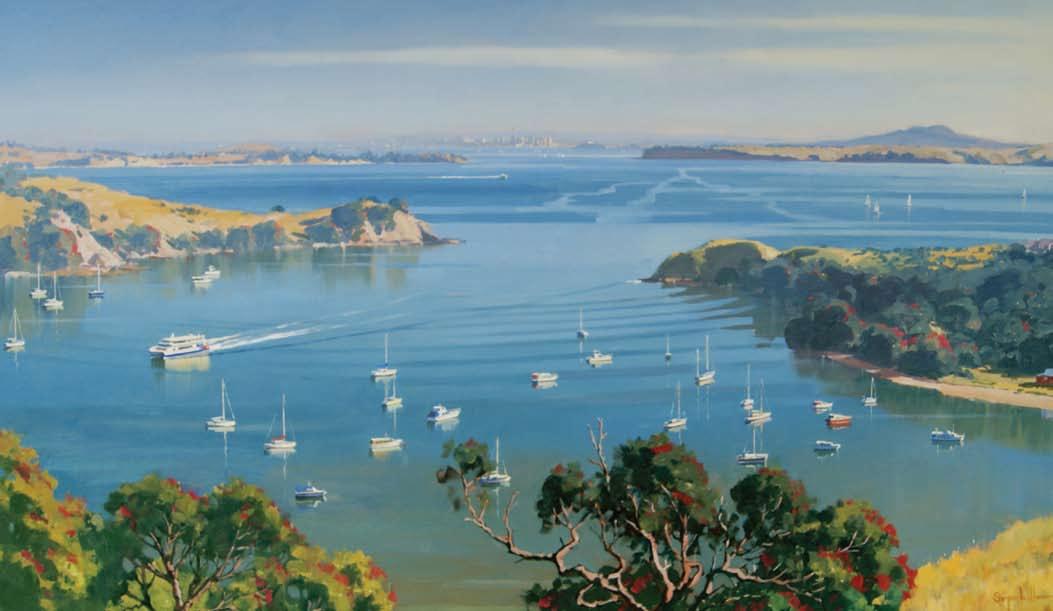
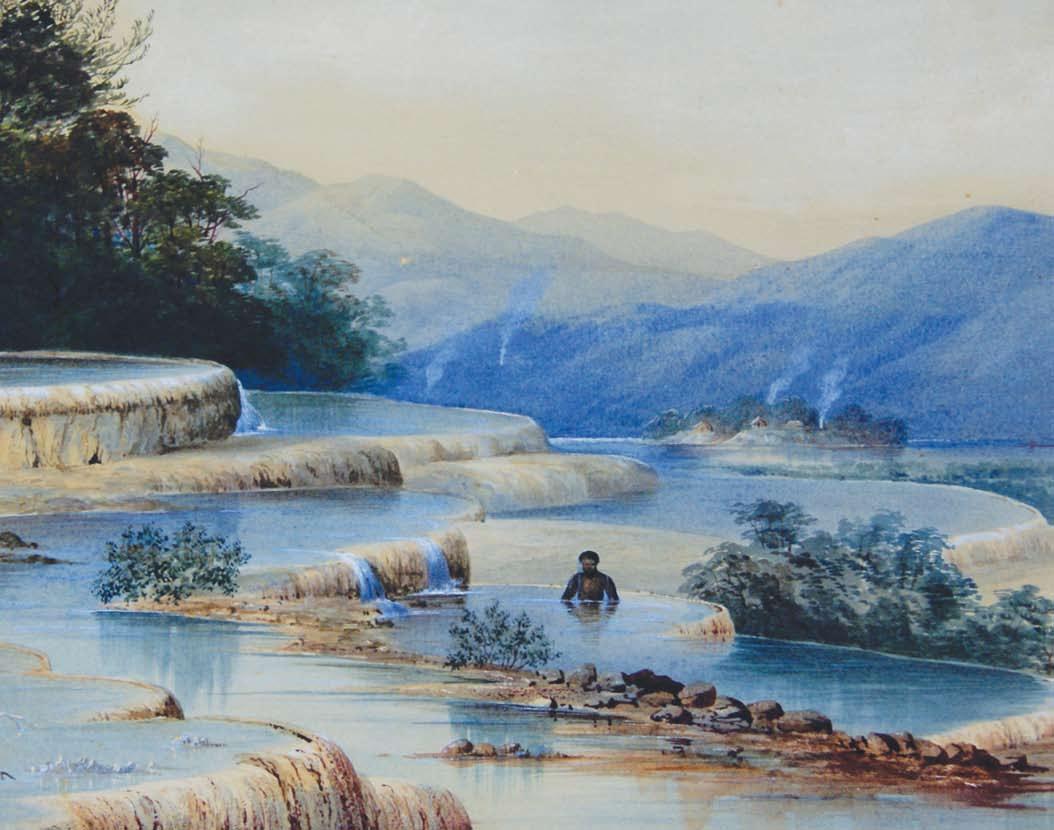
Important,Early& Rare
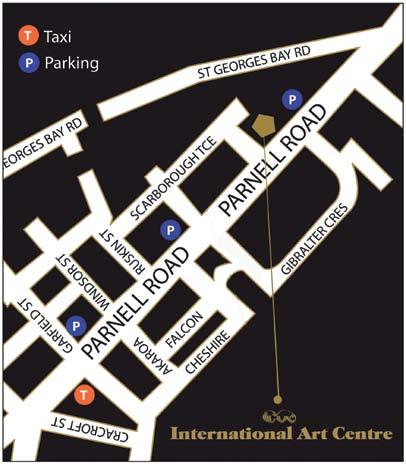
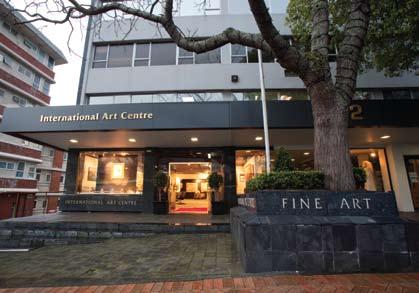
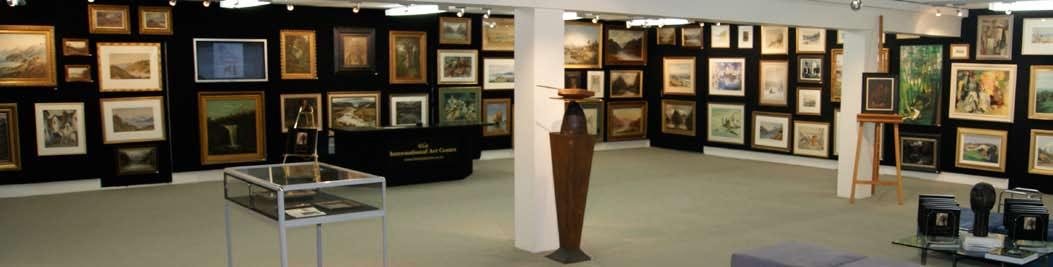
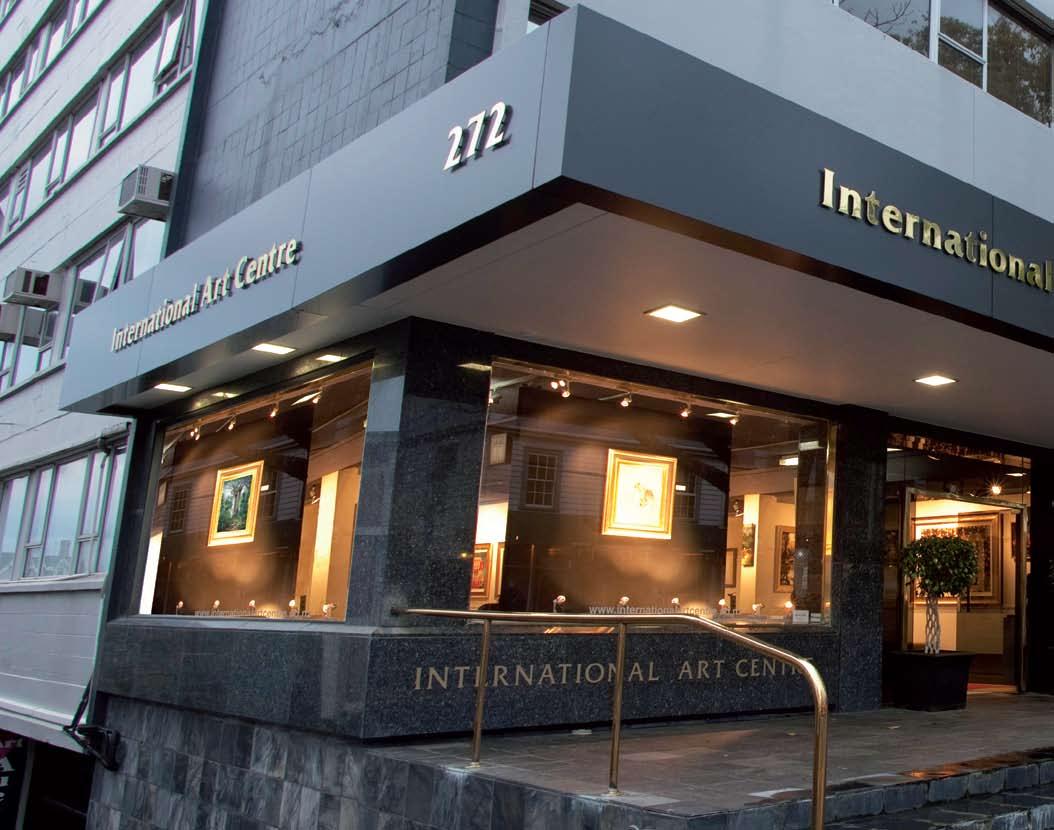
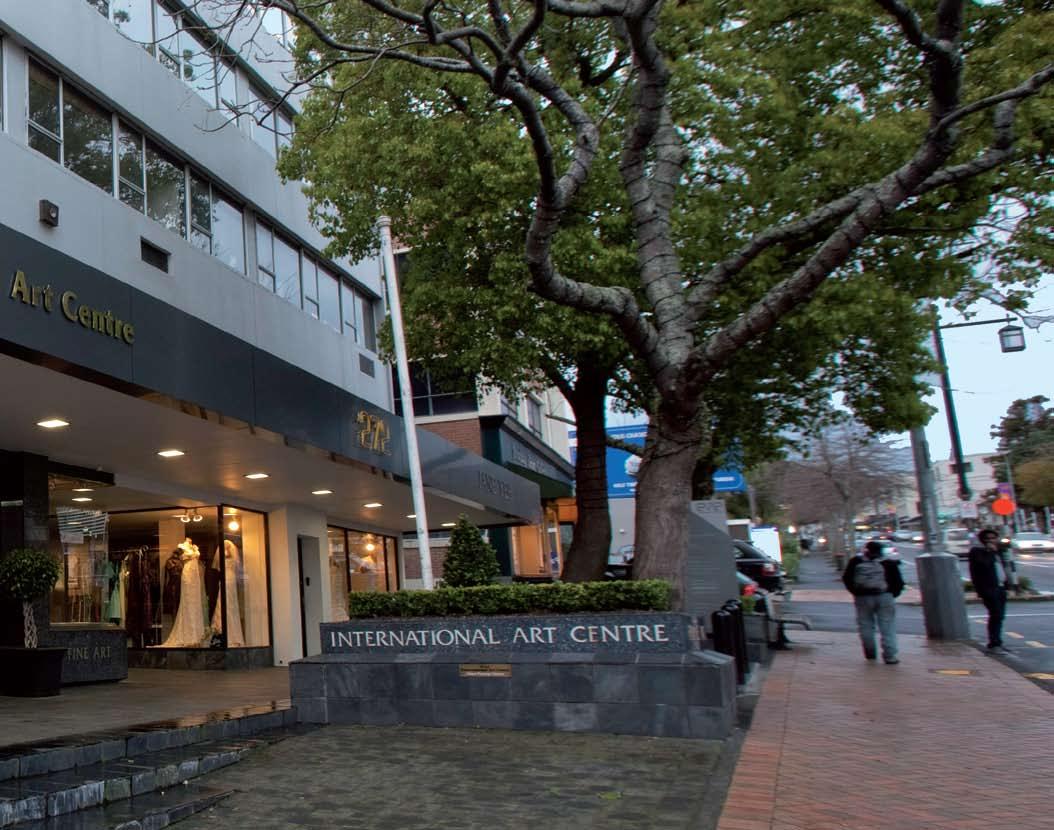
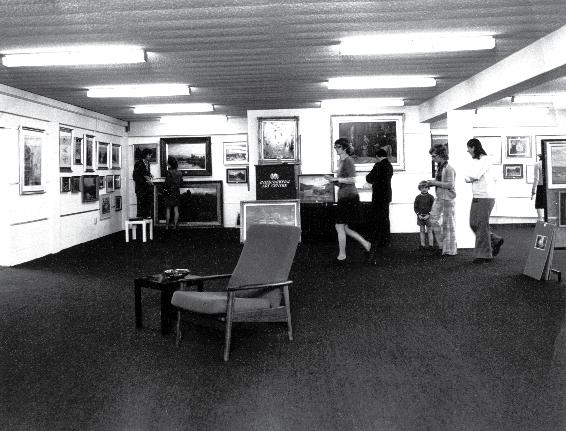
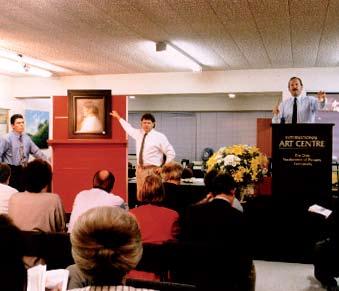
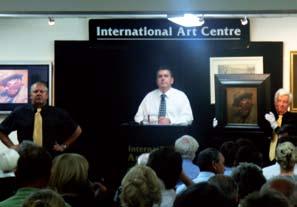
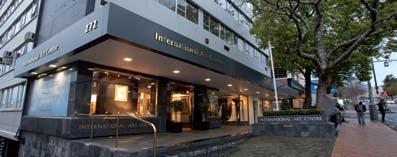
International Art Centre opened its doors in the summer of 1971 in Auckland’s oldest suburb, Parnell, which was quickly becoming a hub of commercial activity directed towards the finer things of life. Villas were being transformed into world class restaurants, designer boutiques, and fine jewellery stores. It was a fun place to be with an air of refinement yet quirky and vaguely bohemian. People loved it, they still do and so do we.
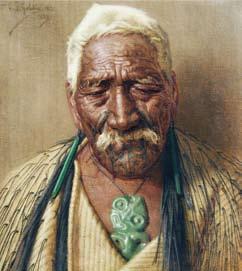
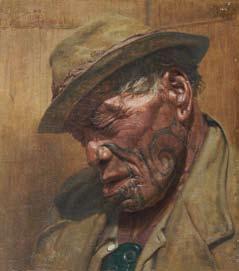
Throughout the years many artists have lived and worked in Parnell. John Barr Clarke Hoyte had his studio in Scarborough Lane. Today the Rev. John Kinder’s 1857 Ayr Street home is a heritage building and tourist attraction. The colourful artist, adventurer von Tempsky wrote about time spent in the ‘wilds of Parnell’ during the mid 1860s and C.F. Goldie regularly traversed Parnell Road, travelling from Upland Road to his city studio. Artists were, and still are attracted to this area, and now some 100 years on their art is providing commercial activity in the same place.
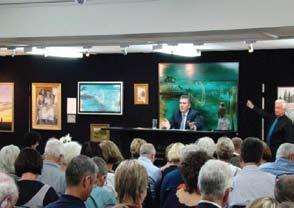
The foresight of founder Grahame Chote, proved sound as other youthful entrepreneurs embraced Parnell as the place to be. In 1971 International Art Centre chose the then luxurious White Heron Hotel, now the site of the White Heron Apartments, as the venue for its first art auction. Other venues over the years include the Rose Gardens, Clifford House and Holy Trinity Cathedral. Since 2005 and the expansion of the Scarborough Gallery auctions have been held on site.
40th Anniversary Auction
In 1986 I joined the firm as an auctioneer’s assistant. One of my first jobs was to deliver all works to the newly opened Regent Hotel in Albert Street. This proved to be quite a challenge as how did one transport a large scale Frank Wright oil which would not fit inside the gallery station wagon? The confidence of youth knows no bounds, and without further ado or direction the painting was tied to the roof-rack. When pulled over by a traffic officer and asked to explain the unsafe load that initial confidence vanished. However, the outcome was more than satisfactory as the officer returned to the gallery a few days later with his grandmother and her complete art collection. Happily, an interest in art attracts people from all walks of life. Over the years the gallery has been involved in many memorable reunions, deals, sales and events involving people and their paintings.
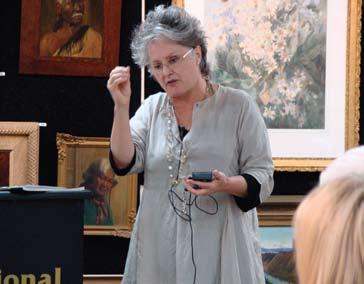
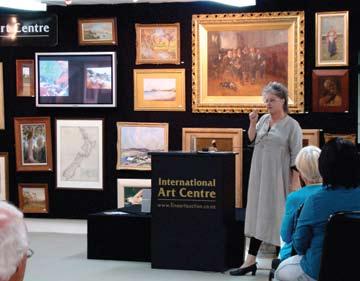
Today, my business partner Frances Davies and myself are ably assisted by a committed and talented team. Right from the start outstanding staff have contributed to the success of International Art Centre. Today we acknowledge and thank Trish Young who has been with us for fifteen years and James Watkins who joined us in 2004, and is a successful artist in his own right. Recently we welcomed aboard Fran’s son Luke, continuing the family tradition. For many years we have called upon the expertise of Dr Angela Mackie, Director of the Cathedral Lectures, as our resident art history consultant. Angela’s lively and illuminating lectures are enjoyed by all. In this catalogue she writes informatively on several entries, including two works by Frances Hodgkins.
Since 1971 the publication of our signature auction catalogues has changed and evolved with the advance of technology. In contrast to early publications, today’s catalogues are fully illustrated, comprehensively researched and accessed online. We hope you enjoy this Important, Early & Rare 40th Anniversary catalogue, both as a visual celebration of quality New Zealand investment art and a testament to our forty years as New Zealand’s leading Fine Art Auctioneers.
Richard Thomson - Director
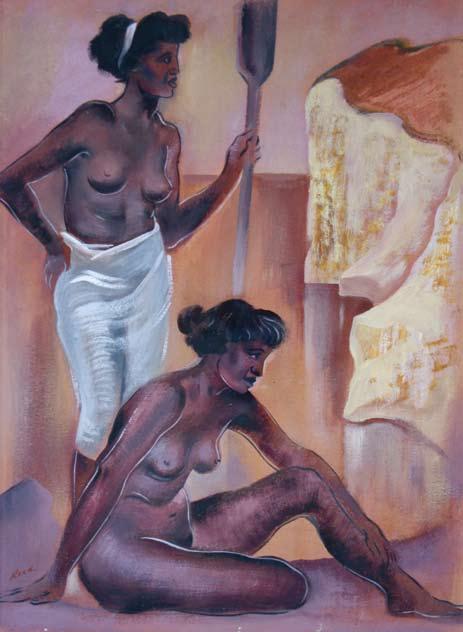
1 WILLIAM JAMES REED
1908 - 1996
Nudes on the Beach, Moraki Oil on board 45 x 34
Signed 2,500 - 3,500
Reed’s youthful ambition was to become a landscape painter but he found the pre-war mood inescapable, saying ‘I realised there was a limit to the idea of doing pretty pictures.’
His recognition of the ideological and spiritual crisis facing humanity in the 1930s resulted in paintings such as Armageddon and Visitation, works now held in public collections.
Reed mentioned that he wanted to introduce elements of religious painting into his work reflecting death and destruction being committed in the name of Christianity.
He sought to portray the world we are making, as well as something spiritual in his work. His use of religious imagery and the issues they raised resulted in challenging works, somewhat ahead of their time.
International Art Centre have held two exhibitions of his work since his death in 1996. The Estate Collection, a sellout show of forty eight works in 2002, and then in 2004 The Religious Paintings, twenty four works featuring his religious studies.
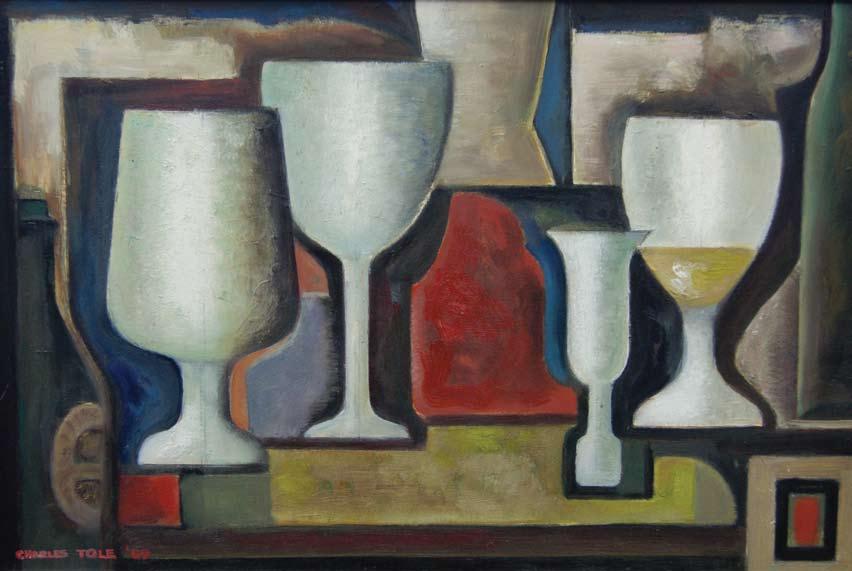
2 CHARLES TOLE
1903 - 1988
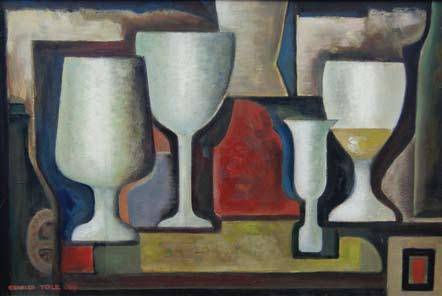
Still Life with Glasses Oil on board 30 x 44
Signed & dated 1969
5,000 - 8,000
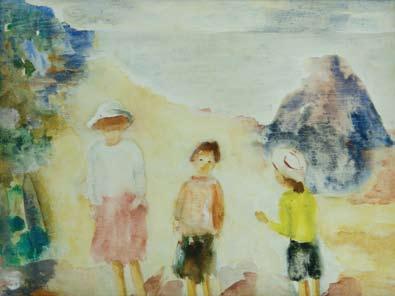
3
1911 - 1995
High Summer at Aramoana
Gouache on paper 36.3 x 47.5
Signed & dated 1978
4,000 - 6,000
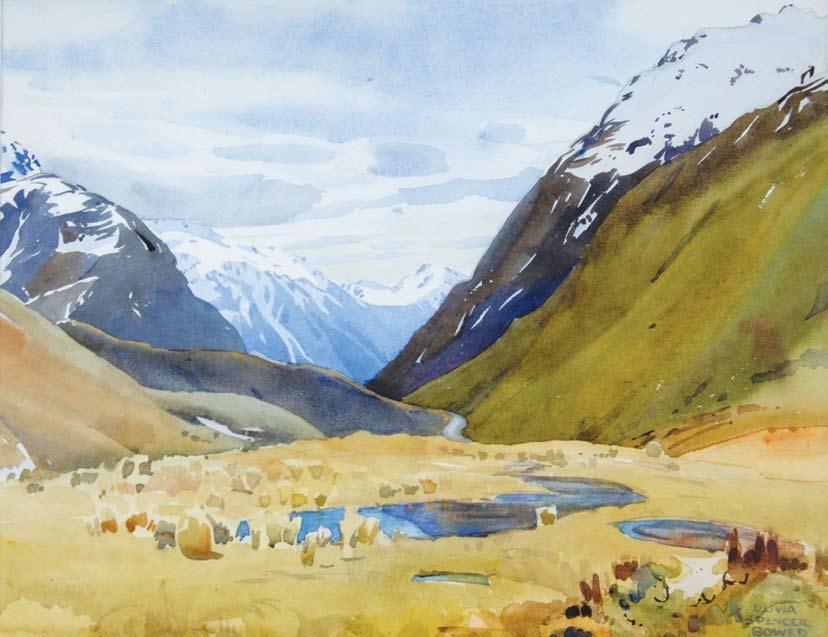
4 OLIVIA SPENCER-BOWER
1905 - 1982
At the Divide, Arthurs Pass
Watercolour 35.5 x 45.5
Signed
4,000 - 6,000
Following her arrival from England in 1920 the young Olivia Spencer Bower became a pupil of Rangi-ruru Girls School, Christchurch. Encouraged by her mother, the artist Rosa Bower, Olivia established a reputation as one of New Zealand’s most gifted young watercolourists. Eventually she became one of the few women artists of her time able to supported herself financially and pursue a career as a professional artist. Spencer Bower studied at the Canterbury College School of Art with fellow artists Rita Angus and Rata Lovell-Smith. Her tutors included Cecil Fletcher Kelly, Richard Wallwork, Leonard Booth and Archibald Frank Nicoll.
Returning to England in 1929 Spencer Bower studied at the Slade School, London under tutor Henry Tonks. From here, several extended trips were made to Europe before the artist’s return to New Zealand two years later. Back in Christchurch Spencer Bower was invited to exhibit with The Group. This small reactionary collective of artists believed the Canterbury Society of Arts to cater for popular taste alone, thereby excluding younger, more adventurous painters. Members of The Group included Louise Henderson, Doris Lusk, Ngaio Marsh and Evelyn Page.
In 1943 Spencer Bower travelled to Northland where she painted with Sydney Lough Thompson, newly returned from Brittany. Later that year she enrolled at Auckland’s Elam School Art, continuing her studies under John Weeks, Anna Lois White and A J C Fisher. The following years saw Spencer Bower visit Queenstown and Kaikoura whilst caring for her aged mother. After her mother’s death in 1960, Spencer Bower spent three months exploring the Pacific Islands, visiting Fiji, Samoa and Tahiti. On her return she exhibited fifty seven island paintings at the Canterbury Society of Arts. Several trips were made to Europe in the mid 1960s. In 1980 at the age of 75, she received the Canterbury Society of Arts’ silver medal for services to visual arts.
Spencer Bower was a colourful figure in New Zealand art circles, easily recognisable at gallery openings by the picture hats she favoured and the cheroots she habitually smoked. The artist never married, and before her death in 1982, she established a foundation to finance artists’ scholarships now funded by her estate. The work offered here, At the Divide, Arthurs Pass is a watercolour but Spencer-Bower worked competently in numerous mediums including acrylic and oil, as well as producing a number of linocut and woodblock prints.
3 PATRICIA FRANCE
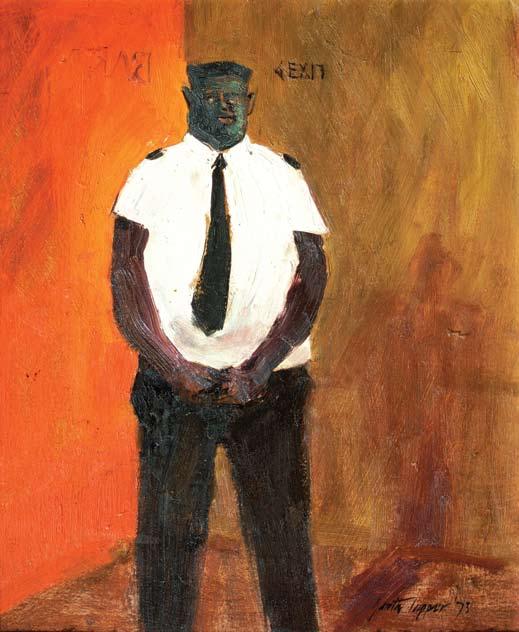
5 GARTH TAPPER
1927 - 1999
Pub Security
Oil on board 29 x 24
Signed & dated 1973. Inscribed verso
4,000 - 6,000
6 FATU FEU’U
b. 1946
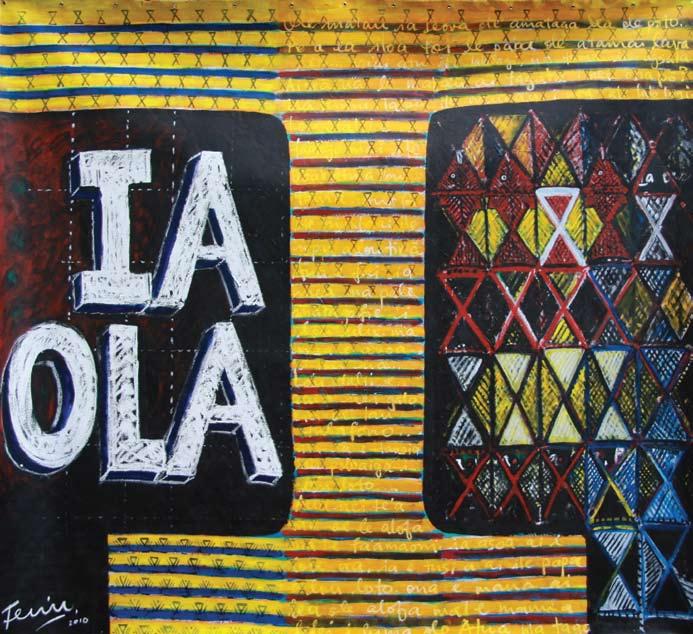
Ia Ola
Mixed media on canvas 180 x 195
Signed & dated 2010
8,000 - 12,000
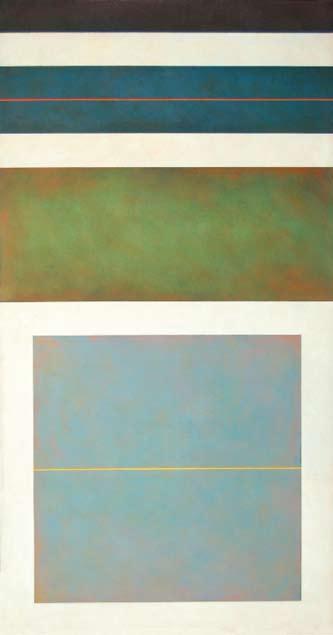
7 ROY GOOD
b. 1945
Bar & Rectangle, Untitled, 1976
Acrylic on canvas 183 x 91.5
Signed verso
2,500 - 3,500
Provenance: Private Collection, Auckland
Exhibited: Roy Good Bar Series, Data Gallery, Auckland 1976
8 MERVYN WILLIAMS b. 1940
Fanfare
Acrylic on canvas 80.4 x 80.4
Signed, inscribed & dated 2002 verso
8,000 - 12,000
Provenance: Private Collection, Auckland
Exhibited: Southern Oscillation, Milford Galleries,Dunedin 2003
My work is concerned with perception, the nature and interpretation of reality. I use subtle modulations of light and shade to create surfaces reminiscent of photography, spatially ambiguous, reflecting some other reality. I seek to re-examine the relationship between what we see and what we know, between empirical fact and deduction, reality and illusion.
Mervyn Williams, Contemporary Painting in New Zealand
Michael Dunn, Craftsman House publishing 1996
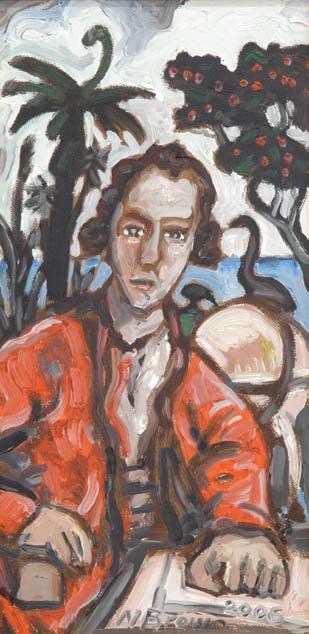
Joseph Banks (After Joshua Reynolds)
Oil on canvas 46.2 x 26.3
Signed & dated 2006
7,000 - 9,000
1973
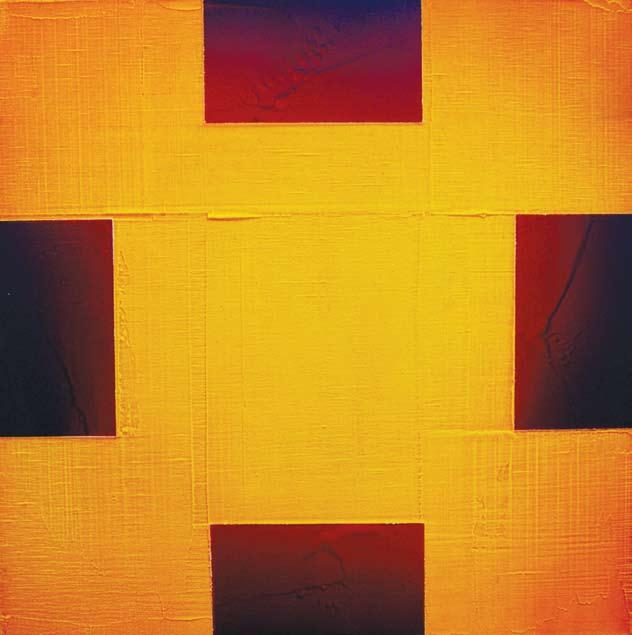
Untitled, 2008
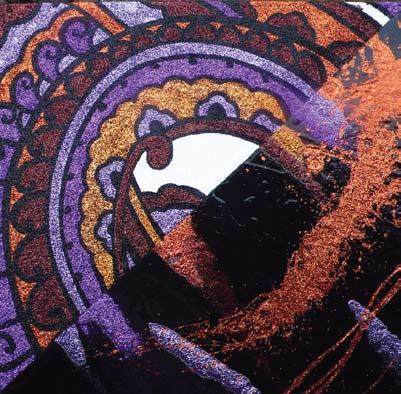
Glitter, acrylic and gloss enamel on canvas 51 x 51
Signed & dated 2008 verso
6,000 - 7,500
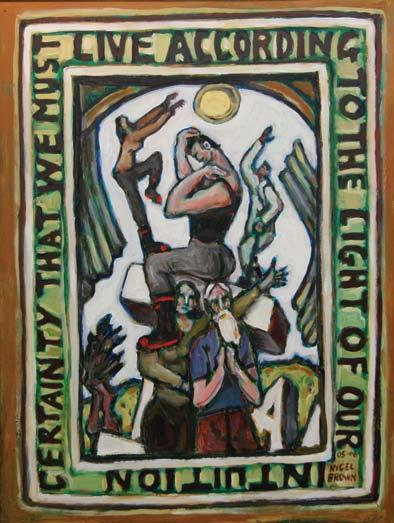
9 NIGEL BROWN b. 1949
10 REUBEN PATERSON b.
b. 1948
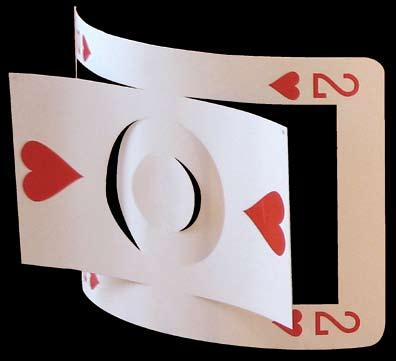
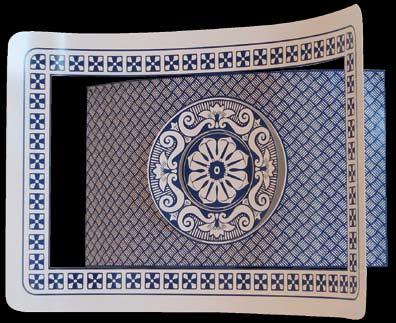
Two of Hearts
Sceenprinted & powdercoated stainless steel 39 x 54.5
Edition of 6
Signed & dated 2006
7,000 - 8,000
11 NEIL DAWSON
11 front
11 back
1936 - 2006
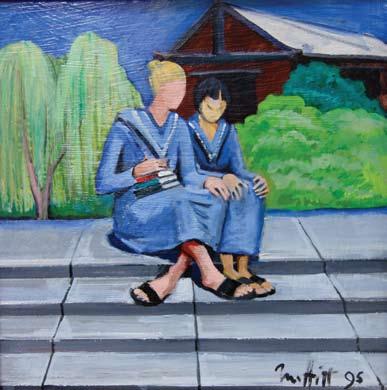
At School in Japan, Human Condition Series Oil on board 59 x 59
Signed & dated 1995
4,500 - 6,500
13 JAN NIGRO b. 1920
Ponsonby Series Oil on canvas 72 x 98 Signed
3,500 - 5,500
12 TREVOR MOFFITT
Signed, inscribed & dated 2007
18,000 - 22,000
14 MICHAEL HIGHT b. 1961
Cambrians Oil on canvas 61 x 152
Our Intuition
Acrylic on board 78 x 58.5
Signed, inscribed & dated 2005
7,000 - 9,000
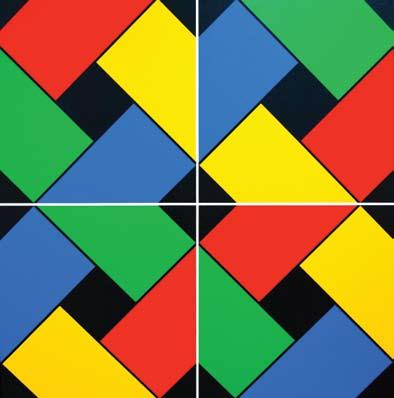
16 IAN
b. 1945
Lattice no. 185
Acrylic on canvas 101 x 101
Signed, inscribed & dated July 2009 verso
3,000 - 4,000
17 KARL
b. 1964 Green Road, 2007
Oil on linen 106.5 x 106.5
Signed, inscribed & dated 2007 verso
14,000 - 16,000
SCOTT
MAUGHAN
15 NIGEL BROWN b. 1949
18 IAN SCOTT
b. 1945
New Zealand Summer
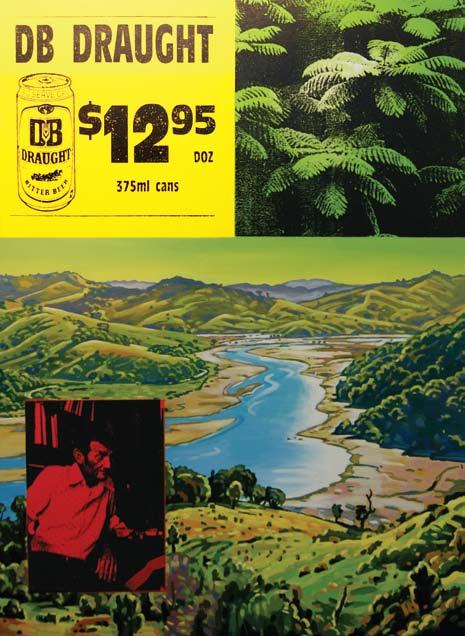
Acrylic and screenprint on canvas 140 x 104
Signed, inscribed & dated May 2002 verso 4,000 - 6,000
This work was exhibited at Ferner Galleries, Ian Scott Retrospective, 2003. The following is an excerpt from Art Critic Warwick Brown’s review in NZ Art Monthly, April 2003.
Other works in the Ferner exhibition juxtaposed clever, slightly enlarged copies of landscape paintings from the Kelliher Prize era with screenprinted images of artists. Two schools were represented McCahon for the modernists and Badcock for the traditionalists.
I liked Scott’s use of the DB beer logo in some of these (Kelliher = beer = DB = Douglas Badcock). Another subtlety here is that Scott is not mocking the Kelliher paintings. He won a Kelliher prize as a young man, loves landscapes and owns several works by Kelliher’s favourite Ernest Buckmaster, an artist whose skill Scott greatly admires.
The key to the success of these particular paintings is control of colour harmony and balance across the works. They are also more open than some of the others to viewers’ personal responses.
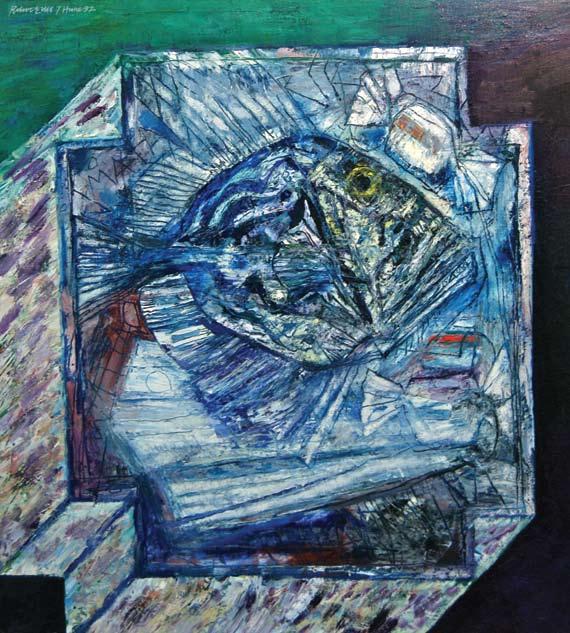
19 ROBERT ELLIS
b. 1929
7 Hune
Oil on canvas 101.6 x 91.4
Signed, inscribed & dated 1992
6,500 - 9,500
Provenance: Russell McVeagh Collection, Auckland since 1992
Exhibited: Gow Langsford Gallery, Auckland 1992
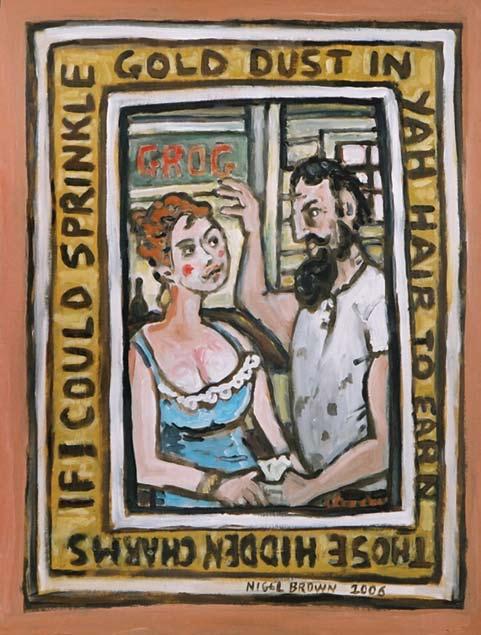
20 NIGEL BROWN b. 1949
If I Could Sprinkle
Acrylic on board 78.8 x 58.6
Signed, inscribed & dated 2005
9,000 - 11,000
Australian 1939 - 1992
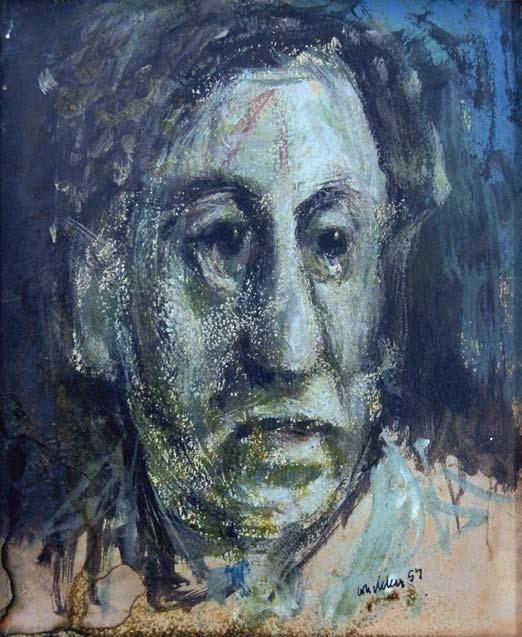
Portrait of Clem - Artist’s Father Acrylic on paper on board 15 x 13
Signed & dated 1957
8,000 - 12,000
Provenance: Tony Eden Collection, Wellington
Acquired by Tony Eden directly from Brett Whiteley in 1957 whilst both he and Whiteley worked at Lintas Advertising Pty, Sydney, Australia.
Further provenance available on request.
21 BRETT WHITELEY
22 RAYMOND CHING
b. 1939
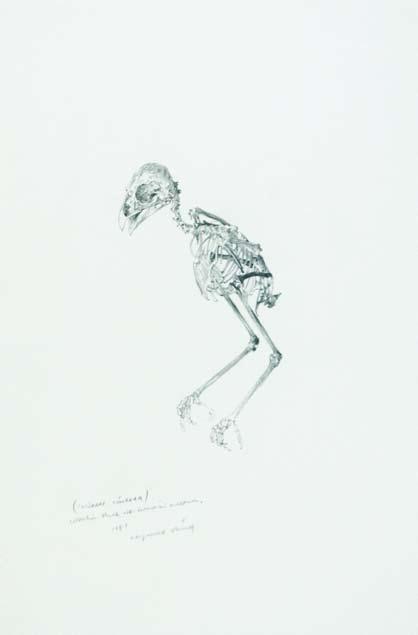
Kokako Skeleton
Pencil study on paper 53.4 x 35.6
Signed, inscribed & dated 1981
2,500 - 3,500
23 RAYMOND CHING
b. 1939
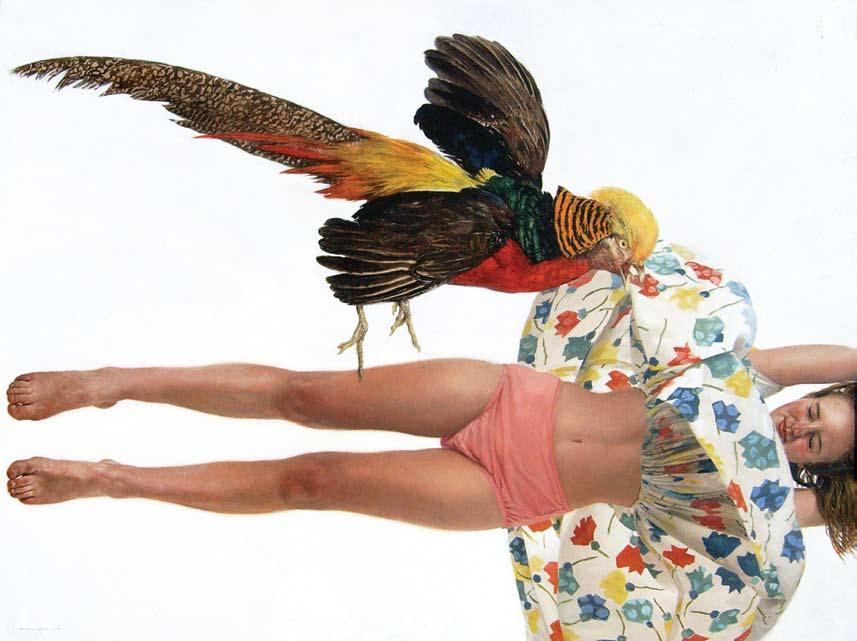
The Young Woman Who Flew With A Golden Pheasant Oil on canvas on panel 70 x 92
Signed & dated 1998
15,000 - 20,000
The more convincing Ching is in the depiction of birds, the less able we will be to resist the idea that we too, may fly with them. And nobody describes birds, feathers, in paint with more conviction than Ching. After decades of painting them, he knows these creatures through and through, and he heightens the impact of their presence by here painting them perfectly true to life, always in their natural size. If it looks as though we can defy gravity, then why not time too, in joining this imaginary company in their flight from some fanciful ark? Carol Sinclair 2007
24 JOHN WEEKS
1886 - 1965
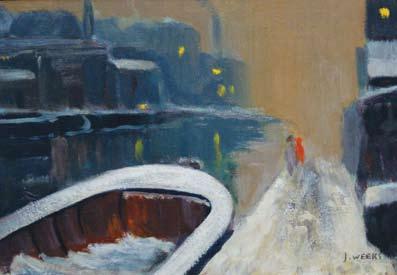
Winter’s Glow, Paris
Oil on board 25.5 x 35.5
Signed
3,000 - 5,000
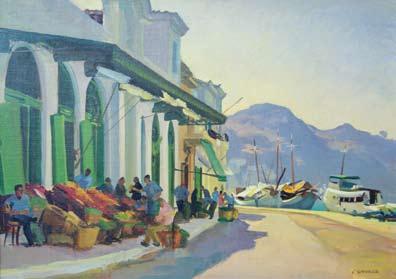
25 CEDRIC SAVAGE 1901 - 1969
Morning Market Poros
Oil on canvas board 50 x 70
Signed
3,500 - 4,500
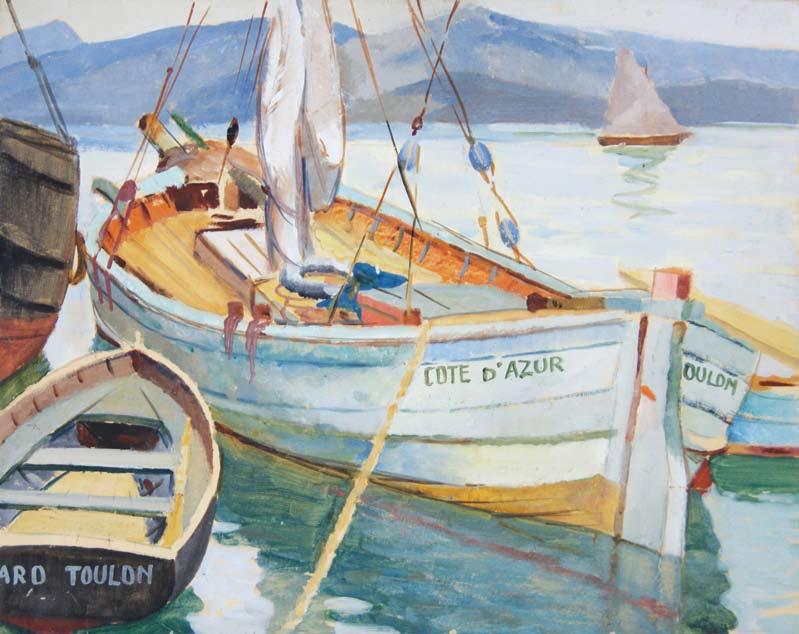
26 JOHN WEEKS
1886 - 1965
Fishing Boats St Tropez
Oil on board 39.5 x 50.5
Inscribed verso Weeks O’Connor stamp verso 5,000 - 8,000
During his years lecturing at Elam (1930-54) it was John Weeks’ custom to take his students down to the wharves along Quay St to sketch the boats moored there. These scenes were tailor-made for an artist whose forte lay in his use of colour and his draughtsmanship of architectural form and landscape. He had encountered similar scenes during his time in Europe.
Largely from the time of the Impressionists, artists began to put down on the canvas not what they knew was there but what they saw. Gone were the intricate details and in its place were sweeps of the brush indicating what could be seen at a quick glance. This was optical realism as opposed to intellectual realism. The human eye cannot pick up fine details at a distance so why put them in?
You may think that the mooring rope looks as if it has been chewed by a mouse! Well, in a sense, it has except that the mouse happens to be the sun which, when shining on drops of water splashed on an object, dissipates the form and it disappears from our view. We can see Weeks using this effect on the edge of the dinghy to the left, on the ropes attached to the mast of the yacht, and even on the sails of the yacht in the background on the right-hand side. Monet and Renoir worked together at the end of the 1860s in Argenteuil, riverside resorts on the Seine not far from Paris, and in their works from this period this illusionistic effect is very clearly seen.
ANGELA MACKIE
27
b. 1922
French Landscape Oil on board 35.5 x 53
Signed & dated 1973
3,000 - 5,000
28 JOHN WEEKS
1886 - 1965
Road Through the King Country Oil on card 51.7 x 61.3
Weeks O’Connor inscribed verso
4,000 - 6,000
29
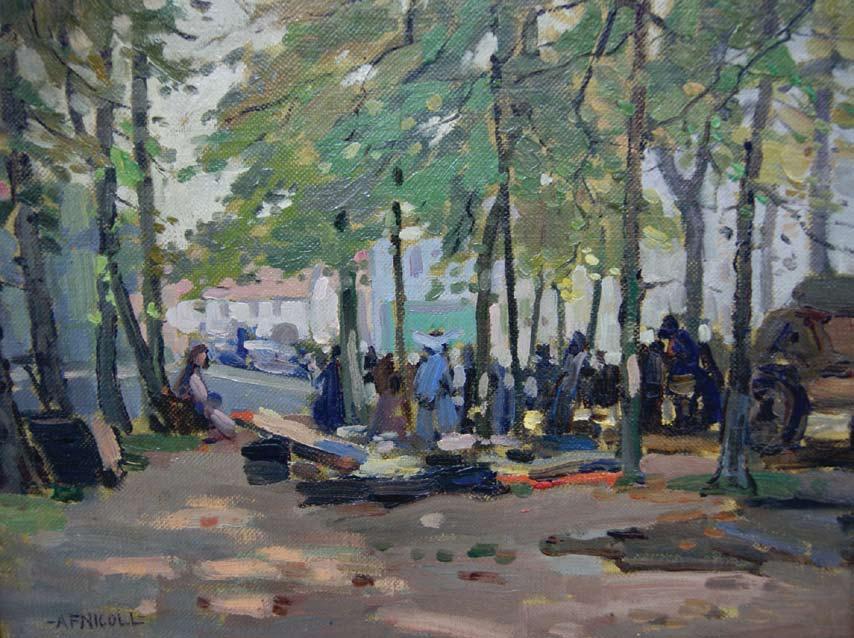
1886 - 1952
Market Scene, Brittany Oil on board 30 x 39.5
Signed
7,000 - 10,000
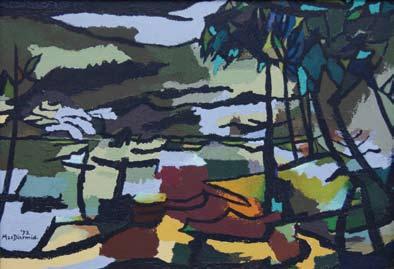
DOUGLAS MACDIARMID
ARCHIBALD FRANK NICOLL
30 JOHN WEEKS
1886 - 1965
Country Lane
Oil on canvas 24.4 x 34.7
Weeks O’Connor inscribed in pen verso
3,000 - 4,000
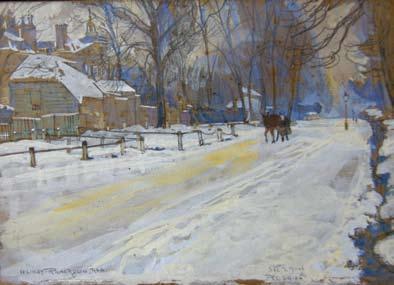
31 HARRY LINLEY RICHARDSON
1878 - 1947
Boxing Day, Dulwich
Watercolour 17.5 x 24.5
Signed & dated 26 December, 1906
1,500 - 2,500
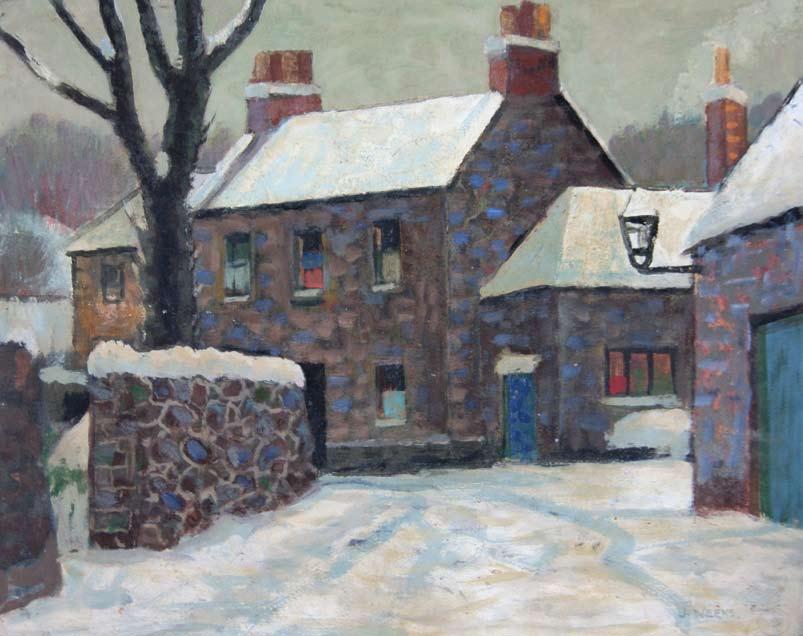
32 JOHN WEEKS
1886 - 1965
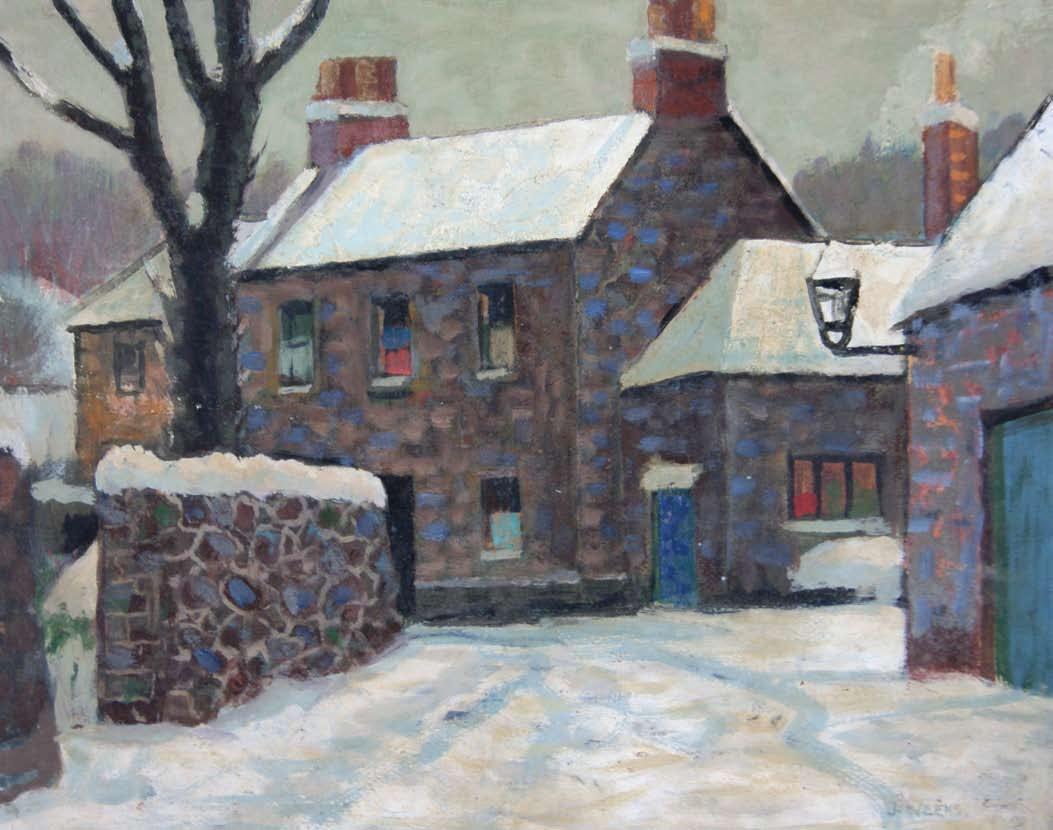
Scottish Village in Winter Oil on board 40 x 50
Signed.
Weeks O’Connor stamp verso 5,000 - 8,000
Please note: There is another study painted verso
John Weeks spent two years in Edinburgh (1923-25). He was enrolled at the Royal Academy School of Painting and for much of his time he would travel by train to various locations where he would sketch on the spot. As told to Ron Stenberg by staff at the Academy, Weeks would set off on each outing with a piece of cheese in one pocket and bread in the other for his lunch!
This oil may have been done during these years or could be a later recollection but whatever the case it certainly shows his interest in composition and colour both of which he shared with John Peploe, one of the Scottish colourists.
The depiction of the snow recalls the Impressionists with their interest in white and the many colours it contains, as Weeks so clearly shows, while the patches of colour give the painting a Post-Impressionist feel. Weeks takes up the local colours of the surrounding architectural structures, the blues, browns and fawns, and uses these in lighter tones in the white snow on the road and roofs.
Weeks recreates the cold of the winter’s day but the warm suggestive colour of red on the chimneys and in some of the windows make the painting warm and inviting to the viewer.
ANGELA MACKIE
33 JOHN HOLMWOOD
1910 - 1987
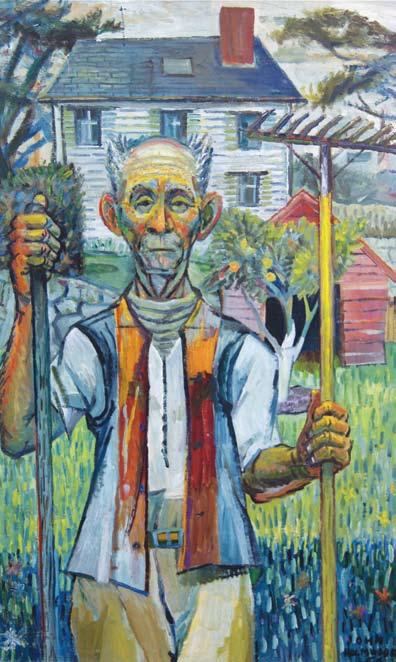
The Gardener, 1958 Oil on board 121 x 75
Signed
25,000 - 35,000
Provenance: Holmwood Family Collection
Illustrated:
The Painted Garden in New Zealand Art Christopher Johnstone, Godwit/Random 2008
Art New Zealand - Issue 31, Winter 1984
Article titled: John Holmwood - Thirty Years of his Painting
Alexa M. Johnston
Holmwood was a painter of landscapes, urban scenes and subjects with figures, all very much of their time: brightly coloured, expressionist in handling and direct. The figure paintings especially were wittily observed and lively and, as a result, they were popular. The artist considered The Gardener to be one of his best works but said nothing more about it.
It is tempting to call it “New Zealand Gothic” because it seems to be an ironic version of the famous painting by the American regionalist painter Grant Wood, American Gothic of 1930 (Art Institute of Chicago) in which a middle-aged farmer couple, the man holding a pitchfork, stand in front of a weatherboard house.
Here Holmwood has a single figure holding a rake in his left hand and the handle of another implement in his right. Like Wood’s man, Holmwood’s is largely bald, but the hair on either side of his head sticks up and gives him a slightly devilish look. In place of the jacket that Wood’s man wears, the gardener wears a jerkin of some kind. Behind the gardener is an orange tree in front of a red garden shed and red barn appears in the background of American Gothic.
The Gardener has all the characteristics of Holmwood at his idiosyncratic best; humorously observed, defined by firm outlines and painted with lively brushwork and vivid colours. One feels absolutely certain that The Gardener was someone that Holmwood knew.
Holmwood’s first solo exhibition was in 1957, the year after he painted The Gardener, at the Architectural Centre Gallery in Wellington where he showed 26 paintings, mostly oils.
The reviewer thought Holmwood “a gifted artist, imaginative, sensitive and, in many ways, quite original in his approach”. He concluded with the advice that Holmwood “has the skill to become a brilliant landscape painter.. but”, he added, “there are times, especially in his figure studies - an example is “The Gardener” when he sacrifices quality for the bizarre.”
Peter Tomory, recently appointed as director of the Auckland City Art Gallery included the painting in the first of his ground-breaking annual exhibitions Eight New Zealand Painters (No 14, November - December 1957).
Holmwood thought The Gardener one of his best works and he recorded that, in addition to his Landscape with a Sawmill (1952), it was in a Tomoryselected exhibition sent by the New Zealand government to tour the Soviet Union in 1959. The Gardener is not listed but a letter from Colin McCahon, then keeper of the gallery, states that “permission has been given for the John Holmwood picture to be included” and this may well have been The Gardener
The Gardener was included in his Retrospective Exhibition 1946-1976 at the Auckland Society of Arts in 1984.
Quoted from The Painted Garden in New Zealand Art Godwit/Random House New Zealand, 2008 with kind permission of the author Christopher Johnstone and publisher.
34 COLIN MCCAHON
1919 - 1987
Kauri
Oil on hardboard 76 x 55
Signed & dated 1955 - 57
150,000 - 200,000
Provenance:
Mr Harold Brainsby Collection, Auckland Collection of George Wooller (Estate)
Illustrated: plate 13, p. 99 Colin McCahon: Artist Gordon H Brown
A H & A W. Reed Ltd, 1984, revised ed. 1993
p. 188, An Introduction to New Zealand Painting 1839-1967: Gordon H Brown and Hamish Keith, 1969
A H & A W. Reed Ltd, 1984, revised ed. 1993
Exhibited:
M.T. Woollaston, Colin McCahon: A Retrospective Exhibition, Auckland City Art Gallery, 1963, no. 85
Record number cm001409
Colin McCahon online catalogue www.mccahon.co.nz
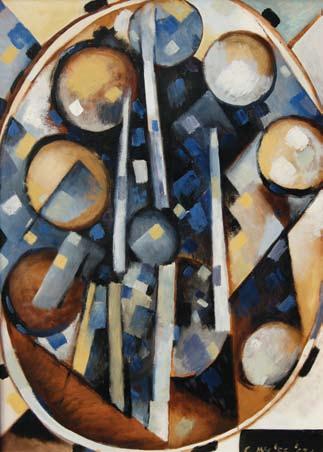
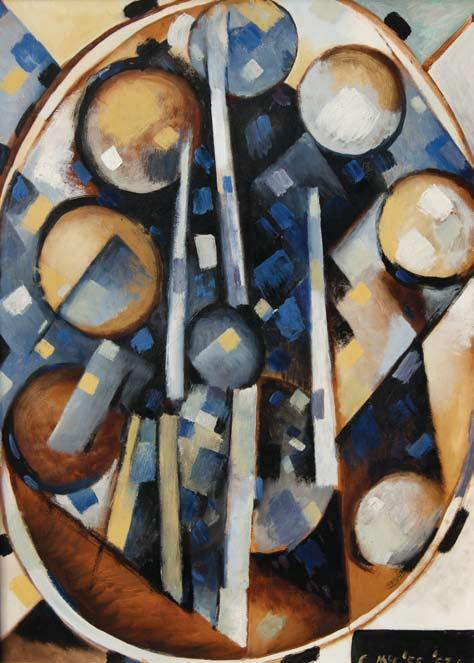
McCahon painted or drew over 50 works with the word ‘kauri’ in their titles. They are his most extensive open series during the period, from 1953 to 1960, when he lived within a regenerating kauri forest in Titirangi. As a South Islander new to Auckland, McCahon was previously unfamiliar with kauri, a northern species, but it soon came to dominate his attention. He told John Caselberg; ‘they are magnificent trees’ (quoted in Simpson, Colin McCahon The Titirangi Years 1953-1959, p. 36). McCahon’s kauri paintings and drawings are extremely various, ranging in style across the wide spectrum from realist (or ‘descriptive’ to use his term) at one end to almost completely abstract at the other. If House in the Trees (Lot 36) is at one end of the spectrum, then this Kauri is close to the other. Indeed, would it be even identifiable as a ‘kauri’ painting if it were not for its title? The closest it comes to being representational are the narrow vertical shapes which may be assumed to depict young kauri trunks. But what are we to make of the circular or spherical shapes which figure so prominently? The only spherical element in the make-up of actual kauri trees is the bright green globular cones.
But it soon becomes apparent that to press too hard on the representational aspect of Kauri is barking up the wrong tree, so to speak. The painting needs to be approached from another direction: from Paul Cézanne and the cubism of Georges Braque. McCahon had discussed Cézanne endlessly in the early 1940s with his friend Toss Woollaston. That he was still a live presence in the Titirangi period is evident from a charcoal drawing of 1953, Madame Cézanne at Titirangi (cm000692), in which the background of the figure (probably a portrait of Anne McCahon) consists of circles and straight lines remarkably similar to this Kauri. Perhaps McCahon was remembering Cézanne’s famous words, so influential for Picasso and Braque, ‘Treat nature by means of the cylinder, the sphere, the cone…’ The cubists abandoned the idea of painting as a window on a piece of reality; rather a painting was a composition into which various elements from reality might be introduced in the construction of a two dimensional picture. Combine this idea with Cézanne’s words about the ‘cylinder’ and ‘sphere’ and you get close to the pictorial language of Kauri.
McCahon has analysed the structure of the kauri tree into its constituent geometrical elements of cylinder (trunk) and sphere (cones and the conical profile of young kauri) reconstituted them within a rectangular panel, and enclosed most of the imagery within a bounding oval line (an idea he picked up from Braque) to pull all the elements together into a satisfying whole – all the while exploiting the principle of contrast which is fundamental to his conception of art. Again the principle comes from Cézanne. McCahon was fond of quoting his statement: ‘To paint is to contrast’. Hence the contrast between straight and curved, dark and light throughout this marvellous picture, the surface being vividly animated by the tiny squares and diamonds of colour which are such a feature of the Titirangi period.
In his notes for his 1972 Survey catalogue, McCahon said of 1957 paintings such as this, ‘I came to grips with the kauri and turned him in all his splendour into a symbol’ (A Survey, p. 24). A symbol of what? Perhaps of the life force itself, of what Dylan Thomas called ‘the force that through the green fuse drives the flower’.
PETER SIMPSON
35 MILAN MRKUISCH
b. 1925
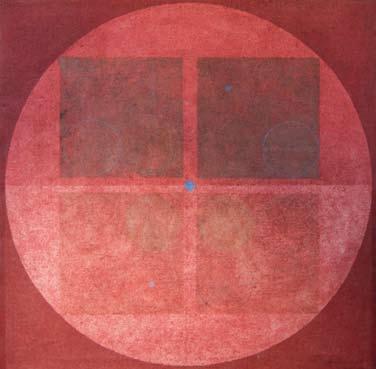
Centre with Three Elements Oil on canvas 87 x 87
Signed & dated 1965
Inscribed and dated 1965 verso
70,000 - 100,000
Provenance:
Private Collection, Sydney, NSW
Exhibited:
Barry Lett Galleries, Auckland
Paintings from 1960 - 1966, March, 1966
For six and a half decades, Milan Mrkusich has been at the forefront of modernism in New Zealand. From the outset, he painted abstract pictures, not the landscape subjects that preoccupied his contemporaries. Mrkusich had no interest in representations and symbols of ‘New Zealandness’, finding inspiration in the innovations of European and American art, and seeking the universal rather than the merely local. This was not an easy path. In the early part of his career, there was virtually no art market in New Zealand, and certainly no market for such radical paintings as Mrkusich’s. Painting therefore had to compete for his time with more profitable ventures, such as his work for the pioneering design firm Brenner Associates. But in 1958, when Brenner ceased to be profitable and closed its doors, he had more time to focus on painting. As a result, the following decade saw a series of bold and astonishingly rapid changes to the style and format of his paintings. Centre with Three Elements is an outstanding example from this rich and productive phase of Mrkusich’s career.
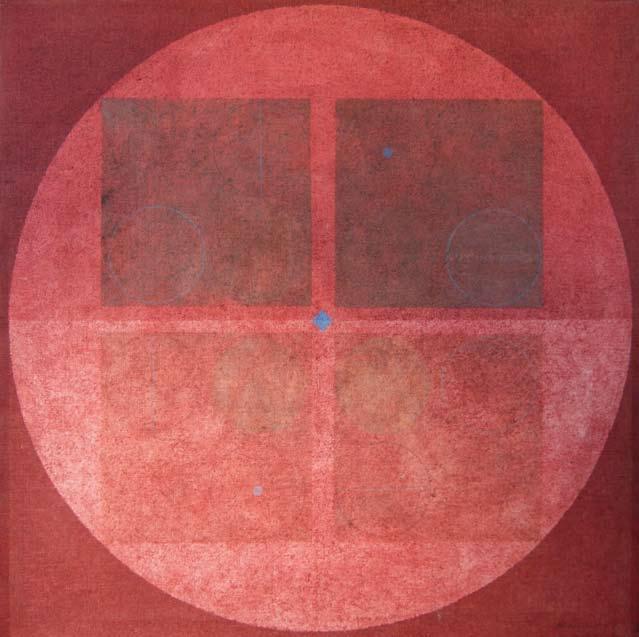
The Elements series of 1965 was one of the most resolved series of work Mrkusich had produced. The dominant motif, an interlocking circle and square, had been present in the preceding Emblem series, but now it became a more thoroughgoing system. Typically, the system consists of a square support divided into four quadrants, each containing a circular element. Centre with Three Elements, though, is exceptional in its variations on this theme.
Moving inwards from the square formed by the edges of the painting, one encounters a circle, divided in half horizontally, and then four squares each containing three circular elements. A further unusual feature is the tiny tilted square, or diamond, placed at the very centre of the painting, linked in scale and hue to two round dots that mark the centre of two of the circular elements. These seem to hint at what was to come in the Diagram series of 1966, where such dots were often dispersed across a large field of colour.
By the time he painted Centre with Three Elements , Mrkusich had familiarised himself with the ideas of the psychologist Carl Jung. Jung’s belief that the combined circle and square was a symbol of harmony or unity would have reinforced Mrkusich’s own approach to these forms. Centre with Three Elements is not a composition. It does not ask the viewer to puzzle over an arbitrary or idiosyncratic distribution of shapes. Rather, there is a logical system, which, in tandem with sumptuous and subtle colour, frees the viewer to speculate on higher, more universal, even spiritual, levels of feeling.
ED HANFLING
36 COLIN MCCAHON
1919 - 1987
House in the Trees, Titirangi Oil on board 64.1 x 51.3
Signed & dated 1955-57
90,000 - 140,000
Provenance: Brenda Gamble Collection
Private Collection, Auckland
Record number cm000390
Colin McCahon online catalogue www.mccahon.co.nz
Exhibited: McCahon Survey Exhibition, Auckland Art Gallery, 1972
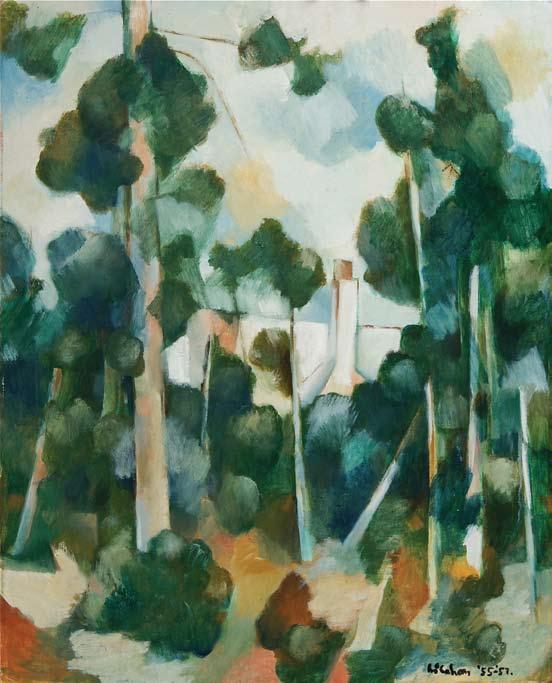
This painting dates from the time when Colin McCahon and his family literally lived in a ‘house in the trees’, in the kauri bush above French Bay in Titirangi between 1953 and early 1960. Indeed the very first paintings he made when he came to Auckland were depictions of houses in the trees near the modest bach which the McCahons inhabited in Ottitori Road. A painting, now in Auckland Art Gallery, dated 1953, has a very similar title, House in trees, Titirangi (cm000487) and several others share the same subject matter but have different titles such as Kauri (unfinished) (1953, cm001408), which includes a depiction of the McCahons’ own dwelling. McCahon told his friend John Caselberg in a letter dated November 30, 1953 (quoted in Peter Simpson, Colin McCahon The Titirangi Years 19531959, AUP, 2007, p. 25): ‘…am doing the bush, hard, must come to some solution of the domestic landscape before I can start using it in any way’. In fact he kept returning to the ‘domestic landscape’ (a phrase that is itself the title of several paintings) again and again over the next five years; it was a subject that he never seemed to tire of, or, to put it another way, never mastered entirely to his satisfaction. He soon moved away from what he called a too ‘descriptive’ approach to the subject – by which he meant too literal or realistic – frequently deforming and deconstructing the landscape in accordance with his understanding (or misunderstanding as some believe) of cubist principles, which were of great interest to him since his Australian visit in 1951.
As it happens, the present painting is one of the more ‘descriptive’ works of the period. The clouds and patches of blue sky are handled quite realistically; likewise the trees are readily identifiable as young kauri (or ‘rickers’ as they are known) with their tall slim trunks and foliage bunched along the branches, just as the chimney and roof line of the house are clearly recognisable through a gap in the vegetation. The ‘portrait’ format of the work emphasises the strong verticality of the trunks and chimney, varied by only occasional diagonals. The placement of dark against light (a standard McCahon procedure) is very deftly handled. There is little evidence here of the faceting or fracturing or fragmentation of the picture plane that occurs in so many of McCahon’s paintings of this period. Why does he date the work 1955-57? Presumably because like a number of other works with a similar dating, it was an unfinished work that he returned to a couple of years later, perhaps when he was preparing for his exhibition Recent Oils at the Peter Webb Gallery in October 1957, his first solo show in Auckland. Since no exhibition catalogue of that show survives, this is only a surmise but would seem to explain the extended date on the work. The small scale landscapes of the Titirangi period have been rather overshadowed by the larger and more radical works McCahon moved on to later, but paintings such as this are felicitous and delightful in their own way – a frank celebration of looking and seeing – and are among the most angst-free and approachable works of his whole career.
PETER SIMPSON
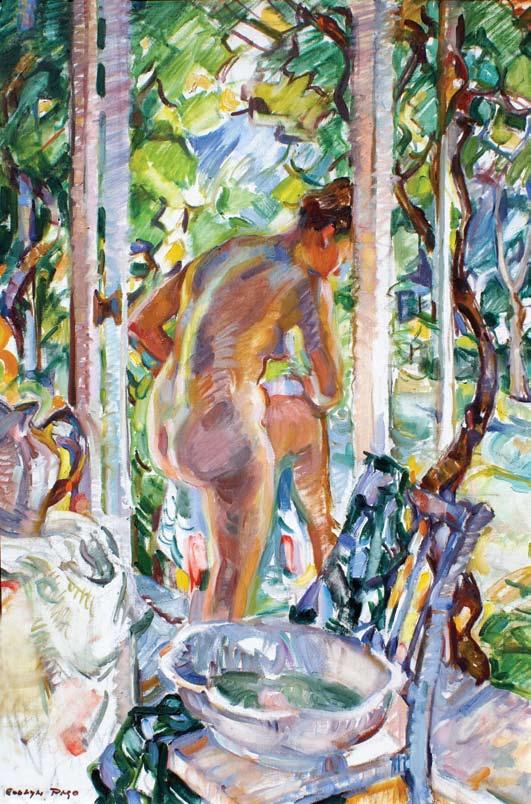
37 EVELYN PAGE
1899 - 1988
Nude in a Doorway Oil on canvas board 90 x 61
Signed
130,000 - 170,000
Provenance:
Purchased by Diana and Bruce Mason from the artist in 1974
Private Collection, Auckland
Exhibited:
Paintings since 1972 and a few others, Cat no. 9
Brett-Duncan Studio Gallery, Wellington, 1974
Original exhibition label affixed verso
Selected works, Cat. no 45, New Zealand Academy of Fine Arts, Wellington, 1982
Evelyn Page - Seven Decades Robert McDougall Art Gallery, Christchurch, 1986
Evelyn Page - Seven Decades National Gallery of New Zealand, Te Papa Tongarewa, 1987
Illustrated p. 50 Evelyn Page Seven Decades, Janet Paul and Neil Roberts, published on the occasion of the exhibition Evelyn Page - Seven Decades, Robert McDougall Art Gallery, Christchurch, 1986
In 1970 the outstanding achievements of Evelyn Page were recognised and celebrated with a major retrospective exhibition of 98 works at the National Art Gallery in Wellington. Douglas Lilburn, a close friend of the artist, wrote a brief introduction to the exhibition catalogue in which he paid particular tribute to Page’s perpetual appetite for innovation and creative development. Lilburn drew attitudinal parallels between Page and the Japanese print maker, Hokusai, who he quoted saying: “by the age of 80, I shall have made further progress, and by the age of 90, I shall see into the mystery of things”. This proved to be prophetic as Evelyn Page, who was 71 at the time, continued to experiment and extend the boundaries of her painting practice for another 17 years.
Nude in a Doorway, painted in the artist’s 74th year, was Evelyn Page’s last major nude, before the onset of arthritis curtailed her ability to work in a large scale, and remains as a glowing testimony to her sustained creative energy and enthusiasm to innovate. At the age of 66, Page set off for Salzburg to attend Oscar Kokoschka’s ‘School of Seeing’ and although quite conspicuously older than the majority of much younger students, persisted with the unfamiliar prerequisite methods of working and soon won the admiration of many around her. “What I learned at Salzburg” Page recalled, “was to let the subject impress as simply as possible.” Works painted after she returned to New Zealand in 1968 and throughout the 1970s demonstrate a reduced essentialising of detail and increasingly broad yet highly painterly treatment of backgrounds. This enabled the form of the main subject, particularly in the case of a figure, to be presented without distraction as the primary subject of the work.
Nude in a Doorway demonstrates her concerns with the essence of form as she began experimenting with the stylized ‘pattern-making’ of compositional elements developed by Matisse during his Nice period. Like the modern French master who inspired her, Page created this exotic fantasy by assembling favourite pieces of fabric, foliage and familiar objects.… the ewer, the punchbowl the striped tablecloth and the antique chair appear in most of her larger paintings of nudes. These objects are assembled into an intoxicating blend of pattern and colour that would both compliment and intensify the luscious flesh tones of a favourite model. In this case the model was Kate Farquahar, the daughter of the late Radiya and Professor David Farquahar, professional associates and close friends of Evelyn and her husband Frederick.
Once again the subject poses against familiar glowing foliage of the ornamental grape and lime tree dappled by sunlight at the Page’s garden at Waikanae.
For many years her friend and gallery owner, Elva Bett had tried to persuade Page to exhibit her work and in 1974 she held the second of only two exhibitions of her career (the first being at the John Leech gallery in Auckland in 1972). The major work of this show was Nude in a Doorway, along with some new still lifes and several watercolour nudes.
‘She will be a painter with whom future historians of art will have to reckon’
Professor James Shelley, September 1929
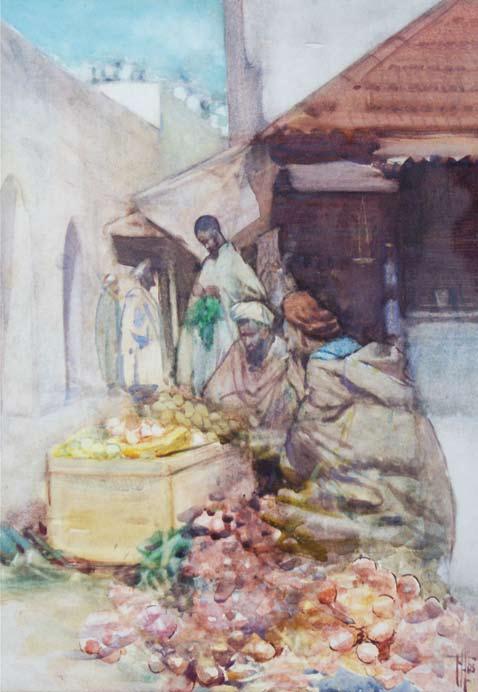
38 FRANCES HODGKINS
1869 - 1947
The Onion Seller, Tangier Watercolour 36 x 25
Signed & dated 1903
30,000 - 40,000
Reference p. 176 Works of Frances Hodgkins in New Zealand by E H McCormack, Auckland City Art Gallery, 1954 - Oxford University Press
Provenance: Private Collection, Christchurch, since 1975
Purchased by present owner from R G Bell & Co Auctioneers, Kaiapoi
Previously in the collection of Mrs Esmond Atkinson, Wellington Inherited by above from D K Richmond, artist who acquired it directly from the artist.
Exhibited:
McGregor Wright and Co’s Gallery, Wellington, 1904, Catalogue no. 20
In 1902 on the boat on the way to Morocco with her English painting friend Mrs Ashington, Hodgkins had bumped into the Dunedin collectors David and Marie Theomin from whom she obtained a commission to paint a scene in Tangiers. She had completed the Theomin commission at the beginning of 1903 and referred to it in a letter to her artist friend Dorothy Kate Richmond:
I wish I could have sent you my large picture of the market - it is the apple or rather the onion of my eye – much the same sort of subject a jumble of onions melons & oranges- It is going tomorrow to Mr. Theomin - I am going to eschew vegetables after this with a comfortable feeling I have done my duty by them…
To Miss D. K. Richmond. 7 March 1903
In fact, Hodgkins ended up doing at least three versions of this market scene and the one offered here is the painting she gave to Dorothy.
Our eye is moved in a zigzag from the bottom left to the middle plane on the right, across the colourful pile of onions and melons. Our eye travels over the heads of the Arab sellers and buyers looking at the case of lemons and oranges in the middle ground to the final part of the zigzag created by the roof of the architectural structure the colours of which repeat in more muted tones the fruit and vegetables in the foreground.
Globules of watercolour, with the occasional outline, create the dissipated form of the fruit and vegetables in the hot Moroccan sun also indicated by the washed out white building on the left and the summarily indicated blue and green shadowed drapery of the furthest figures.
ANGELA MACKIE
References:
Buchanan, Dunn and Eastmond: Frances Hodgkins Paintings and Drawings, Auckland University Press, 2001
Drayton, Joanna: Frances Hodgkins: A Private Viewing, Godwit, 2005
Dunn, Michael: New Zealand Painting: A Concise History, 2003, Auckland University Press
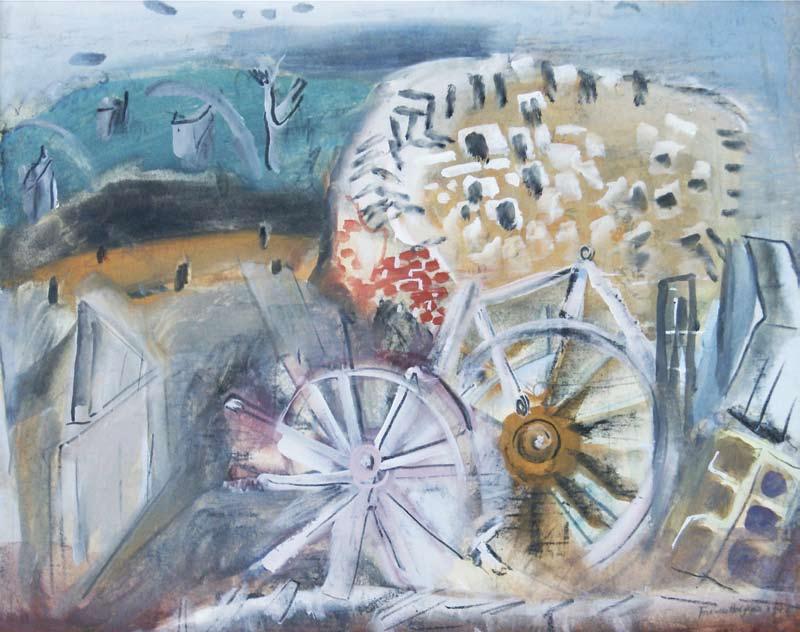
39 FRANCES HODGKINS
1869 - 1947
Wheelwright, Solva
Gouache on paper 41 x 53.5
Signed & dated 1941
40,000 - 60,000
Provenance:
Ex collection Lionel Fraser Esq.
J D Judelson Eq
Private Collection, Christchurch
Reference: p. 103, Four Vital Years, Arthur R Howell, forward by John Piper, Rockcliff, Publishing, London
This gouache of Frances Hodgkins, completed when she was in her 70s, provides a clear example of her later work which moves into near abstraction and so different from the representational early work on offer, The Onion Seller, Tangier (Lot 38)
During the late 1930s and early 1940s Hodgkins’ imagery was often taken from the farmyard and common items of the English countryside. The iconography of these works reveals the difficult times of World War Two and all its horrors, as well as her own sense of mortality.
The wheels of life or the wheels of fortune, or misfortune, dominate. The spokes of the right-hand wheel move beyond their enclosure to form the railings of a broken fence to the side of which is a surrealist rendition of gallows. The mauve and blue wheel has several spokes broken as well and some extend beyond the circle leading our eye to the green-blue field near the top where dark blue, somewhat calligraphic, lines suggest figures. On the far left is a conquering hero. But is it God or is it a man? To the right and slightly higher is a figure, equally enigmatic, in a gesture of embrace. Or is it about to slay someone? Behind both figures is a form painted in palest blue, the opposite of a shadow.
The third form from the left in this part of the painting suggests an ark with a rainbow shape stretching over it parallel to a similar form to the left. If it is a rainbow over the “sea” of green-blue, where are the rainbow’s colours? To misquote Sir Christopher Wren: If you want to see colour just look around. In true early 20th century tradition, line and form became separate and discrete entities, and Hodgkins places the three primary colours, red, yellow, and blue strategically.
In the middle of the work is red, blobs of red, on either side of which are fields of yellow perhaps sullied with blood.
Variations of blue make up the upper portion of the work. Red is the colour of love, of sacrifice, of violence, a colour symbolising apparent opposites.
The secondary colours of pink and mauve form the left-hand wheel, while the hub of the right-hand wheel repeats the dirty yellow found elsewhere. Yet these are not the only wheels in the work. At the top right moving from the red blobs is a circle of white across which are anthropomorphic forms in various positions which, moving anti-clockwise, indicate fallen men, men about to fall with their hands tied behind their back, and men standing awaiting their fate. To the right we see more fallen figures.
In the middle of this circle are what might have been Dantesque shades but which now have arisen from the inferno and inhabit the “cemetery”, their white tomb-like forms morphing into, again, anthropomorphic shapes.
The town of Solva is in North Pembrokeshire and lies at the mouth of the eponymous river. The Solva Woollen Mill, erected in 1907, was, and still is, powered by a 10 foot water-wheel which must have given an added impetus to the artist to repeat her much used form of the wheel which is to be found in so many of her late works and which is indicative of the wheels of carts and wagons to be found on the farms which surrounded her in the latter part of her life.
Her painting raises the question: Who is the maker of the wheel to which the title refers? Is it God or is it Man?
Hodgkins’s treatment of the subject is lyrical and surreal, evocative of the end of the war and, indeed, the end of her own life.
ANGELA MACKIE
References
Gordon H. Brown The Reputation of Frances Hodgkins, in Art News, Issue no.16, Winter, 1980
Iain Buchanan, Michael Dunn and Elizabeth Eastmond: Frances Hodgkins Painting and Drawings, Auckland University Press, 2001
Joanne Drayton: Frances Hodgkins: A Private Viewing, Random House, Auckland, 2005
Dunn, Michael: New Zealand Painting: A Concise History, 2003, Auckland University Press
40 SYDNEY LOUGH THOMPSON
1877 - 1973
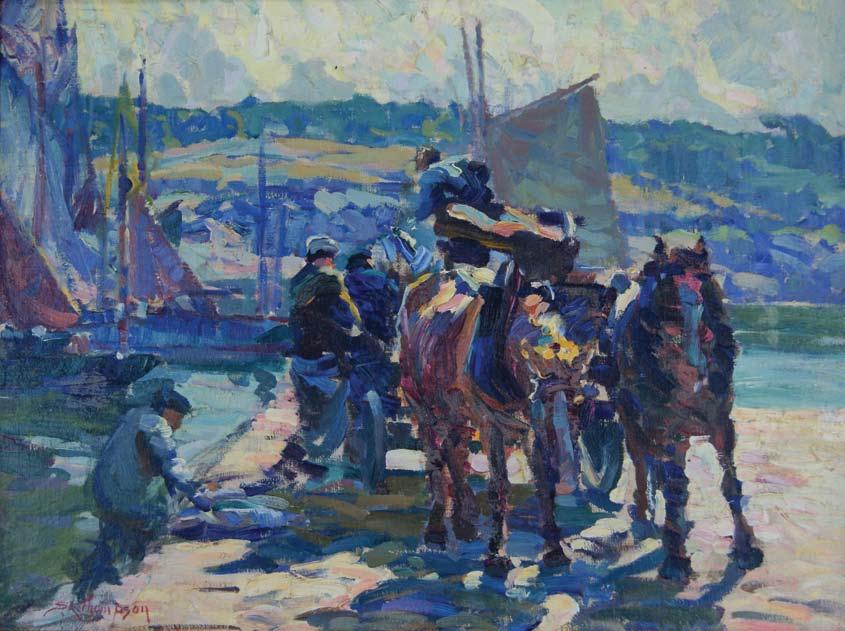
Horses on the Quay, Concarneau
Oil on canvas 44.5 x 59.5
Signed
25,000 - 35,000
After making a grand tour of Italy with a group of American students, Thompson made his way to Brittany. He intended to stay there for the summer, before returning to Paris. Concarneau became his base for the remainder of his stay.
Over the years the region attracted artists from around the world. Frances Hodgkins, Paul Gauguin and Claude Monet, to name a few. Rapid changes in city life resulting from modernisation, commercial and industrial expansion led to the creation in the last decades of the 19th century of a rural ideal, a life lived close to nature. To the artist, ports were not inanimate, but living places which appeared to absorb and express the personalities of the sailors and fishermen who made and used them.
In his work, Thompson evolved a technique which made a direct statement. He worked to identify colour with tone so that each supported the other. The subject of Horses on the Quay, Concarneau was a common sight at Concarneau. Horse’s patiently waiting for the catch from the Tunny Boats at the Digue. Thompson sought personal expression and symbolic meaning creating an overall atmosphere of drama. Paint was loaded on to the canvas in a variety of directional strokes. The dark shapes of men and horses on the wharf are set against the hills which is reminiscent of his former tutor Petrus van der Velden.
Thompson, who died in 1973, is buried at the cemetery at Concarneau.
4,000 - 6,000 41
41 BUSTER BLACK
1932 - 2007
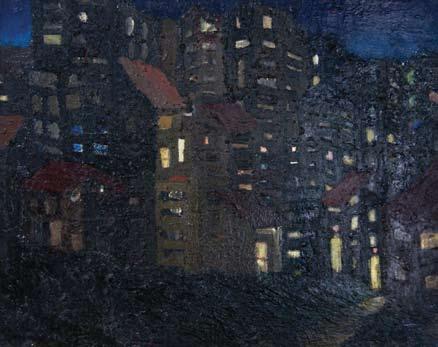
Untitled - City at Night
Oil on sand on hardboard 39.5 x 49.5
Signed
42 JOHN HOLMWOOD 1910 - 1987
Sands of Time - Northland Oil on canvas 68.8 x 101.7
8,000 - 12,000
Provenance: Private Collection, United Kingdom
There is a photograph of an oil by Holmwood of this subject titled Sands of Time in the E H McCormick Research Library, Auckland Art Gallery. The label on the reverse of the photograph records that it is signed ‘John Holmwood’, and dated 1976 on the reverse. The signature and date were supposedly on the original backing board (rather than on the reverse), no longer with the picture. It also records there is a preliminary pencil drawing done for the painting in 1975. Notes verso
43 FELIX KELLY
1916 - 1994
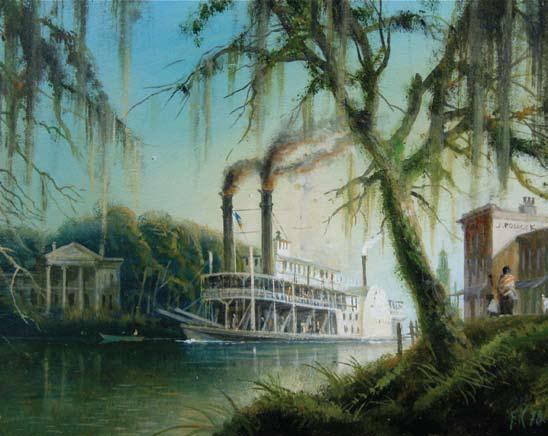
Steamboat on the Mississippi Oil on board 13.5 x 16
Signed 4,000 - 6,000
The life of expatriate artist Felix Kelly (1914 - 1994) is as intriguing as his work. Born in Epsom, Auckland, he attended Kings College but left New Zealand aged 21 years for the bright lights of London. Befriended and patronised by many leading society figures of the day, Kelly exhibited alongside Lucien Freud, Julian Trevelyan and on one occasion Frances Hodgkins. A life of glamour and creativity ensued. Kelly painted the famous Castle Howard murals, where ‘Brideshead Revisited’ was filmed, designed theatre sets for Sir John Gielgud and Dame Sybil Thorndike and illustrated magazines such as Harper’s Bazaar. Kelly’s distinctive work, rarely seen at auction, is held in British and American collections, Te Papa and Hawke’s Bay Museum and Art Gallery.
A major retrospective was held at Gus Fisher Gallery, Auckland in 2010. Kelly’s extraordinary life is documented in Donald Bassett’s biography Fix: The Art & Life of Felix Kelly
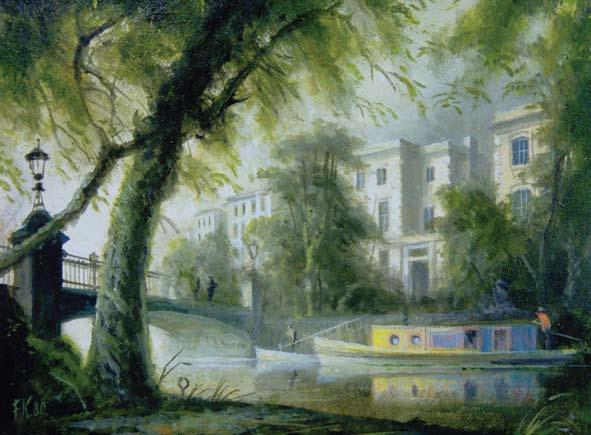
44 FELIX KELLY
1916 - 1994
Canal Boat, Little Venice
Oil on board 13.5 x 16
Signed 4,000 - 6,000
During the 1960s Kelly spent much of his time painting in the deep south of the United States. However this work from that period, is of historic Lewes Crescent, Brighton. Here the viewer is led along a meandering path, somewhat reminiscent of Auckland Albert Park. Manicured green lawns with elegant residences, so beloved by the artist, overlook the Victorian pleasure pier, one of Britain’s first piers, constructed in 1832. The soft, almost mystical ambience associated with Kelly’s paintings, and clearly evident in this work, heightens its appeal.
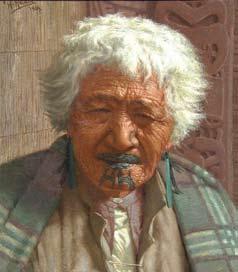
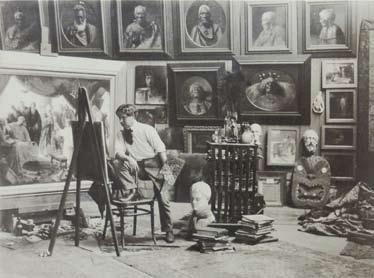
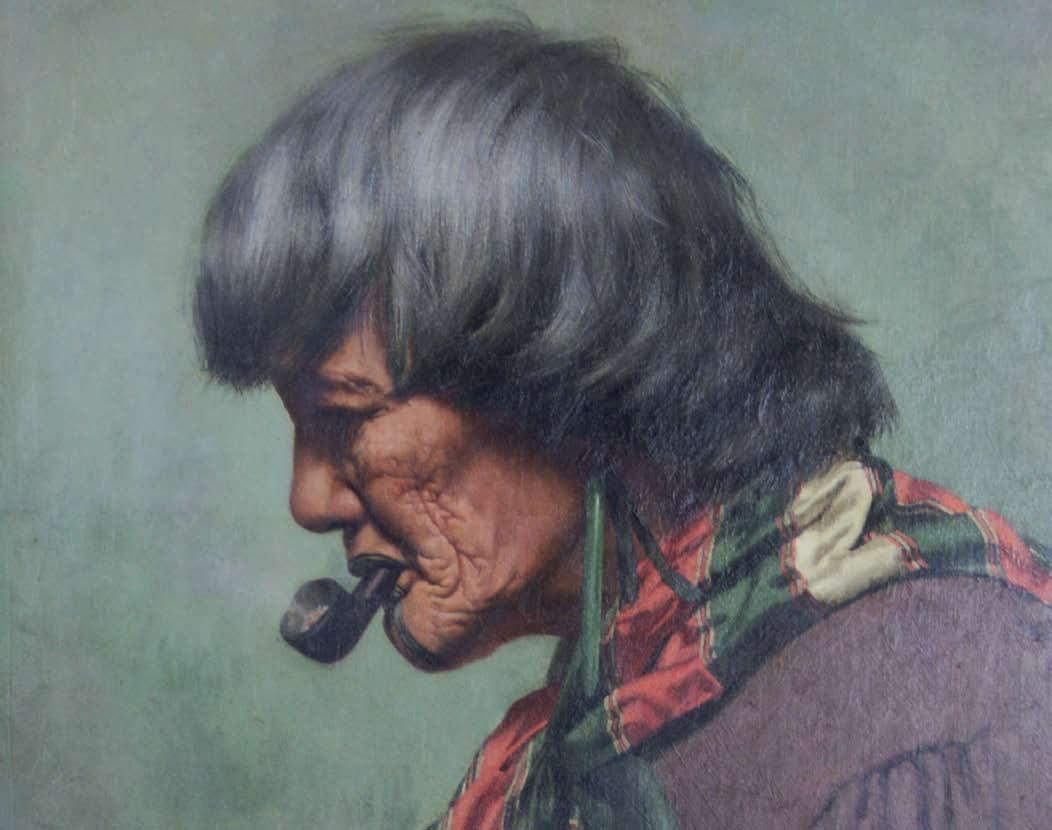
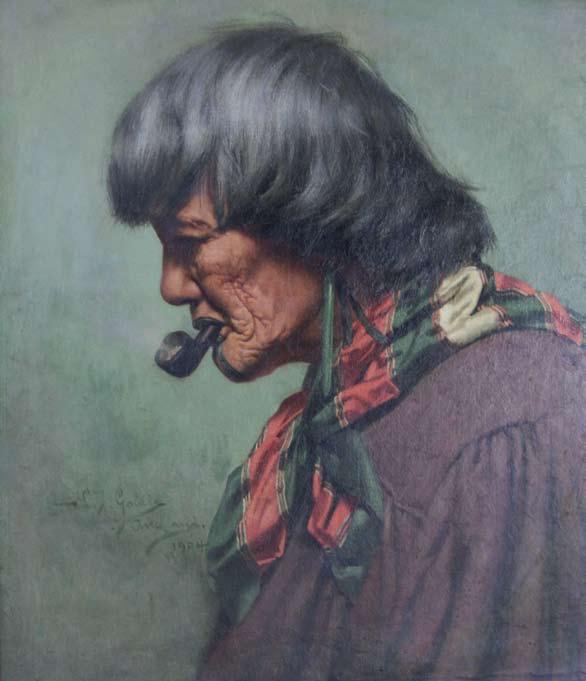
Lot 45
CHARLES FREDERICK GOLDIE
Serenity, Auckland 1904
Harata Rewiri Tarapata, Nga Puhi
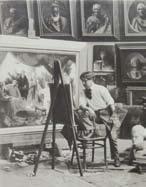
C F Goldie in his Shortland Street Studio
‘In Polynesian portraiture Mr C F Goldie stands pre-eminent in the world today, and New Zealand has every reason to be proud of him’ Governor General Lord Bledisloe
1979
Quote from C F Goldie: His Life & Painting, Alister Taylor & Jan Glen,
45 CHARLES FREDERICK GOLDIE
1870 - 1947
Serenity, also know as Meditation
Harata Rewiri Tarapata, Nga Puhi, Auckland 1904
Oil on canvas 55.5 x 47.9
Signed, inscribed ‘Auckland’ & dated 1904
350,000 - 550,000
Provenance:
Private Collection, Christchurch
Purchased by current owner, R G Bell Auction, Kaiapoi, 13th November 1974
Exhibited:
GOLDIE Auckland Art Gallery, 28th June - 28th October 1997
Te Papa Tongarewa, Christchurch Art Gallery, Dunedin Public Art Gallery, Art Gallery of New South Wales, Sydney, 1998, Cat. no. 35
Illustrated: p. 98, GOLDIE, Roger Blackley, published on the occasion of the exhibition GOLDIE. David Bateman Publishing, 1997
p. 78 - 79 & p. 193 C. F. Goldie His Life & Painting, Alister Taylor & Jan Glen, Alister Taylor publishing,1977
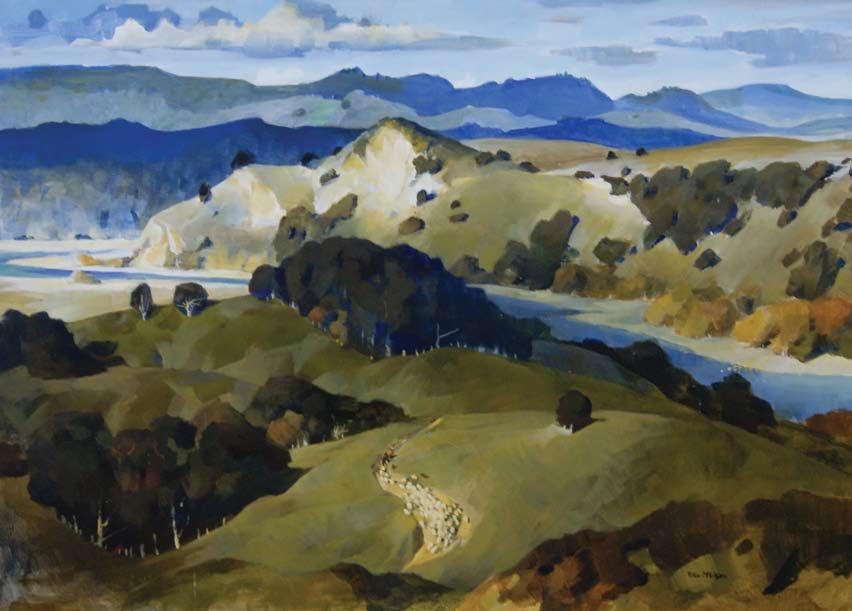
46 PETER MCINTYRE
1910 - 1995
Sheep Droving, Rangitikei
Oil on canvas 66 x 90.5
Signed
22,000 - 28,000
For years its white cliffs (Rangitikei River) and its green water have been my favourite subject and I have explored every stretch of it, watching the light on the cliffs change and shadows define new shapes. Peter McIntyre 1979
The mighty Rangitikei River is one of New Zealand’s longest rivers winding 185 kilometers through the Central Plateau to the South Taranaki Bight. McIntyre often painted the curving river bed and spectacular white cliffs of the Rangitkei valley. His chosen subject featured in a 1998 stamp issue.
Peter McIntyre was born in Dunedin in 1910 and educated at Otago Boys’ High School and at the University of Otago, at the age of twenty he went to London to study at the Slade School of Art.
His subsequent work included book illustrations, and stage decoration. At the outbreak of war he joined a New Zealand volunteer unit formed in London as an Anti-Tank Battery, and served in this as a gunner in Egypt. He was commissioned by General Freyberg as Official War Artist, and in this capacity served in Greece, Crete, North Africa, and Italy.
After the war he returned to New Zealand to live departing for painting trips to the Antarctic, to Hong Kong, the Pacific, and the American West - plus a round-the-world trip centered on travel in Britain and the Continent. His pictures of Hong Kong formed an exhibition that toured the United States for three years.
Early in 1970, Queen Elizabeth awarded the coveted Order of the British Empire to Peter McIntyre for his increasing success as an author and for his accomplishments in the fine art fields.
Publications include his illustrated autobiography, The Painted Years, Peter McIntyre’s West, Peter McIntyre’s Pacific, Peter McIntyre’s New Zealand, Peter McIntyre’s Wellington, Peter McIntyre: War Artist, McIntyre Country and Kakahi.
47 ROBERT HENRY WYNYARD
1819 - 1898
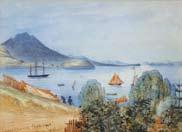
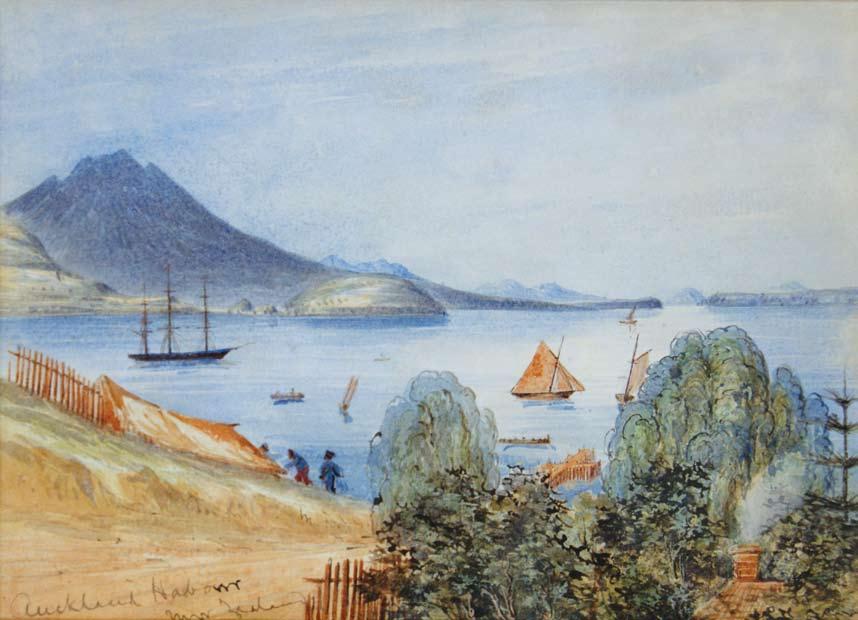
Commercial Bay Auckland from Constitution Hill
Watercolour 22 x 30
Inscribed Auckland Harbour, New Zealand
15,000 - 20,000
An early and rare view of Commercial Bay from Constitution Hill prior to Auckland waterfront reclamation. Commercial Bay is today the area occupied by the old railway station, Vector Arena and numerous apartment buildings. In the centre right Wynyard captures his early landmark, the 500-foot long Wynyard Pier, built in 1851.
Robert Henry Wynyard was born 1802, at Windsor Castle, England. He followed family tradition in choosing a military career. After serving in England for many years, it was in Malta, in August 1826, that he married Anne Catherine McDonell. They later had four sons.
From 1828 to 1841 Robert Wynyard served in Ireland, and was promoted to Major in 1841. He was recalled to England in 1842 and promoted to Lieutenant Colonel. During 1844, Wynyard, with his two hundred strong troops, was ordered to New Zealand to augment the forces deployed in the Bay of Islands against Hone Heke and Kawiti. Wynyard was one of the party who stormed Ruapekapeka on 11th January 1846. In recognition of his services in the Northern War he was created CB then in December 1846 he returned to New South Wales, Australia
Robert Wynyard returned to New Zealand in 1847. Over the next eleven years they entertained lavishly in their home at Official Bay, Auckland.
In 1851 he was appointed, on the death of Major General G. D. Pitt, to command the forces in New Zealand, amounting to some one thousand imperial troops and the five hundred Fencibles in the Auckland pensioner settlements. He held this command until 1858, being promoted to Colonel in 1854. From April 1851 to March 1853 Wynyard held the position of Lieutenant Governor of New Ulster, a position he was appointed by Governor Sir George Grey. Aided by Bishop George Selwyn and Chief Justice William Martin, he also successfully obtained consent from Ngati Tama-te-ra and Ngati Raupunga to gold mining in the Coromandel area,
and later the Thames, Karangahake, Waihi and Te Aroha fields.
When Sir George Grey departed for England at the end of 1853, Wynyard, as the senior military officer in the colony, became acting governor, assuming office on 3rd January 1854. In spite of his earlier lack of confidence in Wynyard’s political expertise, Governor Grey had left to his stand-in the daunting task of completing the implementation of the New Zealand Constitution Act 1852. When he addressed the first General Assembly in the hastily erected parliament building in Auckland on 27th May 1854, Wynyard emphasised that his powers were circumscribed and his responsibility was to the Crown.
In September 1855 newly appointed governor Thomas Gore Browne arrived to take over from Wynyard. After 20 stormy months as acting governor, Wynyard resumed his military duties. In 1858 the 58th Regiment was recalled to England, where Wynyard was promoted to Major General. The following year he was sent to South Africa as officer commanding and lieutenant governor of Cape Colony. In 1863 he returned with Anne Wynyard to England in ill health. On his retirement he was promoted to Lieutenant General and appointed Colonel of the 98th Regiment of Foot. He died in London on 6th January 1864. Anne Wynyard returned to Auckland, where she remained a prominent social figure until her death in 1881.
Robert Wynyard was a tall, handsome man with charismatic charm and style. A military writer described him as 'undoubtedly the most popular man who ever came to New Zealand'. The Honourable Henry Sewell was less complimentary: 'He was a weak but well-meaning man who might have done better had he fallen into better hands.' Thrust into the maelstrom of politics, Wynyard was forced to wield executive power at a juncture unique in New Zealand history. However inept and ill advised, he was nevertheless the prime mover in the constitutional changes in the period of transition from colonial to parliamentary government.
48
Provenance: Pendergrast Collection
Ex loan collection of Rotorua Art Gallery label affixed verso
49
48
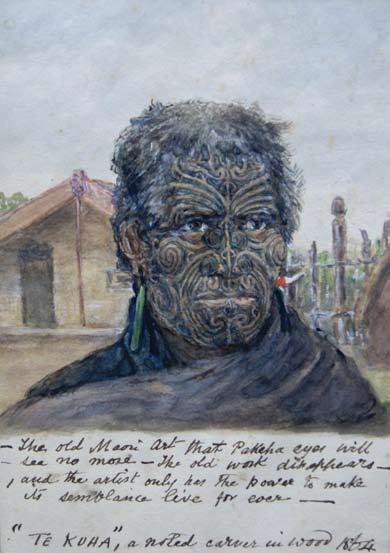
HORATIO GORDON ROBLEY
1840 - 1930
Te Kuha 1864
Watercolour 25 x 17.5
Signed & inscribed
14,000 - 16,000
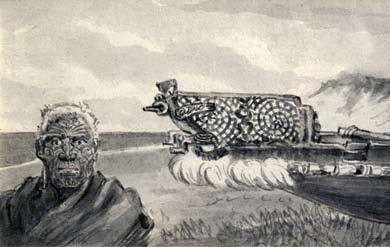
49 HORATIO GORDON ROBLEY
1840 - 1930
A Carved Chief ‘Te Kuha’ and Sea-Going War Canoe ‘hine-tapu’
Watercolour wash on post card 8.5 x 13.5
Signed, inscribed & dated 1864 verso
1,000 - 1,500
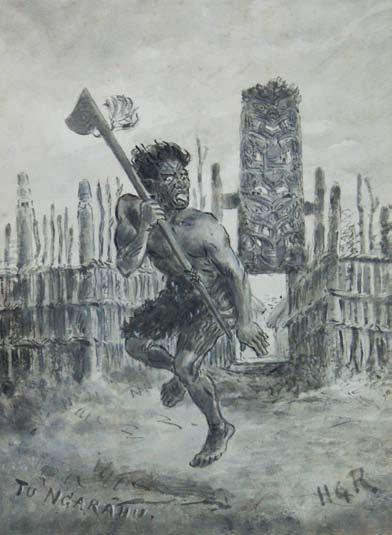
50
HORATIO GORDON ROBLEY
1840 - 1930
Tu Ngarahu
Monotone watercolour 28 x 20
Signed & inscribed 8,000 - 12,000
Provenance: Pendergrast Collection
Tütü Ngürahu is a form of haka in which armed Maori men jump up and down. Performed by the war party before going into battle, in front of elders and experienced warriors who judged by their performance whether they were ready to go into battle. From notes affixed verso
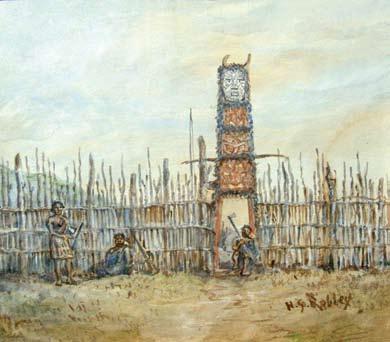
51 HORATIO GORDON ROBLEY 1840 - 1930
The South Gate of Arawa’s Pa at Matata
Watercolour 20 x 23
Signed. Inscribed and dated 1865 verso 4,500 - 6,500
Inscription in artist’s hand verso reads:
The South gate of the Arawa’s Pa at Matata has tattooed head and pigeon feather with 2 horns ornamentation and 3 fighting men outside. Captain Gilbert Mair was in command of friendly native levies in pursuit of the murderers of the Rev’d Mr Volckner who was killed in dreadful orgy in his church at Opotiki in March 65. Drawn Oct 1865. 51
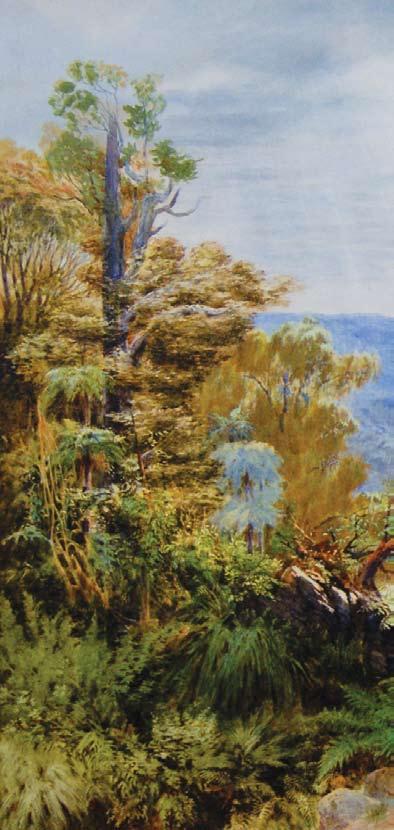
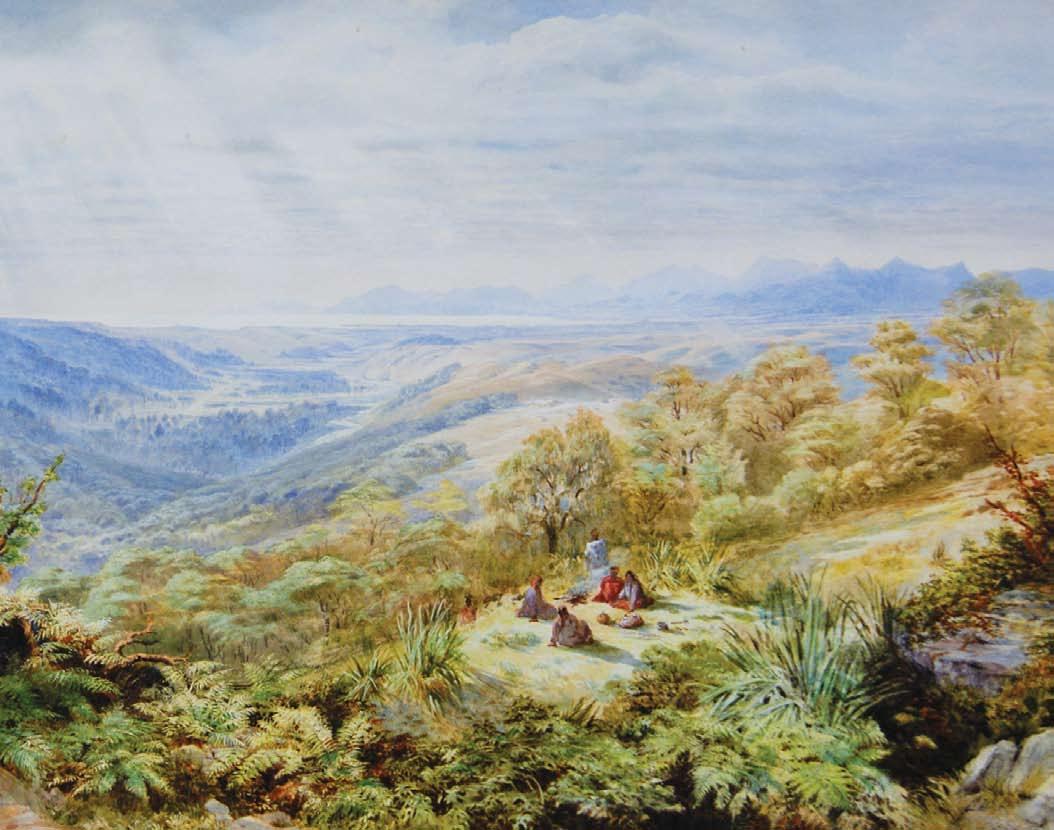
52 JOHN GULLY
1819 - 1888
Motupiko Valley, Nelson
Watercolour 75 x 128
Signed
75,000 - 95,000
Provenance:
Private Collection. Sir & Lady W Fisher Collection since 1975
V E Donald, 1958, NSW Art Gallery Collection, 1877. De-accessioned 1958.
Reference:
p. 134 New Zealand’s Romantic Landscape Paintings by John Gully, Compiled and written by the artist’s great, great grandson
John Sidney Gully, Millwood Press, Wellington, 1984
Gully immigrated to New Zealand from Bath in 1852 accompanied by his wife Jane and their three children. The family settled in Omata, Taranaki where they purchased the Omata Store in 1854. Sadly, lack of trade resulted in bankruptcy and the family’s relocated to New Plymouth. Gully advertised his availability to paint views of properties for sending abroad and served as a volunteer during the Land Wars. He was invalided out of the army as the conditions were too severe for his constitution. In 1860 the Gully family left New Plymouth for the city of Nelson, purchasing a house in Trafalgar Street with a large orchard and garden. It was here that the artist spent the rest of his life. Gully was encouraged by the geologist Julius von Haast, who commissioned twelve watercolours of the mountains and glaciers of Canterbury. These watercolours were used to illustrate a lecture given by Haast at the Royal Geographical Society in London in 1864.
Gully became part-time drawing master at Nelson College. Later, through the assistance of politician and artist James Crowe Richmond, he was appointed full time draughtsman to the Nelson provincial survey office. During his lifetime Gully enjoyed popularity and success as an artist, today he is regarded as one of New Zealand’s foremost landscape painters.
Working almost entirely in watercolour, Gully’s field trips yielded a legacy of many finely worked sketch-books full of careful pencil studies and numerous quick-wash drawings both in colour and sepia. Large scale watercolours such as Motupiko Valley, Nelson, became immensely popular as centre-pieces at art society shows. Today only a few such works remain in private hands. Gully enjoyed recognition and success in his life time. All of Gully’s watercolours submitted to the 1865 New Zealand Exhibition in Dunedin sold prior to the exhibition opening. He exhibited at the British Royal Academy in 1871. In 1873, nine paintings we sent to the New Zealand court at the International Industrial Exhibition in Vienna. In 1886 he exhibited at the India & Colonial Exhibition in London and the Intercolonial Exhibition in Melbourne. He also exhibited works with the Society of British Watercolour Artists in London. Gully Died in 1888 aged sixty nine.
1848 - 1926
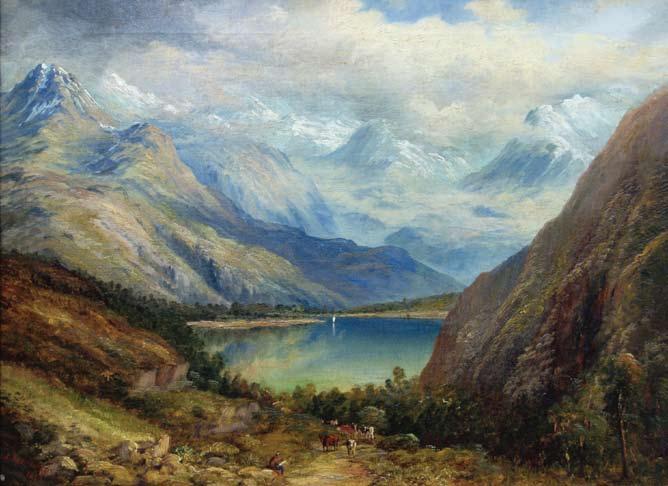
Diamond Lake from a Spur of Mt Earnslaw, Wakatipu District
Oil on canvas 42 x 56.8
Signed & dated 1884. Inscribed verso
8,000 - 12,000
1850 - 1912
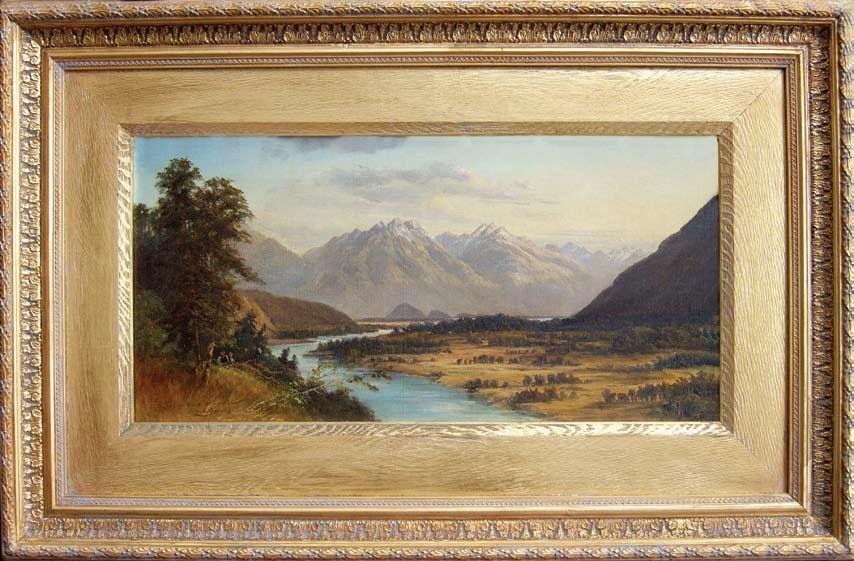
Horseshoe Bend, Waiau River
Oil on canvas 29 x 59.5
Signed, inscribed & dated 1897
17,000 - 22,000
54 LAURENCE WILLIAM WILSON
53 53 CHARLES BLOMFIELD
56 JOHN GIBB 1831 - 1909
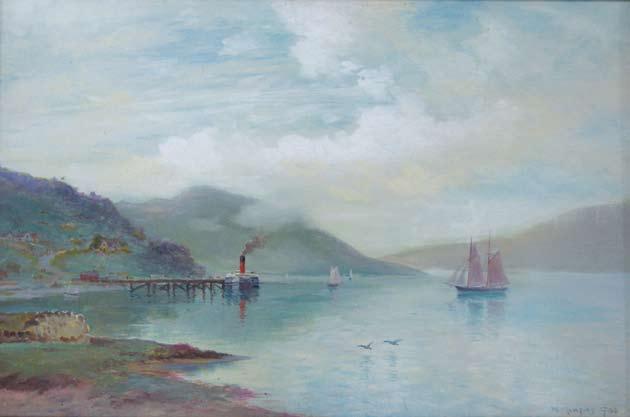
The Ferry, Lake Wakatipu, Queenstown Oil on canvas 39 x 59.5
Signed 2,500 - 3,500
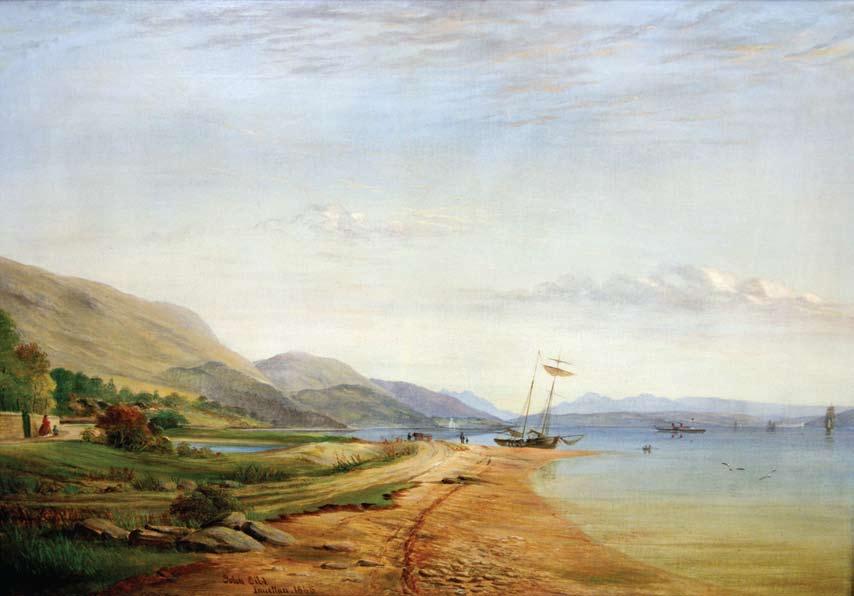
View on the North Tyne Innellan by Greenock Oil on canvas 52 x 75
Signed, inscribed & dated 1865 8,000 - 12,000
Exhibited:
Royal Scottish Academy, 1865, cat. no. 450
Original artist’s label with title inscribed affixed verso
55 WILLIAM MENZIES GIBB 1859 - 1931
57 SAMUEL EDWY GREEN
1838 - 1935
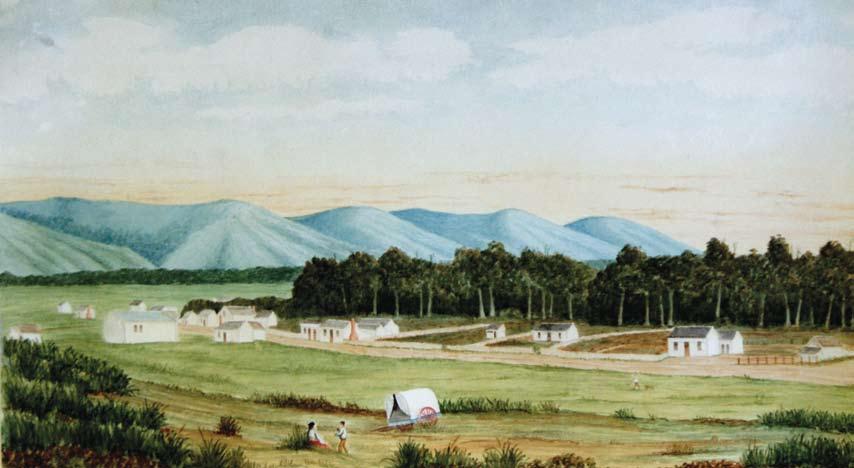
Tapanui, West Otago
Watercolour 22 x 39.5
Signed & dated 1870
14,000 - 18,000
Provenance:
Private Collection, Auckland
Purchased by current owner circa 1990
Samuel Green, was born 1838 in England and educated at Rugby. He ran away to sea and by 1858 was in Australia, arriving in New Zealand in 1861 in charge of horses for the Waikato War. Later that year Green spent time in Otago buying farm land in the Taieri Mouth District 40km southwest of central Dunedin. By the 1870s, Green was supplementing his income through the sale of watercolours and is best known for his topographical works of Southland. His detailed depictions of settlers farms suggests that he enjoyed some success in attracting private commissions.
Tapanui, West Otago shows the early settlement at the foot of the South Island’s Blue Mountains and the Pomahaka River. The West Otago town of Tapanui is surrounded by gently rolling hills and fertile farmland. Green’s depiction of the town in its early years portrays a rural scene with a row of English-style farm cottages nestled below native forest and distinctive mountains. Originally a saw-milling centre, Tapanui came into being in 1860. For almost a century the town was serviced by the Tapanui Branch railway line which despite its name didn’t actually terminate in Tapanui.
Paintings by Samuel Green are held in the Hocken Library, Alexander Turnbull Library and Otago Early Settlers Museum. His surviving works in private hands rarely appear on the market.
58 SAMUEL EDWY GREEN
1838 - 1935
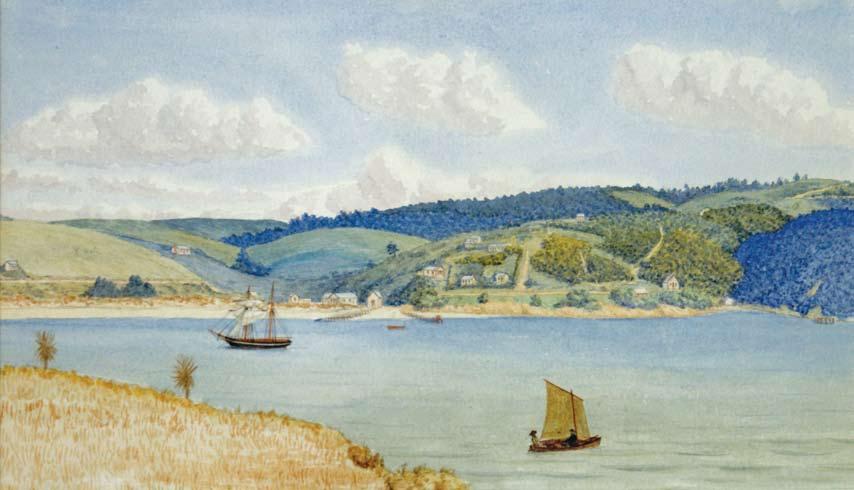
Taieri Mouth
Watercolour 24 x 42
Signed verso
14,000 - 18,000
Provenance:
Private Collection, Auckland
Marshall Seifert Gallery, Dunedin, 1990
Green’s painting, Taieri Mouth is an early rendition showing the mouth of the Taieri, New Zealand’s third longest river. Green employed a fresh palette to ably record 19th century rural antipodean life.
According to oral tradition Chief Tuwiriroa arrived from Queenstown and built a pa near the Taieri River mouth in the early 1700s. His rival, Chief Tukiauau, had already constructed a pa 10km inland on the Taieri Plain by Lake Waihola. Tuwiriroa’s daughter Haki Te Kura, became famous in the region for swimming across the cold waters of Lake Wakatipu. Tukiauau’s son Korokiwhiti fell in love with Tuwiriroa’s daughter but her father disapproved.
Korokiwhiti’s father was a hunted man. Hearing his enemies had discovered his whereabouts he decided to abandon the river settlement and move his people further south. As they came down the river by canoe the distraught young woman attempted to jump from a rock into her lover’s craft but struck the prow and was killed. Her head was then severed and held up angrily to her people on the shore as the flotilla passed by to the sea. There were repercussions and Tukiauau and his son were pursued by Tuwiriroa’s tribe and eventually killed. Maori occupation continued until the mid 1850s.
59
59 ERNEST ARTHUR CHAPMAN
1847 - 1945
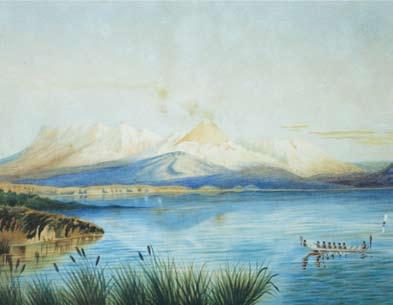
Lake Taupo with Central Plateau Volcanic Mountains Beyond Watercolour 29 x 36.5
Signed 1,400 - 1,800
Provenance:
Ex Neville Hogg Collection, Northland
60 ALBIN MARTIN 1813 - 1888
The Homestead, Tamaki Estuary
Watercolour and gouache on paper 20 x 28.5
14,000 - 18,000
Provenance:
Ex Collection of Artist’s Granddaughter
Purchased by current owner from Ferner Galleries, Auckland 1991
Ferner Galleries Certificate of Authenticity affixed verso
Dorset born Albin Martin received his formal training from English Painter John Linnell along with fellow pupils Joseph Mallord William Turner and David Cox. He arrived in Auckland from Italy in 1851. While managing his farm in East Tamaki he painted and sketched the Auckland isthmus in a style many compared to that of French painters Claude Lorraine and Albrecht Dürer. The Homestead, Tamaki Estuary is thought to be the ninety five acre Martin family property in Pakuranga near the Tamaki Estuary. Albin Martin was a founding member of the Auckland Society of Artists and later treasurer for the Auckland Society of Arts and also served on a committee to judge a competition for a design for the then new Auckland Library and Auckland City Art Gallery.
Martins work differed significantly from the topographical style of landscape realism produced by his contemporaries also working in Auckland such as J B C Hoyte and Alfred Sharpe. He was a vocal critic of the movement to produce a distinctively New Zealand art. Yet his links with well-known artists in England gave a kind of confidence to the fledgeling art community in Auckland at this time. His original intention of farming had brought little reward, but he had lived by his ideals and typified the cultured gentleman immigrant. He died at Auckland on 7 August 1888, survived by his wife, who died in 1911. Together they had eight children. His works rarely appear on the market - The Homestead, Tamaki Estuary was held in the Martin Family collection until 1991 when the current owner purchased it from Ferner Galleries.
61 CHRISTOPHER AUBREY
1830 - 1902
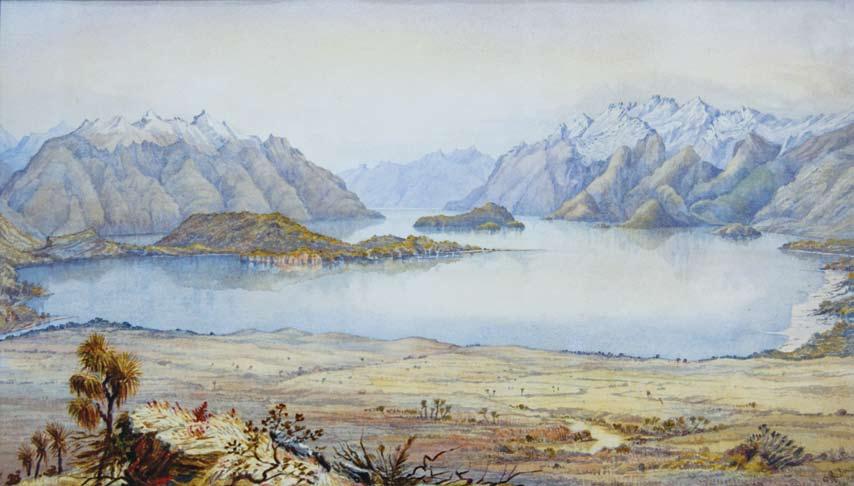
Lake Manapouri Panorama
Watercolour 37 x 64
Signed & dated 1888
12,000 - 16,000
Whilst represented in public galleries throughout New Zealand, limited biographical information on Aubrey is provided by subjects portrayed in his dated works. Aubrey came from Stewart Island to Riverton in 1879, and painted around Riverton and the Orepuki area. In 1881 he travelled and painted his way up the Aparima River. He was a guest at Southland’s Fairfax Hotel in January 1891, the night it burned down.
Aubrey was known to have been in Otago and Southland in the 1870s and to have worked on back country stations in the 1880s. He often left sketches in return for hospitality. In 1876 the artist moved from Dunedin south to the Taieri Plains and Milton. During 1877 he painted the lower Clutha Valley and from 1878 till 1884 he worked in Southland. Aubrey then travelled to the spectacular regions of Fiordland and its surrounding lakes. Lake Manapouri Panorama was painted on this journey. He went on to Queenstown, Lake Wanaka then north to Canterbury in 1885 returning to North Otago in 1886. The last South Island subjects painted before he crossed to the North Island are 1888 views of Dunedin and the Fox Glacier.
From 1889 until 1900 Aubrey travelled widely, working in Wellington, the Hutt Valley, Wairarapa, Palmerston North, Wanganui, the Waikato,Coromandel and towards the end of that time, Auckland. The last referenced work is a 1902 view of Dunedin, painted the same year of his death. The only contemporary record appears in the catalogue of the Melbourne International Exhibition, 1880 where Aubrey is listed as living in Invercargill.
The measure of control displayed in Aubrey’s work suggests professional training with experience in engineering or another technical field. His numerous views of hotels, farmhouses, lakes and towns indicates an itinerant artistic life. This supposition finds slight confirmation in the absence of his name in electoral rolls and street directories of the period. Christopher Aubrey is represented in major collections throughout the country including the Auckland Art Gallery, Alexander Turnbull and Hocken Libraries.
62 GEORGE O’BRIEN
1821 - 1888
Four Homes in the Leith Valley, Dunedin Watercolour 28.3 x 44.2
Signed
8,000 - 12,000
Born at Dromoland Castle County Clare, Ireland in 1821 George O’Brien was the fifth son of Admiral Robert O’Brien, a direct descendant of Murrough O’Brien, 57th King of Thomond, and of Brian Boroimhe, Monarch of Ireland. George O’Brien was a cousin of William Smith O’Brien (1803-1864) deported to Tasmania for his part in the 1848 ‘Young Ireland’ uprising, and was also a cousin of James Fitzgerald, who was at one time Superintendent of the Canterbury Province in New Zealand.
Despite these distinguished connections, the family was not well-heeled. Young George O’Brien may have been trained by a brother as a civil engineer. His parents died when he was young and at an early age he was in Melbourne Australia, where views of the town dated 1839 and 1840 survive in the collection of the state library. He left soon afterwards but had returned to Melbourne by 1850 arriving from London on the Midlothian. O’Brien worked as a draughtsman in the surveyor’s office and in 1853 married Jane Mashford at St James Church, Melbourne. He was active in the Victoria Fine Arts Society and by 1854 was advertising his services as an architect and surveyor. He exhibited paintings in 1856 and 1858 and nine signed and dated watercolours of St. Kilda and nearby places in Melbourne are recorded.
By December 1863 O’Brien was living at Duncan Street, Dunedin, no doubt attracted by the promise of prosperity following the Otago gold rushes. He worked as a civil engineer and was employed by the Town Board to supply architectural perspectives of buildings designed by several Dunedin firms.
A number of O’Brien’s watercolours were exhibited in the 1865 Dunedin Industrial Exhibition. He associated with W M Hodgkins, a lawyer and aspiring watercolour painter who became very influential in Dunedin’s art world. O’Brien may have given Hodgkins some instruction. O’Brien’s manner showed his background in measured draughtsmanship but also represented something of neo-classical painting. In the colonial context he was unusual in his use of buildings and townscape as his subject matter. In 1876 he attended a meeting of the Otago Art Society and was well-represented in that body’s inaugural annual exhibition held later that year. O’Brien’s paintings were ill-received by one critic, possibly Thomas Bracken, reflecting the colonial adoption of the European taste for Turneresque Romantic landscape. Nevertheless, when O’Brien’s wife died in 1879, leaving him with five daughters to raise, he embarked on a career as a professional artist.
O’Brien was of a versatile and energetic disposition, travelling throughout southern New Zealand, but also a heavy drinker and immensely overweight. His habits were bohemian and eventually his oldest daughter, now married, removed her younger siblings while O’Brien continued lodging with a sailor and his wife in a poorer part of the city. He spent a year in Auckland in 1887, but returned to Dunedin where he died in August 1888. His landlady inherited his residual collection and he was interred in a then unmarked grave in the northern cemetery.
63 PHOTOGRAPHER UNKNOWN
Early 20th Century
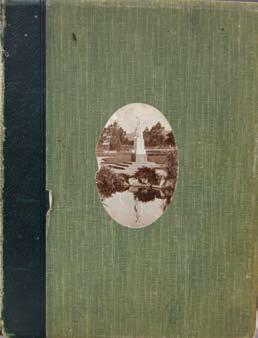
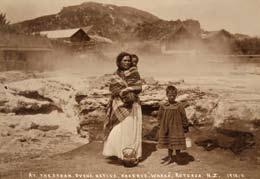
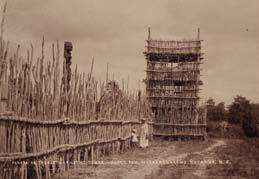
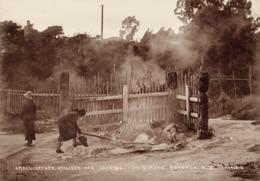
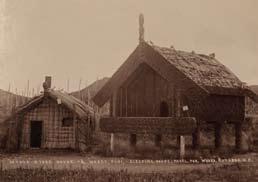
Memories of Rotorua - an Album
Sixty-six silver gelatin prints each 10.5 x 14.9
Album inscribed ‘Memories of Rotorua & dated 1916 inside front cover
Each image title inscribed except one
Some images dated 1915 - 1916 1,000 - 1,500
Six works illustrated this page
All images can be viewed online as a PDF at www.fineartauction.co.nz
63 Album cover
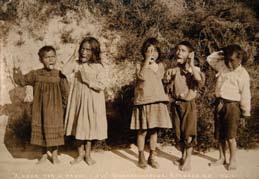
Inscribed: A Haka for a Penny I Say, Whakarewarewa, Rotorua, NZ
Inscribed: At the Steam Ovens, Native Reserve, Whaka, Rotorua, NZ, 1915
Inscribed: Puhara or Taumaru - Fighting Tower, Model Pah, Whakarewarewa, Rotorua, NZ
Inscribed: Pataka Store House & Whare - Sleeping House, Model Pah, ‘Whaka’, Rotorua, NZ
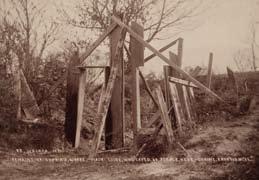
Inscribed: Te Wairoa, 1915. Remains of Sophia’s Whare, Maori Guide who saved 60 people here during Eruption ‘86
Inscribed: Small geyser utilised for cookingOhinemutu, Rotorua, NZ, 1915-16
65
1809 - 1884
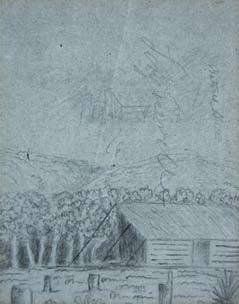
First Court House, Petone Beach
Pencil on paper 12.5 x 21
Signed & dated 1846
3,000 - 5,000
1809 - 1884
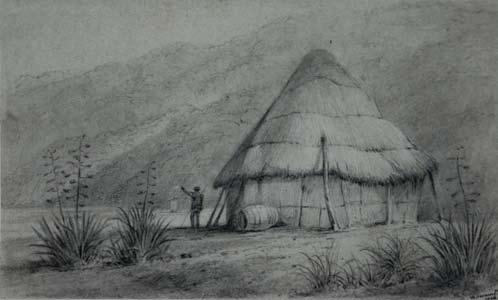
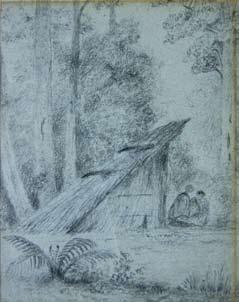
Two Figures by Maori Hut and another study verso
Pencil on paper 10.5 x 8
800 - 1,200
64 WILLIAM SWAINSON
64
WILLIAM SWAINSON
65 front
65 back
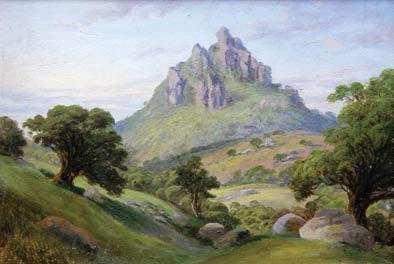
1848 - 1926
Mt Manaia, Whangarei Oil on board 21.5 x 31.5
Signed & dated 1921
3,000 - 5,000
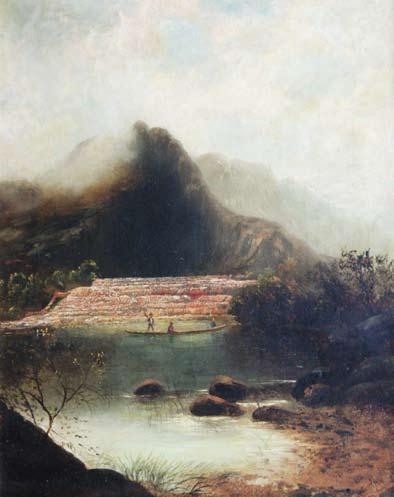
66 ARTIST UNKNOWN 1908 - 1996
Pink Terraces, Rotomahana Oil on board 48.5 x 39
1,500 - 2,500
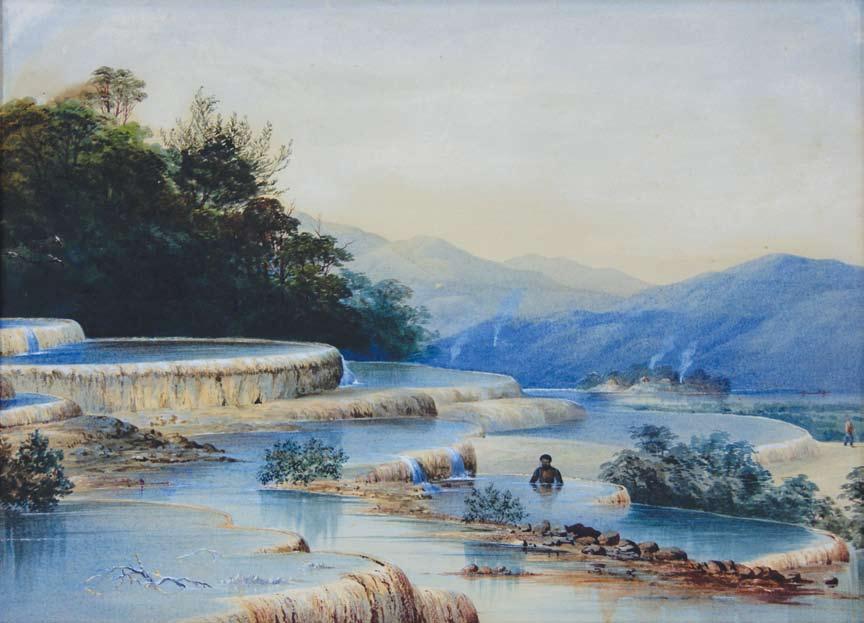
1835 - 1913
White Terraces
Watercolour 36 x 49.6
10,000 - 15,000
Provenance: Private Collection, Scotland
67 CHARLES BLOMFIELD
68 JOHN BARR CLARKE HOYTE
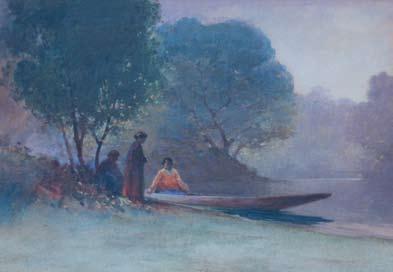
69 WALTER
1866 - 1933
Maori on the Banks of the Waikato
Watercolour 26.1 x 27.3
Signed
2,000 - 3,000
70 WILLIAM MENZIES GIBB
1859 - 1931
Lyttleton
Watercolour 19 x 31
Signed & dated 1903
1,000 - 2,000
71 JOHN MCINTOSH MADDEN
1856 - 1923
Lake Lugano
Oil on canvas 50 x 75
Signed
2,000 - 3,000
WRIGHT
1860 - 1923
Karekare Beach, West Coast
Oil on canvas 60 x 106
Signed
8,000 - 12,000
72
72 FRANK WRIGHT
73 PETER MCINTYRE
1910 - 1995
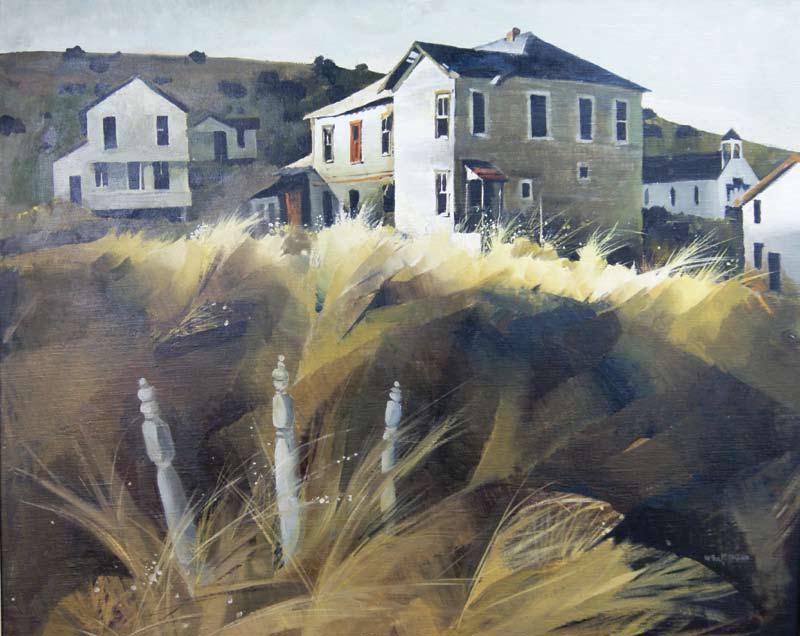
Ghost Town Madrid, New Mexico
Oil on canvas 64 x 80
Signed
12,000 - 16,000
Provenance:
Private Collection, Auckland
Illustrated: Plate 30 Peter McIntyre’s West A H & A W Reed, Wellington, 1970
Empty Windows stare sightlessly into space, and whispers of forgotten voice seem to echo in the evening stillness. In all the sad emptiness I found one shop where a coin-operated box ground out a tune by mechanically pulling a bow across a nostalgic violin.
Text: Peter McIntyre’s West A H & A W Reed, Wellington, 1970
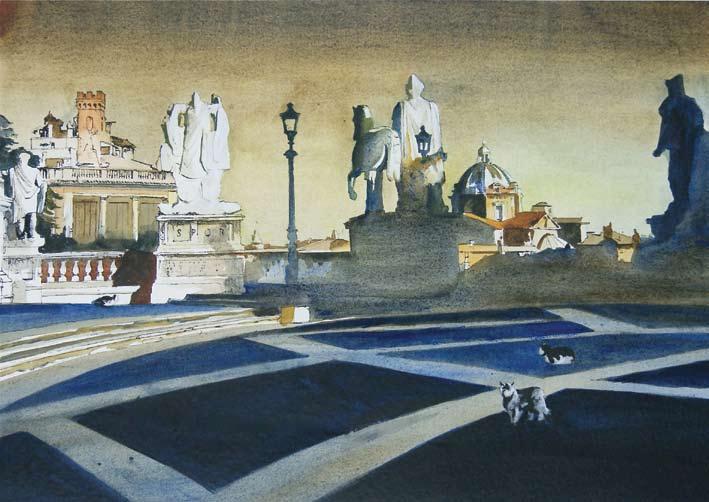
1910 - 1995
Rome
Watercolour 52.5 x 73
Signed
12,000 - 16,000
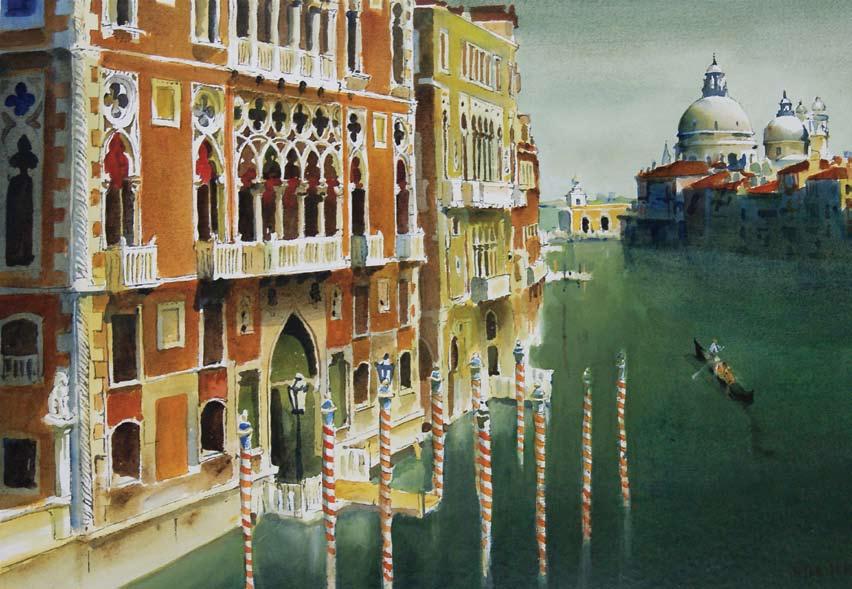
1910 - 1995
Venice
Watercolour 52.5 x 73
Signed
12,000 - 16,000
74 PETER MCINTYRE
75 PETER MCINTYRE
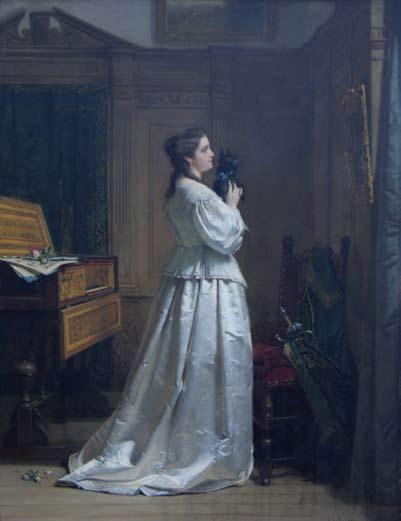
76 JACOBUS HENDRIK SCHOLTEN
Dutch 1824 - 1907
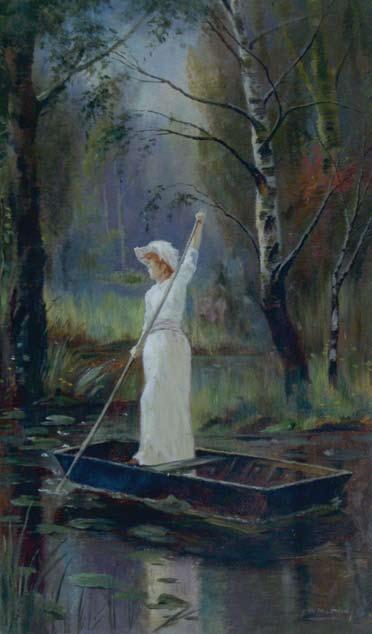
Lady in White Satin Dress with Terrier Oil on mahogany panel 49 x 38
2,000 - 3,000
77 SIR WILLIAM RUSSELL FLINT
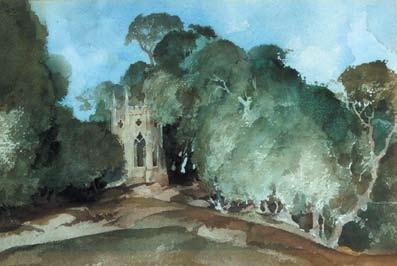
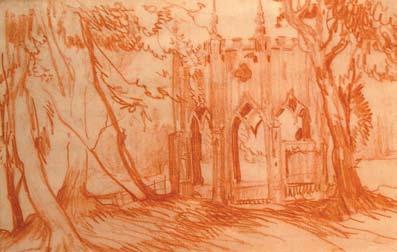
British 1880 - 1969
The Gothic Gazebo, Pams Hill - together with a conte study of the same subject - A Pair
Watercolour 25 x 37.2 and
Conte on paper 19.5 x 29.5
Signed
8,000 - 12,000
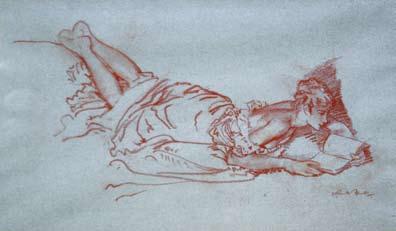
78 SIR WILLIAM RUSSELL FLINT
British 1880 - 1969
Reading
Conte on paper 23 x 38.7
Signed
2,500 - 3,500
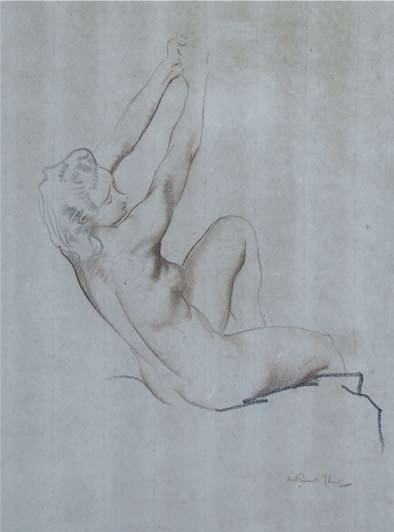
79 SIR WILLIAM RUSSELL FLINT
British 1880 - 1969
Josephine
Conte and pencil on paper 28.6 x 19.8
Signed
2,500 - 3,500
Provenance Lots 78 & 79
Purchased in London by the father of Auckland based owner circa 1960
79
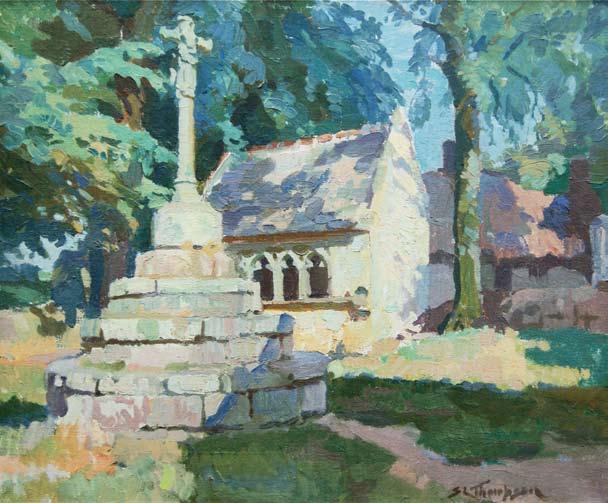
1877 - 1973
The Wayside Cross c Circa 1932 Oil on canvas 54 x 65
Signed 15,000 - 20,000
Provenance: Private Collection, Christchurch since 1950
The scene is at Locmarie An Hent, near Concarneau. The building behind the cross is an ossuary. To the left, outside the picture is a house built by the Knight Templars and to the right, outside the picture, is a chapel. Y A Thompson, daughter of Sydney Lough Thompson
80 SYDNEY LOUGH THOMPSON
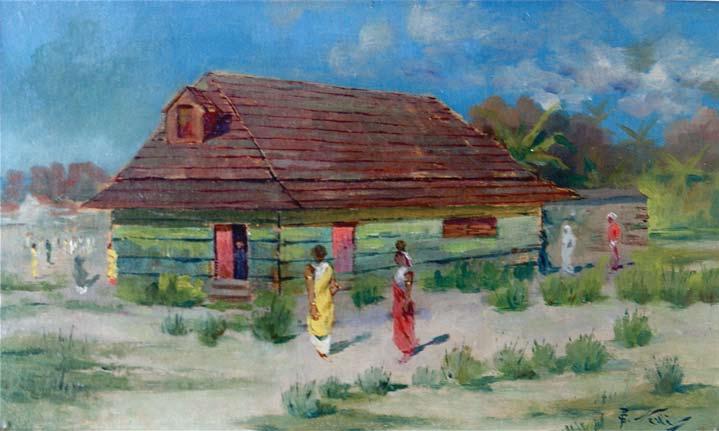
1860 - 1926
Fiji, 1894
Oil on board 21 x 34
Signed
7,000 - 10,000
Illustrated p. 140 Nerli, Paintings & Drawings Peter Entwistle, Michael Dunn and Roger Collins, Dunedin Public Art Gallery 1988
Exhibited: Nerli, Paintings & Drawings
Dunedin Public Art Gallery, 1988
Peter Entwistle concludes that this work was executed during Nerli’s expedition to Fiji with artist John Douglas Perrett in 1894. The pair sailed to Fiji to hold tuition classes and paint the local scenery
81 GIROLAMO PIERI BALLATI NERLI
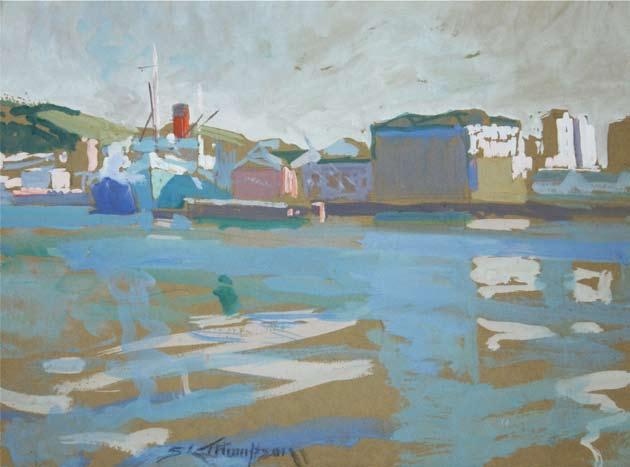
82 SYDNEY
1877 - 1973
Evening, Wellington Harbour, 1936
Gouache on paper 36 x 49
Signed
4,000 - 6,000
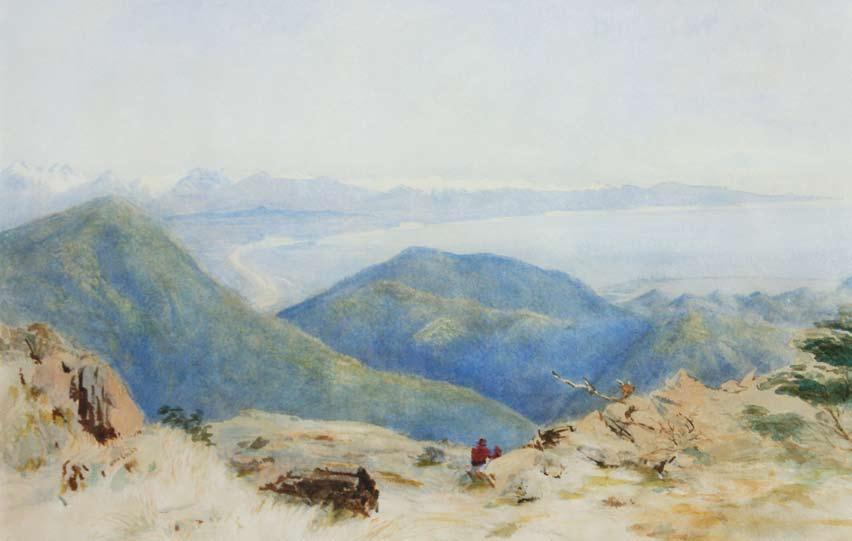
83 JOHN
1819 - 1888
View of Nelson from the Hills
Watercolour 34 x 50
Signed
8,000 - 12,000
GULLY
LOUGH THOMPSON
84
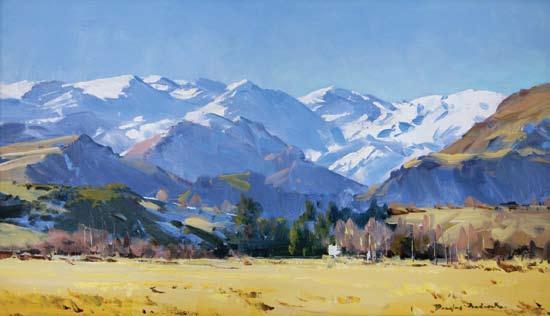
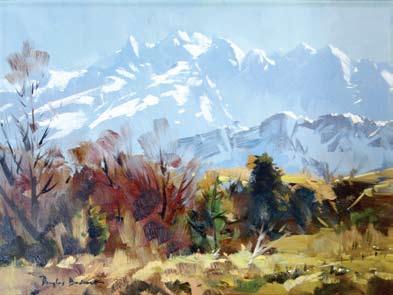
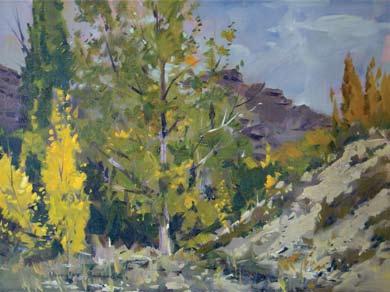
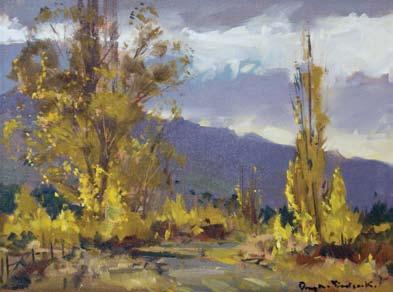
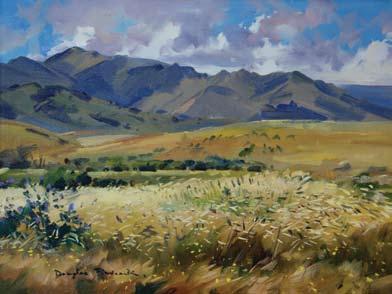
Born in Balclutha 1922 Douglas Badcock had a highly successful professional art career. Preferring to paint en plein-air, mostly in oil, Douglas earned a reputation as one of New Zealand's leading landscape painters. His paintings are included in the Queen of England's collection and King of Thailand's collection. Douglas was a Kelliher art award winner and several books have been published on his work. He came second in the 1959 Kelliher Art Award and third in the 1962 award.
Badcock held his first exhibition in Wellington in 1960, selling out within two days. A review at the time described him as “a realistic painter and absolutely sincere with a natural talent and a high technical standard ... A master of the New Zealand landscape, he paints New Zealand as he sees it”.
He produced at least three publications: My Kind Of Country then later My Kind of Painting and A Painter in Fiji
In a Listener article in 2004, Mr Badcock said: “I paint seas, skies, mountains. I paint the world I know, as it appears to me. I have an image that is there and I have to record it. When I’m painting I let the subject reveal itself. Picasso said `I don’t seek, I find’. And finding is a revelation – intellectually, emotionally, spiritually. The primary motivation is self-expression, but if there’s no vision, if we don’t see beauty in nature any more, then we’re nowhere.
Douglas Badcock passed away in 2009. These works are from the artist’s estate collection.
84 DOUGLAS BADCOCK
1922 - 2009
Speardale, Midwinter, Speargrass Flat, Oil on board 35 x 60
Signed. Inscribed & dated 1996 verso 4,500 - 6,500
85 DOUGLAS BADCOCK
Speargrass Flat & Coronet Peak Oil on board 30 x 40
Signed 2,500 - 3,500
86 DOUGLAS BADCOCK
Evening, Earnscleugh Oil on board 31 x 40
Signed 2,500 - 3,500
87 DOUGLAS BADCOCK
Autumn, Old Man Range Oil on board 30 x 40
Signed 2,500 - 3,500
88 DOUGLAS BADCOCK
Manuherikia Valley, Alexandra Oil on board 30 x 40
Signed 2,500 - 3,500
89 TONY BRUNT
b. 1947
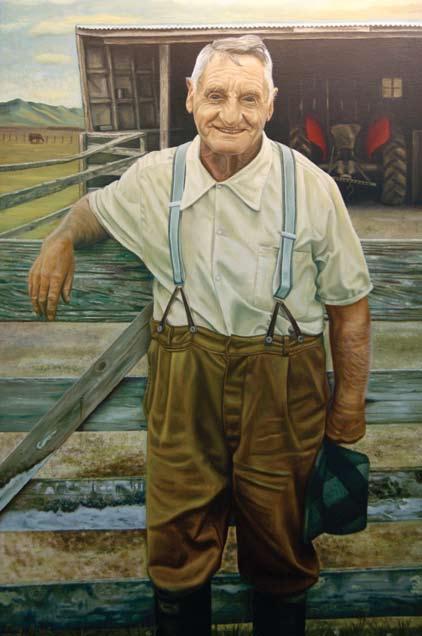
Last of the Fifields - portrait of Tom Fifield, 1980.
Oil on board 121 x 80
Signed & dated 1980
5,000 - 7,000
Exhibited: Annual Exhibition (Williams Art Award), NZ Academy of Fine Arts, Wellington, October 1980. The painting was exhibited on a ‘not for sale’ basis.
Tony Brunt exhibited at the NZ Academy of Fine Arts 1977 - 1980. He was on the Council of the Academy from 1979 until 1983. Brunt was most prolific in the late 1970s and only occasionally since, mainly in portraiture. A large multi-person portrait set in a Nelson Lakes National Park hut, A Quiet Night in the Upper Travers, was runner-up in the Adam Portraiture Award and Exhibition, 2002, held by the New Zealand Portrait Gallery, Wellington.
Tom Fifield was a great uncle of the artist. He was born 12 March 1905 and died 17 February 1988. He was a bachelor who lived with two other unmarried brothers and an unmarried sister. They farmed in Helensville (where their parents broke in a property on the Inland Road), then later moved to Kumeu, where the studies for the painting were made. Tom was the last survivor of the four and died in an old folks’ home in the Waitakeres. He was quite deaf and was a rather unworldly man, his life having revolved around rural pursuits.
Tony Brunt
b. 1954
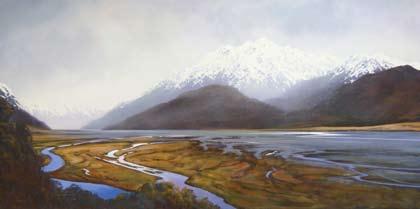
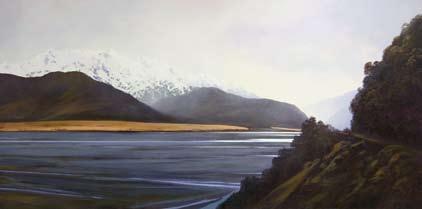
Matukituki Valley Diptych
Oil on two canvas stretchers 51 x 101.5 overall
Signed & dated 1996
8,000 - 12,000
1910 - 1995
Hawkes Bay Landscape
Oil on canvas 39.5 x 49.5
Signed
4,000 - 6,000
90 TIM WILSON
91 PETER MCINTYRE
1922 - 2009
Fishing Fleet, Port Chalmers
Oil on board 39 x 49
Signed 4,000 - 5,000
b. 1915
Peel Forest
Watercolour 35 x 49.5
Signed & dated 2005
3,500 - 4,500
92 DOUGLAS BADCOCK
93 A AUSTEN DEANS
1901 - 1969
Signed
2,500 - 3,500
1856 - 1923
Lady of the Lake Oil on board 29 x 17.5
Signed
1,000 - 2,000
94 CEDRIC SAVAGE
Waerenga Downs, Waikato
Oil on canvas board 30.8 x 41
95 JOHN MCINTOSH MADDEN
1839 - 1926
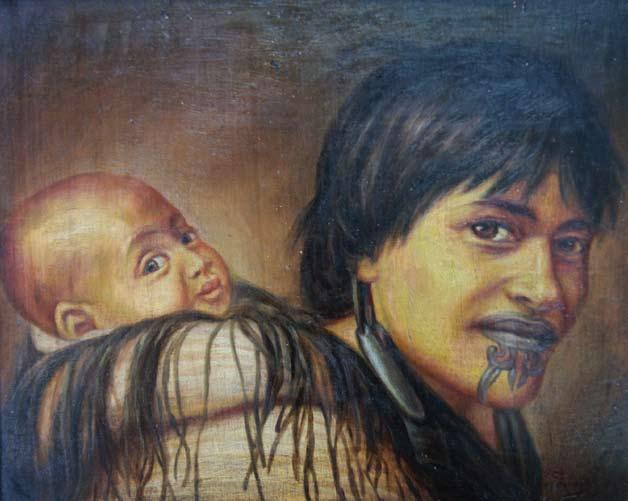
Ana Rupene & Child
Oil on canvas on board 29 x 36
Signed
10,000 - 15,000 96
1891 - 1949
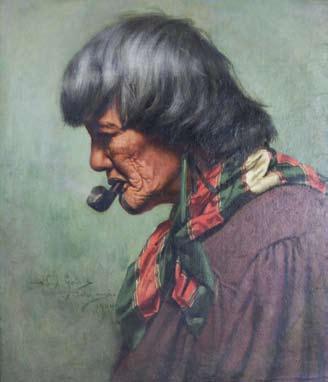
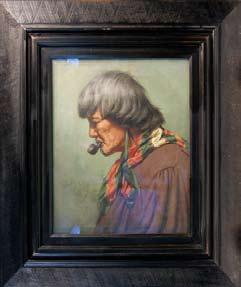
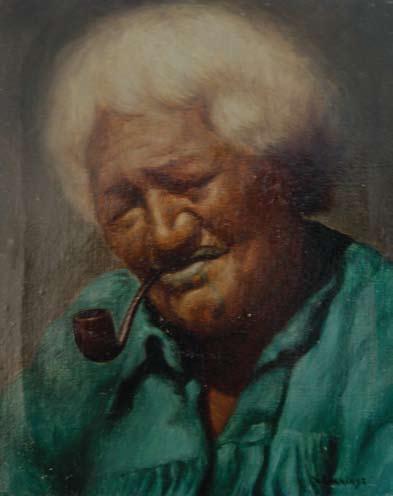
Maori Elder with Pipe and Moko
Oil on canvas 24.5 x 19.5
Signed
2,500 - 3,500
97 VERA CUMMINGS
96 GOTTFRIED LINDAUER
1865 - 1934
Signed & dated 1890
6,000 - 8,000
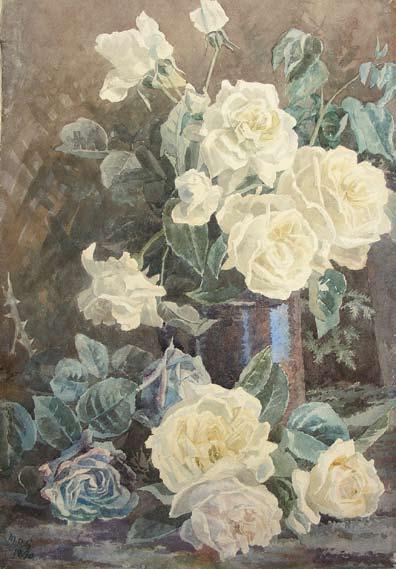
98 MARGARET OLROG STODDART
White Roses
Watercolour 49 x 32.5
98
1835 - 1913 Coastal Inlet Watercolour 17 x 45 Signed 3,000 - 4,000
99 JOHN BARR CLARKE HOYTE
100 CECIL FLETCHER KELLY
1877 - 1946
Ladies in the Sandhills, Brighton
Watercolour 26 x 36
Signed
800 - 1,200
101 ARTIST UNKNOWN
Late 19th Century
Devonport from Parnell, Auckland
Watercolour 17.5 x 37
800 - 1,200
102 GEORGE WILLIAM CARRINGTON
1855 - 1940
Mt Earnslaw, Lake Wakatipu Oil on board 60 x 90
Signed
1,500 - 3,000
103 TIM WILSON b. 1954
Milford Sound Oil on board 51 x 90
Signed
4,000 - 6,000
HENRY WILLIAM KIRKWOOD
108 JOHN WEBBER
1751 - 1793
Terreeoboo, King of Owhyhee bringing presents to Captain Cook
Hand coloured engraving 14 x 18
550 - 750
105 HENRY WILLIAM KIRKWOOD
1854 - 1925
Bligh Sound Oil on board 23 x 15
Signed
1,000 - 1,500
106 JOHN BARR CLARKE HOYTE
1835 - 1913
Colonial Homestead
Watercolour 31 x 53
2,000 - 3,000
107 SYDNEY PARKINSON
1745 - 1771
A War Canoe of New Zealand with a view of Gable End Foreland
Hand coloured engraving 20 x 54
1,000 - 1,500
106
109 DR VIRTUE
19th Century
St Thomas Church, Kohimarama
Oil on canvas 29.5 x 60
Signed & dated 1905
800 - 1,200
110 ANNA CASELBERG
1911 - 1995
Seated Girl
Watercolour 41 x 34
400 - 600
111 HENRY SIDEY
19th Century
Portrait of Kennett Watkins, Artist 1847 - 1943
Watercolour 28.2 x 21.3
Signed & dated 1850
800 - 1,200
112 UNA GARLICK
1883 - 1951
Georgina
Albumen print 14 x 11
Signed & inscribed
250 - 450
113 STYLE OF ALFRED HENRY O’KEEFFE
19th Century New Zealand
Where Bush Meets the Sea, New Zealand
Oil on canvas 46 x 87
Signed
800 - 1,200
114 GEORGE FRENCH ANGAS
1822 - 1886
Tara or Irirangi - From New Zealanders Illustrated, plate 34
Lithograph 28.7 x 21
Signed
800 - 1,200
LUICEN PISSARRO 1863 - 1944
Landscape through Trees, Tilty Wood
Fetched $62,700 July 2010
FELIX KELLY 1916 - 1994
Steamboat House Mississippi, 1967
Fetched $23,950 July 2009
BLOMFIELD 1848 - 1926 White Terrace, Rotomahana
Fetched $77,000 July 2008
Auction: November 2011
ENTRIES NOW INVITED
Contact Richard Thomson richard@artcntr.co.nz / 0274 751 071 / 0800 800 322
272 Parnell Road Auckland / Ph +64 9 379 4010 / www.fineartauction.co.nz / Skype: fineartauction
CHARLES
Entries close 20th July
Viewing commences Thursday 11th August
Catalogue online from 4th August www.fineartauction.co.nz
DON BINNEY Hauturu from Pukematakeo
JUSTIN SUMMERTON Sunny Bedroom 2002 (detail)
MICHAEL SMITHER Black Rocks - Sunset (detail)
1st September - 31st October 2011
SIMON WILLIAMS Looking Down on Matiatia, Waiheke Oil on canvas 107 x 182cm