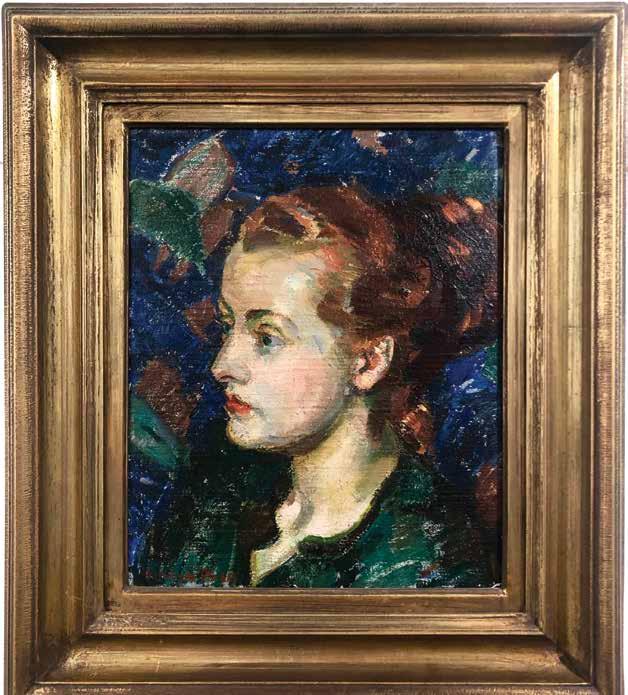
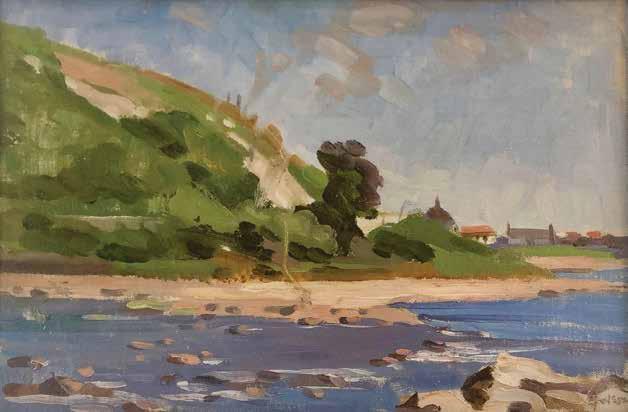
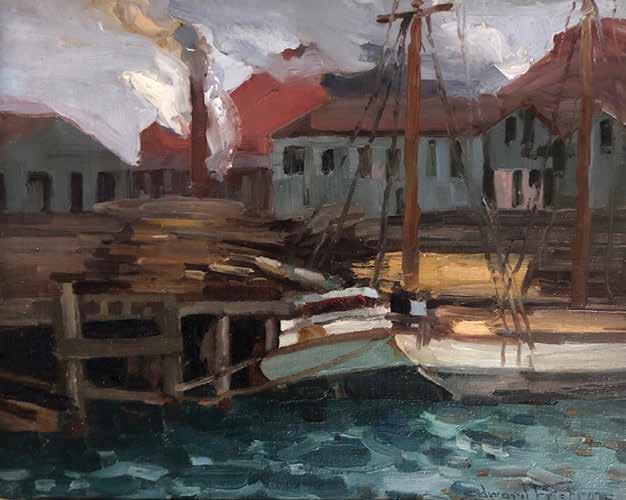
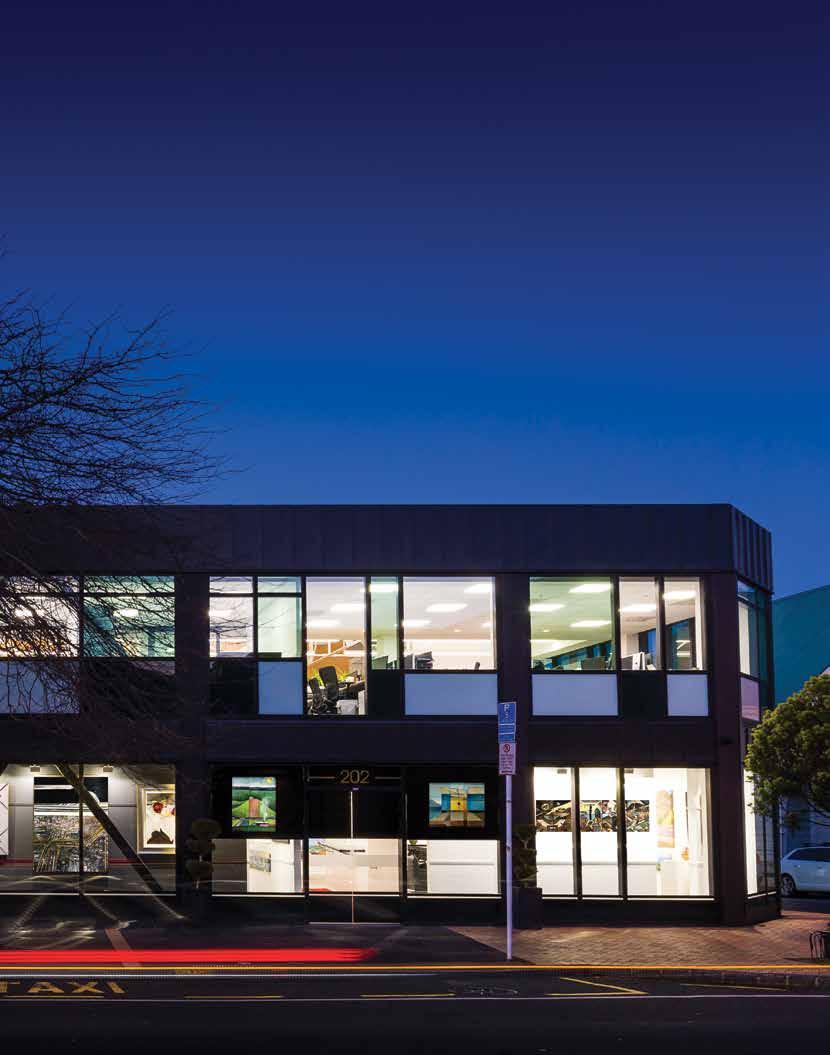
Collection of Kerry & Paul Barber QSO
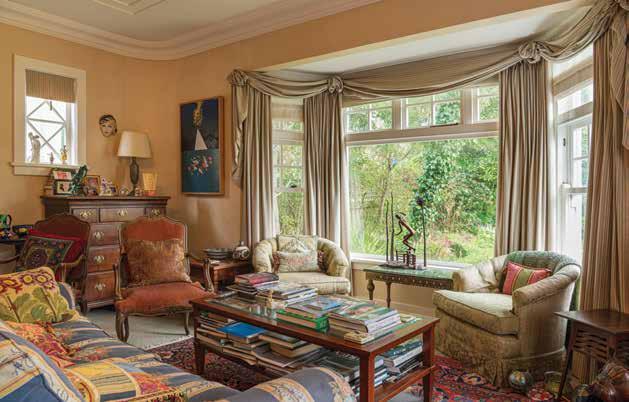
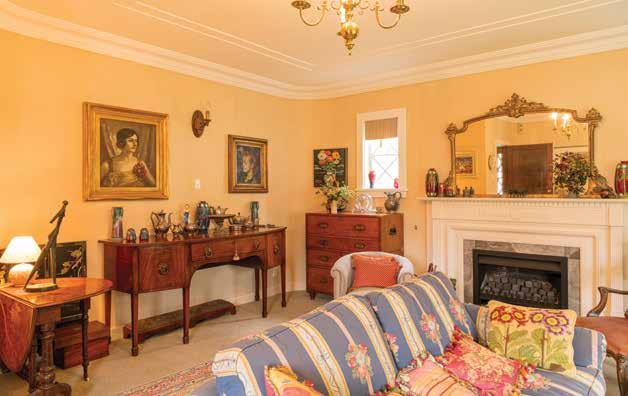
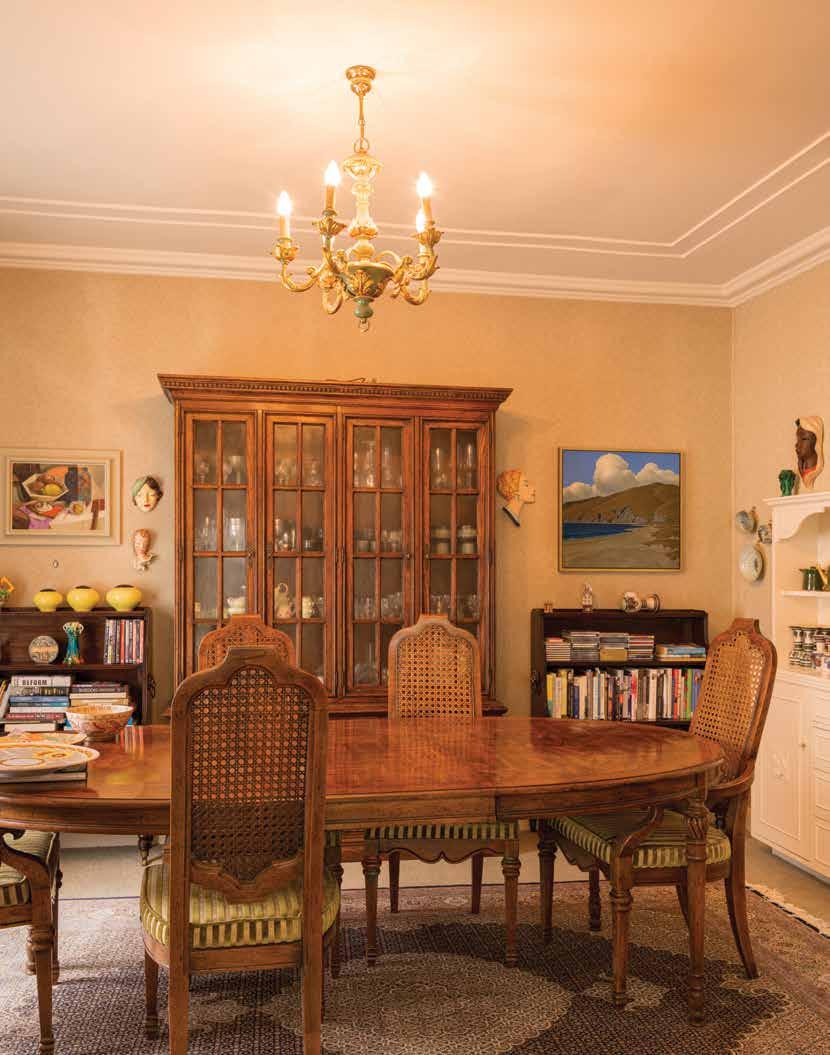
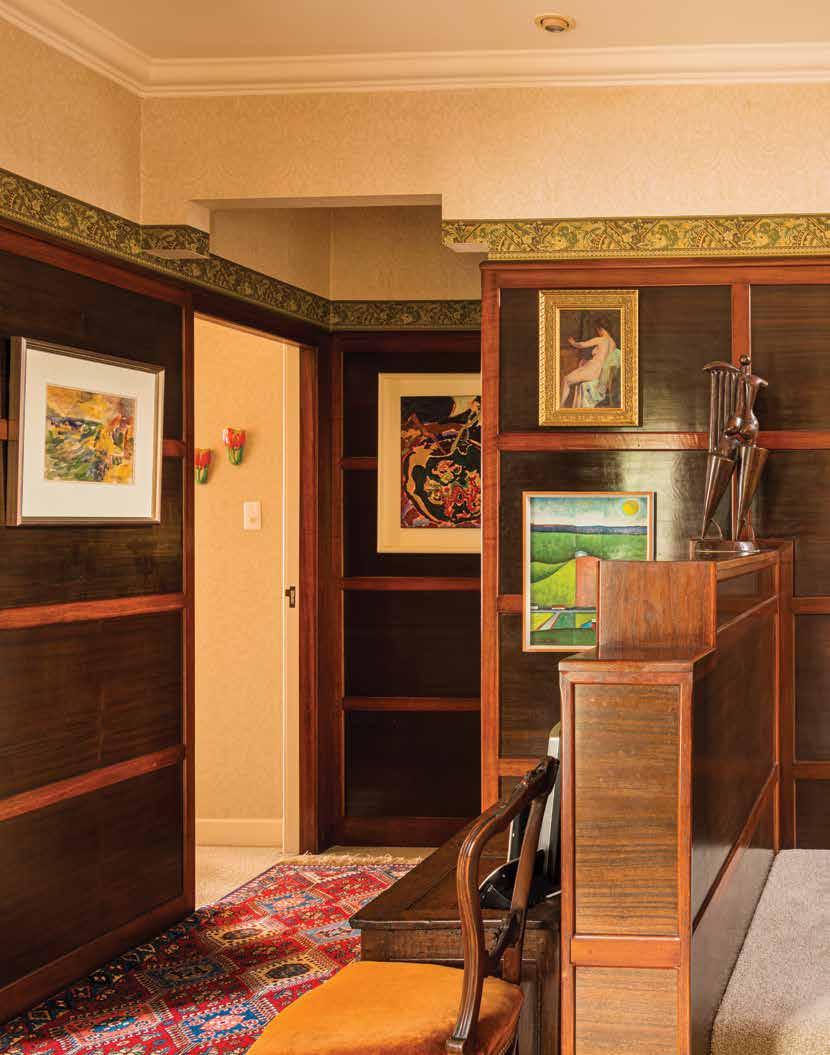
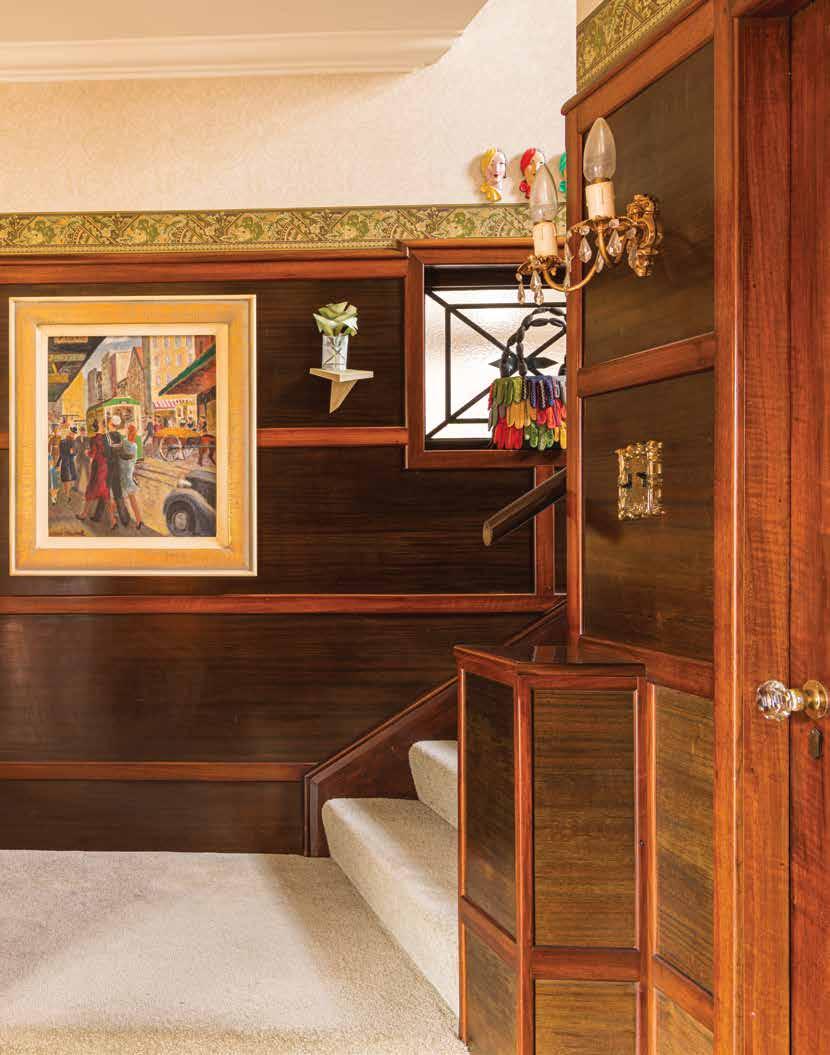
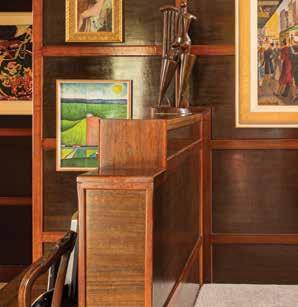
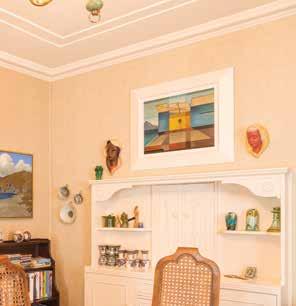
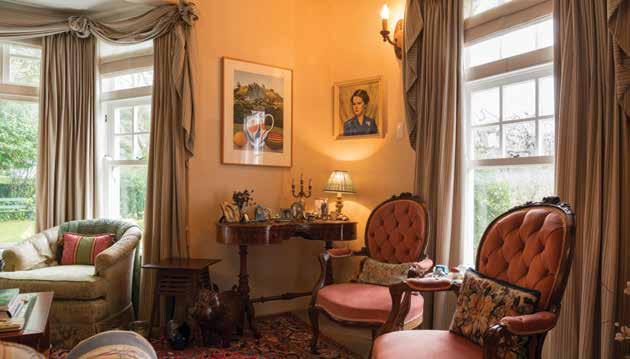
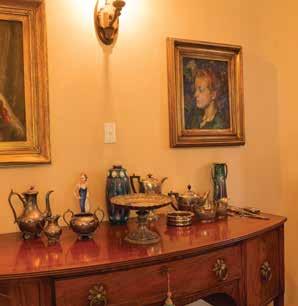
The collection of Judge Paul Barber QSO (19372016) and his wife Kerry, reflects nearly five decades of their informed and shared love of New Zealand art. Daughter Nerissa Barber, New Zealand Law Society Vice President and Chief Legal Advisor at the Ministry for Culture and Heritage (on secondment to the State Services Commission) recalls that a primary consideration in her parents’ selection of works was their strong connection to, and admiration of the artist. Throughout the years their artistic appreciation, supported by careful research, saw the Thorndon family home enriched by the growth of their collection.
Paul Barber’s illustrious law career began as a student law clerk in 1959. February 1962 saw him become a partner in the firm now known as Kensington Swan. Paul Barber was appointed a District Court Judge in 1981, retiring from the Bench in 1997. During that period he worked as the Taxation Review Authority
and held the position of Pharmacy Appeal Authority from 1985. Since 1997 he held both Taxation Review Authority and Customs Appeal Authority positions, along with hearing Accident Compensation Appeals. From 1979 to 1983 Paul Barber was Shop Trading Hours Commissioner and in 1986 Judge of the Arbitration Court. In 1990 Paul Barber was awarded the New Zealand Commemoration Medal. Further honours followed in 2012 when he was appointed as a Companion of the Queen’s Service Order (QSO) and in 2013 investiture as a Knight of Malta.
When travelling throughout New Zealand hearing cases, Paul was accompanied by wife Kerry, a talented textile artist in her own right and a familiar and welcome visitor to many of this country’s art establishments. Her influence is evident throughout the choice of works. The Barber Collection is the embodiment of a lifelong partnership and love of art.
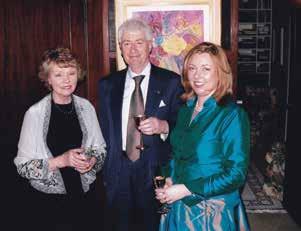
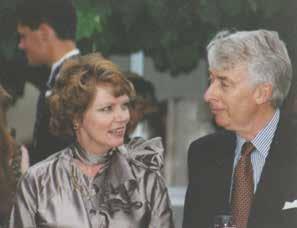
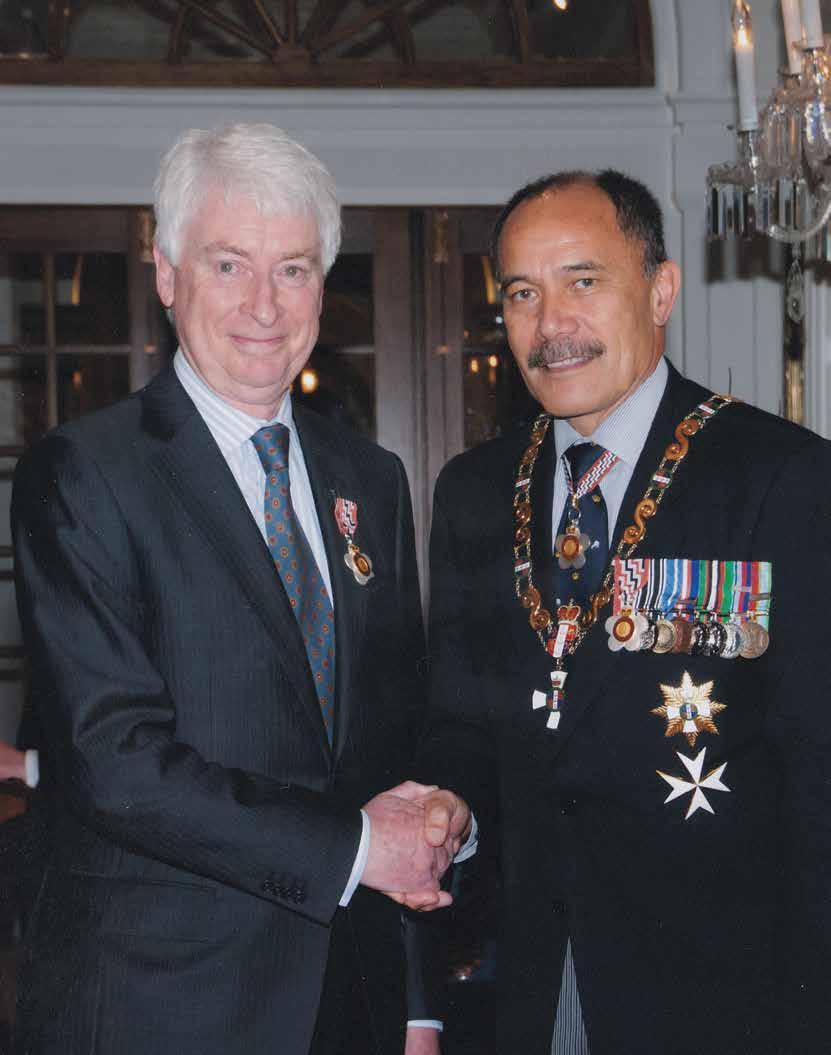
Judge Paul Barber receiving his Queens Service Medal from Sir Jerry Mateparae, Government House, 2012
Reproduced with permission of Government House
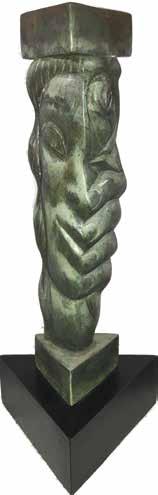
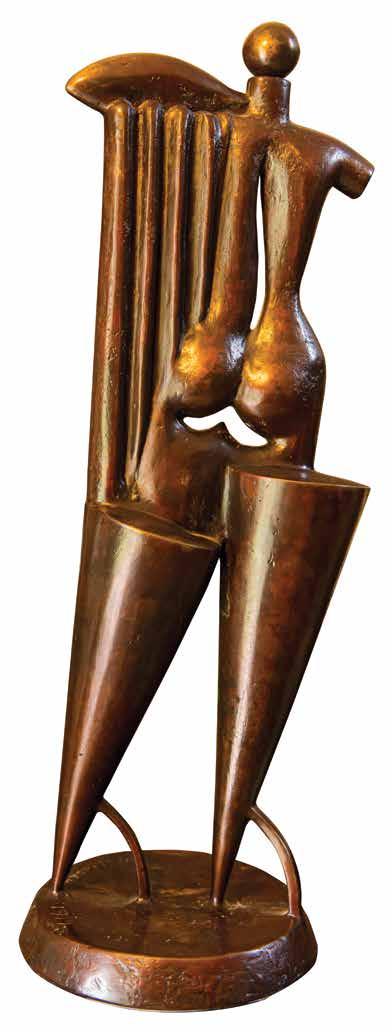
1 TERRY STRINGER (b. 1946)
Psyche and Cupid
Bronze, edition 4/10, 30 x 8 x 8
Signed & dated 2004
$2,500 - 3,500
PROVENANCE
Paul & Kerry Barber Collection
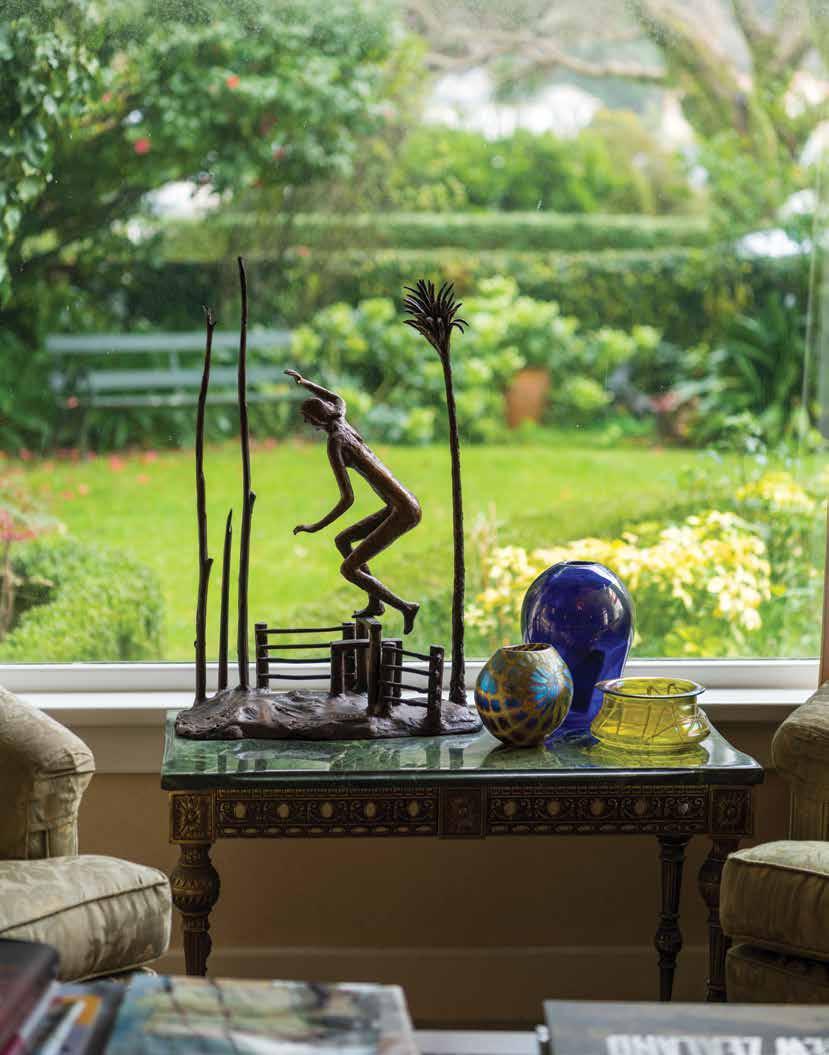
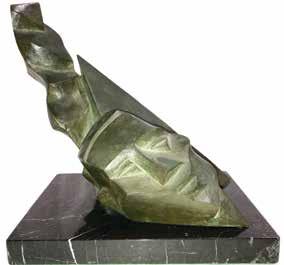
2 TERRY STRINGER (b. 1946)
Woman
Bronze sculpture on black marble base, edition 2/3, 28 x 27 x 19
Signed & dated 1981
$4,000 - 6,000
PROVENANCE
Paul & Kerry Barber Collection
New Zealand & Foreign Paintings & Pottery, Dunbar Sloane 02/05/2001
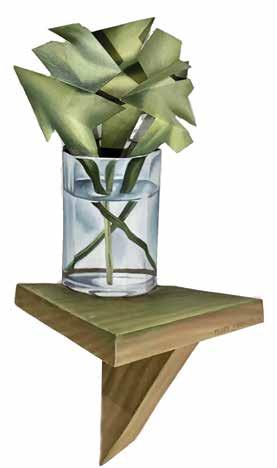
3 TERRY STRINGER (b. 1946)
Arrangement in a Glass Jug
Unique aluminium sculpture, 34 x 19 x 9
Signed & dated 1981
$2,500 - 3,500
PROVENANCE
Paul & Kerry Barber Collection
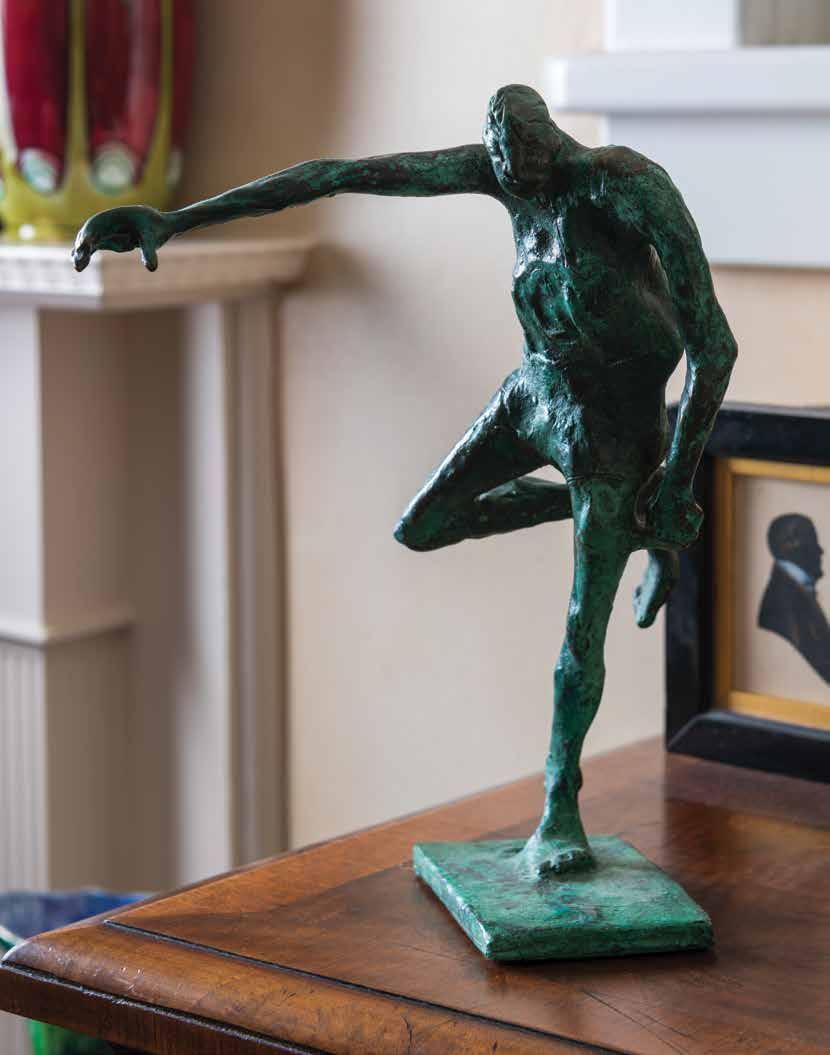
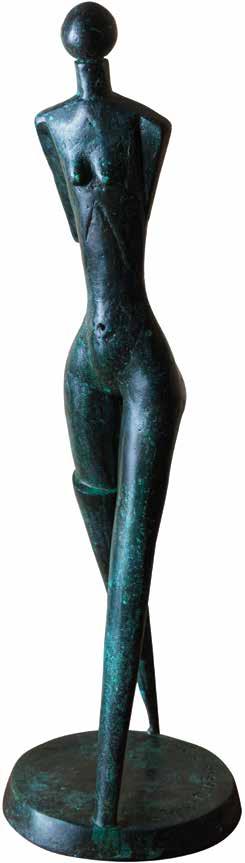
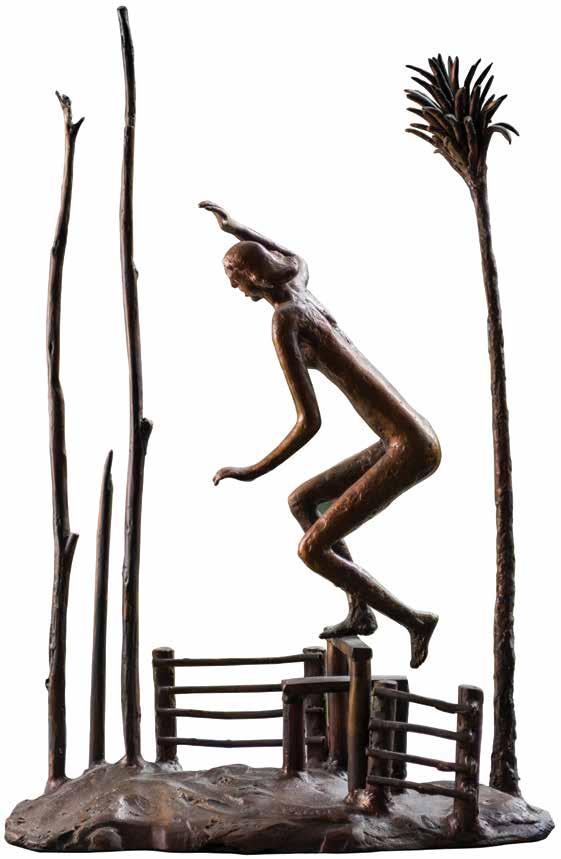
4 PAUL DIBBLE (b. 1943)
Into a Head Wind, 2014
Patinated cast bronze sculpture 58 x 22.5 x 18
Signed on base
$10,000 - 13,000
PROVENANCE
Paul & Kerry Barber Collection
Page Blackie Gallery, 2014
EXHIBITED
Picking Up Threads, Page Blackie Gallery, Wellington, 2014
The Geometric Figure, Milford House, Dunedin 2015
5 PAUL DIBBLE (b. 1943)
Runner, 2008
Cast bronze, unique sculpture 74 x 65 x 24
Signed
$15,000 - 20,000
PROVENANCE
Paul & Kerry Barber Collection
Purchased from Carmel College Art
Exhibition, 2008
EXHIBITED
Carmel College Art Exhibition, 2008
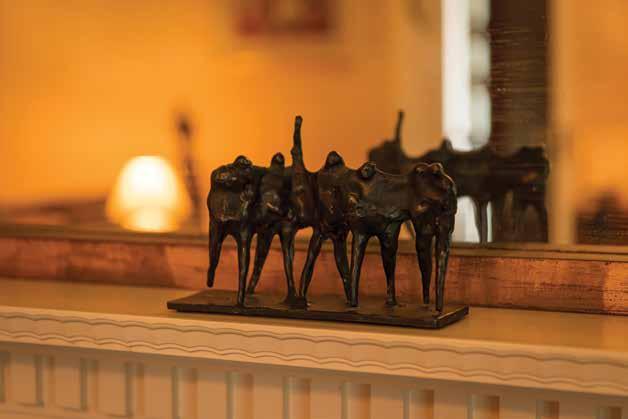
6
GREER TWISS (b. 1937)
The Marchers
Unique bronze sculpture 10 x 16 x 5
Signed & dated 1962
$2,000 - 3,000
PROVENANCE
Paul & Kerry Barber Collection
Purchased from Mark Hutchins Gallery, 2009
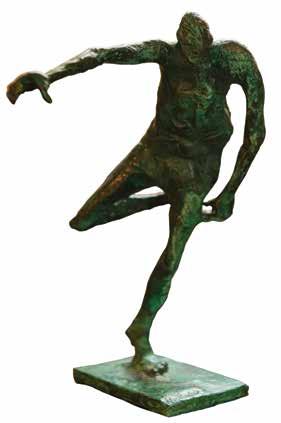
7 GREER TWISS (b. 1937)
The Runner, 1964
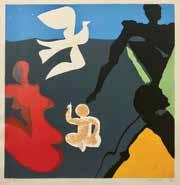
Unique bronze sculpture 26 x 14 x 20
Signed & dated 05/1964
$3,500 - 4,500
PROVENANCE
Paul & Kerry Barber Collection
Purchased from Mark Hutchins Gallery, 2009
8
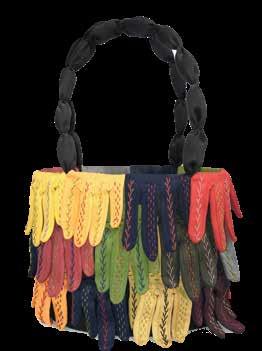
8 VITA COCHRAN (b. 1975)
Handwork Bag
Polyester 41 x 31 x 14
$700 - 1,000
PROVENANCE
Paul & Kerry Barber Collection
9 PAUL DIBBLE (b. 1943)
The Orator, 1998
Patinated cast bronze sculpture
53.3 x 20.5 x 12.5
Signed
$15,000 - 20,000
PROVENANCE
Paul & Kerry Barber Collection
Fine New Zealand Paintings, Jewellery & Decorative Arts, Webb’s 23/09/2003
EXHIBITED
Gow Langsford Gallery, 1998
Brooke-Gifford Gallery, 1999
Bowen Gallery, 1999
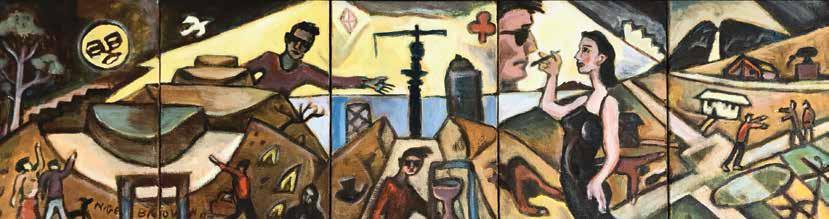
10 NIGEL BROWN (b. 1949)
Prodigal Son, Polyptych
Oil on canvas panels 32 x 120
Signed & dated 1997
All five panels signed & dated 1997 verso
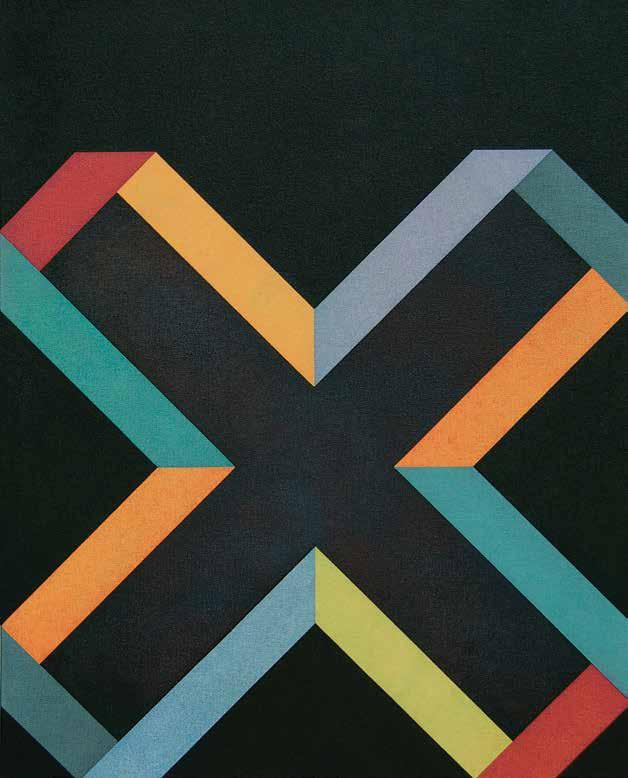
$8,000 - 12,000
PROVENANCE
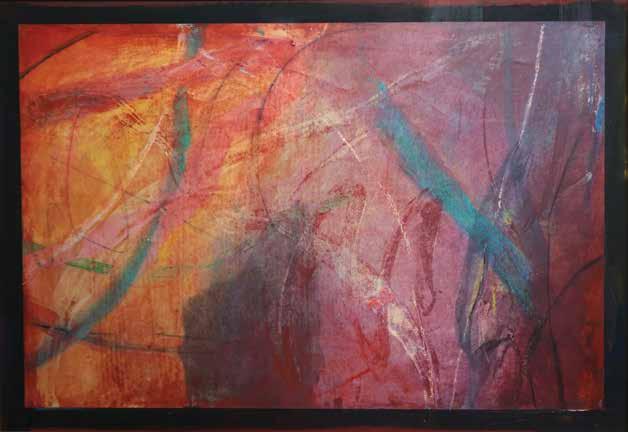
Paul & Kerry Barber Collection
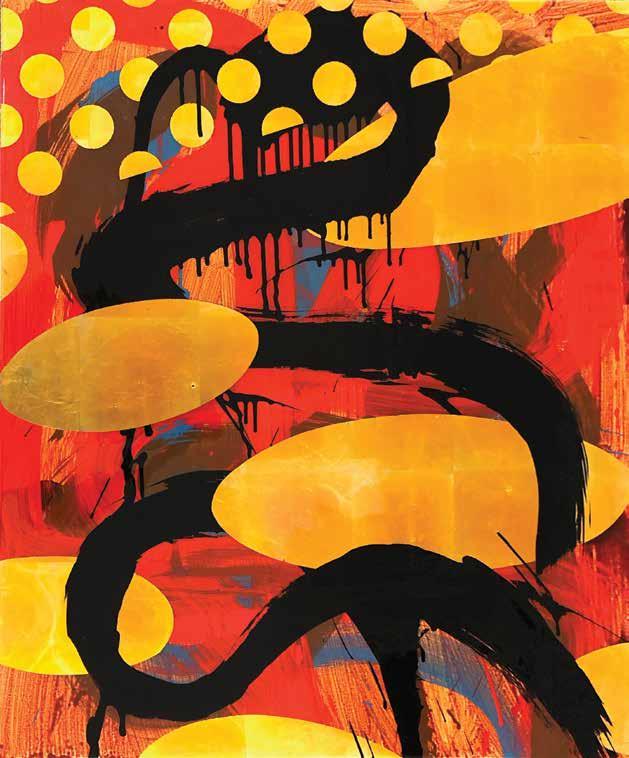
Purchased from Artscape Gallery Ltd, 1999
A letter from the artist to Paul & Kerry Barber reads: I’ve always admired Bruegel’s version of this story which is an example of someone taking a biblical story and doing it on their own terms. From their own background and experience. I’ve done the same. I enjoyed it as a linked sequence of canvases. Leaving the parents encountering the world, coming back to NZ values and traditions and a little bit wiser after sampling distractions and vices! Sort of rites of passage / of growing up.
Nigel Brown, 1999
The eternal parable set in the thriving Sky Tower metropolis of the South Pacific. During 1997 the artist was making regular trips between his home in Sandringham and the Glassworks Studio in Mt Eden, where he was working on the stained glass windows for Auckland Cathedral - a commissioned project that had been occupying him since late 1993. The tedium of driving perhaps relieved by the sprawling panorama of Auckland. The ever observant artist’s eye focusing on the central rising casino sky tower, like a
black crucifix or the petrified pillar of Sodom. Just as the great centre window in the Cathedral celebrates the biblical myth of salvation, Prodigal Son likewise testifies that no amount of casino corruption will ever completely eclipse the values of love and compassion that dwell in the human spirit.
In the left panel, the moon symbolises the mystery of life perceived by the innocence of youth. Life’s journey begins with confidence, how else could it begin, but in awe of the magnificence of almighty nature. But even in the second panel, a wizened prophet in the persona of James K Baxter reminds us there will be mighty temptations (the wine glass, the dens of gambling and iniquities, the seductress in black), along the road which is well-trodden - like the beaten path of Carmina Burana between the monastery and the distant village ale house. Even nature itself seems violated and polluted (the up-turned kiwi icon).
So in the fourth panel the exuberance of youth is exhausted and finally collapses in a way that the biblical parable is suddenly condensed into the individual tragedy of entering the casino with ambitious but misguided hopes of a better life and emerging raggard and tattered, financially and psychologically wasted. But although we do not question the comforting salvation of the Father’s embrace, we maybe are left wondering if it alone is enough to save us. We hope it is - the kiwi is definitely back on its feet and the gush of the fresh waterfall brings the purifying and nourishing influence of water that salvation must be. From text written by Tony Martin affixed verso.
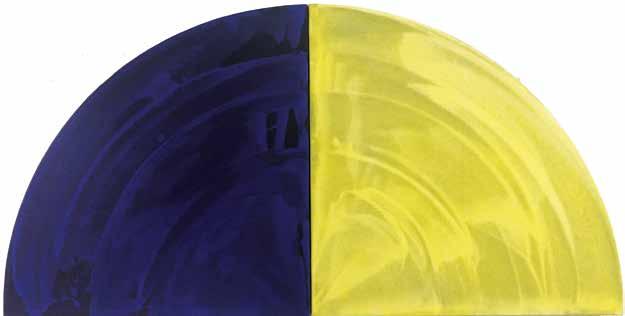
11 GRETCHEN ALBRECHT (b. 1943)
Night Mist, diptych
Acrylic on canvas hemisphere 50 x 100
Signed & dated 1992 verso
Inscribed Night Mist on artist’s label affixed verso
$10,000 - 15,000
PROVENANCE
Paul & Kerry Barber Collection
Purchased from a Dowse Art Museum Charity Auction, 1/11/04
In 1981, Gretchen Albrecht completed her first hemisphere painting, consisting of two large quadrants bolted together to form a semi-circle. This became an acclaimed stylistic format for her work, and she went on to produce a number of other hemispheres in the 1980s and 1990s. In creating these semi-circular works, Albrecht was consistently bold, scaling them up and down, and experimenting with a range of different mediums and paint application techniques.
The sweeping brushes of paint and two-toned sharpness of Night Mist, Diptych is energising to behold. This work is powerful in the way it connects us to the tensions and oppositions of life. Just as the two quadrants exist as one and alongside each other, so too do we encounter the duality of nature, the universe, our bodies, and the existence of our light and shadow selves.
The space between the two quadrants is especially potent, being where the two sides come together and are most obvious in their division. In and through this space, the work is both at one with, and at conflict with itself. The satisfyingly symmetrical exchange between blue and yellow makes it difficult not to see this painting as a perfect whole, or even as a double whole. At the same time, it is only half-formed in a way, and we are acutely aware of the semi-circle’s missing other half. In both art and nature, it is the shape of the circle which represents infinity and completeness, and Albrecht does not grant us this completeness. Instead, she instils a sense of absence in the viewer, leaving only the promise of completion. In this way, the painting suggests the absence of another half; an implied void. As Albrecht herself described it, the hemisphere implies space. A shape to contain the feeling.
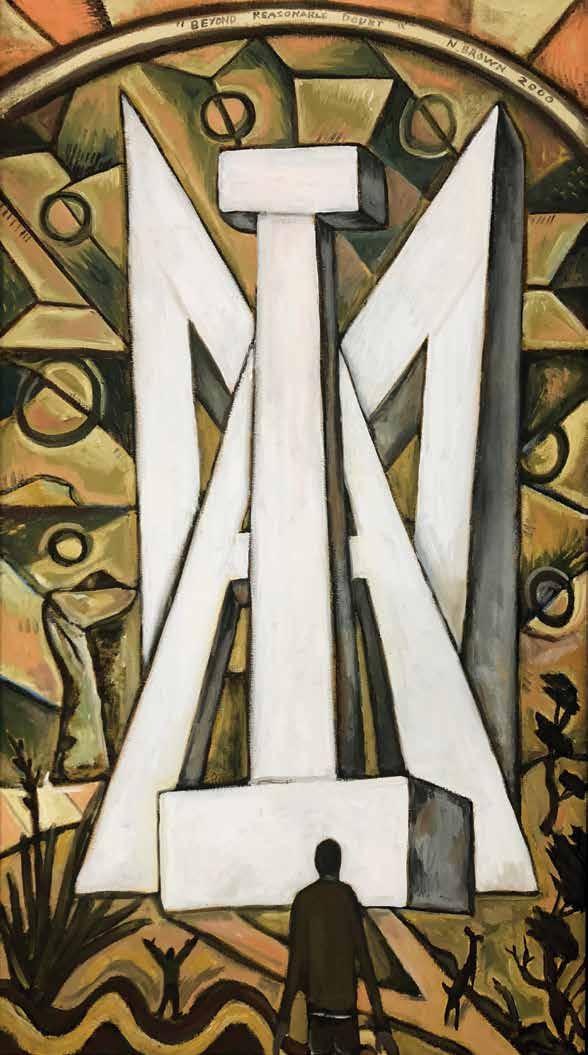
12 NIGEL BROWN (b. 1949)
Beyond Reasonable Doubt
Oil on canvas 151 x 82.5
Signed, inscribed Beyond Reasonable
Doubt & dated 2000
$15,000 - 20,000
PROVENANCE
Paul & Kerry Barber Collection
Tinakori Gallery
EXHIBITED
I AM II, Tinakori Gallery, Wellington, 2002
Purchased from the above mentioned exhibition
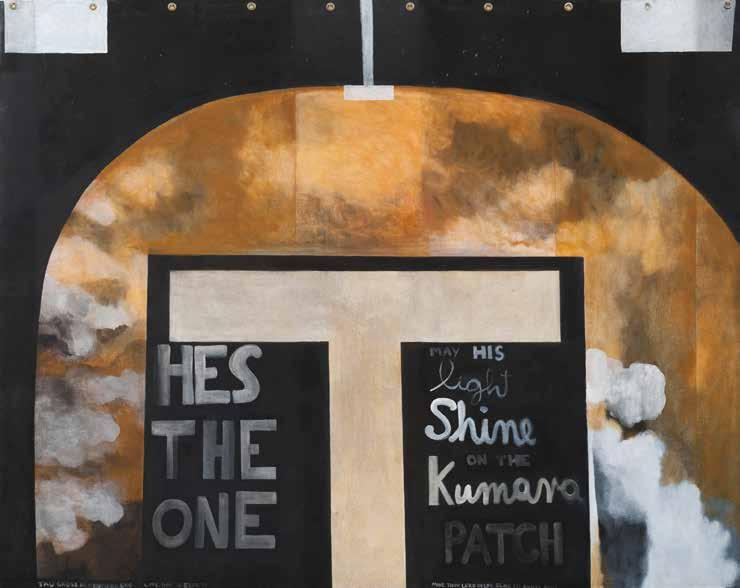
I wasn’t interested in repeating McCahon verbatim or merely appropriating his images, I wanted to find my own direction out of his material on my own terms. This involved relearning from McCahon as much as a determined departure from his edicts and constraints. The power of block letters, black, white and yellow ochre, necessary questioning, needed reforming around my own way of seeing - peopled, pictorialised, symbolised, de-sanctified or reglorified as needed.
Nigel Brown 2002
In the 2002 exhibition I AM II at Tinakori Gallery, Mark Hutchins wrote the following essay:
As the title I AM II suggests, this exhibition represents the second wave of Nigel Brown’s idiosyncratic, highly imaginative and often personally profound responses to some of Colin McCahon’s best known imagery. Brown was a student of McCahon’s at Elam School of Fine Arts during the late 60’s early 70s. lnfluences of McCahon, both practical and visionary, who was even then gaining recognition as the catalyst and leading exponent of modern New Zealand painting, remain at the roots of Brown’s own practice to this day. But although Brown makes frequent references to McCahon’s iconic images in his I AM series, Brown’s works are in fact also highly personal, speaking more about his own life and what he has achieved in over three decades of painting, than merely paying homage to his late tutor. ln Beyond Reasonable Doubt the
artist has spoken of his intention to recall McCahon’s lessons on cubism, exemplified by the masters stylizations of the Titirangi landscape in his French Bay series of the mid 1950s. Various compositional components evident in the background of Beyond Reasonable Doubt appear to be direct visual quotes from a number of McCahon’s well known images, Moby Dick and Waterfalls in particular, while other elements are self-referential. Motifs such as the solitary autobiographical Kiwi joker with his black dog amidst stylized native vegetation have become signature images for Brown after being used by the artist consistently now over decades.
The title Beyond Reasonable Doubt is taken from the book written about Arthur Allen Thomas and the Crewe Murder case but when applied to Brown’s iconic image of a calligraphic monolith looming large in a symbolically laden landscape, becomes far wider reaching in what it evokes. Directly overlaying the letters to create one sculptural focus transforms Brown’s I AM into something reminiscent of the PAX (peace) motif used widely by the Christian church and as such brings to mind the long running debate on the value and relevance of traditional religious faith, a recurring issue for many in contemporary society who continue to search for meaning in the highly artificial computerized world most of us live in. By substituting I AM for PAX Brown is championing a humanist approach to spirituality - a celebration of the self rooted firmly in the landscape. As far as the metaphysical and psychological baggage associated with l AM goes, I relate to the statement not in a Christian way but as a potent claim and affirmation of the robust individual. There is, I suggest, a healthy aspect to people asserting their existence. NB
As is usually the case, however, the rather direct readings offered here are but a few of the many interpretations suggested by the multi-layers of meaning that interfuse Brown’s work. Most of his images that may initially appear quite simple and straightforward in narrative intent usually reveal themselves over time as a complex weave of the artist’s creative and personal history, politics and social commentary on contemporary New Zealand culture. Mark Hutchins
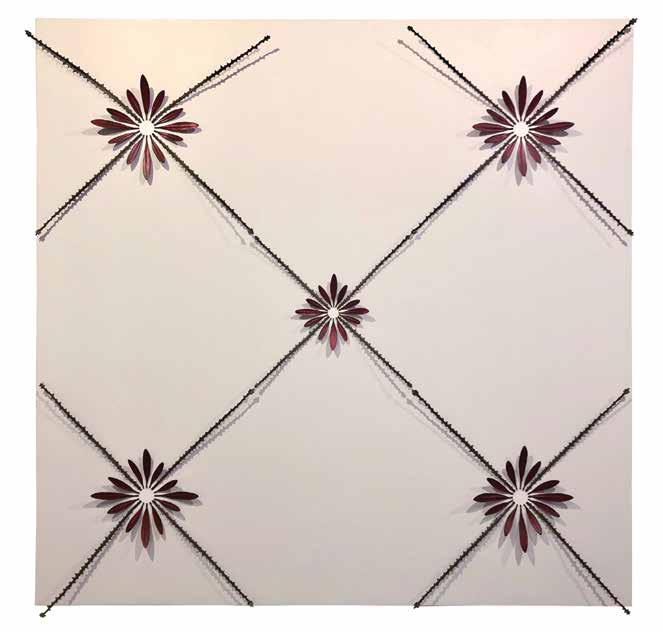
13 ELIZABETH THOMSON (b. 1955)
Casa Jardinero
Cast bronze in 80 pieces arranged in 5 rosettes, mounted on gesso on board 113 x 114.8
Signed, inscribed Casa Jardinero & dated 2007 verso
$15,000 - 20,000
PROVENANCE
Paul & Kerry Barber Collection
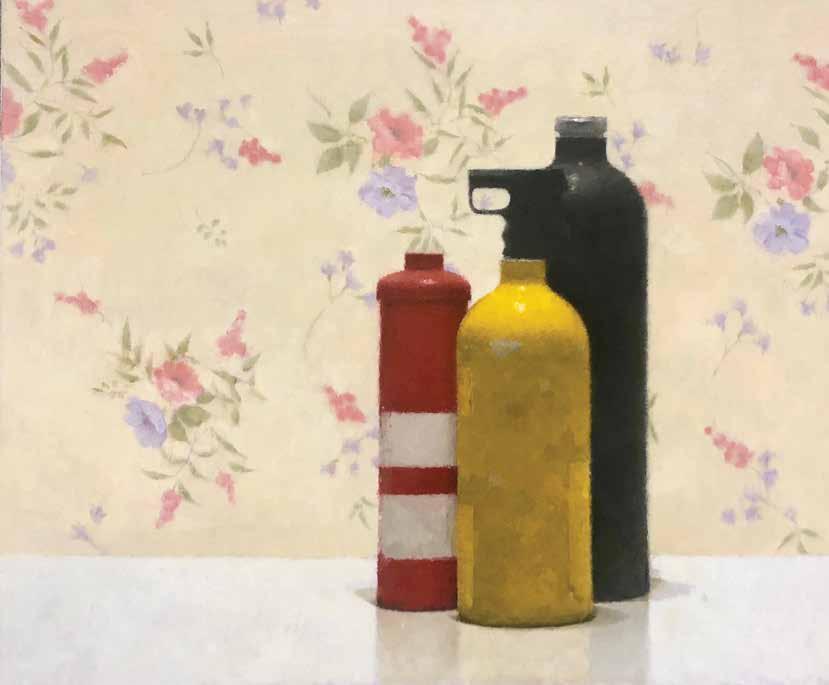
14
JUDE RAE (b. 1956)
Still Life 140 Oil on Belgium linen 76.5 x 91.5
Signed, inscribed SL 140 & dated 2003 verso
$18,000 - 26,000
PROVENANCE
Paul & Kerry Barber Collection
Purchased from Jensen Gallery, 2004
EXHIBITED:
Still Life in New Zealand, Pataka, 2004
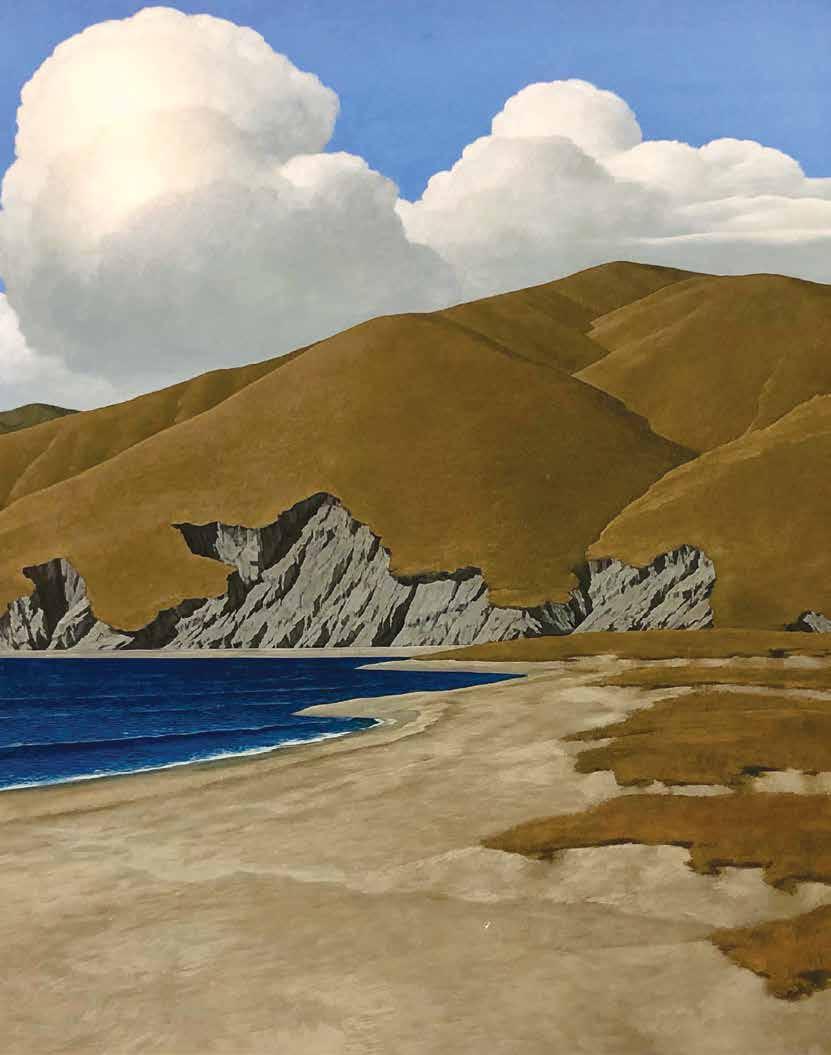
15
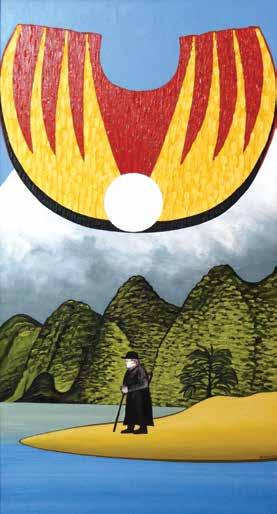
BRENT WONG (b. 1945)
Coastal Hills, Dunes and Clouds
Acrylic on board 57 x 60.6
Signed & dated 1974
$25,000 - 35,000
PROVENANCE
Paul & Kerry Barber Collection
Sold by Ron Sang at International Art Centre 15/10/1999 - purchased by Paul and Kerry Barber
Ron Sang Collection until 1999
EXHIBITED
Denis Cohen Gallery, 1974
Original gallery label affixed verso
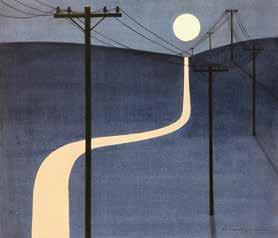
Born in Wellington, Wong studied at Wellington Polytechnic College, for just one year, disillusioned with the College’s move away from the fine arts training. From the early 1960s onwards he drew on a number of inspirations. Amongst them were his local natural and architectural environment, magazine reproductions and the works of international artists such as Paul Klee and Wassily Kandinsky with their emphasis on the spiritual and intuitive, the mesmerising skies of English Romantic, Joseph Mallord William Turner and the emotionally loaded and painstaking paintings of Andrew Wyeth.
What has characterised Brent Wong’s paintings is his meticulous technique, the heightened realism of his landscapes and the monoliths and labyrinths which have become his signature. For New Zealanders, these incredible combinations cast a familiar island nation into a strange and new realisation.
16
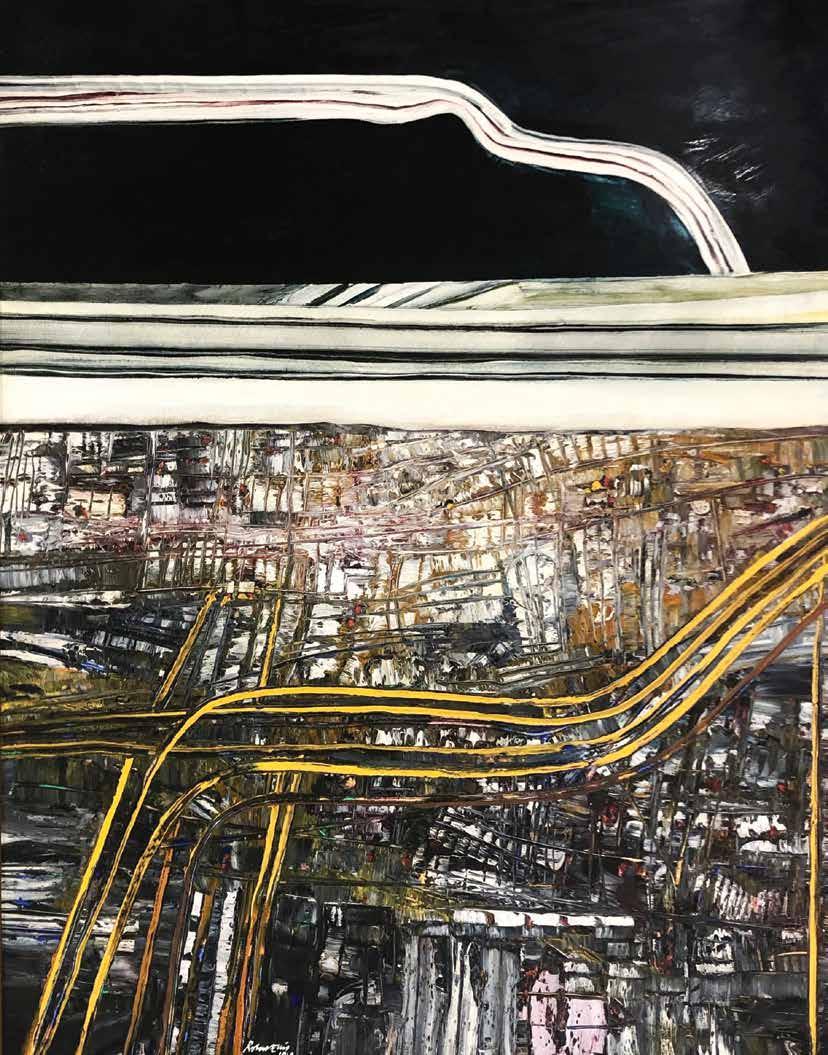
ROBERT ELLIS (b. 1929)
Motorway / City No. 22
Oil & enamel on board 75.5 x 59
Signed & dated 1969
Signed, inscribed Motorway / City No. 22, ‘Auckland Festival’, Robert Ellis, PO Box 2175, Auckland NZ verso
$15,000 - 25,000
PROVENANCE
Paul & Kerry Barber Collection
Contemporary & Traditional New Zealand & European Art, International Art Centre
26/07/2001
There has arguably never been a better time than now to consider Robert Ellis’ Motorway series anew. If art is capable of functioning as a mirror to our anxieties and preoccupations, it feels as though Ellis’ semiapocalyptic motorways are just as relevant (if not more so) today as they were in the 60s and 70s.
To be absorbed in this painting is to undergo something of a contradictory experience, because it is both microscopically intricate and dizzyingly vast. On the one hand, it challenges us to marvel at the minutiae of our biology. Because there is such a cellular quality to the painted surface of the work, we draw into ourselves and feel the racing of our own pulse in this painting. At the same time, it is named “motorway”, and has the giddy sense of a sprawling, speeding cityscape.
More than anything, Motorway / City No. 22 is selfdocumentary – it records Ellis’ analytical process as an artist and anthropologist. Through the observation and collection of land-based data (the earliest iterations of these paintings were based on views of Spanish towns) he took map-based views and landmarks; topographical and infrastructural points, and distorted them into complex essays on urbanity.
In the case of Motorway / City No. 22, the finished product is darkly alluring. Characterising a city in flux, it holds the promise and menace of transformation. In the present day, this poses further questions around the collection of big data, our sense of identity and privacy, as well as population and city expansion.
17
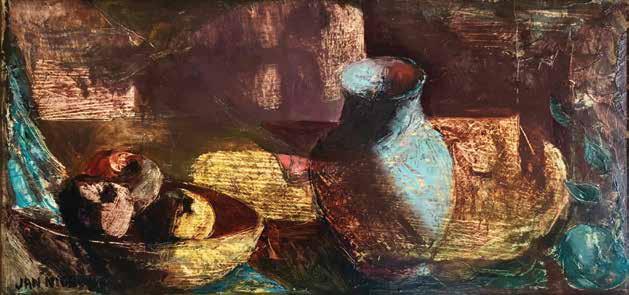
JAN NIGRO (1920 - 2012)
Still Life with Apples
Oil on board 28 x 59
Signed & dated 1948
$3,000 - 5,000
PROVENANCE
Paul & Kerry Barber Collection Ex. Brierley Collection
New Zealand and Foreign Paintings, Dunbar Sloane 29/11/2000,
ILLUSTRATED
p. 49 Apple for the Teacher, Jan Nigro, David Bateman Ltd, 1996
18
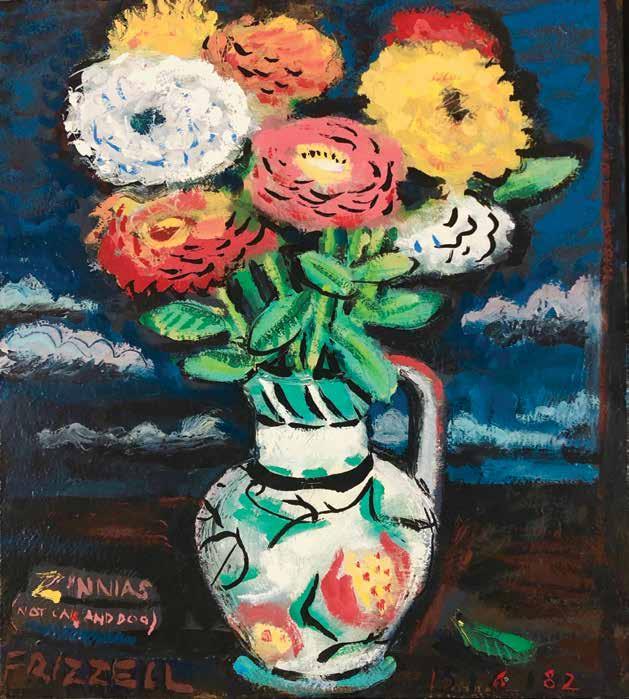
DICK FRIZZELL (b. 1943)
Zinnias (Not Car and Dog)
Oil & enamel on board 47.5 x 42.4
Signed, inscribed Zinnias (Not Car and Dog) & dated 1982
$10,000 - 15,000
PROVENANCE
Paul & Kerry Barber Collection
Fine New Zealand Paintings, Jewellery & Decorative Arts, Webb’s 11/12/2001
Why, of all the flowers to be found in a New Zealand garden, would Dick Frizzell choose to paint the zinnia? For starters, there’s a sprightliness to the word zinnia.
Considering the way these colourful flowers pop and the energy of Frizzell’s art, the name seems almost onomatopoeiac.
Another question – why would New Zealand’s most prolific pop artist adopt the relatively staid form of a still life? Because this was part of a deliberate pursuit of clichéd painted formats, and the tone is somewhat ironic. Finally (in case you were wondering), this is not a depiction of a car and dog.
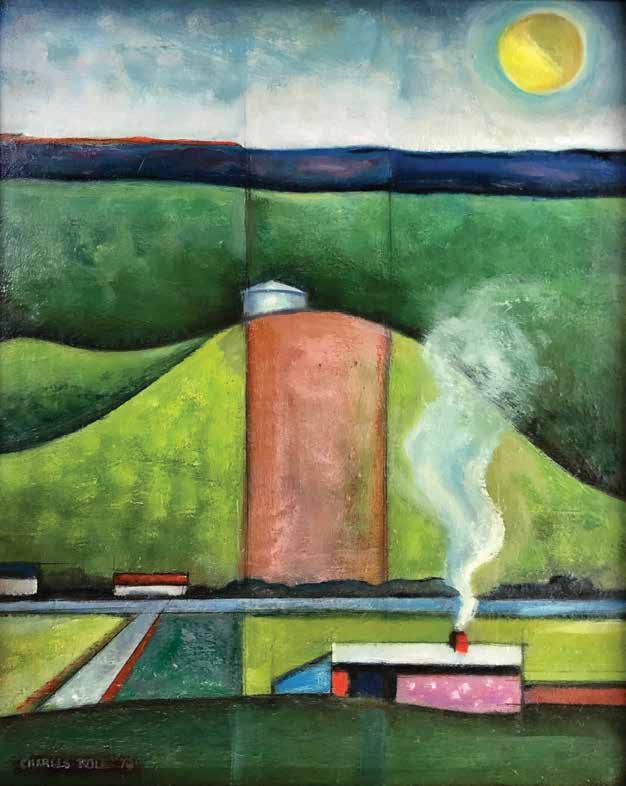
19 CHARLES TOLE (1903
- 1989)
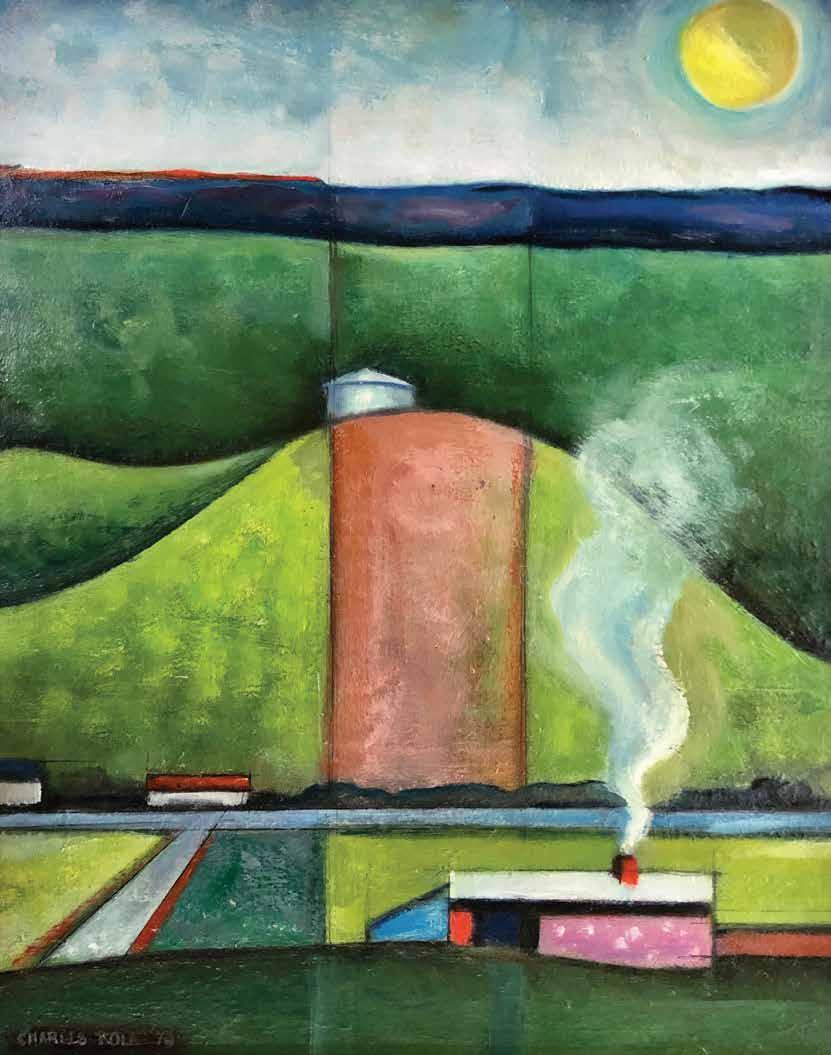
Reservoir, Cheviot Country
Oil & pencil on board 44 x 35
Signed & dated 1979
$18,000 - 25,000
PROVENANCE
Paul & Kerry Barber Collection
Fine & Applied Arts, Dunbar Sloane 21/04/2010
Charles Tole and his brother John believed that style and technique should not be the arbitrary goals of the artist, but elements that flow from “intuition towards the expression and communication of the artist’s message”. This statement helps us to understand the artist’s approach to cubism, and to align the stylistic qualities of Reservoir, Cheviot Country with the nature of his creative mission.
By the time he painted this work, Tole had developed a strong cubist language of his own. This painting shuns the need for depth of perspective; there is only stacked flatness – buildings borrowing space from the land, and heaving great strips of land layered on top of each other.
Tole has not reduced the land to its purely geometric qualities; instead, he conveys the truth of it. The viewer is drawn closely into this quiet scene of rural industry.
The painting’s technical skill and polished quality speaks for itself. Tole’s treatment of colour is mature and succinct; gentle tonal graduations of green reflect the rolling of the hills. Meanwhile, a single plume of smoke breaks up the grid-like formation of the scene and confirms the presence of human life.
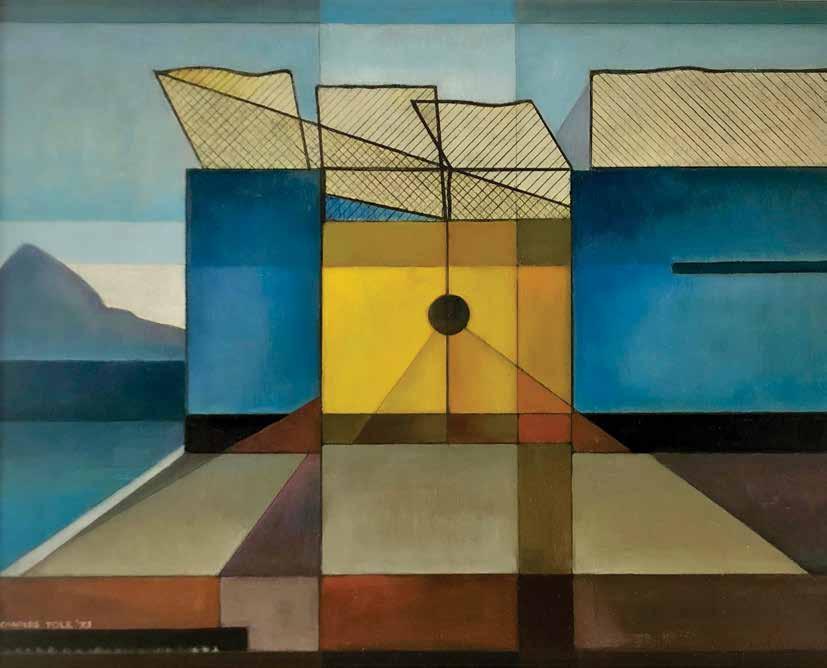
20 CHARLES TOLE (1903
- 1989)
The Blue Fence
Oil & pencil on board 42.6 x 53.2
Signed & dated 1973
$20,000 - 30,000
PROVENANCE
Paul & Kerry Barber Collection
Bev & Murray Gow Collection
Investment & Affordable Art, Dunbar Sloane 25/11/2004
The Barber Collection boasts numerous excellent examples of New Zealand modernism. This is partly a reflection of Paul and Kerry’s journey as collectors – having travelled and spent time in Europe, their exposure to modern art equipped them to meaningfully engage with the New Zealand response.
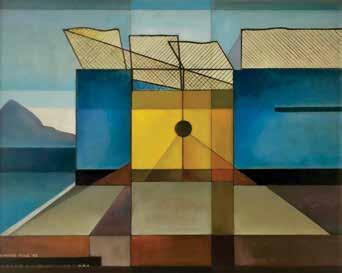
This blue-hued oil painting by Charles Tole The Blue Fence is the collection’s finest example of New Zealand cubism; it expresses raw, pure engagement with the landscape. While the Barbers were able to draw direct links between European and New Zealand modernism, Charles Tole’s initial exposure to cubism was less direct.
After being taught to paint by his older brother John, Charles learnt the formal principles and theory of cubism from John Weeks. It may be thanks to this slight disconnect from the primary source of cubism that his work was able to acquire such a distinct industrial, post-cubist bent. In The Blue Fence, beams of light are presented in vertical facets, and a single blue fence becomes complex. Lending itself to every vantage point, the fence is sharp and flat with angles suggesting that what we see is only a facade. Its depth, and the crisp penetration of pencil on oil, has an effect that is both confounding and satisfying.
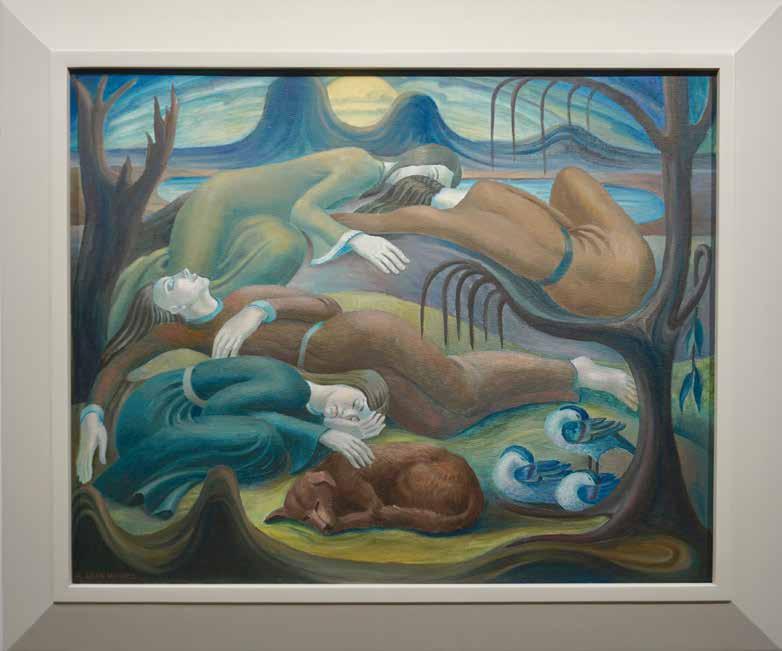
21 A LOIS WHITE (1903 - 84)
Sleeping Oil on canvas board 60.2 x 75.5
Signed
$50,000 - 75,000
PROVENANCE
Paul & Kerry Barber Collection
National Treasures Art Auction
International Art Centre 28/07/2000
By the mid-20th century, there was strong institutional fixation on emerging modernism and landscape art in New Zealand (particularly abstraction, with male artists such as McCahon leading the charge from the 1950s onwards). It is therefore not surprising that Anna Lois White found herself marginalised by the art world throughout her career.
Despite the knowledge that her work did not align to institutional tastes or trends, White pursued an individual tradition of classically-inspired symbolism integrating allegorical, art historical, biblical and political concerns. In 1994, Auckland Art Gallery staged a large retrospective A Lois White - By the Waters of Babylon. This was the first time a national institution had acknowledged the importance and extent of her contribution to New Zealand art.
In this sublime painting, four languid sleeping women are draped in arrangement around each other, surrounded by birds and a dog. The models are likely to have been the artist’s friends.
The work emphasises the nature and distinctness of the subjects’ femininity while offering a demystified, uncomplicated portrayal of the subconscious mind and feminine sexuality. It is theatrical but unpretentious, with a sense of psychological authenticity despite being set in a surreal dreamscape.
22 DON BINNEY (1940 - 2012)
EII / Exocet
Oil, enamel with collage elements on canvas 91 x 60.1
Signed & dated 1982
$35,000 - 55,000
PROVENANCE
Paul & Kerry Barber Collection
Fine New Zealand & European Art, International Art Centre 29/07/2004
ILLUSTRATED
Contemporary New Zealand Art 4 by Elizabeth Caughey and John Gow
2002 Catalogue John Leech & Gow Langsford, 2002
EXHIBITED
2002 Catalogue John Leech & Gow Langsford, 10 September - 5 October 2002
Since his first exhibition at Auckland’s Ikon Gallery in 1963, Binney maintained the integrity of his precise realist style.
Typically his images include the flattened forms of native birds above rolling hills. Conservationist issues are often part of the subtext of much of his painting. Equally his work has often displayed a political conscience.
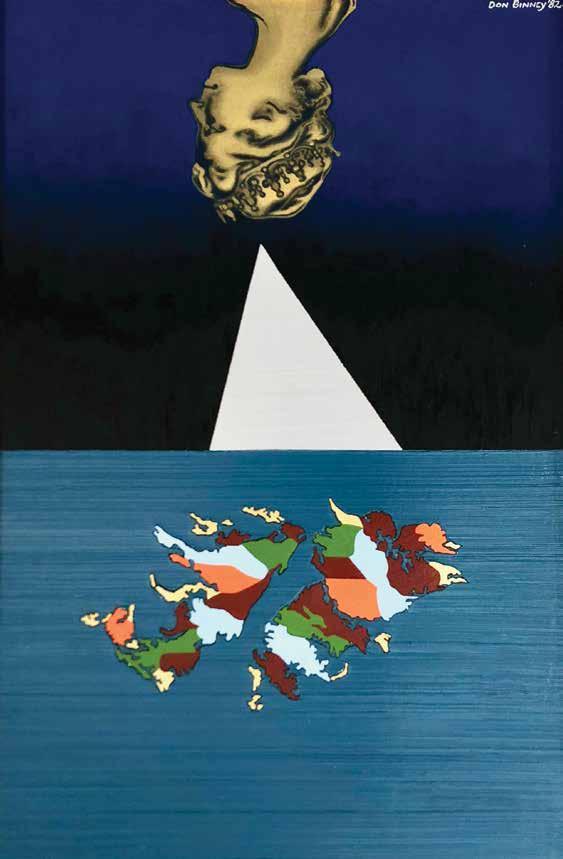
EII | Exocet was painted in response to the Falklands War. In 1982 the new military government of Argentina committed an act of unprovoked aggression by invading the Falkland Islands. Diplomatic talks failed to resolve the issue and British Prime Minister Margaret Thatcher dispatched a military task force to attempt to return the Falklands to British rule.
In May of that year the dispute intensified when the British Navy sunk the 185 metre Argentinean cruiser ARA General Belgrano resulting in a loss of over 300 lives, totalling just over half of Argentine military deaths in the war. Shortly afterwards the HMS Sheffield was hit by an Argentine Exocet missile sinking the Type 42 guided missile destroyer and resulting in the loss of forty British navy sailors.
Within EII / Exocet the inverted head of the Queen is depicted in an upside down world from which a triangle of white light or perhaps reason, is shown pouring onto a sea of blue. Below this is a map of the Falkland Islands. It is an ambiguous image but one which nonetheless evokes the polarity of the two governments and the conflict that was a result of failed diplomacy.
23 DON BINNEY (1940 - 2012)
Remuera Jug V
Mixed media on paper 58.6 x 41.2
Signed & dated 1993
$12,000 - 16,000
PROVENANCE
Paul & Kerry Barber Collection
Fine New Zealand Paintings, Jewellery & Decorative Arts, Webb’s 01/07/2003
Liz and Bill Fumpston Collection until 2003
Warwick Henderson Gallery
EXHIBITED
Remuera Jug & Other Suites, Solo Show
Elaine Meyer / ASA, 1995
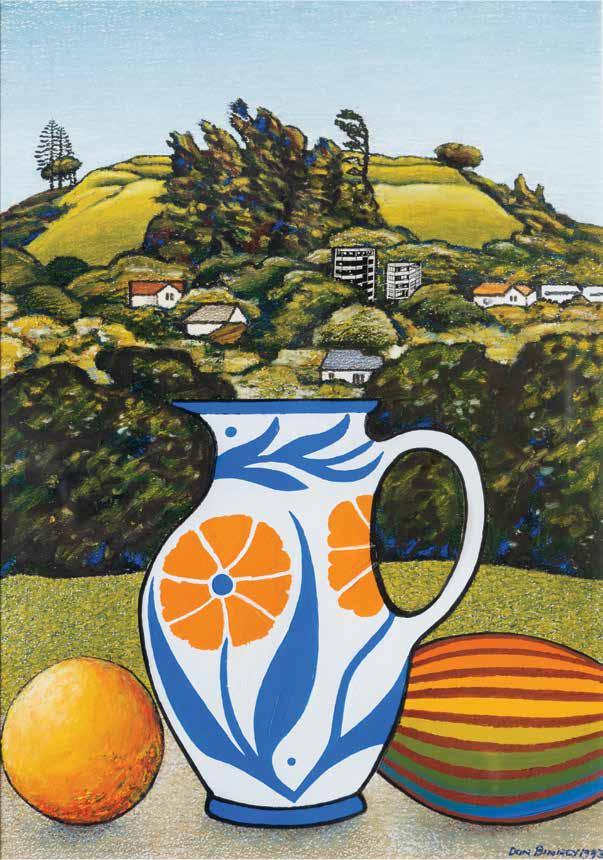
The centrepiece of this painting is a vivid white jug, decorated with a European inspired floral design. Set on the grass, it is crisply framed by the surrounding hills. By applying a uniformly sharp focus to this composition, Binney has instilled a sense of hyperrealism in the work.
Although famous for his bird paintings, Binney’s range was diverse and included landscapes, figures, and still life paintings. In the case of Remuera Jug, however, he hasn’t fully detached from his favourite subject. Looking closely, the vase’s stylised blue leaves give way to a neat illusion: the form of an elegant swooping bird.
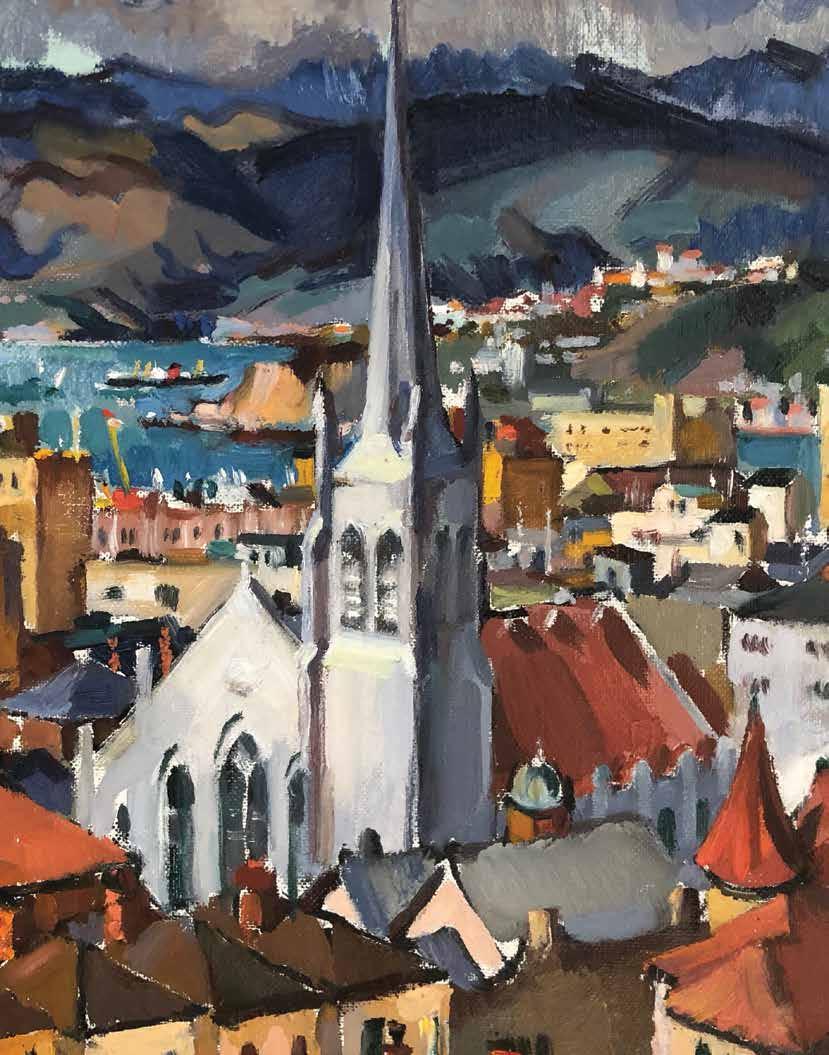
24
EVELYN
PAGE (1899 - 1988)
St Peter’s Church and Wellington Harbour, c. 1954 Oil on canvas board 34 x 41.4
$25,000 - 35,000
PROVENANCE
Paul & Kerry Barber Collection
Two Day National Art Auction, Dunbar Sloane 08/11/1995
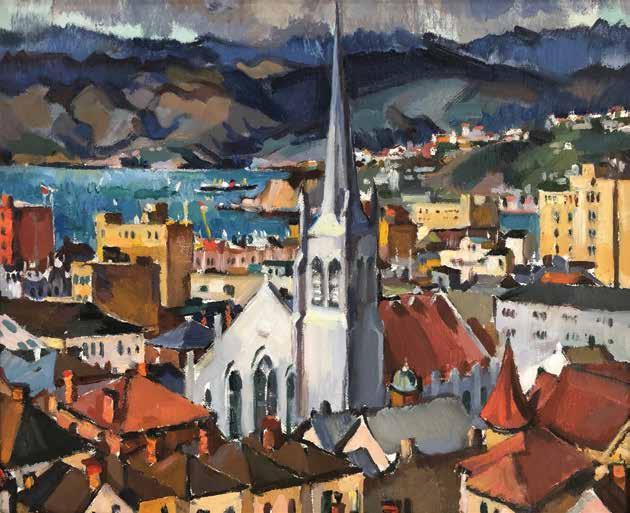
From a vantage point on The Terrace, overlooking Ghuznee Street and all the way across to Oriental Bay, this work portrays Wellington’s clear, strong colours which, in the artist’s own words, were waiting to be put on canvas. The spire of Wellington’s St Peter’s Church is outlined against surrounding buildings, and rooftops populate the view. Page also painted a similar view of St Peter’s Church in 1952, which was exhibited at the New Zealand Academy of Fine Arts retrospective in 1970.
This scene is busy without being frenetic; charged with the promise of life. Because Page has prioritised breadth of view, the perspective is sweeping and the presence of individuals is not captured. Nevertheless, it captures the energy of civilisation, and the presence of Wellingtonians is suggested from within the walls of buildings; in the intersections of streets.
When Frederick Page was appointed to establish the music department at Victoria University of Wellington in 1945, Evelyn and the family followed him north. After struggling to find a home in the city, they eventually rented in Pukerua Bay. Evelyn used to drive into the city to visit Frederick and to paint, travelling down from the coast with the observational curiosity of a visual anthropologist. As she preferred to paint directly from real life, Page needed to devise a way of painting in the middle of an inner-city street. She obtained permission from the Public Services Commission (to avoid any trouble from parking wardens), and set up a studio in her car. From this compact new workspace, Page cemented a new stage in her career, completing works such as St Peter’s Church and Wellington Harbour, and distancing herself from the label of landscape painter. She no longer saw the appeal in painting unpopulated, ‘unloved’ landscapes, and instead preferred to capture the vibrancy and bustle of human existence.
Note:
Evelyn Page painted this scene twice. An almost identical version is held in the collection of Victoria University in Wellington. That work entitled St Peter’s Church and Wellington is illustrated p. 33, plate 12, Evelyn Page, Seven Decades, Janet Paul and Neil Roberts, Robert McDougall Art Gallery, Bridget Williams Books, 1986.
25 EVELYN PAGE (1899 - 1988)
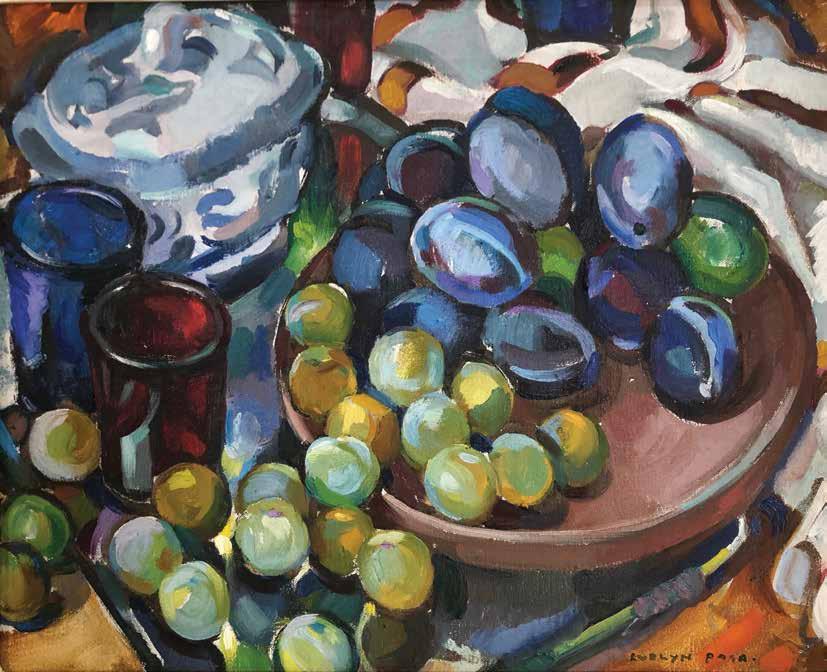
Still Life and Fruit Oil on canvas board 32 x 40.2
Signed
$35,000 - 45,000
PROVENANCE
Paul & Kerry Barber Collection Fine Art, Dunbar Sloane 27/08/2003
In the publication accompanying the Seven Decades exhibition at Robert McDougall Art Gallery, Janet Paul and Neil Roberts describe the visual rhythm of Evelyn Page’s work – Her real subject was the complex vitality in the movement and colour of paint itself.
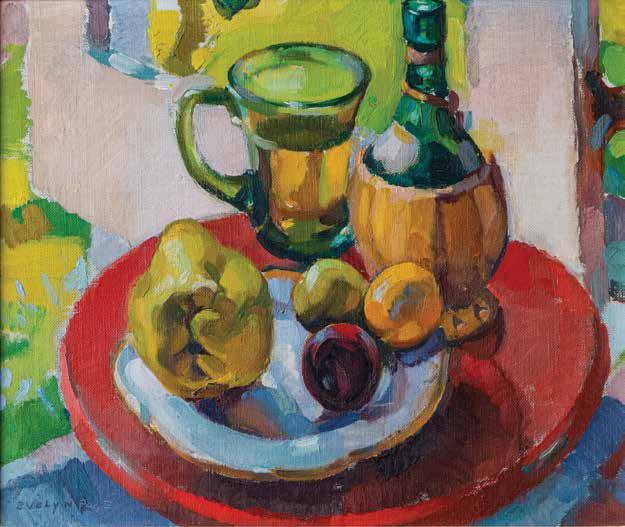
These two works Still Life and Fruit and Still Life with Fruit and Wine from the Barber Collection are superb examples of this complex vitality. Both have an even-toned richness – the result of smooth, fluid brushstrokes breaking down the boundaries between surface and vessel and fruit.
In these paintings, compositional freedom contrasts with precision of form. Look closely and consider the harmonious effect of both works: although the arrangements appear fluid and without boundaries, each object is jewel-like and definite, and the integrity of each glass or piece of fruit is intact.
These are orderly, quiet paintings of interior arrangement. The colours are not particularly bright or vibrant. And yet, there is a thrum beneath the surface which you can’t help but appreciate; a delicate sense of life and serenity. Light is refracted through the coloured glass and off the smoothly shining surfaces of fruit, blurring the outer limits of these domestic objects.
Going all the way back to when Page attended the Canterbury College School of Art as a teenager, she showed that she was not inclined to follow trends in
contemporary painting. Even when living in Britain and travelling around Europe (and at a time when many of her contemporaries’ work was being directly influenced by the French Impressionists), she consciously took her cues from more traditional, academic schools of thinking, and was inspired by artists such as John Constable.
As a result of this adherence to her classical training, Page developed a succinct and recognisable painted language that was uniquely her own. Her pursuit of pure colour and form was not inspired by the avantgarde, but was something which she arrived at on her own terms. Looking at Still Life and Fruit and Still Life with Fruit and Wine, it is more helpful to draw links between their style and developments in Page’s own career and life, rather than with any broader developments in New Zealand art at the time. Consider, for example, the fact that she was a lover and aficionado of music, and how this translates to a strong sense of rhythm in her work.
Though undated, these works would most likely have been painted in the later stages of Page’s career. From the 1960s, a struggle with arthritis had forced her to apply a more domestic, introspective lens to her work, and she started to regularly paint still lifes. Right through to the 1980s, she worked with great fervour and dedication to produce fine compositions such as these.
26 EVELYN PAGE (1899 - 1988)
Still Life with Fruit and Wine Oil on canvas board 35.3 x 42.2
Signed $20,000 - 30,000
PROVENANCE
Paul & Kerry Barber Collection
Art Auction, Dunbar Sloane 08/05/2002
27
EVELYN PAGE (1899 - 1988)
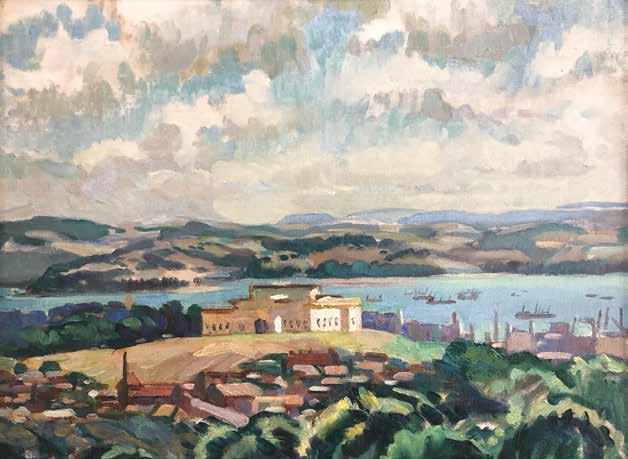
Auckland Museum
Oil on canvas board 34.5 x 46.7
Signed
$15,000 - 20,000
PROVENANCE
Paul & Kerry Barber Collection
Easter Art Auction Dunbar Sloane 16/04/1997
Auckland Museum is a work composed of fresh air and light. Typical of Page’s style, any desire to capture a detailed view of the city is less a priority than the expression of atmosphere. In the case of this work, this means a classical cloudy sky in motion, the blue, crystal-clear water of Auckland Harbour, and the feeling of freshness that these elements inspire. The artist has enveloped Auckland in a convincing flow of natural movement and connection.
When considering the neoclassical structure which the painting is named after, the sense of serene civilisation generated by this scene is even more remarkable. Although the war memorial building functions as something of a focal point to anchor the eye, it by no means dominates the scene. Situated in the Domain, it captures the light and echoes elements of form and colour from the surrounding hills and landscape.
28
EVELYN PAGE (1899 - 1988)
Portrait of Frances Oil on canvas 43.7 x 35.5
Signed
$15,000 - 20,000
PROVENANCE
Paul & Kerry Barber Collection
America’s Cup Art Auction, Dunbar Sloane 04/12/2002
Over the course of her career, Evelyn Page painted many portraits – tender, inquisitive portrayals of family members, friends and contemporaries. Many of these works are noted for their directness and freedom of painted expression.
In Portrait of Frances, Page observes her sitter gently, in an undemanding way. The pose does not feel contrived, nor is Frances being compelled to look out or engage with the viewer. Her face is presented from a slightly higher angle than she is sitting, and in profile.
The question of whether she’s deep in thought, or simply gazing off into the distance, creates some emotional distance from the viewer as we attempt to connect with her.
Page has arranged an almost abstract interplay of form and colour around Frances’ face and this presents as a direct, aura-like reflection of her. In this portrait Page captures the spirit and energy of her subject.
29 EVELYN POULSON nee PAGE (1899 - 1988)
The Estuary, c. 1935 Oil on canvas board 32 x 40.2 Signed $4,000 - 6,000
PROVENANCE
Paul & Kerry Barber Collection H Fisher and Son & Worcestor House labels affixed verso
The Estuary would have been painted en plein airfrom real life, and with a remarkably light touch.
The scene is evidence of Page’s tutelage by the Canterbury regionalist painter Cecil Kelly, who was her outdoor landscape painting teacher. It is made up of traditional compositional ratios: one-third sea to two-thirds sky, with a pleasing, low-contrast palette. The deeper blue of the sea complements the sky’s lightness, and both are mediated by the rolling green of the hillside. This is not a work which experiments with form or seeks to provoke a strong reaction in the viewer. Rather, it exists for its own sake; an essay from Page to the land, and as proof of the artist’s act of observation.
30
EDWARD FRISTROM (1864 - 1950)
Auckland Wharves Oil on board 24 x 28
Signed
$4,000 - 6,000
PROVENANCE
Paul & Kerry Barber Collection
National & International Art Auction, Dunbar Sloane 03/04/1996
31 TOSS WOOLLASTON (1910 - 98)
Blackball with Untitled, Landscape with Inlet, Hills and Buildings verso
Oil on card 34.4 x 57.8
Signed & dated 1954
$30,000 - 50,000
PROVENANCE
Paul & Kerry Barber Collection Purchased from Peter McLeavey Gallery, Wellington 2001
Presenting a complex, rugged view of the West Coast, this painting by Toss Woollaston is typical of the artist’s style and the modernist spirit of the Barber Collection. While it is not a scene which yields to romantic notions of the landscape, it has a strong and traditional perspective. Sweeping horizontal brushstrokes build tension in the upper third of the work, enhancing the sense of majesty and unshakable force of the mountains in the background.
One of the Barber Collection’s founding works was a Woollaston watercolour (Lot 32), presented to Paul as a farewell gift from his law firm when he was appointed as District Court Judge in 1981.
Paul and Kerry’s appreciation for the artist continued to grow, and they later acquired Blackball from Peter McLeavey Gallery. In a letter to them, McLeavey describes it as a lovely warm work. Sir Mountford Tosswill Woollaston is best known for his spirited renderings of the New Zealand landscape, often muddy and brown-hued in their appearance. Whether viewing one of his large scale oil paintings or a more modest sketch on paper, one encounters an intrinsic value common to all of his works, i.e. depth and visceral quality; rawness and honesty in relation to the land.
32 TOSS WOOLLASTON (1910 - 98)
Coastline, Nelson
Watercolour 25.4 x 36.2
Signed & dated 1961
$3,000 - 5,000
PROVENANCE
Paul & Kerry Barber Collection
Art Auction Dunbar Sloane, 19/10/1981
31 Untitled, Landscape with Inlet, Hills and Buildings verso
33 RAYMOND MCINTYRE (1879 - 1933)
Phyllis Constance Cavendish
Oil on canvas 60.2 x 50.7
Signed
$40,000 - 60,000
PROVENANCE
Paul & Kerry Barber Collection
Sir Ivor Richardson Art Collection, Dunbar Sloane, 22/03/2006
McIntyre met the 22-year actress Phyllis Constance Cavendish and she became the subject of many portraits in both oil and watercolour. Writing to his father on 4/5/6 December 1912, McIntyre states, “I did the best work I have ever done so far, from her. I like to go outside the usual run of professional models, of which there are hundreds and hundreds in London - and get people of more normal type and who do not live in the atmosphere of studios all the time. It is more interesting to have a breath of the outside world come along with different interests and information to impart. These stage folk who I have had are very helpful to me in that way’
Alexander Bassano (1829 - 1913), a leading royal and high society portrait photographer in Victorian London made photographic portraits of Phyllis Cavendish, it is clear that her bone structure, long neck, full lips, dark eyebrows, wavy hair and small defined nose are all conveyed in Raymond McIntyre’s portraits of her.
Raymond McIntyre was an emigre New Zealand artist whose departure was an enormous loss to painting in this country. Born in Christchurch he studied with Petrus van der Velden and attended evening classes organised by the Canterbury College School of Art. In 1905 he joined a sketch club where he met Sydney Lough Thompson who had recently returned from four years study in Europe. From 1906 - 08 McIntyre shared a studio in Cathedral Square with Leonard Booth who described him as an enthusiastic disciple of Whistler.
In 1906 - 07 McIntyre was able to observe for himself the new techniques of impressionism when twenty works by English Art Club members were shown at the New Zealand International Exhibition in Christchurch.
These were to be enormously influential in forming McIntyre’s modern style of painting, a factor which did not always endear him to the art establishment in New Zealand. Consequently, in 1909 at the age of thirty, he left for England where he began an intensive period of study with such noted artists as Walter Sickert and William Nicholson.
Diverse work included street scenes, a subject he shared with the Camden Town Group, and from 1920 he began to paint rivers and parks. McIntyre was also a talented musician, writer, printmaker, theatre and music critic. For some years he was art critic for Architectural Review. He was a Christian Scientist from 1907 and in 1933 refused an operation for a hernia. The resulting infection caused his death which could have been prevented if he had permitted medical treatment.
This work most likely dates from the later period of the Cavendish series, and probably the artist’s last portrait of her, due to the fuller figure of the model and the employment of more representative details including the atmosphere and recession of the background, a shift away from the Art Nouveau characteristics that are predominant in earlier portraits of the subject.
After the Bath Oil on board 28 x 18.5
Signed & dated 1907
$12,000 - 16,000
PROVENANCE
Paul & Kerry Barber Collection
Fine New Zealand & Foreign Paintings, Webb’s, 27/06/2000
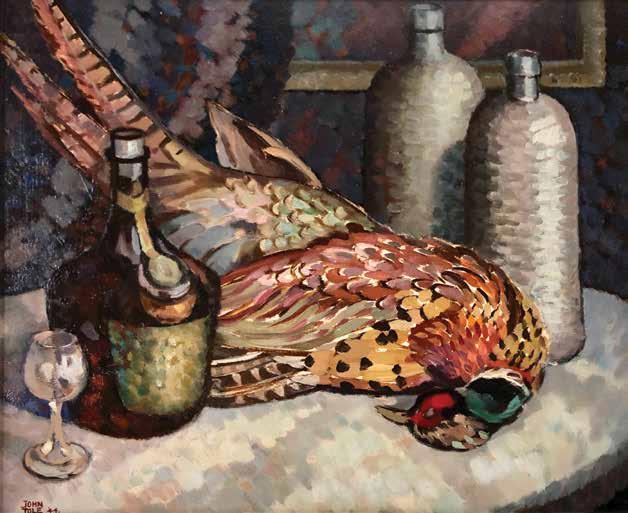
35 JOHN TOLE (1890 - 1967)
Still Life with Pheasant Oil on board 39.5 x 44
Signed & dated 1944
$4,000 - 6,000
PROVENANCE
Paul & Kerry Barber Collection
Original artist’s label affixed verso New Zealand and Foreign Paintings, Dunbar Sloane, 29/11/2000
RAYMOND MCINTYRE (1879 - 1933)
36
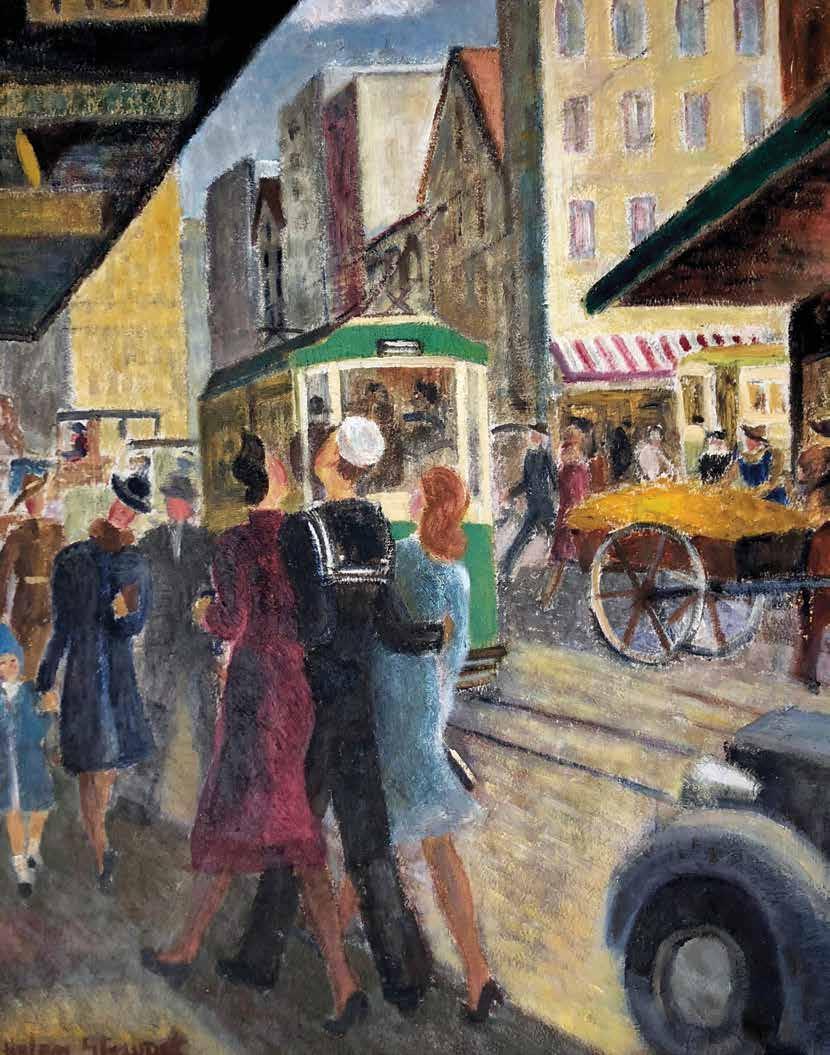
HELEN STEWART (1900 - 83)
Wellington Street Scene Oil on board 59 x 49
Signed
$15,000 - 20,000
PROVENANCE
Paul & Kerry Barber Collection
Art Auction, Dunbar Sloane 08/05/2002
Helen Stewart began studying under Harry Linley Richardson at the Technical School in Wellington in 1921. In 1927 she held her first exhibition but soon left for London leaving soon after to further her training. The next year she lived in Paris and attended the Académie Colarossi and the Académie de la Grande Chaumière. She returned to the antipodes in 1930, arriving in Sydney to join her family who had moved from Wellington to live there. There she attended the Julian Ashton Art School.
In 1931 Stewart entered the Grosvenor School under Ian McNab. She returned to Paris in 1932 and had a full year studying with Yadav Vytllayl at André Lhote’s atelier.
Stewart was a modernist painter, influenced by European and British post-impressionist art,
specifically Henri Matisse, Pablo Picasso, Fernand Léger and the Camden Town artists. While studying with André Lhote she developed an appreciation for the theory of the Golden ratio, the balancing of spatial and colour relationships.
Stewart was a contemporary of Dorothy Kate Richmond, Frances Hodgkins, and Gwen Knight. After returning to Australia in 1934 she became a member of the avant-garde Contemporary Art Society. In 1938 150 Years of Australian Art anniversary catalogue featured her painting Freesias
In Australia she exhibited with Margaret Preston and Grace Cossington Smith. Although she was initially rejected by the New Zealand Academy of Fine Arts she did later exhibit with them. She also exhibited with the The Group in Christchurch in 1948.
Stewart returned to New Zealand after the war settling in Lowry Bay, Wellington. She was a founding member of the Thursday Group art collective and continued to paint until her death in 1983.
Stewart was included in Anne Kirker’s publication New Zealand Women Artists: a Survey of 150 Years.
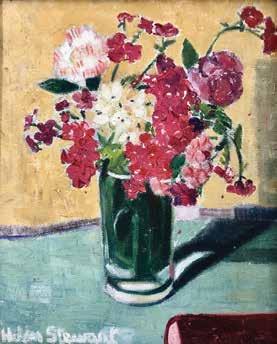
37 HELEN STEWART (1900 - 83)
Still Life in Green vase Oil on board 32 x 26
Signed
$2,500 - 3,500
PROVENANCE
Paul & Kerry Barber Collection
Contemporary & Traditional New Zealand & European Art, International Art Centre 29/3/2001
38
New Zealand and Foreign Paintings, Dunbar Sloane 12/04/2000 38
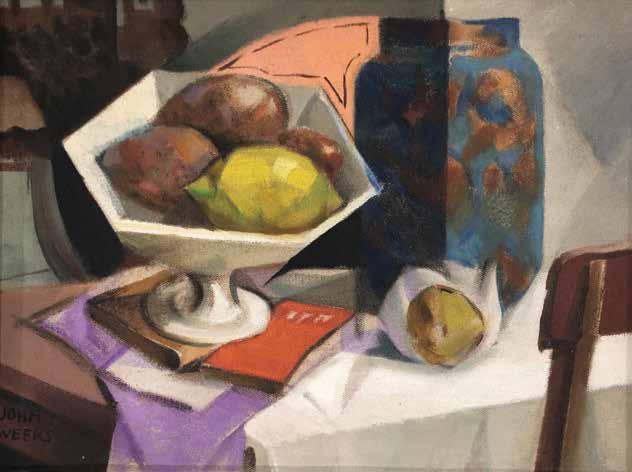
JOHN WEEKS (1888 - 1965)
Still Life, 1945
Oil on canvas 29 x 39
Signed
$10,000 - 15,000
PROVENANCE
Paul & Kerry Barber Collection
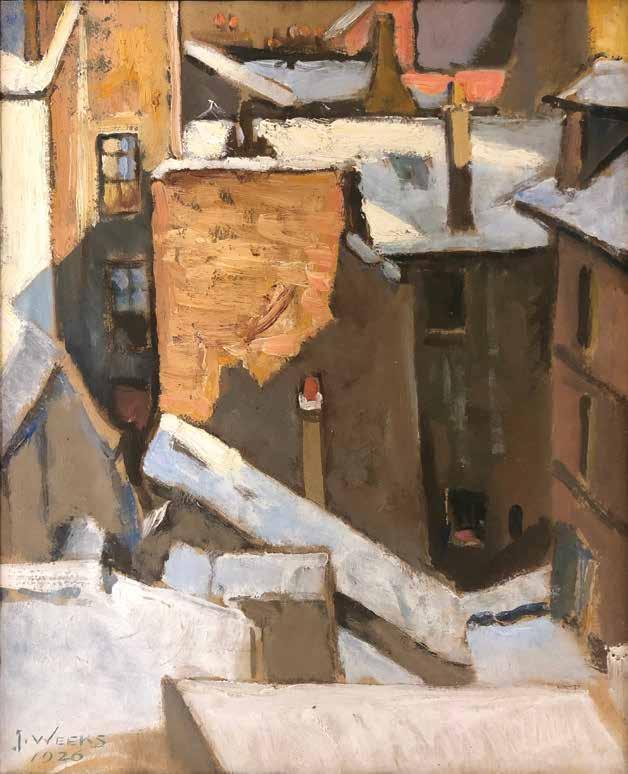
39
JOHN WEEKS (1888 - 1965)
Parisian Rooftops
Oil on board 34 x 27
Signed & dated 1926
$7,000 - 10,000
PROVENANCE
Paul & Kerry Barber Collection
Contemporary & Traditional
New Zealand & European Art, International Art Centre 26/07/2001
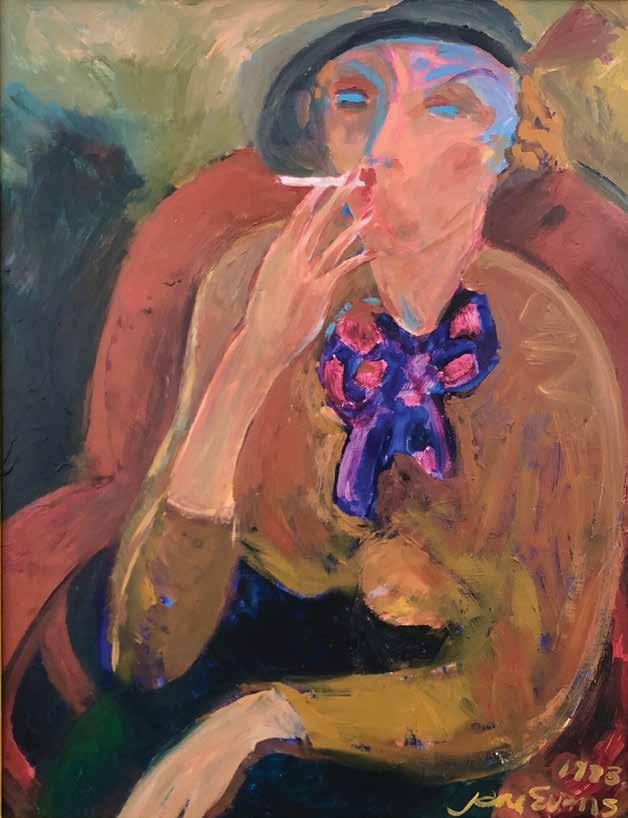
40 JANE EVANS (1946 - 2012)
Woman with Cigarette
Acrylic on board 75 x 59
Signed & dated 1983
$8,000 - 12,000
PROVENANCE
Paul & Kerry Barber Collection
Fine Art Auction, International Art Centre 25/07/2002
Jane Evans was born in Nelson 1946 and educated at Nelson College for Girls. She enrolled at the Ilam School of Fine Arts in 1965, and the following year travelled to England to attend London’s Waltham Forest Art College. Following a period of formal study she commenced self-education. This freedom of spirit from a young age resonates throughout a life time’s creation of vibrant, free-flowing works.
Evans’ innate understanding and use of colour saw her flower and figurative narratives hit a high spot in the buoyant international art market of the early to mid 1980s. Today, enthusiasm for her work is again being witnessed in the sale room.
After an initial diagnosis of rheumatoid arthritis in 1965, Evans was diagnosed with an ongoing condition that affected her for the rest of her life. Often literally painting through her pain, while adapting her painting methods and media accordingly, Evans stated: Suddenly there was life in front of me and I had to grab it with both hands. It was a compulsive thing for me to express the joys of life.
Evans moved to Christchurch in 1967, returning to Nelson in 1971 and the ongoing support of close friends and family. 1972 saw the artist painting the colourful characters of Sydney’s Kings Cross and setting up a studio in Melbourne. In 1974 she travelled again to
England where she spent three months commencing a series of works showing people visiting and viewing paintings in the London galleries and the lively exchanges at markets such as Portobello Road.
Returning home Evans purchased a cottage in Tasman Street which she renovated and lovingly established the garden which became a tremendous source of inspiration for her signature flower paintings. Of this time she said: the garden was an extension of my life. When I turned to watercolours I found myself in touch with this wonderful, loose spontaneous medium that was really exciting.
Passionate about the expressionist works of Matisse, Bonnard and Chagall, Evans said: I am drawn to the painters who express the joy in living. Her paintings resonated with the public and there were waiting lists for her work. She never allowed journalists to make mention of her illness but worked closely with John Coley who published her 1997 biography.
Evans was appointed the 1997 Officer of the New Zealand Order of Merit for services to painting. She died peacefully in 2012 at the Nelson home which she shared with her partner David Furniss.
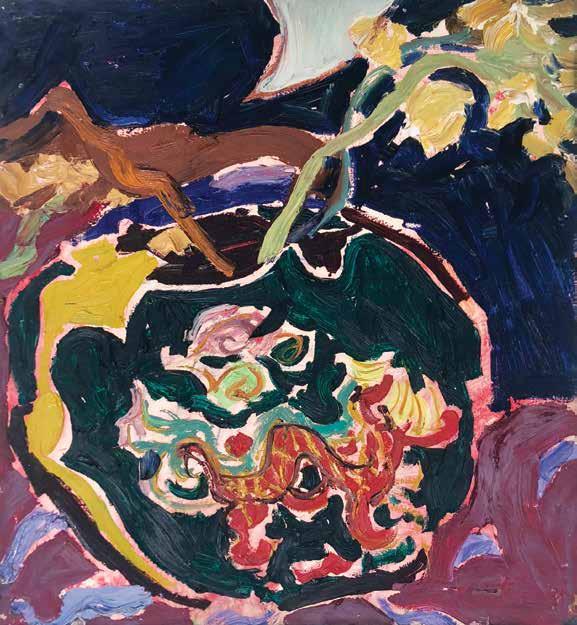
41 PHILIP TRUSTTUM ( b. 1940)
Red Dragon
Oil on board 53.5 x 45.7
Signed & dated 1972
$4,000 - 6,000
PROVENANCE
Paul & Kerry Barber Collection
The Candy Collection, Dunbar Sloane 12/11/1997
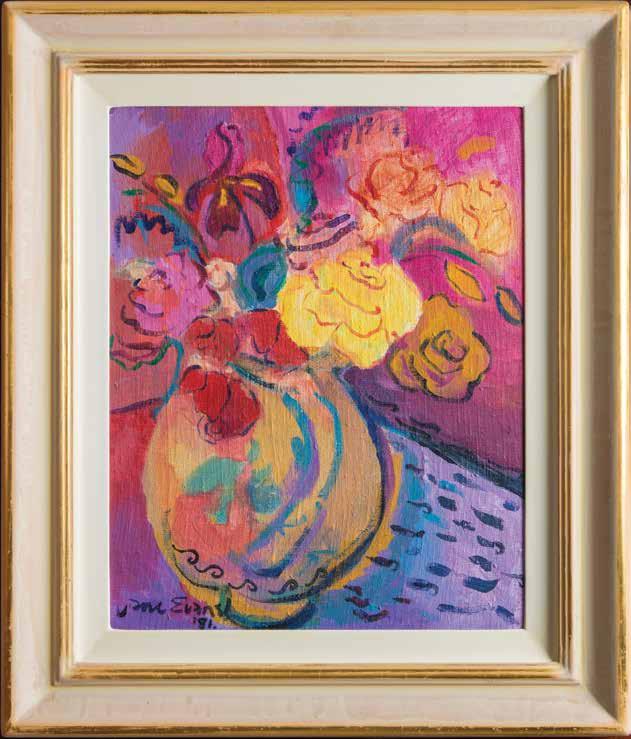
42 JANE EVANS (1946 - 2012)
Vase of Flowers
Acrylic on linen 61 x 48
Signed & dated 1981
Inscribed Vase of Flowers on original label affixed verso & dated December 1981
$7,000 - 10,000
PROVENANCE
Paul & Kerry Barber Collection
43
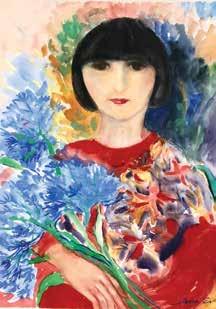
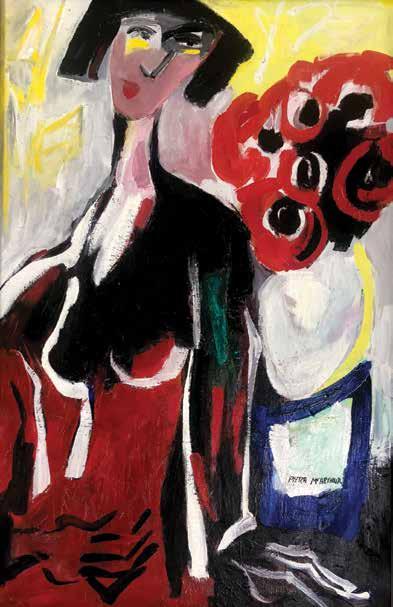
43 PIERA MCARTHUR (b. 1929)
Self Portrait with Anemones
Oil on canvas 99 x 64
Signed
Signed & inscribed Self Portrait with Anemones - Paris & dated 1978
$3,000 - 5,000
PROVENANCE
Paul & Kerry Barber Collection
Purchased directly from the artist, 3/6/2001 - Original purchase receipt available
44
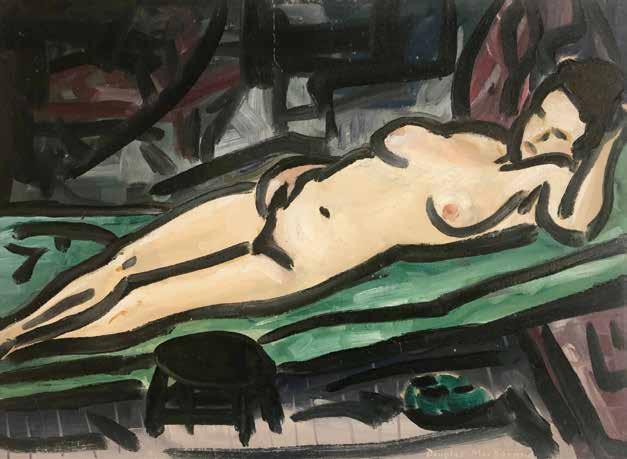
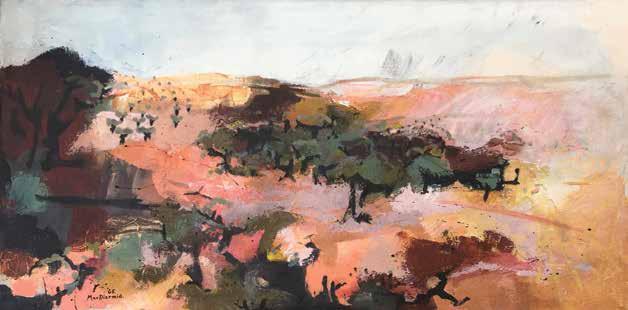
DOUGLAS MACDIARMID (b. 1922)
Reclining Nude c. 1947
Oil on board 36 x 48
Signed
$3,000 - 5,000
PROVENANCE
Paul & Kerry Barber Collection
Art Auction, Dunbar Sloane 4/9/2002
Douglas has always been captivated by the innate beauty and sensuality of the human form. Figurative paintings form a significant part of his portfolio, and he has painted nudes regularly throughout his career. As a determinedly ‘unschooled’ painter, access to naked live models was the only reason he occasionally stepped into academic art classes.
In 1947-48, Douglas was living and working in London and Paris on his first overseas trip. Still honing his skills, he was influenced by Matisse and other impressionist masters at the time. Several paintings of friends in London in that period, including two Polish girlfriends Teresa and Danuta, are made in a similar style.
Reclining Nude was one of a number of fresh paintings he brought back to New Zealand in 1949, when he came home for a year before deciding to settle in France and dedicate his life to painting.
It may have been shown at his first solo art exhibition in Wellington Public Library in 1949, and soon became part of pioneering art and design gallery owner Helen Hitchings’ personal collection. Helen and Douglas were lovers at the time, and the painting remained with her for the rest of her life. After her death, it was purchased by the Barbers at her estate clearance.
In his 2002 art history MacDiarmid by Dr Nelly Finet, of Paris, MacDiarmid observed: The body has always mattered in the collective vision of our culture, but naked, remained largely within the sphere of art. The mass beach-holiday industry of our time has finally stripped us bare and created an insistence on youth and health only equaled by our determination to ignore the neurotic consequences. Still, there is a generous display of beauty available, and I try to extract the rhythms of this scene, to see the body untrammeled with detail. It is also impossible to overlook the neuroses entirely.
Anna Cahill, MacDiarmid Arts Trust
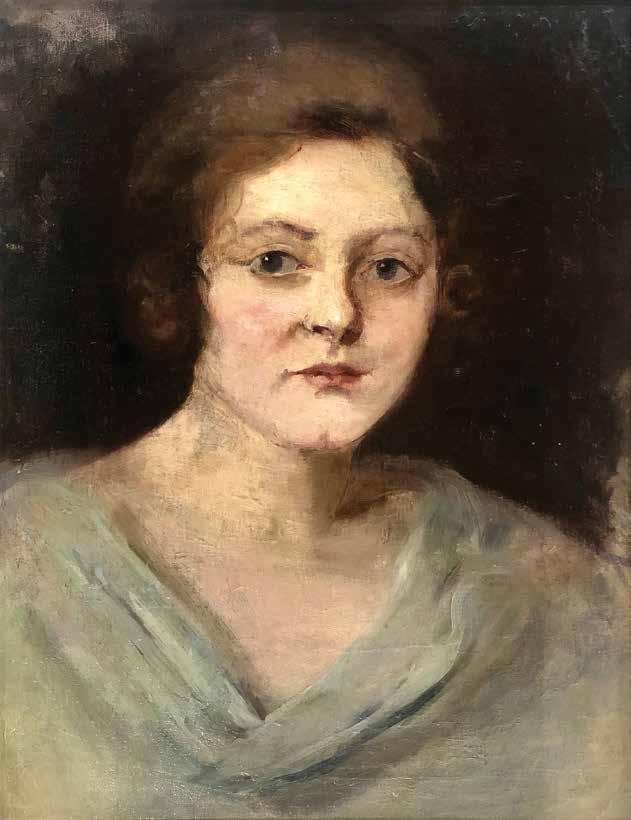
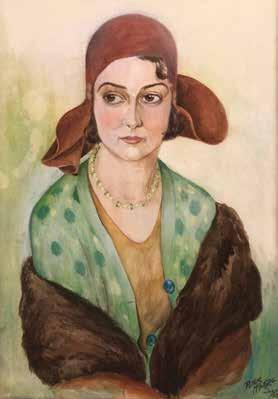
45 GRACE JOEL (1865 - 1924)
Portrait of a Young Woman (Niece of Dora Meeson) Oil on canvas 44 x 34
$5,000 - 8,000
PROVENANCE
Paul & Kerry Barber Collection
Collection of Grace Joel nephew Hartley
Joel Collection sold to the Barbers at Fine Art Auction, International Art Centre 15/10/1999
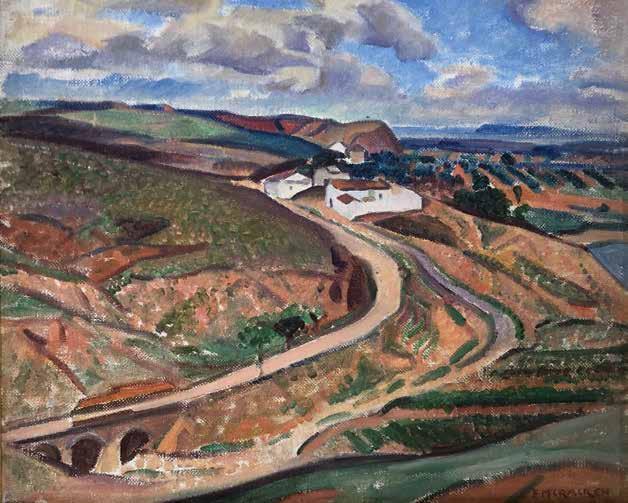
46 FRANCIS MCCRACKEN (1879 - 1959)
Landscape in Spain Oil on canvas 44 x 54
Signed
$8,000 - 12,000
PROVENANCE
Paul & Kerry Barber Collection
Fine New Zealand & Foreign Paintings, Webb’s 12/12/2000
47
47
PETER MCINTYRE (1910 - 95)
Portrait of a Lady, Possibly the Artist’s Mother Watercolour 49 x 34
Signed Peter McIntyre Jnr & dated 1930
$800 - 1,200
PROVENANCE
Paul & Kerry Barber Collection
Fishers Fine Arts label affixed verso Note: The earliest work by Peter McIntyre we have offered. Painted when the artist was just 20 years old
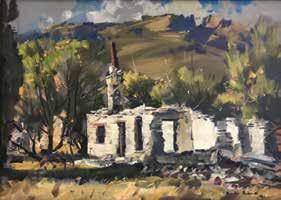
48 DOUGLAS BADCOCK (1922 - 2009)
Ruins of the Old Hotel, Nevis Valley, Central Otago Oil on canvas 40 x 55
Signed & dated 1973
$2,500 - 3,500
PROVENANCE
Paul & Kerry Barber Collection
49 COLIN VERNON WHEELER (1919 - 2012)
Wool Shed Watercolour 41 x 39
Signed & dated 1976
$1,500 - 2,500
PROVENANCE
Paul & Kerry Barber Collection
50 THOMAS ARTHUR MCCORMACK (1883 - 1973)
Beach Landscape
Watercolour 25 x 39
Signed
$800 - 1,500
PROVENANCE
Paul & Kerry Barber Collection
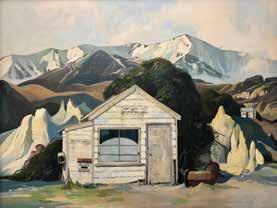
51 COLIN VERNON WHEELER (1919 - 2012)
Post Office on the Diggings, Naseby, Central Otago Oil on board 65 x 88
Signed & dated 1974
$3,000 - 5,000
PROVENANCE
Paul & Kerry Barber Collection
Purchased from a Lions Auction at Emerald Glen, 1976
52 COLIN VERNON WHEELER (1919 - 2012)
Emerald Glen Through Macrocarpa Oil on canvas laid on board 34 x 44
Signed
$1,500 - 2,500
PROVENANCE
Paul & Kerry Barber Collection
Purchased from the artist 1979
53
PETER MCINTYRE (1910 - 95)
Portrait of a New Zealand WAACS Oil on board 40 x 37
Signed
$2,500 - 3,500
PROVENANCE
Paul & Kerry Barber Collection
Paul and I watched the artist paint this painting at Emerald Glen House in 1979, in South Paraparaumu - Kerry Barber
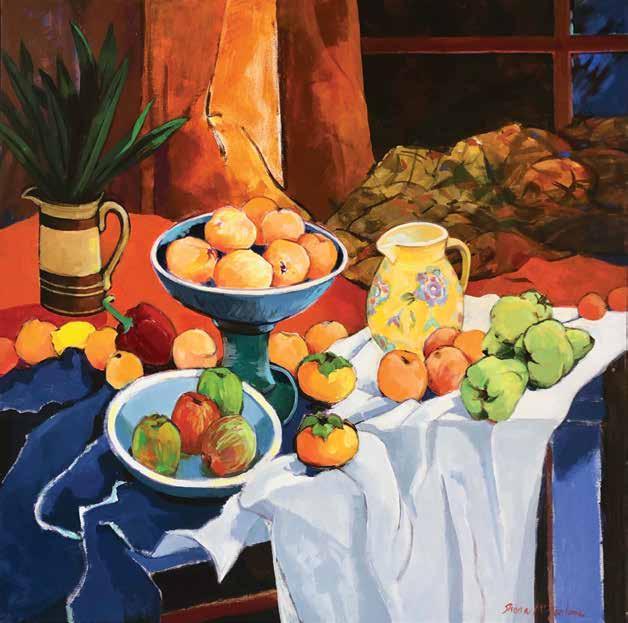
54 SHONA MCFARLANE (1929 - 2001)
Still Life with Oranges Oil on canvas 91 x 91
Signed
Inscribed Still Life with Oranges & dated 2000 verso $4,000 - 6,000
PROVENANCE
Paul & Kerry Barber Collection
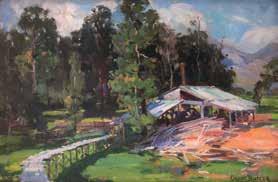
55 GRACE BUTLER (1886 - 1962)
Sawmill, Te Kinga, West Coast Oil on board 25.5 x 39.5
Signed
$2,000 - 3,000
PROVENANCE
Paul & Kerry Barber Collection
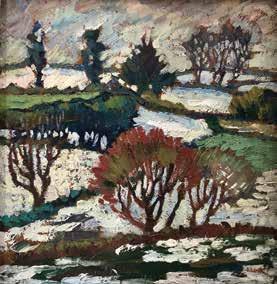
56 DORIS LUSK (1916 - 90)
Winter Landscape Oil on board 30 x 29.5
Signed
$4,000 - 6,000
PROVENANCE
Paul & Kerry Barber Collection
Fine New Zealand Paintings, Jewellery & Decorative Arts, Webb’s 11/12/2001
57
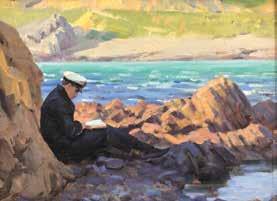
MARCUS KING (1891 - 1985)
Sailor Boy, ‘Jack Ashore’ Oil on canvas board 28 x 37
Signed
$1,500 - 2,500
PROVENANCE
Paul & Kerry Barber Collection
Purchased directly from the artist, 1977
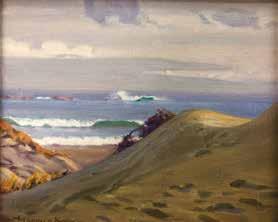
58 MARCUS KING (1891 - 1985)
Sand Dunes & Coastal Scene Oil on canvas board 22.5 x 27
Signed
$500 - 1,000
PROVENANCE
Paul & Kerry Barber Collection Purchased directly from the artist, 1978
59 ANN ROBINSON (b. 1944)
Generation Bowl, 2000
Cast glass, #17, 39.5 x 39.5 x 21
Signed, inscribed NZ & dated 2000 on base
$20,000 - 30,000
PROVENANCE
Private Collection, Wanaka
Purchased from Masterworks, 2002
60 ANN ROBINSON (b. 1944)
Side Carved Flax Pod
Cast glass 34 x 32 x 24
Signed, inscribed 1/1 & dated 1998 on base
20,000 - 28,000
PROVENANCE
Private Collection Auckland
Purchased from FHE Galleries, 2007
Ann Robinson, born in Auckland 1944, is a New Zealand studio glass artist who is internationally renowned for her glass casting work. Robinson is a recipient of the 2001 ONZM and in 2006 received a Lifetime Achievement Award by the American Glass Art Society. Robinson became a Laureate of the Arts Foundation of New Zealand in 2006.
Robinson’s work features in the permanent collections of art galleries around the world, including the Victoria and Albert Museum in the United Kingdom, the Museum of New Zealand Te Papa Tongarewa, Corning Museum of Glass in the United States, the National Gallery of Victoria, Australia and Stradtmuseum, Germany. She has also regularly exhibited in both solo and group exhibitions in New Zealand and Internationally.
In addition to her own art, Robinson is notable for the contribution she has made to the caste glass technique internationally and the development of New Zealand cast glass artistry. She is one of a small number of practitioners in the world responsible for the development of the lost wax casting technique for glass. As D Wood, in magazine Neus Glas states of Robinson, she is an internationally respected doyenne of the genre. Selected works from other vendors Lots
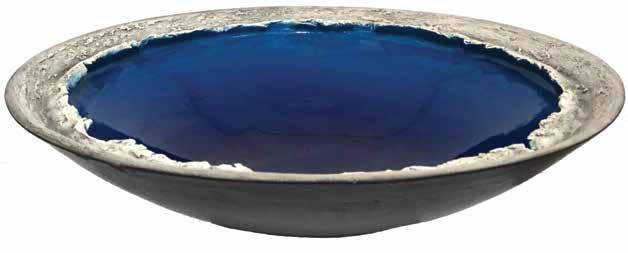
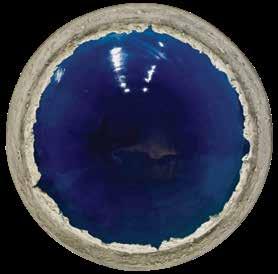
61 LEN CASTLE (1924 - 2011)
Large Crater Lake Bowl
Glazed ceramic bowl 58 x 58 x 17
Signed with impressed initials on base
$7,000 - 10,000
PROVENANCE
Purchased directly from artist c. 2005
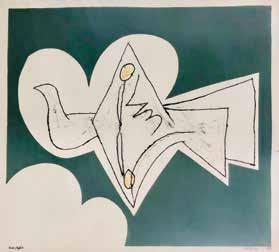
62 PAT HANLY (1934 - 2002)
Bird Flight
Screenprint, edition 2/10, 54 x 60
Signed & dated 1970
$2,500 - 3,500
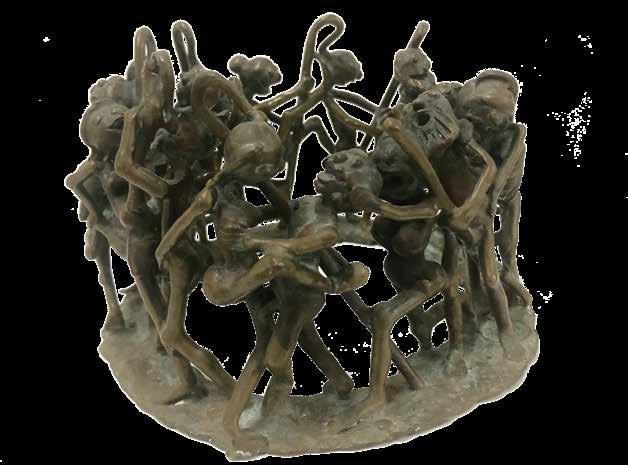
63 PROFESSOR PAUL BEADLE (1917 - 93)
Ritual
Bronze 13 x 13 x 10
Signed with impressed initials on base
$8,000 - 12,000
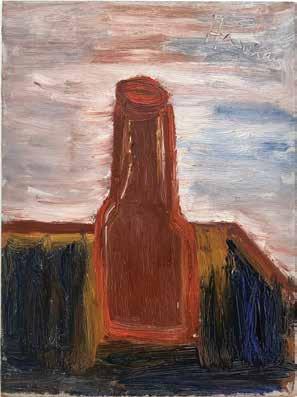
64 PATRICK HAYMAN (1915 - 88)
Red Jug Oil on board 39 x 28
Signed
$1,500 - 2,500 63
65
65
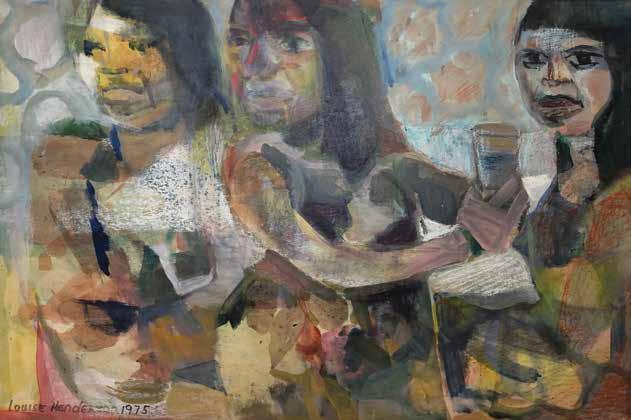
LOUISE HENDERSON (1902 - 94)
Women of Ponsonby
Oil on board 39.5 x 60
Signed & dated 1975
$15,000 - 20,000
PROVENANCE
Purchased directly from the artist
Letter from artist to owner affixed verso
66 PETER SIDDELL (1935 - 2011)
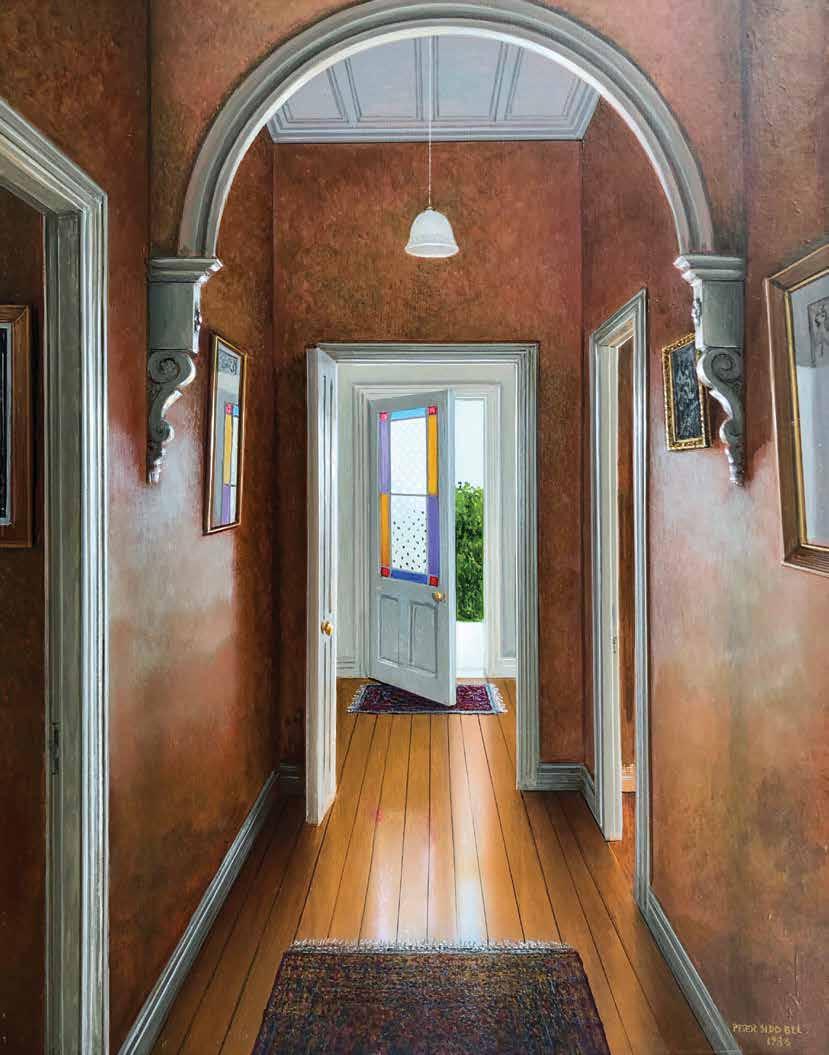
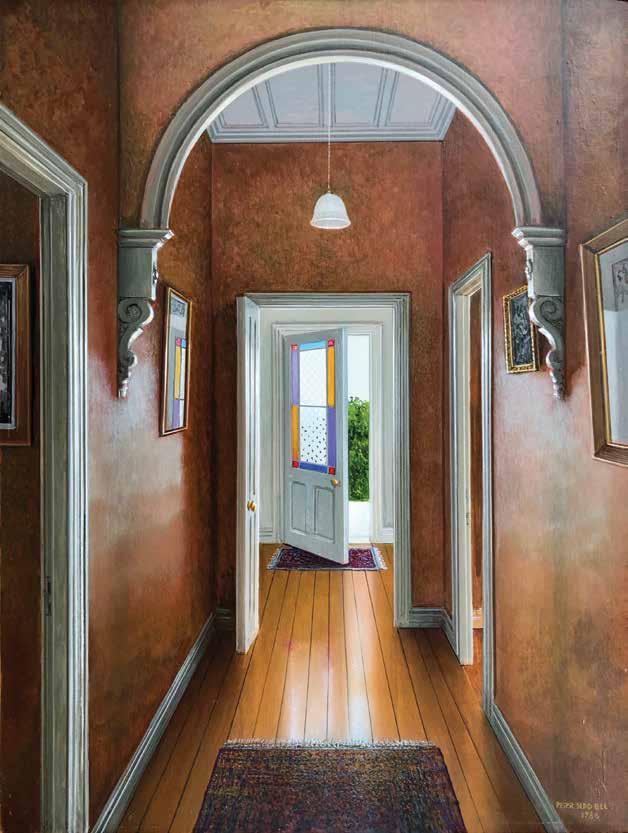
Doorway
Oil on board 40 x 30
Signed & dated 1986
Inscribed Doorway, Acrylic (Liquitex & Matisse) verso & dated 1986 on artist’s original label also affixed verso
$15,000 - 20,000
PROVENANCE
Private Collection, Auckland
Purchased directly from the artist, 1986
The stained glass door was from the home of friend and sculptor Terry Stringer
before
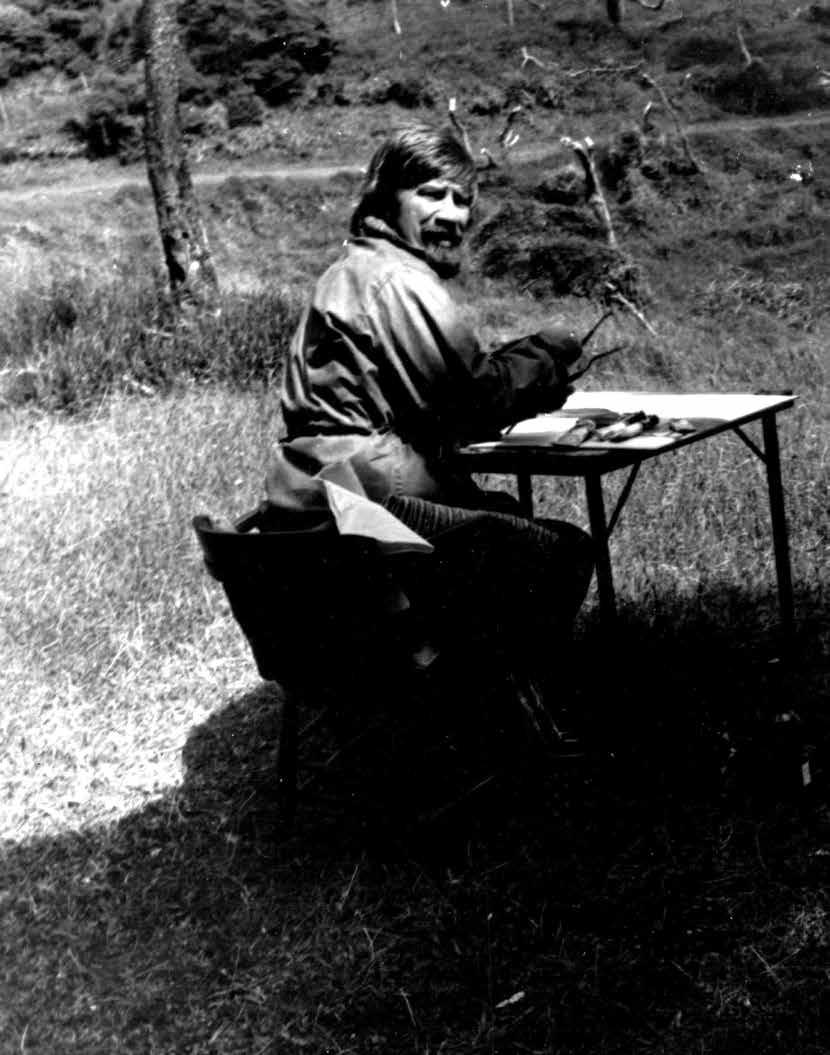
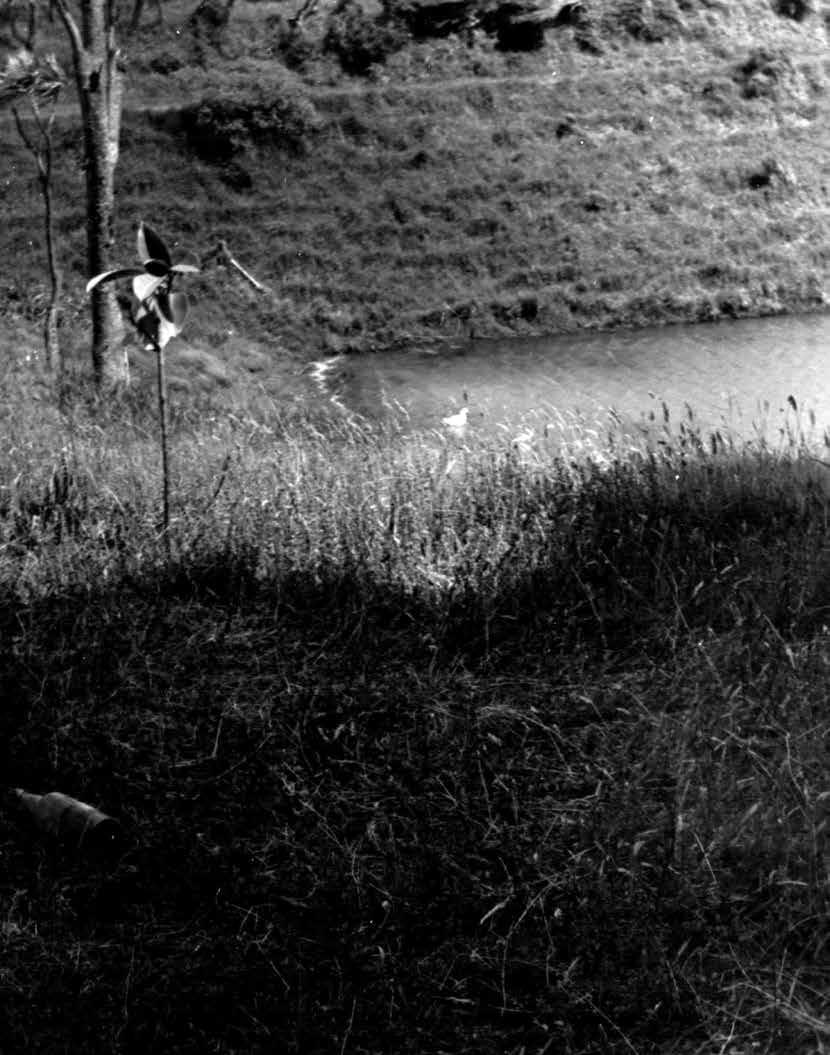
Don Binney at Te Henga, c 1972
A never
published photograph of the artist at Te Henga
Reproduced courtesy of Philippa Binney
67 DON BINNEY
(1940 - 2012)
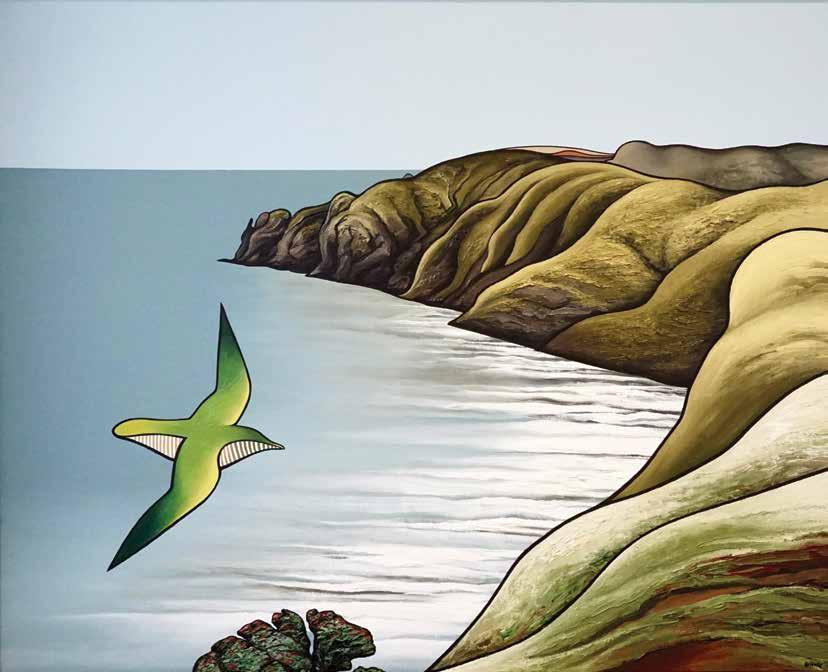
Pipiwharauroa over Te Henga Oil on canvas 122 x 152.5
Signed & dated 1974
$450,000 - 650,000
PROVENANCE
Private Collection, Auckland since 1980
As a boy, Don Binney looked forward to hearing the shining cuckoo, or pipiwharauroa. He heard it for the first time in Kohimarama, its song heralding the beginning of spring. As the Maori proverb says, ka tangi te wharauroa, ko nga karere a Mahuru - if the shining cuckoo cries, it is the messenger of spring. Binney reportedly never lost touch with the joy of this bird’s song. Spring represents hope; newness in life and nature. This feeling is perfectly aligned to the glorious, soaring beauty of the shining cuckoo in the foreground of this painting.
Pipiwharauroa over Te Henga represents the pinnacle of Binney’s contribution to New Zealand art. Produced during his most technically successful period, it is one of the most important of his oeuvre. The combination of its superb quality, large scale, and pristine condition make it the most significant Binney to have ever been presented to auction.
Te Henga/Bethell’s Beach was one of Binney’s favourite spots, and features in many of his works. It is named after the henga, or upturned form of the waka, which resembles the contours of the coast when looking from sea. In this painting, the land has been sharply detailed to convey the light and impression of each topographical contour.
The size of the work reflects Binney’s confidence in his own technique. Here, the slight technical aberrations that were present in the less certain, experimental forms of some of his 1960s bird paintings (more often than not, imperfections resulting from problematic paint application) are long gone. By 1974, he had firmly resolved them, and had also been painting Te Henga for over twelve years.
Pipiwharauroa over Te Henga greatest technical triumphs is its textural contrast. Binney’s application of a smooth, matte-like finish to portray the bluish grey expanses of sea and sky are flat and serene, mirror-like in appearance. They cast the glossy impasto of the pipiwharauroa, and the green of the hills into sharp relief. This contrast is sublime, so that the painting appears not uniformly polished, but inimitably finessed.
Don Binney is New Zealand’s unsurpassed artistornithologist. Over the course of his career he painted birds, works conveying strong messages of conservation and environmentalism. He also completed a number of other works featuring the pipiwharauroa in particular – depicting it mating, in “madness”, in advent, in late summer, and with kereru. According to Maori mythology, it was this bird’s migratory flight which inspired the journey of Maori to New Zealand.
Although the pipiwharauroa is a harbinger of spring and this symbolism is apt, this work does not need to be interpreted in a seasonally specific way – in the foreground, vividly detailed and blooming red, there is a pohutukawa tree. With the presence of New Zealand’s Christmas tree, this painting becomes more than a spring birdsong of hope and joy; it is a national anthem.
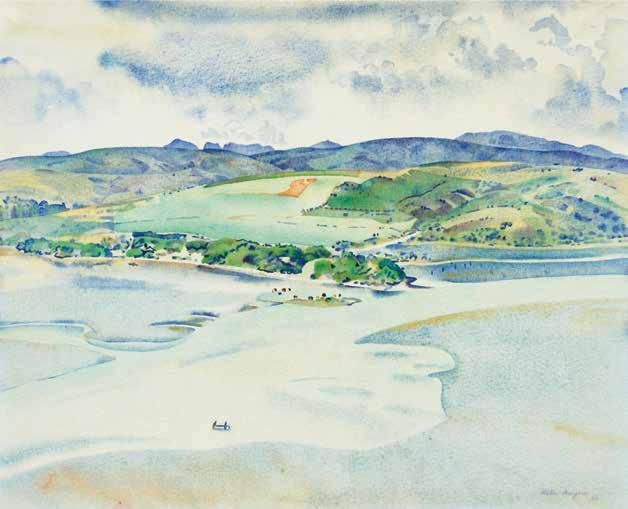
68 RITA ANGUS (1908 - 70)
Mangonui
Watercolour 28.8 x 35.8
Signed
$17,000 - 22,000
PROVENANCE
Purchased from Important, Early & Rare, International Art Centre, March 2011
Prior to this Private Collection, France, until returned to New Zealand in 2010
This work is a similar composition to Mangonui, a watercolour from the collection of Te Papa Tongarewa, illustrated p. 143 Life & Vision, edited by William McAloon & Jill Trevelan, Te Papa Press, 2008
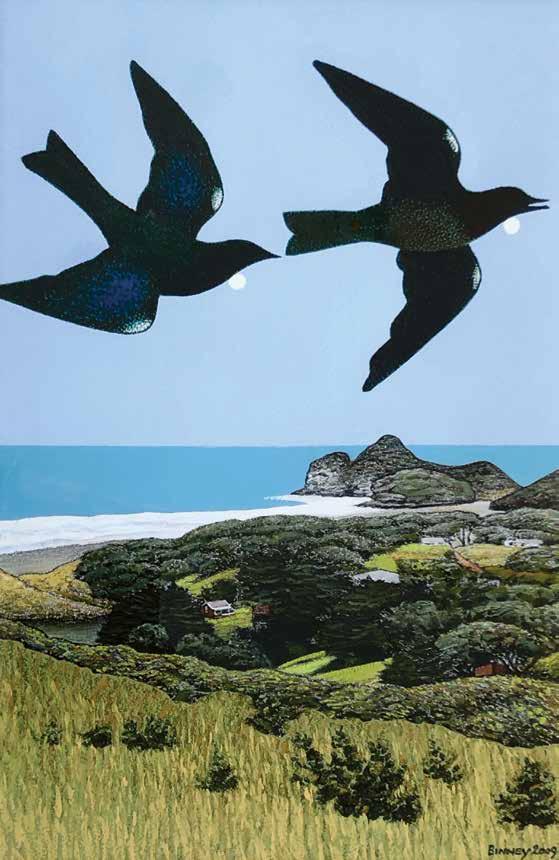
69 DON BINNEY (1940 - 2012)
Mad Tui Over Homestead, Te Henga
Acrylic and oil stick laminate on arches
paper 38.5 x 25
Signed & dated 2009
$50,000 - 75,000
PROVENANCE
The Diversion Gallery Original label affixed verso
70 MICHAEL SMITHER (b. 1939)
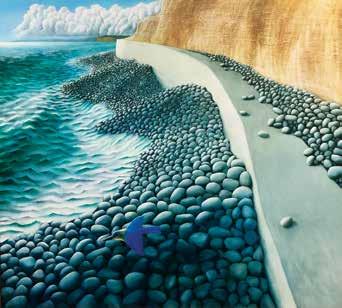
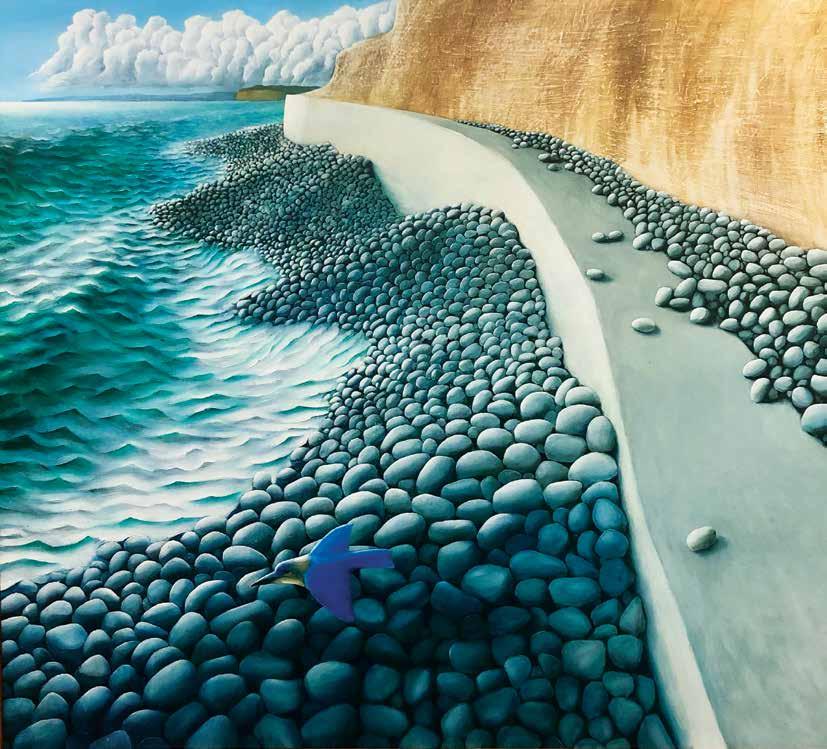
Sea Wall and Kingfisher, 1967
Oil on board 110 x 122
Signed & dated 1967
Inscribed The Sea Wall & The Gables, Brooklands Park, New Plymouth verso
$250,000 - 350,000
PROVENANCE
Purchased at Peter McLeavey Gallery, 1969 by current owners parents
Collection of Michael & Brigid Chunn,
ILLUSTRATED
p. 85 Michael Smither Painter, Trish Gribben, Ron Sang Publications, 2004
Seawall and Kingfisher, 1967 is a sweeping encounter between land, sea and sky. Acquired from Peter McLeavey Gallery in 1967 by the current owners family, this is one of the most important paintings by Michael Smither to have been presented to the market.
The concrete seawall which bisects the cliff face and sea was built to protect the Taranaki coastline, and to prevent the erosion of Kawaroa Park. The title draws our attention to the wall, suggesting that this scene is at least partly a reflection on the land’s degeneration, and commenting on the need for man made intervention.
The presence of a beautiful gliding kotare in this painting is particularly special because the bird’s inclusion is a tip of the hat to Smither’s contemporary, Don Binney. These two artists had much in common, particularly during this 1960s period of production when their respective hard-edged, realist styles were shaping an emergent language of New Zealand modernism. Their work also shares thematic concerns around conservation and protection of the environment.
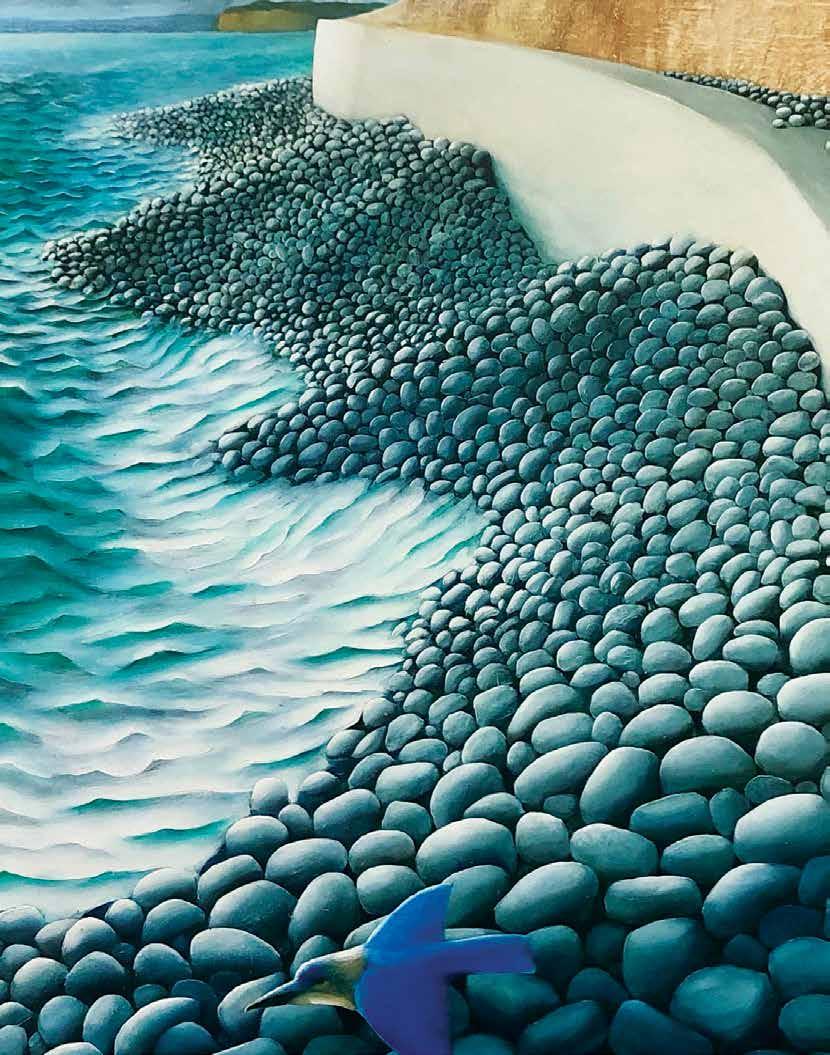
Rocks along the Taranaki coastline, were a common motif in Michael’s Smither’s work throughout the 1960s, and one which he returned to decades later in his career. In this painting, the luminous arrangement of rocks along the waterfront is as recognisable to Smither’s hand as soaring birds are to Binney’s. They are carefully stacked onto each other. Each rock is smoothly formed, with a sense of clarity and selfcontained coolness.
To the viewer, they may seem almost too perfect to be able to connect with physically, as if they exist in a slightly surreal, other-worldly space.
One of the striking things about this painting is how the different natural elements appear in exchange with each other. Smither has sculpted the rocks against the seawall, with each of the individual forms existing as part of a larger whole. He has talked about the points of contact that maintained the balance of rock on rock, and it is this sense of integral balance and unity which commands our focus as viewers, and seems to run between the different natural elements in the work. Alongside the rippling waves, and smoothness of the seawall, the rocks’ texture and form is exaggerated.
In the title of another of his rock series works, Smither describes the land as suckling the sea, which also feels relevant to this painting. Here, the sea is presented as a life force. Imagine that every rock in this picture has its perfect opposite in the fluid form of the sea, in the colour reflected back from the hardness of form onto an ever-changing, lapping tide. Then, the lines of this work become even more pronounced, with each ripple seemingly connecting to the land.
In addition to these visual rhythms, there is strong symbolism within this work – in the oneness of land and sea, and the spiritual, purifying qualities of water. It may be considered baptismal; speaking to the promise of new life. Finally, there is the kingfisher, the only living creature in the scene and a bearer of good fortune. Its presence is a symbol of abundance, prosperity, and hope for the land.
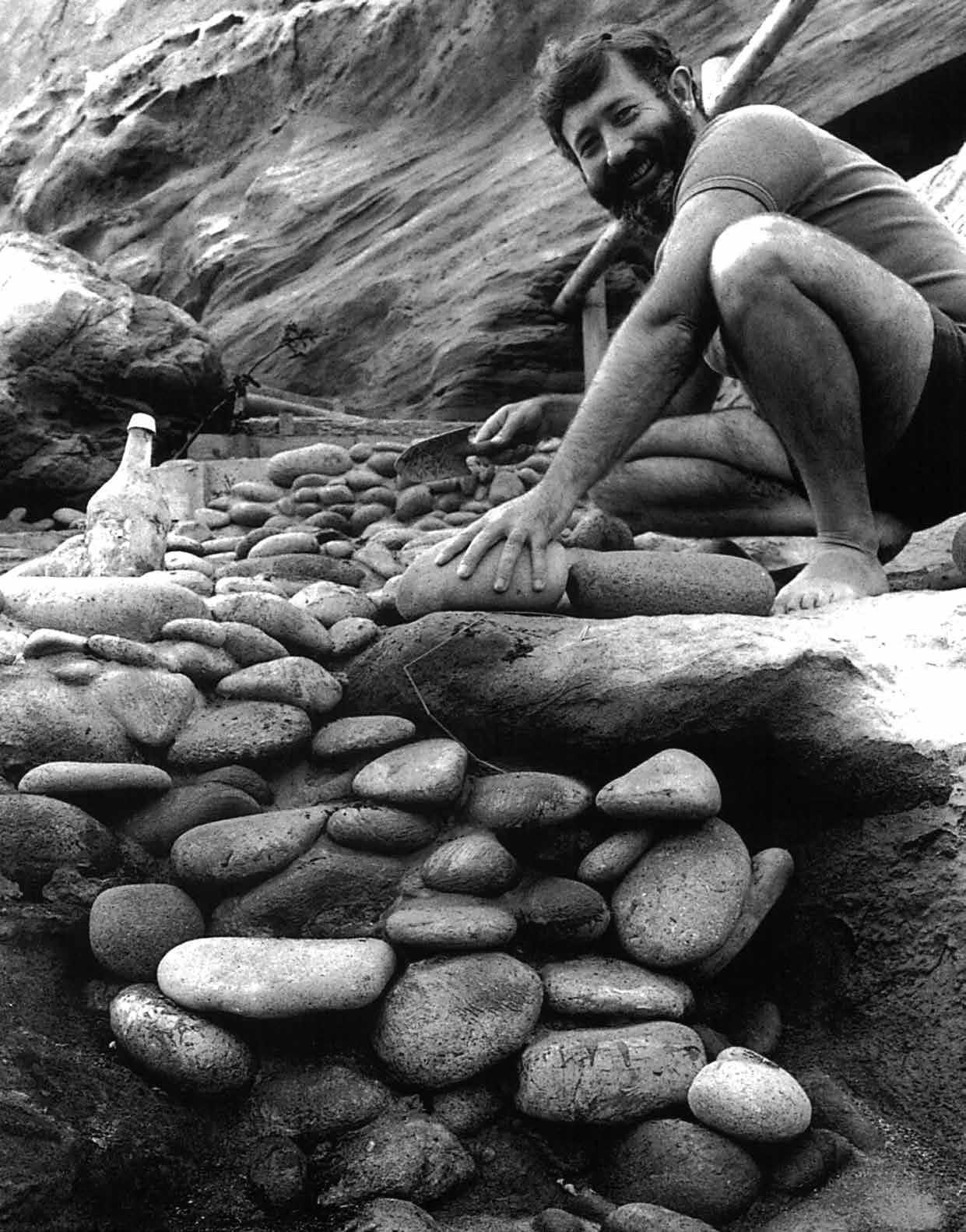
Michael Smither at Back Beach, c. 1968
Photo: Taranaki Newspaper
Photograph reproduced courtesy of Michael Smither
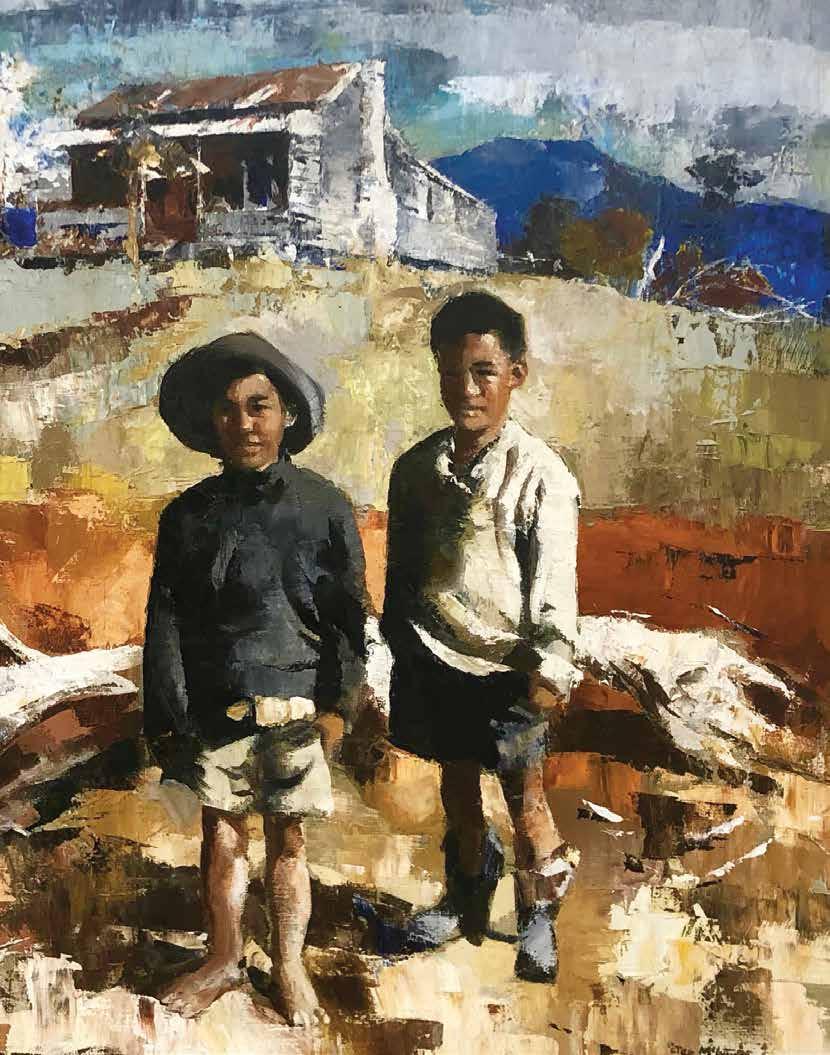
71 PETER MCINTYRE
(1910 - 1995)
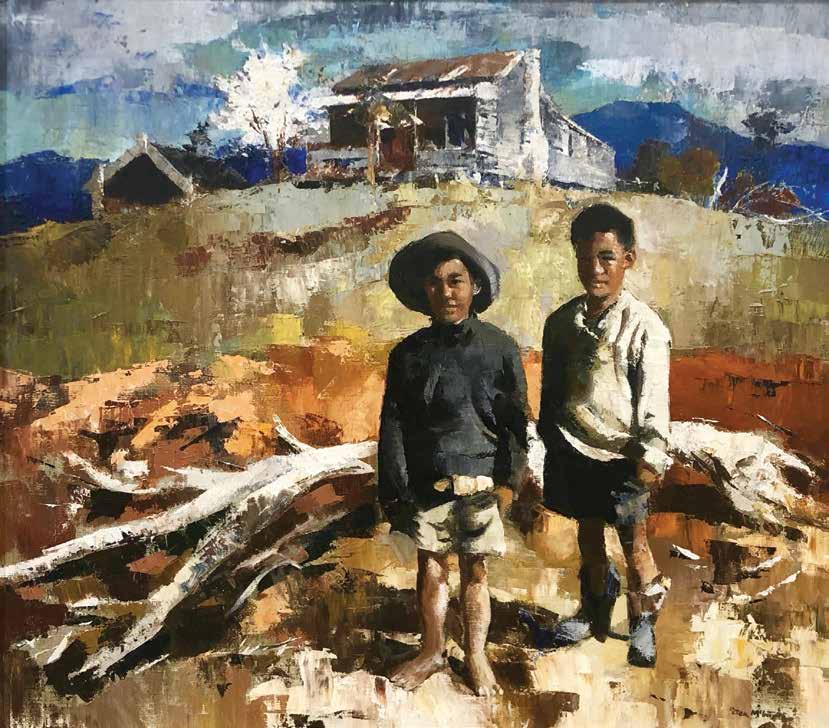
Two Maori Boys Oil on canvas board 65 x 73
Signed
$50,000 - 75,000
PROVENANCE
Private Collection, Auckland
Purchased from One-Man Exhibition at John Leech Gallery, November 1964 by the current owners
Original label affixed verso
EXHIBITED
One-Man Exhibition at The John Leech Gallery, November 1964
Original label affixed verso
ILLUSTRATED
plate 27, Peter McIntyre’s New Zealand
A H & A W Reed 1966
I know this pair well and often speak to them outside the Kakahi village store. They grin in that shy Maori way, but always in the dreaming eyes there is an “unfathomable enigma” as Gauguin called it, and you will see that same look in the faces in a Gauguin painting.
Plate 27 Peter McIntyre’s New Zealand, Peter McIntyre, A H & A W Reed Ltd, 1972
In Kakahi much of what makes life worth living has been preserved: it’s countryside has retained some of the beauty that made New Zealand unique.
I know every pool on it’s miles of river, every track in it’s surrounding bush. It has been my escape and hideout from an ever more strident and ugly world, my refuge from the inane persecution of the telephone. It has restored my faith in this world as a place to live in and has bought to me like heapedup riches, the beauty of the bush and rivers of my country, New Zealand, for Kakahi is New Zealand.
Text: Kakaki, New Zealand, Peter McIntyre, A H & A W Reed, 1972
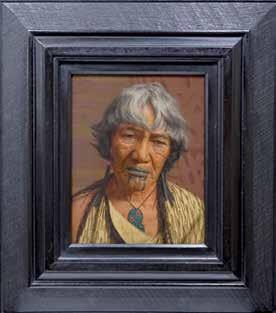
72 CHARLES FREDERICK GOLDIE
(1870 - 1947)
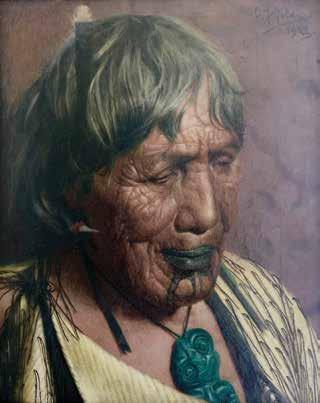
‘A Happy Thought’ Te Aitu Te Irikau, a Noted Arawa Chieftainess
Oil on canvas 26.5 x 21.5
Signed & dated 1922
Inscribed ‘A Happy Thought’ verso
$190,000 - 250,000
PROVENANCE
Private Collection, Auckland
Another version of this work painted on wood panel is illustrated p. 262 C F Goldie: His Life & Painting, Alister Taylor & Jan Glen, 1979
EXHIBITED
A work with the same title and date was exhibited long term loan at Auckland Art Gallery 1929 - 1944
Te Aitu Te Irikau 1831 - 1914 was a high ranking Arawa Chieftainess from Maketu, Bay of Plenty. The historic fall of Te Tumu Pa in May, 1836 took place during her childhood. Te Aitu Te Irikau travelled to Auckland to sit for Charles F Goldie in 1911. He painted up to five further posthumous versions of her. The earlier versions dated 1911 and 1916 Goldie titled Memories whilst a 1918 work he titled A Woman of High Lineage. This work is the last known portrait of Te Aitu Te Irikau and Goldie aptly titled it A Happy Thought.
In Polynesian portraiture Mr C F Goldie stands pre-eminent in the world today, and New Zealand has every reason to be proud of him
Governor General Lord Bledisloe
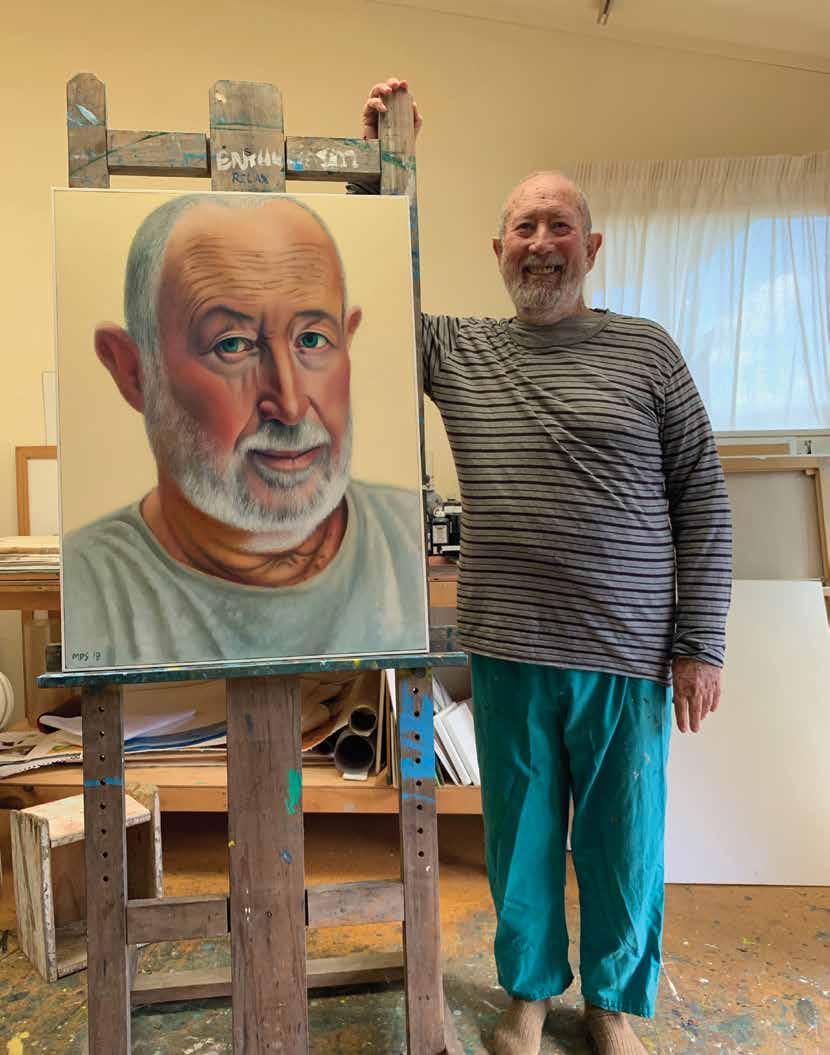
Michael in his studio, September 2019
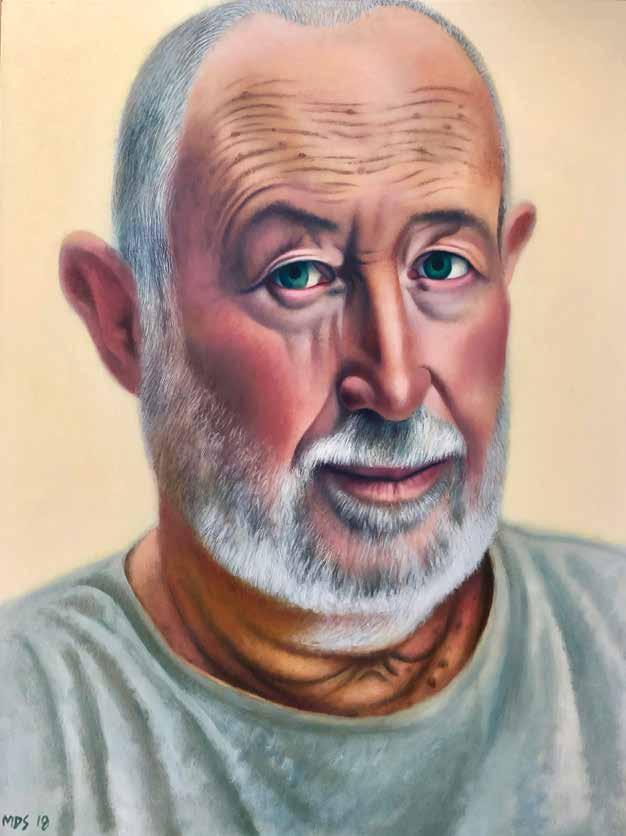
73 MICHAEL SMITHER (b. 1939)
Self Portrait
Oil and alkyd on board 80 x 60
Signed & dated 2018
$25,000 - 35,000
Inscribed Self Portrait verso
PROVENANCE
Collection of the artist
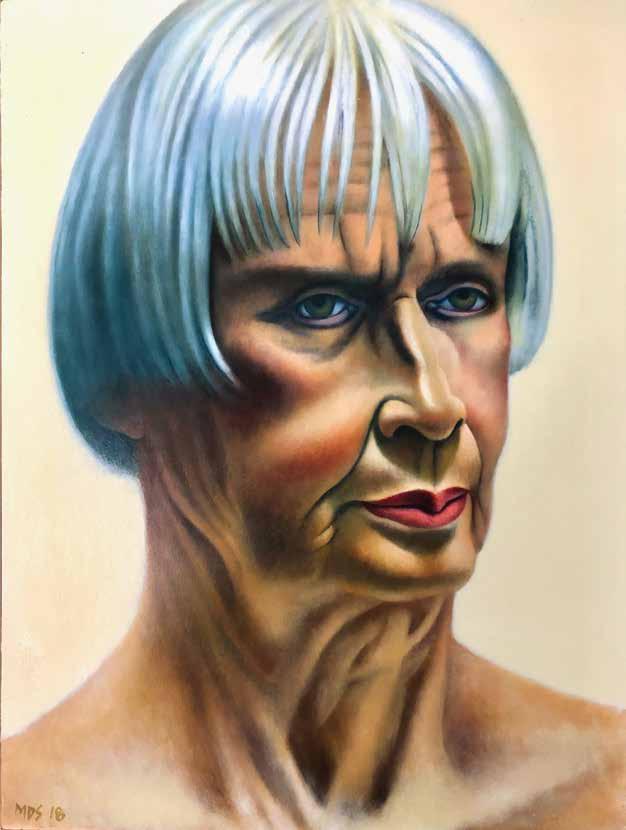
In 2014, Smither asked people from his daily life to sit for him. He cites the images and atrocities in world news as his stimulus for five portraits completed in 2018. This rare self portrait and the one of his partner Gian McGregor are included in this auction. These head shots capture the vitality in faces he knows well. The three other portraits featured Dr David Wilson, Catherine Corcoran and Sue Collins.
Despite having to contend with constant pain and depleted stamina, Smither remains engaged and stimulated by the world and his own place in it. He contrasts these exceptional portraits with his 70s and 80s portraits... They are much less about the painter than the painted, he contends, about one human being looking at another human being, and often seeing the younger spirit within the well-worn face.
I was thinking the other day about death and all that sort of thing, and I thought when it comes to announcing my death that you can say ‘after a long and painful illness’ because I’ve been in pain now, every day for nine years and it’s actually beginning to wear me down, its worn me down to 1 hour, 2
Born in New Plymouth in 1939, Michael Smither CNZM has produced a vast and varied body of work. He enrolled with the Elam School of Fine Arts Auckland in 1959 where he was taught by Anna Lois White, Robert Ellis and John Weeks. Returning to his birthplace he spent the majority of the 1960s working in the Taranaki region. He was highly active in the 1970s and 80s regularly exhibiting nationally.
Smither then abandoned painting for a number of years to concentrate on musical theory and composition, exploring a system of harmonic relationships. He went on to apply harmonics to other visual observations, as he worked in graphics, theatre, prints, artists’ books and murals. As a composer and
74 MICHAEL SMITHER (b. 1939)
G’ian McGregor
Oil and alkyd on board 80 x 60
Signed & dated 2018
$25,000 - 35,000
Inscribed Gian McGregor verso
PROVENANCE
Collection of the artist
hours a day, I’m exhausted you know, I find myself shaking my head, but there are pills for pain, so I take em!
I realise now how much more I’m putting into a painting now than I did in those days - Smither referring to his 1970s and 80s portraits... it’s taking a lot lot longer, but it’s a lot lot better, even I know its better, I don’t need anybody else to tell me.
Michael Smither in Michael Smither Portraits, a documentary by his friend Tony Hiles, 2016
The documentary Michael Smither Portraits can be viewed on the NZIFF website: https://ondemand.nziff.co.nz/#!/browse/ film/15441/michael-smither-portraits
The other eight films in the series can be accessed here https://ondemand.nziff.co.nz/#!/home
pianist, Smither developed a unique understanding of the correlation that existed between the world of colour and the world of sound. He was the recipient of the 1970 Frances Hodgkins Fellowship from the University of Otago and is the patron of community art gallery Real Tart in New Plymouth. In 2004 Michael Smither Painter, Trish Gribben, Ron Sang was published. A year later a retrospective titled The Wonder Years was held at Auckland Art Gallery, accompanied by Ron Brownson’s publication The Wonder Years.
Michael Smither and his partner G’ian, live on the Coromandel Peninsula.
75 DARRYN GEORGE (b. 1970)
Pukapuka #9, 2007
Oil on canvas 150 x 200
Signed, inscribed Pukapuka #9 & dated 2007 verso
$15,000 - 20,000
PROVENANCE
Purchased from Gow Langsford Gallery, 2007, label affixed verso
Darryn George is of Ngāpuhi descent. He connects minimalist abstraction and photographic reproduction which has long influenced New Zealand art. George explores the contrast between glossy photographic images accessible in books and the textural quality of paintings when encountered in real life. He uses abstract patterns that recall the pristine and hard-edged aspect of photographic representations in books, his paintings also include subtleties on the surface such as ridges and wobbly lines differentiating it from photographic reproductions. He primarily envisions his works on computer screens playing around with size, colours, motifs, orientation and texture, adding and amending elements.
The palette for George’s works remains strongly connected to Maori heritage. The lineage of abstraction in George’s measured geometric compositions is discernablefrom Mondrian and the de Stijl movement, through to Peter Halley, Bridget Riley, Sol Lewitt, Donald Judd and New Zealand artist Gordon Walters.
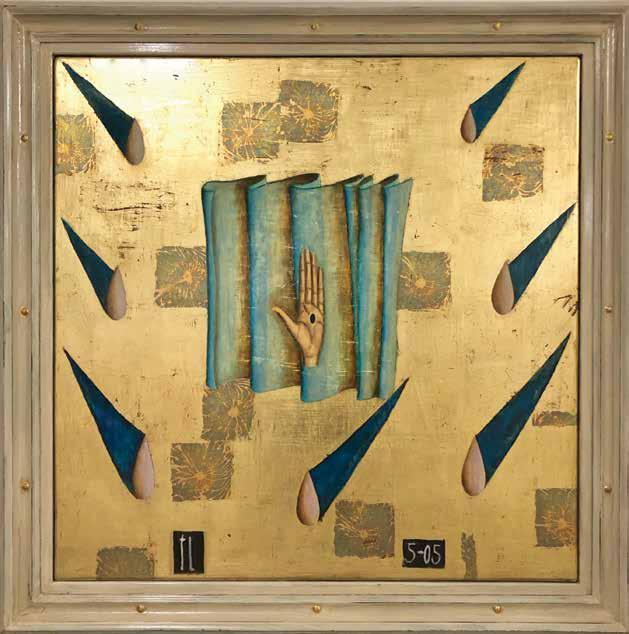
Oil paint and gold leaf on gesso ground 116 x 116
Signed & dated 5/05
Signed, inscribed Blue Veil & dated 2005 verso
$8,000 - 12,000
PROVENANCE
Private Collection, Auckland
Purchased from Nadene Milne Gallery 30/8/2007
Original exhibition catalogue affixed verso
76 TONY LANE (b. 1949)
Blue Veil
Signed & dated May 1997 verso
$20,000 - 30,000
PROVENANCE
Private Collection, Auckland since 1997
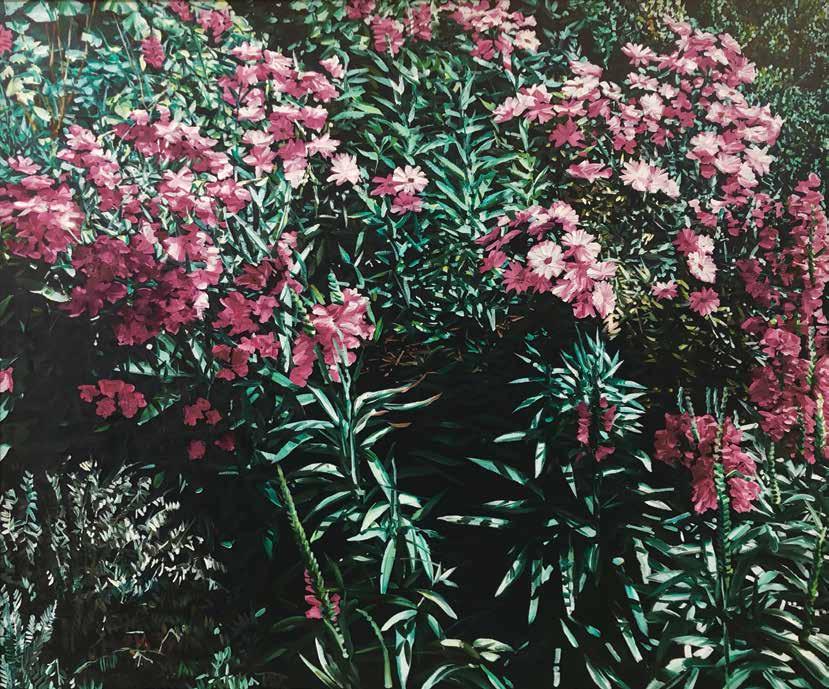
77 KARL MAUGHAN (b. 1964) Spring Oil on canvas 90 x 110
78
78
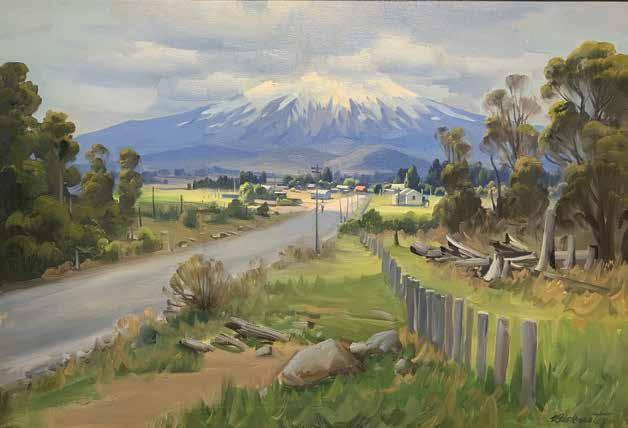
MICHAEL SMITHER (b. 1939)
Egmont & Cloud Oil on board 18 x 35
Signed & dated 1972 verso
$8,000 - 12,000
PROVENANCE
Purchased directly from the artist, New Plymouth, 1972 by the current owner
79
MICHAEL SMITHER (b. 1939)
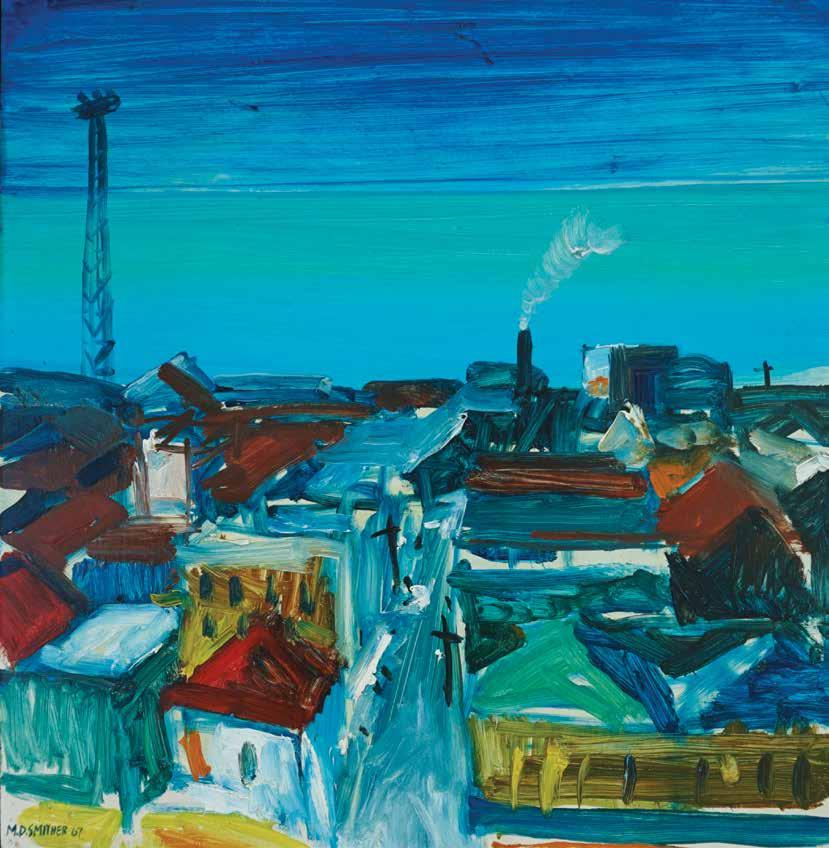
New Plymouth Oil on board 48 x 48
Signed & dated 1967
$10,000 - 15,000
PROVENANCE
Fletcher Challenge Art Collection Private Collection, Auckland, purchased from the above collection by current owner 1997
EXHIBITED
One Man Exhibition, John Leech Gallery, 1968
Original label affixed verso
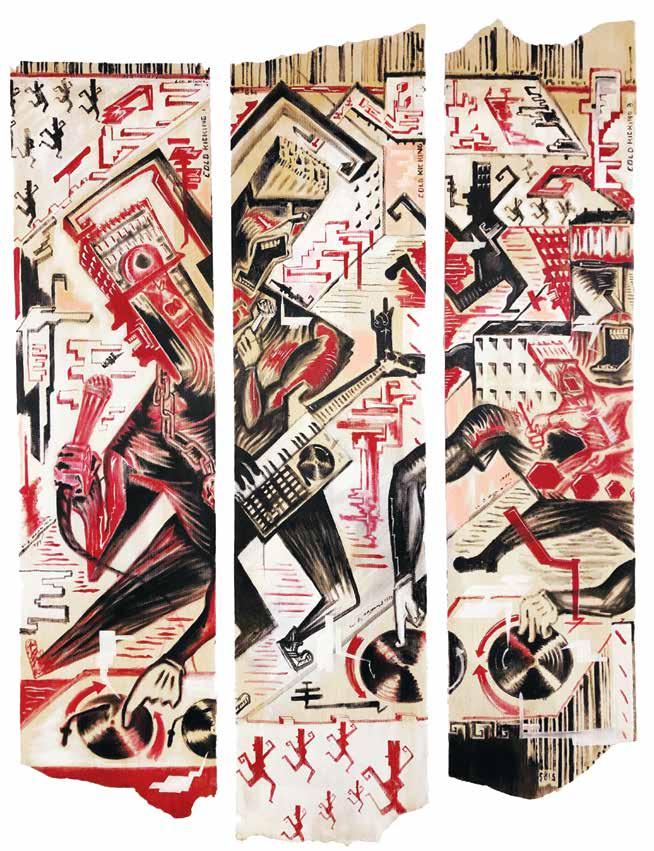
80 BILL HAMMOND (b. 1947)
Cold Kicking I, II & III
Acrylic on wallpaper mounted to board
239 x 170
Signed, inscribed & dated 1989 on each panel
$30,000 - 50,000
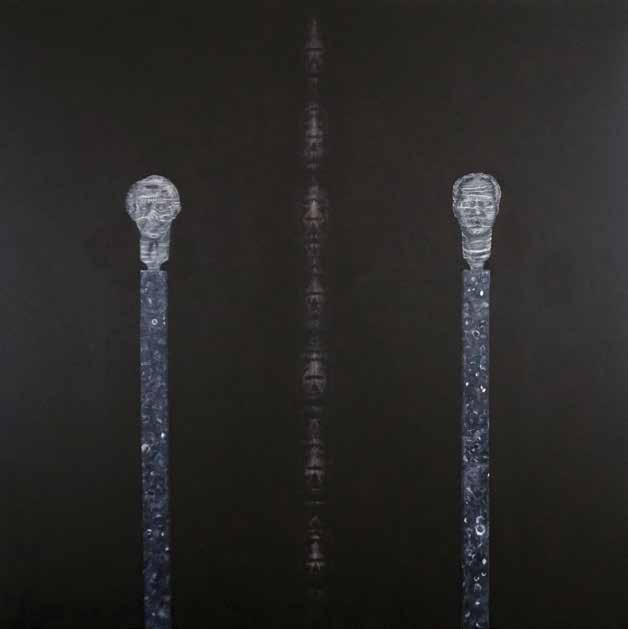
81 BRENDON WILKINSON (b. 1974)
No Title III
Peter McLeavey & Ivan Anthony
Oil on canvas 195 x 195
Signed & dated 2013 verso
$20,000 - 30,000
PROVENANCE
Private Collection, Auckland
EXHIBITED
Brendon Wilkinson - Blue Flame
Robert Heald Gallery 2013
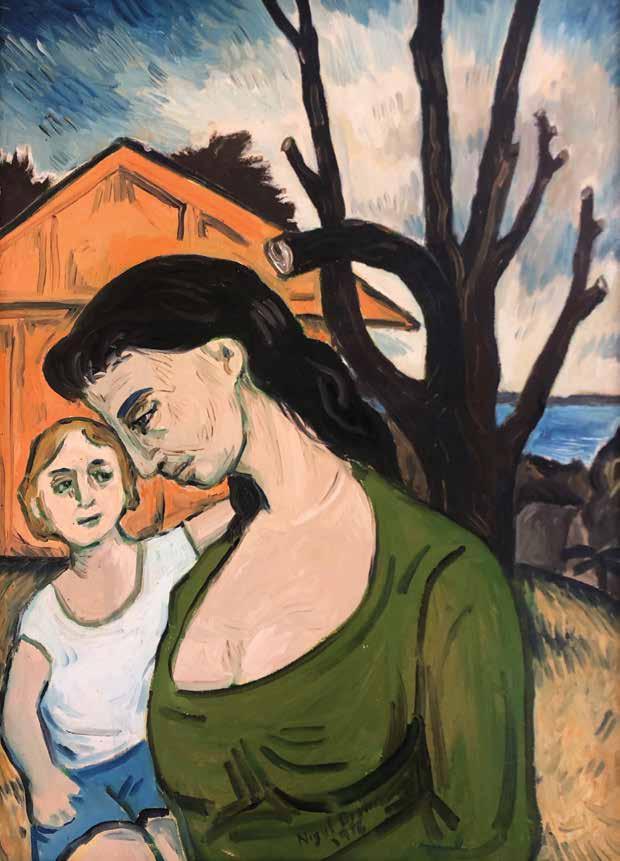
82 NIGEL BROWN (b. 1949)
Mother and Child with Tree, No. 1
Oil on board 56 x 40
Signed & dated 1976
Inscribed Mother and Child with Tree, No. 1 & dated 1976 verso
$8,000 - 12,000
PROVENANCE
Private Collection, Wellington
83 HEATHER STRAKA (b. 1972)
Defenders of New Zealand IV
Oil on board 22.5 x 16
Signed, inscribed Defenders of New Zealand IV & dated 2017 verso
$3,800 - 4,800
PROVENANCE
Private Collection, Auckland
Purchased from Trish Clark Gallery
EXHIBITED
Heather Straka - The Strangers Room, Trish Clark Gallery, 2017
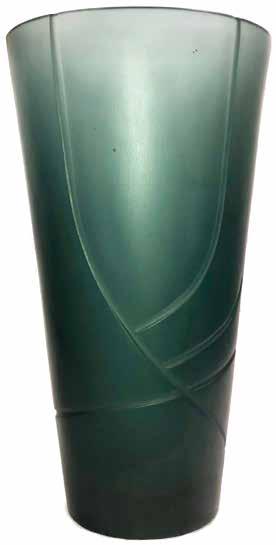
84 LAYLA WALTER (b. 1975)
Open Vase, Tourmaline
Cast glass, unique 37.5 x 21.5
Signed, inscribed Open Vase (tourmaline colour) NZ & dated 2002 on base
$3,800 - 5,500
PROVENANCE
Private Collection, Auckland
Purchased from Masterworks Gallery, 2002
85
85 MAX GIMBLETT (b. 1935)
New Fifth, 2007
Acrylic and vinyl polymers, epoxy, palladium leaf on canvas 38 x 38
Signed, inscribed New Fifth & dated 2007 verso
$10,000 - 15,000
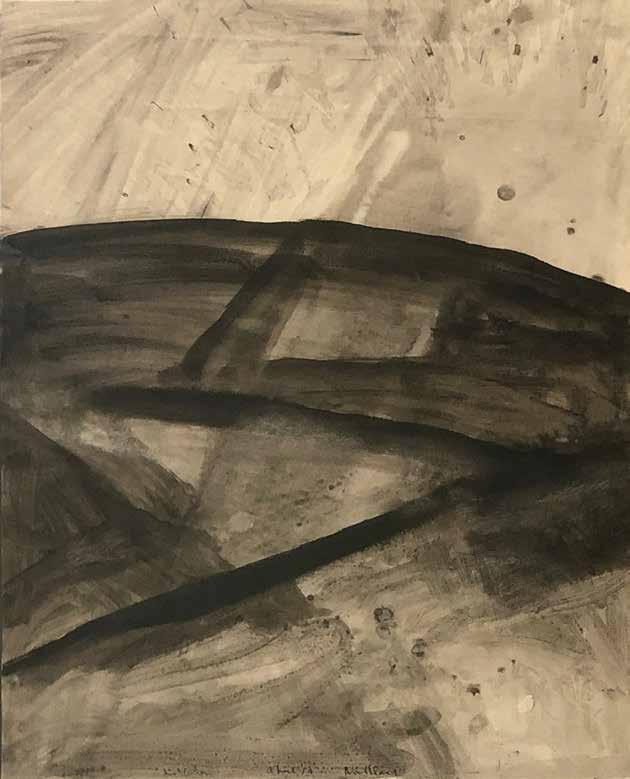
86 COLIN MCCAHON (1919 - 1987)
Northland Drawing
Ink on paper 62 x 49.5
Signed, inscribed Northland & dated April ‘59
$20,000 - 30,000
PROVENANCE
Purchased by current owner from Barry Lett Galleries, c. 1965
REFERENCE
Colin McCahon database Record number cm001798
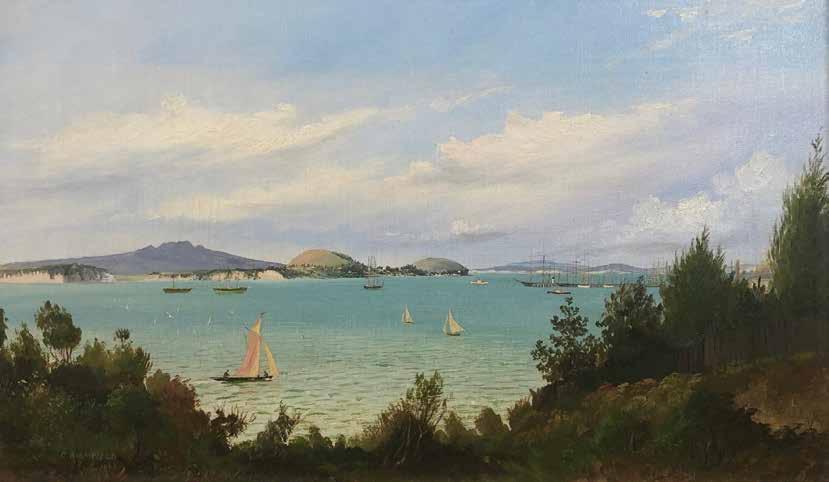
87 CHARLES BLOMFIELD (1848 - 1926)
Auckland Harbour from the J H Upton Residence, ‘Okaha’, St Mary’s Bay Oil on canvas 29 x 49
Signed & dated 1882
$15,000 - 25,000
PROVENANCE
Lady Fletcher Collection
Fletcher Trust Collection
Fletcher Trust Collection label affixed verso
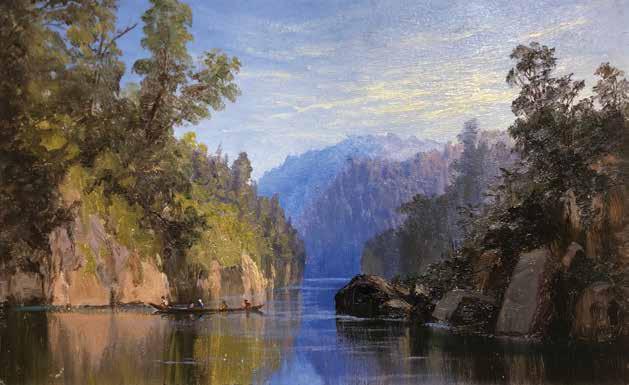
Two works by Charles Blomfield from The Fletcher Trust Collection
Oil on board 20 x 32
Signed & dated 1918
$5,000 - 10,000
PROVENANCE
Fletcher Trust Collection
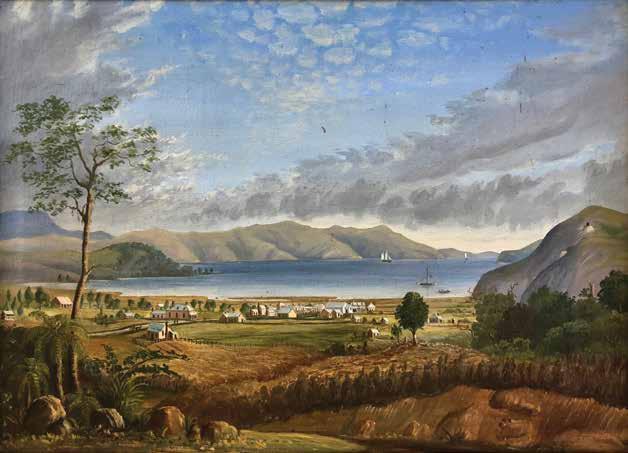
88 CHARLES BLOMFIELD (1848 - 1926)
Wanganui River
Oil on canvas 44.5 x 62
Signed & dated 1876
$6,000 - 10,000
PROVENANCE
Collection of the artist’s sister Frances
Same family collection, by descent
89 CHARLES BLOMFIELD (1848 - 1926)
Coromandel
Lake
Signed
$15,000 - 25,000
90 JOHN BARR CLARK HOYTE (1835 - 1913)
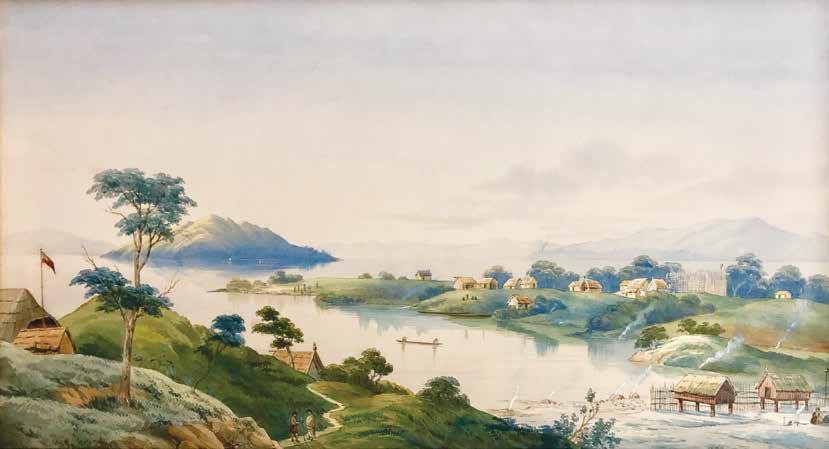
Rotorua with Maori Village Watercolour 30.5 x 58
91 PETER MCINTYRE (1910 - 95)
The Shotover - Central Otago Oil on board 73 x 87
Signed
$25,000 - 35,000
PROVENANCE
Private Collection, Auckland
Ex Estate of The Rt Hon Sir Owen
Woodhouse ONZ, KBE, DSC
Purchased from One-Man Exhibition at The John Leech Gallery, November 1964
EXHIBITED
One-Man Exhibition at The John Leech Gallery, November 1964
Original label affixed verso
92
PETER MCINTYRE (1910 - 95)
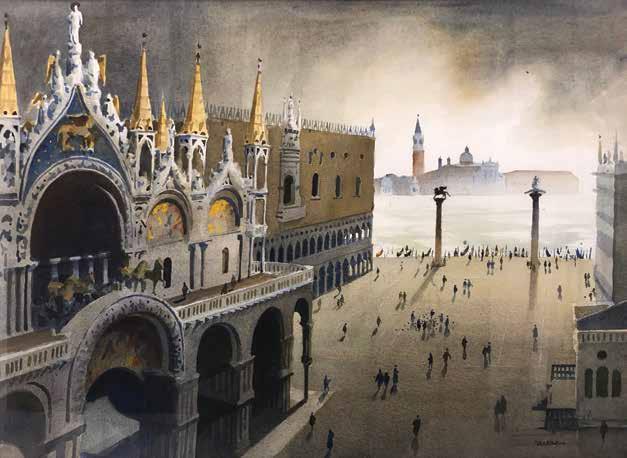
St. Mark’s and the Ducal Palace from the Clock Tower
Watercolour 52.5 x 71.5
Signed
$10,000 - 15,000
PROVENANCE
Accompanied by the original purchase receipt from 1983, the original exhibition catalogue and a newspaper article on this exhibition written by Michael Brett
EXHIBITED
Paintings of Venice by Peter McIntyre, McGregor Wright Gallery, 1983
Purchased from the above mentioned exhibition by current owners
93 ALLEN MADDOX (1948 - 2000)
Don’t Paint Arrogantly
Oil on canvas laid onto canvas 130 x 110
Inscribed Don’t Paint Arrogantly & Migare
$18,000 - 24,000
94 ROY GOOD (b. 1945)
Al’s Cross - Study
Acrylic on canvas 76 x 61
Signed, inscribed Al’s Cross & dated 1972
$4,500 - 6,000
Smokescreen
Mixed media on paper 82 x 120
Signed, inscribed & dated 1978
$5,000 - 10,000
Pomegranate
Gesso, acrylic and vinyl polymers, epoxy, oil size, sunrise variegated leaf on canvas 91.5 x 76
Signed, inscribed Pomegranate & dated 2014 verso
$20,000 - 30,000
95 GRETCHEN ALBRECHT (b. 1943)
96 MAX GIMBLETT (b. 1935)
97
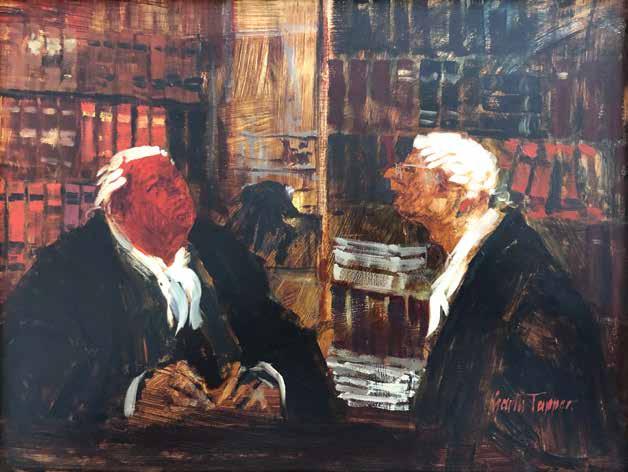
GARTH TAPPER (1927 - 99)
Adjournment from the Law Series Oil on hardboard 27 x 35.5
Signed
Signed, inscribed “Adjournment” Law Series & dated ‘80 on label affixed verso
$4,000 - 6,000
PROVENANCE
Private Collection, Auckland
EXHIBITED
Garth Tapper, John Leech Gallery, 1985
98
GARTH TAPPER (1927 - 99)
“In the Camp”, the Yugoslav Gumdiggers in New Zealand & dated October 1985 verso Oil on hardboard 60 x 70
Signed & dated 1985
$7,000 - 10,000
PROVENANCE
Private Collection, Auckland
97
99 GARTH TAPPER (1927 - 99)
The 3 Sisters Oil on hardboard 47 x 57
Signed & inscribed The 3 Sisters verso
$3,500 - 4,500
PROVENANCE
Private Collection, Auckland
100 VERA CUMMINGS (1891-1949)
Harata Rewiri Tarapata, Nga Puhi
Oil on canvas 30 x 24.5
Signed
$8,000 - 12,000
101 VERA CUMMINGS (1891-1949)
Wiremu Patara Te Tuhi
Oil on canvas 25 x 15
Signed
$8,000 - 12,000
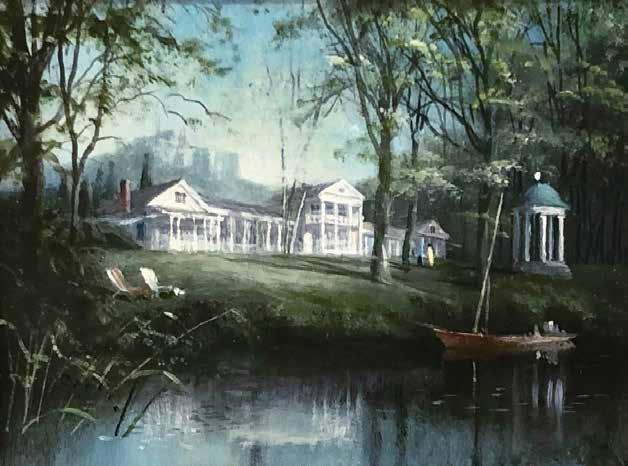
The Summer House, Fort Ticonderoga Oil on board 11.5 x 15.5
Signed
$4,000 - 6,000
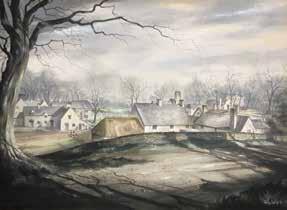
in Oxfordshire Gouache on card 28 x 39
Signed & dated 1945
$2,500 - 3,500
A Sussex Farm Gouache on card 28 x 39
Signed & dated 1945
$2,500 - 3,500
102 FELIX KELLY (1916 - 94)
104 FELIX KELLY (1916 - 94)
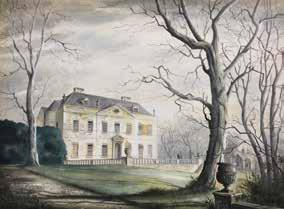
103 FELIX KELLY (1916 - 94) House
105 CHRIS BOOTH (b. 1948)
O3 #2, Ozone II
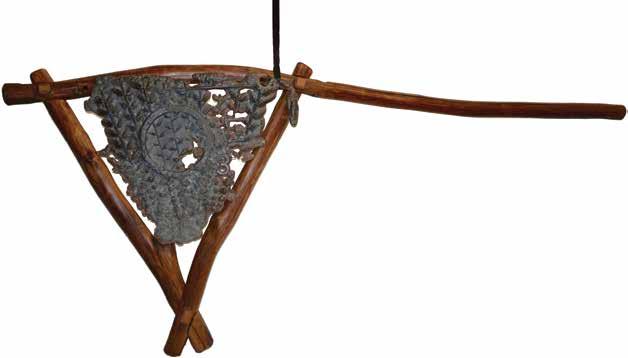
Bronze & kanuka sculpture 115 x 230 x 12
Signed & dated 1988
$15,000 - 20,000
EXHIBITED
New Zealand at Brisbane World Expo, 1988
Chris Booth is now well known for his monumental boulder public artworks such as Gateway 19881990, Albert Park, Auckland; Rainbow Warrior Memorial, 1988-1990, Matauri Bay and Nga Uri O Hinetuparimaunga (with Diggeress Te Kanawa), 2004-2005, entrance to Hamilton Gardens.
He ambitiously started out in the early 70‘s making maquettes of very large stone works. Lacking financial backing he adopted Arte Povera techniques to achieve environmental visions by using found materials such as pebbles, sticks and molten recycled bronze. O3 II came out of this period. A stand alone artwork that was originally the transom of a skeletal boat, O3 II, which represented New Zealand at the Brisbane World Expo in 1988. O3 II is the younger sister of two skeletal boats, the first being O3 (O Three) which was purchased by the Auckland Art Gallery from their exhibition in 1986, Aspects of Recent New Zealand Art Sculpture 2. They were both built to highlight the effect of the depletion of the ozone layer due in part to the release of CFC’s, which had left New Zealand
particularly exposed to ultraviolet light. O3 II, is a relic, dead - beached and bearing ‘fossilised’ symbols of life in bronze.
I wanted the bronze to have a distinctly local feel - from the earth where I live. In part the effect was gained by using molten bronze in the same way a painter might paint using a mixture of techniques between careful management through to free throwing of the pigment - in this case molten bronze. The bronze was thus ‘painted’ into impressions in green sand laid on the ground at my home in Kerikeri. A large diameter rubber O ring and branding iron #3 were carefully imprinted into the green sand over which I laid plaited nikau fronds. Wearing my big foundry boots I shuffled all over the fronds pushing them into and over the previously made patterns. The woven nikau was carefully pealed back to reveal a crisp beautiful pattern. Following this, molten bronze was accurately poured into the pattern then thrown from the red hot crucible to freeze the patterns in bronze forever. Chris Booth
Portuguese Landscape
Oil on canvas 50 x 100
Signed & dated 1965
$3,000 - 5,000
Between exhibitions in 1964 and 1965, Douglas travelled through Corsica and Portugal, as well as spending time in the Loire Valley and mountainous, forested Auvergne areas of France – sketching and making painting notes as always.
The colours in this painting are of sun-baked landscape, not as vivid and intense as his paintings of the rugged island of Corsica. The scene is southern Portugal, probably the Alentejo region where Douglas stayed a few days en route to the popular Algarve beaches at the bottom end of the country. This was the height of summer; although hot, the region is a fertile area known for its distinctive cork oak trees that are harvested for cork fibre.
In a letter to his parents dated 14 July 1965, Douglas wrote: Down in the south among storks wheeling and picking about in brilliant cornfields – obviously looking for babies! - and splendid aridity, in near desert air. My hand and notebooks have been filling well with material for pictures…So many influences from Ionic, Gothic, Islamic, 18th Century French not forgetting the near Chinese tilt to the edges of tiled roofs. I love the way the Portuguese have mixed and digested all these styles but can see no real
Portuguese style pure in itself. Am in ideal form in this heavenly place.
He had recently been experimenting with a new medium, plastic paint. It spreads easily with water and is almost immediately dry, and once dry completely waterproof, he wrote home. You can imagine what interesting play of superimposition of transparencies is possible – but the paint has to be so quickly used once out of the tube that there’s hardly time to think or mix more than one colour at once. Perhaps hardly a fair trial in heat like the last 10 days. It’s only now that I begin to see how I can adapt its possibilities to mine.
Douglas described it as exhausting and baffling research… a new medium means beginning at scratch and making awful messes like a student. At last he saw light through the murk and was pleased with the results once he forced the new paint to obey. He talked in letters about finishing a number of paintings for European shows and sending a collection to New Zealand for exhibition.
A selection of Portuguese and Corsican paintings were seen in New Zealand at a solo exhibition of 38 works at Te Manawa Art Gallery, Palmerston North in late 1966, and at John Leech Gallery, Auckland in May 1967.
Anna Cahill, MacDiarmid Arts Trust
106 DOUGLAS MACDIARMID (b. 1922)
107 JOHN BARR
(1835 - 1913)
Southern Lake Scene with Seated Figure
Watercolour 39 x 72
Signed
$10,000 - 15,000
108 ALFRED
(1858 - 1941)
Onions
Oil on board 23 x 32
Signed & dated 1906
$4,000 - 6,000
HENRY O’KEEFFE
CLARK HOYTE
109
109 JAMES CROWE RICHMOND (1822 - 98)
The Head of Blind Bay
Watercolour 53.5 x 73.5
Signed, inscribed The Head of Blind Bay & dated 1872
$5,000 - 10,000
110 EVELYN PAGE (1899 - 1988)
Seated Nude
Watercolour 47 x 46
Signed
$6,000 - 9,000
110
111 NIGEL BROWN (b. 1949)
Barry Mitcalfe, House of the Poet
Acrylic on shadow box 79 x 91
Signed & dated 1990
Includes a poem from Nigel Brown and letters from Barry Mitcalfe affixed verso
$3,000 - 5,000
112 DON DRIVER (1930 - 2011)
Mask Carved rimu 34.5 x 19
$2,000 - 3,000
Refer to our website for detailed images of this lot
113 FRANCIS UPRITCHARD (b. 1976)
Ancestral Box, 2004
Polymer clay, thread, feathers & velvet in wooden & brass pencil case 20 x 8.3
$6,000 - 8,000
114 MICHAEL SMITHER (b. 1939)
Mother & Child Oil on hardboard 62 x 48
Signed verso
$5,000 - 10,000
PROVENANCE
Purchased directly from the artist, New Plymouth, 1964 by current owner. A letter from the artist dated 26.1.2014 is affixed verso. Smither explains the technique of using Prussian Blue thinned with mineral turps, the lighter areas made by wiping away the paint with a cloth.
115 ERNEST BUCKMASTER (1897 - 1968)
Egmont Under Cloud Oil on canvas 76 x 111.7
Signed
$4,000 - 6,000
114
116 PETER MCINTYRE (1910 - 1995)
Alexander Turnbull Library, Wellington
Watercolour 37.5 x 48
Signed
$3,000 - 5,000
117 GEORGE O’BRIEN (1822 - 88)
Southern Alps
Watercolour 33 x 48
Signed
$3,000 - 5,000
Trevi, Italy
Watercolour 26.5 x 33
$800 - 1,500
EXHIBITED
Collectors Exhibition, Suter Art Gallery, Nelson, 1981. Loan sticker from The Robert McDougall Art Gallery, Christchurch, 1984 affixed verso
Maori Portrait
In leather bound album with various poems and illustrations
Watercolour 15 x 12
Signed
$400 - 600
118
118 MAUD SHERWOOD (1880-1956)
119 TREVOR LLOYD