IMPORTANT & RARE ART
Auction 7:00pm Tuesday 17 November 2020
Lot 28 Banksy
IMPORTANT & RARE ART
7:00pm Tuesday 17 November
Lot 44 Frances Hodgkins

IMPORTANT & RARE ART
Auction 7:00pm Tuesday 17 November 2020
IMPORTANT & RARE ART
7:00pm Tuesday 17 November
7:00pm Tuesday 17 November
Viewing Times
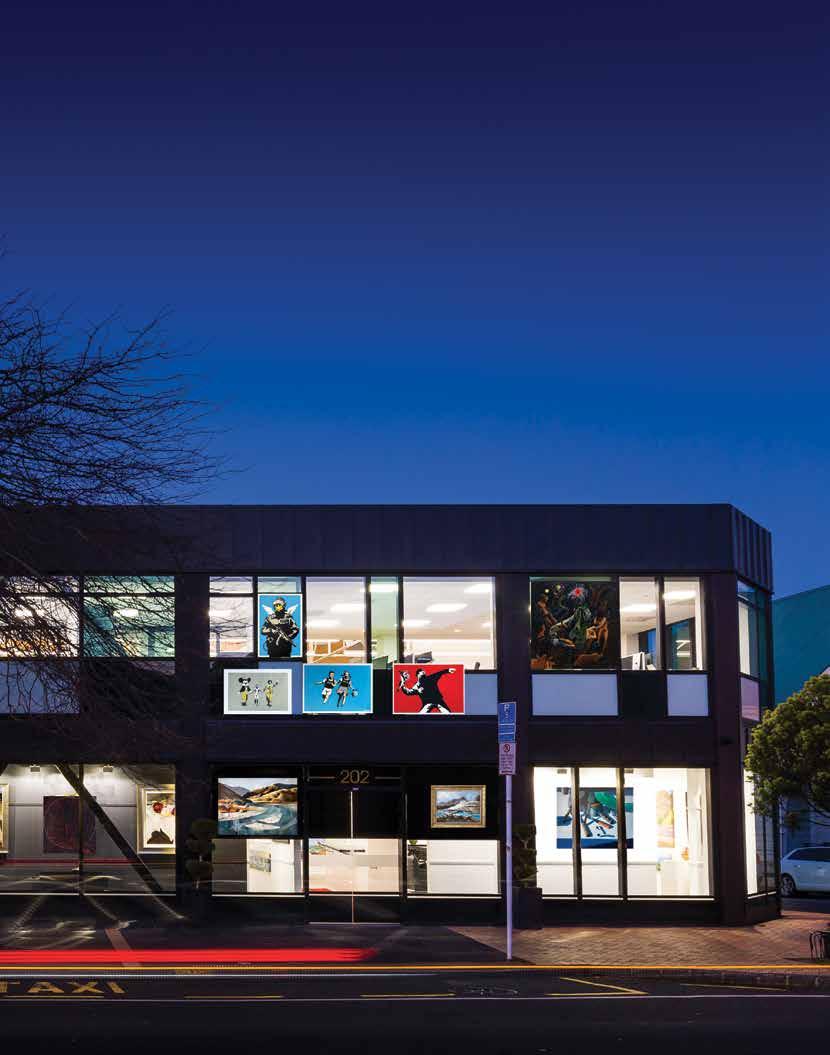
International Art Centre, 202 Parnell Road, Auckland
Wednesday 11 November 11:00am - 5:00pm
Thursday 12 November 9:00am - 5:30pm
Friday 13 November 9:00am - 5:30pm
Saturday 14 November 10:00am - 4:00pm
Sunday 15 November 11:00am - 4:00pm
Monday 16 November 9:00am - 5:30pm
Tuesday 17 November 9:00am - 5:00pm
Parking During Viewing:
Allocated carparks located directly behind International Art Centre
Parking During Auction:
Upper and lower carparks at rear of International Art Centre
Further parking at St John’s Car Park, entry at 244 Parnell Road, 40 metres up from International Art Centre
202 Parnell Road, Auckland, New Zealand
Telephone + 64 9 379 4010 Toll Free 0800 800 322 www.internationalartcentre.co.nz
Contacts
Richard Thomson
Ph +64 9 379 4010
richard@artcntr.co.nz
Mobile 0274 751 071
Maggie Skelton
Ph +64 9 379 4010
maggie@artcntr.co.nz
Luke Davies
Ph +64 9 379 4010 luke@artcntr.co.nz
If you are unable to attend the live auction register directly with International Art Centre’s online bidding platform www.internationalartcentre.co.nz
Visit www.internationalartcentre.co.nz for instructions. With a single sign on you can easily browse catalogues, watch lots and place bids all from the comfort of your mobile device or computer.
Conditions of Sale p. 135
Absentee & telephone bids p. 127
202 Parnell Road, Auckland, New Zealand
Telephone + 64 9 379 4010 Toll Free 0800 800 322 www.internationalartcentre.co.nz
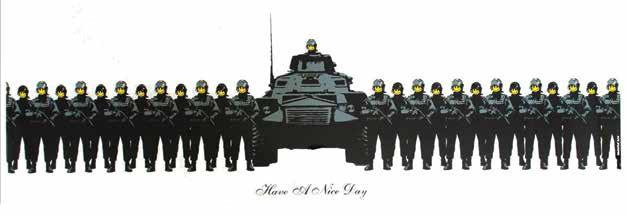
Our third Collectable Art auction of the year included a work by Banksy, the international and anonymous British street artist. One of his first screenprints, Have a Nice Day, quickly surpassed a top estimate of $60,000 to achieve a new record of $126,130. A poster by the same artist with a top estimate of $1,500 made $3,360. Further auction records achieved
included a work by Kushana Bush reaching $11,110, a Dean Buchanan fetching $24,025 and a David Barker achieving $12,010. Works from important Auckland collections including that of the founders of Muka Studio and Ron Sang, saw a 100% sell rate. With spirited bidding in the room, on the phones and online it was another exciting and successful evening.
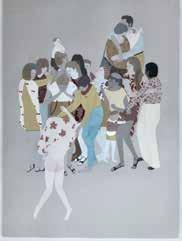
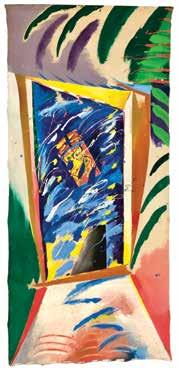
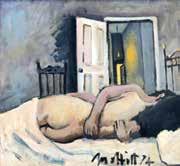
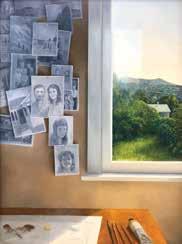
Timed online only auction 2 - 8 December

Contacts:
Maggie Skelton maggie@artcntr.co.nz
Luke Davies luke@artcntr.co.nz
Tel 09 379 4010
A quick, easy and reliable solution to affordable consignments. During the 2020 nationwide lockdowns we stayed connected to our clients, keeping them close to our art. The time was spent productively, resulting in the development of our own online bidding platform and App, successfully auctioning works of art with no exhibition viewing, no printed catalogue, while using state-of-theart technology. All transactions were contactless and we reduced our carbon footprint along the way. While the personal service, excitement and atmosphere of our famous live Parnell Road auctions remain and will continue to grow, the success of this online only platform has encouraged us to retain this as a permanent sale category.
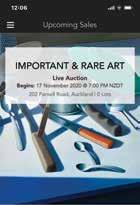
. Visit auctions.internationalartcentre.co.nz to register on our online bidding platform
Apple users may download the International Art Centre App from the App store
Android users download from Googleplay
. Our bidding platform allows you to browse catalogues, enjoy auctions in real time and place bids from anywhere in the world






Please note there is a 2% surcharge to use this bidding option for Live auctions
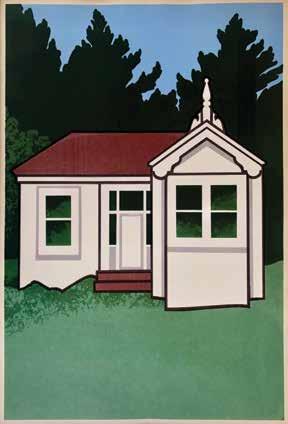
1 ROBIN WHITE (b. 1946) On the Beach, Otago Peninsula
Screenprint, edition of 35, 53.7 x 35.4
Signed, inscribed On the Beach, Otago Peninsula and dated October 1972
$4,000 - 6,000
PROVENANCE
FHE Galleries label affixed verso
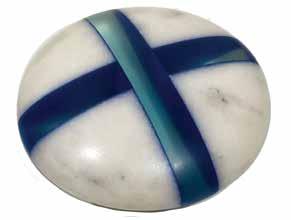
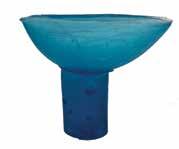
JOHN EDGAR (b. 1950)
Untitled Marble & glass 7 x 7
$1,000 - 1,500 3
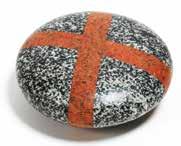
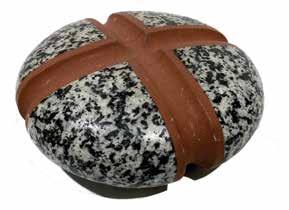
JOHN EDGAR (b. 1950)
Untitled Coromandel granite with Red granite 9.5 x 9.6
$1,500 - 2,000 4
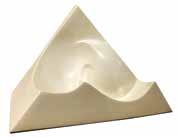
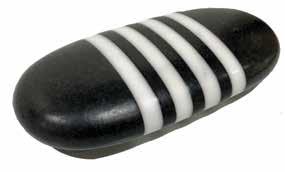
JOHN EDGAR (b. 1950) Banded Stone Granite with marble bands 12 x 6
$1,200 - 1,600
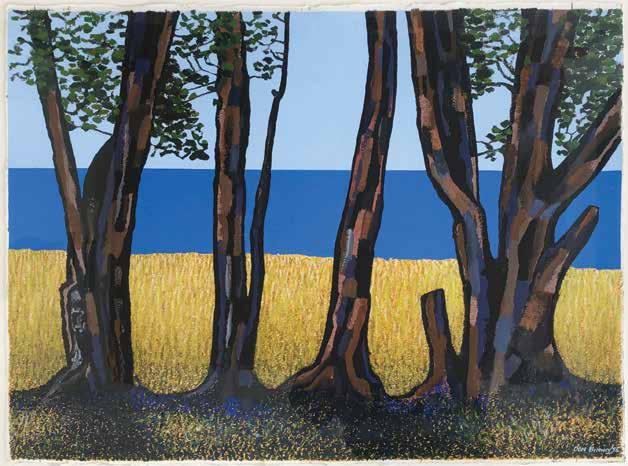
5 DON BINNEY (1940 - 2012)
Bunkhouse Garden IV
Acrylic and oil stick on Arches Aquarelle paper 55.5 x 76.2
Signed & dated 1996
$15,000 - 20,000
PROVENANCE
Purchased from As I See It
The Auckland Rescue Helicopter Trust Charity exhibition, Government House, Auckland, 18 February 1996
Original catalogue affixed verso
In a career that spanned over 40 years, Don Binney’s commitment to ornithology, environmental issues and spiritual connection with the land informed his art practice. He was a founding patron of the Hauturu Trust which protects Te Hauturu-o-Toi, Little Barrier Island. Bunkhouse Garden IV is a rare view unavailable to most due to restricted public access to the island.
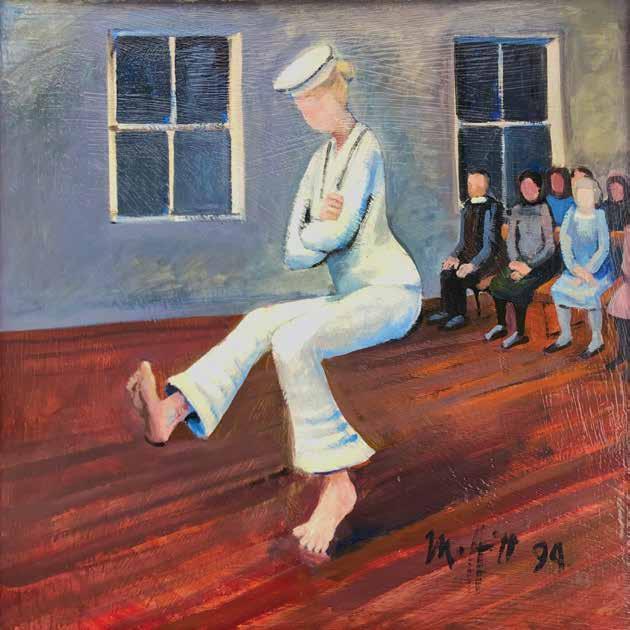
6 TREVOR MOFFITT (1936 - 2006)
Sailor’s Horn Pipe No. 1
Oil on board 60 x 60
Signed & dated 1994
Inscribed Human Condition Series II
Sailors Hornpipe No 1 verso
$8,000 - 12,000
PROVENANCE
Private Collection, Otago
Purchased from the exhibition
Human Series II, Canterbury Gallery Christchurch, 1995 by current owners. Canterbury Gallery label affixed verso
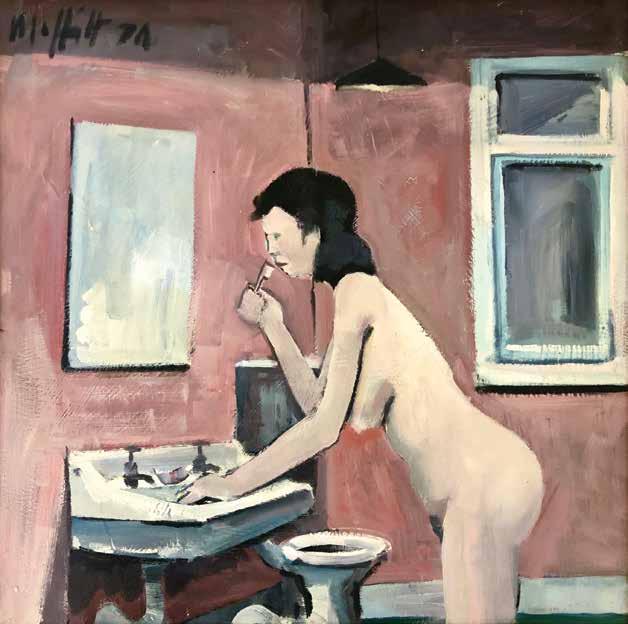
7 TREVOR MOFFITT (1936 - 2006)
A Quick Brush Up Oil on board 60 x 60
Signed & dated 1974
Inscribed A Quick Brush Up Human Condition I Series verso
$8,000 - 12,000
PROVENANCE
Private Collection, Auckland
Purchased 1974, by descent
8 PAUL DIBBLE (b. 1943)
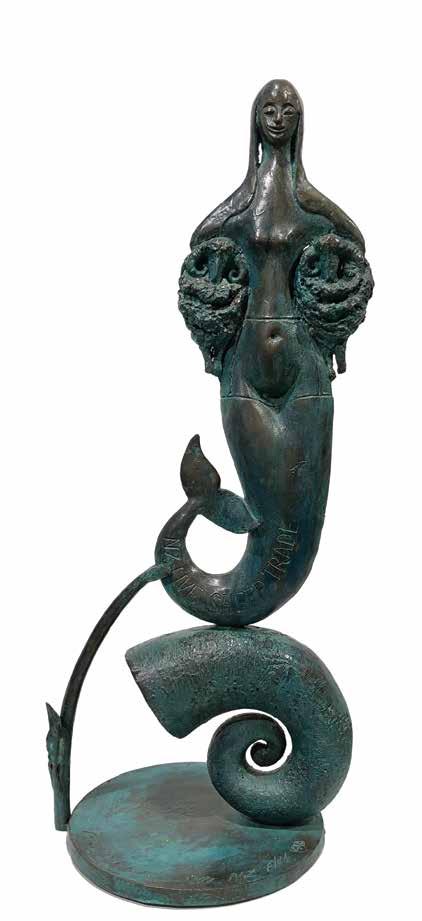
NZ Live Sheep Trade
Lost wax cast bronze, edition 60 x 26
Signed & dated 1991 NZ, with impressed artist stamp on base
$5,000 - 7,000
9 KINGSLEY BAIRD (b. 1957)
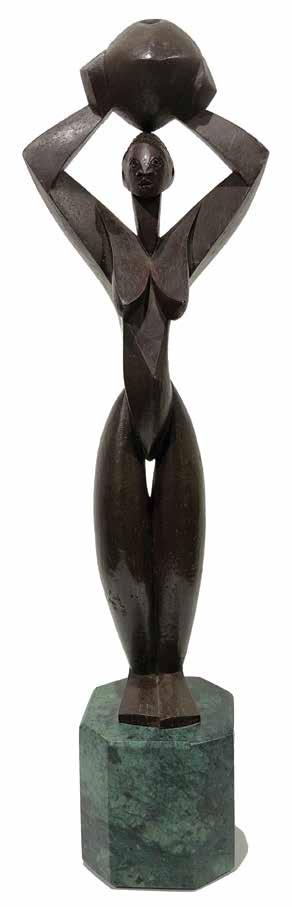
African Woman
Bronze 40 x 11.5
Signed & dated 1986
$2,000 - 3,000
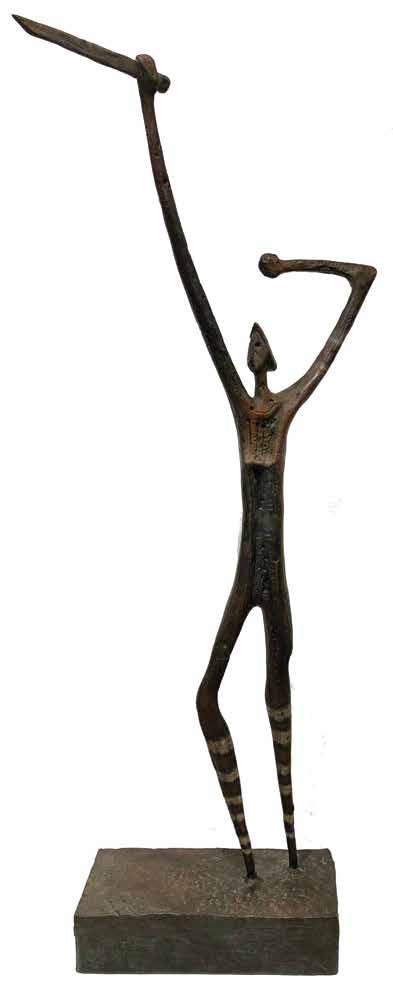
10 DON DRIVER (1930–2011) Warrior
Cast aluminium, edition A/P, 100 x 42
Signed, inscribed Aluminium Warrior & dated 1963/97 on base
$20,000 - 30,000
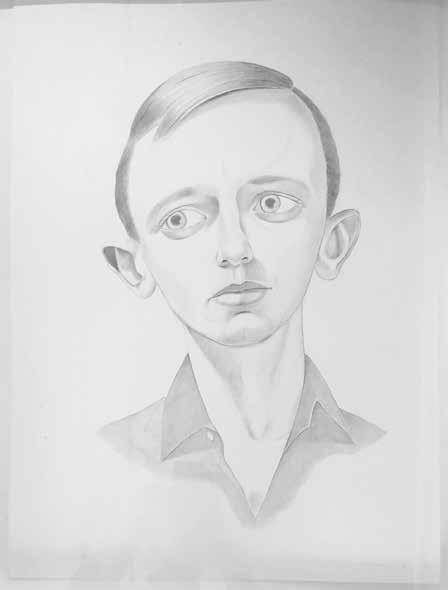
11
Sullivan Graphite on paper 72 x 54
Signed, inscribed Sullivan & dated 2004
$12,000 - 16,000
PROVENANCE
Private Collection, Auckland
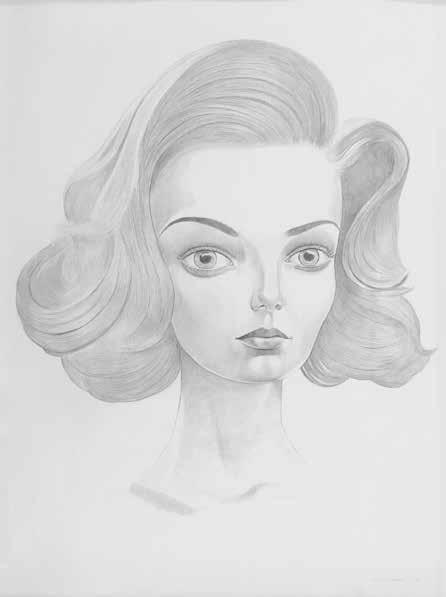
12
PETER STICHBURY (b. 1969)
Untitled Graphite on paper 73 x 55
Signed & dated 2004
$12,000 - 16,000
PROVENANCE
Private Collection, Auckland
Purchased from Starkwhite, 2004 by current owner
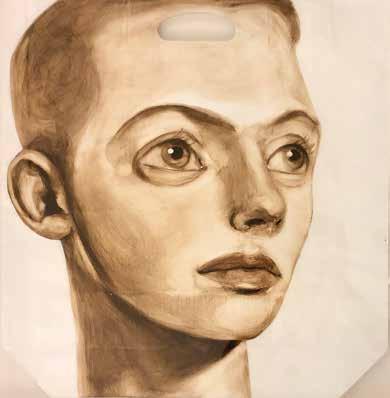
13 PETER STICHBURY (b. 1969)
Untitled, 2001
Gouache on paper shopping bag 45 x 43
$4,500 - 6,500
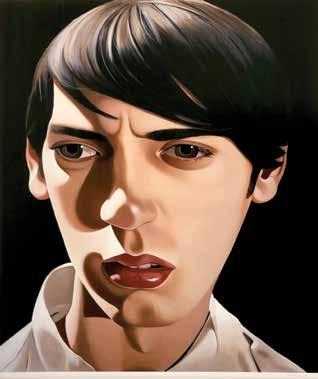
14 PETER STICHBURY (b. 1969)
Swoon (Stendhal Syndrome)
C-type print, edition 11/30 91 x 79
Signed
$4,500 - 6,500 13
15
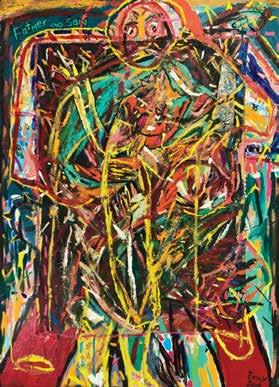
EMILY KARAKA nee PACE (b. 1952)
Father and Son
Mixed media on board & canvas 116 x 84
Signed, inscribed Father and Son & dated 1981
$2,500 - 3,500
PROVENANCE
Purchased from Ferner Galleries
The artist visited the owners home and mentioned this work was inspired by Philip Clairmont holding his son Orlando (born 1980).
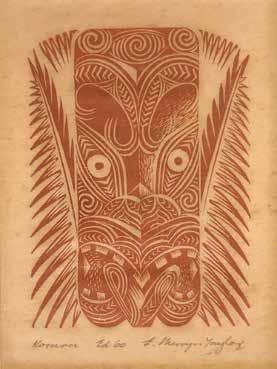
16 E MERVYN TAYLOR (1906 - 64)
Koruru
Woodblock print, edition of 60, 12 x 9
Signed & inscribed Koruru
$1,000 - 1,500
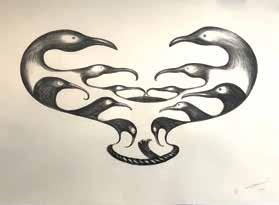
17 BILL HAMMOND (b. 1947)
Untitled (Bird Bath)
Lithograph, edition 22/30, 54 x 74
Signed & dated 2000
$4,000 - 6,000
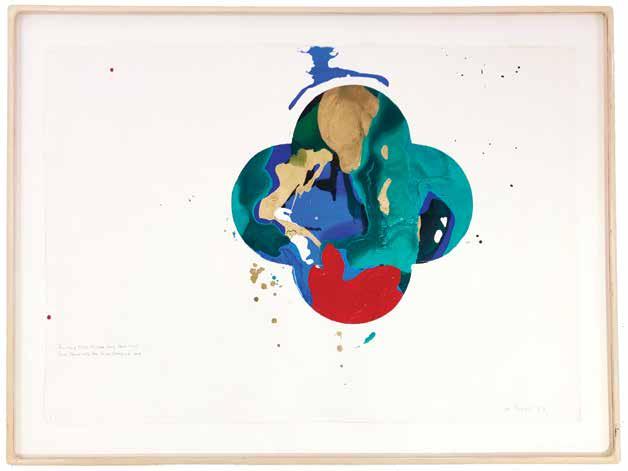
18 MAX GIMBLETT (b. 1935)
How Many Times For Your Sake Have I Gone Down to the Dragon’s Cave, 1987
Acrylic and polymer on paper 74 x 105
Signed, inscribed & dated 1987
$8,000 - 12,000
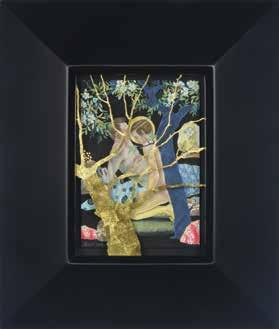
19 SUSANNE KERR
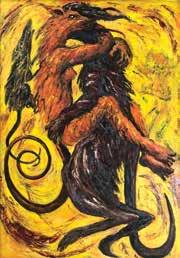
The Temptation
Gouache on Hahnemuhle paper, glass overlay of verre-eglomise with gold and titanium leaf 21 x 14.5
Signed & dated 2016
$4,000 - 5,000
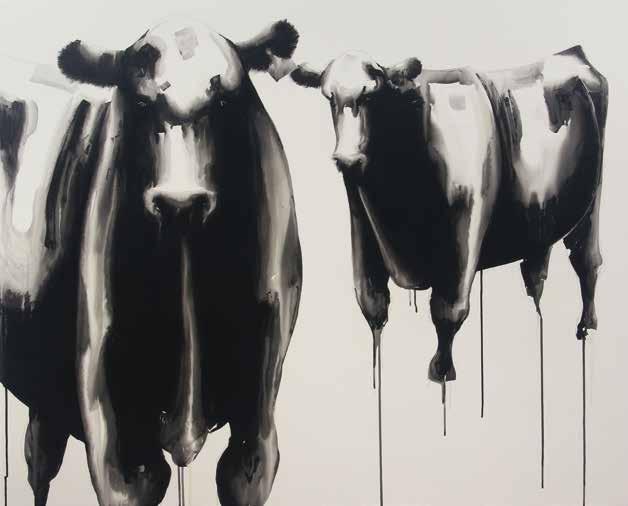
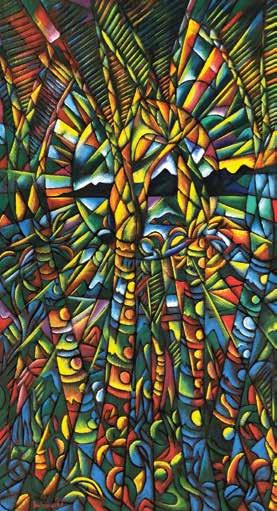
Field Study 341, 2018 Ink, graphite, oil & acrylic on canvas 105 x 130
Signed & inscribed Field Study 341 verso
$14,000 - 16,000
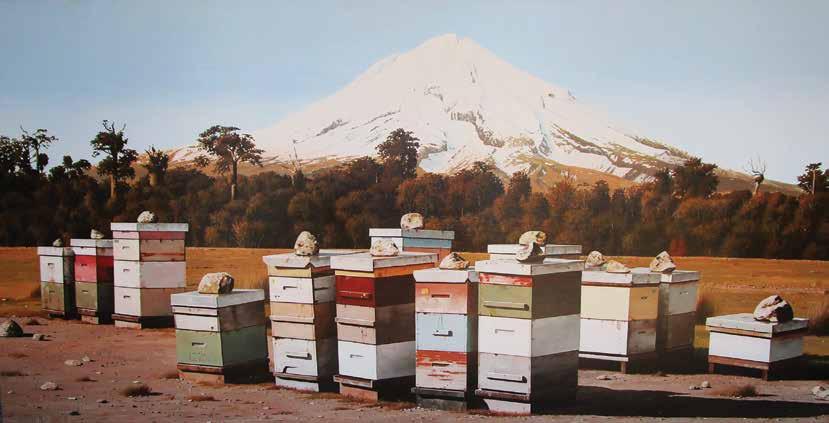
Signed & dated 2008
$24,000 - 28,000
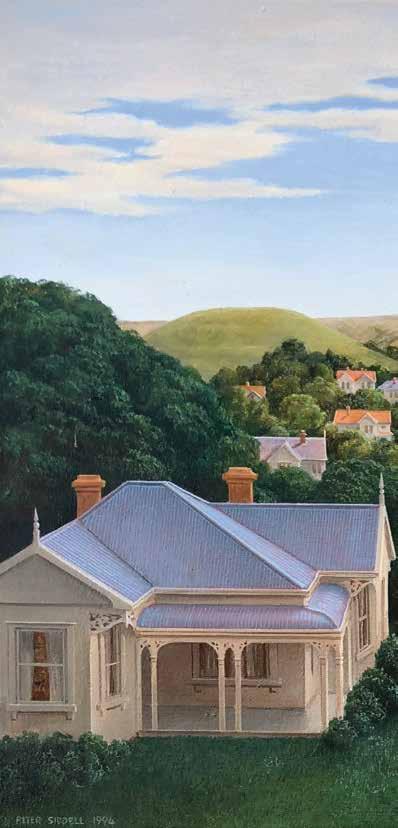
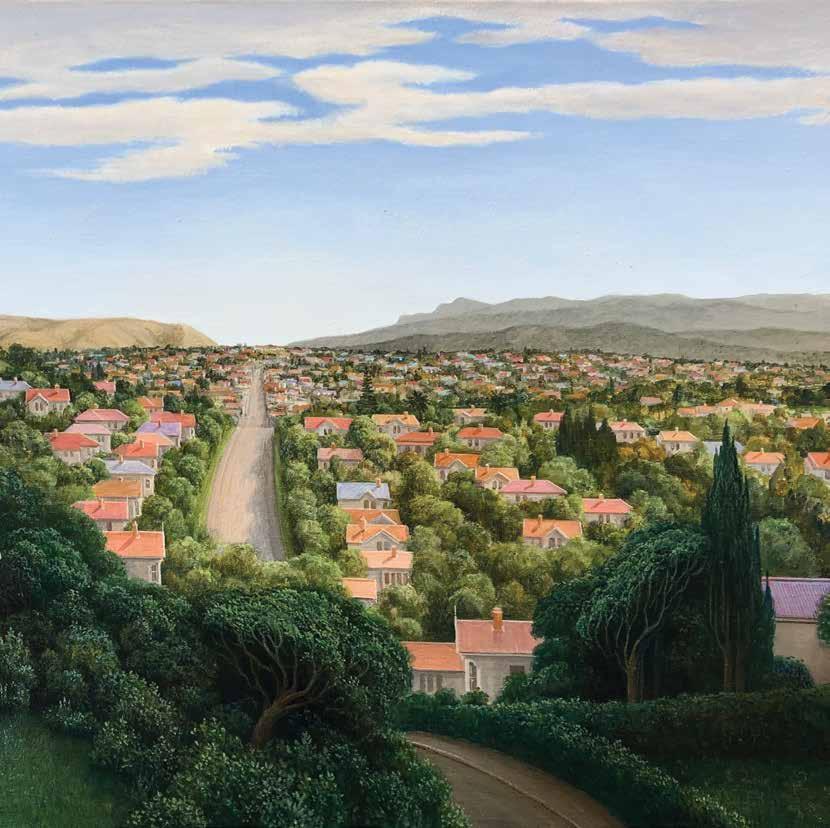
Western Road
Oil on canvas 38.5 x 58.5
Signed & dated 1994
Inscribed Western Road & dated 1994 verso
$30,000 - 50,000
PROVENANCE
Private Collection, Auckland
Purchased from Artis Gallery, 1994
23
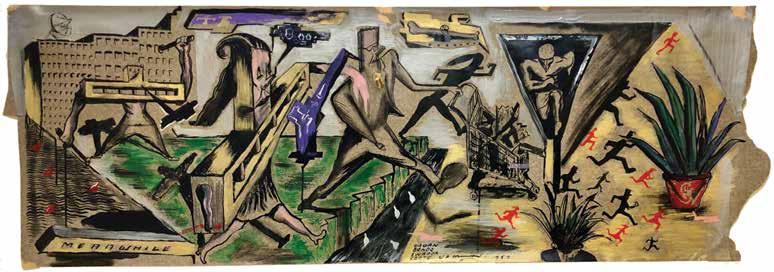
BILL HAMMOND (b. 1947)
Organ Donor Swappa Crate 2
Oil and metallic paint on wallpaper 51 x 158
Signed, inscribed Meanwhile & Organ
Donor Swappa Crate 2 & dated 1989
$20,000 - 30,000
PROVENANCE
Private Collection, Auckland
Purchased from FHE Galleries, c. 2002
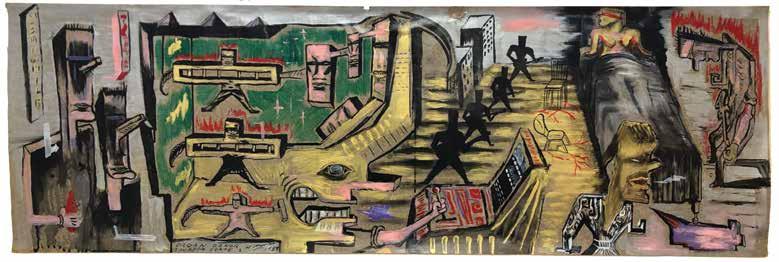
24
BILL HAMMOND (b. 1947)
Organ Donor Swappa Crate
Oil and metallic paint on wallpaper 51 x 151
Signed, inscribed Meanwhile & Organ
Donor Swappa Crate & dated 1989
$20,000 - 30,000
PROVENANCE
Private Collection, Auckland
Purchased from FHE Galleries, c. 2002
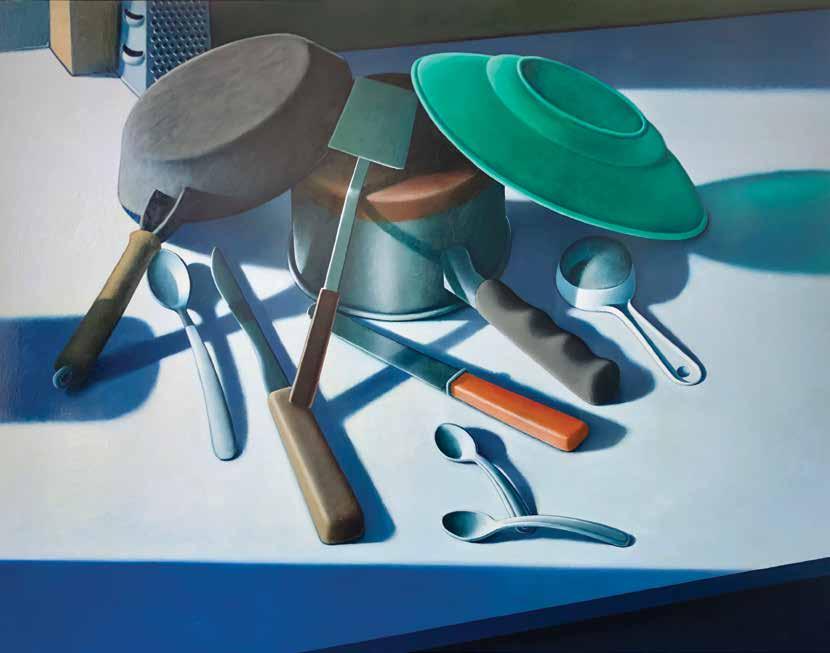
Large Still Life with Green Plastic Plate, 1993 Oil on board 96 x 120
Signed
$140,000 - 180,000
PROVENANCE
Private Collection, Christchurch
Purchased from Canterbury Gallery, 1993 by present owner
ILLUSTRATED
p. 21 Lands and Deeds, Profiles of Contemporary New Zealand Painting
Gregory O’Brien, Godwit Publishers, 1996
In Michael Smither’s still life paintings, his generous artistic eye and ability to capture the complex rhythms between object and space emerge brilliantly. This work, Large Still Life with Green Plastic Plate, is one of the most impressive from this genre of his work. It expresses the way these rhythms exist equally in the details of daily life as they do in the great natural formations of land and mountains.
In this scene, a pan, plate, and fish slice are precariously piled on an upturned pot along with other kitchen implements: a game of virtual pick-up sticks. The clarity of Smither’s crisp linear style elevates this painting from the status of an object study. Light is cast on the benchtop as if it is a dramatic tableau, rather than a haphazard pile of dishes. Depicting the dishes with such care and tenderness has achieved a delicate, poetic balance.
Smither is operating here in the space between mundanity and disbelief: the objects suggest a recently consumed meal for one and the washing up of dishes. Human presence is implied, but not guaranteed, and there is no real evidence of life. The teaspoons appear to levitate – all the other objects could feasibly be sculptures too.
When everyday objects are presented in such simple, profound dialogue with each other, we are invited to connect with the possibility of new meaning and expand our own internal spaces, be they physical or conscious. It’s easy to feel that the dishes in this painting are in a universe of their own and that there is so much space; so much room to breathe. In a year when our lives have been forcibly turned inwards, paintings such as these take on even greater significance. This work offers a way of expanding the value of, and our relationship with, interior universes.
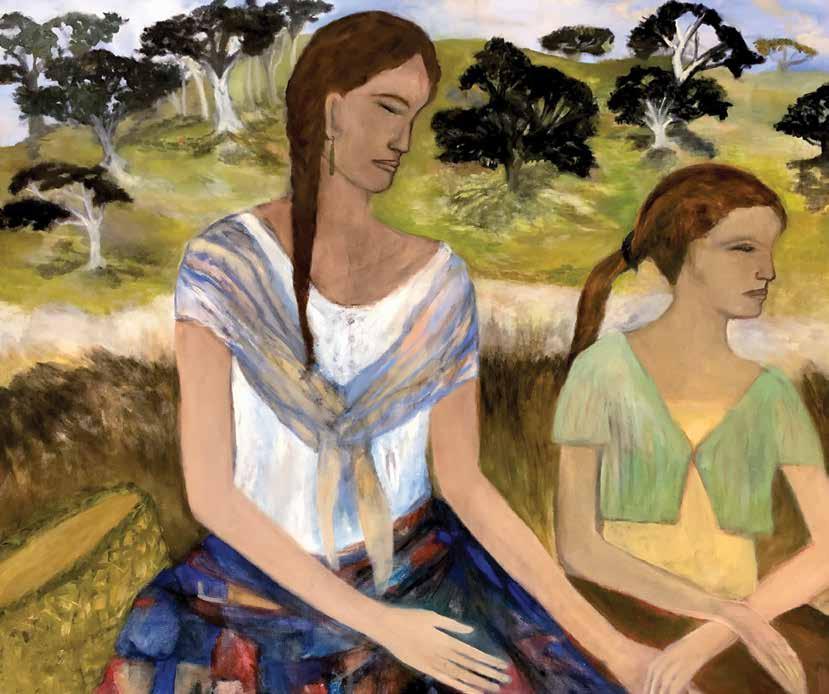
26 STAR GOSSAGE (b. 1973)
Kia Tau Ake Tonu
Oils & earth pigment on canvas 100 x 120
Signed & dated 2013
$16,000 - 23,000
PROVENANCE
Private Collection, Wellington
Purchased from Page Blackie Wellington, 2013
EXHIBITED
Star Gossage - Page Blackie, 2013
Mau Ahua – Portraits by Contemporary Maori Artists, New Zealand Portrait Gallery, Wellington 5th November 2016 – 14th February 2017
Star Gossage (Ngāti Wai / Ngāti Ruanui) lives and paints on ancestral land at Pakiri Beach, surrounded by her whanau. She studied film and drama in Otago, making her acting debut in The Feathers of Peace.
Gossage takes her inspiration from the coastal landscape of rural Pakiri, mixing local clay and ochres with oil paints to create the earthy muted colours that have become one of her signatures. Her emotionally intense paintings often feature dream-like tupuna figures.
Although Gossage has exhibited regularly throughout New Zealand and overseas, it was the groundbreaking and critically acclaimed Five Maori Painters exhibition at Auckland Art Gallery Toi o Tamaki, curated by Ngahiraka Mason, that cemented her significance as one of the most important Maori artists of her generation.
Kia Tau Ake Tonu features the artist and her daughter.
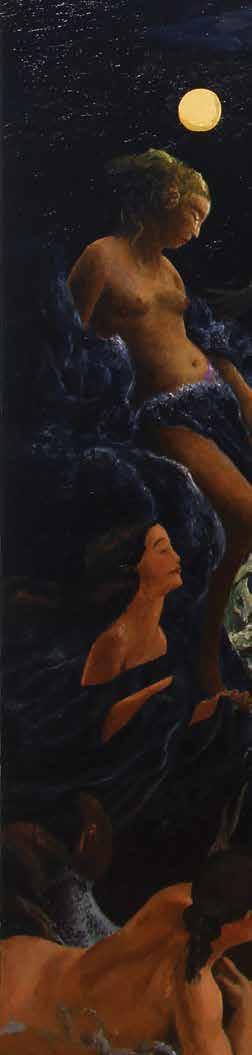
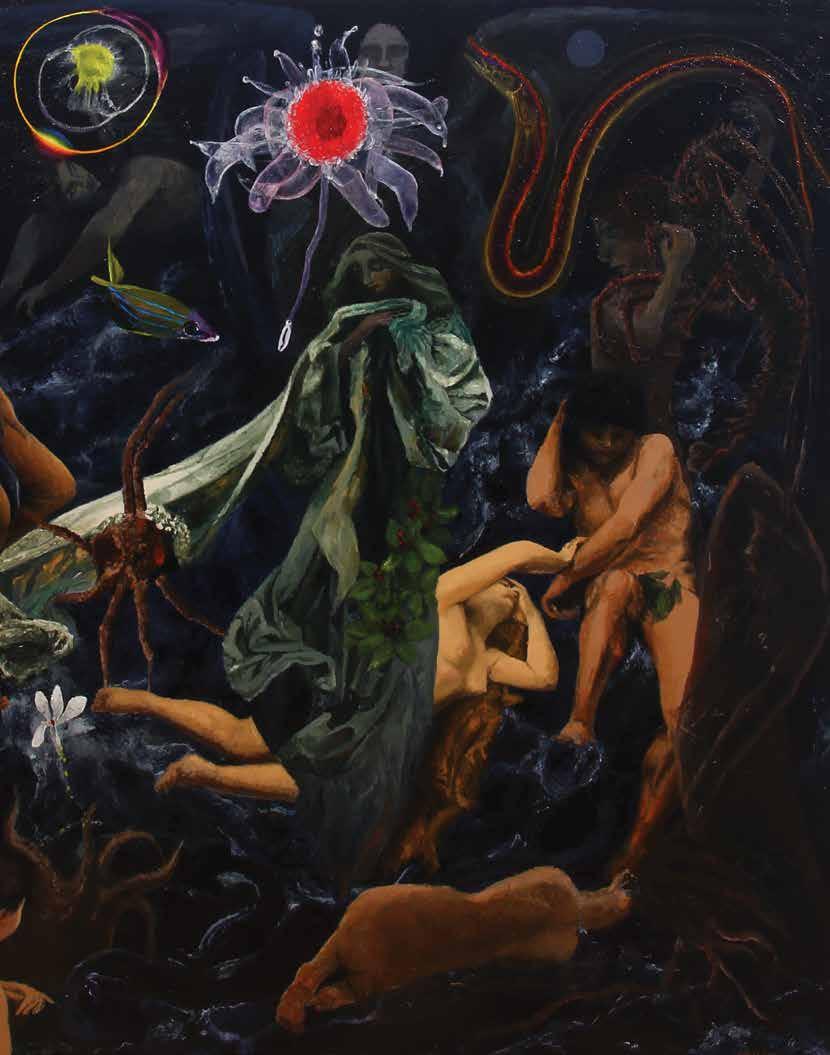
Seascape, 2010/11
Oil on canvas 160 x 160
Signed
$70,000 - 85,000
PROVENANCE
Private Collection, Wellington
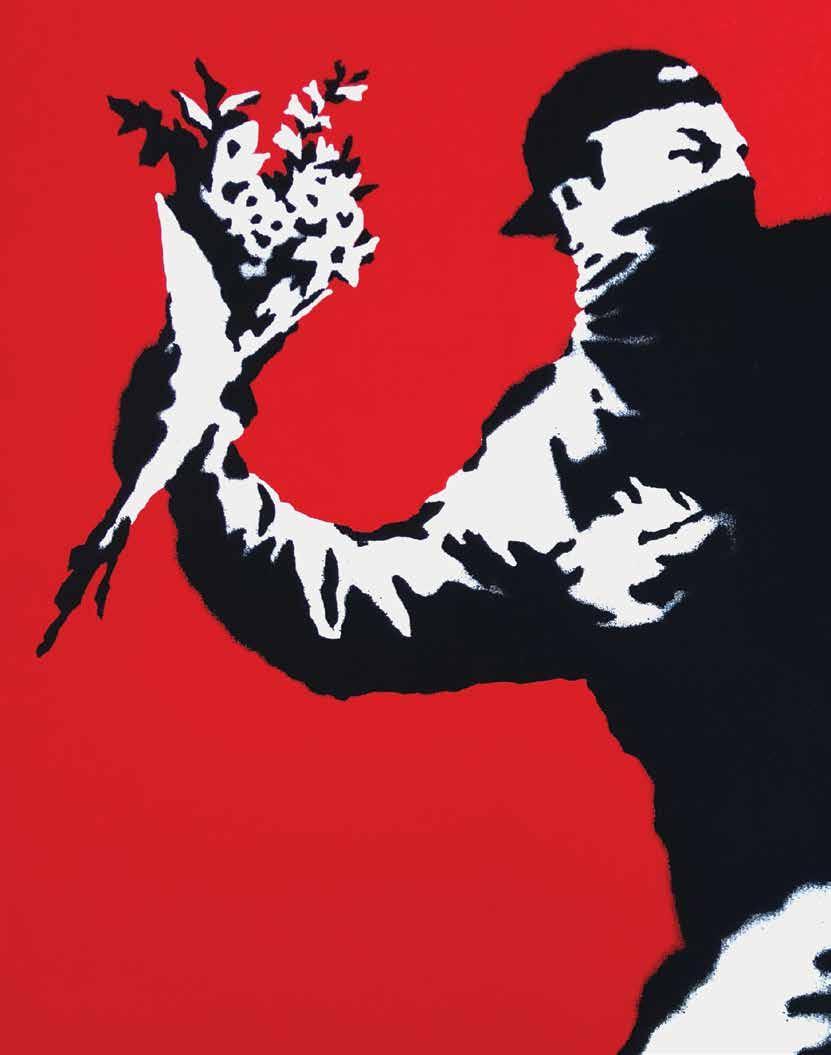
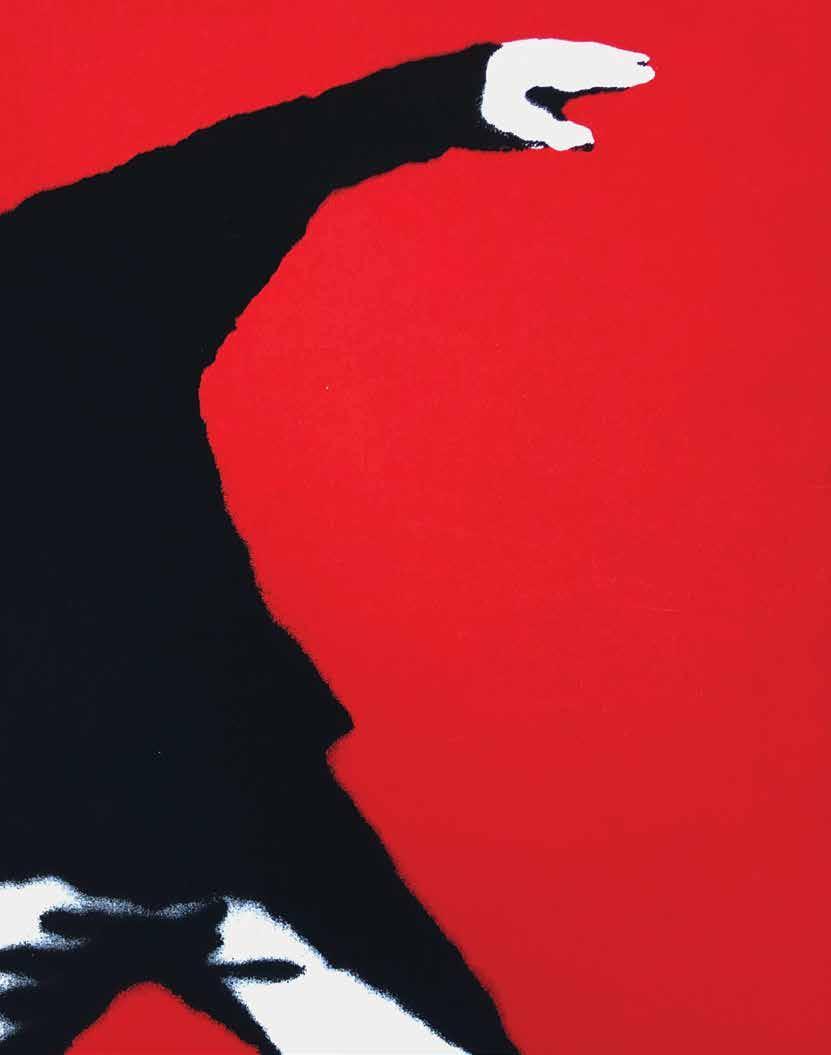
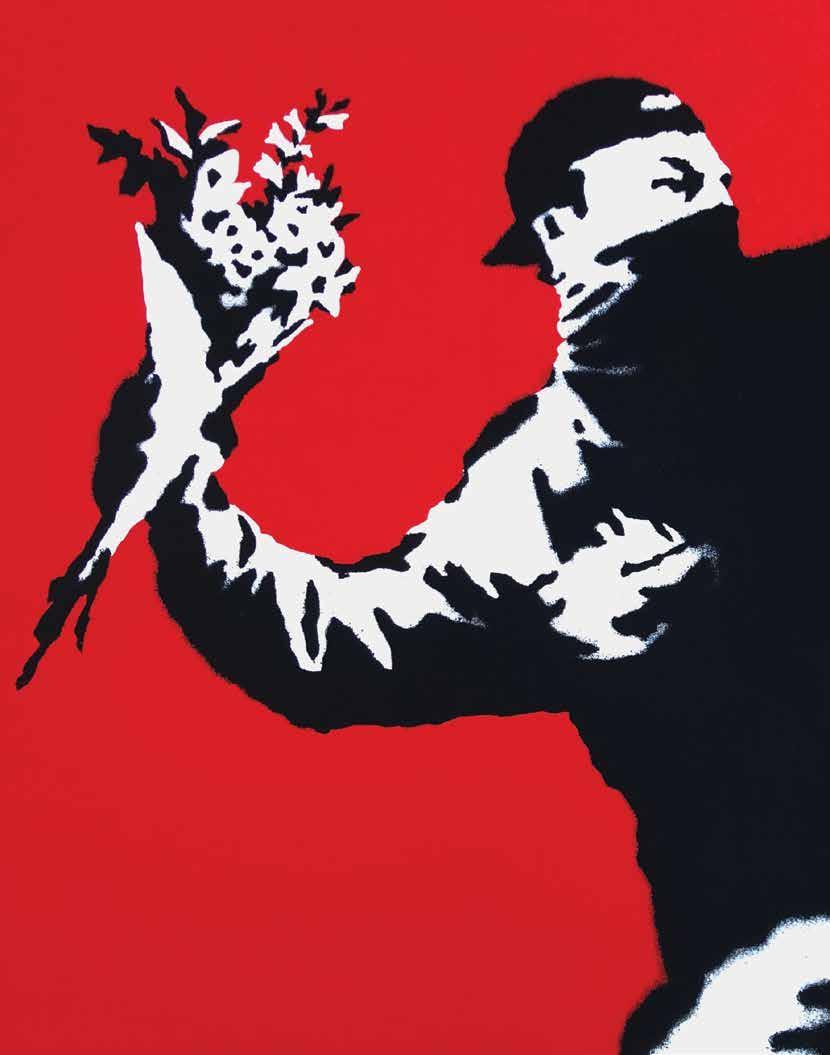
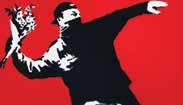
28 BANKSY (British b. 1974)
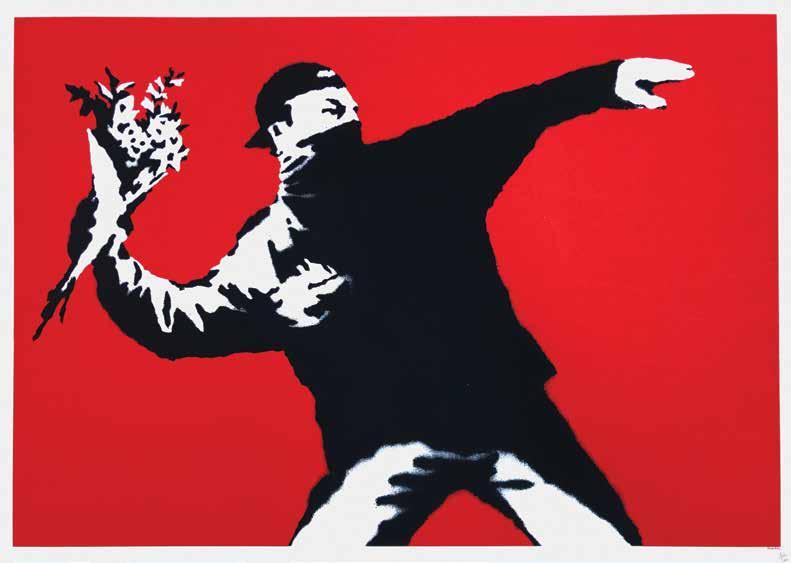
Love is in the Air, 2003
Screenprint on wove paper, edition 124/500, 50 x 70
Numbered 124/500 in pencil, Red BANKSY stamp in plate
$150,000 - 250,000
This work is accompanied by a Certificate of Authenticity from Pest Control
PROVENANCE
Private Collection, Wellington
Purchased from Eat My Handbag Bitch, London, 2003 by current owner
ILLUSTRATED
Front cover, Wall and Piece, Banksy, 2005
Love Is In The Air, also known as Flower Thrower first appeared in 2003 as large format, stencilled graffiti in Jerusalem shortly after the construction of the West Bank Wall. It was graffitied on the wall separating Palestine from Israel.
The wall rapidly became a giant canvas for paintings and writings protesting against its construction.
Banksy returned to the region in 2005 to paint a series of nine provocative works supporting freedom and equality. In 2015 he contributed again, painting four new pieces amongst the ruins of a bombed city with the intention of highlighting the plight of those living in the Gaza Strip.
In Banksy’s iconic and characteristic signature stencilled style, Love Is In The Air depicts a protestor wearing a baseball cap and a bandana to mask the lower half of his face.
The artist adds an inevitable twist, placing a bunch of flowers into the thrower’s hand instead of a molotov cocktail or grenade.
Despite what appears to be anger and frustration in the subjects pose, he prepares to launch a universal symbol of love and peace as opposed to a weapon.
Love Is In The Air is one of Banksy’s most iconic and sought after works. It has been reproduced on posters, phone covers, T-shirts and other merchandise all over the world. The image also features across the cover of the 2005 publication Wall and Piece, Banksy.
Although completed in 2003, this image with it’s masked subject possesses a powerful relevance.
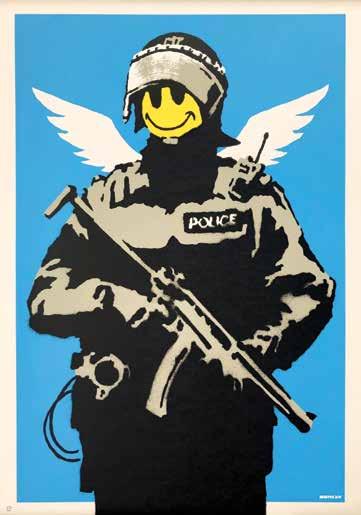
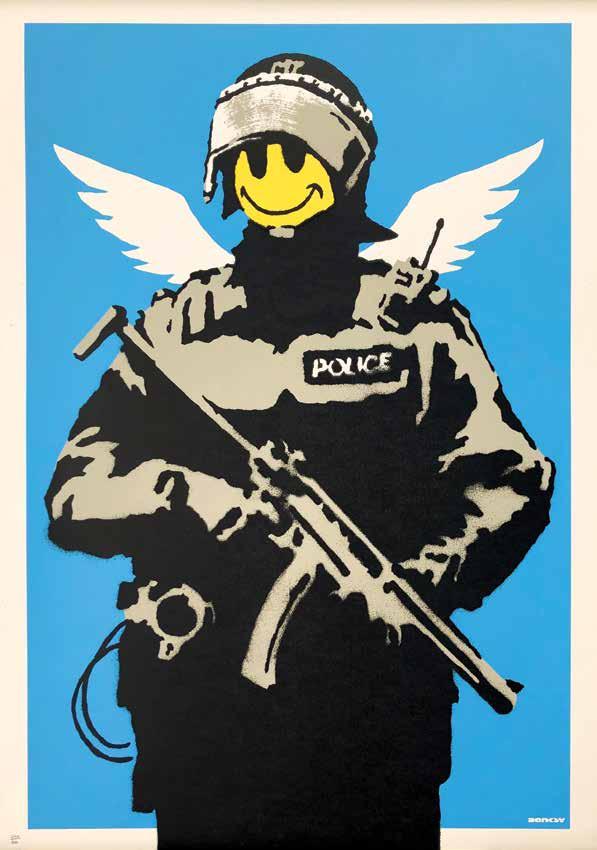
29 BANKSY (British b. 1974)
Flying Copper, 2003
Screenprint on wove paper, 470/600, with Pictures on Walls blindstamp, 99.7 x 70, numbered 470/600 in pencil
White Banksy stamp in plate
$50,000 - 75,000
This work is accompanied by a Certificate of Authenticity from Pest Control
PROVENANCE
Private Collection, Auckland
Banksy’s Flying Copper depicts a strangely, paradoxical policeman, fully kitted with gun, helmet, walkie-talkie and handcuffs, but topped with a smiley face and a pair of wings. The smiley face is both a nod to 1990s acid house culture and the innocence of childhood.
This work first appeared under a number of giant cut-out paintings suspended on cardboard from the ceiling at Turf War, Banksy’s first major exhibition in East London in 2003. The cut-outs were then spotted on the streets of Vienna and London, where the stencil appeared with a distinct red Banksy tag through the middle of it.
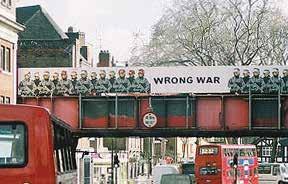
London’s Shoreditch Bridge also featured a row of Banksy Flying Coppers, but the installation was stolen and subsequently became the subject of Christopher Thompson’s 2012 documentary How to sell a Banksy.
Banksy’s artwork is based on the appropriation of pop culture and contrasts. While there is a clear disparity between the happiness and simplicity of the smiley face and the policeman’s attire, there is an element of the warrior-protector. Flying Copper underlines a theme consistent in the artist’s work – scepticism towards figures of authority and power.
30 BANKSY (British b. 1974)
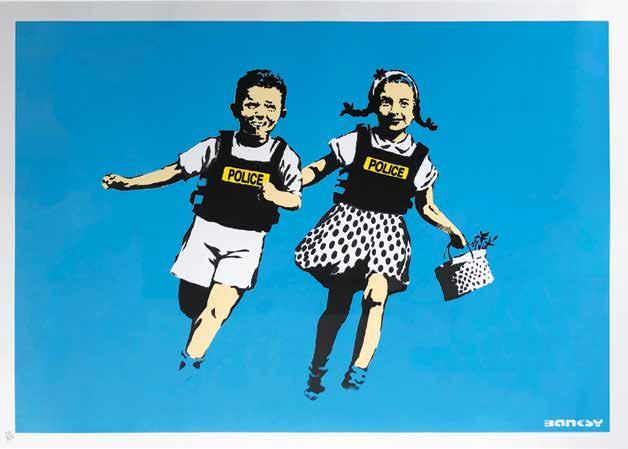
Jack and Jill (Police Kids) 2005
Screenprint on wove paper, edition 296/350, 50 x 70
Published by Pictures on Walls, London
White Banksy stamp in plate, numbered in pencil over POW embossed stamp
$50,000 - 75,000
This work is accompanied by a Certificate of Authenticity from Pest Control
Private Collection, Auckland
Purchased from Pictures on Walls,
Jack and Jill, named after a traditional English nursery rhyme but also referred to as Police Kids, was released by Banksy in 2005 as an edition of 350. There were 200 unsigned prints and 150 signed prints. That same year, the artist also produced 22 limited artist’s proofs on a pink background. Unlike many of Banksy’s works, Jack and Jill was never graffitied on the street and was exclusively released as a screen print.
Against a blue sky background, two young children run gleefully towards the viewer, mostly in black and white but highlighted with delicate patches of colour. They skip and are laughing, carefree with summer clothes and bare limbs, and the pigtailed young girl is carrying a basket of fresh flowers. At first glance, the image appears picturesque and innocent, until the viewer sees their bulletproof vests with ‘POLICE’ emblazoned in capital letters across their chests. With this detail, Banksy adds his characteristic ironic twist to the composition, laced with dark humour.
The block sky-blue background behind the children reinforces the impression that this scene is a pastiche of innocence, but they are restricted by their bulky vests, a possible metaphor for the way in which law enforcement is restricting people’s freedom. The jarring aesthetic of children in bulletproof police jackets is at odds with the supposed freedom and innocence of childhood.
Referencing the English nursery rhyme, in which Jack and Jill came tumbling down the hill, Banksy’s portrayal could suggest that in this day and age children are smothered by safety regulations, or on the other more sinister hand, are perhaps in need of even greater protection. Banksy is open to interpretation and is just as famous for the unexplained as his mysterious anonymity.
31
BANKSY (British b. 1974)
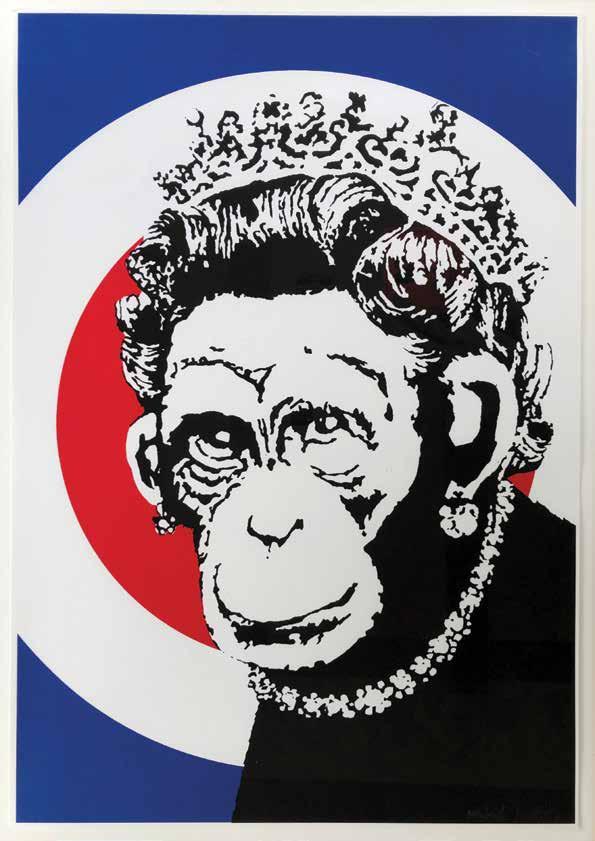
Monkey Queen, 2003
Screenprint, edition 130/750, 49.2 x 34.3
Hand signed & numbered 130/750, $30,000 - 40,000
This work is accompanied by a Certificate of Authenticity from Pest Control
Private Collection, Auckland
Purchased from Pictures on Walls, London, 9.43 pm, 21/9/2004 by current owner - Original purchase receipt available
Monkey Queen is a thought-provoking screen print made up of an edition of 600 unsigned prints and 150 signed prints. The image was first publicly displayed as a wall painting at The Chill Out Zone, a youth club on Broad Street in Newent, a market town north west of Gloucester.
Following complaints that the painting was disrespectful to the monarchy, the press labelled the event as Banksygate.
The youth club was asked by the government not to display this image during the Queen’s Golden Jubilee and its funding was cut. This raised issues regarding freedom of expression. Eventually Monkey Queen was replaced on the wall of the youth club with a Union Jack.
In 2012, the year of the Queen’s Diamond Jubilee, a far less controversial Banksy portrait of Queen Elizabeth II appeared on the streets of Bristol. A youthful Queen was portrayed wearing a diamond tiara, ermine and pearls, sporting Ziggy Stardust’s iconic lightning bolt makeup.
32 BANKSY (British b. 1974)
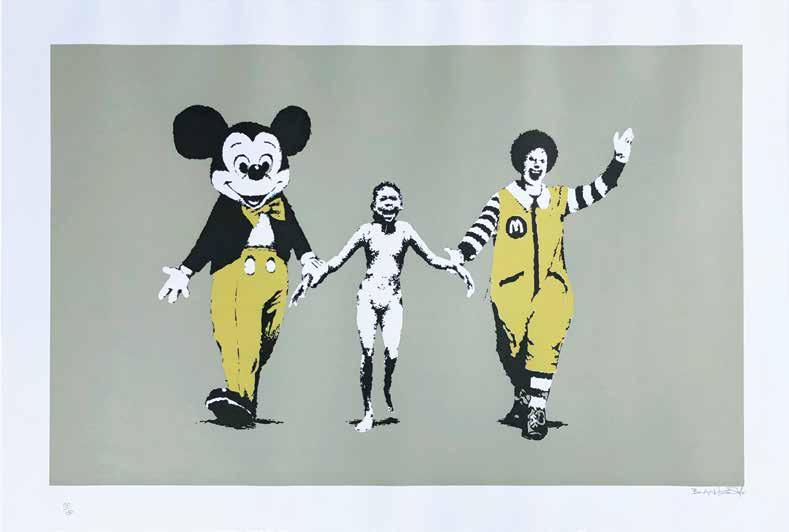
Napalm, 2005
Screenprint on wove paper, edition 130/150, 50 x 70
Hand signed, numbered 130/150 & dated 2005
$40,000 - 60,000
This work is accompanied by a Certificate of Authenticity from Pest Control
PROVENANCE
Purchased from Steve Lazarides, Artist’s agent, London, 2005 by current owner
Napalm is sourced from the haunting Vietnam War photograph titled The Terror of War taken by photo journalist Nick Ut in June 1972. This image triggered worldwide outrage at the napalm bombings and was awarded both the Pulitzer Prize and World Press Photo of the Year in 1973.
The focal point of the original photograph showed Phan Thi Kim Phuc, fleeing Trang Bang after being severely burned on her back during the attack. Napalm is one of Banksy’s most powerful works. Walt Disney’s Mickey Mouse and McDonald’s, Ronald McDonald, both American icons, appear in disarming juxtapose, smiling as they lead the terrorised girl away from disaster.
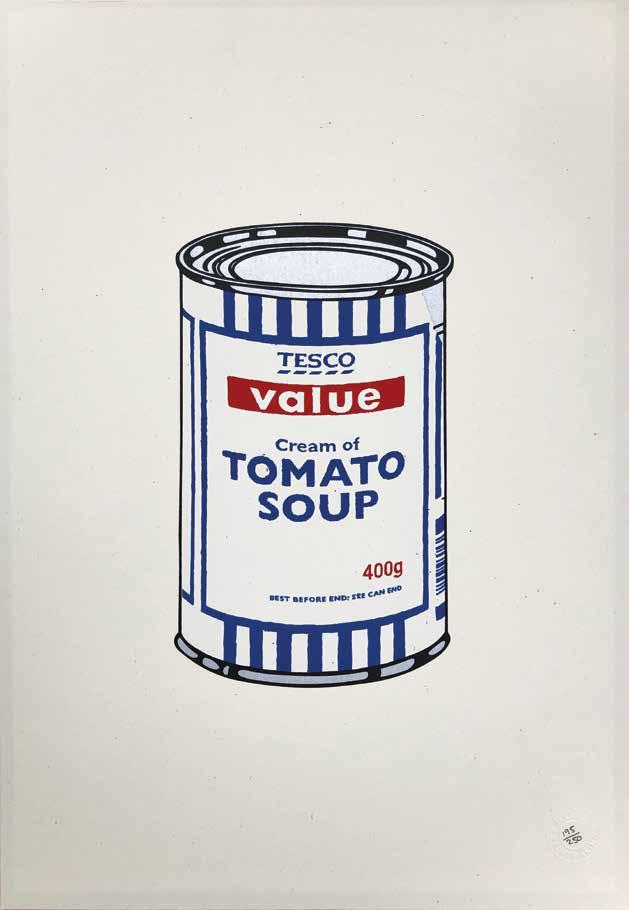
33 BANKSY (British b. 1974)
Soup Can (Original)
Screenprint edition of 250, 50 x 36
Numbered 195 /250 with publishers
Pictures on Walls blindstamp
$70,000 - 100,000
PROVENANCE
Private Collection, Sydney, NSW
Purchased from Artrepublic, Brighton, UK by current owner, Circa 2006
This work is accompanied by a Certificate of Authenticity from Pest Control
Banksy’s original four-colour screenprint Soup Cans, is a play on Andy Warhol’s now infamous Pop Art Campbell’s Soup Cans. Banksy has taken the idea that commercial products can be art, as is the Pop Art ethos, but has rendered it in his tongue-in-cheek style with Tesco Value cans of cream of tomato soup.
This limited edition screenprint is one of Banksy’s most iconic. Four different variations were released. The number of cans featured on the print and their colours vary.
Anonymous street artist Banksy first turned to graffiti as a young, disillusioned adolescent. Inspired by the thriving graffiti community in his home city, Bristol,
Banksy’s works began appearing on trains and city streets in 1993, and by 2001 his signature, stencilled works had cropped up all over the United Kingdom. Typically crafting his images with spray paint and cardboard stencils, Banksy is able to achieve a meticulous level of detail. His aesthetic is clean and instantly comprehensible due to his unique ability to distil complex political and social statements into simple visual elements.
His graffiti, paintings, and screenprints use whimsy and humour to satirically critique war, capitalism, hypocrisy and greed. His anti-establishment wit has had an undeniable impact on today’s contemporary street culture.
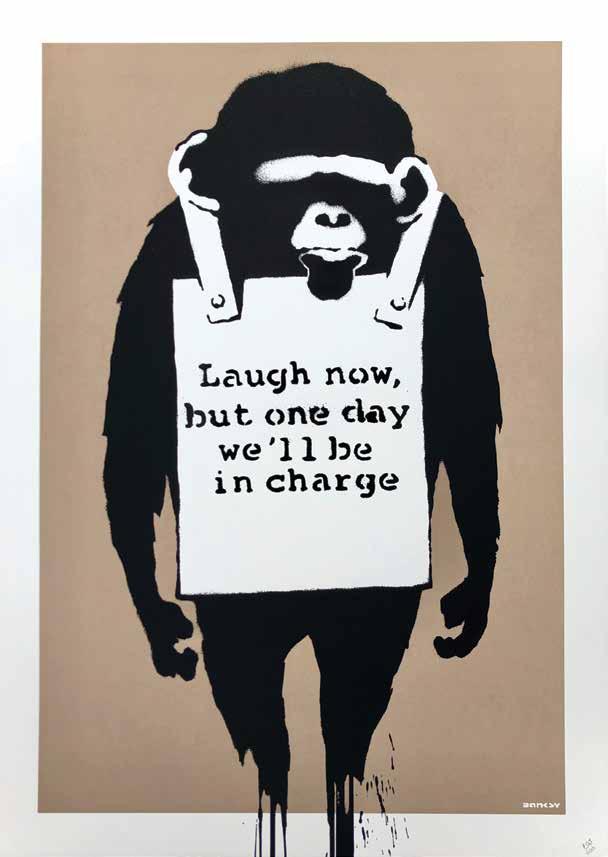
33A BANKSY (British b. 1974)
Laugh Now
Screenprint, edition 463/600, 69.5 x 49.5
$80,000 - 120,000
Private Collection, Wellington
Purchased in Bristol, 2003 by owner
This work is accompanied by a Certificate of Authenticity from Pest Control
Laugh Now became known worldwide, and reached a milestone in Urban Art when one of the original artworks sold at auction in 2008 for almost US$500,000. First created in 2002, it is an unusual artwork because it was originally commissioned by a nightclub in Brighton instead of appearing on the street. Since then, Banksy has recreated this iconic piece of art for sale many times, with several versions of the street art piece appearing as prints in the Existencilism show of 2002, his first solo exhibition in Los Angeles. Laugh Now depicts a monkey standing upright, his shoulders sloped and his face is drawn; although the eyes are in shadow, his expression shows that he feels downtrodden and ashamed. He wears a
sandwich board with text that reads, defiantly, “Laugh now, but one day we’ll be in charge.”
Banksy uses the monkey to illustrate the arrogance of humanity. Following the publication of Charles Darwin’s Theory of Evolution, which asserted that humans evolved from apes, humans set out to create distance between themselves and their relatives by ridiculing apes and monkeys as stupid savages. Monkeys have since performed demeaning tasks in public at the behest of humans and are characterised as howling baboons, aggressive monsters, cute organ grinders, and clever thieves.
LATE ENTRY
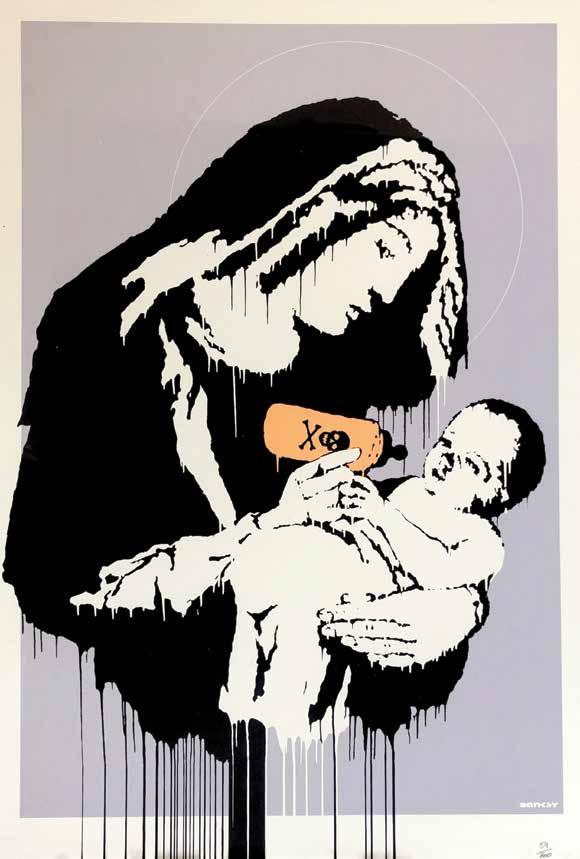
33B BANKSY (British b. 1974)
Toxic Mary
Screenprint, edition 59/600, 68.5 x 49
Signed in plate
$50,000 - 75,000
PROVENANCE
Private Collection, Auckland
Purchased, London, 2003
This work is accompanied by a Certificate of Authenticity from Pest Control
Toxic Mary is an early street art work by Banksy that first appeared as a painting in his exhibition Turf War in 2003. It was a limited edition of 750 prints, with 150 signed and 600 unsigned prints. Toxic Mary is an original spin on one of the most important symbols in the history of orthodox iconographic art: Madonna and the Christ child. Banksy’s half-figure Madonna resembles the style associated with Italian Rennaissance art, and is an image which easily embeds itself into popular iconography.
In Toxic Mary, Banksy satirizes the relationship between mother and child, but also between religious authority and layperson. To a layperson, religion may offer security, but it does not always equal safety. The figure of Madonna is seen feeding a poisonous formula to the infant Christ. Many across the world feel that religion has disproportionately sparked more wars, caused more death, and fostered a sense of cultural intolerance than it has done good.
LATE ENTRY
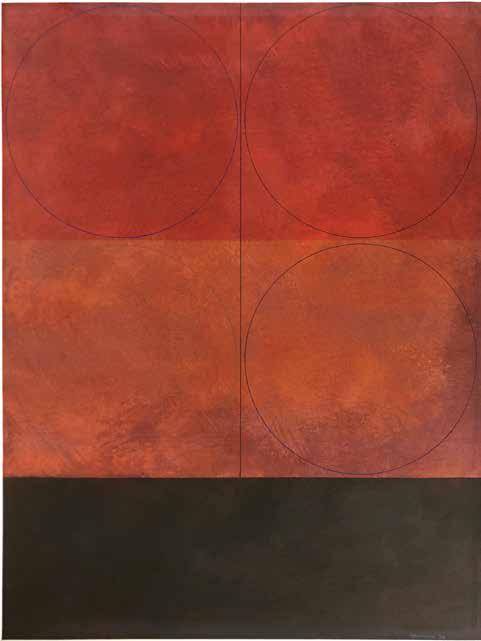
LATE ENTRY
Four Circles
Acrylic and graphite on paper 58 x 44
Signed & dated 1974
$18,000 - 24,000
PROVENANCE
Private Collection, Auckland Original labels affixed verso
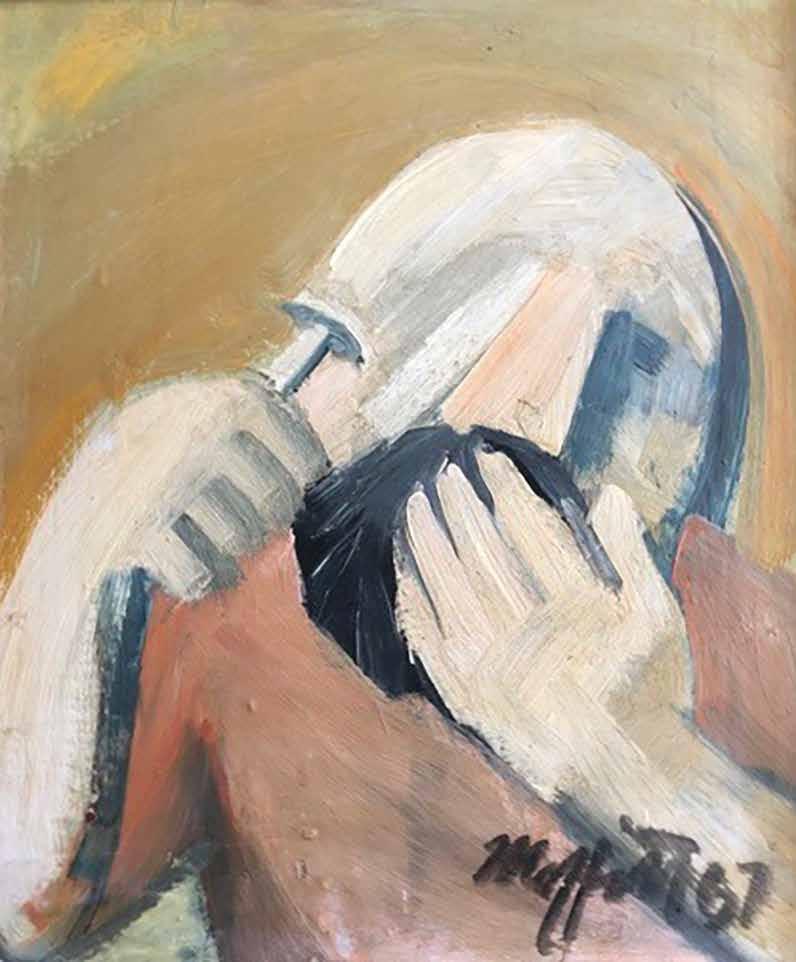
LATE ENTRY
Miner Shaving Oil on board 39 x 22
Signed & dated 1967
$15,000 - 25,000
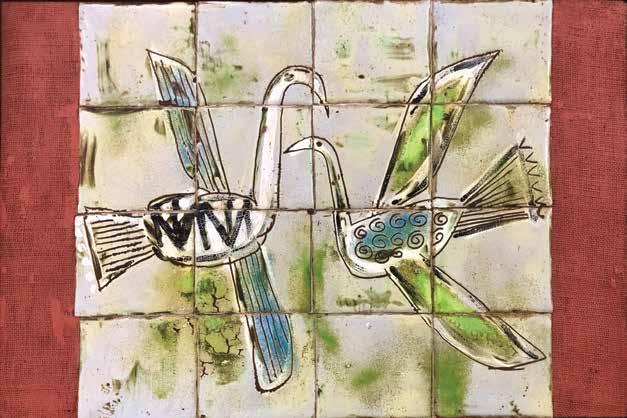
34 PAT HANLY (1932 - 2004)
Birds of Peace
Mixed media with enamel tiles affixed to hessian 43 x 53
Signed & dated 1963 - 64 verso
$8,000 - 12,000
PROVENANCE
Acquired directly from the artist, c. 1964, by descent
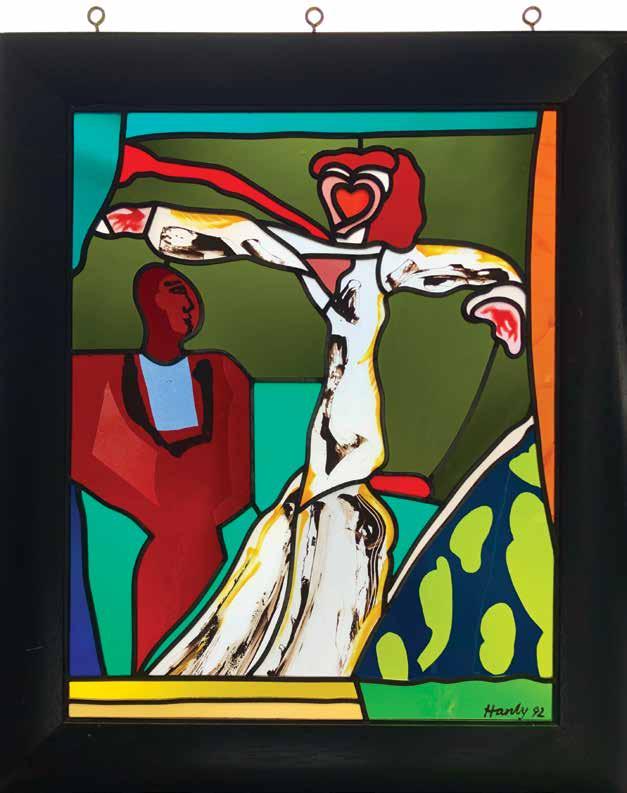
35 PAT HANLY (1932 - 2004)
Bride and Groom
Stained glass window 62 x 49.8
Signed & dated 1992
$15,000 - 20,000
PROVENANCE
Private Collection, Auckland
Purchased from 19th & 20th Century New Zealand & European Paintings, Dunbar Sloane, 01/10/1996
36
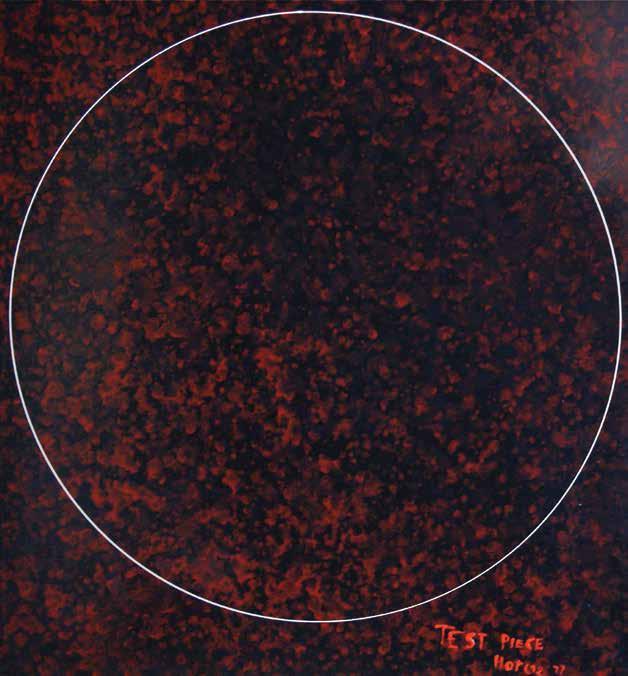
RALPH HOTERE (1931 - 2013)
Test Piece for Godwit/Kuaka
Enamel on board 62 x 57.5
Signed, inscribed Test Piece & dated 1977
$60,000 - 80,000
Private Collection, Waikato
Purchased from Fine New Zealand Paintings International Art Centre, 15/10/2007
Test Piece relates to Hotere’s largest work, Godwit/ Kuaka - an 18-metre long mural commissioned for the Arrivals Hall of the Jean Batten Terminal building at Auckland International Airport. The artist chose the painting’s theme to be a welcome to returning citizens and a greeting to visitors arriving at Aotearoa’s busiest airport. The artist wanted his painting to evoke nonstop, long-distance air travel.
Originally titled The Flight of the Godwit, Hotere’s mural remained in the welcoming area until 1996, when redevelopment of the terminal building began. The mural was removed from the airport’s art collection, purchased by the Chartwell Trust and lent to Auckland Art Gallery Toi o Tāmaki in 1996. At that time, Ralph Hotere renamed the mural Godwit/Kuaka. The kūaka (bar-tailed godwit, Limosa lapponica baueri) is a shore bird whose flight endurance is unparalleled.
Renowned for undertaking transoceanic aerial journeys between Alaska and New Zealand, it has the reputation of a ‘can do and go anywhere’ animal. Its physical stamina is legendary; travelling non-stop over 10,000 kilometres across the Pacific Ocean. It starts and ends its journey without once receiving the nourishment of food.
The artist’s father, Tangirau Hotere, taught his son the ancient Maori chant stencilled at the mural’s centre. Shortly prior to the artist’s death in 2013, he recorded part of the Muriwhenua chanting for installation of Godwit/ Kuaka
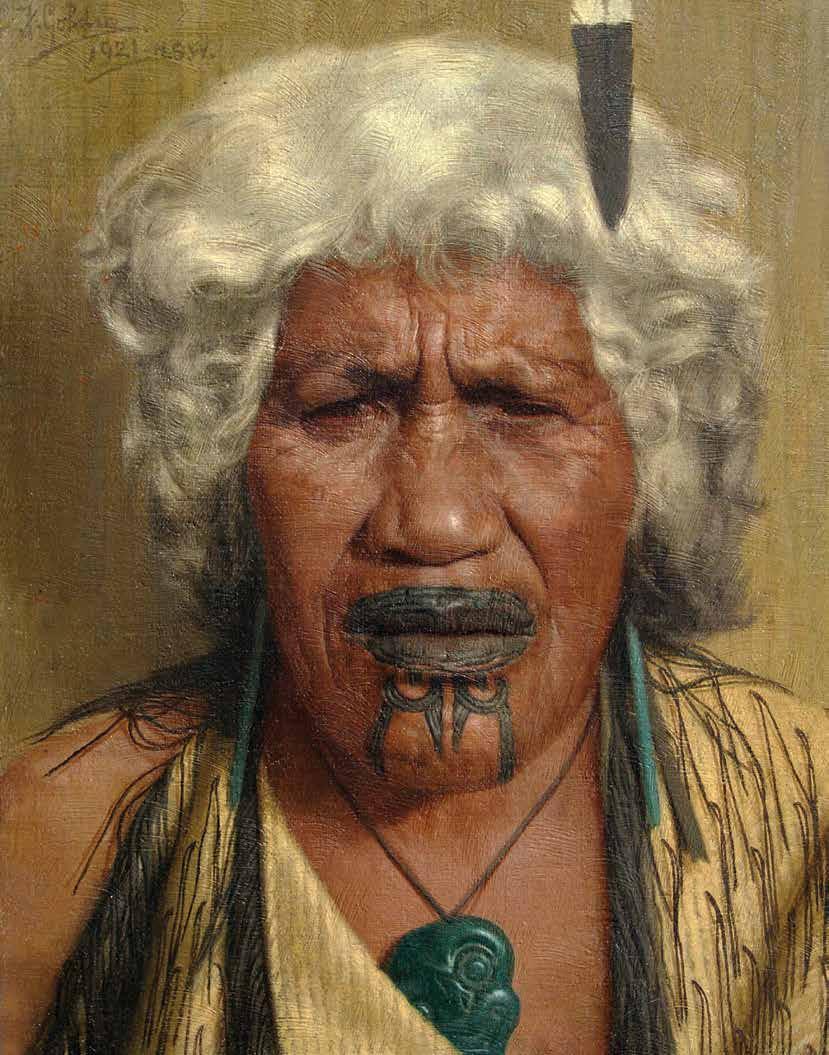
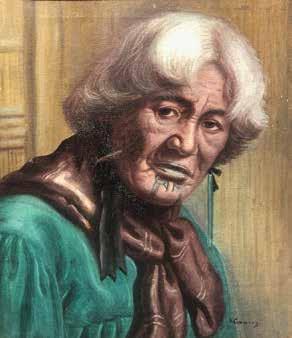
Harieta Huirua, A Chieftainess of the Tuhourangi Tribe, Rotorua
Estimate $350,000 - 450,000
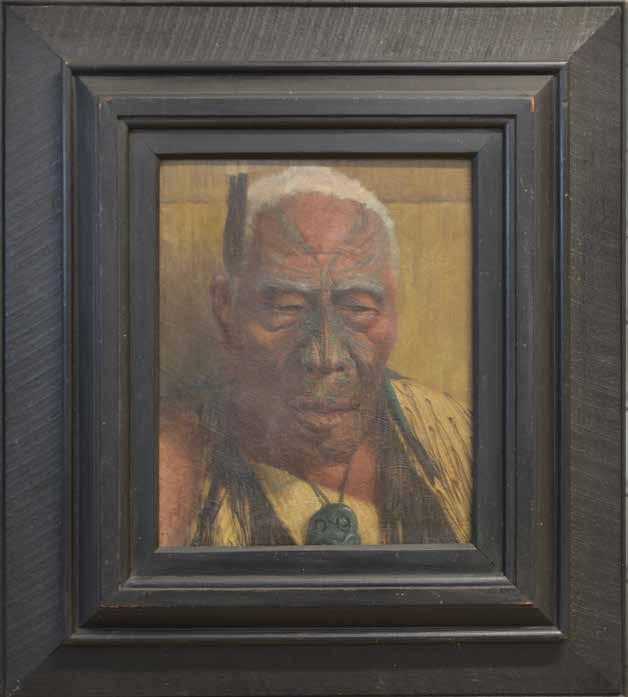
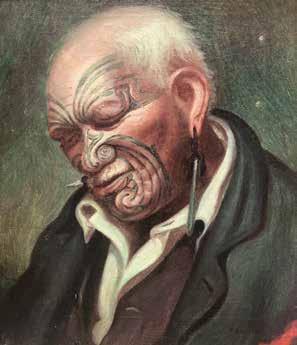
Tumai Tawhiti, Chieftain of Ngati Raukawa, Te Arawa
Estimate $250,000 - 350,000
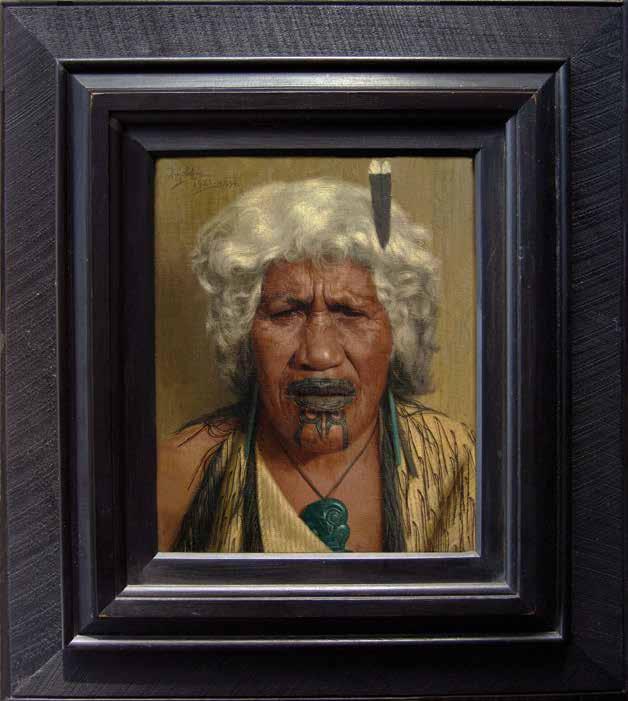
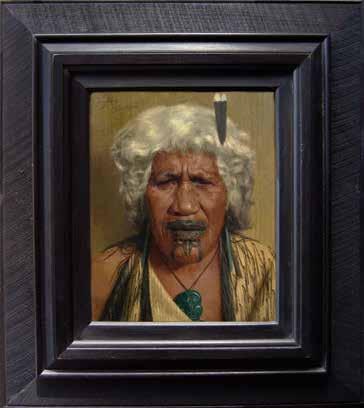
1947)
Harieta Huirua
A Chieftainess of the Tuhourangi Tribe, Rotorua
Oil on canvas 28 x 23.2
Signed, inscribed NSW & dated 1921
Inscribed twice Harieta Huirua
A Chieftainess of the Tuhourangi Tribe, Rotorua verso
Also inscribed Olive Goldie on stretcher
$350,000 - 450,000
PROVENANCE
Private Collection, Auckland
One family ownership from 1921 - 2008
Purchased 1921 from John Leech Gallery
Hung in Remuera Road family home from 1921 until the mid 1950s
Then hung in the Wellington home of original owner’s daughter from 1954 until 2008
Painting bequeathed to niece, subsequently consigned to auction
Purchased by present owner from Important, Early & Rare, 1 July 2008, International Art Centre
In Polynesian portraiture Mr C F Goldie stands pre-eminent in the world today, and New Zealand has every reason to be proud of him
Governor General Lord Bledisloe
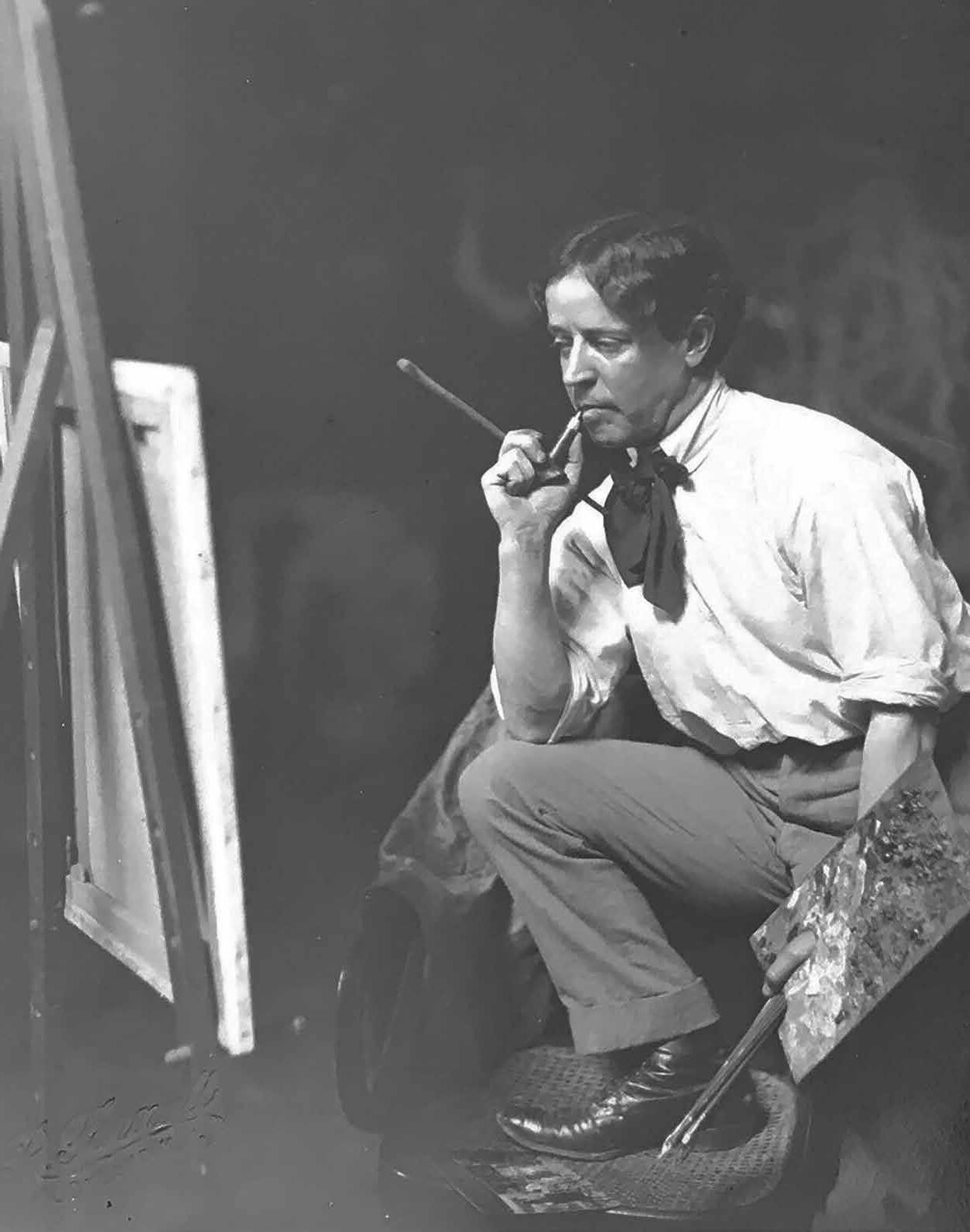
Through his lifetime and legacy, Charles Frederick Goldie greatly influenced our nation’s artistic and cultural consciousness. Born in Auckland on 20 October 1870, one of eight children from the marriage of Maria Partington and David Goldie, he was named after his maternal grandfather, Charles Frederick Partington, builder of the landmark Auckland windmill.
In 1883 the young Goldie was enrolled at Auckland Grammar School. His youthful artistic talents shone, and it was not long before he was winning prizes at the Auckland Society of Arts. On leaving school, Louis John Steele become his mentor and tutor. Two of the young artist’s still life paintings so impressed Sir George Grey, that he convinced David Goldie to allow his 22 year old son to attend the Académie Julian in Paris. Goldie spent over four years at the Académie Julian tutored by leading lights of the Paris Salon such as William-Adolphe Bouguereau.
In 1898, fully informed in the French academic style, the artist returned to New Zealand and began collaborating with his former tutor Louis John Steele. The two worked on a number of paintings including The Arrival of the Maoris in New Zealand, a large scale history painting after Gericault’s Raft of the Medusa. Before long, however, the relationship deteriorated likely caused by tensions around the former student’s growing success. Goldie went on to open his own studio and establish himself as a successful portraitist of Maori.
A visit to Rotorua in 1901 was the first of several field trips during which the artist was introduced to local Maori and persuaded them to sit for portraits. Goldie’s works from this point forward strongly reflect the European tradition in which he was trained, and possess a stunning power and visual clarity. On the one hand, his remarkable dedication to realism belies an ethnographic interest. At the same time, he was also striving to capture the mana of his sitters who included chiefs, tohunga and kaumatua.
Goldie formed long-standing relationships with several Maori he met and painted around this period, including Wiremu Patara Te Tuhi and Te Aho-o-terangi Wharepu (Ngati Mahuta), Ina te Papatahi (Nga Puhi), and Wharekauri Tahuna (Ngati Manawa).
Over the next two decades, Goldie gained national and international acclaim and steady demand formed a strong market for his portraits, a number of which would later be exhibited at the Royal Academy of Arts in London and the Paris Salon throughout the 1930s.
In 1920 the artist moved to Sydney, where despite original plans to continue on to Paris, he was married, at age fifty to thirty five year old Olive Cooper. Marriage in Sydney circumvented the Goldie family disapproval of the relationship between Auckland’s famous artist and the milliner from Karangahape Road. After two years in Sydney, apparently disillusioned with his work at this time and suffering from health problems Charles and Olive returned to New Zealand.
Goldie’s return to Auckland in 1924, ultimately represented a moment of artistic reckoning. Goldie received encouragement to resume painting from Governor General Lord Bledisloe. Devoting himself once again to his work, he began to apply a more liberal, impressionistic approach to the realisation of his portraits and repainted a number of his former subjects. Works from this later period are distinguished by their soft luminescence, offering a rhythmic departure and disconnection from the rigours of formalism to which he had so strictly adhered in the past.
Goldie died in Auckland in 1947, his exquisite, spiritually-charged, often unsettling and ever powerful portraits of Maori having made an unsurpassed contribution to the history of art in New Zealand.
- 1947)
Tumai Tawhiti,
Chieftain of Ngati Raukawa, Te Arawa
Oil on canvas 27 x 22
Inscribed Olive Goldie, Tumai Tawhiti lived at Tarukenga near Rotorua verso
$250,000 - 350,000
PROVENANCE
Private Collection Auckland
Purchased from Artworks at the Hilton Charity auction 16 August 2002
Variety - the Children’s Charity catalogue in which it was catalogued is available for purchaser.
Tumai Tawhiti (1812-1912) was partly Ngati Raukawa and partly Arawa. He married Te Aotiti, an Arawa/ Tuwharetoa woman, and lived in the hill pa at Tarukenga, overlooking Roturua.
Tumai was eleven when Hongi and his Ngapuhi warriors raided Mokoia Island in 1823, but he escaped in a canoe and found refuge at Ngongotaha, the sacred burial ground of the lake people.
In 1836 Tumai took part in the battle at Te Tumu in the Bay of Plenty. He killed several of the enemy and after the action took part in the cannibal feast. On the return home he was fully tattooed over a period of three months, he was aged only twenty four.
Tumai Tawhiti had a beautiful and striking tattoo and in Goldie’s time must have been one of the most prized examples of the tattooists art. Tumai also appealed to Goldie because he had participated in cannibal feasts.
He died aged 100 years at Ohinemutu in 1912.
Goldie painted Tumai Tawhiti first in 1911 and again in 1913, titling that work Last of the Cannibals, it was a great critical success and now hangs in the Aigantighe Art Gallery. He repeated the subject again in 1932, 1935 and 1938.
Reference:
Thanks to the late Roger Blackley and publication C F Goldie: His Life and Painting, Alister Taylor and Jan Glen, 1979.
39
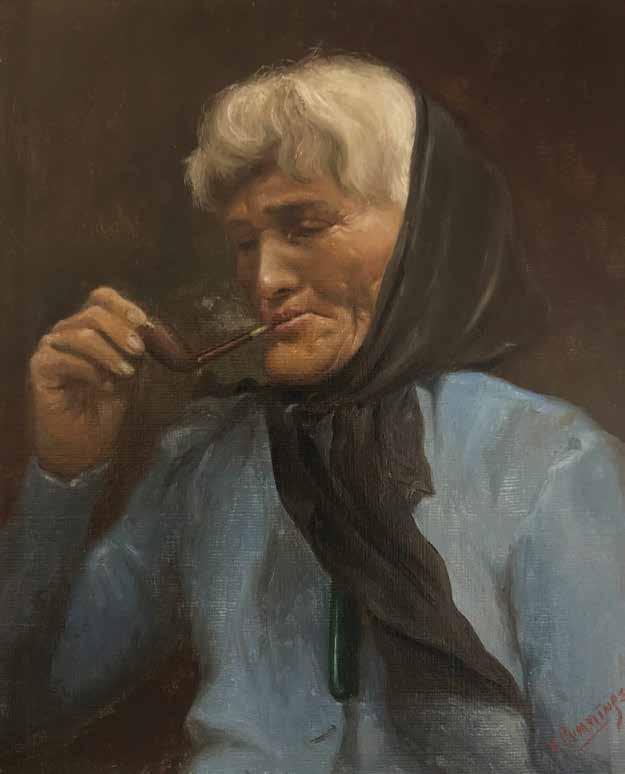
VERA CUMMINGS (1891 - 1949)
Harata Rewiri Tarapata in European Clothing Oil on canvas 29.5 x 24.5
Signed
$8,000 - 12,000
40
VERA CUMMINGS (1891 - 1949)
A Hot Day Oil on canvas 29 x 24.5
Signed
$10,000 - 15,000
41
VERA CUMMINGS (1891 - 1949)
Guide Sophia Oil on canvas 25 x 20
Signed
$10,000 - 15,000
At the age of eleven Vera Cummings was awarded a scholarship to attend Elam School of Fine Arts. She was one of the youngest pupils to attend the school. From here she became a pupil of Goldie, and was considered the only one to produce the same natural colour of Maori skin as Goldie painted.
Her studies of Maori were in great demand for sending overseas and as well as choosing the same subjects as Goldie, for example Sophia Grey (Guide Sophia), she painted many other well known Maori from the Auckland area.
Text reproduced from p. 157 C F Goldie Prints, Drawings & Criticism Alistair Taylor & Jan Glen. First Published 1979 by Alistair Taylor, Wairua, Martinborough, New Zealand.
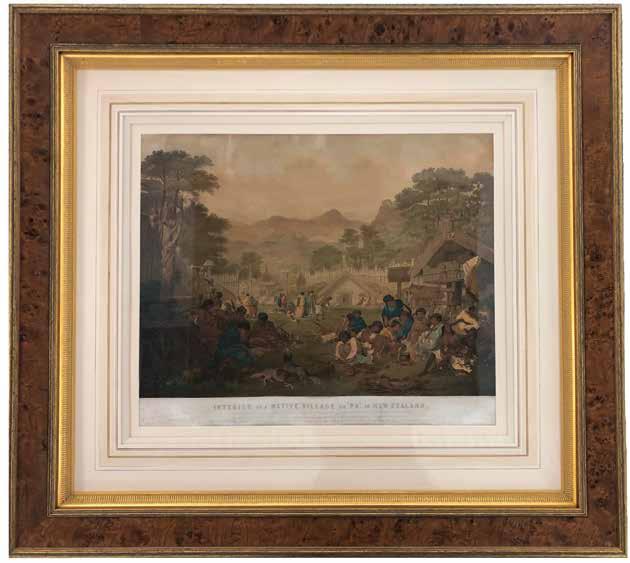
Interior of a Native Village or ‘Pa’ in New Zealand, 1850
Hand coloured lithograph by Day & Son
48 x 64.4
Inscribed
$10,000 - 20,000
PROVENANCE
Private Collection, Auckland
Purchased in Sydney
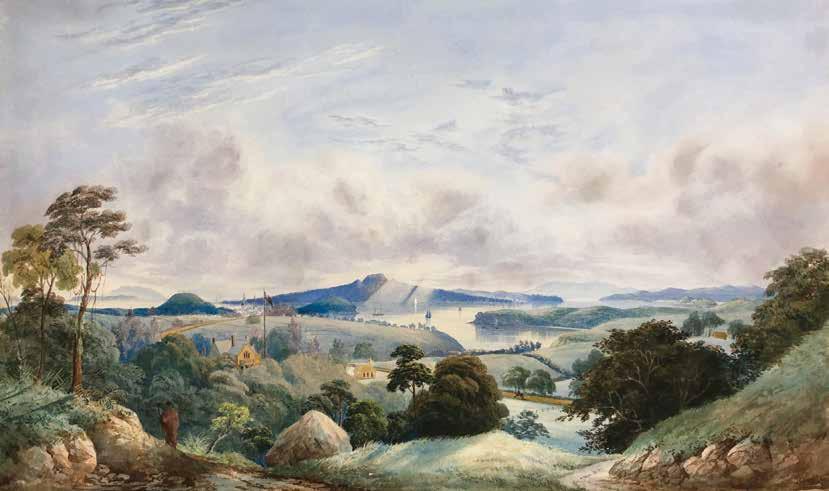
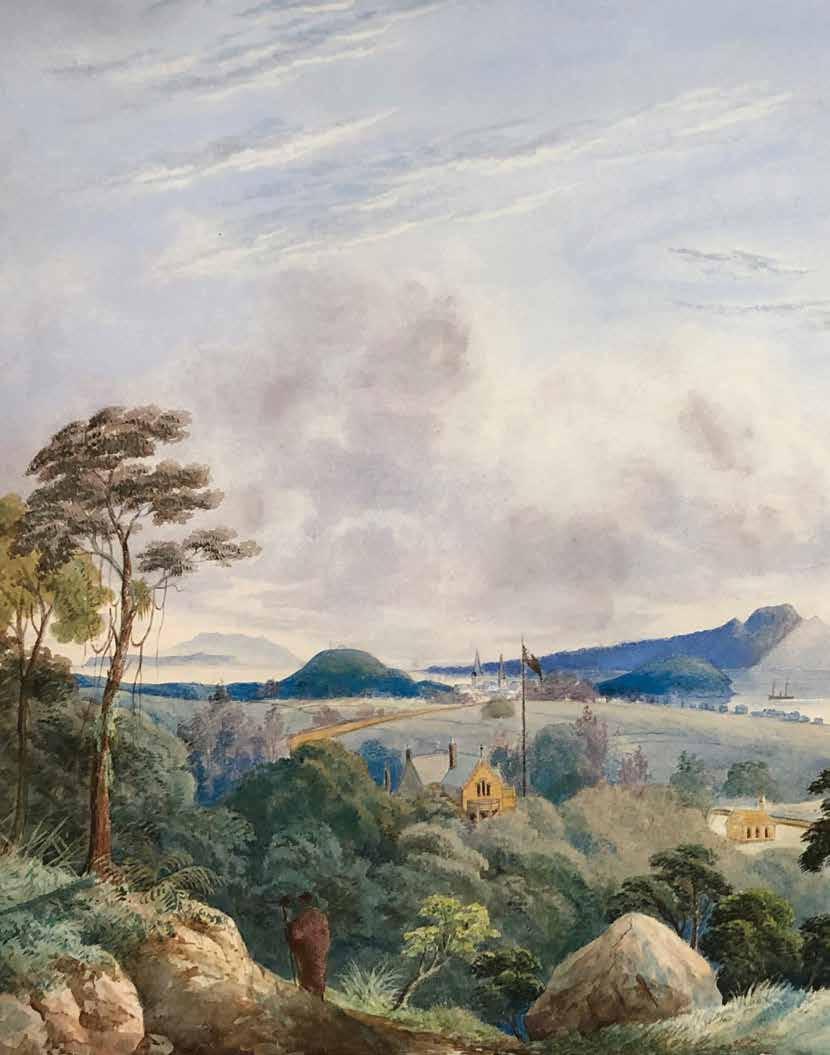
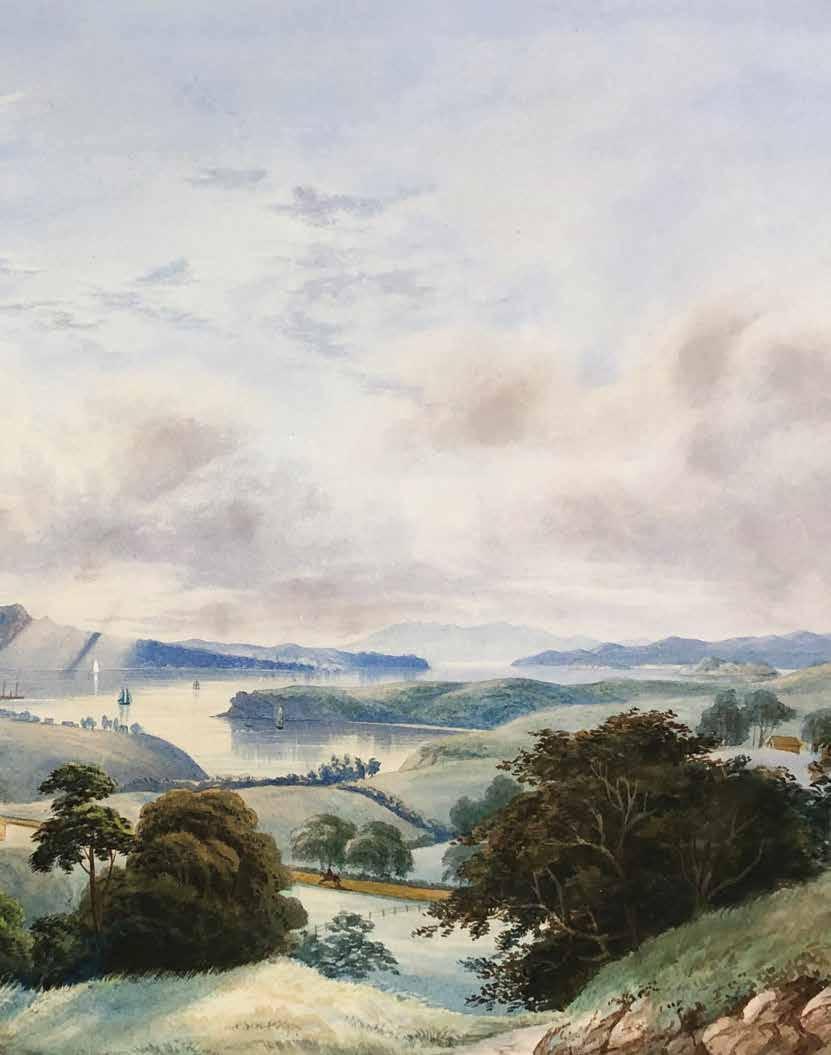
View of Auckland from Mount Hobson, Remuera
Watercolour 41 x 72
Signed & dated 1879
$40,000 - 60,000
PROVENANCE
Private Collection, Auckland
Prior to which, this work was held in the same family collection for four generations
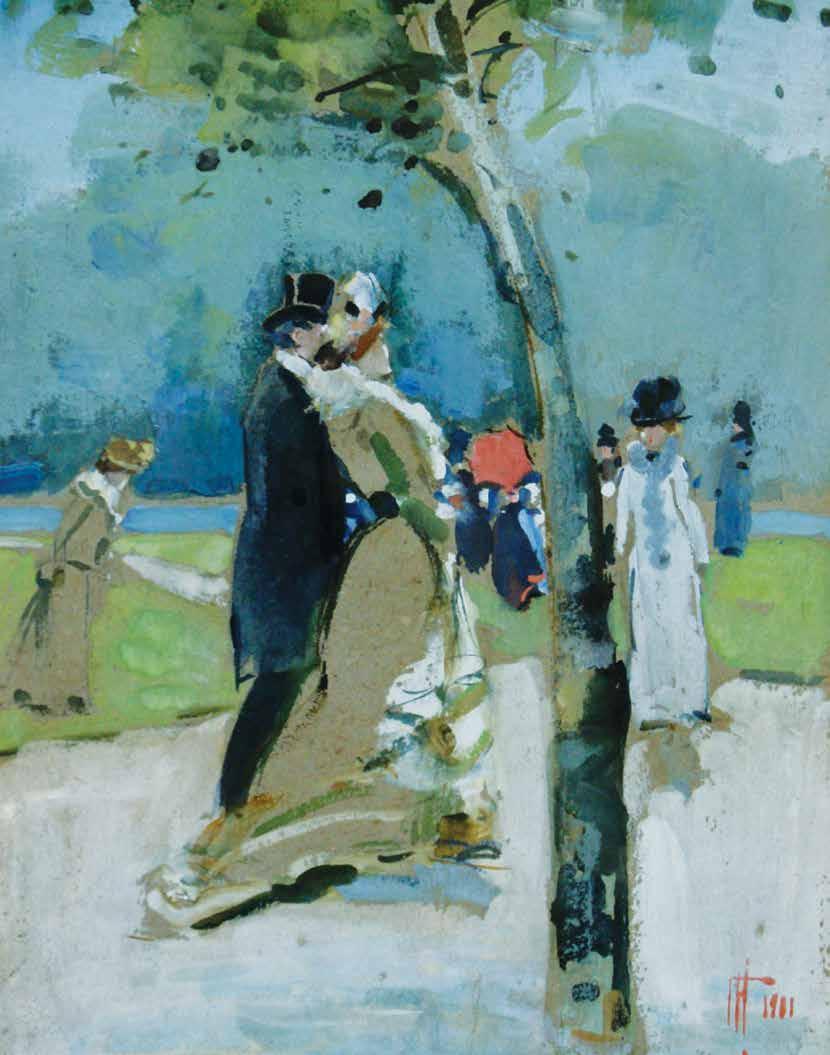
44 FRANCES HODGKINS (1869 - 1947)
Figures in Hyde Park
Watercolour 27 x 18
Signed & dated 1901
$50,000 - 75,000
PROVENANCE
Private Collection, Auckland
Fine New Zealand & European Paintings
International Art Centre, 31 July, 2003
EXHIBITED
Twelve watercolours by Frances Hodgkins, Cat no. 221
Otago Art Society, Dunedin November 1901
ILLUSTRATED
p. 40 Portrait of Frances Hodgkins
E H McCormick Auckland University Press 1980, 1981 & 1990
At her lodgings in Selwood Terrace, South Kensington, London, Frances was within walking distance of the park. The watercolour was one of twelve she sent to the Otago Society’s show in November 1901. It is evident commented the reviewer, that Miss Hodgkins has already made considerable advance in her work, of which the colouring, as in her past work, is the most striking feature.
Text : Portrait of Frances Hodgkins
E H McCormick, Auckland University Press 1980, 1981 & 1990
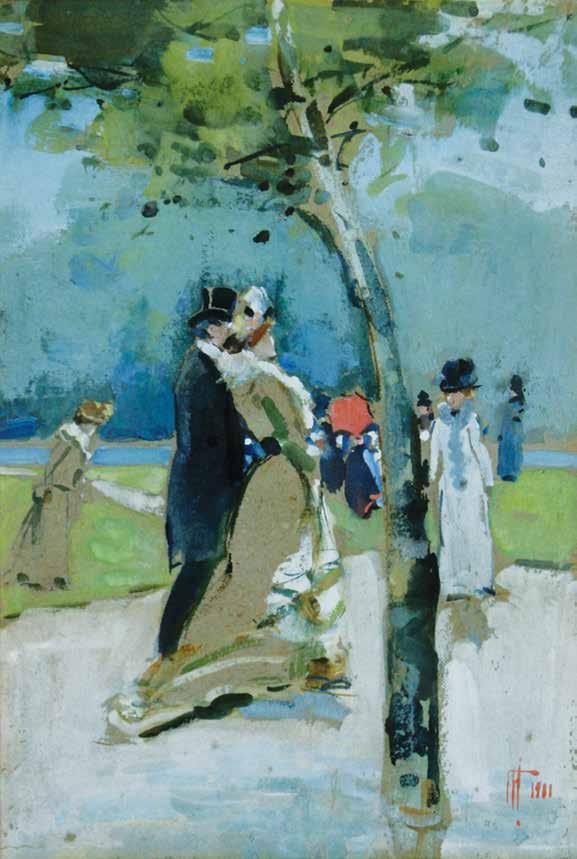
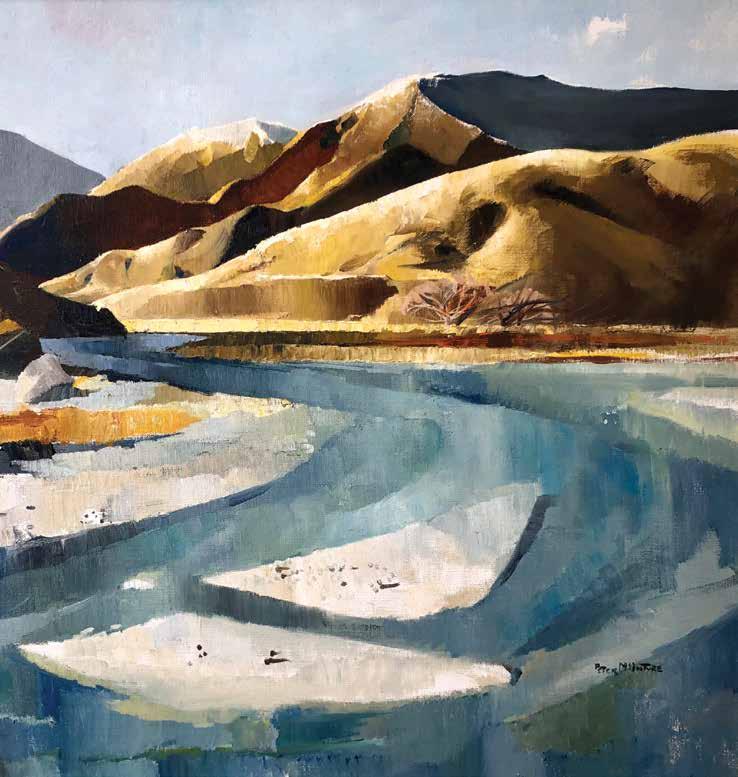
45 PETER MCINTYRE (1910 - 95)
Lindis Pass, Central Otago Oil on canvas board 70.5 x 97.5
Signed
$25,000 - 35,000
PROVENANCE
Private Collection, Auckland
EXHIBITED
John Leech Gallery
Original exhibition label affixed verso
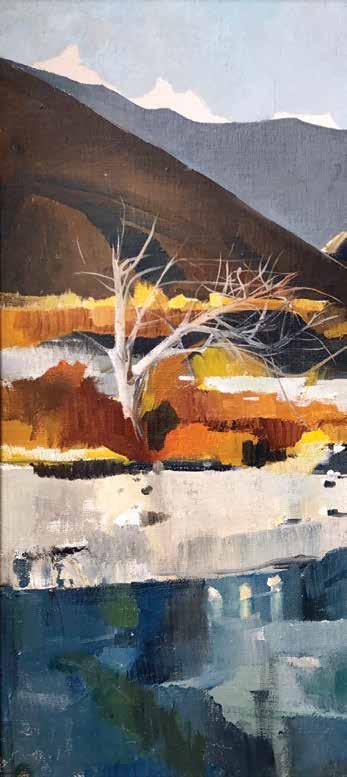
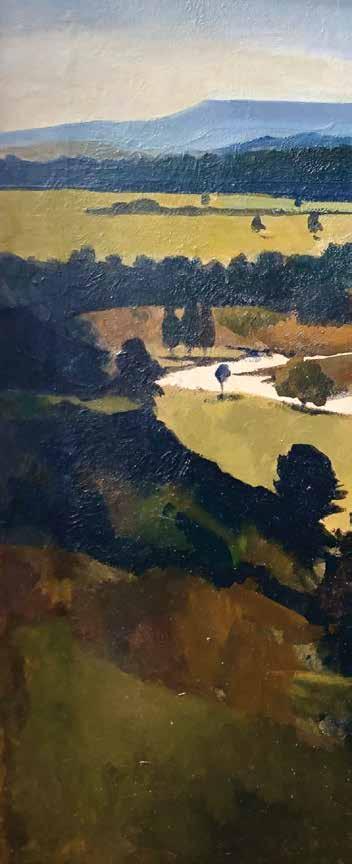
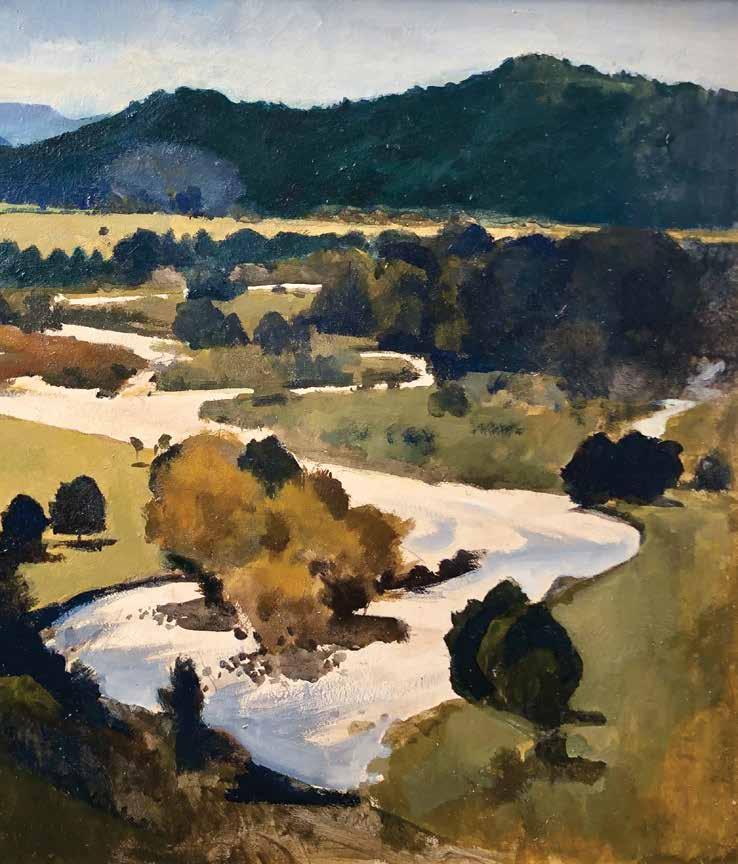
- 95)
The Whakapapa at Dusk Oil on board 60 x 74
$20,000 - 30,000
PROVENANCE
Private Collection, Auckland
ILLUSTRATED
plate 13, Kakahi, New Zealand, Peter McIntyre, A H & A W Reed 1972
The Whakapapa at dusk. In the twilight the river catches the last light from the evening sky as it winds to join the Wanganui. The hill in the left mid-distance was the site of Takapuna, one of the five forts that fell in the battle against the Wanganui Maori Peter McIntyre
Text: Kakahi, New Zealand, Peter McIntyre, A H & A W Reed 1972
The Albert Barracks housed nine hundred Imperial Troops during the New Zealand Wars. They were demolished in 1871 and the land handed to the city to be used as a public reserve, with the Auckland City Council developing it into Albert Park in 1882. The only remnant of the Barracks is a portion of wall that survives today in the grounds of the University of Auckland.
Robert Henry Wynyard was born 1802, at Windsor Castle, England. He followed family tradition in choosing a military career. After serving in England for many years, it was in Malta, in August 1826, that he married Anne Catherine McDonell. They later had four sons.
From 1828 to 1841 Robert Wynyard served in Ireland, and was promoted to Major in 1841. He was recalled to England in 1842 and promoted to Lieutenant Colonel. During 1844, Wynyard, with his two hundred strong troops, was ordered to New Zealand to augment the forces deployed in the Bay of Islands against Hone Heke and Kawiti. Wynyard was one of the party who stormed Ruapekapeka on 11th January 1846. In recognition of his services in the Northern War he was created CB then in December 1846 he returned to New South Wales, Australia.
Robert Wynyard returned to New Zealand in 1847. Over the next eleven years they entertained lavishly in their home at Official Bay, Auckland. It is during this period that Paihia looking across to Kororareka, Paihia Bay of Islands & Auckland Barracks were produced.
In 1851 he was appointed, on the death of Major General G. D. Pitt, to command the forces in New Zealand, amounting to some one thousand imperial troops and the five hundred Fencibles in the Auckland pensioner settlements. He held this command until 1858, being promoted to Colonel in 1854. From April 1851 to March 1853 Wynyard held the position of Lieutenant Governor of New Ulster, a position he was appointed by Governor Sir George Grey. Aided by Bishop George Selwyn and Chief Justice William Martin, he also successfully obtained consent from Ngati Tama-te-ra and Ngati Raupunga to gold mining in the Coromandel area, and later the Thames, Karangahake, Waihi and Te Aroha fields.
When Sir George Grey departed for England at the end of 1853, Wynyard, as the senior military officer in the colony, became acting governor, assuming office on 3rd January 1854. In spite of his earlier lack of confidence in Wynyard’s political expertise, Governor Grey had left to his stand-in the daunting task of completing the implementation of the New Zealand Constitution Act 1852. When he addressed the first General Assembly in the hastily erected parliament building in Auckland on 27th May 1854, Wynyard emphasised that his powers were circumscribed and his responsibility was to the Crown.
In September 1855 newly appointed governor Thomas Gore Browne arrived to take over from Wynyard. After 20 stormy months as acting governor, Wynyard resumed his military duties. In 1858 the 58th Regiment was recalled to England, where Wynyard was promoted to Major General. The following year he was sent to South Africa as officer commanding and lieutenant governor of Cape Colony. In 1863 he returned with Anne Wynyard to England in ill health. On his retirement he was promoted to Lieutenant General and appointed Colonel of the 98th Regiment of Foot. He died in London on 6th January 1864. Anne Wynyard returned to Auckland, where she remained a prominent social figure until her death in 1881.
Robert Wynyard was a tall, handsome man with charismatic charm and style. A military writer described him as undoubtedly the most popular man who ever came to New Zealand. The Honourable Henry Sewell was less complimentary: He was a weak but well-meaning man who might have done better had he fallen into better hands. Thrust into the maelstrom of politics, Wynyard was forced to wield executive power at a juncture unique in New Zealand history. However inept and ill advised, he was nevertheless the prime mover in the constitutional changes in the period of transition from colonial to parliamentary government.
The troops in Auckland Barracks represent the 58th, Wynyard’s own regiment who accompanied him to New Zealand. He commanded them whilst on garrison duty in Auckland and Heke’s war in the Bay of Islands. Another version titled Parade of the 58th Regiment.
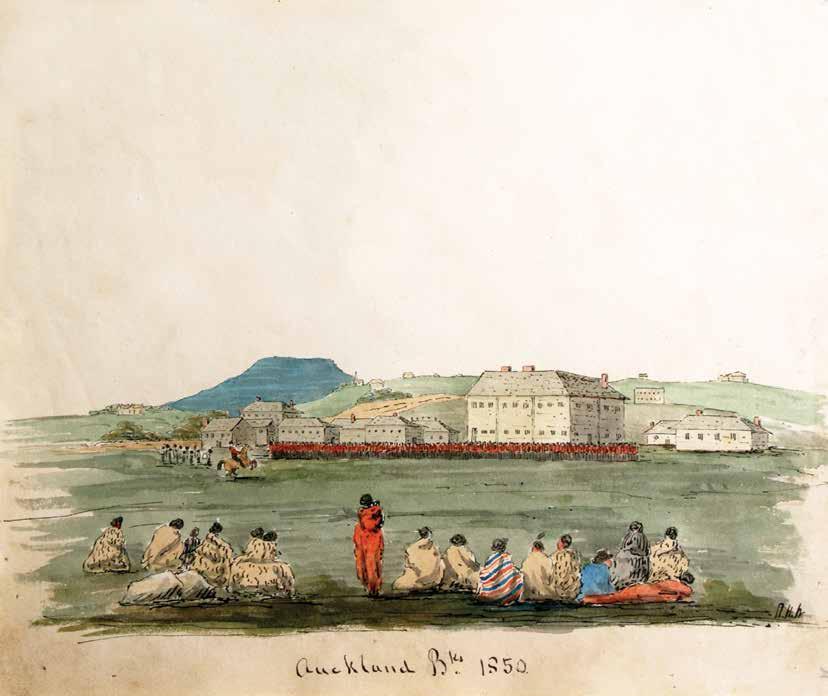
Auckland Barracks, 1850
Watercolour 18.5 x 22 cm
Inscribed & dated 1850
$30,000 - 50,000
Private Collection, Auckland Purchased by the present owner from Important, Early & Rare International Art Centre, 28 July, 2009
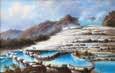
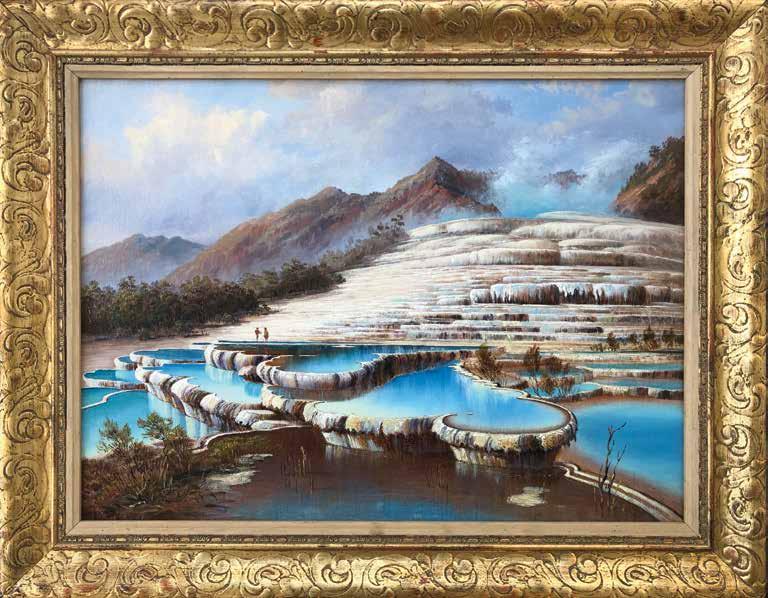
The White Terraces, Rotomahana Oil on canvas 41 x 56.5
Signed & dated 1888
$30,000 - 40,000
Private Collection, Auckland
Fine New Zealand Paintings & European Paintings Webb’s, 30/08/1995 Collection of The New Zealand Embassy, Washington DC
Ex Collection of Ministry of External Relations and Trade - label affixed verso Deaccessioned, 1995
Charles Blomfield has long been recognised as the most popular early New Zealand painter of the Pink and White Terraces and the surrounding region of Rotorua and Lake Tarawera. Blomfield first visited the region during a camping trip in December 1875, commenting that Tarawera and it’s Terraces were exceedingly beautiful and graceful. Returning in 1883 he spent six weeks documenting the Pink and White Terraces and their surroundings. Blomfield’s meticulous sketches and finished paintings are some of the most important historical records we have of the region. It was reported that by September 1885 orders for his work had been received from throughout Europe, America, Australia and other places.
Following the Tarawera eruption, Blomfield realised that the paintings he had made of the Terraces were a valuable record, and declined to sell them. He went on to paint and sell scale copies of these works, for which the prices soon trebled.
The story of the Tarawera eruption is a dramatic chapter in New Zealand’s history. Eleven days before the eruption, both Maori and European visitors, including the famous Guide Sophia, reported seeing a ghostly Maori war canoe paddling across Lake Tarawera. Guide Sophia consulted her tribe’s tohunga, or priest, Tūhoto Ariki, and he interpreted the phantom canoe as a bad omen. He believed Maori would be punished for exploiting the area for money without paying due respect to their ancestors.
In the early hours of 10 June, 1886 Tūhoto Ariki’s prophecy was fulfilled. At Te Wairoa village, people were woken after midnight by a series of strong earthquakes. Around 2 am Tarawera erupted with fountains of glowing lava and a cloud of ash
up to ten kilometres high, through which intense lightning flickered. At Te Wairoa, more than sixty people sheltered in Guide Sophia’s sturdy hut, which remarkably survived the eruption. Later, craters on the south-west side of the mountain blasted open and a crack 17 kilometres long emitted tons of mud and ash. The Tikitapu bush was completely covered by ash and earthquakes were felt throughout the North Island with the noise of the eruption heard as far south as Blenheim.
At the time, many Aucklanders thought they were hearing distant cannon fire. Blomfield decided to see the devastation for himself and returned to the area in October to paint several scenes of the terrible destruction.
A world away, fourteen Charles Blomfield paintings were being greatly admired in South Kensington, London at the 1886 Colonial and Indian Exhibition. This major exhibition, which in the words of the Prince of Wales was intended to: stimulate commerce and strengthen the bonds of the British Empire was opened by Queen Victoria and received over five million visitors. Charles Blomfield died at his residence in Wood Street, Freemans Bay, Auckland in 1926.
The White Terraces were at the north end of Lake Rotomahana and faced away from the lake at the entrance to the Kaiwaka Stream. They descended to the lake edge forty metres below. The additional sunlight received from facing north created their bleached white appearance. The White Terrace was the larger of the two formation, covering in excess of three hectares. They were reportedly the largest silica sinter deposits on earth.
49 ALFRED SHARPE (1836 - 1908)
Entrance to Cadman’s Creek, Coromandel
Watercolour 44.3 x 66.7
Signed, inscribed Entrance to Cadman’s Creek, Coromandel & dated 1880
$50,000 - 75,000
PROVENANCE
Purchased from Important, Early & Rare
International Art Centre, 14 October 2008
EXHIBITED
New Zealand Court of the Melbourne International Exhibition, 1880
The Art Of Alfred Sharpe
Auckland City Art Gallery
5 March - 16 May 1993
Te Papa Tongarewa
28 May - 1 August 1993
Dunedin Public Art Gallery
12 August - 2 October 1993
ILLUSTRATED
p. 45 The Art of Alfred Sharpe, Roger Blackley, Auckland City Art Gallery in association with David Bateman Ltd, 1992
REFERENCE
p. 47 The Watercolours of Alfred Sharpe,
Published, Auckland City Art Gallery, 1973
p. 58 & 61 The Art of Alfred Sharpe, Roger Blackley, Auckland City Art Gallery in association with David Bateman Ltd, 1992.
Alfred Sharpe’s original manuscript label affixed verso reads: Entrance to Cadman’s Creek, Coromandel, by Alfred Sharpe
Price £15.15.0
This picture is a faithful delineation of the scene, down to the smallest objects - It gives a life like idea of the general appearance of the entrances to the mountain gorges of the Coromandel peninsula; & shows the way in which the stranded logs lie in the creeks, waiting for the next flood to carry them further down towards the booms. On the right bank the timber has been cleared for firewood & the debris burnt off; & the characteristics of the rapidity, are faithfully reproduced
The effects of the fire on the other side are shown in the trees on that side; some dead, and the others recovering - The foreground is closely-cropped grass, mixed with sand patches and tufts of coarser herbage; & littered with debris of the floods that occasionally cover it - The large trees represented are 3 Rewa Rewa, 1 Puriri, 2 Rata, and 1 HinauThe logs are Kauri, felled miles up the creek, Alfred Sharpe, New Zealand.
ALFRED SHARPE
Entrance to Cadman’s Creek is one of Sharpe’s most important watercolours. He painted it for the New Zealand Court of the Melbourne International Exhibition. It was on display for seven months and was one of the largest exhibitions held in Australasia, attended by around 1.5 million visitors.
Roger Blackley referred to Entrance to Cadman’s Creek in his book The Art of Alfred Sharpe, Auckland City Art Gallery & David Bateman Ltd, 1992. Late in June (1880) he had the picture framed at De Courcy’s, at the junction of Queen and Wakefield Streets, where it was exhibited briefly (‘for the inspection of connoisseurs and persons interested in art’) before being shipped to Melbourne.
The following appeared in The New Zealand Herald 23 February, 1882 The drawing in the art union of ten water-colour pictures of Auckland scenery, by Mr. Alfred Sharpe, took place yesterday afternoon, at Mr Leech’s, Shortland Street. There were 124 subscribers at l0s each, and 10 prizes. The following was the result-1st prize, Sunset in the Kikowhakarere Gorge, Coromandel, Mr Goffe, Waitangi, Bay of Islands; 2nd prize, Entrance to Cadman’s Creek, Coromandel, Mr Leech; 3rd prize, A Peep at Coromandel from Whangapoua Road, Mr J M Simcox; 4th prize, Up the Parsonage Ravine, Coromandel, Mr N G Lennox; 5th prize, Sulphur Islets Coromandel, Mr S M Herapath; 6th prize, On the Coast Near Auckland, Mr J Hall, Kawakawa; 7th prize, Old Windmill at Epsom, W E; 8th prize, Junction of Waikato and Mangawhero Rivers, Blank; 9th prize, Singular Puriri Tree, Coromandel, Mr W Busby, Waitangi, Bay of Islands; 10th prize, The Last of Fort Britomart, Mr Swift, Kawakawa.
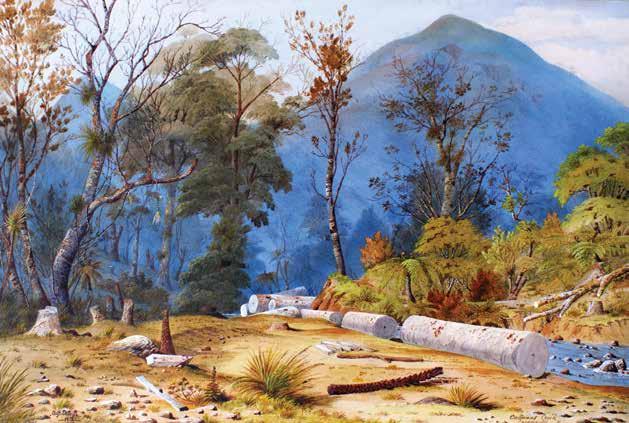
It is an illustration of one of the scenes peculiar to this province, giving the peculiar features of the entrances to the mountain gorges on the Coromandel peninsula with perfect fidelity. The bush on the right hand side has been felled for firewood, and the debris burnt off; and the undergrowth, which springs up with marvellous rapidity on burnt bush land, is well represented. The effects of the fire on the trees on the opposite side, and the way the stranded kauri logs lie in the creeks awaiting the next fresh, are also shown, and the foreground is littered with the debris of various floods that occasionally cover it. The large trees represented are the puriri, rewarewa, hinau, and rata.
The New Zealand Herald 29 June 1880
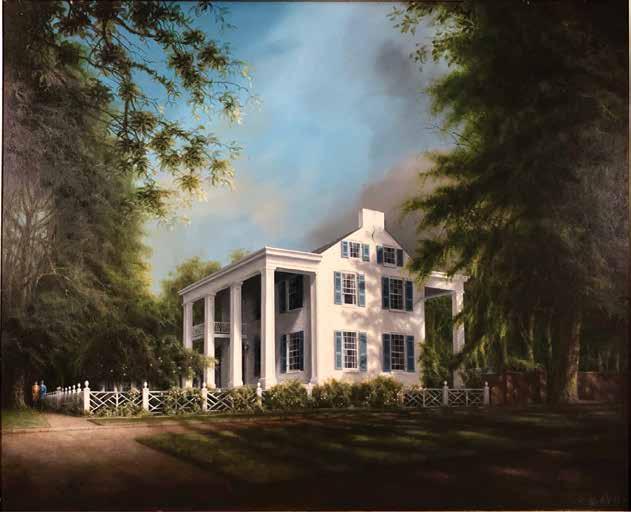
50 FELIX KELLY (1916 - 1994)
Washington Moody House as Restored by Jack Warner Oil on board 66 x 81
Signed & dated 1977
$10,000 - 15,000
Original Kennedy Galleries, Inc. label affixed verso PROVENANCE
Private Collection, Wellington
Commissioned by the late Jack Warner, Gulf States Paper
Corporation Collection Private Collection, Alabama, USA
The Moody-Warner House was built around 1822 by Alabama merchant Davis Scott as his Tuscaloosa home.
The house had a series of owners until it became the home of the Washington Moodys. Moody was the grandson of the founder of the First National Bank.
The house was restored in 1977 by art collector Jack Warner and eventually became a museum named in honour of Jack Warner’s mother, Mildred Grace Westervelt Warner (1893-1974). The museum closed and the house was put up for sale in 2003.
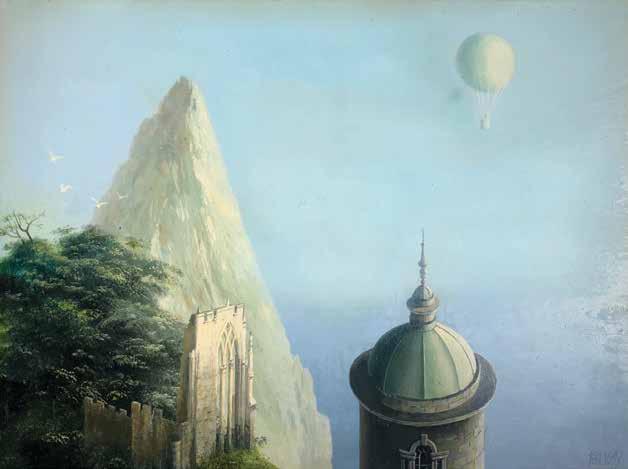
51 FELIX KELLY (1916 - 1994)
Folly Rock
Oil on board 30 x 40.5
Signed
$10,000 - 15,000
PROVENANCE
Original Arthur Jeffress label affixed verso - Cat. no. SH99/34
Original purchaser Dr Macdonald
Critchley, UK
Private Collection, Wellington
In Folly Rock we see Felix Kelly referencing his New Zealand birthplace with an impression of Mitre Peak. We see the distinctive hot air balloon, so beloved by the artist and a feature of many of his hand drawn Christmas cards which were sent home to friends and family in New Zealand.
The work is made up of an envisaged collection of personal touchtones from the artist’s travels.
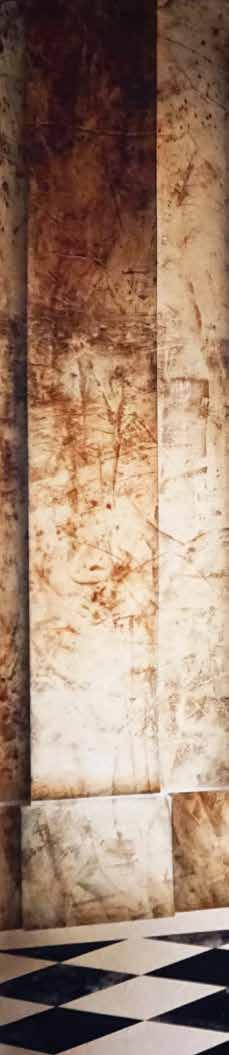
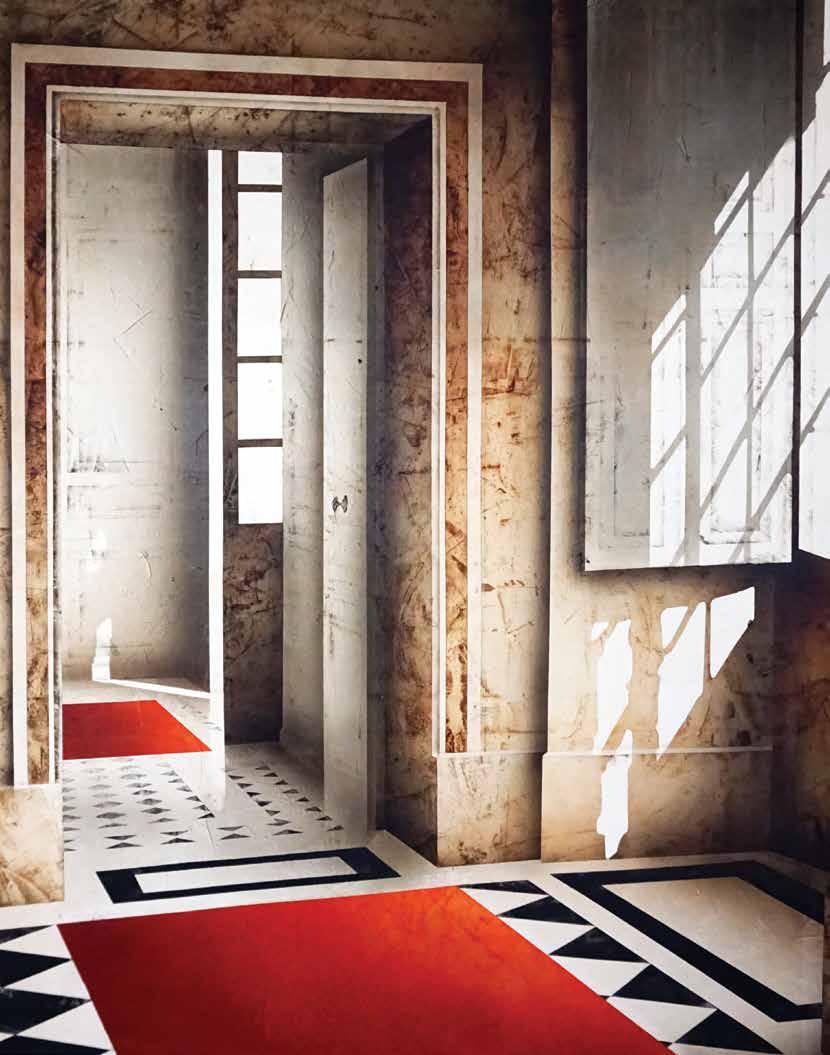
52 ALAIN GAZIER (French b. 1956)
Tapies Rouge II, 2005
Oil on canvas 200 x 200
Signed
Inscribed Tapies Rouge II verso
$70,000 - 90,000
PROVENANCE
Purchased from Art Gallery Castiglione, Paris, 2005
Alain Gazier was born Paris, 1956. Gazier prepares his blank canvases with gesso primer, a mineral based substance that contains marble. This technique gives his paintings a unique texture.
The paintings of Alain Gazier show images of the past with the faithfulness of the present. The walls whisper songs from the past, the stones breathe, the marble, the stairways, the columns and a divine light that comes from the windows. Pure imagination from an artist that dreams with beauty. He invites us into his world of silent interiors, where he plays so successfully with light and perspective.
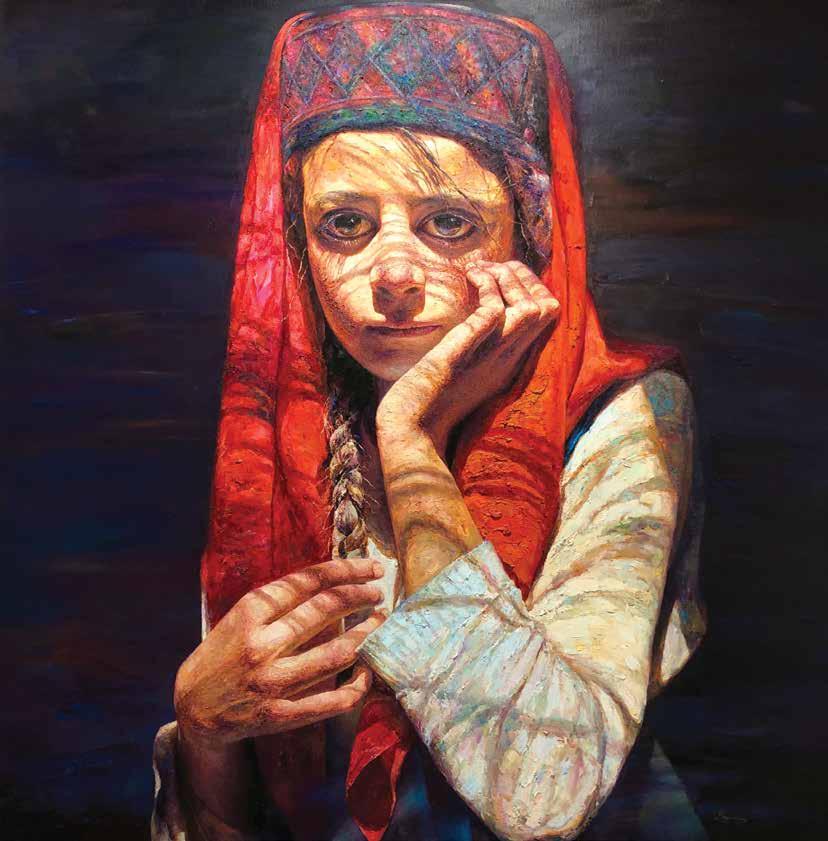
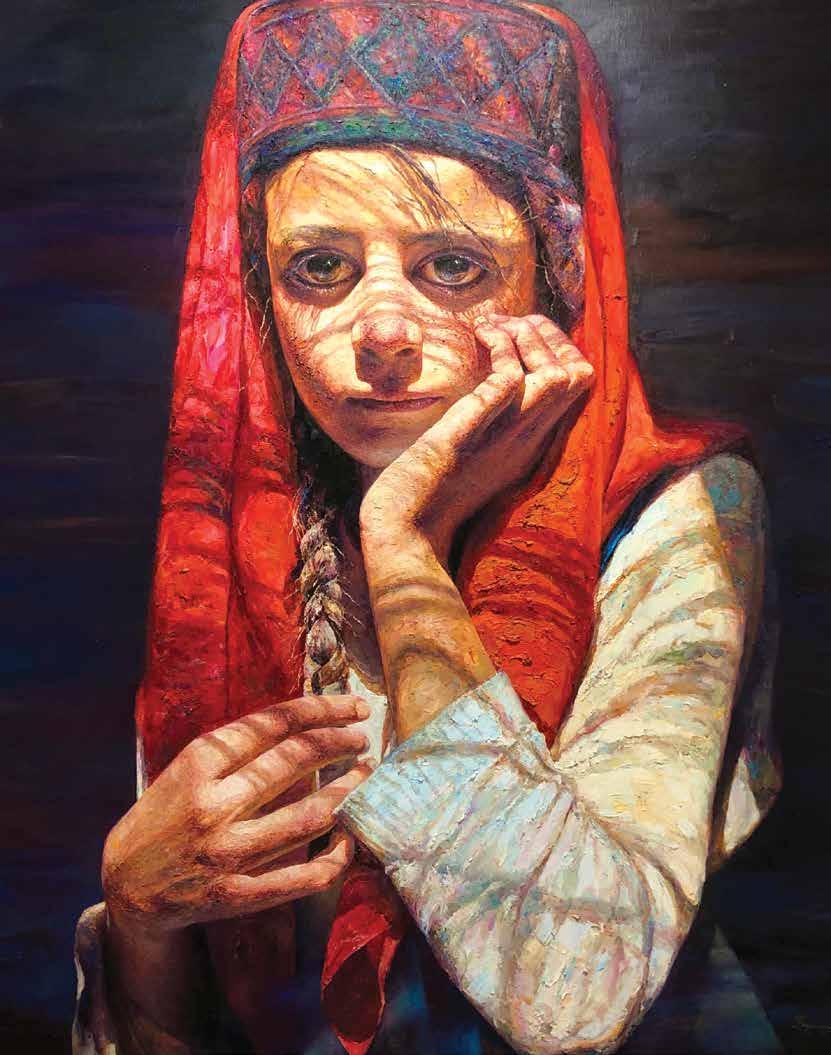
53 YAN YA YA (Chinese b. 1964)
Pumi’s Red Headscarf Oil on canvas 165 x 165
Signed
$80,000 - 100,000
PROVENANCE
Purchased from HaKaren Gallery, Singapore, 2003
EXHIBITED
HaKaren Art Gallery
Angels of Warmth: An Oil Painting Exhibition by Yan Ya Ya, National Art Museum of China, Beijing, China, 2003
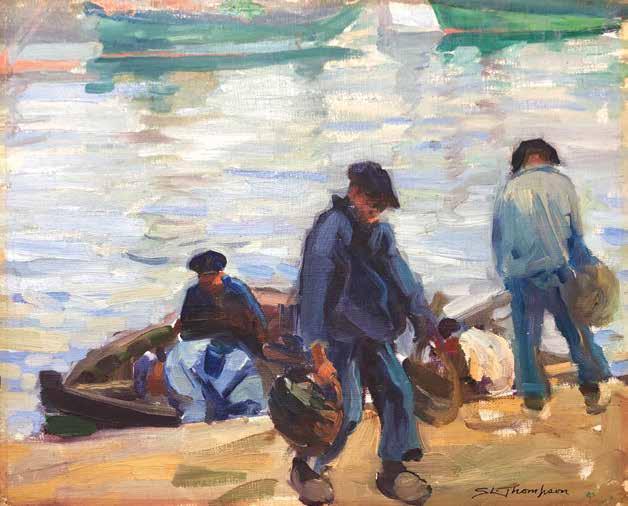
54
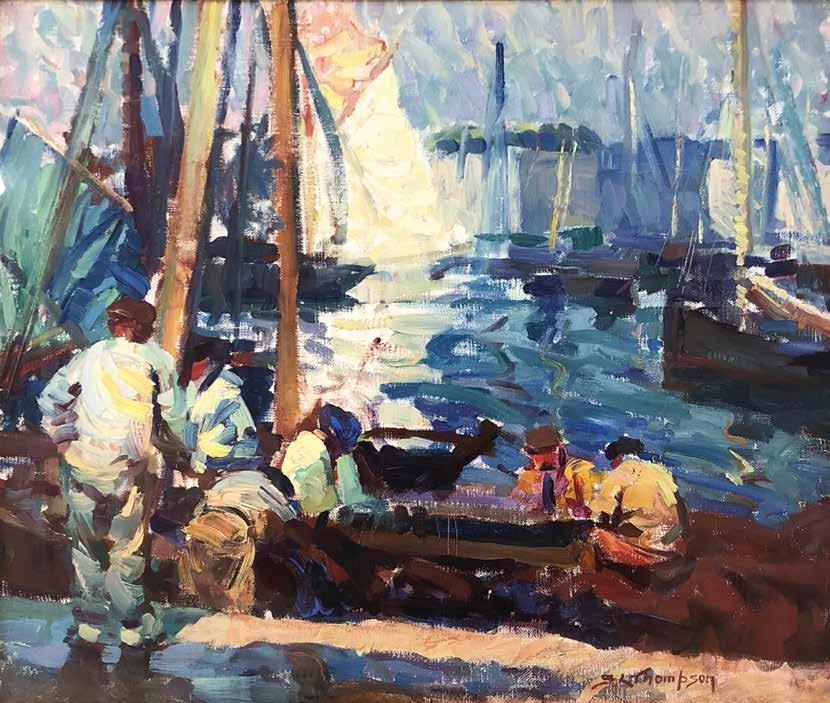
SYDNEY LOUGH THOMPSON (1877 - 1973)
Fishermen’s Catch, Concarneau Oil on canvas 30 x 38
Signed
$5,000 - 8,000
PROVENANCE
Private Collection, Auckland
Held in the same family collection since acquired directly from the artist
First time offered for sale
55
SYDNEY LOUGH THOMPSON (1877 - 1973)
The Harbour, Concarneau Oil on canvas 44 x 53
Signed
$20,000 - 30,000
PROVENANCE
Private Collection, Auckland
Held in the same family collection since acquired directly from the artist
First time offered for sale
EVELYN PAGE (1899 - 1988)
St Peter’s Church and Wellington Harbour c. 1954 Oil on canvas board 34 x 41.4
$16,000 - 24,000
Paul & Kerry Barber Collection
Two Day National Art Auction, Dunbar Sloane 08/11/1995
From a vantage point on The Terrace, overlooking Ghuznee Street and all the way across to Oriental Bay, this work portrays Wellington’s clear, strong colours which, in the artist’s own words, were waiting to be put on canvas. The spire of Wellington’s St Peter’s Church is outlined against surrounding buildings, and rooftops populate the view. Page also painted a similar view of St Peter’s Church in 1952, which was exhibited at the New Zealand Academy of Fine Arts retrospective in 1970.
This scene is busy without being frenetic; charged with the promise of life. Because Page has prioritised breadth of view, the perspective is sweeping and the presence of individuals is not captured. Nevertheless, it captures the energy of civilisation, and the presence of Wellingtonians is suggested from within the walls of buildings; in the intersections of streets.
When Frederick Page was appointed to establish the music department at Victoria University of Wellington in 1945, Evelyn and the family followed him north. After struggling to find a home in the city, they eventually rented in Pukerua Bay. Evelyn used to drive into the city to visit Frederick and to paint, travelling down from the coast with the observational curiosity of a visual anthropologist. As she preferred to paint directly from real life, Page needed to devise a way of painting in the middle of an inner-city street. She obtained permission from the Public Services Commission (to avoid any trouble from parking wardens), and set up a studio in her car. From this compact new workspace, Page cemented a new stage in her career, completing works such as St Peter’s Church and Wellington Harbour, and distancing herself from the label of landscape painter. She no longer saw the appeal in painting unpopulated, ‘unloved’ landscapes, and instead preferred to capture the vibrancy and bustle of human existence.
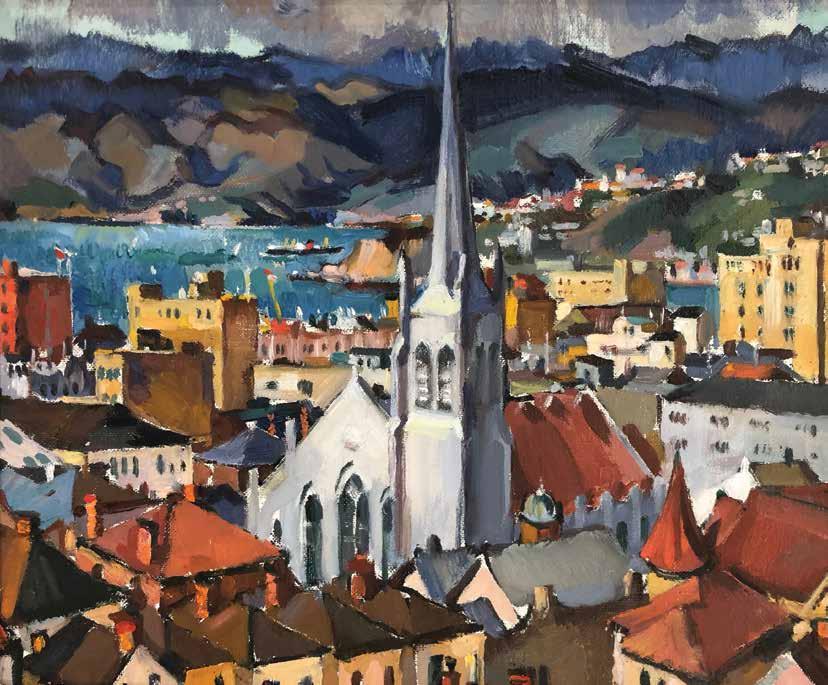
Evelyn Page painted this scene twice. An almost identical version is held in the collection of Victoria University in Wellington. That work entitled St Peter’s Church and Wellington is illustrated p. 33, plate 12, Evelyn Page, Seven Decades, Janet Paul and Neil Roberts, Robert McDougall Art Gallery, Bridget Williams Books, 1986.
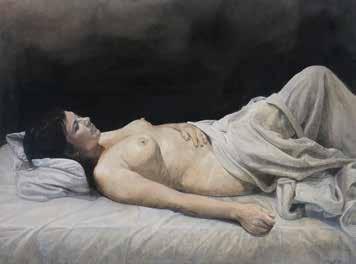
57 SIMON RICHARDSON (b. 1974)
Nude Resting
Watercolour 40 x 43.6
Signed & dated 2007
$5,000 - 7,000
PROVENANCE
Private Collection, Wellington
Purchased directly from the artist
EXHIBITED
Simon Richardson – Otago Origins
Jonathan Grant Galleries, 2007
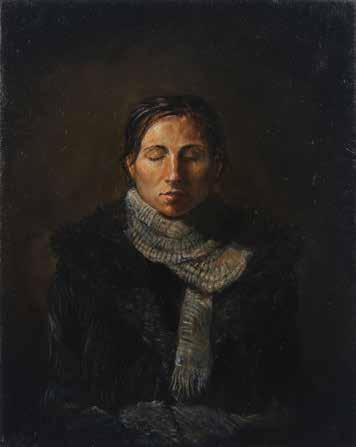
58 ZARAHN SOUTHON (b. 1975)
Girl with Scarf
Oil on canvas 51 x 40.5
Signed
$5,500 - 7,500
PROVENANCE
Private Collection, Sydney, NSW
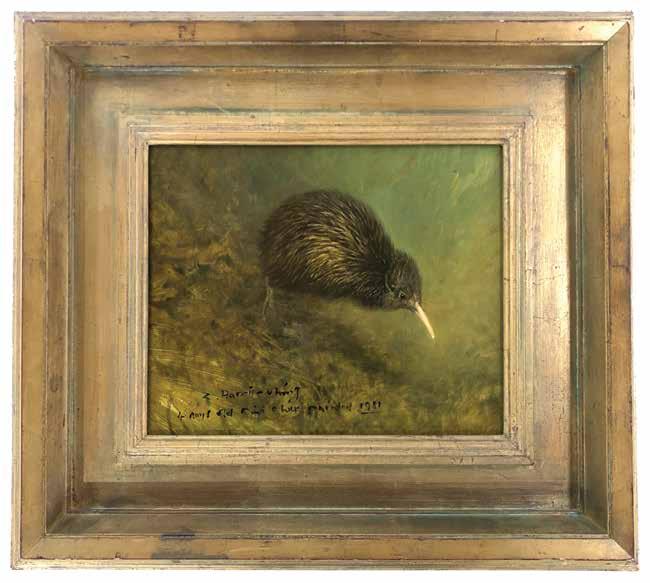
59 RAYMOND CHING (b. 1939)
A Brown Kiwi Chick, 4 Days Old Oil on panel 25.5 x 30.5
Signed, inscribed 4 days old Kiwi chick painted 1981
$15,000 - 25,000
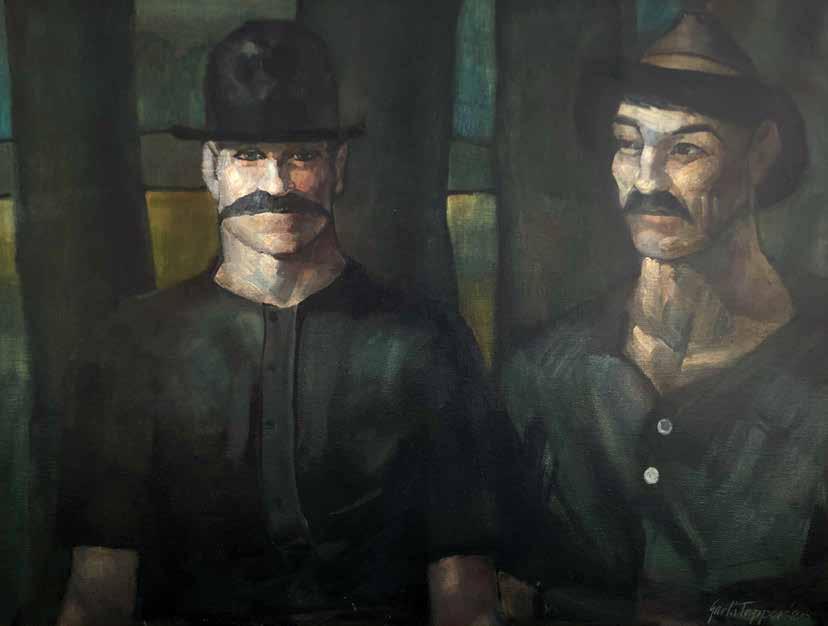
60 GARTH TAPPER (1927 - 99)
The Bushmen, Puhoi Oil on canvas 75 x 99
Signed & dated 1986
Inscribed The Bushmen Puhoi & dated Dec. 1986 verso
$14,000 - 18,000
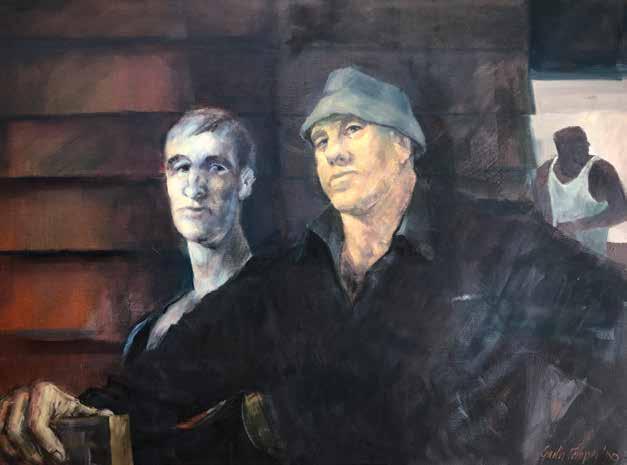
61 GARTH TAPPER (1927 - 99)
Shearers Oil on canvas 73 x 98
Signed & dated 1990
$12,000 - 16,000
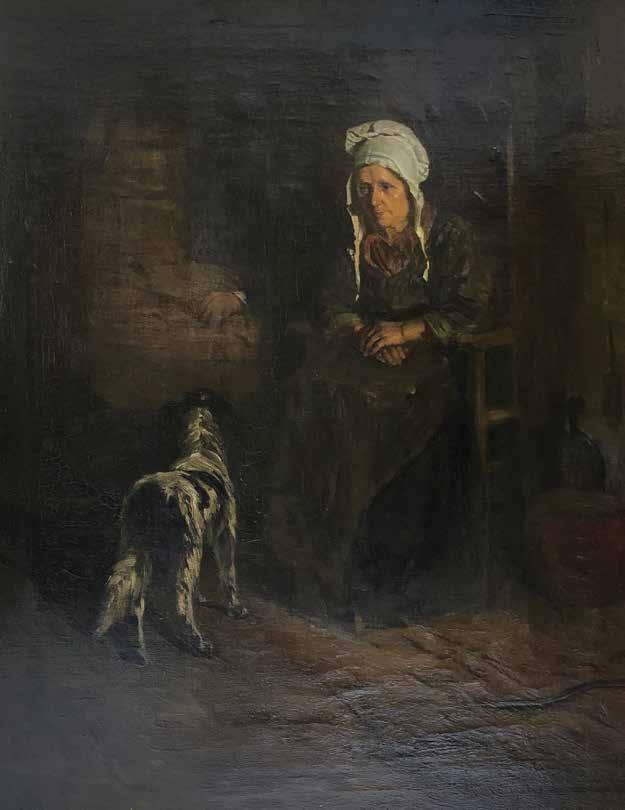
(1837 - 1913)
Het Ziek Bed (The Sick Bed) Oil on canvas 88 x 68
Signed
$20,000 - 30,000
PROVENANCE
Private Collection, Auckland
Mr P C R W van der Velden, Christchurch
Mrs G S de Wijs-Stortenbeker and Mr J P Stortenbeker, The Hague
ILLUSTRATED
Plate 1.4.2-43 Petrus van der Velden - A Catalogue Raisonné
Volume II
T L Rodney Wilson, Chancery Chambers, Sydney 1979
Born in Rotterdam, Van der Velden trained both there and in Berlin. After his arrival in The Hague, he taught at the Pulchri Studio and exhibited in Amsterdam, Rotterdam, London, Manchester and Scotland. He was well established in Dutch art circles and his genre paintings of everyday life on the island of Marken, near Amsterdam were particularly well received. In a letter to his brother Theo, fellow artist Vincent van Gogh described Petrus Van der Velden as a solid, serious painter.
In 1890 at the age of 53,Van der Velden emigrated to New Zealand with his wife and three children. The family lived in Christchurch until 1898. As an artist Van der Velden was greatly inspired by the southern landscape and in particular the West Coast’s Otira Gorge.
This became one of his most successful and enduring subjects. By 1894 van der Velden was teaching from his Durham Street studio, his pupils included Sydney Lough Thompson, Robert Proctor, Cecil Kelly, Elizabeth Kelly, Leonard Booth and Raymond McIntyre.
In 1898 van der Velden sailed to Sydney. Little is known of his time there, but the expedition was short lived and Petrus returned to New Zealand in 1904, this time residing in Wellington. He continued to exhibit in Christchurch and Wellington. In March 1909 a self-portrait shown by the Canterbury Society of Arts in Christchurch was purchased by Dame Nellie Melba, after whom his daughter was named. He died in Auckland in 1913 and is buried in Waikaraka Cemetery.
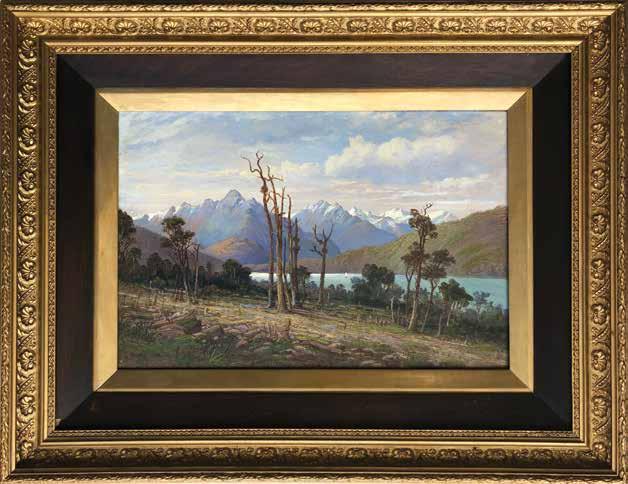
CHARLES BLOMFIELD (1848 - 1926)
Lake Kaniere, Westland Oil on canvas 34 x 51
Signed & dated 1906
Inscribed Lake Kaniere, Westland on stretcher verso
$8,000 - 12,000
PROVENANCE
Purchased directly from the artist. Auckland family collection since painted, by descent
64
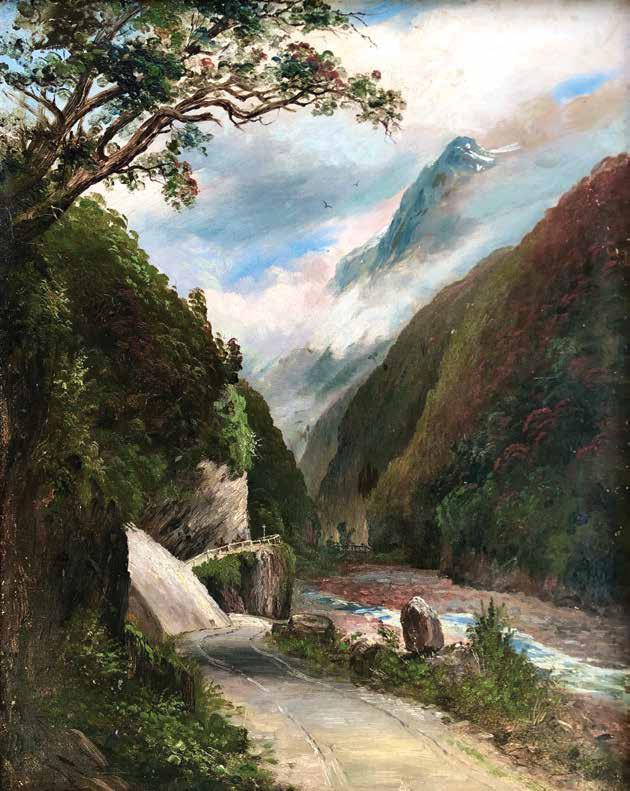
CHARLES BLOMFIELD (1848 - 1926)
Buller Gorge Oil on canvas 45 x 35
Signed verso
$8,000 - 12,000
PROVENANCE
Collection of W H Pringle, manager of Bank of New South Wales, Westport. Pringle purchased it directly from the artist. Same family collection, by descent
65 PETER SIDDELL (1935 - 2011)
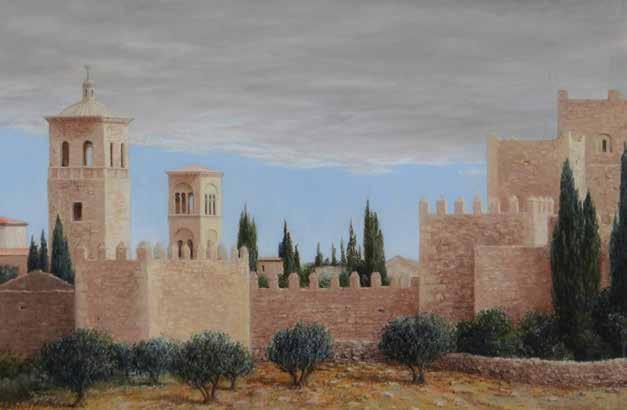
El Castillo
Pastel on paper 33 x 50
Signed & dated 1996
$4,000 - 6,000
66 CHRISTOPHER AUBREY
(1830 - 1902)
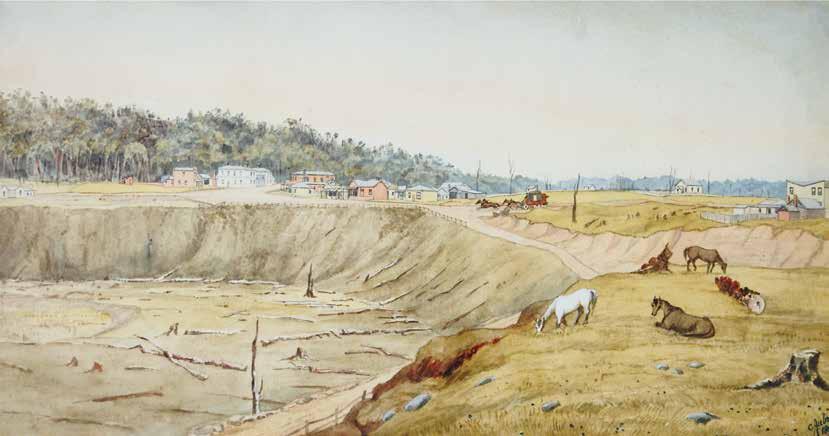
Eketahuna
Watercolour 35 x 66
Signed & dated 1891
$15,000 - 20,000
Eketahuna, as a European settlement, owes its origins to Sir Julius Vogel’s Immigration and Public Works Act of 1870 which initiated a new wave of colonisation. Some 7,500 new arrivals, the majority from Scandinavia, landed in New Zealand by the middle of 1873. Vogel’s scheme was essentially to open up the hinterland of the country by the clearing of the bush, and the building of new roads, bridges and railways.
The settlers called their new home Mellemskov which means, Heart of the Forest and maps of the 1870s give this name for the settlement. However, by the end of the seventies the name had reverted to the Maori one of Eketahuna which means, to run aground on a sandbank; so named by the ‘tangata whenua’ to describe that location where their waka or canoes could travel no further up the Makakahi River, which bisects the township.
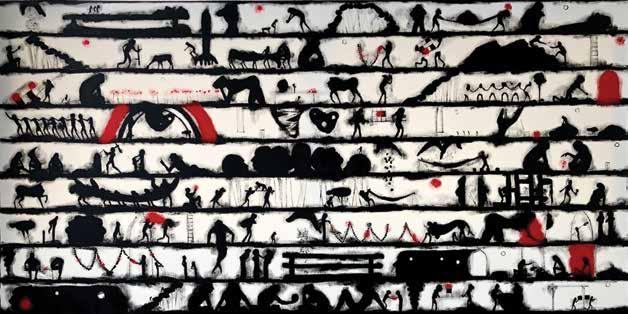
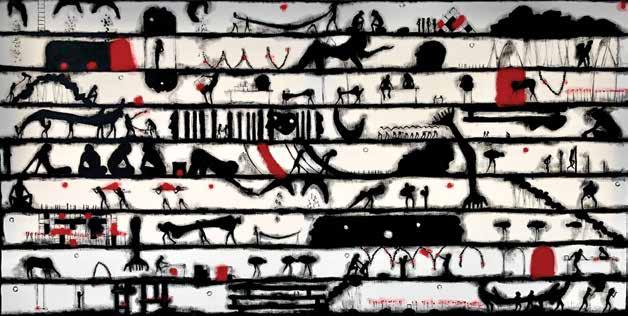
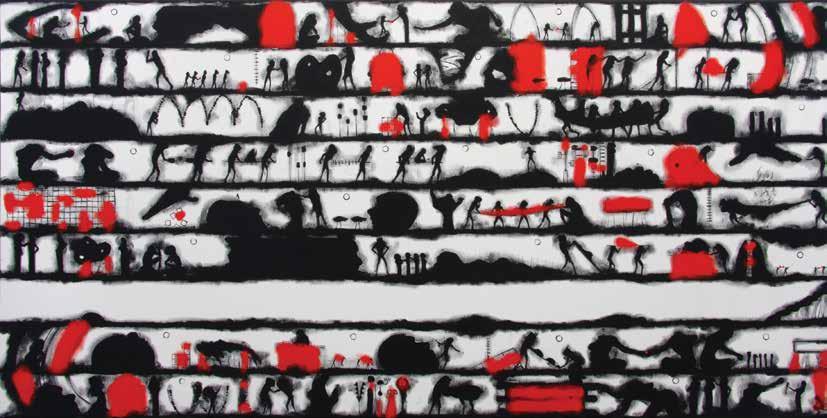
67 ANDY LELEISI’UAO (b. 1969)
McCahon I, 2010
Acrylic on canvas 76 x 152
Whitespace Gallery label affixed verso
$6,000 - 8,000
PROVENANCE
Private Collection, Wellington
Purchased from Whitespace, 2010
68 ANDY LELEISI’UAO (b. 1969)
McCahon II
Acrylic on canvas 76 x 152
$6,000 - 8,000
PROVENANCE
Private Collection, Wellington
Purchased from Whitespace, 2010
Lots 67 and 68 were painted as part of Leleisi’uao’s McCahon residency, 2010
69 ANDY LELEISI’UAO (b. 1969)
Pa’ceania Part 2, 2010
Acrylic on canvas 76 x 152
$7,500 - 10,000
PROVENANCE
Private Collection, Dunedin Milford Galleries label affixed verso
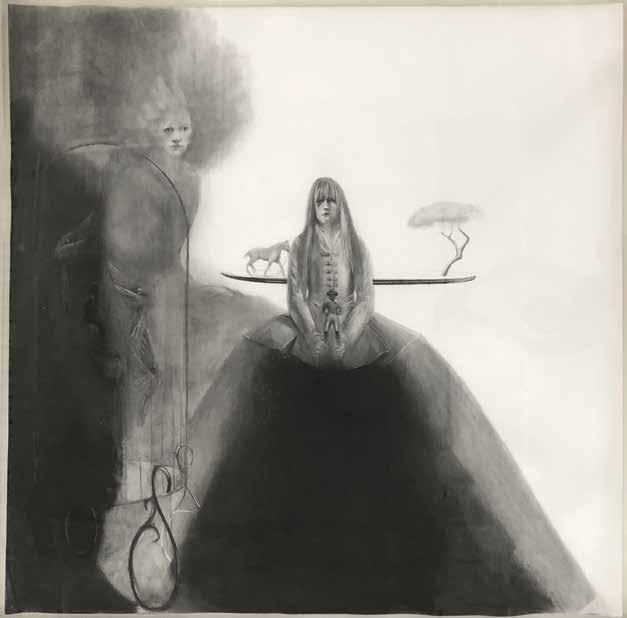
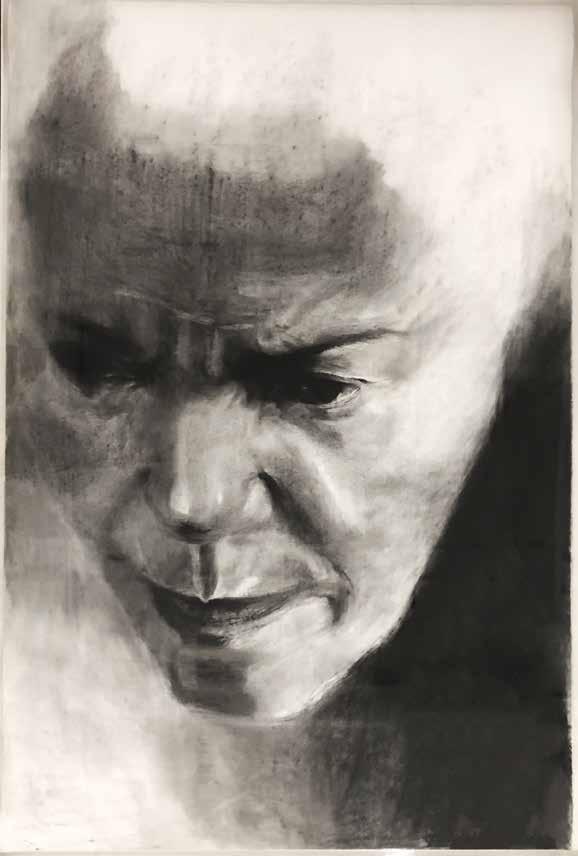
LORENE TAUREREWA (b. 1963)
The Masked Man, 2008
Charcoal on paper 150 x 150
$7,000 - 10,000
PROVENANCE
Private Collection, Auckland
EXHIBITED
More Eccentrickery City Gallery, Wellington, 2008
71
LORENE TAUREREWA (b. 1963)
Degrees of Separation 1
Charcoal on paper 280 x 138
$8,000 - 12,000
PROVENANCE
Private Collection, Auckland
EXHIBITED
Lorene Taurerewa - Degrees of Separation
Oedipus Rex Gallery, Auckland 2007
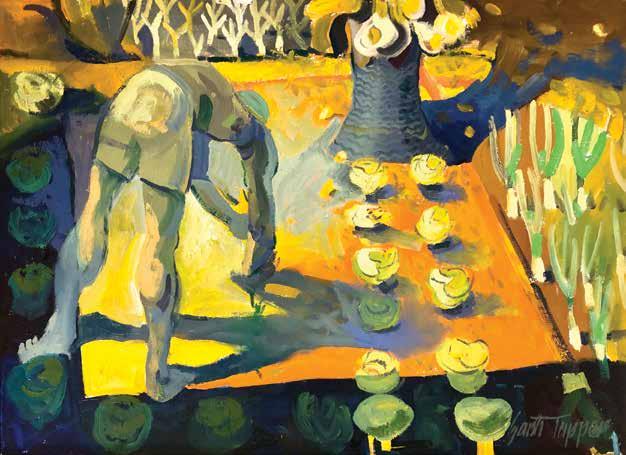
72 GARTH TAPPER (1927 - 99)
Man in the Vegetable Garden Oil on canvas board 43.5 x 59.5
Signed
$4,500 - 6,500
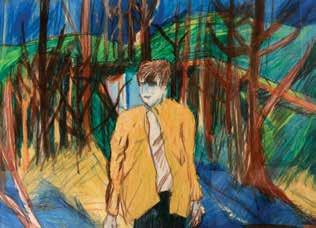
Figure in a Landscape
Pastel on paper 55 x 75
Signed
$2,000 - 3,000
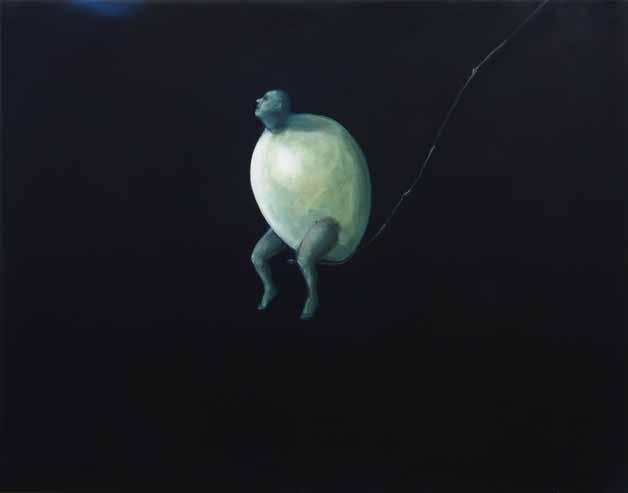
$14,000 - 16,000
75
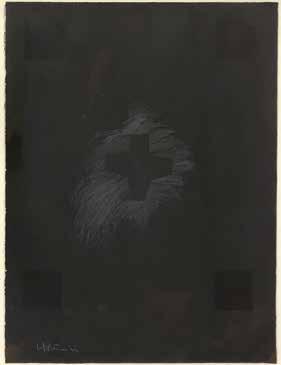
RALPH HOTERE (1931 - 2013)
Untitled Mixed media on paper 76 x 57.5
Signed & dated 1992
$8,000 - 12,000
76
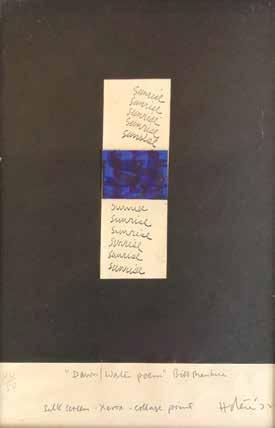
RALPH HOTERE (1931 - 2013)
Dawn Water Poem Bill Manhire
Silkscreen xerox collage print, edition 24/50, 35 x 22
Signed, inscribed Sunrise, Dawn Water Poem & dated 1972
$3,000 - 5,000
PROVENANCE
Original McMurray Galleries label affixed verso
77
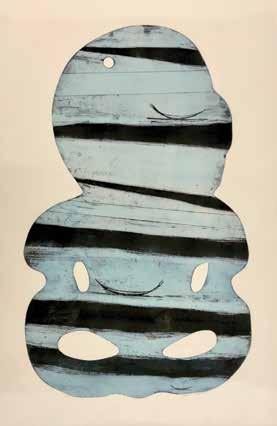
SIMON KAAN (b. 1971)
Tiki
Etching, artist’s proof, 68.5 x 43.5
Signed & dated 2005
$1,800 - 2,600
78
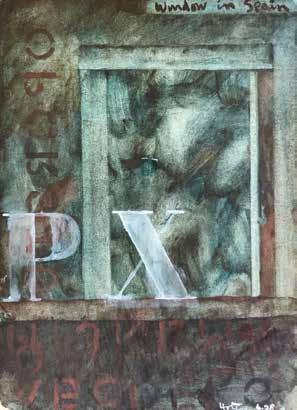
RALPH HOTERE (1931 - 2013)
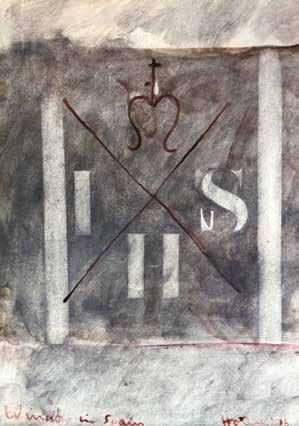
Window in Spain
Watercolour 32 x 23.5
Signed, inscribed Window in Spain & dated 4.78
$7,000 - 12,000
PROVENANCE
Private Collection, Palmerston North Purchased from McMurray Galleries, Palmerston North
EXHIBITED
The Mark of the Bull - Twenty Two works on paper by Ralph Hotere, McMurray Galleries, Palmerston North
Catalogue no. 20
Original McMurray Galleries label affixed verso
79
RALPH HOTERE (1931 - 2013)
Window in Spain
Watercolour 32 x 23.5
Signed, inscribed Window in Spain & dated 1978
$7,000 - 12,000
PROVENANCE
Private Collection, Palmerston North Purchased from McMurray Galleries, Palmerston North
EXHIBITED
The Mark of the Bull - Twenty Two works on paper by Ralph Hotere, McMurray Galleries, Palmerston North
Catalogue no. 7
Original McMurray Galleries label affixed verso
80 RALPH HOTERE (1931 - 2013)
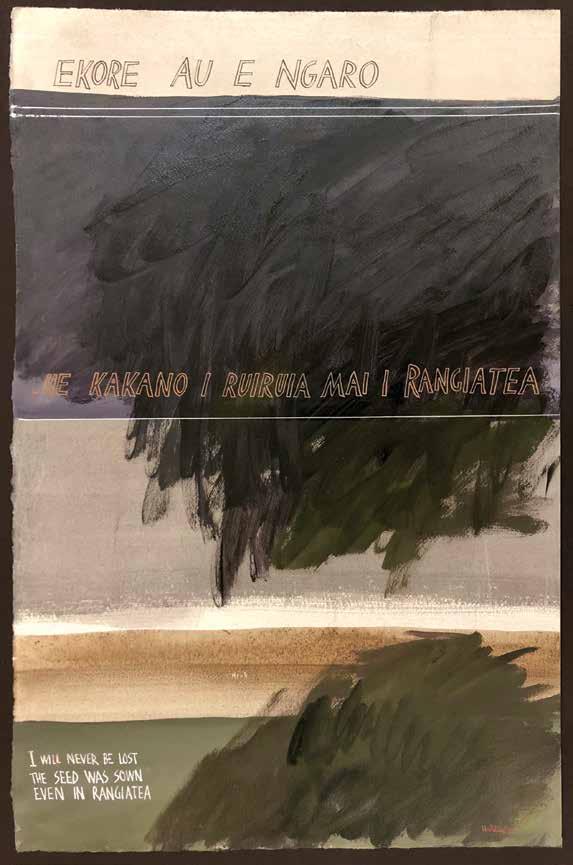
Ekore Au E Ngaro He Kakano I Ruiruia
Mai I Rangiatea/ I will Never be Lost
The Seed was Sown Even in Rangiatea
Mixed media on paper 59 x 39
Signed, inscribed & dated 1972
$15,000 - 20,000
81 FATU FEU’U (b. 1946)
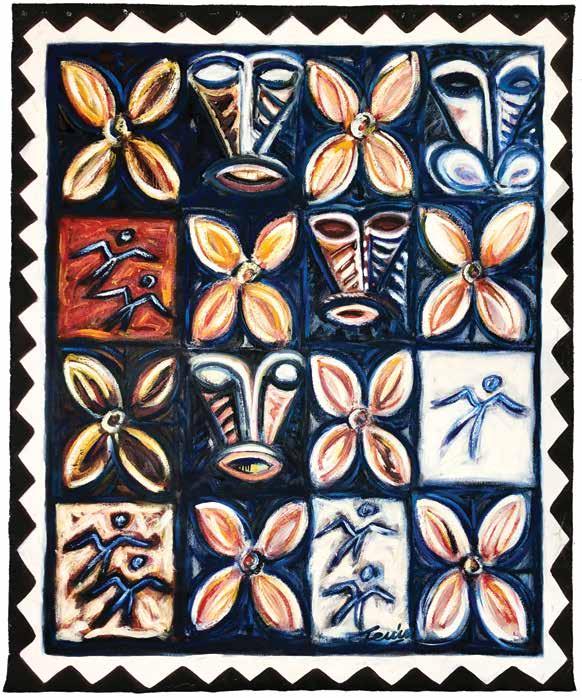
Moana Loloa
Oil on canvas 180 x 149
Signed, inscribed Moana Loloa, Painted at St Paul Studio & dated 1992 verso
$12,000 - 18,000
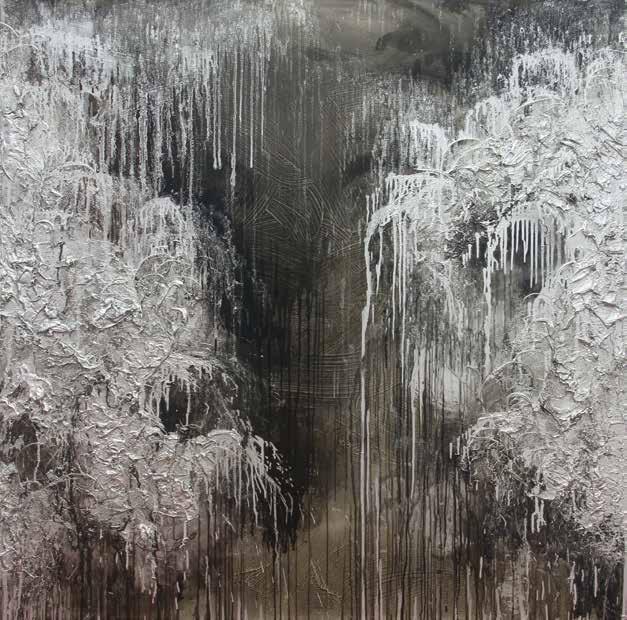
Signed verso
$15,000 - 20,000
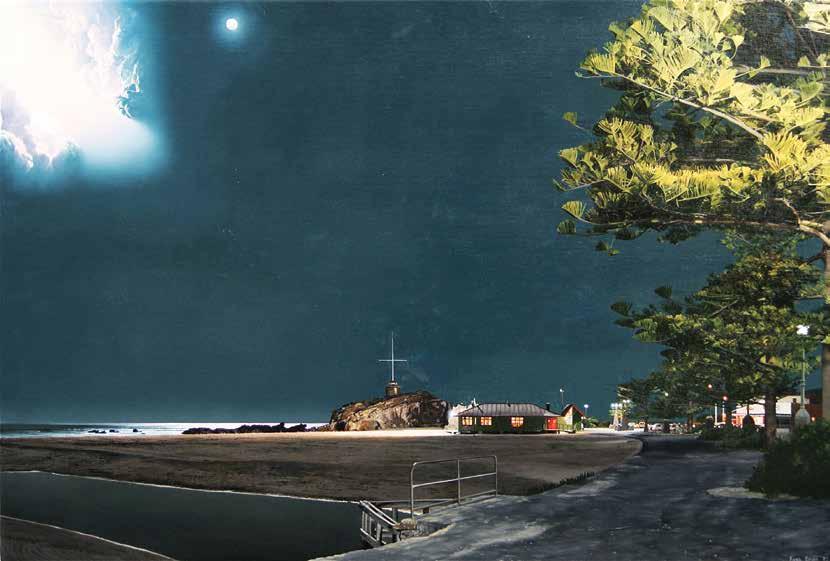
83 KEES BRUIN (b. 1954)
Cave Rock at Night Oil on canvas 90 x 120
Signed & dated 1985
$15,000 - 20,000
EXHIBITED
COCA Centre of Contemporary Art Gallery, 1986
Kees Bruin’s Retrospective Exhibition, Christchurch Art Gallery, Te Puna o Waiwhetu, 17 February - 20 May 2006
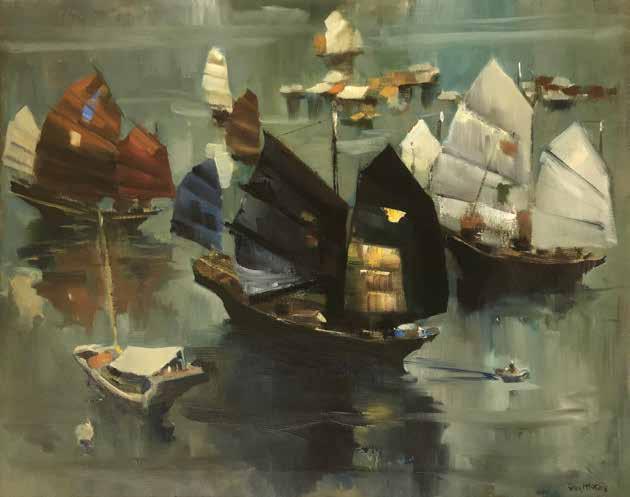
PETER MCINTYRE (1910 - 1995)
Grey Day, Hong Kong
Oil on canvas 59.5 x 75
Signed
$8,000 - 12,000
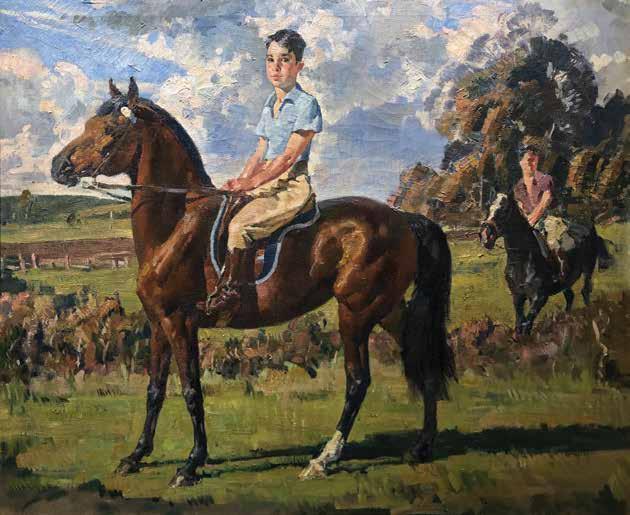
85 HAROLD SEPTIMUS POWER (1878 - 1951)
The Young Equestrian Oil on canvas 74 x 89
Signed & inscribed The Young Equestrian verso
$4,000 - 6,000
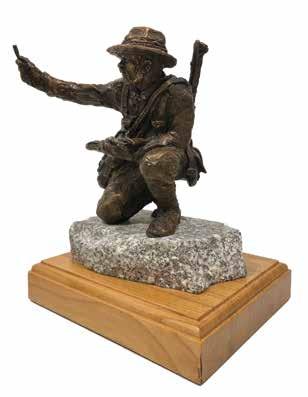
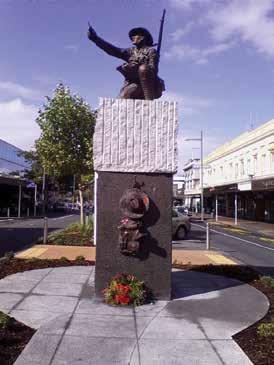
86
MATT GAULDIE (b. 1976)
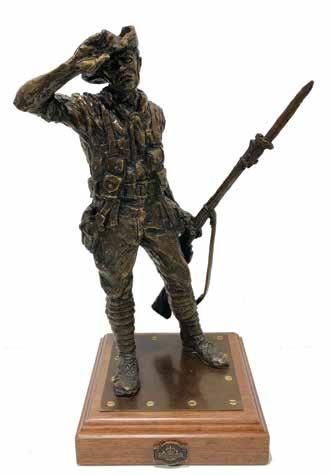
The Line of Fire - ANZAC Warrior
Bronze marquette, Gallipoli
stone, rimu base, edition of 6, 30 x 25 x 20
Inscribed Hon. Captain Matt Gauldie
2015 Sapper Moore-Jones on base
$3,000 - 5,000
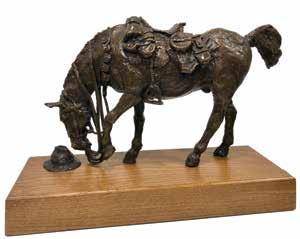
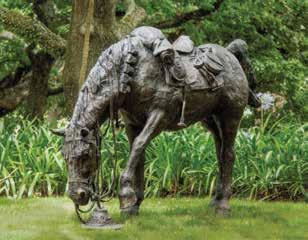
87 MATT GAULDIE (b. 1976)
Marquette for War Horse
Bronze marquette, edition of 7, with rimu base 28 x 45
$3,000 - 5,000
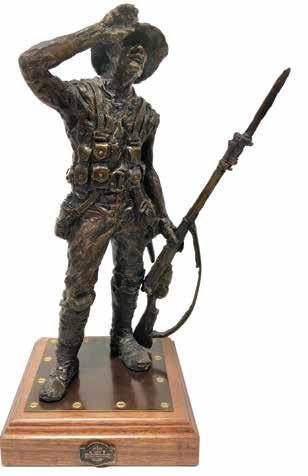
88 MATT GAULDIE (b. 1976)
ANZAC Soldiers - a pair
Bronze marquettes affixed to wooden bases
New Zealand soldier 45 x 24 x 19
Australian soldier 43 x 27 x 19
$6,000 - 9,000
89
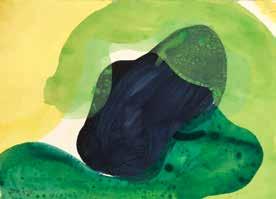
MICHAEL SMITHER (b. 1939)
Islands
Watercolour 31 x 44
Signed & dated 1978
$2,500 - 3,500
90 DAVID ARMITAGE (b. 1943)
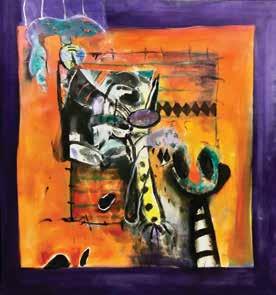
Metamorphis
Acrylic on canvas 178 x 166
Signed, inscribed Metamorphis & dated 1990 verso
$2,500 - 3,500
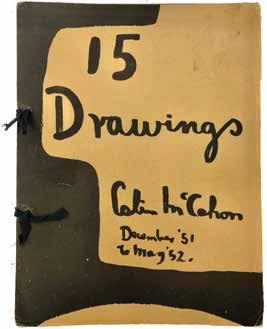
91 COLIN MCCAHON (1919 - 87)
15 Drawings - December ‘51 to May ‘52
Lithographic leaves, published by the Hocken Library, 1976 26 x 20
$3,000 - 5,000
PROVENANCE
Purchased from Ann McCahon, 1976
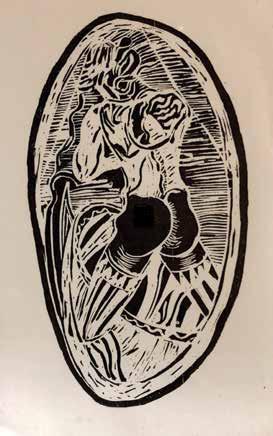
Tony Fomison
Woodblock monoprint 27.5 x 17
$1,500 - 2,500
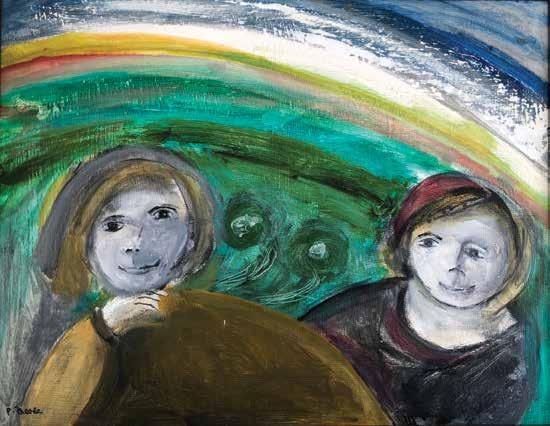
93 PATRICIA FRANCE (1911 - 95)
April is the Cruelest Month (TS Elliot) Oil on board 37 x 48.5
Signed
Inscribed April is the Cruelest Month (TS Elliot) & dated 1993 verso
$4,000 - 6,000
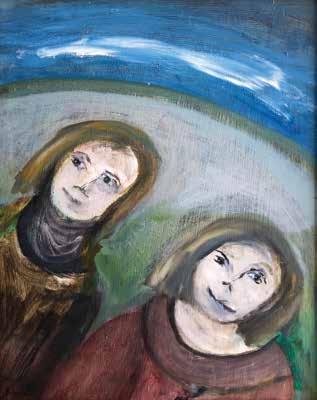
94 PATRICIA FRANCE (1911 - 95)
At the Still-Life Part of the Turning World (TS Elliot) Oil on board 48 x 38.5
Signed
Inscribed At the Still-Life Part of the Turning World (TS Elliot) & dated 1994 verso
$4,000 - 6,000
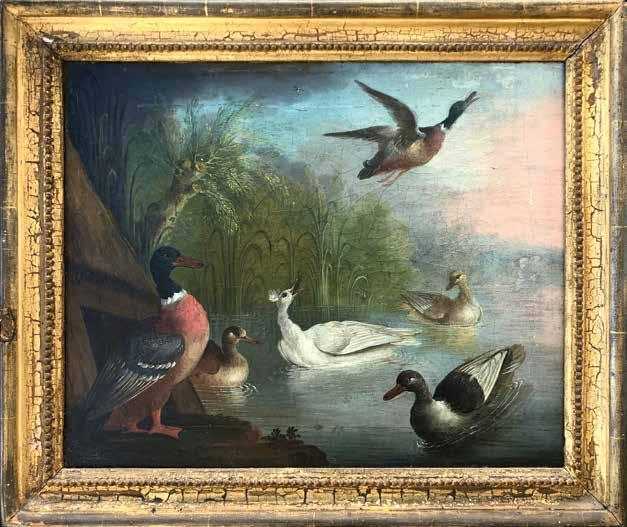
(English 1660 - 1716)
Mallard Flying over a Pond with a White Duck
Oil on canvas 33.5 x 40.5
$5,000 - 10,000
PROVENANCE
Collection of English physiologist and surgeon who pioneered research into bone, Sir Benjamin Collins Brodie, 1st Baronet (1783 - 1862)
New Zealand family by descent since late 19th Century
Cradock was an English painter, noted for his depictions of birds, dead game, and other animals. He was born Somerset and moved to London, where he served an apprenticeship to a house-painter. He was self-taught becoming skilled in the depiction of birds and animals. Horace Walpole wrote that I have seen some pieces by his hand which he painted with a freedom and a fire that entitled them to more distinction. According to Walpole, Cradock deliberately shunned aristocratic patronage.
He worked for dealers who retailed his works; possessing that conscious dignity of talent which made him hate to be employed by men whose birth and fortune confined his fancy, and restrained his freedom.
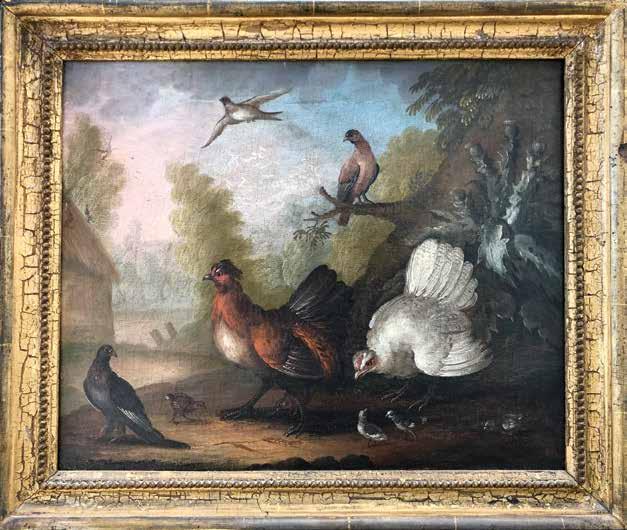
MARMADUKE CRADOCK
(English 1660 - 1716)
A Group of Fowl in a Landscape Oil on canvas 33.5 x 40.5
$5,000 - 10,000
PROVENANCE
Collection of English physiologist and surgeon who pioneered research into bone, Sir Benjamin Collins Brodie, 1st Baronet (1783 - 1862)
New Zealand family by descent since late 19th Century
His work as a still life and bird painter was influenced by Melchior d’Hondecoeter, Peter Frans Casteels, and Jakob Bogdani. Sketches in the collection of the British Museum indicate that he based at least some of the birds in his paintings on drawings from life. He tended to paint domestic birds and common wild species, rather than the exotic varieties favoured by some other artists. Buyers of his paintings often incorporated them into schemes of interior decoration, setting them into panelling above doors or fireplaces.
Peacock and Other Birds in a Landscape is in the collection of the Tate Gallery
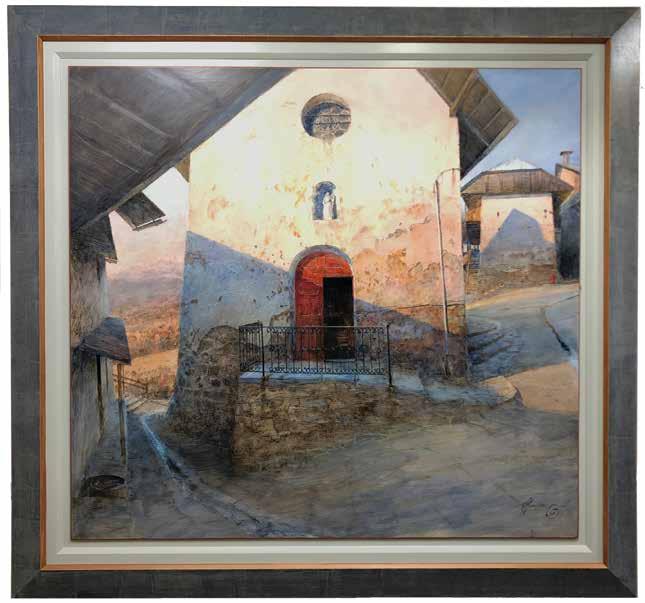
DAVID BARKER (b. 1941) Chapel, Parc des Escrins, France Oil on board 122 x 134
Signed
$8,000 - 12,000
EXHIBITED
David Barker, Inside and Beyond, Studio of Contemporary Art, Auckland, 2005
PROVENANCE
Purchased from above mentioned exhibition, by current owner
Accompanied by exhibition catalogue
The random alignment of the village creates in itself so many ambiguities of perspective the symmetric foundation of this composition remains concealed. Intentionally the vertical and horizon axes lie precisely inside the open doorway in which the altar cross is just visible. Intuitively I made the distant alpine profile continue across the texture of the wall and become the shadows cast on the house up the lane.
David Barker, Inside and Beyond, Studio of Contemporary Art, Auckland, 2005
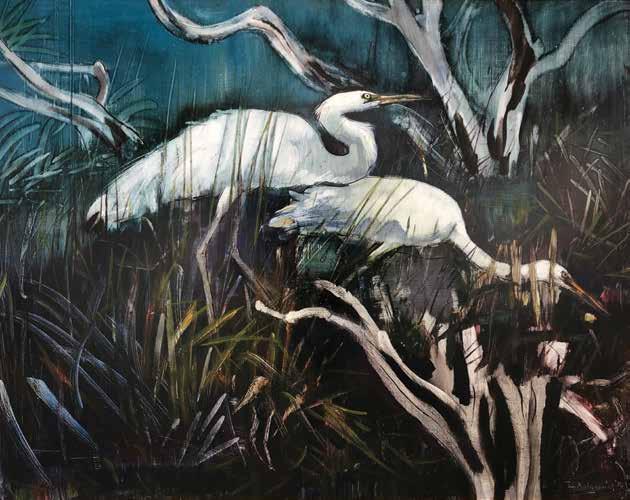
98 WILLIAM BOISSEVAIN (Australian b. 1927)
Herons Oil on board 88 x 110
Signed $4,000 - 6,000
PROVENANCE
Purchased from Alexander Galleries, Perth Western Australia
Original gallery label affixed verso
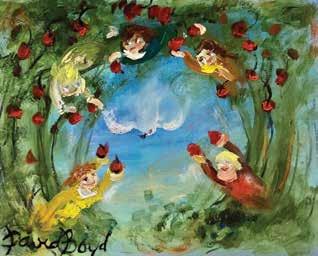
99 DAVID BOYD (Australian 1924 - 2011)
Apple Orchard Children Oil on board 30 x 38
Signed $7,000 - 9,000
PROVENANCE
Purchased from Aarwun Gallery, Canberra, Australia 2003
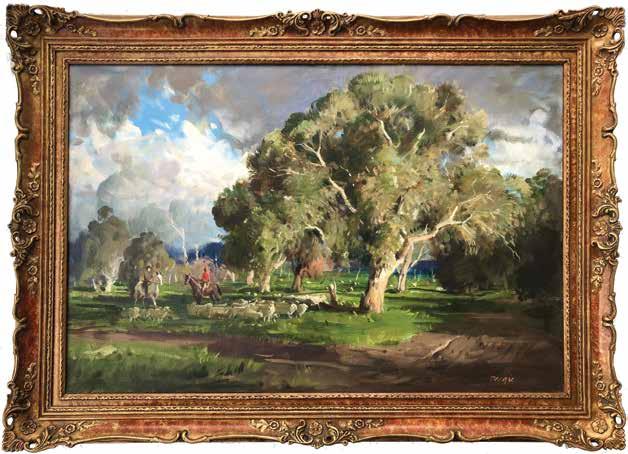
100 SIR WILLIAM DARGIE (Australian 1912 - 2003)
Sheep Drovers Oil on canvas 59.5 x 90
Signed $1,500 - 2,500
PROVENANCE
Collection of the late Sir Henry Kelliher by descent
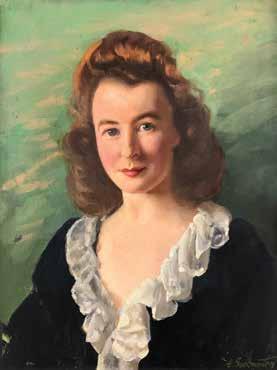
101 ERNEST BUCKMASTER (Australian 1897 - 1968)
Portrait of Sir Henry Kelliher’s daughter Pamela Oil on canvas board 64 x 47.5
Signed
$1,000 - 2,000
PROVENANCE
Collection of the late Sir Henry Kelliher by descent
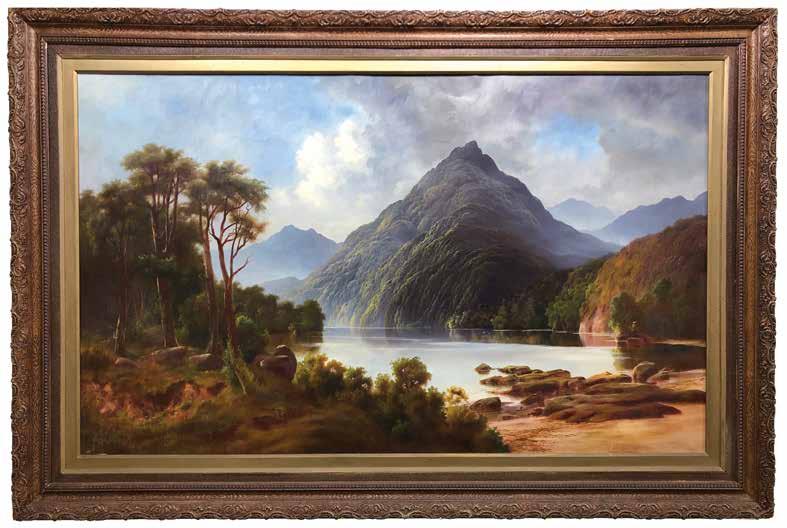
Signed & inscribed George Sound
$8,000 - 12,000
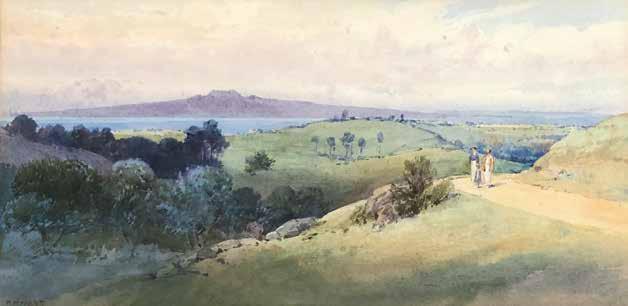
Auckland Harbour from Cornwall Park
Watercolour 18 x 36
Signed
$1,500 - 2,500
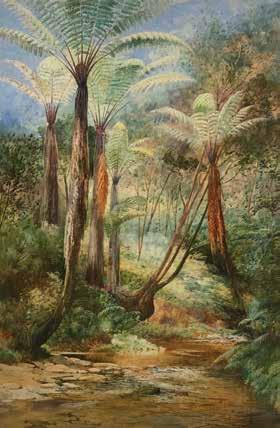
New Zealand Tree Ferns
Watercolour 58 x 38
Signed
$4,000 - 6,000
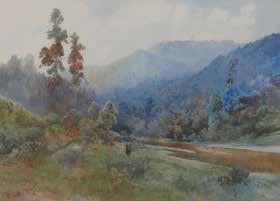
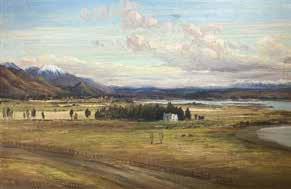
107 CHARLES BLOMFIELD (1848 - 1926)
The Richards Homestead, at Tahuna Oil on board 19 x 29.5
Signed & dated 1891
$2,500 - 3,500
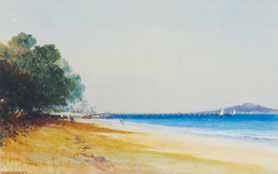
105 WALTER WRIGHT (1866 - 1933)
St Heliers Beach
Watercolour 22.5 x 37
Signed
$1,500 - 2,500
106 FRANK WRIGHT (1860 - 1923)
Figures on the Waikato River
Watercolour 43 x 59
Signed
$2,500 - 3,500
108
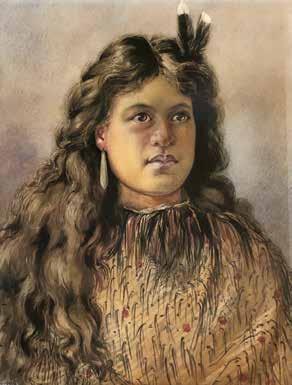
MARION WRIGHT (Late 19th Century)
Portrait of Te Amapo Parata
Watercolour 54 x 41
Signed & dated 1892
$4,000 - 6,000
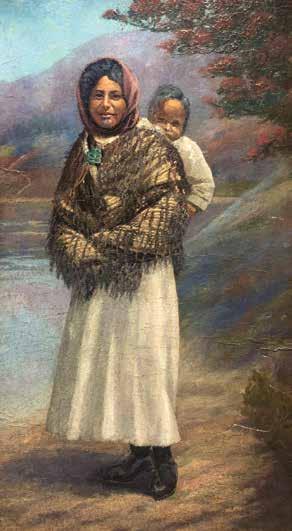
109 TREVOR LLOYD (1863 - 1937)
Maori Woman with Child Oil on board 43 x 24
$3,000 - 5,000
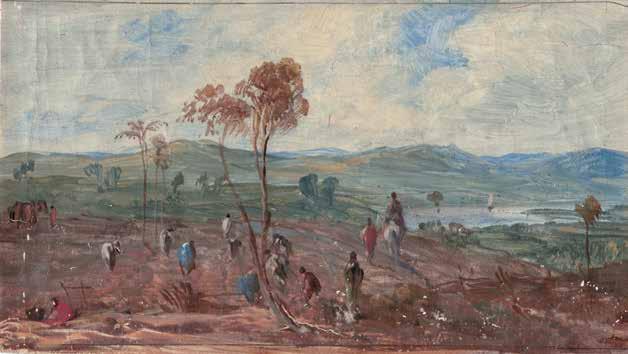
113
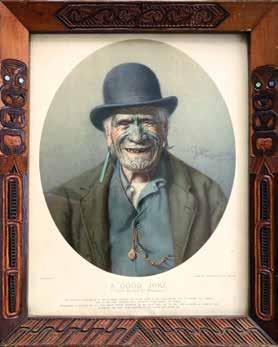
110 CHARLES FREDERICK GOLDIE (1870 - 1947)
A Good Joke
Chromolithograph 45.5 x 35
Signed & dated 1905 in plate
$4,000 - 6,000
Note:
Presented in hand carved vintage frame
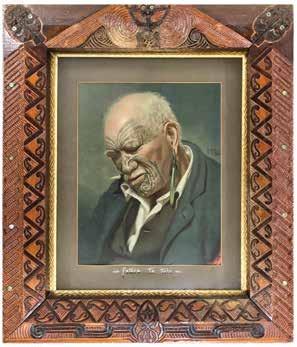
111 CHARLES FREDERICK GOLDIE (1870 - 1947)
Patara Te Tuhi
Chromolithograph 39.5 x 31
Signed in plate
$2,500 - 3,500
Note: Presented in hand carved vintage frame
112 ALBIN MARTIN (1813 - 1888)
Tamaki
Oil on canvas 11 x 19
Signed & inscribed Tamaki verso
$4,000 - 6,000
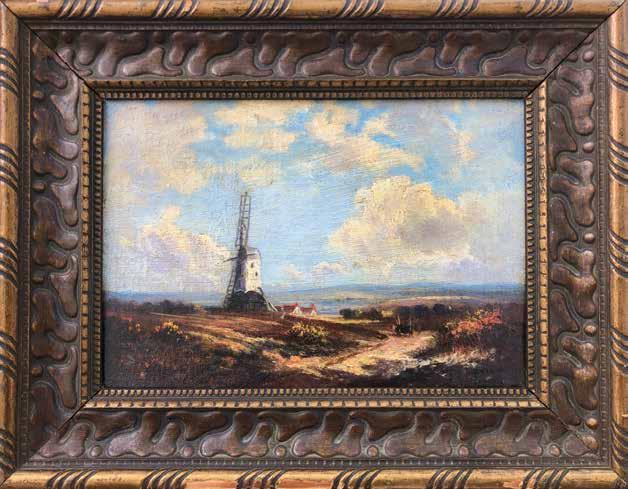
113 EDWIN HARRIS (1855 - 1906)
Landscape with Windmill
Oil on canvas 16.5 x 24
Signed $2,000 - 4,000
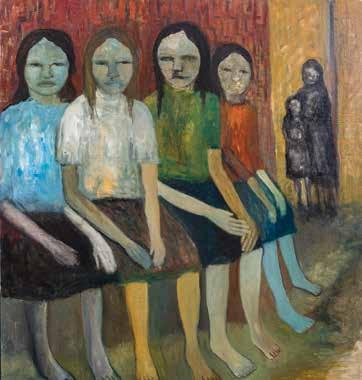
New Zealand Portrait Gallery Te Pūkenga Whakaata Shed 11, 60 Lady Elizabeth Lane, Wellington Waterfront www.nzportraitgallery.org.nz, 04 472 2298 26 Nov 2020 – 14 Feb 2021


International Art Centre provides formal valuations for insurance purposes, specialising in the preparation of catalogued and photographed inventories. Written valuations can be arranged by appointment. We provide free informal, verbal estimates for any of the works in your collection.
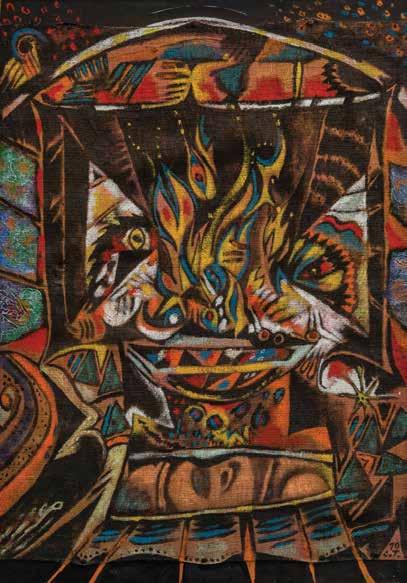
International Art Centre | Appointed Valuers of The Fletcher Trust Collection Philip Clairmont Fireplace, 1970 Oil on hessian on board 101 x 71cm Reproduced courtesy of The Fletcher Trust Collection
Important & Rare auctions are the proven, preeminent sale category for major works of art offered for sale in New Zealand. These auctions take place three times annually. As we fast approach our 50th year in business, experience continues to equal results. 2014 saw Important & Rare auctions realise five of New Zealand’s top ten auction prices. The following year saw new records set with the two top prices in Auckland achieved. With the addition of the record $1.377 million paid for a C F Goldie in April’s 2016 sale, International Art Centre achieved the three highest art auction prices in New Zealand’s history. Due to an appreciative, and greatly valued clientele of nationwide and international buyers and sellers we look forward to breaking new ground.
The buzz generated by our Collectable Art auctions reflects the popularity of these sales: an event at which seasoned connoisseurs and budding collectors alike converge to appreciate one of the most eclectic and diverse offerings available to the market. Works span the vital period from mid-century modernism through to the cutting-edge of today’s Contemporary art in New Zealand.
This sale category is an increasingly significant event in our auction calendar. Offering a number of lowerpriced works from highly-sought after artists in print and edition form, as well as quality works from artists whose presence on the secondary market is just beginning to crystallise.
From time to time, the secondary market is fortunate enough to be exposed to one of those rare collections which transcends the value of its individual works of art, and stands to represent something iconic in its entirety. Our team is well-versed in the process of offering single-owner collections for sale, and take pride in the process of curating a single-owner sale when the opportunity arises. We offer a targeted marketing campaign and maximise the use of both electronic and print-based collateral to effectively showcase such collections to maximum effect. The strong networks we have established locally and internationally are reflected in some of the private collections which have been entrusted to us in recent years.
A quick, easy and reliable solution to affordable consignments. During the 2020 nationwide lockdowns we stayed connected to our clients, keeping them close to our art. The time was spent productively, resulting in the development of our own online bidding platform and App, successfully auctioning works of art with no exhibition viewing, no printed catalogue, while using state-of-the-art technology. All transactions were contactless and we reduced our carbon footprint along the way. While the personal service, excitement and atmosphere of our famous live Parnell Road auctions remain and will continue to grow, the success of this online only platform has encouraged us to retain this as a permanent sale category.
Richard Thomson
Ph +64 9 379 4010
M. 0274 751 071
E. richard@artcntr.co.nz
Maggie Skelton
Ph +64 9 379 4010
E. maggie@artcntr.co.nz
Luke Davies
Ph +64 9 379 4010
E. luke@artcntr.co.nz
www.fineartauction.co.nz
202 Parnell Road, Auckland
7:00pm Tuesday 17 November 2020
I instruct International Art Centre to bid on my behalf for the following lots up to the prices indicated below.
I understand my bids are to be executed at the lowest attainable price level. All bids are subject to Conditions of Sale printed in this catalogue.
REGISTRATION NUMBER
NAME
ADDRESS
TELEPHONE
We will allocate a bidding number if you don’t already have one
Signature ........................................................................................... / / 2020
I have read and understand the Conditions of Sale. International Art Centre offers this service to clients unable to attend sale and is not responsible for error or failure to execute bids.
Email to info@internationalartcentre.co.nz before 3pm day of sale
Alternatively, visit our website www.internationalartcentre.co.nz and place absentee bids online
STICHBURY P 11, 12, 13, 14
TAPPER G ............................................. 60, 61, 72
TAUREREWA L 70, 71
TAYLOR E M .................................................... 16
THOMPSON S L ......................................... 54, 55
VAN DER VELDEN P ....................................... 62
The highest bidder shall be the buyer. In the event of any dispute as to the bidding in respect of any lot, that lot may be offered again at the discretion of the auctioneer whose decision shall be absolute and final.
The auctioneer has the right -
(i) to refuse any bid;
(ii) to advance the bidding at his absolute discretion;
(iii) to place a reserve on any lot;
(iv) to place a bid or bids on behalf of the seller;
(v) to withdraw any lot from sale;
(vi) to require a successful bidder to pay forthwith the whole or any part of the purchase price.
The auctioneer acts as the agent of the seller and neither he nor the seller shall be responsible for any defects or faults in any lot or for any errors of description or for genuineness or authenticity of any lot and no compensation shall be paid in respect of same.
From the time of lot being sold, such lot will be the responsibility of the buyer.
Successful bidders are required to pay for purchases immediately on completion of sale unless otherwise arranged.
All intending buyers are required to register for a bidding number prior to auction commencing. Subscribers can use their permanent bidding number. We reserve the right to ask for identification if you are a first time client of International Art Centre.
Each lot shall be paid for and removed at the buyers expense by no later than 5:00pm Friday 20 November 2020 unless otherwise arranged failing which the auctioneer and/or the seller shall have the right to forfeit any deposit paid by the buyer and to resell the lot either by public or private sale and any deficiency on costs of resale shall be borne by the defaulting buyer.
No lot may be collected whilst auction is in progress. Payment can also not be made until completion of auction.
When the auctioneer declares a lot ‘subject’ this means the bid is below the set reserve and is subject to vendor accepting, rejecting or negotiating the bid. International Art Centre will endeavour to make contact with the vendor immediately after sale or the following day. If the bid is accepted, the highest bidder is obligated to make purchase.
Estimates are provided for each entry and act as a guide only. They are prepared well in advance of sale and are subject to revision at any time. Estimates are based on hammer price and do not include buyers premium.
Absentee bidding arranged - please refer to absentee bidding in back of catalogue. Email to info@internationalartcentre. co.nz before 3pm day of sale. Please do not be offended if a member of our staff ask for your credit card details as security.
Absentee bids can also be left via our website to registered members. Our website www.fineartauction.co.nz acts as a useful auxiliary to the catalogue but we recommend inspection or a condition report prior to leaving a bid. Our staff will gladly supply you with a condition report on any lot.
Telephone bidding available to subscribers and registered bidders. There is no charge for this service.
PAYMENT FACILITIES
Eftpos: Available for transactions depending on your daily limit.
Bank deposits: Bank instructions on invoice if paying by direct debit. Quote the Lot number(s) purchased and surname as reference.
Credit cards: Visa and Mastercard with a 2% surcharge.
International Art Centre no longer accepts cheques.
PROTECTED OBJECTS ACT
Art objects over 50 years old made by an artist or maker born in or related to New Zealand may be protected New Zealand objects, and therefore require permission from the Ministry for Culture and Heritage in order to be exported. Applications for permission to export can be made at https://mch.govt.nz/ nz-identity-heritage/protected-objects/exporting
FREIGHT & PACKING
International Art Centre arrange door to door delivery both nationally and internationally. Please arrange insurance on your items prior to them leaving our premises.
OTHER ENQUIRIES
Should you have any questions relating to the sale or if we can be of any other assistance please contact us during business hours on (09) 379 4010, Toll Free 0800 800 322 or email info@internationalartcentre.co.nz
BUYERS PREMIUM
17.5% Buyers premium plus GST on premium applies to all lots. (Total buyers premium is 20.12% including GST)