Rare 6:30pm Thursday 29th March 2012
6:30pm Thursday 29th March
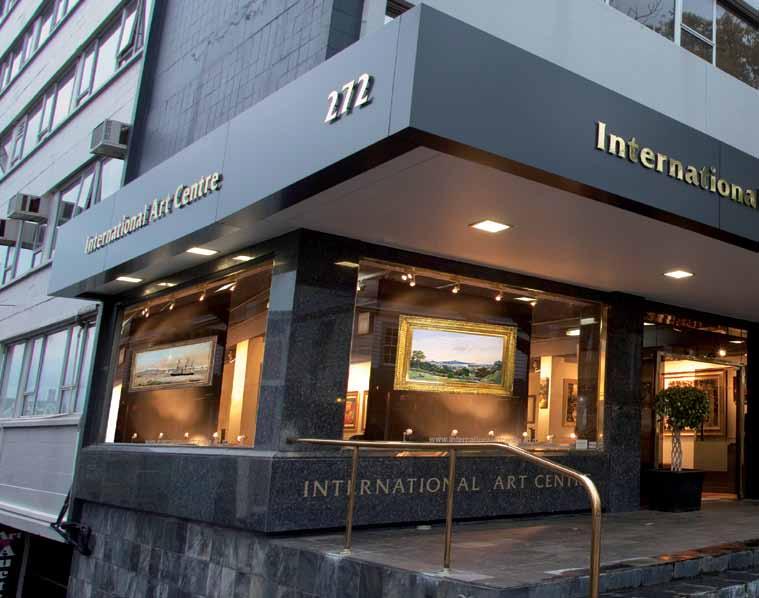
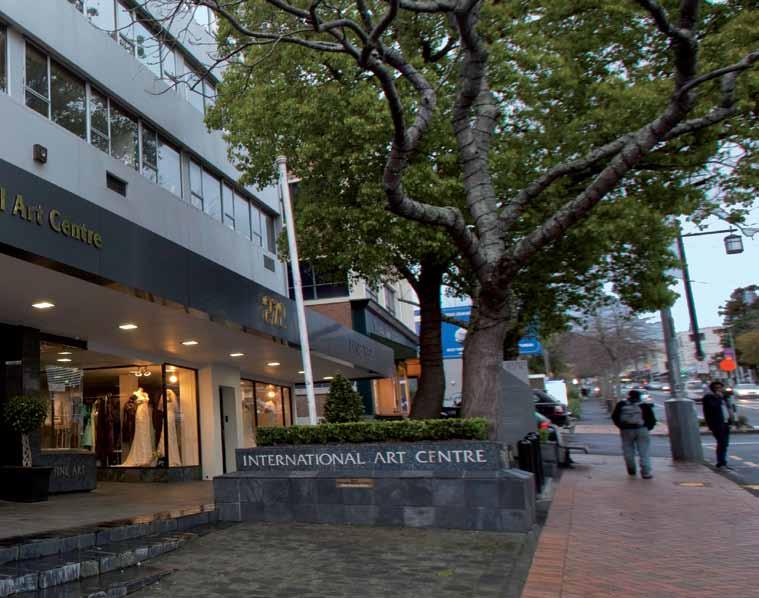
Scarborough Gallery, International Art Centre,
Lower Ground Level, 272 Parnell Road, Parnell, Auckland
Viewing Times Page 3
Index Page 107 Conditions of Sale Page 108 Absentee Bid Form Page 105
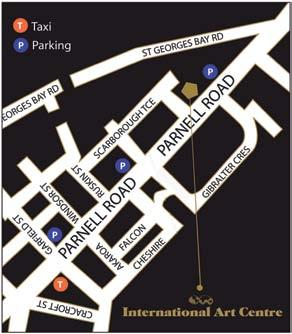
Location map
Works purchased may be uplifted at close of sale or Friday 30th March 9.30am - 5.00pm.
Payment may not be made during sale.
Auction Contacts
Richard Thomson Frances Davies
Ph: 09 379 4002
Ph: 09 379 4010 richard@artcntr.co.nz fran@artcntr.co.nz
Mobile: 027 4751 071
Mobile: 027 4936 360
Auction administration James Watkins
Luke Davies
Ph: 09 366 6045
Ph: 09 379 4010 james@artcntr.co.nz luke@artcntr.co.nz
Trish Young www.fineartauction.co.nz
Ph: 09 366 6045 Skype: fineartauction trish@artcntr.co.nz info@internationalartcentre.co.nz
Auction Venue
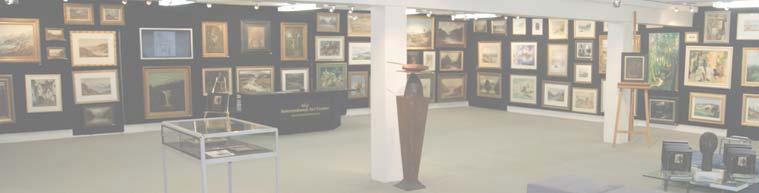
Scarborough Gallery, International Art Centre, Lower Ground Level, 272 Parnell Road, Auckland.
On Evening of Sale:
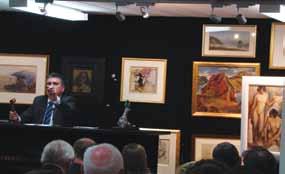
Please join us in our main gallery from 5.30pm for a glass of wine and refreshments. Coffee served before and during auction. For your additional comfort and viewing pleasure our street level gallery remains open until sale completion.
Car Parking
Parking During Viewing Days:
Available on site during weekend viewing, Saturday 24th & Sunday 25th March. Use Scarborough Lane entrance beneath our main gallery. During other viewing times on site parking is available on request.
Parking During Auction:
Limited parking is available on site. Use Scarborough Lane entrance beneath our main gallery to access these carparks on evening of sale. Parking on Parnell Road is free after 6:00pm. A secure two level pay and display carpark is located at 282 Parnell Road.
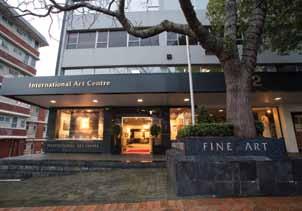
Viewing Times
International Art Centre’s Scarborough Gallery, Lower Ground Level, 272 Parnell Road, Auckland
Friday 23rd March 9:00am - 5:00pm Morning Tea Lecture 10:30am - 11:30am
Saturday 24th March 11:00am - 4:00pm
Sunday 25th March 11:00am - 4:00pm
Monday 26th March 9:00am - 5:30pm
Tuesday 27th March 9:00am - 5:30pm
Wednesday 28th March 9:00am - 5:00pm
Thursday 29th March 9:00am - 1:00pm (Auction 6:30pm)
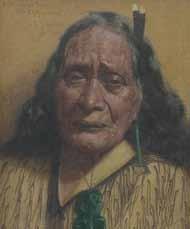
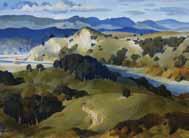
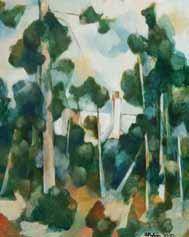
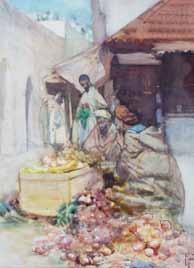
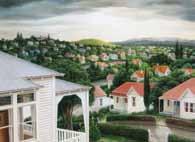
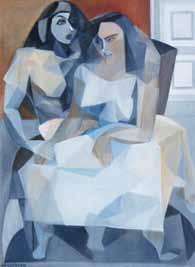
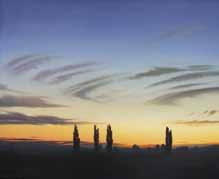
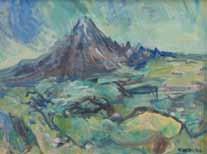
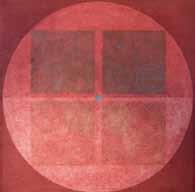
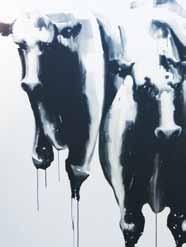
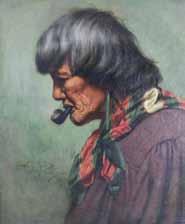

International Art Centre’s 40th Anniversary year saw consistently positive results achieved at auction in both the Historical and Contemporary markets. Strong confidence resulted in the Important Early & Rare auctions alone generating sales in excess of $3.5million. Extraordinary results were also witnessed in our increasingly popular Contemporary & Collectable art auctions. We look forward to welcoming you to our forthcoming sales and in our 41st year we wish all our friends and clients a prosperous and successful 2012.
LUCI HARRISON PHOTOGRAPHY
www.luci.co.nz
The Only Auctioneers of Pictures Exclusively
1 PETER SIDDELL
1935 - 2011
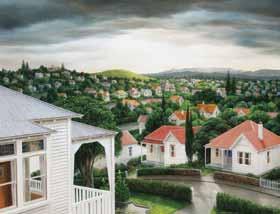
Five O’ Clock (Westwards)
Oil on board 40.5 x 31
Signed 14,000 - 18,000
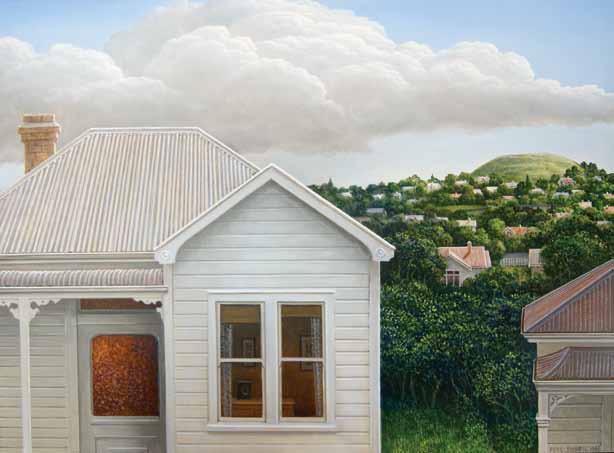
2 PETER SIDDELL
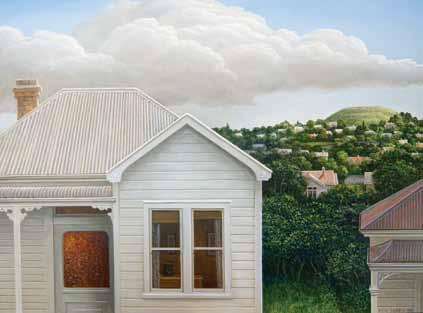
Suburban Cloud Oil on board 36 x 50
Signed & dated 1986
Inscribed verso 15,000 - 25,000
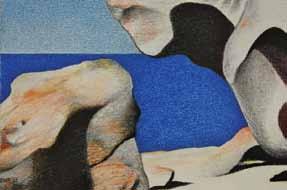
Whatipu
Pastel on paper 25.5 x 38
Signed & dated 1985
3,500 - 4,500
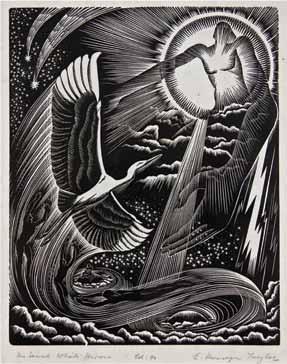
1906 - 1964
The Sacred White Heron
Wood engraving, Edition of 40 17 x 13.5
Signed & inscribed
1,000 - 1,500
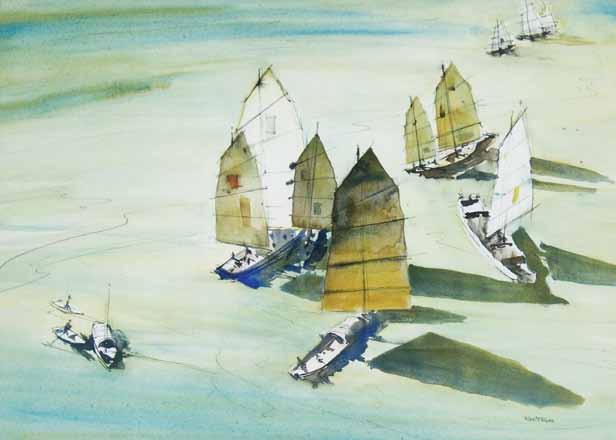
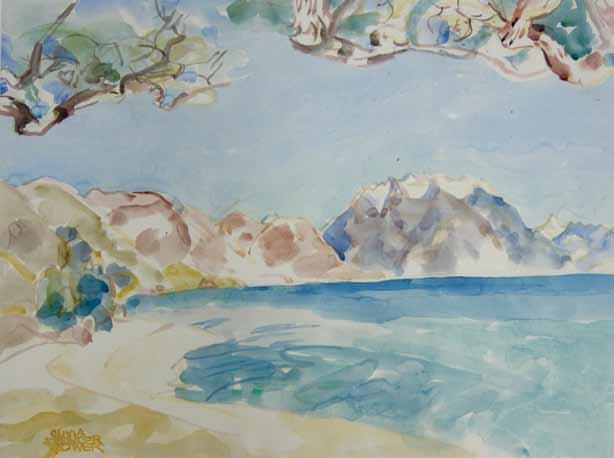
1905 - 1982
Watercolour 53 x 71
Signed 4,000 - 6,000
b. 1945
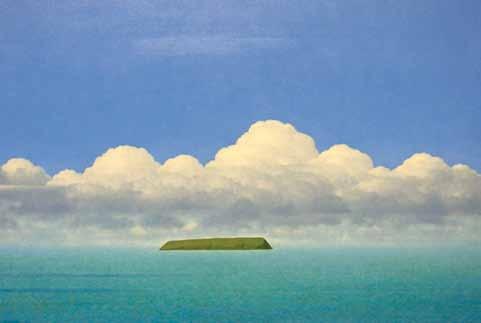
Islands - Clouds, 2004
Oil on board 26 x 38.5
Signed & dated 2004
Inscribed Painted at Muriwai & dated 2004 verso
7,000 - 10,000
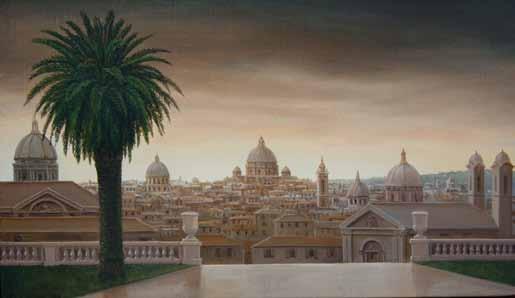
1935 - 2011
Borghese
Alkyds and liquin on canvas 22 x 38
Signed & dated 1994
Inscribed verso
7,000 - 10,000
Provenance: Private Collection, Auckland
Illustrated p. 171, The Art of Peter Siddell, Peter Siddell Godwit 2011
Using a small, almost postcard like format in the images of Italian and French cities, Siddell again imbues his images with skies that are paradoxically expressive and static creating an otherworldly light that transforms and elevates the commonplace. In Borghese the campanile and domes of Rome are silhouetted by the glow of the morning (or is it evening) twilight; above this band of light cowers a sky heavy with grey and the image is heavy with portent, of what? Ambiguity surreptitiously underpins these works of apparent simplicity. It is in comparing these "foreign" images with local images that we gain further insight into the ways in which these paintings work. In Borghese a palm tree stands sentinel over the silent city, its natural jagged form simultaneously echoes and contrasts with the smooth, perfect man-made domes. Note affixed verso.
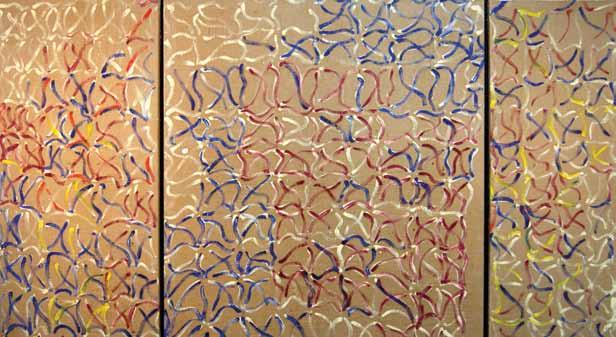
A Hedonist’s Philosophy on Abstraction Triptych Oil on hessian 185.5 x 327 Signed, inscribed & dated 1977 11,000 - 15,000
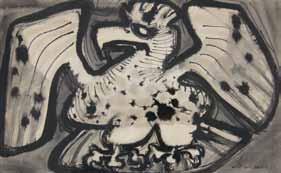
9 ERIC LEE JOHNSON
1908 - 1993
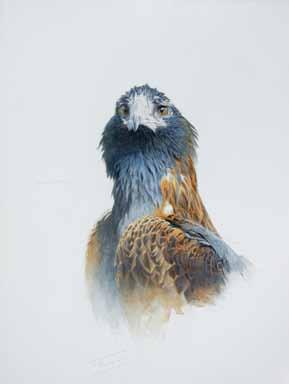
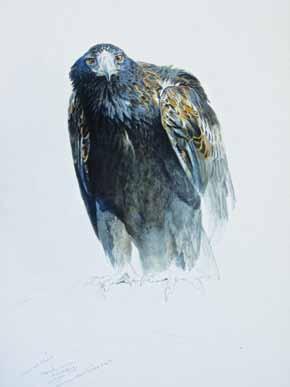
Eagle
Indelible ink on paper 30.5 x 50
Signed
2,500 - 3,500
Provenance:
Purchased by current owner from the artist, 1969
Exhibited ASA Gallery, August 4 - 15 1969
Original label affixed verso
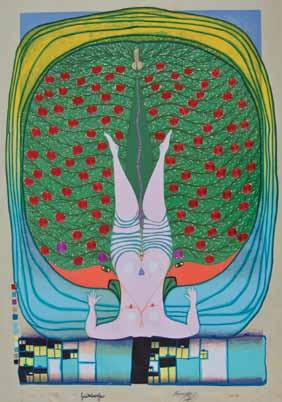
10 FREDERICK HUNDERTWASSER
1928 - 2000
Hommage à Schroeder-Sonnenstern, 1972
Silkscreen with metalic embossing - edition of 4200, 92 x 68
Stamped signatures, numbered & inscribed
1,500 - 2,000
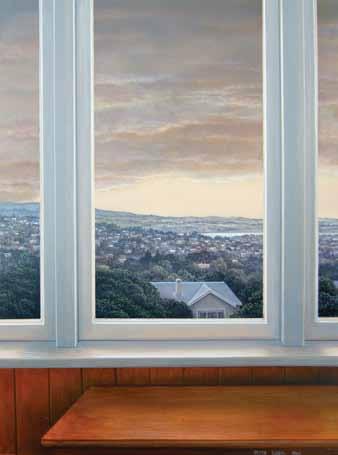
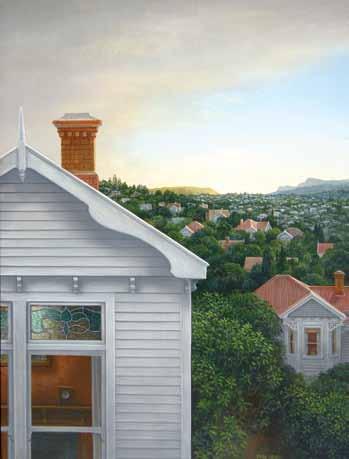
11 PETER SIDDELL
1935 - 2011
Evening Window
Oil on board 41 x 31
Signed & dated 1986
Inscribed verso
14,000 - 18,000
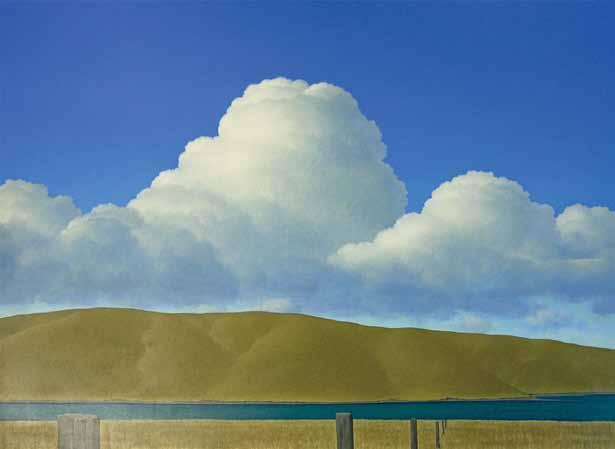
12 BRENT WONG
b. 1945
Clouds, Headland - Field with Posts, 2004
Acrylic on board 46.7 x 63.2
Signed & dated 2004
Inscribed Painted at Muriwai & dated 2004 verso
12,000 - 15,000
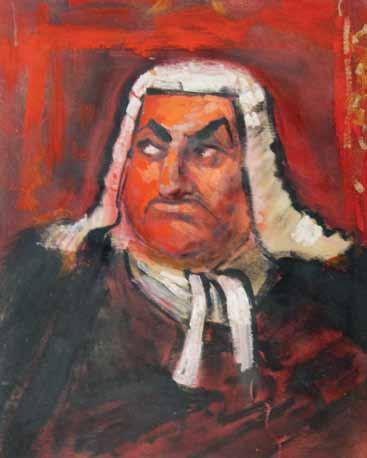
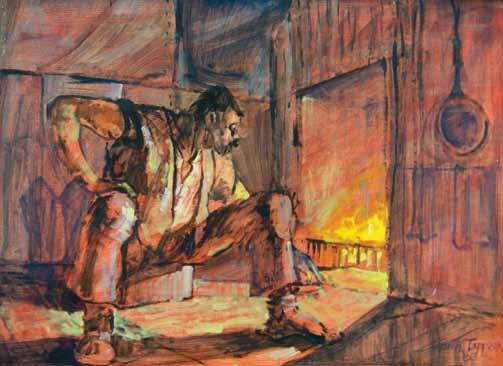
13 GARTH TAPPER 1927 - 1999
The Judge Oil on board 38 x 30 4,000 - 6,000
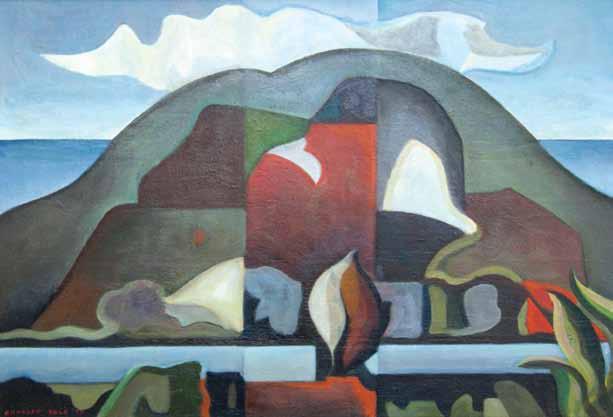
14 CHARLES TOLE 1903 - 1988
Landscape with Mount Oil on board 40.4 x 58.7
Signed & dated 1974
Original artist’s label affixed verso 8,000 - 12,000
15
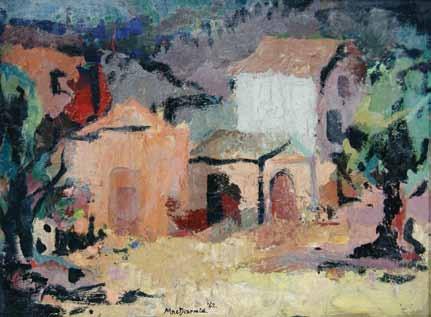
b. 1922
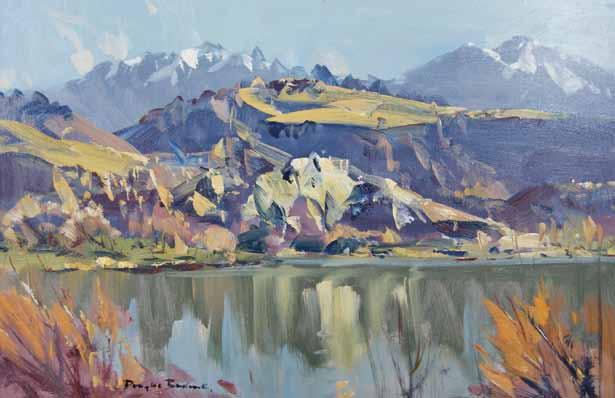
Alps Mountains Oil on board 24.2 x 32.8
Signed & dated 1962. Inscribed verso 2,500 - 3,500
Provenance:
Private Collection, London since 1962
16 GARTH
1927 - 1999
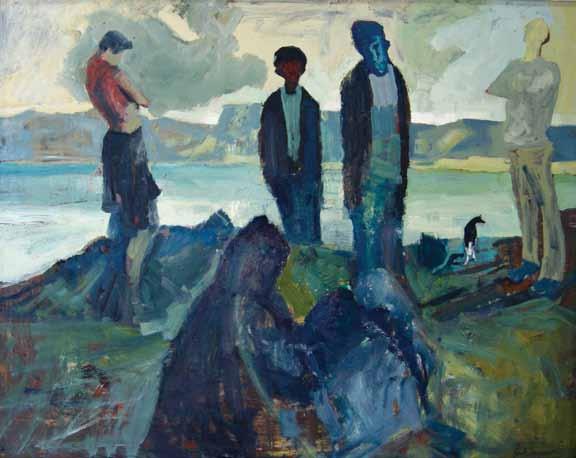
Sunday Afternoon Oil on board 78 x 100
Signed 12,000 - 16,000
Provenance: Private Collection, NSW
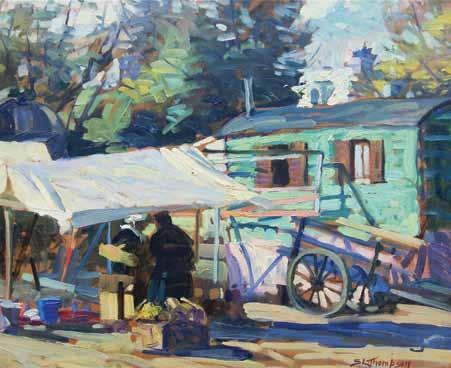
1877 - 1973
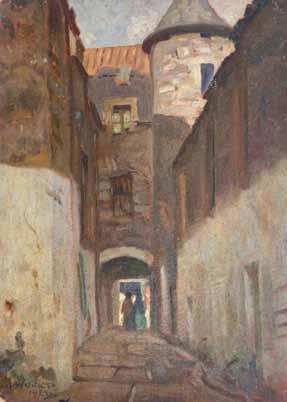
Market in Brittany Oil on board 35 x 43
Signed
15,000 - 20,000
Auckland
8,000 - 12,000
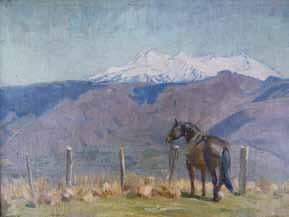
19 BEATRIX DOBIE
1887 - 1945
Horse in a Landscape ‘The Fence’
Oil on canvas laid on wood 26 x 35
Signed
Original label affixed verso reads: Royal Academy 1925 / Miss Beatrix Dobie / 57 St Stephens House / Westminster / Title : The Fence, (?), New Zealand
2,000 - 3,000
Provenance: Private Collection, France
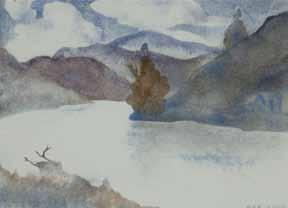
20 ROBERT NETTLETON FIELD
1899 - 1987
Untitled - A Bend on the Clutha or Taieri River
Watercolour 13.5 x 18
Signed & dated 1940
2,000 - 3,000
Our thanks to artist’s sons Jonathan & Kit Field and Anna Petersen of Hocken Library for their valued assistance in cataloguing this lot
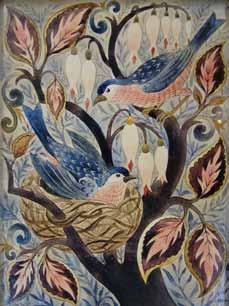
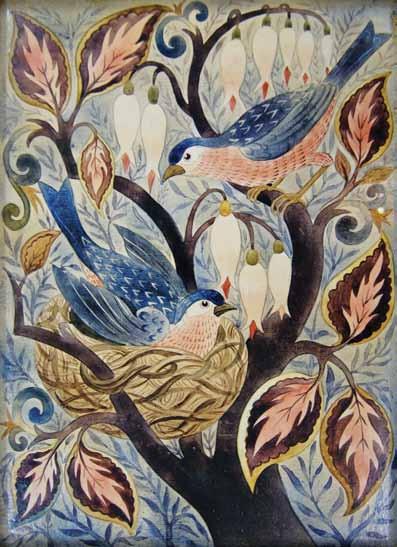
21 A LOIS WHITE
1903 - 1984
Birds and Foliage
Varnished watercolour 38.5 x 28
18,000 - 26,000
Provenance:
Private Collection Auckland acquired from artist
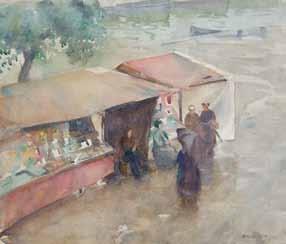
1879 - 1959
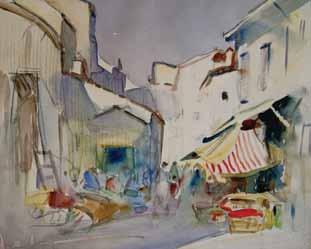
Riverside Market Stalls
Watercolour 43 x 49
Signed
2,500 - 3,500
Provenance: Estate of John Weeks 1886 - 1967
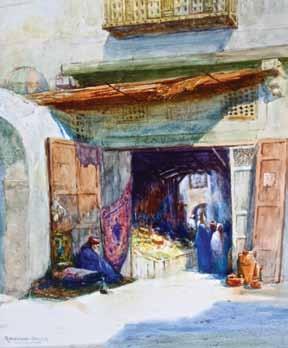
1872 - 1937
Entrance to Arab Bazaar, Cairo
Watercolour 37 x 31
Signed
2,000 - 3,000
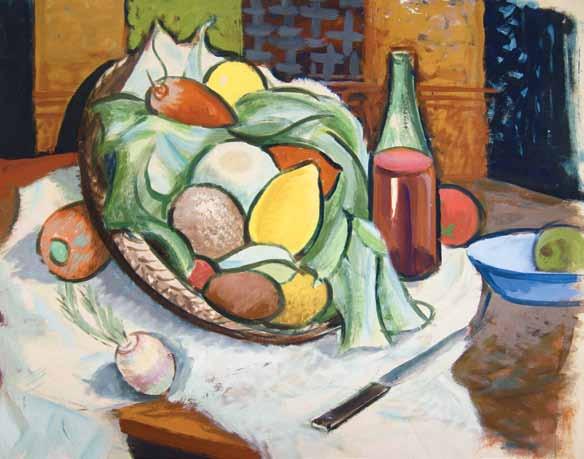
1886 - 1965
Still Life
Tempera on paper 42.5 x 52.5
4,000 - 6,000
26
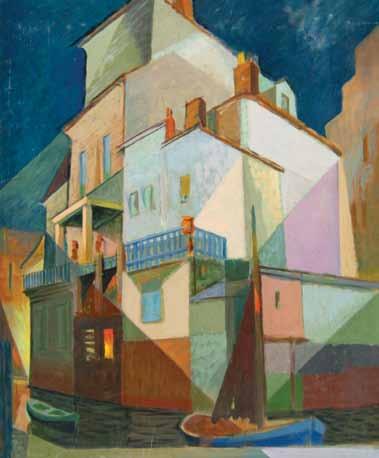
JOHN WEEKS
1886 - 1965
Facades at Night
Tempera on board 75 x 62
8,000 - 12,000
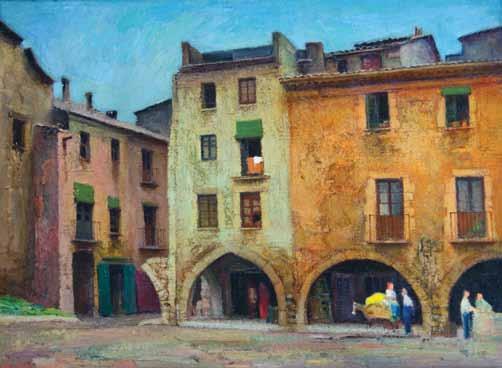
2,500 - 3,500 Original label affixed verso 27
28 FELIX KELLY
1916 - 1994
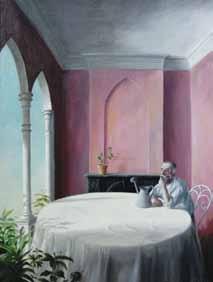
The Garden Room Oil on board 56 x 43
Signed & dated 1952
10,000 - 15,000
Exhibited:
Felix Kelly: Paintings of America, Spain, Italy & New Zealand, Cat. no. 20, December 1952
The Leicester Galleries, Leicester Square, London
Reference:
p. 274 The Art and Life of Felix Kelly, Donald Bassett, Darrow Press 2008
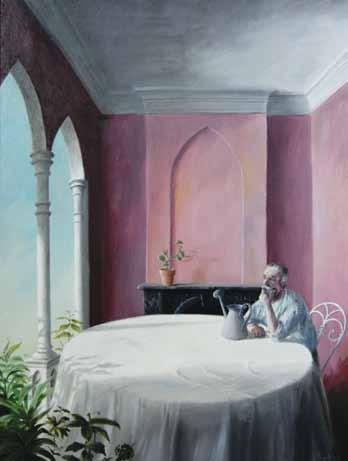
The life of expatriate artist Felix Kelly (1914 - 1994) is as intriguing as his work. Born in Epsom, Auckland he attended Kings College but left New Zealand aged 21 years for the bright lights of London. Befriended and patronised by many leading society figures of the day, Kelly exhibited alongside Lucien Freud, Julian Trevelyan and on one occasion Frances Hodgkins. A life of glamour and creativity ensued.
Kelly painted the famous Garden Room Murals at Castle Howard, where the ITV series Brideshead Revisited was filmed, designed theatre sets for Sir John Gielgud and Dame Sybil Thorndike and illustrated magazines such as Harper’s Bazaar. Kelly’s distinctive work, rarely seen at auction, is held in British and American collections, Te Papa and Hawke’s Bay Museum and Art Gallery.
A major retrospective was held at Gus Fisher Gallery, Auckland in 2010. Kelly’s extraordinary life is documented in Donald Bassett’s biography Fix: The Art & Life of Felix Kelly
29 RAYMOND CHING
b. 1939
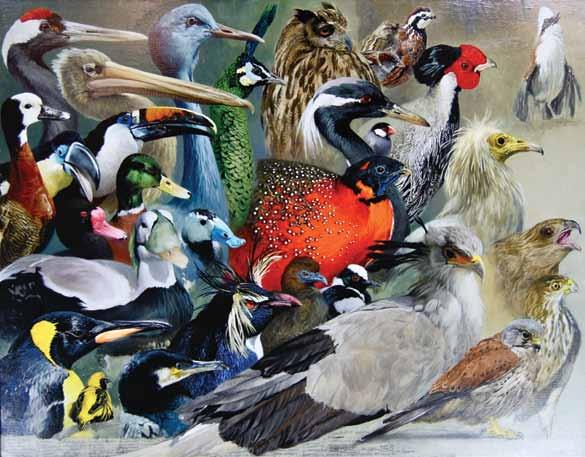
Field Guide II (Red Bird) 1993 - 1998
Oil on linen 71.5 x 91
Signed, inscribed & dated 1998
45,000 - 55,000
Provenance: Purchased by current owner, London 1998
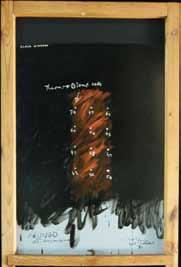
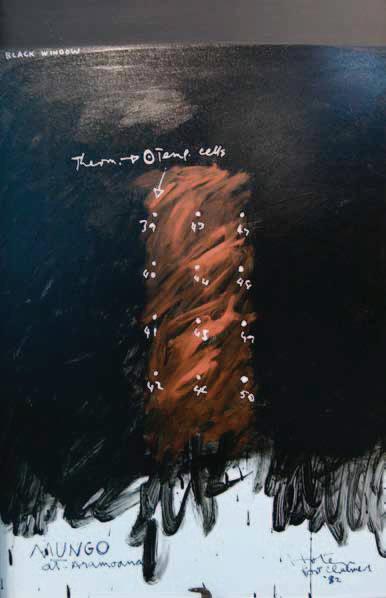
What hint do the words “black” and “window” give us as to the meaning of Hotere’s work?
We stand motionless in front of a window, we look through the window and we behold a scene. The scene is confined by the frame; the scene stretches from the glass, in the front, through the vast space behind and on to a vanishing point on the horizon.
We stand motionless in front of a painting; we look at the painting and we behold a scene. The scene is confined by the frame; the scene stretches from picture plane (the imaginary glass) through the “space”, the picture space, and on to a vanishing point on the painted horizon.
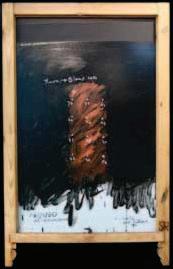
This is a simplified version of Brunelleschi’s and Alberti’s take on perspective, commonly known as the Renaissance window. Hotere has taken the frame of an old villa’s sash window to reinforce the idea in our mind of a view to behold in New Zealand.
Hotere’s Black Paintings originated as a protest in the early 1980s against the proposed aluminum smelter at Aramoana. Destruction of the natural beauty of the area and the toxic waste it would produce were the issues of concern. Imagine looking out of a window at night: the view is black, the death of that day. Hotere has extended that simple image: given the area, he is implying a future death of the environment indicated by black acrylic paint with silver/ grey of the smelter. Black painted board replaces the glass of a demolition sash window complete with brass handle just as an ugly smelter cancels out the view of an idyllic New Zealand scene.
This work is part of the Mungo series where the significance of black to the artist is reinforced with the words BLACK WINDOW in upper case at the top left. In the Mungo National Park a very important archaeological discovery was made in 1974 – human remains dating up to 68,000 years ago. At this site, a weathering experiment was set up to determine the deterioration of materials such as wood, bone and shell buried in the different layers of soil and every few years the results would be quantified. (Kriselle Baker).
Above the words BLACK WINDOW stretches out two layers in different tones of a hazy grey seemingly above or beyond a shore with indications of light and sun. But Hotere, as is his wont, does not leave the viewer completely devoid of hope. The bed of Lake Mungo, dry as it was, revealed the length of man’s existence, which it otherwise could not have done. Perhaps, too, some good will come eventually from the construction of the smelter. Hotere paints a swirling mass of red gold, the greatest symbol in sacred terms and the most important metal in economic and secular terms, on which is written in four groups of three in white the temperatures of the samples. The four Gospels added to our knowledge of the tri-partite Christian God; 4 x 3 = spiritual knowledge, and the results of these samples will also add to Man’s knowledge not only in Mungo but in Aramoana as well.
The length of Man’s existence in Mungo becomes, in this Hotere work, an existential reflection on the quality of life in Aramoana: Black WindowMungo at Aramoana.
Angela Mackie
30 RALPH HOTERE
b. 1931
Black Window - Mungo at Aramoana
Acrylic on board 104 x 66
Signed, inscribed & dated Port Chalmers, 1982
110,000 - 130,000
Presented encased in original colonial sash window frame
Provenance:
Purchased by current owner from Brooke Gifford Gallery, Christchurch, 1982
Towards Aramoana label affixed verso
31
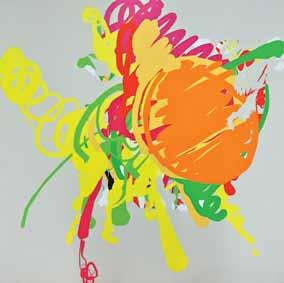
31 ANDRé HEMER
b. 1981
Base and Awesome (watching my paint dry)
Acrylic on canvas 107 x 107
Signed, inscribed & dated 2007 verso
3,500 - 4,500
Provenance:
Private Collection, Christchurch
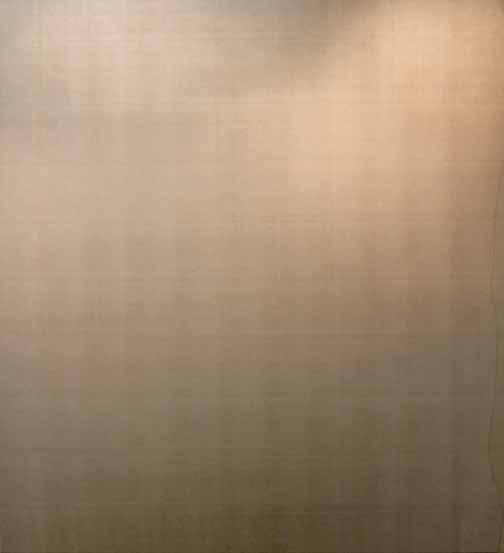
32 GEOFF THORNLEY
b. 1940
Unnamed / Named #11
Oil on canvas 229 x 198
Signed, inscribed & dated 1997 verso
45,000 - 55,000
Provenance: Peter Bromhead Collection, Auckland
Exhibited:
Vavasour Godkin Gallery, 1997
Original label affixed verso
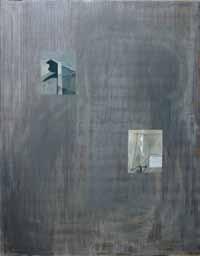
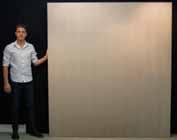
Geoff Thornley remains a painter’s painter. He is undoubtedly New Zealand’s most eminent minimalist abstract artist, dedicating the past thirty years to exploring the play of light and shade on large canvases that are sometimes over-whelming in there complexity of subtle texture and finesse of painterly astringent, quality.
His work is not for the faint-hearted, but those who approach his paintings openly they will discover a slow-burning fuse of aesthetic pleasure and delight probably unmatched by many other contemporary New Zealand artists.
Thornley’s work is collected by the Public Galleries of New Zealand and many prominent art foundation trusts, including Fletchers, Jenny Gibbs and the Wallace Collection.
1903 - 1984
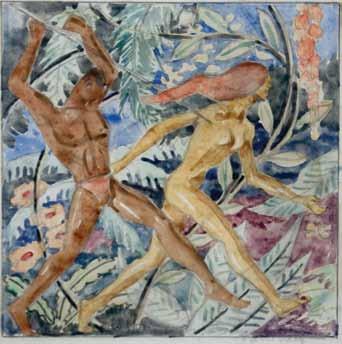
The Chase
Watercolour 19 x 19
Signed
3,000 - 5,000
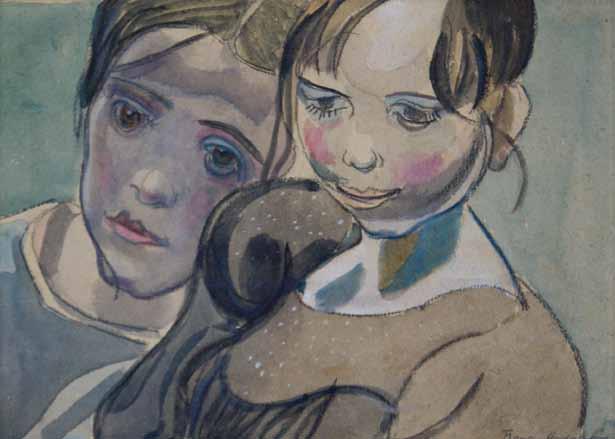
1869 - 1947
Two Girls
Watercolour 18.2 x 25.6
Signed
18,000 - 26,000
35 PETER MCINTYRE
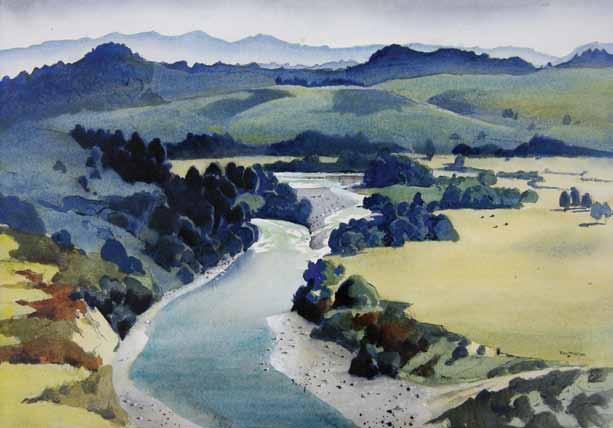
1910 - 1995
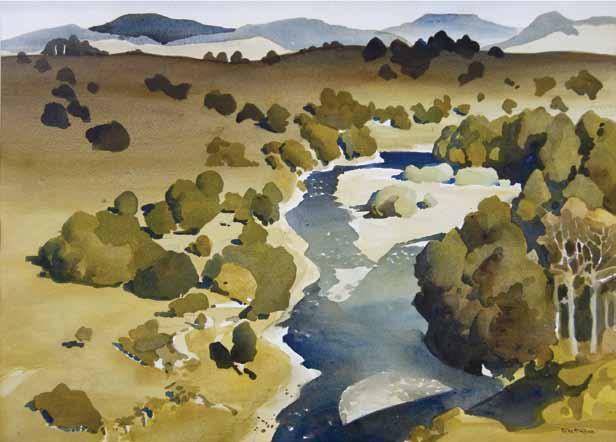
Rangitikei River
Watercolour 53 x 75
Signed
17,000 - 22,000
Provenance:
Private Collection, Auckland.
Purchased by current owner from McGregor Wright Gallery, Wellington, circa 1968
For years its white cliffs (Rangitikei River) and its green water have been my favourite subject and I have explored every stretch of it, watching the light on the cliffs change and shadows define new shapes.
Peter McIntyre 1979
The mighty Rangitikei River is one of New Zealand’s longest rivers winding 185 kilometres through the Central Plateau to the South Taranaki Bight. McIntyre often painted the curving river bed and spectacular white cliffs of the Rangitikei valley. His chosen subject featured in a 1998 stamp issue.
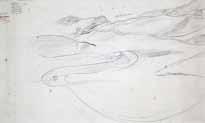
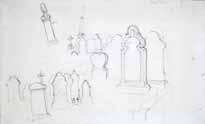
36 Study for Nor’wester in the Cemetery - verso
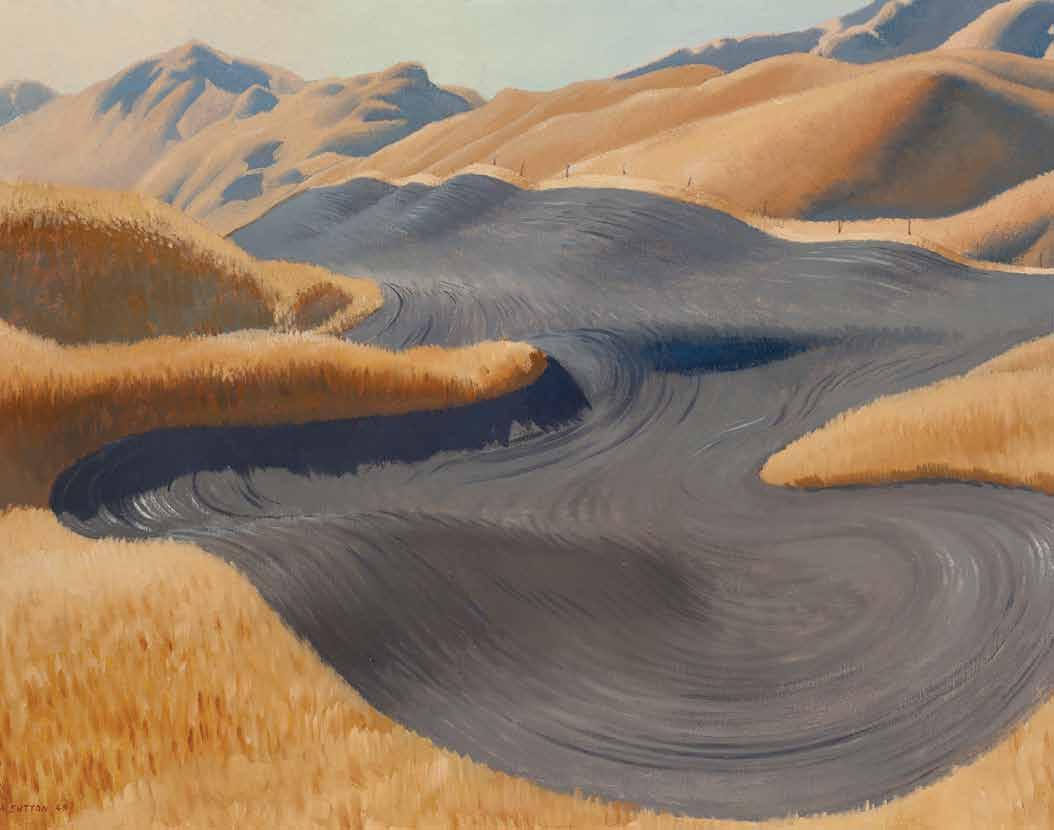
36 WILLIAM A SUTTON
1917 - 2000
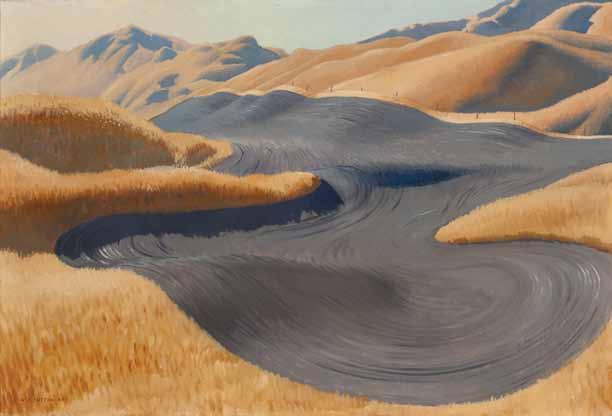
Jim O’Fee’s Paddock
Oil on canvas 52 x 76
Signed & dated 1949
40,000 - 60,000
Together with a double sided pencil drawing on paper 28 x 46.3cm featuring the same subject and verso a study for Nor’wester in the Cemetery
Provenance:
Estate of Tom Kreisler, formerly in the collection of George Roth
Exhibited:
The 1949 Group Show , Christchurch 26th October - 4th November 1949
Facsimile copy of the 1949 Group Show catalogue accompanies this lot.
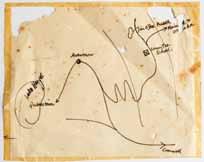
This iconic painting by Sutton is on the market for the first time since its acquisition in the early 1950s by current owner’s family. The uniqueness of this opportunity is enhanced by preparatory studies of Jim O’Fee’s Paddock and verso sketch for Auckland Art Gallery’s Nor’wester in the Cemetery 1950. Sutton’s hand drawn location map of Jim O’Fee’s Paddock is affixed verso.
Jim O’Fee’s Paddock is part of a seminal series of landscape paintings, including Bruce Creek 1949 Christchurch Art Gallery, and Country Church Series 1950-53, which Sutton produced in the Canterbury and Otago regions on his return from a study trip to Europe in 1949. This proved to be a defining period in Sutton’s career, establishing his reputation alongside those of colleagues Rita Angus, Doris Lusk and Colin McCahon, as an artist who captures the unique geographical and architectural nuances of southern New Zealand. Whilst Sutton’s vision has largely been framed within the Canterbury School, Jim O’Fee’s Paddock offers another set of qualities that provides scope for rethinking his place in the cannon of New Zealand art.
While this painting speaks within a regionalist vernacular, in this particular case the barren simplicity of the undulating hills around Wanaka, it also addresses mans impact on the land. This is a painting that does not simply revel in the sublime vista of this site, it literally and proverbially digs below the surface, to lay bare another psychological depth. This is a land that has been cut, drawn and quartered by the machinery of an increasingly industrialized form of agricultural production. However, there is a latent ambiguity as to whether Jim O’Fee’s Paddock is a celebration of New Zealand farming practices, a more subversive analysis of land value, or an opportunity for Sutton to show off his increasingly sophisticated abilities with paint. It is also worth noting that during World War II, Sutton designed and painted camouflage for military installations in the South Island, perfectly summarized in Somewhere Up Country 1944, Dunedin Public Art Gallery. So, Jim O’Fee’s Paddock is a highly charged and evocative painting, which on greater reflection reveals an artist coming to grips with a landscape that has changed forever.
37 JOHN BARR CLARKE HOYTE
1835 - 1913
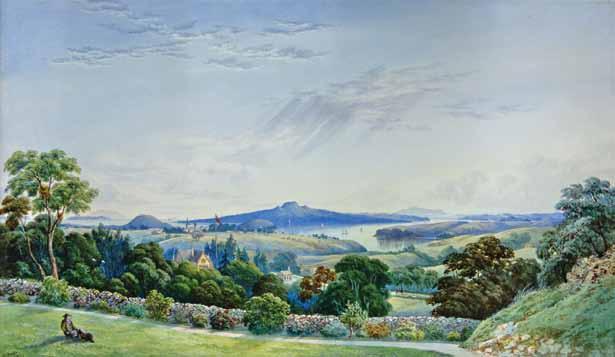
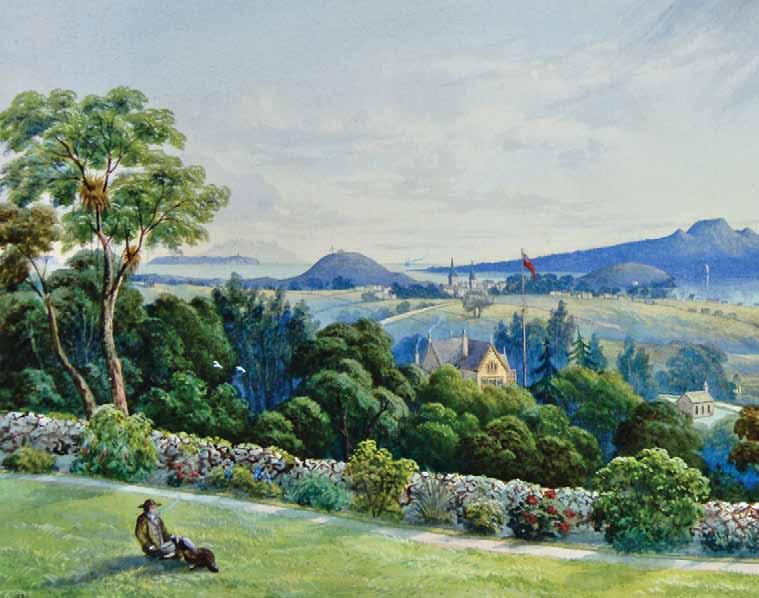
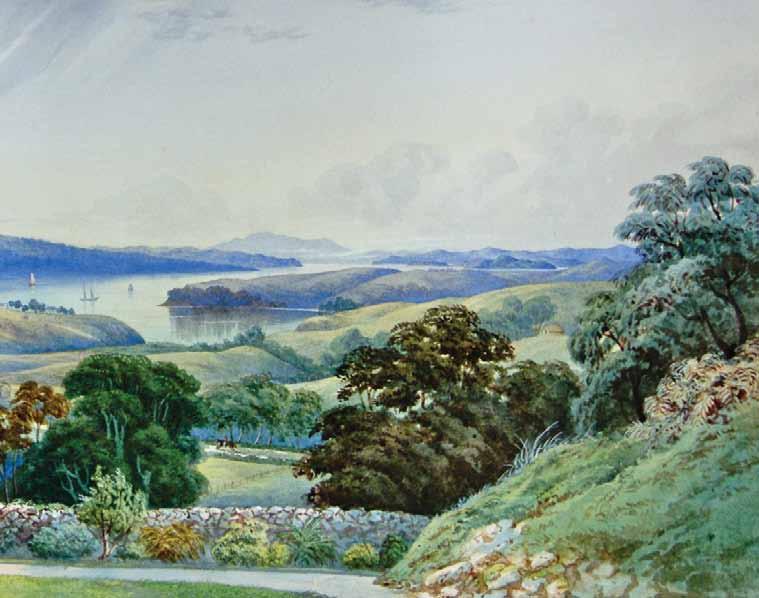
Panorama of Auckland from Mt Hobson, Remuera
Watercolour 44 x 53
Signed & dated 1871
90,000 - 150,000
John Barr Clark Hoyte was prominent amongst landscapists of the 1860s and 1870s and is perhaps our best known watercolourist of the era. Hoyte spent his early years in Auckland, a founding member of the Auckland Society of Artists, establishing his studio in Scarborough Terrace, just off Parnell Road.
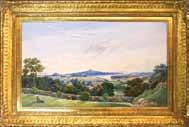
The view Hoyte painted here is outstanding. It shows Tiritiri Matangi Island and Little Barrier to the left with the hills of Coromandel to the right. The spire in the middle left of the picture is that of St. Mary's Church, the other, rising above the library of Bishop's Court, St Stephens Avenue is still to be seen, although in 1910, the Bishop's private chapel was moved to Diocesan School in Epsom. Here we have one of the most panoramic views of Auckland.
Several years after the completion of this work, John Logan Campbell tried unsuccessfully to purchase the land around Orakei which included the slopes of Mt Hobson. During an excursion to Remuera in 1881, Campbell climbed to the summit of Mt Hobson from where he ‘gazed on the wonderful panorama which lay revealed to my sight for the first time’. This view further convinced Campbell that he had found the perfect site for the new capital.
It was here in 1844 the Remuera Feast took place with the historic meeting between Hobson and Te Kawau. The Feast was intended as a sign of Waikato mana and a reminder of the continuing power and influence of local Maori. At the time, it is recorded as being one of the largest gatherings ever held in New Zealand. The Feast was attended by 4,000 Maori from seventeen tribes.
Mt Hobson retains evidence of a tightly fortified pa on the summit. Many of the terraces, ditch defences, storage pits and middens are clearly visible around the cone’s crest, except in the north west where a large flat topped reservoir is buried. It’s western slopes are thought to have been extensive hillside Kumara gardens.
Mt Hobson had earlier been sold to George Graham of the Royal Engineers who bought it as part of a larger block in 1844. However, after investigation of his ownership claims in 1847, the Crown retained that part of the land which now forms the Mt Hobson Domain. The hill was named in honour of Captain William Hobson, the first Governor of Auckland. It was the first hill Hobson climbed after his arrival in New Zealand.
Hoyte is essentially an exponent of the picturesque landscape. While topographical interest remains high, it is always subordinate to the effects of light, space and atmosphere. His most marked stylistic peculiarity, the sign of 'Hoyteness', is that lapis blue, bright and deep, which fills the depths of his valleys, and the profoundest of his shadows. A contemporary reviewer speaks of his full and pure colour as based upon sound principles of aerial perceptive - and that may, indeed, have been the intention of those characteristic blazes of blue.
Hoyte later moved south to Dunedin before travelling to Australia, where he held various posts as a drawing master to supplement what proved to be variable income. He died in Sydney in 1913.
It is as a portrayer of the scenic beauties of the Dominion that he will long be remembered. This work is possibly the finest example in private ownership.
1865 - 1934
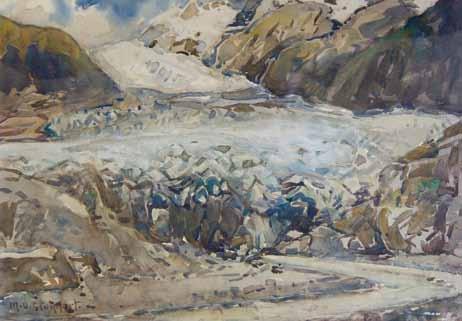
Franz Joseph Glacier
Watercolour 30 x 43
Signed
7,000 - 10,000
1865 - 1934
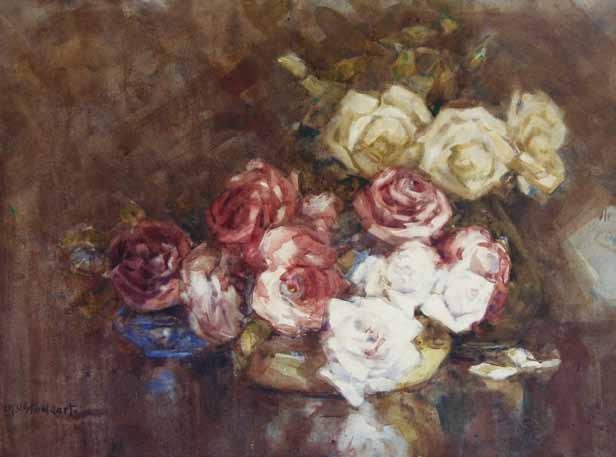
Fendalton
Watercolour 47.5 x 63.5
Signed
20,000 - 30,000
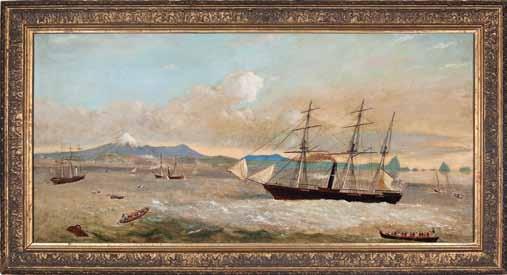
40 EDWIN HARRIS
c. 1810 - 1895
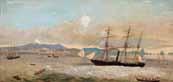
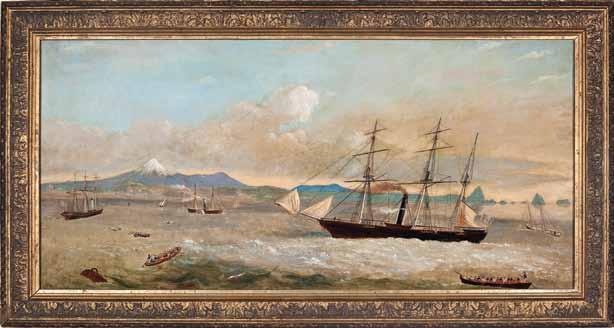
New Plymouth Under Siege,1860
Oil on canvas 37 x 79
80,000 - 120,000
Provenance: Private Collection, Taranaki
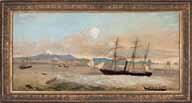
Lighters ferry to shore Major-General Sir Thomas Simpson Pratt, Lieutenant Colonel Carey and a further fifty troops of the 40th Regiment from the steam sloop HMCSS Victoria to the beleaguered town of New Plymouth. Other vessels depicted include the paddle-steamer Tasmanian Maid, the Airedale and the George Henderson which was later that year wrecked off the New Plymouth coast with no loss of life.
New Plymouth was reduced to a state of siege at the beginning of the first Taranaki War. Martial law was proclaimed. The settlers were driven into town, their homesteads burnt by Maori making it necessary to constrict the occupied area and entrench the town.
Lieutenant Colonel Carey together with fifty men of the 40th Regiment, arrived off New Plymouth aboard the war steamer HMS Victoria on the evening of 3 August 1860. Their mission was to reinforce the garrison which numbered about twelve hundred men.
The historical events recorded in this rare oil painting, also relate to a watercolour titled New Plymouth Under Siege - 40th Regiment, Marshland Hill, Taranaki, New Plymouth sold by International Art Centre in 2008. A watercolour depiction of the same scene as the present lot, is held in the collections of Alexander Turnbull Library. Whilst both works are by Harris, the offered work is a significantly larger and more dramatic version.
Edwin Harris is noted for his early views of New Plymouth and Nelson. He had some artistic training in England prior to his 1841 arrival in New Zealand with his wife and family aboard the William Bryan, the first of the Plymouth Company vessels to arrive in Taranaki. Harris worked briefly as a surveyor for the Company and farmed a property in the vicinity of town. Following the outbreak of the first Taranaki War in 1860, the Harris family were evacuated to Nelson where they eventually settled. His daughter Emily Cumming Harris was an award winning botanical artist.
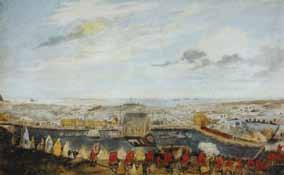
EDWIN HARRIS New Plymouth Under Siege - 40th Regiment, Marshland Hill, Taranaki, New Plymouth’ - Circa 1860 Sold by International Art Centre, October 2008 - TSB Bank Collection
The oil painting being offered is painted from the sea looking towards New Plymouth with Mt Egmont clearly visible. In the watercolour ‘New Plymouth Under Siege - 40th Regiment, Marsland Hill’, the ships depicted in the present scene can be seen in the far distance.
Works by Edwin Harris are extremely rare to the market. It is understood that this is the only oil painting by the artist to appear for sale.
A Significant Late Entry by CHARLES BLOMFIELD 1848 - 1927
Kauri Park Entrance
Thursday 29th March
40a CHARLES BLOMFIELD 1848 - 1926
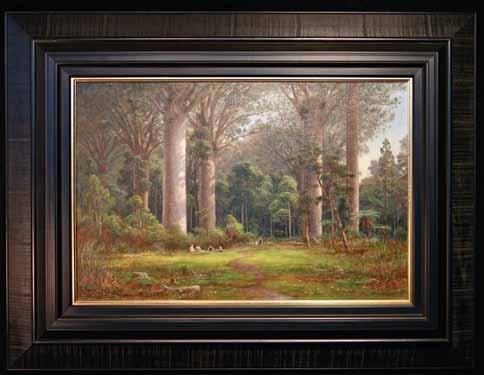
Kauri Park, The Entrance Oil on canvas 50 x 75
Signed & dated 1919
- 125,000
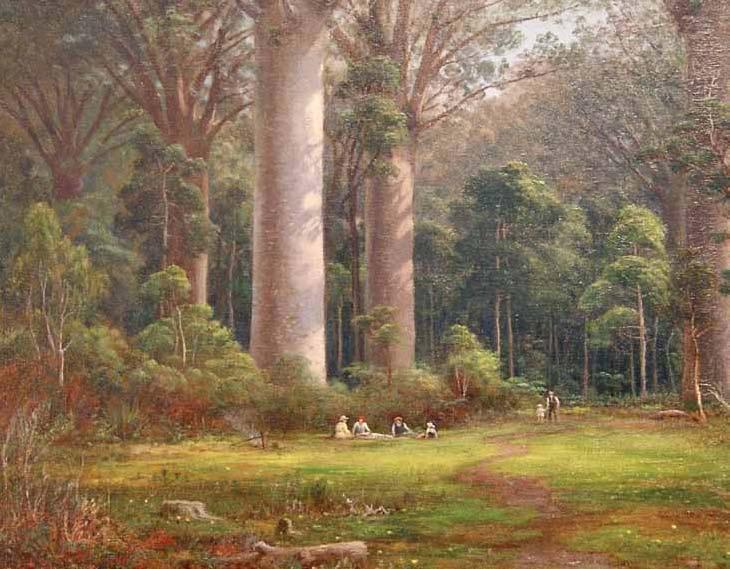
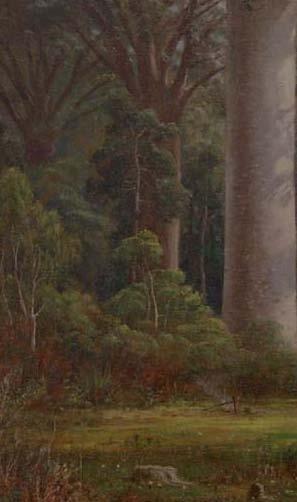
This important work by Charles Blomfield was completed in 1919 before the park was officially named Trounson Kauri Park in 1921.
After a trip to the Trounson Kauri Park, north of Dargaville, Charles Blomfield commented in the New Zealand Herald:
Auckland is singularly favoured in public benefactors. One valuable gift after another is poured into the lap of the community. Among them all, the latest gift stands out in prominence - The gift by Mr Trounson of Kauri Park, Kaipara.
I have been camping in this park for the last few weeks, sketching the kauris, and have no hesitation in stating - I have been through most of the kauri areas - that this bush contains the finest specimens of the kauri in New Zealand, and saying it is the equivalent to saying the finest specimens of kauri in the world. Whether in size, height, variety or environment, there is nothing equal to it anywhere.
Viewed from the neighbouring hill overlooking the park, the forest appears to be all kauri. There is nothing to be seen over the whole expanse of three or four hundred acres, but the tops of kauri trees, and the top is singularly level. No towering tree over - tops its fellows.
In 1890, when the timber industry threatened to virtually wipe out Northland kauri forests, 3.34 hectares was initially set aside by the Government. An early settler and saw miller James Trounson added a further 22 hectares to this initial gesture.
Following the establishment of a Scenic Preservation Club, Mr Trounson offered to sell another 364 hectares of forest land to the Government for the value of the trees alone. It was officially opened as Trounson Kauri Park in 1921.
This 450 hectares forest reserve located in western Northland is home to several threatened species, such as North Island brown kiwi, NZ pigeon, bats and kauri snails. It also incorporates a magnificent dense stand of kauri that has long been recognised as one of the best examples in the world.
Charles Blomfield exhibited with the Society of Artists Auckland from 1873 to 1877 and was included in the New Zealand Industrial Exhibitions in 1885 and 1889, the Melbourne International Exhibition in 1880. In 1906 his work was included in the New Zealand International Exhibition held in Christchurch. After his death in 1926 works were also included in the Centennial Exhibition in 1940. Charles Blomfield work is represented in all New Zealand public galleries as well as the Alexander Turnbull and Hocken libraries.