CHARLES FREDERICK GOLDIE
1870 - 1947

Consign Today
Selling New Zealand Art?
Contact the specialists in resale
Auction - Private Treaty
Richard Thomson
Email richard@artcntr.co.nz
+ 64 9 379 4010
Toll Free 0800 800 322
NZ mobile 0274 751 071
www,internationalartcentre.co.nz
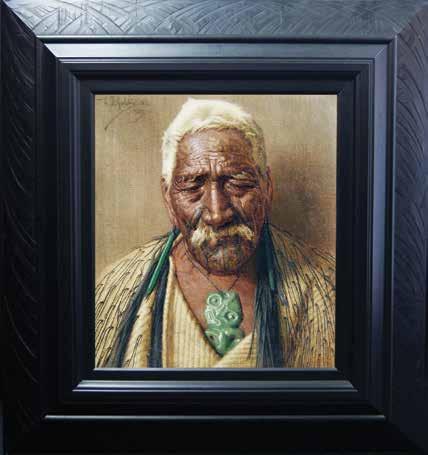
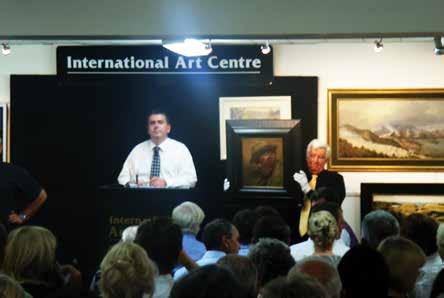
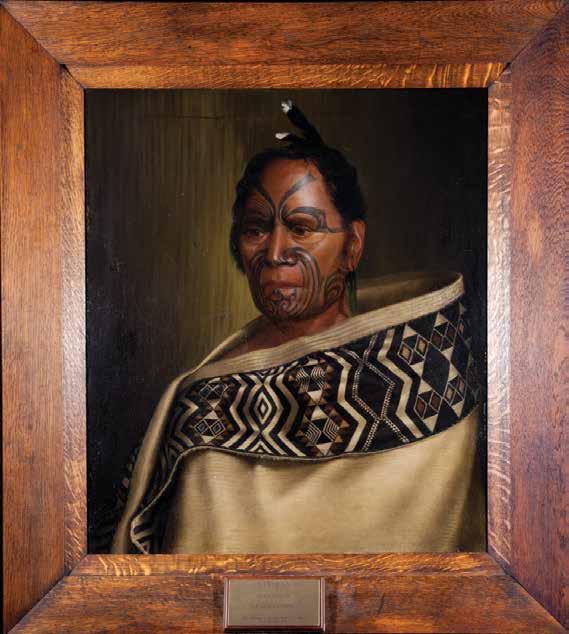
‘Forty Winks’ fetched $573,000 at International Art Centre
Formally in the collection of Dame Kiri Te Kanawa
CHARLES FREDERICK GOLDIE
Selected works sold by auction at International Art Centre
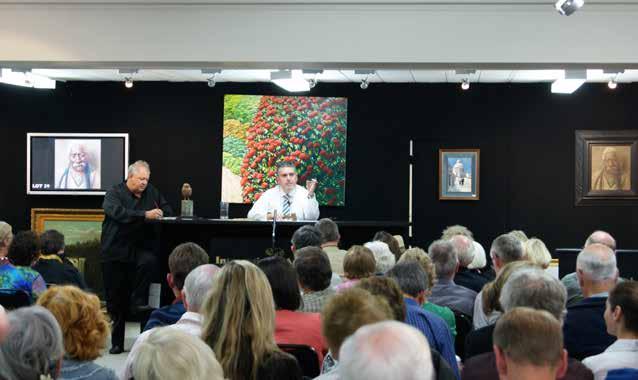
International Art Centre is the worlds leading auction house for the sale of works by Charles Frederick Goldie holding not only the highest price ever ($1 million) but also the top three prices at auction, one of the sales being New Zealand’s highest price painting at auction. Total Goldie auction sales at International Art Centre have exceeded $6 million in recent years.
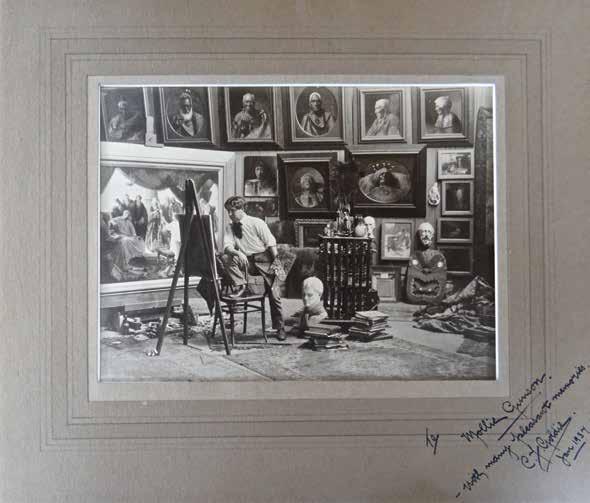
Charles Frederick Goldie is New Zealand’s most celebrated artist. Born in Auckland, Goldie showed artistic talent from a early age and on leaving school studied under Louis John Steele. Governor Sir George Grey was much impressed by two still life paintings by the young Goldie and encouraged his father to send the 22 year old to the Academy Julian, Paris. Goldie lived and studied in Paris for four years receiving a thorough academic training. By 1898 Goldie had returned to Auckland and established a studio with his former teacher Steel. It was here that the collaboration on the large, dramatic work which hangs in Auckland Art Gallery, The Arrival of the Maoris in New Zealand took place. Goldie was a great friend of the Maori people, he spoke their language
and immortalised their leaders. Following his visits to Rotorua between 1901 and 1906, models often sat for Goldie in his Auckland studio. Today these portraits, of which Goldie considered a dying race, hold a paramount position in the history of New Zealand Art. In the 1920s Goldie faced ill health and criticism of his work. It is thought that he suffered from lead poisoning. In 1934 encouraged by Lord Bledisloe he exhibited with the Royal Academy, London and the Paris Salon. Acknowledgments included the award of King George V’s Silver Jubilee Medal and an OBE in 1935. Goldie died in 1947. In 1997 Roger Blackley curated a major Goldie retrospective at Auckland City Art Gallery.
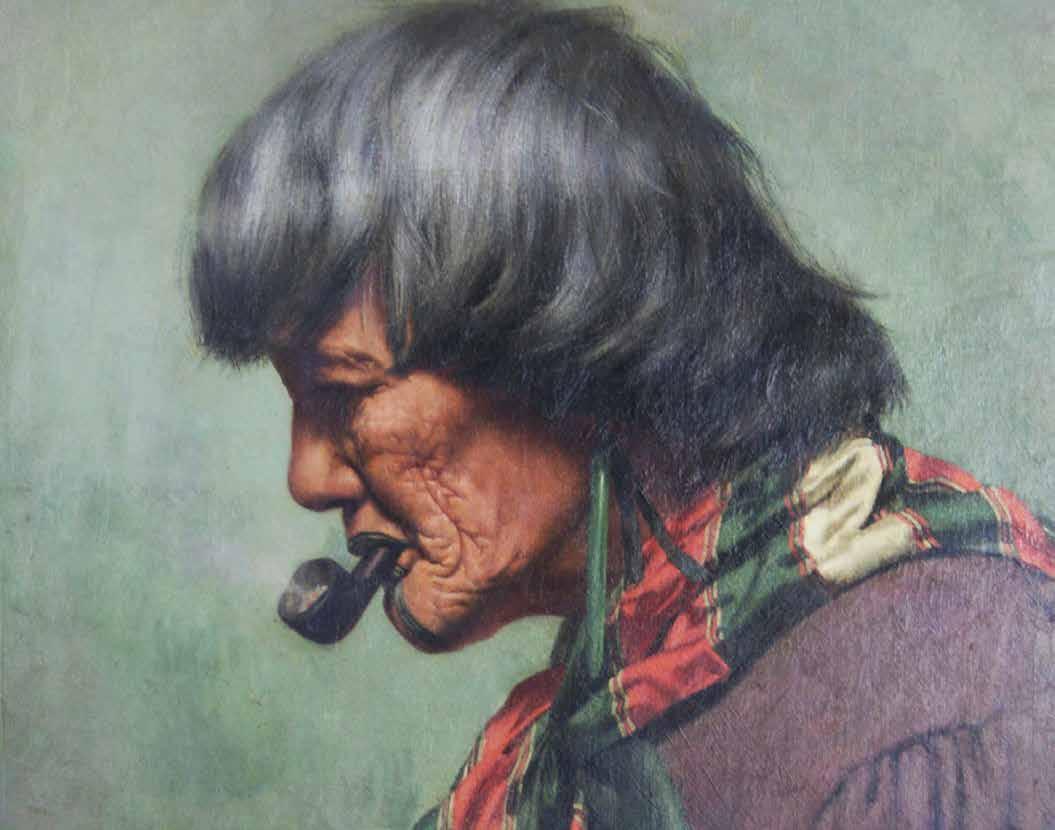
A record price for Goldie was achived by International Art Centre in November 2013. Kahwena - the earliest known Maori portrait by Goldie fetched $732,800.
All prices quoted include buyers premium and GST on premium
www.internationalartcentre.co.nz
CHARLES FREDERICK GOLDIE
Kawhena, native of the Ngati Mahuta Tribe known also as ‘Johnny Coffnn’ 189 9 Oil on canvas
77.3 x 67
SOLD $732,800
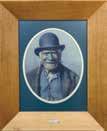
Goldie understandably stood aloof from the following year's exhibition of the Society of Arts. He was busy preparing for his overseas education, for which he had settled on Paris. Steele had trained at the Ecole des Beaux-Arts and subsequently worked as an artist in Paris, delighting Goldie with his tales of Bohemian life in the great city. Goldie also painted two outstanding works which appeared at the Academy's third and final exhibition of December 1892. One was an exquisite landscape depicting fern trees in Cemetery Gully, the area beneath the present Grafton Bridge, which received rave reviews for its exceptional detail. And for the first time he entered a work in the category of 'Maori Head', a depiction of Kawhena from Mangere (known also as Johnny Coffn).ThisisGoldie's first recorded Maori portrait and drew the following comment from the Star's jaded reviewer. Not knowing the original, one cannot say whether it is a good portrait of the individual or the reverse, but as a picture of a type it is fair. The painter has managed to fix in the eyes something of that expression of conscious mental inferiority which lurks in the eyes of the most intelligent of the lower animals and in semi-civilised man.
He, however, has had some trouble to know what to do with his light. The figuring on the mat is a careful piece of work, and the effect is very successful.
The writer evidently did not anticipate Kawhena numbering among the readers of his column. In the Academy’s list of prizes, the result of a democratic ballot among the members, Goldie received a silver medal for both New Zealand Trees and Kawhena.
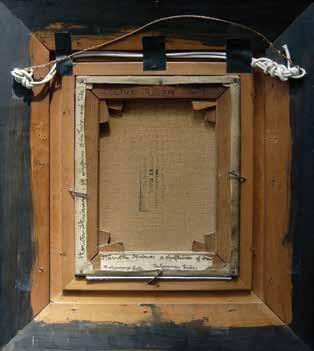
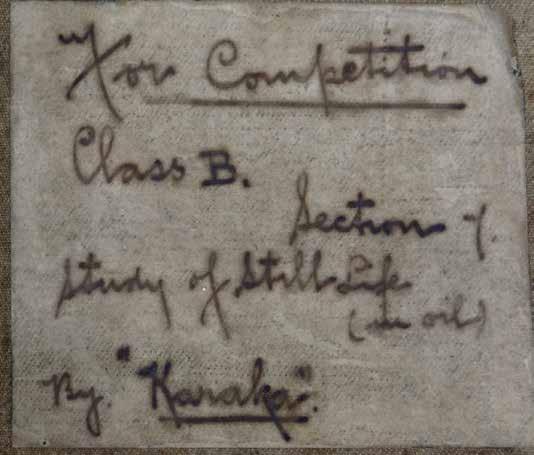
Goldie missed the exhibition, receiving his medals in absentia, for he had already left Auckland. His first port of call was Sydney, where in late November he attempted to sell his still life painting through Callan and Sons, prominent art dealers in George Street.
Text: p. 6 & 7, GOLDIE Roger Blackley, Auckland Art Gallery Toi o Tamaki, Bateman 1997
CHARLES FREDERICK GOLDIE
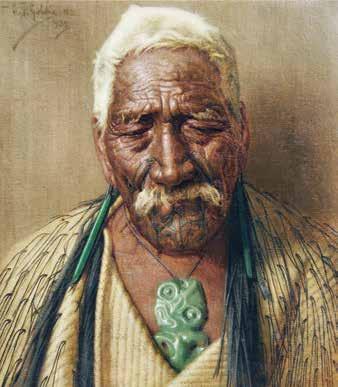
Forty Winks - Rutene Te Uamairangi - 838 Oil on canvas 44 x 38
SOLD $573,000
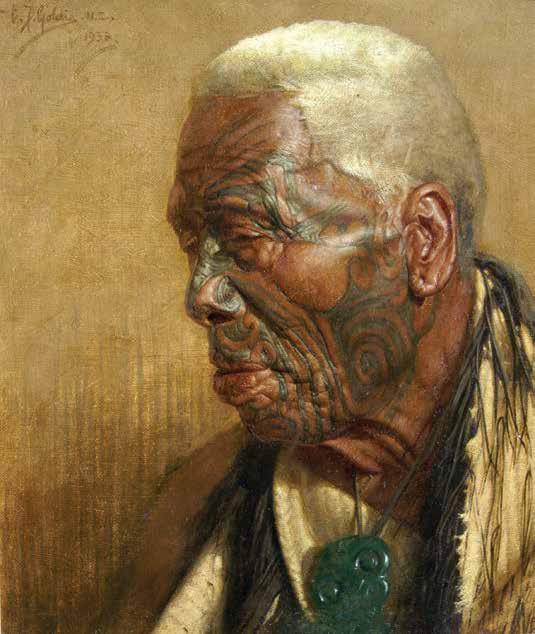
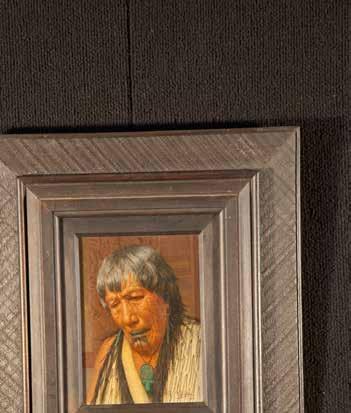
Forty Winks is the only known work by C F Goldie of Rutene Te Uamairangi, a Kingite Warrior of Taupo. A noteworthy point, as Goldie typically painted more than one version of his subjects. In this full frontal portrait, the resting warrior bears Maoridom’s powerful symbols of integrity, identity, and mana. The moko, or tattoo conveys his ancestral history and tribal affliationswhilst making the warrior fierce in battle. The hand-woven cloak is a mantle of honor and like the greenstone, or pounamu tiki, a revered and treasured possession. Here, the tiki is worn close to the throat to absorb the life force of its wearer.
Charles Frederick Goldie (1870 - 1947) is New Zealand’s best known artist. Born in Auckland, the son of a prominent timber merchant and politician, he was educated at Auckland Grammar School. Goldie studied art under Louis John Steele. On seeing two still life paintings by the young artist, the Governor General Sir George Grey encouraged Goldie to attend the prestigious Académie Julian in Paris. It was here that the young artist gained a strong grounding in traditional technique. Both these early works have been sold by International Art Centre in recent years.
Returning to New Zealand in 1898, Goldie established his studio in Shortland Street, Auckland. In 1901 he made the first of many sketching trips to Rotorua. A respect and understanding for Maori, whose language he spoke, coupled with the widely held belief that the old chiefs and warriors were members of a vanishing race, saw Goldie devote his life to the painting of their portraits.
In 1935, supported by Governor General Lord Bledisloe, Goldie sent three paintings to the Royal Academy, London. These works met with acclaim and that year Goldie received the King George V’s Silver Jubilee Medal and OBE. The same year he exhibited at the Paris Salon and won the Prix Julian Medal. In 1937 two Maori portraits were accepted by the Paris Salon. The shy and retiring Goldie died at his home in Upland Road Remuera in 1947.
CHARLES FREDERICK GOLDIE
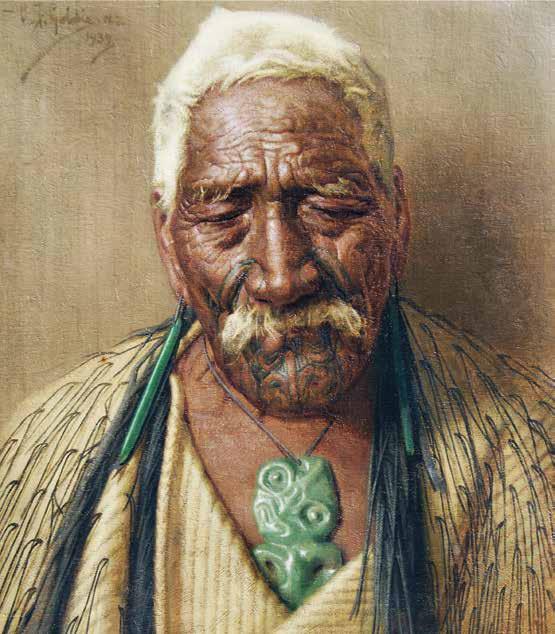
Hori Pokai - Sleep, ‘tis a Gentle Thing, 833 Oil on canvas 40.9 x 35.7
SOLD $454,000
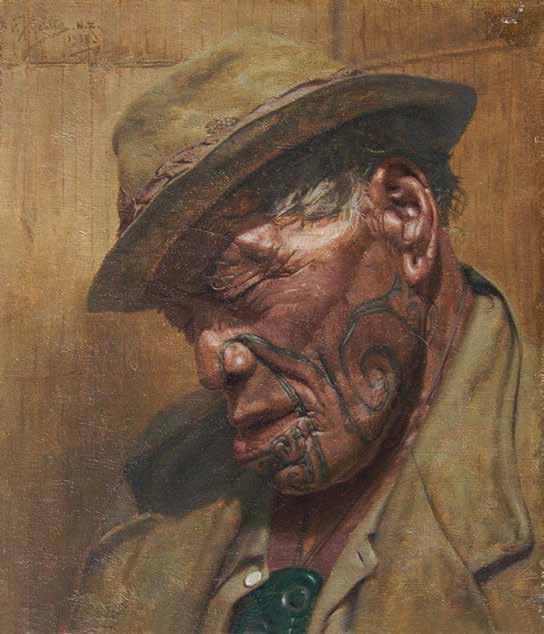
SOLD $352,000
CHARLES FREDERICK GOLDIE
Atama Paprangi
Oil on canvas 25 x 20
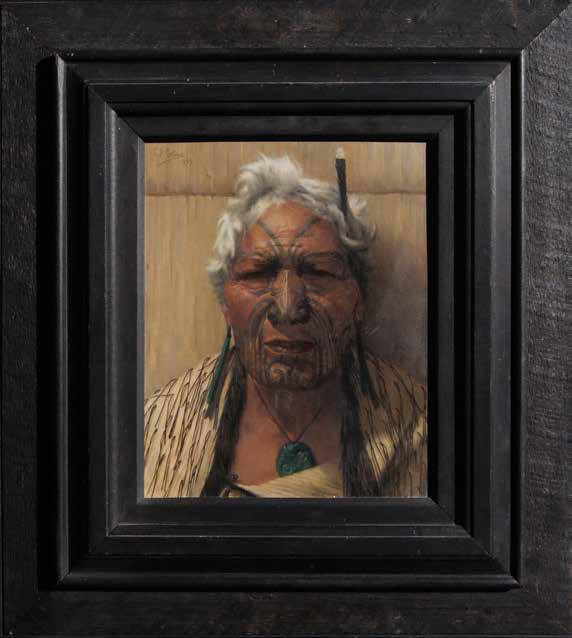
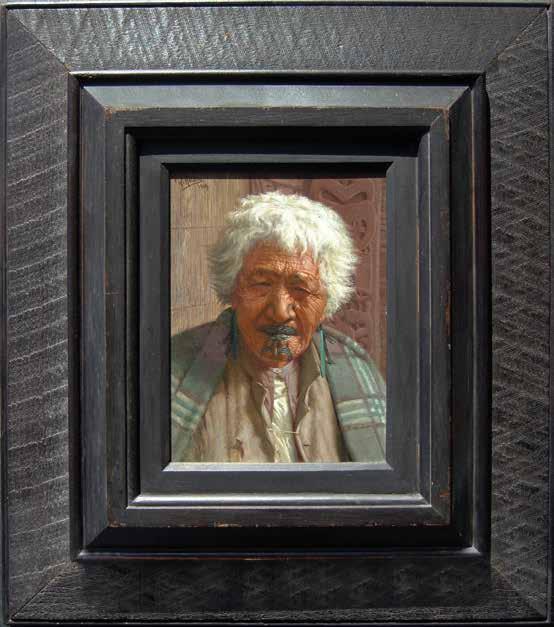
Oil on panel 20 x 14.5
SOLD $330,285
CHARLES FREDERICK GOLDIE
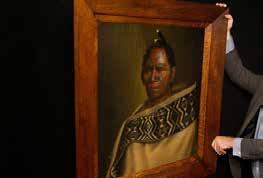
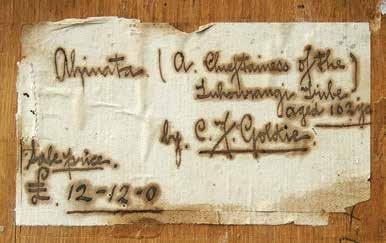
Ahinata Te Rangitautini - Kapi Kapi, 8
CHARLES FREDERICK GOLDIE
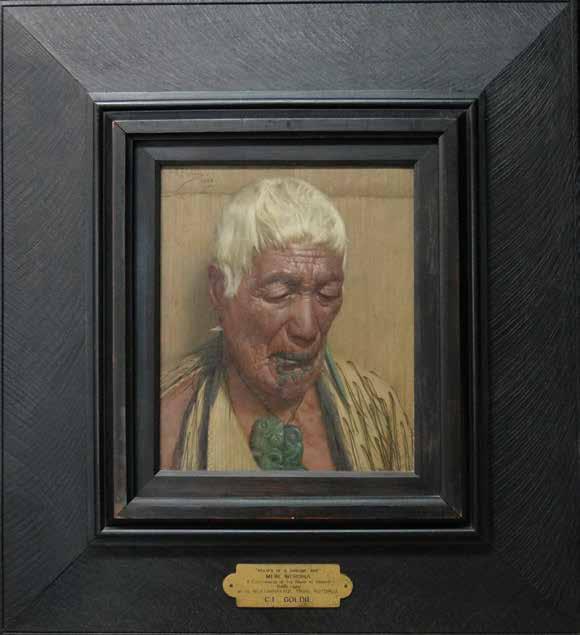
Relics of a Bygone Age, Mere Werohia, A Chieftainess of the Ngati te Rori te Rangi Hapu of the Ngatiwhakane Tribe, Rotorua, 833
Oil on canvas 30 x 25 SOLD $284,800
CHARLES FREDERICK GOLDIE
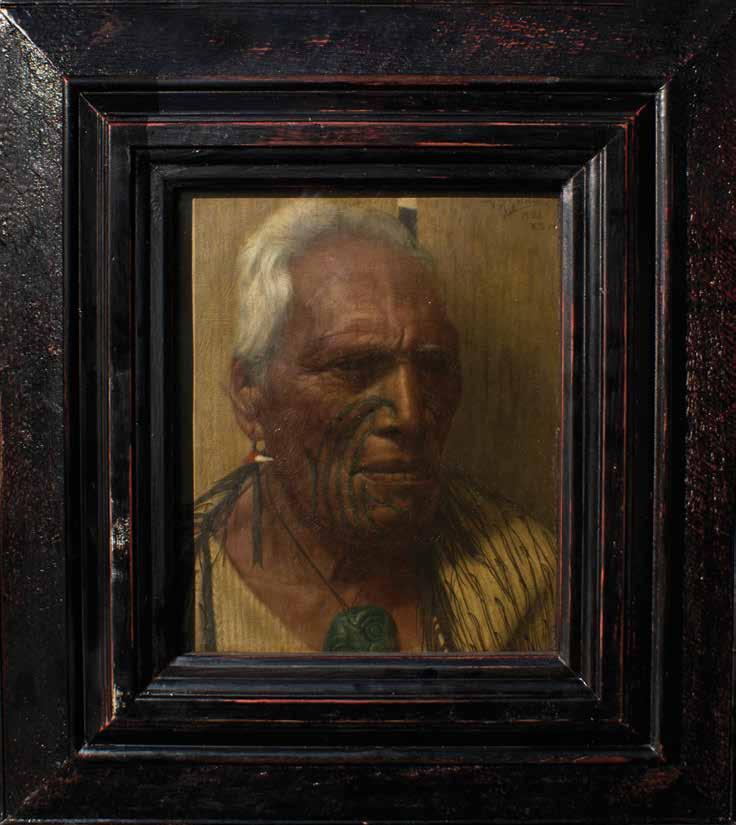
The Aristocrat Te Kamaka, Ngati Maniapoto Tribe, Aged 80 Years, 89 Oil on canvas 26.5 x 21.8
SOLD $287,400
CHARLES FREDERICK GOLDIE
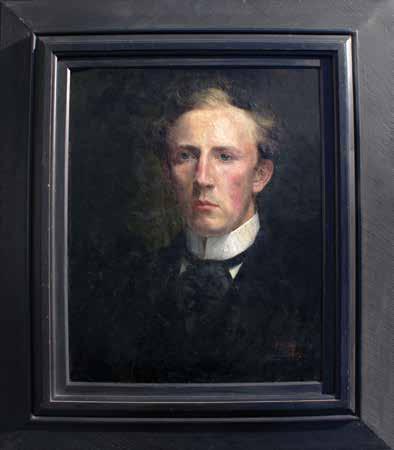
Self Portrait, 186
Oil on canvas
53.5 x 43 SOLD $58,170
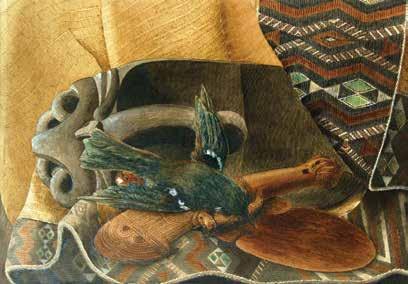
CHARLES FREDERICK GOLDIE Still Life
Watercolour 26.4 x 37 SOLD $43,300
CHARLES FREDERICK GOLDIE
Tumai Tawhiti, A Chieftain of the Ngatihiwi Ngatitenaakau, 831
Oil on canvas 43 x 38
SOLD $266,700