





We are a preschool that focuses on the development of the whole child by promoting and incorporating play-based learning in all age groups each day.
We provide a safe, inclusive, warm, and engaging learning environment for each child in our care. We follow the Norwegian Framework Plan (NFP) for Kindergartens and the IB's Primary Years Programme (PYP).
This guide is meant to answer some of the most frequently asked questions we encounter from new members of the community, but it’s a good reminder for our returning families, too. You will find information about our routines, practices, and curriculum information, as well as our expectations for positive interactions and collaboration with and among parents and staff.
We aim to help our students develop into confident and caring citizens of the world by putting ISB’s Core Values of Community, Integrity, Respect, and Responsibility into practice throughout the ECC. You can find more information about our school’s mission, core values, beliefs and objectives in the ISB Handbook and on our school website.
Your child’s teachers are wonderful sources of information and guidance, so please feel encouraged to ask any lingering questions you may have to any of us on the ECC team.
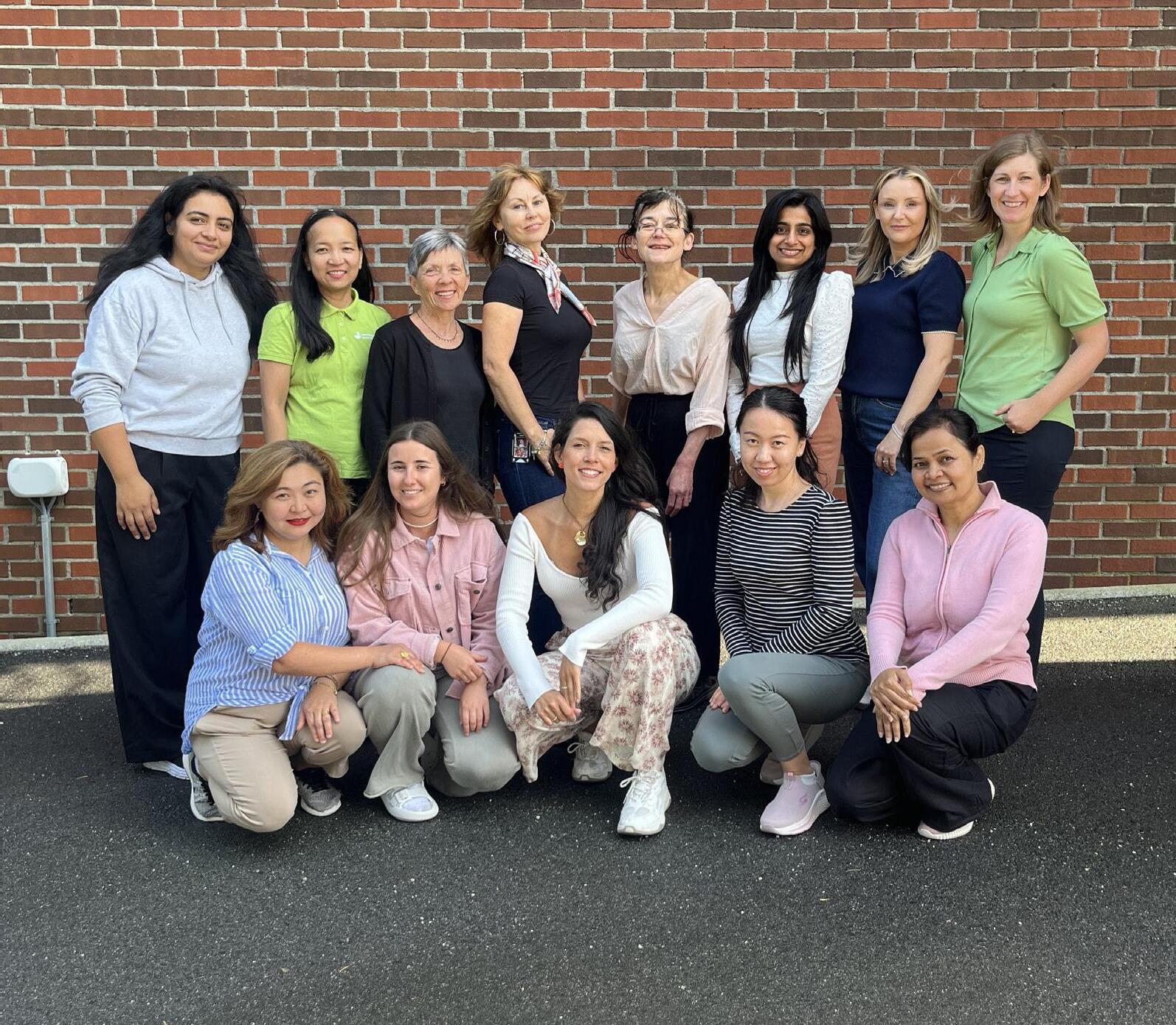
Alyssa Dyrdal, ECC Principal


☎ By phone: for times when you need to immediately reach the class in the event of an emergent situation (traffic, etc).
�� By message via Toddle to the class teacher for absences, queries or scheduling a meeting.
�� Speak to us in person: we value daily face-to-face interactions. Let us know when you arrive, when you are picking up your child, and please let us know if you are wondering something. Just ask!

Communication is the key to successful relationships.
⭐ Star Class (Toddlers)
Phone: 48 91 92 47
�� Moon Class (Toddlers)
Phone: 48 92 83 52
�� Sun Class
Phone: 48 92 74 48
�� Rainbow Class
Phone: 48 92 94 10
Alyssa Dyrdal, ECC Principal
Phone: 55 30 63 34,

Email: alyssa.dyrdal@isbergen.no
Questions regarding invoicing/payments
can be directed to our Business Coordinator, Sneha, in ISB’s School office.
Phone: 55 30 63 31
Email: post@isbergen.no
We kindly ask that you remember our opening hours (07:30 - 16:30) when planning to have a conversation.

Drop-off, pick-up and parking
Parking at ISB is complicated as we do not own the lot. We know it’s a hassle. There is a parking structure as you approach the school grounds, but please be prepared to pay to park there. We have a small dropzone near the round-a-bout for quick drop offs and pick ups which is free for the first half hour. You are very likely to get ticketed beyond 30 minutes. Again, this is beyond our control. Please be aware that it can be hard to find a spot at busy times of day, especially around 16:15.
1. Toddle: Direct communication with all our families in the ECC. Toddle is an application where you can message staff members, record absences, and follow your child’s learning journey. Through weekly pedagogical documentation, families are invited to communicate, observe, and experience how learning and play at our ECC contribute to their child’s development. For new families, please download and connect to the Toddle Family App. Access to Toddle will be provided when your child starts in the ECC.
2. The Orca Splash: ISB’s weekly newsletter, sent directly to your email inbox every Friday. You can find information on whole school events, holiday camps, and get insight into other areas of the school.
�� Note the school calendar, and follow along in the calendar that is provided in this guide.
Each month will provide you with important information about school colsures, parent participation, dressing for the weather in Bergen, as well as community events and celebrations.

Opening hours: 07:30 - 16:30
Core learning time: 09:00 - 15:00
Morning supervision: 07:30 - 09:00
Afternoon supervision: 15:00 - 16:30
The door is unlocked promptly at: 07:30 and locked for closing promptly at: 16:30
Breakfast window: 7:30-8:30 **
**Important! Breakfast ENDS at 8:30. Be here by 8:15 if you plan to have your child eat their breakfast with us in the morning.
7:30-9:00 is a combination of breakfast (for those that will eat in the ECC) and free play. The day starts in the Star Class, and as more children and staff arrive, play is extended into the corridor for children age 3 and older.
If your child will be eating breakfast with us, please help them get seated at the table with their breakfast box upon arrival. They can enjoy free play when they have finished eating.
Core hours start at 9:00 in your child’s classroom. Ensure your child is here no later than 9:00 so they can participate in circle time each morning.
By making this effort, your child will be given the possibility to know what to expect from the day ahead, join their classmates in songs and rhymes, and step into their role as an important member of their class community.
It is a fantastic time for your child to shine and be welcomed to a new day in the ECC. The children have opportunities to communicate, share news, and participate in the group. Individual classes follow their own daily and weekly routines.
Please note that the Star and Moon Toddler classes collaborate throughout the day, and especially outside of the core hours, during supervision time. Activities during this time are adjusted to the children's needs, age and stage in development.
Naptime is an important part of the daily routines for the toddlers, as well as for many of our 3 year olds and older children.
The toddlers have their own sleeping area outside, where they are safeguarded by a member of staff at all times. Older children that need a nap make use of the performing arts room. They are provided with a mat to sleep on, and need to bring their own bedding & comfort items.
End of the day
15:00-16:10 is a combination of afternoon snack and collaborative free play while parents come to collect their children.
At 16:10, free play is over, we clean up, and begin our end-of-day routines.
At 16:20, the children who have not been picked up are gathered for a short song or story while we wait for parents to arrive.
At this point, it is very important to be quick about collecting your child and their belongings as we close at 16:30. If you find that it takes longer than 10 minutes to kindly be out of the building by 16:30, then you will need to come earlier.
At 16:30, we are closed for the day, and our staff’s work day is done. Plan to have collected your child and be out of the building no later than 16:30.
Each class follows a weekly schedule, in addition to the daily routine.
On a weekly basis, each class will visit the library, the school gym, and go on a community walk, in addition to planned activities within the ECC, and indoor/ outdoor play.
Library time in our Community Cove has a designated space for the ECC students that is safe and cozy with age-appropriate books (in many languages!).
The library routine takes about an hour: the children walk together to the Cove, look at books together, and choose a new book to take home each week. Be sure to bring back the book before next week’s library time in order to take home a new book.
Our school gym is a favorite spot for all our ECC students.
The gym is booked for each individual class, so there is plenty of time and space to develop gross motor skills.
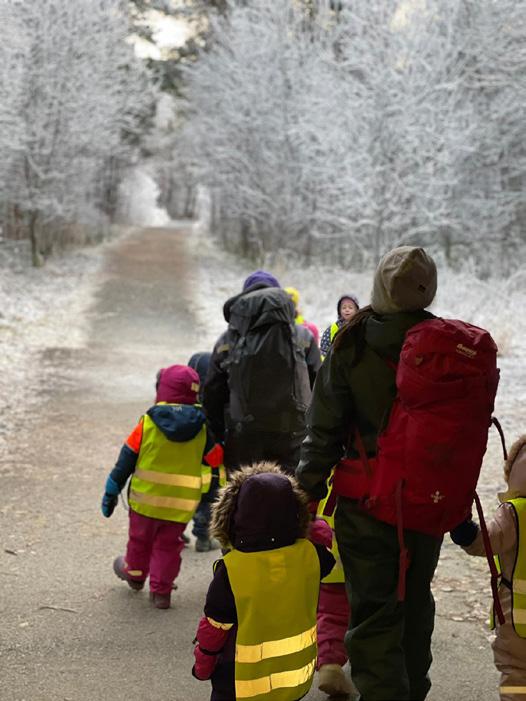
On a designated day every week, each class will go on a community walk around the neighbourhood. Some examples of places they visit include the forest, the supermarket, nearby playgrounds, and the lake.
When we leave the premises, the children all wear reflective vests with our school phone number on it.
Starting at a new preschool can be hard for some children and families, while others make the transition easily. We know that children need to feel safe and comfortable in order to settle in, and they can only do so when they are with adults they know, trust, and have a positive relationship with.
We adapt the settling in period to meet the needs of the individual child, knowing that some will settle quickly and others might need some more time.
We work in close collaboration with parents and caregivers in order to determine the best possible transition in our ECC. We recommend that all children have a relaxed start to their time in the Early Childhood Center, with shorter days for the first few weeks.
From time to time, classes may go on field trips to places related to their current unit of inquiry. Examples of these trips include rides on the light rail train (Bybanen) or the bus to places like the aquarium, Vilvite, a local farm, or the art museum.
These activities take place within the core hours. The class teacher will provide you with the weekly timetable once it becomes available.
The Early Childhood Center places a strong emphasis on the importance of having a positive learning and play environment that is nurturing, warm, and inclusive.
We support all children in our ECC by incorporating preventative bullying strategies into our daily routines, as well as promoting relationship skills through various learning and play activities, both indoors and out.
With guidance from attentive staff and close collaboration with parents, children develop skills to promote positive social relationships, focusing on areas of empathy, self-regulation, and social problem-solving, including strategies for making and keeping friends, as well as steps for joining a group activity.
We adapt our classes according to the ages of children at the beginning of the academic year.
For the school year 2025-2026, we have 4 classes: 2 toddler groups and 2 groups of 3-5 year olds.
The Homeroom Teacher is the main contact person regarding your child’s development at school.
During the settling in period, familiar assistants will help children transitioning into new preschool classes.
There are times when our staff are sick and we need to employ substitutes.
The ECC has developed and uses our own private sub list, where we know each substitute well and are intentional about who comes into our environment. All substitutes must provide a police certificate prior to commencing employment.
Following a thorough interview and police clearance, we welcome volunteers to play, read, and join activities in the ECC.
Volunteers are never left alone with children, and parents will always be informed of their purpose, role, and responsibilities.
Throughout the year, the ECC welcomes interns from around the world to our school. They are completing parts of their teaching practice and usually stay with us for a minimum of 3 months.
Prior to starting their internship, interns are required to sign a declaration confirming they have read and agree to the Child Protection and Confidentiality Policy in addition to supplying a full Police Clearance.
We have had very positive experiences taking internships from the Erasmus programme, which furthers our interests in providing a diverse and inclusive teaching
We will do our best to inform you when we use substitutes. We strive not to use new substitutes with the youngest children. ⭐ Star Class ⭐



Toddlers
Children ages 1-2
Class size: maximum 9 children
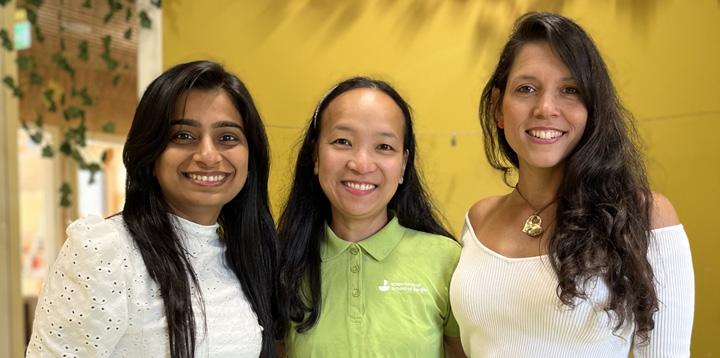
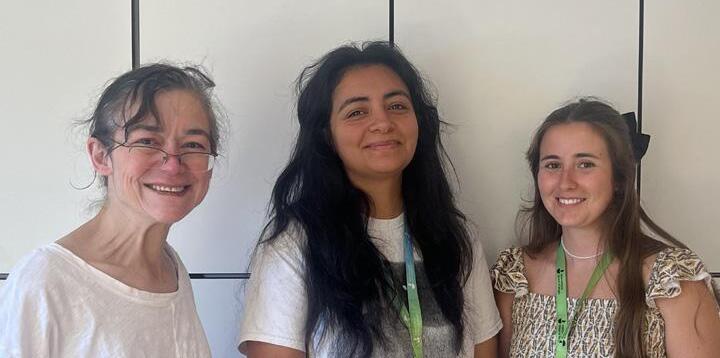
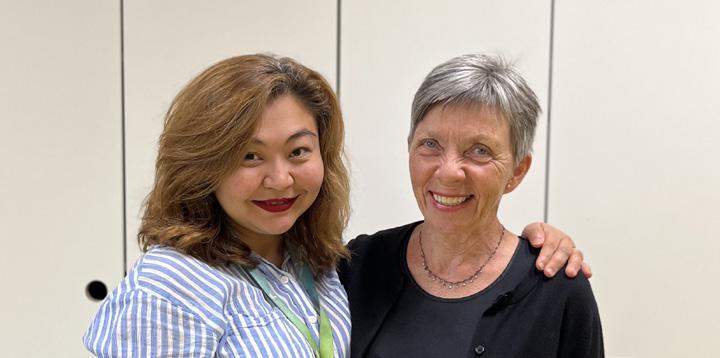
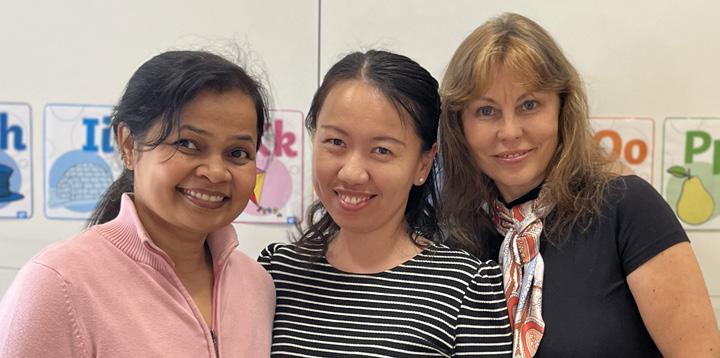
Homeroom Teacher: Iryn
Teaching assistants: Melissa, Sneha & Debbie �� Sun Class ��
Preschool & Kindergarten
Children ages 3-5
Class size: maximum 15 children.
Homeroom teacher: Roxana Teacher: Elisa
Teaching assistant: Rosie �� Moon Class ��
Toddlers
Children ages 1-2
Class size: maximum 6 children.
Homeroom teacher: Torill
Teaching assistant: Aynigar �� Rainbow Class ��
Preschool & Kindergarten
Children ages 3-5
Class size: maximum 15 children.
Homeroom teacher: Yutong
Teaching assistants: Ania & Amrita
While the ECC does not provide meals, except for special occasions/events, we value shared meal times together.
This is a very important part of our day, so we encourage all families to provide healthy meals for their children to enjoy in the company of their classmates.
We focus on sitting down while we eat, taking turns to speak and listen, and participating in a peaceful and enjoyable part of our day together. This can be a focus for mealtimes at home, too!
Eat a rainbow
We know it can be challenging to think of different food items for your child's snacks/ lunches, especially if you have arrived from another country. A good tip is to aim to eat a rainbow! Provide a variety of colours, textures, and flavours for your child as often as possible.
If your child needs items sliced before serving, please try to send them ready to eat. A small food thermos is a great way to send a warm lunch with your child.
Here is a list of suggestions that may be of use to you. It is by no means complete, but meant to provide inspiration for your family, whatever dietary needs you may have.
If you would like guidance on how to have enjoyable meals together at home or would like to share what challenges you might be facing, please keep an open dialogue with the class teacher.
Fruits: apple, banana, pear, kiwi, berries, melon, seasonal fruit, grapes
Dried fruits: raisins, apricots
Vegetables: carrots, cucumbers, tomatoes, bell peppers
Cheese: string cheese (skrella mozzarella), Babybel, cheese sticks
Yogurt
Egg (e.g., boiled, fried, scrambled, omelette)
Sandwiches or wraps with varied toppings (e.g., turkey, ham, chicken, fish, cheese, peanut butter, jam, brunost, leverpostei, egg)
Pasta (e.g., with butter, pesto, cheese, spaghetti)
Rice (e.g., with vegetables, beans, legumes)
Pancakes, waffles
Rice cakes, crisp bread (knekkebrød), crackers
Porridge/cereal (e.g. oatmeal or rice porridge)
Fish cakes, sausages
Leftovers from dinner the night before (e.g., pizza, rice/grains, soup, noodles, fish)
When it is your child's birthday then you are welcome to bring a small treat (fruit, ice cream, biscuit) for your child to share with the other students in their class. We will celebrate your child’s birthday with a special birthday crown and song.
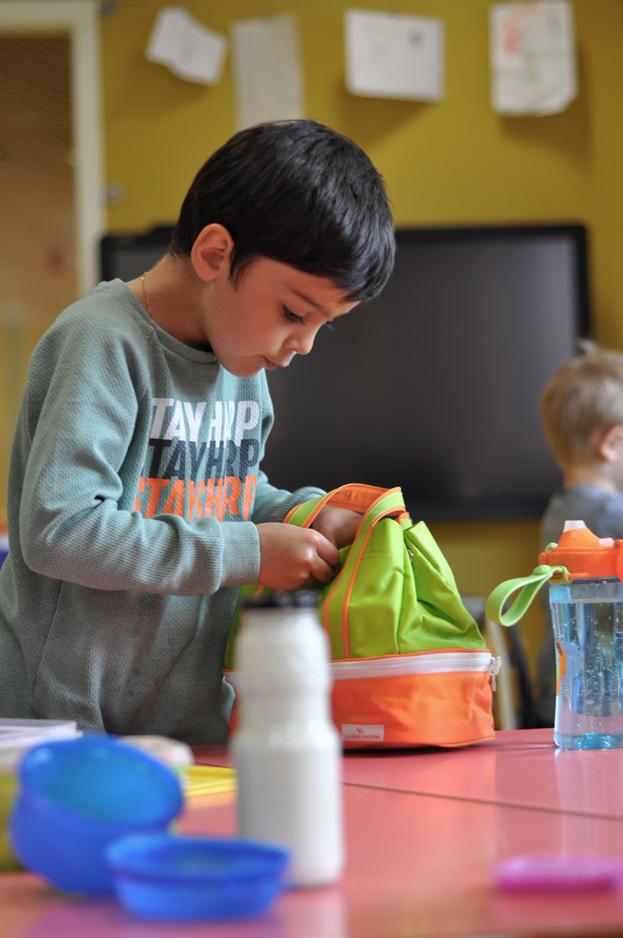
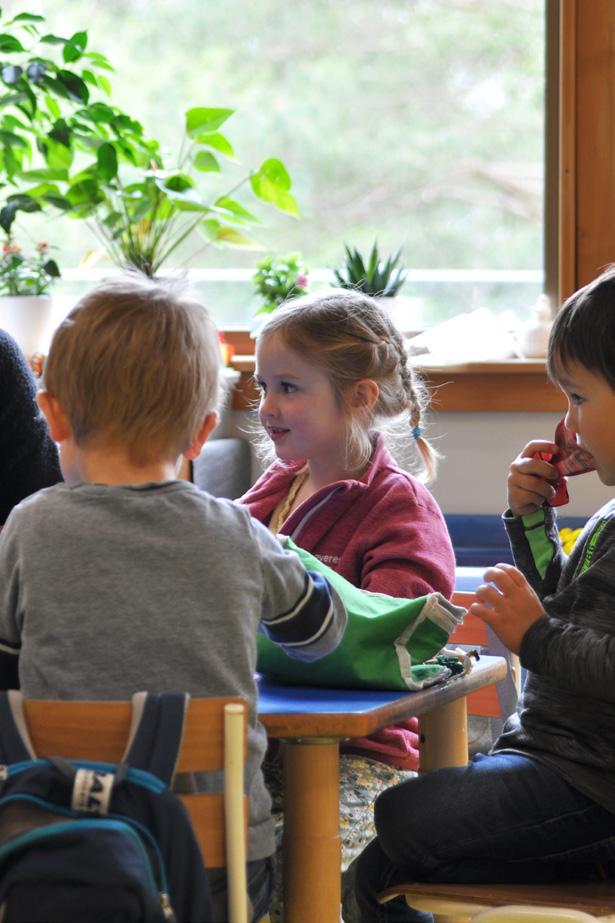
Please do not send chocolate or any chocolate items/cakes/sugary snacks in lunch boxes. You can read more about the importance of healthy and nutritious meals for preschool children here
Outdoor (clothes to play and get dirty in)
Everything needs to be labelled!
Summer
• Light rain gear (jacket & pants) and lighter rain boots
• Fleece jacket/jumper or wool jumper
• Sun screen
It is important that children have the necessary clothing and footwear so that they can participate in all activities, both indoors and outside. Our goal is warm and happy children!
Here is an overview of things that we highly recommend your child has on a daily basis at the ECC.
• Lunch box with reusable child-friendly containers for food (preferably separate containers for morning snack, lunch and afternoon snack)
• Water bottle
• Indoor shoes (velcro fastening recommended)
• Two full sets of clothes to be kept at ECC
Toddlers (in addition to the items above):
• Diapers, wet wipes, diaper cream
• Stroller, sleeping bag (warm), blanket
• Stuffed animal for naptime if needed
Please pay attention to the condition of outdoor clothing at the end of each week, as they might need to be taken home to be cleaned and dried.
• Hat/Cap
• Light footwear
• Rain gear (jacket & pants) and rain boots, waterproof mittens
• Fleece or wool jacket/jumper
• Snow suit, warm boots, lightweight hat or headband that covers the ears, and mittens


• Snow suit, warm boots, hat and mittens
• Lined rain gear (jacket & pants) or rain gear (jacket & pants) + a full mid-layer set and lined rain boots
• Two sets of waterproof gloves/mittens
• Buff or high collar
• Hat

Please label all your child’s clothing and personal items with their name. If things get lost or misplaced, it will be returned if it is labelled properly. This includes clothing, footwear, lunch boxes and water bottles.
There are several companies that specialise in printing such labels. Feel free to ask a staff member if you are unsure, but a quick search for “navnelapper” will point you in the right direction.
For hygiene purposes, all outdoor clothing and accessories should be taken home for school closures.
Sickness is a natural part of childhood, and a regular occurrence in an early childhood care setting.
In the ECC, we have good hand washing routines in place. The children wash their hands before and after every meal, and of course after using the toilet.
This prevents a lot of sickness among the children, but it certainly does not prevent everything.
Individual Needs
Providing for an inclusive and warm learning and play environment also means making sure that individual needs are met. Diversity is an important and valuable part of our ECC environment.
In the Early Childhood Center, we do everything we can to ensure that students with individual needs are supported.
Child Protection

Our students’ welfare and safety are at the heart of our school’s ethos and in everything we do. In line with our policy, we have a dedicated Child Protection Officer.
For the school year 2025-2026, ISB’s Child Protection Officer is Paula Blom-Andersen.
In collaboration with the Child Protection team (Director, Principals, school nurse and counsellors) she coordinates measures and has an overview of child protection in the school.
When your child gets sick, their general condition determines whether or not they should stay at home.
As a rule, your child should be fever free and well enough to participate in an entire day of activities, including outdoor playtime.
Children with diarrhoea and/or vomiting will be sent home immediately. They can return to the ECC after being symptom free for 2 days and fever free for 1 entire 24 hour period.
The Early Childhood Center follows the Norwegian Institute of Public Health Guidelines for sick children. You can read more information about various illnesses and find advice on whether or not to send your child to preschool on the NIPH website.
When a child or a group of children need extended support and extra resources, we collaborate with, and receive support from The Pedagogical-Psychological Service (PPT), and/or other relevant support services (all part of Bergen Kommune), to develop appropriate programmes and ensure high-quality student support.
Parents, school employees, and students are encouraged to talk to the Child Protection Officer or any other member of the Child Protection Team if they have any concerns.


Ideally, medicine should be administered outside of ECC hours whenever possible.
If medication must be given during the ECC day, parents must complete the medicine authorization form and an explanation to the homeroom teacher of how it should be administered.
Iodine tablets are stored on the school premises. In the event of a nuclear accident that exposes children to radioactive iodine, it may be important

that the children receive iodine tablets immediately.
The ECC will give the children iodine tablets only if the Crisis Committee for Nuclear Preparedness recommends that iodine tablets should be administered.
Parents must notify the ECC Principal/ homeroom teacher if you DO NOT want your child to receive an iodine tablet.
Open Apply is our student data platform where parents provide all personal data and contact information for their child(ren) across the school.

Parents will have a login for this platform prior to enrollment when they applied for a place in the ECC. Information on this platform about children’s health and data is confidential. It is important to keep this information updated. There are restrictions on access to the information.
Vigilo is the administrative platform used in Bergen Kommune. It is used for preschool applications and placements, and the ECC uses it side-by-side with Open Apply as part of our enrollment process.
Only authorised school personnel and a student’s parents can access a student’s records. Permission will be sought from parents for the transfer of records to another school. Parents who would like access to their child’s records may contact the ECC principal.
We require consent from parents to use photographs of children. The consent form is part of the "Student Data Form" on Open Apply, and is completed during the enrollment process.
The ECC has a duty to ensure that personal data is satisfactorily secure to avoid violations of the privacy of employees, children, and parents. Personal data will not be stored any longer than necessary.


A class contact will be chosen for the school year. Class Contacts are the main link between the parents in the class they represent and the rest of the ISB community.
The main responsibility of the class contact is to be a point of contact between the class teacher and the parents. Often, the class contacts help to create a community
within the classroom by setting up messaging groups for social events outside of school or to mobilize parents to help homeroom teachers set up and coordinate class parties a few times throughout the year.
We encourage class contacts to join the PTO to support and represent the ECC for school events. The class contact will take part in the Coordinating Environment Committee as described in the next section.
1. On time pick ups: We close at 16.30. Parents are responsible for picking up their child and all their belongings and BE OUT of the building when we close at 16.30.
2. Speaking directly to an employee in the ECC during drop off and pick up to let us know that your child is here and/ or that you have collected them.
3. Applying sunscreen in the morning
The ECC CEC consists of parent representatives from the individual classes, ECC staff members and the ECC principal representing the owner/ISB. Parent representatives are elected during the parent information meeting at the beginning of the school year. To ensure comprehensive communication and collaboration, where our families have a voice and a chance to contribute to the ECC learning and play environment, we schedule 2-4 ECC CEC meetings per school year.
before dropping off on sunny days. We will reapply for the afternoon as necessary.
4. Reading information on Toddle, keeping up to date with the Orca Splash.
5. Not bringing toys to school - if you bring it for the journey on the way in to school, parents are expected to take it out of the ECC at drop off. Leaving toys in cubbies is really hard for many
children, and it’s better to take it out again with you.
6. Let us know, in writing via a toddle message, if your child will be picked up by another parent.
7. Encouraging independence and motor development. They can walk when entering the preschool, and help to put their belongings away.
8. Regular cubby checks:
√ Does your child have everything they need? For example, proper outdoor clothing for the season, spare clothes, diapers and wipes.
√ Is everything labeled with their name on it? Unlabeled items will be donated to our box of spare clothes, and then further donated to Fretex.
√ Do you want the top of your child’s cubby dusted each week? Follow the Friday tidy routine by putting your child’s basket INSIDE their cubby and placing their shoes on the shelf so the cleaners can do their job.

Parent particpation benefits our whole community. We value a strong home-school relationship and appreciate your collaboration.
All parents are invited to a parent information meeting at the beginning of a new school year. The meeting provides the opportunity to meet the whole teaching team of the ECC, learn about the curriculum, and receive general information regarding the ECC. Importantly, you will meet your child’s homeroom teacher and other parents in the class. You will receive information about the daily routines, as well as a clarification of expectations. There will be time to answer any questions parents may have. In addition, a class contact will be chosen for the school year.
The parent-teacher conferences play an important role regarding a child's development, strengths, and goals. The parent-teacher conferences are scheduled in October - November and April - May.
Parents can also arrange to meet with the homeroom teacher, specialist teachers, or the ECC principal at any point during the school year to discuss their child’s development, progress, or other issues. We always accommodate parent requests for meetings.
All educational work is based on the Norwegian Framework Plan for Kindergartens (“rammeplanen”) and the International Baccalaureate’s Primary Years Programme (IB PYP), as well as in accordance with the Norwegian Kindergarten Act (“barnehageloven”).
The ECC provides educational activity which is planned, documented, and assessed with the best interests of the children in mind.
The Norwegian Framework Plan for Kindergartens
Ensuring that we work in line with Norwegian Kindergarten Act, the ECC also uses the The Norwegian Framework Plan (NFP) when planning and implementing a high-quality learning and play environment for all students.
The NFP highlights the importance of our social mandate, where the plan describes nine key areas to ensure an inclusive, inspiring, and challenging learning and play environment for all students.
The teachers work diligently to make connections between the PYP and the NFP, thereby ensuring alignment and progression throughout their time in the ECC and into Lower school.
A very brief introduction to the IB Primary Years Programme (PYP)
The PYP has recognition worldwide as a model of exemplary educational practice. Its philosophy is based on constructivist theories of learning, which state that children construct their learning from what they already know and can do. Students build their learning by finding the answers to questions they inquire into.
We put the PYP into practice in our Early Childhood Center by following a “Programme of Inquiry” (POI) each year, which summarizes the themes we set out to explore with the children. On our calendar, in our annual plan, and in our documentation on Toddle, you will notice that we refer to these themes as our “Units of Inquiry” or UOI.
This document, the annual plan for the ECC, and the programme of inquiry (based on the IB PYP), are working tools for all staff, information for parents, Bergen Kommune, owners and stakeholders.


To ensure that we provide a high quality learning and play programme, we operate within a highly collaborative environment.
Classroom teachers will meet once a week to align pedagogical goals and ensure participation in the larger school community. In addition, classroom team meetings are held once a week to address individual classroom needs and plan for the week ahead. In this way, we all work towards common curriculum goals within the NFP and the PYP, while still meeting the needs of the individual child and classroom environment.
The ECC follows the ISB calendar. An updated overview of the academic school year, including days when the school is closed, is posted on the school’s website.
These dates include holidays, staff inservice days and other important events and can be found on the school website. It is important to note school closures and what that means for ECC students.
Being an international school, we find that we have lots to celebrate throughout the year. For your convenience, we have tried to map out these celebrations.
For many of the celebrations, we rely on parent volunteers in order to make it extra special. Some events are tied closely to the PTO at ISB, while others are specifically for the ECC children only.
You will always receive information about the event and what help we need closer to the event.

To give you a little overview:

Welcome Back BBQ: A PTO event where the entire school community comes together to share a meal at the beginning of the school year. PTO arranges the parent volunteers to help organize, prepare, and serve food.

UN Day: Children are encouraged to wear their national costume and bring their flag to school. There is a whole school parade that all children take part in. Parents are invited to watch (and wear your national costume if you want as well!).

Diwali: The ECC staff sorts out the arrangements for this celebration, but if you would like to contribute, we can always use hands to help decorate!

Halloween: The PTO puts on events across the school. In the ECC, we would need some parent volunteers to help put up and take down decorations.

Thanksgiving: This is a big production and we ask for helpers to decorate, help cook, and clean up. Any time you have to give is helpful!
Santa Lucia / Christmas Party: Before we break up for the Christmas holiday, the ECC has a party where all parents are invited to come in. The children will sing and we have a chance to mingle. We might need volunteers to help bake lussekatter (saffron buns for Santa Lucia), or help us set up/ clean up around the party. The PTO has a big agenda for this time of year, needing volunteers for whole school decorations and the Christmas Craft Fair.
Teacher Appreciation Day: Arranged by the PTO, parents are often asked to bake or cook a dish to drop off for a teacher lunch.
17th of May: For the celebration in the ECC, we have a pancake party outside with lots of games. We might ask for parents to help us slice up fruit to serve. ISB usually participates in the big parade in town on the 17th. All families are invited to join and it’s a lovely way to see the city!
Kindergarten Graduation and Summer Party: As the end of school year approaches, we invite all parents in

for a party. Plan to bring some food to share, and spend time mingling with other parents in the ECC. Kindergarten parents are invited into a special ceremony to celebrate the transition to grade 1. We try to combine these events.
Various holidays like Chinese/Lunar New Year, Eid, Holi, and Sami day are usually marked with an assembly in the ECC, and we typically do not need help. That being said, we would love to hear your ideas to make these celebrations even better. Also, if there is a celebration that is important to you - tell us about it! We can incorporate it into our plans for the ECC!
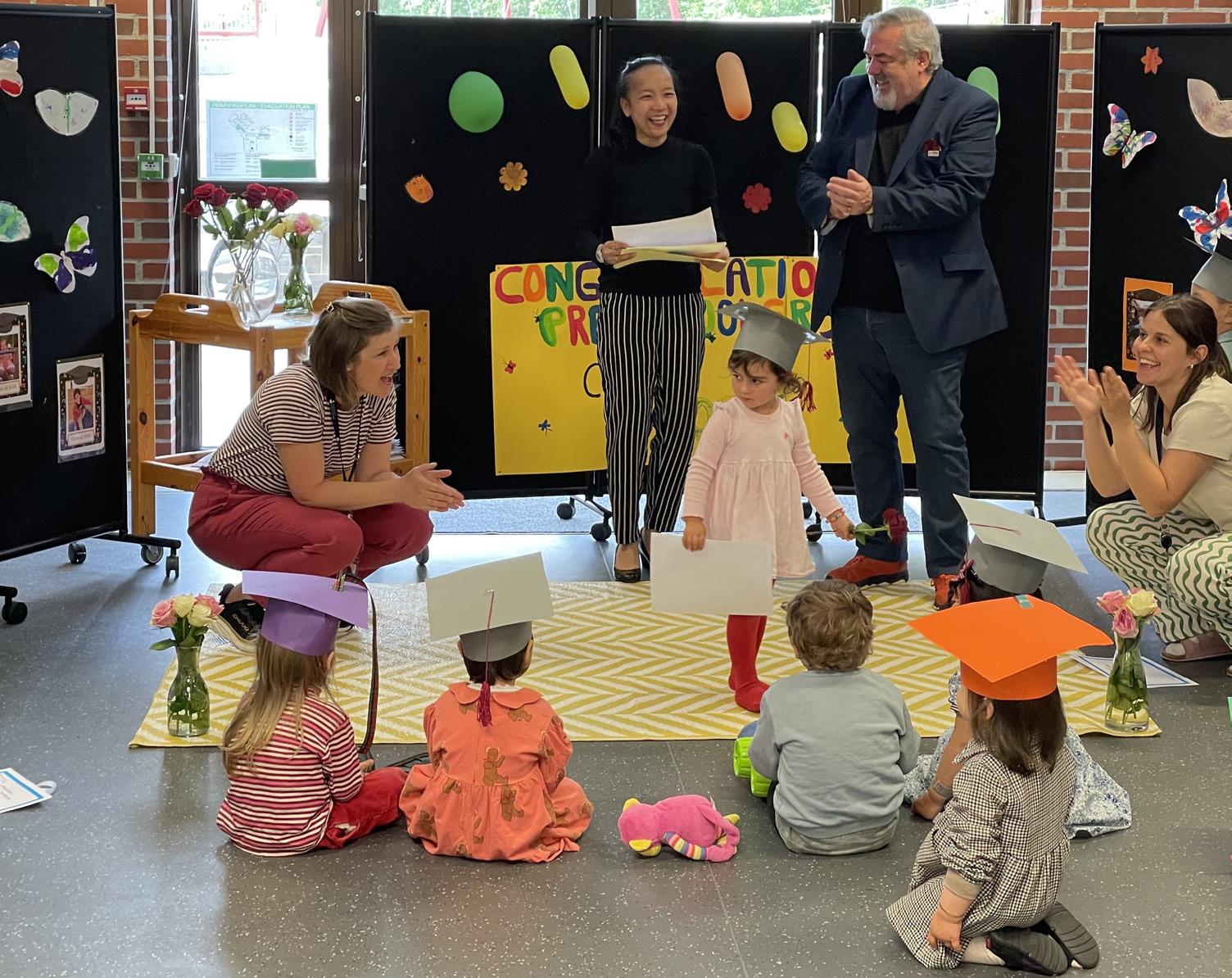
√ Let the staff know when you drop off and pick up your child(ren)
√ Respect the ECC opening and closing hours. The ECC closes at 16:30 and by then all children and parents must be out of the ECC.
√ Deliver the children before circle time at 9:00. It can be difficult for children to settle in for the day’s activities and playtime when arriving later.
√ Apply sunscreen at home in the morning. We will reapply after lunch.
√ Respect our “no toys from home” rule.
√ Message the ECC if your child is staying home sick, or there is a variation in their routine (e.g., will be picked up earlier or by someone other than the parents).
To help your child enjoy a comfortable and active day at ECC, please make sure they have the clothing they need, including extra changes of clothes, and appropriate outerwear and footwear for all types of weather.
Regularly check that your child’s clothes and shoes still fit, particularly as the seasons change. Take home any wet or dirty clothes for washing.
Play is the most authentic way for children to sort out and express their thoughts, feelings, and creativity within the context of their cultural background. In the ECC, we make space for play.
Our “Let’s Play” Unit of Inquiry (UOI) is a yearlong unit that allows children to settle into their new environment, as well as various learning experiences throughout the entire school year.
Closely tied to Chapter 3 of the Norwegian Framework Plan, “kindergartens shall meet the children’s need for play.”
The NFP stipulates that the inherent value of play shall be acknowledged as a key focus in a preschool, and the ECC ensures that we are intentional in our planning for play.
By promoting an inclusive environment where all children can participate in and experience the joy of playing, we use this UOI to promote play and positive social interactions.
Clothes needed now:
• Light middle layer
• Light rain clothes
• Lightweight rain boots
• Light hat
• 2 complete changes of clothes appropriate for the season
• Sunscreen
• Sun hat

An inquiry into the ways in which we discover and express ideas, feelings, nature, culture, beliefs and values; the ways in which we reflect on, extend and enjoy our creativity; our appreciation of the aesthetic.
Let’s play
Subject focus: language, social studies, visual and performing Arts
Key concepts: form, function, connection, perspective
Central idea: Play helps us to understand ourselves, each other and the world.
An inquiry into:
• Learning through play
• Play and social relationships
• Play around the world
We kindly ask that all clothing and personal items are clearly labeled with your child’s first and last name. Labeled items are much easier to return to their owners. Unlabeled clothing will be placed in the lost-and-found box in the wardrobe area, and any unclaimed items will eventually be donated to charity. Clothing kept at ECC should be practical and suitable for an active day filled with play, exploration, and outdoor activities.
Message the ECC if your child is sick, is not coming in, comes in later or is being picked up earlier or is being picked up by other than the parents.
First day of school. Parent info session.
Good communication between parents and staff is essential for successful cooperation, and we see parents as partners. We expect to build mutual trust, respect, safety, and well-being in our partnership with parents, where we share the common goals of promoting development and creating joy in daily routines.
We value daily contact at drop-off and pick-up. These brief moments allow us to share information that helps ensure your child’s well-being.
We hope you value daily contact as well, and ask that you plan your arrival and departure within our opening and closing hours, and respect that when we close at 16:30, we are no longer available to give feedback on your child’s day.
There are two parent–teacher conferences scheduled each school year, and we are of course happy to arrange additional meetings if needed.
You will regularly get updates on Toddle about the learning experiences taking place in the classroom, in addition to a weekly summary sent out each Friday.
In addition, you will receive “The Orca Splash,” the ISB newsletter, every Friday afternoon. It’s your responsibility to read the information shared with you.
Kindergarten Act Chapter II, §4: “To ensure cooperation with the children's homes, each kindergarten shall have a parents' council and a cooperation committee.”
The ECC Coordinating Environment Committee (CEC) acts as an advisory and cooperative body that helps strengthen communication and collaboration between parents and the ECC. It consists of parents/guardians and ECC staff, with equal representation from both groups.
Parents and guardians form the parent council, which works to promote shared interests and to foster a strong partnership between families and the ECC. This collaboration enhances a positive learning environment.
During the parent information session, each class elects its parent representative, known as the “class contact.” If there is something regarding operations within the ECC, you are welcome to speak directly with the staff or contact the class contact, who will then bring it to the CEC meeting. There are two CEC meetings held during the school year.

Chapter 5: The kindergarten shall facilitate cooperation and good dialogue with the parents. Cooperation with the parents shall take place both at an individual level, with the parents of each child, and at a group level through the parents’ council and the coordinating committee.
Clothes needed now:
• Light fleece set
• Rain clothes
• Rain boots
• Rain gloves
• Light hat
• 2 complete changes of clothes appropriate for the season


§1: The preschool will, in cooperation and understanding with the home, meet the child’s need for care and play, and promote learning and education as a basis for all-round development.
Documentation of pedagogical work carried out by the staff demonstrates how personnel work to fulfill the requirements set forth by the Kindergarten Act and The Norwegian Framework Plan (Rammeplan 2017).
We plan for and document learning experiences, processes, celebrations we have together with the students. We document and make visible whether there is a connection between our plans and our actual actions, as seen in your child’s portfolio on Toddle. When the children leave the ECC, parents have the opportunity to download their child’s portfolio.
Part of our pedagogical work includes tying together our Units of Inquiry to the working methods and learning areas as defined in Chapters 8 & 9 of the Norwegian Framework Plan. This is reflected in practice on Toddle.
Parent conferences start this month.
You will be called in for a meeting where we discuss your child’s development. Every conference is guided by our conference form, where the teacher gathers observations about your child’s development in all areas. You should address anything YOU find important, and we will, too!

Reflection is a main focus in the ECC, and we use the UDIR survey, appraisal meetings, parent conferences, and CEC meetings as important tools for this process. We are constantly adapting in order to deliver a high quality learning environment.
The schedule for parent teacher conferences will be given through Toddle. We will always make time for additional meetings if they are needed.
Occasionally, we might ask if a student teacher can join and/or participate in the conference alongside the homeroom teacher. As part of our partnership with Erasmus+, we often have student teachers from around the world doing internships with us. Practical learning experiences are an important part of their internship, and our interns gain valuable experience by being included and guided through the process with the homeroom teacher. We will only include the intern in the meeting if we have consent from the parents.
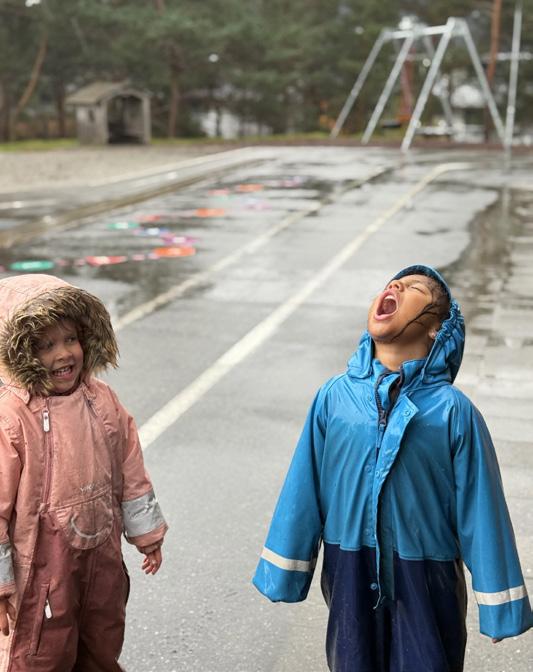
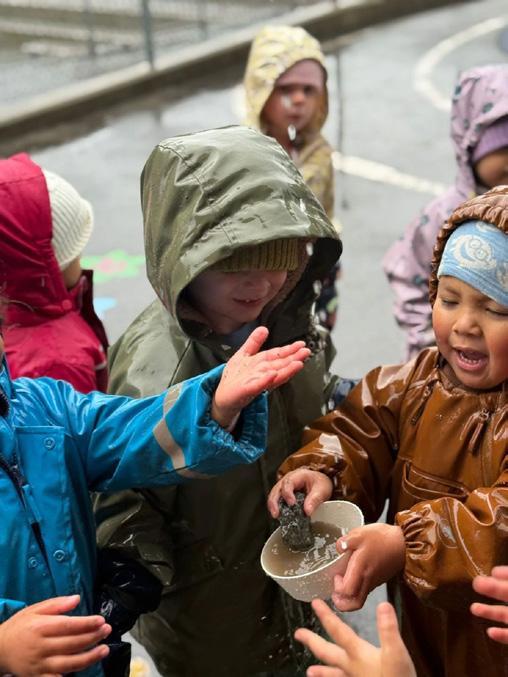
How the world works
An inquiry into the natural world and its laws; the interaction between the natural world (physical and biological) and human societies; how humans use their understanding of scientific principles; the impact of scientific and technological advances on society and on the environment.
Subject focus: science, language, PSPE
Key concepts: form, connection, reflection
Central idea: People use their senses to explore and experience the world around them.
An inquiry into:
• What the senses are
• What each sense tells us
• How we use our senses
• How the senses help us to interact with the world around us
Clothes needed now:
• Light fleece set
• Rain clothes
• Rain boots
• Rain gloves
• Light hat
• 2 complete changes of clothes appropriate for the season
basis, and in the ECC, we support language development through stories, songs, circle time opportunities, and tuned-in adults during play and learning.
We have a big focus on social-emotional learning (SEL) in the ECC, and use a combination of resources to deliver a balanced approach to social and emotional development. We regularly use the ICDP (International Child Development Programme), Circle of Security, and Kimochis to inspire teaching and learning throughout the school year.
Children learn a language by speaking and listening first. Read aloud! Sing together! Put words to everything your child is experiencing and give your child the gift of your language.
Language and literacy is more than reading and writing.
The ability to use language is crucial for how children can communicate with adults and other children, how they can describe experiences, express their needs and ideas, as well as discuss and reflect together with others.
Language is crucial for learning and developing friendships.
Good speech development is important for children both on a short and long term
In addition, it’s important for participating in a modern democracy and in a society based on knowledge and education.
Language development is both oral and written - we talk and listen, we read and write. Foundational development happens now, in preschool.
The staff in the ECC are an incredible resource when it comes to languages. Almost all staff are billingual, and the majority are fluent in Norwegian if it is not their mother tongue.
We use the Norwegian language in many different settings. It can be used to help children settle in, or transition to a local Norwegian school when moving on to first grade.


We encourage all families to speak their mother tongue to their children.
Many families feel compelled to start speaking English once their child starts at the ECC, but we actually recommend that you give your child the gift of your mother tongue.

While we predominantly use English in the ECC, we adjust to the needs of the children, and encourage use of their mother tongue during the day. For example, if a child speaks Norwegian to us, we will respond in Norwegian and then translate to English.
Day-to day learning outcomes are planned for and documented on Toddle. They are chosen from the IB PYP and the Norwegian Framework Plan. We teach and learn through our Units of Inquiry, which are closely tied to the framework plan.
Be a resource of your language for your child, and we will take care of the English while they are in the ECC.

Clothes needed now
• Extra warm middle layer: fleece or wool
• Waterproof snow suit
• Warm rain clothes (e.g., fleece-lined)
• Lined rain boots
• Water proof winter shoes
• 2 pairs of warm mittens
• Rain gloves
• Snow gloves
• Warm winter hat
• Buff
• 2 complete changes of clothes appropriate for the season
Planning
Planning
As we approach the darkest day of the year, we light up the dark with warm and cozy routines in the ECC. There is a lot to celebrate in December, and a lot to look forward to.
We find that many families use this time to travel to different corners of the world, and as the first half of the school year winds down, we like to invite parents in to celebrate with us.
Some time before the Christmas Break, we will invite all ECC parents in to enjoy some Norwegian Pepperkaker, mingle with other parents and teachers, and possibly hear a song or two that the children have learned.
In addition, we might make “lussekatter,” or saffron buns, to share with parents in celebration of Santa Lucia. Saint Lucy’s Day (“Santa Lucia”) is an old Scandinavian tradition celebrating light in the darkness, and the hope that it symbolizes.
We try to combine events, so the party will be close to December 13th for Santa Lucia. Details of this event will be communicated to parents via the class teacher and/class contacts. We hope you are able to set off an hour for this special event!
Christmas decorations
At this time of year you might notice our school reception area is completely decorated for the Christmas season. PTO volunteers spend a day decorating the school and the ECC.
In our reception area, we have something called “The Lonely Christmas Tree” - a nice way we can help the greater community by giving gifts to those in need. More information can be found in the school newsletter.
ISB also makes its own gingerbread city each year. Each class contributes a gingerbread house, but you’re welcome to contribute one that your family makes as well!

Santa Lucia
Når mørket er som mørkest
Og ingen klokke slår
Da virker det som natten
Har vart i hundre år
Når alt er stille ute
Og solen har gått ned
Da kommer vi langs veien
I lyset vi har med
Santa Lucia
Santa Lucia
Når natten er sort
Så tenner vi lys
Og drar mørket bort
Når alle stjerner lyser
Og himmelen er sort
Og ingen kan bli vant til
At dagen går så fort
Da kommer vi og synger
Med glad og vennlig røst
Et lys er tent i natten
Og gir deg håp og trøst
Santa Lucia
Santa Lucia
Når natten er sort
Så tenner vi lys
Og drar mørket bort
Santa Lucia
Santa Lucia
Når natten er sort
Så tenner vi lys
Og drar mørket bort

Happy New Year and welcome back!
As we settle in to our daily routines, here are some important things to remember:

Breakfast window: 7:30-8:30 **
Important! Breakfast ENDS at 8:30. Be here by 8:15 if you plan to have your child eat their breakfast with us in the morning.
Drop off your child before core hours start at 9:00. This makes it easier for everyone to settle in to the daily routine.
Notify us about illness and/or absence.
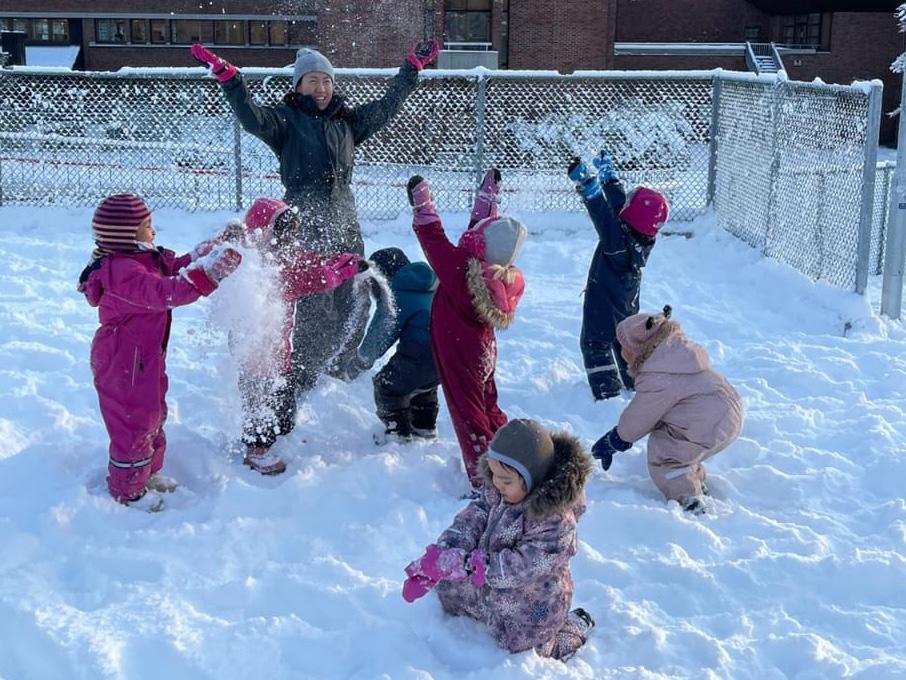
√ Let the staff know when you drop off and pick up your child(ren)
√ Respect the ECC opening and closing hours. The ECC closes at 16:30 and by then all children and parents must be out of the ECC.
√ Deliver the children before circle time at 9:00. It can be difficult for children to settle in for the day’s activities and playtime when arriving later.
√ Apply sunscreen at home in the morning. We will reapply after lunch.
√ Respect our “no toys from home” rule.
√ Message the ECC if your child is staying home sick, or there is a variation in their routine (e.g., will be picked up earlier or by someone other than the parents).
√ Ensure your child has the clothes they need for a full day in preschool, appropriate for the season, and labelled with their name on it.

Clothes needed now:
• Extra warm middle layer: fleece or wool
• Waterproof snow suit
• Warm rain clothes (e.g., fleece-lined)
• Lined rain boots
• Water proof winter shoes
• 2 pairs of warm mittens
• Rain gloves
• Snow gloves
• Warm winter hat
• Buff
• 2 complete changes of clothes appropriate for the season

Who we are
An inquiry into the nature of the self; beliefs and values; personal, physical, mental, social and spiritual health; human relationships including families, friends, communities, and cultures; rights and responsibilities; what it means to be human.
My body, my health
Subject focus: PSPE, science
Key concepts: form, connection, function
Central idea: The health of my body and mind is important.
An inquiry into:
• Ways to take care of our body.
• Ways to take care of our mind.
• Maintaining an active lifestyle.



In a world where many children are stuck behind a screen rather than playing and moving their bodies, one thing we addressed during our most recent planning days was “risky play” and what that looks like in the ECC.
What is risky play? How do we support it?
First of all, risky play is crucial to a child’s development, especially in the early years! When you read “risky play,” your immediate reaction might be: absolutely not. But by not “allowing” children to explore and test out risky play, we are taking away their learning opportunities. The Norwegian Framework Plan includes the topic in Chapter 9: Learning Areas - Body, movement, food, and health.
Part of our job in the ECC, as early childhood educators looking after the WHOLE child, as outlined in the framework plan, is to help the children to:
• experience well-being, joy, and achievement through a variety of physical activities, indoors and out, all year round
• continue to develop their motor skills, body control, coordination, and physical capabilities
• evaluate and master risky play through physical challenges
• feel confident in their own bodies, gain a positive view of themselves and
explore their own feelings
• set boundaries for their own bodies and respect the limits of others
What does risky play look like in the ECC?
Here are a few examples we identified from our own playground and discussed at length:
Climbing on top of the playhouse.
1. Our rule: you can be up on top if you can get up there by yourself. We won’t lift you up, you have to climb.
2. Our reasoning: if you can climb up, you can climb down. This promotes safety, mastery, confidence, and body control.
3. What we know: it is not too high, there is a fall zone with wood chips. If they can’t get up there on their own, they are not developmentally ready to be up there.
Rolling down the hill.
1. Our rule: teachers have to be present.

2. Our reasoning: we need to see what happens, and ensure a barrier to the trees. This promotes development of the vestibular sense (balance & spatial awareness), body boundaries and confidence, as well as joy and freedom of movement.
3. What we know: the hill is steep, and teachers will ensure a barrier to the trees. The activity can’t take place unless a teacher is present. This rule is made in collaboration with the children during circle time, particular with the sun and rainbow classes.
Rough and tumble play (wrestling/rough housing with INTENT TO PLAY).
1. Our rule: there has to be consent and ideally a soft landing zone (e.g., mattresses in the gross motor room).
2. Our reasoning: it’s not aggressive! It’s controlled and fun, and genuine aggression is not part of it. The play ends if someone gets hurt, sad, or angry.
3. This promotes: choices and consequences, body boundaries of self and others, confidence.
When we talk to children about their experiences in risky play, our choice of words is key. If you want to help build vocabulary around these experiences, try this clarifying question:
Are you crying because you are hurt, or because you are scared?
(This is my favorite question, and children need to have a chance to answer WITHOUT your assessment of the situation before their own!) Sometimes children fall or get knocked over, and that can be scary (often because they feel like they lost control in the moment)! But let’s help them recognize and put words to their feelings by asking questions, letting them think, and then arriving at their own conclusion.
A child’s motivation behind their own risky play has A LOT to do with their personality and temperament, and whether or not they have the freedom to explore that part of themselves often comes down to the
parents’ personality, temperament, cultural background, and past experiences. There is a fine line between risky play and dangerous play. It is our job to assess the risks and weigh up the learning opportunities.
If we want our children to be happy and confident, we have to give them a little bit of room to explore what their own boundaries are, rather than having them inherit ours.

What I see when I observe risky play is determination, pride, and the joy of mastery. Giving your child the space and support to experience those feelings helps them figure out who they are, how they are motivated, and when they might need to ask for help. Risky play builds resilience, tolerance, and life skills on so many levels!
We love to hear stories told in other languages!
Please let us know if you are interested in volunteering to read or tell a story in your child’s class.
Ideally, we ask that you have some sort of visual support (a book with pictures, props, puppets, etc) so that even if we can’t understand the language, we can follow along.

100 languages


NO WAY. THE HUNDRED IS THERE
The child is made of one hundred.
The child has a hundred languages a hundred hands a hundred thoughts a hundred ways of thinking of playing, of speaking.
A hundred.


Always a hundred ways of listening of marveling of loving a hundred joys for singing and understanding a hundred worlds to discover a hundred worlds to invent a hundred worlds to dream.


The child has a hundred languages (and a hundred hundred hundred more) but they steal ninety-nine. The school and the culture separate the head from the body.
They tell the child: to think without hands to do without head to listen and not to speak to understand without joy to love and to marvel only at Easter and Christmas.

They tell the child: to discover the world already there and of the hundred they steal ninety-nine.

They tell the child: that work and play reality and fantasy science and imagination sky and earth reason and dream are things that do not belong together.

And thus they tell the child that the hundred is not there.
The child says: No way. The hundred is there.

Loris Malaguzzi (translated by Lella Gandini)
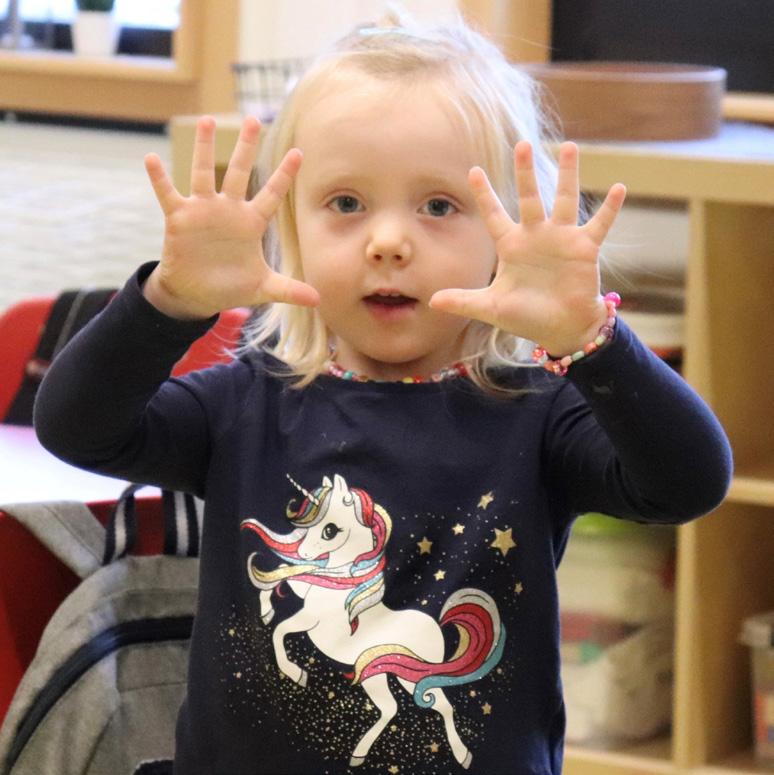

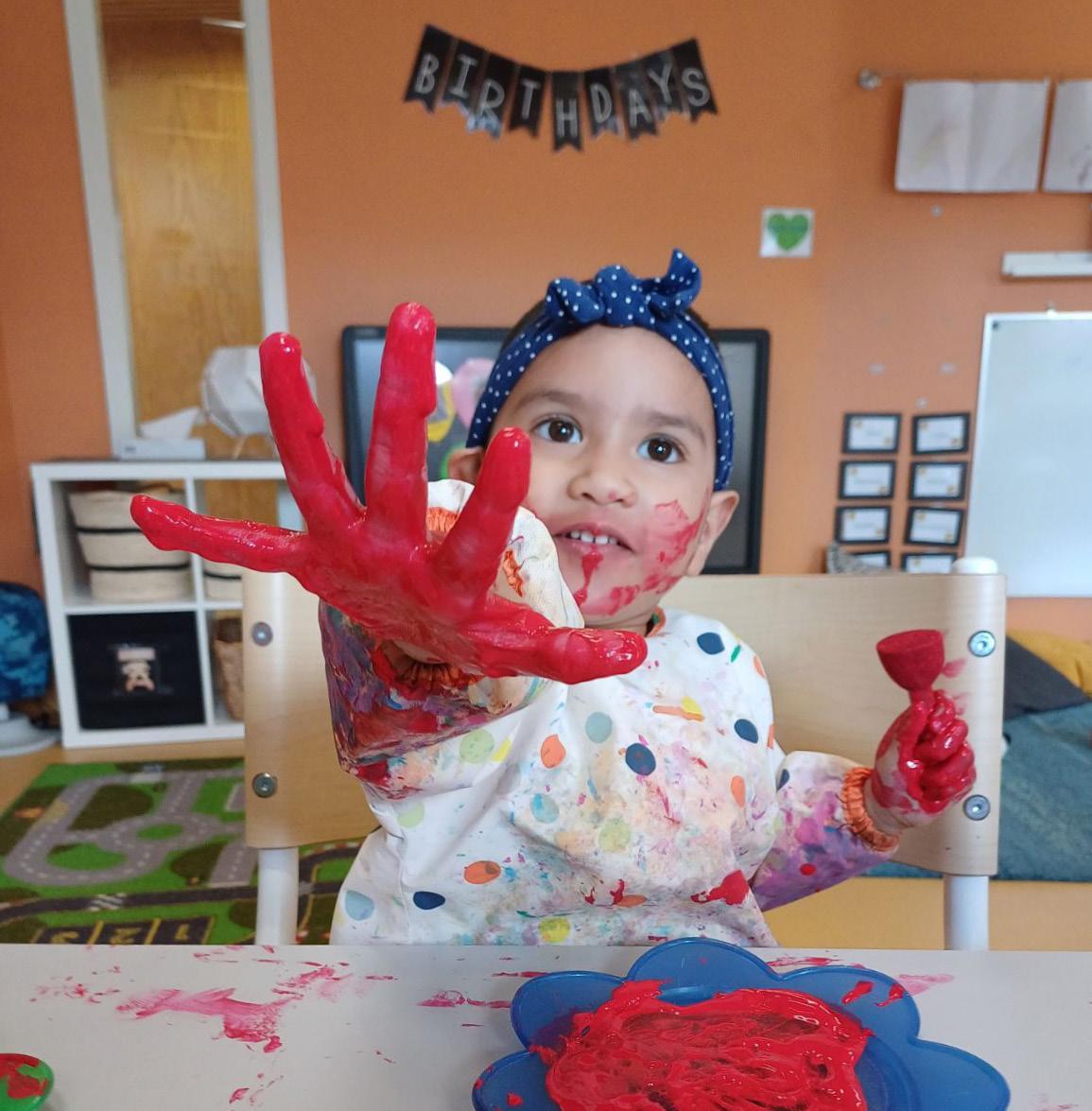
Spring is a fun time in the ECC as we tend to take more activities outdoors. While the sun might shine more at this time of year, mother nature likes to play tricks on us! Prepare for anything and everything when filling your child’s cubby. Sun, rain, and snow protection are equally important in the spring in Bergen.
An inquiry into rights and responsibilities in the struggle to share finite resources with other people and with other living things; communities and the relationships within and between them; access to equal opportunities; peace and conflict resolution..
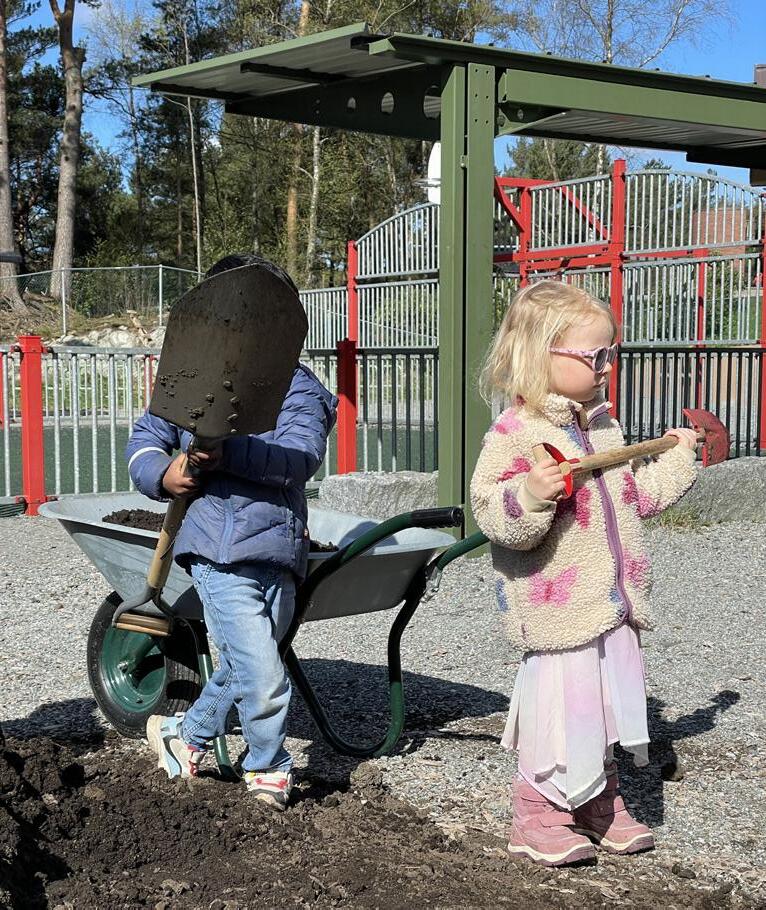
On this day, the entire school goes off schedule to work on special projects that help our planet, which fits perfectly with our current Unit of Inquiry!
The second opportunity for parent conferences takes place now.
The format is the same as October, but there can always be new things to discuss.


From farm to us
Subject focus: social studies, science
Key concepts: change, causation, responsibility
Central idea: Food can go through many changes before we eat it.
An inquiry into:
• The kinds of food we eat.
• Where different kinds of food come from.
• What changes food goes through before we eat it.
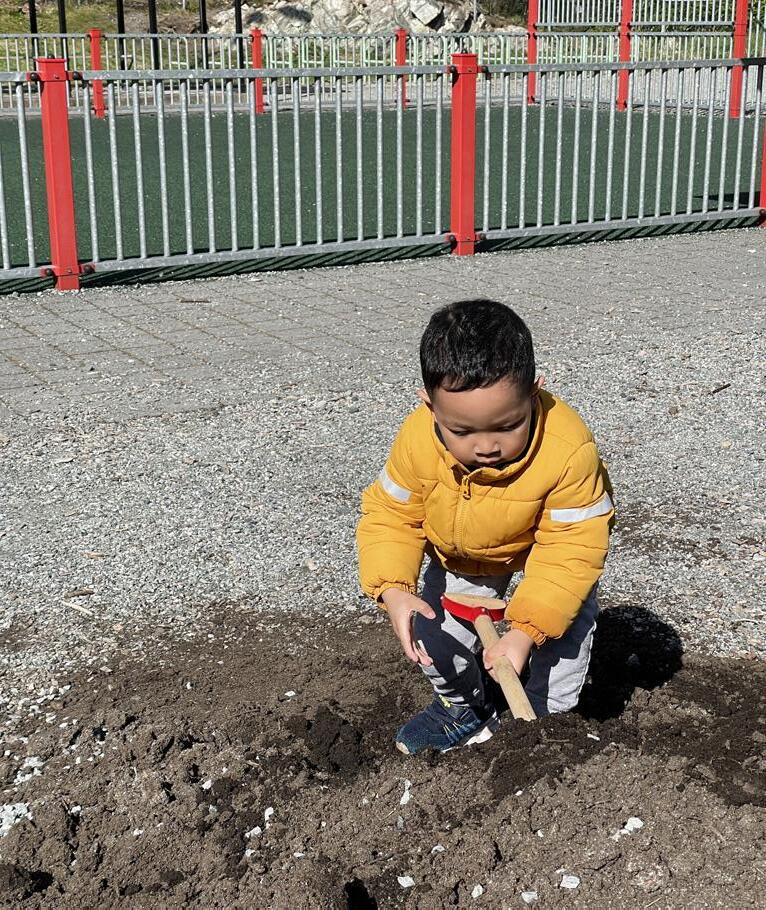
The ECC goes on weekly community walks throughout the entire school year. At this point in the year, however, once routines are established and children have matured in their class, we try to take trips that are a bit farther away from campus. We take public transportation and go into town or other parts of Bergen to explore new places.
When we are out and about, the ratio of staff to children is higher, and sometimes we ask for parent volunteers to accompany us. The children wear reflective vests with our ECC phone number on it, and we have carefully planned and coordinated our outing so the best interests of the children and staff are met.

These should be in the cubby now:
- Rainwear
- Winter suit / jacket / pants
- Hat
- Mittens
- Extra socks
- Extra shoes
- Extra sweater
- Change of clothes
Play
Play should have a central place in kindergarten, and its intrinsic value should be recognized. Play is a source of joy, humor, and excitement. It gives children the opportunity to process experiences, express themselves, and develop friendships. Play can be both spontaneous and organized, and together with other children.
We facilitate play in kindergarten and give children opportunities to play together, alone, and with others in spontaneous play situations. We are aware that different play situations are adapted to children’s age and maturity. We believe the future of social competence and community lies in the core of play.

There are a lot of public holidays in May, so be sure to check the calendar for closures.
May is also the time of year that we start the transition meetings for children moving on to Grade 1. Many children in our ECC will continue on to Grade 1 in ISB, and we have a wonderful opportunity to ensure a good transition by introducing the children to the Grade 1 teacher and getting an idea of what it might be like by doing an activity in the Grade 1 classroom.
The children really look forward to this and feel very proud of their upcoming transition. Other children that will be moving on to other schools will work in collaboration with the class teacher, the ECC Principal, and the school they will be starting at in Grade 1.

A gentle reminder that May is the beginning of “tick season.” With our direct access to the little forest on our playground, it’s a good idea to check children for ticks from time to time.
Close to the 17th, we celebrate in the kindergarten with games and songs with the children. There will be ice cream and pancakes on the menu, and we play games outdoors. The older children join in a parade that visits the care home in the area, while the rest of the ECC stays to play.
Norway’s national day takes place on May 17th. The day is a public holiday, which means that schools, shops and offices are closed. Every year there is a large parade throughout Bergen’s city centre consisting of different groups walking together.
ISB has participated in this event for decades and we would love for as many of
our ISB families to join us in celebrating by meeting up in town and walking together. ISB traditionally meets in Marken.
There are several hundreds of people scheduled to meet up in this area, in addition to everyone coming to see the parade, so the area will be busy. Please remember that parents are responsible for their own children and that teachers are attending on a voluntary basis.
For this day, formal attire is expected when walking as part of the parade. You may wish to wear an outfit that represents a country or culture you feel represents you. We recommend wearing comfortable shoes as we will be walking through town.
Hurrah! May 17th is a day filled with joy and child-centred activities.
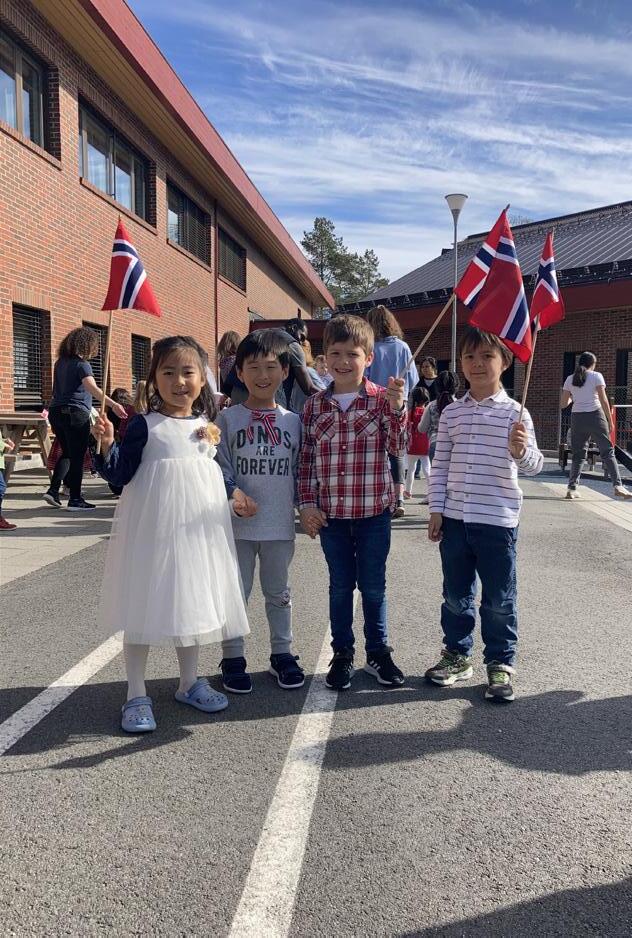
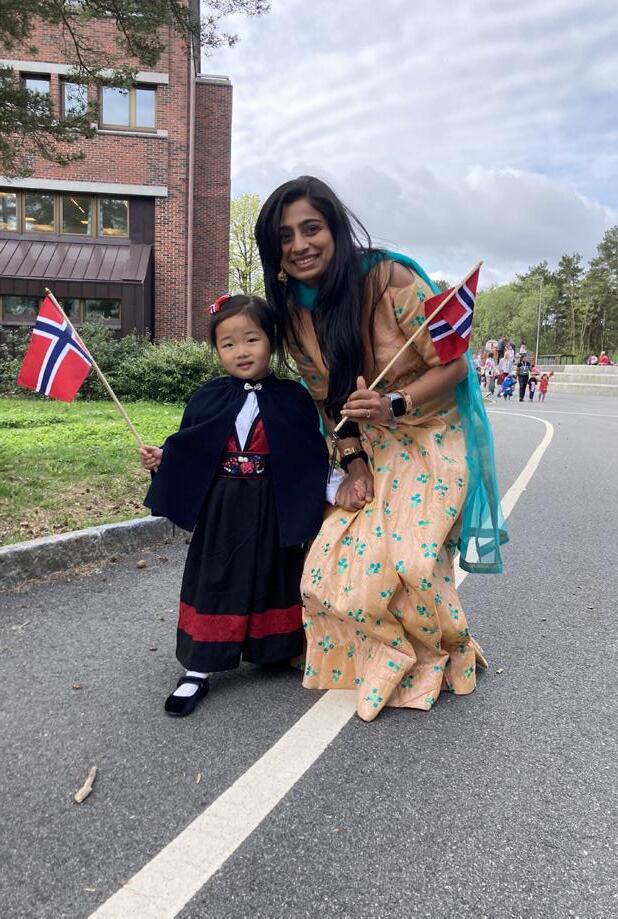
There are a lot of public holidays in May.
Deadline for signing up for Summer Camp.
As the school year winds down, we have a lot to celebrate!
The kindergarten students will have a graduation party to celebrate their transition to Grade 1.
The entire ECC celebrates the end of the school year with a summer party. The summer party in kindergarten is a lovely tradition and all parents and families are invited. We ask parents to bring some food to share. It’s a wonderful time to be outside together, enjoying food and each other’s company before the end of the school year. We hope to see you there!
Have a really great summer, everyone!
We look forward to seeing you again! To those who are leaving us to start school – thank you so much for all the joy and quality time spent together! Good luck!!




Clothes needed now:
• Light middle layer
• Light rain clothes
• Lightweight rain boots
• Light hat
• 2 complete changes of clothes appropriate for the season
• Sunscreen
• Sun hat


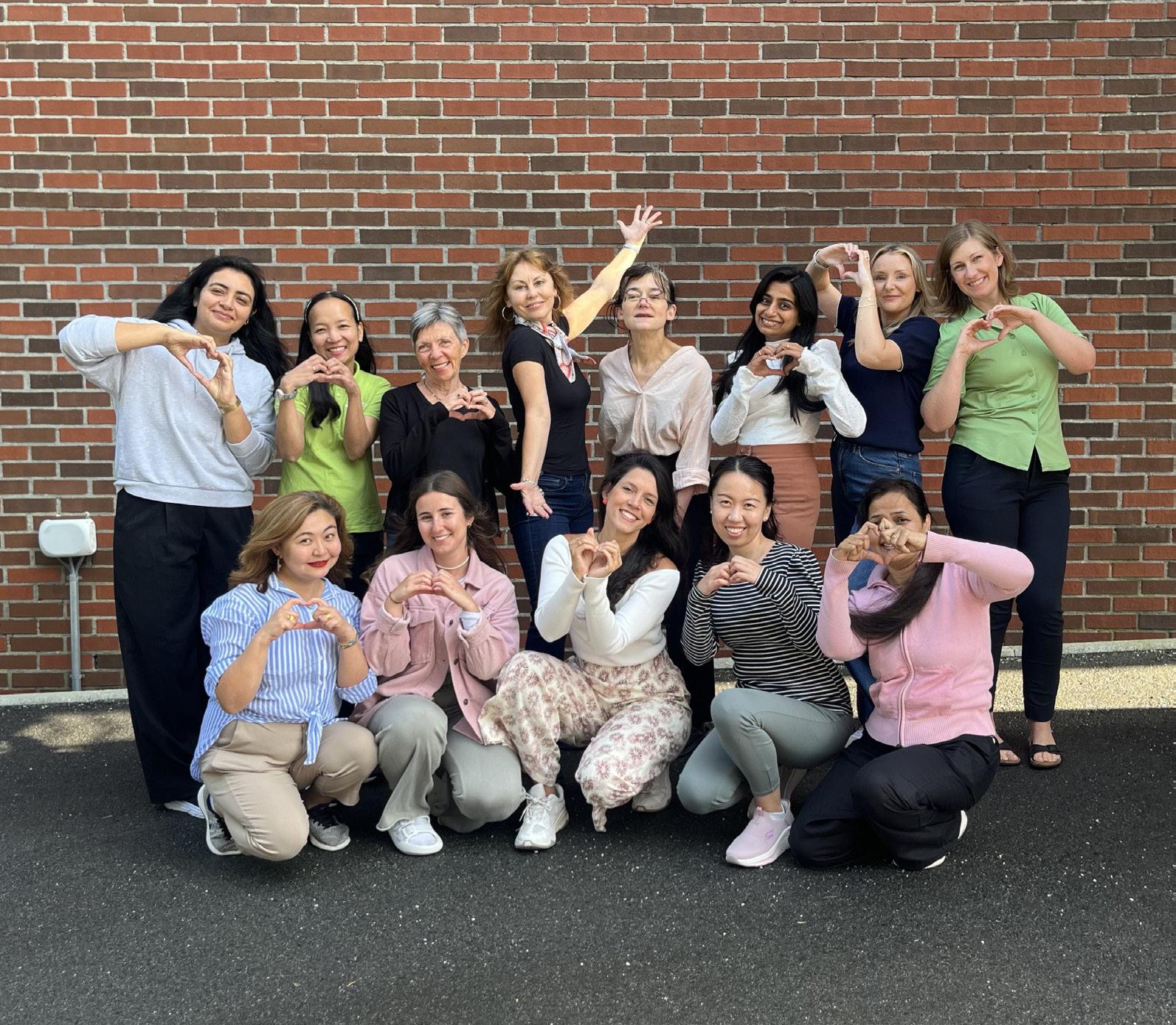



Have a really great summer, everyone!



Last day of school. Noon dismissal.
Sandslihaugen 36, 5254 Sandsli +47 452 55 104 www.isbergen.no
You are you, I am me, together we are ECC!