VOLUME 26 NUMBER 3 |
SUMMER 2026
A publication of the International Myeloma Foundation
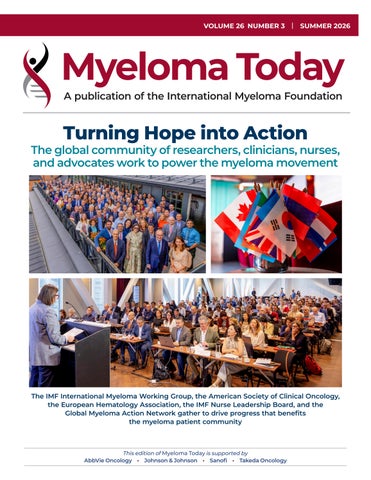
Turning Hope into Action
The global community of researchers, clinicians, nurses, and advocates work to power the myeloma movement
The IMF International Myeloma Working Group, the American Society of Clinical Oncology, the European Hematology Association, the IMF Nurse Leadership Board, and the Global Myeloma Action Network gather to drive progress that benefits the myeloma patient community
This edition of Myeloma Today is supported by AbbVie Oncology • Johnson & Johnson • Sanofi • Takeda Oncology
Message from the IMF President & CEO
Dear Members of the Myeloma Community, As we move into summer – a season of energy, connection, and forward motion – I find myself inspired by the extraordinary gatherings that have just taken place on the global stage. I recently had the privilege of attending both the IMF Global Myeloma Action Network (GMAN) Summit and the IMF International Myeloma Working Group (IMWG) Summit, and I returned with a profound sense of optimism about where our community is headed. What strikes me most about these two summits, taken together, is what they represent: the IMF’s unique and enduring commitment to convening both the world’s leading myeloma scientists and the world’s most passionate myeloma advocates – at the same time, in the same spirit, with the same shared goal. That goal is simple to state, even if it is not always simple to achieve: to advance the science of myeloma and to ensure that every patient, regardless of where they live, has access to the best possible care. The IMWG Summit brought together myeloma researchers and clinicians from across the globe to examine the latest data, debate emerging treatment strategies, and build the kind of scientific consensus that ultimately shapes guidelines and clinical practice worldwide. The conversations happening in that room do not stay in that room – they travel back to clinics, hospitals, and research institutions on every continent, informing how physicians treat their patients and how scientists design the next generation of clinical trials. Seeing that level of intellectual rigor and collaborative spirit in action is a reminder of why the IMWG remains one of the most important scientific bodies in oncology. The GMAN Summit brought an equally powerful energy, but through a different lens: the lens of the patient and the advocate. Myeloma advocates and patient organizations
from around the world came together to share what they are seeing on the ground – barriers to diagnosis, gaps in access to novel therapies, disparities that persist across geographies and communities, and the very human stories behind the data. These voices matter enormously. They keep us grounded in what this work is really about, and they challenge us to make sure that the remarkable scientific progress we are celebrating is not reserved for a fortunate few but extended to every patient who needs it. Together, these two summits reflect something that has always set the IMF apart: the belief that science and advocacy are not parallel tracks – they are the same track. When researchers understand the lived experience of patients, they ask better questions. When advocates understand the science, they make more powerful arguments. When both groups are in conversation with each other, the entire field moves faster and more equitably. And the field is moving. Building on the momentum we celebrated during Myeloma Action Month this spring, the pace of progress in myeloma continues to accelerate. New data on CAR T-cell therapies, bispecific antibodies, and combination regimens are deepening our understanding of how to achieve more durable responses and push the boundaries of what we once thought possible. The challenge before us now is not only scientific – it is one of access, equity, and will. As I reflect on these summits and look ahead to the months to come, I am grateful for this community – for the researchers who dedicate their careers to solving myeloma, for the advocates who refuse to let the urgency of this disease be forgotten, and for the patients and caregivers who inspire everything we do. The IMF will continue to bring these voices together, because we know that when we work as one global community, we are stronger, faster, and more effective. That is the promise of summer – and it is a promise this community keeps, season after season. With gratitude and optimism,
Heather Cooper Ortner and Dr. S. Vincent Rajkumar, myeloma expert from Mayo Clinic and IMF Chairperson of the Board, lead a session at the Global Myeloma Action Network Summit in June 2026
Heather Cooper Ortner
This free edition of Myeloma Today© (Volume 26, Number 3) is dated July 15, 2026. Myeloma Today is a quarterly (Spring, Summer, Fall, and Winter) publication of the International Myeloma Foundation, located at 4400 Coldwater Canyon Avenue, Suite 300, Studio City, CA 91604 USA
2 SUMMER 2026
info@myeloma.org myeloma.org
Scientific & Clinical
2026 ASCO and EHA: Top 10 Research Abstracts
International meetings highlight advances in myeloma By Dr. Joseph Mikhael IMF Medical Advisor
Three of the most important annual medical meetings in myeloma take place each summer. This year, the American Society of Clinical Oncology (ASCO) meeting was held from May 29th to June 2nd in Chicago, Illinois; the 17th Annual Summit of the IMF International Myeloma Working Group (IMWG) was held June 8th-10th in Stockholm, Sweden; and the European Hematology Association (EHA) meeting was held June 11th–14th, also in Stockholm. This article will focus on my Top 10 research abstracts from the ASCO and EHA meetings that reflect the rapid advances in myeloma throughout the disease course.
Frontline therapy
Frontline therapy is the initial treatment used in an effort to achieve response (also called remission) in a person with newly diagnosed multiple myeloma (NDMM).
Abstract #1 Blenrep® (belantamab mafodotin) Blenrep, an antibody-drug conjugate approved by the U.S. Food and Drug Administration (FDA) for the treatment of relapsed myeloma, is now being tested for NDMM. The DREAMM-9 clinical trial of Blenrep + Velcade® (bortezomib) + Revlimid® (lenalidomide) + dexamethasone [BVRd] in patients with NDMM who are not eligible for transplant presented its final analysis. Data show impressive rates of complete response (CR). The BVRd combination introduces a new mechanism of action (MOA), the process through which a drug produces its effect.
Heather Cooper Ortner IMF President & CEO
Sagar Lonial, MD Emory University Winship Cancer Institute
By targeting the B-cell maturation antigen (BCMA, a protein on the surface of myeloma cells), BVRd could be a great combination for some patients with NDMM. A reduction of the dosing frequency may help avoid some of the eye-related side effects, but this may compromise treatment efficacy.
Abstract #2 Iberdomide combination Iberdomide is the first in a new class of drugs called cereblon E3 ligase modulators (CELMoDs). CELMoDs work similarly to Revlimid and Pomalyst® (pomalidomide) in binding cereblon, which triggers a pathway of protein degradation to destroy the myeloma cell. But CELMoDs are more potent because they bind cereblon more tightly. The IDEAL clinical trial is studying iberdomide + Darzalex® (daratumumab) + Velcade + dexamethasone [Iber-DVd] in patients with NDMM. In Iber-DVd, iberdomide replaces Revlimid in the DVRd combination (currently one of the standard-of-care therapies for NDMM). Iber-DVd is very potent and allows for all treatments but iberdomide to be stopped at 1 year. Importantly, iberdomide seems to have fewer side effects than lenalidomide: less fatigue, rash, and diarrhea. We anticipate iberdomide to be approved by the FDA for relapsed myeloma in the near future.
Maintenance therapy
Maintenance therapy is given to prolong remission. For many years, maintenance therapy with Revlimid after autologous stem cell transplant (ASCT) has been the standard of care. However, about 1 out of 3 patients has to stop maintenance due to side effects. In addition, Revlimid maintenance may not be enough for higher-risk patients.
(continues on next page)
Nikhil Munshi, MD Dana-Farber Cancer Institute Harvard Medical School
S. Vincent Rajkumar, MD Mayo Clinic – Rochester IMWG Chair
View the webinar at videos.myeloma.org
1.800.452.CURE toll-free in USA and Canada 1.818.487.7455 worldwide
SUMMER 2026 3
Scientific & Clinical 2026 ASCO & EHA ABSTRACTS – CONTINUED FROM PAGE 3
Abstract #3 The EMN30/MajesTEC-4 clinical trial evaluated the efficacy and safety of Tecvayli® (teclistamab) alone or with Revlimid vs. Revlimid alone after ASCT. Treatment was given to patients with NDMM for a fixed duration of 2 years. Results show impressive deep and durable responses. Tecvayli is a bispecific antibody that binds to two targeted cell proteins – BCMA and CD3 – and uses the immune system’s T-cells to kill myeloma cells. While more follow-up is needed, this study gives an insight into using bispecific antibodies in maintenance therapy and giving maintenance for a shorter, fixed period of time.
Relapsed myeloma
Patients are considered to have relapsed/refractory multiple myeloma (RRMM) if their disease comes back at least 60 days after the prior treatment has ended
Abstract #4 Talvey® (talquetamab) The MonumenTAL-3 clinical trial abstract was selected for the EHA plenary session as one of the top research abstracts. This study compared the bispecific antibody Talvey + Darzalex [Tal-D] or Tal-D with Pomalyst [Tal-DP] vs. Darzalex + Pomalyst + dexamethasone [DPd] in patients with RRMM. Among the two groups of patients receiving Tal-DP and Tal-D, PFS benefits were seen across subsets that included older patients, patients with high-risk cytogenetics, those previously treated with Darzalex, and patients with soft tissue plasmacyto mas. At 2 years of follow-up, PFS rates for Tal-DP and Tal-D were 81.3% and 77.6%, respectively. Overall survival rates for Tal-DP and Tal-D were 89.2% and 87.9%, respectively. There are side effects that need to be managed; nonetheless, we will likely see FDA approvals in the near future.
Abstract #5 Tecvayli® (teclistamab) The MajesTEC-9 clinical trial of Tecvayli as a single agent (monotherapy) vs. Pomalyst + Velcade + dexamethasone [PVd] or Kyprolis® (carfilzomib) + dexamethasone [Kd] in RRMM presented an important follow-up. The MajesTEC-3 study led to the FDA approval of Tecvayli + Darzalex [Tec-Dara], but with more patients receiving Darzalex in frontline therapy. Testing Tecvayli alone was critical, and the results were remarkable. Tecvayli was superior to PVd and Kd, with the 18-month PFS of nearly 70%, a high number given that study patients had on average 2 prior lines of therapy. Infections remain a concern, but with more careful use of supportive care, this can be reduced. This option will likely receive FDA approval soon.
Abstract #6 The MajesTEC-3 study presented an updated analysis of risk status in patients with RRMM receiving Tec-Dara, adding insight into the power of Tec-Dara. The 3-year PFS was over 90% in patients with standard-risk myeloma – a number never seen before. The 3-year PFS was 80% in patients with high-risk myeloma. This study further strengthens the argument for considering Tec-Dara in early relapse of myeloma. Abstract #7 Etentamig Etentamig is a new oral bispecific antibody that’s not yet approved by the FDA. It is unique in that from the start of treatment it is given only once per month. Although the number of patients in the clinical trial is small, etentamig can be used with good outcomes after treatment with CAR T-cell therapy in patients with RRMM and prior BCMA-targeted therapy. I am impressed with the strategy to use etentamig as an outpatient therapy given in the community, not in a hospital. With preventive medication tocilizumab, 0% of patients experienced cytokine release syndrome (CRS), a potential immune reaction that can damage body tissues and organs.
Talvey shows improved PFS in the MonumenTAL-3 clinical trial Tal-DP vs. DPd
Tal-D vs. DPd
percent of patients without disease progression
81.3
Tal-DP
51.2 DPd
months of treatment
4 SUMMER 2026
PFS at 2 years 77.6
percent of patients without disease progression
PFS at 2 years
Tal-D
51.2 DPd
months of treatment
info@myeloma.org myeloma.org
Abstract #8 Mezigdomide combination The SUCCESSOR-2 clinical trial introduces us to mezigdomide, the second drug in the new class of CELMoD agents. This study compares mezigdomide + Kyprolis + dexamethasone (currently known by the acronym Mezi-Kd) vs. Kd alone in patients with RRMM and more heavily pretreated disease. Mezigdomide is even more potent than iberdomide. Mezi-Kd more than doubled the PFS of Kd (18 months vs. 8 months).
CAR T cells. This could make CAR T-cell therapy much more accessible worldwide. The updated results remain impressive. All 18 study patients achieved minimal residual disease (MRD)negativity in the first month of treatment! MRD is the presence of residual cancer cells after treatment is completed and complete response (CR) has been achieved. MRD-negativity means that not even 1 myeloma cell is found in 100,000 or 1,000,000 sampled bone marrow plasma cells (depending on sensitivity of the test used).
Mezigdomide is an oral therapy that does not adversely affect T cells, preserving the option of therapies like CAR T-cell therapy and bispecific antibodies. Mezi-Kd does come with a high rate of low white blood cell count (neutropenia), but this can be carefully managed. We anticipate that the Mezi-Kd combination will be FDA-approved in the coming months.
Only 1 patient has progressed, and there were lower rates of CRS and low blood counts than we expect from the CAR T-cell therapies already approved by the FDA.
Abstract #9 Arlocabtagene autoleucel A study of arlocabtagene autoleucel (called arlo-cel for short) presented updated safety and efficacy results for this CAR T-cell therapy for patients with RRMM who had 1–3 prior regimens. Arlo-cel targets GPRC5D on the surface of myeloma cells, as opposed to the two FDA-approved CAR-T therapies that target BCMA. Most side effects were milder than with continuous Talvey. But there were also some neurological side effects. It would be highly valuable for patients to have options of CAR-T therapies that use different targets as this will likely lead to some patients having more than one CAR-T therapy over the course of life with myeloma. Having more options of targets and methods of treatment will provide broader choice for patients.
Abstract #10 KLN-1010 The inMMyCAR clinical trial of KLN-1010 is a first-in-human study of in vivo CAR T-cell therapy that does not require T cells to be collected from patients. Instead, patients are given a medication that converts some of their own T cells into
In conclusion
The 10 abstracts I have shared with you are exciting in their potential benefits for people living with myeloma. And this research is not a dream to be fulfilled at some point in the distant future. These studies will most likely lead to several FDA approvals in the near future that will have an impact on the people who are living with myeloma right now. These studies may be my “Top 10” takeaways from the 2026 ASCO and EHA meetings, but there is so much other important research being done in myeloma. These are genuinely exciting times for myeloma patients. We ARE moving closer to a cure. Don’t miss future editions of Myeloma Today and visit the IMF website myeloma.org to stay abreast of all the cutting-edge research happening in myeloma. MT STAY INFORMED! Contact the IMF InfoLine with your myeloma-related questions and concerns. Phone lines at 1.818.487.7455 are open from 9 a.m. to 4 p.m. (Pacific) Monday through Thursday and 9 a.m. to 2 p.m. on Friday. You can also email us at InfoLine@myeloma.org or visit mmsm.link/infoline to schedule a convenient time to talk with an IMF InfoLine Coordinator.
Tecvayli shows improved PFS in the MajesTEC-9 clinical trial
percent of patients without disease progression
progression-free survival at 17.3 months
Tecvayli
PVd and Kd
months of treatment
1.800.452.CURE toll-free in USA and Canada 1.818.487.7455 worldwide
SUMMER 2026 5
2026 IMWG Summit
IMWG Awards Dinner Celebrates Two
Hermann Einsele and Noopur Raje are honored
By Heather Cooper Ortner IMF President & CEO The 17th Annual Summit of the IMF International Myeloma Working Group (IMWG) was held in Stockholm, Sweden. On June 9, the IMWG Awards Dinner brought together myeloma leaders from around the world to honor two extraordinary individuals for their decades of scientific and clinical achievement, and their unwavering commitment to improve the lives of patients with myeloma.
Robert A. Kyle Lifetime Achievement Award Hermann Einsele, MD, FRCP The Robert A. Kyle Lifetime Achievement Award – the IMWG’s most distinguished honor – was presented to Professor Hermann Einsele by Philippe Moreau, MD, in recognition of a career that has fundamentally shaped the landscape of myeloma treatment and hematologic immunotherapy. Professor Einsele is Full Professor of Internal Medicine who has served as Director of the Department of Internal Medicine II at the University Hospital Würzburg, Germany, since 2004. His foundational training spanned the Universities of Tübingen, Manchester,
and London. He has held visiting professorships at the City of Hope Hospital and the Fred Hutchinson Cancer Research Center. Board certified in both Internal Medicine and Haematology/Oncology, he was appointed Associate Professor in 1999 and has served in senior academic leadership roles at Würzburg for more than two decades, including as Vice President of the University from 2015 to 2021. Professor Einsele’s contributions to science have earned recognition at the highest levels. Among his many honors: the van Bekkum Award (2003), the highest European annual award in stem cell transplantation research; election as Honorary Fellow of the Royal College of Pathologists (2011); the Erasmus Hematology Award (2022); the Emil von Behring Prize (2023); and the Ken Anderson Basic and Translational Research Award from the International Myeloma Society (2024). He was admitted to the Academia Europaea in 2023 and became a member of the German National Academy of Sciences Leopoldina in 2024. Since 2018, Professor Einsele has chaired the European Hematology Association’s scientific working group on immunotherapy for hematological malignancies. His research expertise centers on CAR T-cell therapy, bispecific antibodies, adoptive immunotherapy, and stem cell transplantation – areas that are now at the forefront of myeloma care worldwide.
1
6 SUMMER 2026
info@myeloma.org myeloma.org
Luminaries in Myeloma Research
by the International Myeloma Working Group Brian G. M. Durie Outstanding Achievement Award Noopur Raje, MD The Brian G.M. Durie Outstanding Achievement Award was pre sented to Noopur Raje, MD, in recognition of her remarkable contributions to myeloma research, patient care, and global scien tific leadership. The award was presented by Nikhil Munshi, MD. Dr. Raje serves as Director of the Center for Multiple Myeloma at the Massachusetts General Cancer Center – a program she founded – and holds the Rita M. Kelley Chair in Oncology. She is Professor of Medicine at Harvard Medical School. Dr. Raje completed her residency at Mass General and her fellowship at Dana-Farber Cancer Institute after earning her medical degree from BJ Medical College, University of Pune, India. Her translational research program has advanced the understanding of the bone marrow microenvironment, myeloma bone disease, and resistance mechanisms to novel immunotherapies. She leads a team of dedicated clinical investigators bringing cutting-edge treatments to patients and is a driving force behind several major clinical trial steering committees.
Dr. Raje serves as Secretary and Executive Board Member of the International Myeloma Society (IMS). She chairs educational committees for the American Society of Clinical Oncology (ASCO) and the American Society of Hematology (ASH). Dr. Raje is widely published in top-tier scientific journals. Dr. Raje’s career has been marked by prestigious recognition, including the Claflin Distinguished Scholar Award (2010), the inaugural Rita M. Kelley Chair in Oncology (2013), the Leukemia and Lymphoma Society Clinical Scholar Award (2017), the Tom Spitzer Clinical Excellence Award (2020), and the Ken Anderson Translational Science Award (2022).
Celebrating excellence
The IMWG Awards Dinner in Stockholm served as a powerful reminder of the human dedication behind scientific progress. In honoring Professor Einsele and Dr. Raje, the myeloma community recognized not only their individual achievements, but the collective spirit of innovation and compassion that continues to move the field – and patients – forward. MT
2
4
3
5
1. M embers of the IMWG gather to celebrate Professor Hermann Einsele and Dr. Noopur Raje: (front row) Dr. Nikhil Munshi, Heather Cooper Ortner, Dr. S. Vincent Rajkumar, Prof. Einsele, and Dr. Raje. 2. P rof. Einsele with some of the past recipients of the Robert A. Kyle Lifetime Achievement Award: (left to right) Sagar Lonial, Shaji Kumar, Paul Richardson, Gösta Gahrton, Hermann Einsele, Nikhil Munshi, S. Vincent Rajkumar, and Antonio Palumbo. 3. D r. Noopur Raje with S. Vincent Rajkumar and Nikhil Munshi of the IMWG Scientific Committee 4. T he annual IMWG Awards Dinner is a celebration of exemplary myeloma researchers by their peers in an atmosphere of lively camaraderie and genuine connection. 5. A musical performance by “The Plasma Cells” – a group of global myeloma experts – has become an entertaining part of the annual IMWG Awards Dinner.
1.800.452.CURE toll-free in USA and Canada 1.818.487.7455 worldwide
SUMMER 2026 7
IMF Nurse Leadership Board
Twenty Years, One Mission
Carrie Bellerive, BSN, RN, TCTCN™
Memorial Sloan Kettering Cancer Center Kevin Brigle, PhD, NP VCU Massey Comprehensive Cancer Center Donna D. Catamero, ANP-BC, OCN, CCRC
Mount Sinai Health System Beth Faiman, PhD, MSN, APN-BC, AOCN®, TCTCN®, FAAN, FAPO
Cleveland Clinic Taussig Cancer Institute Charise Gleason, MSN, NP-C, AOCNP
Winship Cancer Institute of Emory University Michaela Hillengass, RN, ACSMC-PT, Cancer Exercise Specialist
Roswell Park Comprehensive Cancer Center Lisa Hwa Christenson, DNP, CNP
Mayo Clinic College of Medicine Tracy King, PhD, MN, RN Royal Prince Alfred Hospital, Australia Rebecca Lu, MSN, FNP-C MD Anderson Cancer Center Patricia Mangan, RN, MSN, APRN-BC
Abramson Cancer Center Teresa Miceli, BSN RN OCN
Mayo Clinic College of Medicine Amy Pierre, RN, MSN, ANP-BC
Memorial Sloan Kettering Cancer Center Tiffany Richards, PhD, ANP-BC, AOCNP
MD Anderson Cancer Center Mary Steinbach, DNP, APRN, FNP-C
Huntsman Cancer Institute Joseph D. Tariman, PhD, MBA, ANP-BC, FAAN
Creighton University
Daniel Verina, DNP, CNP Mount Sinai Medical Center
8
The NLB marks a milestone at ONS 2026
Diane Moran Senior Vice President, Strategic Planning The IMF Nurse Leadership Board (NLB) presented its 19th consecutive symposium at the 51st Annual Congress of the Oncology Nursing Society (ONS) in May 2026 in San Antonio, Texas. The program – “Transforming Care: Case Studies and Treatment Advances in Multiple Myeloma” – was attended by nearly 600 nurses, who wanted to hear from four exceptional myeloma nurse leaders. The occasion also marked the 20th anniversary of the NLB itself, reflecting how far myeloma treatment has advanced and how much the oncology nurse’s role has grown. “For 20 years, the NLB has been dedicated to one thing: making sure oncology nurses have the knowledge and tools to give every myeloma patient the best possible care,” said Beth Faiman, who chaired the NLB symposium. “The enthusiasm we see from the nurses coming together year after year tells us this work matters to nurses and, most importantly, to patients.”
Understanding the diagnosis
The symposium opened with Teresa Miceli introducing “Jason,” a 64-year-old man whose myeloma was diagnosed through routine blood tests. After referral to a hematologist-oncologist, Jason had blood and urine tests to measure his myeloma protein (M-protein), whole-body imaging to evaluate bone damage, and a bone marrow biopsy. The tests confirmed his diagnosis. Since no high-risk features were present, his myeloma was defined as standard risk. The current standard of care for newly diagnosed multiple myeloma (NDMM) is induction therapy followed by consolidation and maintenance. The induction 4-drug (quadruplet) regimen combines an anti-CD38 monoclonal antibody Darzalex® (daratumumab) or Sarclisa® (isatuximab), a proteasome inhibitor Velcade® (bortezomib), an immunomodulatory agent Revlimid® (lenalidomide), and dexamethasone (generic steroid medication). These 4-drug combinations produce significantly deeper responses than older 3-drug (triplet) regimens. Next, patients may receive consolidation of either additional cycles of treatment or high-dose chemotherapy (HDT) with autologous stem cell transplant (ASCT). After either choice of consolidation, a lower-intensity treatment designed to sustain remission (maintenance therapy) continues indefinitely. “A key role of nurses is to ensure patients receive the appropriate supportive care that includes bone-strengthening agents and medications that prevent blood clots,” explained Ms. Miceli. “Minimal residual disease (MRD) negativity at 10 -6 means that for every million bone marrow cells tested, there was less than one myeloma cell,” said Dr. Faiman.
SUMMER 2026
NLB Symposium Faculty: Beth Faiman (Chair), Donna D. Catamero, Teresa Miceli, and Tiffany Richards
“Patients who are MRD-negative tend to have longer remissions and better long-term outcomes. Nurses can help patients and care partners understand test results, including MRD.” Ms. Miceli also spoke about health equity. Americans of African descent have 2 to 3 times the rate of myeloma compared with the general population. They also have a higher rate of MGUS, a benign condition that has a low chance of progressing to myeloma. Black Americans with myeloma are twice as likely to die from it compared with their White counterparts. Black patients are less likely to receive the latest treatments or take part in clinical trials. Research suggests that when treated equally, Black Americans can achieve superior outcomes compared with White patients, as they tend to have less biologically aggressive myeloma. Nurses can help reduce disparities by advocating for appropriate care of each individual patient.
When myeloma relapses
Tiffany Richards presented two cases of patients whose myeloma returned after initial treatment. “People with myeloma are living longer than ever. For many, their first relapse is actually harder than their diagnosis, when treatment was unknown territory. At relapse, they know exactly what treatment involves: side effects, disruptions to daily life, and the hard work of getting through it,” said Dr. Richards. “As nurses, we need to encourage patients and care partners to be active participants in treatment decisions that take into account their goals and preferences.” Dr. Faiman reviewed the many excellent treatments available at myeloma relapse. For example, Sarclisa works by blocking a protein that myeloma cells depend on to survive. Blenrep® (belantamab mafodotin), an antibody-drug conjugate (ADC), delivers toxic particles directly to myeloma cells. Both drugs are used in combination and often with modified dosing schedules. The steroid-free combination of Tecvayli® (teclistamab) + Darzalex [Tec-Dara] was approved by the FDA in March 2026 and shows impressive progression-free survival (PFS) in patients with 1 prior line of therapy. info@myeloma.org myeloma.org
CAR T-cell products Carvykti® (ciltacabtagene autoleucel) and Abecma® (idecabtagene vicleucel) are FDA-approved after 1 or 2 prior lines of therapy, respectively. CAR-T therapy collects a patient’s own immune cells and trains them to recognize and attack myeloma cells before these cells are returned to the patient. “Carvykti shows deep responses and long remissions with no additional anti-myeloma therapy. For CAR-T therapy, it is best to start planning early, before experiencing relapse. Nurses can explain the process to patients and care partners, and help with access to this highly effective therapy,” said Dr. Richards. Dr. Richards introduced “Mercedes,” 68, with high-risk multiple myeloma (HRMM). Treated with induction therapy, an autologous stem cell transplant, and maintenance therapy, Mercedes and her care team planned for CAR-T therapy at her next relapse. When her myeloma protein levels began to rise despite no symptoms, Mercedes was confirmed as an excellent candidate and received CAR-T therapy. She experienced Grade 2 cytokine-release syndrome (CRS), a manageable and expected immune response. She remains in complete remission without ongoing anti-myeloma therapy, and she receives monthly IVIG infusions and other infection prevention medication. Dr. Richards also presented the case of “John,” also 68, with standard-risk myeloma who was the sole caregiver for his wife, who was living with dementia. When John experienced a symptomatic relapse, the team helped select treatment that fit his life. Through shared decision-making, they chose Blenrep + Velcade + dexamethasone [BVd]. Mild vision changes, a known side effect, led John to use rideshare transportation to appointments. A dose hold and modified schedule restored his vision while keeping his myeloma under control. “Every patient is unique,” said Dr. Richards. “We need to understand who the patient is, what their life looks like, and what they are able to manage.”
The promise of bispecific antibodies
Donna D. Catamero presented the final session. Unlike current CAR-T therapy, bispecific antibodies are available “off the shelf” and ready to use. They work by binding to both myeloma cells and T cells, bringing the two together so the immune system can destroy myeloma. The FDA has already approved 4 bispecific antibodies for myeloma: Tecvayli, Elrexfio® (elranatamab), Lynozyfic™ (linvoseltamab), and Talvey® (talquetamab).
taste and dry mouth. “Patients are often surprised by these side effects because they are unlike anything they have experienced from their prior myeloma therapies,” said Ms. Catamero. “Proactive education, practical solutions like dietary modifications and topical treatments – plus strong emotional support – are essential. When patients know what to expect and feel truly supported, they are more likely to stay on therapy, and that is how they get the full benefit of these remarkable drugs.” Because bispecific antibodies affect the immune system, patients also require antiviral prophylaxis, updated vaccinations, and often monthly IVIG infusions to maintain immune function throughout treatment.
Looking ahead
The NLB symposium closed with a look at the promising myeloma therapies in development, including bispecific antibodies, trispecific antibodies, CELMoDs, and BCL-2 inhibitors. FDA approval of several new agents is anticipated, including anitocabtagene autoleucel (a CAR-T product that targets BCMA, a protein on the surface of myeloma cells), arlocabtagene autoleucel (the first CAR-T product to target GPRC5D), and iberdomide and mezigdomide (oral CELMoD agents). “These advances give patients and their families new reasons to be hopeful about the future,” concluded Dr. Faiman. “Through sharing stories of our patients and highlighting the latest research, we aim to empower oncology nurses to engage and educate each patient and care partner, reduce disparities, and enhance shared decision-making. We want every patient to achieve their best possible outcomes.”
In closing
“All NLB presenters were experts, and passionate about their work,” said one nurse in the post-symposium evaluation. “Very informative, clear, and concise,” said another. The 2026 ONS symposium attendees demonstrated substantial knowledge gains on pre- and post-testing, an encouraging sign that the symposium is translating complex science into actionable nursing practice. Slides from the symposium are available at imf-ons.myeloma.org (password: ons2026). An on-demand version of the symposium offering 1.5 credit hours of certified nursing education (CNE) will be available on medscape.com. The NLB acknowledges Rebecca Lu for content and case development. MT
“Lucy,” 75, was diagnosed with myeloma in 2019 and had received several lines of therapy. At relapse in early 2025, she chose treatment with a bispecific antibody. At an academic myeloma center, she received initial step-up doses, a carefully staged approach to limit early side effects. She then transitioned to a local practice for ongoing treatment. This model is becoming increasingly common, with an academic center initiating therapy and a community practice continuing it, with clear communication and structured handoffs between teams. By March 2026, Lucy had achieved a stringent complete response (sCR). “Ranjeet,” diagnosed in 2022 with HRMM, had multiple therapies including a CAR-T product, but his myeloma progressed approximately a year later. He began treatment with Talvey, a bispecific antibody targeting GPRC5D, a protein on myeloma cells, which can be an effective option even after prior CAR-T therapy. His case highlighted a distinctive set of side effects associated with GPRC5Dtargeted therapy: skin, nail, and mouth changes such as altered 1.800.452.CURE toll-free in USA and Canada 1.818.487.7455 worldwide
The NLB symposium at ONS in progress
SUMMER 2026 9
2026 GMAN Summit
Members of the Global Myeloma
An Australian perspective on inspiring and
Hayley Beer Lead, Stakeholder Engagement & Advocacy Myeloma Australia
American Society of Clinical Oncology (ASCO). Dr. Mikhael has a remarkable ability to distill vast amounts of complex information into key issues of immediate relevance for patients and advocates.
Reflecting on the 2026 Global Myeloma Action Network (GMAN) meeting in Stockholm, I can honestly say it was one of the most inspiring and impactful gatherings I have attended.
Dr. Mikhael makes difficult concepts understandable through memorable analogies. My favourites this year included describing the chemotherapy component of Blenrep® (belantamab mafodotin) as an “evil backpack” and likening the relationship between plasma cells and peripheral neuropathy to Taylor Swift and Travis Kelce: No one understands it, but there’s clearly a connection between them.
As I looked around the room, I found myself thinking back to the origins of GMAN. I distinctly remember sitting around a table with just eight people at the American Society of Hematology (ASH) meeting in San Francisco in 2014, alongside Dr. Brian G.M. Durie and Susie Novis Durie, discussing the vision for a new global advocacy network and debating what we should call it. More than a decade later, that vision has become a thriving international community with representation from every continent. What struck me most this year was the growing diversity of voices within the network. I particularly enjoyed connecting with Karen from the Philippines and seeing stronger representation from the Asia-Pacific region. Every country brings unique experiences, challenges, and solutions, and the opportunity to learn from one another. This is one of GMAN’s greatest strengths. The 2026 GMAN Summit began with a tribute to the great Dr. Durie. He never missed a GMAN meeting, and his presence is deeply missed by the global myeloma community. It was a fitting introduction to the opening presentation: an update from Dr. Joseph Mikhael, IMF Medical Advisor, on the myeloma research developments presented at this year’s annual meeting of the
Next, a panel discussion featured powerful stories from people affected by myeloma. Pernille (Denmark) shared her experience of living with smoldering multiple myeloma (SMM). Jelena (Croatia) spoke candidly about caring for her husband during his diagnosis and treatment while raising their young children. These personal stories serve as an important reminder that patients and care partners often need to become their own strongest advocates. Navigating myeloma can be overwhelming, and asking questions, seeking second opinions, and understanding treatment options are essential. Patient support organizations play a critical role by providing credible, evidence-based information, and empowering people to make informed decisions about their care. Dr. Sæmundur Rögnvaldsson and Dr. Sigrún Þorsteinsdóttir from the Icelandic iStopMM study team shared exciting news that
1
10 SUMMER 2026
info@myeloma.org myeloma.org
Action Network Gather in Stockholm
impactful global collaboration of myeloma advocates will improve our understanding of monoclonal gammopathy of undetermined significance (MGUS), SMM, and the potential for earlier intervention. Next, we heard from recipients of the 2025 Susie Novis Durie Grants. Representatives from Armenia, Kenya, Poland, and Serbia presented the impact their innovative initiatives are already having in their communities. It was equally exciting to celebrate the announcement of the 2026 grant recipients: Argentina, Bosnia and Herzegovina, Ireland, and the Philippines. Congratulations to all involved. The first session after lunch featured Neil Grubert, a global market access consultant who explored global access and policy trends that myeloma advocates need to know in 2026. As advocates, we often focus on the clinical evidence supporting new therapies, but access is influenced by many factors, including health technology assessment processes, pricing policies, and government priorities. Neil provided valuable context and offered insights into how policies such as President Trump’s proposed “Most Favoured Nation” approach could affect access to myeloma therapies worldwide. Many questions remain unanswered, but Neil’s expertise in global health technology assessment is invaluable. The World Café session was, as always, a highlight of the meeting and the perfect conclusion to the day. This interactive format gives participants the opportunity to learn about initiatives from around the world and exchange ideas in a collaborative setting. We heard about Myeloma Canada’s efforts to achieve national
standardisation of minimal residual disease (MRD) testing, Mijelom CRO’s report on the fiscal impact of myeloma in Central and Eastern Europe, and the Philippines’ work to identify practical solutions to treatment access barriers. Such conversations reinforce the importance of shared knowledge and how successful strategies in one region can inspire change elsewhere. The next day began with presentations from advocates Lise-Lott Eriksson from Blodcancerforum and filmmaker Oscar Hedin. Oscar shared excerpts from a documentary he is developing to highlight the realities of undergoing CAR T-cell therapy. The footage was deeply moving and offered a rare and powerful insight into the physical and emotional challenges of treatment. It was a poignant reminder that behind every clinical breakthrough and policy discussion are real people navigating the complexities of living with myeloma. Our final session featured Dr. S. Vincent Rajkumar, who is Chair of both the IMF Board of Directors and the IMF International Myeloma Working Group (IMWG), in conversation with Heather Cooper Ortner, IMF President & CEO. It was a privilege to hear Dr. Rajkumar’s perspective on the advances in myeloma care and to engage directly with one of the world’s leading experts. When asked what he believes has driven the extraordinary progress seen in myeloma over recent decades, Dr. Rajkumar reflected on the uniquely collaborative nature of the global myeloma community. The willingness of researchers, clinicians, advocates, (continues on next page)
2
6
3
4
7
1.800.452.CURE toll-free in USA and Canada 1.818.487.7455 worldwide
5
8
1. M yeloma advocates come together for the 2026 GMAN Summit 2. Dr. Joe Mikhael (USA) 3. Serdar Erdoğan (Türkiye) 4. ( left to right) Mira Armour (Croatia), Karen Alparce-Villanueva (Philippines), Heather Cooper Ortner (USA), and Hayley Beer (Australia). 5. Neil Grubert (UK) 6. Dr. Yervand Hakobyan (Armenia) 7. Y vette Oyolo and Mercy Odour (Kenya) 8. Michelle Oana (Canada)
SUMMER 2026 11
2026 GMAN Summit 2026 GMAN SUMMIT IN STOCKHOLM – CONTINUED FROM PAGE 11 industry partners, and patients to work together has accelerated innovation in ways few could have imagined. Perhaps the most significant outcome of this discussion was a shared commitment for GMAN to engage with the IMWG to develop a global consensus statement outlining the minimum standard of myeloma care that should be available in every jurisdiction. As more effective therapies become available as generic drugs, there is an opportunity to raise the baseline standard of care worldwide. For years, advocates have grappled with the challenge of improving treatment access across countries with vastly different healthcare systems, resources, and starting points. Progress has often felt difficult because there has been no clear, universally accepted definition of what constitutes the minimum standard of care.
I would also like to thank GMAN’s industry partners for sharing updates on their patient advocacy initiatives. Their support makes meetings like this possible. Most importantly, thank you to Heather, Serdar, and the entire IMF team for bringing together advocates from around the world. Coordinating an event of this scale is no small task. The value of meeting in person cannot be overstated. Some of the most meaningful conversations took place during meal breaks, on bus rides, and while exploring the streets of Stockholm. New connections were forged, ideas were exchanged, and collaborations were born. Ultimately, those relationships will translate into stronger advocacy and better support for people living with myeloma worldwide. MT
By partnering with the internationally respected IMWG, GMAN members can equip themselves with a powerful advocacy tool that can support discussions with governments, regulators, and policymakers and help ensure that no myeloma patient receives less than the minimum acceptable standard of treatment. Finally, I would like to extend my sincere thanks to Phillip for his excellent moderation and impeccable timekeeping.
1
2
3
4
5
7
6
12 SUMMER 2026
1. D r. Sigrún Þorsteinsdóttir and Dr. Sæmundur Rögnvaldsson (Iceland) 2. Roman Słomkowski (Poland) 3. S nežana Doder (Serbia) 4. P hilip Atkinson (UK) 5. Oscar Hedin (Sweden) 6. GMAN participants take a mobility break with Gentle Qigong 7. G MAN Summit participants engage in group discussion
info@myeloma.org myeloma.org
U.S. Advocacy
Rural Barriers to Myeloma Care
Patients need access to expert care regardless of where they live By Danielle Doheny IMF Director, Public Policy & Advocacy When my father was diagnosed with myeloma, our family quickly learned that one of the most important factors in his care had nothing to do with a specific medication or treatment plan. It was access.
Access to care
My father lives in rural Pennsylvania. To receive care from a myeloma specialist, he travels to Pittsburgh for appointments and treatment. Over the years, those trips have become part of his routine, but they have also highlighted a reality faced by many people living with myeloma: where you live can have a significant impact on your healthcare experience. Myeloma is a complex disease. Patients benefit from receiving highly specialized care. Myeloma specialists offer experience and expertise, which is particularly valuable when exploring newer therapies and making treatment decisions, or considering participation in a clinical trial. But for patients who live in rural communities, a myeloma specialist may be hours or even a plane ride away.
The burden of distance
The burden of distance to care extends far beyond time on the road. Travel often means additional expenses for transportation, lodging, meals, and parking. Patients and their care partners may need to take time off work and be away from family responsibilities and daily routines. Frequent appointments can add physical and emotional strain during an already challenging time. As treatments for myeloma continue to improve, access challenges can become even more pronounced. Advanced therapies such as stem cell transplantation or CAR T-cell therapy are typically available only at specialized treatment centers. Clinical trials usually take place at larger academic medical centers. Patients may need to travel significant distances, stay near treatment facilities for extended periods, or coordinate care across multiple providers and locations. My family’s experience navigating my father’s care taught us an important lesson: access to care is about more than whether a treatment exists. It is also about whether patients can realistically reach the expertise, clinical trials, and innovative therapies that may improve their lives. Fortunately, efforts are underway to help close these gaps.
Researchers, healthcare providers, patient advocacy organizations, and policymakers are exploring ways to improve access to clinical trials and reduce barriers that can prevent patients from receiving the care they need. Proposed policies such as the Clinical Treatment Modernization Act would make clinical trial participation more accessible. Allowing sponsors to provide patient support for related expenses such as travel, lodging, and meals would keep clinical trials within reach. Similarly, efforts to modernize federal anti-kickback regulations could provide additional clarity around assistance programs. These programs are designed to help patients overcome transportation and other access-related barriers to care. These efforts have the potential to make it easier for patients to access specialized expertise, innovative therapies, and clinical research opportunities regardless of where they live.
Innovation
While tremendous progress has been made in myeloma treatment, innovation alone is not enough. Patients must have access to these advances. As someone who works in patient advocacy and has watched my own family navigate the challenges of receiving specialized care far from home, I have seen firsthand how geography can influence the patient experience.
A call to action
Every person living with myeloma deserves access to high-quality care, regardless of where they live. Ensuring that access to care extends beyond a patient’s zip code remains an important goal for the entire myeloma community. Together with our dedicated team of myeloma advocates, the IMF is continuing to address barriers to specialized care and treatment. We must help ensure that advances in myeloma research provide meaningful improvements for all patients with myeloma and their families. If you are interested in becoming a myeloma advocate, the IMF Advocacy Master Class might be right for you. This training program is designed to equip patients and care partners with the tools and the confidence needed to engage in advocacy. No prior experience is needed, only a willingness to drive meaningful change. MT
Telehealth and collaboration
Telehealth has improved the opportunities for patients to connect with specialists without the burden of travel. In addition, academic medical centers with myeloma specialists are increasingly working with community oncology practices to coordinate care. This makes it possible for many patients to receive portions of their treatment closer to home while still benefiting from myeloma specialist expertise. 1.800.452.CURE toll-free in USA and Canada 1.818.487.7455 worldwide
Reach out to us at advocacy@myeloma.org and go to advocacy.myeloma.org to learn more about our activities and how we support our myeloma advocates. Visit subscribe.myeloma.org to sign up to receive the IMF Advocacy Newsletter.
SUMMER 2026 13
Donor Profile
Riding with Purpose
Eric Blackburn’s commitment to the IMF
Simona Grace IMF Senior Director, Development
When Eric Blackburn signed up for the International Myeloma Foundation’s Iceland Cycling Expedition, he committed to a cause that had become deeply personal. A Gulf War veteran living with smoldering multiple myeloma, a precursor condition that can progress to active disease, Eric has raised more than $34,000 this year – and counting. His fundraising supports the IMF’s mission to accelerate the prevention and cure of myeloma and improve the quality of life for patients and families.
His involvement has also deepened his appreciation for the role donors play in advancing the IMF’s mission. Eric became especially interested in research focused on precursor conditions such as smoldering myeloma and monoclonal gammopathy of undetermined significance (MGUS), a benign disorder that precedes smoldering disease. He believes investing in research today can make a meaningful difference for patients and families tomorrow.
Eric Blackburn Along the way, Eric has inspired friends, family members, colleagues, and fellow advocates to join him in supporting the IMF. Among those supporters is his mother-in-law, Carolyn Arntson.
That belief is one of the reasons Eric committed to the Iceland Cycling Expedition. For him, the ride represents an opportunity to support research, raise awareness, and engage others in the mission. Seeing others rally around the cause has been one of the most meaningful parts of the experience.
“When Eric was diagnosed with smoldering multiple myeloma in 2024, our whole family felt the weight of it,” Carolyn says. “After he became involved with the IMF, I could see him looking forward again. He found a community that understood what he was facing and an outlet for his passion for early detection and better treatments.”
Donor support makes it possible for the IMF to fund groundbreaking research, provide trusted educational resources, strengthen support programs, and advocate on behalf of patients and families around the world. Every contribution helps advance work that improves lives today while moving the field closer to prevention and a cure tomorrow.
“Watching him prepare for the Iceland Cycling Expedition and advocate for other patients has shown me the impact this organization can have. That’s why supporting the IMF was an easy decision for me.” Carolyn’s gift to the IMF reflects something Eric has learned throughout his fundraising journey: people want to support meaningful work when they see its impact.
There are many ways to support the IMF’s mission with community fundraisers such as walks, golf outings, cycling events, or backyard barbecues. Others make annual gifts, become monthly donors, use a qualified charitable distribution from their IRA, make a major gift to advance a specific initiative, or include the IMF in their estate plans.
After his diagnosis, Eric first focused on understanding what it meant for his future. He spent time learning about myeloma, seeking expert care, and looking for trusted information. That search led him to the IMF.
Eric knows firsthand the difference that access to information, community, and research can make in a patient’s life. “The IMF gave me a way to turn my experience into purpose. I want to help make sure other patients and families have access to the resources that can change lives.”
Eric found far more than educational resources at the IMF. He found a community of patients, care partners, researchers, clinicians, and advocates, all working toward the same goal: improving outcomes for patients and ultimately finding a cure. “The IMF helped me understand that progress doesn’t happen by chance,” Eric says. “It happens because people are willing to invest in research, education, and support for patients and families.”
Through his advocacy, fundraising, and commitment to the IMF mission, Eric is helping make that future possible. MT Gifts to the IMF are an investment in our mission to advance myeloma research and improve patient care. Please contact Simona Grace at sgrace@myeloma.org to start a conversation about your potential engagement with the IMF.
Today, Eric serves as co-leader of the IMF’s Veterans with Myeloma Special Interest Support Group, helping fellow veterans navigate living with myeloma while raising awareness about precursor conditions, early detection, and patient advocacy. 14 SUMMER 2026
info@myeloma.org myeloma.org
INTERNATIONAL MYELOMA FOUNDATION Founders Brian D. Novis • Susie Durie • Brian G.M. Durie, MD Board of Directors Chairperson S. Vincent Rajkumar, MD Christine Battistini Loraine Alterman Boyle Martine Elias, MSc George T. Hayum Stephen Houff, MD Jason Katz Andrew Kuzneski, III Sagar Lonial, MD
Nikhil Munshi, MD Charles Newman, MS Kent Oliver Poornima Parameswaran, PhD Matthew Robinson, MBA Sanjay Singh Maria Whitman, MBA
IMF Executive Team Heather Cooper Ortner President & Chief Executive Officer Peter Anton Lisa Paik Vice President, Executive Vice President, Marketing Research & Operations Randy Marsh Jennifer Schlesinger Chief Operating Officer Chief Program Officer Diane Moran Robin Tuohy Senior Vice President, Vice President, Strategic Planning Patient Support IMF Team Nikki Arends Senior Planner, Meetings & Events Betty Arevalo Inventory Control Manager Katie Atkins Associate Director, Support Groups Amy Ayoola Director, Finance & Accounting Becky Bosley Senior Director, Support Groups Brittnay Brandon Senior Coordinator, Meetings & Events Michelle Carroll Director, Prospect Development Roman Cuilla Martinez Creative Director, Marketing Danielle Doheny Director, Public Policy & Advocacy Jon Fitzpatrick Senior Manager, Meetings & Events Simona Grace IMF Senior Director, Development Paul Hewitt Coordinator, InfoLine Kevin Huynh Coordinator, Tech Solutions Marya Kazakova Senior Director, Editor-in-Chief, Publications Missy Klepetar Coordinator, InfoLine Christa Kosobucki Coordinator, Meetings & Events Sapna Kumar Marketing Strategist Jason London Senior Manager, Marketing & Communications
Kristina Mease Director, Meetings & Events Jim Needham Publication Design Selma Plascencia Senior Director, Operations Joy Riznikove Database Administrator Cecilia Romero Project & Technology Manager, Support Groups Miko Santos Senior Manager, Tech Solutions Narmeen Shammami Research Project Manager Brando Sordoni Senior Associate, Accounting & Distribution Rafi Stephan Senior Administrative Support Nelson Suero Nin Grant Accountant Daria Tabota Associate, Marketing & Communications Joi Tisdale Project Manager Jennifer Wieworka Director, Support Groups Sandy Wilkes Grants Manager Yara William Associate Director, Support Groups Ed Yerke-Robins Gift Processing & Donor Data Specialist Marquela Zepeda Grants Specialist
imfteam.myeloma.org 1.800.452.CURE toll-free in USA and Canada 1.818.487.7455 worldwide
SUMMER 2026 15
International Myeloma Foundation
4400 Coldwater Canyon Avenue, Suite 300 Studio City, CA 91604 USA myeloma.org 800.452.CURE Change Service Requested
SEPTEMBER IS
BLOOD CANCER AWARENESS MONTH You know myeloma. Now help the world know it. This September, use your voice to help others know and understand myeloma. #KnowMyeloma
Engage Every like, comment, and share helps expand myeloma awareness.
Share Tell others one thing you wish more people understood about myeloma.
Find the IMF on social media:
Printed in USA © 2026 International Myeloma Foundation. All rights reserved.
myeloma.org