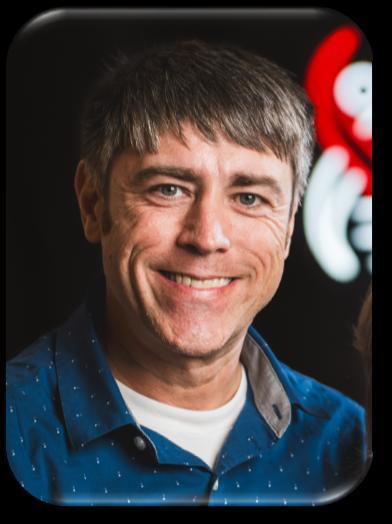
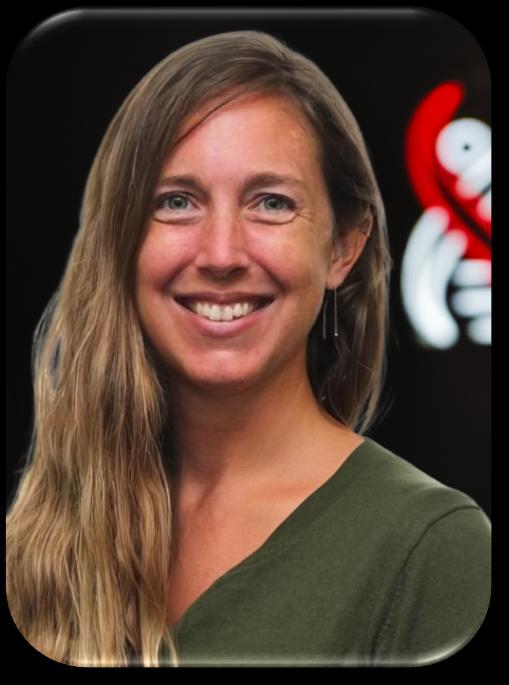
Jenn Wieworka, DNP, RN, OCN
IMF Director, Support Groups

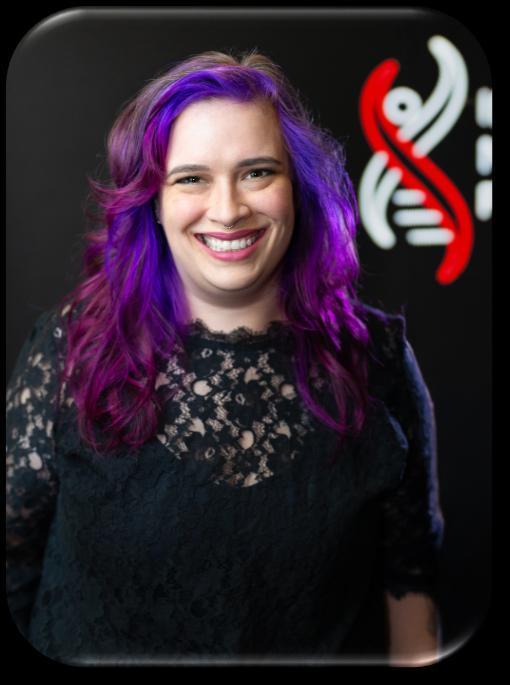
Doctorate -Prepared Nurse| Clinical Nurse Specialist | Support Group Leader
Jenn Wieworka, DNP, RN, OCN
Doctorate -Prepared Nurse| Clinical Nurse Specialist | Support Group Leader
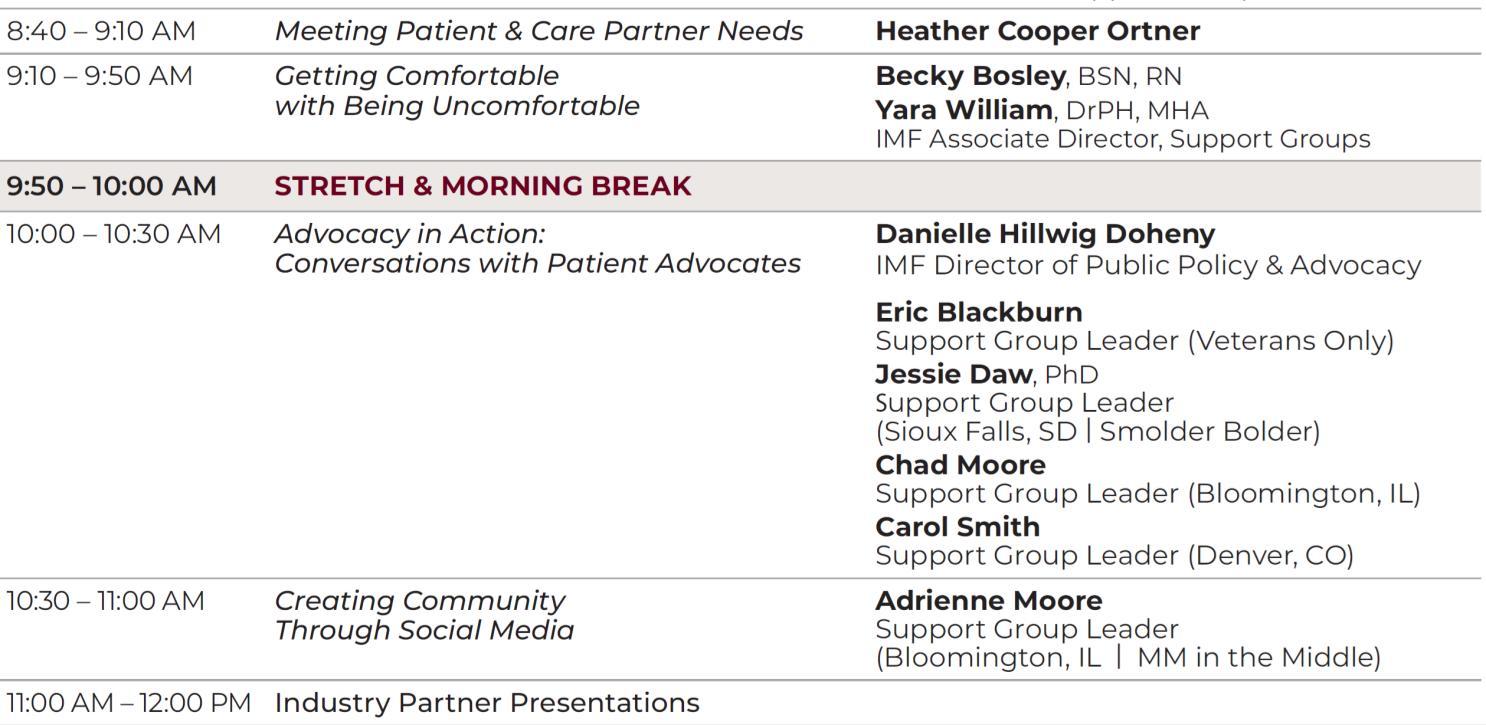
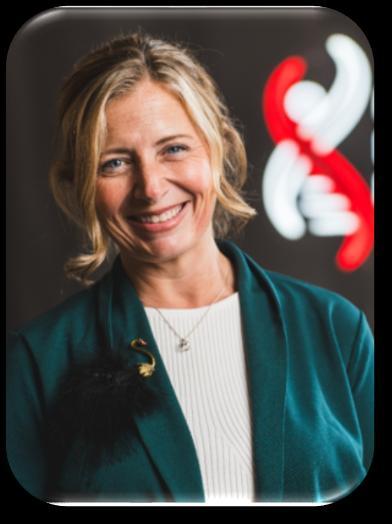
Heather Cooper Ortner IMF President & CEO
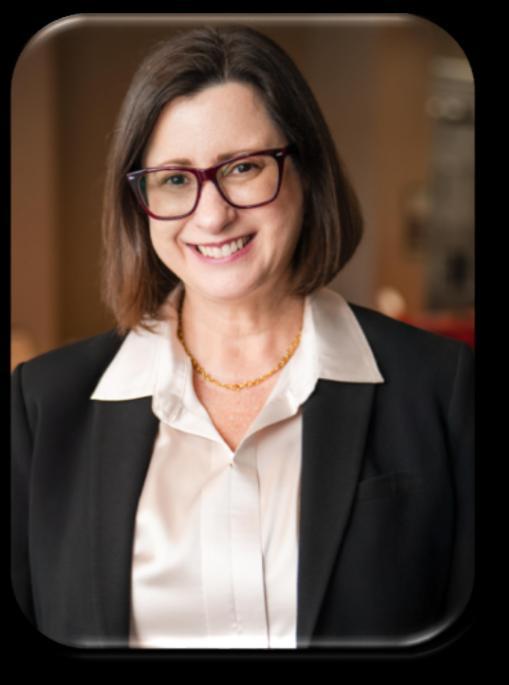
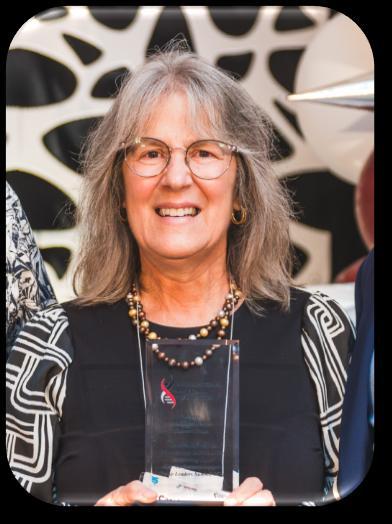
Becky Bosley, BSN, RN
IMF Senior Director, Support Groups
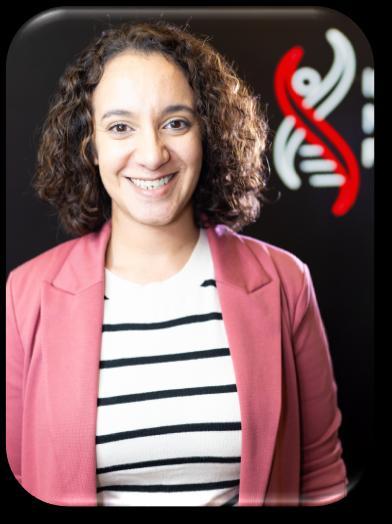
IMF Associate Director, Support Groups

Your members are already thinking about these issues!
Silence
can feel like “this isn’t safe to discuss here.”

Getting comfortable with being uncomfortable starts with letting go of the belief that you have to get it right every time.
Creating a safe space for open discussion is the goal
Your role is NOT to fix – it’s to create space
Getting comfortable with being uncomfortable starts with letting go of the belief that you have to get it right every
time.
What if I say the wrong thing? Curiosity > Expertise
What if I make it worse? Presence > Perfection
What if I don’t have an answer?
Validation > Solutions
• Model openness
• Use inclusive language
• Thank people for sharing difficult things
• Avoid shutting down or quickly changing topics
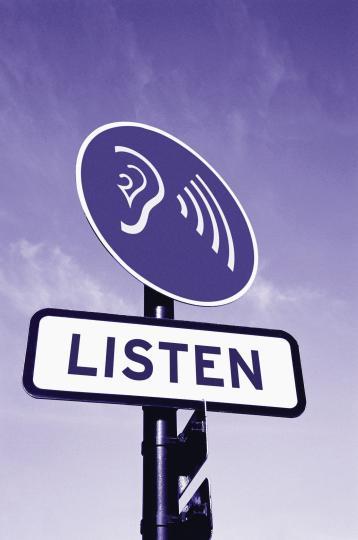
• Normalize that you may feel uncomfortable at times. That’s expected!
You set the emotional permission level of your group.

• Quality of life
• Impacts our identity
• Partner disagreement
• Rarely discussed openly
• Cultural discomfort
• Dating while living with myeloma

Desire can change because of treatment, fatigue, stress, or hormones.

Treatment or medications can change orgasm or sexual response.
Pain or fear of pain can make intimacy difficult.
Physical changes can affect confidence and closeness.


Hormonal changes can affect desire, mood, energy, and function.

Stress can affect intimacy, communication, and desire.




"Thank you for sharing that.
That can be a really difficult change to experience.
Treatment can affect intimacy – there is no doubt about that. It’s a common concern that we can talk about here, safely.
Has anyone else experienced something similar and found ways to navigate it?"

Redefining Intimacy
Adapting to new normal
Local oncology social workers
Sexual health therapists
Pelvic floor physical therapy
Remember that sexual dysfunction is only dysfunction if the person experiencing it feels that it is.
There is no one definition of a healthy sex life.
• Common Forms: Unproven, off -label products, remissions credited to lifestyle alone
• Correcting too quickly can damage trust
• Members often share out of hope or fear, not bad intent
• The line between complementary and harmful is not always clear
• Social media and podcasts spread claims rapidly

• Some members feel dismissed by their care teams

• Respond to the emotion first: hope, fear, frustration, or distrust
• Care team: your first source for treatment questions
• IMF Resources: IMF InfoLine , educational material, Myelo
• National Cancer Institute: cancer.gov, 1 -800 -4 -CANCER
• Memorial Sloan Kettering Cancer Center: MSK About Herbs for supplement safety (mskcc.org)

High out -of -pocket costs for treatment, supportive medicines, and specialty drugs.

Patients and care partners may miss work, reduce hours, or leave employment.
Prior authorizations, denials, Medicare choices, and plan changes can be confusing.
Appointments, transplant, CAR T, or clinical trials may require travel and overnight stays.
Childcare, gas, parking, meals, and time away from work add up.
Some members may delay care, skip medication, or avoid appointments because of cost.


• Create permission: “Cost is part of the cancer experience, and it is okay to talk about it.”
• Encourage early help: oncology social worker, financial counselor or navigator
• Connect to resources: IMF InfoLine , Myelo , HealthWell , Triage Cancer, Medicare Extra Help, SSDI, American Cancer Society, Blood Cancer United
Members may tell others what they “should” do instead of sharing their own experience.
Unproven claims can create tension when others disagree or feel unsafe.
One person may take over, interrupt, or respond to every comment.


Treatment
Comparison
Members may compare doctors, outcomes, risk, or prognosis in ways that create fear.

Patients and care partners may experience the same situation differently.
Leaders may delay intervening because they want to be kind or avoid conflict.



• Set group agreements early: respect, confidentiality, no medical advice, share from “I” statements
• Intervene early and calmly; silence can look like agreement
• Use neutral language and redirect advice into experience.
• Take repeated or personal conflict offline when needed
• Ask IMF staff for support when conflict affects safety, trust, or group participation. Co -lead to avoid burnout.
Patients and care partners may grieve future losses before they happen.
Repeated losses can build overtime for long -standing groups.
A death may affect the whole group, especially close members or leaders.
Members may wonder why they are doing well when others are not.
People may grieve changes in identity, energy, independence, roles, or plans.
Some need to talk, some need silence, some need privacy, and all can be valid.

Grief and bereavement support
• Allow silence, tears, memories, mixed emotions
• Allow creative space for remembrance and honor
• Know when to connect members to extra support
o CancerCare bereavement support
o Local hospice bereavement programs, often free
o Oncology social workers and grief counselors
o Clergy/faith leader
o 988 Suicide and Crisis Lifeline (call or text 988)

Waiting for results of lab work on scans can be a huge source of stress.
Only focusing on positive emotions while dismissing or minimizing difficult ones

Patients & their care partners share the same situation, but through different lenses.
Beliefs about death, advance care planning, hospice, & family decisionmaking can vary.


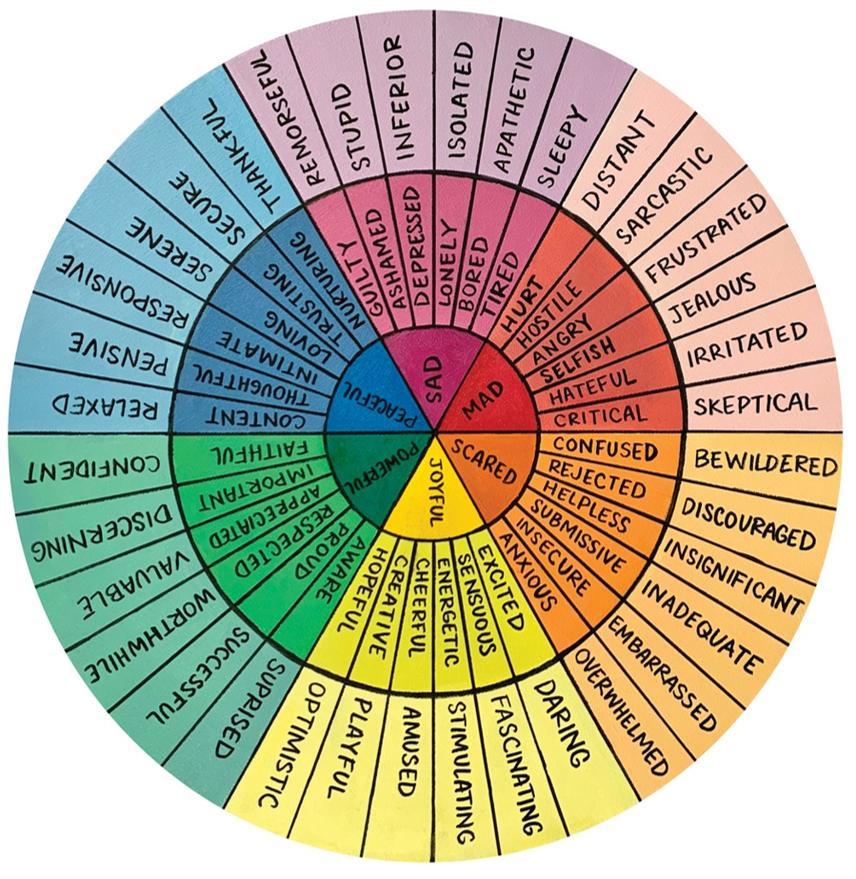
Rarely does one feel only one emotion at a time. They are not mutually exclusive.


Talking about the endof -life doesn’t have to remove hope.

Continuing to cultivate hope, even during challenging times.

Education can make people feel more prepared, informed, and in control.
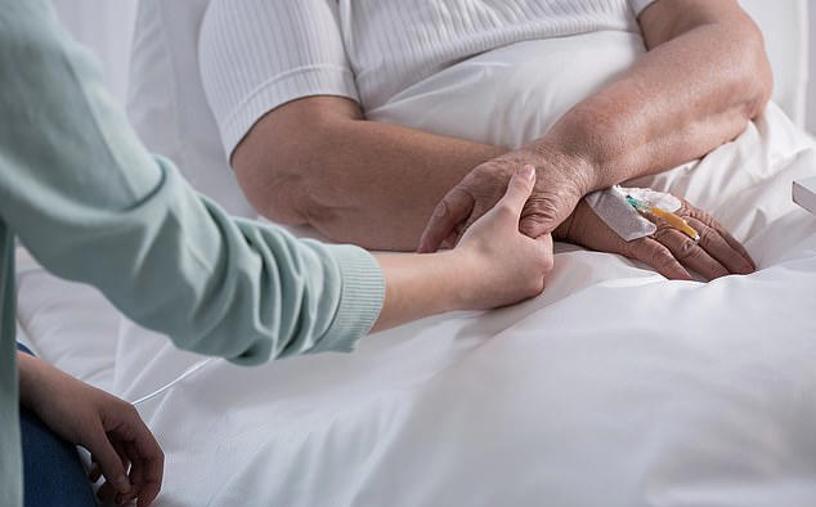


• Encourage palliative care from diagnosis
• Provide dignity & respect
• Create space for values & goals

• Judgment
• False reassurance
• Shutting down emotion
• Using the term “Stopping Care”
These are all very different conversations, but the way that we show up for them as support group leaders remains the same:



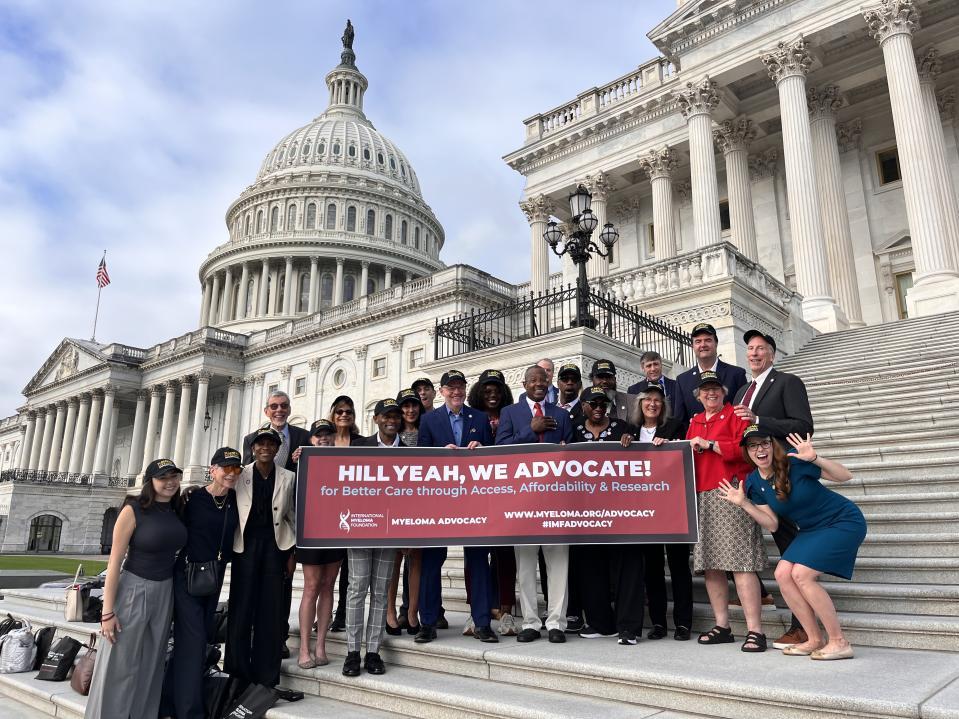
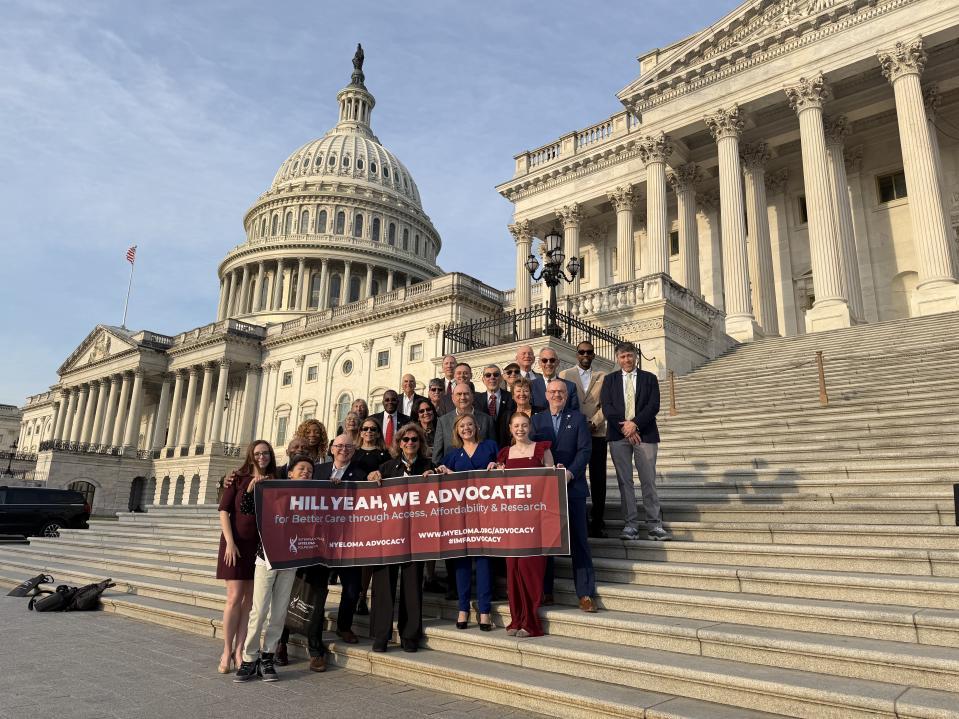
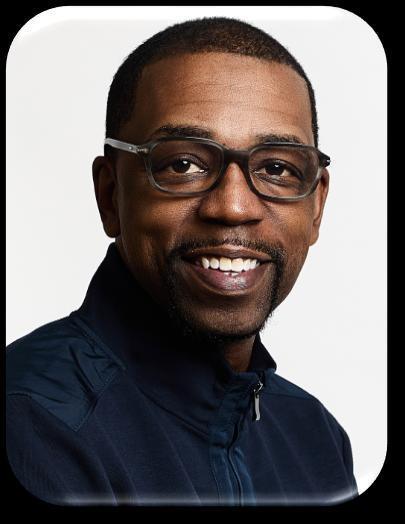
Danielle Hillwig Doheny
IMF Director of Public Policy & Advocacy
Lunchtime 12:00 - 12:55 PM




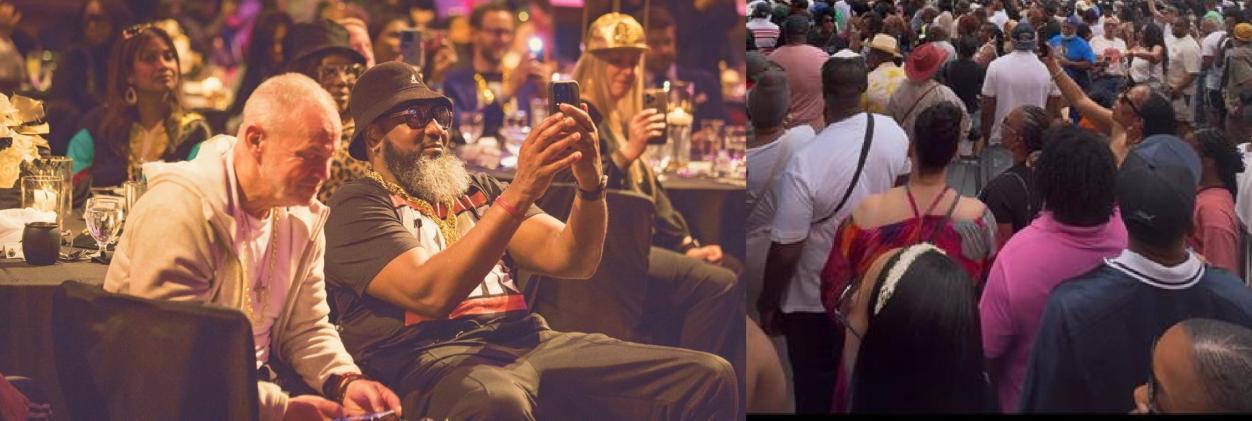

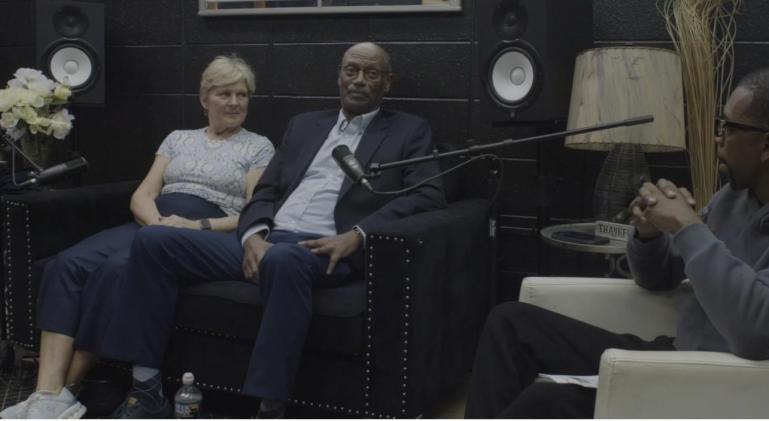
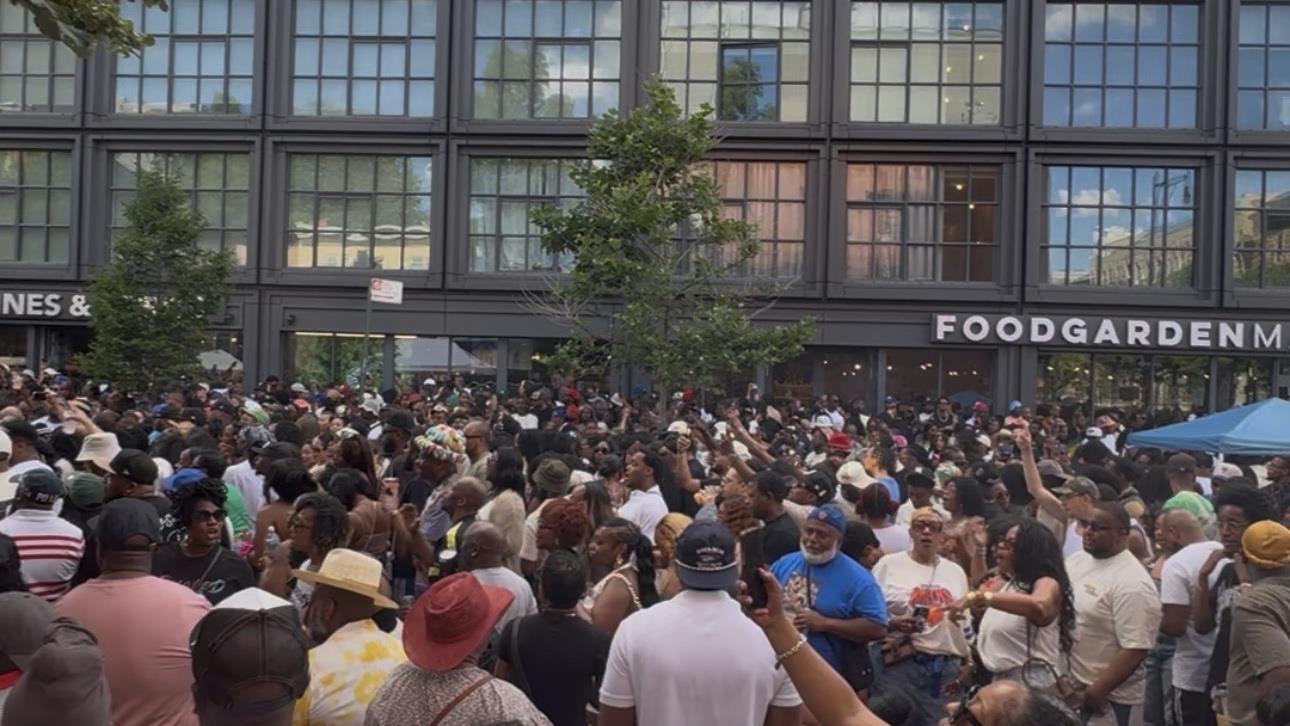
Culture is our bridge.
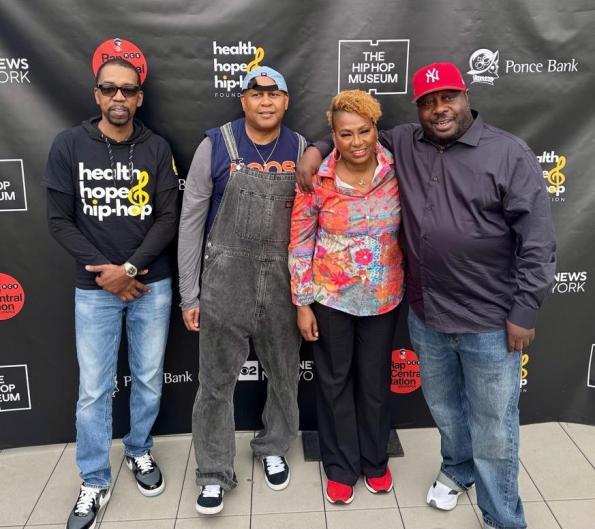
Meet people where they are.
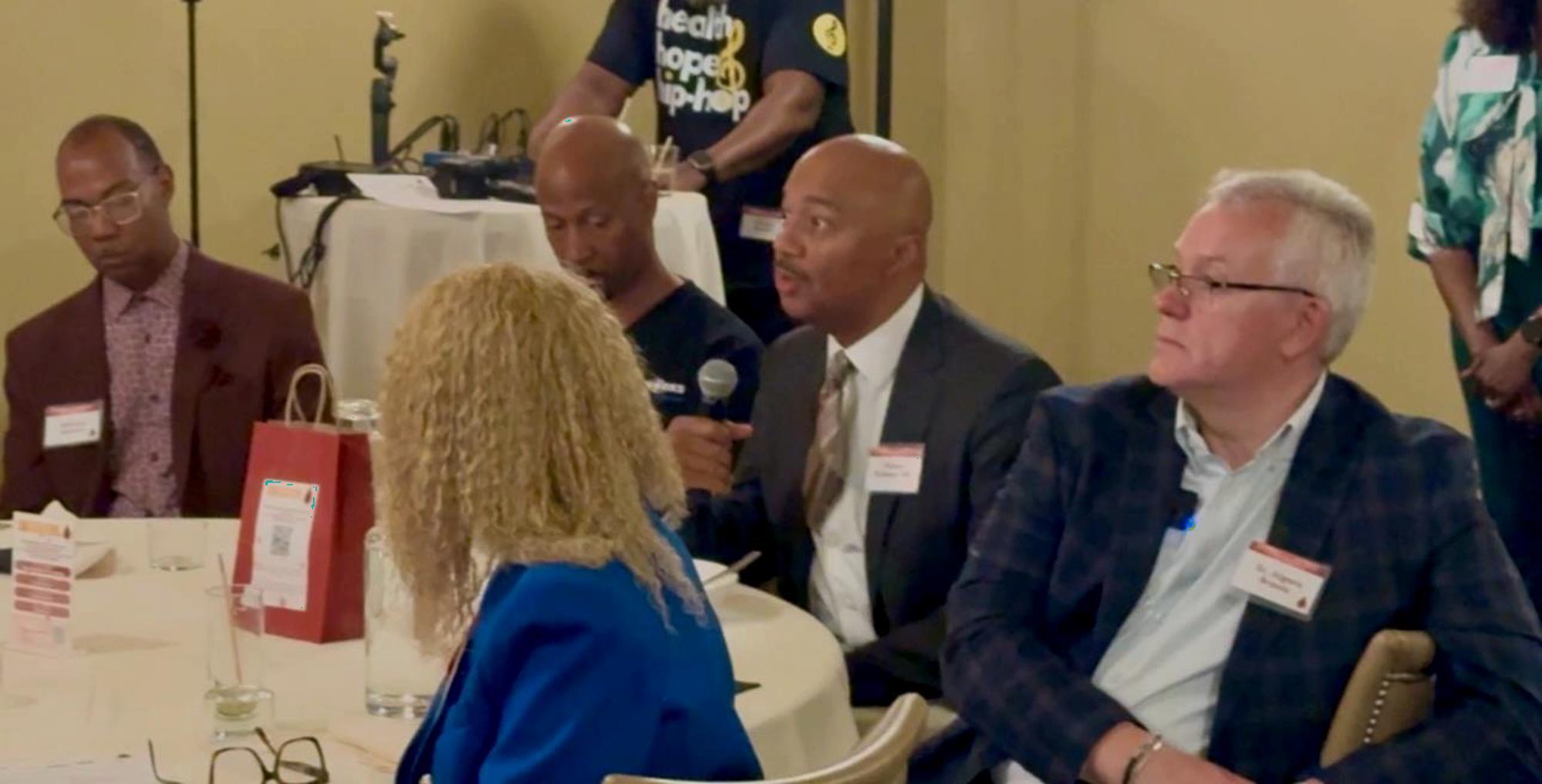
Together we reach farther.
“When healthcare speaks the language of the community... communities respond."




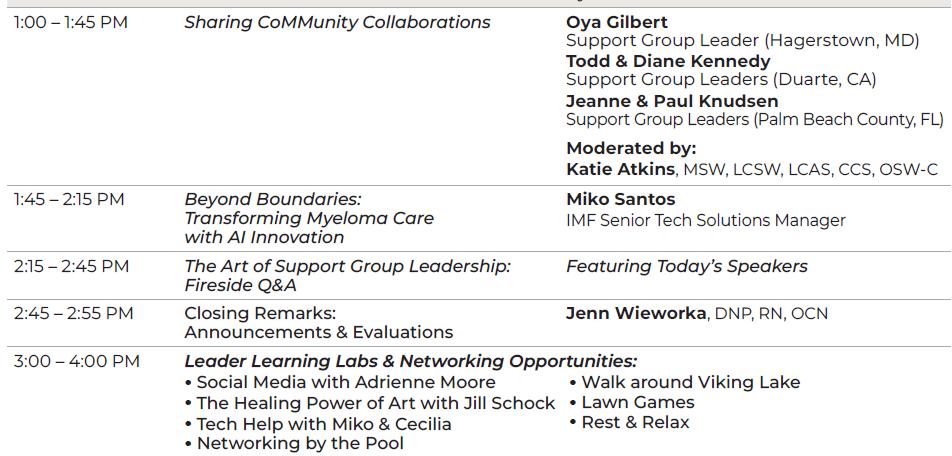
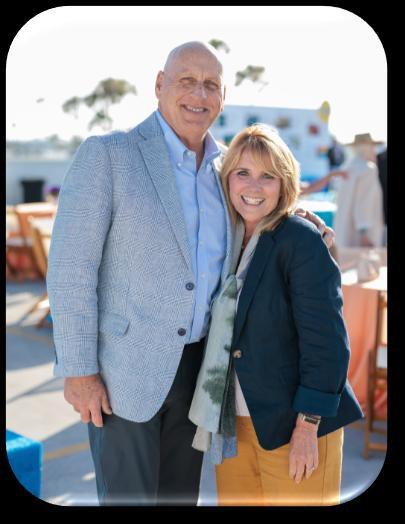
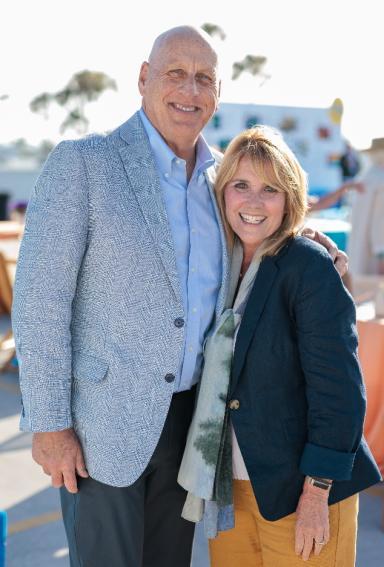
Todd & Diane Kennedy
City of Hope Support Group Leaders
Todd Diagnosed 2017
How long will I live?
Where do I go for care?

Where do we go for information?
▪ Dr. Google – scary, outdated stats
▪ Facebook – sometimes helpful, often depressing
▪ Friends, family, coworkers


Provide critical support, education, and resources to patients EARLY in their myeloma journey
~23.3 million people live in 10 Southern California counties
~12,600 people are living with myeloma in SoCal
~1,700 people will be diagnosed with myeloma in SoCal each year (Almost 5 per day!)
Source: SEER 2026

City of Hope has the largest myeloma program in Southern California
Most myeloma specialists
Most stem cell transplants and CAR -Ts
Most research / trials
Greatest number of myeloma patients
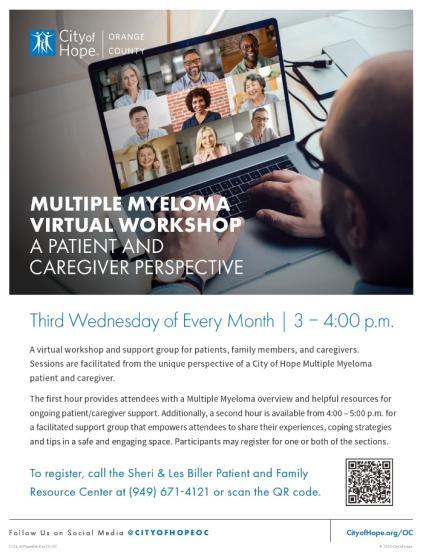
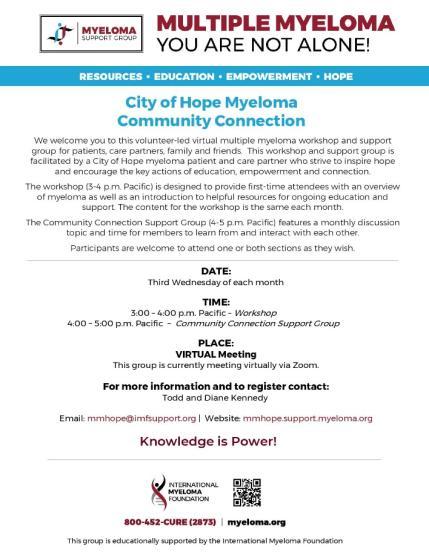
▪ Offered to facilitate a monthly “Navigating Multiple Myeloma Workshop” for City of Hope
▪ Presented the concept to the myeloma leadership team, the social worker team, and supportive care services leadership
▪ Agreed to co -create content, and co -own and co -promote the workshops
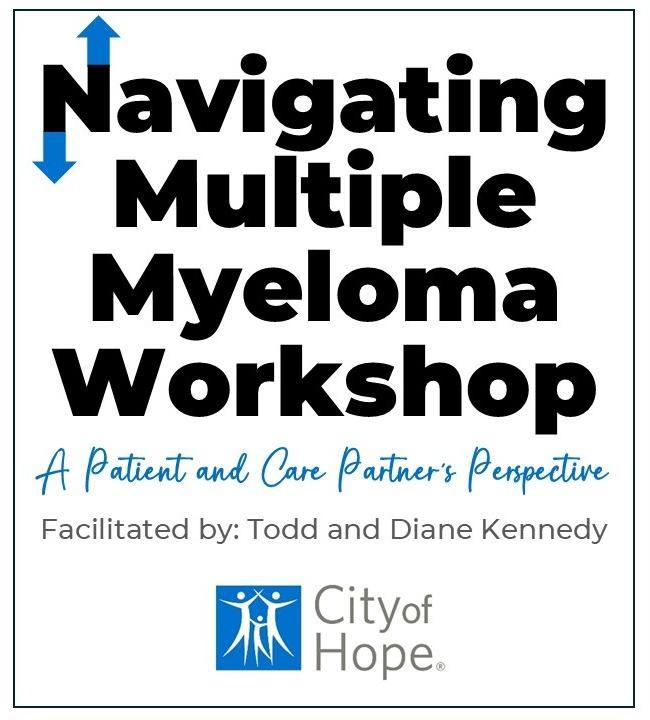
▪ Fully virtual – goal to offer to patients at all City of Hope facilities (SoCal, Chicago, Atlanta, and Phoenix)
▪ Back -to -back monthly sessions –1st hour Navigation Workshop and 2nd hour
Co MM unity Connection Support Group – meet the 3 rd Wednesday of the month
▪ Partnership and co -promoted with the IMF

3-4 pm PT / 5-6 pm CT / 6-7 pm ET
■ Introduction - Our Myeloma Journey
■ Myeloma Basics and Treatments
■ Reasons for HOPE
■ Preparing for Your Doctor Visits
■ Resources for Education and Support
■ Tips for Patients and Care Partners
■ Questions and Answers
4 -5 pm PT / 6-7 pm CT / 7-8 pm ET
■ Introductions
■ Upcoming Events and Support Group Meetings
■ Monthly Dose of Hope
■ Trial Spotlight
■ Guest Speaker: Dr. Lisa Lee Myeloma Specialist from City of HopeIrvine
■ Patient & Care Partner Sharing Forum (Voluntary )
International Myeloma Foundation Patient and Family Seminar
Los Angeles
▪ August 14 -15 at The Hilton Los Angeles/Universal City
▪ For more details and to register:
Los Angeles, CA, Patient and Family Seminar 2026 |
International Myeloma Foundation
International Myeloma Foundation Community Workshop
San Diego
▪ October 24 at The Westin San Diego Bayview
▪ For more details and to register:
San Diego, CA, Myeloma Community Workshop 2026 |
International Myeloma Foundation
City of Hope Walk for Hope
▪ November 8 in Irvine
▪ To join our CoH Myeloma Co MM unity Team
click here: https://ourhope.cityofhope.org/team/825214

Inland Empire Myeloma Support Group
Thursday, June 4 at 3 pm (Hybrid)
Stephen Daub, DPT
Email Jackie Sarlitt at ocmmsg@imfsupport.org for details
TONIGHT, May 20 at 7 pm
Orthodontist Dr. Neil Kaplan
Osteonecrosis of the Jaw and Related Dental Topics
Zoom Meeting Link: https://us02web.zoom.us/j/88120752860
https://www.myeloma.org /support -groups
Meets hybrid the 3 rd Saturday of the month at 11 :00 AM
Los Angeles Myeloma Support Group
Meets virtually on the 3 rd Saturday of the month at 10:30 AM
Orange County Myeloma Support Group
Meets virtually or hybrid on the 1 st Thursday of the month time varies
Rancho Mirage Myeloma Support Group
Meets in -person on the 1 st Thursday of the month at 3 PM
San Diego Myeloma Support Group
Meets hybrid the 2 nd Monday of the month at 6:30 PM
San Fernando Valley Myeloma Support Group
Meets virtually or in -person the 3 rd Wednesday of the month at 7 PM
San Gabriel Valley Myeloma Support Group
Meets in -person the 1 st Monday of the month at 6:30 PM
Upland Myeloma Support Group
Meets hybrid the 1 st Friday of the month at 10 AM
Westlake Myeloma Support Group
Meets virtually the 2 nd Saturday of the month at 11 AM
▪ 149 members as of June 2026 (less than 2 years)
▪ 71 (48%) “newly diagnosed members” (NDMM)
▪ Approximately 2-5 NEW members attend the Navigation Workshop – with additional repeat attendees
▪ The MAJORITY of attendees were NOT connected to an existing support group prior to attending ours – but we now see them on our other SoCal IMF support group Zoom calls
▪ Greater than 74% repeat attendance (3 meetings or more)
▪ Well -reviewed through monthly surveys, rated as “strongly agree” for providing education, empowerment, and feeling connected
▪ Doctors and care team referrals
▪ Members sharing about the group with other patients and their doctors/care team
▪ Referrals from other support group leaders
▪ City of Hope -branded marketing:
▪ Flyers around the facilities and available for doctors/care team to share
▪ Ads on TV screens in cancer center lobby, waiting areas, and exam rooms
▪ Articles in the City of Hope newsletter
▪ IMF -branded flyers, IMF website, and on other non -profit websites
“Loved hearing positive stories being newly diagnosed in March.”
“Please continue to offer this exact zoom support session --it helps so many of us dealing with this blood cancer. It's a perfect complement to the professional care the doctors at City of Hope offer.”
“As
my husband's care partner, I felt overwhelmed. I don't feel alone anymore.
I got a lot out of this workshop. I will definitely attend next month.”
“This group is something to look forward to, it keeps me hopeful.”
▪ Collaborate, co -create, and co -own
▪ Co -promote through multiple channels
▪ It is NOT “This OR That” – it is “This AND that”
Increase touchpoints – connect virtually through multiple groups and encourage in -person connections
Measure, refine, and grow
Celebrate Connections!
~192,000 people living with myeloma in the US
~36,000 newly diagnosed each year
That is ~100 new patients each day!
Through
collaboration
and
connection,
we move MORE people from fear to hope


• Steve Weinstein made strides to establish a relationship with the medical school at Nova.
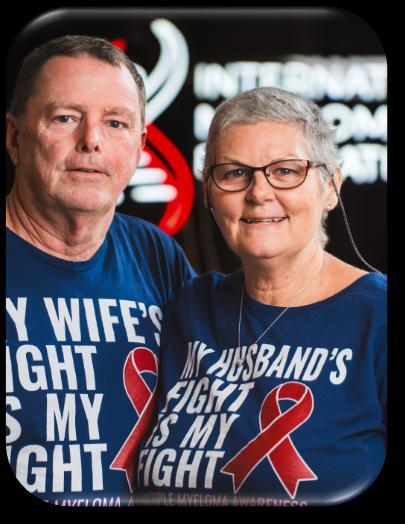
• Steve arranged for myeloma patients, Paul & Jeanne, to share their experience as patients and care partners directly to first year medical students.

• Paul was initially invited to speak to first year medical students in 2019.
• Most recently, Paul and Jeanne spoke to students in 2025.
• Here is a link to that presentation: Paul & Jeanne speak to Nova Students
Paul & Jeanne reminded medical students:
• “We’re real people!”
• “No two patients are the same.”
• Don’t neglect to address the emotional impact of a diagnosis of multiple myeloma.

• Ask care partners and family members how they are doing.
Paul & Jeanne also:
• Reinforced shared decision making and patient autonomy
• Encouraged honest conversations with patients, eye contact, and to slow down
• Asked new doctors to refer to Multiple Myeloma support groups
• Many students and doctors came forward to express thanks and appreciation
• Jenna asked if she could be involved with their Multiple Myeloma Support Group.
Paul worked with IMF staff to arrange for students to be invited to the Patient and Family Seminar in Boca Raton in March, 2026.
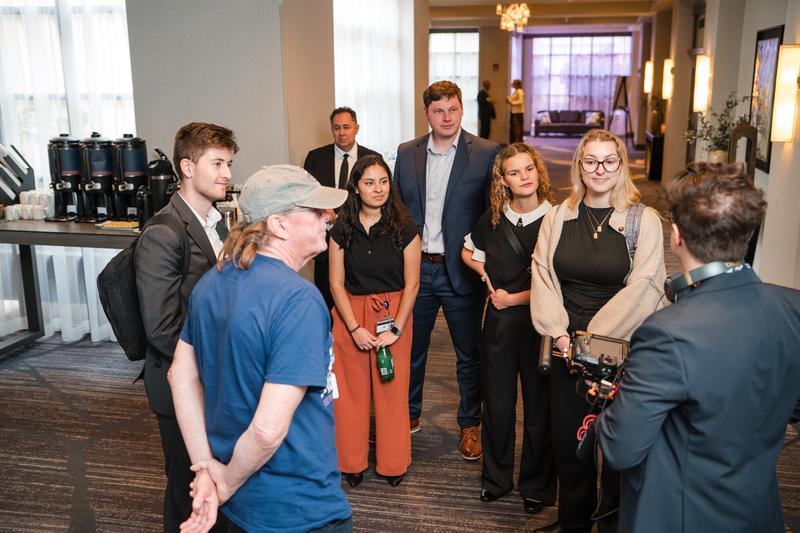
• Dr. Joe publicly recognized this group of students during his talk on Friday.
• Students were able to interact directly with patients, care partners, and myeloma specialists.
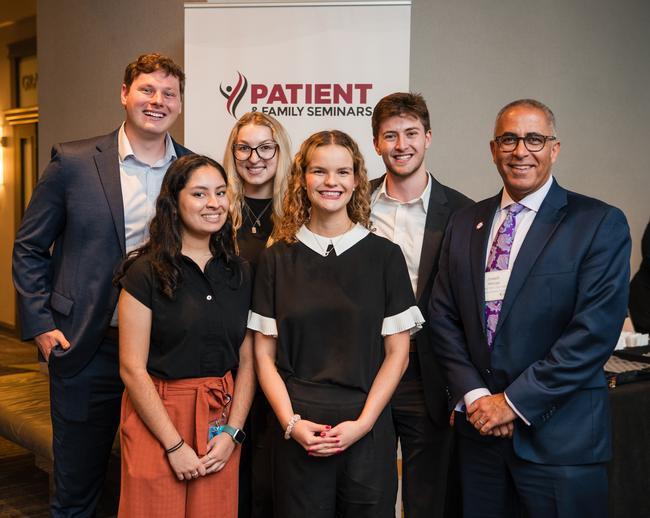
• One of the students disclosed that his father was diagnosed with Multiple Myeloma just 2 weeks prior.
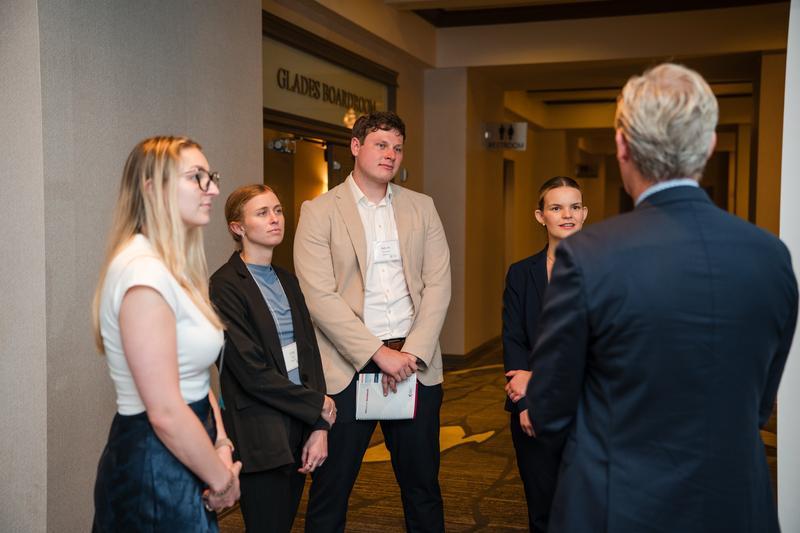
• The hematologist working with this student’s father was a presenter at the seminar; the student was able to speak directly with him.
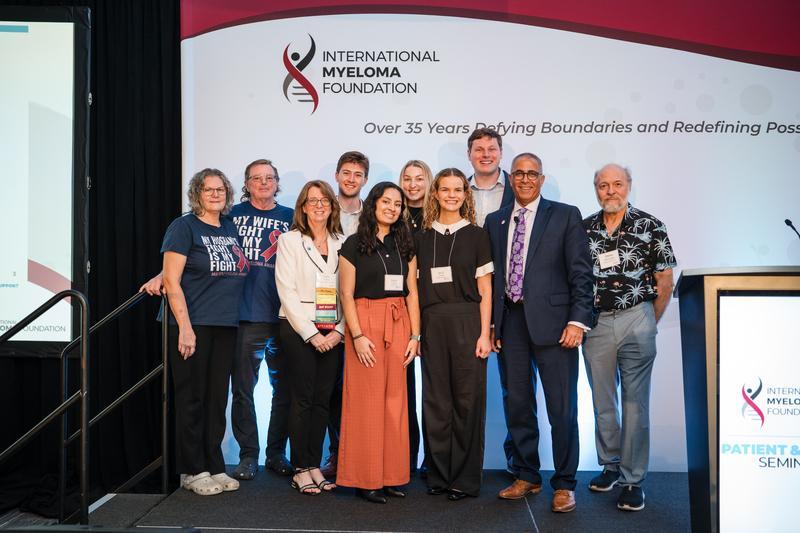
This connection has allowed patients to directly inform future doctors about myeloma and promote awareness and empathy for the patient & care partner experience.
Miko Santos
IMF Senior Tech Solutions Manager


myeloma.org
The trusted home of the MKP — one place for every tool plus education, webinars, and support.
24/7 GenAI assistant offering myeloma education, treatment guidance, and trial and financialsupport information.
Trial Matching (CTME)
Powered by SparkCures — matches patients to relevant trials and guides them from exploration to enrollment.
Myelo MD
MyeProfile
Single sign -on across all myeloma.org tools, with content personalized by location and diagnosis stage.
AI clinical decision support giving non -specialist physicians traceable, specialist -level guidance at the point of care.

GenAI Chatbot Myelo :
The first generative AI assistant designed specifically for multiple myeloma.
Launched Sept 15, 2024
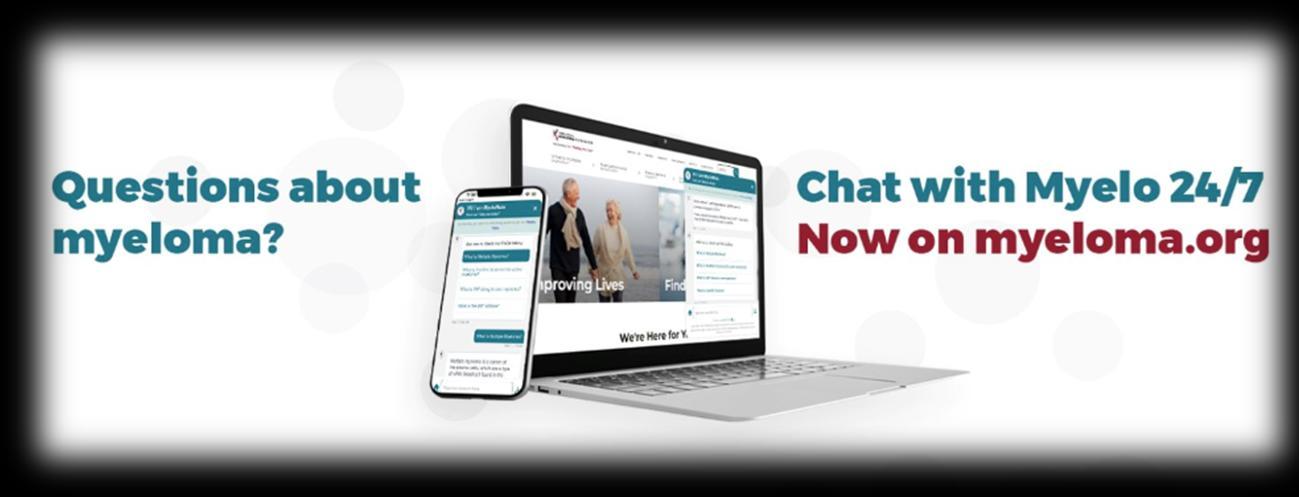
• What is multiple myeloma?
• What causes multiple myeloma?
• What are the symptoms and signs of MM?
• How is multiple myeloma diagnosed?
• What are the different types of myeloma?
• What are the possible side effects of multiple myeloma treatments?
• What is the standard of care options for frontline treatment?










Personalized care coordination
A personal organization hub for patients to track appointments, medications, and side effects — designed as a non-medical-device tool.
AI-powered information
Contextual myeloma knowledge delivered based on treatment phase, stage, and patient-stated priorities, available 24/7.
Care team preparation
Appointment prep tools, question generators, and lab result summaries to help patients arrive ready for every visit.
Clinical decision support
AI-assisted differential reasoning to support diagnosis and staging decisions in complex myeloma presentations.
Patient-facing summary tools
Generate plain-language summaries of treatment plans and lab results that patients can review independently.
Real-world data integration
Aggregate de-identified patient data to surface populationlevel insights for clinical and research contexts.
Caregiver co-design
Built for family members and care partners to use alongside patients, with accessibility for older adults.
Clinician efficiency
Reduce time spent on patient education and FAQ responses by routing common questions to Myelo tools.
Diagnostic support
AI analyzes bone marrow biopsies and flow cytometry data to identify abnormal plasma cells earlier and more consistently.
Risk stratification
ML models combine cytogenetics, labs, and ISS/R -ISS staging to predict relapse risk and guide frontline regimen selection.
Treatment decisions
Clinical decision support tools recommend regimens for relapsed/refractory disease based on prior lines and approved guidelines.
MRD monitoring
Deep learning applied to NGS and mass spectrometry detects minimal residual disease below conventional testing thresholds.
Clinical trial matching
Clinical Trial Matching Engine maps patient profiles to open eligibility criteria in real time.
Imaging analysis
AI reads whole -body PET/CT and MRI to detect lytic lesions, track bone disease, and quantify tumor burden simultaneously.
Lab-result tracking + plain language
Medication & appointment reminders
Question generation for visits
Side-effect & symptom triage
Insurance & billing assistance
Care-record consolidation
Nutrition & lifestyle guidance
Clinical trial matching
Give every AI prompt these five elements — works with Myelo, ChatGPT, Claude, and Gemini.
Who you are and your current disease status. Include stage, lines of therapy completed, and whether you are newly diagnosed, in remission, or relapsed.
What you are trying to accomplish. Understand a test result? Prepare questions for your oncologist? Learn about side effects?
The specific question you want answered. Be direct. One focused question per prompt gets better results than several bundled together.
Relevant details: specific drug names, lab values such as M-protein or free light chains, your doctor’s recent comments, or treatment start dates.
Tell the AI how you want the answer: plain language, a short summary, a numbered list, or a comparison table.
WEAK PROMPT
“Tell me about my myeloma treatment options.”
More example prompts you can use today:
STRONG PROMPT USING SPACE
“I have IgG kappa myeloma, diagnosed 2022, completed VRd frontline. I am considering a clinical trial. List 3 key questions to ask my oncologist about CAR -T eligibility. Use plain language.”
Understanding a lab result My free light chain ratio is 4.2. I am in remission after 4 cycles of daratumumab, lenalidomide, and dexamethasone. What does this ratio mean and what should I watch for? Keep it to 3 sentences.
Preparing for an appointment I have a follow -up about starting maintenance lenalidomide. I am 68 years old and concerned about fatigue and neuropathy. Give me 5 specific questions to ask my doctor.
Understanding a new treatment I heard about teclistamab for relapsed myeloma. I have had 3 prior lines. Compare teclistamab to CAR -T in a short table: how they work, how they are given, and main side effects.
Explain myeloma terms and test results in plain language
Summarize treatment options based on current IMWG guidelines
Help you prepare specific questions for your care team
Provide background on clinical trials relevant to your disease
Walk through side effect profiles for specific drugs
Provide information 24 hours a day, between clinic visits
x Your oncologist’s clinical judgment about your individual case
A formal medical diagnosis or treatment prescription
x Access to your real -time lab values or imaging results
Emergency medical care — always call 911 or your care team
Guaranteed accuracy — always verify important answers with your doctor
x Persistent session memory — re -provide your context each session
Tip: Keep a short disease summary on your phone — diagnosis date, stage, current treatment, line of therapy. Paste it at the start of any AI conversation to get better, more personalized answers.
Reputable AI health tools do not store or sell your personal health information. Myelo does not collect your name, contact details, or insurance information. You control what you share.
Do not type your Social Security number, Medicare or insurance ID, date of birth combined with your full name, or financial account numbers into any AI chat tool.
The IMF will never ask you to click a link to "verify your Myelo account" or "claim your free AI health report." These are phishing attempts. Forward suspicious emails to webteam @myeloma.org.
Messages that say "Your account will be deleted" or "Act now to protect your health data" are designed to panic you into clicking. Legitimate health organizations do not send threats.
Check the privacy policy
Before using any health AI tool, look for a clear privacy policy. If you cannot find one, do not use the tool. The IMF's privacy policy is at myeloma.org/privacy.
Avoid using AI health tools on public Wi -Fi networks in airports, hotels, or coffee shops. Use your home network or mobile data when discussing personal health details.
Hover over any link before clicking. Legitimate IMF links always go to myeloma.org. Watch for misspellings like myel0ma.org or imf -myeloma.net.
Scammers can make calls appear to come from real hospitals or the IMF. If an unexpected caller asks for your Medicare ID or asks you to download an app, hang up and call the organization back directly.
Scammers use AI to sound more convincing. These tactics are real and increasing.
! "AI -powered cure" offers
No AI tool can diagnose, cure, or predict your myeloma outcome. Ads or websites promising AIgenerated cure protocols or personalized treatment plans for a fee are scams.
! Fake clinical trial recruitment
Legitimate trials do not charge enrollment fees or ask for insurance information upfront via text or social media. Verify every trial at clinicaltrials.gov or through your oncologist.
! Impersonation of Myelo or the IMF
Fraudsters clone the look of Myelo or myeloma.org. Check the full URL before entering anything. The real platform is at myeloma.org. Report imposters to support@myeloma.org.
! "Free AI health scan" requests
Offers of a free AI scan of your test results in exchange for uploading lab documents are data harvesting. Your labs contain sensitive identifiers. Never upload them to an unknown site.
! AI chatbots asking for payment
Myelo is free. Any AI tool that claims to be affiliated with the IMF and asks for a subscription, donation, or co -pay to continue is fraudulent.
! Social media health AI accounts
Unofficial Facebook, Instagram, or TikTok accounts posing as IMF AI tools may collect your information or spread misinformation. The IMF's official accounts are listed at myeloma.org.
Never pay: legitimate AI health tools from trusted organizations are free. Never upload: lab results or insurance cards to an unfamiliar site. When in doubt: call the IMF Infoline at 1 -800 -452 -CURE (2873).
• Social Media with Adrienne Moore (Hammond)
• Wellness through Origami with Jill Schock (North Shore)
• Tech Help with Miko & Cecilia (Aurora)
• Reimbursements & SG Funds Assistance with Jenn & Yara (Prefunction Area)
• Networking by the Pool
• Walk around Viking Lake
• Lawn Games (Valhalla Terrace)
• Rest & Relax
5:30PM – Networking & Evening Reception (Valhalla Terrace & Prefunction North)
6:00PM – Dinner (Valhalla Ballroom)
Tomorrow: 7:30 – 8:30AM – Breakfast (Prefunction North)